the Creative Commons Attribution 4.0 License.
the Creative Commons Attribution 4.0 License.
 | 11 Nov 2026
The implementation and effectiveness of Calving Algorithms in numerical ice models (CalvingMIP)

Frank Pattyn
Daniel Abele
Torsten Albrecht
Jorge Alvarez-Solas
Jowan M. Barnes
Tijn J. Berends
Jorge A. Bernales
Javier Blasco
Gong Cheng
Youngmin Choi
Stephen L. Cornford
Cruz Garcia-Molina
Fabien Gillet-Chaulet
G. Hilmar Gudmundsson
Angelika Humbert
Gunter R. Leguy
William H. Lipscomb
Marisa Montoya
Daniel Moreno-Parada
Mathieu Morlighem
Tyler Pelle
Alexander Robinson
Martin Rückamp
Hélène Seroussi
Yanmei Tian
Luisa Wagner
Roderick S. W. van de Wal
Liyun Zhao
Thomas Zwinger
Related authors
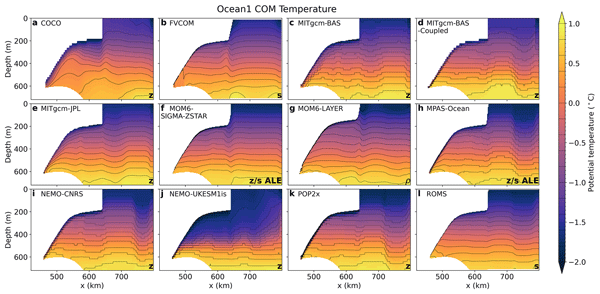
The second Ice Shelf-Ocean Model Intercomparison Project, ISOMIP+, compares 12 ice shelf-ocean models with a common, idealised, static configuration, aiming to assess inter-model variability. Models show similar basal melt rate patterns, ocean profiles and circulation but differ in ice-ocean boundary layer properties. Ice-ocean boundary layer representation is a key area for future work, as are realistic-domain ice sheet-ocean model intercomparisons.

The second Ice Shelf-Ocean Model Intercomparison Project, ISOMIP+, compares 12 ice shelf-ocean models with a common, idealised, static configuration, aiming to assess inter-model variability. Models show similar basal melt rate patterns, ocean profiles and circulation but differ in ice-ocean boundary layer properties. Ice-ocean boundary layer representation is a key area for future work, as are realistic-domain ice sheet-ocean model intercomparisons.


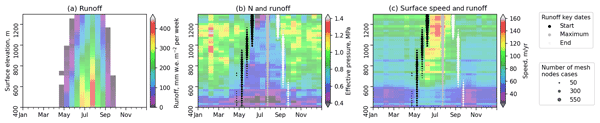
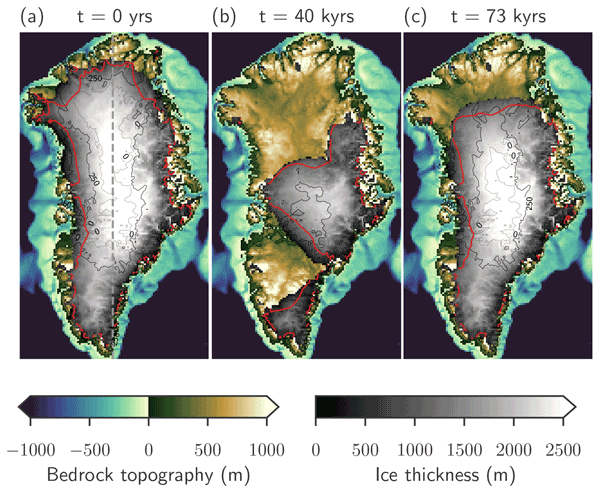
We construct a mathematical model to describe the formation of lakes on the Greenland Ice Sheet across multiple years. The model represents the dynamics of ice, snow, and surface water, accounting for the influence of air temperature. Our results indicate that lakes can enhance ice melt by absorbing sunlight, thereby accelerating the loss of Greenland ice under realistic scenarios of temperature increase.

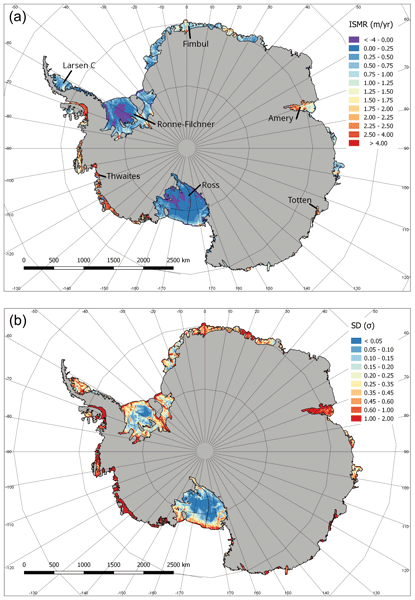
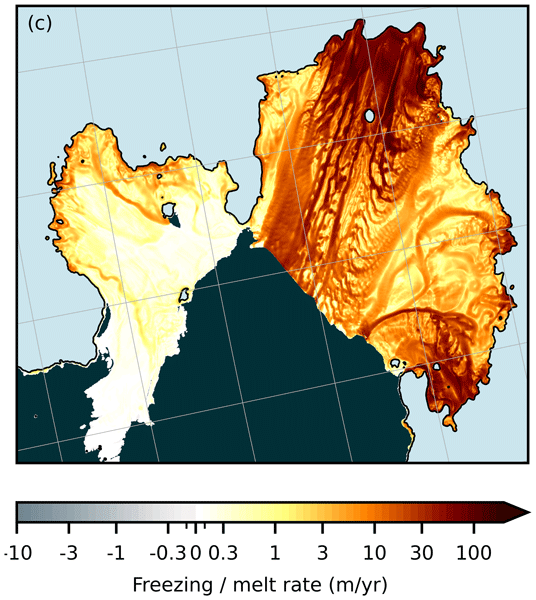
Quantifying melt and freeze beneath Antarctica’s floating ice shelves is vital to understanding present-day ice-sheet behavior and its potential to contribute to future sea-level rise. We compare 10 ice-shelf/ocean computer simulations with satellite data, providing the first multi-model estimate of melting and refreezing driven by the ocean. This new estimate offers a valuable tool for assessing ice-shelf roles in current and future ice-sheet changes, informing coastal adaptation strategies.
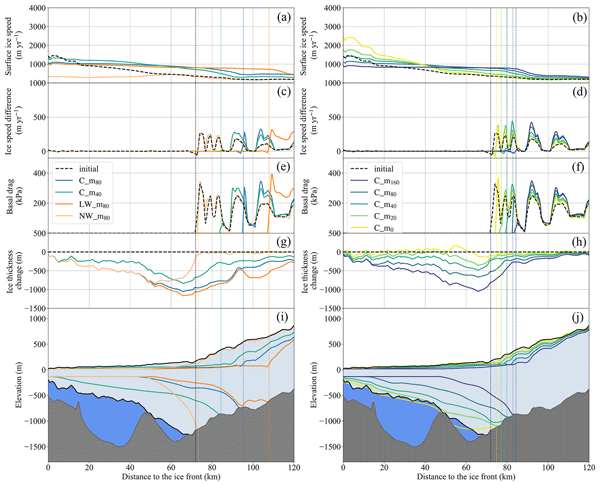




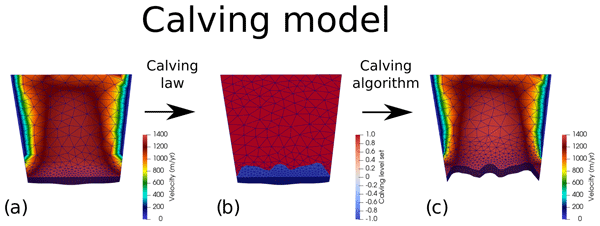



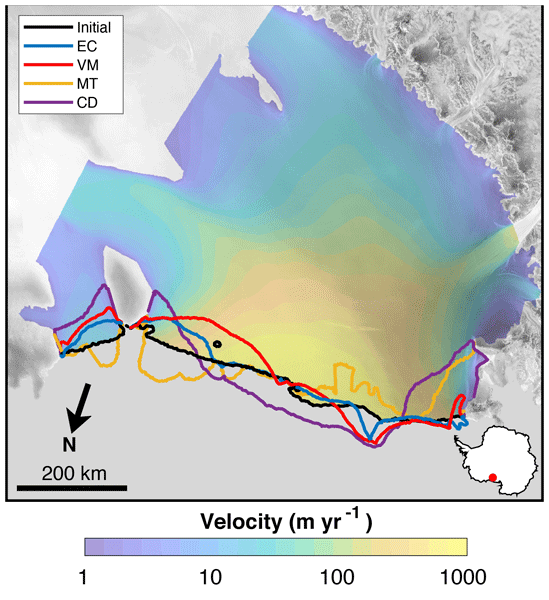
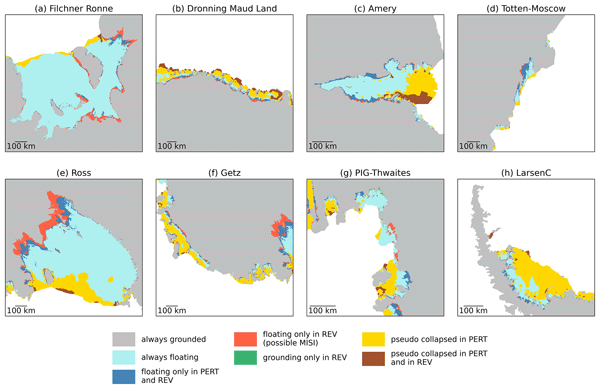
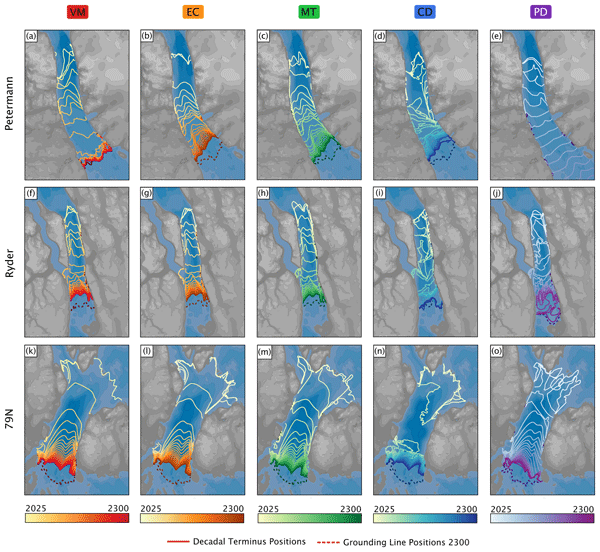
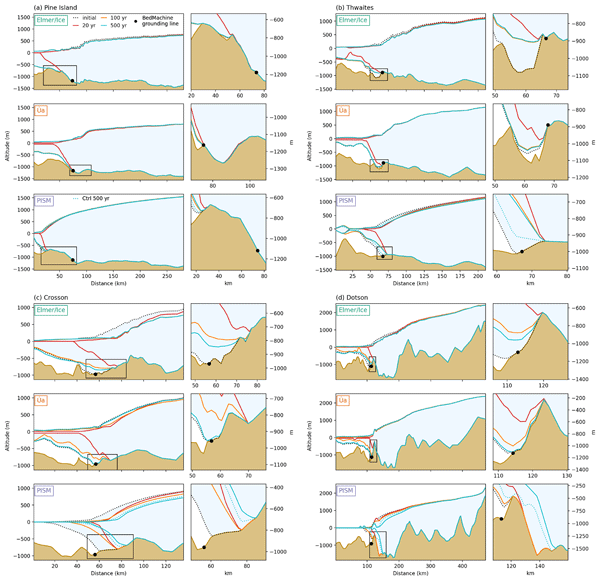
calving laws), under the assumption that Antarctic ice shelf front positions should be in steady state under the current climate forcing. We quantify how well each of these calving laws replicates the observed front positions. Our results suggest that the eigencalving and von Mises laws are most suitable for Antarctic ice shelves.

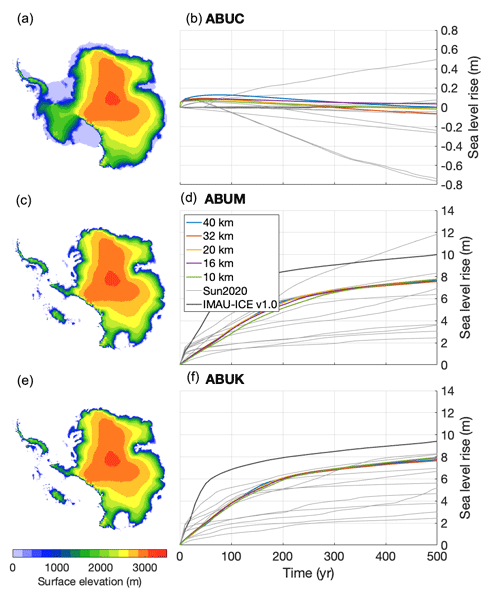
business-as-usualgreenhouse scenarios.
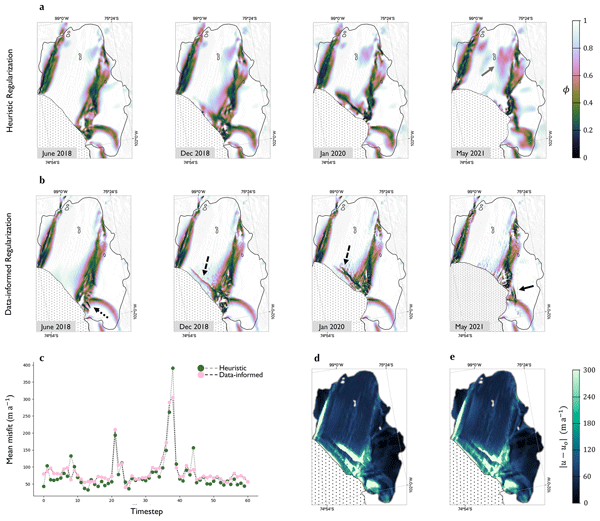
Inversion methodsattempt to use observations of the ice-sheet surface to calculate how these sliding processes work. We show that such methods cannot fully solve this problem, so a substantial uncertainty still remains in projections of sea-level rise.





coupling interfacesrepresenting the feedbacks between the distinct models used for contribution. PARASO is stable and ready to use but is still characterized by significant biases.