
Articles | Volume 20, issue 5
https://doi.org/10.5194/tc-20-2629-2026
© Author(s) 2026. This work is distributed under
the Creative Commons Attribution 4.0 License.
the Creative Commons Attribution 4.0 License.
https://doi.org/10.5194/tc-20-2629-2026
© Author(s) 2026. This work is distributed under
the Creative Commons Attribution 4.0 License.
the Creative Commons Attribution 4.0 License.
Research article
| 
06 May 2026
Research article |
| 06 May 2026
| 06 May 2026
The PolarRES dataset: a state-of-the-art regional climate model ensemble for understanding Antarctic climate

British Antarctic Survey, Cambridge, United Kingdom
José Abraham Torres-Alavez
Danish Meteorological Institute, Copenhagen, Denmark
Institute for Marine and Atmospheric Research (IMAU), Utrecht University, Utrecht, the Netherlands
Willem Jan van de Berg
Institute for Marine and Atmospheric Research (IMAU), Utrecht University, Utrecht, the Netherlands
Fredrik Boberg
Danish Meteorological Institute, Copenhagen, Denmark
Ole Bøssing Christensen
Danish Meteorological Institute, Copenhagen, Denmark
Christiaan Timo van Dalum
Institute for Marine and Atmospheric Research (IMAU), Utrecht University, Utrecht, the Netherlands
Royal Netherlands Meteorological Institute, De Bilt, the Netherlands
Xavier Fettweis
SPHERE research unit, Department of Geography, University of Liège, Liège, Belgium
Siddharth Gumber
British Antarctic Survey, Cambridge, United Kingdom
Nicolaj Hansen
Danish Meteorological Institute, Copenhagen, Denmark
Christoph Kittel
Université Grenoble Alpes/CNRS/IRD/G-INP/INRAE, Institut des Geosciences de l'Environnement, Grenoble, France
Physical Geography research group, Department of Geography, Vrije Universiteit Brussel, Brussels, Belgium
Clara Lambin
SPHERE research unit, Department of Geography, University of Liège, Liège, Belgium
Damien Maure
SPHERE research unit, Department of Geography, University of Liège, Liège, Belgium
Ruth Mottram
Danish Meteorological Institute, Copenhagen, Denmark
Martin Olesen
Danish Meteorological Institute, Copenhagen, Denmark
Andrew Orr
British Antarctic Survey, Cambridge, United Kingdom
Tony Phillips
Danish Meteorological Institute, Copenhagen, Denmark
Maurice van Tiggelen
Institute for Marine and Atmospheric Research (IMAU), Utrecht University, Utrecht, the Netherlands
Kristiina Verro
Danish Meteorological Institute, Copenhagen, Denmark
Institute for Marine and Atmospheric Research (IMAU), Utrecht University, Utrecht, the Netherlands
Priscilla A. Mooney
NORCE Norwegian Research Centre, Bjerknes Centre for Climate Research, Bergen, Norway
Related authors
Ian Simpson, Edward Hanna, Ryan S. Williams, Linh Luu, Andrew Orr, Julie Jones, Xavier Fettweis, Jose Abraham Torres Alavez, Ole Bøssing Christensen, Ella Gilbert, Sid Gumber, Christoph Kittel, Sihan Li, Damien Maure, Ruth Mottram, Tony Phillips, Willem Jan van de Berg, and Kristiina Verro
EGUsphere, https://doi.org/10.5194/egusphere-2026-2270, https://doi.org/10.5194/egusphere-2026-2270, 2026
Short summary
Short summary
The warming trend in global temperatures has potential to result in accelerated break up of the Antarctic ice shelves, which would contribute to rising sea levels. Here we present a novel database of Antarctic extreme weather events over a selection of the Antarctic ice shelves. We examine air temperature, precipitation, wind and surface pressure. In addition, we examine trends in the frequency of extreme events and the links with weather patterns around Antarctica.

Jan Landwehrs, Sonja Murto, Florian Gebhardt, Ella Gilbert, and Annette Rinke
Weather Clim. Dynam., 7, 341–365, https://doi.org/10.5194/wcd-7-341-2026, https://doi.org/10.5194/wcd-7-341-2026, 2026
Short summary
Short summary
This study investigates how Svalbard's mountains modulate warm and moist air mass intrusions into the central Arctic, where such events are key drivers of warm extremes. Using atmospheric modeling, air parcel trajectories and observations from the MOSAiC expedition for a case in April 2020 and a climatological analysis for springtime in 2000–2022, we show that Svalbard can alter winds, temperatures, clouds and surface energy fluxes hundreds of kilometers downstream over sea ice.
Ella Gilbert, Denis Pishniak, José Abraham Torres, Andrew Orr, Michelle Maclennan, Nander Wever, and Kristiina Verro
The Cryosphere, 19, 597–618, https://doi.org/10.5194/tc-19-597-2025, https://doi.org/10.5194/tc-19-597-2025, 2025
Short summary
Short summary
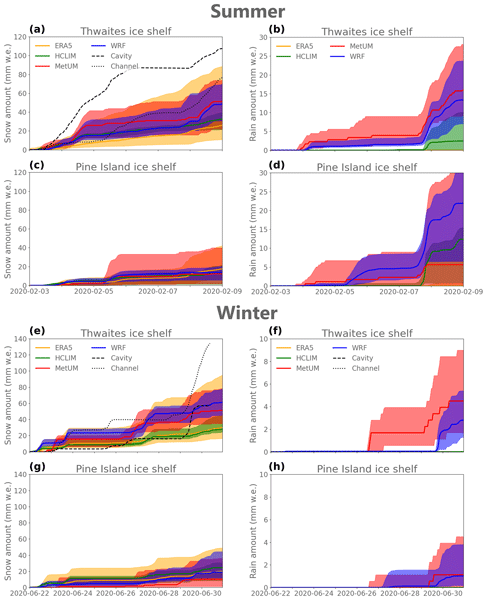
We use three sophisticated climate models to examine extreme precipitation in a critical region of West Antarctica. We found that rainfall probably occurred during the two cases we examined and that it was generated by the interaction of air with steep topography. Our results show that kilometre-scale models are useful tools for exploring extreme precipitation in this region and that more observations of rainfall are needed.
Nicolaj Hansen, Andrew Orr, Xun Zou, Fredrik Boberg, Thomas J. Bracegirdle, Ella Gilbert, Peter L. Langen, Matthew A. Lazzara, Ruth Mottram, Tony Phillips, Ruth Price, Sebastian B. Simonsen, and Stuart Webster
The Cryosphere, 18, 2897–2916, https://doi.org/10.5194/tc-18-2897-2024, https://doi.org/10.5194/tc-18-2897-2024, 2024
Short summary
Short summary
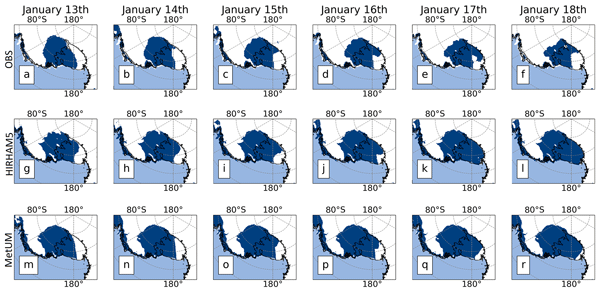
We investigated a melt event over the Ross Ice Shelf. We use regional climate models and a firn model to simulate the melt and compare the results with satellite data. We find that the firn model aligned well with observed melt days in certain parts of the ice shelf. The firn model had challenges accurately simulating the melt extent in the western sector. We identified potential reasons for these discrepancies, pointing to limitations in the models related to representing the cloud properties.
Ella Gilbert, Jhaswantsing Purseed, Yun Li, Martina Krämer, Beatrice Altamura, and Nicolas Bellouin
EGUsphere, https://doi.org/10.5194/egusphere-2024-821, https://doi.org/10.5194/egusphere-2024-821, 2024
Preprint withdrawn
Short summary
Short summary
We use a simple experiment to explore the non-CO2 impacts of aviation on climate, which are considerably larger than the impact of the sector’s carbon emissions alone. We show that the main effect of our experiments – which intend to mimic the effect of aircraft soot emissions reaching existing high-altitude cirrus clouds – is to extend cloud lifetime, thereby enhancing their effect on climate.
Christoph Kittel, Charles Amory, Stefan Hofer, Cécile Agosta, Nicolas C. Jourdain, Ella Gilbert, Louis Le Toumelin, Étienne Vignon, Hubert Gallée, and Xavier Fettweis
The Cryosphere, 16, 2655–2669, https://doi.org/10.5194/tc-16-2655-2022, https://doi.org/10.5194/tc-16-2655-2022, 2022
Short summary
Short summary
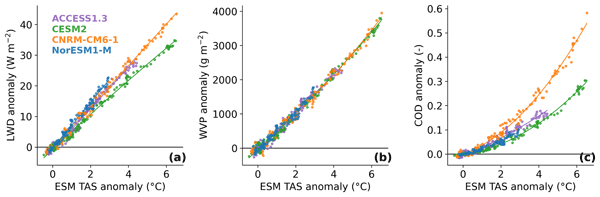
Model projections suggest large differences in future Antarctic surface melting even for similar greenhouse gas scenarios and warming rates. We show that clouds containing a larger amount of liquid water lead to stronger melt. As surface melt can trigger the collapse of the ice shelves (the safety band of the Antarctic Ice Sheet), clouds could be a major source of uncertainties in projections of sea level rise.
Tesse E. A. van den Aker, Peter Kuipers Munneke, Willem Jan van de Berg, Walter W. Immerzeel, and Michiel R. van den Broeke
The Cryosphere, 20, 5475–5490, https://doi.org/10.5194/tc-20-5475-2026, https://doi.org/10.5194/tc-20-5475-2026, 2026
Short summary
Short summary
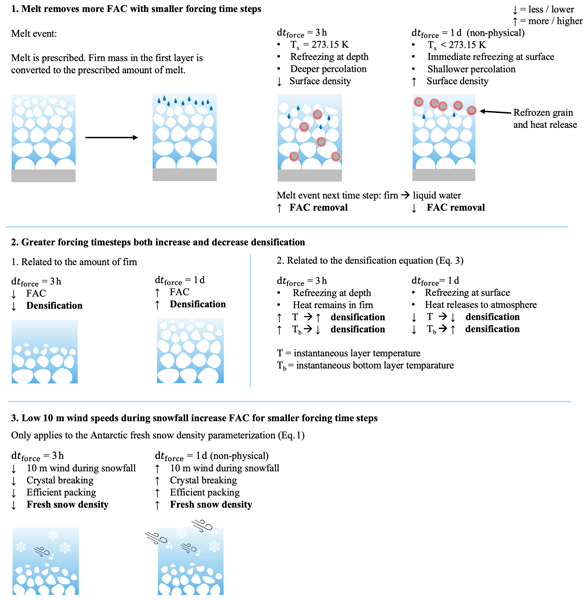
The firn layer, i.e. permanent snow, regulates how an ice sheet responds to climate change. Firn models are forced with with climate data at time steps from sub-daily to annual in literature, however, implications are barely evaluated. We test the impact of different climate forcing time steps on the modeled firn layer. We conclude that the climate forcing time step (1) affects firn model output, (2) can lead to non-physical behaviour, and (3) that resolving at least a diurnal cycle is required.
Jenan Rajavarathan, Matt King, Christopher Watson, and Nicolaj Hansen
The Cryosphere, 20, 5099–5113, https://doi.org/10.5194/tc-20-5099-2026, https://doi.org/10.5194/tc-20-5099-2026, 2026
Short summary
Short summary
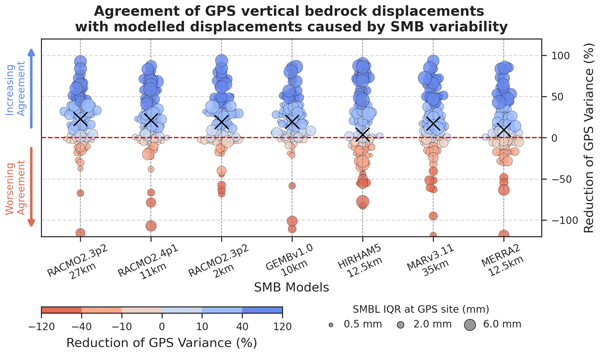
Antarctic surface mass balance (SMB) is a source of major uncertainty in ice-sheet mass balance estimates, but its evaluation remains limited. We introduce a novel method using continuous, bedrock-fixed GPS vertical displacements as a spatially integrated constraint on low-frequency SMB variability over hundreds of kilometres. Applied across Antarctica, it reveals systematic, region-dependent differences with modelled SMB-driven displacements, guiding SMB model refinement.
Sofie Hedetoft, Olivia Bang Brinck, Ruth Mottram, Andrea M. U. Gierisch, Steffen Malskær Olsen, Martin Olesen, Nicolaj Hansen, Anders Anker Bjørk, Erik Loebel, Anne Solgaard, and Peter Thejll
The Cryosphere, 20, 5071–5098, https://doi.org/10.5194/tc-20-5071-2026, https://doi.org/10.5194/tc-20-5071-2026, 2026
Short summary
Short summary
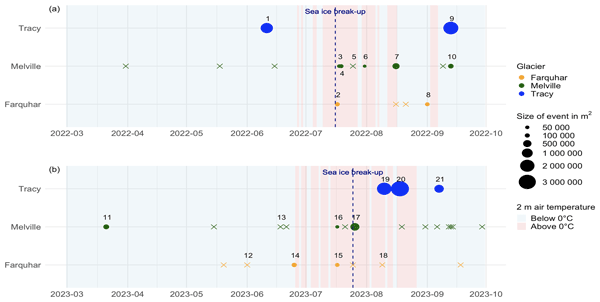
Iceberg mélange is the jumble of icebergs in front of some glaciers that calve into the sea. Some studies suggest mélange might help to control the retreat of glaciers. We studied 3 glaciers in NW Greenland where we used GPS sensors and satellites to track ice movement. We found that glaciers push forward and calve all year, including when mélange and landfast sea ice are present, suggesting mélange is not important in supporting glaciers, but may influence the seasonal calving cycle.
Sai Prabala Swetha Chittella, Andrew Orr, Pranab Deb, and Quentin Dalaiden
The Cryosphere, 20, 5005–5023, https://doi.org/10.5194/tc-20-5005-2026, https://doi.org/10.5194/tc-20-5005-2026, 2026
Short summary
Short summary
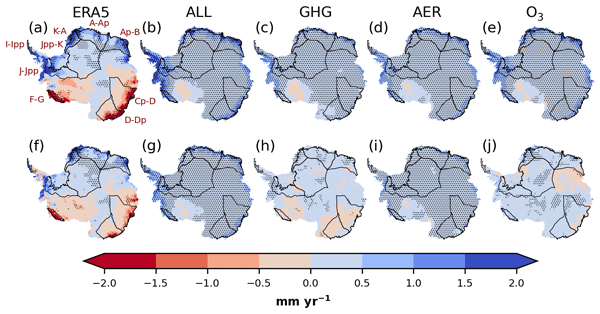
Extreme precipitation is a major contributor to total precipitation over Antarctica and its variability. We examined changes in total and extreme precipitation from 1979 to 2023 using reanalysis data and large climate model simulations. Significant increases were found across parts of East Antarctica, with external forcings contributing to these trends. Greenhouse gases and stratospheric ozone were identified as important drivers of precipitation increases in East Antarctica.
Helen Ockenden, Clara Burgard, Pierre Mathiot, Christoph Kittel, Achille Gellens, Cécile Agosta, and Nicolas C. Jourdain
Geosci. Model Dev., 19, 7979–8002, https://doi.org/10.5194/gmd-19-7979-2026, https://doi.org/10.5194/gmd-19-7979-2026, 2026
Short summary
Short summary
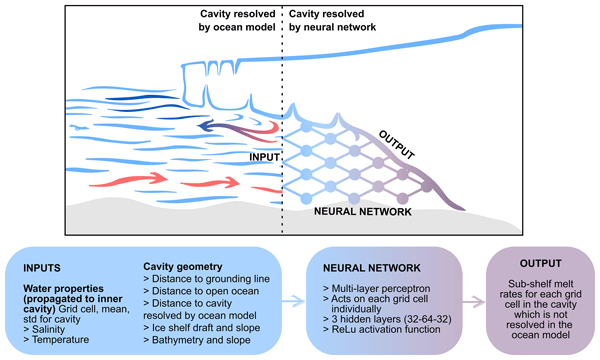
Since numerical computing is expensive, climate models must decide between having a high spatial resolution or running for long time periods. Here, we develop a simple neural network to emulate small-scale processes occurring beneath Antarctic ice shelves, which allows sub-shelf melt and ice–ocean interactions to be included in global ocean models which can run for multiple centuries. This neural network will help us to understand how ocean circulation may change in the future.
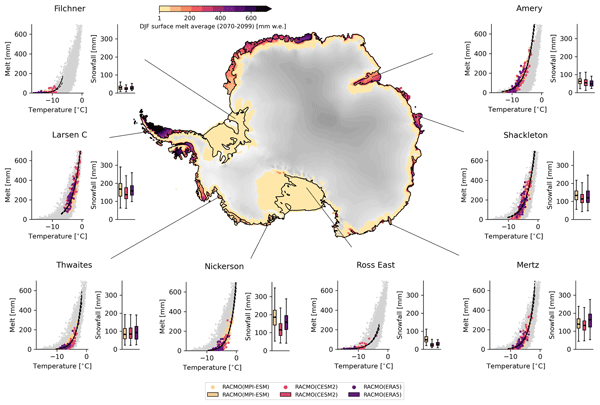
Marte Gé Hofsteenge, Willem Jan van de Berg, Christiaan van Dalum, Kristiina Verro, Maurice van Tiggelen, and Michiel van den Broeke
The Cryosphere, 20, 4747–4766, https://doi.org/10.5194/tc-20-4747-2026, https://doi.org/10.5194/tc-20-4747-2026, 2026
Short summary
Short summary
We use a regional climate model to study how surface melt on Antarctic ice shelves responds to air temperature. The relationship is strongly non-linear, mainly due to feedbacks in surface albedo, with other energy sources also contributing. Currently colder, drier, and more stable ice shelves will experience more melt at the same temperature than ice shelves in wetter climates, highlighting their vulnerability to fracturing, ice shelf instability, and contributions to global sea-level rise.
Sanne B. M. Veldhuijsen, Peter Kuipers Munneke, Willem Jan van de Berg, Michiel R. van den Broeke, and Luke D. Trusel
EGUsphere, https://doi.org/10.5194/egusphere-2026-3453, https://doi.org/10.5194/egusphere-2026-3453, 2026
This preprint is open for discussion and under review for The Cryosphere (TC).
Short summary
Short summary
Antarctica has floating ice shelves around its perimeter that provide stability to the ice sheet. As temperature rises, snow on the ice shelves may melt away, and ponding of meltwater may cause the ice shelves to collapse. If that happens, Antarctica may start to lose ice faster than before, resulting in accelerated sea-level rise. The tool presented in this article will be used in simulations of future climate to determine when climate change leads to collapse of the ice shelves in Antarctica.
Reinhard K. H. Schiemann, Grenville Lister, Rosalyn Hatcher, Dan Hodson, Bryan Lawrence, Len Shaffrey, Jeff Cole, Andrea Dittus, Jenny Mecking, Jon Robson, Simon Wilson, Yevgeny Aksenov, Adam T. Blaker, Ben Harvey, Oscar Martínez-Alvarado, Annette Osprey, Stephanie Rynders, Sharar Ahmadi, Jake Aylmer, Laura Baker, David Case, Emanuele Silvio Gentile, Steve George, Kevin Hodges, Eliza Karlowska, Charlotte Lang, Hua Lu, Niamh O'Callaghan, Weronika Osmolska, Scott Osprey, Tony Phillips, David Schröder, Robin Smith, Andrew G. Turner, Steve Woolnough, Martin Andrews, Andrew Coward, Steven Hardiman, James Harle, John W. Rostron, David M. H. Sexton, Bablu Sinha, Jonny Williams, and Chris Wilson
EGUsphere, https://doi.org/10.5194/egusphere-2026-2281, https://doi.org/10.5194/egusphere-2026-2281, 2026
This preprint is open for discussion and under review for Geoscientific Model Development (GMD).
Short summary
Short summary
This paper presents a new large ensemble of climate model simulations: The CANARI HadGEM3 Large Ensemble (CANARI LE). The CANARI LE has a comparatively high resolution, provides sub-daily output on atmospheric pressure levels, and boundary conditions for driving regional model simulations. The CANARI LE is thus a community resource that lends itself for the study of physical coupled climate processes, weather systems, and impacts in a changing climate.
Christian Torres, Deniz Bozkurt, Vincent Favier, Victoire Buffet, Claudio Bravo, Xavier Fettweis, Thomas Dethinne, Antoine Rabatel, Maximiliano Viale, Sang-Jong Park, and Jorge Arigony-Neto
EGUsphere, https://doi.org/10.5194/egusphere-2026-3508, https://doi.org/10.5194/egusphere-2026-3508, 2026
This preprint is open for discussion and under review for The Cryosphere (TC).
Short summary
Short summary
We investigated periods when unusually warm conditions in Patagonia occurred at the same time as precipitation events on the Antarctic Peninsula. By combining observations and simulations, we identified 127 such events between 1980 and 2022. These events increased ice melt in Patagonia while enhancing accumulation on the Antarctic Peninsula, highlighting how large-scale weather patterns can simultaneously affect ice-covered regions in different ways.
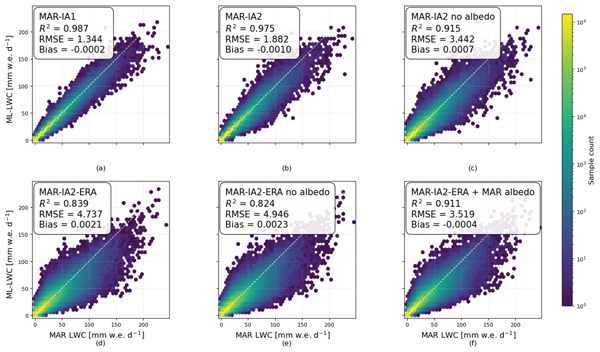
Marco Tedesco, Racheet Matai, and Xavier Fettweis
The Cryosphere, 20, 4235–4253, https://doi.org/10.5194/tc-20-4235-2026, https://doi.org/10.5194/tc-20-4235-2026, 2026
Short summary
Short summary
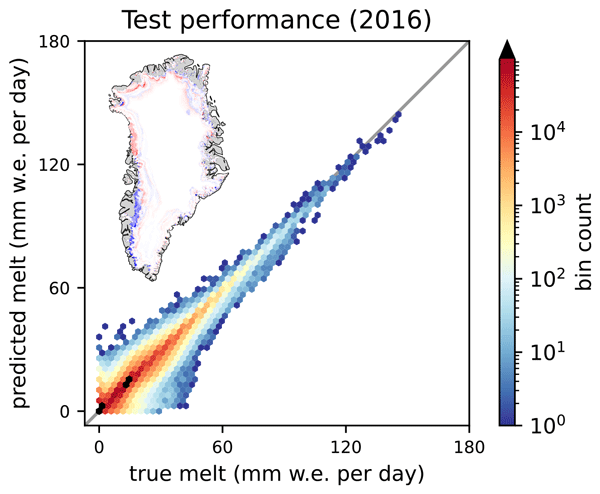
We developed a machine learning emulator of a climate model simulating melting over Greenland that performs as well as the original model but it is much faster. We show that this emulator can be used as powerful tools to complement regional climate models by enabling computationally efficient ensemble simulations and physically interpretable attribution of past and future Greenland surface melt. Development of regional climate models should go hand in hand with ML-based tools.
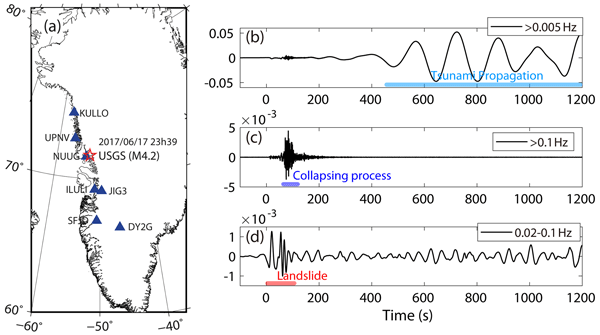
Hideo Aochi, Masumi Yamada, Tung-Cheng Ho, Gonéri Le Cozannet, Arno Christian Hammann, and Ruth Mottram
Nat. Hazards Earth Syst. Sci., 26, 3291–3304, https://doi.org/10.5194/nhess-26-3291-2026, https://doi.org/10.5194/nhess-26-3291-2026, 2026
Short summary
Short summary
The 2017 Landslide-made tsunami in Greenland occurred in a context of global warming and heavily impacted local communities. We analyze this event using seismic data to reconstruct the whole chain of processes from the landslide to the tsunami. Our results validate a new approach to analyze crustal deformations caused by tsunami propagation in fjords, suggesting that alert systems based on seismic data are feasible, potentially allowing to reduce tsunami risks in polar regions.
Guillaume Timmermans, Brice Noël, Christoph Kittel, Thomas Dethinne, Nicolas Ghilain, and Xavier Fettweis
EGUsphere, https://doi.org/10.5194/egusphere-2026-2341, https://doi.org/10.5194/egusphere-2026-2341, 2026
Short summary
Short summary
We assess how well a regional climate model reproduces changes in the mass of the Greenland Ice Sheet due to surface processes, an important driver of sea level rise. By comparing model results with observations, we show that high-resolution simulations closely match reality. Coarser simulations are less detailed near the edges but remain reliable overall. A resolution of 10 kilometers provides a good balance between accuracy and computing cost for long-term projections.
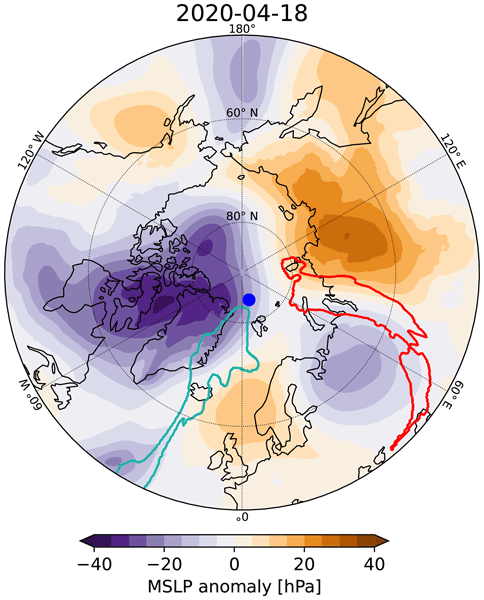
Luisa E. Avilés-Podgurski, Patrick Martineau, Hua Lu, Ayako Yamamoto, Amanda C. Maycock, Andrew Orr, Tony Phillips, Thomas J. Bracegirdle, Anna E. Hogg, Grzegorz Muszynski, and Andrew Fleming
Weather Clim. Dynam., 7, 1051–1071, https://doi.org/10.5194/wcd-7-1051-2026, https://doi.org/10.5194/wcd-7-1051-2026, 2026
Short summary
Short summary
Atmospheric rivers (ARs) are narrow filaments of intense poleward water vapour transport. On rare occasions, they reach the Arctic, driving strong warming and melt. In April 2020, two ARs intruded into the central Arctic within one week, raising near-surface temperatures by up to 30°C and leading to extreme precipitation. Their distinct paths and thermodynamic evolution reveal diverse AR impacts on Arctic sea ice and precipitation extremes.
Elke Schlager, Sebastian Scher, Ruth H. Mottram, and Peter L. Langen
The Cryosphere, 20, 3313–3343, https://doi.org/10.5194/tc-20-3313-2026, https://doi.org/10.5194/tc-20-3313-2026, 2026
Short summary
Short summary
Predicting Greenland's surface melt is critical for understanding sea-level rise, but traditional firn models are too slow for exploring many climate scenarios. We developed a neural network optimized through systematic input selection and network tuning to identify the necessary information to accurately emulate surface melt. This approach cuts computation costs by orders of magnitude and can be retrained for different climate forcings or extended to other surface mass balance properties.
Ian Simpson, Edward Hanna, Ryan S. Williams, Linh Luu, Andrew Orr, Julie Jones, Xavier Fettweis, Jose Abraham Torres Alavez, Ole Bøssing Christensen, Ella Gilbert, Sid Gumber, Christoph Kittel, Sihan Li, Damien Maure, Ruth Mottram, Tony Phillips, Willem Jan van de Berg, and Kristiina Verro
EGUsphere, https://doi.org/10.5194/egusphere-2026-2270, https://doi.org/10.5194/egusphere-2026-2270, 2026
Short summary
Short summary
The warming trend in global temperatures has potential to result in accelerated break up of the Antarctic ice shelves, which would contribute to rising sea levels. Here we present a novel database of Antarctic extreme weather events over a selection of the Antarctic ice shelves. We examine air temperature, precipitation, wind and surface pressure. In addition, we examine trends in the frequency of extreme events and the links with weather patterns around Antarctica.
Raf Antwerpen, Marco Tedesco, Pierre Gentine, Willem Jan van de Berg, and Xavier Fettweis
The Cryosphere, 20, 3131–3149, https://doi.org/10.5194/tc-20-3131-2026, https://doi.org/10.5194/tc-20-3131-2026, 2026
Short summary
Short summary
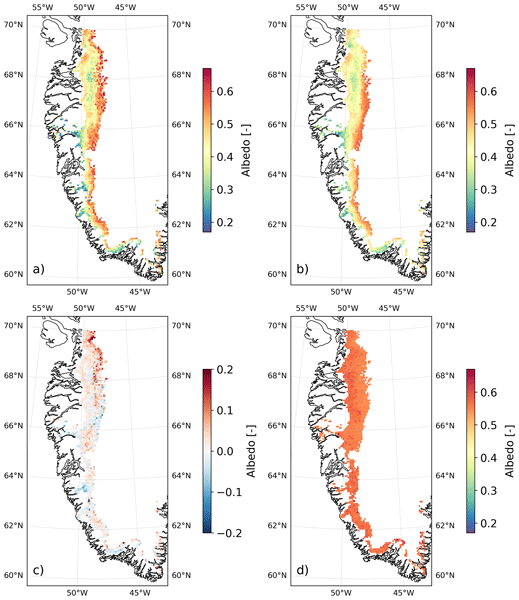
We study why Greenland ice melts faster by improving how ice brightness is represented. This is important because it controls how much sunlight is absorbed by the ice. Using satellite data and a new transparent machine learning method trained with climate model information, we capture how the shape of the ice sheet, temperature, and meltwater change ice brightness. Our approach outperforms existing climate models and can reduce uncertainty in future sea level rise projections.
Ian Castellanos, Martin Ménégoz, Juliette Blanchet, Julien Beaumet, Hubert Gallée, Eduardo Moreno-Chamarro, Chantal Staquet, and Xavier Fettweis
Earth Syst. Dynam., 17, 581–605, https://doi.org/10.5194/esd-17-581-2026, https://doi.org/10.5194/esd-17-581-2026, 2026
Short summary
Short summary
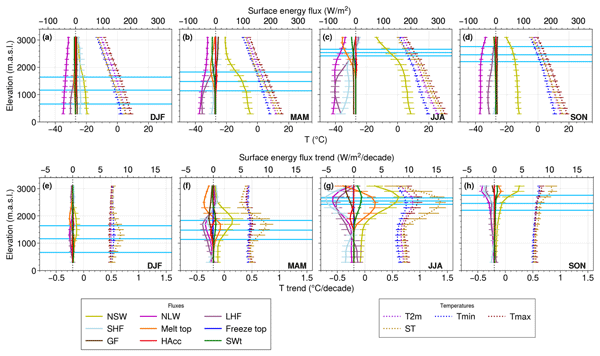
The Alps host glaciers, distinct ecosystems, socio-economic interests and water resources that are being impacted by climate change. In this study, we aim at understanding how warming occurs in the Alps in projected scenarios and what physical processes drive it. We find under these scenarios that elevations around the snowline will warm faster than elsewhere, because snow retreats to higher elevations. Indeed, snow slows down warming due to its high albedo and the energy consumed to melt it.
Jonathon R. Preece, Patrick Alexander, Thomas L. Mote, Gabriel J. Kooperman, Xavier Fettweis, and Marco Tedesco
The Cryosphere, 20, 2871–2894, https://doi.org/10.5194/tc-20-2871-2026, https://doi.org/10.5194/tc-20-2871-2026, 2026
Short summary
Short summary
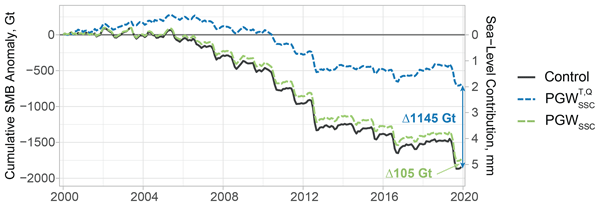
Surface melt of the Greenland Ice Sheet has increased dramatically since the turn of the century, aided by an increase in persistent atmospheric circulation patterns that promote anomalously warm conditions. Through modeling experiments, this study shows that surface mass loss would have been reduced by 62% relative to historical conditions if this shift in atmospheric circulation would have occurred under the lower average temperatures of a preindustrial climate.
Fredrik Boberg, Xavier Fettweis, Nicolaj Hansen, Ruth Mottram, and Michiel R. van den Broeke
The Cryosphere, 20, 2947–2960, https://doi.org/10.5194/tc-20-2947-2026, https://doi.org/10.5194/tc-20-2947-2026, 2026
Short summary
Short summary
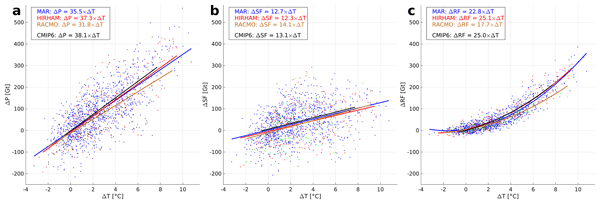
An ensemble of regional climate model simulations is used to estimate the 21st century change in precipitation on the Greenland ice sheet. For the end of the century, the change is in the range 40 to 170 Gt per year, depending on the emission scenario. Using annual values of 2 m air temperature and precipitation, we estimate an increase in precipitation of 35 Gt per year for every degree of warming.
Robin S. Smith, Tarkan A. Bilge, Thomas J. Bracegirdle, Paul R. Holland, Till Kuhlbrodt, Charlotte Lang, Spencer Liddicoat, Tom Mitcham, Jane Mulcahy, Kaitlin A. Naughten, Andrew Orr, Julien Palmieri, Antony J. Payne, Steven Rumbold, Marc Stringer, Ranjini Swaminathan, Sarah Taylor, Jeremy Walton, and Colin Jones
Earth Syst. Dynam., 17, 475–493, https://doi.org/10.5194/esd-17-475-2026, https://doi.org/10.5194/esd-17-475-2026, 2026
Short summary
Short summary
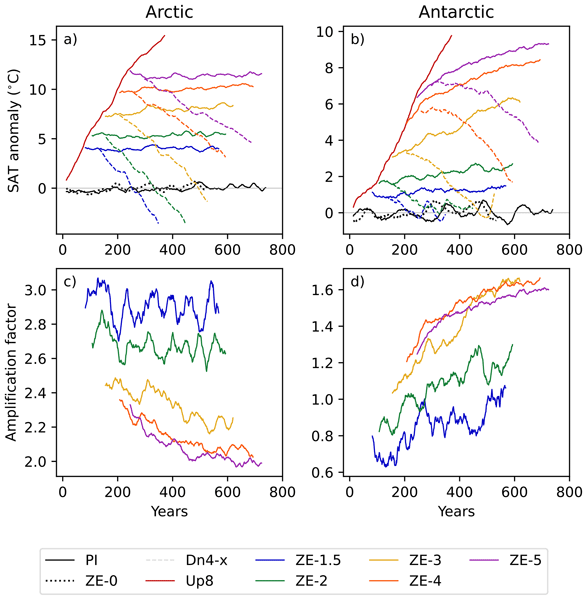
There is a dangerous amount of uncertainty in our predictions of climate change in polar regions because some of feedbacks that might lead to changes that are too rapid for us to adapt to, or that cannot be reversed. We have run a set of simulations with a state-of-the-art Earth System Model that helps improve our understanding of how climate in these regions might change. Some of the aspects we investigate are reversible but many are not, especially those affecting ice sheets and sea level.
Samuel M. Tax, Maurice van Tiggelen, Thirza N. Feenstra, Paul C. J. P. Smeets, Srinidhi N. Gadde, Christiaan T. van Dalum, Willem Jan van de Berg, and Michiel R. van den Broeke
EGUsphere, https://doi.org/10.5194/egusphere-2026-1926, https://doi.org/10.5194/egusphere-2026-1926, 2026
Short summary
Short summary
Strong winds can lift snow into the air, which influences the energy exchange between the surface and the atmosphere. We studied this phenomenon over the Greenland Ice Sheet using observations and a climate model. We found that blowing snow traps heat near the surface like a blanket and reflects incoming sunlight like a mirror. Simulating these processes increases the net energy at the surface and improves model accuracy. Therefore, we recommend including these effects in climate models.
Audrey Goutard, Marion Réveillet, Fanny Brun, Delphine Six, Kevin Fourteau, Charles Amory, Xavier Fettweis, Mathieu Fructus, Arbindra Khadka, and Matthieu Lafaysse
The Cryosphere, 20, 2393–2416, https://doi.org/10.5194/tc-20-2393-2026, https://doi.org/10.5194/tc-20-2393-2026, 2026
Short summary
Short summary
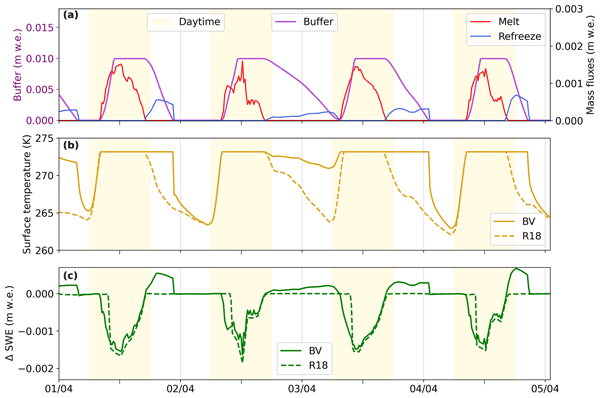
A new scheme has been developed in a snowpack model (SURFEX/ISBA-Crocus), to consider the impact of liquid water dynamics on bare ice, including albedo feedback and refreezing. When applied to the Mera Glacier in Nepal, the model reveals strong seasonal effects on the energy and mass balance, with increased melting in dry seasons and significant refreezing during the monsoon. This development improves mass balance modeling under increasing rainfall and bare ice exposure due to climate warming.
Tim van den Akker, William H. Lipscomb, Gunter R. Leguy, Willem Jan van de Berg, and Roderik S. W. van de Wal
The Cryosphere, 20, 1405–1425, https://doi.org/10.5194/tc-20-1405-2026, https://doi.org/10.5194/tc-20-1405-2026, 2026
Short summary
Short summary
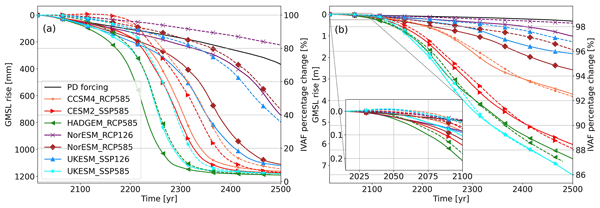
The Antarctic Ice Sheet is currently thinning, especially at major outlet glaciers. Including present-day ice thinning rates in models is a modeller's choice and can affect future projections. This study quantifies the impact of current imbalance on forced future projections, revealing strong regional and short-term (up to 2100) effects when these mass change rates are included.
Isabelle Sangha, Nathan Luke Abraham, Andrew Orr, Hua Lu, Michael C. Pitts, Lamont R. Poole, and Michael Weimer
EGUsphere, https://doi.org/10.5194/egusphere-2026-128, https://doi.org/10.5194/egusphere-2026-128, 2026
Short summary
Short summary
The UK Earth System Model is updated with an improved polar stratospheric cloud scheme. The performance of the scheme is evaluated against satellite data. While the observed wave ice still fails to form in the model, the scheme improves its ability to represent different polar stratospheric cloud types and their variations. This brings the model closer to satellite observations and highlights the need for further development to capture the polar stratospheric cloud formation in mountain waves.
Benjamin Heurgue, Charles Amory, Christoph Kittel, Fredrik Boberg, Gaël Durand, Vincent Favier, Xavier Fettweis, Quentin Glaude, Heiko Goelzer, Nicolaj Hansen, Nicolas C. Jourdain, Ruth Mottram, Martin Olesen, Willem Jan Van de Berg, Michiel R. Van den Broeke, and René R. Wijngaard
EGUsphere, https://doi.org/10.5194/egusphere-2026-624, https://doi.org/10.5194/egusphere-2026-624, 2026
Short summary
Short summary
We studied how the Antarctic ice sheet surface mass balance may change by 2100 using three high-resolution climate models forced by the same future climate scenario. While the models agree for present-day conditions, they project very different futures, especially over floating ice shelves. These differences mainly come from how melting, refreezing, and temperature are represented. Our results show that future sea level projections strongly depend on how well models simulate today’s climate.
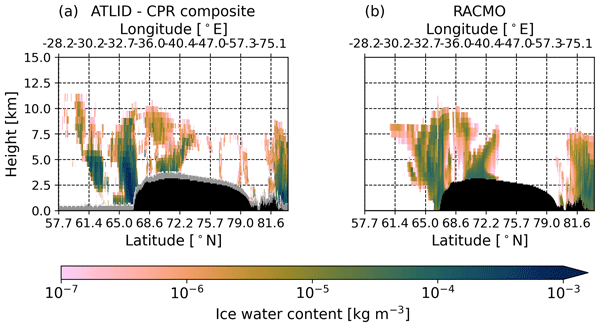
Thirza N. Feenstra, Willem Jan van de Berg, Gerd-Jan van Zadelhoff, David P. Donovan, Christiaan T. van Dalum, and Michiel R. van den Broeke
Atmos. Meas. Tech., 19, 1323–1344, https://doi.org/10.5194/amt-19-1323-2026, https://doi.org/10.5194/amt-19-1323-2026, 2026
Short summary
Short summary
Cloud representation brings large uncertainties in polar climate modeling. We show the first evaluation of Greenland clouds in the Regional Atmospheric Climate Model (RACMO2.4) with new EarthCARE satellite data. Comparing lidar and radar observations and retrieved cloud profiles with co-located RACMO output, we find RACMO captures low ice clouds but underestimates high clouds, mid-altitude liquid clouds, and snowfall. These results highlight EarthCARE's potential to improve polar climate models.
Jan Landwehrs, Sonja Murto, Florian Gebhardt, Ella Gilbert, and Annette Rinke
Weather Clim. Dynam., 7, 341–365, https://doi.org/10.5194/wcd-7-341-2026, https://doi.org/10.5194/wcd-7-341-2026, 2026
Short summary
Short summary
This study investigates how Svalbard's mountains modulate warm and moist air mass intrusions into the central Arctic, where such events are key drivers of warm extremes. Using atmospheric modeling, air parcel trajectories and observations from the MOSAiC expedition for a case in April 2020 and a climatological analysis for springtime in 2000–2022, we show that Svalbard can alter winds, temperatures, clouds and surface energy fluxes hundreds of kilometers downstream over sea ice.

Tim van den Akker, William H. Lipscomb, Gunter R. Leguy, Willem Jan van de Berg, and Roderik S. W. van de Wal
The Cryosphere, 20, 1217–1235, https://doi.org/10.5194/tc-20-1217-2026, https://doi.org/10.5194/tc-20-1217-2026, 2026
Short summary
Short summary
Ice sheet models to simulate future sea level rise require parameterizations, like for the friction at the bedrock. Studies have quantified the effect of using different parameterizations, and some have concluded that projections are sensitive to the choice of the specific parameterization. In this study, we show that you can make an ice sheet model sensitive to the basal friction parameterization, and that for different modellers choices you can also make the model insensitive to this.
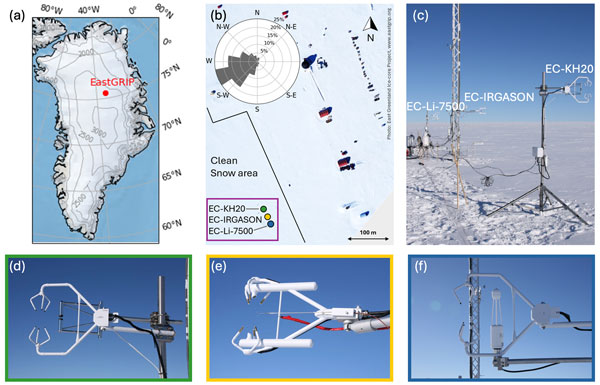
Ida Haven, Hans Christian Steen-Larsen, Laura J. Dietrich, Sonja Wahl, Jason E. Box, Michiel R. van den Broeke, Alun Hubbard, Stephan T. Kral, Joachim Reuder, and Maurice van Tiggelen
The Cryosphere, 20, 573–593, https://doi.org/10.5194/tc-20-573-2026, https://doi.org/10.5194/tc-20-573-2026, 2026
Short summary
Short summary
Three independent Eddy-Covariance measurement systems deployed on top of the Greenland Ice Sheet are compared. Using this dataset, we evaluate the reproducibility and quantify the differences between the systems. The fidelity of two regional climate models in capturing the seasonal variability in the latent and sensible heat flux between the snow surface and the atmosphere is assessed. We identify differences between observations and model simulations, especially during the winter period.

Horst Machguth, Andrew Tedstone, Peter Kuipers Munneke, Max Brils, Brice Noël, Nicole Clerx, Nicolas Jullien, Xavier Fettweis, and Michiel van den Broeke
The Cryosphere, 20, 427–452, https://doi.org/10.5194/tc-20-427-2026, https://doi.org/10.5194/tc-20-427-2026, 2026
Short summary
Short summary
Due to increasing air temperatures, surface melt expands to higher elevations on the Greenland ice sheet. This is visible on satellite imagery in the form of rivers of meltwater running across the surface of the ice sheet. We compare model results of meltwater at high elevations on the ice sheet to satellite observations. We find that each of the models shows strengths and weaknesses. A detailed look into the model results reveals potential reasons for the differences between models.
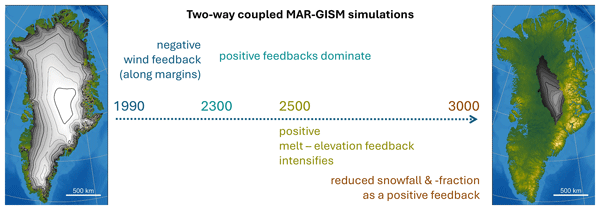
Chloë Marie Paice, Xavier Fettweis, and Philippe Huybrechts
The Cryosphere, 20, 309–332, https://doi.org/10.5194/tc-20-309-2026, https://doi.org/10.5194/tc-20-309-2026, 2026
Short summary
Short summary
To study Greenland ice sheet–atmosphere interactions, we coupled an ice sheet model to a regional climate model and performed simulations of differing coupling complexity over 1000 years under a high-warming climate scenario. They reveal that at first melt at the ice sheet margin is reduced by changing wind patterns. But over time, as the ice sheet melts and its surface lowers, precipitation patterns and cloudiness also change and amplify ice mass loss over the entire ice sheet.
José Abraham Torres Alavez, Ruth Mottram, Thomas Lavergne, Rasmus Pedersen, and Ole Bøssing Christensen
EGUsphere, https://doi.org/10.5194/egusphere-2025-6183, https://doi.org/10.5194/egusphere-2025-6183, 2026
Short summary
Short summary
Coastal polynyas shape sea ice production and polar climate. This study analyses Greenland and Antarctic polynyas using two satellite sea-ice products and HCLIM simulations. The high-resolution CCI dataset improves polynya representation, boundary-layer structure, and near-surface conditions. Results show that integrating high-resolution sea-ice data enhances regional climate modelling and supports better reanalysis systems.
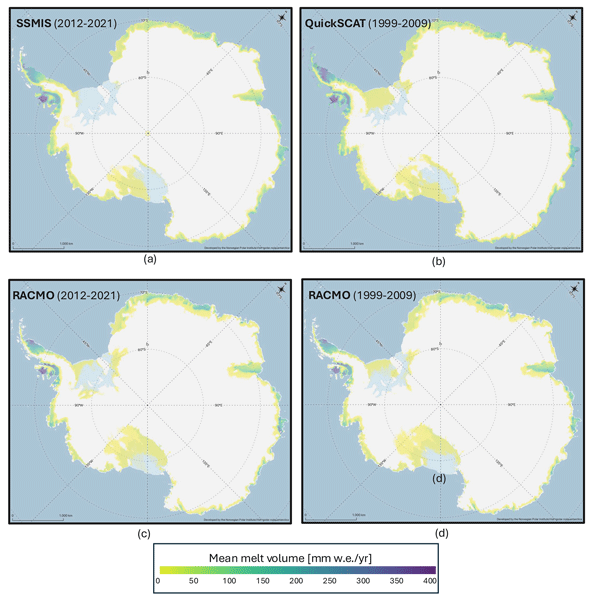
Valeria Di Biase, Peter Kuipers Munneke, Bert Wouters, Michiel R. van den Broeke, and Maurice van Tiggelen
The Cryosphere, 20, 87–96, https://doi.org/10.5194/tc-20-87-2026, https://doi.org/10.5194/tc-20-87-2026, 2026
Short summary
Short summary
We produce annual maps of Antarctic surface melt volumes from 2012 to 2021 using satellite microwave data. We detect melting days from thresholds on the satellite signal and then use actual melt measurements from weather stations to convert those signals into water‑equivalent volumes. Our maps capture known melt hotspots and show slightly lower totals than climate models. This dataset supports climate and ice‑shelf studies.
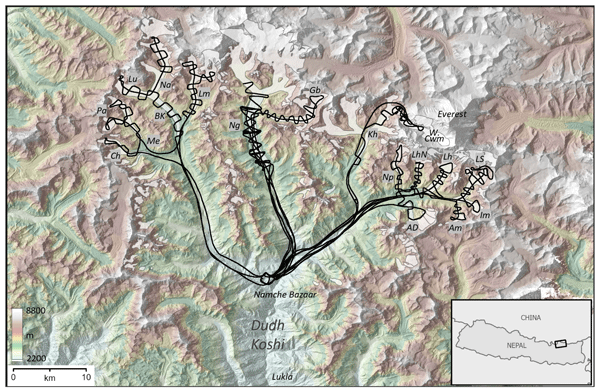
Hamish D. Pritchard, Edward C. King, David J. Goodger, Douglas Boyle, Daniel N. Goldberg, Beatriz Recinos, Andrew Orr, and Dhananjay Regmi
Earth Syst. Sci. Data, 18, 199–217, https://doi.org/10.5194/essd-18-199-2026, https://doi.org/10.5194/essd-18-199-2026, 2026
Short summary
Short summary
We present a new and uniquely extensive dataset of glacier thickness from the Khumbu Himal around Mount Everest that stretches for 119 km, doubling the extent of thickness measurements in High Mountain Asia. Such measurements are key inputs for models that estimate how much ice is stored on the whole mountain range scale and for models that predict how this ice reserve will change in future, and what impact this will have on water supply for the large populations living downstream.
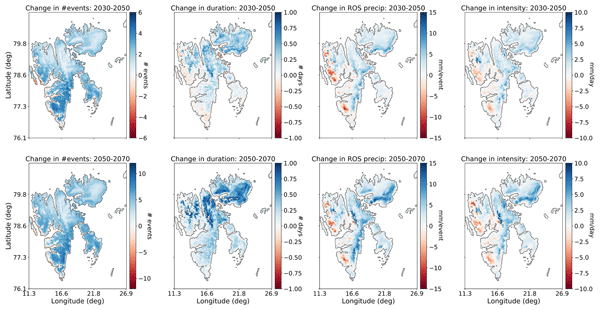
Hannah Vickers, Priscilla Mooney, and Oskar Landgren
The Cryosphere, 19, 6907–6926, https://doi.org/10.5194/tc-19-6907-2025, https://doi.org/10.5194/tc-19-6907-2025, 2025
Short summary
Short summary
Rain-on-snow (ROS) events are becoming a common feature in winter in Svalbard due to climate warming. Understanding how ROS events are changing and how they will change in the coming decades is crucial to minimise their impacts. Using atmospheric reanalyses and climate projections we found contrasting trends between coastal and inland areas, and that the most dramatic future changes in ROS will occur in glaciated areas which will have considerable consequences for Svalbard's hydrology.

Heiko Goelzer, Constantijn J. Berends, Fredrik Boberg, Gael Durand, Tamsin L. Edwards, Xavier Fettweis, Fabien Gillet-Chaulet, Quentin Glaude, Philippe Huybrechts, Sébastien Le clec'h, Ruth Mottram, Brice Noël, Martin Olesen, Charlotte Rahlves, Jeremy Rohmer, Michiel van den Broeke, and Roderik S. W. van de Wal
The Cryosphere, 19, 6887–6906, https://doi.org/10.5194/tc-19-6887-2025, https://doi.org/10.5194/tc-19-6887-2025, 2025
Short summary
Short summary
We present an ensemble of ice sheet model projections for the Greenland ice sheet. The focus is on providing projections that improve our understanding of the range future sea-level rise and the inherent uncertainties over the next 100 to 300 years. Compared to earlier work we more fully account for some of the uncertainties in sea-level projections. We include a wider range of climate model output, more climate change scenarios and we extend projections schematically up to year 2300.
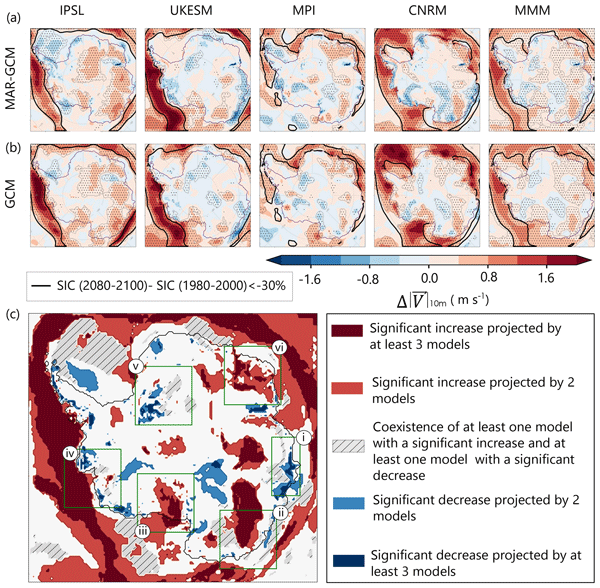
Cécile Davrinche, Anaïs Orsi, Charles Amory, Christoph Kittel, and Cécile Agosta
The Cryosphere, 19, 6023–6042, https://doi.org/10.5194/tc-19-6023-2025, https://doi.org/10.5194/tc-19-6023-2025, 2025
Short summary
Short summary
We analyse changes in Antarctic winter surface winds projected by 4 models. Depending on the area and model, changes on the continent by 2100 reveal opposing trends. Nevertheless, models agree on a strengthening of surface winds in Adélie Land for example and a weakening in some other areas such as the Amundsen region. We attribute the strengthening of near-surface winds to changes in the large-sale atmospheric circulation and the weakening to changes in the structure of the lower atmosphere.
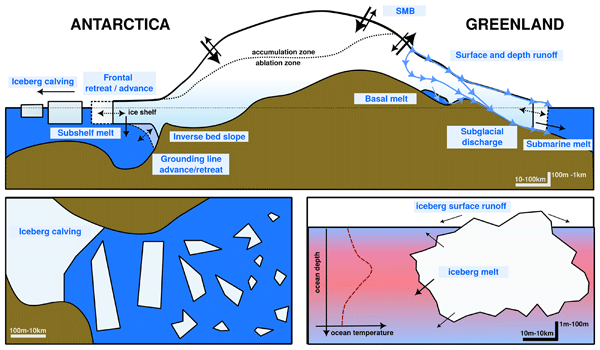
Gavin A. Schmidt, Kenneth D. Mankoff, Jonathan L. Bamber, Clara Burgard, Dustin Carroll, David M. Chandler, Violaine Coulon, Benjamin J. Davison, Matthew H. England, Paul R. Holland, Nicolas C. Jourdain, Qian Li, Juliana M. Marson, Pierre Mathiot, Clive R. McMahon, Twila A. Moon, Ruth Mottram, Sophie Nowicki, Anna Olivé Abelló, Andrew G. Pauling, Thomas Rackow, and Damien Ringeisen
Geosci. Model Dev., 18, 8333–8361, https://doi.org/10.5194/gmd-18-8333-2025, https://doi.org/10.5194/gmd-18-8333-2025, 2025
Short summary
Short summary
The impact of increasing mass loss from the Greenland and Antarctic ice sheets has not so far been included in historical climate model simulations. This paper describes the protocols and data available for modeling groups to add this anomalous freshwater to their ocean modules to better represent the impacts of these fluxes on ocean circulation, sea ice, salinity and sea level.
Sanne B. M. Veldhuijsen, Willem Jan van de Berg, Peter Kuipers Munneke, Nicolaj Hansen, Fredrik Boberg, Christoph Kittel, Charles Amory, and Michiel R. van den Broeke
The Cryosphere, 19, 5157–5173, https://doi.org/10.5194/tc-19-5157-2025, https://doi.org/10.5194/tc-19-5157-2025, 2025
Short summary
Short summary
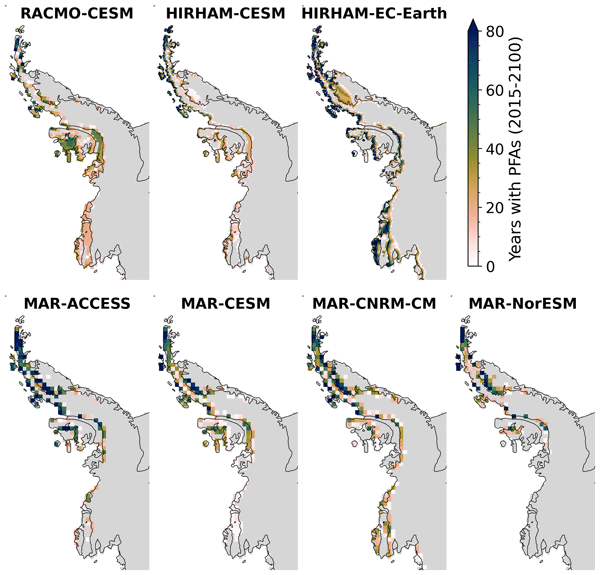
Perennial firn aquifers (PFAs), year-round bodies of liquid water within firns, can potentially impact ice-shelf and ice-sheet stability. We developed a fast XGBoost firn emulator to predict the 21st-century distribution of PFAs in Antarctica for 12 climatic forcing datasets. Our findings suggest that, in low-emission scenarios, PFAs remain confined to the Antarctic Peninsula. However, in a high-emission scenario, PFAs are projected to expand to a region in West Antarctica and East Antarctica.
René R. Wijngaard, Willem Jan van de Berg, Christiaan T. van Dalum, Adam R. Herrington, and Xavier J. Levine
Weather Clim. Dynam., 6, 1241–1266, https://doi.org/10.5194/wcd-6-1241-2025, https://doi.org/10.5194/wcd-6-1241-2025, 2025
Short summary
Short summary
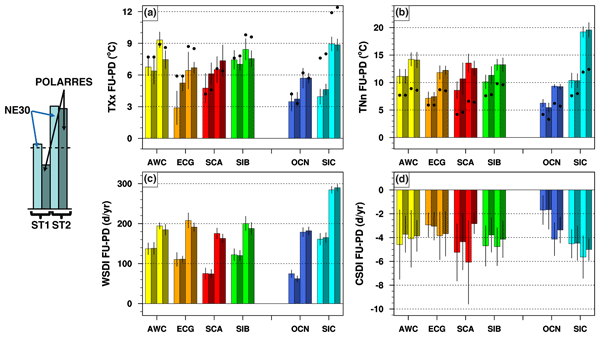
We used the variable-resolution Community Earth System Model to simulate present-day and future Arctic temperature and precipitation extremes using global grids (~111 km) with and without regional refinement (~28 km) and a storyline approach. Refined grids generally perform better for precipitation extremes, while unrefined grids perform better for temperature extremes. Future projections show increases in high temperature and wet precipitation extremes and decreases in low temperature extremes.
Thomas Dethinne, Nicolas Ghilain, Christoph Kittel, Benjamin Lecart, Xavier Fettweis, and François Jonard
EGUsphere, https://doi.org/10.5194/egusphere-2025-3907, https://doi.org/10.5194/egusphere-2025-3907, 2025
Short summary
Short summary
This study replace standard vegetation input of a regional climate model with a satellite-based vegetation dataset to assess how vegetation influences climate during extreme events and to test the sensitivity of the model. The results show a non-linear sensitivity to vegetation, and using an observation-based vegetation input allows for a better representation of the extreme events, highlight the need for an advanced representation of vegetation in climate model to improve climate predictions.
Alison Delhasse, Christoph Kittel, and Johanna Beckmann
The Cryosphere, 19, 4459–4469, https://doi.org/10.5194/tc-19-4459-2025, https://doi.org/10.5194/tc-19-4459-2025, 2025
Short summary
Short summary
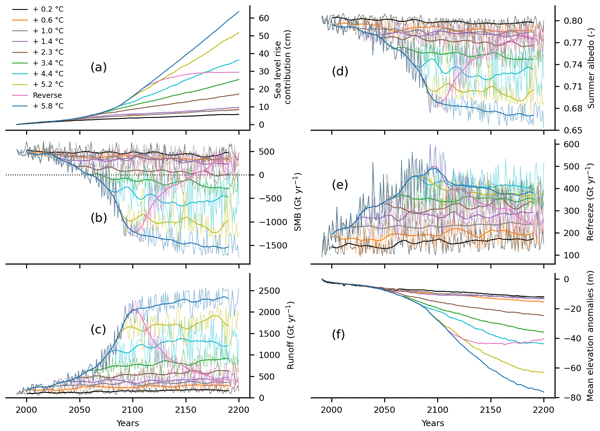
This study explores how the Greenland Ice Sheet (GrIS) responds to different levels of stabilized global warming and if the climate cools back. Our findings show that global temperature increases beyond +2.3 °C mark a critical threshold. We also highlight the importance of limiting warming to avoid irreversible ice loss, as well as the potential for recovery after temporarily exceeding warming thresholds if action is taken quickly to lower global temperatures.
Kristiina Verro, Cecilia Äijälä, Roberta Pirazzini, Ruzica Dadic, Damien Maure, Willem Jan van de Berg, Giacomo Traversa, Christiaan T. van Dalum, Petteri Uotila, Xavier Fettweis, Biagio Di Mauro, and Milla Johansson
The Cryosphere, 19, 4409–4436, https://doi.org/10.5194/tc-19-4409-2025, https://doi.org/10.5194/tc-19-4409-2025, 2025
Short summary
Short summary
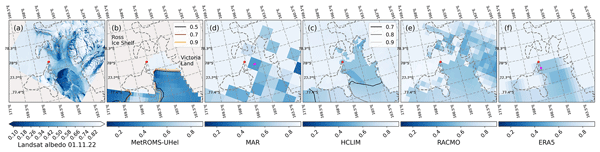
Accurately representing Antarctic sea ice is essential for reliable climate and ocean model predictions. We evaluated how different models simulate the sea ice's sunlight reflectivity (called albedo) using field and satellite data. Models with simple albedo schemes performed well in limited cases but missed key processes. The advanced scheme in the MetROMS-UHel ocean model provided the most accurate results, including observed day–night albedo changes observed during a field campaign.
Christiaan T. van Dalum, Willem Jan van de Berg, Michiel R. van den Broeke, and Maurice van Tiggelen
The Cryosphere, 19, 4061–4090, https://doi.org/10.5194/tc-19-4061-2025, https://doi.org/10.5194/tc-19-4061-2025, 2025
Short summary
Short summary
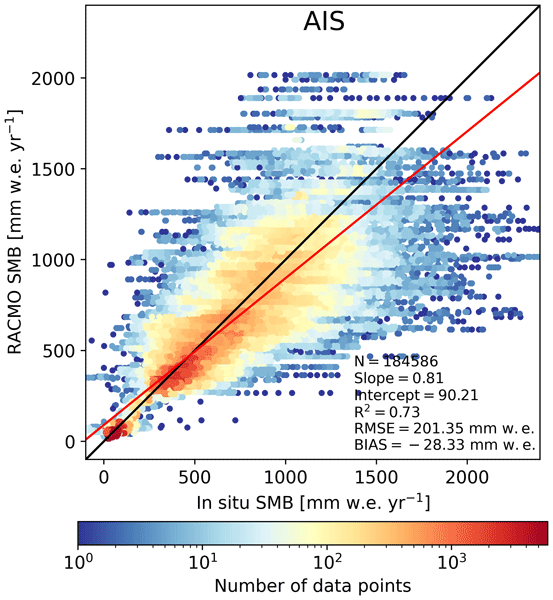
In this study, we present a new surface mass balance (SMB) and near-surface climate product for Antarctica with the regional climate model RACMO2.4p1. We assess the impact of major model updates on the climate of Antarctica. Locally, the SMB has changed substantially but also agrees well with observations. In addition, we show that the SMB components, surface energy budget, albedo, pressure, temperature, and wind speed compare well with in situ and remote sensing observations.
Maurice van Tiggelen, Paul C. J. P. Smeets, Carleen H. Reijmer, Peter Kuipers Munneke, and Michiel R. van den Broeke
Earth Syst. Sci. Data, 17, 4933–4955, https://doi.org/10.5194/essd-17-4933-2025, https://doi.org/10.5194/essd-17-4933-2025, 2025
Short summary
Short summary
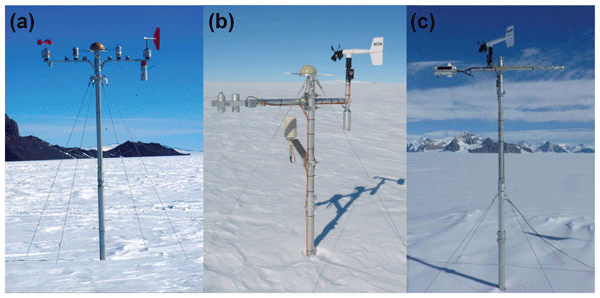
This paper describes the measurements from the 19 IMAU (Institute for Marine and Atmospheric research Utrecht) automatic weather stations that operated on the Antarctic ice sheet from 1995 through 2022. These stations also measured the net surface radiation and surface height change, allowing for the quantification of the surface energy and mass balance at hourly resolution. These data are invaluable for the evaluation of atmospheric models and for the detection of climatological changes.
Anneke L. Vries, Willem Jan van de Berg, Brice Noël, Lorenz Meire, and Michiel R. van den Broeke
The Cryosphere, 19, 3897–3914, https://doi.org/10.5194/tc-19-3897-2025, https://doi.org/10.5194/tc-19-3897-2025, 2025
Short summary
Short summary
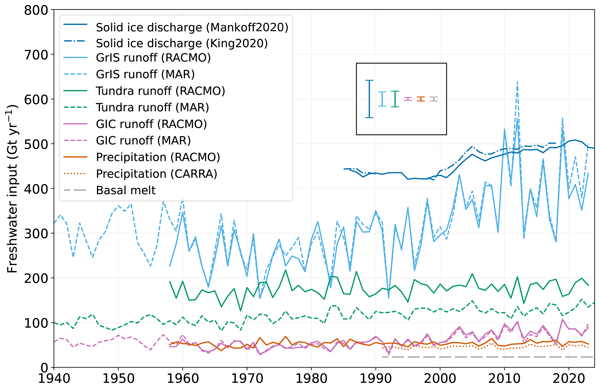
Freshwater flows into Greenland's fjords from various sources. Solid ice discharge (e.g. calving icebergs) dominates freshwater input in the southeast and northwest. In contrast, in the southwest, runoff from the ice sheet and tundra are the most significant. Seasonal data revealed that fjord precipitation and tundra runoff contribute up to 11 % and 35 % of the monthly freshwater input, respectively. Our results provide valuable input for ocean models and for researchers studying fjord ecosystems.
Zhengwen Yan, Jiangjun Ran, Pavel Ditmar, C. K. Shum, Roland Klees, Patrick Smith, and Xavier Fettweis
Earth Syst. Sci. Data, 17, 4253–4275, https://doi.org/10.5194/essd-17-4253-2025, https://doi.org/10.5194/essd-17-4253-2025, 2025
Short summary
Short summary
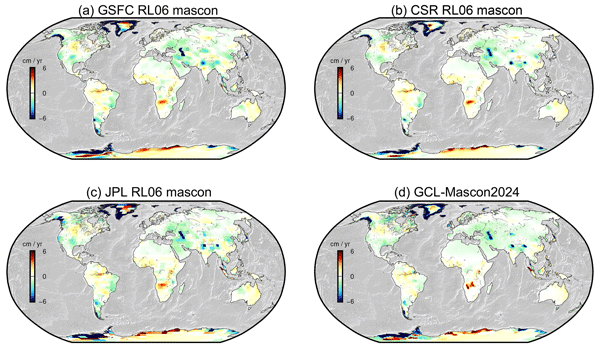
The Gravity Recovery And Climate Experiment (GRACE) mission has greatly improved our understanding of changes in Earth's gravity field over time. A novel mass concentration (mascon) dataset, GCL-Mascon2024, was determined by leveraging the short-arc approach, advanced spatial constraints, a frequency-dependent noise processing strategy, and parameterization-integrating natural boundaries, aiming to enhance accuracy for monitoring mass transportation on Earth.
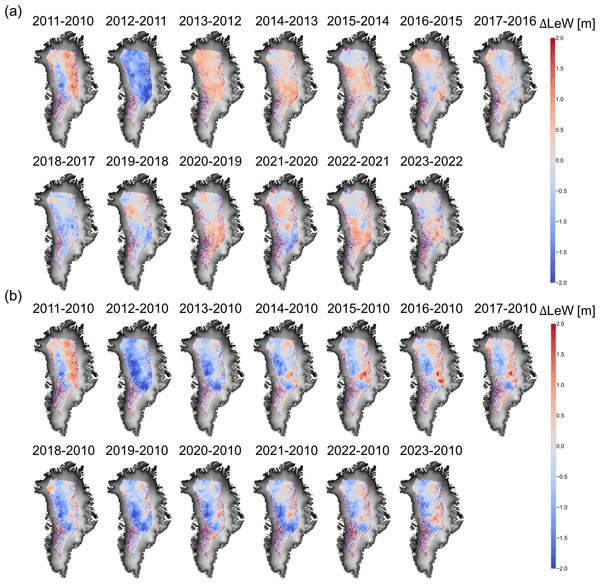
Weiran Li, Stef Lhermitte, Bert Wouters, Cornelis Slobbe, Max Brils, and Xavier Fettweis
The Cryosphere, 19, 3419–3442, https://doi.org/10.5194/tc-19-3419-2025, https://doi.org/10.5194/tc-19-3419-2025, 2025
Short summary
Short summary
Due to recurrent melt and refreezing events in recent decades, the snow conditions over Greenland have changed. To observe this, we use a parameter (leading edge width; LeW) derived from satellite altimetry and analyse its spatial and temporal variations. By comparing the LeW variations with modelled firn parameters, we concluded that the 2012 melt event and the recent and increasingly frequent melt events have a long-lasting impact on the volume scattering of Greenland firn.
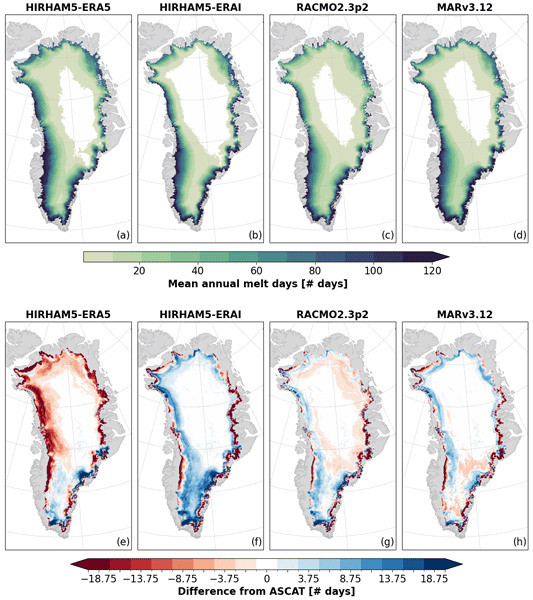
Anna Puggaard, Nicolaj Hansen, Ruth Mottram, Thomas Nagler, Stefan Scheiblauer, Sebastian B. Simonsen, Louise S. Sørensen, Jan Wuite, and Anne M. Solgaard
The Cryosphere, 19, 2963–2981, https://doi.org/10.5194/tc-19-2963-2025, https://doi.org/10.5194/tc-19-2963-2025, 2025
Short summary
Short summary
Regional climate models are currently the only source for assessing the melt volume of the Greenland Ice Sheet on a global scale. This study compares the modeled melt volume with observations from weather stations and melt extent observed from the Advanced SCATterometer (ASCAT) to assess the performance of the models. It highlights the importance of critically evaluating model outputs with high-quality satellite measurements to improve the understanding of variability among models.
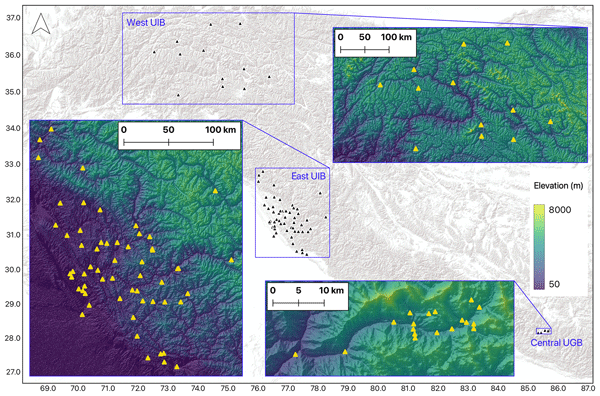
Marc Girona-Mata, Andrew Orr, Martin Widmann, Daniel Bannister, Ghulam Hussain Dars, Scott Hosking, Jesse Norris, David Ocio, Tony Phillips, Jakob Steiner, and Richard E. Turner
Hydrol. Earth Syst. Sci., 29, 3073–3100, https://doi.org/10.5194/hess-29-3073-2025, https://doi.org/10.5194/hess-29-3073-2025, 2025
Short summary
Short summary
We introduce a novel method for improving daily precipitation maps in mountain regions and pilot it across three basins in the Hindu Kush Himalaya (HKH). The approach leverages climate model and weather station data, along with statistical or machine learning techniques. Our results show that this approach outperforms traditional methods, especially in remote ungauged areas, suggesting that it could be used to improve precipitation maps across much of the HKH, as well as other mountain regions.
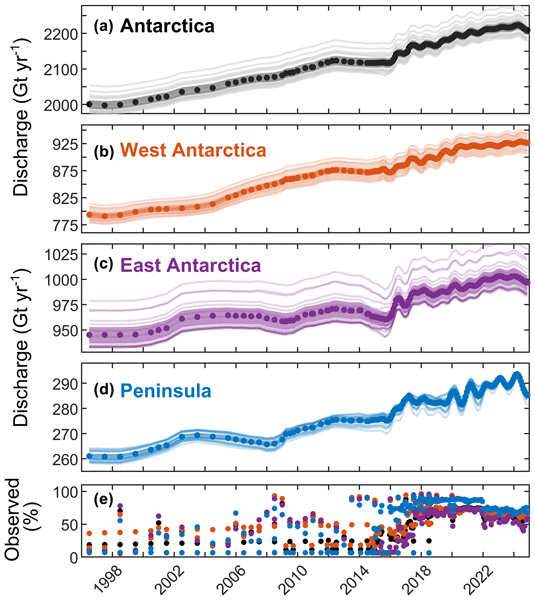
Benjamin J. Davison, Anna E. Hogg, Thomas Slater, Richard Rigby, and Nicolaj Hansen
Earth Syst. Sci. Data, 17, 3259–3281, https://doi.org/10.5194/essd-17-3259-2025, https://doi.org/10.5194/essd-17-3259-2025, 2025
Short summary
Short summary
Grounding line discharge is a measure of the amount of ice entering the ocean from an ice mass. This paper describes a dataset of grounding line discharge for the Antarctic Ice Sheet and each of its glaciers. The dataset shows that Antarctic Ice Sheet grounding line discharge has increased since 1996.
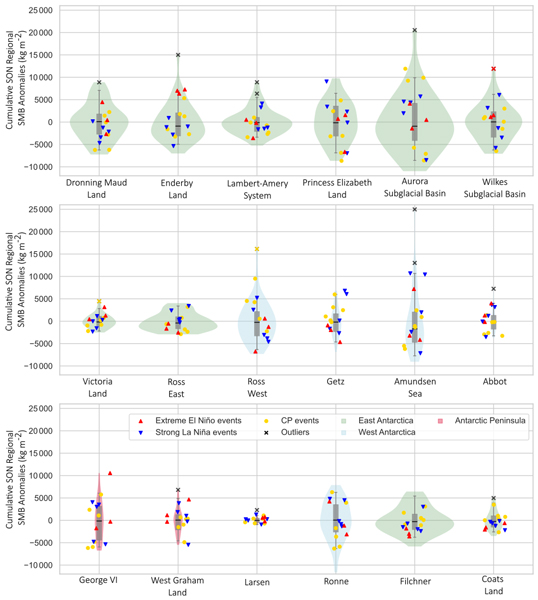
Jessica M. A. Macha, Andrew N. Mackintosh, Felicity S. McCormack, Benjamin J. Henley, Helen V. McGregor, Christiaan T. van Dalum, and Ariaan Purich
The Cryosphere, 19, 1915–1935, https://doi.org/10.5194/tc-19-1915-2025, https://doi.org/10.5194/tc-19-1915-2025, 2025
Short summary
Short summary
Extreme El Niño–Southern Oscillation (ENSO) events have global impacts, but their Antarctic impacts are poorly understood. Examining Antarctic snow accumulation anomalies of past observed extreme ENSO events, we show that accumulation changes differ between events and are insignificant during most events. Significant changes occur during 2015/16 and in Enderby Land during all extreme El Niños. Historical data limit conclusions, but future greater extremes could cause Antarctic accumulation changes.
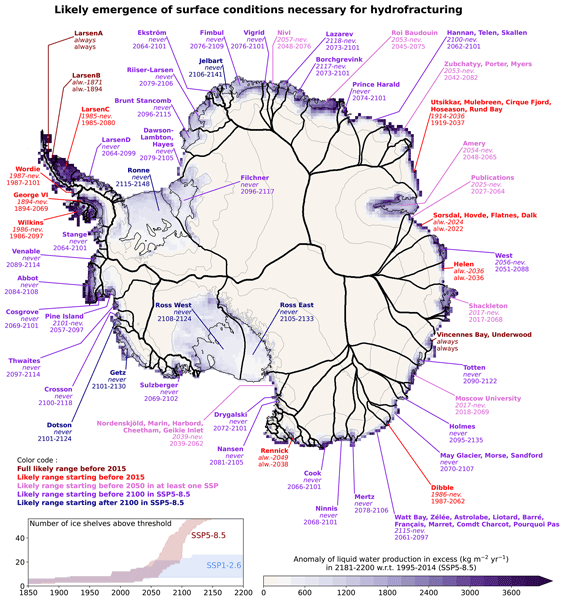
Nicolas C. Jourdain, Charles Amory, Christoph Kittel, and Gaël Durand
The Cryosphere, 19, 1641–1674, https://doi.org/10.5194/tc-19-1641-2025, https://doi.org/10.5194/tc-19-1641-2025, 2025
Short summary
Short summary
A mixed statistical–physical approach is used to reproduce the behaviour of a regional climate model. From that, we estimate the contribution of snowfall and melting at the surface of the Antarctic Ice Sheet to changes in global mean sea level. We also investigate the impact of surface melting in a warmer climate on the stability of the Antarctic ice shelves that provide back stress on the ice flow to the ocean.
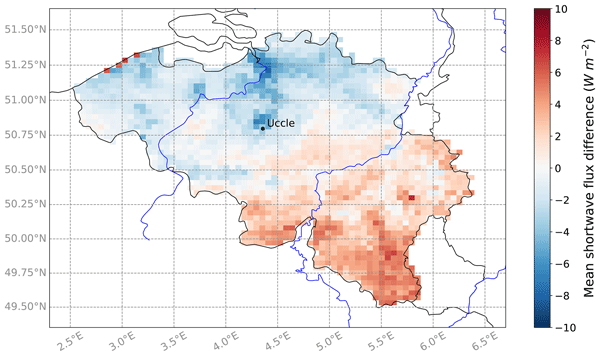
Jean-François Grailet, Robin J. Hogan, Nicolas Ghilain, David Bolsée, Xavier Fettweis, and Marilaure Grégoire
Geosci. Model Dev., 18, 1965–1988, https://doi.org/10.5194/gmd-18-1965-2025, https://doi.org/10.5194/gmd-18-1965-2025, 2025
Short summary
Short summary
The MAR (Modèle Régional Atmosphérique) is a regional climate model used for weather forecasting and studying the climate over various regions. This paper presents an update of MAR thanks to which it can precisely decompose solar radiation, in particular in the UV (ultraviolet) and photosynthesis ranges, both being critical to human health and ecosystems. As a first application of this new capability, this paper presents a method for predicting UV indices with MAR.
Ny Riana Randresihaja, Olivier Gourgue, Lauranne Alaerts, Xavier Fettweis, Jonathan Lambrechts, Miguel De Le Court, Marilaure Grégoire, and Emmanuel Hanert
EGUsphere, https://doi.org/10.5194/egusphere-2025-634, https://doi.org/10.5194/egusphere-2025-634, 2025
Preprint archived
Short summary
Short summary
Coastal areas face rising flood threats as storms intensifies with climate change. With an advanced model of the Scheldt Estuary-North Sea, we studied how detailed atmospheric data must be to predict storm surge peaks in estuaries. We found that high-resolution atmospheric data gives the best results, and coarser data with same resolution as current global climate models give poorer results. We show that investing in localized, high-resolution atmospheric data can significantly improve results.
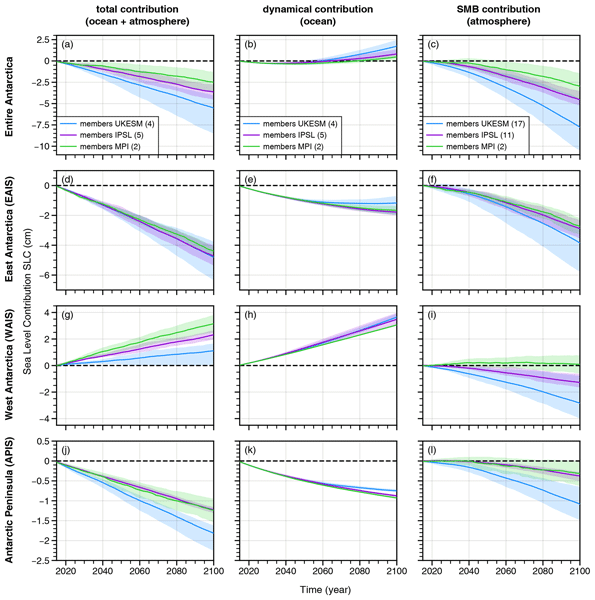
Justine Caillet, Nicolas C. Jourdain, Pierre Mathiot, Fabien Gillet-Chaulet, Benoit Urruty, Clara Burgard, Charles Amory, Mondher Chekki, and Christoph Kittel
Earth Syst. Dynam., 16, 293–315, https://doi.org/10.5194/esd-16-293-2025, https://doi.org/10.5194/esd-16-293-2025, 2025
Short summary
Short summary
Internal climate variability, resulting from processes intrinsic to the climate system, modulates the Antarctic response to climate change by delaying or offsetting its effects. Using climate and ice-sheet models, we highlight that irreducible internal climate variability significantly enlarges the likely range of Antarctic contribution to sea-level rise until 2100. Thus, we recommend considering internal climate variability as a source of uncertainty for future ice-sheet projections.
Ella Gilbert, Denis Pishniak, José Abraham Torres, Andrew Orr, Michelle Maclennan, Nander Wever, and Kristiina Verro
The Cryosphere, 19, 597–618, https://doi.org/10.5194/tc-19-597-2025, https://doi.org/10.5194/tc-19-597-2025, 2025
Short summary
Short summary
We use three sophisticated climate models to examine extreme precipitation in a critical region of West Antarctica. We found that rainfall probably occurred during the two cases we examined and that it was generated by the interaction of air with steep topography. Our results show that kilometre-scale models are useful tools for exploring extreme precipitation in this region and that more observations of rainfall are needed.
Tim van den Akker, William H. Lipscomb, Gunter R. Leguy, Jorjo Bernales, Constantijn J. Berends, Willem Jan van de Berg, and Roderik S. W. van de Wal
The Cryosphere, 19, 283–301, https://doi.org/10.5194/tc-19-283-2025, https://doi.org/10.5194/tc-19-283-2025, 2025
Short summary
Short summary
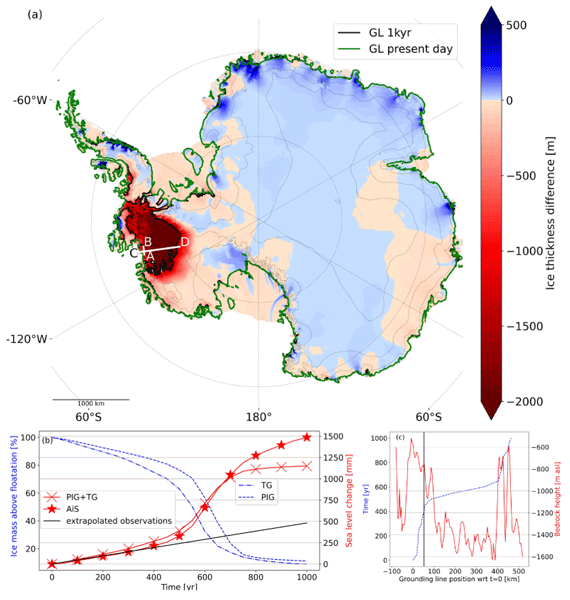
In this study, we present an improved way of representing ice thickness change rates in an ice sheet model. We apply this method using two ice sheet models of the Antarctic Ice Sheet. We found that the two largest outlet glaciers on the Antarctic Ice Sheet, Thwaites Glacier and Pine Island Glacier, will collapse without further warming on a timescale of centuries. This would cause a sea level rise of about 1.2 m globally.
Kenza Tazi, Andrew Orr, Javier Hernandez-González, Scott Hosking, and Richard E. Turner
Hydrol. Earth Syst. Sci., 28, 4903–4925, https://doi.org/10.5194/hess-28-4903-2024, https://doi.org/10.5194/hess-28-4903-2024, 2024
Short summary
Short summary
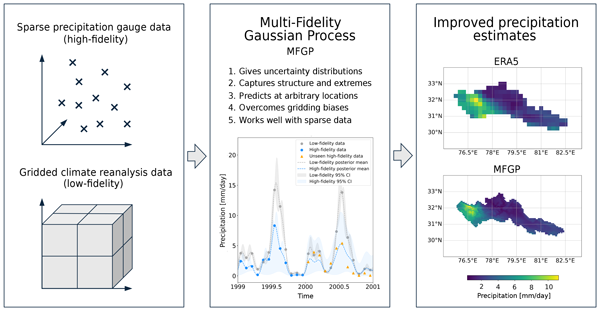
This work aims to improve the understanding of precipitation patterns in High-mountain Asia, a crucial water source for around 1.9 billion people. Through a novel machine learning method, we generate high-resolution precipitation predictions, including the likelihoods of floods and droughts. Compared to state-of-the-art methods, our method is simpler to implement and more suitable for small datasets. The method also shows accuracy comparable to or better than existing benchmark datasets.
Sylvie Charbit, Christophe Dumas, Fabienne Maignan, Catherine Ottlé, Nina Raoult, Xavier Fettweis, and Philippe Conesa
The Cryosphere, 18, 5067–5099, https://doi.org/10.5194/tc-18-5067-2024, https://doi.org/10.5194/tc-18-5067-2024, 2024
Short summary
Short summary
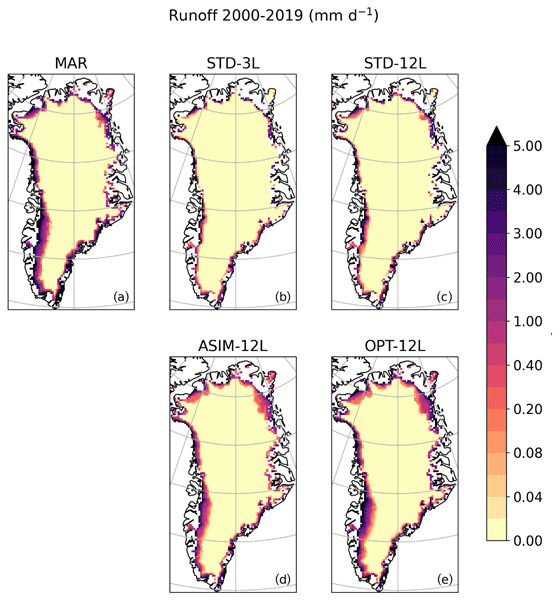
The evolution of the Greenland ice sheet is highly dependent on surface melting and therefore on the processes operating at the snow–atmosphere interface and within the snow cover. Here we present new developments to apply a snow model to the Greenland ice sheet. The performance of this model is analysed in terms of its ability to simulate ablation processes. Our analysis shows that the model performs well when compared with the MAR regional polar atmospheric model.
Srinidhi Gadde and Willem Jan van de Berg
The Cryosphere, 18, 4933–4953, https://doi.org/10.5194/tc-18-4933-2024, https://doi.org/10.5194/tc-18-4933-2024, 2024
Short summary
Short summary
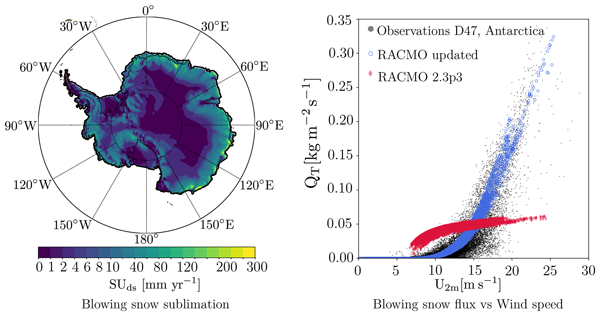
Blowing-snow sublimation is the major loss term in the mass balance of Antarctica. In this study we update the blowing-snow representation in the Regional Atmospheric Climate Model (RACMO). With the updates, results compare well with observations from East Antarctica. Also, the continent-wide variation of blowing snow compares well with satellite observations. Hence, the updates provide a clear step forward in producing a physically sound and reliable estimate of the mass balance of Antarctica.
Christiaan T. van Dalum, Willem Jan van de Berg, Srinidhi N. Gadde, Maurice van Tiggelen, Tijmen van der Drift, Erik van Meijgaard, Lambertus H. van Ulft, and Michiel R. van den Broeke
The Cryosphere, 18, 4065–4088, https://doi.org/10.5194/tc-18-4065-2024, https://doi.org/10.5194/tc-18-4065-2024, 2024
Short summary
Short summary
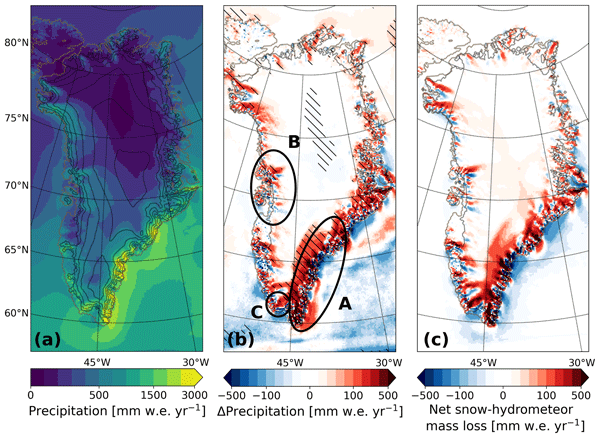
We present a new version of the polar Regional Atmospheric Climate Model (RACMO), version 2.4p1, and show first results for Greenland, Antarctica and the Arctic. We provide an overview of all changes and investigate the impact that they have on the climate of polar regions. By comparing the results with observations and the output from the previous model version, we show that the model performs well regarding the surface mass balance of the ice sheets and near-surface climate.
Xavier J. Levine, Ryan S. Williams, Gareth Marshall, Andrew Orr, Lise Seland Graff, Dörthe Handorf, Alexey Karpechko, Raphael Köhler, René R. Wijngaard, Nadine Johnston, Hanna Lee, Lars Nieradzik, and Priscilla A. Mooney
Earth Syst. Dynam., 15, 1161–1177, https://doi.org/10.5194/esd-15-1161-2024, https://doi.org/10.5194/esd-15-1161-2024, 2024
Short summary
Short summary
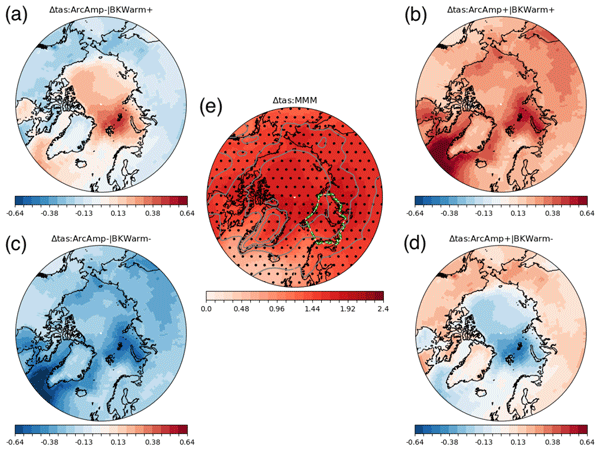
While the most recent climate projections agree that the Arctic is warming, differences remain in how much and in other climate variables such as precipitation. This presents a challenge for stakeholders who need to develop mitigation and adaptation strategies. We tackle this problem by using the storyline approach to generate four plausible and actionable realisations of end-of-century climate change for the Arctic, spanning its most likely range of variability.
Nicolaj Hansen, Andrew Orr, Xun Zou, Fredrik Boberg, Thomas J. Bracegirdle, Ella Gilbert, Peter L. Langen, Matthew A. Lazzara, Ruth Mottram, Tony Phillips, Ruth Price, Sebastian B. Simonsen, and Stuart Webster
The Cryosphere, 18, 2897–2916, https://doi.org/10.5194/tc-18-2897-2024, https://doi.org/10.5194/tc-18-2897-2024, 2024
Short summary
Short summary
We investigated a melt event over the Ross Ice Shelf. We use regional climate models and a firn model to simulate the melt and compare the results with satellite data. We find that the firn model aligned well with observed melt days in certain parts of the ice shelf. The firn model had challenges accurately simulating the melt extent in the western sector. We identified potential reasons for these discrepancies, pointing to limitations in the models related to representing the cloud properties.

Cécile Davrinche, Anaïs Orsi, Cécile Agosta, Charles Amory, and Christoph Kittel
The Cryosphere, 18, 2239–2256, https://doi.org/10.5194/tc-18-2239-2024, https://doi.org/10.5194/tc-18-2239-2024, 2024
Short summary
Short summary
Coastal surface winds in Antarctica are amongst the strongest winds on Earth. They are either driven by the cooling of the surface air mass by the ice sheet (katabatic) or by large-scale pressure systems. Here we compute the relative contribution of these drivers. We find that seasonal variations in the wind speed come from the katabatic acceleration, but, at a 3-hourly timescale, none of the large-scale or katabatic accelerations can be considered as the main driver.
Sanne B. M. Veldhuijsen, Willem Jan van de Berg, Peter Kuipers Munneke, and Michiel R. van den Broeke
The Cryosphere, 18, 1983–1999, https://doi.org/10.5194/tc-18-1983-2024, https://doi.org/10.5194/tc-18-1983-2024, 2024
Short summary
Short summary
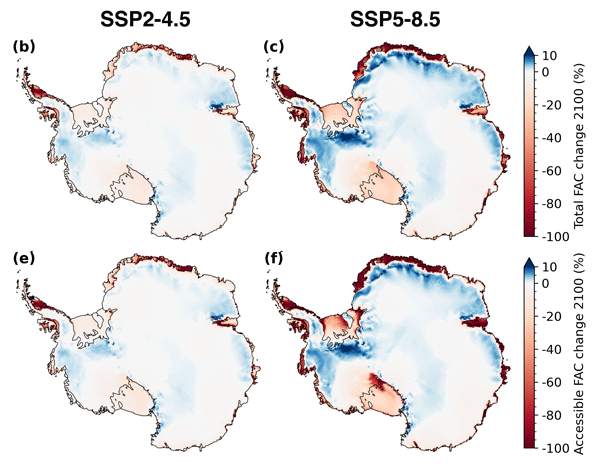
We use the IMAU firn densification model to simulate the 21st-century evolution of Antarctic firn air content. Ice shelves on the Antarctic Peninsula and the Roi Baudouin Ice Shelf in Dronning Maud Land are particularly vulnerable to total firn air content (FAC) depletion. Our results also underline the potentially large vulnerability of low-accumulation ice shelves to firn air depletion through ice slab formation.
Alok K. Samantaray, Priscilla A. Mooney, and Carla A. Vivacqua
Geosci. Model Dev., 17, 3321–3339, https://doi.org/10.5194/gmd-17-3321-2024, https://doi.org/10.5194/gmd-17-3321-2024, 2024
Short summary
Short summary
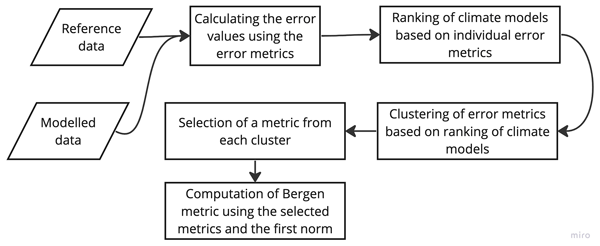
Any interpretation of climate model data requires a comprehensive evaluation of the model performance. Numerous error metrics exist for this purpose, and each focuses on a specific aspect of the relationship between reference and model data. Thus, a comprehensive evaluation demands the use of multiple error metrics. However, this can lead to confusion. We propose a clustering technique to reduce the number of error metrics needed and a composite error metric to simplify the interpretation.
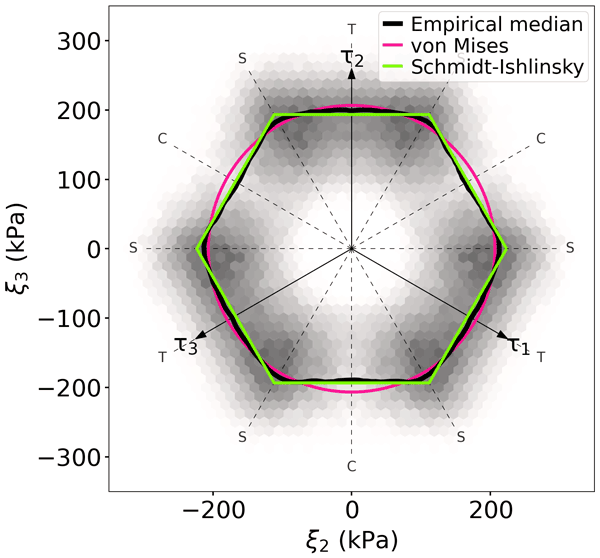
Aslak Grinsted, Nicholas Mossor Rathmann, Ruth Mottram, Anne Munck Solgaard, Joachim Mathiesen, and Christine Schøtt Hvidberg
The Cryosphere, 18, 1947–1957, https://doi.org/10.5194/tc-18-1947-2024, https://doi.org/10.5194/tc-18-1947-2024, 2024
Short summary
Short summary
Ice fracture can cause glacier crevassing and calving. These natural hazards can also modulate the flow and evolution of ice sheets. In a new study, we use a new high-resolution dataset to determine a new failure criterion for glacier ice. Surprisingly, the strength of ice depends on the mode of deformation, and this has potential implications for the currently used flow law of ice.
Ella Gilbert, Jhaswantsing Purseed, Yun Li, Martina Krämer, Beatrice Altamura, and Nicolas Bellouin
EGUsphere, https://doi.org/10.5194/egusphere-2024-821, https://doi.org/10.5194/egusphere-2024-821, 2024
Preprint withdrawn
Short summary
Short summary
We use a simple experiment to explore the non-CO2 impacts of aviation on climate, which are considerably larger than the impact of the sector’s carbon emissions alone. We show that the main effect of our experiments – which intend to mimic the effect of aircraft soot emissions reaching existing high-altitude cirrus clouds – is to extend cloud lifetime, thereby enhancing their effect on climate.
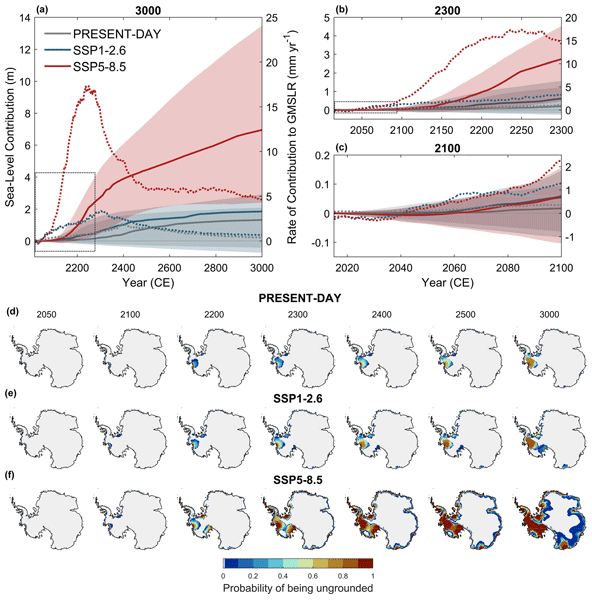
Violaine Coulon, Ann Kristin Klose, Christoph Kittel, Tamsin Edwards, Fiona Turner, Ricarda Winkelmann, and Frank Pattyn
The Cryosphere, 18, 653–681, https://doi.org/10.5194/tc-18-653-2024, https://doi.org/10.5194/tc-18-653-2024, 2024
Short summary
Short summary
We present new projections of the evolution of the Antarctic ice sheet until the end of the millennium, calibrated with observations. We show that the ocean will be the main trigger of future ice loss. As temperatures continue to rise, the atmosphere's role may shift from mitigating to amplifying Antarctic mass loss already by the end of the century. For high-emission scenarios, this may lead to substantial sea-level rise. Adopting sustainable practices would however reduce the rate of ice loss.
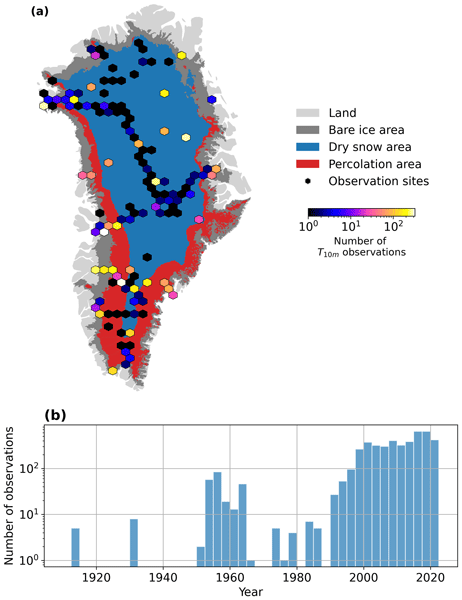
Baptiste Vandecrux, Robert S. Fausto, Jason E. Box, Federico Covi, Regine Hock, Åsa K. Rennermalm, Achim Heilig, Jakob Abermann, Dirk van As, Elisa Bjerre, Xavier Fettweis, Paul C. J. P. Smeets, Peter Kuipers Munneke, Michiel R. van den Broeke, Max Brils, Peter L. Langen, Ruth Mottram, and Andreas P. Ahlstrøm
The Cryosphere, 18, 609–631, https://doi.org/10.5194/tc-18-609-2024, https://doi.org/10.5194/tc-18-609-2024, 2024
Short summary
Short summary
How fast is the Greenland ice sheet warming? In this study, we compiled 4500+ temperature measurements at 10 m below the ice sheet surface (T10m) from 1912 to 2022. We trained a machine learning model on these data and reconstructed T10m for the ice sheet during 1950–2022. After a slight cooling during 1950–1985, the ice sheet warmed at a rate of 0.7 °C per decade until 2022. Climate models showed mixed results compared to our observations and underestimated the warming in key regions.
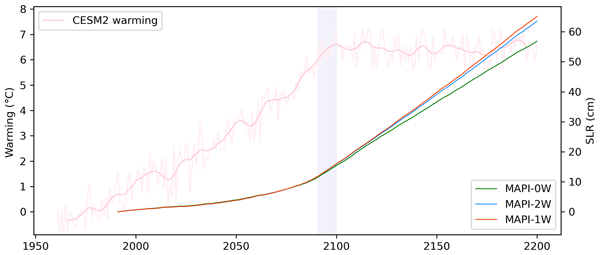
Alison Delhasse, Johanna Beckmann, Christoph Kittel, and Xavier Fettweis
The Cryosphere, 18, 633–651, https://doi.org/10.5194/tc-18-633-2024, https://doi.org/10.5194/tc-18-633-2024, 2024
Short summary
Short summary
Aiming to study the long-term influence of an extremely warm climate in the Greenland Ice Sheet contribution to sea level rise, a new regional atmosphere–ice sheet model setup was established. The coupling, explicitly considering the melt–elevation feedback, is compared to an offline method to consider this feedback. We highlight mitigation of the feedback due to local changes in atmospheric circulation with changes in surface topography, making the offline correction invalid on the margins.
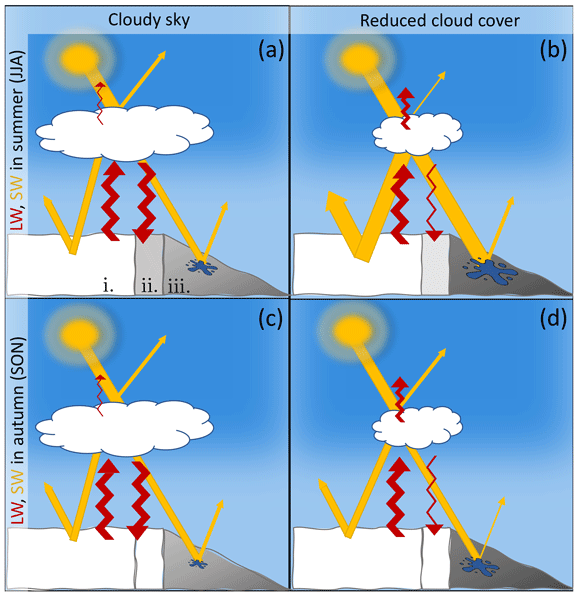
Idunn Aamnes Mostue, Stefan Hofer, Trude Storelvmo, and Xavier Fettweis
The Cryosphere, 18, 475–488, https://doi.org/10.5194/tc-18-475-2024, https://doi.org/10.5194/tc-18-475-2024, 2024
Short summary
Short summary
The latest generation of climate models (Coupled Model Intercomparison Project Phase 6 – CMIP6) warm more over Greenland and the Arctic and thus also project a larger mass loss from the Greenland Ice Sheet (GrIS) compared to the previous generation of climate models (CMIP5). Our work suggests for the first time that part of the greater mass loss in CMIP6 over the GrIS is driven by a difference in the surface mass balance sensitivity from a change in cloud representation in the CMIP6 models.
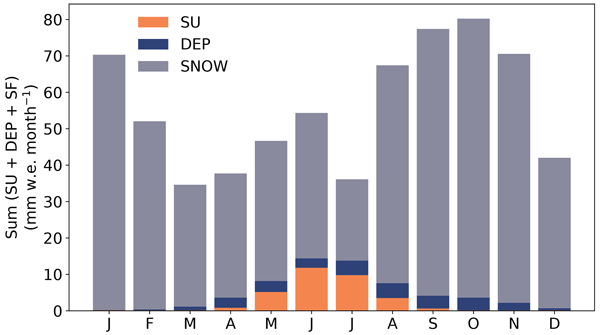
Laura J. Dietrich, Hans Christian Steen-Larsen, Sonja Wahl, Anne-Katrine Faber, and Xavier Fettweis
The Cryosphere, 18, 289–305, https://doi.org/10.5194/tc-18-289-2024, https://doi.org/10.5194/tc-18-289-2024, 2024
Short summary
Short summary
The contribution of the humidity flux to the surface mass balance in the accumulation zone of the Greenland Ice Sheet is uncertain. Here, we evaluate the regional climate model MAR using a multi-annual dataset of eddy covariance measurements and bulk estimates of the humidity flux. The humidity flux largely contributes to the summer surface mass balance (SMB) in the accumulation zone, indicating its potential importance for the annual SMB in a warming climate.
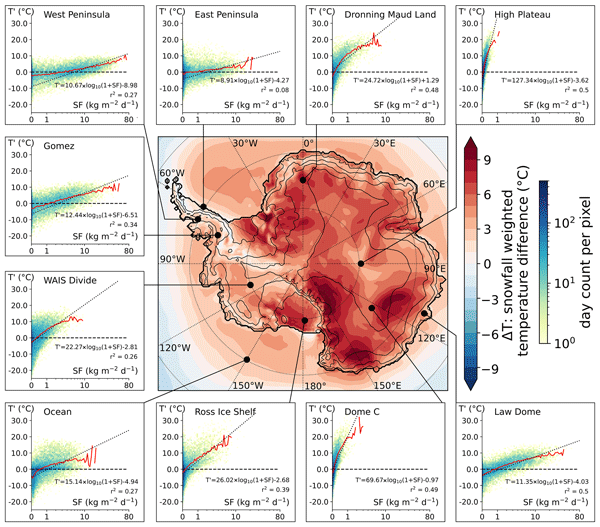
Aymeric P. M. Servettaz, Cécile Agosta, Christoph Kittel, and Anaïs J. Orsi
The Cryosphere, 17, 5373–5389, https://doi.org/10.5194/tc-17-5373-2023, https://doi.org/10.5194/tc-17-5373-2023, 2023
Short summary
Short summary
It has been previously observed in polar regions that the atmospheric temperature is warmer during precipitation events. Here, we use a regional atmospheric model to quantify the temperature changes associated with snowfall events across Antarctica. We show that more intense snowfall is statistically associated with a warmer temperature anomaly compared to the seasonal average, with the largest anomalies seen in winter. This bias may affect water isotopes in ice cores deposited during snowfall.
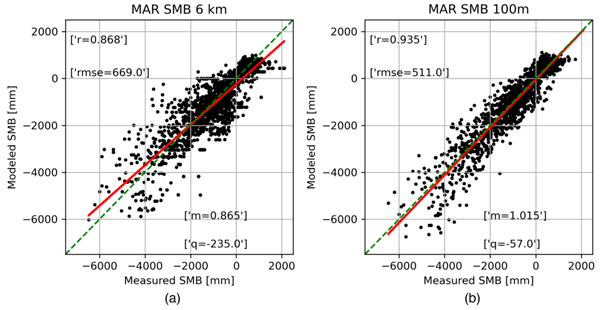
Marco Tedesco, Paolo Colosio, Xavier Fettweis, and Guido Cervone
The Cryosphere, 17, 5061–5074, https://doi.org/10.5194/tc-17-5061-2023, https://doi.org/10.5194/tc-17-5061-2023, 2023
Short summary
Short summary
We developed a technique to improve the outputs of a model that calculates the gain and loss of Greenland and consequently its contribution to sea level rise. Our technique generates “sharper” images of the maps generated by the model to better understand and quantify where losses occur. This has implications for improving models, understanding what drives the contributions of Greenland to sea level rise, and more.
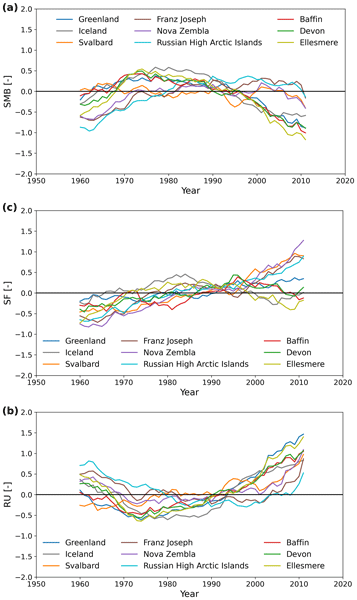
Damien Maure, Christoph Kittel, Clara Lambin, Alison Delhasse, and Xavier Fettweis
The Cryosphere, 17, 4645–4659, https://doi.org/10.5194/tc-17-4645-2023, https://doi.org/10.5194/tc-17-4645-2023, 2023
Short summary
Short summary
The Arctic is warming faster than the rest of the Earth. Studies have already shown that Greenland and the Canadian Arctic are experiencing a record increase in melting rates, while Svalbard has been relatively less impacted. Looking at those regions but also extending the study to Iceland and the Russian Arctic archipelagoes, we see a heterogeneity in the melting-rate response to the Arctic warming, with the Russian archipelagoes experiencing lower melting rates than other regions.
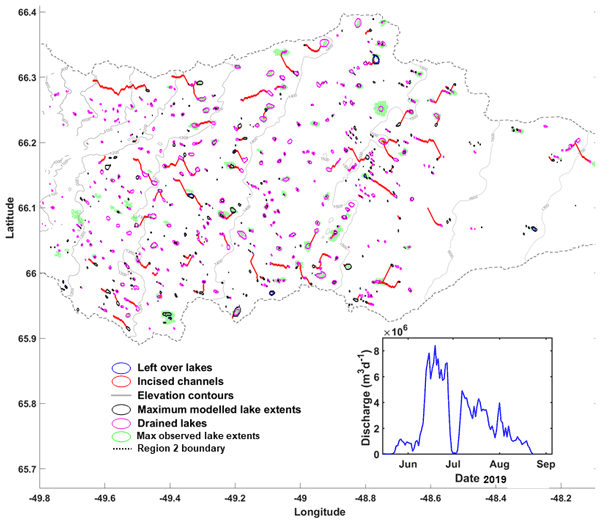
Prateek Gantayat, Alison F. Banwell, Amber A. Leeson, James M. Lea, Dorthe Petersen, Noel Gourmelen, and Xavier Fettweis
Geosci. Model Dev., 16, 5803–5823, https://doi.org/10.5194/gmd-16-5803-2023, https://doi.org/10.5194/gmd-16-5803-2023, 2023
Short summary
Short summary
We developed a new supraglacial hydrology model for the Greenland Ice Sheet. This model simulates surface meltwater routing, meltwater drainage, supraglacial lake (SGL) overflow, and formation of lake ice. The model was able to reproduce 80 % of observed lake locations and provides a good match between the observed and modelled temporal evolution of SGLs.
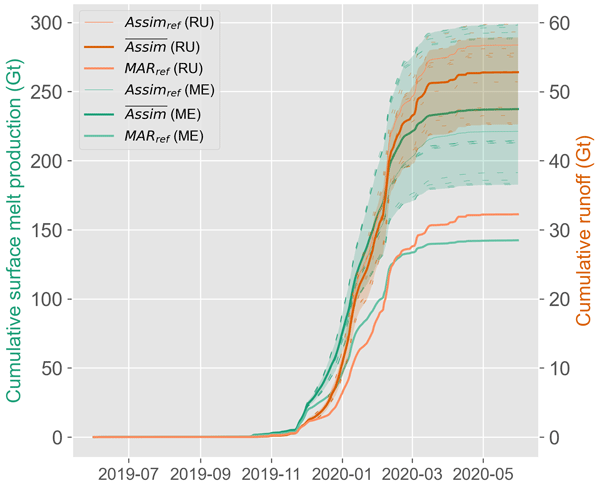
Thomas Dethinne, Quentin Glaude, Ghislain Picard, Christoph Kittel, Patrick Alexander, Anne Orban, and Xavier Fettweis
The Cryosphere, 17, 4267–4288, https://doi.org/10.5194/tc-17-4267-2023, https://doi.org/10.5194/tc-17-4267-2023, 2023
Short summary
Short summary
We investigate the sensitivity of the regional climate model
Modèle Atmosphérique Régional(MAR) to the assimilation of wet-snow occurrence estimated by remote sensing datasets. The assimilation is performed by nudging the MAR snowpack temperature. The data assimilation is performed over the Antarctic Peninsula for the 2019–2021 period. The results show an increase in the melt production (+66.7 %) and a decrease in surface mass balance (−4.5 %) of the model for the 2019–2020 melt season.
Nicolaj Hansen, Louise Sandberg Sørensen, Giorgio Spada, Daniele Melini, Rene Forsberg, Ruth Mottram, and Sebastian B. Simonsen
The Cryosphere Discuss., https://doi.org/10.5194/tc-2023-104, https://doi.org/10.5194/tc-2023-104, 2023
Preprint withdrawn
Short summary
Short summary
We use ICESat-2 to estimate the surface elevation change over Greenland and Antarctica in the period of 2018 to 2021. Numerical models have been used the compute the firn compaction and the vertical bedrock movement so non-mass-related elevation changes can be taken into account. We have made a parameterization of the surface density so we can convert the volume change to mass change. We find that Antarctica has lost 135.7±27.3 Gt per year, and the Greenland ice sheet 237.5±14.0 Gt per year.
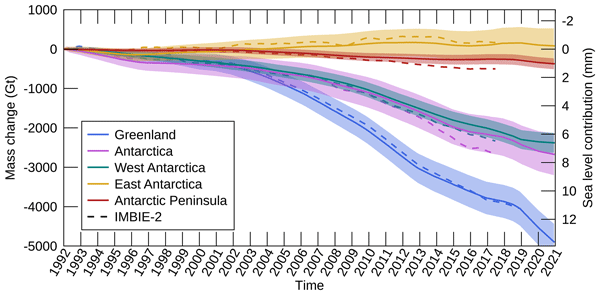
Inès N. Otosaka, Andrew Shepherd, Erik R. Ivins, Nicole-Jeanne Schlegel, Charles Amory, Michiel R. van den Broeke, Martin Horwath, Ian Joughin, Michalea D. King, Gerhard Krinner, Sophie Nowicki, Anthony J. Payne, Eric Rignot, Ted Scambos, Karen M. Simon, Benjamin E. Smith, Louise S. Sørensen, Isabella Velicogna, Pippa L. Whitehouse, Geruo A, Cécile Agosta, Andreas P. Ahlstrøm, Alejandro Blazquez, William Colgan, Marcus E. Engdahl, Xavier Fettweis, Rene Forsberg, Hubert Gallée, Alex Gardner, Lin Gilbert, Noel Gourmelen, Andreas Groh, Brian C. Gunter, Christopher Harig, Veit Helm, Shfaqat Abbas Khan, Christoph Kittel, Hannes Konrad, Peter L. Langen, Benoit S. Lecavalier, Chia-Chun Liang, Bryant D. Loomis, Malcolm McMillan, Daniele Melini, Sebastian H. Mernild, Ruth Mottram, Jeremie Mouginot, Johan Nilsson, Brice Noël, Mark E. Pattle, William R. Peltier, Nadege Pie, Mònica Roca, Ingo Sasgen, Himanshu V. Save, Ki-Weon Seo, Bernd Scheuchl, Ernst J. O. Schrama, Ludwig Schröder, Sebastian B. Simonsen, Thomas Slater, Giorgio Spada, Tyler C. Sutterley, Bramha Dutt Vishwakarma, Jan Melchior van Wessem, David Wiese, Wouter van der Wal, and Bert Wouters
Earth Syst. Sci. Data, 15, 1597–1616, https://doi.org/10.5194/essd-15-1597-2023, https://doi.org/10.5194/essd-15-1597-2023, 2023
Short summary
Short summary
By measuring changes in the volume, gravitational attraction, and ice flow of Greenland and Antarctica from space, we can monitor their mass gain and loss over time. Here, we present a new record of the Earth’s polar ice sheet mass balance produced by aggregating 50 satellite-based estimates of ice sheet mass change. This new assessment shows that the ice sheets have lost (7.5 x 10¹²) t of ice between 1992 and 2020, contributing 21 mm to sea level rise.

Sanne B. M. Veldhuijsen, Willem Jan van de Berg, Max Brils, Peter Kuipers Munneke, and Michiel R. van den Broeke
The Cryosphere, 17, 1675–1696, https://doi.org/10.5194/tc-17-1675-2023, https://doi.org/10.5194/tc-17-1675-2023, 2023
Short summary
Short summary
Firn is the transition of snow to glacier ice and covers 99 % of the Antarctic ice sheet. Knowledge about the firn layer and its variability is important, as it impacts satellite-based estimates of ice sheet mass change. Also, firn contains pores in which nearly all of the surface melt is retained. Here, we improve a semi-empirical firn model and simulate the firn characteristics for the period 1979–2020. We evaluate the performance with field and satellite measures and test its sensitivity.

Benjamin E. Smith, Brooke Medley, Xavier Fettweis, Tyler Sutterley, Patrick Alexander, David Porter, and Marco Tedesco
The Cryosphere, 17, 789–808, https://doi.org/10.5194/tc-17-789-2023, https://doi.org/10.5194/tc-17-789-2023, 2023
Short summary
Short summary
We use repeated satellite measurements of the height of the Greenland ice sheet to learn about how three computational models of snowfall, melt, and snow compaction represent actual changes in the ice sheet. We find that the models do a good job of estimating how the parts of the ice sheet near the coast have changed but that two of the models have trouble representing surface melt for the highest part of the ice sheet. This work provides suggestions for how to better model snowmelt.
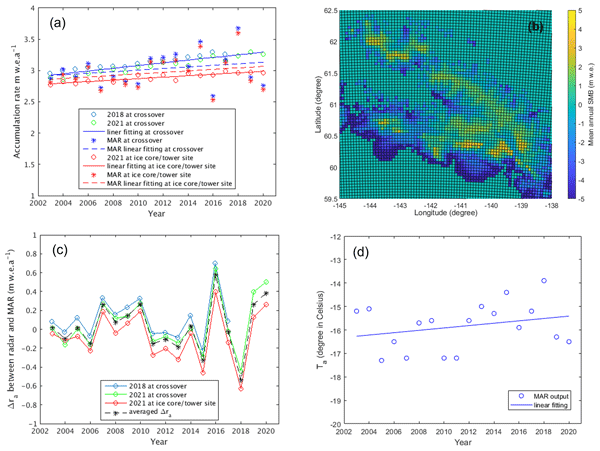
Jilu Li, Fernando Rodriguez-Morales, Xavier Fettweis, Oluwanisola Ibikunle, Carl Leuschen, John Paden, Daniel Gomez-Garcia, and Emily Arnold
The Cryosphere, 17, 175–193, https://doi.org/10.5194/tc-17-175-2023, https://doi.org/10.5194/tc-17-175-2023, 2023
Short summary
Short summary
Alaskan glaciers' loss of ice mass contributes significantly to ocean surface rise. It is important to know how deeply and how much snow accumulates on these glaciers to comprehend and analyze the glacial mass loss process. We reported the observed seasonal snow depth distribution from our radar data taken in Alaska in 2018 and 2021, developed a method to estimate the annual snow accumulation rate at Mt. Wrangell caldera, and identified transition zones from wet-snow zones to ablation zones.
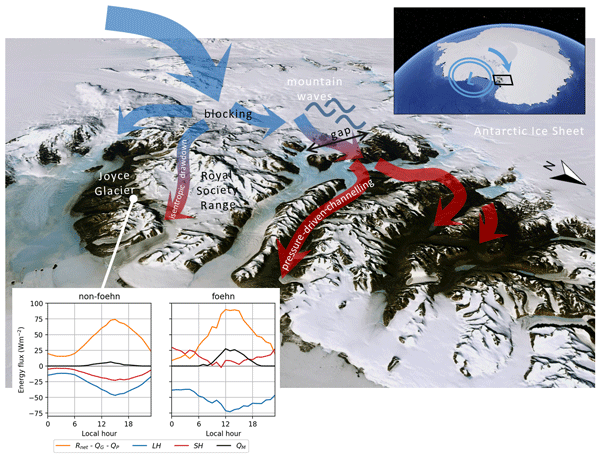
Marte G. Hofsteenge, Nicolas J. Cullen, Carleen H. Reijmer, Michiel van den Broeke, Marwan Katurji, and John F. Orwin
The Cryosphere, 16, 5041–5059, https://doi.org/10.5194/tc-16-5041-2022, https://doi.org/10.5194/tc-16-5041-2022, 2022
Short summary
Short summary
In the McMurdo Dry Valleys (MDV), foehn winds can impact glacial meltwater production and the fragile ecosystem that depends on it. We study these dry and warm winds at Joyce Glacier and show they are caused by a different mechanism than that found for nearby valleys, demonstrating the complex interaction of large-scale winds with the mountains in the MDV. We find that foehn winds increase sublimation of ice, increase heating from the atmosphere, and increase the occurrence and rates of melt.
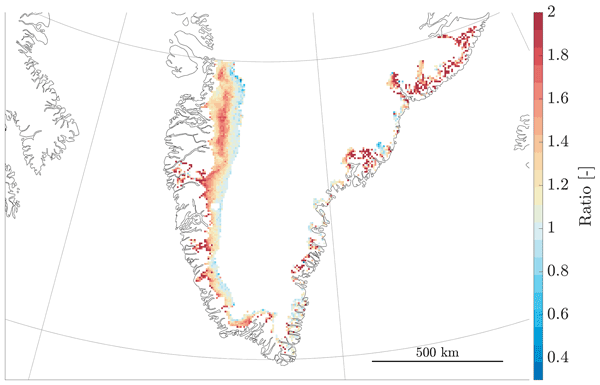
Raf M. Antwerpen, Marco Tedesco, Xavier Fettweis, Patrick Alexander, and Willem Jan van de Berg
The Cryosphere, 16, 4185–4199, https://doi.org/10.5194/tc-16-4185-2022, https://doi.org/10.5194/tc-16-4185-2022, 2022
Short summary
Short summary
The ice on Greenland has been melting more rapidly over the last few years. Most of this melt comes from the exposure of ice when the overlying snow melts. This ice is darker than snow and absorbs more sunlight, leading to more melt. It remains challenging to accurately simulate the brightness of the ice. We show that the color of ice simulated by Modèle Atmosphérique Régional (MAR) is too bright. We then show that this means that MAR may underestimate how fast the Greenland ice is melting.
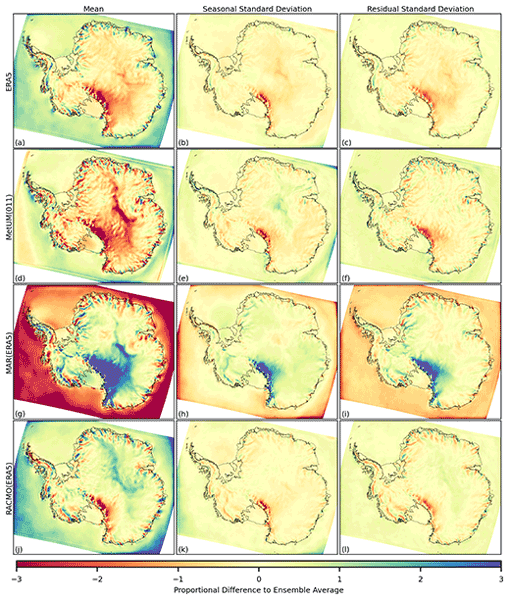
Jeremy Carter, Amber Leeson, Andrew Orr, Christoph Kittel, and J. Melchior van Wessem
The Cryosphere, 16, 3815–3841, https://doi.org/10.5194/tc-16-3815-2022, https://doi.org/10.5194/tc-16-3815-2022, 2022
Short summary
Short summary
Climate models provide valuable information for studying processes such as the collapse of ice shelves over Antarctica which impact estimates of sea level rise. This paper examines variability across climate simulations over Antarctica for fields including snowfall, temperature and melt. Significant systematic differences between outputs are found, occurring at both large and fine spatial scales across Antarctica. Results are important for future impact assessments and model development.
Max Brils, Peter Kuipers Munneke, Willem Jan van de Berg, and Michiel van den Broeke
Geosci. Model Dev., 15, 7121–7138, https://doi.org/10.5194/gmd-15-7121-2022, https://doi.org/10.5194/gmd-15-7121-2022, 2022
Short summary
Short summary
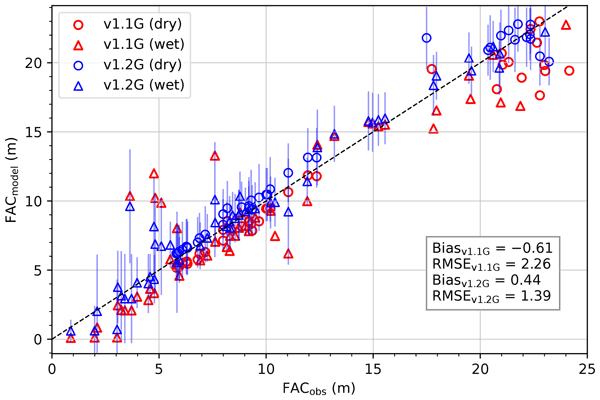
Firn covers the Greenland ice sheet (GrIS) and can temporarily prevent mass loss. Here, we present the latest version of our firn model, IMAU-FDM, with an application to the GrIS. We improved the density of fallen snow, the firn densification rate and the firn's thermal conductivity. This leads to a higher air content and 10 m temperatures. Furthermore we investigate three case studies and find that the updated model shows greater variability and an increased sensitivity in surface elevation.
Ioanna Karagali, Magnus Barfod Suhr, Ruth Mottram, Pia Nielsen-Englyst, Gorm Dybkjær, Darren Ghent, and Jacob L. Høyer
The Cryosphere, 16, 3703–3721, https://doi.org/10.5194/tc-16-3703-2022, https://doi.org/10.5194/tc-16-3703-2022, 2022
Short summary
Short summary
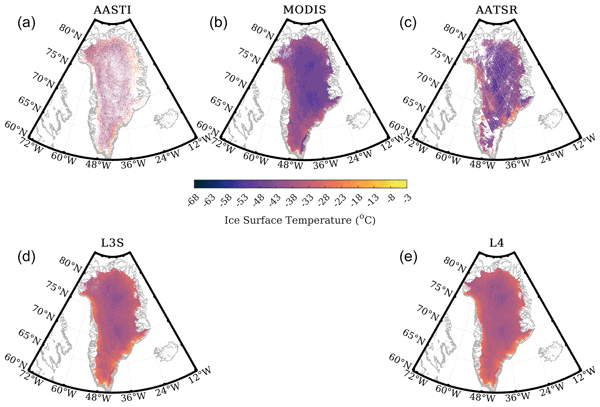
Ice surface temperature (IST) products were used to develop the first multi-sensor, gap-free Level 4 (L4) IST product of the Greenland Ice Sheet (GIS) for 2012, when a significant melt event occurred. For the melt season, mean IST was −15 to −1 °C, and almost the entire GIS experienced at least 1 to 5 melt days. Inclusion of the L4 IST to a surface mass budget (SMB) model improved simulated surface temperatures during the key onset of the melt season, where biases are typically large.

Tiago Silva, Jakob Abermann, Brice Noël, Sonika Shahi, Willem Jan van de Berg, and Wolfgang Schöner
The Cryosphere, 16, 3375–3391, https://doi.org/10.5194/tc-16-3375-2022, https://doi.org/10.5194/tc-16-3375-2022, 2022
Short summary
Short summary
To overcome internal climate variability, this study uses k-means clustering to combine NAO, GBI and IWV over the Greenland Ice Sheet (GrIS) and names the approach as the North Atlantic influence on Greenland (NAG). With the support of a polar-adapted RCM, spatio-temporal changes on SEB components within NAG phases are investigated. We report atmospheric warming and moistening across all NAG phases as well as large-scale and regional-scale contributions to GrIS mass loss and their interactions.
Christoph Kittel, Charles Amory, Stefan Hofer, Cécile Agosta, Nicolas C. Jourdain, Ella Gilbert, Louis Le Toumelin, Étienne Vignon, Hubert Gallée, and Xavier Fettweis
The Cryosphere, 16, 2655–2669, https://doi.org/10.5194/tc-16-2655-2022, https://doi.org/10.5194/tc-16-2655-2022, 2022
Short summary
Short summary
Model projections suggest large differences in future Antarctic surface melting even for similar greenhouse gas scenarios and warming rates. We show that clouds containing a larger amount of liquid water lead to stronger melt. As surface melt can trigger the collapse of the ice shelves (the safety band of the Antarctic Ice Sheet), clouds could be a major source of uncertainties in projections of sea level rise.
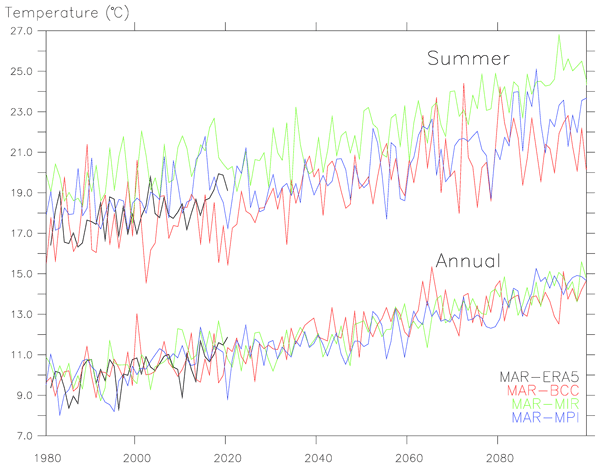
Sébastien Doutreloup, Xavier Fettweis, Ramin Rahif, Essam Elnagar, Mohsen S. Pourkiaei, Deepak Amaripadath, and Shady Attia
Earth Syst. Sci. Data, 14, 3039–3051, https://doi.org/10.5194/essd-14-3039-2022, https://doi.org/10.5194/essd-14-3039-2022, 2022
Short summary
Short summary
This data set provides historical (1980–2014) and future (2015–2100) weather data for 12 cities in Belgium. This data set is intended for architects or building or energy designers. In particular, it makes available to all users hourly open-access weather data according to certain standards to recreate a Typical and an Extreme Meteorological Year. In addition, it provides hourly data on heatwaves from 1980 to 2100. Weather data were produced from the outputs of the MAR model simulations.
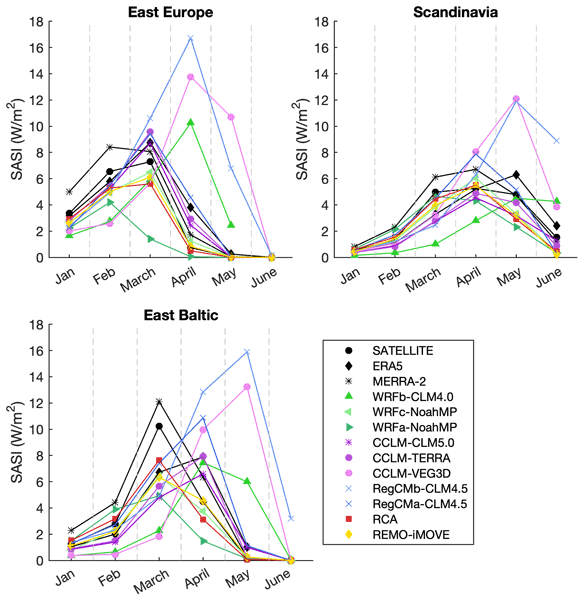
Anne Sophie Daloz, Clemens Schwingshackl, Priscilla Mooney, Susanna Strada, Diana Rechid, Edouard L. Davin, Eleni Katragkou, Nathalie de Noblet-Ducoudré, Michal Belda, Tomas Halenka, Marcus Breil, Rita M. Cardoso, Peter Hoffmann, Daniela C. A. Lima, Ronny Meier, Pedro M. M. Soares, Giannis Sofiadis, Gustav Strandberg, Merja H. Toelle, and Marianne T. Lund
The Cryosphere, 16, 2403–2419, https://doi.org/10.5194/tc-16-2403-2022, https://doi.org/10.5194/tc-16-2403-2022, 2022
Short summary
Short summary
Snow plays a major role in the regulation of the Earth's surface temperature. Together with climate change, rising temperatures are already altering snow in many ways. In this context, it is crucial to better understand the ability of climate models to represent snow and snow processes. This work focuses on Europe and shows that the melting season in spring still represents a challenge for climate models and that more work is needed to accurately simulate snow–atmosphere interactions.
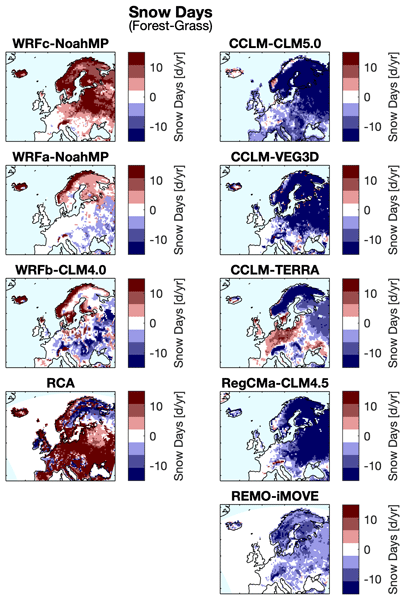
Priscilla A. Mooney, Diana Rechid, Edouard L. Davin, Eleni Katragkou, Natalie de Noblet-Ducoudré, Marcus Breil, Rita M. Cardoso, Anne Sophie Daloz, Peter Hoffmann, Daniela C. A. Lima, Ronny Meier, Pedro M. M. Soares, Giannis Sofiadis, Susanna Strada, Gustav Strandberg, Merja H. Toelle, and Marianne T. Lund
The Cryosphere, 16, 1383–1397, https://doi.org/10.5194/tc-16-1383-2022, https://doi.org/10.5194/tc-16-1383-2022, 2022
Short summary
Short summary
We use multiple regional climate models to show that afforestation in sub-polar and alpine regions reduces the radiative impact of snow albedo on the atmosphere, reduces snow cover, and delays the start of the snowmelt season. This is important for local communities that are highly reliant on snowpack for water resources and winter tourism. However, models disagree on the amount of change particularly when snow is melting. This shows that more research is needed on snow–vegetation interactions.
Hannah Ming Siu Vickers, Priscilla Mooney, Eirik Malnes, and Hanna Lee
The Cryosphere Discuss., https://doi.org/10.5194/tc-2022-57, https://doi.org/10.5194/tc-2022-57, 2022
Manuscript not accepted for further review
Short summary
Short summary
Rain-on-snow (ROS) events are becoming more frequent as a result of a warming climate, and can have significant impacts on nature and society. Accurate representation of ROS events is need to identify where impacts are greatest both now and in the future. We compare rain-on-snow climatologies from a climate model, ground and satellite radar observations and show how different methods can lead to contrasting conclusions and interpretation of the results should take into account their limitations.
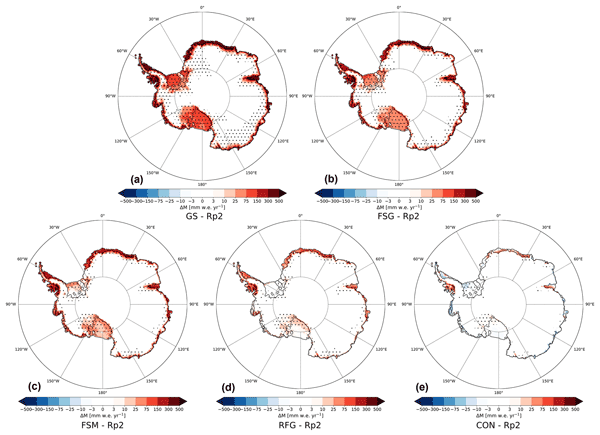
Christiaan T. van Dalum, Willem Jan van de Berg, and Michiel R. van den Broeke
The Cryosphere, 16, 1071–1089, https://doi.org/10.5194/tc-16-1071-2022, https://doi.org/10.5194/tc-16-1071-2022, 2022
Short summary
Short summary
In this study, we improve the regional climate model RACMO2 and investigate the climate of Antarctica. We have implemented a new radiative transfer and snow albedo scheme and do several sensitivity experiments. When fully tuned, the results compare well with observations and snow temperature profiles improve. Moreover, small changes in the albedo and the investigated processes can lead to a strong overestimation of melt, locally leading to runoff and a reduced surface mass balance.
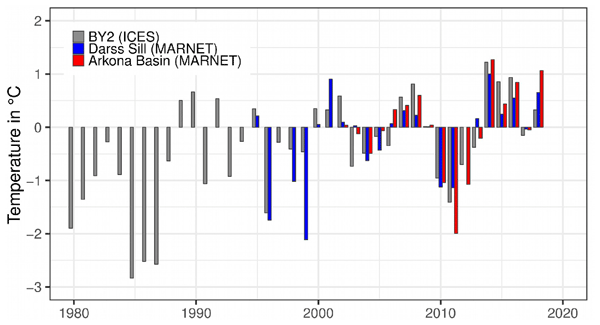
H. E. Markus Meier, Madline Kniebusch, Christian Dieterich, Matthias Gröger, Eduardo Zorita, Ragnar Elmgren, Kai Myrberg, Markus P. Ahola, Alena Bartosova, Erik Bonsdorff, Florian Börgel, Rene Capell, Ida Carlén, Thomas Carlund, Jacob Carstensen, Ole B. Christensen, Volker Dierschke, Claudia Frauen, Morten Frederiksen, Elie Gaget, Anders Galatius, Jari J. Haapala, Antti Halkka, Gustaf Hugelius, Birgit Hünicke, Jaak Jaagus, Mart Jüssi, Jukka Käyhkö, Nina Kirchner, Erik Kjellström, Karol Kulinski, Andreas Lehmann, Göran Lindström, Wilhelm May, Paul A. Miller, Volker Mohrholz, Bärbel Müller-Karulis, Diego Pavón-Jordán, Markus Quante, Marcus Reckermann, Anna Rutgersson, Oleg P. Savchuk, Martin Stendel, Laura Tuomi, Markku Viitasalo, Ralf Weisse, and Wenyan Zhang
Earth Syst. Dynam., 13, 457–593, https://doi.org/10.5194/esd-13-457-2022, https://doi.org/10.5194/esd-13-457-2022, 2022
Short summary
Short summary
Based on the Baltic Earth Assessment Reports of this thematic issue in Earth System Dynamics and recent peer-reviewed literature, current knowledge about the effects of global warming on past and future changes in the climate of the Baltic Sea region is summarised and assessed. The study is an update of the Second Assessment of Climate Change (BACC II) published in 2015 and focuses on the atmosphere, land, cryosphere, ocean, sediments, and the terrestrial and marine biosphere.
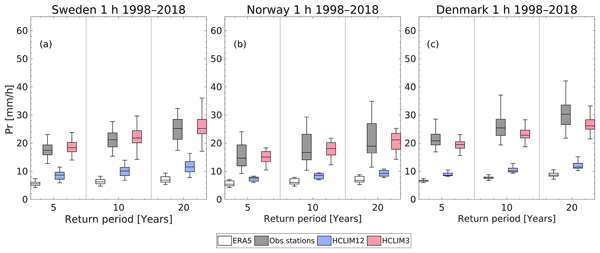
Erika Médus, Emma D. Thomassen, Danijel Belušić, Petter Lind, Peter Berg, Jens H. Christensen, Ole B. Christensen, Andreas Dobler, Erik Kjellström, Jonas Olsson, and Wei Yang
Nat. Hazards Earth Syst. Sci., 22, 693–711, https://doi.org/10.5194/nhess-22-693-2022, https://doi.org/10.5194/nhess-22-693-2022, 2022
Short summary
Short summary
We evaluate the skill of a regional climate model, HARMONIE-Climate, to capture the present-day characteristics of heavy precipitation in the Nordic region and investigate the added value provided by a convection-permitting model version. The higher model resolution improves the representation of hourly heavy- and extreme-precipitation events and their diurnal cycle. The results indicate the benefits of convection-permitting models for constructing climate change projections over the region.
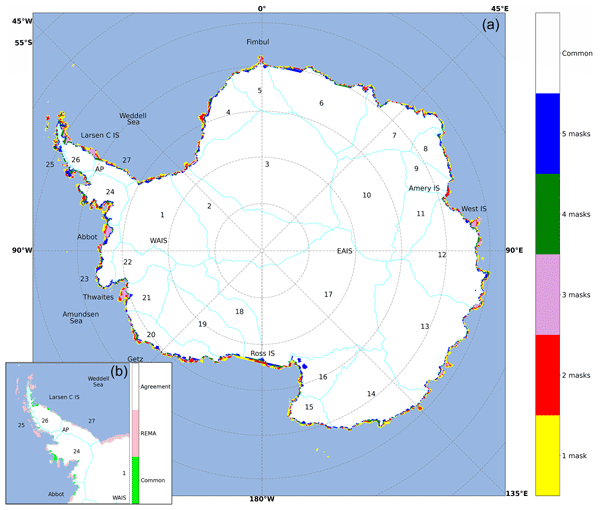
Nicolaj Hansen, Sebastian B. Simonsen, Fredrik Boberg, Christoph Kittel, Andrew Orr, Niels Souverijns, J. Melchior van Wessem, and Ruth Mottram
The Cryosphere, 16, 711–718, https://doi.org/10.5194/tc-16-711-2022, https://doi.org/10.5194/tc-16-711-2022, 2022
Short summary
Short summary
We investigate the impact of different ice masks when modelling surface mass balance over Antarctica. We used ice masks and data from five of the most used regional climate models and a common mask. We see large disagreement between the ice masks, which has a large impact on the surface mass balance, especially around the Antarctic Peninsula and some of the largest glaciers. We suggest a solution for creating a new, up-to-date, high-resolution ice mask that can be used in Antarctic modelling.
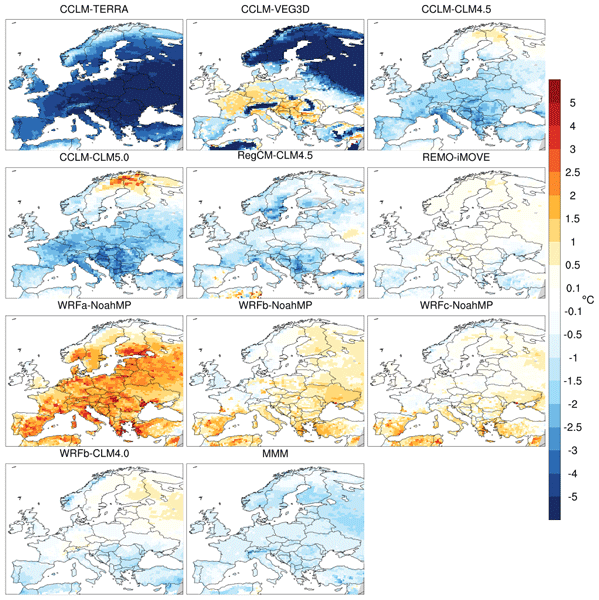
Giannis Sofiadis, Eleni Katragkou, Edouard L. Davin, Diana Rechid, Nathalie de Noblet-Ducoudre, Marcus Breil, Rita M. Cardoso, Peter Hoffmann, Lisa Jach, Ronny Meier, Priscilla A. Mooney, Pedro M. M. Soares, Susanna Strada, Merja H. Tölle, and Kirsten Warrach Sagi
Geosci. Model Dev., 15, 595–616, https://doi.org/10.5194/gmd-15-595-2022, https://doi.org/10.5194/gmd-15-595-2022, 2022
Short summary
Short summary
Afforestation is currently promoted as a greenhouse gas mitigation strategy. In our study, we examine the differences in soil temperature and moisture between grounds covered either by forests or grass. The main conclusion emerged is that forest-covered grounds are cooler but drier than open lands in summer. Therefore, afforestation disrupts the seasonal cycle of soil temperature, which in turn could trigger changes in crucial chemical processes such as soil carbon sequestration.
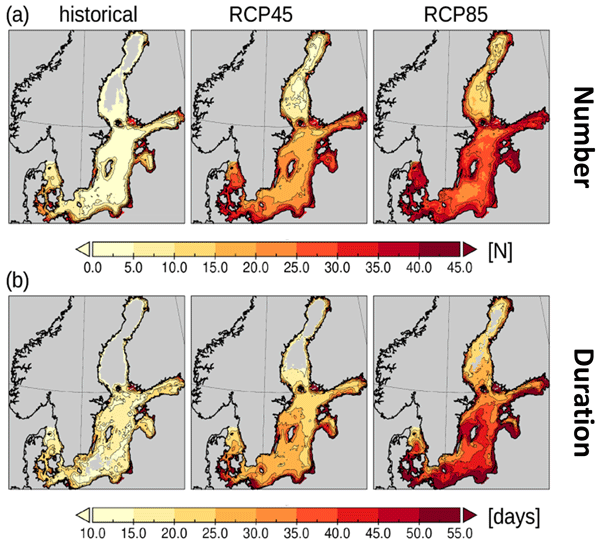
H. E. Markus Meier, Christian Dieterich, Matthias Gröger, Cyril Dutheil, Florian Börgel, Kseniia Safonova, Ole B. Christensen, and Erik Kjellström
Earth Syst. Dynam., 13, 159–199, https://doi.org/10.5194/esd-13-159-2022, https://doi.org/10.5194/esd-13-159-2022, 2022
Short summary
Short summary
In addition to environmental pressures such as eutrophication, overfishing and contaminants, climate change is believed to have an important impact on the marine environment in the future, and marine management should consider the related risks. Hence, we have compared and assessed available scenario simulations for the Baltic Sea and found considerable uncertainties of the projections caused by the underlying assumptions and model biases, in particular for the water and biogeochemical cycles.

Charles Pelletier, Thierry Fichefet, Hugues Goosse, Konstanze Haubner, Samuel Helsen, Pierre-Vincent Huot, Christoph Kittel, François Klein, Sébastien Le clec'h, Nicole P. M. van Lipzig, Sylvain Marchi, François Massonnet, Pierre Mathiot, Ehsan Moravveji, Eduardo Moreno-Chamarro, Pablo Ortega, Frank Pattyn, Niels Souverijns, Guillian Van Achter, Sam Vanden Broucke, Alexander Vanhulle, Deborah Verfaillie, and Lars Zipf
Geosci. Model Dev., 15, 553–594, https://doi.org/10.5194/gmd-15-553-2022, https://doi.org/10.5194/gmd-15-553-2022, 2022
Short summary
Short summary
We present PARASO, a circumpolar model for simulating the Antarctic climate. PARASO features five distinct models, each covering different Earth system subcomponents (ice sheet, atmosphere, land, sea ice, ocean). In this technical article, we describe how this tool has been developed, with a focus on the
coupling interfacesrepresenting the feedbacks between the distinct models used for contribution. PARASO is stable and ready to use but is still characterized by significant biases.
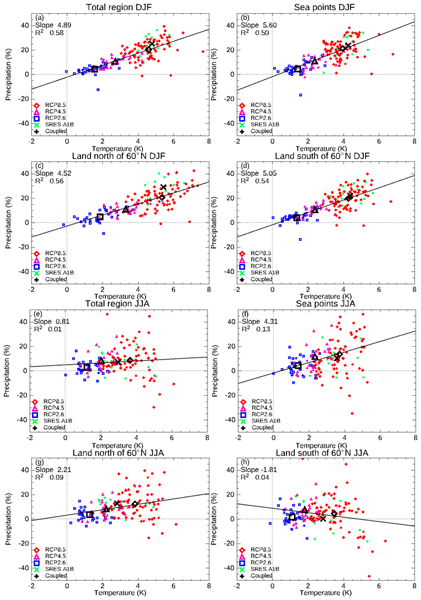
Ole Bøssing Christensen, Erik Kjellström, Christian Dieterich, Matthias Gröger, and Hans Eberhard Markus Meier
Earth Syst. Dynam., 13, 133–157, https://doi.org/10.5194/esd-13-133-2022, https://doi.org/10.5194/esd-13-133-2022, 2022
Short summary
Short summary
The Baltic Sea Region is very sensitive to climate change, whose impacts could easily exacerbate biodiversity stress from society and eutrophication of the Baltic Sea. Therefore, there has been a focus on estimations of future climate change and its impacts in recent research. Models show a strong warming, in particular in the north in winter. Precipitation is projected to increase in the whole region apart from the south during summer. New results improve estimates of future climate change.
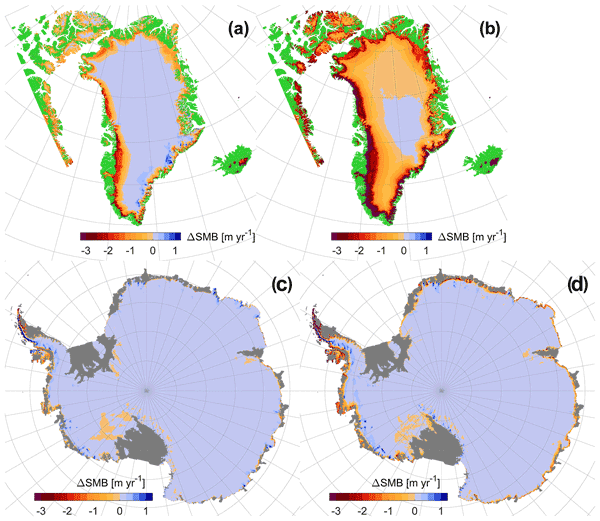
Fredrik Boberg, Ruth Mottram, Nicolaj Hansen, Shuting Yang, and Peter L. Langen
The Cryosphere, 16, 17–33, https://doi.org/10.5194/tc-16-17-2022, https://doi.org/10.5194/tc-16-17-2022, 2022
Short summary
Short summary
Using the regional climate model HIRHAM5, we compare two versions (v2 and v3) of the global climate model EC-Earth for the Greenland and Antarctica ice sheets. We are interested in the surface mass balance of the ice sheets due to its importance when making estimates of future sea level rise. We find that the end-of-century change in the surface mass balance for Antarctica is 420 Gt yr−1 (v2) and 80 Gt yr−1 (v3), and for Greenland it is −290 Gt yr−1 (v2) and −1640 Gt yr−1 (v3).
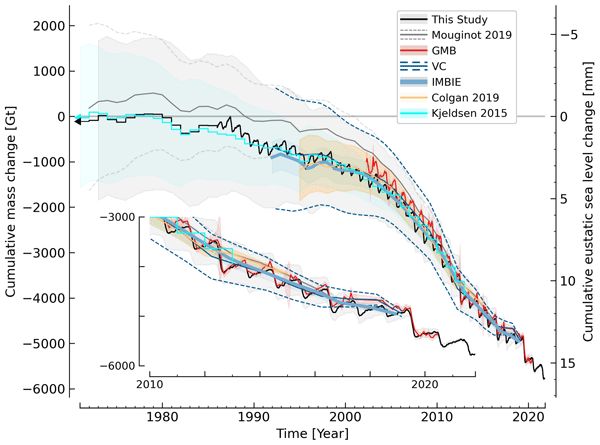
Kenneth D. Mankoff, Xavier Fettweis, Peter L. Langen, Martin Stendel, Kristian K. Kjeldsen, Nanna B. Karlsson, Brice Noël, Michiel R. van den Broeke, Anne Solgaard, William Colgan, Jason E. Box, Sebastian B. Simonsen, Michalea D. King, Andreas P. Ahlstrøm, Signe Bech Andersen, and Robert S. Fausto
Earth Syst. Sci. Data, 13, 5001–5025, https://doi.org/10.5194/essd-13-5001-2021, https://doi.org/10.5194/essd-13-5001-2021, 2021
Short summary
Short summary
We estimate the daily mass balance and its components (surface, marine, and basal mass balance) for the Greenland ice sheet. Our time series begins in 1840 and has annual resolution through 1985 and then daily from 1986 through next week. Results are operational (updated daily) and provided for the entire ice sheet or by commonly used regions or sectors. This is the first input–output mass balance estimate to include the basal mass balance.
Cited articles
Anderson, E. A.: A point energy and mass balance model of a snow cover, NOAA technical report NWS, 19, 2008.
Batrak, Y.: Implementation of an Adaptive Bias-Aware Extended Kalman Filter for Sea-Ice Data Assimilation in the HARMONIE-AROME Numerical Weather Prediction System, J. Adv. Model. Earth Sy., 13(9), e2021MS002533, https://doi.org/10.1029/2021MS002533, 2021.
Belušić, D., de Vries, H., Dobler, A., Landgren, O., Lind, P., Lindstedt, D., Pedersen, R. A., Sánchez-Perrino, J. C., Toivonen, E., van Ulft, B., Wang, F., Andrae, U., Batrak, Y., Kjellström, E., Lenderink, G., Nikulin, G., Pietikäinen, J.-P., Rodríguez-Camino, E., Samuelsson, P., van Meijgaard, E., and Wu, M.: HCLIM38: a flexible regional climate model applicable for different climate zones from coarse to convection-permitting scales, Geosci. Model Dev., 13, 1311–1333, https://doi.org/10.5194/gmd-13-1311-2020, 2020.
Bengtsson, L., Andrae, U., Aspelien, T., Batrak, Y., Calvo, J., de Rooy, W., Gleeson, E., Hansen-Sass, B., Homleid, M., Hortal, M., Ivarsson, K.-I., Lenderink, G., Niemelä, S., Nielsen, K. P., Onvlee, J., Rontu, L., Samuelsson, P., Muñoz, D. S., Subias, A., Tijm, S., Toll, V., Yang, X., and Køltzow, M. Ø.: The HARMONIE–AROME Model Configuration in the ALADIN–HIRLAM NWP System, Mon. Weather Rev., 145, 1919–1935, https://doi.org/10.1175/MWR-D-16-0417.1, 2017.
Best, M. J., Pryor, M., Clark, D. B., Rooney, G. G., Essery, R. L. H., Ménard, C. B., Edwards, J. M., Hendry, M. A., Porson, A., Gedney, N., Mercado, L. M., Sitch, S., Blyth, E., Boucher, O., Cox, P. M., Grimmond, C. S. B., and Harding, R. J.: The Joint UK Land Environment Simulator (JULES), model description – Part 1: Energy and water fluxes, Geosci. Model Dev., 4, 677–699, https://doi.org/10.5194/gmd-4-677-2011, 2011.
Boone, A. and Etchevers, P.: An intercomparison of three snow schemes of varying complexity coupled to the same land surface model: Local-scale evaluation at an Alpine site, J. Hydrometeorol., 2, 374–394, 2001.
Campbell, I., Gibson, P. B., Stuart, S., Broadbent, A. M., Sood, A., Pirooz, A. A., and Rampal, N.: Comparison of three reanalysis-driven regional climate models over New Zealand: Climatology and extreme events, Int. J. Climatol., 44, 4219–4244, https://doi.org/10.1002/joc.8578, 2024.
Caton Harrison, T., Biri, S., Bracegirdle, T. J., King, J. C., Kent, E. C., Vignon, É., and Turner, J.: Reanalysis representation of low-level winds in the Antarctic near-coastal region, Weather Clim. Dynam., 3, 1415–1437, https://doi.org/10.5194/wcd-3-1415-2022, 2022.
Caton Harrison, T., King, J. C., Bracegirdle, T. J. and Lu, H.: Dynamics of extreme wind events in the marine and terrestrial sectors of coastal Antarctica, Q. J. Roy. Meteor. Soc., 150, 2646–2666, https://doi.org/10.1002/qj.4727, 2024.
Caton Harrison, T., Lock, A., Bracegirdle, T. J., King, J. C., Lu, H., and Silvano, A.: Sensitivity of near-surface marine winds and wind stress in coastal Antarctica to regional atmospheric model configuration, Q. J. Roy. Meteor. Soc.. E5019, https://doi.org/10.1002/qj.5019, 2025.
Clark, D. B., Mercado, L. M., Sitch, S., Jones, C. D., Gedney, N., Best, M. J., Pryor, M., Rooney, G. G., Essery, R. L. H., Blyth, E., Boucher, O., Harding, R. J., Huntingford, C., and Cox, P. M.: The Joint UK Land Environment Simulator (JULES), model description – Part 2: Carbon fluxes and vegetation dynamics, Geosci. Model Dev., 4, 701–722, https://doi.org/10.5194/gmd-4-701-2011, 2011.
Datta, R. T., Tedesco, M., Fettweis, X., Agosta, C., Lhermitte, S., Lenaerts, J. T., and Wever, N.: The effect of foehn-induced surface melt on firn evolution over the northeast Antarctic Peninsula, Geophys. Res. Lett., 46, 3822–3831, https://doi.org/10.1029/2018GL080845, 2019.
Datta, R. T., Herrington, A., Lenaerts, J. T. M., Schneider, D. P., Trusel, L., Yin, Z., and Dunmire, D.: Evaluating the impact of enhanced horizontal resolution over the Antarctic domain using a variable-resolution Earth system model, The Cryosphere, 17, 3847–3866, https://doi.org/10.5194/tc-17-3847-2023, 2023.
Decharme, B., Brun, E., Boone, A., Delire, C., Le Moigne, P., and Morin, S.: Impacts of snow and organic soils parameterization on northern Eurasian soil temperature profiles simulated by the ISBA land surface model, The Cryosphere, 10, 853–877, https://doi.org/10.5194/tc-10-853-2016, 2016.
Dee, D. P., Uppala, S. M., Simmons, A. J., Berrisford, P., Poli, P., Kobayashi, S., Andrae, U., Balmaseda, M. A., Balsamo, G., Bauer, P., Bechtold, P., Beljaars, A. C. M., van de Berg, L., Bidlot, J., Bormann, N., Delsol, C., Dragani, R., Fuentes, M., Geer, A. J., Haimberger, L., Healy, S. B., Hersbach, H., Hólm, E. V., Isaksen, L., Kãllberg, P., Köhler, M., Matricardi, M., McNally, A. P., Monge-Sanz, B. M., Morcrette, J.-J., Park, B.-K., Peubey, C., de Rosnay, P., Tavolato, C., Thépaut, J.-N., and Vitart, F.: The ERA-Interim reanalysis: configuration and performance of the data assimilation system, Q. J. Roy. Meteor. Soc., 137, 553–597, https://doi.org/10.1002/qj.828, 2011.
De Ridder, K. and Gallée, H.: Land surface–induced regional climate change in southern Israel, J. Appl. Meteorol., 37, 1470–1485, https://doi.org/10.1175/1520-0450(1998)037<1470:LSIRCC>2.0.CO;2, 1998.
Dong, X., Wang, Y., Hou, S., Ding, M., Yin, B., and Zhang, Y.: Robustness of the recent global atmospheric reanalyses for Antarctic near-surface wind speed climatology, J. Climate, 33, 4027–4043, https://doi.org/10.1175/JCLI-D-19-0648.1, 2020.
ECMWF: IFS Documentation CY47R1 – Part IV: Physical Processes, IFS Documentation CY47R1, ECMWF, https://doi.org/10.21957/cpmkqvhja, 2020.
Elvidge, A. D., Kuipers Munneke, P., King, J. C., Renfrew, I. A., and Gilbert, E.: Atmospheric drivers of melt on Larsen C Ice Shelf: Surface energy budget regimes and the impact of foehn, J. Geophys. Res.-Atmos., 125, e2020JD032463, https://doi.org/10.1029/2020JD032463, 2020.
Francis, D., Fonseca, R., Mattingly, K. S., Lhermitte, S., and Walker, C.: Foehn winds at Pine Island Glacier and their role in ice changes, The Cryosphere, 17, 3041–3062, https://doi.org/10.5194/tc-17-3041-2023, 2023.
Gabarró, C., Hughes, N., Wilkinson, J., Bertino, L., Bracher, A., Diehl, T., Dierking, W., Gonzalez-Gambau,V., Gonzalez-Gambau1, Lavergne, T., Madurell, T., Malnes, E. and Wagner, P. M.: Improving satellite-based monitoring of the polar regions: Identification of research and capacity gaps, Front. Remote Sens., 4, 952091, https://doi.org/10.3389/frsen.2023.952091, 2023.
Gadde, S. and van de Berg, W. J.: Contribution of blowing-snow sublimation to the surface mass balance of Antarctica, The Cryosphere, 18, 4933–4953, https://doi.org/10.5194/tc-18-4933-2024, 2024.
Gallée, H.: Simulation of the mesocyclonic activity in the Ross Sea, Antarctica, Mon. Weather Rev., 123, 2051–2069, https://doi.org/10.1175/1520-0493(1995)123<2051:SOTMAI>2.0.CO;2, 1995.
Gallée, H. and Schayes, G.: Development of a three-dimensional meso-γ primitive equation model: katabatic winds simulation in the area of Terra Nova Bay, Antarctica, Mon. Weather Rev., 122, 671–685, https://doi.org/10.1175/1520-0493(1994)122<0671:DOATDM>2.0.CO;2, 1994.
Gehring, J., Vignon, É., Billault-Roux, A.-C., Ferrone, A., Protat, A., Alexander, S. P. and Berne, A.: Orographic flow influence on precipitation during an atmospheric river event at Davis, Antarctica, J. Geophys. Res.-Atmos. 127, e2021JD035210, https://doi.org/10.1029/2021JD035210, 2022.
Genthon, C., Veron, D., Vignon, E., Six, D., Dufresne, J.-L., Madeleine, J.-B., Sultan, E., and Forget, F.: 10 years of temperature and wind observation on a 45 m tower at Dome C, East Antarctic plateau, Earth Syst. Sci. Data, 13, 5731–5746, https://doi.org/10.5194/essd-13-5731-2021, 2021.
Gilbert, E., Orr, A., King, J. C., Renfrew, I. A., Lachlan-Cope, T., Field, P. F., and Boutle, I. A.: Summertime cloud phase strongly influences surface melting on the Larsen C ice shelf, Antarctica, Q. J. Roy. Meteor. Soc., 146, 1575–1589, https://doi.org/10.1002/qj.3753, 2020.
Gilbert, E. M., Orr, A., King, J. C., Renfrew, I. A., and Lachlan-Cope, T. A.: A 20-year study of melt processes over Larsen C Ice Shelf using a high-resolution regional atmospheric model: Part 1, Model configuration and validation, J. Geophys. Res.-Atmos., 127, e2021JD034766, https://doi.org/10.1029/2021JD034766, 2022a.
Gilbert, E., Orr, A., Renfrew, I. A., King, J. C., and Lachlan-Cope, T.: A 20-Year Study of Melt Processes Over Larsen C Ice Shelf Using a High-Resolution Regional Atmospheric Model: 2. Drivers of Surface Melting, J. Geophys. Res.-Atmos., 127, e2021JD036012, https://doi.org/10.1029/2021JD036012, 2022b.
Gilbert, E., Pishniak, D., Torres, J. A., Orr, A., Maclennan, M., Wever, N., and Verro, K.: Extreme precipitation associated with atmospheric rivers over West Antarctic ice shelves: insights from kilometre-scale regional climate modelling, The Cryosphere, 19, 597–618, https://doi.org/10.5194/tc-19-597-2025, 2025.
Gossart, A., Helsen, S., Lenaerts, J. T. M., Broucke, S. V., Van Lipzig, N. P. M., and Souverijns, N.: An Evaluation of Surface Climatology in State-of-the-Art Reanalyses over the Antarctic Ice Sheet, J. Climate, 32, 6899–6915, https://doi.org/10.1175/JCLI-D-19-0030.1, 2019.
Grailet, J.-F., Hogan, R. J., Ghilain, N., Bolsée, D., Fettweis, X., and Grégoire, M.: Inclusion of the ECMWF ecRad radiation scheme (v1.5.0) in the MAR (v3.14), regional evaluation for Belgium, and assessment of surface shortwave spectral fluxes at Uccle, Geosci. Model Dev., 18, 1965–1988, https://doi.org/10.5194/gmd-18-1965-2025, 2025.
Gupta, M., Regan, H., Koo, Y., Chua, S. M. T., Li, X., and Heil, P.: Inferring the seasonality of sea ice floes in the Weddell Sea using ICESat-2, The Cryosphere, 19, 1241–1257, https://doi.org/10.5194/tc-19-1241-2025, 2025.
Gutowski Jr., W. J., Ullrich, P. A., Hall, A., Leung, L. R., O'Brien, T. A., Patricola, C. M., Arritt, R. W., Bukovsky, M. S., Calvin, K. V., Feng, Z., Jones, A. D., Kooperman, G. J., Monier, E., Pritchard, M. S., Pryor, S. C., Qian, Y., Rhoades, A. M., Roberts, A. F., Sakaguchi, K., Urban, N., and Zarzycki, C.: The ongoing need for high-resolution regional climate models: Process understanding and stakeholder information, B. Am. Meteorol. Soc., 101, E664–E683, https://doi.org/10.1175/BAMS-D-19-0113.1, 2020.
Hansen, N., Simonsen, S. B., Boberg, F., Kittel, C., Orr, A., Souverijns, N., van Wessem, J. M., and Mottram, R.: Brief communication: Impact of common ice mask in surface mass balance estimates over the Antarctic ice sheet, The Cryosphere, 16, 711–718, https://doi.org/10.5194/tc-16-711-2022, 2022.
Hansen, N., Orr, A., Zou, X., Boberg, F., Bracegirdle, T. J., Gilbert, E., Langen, P. L., Lazzara, M. A., Mottram, R., Phillips, T., Price, R., Simonsen, S. B., and Webster, S.: The importance of cloud properties when assessing surface melting in an offline-coupled firn model over Ross Ice shelf, West Antarctica, The Cryosphere, 18, 2897–2916, https://doi.org/10.5194/tc-18-2897-2024, 2024.
Heinemann, G. and Zentek, R.: A model-based climatology of low-level jets in the Weddell Sea region of the Antarctic, Atmosphere, 12, 1635, https://doi.org/10.3390/atmos12121635, 2021.
Heinemann, G., Glaw, L., and Willmes, S.: A satellite-based climatology of wind-induced surface temperature anomalies for the Antarctic, Remote Sens., 11, 1539, https://doi.org/10.3390/rs11131539, 2019.
Hersbach, H., Bell, B., Berrisford, P., Hirahara, S., Horányi, A., Muñoz-Sabater, J., Nicolas, J., Peubey, C., Radu, R., Schepers, D., Simmons, A., Soci, C., Abdalla, S., Abellan, X., Balsamo, G., Bechtold, P., Biavati, G., Bidlot, J., Bonavita, M., De Chiara, G., Dahlgren, P., Dee, D., Diamantakis, M., Dragani, R., Flemming, J., Forbes, R., Fuentes, M., Geer, A., Haimberger, L., Healy, S., Hogan, R. J., Hólm, E., Janisková, M., Keeley, S., Laloyaux, P., Lopez, P., Lupu, C., Radnoti, G., de Rosnay, P., Rozum, I., Vamborg, F., Villaume, S., and Thépaut, J. N.: The ERA5 global reanalysis, Q. J. Roy. Meteor. Soc., 146, 1999–2049, https://doi.org/10.1002/qj.3803, 2020.
Hofsteenge, M. G., Cullen, N. J., Reijmer, C. H., van den Broeke, M., Katurji, M., and Orwin, J. F.: The surface energy balance during foehn events at Joyce Glacier, McMurdo Dry Valleys, Antarctica, The Cryosphere, 16, 5041–5059, https://doi.org/10.5194/tc-16-5041-2022, 2022.
Hogan, R. and Bozzo, A.: ECRAD: A new radiation scheme for the IFS, ECMWF [data set], https://doi.org/10.21957/whntqkfdz, 2016.
Iles, C. E., Vautard, R., Strachan, J., Joussaume, S., Eggen, B. R., and Hewitt, C. D.: The benefits of increasing resolution in global and regional climate simulations for European climate extremes, Geosci. Model Dev., 13, 5583–5607, https://doi.org/10.5194/gmd-13-5583-2020, 2020.
Kolbe, M., Torres Alavez, J. A., Mottram, R., Bintanja, R., van der Linden, E. C., and Stendel, M.: Model performance and surface impacts of atmospheric river events in Antarctica, Discover Atmosphere, 3, 4, https://doi.org/10.1007/s44292-025-00026-w, 2025.
Laffin, M. K., Zender, C. S., Singh, S., van Wessem, J. M., Smeets, C. J. P. P., and Reijmer, C. H.: Climatology and evolution of the Antarctic Peninsula föhn wind-induced melt regime from 1979–2018, J. Geophys. Res.-Atmos., 126, https://doi.org/10.1029/2020JD033682, 2021.
Libois, Q., Picard, G., Arnaud, L., Dumont, M., Lafaysse, M., Morin, S., and Lefebvre, E.: Summertime evolution of snow specific surface area close to the surface on the Antarctic Plateau, The Cryosphere, 9, 2383–2398, https://doi.org/10.5194/tc-9-2383-2015, 2015.
Masson, V., Le Moigne, P., Martin, E., Faroux, S., Alias, A., Alkama, R., Belamari, S., Barbu, A., Boone, A., Bouyssel, F., Brousseau, P., Brun, E., Calvet, J.-C., Carrer, D., Decharme, B., Delire, C., Donier, S., Essaouini, K., Gibelin, A.-L., Giordani, H., Habets, F., Jidane, M., Kerdraon, G., Kourzeneva, E., Lafaysse, M., Lafont, S., Lebeaupin Brossier, C., Lemonsu, A., Mahfouf, J.-F., Marguinaud, P., Mokhtari, M., Morin, S., Pigeon, G., Salgado, R., Seity, Y., Taillefer, F., Tanguy, G., Tulet, P., Vincendon, B., Vionnet, V., and Voldoire, A.: The SURFEXv7.2 land and ocean surface platform for coupled or offline simulation of earth surface variables and fluxes, Geosci. Model Dev., 6, 929–960, https://doi.org/10.5194/gmd-6-929-2013, 2013.
Mottram, R., Hansen, N., Kittel, C., van Wessem, J. M., Agosta, C., Amory, C., Boberg, F., van de Berg, W. J., Fettweis, X., Gossart, A., van Lipzig, N. P. M., van Meijgaard, E., Orr, A., Phillips, T., Webster, S., Simonsen, S. B., and Souverijns, N.: What is the surface mass balance of Antarctica? An intercomparison of regional climate model estimates, The Cryosphere, 15, 3751–3784, https://doi.org/10.5194/tc-15-3751-2021, 2021.
Mottram, R., Mooney, P. A., Äijälä, C., van de Berg, W. J., Bezhenar, R., Bhatt, B. C., Boberg, F., Cherblanc, C., Christensen, O. B., Chyhareva, A., van Dalum, C. T., De Falco, C., Fettweis, X., Gadde, S. N., Gilbert, E., Gumber, S., Haakenstad, H., Hansen, N., Johnston, N. M., Kittel, C., Krakovska, S., Lambin, C., Landwehrs, J., Landgren, O., Lee, H., Levine, X., Matthes, H., Maure, D., Naakka, T., Negrel, J., Nieradzik, L. P., Olesen, M., Orr, A., Phillips, T., Pishniak, D., Rinke, A., Torres Alavez, J. A., Uotila, P., Verro, K., Vihma, T., and Williams, R. S.: Experimental Protocol (v1) for High Resolution Regional Climate Model Simulations in the Arctic and Antarctica (Polar CORDEX-CMIP6), Geosci. Model Dev., submitted, 2026.
Nicola, L., Notz, D., and Winkelmann, R.: Revisiting temperature sensitivity: how does Antarctic precipitation change with temperature?, The Cryosphere, 17, 2563–2583, https://doi.org/10.5194/tc-17-2563-2023, 2023.
Orr, A., Kirchgaessner, A., King, J., Phillips, T., Gilbert, E., Elvidge, A., Weeks, M., Gadian, A., Kuipers Munneke, P., van den Broeke, M., Webster, S. and McGrath, D.: Comparison of kilometre and sub-kilometre scale simulations of a foehn wind event over the Larsen C Ice Shelf, Antarctic Peninsula using the Met Office Unified Model (MetUM), Q. J. Roy. Meteor. Soc., 147, 3472–3492, https://doi.org/10.1002/qj.4138, 2021.
Parish, T. R. and Bromwich, D. H.: Reexamination of the Near-Surface Airflow over the Antarctic Continent and Implications on Atmospheric Circulations at High Southern Latitudes, Mon. Weather Rev., 135, 1961–1973, https://doi.org/10.1175/MWR3374.1, 2007.
Price, R., Orr, A., Field, P. F., Mace, G., and Protat, A.: Simulation of Cloud Processes Over Offshore Coastal Antarctica Using the High-Resolution Regional UK Met Office Unified Model With Interactive Aerosols, J. Geophys. Res.-Atmos., 130, e2024JD042109, https://doi.org/10.1029/2024JD042109, 2025.
Renfrew, I. A. and Anderson, P. S.: The surface climatology of an ordinary katabatic wind regime in Coats Land, Antarctica, Tellus A, 54, 463–484, https://doi.org/10.3402/tellusa.v54i5.12162, 2002.
Seefeldt, M. W. and Cassano, J. J.: A description of the Ross Ice Shelf air stream (RAS) through the use of self-organizing maps (SOMs), J. Geophys. Res.-Atmos., 119, https://doi.org/10.1029/2011JD016857, 2012.
Simon, S., Turner, J., Thamban, M., Deb, P., Gorodetskaya, I. V., and Lazzara, M.: An extreme precipitation event over Dronning Maud Land, East Antarctica-A case study of an atmospheric river event using the Polar WRF Model, Atmos. Res., 311, 107724, https://doi.org/10.1016/j.atmosres.2024.107724, 2024.
Speirs, J. C., Steinhoff, D. F., McGowan, H. A., Bromwich, D. H. and Monaghan, A. J.: Foehn Winds in the McMurdo Dry Valleys, Antarctica: The Origin of Extreme Warming Events, J. Climate, 23, 3577–3598, https://doi.org/10.1175/2010JCLI3382.1, 2010.
Torres Alavez, J. A., Mottram, R., Lavergne, T., Pedersen, R., and Christensen, O. B.: Improving the representation of coastal polynyas in high resolution climate models with satellite datasets, EGUsphere [preprint], https://doi.org/10.5194/egusphere-2025-6183, 2026.
Undén, P., Rontu, L., Järvinen, H., Lynch, P., Calvo, J., Cats, G., Cuxart, J., Eerola, K., Fortelius, C., Garcia-Moya, J. A., Jones, C., Lenderlink, G., McDonald, A., McGrath, R., Navascues, B., Woetman Nielsen, N., Ødegaard, V., Rodrigues, E., Rummukainen, M., Rõõm, R., Sattler, K., Hansen Sass, B., Savijärvi, H., Wichers Schreur, B., Sigg, R., The, H., and Tijm, A.: HIRLAM-5 Scientific Documentation, Scientific Report, http://hirlam.org (last access: 16 April 2026), 2002.
van Dalum, C. T., van de Berg, W. J., Gadde, S. N., van Tiggelen, M., van der Drift, T., van Meijgaard, E., van Ulft, L. H., and van den Broeke, M. R.: First results of the polar regional climate model RACMO2.4, The Cryosphere, 18, 4065–4088, https://doi.org/10.5194/tc-18-4065-2024, 2024.
van Dalum, C. T., van de Berg, W. J., van den Broeke, M. R., and van Tiggelen, M.: The surface mass balance and near-surface climate of the Antarctic ice sheet in RACMO2.4p1, The Cryosphere, 19, 4061–4090, https://doi.org/10.5194/tc-19-4061-2025, 2025.
van de Berg, W. J. and Medley, B.: Brief Communication: Upper-air relaxation in RACMO2 significantly improves modelled interannual surface mass balance variability in Antarctica, The Cryosphere, 10, 459–463, https://doi.org/10.5194/tc-10-459-2016, 2016.
van Wessem, J. M., Reijmer, C. H., van de Berg, W. J., van Den Broeke, M. R., Cook, A. J., Van Ulft, L. H., and Van Meijgaard, E.: Temperature and wind climate of the Antarctic Peninsula as simulated by a high-resolution regional atmospheric climate model, J. Climate, 28, 7306–7326, https://doi.org/10.1175/JCLI-D-15-0060.1, 2015.
Verro, K., Äijälä, C., Pirazzini, R., Dadic, R., Maure, D., van de Berg, W. J., Traversa, G., van Dalum, C. T., Uotila, P., Fettweis, X., Di Mauro, B., and Johansson, M.: How well do the regional atmospheric and oceanic models describe the Antarctic sea ice albedo?, The Cryosphere, 19, 4409–4436, https://doi.org/10.5194/tc-19-4409-2025, 2025.
Walters, D., Baran, A. J., Boutle, I., Brooks, M., Earnshaw, P., Edwards, J., Furtado, K., Hill, P., Lock, A., Manners, J., Morcrette, C., Mulcahy, J., Sanchez, C., Smith, C., Stratton, R., Tennant, W., Tomassini, L., Van Weverberg, K., Vosper, S., Willett, M., Browse, J., Bushell, A., Carslaw, K., Dalvi, M., Essery, R., Gedney, N., Hardiman, S., Johnson, B., Johnson, C., Jones, A., Jones, C., Mann, G., Milton, S., Rumbold, H., Sellar, A., Ujiie, M., Whitall, M., Williams, K., and Zerroukat, M.: The Met Office Unified Model Global Atmosphere 7.0/7.1 and JULES Global Land 7.0 configurations, Geosci. Model Dev., 12, 1909–1963, https://doi.org/10.5194/gmd-12-1909-2019, 2019.
Wang, X., Langen, P. L., Li, R., Qiao, G., Fan, X., Dou, Y., and Cui, X.: Comparing surface mass balance and surface temperatures from regional climate models and reanalyses to observations over the Antarctic Ice Sheet, Int. J. Climatol., 45, e8767, https://doi.org/10.1002/joc.8767, 2025.
Wang, Y., Zhang, X., Ning, W., Lazzara, M. A., Ding, M., Reijmer, C. H., Smeets, P. C. J. P., Grigioni, P., Heil, P., Thomas, E. R., Mikolajczyk, D., Welhouse, L. J., Keller, L. M., Zhai, Z., Sun, Y., and Hou, S.: The AntAWS dataset: a compilation of Antarctic automatic weather station observations, Earth Syst. Sci. Data, 15, 411–429, https://doi.org/10.5194/essd-15-411-2023, 2023.
Wille, J. D., Favier, V., Jourdain, N. C., Kittel, C., Turton, J. V., Agosta, C., Gorodetskaya, I. V., Picard, G., Codron, F., Leroy-Dos Santos, C., Amory, C., Fettweis, X., Blanchet, J., Jomelli, V. and Berchet, A.: Intense atmospheric rivers can weaken ice shelf stability at the Antarctic Peninsula, Commun. Earth Environ., 3, 90, https://doi.org/10.1038/s43247-022-00422-9, 2022.
Wille, J. D., Alexander, S. P., Amory, C., Baiman, R., Barthélemy, L., Bergstrom, D. M., Berne, A., Binder, H., Blanchet, H., Bozkurt, D., Bracegirdle, T. J., Casado, M., Choi, T., Clem, K. R., Codron, F., Datta, R., Di Battista, S., Favier, V., Francis, D., Fraser, A. D., Fourré, E., Garreaud, R. D., Genthon, C., Gorodetskaya, I. V., González-Herrero, S., Heinrich, V. J., Hubert, G., Joos, H., Kim, S.-J., King, J. C., Kittel, C., Landais, A., Lazzara, M., Leonard, G. H., Lieser, J. L., Maclennan, M., Mikolajczyk, D., Neff, P., Ollivier, I., Picard, G., Pohl, B., Ralph, F. M., Rowe, P., Schlosser, E., Shields, C. A., Smith, I. J., Sprenger, M., Trusel, L., Udy, D., Vance, T., Vignon, É., Walker, C., Wever, N., and Zou, X.: The extraordinary March 2022 East Antarctica “heat” wave. Part II: Impacts on the Antarctic ice sheet, J. Climate, 37, 779–799, https://doi.org/10.1175/JCLI-D-23-0176.1, 2024.
Williams, R. S., Marshall, G. J., Levine, X., Graff, L. S., Handorf, D., J., Nadine M., K., Alexey Y., Orr, A., van de Berg, W. J., Wijngaard, R. R., and Mooney, P. A.: Future Antarctic Climate: Storylines of mid-latitude jet strengthening and shift emergent from CMIP6, J. Climate, 37, 2157–2178, https://doi.org/10.1175/JCLI-D-23-0122.1, 2024.
Wilson, D. R. and Ballard, S. P.: A microphysically based precipitation scheme for the UK Meteorological Office Unified Model, Q. J. Roy. Meteor. Soc., 125, 1607–1636, https://doi.org/10.1002/qj.49712555707, 1999.
Wilson, D. R., Bushell, A. C., Kerr-Munslow, A. M., Price, J. D., and Morcrette, C. J.: PC2: A prognostic cloud fraction and condensation scheme. I: Scheme description, Q. J. Roy. Meteor. Soc., 134, 2093–2107, https://doi.org/10.1002/qj.333, 2008a.
Wilson, D. R., Bushell, A. C., Kerr-Munslow, A. M., Price, J. D., Morcrette, C. J., and Bodas-Salcedo, A.: PC2: A prognostic cloud fraction and condensation scheme. II: Climate model simulations, Q. J. Roy. Meteor. Soc., 134, 2109–2125, https://doi.org/10.1002/qj.332, 2008b.
Zentek, R. and Heinemann, G.: Verification of the regional atmospheric model CCLM v5.0 with conventional data and lidar measurements in Antarctica, Geosci. Model Dev., 13, 1809–1825, https://doi.org/10.5194/gmd-13-1809-2020, 2020.
Zou, X., Bromwich, D. H., Nicolas, J. P., Montenegro, A., and Wang, S.-H.: West Antarctic surface melt event of January 2016 facilitated by föhn warming, Q. J. Roy. Meteor. Soc., 145, 687–704, https://doi.org/10.1002/qj.3460, 2019.
Short summary
Here we present a new dataset – the PolarRES ensemble – of four state-of-the-art regional climate models, which capture the full complexity of Antarctica's climate. The ensemble out-performs other available tools, advancing our ability to explore Antarctic climate. While it still has limitations, the PolarRES ensemble offers a novel and exciting way of evaluating climate processes and features, and we encourage researchers to use the data, which are freely available.
Here we present a new dataset – the PolarRES ensemble – of four state-of-the-art regional...


