
Articles | Volume 20, issue 8
https://doi.org/10.5194/tc-20-4293-2026
© Author(s) 2026. This work is distributed under
the Creative Commons Attribution 4.0 License.
the Creative Commons Attribution 4.0 License.
https://doi.org/10.5194/tc-20-4293-2026
© Author(s) 2026. This work is distributed under
the Creative Commons Attribution 4.0 License.
the Creative Commons Attribution 4.0 License.
Research article
| 
07 Aug 2026
Research article |
| 07 Aug 2026
| 07 Aug 2026
Glacier surges on James Ross Island, Antarctica, and their relationship with climate
Benjamin J. Davison
CORRESPONDING AUTHOR

School of Geography and Planning, University of Sheffield, Sheffield, UK
Andrew J. Sole
School of Geography and Planning, University of Sheffield, Sheffield, UK
Gregoire Guillet
Department of Geosciences, University of Oslo, Oslo, Norway
Douglas I. Benn
School of Geography and Sustainable Development, University of St Andrews, St Andrews, UK
Jonathan Kingslake
Lamont-Doherty Earth Observatory, Columbia University, New York, USA
Department of Earth and Environmental Science, Columbia University, New York, USA
The Department of Earth science and engineering, Imperial College London, London, UK
Jeremy C. Ely
School of Geography and Planning, University of Sheffield, Sheffield, UK
Stephen J. Livingstone
School of Geography and Planning, University of Sheffield, Sheffield, UK
Christopher D. Stringer
School of Built Environment, Engineering and Computing, Leeds Beckett University, Leeds, UK
Jonathan L. Carrivick
School of Geography and water@leeds, University of Leeds, Leeds, UK
Anna E. Hogg
School of Earth, Environment and Sustainability, University of Leeds, Leeds, UK
Related authors
Gavin A. Schmidt, Kenneth D. Mankoff, Jonathan L. Bamber, Clara Burgard, Dustin Carroll, David M. Chandler, Violaine Coulon, Benjamin J. Davison, Matthew H. England, Paul R. Holland, Nicolas C. Jourdain, Qian Li, Juliana M. Marson, Pierre Mathiot, Clive R. McMahon, Twila A. Moon, Ruth Mottram, Sophie Nowicki, Anna Olivé Abelló, Andrew G. Pauling, Thomas Rackow, and Damien Ringeisen
Geosci. Model Dev., 18, 8333–8361, https://doi.org/10.5194/gmd-18-8333-2025, https://doi.org/10.5194/gmd-18-8333-2025, 2025
Short summary
Short summary
The impact of increasing mass loss from the Greenland and Antarctic ice sheets has not so far been included in historical climate model simulations. This paper describes the protocols and data available for modeling groups to add this anomalous freshwater to their ocean modules to better represent the impacts of these fluxes on ocean circulation, sea ice, salinity and sea level.
Benjamin J. Davison, Anna E. Hogg, Thomas Slater, Richard Rigby, and Nicolaj Hansen
Earth Syst. Sci. Data, 17, 3259–3281, https://doi.org/10.5194/essd-17-3259-2025, https://doi.org/10.5194/essd-17-3259-2025, 2025
Short summary
Short summary
Grounding line discharge is a measure of the amount of ice entering the ocean from an ice mass. This paper describes a dataset of grounding line discharge for the Antarctic Ice Sheet and each of its glaciers. The dataset shows that Antarctic Ice Sheet grounding line discharge has increased since 1996.
Heather L. Selley, Anna E. Hogg, Benjamin J. Davison, Pierre Dutrieux, and Thomas Slater
The Cryosphere, 19, 1725–1738, https://doi.org/10.5194/tc-19-1725-2025, https://doi.org/10.5194/tc-19-1725-2025, 2025
Short summary
Short summary
We used satellite observations to measure recent changes in ice speed and flow direction in the Pope, Smith, and Kohler region of West Antarctica (2005–2022). We found substantial speed-up on seven ice streams of up to 87 %. However, Kohler West Glacier has slowed by 10 %, due to the redirection of ice flow into its rapidly thinning neighbour. This process of “ice piracy” has not previously been directly observed on this rapid timescale and may influence future ice shelf and sheet mass changes.
Benjamin J. Davison, Anna E. Hogg, Carlos Moffat, Michael P. Meredith, and Benjamin J. Wallis
The Cryosphere, 18, 3237–3251, https://doi.org/10.5194/tc-18-3237-2024, https://doi.org/10.5194/tc-18-3237-2024, 2024
Short summary
Short summary
Using a new dataset of ice motion, we observed glacier acceleration on the west coast of the Antarctic Peninsula. The speed-up began around January 2021, but some glaciers sped up earlier or later. Using a combination of ship-based ocean temperature observations and climate models, we show that the speed-up coincided with a period of unusually warm air and ocean temperatures in the region.
Trystan Surawy-Stepney, Anna E. Hogg, Stephen L. Cornford, Benjamin J. Wallis, Benjamin J. Davison, Heather L. Selley, Ross A. W. Slater, Elise K. Lie, Livia Jakob, Andrew Ridout, Noel Gourmelen, Bryony I. D. Freer, Sally F. Wilson, and Andrew Shepherd
The Cryosphere, 18, 977–993, https://doi.org/10.5194/tc-18-977-2024, https://doi.org/10.5194/tc-18-977-2024, 2024
Short summary
Short summary
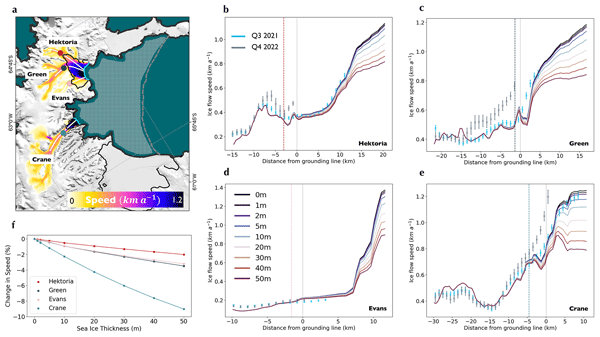
Here, we use satellite observations and an ice flow model to quantify the impact of sea ice buttressing on ice streams on the Antarctic Peninsula. The evacuation of 11-year-old landfast sea ice in the Larsen B embayment on the East Antarctic Peninsula in January 2022 was closely followed by major changes in the calving behaviour and acceleration (30 %) of the ocean-terminating glaciers. Our results show that sea ice buttressing had a negligible direct role in the observed dynamic changes.
Benjamin Joseph Davison, Tom Cowton, Andrew Sole, Finlo Cottier, and Pete Nienow
The Cryosphere, 16, 1181–1196, https://doi.org/10.5194/tc-16-1181-2022, https://doi.org/10.5194/tc-16-1181-2022, 2022
Short summary
Short summary
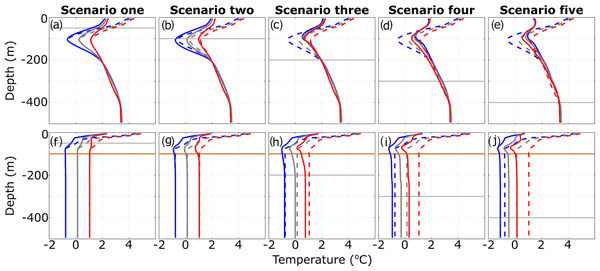
The ocean is an important driver of Greenland glacier retreat. Icebergs influence ocean temperature in the vicinity of glaciers, which will affect glacier retreat rates, but the effect of icebergs on water temperature is poorly understood. In this study, we use a model to show that icebergs cause large changes to water properties next to Greenland's glaciers, which could influence ocean-driven glacier retreat around Greenland.
Adam J. Hepburn, Sammie Buzzard, Andrew J. Sole, Stephen J. Livingstone, Felix Ng, Mathieu Morlighem, Elizabeth A. Bagshaw, Caroline Clason, Lisa Craw, Christine F. Dow, Samuel Doyle, Jonathan Hawkins, Matthew Peacey, and Robert Storrar
The Cryosphere, 20, 5675–5696, https://doi.org/10.5194/tc-20-5675-2026, https://doi.org/10.5194/tc-20-5675-2026, 2026
Short summary
Short summary
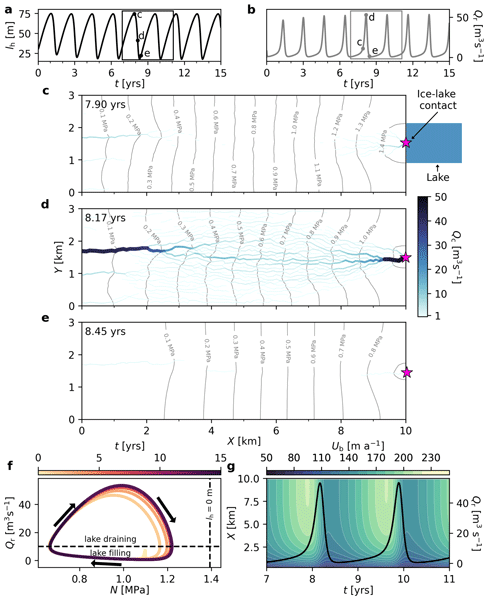
Lakes at glacier margins can drain beneath the ice in devastating, floods called jökulhlaups. We present the first 2D model of jökulhlaup propagation, first applying it to a synthetic glacier, before then assessing its ability to reproduce an observed record of lake fill-drain cycles in Greenland. Our results match a 17-year record of flood timing but underpredicts peak discharge likely because we are missing certain physical processes. Our results hold promise for simulating jökulhlaups.
Mae E. Evans, Anna E. Hogg, Trystan Surawy-Stepney, Benjamin J. Wallis, Ross A. W. Slater, and Richard Rigby
EGUsphere, https://doi.org/10.5194/egusphere-2026-5527, https://doi.org/10.5194/egusphere-2026-5527, 2026
This preprint is open for discussion and under review for The Cryosphere (TC).
Short summary
Short summary
We studied how 66 glaciers in central and southeast Greenland changed speed over the last decade using satellite observations. Most glaciers sped up between 2016 and 2020, with some more than doubling their speed, before slowing down after 2020. The timing coincided with unusually warm ocean water and reduced sea ice. We show that glacier speed changes in this region were larger and more widespread than previously reported, highlighting how sensitive this region is to environmental change.
Isabelle F. M. White, Oana Dragomir, Alessandro Silvano, Alberto C. Naveira Garabato, Anna E. Hogg, Pierre Dutrieux, Laura Herraiz-Borreguero, and Jennifer Cocks
EGUsphere, https://doi.org/10.5194/egusphere-2026-4414, https://doi.org/10.5194/egusphere-2026-4414, 2026
This preprint is open for discussion and under review for Earth Observation (EO).
Short summary
Short summary
We present a 22-year sea surface height product in the ice-covered Southern Ocean from Envisat and CryoSat-2 satellite altimetry data. Our product is 1° longitude by 0.5° latitude from 50° S to the Antarctic coast. Validation with in-situ, independent satellite and reanalysis data shows it captures seasonal and interannual variability. This supports long-term study of large-scale sea level trends and processes in the Southern Ocean, a region that is observing rapid sea ice and ice sheet melting.
Ethan Lee, Jeremy C. Ely, Sarah L. Bradley, Tamsin L. Edwards, and Bethan J. Davies
The Cryosphere, 20, 4209–4233, https://doi.org/10.5194/tc-20-4209-2026, https://doi.org/10.5194/tc-20-4209-2026, 2026
Short summary
Short summary
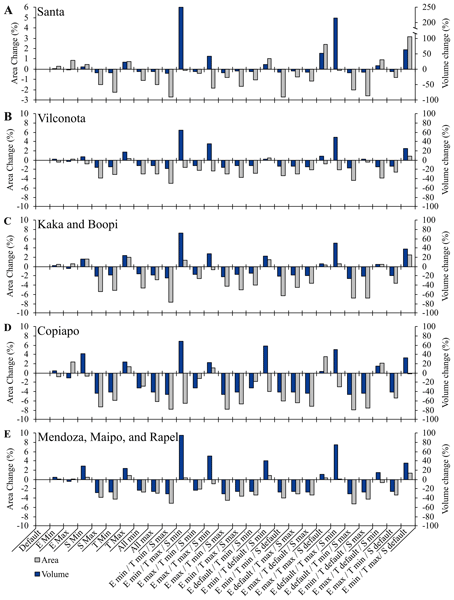
South American Andean glaciers are the least well known in their futures. We can use numerical models to estimate the change of these glaciers to future climate change. However, options within the numerical model which effect the results are unknown. We vary these selected important options to understand their effect on the numerical model output across the South American Andes. We find that how the model approximates sediment friction, and sliding, to be important on model output.
Yikai Zhu, Anna E. Hogg, Benjamin J. Wallis, Ross A. W. Slater, and Oliver J. Marsh
EGUsphere, https://doi.org/10.5194/egusphere-2026-3795, https://doi.org/10.5194/egusphere-2026-3795, 2026
This preprint is open for discussion and under review for The Cryosphere (TC).
Short summary
Short summary
Satellite measurements are widely used to monitor how fast Antarctic ice is flowing, but the rise and fall of ocean tides can make the ice appear to move faster or slower than it really does. We developed a new way to remove this effect using satellite observations alone and applied it across all Antarctic ice shelves. The corrected measurements provide a more reliable picture of ice movement, improving studies of ice-sheet change and future sea-level rise.
Samuel James Cook, Iain Wheel, Nick Hulton, Poul Christoffersen, and Doug Benn
EGUsphere, https://doi.org/10.5194/egusphere-2026-4213, https://doi.org/10.5194/egusphere-2026-4213, 2026
Short summary
Short summary
Accurate modelling of calving is a major problem that leads to uncertainties in sea-level rise. By modelling calving as a random process and testing how this interacts with water flow beneath the glacier, we show that including this water flow is essential to be able to fully reproduce real calving in a computer model. This may help guide future ice-sheet models as to how to improve their existing representations of Greenland and Antarctica.
Florian Vacek, Faezeh M. Nick, Douglas Benn, Maarten P. A. Zwarts, Walter Immerzeel, and Roderik S. W. van de Wal
The Cryosphere, 20, 3827–3845, https://doi.org/10.5194/tc-20-3827-2026, https://doi.org/10.5194/tc-20-3827-2026, 2026
Short summary
Short summary
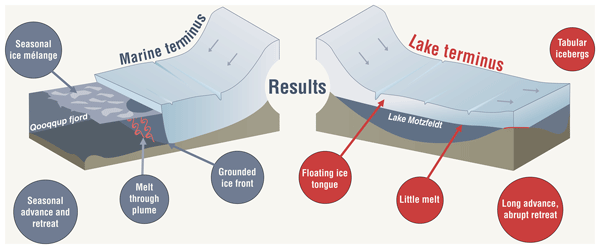
We studied a unique glacier in South Greenland that ends in both a lake and the ocean. Using satellite data and field work, we found that the two glacier fronts behave very differently even under the same climate. At the lake glacier we identify a floating ice tongue and we infer little melt below water. The lake glacier experienced a sudden large breakup. Our work suggests that lake and marine glacier fronts must be treated differently in model simulations.
Luisa E. Avilés-Podgurski, Patrick Martineau, Hua Lu, Ayako Yamamoto, Amanda C. Maycock, Andrew Orr, Tony Phillips, Thomas J. Bracegirdle, Anna E. Hogg, Grzegorz Muszynski, and Andrew Fleming
Weather Clim. Dynam., 7, 1051–1071, https://doi.org/10.5194/wcd-7-1051-2026, https://doi.org/10.5194/wcd-7-1051-2026, 2026
Short summary
Short summary
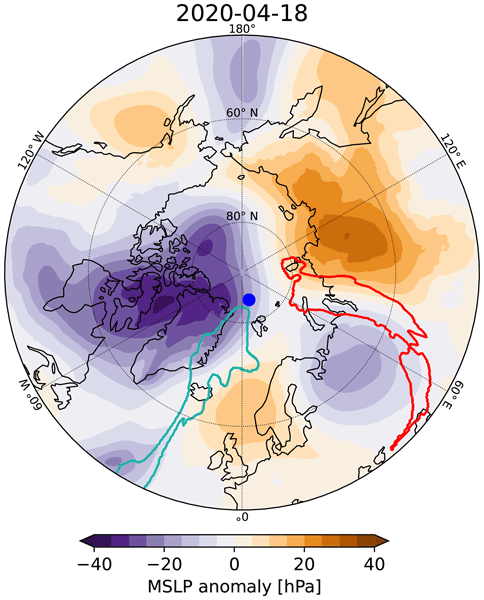
Atmospheric rivers (ARs) are narrow filaments of intense poleward water vapour transport. On rare occasions, they reach the Arctic, driving strong warming and melt. In April 2020, two ARs intruded into the central Arctic within one week, raising near-surface temperatures by up to 30°C and leading to extreme precipitation. Their distinct paths and thermodynamic evolution reveal diverse AR impacts on Arctic sea ice and precipitation extremes.
Ruijie Chang, Xi Lu, Ronggang Huang, Andrew J. Sole, Stephen J. Livingstone, Zhen Dong, Liming Jiang, Hansheng Wang, and Bisheng Yang
EGUsphere, https://doi.org/10.5194/egusphere-2026-2598, https://doi.org/10.5194/egusphere-2026-2598, 2026
Short summary
Short summary
Surface crevasses play an important role in glacier flow, iceberg calving, and meltwater routing, yet their depths remain poorly quantified at catchment or larger scales. We use ICESat-2 laser altimetry to estimate crevasse depths on Sermeq Kujalleq (Jakobshavn Isbræ) in 2019. Over ten thousand crevasses are mapped from along-track detection. Results show deepest crevasses occur ~20 km inland, demonstrating the potential of ICESat-2 for high-resolution crevasse depth mapping.
Harry J. Davis, Robert G. Bingham, Carlos Martín, Elizabeth R. Thomas, Andrew S. Hein, and Anna E. Hogg
The Cryosphere, 20, 2735–2756, https://doi.org/10.5194/tc-20-2735-2026, https://doi.org/10.5194/tc-20-2735-2026, 2026
Short summary
Short summary
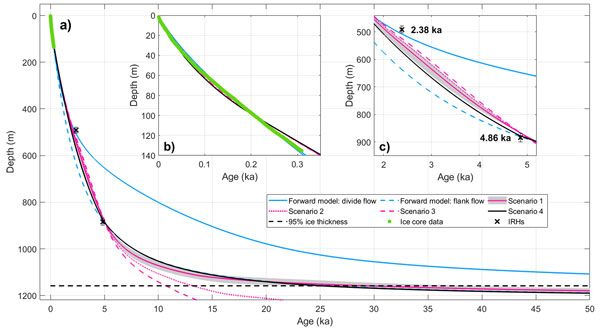
Ice in the southern Antarctic Peninsula is experiencing major ice changes today and predicting the rate at which this may continue is important. One way to address this knowledge gap would be to retrieve a past climate record from an ice core. We identify a suitable site using a model constrained by radar and shallow ice core data. We find a climate record spanning the Holocene can certainly be extracted here, but a potential continuous climate record here could extend back ~ 30 000 years.
Xi Lu, Liming Jiang, Daan Li, Yi Liu, Andrew J. Sole, and Stephen J. Livingstone
Earth Syst. Sci. Data, 18, 2635–2652, https://doi.org/10.5194/essd-18-2635-2026, https://doi.org/10.5194/essd-18-2635-2026, 2026
Short summary
Short summary
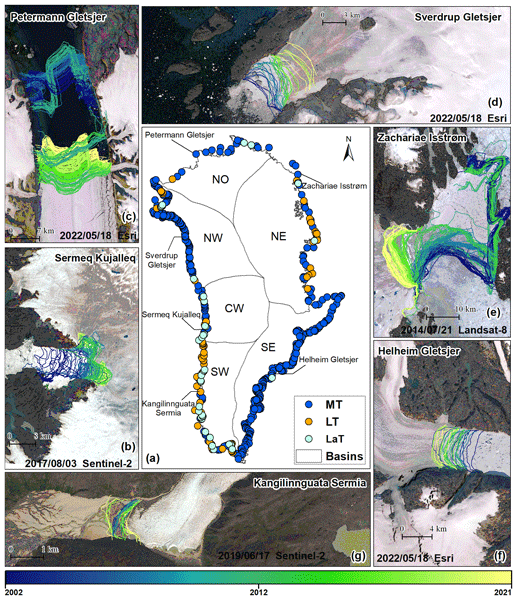
Greenland Terminus Position Dataset (GrTPD) is a new manually delineated dataset of glacier terminus positions for the Greenland Ice Sheet, providing spatially extensive and seasonally targeted coverage across marine-, land-, and lake-terminating glaciers. The dataset includes 19 171 terminus delineations for 465 glaciers spanning 2002–2021, derived from multi-source optical and SAR satellite imagery using standardized workflows.
Sarah Leibrock, Ross A. W. Slater, Anna E. Hogg, and Celia A. Baumhoer
EGUsphere, https://doi.org/10.5194/egusphere-2025-5492, https://doi.org/10.5194/egusphere-2025-5492, 2025
Preprint archived
Short summary
Short summary
Using satellite data from 2013 to 2024, we studied 42 Antarctic Peninsula glaciers and observed widespread but spatially heterogeneous retreat and ice flow acceleration, with some glaciers more than doubling in speed. In addition to these long-term trends, glacier dynamics exhibited significant seasonal variability, underscoring the highly dynamic nature of glaciers in this region driven by a combination of glacier-specific and environmental factors.
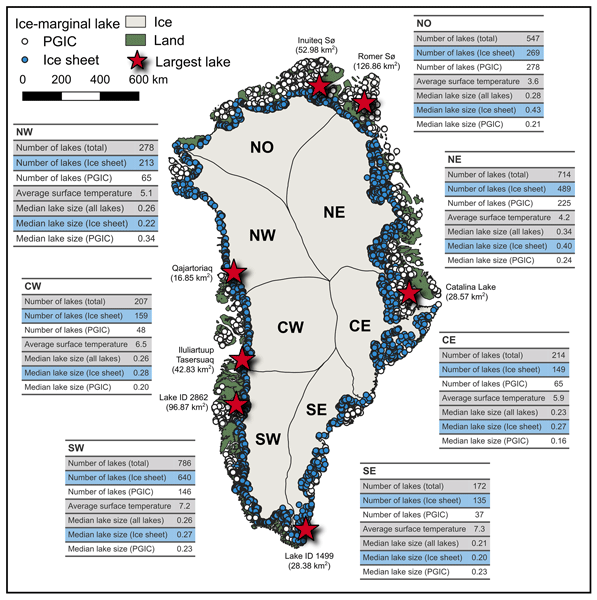
Penelope How, Dorthe Petersen, Kristian K. Kjeldsen, Katrine Raundrup, Nanna B. Karlsson, Alexandra Messerli, Anja Rutishauser, Jonathan L. Carrivick, James M. Lea, Robert S. Fausto, Andreas P. Ahlstrøm, and Signe B. Andersen
Earth Syst. Sci. Data, 17, 6331–6351, https://doi.org/10.5194/essd-17-6331-2025, https://doi.org/10.5194/essd-17-6331-2025, 2025
Short summary
Short summary
We mapped 2918 ice-marginal lakes across Greenland (2016–2023), revealing changes in size, abundance and temperature. This open dataset improves understanding of terrestrial water storage, glacier dynamics, and Arctic ecology, supporting research on sea level rise, glacier-lake interactions, and sustainable resource planning including hydropower development under Greenland’s climate commitments.
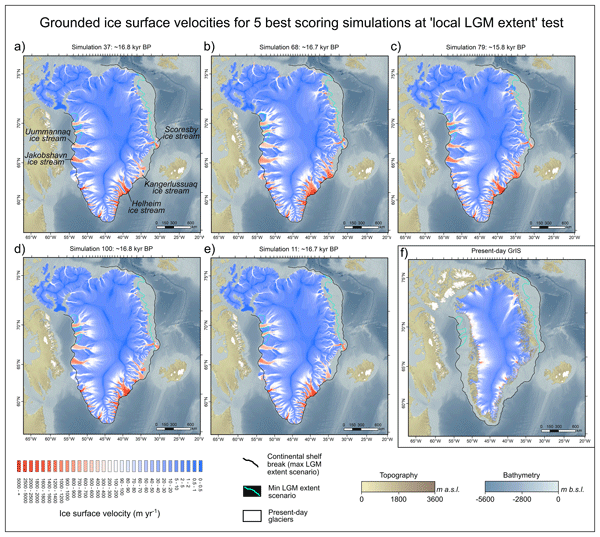
Tancrède P. M. Leger, Jeremy C. Ely, Christopher D. Clark, Sarah L. Bradley, Rosie E. Archer, and Jiang Zhu
The Cryosphere, 19, 5719–5761, https://doi.org/10.5194/tc-19-5719-2025, https://doi.org/10.5194/tc-19-5719-2025, 2025
Short summary
Short summary
This study uses state-of-the-art computer simulations to better constrain the Greenland-Ice-Sheet's evolution over the past 24,000 years. By comparing model results with geological data, it reveals when and why the ice sheet grew and shrank, helping to improve future predictions of sea level rise and climate change.
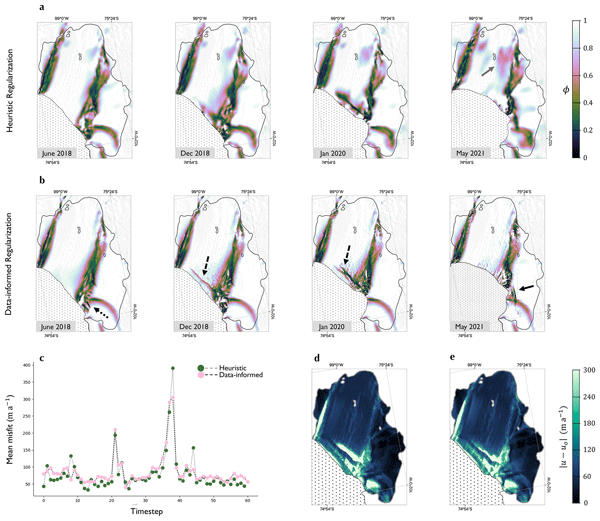
Trystan Surawy-Stepney, Stephen L. Cornford, and Anna E. Hogg
The Cryosphere, 19, 5531–5545, https://doi.org/10.5194/tc-19-5531-2025, https://doi.org/10.5194/tc-19-5531-2025, 2025
Short summary
Short summary
The speed at which Antarctic ice flows is dependent on its viscosity and the slipperiness of the ice/bedrock interface. Often, these unknown variables are inferred from observations of ice speed. This article presents an attempt to make this difficult procedure easier by making use of additional information in the form of observations of crevasses, which make ice appear less viscous to numerical models. We find in some circumstances that this leads to more appealing solutions to this problem.
Gavin A. Schmidt, Kenneth D. Mankoff, Jonathan L. Bamber, Clara Burgard, Dustin Carroll, David M. Chandler, Violaine Coulon, Benjamin J. Davison, Matthew H. England, Paul R. Holland, Nicolas C. Jourdain, Qian Li, Juliana M. Marson, Pierre Mathiot, Clive R. McMahon, Twila A. Moon, Ruth Mottram, Sophie Nowicki, Anna Olivé Abelló, Andrew G. Pauling, Thomas Rackow, and Damien Ringeisen
Geosci. Model Dev., 18, 8333–8361, https://doi.org/10.5194/gmd-18-8333-2025, https://doi.org/10.5194/gmd-18-8333-2025, 2025
Short summary
Short summary
The impact of increasing mass loss from the Greenland and Antarctic ice sheets has not so far been included in historical climate model simulations. This paper describes the protocols and data available for modeling groups to add this anomalous freshwater to their ocean modules to better represent the impacts of these fluxes on ocean circulation, sea ice, salinity and sea level.
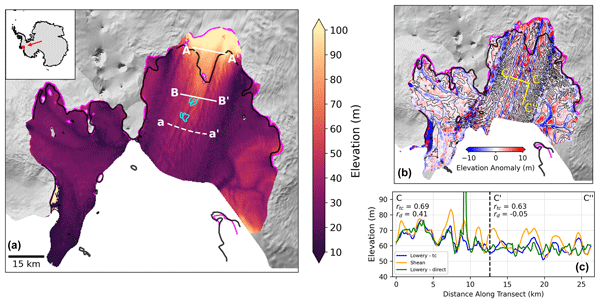
Katie Lowery, Pierre Dutrieux, Paul R. Holland, Anna E. Hogg, Noel Gourmelen, and Benjamin J. Wallis
The Cryosphere, 19, 4893–4911, https://doi.org/10.5194/tc-19-4893-2025, https://doi.org/10.5194/tc-19-4893-2025, 2025
Short summary
Short summary
Using CryoSat-2, we observe monthly changes in the Pine Island Glacier (PIG) ice shelf surface and derive oceanic melt at its base. Basal channels, kilometres wide, are reflected in the ice surface and captured in our observations. We demonstrate that melt is concentrated on the western walls of channels, that channels play a role in grounding pinning points, and that PIG's main channel geometry is inherited upstream of the grounding line. These results highlight the importance of channels to ice shelf stability.
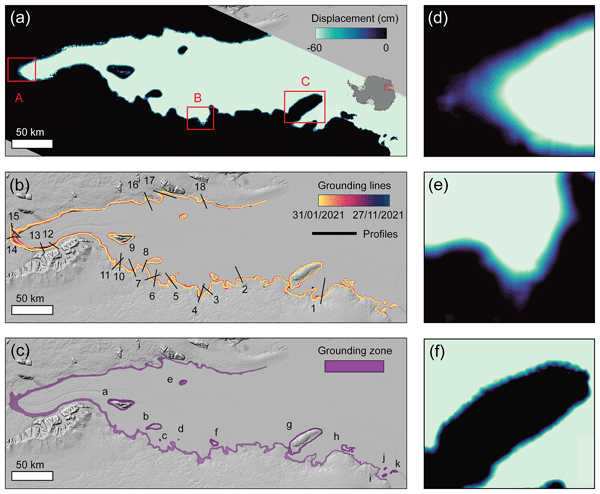
Yikai Zhu, Anna E. Hogg, Andrew Hooper, and Benjamin J. Wallis
The Cryosphere, 19, 3971–3989, https://doi.org/10.5194/tc-19-3971-2025, https://doi.org/10.5194/tc-19-3971-2025, 2025
Short summary
Short summary
This study investigates the long- and short-term changes in the grounding line of the Amery Ice Shelf in East Antarctica, using satellite observations and a method called Differential Range Offset Tracking (DROT). Our findings show how the grounding line behaves in response to tides and other environmental factors, with implications for understanding ice shelf stability.
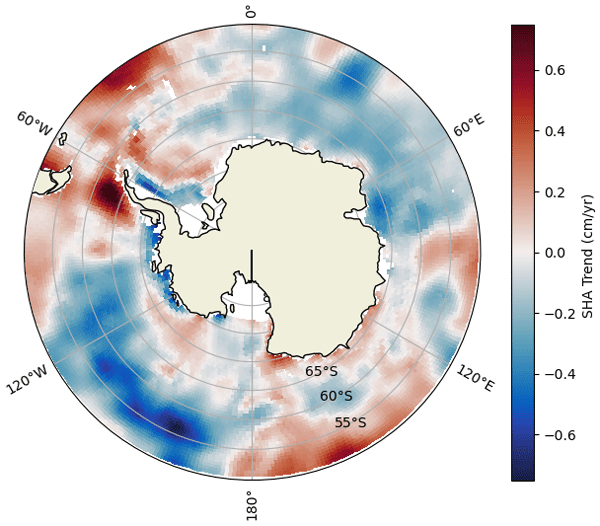
Jennifer Cocks, Alessandro Silvano, Alberto C. Naveira Garabato, Oana Dragomir, Noémie Schifano, Anna E. Hogg, and Alice Marzocchi
Ocean Sci., 21, 1609–1625, https://doi.org/10.5194/os-21-1609-2025, https://doi.org/10.5194/os-21-1609-2025, 2025
Short summary
Short summary
Heat and freshwater fluxes in the Southern Ocean mediate global ocean circulation and abyssal ventilation. These fluxes manifest as changes in steric height: sea level anomalies from changes in ocean density. We compute the steric height anomaly of the Southern Ocean using satellite data and validate it against in situ observations. We analyse trends and variability in steric height, drawing links to climate variability, and discuss the effectiveness of the method, highlighting issues with its application.
Benjamin J. Davison, Anna E. Hogg, Thomas Slater, Richard Rigby, and Nicolaj Hansen
Earth Syst. Sci. Data, 17, 3259–3281, https://doi.org/10.5194/essd-17-3259-2025, https://doi.org/10.5194/essd-17-3259-2025, 2025
Short summary
Short summary
Grounding line discharge is a measure of the amount of ice entering the ocean from an ice mass. This paper describes a dataset of grounding line discharge for the Antarctic Ice Sheet and each of its glaciers. The dataset shows that Antarctic Ice Sheet grounding line discharge has increased since 1996.
Heather L. Selley, Anna E. Hogg, Benjamin J. Davison, Pierre Dutrieux, and Thomas Slater
The Cryosphere, 19, 1725–1738, https://doi.org/10.5194/tc-19-1725-2025, https://doi.org/10.5194/tc-19-1725-2025, 2025
Short summary
Short summary
We used satellite observations to measure recent changes in ice speed and flow direction in the Pope, Smith, and Kohler region of West Antarctica (2005–2022). We found substantial speed-up on seven ice streams of up to 87 %. However, Kohler West Glacier has slowed by 10 %, due to the redirection of ice flow into its rapidly thinning neighbour. This process of “ice piracy” has not previously been directly observed on this rapid timescale and may influence future ice shelf and sheet mass changes.
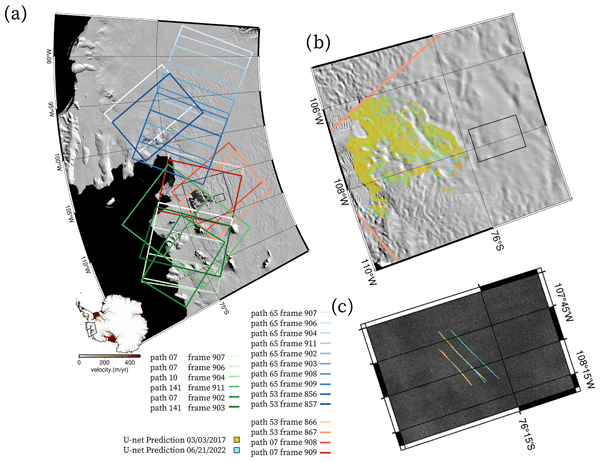
Andrew O. Hoffman, Knut Christianson, Ching-Yao Lai, Ian Joughin, Nicholas Holschuh, Elizabeth Case, Jonathan Kingslake, and the GHOST science team
The Cryosphere, 19, 1353–1372, https://doi.org/10.5194/tc-19-1353-2025, https://doi.org/10.5194/tc-19-1353-2025, 2025
Short summary
Short summary
We use satellite and ice-penetrating radar technology to segment crevasses in the Amundsen Sea Embayment. Inspection of satellite time series reveals inland expansion of crevasses where surface stresses have increased. We develop a simple model for the strength of densifying snow and show that these crevasses are likely restricted to the near surface. This result bridges discrepancies between satellite and lab experiments and reveals the importance of porosity on surface crevasse formation.
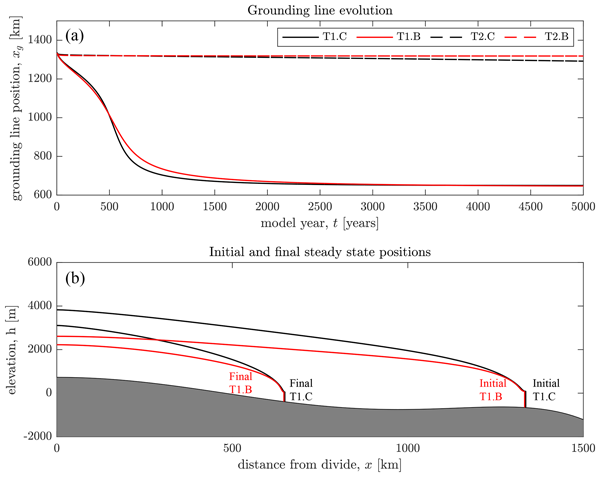
George Lu and Jonathan Kingslake
The Cryosphere, 18, 5301–5321, https://doi.org/10.5194/tc-18-5301-2024, https://doi.org/10.5194/tc-18-5301-2024, 2024
Short summary
Short summary
Water below ice sheets affects ice-sheet motion, while the evolution of ice sheets likewise affects the water below. We create a model that allows for water and ice to affect each other and use it to see how this coupling or lack thereof may impact ice-sheet retreat. We find that coupling an evolving water system with the ice sheet results in more retreat than if we assume unchanging conditions under the ice, which indicates a need to better represent the effects of water in ice-sheet models.
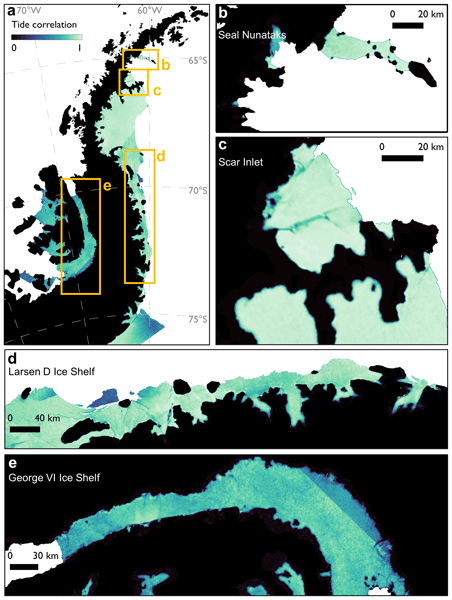
Benjamin J. Wallis, Anna E. Hogg, Yikai Zhu, and Andrew Hooper
The Cryosphere, 18, 4723–4742, https://doi.org/10.5194/tc-18-4723-2024, https://doi.org/10.5194/tc-18-4723-2024, 2024
Short summary
Short summary
The grounding line, where ice begins to float, is an essential variable to understand ice dynamics, but in some locations it can be challenging to measure with established techniques. Using satellite data and a new method, Wallis et al. measure the grounding line position of glaciers and ice shelves in the Antarctic Peninsula and find retreats of up to 16.3 km have occurred since the last time measurements were made in the 1990s.
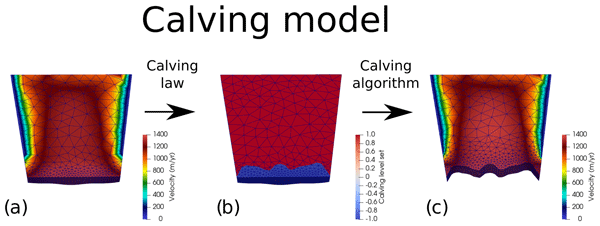
Iain Wheel, Douglas I. Benn, Anna J. Crawford, Joe Todd, and Thomas Zwinger
Geosci. Model Dev., 17, 5759–5777, https://doi.org/10.5194/gmd-17-5759-2024, https://doi.org/10.5194/gmd-17-5759-2024, 2024
Short summary
Short summary
Calving, the detachment of large icebergs from glaciers, is one of the largest uncertainties in future sea level rise projections. This process is poorly understood, and there is an absence of detailed models capable of simulating calving. A new 3D calving model has been developed to better understand calving at glaciers where detailed modelling was previously limited. Importantly, the new model is very flexible. By allowing for unrestricted calving geometries, it can be applied at any location.
Benjamin J. Davison, Anna E. Hogg, Carlos Moffat, Michael P. Meredith, and Benjamin J. Wallis
The Cryosphere, 18, 3237–3251, https://doi.org/10.5194/tc-18-3237-2024, https://doi.org/10.5194/tc-18-3237-2024, 2024
Short summary
Short summary
Using a new dataset of ice motion, we observed glacier acceleration on the west coast of the Antarctic Peninsula. The speed-up began around January 2021, but some glaciers sped up earlier or later. Using a combination of ship-based ocean temperature observations and climate models, we show that the speed-up coincided with a period of unusually warm air and ocean temperatures in the region.
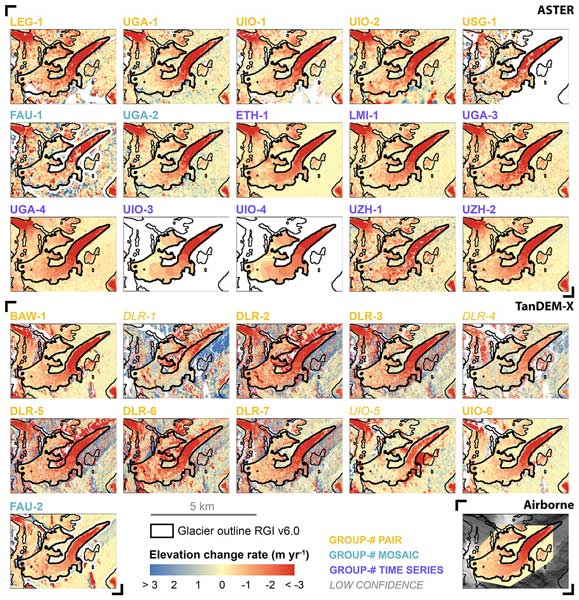
Livia Piermattei, Michael Zemp, Christian Sommer, Fanny Brun, Matthias H. Braun, Liss M. Andreassen, Joaquín M. C. Belart, Etienne Berthier, Atanu Bhattacharya, Laura Boehm Vock, Tobias Bolch, Amaury Dehecq, Inés Dussaillant, Daniel Falaschi, Caitlyn Florentine, Dana Floricioiu, Christian Ginzler, Gregoire Guillet, Romain Hugonnet, Matthias Huss, Andreas Kääb, Owen King, Christoph Klug, Friedrich Knuth, Lukas Krieger, Jeff La Frenierre, Robert McNabb, Christopher McNeil, Rainer Prinz, Louis Sass, Thorsten Seehaus, David Shean, Désirée Treichler, Anja Wendt, and Ruitang Yang
The Cryosphere, 18, 3195–3230, https://doi.org/10.5194/tc-18-3195-2024, https://doi.org/10.5194/tc-18-3195-2024, 2024
Short summary
Short summary
Satellites have made it possible to observe glacier elevation changes from all around the world. In the present study, we compared the results produced from two different types of satellite data between different research groups and against validation measurements from aeroplanes. We found a large spread between individual results but showed that the group ensemble can be used to reliably estimate glacier elevation changes and related errors from satellite data.

Izabela Szuman, Jakub Z. Kalita, Christiaan R. Diemont, Stephen J. Livingstone, Chris D. Clark, and Martin Margold
The Cryosphere, 18, 2407–2428, https://doi.org/10.5194/tc-18-2407-2024, https://doi.org/10.5194/tc-18-2407-2024, 2024
Short summary
Short summary
A Baltic-wide glacial landform-based map is presented, filling in a geographical gap in the record that has been speculated about by palaeoglaciologists for over a century. Here we used newly available bathymetric data and provide landform evidence of corridors of fast ice flow that we interpret as ice streams. Where previous ice-sheet-scale investigations inferred a single ice source, our mapping identifies flow and ice margin geometries from both Swedish and Bothnian sources.
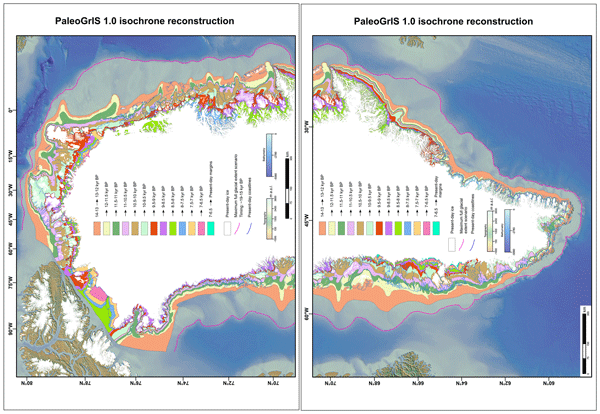
Tancrède P. M. Leger, Christopher D. Clark, Carla Huynh, Sharman Jones, Jeremy C. Ely, Sarah L. Bradley, Christiaan Diemont, and Anna L. C. Hughes
Clim. Past, 20, 701–755, https://doi.org/10.5194/cp-20-701-2024, https://doi.org/10.5194/cp-20-701-2024, 2024
Short summary
Short summary
Projecting the future evolution of the Greenland Ice Sheet is key. However, it is still under the influence of past climate changes that occurred over thousands of years. This makes calibrating projection models against current knowledge of its past evolution (not yet achieved) important. To help with this, we produced a new Greenland-wide reconstruction of ice sheet extent by gathering all published studies dating its former retreat and by mapping its past margins at the ice sheet scale.
Trystan Surawy-Stepney, Anna E. Hogg, Stephen L. Cornford, Benjamin J. Wallis, Benjamin J. Davison, Heather L. Selley, Ross A. W. Slater, Elise K. Lie, Livia Jakob, Andrew Ridout, Noel Gourmelen, Bryony I. D. Freer, Sally F. Wilson, and Andrew Shepherd
The Cryosphere, 18, 977–993, https://doi.org/10.5194/tc-18-977-2024, https://doi.org/10.5194/tc-18-977-2024, 2024
Short summary
Short summary
Here, we use satellite observations and an ice flow model to quantify the impact of sea ice buttressing on ice streams on the Antarctic Peninsula. The evacuation of 11-year-old landfast sea ice in the Larsen B embayment on the East Antarctic Peninsula in January 2022 was closely followed by major changes in the calving behaviour and acceleration (30 %) of the ocean-terminating glaciers. Our results show that sea ice buttressing had a negligible direct role in the observed dynamic changes.
Daniel Falaschi, Atanu Bhattacharya, Gregoire Guillet, Lei Huang, Owen King, Kriti Mukherjee, Philipp Rastner, Tandong Yao, and Tobias Bolch
The Cryosphere, 17, 5435–5458, https://doi.org/10.5194/tc-17-5435-2023, https://doi.org/10.5194/tc-17-5435-2023, 2023
Short summary
Short summary
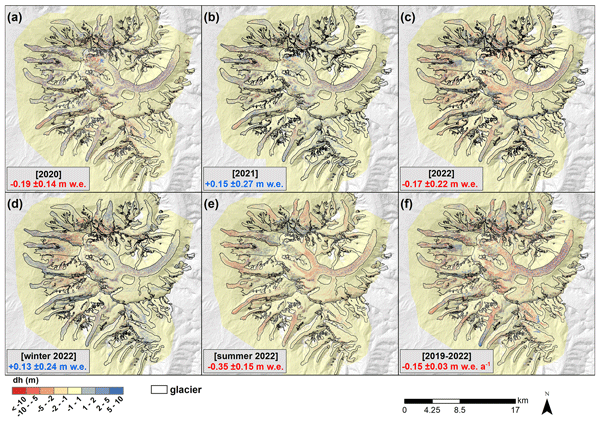
Because glaciers are crucial freshwater sources in the lowlands surrounding High Mountain Asia, constraining short-term glacier mass changes is essential. We investigate the potential of state-of-the-art satellite elevation data to measure glacier mass changes in two selected regions. The results demonstrate the ability of our dataset to characterize glacier changes of different magnitudes, allowing for an increase in the number of inaccessible glaciers that can be readily monitored.
Oliver G. Pollard, Natasha L. M. Barlow, Lauren J. Gregoire, Natalya Gomez, Víctor Cartelle, Jeremy C. Ely, and Lachlan C. Astfalck
The Cryosphere, 17, 4751–4777, https://doi.org/10.5194/tc-17-4751-2023, https://doi.org/10.5194/tc-17-4751-2023, 2023
Short summary
Short summary
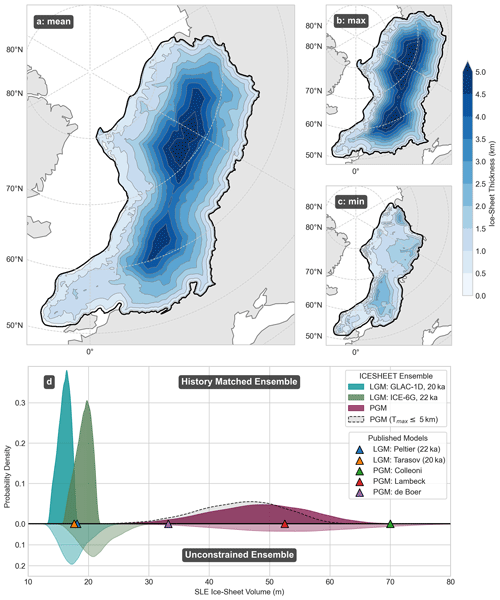
We use advanced statistical techniques and a simple ice-sheet model to produce an ensemble of plausible 3D shapes of the ice sheet that once stretched across northern Europe during the previous glacial maximum (140,000 years ago). This new reconstruction, equivalent in volume to 48 ± 8 m of global mean sea-level rise, will improve the interpretation of high sea levels recorded from the Last Interglacial period (120 000 years ago) that provide a useful perspective on the future.
Lauren D. Rawlins, David M. Rippin, Andrew J. Sole, Stephen J. Livingstone, and Kang Yang
The Cryosphere, 17, 4729–4750, https://doi.org/10.5194/tc-17-4729-2023, https://doi.org/10.5194/tc-17-4729-2023, 2023
Short summary
Short summary
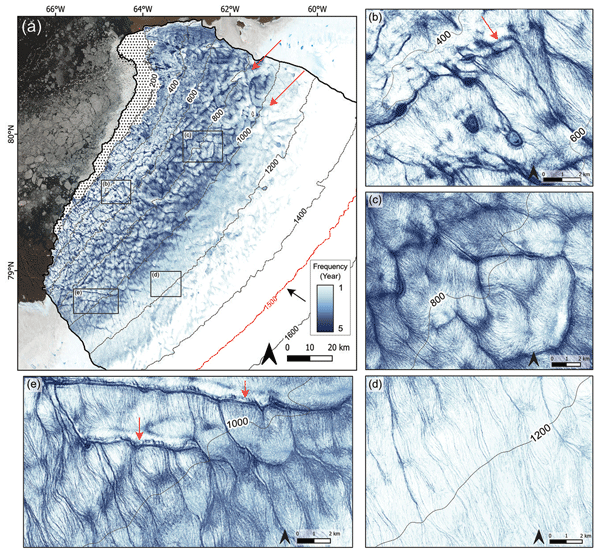
We map and quantify surface rivers and lakes at Humboldt Glacier to examine seasonal evolution and provide new insights of network configuration and behaviour. A widespread supraglacial drainage network exists, expanding up the glacier as seasonal runoff increases. Large interannual variability affects the areal extent of this network, controlled by high- vs. low-melt years, with late summer network persistence likely preconditioning the surface for earlier drainage activity the following year.
Trystan Surawy-Stepney, Anna E. Hogg, Stephen L. Cornford, and David C. Hogg
The Cryosphere, 17, 4421–4445, https://doi.org/10.5194/tc-17-4421-2023, https://doi.org/10.5194/tc-17-4421-2023, 2023
Short summary
Short summary
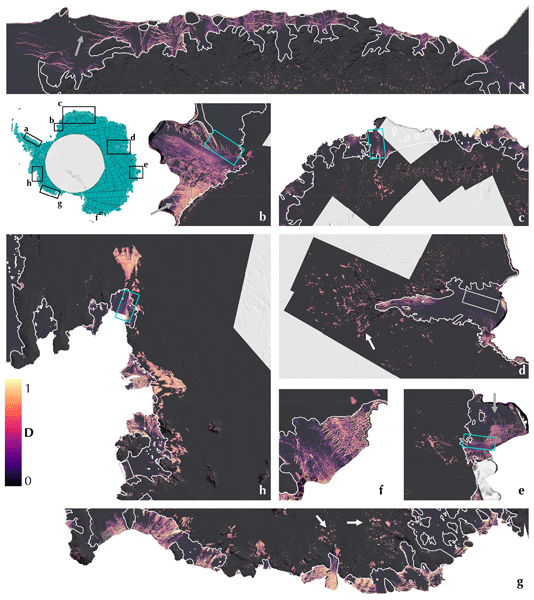
The presence of crevasses in Antarctica influences how the ice sheet behaves. It is important, therefore, to collect data on the spatial distribution of crevasses and how they are changing. We present a method of mapping crevasses from satellite radar imagery and apply it to 7.5 years of images, covering Antarctica's floating and grounded ice. We develop a method of measuring change in the density of crevasses and quantify increased fracturing in important parts of the West Antarctic Ice Sheet.
Bryony I. D. Freer, Oliver J. Marsh, Anna E. Hogg, Helen Amanda Fricker, and Laurie Padman
The Cryosphere, 17, 4079–4101, https://doi.org/10.5194/tc-17-4079-2023, https://doi.org/10.5194/tc-17-4079-2023, 2023
Short summary
Short summary
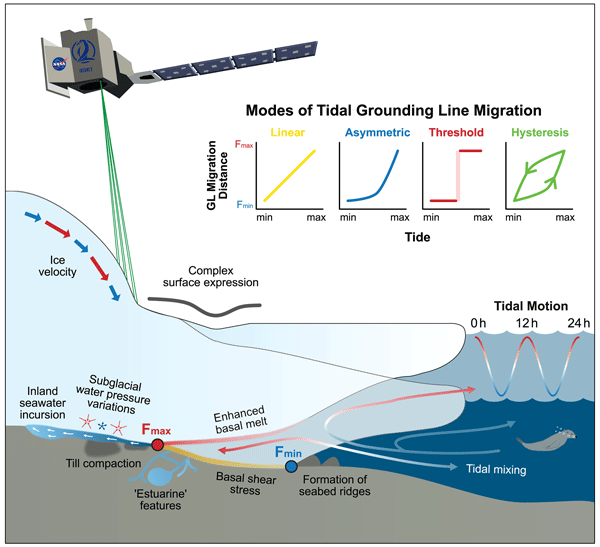
We develop a method using ICESat-2 data to measure how Antarctic grounding lines (GLs) migrate across the tide cycle. At an ice plain on the Ronne Ice Shelf we observe 15 km of tidal GL migration, the largest reported distance in Antarctica, dominating any signal of long-term migration. We identify four distinct migration modes, which provide both observational support for models of tidal ice flexure and GL migration and insights into ice shelf–ocean–subglacial interactions in grounding zones.
Julia R. Andreasen, Anna E. Hogg, and Heather L. Selley
The Cryosphere, 17, 2059–2072, https://doi.org/10.5194/tc-17-2059-2023, https://doi.org/10.5194/tc-17-2059-2023, 2023
Short summary
Short summary
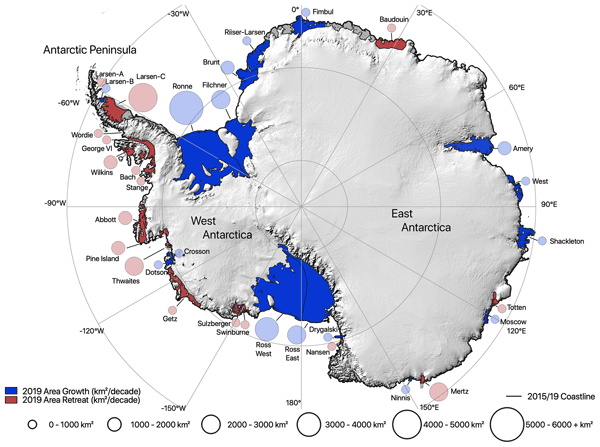
There are few long-term, high spatial resolution observations of ice shelf change in Antarctica over the past 3 decades. In this study, we use high spatial resolution observations to map the annual calving front location on 34 ice shelves around Antarctica from 2009 to 2019 using satellite data. The results provide a comprehensive assessment of ice front migration across Antarctica over the last decade.
Yubin Fan, Chang-Qing Ke, Xiaoyi Shen, Yao Xiao, Stephen J. Livingstone, and Andrew J. Sole
The Cryosphere, 17, 1775–1786, https://doi.org/10.5194/tc-17-1775-2023, https://doi.org/10.5194/tc-17-1775-2023, 2023
Short summary
Short summary
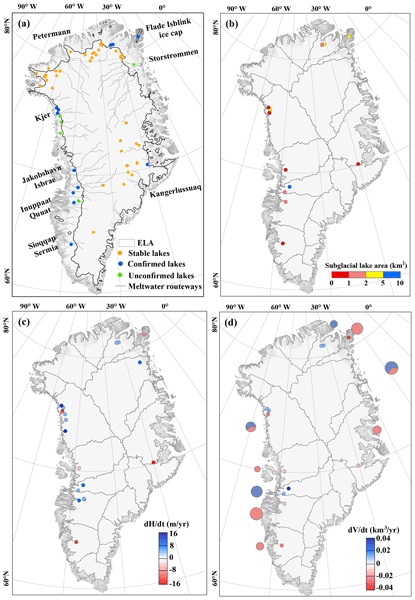
We used the new-generation ICESat-2 altimeter to detect and monitor active subglacial lakes in unprecedented spatiotemporal detail. We created a new inventory of 18 active subglacial lakes as well as their elevation and volume changes during 2019–2020, which provides an improved understanding of how the Greenland subglacial water system operates and how these lakes are fed by water from the ice surface.

Mads Dømgaard, Kristian K. Kjeldsen, Flora Huiban, Jonathan L. Carrivick, Shfaqat A. Khan, and Anders A. Bjørk
The Cryosphere, 17, 1373–1387, https://doi.org/10.5194/tc-17-1373-2023, https://doi.org/10.5194/tc-17-1373-2023, 2023
Short summary
Short summary
Sudden releases of meltwater from glacier-dammed lakes can influence ice flow, cause flooding hazards and landscape changes. This study presents a record of 14 drainages from 2007–2021 from a lake in west Greenland. The time series reveals how the lake fluctuates between releasing large and small amounts of drainage water which is caused by a weakening of the damming glacier following the large events. We also find a shift in the water drainage route which increases the risk of flooding hazards.
Sajid Ghuffar, Owen King, Grégoire Guillet, Ewelina Rupnik, and Tobias Bolch
The Cryosphere, 17, 1299–1306, https://doi.org/10.5194/tc-17-1299-2023, https://doi.org/10.5194/tc-17-1299-2023, 2023
Short summary
Short summary
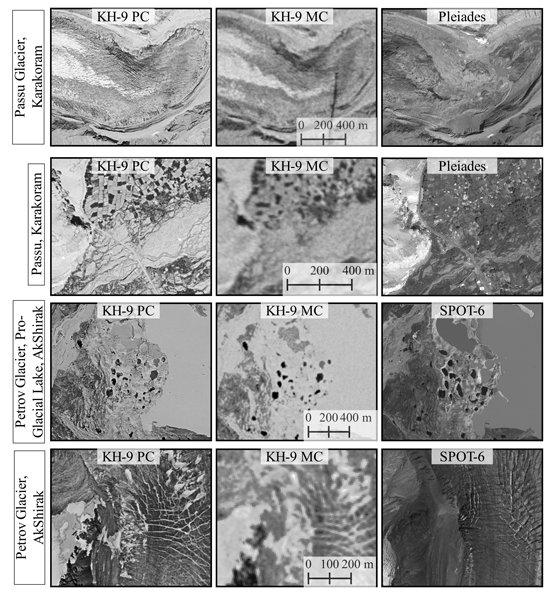
The panoramic cameras (PCs) on board Hexagon KH-9 satellite missions from 1971–1984 captured very high-resolution stereo imagery with up to 60 cm spatial resolution. This study explores the potential of this imagery for glacier mapping and change estimation. The high resolution of KH-9PC leads to higher-quality DEMs which better resolve the accumulation region of glaciers in comparison to the KH-9 mapping camera, and KH-9PC imagery can be useful in several Earth observation applications.
Ryan N. Ing, Jeremy C. Ely, Julie M. Jones, and Bethan J. Davies
The Cryosphere Discuss., https://doi.org/10.5194/tc-2023-33, https://doi.org/10.5194/tc-2023-33, 2023
Preprint withdrawn
Short summary
Short summary
Many of the glaciers in Alaska are losing ice, contributing to sea-level rise. Here, we study the inputs and outputs for the Juneau Icefield. We first model the historical changes to snowfall and melt, constraining our model with observations. We then project future changes to the icefield, which show that icefield-wide loss of ice is likely. Losses are driven by rising temperatures, and less snowfall. The exposure of ice, and the break-up of glaciers due to thinning may accelerate ice loss.
Aleksandr Montelli and Jonathan Kingslake
The Cryosphere, 17, 195–210, https://doi.org/10.5194/tc-17-195-2023, https://doi.org/10.5194/tc-17-195-2023, 2023
Short summary
Short summary
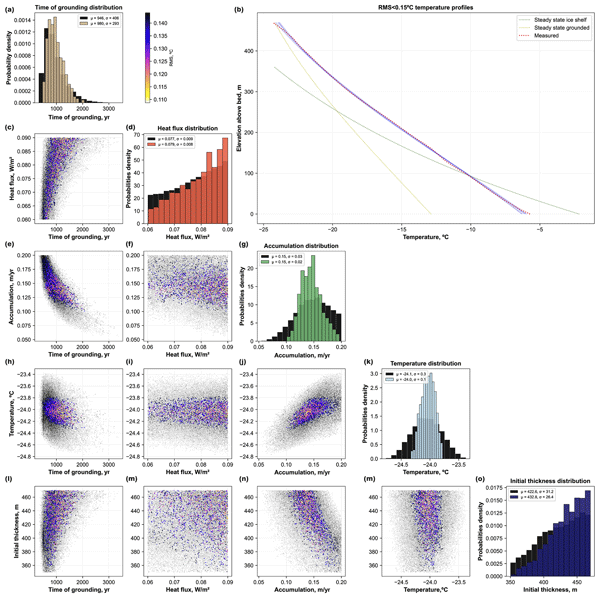
Thermal modelling and Bayesian inversion techniques are used to evaluate the uncertainties inherent in inferences of ice-sheet evolution from borehole temperature measurements. We show that the same temperature profiles may result from a range of parameters, of which geothermal heat flux through underlying bedrock plays a key role. Careful model parameterisation and evaluation of heat flux are essential for inferring past ice-sheet evolution from englacial borehole thermometry.
Christopher D. Stringer, Jonathan L. Carrivick, Duncan J. Quincey, and Daniel Nývlt
Earth Syst. Sci. Data Discuss., https://doi.org/10.5194/essd-2022-250, https://doi.org/10.5194/essd-2022-250, 2022
Revised manuscript not accepted
Short summary
Short summary
Glaciers in Antarctica have been decreasing in size at a fast rate, leading to the expansion of proglacial areas, with wide-ranging ecological implications. Several global land-cover maps exist, but they do not include Antarctica. We map land cover types across West Antarctica and the McMurdo Dry Valleys to a high degree of accuracy (77.0 %). We highlight the spatial variation in land cover and emphasise the need for more field data.
Jonathan Kingslake, Robert Skarbek, Elizabeth Case, and Christine McCarthy
The Cryosphere, 16, 3413–3430, https://doi.org/10.5194/tc-16-3413-2022, https://doi.org/10.5194/tc-16-3413-2022, 2022
Short summary
Short summary
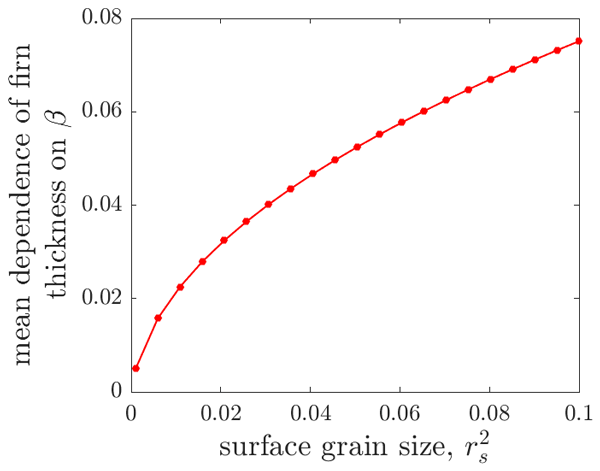
Firn is snow that has persisted for at least 1 full year on the surface of a glacier or ice sheet. It is an intermediate substance between snow and glacial ice. Firn compacts into glacial ice due to the weight of overlying snow and firn. The rate at which it compacts and the rate at which it is buried control how thick the firn layer is. We explore how this thickness depends on the rate of snow fall and how this dependence is controlled by the size of snow grains at the ice sheet surface.
Sophie Goliber, Taryn Black, Ginny Catania, James M. Lea, Helene Olsen, Daniel Cheng, Suzanne Bevan, Anders Bjørk, Charlie Bunce, Stephen Brough, J. Rachel Carr, Tom Cowton, Alex Gardner, Dominik Fahrner, Emily Hill, Ian Joughin, Niels J. Korsgaard, Adrian Luckman, Twila Moon, Tavi Murray, Andrew Sole, Michael Wood, and Enze Zhang
The Cryosphere, 16, 3215–3233, https://doi.org/10.5194/tc-16-3215-2022, https://doi.org/10.5194/tc-16-3215-2022, 2022
Short summary
Short summary
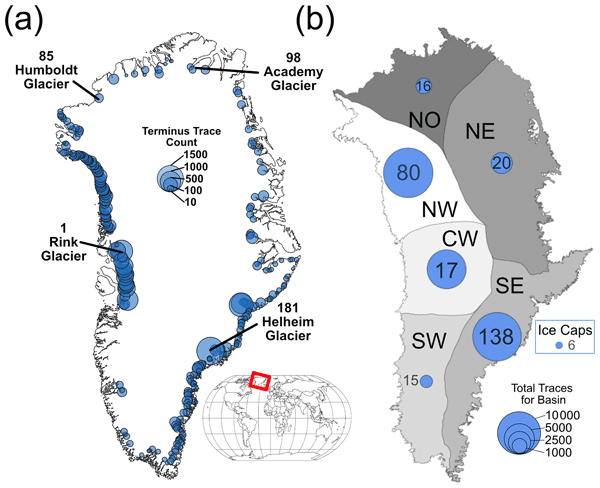
Terminus traces have been used to understand how Greenland's glaciers have changed over time; however, manual digitization is time-intensive, and a lack of coordination leads to duplication of efforts. We have compiled a dataset of over 39 000 terminus traces for 278 glaciers for scientific and machine learning applications. We also provide an overview of an updated version of the Google Earth Engine Digitization Tool (GEEDiT), which has been developed specifically for the Greenland Ice Sheet.
Douglas I. Benn, Adrian Luckman, Jan A. Åström, Anna J. Crawford, Stephen L. Cornford, Suzanne L. Bevan, Thomas Zwinger, Rupert Gladstone, Karen Alley, Erin Pettit, and Jeremy Bassis
The Cryosphere, 16, 2545–2564, https://doi.org/10.5194/tc-16-2545-2022, https://doi.org/10.5194/tc-16-2545-2022, 2022
Short summary
Short summary
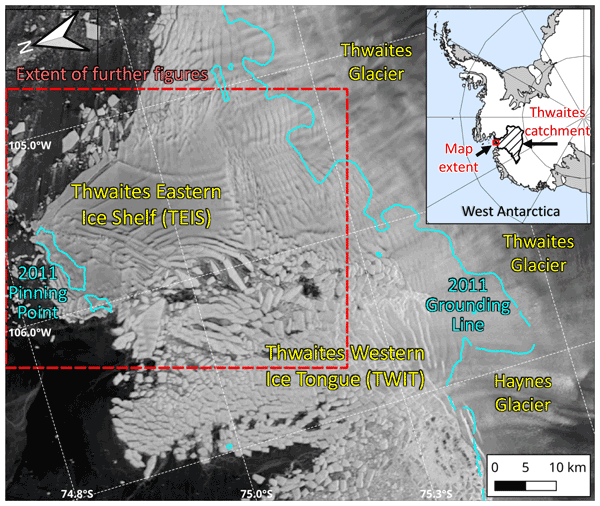
Thwaites Glacier (TG), in West Antarctica, is potentially unstable and may contribute significantly to sea-level rise as global warming continues. Using satellite data, we show that Thwaites Eastern Ice Shelf, the largest remaining floating extension of TG, has started to accelerate as it fragments along a shear zone. Computer modelling does not indicate that fragmentation will lead to imminent glacier collapse, but it is clear that major, rapid, and unpredictable changes are underway.
Benjamin Joseph Davison, Tom Cowton, Andrew Sole, Finlo Cottier, and Pete Nienow
The Cryosphere, 16, 1181–1196, https://doi.org/10.5194/tc-16-1181-2022, https://doi.org/10.5194/tc-16-1181-2022, 2022
Short summary
Short summary
The ocean is an important driver of Greenland glacier retreat. Icebergs influence ocean temperature in the vicinity of glaciers, which will affect glacier retreat rates, but the effect of icebergs on water temperature is poorly understood. In this study, we use a model to show that icebergs cause large changes to water properties next to Greenland's glaciers, which could influence ocean-driven glacier retreat around Greenland.
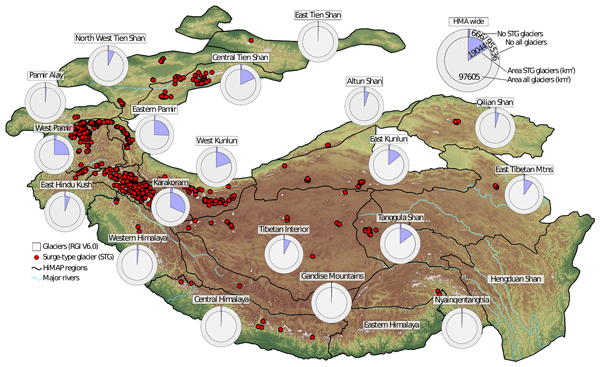
Gregoire Guillet, Owen King, Mingyang Lv, Sajid Ghuffar, Douglas Benn, Duncan Quincey, and Tobias Bolch
The Cryosphere, 16, 603–623, https://doi.org/10.5194/tc-16-603-2022, https://doi.org/10.5194/tc-16-603-2022, 2022
Short summary
Short summary
Surging glaciers show cyclical changes in flow behavior – between slow and fast flow – and can have drastic impacts on settlements in their vicinity.
One of the clusters of surging glaciers worldwide is High Mountain Asia (HMA).
We present an inventory of surging glaciers in HMA, identified from satellite imagery. We show that the number of surging glaciers was underestimated and that they represent 20 % of the area covered by glaciers in HMA, before discussing new physics for glacier surges.
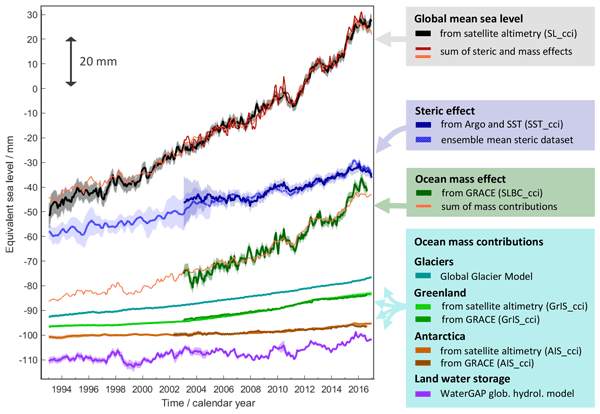
Martin Horwath, Benjamin D. Gutknecht, Anny Cazenave, Hindumathi Kulaiappan Palanisamy, Florence Marti, Ben Marzeion, Frank Paul, Raymond Le Bris, Anna E. Hogg, Inès Otosaka, Andrew Shepherd, Petra Döll, Denise Cáceres, Hannes Müller Schmied, Johnny A. Johannessen, Jan Even Øie Nilsen, Roshin P. Raj, René Forsberg, Louise Sandberg Sørensen, Valentina R. Barletta, Sebastian B. Simonsen, Per Knudsen, Ole Baltazar Andersen, Heidi Ranndal, Stine K. Rose, Christopher J. Merchant, Claire R. Macintosh, Karina von Schuckmann, Kristin Novotny, Andreas Groh, Marco Restano, and Jérôme Benveniste
Earth Syst. Sci. Data, 14, 411–447, https://doi.org/10.5194/essd-14-411-2022, https://doi.org/10.5194/essd-14-411-2022, 2022
Short summary
Short summary
Global mean sea-level change observed from 1993 to 2016 (mean rate of 3.05 mm yr−1) matches the combined effect of changes in water density (thermal expansion) and ocean mass. Ocean-mass change has been assessed through the contributions from glaciers, ice sheets, and land water storage or directly from satellite data since 2003. Our budget assessments of linear trends and monthly anomalies utilise new datasets and uncertainty characterisations developed within ESA's Climate Change Initiative.
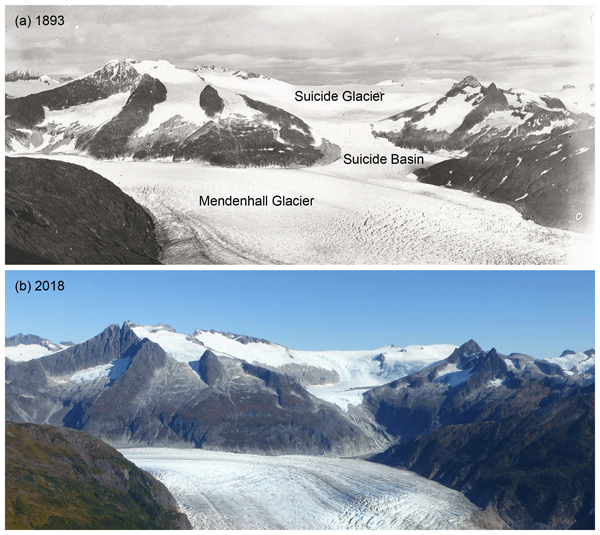
Amy Jenson, Jason M. Amundson, Jonathan Kingslake, and Eran Hood
The Cryosphere, 16, 333–347, https://doi.org/10.5194/tc-16-333-2022, https://doi.org/10.5194/tc-16-333-2022, 2022
Short summary
Short summary
Outburst floods are sudden releases of water from glacial environments. As glaciers retreat, changes in glacier and basin geometry impact outburst flood characteristics. We combine a glacier flow model describing glacier retreat with an outburst flood model to explore how ice dam height, glacier length, and remnant ice in a basin influence outburst floods. We find storage capacity is the greatest indicator of flood magnitude, and the flood onset mechanism is a significant indicator of duration.
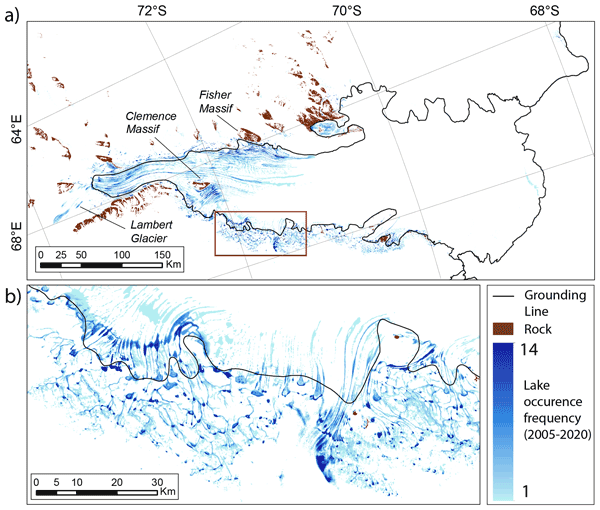
Peter A. Tuckett, Jeremy C. Ely, Andrew J. Sole, James M. Lea, Stephen J. Livingstone, Julie M. Jones, and J. Melchior van Wessem
The Cryosphere, 15, 5785–5804, https://doi.org/10.5194/tc-15-5785-2021, https://doi.org/10.5194/tc-15-5785-2021, 2021
Short summary
Short summary
Lakes form on the surface of the Antarctic Ice Sheet during the summer. These lakes can generate further melt, break up floating ice shelves and alter ice dynamics. Here, we describe a new automated method for mapping surface lakes and apply our technique to the Amery Ice Shelf between 2005 and 2020. Lake area is highly variable between years, driven by large-scale climate patterns. This technique will help us understand the role of Antarctic surface lakes in our warming world.
Jan Bouke Pronk, Tobias Bolch, Owen King, Bert Wouters, and Douglas I. Benn
The Cryosphere, 15, 5577–5599, https://doi.org/10.5194/tc-15-5577-2021, https://doi.org/10.5194/tc-15-5577-2021, 2021
Short summary
Short summary
About 10 % of Himalayan glaciers flow directly into lakes. This study finds, using satellite imagery, that such glaciers show higher flow velocities than glaciers without ice–lake contact. In particular near the glacier tongue the impact of a lake on the glacier flow can be dramatic. The development of current and new meltwater bodies will influence the flow of an increasing number of Himalayan glaciers in the future, a scenario not currently considered in regional ice loss projections.
Cited articles
Adrian, R. J. and Westerweel, J.: Particle image velocimetry, Cambridge University Press, Cambridge, ISBN 978-0-521-44008-0, 2011.
Benediktsson, Í.Ö., Ingolfsson, O., Schomacker, A., and Kjaer, K. H.: Formation of submarginal and proglacial end moraines: implications of ice-flow mechanism during the 1963–64 surge of Brúarjökull, Iceland, Boreas, 38, 440–457, 2009.
Benn, D. I., Fowler, A. C., Hewitt, I., and Sevestre, H.: A general theory of glacier surges, J. Glaciol., 65, 701–716, 2019a.
Benn, D. I., Jones, R. L., Luckman, A., Fürst, J. J., Hewitt, I., and Sommer, C.: Mass and enthalpy budget evolution during the surge of a polythermal glacier: a test of theory, J. Glaciol., 65, 717–731, 2019b.
Benn, D. I., Hewitt, I. J., and Luckman, A. J.: Enthalpy balance theory unifies diverse glacier surge behaviour, Ann. Glaciol., 63, 88–94, 2023.
Berthier, E., Lebreton, J., Fontannaz, D., Hosford, S., Belart, J. M.-C., Brun, F., Andreassen, L. M., Menounos, B., and Blondel, C.: The Pléiades Glacier Observatory: high-resolution digital elevation models and ortho-imagery to monitor glacier change, The Cryosphere, 18, 5551–5571, https://doi.org/10.5194/tc-18-5551-2024, 2024.
Boxall, K., Christie, F. D. W., Willis, I. C., Wuite, J., and Nagler, T.: Seasonal land-ice-flow variability in the Antarctic Peninsula, The Cryosphere, 16, 3907–3932, https://doi.org/10.5194/tc-16-3907-2022, 2022.
Boxall, K., Christie, F. D., Willis, I. C., Wuite, J., Nagler, T., and Scheiblauer, S.: Drivers of seasonal land-ice-flow variability in the Antarctic Peninsula, J. Geophys. Res.-Earth, 129, e2023JF007378, https://doi.org/10.1029/2023JF007378, 2024.
Braun, M., Humbert, A., and Moll, A.: Changes of Wilkins Ice Shelf over the past 15 years and inferences on its stability, The Cryosphere, 3, 41–56, https://doi.org/10.5194/tc-3-41-2009, 2009.
British Antarctic Survey: BAS/JR/1/79 January 1979, 1:95000 Vertical air photograph of James Ross Island item 18, British Antarctic Survey, Cambridge, 1979.
Bromwich, D. and Wang, S.-H.: Reconstruction of Antarctic Near-Surface Air Temperatures at Monthly Intervals Since 1958, AMRDC Data Repository [data set], https://doi.org/10.48567/efwt-jw56, 2024.
Bromwich, D., Wang, S.-H., Zou, X., and Ensign, A.: An updated reconstruction of Antarctic near-surface air temperatures at monthly intervals since 1958, Earth Syst. Sci. Data, 17, 2953–2962, https://doi.org/10.5194/essd-17-2953-2025, 2025.
Bromwich, D. H., Ensign, A., Wang, S. H., and Zou, X.: Major artifacts in ERA5 2-m air temperature trends over Antarctica prior to and during the modern satellite era, Geophys. Res. Lett., 51, e2024GL111907, https://doi.org/10.1029/2024GL111907, 2024.
Burton-Johnson, A., Black, M., Fretwell, P. T., and Kaluza-Gilbert, J.: An automated methodology for differentiating rock from snow, clouds and sea in Antarctica from Landsat 8 imagery: a new rock outcrop map and area estimation for the entire Antarctic continent, The Cryosphere, 10, 1665–1677, https://doi.org/10.5194/tc-10-1665-2016, 2016.
Carrivick, J. L. and Brewer, T. R.: Improving local estimations and regional trends of glacier equilibrium line altitudes, Geogr. Ann. A, 86, 67–79, 2004.
Carrivick, J. L., Davies, B. J., Glasser, N. F., Nývlt, D., and Hambrey, M. J.: Late-Holocene changes in character and behaviour of land-terminating glaciers on James Ross Island, Antarctica, J. Glaciol., 58, 1176–1190, https://doi.org/10.3189/2012JoG11J148, 2012.
Chudley, T. R. and Howat, I. M.: pDEMtools: conveniently search, download, and process ArcticDEM and REMA products, Journal of Open Source Software, 9, 7149, https://doi.org/10.21105/joss.07149, 2024.
Cook, A. J. and Vaughan, D. G.: Overview of areal changes of the ice shelves on the Antarctic Peninsula over the past 50 years, The Cryosphere, 4, 77–98, https://doi.org/10.5194/tc-4-77-2010, 2010.
Cook, A. J., Fox, A. J., Vaughan, D. G., and Ferrigno, J. G.: Retreating glacier fronts on the Antarctic Peninsula over the past half-century, Science, 308, 541–544, 2005.
Cook, A. J., Vaughan, D. G., Luckman, A. J., and Murray, T.: A new Antarctic Peninsula glacier basin inventory and observed area changes since the 1940s, Antarct. Sci., 26, 614–624, https://doi.org/10.1017/S0954102014000200, 2014.
Cook, A. J., Holland, P. R., Meredith, M. P., Murray, T., Luckman, A., and Vaughan, D. G.: Ocean forcing of glacier retreat in the western Antarctic Peninsula, Science, 353, 283–286, https://doi.org/10.1126/science.aae0017, 2016.
Cooper, A. P. R.: Historical observations of Prince Gustav ice shelf, Polar Rec., 33, 285–294, https://doi.org/10.1017/S0032247400025389, 1997.
Copernicus Climate Change Service: ERA5 monthly averaged data on single levels from 1940 to present, Copernicus Climate Change Service (C3S) Climate Data Store (CDS) [data set], https://doi.org/10.24381/cds.f17050d7, 2023.
Copernicus Climate Change Service, Climate Data Store: CMIP6 climate projections, Copernicus Climate Change Service (C3S) Climate Data Store (CDS) [data set], https://doi.org/10.24381/cds.c866074c, 2021.
Copland, L., Sylvestre, T., Bishop, M. P., Shroder, J. F., Seong, Y. B., Owen, L. A., Bush, A., and Kamp, U.: Expanded and recently increased glacier surging in the Karakoram, Arct. Antarct. Alp. Res., 43, 503–516, 2011.
Davison, B. J., Sole, A. J., Cowton, T. R., Lea, J. M., Slater, D. A., Fahrner, D., and Nienow, P. W.: Subglacial drainage evolution modulates seasonal ice flow variability of three tidewater glaciers in southwest Greenland, J. Geophys. Res.-Earth, 125, e2019JF005492, https://doi.org/10.1029/2019JF005492, 2020.
Davison, B. J., Hogg, A. E., Gourmelen, N., Jakob, L., Wuite, J., Nagler, T., Greene, C. A., Andreasen, J., and Engdahl, M. E.: Annual mass budget of Antarctic ice shelves from 1997 to 2021, Science Advances, 9, eadi0186, https://doi.org/10.1126/sciadv.adi0186, 2023.
Davison, B. J., Hogg, A. E., Moffat, C., Meredith, M. P., and Wallis, B. J.: Widespread increase in discharge from west Antarctic Peninsula glaciers since 2018, The Cryosphere, 18, 3237–3251, https://doi.org/10.5194/tc-18-3237-2024, 2024.
Davison, B. J., Hogg, A. E., Slater, T., Rigby, R., and Hansen, N.: Antarctic Ice Sheet grounding line discharge from 1996–2024, Earth Syst. Sci. Data, 17, 3259–3281, https://doi.org/10.5194/essd-17-3259-2025, 2025.
Davison, B., Sole, A., Guillet, G., Benn, D., Kingslake, J., Ely, J., Livingstone, S., Stringer, C. D., Carrivick, J., and Hogg, A.: Glacier surges on James Ross Island, Antarctica, and their relationship with climate: code and data, Zenodo [data set] and [code], https://doi.org/10.5281/zenodo.21276597, 2026.
de Lange, R., Luckman, A., and Murray, T.: Improvement of satellite radar feature tracking for ice velocity derivation by spatial frequency filtering, IEEE T. Geosci. Remote, 45, 2309–2318, https://doi.org/10.1109/TGRS.2007.896615, 2007.
Doake, C. S. M. and Vaughan, D. G.: Breakup of Wordie Ice Shelf, Antarctica, IAHS Publ, 208, 161–165, 1991.
Dowdeswell, J. A., Hodgkins, R., Nuttall, A. M., Hagen, J. O., and Hamilton, G. S.: Mass balance change as a control on the frequency and occurrence of glacier surges in Svalbard, Norwegian High Arctic, Geophys. Res. Lett., 22, 2909–2912, 1995.
Dunse, T., Schellenberger, T., Hagen, J. O., Kääb, A., Schuler, T. V., and Reijmer, C. H.: Glacier-surge mechanisms promoted by a hydro-thermodynamic feedback to summer melt, The Cryosphere, 9, 197–215, https://doi.org/10.5194/tc-9-197-2015, 2015.
Eisen, O., Harrison, W. D., and Raymond, C. F.: The surges of Variegated Glacier, Alaska, USA, and their connection to climate and mass balance, J. Glaciol., 47, 351–358, 2001.
Evans, D. J., Storrar, R. D., and Rea, B. R.: Crevasse-squeeze ridge corridors: diagnostic features of late-stage palaeo-ice stream activity, Geomorphology, 258, 40–50, https://doi.org/10.1016/j.geomorph.2016.01.017, 2016.
Fowler, A. C., Murray, T., and Ng, F. S. L.: Thermally controlled glacier surging, J. Glaciol., 47, 527–538, https://doi.org/10.3189/172756501781831792, 2001.
Gardner, A. S., Fahnestock, M. A., and Scambos, T. A.: MEaSUREs ITS_LIVE Landsat Image-Pair Glacier and Ice Sheet Surface Velocities: Version 1, National Snow and Ice Data Center [data set], https://doi.org/10.5067/IMR9D3PEI28U, 2025.
Gerrish, L.: Automatically extracted rock outcrop dataset for Antarctica (Version 7.2) [Data set], UK Polar Data Centre, Natural Environment Research Council, UK Research & Innovation [data set], https://doi.org/10.5285/9DF510E3-EA1C-450B-9950-D742DB1EFD96, 2020.
Gerrish, L., Ireland, L., Fretwell, P., and Cooper, P.: High resolution vector polylines of the Antarctic coastline – VERSION 7.9 (Version 7.9), NERC EDS UK Polar Data Centre [data set], https://doi.org/10.5285/45c3cc90-098b-45e3-a809-16b80eed4ec2, 2024.
Gorodetskaya, I. V., Durán-Alarcón, C., González-Herrero, S., Clem, K. R., Zou, X., Rowe, P., Rodriguez Imazio, P., Campos, D., Leroy-Dos Santos, C., Dutrievoz, N., and Wille, J. D.: Record-high Antarctic Peninsula temperatures and surface melt in February 2022: a compound event with an intense atmospheric river, npj Clim. Atmos. Sci., 6, 202, https://doi.org/10.1038/s41612-023-00529-6, 2023.
Guillet, G., Benn, D. I., King, O., Shean, D., Mannerfelt, E. S., and Hugonnet, R.: Global detection of glacier surges from surface velocities, elevation change and SAR backscatter data between 2000 and 2024: a test of surge mechanism theories, J. Glaciol., 71, e88, https://doi.org/10.1017/jog.2025.10065, 2025.
Guizar-Sicairos, M., Thurman, S. T., and Fienup, J. R.: Efficient subpixel image registration algorithms, Opt. Lett., 33, 156, https://doi.org/10.1364/OL.33.000156, 2008.
Hersbach, H., Bell, B., Berrisford, P., Hirahara, S., Horányi, A., Muñoz-Sabater, J., Nicolas, J., Peubey, C., Radu, R., Schepers, D., Simmons, A., Soci, C., Abdalla, S., Abellan, X., Balsamo, G., Bechtold, P., Biavati, G., Bidlot, J., Bonavita, M., De Chiara, G., Dahlgren, P., Dee, D., Diamantakis, M., Dragani, R., Flemming, J., Forbes, R., Fuentes, M., Geer, A., Haimberger, L., Healy, S., Hogan, R. J., Hólm, E., Janisková, M., Keeley, S., Laloyaux, P., Lopez, P., Lupu, C., Radnoti, G., de Rosnay, P., Rozum, I., Vamborg, F., Villaume, S., and Thépaut, J. N.: The ERA5 global reanalysis, Q. J. Roy. Meteor. Soc., 146, 1999–2049, https://doi.org/10.1002/qj.3803, 2020.
Hogg, A. E., Shepherd, A., Cornford, S. L., Briggs, K. H., Gourmelen, N., Graham, J. A., Joughin, I., Mouginot, J., Nagler, T., Payne, A. J., and Rignot, E.: Increased ice flow in Western Palmer Land linked to ocean melting, Geophys. Res. Lett., 44, 4159–4167, https://doi.org/10.1002/2016GL072110, 2017.
Hoinkes, H. C.: Surges of the Vernagtferner in the Otztal Alps since 1599, Can. J. Earth Sci., 6, 853–861, 1969.
Howat, I. M., Porter, C., Smith, B. E., Noh, M.-J., and Morin, P.: The Reference Elevation Model of Antarctica, The Cryosphere, 13, 665–674, https://doi.org/10.5194/tc-13-665-2019, 2019.
Howat, I., Porter, C., Noh, M-J., Husby, E., Khuvis, S., Danish, E., Tomko, K., Gardiner, J., Negrete, A., Yadav, B., Klassen, J., Kelleher, C., Cloutier, M., Bakker, J., Enos, J., Arnold, G., Bauer, G., and Morin, P.: The Reference Elevation Model of Antarctica – Mosaics, Version 2, Harvard Dataverse [data set], V1, https://doi.org/10.7910/DVN/EBW8UC, 2022a.
Howat, I., Porter, C., Noh, M-J., Husby, E., Khuvis, S., Danish, E., Tomko, K., Gardiner, J., Negrete, A., Yadav, B., Klassen, J., Kelleher, C., Cloutier, M., Bakker, J., Enos, J., Arnold, G., Bauer, G., and Morin, P.: The Reference Elevation Model of Antarctica – Strips, Version 4.1, Harvard Dataverse [data set], V1, https://doi.org/10.7910/DVN/X7NDNY, 2022b.
James, T. D., Murray, T., Barrand, N. E., Sykes, H. J., Fox, A. J., and King, M. A.: Observations of enhanced thinning in the upper reaches of Svalbard glaciers, The Cryosphere, 6, 1369–1381, https://doi.org/10.5194/tc-6-1369-2012, 2012.
Jiskoot, H.: Glacier Surging, in: Encyclopedia of Snow, Ice and Glaciers, Encyclopedia of Earth Sciences Series, edited by: Singh, V. P., Singh, P., and Haritashya, U. K., Springer, Dordrecht, https://doi.org/10.1007/978-90-481-2642-2_559, 2011
Kamb, B., Raymond, C. F., Harrison, W. D., Engelhardt, H., Echelmeyer, K. A., Humphrey, N., Brugman, M. M., and Pfeffer, T.: Glacier surge mechanism: 1982-1983 surge of Variegated Glacier, Alaska, Science, 227, 469–479, 1985.
Kuipers Munneke, P., Luckman, A. J., Bevan, S. L., Smeets, C. J. P. P., Gilbert, E., Van Den Broeke, M. R., Wang, W., Zender, C., Hubbard, B., Ashmore, D., and Orr, A.: Intense winter surface melt on an Antarctic ice shelf, Geophys. Res. Lett., 45, 7615–7623, https://doi.org/10.1029/2018GL077899, 2018.
Lea, J. M.: The Google Earth Engine Digitisation Tool (GEEDiT) and the Margin change Quantification Tool (MaQiT) – simple tools for the rapid mapping and quantification of changing Earth surface margins, Earth Surf. Dynam., 6, 551–561, https://doi.org/10.5194/esurf-6-551-2018, 2018.
Lovell, H., Carrivick, J. L., King, O., Sutherland, J. L., Yde, J. C., Boston, C. M., and Małecki, J.: Surge-type glaciers in Kalaallit Nunaat (Greenland): distribution, temporal patterns and climatic controls, J. Glaciol., 69, 1785–1802, 2023.
Lovell, H., Benn, D. I., Jiskoot, H., Stokes, C. R., Flowers, G. E., Guillet, G., Mannerfelt, E. S., Falaschi, D., Kääb, A., King, O., and Benediktsson, Í.Ö.: Glacier surging and surge-related hazards in a changing climate, Nat. Rev. Earth Environ., 1–19, https://doi.org/10.1038/s43017-025-00757-9, 2026.
MacAyeal, D. R., Scambos, T. A., Hulbe, C. L., and Fahnestock, M. A.: Catastrophic ice-shelf break-up by an ice-shelf-fragment-capsize mechanism, J. Glaciol., 49, 22–36, https://doi.org/10.3189/172756503781830863, 2003.
Mouginot, J., Scheuchl, B., and Rignot, E.: MEaSUREs Antarctic Boundaries for IPY 2007–2009 from Satellite Radar, (NSIDC-0709, Version 2), NASA National Snow and Ice Data Center Distributed Active Archive Center [data set], Boulder, Colorado USA, https://doi.org/10.5067/AXE4121732AD, 2017.
Muñoz-Sabater, J., Dutra, E., Agustí-Panareda, A., Albergel, C., Arduini, G., Balsamo, G., Boussetta, S., Choulga, M., Harrigan, S., Hersbach, H., Martens, B., Miralles, D. G., Piles, M., Rodríguez-Fernández, N. J., Zsoter, E., Buontempo, C., and Thépaut, J.-N.: ERA5-Land: a state-of-the-art global reanalysis dataset for land applications, Earth Syst. Sci. Data, 13, 4349–4383, https://doi.org/10.5194/essd-13-4349-2021, 2021.
Murray, T., Strozzi, T., Luckman, A., Jiskoot, H., and Christakos, P.: Is there a single surge mechanism? Contrasts in dynamics between glacier surges in Svalbard and other regions, J. Geophys. Res.-Sol. Ea., 108, https://doi.org/10.1029/2002JB001906, 2003.
Nichols, R. L.: Geomorphology of Marguerite Bay area, Palmer Peninsula, Antarctica, Geol. Soc. Am. Bull., 71, 1421–1450, 1960.
Nichols, R. L.: Antarctic glacial surges?, J. Glaciol., 12, 524–525, https://doi.org/10.3189/S0022143000031981, 1973.
Ochwat, N. E., Scambos, T. A., Banwell, A. F., Anderson, R. S., Maclennan, M. L., Picard, G., Shates, J. A., Marinsek, S., Margonari, L., Truffer, M., and Pettit, E. C.: Triggers of the 2022 Larsen B multi-year landfast sea ice breakout and initial glacier response, The Cryosphere, 18, 1709–1731, https://doi.org/10.5194/tc-18-1709-2024, 2024.
O'Neill, B. C., Tebaldi, C., van Vuuren, D. P., Eyring, V., Friedlingstein, P., Hurtt, G., Knutti, R., Kriegler, E., Lamarque, J.-F., Lowe, J., Meehl, G. A., Moss, R., Riahi, K., and Sanderson, B. M.: The Scenario Model Intercomparison Project (ScenarioMIP) for CMIP6, Geosci. Model Dev., 9, 3461–3482, https://doi.org/10.5194/gmd-9-3461-2016, 2016.
Rack, W. and Rott, H.: Pattern of retreat and disintegration of the Larsen B ice shelf, Antarctic Peninsula, Ann. Glaciol., 39, 505–510, https://doi.org/10.3189/172756404781814005, 2004.
Rea, B. R. and Evans, D. J.: An assessment of surge-induced crevassing and the formation of crevasse squeeze ridges, J. Geophys. Res.-Earth, 116, https://doi.org/10.1029/2011JF001970, 2011.
Rignot, E., Casassa, G., Gogineni, P., Krabill, W., Rivera, A. U., and Thomas, R.: Accelerated ice discharge from the Antarctic Peninsula following the collapse of Larsen B ice shelf, Geophys. Res. Lett., 31, https://doi.org/10.1029/2004GL020697, 2004.
Rivers, G. E., Storrar, R. D., Jones, A. H., and Ojala, A. E.: 3D morphometry of De Geer Moraines and Crevasse-Squeeze Ridges: Differentiating between pushing and squeezing mechanisms from remotely sensed data, Quaternary Sci. Rev., 321, 108383, https://doi.org/10.1016/j.quascirev.2023.108383, 2023.
Rosenau, R., Scheinert, M., and Dietrich, R.: A processing system to monitor Greenland outlet glacier velocity variations at decadal and seasonal time scales utilizing the Landsat imagery, Remote Sens. Environ., 169, 1–19, https://doi.org/10.1016/j.rse.2015.07.012, 2015.
Rott, H., Skvarca, P., and Nagler, T.: Rapid collapse of northern Larsen ice shelf, Antarctica, Science, 271, 788–792, https://doi.org/10.1126/science.271.5250.788, 1996.
Rott, H., Abdel Jaber, W., Wuite, J., Scheiblauer, S., Floricioiu, D., van Wessem, J. M., Nagler, T., Miranda, N., and van den Broeke, M. R.: Changing pattern of ice flow and mass balance for glaciers discharging into the Larsen A and B embayments, Antarctic Peninsula, 2011 to 2016, The Cryosphere, 12, 1273–1291, https://doi.org/10.5194/tc-12-1273-2018, 2018.
Rott, H., Wuite, J., De Rydt, J., Gudmundsson, G. H., Floricioiu, D., and Rack, W.: Impact of marine processes on flow dynamics of northern Antarctic Peninsula outlet glaciers, Nat. Commun., 11, 2969, https://doi.org/10.1038/s41467-020-16658-y, 2020.
Sandwell, D., Mellors, R., Tong, X., Wei, M., and Wessel, P.: GMTSAR: An InSAR processing system based on generic mapping tools, https://escholarship.org/uc/item/8zq2c02m (last access: 15 July 2026), 2011a.
Sandwell, D., Mellors, R., Tong, X., Wei, M., and Wessel, P.: Open radar interferometry software for mapping surface deformation, Eos T. Am. Geophys. Un., 92, 234, https://doi.org/10.1029/2011EO280002, 2011b.
Scambos, T. A., Bohlander, J. A., Shuman, C. A., and Skvarca, P.: Glacier acceleration and thinning after ice shelf collapse in the Larsen B embayment, Antarctica, Geophys. Res. Lett., 31, https://doi.org/10.1029/2004GL020670, 2004.
Seehaus, T., Cook, A. J., Silva, A. B., and Braun, M.: Changes in glacier dynamics in the northern Antarctic Peninsula since 1985, The Cryosphere, 12, 577–594, https://doi.org/10.5194/tc-12-577-2018, 2018.
Sevestre, H. and Benn, D. I.: Climatic and geometric controls on the global distribution of surge-type glaciers: implications for a unifying model of surging, J. Glaciol., 61, 646–662, https://doi.org/10.3189/2015JoG14J136, 2015.
Sevestre, H., Benn, D. I., Luckman, A., Nuth, C., Kohler, J., Lindbäck, K., and Pettersson, R.: Tidewater glacier surges initiated at the terminus, J. Geophys. Res.-Earth, 123, 1035–1051, https://doi.org/10.1029/2017JF004358, 2018.
Stringer, C. D., Macfee, M. W., Carrivick, J. L., Láska, K., Engel, Z., Matějka, M., Harpur, C., Nývlt, D., Quincey, D. J., and Davies, B. J.: Accelerated glacier changes on the James Ross Archipelago, Antarctica, from 2010 to 2023, J. Glaciol., 71, e102, https://doi.org/10.1017/jog.2025.10075, 2025.
Sun, Y., Riel, B., and Minchew, B.: Disintegration and buttressing effect of the landfast sea ice in the Larsen B embayment, Antarctic Peninsula, Geophys. Res. Lett., 50, e2023GL104066, https://doi.org/10.1029/2023GL104066, 2023.
Surawy-Stepney, T., Hogg, A. E., Cornford, S. L., Wallis, B. J., Davison, B. J., Selley, H. L., Slater, R. A. W., Lie, E. K., Jakob, L., Ridout, A., Gourmelen, N., Freer, B. I. D., Wilson, S. F., and Shepherd, A.: The effect of landfast sea ice buttressing on ice dynamic speedup in the Larsen B embayment, Antarctica, The Cryosphere, 18, 977–993, https://doi.org/10.5194/tc-18-977-2024, 2024.
Terleth, Y., Bartholomaus, T. C., Enderlin, E., Mikesell, T. D., and Liu, J.: Glacier surges and seasonal speedups integrated into a single, enthalpy-based model framework, Geophys. Res. Lett., 51, e2024GL112514, https://doi.org/10.1029/2024GL112514, 2024.
Thielicke, W. and Stamhuis, E. J.: PIVlab – Towards user-friendly, affordable and accurate digital particle image velocimetry in MATLAB, Journal of Open Research Software, 2, e30, https://doi.org/10.5334/jors.bl, 2014.
Tuckett, P. A., Ely, J. C., Sole, A. J., Livingstone, S. J., Davison, B. J., Melchior van Wessem, J., and Howard, J.: Rapid accelerations of Antarctic Peninsula outlet glaciers driven by surface melt, Nat. Commun., 10, 4311, https://doi.org/10.1038/s41467-019-12039-2, 2019.
Tuckett, P. A., Ely, J. C., Sole, A. J., Livingstone, S. J., Davison, B. J., and Melchior van Wessem, J.: Reply to: “Impact of marine processes on flow dynamics of northern Antarctic Peninsula outlet glaciers” by Rott et al., Nat. Commun., 11, 2970, https://doi.org/10.1038/s41467-020-16685-9, 2020.
Turner, J., Colwell, S. R., Marshall, G. J., Lachlan-Cope, T. A., Carleton, A. M., Jones, P. D., Lagun, V., Reid, P. A., and Iagovkina, S.: The SCAR READER project: toward a high-quality database of mean Antarctic meteorological observations, J. Climate, 17, 2890–2898, https://doi.org/10.1175/1520-0442(2004)017%3C2890:TSRPTA%3E2.0.CO;2, 2004.
Wallis, B. J., Hogg, A. E., van Wessem, J. M., Davison, B. J., and van den Broeke, M. R.: Widespread seasonal speed-up of west Antarctic Peninsula glaciers from 2014 to 2021, Nat. Geosci., 16, 231–237, https://doi.org/10.1038/s41561-023-01131-4, 2023a.
Wallis, B. J., Hogg, A. E., Meredith, M. P., Close, R., Hardy, D., McMillan, M., Wuite, J., Nagler, T., and Moffat, C.: Ocean warming drives rapid dynamic activation of marine-terminating glacier on the west Antarctic Peninsula, Nat. Commun., 14, 7535, https://doi.org/10.1038/s41467-023-42970-4, 2023b.
Wuite, J., Rott, H., Hetzenecker, M., Floricioiu, D., De Rydt, J., Gudmundsson, G. H., Nagler, T., and Kern, M.: Evolution of surface velocities and ice discharge of Larsen B outlet glaciers from 1995 to 2013, The Cryosphere, 9, 957–969, https://doi.org/10.5194/tc-9-957-2015, 2015.
Short summary
Some glaciers flow slowly for many years before dramatically accelerating. This is usually a sign of a surge. Theory and observations suggest that surges occur in certain climates. The Antarctic Peninsula has such a climate yet only one surge has been observed there. We present detailed observations of three glaciers that surged recently. We explore how climate change over the past hundred years, and projected climate change up to 2150, has and will affect surging behaviour on the Peninsula.
Some glaciers flow slowly for many years before dramatically accelerating. This is usually a...


