
Articles | Volume 20, issue 3
https://doi.org/10.5194/tc-20-1599-2026
© Author(s) 2026. This work is distributed under
the Creative Commons Attribution 4.0 License.
the Creative Commons Attribution 4.0 License.
https://doi.org/10.5194/tc-20-1599-2026
© Author(s) 2026. This work is distributed under
the Creative Commons Attribution 4.0 License.
the Creative Commons Attribution 4.0 License.
Research article
| 
16 Mar 2026
Research article |
| 16 Mar 2026
| 16 Mar 2026
Multiproxy analyses of multiple shallow firn cores from coastal Adélie Land
Titouan Tcheng
Laboratoire des Sciences du Climat et de l'Environnement, LSCE/IPSL, CEA-CNRS-UVSQ, Université Paris-Saclay, 91191 Gif-sur-Yvette, France

Laboratoire des Sciences du Climat et de l'Environnement, LSCE/IPSL, CEA-CNRS-UVSQ, Université Paris-Saclay, 91191 Gif-sur-Yvette, France
Christophe Leroy-Dos Santos
Laboratoire des Sciences du Climat et de l'Environnement, LSCE/IPSL, CEA-CNRS-UVSQ, Université Paris-Saclay, 91191 Gif-sur-Yvette, France
Frédéric Parrenin
Institut des Géosciences de l'Environnement – CNRS-UGA-IRD-INP, Grenoble, France
Emmanuel Le Meur
Institut des Géosciences de l'Environnement – CNRS-UGA-IRD-INP, Grenoble, France
Frédéric Prié
Laboratoire des Sciences du Climat et de l'Environnement, LSCE/IPSL, CEA-CNRS-UVSQ, Université Paris-Saclay, 91191 Gif-sur-Yvette, France
Olivier Jossoud
Laboratoire des Sciences du Climat et de l'Environnement, LSCE/IPSL, CEA-CNRS-UVSQ, Université Paris-Saclay, 91191 Gif-sur-Yvette, France
Roxanne Jacob
Laboratoire des Sciences du Climat et de l'Environnement, LSCE/IPSL, CEA-CNRS-UVSQ, Université Paris-Saclay, 91191 Gif-sur-Yvette, France
Bénédicte Minster
Laboratoire des Sciences du Climat et de l'Environnement, LSCE/IPSL, CEA-CNRS-UVSQ, Université Paris-Saclay, 91191 Gif-sur-Yvette, France
Olivier Magand
Observatoire des Sciences de l'Univers de la Réunion (OSU-Réunion), UAR 3365, Université de la Réunion, CNRS, Météo-France, IRD, Saint-Denis, France
Cécile Agosta
Laboratoire des Sciences du Climat et de l'Environnement, LSCE/IPSL, CEA-CNRS-UVSQ, Université Paris-Saclay, 91191 Gif-sur-Yvette, France
Niels Dutrievoz
Laboratoire des Sciences du Climat et de l'Environnement, LSCE/IPSL, CEA-CNRS-UVSQ, Université Paris-Saclay, 91191 Gif-sur-Yvette, France
Vincent Favier
Institut des Géosciences de l'Environnement – CNRS-UGA-IRD-INP, Grenoble, France
Léa Baubant
Laboratoire des Sciences du Climat et de l'Environnement, LSCE/IPSL, CEA-CNRS-UVSQ, Université Paris-Saclay, 91191 Gif-sur-Yvette, France
Coralie Lassalle-Bernard
Laboratoire des Sciences du Climat et de l'Environnement, LSCE/IPSL, CEA-CNRS-UVSQ, Université Paris-Saclay, 91191 Gif-sur-Yvette, France
Mathieu Casado
Laboratoire des Sciences du Climat et de l'Environnement, LSCE/IPSL, CEA-CNRS-UVSQ, Université Paris-Saclay, 91191 Gif-sur-Yvette, France
Martin Werner
Alfred Wegener Institute for Polar and Marine Research, Bremerhaven, Germany
Alexandre Cauquoin
Institute of Industrial Science, The University of Tokyo, Kashiwa, Japan
Laurent Arnaud
Institut des Géosciences de l'Environnement – CNRS-UGA-IRD-INP, Grenoble, France
Bruno Jourdain
Institut des Géosciences de l'Environnement – CNRS-UGA-IRD-INP, Grenoble, France
Ghislain Picard
Institut des Géosciences de l'Environnement – CNRS-UGA-IRD-INP, Grenoble, France
Marie Bouchet
Laboratoire des Sciences du Climat et de l'Environnement, LSCE/IPSL, CEA-CNRS-UVSQ, Université Paris-Saclay, 91191 Gif-sur-Yvette, France
Amaëlle Landais
Laboratoire des Sciences du Climat et de l'Environnement, LSCE/IPSL, CEA-CNRS-UVSQ, Université Paris-Saclay, 91191 Gif-sur-Yvette, France
Related authors
Agnese Petteni, Elise Fourré, Elsa Gautier, Azzurra Spagnesi, Roxanne Jacob, Pete D. Akers, Daniele Zannoni, Jacopo Gabrieli, Olivier Jossoud, Frédéric Prié, Amaëlle Landais, Titouan Tcheng, Barbara Stenni, Joel Savarino, Patrick Ginot, and Mathieu Casado
Atmos. Meas. Tech., 18, 5435–5455, https://doi.org/10.5194/amt-18-5435-2025, https://doi.org/10.5194/amt-18-5435-2025, 2025
Short summary
Short summary
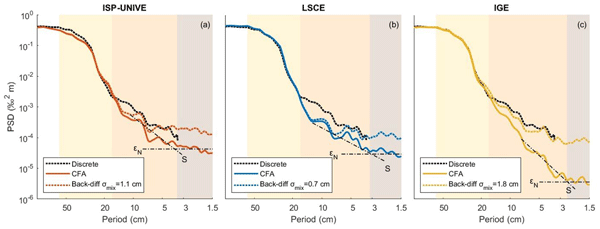
Our research compares three systems of continuous flow analysis coupled with cavity ring-down spectrometry (CFA-CRD) from Venice, Paris, and Grenoble laboratories for measuring water isotopes in ice cores, crucial for reconstructing past climate. We quantify each system’s mixing and measurement noise effects, which impact the achievable resolution of isotope continuous records. Our findings reveal specific configurations and procedures to enhance measurement accuracy, providing a framework to optimise water isotope analysis.
Lea Raillard, Audran Borella, Gwendal Rivière, Niels Dutrievoz, Meryl Wimmer, Ionela Musat, and Étienne Vignon
EGUsphere, https://doi.org/10.5194/egusphere-2026-5432, https://doi.org/10.5194/egusphere-2026-5432, 2026
This preprint is open for discussion and under review for Atmospheric Chemistry and Physics (ACP).
Short summary
Short summary
Climate models struggle to predict snowfall near the poles, which matters for tracking ice sheet changes. We built a new, efficient snowfall scheme for a global climate model and tested it using aircraft and ground radar data from Arctic Svalbard and Antarctica. The improved model better captures how snow forms and falls through clouds, bringing us closer to reliable predictions of polar snowfall, and showing where further refinements are needed.
Ailsa Chung, Yéva Jeaumot, Frédéric Parrenin, Daniel Steinhage, and Olaf Eisen
EGUsphere, https://doi.org/10.5194/egusphere-2026-4351, https://doi.org/10.5194/egusphere-2026-4351, 2026
This preprint is open for discussion and under review for The Cryosphere (TC).
Short summary
Short summary
We use a 2.5D ice flow model constrained by radar data to estimate the age of ice, basal conditions and particle paths along a flow line from Dome Fuji (DF) to the EPICA Dronning Maud Land ice core site (EDML), Antarctica. Modelled basal melt rates are highest in bedrock dips and stagnant ice occurs on or slightly downstream of bedrock highs. At EDML, particle paths show that the deepest ice may originate 130 km upstream. We also identify a potential old-ice area (>1 Ma), ~200 km from DF.
Ghislain Picard, Justin Murfitt, Elena Zakharova, Pierre Zeiger, Laurent Arnaud, Jeremie Aublanc, Jack C. Landy, Michele Scagliola, and Claude Duguay
Geosci. Model Dev., 19, 9103–9129, https://doi.org/10.5194/gmd-19-9103-2026, https://doi.org/10.5194/gmd-19-9103-2026, 2026
Short summary
Short summary
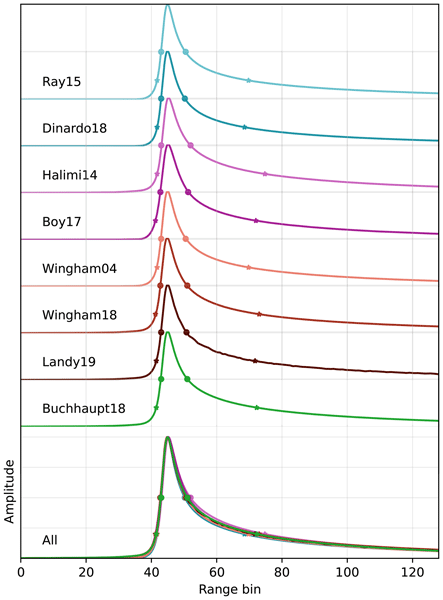
Radar altimeters measure ice-sheet elevation and sea-ice thickness. To improve their accuracy, we developed a model that simulates altimeter waveforms based on the physical properties of snow and sea ice. It computes the power, time, and Doppler shift of radar echoes as waves travel to the surface, interact with snow and ice, and return to the satellite. The model was verified internally, validated against other models and applied in Antarctica using in-situ snow measurements.
Victor van Aanderen, Aurélien Quiquet, Christophe Dumas, Elisabeth Michel, Frederic Parrenin, Catherine Ritz, and Kévin Jiguet-Covex
EGUsphere, https://doi.org/10.5194/egusphere-2026-5288, https://doi.org/10.5194/egusphere-2026-5288, 2026
This preprint is open for discussion and under review for The Cryosphere (TC).
Short summary
Short summary
Ice cores from Dome C provide one of the longest climate records, and Beyond EPICA aims to extend it further. Interpreting these records requires knowing whether Dome C has remained fixed. Using an ice sheet model spanning 800,000 years, we show Dome C has shifted several km during glacial cycles, driven by grounding line migration in the Aurora Subglacial Basin. This displacement can introduce age errors of several tens of thousands of years when interpreting the ice-core record.
Marin Kneib, Patrick Wagnon, Laurent Arnaud, Louise Balmas, Olivier Laarman, Bruno Jourdain, Amaury Dehecq, Emmanuel Lemeur, Fanny Brun, Andrea Kneib-Walter, Ilaria Santin, Laurane Charrier, Thierry Faug, Giulia Mazzotti, Antoine Rabatel, Delphine Six, and Daniel Farinotti
The Cryosphere, 20, 5327–5344, https://doi.org/10.5194/tc-20-5327-2026, https://doi.org/10.5194/tc-20-5327-2026, 2026
Short summary
Short summary
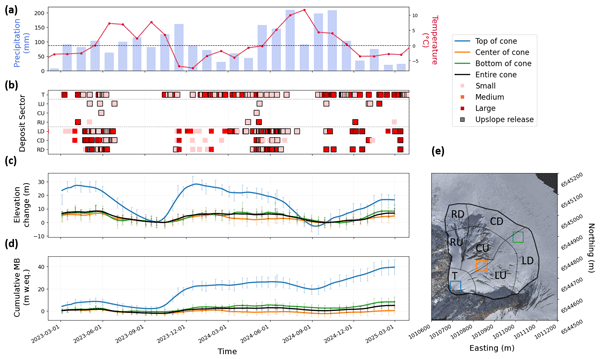
Avalanches are vital for glacier survival, yet their impact is difficult to quantify. We used low-cost cameras and drones to monitor an avalanche cone in the French Alps for two years. By accounting for ice flow, we found that avalanches can deposit 30 meters of snow annually – 50 times more than normal snowfall. This high-frequency data reveals that these cones fill until reaching a specific steepness, after which new snow slides further down to the base.
Yéva Jeaumot, Frédéric Parrenin, Ailsa Chung, Olaf Eisen, Daniel Steinhage, Robert Mulvaney, Marie G. P. Cavitte, David A. Lilien, and Emilie Capron
EGUsphere, https://doi.org/10.5194/egusphere-2026-4174, https://doi.org/10.5194/egusphere-2026-4174, 2026
This preprint is open for discussion and under review for The Cryosphere (TC).
Short summary
Short summary
To choose good drilling sites and interpret ice cores correctly, scientists need reliable estimates of ice age at each depth. We developed a new way to model how ice behaves at the base of ice sheets, where it can melt or stop moving entirely, using radar data from Antarctica. Our estimates matched real measurements at a well-studied site, revealed a layer of stagnant ice at another, and predicted that a newly proposed drilling site could yield ice over two million years old.
Philippe Conesa, Cécile Agosta, Sylvie Charbit, Christophe Dumas, Simon Beylat, and Nina Raoult
The Cryosphere, 20, 4973–5003, https://doi.org/10.5194/tc-20-4973-2026, https://doi.org/10.5194/tc-20-4973-2026, 2026
Short summary
Short summary
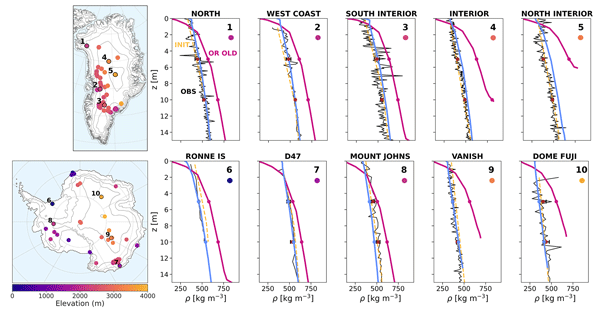
As Greenland and Antarctic ice sheets are almost entirely covered by snow, a proper modelling of the internal snowpack processes is essential to predict their evolution. This study evaluates the snow densification over ice sheets in the ORCHIDEE (Organising Carbon and Hydrology In Dynamic Ecosystems) land surface model. The development of a new formulation for the surface snow density and the calibration of densification parameters improve the model agreement with polar snow observations.
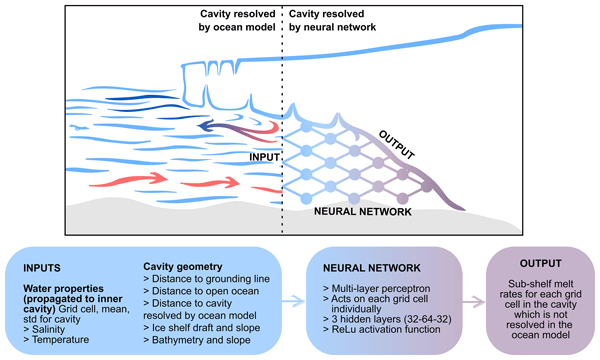
Helen Ockenden, Clara Burgard, Pierre Mathiot, Christoph Kittel, Achille Gellens, Cécile Agosta, and Nicolas C. Jourdain
Geosci. Model Dev., 19, 7979–8002, https://doi.org/10.5194/gmd-19-7979-2026, https://doi.org/10.5194/gmd-19-7979-2026, 2026
Short summary
Short summary
Since numerical computing is expensive, climate models must decide between having a high spatial resolution or running for long time periods. Here, we develop a simple neural network to emulate small-scale processes occurring beneath Antarctic ice shelves, which allows sub-shelf melt and ice–ocean interactions to be included in global ocean models which can run for multiple centuries. This neural network will help us to understand how ocean circulation may change in the future.
Adrien Ooms, Mathieu Casado, Sonja Wahl, Thomas Laepple, Alexandra Zuhr, Pete Akers, Ghislain Picard, Laurent Arnaud, Joel Savarino, Kira Rehfeld, Barbara Stenni, Giuliano Dreossi, Mauro Masiol, Amaelle Landais, and Valérie Masson-Delmotte
EGUsphere, https://doi.org/10.5194/egusphere-2026-4801, https://doi.org/10.5194/egusphere-2026-4801, 2026
This preprint is open for discussion and under review for Climate of the Past (CP).
Short summary
Short summary
This work presents new insights in the archival process of multi-annual climatic signal in the near surface firn at Concordia Station, East-Antarctica, from the new data set of high resolution stable water isotope profiles measured in a snow trench. The dated isotopic profiles covering 20 years are compared against overlapping precipitation and surface snow observations. This highlights the strong contribution of stratigraphic noise and post depositional effects to individual trench profiles.
Adrien Gilbert, Fabrizio Troilo, Olivier Gagliardini, Christian Vincent, Paolo Perret, Luca Mondardini, Luc Piard, Olivier Laarman, and Emmanuel Le Meur
EGUsphere, https://doi.org/10.5194/egusphere-2026-4058, https://doi.org/10.5194/egusphere-2026-4058, 2026
This preprint is open for discussion and under review for The Cryosphere (TC).
Short summary
Short summary
This study reports on long-term temperature changes observed on the Whymper hanging glacier in Italy from 1997 to 2021, which are interpreted using a numerical modeling approach. Our results show that recent surface warming, driven by increased melting, has raised the glacier's basal temperature significantly, which could reach its melting point by 2050. However, this warming is partially offset by cooling from the mountain's cold north face, which may keep the glacier frozen and stable.
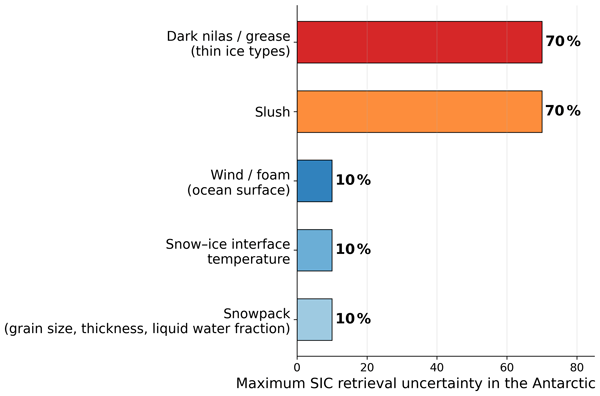
Marta Stentella, Ghislain Picard, Petra Heil, Jacqueline Boutin, Emmanuel Dinnat, and Stuart Corney
The Cryosphere, 20, 4465–4489, https://doi.org/10.5194/tc-20-4465-2026, https://doi.org/10.5194/tc-20-4465-2026, 2026
Short summary
Short summary
Passive microwave radiometers are the primary tool for monitoring Antarctic sea ice, but their reliability decreases in the marginal ice zone between the pack ice and the open ocean. We simulate satellite observations to assess the impact of varying physical parameters on sea ice concentration retrievals. The largest errors are due to flooded/wet snow, thin ice, and roughened ocean surfaces. These findings can improve our interpretation of satellite observations and forecast sea ice changes.
Philippe Gamet, Bimal K. Bhattacharya, Jean-Louis Roujean, Gilles Boulet, Corinne Salcedo, Albert Olioso, Kanishka Mallick, Marie Weiss, Emmanuelle Sarrazin, Emmanuelle Autret, Laure Roupioz, José Antonio Sobrino, Olivier Merlin, Ghislain Picard, Thomas H. G. Vidal, Mark Irvine, Rahul Nigam, Mehul Pandya, Simon Gascoin, Sébastien Marcq, Manoj K. Mishra, Emilie Delogu, Vincent Rivalland, Jordi Etchanchu, Jean-Louis Raynaud, Meenakshi Sarkar, Rishi K. Gangwar, Sushil K. Singh, Renaud Binet, Sara Arioli, Hervé Yésou, Isabelle Dadou, Alexei Kouraev, Julien Michel, Benoit Coudert, Samuel Mwangi, Nesrine Farhani, Ayan Das, Stéphane Saux-Picart, Thierry Tormos, Jean-François Piollé, Charles Verpoorter, Auline Rodler, Jonathan Leon Tavares, Jennifer Adams, Anand S. Sahadevan, Besavaraju Santhi Sree, Manikumar Vedantam, Dheeraj Adlakha, Laurence Buffet, Kathrin Naegeli, Itziar Barat, Jerome Demarty, Olivier Hagolle, and Philippe Maisongrande
EGUsphere, https://doi.org/10.5194/egusphere-2026-4492, https://doi.org/10.5194/egusphere-2026-4492, 2026
Short summary
Short summary
This paper highlights how the upcoming TRISHNA satellite mission (launching 2027) will transform Earth observation by providing high-resolution (60 m) thermal infrared imagery with sub-weekly revisits. It details the mission's design and its synergies with other future missions to significantly improve the monitoring of global surface temperature and its dynamics, water stress, and ecosystem energy processes.
Christian Torres, Deniz Bozkurt, Vincent Favier, Victoire Buffet, Claudio Bravo, Xavier Fettweis, Thomas Dethinne, Antoine Rabatel, Maximiliano Viale, Sang-Jong Park, and Jorge Arigony-Neto
EGUsphere, https://doi.org/10.5194/egusphere-2026-3508, https://doi.org/10.5194/egusphere-2026-3508, 2026
This preprint is open for discussion and under review for The Cryosphere (TC).
Short summary
Short summary
We investigated periods when unusually warm conditions in Patagonia occurred at the same time as precipitation events on the Antarctic Peninsula. By combining observations and simulations, we identified 127 such events between 1980 and 2022. These events increased ice melt in Patagonia while enhancing accumulation on the Antarctic Peninsula, highlighting how large-scale weather patterns can simultaneously affect ice-covered regions in different ways.
Xiaoxu Shi, Xiya Liu, Jiping Liu, Martin Werner, Hu Yang, Francisco W. Cruz, Chaoyuan Yang, and Gerrit Lohmann
EGUsphere, https://doi.org/10.5194/egusphere-2026-3894, https://doi.org/10.5194/egusphere-2026-3894, 2026
This preprint is open for discussion and under review for Climate of the Past (CP).
Short summary
Short summary
Cave stalagmites record the oxygen isotope of past rainfall and are used to reconstruct how monsoons changed, but due to the complexity of isotope impacting factors, what these records tell us is debated. We performed a 8300-year simulation with an isotope-enabled climate model, and show that rainfall amount is the key stable driver across global monsoons, while temperature and moisture pathways vary with region and time. Single-site records are noisy, but regional averages recover the signal.
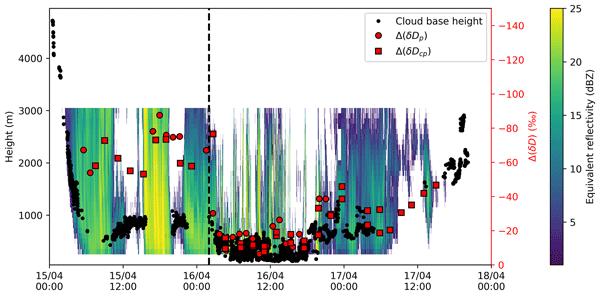
Thomas Lauwers, Elise Fourré, Niels Dutrievoz, Cécile Agosta, Olivier Jossoud, Bénédicte Minster, Frédéric Prié, Olivier Cattani, Valérie Masson-Delmotte, Mathieu Casado, Christophe Genthon, and Amaëlle Landais
Atmos. Meas. Tech., 19, 4743–4758, https://doi.org/10.5194/amt-19-4743-2026, https://doi.org/10.5194/amt-19-4743-2026, 2026
Short summary
Short summary
This study presents a new method to measure the isotopic composition of snowfall and atmospheric water vapor in Antarctica. With a single laser spectrometer, it enables continuous, high frequency observations without human intervention. Tests in East Antarctica show a very good agreement with conventionnal snow sampling. This new sampling method opens new opportunities to better understand snowfall formation, improve climate models, and refine the interpretation of ice core climate records.
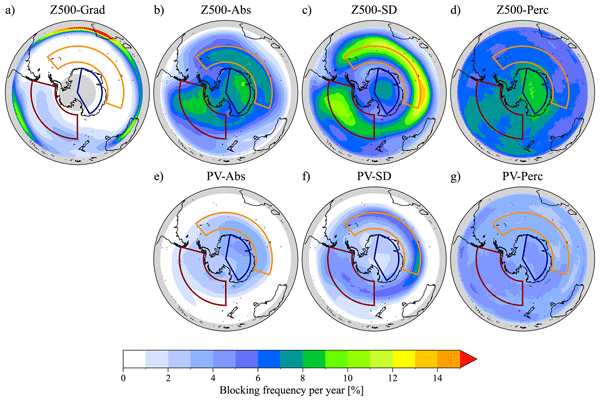
Deniz Bozkurt, Charlie Opazo, Julio C. Marín, Kyle R. Clem, Benjamin Pohl, Victoire Buffet, Vincent Favier, Tomás Carrasco-Escaff, and Bradford S. Barrett
Earth Syst. Sci. Data, 18, 5399–5422, https://doi.org/10.5194/essd-18-5399-2026, https://doi.org/10.5194/essd-18-5399-2026, 2026
Short summary
Short summary
Atmospheric blocking near Antarctica drives long lasting circulation anomalies and extreme events, yet it remains poorly understood. We created a new public dataset for 1979 to 2024 using global reanalysis data and several detection methods applied in a consistent way. We found strong method dependent differences in how often, where, and how long blocking occurs, showing that no single approach captures all forms of Antarctic blocking.

Amy C. F. King, Thomas K. Bauska, Amaëlle Landais, Carlos Martín, and Eric W. Wolff
Clim. Past, 22, 1291–1304, https://doi.org/10.5194/cp-22-1291-2026, https://doi.org/10.5194/cp-22-1291-2026, 2026
Short summary
Short summary
We show how measurements of nitrogen isotopes in Antarctic ice core records can be used to show dramatic thinning of an ice sheet during ice mass changes in the Holocene. Combining such measurements with proxies for ice sheet elevation could be a powerful tool for constraining the history of ice dynamics at sites which are sensitive to rapid changes, and could contribute to constraining ice sheet models.
Julien Meloche, Melody Sandells, Henning Löwe, Nick Rutter, Ghislain Picard, Richard Essery, Randall K. Scharien, Alexandre Langlois, Matthias Jaggi, Josh King, Peter Toose, Michele Scagliola, Jerome Bouffard, Alessandro Di Bella, and Christian Haas
EGUsphere, https://doi.org/10.5194/egusphere-2026-3615, https://doi.org/10.5194/egusphere-2026-3615, 2026
Short summary
Short summary
Sea ice thickness is essential for climate studies. Radar altimetry has provided sea ice thickness measurements, but uncertainty arises from the interaction of the signal with the snow cover. Therefore, modelling the signal interaction with the snow is necessary to improve retrieval. A radar model was used to simulate the radar signal from the snow-covered sea ice. This work paved the way to improved physical algorithms to retrieve snow depth and sea ice thickness for radar altimeter missions.
Victoire Buffet, Vincent Favier, Benjamin Pohl, and Jonathan D. Wille
Weather Clim. Dynam., 7, 1189–1210, https://doi.org/10.5194/wcd-7-1189-2026, https://doi.org/10.5194/wcd-7-1189-2026, 2026
Short summary
Short summary
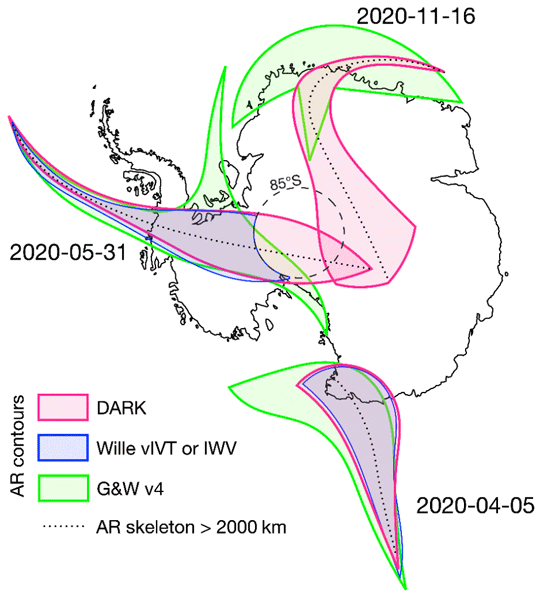
We improve the detection of long corridors of intense moisture transport, known as atmospheric rivers, that affect Antarctica. Our new method can track these rivers even when they curve, cross the South Pole, or break into smaller parts. We show that they cause even more heavy snowfall and warm weather on the continent than previously thought, clarifying their role in shaping Antarctic climate and ice loss.
Agnese Petteni, Mathieu Casado, Christophe Leroy-Dos Santos, Amaelle Landais, Niels Dutrievoz, Cécile Agosta, Pete D. Akers, Joel Savarino, Andrea Spolaor, Massimo Frezzotti, and Barbara Stenni
The Cryosphere, 20, 3581–3598, https://doi.org/10.5194/tc-20-3581-2026, https://doi.org/10.5194/tc-20-3581-2026, 2026
Short summary
Short summary
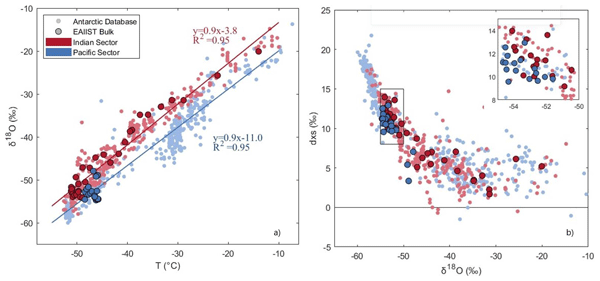
We investigated the isotopic composition of surface snow in a previously unexplored region of East Antarctica to understand how differences in air mass origin influence its variability. By comparing observations with model data, we validated the model and quantified the impact of post-depositional processes at the snow–atmosphere interface. Our results offer valuable insights for reconstructing past temperatures from ice cores.
Etienne Legrain, Nathan Stevenard, Emilie Capron, Frédéric Parrenin, and Natalia Vazquez Riveiros
Clim. Past, 22, 1223–1240, https://doi.org/10.5194/cp-22-1223-2026, https://doi.org/10.5194/cp-22-1223-2026, 2026
Short summary
Short summary
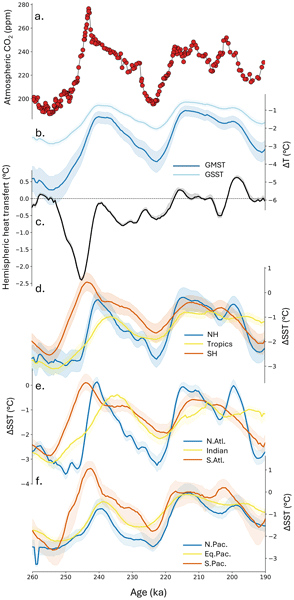
To better understand climate drivers during a warm period ~200,000 years ago, we reconstructed global surface temperature using 132 marine records placed on a common timeline. We found strong hemispheric differences and showed that the warmest phase occurred despite lower CO2 levels. In addition, we suggest that extreme orbital forcing temporarily shifted the climate into the older 41,000-year rhythm, resulting in a hybrid warm period shaped by both 100,000-year and 41,000-year climate dynamics.
Adrien Ooms, Mathieu Casado, Ghislain Picard, Laurent Arnaud, Maria Hörhold, Andrea Spolaor, Rita Traversi, Joel Savarino, Patrick Ginot, Pete Akers, Birthe Twarloh, and Valérie Masson-Delmotte
The Cryosphere, 20, 3235–3255, https://doi.org/10.5194/tc-20-3235-2026, https://doi.org/10.5194/tc-20-3235-2026, 2026
Short summary
Short summary
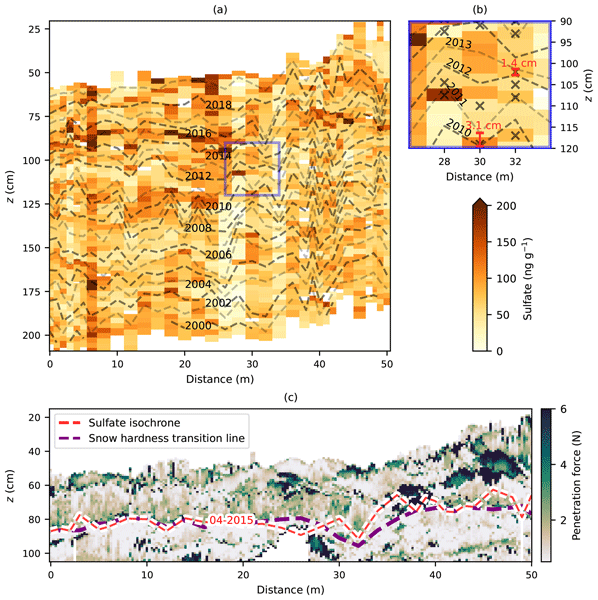
This work presents a new approach to the estimation of accumulation rates at Concordia Station, East-Antarctica, for the last 20 years, from a new data set of chemical tracers and snow micro-scale properties measured in a snow trench. Multi-annual and meter to decameter scale variability of accumulation rates are compared again in-situ measurements of surface laser scanner and stake farm, with very good agreement. This further constrains SMB estimation for Antarctica at high temporal resolution.
Yigang Liu, Jing Gao, Martin Werner, Alexandre Cauquoin, and Ke Li
EGUsphere, https://doi.org/10.5194/egusphere-2026-2351, https://doi.org/10.5194/egusphere-2026-2351, 2026
This preprint is open for discussion and under review for Geoscientific Model Development (GMD).
Short summary
Short summary
In this study, we provide the first systematic evaluation of ECHAM6-wiso's ability to simulate water vapor stable isotope ratios (δ18Ov) in the near-surface atmosphere over the Tibetan Plateau. In summary, these results underscore the critical role of resolved atmospheric circulation in stable isotope simulations. Our findings highlight the necessity of high-resolution isotopic datasets to refine moisture source attribution and water-cycle dynamics in complex alpine environments.
Nicolas Bienville, Amaelle Landais, Sarah Fiorini, Clément Piel, Joana Sauze, Benoit Lemaire, Nicolas Geyskens, Frederic Prie, Olivier Jossoud, Clémence Paul, Justin Chaillot, Thomas Lauwers, Simon Chollet, Samuel Abiven, and Arnaud Dapoigny
EGUsphere, https://doi.org/10.5194/egusphere-2026-1369, https://doi.org/10.5194/egusphere-2026-1369, 2026
Short summary
Short summary
This study describes an instrumented system of 4 closed aquatic biological chambers that allows determination of the oxygen isotopic fractionation factors of aquatic biosphere in controlled realistic conditions. We validated our system with a freshwater algae species and determined its ¹⁸O/¹⁶O isotopic discrimination during respiration to be −30 ‰, in the upper range of previously published values.
Felix Pollak, Frédéric Parrenin, Emilie Capron, Zanna Chase, Lenneke Jong, and Etienne Legrain
Clim. Past, 22, 675–688, https://doi.org/10.5194/cp-22-675-2026, https://doi.org/10.5194/cp-22-675-2026, 2026
Short summary
Short summary
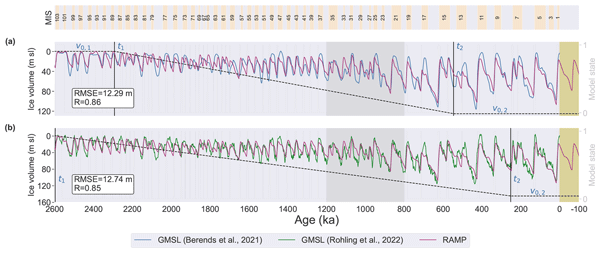
The Mid-Pleistocene Transition (MPT) marked a shift towards extended glacial periods and amplitudes, while its underlying mechanisms are still disputed. Here, we present a new conceptual model, capable of reconstructing global ice volume over the past 2.6 Ma, including a shift in frequency and amplitude during the MPT. We find that a long-lasting, gradual trend in the Earth-climate system is most favourable in reconstructing the MPT and that it started over 2 Ma.
Héloïse Guilluy, Émilie Capron, Frédéric Parrenin, Vladimir Lipenkov, Jochen Schmitt, Patricia Martinerie, Zhipeng Wu, Qiuzhen Yin, Anna Maria Klüssendorf, Amaëlle Landais, Barbara Seth, Hubertus Fischer, and Dominique Raynaud
EGUsphere, https://doi.org/10.5194/egusphere-2026-953, https://doi.org/10.5194/egusphere-2026-953, 2026
Short summary
Short summary
Air bubbles in polar ice cores retain information about past climates over hundreds of thousands of years. The total air content (TAC) trapped within these bubbles varies with summer insolation cycles, making it a tool for dating ice cores. We present a multi-site update on TAC, combining new and published data. We confirm that insolation impacts bubble volume in East Antarctica, but surface climate changes can hide the insolation signal in the TAC record, impacting the TAC-derived chronologies.
Emma Samin, Amaëlle Landais, Elise Fourré, Mathieu Casado, Adrien Ooms, Niels Dutrievoz, Cécile Agosta, Valérie Masson-Delmotte, Thomas Combacal, Elsa Gautier, and Bénédicte Minster
EGUsphere, https://doi.org/10.5194/egusphere-2026-871, https://doi.org/10.5194/egusphere-2026-871, 2026
Short summary
Short summary
This study presents the water isotope profiles of two firn cores drilled at Little Dome C (LDC) in Antarctica and dated by identifying volcanic events, which enabled us to determine an accumulation rate at LDC of 24 mmwe.yr-1. Comparison of a virtual firn core model with these data allowed us to study the surface processes responsible for isotopic variability in firn. We therefore suggest that future models consider the mixing of the surface layer and re-quantify diffusion.
Benjamin Heurgue, Charles Amory, Christoph Kittel, Fredrik Boberg, Gaël Durand, Vincent Favier, Xavier Fettweis, Quentin Glaude, Heiko Goelzer, Nicolaj Hansen, Nicolas C. Jourdain, Ruth Mottram, Martin Olesen, Willem Jan Van de Berg, Michiel R. Van den Broeke, and René R. Wijngaard
EGUsphere, https://doi.org/10.5194/egusphere-2026-624, https://doi.org/10.5194/egusphere-2026-624, 2026
Short summary
Short summary
We studied how the Antarctic ice sheet surface mass balance may change by 2100 using three high-resolution climate models forced by the same future climate scenario. While the models agree for present-day conditions, they project very different futures, especially over floating ice shelves. These differences mainly come from how melting, refreezing, and temperature are represented. Our results show that future sea level projections strongly depend on how well models simulate today’s climate.
Léa Elise Bonnefoy, Catherine Prigent, Ghislain Picard, Clément Soriot, Alice Le Gall, Lise Kilic, and Carlos Jimenez
The Cryosphere, 20, 1297–1314, https://doi.org/10.5194/tc-20-1297-2026, https://doi.org/10.5194/tc-20-1297-2026, 2026
Short summary
Short summary
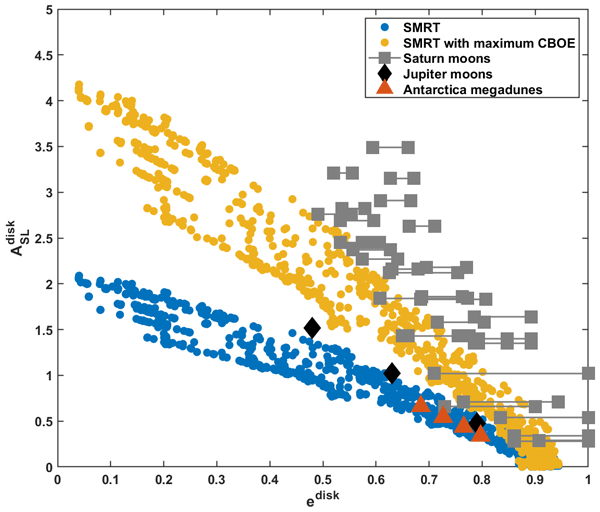
Microwave radiometry senses the thermal emission from a target, whereas its active counterpart, radar, sends a signal to the target and measures the reflected signal. We simultaneously model radar and radiometry over the East Antarctic ice sheet, which we propose as an analog for icy moons: we can reproduce most data with a unique model. The radar response of Saturn's moons cannot be reproduced and is likely caused by processes unaccounted for in the model and less efficient in the Antarctic.
Jan Nitzbon, Moritz Langer, Luca Alexander Müller-Ißberner, Elisabeth Dietze, and Martin Werner
Clim. Past, 22, 377–403, https://doi.org/10.5194/cp-22-377-2026, https://doi.org/10.5194/cp-22-377-2026, 2026
Short summary
Short summary
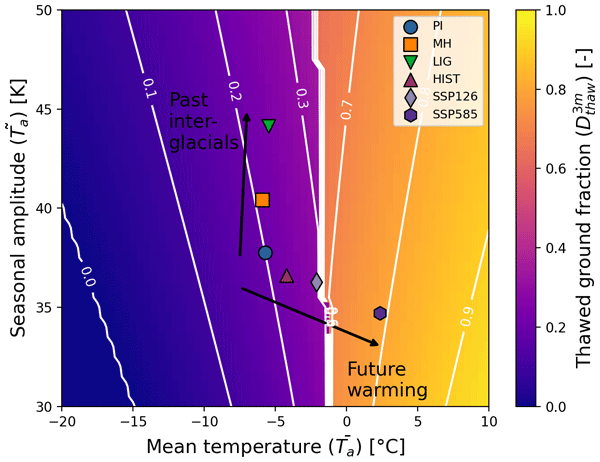
Using model simulations, we show that the larger temperature seasonality of the mid Holocene and the last interglacial climates led to marked surficial permafrost thaw during warm summers, while cold winters allowed for permafrost persistence at depth. We argue that past interglacial climates have limited suitability as analogues for future permafrost dynamics, for which we anticipate a trajectory of unprecedented thaw magnitude since at least MIS (Marine Isotope Stage) 11c.
Tifenn Le Bris, Guilhem Barruol, Florent Gimbert, Emmanuel Le Meur, Dimitri Zigone, Maxime Bès de Berc, and Armelle Bernard
EGUsphere, https://doi.org/10.5194/egusphere-2026-76, https://doi.org/10.5194/egusphere-2026-76, 2026
Short summary
Short summary
When Antarctic glaciers meet the ocean, they shift from resting on the bedrock to floating, at a boundary called the grounding line. Using a dense array of seismic sensors deployed on the Astrolabe Glacier, East Antarctica, we investigate daily spatial and temporal variations of seismicity at this critical boundary. We show that ice deformation at the surface and the base of the glacier serves as an efficient proxy to track the grounding line position and its daily motion under tidal forcing.
Marion Leduc-Leballeur, Ghislain Picard, Pierre Zeiger, and Giovanni Macelloni
The Cryosphere, 20, 1199–1216, https://doi.org/10.5194/tc-20-1199-2026, https://doi.org/10.5194/tc-20-1199-2026, 2026
Short summary
Short summary
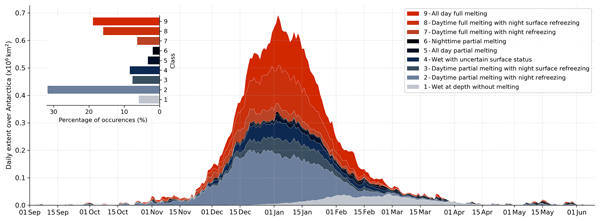
This study presents a quantitative and synthetic classification of the snowpack in 10 dry-wet status by aggregating separate binary indicators derived from satellite observations. The classification follows the expected evolution of the melt season: night refreezing is frequent at the onset, sustained melting is observed during the summer peak, and remnant liquid water at depth occurs at the end. This dataset improves the knowledge of melt processes using passive microwave remote sensing.
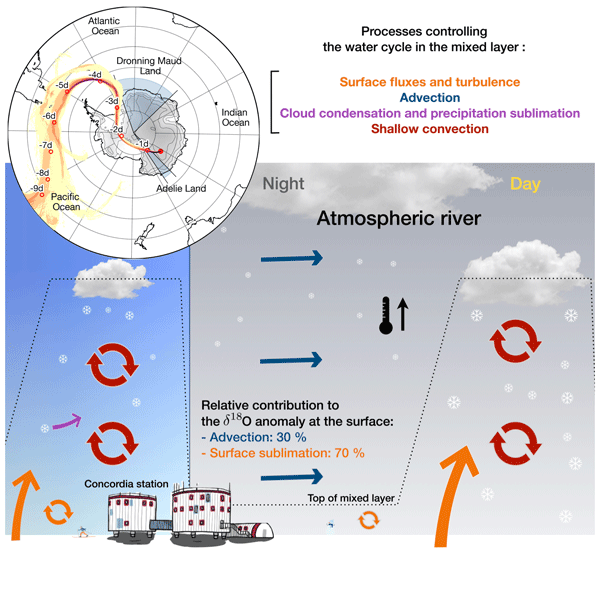
Niels Dutrievoz, Cécile Agosta, Cécile Davrinche, Amaëlle Landais, Sebastien Nguyen, Étienne Vignon, Inès Ollivier, Christophe Leroy-Dos Santos, Elise Fourré, Mathieu Casado, Jonathan Wille, Vincent Favier, Bénédicte Minster, and Frédéric Prié
The Cryosphere, 20, 1025–1046, https://doi.org/10.5194/tc-20-1025-2026, https://doi.org/10.5194/tc-20-1025-2026, 2026
Short summary
Short summary
In December 2018, an atmospheric river event from the Atlantic reached Dome C, East Antarctica, causing a +18 °C warming, tripled water vapour, and a strong isotopic anomaly in water vapour (+ 17 ‰ for δ18O) at the surface. During the peak of the event, we found 70 % of the water vapour came from local snow sublimation, and 30 % from the atmospheric river itself, highlighting both long-range moisture advection and interactions between the boundary layer and the snowpack.
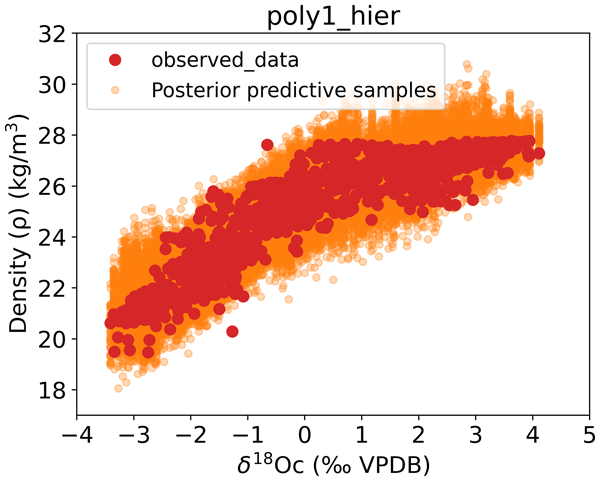
Thibaut Caley, Niclas Rieger, Martin Werner, Claire Waelbroeck, Héloise Barathieu, Tamara Happé, and Didier M. Roche
Clim. Past, 22, 247–263, https://doi.org/10.5194/cp-22-247-2026, https://doi.org/10.5194/cp-22-247-2026, 2026
Short summary
Short summary
Density of seawater is a critical property that controls ocean dynamics. We developed the use of the δ18Oc of planktonic foraminifera as a surface paleodensity proxy for the ocean using Bayesian regression models calibrated to mean annual surface density. We reconstructed annual surface density during the last glacial maximum and late Holocene time periods. These results will be used to evaluate numerical climate models in their ability to simulate past ocean surface density.
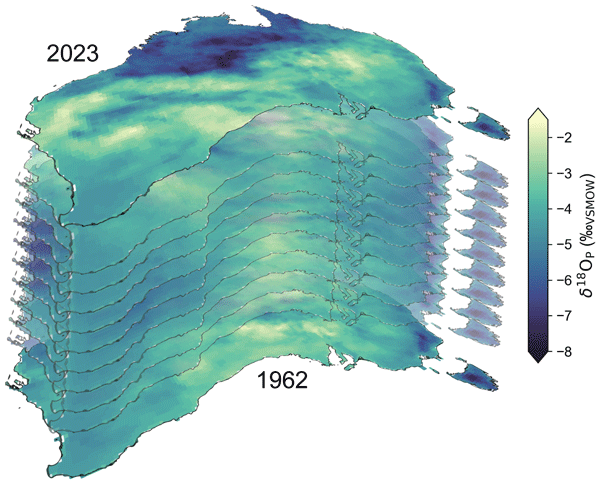
Georgina Falster, Gab Abramowitz, Sanaa Hobeichi, Catherine Hughes, Pauline Treble, Nerilie J. Abram, Michael I. Bird, Alexandre Cauquoin, Bronwyn Dixon, Russell Drysdale, Chenhui Jin, Niels Munksgaard, Bernadette Proemse, Jonathan J. Tyler, Martin Werner, and Carol V. Tadros
Hydrol. Earth Syst. Sci., 30, 289–315, https://doi.org/10.5194/hess-30-289-2026, https://doi.org/10.5194/hess-30-289-2026, 2026
Short summary
Short summary
We used a random forest approach to produce estimates of monthly precipitation stable isotope variability from 1962–2023, at high resolution across the entire Australian continent. Comprehensive skill and sensitivity testing shows that our random forest models skilfully predict precipitation isotope values in places and times that observations are not available. We make all outputs freely available, facilitating use in fields from ecology and hydrology to archaeology and forensic science.
Dong Li, Xueyuan Tang, Ailsa Chung, Frédéric Parrenin, and Bo Sun
EGUsphere, https://doi.org/10.5194/egusphere-2025-5165, https://doi.org/10.5194/egusphere-2025-5165, 2026
Short summary
Short summary
China's first deep ice core drilling at Dome A aims to obtain continuous ice records older than one million years. Using radar data and a one-dimensional ice flow model, we estimated the age of ice layers across Dome A. Our results suggest that the bottom ice melts very little and highlight three areas that may preserve million-year-old ice. The findings provide guidance for future drilling and support international efforts to study the oldest ice in Antarctica.
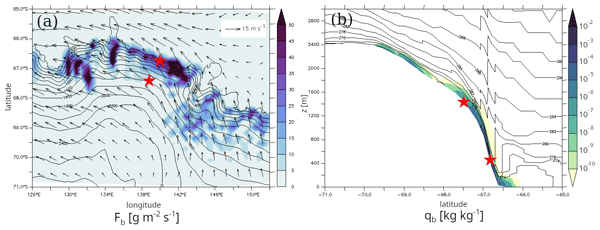
Étienne Vignon, Nicolas Chiabrando, Cécile Agosta, Charles Amory, Valentin Wiener, Justine Charrel, Thomas Dubos, and Christophe Genthon
Geosci. Model Dev., 19, 239–259, https://doi.org/10.5194/gmd-19-239-2026, https://doi.org/10.5194/gmd-19-239-2026, 2026
Short summary
Short summary
The erosion of surface snow by the wind is an important process for the Antarctic surface mass balance. This study presents the first development of a parameterisation of blowing snow for a global climate model. Simulations avec evaluated using measurements in Antarctica. Results show an overall decrease of the snow accumulation in the escarpment region of the ice sheet due to snow erosion and an increase at the coast due to blowing snow deposition and increase in precipitation.
Cécile Davrinche, Anaïs Orsi, Charles Amory, Christoph Kittel, and Cécile Agosta
The Cryosphere, 19, 6023–6042, https://doi.org/10.5194/tc-19-6023-2025, https://doi.org/10.5194/tc-19-6023-2025, 2025
Short summary
Short summary
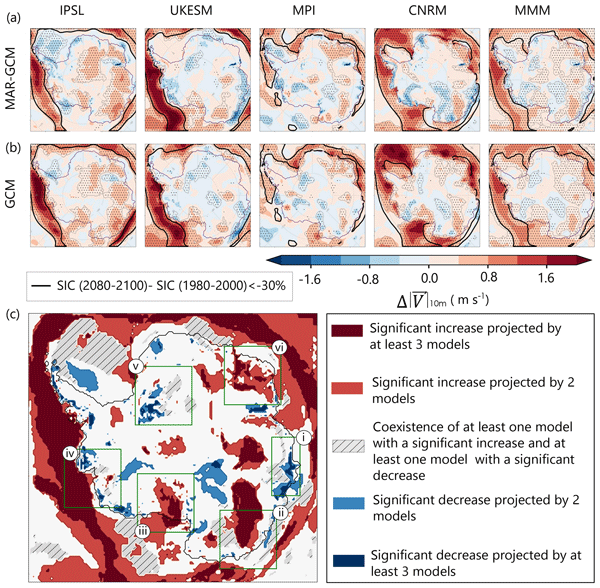
We analyse changes in Antarctic winter surface winds projected by 4 models. Depending on the area and model, changes on the continent by 2100 reveal opposing trends. Nevertheless, models agree on a strengthening of surface winds in Adélie Land for example and a weakening in some other areas such as the Amundsen region. We attribute the strengthening of near-surface winds to changes in the large-sale atmospheric circulation and the weakening to changes in the structure of the lower atmosphere.
Claudio Stefanini, Barbara Stenni, Mauro Masiol, Giuliano Dreossi, Vincent Favier, Francesca Becherini, Claudio Scarchilli, Virginia Ciardini, Gabriele Carugati, and Massimo Frezzotti
The Cryosphere, 19, 5781–5799, https://doi.org/10.5194/tc-19-5781-2025, https://doi.org/10.5194/tc-19-5781-2025, 2025
Short summary
Short summary
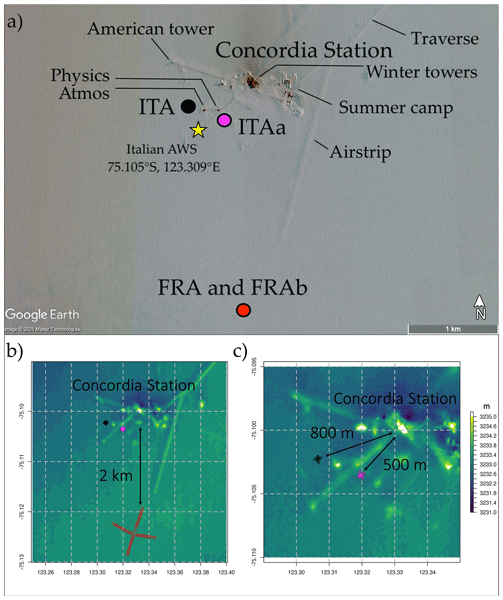
This study analyzes snow accumulation near Concordia Station in Antarctica (3233 m) to estimate yearly snow accumulation. Data from Italian and French stake farms show strong variation due to wind and surface features. On average, 7–8 cm of snow accumulate yearly near the Station. The study also compares results with climate models and explores whether the station buildings affect measurements.
Frédéric Parrenin, Ailsa Chung, and Carlos Martín
Geosci. Model Dev., 18, 8203–8216, https://doi.org/10.5194/gmd-18-8203-2025, https://doi.org/10.5194/gmd-18-8203-2025, 2025
Short summary
Short summary
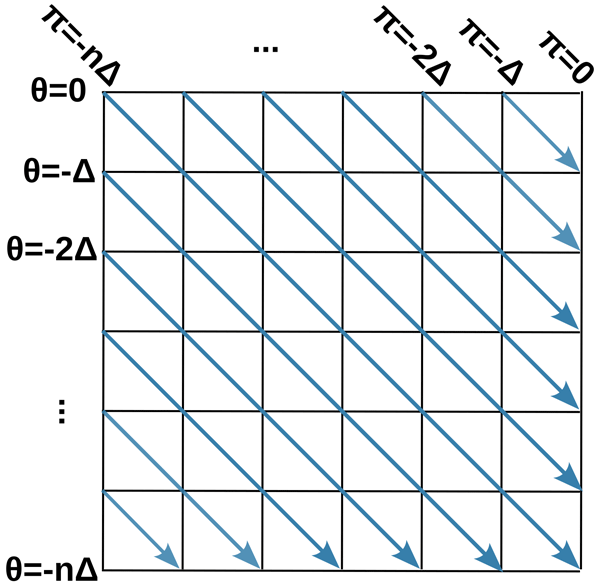
We developed a new numerical age solver for a pseudo-steady flow tube of an ice sheet. Thanks to a new coordinate system which tracks the trajectories and a change of the time variable, our scheme combines the advantages of Eulerian and Lagrangian schemes: no numerical diffusion and no dilution of tracers. Our model is so fast that it is easy to optimize its parameters. Our model is made available to the ice sheet community as an easy to use open-source software coded in python.
Alison J. McLaren, Louise C. Sime, Simon Wilson, Jeff Ridley, Qinggang Gao, Merve Gorguner, Giorgia Line, Martin Werner, and Paul Valdes
Geosci. Model Dev., 18, 8129–8142, https://doi.org/10.5194/gmd-18-8129-2025, https://doi.org/10.5194/gmd-18-8129-2025, 2025
Short summary
Short summary
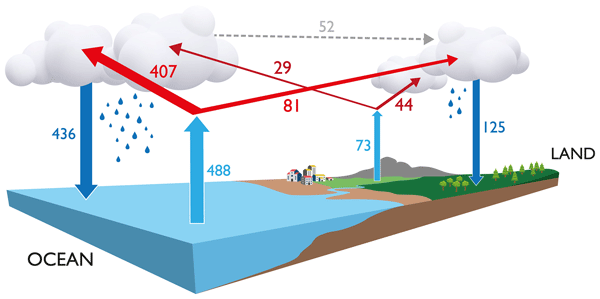
We describe a new development in a state-of-the-art computer atmosphere model, which follows the movement of the model’s water. This provides an efficient way to track all the model's rain and snow back to the average location of the evaporative source, as shown in a present-day simulation. The new scheme can be used in simulations of the future to predict how sources of regional rain or snowfall might change owing to human actions, providing useful information for water management purposes.
Léon Roussel, Marie Dumont, Marion Réveillet, Delphine Six, Marin Kneib, Pierre Nabat, Kévin Fourteau, Diego Monteiro, Simon Gascoin, Emmanuel Thibert, Antoine Rabatel, Jean-Emmanuel Sicart, Mylène Bonnefoy, Luc Piard, Olivier Laarman, Bruno Jourdain, Mathieu Fructus, Matthieu Vernay, and Matthieu Lafaysse
The Cryosphere, 19, 5201–5230, https://doi.org/10.5194/tc-19-5201-2025, https://doi.org/10.5194/tc-19-5201-2025, 2025
Short summary
Short summary
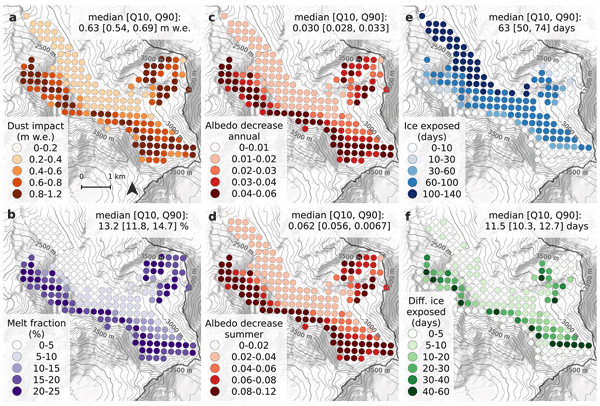
Saharan dust deposits frequently turn alpine glaciers orange. Mineral dust reduces snow albedo and increases snow and glaciers melt rate. Using physical modeling, we quantified the impact of dust on the Argentière Glacier over the period 2019–2022. We found that the contribution of mineral dust to the melt represents between 8 % and 16 % of Argentière Glacier summer melt. At specific locations, the impact of dust over one year can rise to an equivalent of 1.2 m of melted ice.
Inès Ollivier, Thomas Lauwers, Niels Dutrievoz, Cécile Agosta, Mathieu Casado, Elise Fourré, Christophe Genthon, Olivier Jossoud, Frédéric Prié, Hans Christian Steen-Larsen, and Amaëlle Landais
Earth Syst. Sci. Data, 17, 5655–5674, https://doi.org/10.5194/essd-17-5655-2025, https://doi.org/10.5194/essd-17-5655-2025, 2025
Short summary
Short summary
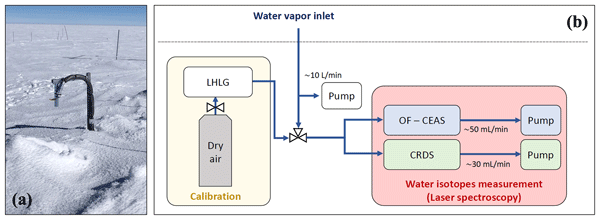
We present a novel 2.5-month record of the atmospheric water vapour isotopic composition during the austral summer 2023–2024 at Concordia Station on the Antarctic Plateau. We show that two independent laser spectrometers accurately record the diurnal variability of the atmospheric water vapour 𝛿18O, 𝛿D, and d-excess. We compare the measurements against outputs of the isotope-enabled general circulation model LMDZ6-iso to show how the data can be used to evaluate such models.
Robert G. Bingham, Julien A. Bodart, Marie G. P. Cavitte, Ailsa Chung, Rebecca J. Sanderson, Johannes C. R. Sutter, Olaf Eisen, Nanna B. Karlsson, Joseph A. MacGregor, Neil Ross, Duncan A. Young, David W. Ashmore, Andreas Born, Winnie Chu, Xiangbin Cui, Reinhard Drews, Steven Franke, Vikram Goel, John W. Goodge, A. Clara J. Henry, Antoine Hermant, Benjamin H. Hills, Nicholas Holschuh, Michelle R. Koutnik, Gwendolyn J.-M. C. Leysinger Vieli, Emma J. MacKie, Elisa Mantelli, Carlos Martín, Felix S. L. Ng, Falk M. Oraschewski, Felipe Napoleoni, Frédéric Parrenin, Sergey V. Popov, Therese Rieckh, Rebecca Schlegel, Dustin M. Schroeder, Martin J. Siegert, Xueyuan Tang, Thomas O. Teisberg, Kate Winter, Shuai Yan, Harry Davis, Christine F. Dow, Tyler J. Fudge, Tom A. Jordan, Bernd Kulessa, Kenichi Matsuoka, Clara J. Nyqvist, Maryam Rahnemoonfar, Matthew R. Siegfried, Shivangini Singh, Vjeran Višnjević, Rodrigo Zamora, and Alexandra Zuhr
The Cryosphere, 19, 4611–4655, https://doi.org/10.5194/tc-19-4611-2025, https://doi.org/10.5194/tc-19-4611-2025, 2025
Short summary
Short summary
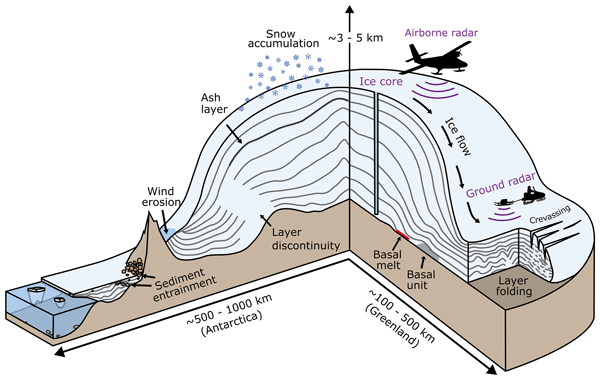
The ice sheets covering Antarctica have built up over millenia through successive snowfall events which become buried and preserved as internal surfaces of equal age detectable with ice-penetrating radar. This paper describes an international initiative working together on these archival data to build a comprehensive 3-D picture of how old the ice is everywhere across Antarctica and how this is being used to reconstruct past and to predict future ice and climate behaviour.
Agnese Petteni, Elise Fourré, Elsa Gautier, Azzurra Spagnesi, Roxanne Jacob, Pete D. Akers, Daniele Zannoni, Jacopo Gabrieli, Olivier Jossoud, Frédéric Prié, Amaëlle Landais, Titouan Tcheng, Barbara Stenni, Joel Savarino, Patrick Ginot, and Mathieu Casado
Atmos. Meas. Tech., 18, 5435–5455, https://doi.org/10.5194/amt-18-5435-2025, https://doi.org/10.5194/amt-18-5435-2025, 2025
Short summary
Short summary
Our research compares three systems of continuous flow analysis coupled with cavity ring-down spectrometry (CFA-CRD) from Venice, Paris, and Grenoble laboratories for measuring water isotopes in ice cores, crucial for reconstructing past climate. We quantify each system’s mixing and measurement noise effects, which impact the achievable resolution of isotope continuous records. Our findings reveal specific configurations and procedures to enhance measurement accuracy, providing a framework to optimise water isotope analysis.
Louise C. Sime, Rahul Sivankutty, Irene Malmierca-Vallet, Sentia Goursaud Oger, Allegra N. LeGrande, Erin L. McClymont, Agatha de Boer, Alexandre Cauquoin, and Martin Werner
Clim. Past, 21, 1725–1753, https://doi.org/10.5194/cp-21-1725-2025, https://doi.org/10.5194/cp-21-1725-2025, 2025
Short summary
Short summary
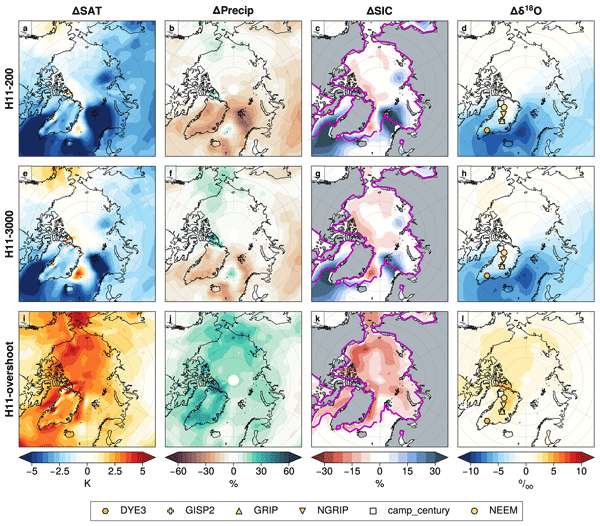
We used climate models to study how stable water isotopes in ice cores changed in the Arctic and Antarctica during the warm Last Interglacial (LIG) period. Whilst standard simulations underestimate polar warming, when the effects of ice sheet meltwater from the preceding deglaciation are included, there is a much better match with observations. Findings suggest that previous estimates of LIG Arctic warming were too high. Understanding these past polar changes can help improve future predictions.
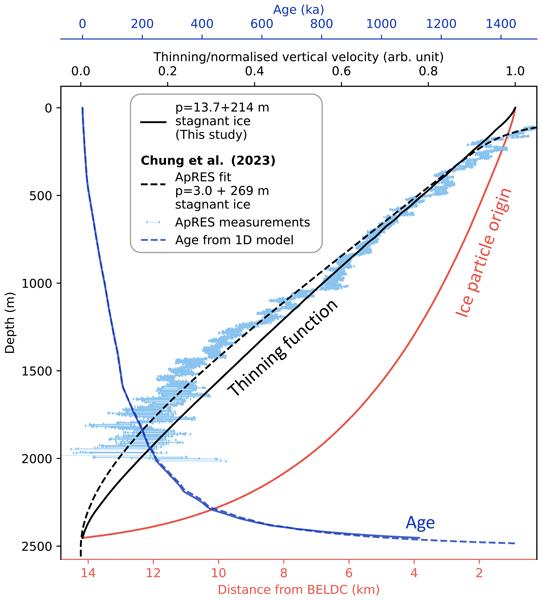
Ailsa Chung, Frédéric Parrenin, Robert Mulvaney, Luca Vittuari, Massimo Frezzotti, Antonio Zanutta, David A. Lilien, Marie G. P. Cavitte, and Olaf Eisen
The Cryosphere, 19, 4125–4140, https://doi.org/10.5194/tc-19-4125-2025, https://doi.org/10.5194/tc-19-4125-2025, 2025
Short summary
Short summary
We applied an ice flow model to a flow line from the summit of Dome C to the Beyond EPICA ice core drill site on Little Dome C in Antarctica. Results show that the oldest ice at the drill site may be 1.12 Ma (at an age density of 20 kyr m-1) and originate from around 15 km upstream. We also discuss the nature of the 200–250 m thick basal layer which could be composed of stagnant ice, disturbed ice or even accreted ice (possibly containing debris).
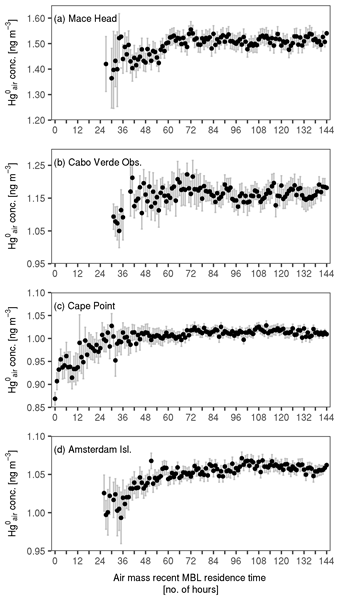
Koketso M. Molepo, Johannes Bieser, Alkuin M. Koenig, Ian M. Hedgecock, Ralf Ebinghaus, Aurélien Dommergue, Olivier Magand, Hélène Angot, Oleg Travnikov, Lynwill Martin, Casper Labuschagne, Katie Read, and Yann Bertrand
Atmos. Chem. Phys., 25, 9645–9668, https://doi.org/10.5194/acp-25-9645-2025, https://doi.org/10.5194/acp-25-9645-2025, 2025
Short summary
Short summary
Mercury exchange between the ocean and atmosphere is poorly understood due to limited in situ data. Here, using atmospheric mercury observations from ground-based monitoring stations along with air mass trajectories, we found that atmospheric Hg levels increase with air mass ocean exposure time, matching predictions for ocean Hg emissions. This finding indicates that ocean emissions directly influence atmospheric Hg levels and enables us to estimate these emissions on a global scale.
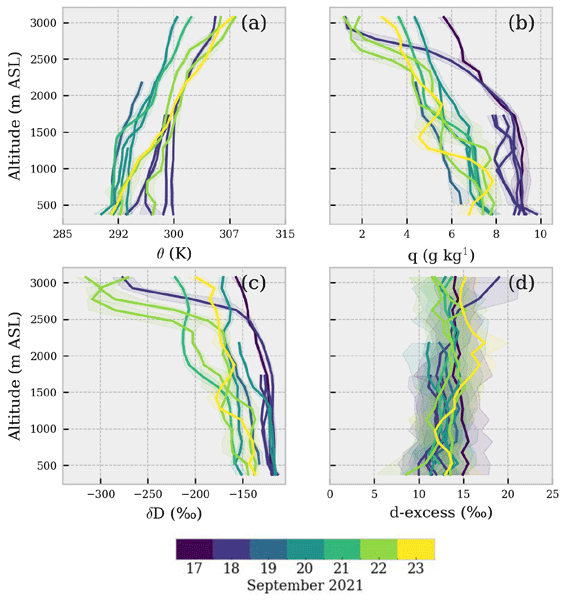
Daniele Zannoni, Hans Christian Steen-Larsen, Harald Sodemann, Iris Thurnherr, Cyrille Flamant, Patrick Chazette, Julien Totems, Martin Werner, and Myriam Raybaut
Atmos. Chem. Phys., 25, 9471–9495, https://doi.org/10.5194/acp-25-9471-2025, https://doi.org/10.5194/acp-25-9471-2025, 2025
Short summary
Short summary
High-resolution airborne observations reveal that mixing between the free troposphere and surface evapotranspiration flux primarily modulates the water vapor isotopic composition in the lower troposphere. Water vapor isotope structure variations occur on the scale of hundreds of meters, underlining the utility of stable isotopes for studying microscale atmospheric dynamics. This study also provides the basis for better validation of water vapor isotope remote sensing retrievals with surface observations.
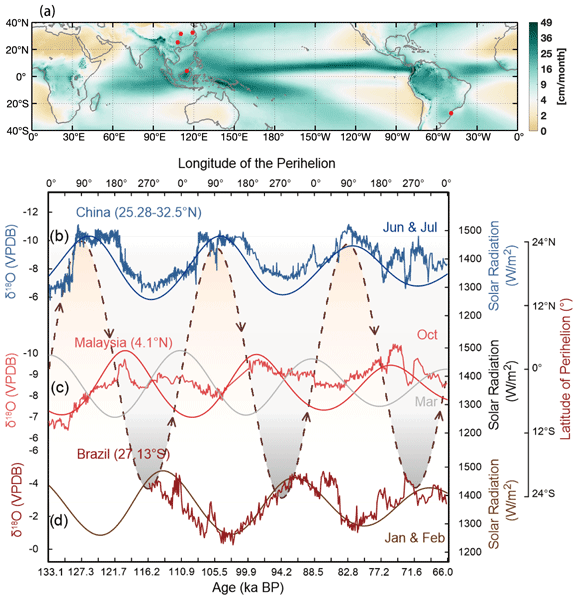
Hu Yang, Xiaoxu Shi, Xulong Wang, Qingsong Liu, Yi Zhong, Xiaodong Liu, Youbin Sun, Yanjun Cai, Fei Liu, Gerrit Lohmann, Martin Werner, Zhimin Jian, Tainã M. L. Pinho, Hai Cheng, Lijuan Lu, Jiping Liu, Chao-Yuan Yang, Qinghua Yang, Yongyun Hu, Xing Cheng, Jingyu Zhang, and Dake Chen
Clim. Past, 21, 1263–1279, https://doi.org/10.5194/cp-21-1263-2025, https://doi.org/10.5194/cp-21-1263-2025, 2025
Short summary
Short summary
For 1 century, the hemispheric summer insolation is proposed as a key pacemaker of astronomical climate change. However, an increasing number of geologic records reveal that the low-latitude hydrological cycle shows asynchronous precessional evolutions that are very often out of phase with the summer insolation. Here, we propose that the astronomically driven low-latitude hydrological cycle is not paced by summer insolation but by shifting perihelion.
Florent Domine, Mireille Quémener, Ludovick Bégin, Benjamin Bouchard, Valérie Dionne, Sébastien Jerczynski, Raphaël Larouche, Félix Lévesque-Desrosiers, Simon-Olivier Philibert, Marc-André Vigneault, Ghislain Picard, and Daniel C. Côté
The Cryosphere, 19, 1757–1774, https://doi.org/10.5194/tc-19-1757-2025, https://doi.org/10.5194/tc-19-1757-2025, 2025
Short summary
Short summary
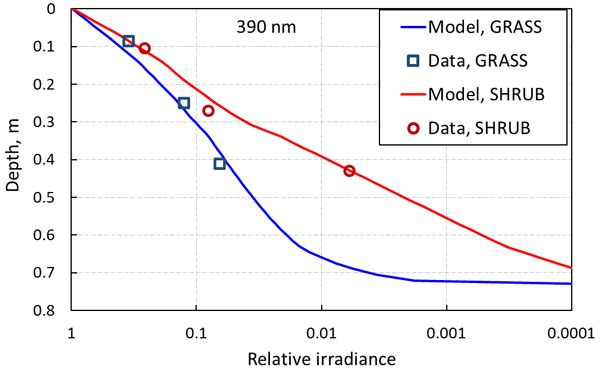
Shrubs buried in snow absorb solar radiation and reduce irradiance in the snowpack. This decreases photochemical reaction rates and emissions to the atmosphere. By monitoring irradiance in snowpacks with and without shrubs, we conclude that shrubs absorb solar radiation as much as 140 ppb of soot and reduce irradiance by a factor of 2. Shrub expansion in the Arctic may therefore affect tropospheric composition during the snow season with climatic effects.
Clémence Paul, Clément Piel, Joana Sauze, Olivier Jossoud, Arnaud Dapoigny, Daniele Romanini, Frédéric Prié, Sébastien Devidal, Roxanne Jacob, Alexandru Milcu, and Amaëlle Landais
Geosci. Instrum. Method. Data Syst., 14, 91–101, https://doi.org/10.5194/gi-14-91-2025, https://doi.org/10.5194/gi-14-91-2025, 2025
Short summary
Short summary
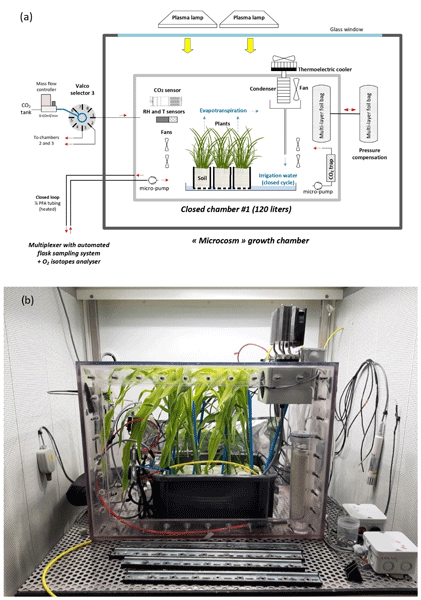
Our study investigated the influence of plant processes on oxygen dynamics, crucial for paleoclimatology. By examining maize respiration and photosynthesis using advanced techniques, we enhanced our understanding of past climates through ice core analysis.
Thomas Lauwers, Elise Fourré, Olivier Jossoud, Daniele Romanini, Frédéric Prié, Giordano Nitti, Mathieu Casado, Kévin Jaulin, Markus Miltner, Morgane Farradèche, Valérie Masson-Delmotte, and Amaëlle Landais
Atmos. Meas. Tech., 18, 1135–1147, https://doi.org/10.5194/amt-18-1135-2025, https://doi.org/10.5194/amt-18-1135-2025, 2025
Short summary
Short summary
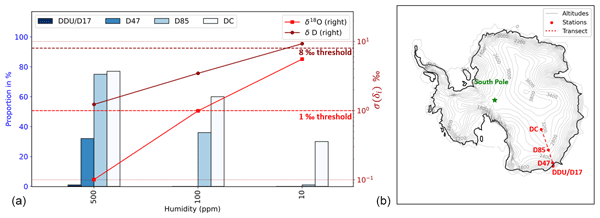
Water vapour isotopes are important tools to better understand processes governing the atmospheric hydrological cycle. In polar regions, their measurement helps to improve the interpretation of water isotopic records in ice cores. However, in situ water vapour isotopic monitoring is an important challenge, especially in dry places of East Antarctica. We present here an alternative laser spectroscopy technique adapted for such measurements, with a limit of detection down to 10 ppm humidity.
Qinggang Gao, Emilie Capron, Louise C. Sime, Rachael H. Rhodes, Rahul Sivankutty, Xu Zhang, Bette L. Otto-Bliesner, and Martin Werner
Clim. Past, 21, 419–440, https://doi.org/10.5194/cp-21-419-2025, https://doi.org/10.5194/cp-21-419-2025, 2025
Short summary
Short summary
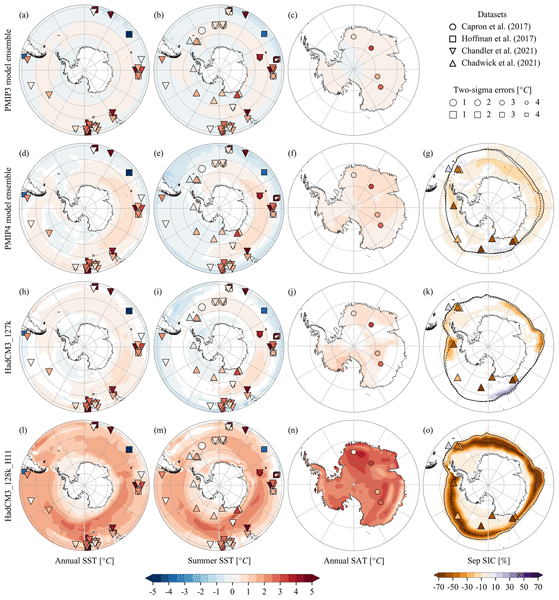
Marine sediment and ice core records suggest a warmer Southern Ocean and Antarctica at the early last interglacial, ~127 000 years ago. However, when only forced by orbital parameters and greenhouse gas concentrations during that period, state-of-the-art climate models do not reproduce the magnitude of warming. Here we show that much of the warming at southern middle to high latitudes can be reproduced by a UK climate model, HadCM3, with a 3000-year freshwater forcing over the North Atlantic.
Inès Ollivier, Hans Christian Steen-Larsen, Barbara Stenni, Laurent Arnaud, Mathieu Casado, Alexandre Cauquoin, Giuliano Dreossi, Christophe Genthon, Bénédicte Minster, Ghislain Picard, Martin Werner, and Amaëlle Landais
The Cryosphere, 19, 173–200, https://doi.org/10.5194/tc-19-173-2025, https://doi.org/10.5194/tc-19-173-2025, 2025
Short summary
Short summary
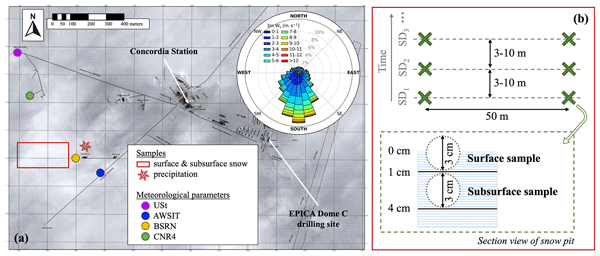
The role of post-depositional processes taking place at the ice sheet's surface on the water stable isotope signal measured in polar ice cores is not fully understood. Using field observations and modelling results, we show that the original precipitation isotopic signal at Dome C, East Antarctica, is modified by post-depositional processes and provide the first quantitative estimation of their mean impact on the isotopic signal observed in the snow.
Ghislain Picard and Quentin Libois
Geosci. Model Dev., 17, 8927–8953, https://doi.org/10.5194/gmd-17-8927-2024, https://doi.org/10.5194/gmd-17-8927-2024, 2024
Short summary
Short summary
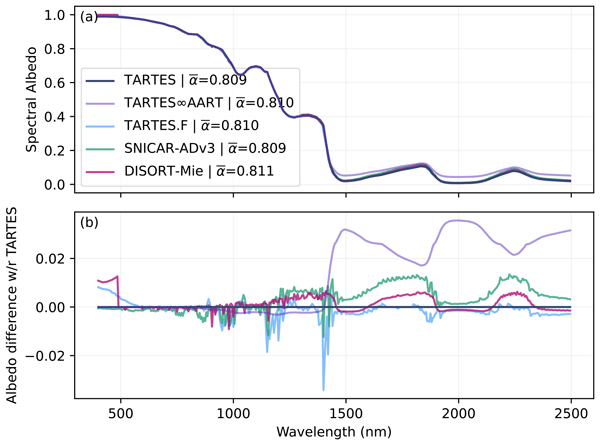
The Two-streAm Radiative TransfEr in Snow (TARTES) is a radiative transfer model to compute snow albedo in the solar domain and the profiles of light and energy absorption in a multi-layered snowpack whose physical properties are user defined. It uniquely considers snow grain shape flexibly, based on recent insights showing that snow does not behave as a collection of ice spheres but instead as a random medium. TARTES is user-friendly yet performs comparably to more complex models.
Marin Kneib, Amaury Dehecq, Adrien Gilbert, Auguste Basset, Evan S. Miles, Guillaume Jouvet, Bruno Jourdain, Etienne Ducasse, Luc Beraud, Antoine Rabatel, Jérémie Mouginot, Guillem Carcanade, Olivier Laarman, Fanny Brun, and Delphine Six
The Cryosphere, 18, 5965–5983, https://doi.org/10.5194/tc-18-5965-2024, https://doi.org/10.5194/tc-18-5965-2024, 2024
Short summary
Short summary
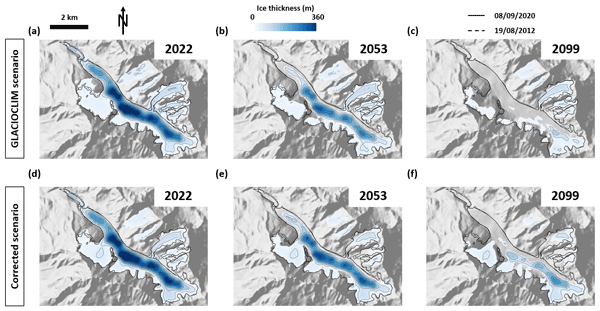
Avalanches contribute to increasing the accumulation on mountain glaciers by redistributing snow from surrounding mountains slopes. Here we quantified the contribution of avalanches to the mass balance of Argentière Glacier in the French Alps, by combining satellite and field observations to model the glacier dynamics. We show that the contribution of avalanches locally increases the accumulation by 60–70 % and that accounting for this effect results in less ice loss by the end of the century.
Frédéric Parrenin, Marie Bouchet, Christo Buizert, Emilie Capron, Ellen Corrick, Russell Drysdale, Kenji Kawamura, Amaëlle Landais, Robert Mulvaney, Ikumi Oyabu, and Sune Olander Rasmussen
Geosci. Model Dev., 17, 8735–8750, https://doi.org/10.5194/gmd-17-8735-2024, https://doi.org/10.5194/gmd-17-8735-2024, 2024
Short summary
Short summary
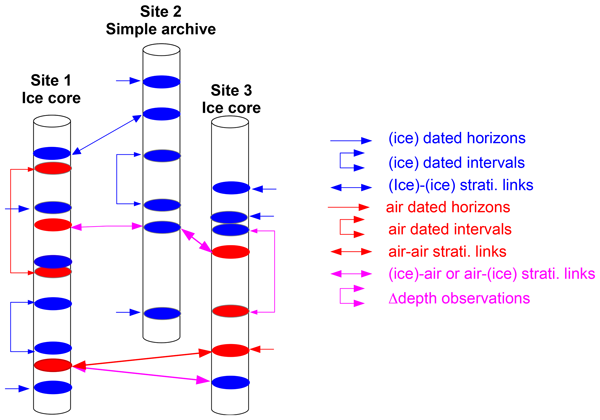
The Paleochrono-1.1 probabilistic dating model allows users to derive a common and optimized chronology for several paleoclimatic sites from various archives (ice cores, speleothems, marine cores, lake cores, etc.). It combines prior sedimentation scenarios with chronological information such as dated horizons, dated intervals, stratigraphic links and (for ice cores) Δdepth observations. Paleochrono-1.1 is available under an open-source license.
Clément Piel, Daniele Romanini, Morgane Farradèche, Justin Chaillot, Clémence Paul, Nicolas Bienville, Thomas Lauwers, Joana Sauze, Kévin Jaulin, Frédéric Prié, and Amaëlle Landais
Atmos. Meas. Tech., 17, 6647–6658, https://doi.org/10.5194/amt-17-6647-2024, https://doi.org/10.5194/amt-17-6647-2024, 2024
Short summary
Short summary
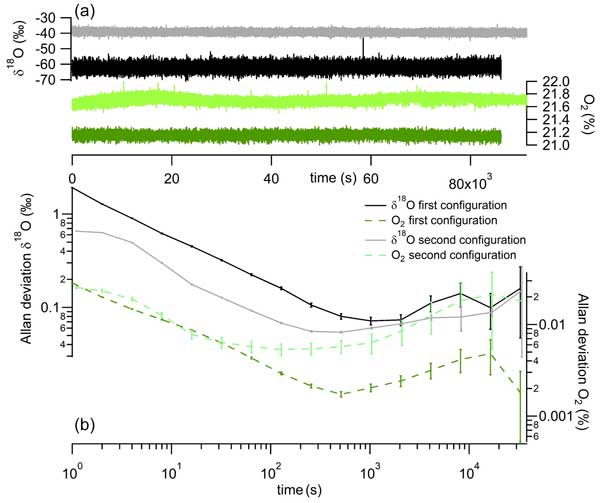
This paper introduces a new optical gas analyzer based on an optical-feedback cavity-enhanced absorption spectroscopy (OF-CEAS) technique enabling high-temporal-resolution and high-precision measurements of oxygen isotopes (δ18O) and dioxygen (O2) concentration of atmospheric O2 (respectively 0.06 ‰ and 0.002 % over 10 min integration). The results underscore the good agreement with isotope ratio mass spectrometry measurements and the ability of the instrument to monitor biological processes.
Melody Sandells, Nick Rutter, Kirsty Wivell, Richard Essery, Stuart Fox, Chawn Harlow, Ghislain Picard, Alexandre Roy, Alain Royer, and Peter Toose
The Cryosphere, 18, 3971–3990, https://doi.org/10.5194/tc-18-3971-2024, https://doi.org/10.5194/tc-18-3971-2024, 2024
Short summary
Short summary
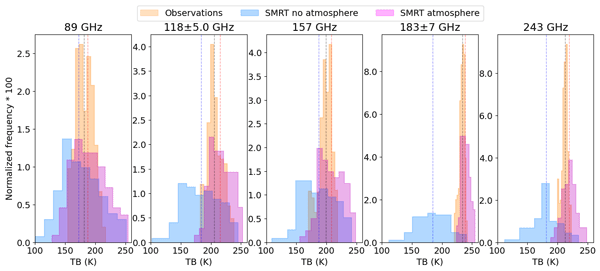
Satellite microwave observations are used for weather forecasting. In Arctic regions this is complicated by natural emission from snow. By simulating airborne observations from in situ measurements of snow, this study shows how snow properties affect the signal within the atmosphere. Fresh snowfall between flights changed airborne measurements. Good knowledge of snow layering and structure can be used to account for the effects of snow and could unlock these data to improve forecasts.
Giuliano Dreossi, Mauro Masiol, Barbara Stenni, Daniele Zannoni, Claudio Scarchilli, Virginia Ciardini, Mathieu Casado, Amaëlle Landais, Martin Werner, Alexandre Cauquoin, Giampietro Casasanta, Massimo Del Guasta, Vittoria Posocco, and Carlo Barbante
The Cryosphere, 18, 3911–3931, https://doi.org/10.5194/tc-18-3911-2024, https://doi.org/10.5194/tc-18-3911-2024, 2024
Short summary
Short summary
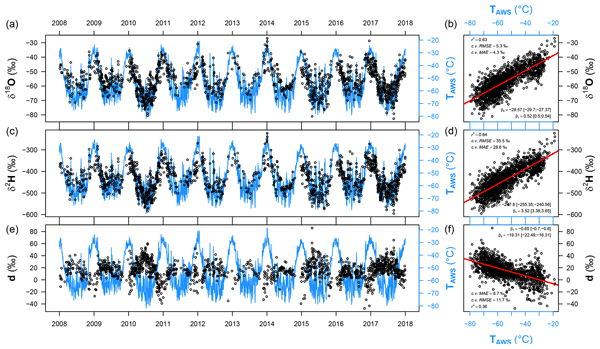
Oxygen and hydrogen stable isotopes have been extensively used to reconstruct past temperatures, with precipitation representing the input signal of the isotopic records in ice cores. We present a 10-year record of stable isotopes in daily precipitation at Concordia Station: this is the longest record for inland Antarctica and represents a benchmark for quantifying post-depositional processes and improving the paleoclimate interpretation of ice cores.
Sara Arioli, Ghislain Picard, Laurent Arnaud, Simon Gascoin, Esteban Alonso-González, Marine Poizat, and Mark Irvine
Earth Syst. Sci. Data, 16, 3913–3934, https://doi.org/10.5194/essd-16-3913-2024, https://doi.org/10.5194/essd-16-3913-2024, 2024
Short summary
Short summary
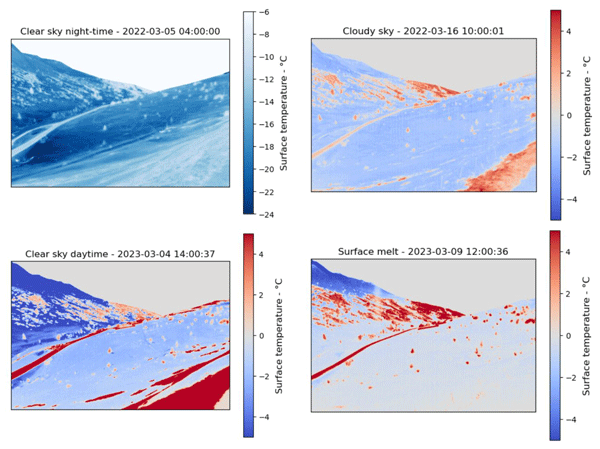
High-accuracy precision maps of the surface temperature of snow were acquired with an uncooled thermal-infrared camera during winter 2021–2022 and spring 2023. The accuracy – i.e., mean absolute error – improved from 1.28 K to 0.67 K between the seasons thanks to an improved camera setup and temperature stabilization. The dataset represents a major advance in the validation of satellite measurements and physical snow models over a complex topography.
Romilly Harris Stuart, Amaëlle Landais, Laurent Arnaud, Christo Buizert, Emilie Capron, Marie Dumont, Quentin Libois, Robert Mulvaney, Anaïs Orsi, Ghislain Picard, Frédéric Prié, Jeffrey Severinghaus, Barbara Stenni, and Patricia Martinerie
The Cryosphere, 18, 3741–3763, https://doi.org/10.5194/tc-18-3741-2024, https://doi.org/10.5194/tc-18-3741-2024, 2024
Short summary
Short summary
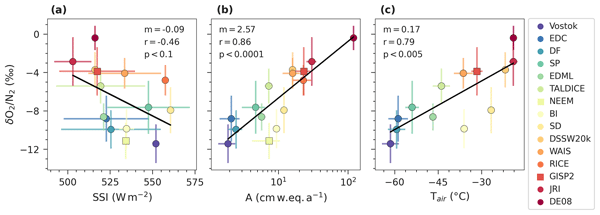
Ice core δO2/N2 records are useful dating tools due to their local insolation pacing. A precise understanding of the physical mechanism driving this relationship, however, remain ambiguous. By compiling data from 15 polar sites, we find a strong dependence of mean δO2/N2 on accumulation rate and temperature in addition to the well-documented insolation dependence. Snowpack modelling is used to investigate which physical properties drive the mechanistic dependence on these local parameters.
Mathieu Casado, Amaelle Landais, Tim Stoltmann, Justin Chaillot, Mathieu Daëron, Fréderic Prié, Baptiste Bordet, and Samir Kassi
Atmos. Meas. Tech., 17, 4599–4612, https://doi.org/10.5194/amt-17-4599-2024, https://doi.org/10.5194/amt-17-4599-2024, 2024
Short summary
Short summary
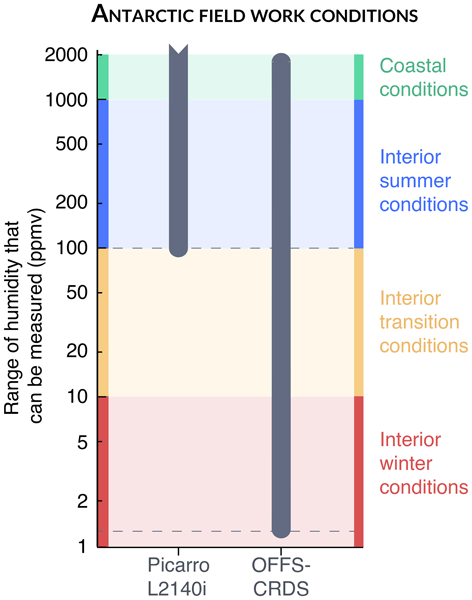
Measuring water isotopic composition in Antarctica is difficult because of the extremely cold temperature in winter. Here, we designed a new infrared spectrometer able to measure the vapour isotopic composition during more than 95 % of the year in the coldest locations of Antarctica, whereas current commercial instruments are only able to measure during the warm summer months in the interior.
Floriane Provost, Dimitri Zigone, Emmanuel Le Meur, Jean-Philippe Malet, and Clément Hibert
The Cryosphere, 18, 3067–3079, https://doi.org/10.5194/tc-18-3067-2024, https://doi.org/10.5194/tc-18-3067-2024, 2024
Short summary
Short summary
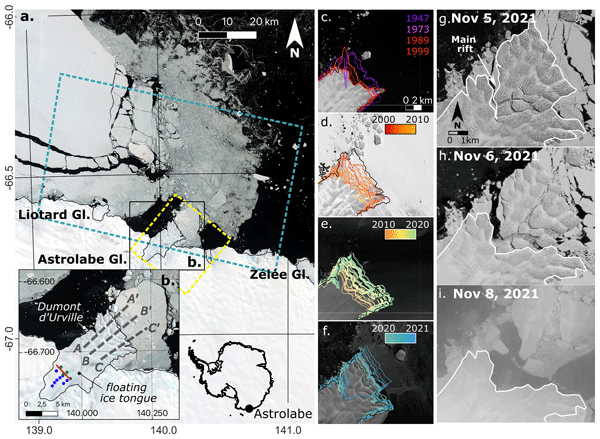
The recent calving of Astrolabe Glacier in November 2021 presents an opportunity to better understand the processes leading to ice fracturing. Optical-satellite imagery is used to retrieve the calving cycle of the glacier ice tongue and to measure the ice velocity and strain rates in order to document fracture evolution. We observed that the presence of sea ice for consecutive years has favoured the glacier extension but failed to inhibit the growth of fractures that accelerated in June 2021.
Dominique Raynaud, Qiuzhen Yin, Emilie Capron, Zhipeng Wu, Frédéric Parrenin, André Berger, and Vladimir Lipenkov
Clim. Past, 20, 1269–1282, https://doi.org/10.5194/cp-20-1269-2024, https://doi.org/10.5194/cp-20-1269-2024, 2024
Short summary
Short summary
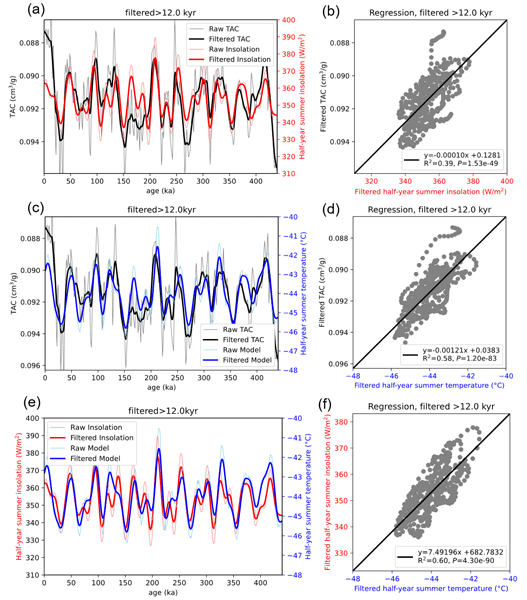
There is a lack of reconstructions from Antarctic ice cores of the temperature during the summer, a critical season in terms of solar energy received, preventing a good understanding of the link between Antarctic past climate and astronomically induced insolation changes. Here, the variations in total air content in an Antarctic ice core are found to be correlated to local summer temperatures simulated with a climate model. This tracer can be used to reconstruct past local summer temperatures.
Julien Meloche, Melody Sandells, Henning Löwe, Nick Rutter, Richard Essery, Ghislain Picard, Randall K. Scharien, Alexandre Langlois, Matthias Jaggi, Josh King, Peter Toose, Jérôme Bouffard, Alessandro Di Bella, and Michele Scagliola
EGUsphere, https://doi.org/10.5194/egusphere-2024-1583, https://doi.org/10.5194/egusphere-2024-1583, 2024
Preprint archived
Short summary
Short summary
Sea ice thickness is essential for climate studies. Radar altimetry has provided sea ice thickness measurement, but uncertainty arises from interaction of the signal with the snow cover. Therefore, modelling the signal interaction with the snow is necessary to improve retrieval. A radar model was used to simulate the radar signal from the snow-covered sea ice. This work paved the way to improved physical algorithm to retrieve snow depth and sea ice thickness for radar altimeter missions.

Cécile Davrinche, Anaïs Orsi, Cécile Agosta, Charles Amory, and Christoph Kittel
The Cryosphere, 18, 2239–2256, https://doi.org/10.5194/tc-18-2239-2024, https://doi.org/10.5194/tc-18-2239-2024, 2024
Short summary
Short summary
Coastal surface winds in Antarctica are amongst the strongest winds on Earth. They are either driven by the cooling of the surface air mass by the ice sheet (katabatic) or by large-scale pressure systems. Here we compute the relative contribution of these drivers. We find that seasonal variations in the wind speed come from the katabatic acceleration, but, at a 3-hourly timescale, none of the large-scale or katabatic accelerations can be considered as the main driver.
Tessa R. Vance, Nerilie J. Abram, Alison S. Criscitiello, Camilla K. Crockart, Aylin DeCampo, Vincent Favier, Vasileios Gkinis, Margaret Harlan, Sarah L. Jackson, Helle A. Kjær, Chelsea A. Long, Meredith K. Nation, Christopher T. Plummer, Delia Segato, Andrea Spolaor, and Paul T. Vallelonga
Clim. Past, 20, 969–990, https://doi.org/10.5194/cp-20-969-2024, https://doi.org/10.5194/cp-20-969-2024, 2024
Short summary
Short summary
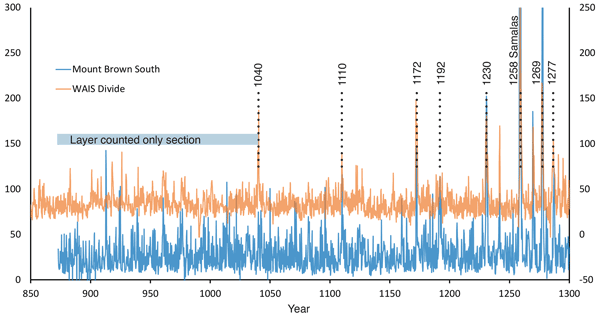
This study presents the chronologies from the new Mount Brown South ice cores from East Antarctica, which were developed by counting annual layers in the ice core data and aligning these to volcanic sulfate signatures. The uncertainty in the dating is quantified, and we discuss initial results from seasonal cycle analysis and mean annual concentrations. The chronologies will underpin the development of new proxy records for East Antarctica spanning the past millennium.
Amaelle Landais, Cécile Agosta, Françoise Vimeux, Olivier Magand, Cyrielle Solis, Alexandre Cauquoin, Niels Dutrievoz, Camille Risi, Christophe Leroy-Dos Santos, Elise Fourré, Olivier Cattani, Olivier Jossoud, Bénédicte Minster, Frédéric Prié, Mathieu Casado, Aurélien Dommergue, Yann Bertrand, and Martin Werner
Atmos. Chem. Phys., 24, 4611–4634, https://doi.org/10.5194/acp-24-4611-2024, https://doi.org/10.5194/acp-24-4611-2024, 2024
Short summary
Short summary
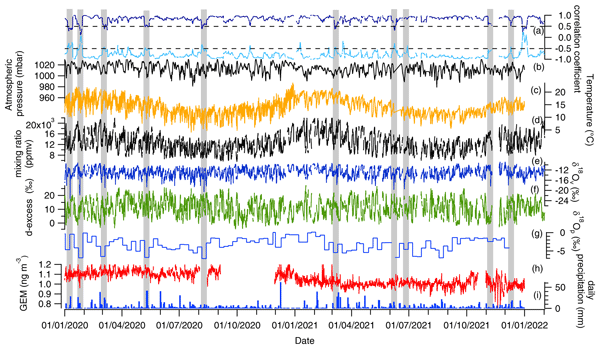
We have monitored water vapor isotopes since January 2020 on Amsterdam Island in the Indian Ocean. We show 11 periods associated with abrupt negative excursions of water vapor δ18Ο. Six of these events show a decrease in gaseous elemental mercury, suggesting subsidence of air from a higher altitude. Accurately representing the water isotopic signal during these cold fronts is a real challenge for the atmospheric components of Earth system models equipped with water isotopes.
Naomi E. Ochwat, Ted A. Scambos, Alison F. Banwell, Robert S. Anderson, Michelle L. Maclennan, Ghislain Picard, Julia A. Shates, Sebastian Marinsek, Liliana Margonari, Martin Truffer, and Erin C. Pettit
The Cryosphere, 18, 1709–1731, https://doi.org/10.5194/tc-18-1709-2024, https://doi.org/10.5194/tc-18-1709-2024, 2024
Short summary
Short summary
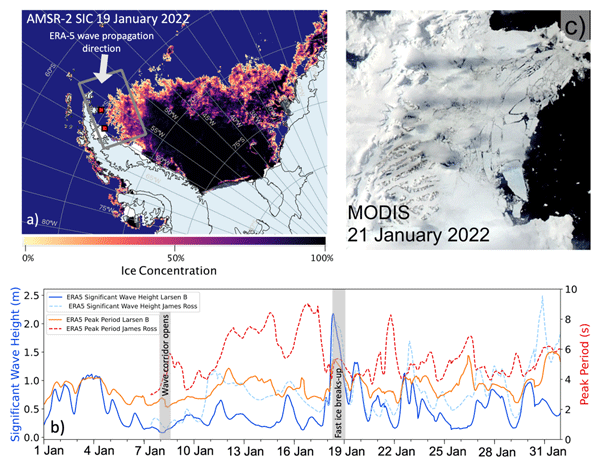
On the Antarctic Peninsula, there is a small bay that had sea ice fastened to the shoreline (
fast ice) for over a decade. The fast ice stabilized the glaciers that fed into the ocean. In January 2022, the fast ice broke away. Using satellite data we found that this was because of low sea ice concentrations and a high long-period ocean wave swell. We find that the glaciers have responded to this event by thinning, speeding up, and retreating by breaking off lots of icebergs at remarkable rates.
Moein Mellat, Amy R. Macfarlane, Camilla F. Brunello, Martin Werner, Martin Schneebeli, Ruzica Dadic, Stefanie Arndt, Kaisa-Riikka Mustonen, Jeffrey M. Welker, and Hanno Meyer
EGUsphere, https://doi.org/10.5194/egusphere-2024-719, https://doi.org/10.5194/egusphere-2024-719, 2024
Preprint archived
Short summary
Short summary
Our research, utilizing data from the Arctic MOSAiC expedition, reveals how snow on Arctic sea ice changes due to weather conditions. By analyzing snow samples collected over a year, we found differences in snow layers that tell us about their origins and how they've been affected by the environment. We discovered variations in snow and vapour that reflect the influence of weather patterns and surface processes like wind and sublimation.
Justin Murfitt, Claude Duguay, Ghislain Picard, and Juha Lemmetyinen
The Cryosphere, 18, 869–888, https://doi.org/10.5194/tc-18-869-2024, https://doi.org/10.5194/tc-18-869-2024, 2024
Short summary
Short summary
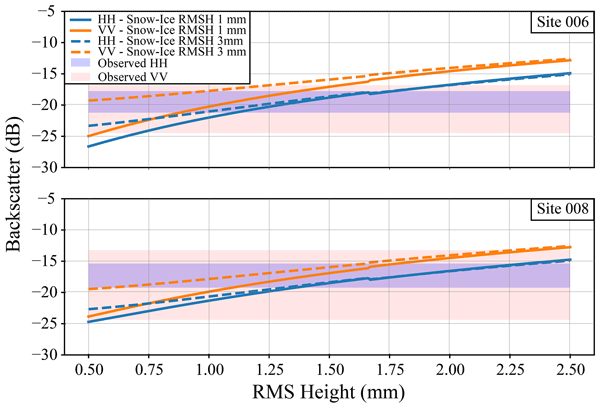
This research focuses on the interaction between microwave signals and lake ice under wet conditions. Field data collected for Lake Oulujärvi in Finland were used to model backscatter under different conditions. The results of the modelling likely indicate that a combination of increased water content and roughness of different interfaces caused backscatter to increase. These results could help to identify areas where lake ice is unsafe for winter transportation.
Qinggang Gao, Louise C. Sime, Alison J. McLaren, Thomas J. Bracegirdle, Emilie Capron, Rachael H. Rhodes, Hans Christian Steen-Larsen, Xiaoxu Shi, and Martin Werner
The Cryosphere, 18, 683–703, https://doi.org/10.5194/tc-18-683-2024, https://doi.org/10.5194/tc-18-683-2024, 2024
Short summary
Short summary
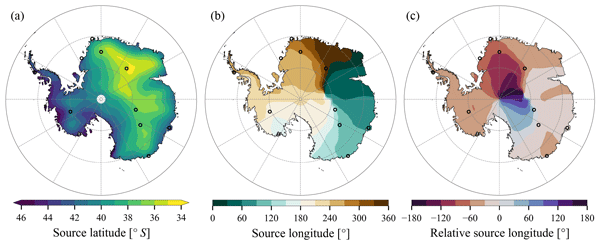
Antarctic precipitation is a crucial component of the climate system. Its spatio-temporal variability impacts sea level changes and the interpretation of water isotope measurements in ice cores. To better understand its climatic drivers, we developed water tracers in an atmospheric model to identify moisture source conditions from which precipitation originates. We find that mid-latitude surface winds exert an important control on moisture availability for Antarctic precipitation.
Claudio Stefanini, Giovanni Macelloni, Marion Leduc-Leballeur, Vincent Favier, Benjamin Pohl, and Ghislain Picard
The Cryosphere, 18, 593–608, https://doi.org/10.5194/tc-18-593-2024, https://doi.org/10.5194/tc-18-593-2024, 2024
Short summary
Short summary
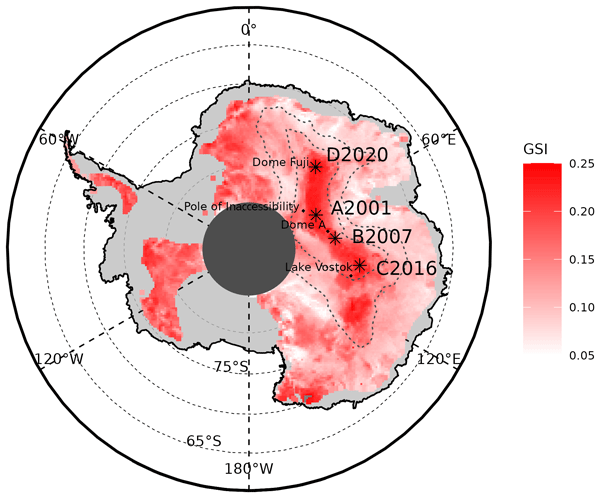
Local and large-scale meteorological conditions have been considered in order to explain some peculiar changes of snow grains on the East Antarctic Plateau from 2000 to 2022, by using remote sensing observations and reanalysis. We identified some extreme grain size events on the highest ice divide, resulting from a combination of conditions of low wind speed and low temperature. Moreover, the beginning of seasonal grain growth has been linked to the occurrence of atmospheric rivers.
Andrea Spolaor, Federico Scoto, Catherine Larose, Elena Barbaro, Francois Burgay, Mats P. Bjorkman, David Cappelletti, Federico Dallo, Fabrizio de Blasi, Dmitry Divine, Giuliano Dreossi, Jacopo Gabrieli, Elisabeth Isaksson, Jack Kohler, Tonu Martma, Louise S. Schmidt, Thomas V. Schuler, Barbara Stenni, Clara Turetta, Bartłomiej Luks, Mathieu Casado, and Jean-Charles Gallet
The Cryosphere, 18, 307–320, https://doi.org/10.5194/tc-18-307-2024, https://doi.org/10.5194/tc-18-307-2024, 2024
Short summary
Short summary
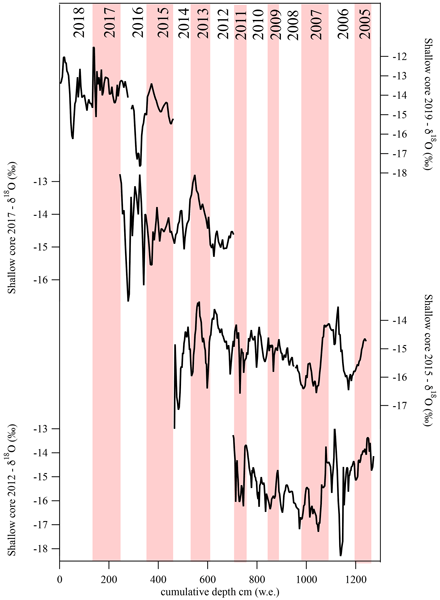
We evaluate the impact of the increased snowmelt on the preservation of the oxygen isotope (δ18O) signal in firn records recovered from the top of the Holtedahlfonna ice field located in the Svalbard archipelago. Thanks to a multidisciplinary approach we demonstrate a progressive deterioration of the isotope signal in the firn core. We link the degradation of the δ18O signal to the increased occurrence and intensity of melt events associated with the rapid warming occurring in the archipelago.
Aymeric P. M. Servettaz, Cécile Agosta, Christoph Kittel, and Anaïs J. Orsi
The Cryosphere, 17, 5373–5389, https://doi.org/10.5194/tc-17-5373-2023, https://doi.org/10.5194/tc-17-5373-2023, 2023
Short summary
Short summary
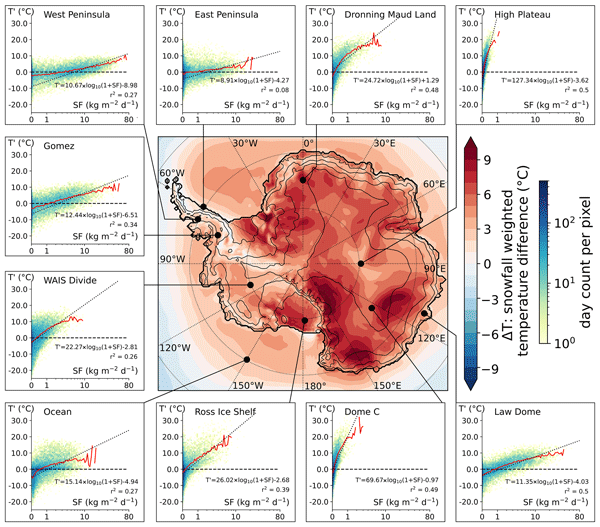
It has been previously observed in polar regions that the atmospheric temperature is warmer during precipitation events. Here, we use a regional atmospheric model to quantify the temperature changes associated with snowfall events across Antarctica. We show that more intense snowfall is statistically associated with a warmer temperature anomaly compared to the seasonal average, with the largest anomalies seen in winter. This bias may affect water isotopes in ice cores deposited during snowfall.
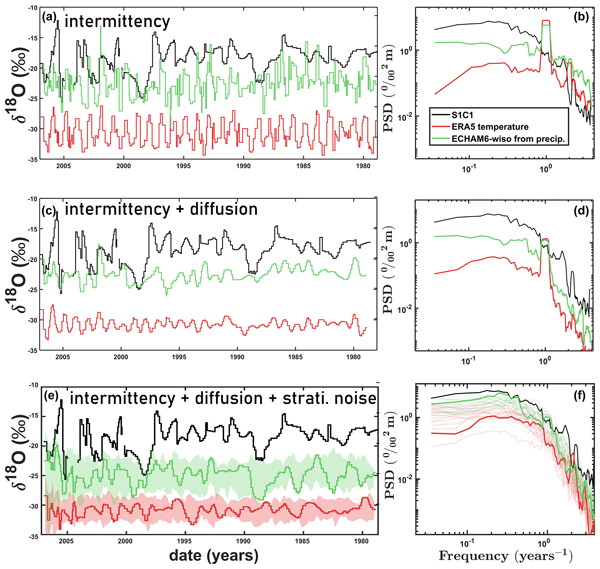
Christophe Leroy-Dos Santos, Elise Fourré, Cécile Agosta, Mathieu Casado, Alexandre Cauquoin, Martin Werner, Benedicte Minster, Frédéric Prié, Olivier Jossoud, Leila Petit, and Amaëlle Landais
The Cryosphere, 17, 5241–5254, https://doi.org/10.5194/tc-17-5241-2023, https://doi.org/10.5194/tc-17-5241-2023, 2023
Short summary
Short summary
In the face of global warming, understanding the changing water cycle and temperatures in polar regions is crucial. These factors directly impact the balance of ice sheets in the Arctic and Antarctic. By studying the composition of water vapor, we gain insights into climate variations. Our 2-year study at Dumont d’Urville station, Adélie Land, offers valuable data to refine models. Additionally, we demonstrate how modeling aids in interpreting signals from ice core samples in the region.
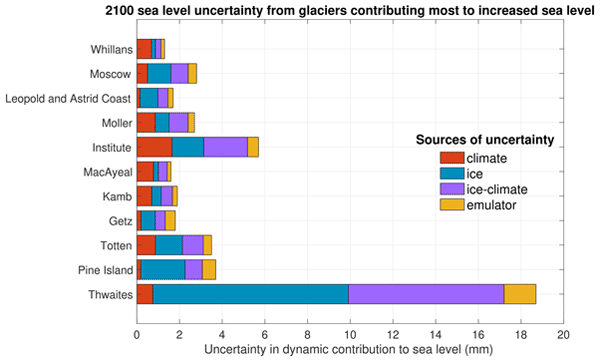
Hélène Seroussi, Vincent Verjans, Sophie Nowicki, Antony J. Payne, Heiko Goelzer, William H. Lipscomb, Ayako Abe-Ouchi, Cécile Agosta, Torsten Albrecht, Xylar Asay-Davis, Alice Barthel, Reinhard Calov, Richard Cullather, Christophe Dumas, Benjamin K. Galton-Fenzi, Rupert Gladstone, Nicholas R. Golledge, Jonathan M. Gregory, Ralf Greve, Tore Hattermann, Matthew J. Hoffman, Angelika Humbert, Philippe Huybrechts, Nicolas C. Jourdain, Thomas Kleiner, Eric Larour, Gunter R. Leguy, Daniel P. Lowry, Chistopher M. Little, Mathieu Morlighem, Frank Pattyn, Tyler Pelle, Stephen F. Price, Aurélien Quiquet, Ronja Reese, Nicole-Jeanne Schlegel, Andrew Shepherd, Erika Simon, Robin S. Smith, Fiammetta Straneo, Sainan Sun, Luke D. Trusel, Jonas Van Breedam, Peter Van Katwyk, Roderik S. W. van de Wal, Ricarda Winkelmann, Chen Zhao, Tong Zhang, and Thomas Zwinger
The Cryosphere, 17, 5197–5217, https://doi.org/10.5194/tc-17-5197-2023, https://doi.org/10.5194/tc-17-5197-2023, 2023
Short summary
Short summary
Mass loss from Antarctica is a key contributor to sea level rise over the 21st century, and the associated uncertainty dominates sea level projections. We highlight here the Antarctic glaciers showing the largest changes and quantify the main sources of uncertainty in their future evolution using an ensemble of ice flow models. We show that on top of Pine Island and Thwaites glaciers, Totten and Moscow University glaciers show rapid changes and a strong sensitivity to warmer ocean conditions.
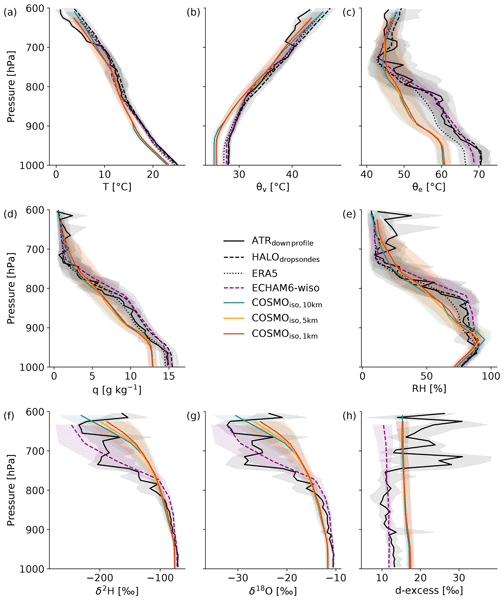
Leonie Villiger, Marina Dütsch, Sandrine Bony, Marie Lothon, Stephan Pfahl, Heini Wernli, Pierre-Etienne Brilouet, Patrick Chazette, Pierre Coutris, Julien Delanoë, Cyrille Flamant, Alfons Schwarzenboeck, Martin Werner, and Franziska Aemisegger
Atmos. Chem. Phys., 23, 14643–14672, https://doi.org/10.5194/acp-23-14643-2023, https://doi.org/10.5194/acp-23-14643-2023, 2023
Short summary
Short summary
This study evaluates three numerical simulations performed with an isotope-enabled weather forecast model and investigates the coupling between shallow trade-wind cumulus clouds and atmospheric circulations on different scales. We show that the simulations reproduce key characteristics of shallow trade-wind clouds as observed during the field experiment EUREC4A and that the spatial distribution of stable-water-vapour isotopes is shaped by the overturning circulation associated with these clouds.
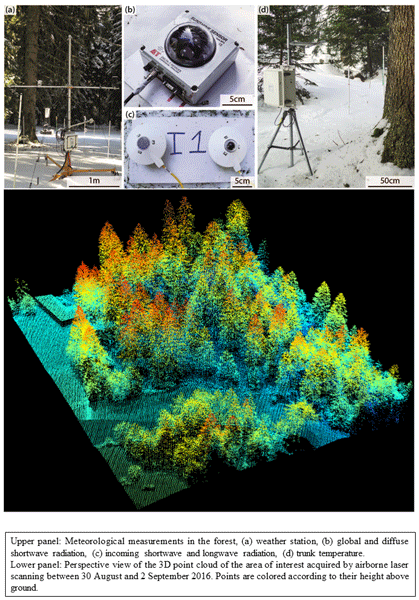
Jean Emmanuel Sicart, Victor Ramseyer, Ghislain Picard, Laurent Arnaud, Catherine Coulaud, Guilhem Freche, Damien Soubeyrand, Yves Lejeune, Marie Dumont, Isabelle Gouttevin, Erwan Le Gac, Frédéric Berger, Jean-Matthieu Monnet, Laurent Borgniet, Éric Mermin, Nick Rutter, Clare Webster, and Richard Essery
Earth Syst. Sci. Data, 15, 5121–5133, https://doi.org/10.5194/essd-15-5121-2023, https://doi.org/10.5194/essd-15-5121-2023, 2023
Short summary
Short summary
Forests strongly modify the accumulation, metamorphism and melting of snow in midlatitude and high-latitude regions. Two field campaigns during the winters 2016–17 and 2017–18 were conducted in a coniferous forest in the French Alps to study interactions between snow and vegetation. This paper presents the field site, instrumentation and collection methods. The observations include forest characteristics, meteorology, snow cover and snow interception by the canopy during precipitation events.
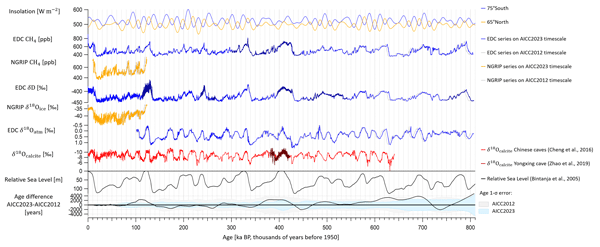
Marie Bouchet, Amaëlle Landais, Antoine Grisart, Frédéric Parrenin, Frédéric Prié, Roxanne Jacob, Elise Fourré, Emilie Capron, Dominique Raynaud, Vladimir Ya Lipenkov, Marie-France Loutre, Thomas Extier, Anders Svensson, Etienne Legrain, Patricia Martinerie, Markus Leuenberger, Wei Jiang, Florian Ritterbusch, Zheng-Tian Lu, and Guo-Min Yang
Clim. Past, 19, 2257–2286, https://doi.org/10.5194/cp-19-2257-2023, https://doi.org/10.5194/cp-19-2257-2023, 2023
Short summary
Short summary
A new federative chronology for five deep polar ice cores retrieves 800 000 years of past climate variations with improved accuracy. Precise ice core timescales are key to studying the mechanisms linking changes in the Earth’s orbit to the diverse climatic responses (temperature and atmospheric greenhouse gas concentrations). To construct the chronology, new measurements from the oldest continuous ice core as well as glaciological modeling estimates were combined in a statistical model.
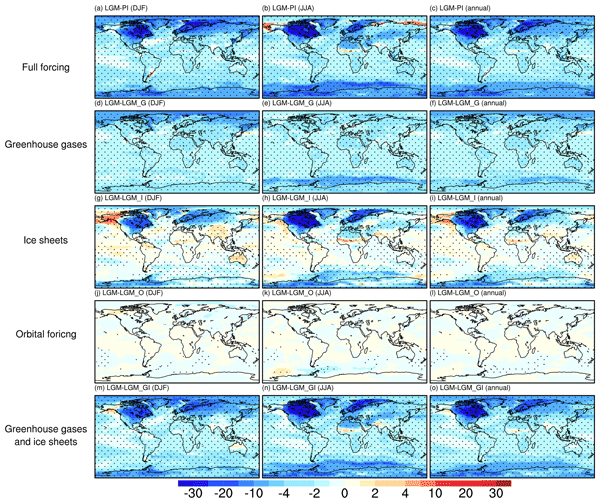
Xiaoxu Shi, Martin Werner, Hu Yang, Roberta D'Agostino, Jiping Liu, Chaoyuan Yang, and Gerrit Lohmann
Clim. Past, 19, 2157–2175, https://doi.org/10.5194/cp-19-2157-2023, https://doi.org/10.5194/cp-19-2157-2023, 2023
Short summary
Short summary
The Last Glacial Maximum (LGM) marks the most recent extremely cold and dry time period of our planet. Using AWI-ESM, we quantify the relative importance of Earth's orbit, greenhouse gases (GHG) and ice sheets (IS) in determining the LGM climate. Our results suggest that both GHG and IS play important roles in shaping the LGM temperature. Continental ice sheets exert a major control on precipitation, atmospheric dynamics, and the intensity of El Niño–Southern Oscillation.
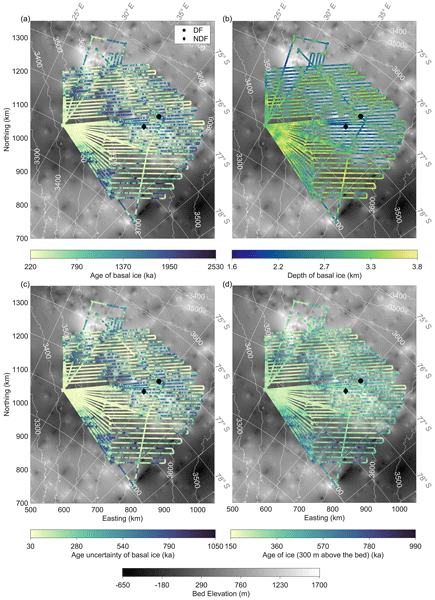
Zhuo Wang, Ailsa Chung, Daniel Steinhage, Frédéric Parrenin, Johannes Freitag, and Olaf Eisen
The Cryosphere, 17, 4297–4314, https://doi.org/10.5194/tc-17-4297-2023, https://doi.org/10.5194/tc-17-4297-2023, 2023
Short summary
Short summary
We combine radar-based observed internal layer stratigraphy of the ice sheet with a 1-D ice flow model in the Dome Fuji region. This results in maps of age and age density of the basal ice, the basal thermal conditions, and reconstructed accumulation rates. Based on modeled age we then identify four potential candidates for ice which is potentially 1.5 Myr old. Our map of basal thermal conditions indicates that melting prevails over the presence of stagnant ice in the study area.
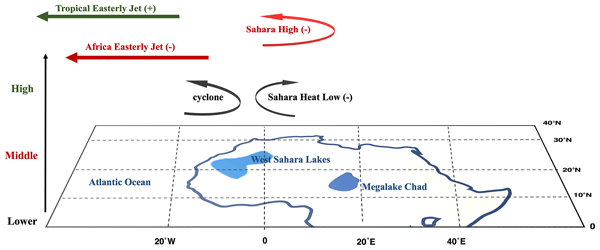
Yuheng Li, Kanon Kino, Alexandre Cauquoin, and Taikan Oki
Clim. Past, 19, 1891–1904, https://doi.org/10.5194/cp-19-1891-2023, https://doi.org/10.5194/cp-19-1891-2023, 2023
Short summary
Short summary
Our study using the isotope-enabled climate model MIROC5-iso model shows that lakes may have contributed to the Green Sahara during the mid-Holocene period (6000 years ago). The lakes induced cyclonic circulation response, enhancing the near-surface monsoon westerly flow and potentially humidifying the northwestern Sahara with the stronger West African Monsoon moving northward. Our findings provide valuable insights into understanding the presence of the Green Sahara during this period.
Thomas Dethinne, Quentin Glaude, Ghislain Picard, Christoph Kittel, Patrick Alexander, Anne Orban, and Xavier Fettweis
The Cryosphere, 17, 4267–4288, https://doi.org/10.5194/tc-17-4267-2023, https://doi.org/10.5194/tc-17-4267-2023, 2023
Short summary
Short summary
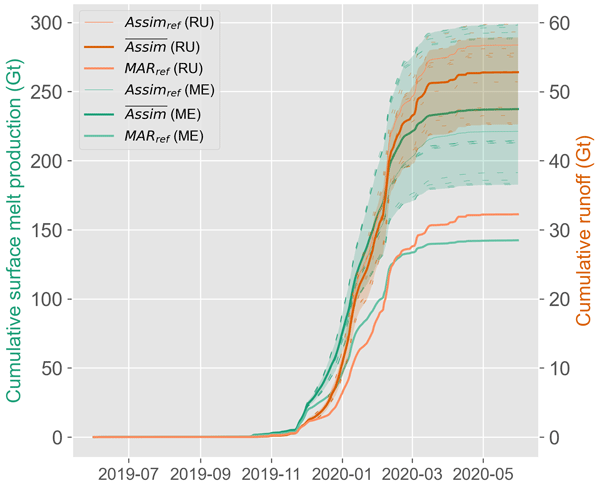
We investigate the sensitivity of the regional climate model
Modèle Atmosphérique Régional(MAR) to the assimilation of wet-snow occurrence estimated by remote sensing datasets. The assimilation is performed by nudging the MAR snowpack temperature. The data assimilation is performed over the Antarctic Peninsula for the 2019–2021 period. The results show an increase in the melt production (+66.7 %) and a decrease in surface mass balance (−4.5 %) of the model for the 2019–2020 melt season.
Xiaoxu Shi, Alexandre Cauquoin, Gerrit Lohmann, Lukas Jonkers, Qiang Wang, Hu Yang, Yuchen Sun, and Martin Werner
Geosci. Model Dev., 16, 5153–5178, https://doi.org/10.5194/gmd-16-5153-2023, https://doi.org/10.5194/gmd-16-5153-2023, 2023
Short summary
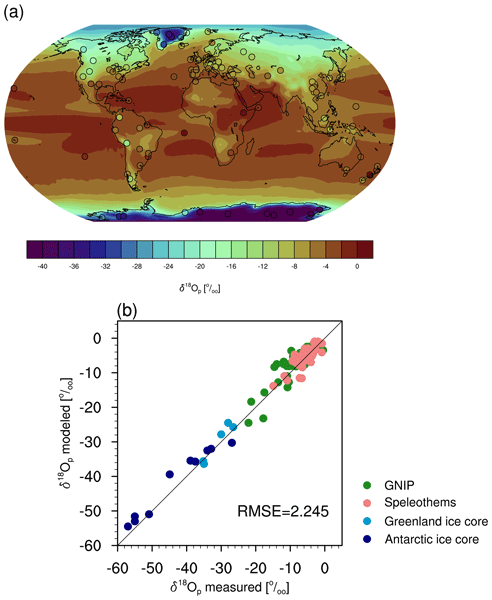
Short summary
We developed a new climate model with isotopic capabilities and simulated the pre-industrial and mid-Holocene periods. Despite certain regional model biases, the modeled isotope composition is in good agreement with observations and reconstructions. Based on our analyses, the observed isotope–temperature relationship in polar regions may have a summertime bias. Using daily model outputs, we developed a novel isotope-based approach to determine the onset date of the West African summer monsoon.
Yaowen Zheng, Nicholas R. Golledge, Alexandra Gossart, Ghislain Picard, and Marion Leduc-Leballeur
The Cryosphere, 17, 3667–3694, https://doi.org/10.5194/tc-17-3667-2023, https://doi.org/10.5194/tc-17-3667-2023, 2023
Short summary
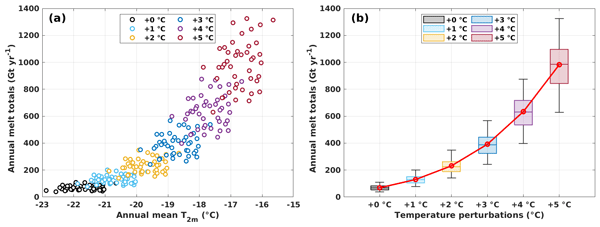
Short summary
Positive degree-day (PDD) schemes are widely used in many Antarctic numerical ice sheet models. However, the PDD approach has not been systematically explored for its application in Antarctica. We have constructed a novel grid-cell-level spatially distributed PDD (dist-PDD) model and assessed its accuracy. We suggest that an appropriately parameterized dist-PDD model can be a valuable tool for exploring Antarctic surface melt beyond the satellite era.
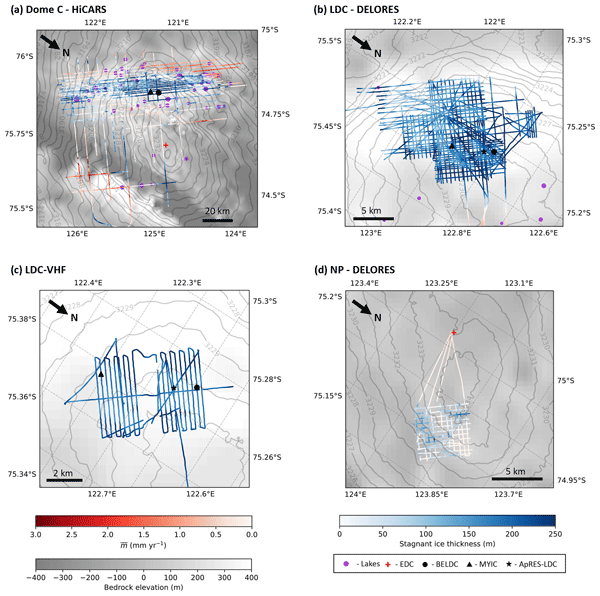
Ailsa Chung, Frédéric Parrenin, Daniel Steinhage, Robert Mulvaney, Carlos Martín, Marie G. P. Cavitte, David A. Lilien, Veit Helm, Drew Taylor, Prasad Gogineni, Catherine Ritz, Massimo Frezzotti, Charles O'Neill, Heinrich Miller, Dorthe Dahl-Jensen, and Olaf Eisen
The Cryosphere, 17, 3461–3483, https://doi.org/10.5194/tc-17-3461-2023, https://doi.org/10.5194/tc-17-3461-2023, 2023
Short summary
Short summary
We combined a numerical model with radar measurements in order to determine the age of ice in the Dome C region of Antarctica. Our results show that at the current ice core drilling sites on Little Dome C, the maximum age of the ice is almost 1.5 Ma. We also highlight a new potential drill site called North Patch with ice up to 2 Ma. Finally, we explore the nature of a stagnant ice layer at the base of the ice sheet which has been independently observed and modelled but is not well understood.
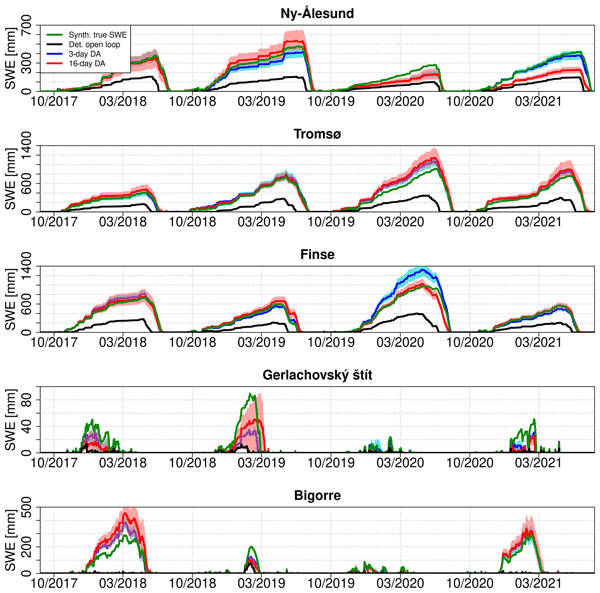
Esteban Alonso-González, Simon Gascoin, Sara Arioli, and Ghislain Picard
The Cryosphere, 17, 3329–3342, https://doi.org/10.5194/tc-17-3329-2023, https://doi.org/10.5194/tc-17-3329-2023, 2023
Short summary
Short summary
Data assimilation techniques are a promising approach to improve snowpack simulations in remote areas that are difficult to monitor. This paper studies the ability of satellite-observed land surface temperature to improve snowpack simulations through data assimilation. We show that it is possible to improve snowpack simulations, but the temporal resolution of the observations and the algorithm used are critical to obtain satisfactory results.
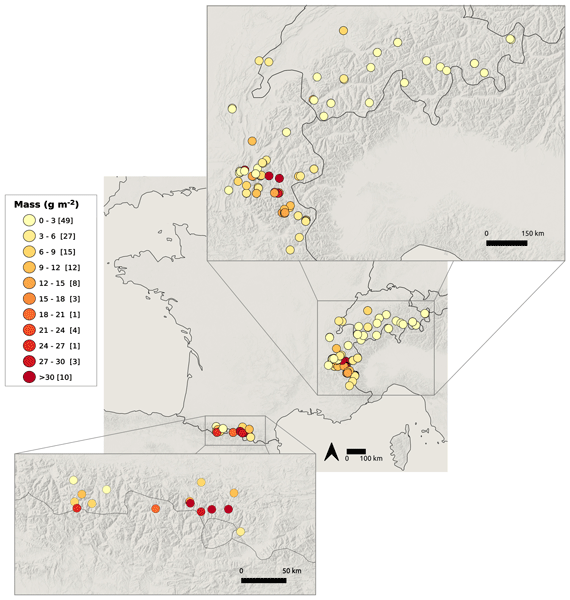
Marie Dumont, Simon Gascoin, Marion Réveillet, Didier Voisin, François Tuzet, Laurent Arnaud, Mylène Bonnefoy, Montse Bacardit Peñarroya, Carlo Carmagnola, Alexandre Deguine, Aurélie Diacre, Lukas Dürr, Olivier Evrard, Firmin Fontaine, Amaury Frankl, Mathieu Fructus, Laure Gandois, Isabelle Gouttevin, Abdelfateh Gherab, Pascal Hagenmuller, Sophia Hansson, Hervé Herbin, Béatrice Josse, Bruno Jourdain, Irene Lefevre, Gaël Le Roux, Quentin Libois, Lucie Liger, Samuel Morin, Denis Petitprez, Alvaro Robledano, Martin Schneebeli, Pascal Salze, Delphine Six, Emmanuel Thibert, Jürg Trachsel, Matthieu Vernay, Léo Viallon-Galinier, and Céline Voiron
Earth Syst. Sci. Data, 15, 3075–3094, https://doi.org/10.5194/essd-15-3075-2023, https://doi.org/10.5194/essd-15-3075-2023, 2023
Short summary
Short summary
Saharan dust outbreaks have profound effects on ecosystems, climate, health, and the cryosphere, but the spatial deposition pattern of Saharan dust is poorly known. Following the extreme dust deposition event of February 2021 across Europe, a citizen science campaign was launched to sample dust on snow over the Pyrenees and the European Alps. This campaign triggered wide interest and over 100 samples. The samples revealed the high variability of the dust properties within a single event.
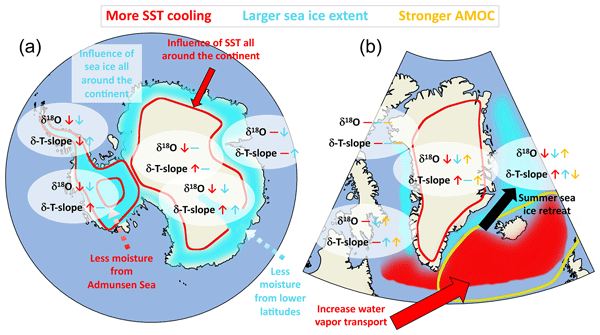
Alexandre Cauquoin, Ayako Abe-Ouchi, Takashi Obase, Wing-Le Chan, André Paul, and Martin Werner
Clim. Past, 19, 1275–1294, https://doi.org/10.5194/cp-19-1275-2023, https://doi.org/10.5194/cp-19-1275-2023, 2023
Short summary
Short summary
Stable water isotopes are tracers of climate processes occurring in the hydrological cycle. They are widely used to reconstruct the past variations of polar temperature before the instrumental era thanks to their measurements in ice cores. However, the relationship between measured isotopes and temperature has large uncertainties. In our study, we investigate how the sea surface conditions (temperature, sea ice, ocean circulation) impact this relationship for a cold to warm climate change.
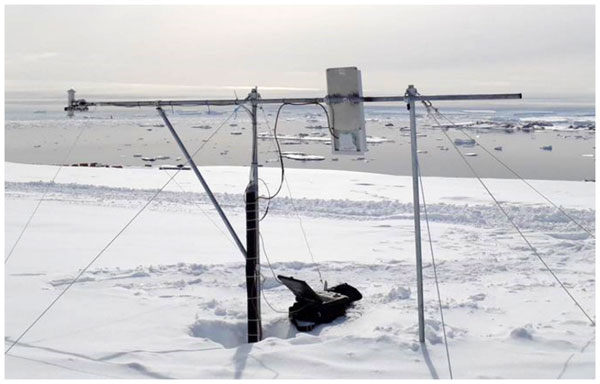
Sara Arioli, Ghislain Picard, Laurent Arnaud, and Vincent Favier
The Cryosphere, 17, 2323–2342, https://doi.org/10.5194/tc-17-2323-2023, https://doi.org/10.5194/tc-17-2323-2023, 2023
Short summary
Short summary
To assess the drivers of the snow grain size evolution during snow drift, we exploit a 5-year time series of the snow grain size retrieved from spectral-albedo observations made with a new, autonomous, multi-band radiometer and compare it to observations of snow drift, snowfall and snowmelt at a windy location of coastal Antarctica. Our results highlight the complexity of the grain size evolution in the presence of snow drift and show an overall tendency of snow drift to limit its variations.
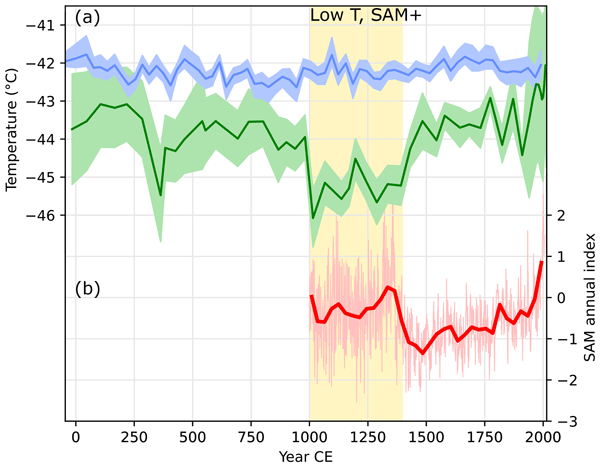
Aymeric P. M. Servettaz, Anaïs J. Orsi, Mark A. J. Curran, Andrew D. Moy, Amaelle Landais, Joseph R. McConnell, Trevor J. Popp, Emmanuel Le Meur, Xavier Faïn, and Jérôme Chappellaz
Clim. Past, 19, 1125–1152, https://doi.org/10.5194/cp-19-1125-2023, https://doi.org/10.5194/cp-19-1125-2023, 2023
Short summary
Short summary
The temperature of the past 2000 years is still poorly known in vast parts of the East Antarctic plateau. In this study, we present temperature reconstructions based on water and gas stable isotopes from the Aurora Basin North ice core. Spatial and temporal significance of each proxy differs, and we can identify some cold periods in the snow temperature up to 2°C cooler in the 1000–1400 CE period, which could not be determined with water isotopes only.
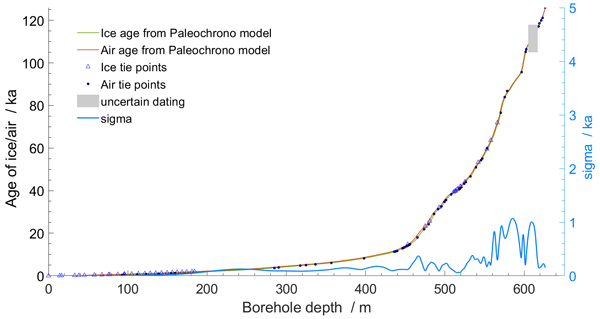
Robert Mulvaney, Eric W. Wolff, Mackenzie M. Grieman, Helene H. Hoffmann, Jack D. Humby, Christoph Nehrbass-Ahles, Rachael H. Rhodes, Isobel F. Rowell, Frédéric Parrenin, Loïc Schmidely, Hubertus Fischer, Thomas F. Stocker, Marcus Christl, Raimund Muscheler, Amaelle Landais, and Frédéric Prié
Clim. Past, 19, 851–864, https://doi.org/10.5194/cp-19-851-2023, https://doi.org/10.5194/cp-19-851-2023, 2023
Short summary
Short summary
We present an age scale for a new ice core drilled at Skytrain Ice Rise, an ice rise facing the Ronne Ice Shelf in Antarctica. Various measurements in the ice and air phases are used to match the ice core to other Antarctic cores that have already been dated, and a new age scale is constructed. The 651 m ice core includes ice that is confidently dated to 117 000–126 000 years ago, in the last interglacial. Older ice is found deeper down, but there are flow disturbances in the deeper ice.
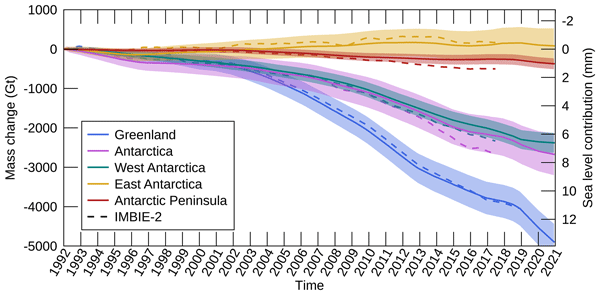
Inès N. Otosaka, Andrew Shepherd, Erik R. Ivins, Nicole-Jeanne Schlegel, Charles Amory, Michiel R. van den Broeke, Martin Horwath, Ian Joughin, Michalea D. King, Gerhard Krinner, Sophie Nowicki, Anthony J. Payne, Eric Rignot, Ted Scambos, Karen M. Simon, Benjamin E. Smith, Louise S. Sørensen, Isabella Velicogna, Pippa L. Whitehouse, Geruo A, Cécile Agosta, Andreas P. Ahlstrøm, Alejandro Blazquez, William Colgan, Marcus E. Engdahl, Xavier Fettweis, Rene Forsberg, Hubert Gallée, Alex Gardner, Lin Gilbert, Noel Gourmelen, Andreas Groh, Brian C. Gunter, Christopher Harig, Veit Helm, Shfaqat Abbas Khan, Christoph Kittel, Hannes Konrad, Peter L. Langen, Benoit S. Lecavalier, Chia-Chun Liang, Bryant D. Loomis, Malcolm McMillan, Daniele Melini, Sebastian H. Mernild, Ruth Mottram, Jeremie Mouginot, Johan Nilsson, Brice Noël, Mark E. Pattle, William R. Peltier, Nadege Pie, Mònica Roca, Ingo Sasgen, Himanshu V. Save, Ki-Weon Seo, Bernd Scheuchl, Ernst J. O. Schrama, Ludwig Schröder, Sebastian B. Simonsen, Thomas Slater, Giorgio Spada, Tyler C. Sutterley, Bramha Dutt Vishwakarma, Jan Melchior van Wessem, David Wiese, Wouter van der Wal, and Bert Wouters
Earth Syst. Sci. Data, 15, 1597–1616, https://doi.org/10.5194/essd-15-1597-2023, https://doi.org/10.5194/essd-15-1597-2023, 2023
Short summary
Short summary
By measuring changes in the volume, gravitational attraction, and ice flow of Greenland and Antarctica from space, we can monitor their mass gain and loss over time. Here, we present a new record of the Earth’s polar ice sheet mass balance produced by aggregating 50 satellite-based estimates of ice sheet mass change. This new assessment shows that the ice sheets have lost (7.5 x 10¹²) t of ice between 1992 and 2020, contributing 21 mm to sea level rise.
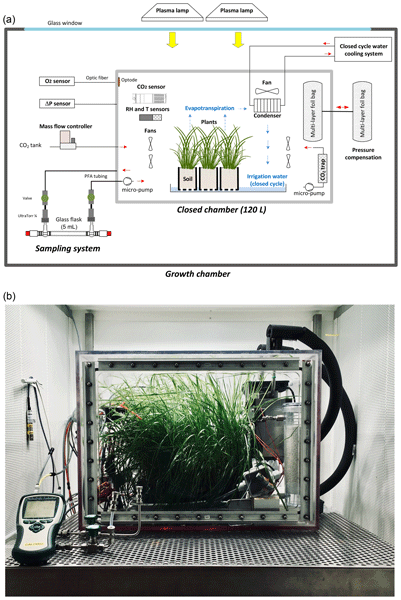
Clémence Paul, Clément Piel, Joana Sauze, Nicolas Pasquier, Frédéric Prié, Sébastien Devidal, Roxanne Jacob, Arnaud Dapoigny, Olivier Jossoud, Alexandru Milcu, and Amaëlle Landais
Biogeosciences, 20, 1047–1062, https://doi.org/10.5194/bg-20-1047-2023, https://doi.org/10.5194/bg-20-1047-2023, 2023
Short summary
Short summary
To improve the interpretation of the δ18Oatm and Δ17O of O2 in air bubbles in ice cores, we need to better quantify the oxygen fractionation coefficients associated with biological processes. We performed a simplified analogue of the terrestrial biosphere in a closed chamber. We found a respiration fractionation in agreement with the previous estimates at the microorganism scale, and a terrestrial photosynthetic fractionation was found. This has an impact on the estimation of the Dole effect.
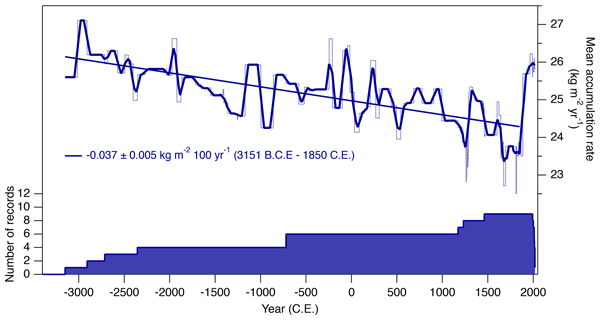
Ikumi Oyabu, Kenji Kawamura, Shuji Fujita, Ryo Inoue, Hideaki Motoyama, Kotaro Fukui, Motohiro Hirabayashi, Yu Hoshina, Naoyuki Kurita, Fumio Nakazawa, Hiroshi Ohno, Konosuke Sugiura, Toshitaka Suzuki, Shun Tsutaki, Ayako Abe-Ouchi, Masashi Niwano, Frédéric Parrenin, Fuyuki Saito, and Masakazu Yoshimori
Clim. Past, 19, 293–321, https://doi.org/10.5194/cp-19-293-2023, https://doi.org/10.5194/cp-19-293-2023, 2023
Short summary
Short summary
We reconstructed accumulation rate around Dome Fuji, Antarctica, over the last 5000 years from 15 shallow ice cores and seven snow pits. We found a long-term decreasing trend in the preindustrial period, which may be associated with secular surface cooling and sea ice expansion. Centennial-scale variations were also found, which may partly be related to combinations of volcanic, solar and greenhouse gas forcings. The most rapid and intense increases of accumulation rate occurred since 1850 CE.
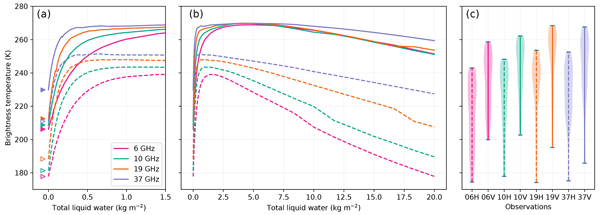
Ghislain Picard, Marion Leduc-Leballeur, Alison F. Banwell, Ludovic Brucker, and Giovanni Macelloni
The Cryosphere, 16, 5061–5083, https://doi.org/10.5194/tc-16-5061-2022, https://doi.org/10.5194/tc-16-5061-2022, 2022
Short summary
Short summary
Using a snowpack radiative transfer model, we investigate in which conditions meltwater can be detected from passive microwave satellite observations from 1.4 to 37 GHz. In particular, we determine the minimum detectable liquid water content, the maximum depth of detection of a buried wet snow layer and the risk of false alarm due to supraglacial lakes. These results provide information for the developers of new, more advanced satellite melt products and for the users of the existing products.
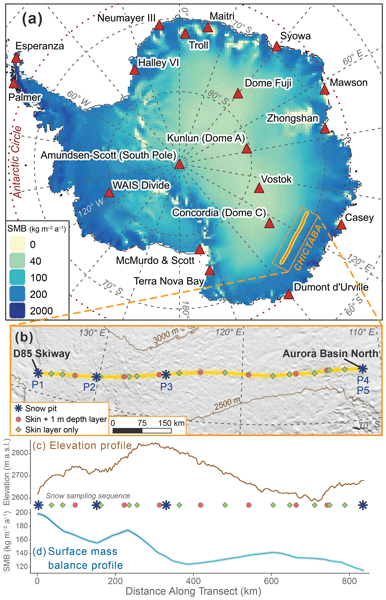
Pete D. Akers, Joël Savarino, Nicolas Caillon, Olivier Magand, and Emmanuel Le Meur
Atmos. Chem. Phys., 22, 15637–15657, https://doi.org/10.5194/acp-22-15637-2022, https://doi.org/10.5194/acp-22-15637-2022, 2022
Short summary
Short summary
Nitrate isotopes in Antarctic ice do not preserve the seasonal isotopic cycles of the atmosphere, which limits their use to study the past. We studied nitrate along an 850 km Antarctic transect to learn how these cycles are changed by sunlight-driven chemistry in the snow. Our findings suggest that the snow accumulation rate and other environmental signals can be extracted from nitrate with the right sampling and analytical approaches.
Jiajia Wang, Hongxi Pang, Shuangye Wu, Spruce W. Schoenemann, Ryu Uemura, Alexey Ekaykin, Martin Werner, Alexandre Cauquoin, Sentia Goursaud Oger, Summer Rupper, and Shugui Hou
Earth Syst. Sci. Data Discuss., https://doi.org/10.5194/essd-2022-384, https://doi.org/10.5194/essd-2022-384, 2022
Revised manuscript not accepted
Short summary
Short summary
Stable water isotopic observations in surface snow over Antarctica provide a basis for validating isotopic models and interpreting Antarctic ice core records. This study presents a new compilation of Antarctic surface snow isotopic dataset based on published and unpublished sources. The database has a wide range of potential applications in studying spatial distribution of water isotopes, model validation, and reconstruction and interpretation of Antarctic ice core records.
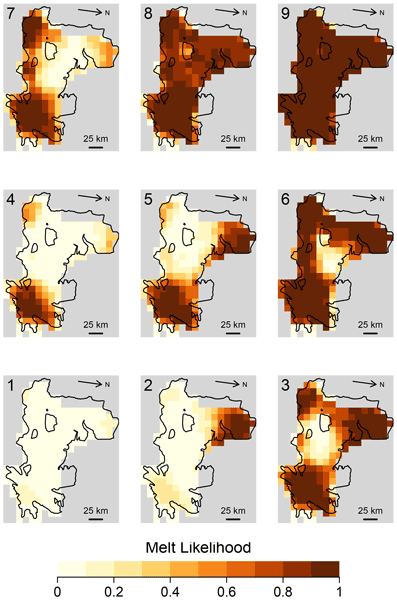
Dominic Saunderson, Andrew Mackintosh, Felicity McCormack, Richard Selwyn Jones, and Ghislain Picard
The Cryosphere, 16, 4553–4569, https://doi.org/10.5194/tc-16-4553-2022, https://doi.org/10.5194/tc-16-4553-2022, 2022
Short summary
Short summary
We investigate the variability in surface melt on the Shackleton Ice Shelf in East Antarctica over the last 2 decades (2003–2021). Using daily satellite observations and the machine learning approach of a self-organising map, we identify nine distinct spatial patterns of melt. These patterns allow comparisons of melt within and across melt seasons and highlight the importance of both air temperatures and local controls such as topography, katabatic winds, and albedo in driving surface melt.

Antoine Grisart, Mathieu Casado, Vasileios Gkinis, Bo Vinther, Philippe Naveau, Mathieu Vrac, Thomas Laepple, Bénédicte Minster, Frederic Prié, Barbara Stenni, Elise Fourré, Hans Christian Steen-Larsen, Jean Jouzel, Martin Werner, Katy Pol, Valérie Masson-Delmotte, Maria Hoerhold, Trevor Popp, and Amaelle Landais
Clim. Past, 18, 2289–2301, https://doi.org/10.5194/cp-18-2289-2022, https://doi.org/10.5194/cp-18-2289-2022, 2022
Short summary
Short summary
This paper presents a compilation of high-resolution (11 cm) water isotopic records, including published and new measurements, for the last 800 000 years from the EPICA Dome C ice core, Antarctica. Using this new combined water isotopes (δ18O and δD) dataset, we study the variability and possible influence of diffusion at the multi-decadal to multi-centennial scale. We observe a stronger variability at the onset of the interglacial interval corresponding to a warm period.

Ghislain Picard, Henning Löwe, and Christian Mätzler
The Cryosphere, 16, 3861–3866, https://doi.org/10.5194/tc-16-3861-2022, https://doi.org/10.5194/tc-16-3861-2022, 2022
Short summary
Short summary
Microwave satellite observations used to monitor the cryosphere require radiative transfer models for their interpretation. These models represent how microwaves are scattered by snow and ice. However no existing theory is suitable for all types of snow and ice found on Earth. We adapted a recently published generic scattering theory to snow and show how it may improve the representation of snows with intermediate densities (~500 kg/m3) and/or with coarse grains at high microwave frequencies.
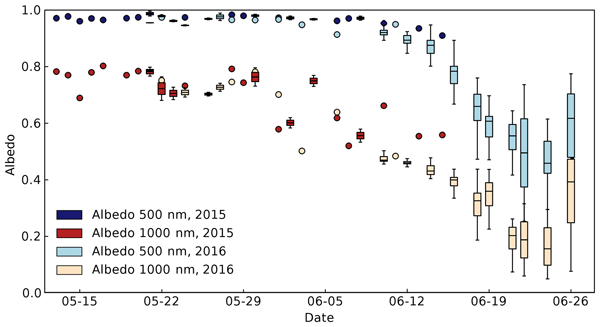
Gauthier Vérin, Florent Domine, Marcel Babin, Ghislain Picard, and Laurent Arnaud
The Cryosphere, 16, 3431–3449, https://doi.org/10.5194/tc-16-3431-2022, https://doi.org/10.5194/tc-16-3431-2022, 2022
Short summary
Short summary
Snow physical properties on Arctic sea ice are monitored during the melt season. As snow grains grow, and the snowpack thickness is reduced, the surface albedo decreases. The extra absorbed energy accelerates melting. Radiative transfer modeling shows that more radiation is then transmitted to the snow–sea-ice interface. A sharp increase in transmitted radiation takes place when the snowpack thins significantly, and this coincides with the initiation of the phytoplankton bloom in the seawater.
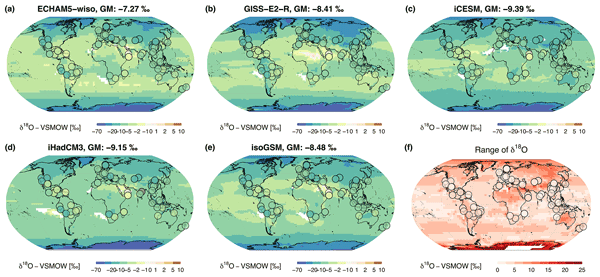
Janica C. Bühler, Josefine Axelsson, Franziska A. Lechleitner, Jens Fohlmeister, Allegra N. LeGrande, Madhavan Midhun, Jesper Sjolte, Martin Werner, Kei Yoshimura, and Kira Rehfeld
Clim. Past, 18, 1625–1654, https://doi.org/10.5194/cp-18-1625-2022, https://doi.org/10.5194/cp-18-1625-2022, 2022
Short summary
Short summary
We collected and standardized the output of five isotope-enabled simulations for the last millennium and assess differences and similarities to records from a global speleothem database. Modeled isotope variations mostly arise from temperature differences. While lower-resolution speleothems do not capture extreme changes to the extent of models, they show higher variability on multi-decadal timescales. As no model excels in all comparisons, we advise a multi-model approach where possible.
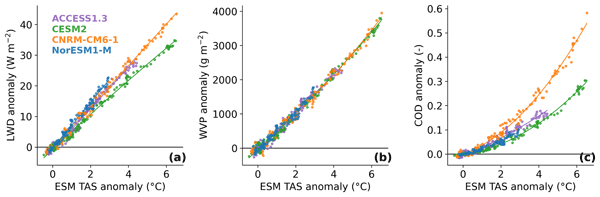
Christoph Kittel, Charles Amory, Stefan Hofer, Cécile Agosta, Nicolas C. Jourdain, Ella Gilbert, Louis Le Toumelin, Étienne Vignon, Hubert Gallée, and Xavier Fettweis
The Cryosphere, 16, 2655–2669, https://doi.org/10.5194/tc-16-2655-2022, https://doi.org/10.5194/tc-16-2655-2022, 2022
Short summary
Short summary
Model projections suggest large differences in future Antarctic surface melting even for similar greenhouse gas scenarios and warming rates. We show that clouds containing a larger amount of liquid water lead to stronger melt. As surface melt can trigger the collapse of the ice shelves (the safety band of the Antarctic Ice Sheet), clouds could be a major source of uncertainties in projections of sea level rise.

Inga Labuhn, Franziska Tell, Ulrich von Grafenstein, Dan Hammarlund, Henning Kuhnert, and Bénédicte Minster
Biogeosciences, 19, 2759–2777, https://doi.org/10.5194/bg-19-2759-2022, https://doi.org/10.5194/bg-19-2759-2022, 2022
Short summary
Short summary
This study presents the isotopic composition of recent biogenic carbonates from several lacustrine species which calcify during different times of the year. The authors demonstrate that when biological offsets are corrected, the dominant cause of differences between species is the seasonal variation in temperature-dependent fractionation of oxygen isotopes. Consequently, such carbonates from lake sediments can provide proxy records of seasonal water temperature changes in the past.
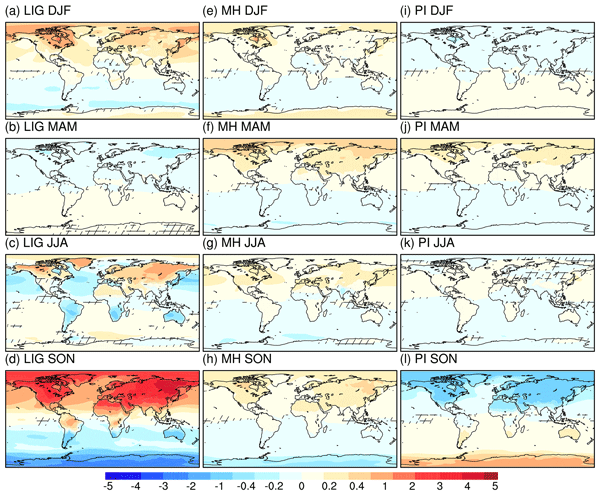
Xiaoxu Shi, Martin Werner, Carolin Krug, Chris M. Brierley, Anni Zhao, Endurance Igbinosa, Pascale Braconnot, Esther Brady, Jian Cao, Roberta D'Agostino, Johann Jungclaus, Xingxing Liu, Bette Otto-Bliesner, Dmitry Sidorenko, Robert Tomas, Evgeny M. Volodin, Hu Yang, Qiong Zhang, Weipeng Zheng, and Gerrit Lohmann
Clim. Past, 18, 1047–1070, https://doi.org/10.5194/cp-18-1047-2022, https://doi.org/10.5194/cp-18-1047-2022, 2022
Short summary
Short summary
Since the orbital parameters of the past are different from today, applying the modern calendar to the past climate can lead to an artificial bias in seasonal cycles. With the use of multiple model outputs, we found that such a bias is non-ignorable and should be corrected to ensure an accurate comparison between modeled results and observational records, as well as between simulated past and modern climates, especially for the Last Interglacial.
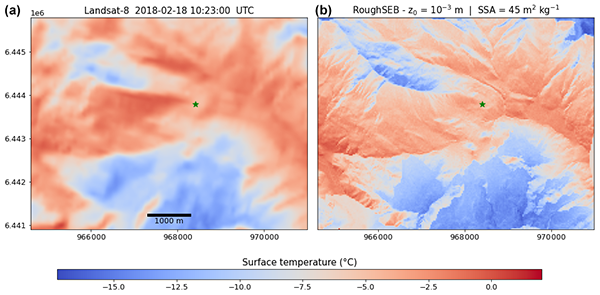
Alvaro Robledano, Ghislain Picard, Laurent Arnaud, Fanny Larue, and Inès Ollivier
The Cryosphere, 16, 559–579, https://doi.org/10.5194/tc-16-559-2022, https://doi.org/10.5194/tc-16-559-2022, 2022
Short summary
Short summary
Topography controls the surface temperature of snow-covered, mountainous areas. We developed a modelling chain that uses ray-tracing methods to quantify the impact of a few topographic effects on snow surface temperature at high spatial resolution. Its large spatial and temporal variations are correctly simulated over a 50 km2 area in the French Alps, and our results show that excluding a single topographic effect results in cooling (or warming) effects on the order of 1 °C.
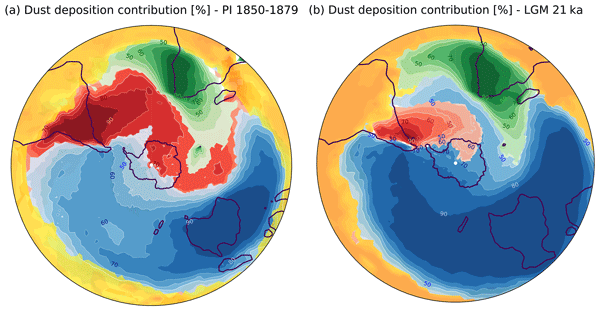
Stephan Krätschmer, Michèlle van der Does, Frank Lamy, Gerrit Lohmann, Christoph Völker, and Martin Werner
Clim. Past, 18, 67–87, https://doi.org/10.5194/cp-18-67-2022, https://doi.org/10.5194/cp-18-67-2022, 2022
Short summary
Short summary
We use an atmospheric model coupled to an aerosol model to investigate the global mineral dust cycle with a focus on the Southern Hemisphere for warmer and colder climate states and compare our results to observational data. Our findings suggest that Australia is the predominant source of dust deposited over Antarctica during the last glacial maximum. In addition, we find that the southward transport of dust from all sources to Antarctica happens at lower altitudes in colder climates.
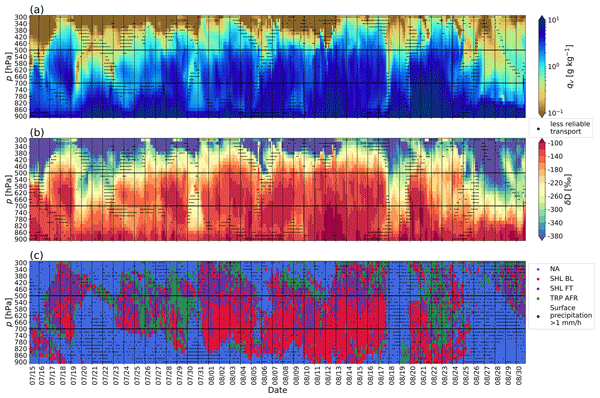
Fabienne Dahinden, Franziska Aemisegger, Heini Wernli, Matthias Schneider, Christopher J. Diekmann, Benjamin Ertl, Peter Knippertz, Martin Werner, and Stephan Pfahl
Atmos. Chem. Phys., 21, 16319–16347, https://doi.org/10.5194/acp-21-16319-2021, https://doi.org/10.5194/acp-21-16319-2021, 2021
Short summary
Short summary
We use high-resolution numerical isotope modelling and Lagrangian backward trajectories to identify moisture transport pathways and governing physical and dynamical processes that affect the free-tropospheric humidity and isotopic variability over the eastern subtropical North Atlantic. Furthermore, we conduct a thorough isotope modelling validation with aircraft and remote-sensing observations of water vapour isotopes.
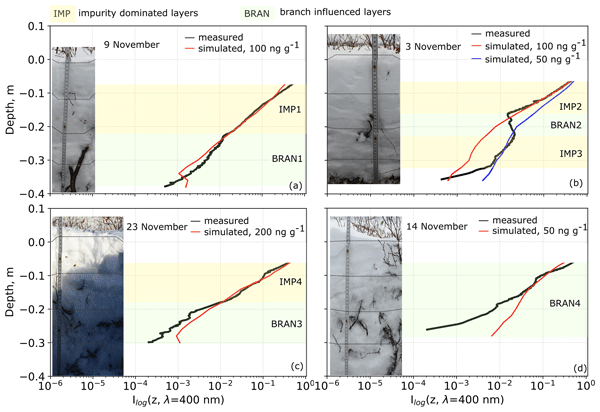
Maria Belke-Brea, Florent Domine, Ghislain Picard, Mathieu Barrere, and Laurent Arnaud
Biogeosciences, 18, 5851–5869, https://doi.org/10.5194/bg-18-5851-2021, https://doi.org/10.5194/bg-18-5851-2021, 2021
Short summary
Short summary
Expanding shrubs in the Arctic change snowpacks into a mix of snow, impurities and buried branches. Snow is a translucent medium into which light penetrates and gets partly absorbed by branches or impurities. Measurements of light attenuation in snow in Northern Quebec, Canada, showed (1) black-carbon-dominated light attenuation in snowpacks without shrubs and (2) buried branches influence radiation attenuation in snow locally, leading to melting and pockets of large crystals close to branches.
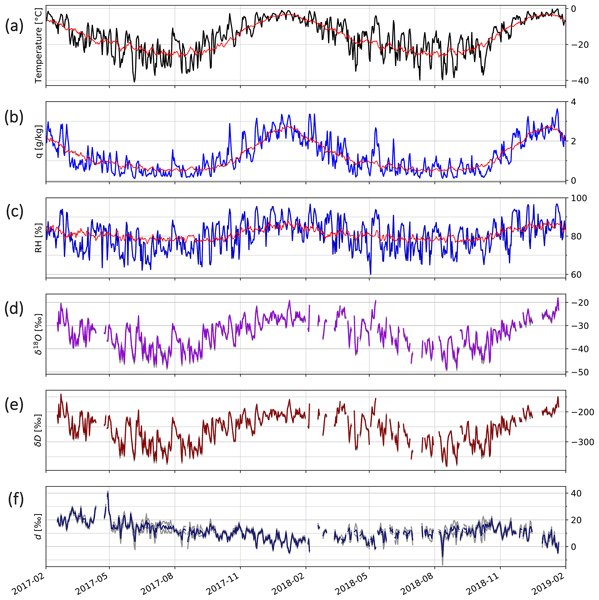
Saeid Bagheri Dastgerdi, Melanie Behrens, Jean-Louis Bonne, Maria Hörhold, Gerrit Lohmann, Elisabeth Schlosser, and Martin Werner
The Cryosphere, 15, 4745–4767, https://doi.org/10.5194/tc-15-4745-2021, https://doi.org/10.5194/tc-15-4745-2021, 2021
Short summary
Short summary
In this study, for the first time, water vapour isotope measurements in Antarctica for all seasons of a year are performed. Local temperature is identified as the main driver of δ18O and δD variability. A similar slope of the temperature–δ18O relationship in vapour and surface snow points to the water vapour isotope content as a potential key driver. This dataset can be used as a new dataset to evaluate the capability of isotope-enhanced climate models.
Cited articles
Abram, N. J., Wolff, E. W., and Curran, M. A. J.: A review of sea ice proxy information from polar ice cores, Quaternary Sci. Rev., 79, 168–183, https://doi.org/10.1016/j.quascirev.2013.01.011, 2013.
Agosta, C., Favier, V., Genthon, C., Gallée, H., Krinner, G., Lenaerts, J. T. M., and van den Broeke, M. R.: A 40-year accumulation dataset for Adelie Land, Antarctica and its application for model validation, Clim. Dynam., 38, 75–86, https://doi.org/10.1007/s00382-011-1103-4, 2012.
Agosta, C., Amory, C., Kittel, C., Orsi, A., Favier, V., Gallée, H., van den Broeke, M. R., Lenaerts, J. T. M., van Wessem, J. M., van de Berg, W. J., and Fettweis, X.: Estimation of the Antarctic surface mass balance using the regional climate model MAR (1979–2015) and identification of dominant processes, The Cryosphere, 13, 281–296, https://doi.org/10.5194/tc-13-281-2019, 2019.
Amory, C.: Drifting-snow statistics from multiple-year autonomous measurements in Adélie Land, East Antarctica, The Cryosphere, 14, 1713–1725, https://doi.org/10.5194/tc-14-1713-2020, 2020.
Bagheri Dastgerdi, S., Behrens, M., Bonne, J.-L., Hörhold, M., Lohmann, G., Schlosser, E., and Werner, M.: Continuous monitoring of surface water vapour isotopic compositions at Neumayer Station III, East Antarctica, The Cryosphere, 15, 4745–4767, https://doi.org/10.5194/tc-15-4745-2021, 2021.
Boucher, O., Servonnat, J., Albright, A. L., Aumont, O., Balkanski, Y., Bastrikov, V., Bekki, S., Bonnet, R., Bony, S., Bopp, L., Braconnot, P., Brockmann, P., Cadule, P., Caubel, A., Cheruy, F., Codron, F., Cozic, A., Cugnet, D., D'Andrea, F., Davini, P., de Lavergne, C., Denvil, S., Deshayes, J., Devilliers, M., Ducharne, A., Dufresne, J.-L., Dupont, E., Éthé, C., Fairhead, L., Falletti, L., Flavoni, S., Foujols, M.-A., Gardoll, S., Gastineau, G., Ghattas, J., Grandpeix, J.-Y., Guenet, B., Guez, E., Lionel, Guilyardi, E., Guimberteau, M., Hauglustaine, D., Hourdin, F., Idelkadi, A., Joussaume, S., Kageyama, M., Khodri, M., Krinner, G., Lebas, N., Levavasseur, G., Lévy, C., Li, L., Lott, F., Lurton, T., Luyssaert, S., Madec, G., Madeleine, J.-B., Maignan, F., Marchand, M., Marti, O., Mellul, L., Meurdesoif, Y., Mignot, J., Musat, I., Ottlé, C., Peylin, P., Planton, Y., Polcher, J., Rio, C., Rochetin, N., Rousset, C., Sepulchre, P., Sima, A., Swingedouw, D., Thiéblemont, R., Traore, A. K., Vancoppenolle, M., Vial, J., Vialard, J., Viovy, N., and Vuichard, N.: Presentation and Evaluation of the IPSL-CM6A-LR Climate Model, J. Adv. Model. Earth Sy., 12, e2019MS002010, https://doi.org/10.1029/2019MS002010, 2020.
Bouchet, M., Landais, A., Grisart, A., Parrenin, F., Prié, F., Jacob, R., Fourré, E., Capron, E., Raynaud, D., Lipenkov, V. Y., Loutre, M.-F., Extier, T., Svensson, A., Legrain, E., Martinerie, P., Leuenberger, M., Jiang, W., Ritterbusch, F., Lu, Z.-T., and Yang, G.-M.: The Antarctic Ice Core Chronology 2023 (AICC2023) chronological framework and associated timescale for the European Project for Ice Coring in Antarctica (EPICA) Dome C ice core, Clim. Past, 19, 2257–2286, https://doi.org/10.5194/cp-19-2257-2023, 2023.
Bracegirdle, T. J., Colleoni, F., Abram, N. J., Bertler, N. A. N., Dixon, D. A., England, M., Favier, V., Fogwill, C. J., Fyfe, J. C., Goodwin, I., Goosse, H., Hobbs, W., Jones, J. M., Keller, E. D., Khan, A. L., Phipps, S. J., Raphael, M. N., Russell, J., Sime, L., Thomas, E. R., van den Broeke, M. R., and Wainer, I.: Back to the Future: Using Long-Term Observational and Paleo-Proxy Reconstructions to Improve Model Projections of Antarctic Climate, Geosciences, 9, 255, https://doi.org/10.3390/geosciences9060255, 2019.
Bréant, C., Leroy-Dos Santos, C., Agosta, C., Casado, M., Fourré, E., Goursaud, S., Masson-Delmotte, V., Favier, V., Cattani, O., Prié, F., Golly, B., Orsi, A., Martinerie, P., and Landais, A.: Coastal water vapor isotopic composition driven by katabatic wind variability in summer at Dumont d'Urville, coastal East Antarctica, Earth Planet. Sc. Lett., 514, 37–47, https://doi.org/10.1016/j.epsl.2019.03.004, 2019.
Bromwich, D. H., Steinhoff, D. F., Simmonds, I., Keay, K., and Fogt, R. L.: Climatological aspects of cyclogenesis near Adélie Land Antarctica, Tellus A: Dynamic Meteorology and Oceanography, 63, 921–938, https://doi.org/10.1111/j.1600-0870.2011.00537.x, 2011.
Buizert, C., Keisling, B. A., Box, J. E., He, F., Carlson, A. E., Sinclair, G., and DeConto, R. M.: Greenland-Wide Seasonal Temperatures During the Last Deglaciation, Geophys. Res. Lett., 45, 1905–1914, https://doi.org/10.1002/2017GL075601, 2018.
Casado, M., Landais, A., Masson-Delmotte, V., Genthon, C., Kerstel, E., Kassi, S., Arnaud, L., Picard, G., Prie, F., Cattani, O., Steen-Larsen, H.-C., Vignon, E., and Cermak, P.: Continuous measurements of isotopic composition of water vapour on the East Antarctic Plateau, Atmos. Chem. Phys., 16, 8521–8538, https://doi.org/10.5194/acp-16-8521-2016, 2016.
Casado, M., Münch, T., and Laepple, T.: Climatic information archived in ice cores: impact of intermittency and diffusion on the recorded isotopic signal in Antarctica, Clim. Past, 16, 1581–1598, https://doi.org/10.5194/cp-16-1581-2020, 2020.
Casado, M., Hébert, R., Faranda, D., and Landais, A.: The quandary of detecting the signature of climate change in Antarctica, Nat. Clim. Change, 13, 1082–1088, https://doi.org/10.1038/s41558-023-01791-5, 2023.
Cauquoin, A. and Werner, M.: High-Resolution Nudged Isotope Modeling With ECHAM6-Wiso: Impacts of Updated Model Physics and ERA5 Reanalysis Data, J. Adv. Model. Earth Sy., 13, e2021MS002532, https://doi.org/10.1029/2021MS002532, 2021.
Cauquoin, A., Werner, M., and Lohmann, G.: Water isotopes – climate relationships for the mid-Holocene and preindustrial period simulated with an isotope-enabled version of MPI-ESM, Clim. Past, 15, 1913–1937, https://doi.org/10.5194/cp-15-1913-2019, 2019.
Cole-Dai, J. and Mosley-Thompson, E.: The Pinatubo eruption in South Pole snow and its potential value to ice-core paleovolcanic records, Ann. Glaciol., 29, 99–105, https://doi.org/10.3189/172756499781821319, 1999.
Crosta, X., Etourneau, J., Orme, L. C., Dalaiden, Q., Campagne, P., Swingedouw, D., Goosse, H., Massé, G., Miettinen, A., McKay, R. M., Dunbar, R. B., Escutia, C., and Ikehara, M.: Multi-decadal trends in Antarctic sea-ice extent driven by ENSO–SAM over the last 2,000 years, Nat. Geosci., 14, 156–160, https://doi.org/10.1038/s41561-021-00697-1, 2021.
Cuffey, K. M., Clow, G. D., Steig, E. J., Buizert, C., Fudge, T. J., Koutnik, M., Waddington, E. D., Alley, R. B., and Severinghaus, J. P.: Deglacial temperature history of West Antarctica, P. Natl. Acad. Sci. USA, 113, 14249–14254, https://doi.org/10.1073/pnas.1609132113, 2016.
Dallmayr, R., Goto-Azuma, K., Astrid Kjær, H., Azuma, N., Takata, M., Schüpbach, S., and Hirabayashi, M.: A High-Resolution Continuous Flow Analysis System for Polar Ice Cores, Bull. Glaciol. Res., 34, 11–20, https://doi.org/10.5331/bgr.16R03, 2016.
Dallmayr, R., Meyer, H., Gkinis, V., Laepple, T., Behrens, M., Wilhelms, F., and Hörhold, M.: Assessment of continuous flow analysis (CFA) for high-precision profiles of water isotopes in snow cores, The Cryosphere, 19, 1067–1083, https://doi.org/10.5194/tc-19-1067-2025, 2025a.
Dallmayr, R., Laepple, T., Freitag, J.,Behrens, M., Lisovski, S., Jansen, D., Wilhelm, F., and Hörhold, M.: Topographic effect creates non-climatic variations in ice-core based temperature records of the last millenniumin dronning maud land, Antarctica, Geophys. Res. Lett., 52, e2025GL115124, https://doi.org/10.1029/2025GL115124, 2025b.
Davrinche, C., Orsi, A., Agosta, C., Amory, C., and Kittel, C.: Understanding the drivers of near-surface winds in Adélie Land, East Antarctica, The Cryosphere, 18, 2239–2256, https://doi.org/10.5194/tc-18-2239-2024, 2024.
Delmas, R. and Pourchet, M.: Utilisation de filtres échangeurs d'ions pour l'étude de l'activité beta globale d'un carottage glaciologique, Int. Assoc. Hydrological Sciences, 118, 159–163, 1977.
Dutrievoz, N., Agosta, C., Risi, C., Vignon, É., Nguyen, S., Landais, A., Fourré, E., Leroy-Dos Santos, C., Casado, M., Masson-Delmotte, V., Jouzel, J., Dubos, T., Ollivier, I., Stenni, B., Dreossi, G., Masiol, M., Minster, B., and Prié, F.: Antarctic Water Stable Isotopes in the Global Atmospheric Model LMDZ6: From Climatology to Boundary Layer Processes, J. Geophys. Res.-Atmos., 130, e2024JD042073, https://doi.org/10.1029/2024JD042073, 2025.
Emanuelsson, B. D., Thomas, E. R., Tetzner, D. R., Humby, J. D., and Vladimirova, D. O.: Ice Core Chronologies from the Antarctic Peninsula: The Palmer, Jurassic, and Rendezvous Age-Scales, Geosciences, 12, 87, https://doi.org/10.3390/geosciences12020087, 2022.
Eyring, V., Bony, S., Meehl, G. A., Senior, C. A., Stevens, B., Stouffer, R. J., and Taylor, K. E.: Overview of the Coupled Model Intercomparison Project Phase 6 (CMIP6) experimental design and organization, Geosci. Model Dev., 9, 1937–1958, https://doi.org/10.5194/gmd-9-1937-2016, 2016.
Fisher, D. A., Reeh, N., and Clausen, H. B.: Stratigraphic Noise in Time Series Derived from Ice Cores, Ann. Glaciol., 7, 76–83, https://doi.org/10.3189/S0260305500005942, 1985.
Frezzotti, M., Urbini, S., Proposito, M., Scarchilli, C., and Gandolfi, S.: Spatial and temporal variability of surface mass balance near Talos Dome, East Antarctica, J. Geophys. Res.-Earth Surf., 112, https://doi.org/10.1029/2006JF000638, 2007.
Gallée, H. and Schayes, G.: Development of a Three-Dimensional Meso-γ Primitive Equation Model: Katabatic Winds Simulation in the Area of Terra Nova Bay, Antarctica, Monthly Weather Review, 122, 671–685, https://doi.org/10.1175/1520-0493(1994)122<0671:DOATDM>2.0.CO;2, 1994.
Ginot, P., Stampfli, F., Stampfli, D., Schwikowski, M., and Gaggeler, H. W.: FELICS, a new ice core drilling system for high-altitude glaciers, Mem. Natl. Inst. Polar Res. Spec. Issue, 56, 38–48, 2002.
Goursaud, S., Masson-Delmotte, V., Favier, V., Preunkert, S., Fily, M., Gallée, H., Jourdain, B., Legrand, M., Magand, O., Minster, B., and Werner, M.: A 60-year ice-core record of regional climate from Adélie Land, coastal Antarctica, The Cryosphere, 11, 343–362, https://doi.org/10.5194/tc-11-343-2017, 2017.
Goursaud, S., Masson-Delmotte, V., Favier, V., Preunkert, S., Legrand, M., Minster, B., and Werner, M.: Challenges associated with the climatic interpretation of water stable isotope records from a highly resolved firn core from Adélie Land, coastal Antarctica, The Cryosphere, 13, 1297–1324, https://doi.org/10.5194/tc-13-1297-2019, 2019.
Grazioli, J., Madeleine, J.-B., Gallée, H., Forbes, R. M., Genthon, C., Krinner, G., and Berne, A.: Katabatic winds diminish precipitation contribution to the Antarctic ice mass balance, P. Natl. Acad. Sci. USA, 114, 10858–10863, https://doi.org/10.1073/pnas.1707633114, 2017.
Grisart, A., Casado, M., Gkinis, V., Vinther, B., Naveau, P., Vrac, M., Laepple, T., Minster, B., Prié, F., Stenni, B., Fourré, E., Steen-Larsen, H. C., Jouzel, J., Werner, M., Pol, K., Masson-Delmotte, V., Hoerhold, M., Popp, T., and Landais, A.: Sub-millennial climate variability from high-resolution water isotopes in the EPICA Dome C ice core, Clim. Past, 18, 2289–2301, https://doi.org/10.5194/cp-18-2289-2022, 2022.
Helm, V., Humbert, A., and Miller, H.: Elevation and elevation change of Greenland and Antarctica derived from CryoSat-2, The Cryosphere, 8, 1539–1559, https://doi.org/10.5194/tc-8-1539-2014, 2014.
Hersbach, H., Bell, B., Berrisford, P., Hirahara, S., Horányi, A., Muñoz-Sabater, J., Nicolas, J., Peubey, C., Radu, R., Schepers, D., Simmons, A., Soci, C., Abdalla, S., Abellan, X., Balsamo, G., Bechtold, P., Biavati, G., Bidlot, J., Bonavita, M., De Chiara, G., Dahlgren, P., Dee, D., Diamantakis, M., Dragani, R., Flemming, J., Forbes, R., Fuentes, M., Geer, A., Haimberger, L., Healy, S., Hogan, R. J., Hólm, E., Janisková, M., Keeley, S., Laloyaux, P., Lopez, P., Lupu, C., Radnoti, G., de Rosnay, P., Rozum, I., Vamborg, F., Villaume, S., and Thépaut, J.-N.: The ERA5 global reanalysis, Q. J. Roy. Meteor. Soc., 146, 1999–2049, https://doi.org/10.1002/qj.3803, 2020.
Hirsch, N., Zuhr, A., Münch, T., Hörhold, M., Freitag, J., Dallmayr, R., and Laepple, T.: Stratigraphic noise and its potential drivers across the plateau of Dronning Maud Land, East Antarctica, The Cryosphere, 17, 4207–4221, https://doi.org/10.5194/tc-17-4207-2023, 2023.
Hodák, R., Perrot, F., Brudanin, V., Busto, J., Havelcová, M., Hůlka, J., Jullian, S., Kochetov, O., Lalanne, D., and Loaiza, P.: Characterization and long-term performance of the Radon Trapping Facility operating at the Modane Underground Laboratory, J. Phys. G Nucl. Part. Phys., 46, 115105, https://doi.org/10.1088/1361-6471/ab368e, 2019.
Hörhold, M., Münch, T., Weißbach, S., Kipfstuhl, S., Freitag, J., Sasgen, I., Lohmann, G., Vinther, B., and Laepple, T.: Modern temperatures in central–north Greenland warmest in past millennium, Nature, 613, 503–507, https://doi.org/10.1038/s41586-022-05517-z, 2023.
Hourdin, F., Rio, C., Grandpeix, J.-Y., Madeleine, J.-B., Cheruy, F., Rochetin, N., Jam, A., Musat, I., Idelkadi, A., Fairhead, L., Foujols, M.-A., Mellul, L., Traore, A.-K., Dufresne, J.-L., Boucher, O., Lefebvre, M.-P., Millour, E., Vignon, E., Jouhaud, J., Diallo, F. B., Lott, F., Gastineau, G., Caubel, A., Meurdesoif, Y., and Ghattas, J.: LMDZ6A: The Atmospheric Component of the IPSL Climate Model With Improved and Better Tuned Physics, J. Adv. Model. Earth Sy., 12, e2019MS001892, https://doi.org/10.1029/2019MS001892, 2020.
Howat, I. M., Porter, C., Smith, B. E., Noh, M.-J., and Morin, P.: The Reference Elevation Model of Antarctica, The Cryosphere, 13, 665–674, https://doi.org/10.5194/tc-13-665-2019, 2019.
Johnsen, S. J., Cuffey, K. M., Clausen, H. B., Schwander, J., and Creyts, T.: Diffusion of stable isotopes in polar firn and ice: the isotope effect in firn diffusion, Phys. Ice Core Rec., 121–140, https://hdl.handle.net/2115/32465 (last access: 12 March 2026), 2000.
Jones, T. R., Cuffey, K. M., Roberts, W. H. G., Markle, B. R., Steig, E. J., Stevens, C. M., Valdes, P. J., Fudge, T. J., Sigl, M., Hughes, A. G., Morris, V., Vaughn, B. H., Garland, J., Vinther, B. M., Rozmiarek, K. S., Brashear, C. A., and White, J. W. C.: Seasonal temperatures in West Antarctica during the Holocene, Nature, 613, 292–297, https://doi.org/10.1038/s41586-022-05411-8, 2023.
Jouzel, J., Merlivat, L., Pourchet, M., and Lorius, C.: A continuous record of artificial tritium fallout at the South Pole (1954–1978), Earth Planet. Sc. Lett., 45, 188–200, 1979.
Jouzel, J., Masson-Delmotte, V., Cattani, O., Dreyfus, G., Falourd, S., Hoffmann, G., Minster, B., Nouet, J., Barnola, J. M., Chappellaz, J., Fischer, H., Gallet, J. C., Johnsen, S., Leuenberger, M., Loulergue, L., Luethi, D., Oerter, H., Parrenin, F., Raisbeck, G., Raynaud, D., Schilt, A., Schwander, J., Selmo, E., Souchez, R., Spahni, R., Stauffer, B., Steffensen, J. P., Stenni, B., Stocker, T. F., Tison, J. L., Werner, M., and Wolff, E. W.: Orbital and Millennial Antarctic Climate Variability over the Past 800,000 Years, Science, 317, 793–796, https://doi.org/10.1126/science.1141038, 2007.
Kino, K., Okazaki, A., Cauquoin, A., and Yoshimura, K.: Contribution of the Southern Annular Mode to Variations in Water Isotopes of Daily Precipitation at Dome Fuji, East Antarctica, J. Geophys. Res.-Atmos., 126, e2021JD035397, https://doi.org/10.1029/2021JD035397, 2021.
Klose, A. K., Coulon, V., Pattyn, F., and Winkelmann, R.: The long-term sea-level commitment from Antarctica, The Cryosphere, 18, 4463–4492, https://doi.org/10.5194/tc-18-4463-2024, 2024.
Kodama, Y., Wendler, G., and Gosink, J.: The Effect of Blowing Snow on Katabatic Winds in Antarctica, Ann. Glaciol., 6, 59–62, https://doi.org/10.3189/1985AoG6-1-59-62, 1985.
Landais, A., Masson-Delmotte, V., Stenni, B., Selmo, E., Roche, D. M., Jouzel, J., Lambert, F., Guillevic, M., Bazin, L., Arzel, O., Vinther, B., Gkinis, V., and Popp, T.: A review of the bipolar see–saw from synchronized and high resolution ice core water stable isotope records from Greenland and East Antarctica, Quaternary Sci. Rev., 114, 18–32, https://doi.org/10.1016/j.quascirev.2015.01.031, 2015.
Langway, C. C. J.: Stratigraphic analysis of a deep ice core from Greenland, Geol. Soc. Am., 125, https://doi.org/10.1130/SPE125-p1, 1970.
Le Meur, E., Magand, O., Arnaud, L., Fily, M., Frezzotti, M., Cavitte, M., Mulvaney, R., and Urbini, S.: Spatial and temporal distributions of surface mass balance between Concordia and Vostok stations, Antarctica, from combined radar and ice core data: first results and detailed error analysis, The Cryosphere, 12, 1831–1850, https://doi.org/10.5194/tc-12-1831-2018, 2018.
Lemieux-Dudon, B., Blayo, E., Petit, J.-R., Waelbroeck, C., Svensson, A., Ritz, C., Barnola, J.-M., Narcisi, B. M., and Parrenin, F.: Consistent dating for Antarctic and Greenland ice cores, Quaternary Sci. Rev., 29, 8–20, https://doi.org/10.1016/j.quascirev.2009.11.010, 2010.
Lemieux-Dudon, B., Bazin, L., Landais, A., Toyé Mahamadou Kele, H., Guillevic, M., Kindler, P., Parrenin, F., and Martinerie, P.: Implementation of counted layers for coherent ice core chronology, Clim. Past, 11, 959–978, https://doi.org/10.5194/cp-11-959-2015, 2015.
Leroy-Dos Santos, C., Casado, M., Prié, F., Jossoud, O., Kerstel, E., Farradèche, M., Kassi, S., Fourré, E., and Landais, A.: A dedicated robust instrument for water vapor generation at low humidity for use with a laser water isotope analyzer in cold and dry polar regions, Atmos. Meas. Tech., 14, 2907–2918, https://doi.org/10.5194/amt-14-2907-2021, 2021.
Leroy-Dos Santos, C., Fourré, E., Agosta, C., Casado, M., Cauquoin, A., Werner, M., Minster, B., Prié, F., Jossoud, O., Petit, L., and Landais, A.: From atmospheric water isotopes measurement to firn core interpretation in Adélie Land: a case study for isotope-enabled atmospheric models in Antarctica, The Cryosphere, 17, 5241–5254, https://doi.org/10.5194/tc-17-5241-2023, 2023.
Lisiecki, L. E. and Raymo, M. E.: A Pliocene-Pleistocene stack of 57 globally distributed benthic δ18O records, Paleoceanography, 20, https://doi.org/10.1029/2004PA001071, 2005.
Lorius, C. and Merlivat, L.: Distribution of mean surface stable isotopes values in east Antarctica; observed changes with depth in coastal area, in Isotopes and Impurities in Snow and Ice, Proceedings of the Grenoble Symposium Aug./Sep. 1975, edited by: IAHS, Vienna, Austria, vol. 118, 125–137, https://inis.iaea.org/records/pd68v-66d76 (last access: 12 March 2026), 1977
Magand, O.: Bilan de masse de surface Antarctique: techniques de mesure et analyse critique, PhD thesis, Université Joseph-Fourier-Grenoble I, https://theses.hal.science/tel-00374371/fr/ (last access: 12 March 2026), 2009.
Magand, O., Genthon, C., Fily, M., Krinner, G., Picard, G., Frezzotti, M., and Ekaykin, A. A.: An up-to-date quality-controlled surface mass balance data set for the 90°–180° E Antarctica sector and 1950–2005 period, J. Geophys. Res.-Atmos., 112, 2006JD007691, https://doi.org/10.1029/2006JD007691, 2007.
Masson-Delmotte, V., Hou, S., Ekaykin, A., Jouzel, J., Aristarain, A., Bernardo, R. T., Bromwich, D., Cattani, O., Delmotte, M., Falourd, S., Frezzotti, M., Gallée, H., Genoni, L., Isaksson, E., Landais, A., Helsen, M. M., Hoffmann, G., Lopez, J., Morgan, V., Motoyama, H., Noone, D., Oerter, H., Petit, J. R., Royer, A., Uemura, R., Schmidt, G. A., Schlosser, E., Simões, J. C., Steig, E. J., Stenni, B., Stievenard, M., van den Broeke, M. R., van de Wal, R. S. W., van de Berg, W. J., Vimeux, F., and White, J. W. C.: A Review of Antarctic Surface Snow Isotopic Composition: Observations, Atmospheric Circulation, and Isotopic Modeling, J. Climate, 21, 3359–3387, https://doi.org/10.1175/2007JCLI2139.1, 2008.
Matsuoka, K., Skoglund, A., Roth, G., de Pomereu, J., Griffiths, H., Headland, R., Herried, B., Katsumata, K., Le Brocq, A., Licht, K., Morgan, F., Neff, P. D., Ritz, C., Scheinert, M., Tamura, T., Van de Putte, A., van den Broeke, M., von Deschwanden, A., Deschamps-Berger, C., Van Liefferinge, B., Tronstad, S., and Melvær, Y.: Quantarctica, an integrated mapping environment for Antarctica, the Southern Ocean, and sub-Antarctic islands, Environ. Model. Softw., 140, 105015, https://doi.org/10.1016/j.envsoft.2021.105015, 2021.
Münch, T. and Laepple, T.: What climate signal is contained in decadal- to centennial-scale isotope variations from Antarctic ice cores?, Clim. Past, 14, 2053–2070, https://doi.org/10.5194/cp-14-2053-2018, 2018.
Münch, T., Kipfstuhl, S., Freitag, J., Meyer, H., and Laepple, T.: Regional climate signal vs. local noise: a two-dimensional view of water isotopes in Antarctic firn at Kohnen Station, Dronning Maud Land, Clim. Past, 12, 1565–1581, https://doi.org/10.5194/cp-12-1565-2016, 2016.
Nardin, R., Severi, M., Amore, A., Becagli, S., Burgay, F., Caiazzo, L., Ciardini, V., Dreossi, G., Frezzotti, M., Hong, S.-B., Khan, I., Narcisi, B. M., Proposito, M., Scarchilli, C., Selmo, E., Spolaor, A., Stenni, B., and Traversi, R.: Dating of the GV7 East Antarctic ice core by high-resolution chemical records and focus on the accumulation rate variability in the last millennium, Clim. Past, 17, 2073–2089, https://doi.org/10.5194/cp-17-2073-2021, 2021.
Oyabu, I., Kawamura, K., Buizert, C., Parrenin, F., Orsi, A., Kitamura, K., Aoki, S., and Nakazawa, T.: The Dome Fuji ice core DF2021 chronology (0–207 kyr BP), Quaternary Sci. Rev., 294, 107754, https://doi.org/10.1016/j.quascirev.2022.107754, 2022.
Oyabu, I., Kawamura, K., Fujita, S., Inoue, R., Motoyama, H., Fukui, K., Hirabayashi, M., Hoshina, Y., Kurita, N., Nakazawa, F., Ohno, H., Sugiura, K., Suzuki, T., Tsutaki, S., Abe-Ouchi, A., Niwano, M., Parrenin, F., Saito, F., and Yoshimori, M.: Temporal variations of surface mass balance over the last 5000 years around Dome Fuji, Dronning Maud Land, East Antarctica, Clim. Past, 19, 293–321, https://doi.org/10.5194/cp-19-293-2023, 2023.
Parrenin, F., Petit, J.-R., Masson-Delmotte, V., Wolff, E., Basile-Doelsch, I., Jouzel, J., Lipenkov, V., Rasmussen, S. O., Schwander, J., Severi, M., Udisti, R., Veres, D., and Vinther, B. M.: Volcanic synchronisation between the EPICA Dome C and Vostok ice cores (Antarctica) 0–145 kyr BP, Clim. Past, 8, 1031–1045, https://doi.org/10.5194/cp-8-1031-2012, 2012.
Parrenin, F., Bouchet, M., Buizert, C., Capron, E., Corrick, E., Drysdale, R., Kawamura, K., Landais, A., Mulvaney, R., Oyabu, I., and Rasmussen, S. O.: The Paleochrono-1.1 probabilistic model to derive a common age model for several paleoclimatic sites using absolute and relative dating constraints , Geosci. Model Dev., 17, 8735–8750, https://doi.org/10.5194/gmd-17-8735-2024, 2024.
Petteni, A., Fourré, E., Gautier, E., Spagnesi, A., Jacob, R., Akers, P. D., Zannoni, D., Gabrieli, J., Jossoud, O., Prié, F., Landais, A., Tcheng, T., Stenni, B., Savarino, J., Ginot, P., and Casado, M.: Interlaboratory comparison of continuous flow analysis (CFA) systems for high-resolution water isotope measurements in ice cores, Atmos. Meas. Tech., 18, 5435–5455, https://doi.org/10.5194/amt-18-5435-2025, 2025.
Pettré, P., Pinglot, J. F., Pourchet, M., and Reynaud, L.: Accumulation distribution in Terre Adélie, Antarctica: effect of meteorological parameters, Journal of Glaciology, 32, 486–500, 1986.
Pettré, P., Payan, C., and Parish, T. R.: Interaction of katabatic flow with local thermal effects in a coastal region of Adelie Land, east Antarctica, J. Geophys. Res.-Atmos., 98, 10429–10440, https://doi.org/10.1029/92JD02969, 1993.
Picard, G., Arnaud, L., Caneill, R., Lefebvre, E., and Lamare, M.: Observation of the process of snow accumulation on the Antarctic Plateau by time lapse laser scanning, The Cryosphere, 13, 1983–1999, https://doi.org/10.5194/tc-13-1983-2019, 2019.
Poizat, M., Picard, G., Arnaud, L., Narteau, C., Amory, C., and Brun, F.: Widespread longitudinal snow dunes in Antarctica shaped by sintering, Nat. Geosci., 17, 889–895, https://doi.org/10.1038/s41561-024-01506-1, 2024.
Pourchet, M., Pinglot, F., and Lorius, C.: Some meteorological applications of radioactive fallout measurements in Antarctic snows, J. Geophys. Res.-Oceans, 88, 6013–6020, https://doi.org/10.1029/JC088iC10p06013, 1983.
Pourchet, M., Bartarya, S. K., Maignan, M., Jouzel, J., Pinglot, J. F., Aristarain, A. J., Furdada, G., Kotlyakov, V. M., Mosley-Thompson, E., and Preiss, N.: Distribution and fall-out of 137Cs and other radionuclides over Antarctica, J. Glaciol., 43, 435–445, 1997.
Pourchet, M., Magand, O., Frezzotti, M., Ekaykin, A., and Winther, J.-G.: Radionuclides deposition over Antarctica, J. Environ. Radioact., 68, 137–158, 2003.
Rasmussen, S. O., Andersen, K. K., Svensson, A. M., Steffensen, J. P., Vinther, B. M., Clausen, H. B., Siggaard-Andersen, M.-L., Johnsen, S. J., Larsen, L. B., Dahl-Jensen, D., Bigler, M., Röthlisberger, R., Fischer, H., Goto-Azuma, K., Hansson, M. E., and Ruth, U.: A new Greenland ice core chronology for the last glacial termination, J. Geophys. Res.-Atmos., 111, https://doi.org/10.1029/2005JD006079, 2006.
Risi, C., Bony, S., Vimeux, F., and Jouzel, J.: Water-stable isotopes in the LMDZ4 general circulation model: Model evaluation for present-day and past climates and applications to climatic interpretations of tropical isotopic records, J. Geophys. Res.-Atmos., 115, https://doi.org/10.1029/2009JD013255, 2010.
Ritter, F., Steen-Larsen, H. C., Werner, M., Masson-Delmotte, V., Orsi, A., Behrens, M., Birnbaum, G., Freitag, J., Risi, C., and Kipfstuhl, S.: Isotopic exchange on the diurnal scale between near-surface snow and lower atmospheric water vapor at Kohnen station, East Antarctica, The Cryosphere, 10, 1647–1663, https://doi.org/10.5194/tc-10-1647-2016, 2016.
Sigl, M., McConnell, J. R., Layman, L., Maselli, O., McGwire, K., Pasteris, D., Dahl-Jensen, D., Steffensen, J. P., Vinther, B., Edwards, R., Mulvaney, R., and Kipfstuhl, S.: A new bipolar ice core record of volcanism from WAIS Divide and NEEM and implications for climate forcing of the last 2000 years, J. Geophys. Res.-Atmos., 118, 1151–1169, https://doi.org/10.1029/2012JD018603, 2013.
Sime, L. C., Lang, N., Thomas, E. R., Benton, A. K., and Mulvaney, R.: On high-resolution sampling of short ice cores: Dating and temperature information recovery from Antarctic Peninsula virtual cores, J. Geophys. Res.-Atmos., 116, https://doi.org/10.1029/2011JD015894, 2011.
Steig, E. J., Mayewski, P. A., Dixon, D. A., Kaspari, S. D., Frey, M. M., Schneider, D. P., Arcone, S. A., Hamilton, G. S., Spikes, V. B., Albert, M., Meese, D., Gow, A. J., Shuman, C. A., White, J. W. C., Sneed, S., Flaherty, J., and Wumkes, M.: High-resolution ice cores from US ITASE (West Antarctica): development and validation of chronologies and determination of precision and accuracy, Ann. Glaciol., 41, 77–84, https://doi.org/10.3189/172756405781813311, 2005.
Stenni, B., Curran, M. A. J., Abram, N. J., Orsi, A., Goursaud, S., Masson-Delmotte, V., Neukom, R., Goosse, H., Divine, D., van Ommen, T., Steig, E. J., Dixon, D. A., Thomas, E. R., Bertler, N. A. N., Isaksson, E., Ekaykin, A., Werner, M., and Frezzotti, M.: Antarctic climate variability on regional and continental scales over the last 2000 years, Clim. Past, 13, 1609–1634, https://doi.org/10.5194/cp-13-1609-2017, 2017.
Stevens, B., Giorgetta, M., Esch, M., Mauritsen, T., Crueger, T., Rast, S., Salzmann, M., Schmidt, H., Bader, J., Block, K., Brokopf, R., Fast, I., Kinne, S., Kornblueh, L., Lohmann, U., Pincus, R., Reichler, T., and Roeckner, E.: Atmospheric component of the MPI-M Earth System Model: ECHAM6, J. Adv. Model. Earth Sy., 5, 146–172, https://doi.org/10.1002/jame.20015, 2013.
Tcheng, T.: Multiproxy analyses of multiple firn cores from coastal Adélie Land covering the last 40 years, Zenodo [data set], https://doi.org/10.5281/zenodo.15672732, 2025.
Touzeau, A., Landais, A., Stenni, B., Uemura, R., Fukui, K., Fujita, S., Guilbaud, S., Ekaykin, A., Casado, M., Barkan, E., Luz, B., Magand, O., Teste, G., Le Meur, E., Baroni, M., Savarino, J., Bourgeois, I., and Risi, C.: Acquisition of isotopic composition for surface snow in East Antarctica and the links to climatic parameters, The Cryosphere, 10, 837–852, https://doi.org/10.5194/tc-10-837-2016, 2016.
Town, M. S., Warren, S. G., Walden, V. P., and Waddington, E. D.: Effect of atmospheric water vapor on modification of stable isotopes in near-surface snow on ice sheets, J. Geophys. Res.-Atmos., 113, 2008JD009852, https://doi.org/10.1029/2008JD009852, 2008.
Vega, C. P., Schlosser, E., Divine, D. V., Kohler, J., Martma, T., Eichler, A., Schwikowski, M., and Isaksson, E.: Surface mass balance and water stable isotopes derived from firn cores on three ice rises, Fimbul Ice Shelf, Antarctica, The Cryosphere, 10, 2763–2777, https://doi.org/10.5194/tc-10-2763-2016, 2016.
Wendler, G., Stearns, C., Weidner, G., Dargaud, G., and Parish, T.: On the extraordinary katabatic winds of Adélie Land, J. Geophys. Res.-Atmos., 102, 4463–4474, https://doi.org/10.1029/96JD03438, 1997.
Zuhr, A. M., Wahl, S., Steen-Larsen, H. C., Hörhold, M., Meyer, H., and Laepple, T.: A Snapshot on the Buildup of the Stable Water Isotopic Signal in the Upper Snowpack at EastGRIP on the Greenland Ice Sheet, J. Geophys. Res.-Earth Surf., 128, e2022JF006767, https://doi.org/10.1029/2022JF006767, 2023.
Short summary
Studying Antarctic ice cores is crucial to assess past climate changes, as they hold historical climate data. This study examines multiple ice cores from three sites in coastal Adélie Land to see if combining cores improves data interpretability. It does at two sites, but at a third, wind-driven snow layer mixing limited benefits. We show that using multiple ice cores from one location can better uncover climate history, especially in areas with less wind disturbance.
Studying Antarctic ice cores is crucial to assess past climate changes, as they hold historical...


