
Articles | Volume 20, issue 10
https://doi.org/10.5194/tc-20-5675-2026
© Author(s) 2026. This work is distributed under
the Creative Commons Attribution 4.0 License.
the Creative Commons Attribution 4.0 License.
https://doi.org/10.5194/tc-20-5675-2026
© Author(s) 2026. This work is distributed under
the Creative Commons Attribution 4.0 License.
the Creative Commons Attribution 4.0 License.
Research article
| 
06 Oct 2026
Research article |
| 06 Oct 2026
| 06 Oct 2026
Simulating jökulhlaups from an ice-marginal lake within a 2D model of subglacial drainage and basal sliding

Centre for Glaciology, Department of Geography and Earth Sciences, Aberystwyth University, Aberystwyth, UK
Sammie Buzzard
Centre for Polar Observation and Modelling, School of Geography and Natural Sciences, Northumbria University, Newcastle upon Tyne, UK
Andrew J. Sole
School of Geography and Planning, The University of Sheffield, Sheffield, UK
Stephen J. Livingstone
School of Geography and Planning, The University of Sheffield, Sheffield, UK
School of Geography and Planning, The University of Sheffield, Sheffield, UK
Mathieu Morlighem
Department of Earth Sciences, Dartmouth College, Hanover, NH, USA
Elizabeth A. Bagshaw
School of Geographical Sciences, University of Bristol, Bristol, UK
Caroline Clason
Department of Geography, Durham University, Durham, UK
Lisa Craw
School of Earth and Environmental Sciences, Cardiff University, Cardiff, UK
Christine F. Dow
Department of Geography and Environmental Management, University of Waterloo, Waterloo, ON, Canada
Samuel Doyle
Centre for Glaciology, Department of Geography and Earth Sciences, Aberystwyth University, Aberystwyth, UK
Jonathan Hawkins
School of Earth and Environmental Sciences, Cardiff University, Cardiff, UK
Matthew Peacey
Centre for Glaciology, Department of Geography and Earth Sciences, Aberystwyth University, Aberystwyth, UK
Robert Storrar
Department of Natural and Built Environment, Sheffield Hallam University, Sheffield, UK
Related authors
Alan R. A. Aitken, Adam J. Hepburn, and Antti E. K. Ojala
The Cryosphere, 20, 4491–4513, https://doi.org/10.5194/tc-20-4491-2026, https://doi.org/10.5194/tc-20-4491-2026, 2026
Short summary
Short summary
Understanding past ice sheet behaviours is key to predicting future ice sheets in a warming climate, but meshing geological observations with ice sheet models is challenging. This manuscript models the sedimentary system of the Finnish Lake District Ice Lobe during its retreat about 12 000 years ago, when extensive water flow developed under the ice, and connects models with observations. The approach opens a path to improve knowledge of previously glaciated regions and systems under ice today.
Adam J. Hepburn, Christine F. Dow, Antti Ojala, Joni Mäkinen, Elina Ahokangas, Jussi Hovikoski, Jukka-Pekka Palmu, and Kari Kajuutti
The Cryosphere, 18, 4873–4916, https://doi.org/10.5194/tc-18-4873-2024, https://doi.org/10.5194/tc-18-4873-2024, 2024
Short summary
Short summary
Terrain formerly occupied by ice sheets in the last ice age allows us to parameterize models of basal water flow using terrain and data unavailable beneath current ice sheets. Using GlaDS, a 2D basal hydrology model, we explore the origin of murtoos, a specific landform found throughout Finland that is thought to mark the upper limit of channels beneath the ice. Our results validate many of the predictions of murtoo origins and demonstrate that such models can be used to explore past ice sheets.
Yinmin Liu, Mathieu Morlighem, and Gong Cheng
EGUsphere, https://doi.org/10.5194/egusphere-2026-6193, https://doi.org/10.5194/egusphere-2026-6193, 2026
This preprint is open for discussion and under review for Geoscientific Model Development (GMD).
Short summary
Short summary
ISSM-ML is a modular framework for integrating externally trained Python-based machine learning models into the C++ Ice-sheet and Sea-level System Model. It enables ML models to replace physical parameterizations or larger model components without changing the overall workflow. Using a basal friction emulator, we show that high offline accuracy alone does not ensure numerical convergence or stability in coupled simulations.
Tim van den Akker, Mathieu Morlighem, and Nina Kirchner
EGUsphere, https://doi.org/10.5194/egusphere-2026-6156, https://doi.org/10.5194/egusphere-2026-6156, 2026
This preprint is open for discussion and under review for The Cryosphere (TC).
Short summary
Short summary
Ice sheet models initialised from observations often suffer an initial “shock” when starting future simulations. The usual fix, a relaxation period where the model settles freely, lets the ice drift from observed conditions and may never reach a steady state. We introduce nudging: gently steering the model during relaxation to remove drift, keep the ice close to observations, and start with the observed thinning rates. We demonstrate it on C.H. Ostenfeld Glacier, northern Greenland.
Ingalise Kindstedt, Andrew Johnson, Kristin M. Schild, Luke Copland, Christine Dow, Alison Criscitiello, Dominic Winski, Karl Kreutz, and Seth Campbell
The Cryosphere, 20, 5941–5971, https://doi.org/10.5194/tc-20-5941-2026, https://doi.org/10.5194/tc-20-5941-2026, 2026
Short summary
Short summary
Mountain snow at high elevations is changing as warming causes more melting and water to linger within it. We use satellite radar images from 2015 to 2024 to track when melting starts and when snow refreezes across the Wrangell and St. Elias Mountains on the border of Alaska and Yukon. We find that melting now reaches nearly all elevations, and water often remains trapped well into fall. Only the highest areas stay fully dry, showing widespread impacts of warming on mountain snowpacks.
Alan R. A. Aitken, Adam J. Hepburn, and Antti E. K. Ojala
The Cryosphere, 20, 4491–4513, https://doi.org/10.5194/tc-20-4491-2026, https://doi.org/10.5194/tc-20-4491-2026, 2026
Short summary
Short summary
Understanding past ice sheet behaviours is key to predicting future ice sheets in a warming climate, but meshing geological observations with ice sheet models is challenging. This manuscript models the sedimentary system of the Finnish Lake District Ice Lobe during its retreat about 12 000 years ago, when extensive water flow developed under the ice, and connects models with observations. The approach opens a path to improve knowledge of previously glaciated regions and systems under ice today.
Benjamin J. Davison, Andrew J. Sole, Gregoire Guillet, Douglas I. Benn, Jonathan Kingslake, Jeremy C. Ely, Stephen J. Livingstone, Christopher D. Stringer, Jonathan L. Carrivick, and Anna E. Hogg
The Cryosphere, 20, 4293–4311, https://doi.org/10.5194/tc-20-4293-2026, https://doi.org/10.5194/tc-20-4293-2026, 2026
Short summary
Short summary
Some glaciers flow slowly for many years before dramatically accelerating. This is usually a sign of a surge. Theory and observations suggest that surges occur in certain climates. The Antarctic Peninsula has such a climate yet only one surge has been observed there. We present detailed observations of three glaciers that surged recently. We explore how climate change over the past hundred years, and projected climate change up to 2150, has and will affect surging behaviour on the Peninsula.
Jakub Tadeusz Kowalik, Krzysztof Zawierucha, Nicoletta Makowska-Zawierucha, Grégoire Michoud, Elizabeth A. Bagshaw, and Ewa Poniecka
EGUsphere, https://doi.org/10.5194/egusphere-2026-4517, https://doi.org/10.5194/egusphere-2026-4517, 2026
Short summary
Short summary
This study investigates life in cryoconite holes on a rapidly disappearing 'island of ice' on Ağrı Dağı in Türkiye. Laboratory culturing and molecular analyses revealed a community dominated by cyanobacteria and protists but lacking micro-animals, suggesting a simplified food web. Many of the bacteria are adapted to cold conditions and may be vulnerable to warming. These findings highlight that isolated low-latitude glaciers host distinct but fragile ecosystems at risk from climate change.
Sammie Buzzard, Jonathan Elsey, and Alexander Robel
EGUsphere, https://doi.org/10.5194/egusphere-2026-3247, https://doi.org/10.5194/egusphere-2026-3247, 2026
Short summary
Short summary
Melting ice on the surface of Antarctica's floating ice shelves can have important consequences for their stability. Meltwater can form lakes on the surface of the ice, which may cause the ice shelf to become unstable. Here we present the first 3-D model for the creation and movement of meltwater on ice shelf surfaces. We demonstrate the model's capabilities through a case study on the George VI Ice Shelf, Antarctica, and validate the results against satellite observations.
Neil Ross, Rebecca J. Sanderson, Bernd Kulessa, Martin Siegert, Guy J. G. Paxman, Keir A. Nichols, Matthew R. Siegfried, Stewart S. R. Jamieson, Michael J. Bentley, Tom A. Jordan, Christine L. Batchelor, David Small, Olaf Eisen, Kate Winter, Robert G. Bingham, S. Louise Callard, Rachel Carr, Christine F. Dow, Helen A. Fricker, Emily Hill, Benjamin H. Hills, Coen Hofstede, Hafeez Jeofry, Felipe Napoleoni, and Wilson Sauthoff
The Cryosphere, 20, 3705–3737, https://doi.org/10.5194/tc-20-3705-2026, https://doi.org/10.5194/tc-20-3705-2026, 2026
Short summary
Short summary
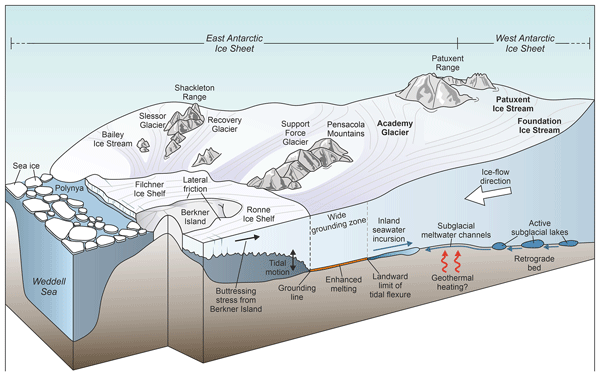
We review research about a group of fast-flowing Antarctic ice streams, the Foundation-Patuxent-Academy System. Previously, we knew little about how these ice streams flow, how they interact with each other and the ocean, what their geological history was, and how they might evolve in a warming world. By reviewing existing research, we have identified the future research needed to determine how these ice streams function, and how they might contribute to future global sea level rise.
Jamie Barnett, Felicity A. Holmes, Sarah L. Greenwood, Mathieu Morlighem, Nina Kirchner, and Martin Jakobsson
The Cryosphere, 20, 3599–3617, https://doi.org/10.5194/tc-20-3599-2026, https://doi.org/10.5194/tc-20-3599-2026, 2026
Short summary
Short summary
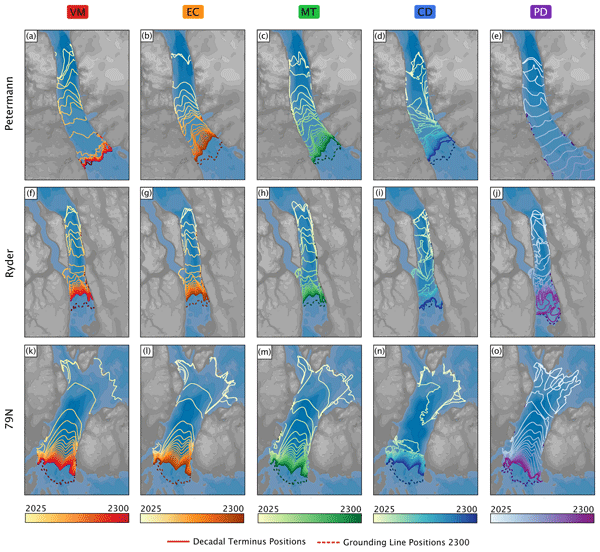
Computer models used to predict future change of the Greenland Ice Sheet are uncertain, especially in how they represent iceberg calving. We compare several calving approaches by testing model results against satellite observations of changes at three unique floating ice shelves in Greenland. We then extend the simulations to the year 2300 to explore future ice loss, finding that warming of the atmosphere or ocean is more important than the choice of calving method.
Mansa Krishna, Gong Cheng, and Mathieu Morlighem
The Cryosphere, 20, 3533–3558, https://doi.org/10.5194/tc-20-3533-2026, https://doi.org/10.5194/tc-20-3533-2026, 2026
Short summary
Short summary
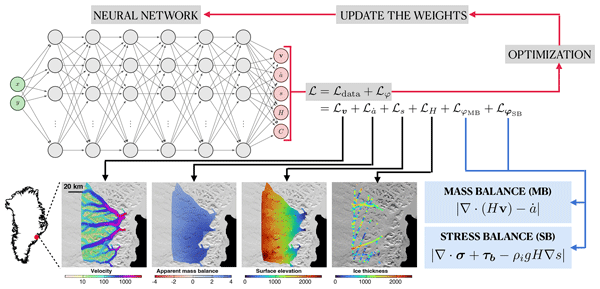
Estimates of the Greenland Ice Sheet’s contribution to sea level rise are affected by uncertainties in the bed topography. Traditional, physics-based methods for inferring the bed elevation are limited to fast-flowing areas of the ice sheet. We use machine learning models informed with two physical laws to infer the bed elevation for different regions in Greenland, showing that this method can be used to infer the bed elevation in slower-moving, sparsely surveyed regions of the ice sheet.
Daniel Abele, Thomas Kleiner, Yannic Fischler, Benjamin Uekermann, Gerasimos Chourdakis, Mathieu Morlighem, Achim Basermann, Christian Bischof, Hans-Joachim Bungartz, and Angelika Humbert
Geosci. Model Dev., 19, 5019–5039, https://doi.org/10.5194/gmd-19-5019-2026, https://doi.org/10.5194/gmd-19-5019-2026, 2026
Short summary
Short summary
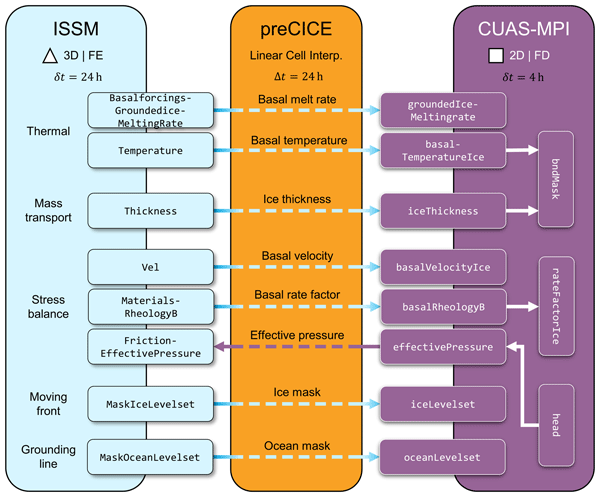
Accurate simulations of ice-sheet evolution require a multi-physics approach that captures the interaction between glaciers and their subglacial environment. For this purpose, we have extended ice sheet and subglacial hydrology models using a coupling library. This simplifies coupled Earth systems simulations by allowing models to interact with minimal effort and computational expense. We have evaluated the solution regarding performance and choice of coupling library.
Jing Zhang, Yang Lei, Laurane Charrier, Amaury Dehecq, Alex S. Gardner, Luke Copland, and Christine Dow
EGUsphere, https://doi.org/10.5194/egusphere-2026-2541, https://doi.org/10.5194/egusphere-2026-2541, 2026
This preprint is open for discussion and under review for The Cryosphere (TC).
Short summary
Short summary
Satellites can measure how fast glaciers move, which helps scientists understand ice loss and rising sea levels. However, these measurements have rarely been checked against ground-based observations on small mountain glaciers. We compared satellite-derived glacier speeds against precise ground measurements. The satellite data generally agreed well with ground observations. Our results help scientists use satellite glacier velocity data more reliably.
Ruijie Chang, Xi Lu, Ronggang Huang, Andrew J. Sole, Stephen J. Livingstone, Zhen Dong, Liming Jiang, Hansheng Wang, and Bisheng Yang
EGUsphere, https://doi.org/10.5194/egusphere-2026-2598, https://doi.org/10.5194/egusphere-2026-2598, 2026
Short summary
Short summary
Surface crevasses play an important role in glacier flow, iceberg calving, and meltwater routing, yet their depths remain poorly quantified at catchment or larger scales. We use ICESat-2 laser altimetry to estimate crevasse depths on Sermeq Kujalleq (Jakobshavn Isbræ) in 2019. Over ten thousand crevasses are mapped from along-track detection. Results show deepest crevasses occur ~20 km inland, demonstrating the potential of ICESat-2 for high-resolution crevasse depth mapping.
James R. Jordan, Frank Pattyn, Daniel Abele, Torsten Albrecht, Jorge Alvarez-Solas, Jowan M. Barnes, Tijn Berends, Jorge A. Bernales, Javier Blasco, Gong Cheng, Youngmin Choi, Stephen L. Cornford, Cruz Garcia-Molina, Fabien Gillet-Chaulet, G. Hilmar Gudmundsson, Angelika Humbert, Gunter R. Leguy, William H. Lipscomb, Marisa Montoya, Daniel Moreno-Parada, Mathieu Morlighem, Tyler Pelle, Alexander Robinson, Martin Rückamp, Hélène Seroussi, Yanmei Tian, Luisa Wagner, Roderick S. W. van de Wal, Liyun Zhao, and Thomas Zwinger
EGUsphere, https://doi.org/10.5194/egusphere-2026-1962, https://doi.org/10.5194/egusphere-2026-1962, 2026
Short summary
Short summary
Ice calving is a recent inclusion in ice sheet models and there has not been a systematic test of how well it has been implemented. We show that models can accurately represent a given rate of ice calving, properties at the ice front evolve smoothly during calving, and that there are no consistent differences in ice behaviour between various approaches to representing calving in numerical ice models. This gives us confidence in their ability for use in sea level rise prediction simulations.
Xi Lu, Liming Jiang, Daan Li, Yi Liu, Andrew J. Sole, and Stephen J. Livingstone
Earth Syst. Sci. Data, 18, 2635–2652, https://doi.org/10.5194/essd-18-2635-2026, https://doi.org/10.5194/essd-18-2635-2026, 2026
Short summary
Short summary
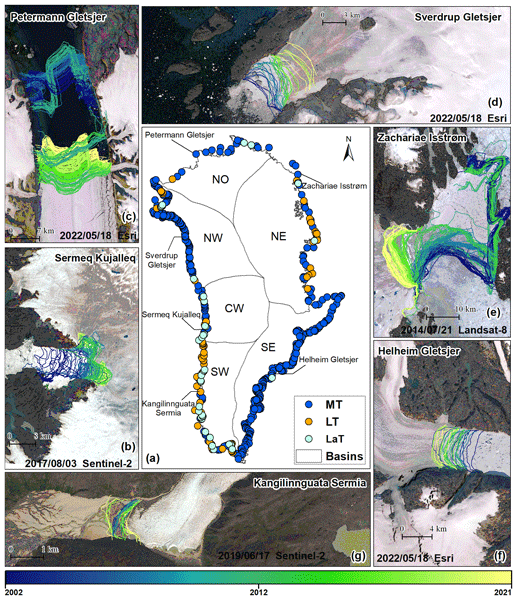
Greenland Terminus Position Dataset (GrTPD) is a new manually delineated dataset of glacier terminus positions for the Greenland Ice Sheet, providing spatially extensive and seasonally targeted coverage across marine-, land-, and lake-terminating glaciers. The dataset includes 19 171 terminus delineations for 465 glaciers spanning 2002–2021, derived from multi-source optical and SAR satellite imagery using standardized workflows.
Sunil N. Oulkar, Matthew W. Peacey, Michael Mitrev, Duncan J. Quincey, Bryn Hubbard, Tom Matthews, Ankita S. Oulkar, Katie E. Miles, and Ann V. Rowan
Geosci. Instrum. Method. Data Syst., 15, 75–88, https://doi.org/10.5194/gi-15-75-2026, https://doi.org/10.5194/gi-15-75-2026, 2026
Short summary
Short summary
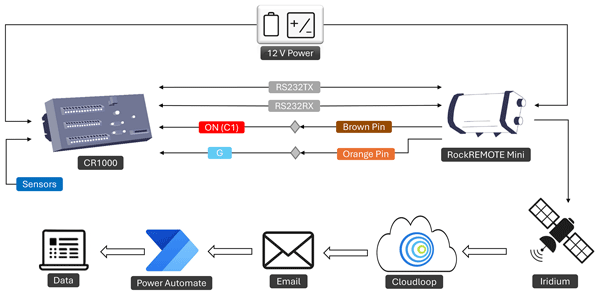
We designed and tested a system that can record and send data in near real time from extreme and remote locations, such as Mount Everest. Using solar power and satellite communication, the system worked reliably at high altitude, showing it can be applied in other remote regions. This approach will help scientists collect vital information on how the environment is changing in areas that are normally very difficult to study.
Ankit Pramanik, Sarah L. Greenwood, Mathieu Morlighem, Jamie Barnett, Felicity A. Holmes, Richard Gyllencreutz, and Carl Regnéll
EGUsphere, https://doi.org/10.5194/egusphere-2026-172, https://doi.org/10.5194/egusphere-2026-172, 2026
Short summary
Short summary
Ice sheet/glacier retreat is driving expansion of glacial lakes impounded at the ice margin. Using an ice sheet model, we find that lake filling and drainage causes systematic changes to glacier thickness, velocity and mass loss. Rising lake levels dramatically increase mass loss as the ice margin becomes buoyant, while rapid lake drainage can drive crevassing and destabilise the margin. Steady lake drainage, in contrast, has a stabilising effect, and may mitigate mass loss and flood hazards.
Michael R. Prior-Jones, Lisa Craw, Jonathan D. Hawkins, Elizabeth A. Bagshaw, Paul Carpenter, Thomas H. Nylen, and Joe Pettit
Geosci. Instrum. Method. Data Syst., 14, 503–512, https://doi.org/10.5194/gi-14-503-2025, https://doi.org/10.5194/gi-14-503-2025, 2025
Short summary
Short summary
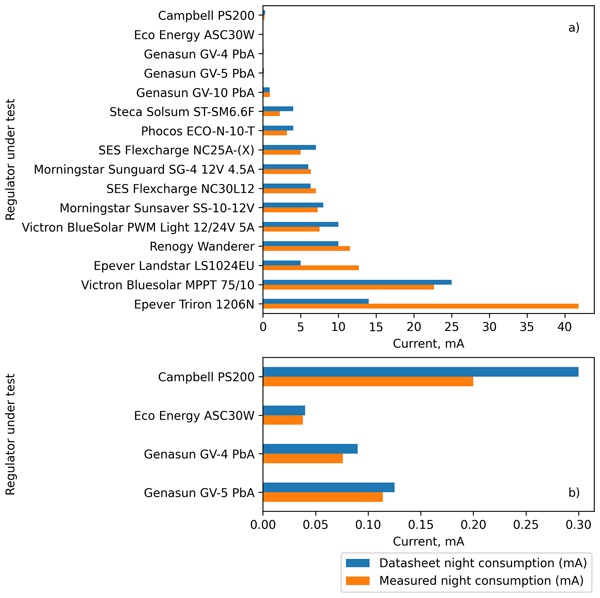
We tested solar regulators to find their suitability for use in powering instruments in the polar regions. We found that some models waste a lot of power and may result in instruments failing during the wintertime. We developed a model to illustrate this effect, and use it to show that a good choice of solar regulator means a greater chance of successful winter data collection and allows the use of a smaller, lighter, cheaper battery.
Holly Wytiahlowsky, Chris R. Stokes, Rebecca A. Hodge, Caroline C. Clason, and Stewart S. R. Jamieson
The Cryosphere, 19, 6461–6482, https://doi.org/10.5194/tc-19-6461-2025, https://doi.org/10.5194/tc-19-6461-2025, 2025
Short summary
Short summary
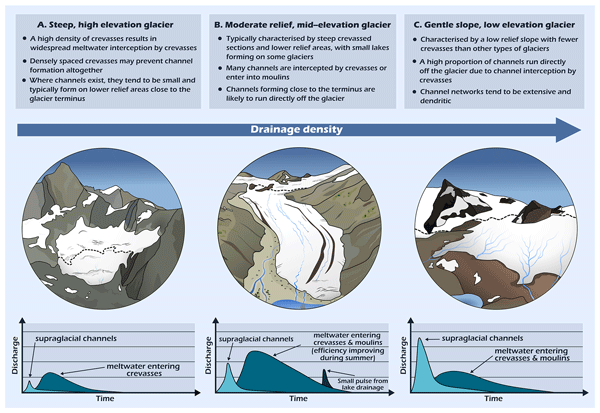
Channels on glaciers are important due to their role in transporting glacial meltwater into downstream river catchments. These channels have received little research in mountain environments. We manually mapped <2000 channels to determine their distribution and characteristics across 285 glaciers in Switzerland. We find that channels are mostly commonly found on low-elevation glaciers with gentle slopes and few crevasses. Most channels run off the glacier, but 20 % enter the glacier.
Felix S. L. Ng, Rachael H. Rhodes, Tyler J. Fudge, and Eric W. Wolff
The Cryosphere, 19, 5693–5717, https://doi.org/10.5194/tc-19-5693-2025, https://doi.org/10.5194/tc-19-5693-2025, 2025
Short summary
Short summary
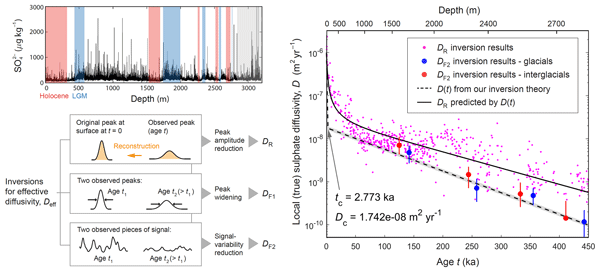
Impurity diffusion in ice destroys climate history. We give a new way to find the diffusion rate from ice-core records. Its use on sulphate of the European Project for Ice Coring in Antarctica Dome C core reveals rapid diffusion in snow (suggesting H2SO4 vapour diffusion in air pores) and slow diffusion in the ice below (involving signal relocation between crystal interfaces). We estimate a maximum sulphate diffusion length of 2 cm for the old ice sought by the coring projects on Little Dome C.
Robert G. Bingham, Julien A. Bodart, Marie G. P. Cavitte, Ailsa Chung, Rebecca J. Sanderson, Johannes C. R. Sutter, Olaf Eisen, Nanna B. Karlsson, Joseph A. MacGregor, Neil Ross, Duncan A. Young, David W. Ashmore, Andreas Born, Winnie Chu, Xiangbin Cui, Reinhard Drews, Steven Franke, Vikram Goel, John W. Goodge, A. Clara J. Henry, Antoine Hermant, Benjamin H. Hills, Nicholas Holschuh, Michelle R. Koutnik, Gwendolyn J.-M. C. Leysinger Vieli, Emma J. MacKie, Elisa Mantelli, Carlos Martín, Felix S. L. Ng, Falk M. Oraschewski, Felipe Napoleoni, Frédéric Parrenin, Sergey V. Popov, Therese Rieckh, Rebecca Schlegel, Dustin M. Schroeder, Martin J. Siegert, Xueyuan Tang, Thomas O. Teisberg, Kate Winter, Shuai Yan, Harry Davis, Christine F. Dow, Tyler J. Fudge, Tom A. Jordan, Bernd Kulessa, Kenichi Matsuoka, Clara J. Nyqvist, Maryam Rahnemoonfar, Matthew R. Siegfried, Shivangini Singh, Vjeran Višnjević, Rodrigo Zamora, and Alexandra Zuhr
The Cryosphere, 19, 4611–4655, https://doi.org/10.5194/tc-19-4611-2025, https://doi.org/10.5194/tc-19-4611-2025, 2025
Short summary
Short summary
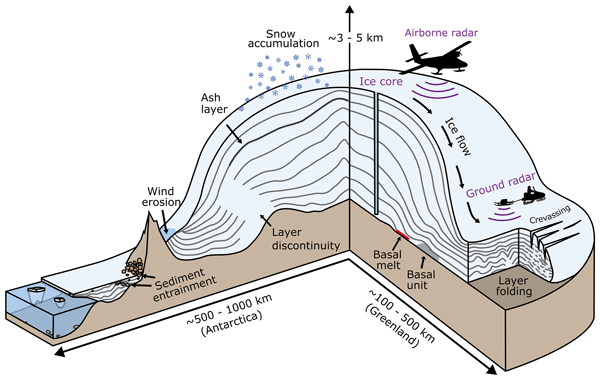
The ice sheets covering Antarctica have built up over millenia through successive snowfall events which become buried and preserved as internal surfaces of equal age detectable with ice-penetrating radar. This paper describes an international initiative working together on these archival data to build a comprehensive 3-D picture of how old the ice is everywhere across Antarctica and how this is being used to reconstruct past and to predict future ice and climate behaviour.
Laurane Charrier, Amaury Dehecq, Lei Guo, Fanny Brun, Romain Millan, Nathan Lioret, Luke Copland, Nathan Maier, Christine Dow, and Paul Halas
The Cryosphere, 19, 4555–4583, https://doi.org/10.5194/tc-19-4555-2025, https://doi.org/10.5194/tc-19-4555-2025, 2025
Short summary
Short summary
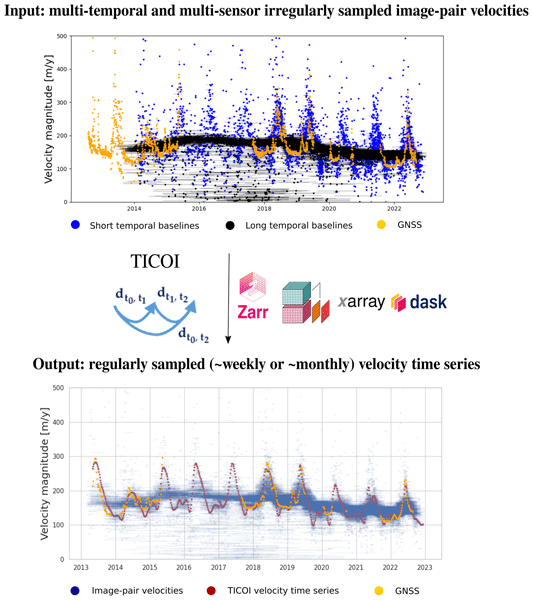
While global annual glacier velocities are openly accessible, sub-annual velocity time series are still lacking. This hinders our ability to understand flow processes and the integration of these observations in numerical models. We introduce an open source Python package called TICOI (Temporal Inversion using linear Combinations of Observations, and Interpolation) to fuse multi-temporal and multi-sensor image-pair velocities produced by different processing chains to produce standardized sub-annual velocity products.
Johanna Beckmann, Ronja Reese, Felicity S. McCormack, Sue Cook, Lawrence Bird, Dawid Gwyther, Daniel Richards, Matthias Scheiter, Yu Wang, Hélène Seroussi, Ayako Abe‐Ouchi, Torsten Albrecht, Jorge Alvarez‐Solas, Xylar S. Asay‐Davis, Jean‐Baptiste Barre, Constantijn J. Berends, Jorge Bernales, Javier Blasco, Justine Caillet, David M. Chandler, Violaine Coulon, Richard Cullather, Christophe Dumas, Benjamin K. Galton‐Fenzi, Julius Garbe, Fabien Gillet‐Chaulet, Rupert Gladstone, Heiko Goelzer, Nicholas R. Golledge, Ralf Greve, G. Hilmar Gudmundsson, Holly Kyeore Han, Trevor R. Hillebrand, Matthew J. Hoffman, Philippe Huybrechts, Nicolas C. Jourdain, Ann Kristin Klose, Petra M. Langebroek, Gunter R. Leguy, William H. Lipscomb, Daniel P. Lowry, Pierre Mathiot, Marisa Montoya, Mathieu Morlighem, Sophie Nowicki, Frank Pattyn, Antony J. Payne, Tyler Pelle, Aurélien Quiquet, Alexander Robinson, Leopekka Saraste, Erika G. Simon, Sainan Sun, Jake P. Twarog, Luke D. Trusel, Benoit Urruty, Jonas Van Breedam, Roderik S. W. van de Wal, Chen Zhao, and Thomas Zwinger
EGUsphere, https://doi.org/10.5194/egusphere-2025-4069, https://doi.org/10.5194/egusphere-2025-4069, 2025
Short summary
Short summary
Antarctica holds enough ice to raise sea levels by many meters, but its future is uncertain. Warm ocean water melts ice shelves from below, letting inland ice flow faster into the sea. By 2300, Antarctica could add 0.6–4.4 m to sea levels. Our study identifies two key factors—how strongly shelves melt and how the ice responds. These explain much of the range, and refining them in models may improve future predictions.
Jamie Barnett, Felicity A. Holmes, Joshua Cuzzone, Henning Åkesson, Mathieu Morlighem, Matt O'Regan, Johan Nilsson, Nina Kirchner, and Martin Jakobsson
The Cryosphere, 19, 3631–3653, https://doi.org/10.5194/tc-19-3631-2025, https://doi.org/10.5194/tc-19-3631-2025, 2025
Short summary
Short summary
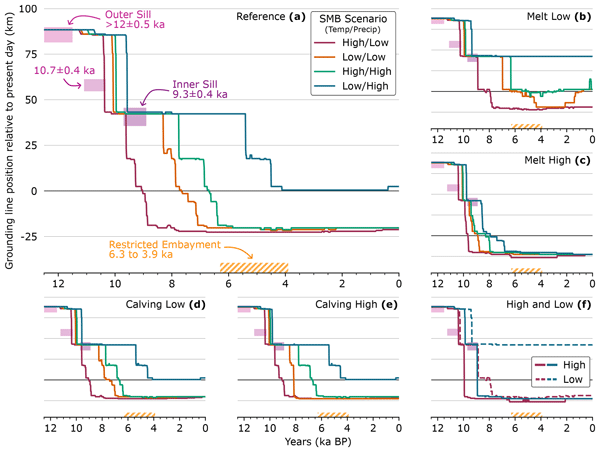
Understanding how ice sheets have changed in the past can allow us to make better predictions for the future. By running a state-of-the-art model of Ryder Glacier, North Greenland, over the past 12 000 years we find that both a warming atmosphere and the ocean play a key role in the evolution of the glacier. Our conclusions stress that accurately quantifying the ice sheet’s interactions with the ocean is required to predict future changes and reliable sea level rise estimates.
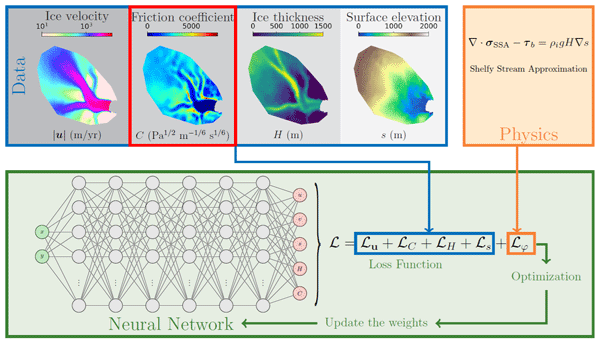
Gong Cheng, Mansa Krishna, and Mathieu Morlighem
Geosci. Model Dev., 18, 5311–5327, https://doi.org/10.5194/gmd-18-5311-2025, https://doi.org/10.5194/gmd-18-5311-2025, 2025
Short summary
Short summary
Predicting ice sheet contributions to sea level rise is challenging due to limited data and uncertainties in key processes. Traditional models require complex methods that lack flexibility. We developed PINNICLE (Physics-Informed Neural Networks for Ice and CLimatE), an open-source Python library that integrates machine learning with physical laws to improve ice sheet modeling. By combining data and physics, PINNICLE enhances predictions and adaptability, providing a powerful tool for climate research and sea level rise projections.
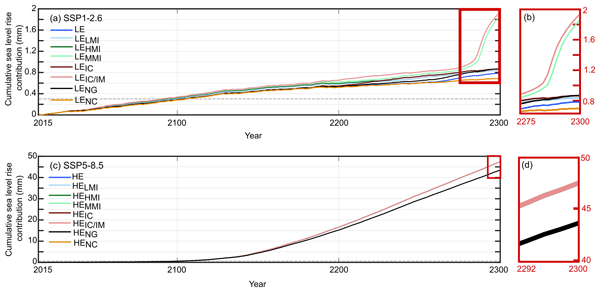
Felicity A. Holmes, Jamie Barnett, Henning Åkesson, Mathieu Morlighem, Johan Nilsson, Nina Kirchner, and Martin Jakobsson
The Cryosphere, 19, 2695–2714, https://doi.org/10.5194/tc-19-2695-2025, https://doi.org/10.5194/tc-19-2695-2025, 2025
Short summary
Short summary
Northern Greenland contains some of the ice sheet's last remaining glaciers with floating ice tongues. One of these is Ryder Glacier, which has been relatively stable in recent decades, in contrast to nearby glaciers. Here, we use a computer model to simulate Ryder Glacier until 2300 under both a low- and a high-emissions scenario. Very high levels of surface melt under a high-emissions future lead to a sea level rise contribution that is an order of magnitude higher than under a low-emissions future.
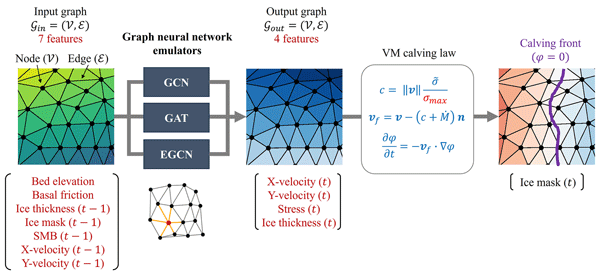
Younghyun Koo, Gong Cheng, Mathieu Morlighem, and Maryam Rahnemoonfar
The Cryosphere, 19, 2583–2599, https://doi.org/10.5194/tc-19-2583-2025, https://doi.org/10.5194/tc-19-2583-2025, 2025
Short summary
Short summary
Calving, the breaking of ice bodies from the terminus of a glacier, plays an important role in the mass losses of Greenland ice sheets. However, calving parameters have been poorly understood because of the intensive computational demands of traditional numerical models. To address this issue and find the optimal calving parameter that best represents real observations, we develop deep-learning emulators based on graph neural network architectures.
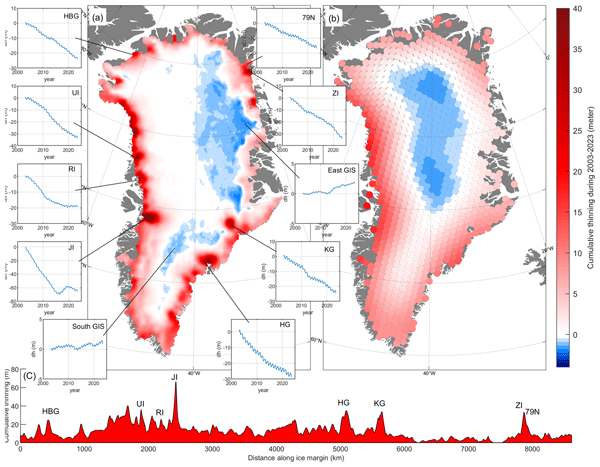
Shfaqat A. Khan, Helene Seroussi, Mathieu Morlighem, William Colgan, Veit Helm, Gong Cheng, Danjal Berg, Valentina R. Barletta, Nicolaj K. Larsen, William Kochtitzky, Michiel van den Broeke, Kurt H. Kjær, Andy Aschwanden, Brice Noël, Jason E. Box, Joseph A. MacGregor, Robert S. Fausto, Kenneth D. Mankoff, Ian M. Howat, Kuba Oniszk, Dominik Fahrner, Anja Løkkegaard, Eigil Y. H. Lippert, Alicia Bråtner, and Javed Hassan
Earth Syst. Sci. Data, 17, 3047–3071, https://doi.org/10.5194/essd-17-3047-2025, https://doi.org/10.5194/essd-17-3047-2025, 2025
Short summary
Short summary
The surface elevation of the Greenland Ice Sheet is changing due to surface mass balance processes and ice dynamics, each exhibiting distinct spatiotemporal patterns. Here, we employ satellite and airborne altimetry data with fine spatial (1 km) and temporal (monthly) resolutions to document this spatiotemporal evolution from 2003 to 2023. This dataset of fine-resolution altimetry data in both space and time will support studies of ice mass loss and be useful for GIS ice sheet modeling.
Joshua K. Cuzzone, Aaron Barth, Kelsey Barker, and Mathieu Morlighem
The Cryosphere, 19, 1559–1575, https://doi.org/10.5194/tc-19-1559-2025, https://doi.org/10.5194/tc-19-1559-2025, 2025
Short summary
Short summary
We use an ice sheet model to simulate the Last Glacial Maximum conditions of the Laurentide Ice Sheet (LIS) across the northeastern United States. A complex thermal history existed for the LIS that caused high erosion across most of the NE USA but prevented erosion across high-elevation mountain peaks and areas where ice flow was slow. This has implications for geologic studies which rely on the erosional nature of the LIS to reconstruct its glacial history and landscape evolution.
Francesca Baldacchino, Nicholas R. Golledge, Mathieu Morlighem, Huw Horgan, Alanna V. Alevropoulos-Borrill, Alena Malyarenko, Alexandra Gossart, Daniel P. Lowry, and Laurine van Haastrecht
The Cryosphere, 19, 107–127, https://doi.org/10.5194/tc-19-107-2025, https://doi.org/10.5194/tc-19-107-2025, 2025
Short summary
Short summary
Understanding how the Ross Ice Shelf flow is changing in a warming world is important for predicting ice sheet change. Field measurements show clear intra-annual variations in ice flow; however, it is unclear what mechanisms drive this variability. We show that local perturbations in basal melt can have a significant impact on ice flow speed, but a combination of forcings is likely driving the observed variability in ice flow.
Adam J. Hepburn, Christine F. Dow, Antti Ojala, Joni Mäkinen, Elina Ahokangas, Jussi Hovikoski, Jukka-Pekka Palmu, and Kari Kajuutti
The Cryosphere, 18, 4873–4916, https://doi.org/10.5194/tc-18-4873-2024, https://doi.org/10.5194/tc-18-4873-2024, 2024
Short summary
Short summary
Terrain formerly occupied by ice sheets in the last ice age allows us to parameterize models of basal water flow using terrain and data unavailable beneath current ice sheets. Using GlaDS, a 2D basal hydrology model, we explore the origin of murtoos, a specific landform found throughout Finland that is thought to mark the upper limit of channels beneath the ice. Our results validate many of the predictions of murtoo origins and demonstrate that such models can be used to explore past ice sheets.
Felix S. L. Ng
The Cryosphere, 18, 4645–4669, https://doi.org/10.5194/tc-18-4645-2024, https://doi.org/10.5194/tc-18-4645-2024, 2024
Short summary
Short summary
Liquid veins and grain boundaries in ice can accelerate the decay of climate signals in δ18O and δD by short-circuiting the slow isotopic diffusion in crystal grains. This theory for "excess diffusion" has not been confirmed experimentally. We show that, if the mechanism occurs, then distinct isotopic patterns must form near grain junctions, offering a testable prediction of the theory. We calculate the patterns and describe an experimental scheme for testing ice-core samples for the mechanism.
Falk M. Oraschewski, Inka Koch, M. Reza Ershadi, Jonathan D. Hawkins, Olaf Eisen, and Reinhard Drews
The Cryosphere, 18, 3875–3889, https://doi.org/10.5194/tc-18-3875-2024, https://doi.org/10.5194/tc-18-3875-2024, 2024
Short summary
Short summary
Mountain glaciers have a layered structure which contains information about past snow accumulation and ice flow. Using ground-penetrating radar instruments, the internal structure can be observed. The detection of layers in the deeper parts of a glacier is often difficult. Here, we present a new approach for imaging the englacial structure of an Alpine glacier (Colle Gnifetti, Switzerland and Italy) using a phase-sensitive radar that can detect reflection depth changes at sub-wavelength scales.
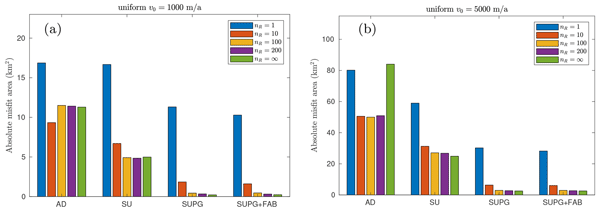
Gong Cheng, Mathieu Morlighem, and G. Hilmar Gudmundsson
Geosci. Model Dev., 17, 6227–6247, https://doi.org/10.5194/gmd-17-6227-2024, https://doi.org/10.5194/gmd-17-6227-2024, 2024
Short summary
Short summary
We conducted a comprehensive analysis of the stabilization and reinitialization techniques currently employed in ISSM and Úa for solving level-set equations, specifically those related to the dynamic representation of moving ice fronts within numerical ice sheet models. Our results demonstrate that the streamline upwind Petrov–Galerkin (SUPG) method outperforms the other approaches. We found that excessively frequent reinitialization can lead to exceptionally high errors in simulations.
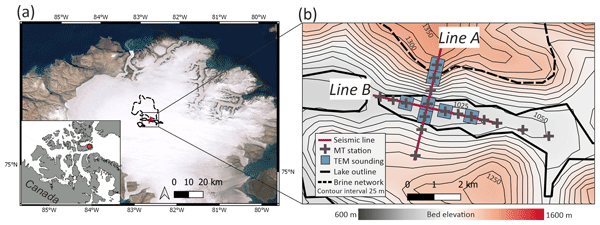
Siobhan F. Killingbeck, Anja Rutishauser, Martyn J. Unsworth, Ashley Dubnick, Alison S. Criscitiello, James Killingbeck, Christine F. Dow, Tim Hill, Adam D. Booth, Brittany Main, and Eric Brossier
The Cryosphere, 18, 3699–3722, https://doi.org/10.5194/tc-18-3699-2024, https://doi.org/10.5194/tc-18-3699-2024, 2024
Short summary
Short summary
A subglacial lake was proposed to exist beneath Devon Ice Cap in the Canadian Arctic based on the analysis of airborne data. Our study presents a new interpretation of the subglacial material beneath the Devon Ice Cap from surface-based geophysical data. We show that there is no evidence of subglacial water, and the subglacial lake has likely been misidentified. Re-evaluation of the airborne data shows that overestimation of a critical processing parameter has likely occurred in prior studies.
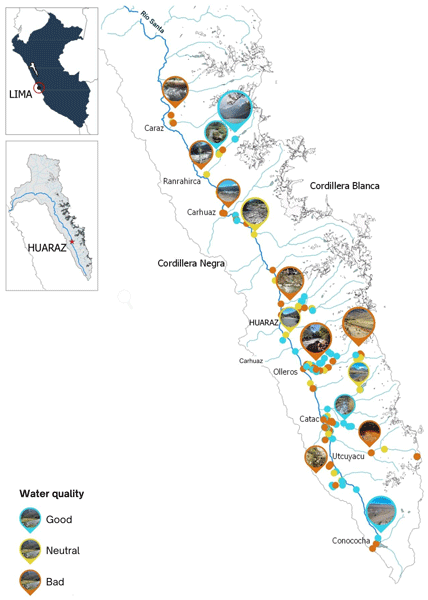
Sally Rangecroft, Caroline Clason, Rosa Maria Dextre, Isabel Richter, Claire Kelly, Cecilia Turin, Claudia V. Grados-Bueno, Beatriz Fuentealba, Mirtha Camacho Hernandez, Sergio Morera Julca, John Martin, and John Adam Guy
Geosci. Commun., 7, 145–150, https://doi.org/10.5194/gc-7-145-2024, https://doi.org/10.5194/gc-7-145-2024, 2024
Short summary
Short summary
The Nuestro Rio project (2021–22) developed a digital app to collect local perspectives on water quality in the Santa River basin, Peru. Here we share four key lessons from the project, discussing the importance and challenges of engaging local participants, the use of technology for data collection, and the need to integrate local perspectives with scientific observations. This article provides insights for researchers considering developing similar technological tools for environmental issues.

Izabela Szuman, Jakub Z. Kalita, Christiaan R. Diemont, Stephen J. Livingstone, Chris D. Clark, and Martin Margold
The Cryosphere, 18, 2407–2428, https://doi.org/10.5194/tc-18-2407-2024, https://doi.org/10.5194/tc-18-2407-2024, 2024
Short summary
Short summary
A Baltic-wide glacial landform-based map is presented, filling in a geographical gap in the record that has been speculated about by palaeoglaciologists for over a century. Here we used newly available bathymetric data and provide landform evidence of corridors of fast ice flow that we interpret as ice streams. Where previous ice-sheet-scale investigations inferred a single ice source, our mapping identifies flow and ice margin geometries from both Swedish and Bothnian sources.
Guillaume Lamarche-Gagnon, Marek Stibal, Alexandre M. Anesio, Jemma L. Wadham, Jon Hawkings, Lukáš Falteisek, Kristýna Vrbická, Petra Klímová, Jakub D. Žárský, Tyler J. Kohler, Elizabeth A. Bagshaw, Jade E. Hatton, Alex D. Beaton, and Jon Telling
EGUsphere, https://doi.org/10.5194/egusphere-2024-817, https://doi.org/10.5194/egusphere-2024-817, 2024
Preprint archived
Short summary
Short summary
To better understand the microbial ecosystems that underlay Earth’s glaciers, studies often rely on indirect sampling of the subglacial environment via proglacial meltwater runoff. Our research in Greenland reveals that fluctuations in glacier melt can affect microbial composition in runoff, highlighting important biases often overlooked in studies of glacial runoff that might skew interpretations as to the subglacial origin of microbial communities exported within meltwaters.
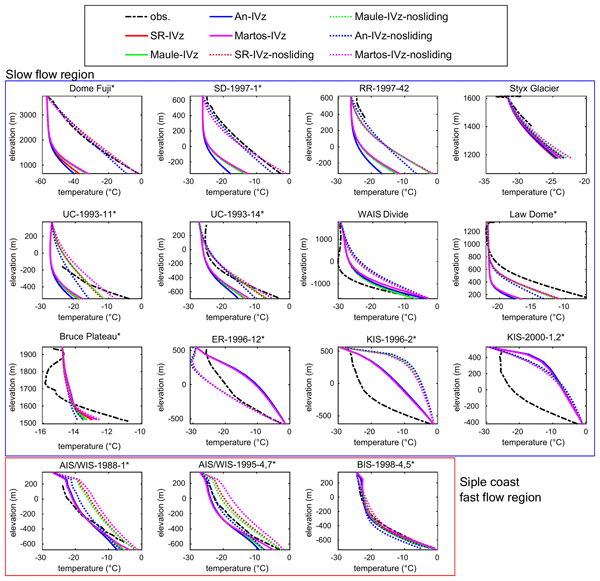
In-Woo Park, Emilia Kyung Jin, Mathieu Morlighem, and Kang-Kun Lee
The Cryosphere, 18, 1139–1155, https://doi.org/10.5194/tc-18-1139-2024, https://doi.org/10.5194/tc-18-1139-2024, 2024
Short summary
Short summary
This study conducted 3D thermodynamic ice sheet model experiments, and modeled temperatures were compared with 15 observed borehole temperature profiles. We found that using incompressibility of ice without sliding agrees well with observed temperature profiles in slow-flow regions, while incorporating sliding in fast-flow regions captures observed temperature profiles. Also, the choice of vertical velocity scheme has a greater impact on the shape of the modeled temperature profile.
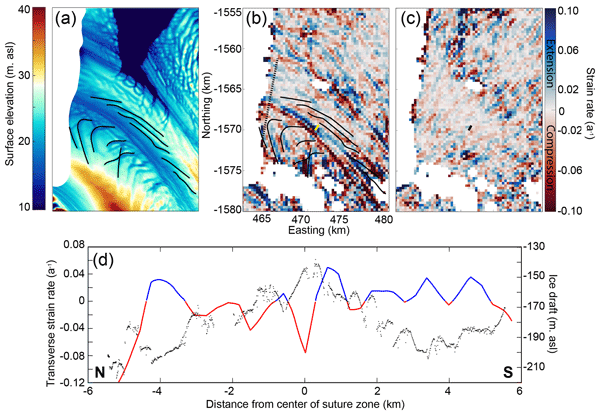
Christine F. Dow, Derek Mueller, Peter Wray, Drew Friedrichs, Alexander L. Forrest, Jasmin B. McInerney, Jamin Greenbaum, Donald D. Blankenship, Choon Ki Lee, and Won Sang Lee
The Cryosphere, 18, 1105–1123, https://doi.org/10.5194/tc-18-1105-2024, https://doi.org/10.5194/tc-18-1105-2024, 2024
Short summary
Short summary
Ice shelves are a key control on Antarctic contribution to sea level rise. We examine the Nansen Ice Shelf in East Antarctica using a combination of field-based and satellite data. We find the basal topography of the ice shelf is highly variable, only partially visible in satellite datasets. We also find that the thinnest region of the ice shelf is altered over time by ice flow rates and ocean melting. These processes can cause fractures to form that eventually result in large calving events.
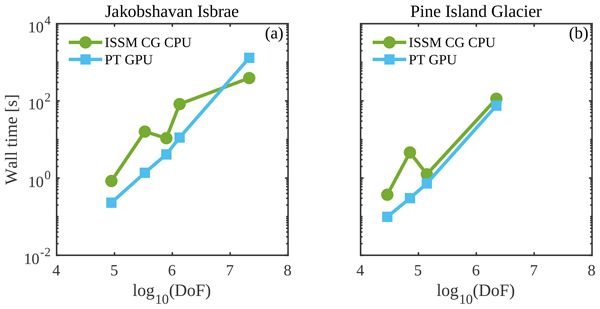
Anjali Sandip, Ludovic Räss, and Mathieu Morlighem
Geosci. Model Dev., 17, 899–909, https://doi.org/10.5194/gmd-17-899-2024, https://doi.org/10.5194/gmd-17-899-2024, 2024
Short summary
Short summary
We solve momentum balance for unstructured meshes to predict ice flow for real glaciers using a pseudo-transient method on graphics processing units (GPUs) and compare it to a standard central processing unit (CPU) implementation. We justify the GPU implementation by applying the price-to-performance metric for up to million-grid-point spatial resolutions. This study represents a first step toward leveraging GPU processing power, enabling more accurate polar ice discharge predictions.
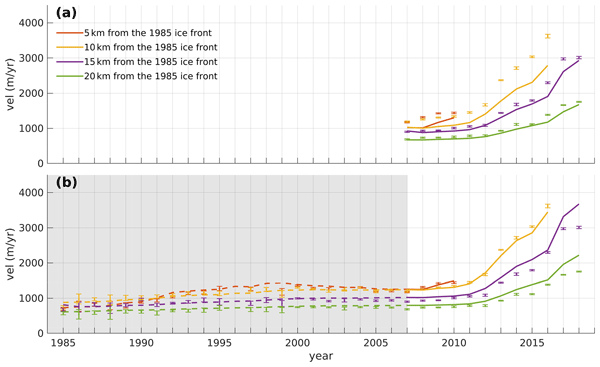
Youngmin Choi, Helene Seroussi, Mathieu Morlighem, Nicole-Jeanne Schlegel, and Alex Gardner
The Cryosphere, 17, 5499–5517, https://doi.org/10.5194/tc-17-5499-2023, https://doi.org/10.5194/tc-17-5499-2023, 2023
Short summary
Short summary
Ice sheet models are often initialized using snapshot observations of present-day conditions, but this approach has limitations in capturing the transient evolution of the system. To more accurately represent the accelerating changes in glaciers, we employed time-dependent data assimilation. We found that models calibrated with the transient data better capture past trends and more accurately reproduce changes after the calibration period, even with limited observations.
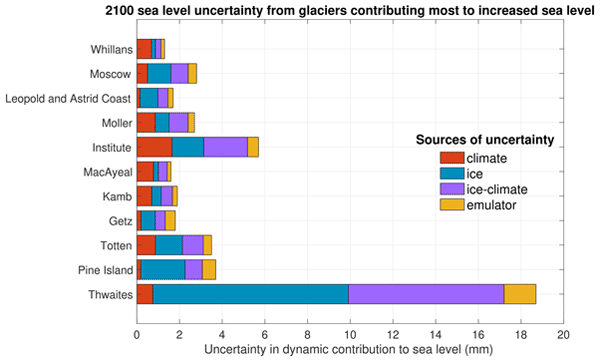
Hélène Seroussi, Vincent Verjans, Sophie Nowicki, Antony J. Payne, Heiko Goelzer, William H. Lipscomb, Ayako Abe-Ouchi, Cécile Agosta, Torsten Albrecht, Xylar Asay-Davis, Alice Barthel, Reinhard Calov, Richard Cullather, Christophe Dumas, Benjamin K. Galton-Fenzi, Rupert Gladstone, Nicholas R. Golledge, Jonathan M. Gregory, Ralf Greve, Tore Hattermann, Matthew J. Hoffman, Angelika Humbert, Philippe Huybrechts, Nicolas C. Jourdain, Thomas Kleiner, Eric Larour, Gunter R. Leguy, Daniel P. Lowry, Chistopher M. Little, Mathieu Morlighem, Frank Pattyn, Tyler Pelle, Stephen F. Price, Aurélien Quiquet, Ronja Reese, Nicole-Jeanne Schlegel, Andrew Shepherd, Erika Simon, Robin S. Smith, Fiammetta Straneo, Sainan Sun, Luke D. Trusel, Jonas Van Breedam, Peter Van Katwyk, Roderik S. W. van de Wal, Ricarda Winkelmann, Chen Zhao, Tong Zhang, and Thomas Zwinger
The Cryosphere, 17, 5197–5217, https://doi.org/10.5194/tc-17-5197-2023, https://doi.org/10.5194/tc-17-5197-2023, 2023
Short summary
Short summary
Mass loss from Antarctica is a key contributor to sea level rise over the 21st century, and the associated uncertainty dominates sea level projections. We highlight here the Antarctic glaciers showing the largest changes and quantify the main sources of uncertainty in their future evolution using an ensemble of ice flow models. We show that on top of Pine Island and Thwaites glaciers, Totten and Moscow University glaciers show rapid changes and a strong sensitivity to warmer ocean conditions.
Joel A. Wilner, Mathieu Morlighem, and Gong Cheng
The Cryosphere, 17, 4889–4901, https://doi.org/10.5194/tc-17-4889-2023, https://doi.org/10.5194/tc-17-4889-2023, 2023
Short summary
Short summary
We use numerical modeling to study iceberg calving off of ice shelves in Antarctica. We examine four widely used mathematical descriptions of calving (
calving laws), under the assumption that Antarctic ice shelf front positions should be in steady state under the current climate forcing. We quantify how well each of these calving laws replicates the observed front positions. Our results suggest that the eigencalving and von Mises laws are most suitable for Antarctic ice shelves.
Lauren D. Rawlins, David M. Rippin, Andrew J. Sole, Stephen J. Livingstone, and Kang Yang
The Cryosphere, 17, 4729–4750, https://doi.org/10.5194/tc-17-4729-2023, https://doi.org/10.5194/tc-17-4729-2023, 2023
Short summary
Short summary
We map and quantify surface rivers and lakes at Humboldt Glacier to examine seasonal evolution and provide new insights of network configuration and behaviour. A widespread supraglacial drainage network exists, expanding up the glacier as seasonal runoff increases. Large interannual variability affects the areal extent of this network, controlled by high- vs. low-melt years, with late summer network persistence likely preconditioning the surface for earlier drainage activity the following year.
Koi McArthur, Felicity S. McCormack, and Christine F. Dow
The Cryosphere, 17, 4705–4727, https://doi.org/10.5194/tc-17-4705-2023, https://doi.org/10.5194/tc-17-4705-2023, 2023
Short summary
Short summary
Using subglacial hydrology model outputs for Denman Glacier, East Antarctica, we investigated the effects of various friction laws and effective pressure inputs on ice dynamics modeling over the same glacier. The Schoof friction law outperformed the Budd friction law, and effective pressure outputs from the hydrology model outperformed a typically prescribed effective pressure. We propose an empirical prescription of effective pressure to be used in the absence of hydrology model outputs.
Felicity S. McCormack, Jason L. Roberts, Bernd Kulessa, Alan Aitken, Christine F. Dow, Lawrence Bird, Benjamin K. Galton-Fenzi, Katharina Hochmuth, Richard S. Jones, Andrew N. Mackintosh, and Koi McArthur
The Cryosphere, 17, 4549–4569, https://doi.org/10.5194/tc-17-4549-2023, https://doi.org/10.5194/tc-17-4549-2023, 2023
Short summary
Short summary
Changes in Antarctic surface elevation can cause changes in ice and basal water flow, impacting how much ice enters the ocean. We find that ice and basal water flow could divert from the Totten to the Vanderford Glacier, East Antarctica, under only small changes in the surface elevation, with implications for estimates of ice loss from this region. Further studies are needed to determine when this could occur and if similar diversions could occur elsewhere in Antarctica due to climate change.
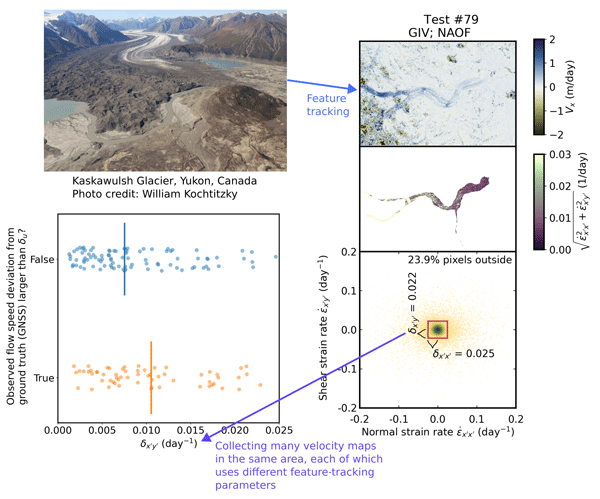
Whyjay Zheng, Shashank Bhushan, Maximillian Van Wyk De Vries, William Kochtitzky, David Shean, Luke Copland, Christine Dow, Renette Jones-Ivey, and Fernando Pérez
The Cryosphere, 17, 4063–4078, https://doi.org/10.5194/tc-17-4063-2023, https://doi.org/10.5194/tc-17-4063-2023, 2023
Short summary
Short summary
We design and propose a method that can evaluate the quality of glacier velocity maps. The method includes two numbers that we can calculate for each velocity map. Based on statistics and ice flow physics, velocity maps with numbers close to the recommended values are considered to have good quality. We test the method using the data from Kaskawulsh Glacier, Canada, and release an open-sourced software tool called GLAcier Feature Tracking testkit (GLAFT) to help users assess their velocity maps.
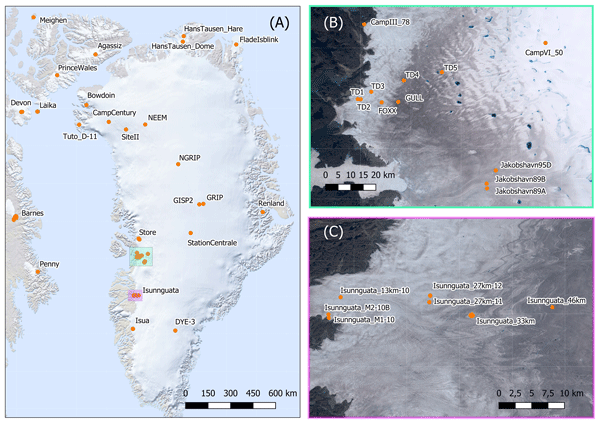
Anja Løkkegaard, Kenneth D. Mankoff, Christian Zdanowicz, Gary D. Clow, Martin P. Lüthi, Samuel H. Doyle, Henrik H. Thomsen, David Fisher, Joel Harper, Andy Aschwanden, Bo M. Vinther, Dorthe Dahl-Jensen, Harry Zekollari, Toby Meierbachtol, Ian McDowell, Neil Humphrey, Anne Solgaard, Nanna B. Karlsson, Shfaqat A. Khan, Benjamin Hills, Robert Law, Bryn Hubbard, Poul Christoffersen, Mylène Jacquemart, Julien Seguinot, Robert S. Fausto, and William T. Colgan
The Cryosphere, 17, 3829–3845, https://doi.org/10.5194/tc-17-3829-2023, https://doi.org/10.5194/tc-17-3829-2023, 2023
Short summary
Short summary
This study presents a database compiling 95 ice temperature profiles from the Greenland ice sheet and peripheral ice caps. Ice viscosity and hence ice flow are highly sensitive to ice temperature. To highlight the value of the database in evaluating ice flow simulations, profiles from the Greenland ice sheet are compared to a modeled temperature field. Reoccurring discrepancies between modeled and observed temperatures provide insight on the difficulties faced when simulating ice temperatures.
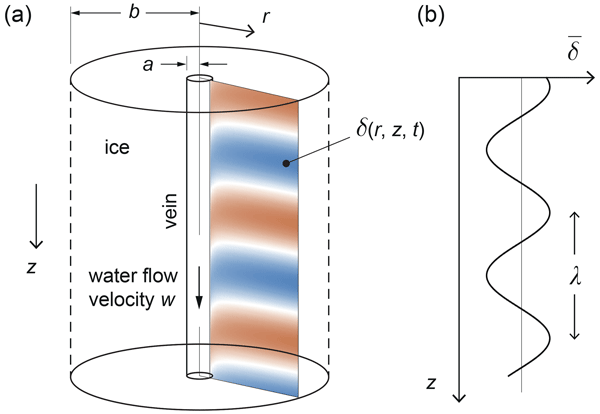
Felix S. L. Ng
The Cryosphere, 17, 3063–3082, https://doi.org/10.5194/tc-17-3063-2023, https://doi.org/10.5194/tc-17-3063-2023, 2023
Short summary
Short summary
The stable isotopes of oxygen and hydrogen in ice cores are routinely analysed for the climate signals which they carry. It has long been known that the system of water veins in ice facilitates isotopic diffusion. Here, mathematical modelling shows that water flow in the veins strongly accelerates the diffusion and the decay of climate signals. The process hampers methods using the variations in signal decay with depth to reconstruct past climatic temperature.
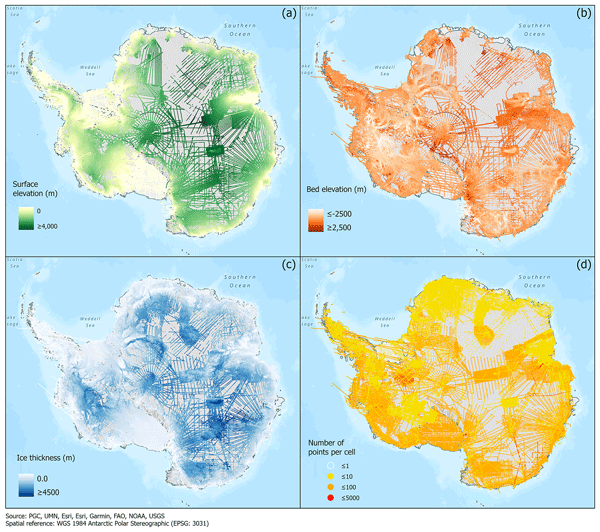
Alice C. Frémand, Peter Fretwell, Julien A. Bodart, Hamish D. Pritchard, Alan Aitken, Jonathan L. Bamber, Robin Bell, Cesidio Bianchi, Robert G. Bingham, Donald D. Blankenship, Gino Casassa, Ginny Catania, Knut Christianson, Howard Conway, Hugh F. J. Corr, Xiangbin Cui, Detlef Damaske, Volkmar Damm, Reinhard Drews, Graeme Eagles, Olaf Eisen, Hannes Eisermann, Fausto Ferraccioli, Elena Field, René Forsberg, Steven Franke, Shuji Fujita, Yonggyu Gim, Vikram Goel, Siva Prasad Gogineni, Jamin Greenbaum, Benjamin Hills, Richard C. A. Hindmarsh, Andrew O. Hoffman, Per Holmlund, Nicholas Holschuh, John W. Holt, Annika N. Horlings, Angelika Humbert, Robert W. Jacobel, Daniela Jansen, Adrian Jenkins, Wilfried Jokat, Tom Jordan, Edward King, Jack Kohler, William Krabill, Mette Kusk Gillespie, Kirsty Langley, Joohan Lee, German Leitchenkov, Carlton Leuschen, Bruce Luyendyk, Joseph MacGregor, Emma MacKie, Kenichi Matsuoka, Mathieu Morlighem, Jérémie Mouginot, Frank O. Nitsche, Yoshifumi Nogi, Ole A. Nost, John Paden, Frank Pattyn, Sergey V. Popov, Eric Rignot, David M. Rippin, Andrés Rivera, Jason Roberts, Neil Ross, Anotonia Ruppel, Dustin M. Schroeder, Martin J. Siegert, Andrew M. Smith, Daniel Steinhage, Michael Studinger, Bo Sun, Ignazio Tabacco, Kirsty Tinto, Stefano Urbini, David Vaughan, Brian C. Welch, Douglas S. Wilson, Duncan A. Young, and Achille Zirizzotti
Earth Syst. Sci. Data, 15, 2695–2710, https://doi.org/10.5194/essd-15-2695-2023, https://doi.org/10.5194/essd-15-2695-2023, 2023
Short summary
Short summary
This paper presents the release of over 60 years of ice thickness, bed elevation, and surface elevation data acquired over Antarctica by the international community. These data are a crucial component of the Antarctic Bedmap initiative which aims to produce a new map and datasets of Antarctic ice thickness and bed topography for the international glaciology and geophysical community.
Tim Hill and Christine F. Dow
The Cryosphere, 17, 2607–2624, https://doi.org/10.5194/tc-17-2607-2023, https://doi.org/10.5194/tc-17-2607-2023, 2023
Short summary
Short summary
Water flow across the surface of the Greenland Ice Sheet controls the rate of water flow to the glacier bed. Here, we simulate surface water flow for a small catchment on the southwestern Greenland Ice Sheet. Our simulations predict significant differences in the form of surface water flow in high and low melt years depending on the rate and intensity of surface melt. These model outputs will be important in future work assessing the impact of surface water flow on subglacial water pressure.
Yubin Fan, Chang-Qing Ke, Xiaoyi Shen, Yao Xiao, Stephen J. Livingstone, and Andrew J. Sole
The Cryosphere, 17, 1775–1786, https://doi.org/10.5194/tc-17-1775-2023, https://doi.org/10.5194/tc-17-1775-2023, 2023
Short summary
Short summary
We used the new-generation ICESat-2 altimeter to detect and monitor active subglacial lakes in unprecedented spatiotemporal detail. We created a new inventory of 18 active subglacial lakes as well as their elevation and volume changes during 2019–2020, which provides an improved understanding of how the Greenland subglacial water system operates and how these lakes are fed by water from the ice surface.
Francesca Baldacchino, Mathieu Morlighem, Nicholas R. Golledge, Huw Horgan, and Alena Malyarenko
The Cryosphere, 16, 3723–3738, https://doi.org/10.5194/tc-16-3723-2022, https://doi.org/10.5194/tc-16-3723-2022, 2022
Short summary
Short summary
Understanding how the Ross Ice Shelf will evolve in a warming world is important to the future stability of Antarctica. It remains unclear what changes could drive the largest mass loss in the future and where places are most likely to trigger larger mass losses. Sensitivity maps are modelled showing that the RIS is sensitive to changes in environmental and glaciological controls at regions which are currently experiencing changes. These regions need to be monitored in a warming world.
Franz Lutz, David J. Prior, Holly Still, M. Hamish Bowman, Bia Boucinhas, Lisa Craw, Sheng Fan, Daeyeong Kim, Robert Mulvaney, Rilee E. Thomas, and Christina L. Hulbe
The Cryosphere, 16, 3313–3329, https://doi.org/10.5194/tc-16-3313-2022, https://doi.org/10.5194/tc-16-3313-2022, 2022
Short summary
Short summary
Ice crystal alignment in the sheared margins of fast-flowing polar ice is important as it may control the ice sheet flow rate, from land to the ocean. Sampling shear margins is difficult because of logistical and safety considerations. We show that crystal alignments in a glacier shear margin in Antarctica can be measured using sound waves. Results from a seismic experiment on the 50 m scale and from ultrasonic experiments on the decimetre scale match ice crystal measurements from an ice core.
Sophie Goliber, Taryn Black, Ginny Catania, James M. Lea, Helene Olsen, Daniel Cheng, Suzanne Bevan, Anders Bjørk, Charlie Bunce, Stephen Brough, J. Rachel Carr, Tom Cowton, Alex Gardner, Dominik Fahrner, Emily Hill, Ian Joughin, Niels J. Korsgaard, Adrian Luckman, Twila Moon, Tavi Murray, Andrew Sole, Michael Wood, and Enze Zhang
The Cryosphere, 16, 3215–3233, https://doi.org/10.5194/tc-16-3215-2022, https://doi.org/10.5194/tc-16-3215-2022, 2022
Short summary
Short summary
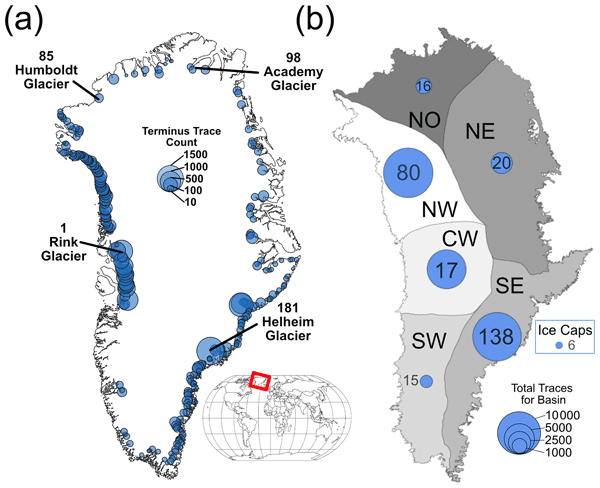
Terminus traces have been used to understand how Greenland's glaciers have changed over time; however, manual digitization is time-intensive, and a lack of coordination leads to duplication of efforts. We have compiled a dataset of over 39 000 terminus traces for 278 glaciers for scientific and machine learning applications. We also provide an overview of an updated version of the Google Earth Engine Digitization Tool (GEEDiT), which has been developed specifically for the Greenland Ice Sheet.

Joshua K. Cuzzone, Nicolás E. Young, Mathieu Morlighem, Jason P. Briner, and Nicole-Jeanne Schlegel
The Cryosphere, 16, 2355–2372, https://doi.org/10.5194/tc-16-2355-2022, https://doi.org/10.5194/tc-16-2355-2022, 2022
Short summary
Short summary
We use an ice sheet model to determine what influenced the Greenland Ice Sheet to retreat across a portion of southwestern Greenland during the Holocene (about the last 12 000 years). Our simulations, constrained by observations from geologic markers, show that atmospheric warming and ice melt primarily caused the ice sheet to retreat rapidly across this domain. We find, however, that iceberg calving at the interface where the ice meets the ocean significantly influenced ice mass change.
Yannic Fischler, Martin Rückamp, Christian Bischof, Vadym Aizinger, Mathieu Morlighem, and Angelika Humbert
Geosci. Model Dev., 15, 3753–3771, https://doi.org/10.5194/gmd-15-3753-2022, https://doi.org/10.5194/gmd-15-3753-2022, 2022
Short summary
Short summary
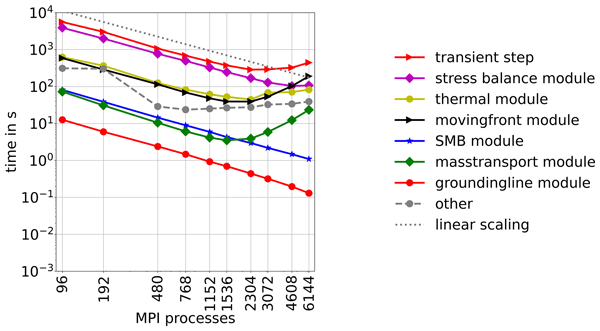
Ice sheet models are used to simulate the changes of ice sheets in future but are currently often run in coarse resolution and/or with neglecting important physics to make them affordable in terms of computational costs. We conducted a study simulating the Greenland Ice Sheet in high resolution and adequate physics to test where the ISSM ice sheet code is using most time and what could be done to improve its performance for future computer architectures that allow massive parallel computing.
Benjamin Joseph Davison, Tom Cowton, Andrew Sole, Finlo Cottier, and Pete Nienow
The Cryosphere, 16, 1181–1196, https://doi.org/10.5194/tc-16-1181-2022, https://doi.org/10.5194/tc-16-1181-2022, 2022
Short summary
Short summary
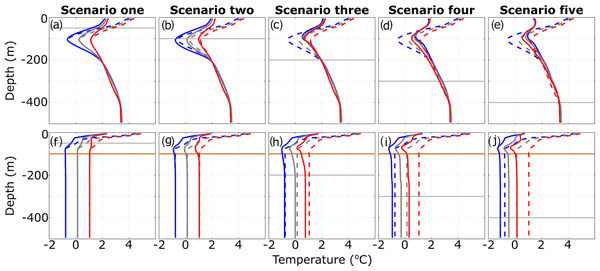
The ocean is an important driver of Greenland glacier retreat. Icebergs influence ocean temperature in the vicinity of glaciers, which will affect glacier retreat rates, but the effect of icebergs on water temperature is poorly understood. In this study, we use a model to show that icebergs cause large changes to water properties next to Greenland's glaciers, which could influence ocean-driven glacier retreat around Greenland.
Thomas Frank, Henning Åkesson, Basile de Fleurian, Mathieu Morlighem, and Kerim H. Nisancioglu
The Cryosphere, 16, 581–601, https://doi.org/10.5194/tc-16-581-2022, https://doi.org/10.5194/tc-16-581-2022, 2022
Short summary
Short summary
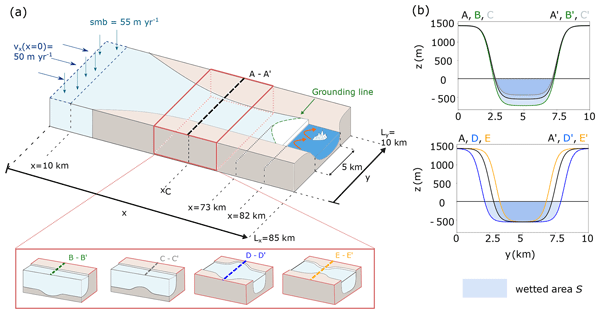
The shape of a fjord can promote or inhibit glacier retreat in response to climate change. We conduct experiments with a synthetic setup under idealized conditions in a numerical model to study and quantify the processes involved. We find that friction between ice and fjord is the most important factor and that it is possible to directly link ice discharge and grounding line retreat to fjord topography in a quantitative way.

Thiago Dias dos Santos, Mathieu Morlighem, and Douglas Brinkerhoff
The Cryosphere, 16, 179–195, https://doi.org/10.5194/tc-16-179-2022, https://doi.org/10.5194/tc-16-179-2022, 2022
Short summary
Short summary
Projecting the future evolution of Greenland and Antarctica and their potential contribution to sea level rise often relies on computer simulations carried out by numerical ice sheet models. Here we present a new vertically integrated ice sheet model and assess its performance using different benchmarks. The new model shows results comparable to a three-dimensional model at relatively lower computational cost, suggesting that it is an excellent alternative for long-term simulations.
Peter A. Tuckett, Jeremy C. Ely, Andrew J. Sole, James M. Lea, Stephen J. Livingstone, Julie M. Jones, and J. Melchior van Wessem
The Cryosphere, 15, 5785–5804, https://doi.org/10.5194/tc-15-5785-2021, https://doi.org/10.5194/tc-15-5785-2021, 2021
Short summary
Short summary
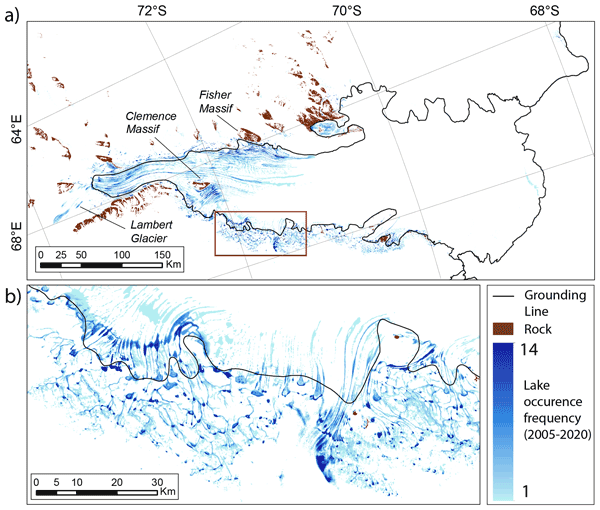
Lakes form on the surface of the Antarctic Ice Sheet during the summer. These lakes can generate further melt, break up floating ice shelves and alter ice dynamics. Here, we describe a new automated method for mapping surface lakes and apply our technique to the Amery Ice Shelf between 2005 and 2020. Lake area is highly variable between years, driven by large-scale climate patterns. This technique will help us understand the role of Antarctic surface lakes in our warming world.
Caroline C. Clason, Will H. Blake, Nick Selmes, Alex Taylor, Pascal Boeckx, Jessica Kitch, Stephanie C. Mills, Giovanni Baccolo, and Geoffrey E. Millward
The Cryosphere, 15, 5151–5168, https://doi.org/10.5194/tc-15-5151-2021, https://doi.org/10.5194/tc-15-5151-2021, 2021
Short summary
Short summary
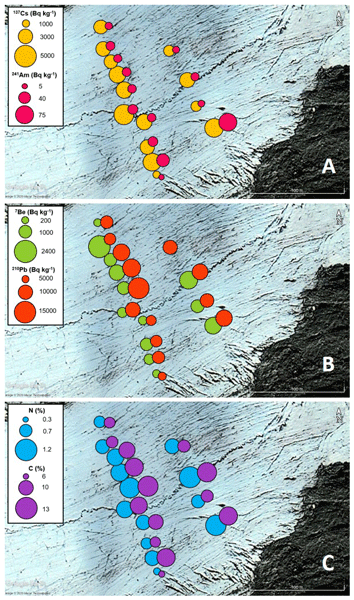
Our paper presents results of sample collection and subsequent geochemical analyses from the glaciated Isfallsglaciären catchment in Arctic Sweden. The data suggest that material found on the surface of glaciers,
cryoconite, is very efficient at accumulating products of nuclear fallout transported in the atmosphere following events such as the Chernobyl disaster. We investigate how this compares with samples in the downstream environment and consider potential environmental implications.
Cited articles
Ahlstrøm, A. P., Mottram, R., Nielsen, C., Reeh, N., and Andersen, S. B.: Evaluation of the future hydropower potential at Paakitsoq, Ilulissat, West Greenland, Danmarks og Grønlands Geologiske Undersøgelse Rapport, 31, https://doi.org/10.22008/gpub/27160, 2008. a
Bindschadler, R.: The importance of pressurized subglacial water in separation and sliding at the glacier bed, J. Glaciol., 29, 3–19, 1983. a
Björnsson, H.: Jökulhlaups in Iceland: prediction, characteristics and simulation, Ann. Glaciol., 16, 95–106, 1992. a
Björnsson, H.: Grímsvatnahlaup fyrr og nú, in: Vatnajökull Gos og Hlaup 1996, edited by: Haraldsson, H., Icelandic Public Roads Admin., Reykjavík, Iceland, 61–77, 1997. a
Björnsson, H.: Understanding jökulhlaups: from tale to theory, J. Glaciol., 56, 1002–1010, 2010. a
Brinkerhoff, D., Aschwanden, A., and Fahnestock, M.: Constraining subglacial processes from surface velocity observations using surrogate-based Bayesian inference, J. Glaciol., 67, 385–403, 2021. a
Budd, W., Jenssen, D., and Smith, I.: A three-dimensional time-dependent model of the West Antarctic Ice Sheet, Ann. Glaciol., 5, 29–36, 1984. a
Carrivick, J. L., Tweed, F. S., Ng, F., Quincey, D. J., Mallalieu, J., Ingeman-Nielsen, T., Mikkelsen, A. B., Palmer, S. J., Yde, J. C., Homer, R., Russel, A. J., and Hubbard, A.: Ice-dammed lake drainage evolution at Russell Glacier, West Greenland, Front. Earth Sci., 5, 100, https://doi.org/10.3389/feart.2017.00100, 2017. a, b
Carrivick, J. L., How, P., Lea, J. M., Sutherland, J. L., Grimes, M., Tweed, F. S., Cornford, S., Quincey, D. J., and Mallalieu, J.: Ice-marginal proglacial lakes across Greenland: present status and a possible future, Geophys. Res. Lett., 49, e2022GL099276, https://doi.org/10.1029/2022GL099276, 2022. a
Choi, Y., Seroussi, H., Morlighem, M., Schlegel, N.-J., and Gardner, A.: Impact of time-dependent data assimilation on ice flow model initialization and projections: a case study of Kjer Glacier, Greenland, The Cryosphere, 17, 5499–5517, https://doi.org/10.5194/tc-17-5499-2023, 2023. a
Clague, J. J., Huggel, C., Korup, O., and McGuire, B.: Climate change and hazardous processes in high mountains, Revista de la Asociación Geológica Argentina, 69, 328–338, 2012. a
Clark, P. U., Marshall, S. J., Clarke, G. K., Hostetler, S. W., Licciardi, J. M., and Teller, J. T.: Freshwater forcing of abrupt climate change during the last glaciation, Science, 293, 283–287, 2001. a
Clarke, G. K.: Hydraulics of subglacial outburst floods: new insights from the Spring–Hutter formulation, J. Glaciol., 49, 299–313, 2003. a
Cook, S. J., Christoffersen, P., and Todd, J.: A fully-coupled 3D model of a large Greenlandic outlet glacier with evolving subglacial hydrology, frontal plume melting and calving, J. Glaciol., 68, 486–502, 2022. a
Cuffey, K. M. and Paterson, W. S. B.: The physics of glaciers, Academic Press, ISBN-13: 978-0-123-69461-4, 2010. a
Dømgaard, M., Kjeldsen, K., How, P., and Bjørk, A.: Altimetry-based ice-marginal lake water level changes in Greenland, Commun. Earth Environ., 5, 365, https://doi.org/10.1038/s43247-024-01522-4, 2024. a, b
Dow, C. F., Werder, M. A., Nowicki, S., and Walker, R. T.: Modeling Antarctic subglacial lake filling and drainage cycles, The Cryosphere, 10, 1381–1393, https://doi.org/10.5194/tc-10-1381-2016, 2016. a
Dow, C. F., McCormack, F. S., Young, D. A., Greenbaum, J. S., Roberts, J. L., and Blankenship, D. D.: Totten Glacier subglacial hydrology determined from geophysics and modeling, Earth Planet. Sc. Lett., 531, 115961, https://doi.org/10.1016/j.epsl.2019.115961, 2020. a
Ehrenfeucht, S., Morlighem, M., Rignot, E., Dow, C. F., and Mouginot, J.: Seasonal acceleration of Petermann Glacier, Greenland, from changes in subglacial hydrology, Geophys. Res. Lett., 50, e2022GL098009, https://doi.org/10.1029/2022GL098009, 2023. a, b, c, d
Ehrenfeucht, S., Dow, C., McArthur, K., Morlighem, M., and McCormack, F. S.: Antarctic wide subglacial hydrology modeling, Geophys. Res. Lett., 52, e2024GL111386, https://doi.org/10.1029/2024GL111386, 2025. a, b
Einarsson, B., Jóhannesson, T., Thorsteinsson, T., Gaidos, E., and Zwinger, T.: Subglacial flood path development during a rapidly rising jökulhlaup from the western Skaftá cauldron, Vatnajökull, Iceland, J. Glaciol., 63, 670–682, 2017. a
Ettema, J., van den Broeke, M. R., van Meijgaard, E., van de Berg, W. J., Bamber, J. L., Box, J. E., and Bales, R. C.: Higher surface mass balance of the Greenland Ice Sheet revealed by high-resolution climate modeling, Geophys. Res. Lett., 36, https://doi.org/10.1029/2009GL038110, 2009. a
Fettweis, X., Box, J. E., Agosta, C., Amory, C., Kittel, C., Lang, C., van As, D., Machguth, H., and Gallée, H.: Reconstructions of the 1900–2015 Greenland ice sheet surface mass balance using the regional climate MAR model, The Cryosphere, 11, 1015–1033, https://doi.org/10.5194/tc-11-1015-2017, 2017. a
Flowers, G. E., Björnsson, H., Pálsson, F., and Clarke, G. K.: A coupled sheet-conduit mechanism for jökulhlaup propagation, Geophys. Res. Lett., 31, https://doi.org/10.1029/2003GL019088, 2004. a, b
Gagliardini, O., Cohen, D., Råback, P., and Zwinger, T.: Finite-element modeling of subglacial cavities and related friction law, J. Geophys. Res.-Earth, 112, https://doi.org/10.1029/2006JF000576, 2007. a
Gilbert, A., Gimbert, F., Thøgersen, K., Schuler, T. V., and Kääb, A.: A consistent framework for coupling basal friction with subglacial hydrology on hard-bedded glaciers, Geophys. Res. Lett., 49, e2021GL097507, https://doi.org/10.1029/2021GL097507, 2022. a
Harpur, C., Carrivick, J. L., Sutherland, J. L., and Mallalieu, J.: The emerging importance of ice-marginal lakes across Greenland, Geography, 110, 6–15, 2025. a
Harpur, C. M., Smith, M. W., Carrivick, J. L., Quincey, D. J., and Taylor, L.: Ice-marginal proglacial lakes enhance outlet glacier velocities across Greenland, Commun. Earth Environ., 7, 287, https://doi.org/10.1038/s43247-026-03363-9, 2026. a
Hayden, A.-M. and Dow, C. F.: Examining the effect of ice dynamic changes on subglacial hydrology through modelling of a synthetic Antarctic glacier, J. Glaciol., 69, 1846–1859, 2023. a
Hepburn, A. J.: The-SLIDE-Project/pyJokulhlaup: v1.0 (Version v1.0), Zenodo [code], https://doi.org/10.5281/zenodo.23084735, 2026. a
Hepburn, A. J., Dow, C. F., Ojala, A., Mäkinen, J., Ahokangas, E., Hovikoski, J., Palmu, J.-P., and Kajuutti, K.: The organization of subglacial drainage during the demise of the Finnish Lake District Ice Lobe, The Cryosphere, 18, 4873–4916, https://doi.org/10.5194/tc-18-4873-2024, 2024. a
Hepburn, A., Buzzard, S., Sole, A., Livingstone, S., Ng, F., Morlighem, M., Bagshaw, E., Clason, C., Craw, L., Dow, C., Doyle, S., Hawkins, J., Peacey, M., and Storrar, R.: Supplementary information: Simulating jökulhlaups from an ice-marginal lake within a 2D model of subglacial drainage and basal sliding, Zenodo [data set, code, and video], https://doi.org/10.5281/zenodo.20269306, 2026. a, b, c
Hewitt, I. J. and Fowler, A.: Seasonal waves on glaciers, Hydrol. Process., 22, 3919–3930, 2008. a
Hill, T., Bingham, D., Flowers, G. E., and Hoffman, M. J.: Computationally efficient subglacial drainage modelling using Gaussian process emulators: GlaDS-GP v1.0, Geosci. Model Dev., 18, 4045–4074, https://doi.org/10.5194/gmd-18-4045-2025, 2025a. a, b
Hill, T., Flowers, G. E., Bingham, D., and Hoffman, M. J.: Emulator-based Bayesian calibration of a subglacial drainage model, Ann. Glaciol., 66, e22, https://doi.org/10.1017/aog.2025.10016, 2025b. a, b, c
How, P., Messerli, A., Mätzler, E., Santoro, M., Wiesmann, A., Caduff, R., Langley, K., Bojesen, M. H., Paul, F., Kääb, A., and Carrivick, J. L.: Greenland-wide inventory of ice marginal lakes using a multi-method approach, Sci. Rep., 11, 4481, https://doi.org/10.1038/s41598-021-83509-1, 2021. a
Ing, R., Bagshaw, E., Hawkins, J., Peacey, M., Doyle, S., Livingstone, S., Prior-Jones, M., Thorpe, S., Moffatt, A., Sole, A., Bianchi, G., Booth, A., Buzzard, S., Chudley, T., Clason, C., Craw, L., Edwards, L., Gimbert, F., Hepburn, A., Jones, A., Le Bris, T., Mann, S., Michel, A., Ross, N., Storrar, R., Veness, R., and Young, T.: Connectivity Between Primary and Secondary Subglacial Drainage Subsystems Beneath a Land-Terminating Outlet Glacier of the Greenland Ice Sheet, AGU Advances, 7, https://doi.org/10.1029/2026AV002403, 2026. a
Jenson, A., Amundson, J. M., Kingslake, J., and Hood, E.: Long-period variability in ice-dammed glacier outburst floods due to evolving catchment geometry, The Cryosphere, 16, 333–347, https://doi.org/10.5194/tc-16-333-2022, 2022. a
Joughin, I., Smith, B., Howat, I., and Scambos, T.: MEaSUREs Greenland Ice Sheet Velocity Map from InSAR Data, Version 2, https://doi.org/10.5067/OC7B04ZM9G6Q, 2015. a
Kamb, B.: Glacier surge mechanism based on linked cavity configuration of the basal water conduit system, J. Geophys. Res.-Sol. Ea., 92, 9083–9100, 1987. a
Karlsson, N. B., Solgaard, A. M., Mankoff, K. D., Gillet-Chaulet, F., MacGregor, J. A., Box, J. E., Citterio, M., Colgan,W. T., Larsen, S. H., Kjeldsen, K. K., Korsgaard, N. J., Benn, D.I., Hewitt, I. J., and Fausto, R. S.: A first constraint on basal melt-water production of the Greenland Ice Sheet, Nat. Commun., 12, 3461, https://doi.org/10.1038/s41467-021-23739-z, 2021. a
Kessler, M. A. and Anderson, R. S.: Testing a numerical glacial hydrological model using spring speed-up events and outburst floods, Geophys. Res. Lett., 31, https://doi.org/10.1029/2004GL020622, 2004. a
Khan, S. A., Morlighem, M., Ehrenfeucht, S., Seroussi, H., Choi, Y., Rignot, E., Humbert, A., Pickell, D., and Hassan, J.: Inland summer speedup at Zachariæ Isstrøm, northeast Greenland, driven by subglacial hydrology, Geophys. Res. Lett., 51, e2024GL110691, https://doi.org/10.1029/2024GL110691, 2024. a
Larour, E., Seroussi, H., Morlighem, M., and Rignot, E.: Continental scale, high order, high spatial resolution, ice sheet modeling using the Ice Sheet System Model (ISSM), J. Geophys. Res.-Earth, 117, https://doi.org/10.1029/2011JF002140, 2012. a, b, c
Lindbäck, K., Pettersson, R., Hubbard, A. L., Doyle, S. H., van As, D., Mikkelsen, A. B., and Fitzpatrick, A. A.: Subglacial water drainage, storage, and piracy beneath the Greenland Ice Sheet, Geophys. Res. Lett., 42, 7606–7614, 2015. a
Livingstone, S. J., Sole, A. J., Storrar, R. D., Harrison, D., Ross, N., and Bowling, J.: Brief communication: Subglacial lake drainage beneath Isunguata Sermia, West Greenland: geomorphic and ice dynamic effects, The Cryosphere, 13, 2789–2796, https://doi.org/10.5194/tc-13-2789-2019, 2019. a, b
Livingstone, S. J., Storrar, R. D., Doyle, S. H., Thorpe, S., Moffatt, A., Sole, A. J., Chudley, T. R., Gimbert, F., Graly, J. A., Licht, K., Winter, K., Jayarapu, A., Bagshaw, E. A., Barruol, G., Bauer, K., Bianchi, G., Buzzard, S., Clason, C. C., Craw, L., Davison, B., Edwards, L. A., Gilhooly, B., Hamilton, T., Hansen, C., Hawkins, J., Ing, R., Jatta, M., Jones, A. H., Kennedy, T., Killingbeck, S., Le Bris, T., McCerery, R., Messerli, A., Michel, A., Napoleoni, F., Peacey, M. W., Prior-Jones, M. R., Ross, N., Veness, R., Woodie, K., Young, T. J., Hepburn, A., and Booth, A.: Ice dynamic and hydrological response to ice-dammed lake drainages at Isunnguata Sermia, West Greenland, J. Glaciol., 1–37, https://doi.org/10.1017/jog.2026.10163, 2026. a, b, c, d, e, f, g, h, i, j, k, l, m, n, o, p, q, r, s, t, u, v, w, x, y
Magnússon, E., Rott, H., Björnsson, H., and Pálsson, F.: The impact of jökulhlaups on basal sliding observed by SAR interferometry on Vatnajökull, Iceland, J. Glaciol., 53, 232–240, 2007. a
Magnússon, E., Drouin, V., Pálsson, F., Jóhannesson, T., Belart, J. M. C., Wuite, J., Tolpekin, V., Hannesdóttir, K., Berthier, E., Sigurðsson, G., Einarsson, B., Ófeigsson, B. G., Nagler, T., Gudmundsson, M. T., and Högnadóttir, T.: Subglacial water flow and ice dynamics during glacial lake outburst floods observed from space, Nat. Commun., https://doi.org/10.1038/s41467-026-70428-w, 2026. a, b, c
Mangerud, J., Jakobsson, M., Alexanderson, H., Astakhov, V., Clarke, G. K., Henriksen, M., Hjort, C., Krinner, G., Lunkka, J.-P., Möller, P., et al.: Ice-dammed lakes and rerouting of the drainage of northern Eurasia during the Last Glaciation, Quaternary Sci. Rev., 23, 1313–1332, 2004. a
McArthur, K., McCormack, F. S., and Dow, C. F.: Basal conditions of Denman Glacier from glacier hydrology and ice dynamics modeling, The Cryosphere, 17, 4705–4727, https://doi.org/10.5194/tc-17-4705-2023, 2023. a, b, c, d
McArthur, K., Dow, C., and Ehrenfeucht, S.: Exploring Antarctic Feedback Mechanisms Using Two-Way Coupled Subglacial Hydrology and Ice Flow Modeling in the Siple Coast, Geophys. Res. Lett., 53, e2025GL121190, https://doi.org/10.1029/2025GL121190, 2026. a
McCerery, R., Graly, J. A., Hansen, C. L., Winter, K., Gilhooly III, W. P., Hamilton, T. L., Jatta, M., Havig, J. R., Napoleoni, F., Rutledge, A. M., Terrell, M., Trott, T. M., Woodie, K., Kulessa, B., Modestou, S., Bahrani, H., Kennedy, T., Messerli, A., and Licht, K.: Seasonal icings reveal subsurface water drainage of a Greenland Ice Sheet outlet glacier, EGUsphere [preprint], https://doi.org/10.5194/egusphere-2026-2131, 2026. a
Meierbachtol, T., Harper, J., and Humphrey, N.: Basal drainage system response to increasing surface melt on the Greenland ice sheet, Science, 341, 777–779, 2013. a
Mernild, S. H., Hasholt, B., Kane, D. L., and Tidwell, A. C.: Jökulhlaup observed at Greenland Ice Sheet, Eos, Transactions American Geophysical Union, 89, 321–322, 2008. a
Mölg, N., Huggel, C., Herold, T., Storck, F., Allen, S., Haeberli, W., Schaub, Y., and Odermatt, D.: Inventory and evolution of glacial lakes since the Little Ice Age: lessons from the case of Switzerland, Earth Surf. Process. Land., 46, 2551–2564, 2021. a
Morlighem, M., Williams, C. N., Rignot, E., An, L., Arndt, J. E., Bamber, J. L., Catania, G., Chauché, N., Dowdeswell, J. A., Dorschel, B., Fenty, I., Hogan, K., Howat, I., Hubbard, A., Jakobsson, M., Jordan, T. M., Kjeldsen, K. K., Millan, R., Mayer, L., Mouginot, J., Noël, B. P. Y., O'Cofaigh, C., Palmer, S., Rysgaard, S., Seroussi, H., Siegert, M. J., Slabon, P., Straneo, F., van den Broeke, M. R., Weinrebe, W., Wood, M., and Zinglersen, K. B.: BedMachine v3: Complete bed topography and ocean bathymetry mapping of Greenland from multibeam echo sounding combined with mass conservation, Geophys. Res. Lett., 44, 11–051, 2017. a
Morlighem, M., Williams, C., Rignot, E., An, L., Arndt, J. E., Bamber, J., Catania, G., Chauché, N., Dowdeswell, J. A., Dorschel, B., Fenty, I., Hogan, K., Howat, I., Hubbard, A., Jakobsson, M., Jordan, T. M., Kjeldsen, K. K., Millan, R., Mayer, L., Mouginot, J., Noël, B., O'Cofaigh, C., Palmer, S. J., Rysgaard, S., Seroussi, H., Siegert, M. J., Slabon, P., Straneo, F., van den Broeke, M. R., Weinrebe, W., Wood, M., and Zinglersen, K.: IceBridge BedMachine Greenland (IDBMG4, Version 5) [data set], https://doi.org/10.5067/GMEVBWFLWA7X, 2022. a, b
Murray, T. and Clarke, G. K.: Black-box modeling of the subglacial water system, J. Geophys. Res.-Sol. Ea., 100, 10231–10245, 1995. a
Narayanan, N. G., Sommers, A. N., Chu, W., Steiner, J. F., Siddique, M. A., Meyer, C. R., and Minchew, B.: Simulating seasonal evolution of subglacial hydrology at a surging glacier in the Karakoram, J. Glaciol., 71, e94, https://doi.org/10.1017/jog.2025.10078, 2025. a
Ng, F., Liu, S., Mavlyudov, B., and Wang, Y.: Climatic control on the peak discharge of glacier outburst floods, Geophys. Res. Lett., 34, https://doi.org/10.1029/2007GL031426, 2007. a, b, c
Pelle, T., Greenbaum, J., Ehrenfeucht, S., Dow, C., and McCormack, F.: Subglacial discharge accelerates dynamic retreat of aurora subglacial basin outlet glaciers, East Antarctica, over the 21st century, J. Geophys. Res.-Earth, 129, e2023JF007513, https://doi.org/10.1029/2023JF007513, 2024. a
Pramanik, A., Greenwood, S. L., Morlighem, M., Barnett, J., Holmes, F. A., Gyllencreutz, R., and Regnéll, C.: Modelling the effects of proglacial lake filling and drainage on lake-terminating glacier dynamics, EGUsphere [preprint], https://doi.org/10.5194/egusphere-2026-172, 2026. a
Priebe, J.: Glacial energy futures? The history of unbuilt hydropower in Greenland from the 1950s to the 1970s, Water History, 16, 271–290, 2024. a
Rada, C. and Schoof, C.: Channelized, distributed, and disconnected: subglacial drainage under a valley glacier in the Yukon, The Cryosphere, 12, 2609–2636, https://doi.org/10.5194/tc-12-2609-2018, 2018. a, b
Schoof, C.: The effect of cavitation on glacier sliding, Proc. Roy. Soc. A, 461, 609–627, 2005. a
Schoof, C.: An analysis of instabilities and limit cycles in glacier-dammed reservoirs, The Cryosphere, 14, 3175–3194, https://doi.org/10.5194/tc-14-3175-2020, 2020. a, b
Shapiro, N. M. and Ritzwoller, M. H.: Inferring surface heat flux distributions guided by a global seismic model: particular application to Antarctica, Earth Planet. Sc. Lett., 223, 213–224, 2004. a
Shugar, D. H., Burr, A., Haritashya, U. K., Kargel, J. S., Watson, C. S., Kennedy, M. C., Bevington, A. R., Betts, R. A., Harrison, S., and Strattman, K.: Rapid worldwide growth of glacial lakes since 1990, Nat. Clim. Change, 10, 939–945, 2020. a
Sommers, A., Rajaram, H., and Morlighem, M.: SHAKTI: Subglacial Hydrology and Kinetic, Transient Interactions v1.0, Geosci. Model Dev., 11, 2955–2974, https://doi.org/10.5194/gmd-11-2955-2018, 2018. a
Stevens, L. A., Nettles, M., Davis, J. L., Creyts, T. T., Kingslake, J., Hewitt, I. J., and Stubblefield, A.: Tidewater-glacier response to supraglacial lake drainage, Nat. Commun., 13, 6065, https://doi.org/10.1038/s41467-022-33763-2, 2022. a
Süfke, F., Gutjahr, M., Keigwin, L. D., Reilly, B., Giosan, L., and Lippold, J.: Arctic drainage of Laurentide Ice Sheet meltwater throughout the past 14,700 years, Commun. Earth Environ., 3, 98, https://doi.org/10.1038/s43247-022-00428-3, 2022. a
Teller, J. T.: History and drainage of large ice-dammed lakes along the Laurentide Ice Sheet, Quaternary Int., 28, 83–92, 1995. a
Tsai, V. C. and Rice, J. R.: A model for turbulent hydraulic fracture and application to crack propagation at glacier beds, J. Geophys. Res.-Earth, 115, https://doi.org/10.1029/2009JF001474, 2010. a, b
Verjans, V. and Robel, A.: Accelerating subglacial hydrology for ice sheet models with deep learning methods, Geophys. Res. Lett., 51, e2023GL105281, https://doi.org/10.1029/2023GL105281, 2024. a
Walder, J. S. and Fowler, A.: Channelized subglacial drainage over a deformable bed, J. Glaciol., 40, 3–15, 1994. a
Wells, S., Utkin, I., Hewitt, I. J., Farinotti, D., and Werder, M. A.: GlaDS-2: modeling subglacial drainage including ice uplift and free-surface flow in two dimensions, EGUsphere [preprint], https://doi.org/10.5194/egusphere-2026-4310, 2026. a
Werder, M. A., Bauder, A., Funk, M., and Keusen, H.-R.: Hazard assessment investigations in connection with the formation of a lake on the tongue of Unterer Grindelwaldgletscher, Bernese Alps, Switzerland, Nat. Hazards Earth Syst. Sci., 10, 227–237, https://doi.org/10.5194/nhess-10-227-2010, 2010. a
Wolovick, M., Humbert, A., Kleiner, T., and Rückamp, M.: Regularization and L-curves in ice sheet inverse models: a case study in the Filchner–Ronne catchment, The Cryosphere, 17, 5027–5060, https://doi.org/10.5194/tc-17-5027-2023, 2023. a
Short summary
Lakes at glacier margins can drain beneath the ice in devastating, floods called jökulhlaups. We present the first 2D model of jökulhlaup propagation, first applying it to a synthetic glacier, before then assessing its ability to reproduce an observed record of lake fill-drain cycles in Greenland. Our results match a 17-year record of flood timing but underpredicts peak discharge likely because we are missing certain physical processes. Our results hold promise for simulating jökulhlaups.
Lakes at glacier margins can drain beneath the ice in devastating, floods called jökulhlaups. We...


