
Articles | Volume 20, issue 9
https://doi.org/10.5194/tc-20-5157-2026
© Author(s) 2026. This work is distributed under
the Creative Commons Attribution 4.0 License.
the Creative Commons Attribution 4.0 License.
https://doi.org/10.5194/tc-20-5157-2026
© Author(s) 2026. This work is distributed under
the Creative Commons Attribution 4.0 License.
the Creative Commons Attribution 4.0 License.
Research article
| 
14 Sep 2026
Research article |
| 14 Sep 2026
| 14 Sep 2026
On thin glacial ice: New Austrian Glacier Inventory shows accelerating glacier shrinkage and 31 % area loss within two decades

Institute for Interdisciplinary Mountain Research, Austrian Academy of Sciences, 6020 Innsbruck, Austria
Jakob Abermann
Department of Geography and Regional Science, University of Graz, 8010 Graz, Austria
Ayla Akgün
Institute for Interdisciplinary Mountain Research, Austrian Academy of Sciences, 6020 Innsbruck, Austria
Giulia Bertolotti
Institute for Interdisciplinary Mountain Research, Austrian Academy of Sciences, 6020 Innsbruck, Austria
Tobias Bolch
Institute of Geodesy, Graz University of Technology, 8010 Graz, Austria
Svenja Conzelmann
Institute for Interdisciplinary Mountain Research, Austrian Academy of Sciences, 6020 Innsbruck, Austria
Codrut-Andrei Diaconu
Chair of Remote Sensing Technology, Technical University of Munich, 80333 Munich, Germany
Iris Hansche
Department of Geography and Regional Science, University of Graz, 8010 Graz, Austria
Anne Hartig
Institute for Interdisciplinary Mountain Research, Austrian Academy of Sciences, 6020 Innsbruck, Austria
Anna Haut
Department of Environment and Biodiversity, University of Salzburg, 5020 Salzburg, Austria
Kay Helfricht
Hydrographic Service Tyrol, Office of the Tyrolean Government, 6020 Innsbruck, Austria
Bernhard Hynek
Department Climate Impact Research, Geosphere Austria, 1190 Vienna, Austria
Marie Sophie Kaucher
Institute for Interdisciplinary Mountain Research, Austrian Academy of Sciences, 6020 Innsbruck, Austria
Andreas Kellerer-Pirklbauer
Department of Geography and Regional Science, University of Graz, 8010 Graz, Austria
Ann Christin Kogel
Department of Atmospheric and Cryospheric Sciences, University of Innsbruck, 6020 Innsbruck, Austria
Julie Krippes
Department of Environment and Biodiversity, University of Salzburg, 5020 Salzburg, Austria
Marcela Violeta Lauria
Institute for Interdisciplinary Mountain Research, Austrian Academy of Sciences, 6020 Innsbruck, Austria
Christoph Mayer
Geodesy and Glaciology, Bavarian Academy of Sciences and Humanities, 80539 Munich, Germany
Jan-Christoph Otto
Department of Environment and Biodiversity, University of Salzburg, 5020 Salzburg, Austria
Rainer Prinz
Department of Atmospheric and Cryospheric Sciences, University of Innsbruck, 6020 Innsbruck, Austria
Sina Prölß
Hochgebirgsnaturpark Zillertaler Alpen, 6295 Ginzling, Austria
Lorenzo Rieg
University of Innsbruck, 6020 Innsbruck, Austria
Lea Schönleber
Institute for Interdisciplinary Mountain Research, Austrian Academy of Sciences, 6020 Innsbruck, Austria
Gabriele Schwaizer
ENVEO-Environmental Earth Observation IT GmbH, 6020 Innsbruck, Austria
Bernd Seiser
Institute for Interdisciplinary Mountain Research, Austrian Academy of Sciences, 6020 Innsbruck, Austria
Martin Stocker-Waldhuber
Institute for Interdisciplinary Mountain Research, Austrian Academy of Sciences, 6020 Innsbruck, Austria
Markus Strudl
Independent researcher, 6460 Imst, Austria
Martin Verhounik
Institute of Geodesy, Graz University of Technology, 8010 Graz, Austria
Harald Zandler
Department of Geography and Regional Science, University of Graz, 8010 Graz, Austria
Related authors
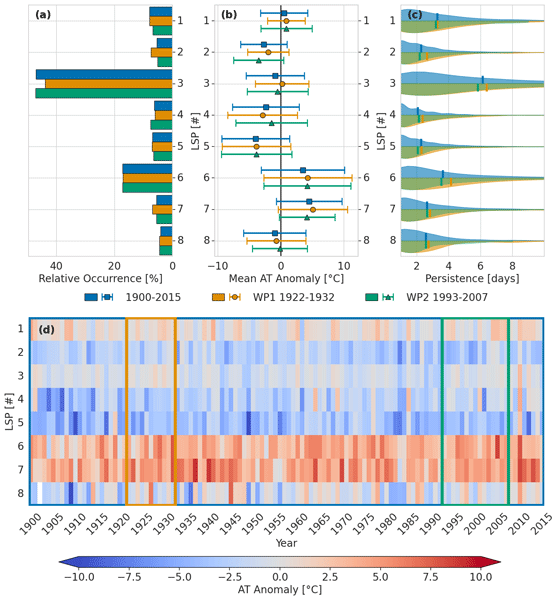
Florina Roana Schalamon, Sebastian Scher, Andreas Trügler, Lea Hartl, Wolfgang Schöner, and Jakob Abermann
Weather Clim. Dynam., 6, 1075–1088, https://doi.org/10.5194/wcd-6-1075-2025, https://doi.org/10.5194/wcd-6-1075-2025, 2025
Short summary
Short summary
Atmospheric patterns influence the air temperature in Greenland. We investigate two warming periods, from 1922–1932 and 1993–2007, both showing similar temperature increases. Using a neural network-based clustering method, we defined predominant atmospheric patterns for further analysis. Our findings reveal that while the connection between these patterns and local air temperature remains stable, the distribution of patterns changes between the warming periods and the full period (1900–2015).
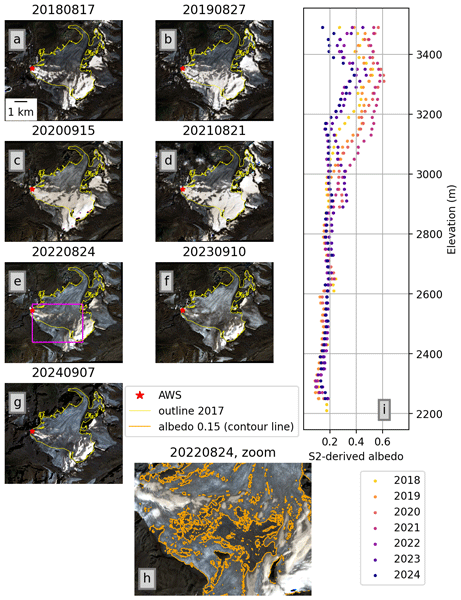
Lea Hartl, Federico Covi, Martin Stocker-Waldhuber, Anna Baldo, Davide Fugazza, Biagio Di Mauro, and Kathrin Naegeli
The Cryosphere, 19, 3329–3353, https://doi.org/10.5194/tc-19-3329-2025, https://doi.org/10.5194/tc-19-3329-2025, 2025
Short summary
Short summary
Glacier albedo determines how much solar radiation is absorbed by the glacier surface and is a key driver of glacier melt. Alpine glaciers are losing their snow and firn cover, and the underlying darker ice is becoming exposed. This means that more solar radiation is absorbed by the ice, which leads to increased melt. To quantify these processes, we explore data from a high-elevation, on-ice weather station that measures albedo and combine this information with satellite imagery.
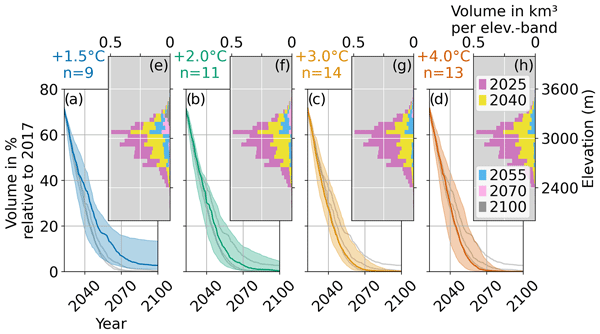
Lea Hartl, Patrick Schmitt, Lilian Schuster, Kay Helfricht, Jakob Abermann, and Fabien Maussion
The Cryosphere, 19, 1431–1452, https://doi.org/10.5194/tc-19-1431-2025, https://doi.org/10.5194/tc-19-1431-2025, 2025
Short summary
Short summary
We use regional observations of glacier area and volume change to inform glacier evolution modeling in the Ötztal and Stubai range (Austrian Alps) until 2100 in different climate scenarios. Glaciers in the region lost 23 % of their volume between 2006 and 2017. Under current warming trajectories, glacier loss in the region is expected to be near-total by 2075. We show that integrating regional calibration and validation data in glacier models is important to improve confidence in projections.
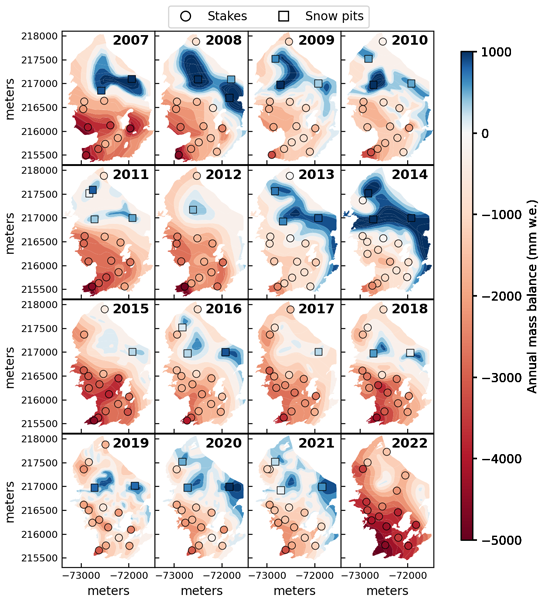
Lea Hartl, Bernd Seiser, Martin Stocker-Waldhuber, Anna Baldo, Marcela Violeta Lauria, and Andrea Fischer
Earth Syst. Sci. Data, 16, 4077–4101, https://doi.org/10.5194/essd-16-4077-2024, https://doi.org/10.5194/essd-16-4077-2024, 2024
Short summary
Short summary
Glaciers in the Alps are receding at unprecedented rates. To understand how this affects the hydrology and ecosystems of the affected regions, it is important to measure glacier mass balance and ensure that records of field surveys are kept in standardized formats and well-documented. We describe glaciological measurements of ice ablation and snow accumulation gathered at Mullwitzkees and Venedigerkees, two glaciers in the Austrian Alps, since 2007 and 2012, respectively.
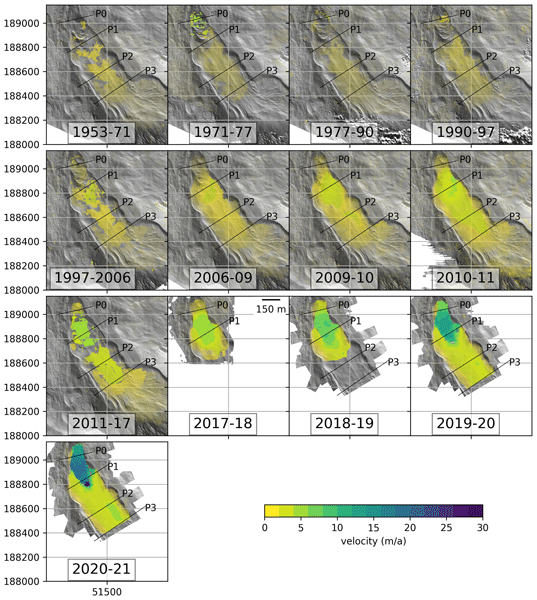
Lea Hartl, Thomas Zieher, Magnus Bremer, Martin Stocker-Waldhuber, Vivien Zahs, Bernhard Höfle, Christoph Klug, and Alessandro Cicoira
Earth Surf. Dynam., 11, 117–147, https://doi.org/10.5194/esurf-11-117-2023, https://doi.org/10.5194/esurf-11-117-2023, 2023
Short summary
Short summary
The rock glacier in Äußeres Hochebenkar (Austria) moved faster in 2021–2022 than it has in about 70 years of monitoring. It is currently destabilizing. Using a combination of different data types and methods, we show that there have been two cycles of destabilization at Hochebenkar and provide a detailed analysis of velocity and surface changes. Because our time series are very long and show repeated destabilization, this helps us better understand the processes of rock glacier destabilization.
Marie Schroeder, Ivana Stiperski, Michael Winkler, Georg Kaser, Jakob Steiner, Jakob Abermann, Georg Wohlfahrt, and Rainer Prinz
EGUsphere, https://doi.org/10.5194/egusphere-2026-5112, https://doi.org/10.5194/egusphere-2026-5112, 2026
This preprint is open for discussion and under review for The Cryosphere (TC).
Short summary
Short summary
Steep ice cliffs can lose ice much faster than flat glacier surfaces, yet little is known about how they interact with the air around them. Measurements at a 25-metre-high ice cliff on Kilimanjaro revealed distinct day–night air flows and major differences in how heat is transported. Higher up, heat is transported in an organised way, while near the cliff base this exchange was more complex. The cliff shape and its surroundings can strongly influence how heat reaches the ice and how it is lost.
Mariia Usoltseva, Roland Pail, Christoph Mayer, Martin Rückamp, and Anja Wendt
EGUsphere, https://doi.org/10.5194/egusphere-2026-4284, https://doi.org/10.5194/egusphere-2026-4284, 2026
This preprint is open for discussion and under review for The Cryosphere (TC).
Short summary
Short summary
This study investigates how two neighbouring glaciers in southern Chile changed between 2000 and 2026 using digital elevation models and climate data. Although both glaciers experienced warming temperatures and reduced snowfall, their responses were very different. The glacier with large outlets at low elevations lost mass rapidly, while the ice-cap glacier remained relatively stable for longer. The results show that glacier shape strongly influences how glaciers respond to climate change.
Marlena Reil, Julia Kaltenborn, Donovan J. M. Allum, Francis Pelletier, Sebastian Roessler, Samip Shrestha, Zhibang Lv, John Truckenbrodt, Gabriele Schwaizer, Thomas Nagler, John W. Pomeroy, Christopher B. Marsh, Benoit Montpetit, Tobias Jonas, Gabriel Tseng, David Rolnick, Andreas J. Dietz, and Celia A. Baumhoer
EGUsphere, https://doi.org/10.5194/egusphere-2026-3833, https://doi.org/10.5194/egusphere-2026-3833, 2026
This preprint is open for discussion and under review for The Cryosphere (TC).
Short summary
Short summary
Many communities rely on snowmelt from the mountains for their water supply. However, monitoring snow from space is challenging because clouds and other factors can obscure satellite observations. We present SnowGalileo, an AI model that combines data from multiple satellites to produce snow maps. The model can produce accurate maps even when clouds are present and high-resolution data are missing. This helps to improve our understanding of snow conditions and their impact on water resources.
Celia A. Baumhoer, Selina Straßburger, Sarah Leibrock, Andreas J. Dietz, and Christoph Mayer
EGUsphere, https://doi.org/10.5194/egusphere-2026-4768, https://doi.org/10.5194/egusphere-2026-4768, 2026
This preprint is open for discussion and under review for The Cryosphere (TC).
Short summary
Short summary
As glaciers move, cracks called crevasses form, and knowing where they occur matters both for science and for safety. We created the first nationwide map of visible crevasses across all glaciers in Austria, using aerial images. We found that crevasses are most common on steep, fast-moving glaciers and rarer on large, gently sloping ones, with surface shape and flow influencing where they appear. This dataset is already being used to improve hiking maps, helping people plan safer mountain routes
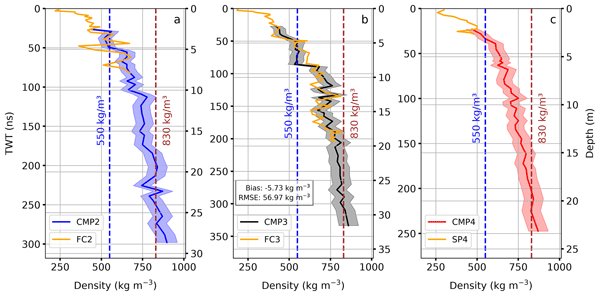
Akash M. Patil, Christoph Mayer, Theo M. Jenk, Astrid Lambrecht, Thorsten Seehaus, Alexander R. Groos, and Michelle Worek
The Cryosphere, 20, 4927–4955, https://doi.org/10.5194/tc-20-4927-2026, https://doi.org/10.5194/tc-20-4927-2026, 2026
Short summary
Short summary
Our study focused on understanding how a warming climate affects the Aletsch Glacier accumulation area. We used multi-year radar measurements and direct firn‑core analyses to estimate changes in density and compaction rate of snow-to-ice over a year. Our results show that the upper layers of the glacier are changing faster due to stronger summer melt in the lower parts of the accumulation zone. Our findings help to improve firn densification models and glacier mass-balance estimation.
Zhangyu Sun, Tobias Bolch, Daniel Falaschi, Atanu Bhattacharya, and Lin Liu
EGUsphere, https://doi.org/10.5194/egusphere-2026-3678, https://doi.org/10.5194/egusphere-2026-3678, 2026
This preprint is open for discussion and under review for The Cryosphere (TC).
Short summary
Short summary
Ice-debris complexes (IDC) are common, but their evolution remains poorly understood. We investigated 4 IDCs and identified 3 major zones: a glacier, a glacier-affected, and a periglacial zone. Although glacier-affected and periglacial zones cover much smaller areas than glaciers, their ice volume losses are comparable. IDCs can evolve through multiple pathways, incl. gradual transformation of glacier into rock glaciers and the advance or embedding of glaciers onto pre-existing rock glaciers.
Tiago Silva, Kristine Flacké Haualand, Jacob Clement Yde, Johan Hassing Scheller, Jakob Abermann, Andreas Trügler, and Wolfgang Schöner
EGUsphere, https://doi.org/10.5194/egusphere-2026-3687, https://doi.org/10.5194/egusphere-2026-3687, 2026
Short summary
Short summary
Severe downslope windstorms (locally known as piteraq) impact southeast Greenland communities and global ocean currents. Using high-resolution weather reanalysis, we show how piteraq events are driven by massive cold weather systems colliding with Greenland. As the dense air plunges down the steep coastal slopes, it accelerates into concentrated low-level jets. Recognizing the associated large-scale preconditioning will improve early warning systems and future climate predictions.
Kristine Flacké Haualand, Tiago Silva, Kerstin Rasmussen, Caroline Drost Jensen, Johan Hassing Scheller, Jakob Abermann, Simon de Villiers, Andreas Trügler, Wolfgang Schöner, and Jacob Clement Yde
EGUsphere, https://doi.org/10.5194/egusphere-2026-3684, https://doi.org/10.5194/egusphere-2026-3684, 2026
Short summary
Short summary
Southeast Greenland is often affected by damaging windstorms from the Greenland ice sheet. Using weather observations, we find that these windstorms have footprints covering several 100 km in the horizontal and several km in the vertical. The largest seasonal differences are warming instead of cooling and larger reductions in humidity in summer compared to winter. Our findings improve our understanding of spatial and temporal characteristics of these windstorms in the present and future climate.
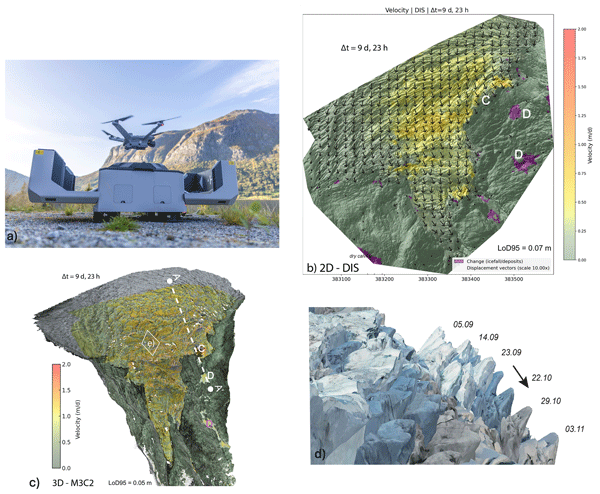
Alexander Maschler, Sarah Langes, Lukas Schild, Thomas Scheiber, Paula Snook, Jacob Clement Yde, Harald Zandler, and Ueli Sager
Nat. Hazards Earth Syst. Sci., 26, 3107–3127, https://doi.org/10.5194/nhess-26-3107-2026, https://doi.org/10.5194/nhess-26-3107-2026, 2026
Short summary
Short summary
Geohazards occur more often and at larger scale due to climate change. In this study, we used for the first time automated drone docks to monitor geohazards at 3 different sites in Norway and Switzerland. We present a monitoring workflow for automated Uncrewed Aerial Vehicle operations which can produce frequent, detailed maps showing surface change and displacement. Our results show how this approach can improve future hazard monitoring and early warning and help to protect communities at risk.
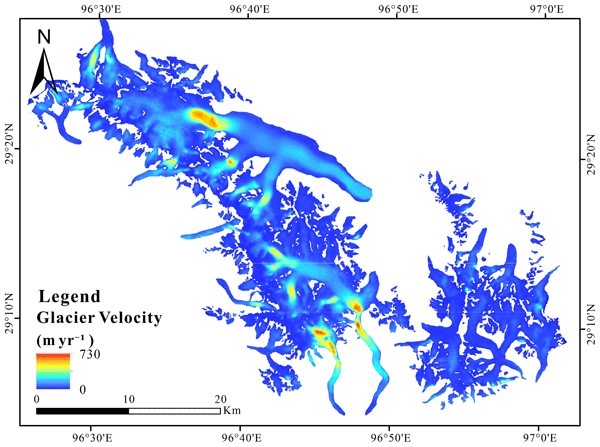
Daoxun Gao, Kunpeng Wu, Yunpeng Duan, Zhaoqi Ji, Danyu Ma, Tobias Bolch, Cheng Huang, and Shiyin Liu
The Cryosphere, 20, 3559–3579, https://doi.org/10.5194/tc-20-3559-2026, https://doi.org/10.5194/tc-20-3559-2026, 2026
Short summary
Short summary
We mapped monthly glacier flow speeds in the Kangri Karpo region from 2015 to 2024 by combining measurements from several satellites and a drone survey. The merged maps are more complete and detailed than maps from any single source, with fewer gaps caused by clouds or difficult terrain. The results show where glaciers move fastest, how their speed changes through the year, and which glaciers have been speeding up or slowing down over the past decade.
Moritz Oberrauch, Bertrand Cluzet, Jan Magnusson, Gabriele Schwaizer, and Tobias Jonas
EGUsphere, https://doi.org/10.5194/egusphere-2026-2725, https://doi.org/10.5194/egusphere-2026-2725, 2026
Short summary
Short summary
In mountain regions like the Swiss Alps, knowing how much snow is on the ground is important for managing water resources and natural hazards. Computer simulations are needed to estimate snow conditions across the terrain, and can be improved when combined with observations. This study uses snow-station measurements and satellite images to correct errors in both the weather input data and the model's representation of terrain effects, thereby reducing the snow model errors by around half.
Martin Rückamp, Gong Cheng, Karlheinz Gutjahr, Marco Möller, Petri K. E. Pellikka, and Christoph Mayer
The Cryosphere, 20, 2999–3024, https://doi.org/10.5194/tc-20-2999-2026, https://doi.org/10.5194/tc-20-2999-2026, 2026
Short summary
Short summary
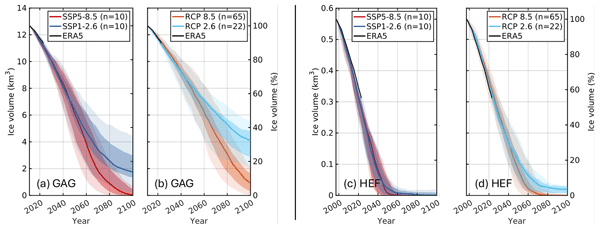
The study simulates the 21st-century evolution of Great Aletsch Glacier and Hintereisferner using full-Stokes ice dynamics and surface mass balance under different emission scenarios. Results show significant ice loss, with Hintereisferner expected to disappear by mid-century. Great Aletsch Glacier vanish by the end of the century under high-emission scenarios, but persist under lower-emission scenarios. These trends agree with large-scale models except some variability.
Theresa Dobler, Wilfried Hagg, Martin Rückamp, Thorsten Seehaus, and Christoph Mayer
The Cryosphere, 20, 2531–2555, https://doi.org/10.5194/tc-20-2531-2026, https://doi.org/10.5194/tc-20-2531-2026, 2026
Short summary
Short summary
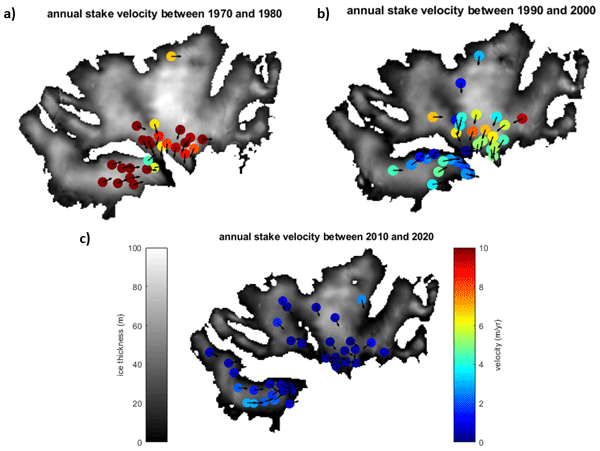
We studied how a glacier in the Austrian Alps moves more slowly over time due to climate change. By combining long-term field data with recent aerial images, we show how thinning reduce glacier flow. Our findings help understand changes in glacier behavior in a warming climate.
Robert S. Fausto, Penelope How, Baptiste Vandecrux, Mads C. Lund, Jason E. Box, Kenneth D. Mankoff, Signe B. Andersen, Dirk van As, Rasmus Bahbah, Michele Citterio, William Colgan, Henrik T. Jakobsgaard, Nanna B. Karlsson, Kristian K. Kjeldsen, Signe H. Larsen, Charlotte Olsen, Falk M. Oraschewski, Anja Rutishauser, Christopher L. Shields, Anne M. Solgaard, Ian T. Stevens, Synne H. Svendsen, Kirsty Langley, Alexandra Messerli, Anders A. Bjørk, Jonas K. Andersen, Jakob Abermann, Jakob Steiner, Rainer Prinz, Berhard Hynek, James M. Lea, Stephen Brough, and Andreas P. Ahlstrøm
Earth Syst. Sci. Data, 18, 2829–2873, https://doi.org/10.5194/essd-18-2829-2026, https://doi.org/10.5194/essd-18-2829-2026, 2026
Short summary
Short summary
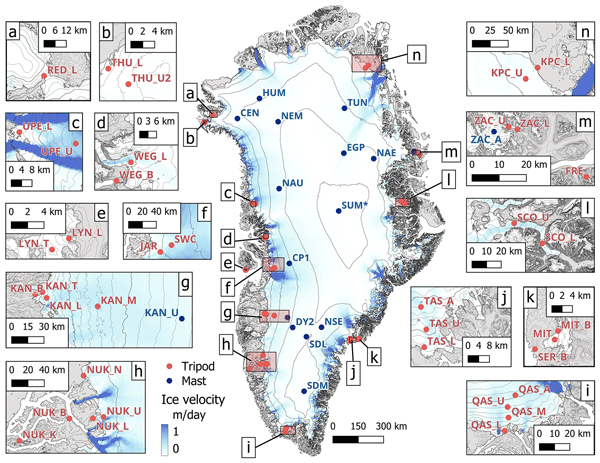
In summary, the PROMICE (Programme for Monitoring of the Greenland Ice Sheet ) | GC-NET AWS (Greenland Climate Network automatic weather station) data product update represents a significant advancement in Arctic climate monitoring. Through enhanced station designs, state-of-the-art instrumentation, and a transparent, automated data processing workflow, the dataset offers an essential resource for studying the Greenland Ice Sheet and its periphery, validating climate models, and supporting global assessments of cryospheric change.
Francesca Pellicciotti, Adrià Fontrodona-Bach, David R. Rounce, Catriona L. Fyffe, Leif S. Anderson, Álvaro Ayala, Ben W. Brock, Pascal Buri, Stefan Fugger, Koji Fujita, Prateek Gantayat, Alexander R. Groos, Walter Immerzeel, Marin Kneib, Christoph Mayer, Shelley MacDonell, Michael McCarthy, James McPhee, Evan Miles, Heather Purdie, Ekaterina Rets, Akiko Sakai, Thomas E. Shaw, Jakob Steiner, Patrick Wagnon, and Alex Winter-Billington
The Cryosphere, 20, 1895–1928, https://doi.org/10.5194/tc-20-1895-2026, https://doi.org/10.5194/tc-20-1895-2026, 2026
Short summary
Short summary
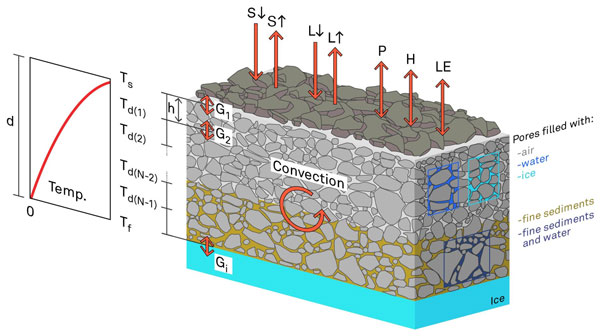
Rock debris covers many of the world glaciers, modifying the transfer of atmospheric energy to the debris and into the ice. Models of different complexity simulate this process, and we compare 15 models at 9 sites to show that the most complex models at the debris-atmosphere interface have the highest performance. However, we lack debris properties and their derivation from measurements is ambiguous, hindering global modelling and calling for both model development and data collection.
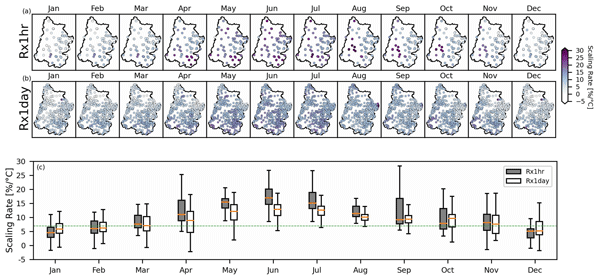
Matthew Switanek, Jakob Abermann, Wolfgang Schöner, and Michael L. Anderson
Hydrol. Earth Syst. Sci., 30, 1719–1734, https://doi.org/10.5194/hess-30-1719-2026, https://doi.org/10.5194/hess-30-1719-2026, 2026
Short summary
Short summary
Extreme precipitation is expected to increase in a warming climate. Station-based measurements of precipitation and dew point temperature are often used to estimate observed precipitation-temperature scaling rates. In this study, we use three different approaches which rely on either raw or normalized data to estimate scaling rates and produce predictions of extreme precipitation. We find that normalizing the data first can improve our estimates of precipitation-temperature scaling rates.
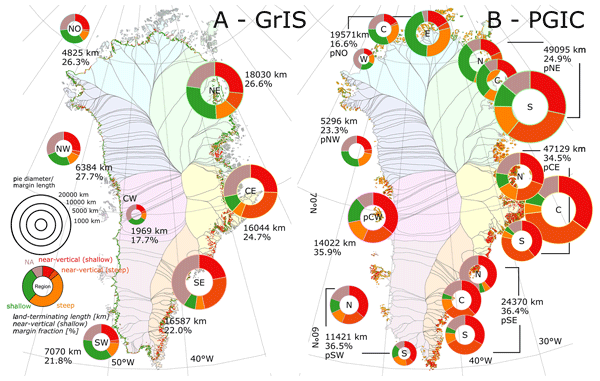
Jakob Steiner, Jakob Abermann, and Rainer Prinz
The Cryosphere, 20, 1797–1814, https://doi.org/10.5194/tc-20-1797-2026, https://doi.org/10.5194/tc-20-1797-2026, 2026
Short summary
Short summary
Nearly 95% of the Greenland ice margin ends on land, where meltwater leaves the ice to supply surrounding ecosystems. Here we show that nearly 30% of this land-terminating margin ends in extremely steep, often vertical sections, previously only described in individual locations. Less than 20% are shallow ramps. Knowledge of these margin shapes and their locations allows us to further investigate what they can potentially tell us about the current ice sheet health and its future evolution.
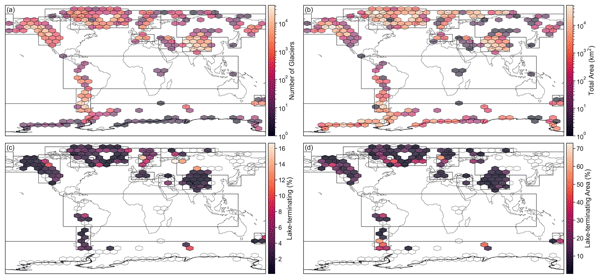
Jakob Steiner, William Armstrong, Will Kochtitzky, Robert McNabb, Rodrigo Aguayo, Tobias Bolch, Fabien Maussion, Vibhor Agarwal, Iestyn Barr, Nathaniel R. Baurley, Mike Cloutier, Katelyn DeWater, Frank Donachie, Yoann Drocourt, Siddhi Garg, Gunjan Joshi, Byron Guzman, Stanislav Kutuzov, Thomas Loriaux, Caleb Mathias, Brian Menounos, Evan Miles, Aleksandra Osika, Kaleigh Potter, Adina Racoviteanu, Brianna Rick, Miles Sterner, Guy D. Tallentire, Levan Tielidze, Rebecca White, Kunpeng Wu, and Whyjay Zheng
Earth Syst. Sci. Data, 18, 1665–1681, https://doi.org/10.5194/essd-18-1665-2026, https://doi.org/10.5194/essd-18-1665-2026, 2026
Short summary
Short summary
Many mountain glaciers around the world flow into lakes – exactly how many however, has never been mapped. Across a large team of experts we have now identified all glaciers that end in lakes. Only about 1% do so, but they are generally larger than those which end on land. This is important to understand, as lakes can influence the behaviour of glacier ice, including how fast it disappears. This new dataset allows us to better model glaciers at a global scale, accounting for the effect of lakes.
Samuel Schilling, Tobias Bolch, Andreas Dietz, Rebecca Jean Herman, and Claudia Kuenzer
EGUsphere, https://doi.org/10.5194/egusphere-2025-6280, https://doi.org/10.5194/egusphere-2025-6280, 2026
Short summary
Short summary
Snow stored in winter snowpacks supplies water to rivers that millions of people depend on. As warming reduces snow amounts, we studied whether melting snow still matters for river flow. Using long records from river basins on four continents, and cause and effect analysis, we found that in some basins melting snow can become more important for river flow even when less snow is available.
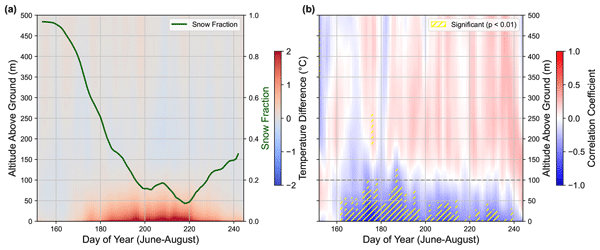
Jonathan Fipper, Jakob Abermann, Ingo Sasgen, Henrik Skov, Lise Lotte Sørensen, and Wolfgang Schöner
The Cryosphere, 20, 683–698, https://doi.org/10.5194/tc-20-683-2026, https://doi.org/10.5194/tc-20-683-2026, 2026
Short summary
Short summary
We use measurements conducted with uncrewed aerial vehicles (UAVs) and reanalysis data to study the drivers of vertical air temperature structures and their link to the surface mass balance of Flade Isblink, a large ice cap in Northeast Greenland. Surface properties control temperature structures up to 100 m above ground, while large-scale circulation dominates above. Mass loss has increased since 2015, with record loss in 2023 associated with frequent synoptic conditions favouring melt.
David Wachs, Azzurra Spagnesi, Pascal Bohleber, Andrea Fischer, Martin Stocker-Waldhuber, Alexander Junkermann, Carl Kindermann, Linus Langenbacher, Niclas Mandaric, Joshua Marks, Florian Meienburg, Theo M. Jenk, Markus K. Oberthaler, and Werner Aeschbach
Clim. Past, 22, 173–185, https://doi.org/10.5194/cp-22-173-2026, https://doi.org/10.5194/cp-22-173-2026, 2026
Short summary
Short summary
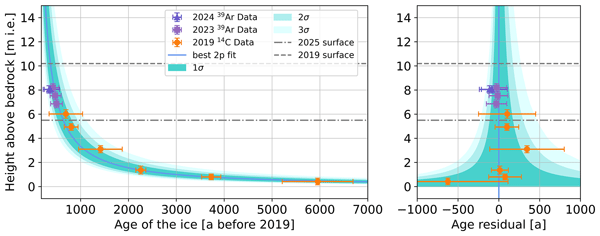
This study presents an age profile of the summit glacier of Weißseespitze in the Austrian Alps. The ages were obtained by combining 14C dating with the novel atom trap trace analysis for 39Ar. The data was used to constrain glacier age models. The results show that the surface ice is ~400 a old due to recent ice loss. The remaining ice continuously covers ages up to 6000 a. This work underscores the utility of 39Ar dating in glaciology, enabling precise reconstruction of age-depth relationships.
Jan Niklas Richter, Anselm Arndt, Nikolina Ban, Nicolas Gampierakis, Fabien Maussion, Rainer Prinz, Matthias Scheiter, Nikolaus Umlauf, and Lindsey Nicholson
EGUsphere, https://doi.org/10.5194/egusphere-2025-6249, https://doi.org/10.5194/egusphere-2025-6249, 2026
Short summary
Short summary
We developed a multi-objective Bayesian framework to calibrate a surface energy balance (SEB) model using only publicly available satellite data and climate simulations. The framework constrains model parameters well but also reveals biases in the forcing, affecting the SEB and the simulated mass balance and snowlines. The results indicate that an uncertainty-aware model chain can help identify model errors and provides a first step towards physical glacier modelling without in-situ data.
Martin Mergili, Hanna Pfeffer, Andreas Kellerer-Pirklbauer, Christian Zangerl, and Shiva P. Pudasaini
Geosci. Model Dev., 18, 9879–9896, https://doi.org/10.5194/gmd-18-9879-2025, https://doi.org/10.5194/gmd-18-9879-2025, 2025
Short summary
Short summary
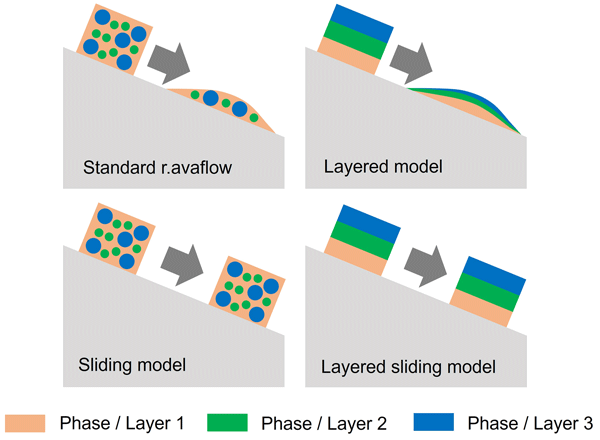
We present a new version of the landslide model r.avaflow. It includes a model where different materials move on top of each other instead of mixing; a model supporting the entire range from block sliding to flowing; a model for slow-moving processes; and an interface for virtual reality visualization. Based on the results for four case studies we conclude that, at the moment, our enhancements are very useful for visualization of landslides for awareness building and environmental education.
Akash M. Patil, Christoph Mayer, Thorsten Seehaus, Alexander R. Groos, and Andreas Bauder
The Cryosphere, 19, 5547–5577, https://doi.org/10.5194/tc-19-5547-2025, https://doi.org/10.5194/tc-19-5547-2025, 2025
Short summary
Short summary
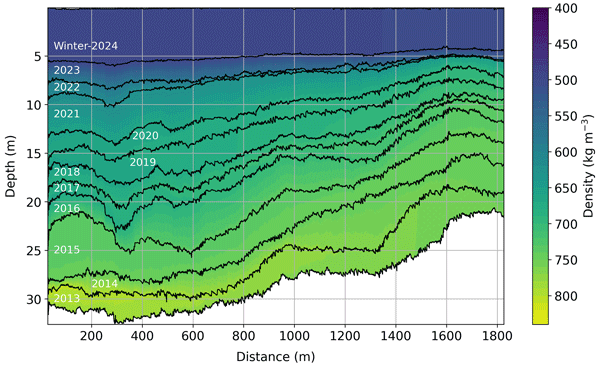
We studied how the density of snow to ice transition varies with depth in the Aletsch glacier using radar-based field measurements and some simple models. We showed that it is possible to track how much snow has accumulated in the last 10–14 years. This helps improve the uncertainties in glacier mass balance estimates. Overall, by utilising non-invasive radar techniques and models, we provide a novel approach to understanding the evolution of glaciers under regional climate conditions.
Florina Roana Schalamon, Sebastian Scher, Andreas Trügler, Lea Hartl, Wolfgang Schöner, and Jakob Abermann
Weather Clim. Dynam., 6, 1075–1088, https://doi.org/10.5194/wcd-6-1075-2025, https://doi.org/10.5194/wcd-6-1075-2025, 2025
Short summary
Short summary
Atmospheric patterns influence the air temperature in Greenland. We investigate two warming periods, from 1922–1932 and 1993–2007, both showing similar temperature increases. Using a neural network-based clustering method, we defined predominant atmospheric patterns for further analysis. Our findings reveal that while the connection between these patterns and local air temperature remains stable, the distribution of patterns changes between the warming periods and the full period (1900–2015).
Tiago Silva, Brandon Samuel Whitley, Elisabeth Machteld Biersma, Jakob Abermann, Katrine Raundrup, Natasha de Vere, Toke Thomas Høye, Verena Haring, and Wolfgang Schöner
Biogeosciences, 22, 4601–4626, https://doi.org/10.5194/bg-22-4601-2025, https://doi.org/10.5194/bg-22-4601-2025, 2025
Short summary
Short summary
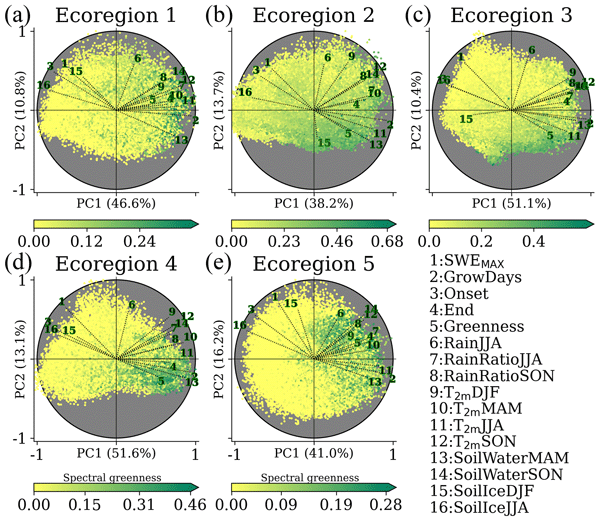
Ecosystems in Greenland have experienced significant changes over recent decades. We show the consistency of a high-resolution polar-adapted reanalysis product to represent bio-climatic factors influencing ecological processes. Our results describe the relevance/interaction between snowmelt and soil water content before the growing season onset, infer how the thermal growing season relates to changes in spectral greenness, and describe regions of ongoing changes in vegetation distribution.
Lea Hartl, Federico Covi, Martin Stocker-Waldhuber, Anna Baldo, Davide Fugazza, Biagio Di Mauro, and Kathrin Naegeli
The Cryosphere, 19, 3329–3353, https://doi.org/10.5194/tc-19-3329-2025, https://doi.org/10.5194/tc-19-3329-2025, 2025
Short summary
Short summary
Glacier albedo determines how much solar radiation is absorbed by the glacier surface and is a key driver of glacier melt. Alpine glaciers are losing their snow and firn cover, and the underlying darker ice is becoming exposed. This means that more solar radiation is absorbed by the ice, which leads to increased melt. To quantify these processes, we explore data from a high-elevation, on-ice weather station that measures albedo and combine this information with satellite imagery.
Line Rouyet, Tobias Bolch, Francesco Brardinoni, Rafael Caduff, Diego Cusicanqui, Margaret Darrow, Reynald Delaloye, Thomas Echelard, Christophe Lambiel, Cécile Pellet, Lucas Ruiz, Lea Schmid, Flavius Sirbu, and Tazio Strozzi
Earth Syst. Sci. Data, 17, 4125–4157, https://doi.org/10.5194/essd-17-4125-2025, https://doi.org/10.5194/essd-17-4125-2025, 2025
Short summary
Short summary
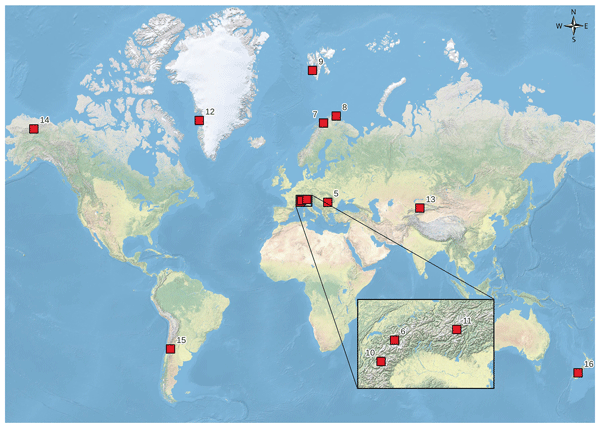
Rock glaciers are landforms generated by the creep of frozen ground (permafrost) in cold-climate mountains. Mapping rock glaciers contributes to documenting the distribution and the dynamics of mountain permafrost. We compiled inventories documenting the location, the characteristics, and the extent of rock glaciers in 12 mountain regions around the world. In each region, a team of operators performed the work following common rules and agreed on final solutions when discrepancies were identified.
Sindhu Ramanath, Lukas Krieger, Dana Floricioiu, Codruț-Andrei Diaconu, and Konrad Heidler
The Cryosphere, 19, 2431–2455, https://doi.org/10.5194/tc-19-2431-2025, https://doi.org/10.5194/tc-19-2431-2025, 2025
Short summary
Short summary
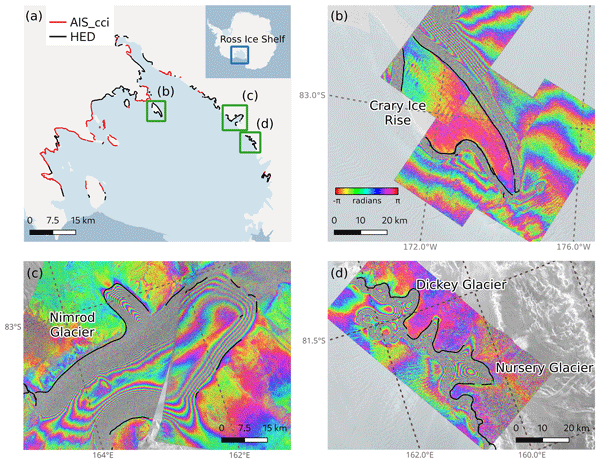
Grounding lines are geophysical features that divide ice masses on the bedrock and floating ice shelves. Their accurate location is required for calculating the mass balance of ice sheets and glaciers in Antarctica and Greenland. Human experts still manually detect them in satellite-based interferometric radar images, which is inefficient given the growing volume of data. We have developed an artificial-intelligence-based automatic detection algorithm to generate Antarctica-wide grounding lines.
Yu Zhu, Shiyin Liu, Junfeng Wei, Kunpeng Wu, Tobias Bolch, Junli Xu, Wanqin Guo, Zongli Jiang, Fuming Xie, Ying Yi, Donghui Shangguan, Xiaojun Yao, and Zhen Zhang
Earth Syst. Sci. Data, 17, 1851–1871, https://doi.org/10.5194/essd-17-1851-2025, https://doi.org/10.5194/essd-17-1851-2025, 2025
Short summary
Short summary
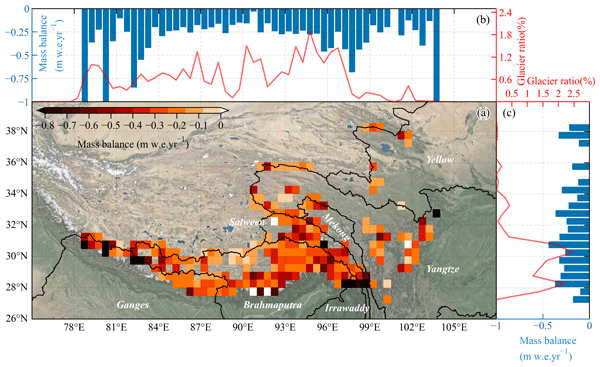
This study compiled a near-complete inventory of glacier mass changes across the eastern Tibetan Plateau using topographical maps. These data enhance our understanding of glacier change variability before 2000. When combined with existing research, our dataset provides a nearly 5-decade record of mass balance, aiding hydrological simulations and assessments of mountain glacier contributions to sea-level rise.
Lea Hartl, Patrick Schmitt, Lilian Schuster, Kay Helfricht, Jakob Abermann, and Fabien Maussion
The Cryosphere, 19, 1431–1452, https://doi.org/10.5194/tc-19-1431-2025, https://doi.org/10.5194/tc-19-1431-2025, 2025
Short summary
Short summary
We use regional observations of glacier area and volume change to inform glacier evolution modeling in the Ötztal and Stubai range (Austrian Alps) until 2100 in different climate scenarios. Glaciers in the region lost 23 % of their volume between 2006 and 2017. Under current warming trajectories, glacier loss in the region is expected to be near-total by 2075. We show that integrating regional calibration and validation data in glacier models is important to improve confidence in projections.
Enrico Mattea, Etienne Berthier, Amaury Dehecq, Tobias Bolch, Atanu Bhattacharya, Sajid Ghuffar, Martina Barandun, and Martin Hoelzle
The Cryosphere, 19, 219–247, https://doi.org/10.5194/tc-19-219-2025, https://doi.org/10.5194/tc-19-219-2025, 2025
Short summary
Short summary
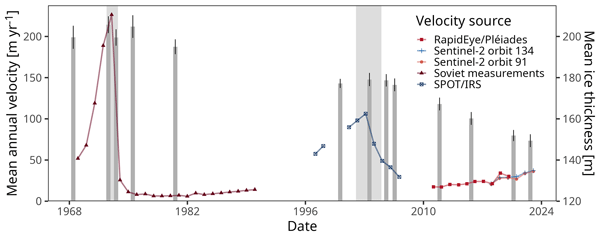
We reconstruct the evolution of terminus position, ice thickness, and surface flow velocity of the reference Abramov glacier (Kyrgyzstan) from 1968 to present. We describe a front pulsation in the early 2000s and the multi-annual present-day buildup of a new pulsation. Such dynamic instabilities can challenge the representativity of Abramov as a reference glacier. For our work we used satellite‑based optical remote sensing from multiple platforms, including recently declassified archives.
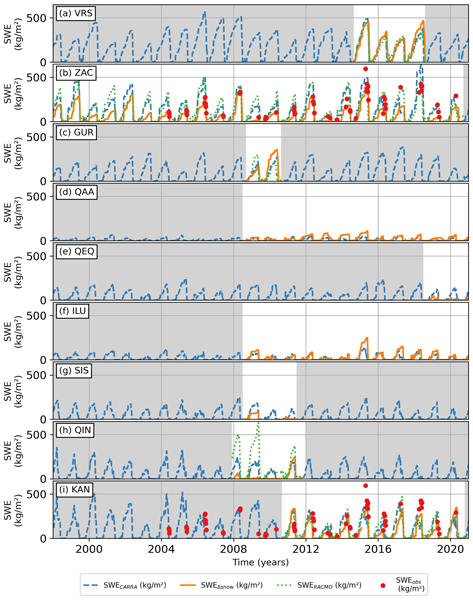
Jorrit van der Schot, Jakob Abermann, Tiago Silva, Kerstin Rasmussen, Michael Winkler, Kirsty Langley, and Wolfgang Schöner
The Cryosphere, 18, 5803–5823, https://doi.org/10.5194/tc-18-5803-2024, https://doi.org/10.5194/tc-18-5803-2024, 2024
Short summary
Short summary
We present snow data from nine locations in coastal Greenland. We show that a reanalysis product (CARRA) simulates seasonal snow characteristics better than a regional climate model (RACMO). CARRA output matches particularly well with our reference dataset when we look at the maximum snow water equivalent and the snow cover end date. We show that seasonal snow in coastal Greenland has large spatial and temporal variability and find little evidence of trends in snow cover characteristics.
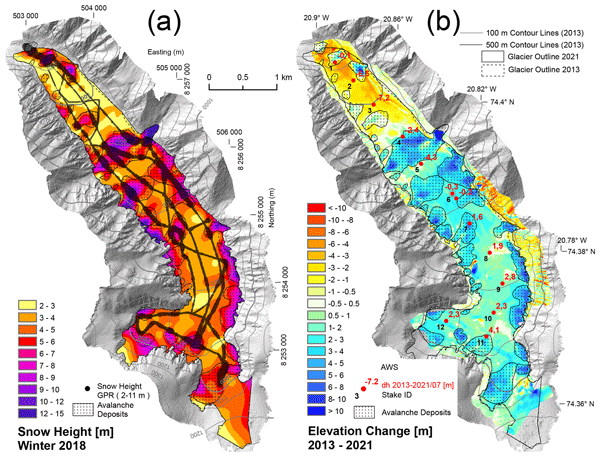
Bernhard Hynek, Daniel Binder, Michele Citterio, Signe Hillerup Larsen, Jakob Abermann, Geert Verhoeven, Elke Ludewig, and Wolfgang Schöner
The Cryosphere, 18, 5481–5494, https://doi.org/10.5194/tc-18-5481-2024, https://doi.org/10.5194/tc-18-5481-2024, 2024
Short summary
Short summary
An avalanche event in February 2018 caused thick snow deposits on Freya Glacier, a peripheral mountain glacier in northeastern Greenland. The avalanche deposits contributed significantly to the mass balance, leaving a strong imprint in the elevation changes in 2013–2021. The 8-year geodetic mass balance (2013–2021) of the glacier is positive, whereas previous estimates by direct measurements were negative and now turned out to have a negative bias.
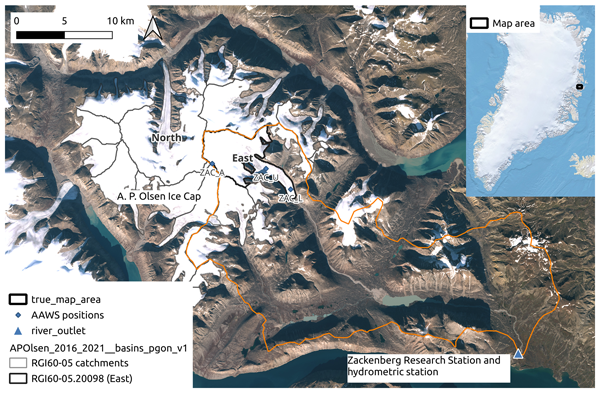
Signe Hillerup Larsen, Daniel Binder, Anja Rutishauser, Bernhard Hynek, Robert Schjøtt Fausto, and Michele Citterio
Earth Syst. Sci. Data, 16, 4103–4118, https://doi.org/10.5194/essd-16-4103-2024, https://doi.org/10.5194/essd-16-4103-2024, 2024
Short summary
Short summary
The Greenland Ecosystem Monitoring programme has been running since 1995. In 2008, the Glaciological monitoring sub-program GlacioBasis was initiated at the Zackenberg site in northeast Greenland, with a transect of three weather stations on the A. P. Olsen Ice Cap. In 2022, the weather stations were replaced with a more standardized set up. Here, we provide the reprocessed and quality-checked data from 2008 to 2022, i.e., the first 15 years of continued monitoring.
Lea Hartl, Bernd Seiser, Martin Stocker-Waldhuber, Anna Baldo, Marcela Violeta Lauria, and Andrea Fischer
Earth Syst. Sci. Data, 16, 4077–4101, https://doi.org/10.5194/essd-16-4077-2024, https://doi.org/10.5194/essd-16-4077-2024, 2024
Short summary
Short summary
Glaciers in the Alps are receding at unprecedented rates. To understand how this affects the hydrology and ecosystems of the affected regions, it is important to measure glacier mass balance and ensure that records of field surveys are kept in standardized formats and well-documented. We describe glaciological measurements of ice ablation and snow accumulation gathered at Mullwitzkees and Venedigerkees, two glaciers in the Austrian Alps, since 2007 and 2012, respectively.
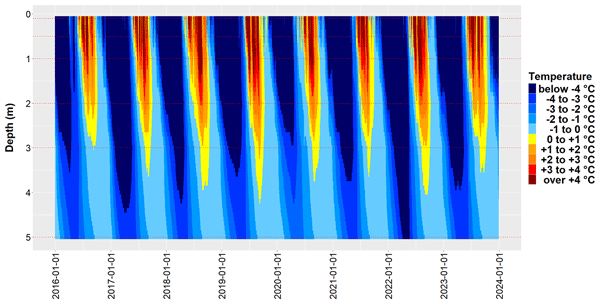
Ingo Hartmeyer and Jan-Christoph Otto
DEUQUA Spec. Pub., 5, 3–12, https://doi.org/10.5194/deuquasp-5-3-2024, https://doi.org/10.5194/deuquasp-5-3-2024, 2024
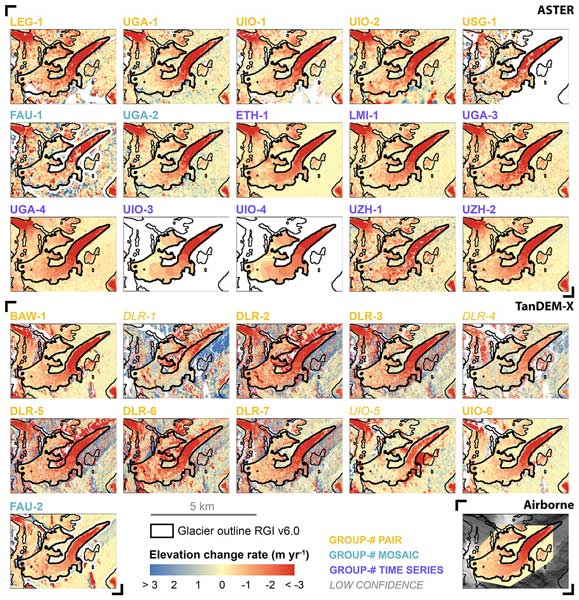
Livia Piermattei, Michael Zemp, Christian Sommer, Fanny Brun, Matthias H. Braun, Liss M. Andreassen, Joaquín M. C. Belart, Etienne Berthier, Atanu Bhattacharya, Laura Boehm Vock, Tobias Bolch, Amaury Dehecq, Inés Dussaillant, Daniel Falaschi, Caitlyn Florentine, Dana Floricioiu, Christian Ginzler, Gregoire Guillet, Romain Hugonnet, Matthias Huss, Andreas Kääb, Owen King, Christoph Klug, Friedrich Knuth, Lukas Krieger, Jeff La Frenierre, Robert McNabb, Christopher McNeil, Rainer Prinz, Louis Sass, Thorsten Seehaus, David Shean, Désirée Treichler, Anja Wendt, and Ruitang Yang
The Cryosphere, 18, 3195–3230, https://doi.org/10.5194/tc-18-3195-2024, https://doi.org/10.5194/tc-18-3195-2024, 2024
Short summary
Short summary
Satellites have made it possible to observe glacier elevation changes from all around the world. In the present study, we compared the results produced from two different types of satellite data between different research groups and against validation measurements from aeroplanes. We found a large spread between individual results but showed that the group ensemble can be used to reliably estimate glacier elevation changes and related errors from satellite data.
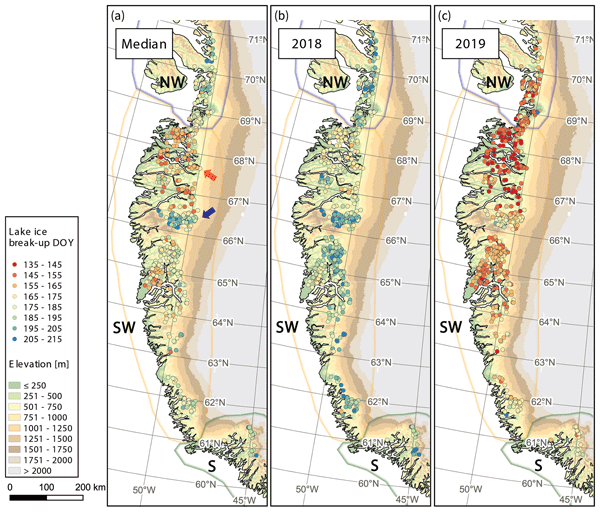
Christoph Posch, Jakob Abermann, and Tiago Silva
The Cryosphere, 18, 2035–2059, https://doi.org/10.5194/tc-18-2035-2024, https://doi.org/10.5194/tc-18-2035-2024, 2024
Short summary
Short summary
Radar beams from satellites exhibit reflection differences between water and ice. This condition, as well as the comprehensive coverage and high temporal resolution of the Sentinel-1 satellites, allows automatically detecting the timing of when ice cover of lakes in Greenland disappear. We found that lake ice breaks up 3 d later per 100 m elevation gain and that the average break-up timing varies by ±8 d in 2017–2021, which has major implications for the energy budget of the lakes.
Florian Lippl, Alexander Maringer, Margit Kurka, Jakob Abermann, Wolfgang Schöner, and Manuela Hirschmugl
Earth Syst. Sci. Data Discuss., https://doi.org/10.5194/essd-2024-12, https://doi.org/10.5194/essd-2024-12, 2024
Preprint withdrawn
Short summary
Short summary
The aim of our work was to give an overview of data currently available for the National Park Gesäuse and Johnsbachtal relevant to the European long-term ecosystem monitoring. This data, further was made available on respective data repositories, where all data is downloadable free of charge. Data presented in our paper is from all compartments, the atmosphere, social & economic sphere, biosphere and geosphere. We consider our approach as an opportunity to function as a showcase for other sites.
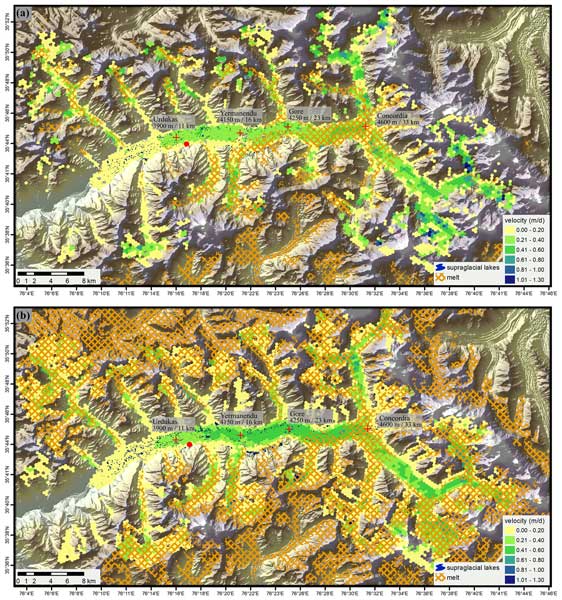
Anna Wendleder, Jasmin Bramboeck, Jamie Izzard, Thilo Erbertseder, Pablo d'Angelo, Andreas Schmitt, Duncan J. Quincey, Christoph Mayer, and Matthias H. Braun
The Cryosphere, 18, 1085–1103, https://doi.org/10.5194/tc-18-1085-2024, https://doi.org/10.5194/tc-18-1085-2024, 2024
Short summary
Short summary
This study analyses the basal sliding and the hydrological drainage of Baltoro Glacier, Pakistan. The surface velocity was characterized by a spring speed-up, summer peak, and autumn speed-up. Snow melt has the largest impact on the spring speed-up, summer velocity peak, and the transition from inefficient to efficient drainage. Drainage from supraglacial lakes contributed to the fall speed-up. Increased summer temperatures will intensify the magnitude of meltwater and thus surface velocities.
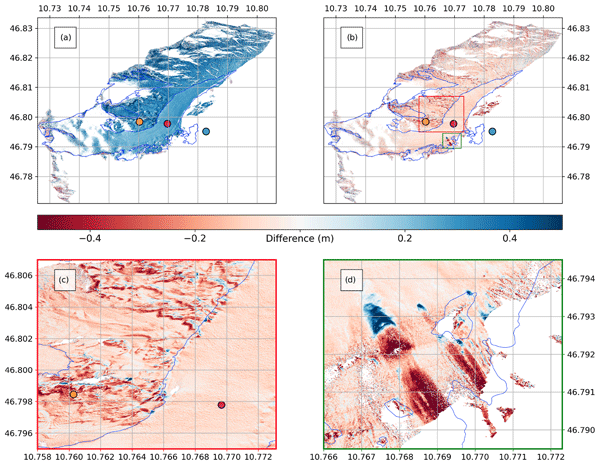
Annelies Voordendag, Brigitta Goger, Rainer Prinz, Tobias Sauter, Thomas Mölg, Manuel Saigger, and Georg Kaser
The Cryosphere, 18, 849–868, https://doi.org/10.5194/tc-18-849-2024, https://doi.org/10.5194/tc-18-849-2024, 2024
Short summary
Short summary
Wind-driven snow redistribution affects glacier mass balance. A case study of Hintereisferner glacier in Austria used high-resolution observations and simulations to model snow redistribution. Simulations matched observations, showing the potential of the model for studying snow redistribution on other mountain glaciers.
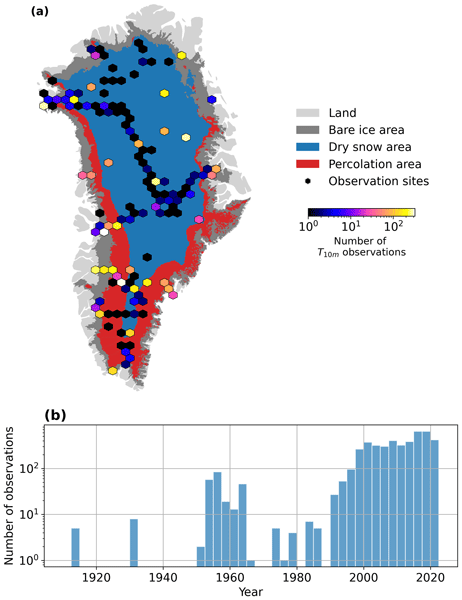
Baptiste Vandecrux, Robert S. Fausto, Jason E. Box, Federico Covi, Regine Hock, Åsa K. Rennermalm, Achim Heilig, Jakob Abermann, Dirk van As, Elisa Bjerre, Xavier Fettweis, Paul C. J. P. Smeets, Peter Kuipers Munneke, Michiel R. van den Broeke, Max Brils, Peter L. Langen, Ruth Mottram, and Andreas P. Ahlstrøm
The Cryosphere, 18, 609–631, https://doi.org/10.5194/tc-18-609-2024, https://doi.org/10.5194/tc-18-609-2024, 2024
Short summary
Short summary
How fast is the Greenland ice sheet warming? In this study, we compiled 4500+ temperature measurements at 10 m below the ice sheet surface (T10m) from 1912 to 2022. We trained a machine learning model on these data and reconstructed T10m for the ice sheet during 1950–2022. After a slight cooling during 1950–1985, the ice sheet warmed at a rate of 0.7 °C per decade until 2022. Climate models showed mixed results compared to our observations and underestimated the warming in key regions.
Michael Paster, Peter Flödl, Anton Neureiter, Gernot Weyss, Berhnard Hynek, Ulrich Pulg, Rannveig Øvrevik Skoglund, Helmut Habersack, and Christoph Hauer
Hydrol. Earth Syst. Sci. Discuss., https://doi.org/10.5194/hess-2023-267, https://doi.org/10.5194/hess-2023-267, 2024
Manuscript not accepted for further review
Short summary
Short summary
Triggered by global warming, glacier melt is repeatedly reaching peak values year by year. This development leads to a continuous enlargement of glacier forelands, accompanied by increasing sediment availability and a change in meltwater runoff behavior. The study describes an essential development step of proglacial channel evolution using river engineering methods. This is relevant to adequately define glacifluvial processes and downstream sediment yields in these transitioning landscapes.
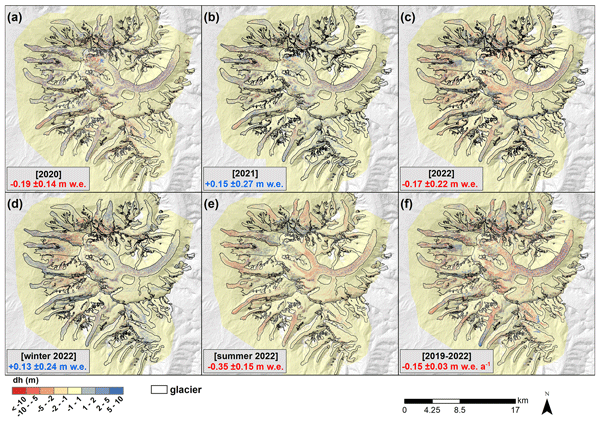
Daniel Falaschi, Atanu Bhattacharya, Gregoire Guillet, Lei Huang, Owen King, Kriti Mukherjee, Philipp Rastner, Tandong Yao, and Tobias Bolch
The Cryosphere, 17, 5435–5458, https://doi.org/10.5194/tc-17-5435-2023, https://doi.org/10.5194/tc-17-5435-2023, 2023
Short summary
Short summary
Because glaciers are crucial freshwater sources in the lowlands surrounding High Mountain Asia, constraining short-term glacier mass changes is essential. We investigate the potential of state-of-the-art satellite elevation data to measure glacier mass changes in two selected regions. The results demonstrate the ability of our dataset to characterize glacier changes of different magnitudes, allowing for an increase in the number of inaccessible glaciers that can be readily monitored.
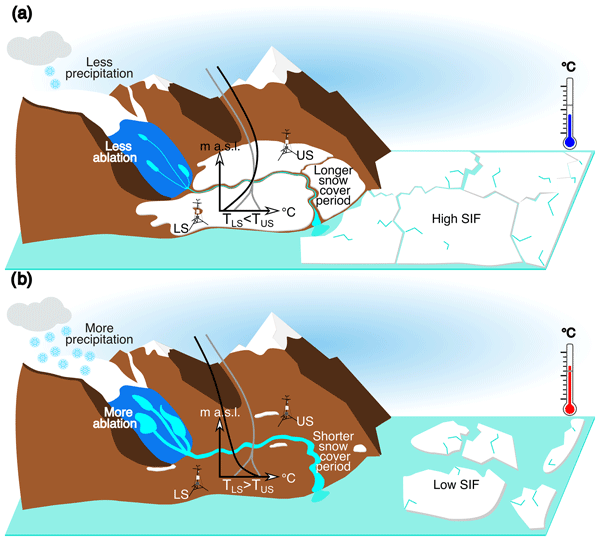
Sonika Shahi, Jakob Abermann, Tiago Silva, Kirsty Langley, Signe Hillerup Larsen, Mikhail Mastepanov, and Wolfgang Schöner
Weather Clim. Dynam., 4, 747–771, https://doi.org/10.5194/wcd-4-747-2023, https://doi.org/10.5194/wcd-4-747-2023, 2023
Short summary
Short summary
This study highlights how the sea ice variability in the Greenland Sea affects the terrestrial climate and the surface mass changes of peripheral glaciers of the Zackenberg region (ZR), Northeast Greenland, combining model output and observations. Our results show that the temporal evolution of sea ice influences the climate anomaly magnitude in the ZR. We also found that the changing temperature and precipitation patterns due to sea ice variability can affect the surface mass of the ice cap.
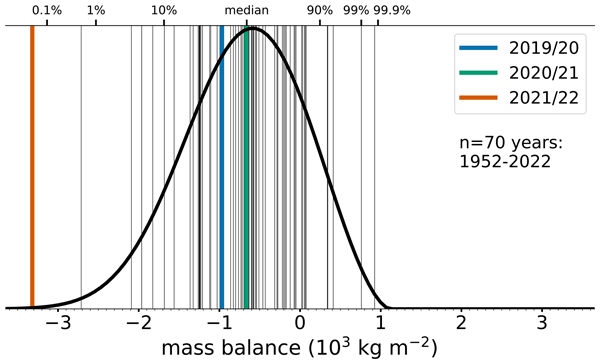
Annelies Voordendag, Rainer Prinz, Lilian Schuster, and Georg Kaser
The Cryosphere, 17, 3661–3665, https://doi.org/10.5194/tc-17-3661-2023, https://doi.org/10.5194/tc-17-3661-2023, 2023
Short summary
Short summary
The Glacier Loss Day (GLD) is the day on which all mass gained from the accumulation period is lost, and the glacier loses mass irrecoverably for the rest of the mass balance year. In 2022, the GLD was already reached on 23 June at Hintereisferner (Austria), and this led to a record-breaking mass loss. We introduce the GLD as a gross yet expressive indicator of the glacier’s imbalance with a persistently warming climate.
Fanny Brun, Owen King, Marion Réveillet, Charles Amory, Anton Planchot, Etienne Berthier, Amaury Dehecq, Tobias Bolch, Kévin Fourteau, Julien Brondex, Marie Dumont, Christoph Mayer, Silvan Leinss, Romain Hugonnet, and Patrick Wagnon
The Cryosphere, 17, 3251–3268, https://doi.org/10.5194/tc-17-3251-2023, https://doi.org/10.5194/tc-17-3251-2023, 2023
Short summary
Short summary
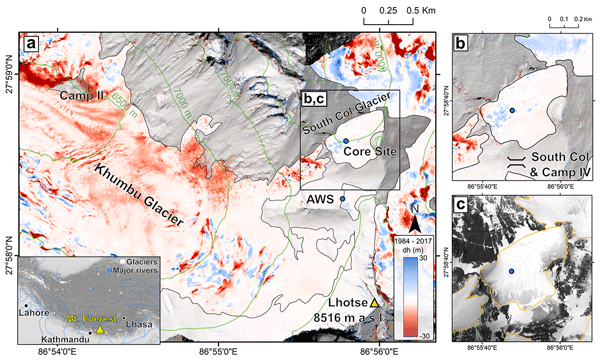
The South Col Glacier is a small body of ice and snow located on the southern ridge of Mt. Everest. A recent study proposed that South Col Glacier is rapidly losing mass. In this study, we examined the glacier thickness change for the period 1984–2017 and found no thickness change. To reconcile these results, we investigate wind erosion and surface energy and mass balance and find that melt is unlikely a dominant process, contrary to previous findings.
Klaus Haslinger, Wolfgang Schöner, Jakob Abermann, Gregor Laaha, Konrad Andre, Marc Olefs, and Roland Koch
Nat. Hazards Earth Syst. Sci., 23, 2749–2768, https://doi.org/10.5194/nhess-23-2749-2023, https://doi.org/10.5194/nhess-23-2749-2023, 2023
Short summary
Short summary
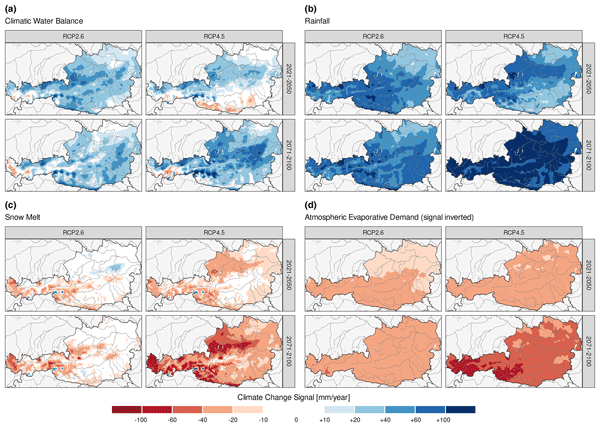
Future changes of surface water availability in Austria are investigated. Alterations of the climatic water balance and its components are analysed along different levels of elevation. Results indicate in general wetter conditions with particular shifts in timing of the snow melt season. On the contrary, an increasing risk for summer droughts is apparent due to increasing year-to-year variability and decreasing snow melt under future climate conditions.
Azzurra Spagnesi, Pascal Bohleber, Elena Barbaro, Matteo Feltracco, Fabrizio De Blasi, Giuliano Dreossi, Martin Stocker-Waldhuber, Daniela Festi, Jacopo Gabrieli, Andrea Gambaro, Andrea Fischer, and Carlo Barbante
EGUsphere, https://doi.org/10.5194/egusphere-2023-1625, https://doi.org/10.5194/egusphere-2023-1625, 2023
Preprint archived
Short summary
Short summary
We present new data from a 10 m ice core drilled in 2019 and a 8.4 m parallel ice core drilled in 2021 at the summit of Weißseespitze glacier. In a new combination of proxies, we discuss profiles of stable water isotopes, major ion chemistry as well as a full profile of microcharcoal and levoglucosan. We find that the chemical and isotopic signals are preserved, despite the ongoing surface mass loss. This is not be to expected considering what has been found at other glaciers at similar locations.

Lena Katharina Schmidt, Till Francke, Peter Martin Grosse, Christoph Mayer, and Axel Bronstert
Hydrol. Earth Syst. Sci., 27, 1841–1863, https://doi.org/10.5194/hess-27-1841-2023, https://doi.org/10.5194/hess-27-1841-2023, 2023
Short summary
Short summary
We present a suitable method to reconstruct sediment export from decadal records of hydroclimatic predictors (discharge, precipitation, temperature) and shorter suspended sediment measurements. This lets us fill the knowledge gap on how sediment export from glacierized high-alpine areas has responded to climate change. We find positive trends in sediment export from the two investigated nested catchments with step-like increases around 1981 which are linked to crucial changes in glacier melt.
Sajid Ghuffar, Owen King, Grégoire Guillet, Ewelina Rupnik, and Tobias Bolch
The Cryosphere, 17, 1299–1306, https://doi.org/10.5194/tc-17-1299-2023, https://doi.org/10.5194/tc-17-1299-2023, 2023
Short summary
Short summary
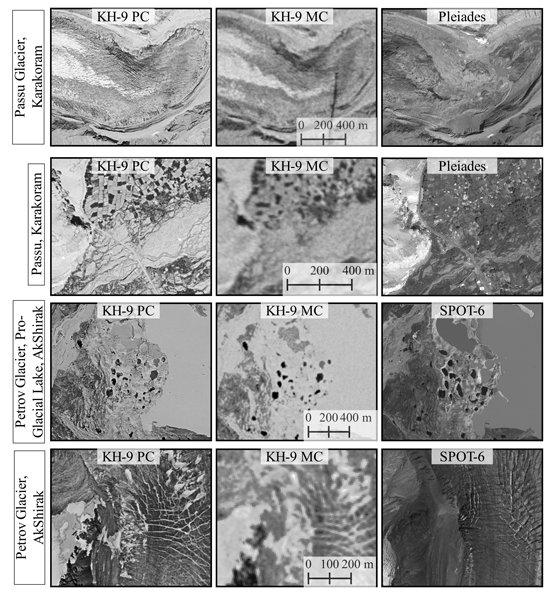
The panoramic cameras (PCs) on board Hexagon KH-9 satellite missions from 1971–1984 captured very high-resolution stereo imagery with up to 60 cm spatial resolution. This study explores the potential of this imagery for glacier mapping and change estimation. The high resolution of KH-9PC leads to higher-quality DEMs which better resolve the accumulation region of glaciers in comparison to the KH-9 mapping camera, and KH-9PC imagery can be useful in several Earth observation applications.
Lea Hartl, Thomas Zieher, Magnus Bremer, Martin Stocker-Waldhuber, Vivien Zahs, Bernhard Höfle, Christoph Klug, and Alessandro Cicoira
Earth Surf. Dynam., 11, 117–147, https://doi.org/10.5194/esurf-11-117-2023, https://doi.org/10.5194/esurf-11-117-2023, 2023
Short summary
Short summary
The rock glacier in Äußeres Hochebenkar (Austria) moved faster in 2021–2022 than it has in about 70 years of monitoring. It is currently destabilizing. Using a combination of different data types and methods, we show that there have been two cycles of destabilization at Hochebenkar and provide a detailed analysis of velocity and surface changes. Because our time series are very long and show repeated destabilization, this helps us better understand the processes of rock glacier destabilization.
Fuming Xie, Shiyin Liu, Yongpeng Gao, Yu Zhu, Tobias Bolch, Andreas Kääb, Shimei Duan, Wenfei Miao, Jianfang Kang, Yaonan Zhang, Xiran Pan, Caixia Qin, Kunpeng Wu, Miaomiao Qi, Xianhe Zhang, Ying Yi, Fengze Han, Xiaojun Yao, Qiao Liu, Xin Wang, Zongli Jiang, Donghui Shangguan, Yong Zhang, Richard Grünwald, Muhammad Adnan, Jyoti Karki, and Muhammad Saifullah
Earth Syst. Sci. Data, 15, 847–867, https://doi.org/10.5194/essd-15-847-2023, https://doi.org/10.5194/essd-15-847-2023, 2023
Short summary
Short summary
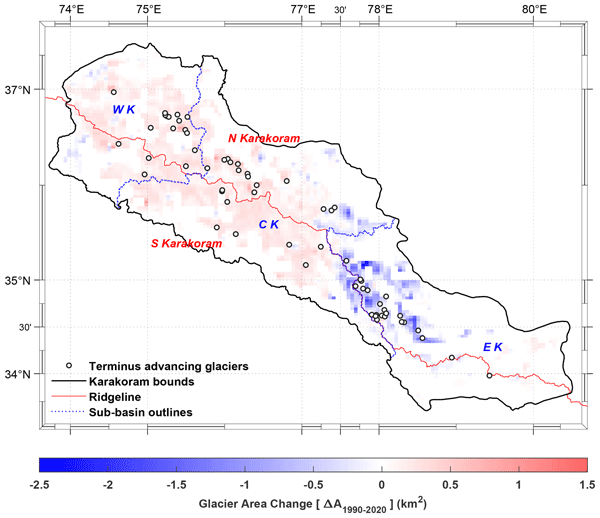
In this study, first we generated inventories which allowed us to systematically detect glacier change patterns in the Karakoram range. We found that, by the 2020s, there were approximately 10 500 glaciers in the Karakoram mountains covering an area of 22 510.73 km2, of which ~ 10.2 % is covered by debris. During the past 30 years (from 1990 to 2020), the total glacier cover area in Karakoram remained relatively stable, with a slight increase in area of 23.5 km2.
Yu Zhu, Shiyin Liu, Junfeng Wei, Kunpeng Wu, Tobias Bolch, Junli Xu, Wanqin Guo, Zongli Jiang, Fuming Xie, Ying Yi, Donghui Shangguan, Xiaojun Yao, and Zhen Zhang
Earth Syst. Sci. Data Discuss., https://doi.org/10.5194/essd-2022-473, https://doi.org/10.5194/essd-2022-473, 2023
Preprint withdrawn
Short summary
Short summary
In this study, we presented a nearly complete inventory of glacier mass change dataset across the eastern Tibetan Plateau by using topographical maps, which will enhance the knowledge on the heterogeneity of glacier change before 2000. Our dataset, in combination with the published results, provide a nearly five decades mass balance to support hydrological simulation, and to evaluate the contribution of mountain glacier loss to sea level.
Michael Paster, Peter Flödl, Anton Neureiter, Gernot Weyss, Bernhard Hynek, Ulrich Pulg, Rannveig Øvrevik Skoglund, Helmut Habersack, and Christoph Hauer
Hydrol. Earth Syst. Sci. Discuss., https://doi.org/10.5194/hess-2022-347, https://doi.org/10.5194/hess-2022-347, 2022
Manuscript not accepted for further review
Short summary
Short summary
Glaciers experienced record-breaking melting rates in recent years. This development leads to a continuous enlargement of glacier forelands, accompanied by increasing sediment availability and altered meltwater runoff behavior. This study describes the final development step of the gradual meltwater channel evolution using river engineering techniques. This is relevant to adequately define high alpine fluvial processes and sediment yields in these transitional landscapes.
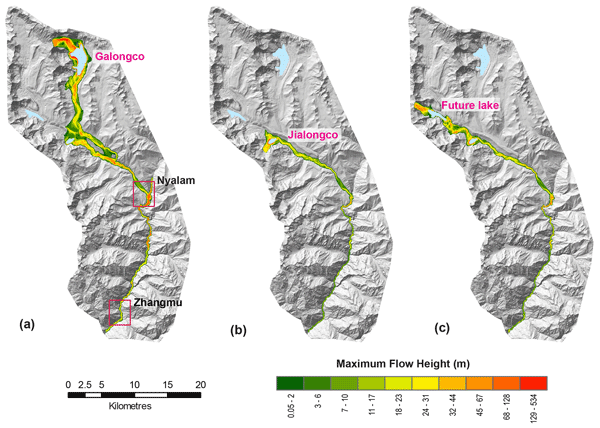
Simon K. Allen, Ashim Sattar, Owen King, Guoqing Zhang, Atanu Bhattacharya, Tandong Yao, and Tobias Bolch
Nat. Hazards Earth Syst. Sci., 22, 3765–3785, https://doi.org/10.5194/nhess-22-3765-2022, https://doi.org/10.5194/nhess-22-3765-2022, 2022
Short summary
Short summary
This study demonstrates how the threat of a very large outburst from a future lake can be feasibly assessed alongside that from current lakes to inform disaster risk management within a transboundary basin between Tibet and Nepal. Results show that engineering measures and early warning systems would need to be coupled with effective land use zoning and programmes to strengthen local response capacities in order to effectively reduce the risk associated with current and future outburst events.

Tiago Silva, Jakob Abermann, Brice Noël, Sonika Shahi, Willem Jan van de Berg, and Wolfgang Schöner
The Cryosphere, 16, 3375–3391, https://doi.org/10.5194/tc-16-3375-2022, https://doi.org/10.5194/tc-16-3375-2022, 2022
Short summary
Short summary
To overcome internal climate variability, this study uses k-means clustering to combine NAO, GBI and IWV over the Greenland Ice Sheet (GrIS) and names the approach as the North Atlantic influence on Greenland (NAG). With the support of a polar-adapted RCM, spatio-temporal changes on SEB components within NAG phases are investigated. We report atmospheric warming and moistening across all NAG phases as well as large-scale and regional-scale contributions to GrIS mass loss and their interactions.
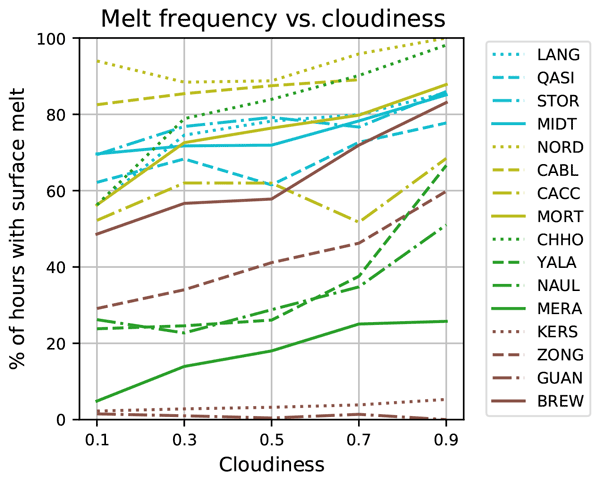
Jonathan P. Conway, Jakob Abermann, Liss M. Andreassen, Mohd Farooq Azam, Nicolas J. Cullen, Noel Fitzpatrick, Rianne H. Giesen, Kirsty Langley, Shelley MacDonell, Thomas Mölg, Valentina Radić, Carleen H. Reijmer, and Jean-Emmanuel Sicart
The Cryosphere, 16, 3331–3356, https://doi.org/10.5194/tc-16-3331-2022, https://doi.org/10.5194/tc-16-3331-2022, 2022
Short summary
Short summary
We used data from automatic weather stations on 16 glaciers to show how clouds influence glacier melt in different climates around the world. We found surface melt was always more frequent when it was cloudy but was not universally faster or slower than under clear-sky conditions. Also, air temperature was related to clouds in opposite ways in different climates – warmer with clouds in cold climates and vice versa. These results will help us improve how we model past and future glacier melt.

Thomas Goelles, Tobias Hammer, Stefan Muckenhuber, Birgit Schlager, Jakob Abermann, Christian Bauer, Víctor J. Expósito Jiménez, Wolfgang Schöner, Markus Schratter, Benjamin Schrei, and Kim Senger
Geosci. Instrum. Method. Data Syst., 11, 247–261, https://doi.org/10.5194/gi-11-247-2022, https://doi.org/10.5194/gi-11-247-2022, 2022
Short summary
Short summary
We propose a newly developed modular MObile LIdar SENsor System (MOLISENS) to enable new applications for small industrial light detection and ranging (lidar) sensors. MOLISENS supports both monitoring of dynamic processes and mobile mapping applications. The mobile mapping application of MOLISENS has been tested under various conditions, and results are shown from two surveys in the Lurgrotte cave system in Austria and a glacier cave in Longyearbreen on Svalbard.
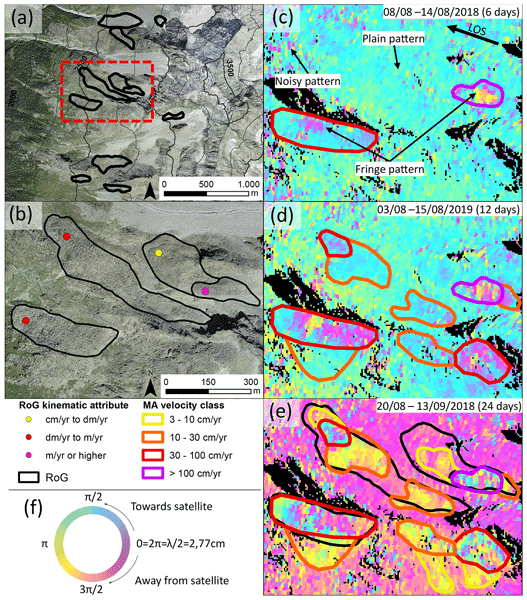
Aldo Bertone, Chloé Barboux, Xavier Bodin, Tobias Bolch, Francesco Brardinoni, Rafael Caduff, Hanne H. Christiansen, Margaret M. Darrow, Reynald Delaloye, Bernd Etzelmüller, Ole Humlum, Christophe Lambiel, Karianne S. Lilleøren, Volkmar Mair, Gabriel Pellegrinon, Line Rouyet, Lucas Ruiz, and Tazio Strozzi
The Cryosphere, 16, 2769–2792, https://doi.org/10.5194/tc-16-2769-2022, https://doi.org/10.5194/tc-16-2769-2022, 2022
Short summary
Short summary
We present the guidelines developed by the IPA Action Group and within the ESA Permafrost CCI project to include InSAR-based kinematic information in rock glacier inventories. Nine operators applied these guidelines to 11 regions worldwide; more than 3600 rock glaciers are classified according to their kinematics. We test and demonstrate the feasibility of applying common rules to produce homogeneous kinematic inventories at global scale, useful for hydrological and climate change purposes.
A. B. Voordendag, B. Goger, C. Klug, R. Prinz, M. Rutzinger, and G. Kaser
Int. Arch. Photogramm. Remote Sens. Spatial Inf. Sci., XLIII-B2-2022, 1093–1099, https://doi.org/10.5194/isprs-archives-XLIII-B2-2022-1093-2022, https://doi.org/10.5194/isprs-archives-XLIII-B2-2022-1093-2022, 2022

Astrid Oetting, Emma C. Smith, Jan Erik Arndt, Boris Dorschel, Reinhard Drews, Todd A. Ehlers, Christoph Gaedicke, Coen Hofstede, Johann P. Klages, Gerhard Kuhn, Astrid Lambrecht, Andreas Läufer, Christoph Mayer, Ralf Tiedemann, Frank Wilhelms, and Olaf Eisen
The Cryosphere, 16, 2051–2066, https://doi.org/10.5194/tc-16-2051-2022, https://doi.org/10.5194/tc-16-2051-2022, 2022
Short summary
Short summary
This study combines a variety of geophysical measurements in front of and beneath the Ekström Ice Shelf in order to identify and interpret geomorphological evidences of past ice sheet flow, extent and retreat.
The maximal extent of grounded ice in this region was 11 km away from the continental shelf break.
The thickness of palaeo-ice on the calving front around the LGM was estimated to be at least 305 to 320 m.
We provide essential boundary conditions for palaeo-ice-sheet models.

Benjamin Aubrey Robson, Shelley MacDonell, Álvaro Ayala, Tobias Bolch, Pål Ringkjøb Nielsen, and Sebastián Vivero
The Cryosphere, 16, 647–665, https://doi.org/10.5194/tc-16-647-2022, https://doi.org/10.5194/tc-16-647-2022, 2022
Short summary
Short summary
This work uses satellite and aerial data to study glaciers and rock glacier changes in La Laguna catchment within the semi-arid Andes of Chile, where ice melt is an important factor in river flow. The results show the rate of ice loss of Tapado Glacier has been increasing since the 1950s, which possibly relates to a dryer, warmer climate over the previous decades. Several rock glaciers show high surface velocities and elevation changes between 2012 and 2020, indicating they may be ice-rich.
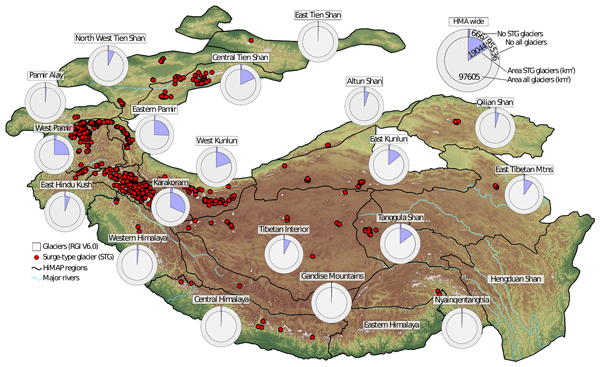
Gregoire Guillet, Owen King, Mingyang Lv, Sajid Ghuffar, Douglas Benn, Duncan Quincey, and Tobias Bolch
The Cryosphere, 16, 603–623, https://doi.org/10.5194/tc-16-603-2022, https://doi.org/10.5194/tc-16-603-2022, 2022
Short summary
Short summary
Surging glaciers show cyclical changes in flow behavior – between slow and fast flow – and can have drastic impacts on settlements in their vicinity.
One of the clusters of surging glaciers worldwide is High Mountain Asia (HMA).
We present an inventory of surging glaciers in HMA, identified from satellite imagery. We show that the number of surging glaciers was underestimated and that they represent 20 % of the area covered by glaciers in HMA, before discussing new physics for glacier surges.
Jan Bouke Pronk, Tobias Bolch, Owen King, Bert Wouters, and Douglas I. Benn
The Cryosphere, 15, 5577–5599, https://doi.org/10.5194/tc-15-5577-2021, https://doi.org/10.5194/tc-15-5577-2021, 2021
Short summary
Short summary
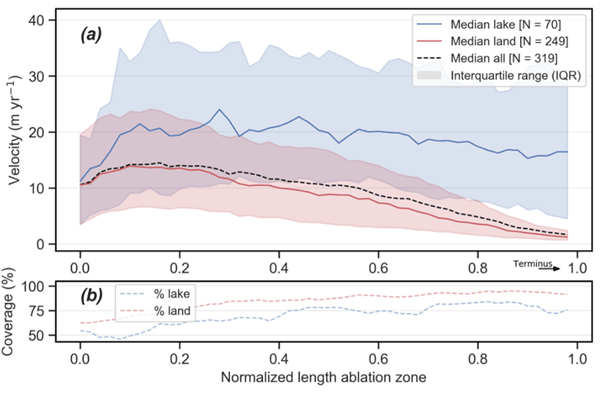
About 10 % of Himalayan glaciers flow directly into lakes. This study finds, using satellite imagery, that such glaciers show higher flow velocities than glaciers without ice–lake contact. In particular near the glacier tongue the impact of a lake on the glacier flow can be dramatic. The development of current and new meltwater bodies will influence the flow of an increasing number of Himalayan glaciers in the future, a scenario not currently considered in regional ice loss projections.
Cited articles
Andreassen, L. M., Nagy, T., Kjøllmoen, B., and Leigh, J. R.: An inventory of Norway's glaciers and ice-marginal lakes from 2018–19 Sentinel-2 data, J. Glaciol., 68, https://doi.org/10.1017/jog.2022.20, 2022. a
Berthier, E., Vincent, C., and Six, D.: Exceptional thinning through the entire altitudinal range of Mont-Blanc glaciers during the 2021/22 mass balance year, J. Glaciol., 70, e30, https://doi.org/10.1017/jog.2023.100, 2024. a
Bertolotti, G., Wiesenegger, H., Seiser, B., and Fischer, A.: Area and volume change of glaciers in the Salzburg region, Austria: a new inventory (2008–2018), PANGAEA [data set], https://doi.org/10.1594/PANGAEA.984878, 2025. a
Bokulich, A. and Parker, W. S.: Understanding data uncertainty, Stud. Hist. Philos. Sci., 112, 90–101, https://doi.org/10.1016/j.shpsa.2025.06.003, 2025. a, b, c
Bolch, T., Menounos, B., and Wheate, R.: Landsat-based inventory of glaciers in western Canada, 1985–2005, Remote Sens. Environ., 114, 127–137, https://doi.org/10.1016/j.rse.2009.08.015, 2010. a
Boyer, D. and Howe, C.: Communication efforts to educate the public about vanishing glaciers, 1958–2025, Ann. Glaciol., 67, e2, https://doi.org/10.1017/aog.2025.10033, 2025. a
Buckel, J. and Otto, J.-C.: The Austrian Glacier Inventory GI 4 (2015) in ArcGis (shapefile) format, PANGAEA [data set], https://doi.org/10.1594/PANGAEA.887415, 2018. a
Buckel, J., Otto, J.-C., Prasicek, G., and Keuschnig, M.: Glacial lakes in Austria-Distribution and formation since the Little Ice Age, Glob. Planet. Change, 164, 39–51, https://doi.org/10.1016/j.gloplacha.2018.03.003, 2018. a, b
Carlson, A. E., Bakken-French, N., Thayne, M., Pappas, S., Molnar, D., and Rood, D.: Disappearing glaciers of the Oregon Cascades, USA, Ann. Glaciol., 67, e1, https://doi.org/10.1017/aog.2025.10037, 2026. a
Cogley, J. G., Hock, R., Rasmussen, L. A., Arendt, A. A., Bauder, A., Braithwaite, R. J., Jansson, P., Kaser, G., Möller, M., Nicholson, L., and Zemp, M.: Glossary of glacier mass balance and related terms, IHP-VII Technical Documents in Hydrology, Vol. 86, UNESCO/IHP, http://unesdoc.unesco.org/images/0019/001925/192525e.pdf (last access: 26 August 2026), 2011. a, b
Conzelmann, S., Seiser, B., Fischer, A., Lauria, M. V., Stocker-Waldhuber, M., Bertolotti, G., and Hartl, L.: Vorarlberg (Austria) Glacier outlines, 2017–2020–2022–2023, PANGAEA [data set], https://doi.org/10.1594/PANGAEA.984116, 2026b. a
Diaconu, C.-A., Zekollari, H., and Bamber, J. L.: DL4GAM: A multi-modal deep learning-based framework for glacier area monitoring, trained and validated on the European Alps, Earth Space Sci., 12, e2025EA004197, https://doi.org/10.1029/2025EA004197, 2025. a, b, c, d
Eder, K., Würländer, R., and Rentsch, H.: Digital photogrammetry for the new glacier inventory of Austria, Int. Arch. Photogramm. Remote Sens. Spatial Inf. Sci., 33, 254–261, 2000. a
Fischer, A., Seiser, B., Stocker-Waldhuber, M., and Abermann, J.: The Austrian Glacier Inventory GI 3, 2006, in ArcGIS (shapefile) format, PANGAEA [data set], https://doi.org/10.1594/PANGAEA.844985, 2015a. a, b
Fischer, A., Seiser, B., Stocker Waldhuber, M., Mitterer, C., and Abermann, J.: Tracing glacier changes in Austria from the Little Ice Age to the present using a lidar-based high-resolution glacier inventory in Austria, The Cryosphere, 9, 753–766, https://doi.org/10.5194/tc-9-753-2015, 2015b. a, b, c, d, e, f, g, h, i, j
Fischer, A., Schwaizer, G., Seiser, B., Helfricht, K., and Stocker-Waldhuber, M.: High-resolution inventory to capture glacier disintegration in the Austrian Silvretta, The Cryosphere, 15, 4637–4654, https://doi.org/10.5194/tc-15-4637-2021, 2021a. a, b, c, d
Fischer, A., Stocker-Waldhuber, M., Seiser, B., Helfricht, K., and Schwaizer, G.: Glacier inventory Austrian Silvretta 2017/2018, PANGAEA [data set], https://doi.org/10.1594/PANGAEA.936109, 2021b. a
Fischer, M., Huss, M., Barboux, C., and Hoelzle, M.: The new Swiss Glacier Inventory SGI2010: relevance of using high-resolution source data in areas dominated by very small glaciers, Arct. Antarct. Alp. Res., 46, 933–945, https://doi.org/10.1657/1938-4246-46.4.933, 2014. a, b
Fountain, A. G., Glenn, B., and Mcneil, C.: Inventory of glaciers and perennial snowfields of the conterminous USA, Earth Syst. Sci. Data, 15, 4077–4104, https://doi.org/10.5194/essd-15-4077-2023, 2023. a
Galos, S., klug, C., and Dinale, R.: Short Communication: The 2023 Glacier Inventory for South Tyrol in Context of the Inventories 1997, 2005 and 2017, Geogr. Fis. Din. Quat., 47, 381–388, https://doi.org/10.4454/5agvnb15, 2025. a
Gärtner-Roer, I., Nussbaumer, S. U., Hüsler, F., and Zemp, M.: Worldwide assessment of national glacier monitoring and future perspectives, Mt. Res. Dev., 39, A1–A11, https://doi.org/10.1659/MRD-JOURNAL-D-19-00021.1, 2019. a
Geoland.at: Digitales Geländemodell (DGM) Österreich, https://www.data.gv.at/katalog/datasets/d88a1246-9684-480b- a480-ff63286b35b7 (last access: 26 August 2026), 2015. a
GLAMOS: Swiss Glacier Bulletin 2025, Glacier Monitoring Switzerland, Annual report #146 on glacier observation in Switzerland, Tech. rep., GLAMOS – Glacier Monitoring Switzerland, https://doi.org/10.18752/glbulletin_2025, 2025. a, b, c, d
GLIMS Consortium, Raup, B. H., Racoviteanu, A., Khalsa, S. S., Helm, C., Armstrong, R., and Arnaud, Y.: GLIMS Glacier Database, NSIDC-0272, Version 1, NASA National Snow and Ice Data Center Distributed Active Archive Center [data set], Boulder, Colorado, USA, https://doi.org/10.7265/N5V98602, 2005 (updated 2018). a
Granshaw, F. D. and Fountain, A. G.: Glacier change (1958–1998) in the north Cascades national park complex, Washington, USA, J. Glaciol., 52, 251–256, https://doi.org/10.3189/172756506781828782, 2006. a
Groß, G. and Patzelt, G.: The Austrian Glacier Inventory for the Little Ice Age Maximum (GI LIA) in ArcGIS (shapefile) format, PANGAEA [data set], https://doi.org/10.1594/PANGAEA.844987, 2015. a
Haeberli, W., Arenson, L. U., Wee, J., Hauck, C., and Mölg, N.: Discriminating viscous-creep features (rock glaciers) in mountain permafrost from debris-covered glaciers – a commented test at the Gruben and Yerba Loca sites, Swiss Alps and Chilean Andes, The Cryosphere, 18, 1669–1683, https://doi.org/10.5194/tc-18-1669-2024, 2024. a
Hanzer, F., Förster, K., Nemec, J., and Strasser, U.: Projected cryospheric and hydrological impacts of 21st century climate change in the Ötztal Alps (Austria) simulated using a physically based approach, Hydrol. Earth Syst. Sci., 22, 1593–1614, https://doi.org/10.5194/hess-22-1593-2018, 2018. a
Hartig, A., Akguen, A. M., Bertolotti, G., Bolch, T., Conzelmann, S., Hartl, L., Haut, A., Helfricht, K., Hynek, B., Kaucher, M. S., Kellerer-Pirklbauer, A., Kogel, A. C., Krippes, J., Lauria, M. V., Mayer, C., Otto, J.-C. Prinz, R., Proelß, S., Seiser, B., Stocker-Waldhuber, M., Strudl, M., Verhounik, M., Schönleber, L., and Zandler, H.: The Austrian Glacier Inventory GI 5, 2021-2023, as vector files, PANGAEA [data set], https://doi.org/10.1594/PANGAEA.991106, 2026. a
Hartl, L., Helfricht, K., Stocker-Waldhuber, M., Seiser, B., and Fischer, A.: Classifying disequilibrium of small mountain glaciers from patterns of surface elevation change distributions, J. Glaciol., 68, 253–268, https://doi.org/10.1017/jog.2021.90, 2022. a
Hartl, L., Covi, F., Stocker-Waldhuber, M., Baldo, A., Fugazza, D., Di Mauro, B., and Naegeli, K.: Loss of accumulation zone exposes dark ice and drives increased ablation at Weißseespitze, Austria, The Cryosphere, 19, 3329–3353, https://doi.org/10.5194/tc-19-3329-2025, 2025a. a, b
Hartl, L., Schmitt, P., Schuster, L., Helfricht, K., Abermann, J., and Maussion, F.: Recent observations and glacier modeling point towards near-complete glacier loss in western Austria (Ötztal and Stubai mountain range) if 1.5 °C is not met, The Cryosphere, 19, 1431–1452, https://doi.org/10.5194/tc-19-1431-2025, 2025b. a, b
Helfricht, K., Hartl, L., Stocker-Waldhuber, M., Seiser, B., and Fischer, A.: Glacier inventory Ötztal Alps 2017, PANGAEA [data set], https://doi.org/10.1594/PANGAEA.965798, 2024a. a
Helfricht, K., Hartl, L., Stocker-Waldhuber, M., Seiser, B., and Fischer, A.: Glacier inventory Stubai Alps 2017/2018, PANGAEA [dataset], https://doi.org/10.1594/PANGAEA.965791, 2024b. a
Hinzmann, A., Mölg, T., Braun, M., Cullen, N. J., Hardy, D. R., Kaser, G., and Prinz, R.: Tropical glacier loss in East Africa: recent areal extents on Kilimanjaro, Mount Kenya, and in the Rwenzori Range from high-resolution remote sensing data, Environ. Res.: Clim., 3, 011003, https://doi.org/10.1088/2752-5295/ad1fd7, 2024. a
Huss, M. and Fischer, M.: Sensitivity of very small glaciers in the Swiss Alps to future climate change, Front. Earth Sci., 4, 34, https://doi.org/10.3389/feart.2016.00034, 2016. a
Huss, M., Fischer, M., Linsbauer, A., and Bauder, A.: Continuous monitoring of a glacier’s extinction, Ann. Glaciol., 66, e27, https://doi.org/10.1017/aog.2025.10024, 2025. a
Intergovernmental Panel on Climate Change (IPCC): Climate Change 2021 – The Physical Science Basis: Working Group I Contribution to the Sixth Assessment Report of the Intergovernmental Panel on Climate Change, Cambridge University Press, https://doi.org/10.1017/9781009157896, 2023. a
Kellerer-Pirklbauer, A. and Kaufmann, V.: Deglaciation and its impact on permafrost and rock glacier evolution: New insight from two adjacent cirques in Austria, Sci. Tot. Environ., 621, 1397–1414, https://doi.org/10.1016/j.scitotenv.2017.10.087, 2018. a
Kellerer-Pirklbauer, A. and Kulmer, B.: The evolution of brittle and ductile structures at the surface of a partly debris-covered, rapidly thinning and slowly moving glacier in 1998–2012 (Pasterze Glacier, Austria), Earth Surf. Proc. Land., 44, 1034–1049, https://doi.org/10.1002/esp.4552, 2019. a, b
Kellerer-Pirklbauer, A., Avian, M., Benn, D. I., Bernsteiner, F., Krisch, P., and Ziesler, C.: Buoyant calving and ice-contact lake evolution at Pasterze Glacier (Austria) in the period 1998–2019, The Cryosphere, 15, 1237–1258, https://doi.org/10.5194/tc-15-1237-2021, 2021. a
Kuhn, M., Lambrecht, A., and Abermann, J.: The Austrian glacier inventory GI 2, 1998, in ArcGIS (shapefile) format, PANGAEA [data set], https://doi.org/10.1594/PANGAEA.844984, 2015. a
Lambrecht, A. and Kuhn, M.: Glacier changes in the Austrian Alps during the last three decades, derived from the new Austrian glacier inventory, Ann. Glaciol., 46, 177–184, https://doi.org/10.3189/172756407782871341, 2007. a, b
LeaHartl: LeaHartl/inventories: inventories, Version v01.1, Zenodo [computer software], https://doi.org/10.5281/zenodo.22145422, 2026. a
Linsbauer, A., Huss, M., Hodel, E., Bauder, A., Fischer, M., Weidmann, Y., Bärtschi, H., and Schmassmann, E.: The New Swiss Glacier Inventory SGI2016: from a topographical to a glaciological dataset, Front. Earth Sci., 9, 704189, https://doi.org/10.3389/feart.2021.704189, 2021. a, b, c, d, e, f, g, h
Linsbauer, A., Huss, M., Hodel, E., Bauder, A., and Barandun, M.: Vanished glaciers of the Swiss Alps: An inventory-based assessment from 1973 to 2016, Ann. Glaciol., p. 1–24, https://doi.org/10.1017/aog.2025.10031, 2025. a, b, c
Mani, P., Allen, S., Evans, S. G., Kargel, J. S., Mergili, M., Petrakov, D., and Stoffel, M.: Geomorphic Process Chains in High-Mountain Regions – A Review and Classification Approach for Natural Hazards Assessment, Rev. Geophys., 61, e2022RG000791, https://doi.org/10.1029/2022RG000791, 2023. a
Maslov, K. A., Persello, C., Schellenberger, T., and Stein, A.: Globally scalable glacier mapping by deep learning matches expert delineation accuracy, Nat. Commun., 16, 43, https://doi.org/10.1038/s41467-024-54956-x, 2025. a
Mölg, N., Bolch, T., Rastner, P., Strozzi, T., and Paul, F.: A consistent glacier inventory for Karakoram and Pamir derived from Landsat data: distribution of debris cover and mapping challenges, Earth Syst. Sci. Data, 10, 1807–1827, https://doi.org/10.5194/essd-10-1807-2018, 2018. a, b, c
Nussbaumer, S. U., Hoelzle, M., Hüsler, F., Huggel, C., Salzmann, N., and Zemp, M.: Glacier monitoring and capacity building: Important ingredients for sustainable mountain development, Mt. Res. Dev., 37, 141–152, https://doi.org/10.1659/MRD-JOURNAL-D-15-00038.1, 2017. a
Patzelt, G.: The Austrian glacier inventory: status and first results, in: Proceedings of the Riederalp Workshop, September 1978; Actes de l'Atelier de Riederalp, septembre 1978, IAHS Publication, 126, 181–183, https://epic.awi.de/id/eprint/32383/1/Patzelt_1980.pdf (last access: 28 August 2026), 1980. a, b, c
Patzelt, G.: The Austrian glacier inventory GI 1, 1969, in ArcGIS (shapefile) format, https://doi.org/10.1594/PANGAEA.844983, in supplement to: Fischer, Andrea; Seiser, Bernd; Stocker-Waldhuber, Martin; Mitterer, Christian; Abermann, Jakob (2015): Tracing glacier changes in Austria from the Little Ice Age to the present using a lidar-based high-resolution glacier inventory in Austria. The Cryosphere, 9, 753–766, https://doi.org/10.5194/tc-9-753-2015, 2015. a
Paul, F.: When has a glacier disappeared?, Ann. Glaciol., 67, e18, https://doi.org/10.1017/aog.2026.10048, 2026. a, b
Paul, F., Kääb, A., and Haeberli, W.: Recent glacier changes in the Alps observed by satellite: Consequences for future monitoring strategies, Glob. Planet. Change, 56, 111–122, https://doi.org/10.1016/j.gloplacha.2006.07.007, 2007. a
Paul, F., Frey, H., and Le Bris, R.: A new glacier inventory for the European Alps from Landsat TM scenes of 2003: challenges and results, Ann. Glaciol., 52, 144–152, https://doi.org/10.3189/172756411799096295, 2011. a, b
Paul, F., Barrand, N. E., Baumann, S., Berthier, E., Bolch, T., Casey, K., Frey, H., Joshi, S. P., Konovalov, V., Le Bris, R., Mölg, N., Nosenko, G., Nuth, C., Pope, A., Racoviteanu, A., Rastner, P., Raup, B., Scharrer, K., Steffen, S., and Winsvold, S.: On the accuracy of glacier outlines derived from remote-sensing data, Ann. Glaciol., 54, 171–182, 2013. a, b, c, d, e
Paul, F., Winsvold, S. H., Kääb, A., Nagler, T., and Schwaizer, G.: Glacier remote sensing using Sentinel-2. Part II: Mapping glacier extents and surface facies, and comparison to Landsat 8, Remote Sens., 8, 575, https://doi.org/10.3390/rs8070575, 2016. a
Paul, F., Rastner, P., Azzoni, R. S., Diolaiuti, G., Fugazza, D., Le Bris, R., Nemec, J., Rabatel, A., Ramusovic, M., Schwaizer, G., and Smiraglia, C.: Glacier shrinkage in the Alps continues unabated as revealed by a new glacier inventory from Sentinel-2, Earth Syst. Sci. Data, 12, 1805–1821, https://doi.org/10.5194/essd-12-1805-2020, 2020. a, b, c, d, e, f, g, h, i, j, k
Planet Labs PBC: Planet Application Program Interface: In Space for Life on Earth, https://api.planet.com (last access: 28 August 2026), 2022. a
Pfeffer, W. T., Arendt, A. A., Bliss, A., Bolch, T., Cogley, J. G., Gardner, A. S., Hagen, J.-O., Hock, R., Kaser, G., Kienholz, C., et al.: The Randolph Glacier Inventory: a globally complete inventory of glaciers, J. Glaciol., 60, 537–552, 2014. a
Pope, A.: Glacier or not? The importance of nuance in definitions of vanishing glaciers, Ann. Glaciol., 66, e32, https://doi.org/10.1017/aog.2025.10030, 2025. a, b, c, d
Prinz, R., Heller, A., Ladner, M., Nicholson, L. I., and Kaser, G.: Mapping the loss of Mt. Kenya’s glaciers: an example of the challenges of satellite monitoring of very small glaciers, Geosciences, 8, 174, https://doi.org/10.3390/geosciences8050174, 2018. a
Raup, B. H., Andreassen, L. M., Boyer, D., Howe, C., Pelto, M., and Rabatel, A.: Tracking extinct glaciers in GLIMS, Ann. Glaciol., 66, e35, https://doi.org/10.1017/aog.2025.10027, 2025. a
RGI Consortium: Randolph Glacier Inventory - A Dataset of Global Glacier Outlines, NSIDC-0770, Version 7, NASA National Snow and Ice Data Center Distributed Active Archive Center [data set], Boulder, Colorado USA, https://doi.org/10.5067/F6JMOVY5NAVZ, 2023. a, b
Rounce, D. R., Hock, R., Maussion, F., Hugonnet, R., Kochtitzky, W., Huss, M., Berthier, E., Brinkerhoff, D., Compagno, L., Copland, L., et al.: Global glacier change in the 21st century: Every increase in temperature matters, Science, 379, 78–83, https://doi.org/10.1126/science.abo1324, 2023. a
Strudl, M.: “Veränderung der Gletscher und deren Gesteinsbedeckung am Kaunergrat in 75 Jahren” Klassifizierung der Luftbilder von 1945 bis 2020 mittels OBIA, Master thesis, Paris Lodron-Universität Salzburg, https://unigis.at/files/Mastertheses/Full/106918.pdf (last access: 28 August 2026), 2024. a, b, c
The GlaMBIE Team: Community estimate of global glacier mass changes from 2000 to 2023, Nature, 639, 1–7, https://doi.org/10.1038/s41586-024-08545-z, 2025. a
Tricht, L. V., Zekollari, H., Huss, M., Rounce, D. R., Schuster, L., Aguayo, R., Schmitt, P., Maussion, F., Tober, B., and Farinotti, D.: Peak glacier extinction in the mid-twenty-first century, Nat. Clim. Change, 16, https://doi.org/10.1038/s41558-025-02513-9, 2025. a
Van Tiel, M., Van Loon, A. F., Seibert, J., and Stahl, K.: Hydrological response to warm and dry weather: do glaciers compensate?, Hydrol. Earth Syst. Sci., 25, 3245–3265, https://doi.org/10.5194/hess-25-3245-2021, 2021. a
Van Tiel, M., Huss, M., Zappa, M., Jonas, T., and Farinotti, D.: Swiss glacier mass loss during the 2022 drought: persistent streamflow contributions amid declining melt water volumes, Hydrol. Earth Syst. Sci., 30, 23–43, https://doi.org/10.5194/hess-30-23-2026, 2026. a
Voordendag, A., Prinz, R., Schuster, L., and Kaser, G.: Brief communication: The Glacier Loss Day as an indicator of a record-breaking negative glacier mass balance in 2022, The Cryosphere, 17, 3661–3665, https://doi.org/10.5194/tc-17-3661-2023, 2023. a
Wagner, T., Pleschberger, R., Kainz, S., Ribis, M., Kellerer-Pirklbauer, A., Krainer, K., Philippitsch, R., and Winkler, G.: The first consistent inventory of rock glaciers and their hydrological catchments of the Austrian Alps, Austrian J. Earth Sci., 113, https://doi.org/10.17738/ajes.2020.0001, 2020a. a, b
Wagner, T., Ribis, M., Kellerer-Pirklbauer, A., Krainer, K., and Winkler, G.: The Austrian rock glacier inventory RGI_1 and the related rock glacier catchment inventory RGCI_1 in ArcGis (shapefile) format, PANGAEA [data set], https://doi.org/10.1594/PANGAEA.921629, 2020b. a
WGMS: Fluctuations of Glaciers (FoG) Database, https://doi.org/10.5904/wgms-fog-2025-02, 2025. a
Zandler, H., Sulzer, W., and Kaufmann, V.: Delineation of debris-covered glaciers with multi-temporal UAV images (Gössnitzkees, Schober Group/Austria), Advances in Geodesy and Geoinformation, 74, e66, 1–17, https://doi.org/10.24425/agg.2025.154150, 2025. a, b
Zekollari, H., Huss, M., and Farinotti, D.: Modelling the future evolution of glaciers in the European Alps under the EURO-CORDEX RCM ensemble, The Cryosphere, 13, 1125–1146, https://doi.org/10.5194/tc-13-1125-2019, 2019. a
Zekollari, H., Huss, M., Schuster, L., Maussion, F., Rounce, D. R., Aguayo, R., Champollion, N., Compagno, L., Hugonnet, R., Marzeion, B., Mojtabavi, S., and Farinotti, D.: Twenty-first century global glacier evolution under CMIP6 scenarios and the role of glacier-specific observations, The Cryosphere, 18, 5045–5066, https://doi.org/10.5194/tc-18-5045-2024, 2024. a
Zemp, M., Armstrong, R., Gärtner-Roer, I., Haeberli, W., Hoelzle, M., Kääb, A., Kargel, J. S., Khalsa, S. J. S., Leonard, G. J., Paul, F., and Raup, B. H.: Introduction: Global Glacier Monitoring – a Long-Term Task Integrating in Situ Observations and Remote Sensing, Springer Berlin Heidelberg, Berlin, Heidelberg, 1–21, https://doi.org/10.1007/978-3-540-79818-7_1, 2014. a
Short summary
We mapped glacier outlines in Austria using recent, high resolution imagery. The resulting glacier inventory provides an update on glacier area in Austria in 2021-2023. More than 30% of glacier area was lost and 95 glaciers have disappeared since the mid-2000s. Glacier recession is accelerating and regular updates to glacier inventories are needed to understand downstream changes to the hydrological system, quantify glacier mass loss, and support planning and adaptation measures.
We mapped glacier outlines in Austria using recent, high resolution imagery. The resulting...


