
Articles | Volume 20, issue 6
https://doi.org/10.5194/tc-20-3581-2026
© Author(s) 2026. This work is distributed under
the Creative Commons Attribution 4.0 License.
the Creative Commons Attribution 4.0 License.
https://doi.org/10.5194/tc-20-3581-2026
© Author(s) 2026. This work is distributed under
the Creative Commons Attribution 4.0 License.
the Creative Commons Attribution 4.0 License.
Research article
| 
23 Jun 2026
Research article |
| 23 Jun 2026
| 23 Jun 2026
Air mass origin and local impacts on Antarctic snow isotopic composition: an observation and modelling study

Ca' Foscari of Venice, Department of Environmental Sciences, Informatics and Statistics, Mestre (Venice), Italy
LSCE/IPSL, CEA-CNRS-UVSQ, Université Paris-Saclay, Gif-sur-Yvette, France
Mathieu Casado
LSCE/IPSL, CEA-CNRS-UVSQ, Université Paris-Saclay, Gif-sur-Yvette, France
Christophe Leroy-Dos Santos
LSCE/IPSL, CEA-CNRS-UVSQ, Université Paris-Saclay, Gif-sur-Yvette, France
Amaelle Landais
LSCE/IPSL, CEA-CNRS-UVSQ, Université Paris-Saclay, Gif-sur-Yvette, France
Niels Dutrievoz
LSCE/IPSL, CEA-CNRS-UVSQ, Université Paris-Saclay, Gif-sur-Yvette, France
Cécile Agosta
LSCE/IPSL, CEA-CNRS-UVSQ, Université Paris-Saclay, Gif-sur-Yvette, France
Pete D. Akers
Geography, School of Natural Sciences, Trinity College Dublin, Dublin, Ireland
Université Grenoble Alpes, CNRS, IRD, Grenoble INP, INRAE, IGE, 38000 Grenoble, France
Joel Savarino
Université Grenoble Alpes, CNRS, IRD, Grenoble INP, INRAE, IGE, 38000 Grenoble, France
Andrea Spolaor
Institute of Polar Sciences, National Research Council of Italy, Venice, Italy
Massimo Frezzotti
Roma Tre University, Department of Science, Rome, Italy
Barbara Stenni
Ca' Foscari of Venice, Department of Environmental Sciences, Informatics and Statistics, Mestre (Venice), Italy
Related authors
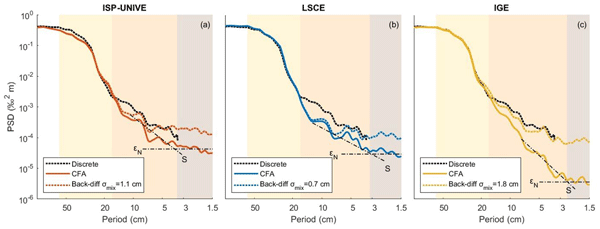
Agnese Petteni, Elise Fourré, Elsa Gautier, Azzurra Spagnesi, Roxanne Jacob, Pete D. Akers, Daniele Zannoni, Jacopo Gabrieli, Olivier Jossoud, Frédéric Prié, Amaëlle Landais, Titouan Tcheng, Barbara Stenni, Joel Savarino, Patrick Ginot, and Mathieu Casado
Atmos. Meas. Tech., 18, 5435–5455, https://doi.org/10.5194/amt-18-5435-2025, https://doi.org/10.5194/amt-18-5435-2025, 2025
Short summary
Short summary
Our research compares three systems of continuous flow analysis coupled with cavity ring-down spectrometry (CFA-CRD) from Venice, Paris, and Grenoble laboratories for measuring water isotopes in ice cores, crucial for reconstructing past climate. We quantify each system’s mixing and measurement noise effects, which impact the achievable resolution of isotope continuous records. Our findings reveal specific configurations and procedures to enhance measurement accuracy, providing a framework to optimise water isotope analysis.
Alexis Lamothe, Pete Akers, Patrick Ginot, Wendell Walters, Sarah Albertin, Nicolas Caillon, Elsa Gautier, and Joel Savarino
EGUsphere, https://doi.org/10.5194/egusphere-2026-5825, https://doi.org/10.5194/egusphere-2026-5825, 2026
This preprint is open for discussion and under review for Atmospheric Chemistry and Physics (ACP).
Short summary
Short summary
Ammonia pollution has changed greatly during European industrialisation, but how emissions become deposited ammonium remains unclear. We measured nitrogen isotopes of ammonium in a 1,000-year Alpine ice core. The record shows that atmospheric processing changed over time and cannot be explained by emissions alone. Recent decades show a new relationship between emissions and deposition, highlighting major gaps in our understanding of ammonia transport and removal.
Lea Raillard, Audran Borella, Gwendal Rivière, Niels Dutrievoz, Meryl Wimmer, Ionela Musat, and Étienne Vignon
EGUsphere, https://doi.org/10.5194/egusphere-2026-5432, https://doi.org/10.5194/egusphere-2026-5432, 2026
This preprint is open for discussion and under review for Atmospheric Chemistry and Physics (ACP).
Short summary
Short summary
Climate models struggle to predict snowfall near the poles, which matters for tracking ice sheet changes. We built a new, efficient snowfall scheme for a global climate model and tested it using aircraft and ground radar data from Arctic Svalbard and Antarctica. The improved model better captures how snow forms and falls through clouds, bringing us closer to reliable predictions of polar snowfall, and showing where further refinements are needed.
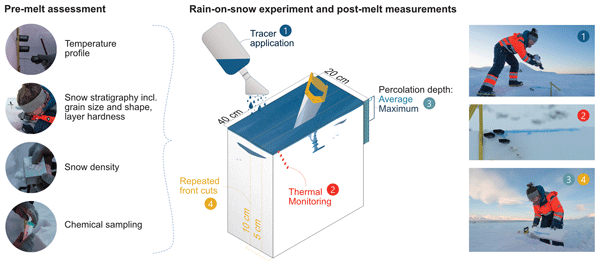
Dorothea Elisabeth Baur, Andrea Spolaor, Federico Scoto, and Elizabeth R. Thomas
The Cryosphere, 20, 5533–5558, https://doi.org/10.5194/tc-20-5533-2026, https://doi.org/10.5194/tc-20-5533-2026, 2026
Short summary
Short summary
The Arctic is warming rapidly, and winter rain-on-snow events are becoming more common. These events can alter snow layers and disturb climate information stored in glaciers. We studied how small rain-on-snow events affect snow structure and water isotopes near Ny-Ålesund, Svalbard. Field experiments show that meltwater flow creates complex features, but isotope changes remain confined to them, meaning seasonal climate signals can still be preserved where enough snow accumulates.

François Burgay, Haley Derrod, Tobias Erhardt, Federico Scoto, Delia Segato, Niccolò Maffezzoli, Federico Dallo, Daniele Zannoni, Azzurra Spagnesi, Helle-Astrid Kjær, Hubertus Fischer, Cristiano Varin, Carlo Barbante, and Andrea Spolaor
Clim. Past, 22, 1675–1689, https://doi.org/10.5194/cp-22-1675-2026, https://doi.org/10.5194/cp-22-1675-2026, 2026
Short summary
Short summary
Ice-core measurements from Greenland suggest that atmospheric iron deposition played a smaller role than previously thought in regulating marine productivity in the iron-limited North Pacific. Despite a strong increase in total iron deposition, the fraction of iron more likely to be available to phytoplankton rose only modestly, pointing to sea-ice extent and sedimentary iron remobilization as potentially more important factors during the last glacial transition.
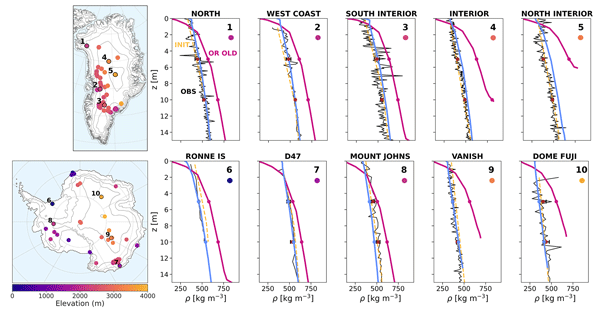
Philippe Conesa, Cécile Agosta, Sylvie Charbit, Christophe Dumas, Simon Beylat, and Nina Raoult
The Cryosphere, 20, 4973–5003, https://doi.org/10.5194/tc-20-4973-2026, https://doi.org/10.5194/tc-20-4973-2026, 2026
Short summary
Short summary
As Greenland and Antarctic ice sheets are almost entirely covered by snow, a proper modelling of the internal snowpack processes is essential to predict their evolution. This study evaluates the snow densification over ice sheets in the ORCHIDEE (Organising Carbon and Hydrology In Dynamic Ecosystems) land surface model. The development of a new formulation for the surface snow density and the calibration of densification parameters improve the model agreement with polar snow observations.
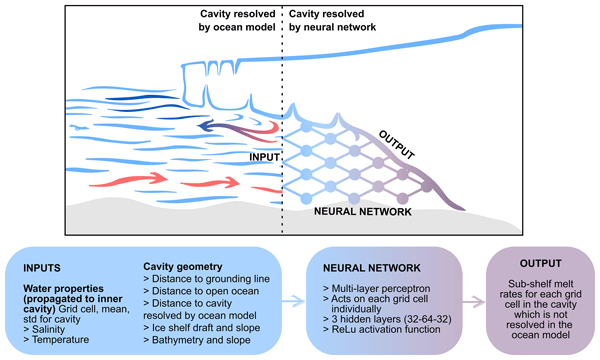
Helen Ockenden, Clara Burgard, Pierre Mathiot, Christoph Kittel, Achille Gellens, Cécile Agosta, and Nicolas C. Jourdain
Geosci. Model Dev., 19, 7979–8002, https://doi.org/10.5194/gmd-19-7979-2026, https://doi.org/10.5194/gmd-19-7979-2026, 2026
Short summary
Short summary
Since numerical computing is expensive, climate models must decide between having a high spatial resolution or running for long time periods. Here, we develop a simple neural network to emulate small-scale processes occurring beneath Antarctic ice shelves, which allows sub-shelf melt and ice–ocean interactions to be included in global ocean models which can run for multiple centuries. This neural network will help us to understand how ocean circulation may change in the future.
Adrien Ooms, Mathieu Casado, Sonja Wahl, Thomas Laepple, Alexandra Zuhr, Pete Akers, Ghislain Picard, Laurent Arnaud, Joel Savarino, Kira Rehfeld, Barbara Stenni, Giuliano Dreossi, Mauro Masiol, Amaelle Landais, and Valérie Masson-Delmotte
EGUsphere, https://doi.org/10.5194/egusphere-2026-4801, https://doi.org/10.5194/egusphere-2026-4801, 2026
This preprint is open for discussion and under review for Climate of the Past (CP).
Short summary
Short summary
This work presents new insights in the archival process of multi-annual climatic signal in the near surface firn at Concordia Station, East-Antarctica, from the new data set of high resolution stable water isotope profiles measured in a snow trench. The dated isotopic profiles covering 20 years are compared against overlapping precipitation and surface snow observations. This highlights the strong contribution of stratigraphic noise and post depositional effects to individual trench profiles.
Thomas Lauwers, Elise Fourré, Niels Dutrievoz, Cécile Agosta, Olivier Jossoud, Bénédicte Minster, Frédéric Prié, Olivier Cattani, Valérie Masson-Delmotte, Mathieu Casado, Christophe Genthon, and Amaëlle Landais
Atmos. Meas. Tech., 19, 4743–4758, https://doi.org/10.5194/amt-19-4743-2026, https://doi.org/10.5194/amt-19-4743-2026, 2026
Short summary
Short summary
This study presents a new method to measure the isotopic composition of snowfall and atmospheric water vapor in Antarctica. With a single laser spectrometer, it enables continuous, high frequency observations without human intervention. Tests in East Antarctica show a very good agreement with conventionnal snow sampling. This new sampling method opens new opportunities to better understand snowfall formation, improve climate models, and refine the interpretation of ice core climate records.

Amy C. F. King, Thomas K. Bauska, Amaëlle Landais, Carlos Martín, and Eric W. Wolff
Clim. Past, 22, 1291–1304, https://doi.org/10.5194/cp-22-1291-2026, https://doi.org/10.5194/cp-22-1291-2026, 2026
Short summary
Short summary
We show how measurements of nitrogen isotopes in Antarctic ice core records can be used to show dramatic thinning of an ice sheet during ice mass changes in the Holocene. Combining such measurements with proxies for ice sheet elevation could be a powerful tool for constraining the history of ice dynamics at sites which are sensitive to rapid changes, and could contribute to constraining ice sheet models.
Lison Soussaintjean, Jochen Schmitt, Joël Savarino, J. Andy Menking, Edward J. Brook, Barbara Seth, Vladimir Lipenkov, Thomas Röckmann, and Hubertus Fischer
Biogeosciences, 23, 3939–3963, https://doi.org/10.5194/bg-23-3939-2026, https://doi.org/10.5194/bg-23-3939-2026, 2026
Short summary
Short summary
Nitrous oxide (N2O) produced in dust-rich Antarctic ice complicates the reconstruction of past atmospheric levels from ice core records. Using isotope analysis, we show that N2O forms from two nitrogen precursors, one being nitrate. For the first time, we demonstrate that the site preference (SP) of N2O reflects the isotopic difference between these precursors, not the production pathway, which challenges the common interpretation of SP.
Adrien Ooms, Mathieu Casado, Ghislain Picard, Laurent Arnaud, Maria Hörhold, Andrea Spolaor, Rita Traversi, Joel Savarino, Patrick Ginot, Pete Akers, Birthe Twarloh, and Valérie Masson-Delmotte
The Cryosphere, 20, 3235–3255, https://doi.org/10.5194/tc-20-3235-2026, https://doi.org/10.5194/tc-20-3235-2026, 2026
Short summary
Short summary
This work presents a new approach to the estimation of accumulation rates at Concordia Station, East-Antarctica, for the last 20 years, from a new data set of chemical tracers and snow micro-scale properties measured in a snow trench. Multi-annual and meter to decameter scale variability of accumulation rates are compared again in-situ measurements of surface laser scanner and stake farm, with very good agreement. This further constrains SMB estimation for Antarctica at high temporal resolution.
Paolo Gabrielli, Theo M. Jenk, Michele Bertó, Giuliano Dreossi, Daniela Festi, Werner Kofler, Mai Winstrup, Klaus Oeggl, Margit Schwikowski, Barbara Stenni, and Carlo Barbante
Clim. Past, 22, 1037–1055, https://doi.org/10.5194/cp-22-1037-2026, https://doi.org/10.5194/cp-22-1037-2026, 2026
Short summary
Short summary
A low latitude-high altitude Alpine ice core record was obtained in 2011 from the glacier Alto dell’Ortles (Eastern Alps, Italy) and provided evidence of one of the oldest Alpine ice core records spanning the last ~7000 years, back to the last Northern Hemisphere Climatic Optimum. Here we provide a new Alto dell’Ortles chronology of improved accuracy that will allow to constrain Holocene climatic and environmental histories emerging from this high-altitude glacial archive of Central Europe.
Elena Barbaro, Francisco Ardini, Silvia Becagli, Stefano Bertinetti, Federica Bruschi, Giulia Calzolai, Alice Cavaliere, David Cappelletti, Stefano Crocchianti, Matteo Feltracco, Andrea Gambaro, Fabio Giardi, Stefania Gilardoni, Marco Grotti, Dominic Heslin-Rees, Radovan Krejci, Mery Malandrino, Matilde Mataloni, Simonetta Montaguti, Silvia Nava, Marco Paglione, Matteo Rinaldi, Chiara Ripa, Mirko Severi, Andrea Spolaor, Rita Traversi, Hilde Uggerud, Giulio Verazzo, Tessa Viglezio, Karl Espen Yttri, Wenche Aas, and Mauro Mazzola
EGUsphere, https://doi.org/10.5194/egusphere-2026-1467, https://doi.org/10.5194/egusphere-2026-1467, 2026
Short summary
Short summary
This study analyzes how Arctic atmospheric layering affects aerosol distribution by comparing data from the Gruvebadet (61 m) and Zeppelin (472 m) observatories in Svalbard. Results show consistent levels of human-made pollutants like sulfate at both heights, confirming long-range transport from Eurasia. Conversely, natural biogenic tracers were more concentrated at lower altitudes. By integrating chemical and meteorological data, the research highlights the need for multi-level monitoring.
Nicolas Bienville, Amaelle Landais, Sarah Fiorini, Clément Piel, Joana Sauze, Benoit Lemaire, Nicolas Geyskens, Frederic Prie, Olivier Jossoud, Clémence Paul, Justin Chaillot, Thomas Lauwers, Simon Chollet, Samuel Abiven, and Arnaud Dapoigny
EGUsphere, https://doi.org/10.5194/egusphere-2026-1369, https://doi.org/10.5194/egusphere-2026-1369, 2026
Short summary
Short summary
This study describes an instrumented system of 4 closed aquatic biological chambers that allows determination of the oxygen isotopic fractionation factors of aquatic biosphere in controlled realistic conditions. We validated our system with a freshwater algae species and determined its ¹⁸O/¹⁶O isotopic discrimination during respiration to be −30 ‰, in the upper range of previously published values.
Héloïse Guilluy, Émilie Capron, Frédéric Parrenin, Vladimir Lipenkov, Jochen Schmitt, Patricia Martinerie, Zhipeng Wu, Qiuzhen Yin, Anna Maria Klüssendorf, Amaëlle Landais, Barbara Seth, Hubertus Fischer, and Dominique Raynaud
EGUsphere, https://doi.org/10.5194/egusphere-2026-953, https://doi.org/10.5194/egusphere-2026-953, 2026
Short summary
Short summary
Air bubbles in polar ice cores retain information about past climates over hundreds of thousands of years. The total air content (TAC) trapped within these bubbles varies with summer insolation cycles, making it a tool for dating ice cores. We present a multi-site update on TAC, combining new and published data. We confirm that insolation impacts bubble volume in East Antarctica, but surface climate changes can hide the insolation signal in the TAC record, impacting the TAC-derived chronologies.
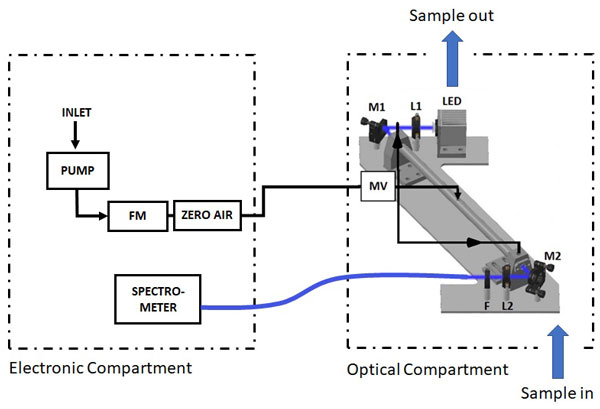
Filip Pastierovič, Roberto Grilli, Nicolas Caillon, and Joel Savarino
Atmos. Meas. Tech., 19, 1943–1950, https://doi.org/10.5194/amt-19-1943-2026, https://doi.org/10.5194/amt-19-1943-2026, 2026
Short summary
Short summary
The development of an open detector based on absorption spectroscopy, enhanced by high-reflectivity mirrors, for the simultaneous measurement of NO2, IO, and CHOCHO is reported. The instrument shows good correlation with a closed system during both indoor and outdoor measurements. An open system is able to measure NO2, IO, and CHOCHO with high precision.
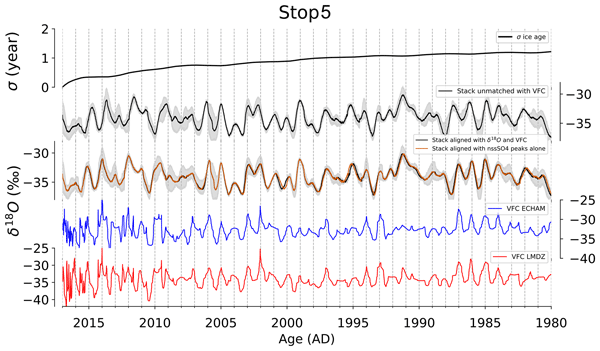
Titouan Tcheng, Elise Fourré, Christophe Leroy-Dos Santos, Frédéric Parrenin, Emmanuel Le Meur, Frédéric Prié, Olivier Jossoud, Roxanne Jacob, Bénédicte Minster, Olivier Magand, Cécile Agosta, Niels Dutrievoz, Vincent Favier, Léa Baubant, Coralie Lassalle-Bernard, Mathieu Casado, Martin Werner, Alexandre Cauquoin, Laurent Arnaud, Bruno Jourdain, Ghislain Picard, Marie Bouchet, and Amaëlle Landais
The Cryosphere, 20, 1599–1618, https://doi.org/10.5194/tc-20-1599-2026, https://doi.org/10.5194/tc-20-1599-2026, 2026
Short summary
Short summary
Studying Antarctic ice cores is crucial to assess past climate changes, as they hold historical climate data. This study examines multiple ice cores from three sites in coastal Adélie Land to see if combining cores improves data interpretability. It does at two sites, but at a third, wind-driven snow layer mixing limited benefits. We show that using multiple ice cores from one location can better uncover climate history, especially in areas with less wind disturbance.
Emma Samin, Amaëlle Landais, Elise Fourré, Mathieu Casado, Adrien Ooms, Niels Dutrievoz, Cécile Agosta, Valérie Masson-Delmotte, Thomas Combacal, Elsa Gautier, and Bénédicte Minster
EGUsphere, https://doi.org/10.5194/egusphere-2026-871, https://doi.org/10.5194/egusphere-2026-871, 2026
Short summary
Short summary
This study presents the water isotope profiles of two firn cores drilled at Little Dome C (LDC) in Antarctica and dated by identifying volcanic events, which enabled us to determine an accumulation rate at LDC of 24 mmwe.yr-1. Comparison of a virtual firn core model with these data allowed us to study the surface processes responsible for isotopic variability in firn. We therefore suggest that future models consider the mixing of the surface layer and re-quantify diffusion.
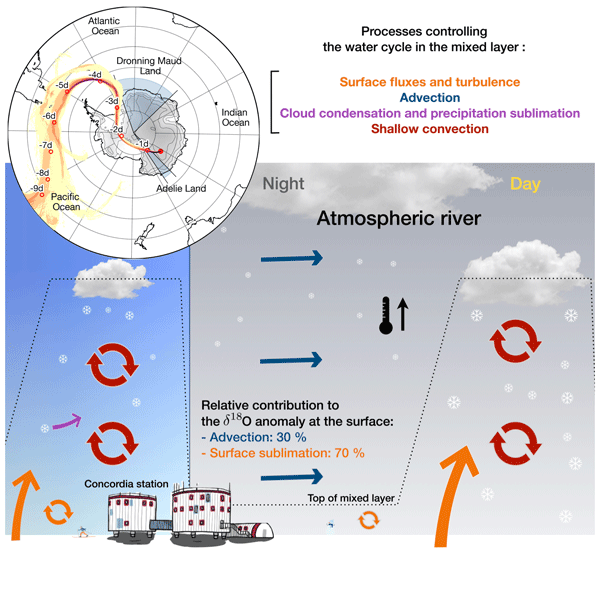
Niels Dutrievoz, Cécile Agosta, Cécile Davrinche, Amaëlle Landais, Sebastien Nguyen, Étienne Vignon, Inès Ollivier, Christophe Leroy-Dos Santos, Elise Fourré, Mathieu Casado, Jonathan Wille, Vincent Favier, Bénédicte Minster, and Frédéric Prié
The Cryosphere, 20, 1025–1046, https://doi.org/10.5194/tc-20-1025-2026, https://doi.org/10.5194/tc-20-1025-2026, 2026
Short summary
Short summary
In December 2018, an atmospheric river event from the Atlantic reached Dome C, East Antarctica, causing a +18 °C warming, tripled water vapour, and a strong isotopic anomaly in water vapour (+ 17 ‰ for δ18O) at the surface. During the peak of the event, we found 70 % of the water vapour came from local snow sublimation, and 30 % from the atmospheric river itself, highlighting both long-range moisture advection and interactions between the boundary layer and the snowpack.
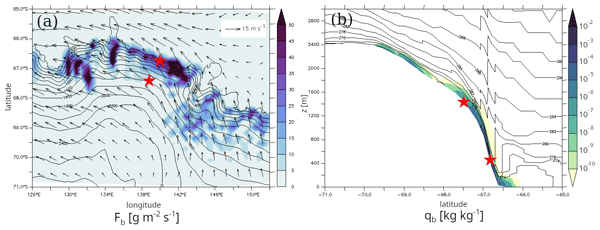
Étienne Vignon, Nicolas Chiabrando, Cécile Agosta, Charles Amory, Valentin Wiener, Justine Charrel, Thomas Dubos, and Christophe Genthon
Geosci. Model Dev., 19, 239–259, https://doi.org/10.5194/gmd-19-239-2026, https://doi.org/10.5194/gmd-19-239-2026, 2026
Short summary
Short summary
The erosion of surface snow by the wind is an important process for the Antarctic surface mass balance. This study presents the first development of a parameterisation of blowing snow for a global climate model. Simulations avec evaluated using measurements in Antarctica. Results show an overall decrease of the snow accumulation in the escarpment region of the ice sheet due to snow erosion and an increase at the coast due to blowing snow deposition and increase in precipitation.
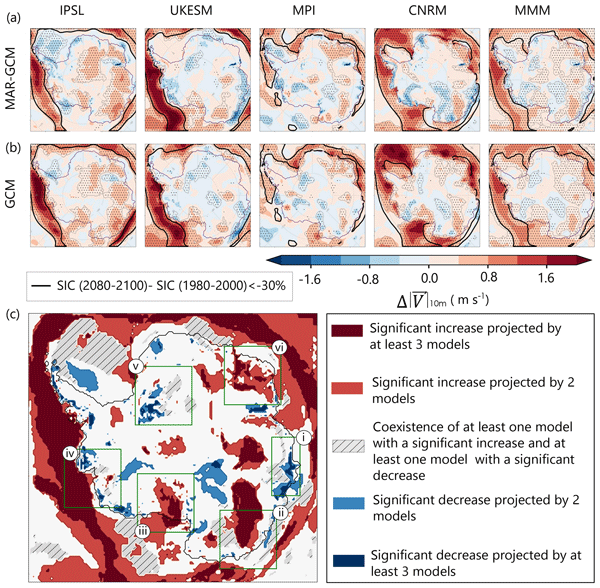
Cécile Davrinche, Anaïs Orsi, Charles Amory, Christoph Kittel, and Cécile Agosta
The Cryosphere, 19, 6023–6042, https://doi.org/10.5194/tc-19-6023-2025, https://doi.org/10.5194/tc-19-6023-2025, 2025
Short summary
Short summary
We analyse changes in Antarctic winter surface winds projected by 4 models. Depending on the area and model, changes on the continent by 2100 reveal opposing trends. Nevertheless, models agree on a strengthening of surface winds in Adélie Land for example and a weakening in some other areas such as the Amundsen region. We attribute the strengthening of near-surface winds to changes in the large-sale atmospheric circulation and the weakening to changes in the structure of the lower atmosphere.
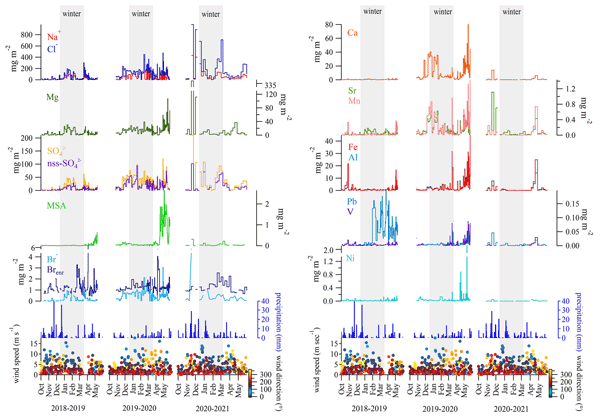
Azzurra Spagnesi, Elena Barbaro, Matteo Feltracco, Federico Scoto, Marco Vecchiato, Massimiliano Vardè, Mauro Mazzola, François Burgay, Federica Bruschi, Clara Jule Marie Hoppe, Allison Bailey, Andrea Gambaro, Carlo Barbante, and Andrea Spolaor
Atmos. Chem. Phys., 25, 16215–16232, https://doi.org/10.5194/acp-25-16215-2025, https://doi.org/10.5194/acp-25-16215-2025, 2025
Short summary
Short summary
Svalbard is ideal for studying how warming affects snow’s seasonal chemistry. By comparing the snow chemical composition of the 2019–2020 season with 2018–2019 and 2020–2021, we provide an overview of the seasonal and interannual variability of several chemical species on the Svalbard snowpack, furnishing insights into the interplay between short-term meteorological variability and the long-term climatic impacts of climate changes.
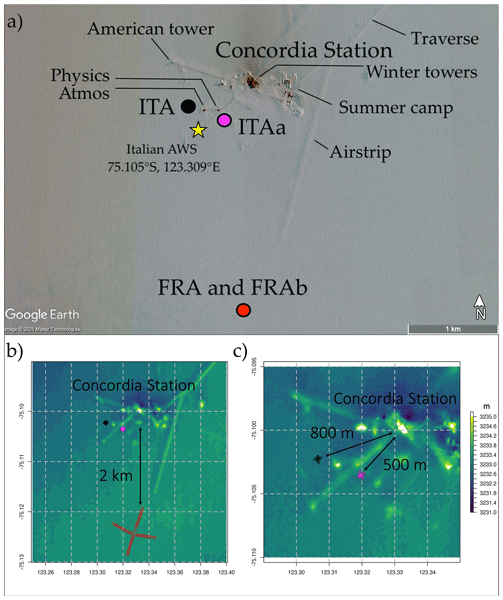
Claudio Stefanini, Barbara Stenni, Mauro Masiol, Giuliano Dreossi, Vincent Favier, Francesca Becherini, Claudio Scarchilli, Virginia Ciardini, Gabriele Carugati, and Massimo Frezzotti
The Cryosphere, 19, 5781–5799, https://doi.org/10.5194/tc-19-5781-2025, https://doi.org/10.5194/tc-19-5781-2025, 2025
Short summary
Short summary
This study analyzes snow accumulation near Concordia Station in Antarctica (3233 m) to estimate yearly snow accumulation. Data from Italian and French stake farms show strong variation due to wind and surface features. On average, 7–8 cm of snow accumulate yearly near the Station. The study also compares results with climate models and explores whether the station buildings affect measurements.
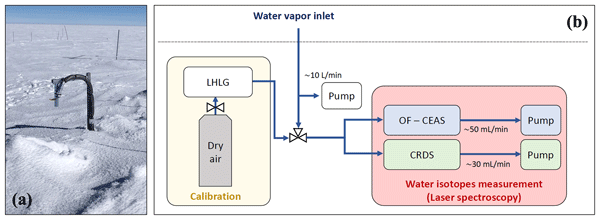
Inès Ollivier, Thomas Lauwers, Niels Dutrievoz, Cécile Agosta, Mathieu Casado, Elise Fourré, Christophe Genthon, Olivier Jossoud, Frédéric Prié, Hans Christian Steen-Larsen, and Amaëlle Landais
Earth Syst. Sci. Data, 17, 5655–5674, https://doi.org/10.5194/essd-17-5655-2025, https://doi.org/10.5194/essd-17-5655-2025, 2025
Short summary
Short summary
We present a novel 2.5-month record of the atmospheric water vapour isotopic composition during the austral summer 2023–2024 at Concordia Station on the Antarctic Plateau. We show that two independent laser spectrometers accurately record the diurnal variability of the atmospheric water vapour 𝛿18O, 𝛿D, and d-excess. We compare the measurements against outputs of the isotope-enabled general circulation model LMDZ6-iso to show how the data can be used to evaluate such models.
Agnese Petteni, Elise Fourré, Elsa Gautier, Azzurra Spagnesi, Roxanne Jacob, Pete D. Akers, Daniele Zannoni, Jacopo Gabrieli, Olivier Jossoud, Frédéric Prié, Amaëlle Landais, Titouan Tcheng, Barbara Stenni, Joel Savarino, Patrick Ginot, and Mathieu Casado
Atmos. Meas. Tech., 18, 5435–5455, https://doi.org/10.5194/amt-18-5435-2025, https://doi.org/10.5194/amt-18-5435-2025, 2025
Short summary
Short summary
Our research compares three systems of continuous flow analysis coupled with cavity ring-down spectrometry (CFA-CRD) from Venice, Paris, and Grenoble laboratories for measuring water isotopes in ice cores, crucial for reconstructing past climate. We quantify each system’s mixing and measurement noise effects, which impact the achievable resolution of isotope continuous records. Our findings reveal specific configurations and procedures to enhance measurement accuracy, providing a framework to optimise water isotope analysis.
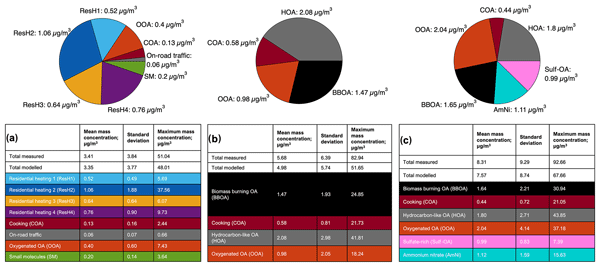
Amna Ijaz, Brice Temime-Roussel, Benjamin Chazeau, Sarah Albertin, Stephen R. Arnold, Brice Barret, Slimane Bekki, Natalie Brett, Meeta Cesler-Maloney, Elsa Dieudonne, Kayane K. Dingilian, Javier G. Fochesatto, Jingqiu Mao, Allison Moon, Joel Savarino, William Simpson, Rodney J. Weber, Kathy S. Law, and Barbara D'Anna
Atmos. Chem. Phys., 25, 11789–11811, https://doi.org/10.5194/acp-25-11789-2025, https://doi.org/10.5194/acp-25-11789-2025, 2025
Short summary
Short summary
Fairbanks is among the most polluted cities, with the highest particulate matter (PM) levels in the US during winters. Highly time-resolved measurements of the submicron PM found residential heating with wood and oil and hydrocarbon-like organics from traffic, as well as sulfur-containing aerosol, to be the key pollution sources. Remarkable differences existed between complementary instruments, warranting the deployment of multiple tools at sites, with wide-ranging influences.
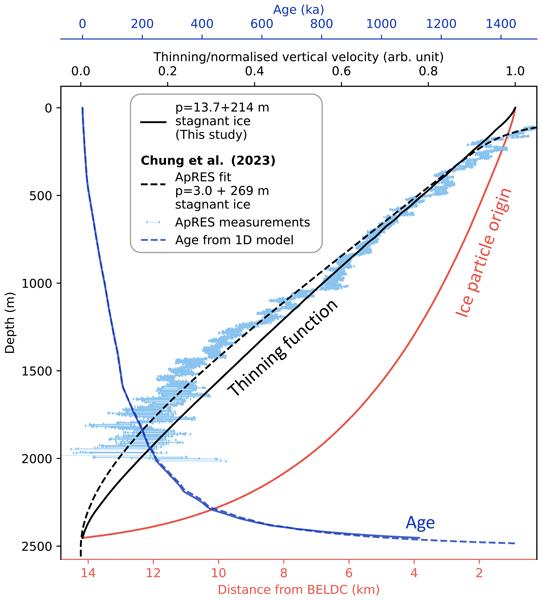
Ailsa Chung, Frédéric Parrenin, Robert Mulvaney, Luca Vittuari, Massimo Frezzotti, Antonio Zanutta, David A. Lilien, Marie G. P. Cavitte, and Olaf Eisen
The Cryosphere, 19, 4125–4140, https://doi.org/10.5194/tc-19-4125-2025, https://doi.org/10.5194/tc-19-4125-2025, 2025
Short summary
Short summary
We applied an ice flow model to a flow line from the summit of Dome C to the Beyond EPICA ice core drill site on Little Dome C in Antarctica. Results show that the oldest ice at the drill site may be 1.12 Ma (at an age density of 20 kyr m-1) and originate from around 15 km upstream. We also discuss the nature of the 200–250 m thick basal layer which could be composed of stagnant ice, disturbed ice or even accreted ice (possibly containing debris).
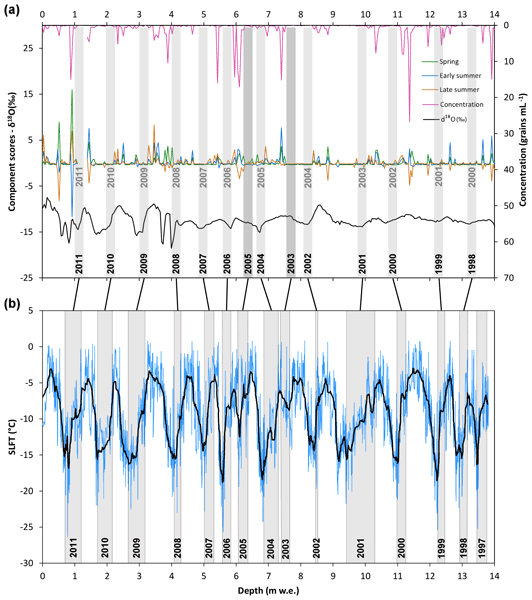
Luca Carturan, Alexander C. Ihle, Federico Cazorzi, Tiziana Lazzarina Zendrini, Fabrizio De Blasi, Giancarlo Dalla Fontana, Giuliano Dreossi, Daniela Festi, Bryan Mark, Klaus Dieter Oeggl, Roberto Seppi, Barbara Stenni, and Paolo Gabrielli
The Cryosphere, 19, 3443–3458, https://doi.org/10.5194/tc-19-3443-2025, https://doi.org/10.5194/tc-19-3443-2025, 2025
Short summary
Short summary
Paleoclimatic glacial archives in low-latitude mountains are increasingly affected by melt, causing heavy percolation and removing snow and firn accumulated across months, seasons, or even years. Here we present a proxy system model that explicitly accounts for melt in ice and firn cores. Compared to traditional annual layer counting, the model significantly improved the interpretation and annual dating of the Mt Ortles firn core, in the Italian Alps, which includes the very warm summer of 2003.
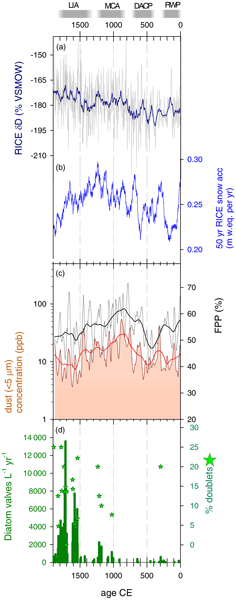
Serena Lagorio, Barbara Delmonte, Dieter Tetzner, Elisa Malinverno, Giovanni Baccolo, Barbara Stenni, Massimo Frezzotti, Valter Maggi, and Nancy Bertler
Clim. Past, 21, 1323–1341, https://doi.org/10.5194/cp-21-1323-2025, https://doi.org/10.5194/cp-21-1323-2025, 2025
Short summary
Short summary
Aeolian diatoms and dust in the Antarctic Roosevelt Island Climate Evolution project (RICE) ice core allow the reconstruction of atmospheric circulation and climate variability in the Eastern Ross Sea over the past 2 millennia. Since about 1470 CE and during the Little Ice Age, the site experienced a rapid atmospheric circulation reorganization related to the development of the Roosevelt Island polynya, the eastward protrusion of the Ross Sea polynya that significantly impacted the regional climate dynamics of the Ross Sea area.
Yalalt Nyamgerel, Yeongcheol Han, Soon Do Hur, Hyemi Kim, Songyi Kim, Jangil Moon, Barbara Stenni, and Jeonghoon Lee
EGUsphere, https://doi.org/10.5194/egusphere-2025-2408, https://doi.org/10.5194/egusphere-2025-2408, 2025
Short summary
Short summary
This research explores climate patterns recorded in Antarctic ice over the past two centuries. By analyzing ice layers, we identified connections between Antarctica's climate and tropical ocean conditions. Results show changing influences over time and highlight the Indian Ocean's key role in Antarctic snowfall. This improves understanding of how polar and tropical climates interact, crucial for future climate predictions.
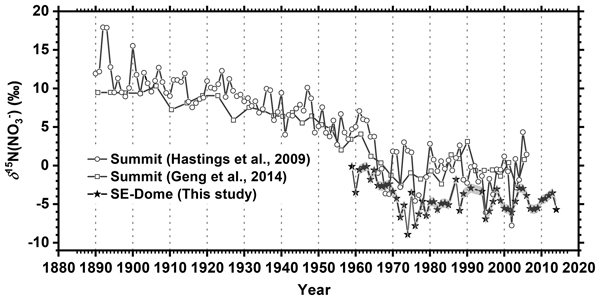
Zhao Wei, Shohei Hattori, Asuka Tsuruta, Zhuang Jiang, Sakiko Ishino, Koji Fujita, Sumito Matoba, Lei Geng, Alexis Lamothe, Ryu Uemura, Naohiro Yoshida, Joel Savarino, and Yoshinori Iizuka
Atmos. Chem. Phys., 25, 5727–5742, https://doi.org/10.5194/acp-25-5727-2025, https://doi.org/10.5194/acp-25-5727-2025, 2025
Short summary
Short summary
Nitrate isotope records in ice cores reveal changes in NOₓ emissions and atmospheric oxidation chemistry driven by human activity. However, UV-driven postdepositional processes can alter nitrate in snow, making snow accumulation rates critical for preserving these records. This study examines nitrate isotopes in a southeastern Greenland ice core, where high snow accumulation minimizes these effects, providing a reliable archive of atmospheric nitrogen cycling.
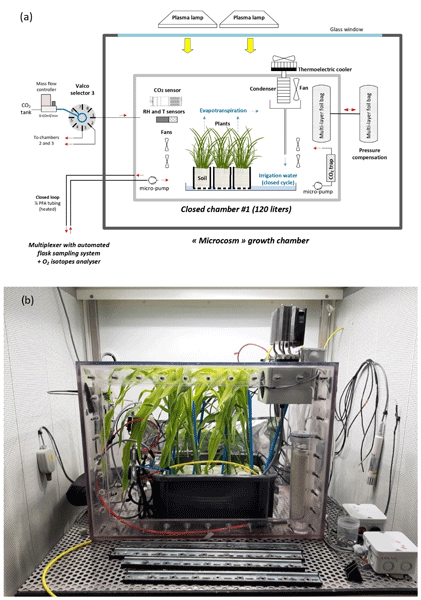
Clémence Paul, Clément Piel, Joana Sauze, Olivier Jossoud, Arnaud Dapoigny, Daniele Romanini, Frédéric Prié, Sébastien Devidal, Roxanne Jacob, Alexandru Milcu, and Amaëlle Landais
Geosci. Instrum. Method. Data Syst., 14, 91–101, https://doi.org/10.5194/gi-14-91-2025, https://doi.org/10.5194/gi-14-91-2025, 2025
Short summary
Short summary
Our study investigated the influence of plant processes on oxygen dynamics, crucial for paleoclimatology. By examining maize respiration and photosynthesis using advanced techniques, we enhanced our understanding of past climates through ice core analysis.
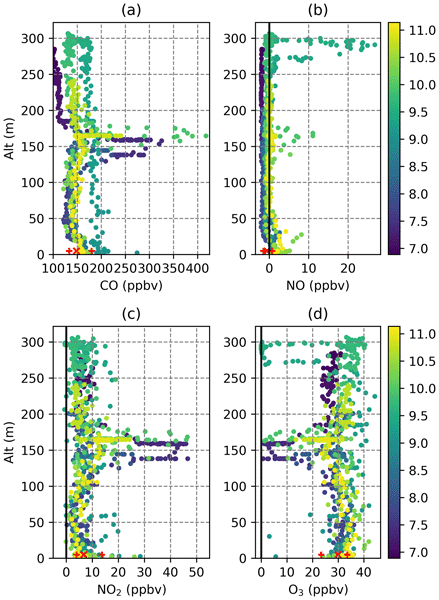
Brice Barret, Patrice Medina, Natalie Brett, Roman Pohorsky, Kathy S. Law, Slimane Bekki, Gilberto J. Fochesatto, Julia Schmale, Steve R. Arnold, Andrea Baccarini, Maurizio Busetto, Meeta Cesler-Maloney, Barbara D'Anna, Stefano Decesari, Jingqiu Mao, Gianluca Pappaccogli, Joel Savarino, Federico Scoto, and William R. Simpson
Atmos. Meas. Tech., 18, 1163–1184, https://doi.org/10.5194/amt-18-1163-2025, https://doi.org/10.5194/amt-18-1163-2025, 2025
Short summary
Short summary
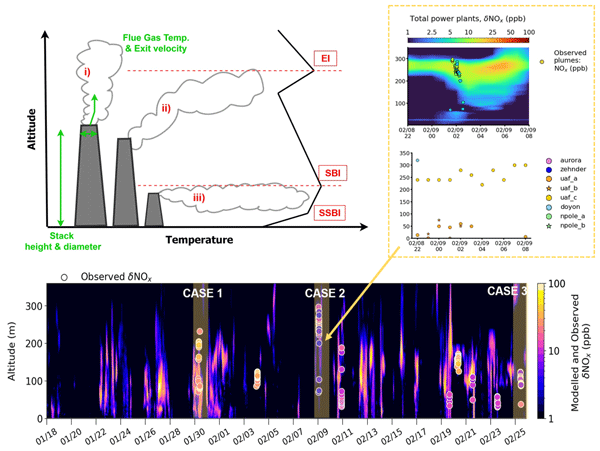
The Fairbanks area experiences severe pollution episodes in winter because of enhanced emissions of pollutants trapped near the surface by strong temperature inversions. Low-cost sensors were deployed on board a car and a tethered balloon to measure the concentrations of gaseous pollutants (CO, O3, and NOx) in Fairbanks during winter 2022. Data calibration with reference measurements and machine learning methods enabled us to document pollution at the surface and power plant plumes aloft.
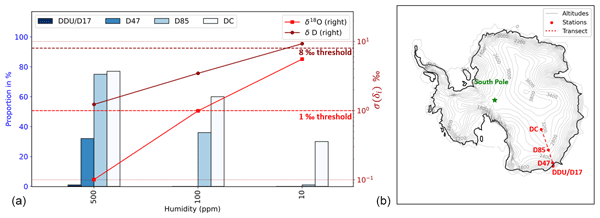
Thomas Lauwers, Elise Fourré, Olivier Jossoud, Daniele Romanini, Frédéric Prié, Giordano Nitti, Mathieu Casado, Kévin Jaulin, Markus Miltner, Morgane Farradèche, Valérie Masson-Delmotte, and Amaëlle Landais
Atmos. Meas. Tech., 18, 1135–1147, https://doi.org/10.5194/amt-18-1135-2025, https://doi.org/10.5194/amt-18-1135-2025, 2025
Short summary
Short summary
Water vapour isotopes are important tools to better understand processes governing the atmospheric hydrological cycle. In polar regions, their measurement helps to improve the interpretation of water isotopic records in ice cores. However, in situ water vapour isotopic monitoring is an important challenge, especially in dry places of East Antarctica. We present here an alternative laser spectroscopy technique adapted for such measurements, with a limit of detection down to 10 ppm humidity.
Natalie Brett, Kathy S. Law, Steve R. Arnold, Javier G. Fochesatto, Jean-Christophe Raut, Tatsuo Onishi, Robert Gilliam, Kathleen Fahey, Deanna Huff, George Pouliot, Brice Barret, Elsa Dieudonné, Roman Pohorsky, Julia Schmale, Andrea Baccarini, Slimane Bekki, Gianluca Pappaccogli, Federico Scoto, Stefano Decesari, Antonio Donateo, Meeta Cesler-Maloney, William Simpson, Patrice Medina, Barbara D'Anna, Brice Temime-Roussel, Joel Savarino, Sarah Albertin, Jingqiu Mao, Becky Alexander, Allison Moon, Peter F. DeCarlo, Vanessa Selimovic, Robert Yokelson, and Ellis S. Robinson
Atmos. Chem. Phys., 25, 1063–1104, https://doi.org/10.5194/acp-25-1063-2025, https://doi.org/10.5194/acp-25-1063-2025, 2025
Short summary
Short summary
Processes influencing dispersion of local anthropogenic pollution in Arctic wintertime are investigated with Lagrangian dispersion modelling. Simulated power plant plume rise that considers temperature inversion layers improves results compared to observations (interior Alaska). Modelled surface concentrations are improved by representation of vertical mixing and emission estimates. Large increases in diesel vehicle emissions at temperatures reaching −35°C are required to reproduce observed NOx.
Inès Ollivier, Hans Christian Steen-Larsen, Barbara Stenni, Laurent Arnaud, Mathieu Casado, Alexandre Cauquoin, Giuliano Dreossi, Christophe Genthon, Bénédicte Minster, Ghislain Picard, Martin Werner, and Amaëlle Landais
The Cryosphere, 19, 173–200, https://doi.org/10.5194/tc-19-173-2025, https://doi.org/10.5194/tc-19-173-2025, 2025
Short summary
Short summary
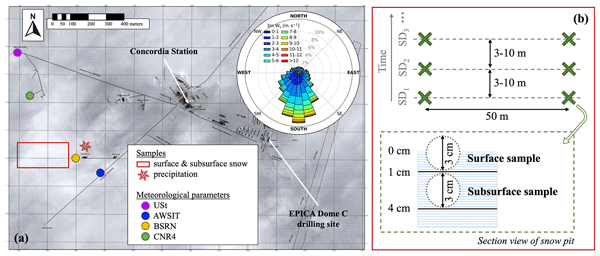
The role of post-depositional processes taking place at the ice sheet's surface on the water stable isotope signal measured in polar ice cores is not fully understood. Using field observations and modelling results, we show that the original precipitation isotopic signal at Dome C, East Antarctica, is modified by post-depositional processes and provide the first quantitative estimation of their mean impact on the isotopic signal observed in the snow.
Frédéric Parrenin, Marie Bouchet, Christo Buizert, Emilie Capron, Ellen Corrick, Russell Drysdale, Kenji Kawamura, Amaëlle Landais, Robert Mulvaney, Ikumi Oyabu, and Sune Olander Rasmussen
Geosci. Model Dev., 17, 8735–8750, https://doi.org/10.5194/gmd-17-8735-2024, https://doi.org/10.5194/gmd-17-8735-2024, 2024
Short summary
Short summary
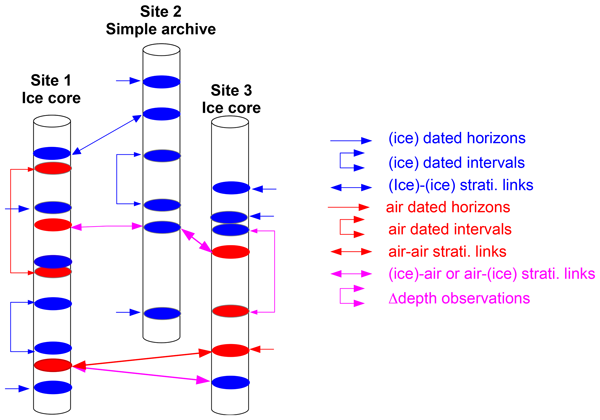
The Paleochrono-1.1 probabilistic dating model allows users to derive a common and optimized chronology for several paleoclimatic sites from various archives (ice cores, speleothems, marine cores, lake cores, etc.). It combines prior sedimentation scenarios with chronological information such as dated horizons, dated intervals, stratigraphic links and (for ice cores) Δdepth observations. Paleochrono-1.1 is available under an open-source license.
Clément Piel, Daniele Romanini, Morgane Farradèche, Justin Chaillot, Clémence Paul, Nicolas Bienville, Thomas Lauwers, Joana Sauze, Kévin Jaulin, Frédéric Prié, and Amaëlle Landais
Atmos. Meas. Tech., 17, 6647–6658, https://doi.org/10.5194/amt-17-6647-2024, https://doi.org/10.5194/amt-17-6647-2024, 2024
Short summary
Short summary
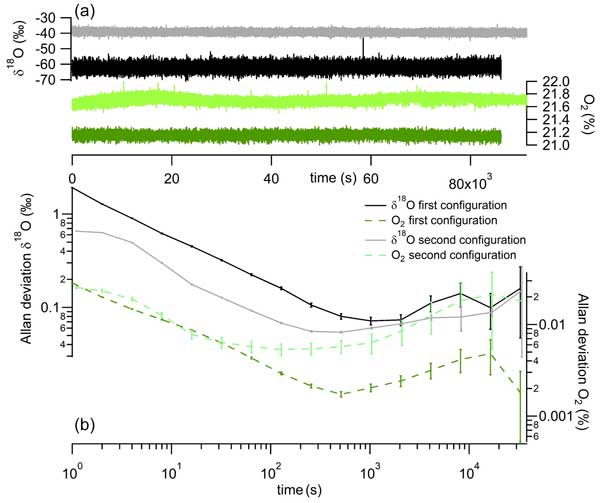
This paper introduces a new optical gas analyzer based on an optical-feedback cavity-enhanced absorption spectroscopy (OF-CEAS) technique enabling high-temporal-resolution and high-precision measurements of oxygen isotopes (δ18O) and dioxygen (O2) concentration of atmospheric O2 (respectively 0.06 ‰ and 0.002 % over 10 min integration). The results underscore the good agreement with isotope ratio mass spectrometry measurements and the ability of the instrument to monitor biological processes.
Luca Teruzzi, Andrea Spolaor, David Cappelletti, Claudio Artoni, and Marco A. C. Potenza
EGUsphere, https://doi.org/10.5194/egusphere-2024-2057, https://doi.org/10.5194/egusphere-2024-2057, 2024
Preprint archived
Short summary
Short summary
We present a novel probe to measure visible light penetration into the uppermost snow layers with high spatial resolution. The probe is designed to be lightweight and robust to be exploited in extreme environments, extrapolating to the UV region. Such experimental approach will allow to fill the gap in the current understanding of sunlight propagation through the snowpack, often based on numerical approaches, improving the understanding of those processes occurring in snow even in the UV region.
Giuliano Dreossi, Mauro Masiol, Barbara Stenni, Daniele Zannoni, Claudio Scarchilli, Virginia Ciardini, Mathieu Casado, Amaëlle Landais, Martin Werner, Alexandre Cauquoin, Giampietro Casasanta, Massimo Del Guasta, Vittoria Posocco, and Carlo Barbante
The Cryosphere, 18, 3911–3931, https://doi.org/10.5194/tc-18-3911-2024, https://doi.org/10.5194/tc-18-3911-2024, 2024
Short summary
Short summary
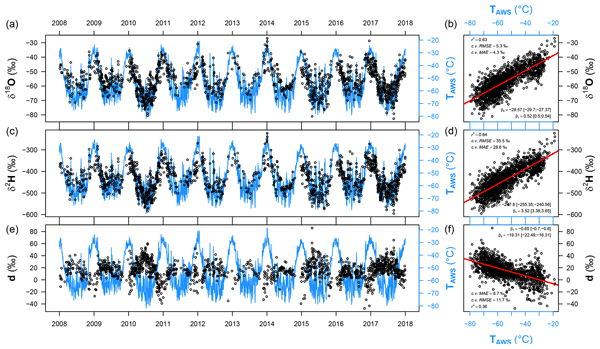
Oxygen and hydrogen stable isotopes have been extensively used to reconstruct past temperatures, with precipitation representing the input signal of the isotopic records in ice cores. We present a 10-year record of stable isotopes in daily precipitation at Concordia Station: this is the longest record for inland Antarctica and represents a benchmark for quantifying post-depositional processes and improving the paleoclimate interpretation of ice cores.
Romilly Harris Stuart, Amaëlle Landais, Laurent Arnaud, Christo Buizert, Emilie Capron, Marie Dumont, Quentin Libois, Robert Mulvaney, Anaïs Orsi, Ghislain Picard, Frédéric Prié, Jeffrey Severinghaus, Barbara Stenni, and Patricia Martinerie
The Cryosphere, 18, 3741–3763, https://doi.org/10.5194/tc-18-3741-2024, https://doi.org/10.5194/tc-18-3741-2024, 2024
Short summary
Short summary
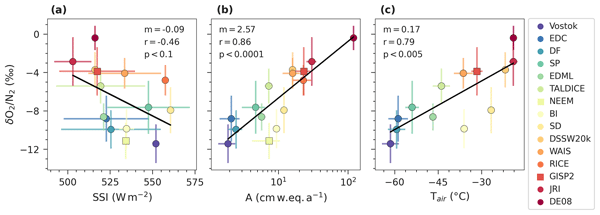
Ice core δO2/N2 records are useful dating tools due to their local insolation pacing. A precise understanding of the physical mechanism driving this relationship, however, remain ambiguous. By compiling data from 15 polar sites, we find a strong dependence of mean δO2/N2 on accumulation rate and temperature in addition to the well-documented insolation dependence. Snowpack modelling is used to investigate which physical properties drive the mechanistic dependence on these local parameters.
Mathieu Casado, Amaelle Landais, Tim Stoltmann, Justin Chaillot, Mathieu Daëron, Fréderic Prié, Baptiste Bordet, and Samir Kassi
Atmos. Meas. Tech., 17, 4599–4612, https://doi.org/10.5194/amt-17-4599-2024, https://doi.org/10.5194/amt-17-4599-2024, 2024
Short summary
Short summary
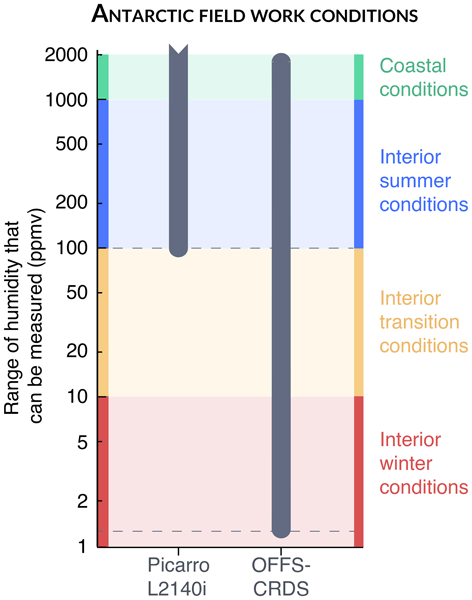
Measuring water isotopic composition in Antarctica is difficult because of the extremely cold temperature in winter. Here, we designed a new infrared spectrometer able to measure the vapour isotopic composition during more than 95 % of the year in the coldest locations of Antarctica, whereas current commercial instruments are only able to measure during the warm summer months in the interior.
V. Holly L. Winton, Robert Mulvaney, Joel Savarino, Kyle R. Clem, and Markus M. Frey
Clim. Past, 20, 1213–1232, https://doi.org/10.5194/cp-20-1213-2024, https://doi.org/10.5194/cp-20-1213-2024, 2024
Short summary
Short summary
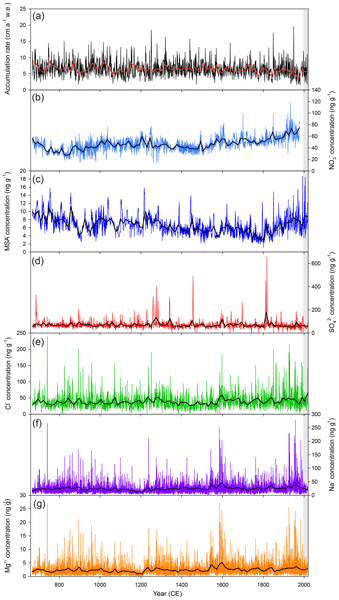
In 2018, a new 120 m ice core was drilled in a region located under the Antarctic ozone hole. We present the first results including a 1300-year record of snow accumulation and aerosol chemistry. We investigate the aerosol and moisture source regions and atmospheric processes related to the ice core record and discuss what this means for developing a record of past ultraviolet radiation and ozone depletion using the stable isotopic composition of nitrate measured in the same ice core.

Cécile Davrinche, Anaïs Orsi, Cécile Agosta, Charles Amory, and Christoph Kittel
The Cryosphere, 18, 2239–2256, https://doi.org/10.5194/tc-18-2239-2024, https://doi.org/10.5194/tc-18-2239-2024, 2024
Short summary
Short summary
Coastal surface winds in Antarctica are amongst the strongest winds on Earth. They are either driven by the cooling of the surface air mass by the ice sheet (katabatic) or by large-scale pressure systems. Here we compute the relative contribution of these drivers. We find that seasonal variations in the wind speed come from the katabatic acceleration, but, at a 3-hourly timescale, none of the large-scale or katabatic accelerations can be considered as the main driver.
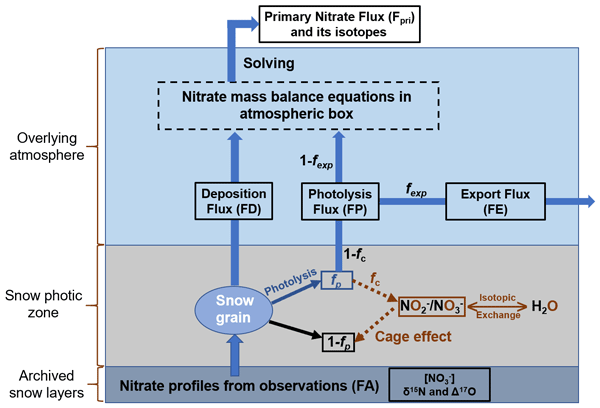
Zhuang Jiang, Becky Alexander, Joel Savarino, and Lei Geng
Atmos. Chem. Phys., 24, 4895–4914, https://doi.org/10.5194/acp-24-4895-2024, https://doi.org/10.5194/acp-24-4895-2024, 2024
Short summary
Short summary
Ice-core nitrate could track the past atmospheric NOx and oxidant level, but its interpretation is hampered by the post-depositional processing. In this work, an inverse model was developed and tested against two polar sites and was shown to well reproduce the observed nitrate signals in snow and atmosphere, suggesting that the model can properly correct for the effect of post-depositional processing. This model offers a very useful tool for future studies on ice-core nitrate records.
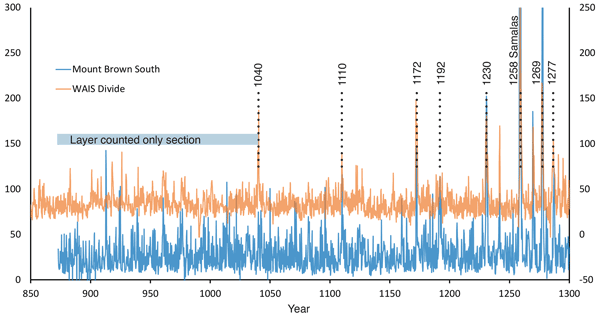
Tessa R. Vance, Nerilie J. Abram, Alison S. Criscitiello, Camilla K. Crockart, Aylin DeCampo, Vincent Favier, Vasileios Gkinis, Margaret Harlan, Sarah L. Jackson, Helle A. Kjær, Chelsea A. Long, Meredith K. Nation, Christopher T. Plummer, Delia Segato, Andrea Spolaor, and Paul T. Vallelonga
Clim. Past, 20, 969–990, https://doi.org/10.5194/cp-20-969-2024, https://doi.org/10.5194/cp-20-969-2024, 2024
Short summary
Short summary
This study presents the chronologies from the new Mount Brown South ice cores from East Antarctica, which were developed by counting annual layers in the ice core data and aligning these to volcanic sulfate signatures. The uncertainty in the dating is quantified, and we discuss initial results from seasonal cycle analysis and mean annual concentrations. The chronologies will underpin the development of new proxy records for East Antarctica spanning the past millennium.
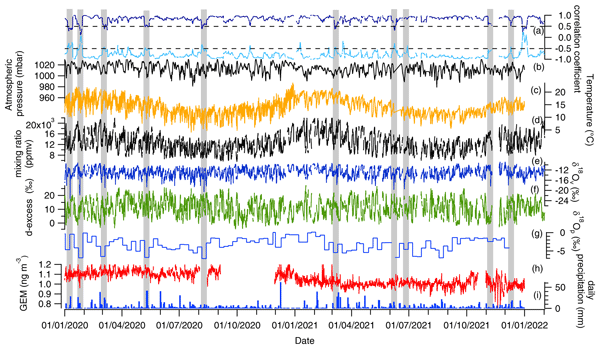
Amaelle Landais, Cécile Agosta, Françoise Vimeux, Olivier Magand, Cyrielle Solis, Alexandre Cauquoin, Niels Dutrievoz, Camille Risi, Christophe Leroy-Dos Santos, Elise Fourré, Olivier Cattani, Olivier Jossoud, Bénédicte Minster, Frédéric Prié, Mathieu Casado, Aurélien Dommergue, Yann Bertrand, and Martin Werner
Atmos. Chem. Phys., 24, 4611–4634, https://doi.org/10.5194/acp-24-4611-2024, https://doi.org/10.5194/acp-24-4611-2024, 2024
Short summary
Short summary
We have monitored water vapor isotopes since January 2020 on Amsterdam Island in the Indian Ocean. We show 11 periods associated with abrupt negative excursions of water vapor δ18Ο. Six of these events show a decrease in gaseous elemental mercury, suggesting subsidence of air from a higher altitude. Accurately representing the water isotopic signal during these cold fronts is a real challenge for the atmospheric components of Earth system models equipped with water isotopes.
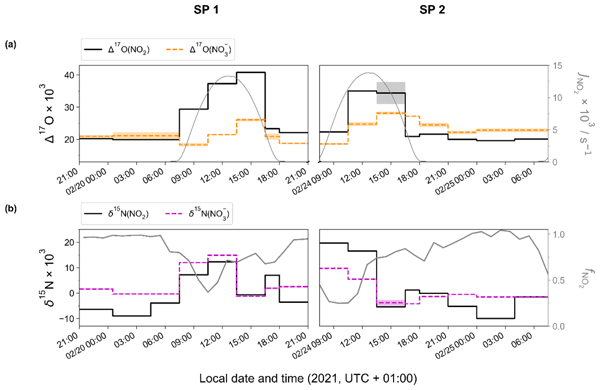
Sarah Albertin, Joël Savarino, Slimane Bekki, Albane Barbero, Roberto Grilli, Quentin Fournier, Irène Ventrillard, Nicolas Caillon, and Kathy Law
Atmos. Chem. Phys., 24, 1361–1388, https://doi.org/10.5194/acp-24-1361-2024, https://doi.org/10.5194/acp-24-1361-2024, 2024
Short summary
Short summary
This study reports the first simultaneous records of oxygen (Δ17O) and nitrogen (δ15N) isotopes in nitrogen dioxide (NO2) and nitrate (NO3−). These data are combined with atmospheric observations to explore sub-daily N reactive chemistry and quantify N fractionation effects in an Alpine winter city. The results highlight the necessity of using Δ17O and δ15N in both NO2 and NO3− to avoid biased estimations of NOx sources and fates from NO3− isotopic records in urban winter environments.
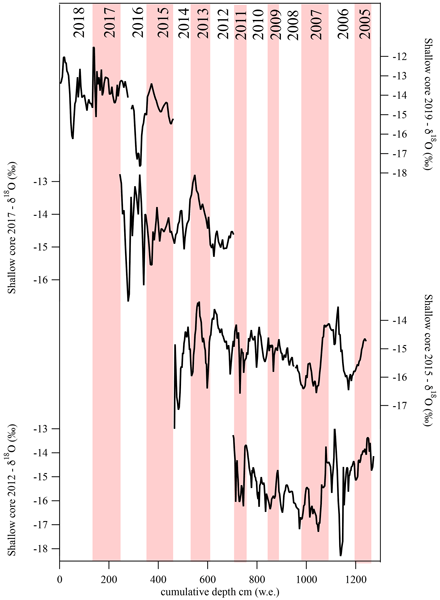
Andrea Spolaor, Federico Scoto, Catherine Larose, Elena Barbaro, Francois Burgay, Mats P. Bjorkman, David Cappelletti, Federico Dallo, Fabrizio de Blasi, Dmitry Divine, Giuliano Dreossi, Jacopo Gabrieli, Elisabeth Isaksson, Jack Kohler, Tonu Martma, Louise S. Schmidt, Thomas V. Schuler, Barbara Stenni, Clara Turetta, Bartłomiej Luks, Mathieu Casado, and Jean-Charles Gallet
The Cryosphere, 18, 307–320, https://doi.org/10.5194/tc-18-307-2024, https://doi.org/10.5194/tc-18-307-2024, 2024
Short summary
Short summary
We evaluate the impact of the increased snowmelt on the preservation of the oxygen isotope (δ18O) signal in firn records recovered from the top of the Holtedahlfonna ice field located in the Svalbard archipelago. Thanks to a multidisciplinary approach we demonstrate a progressive deterioration of the isotope signal in the firn core. We link the degradation of the δ18O signal to the increased occurrence and intensity of melt events associated with the rapid warming occurring in the archipelago.
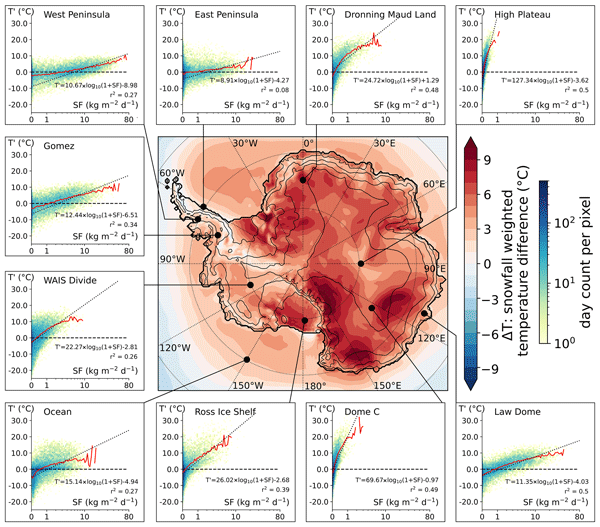
Aymeric P. M. Servettaz, Cécile Agosta, Christoph Kittel, and Anaïs J. Orsi
The Cryosphere, 17, 5373–5389, https://doi.org/10.5194/tc-17-5373-2023, https://doi.org/10.5194/tc-17-5373-2023, 2023
Short summary
Short summary
It has been previously observed in polar regions that the atmospheric temperature is warmer during precipitation events. Here, we use a regional atmospheric model to quantify the temperature changes associated with snowfall events across Antarctica. We show that more intense snowfall is statistically associated with a warmer temperature anomaly compared to the seasonal average, with the largest anomalies seen in winter. This bias may affect water isotopes in ice cores deposited during snowfall.
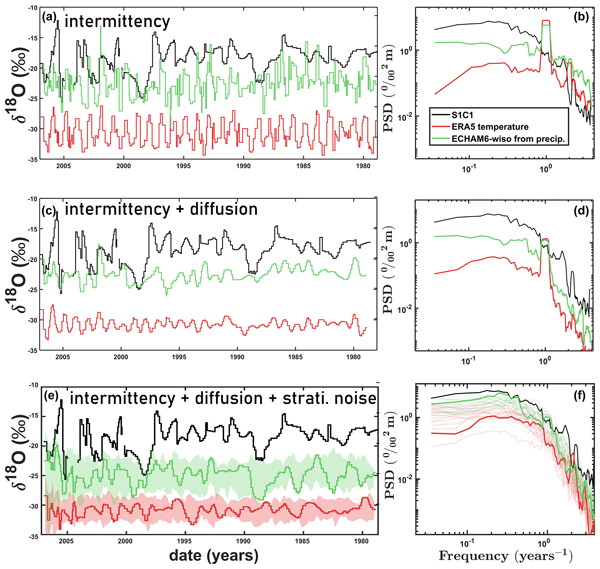
Christophe Leroy-Dos Santos, Elise Fourré, Cécile Agosta, Mathieu Casado, Alexandre Cauquoin, Martin Werner, Benedicte Minster, Frédéric Prié, Olivier Jossoud, Leila Petit, and Amaëlle Landais
The Cryosphere, 17, 5241–5254, https://doi.org/10.5194/tc-17-5241-2023, https://doi.org/10.5194/tc-17-5241-2023, 2023
Short summary
Short summary
In the face of global warming, understanding the changing water cycle and temperatures in polar regions is crucial. These factors directly impact the balance of ice sheets in the Arctic and Antarctic. By studying the composition of water vapor, we gain insights into climate variations. Our 2-year study at Dumont d’Urville station, Adélie Land, offers valuable data to refine models. Additionally, we demonstrate how modeling aids in interpreting signals from ice core samples in the region.
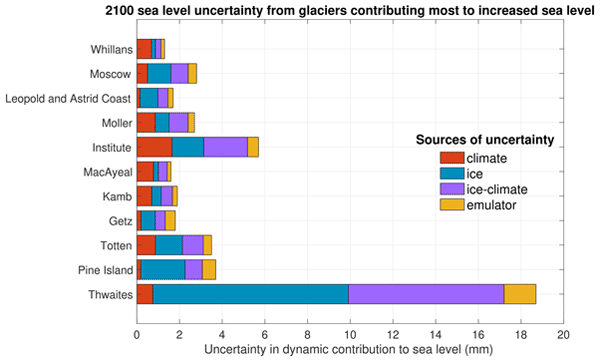
Hélène Seroussi, Vincent Verjans, Sophie Nowicki, Antony J. Payne, Heiko Goelzer, William H. Lipscomb, Ayako Abe-Ouchi, Cécile Agosta, Torsten Albrecht, Xylar Asay-Davis, Alice Barthel, Reinhard Calov, Richard Cullather, Christophe Dumas, Benjamin K. Galton-Fenzi, Rupert Gladstone, Nicholas R. Golledge, Jonathan M. Gregory, Ralf Greve, Tore Hattermann, Matthew J. Hoffman, Angelika Humbert, Philippe Huybrechts, Nicolas C. Jourdain, Thomas Kleiner, Eric Larour, Gunter R. Leguy, Daniel P. Lowry, Chistopher M. Little, Mathieu Morlighem, Frank Pattyn, Tyler Pelle, Stephen F. Price, Aurélien Quiquet, Ronja Reese, Nicole-Jeanne Schlegel, Andrew Shepherd, Erika Simon, Robin S. Smith, Fiammetta Straneo, Sainan Sun, Luke D. Trusel, Jonas Van Breedam, Peter Van Katwyk, Roderik S. W. van de Wal, Ricarda Winkelmann, Chen Zhao, Tong Zhang, and Thomas Zwinger
The Cryosphere, 17, 5197–5217, https://doi.org/10.5194/tc-17-5197-2023, https://doi.org/10.5194/tc-17-5197-2023, 2023
Short summary
Short summary
Mass loss from Antarctica is a key contributor to sea level rise over the 21st century, and the associated uncertainty dominates sea level projections. We highlight here the Antarctic glaciers showing the largest changes and quantify the main sources of uncertainty in their future evolution using an ensemble of ice flow models. We show that on top of Pine Island and Thwaites glaciers, Totten and Moscow University glaciers show rapid changes and a strong sensitivity to warmer ocean conditions.
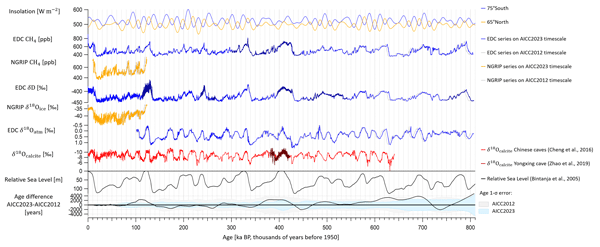
Marie Bouchet, Amaëlle Landais, Antoine Grisart, Frédéric Parrenin, Frédéric Prié, Roxanne Jacob, Elise Fourré, Emilie Capron, Dominique Raynaud, Vladimir Ya Lipenkov, Marie-France Loutre, Thomas Extier, Anders Svensson, Etienne Legrain, Patricia Martinerie, Markus Leuenberger, Wei Jiang, Florian Ritterbusch, Zheng-Tian Lu, and Guo-Min Yang
Clim. Past, 19, 2257–2286, https://doi.org/10.5194/cp-19-2257-2023, https://doi.org/10.5194/cp-19-2257-2023, 2023
Short summary
Short summary
A new federative chronology for five deep polar ice cores retrieves 800 000 years of past climate variations with improved accuracy. Precise ice core timescales are key to studying the mechanisms linking changes in the Earth’s orbit to the diverse climatic responses (temperature and atmospheric greenhouse gas concentrations). To construct the chronology, new measurements from the oldest continuous ice core as well as glaciological modeling estimates were combined in a statistical model.
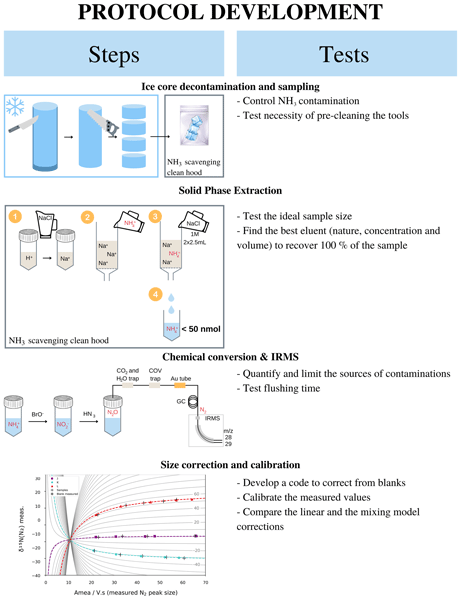
Alexis Lamothe, Joel Savarino, Patrick Ginot, Lison Soussaintjean, Elsa Gautier, Pete D. Akers, Nicolas Caillon, and Joseph Erbland
Atmos. Meas. Tech., 16, 4015–4030, https://doi.org/10.5194/amt-16-4015-2023, https://doi.org/10.5194/amt-16-4015-2023, 2023
Short summary
Short summary
Ammonia is a reactive gas in our atmosphere that is key in air quality issues. Assessing its emissions and how it reacts is a hot topic that can be addressed from the past. Stable isotopes (the mass of the molecule) measured in ice cores (glacial archives) can teach us a lot. However, the concentrations in ice cores are very small. We propose a protocol to limit the contamination and apply it to one ice core drilled in Mont Blanc, describing the opportunities our method brings.
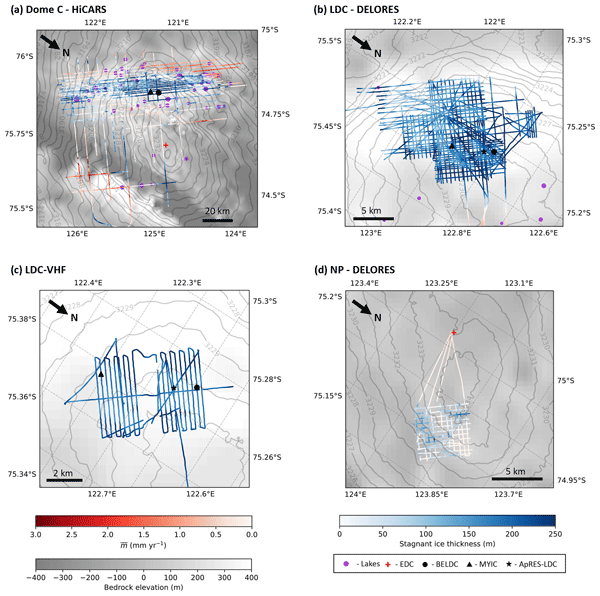
Ailsa Chung, Frédéric Parrenin, Daniel Steinhage, Robert Mulvaney, Carlos Martín, Marie G. P. Cavitte, David A. Lilien, Veit Helm, Drew Taylor, Prasad Gogineni, Catherine Ritz, Massimo Frezzotti, Charles O'Neill, Heinrich Miller, Dorthe Dahl-Jensen, and Olaf Eisen
The Cryosphere, 17, 3461–3483, https://doi.org/10.5194/tc-17-3461-2023, https://doi.org/10.5194/tc-17-3461-2023, 2023
Short summary
Short summary
We combined a numerical model with radar measurements in order to determine the age of ice in the Dome C region of Antarctica. Our results show that at the current ice core drilling sites on Little Dome C, the maximum age of the ice is almost 1.5 Ma. We also highlight a new potential drill site called North Patch with ice up to 2 Ma. Finally, we explore the nature of a stagnant ice layer at the base of the ice sheet which has been independently observed and modelled but is not well understood.
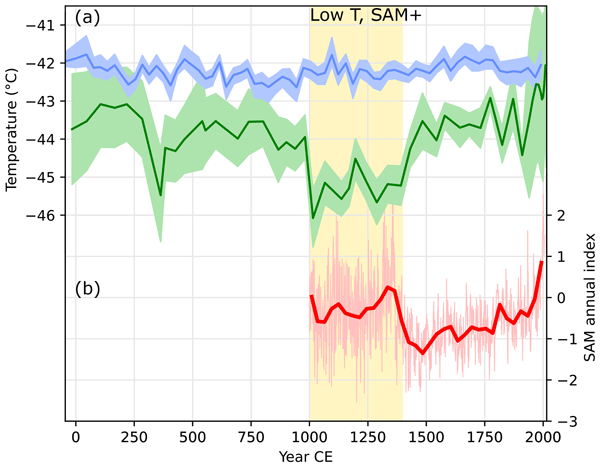
Aymeric P. M. Servettaz, Anaïs J. Orsi, Mark A. J. Curran, Andrew D. Moy, Amaelle Landais, Joseph R. McConnell, Trevor J. Popp, Emmanuel Le Meur, Xavier Faïn, and Jérôme Chappellaz
Clim. Past, 19, 1125–1152, https://doi.org/10.5194/cp-19-1125-2023, https://doi.org/10.5194/cp-19-1125-2023, 2023
Short summary
Short summary
The temperature of the past 2000 years is still poorly known in vast parts of the East Antarctic plateau. In this study, we present temperature reconstructions based on water and gas stable isotopes from the Aurora Basin North ice core. Spatial and temporal significance of each proxy differs, and we can identify some cold periods in the snow temperature up to 2°C cooler in the 1000–1400 CE period, which could not be determined with water isotopes only.
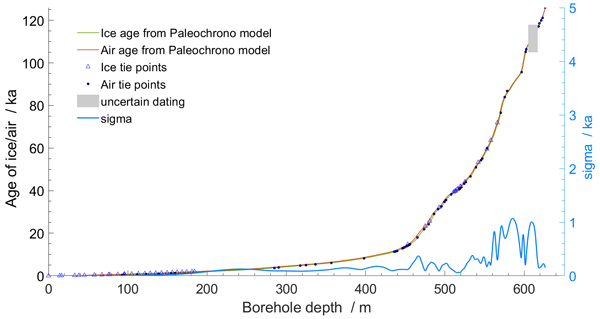
Robert Mulvaney, Eric W. Wolff, Mackenzie M. Grieman, Helene H. Hoffmann, Jack D. Humby, Christoph Nehrbass-Ahles, Rachael H. Rhodes, Isobel F. Rowell, Frédéric Parrenin, Loïc Schmidely, Hubertus Fischer, Thomas F. Stocker, Marcus Christl, Raimund Muscheler, Amaelle Landais, and Frédéric Prié
Clim. Past, 19, 851–864, https://doi.org/10.5194/cp-19-851-2023, https://doi.org/10.5194/cp-19-851-2023, 2023
Short summary
Short summary
We present an age scale for a new ice core drilled at Skytrain Ice Rise, an ice rise facing the Ronne Ice Shelf in Antarctica. Various measurements in the ice and air phases are used to match the ice core to other Antarctic cores that have already been dated, and a new age scale is constructed. The 651 m ice core includes ice that is confidently dated to 117 000–126 000 years ago, in the last interglacial. Older ice is found deeper down, but there are flow disturbances in the deeper ice.
Simone Ventisette, Samuele Baldini, Claudio Artoni, Silvia Becagli, Laura Caiazzo, Barbara Delmonte, Massimo Frezzotti, Raffaello Nardin, Joel Savarino, Mirko Severi, Andrea Spolaor, Barbara Stenni, and Rita Traversi
EGUsphere, https://doi.org/10.5194/egusphere-2023-393, https://doi.org/10.5194/egusphere-2023-393, 2023
Preprint archived
Short summary
Short summary
The paper reports the spatial variability of concentration and fluxes of chemical impurities in superficial snow over unexplored area of the East Antarctic ice sheet. Pinatubo and Puyehue-Cordón Caulle volcanic eruptions in non-sea salt sulfate and dust snow pits record were used to achieve the accumulation rates. Deposition (wet, dry and uptake from snow surface) and post deposition processes are constrained. These knowledges are fundamental in Antarctic ice cores stratigraphies interpretation.
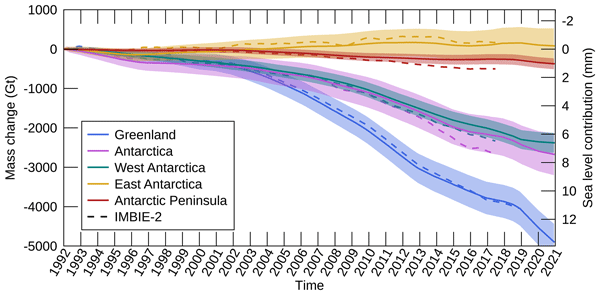
Inès N. Otosaka, Andrew Shepherd, Erik R. Ivins, Nicole-Jeanne Schlegel, Charles Amory, Michiel R. van den Broeke, Martin Horwath, Ian Joughin, Michalea D. King, Gerhard Krinner, Sophie Nowicki, Anthony J. Payne, Eric Rignot, Ted Scambos, Karen M. Simon, Benjamin E. Smith, Louise S. Sørensen, Isabella Velicogna, Pippa L. Whitehouse, Geruo A, Cécile Agosta, Andreas P. Ahlstrøm, Alejandro Blazquez, William Colgan, Marcus E. Engdahl, Xavier Fettweis, Rene Forsberg, Hubert Gallée, Alex Gardner, Lin Gilbert, Noel Gourmelen, Andreas Groh, Brian C. Gunter, Christopher Harig, Veit Helm, Shfaqat Abbas Khan, Christoph Kittel, Hannes Konrad, Peter L. Langen, Benoit S. Lecavalier, Chia-Chun Liang, Bryant D. Loomis, Malcolm McMillan, Daniele Melini, Sebastian H. Mernild, Ruth Mottram, Jeremie Mouginot, Johan Nilsson, Brice Noël, Mark E. Pattle, William R. Peltier, Nadege Pie, Mònica Roca, Ingo Sasgen, Himanshu V. Save, Ki-Weon Seo, Bernd Scheuchl, Ernst J. O. Schrama, Ludwig Schröder, Sebastian B. Simonsen, Thomas Slater, Giorgio Spada, Tyler C. Sutterley, Bramha Dutt Vishwakarma, Jan Melchior van Wessem, David Wiese, Wouter van der Wal, and Bert Wouters
Earth Syst. Sci. Data, 15, 1597–1616, https://doi.org/10.5194/essd-15-1597-2023, https://doi.org/10.5194/essd-15-1597-2023, 2023
Short summary
Short summary
By measuring changes in the volume, gravitational attraction, and ice flow of Greenland and Antarctica from space, we can monitor their mass gain and loss over time. Here, we present a new record of the Earth’s polar ice sheet mass balance produced by aggregating 50 satellite-based estimates of ice sheet mass change. This new assessment shows that the ice sheets have lost (7.5 x 10¹²) t of ice between 1992 and 2020, contributing 21 mm to sea level rise.
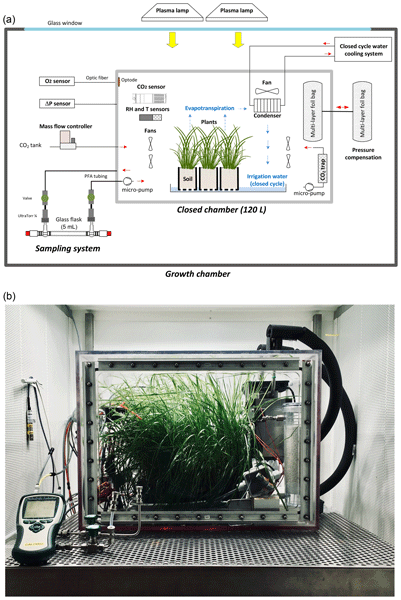
Clémence Paul, Clément Piel, Joana Sauze, Nicolas Pasquier, Frédéric Prié, Sébastien Devidal, Roxanne Jacob, Arnaud Dapoigny, Olivier Jossoud, Alexandru Milcu, and Amaëlle Landais
Biogeosciences, 20, 1047–1062, https://doi.org/10.5194/bg-20-1047-2023, https://doi.org/10.5194/bg-20-1047-2023, 2023
Short summary
Short summary
To improve the interpretation of the δ18Oatm and Δ17O of O2 in air bubbles in ice cores, we need to better quantify the oxygen fractionation coefficients associated with biological processes. We performed a simplified analogue of the terrestrial biosphere in a closed chamber. We found a respiration fractionation in agreement with the previous estimates at the microorganism scale, and a terrestrial photosynthetic fractionation was found. This has an impact on the estimation of the Dole effect.
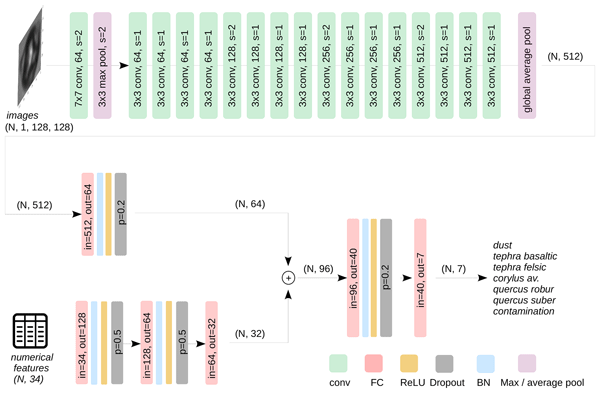
Niccolò Maffezzoli, Eliza Cook, Willem G. M. van der Bilt, Eivind N. Støren, Daniela Festi, Florian Muthreich, Alistair W. R. Seddon, François Burgay, Giovanni Baccolo, Amalie R. F. Mygind, Troels Petersen, Andrea Spolaor, Sebastiano Vascon, Marcello Pelillo, Patrizia Ferretti, Rafael S. dos Reis, Jefferson C. Simões, Yuval Ronen, Barbara Delmonte, Marco Viccaro, Jørgen Peder Steffensen, Dorthe Dahl-Jensen, Kerim H. Nisancioglu, and Carlo Barbante
The Cryosphere, 17, 539–565, https://doi.org/10.5194/tc-17-539-2023, https://doi.org/10.5194/tc-17-539-2023, 2023
Short summary
Short summary
Multiple lines of research in ice core science are limited by manually intensive and time-consuming optical microscopy investigations for the detection of insoluble particles, from pollen grains to volcanic shards. To help overcome these limitations and support researchers, we present a novel methodology for the identification and autonomous classification of ice core insoluble particles based on flow image microscopy and neural networks.
Giacomo Traversa, Davide Fugazza, and Massimo Frezzotti
The Cryosphere, 17, 427–444, https://doi.org/10.5194/tc-17-427-2023, https://doi.org/10.5194/tc-17-427-2023, 2023
Short summary
Short summary
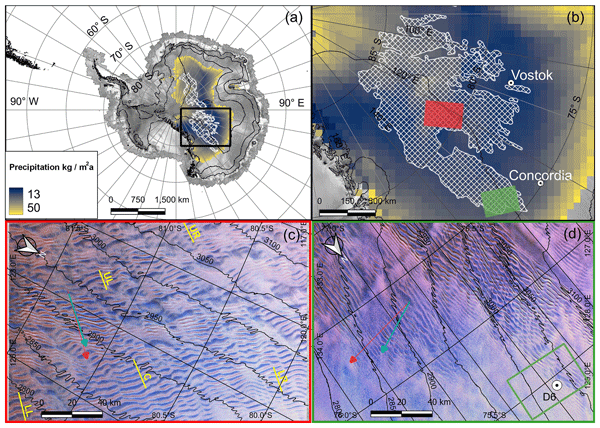
Megadunes are fields of huge snow dunes present in Antarctica and on other planets, important as they present mass loss on the leeward side (glazed snow), on a continent characterized by mass gain. Here, we studied megadunes using remote data and measurements acquired during past field expeditions. We quantified their physical properties and migration and demonstrated that they migrate against slope and wind. We further proposed automatic detections of the glazed snow on their leeward side.
François Burgay, Rafael Pedro Fernández, Delia Segato, Clara Turetta, Christopher S. Blaszczak-Boxe, Rachael H. Rhodes, Claudio Scarchilli, Virginia Ciardini, Carlo Barbante, Alfonso Saiz-Lopez, and Andrea Spolaor
The Cryosphere, 17, 391–405, https://doi.org/10.5194/tc-17-391-2023, https://doi.org/10.5194/tc-17-391-2023, 2023
Short summary
Short summary
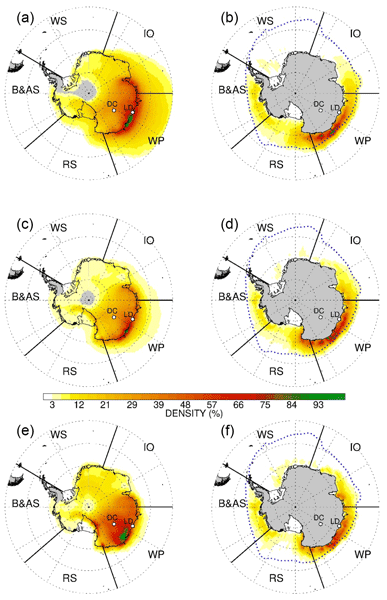
The paper presents the first ice-core record of bromine (Br) in the Antarctic plateau. By the observation of the ice core and the application of atmospheric chemical models, we investigate the behaviour of bromine after its deposition into the snowpack, with interest in the effect of UV radiation change connected to the formation of the ozone hole, the role of volcanic deposition, and the possible use of Br to reconstruct past sea ice changes from ice core collect in the inner Antarctic plateau.
Marco Brogioni, Mark J. Andrews, Stefano Urbini, Kenneth C. Jezek, Joel T. Johnson, Marion Leduc-Leballeur, Giovanni Macelloni, Stephen F. Ackley, Alexandra Bringer, Ludovic Brucker, Oguz Demir, Giacomo Fontanelli, Caglar Yardim, Lars Kaleschke, Francesco Montomoli, Leung Tsang, Silvia Becagli, and Massimo Frezzotti
The Cryosphere, 17, 255–278, https://doi.org/10.5194/tc-17-255-2023, https://doi.org/10.5194/tc-17-255-2023, 2023
Short summary
Short summary
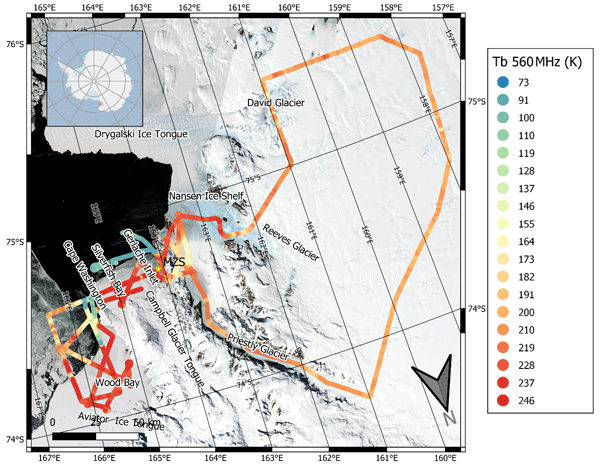
In 2018 the first Antarctic campaign of UWBRAD was carried out. UWBRAD is a new radiometer able to collect microwave spectral signatures over 0.5–2 GHz, thus outperforming existing similar sensors. It allows us to probe thicker sea ice and ice sheet down to the bedrock. In this work we tried to assess the UWBRAD potentials for sea ice, glaciers, ice shelves and buried lakes. We also highlighted the wider range of information the spectral signature can provide to glaciological studies.
Pete D. Akers, Joël Savarino, Nicolas Caillon, Olivier Magand, and Emmanuel Le Meur
Atmos. Chem. Phys., 22, 15637–15657, https://doi.org/10.5194/acp-22-15637-2022, https://doi.org/10.5194/acp-22-15637-2022, 2022
Short summary
Short summary
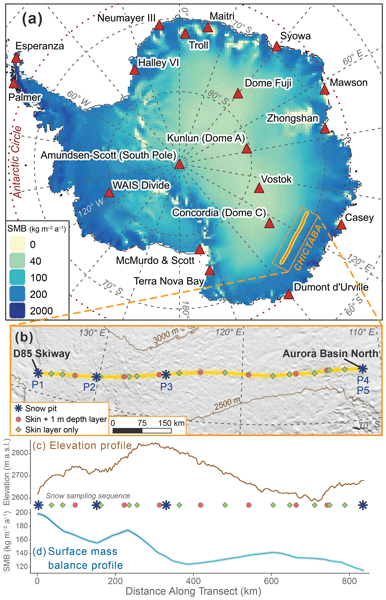
Nitrate isotopes in Antarctic ice do not preserve the seasonal isotopic cycles of the atmosphere, which limits their use to study the past. We studied nitrate along an 850 km Antarctic transect to learn how these cycles are changed by sunlight-driven chemistry in the snow. Our findings suggest that the snow accumulation rate and other environmental signals can be extracted from nitrate with the right sampling and analytical approaches.
Yanzhi Cao, Zhuang Jiang, Becky Alexander, Jihong Cole-Dai, Joel Savarino, Joseph Erbland, and Lei Geng
Atmos. Chem. Phys., 22, 13407–13422, https://doi.org/10.5194/acp-22-13407-2022, https://doi.org/10.5194/acp-22-13407-2022, 2022
Short summary
Short summary
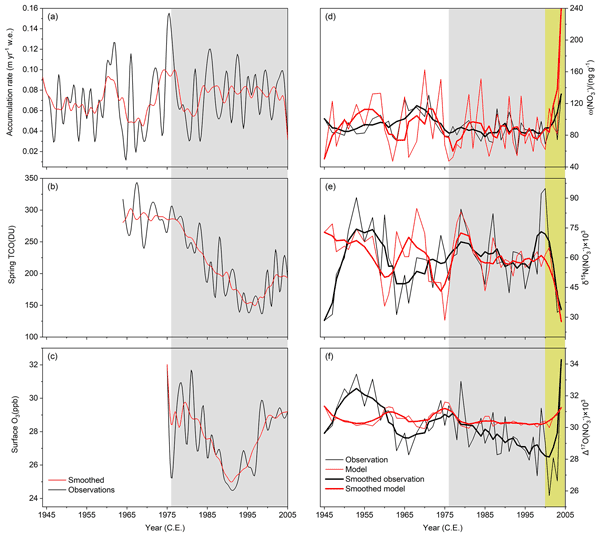
We investigate the potential of ice-core preserved nitrate isotopes as proxies of stratospheric ozone variability by measuring nitrate isotopes in a shallow ice core from the South Pole. The large variability in the snow accumulation rate and its slight increase after the 1970s masked any signals caused by the ozone hole. Moreover, the nitrate oxygen isotope decrease may reflect changes in the atmospheric oxidation environment in the Southern Ocean.

Antoine Grisart, Mathieu Casado, Vasileios Gkinis, Bo Vinther, Philippe Naveau, Mathieu Vrac, Thomas Laepple, Bénédicte Minster, Frederic Prié, Barbara Stenni, Elise Fourré, Hans Christian Steen-Larsen, Jean Jouzel, Martin Werner, Katy Pol, Valérie Masson-Delmotte, Maria Hoerhold, Trevor Popp, and Amaelle Landais
Clim. Past, 18, 2289–2301, https://doi.org/10.5194/cp-18-2289-2022, https://doi.org/10.5194/cp-18-2289-2022, 2022
Short summary
Short summary
This paper presents a compilation of high-resolution (11 cm) water isotopic records, including published and new measurements, for the last 800 000 years from the EPICA Dome C ice core, Antarctica. Using this new combined water isotopes (δ18O and δD) dataset, we study the variability and possible influence of diffusion at the multi-decadal to multi-centennial scale. We observe a stronger variability at the onset of the interglacial interval corresponding to a warm period.
Albane Barbero, Roberto Grilli, Markus M. Frey, Camille Blouzon, Detlev Helmig, Nicolas Caillon, and Joël Savarino
Atmos. Chem. Phys., 22, 12025–12054, https://doi.org/10.5194/acp-22-12025-2022, https://doi.org/10.5194/acp-22-12025-2022, 2022
Short summary
Short summary
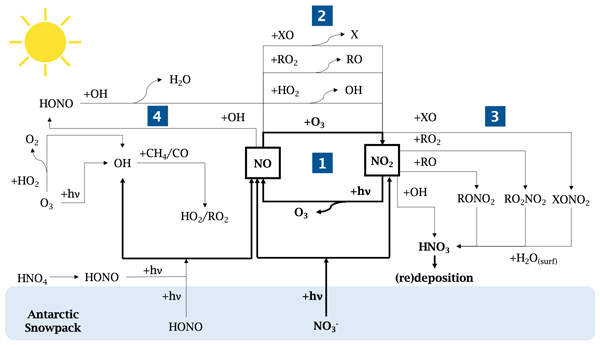
The high reactivity of the summer Antarctic boundary layer results in part from the emissions of nitrogen oxides produced during photo-denitrification of the snowpack, but its underlying mechanisms are not yet fully understood. The results of this study suggest that more NO2 is produced from the snowpack early in the photolytic season, possibly due to stronger UV irradiance caused by a smaller solar zenith angle near the solstice.
Zhuang Jiang, Joel Savarino, Becky Alexander, Joseph Erbland, Jean-Luc Jaffrezo, and Lei Geng
The Cryosphere, 16, 2709–2724, https://doi.org/10.5194/tc-16-2709-2022, https://doi.org/10.5194/tc-16-2709-2022, 2022
Short summary
Short summary
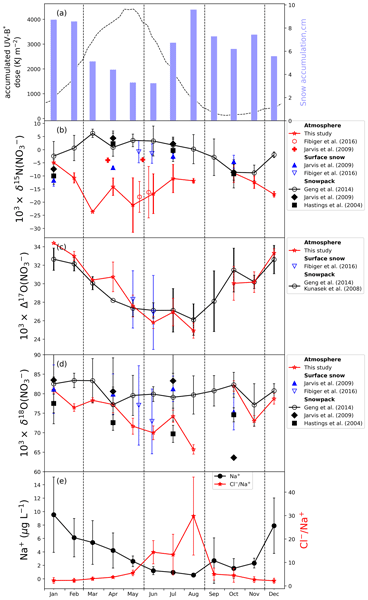
A record of year-round atmospheric nitrate isotopic composition along with snow nitrate isotopic data from Summit, Greenland, revealed apparent enrichments in nitrogen isotopes in snow nitrate compared to atmospheric nitrate, in addition to a relatively smaller degree of changes in oxygen isotopes. The results suggest that at this site post-depositional processing takes effect, which should be taken into account when interpreting ice-core nitrate isotope records.
Christoph Kittel, Charles Amory, Stefan Hofer, Cécile Agosta, Nicolas C. Jourdain, Ella Gilbert, Louis Le Toumelin, Étienne Vignon, Hubert Gallée, and Xavier Fettweis
The Cryosphere, 16, 2655–2669, https://doi.org/10.5194/tc-16-2655-2022, https://doi.org/10.5194/tc-16-2655-2022, 2022
Short summary
Short summary
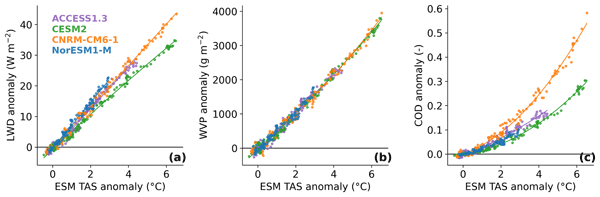
Model projections suggest large differences in future Antarctic surface melting even for similar greenhouse gas scenarios and warming rates. We show that clouds containing a larger amount of liquid water lead to stronger melt. As surface melt can trigger the collapse of the ice shelves (the safety band of the Antarctic Ice Sheet), clouds could be a major source of uncertainties in projections of sea level rise.

Saehee Lim, Meehye Lee, Joel Savarino, and Paolo Laj
Atmos. Chem. Phys., 22, 5099–5115, https://doi.org/10.5194/acp-22-5099-2022, https://doi.org/10.5194/acp-22-5099-2022, 2022
Short summary
Short summary
We determined δ15N(NO3−) and Δ17O(NO3−) of PM2.5 in Seoul during 2018–2019 and estimated quantitatively the contribution of oxidation pathways to NO3− formation and NOx emission sources. The nighttime pathway played a significant role in NO3− formation during the winter, and its contribution further increased up to 70 % on haze days when PM2.5 was greater than 75 µg m−3. Vehicle emissions were confirmed as a main NO3− source with an increasing contribution from coal combustion in winter.
Stefania Danesi, Simone Salimbeni, Alessandra Borghi, Stefano Urbini, and Massimo Frezzotti
EGUsphere, https://doi.org/10.5194/egusphere-2022-29, https://doi.org/10.5194/egusphere-2022-29, 2022
Preprint archived
Short summary
Short summary
Clusters of low-energy seismic events, concentrated in space and time, characterized by highly correlated waveforms (cross-correlation coefficient ≥ 0.95), occur at the floating area of a major ice stream in Antarctica (David Glacier, North Victoria Land). The transient injection of fluids from the David catchment into the regional subglacial hydrographic network, observed by GRACE measurements, is indicated as the main trigger for clustered and repeated seismic occurrences.
Paolo Gabrielli, Theo Manuel Jenk, Michele Bertó, Giuliano Dreossi, Daniela Festi, Werner Kofler, Mai Winstrup, Klaus Oeggl, Margit Schwikowski, Barbara Stenni, and Carlo Barbante
Clim. Past Discuss., https://doi.org/10.5194/cp-2022-20, https://doi.org/10.5194/cp-2022-20, 2022
Revised manuscript not accepted
Short summary
Short summary
We present a methodology that reduces the chronological uncertainty of an Alpine ice core record from the glacier Alto dell’Ortles, Italy. This chronology will allow the constraint of the Holocene climatic and environmental histories emerging from this archive of Central Europe. This method will allow to obtain accurate chronologies also from other ice cores from-low latitude/high-altitude glaciers that typically suffer from larger dating uncertainties compared with well dated polar records.
Cited articles
Baroni, M., Bard, E., Petit, J.-R., Magand, O., and Bourlès, D.: Volcanic and solar activity, and atmospheric circulation influences on cosmogenic 10Be fallout at Vostok and Concordia (Antarctica) over the last 60 years, Geochim. Cosmochim. Ac., 75, 7132–7145, https://doi.org/10.1016/j.gca.2011.09.002, 2011.
Beria, H., Larsen, J. R., Ceperley, N. C., Michelon, A., Vennemann, T., and Schaefli, B.: Understanding snow hydrological processes through the lens of stable water isotopes, WIREs Water, 5, e1311, https://doi.org/10.1002/wat2.1311, 2018.
Bintanja, R.: The contribution of snowdrift sublimation to the surface mass balance of Antarctica, Ann. Glaciol., 27, 251–259, https://doi.org/10.3189/1998AoG27-1-251-259, 1998.
Boucher, O., Servonnat, J., Albright, A. L., Aumont, O., Balkanski, Y., Bastrikov, V., Bekki, S., Bonnet, R., Bony, S., Bopp, L., Braconnot, P., Brockmann, P., Cadule, P., Caubel, A., Cheruy, F., Codron, F., Cozic, A., Cugnet, D., D'Andrea, F., Davini, P., de Lavergne, C., Denvil, S., Deshayes, J., Devilliers, M., Ducharne, A., Dufresne, J.-L., Dupont, E., Éthé, C., Fairhead, L., Falletti, L., Flavoni, S., Foujols, M.-A., Gardoll, S., Gastineau, G., Ghattas, J., Grandpeix, J.-Y., Guenet, B., Guez, E., Guilyardi, E., Guimberteau, M., Hauglustaine, D., Hourdin, F., Idelkadi, A., Joussaume, S., Kageyama, M., Khodri, M., Krinner, G., Lebas, N., Levavasseur, G., Lévy, C., Li, L., Lott, F., Lurton, T., Luyssaert, S., Madec, G., Madeleine, J.-B., Maignan, F., Marchand, M., Marti, O., Mellul, L., Meurdesoif, Y., Mignot, J., Musat, I., Ottlé, C., Peylin, P., Planton, Y., Polcher, J., Rio, C., Rochetin, N., Rousset, C., Sepulchre, P., Sima, A., Swingedouw, D., Thiéblemont, R., Traore, A. K., Vancoppenolle, M., Vial, J., Vialard, J., Viovy, N., and Vuichard, N.: Presentation and evaluation of the IPSL-CM6A-LR climate model, J. Adv. Model. Earth Sy., 12, e2019MS002010, https://doi.org/10.1029/2019MS002010, 2020.
Casado, M., Orsi, A. J., and Landais, A.: On the limits of climate reconstruction from water stable isotopes in polar ice cores, Past Glob. Chang. Mag., 25, 146–147, https://doi.org/10.22498/pages.25.3.146, 2017.
Casado, M., Landais, A., Picard, G., Münch, T., Laepple, T., Stenni, B., Dreossi, G., Ekaykin, A., Arnaud, L., Genthon, C., Touzeau, A., Masson-Delmotte, V., and Jouzel, J.: Archival processes of the water stable isotope signal in East Antarctic ice cores, The Cryosphere, 12, 1745–1766, https://doi.org/10.5194/tc-12-1745-2018, 2018.
Casado, M., Münch, T., and Laepple, T.: Climatic information archived in ice cores: impact of intermittency and diffusion on the recorded isotopic signal in Antarctica, Clim. Past, 16, 1581–1598, https://doi.org/10.5194/cp-16-1581-2020, 2020.
Casado, M., Landais, A., Picard, G., Arnaud, L., Dreossi, G., Stenni, B., and Prié, F.: Water isotopic signature of surface snow metamorphism in Antarctica, Geophys. Res. Lett., 48, e2021GL093382, https://doi.org/10.1029/2021GL093382, 2021.
Casado, M., Hébert, R., Faranda, D., and Landais, A.: The quandary of detecting the signature of climate change in Antarctica, Nat. Clim. Change, 13, 1082–1088, https://doi.org/10.1038/s41558-023-01791-5, 2023.
Charles, C. D., Rind, D., Jouzel, J., Koster, R. D., and Fairbanks, R. G.: Glacial–interglacial changes in moisture sources for Greenland: influences on the ice core record of climate, Science, 263, 508–511, https://doi.org/10.1126/science.263.5146.508, 1994.
Craig, H.: Standard for reporting concentrations of deuterium and oxygen-18 in natural waters, Science, 133, 1833–1834, https://doi.org/10.1126/science.133.3467.1833, 1961.
Craig, H. and Gordon, L. I.: Deuterium and oxygen 18 variations in the ocean and the marine atmosphere, in: Stable Isotopes in Oceanographic Studies and Paleotemperatures, edited by: Tongiorgi, E., Laboratorio di Geologia Nucleare, Pisa, Italy, 9–130, 1965.
Dansgaard, W.: Stable isotopes in precipitation, Tellus B, 16, 436–468, https://doi.org/10.1111/j.2153-3490.1964.tb00181.x, 1964.
Dietrich, L. J., Steen-Larsen, H., Wahl, S., Jones, T., Town, M., and Werner, M.: Snow–atmosphere humidity exchange at the ice sheet surface alters annual mean climate signals in ice core records, Geophys. Res. Lett., 50, https://doi.org/10.1029/2023GL104249, 2023.
Dreossi, G., Masiol, M., Stenni, B., Zannoni, D., Scarchilli, C., Ciardini, V., Casado, M., Landais, A., Werner, M., Cauquoin, A., Casasanta, G., Del Guasta, M., Posocco, V., and Barbante, C.: A decade (2008–2017) of water stable isotope composition of precipitation at Concordia Station, East Antarctica, The Cryosphere, 18, 3911–3931, https://doi.org/10.5194/tc-18-3911-2024, 2024.
Dutrievoz, N., Agosta, C., Risi, C., Vignon, É., Nguyen, S., Landais, A., Fourré, E., Leroy-Dos Santos, C., Casado, M., Ollivier, I., Jouzel, J., Roche, D., Minster, B., and Prié, F.: Antarctic water stable isotopes in the global atmospheric model LMDZ6: from climatology to boundary layer processes, EGU General Assembly 2024, Vienna, Austria, 14–19 Apr 2024, EGU24-19539, https://doi.org/10.5194/egusphere-egu24-19539, 2024.
Ekaykin, A., Eberlein, L., Lipenkov, V., Popov, S., Scheinert, M., Schröder, L., and Turkeev, A.: Non-climatic signal in ice core records: lessons from Antarctic megadunes, The Cryosphere, 10, 1217–1227, https://doi.org/10.5194/tc-10-1217-2016, 2016.
Ekaykin, A. A., Lipenkov, V. Y., Barkov, N. I., Petit, J.-R., and Masson-Delmotte, V.: Spatial and temporal variability in isotope composition of recent snow in the vicinity of Vostok station, Antarctica: implications for ice-core record interpretation, Ann. Glaciol., 35, 181–186, https://doi.org/10.3189/172756402781816726, 2002.
EPICA community members: Eight glacial cycles from an Antarctic ice core, Nature, 429, 623–628, https://doi.org/10.1038/nature02599, 2004.
Eyring, V., Bony, S., Meehl, G. A., Senior, C. A., Stevens, B., Stouffer, R. J., and Taylor, K. E.: Overview of the Coupled Model Intercomparison Project Phase 6 (CMIP6) experimental design and organization, Geosci. Model Dev., 9, 1937–1958, https://doi.org/10.5194/gmd-9-1937-2016, 2016.
Frezzotti, M., Urbini, S., Proposito, M., Scarchilli, C., and Gandolfi, S.: Spatial and temporal variability of surface mass balance near Talos Dome, East Antarctica, J. Geophys. Res.-Earth, 112, F02032, https://doi.org/10.1029/2006JF000638, 2007.
Goursaud, S., Masson-Delmotte, V., Favier, V., Orsi, A., and Werner, M.: Water stable isotope spatio-temporal variability in Antarctica in 1960–2013: observations and simulations from the ECHAM5-wiso atmospheric general circulation model, Clim. Past, 14, 923–946, https://doi.org/10.5194/cp-14-923-2018, 2018.
Grazioli, J., Madeleine, J.-B., Gallée, H., Forbes, R. M., Genthon, C., Krinner, G., and Berne, A.: Katabatic winds diminish precipitation contribution to the Antarctic ice mass balance, P. Natl. Acad. Sci. USA, 114, 10858–10863, https://doi.org/10.1073/pnas.1707633114, 2017.
Helsen, M. M., Van de Wal, R. S. W., and Van den Broeke, M. R.: The isotopic composition of present-day Antarctic snow in a Lagrangian atmospheric simulation, J. Climate, 20, 739–756, https://doi.org/10.1175/JCLI4027.1, 2007.
Hersbach, H., Bell, B., Berrisford, P., Hirahara, S., Horányi, A., Muñoz-Sabater, J., Nicolas, J., Peubey, C., Radu, R., Schepers, D., Simmons, A., Soci, C., Abdalla, S., Abellan, X., Balsamo, G., Bechtold, P., Biavati, G., Bidlot, J., Bonavita, M., De Chiara, G., Dahlgren, P., Dee, D., Diamantakis, M., Dragani, R., Flemming, J., Forbes, R., Fuentes, M., Geer, A., Haimberger, L., Healy, S., Hogan, R. J., Hólm, E., Janisková, M., Keeley, S., Laloyaux, P., Lopez, P., Lupu, C., Radnoti, G., de Rosnay, P., Rozum, I., Vamborg, F., Villaume, S., and Thépaut, J.-N.: The ERA5 global reanalysis, Q. J. Roy. Meteor. Soc., 146, 1999–2049, https://doi.org/10.1002/qj.3803, 2020.
Hirsch, N., Zuhr, A., Münch, T., Hörhold, M., Freitag, J., Dallmayr, R., and Laepple, T.: Stratigraphic noise and its potential drivers across the plateau of Dronning Maud Land, East Antarctica, The Cryosphere, 17, 4207–4221, https://doi.org/10.5194/tc-17-4207-2023, 2023.
Hourdin, F., Rio, C., Grandpeix, J.-Y., Madeleine, J.-B., Cheruy, F., Rochetin, N., Jam, A., Musat, I., Idelkadi, A., Fairhead, L., Foujols, M.-A., Mellul, L., Traore, A.-K., Dufresne, J.-L., Boucher, O., Lefebvre, M.-P., Millour, E., Vignon, E., Jouhaud, J., Diallo, F. B., Lott, F., Gastineau, G., Caubel, A., Meurdesoif, Y., and Ghattas, J.: LMDZ6A: the atmospheric component of the IPSL climate model with improved and better tuned physics, J. Adv. Model. Earth Sy., 12, e2019MS001892, https://doi.org/10.1029/2019MS001892, 2020.
Hourdin, F., Ferster, B., Deshayes, J., Mignot, J., Musat, I., and Williamson, D.: Toward machine-assisted tuning avoiding the underestimation of uncertainty in climate change projections, Sci. Adv., 9, eadf2758, https://doi.org/10.1126/sciadv.adf2758, 2023.
Hughes, A. G., Wahl, S., Jones, T. R., Zuhr, A., Hörhold, M., White, J. W. C., and Steen-Larsen, H. C.: The role of sublimation as a driver of climate signals in the water isotope content of surface snow: laboratory and field experimental results, The Cryosphere, 15, 4949–4974, https://doi.org/10.5194/tc-15-4949-2021, 2021.
Jouzel, J., Alley, R. B., Cuffey, K. M., Dansgaard, W., Grootes, P., Hoffmann, G., Johnsen, S. J., Koster, R. D., Peel, D., Shuman, C. A., Stievenard, M., Stuiver, M., and White, J.: Validity of the temperature reconstruction from water isotopes in ice cores, J. Geophys. Res.-Oceans, 102, 26471–26487, https://doi.org/10.1029/97JC01283, 1997.
Jouzel, J., Vimeux, F., Caillon, N., Delaygue, G., Hoffmann, G., Masson-Delmotte, V., and Parrenin, F.: Magnitude of isotope/temperature scaling for interpretation of central Antarctic ice cores, J. Geophys. Res.-Atmos., 108, https://doi.org/10.1029/2002JD002677, 2003.
Jouzel, J., Masson-Delmotte, V., Cattani, O., Dreyfus, G., Falourd, S., Hoffmann, G., Minster, B., Nouet, J., Barnola, J.-M., Chappellaz, J., Fischer, H., Gallet, J.-C., Johnsen, S. J., Leuenberger, M., Loulergue, L., Lüthi, D., Oerter, H., Parrenin, F., Raisbeck, G., Raynaud, D., Schilt, A., Schwander, J., Selmo, E., Souchez, R., Spahni, R., Stauffer, B., Steffensen, J. P., Stenni, B., Stocker, T. F., Tison, J.-L., Werner, M., and Wolff, E. W.: Orbital and millennial Antarctic climate variability over the past 800 000 years, Science, 317, 793–796, https://doi.org/10.1126/science.1141038, 2007.
Laepple, T., Münch, T., Casado, M., Hoerhold, M., Landais, A., and Kipfstuhl, S.: On the similarity and apparent cycles of isotopic variations in East Antarctic snow pits, The Cryosphere, 12, 169–187, https://doi.org/10.5194/tc-12-169-2018, 2018.
Landais, A., Casado, M., Prié, F., Magand, O., Arnaud, L., Ekaykin, A., Petit, J.-R., Picard, G., Fily, M., Minster, B., Touzeau, A., Goursaud, S., Masson-Delmotte, V., Jouzel, J., and Orsi, A.: Surface studies of water isotopes in Antarctica for quantitative interpretation of deep ice core data, C. R. Geosci., 349, 139–150, https://doi.org/10.1016/j.crte.2017.05.003, 2017.
Lilien, D. A., Steinhage, D., Taylor, D., Parrenin, F., Ritz, C., Mulvaney, R., Martín, C., Yan, J.-B., O'Neill, C., Frezzotti, M., Miller, H., Gogineni, P., Dahl-Jensen, D., and Eisen, O.: Brief communication: New radar constraints support presence of ice older than 1.5 Myr at Little Dome C, The Cryosphere, 15, 1881–1888, https://doi.org/10.5194/tc-15-1881-2021, 2021.
Lorius, C., Merlivat, L., and Hagemann, R.: Variation in the mean deuterium content of precipitations in Antarctica, J. Geophys. Res., 74, 7027–7031, https://doi.org/10.1029/JC074i028p07027, 1969.
Ma, T., Li, L., Shi, G., and Li, Y.: Acquisition of post-depositional effects on stable isotopes (δ18O and δD) of snow and firn at Dome A, East Antarctica, Water, 12, 1707, https://doi.org/10.3390/w12061707, 2020.
Masson-Delmotte, V., Jouzel, J., Landais, A., Stievenard, M., Johnsen, S. J., White, J. W. C., Werner, M., Sveinbjörnsdóttir, A., and Fuhrer, K.: GRIP deuterium excess reveals rapid and orbital-scale changes in Greenland moisture origin, Science, 309, 118–121, https://doi.org/10.1126/science.1108575, 2005.
Masson-Delmotte, V., Hou, S., Ekaykin, A., Jouzel, J., Aristarain, A., Bernardo, R. T., Bromwich, D., Cattani, O., Delmotte, M., Falourd, S., Frezzotti, M., Gallée, H., Genoni, L., Isaksson, E., Landais, A., Helsen, M. M., Hoffmann, G., Lopez, J., Morgan, V., Motoyama, H., Noone, D., Oerter, H., Petit, J.-R., Royer, A., Uemura, R., Schmidt, G. A., Schlosser, E., Simões, J. C., Steig, E. J., Stenni, B., Stievenard, M., Van den Broeke, M. R., Van de Wal, R. S. W., Van de Berg, W. J., Vimeux, F., and White, J. W. C.: A review of Antarctic surface snow isotopic composition: observations, atmospheric circulation, and isotopic modeling, J. Climate, 21, 3359–3387, https://doi.org/10.1175/2007JCLI2139.1, 2008.
Masson-Delmotte, V., Buiron, D., Ekaykin, A., Frezzotti, M., Gallée, H., Jouzel, J., Krinner, G., Landais, A., Motoyama, H., Oerter, H., Pol, K., Pollard, D., Ritz, C., Schlosser, E., Sime, L. C., Sodemann, H., Stenni, B., Uemura, R., and Vimeux, F.: A comparison of the present and last interglacial periods in six Antarctic ice cores, Clim. Past, 7, 397–423, https://doi.org/10.5194/cp-7-397-2011, 2011.
Merlivat, L. and Jouzel, J.: Global climatic interpretation of the deuterium–oxygen-18 relationship for precipitation, J. Geophys. Res.-Oceans, 84, 5029–5033, https://doi.org/10.1029/JC084iC08p05029, 1979.
Münch, T., Kipfstuhl, S., Freitag, J., Meyer, H., and Laepple, T.: Regional climate signal vs. local noise: a two-dimensional view of water isotopes in Antarctic firn at Kohnen Station, Dronning Maud Land, Clim. Past, 12, 1565–1581, https://doi.org/10.5194/cp-12-1565-2016, 2016.
Münch, T., Werner, M., and Laepple, T.: How precipitation intermittency sets an optimal sampling distance for temperature reconstructions from Antarctic ice cores, Clim. Past, 17, 1587–1605, https://doi.org/10.5194/cp-17-1587-2021, 2021.
Neumann, T. A., Waddington, E. D., Steig, E. J., and Grootes, P. M.: Non-climate influences on stable isotopes at Taylor Mouth, Antarctica, J. Glaciol., 51, 248–258, 2005.
Ollivier, I., Steen-Larsen, H. C., Stenni, B., Arnaud, L., Casado, M., Cauquoin, A., Dreossi, G., Genthon, C., Minster, B., Picard, G., Werner, M., and Landais, A.: Surface processes and drivers of the snow water stable isotopic composition at Dome C, East Antarctica – a multi-dataset and modelling analysis, The Cryosphere, 19, 173–200, https://doi.org/10.5194/tc-19-173-2025, 2025.
Ooms, A., Casado, M., Picard, G., Arnaud, L., Hörhold, M., Spolaor, A., Traversi, R., Savarino, J., Ginot, P., Akers, P., Twarloh, B., and Masson-Delmotte, V.: Inter-annual snow accumulation and meter-scale variability from trench measurements at Dome C, Antarctica, The Cryosphere, 20, 3235–3255, https://doi.org/10.5194/tc-20-3235-2026, 2026.
Parrenin, F., Cavitte, M. G. P., Blankenship, D. D., Chappellaz, J., Fischer, H., Gagliardini, O., Masson-Delmotte, V., Passalacqua, O., Ritz, C., Roberts, J., Siegert, M. J., and Young, D. A.: Is there 1.5-million-year-old ice near Dome C, Antarctica?, The Cryosphere, 11, 2427–2437, https://doi.org/10.5194/tc-11-2427-2017, 2017.
Petit, J.-R., Jouzel, J., Pourchet, M., and Merlivat, L.: A detailed study of snow accumulation and stable isotope content in Dome C (Antarctica), J. Geophys. Res.-Oceans, 87, 4301–4308, 1982.
Petit, J.-R., White, J. W. C., Young, N. W., Jouzel, J., and Korotkevich, Y. S.: Deuterium excess in recent Antarctic snow, J. Geophys. Res.-Atmos., 96, 5113–5122, 1991.
Petteni, A., Fourré, E., Gautier, E., Spagnesi, A., Jacob, R., Akers, P. D., Zannoni, D., Gabrieli, J., Jossoud, O., Prié, F., Landais, A., Tcheng, T., Stenni, B., Savarino, J., Ginot, P., and Casado, M.: Interlaboratory comparison of continuous flow analysis (CFA) systems for high-resolution water isotope measurements in ice cores, Atmos. Meas. Tech., 18, 5435–5455, https://doi.org/10.5194/amt-18-5435-2025, 2025.
Petteni, A., Stenni, B., and Casado, M.: Snow surface samples from the East Antarctic International Ice Sheet Traverse (EAIIST), Zenodo [data set], https://doi.org/10.5281/zenodo.20735244, 2026.
Risi, C., Bony, S., Vimeux, F., and Jouzel, J.: Water-stable isotopes in the LMDZ4 general circulation model: model evaluation for present-day and past climates and applications, J. Geophys. Res.-Atmos., 115, https://doi.org/10.1029/2009JD013255, 2010.
Risi, C., Noone, D., Frankenberg, C., and Worden, J.: Role of continental recycling in intraseasonal variations of continental moisture, Water Resour. Res., 49, 4136–4156, 2013.
Roussel, M.-L., Lemonnier, F., Genthon, C., and Krinner, G.: Brief communication: Evaluating Antarctic precipitation in ERA5 and CMIP6 against CloudSat observations, The Cryosphere, 14, 2715–2727, https://doi.org/10.5194/tc-14-2715-2020, 2020.
Scarchilli, C., Frezzotti, M., Grigioni, P., De Silvestri, L., Agnoletto, L., and Dolci, S.: Extraordinary blowing snow transport events in East Antarctica, Clim. Dynam., 34, 1195–1206, https://doi.org/10.1007/s00382-009-0601-0, 2010.
Sime, L. C., Tindall, J. C., Wolff, E. W., Connolley, W. M., and Valdes, P. J.: Antarctic isotopic thermometer during a CO2-forced warming event, Clim. Dynam., 31, 813–826, https://doi.org/10.1029/2008JD010395, 2008.
Sodemann, H. and Stohl, A.: Asymmetries in the moisture origin of Antarctic precipitation, Geophys. Res. Lett., 36, L22803, https://doi.org/10.1029/2009GL040242, 2009.
Steen-Larsen, H. C., Sveinbjörnsdottir, A. E., Peters, A. J., Masson-Delmotte, V., Guishard, M. P., Hsiao, G., Jouzel, J., Noone, D., Warren, J. K., and White, J. W. C.: Climatic controls on water vapor deuterium excess in the marine boundary layer of the North Atlantic based on 500 days of in situ, continuous measurements, Atmos. Chem. Phys., 14, 7741–7756, https://doi.org/10.5194/acp-14-7741-2014, 2014.
Stenni, B., Scarchilli, C., Masson-Delmotte, V., Schlosser, E., Ciardini, V., Dreossi, G., Grigioni, P., Bonazza, M., Cagnati, A., Karlicek, D., Risi, C., Udisti, R., and Valt, M.: Three-year monitoring of stable isotopes of precipitation at Concordia Station, East Antarctica, The Cryosphere, 10, 2415–2428, https://doi.org/10.5194/tc-10-2415-2016, 2016.
Touzeau, A., Landais, A., Stenni, B., Uemura, R., Fukui, K., Fujita, S., Guilbaud, S., Ekaykin, A., Casado, M., Barkan, E., Luz, B., Magand, O., Teste, G., Le Meur, E., Baroni, M., Savarino, J., Bourgeois, I., and Risi, C.: Acquisition of isotopic composition for surface snow in East Antarctica and the links to climatic parameters, The Cryosphere, 10, 837–852, https://doi.org/10.5194/tc-10-837-2016, 2016.
Traversa, G., Fugazza, D., and Frezzotti, M.: Megadunes in Antarctica: migration and characterization from remote and in situ observations, The Cryosphere, 17, 427–444, https://doi.org/10.5194/tc-17-427-2023, 2023.
Uemura, R., Masson-Delmotte, V., Jouzel, J., Landais, A., Motoyama, H., and Stenni, B.: Ranges of moisture-source temperature estimated from Antarctic ice cores stable isotope records over glacial–interglacial cycles, Clim. Past, 8, 1109–1125, https://doi.org/10.5194/cp-8-1109-2012, 2012.
Vimeux, F., Masson, V., Jouzel, J., Stievenard, M., and Petit, J.-R.: Glacial–interglacial changes in ocean surface conditions in the Southern Hemisphere, Nature, 398, 410–413, 1999.
Wahl, S., Steen-Larsen, H. C., Hughes, A. G., Dietrich, L. J., Zuhr, A., Behrens, M., Faber, A.-K., and Hörhold, M.: Atmosphere–snow exchange explains surface snow isotope variability, Geophys. Res. Lett., 49, e2022GL099529, https://doi.org/10.1029/2022GL099529, 2022.
Werner, M., Langebroek, P. M., Carlsen, T., Herold, M., and Lohmann, G.: Stable water isotopes in the ECHAM5 general circulation model: toward high-resolution isotope modeling on a global scale, J. Geophys. Res.-Atmos., https://doi.org/10.1029/2011JD015681, 2011.
Xiao, C., Ding, M., Masson-Delmotte, V., Zhang, R., Jin, B., Ren, J., Li, C., Werner, M., Wang, Y., Cui, X., and Wang, X.: Stable isotopes in surface snow along a traverse route from Zhongshan station to Dome A, East Antarctica, Clim. Dynam., 41, 2427–2438, https://doi.org/10.1007/s00382-012-1580-0, 2013.
Short summary
We investigated the isotopic composition of surface snow in a previously unexplored region of East Antarctica to understand how differences in air mass origin influence its variability. By comparing observations with model data, we validated the model and quantified the impact of post-depositional processes at the snow–atmosphere interface. Our results offer valuable insights for reconstructing past temperatures from ice cores.
We investigated the isotopic composition of surface snow in a previously unexplored region of...


Altmetrics
Final-revised paper
Preprint