
Articles | Volume 20, issue 9
https://doi.org/10.5194/tc-20-5071-2026
© Author(s) 2026. This work is distributed under
the Creative Commons Attribution 4.0 License.
the Creative Commons Attribution 4.0 License.
https://doi.org/10.5194/tc-20-5071-2026
© Author(s) 2026. This work is distributed under
the Creative Commons Attribution 4.0 License.
the Creative Commons Attribution 4.0 License.
Research article
| 
09 Sep 2026
Research article |
| 09 Sep 2026
| 09 Sep 2026
Mélange, landfast sea ice, ice velocities: What controls seasonal calving rates in North West Greenland?
Sofie Hedetoft
Department of National Centre for Climate Research (NCKF), Danish Meteorological Institute, Sankt Kjelds Plads 11, Copenhagen 2100, Denmark
Department of Geosciences and Natural Resource Management, University of Copenhagen, Øster Voldgade 10, Copenhagen 1350, Denmark
Olivia Bang Brinck
Department of National Centre for Climate Research (NCKF), Danish Meteorological Institute, Sankt Kjelds Plads 11, Copenhagen 2100, Denmark
Department of Geosciences and Natural Resource Management, University of Copenhagen, Øster Voldgade 10, Copenhagen 1350, Denmark

Department of National Centre for Climate Research (NCKF), Danish Meteorological Institute, Sankt Kjelds Plads 11, Copenhagen 2100, Denmark
Andrea M. U. Gierisch
Department of National Centre for Climate Research (NCKF), Danish Meteorological Institute, Sankt Kjelds Plads 11, Copenhagen 2100, Denmark
Steffen Malskær Olsen
Department of National Centre for Climate Research (NCKF), Danish Meteorological Institute, Sankt Kjelds Plads 11, Copenhagen 2100, Denmark
Martin Olesen
Department of National Centre for Climate Research (NCKF), Danish Meteorological Institute, Sankt Kjelds Plads 11, Copenhagen 2100, Denmark
Nicolaj Hansen
Department of National Centre for Climate Research (NCKF), Danish Meteorological Institute, Sankt Kjelds Plads 11, Copenhagen 2100, Denmark
Anders Anker Bjørk
Department of Geosciences and Natural Resource Management, University of Copenhagen, Øster Voldgade 10, Copenhagen 1350, Denmark
Erik Loebel
Technische Universität Dresden, Institut für Planetare Geodäsie, Helmholtzstraße 10, 01159 Dresden, Germany
Alfred-Wegener-Institut Helmholtz Zentrum für Polar- und Meeresforschung, Sektion Glaziologie, Am Handelshafen 12, 48310 Bremerhaven, Germany
European Centre for Medium-Range Weather Forecasts, Bonn, Germany
Anne Solgaard
Geological Survey of Denmark and Greenland, Øster Voldgade 10, Copenhagen, 1350 Denmark
Peter Thejll
Department of National Centre for Climate Research (NCKF), Danish Meteorological Institute, Sankt Kjelds Plads 11, Copenhagen 2100, Denmark
Related authors
No articles found.
Clément Cherblanc, Charles Amory, Fredrik Boberg, Alexandra Gossart, Nicolaj Hansen, Marte Gé Hofsteenge, Christine Schøtt Hvidberg, Sylvain Marchi, Masashi Niwano, Florian Sauerland, Niels Souverijns, José Abraham Torres-Alavez, Baptiste Vandecrux, Christiaan van Dalum, Willem Jan van de Berg, Nicole van Lipzig, Maurice van Tiggelen, Kristiina Verro, and Ruth Mottram
EGUsphere, https://doi.org/10.5194/egusphere-2026-4690, https://doi.org/10.5194/egusphere-2026-4690, 2026
This preprint is open for discussion and under review for The Cryosphere (TC).
Short summary
Short summary
Regional Climate Models are known to improve the modelling of meteorological variables, like snow accumulation, in mountainous areas, relative to coarser global models. It was unclear whether they also improve the modelling over the Antarctic Ice Sheet, which is mostly a nearly flat, high-elevation plateau. We find that Regional Climate Models do perform better than global models on most metrics tested, building trust in the regional models for future Antarctic projections.
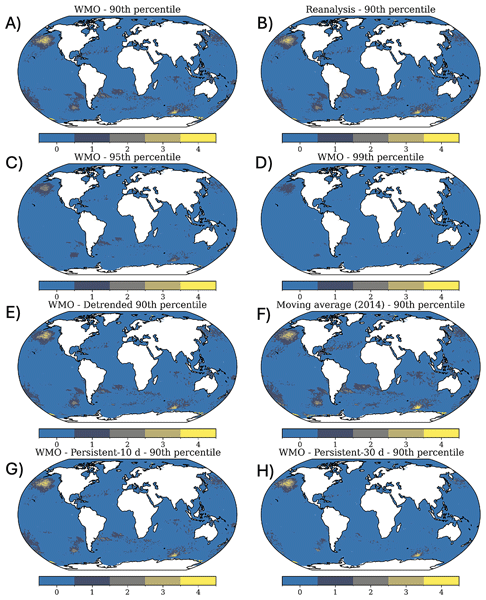
Alex Hayward, Nishka Dasgupta, Ronan McAdam, Mark R. Payne, Roshin P. Raj, Giulia Bonino, Sourav Chatterjee, Vincent Combes, Dimitra Denaxa, Francesco De Rovere, Pia Englyst, Veera Haapaniemi, Paul Hargous, Jacob Høyer, K. Ajith Joseph, Beatriz Lopes, Ana Oliveira, João Paixão, Fabiola Silva, Saradhy Surendran, Artemis Zegna-Rata, and Steffen M. Olsen
Earth Syst. Sci. Data, 18, 7181–7197, https://doi.org/10.5194/essd-18-7181-2026, https://doi.org/10.5194/essd-18-7181-2026, 2026
Short summary
Short summary
We present a global marine heatwave and cold spell dataset (1982–2024) based on satellite sea surface temperature. The dataset applies multiple definitions in parallel, varying baselines, thresholds, detrending, and event durations. It enables consistent comparisons of marine heatwave characterisation across methods and supports climate monitoring, and ecological impact studies.
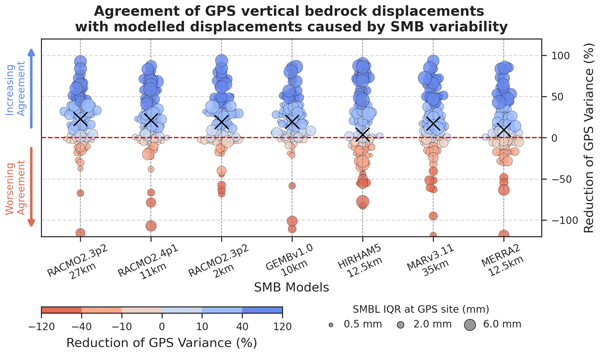
Jenan Rajavarathan, Matt King, Christopher Watson, and Nicolaj Hansen
The Cryosphere, 20, 5099–5113, https://doi.org/10.5194/tc-20-5099-2026, https://doi.org/10.5194/tc-20-5099-2026, 2026
Short summary
Short summary
Antarctic surface mass balance (SMB) is a source of major uncertainty in ice-sheet mass balance estimates, but its evaluation remains limited. We introduce a novel method using continuous, bedrock-fixed GPS vertical displacements as a spatially integrated constraint on low-frequency SMB variability over hundreds of kilometres. Applied across Antarctica, it reveals systematic, region-dependent differences with modelled SMB-driven displacements, guiding SMB model refinement.
Andrea M. U. Gierisch, Bogi Hansen, Karin Margretha. H. Larsen, and Steffen M. Olsen
EGUsphere, https://doi.org/10.5194/egusphere-2026-5283, https://doi.org/10.5194/egusphere-2026-5283, 2026
This preprint is open for discussion and under review for Ocean Science (OS).
Short summary
Short summary
Around the Faroe Islands there is a submarine ridge, which interferes with the large-scale northward flow of warm Atlantic water and the southward flow of cold deep waters. To improve the simulation of these water flows in an ocean model we increase the grid resolution locally in the region of the ridge. Compared to observations, the water flow becomes more realistic and the cold water sinks deeper. Possibly, the same approach could improve the ocean circulation also in climate models.
Anna Pedersen, Steffen M. Olsen, and Carolin R. Löscher
EGUsphere, https://doi.org/10.5194/egusphere-2026-5131, https://doi.org/10.5194/egusphere-2026-5131, 2026
This preprint is open for discussion and under review for Ocean Science (OS).
Short summary
Short summary
High Arctic fjords are changing rapidly with climate warming, but their response remains poorly understood. We studied seasonal changes in the waters of Inglefield Bredning, northwest Greenland, to understand how nutrients reach the surface and support life. We found that deep waters store heat and nutrients, but strong layering limits their transfer upward. Glacier activity may locally increase nutrient supply. Future productivity will depend on how warming alters these processes.
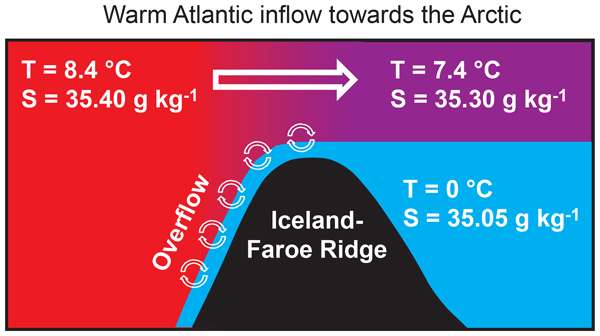
Guðrið Eriksdóttir, Bogi Hansen, Karin Margretha H. Larsen, Steffen M. Olsen, Andrea M. U. Gierisch, and Sólveig Rósa Ólafsdóttir
Ocean Sci., 22, 2405–2423, https://doi.org/10.5194/os-22-2405-2026, https://doi.org/10.5194/os-22-2405-2026, 2026
Short summary
Short summary
The Atlantic inflow across the Iceland-Faroe Ridge carries almost half of the warm water towards the Arctic. This study explores the modifications of the Atlantic water on its way to and across this underwater ridge. While crossing the ridge, the water is strongly cooled and freshened, which can reduce the ability for deep-water formation. Understanding these processes is important for improving ocean and climate models so more realistic forecasts can be made in a warming climate.
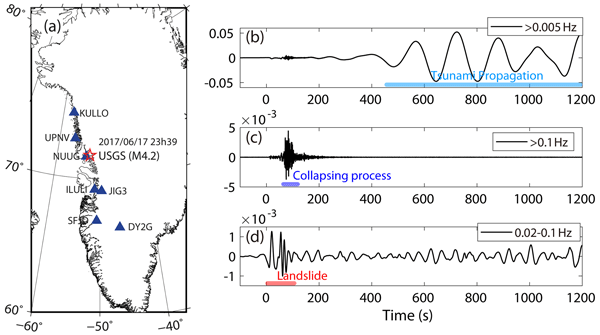
Hideo Aochi, Masumi Yamada, Tung-Cheng Ho, Gonéri Le Cozannet, Arno Christian Hammann, and Ruth Mottram
Nat. Hazards Earth Syst. Sci., 26, 3291–3304, https://doi.org/10.5194/nhess-26-3291-2026, https://doi.org/10.5194/nhess-26-3291-2026, 2026
Short summary
Short summary
The 2017 Landslide-made tsunami in Greenland occurred in a context of global warming and heavily impacted local communities. We analyze this event using seismic data to reconstruct the whole chain of processes from the landslide to the tsunami. Our results validate a new approach to analyze crustal deformations caused by tsunami propagation in fjords, suggesting that alert systems based on seismic data are feasible, potentially allowing to reduce tsunami risks in polar regions.
Elke Schlager, Sebastian Scher, Ruth H. Mottram, and Peter L. Langen
The Cryosphere, 20, 3313–3343, https://doi.org/10.5194/tc-20-3313-2026, https://doi.org/10.5194/tc-20-3313-2026, 2026
Short summary
Short summary
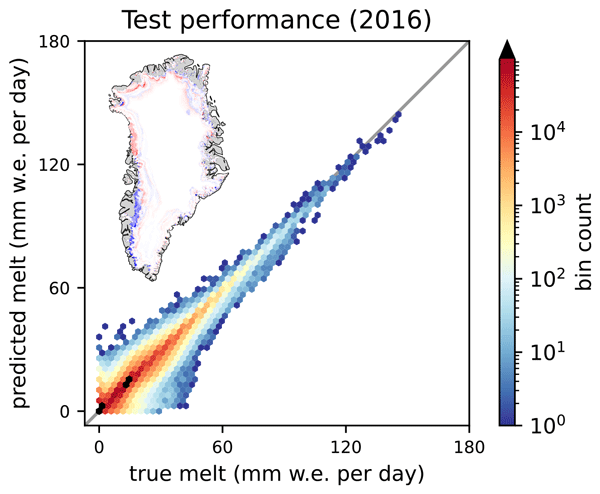
Predicting Greenland's surface melt is critical for understanding sea-level rise, but traditional firn models are too slow for exploring many climate scenarios. We developed a neural network optimized through systematic input selection and network tuning to identify the necessary information to accurately emulate surface melt. This approach cuts computation costs by orders of magnitude and can be retrained for different climate forcings or extended to other surface mass balance properties.
Ian Simpson, Edward Hanna, Ryan S. Williams, Linh Luu, Andrew Orr, Julie Jones, Xavier Fettweis, Jose Abraham Torres Alavez, Ole Bøssing Christensen, Ella Gilbert, Sid Gumber, Christoph Kittel, Sihan Li, Damien Maure, Ruth Mottram, Tony Phillips, Willem Jan van de Berg, and Kristiina Verro
EGUsphere, https://doi.org/10.5194/egusphere-2026-2270, https://doi.org/10.5194/egusphere-2026-2270, 2026
Short summary
Short summary
The warming trend in global temperatures has potential to result in accelerated break up of the Antarctic ice shelves, which would contribute to rising sea levels. Here we present a novel database of Antarctic extreme weather events over a selection of the Antarctic ice shelves. We examine air temperature, precipitation, wind and surface pressure. In addition, we examine trends in the frequency of extreme events and the links with weather patterns around Antarctica.
Fredrik Boberg, Xavier Fettweis, Nicolaj Hansen, Ruth Mottram, and Michiel R. van den Broeke
The Cryosphere, 20, 2947–2960, https://doi.org/10.5194/tc-20-2947-2026, https://doi.org/10.5194/tc-20-2947-2026, 2026
Short summary
Short summary
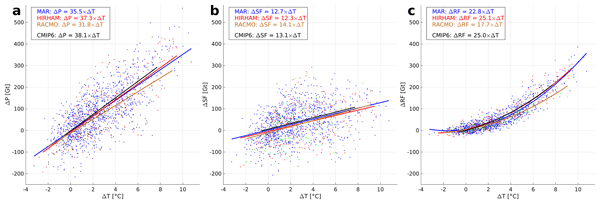
An ensemble of regional climate model simulations is used to estimate the 21st century change in precipitation on the Greenland ice sheet. For the end of the century, the change is in the range 40 to 170 Gt per year, depending on the emission scenario. Using annual values of 2 m air temperature and precipitation, we estimate an increase in precipitation of 35 Gt per year for every degree of warming.
Anne Solgaard, Anders Kusk, John Peter Merryman Boncori, Jørgen Dall, Andreas P. Ahlstrøm, Signe B. Andersen, Michele Citterio, Penelope How, Nanna B. Karlsson, Kristian K. Kjeldsen, Signe H. Larsen, Mads C. Lund, Anja Løkkegaard, Martin P. Lüthi, Jessica Mejia, Kenneth D. Mankoff, Dirk van As, Shin Sugiyama, and Robert S. Fausto
Earth Syst. Sci. Data Discuss., https://doi.org/10.5194/essd-2026-221, https://doi.org/10.5194/essd-2026-221, 2026
Preprint under review for ESSD
Short summary
Short summary
We present the PROMICE ice-velocity dataset, a time series of maps showing how fast the Greenland Ice Sheet flows. The time series is created using satellite radar images from Sentinel-1 since 2016 and is updated with a new map every 12 days providing a detailed view of ice sheet wide dynamics for more than a decade. Continuous updates and improvements, such as those presented here, are essential for maintaining long, consistent, high-quality records of key climate variables for research.
Ella Gilbert, José Abraham Torres-Alavez, Marte G. Hofsteenge, Willem Jan van de Berg, Fredrik Boberg, Ole Bøssing Christensen, Christiaan Timo van Dalum, Xavier Fettweis, Siddharth Gumber, Nicolaj Hansen, Christoph Kittel, Clara Lambin, Damien Maure, Ruth Mottram, Martin Olesen, Andrew Orr, Tony Phillips, Maurice van Tiggelen, Kristiina Verro, and Priscilla A. Mooney
The Cryosphere, 20, 2629–2658, https://doi.org/10.5194/tc-20-2629-2026, https://doi.org/10.5194/tc-20-2629-2026, 2026
Short summary
Short summary
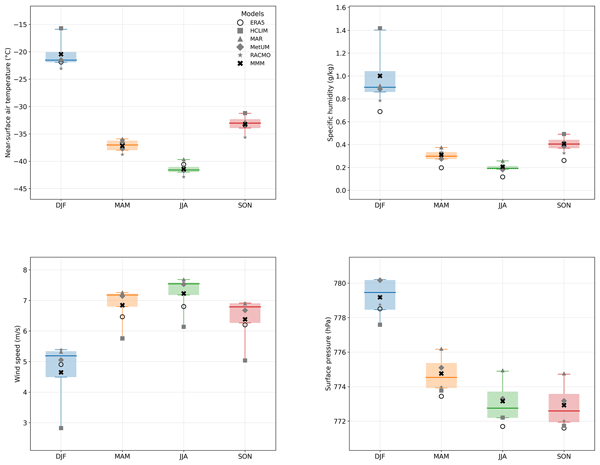
Here we present a new dataset – the PolarRES ensemble – of four state-of-the-art regional climate models, which capture the full complexity of Antarctica's climate. The ensemble out-performs other available tools, advancing our ability to explore Antarctic climate. While it still has limitations, the PolarRES ensemble offers a novel and exciting way of evaluating climate processes and features, and we encourage researchers to use the data, which are freely available.
Robert S. Fausto, Penelope How, Baptiste Vandecrux, Mads C. Lund, Jason E. Box, Kenneth D. Mankoff, Signe B. Andersen, Dirk van As, Rasmus Bahbah, Michele Citterio, William Colgan, Henrik T. Jakobsgaard, Nanna B. Karlsson, Kristian K. Kjeldsen, Signe H. Larsen, Charlotte Olsen, Falk M. Oraschewski, Anja Rutishauser, Christopher L. Shields, Anne M. Solgaard, Ian T. Stevens, Synne H. Svendsen, Kirsty Langley, Alexandra Messerli, Anders A. Bjørk, Jonas K. Andersen, Jakob Abermann, Jakob Steiner, Rainer Prinz, Berhard Hynek, James M. Lea, Stephen Brough, and Andreas P. Ahlstrøm
Earth Syst. Sci. Data, 18, 2829–2873, https://doi.org/10.5194/essd-18-2829-2026, https://doi.org/10.5194/essd-18-2829-2026, 2026
Short summary
Short summary
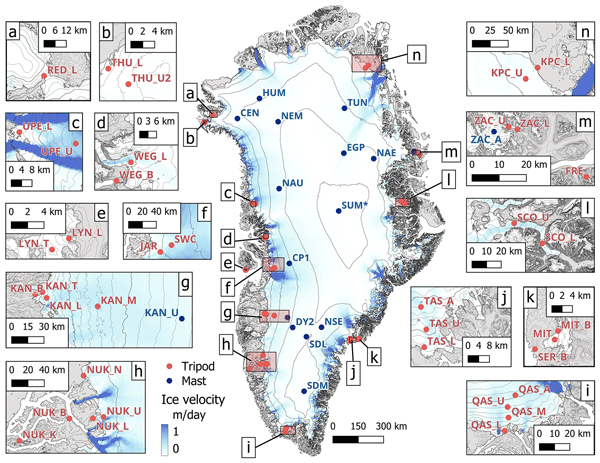
In summary, the PROMICE (Programme for Monitoring of the Greenland Ice Sheet ) | GC-NET AWS (Greenland Climate Network automatic weather station) data product update represents a significant advancement in Arctic climate monitoring. Through enhanced station designs, state-of-the-art instrumentation, and a transparent, automated data processing workflow, the dataset offers an essential resource for studying the Greenland Ice Sheet and its periphery, validating climate models, and supporting global assessments of cryospheric change.
Anna Bang Kvorning, Marie-Alexandrine Sicre, Gregor Luetzenburg, Sabine Schmidt, Thorbjørn Joest Andersen, Vincent Klein, Eleanor Georgiadis, Audrey Limoges, Jacques Giraudeau, Anders Anker Bjørk, Nicolaj Krog Larsen, and Sofia Ribeiro
Clim. Past, 22, 605–624, https://doi.org/10.5194/cp-22-605-2026, https://doi.org/10.5194/cp-22-605-2026, 2026
Short summary
Short summary
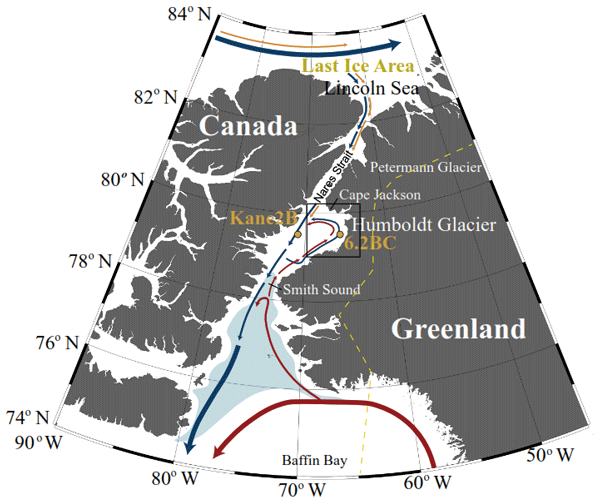
We compare two marine sediment cores collected from contrasting locations in Kane Basin, northwest Greenland. The two sites differ in terms of how much sediment they receive, the level of primary production, and the source and composition of organic matter. Despite these spatial differences, both records reveal a similar long-term environmental trend, a shift from cold, heavy sea-ice conditions between ca. 1750–1900 CE, towards more open, fresher, and biologically productive waters by 1950 CE.
Jonas K. Andersen, Romain Millan, Eric Rignot, Lucille Gimenes, Bernd Scheuchl, Jean Baptiste Barré, and Anders A. Bjørk
The Cryosphere, 20, 1589–1598, https://doi.org/10.5194/tc-20-1589-2026, https://doi.org/10.5194/tc-20-1589-2026, 2026
Short summary
Short summary
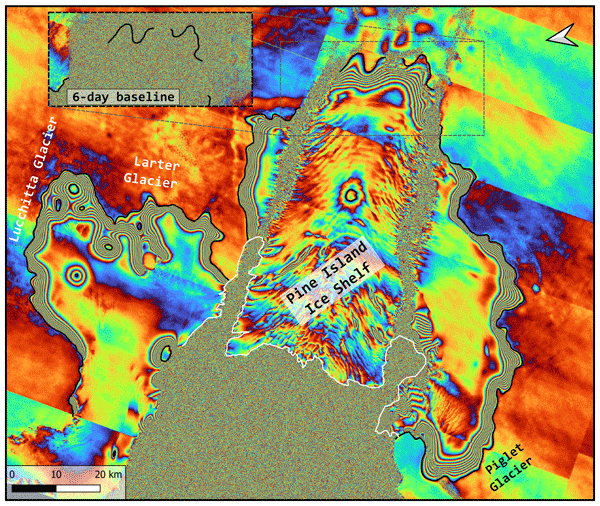
We used new satellite radar data from 2025 to map the border where Antarctic glaciers lose contact with the ground and begin to float. This updated map shows recent changes to many glaciers in the Amundsen Sea region, some of which have retreated by several kilometers. Our results help track how Antarctica is responding to climate change and highlight the value of future satellite missions for monitoring ice sheet stability.
Christian Pfister, Stefan Brönnimann, Laurent Litzenburger, Peter Thejll, Andres Altwegg, Rudolf Brázdil, Andrea Kiss, Erich Landsteiner, Fredrik Charpentier Ljungqvist, and Thomas Pliemon
Clim. Past, 22, 541–559, https://doi.org/10.5194/cp-22-541-2026, https://doi.org/10.5194/cp-22-541-2026, 2026
Short summary
Short summary
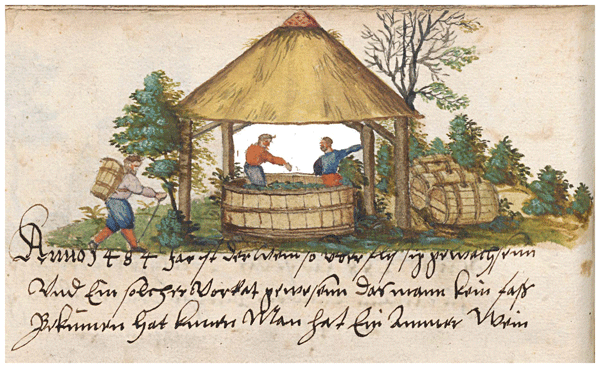
Narrative historical records of wine production in Central Europe date back to 1200. A study of taxes paid to authorities in the French-Luxembourg Moselle region, Germany, and the Swiss Plateau over the last few centuries shows that wine yields provide indirect indications of summer temperatures when the impact of heavy frosts is taken into account. This enables climate reconstructions based on tree rings to be refined and confirmed. Occasionally, poor harvests gave rise to witch hunts.
Benjamin Heurgue, Charles Amory, Christoph Kittel, Fredrik Boberg, Gaël Durand, Vincent Favier, Xavier Fettweis, Quentin Glaude, Heiko Goelzer, Nicolaj Hansen, Nicolas C. Jourdain, Ruth Mottram, Martin Olesen, Willem Jan Van de Berg, Michiel R. Van den Broeke, and René R. Wijngaard
EGUsphere, https://doi.org/10.5194/egusphere-2026-624, https://doi.org/10.5194/egusphere-2026-624, 2026
Short summary
Short summary
We studied how the Antarctic ice sheet surface mass balance may change by 2100 using three high-resolution climate models forced by the same future climate scenario. While the models agree for present-day conditions, they project very different futures, especially over floating ice shelves. These differences mainly come from how melting, refreezing, and temperature are represented. Our results show that future sea level projections strongly depend on how well models simulate today’s climate.
Gregor Luetzenburg, Niels Jakup Korsgaard, Anna Kirk Deichmann, Tobias Socher, Karin Gleie, Thomas Scharffenberger, Dominik Fahrner, Eva Bendix Nielsen, Penelope How, Anders Anker Bjørk, Kristian Kjellerup Kjeldsen, Andreas Peter Ahlstrøm, and Robert Schjøtt Fausto
Earth Syst. Sci. Data, 18, 411–427, https://doi.org/10.5194/essd-18-411-2026, https://doi.org/10.5194/essd-18-411-2026, 2026
Short summary
Short summary
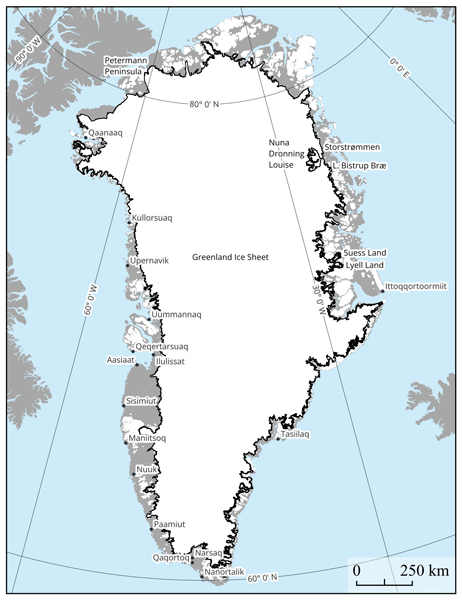
We mapped the edge of the Greenland Ice Sheet using recent satellite images to create a detailed outline of its extent in 2022. This helps track how the ice sheet is changing as the climate warms. By carefully combining satellite data and checking results by hand, we created one of the most accurate maps of the ice sheet to date. This map supports research on ice loss and improves predictions of future changes in Greenland’s ice and its effect on the planet.
José Abraham Torres Alavez, Ruth Mottram, Thomas Lavergne, Rasmus Pedersen, and Ole Bøssing Christensen
EGUsphere, https://doi.org/10.5194/egusphere-2025-6183, https://doi.org/10.5194/egusphere-2025-6183, 2026
Short summary
Short summary
Coastal polynyas shape sea ice production and polar climate. This study analyses Greenland and Antarctic polynyas using two satellite sea-ice products and HCLIM simulations. The high-resolution CCI dataset improves polynya representation, boundary-layer structure, and near-surface conditions. Results show that integrating high-resolution sea-ice data enhances regional climate modelling and supports better reanalysis systems.

Heiko Goelzer, Constantijn J. Berends, Fredrik Boberg, Gael Durand, Tamsin L. Edwards, Xavier Fettweis, Fabien Gillet-Chaulet, Quentin Glaude, Philippe Huybrechts, Sébastien Le clec'h, Ruth Mottram, Brice Noël, Martin Olesen, Charlotte Rahlves, Jeremy Rohmer, Michiel van den Broeke, and Roderik S. W. van de Wal
The Cryosphere, 19, 6887–6906, https://doi.org/10.5194/tc-19-6887-2025, https://doi.org/10.5194/tc-19-6887-2025, 2025
Short summary
Short summary
We present an ensemble of ice sheet model projections for the Greenland ice sheet. The focus is on providing projections that improve our understanding of the range future sea-level rise and the inherent uncertainties over the next 100 to 300 years. Compared to earlier work we more fully account for some of the uncertainties in sea-level projections. We include a wider range of climate model output, more climate change scenarios and we extend projections schematically up to year 2300.
Gavin A. Schmidt, Kenneth D. Mankoff, Jonathan L. Bamber, Clara Burgard, Dustin Carroll, David M. Chandler, Violaine Coulon, Benjamin J. Davison, Matthew H. England, Paul R. Holland, Nicolas C. Jourdain, Qian Li, Juliana M. Marson, Pierre Mathiot, Clive R. McMahon, Twila A. Moon, Ruth Mottram, Sophie Nowicki, Anna Olivé Abelló, Andrew G. Pauling, Thomas Rackow, and Damien Ringeisen
Geosci. Model Dev., 18, 8333–8361, https://doi.org/10.5194/gmd-18-8333-2025, https://doi.org/10.5194/gmd-18-8333-2025, 2025
Short summary
Short summary
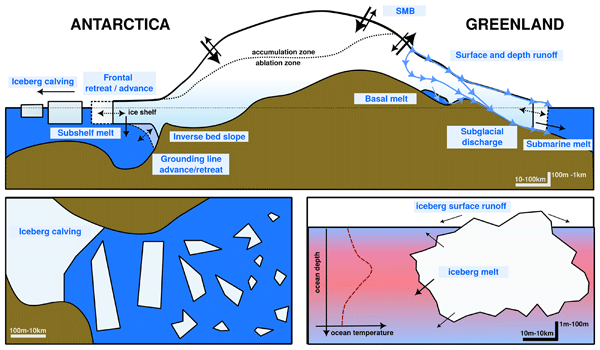
The impact of increasing mass loss from the Greenland and Antarctic ice sheets has not so far been included in historical climate model simulations. This paper describes the protocols and data available for modeling groups to add this anomalous freshwater to their ocean modules to better represent the impacts of these fluxes on ocean circulation, sea ice, salinity and sea level.
Sanne B. M. Veldhuijsen, Willem Jan van de Berg, Peter Kuipers Munneke, Nicolaj Hansen, Fredrik Boberg, Christoph Kittel, Charles Amory, and Michiel R. van den Broeke
The Cryosphere, 19, 5157–5173, https://doi.org/10.5194/tc-19-5157-2025, https://doi.org/10.5194/tc-19-5157-2025, 2025
Short summary
Short summary
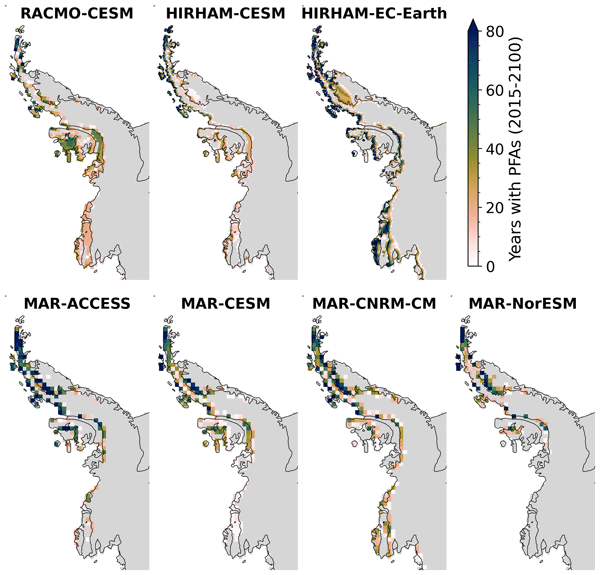
Perennial firn aquifers (PFAs), year-round bodies of liquid water within firns, can potentially impact ice-shelf and ice-sheet stability. We developed a fast XGBoost firn emulator to predict the 21st-century distribution of PFAs in Antarctica for 12 climatic forcing datasets. Our findings suggest that, in low-emission scenarios, PFAs remain confined to the Antarctic Peninsula. However, in a high-emission scenario, PFAs are projected to expand to a region in West Antarctica and East Antarctica.
Anna Pedersen, Carolin R. Löscher, and Steffen M. Olsen
Biogeosciences, 22, 5009–5029, https://doi.org/10.5194/bg-22-5009-2025, https://doi.org/10.5194/bg-22-5009-2025, 2025
Short summary
Short summary
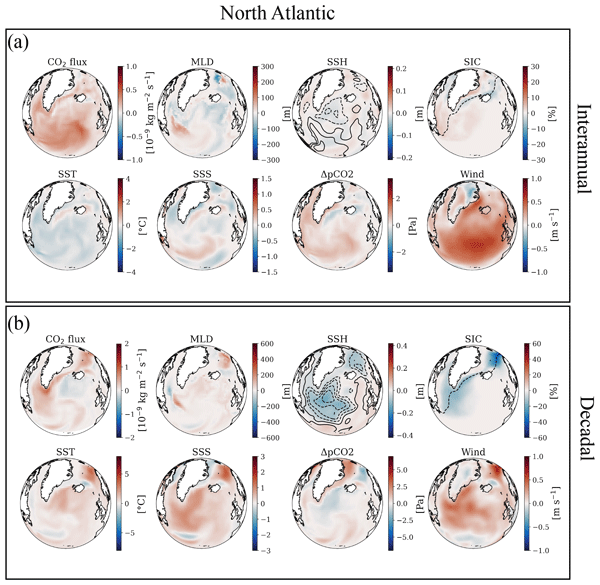
The North Atlantic plays a crucial role in absorbing atmospheric CO2, but its air–sea CO2 flux varies across time and space. Using historical climate model simulations, we investigate how physical and oceanic processes drive the variability. Our results show that sea ice, temperature, salinity, wind stress, and ocean circulation shape CO2 exchange, with short-term fluctuations playing a dominant role. Understanding these complex interactions is key to predicting future ocean carbon uptake.
Mikkel Langgaard Lauritzen, Anne Solgaard, Nicholas Mossor Rathmann, Bo Møllesøe Vinther, Aslak Grindsted, Brice Noël, Guðfinna Aðalgeirsdóttir, and Christine Schøtt Hvidberg
The Cryosphere, 19, 3599–3622, https://doi.org/10.5194/tc-19-3599-2025, https://doi.org/10.5194/tc-19-3599-2025, 2025
Short summary
Short summary
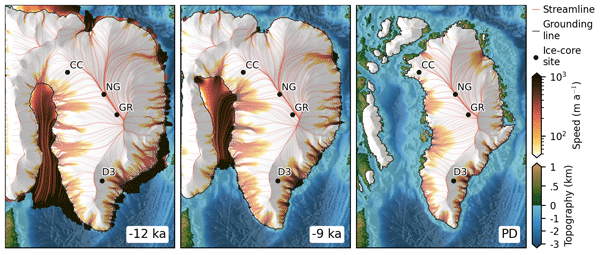
We studied the Holocene (past 11 700 years) to understand how the Greenland Ice Sheet has changed. Using 841 computer simulations, we tested different scenarios and matched them to historical ice elevation data, confirming our model's accuracy. Results show that Greenland's melting has raised sea levels by about 5.3 m since the Holocene began and by around 12 mm in just the past 500 years.
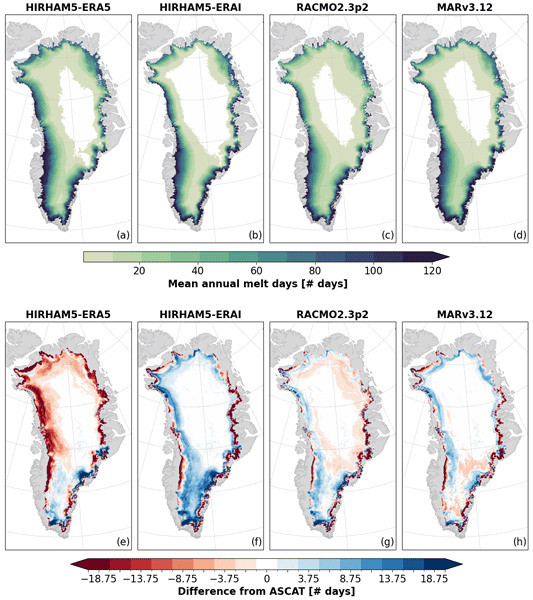
Anna Puggaard, Nicolaj Hansen, Ruth Mottram, Thomas Nagler, Stefan Scheiblauer, Sebastian B. Simonsen, Louise S. Sørensen, Jan Wuite, and Anne M. Solgaard
The Cryosphere, 19, 2963–2981, https://doi.org/10.5194/tc-19-2963-2025, https://doi.org/10.5194/tc-19-2963-2025, 2025
Short summary
Short summary
Regional climate models are currently the only source for assessing the melt volume of the Greenland Ice Sheet on a global scale. This study compares the modeled melt volume with observations from weather stations and melt extent observed from the Advanced SCATterometer (ASCAT) to assess the performance of the models. It highlights the importance of critically evaluating model outputs with high-quality satellite measurements to improve the understanding of variability among models.
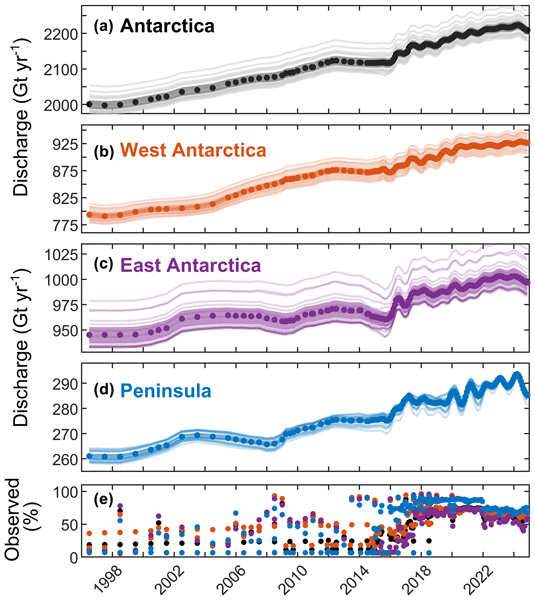
Benjamin J. Davison, Anna E. Hogg, Thomas Slater, Richard Rigby, and Nicolaj Hansen
Earth Syst. Sci. Data, 17, 3259–3281, https://doi.org/10.5194/essd-17-3259-2025, https://doi.org/10.5194/essd-17-3259-2025, 2025
Short summary
Short summary
Grounding line discharge is a measure of the amount of ice entering the ocean from an ice mass. This paper describes a dataset of grounding line discharge for the Antarctic Ice Sheet and each of its glaciers. The dataset shows that Antarctic Ice Sheet grounding line discharge has increased since 1996.
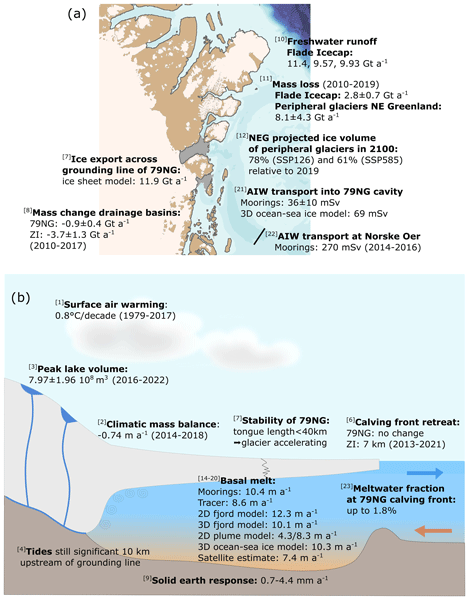
Torsten Kanzow, Angelika Humbert, Thomas Mölg, Mirko Scheinert, Matthias Braun, Hans Burchard, Francesca Doglioni, Philipp Hochreuther, Martin Horwath, Oliver Huhn, Maria Kappelsberger, Jürgen Kusche, Erik Loebel, Katrina Lutz, Ben Marzeion, Rebecca McPherson, Mahdi Mohammadi-Aragh, Marco Möller, Carolyne Pickler, Markus Reinert, Monika Rhein, Martin Rückamp, Janin Schaffer, Muhammad Shafeeque, Sophie Stolzenberger, Ralph Timmermann, Jenny Turton, Claudia Wekerle, and Ole Zeising
The Cryosphere, 19, 1789–1824, https://doi.org/10.5194/tc-19-1789-2025, https://doi.org/10.5194/tc-19-1789-2025, 2025
Short summary
Short summary
The Greenland Ice Sheet represents the second-largest contributor to global sea-level rise. We quantify atmosphere, ice and ocean processes related to the mass balance of glaciers in northeast Greenland, focusing on Greenland’s largest floating ice tongue, the 79° N Glacier. We find that together, the different in situ and remote sensing observations and model simulations reveal a consistent picture of a coupled atmosphere–ice sheet–ocean system that has entered a phase of major change.
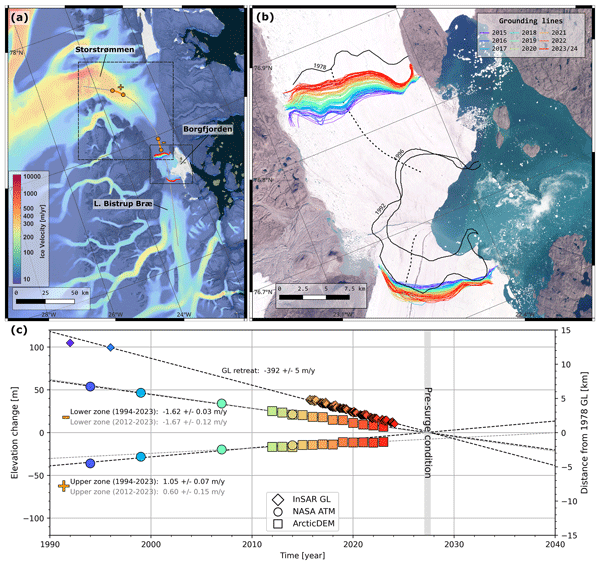
Jonas K. Andersen, Rasmus P. Meyer, Flora S. Huiban, Mads L. Dømgaard, Romain Millan, and Anders A. Bjørk
The Cryosphere, 19, 1717–1724, https://doi.org/10.5194/tc-19-1717-2025, https://doi.org/10.5194/tc-19-1717-2025, 2025
Short summary
Short summary
Storstrømmen Glacier in northeastern Greenland goes through cycles of sudden flow speed-ups (known as surges) followed by long quiet phases. It is currently in its quiet phase, but recent measurements suggest it may be nearing conditions for a new surge, possibly between 2027 and 2040. We also observed several lake drainages that caused brief increases in glacier flow but did not trigger a surge. Continued monitoring is essential to understand how these processes influence glacier behavior.
Fredrik Charpentier Ljungqvist, Bo Christiansen, Lea Schneider, and Peter Thejll
Clim. Past, 21, 327–342, https://doi.org/10.5194/cp-21-327-2025, https://doi.org/10.5194/cp-21-327-2025, 2025
Short summary
Short summary
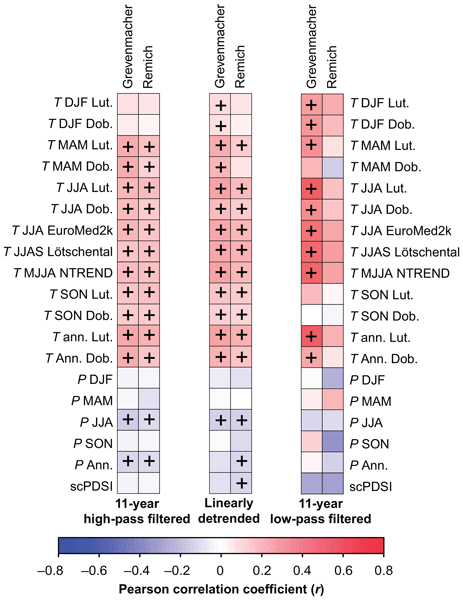
We study the climatic signal, with a focus on volcanic-induced shocks, in two long annual records of wine production quantity (spanning 1444–1786) from present-day Luxembourg, close to the northern limit of viticulture in Europe. Highly significant wine production declines are found during years following major volcanic events. Furthermore, warmer and drier climate conditions favoured wine production, with spring and summer conditions being the most important ones.
Rasmus Meyer, Mathias Preisler Schødt, Mikkel Lydholm Rasmussen, Jonas Kvist Andersen, Mads Dømgaard, and Anders Anker Bjørk
EGUsphere, https://doi.org/10.5194/egusphere-2024-3850, https://doi.org/10.5194/egusphere-2024-3850, 2025
Preprint archived
Short summary
Short summary
Understanding snow accumulation is important for water resource management, but measurements of snow depth in mountainous regions are sparse. We introduce a novel satellite-based approach to estimate snow depth for deep snow in mountainous regions by combining two types of satellite data: radar images and laser surface height measurements. Results suggest that our method more accurately estimate the magnitude of snowfall compared to modelled data over the Southern Norwegian Mountains.
Erik Loebel, Celia A. Baumhoer, Andreas Dietz, Mirko Scheinert, and Martin Horwath
Earth Syst. Sci. Data, 17, 65–78, https://doi.org/10.5194/essd-17-65-2025, https://doi.org/10.5194/essd-17-65-2025, 2025
Short summary
Short summary
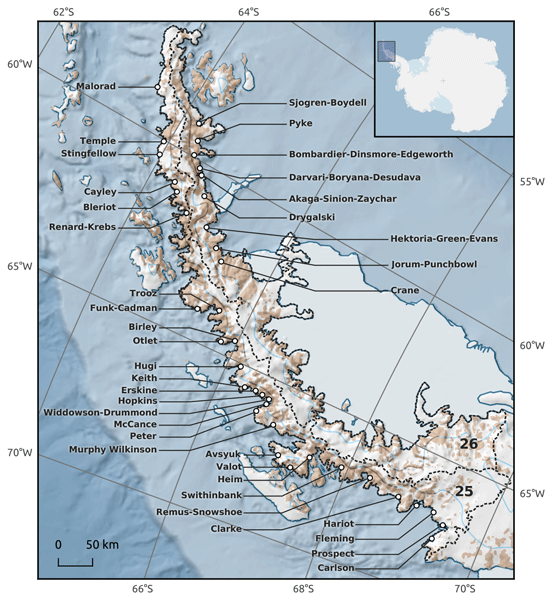
Glacier calving front positions are important for understanding glacier dynamics and constraining ice modelling. We apply a deep-learning framework to multi-spectral Landsat imagery to create a calving front record for 42 key outlet glaciers of the Antarctic Peninsula Ice Sheet. The resulting data product includes 4817 calving front locations from 2013 to 2023 and achieves sub-seasonal temporal resolution.
Veit Helm, Alireza Dehghanpour, Ronny Hänsch, Erik Loebel, Martin Horwath, and Angelika Humbert
The Cryosphere, 18, 3933–3970, https://doi.org/10.5194/tc-18-3933-2024, https://doi.org/10.5194/tc-18-3933-2024, 2024
Short summary
Short summary
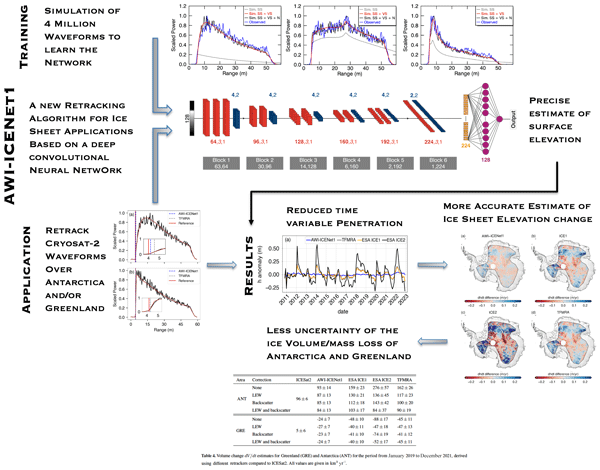
We present a new approach (AWI-ICENet1), based on a deep convolutional neural network, for analysing satellite radar altimeter measurements to accurately determine the surface height of ice sheets. Surface height estimates obtained with AWI-ICENet1 (along with related products, such as ice sheet height change and volume change) show improved and unbiased results compared to other products. This is important for the long-term monitoring of ice sheet mass loss and its impact on sea level rise.
Erik Loebel, Mirko Scheinert, Martin Horwath, Angelika Humbert, Julia Sohn, Konrad Heidler, Charlotte Liebezeit, and Xiao Xiang Zhu
The Cryosphere, 18, 3315–3332, https://doi.org/10.5194/tc-18-3315-2024, https://doi.org/10.5194/tc-18-3315-2024, 2024
Short summary
Short summary
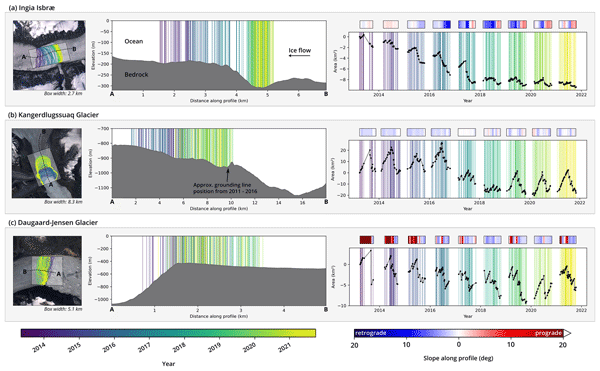
Comprehensive datasets of calving-front changes are essential for studying and modeling outlet glaciers. Current records are limited in temporal resolution due to manual delineation. We use deep learning to automatically delineate calving fronts for 23 glaciers in Greenland. Resulting time series resolve long-term, seasonal, and subseasonal patterns. We discuss the implications of our results and provide the cryosphere community with a data product and an implementation of our processing system.
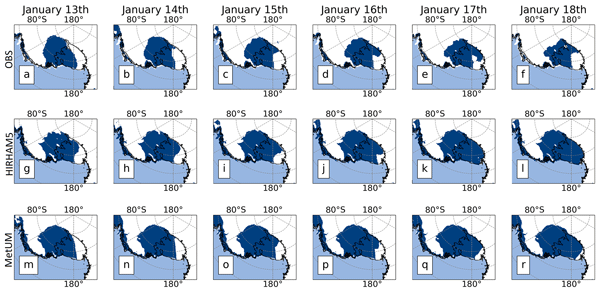
Nicolaj Hansen, Andrew Orr, Xun Zou, Fredrik Boberg, Thomas J. Bracegirdle, Ella Gilbert, Peter L. Langen, Matthew A. Lazzara, Ruth Mottram, Tony Phillips, Ruth Price, Sebastian B. Simonsen, and Stuart Webster
The Cryosphere, 18, 2897–2916, https://doi.org/10.5194/tc-18-2897-2024, https://doi.org/10.5194/tc-18-2897-2024, 2024
Short summary
Short summary
We investigated a melt event over the Ross Ice Shelf. We use regional climate models and a firn model to simulate the melt and compare the results with satellite data. We find that the firn model aligned well with observed melt days in certain parts of the ice shelf. The firn model had challenges accurately simulating the melt extent in the western sector. We identified potential reasons for these discrepancies, pointing to limitations in the models related to representing the cloud properties.
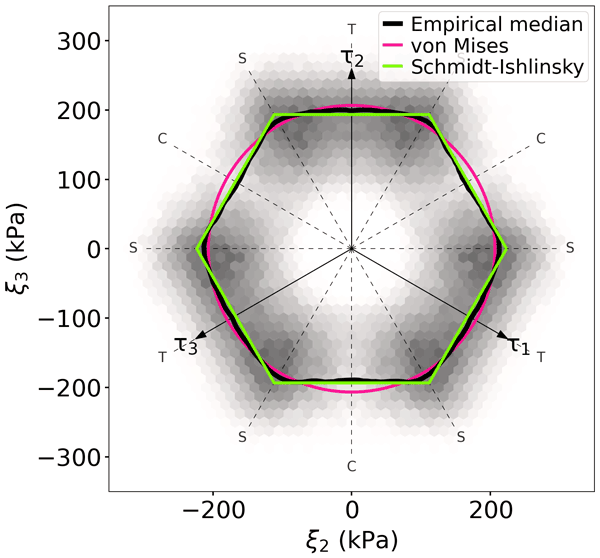
Aslak Grinsted, Nicholas Mossor Rathmann, Ruth Mottram, Anne Munck Solgaard, Joachim Mathiesen, and Christine Schøtt Hvidberg
The Cryosphere, 18, 1947–1957, https://doi.org/10.5194/tc-18-1947-2024, https://doi.org/10.5194/tc-18-1947-2024, 2024
Short summary
Short summary
Ice fracture can cause glacier crevassing and calving. These natural hazards can also modulate the flow and evolution of ice sheets. In a new study, we use a new high-resolution dataset to determine a new failure criterion for glacier ice. Surprisingly, the strength of ice depends on the mode of deformation, and this has potential implications for the currently used flow law of ice.
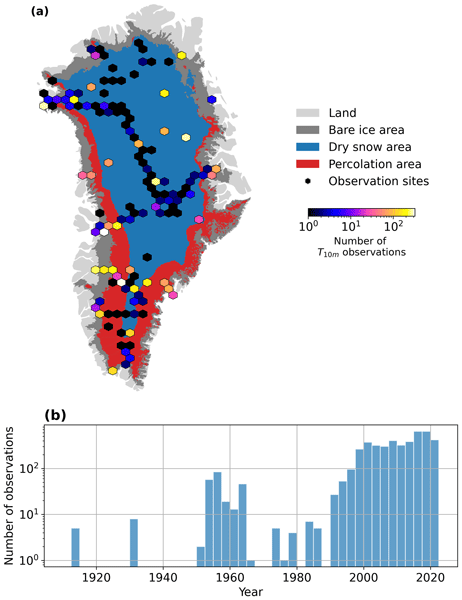
Baptiste Vandecrux, Robert S. Fausto, Jason E. Box, Federico Covi, Regine Hock, Åsa K. Rennermalm, Achim Heilig, Jakob Abermann, Dirk van As, Elisa Bjerre, Xavier Fettweis, Paul C. J. P. Smeets, Peter Kuipers Munneke, Michiel R. van den Broeke, Max Brils, Peter L. Langen, Ruth Mottram, and Andreas P. Ahlstrøm
The Cryosphere, 18, 609–631, https://doi.org/10.5194/tc-18-609-2024, https://doi.org/10.5194/tc-18-609-2024, 2024
Short summary
Short summary
How fast is the Greenland ice sheet warming? In this study, we compiled 4500+ temperature measurements at 10 m below the ice sheet surface (T10m) from 1912 to 2022. We trained a machine learning model on these data and reconstructed T10m for the ice sheet during 1950–2022. After a slight cooling during 1950–1985, the ice sheet warmed at a rate of 0.7 °C per decade until 2022. Climate models showed mixed results compared to our observations and underestimated the warming in key regions.
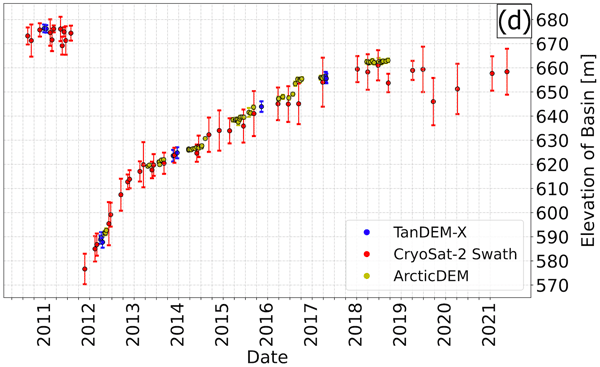
Louise Sandberg Sørensen, Rasmus Bahbah, Sebastian B. Simonsen, Natalia Havelund Andersen, Jade Bowling, Noel Gourmelen, Alex Horton, Nanna B. Karlsson, Amber Leeson, Jennifer Maddalena, Malcolm McMillan, Anne Solgaard, and Birgit Wessel
The Cryosphere, 18, 505–523, https://doi.org/10.5194/tc-18-505-2024, https://doi.org/10.5194/tc-18-505-2024, 2024
Short summary
Short summary
Under the right topographic and hydrological conditions, lakes may form beneath the large ice sheets. Some of these subglacial lakes are active, meaning that they periodically drain and refill. When a subglacial lake drains rapidly, it may cause the ice surface above to collapse, and here we investigate how to improve the monitoring of active subglacial lakes in Greenland by monitoring how their associated collapse basins change over time.
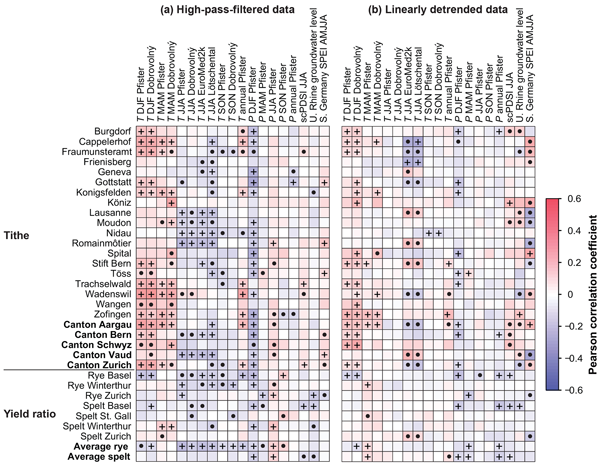
Fredrik Charpentier Ljungqvist, Bo Christiansen, Jan Esper, Heli Huhtamaa, Lotta Leijonhufvud, Christian Pfister, Andrea Seim, Martin Karl Skoglund, and Peter Thejll
Clim. Past, 19, 2463–2491, https://doi.org/10.5194/cp-19-2463-2023, https://doi.org/10.5194/cp-19-2463-2023, 2023
Short summary
Short summary
We study the climate signal in long harvest series from across Europe between the 16th and 18th centuries. The climate–harvest yield relationship is found to be relatively weak but regionally consistent and similar in strength and sign to modern climate–harvest yield relationships. The strongest climate–harvest yield patterns are a significant summer soil moisture signal in Sweden, a winter temperature and precipitation signal in Switzerland, and spring temperature signals in Spain.
Alexandra M. Zuhr, Erik Loebel, Marek Muchow, Donovan Dennis, Luisa von Albedyll, Frigga Kruse, Heidemarie Kassens, Johanna Grabow, Dieter Piepenburg, Sören Brandt, Rainer Lehmann, Marlene Jessen, Friederike Krüger, Monika Kallfelz, Andreas Preußer, Matthias Braun, Thorsten Seehaus, Frank Lisker, Daniela Röhnert, and Mirko Scheinert
Polarforschung, 91, 73–80, https://doi.org/10.5194/polf-91-73-2023, https://doi.org/10.5194/polf-91-73-2023, 2023
Short summary
Short summary
Polar research is an interdisciplinary and multi-faceted field of research. Its diversity ranges from history to geology and geophysics to social sciences and education. This article provides insights into the different areas of German polar research. This was made possible by a seminar series, POLARSTUNDE, established in the summer of 2020 and organized by the German Society of Polar Research and the German National Committee of the Association of Polar Early Career Scientists (APECS Germany).
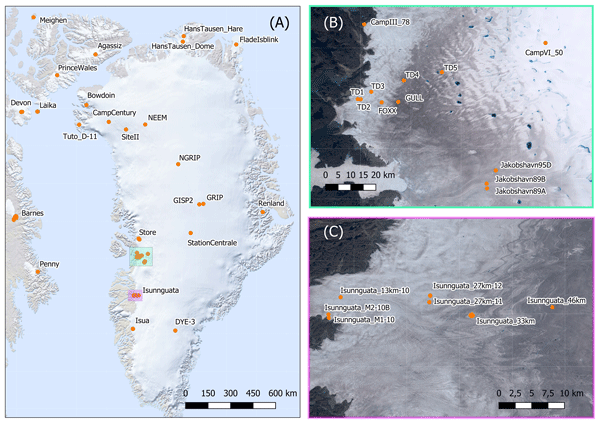
Anja Løkkegaard, Kenneth D. Mankoff, Christian Zdanowicz, Gary D. Clow, Martin P. Lüthi, Samuel H. Doyle, Henrik H. Thomsen, David Fisher, Joel Harper, Andy Aschwanden, Bo M. Vinther, Dorthe Dahl-Jensen, Harry Zekollari, Toby Meierbachtol, Ian McDowell, Neil Humphrey, Anne Solgaard, Nanna B. Karlsson, Shfaqat A. Khan, Benjamin Hills, Robert Law, Bryn Hubbard, Poul Christoffersen, Mylène Jacquemart, Julien Seguinot, Robert S. Fausto, and William T. Colgan
The Cryosphere, 17, 3829–3845, https://doi.org/10.5194/tc-17-3829-2023, https://doi.org/10.5194/tc-17-3829-2023, 2023
Short summary
Short summary
This study presents a database compiling 95 ice temperature profiles from the Greenland ice sheet and peripheral ice caps. Ice viscosity and hence ice flow are highly sensitive to ice temperature. To highlight the value of the database in evaluating ice flow simulations, profiles from the Greenland ice sheet are compared to a modeled temperature field. Reoccurring discrepancies between modeled and observed temperatures provide insight on the difficulties faced when simulating ice temperatures.
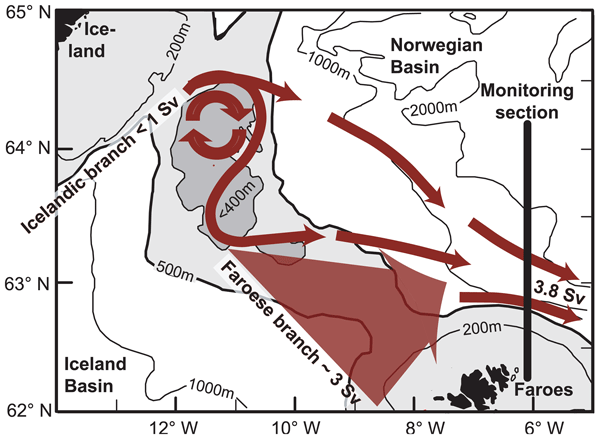
Bogi Hansen, Karin M. H. Larsen, Hjálmar Hátún, Steffen M. Olsen, Andrea M. U. Gierisch, Svein Østerhus, and Sólveig R. Ólafsdóttir
Ocean Sci., 19, 1225–1252, https://doi.org/10.5194/os-19-1225-2023, https://doi.org/10.5194/os-19-1225-2023, 2023
Short summary
Short summary
Based on in situ observations combined with sea level anomaly (SLA) data from satellite altimetry, volume as well as heat (relative to 0 °C) transport of the Iceland–Faroe warm-water inflow towards the Arctic (IF inflow) increased from 1993 to 2021. The reprocessed SLA data released in December 2021 represent observed variations accurately. The IF inflow crosses the Iceland–Faroe Ridge in two branches, with retroflection in between. The associated coupling to overflow reduces predictability.
Nicolaj Hansen, Louise Sandberg Sørensen, Giorgio Spada, Daniele Melini, Rene Forsberg, Ruth Mottram, and Sebastian B. Simonsen
The Cryosphere Discuss., https://doi.org/10.5194/tc-2023-104, https://doi.org/10.5194/tc-2023-104, 2023
Preprint withdrawn
Short summary
Short summary
We use ICESat-2 to estimate the surface elevation change over Greenland and Antarctica in the period of 2018 to 2021. Numerical models have been used the compute the firn compaction and the vertical bedrock movement so non-mass-related elevation changes can be taken into account. We have made a parameterization of the surface density so we can convert the volume change to mass change. We find that Antarctica has lost 135.7±27.3 Gt per year, and the Greenland ice sheet 237.5±14.0 Gt per year.
Angelika Humbert, Veit Helm, Niklas Neckel, Ole Zeising, Martin Rückamp, Shfaqat Abbas Khan, Erik Loebel, Jörg Brauchle, Karsten Stebner, Dietmar Gross, Rabea Sondershaus, and Ralf Müller
The Cryosphere, 17, 2851–2870, https://doi.org/10.5194/tc-17-2851-2023, https://doi.org/10.5194/tc-17-2851-2023, 2023
Short summary
Short summary
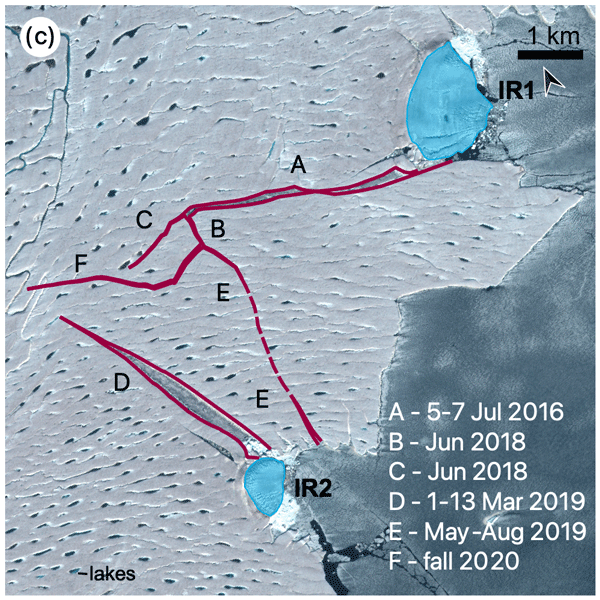
The largest floating glacier mass in Greenland, the 79° N Glacier, is showing signs of instability. We investigate how crack formation at the glacier's calving front has changed over the last decades by using satellite imagery and airborne data. The calving front is about to lose contact to stabilizing ice islands. Simulations show that the glacier will accelerate as a result of this, leading to an increase in ice discharge of more than 5.1 % if its calving front retreats by 46 %.
Inès N. Otosaka, Andrew Shepherd, Erik R. Ivins, Nicole-Jeanne Schlegel, Charles Amory, Michiel R. van den Broeke, Martin Horwath, Ian Joughin, Michalea D. King, Gerhard Krinner, Sophie Nowicki, Anthony J. Payne, Eric Rignot, Ted Scambos, Karen M. Simon, Benjamin E. Smith, Louise S. Sørensen, Isabella Velicogna, Pippa L. Whitehouse, Geruo A, Cécile Agosta, Andreas P. Ahlstrøm, Alejandro Blazquez, William Colgan, Marcus E. Engdahl, Xavier Fettweis, Rene Forsberg, Hubert Gallée, Alex Gardner, Lin Gilbert, Noel Gourmelen, Andreas Groh, Brian C. Gunter, Christopher Harig, Veit Helm, Shfaqat Abbas Khan, Christoph Kittel, Hannes Konrad, Peter L. Langen, Benoit S. Lecavalier, Chia-Chun Liang, Bryant D. Loomis, Malcolm McMillan, Daniele Melini, Sebastian H. Mernild, Ruth Mottram, Jeremie Mouginot, Johan Nilsson, Brice Noël, Mark E. Pattle, William R. Peltier, Nadege Pie, Mònica Roca, Ingo Sasgen, Himanshu V. Save, Ki-Weon Seo, Bernd Scheuchl, Ernst J. O. Schrama, Ludwig Schröder, Sebastian B. Simonsen, Thomas Slater, Giorgio Spada, Tyler C. Sutterley, Bramha Dutt Vishwakarma, Jan Melchior van Wessem, David Wiese, Wouter van der Wal, and Bert Wouters
Earth Syst. Sci. Data, 15, 1597–1616, https://doi.org/10.5194/essd-15-1597-2023, https://doi.org/10.5194/essd-15-1597-2023, 2023
Short summary
Short summary
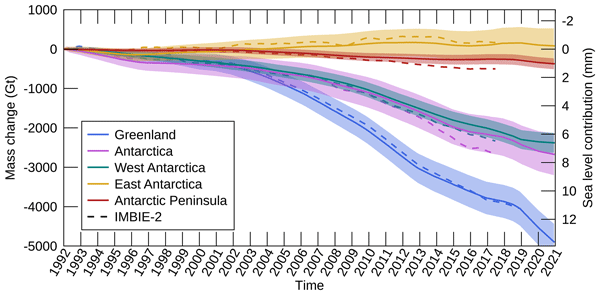
By measuring changes in the volume, gravitational attraction, and ice flow of Greenland and Antarctica from space, we can monitor their mass gain and loss over time. Here, we present a new record of the Earth’s polar ice sheet mass balance produced by aggregating 50 satellite-based estimates of ice sheet mass change. This new assessment shows that the ice sheets have lost (7.5 x 10¹²) t of ice between 1992 and 2020, contributing 21 mm to sea level rise.

Mads Dømgaard, Kristian K. Kjeldsen, Flora Huiban, Jonathan L. Carrivick, Shfaqat A. Khan, and Anders A. Bjørk
The Cryosphere, 17, 1373–1387, https://doi.org/10.5194/tc-17-1373-2023, https://doi.org/10.5194/tc-17-1373-2023, 2023
Short summary
Short summary
Sudden releases of meltwater from glacier-dammed lakes can influence ice flow, cause flooding hazards and landscape changes. This study presents a record of 14 drainages from 2007–2021 from a lake in west Greenland. The time series reveals how the lake fluctuates between releasing large and small amounts of drainage water which is caused by a weakening of the damming glacier following the large events. We also find a shift in the water drainage route which increases the risk of flooding hazards.

Lena Nicola, Erik Loebel, and Alexandra M. Zuhr
Polarforschung, 90, 81–84, https://doi.org/10.5194/polf-90-81-2022, https://doi.org/10.5194/polf-90-81-2022, 2022
Short summary
Short summary
To facilitate the search for funding within Germany and internationally, APECS Germany has started to host a list of grant, fellowship and other funding opportunities at https://apecs-germany.de/funding/. In our article, we present our new website while describing the different stages of the quest to find funding and to highlight best practices for, for example, writing grant proposals.
Ioanna Karagali, Magnus Barfod Suhr, Ruth Mottram, Pia Nielsen-Englyst, Gorm Dybkjær, Darren Ghent, and Jacob L. Høyer
The Cryosphere, 16, 3703–3721, https://doi.org/10.5194/tc-16-3703-2022, https://doi.org/10.5194/tc-16-3703-2022, 2022
Short summary
Short summary
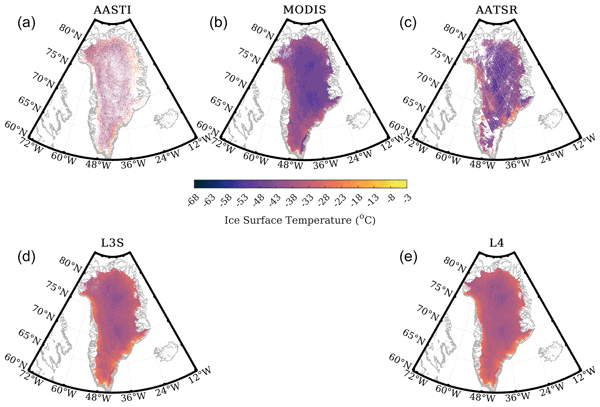
Ice surface temperature (IST) products were used to develop the first multi-sensor, gap-free Level 4 (L4) IST product of the Greenland Ice Sheet (GIS) for 2012, when a significant melt event occurred. For the melt season, mean IST was −15 to −1 °C, and almost the entire GIS experienced at least 1 to 5 melt days. Inclusion of the L4 IST to a surface mass budget (SMB) model improved simulated surface temperatures during the key onset of the melt season, where biases are typically large.

Erik Loebel, Luisa von Albedyll, Rey Mourot, and Lena Nicola
Polarforschung, 90, 29–32, https://doi.org/10.5194/polf-90-29-2022, https://doi.org/10.5194/polf-90-29-2022, 2022
Short summary
Short summary
On the occasion of Polar Week in March 2021 and with the motto
let’s talk fieldwork, APECS Germany hosted an online polar fieldwork panel discussion. Joined by a group of six early-career polar scientists and an audience of over 140 participants, the event provided an informal environment for debating experiences, issues and ideas. This contribution summarizes the event, sharing practical knowledge about polar fieldwork and fieldwork opportunities for early-career scientists.
Sophie Goliber, Taryn Black, Ginny Catania, James M. Lea, Helene Olsen, Daniel Cheng, Suzanne Bevan, Anders Bjørk, Charlie Bunce, Stephen Brough, J. Rachel Carr, Tom Cowton, Alex Gardner, Dominik Fahrner, Emily Hill, Ian Joughin, Niels J. Korsgaard, Adrian Luckman, Twila Moon, Tavi Murray, Andrew Sole, Michael Wood, and Enze Zhang
The Cryosphere, 16, 3215–3233, https://doi.org/10.5194/tc-16-3215-2022, https://doi.org/10.5194/tc-16-3215-2022, 2022
Short summary
Short summary
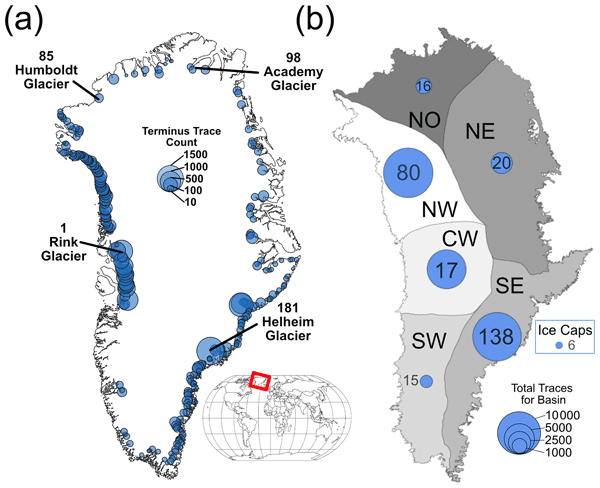
Terminus traces have been used to understand how Greenland's glaciers have changed over time; however, manual digitization is time-intensive, and a lack of coordination leads to duplication of efforts. We have compiled a dataset of over 39 000 terminus traces for 278 glaciers for scientific and machine learning applications. We also provide an overview of an updated version of the Google Earth Engine Digitization Tool (GEEDiT), which has been developed specifically for the Greenland Ice Sheet.
Romain Millan, Jeremie Mouginot, Anna Derkacheva, Eric Rignot, Pietro Milillo, Enrico Ciraci, Luigi Dini, and Anders Bjørk
The Cryosphere, 16, 3021–3031, https://doi.org/10.5194/tc-16-3021-2022, https://doi.org/10.5194/tc-16-3021-2022, 2022
Short summary
Short summary
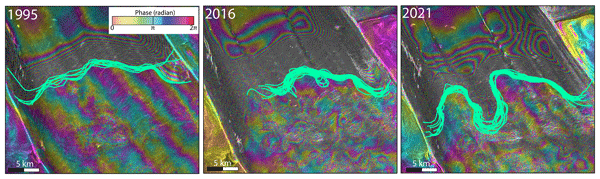
We detect for the first time a dramatic retreat of the grounding line of Petermann Glacier, a major glacier of the Greenland Ice Sheet. Using satellite data, we also observe a speedup of the glacier and a fracturing of the ice shelf. This sequence of events is coherent with ocean warming in this region and suggests that Petermann Glacier has initiated a phase of destabilization, which is of prime importance for the stability and future contribution of the Greenland Ice Sheet to sea level rise.
Gregor Luetzenburg, Kristian Svennevig, Anders A. Bjørk, Marie Keiding, and Aart Kroon
Earth Syst. Sci. Data, 14, 3157–3165, https://doi.org/10.5194/essd-14-3157-2022, https://doi.org/10.5194/essd-14-3157-2022, 2022
Short summary
Short summary
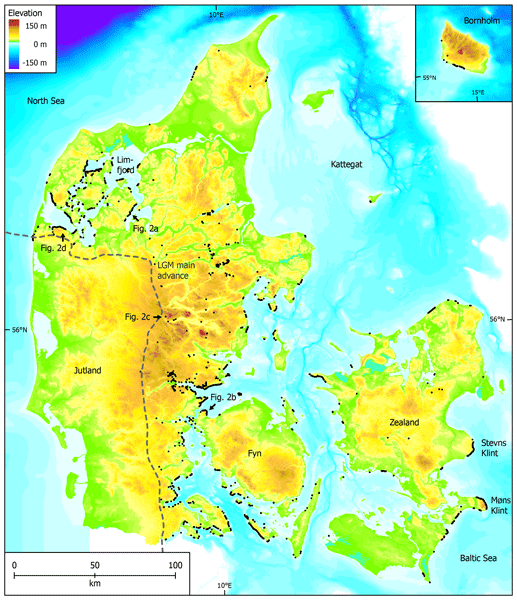
We produced the first landslide inventory for Denmark. Over 3200 landslides were mapped using a high-resolution elevation model and orthophotos. We implemented an independent validation into our mapping and found an overall level of completeness of 87 %. The national inventory represents a range of landslide sizes covering all regions that were covered by glacial ice during the last glacial period. This inventory will be used for investigating landslide causes and for natural hazard mitigation.
William Colgan, Agnes Wansing, Kenneth Mankoff, Mareen Lösing, John Hopper, Keith Louden, Jörg Ebbing, Flemming G. Christiansen, Thomas Ingeman-Nielsen, Lillemor Claesson Liljedahl, Joseph A. MacGregor, Árni Hjartarson, Stefan Bernstein, Nanna B. Karlsson, Sven Fuchs, Juha Hartikainen, Johan Liakka, Robert S. Fausto, Dorthe Dahl-Jensen, Anders Bjørk, Jens-Ove Naslund, Finn Mørk, Yasmina Martos, Niels Balling, Thomas Funck, Kristian K. Kjeldsen, Dorthe Petersen, Ulrik Gregersen, Gregers Dam, Tove Nielsen, Shfaqat A. Khan, and Anja Løkkegaard
Earth Syst. Sci. Data, 14, 2209–2238, https://doi.org/10.5194/essd-14-2209-2022, https://doi.org/10.5194/essd-14-2209-2022, 2022
Short summary
Short summary
We assemble all available geothermal heat flow measurements collected in and around Greenland into a new database. We use this database of point measurements, in combination with other geophysical datasets, to model geothermal heat flow in and around Greenland. Our geothermal heat flow model is generally cooler than previous models of Greenland, especially in southern Greenland. It does not suggest any high geothermal heat flows resulting from Icelandic plume activity over 50 million years ago.
Imke Sievers, Andrea M. U. Gierisch, Till A. S. Rasmussen, Robinson Hordoir, and Lars Stenseng
The Cryosphere Discuss., https://doi.org/10.5194/tc-2022-84, https://doi.org/10.5194/tc-2022-84, 2022
Preprint withdrawn
Short summary
Short summary
To predict Arctic sea ice models are used. Many ice models exists. They all are skill full, but give different results. Often this differences result from forcing as for example air temperature. Other differences result from the way the physical equations are solved in the model. In this study two commonly used models are compared under equal forcing, to find out how much the models differ under similar external forcing. The results are compared to observations and to eachother.
Nicolaj Hansen, Sebastian B. Simonsen, Fredrik Boberg, Christoph Kittel, Andrew Orr, Niels Souverijns, J. Melchior van Wessem, and Ruth Mottram
The Cryosphere, 16, 711–718, https://doi.org/10.5194/tc-16-711-2022, https://doi.org/10.5194/tc-16-711-2022, 2022
Short summary
Short summary
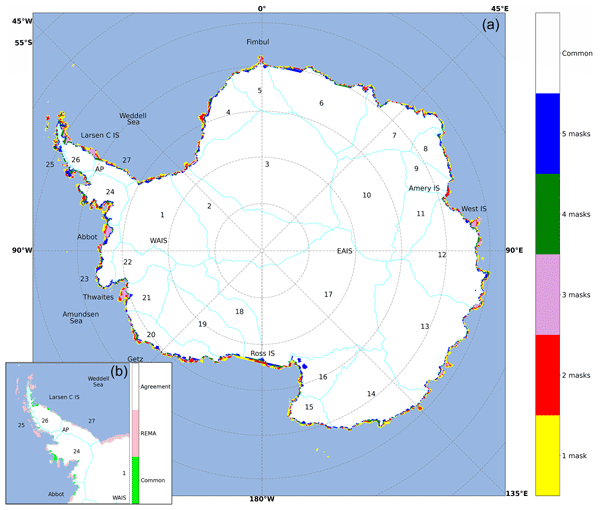
We investigate the impact of different ice masks when modelling surface mass balance over Antarctica. We used ice masks and data from five of the most used regional climate models and a common mask. We see large disagreement between the ice masks, which has a large impact on the surface mass balance, especially around the Antarctic Peninsula and some of the largest glaciers. We suggest a solution for creating a new, up-to-date, high-resolution ice mask that can be used in Antarctic modelling.

Yu Yan, Wei Gu, Andrea M. U. Gierisch, Yingjun Xu, and Petteri Uotila
Geosci. Model Dev., 15, 1269–1288, https://doi.org/10.5194/gmd-15-1269-2022, https://doi.org/10.5194/gmd-15-1269-2022, 2022
Short summary
Short summary
In this study, we developed NEMO-Bohai, an ocean–ice model for the Bohai Sea, China. This study presented the scientific design and technical choices of the parameterizations for the NEMO-Bohai model. The model was calibrated and evaluated with in situ and satellite observations of ocean and sea ice. NEMO-Bohai is intended to be a valuable tool for long-term ocean and ice simulations and climate change studies.
Fredrik Boberg, Ruth Mottram, Nicolaj Hansen, Shuting Yang, and Peter L. Langen
The Cryosphere, 16, 17–33, https://doi.org/10.5194/tc-16-17-2022, https://doi.org/10.5194/tc-16-17-2022, 2022
Short summary
Short summary
Using the regional climate model HIRHAM5, we compare two versions (v2 and v3) of the global climate model EC-Earth for the Greenland and Antarctica ice sheets. We are interested in the surface mass balance of the ice sheets due to its importance when making estimates of future sea level rise. We find that the end-of-century change in the surface mass balance for Antarctica is 420 Gt yr−1 (v2) and 80 Gt yr−1 (v3), and for Greenland it is −290 Gt yr−1 (v2) and −1640 Gt yr−1 (v3).
Kenneth D. Mankoff, Xavier Fettweis, Peter L. Langen, Martin Stendel, Kristian K. Kjeldsen, Nanna B. Karlsson, Brice Noël, Michiel R. van den Broeke, Anne Solgaard, William Colgan, Jason E. Box, Sebastian B. Simonsen, Michalea D. King, Andreas P. Ahlstrøm, Signe Bech Andersen, and Robert S. Fausto
Earth Syst. Sci. Data, 13, 5001–5025, https://doi.org/10.5194/essd-13-5001-2021, https://doi.org/10.5194/essd-13-5001-2021, 2021
Short summary
Short summary
We estimate the daily mass balance and its components (surface, marine, and basal mass balance) for the Greenland ice sheet. Our time series begins in 1840 and has annual resolution through 1985 and then daily from 1986 through next week. Results are operational (updated daily) and provided for the entire ice sheet or by commonly used regions or sectors. This is the first input–output mass balance estimate to include the basal mass balance.
Cited articles
Amundson, J. M., Fahnestock, M., Truffer, M., Brown, J., Lüthi, M. P., and Motyka, R. J.: Ice mélange dynamics and implications for terminus stability, Jakobshavn Isbræ, Greenland, J. Geophys. Res. Earth Surf., 115, https://doi.org/10.1029/2009JF001405, 2010. a, b, c
Amundson, J. M., Kienholz, C., Hager, A. O., Jackson, R. H., Motyka, R. J., Nash, J. D., and Sutherland, D. A.: Formation, flow and break-up of ephemeral ice mélange at LeConte Glacier and Bay, Alaska, J. Glaciol., 66, 577–590, https://doi.org/10.1017/jog.2020.29, 2020. a, b, c, d
Amundson, J. M., Truffer, M., and Zwinger, T.: Tidewater glacier response to individual calving events, J. Glaciol., 68, 1117–1126, https://doi.org/10.1017/jog.2022.26, 2022. a
Bang Brinck, O., Hedetoft, S., and Mottram, R.: Mélange or landfast ice: What controls seasonal calving at Greenland outlet glaciers? Workbenches for Earth Observation and in-situ data processing, Zenodo [data set] https://doi.org/10.5281/zenodo.15195630, 2025. a, b
Benn, D. I., Warren, C. R., and Mottram, R. H.: Calving processes and the dynamics of calving glaciers, Earth Sci. Rev., 82, 143–179, https://doi.org/10.1016/j.earscirev.2007.02.002, wOS:000247798300001, 2007. a, b, c, d
Bevan, S. L., Luckman, A. J., Benn, D. I., Cowton, T., and Todd, J.: Impact of warming shelf waters on ice mélange and terminus retreat at a large SE Greenland glacier, The Cryosphere, 13, 2303–2315, https://doi.org/10.5194/tc-13-2303-2019, 2019. a, b
Bézu, C. and Bartholomaus, T. C.: Greenland Ice Sheet's Distinct Calving Styles Are Identified in Terminus Change Timeseries, Geophys. Res. Lett., 51, e2024GL110224, https://doi.org/10.1029/2024GL110224, 2024. a, b, c, d
Bjørk, A. A., Kruse, L. M., and Michaelsen, P. B.: Brief communication: Getting Greenland's glaciers right – a new data set of all official Greenlandic glacier names, The Cryosphere, 9, 2215–2218, https://doi.org/10.5194/tc-9-2215-2015, 2015. a, b
Black, T. E. and Joughin, I.: Weekly to monthly terminus variability of Greenland's marine-terminating outlet glaciers, The Cryosphere, 17, 1–13, https://doi.org/10.5194/tc-17-1-2023, 2023. a, b, c, d
Brough, S., Carr, J., Ross, N., and Lea, J.: Ocean-Forcing and Glacier-Specific Factors Drive Differing Glacier Response Across the 69° N Boundary, East Greenland, J. Geophys. Res. Earth Surf., 128, https://doi.org/10.1029/2022JF006857, 2023. a, b
Burton, J. C., Amundson, J. M., Cassotto, R., Kuo, C.-C., and Dennin, M.: Quantifying flow and stress in ice mélange, the world’s largest granular material, Proc. Natl. Aca. Sci. USA, 115, 5105–5110, https://doi.org/10.1073/pnas.1715136115, 2018. a
Cassotto, R., Fahnestock, M., Amundson, J. M., Truffer, M., and Joughin, I.: Seasonal and interannual variations in ice melange and its impact on terminus stability, Jakobshavn Isbræ, Greenland, J. Glaciol., 61, 76–88, https://doi.org/10.3189/2015JoG13J235, 2015. a
Christie, F. D. W., Benham, T. J., Batchelor, C. L., Rack, W., Montelli, A., and Dowdeswell, J. A.: Antarctic ice-shelf advance driven by anomalous atmospheric and sea-ice circulation, Nat. Geosci., 15, 356–362, https://doi.org/10.1038/s41561-022-00938-x, 2022. a, b
Cook, S. J., Christoffersen, P., Truffer, M., Chudley, T. R., and Abellán, A.: Calving of a Large Greenlandic Tidewater Glacier has Complex Links to Meltwater Plumes and Mélange, J. Geophys. Res. Earth Surf., 126, e2020JF006051, https://doi.org/10.1029/2020JF006051, 2021. a, b, c
Cowton, T. R., Slater, D. A., and Inall, M. E.: Subglacial‐Discharge Plumes Drive Widespread Subsurface Warming in Northwest Greenland's Fjords, Geophys. Res. Lett., 50, e2023GL103801, https://doi.org/10.1029/2023GL103801, 2023. a, b
Crawford, A. J., Benn, D. I., Todd, J., Åström, J. A., Bassis, J. N., and Zwinger, T.: Marine ice-cliff instability modeling shows mixed-mode ice-cliff failure and yields calving rate parameterization, Nat. Commun., 12, 2701, https://doi.org/10.1038/s41467-021-23070-7, 2021. a, b, c
Everett, A., Murray, T., Selmes, N., Holland, D., and Reeve, D. E.: The Impacts of a Subglacial Discharge Plume on Calving, Submarine Melting, and Mélange Mass Loss at Helheim Glacier, South East Greenland, J. Geophys. Res. Earth Surf., 126, https://doi.org/10.1029/2020JF005910, 2021. a, b
Fraser, A. D., Massom, R. A., Handcock, M. S., Reid, P., Ohshima, K. I., Raphael, M. N., Cartwright, J., Klekociuk, A. R., Wang, Z., and Porter-Smith, R.: Eighteen-year record of circum-Antarctic landfast-sea-ice distribution allows detailed baseline characterisation and reveals trends and variability, The Cryosphere, 15, 5061–5077, https://doi.org/10.5194/tc-15-5061-2021, 2021. a
Fraser, A. D., Wongpan, P., Langhorne, P. J., Klekociuk, A. R., Kusahara, K., Lannuzel, D., Massom, R. A., Meiners, K. M., Swadling, K. M., Atwater, D. P., Brett, G. M., Corkill, M., Dalman, L. A., Fiddes, S., Granata, A., Guglielmo, L., Heil, P., Leonard, G. H., Mahoney, A. R., McMinn, A., Van Der Merwe, P., Weldrick, C. K., and Wienecke, B.: Antarctic Landfast Sea Ice: A Review of Its Physics, Biogeochemistry and Ecology, Rev. Geophys., 61, e2022RG000770, https://doi.org/10.1029/2022RG000770, 2023. a
Fraser, C.: Characterising sikussaq and other forms of Ice melange in Greenland fjords, MPhil Thesis, University of Cambridge, Cambridge, UK, https://api.repository.cam.ac.uk/server/api/core/bitstreams/605510e7-1004-4289-9a7a-c307668c0f84/content (last access: 3 August 2026), 2012. a
Fried, M. J., Catania, G. A., Stearns, L. A., Sutherland, D. A., Bartholomaus, T. C., Shroyer, E., and Nash, J.: Reconciling Drivers of Seasonal Terminus Advance and Retreat at 13 Central West Greenland Tidewater Glaciers, J. Geophys. Res. Earth Surf., 123, 1590–1607, https://doi.org/10.1029/2018JF004628, 2018. a, b
Goelzer, H., Nowicki, S., Payne, A., Larour, E., Seroussi, H., Lipscomb, W. H., Gregory, J., Abe-Ouchi, A., Shepherd, A., Simon, E., Agosta, C., Alexander, P., Aschwanden, A., Barthel, A., Calov, R., Chambers, C., Choi, Y., Cuzzone, J., Dumas, C., Edwards, T., Felikson, D., Fettweis, X., Golledge, N. R., Greve, R., Humbert, A., Huybrechts, P., Le clec'h, S., Lee, V., Leguy, G., Little, C., Lowry, D. P., Morlighem, M., Nias, I., Quiquet, A., Rückamp, M., Schlegel, N.-J., Slater, D. A., Smith, R. S., Straneo, F., Tarasov, L., van de Wal, R., and van den Broeke, M.: The future sea-level contribution of the Greenland ice sheet: a multi-model ensemble study of ISMIP6, The Cryosphere, 14, 3071–3096, https://doi.org/10.5194/tc-14-3071-2020, 2020. a, b
Greene, C. A., Young, D. A., Gwyther, D. E., Galton-Fenzi, B. K., and Blankenship, D. D.: Seasonal dynamics of Totten Ice Shelf controlled by sea ice buttressing, The Cryosphere, 12, 2869–2882, https://doi.org/10.5194/tc-12-2869-2018, 2018. a, b
Greene, C. A., Gardner, A. S., Schlegel, N.-J., and Fraser, A. D.: Antarctic calving loss rivals ice-shelf thinning, Nature, 609, 948–953, https://doi.org/10.1038/s41586-022-05037-w, 2022. a
Hansen, N., Langen, P. L., Boberg, F., Forsberg, R., Simonsen, S. B., Thejll, P., Vandecrux, B., and Mottram, R.: Downscaled surface mass balance in Antarctica: impacts of subsurface processes and large-scale atmospheric circulation, The Cryosphere, 15, 4315–4333, https://doi.org/10.5194/tc-15-4315-2021, 2021. a
Hersbach, H., Bell, B., Berrisford, P., Hirahara, S., Horányi, A., Muñoz‐Sabater, J., Nicolas, J., Peubey, C., Radu, R., Schepers, D., Simmons, A., Soci, C., Abdalla, S., Abellan, X., Balsamo, G., Bechtold, P., Biavati, G., Bidlot, J., Bonavita, M., De Chiara, G., Dahlgren, P., Dee, D., Diamantakis, M., Dragani, R., Flemming, J., Forbes, R., Fuentes, M., Geer, A., Haimberger, L., Healy, S., Hogan, R. J., Hólm, E., Janisková, M., Keeley, S., Laloyaux, P., Lopez, P., Lupu, C., Radnoti, G., De Rosnay, P., Rozum, I., Vamborg, F., Villaume, S., and Thépaut, J.: The ERA5 global reanalysis, Q. J. R. Meteorol. Soc., 146, 1999–2049, https://doi.org/10.1002/qj.3803, 2020. a
Jackson, R., Kvorning, A. B., Limoges, A., Georgiadis, E., Olsen, S. M., Tallberg, P., Andersen, T. J., Mikkelsen, N., Giraudeau, J., Massé, G., Wacker, L., and Ribeiro, S.: Holocene polynya dynamics and their interaction with oceanic heat transport in northernmost Baffin Bay, Sci. Rep., 11, 10095, https://doi.org/10.1038/s41598-021-88517-9, 2021. a
Joughin, I., Shean, D. E., Smith, B. E., and Floricioiu, D.: A decade of variability on Jakobshavn Isbræ: ocean temperatures pace speed through influence on mélange rigidity , The Cryosphere, 14, 211–227, https://doi.org/10.5194/tc-14-211-2020, 2020. a, b
Kneib-Walter, A., Lüthi, M. P., Moreau, L., and Vieli, A.: Drivers of Recurring Seasonal Cycle of Glacier Calving Styles and Patterns, Front. Earth Sci., 9, https://doi.org/10.3389/feart.2021.667717, 2021. a, b
Køltzow, M., Schyberg, H., Støylen, E., and Yang, X.: Value of the Copernicus Arctic Regional Reanalysis (CARRA) in representing near-surface temperature and wind speed in the north-east European Arctic, Polar Res., 41, https://doi.org/10.33265/polar.v41.8002, 2022. a
Langen, P. L., Mottram, R. H., Christensen, J. H., Boberg, F., Rodehacke, C. B., Stendel, M., Van As, D., Ahlstrøm, A. P., Mortensen, J., Rysgaard, S., Petersen, D., Svendsen, K. H., Aðalgeirsdóttir, G., and Cappelen, J.: Quantifying Energy and Mass Fluxes Controlling Godthåbsfjord Freshwater Input in a 5 km Simulation (1991–2012), J. Clim., 28, 3694–3713, https://doi.org/10.1175/JCLI-D-14-00271.1, 2015. a
Langen, P. L., Fausto, R. S., Vandecrux, B., Mottram, R. H., and Box, J. E.: Liquid Water Flow and Retention on the Greenland Ice Sheet in the Regional Climate Model HIRHAM5: Local and Large-Scale Impacts, Front. Earth Sci., 4, https://doi.org/10.3389/feart.2016.00110, 2017. a, b
Lea, J.: The Google Earth Engine Digitisation Tool (GEEDiT) and the Margin change Quantification Tool (MaQiT) – Simple tools for the rapid mapping and quantification of changing Earth surface margins, Earth Surf. Dyn., 6, 551–561, https://doi.org/10.5194/esurf-6-551-2018, 2018. a
Lippert, E. Y. H., Morlighem, M., Cheng, G., Berg, D. L., Hassan, J., and Khan, S. A.: Ice Front and Mélange Dynamics at Kangerlussuaq Glacier, Eastern Greenland, Since 1981, and Future Stability, Geophys. Res. Lett., 52, e2024GL113982, https://doi.org/10.1029/2024GL113982, 2025. a
Loebel, E.: eloebel/glacier-front-extraction: Release v2.0.0, Zenodo [code], https://doi.org/10.5281/zenodo.15295659, 2025. a
Loebel, E., Scheinert, M., Horwath, M., Humbert, A., Sohn, J., Heidler, K., Liebezeit, C., and Zhu, X. X.: Data product of Greenland glacier calving front locations delineated by deep learning, 2013 to 2021, OPARA [data set], https://doi.org/10.25532/OPARA-208, 2023. a, b, c
Loebel, E., Scheinert, M., Horwath, M., Humbert, A., Sohn, J., Heidler, K., Liebezeit, C., and Zhu, X. X.: Calving front monitoring at a subseasonal resolution: a deep learning application for Greenland glaciers, The Cryosphere, 18, 3315–3332, https://doi.org/10.5194/tc-18-3315-2024, 2024. a, b, c, d
Lucas‐Picher, P., Wulff‐Nielsen, M., Christensen, J. H., Aðalgeirsdóttir, G., Mottram, R., and Simonsen, S. B.: Very high resolution regional climate model simulations over Greenland: Identifying added value, J. Geophys Res. Atmos., 117, 2011JD016267, https://doi.org/10.1029/2011JD016267, 2012. a
Meire, L., Mortensen, J., Meire, P., Juul‐Pedersen, T., Sejr, M. K., Rysgaard, S., Nygaard, R., Huybrechts, P., and Meysman, F. J. R.: Marine‐terminating glaciers sustain high productivity in Greenland fjords, Glob. Change Biol., 23, 5344–5357, https://doi.org/10.1111/gcb.13801, 2017. a
Moon, T., Joughin, I., and Smith, B.: Seasonal to multiyear variability of glacier surface velocity, terminus position, and sea ice/ice mélange in northwest Greenland, J. Geophys. Res. Earth Surf., 120, 818–833, https://doi.org/10.1002/2015JF003494, 2015. a, b, c
Moon, T., Sutherland, D. A., Carroll, D., Felikson, D., Kehrl, L., and Straneo, F.: Subsurface iceberg melt key to Greenland fjord freshwater budget, Nat. Geosci., 11, 49–54, https://doi.org/10.1038/s41561-017-0018-z, 2018. a
Morlighem, M., Williams, C. N., Rignot, E., An, L., Arndt, J. E., Bamber, J. L., Catania, G., Chauché, N., Dowdeswell, J. A., Dorschel, B., Fenty, I., Hogan, K., Howat, I., Hubbard, A., Jakobsson, M., Jordan, T. M., Kjeldsen, K. K., Millan, R., Mayer, L., Mouginot, J., Noël, B. P. Y., O'Cofaigh, C., Palmer, S., Rysgaard, S., Seroussi, H., Siegert, M. J., Slabon, P., Straneo, F., van den Broeke, M. R., Weinrebe, W., Wood, M., and Zinglersen, K. B.: BedMachine v3: Complete Bed Topography and Ocean Bathymetry Mapping of Greenland From Multibeam Echo Sounding Combined With Mass Conservation, Geophys. Res. Lett., 44, 11,051–11,061, https://doi.org/10.1002/2017GL074954, 2017. a
Nissanka, K., Vora, N., Méndez Harper, J., Burton, J. C., Amundson, J. M., Robel, A. A., Meng, Y., and Lai, C.: Laboratory Experiments Reveal Transient Fluctuations in Ice Mélange Velocity and Stress During Periods of Quasistatic Flow, J. Geophys. Res.: Earth Surface, 130, e2024JF008071, https://doi.org/10.1029/2024JF008071, 2025. a
Ochwat, N. E., Scambos, T. A., Banwell, A. F., Anderson, R. S., Maclennan, M. L., Picard, G., Shates, J. A., Marinsek, S., Margonari, L., Truffer, M., and Pettit, E. C.: Triggers of the 2022 Larsen B multi-year landfast sea ice breakout and initial glacier response, The Cryosphere, 18, 1709–1731, https://doi.org/10.5194/tc-18-1709-2024, 2024. a
Otosaka, I. N., Shepherd, A., Ivins, E. R., Schlegel, N.-J., Amory, C., van den Broeke, M. R., Horwath, M., Joughin, I., King, M. D., Krinner, G., Nowicki, S., Payne, A. J., Rignot, E., Scambos, T., Simon, K. M., Smith, B. E., Sørensen, L. S., Velicogna, I., Whitehouse, P. L., A, G., Agosta, C., Ahlstrøm, A. P., Blazquez, A., Colgan, W., Engdahl, M. E., Fettweis, X., Forsberg, R., Gallée, H., Gardner, A., Gilbert, L., Gourmelen, N., Groh, A., Gunter, B. C., Harig, C., Helm, V., Khan, S. A., Kittel, C., Konrad, H., Langen, P. L., Lecavalier, B. S., Liang, C.-C., Loomis, B. D., McMillan, M., Melini, D., Mernild, S. H., Mottram, R., Mouginot, J., Nilsson, J., Noël, B., Pattle, M. E., Peltier, W. R., Pie, N., Roca, M., Sasgen, I., Save, H. V., Seo, K.-W., Scheuchl, B., Schrama, E. J. O., Schröder, L., Simonsen, S. B., Slater, T., Spada, G., Sutterley, T. C., Vishwakarma, B. D., van Wessem, J. M., Wiese, D., van der Wal, W., and Wouters, B.: Mass balance of the Greenland and Antarctic ice sheets from 1992 to 2020, Earth Syst. Sci. Data, 15, 1597–1616, https://doi.org/10.5194/essd-15-1597-2023, 2023. a
Peters, I. R., Amundson, J. M., Cassotto, R., Fahnestock, M., Darnell, K. N., Truffer, M., and Zhang, W. W.: Dynamic jamming of iceberg‐choked fjords, Geophys. Res. Lett., 42, 1122–1129, https://doi.org/10.1002/2014GL062715, 2015. a, b, c
Puggaard, A., Hansen, N., Mottram, R., Nagler, T., Scheiblauer, S., Simonsen, S. B., Sørensen, L. S., Wuite, J., and Solgaard, A. M.: Bias in modeled Greenland Ice Sheet melt revealed by ASCAT, The Cryosphere, 19, 2963–2981, https://doi.org/10.5194/tc-19-2963-2025, 2025. a
Rabault, J., Nose, T., Hope, G., Müller, M., Breivik, O., Voermans, J., Hole, L. R., Bohlinger, P., Waseda, T., Kodaira, T., Katsuno, T., Johnson, M., Sutherland, G., Johansson, M., Christensen, K. H., Garbo, A., Jensen, A., Gundersen, O., Marchenko, A., and Babanin, A.: OpenMetBuoy-v2021: An Easy-to-Build, Affordable, Customizable, Open-Source Instrument for Oceanographic Measurements of Drift and Waves in Sea Ice and the Open Ocean, Geosciences, 12, 110, https://doi.org/10.3390/geosciences12030110, 2022. a
Rasmussen, T., Ribegaard, M., Ringgaard, I., Olsen, S., Gierisch, A., and Korabel, V.: DMI Report 21-21 Arctic ocean and sea ice – from a Greenlandic fjord to large scale Arctic sea ice changes, DMI Report DMI 21-21, Danish Meteorological Institute, Copenhagen, Denmark, https://www.dmi.dk/publikationer/ (last access: 3 August 2026), 2021. a
Sakakibara, D. and Sugiyama, S.: Ice front and flow speed variations of marine-terminating outlet glaciers along the coast of Prudhoe Land, northwestern Greenland, J. Glaciol., 64, 300–310, https://doi.org/10.1017/jog.2018.20, 2018. a, b, c, d
Sakakibara, D. and Sugiyama, S.: Seasonal ice-speed variations in 10 marine-terminating outlet glaciers along the coast of Prudhoe Land, northwestern Greenland, J. Glaciol., 66, 25–34, https://doi.org/10.1017/jog.2019.81, 2020. a, b
Schlemm, T., Feldmann, J., Winkelmann, R., and Levermann, A.: Stabilizing effect of mélange buttressing on the marine ice-cliff instability of the West Antarctic Ice Sheet, The Cryosphere, 16, 1979–1996, https://doi.org/10.5194/tc-16-1979-2022, 2022. a
Seroussi, H., Nowicki, S., Payne, A. J., Goelzer, H., Lipscomb, W. H., Abe-Ouchi, A., Agosta, C., Albrecht, T., Asay-Davis, X., Barthel, A., Calov, R., Cullather, R., Dumas, C., Galton-Fenzi, B. K., Gladstone, R., Golledge, N. R., Gregory, J. M., Greve, R., Hattermann, T., Hoffman, M. J., Humbert, A., Huybrechts, P., Jourdain, N. C., Kleiner, T., Larour, E., Leguy, G. R., Lowry, D. P., Little, C. M., Morlighem, M., Pattyn, F., Pelle, T., Price, S. F., Quiquet, A., Reese, R., Schlegel, N.-J., Shepherd, A., Simon, E., Smith, R. S., Straneo, F., Sun, S., Trusel, L. D., Van Breedam, J., van de Wal, R. S. W., Winkelmann, R., Zhao, C., Zhang, T., and Zwinger, T.: ISMIP6 Antarctica: a multi-model ensemble of the Antarctic ice sheet evolution over the 21st century, The Cryosphere, 14, 3033–3070, https://doi.org/10.5194/tc-14-3033-2020, 2020. a
Shepherd, A., Ivins, E., Rignot, E., Smith, B., van den Broeke, M., Velicogna, I., Whitehouse, P., Briggs, K., Joughin, I., Krinner, G., Nowicki, S., Payne, T., Scambos, T., Schlegel, N., A, G., Agosta, C., Ahlstrøm, A., Babonis, G., Barletta, V. R., Bjørk, A. A., Blazquez, A., Bonin, J., Colgan, W., Csatho, B., Cullather, R., Engdahl, M. E., Felikson, D., Fettweis, X., Forsberg, R., Hogg, A. E., Gallee, H., Gardner, A., Gilbert, L., Gourmelen, N., Groh, A., Gunter, B., Hanna, E., Harig, C., Helm, V., Horvath, A., Horwath, M., Khan, S., Kjeldsen, K. K., Konrad, H., Langen, P. L., Lecavalier, B., Loomis, B., Luthcke, S., McMillan, M., Melini, D., Mernild, S., Mohajerani, Y., Moore, P., Mottram, R., Mouginot, J., Moyano, G., Muir, A., Nagler, T., Nield, G., Nilsson, J., Noël, B., Otosaka, I., Pattle, M. E., Peltier, W. R., Pie, N., Rietbroek, R., Rott, H., Sandberg Sørensen, L., Sasgen, I., Save, H., Scheuchl, B., Schrama, E., Schröder, L., Seo, K.-W., Simonsen, S. B., Slater, T., Spada, G., Sutterley, T., Talpe, M., Tarasov, L., van de Berg, W. J., van der Wal, W., van Wessem, M., Vishwakarma, B. D., Wiese, D., Wilton, D., Wagner, T., Wouters, B., Wuite, J., and The IMBIE Team: Mass balance of the Greenland Ice Sheet from 1992 to 2018, Nature, 579, 233–239, https://doi.org/10.1038/s41586-019-1855-2, 2020. a
Slater, D. A., Carroll, D., Oliver, H., Hopwood, M. J., Straneo, F., Wood, M., Willis, J. K., and Morlighem, M.: Characteristic Depths, Fluxes, and Timescales for Greenland's Tidewater Glacier Fjords From Subglacial Discharge‐Driven Upwelling During Summer, Geophys. Res. Lett., 49, e2021GL097081, https://doi.org/10.1029/2021GL097081, 2022. a
Solgaard, A., Kusk, A., Merryman Boncori, J. P., Dall, J., Mankoff, K. D., Ahlstrøm, A. P., Andersen, S. B., Citterio, M., Karlsson, N. B., Kjeldsen, K. K., Korsgaard, N. J., Larsen, S. H., and Fausto, R. S.: Greenland ice velocity maps from the PROMICE project, Earth Syst. Sci. Data, 13, 3491–3512, https://doi.org/10.5194/essd-13-3491-2021, 2021. a, b, c, d, e
Solgaard, A. M., Rapp, D., Noël, B. P. Y., and Hvidberg, C. S.: Seasonal Patterns of Greenland Ice Velocity From Sentinel‐1 SAR Data Linked to Runoff, Geophys. Res. Lett., 49, e2022GL100343, https://doi.org/10.1029/2022GL100343, 2022. a, b, c, d
Surawy-Stepney, T., Hogg, A. E., Cornford, S. L., Wallis, B. J., Davison, B. J., Selley, H. L., Slater, R. A. W., Lie, E. K., Jakob, L., Ridout, A., Gourmelen, N., Freer, B. I. D., Wilson, S. F., and Shepherd, A.: The effect of landfast sea ice buttressing on ice dynamic speedup in the Larsen B embayment, Antarctica, The Cryosphere, 18, 977–993, https://doi.org/10.5194/tc-18-977-2024, 2024. a, b, c, d, e
Urbanski, J. A.: A GIS tool for two-dimensional glacier-terminus change tracking, Comput. Geosci., 111, 97–104, https://doi.org/10.1016/j.cageo.2017.11.004, 2018. a
Vandecrux, B., Fausto, R. S., Box, J. E., Covi, F., Hock, R., Rennermalm, Å. K., Heilig, A., Abermann, J., van As, D., Bjerre, E., Fettweis, X., Smeets, P. C. J. P., Kuipers Munneke, P., van den Broeke, M. R., Brils, M., Langen, P. L., Mottram, R., and Ahlstrøm, A. P.: Recent warming trends of the Greenland ice sheet documented by historical firn and ice temperature observations and machine learning, The Cryosphere, 18, 609–631, https://doi.org/10.5194/tc-18-609-2024, 2024. a
VanderPlas, J. T.: Understanding the Lomb–Scargle Periodogram, ApJS, 236, 16, https://doi.org/10.3847/1538-4365/aab766, 2018. a, b
Vaňková, I.: Calving prediction from ice mélange motion, Nat. Geosci., 14, 357–358, https://doi.org/10.1038/s41561-021-00752-x, 2021. a
Walter, J. I., Box, J. E., Tulaczyk, S., Brodsky, E. E., Howat, I. M., Ahn, Y., and Brown, A.: Oceanic mechanical forcing of a marine-terminating Greenland glacier, Ann. Glaciol., 53, 181–192, https://doi.org/10.3189/2012AoG60A083, 2012. a
Wang, Y., Sugiyama, S., and Bjørk, A. A.: Surface Elevation Change of Glaciers Along the Coast of Prudhoe Land, Northwestern Greenland From 1985 to 2018, J. Geophys. Res.: Earth Surface, 126, e2020JF006 038, https://doi.org/10.1029/2020JF006038, 2021. a, b
Wehrlé, A., Lüthi, M. P., and Vieli, A.: The control of short-term ice mélange weakening episodes on calving activity at major Greenland outlet glaciers, The Cryosphere, 17, 309–326, https://doi.org/10.5194/tc-17-309-2023, 2023. a, b, c
Weiss, M.: Apparent diurnal effects in the global positioning system, IEEE Trans. Instrum. Meas., 38, 991–997, https://doi.org/10.1109/19.39042, 1989. a
Wheel, I., Crawford, A. J., and Benn, D. I.: Calving dynamics at Jakobshavn Isbræ (Sermeq Kujalleq) controlled by local geometry: insights from a 3D Stokes calving model, J. Glaciol., 70, e7, https://doi.org/10.1017/jog.2024.77, 2024. a
Willis, J. K., Carroll, D., Fenty, I., Kohli, G., Khazendar, A., Rutherford, M., Trenholm, N., and Morlighem, M.: Ocean-Ice Interactions in Inglefield Gulf: Early Results from NASA’s Oceans Melting Greenland Mission, Oceanography, 31, 100–108, https://www.jstor.org/stable/26542656 (last access: 3 August 2026), 2018. a, b, c, d, e, f
Short summary
Iceberg mélange is the jumble of icebergs in front of some glaciers that calve into the sea. Some studies suggest mélange might help to control the retreat of glaciers. We studied 3 glaciers in NW Greenland where we used GPS sensors and satellites to track ice movement. We found that glaciers push forward and calve all year, including when mélange and landfast sea ice are present, suggesting mélange is not important in supporting glaciers, but may influence the seasonal calving cycle.
Iceberg mélange is the jumble of icebergs in front of some glaciers that calve into the sea....


