
Articles | Volume 8, issue 3
https://doi.org/10.5194/tc-8-997-2014
© Author(s) 2014. This work is distributed under
the Creative Commons Attribution 3.0 License.
the Creative Commons Attribution 3.0 License.
https://doi.org/10.5194/tc-8-997-2014
© Author(s) 2014. This work is distributed under
the Creative Commons Attribution 3.0 License.
the Creative Commons Attribution 3.0 License.
Research article
| 
27 May 2014
Research article |
| 27 May 2014
SMOS-derived thin sea ice thickness: algorithm baseline, product specifications and initial verification
X. Tian-Kunze
Institute of Oceanography, University of Hamburg, Bundesstraße 53, 20146 Hamburg, Germany
L. Kaleschke
Institute of Oceanography, University of Hamburg, Bundesstraße 53, 20146 Hamburg, Germany
N. Maaß
Institute of Oceanography, University of Hamburg, Bundesstraße 53, 20146 Hamburg, Germany
M. Mäkynen
Finnish Meteorological Institute, Erik Palmenin aukio 1, 00560 Helsinki, Finland
Institute of Oceanography, University of Hamburg, Bundesstraße 53, 20146 Hamburg, Germany
M. Drusch
European Space Agency, ESA-ESTEC, 2200 AG Noordwijk, the Netherlands
T. Krumpen
Alfred Wegener Institute for Polar and Marine Research, Bussestraße 24, 27570 Bremerhaven, Germany
Related authors
No articles found.
Roberto Colombo, Béatrice Berthelot, Alireza Mahmoodi, Louis Sainte-Marie, Gwennaël Matot, Jorge Vicent Servera, Ornela Nanushi, Brice Mora, Mohamed Salah Djellali, Neus Sabater, Pekka Kolmonen, Timo H. Virtanen, Astrid M. Zimmermann, Pieter De Vis, Micol Rossini, Giulia Tagliabue, Pietro Chierichetti, Sergio Cogliati, Juliane Bendig, Bastian Siegmann, Uwe Rascher, Egor Prikaziuk, Christiaan van der Tol, Darren Ghent, Jasdeep Singh Anand, Tommaso Julitta, Matthias Drusch, Marco Celesti, Dirk Schüttemeyer, and Marin Tudoroiu
Int. Arch. Photogramm. Remote Sens. Spatial Inf. Sci., XLVIII-M-12-2026, 17–24, https://doi.org/10.5194/isprs-archives-XLVIII-M-12-2026-17-2026, https://doi.org/10.5194/isprs-archives-XLVIII-M-12-2026-17-2026, 2026
Patrick C. Taylor, Armin Sorooshian, Rei Ueyama, Sebastian Schmidt, Ihab Abboud, Quincy Allison, Kevin Barry, Sebastian Becker, Holly A. Bender, Joseph R. Bennett, James B. Blair, Niklas Bohn, Linette Boisvert, Matthew D. Brown, Roelof Bruintjes, Anthony Bucholtz, Megan Buzanowicz, Brian Cairns, Filippo Calì Quaglia, Eduard Chemyakin, Bo Chen, Gao Chen, Hong Chen, Yu-Wen Chen, Zezhen Cheng, Swarup China, Dan Chirica, Yonghoon Choi, Peter Colarco, Brian Collister, Ewan Crosbie, Maurice J. Cross, Janet Daniels, Paul DeMott, Joshua P. DiGangi, Alcide Giorgio di Sarra, Glenn S. Diskin, Erica K. Dolinar, Eva-Lou Edwards, Samuel Ephraim, Nikolaos Evangeliou, Romanos Foskinis, Francesca Gallo, Lan Gao, José Luis Gómez-Amo, Daisy Gonzalez, Christine Groot Zwaaftink, Pawan Gupta, Ivan Heckman, Michael Hendrickson, Miguel Ricardo A. Hilario, Ken Hirata, Michelle Hofton, Andrew L. Holen, Ulas Im, Alia L. Khan, Ralph Kahn, Alexei V. Korolev, Sonia Kreidenweis, Thomas Krumpen, Nathan Kurtz, Leslie Lait, Bradley Lamkin, Jack Landy, Nurun Nahar Lata, Paul Lawson, Samuel LeBlanc, Sean Leavor, Jing Li, Thorsten Markus, Hal Maring, Andreas H. Massling, Camille Mavis, Flynn McGinnity, Kerry Meyer, Gabriel Mojica, Richard H. Moore, Parker Morris, Giovanni Muscari, Vikas Nataraja, Amin R. Nehrir, Athanasios Nenes, Edward P. Nowottnick, Matteo Ottaviani, Chelsea Parker, Ryan Patnaude, Michael Perez, Russell J. Perkins, Colten Peterson, Alek Petty, Stevie Phothisane, Chris Polashenski, Kerri A. Pratt, Kayla M. Preisler, John Prytherch, David Rabine, Jens Redemann, Ju-Mee Ryoo, Joseph S. Schlosser, Vanessa Selimovic, Michael A. Shook, Morgan Silverman, Henrik Skov, Alexander Smirnov, Cassidy Soloff, Amy Solomon, Snorre Stamnes, Azusa Takeishi, David R. Thompson, K. Lee Thornhill, Rachel Tilling, Michael Tjernström, Monica Tosco, Pedro C. Valdelomar, David Van Gilst, Jian Wang, Zhien Wang, Andrzej Wasilewski, Manfred Wendisch, Brent Wilder, Edward L. Winstead, Albert Wu, Peng Xian, Lauren M. Zamora, Jiaoshi Zhang, Lei Zhang, Lu Zhang, Luke Ziemba, and Paquita Zuidema
Earth Syst. Sci. Data Discuss., https://doi.org/10.5194/essd-2026-241, https://doi.org/10.5194/essd-2026-241, 2026
Preprint under review for ESSD
Short summary
Short summary
This article summarizes the data sets collected during the Arctic Radiation Cloud aerosol Sea ice Interaction eXperiment (ARCSIX), NASA's most comprehensive Arctic field campaign to date. The overarching goal was to quantify the contributions of surface, clouds, aerosol particles, and precipitation to summer sea ice melt. This paper describes the ARCSIX implementation including the flight strategy, instruments, complementary data sets, access, and usage details.
Rebecca McPherson, Wilken-Jon von Appen, Laura de Steur, Luise Becker, Monica Ionita, Thomas Krumpen, Gunnar Spreen, and Finn Ole Heukamp
EGUsphere, https://doi.org/10.5194/egusphere-2026-2955, https://doi.org/10.5194/egusphere-2026-2955, 2026
Short summary
Short summary
The East Greenland Current carries cold, fresh water and sea ice from the Arctic toward the North Atlantic. Using seven years of ocean measurements off northeast Greenland, we found that the current occasionally develops a northward component on the continental slope that can persist for weeks. These events are driven by specific wind patterns that reorganise the current and push warm water into the Arctic — a previously unknown heat pathway, which has regional consequences for sea ice.
Rasmus Tage Tonboe, Vishnu Nandan, Marcus Huntemann, Julienne Stroeve, Randall Scharien, John Yackel, Lars Kaleschke, Hoyeon Shi, and Tânia Casal
EGUsphere, https://doi.org/10.5194/egusphere-2026-1440, https://doi.org/10.5194/egusphere-2026-1440, 2026
Short summary
Short summary
Scattering and absorption from air bubbles, voids, and brine pockets significantly affect radar and microwave radiometer measurements of sea ice and light propagation through sea ice. Here, we used a high-resolution dataset, collected during the 2019–20 MOSAiC expedition, of thin ice slices of various Arctic sea ice types to estimate the autocorrelation length and density of the inclusions. The data can be used to initialize sea ice scattering models and for understanding satellite data.
Lucas Carnier Casaroli, Nuno Serra, Fatemeh Chegini, and Tatiana Ilyina
EGUsphere, https://doi.org/10.5194/egusphere-2026-504, https://doi.org/10.5194/egusphere-2026-504, 2026
Short summary
Short summary
This study shows that vortices in the equatorial Pacific strongly influence how the ocean absorbs and releases carbon dioxide. Using a 30-year high-resolution ocean biogeochemical model, we found that these vortices reshape carbon transport and primary production differently during El Niño and La Niña. The vortices can even reverse the role of the ocean from releasing to absorbing carbon, showing that motions hundreds of kilometers wide can shape basin-scale carbon patterns.
Valentin Ludwig, Caroline Ribere, Sara Fleury, Christian Haas, Michel Tsamados, Mahmoud El Hajj, Jerome Bouffard, Michele Scagliola, Marion Bocquet, Eric de Boisseson, Vincent Boulenger, Guillaume Boutin, Laurence Connor, Léo Edel, Stefan Hendricks, Ferran Hernández Macià, Marcus Huntemann, Lars Kaleschke, Frank Kauker, Jack Landy, Tom Megain, Alek Petty, Till Soya Rasmussen, Mads Hvid Ribergaard, Robert Ricker, Axel Schweiger, Hoyeon Shi, Xiangshan Tian-Kunze, Donghui Yi, and Alessandro Di Bella
EGUsphere, https://doi.org/10.5194/egusphere-2025-6201, https://doi.org/10.5194/egusphere-2025-6201, 2026
Short summary
Short summary
Our paper compares Arctic sea-ice thickness datasets from models, reanalyses, satellite-only, and multi-product sources. We validate them against Beaufort Sea reference data, compare large-scale products, and analyse time series. Cross-product biases range from 0.2–0.4 m, RMSDs from 0.4–0.9 m, and correlations from 0.5–0.8. We find no 2010–2023 trend, but 1995–2023 thinning of ~ 0.5 m in November and ~ 0.3 m in March.
Lena G. Buth, Thomas Krumpen, Niklas Neckel, Melinda A. Webster, Gerit Birnbaum, Niels Fuchs, Philipp Heuser, Ole Johannsen, and Christian Haas
The Cryosphere, 19, 6527–6545, https://doi.org/10.5194/tc-19-6527-2025, https://doi.org/10.5194/tc-19-6527-2025, 2025
Short summary
Short summary
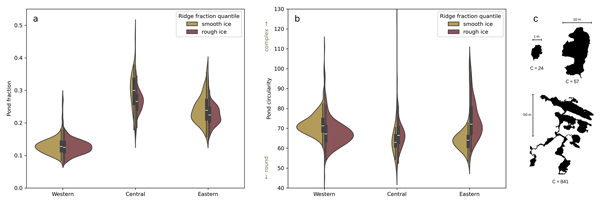
Arctic sea ice is becoming smoother, raising the question of how these changes affect melt pond coverage and thereby surface albedo. Using airborne imagery and laser altimeter data, we investigated how pressure ridges influence melt ponds. The presence of ridges does not directly control pond fraction, but it does influence pond size distribution and pond geometry. Small ponds have a more complex shape on rough ice than on smooth ice, while the opposite is true for large ponds.
Mariana Salinas-Matus, Nuno Serra, Fatemeh Chegini, and Tatiana Ilyina
Biogeosciences, 22, 7519–7534, https://doi.org/10.5194/bg-22-7519-2025, https://doi.org/10.5194/bg-22-7519-2025, 2025
Short summary
Short summary
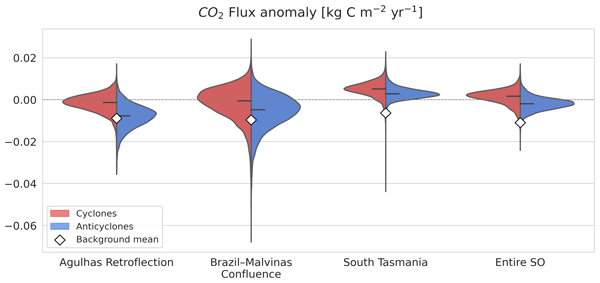
We use a 27-year eddy-resolving ocean-biogeochemical simulation to assess how mesoscale eddies modulate air–sea CO2 fluxes in the Southern Ocean. Eddies act as persistent carbon sinks, with anticyclones showing enhanced carbon uptake efficiency. Mesoscale features account for ~10 % of the total carbon uptake in the Southern Ocean and about 1 % of the anomalous carbon uptake.
Ole Zeising, Tore Hattermann, Lars Kaleschke, Sophie Berger, Olaf Boebel, Reinhard Drews, M. Reza Ershadi, Tanja Fromm, Frank Pattyn, Daniel Steinhage, and Olaf Eisen
The Cryosphere, 19, 2837–2854, https://doi.org/10.5194/tc-19-2837-2025, https://doi.org/10.5194/tc-19-2837-2025, 2025
Short summary
Short summary
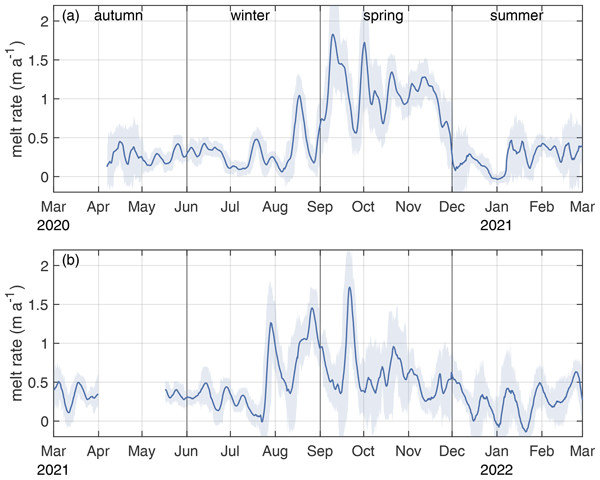
Basal melting of ice shelves impacts the mass loss of the Antarctic Ice Sheet. This study focuses on the Ekström Ice Shelf in East Antarctica, using multiyear data from an autonomous radar system. Results show a surprising seasonal pattern of high melt rates in winter and spring. The seasonalities of sea-ice growth and ocean density indicate that, in winter, dense water enhances plume activity and melt rates. Understanding these dynamics is crucial for improving future mass balance projections.
Lena Happ, Sonali Patil, Stefan Hendricks, Riccardo Fellegara, Lars Kaleschke, and Andreas Gerndt
ISPRS Ann. Photogramm. Remote Sens. Spatial Inf. Sci., X-G-2025, 333–340, https://doi.org/10.5194/isprs-annals-X-G-2025-333-2025, https://doi.org/10.5194/isprs-annals-X-G-2025-333-2025, 2025
Wolfgang Knorr, Matthew Williams, Tea Thum, Thomas Kaminski, Michael Voßbeck, Marko Scholze, Tristan Quaife, T. Luke Smallman, Susan C. Steele-Dunne, Mariette Vreugdenhil, Tim Green, Sönke Zaehle, Mika Aurela, Alexandre Bouvet, Emanuel Bueechi, Wouter Dorigo, Tarek S. El-Madany, Mirco Migliavacca, Marika Honkanen, Yann H. Kerr, Anna Kontu, Juha Lemmetyinen, Hannakaisa Lindqvist, Arnaud Mialon, Tuuli Miinalainen, Gaétan Pique, Amanda Ojasalo, Shaun Quegan, Peter J. Rayner, Pablo Reyes-Muñoz, Nemesio Rodríguez-Fernández, Mike Schwank, Jochem Verrelst, Songyan Zhu, Dirk Schüttemeyer, and Matthias Drusch
Geosci. Model Dev., 18, 2137–2159, https://doi.org/10.5194/gmd-18-2137-2025, https://doi.org/10.5194/gmd-18-2137-2025, 2025
Short summary
Short summary
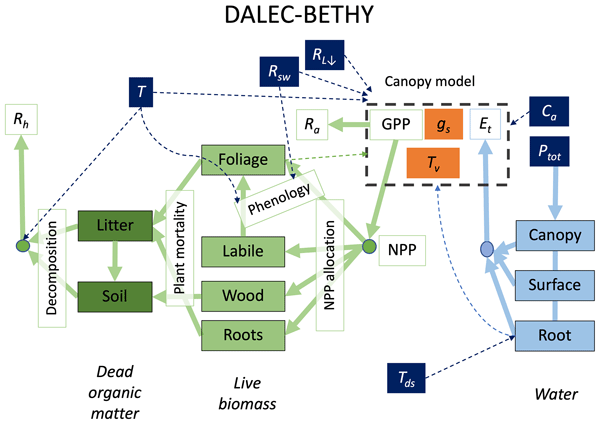
When it comes to climate change, the land surface is where the vast majority of impacts happen. The task of monitoring those impacts across the globe is formidable and must necessarily rely on satellites – at a significant cost: the measurements are only indirect and require comprehensive physical understanding. We have created a comprehensive modelling system that we offer to the research community to explore how satellite data can be better exploited to help us capture the changes that happen on our lands.
Lars Kaleschke, Xiangshan Tian-Kunze, Stefan Hendricks, and Robert Ricker
Earth Syst. Sci. Data, 16, 3149–3170, https://doi.org/10.5194/essd-16-3149-2024, https://doi.org/10.5194/essd-16-3149-2024, 2024
Short summary
Short summary
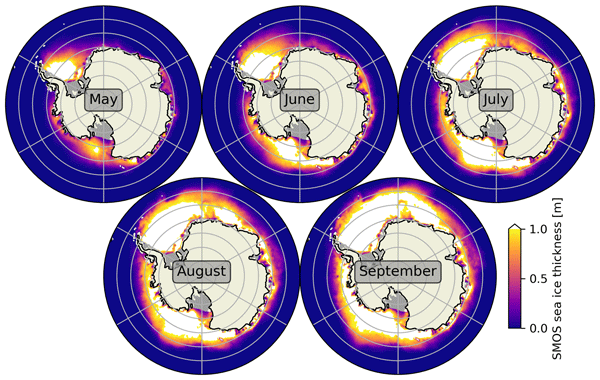
We describe a sea ice thickness dataset based on SMOS satellite measurements, initially designed for the Arctic but adapted for Antarctica. We validated it using limited Antarctic measurements. Our findings show promising results, with a small difference in thickness estimation and a strong correlation with validation data within the valid thickness range. However, improvements and synergies with other sensors are needed, especially for sea ice thicker than 1 m.
Luisa von Albedyll, Stefan Hendricks, Nils Hutter, Dmitrii Murashkin, Lars Kaleschke, Sascha Willmes, Linda Thielke, Xiangshan Tian-Kunze, Gunnar Spreen, and Christian Haas
The Cryosphere, 18, 1259–1285, https://doi.org/10.5194/tc-18-1259-2024, https://doi.org/10.5194/tc-18-1259-2024, 2024
Short summary
Short summary
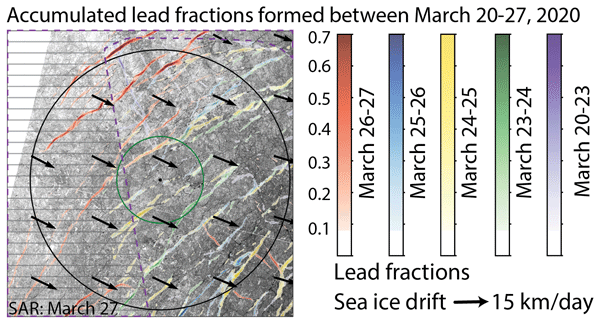
Leads (openings in sea ice cover) are created by sea ice dynamics. Because they are important for many processes in the Arctic winter climate, we aim to detect them with satellites. We present two new techniques to detect lead widths of a few hundred meters at high spatial resolution (700 m) and independent of clouds or sun illumination. We use the MOSAiC drift 2019–2020 in the Arctic for our case study and compare our new products to other existing lead products.
Haokui Xu, Brooke Medley, Leung Tsang, Joel T. Johnson, Kenneth C. Jezek, Marco Brogioni, and Lars Kaleschke
The Cryosphere, 17, 2793–2809, https://doi.org/10.5194/tc-17-2793-2023, https://doi.org/10.5194/tc-17-2793-2023, 2023
Short summary
Short summary
The density profile of polar ice sheets is a major unknown in estimating the mass loss using lidar tomography methods. In this paper, we show that combing the active radar data and passive radiometer data can provide an estimation of density properties using the new model we implemented in this paper. The new model includes the short and long timescale variations in the firn and also the refrozen layers which are not included in the previous modeling work.
Lena Katharina Jänicke, Rene Preusker, Marco Celesti, Marin Tudoroiu, Jürgen Fischer, Dirk Schüttemeyer, and Matthias Drusch
Atmos. Meas. Tech., 16, 3101–3121, https://doi.org/10.5194/amt-16-3101-2023, https://doi.org/10.5194/amt-16-3101-2023, 2023
Short summary
Short summary
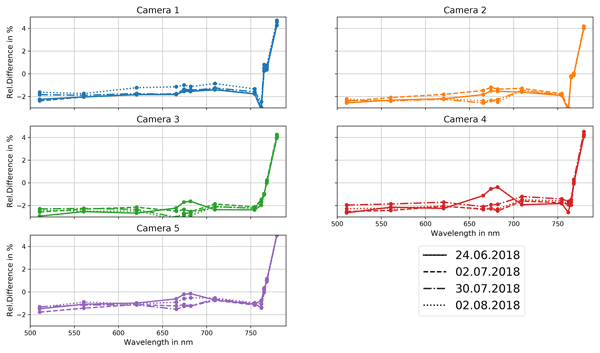
To compare two top-of-atmosphere radiances measured by instruments with different spectral characteristics, a transfer function has been developed. It is applied to a tandem data set of Sentinel-3A and B, for which OLCI-B mimicked the ESA’s eighth Earth Explorer FLEX. We found that OLCI-A measured radiances about 2 % brighter than OLCI-FLEX. Only at larger wavelengths were OLCI-A measurements about 5 % darker. The method is thus successful, being sensitive to calibration and processing issues.
Marco Brogioni, Mark J. Andrews, Stefano Urbini, Kenneth C. Jezek, Joel T. Johnson, Marion Leduc-Leballeur, Giovanni Macelloni, Stephen F. Ackley, Alexandra Bringer, Ludovic Brucker, Oguz Demir, Giacomo Fontanelli, Caglar Yardim, Lars Kaleschke, Francesco Montomoli, Leung Tsang, Silvia Becagli, and Massimo Frezzotti
The Cryosphere, 17, 255–278, https://doi.org/10.5194/tc-17-255-2023, https://doi.org/10.5194/tc-17-255-2023, 2023
Short summary
Short summary
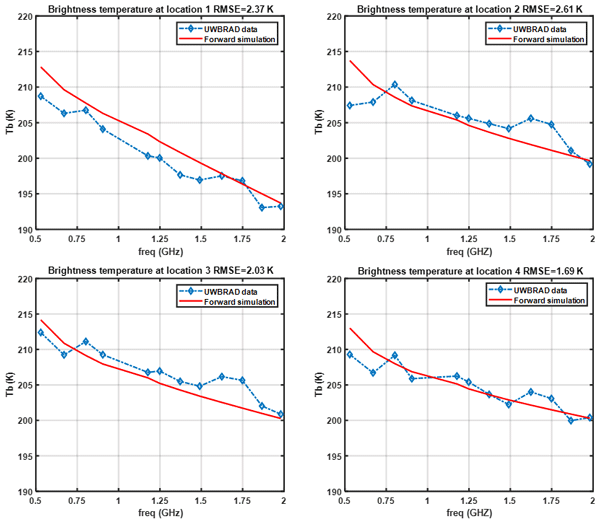
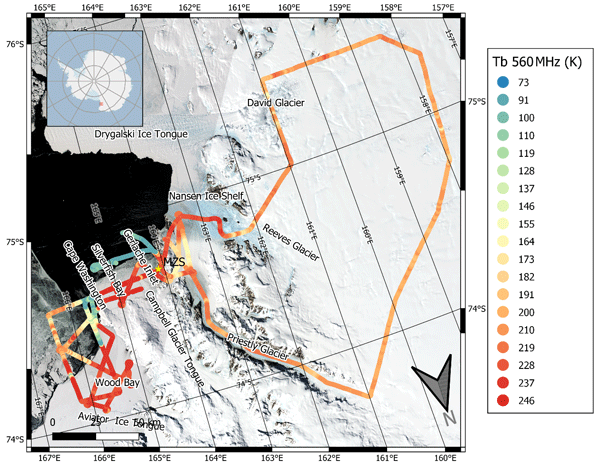
In 2018 the first Antarctic campaign of UWBRAD was carried out. UWBRAD is a new radiometer able to collect microwave spectral signatures over 0.5–2 GHz, thus outperforming existing similar sensors. It allows us to probe thicker sea ice and ice sheet down to the bedrock. In this work we tried to assess the UWBRAD potentials for sea ice, glaciers, ice shelves and buried lakes. We also highlighted the wider range of information the spectral signature can provide to glaciological studies.

Juha Karvonen, Eero Rinne, Heidi Sallila, Petteri Uotila, and Marko Mäkynen
The Cryosphere, 16, 1821–1844, https://doi.org/10.5194/tc-16-1821-2022, https://doi.org/10.5194/tc-16-1821-2022, 2022
Short summary
Short summary
We propose a method to provide sea ice thickness (SIT) estimates over a test area in the Arctic utilizing radar altimeter (RA) measurement lines and C-band SAR imagery. The RA data are from CryoSat-2, and SAR imagery is from Sentinel-1. By combining them we get a SIT grid covering the whole test area instead of only narrow measurement lines from RA. This kind of SIT estimation can be extended to cover the whole Arctic (and Antarctic) for operational SIT monitoring.
Klaus Dethloff, Wieslaw Maslowski, Stefan Hendricks, Younjoo J. Lee, Helge F. Goessling, Thomas Krumpen, Christian Haas, Dörthe Handorf, Robert Ricker, Vladimir Bessonov, John J. Cassano, Jaclyn Clement Kinney, Robert Osinski, Markus Rex, Annette Rinke, Julia Sokolova, and Anja Sommerfeld
The Cryosphere, 16, 981–1005, https://doi.org/10.5194/tc-16-981-2022, https://doi.org/10.5194/tc-16-981-2022, 2022
Short summary
Short summary
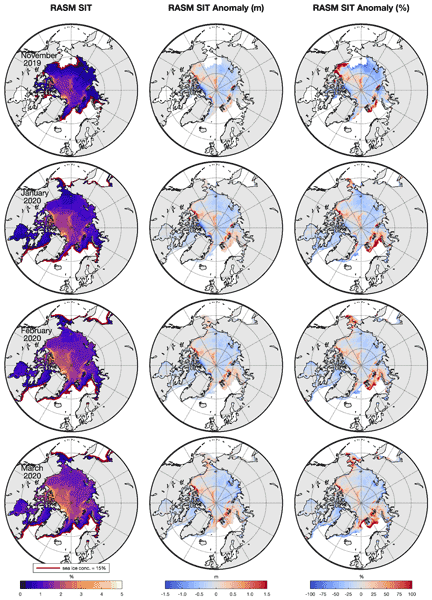
Sea ice thickness anomalies during the MOSAiC (Multidisciplinary drifting Observatory for the Study of Arctic Climate) winter in January, February and March 2020 were simulated with the coupled Regional Arctic climate System Model (RASM) and compared with CryoSat-2/SMOS satellite data. Hindcast and ensemble simulations indicate that the sea ice anomalies are driven by nonlinear interactions between ice growth processes and wind-driven sea-ice transports, with dynamics playing a dominant role.
Alexandru Gegiuc, Juha Karvonen, Jouni Vainio, Eero Rinne, Roman Bednarik, and Marko Mäkynen
The Cryosphere Discuss., https://doi.org/10.5194/tc-2022-8, https://doi.org/10.5194/tc-2022-8, 2022
Publication in TC not foreseen
Short summary
Short summary
Current users of operational ice charts call for quantitative uncertainty information, which the current ice charts lack. In this work we demonstrate for the first time the use of eye tracking methodology as a non-invasive way to identify elements behind uncertainties typically introduced during the process of visual mapping of sea ice information in satellite radar imagery. Uncertainty information would increase reliability of the manually produced ice charts and increase navigation safety.
Arttu Jutila, Stefan Hendricks, Robert Ricker, Luisa von Albedyll, Thomas Krumpen, and Christian Haas
The Cryosphere, 16, 259–275, https://doi.org/10.5194/tc-16-259-2022, https://doi.org/10.5194/tc-16-259-2022, 2022
Short summary
Short summary
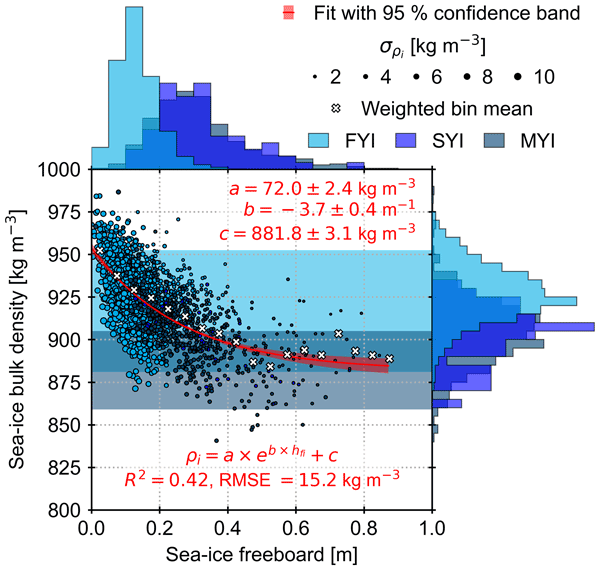
Sea-ice thickness retrieval from satellite altimeters relies on assumed sea-ice density values because density cannot be measured from space. We derived bulk densities for different ice types using airborne laser, radar, and electromagnetic induction sounding measurements. Compared to previous studies, we found high bulk density values due to ice deformation and younger ice cover. Using sea-ice freeboard, we derived a sea-ice bulk density parameterisation that can be applied to satellite data.
Guokun Lyu, Nuno Serra, Meng Zhou, and Detlef Stammer
Ocean Sci., 18, 51–66, https://doi.org/10.5194/os-18-51-2022, https://doi.org/10.5194/os-18-51-2022, 2022
Short summary
Short summary
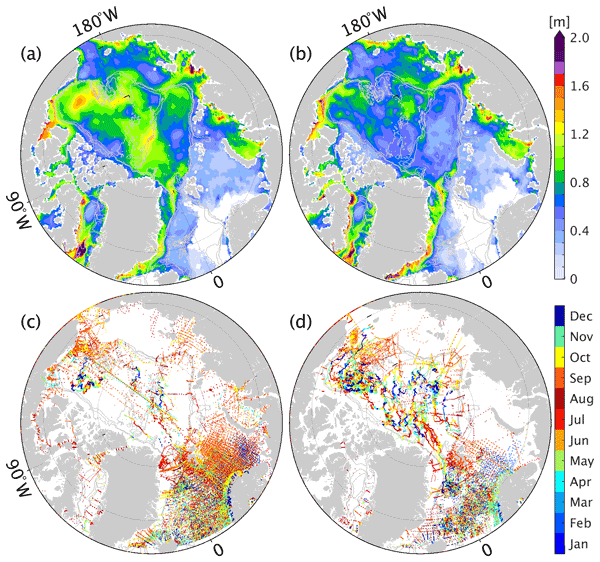
This study explores the Arctic sea level variability depending on different timescales and the relation to temperature, salinity and mass changes, identifying key parameters and regions that need to be observed coordinately. The decadal sea level variability reflects salinity changes. But it can only reflect salinity change at periods of greater than 1 year, highlighting the requirement for enhancing in situ hydrographic observations and complicated interpolation methods.
Wouter Dorigo, Irene Himmelbauer, Daniel Aberer, Lukas Schremmer, Ivana Petrakovic, Luca Zappa, Wolfgang Preimesberger, Angelika Xaver, Frank Annor, Jonas Ardö, Dennis Baldocchi, Marco Bitelli, Günter Blöschl, Heye Bogena, Luca Brocca, Jean-Christophe Calvet, J. Julio Camarero, Giorgio Capello, Minha Choi, Michael C. Cosh, Nick van de Giesen, Istvan Hajdu, Jaakko Ikonen, Karsten H. Jensen, Kasturi Devi Kanniah, Ileen de Kat, Gottfried Kirchengast, Pankaj Kumar Rai, Jenni Kyrouac, Kristine Larson, Suxia Liu, Alexander Loew, Mahta Moghaddam, José Martínez Fernández, Cristian Mattar Bader, Renato Morbidelli, Jan P. Musial, Elise Osenga, Michael A. Palecki, Thierry Pellarin, George P. Petropoulos, Isabella Pfeil, Jarrett Powers, Alan Robock, Christoph Rüdiger, Udo Rummel, Michael Strobel, Zhongbo Su, Ryan Sullivan, Torbern Tagesson, Andrej Varlagin, Mariette Vreugdenhil, Jeffrey Walker, Jun Wen, Fred Wenger, Jean Pierre Wigneron, Mel Woods, Kun Yang, Yijian Zeng, Xiang Zhang, Marek Zreda, Stephan Dietrich, Alexander Gruber, Peter van Oevelen, Wolfgang Wagner, Klaus Scipal, Matthias Drusch, and Roberto Sabia
Hydrol. Earth Syst. Sci., 25, 5749–5804, https://doi.org/10.5194/hess-25-5749-2021, https://doi.org/10.5194/hess-25-5749-2021, 2021
Short summary
Short summary
The International Soil Moisture Network (ISMN) is a community-based open-access data portal for soil water measurements taken at the ground and is accessible at https://ismn.earth. Over 1000 scientific publications and thousands of users have made use of the ISMN. The scope of this paper is to inform readers about the data and functionality of the ISMN and to provide a review of the scientific progress facilitated through the ISMN with the scope to shape future research and operations.
Cited articles
Andersen, S., Tonboe, R., Kaleschke, L., Heygster, G., and Pedersen, L.: Intercomparison of passive microwave sea ice concentration retrievals over the high-concentration Arctic sea ice, J. Geophys. Res., 112, C08004, https://doi.org/10.1029/2006JC003543, 2007.
Antonov, J., Seidov, D., Boyer, T., Locarnini, R., Mishonov, A., Garcia, H., Baranova, O., Zweng, M., and Johnson, D.: World Ocean Atlas 2009, Vol. 2, Salinity, edited by: Levitus, S., 184 pp., US Gov. Print. Off., Washington, DC, 2010.
Bartels-Rausch, T., Bergeron, V., Cartwright, J. H., Escribano, R., Finney, J. L., Grothe, H., Gutiérrez, P. J., Haapala, J., Kuhs, W. F., Pettersson, J. B., Price, S. D., Ignacio Sainz-Diaz, C., Stokes, D. J., Strazzulla, G., Thomson, E. S., Trinks, H., and Uras-Aytemiz, N.: Ice structures, patterns, and processes: a view across the icefields, Rev. Mod. Phys., 84, 885–944, 2012.
Bertino, L. and Lisæter, K. A.: The TOPAZ monitoring and prediction system for the Atlantic and Arctic Oceans, Journal of Operational Oceanography, 1, 15–19, 2008.
Brath, M., Scharffenberg, M. G., Serra, N., and Stammer, D.: Altimeter-based estimates of eddy variability and eddy transports in the subpolar North Atlantic, Mar. Geod., 33, 472–503, 2010.
Burke, W., Schmugge, T., and Paris, J.: Comparison of 2.8-and 21-cm microwave radiometer observations over soils with emission model calculations, J. Geophys. Res., 84, 287–294, 1979.
Camps, A., Vall-llossera, N., Duffo, N., Torres, F., and Corbella, I.: Performance of sea surface salinity and soil moisture retrieval algorithms with different auxiliary datasets in 2-D L-band aperture synthesis interferometric radiometers, IEEE T. Geosci. Remote, 43, 1189–1200, https://doi.org/10.1109/TGRS.2004.842096, 2005.
Camps, A., Gourrion, J., Tarongi, J., Gutierrez, A., Barbosa, J., and Castro, R.: RFI Analysis in SMOS Imagery, in: Geoscience and Remote Sensing Symposium (IGRASS proceedings 2010, 2007–2010, 2010.
Cox, G. and Weeks, W.: Equations for determining the gas and brine volumes in sea-ice samples, J. Glaciol., 29, 306–316, 1983.
Dee, D. P., Uppala, S. M., Simmons, A. J., Berrisford, P., Poli, P., Kobayashi, S., Andrae, U., Balmaseda, M. A., Balsamo, G., Bauer, P., Bechtold, P., Beljaars, A. C. M., van de Berg, L., Bidlot, J., Bormann, N., Delsol, C., Dragani, R., Fuentes, M., Geer, A. J., Haimberger, L., Healy, S. B., Hersbach, H., Hólm, E. V., Isaksen, L., Kållberg, P., Köhler, M., Matricardi, M., McNally, A. P., Monge-Sanz, B. M., Morcrette, J.-J., Park, B.-K., Peubey, C., de Rosnay, P., Tavolato, C., Thépaut, J.-N., and Vitart, F.: The ERA-Interim reanalysis: configuration and performance of the data assimilation system, Q. J. Roy. Meteorol. Soc., 137, 553–597, https://doi.org/10.1002/qj.828, 2011.
Dmitrenko, I. A., Kirillov, S. A., Ivanov, V. V., Rudels, B., Serra, N., and Koldunov, N. V.: Modified Halocline Water over the Laptev Sea Continental Margin: Historical Data Analysis, J. Climate, 25, 5556–5565, 2012.
Doronin, Y.: Thermal interaction of the atmosphere and the hydrosphere in the Arctic, CoronetBooks, Philadelphia, 1971.
Drucker, R., Martin, S., and Moritz, R.: Observations of ice thickness and frazil ice in the St. Lawrence Island polynya from satellite imagery, upward looking sonar, and salinity/temperature moorings, J. Geophys. Res.-Oceans, 108, 3149, https://doi.org/10.1029/2001JC001213, 2003.
Erlingsson, B.: Two-dimensional deformation patterns in sea ice, J. Glaciol., 34, 301–308, 1988.
Ezraty, R.: Detection and monitoring of new-ice in the East Greenland Sea using the SeaWinds scatterometer, Journal of Ocean University of Qingdao, 1, 109–118, https://doi.org/10.1007/s11802-002-0002-z, 2002.
Fekete, B. M., Vörösmarty, C. J., and Grabs, W.: Global, composite runoff fields based on observed river discharge and simulated water balances, Report 22, Global Runoff Data Centre, Federal Institute of Hydrology, Koblenz, Germany, 1999.
Frey, R. A., Ackerman, S. A., Liu, Y., Strabala, K. I., Zhang, H., Key, J. R., and Wang, X.: Cloud detection with MODIS. Part I: Improvements in the MODIS cloud mask for collection 5, J. Atmos. Ocean. Tech., 25, 1057–1072, 2008.
Godlovitch, D., Monahan, A., and Flato, G.: An idealised stochastic model of sea ice thickness dynamics, Cold. Reg. Sci. Technol., 78, 14–30, 2012.
Haas, C., Lobach, J., Hendricks, S., Rabenstein, L., and Pfaffling, A.: Helicopter-borne measurements of sea ice thickness, using a small and lightweight, digital EM system, J. Appl. Geophys., 67, 234–241, 2009.
Hall, D., Key, J., Casey, K., Riggs, G., and Cavalieri, D.: Sea ice surface temperature product from MODIS, IEEE T. Geosci. Remote, 42, 1076–1087, 2004.
Hwang, B. J., Ehn, J. K., Barber, D. G., Galley, R., and Grenfell, T. C.: Investigations of newly formed sea ice in the Cape Bathurst polynya: 2. Microwave emission, J. Geophys. Res.-Oceans, 112, C05003, https://doi.org/10.1029/2006JC003703, 2007.
Janssen, F., Schrum, C., and Backhaus, J.: A climatological data set of temperature and salinity for the Baltic Sea and the North Sea, Deutsche Hydrographische Zeitschrift, 51, 5–245, 1999.
Kaellen, E.: HIRLAM Documentation Manual, System 2.5. Swed. Meteorol. and Hydrol. Inst., Norrkoeping, Sweden, 1996, 1996.
Kaleschke, L., Maaß, N., Haas, C., Hendricks, S., Heygster, G., and Tonboe, R. T.: A sea-ice thickness retrieval model for 1.4 GHz radiometry and application to airborne measurements over low salinity sea-ice, The Cryosphere, 4, 583–592, https://doi.org/10.5194/tc-4-583-2010, 2010.
Kaleschke, L., Tian-Kunze, X., Maaß, N., Mäkynen, M., and Drusch, M.: Sea ice thickness retrieval from SMOS brightness temperatures during the Arctic freeze-up period, Geophys. Res. Lett., 39, L05501, https://doi.org/10.1029/2012GL050916, 2012.
Kaleschke, L., Tian-Kunze, X., Maass, N., Heygster, G., Huntermann, M., Wang, H., Hendricks, S., Krumpen, T., Tonboe, R., Maekynen, M., and Haas, C.: SMOS Sea Ice Retrieval Study (SMOSIce) Final Report. ESA ESTEC Contract No.:400101476/10/NL/CT, Tech. Rep., ESA ESTEC, 2013.
Kerr, Y., Waldteufel, P., Wigneron, J., Martinuzzi, J., Font, J., and Berger, M.: Soil moisture retrieval from space: The Soil Moisture and Ocean Salinity (SMOS) mission, IEEE T. Geosci. Remote, 39, 1729–1735, 2001.
Key, J. and McLaren, A.: Fractal nature of the sea ice draft profile, Geophys. Res. Lett., 18, 1437–1440, 1991.
Kovacs, A.: Sea Ice. Part 1. Bulk Salinity Versus Ice Floe Thickness, Tech. Rep., DTIC Document, 1996.
Kurtz, N. T., Farrell, S. L., Studinger, M., Galin, N., Harbeck, J. P., Lindsay, R., Onana, V. D., Panzer, B., and Sonntag, J. G.: Sea ice thickness, freeboard, and snow depth products from Operation IceBridge airborne data, The Cryosphere, 7, 1035–1056, https://doi.org/10.5194/tc-7-1035-2013, 2013.
Kwok, R. and Cunningham, G.: ICESat over Arctic sea ice: Estimation of snow depth and ice thickness, J. Geophys. Res., 113, C08010, https://doi.org/10.1029/2008JC004753, 2008.
Launiainen, J. and Cheng, B.: Modelling of ice thermodynamics in natural water bodies, Cold. Reg. Sci. Technol., 27, 153–178, 1998.
Laxon, S., Peacock, N., and Smith, D.: High interannual variability of sea ice thickness in the Arctic region, Nature, 425, 947–950, 2003.
Laxon, S. W., Giles, K. A., Ridout, A. L., Wingham, D. J., Willatt, R., Cullen, R., Kwok, R., Schweiger, A., Zhang, J., Haas, C., Hendricks, S., Krishfield, R., Kurtz, N., Farrell, S., and Davidson, M.: CryoSat-2 estimates of Arctic sea ice thickness and volume, Geophys. Res. Lett., 40, 732–737, https://doi.org/10.1002/grl.50193, 2013.
Locarnini, R., Mishonov, A., Antonov, J., Boyer, T., Garcia, H., Baranova, O., Zweng, M., and Johnson, D.: World Ocean Atlas 2009, vol. 1, Temperature, NOAA Atlas NESDIS, Report 68, US Government Printing Office, Washington, D.C., 184 pp., 2010.
Maaß, N.: Remote sensing of sea ice thickness using SMOS data, Reports on Earth System Science, available at: http://www.mpimet.mpg.de/fileadmin/publikationen/Reports/WEB_BzE_131.pdf (last access: 26 May 2014), 2013a.
Maaß, N., Kaleschke, L., Tian-Kunze, X., and Drusch, M.: Snow thickness retrieval over thick Arctic sea ice using SMOS satellite data, The Cryosphere, 7, 1971–1989, https://doi.org/10.5194/tc-7-1971-2013, 2013b.
Maekynen, M., Cheng, B., and Similae, M.: On the accuracy of thin-ice thickness retrieval using MODIS thermal imagery over Arctic first-year ice, Ann. Glaciol., 62, 87–96, https://doi.org/10.3189/2013AoG62A166, 2013.
Marshall, J., Adcroft, A., Hill, C., Perelman, L., and Heisey, C.: A finite-volume, incompressible Navier Stokes model for studies of the ocean on parallel computers, J. Geophys. Res., 102, 5753–5766, 1997.
Martin, S., Drucker, R., Kwok, R., and Holt, B.: Improvements in the estimates of ice thickness and production in the Chukchi Sea polynyas derived from AMSR-E, Geophys. Res. Lett., 32, L05505, https://doi.org/10.1029/2004GL022013, 2005.
Maykut, G. A.: Geophysics of Sea Ice, chap. The surface heat and mass balance, 395–463, Plenum, New York, 1986.
Mecklenburg, S., Drusch, M., Kerr, Y. H., Font, J., Martin-Neira, M., Delwart, S., Buenadicha, G., Reul, N., Daganzo-Eusebio, E., Oliva, R., and Crapolicchio, R.: ESA's soil moisture and ocean salinity mission: mission performance and operations, IEEE T. Geosci. Remote, 50, 1354–1366, 2012.
Menashi, J., Germain, K., Swift, C., Comiso, J., and Lohanick, A.: Low-frequency passive-microwave observations of sea ice in the Weddell Sea, J. Geophys. Res., 98, 22569–22577, 1993.
Naoki, K., Ukita, J., Nishio, F., Nakayama, M., Comiso, J. C., and Gasiewski, A.: Thin sea ice thickness as inferred from passive microwave and in situ observations, J. Geophys. Res., 113, C02S16, https://doi.org/10.1029/2007JC004270, 2008.
Nihashi, S., Ohshima, K. I., Tamura, T., Fukamachi, Y., and Saitoh, S.-I.: Thickness and production of sea ice in the Okhotsk Sea coastal polynyas from AMSR-E, J. Geophys. Res.-Oceans, 114, C10025, https://doi.org/10.1029/2008JC005222, 2009.
Notz, D. and Worster, M. G.: Desalination processes of sea ice revisited, J. Geophys. Res.-Oceans, 114, C05006, https://doi.org/10.1029/2008JC004885, 2009.
NSIDC: Morphometric characteristics of ice and snow in the Arctic Basin: aircraft landing observations from the Former Soviet Union, 1928–1989, compiled by Romanov I. P., Boulder, CO: National Snow and Ice Data Center, Digital media, 2004.
Onogi, K., Tslttsui, J., Koide, H., Sakamoto, M., Kobayashi, S., Hatsushika, H., Matsumoto, T., Yamazaki, N., Kaalhori, H., Takahashi, K., Kadokura, S., Wada, K., Kato, K., Oyama, R., Ose, T., Mannoji, N., and Taira, R.: The JRA-25 reanalysis, J. Meteorol. Soc. Jpn., 85, 369–432, 2007.
Perovich, D. K. and Elder, B. C.: Temporal evolution of Arctic sea-ice temperature, Ann. Glaciol., 33, 207–211, 2001.
Pfaffling, A., Haas, C., and Reid, J. E.: Direct helicopter EM-Sea-ice thickness inversion assessed with synthetic and field data, Geophysics, 72, F127–F137, 2007.
Pinori, S., Crapolicchio, R., and Mecklenburg, S.: Preparing the ESA-SMOS (soil moisture and ocean salinity) mission-overview of the user data products and data distribution strategy, in: Microwave Radiometry and Remote Sensing of the Environment, MICRORAD, 1–4, IEEE, 2008.
Ryvlin, A. I.: Method of forecasting flexural strength of an ice cover, Probl. Arct. Antarct., 45, 79–86, 1974.
Serra, N., Käse, R. H., Köhl, A., Stammer, D., and Quadfasel, D.: On the low-frequency phase relation between the Denmark Strait and the Faroe-Bank Channel overflows, Tellus A, 62, 530–550, https://doi.org/10.1111/j.1600-0870.2010.00445.x, 2010.
Singh, R. K., Oza, S. R., Vyas, N. K., and Sarkar, A.: Estimation of thin ice thickness from the advanced microwave scanning radiometer-EOS for coastal polynyas in the Chukchi and Beaufort Seas, IEEE T. Geosci. Remote, 49, 2993–2998, 2011.
Smith, W. H. and Sandwell, D. T.: Global sea floor topography from satellite altimetry and ship depth soundings, Science, 277, 1956–1962, 1997.
Steele, M., Morley, R., and Ermold, W.: PHC: A global ocean hydrography with a high-quality Arctic Ocean, J. Climate, 14, 2079–2087, 2001.
Tamura, T. and Ohshima, K. I.: Mapping of sea ice production in the Arctic coastal polynyas, J. Geophys. Res.-Oceans, 116, C07030, https://doi.org/10.1029/2010JC006586, 2011.
Tamura, T., Ohshima, K. I., Markus, T., Cavalieri, D. J., Nihashi, S., and Hirasawa, N.: Estimation of thin ice thickness and detection of fast ice from SSM/I data in the Antarctic Ocean, J. Atmos. Ocean. Tech., 24, 1757–1772, https://doi.org/10.1175/JTECH2113.1, 2007.
Tan, B., Li, Z.-j., Lu, P., Haas, C., and Nicolaus, M.: Morphology of sea ice pressure ridges in the northwestern Weddell Sea in winter, J. Geophys. Res.-Oceans, 117, C06024, https://doi.org/10.1029/2011JC007800, 2012.
Thorndike, A.: Estimates of sea ice thickness distribution using observations and theory, J. Geophys. Res., 97, 12601–12612, 1992.
Thorndike, A., Rothrock, D., Maykut, G., and Colony, R.: The thickness distribution of sea ice, J. Geophys. Res., 80, 4501–4513, 1975.
Unden, P. E. A.: HIRLAM-5 scientific documentation, Swed. Meteorol. and Hydrol. Inst., Norrkoeping, Sweden, 2002.
Untersteiner, N.: Calculations of temperature regime and heat budget of sea ice in the Central Arctic, J. Geophys. Res., 69, 4755–4766, 1964.
Vancoppenolle, M., Fichefet, T., and Bitz, C. M.: Modeling the salinity profile of undeformed Arctic sea ice, Geophys. Res. Lett., 33, L21501, https://doi.org/10.1029/2006GL028342, 2006.
Vant, M., Ramseier, R., and Makios, V.: The complex-dielectric constant of sea ice at frequencies in the range 0.1–40 GHz, J. Appl. Phys., 49, 1264–1280, 1978.
Wang, X., Key, J. R., and Liu, Y.: A thermodynamic model for estimating sea and lake ice thickness with optical satellite data, J. Geophys. Res.-Oceans, 115, C12035, https://doi.org/10.1029/2009JC005857, 2010.
Warren, S. G., Rigor, I. G., Untersteiner, N., Radionov, V. F., Bryazgin, N. N., Aleksandrov, Y. I., and Colony, R.: Snow depth on Arctic sea ice, J. Climate, 12, 1814–1829, 1999.
Yu, Y. and Rothrock, D.: Thin ice thickness from satellite thermal imagery, J. Geophys. Res., 101, 25753–25766, 1996.
Zhang, J. and Rothrock, D.: Modeling global sea ice with a thickness and enthalpy distribution model in generalized curvilinear coordinates, Mon. Weather Rev., 131, 845–861, 2003.


