
Articles | Volume 20, issue 6
https://doi.org/10.5194/tc-20-3435-2026
© Author(s) 2026. This work is distributed under
the Creative Commons Attribution 4.0 License.
the Creative Commons Attribution 4.0 License.
https://doi.org/10.5194/tc-20-3435-2026
© Author(s) 2026. This work is distributed under
the Creative Commons Attribution 4.0 License.
the Creative Commons Attribution 4.0 License.
Brief communication
| 
16 Jun 2026
Brief communication |
| 16 Jun 2026
| 16 Jun 2026
Brief communication: Bed mapping of southern Greenland outlet glaciers using helicopter-borne ground penetrating radar (AIRETH)

Laboratory of Hydraulics, Hydrology and Glaciology (VAW), ETH Zürich, Zürich, Switzerland
Swiss Federal Institute for Forest, Snow and Landscape Research (WSL), Sion, Switzerland
Huw J. Horgan
Laboratory of Hydraulics, Hydrology and Glaciology (VAW), ETH Zürich, Zürich, Switzerland
Swiss Federal Institute for Forest, Snow and Landscape Research (WSL), Sion, Switzerland
Antarctic Research Centre, Victoria University of Wellington, Wellington, New Zealand
Raphael Moser
Laboratory of Hydraulics, Hydrology and Glaciology (VAW), ETH Zürich, Zürich, Switzerland
Swiss Federal Institute for Forest, Snow and Landscape Research (WSL), Sion, Switzerland
Nanna Bjørnholt Karlsson
Geological Survey of Denmark and Greenland, Copenhagen, Denmark
Faezeh M. Nick
Faculty of Geosciences, Utrecht University, Utrecht, the Netherlands
Andreas Vieli
Department of Geography, University of Zürich, Zürich, Switzerland
Anja Rutishauser
Geological Survey of Denmark and Greenland, Copenhagen, Denmark
Hansruedi Maurer
Institute of Geophysics, ETH Zürich, Zürich, Switzerland
Daniel Farinotti
Laboratory of Hydraulics, Hydrology and Glaciology (VAW), ETH Zürich, Zürich, Switzerland
Swiss Federal Institute for Forest, Snow and Landscape Research (WSL), Sion, Switzerland
Related authors
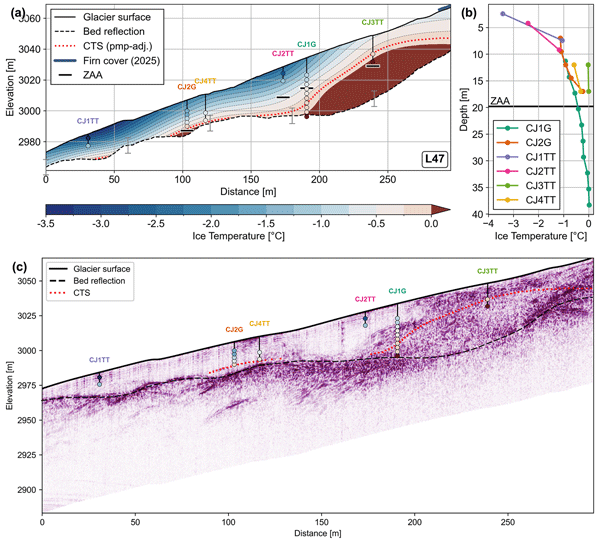
Janosch Beer, Mylène Jacquemart, Matthias Huss, Ilaria Santin, Gabriela Clara Racz, Christophe Ogier, Saskia Gindraux, Leo Hösli, Raphael Moser, James Irving, Mauro Fischer, and Daniel Farinotti
The Cryosphere, 20, 5453–5473, https://doi.org/10.5194/tc-20-5453-2026, https://doi.org/10.5194/tc-20-5453-2026, 2026
Short summary
Short summary
Small Alpine glaciers can exhibit a mix of cold and temperate ice, a polythermal structure, which can promote hazardous conditions. We drilled into six small Swiss glaciers and measured ice temperatures in boreholes. We found polythermal conditions in three of six sites and show that the thermal structure is linked to firn cover loss. Our results suggest that polythermal glaciers may be more common in the Alps than previously recognised.
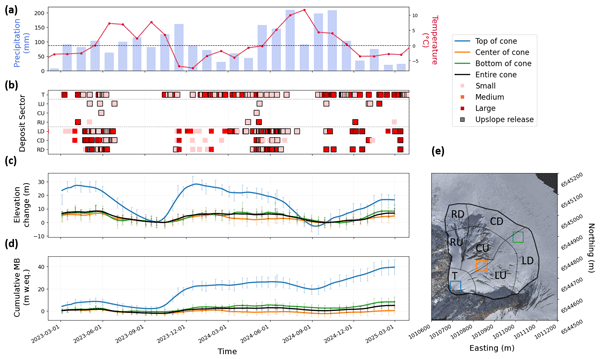
Marin Kneib, Patrick Wagnon, Laurent Arnaud, Louise Balmas, Olivier Laarman, Bruno Jourdain, Amaury Dehecq, Emmanuel Lemeur, Fanny Brun, Andrea Kneib-Walter, Ilaria Santin, Laurane Charrier, Thierry Faug, Giulia Mazzotti, Antoine Rabatel, Delphine Six, and Daniel Farinotti
The Cryosphere, 20, 5327–5344, https://doi.org/10.5194/tc-20-5327-2026, https://doi.org/10.5194/tc-20-5327-2026, 2026
Short summary
Short summary
Avalanches are vital for glacier survival, yet their impact is difficult to quantify. We used low-cost cameras and drones to monitor an avalanche cone in the French Alps for two years. By accounting for ice flow, we found that avalanches can deposit 30 meters of snow annually – 50 times more than normal snowfall. This high-frequency data reveals that these cones fill until reaching a specific steepness, after which new snow slides further down to the base.

Christophe Ogier, Mauro A. Werder, Olivier Gagliardini, Ilaria Santin, Raphael Moser, Romain Hugonnet, Antoine Blanc, and Daniel Farinotti
Nat. Hazards Earth Syst. Sci., 26, 3901–3917, https://doi.org/10.5194/nhess-26-3901-2026, https://doi.org/10.5194/nhess-26-3901-2026, 2026
Short summary
Short summary
In June 2024, a destructive flood impacted the village of La Bérarde in the French Alps. Rain, snowmelt, and the drainage of a surface lake on a glacier cannot fully explain the flood magnitude. We used glacier topography to estimate how much water could also have been stored beneath the glacier before the event. Our results show that large volumes of hidden water may have existed and could have amplified the flood, highlighting an overlooked hazard in debris-covered mountain glaciers.
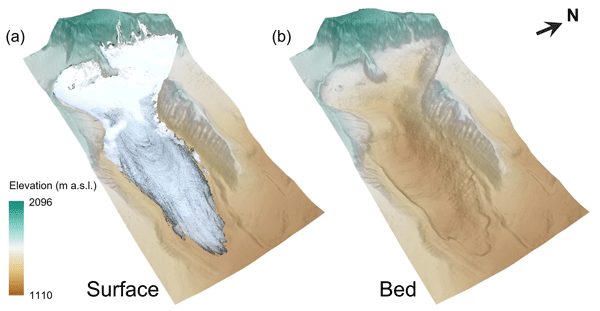
Zhuo Wang, Neil Ross, Thomas Frank, Jamie Barnett, Ilaria Santin, Martin Houssais, Johanna Dahlkvist, and Nina Kirchner
Earth Syst. Sci. Data, 18, 4241–4262, https://doi.org/10.5194/essd-18-4241-2026, https://doi.org/10.5194/essd-18-4241-2026, 2026
Short summary
Short summary
Under global warming, Sweden's remaining glaciers are shrinking rapidly, and all four Swedish reference glaciers (Mårmaglaciären, Storglaciären, Rabots glaciär, and Riukojietna) may disappear within this century. To better project their future evolution, we measured the ice thickness of the four glaciers using radio-echo sounding and mapped the bed topography beneath the ice. These maps provide essential insights into future landscapes, ecosystems, and policymaking.
Sebastian H. R. Rosier, Thomas Gregov, Guillaume Jouvet, and Andreas Vieli
EGUsphere, https://doi.org/10.5194/egusphere-2026-5523, https://doi.org/10.5194/egusphere-2026-5523, 2026
This preprint is open for discussion and under review for The Cryosphere (TC).
Short summary
Short summary
Mountain glacier projections usually rely on flowline models or simplified ice flow, because higher order models are too slow to run many times or at high resolution. We built a training set of 350,000 flow solutions across tens of thousands of synthetic glaciers, far larger than anything before, and trained a neural network on both these solutions and the flow physics itself. It matches the original solver on glaciers it has never seen, and is cheap enough to make large ensembles affordable.
Janosch Beer, Mylène Jacquemart, Matthias Huss, Ilaria Santin, Gabriela Clara Racz, Christophe Ogier, Saskia Gindraux, Leo Hösli, Raphael Moser, James Irving, Mauro Fischer, and Daniel Farinotti
The Cryosphere, 20, 5453–5473, https://doi.org/10.5194/tc-20-5453-2026, https://doi.org/10.5194/tc-20-5453-2026, 2026
Short summary
Short summary
Small Alpine glaciers can exhibit a mix of cold and temperate ice, a polythermal structure, which can promote hazardous conditions. We drilled into six small Swiss glaciers and measured ice temperatures in boreholes. We found polythermal conditions in three of six sites and show that the thermal structure is linked to firn cover loss. Our results suggest that polythermal glaciers may be more common in the Alps than previously recognised.
Marin Kneib, Patrick Wagnon, Laurent Arnaud, Louise Balmas, Olivier Laarman, Bruno Jourdain, Amaury Dehecq, Emmanuel Lemeur, Fanny Brun, Andrea Kneib-Walter, Ilaria Santin, Laurane Charrier, Thierry Faug, Giulia Mazzotti, Antoine Rabatel, Delphine Six, and Daniel Farinotti
The Cryosphere, 20, 5327–5344, https://doi.org/10.5194/tc-20-5327-2026, https://doi.org/10.5194/tc-20-5327-2026, 2026
Short summary
Short summary
Avalanches are vital for glacier survival, yet their impact is difficult to quantify. We used low-cost cameras and drones to monitor an avalanche cone in the French Alps for two years. By accounting for ice flow, we found that avalanches can deposit 30 meters of snow annually – 50 times more than normal snowfall. This high-frequency data reveals that these cones fill until reaching a specific steepness, after which new snow slides further down to the base.
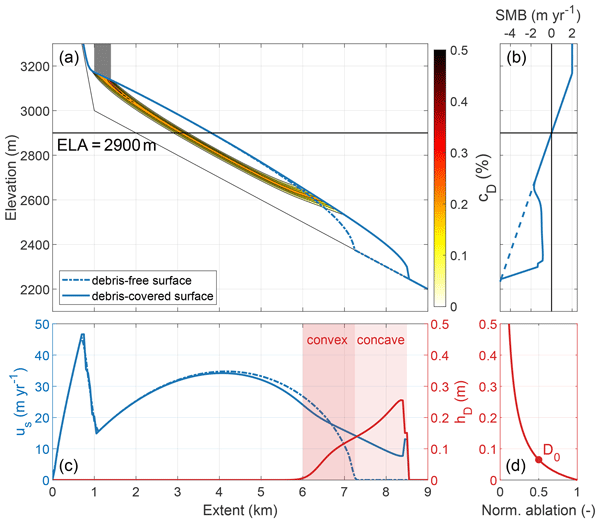
Florian Hardmeier, James C. Ferguson, and Andreas Vieli
The Cryosphere, 20, 5365–5392, https://doi.org/10.5194/tc-20-5365-2026, https://doi.org/10.5194/tc-20-5365-2026, 2026
Short summary
Short summary
As mountain glaciers are retreating, they are becoming increasingly debris-covered. We want to better understand how these glaciers respond to a changing climate. Here, we present an improved model that simulates transport of debris within and on the glacier. We find that short-term changes have a low impact due to long response times. However, long-term warming can lead to fast collapse of the glacier tongue after a phase of thinning, where debris cover expands and thickens.
Aris Kwadijk, Philip D. A. Kraaijenbrink, Faezeh M. Nick, Joseph M. Shea, Jakob F. Steiner, René R. Wijngaard, and Walter W. Immerzeel
EGUsphere, https://doi.org/10.5194/egusphere-2026-5005, https://doi.org/10.5194/egusphere-2026-5005, 2026
This preprint is open for discussion and under review for Hydrology and Earth System Sciences (HESS).
Short summary
Short summary
The Himalayas supply water to millions of people downstream, yet high-altitude rainfall remains poorly understood. Using thirteen years of data from weather stations across Nepal's Langtang Valley, we found that during the monsoon the moist atmosphere causes rainfall to be highly sensitive to topography. We show how precipitation-elevation gradients shift during the day. This shift is captured in a numerical relation, that can serve to validate weather models.
Christophe Ogier, Mauro A. Werder, Olivier Gagliardini, Ilaria Santin, Raphael Moser, Romain Hugonnet, Antoine Blanc, and Daniel Farinotti
Nat. Hazards Earth Syst. Sci., 26, 3901–3917, https://doi.org/10.5194/nhess-26-3901-2026, https://doi.org/10.5194/nhess-26-3901-2026, 2026
Short summary
Short summary
In June 2024, a destructive flood impacted the village of La Bérarde in the French Alps. Rain, snowmelt, and the drainage of a surface lake on a glacier cannot fully explain the flood magnitude. We used glacier topography to estimate how much water could also have been stored beneath the glacier before the event. Our results show that large volumes of hidden water may have existed and could have amplified the flood, highlighting an overlooked hazard in debris-covered mountain glaciers.
Sandra Wells, Ivan Utkin, Ian J. Hewitt, Daniel Farinotti, and Mauro A. Werder
EGUsphere, https://doi.org/10.5194/egusphere-2026-4310, https://doi.org/10.5194/egusphere-2026-4310, 2026
Short summary
Short summary
We present GlaDS-2, a new subglacial drainage model that builds upon GlaDS by including the regimes of ice uplift and free-surface flow. We demonstrate its capabilities by simulating the rapid drainage of a supraglacial lake, both for a synthetic setup and for North Lake in Greenland. Our results show the formation of a traveling subglacial water blister inducing transient ice uplift, which align well with observations, and capture free-surface flow at the ice margins and in the proglacial zone.
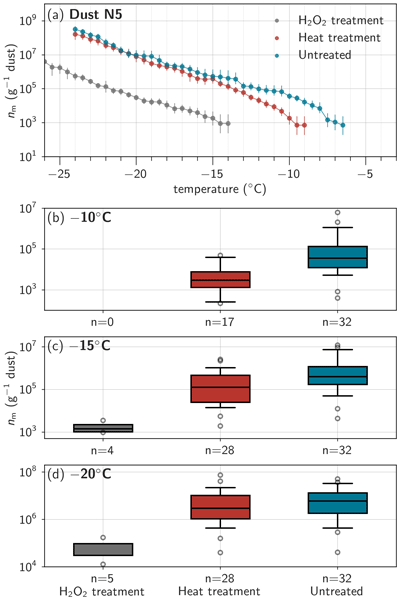
Nora Bergner, Grace Marsh, Kevin Barry, Larissa Lacher, Alexander Böhmländer, Joanna Alden, Carina Ahlqvist, Ianina Altshuler, Lisa Bröder, Daniel Farinotti, Lionel Favre, Coline Guillosson, Benjamin Heutte, Kristina Höhler, Roman Pohorsky, Julian Weng, and Julia Schmale
Atmos. Chem. Phys., 26, 10557–10585, https://doi.org/10.5194/acp-26-10557-2026, https://doi.org/10.5194/acp-26-10557-2026, 2026
Short summary
Short summary
Dust from Greenlandic glacial outwash plains can form ice in clouds, a process relevant for climate. Its ice-nucleating activity varies strongly and is largely controlled by small amounts of biological material. During summer, the influence on atmospheric ice-nucleating particles is mostly local. Lower activity compared to other high-latitude dust sources highlights the need to account for regional differences in Arctic dust.
Michelle Marie Worek, David Wachs, Anja Eichler, Matthias Huss, Raphael Moser, Sabina Brütsch, Sönke Szidat, Margit Schwikowski, and Theo Manuel Jenk
EGUsphere, https://doi.org/10.5194/egusphere-2026-3356, https://doi.org/10.5194/egusphere-2026-3356, 2026
Short summary
Short summary
To assess whether current glacier loss in the Alps is unprecedented, we drilled ice cores from the Tödi summit glacier in Switzerland. We dated the ice with radionuclides and modelling, finding that the surface ice is from about 1960, and the deepest ice is 10,000 years old. Our results show that summit glaciers can preserve very old ice through warm periods, indicating local factors matter more than elevation, and some cold-based glaciers at risk of melting may preserve ancient climate data.
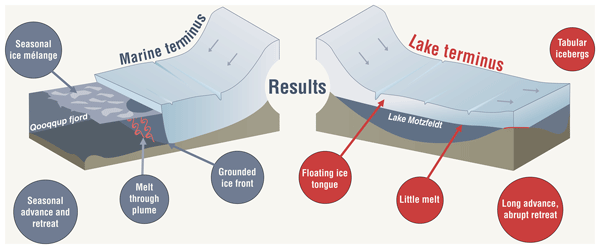
Florian Vacek, Faezeh M. Nick, Douglas Benn, Maarten P. A. Zwarts, Walter Immerzeel, and Roderik S. W. van de Wal
The Cryosphere, 20, 3827–3845, https://doi.org/10.5194/tc-20-3827-2026, https://doi.org/10.5194/tc-20-3827-2026, 2026
Short summary
Short summary
We studied a unique glacier in South Greenland that ends in both a lake and the ocean. Using satellite data and field work, we found that the two glacier fronts behave very differently even under the same climate. At the lake glacier we identify a floating ice tongue and we infer little melt below water. The lake glacier experienced a sudden large breakup. Our work suggests that lake and marine glacier fronts must be treated differently in model simulations.
Zhuo Wang, Neil Ross, Thomas Frank, Jamie Barnett, Ilaria Santin, Martin Houssais, Johanna Dahlkvist, and Nina Kirchner
Earth Syst. Sci. Data, 18, 4241–4262, https://doi.org/10.5194/essd-18-4241-2026, https://doi.org/10.5194/essd-18-4241-2026, 2026
Short summary
Short summary
Under global warming, Sweden's remaining glaciers are shrinking rapidly, and all four Swedish reference glaciers (Mårmaglaciären, Storglaciären, Rabots glaciär, and Riukojietna) may disappear within this century. To better project their future evolution, we measured the ice thickness of the four glaciers using radio-echo sounding and mapped the bed topography beneath the ice. These maps provide essential insights into future landscapes, ecosystems, and policymaking.
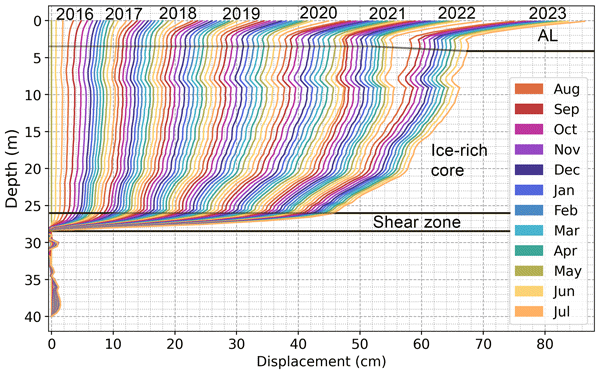
Giulio Saibene, Isabelle Gärtner-Roer, Jan Beutel, and Andreas Vieli
The Cryosphere, 20, 3511–3532, https://doi.org/10.5194/tc-20-3511-2026, https://doi.org/10.5194/tc-20-3511-2026, 2026
Short summary
Short summary
Rock glaciers are bodies of frozen ground found in mountain regions. They move downslope and are mainly studied at the surface. Here, we analyze deformation data from a borehole, providing continuous data for almost eight years. The data shows that the acceleration in the summer movement happens in the uppermost layer, while long-term movement is mostly occurring in a deeper layer. This is important for the interpretation of surface movements, which are used as climate indicators.
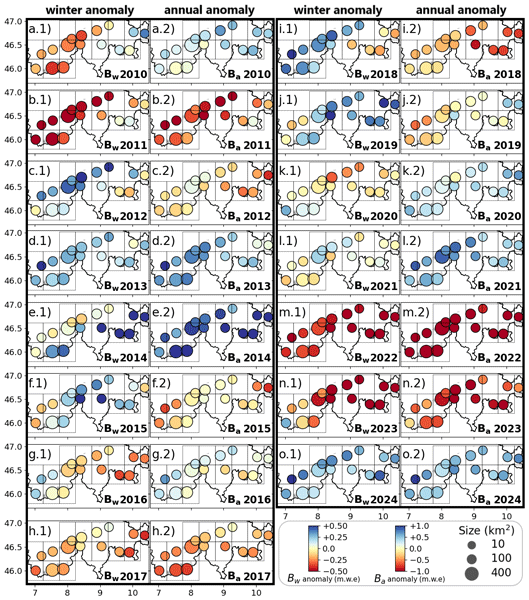
Aaron Cremona, Matthias Huss, Johannes Marian Landmann, Mauro Marty, Marijn van der Meer, Christian Ginzler, and Daniel Farinotti
The Cryosphere, 20, 3111–3130, https://doi.org/10.5194/tc-20-3111-2026, https://doi.org/10.5194/tc-20-3111-2026, 2026
Short summary
Short summary
Our study provides daily mass balance estimates for every Swiss glacier from 2010–2024 using modelling, remote sensing observations, and machine learning. Over the period, Swiss glaciers lost nearly a quarter of their ice volume. The approach enables investigating the spatio-temporal variability of glacier mass balance in relation to the driving climatic factors.
Anne Solgaard, Anders Kusk, John Peter Merryman Boncori, Jørgen Dall, Andreas P. Ahlstrøm, Signe B. Andersen, Michele Citterio, Penelope How, Nanna B. Karlsson, Kristian K. Kjeldsen, Signe H. Larsen, Mads C. Lund, Anja Løkkegaard, Martin P. Lüthi, Jessica Mejia, Kenneth D. Mankoff, Dirk van As, Shin Sugiyama, and Robert S. Fausto
Earth Syst. Sci. Data Discuss., https://doi.org/10.5194/essd-2026-221, https://doi.org/10.5194/essd-2026-221, 2026
Preprint under review for ESSD
Short summary
Short summary
We present the PROMICE ice-velocity dataset, a time series of maps showing how fast the Greenland Ice Sheet flows. The time series is created using satellite radar images from Sentinel-1 since 2016 and is updated with a new map every 12 days providing a detailed view of ice sheet wide dynamics for more than a decade. Continuous updates and improvements, such as those presented here, are essential for maintaining long, consistent, high-quality records of key climate variables for research.
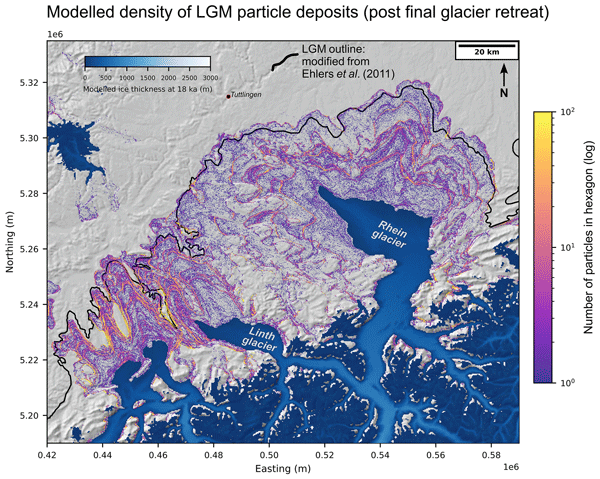
Tancrède P. M. Leger, Guillaume Jouvet, Sarah Kamleitner, Brandon D. Finley, Maxime Bernard, Balthazar Allegri, Frédéric Herman, Andreas Vieli, Andreas Henz, and Samuel U. Nussbaumer
Earth Surf. Dynam., 14, 361–389, https://doi.org/10.5194/esurf-14-361-2026, https://doi.org/10.5194/esurf-14-361-2026, 2026
Short summary
Short summary
This study reconstructs for the first time the transport-pathways of sediments by glaciers during the last glaciation of the European Alps, 24000 years ago. This helps us understand how the European Alps were shaped by past glaciations and helps us better constrain the mechanisms of iceflow, glacier erosion and the movement of large sediment masses by ice. This breakthrough is achieved by coupling a smart particle-tracking algorithm to a machine-learning-enhanced glacier evolution model.
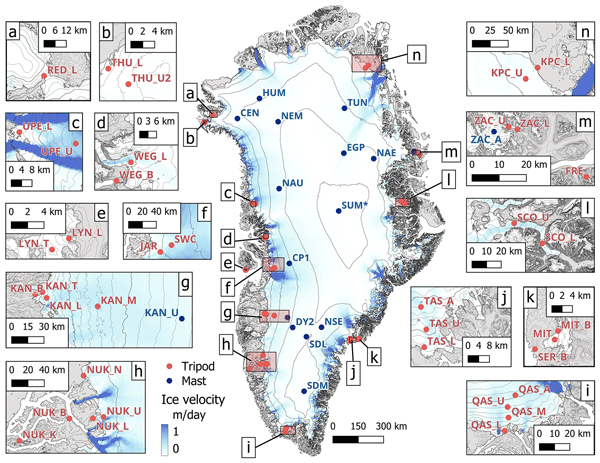
Robert S. Fausto, Penelope How, Baptiste Vandecrux, Mads C. Lund, Jason E. Box, Kenneth D. Mankoff, Signe B. Andersen, Dirk van As, Rasmus Bahbah, Michele Citterio, William Colgan, Henrik T. Jakobsgaard, Nanna B. Karlsson, Kristian K. Kjeldsen, Signe H. Larsen, Charlotte Olsen, Falk M. Oraschewski, Anja Rutishauser, Christopher L. Shields, Anne M. Solgaard, Ian T. Stevens, Synne H. Svendsen, Kirsty Langley, Alexandra Messerli, Anders A. Bjørk, Jonas K. Andersen, Jakob Abermann, Jakob Steiner, Rainer Prinz, Berhard Hynek, James M. Lea, Stephen Brough, and Andreas P. Ahlstrøm
Earth Syst. Sci. Data, 18, 2829–2873, https://doi.org/10.5194/essd-18-2829-2026, https://doi.org/10.5194/essd-18-2829-2026, 2026
Short summary
Short summary
In summary, the PROMICE (Programme for Monitoring of the Greenland Ice Sheet ) | GC-NET AWS (Greenland Climate Network automatic weather station) data product update represents a significant advancement in Arctic climate monitoring. Through enhanced station designs, state-of-the-art instrumentation, and a transparent, automated data processing workflow, the dataset offers an essential resource for studying the Greenland Ice Sheet and its periphery, validating climate models, and supporting global assessments of cryospheric change.
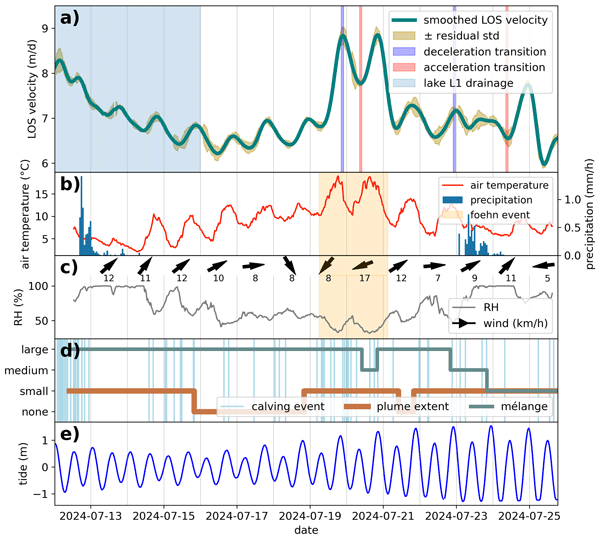
Armin Dachauer, Andrea Kneib-Walter, Dominik Gräff, and Andreas Vieli
The Cryosphere, 20, 2099–2125, https://doi.org/10.5194/tc-20-2099-2026, https://doi.org/10.5194/tc-20-2099-2026, 2026
Short summary
Short summary
Terrestrial radar observations were used to investigate flow speed changes at Eqalorutsit Kangilliit Sermiat, a marine-terminating glacier in Greenland. The velocity varied on both daily and multi-day timescales, showing that the glacier speeds up markedly when meltwater or lake drainage increases basal water pressure. Usually speed changes move downstream with time towards the glacier front, but during multi-day speed-up events they start at the front and travel upstream.
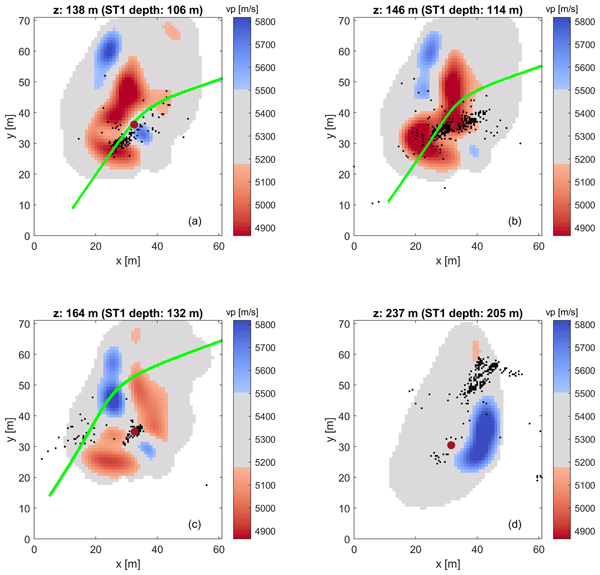
Miriam Larissa Schwarz, Hansruedi Maurer, Anne Christine Obermann, Paul Antony Selvadurai, Alexis Shakas, Stefan Wiemer, and Domenico Giardini
Solid Earth, 17, 347–368, https://doi.org/10.5194/se-17-347-2026, https://doi.org/10.5194/se-17-347-2026, 2026
Short summary
Short summary
We applied fat ray travel time tomography to image the geothermal testbed at the BedrettoLab (Switzerland). An active seismic crosshole survey provided a dataset of 41’881 manually picked first breaks. The complex major fault zone was identified by a 3D velocity model and validated with wireline logs and geological observations. Induced seismicity from hydraulic stimulation experiments preferentially occurs in intermediate-velocity regions, possibly due to the presence of stress gradients.
Marit van Tiel, Matthias Huss, Massimiliano Zappa, Tobias Jonas, and Daniel Farinotti
Hydrol. Earth Syst. Sci., 30, 23–43, https://doi.org/10.5194/hess-30-23-2026, https://doi.org/10.5194/hess-30-23-2026, 2026
Short summary
Short summary
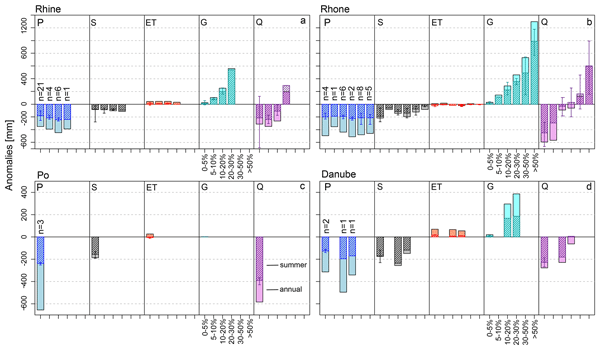
The summer of 2022 was extremely warm and dry in Europe, severely impacting water availability. We calculated water balance anomalies for 88 glacierized catchments in Switzerland, showing that glaciers played a crucial role in alleviating the drought situation by melting at record rates, partially compensating for the lack of rain and snowmelt. By comparing 2022 with past extreme years, we show that while glacier meltwater remains essential during droughts, its contribution is declining.
Samuel Weber, Andreas Vieli, Marcia Phillips, and Alessandro Cicoira
The Cryosphere, 19, 6727–6748, https://doi.org/10.5194/tc-19-6727-2025, https://doi.org/10.5194/tc-19-6727-2025, 2025
Short summary
Short summary
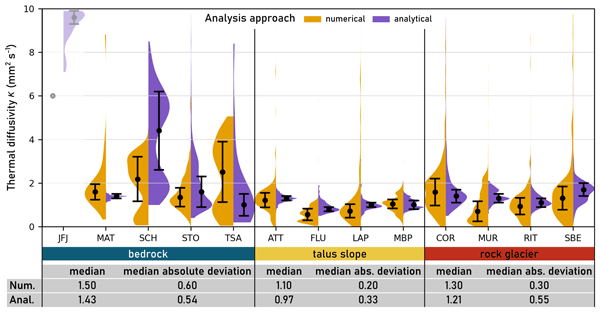
The properties of the permafrost ground depend on its temperature and composition. We used temperature data from 29 boreholes in Switzerland to study how heat moves through different types of mountain permafrost landforms, supporting a physically meaningful interpretation of thermal properties in terms of ice content, water saturation, and porosity. Understanding changes is important because they can affect how stable mountain slopes are and how easy it is to build things in mountain areas.

Matthew Davis Tankersley, Huw Horgan, Fabio Caratori Tontini, and Kirsty Tinto
The Cryosphere, 19, 6827–6864, https://doi.org/10.5194/tc-19-6827-2025, https://doi.org/10.5194/tc-19-6827-2025, 2025
Short summary
Short summary
We studied how gravity data can be used to estimate the shape of the seafloor beneath Antarctica’s floating ice shelves, where direct measurements are difficult. Using computer models based on real data, we tested when this method works well and where it has limits. We found that it could greatly improve seafloor maps for most ice shelves with high-quality gravity data. Better models of the seafloor will help us understand how ocean water melts ice from below, affecting future sea level rise.
Alexandra von der Esch, Matthias Huss, Marit van Tiel, Justine Berg, and Daniel Farinotti
Hydrol. Earth Syst. Sci., 29, 6761–6780, https://doi.org/10.5194/hess-29-6761-2025, https://doi.org/10.5194/hess-29-6761-2025, 2025
Short summary
Short summary
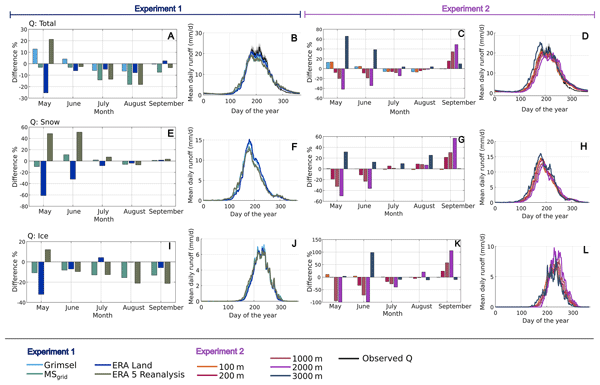
Glaciers are vital water sources, especially in alpine regions. Using the Glacier Evolution Runoff Model (GERM), we examined how forcing data and model resolution impact glacio-hydrological model results. We find that precipitation biases greatly affect results, and coarse resolutions miss critical small-scale details. This highlights the trade-offs between computational efficiency and model accuracy, emphasizing the need for high-resolution data and precise calibration for reliable predictions.
Laura Gabriel, Marian Hertrich, Christophe Ogier, Mike Müller-Petke, Raphael Moser, Hansruedi Maurer, and Daniel Farinotti
The Cryosphere, 19, 6261–6281, https://doi.org/10.5194/tc-19-6261-2025, https://doi.org/10.5194/tc-19-6261-2025, 2025
Short summary
Short summary
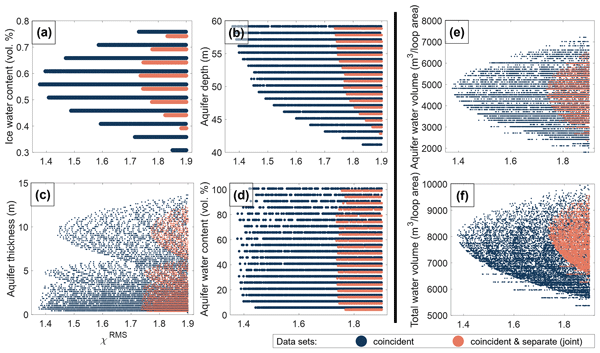
Surface nuclear magnetic resonance (SNMR) is a geophysical technique directly sensitive to liquid water. We expand the limited applications of SNMR on glaciers by detecting water within Rhonegletscher, Switzerland. By carefully processing the data to reduce noise, we identified signals indicating a water layer near the base of the glacier, surrounded by ice with low water content. Our findings, validated by radar measurements, show SNMR's potential and limitations in studying water in glaciers.
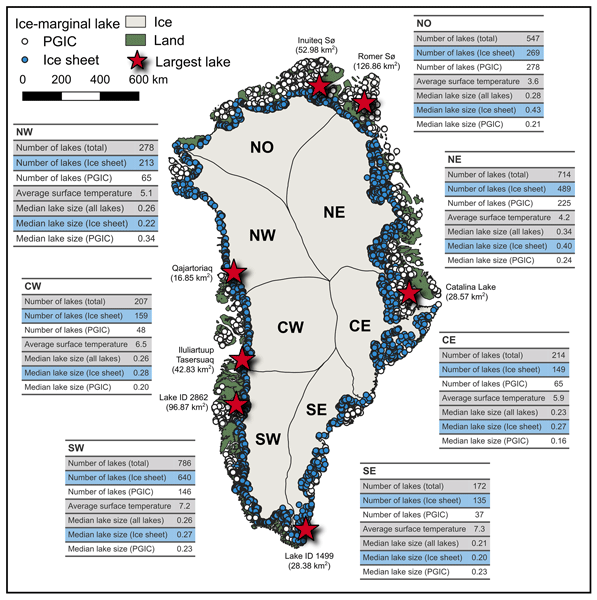
Penelope How, Dorthe Petersen, Kristian K. Kjeldsen, Katrine Raundrup, Nanna B. Karlsson, Alexandra Messerli, Anja Rutishauser, Jonathan L. Carrivick, James M. Lea, Robert S. Fausto, Andreas P. Ahlstrøm, and Signe B. Andersen
Earth Syst. Sci. Data, 17, 6331–6351, https://doi.org/10.5194/essd-17-6331-2025, https://doi.org/10.5194/essd-17-6331-2025, 2025
Short summary
Short summary
We mapped 2918 ice-marginal lakes across Greenland (2016–2023), revealing changes in size, abundance and temperature. This open dataset improves understanding of terrestrial water storage, glacier dynamics, and Arctic ecology, supporting research on sea level rise, glacier-lake interactions, and sustainable resource planning including hydropower development under Greenland’s climate commitments.
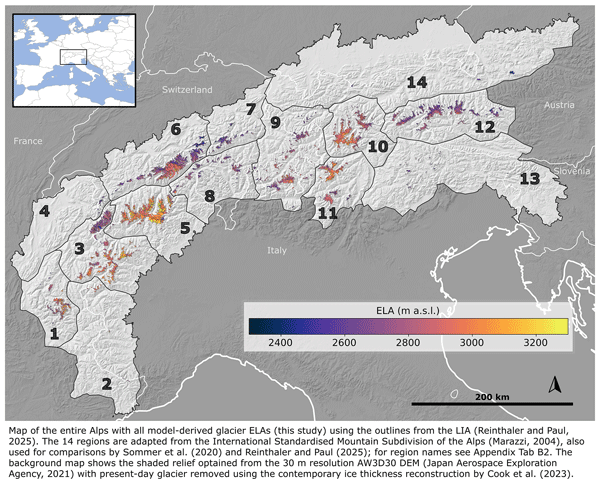
Andreas Henz, Johannes Reinthaler, Samuel U. Nussbaumer, Tancrède P. M. Leger, Sarah Kamleitner, Guillaume Jouvet, and Andreas Vieli
The Cryosphere, 19, 5913–5937, https://doi.org/10.5194/tc-19-5913-2025, https://doi.org/10.5194/tc-19-5913-2025, 2025
Short summary
Short summary
Glaciers are key to understanding climate change, reflecting historical variability. Using glacier models on the computer, we reconstructed European Alps glaciers during the Little Ice Age, with a total ice volume of 283 ± 42 cubic kilometres. Also, the study determines equilibrium line altitudes (ELAs) for over 4000 glaciers, showing patterns influenced by temperature, precipitation, and solar radiation. After all, we introduce a new ELA correction approach based on solar incidence.
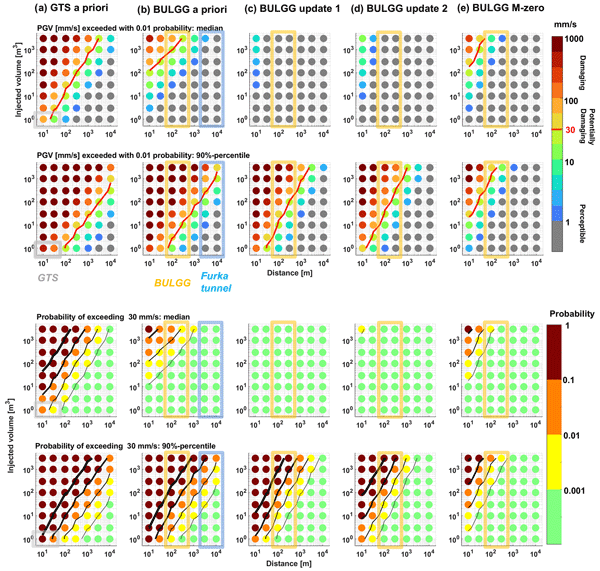
Valentin Samuel Gischig, Antonio Pio Rinaldi, Andres Alcolea, Falko Bethman, Marco Broccardo, Kai Bröker, Raymi Castilla, Federico Ciardo, Victor Clasen Repollés, Virginie Durand, Nima Gholizadeh Doonechaly, Marian Hertrich, Rebecca Hochreutener, Philipp Kästli, Dimitrios Karvounis, Xiaodong Ma, Men-Andrin Meier, Peter Meier, Maria Mesimeri, Arnaud Mignan, Anne Obermann, Katrin Plenkers, Martina Rosskopf, Francisco Serbeto, Paul Selvadurai, Alexis Shakas, Linus Villiger, Quinn Wenning, Alba Zappone, Jordan Aaron, Hansruedi Maurer, Domenico Giardini, and Stefan Wiemer
Solid Earth, 16, 1153–1180, https://doi.org/10.5194/se-16-1153-2025, https://doi.org/10.5194/se-16-1153-2025, 2025
Short summary
Short summary
Induced earthquakes present a major obstacle for developing geoenergy resources. These occur during hydraulic stimulations that enhance fluid pathways in the rock. In the Bedretto Underground Laboratory, hydraulic stimulations are investigated in a downscaled manner. A workflow to analyze the hazard posed by induced earthquakes is applied at different stages of the test program. The hazard estimates illustrate the difficulty in reducing the uncertainty due to the variable seismogenic responses.
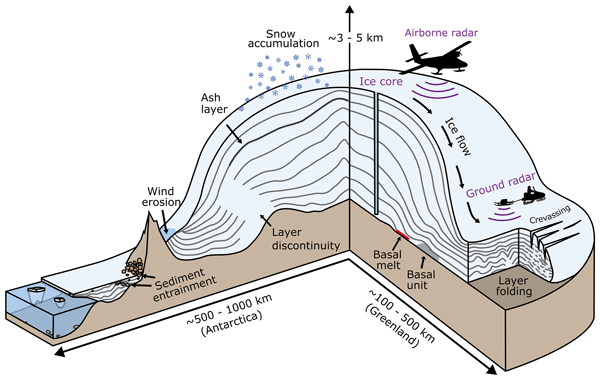
Robert G. Bingham, Julien A. Bodart, Marie G. P. Cavitte, Ailsa Chung, Rebecca J. Sanderson, Johannes C. R. Sutter, Olaf Eisen, Nanna B. Karlsson, Joseph A. MacGregor, Neil Ross, Duncan A. Young, David W. Ashmore, Andreas Born, Winnie Chu, Xiangbin Cui, Reinhard Drews, Steven Franke, Vikram Goel, John W. Goodge, A. Clara J. Henry, Antoine Hermant, Benjamin H. Hills, Nicholas Holschuh, Michelle R. Koutnik, Gwendolyn J.-M. C. Leysinger Vieli, Emma J. MacKie, Elisa Mantelli, Carlos Martín, Felix S. L. Ng, Falk M. Oraschewski, Felipe Napoleoni, Frédéric Parrenin, Sergey V. Popov, Therese Rieckh, Rebecca Schlegel, Dustin M. Schroeder, Martin J. Siegert, Xueyuan Tang, Thomas O. Teisberg, Kate Winter, Shuai Yan, Harry Davis, Christine F. Dow, Tyler J. Fudge, Tom A. Jordan, Bernd Kulessa, Kenichi Matsuoka, Clara J. Nyqvist, Maryam Rahnemoonfar, Matthew R. Siegfried, Shivangini Singh, Vjeran Višnjević, Rodrigo Zamora, and Alexandra Zuhr
The Cryosphere, 19, 4611–4655, https://doi.org/10.5194/tc-19-4611-2025, https://doi.org/10.5194/tc-19-4611-2025, 2025
Short summary
Short summary
The ice sheets covering Antarctica have built up over millenia through successive snowfall events which become buried and preserved as internal surfaces of equal age detectable with ice-penetrating radar. This paper describes an international initiative working together on these archival data to build a comprehensive 3-D picture of how old the ice is everywhere across Antarctica and how this is being used to reconstruct past and to predict future ice and climate behaviour.
Bastien Ruols, Johanna Klahold, Daniel Farinotti, and James Irving
The Cryosphere, 19, 4045–4059, https://doi.org/10.5194/tc-19-4045-2025, https://doi.org/10.5194/tc-19-4045-2025, 2025
Short summary
Short summary
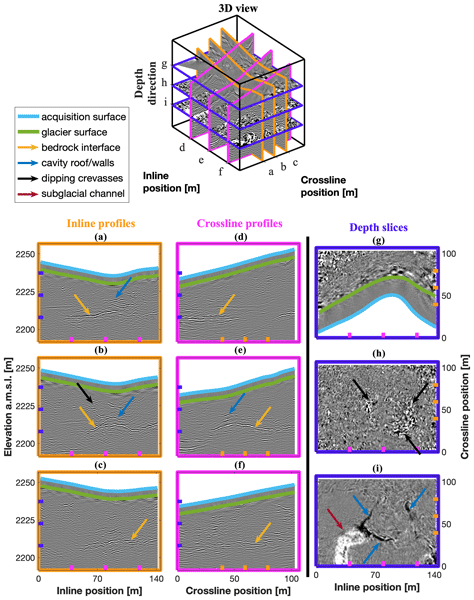
We demonstrate the use of a drone-based ground-penetrating radar (GPR) system to gather high-resolution, high-density 4D data over a near-terminus glacier collapse feature. We monitor the growth of an air cavity and the evolution of the subglacial drainage system, providing insights into the dynamics of the collapse event. This work highlights potential future applications of drone-based GPR for monitoring glaciers, in particular in regions which are inaccessible by surface-based methods.
Ian Delaney, Andrew J. Tedstone, Mauro A. Werder, and Daniel Farinotti
The Cryosphere, 19, 2779–2795, https://doi.org/10.5194/tc-19-2779-2025, https://doi.org/10.5194/tc-19-2779-2025, 2025
Short summary
Short summary
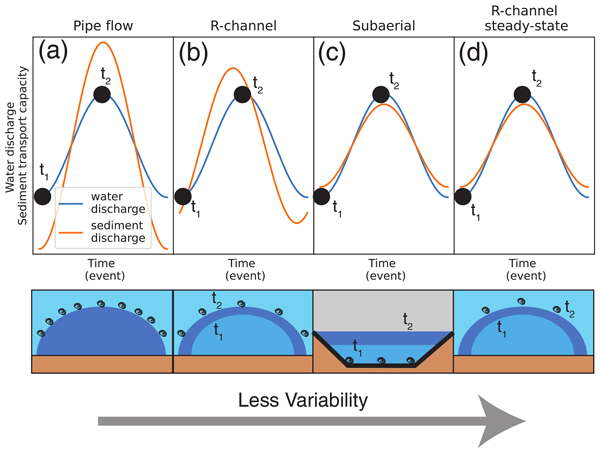
Sediment transport capacity depends on water velocity and channel width. In rivers, water discharge changes affect flow depth, width, and velocity. Yet, under glaciers, discharge variations alter velocity more than channel shape. Due to these differences, this study shows that sediment transport capacity under glaciers varies widely and peaks before water flow, creating a complex relationship. Understanding these dynamics helps interpret sediment discharge from glaciers in different climates.
Jane Walden, Mylène Jacquemart, Bretwood Higman, Romain Hugonnet, Andrea Manconi, and Daniel Farinotti
Nat. Hazards Earth Syst. Sci., 25, 2045–2073, https://doi.org/10.5194/nhess-25-2045-2025, https://doi.org/10.5194/nhess-25-2045-2025, 2025
Short summary
Short summary
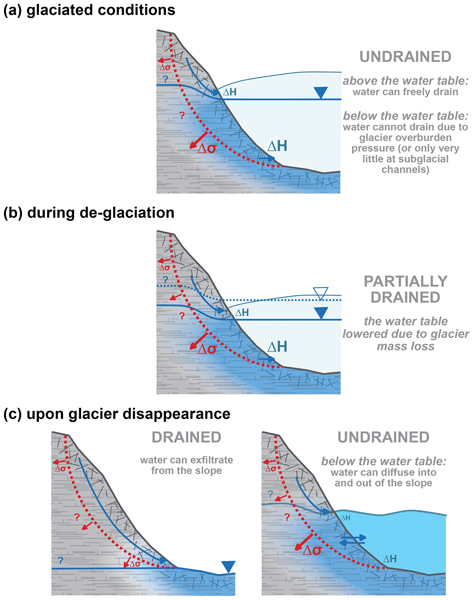
We studied eight glacier-adjacent landslides in Alaska and found that slope movement increased at four sites as the glacier retreated past the landslide area. Movement at other sites may be due to heavy precipitation or increased glacier thinning, and two sites showed little to no motion. We suggest that landslides near waterbodies may be especially vulnerable to acceleration, which we guess is due to faster retreat rates of water-terminating glaciers and changing water flow in the slope.
Kathrin Behnen, Marian Hertrich, Hansruedi Maurer, Alexis Shakas, Kai Bröker, Claire Epiney, María Blanch Jover, and Domenico Giardini
Solid Earth, 16, 333–350, https://doi.org/10.5194/se-16-333-2025, https://doi.org/10.5194/se-16-333-2025, 2025
Short summary
Short summary
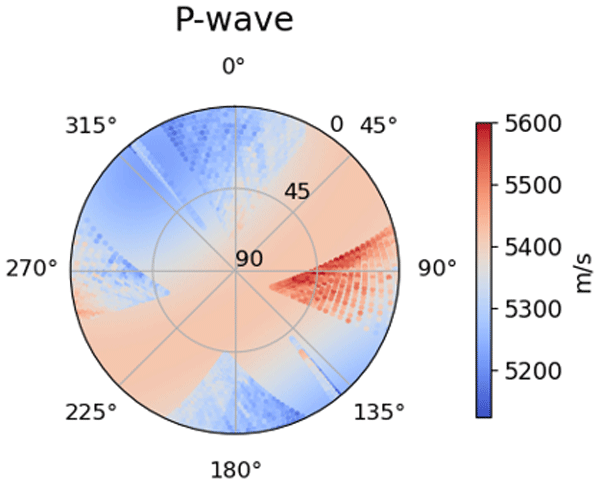
Several cross-hole seismic surveys in the undisturbed Rotondo granite are used to analyze the seismic anisotropy in the Bedretto Lab, Switzerland. The P and S1 waves show a clear trend of faster velocities in the NE–SW direction and slower velocities perpendicular to it, indicating a tilted transverse isotropic velocity model. The symmetry plane is mostly aligned with the direction of maximum stress, but also the orientation of fractures is expected to influence the velocities.
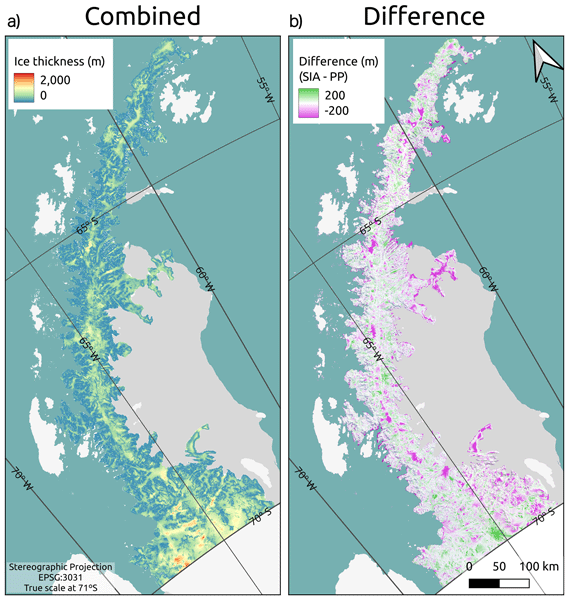
Kaian Shahateet, Johannes J. Fürst, Francisco Navarro, Thorsten Seehaus, Daniel Farinotti, and Matthias Braun
The Cryosphere, 19, 1577–1597, https://doi.org/10.5194/tc-19-1577-2025, https://doi.org/10.5194/tc-19-1577-2025, 2025
Short summary
Short summary
In the present work, we provide a new ice thickness reconstruction of the Antarctic Peninsula Ice Sheet north of 70º S using inversion modeling. This model consists of two steps: the first uses basic assumptions of the rheology of the glacier, and the second uses mass conservation to improve the reconstruction where the assumptions made previously are expected to fail. Validation with independent data showed that our reconstruction improved compared to other reconstructions that are available.
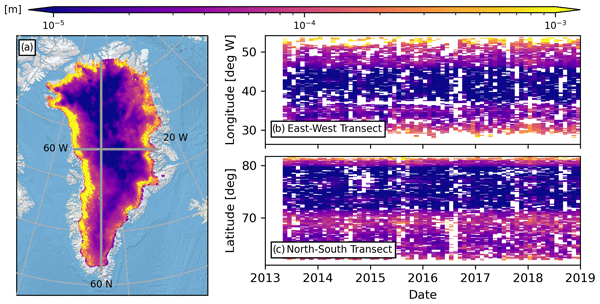
Kirk M. Scanlan, Anja Rutishauser, and Sebastian B. Simonsen
The Cryosphere, 19, 1221–1239, https://doi.org/10.5194/tc-19-1221-2025, https://doi.org/10.5194/tc-19-1221-2025, 2025
Short summary
Short summary
An ice sheet's surface modulates its response to climate change, and it is therefore critical to monitor how it evolves through time. Here, we investigate novel measurements of Greenland surface roughness based on the strength of reflected local airborne and pan-Greenland satellite radar signals. These measurements respond to roughness at scales typically larger than those considered in mass balance modelling while highlighting the scale dependency of surface roughness that is often overlooked.
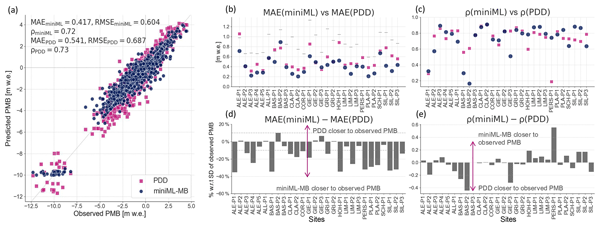
Marijn van der Meer, Harry Zekollari, Matthias Huss, Jordi Bolibar, Kamilla Hauknes Sjursen, and Daniel Farinotti
The Cryosphere, 19, 805–826, https://doi.org/10.5194/tc-19-805-2025, https://doi.org/10.5194/tc-19-805-2025, 2025
Short summary
Short summary
Glacier retreat poses big challenges, making understanding how climate affects glaciers vital. But glacier measurements worldwide are limited. We created a simple machine-learning model called miniML-MB, which estimates annual changes in glacier mass in the Swiss Alps. As input, miniML-MB uses two climate variables: average temperature (May–Aug) and total precipitation (Oct–Feb). Our model can accurately predict glacier mass from 1961 to 2021 but struggles for extreme years (2022 and 2023).
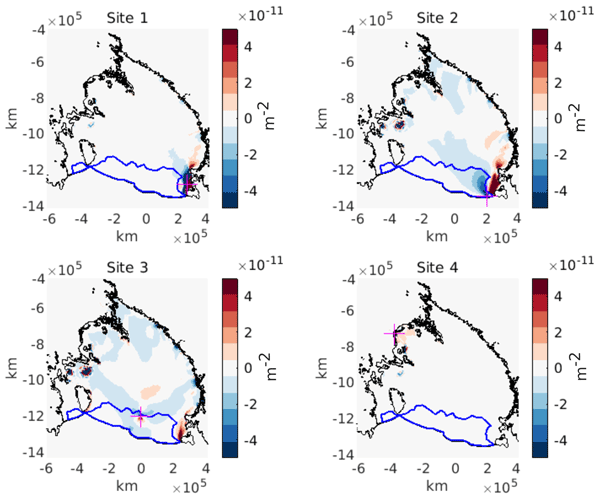
Francesca Baldacchino, Nicholas R. Golledge, Mathieu Morlighem, Huw Horgan, Alanna V. Alevropoulos-Borrill, Alena Malyarenko, Alexandra Gossart, Daniel P. Lowry, and Laurine van Haastrecht
The Cryosphere, 19, 107–127, https://doi.org/10.5194/tc-19-107-2025, https://doi.org/10.5194/tc-19-107-2025, 2025
Short summary
Short summary
Understanding how the Ross Ice Shelf flow is changing in a warming world is important for predicting ice sheet change. Field measurements show clear intra-annual variations in ice flow; however, it is unclear what mechanisms drive this variability. We show that local perturbations in basal melt can have a significant impact on ice flow speed, but a combination of forcings is likely driving the observed variability in ice flow.
Harry Zekollari, Matthias Huss, Lilian Schuster, Fabien Maussion, David R. Rounce, Rodrigo Aguayo, Nicolas Champollion, Loris Compagno, Romain Hugonnet, Ben Marzeion, Seyedhamidreza Mojtabavi, and Daniel Farinotti
The Cryosphere, 18, 5045–5066, https://doi.org/10.5194/tc-18-5045-2024, https://doi.org/10.5194/tc-18-5045-2024, 2024
Short summary
Short summary
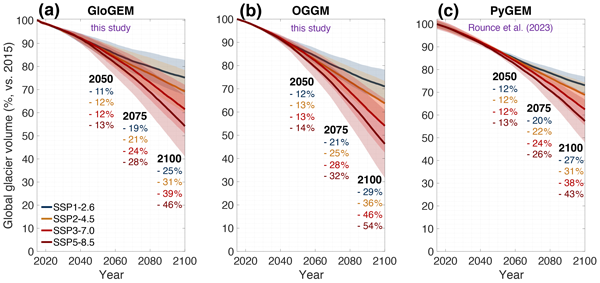
Glaciers are major contributors to sea-level rise and act as key water resources. Here, we model the global evolution of glaciers under the latest generation of climate scenarios. We show that the type of observations used for model calibration can strongly affect the projections at the local scale. Our newly projected 21st century global mass loss is higher than the current community estimate as reported in the latest Intergovernmental Panel on Climate Change (IPCC) report.
Signe Hillerup Larsen, Daniel Binder, Anja Rutishauser, Bernhard Hynek, Robert Schjøtt Fausto, and Michele Citterio
Earth Syst. Sci. Data, 16, 4103–4118, https://doi.org/10.5194/essd-16-4103-2024, https://doi.org/10.5194/essd-16-4103-2024, 2024
Short summary
Short summary
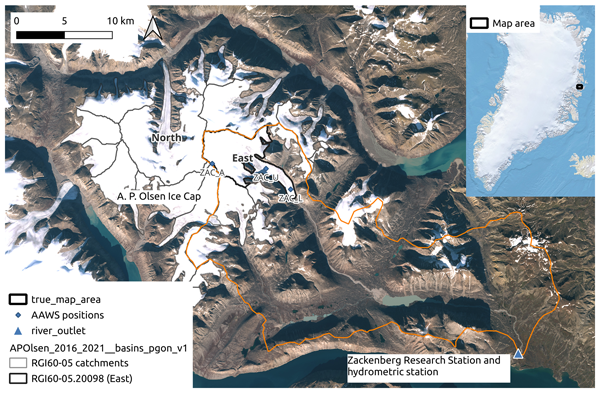
The Greenland Ecosystem Monitoring programme has been running since 1995. In 2008, the Glaciological monitoring sub-program GlacioBasis was initiated at the Zackenberg site in northeast Greenland, with a transect of three weather stations on the A. P. Olsen Ice Cap. In 2022, the weather stations were replaced with a more standardized set up. Here, we provide the reprocessed and quality-checked data from 2008 to 2022, i.e., the first 15 years of continued monitoring.
Siobhan F. Killingbeck, Anja Rutishauser, Martyn J. Unsworth, Ashley Dubnick, Alison S. Criscitiello, James Killingbeck, Christine F. Dow, Tim Hill, Adam D. Booth, Brittany Main, and Eric Brossier
The Cryosphere, 18, 3699–3722, https://doi.org/10.5194/tc-18-3699-2024, https://doi.org/10.5194/tc-18-3699-2024, 2024
Short summary
Short summary
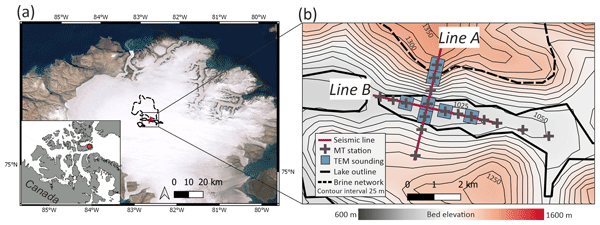
A subglacial lake was proposed to exist beneath Devon Ice Cap in the Canadian Arctic based on the analysis of airborne data. Our study presents a new interpretation of the subglacial material beneath the Devon Ice Cap from surface-based geophysical data. We show that there is no evidence of subglacial water, and the subglacial lake has likely been misidentified. Re-evaluation of the airborne data shows that overestimation of a critical processing parameter has likely occurred in prior studies.
Nanna B. Karlsson, Dustin M. Schroeder, Louise Sandberg Sørensen, Winnie Chu, Jørgen Dall, Natalia H. Andersen, Reese Dobson, Emma J. Mackie, Simon J. Köhn, Jillian E. Steinmetz, Angelo S. Tarzona, Thomas O. Teisberg, and Niels Skou
Earth Syst. Sci. Data, 16, 3333–3344, https://doi.org/10.5194/essd-16-3333-2024, https://doi.org/10.5194/essd-16-3333-2024, 2024
Short summary
Short summary
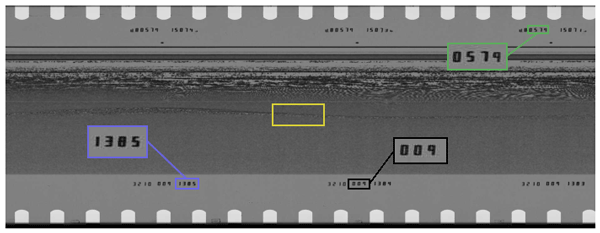
In the 1970s, more than 177 000 km of observations were acquired from airborne radar over the Greenland ice sheet. The radar data contain information on not only the thickness of the ice, but also the properties of the ice itself. This information was recorded on film rolls and subsequently stored. In this study, we document the digitization of these film rolls that shed new and unprecedented detailed light on the Greenland ice sheet 50 years ago.
Anja Rutishauser, Kirk M. Scanlan, Baptiste Vandecrux, Nanna B. Karlsson, Nicolas Jullien, Andreas P. Ahlstrøm, Robert S. Fausto, and Penelope How
The Cryosphere, 18, 2455–2472, https://doi.org/10.5194/tc-18-2455-2024, https://doi.org/10.5194/tc-18-2455-2024, 2024
Short summary
Short summary
The Greenland Ice Sheet interior is covered by a layer of firn, which is important for surface meltwater runoff and contributions to global sea-level rise. Here, we combine airborne radar sounding and laser altimetry measurements to delineate vertically homogeneous and heterogeneous firn. Our results reveal changes in firn between 2011–2019, aligning well with known climatic events. This approach can be used to outline firn areas primed for significantly changing future meltwater runoff.
Louise Sandberg Sørensen, Rasmus Bahbah, Sebastian B. Simonsen, Natalia Havelund Andersen, Jade Bowling, Noel Gourmelen, Alex Horton, Nanna B. Karlsson, Amber Leeson, Jennifer Maddalena, Malcolm McMillan, Anne Solgaard, and Birgit Wessel
The Cryosphere, 18, 505–523, https://doi.org/10.5194/tc-18-505-2024, https://doi.org/10.5194/tc-18-505-2024, 2024
Short summary
Short summary
Under the right topographic and hydrological conditions, lakes may form beneath the large ice sheets. Some of these subglacial lakes are active, meaning that they periodically drain and refill. When a subglacial lake drains rapidly, it may cause the ice surface above to collapse, and here we investigate how to improve the monitoring of active subglacial lakes in Greenland by monitoring how their associated collapse basins change over time.
Baptiste Vandecrux, Jason E. Box, Andreas P. Ahlstrøm, Signe B. Andersen, Nicolas Bayou, William T. Colgan, Nicolas J. Cullen, Robert S. Fausto, Dominik Haas-Artho, Achim Heilig, Derek A. Houtz, Penelope How, Ionut Iosifescu Enescu, Nanna B. Karlsson, Rebecca Kurup Buchholz, Kenneth D. Mankoff, Daniel McGrath, Noah P. Molotch, Bianca Perren, Maiken K. Revheim, Anja Rutishauser, Kevin Sampson, Martin Schneebeli, Sandy Starkweather, Simon Steffen, Jeff Weber, Patrick J. Wright, Henry Jay Zwally, and Konrad Steffen
Earth Syst. Sci. Data, 15, 5467–5489, https://doi.org/10.5194/essd-15-5467-2023, https://doi.org/10.5194/essd-15-5467-2023, 2023
Short summary
Short summary
The Greenland Climate Network (GC-Net) comprises stations that have been monitoring the weather on the Greenland Ice Sheet for over 30 years. These stations are being replaced by newer ones maintained by the Geological Survey of Denmark and Greenland (GEUS). The historical data were reprocessed to improve their quality, and key information about the weather stations has been compiled. This augmented dataset is available at https://doi.org/10.22008/FK2/VVXGUT (Steffen et al., 2022).
Anja Løkkegaard, Kenneth D. Mankoff, Christian Zdanowicz, Gary D. Clow, Martin P. Lüthi, Samuel H. Doyle, Henrik H. Thomsen, David Fisher, Joel Harper, Andy Aschwanden, Bo M. Vinther, Dorthe Dahl-Jensen, Harry Zekollari, Toby Meierbachtol, Ian McDowell, Neil Humphrey, Anne Solgaard, Nanna B. Karlsson, Shfaqat A. Khan, Benjamin Hills, Robert Law, Bryn Hubbard, Poul Christoffersen, Mylène Jacquemart, Julien Seguinot, Robert S. Fausto, and William T. Colgan
The Cryosphere, 17, 3829–3845, https://doi.org/10.5194/tc-17-3829-2023, https://doi.org/10.5194/tc-17-3829-2023, 2023
Short summary
Short summary
This study presents a database compiling 95 ice temperature profiles from the Greenland ice sheet and peripheral ice caps. Ice viscosity and hence ice flow are highly sensitive to ice temperature. To highlight the value of the database in evaluating ice flow simulations, profiles from the Greenland ice sheet are compared to a modeled temperature field. Reoccurring discrepancies between modeled and observed temperatures provide insight on the difficulties faced when simulating ice temperatures.
Lander Van Tricht, Harry Zekollari, Matthias Huss, Daniel Farinotti, and Philippe Huybrechts
The Cryosphere Discuss., https://doi.org/10.5194/tc-2023-87, https://doi.org/10.5194/tc-2023-87, 2023
Manuscript not accepted for further review
Short summary
Short summary
Detailed 3D models can be applied for well-studied glaciers, whereas simplified approaches are used for regional/global assessments. We conducted a comparison of six Tien Shan glaciers employing different models and investigated the impact of in-situ measurements. Our results reveal that the choice of mass balance and ice flow model as well as calibration have minimal impact on the projected volume. The initial ice thickness exerts the greatest influence on the future remaining ice volume.
William Colgan, Christopher Shields, Pavel Talalay, Xiaopeng Fan, Austin P. Lines, Joshua Elliott, Harihar Rajaram, Kenneth Mankoff, Morten Jensen, Mira Backes, Yunchen Liu, Xianzhe Wei, Nanna B. Karlsson, Henrik Spanggård, and Allan Ø. Pedersen
Geosci. Instrum. Method. Data Syst., 12, 121–140, https://doi.org/10.5194/gi-12-121-2023, https://doi.org/10.5194/gi-12-121-2023, 2023
Short summary
Short summary
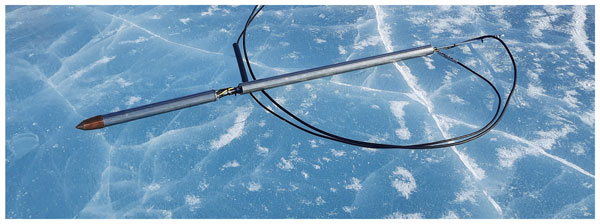
We describe a new drill for glaciers and ice sheets. Instead of drilling down into the ice, via mechanical action, our drill melts into the ice. Our goal is simply to pull a cable of temperature sensors on a one-way trip down to the ice–bed interface. Here, we describe the design and testing of our drill. Under laboratory conditions, our melt-tip drill has an efficiency of ∼ 35 % with a theoretical maximum penetration rate of ∼ 12 m h−1. Under field conditions, our efficiency is just ∼ 15 %.
Aaron Cremona, Matthias Huss, Johannes Marian Landmann, Joël Borner, and Daniel Farinotti
The Cryosphere, 17, 1895–1912, https://doi.org/10.5194/tc-17-1895-2023, https://doi.org/10.5194/tc-17-1895-2023, 2023
Short summary
Short summary
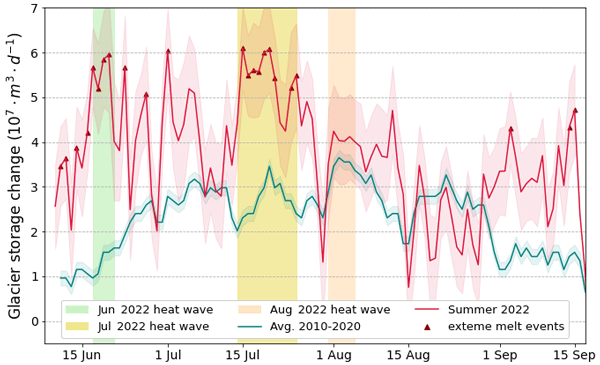
Summer heat waves have a substantial impact on glacier melt as emphasized by the extreme summer of 2022. This study presents a novel approach for detecting extreme glacier melt events at the regional scale based on the combination of automatically retrieved point mass balance observations and modelling approaches. The in-depth analysis of summer 2022 evidences the strong correspondence between heat waves and extreme melt events and demonstrates their significance for seasonal melt.

Kristian Chan, Cyril Grima, Anja Rutishauser, Duncan A. Young, Riley Culberg, and Donald D. Blankenship
The Cryosphere, 17, 1839–1852, https://doi.org/10.5194/tc-17-1839-2023, https://doi.org/10.5194/tc-17-1839-2023, 2023
Short summary
Short summary
Climate warming has led to more surface meltwater produced on glaciers that can refreeze in firn to form ice layers. Our work evaluates the use of dual-frequency ice-penetrating radar to characterize these ice layers on the Devon Ice Cap. Results indicate that they are meters thick and widespread, and thus capable of supporting lateral meltwater runoff from the top of ice layers. We find that some of this meltwater runoff could be routed through supraglacial rivers in the ablation zone.
Adrien Wehrlé, Martin P. Lüthi, and Andreas Vieli
The Cryosphere, 17, 309–326, https://doi.org/10.5194/tc-17-309-2023, https://doi.org/10.5194/tc-17-309-2023, 2023
Short summary
Short summary
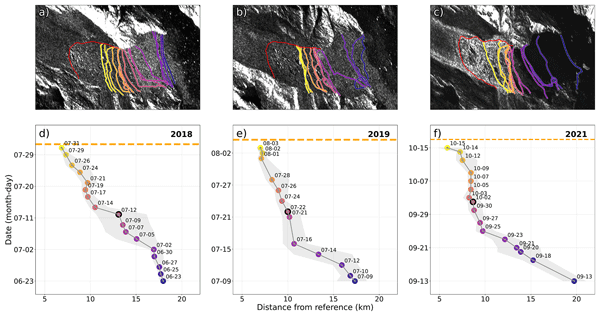
We characterized short-lived episodes of ice mélange weakening (IMW) at the front of three major Greenland outlet glaciers. Through a continuous detection at the front of Kangerdlugssuaq Glacier during the June-to-September period from 2018 to 2021, we found that 87 % of the IMW episodes occurred prior to a large-scale calving event. Using a simple model for ice mélange motion, we further characterized the IMW process as self-sustained through the existence of an IMW–calving feedback.

Fabian Walter, Elias Hodel, Erik S. Mannerfelt, Kristen Cook, Michael Dietze, Livia Estermann, Michaela Wenner, Daniel Farinotti, Martin Fengler, Lukas Hammerschmidt, Flavia Hänsli, Jacob Hirschberg, Brian McArdell, and Peter Molnar
Nat. Hazards Earth Syst. Sci., 22, 4011–4018, https://doi.org/10.5194/nhess-22-4011-2022, https://doi.org/10.5194/nhess-22-4011-2022, 2022
Short summary
Short summary
Debris flows are dangerous sediment–water mixtures in steep terrain. Their formation takes place in poorly accessible terrain where instrumentation cannot be installed. Here we propose to monitor such source terrain with an autonomous drone for mapping sediments which were left behind by debris flows or may contribute to future events. Short flight intervals elucidate changes of such sediments, providing important information for landscape evolution and the likelihood of future debris flows.
Alessandro Cicoira, Samuel Weber, Andreas Biri, Ben Buchli, Reynald Delaloye, Reto Da Forno, Isabelle Gärtner-Roer, Stephan Gruber, Tonio Gsell, Andreas Hasler, Roman Lim, Philippe Limpach, Raphael Mayoraz, Matthias Meyer, Jeannette Noetzli, Marcia Phillips, Eric Pointner, Hugo Raetzo, Cristian Scapozza, Tazio Strozzi, Lothar Thiele, Andreas Vieli, Daniel Vonder Mühll, Vanessa Wirz, and Jan Beutel
Earth Syst. Sci. Data, 14, 5061–5091, https://doi.org/10.5194/essd-14-5061-2022, https://doi.org/10.5194/essd-14-5061-2022, 2022
Short summary
Short summary
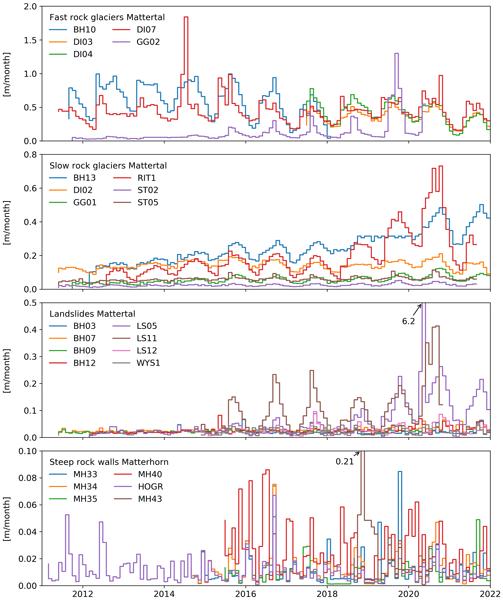
This paper documents a monitoring network of 54 positions, located on different periglacial landforms in the Swiss Alps: rock glaciers, landslides, and steep rock walls. The data serve basic research but also decision-making and mitigation of natural hazards. It is the largest dataset of its kind, comprising over 209 000 daily positions and additional weather data.
Francesca Baldacchino, Mathieu Morlighem, Nicholas R. Golledge, Huw Horgan, and Alena Malyarenko
The Cryosphere, 16, 3723–3738, https://doi.org/10.5194/tc-16-3723-2022, https://doi.org/10.5194/tc-16-3723-2022, 2022
Short summary
Short summary
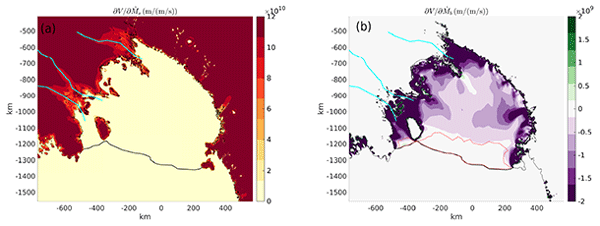
Understanding how the Ross Ice Shelf will evolve in a warming world is important to the future stability of Antarctica. It remains unclear what changes could drive the largest mass loss in the future and where places are most likely to trigger larger mass losses. Sensitivity maps are modelled showing that the RIS is sensitive to changes in environmental and glaciological controls at regions which are currently experiencing changes. These regions need to be monitored in a warming world.
Erik Schytt Mannerfelt, Amaury Dehecq, Romain Hugonnet, Elias Hodel, Matthias Huss, Andreas Bauder, and Daniel Farinotti
The Cryosphere, 16, 3249–3268, https://doi.org/10.5194/tc-16-3249-2022, https://doi.org/10.5194/tc-16-3249-2022, 2022
Short summary
Short summary
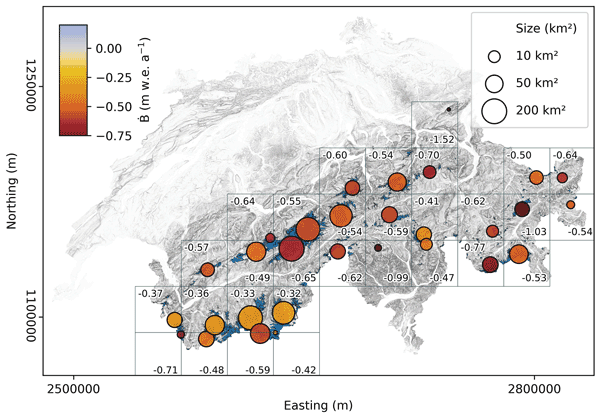
How glaciers have responded to climate change over the last 20 years is well-known, but earlier data are much more scarce. We change this in Switzerland by using 22 000 photographs taken from mountain tops between the world wars and find a halving of Swiss glacier volume since 1931. This was done through new automated processing techniques that we created. The data are interesting for more than just glaciers, such as mapping forest changes, landslides, and human impacts on the terrain.

Joseph A. MacGregor, Winnie Chu, William T. Colgan, Mark A. Fahnestock, Denis Felikson, Nanna B. Karlsson, Sophie M. J. Nowicki, and Michael Studinger
The Cryosphere, 16, 3033–3049, https://doi.org/10.5194/tc-16-3033-2022, https://doi.org/10.5194/tc-16-3033-2022, 2022
Short summary
Short summary
Where the bottom of the Greenland Ice Sheet is frozen and where it is thawed is not well known, yet knowing this state is increasingly important to interpret modern changes in ice flow there. We produced a second synthesis of knowledge of the basal thermal state of the ice sheet using airborne and satellite observations and numerical models. About one-third of the ice sheet’s bed is likely thawed; two-fifths is likely frozen; and the remainder is too uncertain to specify.
Lea Geibel, Matthias Huss, Claudia Kurzböck, Elias Hodel, Andreas Bauder, and Daniel Farinotti
Earth Syst. Sci. Data, 14, 3293–3312, https://doi.org/10.5194/essd-14-3293-2022, https://doi.org/10.5194/essd-14-3293-2022, 2022
Short summary
Short summary
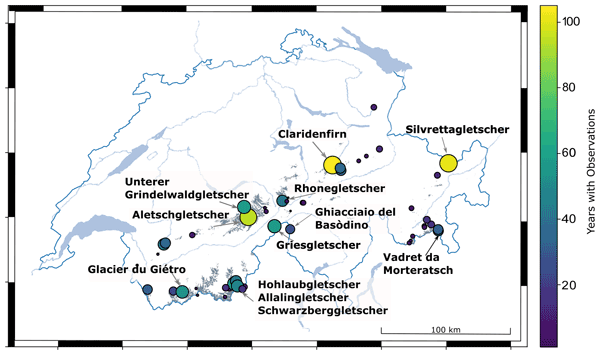
Glacier monitoring in Switzerland started in the 19th century, providing exceptional data series documenting snow accumulation and ice melt. Raw point observations of surface mass balance have, however, never been systematically compiled so far, including complete metadata. Here, we present an extensive dataset with more than 60 000 point observations of surface mass balance covering 60 Swiss glaciers and almost 140 years, promoting a better understanding of the drivers of recent glacier change.
Tim Steffen, Matthias Huss, Rebekka Estermann, Elias Hodel, and Daniel Farinotti
Earth Surf. Dynam., 10, 723–741, https://doi.org/10.5194/esurf-10-723-2022, https://doi.org/10.5194/esurf-10-723-2022, 2022
Short summary
Short summary
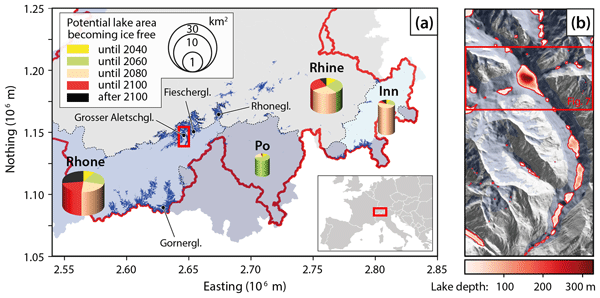
Climate change is rapidly altering high-alpine landscapes. The formation of new lakes in areas becoming ice free due to glacier retreat is one of the many consequences of this process. Here, we provide an estimate for the number, size, time of emergence, and sediment infill of future glacier lakes that will emerge in the Swiss Alps. We estimate that up to ~ 680 potential lakes could form over the course of the 21st century, with the potential to hold a total water volume of up to ~ 1.16 km3.
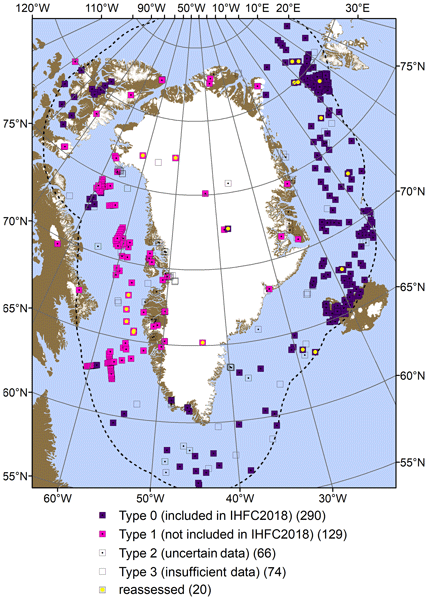
William Colgan, Agnes Wansing, Kenneth Mankoff, Mareen Lösing, John Hopper, Keith Louden, Jörg Ebbing, Flemming G. Christiansen, Thomas Ingeman-Nielsen, Lillemor Claesson Liljedahl, Joseph A. MacGregor, Árni Hjartarson, Stefan Bernstein, Nanna B. Karlsson, Sven Fuchs, Juha Hartikainen, Johan Liakka, Robert S. Fausto, Dorthe Dahl-Jensen, Anders Bjørk, Jens-Ove Naslund, Finn Mørk, Yasmina Martos, Niels Balling, Thomas Funck, Kristian K. Kjeldsen, Dorthe Petersen, Ulrik Gregersen, Gregers Dam, Tove Nielsen, Shfaqat A. Khan, and Anja Løkkegaard
Earth Syst. Sci. Data, 14, 2209–2238, https://doi.org/10.5194/essd-14-2209-2022, https://doi.org/10.5194/essd-14-2209-2022, 2022
Short summary
Short summary
We assemble all available geothermal heat flow measurements collected in and around Greenland into a new database. We use this database of point measurements, in combination with other geophysical datasets, to model geothermal heat flow in and around Greenland. Our geothermal heat flow model is generally cooler than previous models of Greenland, especially in southern Greenland. It does not suggest any high geothermal heat flows resulting from Icelandic plume activity over 50 million years ago.

Loris Compagno, Matthias Huss, Evan Stewart Miles, Michael James McCarthy, Harry Zekollari, Amaury Dehecq, Francesca Pellicciotti, and Daniel Farinotti
The Cryosphere, 16, 1697–1718, https://doi.org/10.5194/tc-16-1697-2022, https://doi.org/10.5194/tc-16-1697-2022, 2022
Short summary
Short summary
We present a new approach for modelling debris area and thickness evolution. We implement the module into a combined mass-balance ice-flow model, and we apply it using different climate scenarios to project the future evolution of all glaciers in High Mountain Asia. We show that glacier geometry, volume, and flow velocity evolve differently when modelling explicitly debris cover compared to glacier evolution without the debris-cover module, demonstrating the importance of accounting for debris.
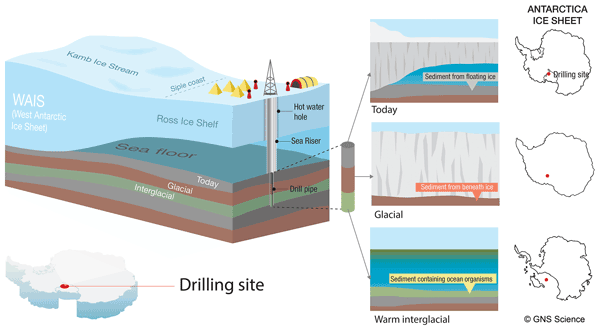
Molly O. Patterson, Richard H. Levy, Denise K. Kulhanek, Tina van de Flierdt, Huw Horgan, Gavin B. Dunbar, Timothy R. Naish, Jeanine Ash, Alex Pyne, Darcy Mandeno, Paul Winberry, David M. Harwood, Fabio Florindo, Francisco J. Jimenez-Espejo, Andreas Läufer, Kyu-Cheul Yoo, Osamu Seki, Paolo Stocchi, Johann P. Klages, Jae Il Lee, Florence Colleoni, Yusuke Suganuma, Edward Gasson, Christian Ohneiser, José-Abel Flores, David Try, Rachel Kirkman, Daleen Koch, and the SWAIS 2C Science Team
Sci. Dril., 30, 101–112, https://doi.org/10.5194/sd-30-101-2022, https://doi.org/10.5194/sd-30-101-2022, 2022
Short summary
Short summary
How much of the West Antarctic Ice Sheet will melt and how quickly it will happen when average global temperatures exceed 2 °C is currently unknown. Given the far-reaching and international consequences of Antarctica’s future contribution to global sea level rise, the SWAIS 2C Project was developed in order to better forecast the size and timing of future changes.
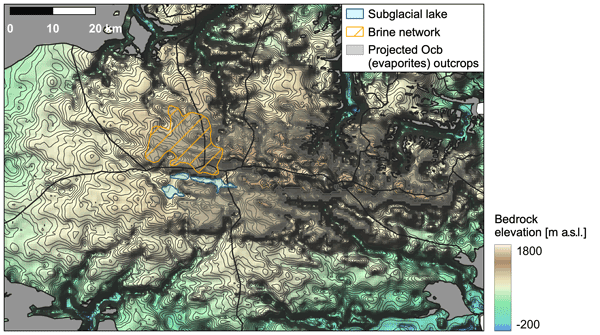
Anja Rutishauser, Donald D. Blankenship, Duncan A. Young, Natalie S. Wolfenbarger, Lucas H. Beem, Mark L. Skidmore, Ashley Dubnick, and Alison S. Criscitiello
The Cryosphere, 16, 379–395, https://doi.org/10.5194/tc-16-379-2022, https://doi.org/10.5194/tc-16-379-2022, 2022
Short summary
Short summary
Recently, a hypersaline subglacial lake complex was hypothesized to lie beneath Devon Ice Cap, Canadian Arctic. Here, we present results from a follow-on targeted aerogeophysical survey. Our results support the evidence for a hypersaline subglacial lake and reveal an extensive brine network, suggesting more complex subglacial hydrological conditions than previously inferred. This hypersaline system may host microbial habitats, making it a compelling analog for bines on other icy worlds.
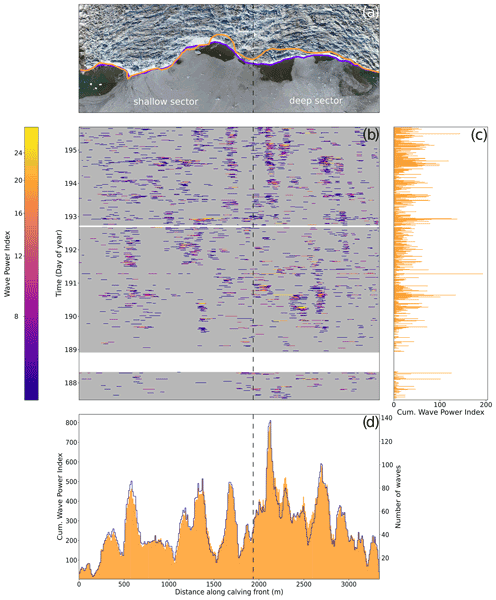
Adrien Wehrlé, Martin P. Lüthi, Andrea Walter, Guillaume Jouvet, and Andreas Vieli
The Cryosphere, 15, 5659–5674, https://doi.org/10.5194/tc-15-5659-2021, https://doi.org/10.5194/tc-15-5659-2021, 2021
Short summary
Short summary
We developed a novel automated method for the detection and the quantification of ocean waves generated by glacier calving. This method was applied to data recorded with a terrestrial radar interferometer at Eqip Sermia, Greenland. Results show a high calving activity at the glacier front sector ending in deep water linked with more frequent meltwater plumes. This suggests that rising subglacial meltwater plumes strongly affect glacier calving in deep water, but weakly in shallow water.
Christophe Ogier, Mauro A. Werder, Matthias Huss, Isabelle Kull, David Hodel, and Daniel Farinotti
The Cryosphere, 15, 5133–5150, https://doi.org/10.5194/tc-15-5133-2021, https://doi.org/10.5194/tc-15-5133-2021, 2021
Short summary
Short summary
Glacier-dammed lakes are prone to draining rapidly when the ice dam breaks and constitute a serious threat to populations downstream. Such a lake drainage can proceed through an open-air channel at the glacier surface. In this study, we present what we believe to be the most complete dataset to date of an ice-dammed lake drainage through such an open-air channel. We provide new insights for future glacier-dammed lake drainage modelling studies and hazard assessments.
Johannes Marian Landmann, Hans Rudolf Künsch, Matthias Huss, Christophe Ogier, Markus Kalisch, and Daniel Farinotti
The Cryosphere, 15, 5017–5040, https://doi.org/10.5194/tc-15-5017-2021, https://doi.org/10.5194/tc-15-5017-2021, 2021
Short summary
Short summary
In this study, we (1) acquire real-time information on point glacier mass balance with autonomous real-time cameras and (2) assimilate these observations into a mass balance model ensemble driven by meteorological input. For doing so, we use a customized particle filter that we designed for the specific purposes of our study. We find melt rates of up to 0.12 m water equivalent per day and show that our assimilation method has a higher performance than reference mass balance models.
Kenneth D. Mankoff, Xavier Fettweis, Peter L. Langen, Martin Stendel, Kristian K. Kjeldsen, Nanna B. Karlsson, Brice Noël, Michiel R. van den Broeke, Anne Solgaard, William Colgan, Jason E. Box, Sebastian B. Simonsen, Michalea D. King, Andreas P. Ahlstrøm, Signe Bech Andersen, and Robert S. Fausto
Earth Syst. Sci. Data, 13, 5001–5025, https://doi.org/10.5194/essd-13-5001-2021, https://doi.org/10.5194/essd-13-5001-2021, 2021
Short summary
Short summary
We estimate the daily mass balance and its components (surface, marine, and basal mass balance) for the Greenland ice sheet. Our time series begins in 1840 and has annual resolution through 1985 and then daily from 1986 through next week. Results are operational (updated daily) and provided for the entire ice sheet or by commonly used regions or sectors. This is the first input–output mass balance estimate to include the basal mass balance.
Cited articles
Carrivick, J. L., How, P., Lea, J. M., Sutherland, J. L., Grimes, M., Tweed, F. S., Cornford, S., Quincey, D. J., and Mallalieu, J.: Ice-Marginal Proglacial Lakes Across Greenland: Present Status and a Possible Future, Geophys. Res. Lett., 49, e2022GL099276, https://doi.org/10.1029/2022GL099276, 2022. a
Grab, M., Bauder, A., Ammann, F., Langhammer, L., Hellmann, S., Church, G., Schmid, L., Rabenstein, L., and Maurer, H.: Ice volume estimates of Swiss glaciers using helicopter-borne GPR – an example from the Glacier de la Plaine Morte, in: 2018 17th International Conference on Ground Penetrating Radar (GPR), 1–4, https://doi.org/10.1109/ICGPR.2018.8441613, 2018. a
Grab, M., Mattea, E., Bauder, A., Huss, M., Rabenstein, L., Hodel, E., Linsbauer, A., Langhammer, L., Schmid, L., Church, G., Hellmann, S., Délèze, K., Schaer, P., Lathion, P., Farinotti, D., and Maurer, H.: Ice thickness distribution of all Swiss glaciers based on extended ground-penetrating radar data and glaciological modelling, J. Glaciol., 67, 1074–1092, https://doi.org/10.1017/jog.2021.55, 2021. a, b, c
IMBIE Team: Mass balance of the Greenland Ice Sheet from 1992 to 2018, Nature, 579, 233–239, https://doi.org/10.1038/s41586-019-1855-2, 2020. a
King, M. D., Howat, I. M., Candela, S. G., Noh, M. J., Jeong, S., Noël, B. P. Y., van den Broeke, M. R., Wouters, B., and Negrete, A.: Dynamic ice loss from the Greenland Ice Sheet driven by sustained glacier retreat, Commun. Earth Environ., 1, 1–7, https://doi.org/10.1038/s43247-020-0001-2, 2020. a
Langhammer, L., Grab, M., Bauder, A., and Maurer, H.: Glacier thickness estimations of alpine glaciers using data and modelling constraints, The Cryosphere, 13, 2189–2202, https://doi.org/10.5194/tc-13-2189-2019, 2019. a, b
MacGregor, J. A., Fahnestock, M. A., Catania, G. A., Aschwanden, A., Clow, G. D., Colgan, W. T., Gogineni, P. P., Morlighem, M., Nowicki, S. M. J., Paden, J. D., Price, S. F., and Seroussi, H.: A synthesis of the basal thermal state of the Greenland Ice Sheet, J. Geophys. Res.-Earth, 121, 1328–1350, https://doi.org/10.1002/2015JF003803, 2016. a
Moon, T., Joughin, I., Smith, B., and Howat, I.: 21st-century evolution of Greenland outlet glacier velocities, Science, 336, 576–578, https://doi.org/10.1126/science.1219985, 2012. a
Morlighem, M., Williams, C. N., Rignot, E. J. M., An, L., Arndt, J. E., Bamber, J. L., Catania, G. A., Chauché, N., Dowdeswell, J. A., Dorschel, B., Fenty, I., Hogan, K. A., Howat, I. M., Hubbard, A., Jakobsson, M., Jordan, T. M., Kjeldsen, K. K., Millan, R., Mayer, L., Mouginot, J., Noël, B. P. Y., O'Cofaigh, C., Palmer, S. J., Rysgaard, S., Seroussi, H., Siegert, M. J., Slabon, P., Straneo, F., van den Broeke, M. R., Weinrebe, W., Wood, M., and Zinglersen, K. B.: BedMachine v3: Complete bed topography and ocean bathymetry mapping of Greenland from multi-beam echo sounding combined with mass conservation, Geophys. Res. Lett., 44, https://doi.org/10.1002/2017GL074954, 2017. a, b
Morlighem, M., Williams, C. N., Rignot, E. J. M., An, L., Arndt, J. E., Bamber, J. L., Catania, G. A., Chauché, N., Dowdeswell, J. A., Dorschel, B., Fenty, I., Hogan, K. A., Howat, I. M., Hubbard, A., Jakobsson, M., Jordan, T. M., Kjeldsen, K. K., Millan, R., Mayer, L., Mouginot, J., Noël, B. P. Y., O'Cofaigh, C., Palmer, S. J., Rysgaard, S., Seroussi, H., Siegert, M. J., Slabon, P., Straneo, F., van den Broeke, M. R., Weinrebe, W., Wood, M., and Zinglersen, K. B.: IceBridge BedMachine Greenland (IDBMG4, Version 5), Dataset, https://doi.org/10.5067/GMEVBWFLWA7X, 2022. a
Mouginot, J., Rignot, E., Gim, Y., Kirchner, D., and Le Meur, E.: Low-frequency radar sounding of ice in East Antarctica and southern Greenland, Ann. Glaciol., 55, 138–146, https://doi.org/10.3189/2014AoG67A089, 2014. a
Paden, J., Li, J., Leuschen, C., Rodríguez-Morales, F., and Hale, R.: IceBridge MCoRDS L2 Ice Thickness, Version 1, Dataset, updated 2019, https://doi.org/10.5067/GDQ0CUCVTE2Q, 2010. a, b, c
Santin, I., Farinotti, D., and Moser, R.: Ice thickness measurements from Southern Greenland (2025) using helicopter-borne ice-penetrating radar (AIRETH), ETH Zurich [data set], https://doi.org/10.3929/ethz-c-000794464, 2025a. a
Santin, I., Farinotti, D., and Moser, R.: Ground-penetrating radar data from Southern Greenland (2025) acquired using the helicopter-borne AIRETH system, ETH Zurich [data set], https://doi.org/10.3929/ethz-c-000799347, 2025b. a
Schroeder, D. M., Bingham, R. G., Blankenship, D. D., Christianson, K., Eisen, O., Flowers, G. E., Karlsson, N. B., Koutnik, M. R., Paden, J. D., and Siegert, M. J.: Five decades of radioglaciology, Ann. Glaciol., 61, 1–13, https://doi.org/10.1017/aog.2020.11, 2020. a
Studinger, M., Koenig, L., Martin, S., and Sonntag, J.: Operation IceBridge: Using instrumented aircraft to bridge the observational gap between ICESat and ICESat-2, in: 2010 IEEE International Geoscience and Remote Sensing Symposium (IGARSS), 1918–1919, https://doi.org/10.1109/IGARSS.2010.5650555, 2010. a
Short summary
Ice thickness near Greenland’s coast is still poorly measured, yet it is vital for predicting sea level rise. We flew a helicopter ice-penetrating radar over three outlet glaciers in southern Greenland and mapped the glacier bed where basal reflections were clear. We measured ice up to about 340 meters thick, with reliable penetration typically to about 300 meters, providing new constraints that can improve regional bed maps.
Ice thickness near Greenland’s coast is still poorly measured, yet it is vital for predicting...


