
Articles | Volume 20, issue 2
https://doi.org/10.5194/tc-20-1217-2026
© Author(s) 2026. This work is distributed under
the Creative Commons Attribution 4.0 License.
the Creative Commons Attribution 4.0 License.
https://doi.org/10.5194/tc-20-1217-2026
© Author(s) 2026. This work is distributed under
the Creative Commons Attribution 4.0 License.
the Creative Commons Attribution 4.0 License.
Research article
| 
16 Feb 2026
Research article |
| 16 Feb 2026
| 16 Feb 2026
Competing processes determine the long-term impact of basal friction parameterizations for Antarctic mass loss
Tim van den Akker
CORRESPONDING AUTHOR

Institute for Marine and Atmospheric Research Utrecht, Utrecht University, Utrecht, the Netherlands
Department of Geological Sciences, Stockholm University, Stockholm, Sweden
Bolin Centre for Climate Research, Stockholm University, Stockholm, Sweden
William H. Lipscomb
Climate and Global Dynamics Laboratory, NSF National Center for Atmospheric Research, Boulder, CO, USA
Gunter R. Leguy
Climate and Global Dynamics Laboratory, NSF National Center for Atmospheric Research, Boulder, CO, USA
Willem Jan van de Berg
Institute for Marine and Atmospheric Research Utrecht, Utrecht University, Utrecht, the Netherlands
Roderik S. W. van de Wal
Institute for Marine and Atmospheric Research Utrecht, Utrecht University, Utrecht, the Netherlands
Department of Physical Geography, Utrecht University, Utrecht, the Netherlands
Royal Netherlands Meteorological Institute, de Bilt, the Netherlands
Related authors
Tim van den Akker, Mathieu Morlighem, and Nina Kirchner
EGUsphere, https://doi.org/10.5194/egusphere-2026-6156, https://doi.org/10.5194/egusphere-2026-6156, 2026
This preprint is open for discussion and under review for The Cryosphere (TC).
Short summary
Short summary
Ice sheet models initialised from observations often suffer an initial “shock” when starting future simulations. The usual fix, a relaxation period where the model settles freely, lets the ice drift from observed conditions and may never reach a steady state. We introduce nudging: gently steering the model during relaxation to remove drift, keep the ice close to observations, and start with the observed thinning rates. We demonstrate it on C.H. Ostenfeld Glacier, northern Greenland.
Tim van den Akker, William H. Lipscomb, Gunter R. Leguy, Willem Jan van de Berg, and Roderik S. W. van de Wal
The Cryosphere, 20, 1405–1425, https://doi.org/10.5194/tc-20-1405-2026, https://doi.org/10.5194/tc-20-1405-2026, 2026
Short summary
Short summary
The Antarctic Ice Sheet is currently thinning, especially at major outlet glaciers. Including present-day ice thinning rates in models is a modeller's choice and can affect future projections. This study quantifies the impact of current imbalance on forced future projections, revealing strong regional and short-term (up to 2100) effects when these mass change rates are included.
Tim van den Akker, Ward van Pelt, Rickard Petterson, and Veijo A. Pohjola
The Cryosphere, 19, 1513–1525, https://doi.org/10.5194/tc-19-1513-2025, https://doi.org/10.5194/tc-19-1513-2025, 2025
Short summary
Short summary
Liquid water can persist within old snow on glaciers and ice caps if it can percolate into the snow before it refreezes. Snow is a good insulator, and it is porous where the percolated water can be stored. If this happens, the water piles up and forms a groundwater-like system. Here, we show observations of such a groundwater-like system found in Svalbard. We demonstrate that it behaves like a groundwater system and use that to model the development of the water table from 1957 until the present day.
Tim van den Akker, William H. Lipscomb, Gunter R. Leguy, Jorjo Bernales, Constantijn J. Berends, Willem Jan van de Berg, and Roderik S. W. van de Wal
The Cryosphere, 19, 283–301, https://doi.org/10.5194/tc-19-283-2025, https://doi.org/10.5194/tc-19-283-2025, 2025
Short summary
Short summary
In this study, we present an improved way of representing ice thickness change rates in an ice sheet model. We apply this method using two ice sheet models of the Antarctic Ice Sheet. We found that the two largest outlet glaciers on the Antarctic Ice Sheet, Thwaites Glacier and Pine Island Glacier, will collapse without further warming on a timescale of centuries. This would cause a sea level rise of about 1.2 m globally.
Constantijn J. Berends, Roderik S. W. van de Wal, Tim van den Akker, and William H. Lipscomb
The Cryosphere, 17, 1585–1600, https://doi.org/10.5194/tc-17-1585-2023, https://doi.org/10.5194/tc-17-1585-2023, 2023
Short summary
Short summary
The rate at which the Antarctic ice sheet will melt because of anthropogenic climate change is uncertain. Part of this uncertainty stems from processes occurring beneath the ice, such as the way the ice slides over the underlying bedrock.
Inversion methodsattempt to use observations of the ice-sheet surface to calculate how these sliding processes work. We show that such methods cannot fully solve this problem, so a substantial uncertainty still remains in projections of sea-level rise.
Tim van den Akker, Mathieu Morlighem, and Nina Kirchner
EGUsphere, https://doi.org/10.5194/egusphere-2026-6156, https://doi.org/10.5194/egusphere-2026-6156, 2026
This preprint is open for discussion and under review for The Cryosphere (TC).
Short summary
Short summary
Ice sheet models initialised from observations often suffer an initial “shock” when starting future simulations. The usual fix, a relaxation period where the model settles freely, lets the ice drift from observed conditions and may never reach a steady state. We introduce nudging: gently steering the model during relaxation to remove drift, keep the ice close to observations, and start with the observed thinning rates. We demonstrate it on C.H. Ostenfeld Glacier, northern Greenland.
Clément Cherblanc, Charles Amory, Fredrik Boberg, Alexandra Gossart, Nicolaj Hansen, Marte Gé Hofsteenge, Christine Schøtt Hvidberg, Sylvain Marchi, Masashi Niwano, Florian Sauerland, Niels Souverijns, José Abraham Torres-Alavez, Baptiste Vandecrux, Christiaan van Dalum, Willem Jan van de Berg, Nicole van Lipzig, Maurice van Tiggelen, Kristiina Verro, and Ruth Mottram
EGUsphere, https://doi.org/10.5194/egusphere-2026-4690, https://doi.org/10.5194/egusphere-2026-4690, 2026
This preprint is open for discussion and under review for The Cryosphere (TC).
Short summary
Short summary
Regional Climate Models are known to improve the modelling of meteorological variables, like snow accumulation, in mountainous areas, relative to coarser global models. It was unclear whether they also improve the modelling over the Antarctic Ice Sheet, which is mostly a nearly flat, high-elevation plateau. We find that Regional Climate Models do perform better than global models on most metrics tested, building trust in the regional models for future Antarctic projections.
Samuel M. Tax, Maurice van Tiggelen, Thirza N. Feenstra, Paul C. J. P. Smeets, Srinidhi N. Gadde, Christiaan T. van Dalum, Willem Jan van de Berg, and Michiel R. van den Broeke
The Cryosphere, 20, 5609–5627, https://doi.org/10.5194/tc-20-5609-2026, https://doi.org/10.5194/tc-20-5609-2026, 2026
Short summary
Short summary
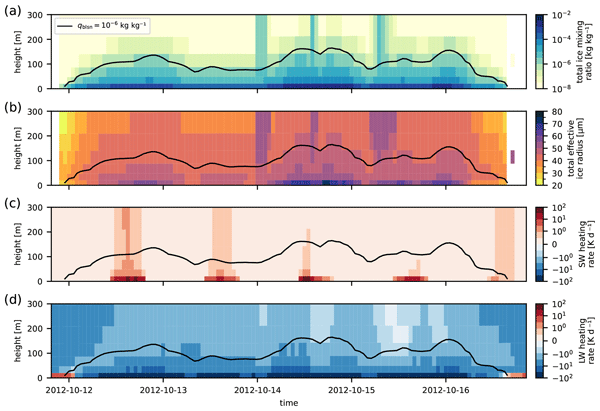
Strong winds can lift snow into the air, which influences the energy exchange between the surface and the atmosphere. We studied this phenomenon over the Greenland Ice Sheet using observations and a climate model. We found that blowing snow traps heat near the surface like a blanket and reflects incoming sunlight like a mirror. Simulating these processes increases the net energy at the surface and improves model accuracy. Therefore, we recommend including these effects in climate models.
Tesse E. A. van den Aker, Peter Kuipers Munneke, Willem Jan van de Berg, Walter W. Immerzeel, and Michiel R. van den Broeke
The Cryosphere, 20, 5475–5490, https://doi.org/10.5194/tc-20-5475-2026, https://doi.org/10.5194/tc-20-5475-2026, 2026
Short summary
Short summary
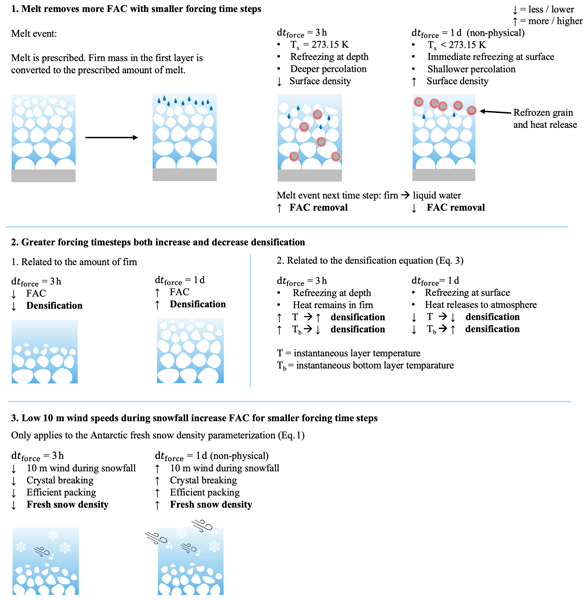
The firn layer, i.e. permanent snow, regulates how an ice sheet responds to climate change. Firn models are forced with with climate data at time steps from sub-daily to annual in literature, however, implications are barely evaluated. We test the impact of different climate forcing time steps on the modeled firn layer. We conclude that the climate forcing time step (1) affects firn model output, (2) can lead to non-physical behaviour, and (3) that resolving at least a diurnal cycle is required.
Franka Jesse, Erwin Lambert, Constantijn J. Berends, and Roderik S. W. van de Wal
EGUsphere, https://doi.org/10.5194/egusphere-2026-4237, https://doi.org/10.5194/egusphere-2026-4237, 2026
Short summary
Short summary
Strong ocean-driven melting can create gaps in floating ice shelves. Because the pathways of meltwater beneath these gaps are poorly understood, we tested two contrasting scenarios: one in which meltwater loses heat and momentum within the gaps, and another in which it continues to flow across them. These different representations substantially alter projected ice mass loss, highlighting meltwater treatment across ice-shelf gaps as a key source of uncertainty.
Marte Gé Hofsteenge, Willem Jan van de Berg, Christiaan van Dalum, Kristiina Verro, Maurice van Tiggelen, and Michiel van den Broeke
The Cryosphere, 20, 4747–4766, https://doi.org/10.5194/tc-20-4747-2026, https://doi.org/10.5194/tc-20-4747-2026, 2026
Short summary
Short summary
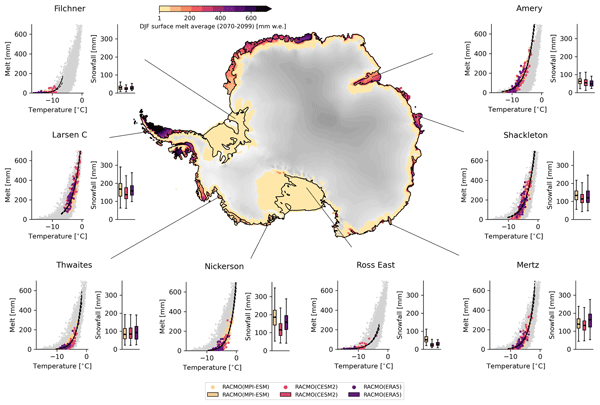
We use a regional climate model to study how surface melt on Antarctic ice shelves responds to air temperature. The relationship is strongly non-linear, mainly due to feedbacks in surface albedo, with other energy sources also contributing. Currently colder, drier, and more stable ice shelves will experience more melt at the same temperature than ice shelves in wetter climates, highlighting their vulnerability to fracturing, ice shelf instability, and contributions to global sea-level rise.
Sanne B. M. Veldhuijsen, Peter Kuipers Munneke, Willem Jan van de Berg, Michiel R. van den Broeke, and Luke D. Trusel
EGUsphere, https://doi.org/10.5194/egusphere-2026-3453, https://doi.org/10.5194/egusphere-2026-3453, 2026
This preprint is open for discussion and under review for The Cryosphere (TC).
Short summary
Short summary
Antarctica has floating ice shelves around its perimeter that provide stability to the ice sheet. As temperature rises, snow on the ice shelves may melt away, and ponding of meltwater may cause the ice shelves to collapse. If that happens, Antarctica may start to lose ice faster than before, resulting in accelerated sea-level rise. The tool presented in this article will be used in simulations of future climate to determine when climate change leads to collapse of the ice shelves in Antarctica.
Constantijn J. Berends, Jorge A. Bernales, Erwin Lambert, and Roderik S. W. van de Wal
EGUsphere, https://doi.org/10.5194/egusphere-2026-4041, https://doi.org/10.5194/egusphere-2026-4041, 2026
Short summary
Short summary
Computer models of the Antarctic ice sheet can project how much it will melt in response to climate change. That depends on the properties of the rock and the water beneath the ice, about which we know very little. That means the amount of sea-level in the future is very uncertain. Techniques to reduce that uncertainty do not always work as well as expected. We must get actual measurements of the bottom of the ice to improve our understanding of the ice sheet, and our knowledge of its future.
Florian Vacek, Faezeh M. Nick, Douglas Benn, Maarten P. A. Zwarts, Walter Immerzeel, and Roderik S. W. van de Wal
The Cryosphere, 20, 3827–3845, https://doi.org/10.5194/tc-20-3827-2026, https://doi.org/10.5194/tc-20-3827-2026, 2026
Short summary
Short summary
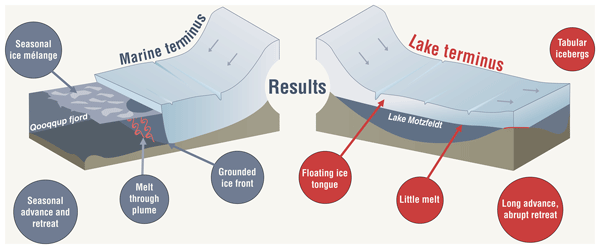
We studied a unique glacier in South Greenland that ends in both a lake and the ocean. Using satellite data and field work, we found that the two glacier fronts behave very differently even under the same climate. At the lake glacier we identify a floating ice tongue and we infer little melt below water. The lake glacier experienced a sudden large breakup. Our work suggests that lake and marine glacier fronts must be treated differently in model simulations.
Ian Simpson, Edward Hanna, Ryan S. Williams, Linh Luu, Andrew Orr, Julie Jones, Xavier Fettweis, Jose Abraham Torres Alavez, Ole Bøssing Christensen, Ella Gilbert, Sid Gumber, Christoph Kittel, Sihan Li, Damien Maure, Ruth Mottram, Tony Phillips, Willem Jan van de Berg, and Kristiina Verro
EGUsphere, https://doi.org/10.5194/egusphere-2026-2270, https://doi.org/10.5194/egusphere-2026-2270, 2026
Short summary
Short summary
The warming trend in global temperatures has potential to result in accelerated break up of the Antarctic ice shelves, which would contribute to rising sea levels. Here we present a novel database of Antarctic extreme weather events over a selection of the Antarctic ice shelves. We examine air temperature, precipitation, wind and surface pressure. In addition, we examine trends in the frequency of extreme events and the links with weather patterns around Antarctica.
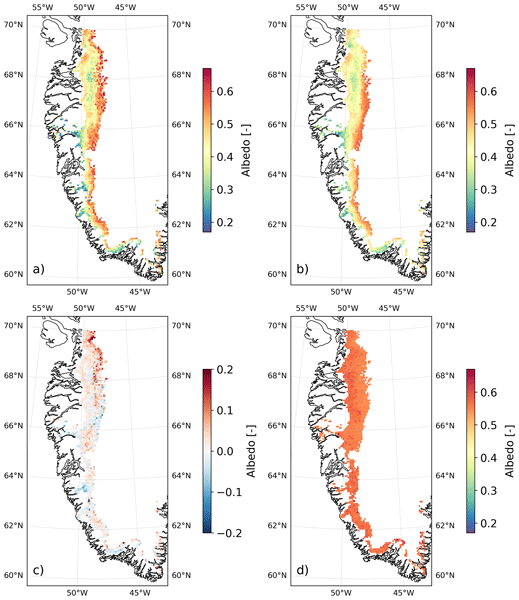
Raf Antwerpen, Marco Tedesco, Pierre Gentine, Willem Jan van de Berg, and Xavier Fettweis
The Cryosphere, 20, 3131–3149, https://doi.org/10.5194/tc-20-3131-2026, https://doi.org/10.5194/tc-20-3131-2026, 2026
Short summary
Short summary
We study why Greenland ice melts faster by improving how ice brightness is represented. This is important because it controls how much sunlight is absorbed by the ice. Using satellite data and a new transparent machine learning method trained with climate model information, we capture how the shape of the ice sheet, temperature, and meltwater change ice brightness. Our approach outperforms existing climate models and can reduce uncertainty in future sea level rise projections.
James R. Jordan, Frank Pattyn, Daniel Abele, Torsten Albrecht, Jorge Alvarez-Solas, Jowan M. Barnes, Tijn Berends, Jorge A. Bernales, Javier Blasco, Gong Cheng, Youngmin Choi, Stephen L. Cornford, Cruz Garcia-Molina, Fabien Gillet-Chaulet, G. Hilmar Gudmundsson, Angelika Humbert, Gunter R. Leguy, William H. Lipscomb, Marisa Montoya, Daniel Moreno-Parada, Mathieu Morlighem, Tyler Pelle, Alexander Robinson, Martin Rückamp, Hélène Seroussi, Yanmei Tian, Luisa Wagner, Roderick S. W. van de Wal, Liyun Zhao, and Thomas Zwinger
EGUsphere, https://doi.org/10.5194/egusphere-2026-1962, https://doi.org/10.5194/egusphere-2026-1962, 2026
Short summary
Short summary
Ice calving is a recent inclusion in ice sheet models and there has not been a systematic test of how well it has been implemented. We show that models can accurately represent a given rate of ice calving, properties at the ice front evolve smoothly during calving, and that there are no consistent differences in ice behaviour between various approaches to representing calving in numerical ice models. This gives us confidence in their ability for use in sea level rise prediction simulations.
Jean-Francois Lemieux, Damien Ringeisen, Martin Losch, William Lipscomb, and Jinro Ukita
EGUsphere, https://doi.org/10.5194/egusphere-2026-1362, https://doi.org/10.5194/egusphere-2026-1362, 2026
Short summary
Short summary
The sea ice cover in the Arctic and in the Southern Ocean strongly varies spatially due to the formation of leads and pressure ridges. Leads and pressure ridges are formed when sea ice fails because forces inside the ice cover reach critical values. This work describes how the representation of leads and ridges in sea ice models should be modified when different critical forces are used.
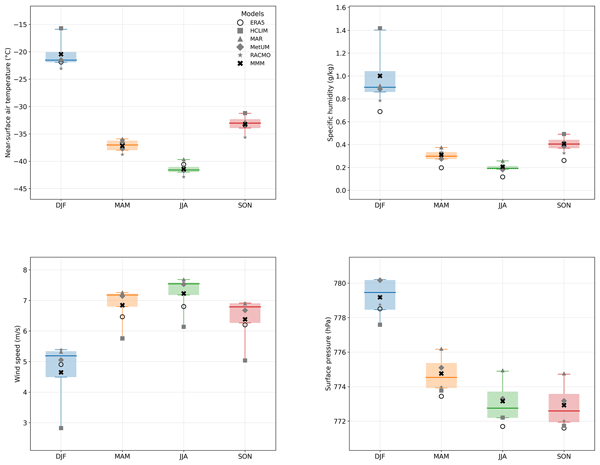
Ella Gilbert, José Abraham Torres-Alavez, Marte G. Hofsteenge, Willem Jan van de Berg, Fredrik Boberg, Ole Bøssing Christensen, Christiaan Timo van Dalum, Xavier Fettweis, Siddharth Gumber, Nicolaj Hansen, Christoph Kittel, Clara Lambin, Damien Maure, Ruth Mottram, Martin Olesen, Andrew Orr, Tony Phillips, Maurice van Tiggelen, Kristiina Verro, and Priscilla A. Mooney
The Cryosphere, 20, 2629–2658, https://doi.org/10.5194/tc-20-2629-2026, https://doi.org/10.5194/tc-20-2629-2026, 2026
Short summary
Short summary
Here we present a new dataset – the PolarRES ensemble – of four state-of-the-art regional climate models, which capture the full complexity of Antarctica's climate. The ensemble out-performs other available tools, advancing our ability to explore Antarctic climate. While it still has limitations, the PolarRES ensemble offers a novel and exciting way of evaluating climate processes and features, and we encourage researchers to use the data, which are freely available.
Daniel Gunning, Kerim H. Nisancioglu, Emilie Capron, and Roderik S. W. van de Wal
EGUsphere, https://doi.org/10.5194/egusphere-2026-1151, https://doi.org/10.5194/egusphere-2026-1151, 2026
Short summary
Short summary
During the Early Pleistocene, glacial cycles closely follow Earth’s obliquity, even though summer insolation is strongly modulated by precession. Sensitivity experiments with a zonally averaged energy balance model show a pronounced obliquity cycle in polar temperatures. This arises from obliquity control on winter sea ice, which regulates ocean heat release, while precession has a weaker effect on sea ice and temperature.
Tim van den Akker, William H. Lipscomb, Gunter R. Leguy, Willem Jan van de Berg, and Roderik S. W. van de Wal
The Cryosphere, 20, 1405–1425, https://doi.org/10.5194/tc-20-1405-2026, https://doi.org/10.5194/tc-20-1405-2026, 2026
Short summary
Short summary
The Antarctic Ice Sheet is currently thinning, especially at major outlet glaciers. Including present-day ice thinning rates in models is a modeller's choice and can affect future projections. This study quantifies the impact of current imbalance on forced future projections, revealing strong regional and short-term (up to 2100) effects when these mass change rates are included.
Benjamin Heurgue, Charles Amory, Christoph Kittel, Fredrik Boberg, Gaël Durand, Vincent Favier, Xavier Fettweis, Quentin Glaude, Heiko Goelzer, Nicolaj Hansen, Nicolas C. Jourdain, Ruth Mottram, Martin Olesen, Willem Jan Van de Berg, Michiel R. Van den Broeke, and René R. Wijngaard
EGUsphere, https://doi.org/10.5194/egusphere-2026-624, https://doi.org/10.5194/egusphere-2026-624, 2026
Short summary
Short summary
We studied how the Antarctic ice sheet surface mass balance may change by 2100 using three high-resolution climate models forced by the same future climate scenario. While the models agree for present-day conditions, they project very different futures, especially over floating ice shelves. These differences mainly come from how melting, refreezing, and temperature are represented. Our results show that future sea level projections strongly depend on how well models simulate today’s climate.
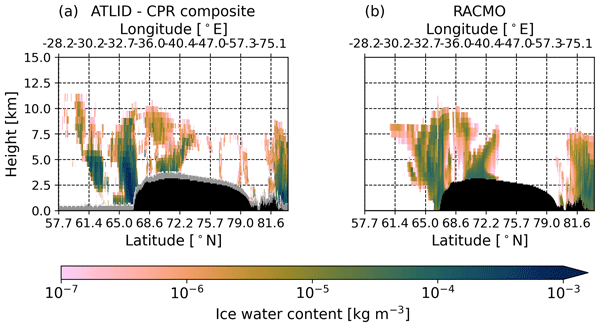
Thirza N. Feenstra, Willem Jan van de Berg, Gerd-Jan van Zadelhoff, David P. Donovan, Christiaan T. van Dalum, and Michiel R. van den Broeke
Atmos. Meas. Tech., 19, 1323–1344, https://doi.org/10.5194/amt-19-1323-2026, https://doi.org/10.5194/amt-19-1323-2026, 2026
Short summary
Short summary
Cloud representation brings large uncertainties in polar climate modeling. We show the first evaluation of Greenland clouds in the Regional Atmospheric Climate Model (RACMO2.4) with new EarthCARE satellite data. Comparing lidar and radar observations and retrieved cloud profiles with co-located RACMO output, we find RACMO captures low ice clouds but underestimates high clouds, mid-altitude liquid clouds, and snowfall. These results highlight EarthCARE's potential to improve polar climate models.
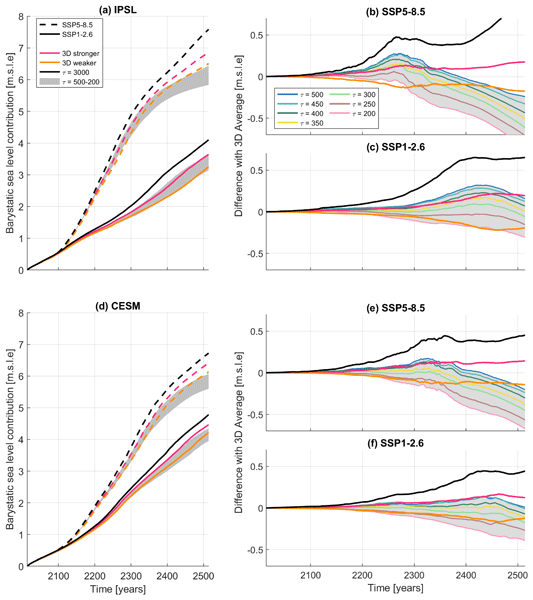
Caroline J. van Calcar, Pippa L. Whitehouse, Roderik S. W. van de Wal, and Wouter van der Wal
The Cryosphere, 20, 757–775, https://doi.org/10.5194/tc-20-757-2026, https://doi.org/10.5194/tc-20-757-2026, 2026
Short summary
Short summary
The bedrock deformation in response to a melting ice sheet provides significant negative feedback on Antarctic ice mass loss in the next 500 years. Current ice sheet models often use computationally fast but simplified Earth models. Our results show that projections of the Antarctic Ice Sheet contribution to sea-level rise using an ice sheet - 3D GIA (glacial isostatic adjustment) model can be approximated using a laterally varying ELRA (elastic lithosphere, relaxed asthenosphere) model or a 1D GIA model when the recommended parameters are used.

Heiko Goelzer, Constantijn J. Berends, Fredrik Boberg, Gael Durand, Tamsin L. Edwards, Xavier Fettweis, Fabien Gillet-Chaulet, Quentin Glaude, Philippe Huybrechts, Sébastien Le clec'h, Ruth Mottram, Brice Noël, Martin Olesen, Charlotte Rahlves, Jeremy Rohmer, Michiel van den Broeke, and Roderik S. W. van de Wal
The Cryosphere, 19, 6887–6906, https://doi.org/10.5194/tc-19-6887-2025, https://doi.org/10.5194/tc-19-6887-2025, 2025
Short summary
Short summary
We present an ensemble of ice sheet model projections for the Greenland ice sheet. The focus is on providing projections that improve our understanding of the range future sea-level rise and the inherent uncertainties over the next 100 to 300 years. Compared to earlier work we more fully account for some of the uncertainties in sea-level projections. We include a wider range of climate model output, more climate change scenarios and we extend projections schematically up to year 2300.
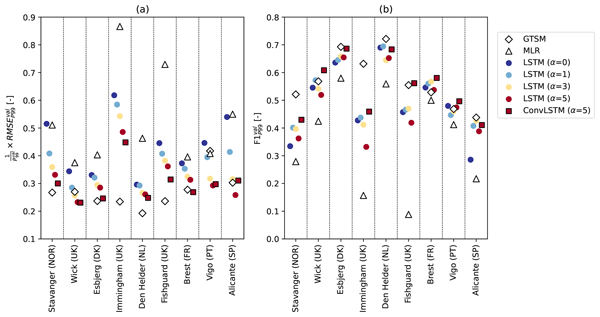
Tim H. J. Hermans, Chiheb Ben Hammouda, Simon Treu, Timothy Tiggeloven, Anaïs Couasnon, Julius J. M. Busecke, and Roderik S. W. van de Wal
Nat. Hazards Earth Syst. Sci., 25, 4593–4612, https://doi.org/10.5194/nhess-25-4593-2025, https://doi.org/10.5194/nhess-25-4593-2025, 2025
Short summary
Short summary
We studied the performance of different types of neural networks at predicting extreme storm surges. We found that that performance improves when during model training, storm surges that are rarer are given a higher weight than moderate storm surges. Additionally, we found that the performance of some of the neural networks approaches that of a state-of-the-art hydrodynamic model. This is promising for the future application of neural networks to climate model simulations.
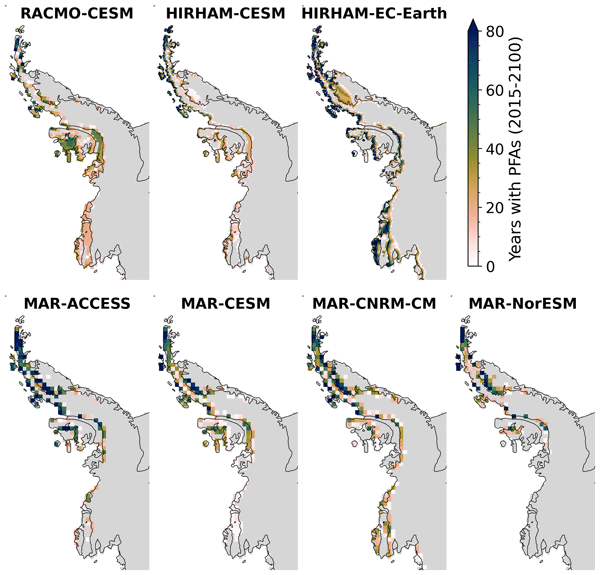
Sanne B. M. Veldhuijsen, Willem Jan van de Berg, Peter Kuipers Munneke, Nicolaj Hansen, Fredrik Boberg, Christoph Kittel, Charles Amory, and Michiel R. van den Broeke
The Cryosphere, 19, 5157–5173, https://doi.org/10.5194/tc-19-5157-2025, https://doi.org/10.5194/tc-19-5157-2025, 2025
Short summary
Short summary
Perennial firn aquifers (PFAs), year-round bodies of liquid water within firns, can potentially impact ice-shelf and ice-sheet stability. We developed a fast XGBoost firn emulator to predict the 21st-century distribution of PFAs in Antarctica for 12 climatic forcing datasets. Our findings suggest that, in low-emission scenarios, PFAs remain confined to the Antarctic Peninsula. However, in a high-emission scenario, PFAs are projected to expand to a region in West Antarctica and East Antarctica.
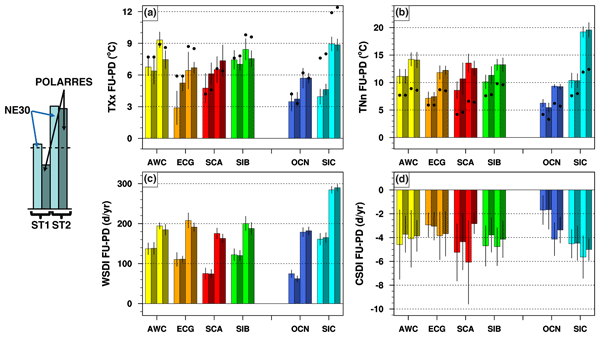
René R. Wijngaard, Willem Jan van de Berg, Christiaan T. van Dalum, Adam R. Herrington, and Xavier J. Levine
Weather Clim. Dynam., 6, 1241–1266, https://doi.org/10.5194/wcd-6-1241-2025, https://doi.org/10.5194/wcd-6-1241-2025, 2025
Short summary
Short summary
We used the variable-resolution Community Earth System Model to simulate present-day and future Arctic temperature and precipitation extremes using global grids (~111 km) with and without regional refinement (~28 km) and a storyline approach. Refined grids generally perform better for precipitation extremes, while unrefined grids perform better for temperature extremes. Future projections show increases in high temperature and wet precipitation extremes and decreases in low temperature extremes.
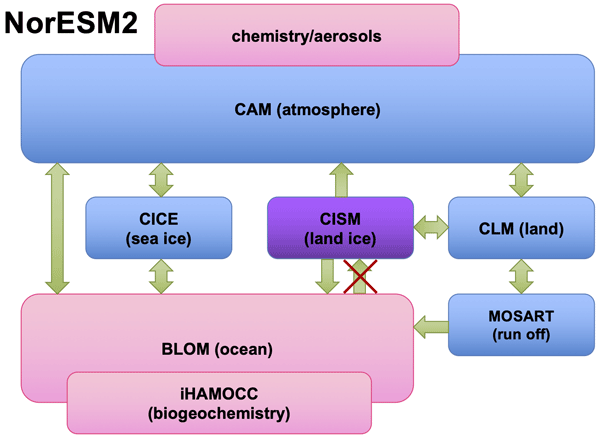
Heiko Goelzer, Petra M. Langebroek, Andreas Born, Stefan Hofer, Konstanze Haubner, Michele Petrini, Gunter Leguy, William H. Lipscomb, and Katherine Thayer-Calder
Geosci. Model Dev., 18, 7853–7867, https://doi.org/10.5194/gmd-18-7853-2025, https://doi.org/10.5194/gmd-18-7853-2025, 2025
Short summary
Short summary
On the backdrop of observed accelerating ice sheet mass loss over the last few decades, there is growing interest in the role of ice sheet changes in global climate projections. In this regard, we have coupled an Earth system model with an ice sheet model and have produced an initial set of climate projections including an interactive coupling with a dynamic Greenland ice sheet.
Johanna Beckmann, Ronja Reese, Felicity S. McCormack, Sue Cook, Lawrence Bird, Dawid Gwyther, Daniel Richards, Matthias Scheiter, Yu Wang, Hélène Seroussi, Ayako Abe‐Ouchi, Torsten Albrecht, Jorge Alvarez‐Solas, Xylar S. Asay‐Davis, Jean‐Baptiste Barre, Constantijn J. Berends, Jorge Bernales, Javier Blasco, Justine Caillet, David M. Chandler, Violaine Coulon, Richard Cullather, Christophe Dumas, Benjamin K. Galton‐Fenzi, Julius Garbe, Fabien Gillet‐Chaulet, Rupert Gladstone, Heiko Goelzer, Nicholas R. Golledge, Ralf Greve, G. Hilmar Gudmundsson, Holly Kyeore Han, Trevor R. Hillebrand, Matthew J. Hoffman, Philippe Huybrechts, Nicolas C. Jourdain, Ann Kristin Klose, Petra M. Langebroek, Gunter R. Leguy, William H. Lipscomb, Daniel P. Lowry, Pierre Mathiot, Marisa Montoya, Mathieu Morlighem, Sophie Nowicki, Frank Pattyn, Antony J. Payne, Tyler Pelle, Aurélien Quiquet, Alexander Robinson, Leopekka Saraste, Erika G. Simon, Sainan Sun, Jake P. Twarog, Luke D. Trusel, Benoit Urruty, Jonas Van Breedam, Roderik S. W. van de Wal, Chen Zhao, and Thomas Zwinger
EGUsphere, https://doi.org/10.5194/egusphere-2025-4069, https://doi.org/10.5194/egusphere-2025-4069, 2025
Short summary
Short summary
Antarctica holds enough ice to raise sea levels by many meters, but its future is uncertain. Warm ocean water melts ice shelves from below, letting inland ice flow faster into the sea. By 2300, Antarctica could add 0.6–4.4 m to sea levels. Our study identifies two key factors—how strongly shelves melt and how the ice responds. These explain much of the range, and refining them in models may improve future predictions.
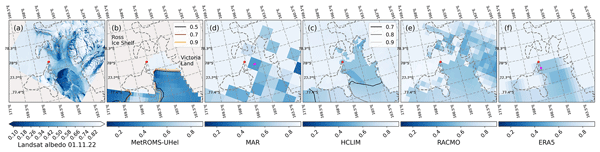
Kristiina Verro, Cecilia Äijälä, Roberta Pirazzini, Ruzica Dadic, Damien Maure, Willem Jan van de Berg, Giacomo Traversa, Christiaan T. van Dalum, Petteri Uotila, Xavier Fettweis, Biagio Di Mauro, and Milla Johansson
The Cryosphere, 19, 4409–4436, https://doi.org/10.5194/tc-19-4409-2025, https://doi.org/10.5194/tc-19-4409-2025, 2025
Short summary
Short summary
Accurately representing Antarctic sea ice is essential for reliable climate and ocean model predictions. We evaluated how different models simulate the sea ice's sunlight reflectivity (called albedo) using field and satellite data. Models with simple albedo schemes performed well in limited cases but missed key processes. The advanced scheme in the MetROMS-UHel ocean model provided the most accurate results, including observed day–night albedo changes observed during a field campaign.
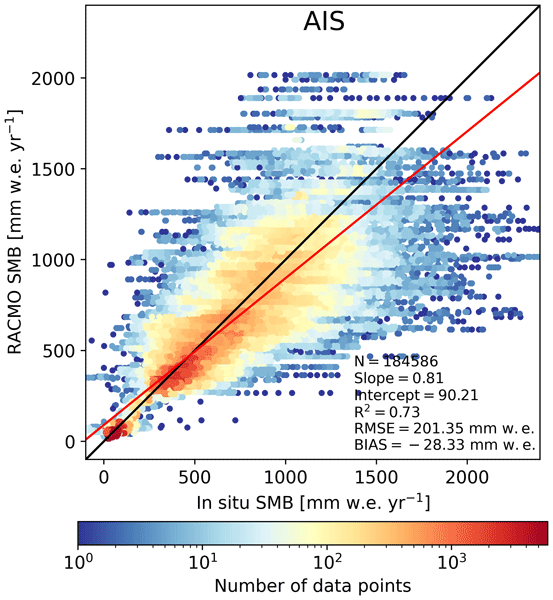
Christiaan T. van Dalum, Willem Jan van de Berg, Michiel R. van den Broeke, and Maurice van Tiggelen
The Cryosphere, 19, 4061–4090, https://doi.org/10.5194/tc-19-4061-2025, https://doi.org/10.5194/tc-19-4061-2025, 2025
Short summary
Short summary
In this study, we present a new surface mass balance (SMB) and near-surface climate product for Antarctica with the regional climate model RACMO2.4p1. We assess the impact of major model updates on the climate of Antarctica. Locally, the SMB has changed substantially but also agrees well with observations. In addition, we show that the SMB components, surface energy budget, albedo, pressure, temperature, and wind speed compare well with in situ and remote sensing observations.
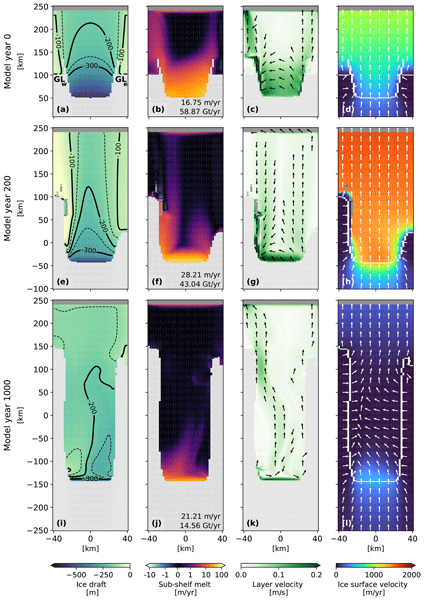
Franka Jesse, Erwin Lambert, and Roderik S. W. van de Wal
The Cryosphere, 19, 3849–3872, https://doi.org/10.5194/tc-19-3849-2025, https://doi.org/10.5194/tc-19-3849-2025, 2025
Short summary
Short summary
We introduce the coupling of a sub-shelf melt model with an ice sheet model to explore how horizontal meltwater flow below ice shelves affects ice sheet mass loss over time. We show that accurately modelling the meltwater flow direction leads to distinct feedbacks and transient volume loss not captured by melt parameterisations that simplify flow direction. Our results highlight the importance of refining the meltwater flow representation in ice sheet models to improve sea level projections.
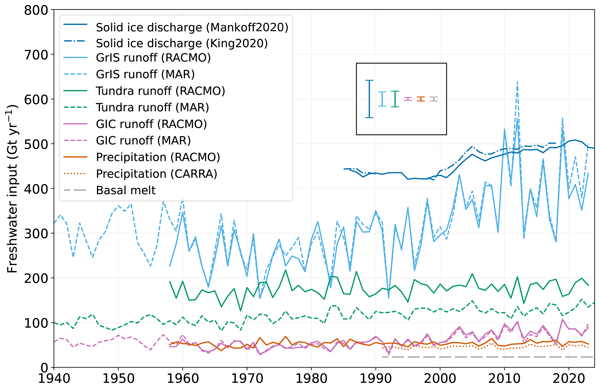
Anneke L. Vries, Willem Jan van de Berg, Brice Noël, Lorenz Meire, and Michiel R. van den Broeke
The Cryosphere, 19, 3897–3914, https://doi.org/10.5194/tc-19-3897-2025, https://doi.org/10.5194/tc-19-3897-2025, 2025
Short summary
Short summary
Freshwater flows into Greenland's fjords from various sources. Solid ice discharge (e.g. calving icebergs) dominates freshwater input in the southeast and northwest. In contrast, in the southwest, runoff from the ice sheet and tundra are the most significant. Seasonal data revealed that fjord precipitation and tundra runoff contribute up to 11 % and 35 % of the monthly freshwater input, respectively. Our results provide valuable input for ocean models and for researchers studying fjord ecosystems.
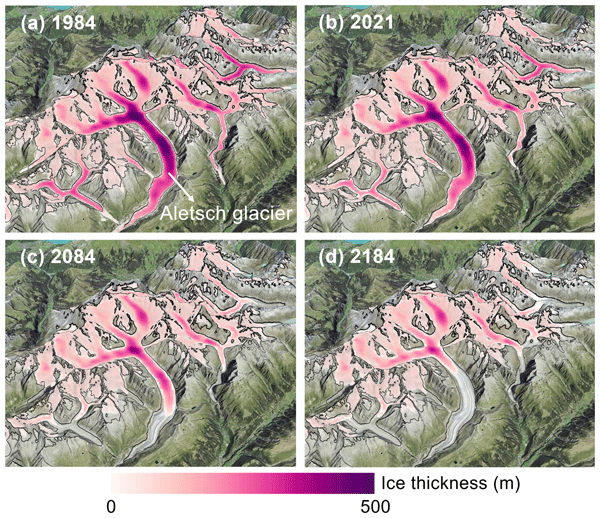
Samar Minallah, William H. Lipscomb, Gunter Leguy, and Harry Zekollari
Geosci. Model Dev., 18, 5467–5486, https://doi.org/10.5194/gmd-18-5467-2025, https://doi.org/10.5194/gmd-18-5467-2025, 2025
Short summary
Short summary
We developed a new modeling framework within an Earth system model to study mountain glacier evolution under different climate scenarios, applied here to the European Alps. Substantial Alpine glacier mass loss is projected under current climate conditions, with near-total loss under further warming. This is the first use of a 3D, higher-order ice-flow model for regional glacier simulations, enabling assessment of coupled land ice–Earth system processes.
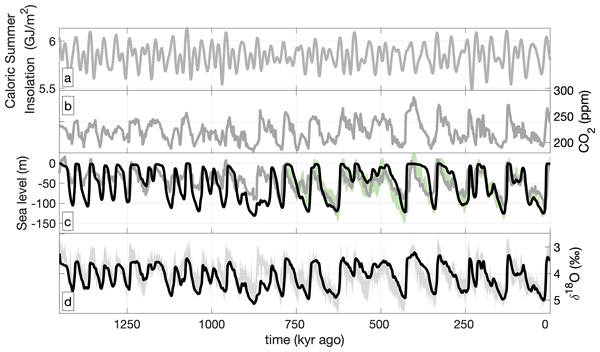
Meike D. W. Scherrenberg, Constantijn J. Berends, and Roderik S. W. van de Wal
Clim. Past, 21, 1061–1077, https://doi.org/10.5194/cp-21-1061-2025, https://doi.org/10.5194/cp-21-1061-2025, 2025
Short summary
Short summary
Glacial cycle duration changed from 41 000 to 100 000 years during the Mid-Pleistocene Transition (MPT), but the cause is still under debate. We simulate the MPT with an ice sheet model forced by prescribed CO2 and insolation and simple ice–climate interactions. Before the MPT, glacial cycles follow insolation. After the MPT, low CO2 levels may compensate for warming at insolation maxima, increasing the length of glacial cycles until the North American ice sheet becomes large and thereby unstable.

Constantijn J. Berends, Victor Azizi, Jorge A. Bernales, and Roderik S. W. van de Wal
Geosci. Model Dev., 18, 3635–3659, https://doi.org/10.5194/gmd-18-3635-2025, https://doi.org/10.5194/gmd-18-3635-2025, 2025
Short summary
Short summary
Ice-sheet models are computer programs that can simulate how the Greenland and Antarctic ice sheets will evolve in the future. The accuracy of these models depends on their resolution: how small the details are that the model can resolve. We have created a model with a variable resolution that can resolve a lot of detail in areas where lots of changes happen in the ice and less detail in areas where the ice does not move so much. This makes the model both accurate and fast.
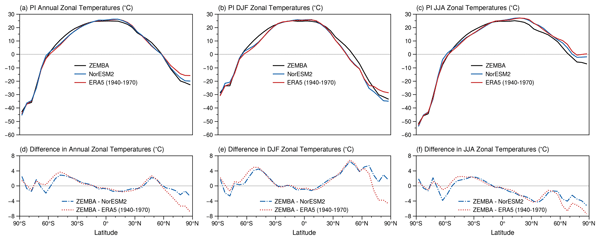
Daniel F. J. Gunning, Kerim H. Nisancioglu, Emilie Capron, and Roderik S. W. van de Wal
Geosci. Model Dev., 18, 2479–2508, https://doi.org/10.5194/gmd-18-2479-2025, https://doi.org/10.5194/gmd-18-2479-2025, 2025
Short summary
Short summary
This work documents the first results from ZEMBA: an energy balance model of the climate system. The model is a computationally efficient tool designed to study the response of climate to changes in the Earth's orbit. We demonstrate that ZEMBA reproduces many features of the Earth's climate for both the pre-industrial period and the Earth's most recent cold extreme – the Last Glacial Maximum. We intend to develop ZEMBA further and investigate the glacial cycles of the last 2.5 million years.
Tim van den Akker, Ward van Pelt, Rickard Petterson, and Veijo A. Pohjola
The Cryosphere, 19, 1513–1525, https://doi.org/10.5194/tc-19-1513-2025, https://doi.org/10.5194/tc-19-1513-2025, 2025
Short summary
Short summary
Liquid water can persist within old snow on glaciers and ice caps if it can percolate into the snow before it refreezes. Snow is a good insulator, and it is porous where the percolated water can be stored. If this happens, the water piles up and forms a groundwater-like system. Here, we show observations of such a groundwater-like system found in Svalbard. We demonstrate that it behaves like a groundwater system and use that to model the development of the water table from 1957 until the present day.
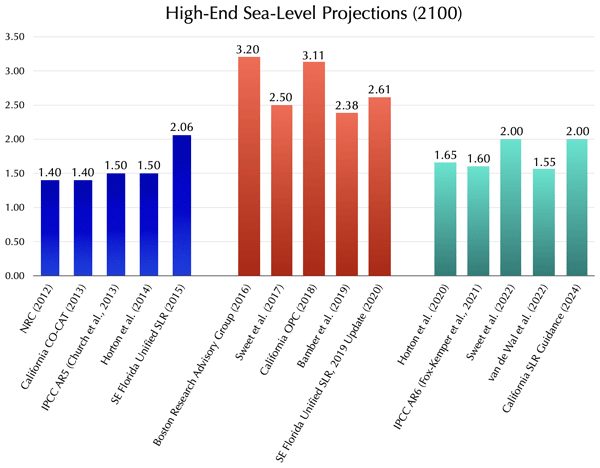
William H. Lipscomb, David Behar, and Monica Ainhorn Morrison
The Cryosphere, 19, 793–803, https://doi.org/10.5194/tc-19-793-2025, https://doi.org/10.5194/tc-19-793-2025, 2025
Short summary
Short summary
As communities try to adapt to climate change, they look for "actionable science" that can inform decision-making. There are risks in relying on novel results that are not yet accepted by the science community. We propose a practical criterion for determining which scientific claims are actionable. We show how premature acceptance of sea-level-rise predictions can lead to confusion and backtracking, and we suggest best practices for communication between scientists and adaptation planners.
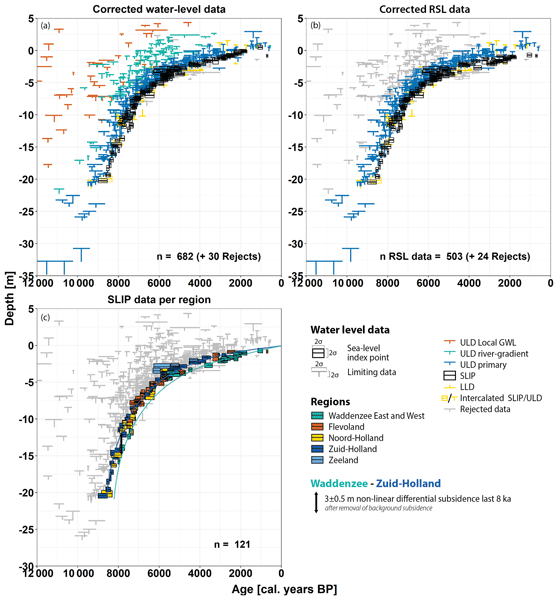
Kim de Wit, Kim M. Cohen, and Roderik S. W. van de Wal
Earth Syst. Sci. Data, 17, 545–577, https://doi.org/10.5194/essd-17-545-2025, https://doi.org/10.5194/essd-17-545-2025, 2025
Short summary
Short summary
In the Holocene, deltas and coastal plains developed due to relative sea level rise (RSLR). Past coastal and inland water levels are preserved in geological indicators, like basal peats. We present a dataset of 712 Holocene water level indicators from the Dutch coastal plain, relevant for studying RSLR and regional subsidence, compiled in HOLSEA workbook format. Our new, internally consistent, expanded documentation encourages multiple data uses and to report RSLR uncertainties transparently.
Tim van den Akker, William H. Lipscomb, Gunter R. Leguy, Jorjo Bernales, Constantijn J. Berends, Willem Jan van de Berg, and Roderik S. W. van de Wal
The Cryosphere, 19, 283–301, https://doi.org/10.5194/tc-19-283-2025, https://doi.org/10.5194/tc-19-283-2025, 2025
Short summary
Short summary
In this study, we present an improved way of representing ice thickness change rates in an ice sheet model. We apply this method using two ice sheet models of the Antarctic Ice Sheet. We found that the two largest outlet glaciers on the Antarctic Ice Sheet, Thwaites Glacier and Pine Island Glacier, will collapse without further warming on a timescale of centuries. This would cause a sea level rise of about 1.2 m globally.
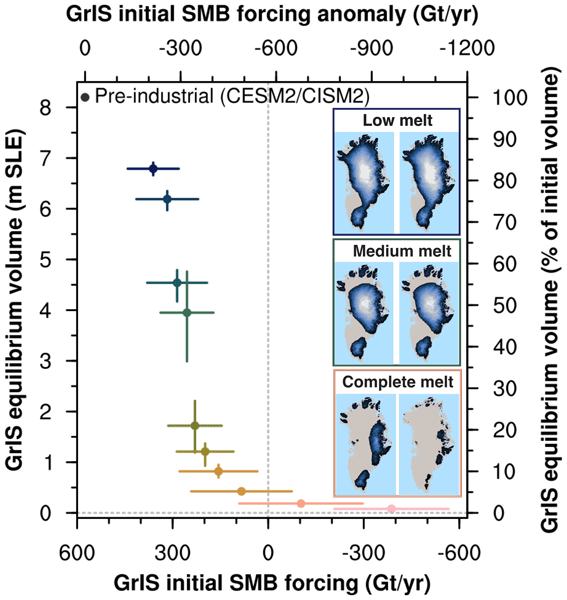
Michele Petrini, Meike D. W. Scherrenberg, Laura Muntjewerf, Miren Vizcaino, Raymond Sellevold, Gunter R. Leguy, William H. Lipscomb, and Heiko Goelzer
The Cryosphere, 19, 63–81, https://doi.org/10.5194/tc-19-63-2025, https://doi.org/10.5194/tc-19-63-2025, 2025
Short summary
Short summary
Anthropogenic warming is causing accelerated Greenland ice sheet melt. Here, we use a computer model to understand how prolonged warming and ice melt could threaten ice sheet stability. We find a threshold beyond which Greenland will lose more than 80 % of its ice over several thousand years, due to the interaction of surface and solid-Earth processes. Nearly complete Greenland ice sheet melt occurs when the ice margin disconnects from a region of high elevation in western Greenland.
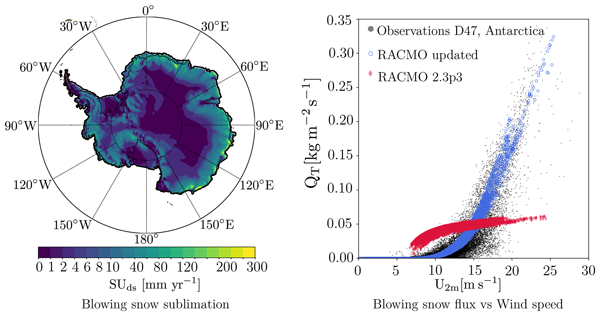
Srinidhi Gadde and Willem Jan van de Berg
The Cryosphere, 18, 4933–4953, https://doi.org/10.5194/tc-18-4933-2024, https://doi.org/10.5194/tc-18-4933-2024, 2024
Short summary
Short summary
Blowing-snow sublimation is the major loss term in the mass balance of Antarctica. In this study we update the blowing-snow representation in the Regional Atmospheric Climate Model (RACMO). With the updates, results compare well with observations from East Antarctica. Also, the continent-wide variation of blowing snow compares well with satellite observations. Hence, the updates provide a clear step forward in producing a physically sound and reliable estimate of the mass balance of Antarctica.
Bart van den Hurk, Nadia Pinardi, Alexander Bisaro, Giulia Galluccio, José A. Jiménez, Kate Larkin, Angélique Melet, Lavinia Giulia Pomarico, Kristin Richter, Kanika Singh, Roderik van de Wal, and Gundula Winter
State Planet, 3-slre1, 1, https://doi.org/10.5194/sp-3-slre1-1-2024, https://doi.org/10.5194/sp-3-slre1-1-2024, 2024
Short summary
Short summary
The Summary for Policymakers compiles findings from “Sea Level Rise in Europe: 1st Assessment Report of the Knowledge Hub on Sea Level Rise”. It covers knowledge gaps, observations, projections, impacts, adaptation measures, decision-making principles, and governance challenges. It provides information for each European basin (Mediterranean, Black Sea, North Sea, Baltic Sea, Atlantic, and Arctic) and aims to assist policymakers in enhancing the preparedness of European coasts for sea level rise.
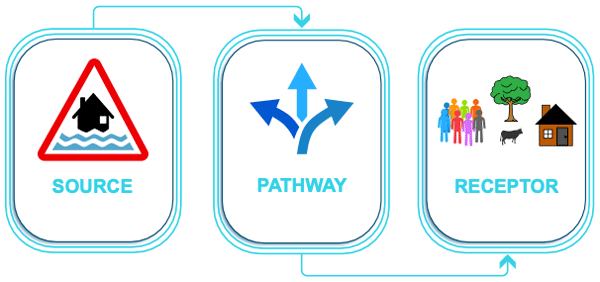
Roderik van de Wal, Angélique Melet, Debora Bellafiore, Paula Camus, Christian Ferrarin, Gualbert Oude Essink, Ivan D. Haigh, Piero Lionello, Arjen Luijendijk, Alexandra Toimil, Joanna Staneva, and Michalis Vousdoukas
State Planet, 3-slre1, 5, https://doi.org/10.5194/sp-3-slre1-5-2024, https://doi.org/10.5194/sp-3-slre1-5-2024, 2024
Short summary
Short summary
Sea level rise has major impacts in Europe, which vary from place to place and in time, depending on the source of the impacts. Flooding, erosion, and saltwater intrusion lead, via different pathways, to various consequences for coastal regions across Europe. This causes damage to assets, the environment, and people for all three categories of impacts discussed in this paper. The paper provides an overview of the various impacts in Europe.
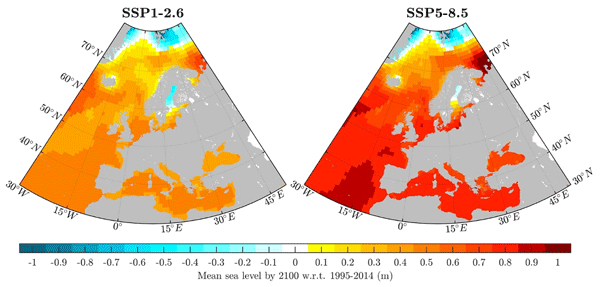
Angélique Melet, Roderik van de Wal, Angel Amores, Arne Arns, Alisée A. Chaigneau, Irina Dinu, Ivan D. Haigh, Tim H. J. Hermans, Piero Lionello, Marta Marcos, H. E. Markus Meier, Benoit Meyssignac, Matthew D. Palmer, Ronja Reese, Matthew J. R. Simpson, and Aimée B. A. Slangen
State Planet, 3-slre1, 4, https://doi.org/10.5194/sp-3-slre1-4-2024, https://doi.org/10.5194/sp-3-slre1-4-2024, 2024
Short summary
Short summary
The EU Knowledge Hub on Sea Level Rise’s Assessment Report strives to synthesize the current scientific knowledge on sea level rise and its impacts across local, national, and EU scales to support evidence-based policy and decision-making, primarily targeting coastal areas. This paper complements IPCC reports by documenting the state of knowledge of observed and 21st century projected changes in mean and extreme sea levels with more regional information for EU seas as scoped with stakeholders.
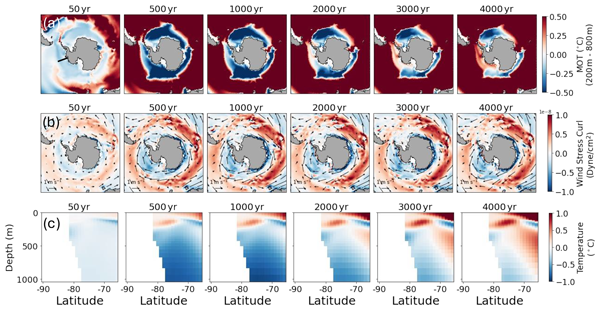
Mira Berdahl, Gunter R. Leguy, William H. Lipscomb, Bette L. Otto-Bliesner, Esther C. Brady, Robert A. Tomas, Nathan M. Urban, Ian Miller, Harriet Morgan, and Eric J. Steig
Clim. Past, 20, 2349–2371, https://doi.org/10.5194/cp-20-2349-2024, https://doi.org/10.5194/cp-20-2349-2024, 2024
Short summary
Short summary
Studying climate conditions near the Antarctic ice sheet (AIS) during Earth’s past warm periods informs us about how global warming may influence AIS ice loss. Using a global climate model, we investigate climate conditions near the AIS during the Last Interglacial (129 to 116 kyr ago), a period with warmer global temperatures and higher sea level than today. We identify the orbital and freshwater forcings that could cause ice loss and probe the mechanisms that lead to warmer climate conditions.

Jean-François Lemieux, William H. Lipscomb, Anthony Craig, David A. Bailey, Elizabeth C. Hunke, Philippe Blain, Till A. S. Rasmussen, Mats Bentsen, Frédéric Dupont, David Hebert, and Richard Allard
Geosci. Model Dev., 17, 6703–6724, https://doi.org/10.5194/gmd-17-6703-2024, https://doi.org/10.5194/gmd-17-6703-2024, 2024
Short summary
Short summary
We present the latest version of the CICE model. It solves equations that describe the dynamics and the growth and melt of sea ice. To do so, the domain is divided into grid cells and variables are positioned at specific locations in the cells. A new implementation (C-grid) is presented, with the velocity located on cell edges. Compared to the previous B-grid, the C-grid allows for a natural coupling with some oceanic and atmospheric models. It also allows for ice transport in narrow channels.
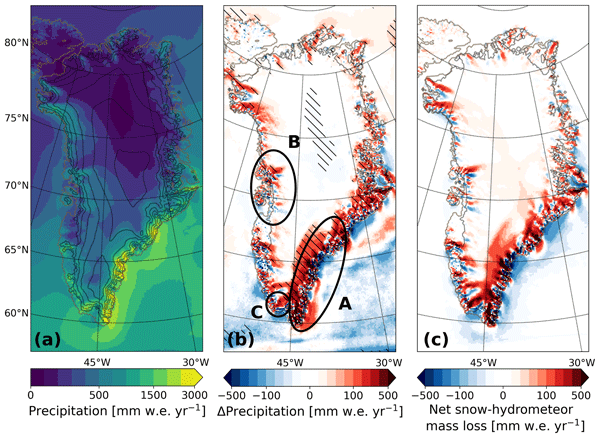
Christiaan T. van Dalum, Willem Jan van de Berg, Srinidhi N. Gadde, Maurice van Tiggelen, Tijmen van der Drift, Erik van Meijgaard, Lambertus H. van Ulft, and Michiel R. van den Broeke
The Cryosphere, 18, 4065–4088, https://doi.org/10.5194/tc-18-4065-2024, https://doi.org/10.5194/tc-18-4065-2024, 2024
Short summary
Short summary
We present a new version of the polar Regional Atmospheric Climate Model (RACMO), version 2.4p1, and show first results for Greenland, Antarctica and the Arctic. We provide an overview of all changes and investigate the impact that they have on the climate of polar regions. By comparing the results with observations and the output from the previous model version, we show that the model performs well regarding the surface mass balance of the ice sheets and near-surface climate.
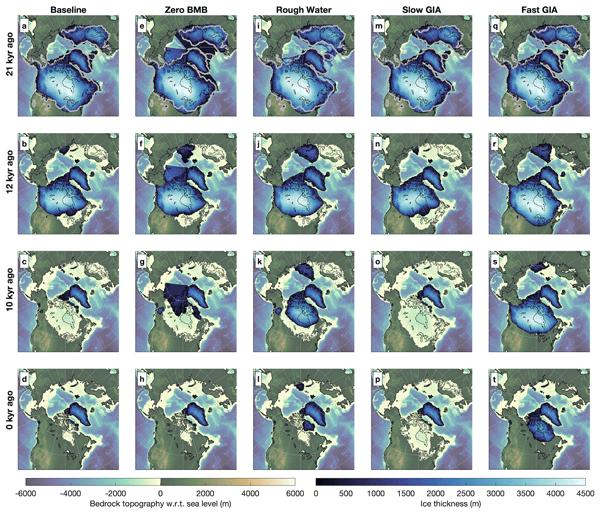
Meike D. W. Scherrenberg, Constantijn J. Berends, and Roderik S. W. van de Wal
Clim. Past, 20, 1761–1784, https://doi.org/10.5194/cp-20-1761-2024, https://doi.org/10.5194/cp-20-1761-2024, 2024
Short summary
Short summary
During Late Pleistocene glacial cycles, the Eurasian and North American ice sheets grew and melted, resulting in over 100 m of sea-level change. Studying the melting of past ice sheets can improve our understanding of how ice sheets might respond in the future. In this study, we find that melting increases due to proglacial lakes forming at the margins of the ice sheets, primarily due to the reduced basal friction of floating ice. Furthermore, bedrock uplift rates can strongly influence melting.
Sanne B. M. Veldhuijsen, Willem Jan van de Berg, Peter Kuipers Munneke, and Michiel R. van den Broeke
The Cryosphere, 18, 1983–1999, https://doi.org/10.5194/tc-18-1983-2024, https://doi.org/10.5194/tc-18-1983-2024, 2024
Short summary
Short summary
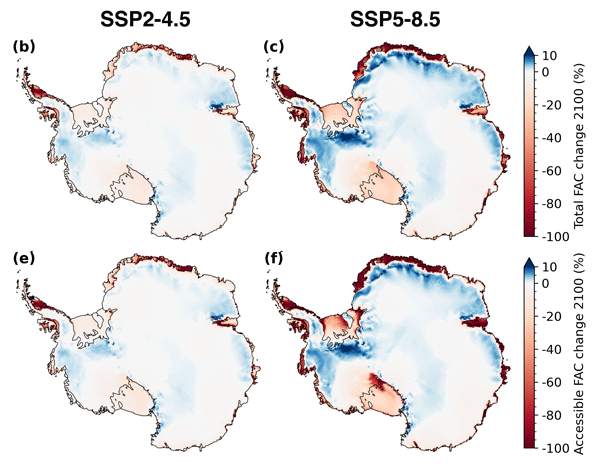
We use the IMAU firn densification model to simulate the 21st-century evolution of Antarctic firn air content. Ice shelves on the Antarctic Peninsula and the Roi Baudouin Ice Shelf in Dronning Maud Land are particularly vulnerable to total firn air content (FAC) depletion. Our results also underline the potentially large vulnerability of low-accumulation ice shelves to firn air depletion through ice slab formation.
Lennert B. Stap, Constantijn J. Berends, and Roderik S. W. van de Wal
Clim. Past, 20, 257–266, https://doi.org/10.5194/cp-20-257-2024, https://doi.org/10.5194/cp-20-257-2024, 2024
Short summary
Short summary
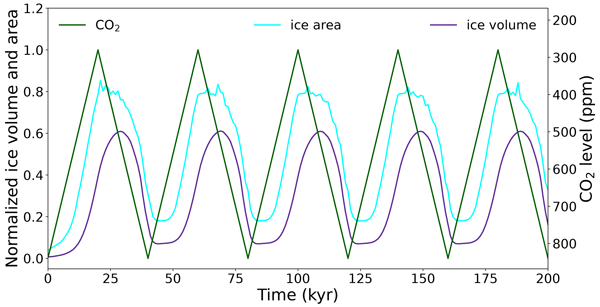
Analysing simulations of Antarctic Ice Sheet variability during the early and mid-Miocene (23 to 14 Myr ago), we find that the ice sheet area adapts faster and more strongly than volume to climate change on quasi-orbital timescales. Considering the recent discovery that ice area, rather than volume, influences deep-ocean temperatures, this implies that the Miocene Antarctic Ice Sheet affects deep-ocean temperatures more than its volume suggests.
Tong Zhang, William Colgan, Agnes Wansing, Anja Løkkegaard, Gunter Leguy, William H. Lipscomb, and Cunde Xiao
The Cryosphere, 18, 387–402, https://doi.org/10.5194/tc-18-387-2024, https://doi.org/10.5194/tc-18-387-2024, 2024
Short summary
Short summary
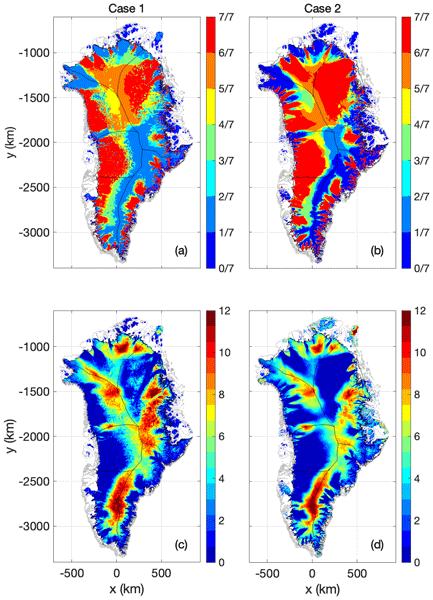
The geothermal heat flux determines how much heat enters from beneath the ice sheet, and thus impacts the temperature and the flow of the ice sheet. In this study we investigate how much geothermal heat flux impacts the initialization of the Greenland ice sheet. We use the Community Ice Sheet Model with two different initialization methods. We find a non-trivial influence of the choice of heat flow boundary conditions on the ice sheet initializations for further designs of ice sheet modeling.
Hélène Seroussi, Vincent Verjans, Sophie Nowicki, Antony J. Payne, Heiko Goelzer, William H. Lipscomb, Ayako Abe-Ouchi, Cécile Agosta, Torsten Albrecht, Xylar Asay-Davis, Alice Barthel, Reinhard Calov, Richard Cullather, Christophe Dumas, Benjamin K. Galton-Fenzi, Rupert Gladstone, Nicholas R. Golledge, Jonathan M. Gregory, Ralf Greve, Tore Hattermann, Matthew J. Hoffman, Angelika Humbert, Philippe Huybrechts, Nicolas C. Jourdain, Thomas Kleiner, Eric Larour, Gunter R. Leguy, Daniel P. Lowry, Chistopher M. Little, Mathieu Morlighem, Frank Pattyn, Tyler Pelle, Stephen F. Price, Aurélien Quiquet, Ronja Reese, Nicole-Jeanne Schlegel, Andrew Shepherd, Erika Simon, Robin S. Smith, Fiammetta Straneo, Sainan Sun, Luke D. Trusel, Jonas Van Breedam, Peter Van Katwyk, Roderik S. W. van de Wal, Ricarda Winkelmann, Chen Zhao, Tong Zhang, and Thomas Zwinger
The Cryosphere, 17, 5197–5217, https://doi.org/10.5194/tc-17-5197-2023, https://doi.org/10.5194/tc-17-5197-2023, 2023
Short summary
Short summary
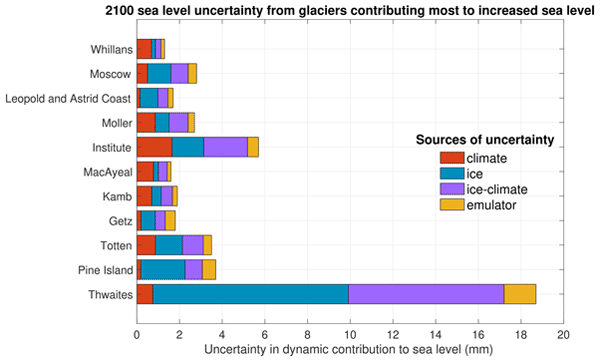
Mass loss from Antarctica is a key contributor to sea level rise over the 21st century, and the associated uncertainty dominates sea level projections. We highlight here the Antarctic glaciers showing the largest changes and quantify the main sources of uncertainty in their future evolution using an ensemble of ice flow models. We show that on top of Pine Island and Thwaites glaciers, Totten and Moscow University glaciers show rapid changes and a strong sensitivity to warmer ocean conditions.
Caroline J. van Calcar, Roderik S. W. van de Wal, Bas Blank, Bas de Boer, and Wouter van der Wal
Geosci. Model Dev., 16, 5473–5492, https://doi.org/10.5194/gmd-16-5473-2023, https://doi.org/10.5194/gmd-16-5473-2023, 2023
Short summary
Short summary
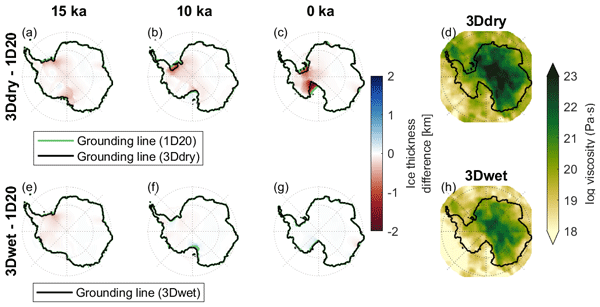
The waxing and waning of the Antarctic ice sheet caused the Earth’s surface to deform, which is stabilizing the ice sheet and mainly determined by the spatially variable viscosity of the mantle. Including this feedback in model simulations led to significant differences in ice sheet extent and ice thickness over the last glacial cycle. The results underline and quantify the importance of including this local feedback effect in ice sheet models when simulating the Antarctic ice sheet evolution.
René R. Wijngaard, Adam R. Herrington, William H. Lipscomb, Gunter R. Leguy, and Soon-Il An
The Cryosphere, 17, 3803–3828, https://doi.org/10.5194/tc-17-3803-2023, https://doi.org/10.5194/tc-17-3803-2023, 2023
Short summary
Short summary
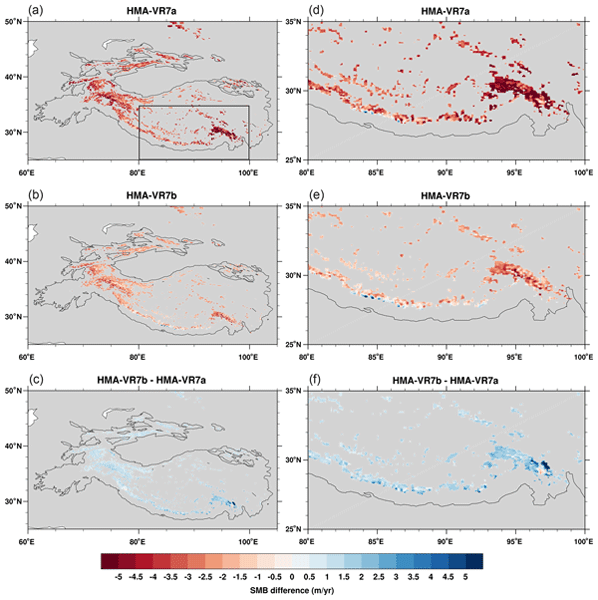
We evaluate the ability of the Community Earth System Model (CESM2) to simulate cryospheric–hydrological variables, such as glacier surface mass balance (SMB), over High Mountain Asia (HMA) by using a global grid (~111 km) with regional refinement (~7 km) over HMA. Evaluations of two different simulations show that climatological biases are reduced, and glacier SMB is improved (but still too negative) by modifying the snow and glacier model and using an updated glacier cover dataset.
Erwin Lambert, André Jüling, Roderik S. W. van de Wal, and Paul R. Holland
The Cryosphere, 17, 3203–3228, https://doi.org/10.5194/tc-17-3203-2023, https://doi.org/10.5194/tc-17-3203-2023, 2023
Short summary
Short summary
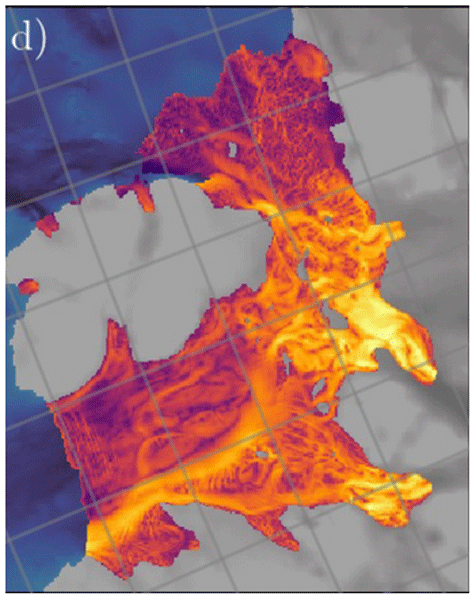
A major uncertainty in the study of sea level rise is the melting of the Antarctic ice sheet by the ocean. Here, we have developed a new model, named LADDIE, that simulates this ocean-driven melting of the floating parts of the Antarctic ice sheet. This model simulates fine-scale patterns of melting and freezing and requires significantly fewer computational resources than state-of-the-art ocean models. LADDIE can be used as a new tool to force high-resolution ice sheet models.
Iris Keizer, Dewi Le Bars, Cees de Valk, André Jüling, Roderik van de Wal, and Sybren Drijfhout
Ocean Sci., 19, 991–1007, https://doi.org/10.5194/os-19-991-2023, https://doi.org/10.5194/os-19-991-2023, 2023
Short summary
Short summary
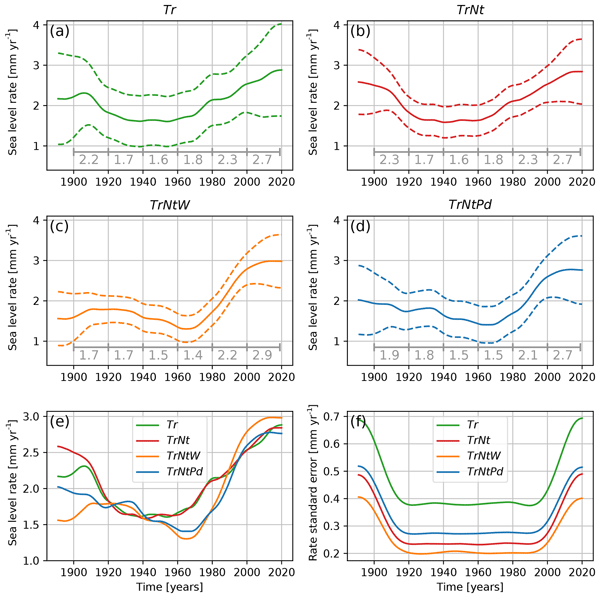
Using tide gauge observations, we show that the acceleration of sea-level rise (SLR) along the coast of the Netherlands started in the 1960s but was masked by wind field and nodal-tide variations. This finding aligns with global SLR observations and expectations based on a physical understanding of SLR related to global warming.

Sanne B. M. Veldhuijsen, Willem Jan van de Berg, Max Brils, Peter Kuipers Munneke, and Michiel R. van den Broeke
The Cryosphere, 17, 1675–1696, https://doi.org/10.5194/tc-17-1675-2023, https://doi.org/10.5194/tc-17-1675-2023, 2023
Short summary
Short summary
Firn is the transition of snow to glacier ice and covers 99 % of the Antarctic ice sheet. Knowledge about the firn layer and its variability is important, as it impacts satellite-based estimates of ice sheet mass change. Also, firn contains pores in which nearly all of the surface melt is retained. Here, we improve a semi-empirical firn model and simulate the firn characteristics for the period 1979–2020. We evaluate the performance with field and satellite measures and test its sensitivity.
Constantijn J. Berends, Roderik S. W. van de Wal, Tim van den Akker, and William H. Lipscomb
The Cryosphere, 17, 1585–1600, https://doi.org/10.5194/tc-17-1585-2023, https://doi.org/10.5194/tc-17-1585-2023, 2023
Short summary
Short summary
The rate at which the Antarctic ice sheet will melt because of anthropogenic climate change is uncertain. Part of this uncertainty stems from processes occurring beneath the ice, such as the way the ice slides over the underlying bedrock.
Inversion methodsattempt to use observations of the ice-sheet surface to calculate how these sliding processes work. We show that such methods cannot fully solve this problem, so a substantial uncertainty still remains in projections of sea-level rise.
Mira Berdahl, Gunter Leguy, William H. Lipscomb, Nathan M. Urban, and Matthew J. Hoffman
The Cryosphere, 17, 1513–1543, https://doi.org/10.5194/tc-17-1513-2023, https://doi.org/10.5194/tc-17-1513-2023, 2023
Short summary
Short summary
Contributions to future sea level from the Antarctic Ice Sheet remain poorly constrained. One reason is that ice sheet model initialization methods can have significant impacts on how the ice sheet responds to future forcings. We investigate the impacts of two key parameters used during model initialization. We find that these parameter choices alone can impact multi-century sea level rise by up to 2 m, emphasizing the need to carefully consider these choices for sea level rise predictions.
Meike D. W. Scherrenberg, Constantijn J. Berends, Lennert B. Stap, and Roderik S. W. van de Wal
Clim. Past, 19, 399–418, https://doi.org/10.5194/cp-19-399-2023, https://doi.org/10.5194/cp-19-399-2023, 2023
Short summary
Short summary
Ice sheets have a large effect on climate and vice versa. Here we use an ice sheet computer model to simulate the last glacial cycle and compare two methods, one that implicitly includes these feedbacks and one that does not. We found that when including simple climate feedbacks, the North American ice sheet develops from two domes instead of many small domes. Each ice sheet melts slower when including feedbacks. We attribute this difference mostly to air temperature–ice sheet interactions.
Raf M. Antwerpen, Marco Tedesco, Xavier Fettweis, Patrick Alexander, and Willem Jan van de Berg
The Cryosphere, 16, 4185–4199, https://doi.org/10.5194/tc-16-4185-2022, https://doi.org/10.5194/tc-16-4185-2022, 2022
Short summary
Short summary
The ice on Greenland has been melting more rapidly over the last few years. Most of this melt comes from the exposure of ice when the overlying snow melts. This ice is darker than snow and absorbs more sunlight, leading to more melt. It remains challenging to accurately simulate the brightness of the ice. We show that the color of ice simulated by Modèle Atmosphérique Régional (MAR) is too bright. We then show that this means that MAR may underestimate how fast the Greenland ice is melting.
Max Brils, Peter Kuipers Munneke, Willem Jan van de Berg, and Michiel van den Broeke
Geosci. Model Dev., 15, 7121–7138, https://doi.org/10.5194/gmd-15-7121-2022, https://doi.org/10.5194/gmd-15-7121-2022, 2022
Short summary
Short summary
Firn covers the Greenland ice sheet (GrIS) and can temporarily prevent mass loss. Here, we present the latest version of our firn model, IMAU-FDM, with an application to the GrIS. We improved the density of fallen snow, the firn densification rate and the firn's thermal conductivity. This leads to a higher air content and 10 m temperatures. Furthermore we investigate three case studies and find that the updated model shows greater variability and an increased sensitivity in surface elevation.

Tiago Silva, Jakob Abermann, Brice Noël, Sonika Shahi, Willem Jan van de Berg, and Wolfgang Schöner
The Cryosphere, 16, 3375–3391, https://doi.org/10.5194/tc-16-3375-2022, https://doi.org/10.5194/tc-16-3375-2022, 2022
Short summary
Short summary
To overcome internal climate variability, this study uses k-means clustering to combine NAO, GBI and IWV over the Greenland Ice Sheet (GrIS) and names the approach as the North Atlantic influence on Greenland (NAG). With the support of a polar-adapted RCM, spatio-temporal changes on SEB components within NAG phases are investigated. We report atmospheric warming and moistening across all NAG phases as well as large-scale and regional-scale contributions to GrIS mass loss and their interactions.
Constantijn J. Berends, Heiko Goelzer, Thomas J. Reerink, Lennert B. Stap, and Roderik S. W. van de Wal
Geosci. Model Dev., 15, 5667–5688, https://doi.org/10.5194/gmd-15-5667-2022, https://doi.org/10.5194/gmd-15-5667-2022, 2022
Short summary
Short summary
The rate at which marine ice sheets such as the West Antarctic ice sheet will retreat in a warming climate and ocean is still uncertain. Numerical ice-sheet models, which solve the physical equations that describe the way glaciers and ice sheets deform and flow, have been substantially improved in recent years. Here we present the results of several years of work on IMAU-ICE, an ice-sheet model of intermediate complexity, which can be used to study ice sheets of both the past and the future.
Adrian K. Turner, William H. Lipscomb, Elizabeth C. Hunke, Douglas W. Jacobsen, Nicole Jeffery, Darren Engwirda, Todd D. Ringler, and Jonathan D. Wolfe
Geosci. Model Dev., 15, 3721–3751, https://doi.org/10.5194/gmd-15-3721-2022, https://doi.org/10.5194/gmd-15-3721-2022, 2022
Short summary
Short summary
We present the dynamical core of the MPAS-Seaice model, which uses a mesh consisting of a Voronoi tessellation with polygonal cells. Such a mesh allows variable mesh resolution in different parts of the domain and the focusing of computational resources in regions of interest. We describe the velocity solver and tracer transport schemes used and examine errors generated by the model in both idealized and realistic test cases and examine the computational efficiency of the model.
Lennert B. Stap, Constantijn J. Berends, Meike D. W. Scherrenberg, Roderik S. W. van de Wal, and Edward G. W. Gasson
The Cryosphere, 16, 1315–1332, https://doi.org/10.5194/tc-16-1315-2022, https://doi.org/10.5194/tc-16-1315-2022, 2022
Short summary
Short summary
To gain understanding of how the Antarctic ice sheet responded to CO2 changes during past warm climate conditions, we simulate its variability during the Miocene. We include feedbacks between the ice sheet and atmosphere in our model and force the model using time-varying climate conditions. We find that these feedbacks reduce the amplitude of ice volume variations. Erosion-induced changes in the bedrock below the ice sheet that manifested during the Miocene also have a damping effect.
Christiaan T. van Dalum, Willem Jan van de Berg, and Michiel R. van den Broeke
The Cryosphere, 16, 1071–1089, https://doi.org/10.5194/tc-16-1071-2022, https://doi.org/10.5194/tc-16-1071-2022, 2022
Short summary
Short summary
In this study, we improve the regional climate model RACMO2 and investigate the climate of Antarctica. We have implemented a new radiative transfer and snow albedo scheme and do several sensitivity experiments. When fully tuned, the results compare well with observations and snow temperature profiles improve. Moreover, small changes in the albedo and the investigated processes can lead to a strong overestimation of melt, locally leading to runoff and a reduced surface mass balance.
Alexander Robinson, Daniel Goldberg, and William H. Lipscomb
The Cryosphere, 16, 689–709, https://doi.org/10.5194/tc-16-689-2022, https://doi.org/10.5194/tc-16-689-2022, 2022
Short summary
Short summary
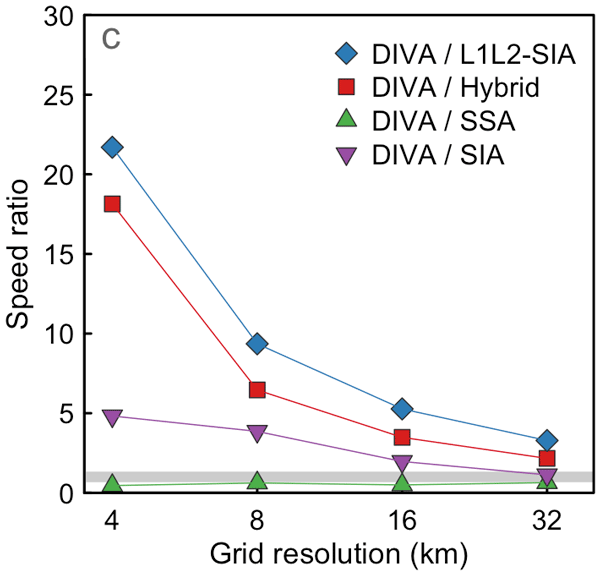
Here we investigate the numerical stability of several commonly used methods in order to determine which of them are capable of resolving the complex physics of the ice flow and are also computationally efficient. We find that the so-called DIVA solver outperforms the others. Its representation of the physics is consistent with more complex methods, while it remains computationally efficient at high resolution.
Cited articles
Arthern, R. J. and Williams, C. R.: The sensitivity of West Antarctica to the submarine melting feedback, Geophysical Research Letters, 44, 2352–2359, https://doi.org/10.1002/2017GL072514, 2017.
Asay-Davis, X. S., Cornford, S. L., Durand, G., Galton-Fenzi, B. K., Gladstone, R. M., Gudmundsson, G. H., Hattermann, T., Holland, D. M., Holland, D., Holland, P. R., Martin, D. F., Mathiot, P., Pattyn, F., and Seroussi, H.: Experimental design for three interrelated marine ice sheet and ocean model intercomparison projects: MISMIP v. 3 (MISMIP+), ISOMIP v. 2 (ISOMIP+) and MISOMIP v. 1 (MISOMIP1), Geosci. Model Dev., 9, 2471–2497, https://doi.org/10.5194/gmd-9-2471-2016, 2016.
Aschwanden, A., Aðalgeirsdóttir, G., and Khroulev, C.: Hindcasting to measure ice sheet model sensitivity to initial states, The Cryosphere, 7, 1083–1093, https://doi.org/10.5194/tc-7-1083-2013, 2013.
Aschwanden, A., Fahnestock, M. A., and Truffer, M.: Complex Greenland outlet glacier flow captured, Nature Communications, 7, 1–8, https://doi.org/10.1038/ncomms10230, 2016.
Aschwanden, A., Bartholomaus, T. C., Brinkerhoff, D. J., and Truffer, M.: Brief communication: A roadmap towards credible projections of ice sheet contribution to sea level, The Cryosphere, 15, 5705–5715, https://doi.org/10.5194/tc-15-5705-2021, 2021.
Barnes, J. M. and Gudmundsson, G. H.: The predictive power of ice sheet models and the regional sensitivity of ice loss to basal sliding parameterisations: a case study of Pine Island and Thwaites glaciers, West Antarctica, The Cryosphere, 16, 4291–4304, https://doi.org/10.5194/tc-16-4291-2022, 2022.
Berdahl, M., Leguy, G., Lipscomb, W. H., Urban, N. M., and Hoffman, M. J.: Exploring ice sheet model sensitivity to ocean thermal forcing and basal sliding using the Community Ice Sheet Model (CISM), The Cryosphere, 17, 1513–1543, https://doi.org/10.5194/tc-17-1513-2023, 2023.
Berends, C. J., van de Wal, R. S. W., van den Akker, T., and Lipscomb, W. H.: Compensating errors in inversions for subglacial bed roughness: same steady state, different dynamic response, The Cryosphere, 17, 1585–1600, https://doi.org/10.5194/tc-17-1585-2023, 2023.
Bett, D. T., Bradley, A. T., Williams, C. R., Holland, P. R., Arthern, R. J., and Goldberg, D. N.: Coupled ice–ocean interactions during future retreat of West Antarctic ice streams in the Amundsen Sea sector, The Cryosphere, 18, 2653–2675, https://doi.org/10.5194/tc-18-2653-2024, 2024.
Bintanja, R., Van Oldenborgh, G., and Katsman, C.: The effect of increased fresh water from Antarctic ice shelves on future trends in Antarctic sea ice, Annals of Glaciology, 56, 120–126, https://doi.org/10.3189/2015AoG69A001, 2015.
Bradley, A. T. and Hewitt, I. J.: Tipping point in ice-sheet grounding-zone melting due to ocean water intrusion, Nature Geoscience, 17, 631–637, https://doi.org/10.1038/s41561-024-01534-x, 2024.
Brondex, J., Gagliardini, O., Gillet-Chaulet, F., and Durand, G.: Sensitivity of grounding line dynamics to the choice of the friction law, Journal of Glaciology, 63, 854–866, https://doi.org/10.1017/jog.2017.51, 2017.
Brondex, J., Gillet-Chaulet, F., and Gagliardini, O.: Sensitivity of centennial mass loss projections of the Amundsen basin to the friction law, The Cryosphere, 13, 177–195, https://doi.org/10.5194/tc-13-177-2019, 2019.
Budd, W., Keage, P., and Blundy, N.: Empirical studies of ice sliding, Journal of Glaciology, 23, 157–170, https://doi.org/10.3189/S0022143000029804, 1979.
Bulthuis, K., Arnst, M., Sun, S., and Pattyn, F.: Uncertainty quantification of the multi-centennial response of the Antarctic ice sheet to climate change, The Cryosphere, 13, 1349–1380, https://doi.org/10.5194/tc-13-1349-2019, 2019.
Cornford, S. L., Martin, D. F., Payne, A. J., Ng, E. G., Le Brocq, A. M., Gladstone, R. M., Edwards, T. L., Shannon, S. R., Agosta, C., van den Broeke, M. R., Hellmer, H. H., Krinner, G., Ligtenberg, S. R. M., Timmermann, R., and Vaughan, D. G.: Century-scale simulations of the response of the West Antarctic Ice Sheet to a warming climate, The Cryosphere, 9, 1579–1600, https://doi.org/10.5194/tc-9-1579-2015, 2015.
Coulon, V., Klose, A. K., Kittel, C., Edwards, T., Turner, F., Winkelmann, R., and Pattyn, F.: Disentangling the drivers of future Antarctic ice loss with a historically calibrated ice-sheet model, The Cryosphere, 18, 653–681, https://doi.org/10.5194/tc-18-653-2024, 2024.
Danabasoglu, G., Lamarque, J. F., Bacmeister, J., Bailey, D., DuVivier, A., Edwards, J., Emmons, L., Fasullo, J., Garcia, R., and Gettelman, A.: The Community Earth System Model version 2 (CESM2), Journal of Advances in Modeling Earth Systems, 12, e2019MS001916, https://doi.org/10.1029/2019MS001916, 2020.
Das, I., Morlighem, M., Barnes, J., Gudmundsson, G. H., Goldberg, D., and Dias dos Santos, T.: In the quest of a parametric relation between ice sheet model inferred Weertman's sliding-law parameter and airborne radar-derived basal reflectivity underneath Thwaites Glacier, Antarctica, Geophysical Research Letters, 50, e2022GL098910, https://doi.org/10.1029/2022GL098910, 2023.
Dupont, T. and Alley, R.: Assessment of the importance of ice-shelf buttressing to ice-sheet flow, Geophysical Research Letters, 32, https://doi.org/10.1029/2004GL022024, 2005.
Favier, L., Durand, G., Cornford, S. L., Gudmundsson, G. H., Gagliardini, O., Gillet-Chaulet, F., Zwinger, T., Payne, A., and Le Brocq, A. M.: Retreat of Pine Island Glacier controlled by marine ice-sheet instability, Nature Climate Change, 4, 117–121, https://doi.org/10.1038/nclimate2094, 2014.
Feldmann, J. and Levermann, A.: Collapse of the West Antarctic Ice Sheet after local destabilization of the Amundsen Basin, Proceedings of the National Academy of Sciences, 112, 14191–14196, https://doi.org/10.1073/pnas.1512482112, 2015.
Fox-Kemper, B., Hewitt, H. T., Xiao, C., Aðalgeirsdóttir, G., Drijfhout, S. S., Edwards, T. L., Golledge, N. R., Hemer, M., Kopp, R. E., Krinner, G., Mix, A., Notz, D., Nowicki, S., Nurhati, I. S., Ruiz, L., Sallée, J.-B., Slangen, A. B. A., and Yu, Y.: Ocean, cryosphere and sea level change. In: Climate Change 2021: The Physical Science Basis. Contribution of Working Group I to the Sixth Assessment Report of the Intergovernmental Panel on Climate Change, Cambridge University Press, Cambridge, United Kingdom and New York, NY, USA, 1211–1362, https://doi.org/10.1017/9781009157896.011, 2021.
Fürst, J. J., Durand, G., Gillet-Chaulet, F., Tavard, L., Rankl, M., Braun, M., and Gagliardini, O.: The safety band of Antarctic ice shelves, Nature Climate Change, 6, 479–482, https://doi.org/10.1038/nclimate2912, 2016.
Goldberg, D. N.: A variationally derived, depth-integrated approximation to a higher-order glaciological flow model, Journal of Glaciology, 57, 157–170, https://doi.org/10.3189/002214311795306763, 2011.
Goldberg, D. N., Heimbach, P., Joughin, I., and Smith, B.: Committed retreat of Smith, Pope, and Kohler Glaciers over the next 30 years inferred by transient model calibration, The Cryosphere, 9, 2429–2446, https://doi.org/10.5194/tc-9-2429-2015, 2015.
Gudmundsson, G. H.: Ice-shelf buttressing and the stability of marine ice sheets, The Cryosphere, 7, 647–655, https://doi.org/10.5194/tc-7-647-2013, 2013.
Gudmundsson, G. H., Barnes, J. M., Goldberg, D., and Morlighem, M.: Limited impact of Thwaites Ice Shelf on future ice loss from Antarctica, Geophysical Research Letters, 50, e2023GL102880, https://doi.org/10.1029/2023GL102880, 2023.
Haseloff, M. and Sergienko, O. V.: The effect of buttressing on grounding line dynamics, Journal of Glaciology, 64, 417–431, https://doi.org/10.1017/jog.2018.30, 2018.
Izeboud, M. and Lhermitte, S.: Damage detection on Antarctic ice shelves using the normalised radon transform, Remote Sensing of Environment, 284, 113359, https://doi.org/10.1016/j.rse.2022.113359, 2023.
Joughin, I., Smith, B. E., and Medley, B.: Marine ice sheet collapse potentially under way for the Thwaites Glacier Basin, West Antarctica, Science, 344, 735–738, https://doi.org/10.1126/science.1249055, 2014.
Joughin, I., Smith, B. E., and Schoof, C. G.: Regularized Coulomb friction laws for ice sheet sliding: Application to Pine Island Glacier, Antarctica, Geophysical Research Letters, 46, 4764–4771, https://doi.org/10.1029/2019GL082526, 2019.
Joughin, I., Shapero, D., and Dutrieux, P.: Responses of the Pine Island and Thwaites glaciers to melt and sliding parameterizations, The Cryosphere, 18, 2583–2601, https://doi.org/10.5194/tc-18-2583-2024, 2024.
Jourdain, N. C., Asay-Davis, X., Hattermann, T., Straneo, F., Seroussi, H., Little, C. M., and Nowicki, S.: A protocol for calculating basal melt rates in the ISMIP6 Antarctic ice sheet projections, The Cryosphere, 14, 3111–3134, https://doi.org/10.5194/tc-14-3111-2020, 2020.
Kazmierczak, E., Gregov, T., Coulon, V., and Pattyn, F.: A fast and simplified subglacial hydrological model for the Antarctic Ice Sheet and outlet glaciers, The Cryosphere, 18, 5887–5911, https://doi.org/10.5194/tc-18-5887-2024, 2024.
Leguy, G. R., Asay-Davis, X. S., and Lipscomb, W. H.: Parameterization of basal friction near grounding lines in a one-dimensional ice sheet model, The Cryosphere, 8, 1239–1259, https://doi.org/10.5194/tc-8-1239-2014, 2014.
Leguy, G. R., Lipscomb, W. H., and Asay-Davis, X. S.: Marine ice sheet experiments with the Community Ice Sheet Model, The Cryosphere, 15, 3229–3253, https://doi.org/10.5194/tc-15-3229-2021, 2021.
Lhermitte, S., Sun, S., Shuman, C., Wouters, B., Pattyn, F., Wuite, J., Berthier, E., and Nagler, T.: Damage accelerates ice shelf instability and mass loss in Amundsen Sea Embayment, Proceedings of the National Academy of Sciences, 117, 24735–24741, https://doi.org/10.1073/pnas.1912890117, 2020.
Lipscomb, W. H., Price, S. F., Hoffman, M. J., Leguy, G. R., Bennett, A. R., Bradley, S. L., Evans, K. J., Fyke, J. G., Kennedy, J. H., Perego, M., Ranken, D. M., Sacks, W. J., Salinger, A. G., Vargo, L. J., and Worley, P. H.: Description and evaluation of the Community Ice Sheet Model (CISM) v2.1, Geosci. Model Dev., 12, 387–424, https://doi.org/10.5194/gmd-12-387-2019, 2019.
Lipscomb, W. H., Leguy, G. R., Jourdain, N. C., Asay-Davis, X., Seroussi, H., and Nowicki, S.: ISMIP6-based projections of ocean-forced Antarctic Ice Sheet evolution using the Community Ice Sheet Model, The Cryosphere, 15, 633–661, https://doi.org/10.5194/tc-15-633-2021, 2021.
Morlighem, M., Rignot, E., Binder, T., Blankenship, D., Drews, R., Eagles, G., Eisen, O., Ferraccioli, F., Forsberg, R., and Fretwell, P.: Deep glacial troughs and stabilizing ridges unveiled beneath the margins of the Antarctic ice sheet, Nature Geoscience, 13, 132–137, https://doi.org/10.1038/s41561-019-0510-8, 2020.
Pattyn, F. and Morlighem, M.: The uncertain future of the Antarctic Ice Sheet, Science, 367, 1331–1335, https://doi.org/10.1126/science.aaz5487, 2020.
Payne, A. J., Nowicki, S., Abe-Ouchi, A., Agosta, C., Alexander, P., Albrecht, T., Asay-Davis, X., Aschwanden, A., Barthel, A., and Bracegirdle, T. J.: Future sea level change under coupled model intercomparison project phase 5 and phase 6 scenarios from the Greenland and Antarctic ice sheets, Geophysical Research Letters, 48, e2020GL091741, https://doi.org/10.1029/2020GL091741, 2021.
Pollard, D. and DeConto, R. M.: Description of a hybrid ice sheet-shelf model, and application to Antarctica, Geosci. Model Dev., 5, 1273–1295, https://doi.org/10.5194/gmd-5-1273-2012, 2012.
Reese, R., Winkelmann, R., and Gudmundsson, G. H.: Grounding-line flux formula applied as a flux condition in numerical simulations fails for buttressed Antarctic ice streams, The Cryosphere, 12, 3229–3242, https://doi.org/10.5194/tc-12-3229-2018, 2018a.
Reese, R., Albrecht, T., Mengel, M., Asay-Davis, X., and Winkelmann, R.: Antarctic sub-shelf melt rates via PICO, The Cryosphere, 12, 1969–1985, https://doi.org/10.5194/tc-12-1969-2018, 2018b.
Reese, R., Garbe, J., Hill, E. A., Urruty, B., Naughten, K. A., Gagliardini, O., Durand, G., Gillet-Chaulet, F., Gudmundsson, G. H., Chandler, D., Langebroek, P. M., and Winkelmann, R.: The stability of present-day Antarctic grounding lines – Part 2: Onset of irreversible retreat of Amundsen Sea glaciers under current climate on centennial timescales cannot be excluded, The Cryosphere, 17, 3761–3783, https://doi.org/10.5194/tc-17-3761-2023, 2023.
Rignot, E., Mouginot, J., and Scheuchl, B.: Ice flow of the Antarctic ice sheet, Science, 333, 1427–1430, https://doi.org/10.1126/science.1208336, 2011.
Robinson, A., Goldberg, D., and Lipscomb, W. H.: A comparison of the stability and performance of depth-integrated ice-dynamics solvers, The Cryosphere, 16, 689–709, https://doi.org/10.5194/tc-16-689-2022, 2022.
Schoof, C.: The effect of cavitation on glacier sliding, Proceedings of the Royal Society A: Mathematical, Physical and Engineering Sciences, 461, 609–627, https://doi.org/10.1098/rspa.2004.1350, 2005.
Schoof, C.: Ice sheet grounding line dynamics: Steady states, stability, and hysteresis, Journal of Geophysical Research: Earth Surface, 112, F03S28, https://doi.org/10.1029/2006JF000664, 2007a.
Schoof, C.: Marine ice-sheet dynamics. Part 1. The case of rapid sliding, Journal of Fluid Mechanics, 573, 27–55, https://doi.org/10.1017/S0022112006003570, 2007b.
Seroussi, H., Nakayama, Y., Larour, E., Menemenlis, D., Morlighem, M., Rignot, E., and Khazendar, A.: Continued retreat of Thwaites Glacier, West Antarctica, controlled by bed topography and ocean circulation, Geophysical Research Letters, 44, 6191–6199, https://doi.org/10.1002/2017GL072910, 2017.
Seroussi, H., Nowicki, S., Payne, A. J., Goelzer, H., Lipscomb, W. H., Abe-Ouchi, A., Agosta, C., Albrecht, T., Asay-Davis, X., Barthel, A., Calov, R., Cullather, R., Dumas, C., Galton-Fenzi, B. K., Gladstone, R., Golledge, N. R., Gregory, J. M., Greve, R., Hattermann, T., Hoffman, M. J., Humbert, A., Huybrechts, P., Jourdain, N. C., Kleiner, T., Larour, E., Leguy, G. R., Lowry, D. P., Little, C. M., Morlighem, M., Pattyn, F., Pelle, T., Price, S. F., Quiquet, A., Reese, R., Schlegel, N.-J., Shepherd, A., Simon, E., Smith, R. S., Straneo, F., Sun, S., Trusel, L. D., Van Breedam, J., van de Wal, R. S. W., Winkelmann, R., Zhao, C., Zhang, T., and Zwinger, T.: ISMIP6 Antarctica: a multi-model ensemble of the Antarctic ice sheet evolution over the 21st century, The Cryosphere, 14, 3033–3070, https://doi.org/10.5194/tc-14-3033-2020, 2020.
Seroussi, H., Pelle, T., Lipscomb, W. H., Abe-Ouchi, A., Albrecht, T., Alvarez-Solas, J., Asay-Davis, X., Barre, J. B., Berends, C. J., and Bernales, J.: Evolution of the Antarctic Ice Sheet over the next three centuries from an ISMIP6 model ensemble, Earth's Future, 12, e2024EF004561, https://doi.org/10.1029/2024EF004561, 2024.
Smith, B., Fricker, H. A., Gardner, A. S., Medley, B., Nilsson, J., Paolo, F. S., Holschuh, N., Adusumilli, S., Brunt, K., and Csatho, B.: Pervasive ice sheet mass loss reflects competing ocean and atmosphere processes, Science, 368, 1239–1242, https://doi.org/10.1126/science.aaz5845, 2020.
Sun, S., Pattyn, F., Simon, E. G., Albrecht, T., Cornford, S., Calov, R., Dumas, C., Gillet-Chaulet, F., Goelzer, H., and Golledge, N. R.: Antarctic ice sheet response to sudden and sustained ice-shelf collapse (ABUMIP), Journal of Glaciology, 66, 891–904, https://doi.org/10.1017/jog.2020.67, 2020.
Thayer-Calder, K.: ESCOMP/CISM, GitHub [code], https://github.com/ESCOMP/CISM (last access: 19 January 2026), 2021.
Tsai, V. C., Stewart, A. L., and Thompson, A. F.: Marine ice-sheet profiles and stability under Coulomb basal conditions, Journal of Glaciology, 61, 205–215, https://doi.org/10.3189/2015JoG14J221, 2015.
van den Akker, T.: Datasets used in van den Akker (2025), Zenodo [code and data set], https://doi.org/10.5281/zenodo.14719881, 2025.
van den Akker, T., Lipscomb, W. H., Leguy, G. R., Bernales, J., Berends, C. J., van de Berg, W. J., and van de Wal, R. S. W.: Present-day mass loss rates are a precursor for West Antarctic Ice Sheet collapse, The Cryosphere, 19, 283–301, https://doi.org/10.5194/tc-19-283-2025, 2025.
Weertman, J.: On the sliding of glaciers, Journal of Glaciology, 3, 33–38, https://doi.org/10.3189/S0022143000024709, 1957.
Wernecke, A., Edwards, T. L., Holden, P. B., Edwards, N. R., and Cornford, S. L.: Quantifying the impact of bedrock topography uncertainty in Pine Island Glacier projections for this century, Geophysical Research Letters, 49, e2021GL096589, https://doi.org/10.1029/2021GL096589, 2022.
Williams, G., Herraiz-Borreguero, L., Roquet, F., Tamura, T., Ohshima, K., Fukamachi, Y., Fraser, A., Gao, L., Chen, H., and McMahon, C.: The suppression of Antarctic bottom water formation by melting ice shelves in Prydz Bay, Nature Communications, 7, 12577, https://doi.org/10.1038/ncomms12577, 2016.
Winkelmann, R., Martin, M. A., Haseloff, M., Albrecht, T., Bueler, E., Khroulev, C., and Levermann, A.: The Potsdam Parallel Ice Sheet Model (PISM-PIK) – Part 1: Model description, The Cryosphere, 5, 715–726, https://doi.org/10.5194/tc-5-715-2011, 2011.
Zoet, L. K. and Iverson, N. R.: A slip law for glaciers on deformable beds, Science, 368, 76–78, https://doi.org/10.1126/science.aaz1183, 2020.
Zwally, H. J., Li, J., Robbins, J. W., Saba, J. L., Yi, D., and Brenner, A. C.: Mass gains of the Antarctic ice sheet exceed losses, Journal of Glaciology, 61, 1019–1036, https://doi.org/10.3189/2015JoG15J071, 2015.
Short summary
Ice sheet models to simulate future sea level rise require parameterizations, like for the friction at the bedrock. Studies have quantified the effect of using different parameterizations, and some have concluded that projections are sensitive to the choice of the specific parameterization. In this study, we show that you can make an ice sheet model sensitive to the basal friction parameterization, and that for different modellers choices you can also make the model insensitive to this.
Ice sheet models to simulate future sea level rise require parameterizations, like for the...


