
Articles | Volume 20, issue 2
https://doi.org/10.5194/tc-20-1087-2026
© Author(s) 2026. This work is distributed under
the Creative Commons Attribution 4.0 License.
the Creative Commons Attribution 4.0 License.
https://doi.org/10.5194/tc-20-1087-2026
© Author(s) 2026. This work is distributed under
the Creative Commons Attribution 4.0 License.
the Creative Commons Attribution 4.0 License.
Research article
| 
12 Feb 2026
Research article |
| 12 Feb 2026
| 12 Feb 2026
Large regional differences in Antarctic ice shelf mass loss from Southern Ocean warming and meltwater feedbacks
Morven Muilwijk
CORRESPONDING AUTHOR

Norwegian Polar Institute, Fram Centre, Tromsø, Norway
Tore Hattermann
Norwegian Polar Institute, Fram Centre, Tromsø, Norway
Rebecca L. Beadling
Department of Earth and Environmental Science, Temple University, Philadelphia, PA, USA
Neil C. Swart
Canadian Centre for Climate Modelling and Analysis, Environment and Climate Change Canada, Victoria, BC, Canada
Aleksi Nummelin
Finnish Meteorological Institute, Helsinki, Finland
NORCE Research AS, Bjerknes Centre for Climate Research, Bergen, Norway
Chuncheng Guo
Danish Meteorological Institute, Copenhagen, Denmark
NORCE Research AS, Bjerknes Centre for Climate Research, Bergen, Norway
David M. Chandler
NORCE Research AS, Bjerknes Centre for Climate Research, Bergen, Norway
Petra M. Langebroek
NORCE Research AS, Bjerknes Centre for Climate Research, Bergen, Norway
Shenjie Zhou
British Antarctic Survey, Cambridge, UK
Pierre Dutrieux
British Antarctic Survey, Cambridge, UK
Jia-Jia Chen
School of Earth and Atmospheric Sciences, Georgia Institute of Technology, USA
Christopher Danek
Alfred Wegener Institute, Helmholtz Centre for Polar and Marine Research, Bremerhaven, Germany
Matthew H. England
Centre for Marine Science and Innovation (CMSI), University of New South Wales, Sydney, Australia
ARC Centre for Excellence in Antarctic Science, University of New South Wales, Sydney, Australia
Stephen M. Griffies
Princeton University Atmospheric and Oceanic Sciences Program, NJ, USA
F. Alexander Haumann
Alfred Wegener Institute, Helmholtz Centre for Polar and Marine Research, Bremerhaven, Germany
Ludwig-Maximilians-Universität München, Munich, Germany
André Jüling
Royal Netherlands Meteorological Institute, De Bilt, the Netherlands
Ombeline Jouet
Alfred Wegener Institute, Helmholtz Centre for Polar and Marine Research, Bremerhaven, Germany
Qian Li
Department of Earth, Atmospheric, and Planetary Sciences, Massachusetts Institute of Technology, Cambridge, MA, USA
Torge Martin
GEOMAR Helmholtz Centre for Ocean Research Kiel, Kiel, Germany
John Marshall
Department of Earth, Atmospheric, and Planetary Sciences, Massachusetts Institute of Technology, Cambridge, MA, USA
NASA Goddard Institute for Space Studies, New York, NY, USA
Andrew G. Pauling
Department of Physics, University of Otago, Dunedin, New Zealand
Ariaan Purich
School of Earth, Atmosphere and Environment, ARC Special Research Initiative for Securing Antarctica's Environmental Future, Monash University, Melbourne, Australia
Zihan Song
Earth System Physics Section, Abdus Salam International Centre for Theoretical Physics, Trieste, Italy
Inga J. Smith
Department of Physics, University of Otago, Dunedin, New Zealand
Max Thomas
British Antarctic Survey, Cambridge, UK
Met Office Hadley Center, Exeter, UK
Irene Trombini
Department of Physics and Astronomy, University of Bologna, Bologna, Italy
Institute of Atmospheric Sciences and Climate, National Research Council of Italy, Bologna, Italy
Eveline C. van der Linden
Royal Netherlands Meteorological Institute, De Bilt, the Netherlands
Xiaoqi Xu
Institute for Development and Programme Design, China Meteorological Administration, Beijing, China
Related authors
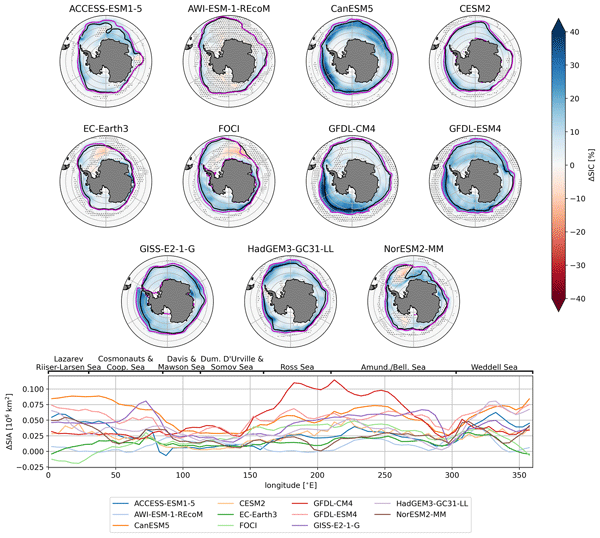
Andrew G. Pauling, Inga J. Smith, Torge Martin, Jeff K. Ridley, David P. Stevens, Max Thomas, Rebecca L. Beadling, Christopher Danek, Tore Hattermann, Qian Li, John Marshall, Morven Muilwijk, Ariaan Purich, and Neil C. Swart
The Cryosphere, 20, 5761–5783, https://doi.org/10.5194/tc-20-5761-2026, https://doi.org/10.5194/tc-20-5761-2026, 2026
Short summary
Short summary
Climate models typically do not include meltwater entering the Southern Ocean due to Antarctic ice sheet mass loss. Previous work shows this meltwater drives sea ice growth, but the varying responses have been difficult to compare across models. We ran 11 climate models using the same meltwater input and found a wide range of sea ice responses depending on the background state in each model. Understanding this uncertainty in response is important for future projections of Antarctic sea ice.
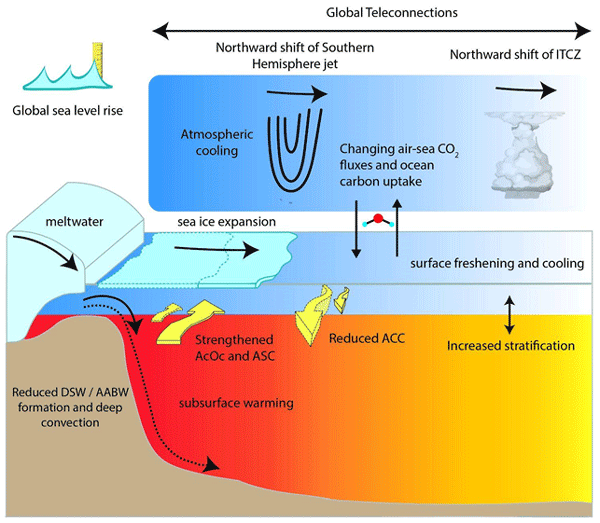
Neil C. Swart, Torge Martin, Rebecca Beadling, Jia-Jia Chen, Christopher Danek, Matthew H. England, Riccardo Farneti, Stephen M. Griffies, Tore Hattermann, Judith Hauck, F. Alexander Haumann, André Jüling, Qian Li, John Marshall, Morven Muilwijk, Andrew G. Pauling, Ariaan Purich, Inga J. Smith, and Max Thomas
Geosci. Model Dev., 16, 7289–7309, https://doi.org/10.5194/gmd-16-7289-2023, https://doi.org/10.5194/gmd-16-7289-2023, 2023
Short summary
Short summary
Current climate models typically do not include full representation of ice sheets. As the climate warms and the ice sheets melt, they add freshwater to the ocean. This freshwater can influence climate change, for example by causing more sea ice to form. In this paper we propose a set of experiments to test the influence of this missing meltwater from Antarctica using multiple different climate models.
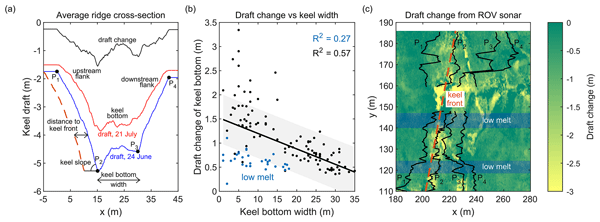
Evgenii Salganik, Benjamin A. Lange, Christian Katlein, Ilkka Matero, Philipp Anhaus, Morven Muilwijk, Knut V. Høyland, and Mats A. Granskog
The Cryosphere, 17, 4873–4887, https://doi.org/10.5194/tc-17-4873-2023, https://doi.org/10.5194/tc-17-4873-2023, 2023
Short summary
Short summary
The Arctic Ocean is covered by a layer of sea ice that can break up, forming ice ridges. Here we measure ice thickness using an underwater sonar and compare ice thickness reduction for different ice types. We also study how the shape of ridged ice influences how it melts, showing that deeper, steeper, and narrower ridged ice melts the fastest. We show that deformed ice melts 3.8 times faster than undeformed ice at the bottom ice--ocean boundary, while at the surface they melt at a similar rate.
Theodoros Karpouzoglou, Morven Muilwijk, Julius Lauber, Apostolos Tsiouvalas, and Johanna Brehmer-Moltmann
Geosci. Commun. Discuss., https://doi.org/10.5194/gc-2022-14, https://doi.org/10.5194/gc-2022-14, 2022
Revised manuscript not accepted
Short summary
Short summary
"Bold statements”, are motivating, easily conceived, but often inaccurate. The study seeks the origin, purpose, and threats of such statements in climate science communication. Bold statement communication is enforced by the urgency of climate change and is useful in raising public awareness and accelerating law-making. However, we demonstrate through three well-known case studies of bold statement communication that such communication strategies encompass risks as misinterpretation lurks.
Friederike Fröb, David Matthew Chandler, Anastasia Romanou, Manon Berger, Tomas Torsvik, Thomas L. Frölicher, Chuncheng Guo, Aixue Hu, Willem Huiskamp, Colin Jones, Malte Jürchott, Ann Kristin Klose, Torben Koenigk, Petra M. Langebroek, Nicole Laureanti, Paul Lerner, Torge Martin, Laurie Menviel, Lettie A. Roach, Robin Smith, Didier Swingedouw, Ricarda Winkelmann, and Shuting Yang
EGUsphere, https://doi.org/10.5194/egusphere-2026-6311, https://doi.org/10.5194/egusphere-2026-6311, 2026
This preprint is open for discussion and under review for Geoscientific Model Development (GMD).
Short summary
Short summary
The Southern Ocean plays a key role in the climate system. Perturbations in the freshwater budget may affect local dens water formation impacting global climate. Here we outline a design for climate model experiments to assess the sensitivity of the large scale circulation to idealized freshwater fluxes. Multi-model results will allow to better understand the Earth System response to warming and freshening, applied in the Southern Ocean alone or in both hemispheres.
Léa Olivier, F. Alexander Haumann, and Peter Landschützer
EGUsphere, https://doi.org/10.5194/egusphere-2026-6132, https://doi.org/10.5194/egusphere-2026-6132, 2026
This preprint is open for discussion and under review for Biogeosciences (BG).
Short summary
Short summary
Every spring, the North Atlantic absorbs large amounts of atmospheric CO2, mitigating climate change. But storms can disrupt this uptake. Using a CO2 sensor on a racing sailboat crossing a spring 2023 storm, we found that strong winds brought carbon-rich deep water to the surface, causing a sharp rise in CO2. The ocean stopped absorbing CO2 and released it for several days. A marine heatwave amplified the effect. More frequent intense storms could weaken this ocean sink.
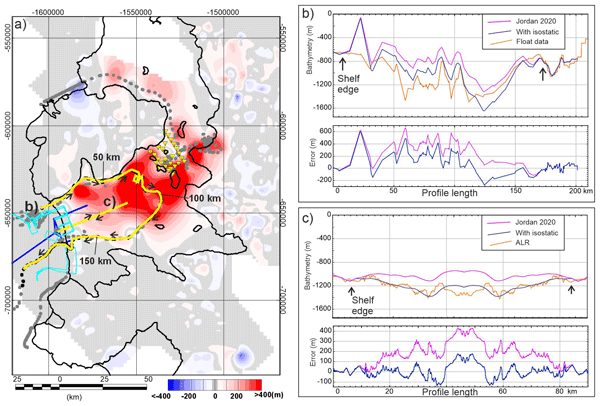
Tom A. Jordan, Karen J. Heywood, Anna Wåhlin, Rob A. Hall, Atsuhiro Muto, Pierre Dutrieux, Kelly Hogan, James Girton, Karen E. Alley, and Erin Pettit
Solid Earth, 17, 1187–1199, https://doi.org/10.5194/se-17-1187-2026, https://doi.org/10.5194/se-17-1187-2026, 2026
Short summary
Short summary
The shape of the water filled cavity hidden beneath ice shelves is extremely important, but hard to measure. Gravity data collected from aircraft can be used to predict the shape. However, in the Dotson Crosson ice shelves in West Antarctica, new direct observations from autonomous platforms sent beneath the ice, and seismic observations from the ice surface showed gravity models were systematically too shallow. We explain why and provide a solution applicable her and in other ice shelves.
Andrew G. Pauling, Inga J. Smith, Torge Martin, Jeff K. Ridley, David P. Stevens, Max Thomas, Rebecca L. Beadling, Christopher Danek, Tore Hattermann, Qian Li, John Marshall, Morven Muilwijk, Ariaan Purich, and Neil C. Swart
The Cryosphere, 20, 5761–5783, https://doi.org/10.5194/tc-20-5761-2026, https://doi.org/10.5194/tc-20-5761-2026, 2026
Short summary
Short summary
Climate models typically do not include meltwater entering the Southern Ocean due to Antarctic ice sheet mass loss. Previous work shows this meltwater drives sea ice growth, but the varying responses have been difficult to compare across models. We ran 11 climate models using the same meltwater input and found a wide range of sea ice responses depending on the background state in each model. Understanding this uncertainty in response is important for future projections of Antarctic sea ice.
Sjur Barndon, Augusto Lima, David M. Chandler, Abe T. Wiersma, Tancrède P. M. Leger, Raúl Pérez Prats, Eline S. Rentier, and Suzette G.A. Flantua
Earth Syst. Sci. Data Discuss., https://doi.org/10.5194/essd-2026-404, https://doi.org/10.5194/essd-2026-404, 2026
Preprint under review for ESSD
Short summary
Short summary
Mountain glacier history is hard to trace because field evidence is patchy and often erased by later ice advances. We used a fast computer model to simulate how glaciers grew and shrank over the last 130,000 years in nine mountain regions, and compared the results with mapped past and modern glaciers. By combining many plausible simulations, we map where glacier changes are reliable and where they are uncertain. The results provide a new baseline for studies of water, landscapes, and ecosystems.
Ronja Reese, Nicolas C. Jourdain, Xylar S. Asay-Davis, Clara Burgard, Erwin Lambert, Yoshihiro Nakayama, Paul R. Holland, Kaitlin A. Naughten, Ralph Timmermann, Pierre Dutrieux, Shenjie Zhou, Golsa Talebigheshlaghi, and Yanmei Tian
EGUsphere, https://doi.org/10.5194/egusphere-2026-5337, https://doi.org/10.5194/egusphere-2026-5337, 2026
This preprint is open for discussion and under review for The Cryosphere (TC).
Short summary
Short summary
An important factor in projections of the Antarctic contribution to future sea level rise is the Southern Ocean. The Ice Sheet Model Intercomparison Project for CMIP7 aims to provide ice sheet projections, and here we introduce the protocol for handling the ocean in Antarctica. It describes how ocean changes from global atmosphere-ocean models can be used in Antarctic simulations and how ocean conditions can be translated into melt rates, taking into account oceanographic knowledge.
Ayush Prasad, Ioanna Merkouriadi, Aleksi Nummelin, Jack Landy, Arttu Jutila, and Glen E. Liston
EGUsphere, https://doi.org/10.5194/egusphere-2026-4727, https://doi.org/10.5194/egusphere-2026-4727, 2026
This preprint is open for discussion and under review for The Cryosphere (TC).
Short summary
Short summary
Snow on Arctic sea ice is blown by wind into uneven drifts around ridges, which affects how well we can measure the thickness of the ice from satellites. Numerical models can capture this but are far too slow to run across the whole Arctic. We trained a machine-learning model on detailed simulations of small patches of ice, then applied it across the Arctic using satellite measurements of how rough the ice surface is.
Eveline C. van der Linden, Klaus Wyser, Erwin Lambert, André Jüling, Dewi Le Bars, Sybren Drijfthout, and Irene Trombini
EGUsphere, https://doi.org/10.5194/egusphere-2026-4584, https://doi.org/10.5194/egusphere-2026-4584, 2026
Short summary
Short summary
As Antarctica loses more ice, increasing amounts of fresh water enter the ocean and can change Earth's climate. We used a climate model in which Antarctic ice loss responds to changing ocean conditions. We found that this feedback first increases warming near the ice shelves but later slows both Antarctic and global warming by changing the ocean, sea ice, and atmosphere. These results show that including these interactions is important for improving long-term sea-level and climate projections.
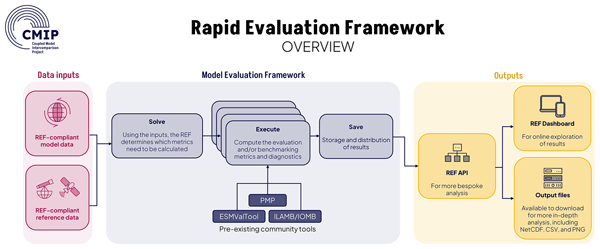
Forrest M. Hoffman, Birgit Hassler, Ranjini Swaminathan, Jared Lewis, Bouwe Andela, Nathan Collier, Dóra Hegedűs, Jiwoo Lee, Charlotte Pascoe, Mika Pflüger, Martina Stockhause, Paul Ullrich, Min Xu, Lisa Bock, Felicity Chun, Bettina K. Gier, Douglas I. Kelley, Axel Lauer, Julien Lenhardt, Manuel Schlund, Mohanan G. Sreeush, Katja Weigel, Ed Blockley, Rebecca Beadling, Romain Beucher, Demiso D. Dugassa, Valerio Lembo, Jianhua Lu, Swen Brands, Jerry Tjiputra, Elizaveta Malinina, Brian Medeiros, Enrico Scoccimarro, Jeremy Walton, Phil Kershaw, André Lanfer Marquez, Malcolm J. Roberts, Eleanor O'Rourke, Beth Dingley, Briony Turner, Helene Hewitt, and John P. Dunne
Geosci. Model Dev., 19, 7415–7455, https://doi.org/10.5194/gmd-19-7415-2026, https://doi.org/10.5194/gmd-19-7415-2026, 2026
Short summary
Short summary
The Rapid Evaluation Framework (REF) is a community-driven platform for benchmarking and performance assessment of Earth system models. Built upon four disparate community evaluation tools, the REF is designed to provide model-data comparisons for the Assessment Fast Track for the Seventh Phase of the Coupled Model Intercomparison Project. The REF will be run at the Earth System Grid Federation to enable model devleopers and scientists to quickly identify model biases and performance issues.
Isabelle F. M. White, Oana Dragomir, Alessandro Silvano, Alberto C. Naveira Garabato, Anna E. Hogg, Pierre Dutrieux, Laura Herraiz-Borreguero, and Jennifer Cocks
EGUsphere, https://doi.org/10.5194/egusphere-2026-4414, https://doi.org/10.5194/egusphere-2026-4414, 2026
This preprint is open for discussion and under review for Earth Observation (EO).
Short summary
Short summary
We present a 22-year sea surface height product in the ice-covered Southern Ocean from Envisat and CryoSat-2 satellite altimetry data. Our product is 1° longitude by 0.5° latitude from 50° S to the Antarctic coast. Validation with in-situ, independent satellite and reanalysis data shows it captures seasonal and interannual variability. This supports long-term study of large-scale sea level trends and processes in the Southern Ocean, a region that is observing rapid sea ice and ice sheet melting.
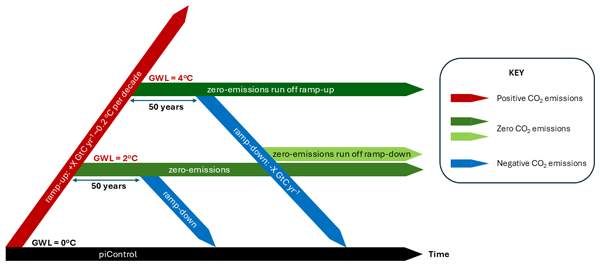
Colin Jones, Isaline Bossert, Donovan P. Dennis, Hazel A. Jeffery, Chris D. Jones, Torben Koenigk, Sina Loriani, Benjamin Sanderson, Roland Séférian, Klaus Wyser, Shuting Yang, Manabu Abe, Sebastian Bathiany, Pascale Braconnot, Victor Brovkin, Friedrich A. Burger, Patrica Cadule, Frederic S. Castruccio, Gokhan Danabasoglu, Andrea Dittus, Jonathan F. Donges, Friederike Fröb, Thomas L. Frölicher, Goran Georgievski, Chuncheng Guo, Aixue Hu, Peter Lawrence, Paul Lerner, José Licón-Saláiz, Bette Otto-Bliesner, Anastasia Romanou, Elena Shevliakova, Yona Silvy, Didier Swingedouw, Jerry Tjiputra, Jeremy Walton, Andy Wiltshire, Ricarda Winkelmann, Richard Wood, Tokuta Yokohata, and Tilo Ziehn
Geosci. Model Dev., 19, 6941–6966, https://doi.org/10.5194/gmd-19-6941-2026, https://doi.org/10.5194/gmd-19-6941-2026, 2026
Short summary
Short summary
We introduce a new Earth system model experiment protocol to help researchers understand how Earth might respond to positive, zero, and negative carbon emissions. This protocol enables different models to be compared following similar warming and cooling rates. Researchers use the models to explore how the Earth reacts to different climate futures, including the risk of tipping points being exceeded and whether changes can be reversed. The results will support improved long-term climate policy.
Christopher Bladwell, Ryan M. Holmes, Jan D. Zika, Stephen M. Griffies, and Andrew E. Kiss
EGUsphere, https://doi.org/10.5194/egusphere-2026-3672, https://doi.org/10.5194/egusphere-2026-3672, 2026
Short summary
Short summary
To quantify climate change we compare long-term averages and not just day-to-day changes (weather). Climate simulations allow us to quantify the processes that contribute to climate change. However, the way these processes are conventionally analysed describes the change two instances of time, rather than the change in climate over long periods. We present an alternative way of quantifying how physical processes contribute to a changing climate, applying this method to an ocean model simulation.
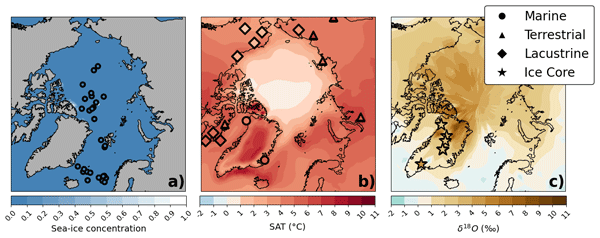
Louise C. Sime, Rachel Diamond, Christian Stepanek, Chris Brierley, David Schroeder, Masa Kageyama, Matthew Pollock, Irene Malmierca-Vallet, Ed Blockley, Alex West, Danny Feltham, Jeff Ridley, Pascale Braconnot, Charles J. R. Williams, Xiaoxu Shi, Bette L. Otto-Bliesner, Sophia I. Macarewich, Silvana Ramos Buarque, Qiong Zhang, Allegra LeGrande, Weipeng Zheng, Dabang Jiang, Polina Morozova, Chuncheng Guo, Zhongshi Zhang, Nicholas Yeung, Laurie Menviel, Sandeep Narayanasetti, Masakazu Yoshimori, Olivia Reeves, and Anni Zhao
Geosci. Model Dev., 19, 5881–5905, https://doi.org/10.5194/gmd-19-5881-2026, https://doi.org/10.5194/gmd-19-5881-2026, 2026
Short summary
Short summary
The Arctic may have lost its summer sea ice 127,000 years ago during a naturally warm period in Earth’s past. Climate models can be tested by recreating those conditions, with similar sunlight and greenhouse gas levels. Analysing the large sea ice changes in these simulations helps us understand how the Arctic might respond in the near future and improves how we test and trust our climate models.
Sayantani Ojha, Joakim Kjellsson, Torge Martin, Léon Chafik, Eric Maisonnave, and Wonsun Park
EGUsphere, https://doi.org/10.5194/egusphere-2026-1481, https://doi.org/10.5194/egusphere-2026-1481, 2026
Short summary
Short summary
We study how model resolution affects the climate of the North Atlantic Ocean, with a focus on heat transport. Using a new climate model that improves interactions between the ocean and atmosphere, we compare simulations with different resolutions. Higher ocean resolution improves sea surface temperature and ocean circulation. Increasing both ocean and atmospheric resolution produces a more realistic balance of heat transport due to matching grid resolutions.
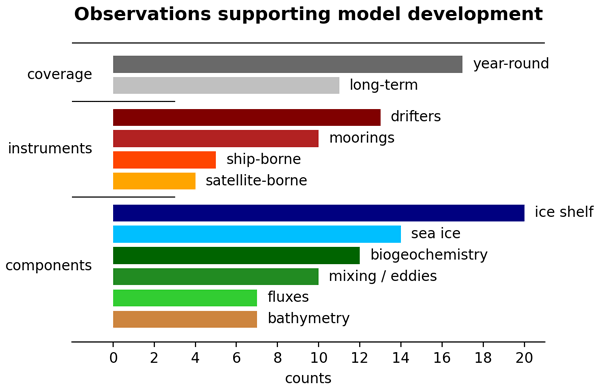
Torge Martin, Carolina O. Dufour, Andrew J. S. Meijers, and Alyce M. Hancock
Ocean Sci., 22, 1429–1437, https://doi.org/10.5194/os-22-1429-2026, https://doi.org/10.5194/os-22-1429-2026, 2026
Short summary
Short summary
In the next 7 years major observational programs will be launched to improve our understanding of the Southern Ocean, the changes it is experiencing and its role in global warming. For these to advance current knowledge, we believe intense exchange with the numerical modelling community is essential. The survey results presented help to identify urgently needed observations for model development and underline the importance to explore new avenues in communication, collaboration and education.
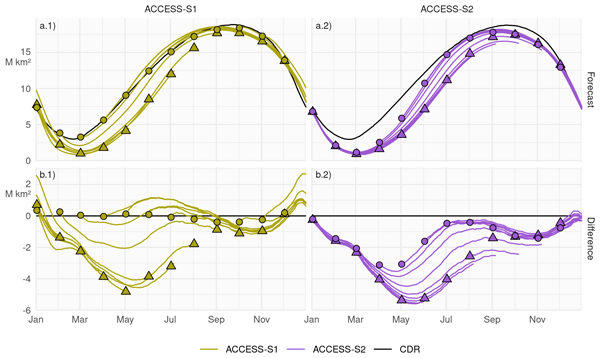
Elio Campitelli, Ariaan Purich, Julie Arblaster, Eun-Pa Lim, Matthew C. Wheeler, and Phillip Reid
The Cryosphere, 20, 2557–2587, https://doi.org/10.5194/tc-20-2557-2026, https://doi.org/10.5194/tc-20-2557-2026, 2026
Short summary
Short summary
By comparing sea-ice forecasts made by the same model but using different initial conditions, we show that better initial sea-ice initial conditions improve sea-ice forecasts a lot in Summer and Autumn, but not as much in winter. This means that forecasting groups should focus efforts in assimilating observations in Summer and that research on how easy it is to predict sea ice need to analyse all seasons.
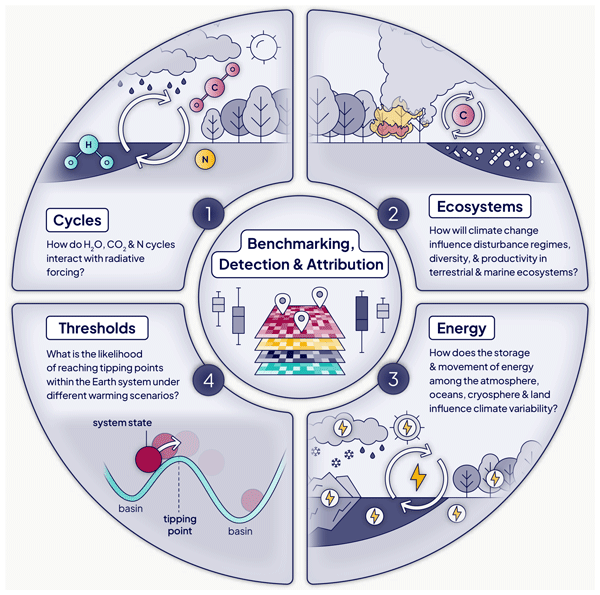
Mara Y. McPartland, Tomas Lovato, Charles Koven, Jamie D. Wilson, Briony Turner, Colleen M. Petrik, José Licón-Saláiz, Fang Li, Fanny Lhardy, Jaclyn Clement Kinney, Michio Kawamiya, Birgit Hassler, Nathan P. Gillett, Cheikh Modou Noreyni Fall, Christopher Danek, Chris M. Brierley, Ana Bastos, and Oliver Andrews
Geosci. Model Dev., 19, 2849–2880, https://doi.org/10.5194/gmd-19-2849-2026, https://doi.org/10.5194/gmd-19-2849-2026, 2026
Short summary
Short summary
The Coupled Model Intercomparison Project (CMIP) is an international consortium of climate modeling groups that produce coordinated experiments in order to evaluate human influence on the climate and test knowledge of Earth systems. This paper describes the data requested for Earth systems research in CMIP7. We detail the request for model output of the carbon cycle, the flows of energy among the atmosphere, land and the oceans, and interactions between these and the global climate.
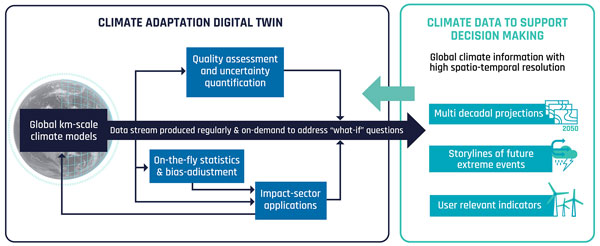
Francisco J. Doblas-Reyes, Jenni Kontkanen, Irina Sandu, Mario Acosta, Mohammed Hussam Al Turjmam, Ivan Alsina-Ferrer, Miguel Andrés-Martínez, Costanza Anerdi, Leo Arriola, Marvin Axness, Marc Batlle Martín, Peter Bauer, Tobias Becker, Daniel Beltrán, Sebastian Beyer, Hendryk Bockelmann, Pierre-Antoine Bretonnière, Sebastien Cabaniols, Silvia Caprioli, Miguel Castrillo, Aparna Chandrasekar, Suvarchal Cheedela, Victor Correal, Emanuele Danovaro, Paolo Davini, Jussi Enkovaara, Claudia Frauen, Barbara Früh, Aina Gaya Àvila, Paolo Ghinassi, Rohit Ghosh, Supriyo Ghosh, Iker González, Katherine Grayson, Matthew Griffith, Ioan Hadade, Christopher Haine, Carl Hartick, Utz-Uwe Haus, Shane Hearne, Heikki Järvinen, Bernat Jiménez, Amal John, Marlin Juchem, Thomas Jung, Jessica Kegel, Matthias Kelbling, Kai Keller, Bruno Kinoshita, Theresa Kiszler, Daniel Klocke, Lukas Kluft, Nikolay Koldunov, Tobias Kölling, Joonas Kolstela, Luis Kornblueh, Sergey Kosukhin, Aleksander Lacima-Nadolnik, Jeisson Javier Leal Rojas, Jonni Lehtiranta, Tuomas Lunttila, Anna Luoma, Pekka Manninen, Alexey Medvedev, Sebastian Milinski, Ali Mohammed, Sebastian Müller, Devaraju Naryanappa, Natalia Nazarova, Sami Niemelä, Bimochan Niraula, Henrik Nortamo, Aleksi Nummelin, Matteo Nurisso, Pablo Ortega, Stella Paronuzzi, Xabier Pedruzo-Bagazgoitia, Charles Pelletier, Carlos Peña, Suraj Polade, Himansu Kesari Pradhan, Rommel Quintanilla, Tiago Quintino, Thomas Rackow, Jouni Räisänen, Maqsood Mubarak Rajput, René Redler, Balthasar Reuter, Nuno Rocha Monteiro, Francesc Roura-Adserias, Silva Ruppert, Susan Sayed, Reiner Schnur, Tanvi Sharma, Dmitry Sidorenko, Outi Sievi-Korte, Albert Soret, Christian Steger, Bjorn Stevens, Jan Streffing, Jaleena Sunny, Luiggi Tenorio, Stephan Thober, Ulf Tigerstedt, Oriol Tinto, Juha Tonttila, Heikki Tuomenvirta, Lauri Tuppi, Ginka Van Thielen, Emanuele Vitali, Jost von Hardenberg, Ingo Wagner, Nils Wedi, Jan Wehner, Sven Willner, Xavier Yepes-Arbós, Florian Ziemen, and Janos Zimmermann
Geosci. Model Dev., 19, 2821–2848, https://doi.org/10.5194/gmd-19-2821-2026, https://doi.org/10.5194/gmd-19-2821-2026, 2026
Short summary
Short summary
The Climate Change Adaptation Digital Twin (Climate DT) pioneers the operationalisation of global climate projections. It produces global simulations with local granularity for adaptation decision-making. Applications are embedded to generate tailored indicators. A unified workflow orchestrates all components in several supercomputers. Data management ensures consistency and streaming enables real-time use. It is a complementary innovation to initiatives like CMIP, CORDEX, and climate services.
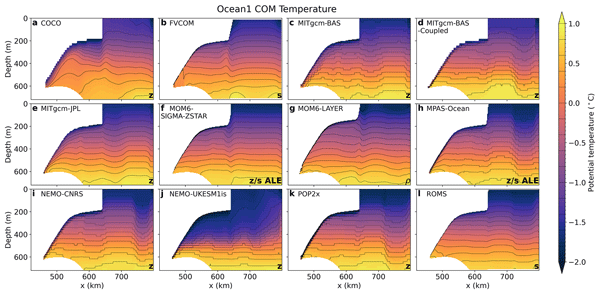
Claire K. Yung, Xylar S. Asay-Davis, Alistair Adcroft, Christopher Y. S. Bull, Jan De Rydt, Michael S. Dinniman, Benjamin K. Galton-Fenzi, Daniel Goldberg, David E. Gwyther, Robert Hallberg, Matthew Harrison, Tore Hattermann, David M. Holland, Denise Holland, Paul R. Holland, James R. Jordan, Nicolas C. Jourdain, Kazuya Kusahara, Gustavo Marques, Pierre Mathiot, Dimitris Menemenlis, Adele K. Morrison, Yoshihiro Nakayama, Olga Sergienko, Robin S. Smith, Alon Stern, Ralph Timmermann, and Qin Zhou
The Cryosphere, 20, 2053–2088, https://doi.org/10.5194/tc-20-2053-2026, https://doi.org/10.5194/tc-20-2053-2026, 2026
Short summary
Short summary
The second Ice Shelf-Ocean Model Intercomparison Project, ISOMIP+, compares 12 ice shelf-ocean models with a common, idealised, static configuration, aiming to assess inter-model variability. Models show similar basal melt rate patterns, ocean profiles and circulation but differ in ice-ocean boundary layer properties. Ice-ocean boundary layer representation is a key area for future work, as are realistic-domain ice sheet-ocean model intercomparisons.
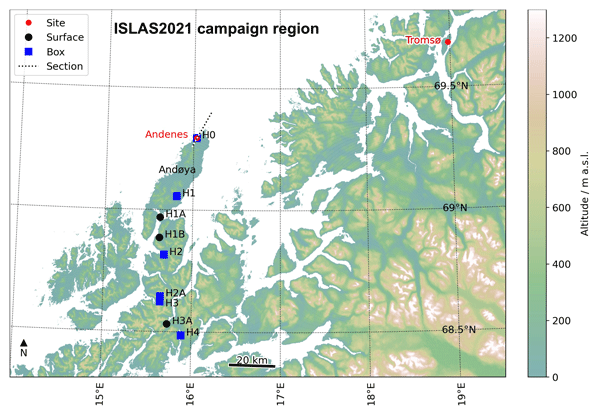
Alena Dekhtyareva, Harald Sodemann, Tim Carlsen, Iris Thurnherr, Aina Johannessen, Andrew Seidl, David M. Chandler, Daniele Zannoni, Alexandra Touzeau, Marvin Kähnert, Astrid B. Gjelsvik, Franziska Hellmuth, Britta Schäfer, and Robert O. David
Earth Syst. Sci. Data, 18, 2573–2607, https://doi.org/10.5194/essd-18-2573-2026, https://doi.org/10.5194/essd-18-2573-2026, 2026
Short summary
Short summary
During a recent field campaign from 15 to 30 March 2021 at Andenes, Norway, we collected a set of observations that allows to better constrain how clouds and precipitation processes work. Frequent alternations between mid-latitude and arctic weather systems were encountered during the campaign. Our dataset is unique in combining measurements in both vapour and precipitation, aerosols, ice nucleating particles, and was made simultaneously at different elevations at a high latitude location.
Didier Swingedouw, Laura Jackson, Aixue Hu, Anastasia Romanou, Nicole C. Laureanti, Wilbert Weijer, Sina Loriani, Bette Otto-Bliesner, Ayako Abe-Ouchi, Lucas Almeida, Alessio Bellucci, Reyk Börner, Gokhan Danabasoglu, Donovan P. Dennis, Marion Devilliers, Sybren Drijfhout, Jonathan Donges, Friederike Fröb, Thomas L. Frölicher, Guillaume Gastineau, Heiko Goelzer, Chuncheng Guo, Urs Hofmann, Anna Höse, Colin Jones, Torben Koenigk, Ann Kristin Klose, Valerio Lembo, Jose Licon-Salaiz, Ken Mankoff, Virna Meccia, Irina Melnikova, Oliver Mehling, Laurie Menviel, Juliette Mignot, Jon I. Robson, Gavin A. Schmidt, Robin Smith, Yuchen Sun, Irene Trombini, Matteo Willeit, Richard Wood, Fanghua Wu, Lin Zhaohui, and Ricarda Winkelmann
EGUsphere, https://doi.org/10.5194/egusphere-2026-1698, https://doi.org/10.5194/egusphere-2026-1698, 2026
Short summary
Short summary
This study presents a plan for climate model experiments to better understand how changes in freshwater in the North Atlantic affect major ocean currents. We designed coordinated simulations to test their response to warming, added freshwater, and possible recovery after weakening. Comparing results across models and past climate evidence helps improve confidence in projections and assess risks of large ocean circulation changes.
Yoshihiro Nakayama, Shuntaro Hyogo, Yichen Lin, Taewook Park, Jinho Lee, Juistine Caillet, Gobishankar Mohan, Mattia Poinelli, Pierre Dutrieux, Kazuki Nakata, Hong Zhang, Brice Loose, and Lauren Kowalski
EGUsphere, https://doi.org/10.5194/egusphere-2025-5958, https://doi.org/10.5194/egusphere-2025-5958, 2026
Short summary
Short summary
We develop a regional ocean model of the Amundsen and Bellingshausen Seas in Antarctica. Differences in model setups and parameter choices often limit usability and broader scientific application, especially for non-ocean modellers. We carefully evaluate the model outputs and establish a common control experiment that can be shared and applied across studies with tracer and particle applications. This effort aims to support wide community use and improve understanding of ice–ocean interactions.
Shenjie Zhou, Pierre Dutrieux, Claudia Giulivi, Andrew Meijers, Won Sang Lee, Tae-Wan Kim, Tore Hattermann, and Markus Janout
Earth Syst. Sci. Data Discuss., https://doi.org/10.5194/essd-2025-727, https://doi.org/10.5194/essd-2025-727, 2026
Revised manuscript under review for ESSD
Short summary
Short summary
A collection of temperature and salinity measurements made in the Southern Ocean and around Antarctic continental shelf seas is assembled and described in this paper. A gridded product developed out of these scattered data points is also described. The gridded product provide us a better view of contemporary mean status of the Southern Ocean and Antarctic shelf seas and help models to better reference the prediction of the future climate.
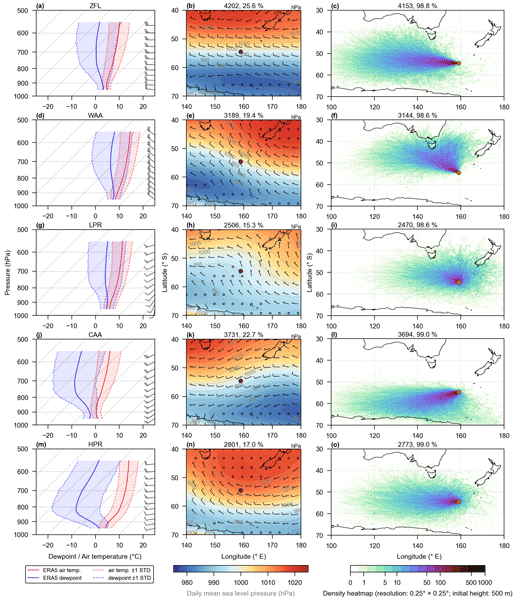
Zhaoyang Kong, Andrew T. Prata, Peter T. May, Ariaan Purich, Yi Huang, and Steven T. Siems
Weather Clim. Dynam., 6, 1643–1660, https://doi.org/10.5194/wcd-6-1643-2025, https://doi.org/10.5194/wcd-6-1643-2025, 2025
Short summary
Short summary
To investigate why ERA5 (European Centre for Medium-Range Weather Forecasts Reanalysis v5) does not accurately capture the observed increase in annual precipitation at Macquarie Island during 1979 to 2023, we classify daily synoptic systems using k-means clustering. Find that the increase in mean intensity across all systems is the main contributor to the observed annual precipitation trend and the resulting discrepancy, rather than changes in the frequency. And this increase may also have a substantial impact on the freshwater fluxes over the Southern Ocean.
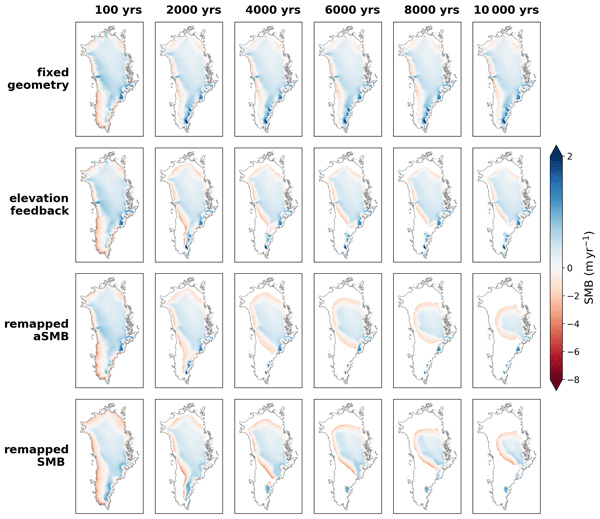
Charlotte Rahlves, Heiko Goelzer, Andreas Born, and Petra M. Langebroek
The Cryosphere, 19, 6403–6419, https://doi.org/10.5194/tc-19-6403-2025, https://doi.org/10.5194/tc-19-6403-2025, 2025
Short summary
Short summary
We present a method to better simulate how Greenland’s ice sheet may change over thousands of years in response to climate change. Using a stand-alone ice sheet model, we adjust snowfall and melting patterns based on changes in the ice sheet’s shape. This approach avoids complex coupled models and enables faster testing of many future scenarios to understand the long-term stability of Greenland’s ice.
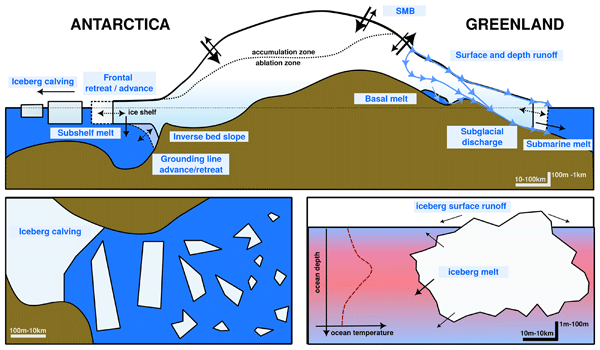
Gavin A. Schmidt, Kenneth D. Mankoff, Jonathan L. Bamber, Clara Burgard, Dustin Carroll, David M. Chandler, Violaine Coulon, Benjamin J. Davison, Matthew H. England, Paul R. Holland, Nicolas C. Jourdain, Qian Li, Juliana M. Marson, Pierre Mathiot, Clive R. McMahon, Twila A. Moon, Ruth Mottram, Sophie Nowicki, Anna Olivé Abelló, Andrew G. Pauling, Thomas Rackow, and Damien Ringeisen
Geosci. Model Dev., 18, 8333–8361, https://doi.org/10.5194/gmd-18-8333-2025, https://doi.org/10.5194/gmd-18-8333-2025, 2025
Short summary
Short summary
The impact of increasing mass loss from the Greenland and Antarctic ice sheets has not so far been included in historical climate model simulations. This paper describes the protocols and data available for modeling groups to add this anomalous freshwater to their ocean modules to better represent the impacts of these fluxes on ocean circulation, sea ice, salinity and sea level.
Helen J. Shea, Ailie Gallant, Ariaan Purich, and Tessa R. Vance
Clim. Past, 21, 2009–2030, https://doi.org/10.5194/cp-21-2009-2025, https://doi.org/10.5194/cp-21-2009-2025, 2025
Short summary
Short summary
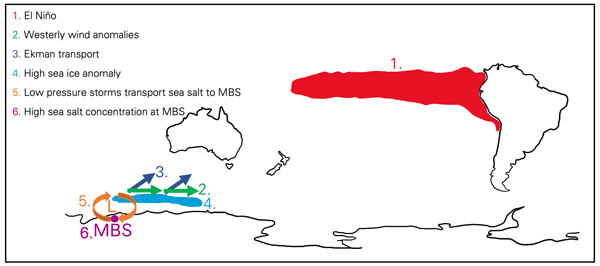
Ice core data from Mount Brown South (MBS), East Antarctica links high sea salt years to stronger westerly winds and increased sea ice near MBS's northeast coast. Low pressure storms off the coast might transport sea salts from sea ice regions to MBS. The tropical Pacific influences sea salt levels with El Niño events affecting wind patterns around MBS, impacting sea salt sources. Identifying these mechanisms aids in the understanding of climate variability before instrumental records.
Fabio Boeira Dias, Matthew H. England, Adele K. Morrison, and Benjamin K. Galton-Fenzi
The Cryosphere, 19, 5231–5258, https://doi.org/10.5194/tc-19-5231-2025, https://doi.org/10.5194/tc-19-5231-2025, 2025
Short summary
Short summary
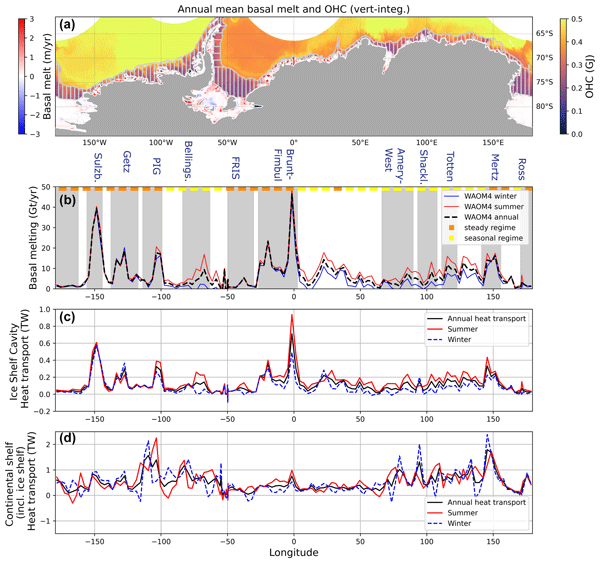
The Antarctic Ice Sheet melting dominates the sea-level projection uncertainties. Much uncertainty arises from our limited understanding of how ice shelves melt from below. Using a detailed ocean–ice-shelf model, we found that East Antarctic ice shelves experience seasonal melting driven by ocean heat transport variability. In contrast, West Antarctic ice shelves show consistent melting due to a steady supply of warm, deep water, indicating a potentially distinct response due to a warming climate.
Shenjie Zhou, Pierre Dutrieux, Claudia F. Giulivi, Adrian Jenkins, Alessandro Silvano, Christopher Auckland, E. Povl Abrahamsen, Michael Meredith, Irena Vaňková, Keith Nicholls, Peter E. D. Davis, Svein Østerhus, Arnold L. Gordon, Christopher J. Zappa, Tiago S. Dotto, Ted Scambos, Kathryn L. Gunn, Stephen R. Rintoul, Shigeru Aoki, Craig Stevens, Chengyan Liu, Sukyoung Yun, Tae-Wan Kim, Won Sang Lee, Markus Janout, Tore Hattermann, Julius Lauber, Elin Darelius, Anna Wåhlin, Leo Middleton, Pasquale Castagno, Giorgio Budillon, Karen J. Heywood, Jennifer Graham, Stephen Dye, Daisuke Hirano, and Una Kim Miller
Earth Syst. Sci. Data, 17, 5693–5706, https://doi.org/10.5194/essd-17-5693-2025, https://doi.org/10.5194/essd-17-5693-2025, 2025
Short summary
Short summary
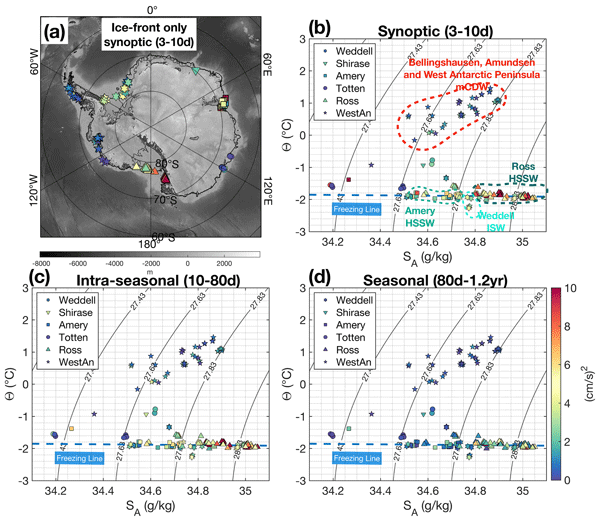
We created the first standardised dataset of in-situ ocean measurements time series from around Antarctica collected since 1970s. This includes temperature, salinity, pressure, and currents recorded by instruments deployed in icy, challenging conditions. Our analysis highlights the dominance of tidal currents and separates these from other patterns to study regional energy distribution. This unique dataset offers a foundation for future research on Antarctic ocean dynamics and ice interactions.
Heiko Goelzer, Petra M. Langebroek, Andreas Born, Stefan Hofer, Konstanze Haubner, Michele Petrini, Gunter Leguy, William H. Lipscomb, and Katherine Thayer-Calder
Geosci. Model Dev., 18, 7853–7867, https://doi.org/10.5194/gmd-18-7853-2025, https://doi.org/10.5194/gmd-18-7853-2025, 2025
Short summary
Short summary
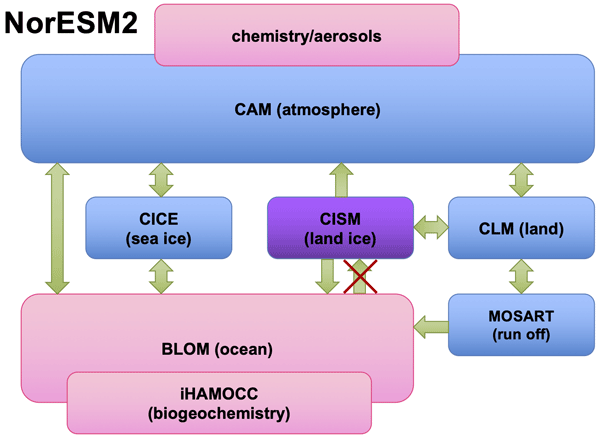
On the backdrop of observed accelerating ice sheet mass loss over the last few decades, there is growing interest in the role of ice sheet changes in global climate projections. In this regard, we have coupled an Earth system model with an ice sheet model and have produced an initial set of climate projections including an interactive coupling with a dynamic Greenland ice sheet.
Miriam Seifert, Christopher Danek, Christoph Völker, and Judith Hauck
Biogeosciences, 22, 5897–5919, https://doi.org/10.5194/bg-22-5897-2025, https://doi.org/10.5194/bg-22-5897-2025, 2025
Short summary
Short summary
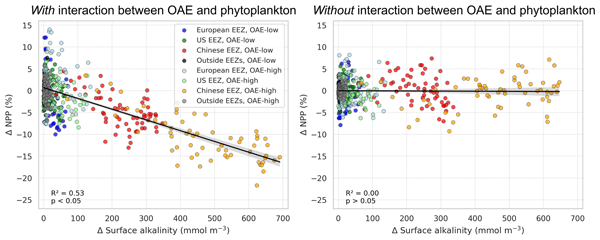
Ocean alkalinity enhancement (OAE) can help to remove CO2 from the atmosphere. Yet, our study is the first to investigate the link between OAE and phytoplankton in an Earth system model. We show that OAE can indirectly decrease primary production and that biological feedbacks can modify the efficiency of OAE. Our study provides hints for ecological risks of OAE and the quantification of carbon drawdown and can serve as a kick start for other models to consider OAE–ecosystem interactions.
Katie Lowery, Pierre Dutrieux, Paul R. Holland, Anna E. Hogg, Noel Gourmelen, and Benjamin J. Wallis
The Cryosphere, 19, 4893–4911, https://doi.org/10.5194/tc-19-4893-2025, https://doi.org/10.5194/tc-19-4893-2025, 2025
Short summary
Short summary
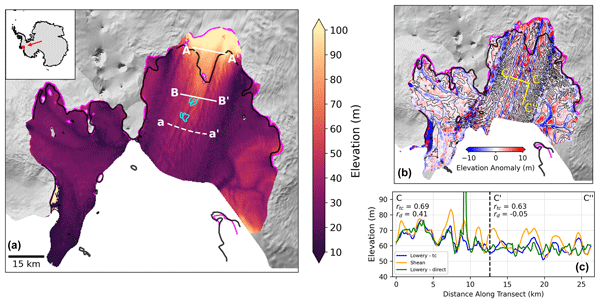
Using CryoSat-2, we observe monthly changes in the Pine Island Glacier (PIG) ice shelf surface and derive oceanic melt at its base. Basal channels, kilometres wide, are reflected in the ice surface and captured in our observations. We demonstrate that melt is concentrated on the western walls of channels, that channels play a role in grounding pinning points, and that PIG's main channel geometry is inherited upstream of the grounding line. These results highlight the importance of channels to ice shelf stability.
Johanna Beckmann, Ronja Reese, Felicity S. McCormack, Sue Cook, Lawrence Bird, Dawid Gwyther, Daniel Richards, Matthias Scheiter, Yu Wang, Hélène Seroussi, Ayako Abe‐Ouchi, Torsten Albrecht, Jorge Alvarez‐Solas, Xylar S. Asay‐Davis, Jean‐Baptiste Barre, Constantijn J. Berends, Jorge Bernales, Javier Blasco, Justine Caillet, David M. Chandler, Violaine Coulon, Richard Cullather, Christophe Dumas, Benjamin K. Galton‐Fenzi, Julius Garbe, Fabien Gillet‐Chaulet, Rupert Gladstone, Heiko Goelzer, Nicholas R. Golledge, Ralf Greve, G. Hilmar Gudmundsson, Holly Kyeore Han, Trevor R. Hillebrand, Matthew J. Hoffman, Philippe Huybrechts, Nicolas C. Jourdain, Ann Kristin Klose, Petra M. Langebroek, Gunter R. Leguy, William H. Lipscomb, Daniel P. Lowry, Pierre Mathiot, Marisa Montoya, Mathieu Morlighem, Sophie Nowicki, Frank Pattyn, Antony J. Payne, Tyler Pelle, Aurélien Quiquet, Alexander Robinson, Leopekka Saraste, Erika G. Simon, Sainan Sun, Jake P. Twarog, Luke D. Trusel, Benoit Urruty, Jonas Van Breedam, Roderik S. W. van de Wal, Chen Zhao, and Thomas Zwinger
EGUsphere, https://doi.org/10.5194/egusphere-2025-4069, https://doi.org/10.5194/egusphere-2025-4069, 2025
Short summary
Short summary
Antarctica holds enough ice to raise sea levels by many meters, but its future is uncertain. Warm ocean water melts ice shelves from below, letting inland ice flow faster into the sea. By 2300, Antarctica could add 0.6–4.4 m to sea levels. Our study identifies two key factors—how strongly shelves melt and how the ice responds. These explain much of the range, and refining them in models may improve future predictions.
Lise Seland Graff, Jerry Tjiputra, Ada Gjermundsen, Andreas Born, Jens Boldingh Debernard, Heiko Goelzer, Yan-Chun He, Petra Margaretha Langebroek, Aleksi Nummelin, Dirk Olivié, Øyvind Seland, Trude Storelvmo, Mats Bentsen, Chuncheng Guo, Andrea Rosendahl, Dandan Tao, Thomas Toniazzo, Camille Li, Stephen Outten, and Michael Schulz
Earth Syst. Dynam., 16, 1671–1698, https://doi.org/10.5194/esd-16-1671-2025, https://doi.org/10.5194/esd-16-1671-2025, 2025
Short summary
Short summary
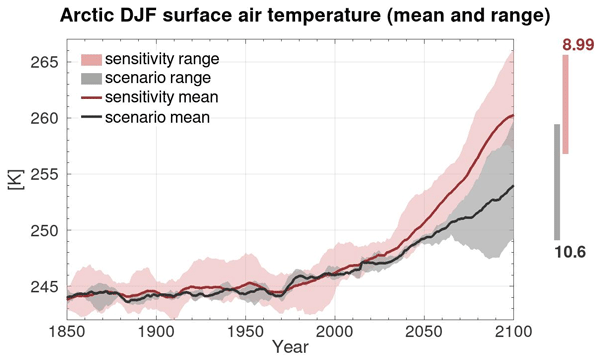
The magnitude of future Arctic amplification is highly uncertain. Using the Norwegian Earth System Model, we explore the effect of improving the representation of clouds, ocean eddies, the Greenland ice sheet, sea ice, and ozone on the projected Arctic winter warming in a coordinated experiment set. These improvements all lead to enhanced projected Arctic warming, with the largest changes found in the sea ice retreat regions and the largest uncertainty found on the Atlantic side.
Sina Loriani, Yevgeny Aksenov, David I. Armstrong McKay, Govindasamy Bala, Andreas Born, Cristiano Mazur Chiessi, Henk A. Dijkstra, Jonathan F. Donges, Sybren Drijfhout, Matthew H. England, Alexey V. Fedorov, Laura C. Jackson, Kai Kornhuber, Gabriele Messori, Francesco S. R. Pausata, Stefanie Rynders, Jean-Baptiste Sallée, Bablu Sinha, Steven C. Sherwood, Didier Swingedouw, and Thejna Tharammal
Earth Syst. Dynam., 16, 1611–1653, https://doi.org/10.5194/esd-16-1611-2025, https://doi.org/10.5194/esd-16-1611-2025, 2025
Short summary
Short summary
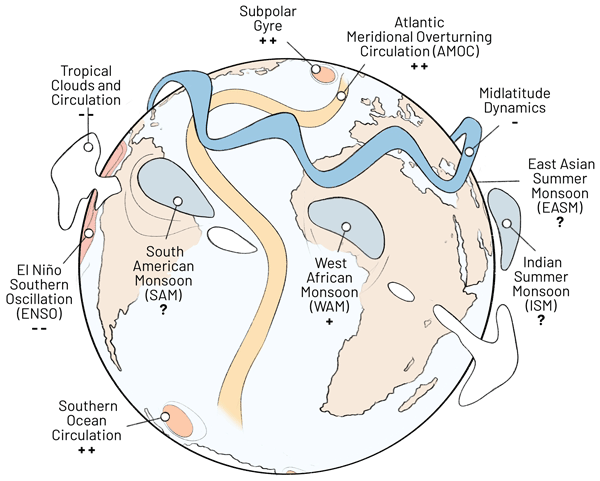
In this work, we draw on palaeo-records, observations, and modelling studies to review tipping points in the ocean overturning circulations, monsoon systems, and global atmospheric circulations. We find indications for tipping in the ocean overturning circulations and the West African monsoon, with potentially severe impacts on the Earth system and humans. Tipping in the other considered systems is regarded as conceivable but is currently not sufficiently supported by evidence.
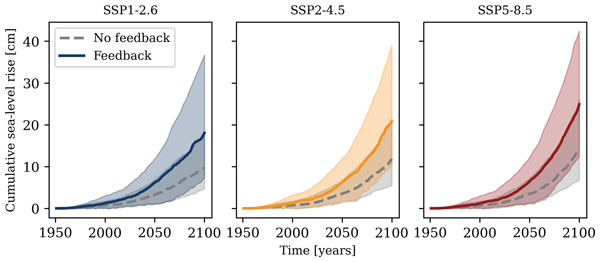
Erwin Lambert, Dewi Le Bars, Eveline van der Linden, André Jüling, and Sybren Drijfhout
Earth Syst. Dynam., 16, 1303–1323, https://doi.org/10.5194/esd-16-1303-2025, https://doi.org/10.5194/esd-16-1303-2025, 2025
Short summary
Short summary
Ocean warming around Antarctica leads to ice melting and sea-level rise. The meltwater that flows into the surrounding ocean can lead to enhanced warming of the seawater, thereby again increasing melting and sea-level rise. This process, however, is not currently included in climate models. Through a simple mathematical approach, we find that this process can lead to more melting and greater sea-level rise, possibly increasing the Antarctic contribution to 21st century sea-level rise by 80 %.
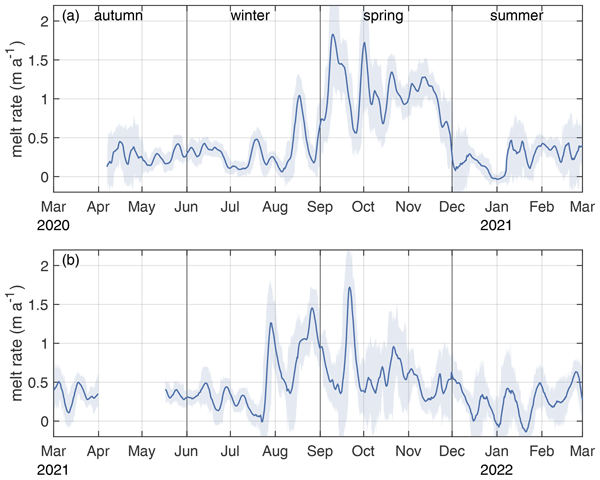
Ole Zeising, Tore Hattermann, Lars Kaleschke, Sophie Berger, Olaf Boebel, Reinhard Drews, M. Reza Ershadi, Tanja Fromm, Frank Pattyn, Daniel Steinhage, and Olaf Eisen
The Cryosphere, 19, 2837–2854, https://doi.org/10.5194/tc-19-2837-2025, https://doi.org/10.5194/tc-19-2837-2025, 2025
Short summary
Short summary
Basal melting of ice shelves impacts the mass loss of the Antarctic Ice Sheet. This study focuses on the Ekström Ice Shelf in East Antarctica, using multiyear data from an autonomous radar system. Results show a surprising seasonal pattern of high melt rates in winter and spring. The seasonalities of sea-ice growth and ocean density indicate that, in winter, dense water enhances plume activity and melt rates. Understanding these dynamics is crucial for improving future mass balance projections.
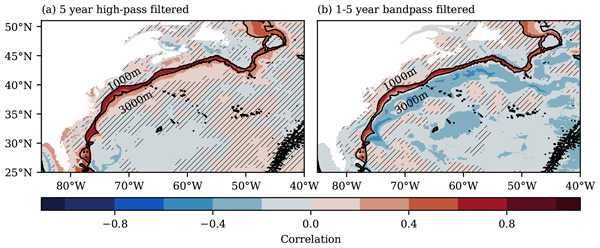
Linus Shihora, Torge Martin, Anna Christina Hans, Rebecca Hummels, Michael Schindelegger, and Henryk Dobslaw
Ocean Sci., 21, 1533–1548, https://doi.org/10.5194/os-21-1533-2025, https://doi.org/10.5194/os-21-1533-2025, 2025
Short summary
Short summary
The Atlantic Meridional Overturning Circulation (AMOC) is a major part of the ocean circulation. Satellite gravimetry missions, like GRACE, which measure changes in Earth's mass distribution, could help monitor changes in the AMOC by detecting variations in ocean bottom pressure. To help assess if future satellite missions could detect these changes, we used ocean model simulation data to study their connection. Additionally, we created a synthetic data set for future satellite mission simulations.
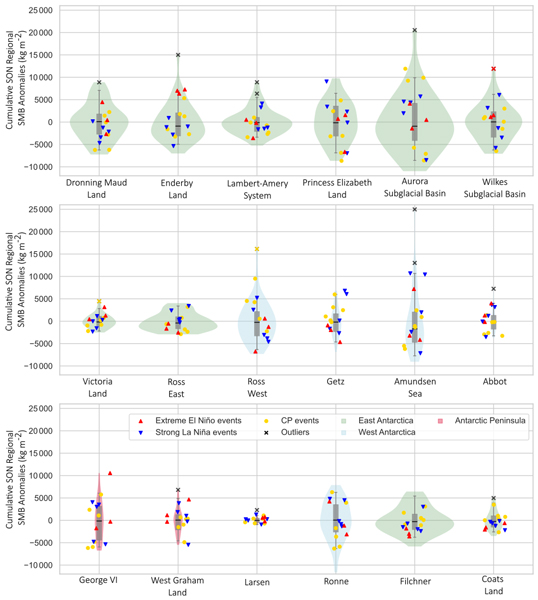
Jessica M. A. Macha, Andrew N. Mackintosh, Felicity S. McCormack, Benjamin J. Henley, Helen V. McGregor, Christiaan T. van Dalum, and Ariaan Purich
The Cryosphere, 19, 1915–1935, https://doi.org/10.5194/tc-19-1915-2025, https://doi.org/10.5194/tc-19-1915-2025, 2025
Short summary
Short summary
Extreme El Niño–Southern Oscillation (ENSO) events have global impacts, but their Antarctic impacts are poorly understood. Examining Antarctic snow accumulation anomalies of past observed extreme ENSO events, we show that accumulation changes differ between events and are insignificant during most events. Significant changes occur during 2015/16 and in Enderby Land during all extreme El Niños. Historical data limit conclusions, but future greater extremes could cause Antarctic accumulation changes.
Heather L. Selley, Anna E. Hogg, Benjamin J. Davison, Pierre Dutrieux, and Thomas Slater
The Cryosphere, 19, 1725–1738, https://doi.org/10.5194/tc-19-1725-2025, https://doi.org/10.5194/tc-19-1725-2025, 2025
Short summary
Short summary
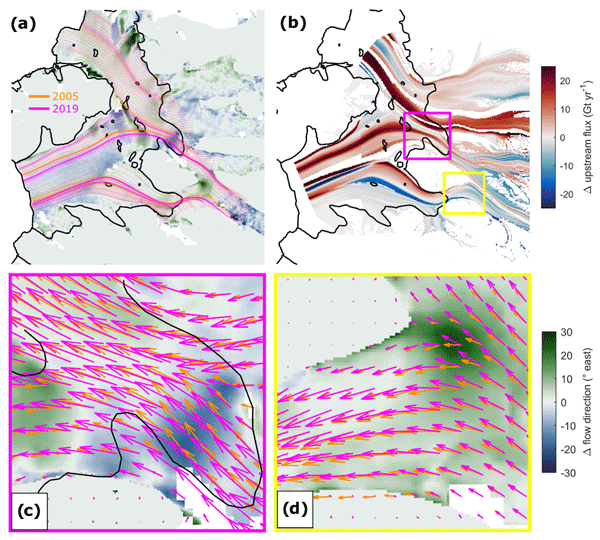
We used satellite observations to measure recent changes in ice speed and flow direction in the Pope, Smith, and Kohler region of West Antarctica (2005–2022). We found substantial speed-up on seven ice streams of up to 87 %. However, Kohler West Glacier has slowed by 10 %, due to the redirection of ice flow into its rapidly thinning neighbour. This process of “ice piracy” has not previously been directly observed on this rapid timescale and may influence future ice shelf and sheet mass changes.
Charlotte Rahlves, Heiko Goelzer, Andreas Born, and Petra M. Langebroek
The Cryosphere, 19, 1205–1220, https://doi.org/10.5194/tc-19-1205-2025, https://doi.org/10.5194/tc-19-1205-2025, 2025
Short summary
Short summary
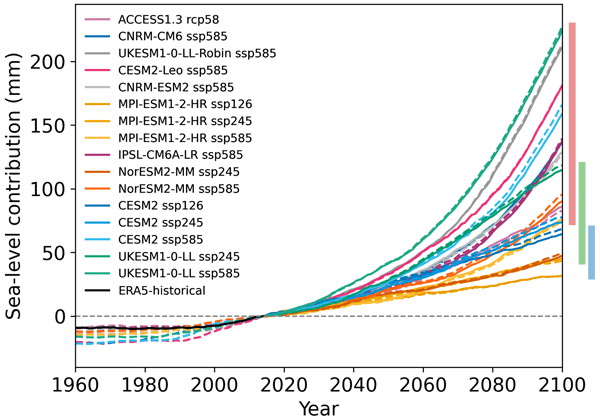
Mass loss from the Greenland ice sheet significantly contributes to rising sea levels, threatening coastal communities globally. To improve future sea-level projections, we simulated ice sheet behavior until 2100, initializing the model with observed geometry and using various climate models. Predictions indicate a sea-level rise of 32 to 228 mm by 2100, with climate model uncertainty being the main source of variability in projections.
Chloe A. Brashear, Tyler R. Jones, Valerie Morris, Bruce H. Vaughn, William H. G. Roberts, William B. Skorski, Abigail G. Hughes, Richard Nunn, Sune Olander Rasmussen, Kurt M. Cuffey, Bo M. Vinther, Todd Sowers, Christo Buizert, Vasileios Gkinis, Christian Holme, Mari F. Jensen, Sofia E. Kjellman, Petra M. Langebroek, Florian Mekhaldi, Kevin S. Rozmiarek, Jonathan W. Rheinlænder, Margit H. Simon, Giulia Sinnl, Silje Smith-Johnsen, and James W. C. White
Clim. Past, 21, 529–546, https://doi.org/10.5194/cp-21-529-2025, https://doi.org/10.5194/cp-21-529-2025, 2025
Short summary
Short summary
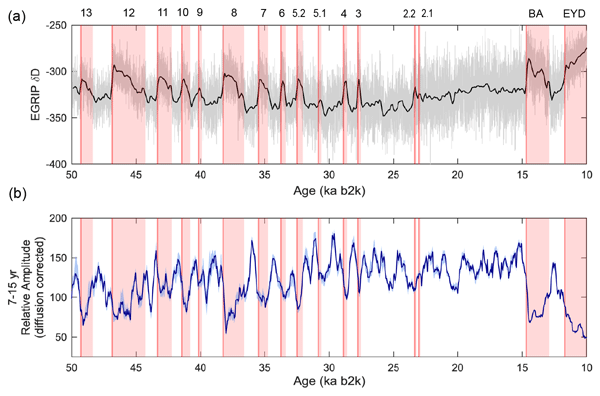
We use a series of spectral techniques to quantify the strength of high-frequency climate variability in northeastern Greenland to 50 000 ka before present. Importantly, we find that variability consistently decreases hundreds of years prior to Dansgaard–Oeschger warming events. Model simulations suggest a change in North Atlantic sea ice behavior contributed to this pattern, thus providing new information on the conditions which preceded abrupt climate change during the Last Glacial Period.
Julius Lauber, Tore Hattermann, Laura de Steur, Elin Darelius, and Agneta Fransson
Ocean Sci., 20, 1585–1610, https://doi.org/10.5194/os-20-1585-2024, https://doi.org/10.5194/os-20-1585-2024, 2024
Short summary
Short summary
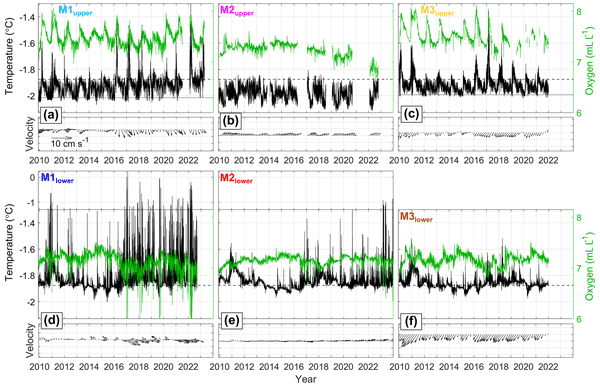
Recent studies have highlighted the potential vulnerability of the East Antarctic Ice Sheet to atmospheric and oceanic changes. We present new insights from observations from three oceanic moorings below Fimbulisen Ice Shelf from 2009 to 2023. We find that relatively warm water masses reach below the ice shelf both close to the surface and at depth with implications for the basal melting of Fimbulisen.
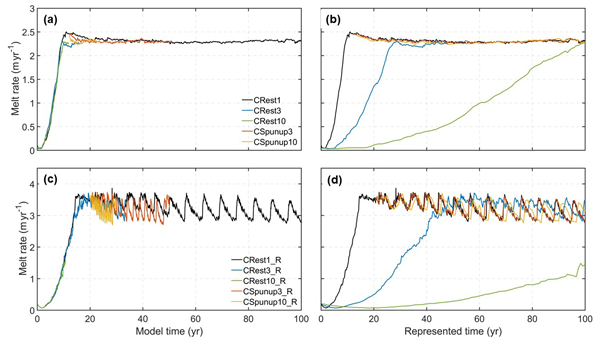
Qin Zhou, Chen Zhao, Rupert Gladstone, Tore Hattermann, David Gwyther, and Benjamin Galton-Fenzi
Geosci. Model Dev., 17, 8243–8265, https://doi.org/10.5194/gmd-17-8243-2024, https://doi.org/10.5194/gmd-17-8243-2024, 2024
Short summary
Short summary
We introduce an accelerated forcing approach to address timescale discrepancies between the ice sheets and ocean components in coupled modelling by reducing the ocean simulation duration. The approach is evaluated using idealized coupled models, and its limitations in real-world applications are discussed. Our results suggest it can be a valuable tool for process-oriented coupled ice sheet–ocean modelling and downscaling climate simulations with such models.
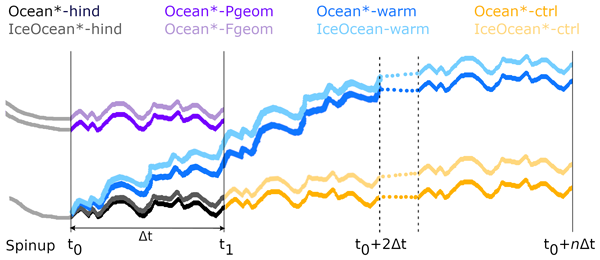
Jan De Rydt, Nicolas C. Jourdain, Yoshihiro Nakayama, Mathias van Caspel, Ralph Timmermann, Pierre Mathiot, Xylar S. Asay-Davis, Hélène Seroussi, Pierre Dutrieux, Ben Galton-Fenzi, David Holland, and Ronja Reese
Geosci. Model Dev., 17, 7105–7139, https://doi.org/10.5194/gmd-17-7105-2024, https://doi.org/10.5194/gmd-17-7105-2024, 2024
Short summary
Short summary
Global climate models do not reliably simulate sea-level change due to ice-sheet–ocean interactions. We propose a community modelling effort to conduct a series of well-defined experiments to compare models with observations and study how models respond to a range of perturbations in climate and ice-sheet geometry. The second Marine Ice Sheet–Ocean Model Intercomparison Project will continue to lay the groundwork for including ice-sheet–ocean interactions in global-scale IPCC-class models.
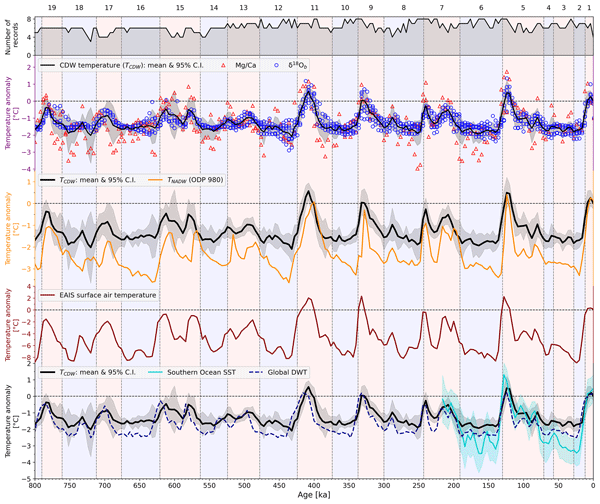
David M. Chandler and Petra M. Langebroek
Clim. Past, 20, 2055–2080, https://doi.org/10.5194/cp-20-2055-2024, https://doi.org/10.5194/cp-20-2055-2024, 2024
Short summary
Short summary
Sea level rise and global climate change caused by ice melt in Antarctica represent a puzzle of feedbacks between the climate, ocean, and ice sheets over tens to thousands of years. Antarctic Ice Sheet melting is caused mainly by warm deep water from the Southern Ocean. Here, we analyse close relationships between deep water temperatures and global climate over the last 800 000 years. This knowledge can help us to better understand how climate and sea level are likely to change in the future.
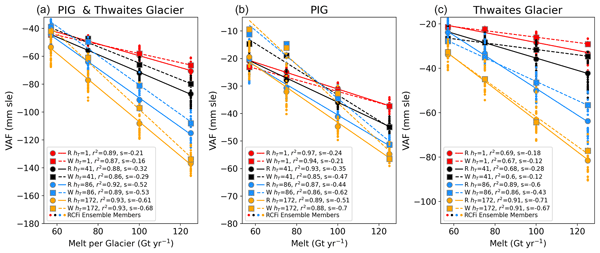
Ian Joughin, Daniel Shapero, and Pierre Dutrieux
The Cryosphere, 18, 2583–2601, https://doi.org/10.5194/tc-18-2583-2024, https://doi.org/10.5194/tc-18-2583-2024, 2024
Short summary
Short summary
The Pine Island and Thwaites glaciers are losing ice to the ocean rapidly as warmer water melts their floating ice shelves. Models help determine how much such glaciers will contribute to sea level. We find that ice loss varies in response to how much melting the ice shelves are subjected to. Our estimated losses are also sensitive to how much the friction beneath the glaciers is reduced as it goes afloat. Melt-forced sea level rise from these glaciers is likely to be less than 10 cm by 2300.
Neil C. Swart, Torge Martin, Rebecca Beadling, Jia-Jia Chen, Christopher Danek, Matthew H. England, Riccardo Farneti, Stephen M. Griffies, Tore Hattermann, Judith Hauck, F. Alexander Haumann, André Jüling, Qian Li, John Marshall, Morven Muilwijk, Andrew G. Pauling, Ariaan Purich, Inga J. Smith, and Max Thomas
Geosci. Model Dev., 16, 7289–7309, https://doi.org/10.5194/gmd-16-7289-2023, https://doi.org/10.5194/gmd-16-7289-2023, 2023
Short summary
Short summary
Current climate models typically do not include full representation of ice sheets. As the climate warms and the ice sheets melt, they add freshwater to the ocean. This freshwater can influence climate change, for example by causing more sea ice to form. In this paper we propose a set of experiments to test the influence of this missing meltwater from Antarctica using multiple different climate models.
Abhay Prakash, Qin Zhou, Tore Hattermann, and Nina Kirchner
The Cryosphere, 17, 5255–5281, https://doi.org/10.5194/tc-17-5255-2023, https://doi.org/10.5194/tc-17-5255-2023, 2023
Short summary
Short summary
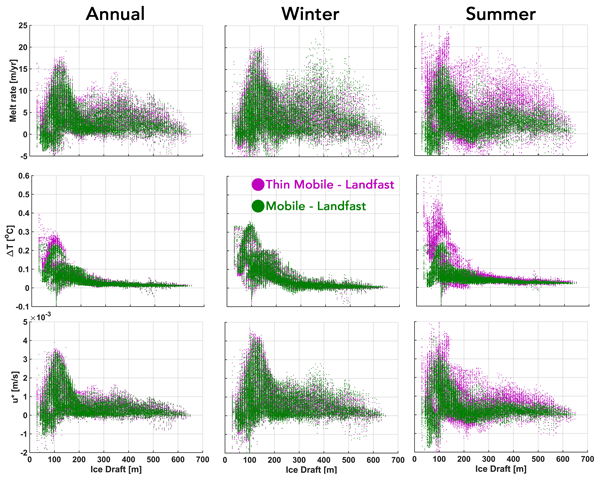
Sea ice arch formation in the Nares Strait has shielded the Petermann Glacier ice shelf from enhanced basal melting. However, with the sustained decline of the Arctic sea ice predicted to continue, the ice shelf is likely to be exposed to a year-round mobile and thin sea ice cover. In such a scenario, our modelled results show that elevated temperatures, and more importantly, a stronger ocean circulation in the ice shelf cavity, could result in up to two-thirds increase in basal melt.
Hélène Seroussi, Vincent Verjans, Sophie Nowicki, Antony J. Payne, Heiko Goelzer, William H. Lipscomb, Ayako Abe-Ouchi, Cécile Agosta, Torsten Albrecht, Xylar Asay-Davis, Alice Barthel, Reinhard Calov, Richard Cullather, Christophe Dumas, Benjamin K. Galton-Fenzi, Rupert Gladstone, Nicholas R. Golledge, Jonathan M. Gregory, Ralf Greve, Tore Hattermann, Matthew J. Hoffman, Angelika Humbert, Philippe Huybrechts, Nicolas C. Jourdain, Thomas Kleiner, Eric Larour, Gunter R. Leguy, Daniel P. Lowry, Chistopher M. Little, Mathieu Morlighem, Frank Pattyn, Tyler Pelle, Stephen F. Price, Aurélien Quiquet, Ronja Reese, Nicole-Jeanne Schlegel, Andrew Shepherd, Erika Simon, Robin S. Smith, Fiammetta Straneo, Sainan Sun, Luke D. Trusel, Jonas Van Breedam, Peter Van Katwyk, Roderik S. W. van de Wal, Ricarda Winkelmann, Chen Zhao, Tong Zhang, and Thomas Zwinger
The Cryosphere, 17, 5197–5217, https://doi.org/10.5194/tc-17-5197-2023, https://doi.org/10.5194/tc-17-5197-2023, 2023
Short summary
Short summary
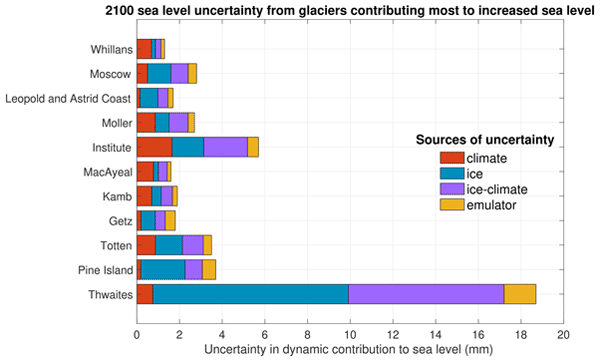
Mass loss from Antarctica is a key contributor to sea level rise over the 21st century, and the associated uncertainty dominates sea level projections. We highlight here the Antarctic glaciers showing the largest changes and quantify the main sources of uncertainty in their future evolution using an ensemble of ice flow models. We show that on top of Pine Island and Thwaites glaciers, Totten and Moscow University glaciers show rapid changes and a strong sensitivity to warmer ocean conditions.
Evgenii Salganik, Benjamin A. Lange, Christian Katlein, Ilkka Matero, Philipp Anhaus, Morven Muilwijk, Knut V. Høyland, and Mats A. Granskog
The Cryosphere, 17, 4873–4887, https://doi.org/10.5194/tc-17-4873-2023, https://doi.org/10.5194/tc-17-4873-2023, 2023
Short summary
Short summary
The Arctic Ocean is covered by a layer of sea ice that can break up, forming ice ridges. Here we measure ice thickness using an underwater sonar and compare ice thickness reduction for different ice types. We also study how the shape of ridged ice influences how it melts, showing that deeper, steeper, and narrower ridged ice melts the fastest. We show that deformed ice melts 3.8 times faster than undeformed ice at the bottom ice--ocean boundary, while at the surface they melt at a similar rate.
Michael Sigmond, James Anstey, Vivek Arora, Ruth Digby, Nathan Gillett, Viatcheslav Kharin, William Merryfield, Catherine Reader, John Scinocca, Neil Swart, John Virgin, Carsten Abraham, Jason Cole, Nicolas Lambert, Woo-Sung Lee, Yongxiao Liang, Elizaveta Malinina, Landon Rieger, Knut von Salzen, Christian Seiler, Clint Seinen, Andrew Shao, Reinel Sospedra-Alfonso, Libo Wang, and Duo Yang
Geosci. Model Dev., 16, 6553–6591, https://doi.org/10.5194/gmd-16-6553-2023, https://doi.org/10.5194/gmd-16-6553-2023, 2023
Short summary
Short summary
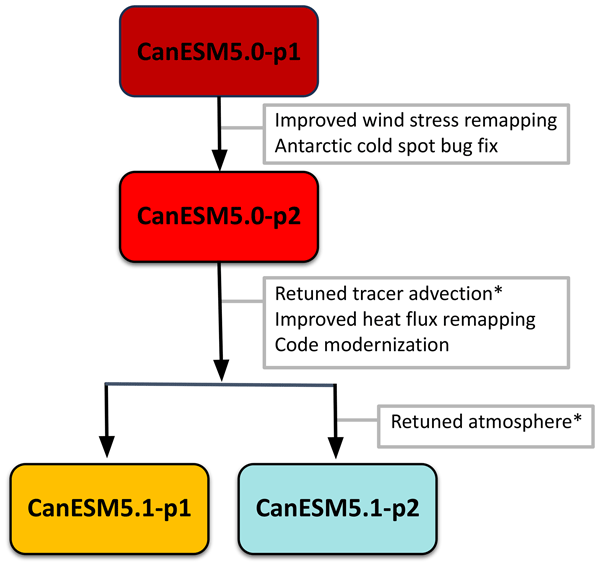
We present a new activity which aims to organize the analysis of biases in the Canadian Earth System model (CanESM) in a systematic manner. Results of this “Analysis for Development” (A4D) activity includes a new CanESM version, CanESM5.1, which features substantial improvements regarding the simulation of dust and stratospheric temperatures, a second CanESM5.1 variant with reduced climate sensitivity, and insights into potential avenues to reduce various other model biases.
Laurie C. Menviel, Paul Spence, Andrew E. Kiss, Matthew A. Chamberlain, Hakase Hayashida, Matthew H. England, and Darryn Waugh
Biogeosciences, 20, 4413–4431, https://doi.org/10.5194/bg-20-4413-2023, https://doi.org/10.5194/bg-20-4413-2023, 2023
Short summary
Short summary
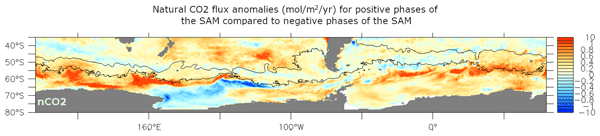
As the ocean absorbs 25% of the anthropogenic emissions of carbon, it is important to understand the impact of climate change on the flux of carbon between the ocean and the atmosphere. Here, we use a very high-resolution ocean, sea-ice, carbon cycle model to show that the capability of the Southern Ocean to uptake CO2 has decreased over the last 40 years due to a strengthening and poleward shift of the southern hemispheric westerlies. This trend is expected to continue over the coming century.
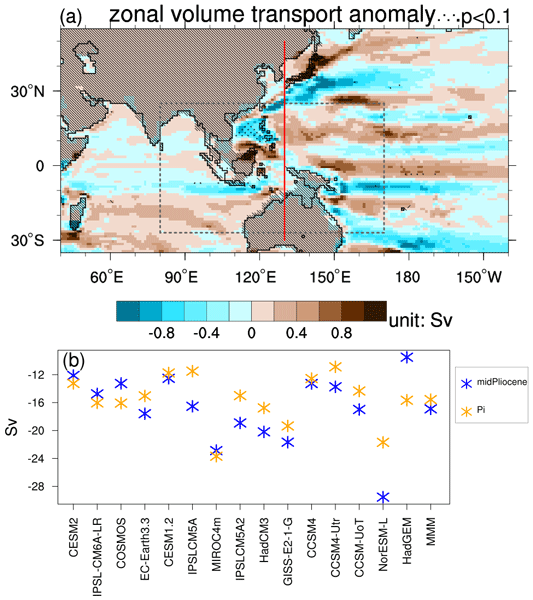
Xin Ren, Daniel J. Lunt, Erica Hendy, Anna von der Heydt, Ayako Abe-Ouchi, Bette Otto-Bliesner, Charles J. R. Williams, Christian Stepanek, Chuncheng Guo, Deepak Chandan, Gerrit Lohmann, Julia C. Tindall, Linda E. Sohl, Mark A. Chandler, Masa Kageyama, Michiel L. J. Baatsen, Ning Tan, Qiong Zhang, Ran Feng, Stephen Hunter, Wing-Le Chan, W. Richard Peltier, Xiangyu Li, Youichi Kamae, Zhongshi Zhang, and Alan M. Haywood
Clim. Past, 19, 2053–2077, https://doi.org/10.5194/cp-19-2053-2023, https://doi.org/10.5194/cp-19-2053-2023, 2023
Short summary
Short summary
We investigate the Maritime Continent climate in the mid-Piacenzian warm period and find it is warmer and wetter and the sea surface salinity is lower compared with preindustrial period. Besides, the fresh and warm water transfer through the Maritime Continent was stronger. In order to avoid undue influence from closely related models in the multimodel results, we introduce a new metric, the multi-cluster mean, which could reveal spatial signals that are not captured by the multimodel mean.
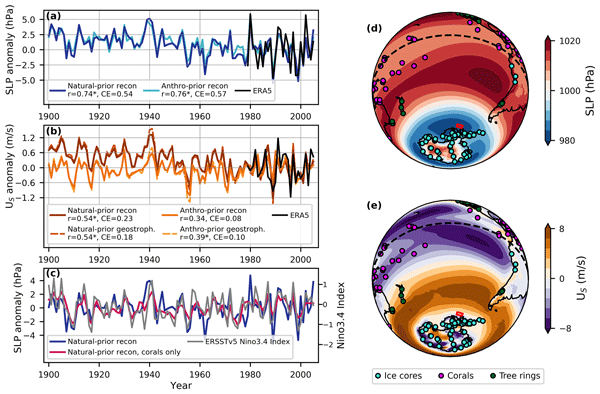
Gemma K. O'Connor, Paul R. Holland, Eric J. Steig, Pierre Dutrieux, and Gregory J. Hakim
The Cryosphere, 17, 4399–4420, https://doi.org/10.5194/tc-17-4399-2023, https://doi.org/10.5194/tc-17-4399-2023, 2023
Short summary
Short summary
Glaciers in West Antarctica are rapidly melting, but the causes are unknown due to limited observations. A leading hypothesis is that an unusually large wind event in the 1940s initiated the ocean-driven melting. Using proxy reconstructions (e.g., using ice cores) and climate model simulations, we find that wind events similar to the 1940s event are relatively common on millennial timescales, implying that ocean variability or climate trends are also necessary to explain the start of ice loss.
Christoph Heinze, Thorsten Blenckner, Peter Brown, Friederike Fröb, Anne Morée, Adrian L. New, Cara Nissen, Stefanie Rynders, Isabel Seguro, Yevgeny Aksenov, Yuri Artioli, Timothée Bourgeois, Friedrich Burger, Jonathan Buzan, B. B. Cael, Veli Çağlar Yumruktepe, Melissa Chierici, Christopher Danek, Ulf Dieckmann, Agneta Fransson, Thomas Frölicher, Giovanni Galli, Marion Gehlen, Aridane G. González, Melchor Gonzalez-Davila, Nicolas Gruber, Örjan Gustafsson, Judith Hauck, Mikko Heino, Stephanie Henson, Jenny Hieronymus, I. Emma Huertas, Fatma Jebri, Aurich Jeltsch-Thömmes, Fortunat Joos, Jaideep Joshi, Stephen Kelly, Nandini Menon, Precious Mongwe, Laurent Oziel, Sólveig Ólafsdottir, Julien Palmieri, Fiz F. Pérez, Rajamohanan Pillai Ranith, Juliano Ramanantsoa, Tilla Roy, Dagmara Rusiecka, J. Magdalena Santana Casiano, Yeray Santana-Falcón, Jörg Schwinger, Roland Séférian, Miriam Seifert, Anna Shchiptsova, Bablu Sinha, Christopher Somes, Reiner Steinfeldt, Dandan Tao, Jerry Tjiputra, Adam Ulfsbo, Christoph Völker, Tsuyoshi Wakamatsu, and Ying Ye
Biogeosciences Discuss., https://doi.org/10.5194/bg-2023-182, https://doi.org/10.5194/bg-2023-182, 2023
Revised manuscript not accepted
Short summary
Short summary
For assessing the consequences of human-induced climate change for the marine realm, it is necessary to not only look at gradual changes but also at abrupt changes of environmental conditions. We summarise abrupt changes in ocean warming, acidification, and oxygen concentration as the key environmental factors for ecosystems. Taking these abrupt changes into account requires greenhouse gas emissions to be reduced to a larger extent than previously thought to limit respective damage.
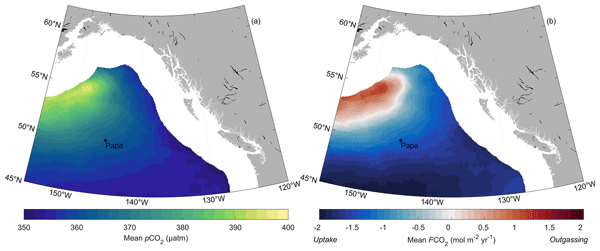
Patrick J. Duke, Roberta C. Hamme, Debby Ianson, Peter Landschützer, Mohamed M. M. Ahmed, Neil C. Swart, and Paul A. Covert
Biogeosciences, 20, 3919–3941, https://doi.org/10.5194/bg-20-3919-2023, https://doi.org/10.5194/bg-20-3919-2023, 2023
Short summary
Short summary
The ocean is both impacted by climate change and helps mitigate its effects through taking up carbon from the atmosphere. We used a machine learning approach to investigate what controls open-ocean carbon uptake in the northeast Pacific open ocean. Marine heatwaves that lasted 2–3 years increased uptake, while the upwelling strength of the Alaskan Gyre controlled uptake over 10-year time periods. The trend from 1998–2019 suggests carbon uptake in the northeast Pacific open ocean is increasing.
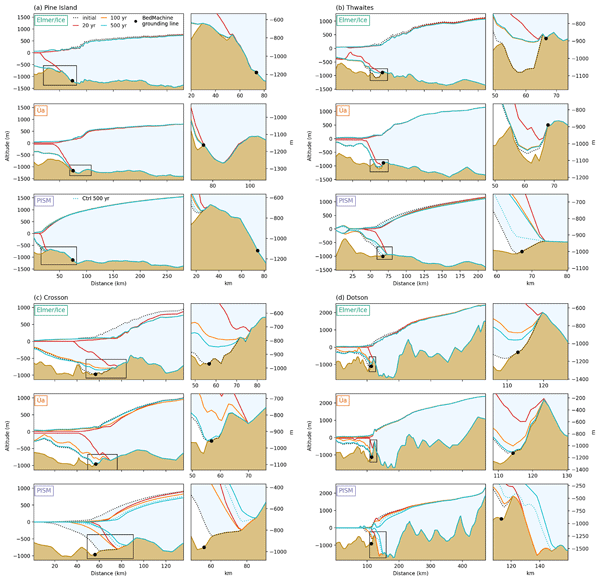
Emily A. Hill, Benoît Urruty, Ronja Reese, Julius Garbe, Olivier Gagliardini, Gaël Durand, Fabien Gillet-Chaulet, G. Hilmar Gudmundsson, Ricarda Winkelmann, Mondher Chekki, David Chandler, and Petra M. Langebroek
The Cryosphere, 17, 3739–3759, https://doi.org/10.5194/tc-17-3739-2023, https://doi.org/10.5194/tc-17-3739-2023, 2023
Short summary
Short summary
The grounding lines of the Antarctic Ice Sheet could enter phases of irreversible retreat or advance. We use three ice sheet models to show that the present-day locations of Antarctic grounding lines are reversible with respect to a small perturbation away from their current position. This indicates that present-day retreat of the grounding lines is not yet irreversible or self-enhancing.
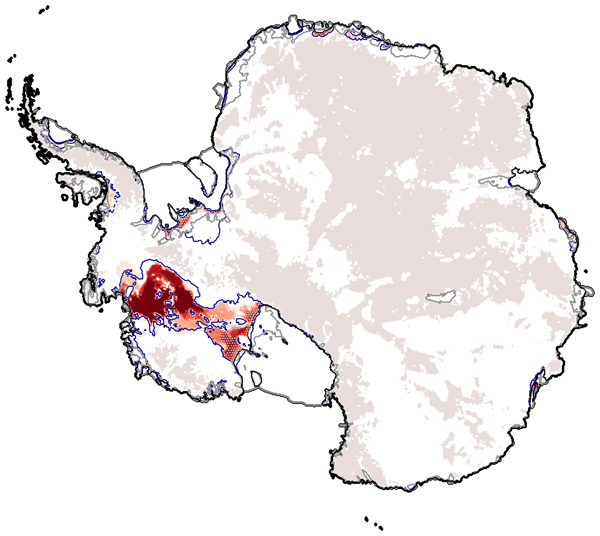
Ronja Reese, Julius Garbe, Emily A. Hill, Benoît Urruty, Kaitlin A. Naughten, Olivier Gagliardini, Gaël Durand, Fabien Gillet-Chaulet, G. Hilmar Gudmundsson, David Chandler, Petra M. Langebroek, and Ricarda Winkelmann
The Cryosphere, 17, 3761–3783, https://doi.org/10.5194/tc-17-3761-2023, https://doi.org/10.5194/tc-17-3761-2023, 2023
Short summary
Short summary
We use an ice sheet model to test where current climate conditions in Antarctica might lead. We find that present-day ocean and atmosphere conditions might commit an irreversible collapse of parts of West Antarctica which evolves over centuries to millennia. Importantly, this collapse is not irreversible yet.
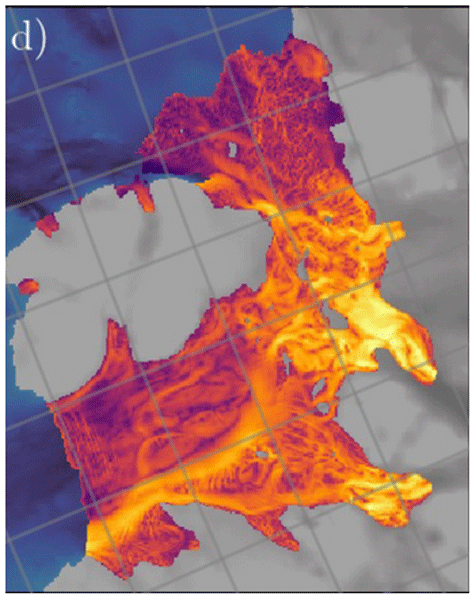
Erwin Lambert, André Jüling, Roderik S. W. van de Wal, and Paul R. Holland
The Cryosphere, 17, 3203–3228, https://doi.org/10.5194/tc-17-3203-2023, https://doi.org/10.5194/tc-17-3203-2023, 2023
Short summary
Short summary
A major uncertainty in the study of sea level rise is the melting of the Antarctic ice sheet by the ocean. Here, we have developed a new model, named LADDIE, that simulates this ocean-driven melting of the floating parts of the Antarctic ice sheet. This model simulates fine-scale patterns of melting and freezing and requires significantly fewer computational resources than state-of-the-art ocean models. LADDIE can be used as a new tool to force high-resolution ice sheet models.
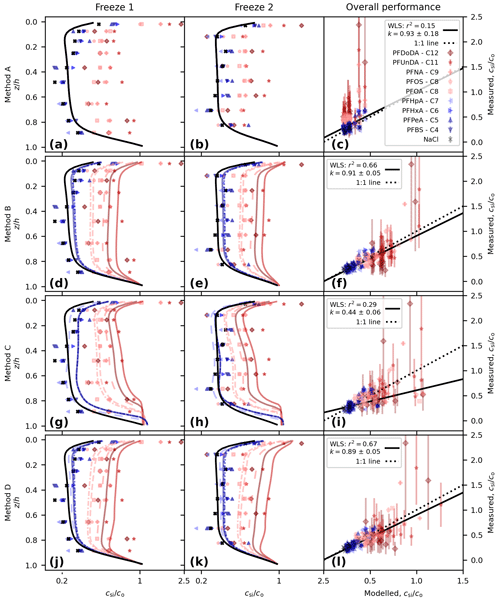
Max Thomas, Briana Cate, Jack Garnett, Inga J. Smith, Martin Vancoppenolle, and Crispin Halsall
The Cryosphere, 17, 3193–3201, https://doi.org/10.5194/tc-17-3193-2023, https://doi.org/10.5194/tc-17-3193-2023, 2023
Short summary
Short summary
A recent study showed that pollutants can be enriched in growing sea ice beyond what we would expect from a perfectly dissolved chemical. We hypothesise that this effect is caused by the specific properties of the pollutants working in combination with fluid moving through the sea ice. To test our hypothesis, we replicate this behaviour in a sea-ice model and show that this type of modelling can be applied to predicting the transport of chemicals with complex behaviour in sea ice.
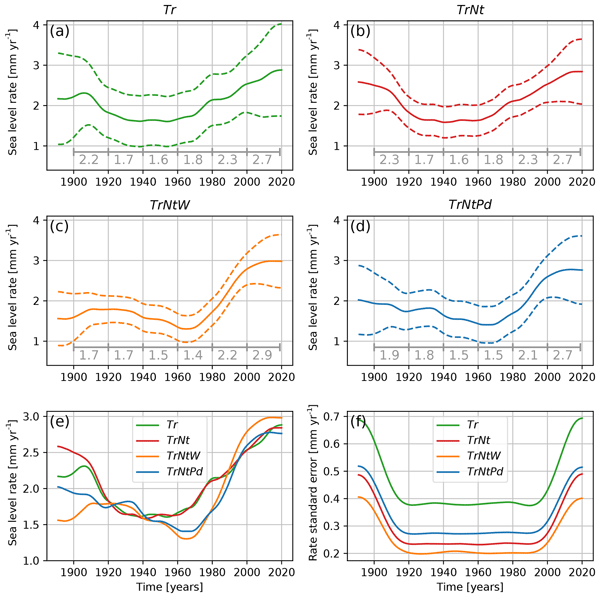
Iris Keizer, Dewi Le Bars, Cees de Valk, André Jüling, Roderik van de Wal, and Sybren Drijfhout
Ocean Sci., 19, 991–1007, https://doi.org/10.5194/os-19-991-2023, https://doi.org/10.5194/os-19-991-2023, 2023
Short summary
Short summary
Using tide gauge observations, we show that the acceleration of sea-level rise (SLR) along the coast of the Netherlands started in the 1960s but was masked by wind field and nodal-tide variations. This finding aligns with global SLR observations and expectations based on a physical understanding of SLR related to global warming.
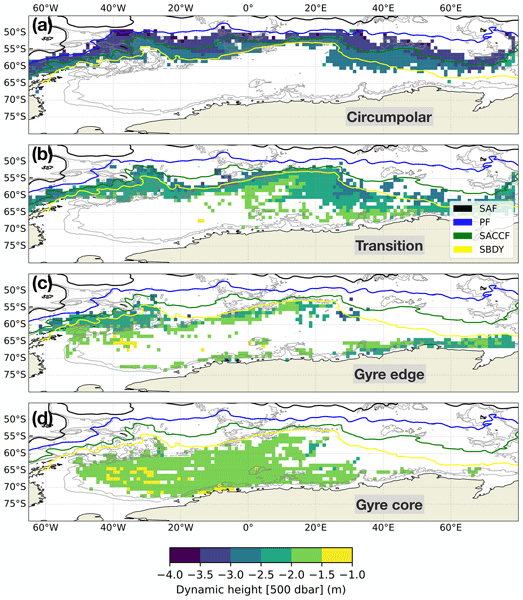
Dani C. Jones, Maike Sonnewald, Shenjie Zhou, Ute Hausmann, Andrew J. S. Meijers, Isabella Rosso, Lars Boehme, Michael P. Meredith, and Alberto C. Naveira Garabato
Ocean Sci., 19, 857–885, https://doi.org/10.5194/os-19-857-2023, https://doi.org/10.5194/os-19-857-2023, 2023
Short summary
Short summary
Machine learning is transforming oceanography. For example, unsupervised classification approaches help researchers identify underappreciated structures in ocean data, helping to generate new hypotheses. In this work, we use a type of unsupervised classification to identify structures in the temperature and salinity structure of the Weddell Gyre, which is an important region for global ocean circulation and for climate. We use our method to generate new ideas about mixing in the Weddell Gyre.
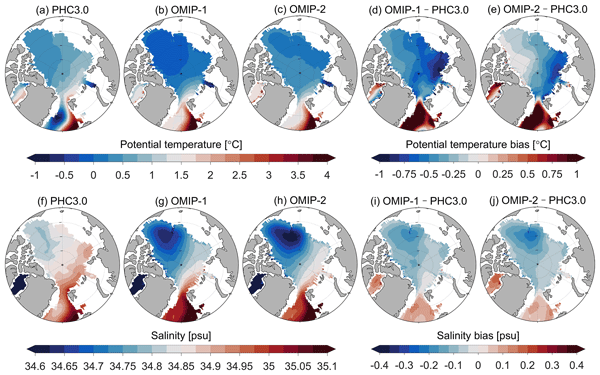
Qi Shu, Qiang Wang, Chuncheng Guo, Zhenya Song, Shizhu Wang, Yan He, and Fangli Qiao
Geosci. Model Dev., 16, 2539–2563, https://doi.org/10.5194/gmd-16-2539-2023, https://doi.org/10.5194/gmd-16-2539-2023, 2023
Short summary
Short summary
Ocean models are often used for scientific studies on the Arctic Ocean. Here the Arctic Ocean simulations by state-of-the-art global ocean–sea-ice models participating in the Ocean Model Intercomparison Project (OMIP) were evaluated. The simulations on Arctic Ocean hydrography, freshwater content, stratification, sea surface height, and gateway transports were assessed and the common biases were detected. The simulations forced by different atmospheric forcing were also evaluated.

Andrew P. Schurer, Gabriele C. Hegerl, Hugues Goosse, Massimo A. Bollasina, Matthew H. England, Michael J. Mineter, Doug M. Smith, and Simon F. B. Tett
Clim. Past, 19, 943–957, https://doi.org/10.5194/cp-19-943-2023, https://doi.org/10.5194/cp-19-943-2023, 2023
Short summary
Short summary
We adopt an existing data assimilation technique to constrain a model simulation to follow three important modes of variability, the North Atlantic Oscillation, El Niño–Southern Oscillation and the Southern Annular Mode. How it compares to the observed climate is evaluated, with improvements over simulations without data assimilation found over many regions, particularly the tropics, the North Atlantic and Europe, and discrepancies with global cooling following volcanic eruptions are reconciled.
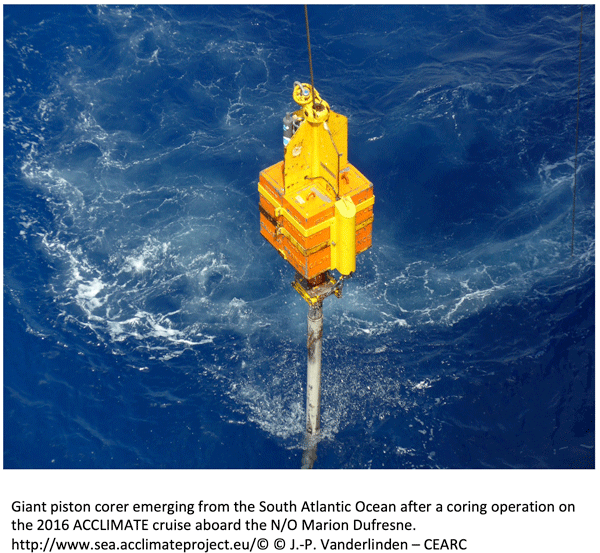
Claire Waelbroeck, Jerry Tjiputra, Chuncheng Guo, Kerim H. Nisancioglu, Eystein Jansen, Natalia Vázquez Riveiros, Samuel Toucanne, Frédérique Eynaud, Linda Rossignol, Fabien Dewilde, Elodie Marchès, Susana Lebreiro, and Silvia Nave
Clim. Past, 19, 901–913, https://doi.org/10.5194/cp-19-901-2023, https://doi.org/10.5194/cp-19-901-2023, 2023
Short summary
Short summary
The precise geometry and extent of Atlantic circulation changes that accompanied rapid climate changes of the last glacial period are still unknown. Here, we combine carbon isotopic records from 18 Atlantic sediment cores with numerical simulations and decompose the carbon isotopic change across a cold-to-warm transition into remineralization and circulation components. Our results show that the replacement of southern-sourced by northern-sourced water plays a dominant role below ~ 3000 m depth.
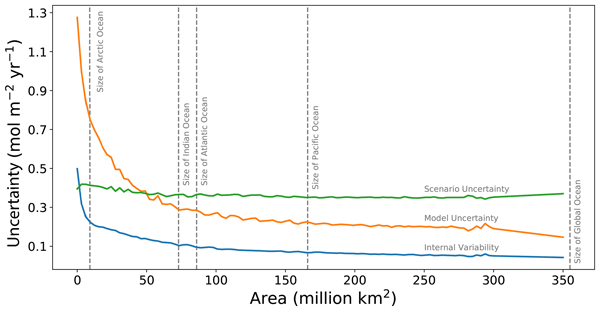
Parsa Gooya, Neil C. Swart, and Roberta C. Hamme
Earth Syst. Dynam., 14, 383–398, https://doi.org/10.5194/esd-14-383-2023, https://doi.org/10.5194/esd-14-383-2023, 2023
Short summary
Short summary
We report on the ocean carbon sink and sources of uptake uncertainty from the latest version of the Coupled Model Intercomparison Project. We diagnose the highly active regions for the sink and show how knowledge about historical regions of uptake will provide information about future regions of uptake change and uncertainty. We evaluate the dependence of uncertainty on the location and integration scale. Our results help make useful suggestions for both modeling and observational communities.
Torge Martin and Arne Biastoch
Ocean Sci., 19, 141–167, https://doi.org/10.5194/os-19-141-2023, https://doi.org/10.5194/os-19-141-2023, 2023
Short summary
Short summary
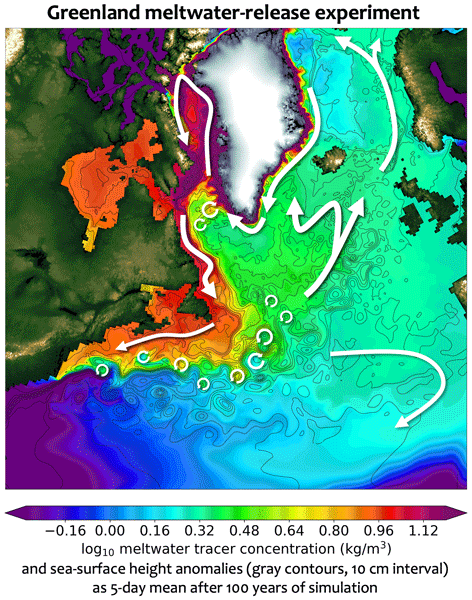
How is the ocean affected by continued Greenland Ice Sheet mass loss? We show in a systematic set of model experiments that atmospheric feedback needs to be accounted for as the large-scale ocean circulation is more than twice as sensitive to the meltwater otherwise. Coastal winds, boundary currents, and ocean eddies play a key role in redistributing the meltwater. Eddy paramterization helps the coarse simulation to perform better in the Labrador Sea but not in the North Atlantic Current region.
Eveline C. van der Linden, Dewi Le Bars, Erwin Lambert, and Sybren Drijfhout
The Cryosphere, 17, 79–103, https://doi.org/10.5194/tc-17-79-2023, https://doi.org/10.5194/tc-17-79-2023, 2023
Short summary
Short summary
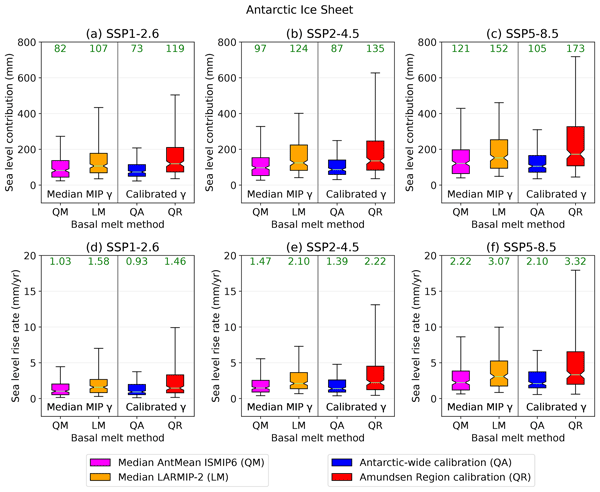
The Antarctic ice sheet (AIS) is the largest uncertainty in future sea level estimates. The AIS mainly loses mass through ice discharge, the transfer of land ice into the ocean. Ice discharge is triggered by warming ocean water (basal melt). New future estimates of AIS sea level contributions are presented in which basal melt is constrained with ice discharge observations. Despite the different methodology, the resulting projections are in line with previous multimodel assessments.
Julia E. Weiffenbach, Michiel L. J. Baatsen, Henk A. Dijkstra, Anna S. von der Heydt, Ayako Abe-Ouchi, Esther C. Brady, Wing-Le Chan, Deepak Chandan, Mark A. Chandler, Camille Contoux, Ran Feng, Chuncheng Guo, Zixuan Han, Alan M. Haywood, Qiang Li, Xiangyu Li, Gerrit Lohmann, Daniel J. Lunt, Kerim H. Nisancioglu, Bette L. Otto-Bliesner, W. Richard Peltier, Gilles Ramstein, Linda E. Sohl, Christian Stepanek, Ning Tan, Julia C. Tindall, Charles J. R. Williams, Qiong Zhang, and Zhongshi Zhang
Clim. Past, 19, 61–85, https://doi.org/10.5194/cp-19-61-2023, https://doi.org/10.5194/cp-19-61-2023, 2023
Short summary
Short summary
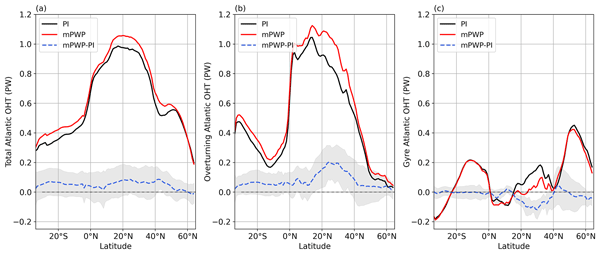
We study the behavior of the Atlantic Meridional Overturning Circulation (AMOC) in the mid-Pliocene. The mid-Pliocene was about 3 million years ago and had a similar CO2 concentration to today. We show that the stronger AMOC during this period relates to changes in geography and that this has a significant influence on ocean temperatures and heat transported northwards by the Atlantic Ocean. Understanding the behavior of the mid-Pliocene AMOC can help us to learn more about our future climate.
Paul R. Holland, Gemma K. O'Connor, Thomas J. Bracegirdle, Pierre Dutrieux, Kaitlin A. Naughten, Eric J. Steig, David P. Schneider, Adrian Jenkins, and James A. Smith
The Cryosphere, 16, 5085–5105, https://doi.org/10.5194/tc-16-5085-2022, https://doi.org/10.5194/tc-16-5085-2022, 2022
Short summary
Short summary
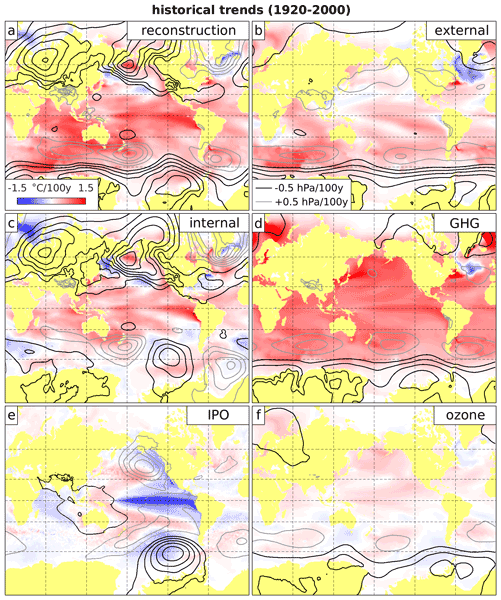
The Antarctic Ice Sheet is losing ice, causing sea-level rise. However, it is not known whether human-induced climate change has contributed to this ice loss. In this study, we use evidence from climate models and palaeoclimate measurements (e.g. ice cores) to suggest that the ice loss was triggered by natural climate variations but is now sustained by human-forced climate change. This implies that future greenhouse-gas emissions may influence sea-level rise from Antarctica.
Theodoros Karpouzoglou, Morven Muilwijk, Julius Lauber, Apostolos Tsiouvalas, and Johanna Brehmer-Moltmann
Geosci. Commun. Discuss., https://doi.org/10.5194/gc-2022-14, https://doi.org/10.5194/gc-2022-14, 2022
Revised manuscript not accepted
Short summary
Short summary
"Bold statements”, are motivating, easily conceived, but often inaccurate. The study seeks the origin, purpose, and threats of such statements in climate science communication. Bold statement communication is enforced by the urgency of climate change and is useful in raising public awareness and accelerating law-making. However, we demonstrate through three well-known case studies of bold statement communication that such communication strategies encompass risks as misinterpretation lurks.
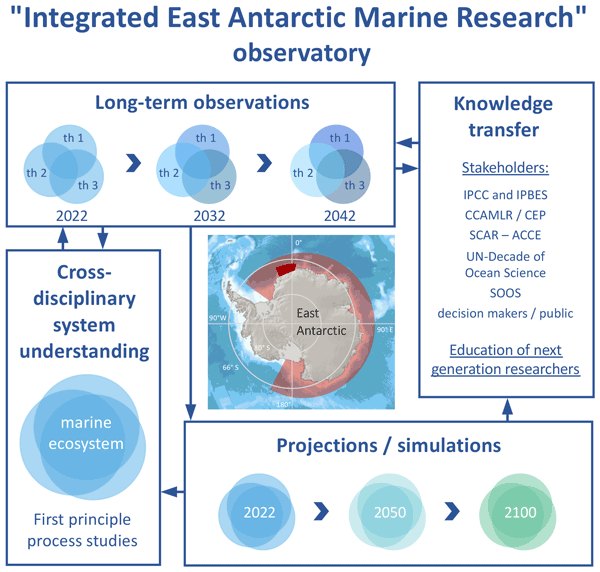
Julian Gutt, Stefanie Arndt, David Keith Alan Barnes, Horst Bornemann, Thomas Brey, Olaf Eisen, Hauke Flores, Huw Griffiths, Christian Haas, Stefan Hain, Tore Hattermann, Christoph Held, Mario Hoppema, Enrique Isla, Markus Janout, Céline Le Bohec, Heike Link, Felix Christopher Mark, Sebastien Moreau, Scarlett Trimborn, Ilse van Opzeeland, Hans-Otto Pörtner, Fokje Schaafsma, Katharina Teschke, Sandra Tippenhauer, Anton Van de Putte, Mia Wege, Daniel Zitterbart, and Dieter Piepenburg
Biogeosciences, 19, 5313–5342, https://doi.org/10.5194/bg-19-5313-2022, https://doi.org/10.5194/bg-19-5313-2022, 2022
Short summary
Short summary
Long-term ecological observations are key to assess, understand and predict impacts of environmental change on biotas. We present a multidisciplinary framework for such largely lacking investigations in the East Antarctic Southern Ocean, combined with case studies, experimental and modelling work. As climate change is still minor here but is projected to start soon, the timely implementation of this framework provides the unique opportunity to document its ecological impacts from the very onset.
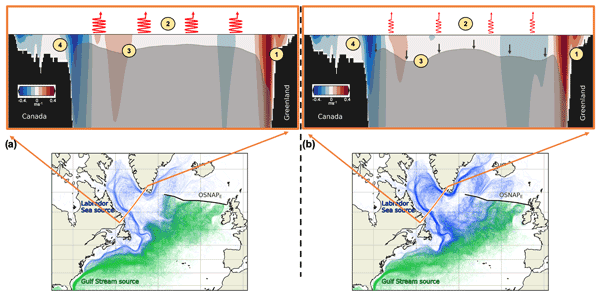
Alan D. Fox, Patricia Handmann, Christina Schmidt, Neil Fraser, Siren Rühs, Alejandra Sanchez-Franks, Torge Martin, Marilena Oltmanns, Clare Johnson, Willi Rath, N. Penny Holliday, Arne Biastoch, Stuart A. Cunningham, and Igor Yashayaev
Ocean Sci., 18, 1507–1533, https://doi.org/10.5194/os-18-1507-2022, https://doi.org/10.5194/os-18-1507-2022, 2022
Short summary
Short summary
Observations of the eastern subpolar North Atlantic in the 2010s show exceptional freshening and cooling of the upper ocean, peaking in 2016 with the lowest salinities recorded for 120 years. Using results from a high-resolution ocean model, supported by observations, we propose that the leading cause is reduced surface cooling over the preceding decade in the Labrador Sea, leading to increased outflow of less dense water and so to freshening and cooling of the eastern subpolar North Atlantic.
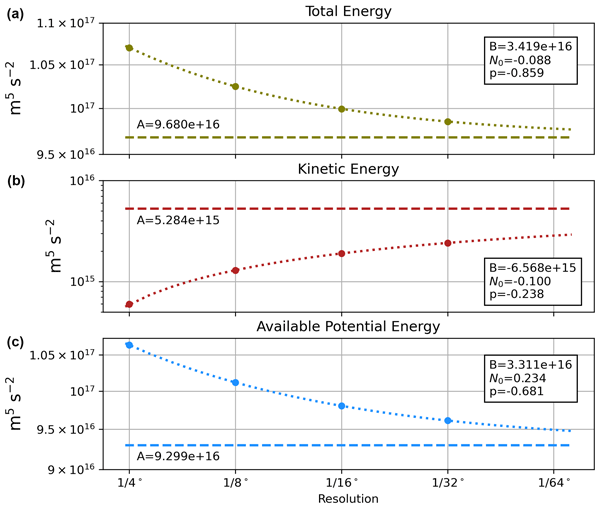
Gustavo M. Marques, Nora Loose, Elizabeth Yankovsky, Jacob M. Steinberg, Chiung-Yin Chang, Neeraja Bhamidipati, Alistair Adcroft, Baylor Fox-Kemper, Stephen M. Griffies, Robert W. Hallberg, Malte F. Jansen, Hemant Khatri, and Laure Zanna
Geosci. Model Dev., 15, 6567–6579, https://doi.org/10.5194/gmd-15-6567-2022, https://doi.org/10.5194/gmd-15-6567-2022, 2022
Short summary
Short summary
We present an idealized ocean model configuration and a set of simulations performed using varying horizontal grid spacing. While the model domain is idealized, it resembles important geometric features of the Atlantic and Southern oceans. The simulations described here serve as a framework to effectively study mesoscale eddy dynamics, to investigate the effect of mesoscale eddies on the large-scale dynamics, and to test and evaluate eddy parameterizations.
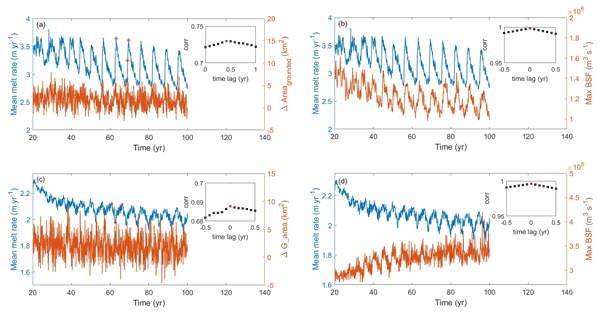
Chen Zhao, Rupert Gladstone, Benjamin Keith Galton-Fenzi, David Gwyther, and Tore Hattermann
Geosci. Model Dev., 15, 5421–5439, https://doi.org/10.5194/gmd-15-5421-2022, https://doi.org/10.5194/gmd-15-5421-2022, 2022
Short summary
Short summary
We use a coupled ice–ocean model to explore an oscillation feature found in several contributing models to MISOMIP1. The oscillation is closely related to the discretized grounding line retreat and likely strengthened by the buoyancy–melt feedback and/or melt–geometry feedback near the grounding line, and frequent ice–ocean coupling. Our model choices have a non-trivial impact on mean melt and ocean circulation strength, which might be interesting for the coupled ice–ocean community.
Basile de Fleurian, Richard Davy, and Petra M. Langebroek
The Cryosphere, 16, 2265–2283, https://doi.org/10.5194/tc-16-2265-2022, https://doi.org/10.5194/tc-16-2265-2022, 2022
Short summary
Short summary
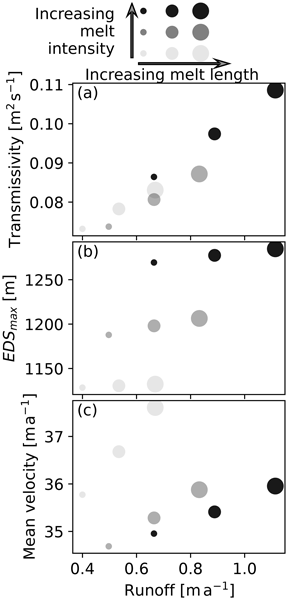
As temperature increases, more snow and ice melt at the surface of ice sheets. Here we use an ice dynamics and subglacial hydrology model with simplified geometry and climate forcing to study the impact of variations in meltwater on ice dynamics. We focus on the variations in length and intensity of the melt season. Our results show that a longer melt season leads to faster glaciers, but a more intense melt season reduces glaciers' seasonal velocities, albeit leading to higher peak velocities.
Gilles Reverdin, Claire Waelbroeck, Catherine Pierre, Camille Akhoudas, Giovanni Aloisi, Marion Benetti, Bernard Bourlès, Magnus Danielsen, Jérôme Demange, Denis Diverrès, Jean-Claude Gascard, Marie-Noëlle Houssais, Hervé Le Goff, Pascale Lherminier, Claire Lo Monaco, Herlé Mercier, Nicolas Metzl, Simon Morisset, Aïcha Naamar, Thierry Reynaud, Jean-Baptiste Sallée, Virginie Thierry, Susan E. Hartman, Edward W. Mawji, Solveig Olafsdottir, Torsten Kanzow, Anton Velo, Antje Voelker, Igor Yashayaev, F. Alexander Haumann, Melanie J. Leng, Carol Arrowsmith, and Michael Meredith
Earth Syst. Sci. Data, 14, 2721–2735, https://doi.org/10.5194/essd-14-2721-2022, https://doi.org/10.5194/essd-14-2721-2022, 2022
Short summary
Short summary
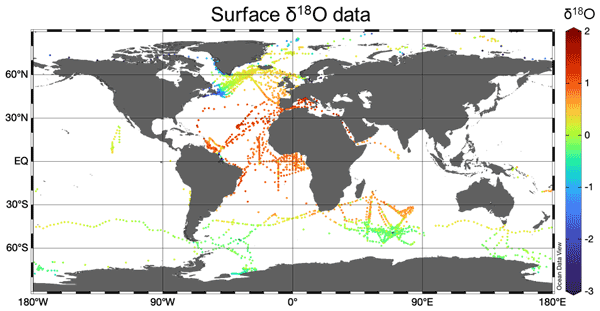
The CISE-LOCEAN seawater stable isotope dataset has close to 8000 data entries. The δ18O and δD isotopic data measured at LOCEAN have uncertainties of at most 0.05 ‰ and 0.25 ‰, respectively. Some data were adjusted to correct for evaporation. The internal consistency indicates that the data can be used to investigate time and space variability to within 0.03 ‰ and 0.15 ‰ in δ18O–δD17; comparisons with data analyzed in other institutions suggest larger differences with other datasets.
James R. Christian, Kenneth L. Denman, Hakase Hayashida, Amber M. Holdsworth, Warren G. Lee, Olivier G. J. Riche, Andrew E. Shao, Nadja Steiner, and Neil C. Swart
Geosci. Model Dev., 15, 4393–4424, https://doi.org/10.5194/gmd-15-4393-2022, https://doi.org/10.5194/gmd-15-4393-2022, 2022
Short summary
Short summary
The ocean chemistry and biology modules of the latest version of the Canadian Earth System Model (CanESM5) are described in detail and evaluated against observations and other Earth system models. In the basic CanESM5 model, ocean biogeochemistry is similar to CanESM2 but embedded in a new ocean circulation model. In addition, an entirely new model, the Canadian Ocean Ecosystem model (CanESM5-CanOE), was developed. The most significant difference is that CanOE explicitly includes iron.
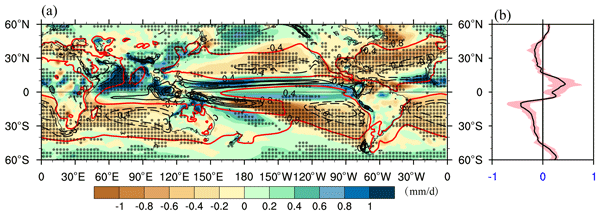
Zixuan Han, Qiong Zhang, Qiang Li, Ran Feng, Alan M. Haywood, Julia C. Tindall, Stephen J. Hunter, Bette L. Otto-Bliesner, Esther C. Brady, Nan Rosenbloom, Zhongshi Zhang, Xiangyu Li, Chuncheng Guo, Kerim H. Nisancioglu, Christian Stepanek, Gerrit Lohmann, Linda E. Sohl, Mark A. Chandler, Ning Tan, Gilles Ramstein, Michiel L. J. Baatsen, Anna S. von der Heydt, Deepak Chandan, W. Richard Peltier, Charles J. R. Williams, Daniel J. Lunt, Jianbo Cheng, Qin Wen, and Natalie J. Burls
Clim. Past, 17, 2537–2558, https://doi.org/10.5194/cp-17-2537-2021, https://doi.org/10.5194/cp-17-2537-2021, 2021
Short summary
Short summary
Understanding the potential processes responsible for large-scale hydrological cycle changes in a warmer climate is of great importance. Our study implies that an imbalance in interhemispheric atmospheric energy during the mid-Pliocene could have led to changes in the dynamic effect, offsetting the thermodynamic effect and, hence, altering mid-Pliocene hydroclimate cycling. Moreover, a robust westward shift in the Pacific Walker circulation can moisten the northern Indian Ocean.
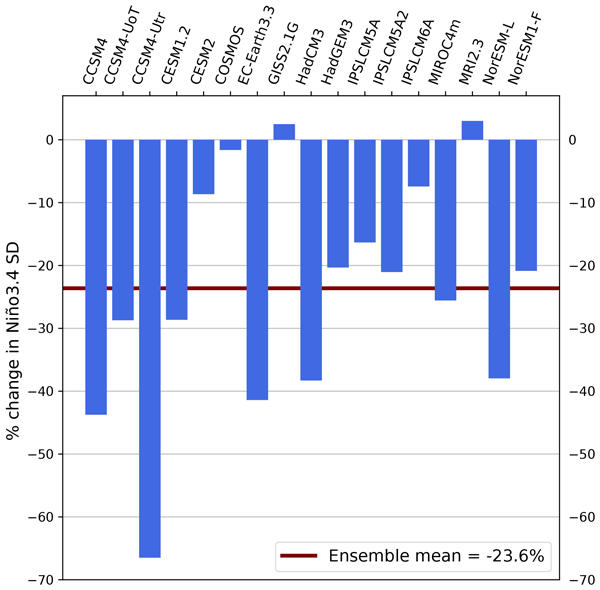
Arthur M. Oldeman, Michiel L. J. Baatsen, Anna S. von der Heydt, Henk A. Dijkstra, Julia C. Tindall, Ayako Abe-Ouchi, Alice R. Booth, Esther C. Brady, Wing-Le Chan, Deepak Chandan, Mark A. Chandler, Camille Contoux, Ran Feng, Chuncheng Guo, Alan M. Haywood, Stephen J. Hunter, Youichi Kamae, Qiang Li, Xiangyu Li, Gerrit Lohmann, Daniel J. Lunt, Kerim H. Nisancioglu, Bette L. Otto-Bliesner, W. Richard Peltier, Gabriel M. Pontes, Gilles Ramstein, Linda E. Sohl, Christian Stepanek, Ning Tan, Qiong Zhang, Zhongshi Zhang, Ilana Wainer, and Charles J. R. Williams
Clim. Past, 17, 2427–2450, https://doi.org/10.5194/cp-17-2427-2021, https://doi.org/10.5194/cp-17-2427-2021, 2021
Short summary
Short summary
In this work, we have studied the behaviour of El Niño events in the mid-Pliocene, a period of around 3 million years ago, using a collection of 17 climate models. It is an interesting period to study, as it saw similar atmospheric carbon dioxide levels to the present day. We find that the El Niño events were less strong in the mid-Pliocene simulations, when compared to pre-industrial climate. Our results could help to interpret El Niño behaviour in future climate projections.
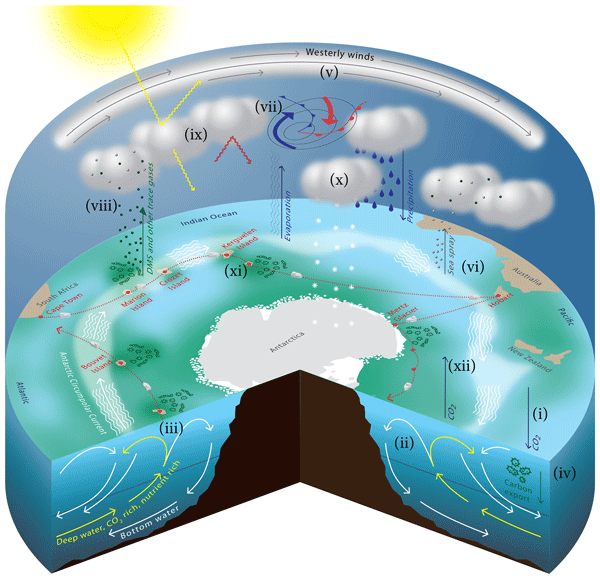
Sebastian Landwehr, Michele Volpi, F. Alexander Haumann, Charlotte M. Robinson, Iris Thurnherr, Valerio Ferracci, Andrea Baccarini, Jenny Thomas, Irina Gorodetskaya, Christian Tatzelt, Silvia Henning, Rob L. Modini, Heather J. Forrer, Yajuan Lin, Nicolas Cassar, Rafel Simó, Christel Hassler, Alireza Moallemi, Sarah E. Fawcett, Neil Harris, Ruth Airs, Marzieh H. Derkani, Alberto Alberello, Alessandro Toffoli, Gang Chen, Pablo Rodríguez-Ros, Marina Zamanillo, Pau Cortés-Greus, Lei Xue, Conor G. Bolas, Katherine C. Leonard, Fernando Perez-Cruz, David Walton, and Julia Schmale
Earth Syst. Dynam., 12, 1295–1369, https://doi.org/10.5194/esd-12-1295-2021, https://doi.org/10.5194/esd-12-1295-2021, 2021
Short summary
Short summary
The Antarctic Circumnavigation Expedition surveyed a large number of variables describing the dynamic state of ocean and atmosphere, freshwater cycle, atmospheric chemistry, ocean biogeochemistry, and microbiology in the Southern Ocean. To reduce the dimensionality of the dataset, we apply a sparse principal component analysis and identify temporal patterns from diurnal to seasonal cycles, as well as geographical gradients and
hotspotsof interaction. Code and data are open access.
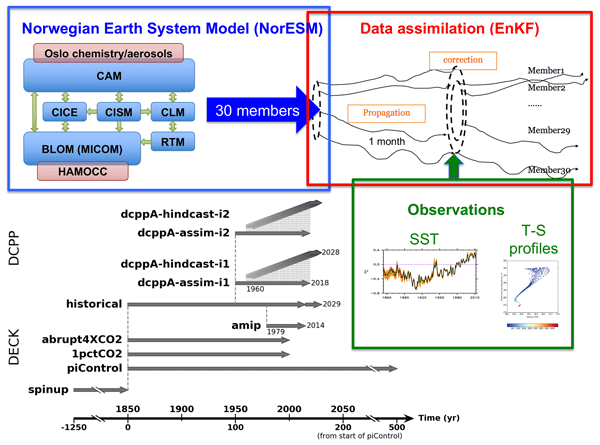
Ingo Bethke, Yiguo Wang, François Counillon, Noel Keenlyside, Madlen Kimmritz, Filippa Fransner, Annette Samuelsen, Helene Langehaug, Lea Svendsen, Ping-Gin Chiu, Leilane Passos, Mats Bentsen, Chuncheng Guo, Alok Gupta, Jerry Tjiputra, Alf Kirkevåg, Dirk Olivié, Øyvind Seland, Julie Solsvik Vågane, Yuanchao Fan, and Tor Eldevik
Geosci. Model Dev., 14, 7073–7116, https://doi.org/10.5194/gmd-14-7073-2021, https://doi.org/10.5194/gmd-14-7073-2021, 2021
Short summary
Short summary
The Norwegian Climate Prediction Model version 1 (NorCPM1) is a new research tool for performing climate reanalyses and seasonal-to-decadal climate predictions. It adds data assimilation capability to the Norwegian Earth System Model version 1 (NorESM1) and has contributed output to the Decadal Climate Prediction Project (DCPP) as part of the sixth Coupled Model Intercomparison Project (CMIP6). We describe the system and evaluate its baseline, reanalysis and prediction performance.
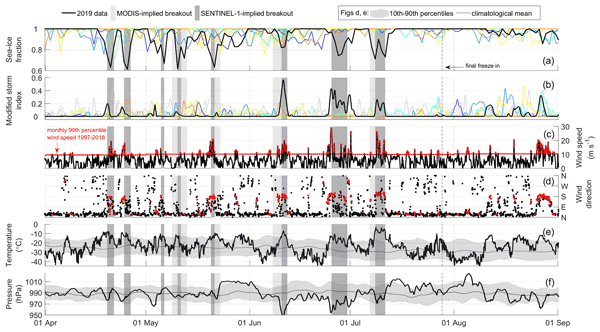
Greg H. Leonard, Kate E. Turner, Maren E. Richter, Maddy S. Whittaker, and Inga J. Smith
The Cryosphere, 15, 4999–5006, https://doi.org/10.5194/tc-15-4999-2021, https://doi.org/10.5194/tc-15-4999-2021, 2021
Short summary
Short summary
McMurdo Sound sea ice can generally be partitioned into two regimes: a stable fast-ice cover forming south of approximately 77.6° S and a more dynamic region north of 77.6° S that is regularly impacted by polynyas. In 2019, a stable fast-ice cover formed unusually late due to repeated break-out events. This subsequently affected sea-ice operations in the 2019/20 field season. We analysed the 2019 sea-ice conditions and found a strong correlation with unusually large southerly wind events.
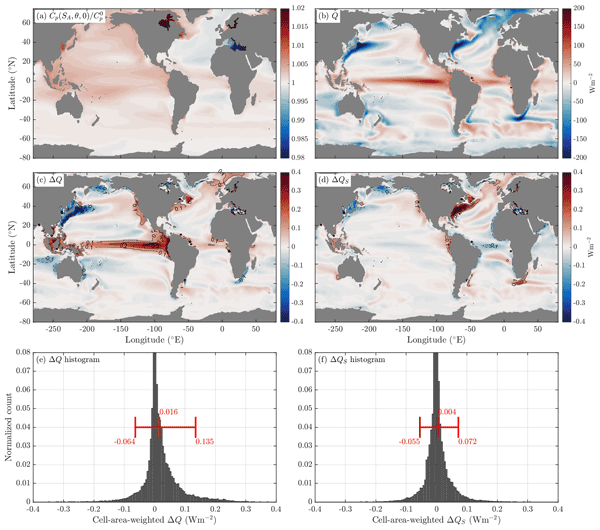
Trevor J. McDougall, Paul M. Barker, Ryan M. Holmes, Rich Pawlowicz, Stephen M. Griffies, and Paul J. Durack
Geosci. Model Dev., 14, 6445–6466, https://doi.org/10.5194/gmd-14-6445-2021, https://doi.org/10.5194/gmd-14-6445-2021, 2021
Short summary
Short summary
We show that the way that the air–sea heat flux is treated in ocean models means that the model's temperature variable should be interpreted as being Conservative Temperature, irrespective of whether the equation of state used in an ocean model is EOS-80 or TEOS-10.
Cited articles
Adusumilli, S., Fricker, H. A., Medley, B., Padman, L., and Siegfried, M. R.: Interannual variations in meltwater input to the Southern Ocean from Antarctic ice shelves, Nat. Geosci., 13, 616–620, https://doi.org/10.1038/s41561-020-0616-z, 2020. a, b, c, d
Bamber, J. L., Oppenheimer, M., Kopp, R. E., Aspinall, W. P., and Cooke, R. M.: Ice sheet contributions to future sea-level rise from structured expert judgment, P. Natl. Acad. Sci. USA, 116, 11195–11200, https://doi.org/10.1073/pnas.1817205116, 2019. a
Barthel, A., Agosta, C., Little, C. M., Hattermann, T., Jourdain, N. C., Goelzer, H., Nowicki, S., Seroussi, H., Straneo, F., and Bracegirdle, T. J.: CMIP5 model selection for ISMIP6 ice sheet model forcing: Greenland and Antarctica, The Cryosphere, 14, 855–879, https://doi.org/10.5194/tc-14-855-2020, 2020. a, b, c, d, e
Beadling, R. L.: Global consequences of regional connectivity along the Antarctic margin, J. Geophys. Res.-Oceans, 128, e2023JC019908, https://doi.org/10.1029/2023JC019908, 2023. a
Beadling, R. L., Russell, J. L., Stouffer, R. J., Goodman, P. J., and Mazloff, M.: Assessing the quality of Southern Ocean circulation in CMIP5 AOGCM and Earth system model simulations, J. Climate, 32, 5915–5940, https://doi.org/10.1175/jcli-d-19-0263.1, 2019. a, b
Beadling, R. L., Russell, J. L., Stouffer, R. J., Mazloff, M., Talley, L. D., Goodman, P. J., Sallée, J. B., Hewitt, H. T., Hyder, P., and Pandde, A.: Representation of Southern Ocean properties across coupled model intercomparison project generations: CMIP3 to CMIP6, J. Climate, 33, 6555–6581, https://doi.org/10.1175/jcli-d-19-0970.1, 2020. a, b
Beadling, R. L., Krasting, J. P., Griffies, S. M., Hurlin, W. J., Bronselaer, B., Russell, J. L., MacGilchrist, G. A., Tesdal, J. E., and Winton, M.: Importance of the Antarctic Slope Current in the Southern Ocean response to ice sheet melt and wind stress change, J. Geophys. Res.-Oceans, 127, e2021JC017608, https://doi.org/10.1029/2021JC017608, 2022. a, b, c, d, e, f, g, h, i, j
Beadling, R. L., Lin, P., Krasting, J., Ellinger, W., Coomans, A., Milward, J., Turner, K., Xu, X., Martin, T., and Molina, M. J.: From the surface to the stratosphere: Large-scale atmospheric response to Antarctic meltwater, Geophys. Res. Lett., 51, e2024GL110157, https://doi.org/10.1029/2024GL110157, 2024. a, b
Beckmann, A. and Goosse, H.: A parameterization of ice shelf–ocean interaction for climate models, Ocean Model., 5, 157–170, https://doi.org/10.1016/S1463-5003(02)00019-7, 2003. a, b
Bintanja, R., van Oldenborgh, G. J., Drijfhout, S. S., Wouters, B., and Katsman, C. A.: Important role for ocean warming and increased ice-shelf melt in Antarctic sea-ice expansion, Nat. Geosci., 6, 376–379, https://doi.org/10.1038/NGEO1767, 2013. a
Bracegirdle, T. J., Krinner, G., Tonelli, M., Haumann, F. A., Naughten, K. A., Rackow, T., Roach, L. A., and Wainer, I.: Twenty first century changes in Antarctic and Southern Ocean surface climate in CMIP6, Atmos. Sci. Lett., 21, e984, https://doi.org/10.1002/asl.984, 2020. a
Burgard, C., Jourdain, N. C., Reese, R., Jenkins, A., and Mathiot, P.: An assessment of basal melt parameterisations for Antarctic ice shelves, The Cryosphere, 16, 4931–4975, https://doi.org/10.5194/tc-16-4931-2022, 2022. a, b, c
Chen, J.-J., Swart, N. C., Beadling, R., Cheng, X., Hattermann, T., Jüling, A., Li, Q., Marshall, J., Martin, T., Muilwijk, M., Pauling, A. G., Purich, A., Smith, I. J., and Thomas, M.: Reduced Deep Convection and Bottom Water Formation Due To Antarctic Meltwater in a Multi-Model Ensemble, Geophys. Res. Lett., 50, e2023GL106492, https://doi.org/10.1029/2023GL106492, 2023. a, b, c
Daae, K., Hattermann, T., Darelius, E., Mueller, R. D., Naughten, K. A., Timmermann, R., and Hellmer, H. H.: Necessary conditions for warm inflow toward the Filchner Ice Shelf, Weddell Sea, Geophys. Res. Lett., 47, e2020GL089237, https://doi.org/10.1029/2020GL089237, 2020. a
Danabasoglu, G., Lamarque, J.-F., Bacmeister, J., Bailey, D. A., DuVivier, A. K., Edwards, J., Emmons, L. K., Fasullo, J., Garcia, R., Gettelman, A., Hannay, C., Holland, M. M., Large, W. G., Lauritzen, P. H., Lawrence, D. M., Lenaerts, J. T. M., Lindsay, K., Lipscomb, W. H., Mills, M. J., Neale, R., Oleson, K. W., Otto-Bliesner, B., Phillips, A. S., Sacks, W., Tilmes, S., van Kampenhout, L., Vertenstein, M., Bertini, A., Dennis, J., Deser, C., Fischer, C., Fox-Kemper, B., Kay, J. E., Kinnison, D., Kushner, P. J., Larson, V. E., Long, M. C., Mickelson, S., Moore, J. K., Nienhouse, E., Polvani, L., Rasch, P. J., and Strand, W. G.: The Community Earth System Model Version 2 (CESM2), J. Adv. Model. Earth Sy., 12, e2019MS001916, https://doi.org/10.1029/2019MS001916, 2020. a
Davison, B. J., Hogg, A. E., Gourmelen, N., Jakob, L., Wuite, J., Nagler, T., Greene, C. A., Andreasen, J., and Engdahl, M. E.: Annual mass budget of Antarctic ice shelves from 1997 to 2021, Sci. Adv., 9, eadi0186, https://doi.org/10.1126/sciadv.adi0186, 2023. a, b
Davison, B. J., Hogg, A. E., Slater, T., Rigby, R., and Hansen, N.: Antarctic Ice Sheet grounding line discharge from 1996–2024, Earth Syst. Sci. Data, 17, 3259–3281, https://doi.org/10.5194/essd-17-3259-2025, 2025. a
Dawson, H. R., England, M. H., Morrison, A. K., and Boeira Dias, F.: End-of-21st century changes on the Antarctic continental shelf under mid-and high-range emissions scenarios, J. Climate, 38, 6873–6891, https://doi.org/10.1175/JCLI-D-24-0189.1, 2025. a, b
Dawson, H. R. S., Morrison, A. K., England, M. H., and Tamsitt, V.: Pathways and timescales of connectivity around the Antarctic continental shelf, J. Geophys. Res.-Oceans, 128, e2022JC018962, https://doi.org/10.1029/2022JC018962, 2023. a, b, c, d
Depoorter, M. A., Bamber, J. L., Griggs, J. A., Lenaerts, J. T., Ligtenberg, S. R., van den Broeke, M. R., and Moholdt, G.: Calving fluxes and basal melt rates of Antarctic ice shelves, Nature, 502, 89–92, https://doi.org/10.1038/nature12567, 2013. a
Dong, Y., Pauling, A. G., Sadai, S., and Armour, K. C.: Antarctic ice-sheet meltwater reduces transient warming and climate sensitivity through the sea-surface temperature pattern effect, Geophys. Res. Lett., 49, e2022GL101249, https://doi.org/10.1029/2022GL101249, 2022. a
Dundas, V., Daae, K., and Darelius, E.: Storm-driven warm inflow toward ice shelf cavities – An idealized study of the southern Weddell Sea continental shelf system, J. Geophys. Res.-Oceans, 129, e2023JC020749, https://doi.org/10.1029/2023JC020749, 2024. a
Dunne, J. P., Horowitz, L. W., Adcroft, A. J., Ginoux, P., Held, I. M., John, J. G., Krasting, J. P., Malyshev, S., Naik, V., Paulot, F., Shevliakova, E., Stock, C. A., Zadeh, N., Balaji, V., Blanton, C., Dunne, K. A., Dupuis, C., Durachta, J., Dussin, R., Gauthier, P. P. G., Griffies, S. M., Guo, H., Hallberg, R. W., Harrison, M., He, J., Hurlin, W., McHugh, C., Menzel, R., Milly, P. C. D., Nikonov, S., Paynter, D. J., Ploshay, J., Radhakrishnan, A., Rand, K., Reichl, B. G., Robinson, T., Schwarzkopf, D. M., Sentman, L. T., Underwood, S., Vahlenkamp, H., Winton, M., Wittenberg, A. T., Wyman, B., Zeng, Y., and Zhao, M.: The GFDL Earth System Model Version 4.1 (GFDL-ESM 4.1): Overall Coupled Model Description and Simulation Characteristics, J. Adv. Model. Earth Sy., 12, e2019MS002015, https://doi.org/10.1029/2019MS002015, 2020. a
Döscher, R., Acosta, M., Alessandri, A., Anthoni, P., Arsouze, T., Bergman, T., Bernardello, R., Boussetta, S., Caron, L.-P., Carver, G., Castrillo, M., Catalano, F., Cvijanovic, I., Davini, P., Dekker, E., Doblas-Reyes, F. J., Docquier, D., Echevarria, P., Fladrich, U., Fuentes-Franco, R., Gröger, M., v. Hardenberg, J., Hieronymus, J., Karami, M. P., Keskinen, J.-P., Koenigk, T., Makkonen, R., Massonnet, F., Ménégoz, M., Miller, P. A., Moreno-Chamarro, E., Nieradzik, L., van Noije, T., Nolan, P., O'Donnell, D., Ollinaho, P., van den Oord, G., Ortega, P., Prims, O. T., Ramos, A., Reerink, T., Rousset, C., Ruprich-Robert, Y., Le Sager, P., Schmith, T., Schrödner, R., Serva, F., Sicardi, V., Sloth Madsen, M., Smith, B., Tian, T., Tourigny, E., Uotila, P., Vancoppenolle, M., Wang, S., Wårlind, D., Willén, U., Wyser, K., Yang, S., Yepes-Arbós, X., and Zhang, Q.: The EC-Earth3 Earth system model for the Coupled Model Intercomparison Project 6, Geosci. Model Dev., 15, 2973–3020, https://doi.org/10.5194/gmd-15-2973-2022, 2022. a
Edwards, T. L., Nowicki, S., Marzeion, B., Hock, R., Goelzer, H., Seroussi, H., Jourdain, N. C., Slater, D. A., Turner, F. E., Smith, C. J., and McKenna, C. M.: Projected land ice contributions to twenty-first-century sea level rise, Nature, 593, 74–82, https://doi.org/10.1038/s41586-021-03302-y, 2021. a, b
Eyring, V., Bony, S., Meehl, G. A., Senior, C. A., Stevens, B., Stouffer, R. J., and Taylor, K. E.: Overview of the Coupled Model Intercomparison Project Phase 6 (CMIP6) experimental design and organization, Geosci. Model Dev., 9, 1937–1958, https://doi.org/10.5194/gmd-9-1937-2016, 2016. a, b, c
Favier, L., Jourdain, N. C., Jenkins, A., Merino, N., Durand, G., Gagliardini, O., Gillet-Chaulet, F., and Mathiot, P.: Assessment of sub-shelf melting parameterisations using the ocean–ice-sheet coupled model NEMO(v3.6)–Elmer/Ice(v8.3) , Geosci. Model Dev., 12, 2255–2283, https://doi.org/10.5194/gmd-12-2255-2019, 2019. a
Fogwill, C. J., Phipps, S. J., Turney, C. S. M., and Golledge, N. R.: Sensitivity of the Southern Ocean to enhanced regional Antarctic ice sheet meltwater input, Earth's Future, 3, 317–329, https://doi.org/10.1002/2015EF000306, 2015. a
Fox-Kemper, B., Hewitt, H. T., Xiao, C., Aðalgeirsdóttir, G., Drijfhout, S. S., Edwards, T. L., Golledge, N. R., Hemer, M., Kopp, R. E., Krinner, G., Mix, A., Notz, D., Nowicki, S., Nurhati, I. S., Ruiz, L., Sallée, J.-B., Slangen, A. B. A., and Yu, Y.: Ocean, Cryosphere and Sea Level Change, 1211–1362, Cambridge University Press, https://doi.org/10.1017/9781009157896.011, 2021. a
Fricker, H. A., Galton-Fenzi, B. K., Walker, C. C., Freer, B. I. D., Padman, L., and DeConto, R.: Antarctica in 2025: Drivers of deep uncertainty in projected ice loss, Science, 387, 601–609, https://doi.org/10.1126/science.adt9619, 2025. a
Fyke, J., Sergienko, O., Löfverström, M., Price, S., and Lenaerts, J. T.: An overview of interactions and feedbacks between ice sheets and the Earth system, Rev. Geophys., 56, 361–408, https://doi.org/10.1029/2018RG000600, 2018. a, b
Goddard, P. B., Dufour, C. O., Yin, J., Griffies, S. M., and Winton, M.: CO2-induced ocean warming of the Antarctic continental shelf in an eddying global climate model, J. Geophys. Res.-Oceans, 122, 8079–8101, https://doi.org/10.1002/2017JC012849, 2017. a, b
Golledge, N. R., Keller, E. D., Gomez, N., Naughten, K. A., Bernales, J., Trusel, L. D., and Edwards, T. L.: Global environmental consequences of twenty-first-century ice-sheet melt, Nature, 566, 65–72, https://doi.org/10.1038/s41586-019-0889-9, 2019. a, b, c
Gómez-Valdivia, F., Holland, P. R., Siahaan, A., Dutrieux, P., and Young, E.: Projected West Antarctic Ocean Warming Caused by an Expansion of the Ross Gyre, Geophys. Res. Lett., 50, e2023GL102978, https://doi.org/10.1029/2023GL102978, 2023. a
Hallberg, R.: Using a resolution function to regulate parameterizations of oceanic mesoscale eddy effects, Ocean Model., 72, 92–103, https://doi.org/10.1016/j.ocemod.2013.08.007, 2013. a, b
Hansen, J., Sato, M., Hearty, P., Ruedy, R., Kelley, M., Masson-Delmotte, V., Russell, G., Tselioudis, G., Cao, J., Rignot, E., Velicogna, I., Tormey, B., Donovan, B., Kandiano, E., von Schuckmann, K., Kharecha, P., Legrande, A. N., Bauer, M., and Lo, K.-W.: Ice melt, sea level rise and superstorms: evidence from paleoclimate data, climate modeling, and modern observations that 2 °C global warming could be dangerous, Atmos. Chem. Phys., 16, 3761–3812, https://doi.org/10.5194/acp-16-3761-2016, 2016. a
Hattermann, T.: Antarctic Thermocline Dynamics along a Narrow Shelf with Easterly Winds, J. Phys. Oceanogr., 48, 2419–2443, https://doi.org/10.1175/JPO-D-18-0064.1, 2018. a
Hattermann, T. and Levermann, A.: Response of Southern Ocean circulation to global warming may enhance basal ice shelf melting around Antarctica, Clim. Dynam., 35, 741–756, https://doi.org/10.1007/s00382-009-0643-3, 2010. a, b
Hattermann, T., Nøst, O. A., Lilly, J. M., and Smedsrud, L. H.: Two years of oceanic observations below the Fimbul Ice Shelf, Antarctica, Geophys. Res. Lett., 39, L12605, https://doi.org/10.1029/2012GL051012, 2012. a
Haumann, F. A., Gruber, N., and Münnich, M.: Sea-Ice Induced Southern Ocean Subsurface Warming and Surface Cooling in a Warming Climate, AGU Advances, 1, https://doi.org/10.1029/2019AV000132, 2020. a
Held, I. M. and Soden, B. J.: Robust responses of the hydrological cycle to global warming, J. Climate, 19, 5686–5699, https://doi.org/10.1175/JCLI3990.1, 2006. a
Held, I. M., Guo, H., Adcroft, A., Dunne, J. P., Horowitz, L. W., Krasting, J., Shevliakova, E., Winton, M., Zhao, M., Bushuk, M., Wittenberg, A. T., Wyman, B., Xiang, B., Zhang, R., Anderson, W., Balaji, V., Donner, L., Dunne, K., Durachta, J., Gauthier, P. P. G., Ginoux, P., Golaz, J.-C., Griffies, S. M., Hallberg, R., Harris, L., Harrison, M., Hurlin, W., John, J., Lin, P., Lin, S.-J., Malyshev, S., Menzel, R., Milly, P. C. D., Ming, Y., Naik, V., Paynter, D., Paulot, F., Ramaswamy, V., Reichl, B., Robinson, T., Rosati, A., Seman, C., Silvers, L. G., Underwood, S., and Zadeh, N.: Structure and Performance of GFDL's CM4.0 Climate Model, J. Adv. Model. Earth Sy., 11, 3691–3727, https://doi.org/10.1029/2019MS001829, 2019. a
Hellmer, H. H.: Impact of Antarctic ice shelf basal melting on sea ice and deep ocean properties, Geophys. Res. Lett., 31, https://doi.org/10.1029/2004gl019506, 2004. a
Hellmer, H. H., Kauker, F., Timmermann, R., and Hattermann, T.: The Fate of the Southern Weddell Sea Continental Shelf in a Warming Climate, J. Climate, 30, 4337–4350, https://doi.org/10.1175/JCLI-D-16-0420.1, 2017. a
Herraiz-Borreguero, L. and Naveira Garabato, A. C.: Poleward shift of circumpolar deep water threatens the East Antarctic Ice Sheet, Nat. Clim. Change, 12, 728–734, https://doi.org/10.1038/s41558-022-01424-3, 2022. a
Heuzé, C., Heywood, K. J., Stevens, D. P., and Ridley, J. K.: Southern Ocean bottom water characteristics in CMIP5 models, Geophys. Res. Lett., 40, 1409–1414, https://doi.org/10.1002/grl.50287, 2013. a
Heuzé, C.: Antarctic Bottom Water and North Atlantic Deep Water in CMIP6 models, Ocean Sci., 17, 59–90, https://doi.org/10.5194/os-17-59-2021, 2021. a, b
Heywood, K. J., Naveira Garabato, A. C., Stevens, D. P., and Muench, R. D.: On the fate of the Antarctic Slope Front and the origin of the Weddell Front, J. Geophys. Res.-Oceans, 109, https://doi.org/10.1029/2003JC002053, 2004. a
Hoffman, M. J., Branecky Begeman, C., Asay-Davis, X. S., Comeau, D., Barthel, A., Price, S. F., and Wolfe, J. D.: Ice-shelf freshwater triggers for the Filchner–Ronne Ice Shelf melt tipping point in a global ocean–sea-ice model, The Cryosphere, 18, 2917–2937, https://doi.org/10.5194/tc-18-2917-2024, 2024. a
Holland, D. M. and Jenkins, A.: Modeling thermodynamic ice–ocean interactions at the base of an ice shelf, J. Phys. Oceanogr., 29, 1787–1800, https://doi.org/10.1175/1520-0485(1999)029<1787:MTIOIA>2.0.CO;2, 1999. a
Holland, P. R.: A model of tidally dominated ocean processes near ice shelf grounding lines, J. Geophys. Res.-Oceans, 113, https://doi.org/10.1029/2007JC004576, 2008. a, b
IMBIE, t.: Mass balance of the Antarctic Ice Sheet from 1992 to 2017, Nature, 558, 219–222, https://doi.org/10.1038/s41586-018-0179-y, 2018. a
IPCC: IPCC Special Report on the Ocean and Cryosphere in a Changing Climate, edited by: Pörtner, H.-O., Roberts, D. C., Masson-Delmotte, V., Zhai, P., Tignor, M., Poloczanska, E., Mintenbeck, K., Alegría, A., Nicolai, M., Okem, A., Petzold, J., Rama, B., Weyer, N. M., Cambridge University Press, Cambridge, UK and New York, NY, USA, 755 pp., https://doi.org/10.1017/9781009157964, 2019. a
Jacobs, S. S. and Giulivi, C. F.: Large Multidecadal Salinity Trends Near the Pacific–Antarctic Continental Margin, J. Climate, 23, 4508–4524, https://doi.org/10.1175/2010JCLI3284.1, 2010. a
Jenkins, A.: A one-dimensional model of ice shelf-ocean interaction, J. Geophys. Res.-Oceans, 96, 20671–20677, https://doi.org/10.1029/91JC01842, 1991. a, b
Jenkins, A., Dutrieux, P., Jacobs, S. S., McPhail, S. D., Perrett, J. R., Webb, A. T., and White, D.: Observations beneath Pine Island Glacier in West Antarctica and implications for its retreat, Nat. Geosci., 3, 468–472, https://doi.org/10.1038/ngeo890, 2010. a
Jeong, H., Asay-Davis, X. S., Turner, A. K., Comeau, D. S., Price, S. F., Abernathey, R. P., Veneziani, M., Petersen, M. R., Hoffman, M. J., Mazloff, M. R., and Ringler, T. D.: Impacts of ice-shelf melting on water-mass transformation in the Southern Ocean from E3SM simulations, J. Climate, 33, 5787–5807, https://doi.org/10.1175/JCLI-D-19-0683.1, 2020. a
Johnson, G. C. and Purkey, S. G.: Refined estimates of global ocean deep and abyssal decadal warming trends, Geophys. Res. Lett., 51, e2024GL111229, https://doi.org/10.1029/2024GL111229, 2024. a
Jourdain, N. C., Asay-Davis, X., Hattermann, T., Straneo, F., Seroussi, H., Little, C. M., and Nowicki, S.: A protocol for calculating basal melt rates in the ISMIP6 Antarctic ice sheet projections, The Cryosphere, 14, 3111–3134, https://doi.org/10.5194/tc-14-3111-2020, 2020. a, b, c, d, e, f, g, h, i, j, k, l, m, n, o
Kaufman, Z., Wilson, E., Purich, A., Beadling, R., and Li, Y.: The impact of underestimated Southern Ocean freshening on simulated historical sea surface temperature trends, Geophys. Res. Lett., 52, e2024GL112639, https://doi.org/10.1029/2024GL112639, 2025. a, b, c, d
Kelley, M., Schmidt, G. A., Nazarenko, L. S., Bauer, S. E., Ruedy, R., Russell, G. L., Ackerman, A. S., Aleinov, I., Bauer, M., Bleck, R., Canuto, V., Cesana, G., Cheng, Y., Clune, T. L., Cook, B. I., Cruz, C. A., Del Genio, A. D., Elsaesser, G. S., Faluvegi, G., Kiang, N. Y., Kim, D., Lacis, A. A., Leboissetier, A., LeGrande, A. N., Lo, K. K., Marshall, J., Matthews, E. E., McDermid, S., Mezuman, K., Miller, R. L., Murray, L. T., Oinas, V., Orbe, C., García-Pando, C. P., Perlwitz, J. P., Puma, M. J., Rind, D., Romanou, A., Shindell, D. T., Sun, S., Tausnev, N., Tsigaridis, K., Tselioudis, G., Weng, E., Wu, J., and Yao, M.-S.: GISS-E2.1: Configurations and Climatology, J. Adv. Model. Earth Sy., 12, e2019MS002025, https://doi.org/10.1029/2019MS002025, 2020. a
Kuhlbrodt, T., Jones, C. G., Sellar, A., Storkey, D., Blockley, E., Stringer, M., Hill, R., Graham, T., Ridley, J., Blaker, A., Calvert, D., Copsey, D., Ellis, R., Hewitt, H., Hyder, P., Ineson, S., Mulcahy, J., Siahaan, A., and Walton, J.: The Low-Resolution Version of HadGEM3 GC3.1: Development and Evaluation for Global Climate, J. Adv. Model. Earth Sy., 10, 2865–2888, https://doi.org/10.1029/2018MS001370, 2018. a
Lago, V. and England, M. H.: Projected slowdown of Antarctic bottom water formation in response to amplified meltwater contributions, J. Climate, 32, 6319–6335, https://doi.org/10.1175/JCLI-D-18-0622.1, 2019. a
Lauber, J., de Steur, L., Hattermann, T., and Darelius, E.: Observed seasonal evolution of the Antarctic Slope Current system off the coast of Dronning Maud Land, East Antarctica, J. Geophys. Res.-Oceans, 129, e2023JC020540, https://doi.org/10.1029/2023JC020540, 2024. a
Levermann, A., Winkelmann, R., Albrecht, T., Goelzer, H., Golledge, N. R., Greve, R., Huybrechts, P., Jordan, J., Leguy, G., Martin, D., Morlighem, M., Pattyn, F., Pollard, D., Quiquet, A., Rodehacke, C., Seroussi, H., Sutter, J., Zhang, T., Van Breedam, J., Calov, R., DeConto, R., Dumas, C., Garbe, J., Gudmundsson, G. H., Hoffman, M. J., Humbert, A., Kleiner, T., Lipscomb, W. H., Meinshausen, M., Ng, E., Nowicki, S. M. J., Perego, M., Price, S. F., Saito, F., Schlegel, N.-J., Sun, S., and van de Wal, R. S. W.: Projecting Antarctica's contribution to future sea level rise from basal ice shelf melt using linear response functions of 16 ice sheet models (LARMIP-2), Earth Syst. Dynam., 11, 35–76, https://doi.org/10.5194/esd-11-35-2020, 2020. a, b
Li, Q., England, M. H., Hogg, A. M., Rintoul, S. R., and Morrison, A. K.: Abyssal ocean overturning slowdown and warming driven by Antarctic meltwater, Nature, 615, 841–847, https://doi.org/10.1038/s41586-023-05762-w, 2023. a
Little, C. M., Gnanadesikan, A., and Oppenheimer, M.: How ice shelf morphology controls basal melting, J. Geophys. Res.-Oceans, 114, https://doi.org/10.1029/2008JC005197, 2009. a
Lockwood, J. W., Dufour, C. O., Griffies, S. M., and Winton, M.: On the Role of the Antarctic Slope Front on the Occurrence of the Weddell Sea Polynya under Climate Change, J. Climate, 34, 2529–2548, https://doi.org/10.1175/JCLI-D-20-0069.1, 2021. a, b
Mackie, S., Smith, I. J., Ridley, J. K., Stevens, D. P., and Langhorne, P. J.: Climate Response to Increasing Antarctic Iceberg and Ice Shelf Melt, J. Climate, 33, 8917–8938, https://doi.org/10.1175/JCLI-D-19-0881.1, 2020a. a, b
Mackie, S., Smith, I. J., Stevens, D. P., Ridley, J. K., and Langhorne, P. J.: Interactions between increasing CO 2 and Antarctic melt rates, J. Climate, 33, 8939–8956, https://doi.org/10.1175/JCLI-D-19-0882.1, 2020b. a
Mathiot, P., Goosse, H., Fichefet, T., Barnier, B., and Gallée, H.: Modelling the seasonal variability of the Antarctic Slope Current, Ocean Sci., 7, 455–470, https://doi.org/10.5194/os-7-455-2011, 2011. a
Mazloff, M. R., Heimbach, P., and Wunsch, C.: An eddy-permitting Southern Ocean state estimate, J. Phys. Oceanogr., 40, 880–899, https://doi.org/10.1175/2009JPO4236.1, 2010. a
Meinshausen, M., Nicholls, Z. R. J., Lewis, J., Gidden, M. J., Vogel, E., Freund, M., Beyerle, U., Gessner, C., Nauels, A., Bauer, N., Canadell, J. G., Daniel, J. S., John, A., Krummel, P. B., Luderer, G., Meinshausen, N., Montzka, S. A., Rayner, P. J., Reimann, S., Smith, S. J., van den Berg, M., Velders, G. J. M., Vollmer, M. K., and Wang, R. H. J.: The shared socio-economic pathway (SSP) greenhouse gas concentrations and their extensions to 2500, Geosci. Model Dev., 13, 3571–3605, https://doi.org/10.5194/gmd-13-3571-2020, 2020. a
Merino, N., Jourdain, N. C., Le Sommer, J., Goosse, H., Mathiot, P., and Durand, G.: Impact of increasing antarctic glacial freshwater release on regional sea-ice cover in the Southern Ocean, Ocean Model., 121, 76–89, https://doi.org/10.1016/j.ocemod.2017.11.009, 2018. a, b
Moholdt, G. and Maton, J.: Ice shelf draft and bathymetry grids for ALBATROSS tide model, Norwegian Polar Institute [data set], https://doi.org/10.21334/npolar.2024.0b0299d5, 2024. a
Morrison, A. K., Hogg, A. M., England, M. H., and Spence, P.: Warm Circumpolar Deep Water transport toward Antarctica driven by local dense water export in canyons, Sci. Adv., 6, eaav2516, https://doi.org/10.1126/sciadv.aav2516, 2020. a
Morrison, A. K., England, M. H., Hogg, A. M., and Kiss, A. E.: Weddell Sea control of ocean temperature variability on the western Antarctic Peninsula, Geophys. Res. Lett., 50, e2023GL103018, https://doi.org/10.1029/2023GL103018, 2023a. a
Morrison, A. K., Huneke, W. G. C., Neme, J., Spence, P., Hogg, A. M., England, M. H., and Griffies, S. M.: Sensitivity of Antarctic Shelf Waters and Abyssal Overturning to Local Winds, J. Climate, 36, 6465–6479, https://doi.org/10.1175/JCLI-D-22-0858.1, 2023b. a
Mouginot, J., Rignot, E., Scheuchl, B., and Millan, R.: Comprehensive annual ice sheet velocity mapping using Landsat-8, Sentinel-1, and RADARSAT-2 data, Remote Sens., 9, 364, https://doi.org/10.3390/rs9040364, 2017. a, b
Nakayama, Y., Manucharyan, G., Zhang, H., Dutrieux, P., Torres, H. S., Klein, P., Seroussi, H., Schodlok, M., Rignot, E., and Menemenlis, D.: Pathways of ocean heat towards Pine Island and Thwaites grounding lines, Sci. Rep., 9, 16649, https://doi.org/10.1038/s41598-019-53190-6, 2019. a
Naughten, K. A., Holland, P. R., and De Rydt, J.: Unavoidable future increase in West Antarctic ice-shelf melting over the twenty-first century, Nat. Clim. Change, 13, 1222–1228, https://doi.org/10.1038/s41558-023-01818-x, 2023. a, b, c, d
O'Neill, B. C., Tebaldi, C., van Vuuren, D. P., Eyring, V., Friedlingstein, P., Hurtt, G., Knutti, R., Kriegler, E., Lamarque, J.-F., Lowe, J., Meehl, G. A., Moss, R., Riahi, K., and Sanderson, B. M.: The Scenario Model Intercomparison Project (ScenarioMIP) for CMIP6, Geosci. Model Dev., 9, 3461–3482, https://doi.org/10.5194/gmd-9-3461-2016, 2016. a
Ong, E. Q. Y., England, M. H., Doddridge, E., and Constantinou, N. C.: Transient Antarctic Slope Current Response to Climate Change including Meltwater, Geophys. Res. Lett., 52, e2024GL113983, https://doi.org/10.1029/2024GL113983, 2025. a
Otosaka, I. N., Shepherd, A., Ivins, E. R., Schlegel, N.-J., Amory, C., van den Broeke, M. R., Horwath, M., Joughin, I., King, M. D., Krinner, G., Nowicki, S., Payne, A. J., Rignot, E., Scambos, T., Simon, K. M., Smith, B. E., Sørensen, L. S., Velicogna, I., Whitehouse, P. L., A, G., Agosta, C., Ahlstrøm, A. P., Blazquez, A., Colgan, W., Engdahl, M. E., Fettweis, X., Forsberg, R., Gallée, H., Gardner, A., Gilbert, L., Gourmelen, N., Groh, A., Gunter, B. C., Harig, C., Helm, V., Khan, S. A., Kittel, C., Konrad, H., Langen, P. L., Lecavalier, B. S., Liang, C.-C., Loomis, B. D., McMillan, M., Melini, D., Mernild, S. H., Mottram, R., Mouginot, J., Nilsson, J., Noël, B., Pattle, M. E., Peltier, W. R., Pie, N., Roca, M., Sasgen, I., Save, H. V., Seo, K.-W., Scheuchl, B., Schrama, E. J. O., Schröder, L., Simonsen, S. B., Slater, T., Spada, G., Sutterley, T. C., Vishwakarma, B. D., van Wessem, J. M., Wiese, D., van der Wal, W., and Wouters, B.: Mass balance of the Greenland and Antarctic ice sheets from 1992 to 2020, Earth Syst. Sci. Data, 15, 1597–1616, https://doi.org/10.5194/essd-15-1597-2023, 2023. a, b, c
Paolo, F. S., Fricker, H. A., and Padman, L.: Volume loss from Antarctic ice shelves is accelerating, Science, 348, 327–331, https://doi.org/10.1126/science.aaa0940, 2015. a
Pauling, A. G., Bitz, C. M., Smith, I. J., and Langhorne, P. J.: The Response of the Southern Ocean and Antarctic Sea Ice to Freshwater from Ice Shelves in an Earth System Model, J. Climate, 29, 1655–1672, https://doi.org/10.1175/JCLI-D-15-0501.1, 2016. a
Pauling, A. G., Smith, I. J., Langhorne, P. J., and Bitz, C. M.: Time-Dependent Freshwater Input From Ice Shelves: Impacts on Antarctic Sea Ice and the Southern Ocean in an Earth System Model, Geophys. Res. Lett., 44, 10454–10461, https://doi.org/10.1002/2017GL075017, 2017. a
Pauling, A. G., Smith, I. J., Martin, T., Ridley, J. K., Stevens, D. P., Thomas, M., Beadling, R. L., Danek, C., Hattermann, T., Li, Q., Marshall, J., Muilwijk, M., Purich, A., and Swart, N. C.: Antarctic sea ice response to meltwater due to Antarctic ice sheet mass loss in a multi-model ensemble, The Cryosphere, submitted, 2026. a, b, c
Purich, A. and England, M. H.: Projected impacts of Antarctic meltwater anomalies over the twenty-first century, J. Climate, 36, 2703–2719, https://doi.org/10.1175/JCLI-D-22-0457.1, 2023. a
Purich, A., England, M. H., Cai, W., Sullivan, A., and Durack, P. J.: Impacts of broad-scale surface freshening of the Southern Ocean in a coupled climate model, J. Climate, 31, 2613–2632, https://doi.org/10.1175/jcli-d-17-0092.1, 2018. a, b
Rignot, E., Jacobs, S., Mouginot, J., and Scheuchl, B.: Ice-shelf melting around Antarctica, Science, 341, 266–270, https://doi.org/10.1126/science.1235798, 2013. a
Roach, L. A., Dörr, J., Holmes, C. R., Massonnet, F., Blockley, E. W., Notz, D., Rackow, T., Raphael, M. N., O'Farrell, S. P., Bailey, D. A., and Bitz, C. M.: Antarctic sea ice area in CMIP6, Geophys. Res. Lett., 47, e2019GL086729, https://doi.org/10.1029/2019GL086729, 2020. a
Rosevear, M. G., Gayen, B., Vreugdenhil, C. A., and Galton-Fenzi, B. K.: How does the ocean melt Antarctic ice shelves?, Annu. Rev. Marine Sci., 17, 325–353, https://doi.org/10.1146/annurev-marine-040323-074354, 2025. a
Rye, C. D., Marshall, J., Kelley, M., Russell, G., Nazarenko, L. S., Kostov, Y., Schmidt, G. A., and Hansen, J.: Antarctic Glacial Melt as a Driver of Recent Southern Ocean Climate Trends, Geophys. Res. Lett., 47, e2019GL086892, https://doi.org/10.1029/2019GL086892, 2020. a
Sadai, S., Condron, A., DeConto, R., and Pollard, D.: Future climate response to Antarctic Ice Sheet melt caused by anthropogenic warming, Sci. Adv., 6, eaaz1169, https://doi.org/10.1126/sciadv.aaz1169, 2020. a, b
Sallée, J. B., Shuckburgh, E., Bruneau, N., Meijers, A. J. S., Bracegirdle, T. J., Wang, Z., and Roy, T.: Assessment of Southern Ocean water mass circulation and characteristics in CMIP5 models: Historical bias and forcing response, J. Geophys. Res.-Oceans, 118, 1830–1844, https://doi.org/10.1002/jgrc.20135, 2013. a
Schubert, R., Thompson, A. F., Speer, K., Schulze Chretien, L., and Bebieva, Y.: The Antarctic Coastal Current in the Bellingshausen Sea, The Cryosphere, 15, 4179–4199, https://doi.org/10.5194/tc-15-4179-2021, 2021. a
Seland, Ø., Bentsen, M., Olivié, D., Toniazzo, T., Gjermundsen, A., Graff, L. S., Debernard, J. B., Gupta, A. K., He, Y.-C., Kirkevåg, A., Schwinger, J., Tjiputra, J., Aas, K. S., Bethke, I., Fan, Y., Griesfeller, J., Grini, A., Guo, C., Ilicak, M., Karset, I. H. H., Landgren, O., Liakka, J., Moseid, K. O., Nummelin, A., Spensberger, C., Tang, H., Zhang, Z., Heinze, C., Iversen, T., and Schulz, M.: Overview of the Norwegian Earth System Model (NorESM2) and key climate response of CMIP6 DECK, historical, and scenario simulations, Geosci. Model Dev., 13, 6165–6200, https://doi.org/10.5194/gmd-13-6165-2020, 2020. a
Semmler, T., Danilov, S., Gierz, P., Goessling, H. F., Hegewald, J., Hinrichs, C., Koldunov, N., Khosravi, N., Mu, L., Rackow, T., and Sein, D. V.: Simulations for CMIP6 with the AWI climate model AWI-CM-1-1, J. Adv. Model. Earth Sy., 12, e2019MS002009, https://doi.org/10.1029/2019MS002009, 2020. a
Seroussi, H., Nowicki, S., Payne, A. J., Goelzer, H., Lipscomb, W. H., Abe-Ouchi, A., Agosta, C., Albrecht, T., Asay-Davis, X., Barthel, A., Calov, R., Cullather, R., Dumas, C., Galton-Fenzi, B. K., Gladstone, R., Golledge, N. R., Gregory, J. M., Greve, R., Hattermann, T., Hoffman, M. J., Humbert, A., Huybrechts, P., Jourdain, N. C., Kleiner, T., Larour, E., Leguy, G. R., Lowry, D. P., Little, C. M., Morlighem, M., Pattyn, F., Pelle, T., Price, S. F., Quiquet, A., Reese, R., Schlegel, N.-J., Shepherd, A., Simon, E., Smith, R. S., Straneo, F., Sun, S., Trusel, L. D., Van Breedam, J., van de Wal, R. S. W., Winkelmann, R., Zhao, C., Zhang, T., and Zwinger, T.: ISMIP6 Antarctica: a multi-model ensemble of the Antarctic ice sheet evolution over the 21st century, The Cryosphere, 14, 3033–3070, https://doi.org/10.5194/tc-14-3033-2020, 2020. a, b, c
Seroussi, H., Pelle, T., Lipscomb, W. H., Abe‐Ouchi, A., Albrecht, T., Alvarez‐Solas, J., Asay‐Davis, X., Barre, J. B., Berends, C. J., Bernales, J., and Blasco, J.: Evolution of the Antarctic Ice Sheet over the next three centuries from an ISMIP6 model ensemble, Earth's Future, 12, e2024EF004561, https://doi.org/10.1029/2024EF004561, 2024. a, b
Si, Y., Stewart, A. L., and Eisenman, I.: Heat transport across the Antarctic Slope Front controlled by cross-slope salinity gradients, Sci. Adv., 9, eadd7049, https://doi.org/10.1126/sciadv.add7049, 2023. a
Slater, T., Lawrence, I. R., Otosaka, I. N., Shepherd, A., Gourmelen, N., Jakob, L., Tepes, P., Gilbert, L., and Nienow, P.: Review article: Earth's ice imbalance, The Cryosphere, 15, 233–246, https://doi.org/10.5194/tc-15-233-2021, 2021. a
Snow, K., Hogg, A. M., Sloyan, B. M., and Downes, S. M.: Sensitivity of Antarctic Bottom Water to changes in surface buoyancy fluxes, J. Climate, 29, 313–330, https://doi.org/10.1175/JCLI-D-15-0467.1, 2016. a
Song, P., Scholz, P., Knorr, G., Sidorenko, D., Timmermann, R., and Lohmann, G.: Regional conditions determine thresholds of accelerated Antarctic basal melt in climate projection, Nat. Clim. Change, 15, 521–527, https://doi.org/10.1038/s41558-025-02306-0, 2025. a
Stewart, A. L., Klocker, A., and Menemenlis, D.: Circum-Antarctic shoreward heat transport derived from an eddy- and tide-resolving simulation, Geophys. Res. Lett., 45, 834–845, https://doi.org/10.1002/2017GL075677, 2018. a
Stouffer, R. J., Seidov, D., and Haupt, B. J.: Climate Response to External Sources of Freshwater: North Atlantic versus the Southern Ocean, J. Climate, 20, 436–448, https://doi.org/10.1175/JCLI4015.1, 2007. a
Swart, N. C., Cole, J. N. S., Kharin, V. V., Lazare, M., Scinocca, J. F., Gillett, N. P., Anstey, J., Arora, V., Christian, J. R., Hanna, S., Jiao, Y., Lee, W. G., Majaess, F., Saenko, O. A., Seiler, C., Seinen, C., Shao, A., Sigmond, M., Solheim, L., von Salzen, K., Yang, D., and Winter, B.: The Canadian Earth System Model version 5 (CanESM5.0.3), Geosci. Model Dev., 12, 4823–4873, https://doi.org/10.5194/gmd-12-4823-2019, 2019. a
Swart, N. C., Martin, T., Beadling, R., Chen, J.-J., Danek, C., England, M. H., Farneti, R., Griffies, S. M., Hattermann, T., Hauck, J., Haumann, F. A., Jüling, A., Li, Q., Marshall, J., Muilwijk, M., Pauling, A. G., Purich, A., Smith, I. J., and Thomas, M.: The Southern Ocean Freshwater Input from Antarctica (SOFIA) Initiative: scientific objectives and experimental design, Geosci. Model Dev., 16, 7289–7309, https://doi.org/10.5194/gmd-16-7289-2023, 2023 (code available at: https://sofiamip.github.io/data-access.html, last access: 1 July 2025). a, b, c, d, e, f, g, h, i, j, k, l
Swingedouw, D., Fichefet, T., Hybrechts, P., Goosse, H., Driesschaert, E., and Loutre, M. F.: Antarctic ice-sheet melting provides negative feedbacks on future climate warming, Geophys. Res. Lett., 35, https://doi.org/10.1029/2008GL034410, 2008. a
Tesdal, J.-E., MacGilchrist, G. A., Beadling, R. L., Griffies, S. M., Krasting, J. P., and Durack, P. J.: Revisiting interior water mass responses to surface forcing changes and the subsequent effects on overturning in the Southern Ocean, J. Geophys. Res.-Oceans, 128, e2022JC019105, https://doi.org/10.1029/2022JC019105, 2023. a, b, c, d, e
Thomas, M., Ridley, J. K., Smith, I. J., Stevens, D. P., Holland, P. R., and Mackie, S.: Future response of Antarctic continental shelf temperatures to ice shelf basal melting and calving, Geophys. Res. Lett., 50, e2022GL102101, https://doi.org/10.1029/2022GL102101, 2023. a, b, c
Thompson, A. F., Stewart, A. L., Spence, P., and Heywood, K. J.: The Antarctic Slope Current in a Changing Climate, Rev. Geophys., 56, 741–770, https://doi.org/10.1029/2018RG000624, 2018. a, b, c, d
Vernet, M., Geibert, W., Hoppema, M., Brown, P. J., Haas, C., Hellmer, H. H., Jokat, W., Jullion, L., Mazloff, M., Bakker, D. C. E., and Brearley, J. A.: The Weddell Gyre, Southern Ocean: Present knowledge and future challenges, Rev. Geophys., 57, 623–708, https://doi.org/10.1029/2018RG000604, 2019. a
Xu, X., Martin, T., Beadling, R. L., Liu, J., Bischof, S., Hattermann, T., Huo, W., Li, Q., Marshall, J. C., Muilwijk, M., and Pauling, A. G.: Robustness and mechanisms of the atmospheric response over the Southern Ocean to idealized freshwater input around Antarctica, Geophys. Res. Lett., 52, e2024GL113734, https://doi.org/10.1029/2024GL113734, 2025. a, b
Zhou, S., Dutrieux, P., Giulivi, C., Lee, W. S., Kim, T.-W., Hattermann, T., and Janout, M.: Southern Ocean (90° S–45° S) conservative temperature and absolute salinity profiles compilation (OCEAN ICE D1.1), SEANOE [data set], https://doi.org/10.17882/99787, 2024. a
Zhou, S., Dutrieux, P., Giulivi, C., Meijers, A., Lee, W. S., Kim, T.-W., Hattermann, T., and Janout, M.: The OCEAN ICE hydrography profiles compilation and climatology, Earth Syst. Sci. Data Discuss. [preprint], https://doi.org/10.5194/essd-2025-727, in review, 2026. a, b, c, d
Ziehn, T., Chamberlain, M. A., Law, R. M., Lenton, A., Bodman, R. W., Dix, M., Stevens, L., Wang, Y.-P., Srbinovsky, J., Ziehn, T., Chamberlain, M. A., Law, R. M., Lenton, A., Bodman, R. W., Dix, M., Stevens, L., Wang, Y.-P., and Srbinovsky, J.: The Australian Earth System Model: ACCESS-ESM1.5, Journal of Southern Hemisphere Earth System Science, 70, 193–214, https://doi.org/10.1071/ES19035, 2020. a
Short summary
Antarctic meltwater affects ocean stratification and temperature, which in turn influences the rate of ice shelf melting – a coupling missing in most climate models. We analyze a suite of climate models with added meltwater to explore this feedback in different regions. While meltwater generally enhances ocean warming and melt, in West Antarctica most models simulate coastal cooling, suggesting a negative feedback that could slow future ice loss there.
Antarctic meltwater affects ocean stratification and temperature, which in turn influences the...


