
Articles | Volume 19, issue 12
https://doi.org/10.5194/tc-19-6591-2025
© Author(s) 2025. This work is distributed under
the Creative Commons Attribution 4.0 License.
the Creative Commons Attribution 4.0 License.
https://doi.org/10.5194/tc-19-6591-2025
© Author(s) 2025. This work is distributed under
the Creative Commons Attribution 4.0 License.
the Creative Commons Attribution 4.0 License.
Research article
| 
05 Dec 2025
Research article |
| 05 Dec 2025
| 05 Dec 2025
Quantifying permafrost ground ice contents in the Tien Shan and Pamir (Central Asia): a petrophysical joint inversion approach using a geometric mean model
Tamara Mathys
CORRESPONDING AUTHOR

Department of Geosciences, University of Fribourg, Fribourg, Switzerland
Muslim Azimshoev
Aga Khan Agency for Habitat (AKAH), Dushanbe, Tajikistan
Zhoodarbeshim Bektursunov
Central Asian Institute for Applied Geosciences (CAIAG), Bishkek, Kyrgyzstan
Christian Hauck
Department of Geosciences, University of Fribourg, Fribourg, Switzerland
Christin Hilbich
Department of Geosciences, University of Fribourg, Fribourg, Switzerland
Murataly Duishonakunov
Department of Geography, Kyrgyz National University, Bishkek, Kyrgyzstan
Abdulhamid Kayumov
Center for Research of Glaciers of the Academy of Sciences of Tajikistan, Dushanbe, Tajikistan
Nikolay Kassatkin
Central Asian Regional Glaciological Centre under the auspices of UNESCO, Almaty, Kazakhstan
Vassily Kapitsa
Central Asian Regional Glaciological Centre under the auspices of UNESCO, Almaty, Kazakhstan
Leo C. P. Martin
Department of Earth and Planetary Sciences, Aix Marseille Univ., CNRS, IRD, INRAE, CEREGE, Aix-en-Provence, France
Coline Mollaret
Department of Geosciences, University of Fribourg, Fribourg, Switzerland
Hofiz Navruzshoev
Center for Research of Glaciers of the Academy of Sciences of Tajikistan, Dushanbe, Tajikistan
Mountain Societies Research Institute, University of Central Asia, Dushanbe, Tajikistan
Eric Pohl
Department of Geosciences, University of Fribourg, Fribourg, Switzerland
Tomas Saks
Department of Geosciences, University of Fribourg, Fribourg, Switzerland
Intizor Silmonov
Aga Khan Agency for Habitat (AKAH), Dushanbe, Tajikistan
Timur Musaev
Central Asian Institute for Applied Geosciences (CAIAG), Bishkek, Kyrgyzstan
Ryskul Usubaliev
Central Asian Institute for Applied Geosciences (CAIAG), Bishkek, Kyrgyzstan
Martin Hoelzle
Department of Geosciences, University of Fribourg, Fribourg, Switzerland
Related authors
Tamara Mathys, Sergey S. Marchenko, Sebastian Westermann, Luke Gregor, Léo C. P. Martin, Murataly Duishonakunov, Christian Hauck, Mohammad Farzamian, Teddi Herring, Christin Hilbich, Ruslan Kenzhebaev, Mukhammad Esenaman uulu, Timur Musaev, Zhoodarbeshim Bektursunov, Ryskul Usubaliev, Isabella Brining, Tomas Saks, and Martin Hoelzle
EGUsphere, https://doi.org/10.5194/egusphere-2026-2756, https://doi.org/10.5194/egusphere-2026-2756, 2026
This preprint is open for discussion and under review for Earth Surface Dynamics (ESurf).
Short summary
Short summary
CryoGrid simulations constrained by geophysical and borehole data were used to assess permafrost thermal conditions and thaw depth in the Inner Tien Shan (Kyrgyzstan) at 30 m resolution. Surface-type-specific stratigraphies derived from geophysical surveys improved representation of subsurface heterogeneity. Results indicate widespread but spatially variable permafrost, with evidence of approximately 1 °C warming since the 1980s and increasing thaw depths.
Julie Wee, Sebastián Vivero, Tamara Mathys, Coline Mollaret, Christian Hauck, Christophe Lambiel, Jan Beutel, and Wilfried Haeberli
The Cryosphere, 18, 5939–5963, https://doi.org/10.5194/tc-18-5939-2024, https://doi.org/10.5194/tc-18-5939-2024, 2024
Short summary
Short summary
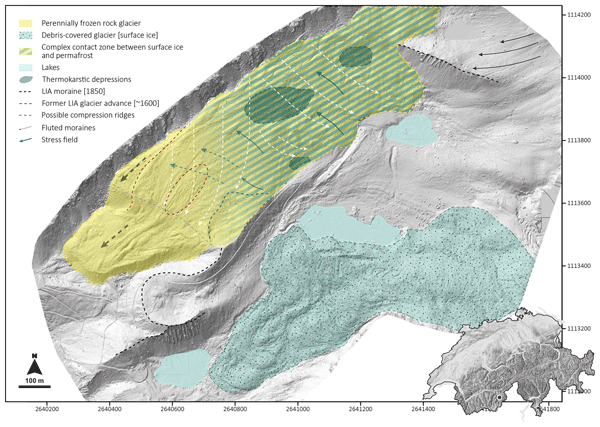
This study highlights the importance of a multi-method and multi-disciplinary approach to better understand the influence of the internal structure of the Gruben glacier-forefield-connected rock glacier and adjacent debris-covered glacier on their driving thermo-mechanical processes and associated surface dynamics. We were able to discriminate glacial from periglacial processes as their spatio-temporal patterns of surface dynamics and geophysical signatures are (mostly) different.
Léo C. P. Martin, Sebastian Westermann, Michele Magni, Fanny Brun, Joel Fiddes, Yanbin Lei, Philip Kraaijenbrink, Tamara Mathys, Moritz Langer, Simon Allen, and Walter W. Immerzeel
Hydrol. Earth Syst. Sci., 27, 4409–4436, https://doi.org/10.5194/hess-27-4409-2023, https://doi.org/10.5194/hess-27-4409-2023, 2023
Short summary
Short summary
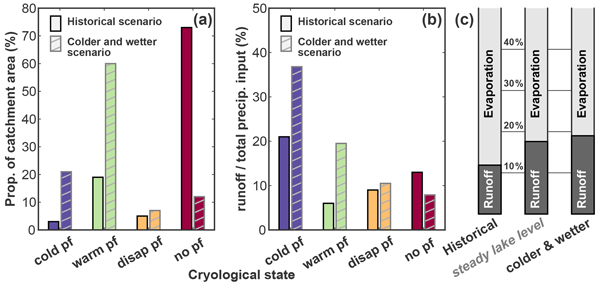
Across the Tibetan Plateau, many large lakes have been changing level during the last decades as a response to climate change. In high-mountain environments, water fluxes from the land to the lakes are linked to the ground temperature of the land and to the energy fluxes between the ground and the atmosphere, which are modified by climate change. With a numerical model, we test how these water and energy fluxes have changed over the last decades and how they influence the lake level variations.
Tamara Mathys, Christin Hilbich, Lukas U. Arenson, Pablo A. Wainstein, and Christian Hauck
The Cryosphere, 16, 2595–2615, https://doi.org/10.5194/tc-16-2595-2022, https://doi.org/10.5194/tc-16-2595-2022, 2022
Short summary
Short summary
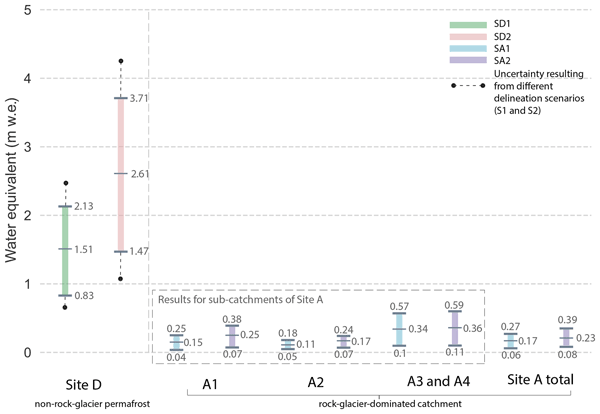
With ongoing climate change, there is a pressing need to understand how much water is stored as ground ice in permafrost. Still, field-based data on permafrost in the Andes are scarce, resulting in large uncertainties regarding ground ice volumes and their hydrological role. We introduce an upscaling methodology of geophysical-based ground ice quantifications at the catchment scale. Our results indicate that substantial ground ice volumes may also be present in areas without rock glaciers.
Martin Hoelzle, Christian Hauck, Tamara Mathys, Jeannette Noetzli, Cécile Pellet, and Martin Scherler
Earth Syst. Sci. Data, 14, 1531–1547, https://doi.org/10.5194/essd-14-1531-2022, https://doi.org/10.5194/essd-14-1531-2022, 2022
Short summary
Short summary
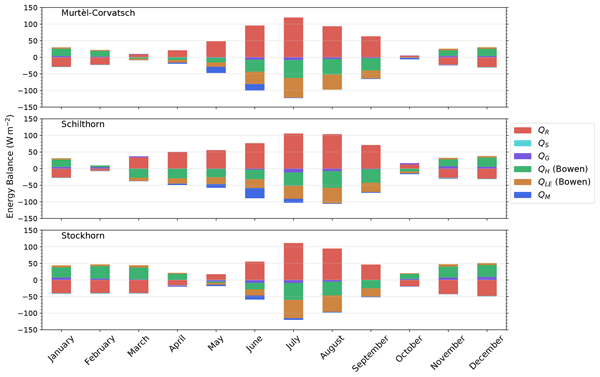
With ongoing climate change, it is crucial to understand the interactions of the individual heat fluxes at the surface and within the subsurface layers, as well as their impacts on the permafrost thermal regime. A unique set of high-altitude meteorological measurements has been analysed to determine the energy balance at three mountain permafrost sites in the Swiss Alps, where data have been collected since the late 1990s in collaboration with the Swiss Permafrost Monitoring Network (PERMOS).
Michaela Kňažková, Mohammad Farzamian, Filip Hrbáček, Teddi Herring, Tomáš Uxa, and Christian Hauck
EGUsphere, https://doi.org/10.5194/egusphere-2026-5161, https://doi.org/10.5194/egusphere-2026-5161, 2026
This preprint is open for discussion and under review for The Cryosphere (TC).
Short summary
Short summary
To learn how climate change affects Antarctic permafrost, we monitored ground on James Ross Island over three years using electrical imaging and sensors. We found that soil type drives freezing patterns, as fine sediment is more efficient at trapping moisture than coarse sand. Furthermore, we have identified thresholds for freezing and thawing. These results show that local ground properties strongly shape climate impacts, helping refine predictions of future Antarctic landscape changes.
Tamara Mathys, Sergey S. Marchenko, Sebastian Westermann, Luke Gregor, Léo C. P. Martin, Murataly Duishonakunov, Christian Hauck, Mohammad Farzamian, Teddi Herring, Christin Hilbich, Ruslan Kenzhebaev, Mukhammad Esenaman uulu, Timur Musaev, Zhoodarbeshim Bektursunov, Ryskul Usubaliev, Isabella Brining, Tomas Saks, and Martin Hoelzle
EGUsphere, https://doi.org/10.5194/egusphere-2026-2756, https://doi.org/10.5194/egusphere-2026-2756, 2026
This preprint is open for discussion and under review for Earth Surface Dynamics (ESurf).
Short summary
Short summary
CryoGrid simulations constrained by geophysical and borehole data were used to assess permafrost thermal conditions and thaw depth in the Inner Tien Shan (Kyrgyzstan) at 30 m resolution. Surface-type-specific stratigraphies derived from geophysical surveys improved representation of subsurface heterogeneity. Results indicate widespread but spatially variable permafrost, with evidence of approximately 1 °C warming since the 1980s and increasing thaw depths.
Ben Robson, James Irving, Florence Magnin, Ludovic Ravanel, Coline Mollaret, Ludovic Baron, André Revil, Jessy Richard, Jérémie Gentizon, and Christophe Lambiel
EGUsphere, https://doi.org/10.5194/egusphere-2026-2455, https://doi.org/10.5194/egusphere-2026-2455, 2026
Short summary
Short summary
We investigated a hanging glacier in the Swiss Alps to resolve poorly known geometry, thermal conditions and response to climate forcing. Using up to five years of data from drone surveys, ground penetrating radar, temperature measurements and modelling, we show the glacier lost up to 7 m (20–45 % of the 2021 thickness), while the surrounding permafrost is degrading. The glacier is transitioning towards polythermal conditions, due to meltwater infiltration, increasing future instability risk.
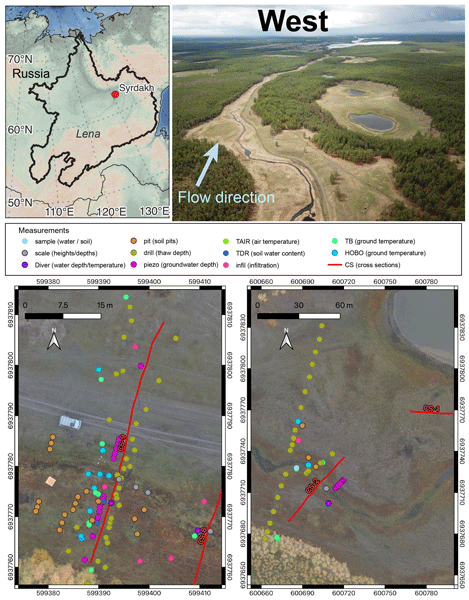
Eric Pohl, Christophe Grenier, Antoine Séjourné, Frédéric Bouchard, Emmanuel Léger, Albane Saintenoy, Pavel Konstantinov, Amélie Cuynet, Catherine Ottlé, Christine Hatté, Aurélie Noret, Kensheri Danilov, Kirill Bazhin, Ivan Khristoforov, Daniel Fortier, Alexander Fedorov, and Emmanuel Mouche
Earth Syst. Sci. Data, 18, 3525–3557, https://doi.org/10.5194/essd-18-3525-2026, https://doi.org/10.5194/essd-18-3525-2026, 2026
Short summary
Short summary
Permafrost is widespread in the Northern Hemisphere and is thawing due to climate warming, impacting energy and mass transfers. Small streams emerge alongside lakes when ice in the ground melts away, potentially accelerating thawing and biogeochemical activity in a positive feedback cycle. This study provides a comprehensive dataset on such a little-studied stream, including thermally and hydrologically important variables essential for improving numerical models.
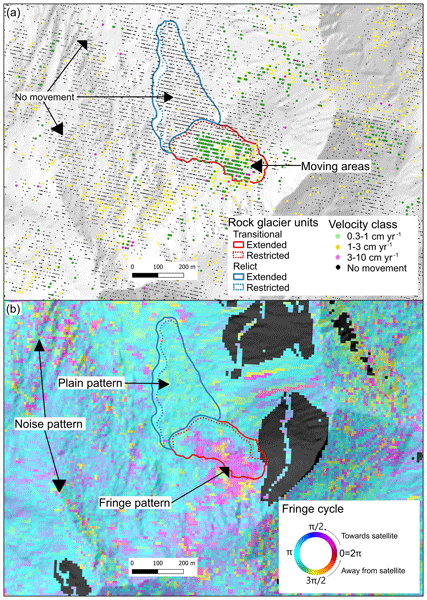
Alexandru Onaca, Flavius Sîrbu, Valentin Poncoş, Christin Hilbich, Tazio Strozzi, Petru Urdea, Răzvan Popescu, Oana Berzescu, Bernd Etzelmüller, Alfred Vespremeanu-Stroe, Mirela Vasile, Delia Teleagă, Dan Birtaş, Iosif Lopătiţă, Simon Filhol, Alexandru Hegyi, and Florina Ardelean
Earth Surf. Dynam., 13, 981–1001, https://doi.org/10.5194/esurf-13-981-2025, https://doi.org/10.5194/esurf-13-981-2025, 2025
Short summary
Short summary
This study establishes a methodology for the study of slow-moving rock glaciers in marginal permafrost and provides the basic knowledge for understanding rock glaciers in South East Europe. By using a combination of different methods (remote sensing, geophysical survey, thermal measurements), we found out that, on the transitional rock glaciers, low ground ice content (i.e. below 20 %) produces horizontal displacements of up to 3 cm per year.
Enrico Mattea, Atanu Bhattacharya, Sajid Ghuffar, Julekha Khatun, Martina Barandun, and Martin Hoelzle
EGUsphere, https://doi.org/10.5194/egusphere-2025-4068, https://doi.org/10.5194/egusphere-2025-4068, 2025
Preprint archived
Short summary
Short summary
Some glaciers flow not steadily but with periodic "pulsations". They cluster in specific regions, and their distribution and processes are still being studied. We use data from different satellites over 50+ years, in order to examine pulsating glaciers in a mountain range of Central Asia. We find that such glaciers are more widespread than thought. We also re-evaluate the work of Soviet researchers who tried to predict the distribution of such glaciers already in 1980 with a mathematical model
Dilara Kim, Enrico Mattea, Mattia Callegari, Tomas Saks, Ruslan Kenzhebayev, Erlan Azisov, Tobias Ullmann, Martin Hoelzle, and Martina Barandun
EGUsphere, https://doi.org/10.5194/egusphere-2025-3978, https://doi.org/10.5194/egusphere-2025-3978, 2025
Short summary
Short summary
We investigated how the snowline changed on four glaciers in the Pamir and Tien Shan mountain ranges in Central Asia. For this we developed a new method of combining different types of satellite images. This detailed record of snowlines shows for the first time how glaciers are responding to climate change during the dry season on almost daily scale. Our results help to understand better when and how much meltwater stored in glaciers can be used for drinking water by people living downstream.
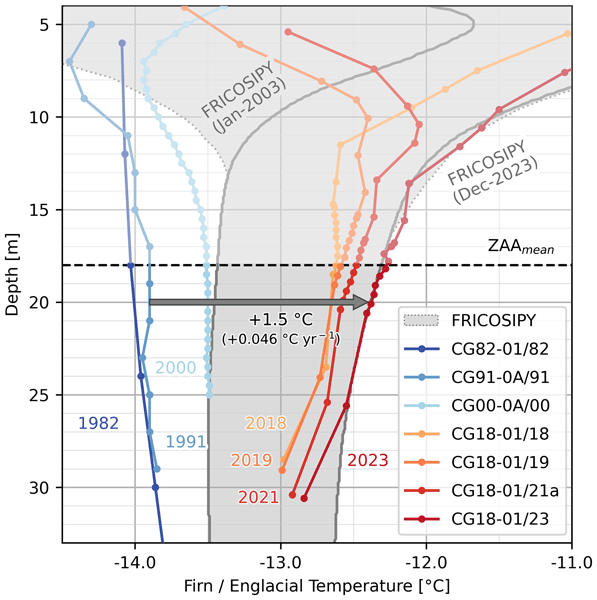
Marcus Gastaldello, Enrico Mattea, Martin Hoelzle, and Horst Machguth
The Cryosphere, 19, 2983–3008, https://doi.org/10.5194/tc-19-2983-2025, https://doi.org/10.5194/tc-19-2983-2025, 2025
Short summary
Short summary
Inside the highest glaciers of the Alps lies an invaluable archive of data revealing the Earth's historic climate. However, as the atmosphere warms due to climate change, so does the glaciers' internal temperature, threatening the future longevity of these records. Using our customised Python model, validated by on-site measurements, we show how a doubling in surface melt has caused a warming of 1.5 °C in the past 21 years and explore the challenges of modelling in complex mountainous terrain.
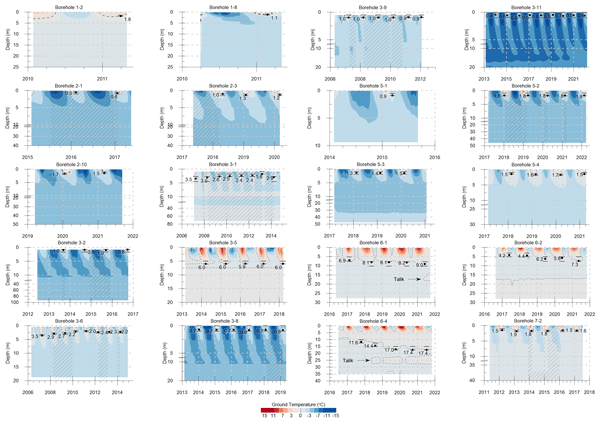
Cassandra E. M. Koenig, Christin Hilbich, Christian Hauck, Lukas U. Arenson, and Pablo Wainstein
The Cryosphere, 19, 2653–2676, https://doi.org/10.5194/tc-19-2653-2025, https://doi.org/10.5194/tc-19-2653-2025, 2025
Short summary
Short summary
This study presents the first regional compilation of borehole temperature data from high-altitude permafrost sites in the Andes, providing a baseline of ground thermal conditions. Data from 53 boreholes show thermal characteristics similar to other mountain permafrost areas, but uniquely shaped by Andean topo-climatic conditions. The study emphasizes the need for ongoing monitoring and is a notable collaboration between industry, academia, and regulators in advancing climate change research.
Dominik Amschwand, Seraina Tschan, Martin Scherler, Martin Hoelzle, Bernhard Krummenacher, Anna Haberkorn, Christian Kienholz, Lukas Aschwanden, and Hansueli Gubler
Hydrol. Earth Syst. Sci., 29, 2219–2253, https://doi.org/10.5194/hess-29-2219-2025, https://doi.org/10.5194/hess-29-2219-2025, 2025
Short summary
Short summary
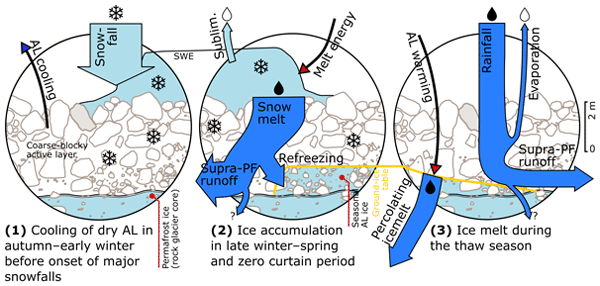
Meltwater from rock glaciers, frozen landforms of debris and ice, has gained attention in dry mountain regions. We estimated how much ice melts in Murtèl rock glacier (Swiss Alps) based on belowground heat flow measurements and observations of the rising and falling ground-ice table. We found seasonal aggradation and melt of 150–300 mm w.e. (20 %–40 % of the snowpack). The ice (largely sourced from refrozen snowmelt) melts in hot summer periods, infiltrates, and recharges groundwater.
Dominik Amschwand, Jonas Wicky, Martin Scherler, Martin Hoelzle, Bernhard Krummenacher, Anna Haberkorn, Christian Kienholz, and Hansueli Gubler
Earth Surf. Dynam., 13, 365–401, https://doi.org/10.5194/esurf-13-365-2025, https://doi.org/10.5194/esurf-13-365-2025, 2025
Short summary
Short summary
Rock glaciers are comparatively climate-robust permafrost landforms. We estimated the energy budget of the seasonally thawing active layer (AL) of Murtèl rock glacier (Swiss Alps) based on a novel sub-surface sensor array. In the coarse blocky AL, heat is transferred by thermal radiation and air convection. The ground heat flux is largely spent on melting seasonal ice in the AL. Convective cooling and the seasonal ice turnover make rock glaciers climate-robust and shield the permafrost beneath.
Enrico Mattea, Etienne Berthier, Amaury Dehecq, Tobias Bolch, Atanu Bhattacharya, Sajid Ghuffar, Martina Barandun, and Martin Hoelzle
The Cryosphere, 19, 219–247, https://doi.org/10.5194/tc-19-219-2025, https://doi.org/10.5194/tc-19-219-2025, 2025
Short summary
Short summary
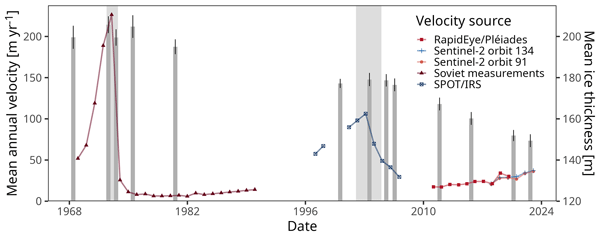
We reconstruct the evolution of terminus position, ice thickness, and surface flow velocity of the reference Abramov glacier (Kyrgyzstan) from 1968 to present. We describe a front pulsation in the early 2000s and the multi-annual present-day buildup of a new pulsation. Such dynamic instabilities can challenge the representativity of Abramov as a reference glacier. For our work we used satellite‑based optical remote sensing from multiple platforms, including recently declassified archives.
Clemens Moser, Umberto Morra di Cella, Christian Hauck, and Adrián Flores Orozco
The Cryosphere, 19, 143–171, https://doi.org/10.5194/tc-19-143-2025, https://doi.org/10.5194/tc-19-143-2025, 2025
Short summary
Short summary
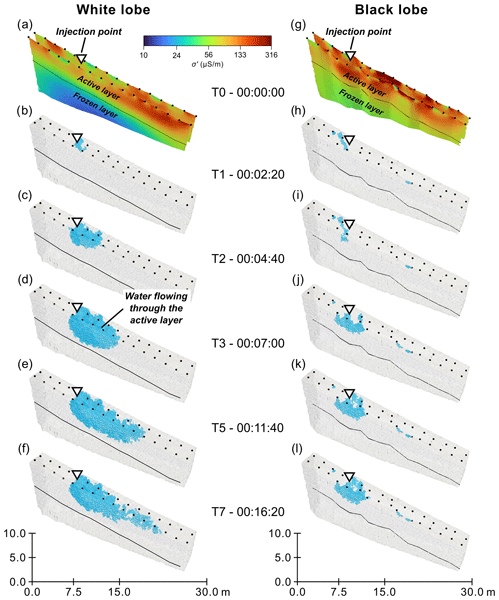
We use electrical conductivity and induced polarization in an imaging framework to quantify hydrogeological parameters in the active Gran Sometta rock glacier. The results show high spatial variability in the hydrogeological parameters across the rock glacier and are validated by saltwater tracer tests coupled with 3D electrical conductivity imaging. Hydrogeological information was linked to kinematic data to further investigate its role in rock glacier movement.
Julie Wee, Sebastián Vivero, Tamara Mathys, Coline Mollaret, Christian Hauck, Christophe Lambiel, Jan Beutel, and Wilfried Haeberli
The Cryosphere, 18, 5939–5963, https://doi.org/10.5194/tc-18-5939-2024, https://doi.org/10.5194/tc-18-5939-2024, 2024
Short summary
Short summary
This study highlights the importance of a multi-method and multi-disciplinary approach to better understand the influence of the internal structure of the Gruben glacier-forefield-connected rock glacier and adjacent debris-covered glacier on their driving thermo-mechanical processes and associated surface dynamics. We were able to discriminate glacial from periglacial processes as their spatio-temporal patterns of surface dynamics and geophysical signatures are (mostly) different.
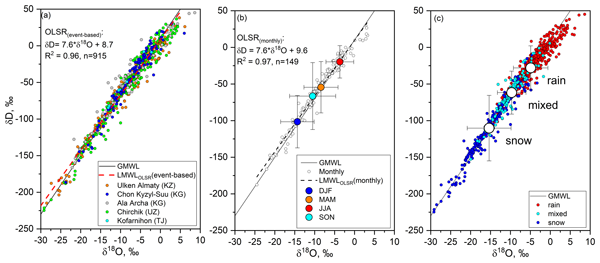
Zarina Saidaliyeva, Maria Shahgedanova, Vadim Yapiyev, Andrew John Wade, Fakhriddin Akbarov, Mukhammed Esenaman uulu, Olga Kalashnikova, Vassiliy Kapitsa, Nikolay Kasatkin, Ilkhomiddin Rakhimov, Rysbek Satylkanov, Daniiar Sayakbaev, Eleonora Semakova, Igor Severskiy, Maxim Petrov, Gulomjon Umirzakov, and Ryskul Usubaliev
Atmos. Chem. Phys., 24, 12203–12224, https://doi.org/10.5194/acp-24-12203-2024, https://doi.org/10.5194/acp-24-12203-2024, 2024
Short summary
Short summary
Ratios of stable isotopes of oxygen and hydrogen in precipitation are used to trace source regions and pathways of atmospheric moisture. A database of these measurements was developed for the mountains of Central Asia and analysed in the context of atmospheric trajectories. Over 50 % of precipitation was formed from moisture re-evaporated from regional terrestrial sources including the irrigated land in the Aral Sea basin, highlighting its support of the water tower function of the mountains.
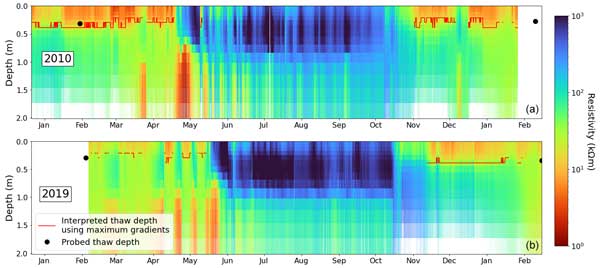
Mohammad Farzamian, Teddi Herring, Gonçalo Vieira, Miguel Angel de Pablo, Borhan Yaghoobi Tabar, and Christian Hauck
The Cryosphere, 18, 4197–4213, https://doi.org/10.5194/tc-18-4197-2024, https://doi.org/10.5194/tc-18-4197-2024, 2024
Short summary
Short summary
An automated electrical resistivity tomography (A-ERT) system was developed and deployed in Antarctica to monitor permafrost and active-layer dynamics. The A-ERT, coupled with an efficient processing workflow, demonstrated its capability to monitor real-time thaw depth progression, detect seasonal and surficial freezing–thawing events, and assess permafrost stability. Our study showcased the potential of A-ERT to contribute to global permafrost monitoring networks.
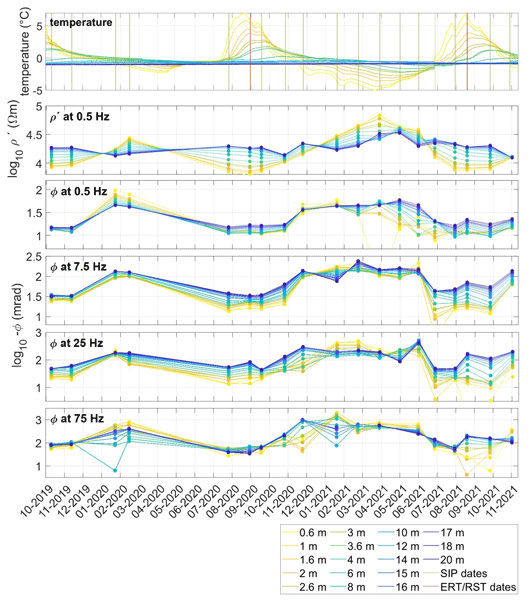
Theresa Maierhofer, Adrian Flores Orozco, Nathalie Roser, Jonas K. Limbrock, Christin Hilbich, Clemens Moser, Andreas Kemna, Elisabetta Drigo, Umberto Morra di Cella, and Christian Hauck
The Cryosphere, 18, 3383–3414, https://doi.org/10.5194/tc-18-3383-2024, https://doi.org/10.5194/tc-18-3383-2024, 2024
Short summary
Short summary
In this study, we apply an electrical method in a high-mountain permafrost terrain in the Italian Alps, where long-term borehole temperature data are available for validation. In particular, we investigate the frequency dependence of the electrical properties for seasonal and annual variations along a 3-year monitoring period. We demonstrate that our method is capable of resolving temporal changes in the thermal state and the ice / water ratio associated with seasonal freeze–thaw processes.
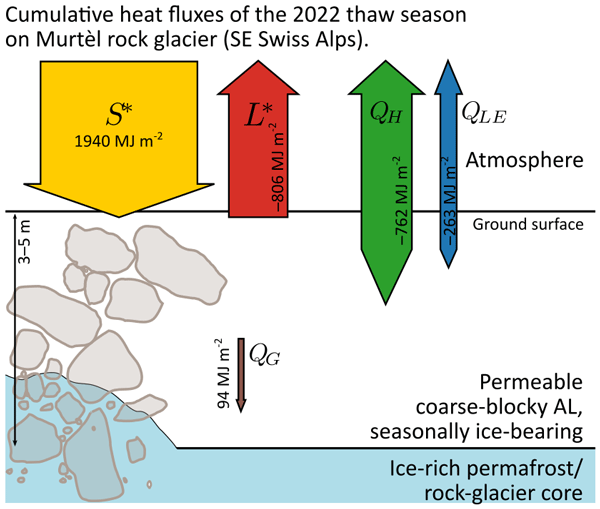
Dominik Amschwand, Martin Scherler, Martin Hoelzle, Bernhard Krummenacher, Anna Haberkorn, Christian Kienholz, and Hansueli Gubler
The Cryosphere, 18, 2103–2139, https://doi.org/10.5194/tc-18-2103-2024, https://doi.org/10.5194/tc-18-2103-2024, 2024
Short summary
Short summary
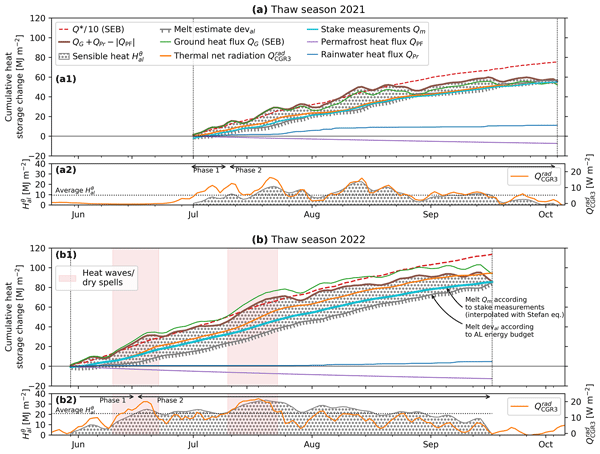
Rock glaciers are coarse-debris permafrost landforms that are comparatively climate resilient. We estimate the surface energy balance of rock glacier Murtèl (Swiss Alps) based on a large surface and sub-surface sensor array. During the thaw seasons 2021 and 2022, 90 % of the net radiation was exported via turbulent heat fluxes and only 10 % was transmitted towards the ground ice table. However, early snowmelt and droughts make these permafrost landforms vulnerable to climate warming.
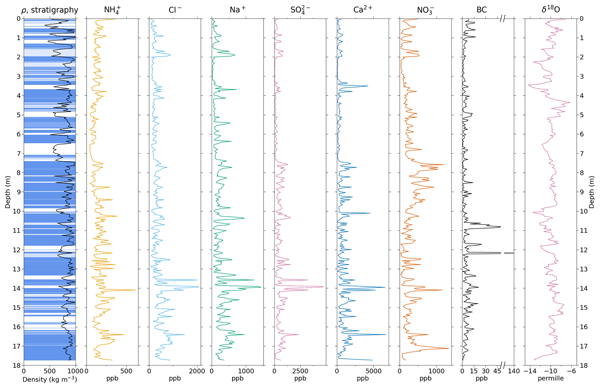
Horst Machguth, Anja Eichler, Margit Schwikowski, Sabina Brütsch, Enrico Mattea, Stanislav Kutuzov, Martin Heule, Ryskul Usubaliev, Sultan Belekov, Vladimir N. Mikhalenko, Martin Hoelzle, and Marlene Kronenberg
The Cryosphere, 18, 1633–1646, https://doi.org/10.5194/tc-18-1633-2024, https://doi.org/10.5194/tc-18-1633-2024, 2024
Short summary
Short summary
In 2018 we drilled an 18 m ice core on the summit of Grigoriev ice cap, located in the Tien Shan mountains of Kyrgyzstan. The core analysis reveals strong melting since the early 2000s. Regardless of this, we find that the structure and temperature of the ice have changed little since the 1980s. The probable cause of this apparent stability is (i) an increase in snowfall and (ii) the fact that meltwater nowadays leaves the glacier and thereby removes so-called latent heat.
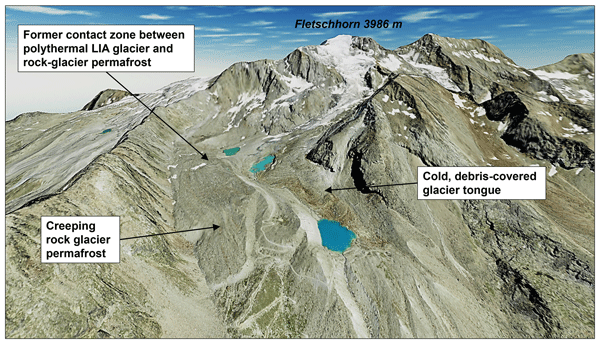
Wilfried Haeberli, Lukas U. Arenson, Julie Wee, Christian Hauck, and Nico Mölg
The Cryosphere, 18, 1669–1683, https://doi.org/10.5194/tc-18-1669-2024, https://doi.org/10.5194/tc-18-1669-2024, 2024
Short summary
Short summary
Rock glaciers in ice-rich permafrost can be discriminated from debris-covered glaciers. The key physical phenomenon relates to the tight mechanical coupling between the moving frozen body at depth and the surface layer of debris in the case of rock glaciers, as opposed to the virtually inexistent coupling in the case of surface ice with a debris cover. Contact zones of surface ice with subsurface ice in permafrost constitute diffuse landforms beyond either–or-type landform classification.
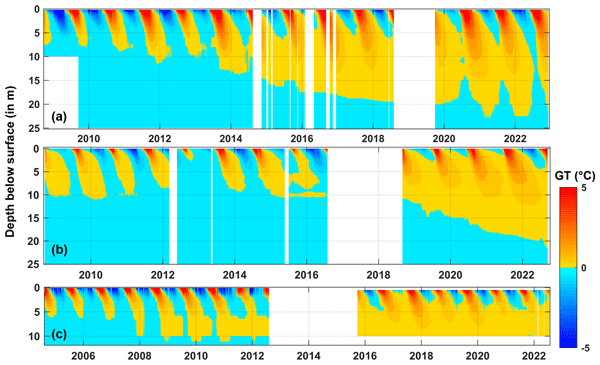
Bernd Etzelmüller, Ketil Isaksen, Justyna Czekirda, Sebastian Westermann, Christin Hilbich, and Christian Hauck
The Cryosphere, 17, 5477–5497, https://doi.org/10.5194/tc-17-5477-2023, https://doi.org/10.5194/tc-17-5477-2023, 2023
Short summary
Short summary
Permafrost (permanently frozen ground) is widespread in the mountains of Norway and Iceland. Several boreholes were drilled after 1999 for long-term permafrost monitoring. We document a strong warming of permafrost, including the development of unfrozen bodies in the permafrost. Warming and degradation of mountain permafrost may lead to more natural hazards.
Léo C. P. Martin, Sebastian Westermann, Michele Magni, Fanny Brun, Joel Fiddes, Yanbin Lei, Philip Kraaijenbrink, Tamara Mathys, Moritz Langer, Simon Allen, and Walter W. Immerzeel
Hydrol. Earth Syst. Sci., 27, 4409–4436, https://doi.org/10.5194/hess-27-4409-2023, https://doi.org/10.5194/hess-27-4409-2023, 2023
Short summary
Short summary
Across the Tibetan Plateau, many large lakes have been changing level during the last decades as a response to climate change. In high-mountain environments, water fluxes from the land to the lakes are linked to the ground temperature of the land and to the energy fluxes between the ground and the atmosphere, which are modified by climate change. With a numerical model, we test how these water and energy fluxes have changed over the last decades and how they influence the lake level variations.
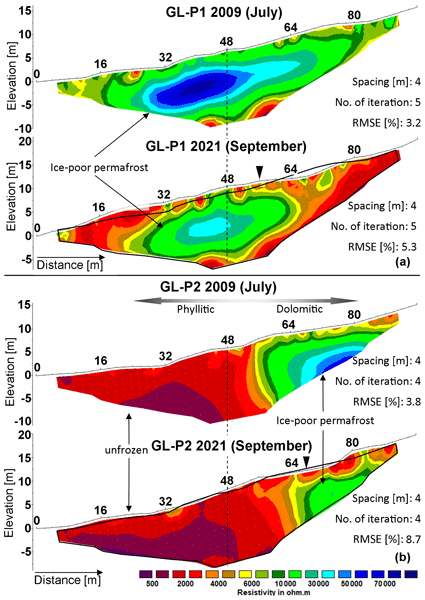
Johannes Buckel, Jan Mudler, Rainer Gardeweg, Christian Hauck, Christin Hilbich, Regula Frauenfelder, Christof Kneisel, Sebastian Buchelt, Jan Henrik Blöthe, Andreas Hördt, and Matthias Bücker
The Cryosphere, 17, 2919–2940, https://doi.org/10.5194/tc-17-2919-2023, https://doi.org/10.5194/tc-17-2919-2023, 2023
Short summary
Short summary
This study reveals permafrost degradation by repeating old geophysical measurements at three Alpine sites. The compared data indicate that ice-poor permafrost is highly affected by temperature warming. The melting of ice-rich permafrost could not be identified. However, complex geomorphic processes are responsible for this rather than external temperature change. We suspect permafrost degradation here as well. In addition, we introduce a new current injection method for data acquisition.
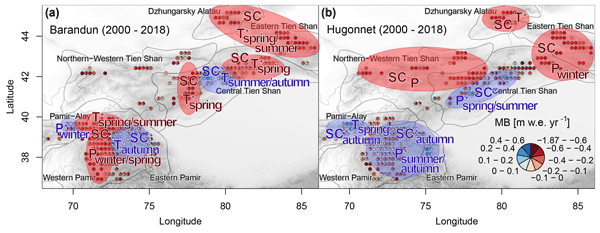
Martina Barandun and Eric Pohl
The Cryosphere, 17, 1343–1371, https://doi.org/10.5194/tc-17-1343-2023, https://doi.org/10.5194/tc-17-1343-2023, 2023
Short summary
Short summary
Meteorological and glacier mass balance data scarcity introduces large uncertainties about drivers of heterogeneous glacier mass balance response in Central Asia. We investigate the consistency of interpretations derived from various datasets through a systematic correlation analysis between climatic and static drivers with mass balance estimates. Our results show in particular that even supposedly similar datasets lead to different and partly contradicting assumptions on dominant drivers.
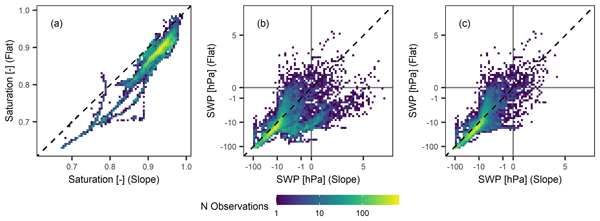
Adrian Wicki, Peter Lehmann, Christian Hauck, and Manfred Stähli
Nat. Hazards Earth Syst. Sci., 23, 1059–1077, https://doi.org/10.5194/nhess-23-1059-2023, https://doi.org/10.5194/nhess-23-1059-2023, 2023
Short summary
Short summary
Soil wetness measurements are used for shallow landslide prediction; however, existing sites are often located in flat terrain. Here, we assessed the ability of monitoring sites at flat locations to detect critically saturated conditions compared to if they were situated at a landslide-prone location. We found that differences exist but that both sites could equally well distinguish critical from non-critical conditions for shallow landslide triggering if relative changes are considered.
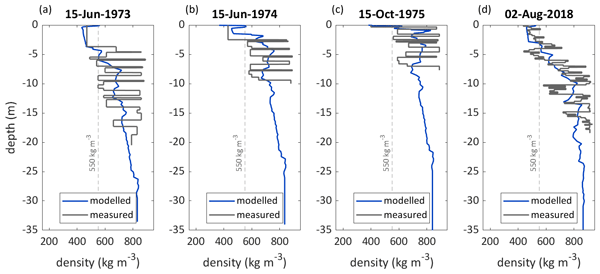
Marlene Kronenberg, Ward van Pelt, Horst Machguth, Joel Fiddes, Martin Hoelzle, and Felix Pertziger
The Cryosphere, 16, 5001–5022, https://doi.org/10.5194/tc-16-5001-2022, https://doi.org/10.5194/tc-16-5001-2022, 2022
Short summary
Short summary
The Pamir Alay is located at the edge of regions with anomalous glacier mass changes. Unique long-term in situ data are available for Abramov Glacier, located in the Pamir Alay. In this study, we use this extraordinary data set in combination with reanalysis data and a coupled surface energy balance–multilayer subsurface model to compute and analyse the distributed climatic mass balance and firn evolution from 1968 to 2020.

Karianne S. Lilleøren, Bernd Etzelmüller, Line Rouyet, Trond Eiken, Gaute Slinde, and Christin Hilbich
Earth Surf. Dynam., 10, 975–996, https://doi.org/10.5194/esurf-10-975-2022, https://doi.org/10.5194/esurf-10-975-2022, 2022
Short summary
Short summary
In northern Norway we have observed several rock glaciers at sea level. Rock glaciers are landforms that only form under the influence of permafrost, which is frozen ground. Our investigations show that the rock glaciers are probably not active under the current climate but most likely were active in the recent past. This shows how the Arctic now changes due to climate changes and also how similar areas in currently colder climates will change in the future.
Tamara Mathys, Christin Hilbich, Lukas U. Arenson, Pablo A. Wainstein, and Christian Hauck
The Cryosphere, 16, 2595–2615, https://doi.org/10.5194/tc-16-2595-2022, https://doi.org/10.5194/tc-16-2595-2022, 2022
Short summary
Short summary
With ongoing climate change, there is a pressing need to understand how much water is stored as ground ice in permafrost. Still, field-based data on permafrost in the Andes are scarce, resulting in large uncertainties regarding ground ice volumes and their hydrological role. We introduce an upscaling methodology of geophysical-based ground ice quantifications at the catchment scale. Our results indicate that substantial ground ice volumes may also be present in areas without rock glaciers.
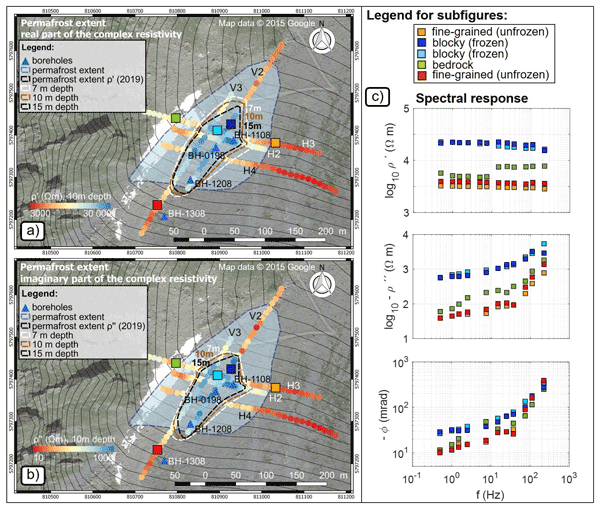
Theresa Maierhofer, Christian Hauck, Christin Hilbich, Andreas Kemna, and Adrián Flores-Orozco
The Cryosphere, 16, 1903–1925, https://doi.org/10.5194/tc-16-1903-2022, https://doi.org/10.5194/tc-16-1903-2022, 2022
Short summary
Short summary
We extend the application of electrical methods to characterize alpine permafrost using the so-called induced polarization (IP) effect associated with the storage of charges at the interface between liquid and solid phases. We investigate different field protocols to enhance data quality and conclude that with appropriate measurement and processing procedures, the characteristic dependence of the IP response of frozen rocks improves the assessment of thermal state and ice content in permafrost.
Christin Hilbich, Christian Hauck, Coline Mollaret, Pablo Wainstein, and Lukas U. Arenson
The Cryosphere, 16, 1845–1872, https://doi.org/10.5194/tc-16-1845-2022, https://doi.org/10.5194/tc-16-1845-2022, 2022
Short summary
Short summary
In view of water scarcity in the Andes, the significance of permafrost as a future water resource is often debated focusing on satellite-detected features such as rock glaciers. We present data from > 50 geophysical surveys in Chile and Argentina to quantify the ground ice volume stored in various permafrost landforms, showing that not only rock glacier but also non-rock-glacier permafrost contains significant ground ice volumes and is relevant when assessing the hydrological role of permafrost.
Martin Hoelzle, Christian Hauck, Tamara Mathys, Jeannette Noetzli, Cécile Pellet, and Martin Scherler
Earth Syst. Sci. Data, 14, 1531–1547, https://doi.org/10.5194/essd-14-1531-2022, https://doi.org/10.5194/essd-14-1531-2022, 2022
Short summary
Short summary
With ongoing climate change, it is crucial to understand the interactions of the individual heat fluxes at the surface and within the subsurface layers, as well as their impacts on the permafrost thermal regime. A unique set of high-altitude meteorological measurements has been analysed to determine the energy balance at three mountain permafrost sites in the Swiss Alps, where data have been collected since the late 1990s in collaboration with the Swiss Permafrost Monitoring Network (PERMOS).
Bernd Etzelmüller, Justyna Czekirda, Florence Magnin, Pierre-Allain Duvillard, Ludovic Ravanel, Emanuelle Malet, Andreas Aspaas, Lene Kristensen, Ingrid Skrede, Gudrun D. Majala, Benjamin Jacobs, Johannes Leinauer, Christian Hauck, Christin Hilbich, Martina Böhme, Reginald Hermanns, Harald Ø. Eriksen, Tom Rune Lauknes, Michael Krautblatter, and Sebastian Westermann
Earth Surf. Dynam., 10, 97–129, https://doi.org/10.5194/esurf-10-97-2022, https://doi.org/10.5194/esurf-10-97-2022, 2022
Short summary
Short summary
This paper is a multi-authored study documenting the possible existence of permafrost in permanently monitored rockslides in Norway for the first time by combining a multitude of field data, including geophysical surveys in rock walls. The paper discusses the possible role of thermal regime and rockslide movement, and it evaluates the possible impact of atmospheric warming on rockslide dynamics in Norwegian mountains.
Cited articles
Aizen, V. B., Kuzmichenok, V. A., Surazakov, A. B., and Aizen, E. M.: Glacier changes in the central and northern Tien Shan during the last 140 years based on surface and remote-sensing data, Ann. Glaciol., 43, 202–213, https://doi.org/10.3189/172756406781812465, 2006. a, b, c
Aizen, V. B., Mayewski, P. A., Aizen, E. M., Joswiak, D. R., Surazakov, A. B., Kaspari, S., Grigholm, B., Krachler, M., Handley, M., and Finaev, A.: Stable-isotope and trace element time series from Fedchenko glacier (Pamirs) snow/firn cores, J. Glaciol., 55, 275–291, https://doi.org/10.3189/002214309788608787, 2009. a, b, c
Amschwand, D., Tschan, S., Scherler, M., Hoelzle, M., Krummenacher, B., Haberkorn, A., Kienholz, C., Aschwanden, L., and Gubler, H.: On the hydrological significance of rock glaciers: A case study from Murtèl rock glacier (Engadine, eastern Swiss Alps) using below-ground energy-flux measurements, ground-ice melt observations and hydrological measurements, EGUsphere [preprint], https://doi.org/10.5194/egusphere-2024-844, 2024. a
Archie, G. E.: The Electrical Resistivity Log as an Aid in Determining Some Reservoir Characteristics, Transactions of the AIME, 146, 54–62, https://doi.org/10.2118/942054-G, 1942. a, b
Arenson, L., Hoelzle, M., and Springman, S.: Borehole deformation measurements and internal structure of some rock glaciers in Switzerland, Permafrost Periglac., 13, 117–135, https://doi.org/10.1002/PPP.414, 2002. a
Arenson, L. U. and Jakob, M.: The significance of rock glaciers in the dry Andes – A discussion of Azócar and Brenning (2010) and Brenning and Azócar (2010), Permafrost Periglac., 21, 282–285, https://doi.org/10.1002/ppp.693, 2010. a
Arenson, L. U., Harrington, J. S., Koenig, C. E. M., and Wainstein, P. A.: Mountain Permafrost Hydrology – A Practical Review Following Studies from the Andes, Geosciences, 12, 48, https://doi.org/10.3390/geosciences12020048, 2022. a
Audebert, M., Clément, R., Touze-Foltz, N., Günther, T., Moreau, S., and Duquennoi, C.: Time-lapse ERT interpretation methodology for leachate injection monitoring based on multiple inversions and a clustering strategy (MICS), J. Appl. Geophys., 111, 320–333, https://doi.org/10.1016/J.JAPPGEO.2014.09.024, 2014. a
Azócar, G. F. and Brenning, A.: Hydrological and geomorphological significance of rock glaciers in the dry Andes, Chile (27°–33°S), Permafrost Periglac., 21, 42–53, https://doi.org/10.1002/ppp.669, 2010. a
Barandun, M. and Pohl, E.: Central Asia's spatiotemporal glacier response ambiguity due to data inconsistencies and regional simplifications, The Cryosphere, 17, 1343–1371, https://doi.org/10.5194/tc-17-1343-2023, 2023. a, b, c, d
Barandun, M., Huss, M., Sold, L., Farinotti, D., Azisov, E., Salzmann, N., Usubaliev, R., Merkushkin, A., and Hoelzle, M.: Re-analysis of seasonal mass balance at Abramov glacier 1968–2014, J. Glaciol., 61, 1103–1117, https://doi.org/10.3189/2015JOG14J239, 2015. a
Barandun, M., Huss, M., Usubaliev, R., Azisov, E., Berthier, E., Kääb, A., Bolch, T., and Hoelzle, M.: Multi-decadal mass balance series of three Kyrgyz glaciers inferred from modelling constrained with repeated snow line observations, The Cryosphere, 12, 1899–1919, https://doi.org/10.5194/tc-12-1899-2018, 2018. a
Barandun, M., Fiddes, J., Scherler, M., Mathys, T., Saks, T., Petrakov, D., and Hoelzle, M.: The state and future of the cryosphere in Central Asia, Water Security, 11, 100072, https://doi.org/10.1016/j.wasec.2020.100072, 2020. a, b
Bast, A., Kenner, R., and Phillips, M.: Short-term cooling, drying, and deceleration of an ice-rich rock glacier, The Cryosphere, 18, 3141–3158, https://doi.org/10.5194/tc-18-3141-2024, 2024. a
Bertone, A., Zucca, F., Marin, C., Notarnicola, C., Cuozzo, G., Krainer, K., Mair, V., Riccardi, P., Callegari, M., and Seppi, R.: An unsupervised method to detect rock glacier activity by using Sentinel-1 SAR interferometric coherence: A regional-scale study in the Eastern European Alps, Remote Sensing, 11, 1711, https://doi.org/10.3390/rs11141711, 2019. a
Biskaborn, B. K., Smith, S. L., Noetzli, J., Matthes, H., Vieira, G., Streletskiy, D. A., Schoeneich, P., Romanovsky, V. E., Lewkowicz, A. G., Abramov, A., Allard, M., Boike, J., Cable, W. L., Christiansen, H. H., Delaloye, R., Diekmann, B., Drozdov, D., Etzelmüller, B., Grosse, G., Guglielmin, M., Ingeman-Nielsen, T., Isaksen, K., Ishikawa, M., Johansson, M., Johannsson, H., Joo, A., Kaverin, D., Kholodov, A., Konstantinov, P., Kröger, T., Lambiel, C., Lanckman, J. P., Luo, D., Malkova, G., Meiklejohn, I., Moskalenko, N., Oliva, M., Phillips, M., Ramos, M., Sannel, A. B. K., Sergeev, D., Seybold, C., Skryabin, P., Vasiliev, A., Wu, Q., Yoshikawa, K., Zheleznyak, M., and Lantuit, H.: Permafrost is warming at a global scale, Nat. Commun., 10, 264, https://doi.org/10.1038/s41467-018-08240-4, 2019. a
Blöthe, J. H., Rosenwinkel, S., Höser, T., and Korup, O.: Rock-glacier dams in High Asia, Earth Surf. Proc. Land., 44, 808–824, https://doi.org/10.1002/esp.4532, 2019. a, b
Boaga, J., Phillips, M., Noetzli, J., Haberkorn, A., Kenner, R., and Bast, A.: A Comparison of Frequency Domain Electro-Magnetometry, Electrical Resistivity Tomography and Borehole Temperatures to Assess the Presence of Ice in a Rock Glacier, Front. Earth Sci., 8, 586430, https://doi.org/10.3389/FEART.2020.586430, 2020. a
Bockheim, J. and Tarnocai, C.: Nature, Occurrence and Origin of Dry Permafrost, Permafrost – Seventh International Conference (Proceedings), Yellowknife (Canada), 55, https://geocryology.com/wp-content/uploads/2013/05/nature-occurrence-and-origin-of-dry-permafrost.pdf (last access: 4 December 2025), 1998. a
Bolch, T. and Marchenko, S.: Significance of glaciers, rockglaciers and ice-rich permafrost in the Northern Tien Shan as water towers under climate change conditions, in: Assessment of Snow, Glacier and Water Resources in Asia: Selected papers from the Workshop in Almaty, Kazakhstan, 2006, edited by: Braun, L. N., Hagg, W., Severskiy, I. V., and Young, G., IHP UNESCO, 8, 132–144, https://www.zora.uzh.ch/server/api/core/bitstreams/24cd9470-1504-4c7e-a813-e4e0c81a1724/content?trackerId=727af15c2604a72e (last access: 4 December 2025), 2009. a
Bolch, T., Rohrbach, N., Kutuzov, S., Robson, B., and Osmonov, A.: Occurrence, evolution and ice content of ice-debris complexes in the Ak-Shiirak, Central Tien Shan revealed by geophysical and remotely-sensed investigations, Earth Surf. Proc. Land., 44, 129–143, https://doi.org/10.1002/esp.4487, 2019. a, b, c
Brenning, A.: Climatic and geomorphological controls of rock glaciers in the Andes of Central Chile: Combining statistical modelling and field mapping, PhD thesis, Humboldt-Universität zu Berlin, https://doi.org/10.18452/15332, 2005. a, b
Buckel, J., Reinosch, E., Hördt, A., Zhang, F., Riedel, B., Gerke, M., Schwalb, A., and Mäusbacher, R.: Insights into a remote cryosphere: a multi-method approach to assess permafrost occurrence at the Qugaqie basin, western Nyainqêntanglha Range, Tibetan Plateau, The Cryosphere, 15, 149–168, https://doi.org/10.5194/tc-15-149-2021, 2021. a
Coperey, A., Revil, A., Abdulsamad, F., Stutz, B., Duvillard, P. A., and Ravanel, L.: Low-Frequency Induced Polarization of Porous Media Undergoing Freezing: Preliminary Observations and Modeling, J. Geophys. Res.-Sol. Ea., 124, 4523–4544, https://doi.org/10.1029/2018JB017015, 2019. a
Daanen, R. P., Ingeman-Nielsen, T., Marchenko, S. S., Romanovsky, V. E., Foged, N., Stendel, M., Christensen, J. H., and Hornbech Svendsen, K.: Permafrost degradation risk zone assessment using simulation models, The Cryosphere, 5, 1043–1056, https://doi.org/10.5194/tc-5-1043-2011, 2011. a
de Pasquale, G., Valois, R., Schaffer, N., and MacDonell, S.: Contrasting geophysical signatures of a relict and an intact Andean rock glacier, The Cryosphere, 16, 1579–1596, https://doi.org/10.5194/tc-16-1579-2022, 2022. a
Duishonakunov, M.: Glaciers and permafrost as water resource in Kyrgyzstan-distribution, recent dynamics and hazards, and the relevance for sustainable development of Central Asian semiarid regions, PhD thesis, Justus-Liebig-Universität Giessen, https://doi.org/10.22029/jlupub-9635, 2014. a
Duvillard, P. A., Revil, A., Qi, Y., Soueid Ahmed, A., Coperey, A., and Ravanel, L.: Three-Dimensional Electrical Conductivity and Induced Polarization Tomography of a Rock Glacier, J. Geophys. Res.-Sol. Ea., 123, 9528–9554, https://doi.org/10.1029/2018JB015965, 2018. a, b
Ermolin, E. D., Nemov, A. E., and Popov, M. V.: Geotermicheskaya harakteristika mestorojdeniya Kumtore [Geothermal characteristic of the Kumtor gold mine]. Geocryological Investigations in the Mountains of USSR, Yakutsk, 31–40, 1989. a
Etzelmüller, B., Guglielmin, M., Hauck, C., Hilbich, C., Hoelzle, M., Isaksen, K., Noetzli, J., Oliva, M., and Ramos, M.: Twenty years of European mountain permafrost dynamics-the PACE legacy, Environ. Res. Lett., 15, 104070, https://doi.org/10.1088/1748-9326/abae9d, 2020. a
Fuchs, M. C., Gloaguen, R., and Pohl, E.: Tectonic and climatic forcing on the Panj river system during the Quaternary, Int. J. Earth Sci., 102, 1985–2003, https://doi.org/10.1007/S00531-013-0916-2, 2013. a
Gao, T., Zhang, T., Cao, L., Kang, S., and Sillanpää, M.: Reduced winter runoff in a mountainous permafrost region in the northern Tibetan Plateau, Cold Reg. Sci. Technol., 126, 36–43, https://doi.org/10.1016/j.coldregions.2016.03.007, 2016. a
Gilbert, G. L., Kanevskiy, M., and Murton, J. B.: Recent Advances (2008–2015) in the Study of Ground Ice and Cryostratigraphy, Permafrost Periglac., 27, 377–389, https://doi.org/10.1002/PPP.1912, 2016. a, b
Glover, P. W.: A generalized Archie's law for n phases, Geophysics, 75, E247–E265, https://doi.org/10.1190/1.3509781, 2010. a
Gorbunov, A.: Permafrost investigations in high-mountain regions , Arctic Alpine Res., 10, 283–294, 1967. a
Gorbunov, A.: Kriogennye yavleniya Tyan-Shanya (Cryogenic phenomena of the Tien Shan)., Tech. Rep., Gidrometeoizdat, Moscow, 1970. a
Gorbunov, A. P., Seversky, E. V., and Titkov, S. N.: Geocriologiches- kie Usloviya Tyan-Shanya i Pamira (Geocryological Conditions of the Tien Shan and Pamir), Permafrost Institute, Yakutsk, 1996 (in Russian). a
Gruber, S.: Derivation and analysis of a high-resolution estimate of global permafrost zonation, The Cryosphere, 6, 221–233, https://doi.org/10.5194/tc-6-221-2012, 2012. a
Guan, X., Yao, J., and Schneider, C.: Variability of the precipitation over the Tianshan Mountains, Central Asia. Part I: Linear and nonlinear trends of the annual and seasonal precipitation, Int. J. Climatol., 42, 118–138, https://doi.org/10.1002/JOC.7235, 2022. a
Günther, T., Rücker, C., and Spitzer, K.: Three-dimensional modelling and inversion of dc resistivity data incorporating topography – II. Inversion, Geophys. J. Int., 166, 506–517, https://doi.org/10.1111/J.1365-246X.2006.03011.X, 2006. a
Haag, I., Jones, P. D., and Samimi, C.: Central Asia’s Changing Climate: How Temperature and Precipitation Have Changed across Time, Space, and Altitude, Climate, 7, 123, https://doi.org/10.3390/CLI7100123, 2019. a
Haeberli, W., Schaub, Y., and Huggel, C.: Increasing risks related to landslides from degrading permafrost into new lakes in de-glaciating mountain ranges, Geomorphology, 293, 405–417, https://doi.org/10.1016/j.geomorph.2016.02.009, 2017. a
Halla, C., Blöthe, J. H., Tapia Baldis, C., Trombotto Liaudat, D., Hilbich, C., Hauck, C., and Schrott, L.: Ice content and interannual water storage changes of an active rock glacier in the dry Andes of Argentina, The Cryosphere, 15, 1187–1213, https://doi.org/10.5194/tc-15-1187-2021, 2021. a, b, c, d
Hauck, C. and Kneisel, C.: Applied geophysics in periglacial environments, Cambridge University Press, ISBN 9780511535628, https://doi.org/10.1017/CBO9780511535628, 2008. a, b, c
Herring, T., Lewkowicz, A. G., Hauck, C., Hilbich, C., Mollaret, C., Oldenborger, G. A., Uhlemann, S., Farzamian, M., Calmels, F., and Scandroglio, R.: Best practices for using electrical resistivity tomography to investigate permafrost, Permafrost Periglac., 34, 494–512, https://doi.org/10.1002/PPP.2207, 2023. a, b
Hilbich, C., Marescot, L., Hauck, C., Loke, M. H., and Mausbacher, R.: Applicability of electrical resistivity tomography monitoring to coarse blocky and ice-rich permafrost landforms, Tech. Rep. 3, ISSN 10456740, https://doi.org/10.1002/ppp.652, 2009. a, b
Hilbich, C., Hauck, C., Mollaret, C., Wainstein, P., and Arenson, L. U.: Towards accurate quantification of ice content in permafrost of the Central Andes – Part 1: Geophysics-based estimates from three different regions, The Cryosphere, 16, 1845–1872, https://doi.org/10.5194/tc-16-1845-2022, 2022. a, b, c, d, e, f
Hoelzle, M.: Permafrost und Gletscher im Oberengadin, Grundlagen und Anwendungsbeispiele für automatisierte Schätzverfahren, VAW Mitteilungen, ETH Zürch, https://doi.org/10.3929/ethz-a-000943725, 1994. a
Hoelzle, M., Barandun, M., Bolch, T., Fiddes, J., Gafurov, A., Muccione, V., Saks, T., and Shahgedanova, M.: The status and role of the alpine cryosphere in Central Asia, in: The Aral Sea Basin, Routledge, 100–121, ISBN 9780429791079, https://doi.org/10.4324/9780429436475-8, 2019. a
Jones, D. B., Harrison, S., Anderson, K., Selley, H. L., Wood, J. L., and Betts, R. A.: The distribution and hydrological significance of rock glaciers in the Nepalese Himalaya, Global Planet. Change, 160, 123–142, https://doi.org/10.1016/j.gloplacha.2017.11.005, 2018. a
Jones, D. B., Harrison, S., Anderson, K., and Whalley, W. B.: Rock glaciers and mountain hydrology: A review, Earth-Sci. Rev., 193, 66–90, https://doi.org/10.1016/j.earscirev.2019.04.001, 2019. a, b, c
Jones, D. B., Harrison, S., Anderson, K., Shannon, S., and Betts, R. A.: Rock glaciers represent hidden water stores in the Himalaya, Sci. Total Environ., 793, 145368, https://doi.org/10.1016/J.SCITOTENV.2021.145368, 2021a. a
Jones, N., Manconi, A., and Strom, A.: Active landslides in the Rogun Catchment, Tajikistan, and their river damming hazard potential, Landslides, 18, 3599–3613, https://doi.org/10.1007/S10346-021-01706-5, 2021b. a
Kääb, A., Strozzi, T., Bolch, T., Caduff, R., Trefall, H., Stoffel, M., and Kokarev, A.: Inventory and changes of rock glacier creep speeds in Ile Alatau and Kungöy Ala-Too, northern Tien Shan, since the 1950s, The Cryosphere, 15, 927–949, https://doi.org/10.5194/tc-15-927-2021, 2021. a
Kenner, R., Phillips, M., Hauck, C., Hilbich, C., Mulsow, C., Bühler, Y., Stoffel, A., and Buchroithner, M.: New insights on permafrost genesis and conservation in talus slopes based on observations at Flüelapass, Eastern Switzerland, Geomorphology, 290, 101–113, https://doi.org/10.1016/J.GEOMORPH.2017.04.011, 2017. a
Kenner, R., Noetzli, J., Hoelzle, M., Raetzo, H., and Phillips, M.: Distinguishing ice-rich and ice-poor permafrost to map ground temperatures and ground ice occurrence in the Swiss Alps, The Cryosphere, 13, 1925–1941, https://doi.org/10.5194/tc-13-1925-2019, 2019. a
Klahold, J., Hauck, C., and Wagner, F.: Ice or rock matrix? Improved quantitative imaging of Alpine permafrost evolution through time-lapse petrophysical joint inversion, EGU General Assembly 2021, online, 19–30 Apr 2021, EGU21-4509, https://doi.org/10.5194/egusphere-egu21-4509, 2021. a
Kneisel, C., Hauck, C., Fortier, R., and Moorman, B.: Advances in geophysical methods for permafrost investigations, Permafrost Periglac., 19, 157–178, https://doi.org/10.1002/ppp.616, 2008. a
Krainer, K., Bressan, D., Dietre, B., Haas, J. N., Hajdas, I., Lang, K., Mair, V., Nickus, U., Reidl, D., Thies, H., and Tonidandel, D.: A 10,300-year-old permafrost core from the active rock glacier Lazaun, southern Ötztal Alps (South Tyrol, northern Italy), Quaternary Res., 83, 324–335, https://doi.org/10.1016/J.YQRES.2014.12.005, 2015. a, b
Kronenberg, M., Machguth, H., Eichler, A., Schwikowski, M., and Hoelzle, M.: Comparison of historical and recent accumulation rates on Abramov Glacier, Pamir Alay, J. Glaciol., 67, 253–268, https://doi.org/10.1017/jog.2020.103, 2020. a, b
Kunz, J., Ullmann, T., and Kneisel, C.: Internal structure and recent dynamics of a moraine complex in an alpine glacier forefield revealed by geophysical surveying and Sentinel-1 InSAR time series, Geomorphology, 398, 108052, https://doi.org/10.1016/J.GEOMORPH.2021.108052, 2022. a, b
Luo, D., Liu, L., Jin, H., Wang, X., and Chen, F.: Characteristics of ground surface temperature at Chalaping in the Source Area of the Yellow River, northeastern Tibetan Plateau, Agr. Forest Meteorol., 281, 107819, https://doi.org/10.1016/j.agrformet.2019.107819, 2020. a
Luo, M., Wood, J. R., and Cathles, L. M.: Prediction of thermal conductivity in reservoir rocks using fabric theory, J. Appl. Geophys., 32, 321–334, 1994. a
Machguth, H., Eichler, A., Schwikowski, M., Brütsch, S., Mattea, E., Kutuzov, S., Heule, M., Usubaliev, R., Belekov, S., Mikhalenko, V. N., Hoelzle, M., and Kronenberg, M.: Fifty years of firn evolution on Grigoriev ice cap, Tien Shan, Kyrgyzstan, The Cryosphere, 18, 1633–1646, https://doi.org/10.5194/tc-18-1633-2024, 2024. a, b
Maierhofer, T., Flores Orozco, A., Roser, N., Limbrock, J. K., Hilbich, C., Moser, C., Kemna, A., Drigo, E., Morra di Cella, U., and Hauck, C.: Spectral induced polarization imaging to monitor seasonal and annual dynamics of frozen ground at a mountain permafrost site in the Italian Alps, The Cryosphere, 18, 3383–3414, https://doi.org/10.5194/tc-18-3383-2024, 2024. a
Martin, L. C. P., Westermann, S., Magni, M., Brun, F., Fiddes, J., Lei, Y., Kraaijenbrink, P., Mathys, T., Langer, M., Allen, S., and Immerzeel, W. W.: Recent ground thermo-hydrological changes in a southern Tibetan endorheic catchment and implications for lake level changes, Hydrol. Earth Syst. Sci., 27, 4409–4436, https://doi.org/10.5194/hess-27-4409-2023, 2023. a
Mathys, T., Hilbich, C., Arenson, L. U., Wainstein, P. A., and Hauck, C.: Towards accurate quantification of ice content in permafrost of the Central Andes – Part 2: An upscaling strategy of geophysical measurements to the catchment scale at two study sites, The Cryosphere, 16, 2595–2615, https://doi.org/10.5194/tc-16-2595-2022, 2022. a
Matsuoka, N.: Solifluction rates, processes and landforms: a global review, Earth-Sci. Rev., 55, 107–134, https://doi.org/10.1016/S0012-8252(01)00057-5, 2001. a
Mele, M., Inzoli, S., Giudici, M., and Bersezio, R.: Relating electrical conduction of alluvial sediments to textural properties and pore-fluid conductivity, Geophysical Prospect., 62, 631–645, https://doi.org/10.1111/1365-2478.12102, 2014. a
Mergili, M. and Schneider, J. F.: Regional-scale analysis of lake outburst hazards in the southwestern Pamir, Tajikistan, based on remote sensing and GIS, Nat. Hazards Earth Syst. Sci., 11, 1447–1462, https://doi.org/10.5194/nhess-11-1447-2011, 2011. a
Mergili, M., Müller, J. P., and Schneider, J. F.: Spatio-temporal development of high-mountain lakes in the headwaters of the Amu Darya River (Central Asia), Global Planet. Change, 107, 13–24, https://doi.org/10.1016/j.gloplacha.2013.04.001, 2013. a
Mollaret, C., Hilbich, C., Pellet, C., Flores-Orozco, A., Delaloye, R., and Hauck, C.: Mountain permafrost degradation documented through a network of permanent electrical resistivity tomography sites, The Cryosphere, 13, 2557–2578, https://doi.org/10.5194/tc-13-2557-2019, 2019. a, b, c
Mollaret, C., Wagner, F. M., Hilbich, C., Scapozza, C., and Hauck, C.: Petrophysical Joint Inversion Applied to Alpine Permafrost Field Sites to Image Subsurface Ice, Water, Air, and Rock Contents, Front. Earth Sci., 8, 85, https://doi.org/10.3389/feart.2020.00085, 2020. a, b, c, d, e, f, g, h, i, j, k, l, m, n, o, p, q
Monnier, S. and Kinnard, C.: Internal structure and composition of a rock glacier in the Andes (upper Choapa valley, Chile) using borehole information and ground-penetrating radar, Ann. Glaciol., 54, 61–72, https://doi.org/10.3189/2013AoG64A107, 2013. a, b, c
Monnier, S., Camerlynck, C., Rejiba, F., Kinnard, C., Feuillet, T., and Dhemaied, A.: Structure and genesis of the Thabor rock glacier (Northern French Alps) determined from morphological and ground-penetrating radar surveys, Geomorphology, 134, 269–279, https://doi.org/10.1016/j.geomorph.2011.07.004, 2011. a, b
Noetzli, J., Arenson, L. U., Bast, A., Beutel, J., Delaloye, R., Farinotti, D., Gruber, S., Gubler, H., Haeberli, W., Hasler, A., Hauck, C., Hiller, M., Hoelzle, M., Lambiel, C., Pellet, C., Springman, S. M., Vonder Muehll, D., and Phillips, M.: Best Practice for Measuring Permafrost Temperature in Boreholes Based on the Experience in the Swiss Alps, Front. Earth Sci., 9, 607875, https://doi.org/10.3389/FEART.2021.607875, 2021. a
Ogasawara, Y. and Kon, M.: Two clustering methods based on the Ward's method and dendrograms with interval-valued dissimilarities for interval-valued data, Int. J. Approx. Reason., 129, 103–121, https://doi.org/10.1016/J.IJAR.2020.11.001, 2021. a
Pavoni, M., Boaga, J., Wagner, F. M., Bast, A., and Phillips, M.: Characterization of rock glaciers environments combining structurally-coupled and petrophysically-coupled joint inversions of electrical resistivity and seismic refraction datasets, J. Appl. Geophys., 215, 105097, https://doi.org/10.1016/J.JAPPGEO.2023.105097, 2023. a, b, c, d, e
PERMOS: Swiss Permafrost Bulletin 2023, edited by: Noetzli, J. and Pellet, C., 5, 25 pp., https://doi.org/10.13093/permos-bull-24, 2024. a
Pohl, E., Knoche, M., Gloaguen, R., Andermann, C., and Krause, P.: Sensitivity analysis and implications for surface processes from a hydrological modelling approach in the Gunt catchment, high Pamir Mountains, Earth Surf. Dynam., 3, 333–362, https://doi.org/10.5194/esurf-3-333-2015, 2015. a, b, c
Pollard, W.: The Nature and Origin of Ground Ice in the Herschel Island Area, Yukon Territory, Tech. Rep., https://pubs.aina.ucalgary.ca/cpc/cpc5-23.pdf (last access: 4 December 2025), 1990. a
Rahmonov, O., Szczypek, T., Niedźwiedź, T., Myga-Pia̧tek, U., Rahmonov, M., and Snytko, V. A.: The human impact on the transformation of juniper forest landscape in the western part of the Pamir-Alay range (Tajikistan), Environ. Earth Sci., 76, 324, https://doi.org/10.1007/S12665-017-6643-4, 2017. a
Rangecroft, S., Harrison, S., and Anderson, K.: Rock Glaciers as Water Stores in the Bolivian Andes: An Assessment of Their Hydrological Importance, Arct. Antarct. Alp. Res., 47, 89–98, https://doi.org/10.1657/aaar0014-029, 2015. a
Ravanel, L., Magnin, F., and Deline, P.: Impacts of the 2003 and 2015 summer heatwaves on permafrost-affected rock-walls in the Mont Blanc massif, Sci. Total Environ., 609, 132–143, https://doi.org/10.1016/j.scitotenv.2017.07.055, 2017. a
RGIK: Guidelines for inventorying rock glaciers: baseline and practical concepts (version 1.0), IPA Action Group Rock glacier inventories and kinematics, 25 pp., Universit'e de Fribourg, technical report, https://doi.org/10.51363/unifr.srr.2023.002, 2023. a
Rings, J. and Hauck, C.: Reliability of resistivity quantification for shallow subsurface water processes, J. Appl. Geophys., 68, 404–416, https://doi.org/10.1016/J.JAPPGEO.2009.03.008, 2009. a
Rücker, C., Günther, T., and Wagner, F. M.: pyGIMLi: An open-source library for modelling and inversion in geophysics, Comput. Geosci., 109, 106–123, https://doi.org/10.1016/j.cageo.2017.07.011, 2017. a, b, c
Sandmeier K.: ReflexW Version 10.3 – Windows program for the processing of seismic, acoustic or electromagnetic reflection, refraction and transmission data, https://www.sandmeier-geo.de/Download/reflexw_manual.pdf (last access: 4 December 2025), 2024. a
Scapozza, C., Baron, L., and Lambiel, C.: Borehole Logging in Alpine Periglacial Talus Slopes (Valais, Swiss Alps), Permafrost Periglac., 26, 67–83, https://doi.org/10.1002/ppp.1832, 2015. a, b
Schaffer, N., MacDonell, S., Réveillet, M., Yáñez, E., and Valois, R.: Rock glaciers as a water resource in a changing climate in the semiarid Chilean Andes, Reg. Environ. Change, 19, 1263–1279, https://doi.org/10.1007/s10113-018-01459-3, 2019. a
Schöne, T., Zech, C., Unger-Shayesteh, K., Rudenko, V., Thoss, H., Wetzel, H.-U., Gafurov, A., Illigner, J., and Zubovich, A.: A new permanent multi-parameter monitoring network in Central Asian high mountains – from measurements to data bases, Geosci. Instrum. Method. Data Syst., 2, 97–111, https://doi.org/10.5194/gi-2-97-2013, 2013. a, b, c
Seversky, E. V.: Permafrost response to climate change in the Northern Tien Shan, Sciences in Cold and Arid Regions, 9, 398–403, https://doi.org/10.3724/SP.J.1226.2017.00398, 2017. a, b, c
Somerton, W.: Thermal Properties and Temperature-Related Behavior of Rock/Fluid Systems, vol. 37, Elsevier, https://www.sciencedirect.com/bookseries/developments-in-petroleum-science/vol/37/suppl/C (last access: 4 December 2025), 1992. a
Sorg, A., Kääb, A., Roesch, A., Bigler, C., and Stoffel, M.: Contrasting responses of Central Asian rock glaciers to global warming, Scientific Reports, 5, 8228, https://doi.org/10.1038/srep08228, 2015. a
Steiner, M., Katona, T., Roser, N., Blöschl, G., and Flores Orozco, A.: Resolving hydrogeological parameters through joint inversion of seismic and electric data considering surface conductivity, 1st Conference on Hydrogeophysics: Contribution to Exploration and Management of Groundwater, Land-Use and Natural Hazards under a Changing Climate, Held at Near Surface Geoscience Conference and Exhibition 2021, NSG 2021, 29 August 2021–2 September 2021, Hybrid (Bordeaux), 1–5, https://doi.org/10.3997/2214-4609.202120121, 2021a. a
Steiner, M., Wagner, F. M., Maierhofer, T., Schöner, W., and Flores Orozco, A.: Improved estimation of ice and water contents in Alpine permafrost through constrained petrophysical joint inversion: The Hoher Sonnblick case study, Geophysics, 86, 1–84, https://doi.org/10.1190/geo2020-0592.1, 2021b. a
Telford, W. M., Geldart, L. P., and Sheriff, R. E.: Applied Geophysics, Cambridge University Press, https://ia601503.us.archive.org/34/items/in.ernet.dli.2015.118629/2015.118629.Applied-Geophysics.pdf (last access: 4 December 2025), 1990. a
Timur, A.: Velocity of compressional waves in porous media at permafrost temperatures, Geophysics, 33, 584–595, 1968. a
van Tiel, M., Aubry-Wake, C., Somers, L., Andermann, C., Avanzi, F., Baraer, M., Chiogna, G., Daigre, C., Das, S., Drenkhan, F., Farinotti, D., Fyffe, C. L., de Graaf, I., Hanus, S., Immerzeel, W., Koch, F., McKenzie, J. M., Müller, T., Popp, A. L., Saidaliyeva, Z., Schaefli, B., Schilling, O. S., Teagai, K., Thornton, J. M., and Yapiyev, V.: Cryosphere–groundwater connectivity is a missing link in the mountain water cycle, Nature Water, 2, 624–637, https://doi.org/10.1038/s44221-024-00277-8, 2024. a
Virtanen, P., Gommers, R., Oliphant, T. E., Haberland, M., Reddy, T., Cournapeau, D., Burovski, E., Peterson, P., Weckesser, W., Bright, J., van der Walt, S. J., Brett, M., Wilson, J., Millman, K. J., Mayorov, N., Nelson, A. R., Jones, E., Kern, R., Larson, E., Carey, C. J., Polat, Ä., Feng, Y., Moore, E. W., VanderPlas, J., Laxalde, D., Perktold, J., Cimrman, R., Henriksen, I., Quintero, E. A., Harris, C. R., Archibald, A. M., Ribeiro, A. H., Pedregosa, F., van Mulbregt, P., Vijaykumar, A., Bardelli, A. P., Rothberg, A., Hilboll, A., Kloeckner, A., Scopatz, A., Lee, A., Rokem, A., Woods, C. N., Fulton, C., Masson, C., Häggström, C., Fitzgerald, C., Nicholson, D. A., Hagen, D. R., Pasechnik, D. V., Olivetti, E., Martin, E., Wieser, E., Silva, F., Lenders, F., Wilhelm, F., Young, G., Price, G. A., Ingold, G. L., Allen, G. E., Lee, G. R., Audren, H., Probst, I., Dietrich, J. P., Silterra, J., Webber, J. T., Slavič, J., Nothman, J., Buchner, J., Kulick, J., Schönberger, J. L., de Miranda Cardoso, J. V., Reimer, J., Harrington, J., Rodríguez, J. L. C., Nunez-Iglesias, J., Kuczynski, J., Tritz, K., Thoma, M., Newville, M., Kümmerer, M., Bolingbroke, M., Tartre, M., Pak, M., Smith, N. J., Nowaczyk, N., Shebanov, N., Pavlyk, O., Brodtkorb, P. A., Lee, P., McGibbon, R. T., Feldbauer, R., Lewis, S., Tygier, S., Sievert, S., Vigna, S., Peterson, S., More, S., Pudlik, T., Oshima, T., Pingel, T. J., Robitaille, T. P., Spura, T., Jones, T. R., Cera, T., Leslie, T., Zito, T., Krauss, T., Upadhyay, U., Halchenko, Y. O., and Vázquez-Baeza, Y.: SciPy 1.0: fundamental algorithms for scientific computing in Python, Nat. Methods, 17, 261–272, https://doi.org/10.1038/s41592-019-0686-2, 2020. a
Vonder Muhll, D. and Haeberli, W.: Thermal Characteristics of the Permafrost within an Active Rock Glacier (Murtèl/Corvatsch, Grisons, Swiss Alps), J. Glaciol., 36, 151–158, https://doi.org/10.3189/S0022143000009382, 1990. a, b
Vonder Mühll, D., Hauck, C., Gubler, H., McDonald, R., and Russill, N.: New geophysical methods of investigating the nature and distribution of mountain permafrost with special reference to radiometry techniques, Permafrost Periglac., 12, 27–38, https://doi.org/10.1002/PPP.382, 2001. a
Vonder Mühll, D. S. and Holub, P.: Borehole logging in alpine permafrost, upper Engadin, Swiss Alps, Permafrost Periglac., 3, 125–132, https://doi.org/10.1002/PPP.3430030209, 1992. a, b
Wagner, F. M., Mollaret, C., Günther, T., Kemna, A., and Hauck, C.: Quantitative imaging of water, ice and air in permafrost systems through petrophysical joint inversion of seismic refraction and electrical resistivity data, Geophys. J. Int., 219, 1866–1875, https://doi.org/10.1093/gji/ggz402, 2019 (code available at: https://github.com/florian-wagner/four-phase-inversion, last access: 4 December 2025). a, b, c, d, e, f
Wee, J., Vivero, S., Mathys, T., Mollaret, C., Hauck, C., Lambiel, C., Beutel, J., and Haeberli, W.: Characterizing ground ice content and origin to better understand the seasonal surface dynamics of the Gruben rock glacier and the adjacent Gruben debris-covered glacier (southern Swiss Alps), The Cryosphere, 18, 5939–5963, https://doi.org/10.5194/tc-18-5939-2024, 2024. a
You, Y., Yu, Q., Pan, X., Wang, X., and Guo, L.: Geophysical Imaging of Permafrost and Talik Configuration Beneath a Thermokarst Lake, Permafrost Periglac., 28, 470–476, https://doi.org/10.1002/PPP.1938, 2017. a
Zandler, H., Mislimshoeva, B., and Samimi, C.: Scenarios of Solar Energy Use on the ”roof of the World”: Potentials and Environmental Benefits, Mt. Res. Dev., 36, 256–266, https://doi.org/10.1659/MRD-JOURNAL-D-15-00077.1, 2016. a
Zech, C., Schöne, T., Illigner, J., Stolarczuk, N., Queißer, T., Köppl, M., Thoss, H., Zubovich, A., Sharshebaev, A., Zakhidov, K., Toshpulatov, K., Tillayev, Y., Olimov, S., Paiman, Z., Unger-Shayesteh, K., Gafurov, A., and Moldobekov, B.: Hydrometeorological data from a Remotely Operated Multi-Parameter Station network in Central Asia, Earth Syst. Sci. Data, 13, 1289–1306, https://doi.org/10.5194/essd-13-1289-2021, 2021. a
Short summary
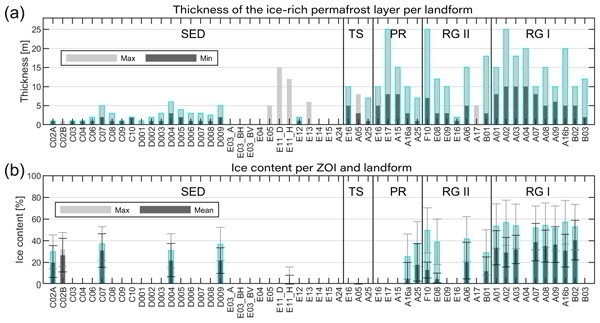
This study provides a comprehensive geophysical dataset on permafrost in the data-scarce Tien Shan and Pamir mountain regions of Central Asia. It also introduces a novel modeling method to quantify ground ice content across different landforms. The findings indicate that this approach is well suited for characterizing ice-rich permafrost, which is crucial for evaluating future water availability and assessing risks associated with thawing permafrost.
This study provides a comprehensive geophysical dataset on permafrost in the data-scarce Tien...


