
Articles | Volume 20, issue 6
https://doi.org/10.5194/tc-20-3533-2026
© Author(s) 2026. This work is distributed under
the Creative Commons Attribution 4.0 License.
the Creative Commons Attribution 4.0 License.
https://doi.org/10.5194/tc-20-3533-2026
© Author(s) 2026. This work is distributed under
the Creative Commons Attribution 4.0 License.
the Creative Commons Attribution 4.0 License.
Research article
| 
19 Jun 2026
Research article |
| 19 Jun 2026
| 19 Jun 2026
Inferring subglacial topography using physics informed machine learning constrained by two conservation laws
Mansa Krishna
CORRESPONDING AUTHOR

Department of Earth and Planetary Sciences, Dartmouth College, Hanover, NH 03755, USA
Gong Cheng
Department of Earth and Planetary Sciences, Dartmouth College, Hanover, NH 03755, USA
College of Surveying and Geo-informatics, Tongji University, China
Mathieu Morlighem
Department of Earth and Planetary Sciences, Dartmouth College, Hanover, NH 03755, USA
Related authors
Gong Cheng, Mansa Krishna, and Mathieu Morlighem
Geosci. Model Dev., 18, 5311–5327, https://doi.org/10.5194/gmd-18-5311-2025, https://doi.org/10.5194/gmd-18-5311-2025, 2025
Short summary
Short summary
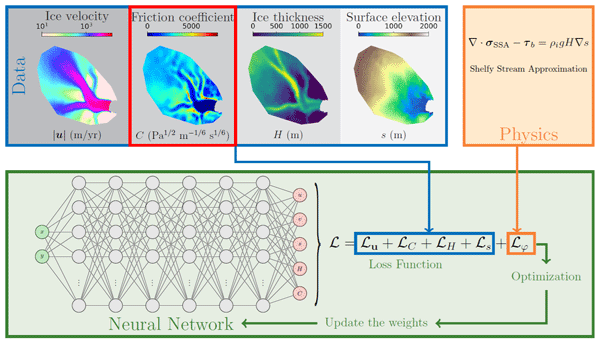
Predicting ice sheet contributions to sea level rise is challenging due to limited data and uncertainties in key processes. Traditional models require complex methods that lack flexibility. We developed PINNICLE (Physics-Informed Neural Networks for Ice and CLimatE), an open-source Python library that integrates machine learning with physical laws to improve ice sheet modeling. By combining data and physics, PINNICLE enhances predictions and adaptability, providing a powerful tool for climate research and sea level rise projections.
Jamie Barnett, Felicity A. Holmes, Sarah L. Greenwood, Mathieu Morlighem, Nina Kirchner, and Martin Jakobsson
The Cryosphere, 20, 3599–3617, https://doi.org/10.5194/tc-20-3599-2026, https://doi.org/10.5194/tc-20-3599-2026, 2026
Short summary
Short summary
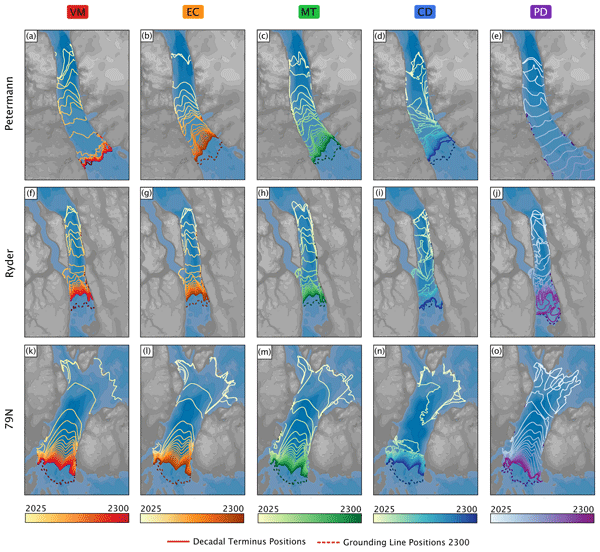
Computer models used to predict future change of the Greenland Ice Sheet are uncertain, especially in how they represent iceberg calving. We compare several calving approaches by testing model results against satellite observations of changes at three unique floating ice shelves in Greenland. We then extend the simulations to the year 2300 to explore future ice loss, finding that warming of the atmosphere or ocean is more important than the choice of calving method.
Adam J. Hepburn, Sammie Buzzard, Andrew J. Sole, Stephen J. Livingstone, Felix Ng, Mathieu Morlighem, Elizabeth A. Bagshaw, Caroline Clason, Lisa Craw, Christine Dow, Samuel Doyle, Jonathan Hawkins, Matthew Peacey, and Robert Storrar
EGUsphere, https://doi.org/10.5194/egusphere-2026-2948, https://doi.org/10.5194/egusphere-2026-2948, 2026
Short summary
Short summary
Lakes at glacier margins can drain beneath the ice in sudden, devastating, floods called jökulhlaup. We present the first 2D model of jökulhlaup propagation, first applying it to a synthetic glacier, before then assessing its ability to reproduce an observed record of lake fill-drain cycles in Greenland. Our results match a 17-year record of flood timing but underpredicts peak discharge likely because we are missing certain physical processes. Our results hold promise for simulating jökulhlaup.
Daniel Abele, Thomas Kleiner, Yannic Fischler, Benjamin Uekermann, Gerasimos Chourdakis, Mathieu Morlighem, Achim Basermann, Christian Bischof, Hans-Joachim Bungartz, and Angelika Humbert
Geosci. Model Dev., 19, 5019–5039, https://doi.org/10.5194/gmd-19-5019-2026, https://doi.org/10.5194/gmd-19-5019-2026, 2026
Short summary
Short summary
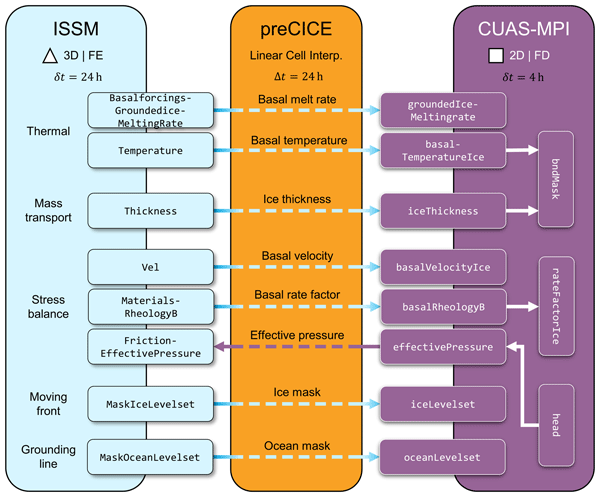
Accurate simulations of ice-sheet evolution require a multi-physics approach that captures the interaction between glaciers and their subglacial environment. For this purpose, we have extended ice sheet and subglacial hydrology models using a coupling library. This simplifies coupled Earth systems simulations by allowing models to interact with minimal effort and computational expense. We have evaluated the solution regarding performance and choice of coupling library.
Martin Rückamp, Gong Cheng, Karlheinz Gutjahr, Marco Möller, Petri K. E. Pellikka, and Christoph Mayer
The Cryosphere, 20, 2999–3024, https://doi.org/10.5194/tc-20-2999-2026, https://doi.org/10.5194/tc-20-2999-2026, 2026
Short summary
Short summary
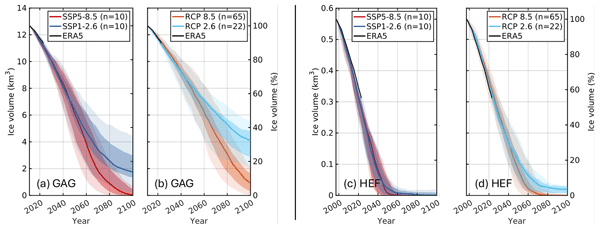
The study simulates the 21st-century evolution of Great Aletsch Glacier and Hintereisferner using full-Stokes ice dynamics and surface mass balance under different emission scenarios. Results show significant ice loss, with Hintereisferner expected to disappear by mid-century. Great Aletsch Glacier vanish by the end of the century under high-emission scenarios, but persist under lower-emission scenarios. These trends agree with large-scale models except some variability.
James R. Jordan, Frank Pattyn, Daniel Abele, Torsten Albrecht, Jorge Alvarez-Solas, Jowan M. Barnes, Tijn Berends, Jorge A. Bernales, Javier Blasco, Gong Cheng, Youngmin Choi, Stephen L. Cornford, Cruz Garcia-Molina, Fabien Gillet-Chaulet, G. Hilmar Gudmundsson, Angelika Humbert, Gunter R. Leguy, William H. Lipscomb, Marisa Montoya, Daniel Moreno-Parada, Mathieu Morlighem, Tyler Pelle, Alexander Robinson, Martin Rückamp, Hélène Seroussi, Yanmei Tian, Luisa Wagner, Roderick S. W. van de Wal, Liyun Zhao, and Thomas Zwinger
EGUsphere, https://doi.org/10.5194/egusphere-2026-1962, https://doi.org/10.5194/egusphere-2026-1962, 2026
Short summary
Short summary
Ice calving is a recent inclusion in ice sheet models and there has not been a systematic test of how well it has been implemented. We show that models can accurately represent a given rate of ice calving, properties at the ice front evolve smoothly during calving, and that there are no consistent differences in ice behaviour between various approaches to representing calving in numerical ice models. This gives us confidence in their ability for use in sea level rise prediction simulations.
Ankit Pramanik, Sarah L. Greenwood, Mathieu Morlighem, Jamie Barnett, Felicity A. Holmes, Richard Gyllencreutz, and Carl Regnéll
EGUsphere, https://doi.org/10.5194/egusphere-2026-172, https://doi.org/10.5194/egusphere-2026-172, 2026
Short summary
Short summary
Ice sheet/glacier retreat is driving expansion of glacial lakes impounded at the ice margin. Using an ice sheet model, we find that lake filling and drainage causes systematic changes to glacier thickness, velocity and mass loss. Rising lake levels dramatically increase mass loss as the ice margin becomes buoyant, while rapid lake drainage can drive crevassing and destabilise the margin. Steady lake drainage, in contrast, has a stabilising effect, and may mitigate mass loss and flood hazards.
Johanna Beckmann, Ronja Reese, Felicity S. McCormack, Sue Cook, Lawrence Bird, Dawid Gwyther, Daniel Richards, Matthias Scheiter, Yu Wang, Hélène Seroussi, Ayako Abe‐Ouchi, Torsten Albrecht, Jorge Alvarez‐Solas, Xylar S. Asay‐Davis, Jean‐Baptiste Barre, Constantijn J. Berends, Jorge Bernales, Javier Blasco, Justine Caillet, David M. Chandler, Violaine Coulon, Richard Cullather, Christophe Dumas, Benjamin K. Galton‐Fenzi, Julius Garbe, Fabien Gillet‐Chaulet, Rupert Gladstone, Heiko Goelzer, Nicholas R. Golledge, Ralf Greve, G. Hilmar Gudmundsson, Holly Kyeore Han, Trevor R. Hillebrand, Matthew J. Hoffman, Philippe Huybrechts, Nicolas C. Jourdain, Ann Kristin Klose, Petra M. Langebroek, Gunter R. Leguy, William H. Lipscomb, Daniel P. Lowry, Pierre Mathiot, Marisa Montoya, Mathieu Morlighem, Sophie Nowicki, Frank Pattyn, Antony J. Payne, Tyler Pelle, Aurélien Quiquet, Alexander Robinson, Leopekka Saraste, Erika G. Simon, Sainan Sun, Jake P. Twarog, Luke D. Trusel, Benoit Urruty, Jonas Van Breedam, Roderik S. W. van de Wal, Chen Zhao, and Thomas Zwinger
EGUsphere, https://doi.org/10.5194/egusphere-2025-4069, https://doi.org/10.5194/egusphere-2025-4069, 2025
Short summary
Short summary
Antarctica holds enough ice to raise sea levels by many meters, but its future is uncertain. Warm ocean water melts ice shelves from below, letting inland ice flow faster into the sea. By 2300, Antarctica could add 0.6–4.4 m to sea levels. Our study identifies two key factors—how strongly shelves melt and how the ice responds. These explain much of the range, and refining them in models may improve future predictions.
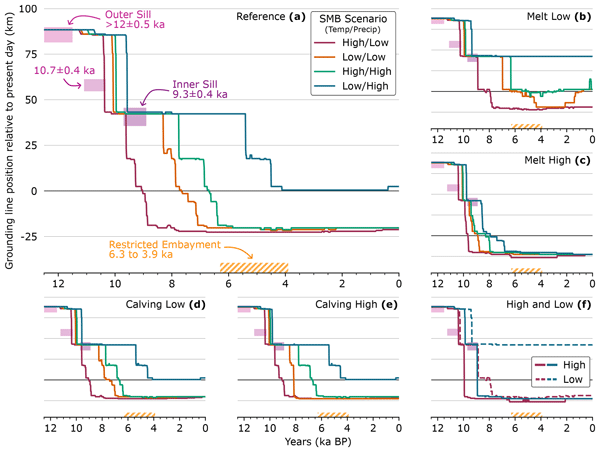
Jamie Barnett, Felicity A. Holmes, Joshua Cuzzone, Henning Åkesson, Mathieu Morlighem, Matt O'Regan, Johan Nilsson, Nina Kirchner, and Martin Jakobsson
The Cryosphere, 19, 3631–3653, https://doi.org/10.5194/tc-19-3631-2025, https://doi.org/10.5194/tc-19-3631-2025, 2025
Short summary
Short summary
Understanding how ice sheets have changed in the past can allow us to make better predictions for the future. By running a state-of-the-art model of Ryder Glacier, North Greenland, over the past 12 000 years we find that both a warming atmosphere and the ocean play a key role in the evolution of the glacier. Our conclusions stress that accurately quantifying the ice sheet’s interactions with the ocean is required to predict future changes and reliable sea level rise estimates.
Gong Cheng, Mansa Krishna, and Mathieu Morlighem
Geosci. Model Dev., 18, 5311–5327, https://doi.org/10.5194/gmd-18-5311-2025, https://doi.org/10.5194/gmd-18-5311-2025, 2025
Short summary
Short summary
Predicting ice sheet contributions to sea level rise is challenging due to limited data and uncertainties in key processes. Traditional models require complex methods that lack flexibility. We developed PINNICLE (Physics-Informed Neural Networks for Ice and CLimatE), an open-source Python library that integrates machine learning with physical laws to improve ice sheet modeling. By combining data and physics, PINNICLE enhances predictions and adaptability, providing a powerful tool for climate research and sea level rise projections.
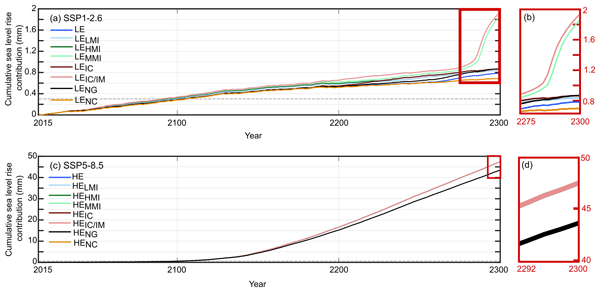
Felicity A. Holmes, Jamie Barnett, Henning Åkesson, Mathieu Morlighem, Johan Nilsson, Nina Kirchner, and Martin Jakobsson
The Cryosphere, 19, 2695–2714, https://doi.org/10.5194/tc-19-2695-2025, https://doi.org/10.5194/tc-19-2695-2025, 2025
Short summary
Short summary
Northern Greenland contains some of the ice sheet's last remaining glaciers with floating ice tongues. One of these is Ryder Glacier, which has been relatively stable in recent decades, in contrast to nearby glaciers. Here, we use a computer model to simulate Ryder Glacier until 2300 under both a low- and a high-emissions scenario. Very high levels of surface melt under a high-emissions future lead to a sea level rise contribution that is an order of magnitude higher than under a low-emissions future.
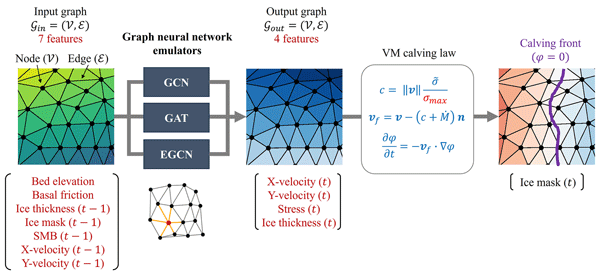
Younghyun Koo, Gong Cheng, Mathieu Morlighem, and Maryam Rahnemoonfar
The Cryosphere, 19, 2583–2599, https://doi.org/10.5194/tc-19-2583-2025, https://doi.org/10.5194/tc-19-2583-2025, 2025
Short summary
Short summary
Calving, the breaking of ice bodies from the terminus of a glacier, plays an important role in the mass losses of Greenland ice sheets. However, calving parameters have been poorly understood because of the intensive computational demands of traditional numerical models. To address this issue and find the optimal calving parameter that best represents real observations, we develop deep-learning emulators based on graph neural network architectures.
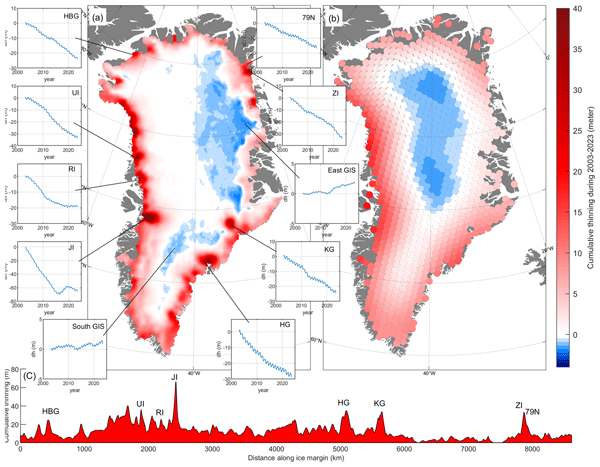
Shfaqat A. Khan, Helene Seroussi, Mathieu Morlighem, William Colgan, Veit Helm, Gong Cheng, Danjal Berg, Valentina R. Barletta, Nicolaj K. Larsen, William Kochtitzky, Michiel van den Broeke, Kurt H. Kjær, Andy Aschwanden, Brice Noël, Jason E. Box, Joseph A. MacGregor, Robert S. Fausto, Kenneth D. Mankoff, Ian M. Howat, Kuba Oniszk, Dominik Fahrner, Anja Løkkegaard, Eigil Y. H. Lippert, Alicia Bråtner, and Javed Hassan
Earth Syst. Sci. Data, 17, 3047–3071, https://doi.org/10.5194/essd-17-3047-2025, https://doi.org/10.5194/essd-17-3047-2025, 2025
Short summary
Short summary
The surface elevation of the Greenland Ice Sheet is changing due to surface mass balance processes and ice dynamics, each exhibiting distinct spatiotemporal patterns. Here, we employ satellite and airborne altimetry data with fine spatial (1 km) and temporal (monthly) resolutions to document this spatiotemporal evolution from 2003 to 2023. This dataset of fine-resolution altimetry data in both space and time will support studies of ice mass loss and be useful for GIS ice sheet modeling.
Joshua K. Cuzzone, Aaron Barth, Kelsey Barker, and Mathieu Morlighem
The Cryosphere, 19, 1559–1575, https://doi.org/10.5194/tc-19-1559-2025, https://doi.org/10.5194/tc-19-1559-2025, 2025
Short summary
Short summary
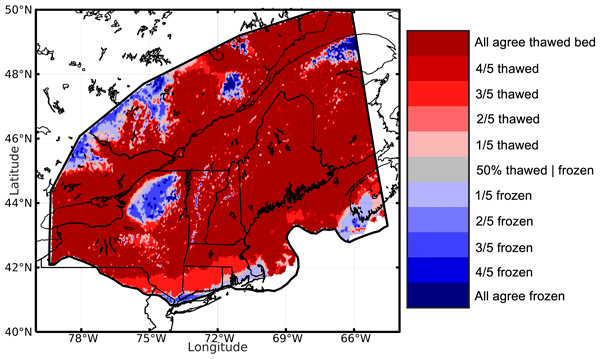
We use an ice sheet model to simulate the Last Glacial Maximum conditions of the Laurentide Ice Sheet (LIS) across the northeastern United States. A complex thermal history existed for the LIS that caused high erosion across most of the NE USA but prevented erosion across high-elevation mountain peaks and areas where ice flow was slow. This has implications for geologic studies which rely on the erosional nature of the LIS to reconstruct its glacial history and landscape evolution.
Francesca Baldacchino, Nicholas R. Golledge, Mathieu Morlighem, Huw Horgan, Alanna V. Alevropoulos-Borrill, Alena Malyarenko, Alexandra Gossart, Daniel P. Lowry, and Laurine van Haastrecht
The Cryosphere, 19, 107–127, https://doi.org/10.5194/tc-19-107-2025, https://doi.org/10.5194/tc-19-107-2025, 2025
Short summary
Short summary
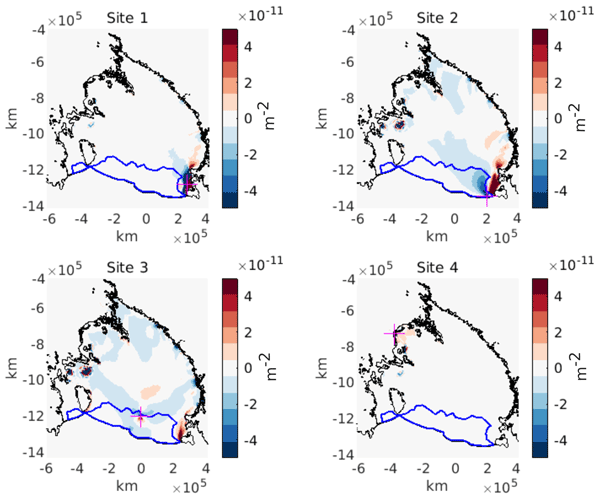
Understanding how the Ross Ice Shelf flow is changing in a warming world is important for predicting ice sheet change. Field measurements show clear intra-annual variations in ice flow; however, it is unclear what mechanisms drive this variability. We show that local perturbations in basal melt can have a significant impact on ice flow speed, but a combination of forcings is likely driving the observed variability in ice flow.
Gong Cheng, Mathieu Morlighem, and G. Hilmar Gudmundsson
Geosci. Model Dev., 17, 6227–6247, https://doi.org/10.5194/gmd-17-6227-2024, https://doi.org/10.5194/gmd-17-6227-2024, 2024
Short summary
Short summary
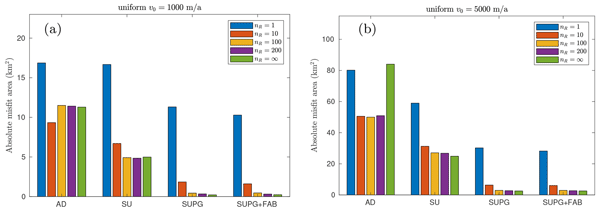
We conducted a comprehensive analysis of the stabilization and reinitialization techniques currently employed in ISSM and Úa for solving level-set equations, specifically those related to the dynamic representation of moving ice fronts within numerical ice sheet models. Our results demonstrate that the streamline upwind Petrov–Galerkin (SUPG) method outperforms the other approaches. We found that excessively frequent reinitialization can lead to exceptionally high errors in simulations.
In-Woo Park, Emilia Kyung Jin, Mathieu Morlighem, and Kang-Kun Lee
The Cryosphere, 18, 1139–1155, https://doi.org/10.5194/tc-18-1139-2024, https://doi.org/10.5194/tc-18-1139-2024, 2024
Short summary
Short summary
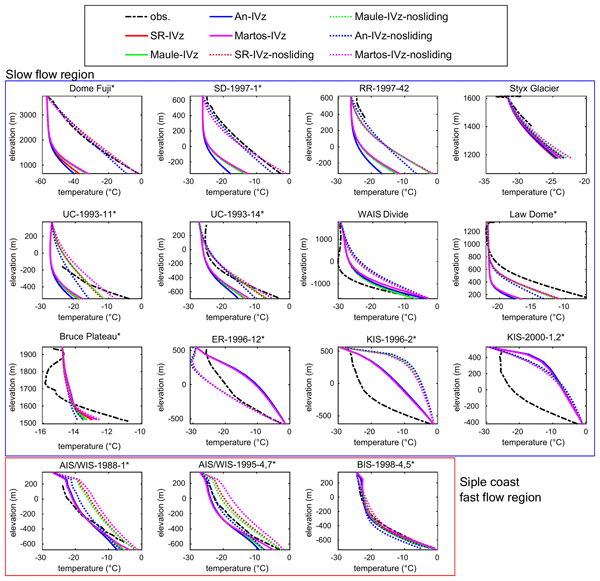
This study conducted 3D thermodynamic ice sheet model experiments, and modeled temperatures were compared with 15 observed borehole temperature profiles. We found that using incompressibility of ice without sliding agrees well with observed temperature profiles in slow-flow regions, while incorporating sliding in fast-flow regions captures observed temperature profiles. Also, the choice of vertical velocity scheme has a greater impact on the shape of the modeled temperature profile.
Anjali Sandip, Ludovic Räss, and Mathieu Morlighem
Geosci. Model Dev., 17, 899–909, https://doi.org/10.5194/gmd-17-899-2024, https://doi.org/10.5194/gmd-17-899-2024, 2024
Short summary
Short summary
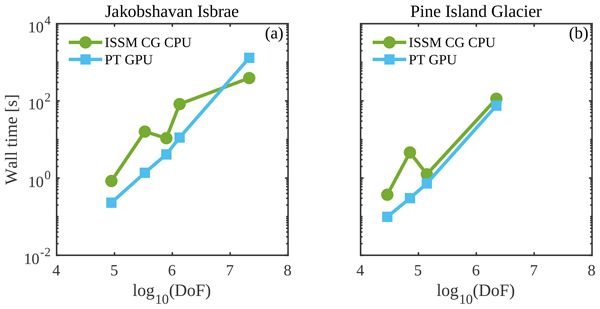
We solve momentum balance for unstructured meshes to predict ice flow for real glaciers using a pseudo-transient method on graphics processing units (GPUs) and compare it to a standard central processing unit (CPU) implementation. We justify the GPU implementation by applying the price-to-performance metric for up to million-grid-point spatial resolutions. This study represents a first step toward leveraging GPU processing power, enabling more accurate polar ice discharge predictions.
Youngmin Choi, Helene Seroussi, Mathieu Morlighem, Nicole-Jeanne Schlegel, and Alex Gardner
The Cryosphere, 17, 5499–5517, https://doi.org/10.5194/tc-17-5499-2023, https://doi.org/10.5194/tc-17-5499-2023, 2023
Short summary
Short summary
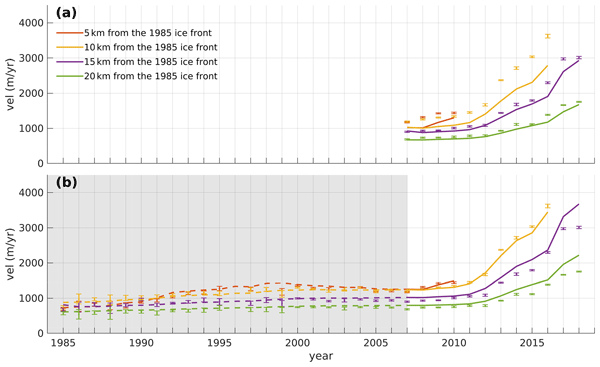
Ice sheet models are often initialized using snapshot observations of present-day conditions, but this approach has limitations in capturing the transient evolution of the system. To more accurately represent the accelerating changes in glaciers, we employed time-dependent data assimilation. We found that models calibrated with the transient data better capture past trends and more accurately reproduce changes after the calibration period, even with limited observations.
Hélène Seroussi, Vincent Verjans, Sophie Nowicki, Antony J. Payne, Heiko Goelzer, William H. Lipscomb, Ayako Abe-Ouchi, Cécile Agosta, Torsten Albrecht, Xylar Asay-Davis, Alice Barthel, Reinhard Calov, Richard Cullather, Christophe Dumas, Benjamin K. Galton-Fenzi, Rupert Gladstone, Nicholas R. Golledge, Jonathan M. Gregory, Ralf Greve, Tore Hattermann, Matthew J. Hoffman, Angelika Humbert, Philippe Huybrechts, Nicolas C. Jourdain, Thomas Kleiner, Eric Larour, Gunter R. Leguy, Daniel P. Lowry, Chistopher M. Little, Mathieu Morlighem, Frank Pattyn, Tyler Pelle, Stephen F. Price, Aurélien Quiquet, Ronja Reese, Nicole-Jeanne Schlegel, Andrew Shepherd, Erika Simon, Robin S. Smith, Fiammetta Straneo, Sainan Sun, Luke D. Trusel, Jonas Van Breedam, Peter Van Katwyk, Roderik S. W. van de Wal, Ricarda Winkelmann, Chen Zhao, Tong Zhang, and Thomas Zwinger
The Cryosphere, 17, 5197–5217, https://doi.org/10.5194/tc-17-5197-2023, https://doi.org/10.5194/tc-17-5197-2023, 2023
Short summary
Short summary
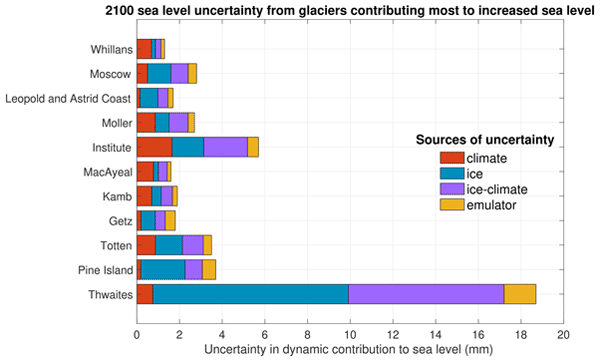
Mass loss from Antarctica is a key contributor to sea level rise over the 21st century, and the associated uncertainty dominates sea level projections. We highlight here the Antarctic glaciers showing the largest changes and quantify the main sources of uncertainty in their future evolution using an ensemble of ice flow models. We show that on top of Pine Island and Thwaites glaciers, Totten and Moscow University glaciers show rapid changes and a strong sensitivity to warmer ocean conditions.
Joel A. Wilner, Mathieu Morlighem, and Gong Cheng
The Cryosphere, 17, 4889–4901, https://doi.org/10.5194/tc-17-4889-2023, https://doi.org/10.5194/tc-17-4889-2023, 2023
Short summary
Short summary
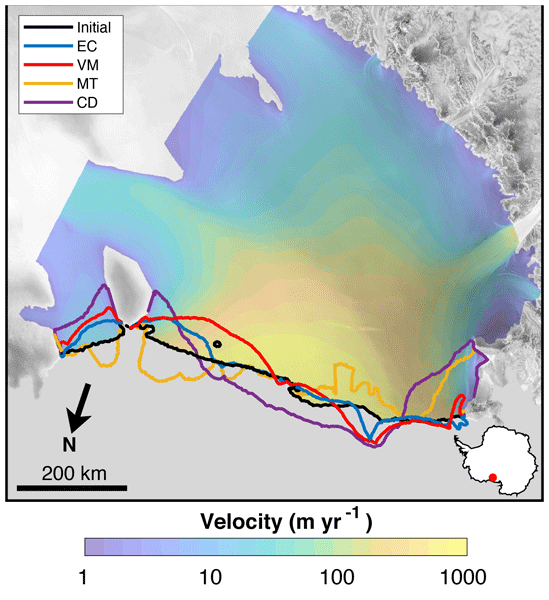
We use numerical modeling to study iceberg calving off of ice shelves in Antarctica. We examine four widely used mathematical descriptions of calving (
calving laws), under the assumption that Antarctic ice shelf front positions should be in steady state under the current climate forcing. We quantify how well each of these calving laws replicates the observed front positions. Our results suggest that the eigencalving and von Mises laws are most suitable for Antarctic ice shelves.
Alice C. Frémand, Peter Fretwell, Julien A. Bodart, Hamish D. Pritchard, Alan Aitken, Jonathan L. Bamber, Robin Bell, Cesidio Bianchi, Robert G. Bingham, Donald D. Blankenship, Gino Casassa, Ginny Catania, Knut Christianson, Howard Conway, Hugh F. J. Corr, Xiangbin Cui, Detlef Damaske, Volkmar Damm, Reinhard Drews, Graeme Eagles, Olaf Eisen, Hannes Eisermann, Fausto Ferraccioli, Elena Field, René Forsberg, Steven Franke, Shuji Fujita, Yonggyu Gim, Vikram Goel, Siva Prasad Gogineni, Jamin Greenbaum, Benjamin Hills, Richard C. A. Hindmarsh, Andrew O. Hoffman, Per Holmlund, Nicholas Holschuh, John W. Holt, Annika N. Horlings, Angelika Humbert, Robert W. Jacobel, Daniela Jansen, Adrian Jenkins, Wilfried Jokat, Tom Jordan, Edward King, Jack Kohler, William Krabill, Mette Kusk Gillespie, Kirsty Langley, Joohan Lee, German Leitchenkov, Carlton Leuschen, Bruce Luyendyk, Joseph MacGregor, Emma MacKie, Kenichi Matsuoka, Mathieu Morlighem, Jérémie Mouginot, Frank O. Nitsche, Yoshifumi Nogi, Ole A. Nost, John Paden, Frank Pattyn, Sergey V. Popov, Eric Rignot, David M. Rippin, Andrés Rivera, Jason Roberts, Neil Ross, Anotonia Ruppel, Dustin M. Schroeder, Martin J. Siegert, Andrew M. Smith, Daniel Steinhage, Michael Studinger, Bo Sun, Ignazio Tabacco, Kirsty Tinto, Stefano Urbini, David Vaughan, Brian C. Welch, Douglas S. Wilson, Duncan A. Young, and Achille Zirizzotti
Earth Syst. Sci. Data, 15, 2695–2710, https://doi.org/10.5194/essd-15-2695-2023, https://doi.org/10.5194/essd-15-2695-2023, 2023
Short summary
Short summary
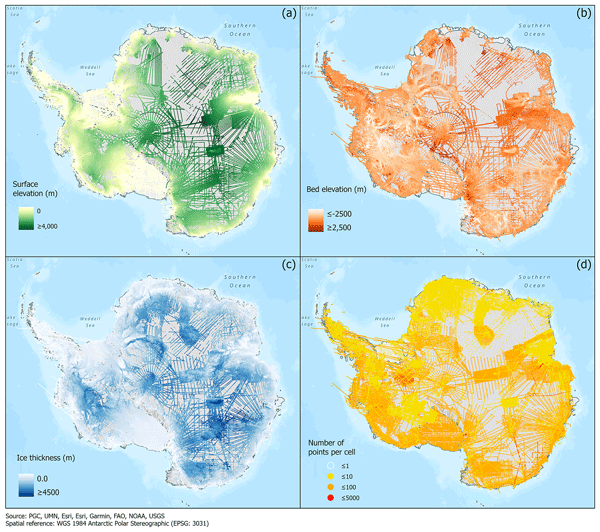
This paper presents the release of over 60 years of ice thickness, bed elevation, and surface elevation data acquired over Antarctica by the international community. These data are a crucial component of the Antarctic Bedmap initiative which aims to produce a new map and datasets of Antarctic ice thickness and bed topography for the international glaciology and geophysical community.
Francesca Baldacchino, Mathieu Morlighem, Nicholas R. Golledge, Huw Horgan, and Alena Malyarenko
The Cryosphere, 16, 3723–3738, https://doi.org/10.5194/tc-16-3723-2022, https://doi.org/10.5194/tc-16-3723-2022, 2022
Short summary
Short summary
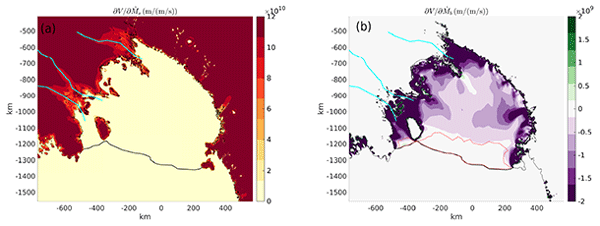
Understanding how the Ross Ice Shelf will evolve in a warming world is important to the future stability of Antarctica. It remains unclear what changes could drive the largest mass loss in the future and where places are most likely to trigger larger mass losses. Sensitivity maps are modelled showing that the RIS is sensitive to changes in environmental and glaciological controls at regions which are currently experiencing changes. These regions need to be monitored in a warming world.

Joshua K. Cuzzone, Nicolás E. Young, Mathieu Morlighem, Jason P. Briner, and Nicole-Jeanne Schlegel
The Cryosphere, 16, 2355–2372, https://doi.org/10.5194/tc-16-2355-2022, https://doi.org/10.5194/tc-16-2355-2022, 2022
Short summary
Short summary
We use an ice sheet model to determine what influenced the Greenland Ice Sheet to retreat across a portion of southwestern Greenland during the Holocene (about the last 12 000 years). Our simulations, constrained by observations from geologic markers, show that atmospheric warming and ice melt primarily caused the ice sheet to retreat rapidly across this domain. We find, however, that iceberg calving at the interface where the ice meets the ocean significantly influenced ice mass change.
Yannic Fischler, Martin Rückamp, Christian Bischof, Vadym Aizinger, Mathieu Morlighem, and Angelika Humbert
Geosci. Model Dev., 15, 3753–3771, https://doi.org/10.5194/gmd-15-3753-2022, https://doi.org/10.5194/gmd-15-3753-2022, 2022
Short summary
Short summary
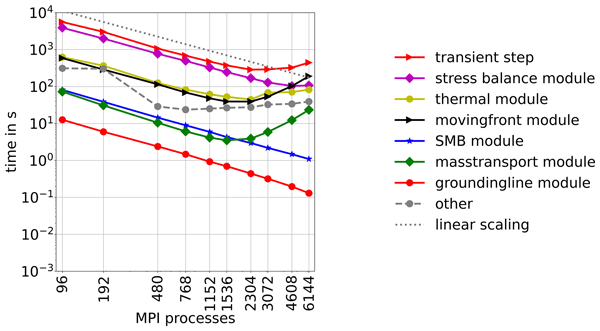
Ice sheet models are used to simulate the changes of ice sheets in future but are currently often run in coarse resolution and/or with neglecting important physics to make them affordable in terms of computational costs. We conducted a study simulating the Greenland Ice Sheet in high resolution and adequate physics to test where the ISSM ice sheet code is using most time and what could be done to improve its performance for future computer architectures that allow massive parallel computing.
Thomas Frank, Henning Åkesson, Basile de Fleurian, Mathieu Morlighem, and Kerim H. Nisancioglu
The Cryosphere, 16, 581–601, https://doi.org/10.5194/tc-16-581-2022, https://doi.org/10.5194/tc-16-581-2022, 2022
Short summary
Short summary
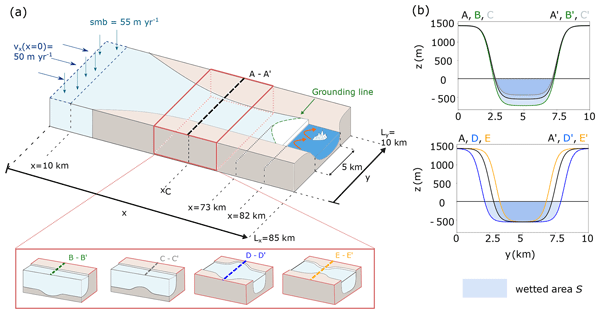
The shape of a fjord can promote or inhibit glacier retreat in response to climate change. We conduct experiments with a synthetic setup under idealized conditions in a numerical model to study and quantify the processes involved. We find that friction between ice and fjord is the most important factor and that it is possible to directly link ice discharge and grounding line retreat to fjord topography in a quantitative way.

Thiago Dias dos Santos, Mathieu Morlighem, and Douglas Brinkerhoff
The Cryosphere, 16, 179–195, https://doi.org/10.5194/tc-16-179-2022, https://doi.org/10.5194/tc-16-179-2022, 2022
Short summary
Short summary
Projecting the future evolution of Greenland and Antarctica and their potential contribution to sea level rise often relies on computer simulations carried out by numerical ice sheet models. Here we present a new vertically integrated ice sheet model and assess its performance using different benchmarks. The new model shows results comparable to a three-dimensional model at relatively lower computational cost, suggesting that it is an excellent alternative for long-term simulations.
Cited articles
Aschwanden, A., Bartholomaus, T. C., Brinkerhoff, D. J., and Truffer, M.: Brief communication: A roadmap towards credible projections of ice sheet contribution to sea level, The Cryosphere, 15, 5705–5715, https://doi.org/10.5194/tc-15-5705-2021, 2021. a
Bamber, J. L., Layberry, R. L., and Gogineni, S. P.: A new ice thickness and bed data set for the Greenland ice sheet: 1. Measurement, data reduction, and errors, J. Geophys. Res.-Atmos., 106, 33773–33780, https://doi.org/10.1029/2001JD900054, 2001. a
Bamber, J. L., Griggs, J. A., Hurkmans, R. T. W. L., Dowdeswell, J. A., Gogineni, S. P., Howat, I., Mouginot, J., Paden, J., Palmer, S., Rignot, E., and Steinhage, D.: A new bed elevation dataset for Greenland, The Cryosphere, 7, 499–510, https://doi.org/10.5194/tc-7-499-2013, 2013. a
Blatter, H.: Velocity and stress fields in grounded glaciers: a simple algorithm for including deviatoric stress gradients, J. Glaciol., 41, 333–344, https://doi.org/10.3189/S002214300001621X, 1995. a
Castleman, B. A., Schlegel, N.-J., Caron, L., Larour, E., and Khazendar, A.: Derivation of bedrock topography measurement requirements for the reduction of uncertainty in ice-sheet model projections of Thwaites Glacier, The Cryosphere, 16, 761–778, https://doi.org/10.5194/tc-16-761-2022, 2022. a
Catania, G. A., Stearns, L. A., Sutherland, D. A., Fried, M. J., Bartholomaus, T. C., Morlighem, M., Shroyer, E., and Nash, J.: Geometric Controls on Tidewater Glacier Retreat in Central Western Greenland, Journal of Geophys. Res.-Earth, 123, 2024–2038, https://doi.org/10.1029/2017JF004499, 2018. a
Cheng, G., Morlighem, M., and Francis, S.: Forward and Inverse Modeling of Ice Sheet Flow Using Physics-Informed Neural Networks: Application to Helheim Glacier, Greenland, Journal of Geophysical Research: Machine Learning and Computation, 1, https://doi.org/10.1029/2024JH000169, 2024. a, b, c, d, e, f, g, h, i, j
Cheng, G., Krishna, M., and Francis, S.: ISSMteam/PINNICLE: v0.1, Zenodo [code], https://doi.org/10.5281/zenodo.14889235, 2025a. a
Dias dos Santos, T., Morlighem, M., and Brinkerhoff, D.: A new vertically integrated MOno-Layer Higher-Order (MOLHO) ice flow model, The Cryosphere, 16, 179–195, https://doi.org/10.5194/tc-16-179-2022, 2022. a
Durand, G., Gagliardini, O., Favier, L., Zwinger, T., and le Meur, E.: Impact of bedrock description on modeling ice sheet dynamics, Geophys. Res. Lett., 38, https://doi.org/10.1029/2011GL048892, 2011. a
Evans, S. and Robin, G. d. Q.: Glacier Depth-Sounding from the Air, Nature, 210, 883–885, https://doi.org/10.1038/210883a0, 1966. a
Farinotti, D., Huss, M., Bauder, A., Funk, M., and Truffer, M.: A method to estimate the ice volume and ice-thickness distribution of alpine glaciers, J. Glaciol., 55, 422–430, https://doi.org/10.3189/002214309788816759, 2009. a
Farinotti, D., Brinkerhoff, D. J., Clarke, G. K. C., Fürst, J. J., Frey, H., Gantayat, P., Gillet-Chaulet, F., Girard, C., Huss, M., Leclercq, P. W., Linsbauer, A., Machguth, H., Martin, C., Maussion, F., Morlighem, M., Mosbeux, C., Pandit, A., Portmann, A., Rabatel, A., Ramsankaran, R., Reerink, T. J., Sanchez, O., Stentoft, P. A., Singh Kumari, S., van Pelt, W. J. J., Anderson, B., Benham, T., Binder, D., Dowdeswell, J. A., Fischer, A., Helfricht, K., Kutuzov, S., Lavrentiev, I., McNabb, R., Gudmundsson, G. H., Li, H., and Andreassen, L. M.: How accurate are estimates of glacier ice thickness? Results from ITMIX, the Ice Thickness Models Intercomparison eXperiment, The Cryosphere, 11, 949–970, https://doi.org/10.5194/tc-11-949-2017, 2017. a
Gagliardini, O., Cohen, D., Råback, P., and Zwinger, T.: Finite-element modeling of subglacial cavities and related friction law, Journal of Geophys. Res.-Earth, 112, https://doi.org/10.1029/2006JF000576, 2007. a
Glen, J. W.: The flow law of ice: A discussion of the assumptions made in glacier theory, their experimental foundations and consequences., IAHS Publ., 47, 171–183, 1958. a
Goelzer, H., Robinson, A., Seroussi, H., and van de Wal, R. S. W.: Recent Progress in Greenland Ice Sheet Modelling, Current Climate Change Reports, 3, 291–302, https://doi.org/10.1007/s40641-017-0073-y, 2017. a
Goelzer, H., Nowicki, S., Edwards, T., Beckley, M., Abe-Ouchi, A., Aschwanden, A., Calov, R., Gagliardini, O., Gillet-Chaulet, F., Golledge, N. R., Gregory, J., Greve, R., Humbert, A., Huybrechts, P., Kennedy, J. H., Larour, E., Lipscomb, W. H., Le clec'h, S., Lee, V., Morlighem, M., Pattyn, F., Payne, A. J., Rodehacke, C., Rückamp, M., Saito, F., Schlegel, N., Seroussi, H., Shepherd, A., Sun, S., van de Wal, R., and Ziemen, F. A.: Design and results of the ice sheet model initialisation experiments initMIP-Greenland: an ISMIP6 intercomparison, The Cryosphere, 12, 1433–1460, https://doi.org/10.5194/tc-12-1433-2018, 2018. a
Goelzer, H., Nowicki, S., Payne, A., Larour, E., Seroussi, H., Lipscomb, W. H., Gregory, J., Abe-Ouchi, A., Shepherd, A., Simon, E., Agosta, C., Alexander, P., Aschwanden, A., Barthel, A., Calov, R., Chambers, C., Choi, Y., Cuzzone, J., Dumas, C., Edwards, T., Felikson, D., Fettweis, X., Golledge, N. R., Greve, R., Humbert, A., Huybrechts, P., Le clec'h, S., Lee, V., Leguy, G., Little, C., Lowry, D. P., Morlighem, M., Nias, I., Quiquet, A., Rückamp, M., Schlegel, N.-J., Slater, D. A., Smith, R. S., Straneo, F., Tarasov, L., van de Wal, R., and van den Broeke, M.: The future sea-level contribution of the Greenland ice sheet: a multi-model ensemble study of ISMIP6, The Cryosphere, 14, 3071–3096, https://doi.org/10.5194/tc-14-3071-2020, 2020. a
Howat, I. M., Negrete, A., and Smith, B. E.: The Greenland Ice Mapping Project (GIMP) land classification and surface elevation data sets, The Cryosphere, 8, 1509–1518, https://doi.org/10.5194/tc-8-1509-2014, 2014. a, b, c
ISSM Team: Ice-sheet and Sea-level System Model source code, v4.23 r27696, Zenodo [code], https://doi.org/10.5281/zenodo.7850841, 2023. a
Iwasaki, Y. and Lai, C.-Y.: One-dimensional ice shelf hardness inversion: Clustering behavior and collocation resampling in physics-informed neural networks, J. Comput. Phys., 492, https://doi.org/10.1016/j.jcp.2023.112435, 2023. a
Joughin, I., Smith, B. E., and Howat, I. M.: A complete map of Greenland ice velocity derived from satellite data collected over 20 years, J. Glaciol., 64, 1–11, https://doi.org/10.1017/jog.2017.73, 2018. a, b, c
Jouvet, G.: Inversion of a Stokes glacier flow model emulated by deep learning, J. Glaciol., 69, 13–26, https://doi.org/10.1017/jog.2022.41, 2023. a
Karniadakis, G. E., Kevrekidis, I. G., Lu, L., Perdikaris, P., Wang, S., and Yang, L.: Physics-informed machine learning, Nature Reviews Physics, 3, 422–440, https://doi.org/10.1038/s42254-021-00314-5, 2021. a, b
Krishna, M.: mansakrishna23/BedMappingPINN: BedMappingPINN (v3.0.0), Zenodo [code], https://doi.org/10.5281/zenodo.20182294, 2026. a
Krishnapriyan, A., Gholami, A., Zhe, S., Kirby, R., and Mahoney, M. W.: Characterizing possible failure modes in physics-informed neural networks, in: Advances in Neural Information Processing Systems, edited by Ranzato, M., Beygelzimer, A., Dauphin, Y., Liang, P., and Vaughan, J. W., vol. 34, 26548–26560, Curran Associates, Inc., https://proceedings.neurips.cc/paper_files/paper/2021/file/df438e5206f31600e6ae4af72f2725f1-Paper.pdf (last access: 12 June 2026), 2021. a
Larour, E., Seroussi, H., Morlighem, M., and Rignot, E.: Continental scale, high order, high spatial resolution, ice sheet modeling using the Ice Sheet System Model (ISSM), J. Geophys. Res.-Earth, 117, https://doi.org/10.1029/2011JF002140, 2012. a, b
MacAyeal, D. R.: Large-scale ice flow over a viscous basal sediment: Theory and application to ice stream B, Antarctica, J. Geophys. Res.-Sol. Ea., 94, 4071–4087, https://doi.org/10.1029/JB094iB04p04071, 1989. a
Morland, L. W.: Unconfined Ice-Shelf Flow, in: Dynamics of the West Antarctic Ice Sheet, edited by Van der Veen, C. J. and Oerlemans, J., 99–116, Springer Netherlands, Dordrecht, https://doi.org/10.1007/978-94-009-3745-1_6, 1987. a
Morlighem, M.: MEaSUREs BedMachine Antarctica, Version 4, NASA National Snow and Ice Data Center Distributed Active Archive Center [data set], https://doi.org/10.5067/POJQI54A45HX, 2025. a, b
Morlighem, M., Rignot, E., Seroussi, H., Larour, E., Ben Dhia, H., and Aubry, D.: A mass conservation approach for mapping glacier ice thickness, Geophys. Res. Lett., 38, https://doi.org/10.1029/2011GL048659, 2011. a
Morlighem, M., Seroussi, H., Larour, E., and Rignot, E.: Inversion of basal friction in Antarctica using exact and incomplete adjoints of a higher-order model, J. Geophys. Res.-Earth, 118, 1746–1753, https://doi.org/10.1002/jgrf.20125, 2013. a
Morlighem, M., Williams, C. N., Rignot, E., An, L., Arndt, J. E., Bamber, J. L., Catania, G., Chauche, N., Dowdeswell, J. A., Dorschel, B., Fenty, I., Hogan, K., Howat, I., Hubbard, A., Jakobsson, M., Jordan, T. M., Kjeldsen, K. K., Millan, R., Mayer, L., Mouginot, J., Noel, B. P. Y., O'Cofaigh, C., Palmer, S., Rysgaard, S., Seroussi, H., Siegert, M. J., Slabon, P., Straneo, F., van den Broeke, M. R., Weinrebe, W., Wood, M., and Zinglersen, K. B.: BedMachine v3: Complete Bed Topography and Ocean Bathymetry Mapping of Greenland From Multibeam Echo Sounding Combined With Mass Conservation, Geophys. Res. Lett., 44, 11051–11061, https://doi.org/10.1002/2017GL074954, 2017. a, b, c, d
Morlighem, M., Wood, M., Seroussi, H., Choi, Y., and Rignot, E.: Modeling the response of northwest Greenland to enhanced ocean thermal forcing and subglacial discharge, The Cryosphere, 13, 723–734, https://doi.org/10.5194/tc-13-723-2019, 2019. a
Morlighem, M., Rignot, E., Binder, T., Blankenship, D., Drews, R., Eagles, G., Eisen, O., Ferraccioli, F., Forsberg, R., Fretwell, P., Goel, V., Greenbaum, J. S., Gudmundsson, H., Guo, J., Helm, V., Hofstede, C., Howat, I., Humbert, A., Jokat, W., Karlsson, N. B., Lee, W. S., Matsuoka, K., Millan, R., Mouginot, J., Paden, J., Pattyn, F., Roberts, J., Rosier, S., Ruppel, A., Seroussi, H., Smith, E. C., Steinhage, D., Sun, B., van den Broeke, M. R., van Ommen, T. D., van Wessem, M., and Young, D. A.: Deep glacial troughs and stabilizing ridges unveiled beneath the margins of the Antarctic ice sheet, Nat. Geosci., 13, 132–137, https://doi.org/10.1038/s41561-019-0510-8, 2020. a, b
Morlighem, M., Williams, C., Rignot, E., An, L., Arndt, J. E., Bamber, J., Catania, G., Chauché, N., Dowdeswell, J. A., Dorschel, B., Fenty, I., Hogan, K., Howat, I., Hubbard, A., Jakobsson, M., Jordan, T. M., Kjeldsen, K. K., Millan, R., Mayer, L., Mouginot, J., Noël, B., O'Cofaigh, C., Palmer, S. J., Rysgaard, S., Seroussi, H., Siegert, M. J., Slabon, P., Straneo, F., van den Broeke, M. R., Weinrebe, W., Wood, M., and Zinglersen, K.: IceBridge BedMachine Greenland, Version 6, NASA National Snow and Ice Data Center Distributed Active Archive Center [data set], https://doi.org/10.5067/6B6B225B8V2D, 2025. a, b, c
Noël, B., van de Berg, W. J., Machguth, H., Lhermitte, S., Howat, I., Fettweis, X., and van den Broeke, M. R.: A daily, 1 km resolution data set of downscaled Greenland ice sheet surface mass balance (1958–2015), The Cryosphere, 10, 2361–2377, https://doi.org/10.5194/tc-10-2361-2016, 2016. a, b, c
Nowicki, S., Goelzer, H., Seroussi, H., Payne, A. J., Lipscomb, W. H., Abe-Ouchi, A., Agosta, C., Alexander, P., Asay-Davis, X. S., Barthel, A., Bracegirdle, T. J., Cullather, R., Felikson, D., Fettweis, X., Gregory, J. M., Hattermann, T., Jourdain, N. C., Kuipers Munneke, P., Larour, E., Little, C. M., Morlighem, M., Nias, I., Shepherd, A., Simon, E., Slater, D., Smith, R. S., Straneo, F., Trusel, L. D., van den Broeke, M. R., and van de Wal, R.: Experimental protocol for sea level projections from ISMIP6 stand-alone ice sheet models, The Cryosphere, 14, 2331–2368, https://doi.org/10.5194/tc-14-2331-2020, 2020. a
Nowicki, S. M. J., Payne, A., Larour, E., Seroussi, H., Goelzer, H., Lipscomb, W., Gregory, J., Abe-Ouchi, A., and Shepherd, A.: Ice Sheet Model Intercomparison Project (ISMIP6) contribution to CMIP6, Geosci. Model Dev., 9, 4521–4545, https://doi.org/10.5194/gmd-9-4521-2016, 2016. a
Otosaka, I. N., Shepherd, A., Ivins, E. R., Schlegel, N.-J., Amory, C., van den Broeke, M. R., Horwath, M., Joughin, I., King, M. D., Krinner, G., Nowicki, S., Payne, A. J., Rignot, E., Scambos, T., Simon, K. M., Smith, B. E., Sørensen, L. S., Velicogna, I., Whitehouse, P. L., A, G., Agosta, C., Ahlstrøm, A. P., Blazquez, A., Colgan, W., Engdahl, M. E., Fettweis, X., Forsberg, R., Gallée, H., Gardner, A., Gilbert, L., Gourmelen, N., Groh, A., Gunter, B. C., Harig, C., Helm, V., Khan, S. A., Kittel, C., Konrad, H., Langen, P. L., Lecavalier, B. S., Liang, C.-C., Loomis, B. D., McMillan, M., Melini, D., Mernild, S. H., Mottram, R., Mouginot, J., Nilsson, J., Noël, B., Pattle, M. E., Peltier, W. R., Pie, N., Roca, M., Sasgen, I., Save, H. V., Seo, K.-W., Scheuchl, B., Schrama, E. J. O., Schröder, L., Simonsen, S. B., Slater, T., Spada, G., Sutterley, T. C., Vishwakarma, B. D., van Wessem, J. M., Wiese, D., van der Wal, W., and Wouters, B.: Mass balance of the Greenland and Antarctic ice sheets from 1992 to 2020, Earth Syst. Sci. Data, 15, 1597–1616, https://doi.org/10.5194/essd-15-1597-2023, 2023. a
Paden, J., Li, J., Leuschen, C., Rodriguez-Morales, F., and Hale., R.: IceBridge MCoRDS L2 Ice Thickness, Version 1, NASA National Snow and Ice Data Center Distributed Active Archive Center [data set], https://doi.org/10.5067/GDQ0CUCVTE2Q, 2019. a, b
Palmer, S., Kirkwood, C., Luo, C., and Morlighem, M.: A quantile regression forest estimate of Greenland’s subglacial topography, J. Glaciol., 71, e115, https://doi.org/10.1017/jog.2025.10071, 2025. a, b, c, d
Pattyn, F.: A new three-dimensional higher-order thermomechanical ice sheet model: Basic sensitivity, ice stream development, and ice flow across subglacial lakes, J. Geophys. Res.-Sol. Ea., 108, https://doi.org/10.1029/2002JB002329, 2003. a
Perego, M., Price, S., and Stadler, G.: Optimal initial conditions for coupling ice sheet models to Earth system models, J. Geophys. Res.-Earth, 119, 1894–1917, https://doi.org/10.1002/2014JF003181, 2014. a
Pritchard, H. D., Fretwell, P. T., Fremand, A. C., Bodart, J. A., Kirkham, J. D., Aitken, A., Bamber, J., Bell, R., Bianchi, C., Bingham, R. G., Blankenship, D. D., Casassa, G., Christianson, K., Conway, H., Corr, H. F. J., Cui, X., Damaske, D., Damm, V., Dorschel, B., Drews, R., Eagles, G., Eisen, O., Eisermann, H., Ferraccioli, F., Field, E., Forsberg, R., Franke, S., Goel, V., Gogineni, S. P., Greenbaum, J., Hills, B., Hindmarsh, R. C. A., Hoffman, A. O., Holschuh, N., Holt, J. W., Humbert, A., Jacobel, R. W., Jansen, D., Jenkins, A., Jokat, W., Jong, L., Jordan, T. A., King, E. C., Kohler, J., Krabill, W., Maton, J., Gillespie, M. K., Langley, K., Lee, J., Leitchenkov, G., Leuschen, C., Luyendyk, B., MacGregor, J. A., MacKie, E., Moholdt, G., Matsuoka, K., Morlighem, M., Mouginot, J., Nitsche, F. O., Nost, O. A., Paden, J., Pattyn, F., Popov, S., Rignot, E., Rippin, D. M., Rivera, A., Roberts, J. L., Ross, N., Ruppel, A., Schroeder, D. M., Siegert, M. J., Smith, A. M., Steinhage, D., Studinger, M., Sun, B., Tabacco, I., Tinto, K. J., Urbini, S., Vaughan, D. G., Wilson, D. S., Young, D. A., and Zirizzotti, A.: Bedmap3 updated ice bed, surface and thickness gridded datasets for Antarctica, Scientific Data, 12, 414, https://doi.org/10.1038/s41597-025-04672-y, 2025. a
Raissi, M., Perdikaris, P., and Karniadakis, G.: Physics-informed neural networks: A deep learning framework for solving forward and inverse problems involving nonlinear partial differential equations, J. Comput. Phys., 378, 686–707, https://doi.org/10.1016/j.jcp.2018.10.045, 2019. a, b, c
Riel, B. and Minchew, B.: Variational inference of ice shelf rheology with physics-informed machine learning, J. Glaciol., 69, 1167–1186, https://doi.org/10.1017/jog.2023.8, 2023. a
Riel, B., Minchew, B., and Bischoff, T.: Data-Driven Inference of the Mechanics of Slip Along Glacier Beds Using Physics-Informed Neural Networks: Case Study on Rutford Ice Stream, Antarctica, J. Adv. Model. Earth Sy., 13, https://doi.org/10.1029/2021MS002621, 2021. a
Rutishauser, A., Maurer, H., and Bauder, A.: Helicopter-borne ground-penetrating radar investigations on temperate alpine glaciers: A comparison of different systems and their abilities for bedrock mapping, Geophysics, 81, WA119–WA129, https://doi.org/10.1190/geo2015-0144.1, 2016. a
Sandberg Sørensen, L., Simonsen, S. B., Forsberg, R., Stenseng, L., Skourup, H., Savstrup Kristensen, S., and Colgan, W.: Circum-Greenland, ice-thickness measurements collected during PROMICE airborne surveys in 2007, 2011 and 2015, GEUS Bulletin, 41, 79–82, https://doi.org/10.34194/geusb.v41.4348, 2018. a, b
Schoof, C.: Ice-sheet acceleration driven by melt supply variability, Nature, 468, 803–806, https://doi.org/10.1038/nature09618, 2010. a
Schoof, C.: Marine ice sheet stability, J. Fluid Mech., 698, 62–72, https://doi.org/10.1017/jfm.2012.43, 2012. a
Seroussi, H., Nowicki, S., Payne, A. J., Goelzer, H., Lipscomb, W. H., Abe-Ouchi, A., Agosta, C., Albrecht, T., Asay-Davis, X., Barthel, A., Calov, R., Cullather, R., Dumas, C., Galton-Fenzi, B. K., Gladstone, R., Golledge, N. R., Gregory, J. M., Greve, R., Hattermann, T., Hoffman, M. J., Humbert, A., Huybrechts, P., Jourdain, N. C., Kleiner, T., Larour, E., Leguy, G. R., Lowry, D. P., Little, C. M., Morlighem, M., Pattyn, F., Pelle, T., Price, S. F., Quiquet, A., Reese, R., Schlegel, N.-J., Shepherd, A., Simon, E., Smith, R. S., Straneo, F., Sun, S., Trusel, L. D., Van Breedam, J., van de Wal, R. S. W., Winkelmann, R., Zhao, C., Zhang, T., and Zwinger, T.: ISMIP6 Antarctica: a multi-model ensemble of the Antarctic ice sheet evolution over the 21st century, The Cryosphere, 14, 3033–3070, https://doi.org/10.5194/tc-14-3033-2020, 2020. a, b
Seroussi, H., Pelle, T., Lipscomb, W. H., Abe-Ouchi, A., Albrecht, T., Alvarez-Solas, J., Asay-Davis, X., Barre, J.-B., Berends, C. J., Bernales, J., Blasco, J., Caillet, J., Chandler, D. M., Coulon, V., Cullather, R., Dumas, C., Galton-Fenzi, B. K., Garbe, J., Gillet-Chaulet, F., Gladstone, R., Goelzer, H., Golledge, N., Greve, R., Gudmundsson, G. H., Han, H. K., Hillebrand, T. R., Hoffman, M. J., Huybrechts, P., Jourdain, N. C., Klose, A. K., Langebroek, P. M., Leguy, G. R., Lowry, D. P., Mathiot, P., Montoya, M., Morlighem, M., Nowicki, S., Pattyn, F., Payne, A. J., Quiquet, A., Reese, R., Robinson, A., Saraste, L., Simon, E. G., Sun, S., Twarog, J. P., Trusel, L. D., Urruty, B., Van Breedam, J., van de Wal, R. S. W., Wang, Y., Zhao, C., and Zwinger, T.: Evolution of the Antarctic Ice Sheet Over the Next Three Centuries From an ISMIP6 Model Ensemble, Earth's Future, 12, e2024EF004561, https://doi.org/10.1029/2024EF004561, 2024. a
Smith, B., Fricker, H. A., Gardner, A. S., Medley, B., Nilsson, J., Paolo, F. S., Holschuh, N., Adusumilli, S., Brunt, K., Csatho, B., Harbeck, K., Markus, T., Neumann, T., Siegfried, M. R., and Zwally, H. J.: Pervasive ice sheet mass loss reflects competing ocean and atmosphere processes, Science, 368, 1239–1242, https://doi.org/10.1126/science.aaz5845, 2020. a, b, c
Texas Advanced Computing Center: Texas Advanced Computing Center (TACC) at The University of Texas at Austin, computational resources provided, http://www.tacc.utexas.edu, last access: 12 June 2026. a
Wang, Y. and Lai, C.-Y.: Multi-stage neural networks: Function approximator of machine precision, J. Comput. Phys., 504, 112865, https://doi.org/10.1016/j.jcp.2024.112865, 2024. a
Wang, Y., Lai, C.-Y., Prior, D. J., and Cowen-Breen, C.: Deep learning the flow law of Antarctic ice shelves, Science, 387, 1219–1224, https://doi.org/10.1126/science.adp3300, 2025. a
Weertman, J.: On the Sliding of Glaciers, J. Glaciol., 3, 33–38, https://doi.org/10.3189/S0022143000024709, 1957. a
Short summary
Estimates of the Greenland Ice Sheet’s contribution to sea level rise are affected by uncertainties in the bed topography. Traditional, physics-based methods for inferring the bed elevation are limited to fast-flowing areas of the ice sheet. We use machine learning models informed with two physical laws to infer the bed elevation for different regions in Greenland, showing that this method can be used to infer the bed elevation in slower-moving, sparsely surveyed regions of the ice sheet.
Estimates of the Greenland Ice Sheet’s contribution to sea level rise are affected by...


