Articles | Volume 19, issue 12
https://doi.org/10.5194/tc-19-6507-2025
© Author(s) 2025. This work is distributed under
the Creative Commons Attribution 4.0 License.

https://doi.org/10.5194/tc-19-6507-2025
© Author(s) 2025. This work is distributed under
the Creative Commons Attribution 4.0 License.
Multi-model estimate of Antarctic ice-shelf basal mass budget and ocean drivers
Benjamin K. Galton-Fenzi

CORRESPONDING AUTHOR
Australian Antarctic Division, Kingston, Tasmania, Australia
Australian Antarctic Program Partnership, Institute for Marine and Antarctic Studies, University of Tasmania, Battery Point, Australia
Australian Centre for Excellence in Antarctic Science, University of Tasmania, Sandy Bay, Australia
Richard Porter-Smith
Australian Antarctic Division, Kingston, Tasmania, Australia
Australian Antarctic Program Partnership, Institute for Marine and Antarctic Studies, University of Tasmania, Battery Point, Australia
Eva Cougnon
Integrated Marine Observing System, Australian Ocean Data Network, University of Tasmania, Hobart, TAS, Australia
David E. Gwyther
School of the Environment, The University of Queensland, St Lucia, QLD, Australia
Wilma G. C. Huneke
Australian Centre of Excellence for Climate Extremes, Australian National University, Canberra, Australia
Madelaine G. Rosevear
Institute for Marine and Antarctic Studies, University of Tasmania, Hobart, Australia
Australian Centre for Excellence in Antarctic Science, University of Tasmania, Sandy Bay, Australia
Xylar Asay-Davis
Argonne National Laboratory, Lemont, DuPage County, Illinois, USA
Fabio Boeira Dias
University of New South Wales, Sydney, Australia
Australian Centre for Excellence in Antarctic Science, University of Tasmania, Sandy Bay, Australia
Michael S. Dinniman
Old Dominion University, Norfolk, Virginia, USA
David Holland
New York University, New York, USA
Kazuya Kusahara
Japan Agency for Marine-Earth Science and Technology, Japan
Kaitlin A. Naughten
British Antarctic Survey, Cambridge, UK
Keith W. Nicholls
British Antarctic Survey, Cambridge, UK
Charles Pelletier
Earth and Life Institute (ELI), UCLouvain, Louvain-la-Neuve, Belgium
Ole Richter
University of Rostock, Rostock, Germany
Alfred Wegener Institute, Helmholtz Centre for Polar and Marine Research, Bremerhaven, Germany
Hélène Seroussi
Thayer School of Engineering, Dartmouth College, Hanover, NH, USA
Ralph Timmermann
Alfred Wegener Institute, Helmholtz Centre for Polar and Marine Research, Bremerhaven, Germany
Related authors
Fabio Boeira Dias, Matthew H. England, Adele K. Morrison, and Benjamin K. Galton-Fenzi
The Cryosphere, 19, 5231–5258, https://doi.org/10.5194/tc-19-5231-2025, https://doi.org/10.5194/tc-19-5231-2025, 2025
Short summary
Short summary
The Antarctic Ice Sheet melting dominates the sea-level projection uncertainties. Much uncertainty arises from our limited understanding of how ice shelves melt from below. Using a detailed ocean–ice-shelf model, we found that East Antarctic ice shelves experience seasonal melting driven by ocean heat transport variability. In contrast, West Antarctic ice shelves show consistent melting due to a steady supply of warm, deep water, indicating a potentially distinct response due to a warming climate.
Johanna Beckmann, Ronja Reese, Felicity S. McCormack, Sue Cook, Lawrence Bird, Dawid Gwyther, Daniel Richards, Matthias Scheiter, Yu Wang, Hélène Seroussi, Ayako Abe‐Ouchi, Torsten Albrecht, Jorge Alvarez‐Solas, Xylar S. Asay‐Davis, Jean‐Baptiste Barre, Constantijn J. Berends, Jorge Bernales, Javier Blasco, Justine Caillet, David M. Chandler, Violaine Coulon, Richard Cullather, Christophe Dumas, Benjamin K. Galton‐Fenzi, Julius Garbe, Fabien Gillet‐Chaulet, Rupert Gladstone, Heiko Goelzer, Nicholas R. Golledge, Ralf Greve, G. Hilmar Gudmundsson, Holly Kyeore Han, Trevor R. Hillebrand, Matthew J. Hoffman, Philippe Huybrechts, Nicolas C. Jourdain, Ann Kristin Klose, Petra M. Langebroek, Gunter R. Leguy, William H. Lipscomb, Daniel P. Lowry, Pierre Mathiot, Marisa Montoya, Mathieu Morlighem, Sophie Nowicki, Frank Pattyn, Antony J. Payne, Tyler Pelle, Aurélien Quiquet, Alexander Robinson, Leopekka Saraste, Erika G. Simon, Sainan Sun, Jake P. Twarog, Luke D. Trusel, Benoit Urruty, Jonas Van Breedam, Roderik S. W. van de Wal, Chen Zhao, and Thomas Zwinger
EGUsphere, https://doi.org/10.5194/egusphere-2025-4069, https://doi.org/10.5194/egusphere-2025-4069, 2025
This preprint is open for discussion and under review for The Cryosphere (TC).
Short summary
Short summary
Antarctica holds enough ice to raise sea levels by many meters, but its future is uncertain. Warm ocean water melts ice shelves from below, letting inland ice flow faster into the sea. By 2300, Antarctica could add 0.6–4.4 m to sea levels. Our study identifies two key factors—how strongly shelves melt and how the ice responds. These explain much of the range, and refining them in models may improve future predictions.
Claire K. Yung, Xylar S. Asay-Davis, Alistair Adcroft, Christopher Y. S. Bull, Jan De Rydt, Michael S. Dinniman, Benjamin K. Galton-Fenzi, Daniel Goldberg, David E. Gwyther, Robert Hallberg, Matthew Harrison, Tore Hattermann, David M. Holland, Denise Holland, Paul R. Holland, James R. Jordan, Nicolas C. Jourdain, Kazuya Kusahara, Gustavo Marques, Pierre Mathiot, Dimitris Menemenlis, Adele K. Morrison, Yoshihiro Nakayama, Olga Sergienko, Robin S. Smith, Alon Stern, Ralph Timmermann, and Qin Zhou
EGUsphere, https://doi.org/10.5194/egusphere-2025-1942, https://doi.org/10.5194/egusphere-2025-1942, 2025
Short summary
Short summary
ISOMIP+ compares 12 ocean models that simulate ice-ocean interactions in a common, idealised, static ice shelf cavity setup, aiming to assess and understand inter-model variability. Models simulate similar basal melt rate patterns, ocean profiles and circulation but differ in ice-ocean boundary layer properties and spatial distributions of melting. Ice-ocean boundary layer representation is a key area for future work, as are realistic-domain ice sheet-ocean model intercomparisons.
Qin Zhou, Chen Zhao, Rupert Gladstone, Tore Hattermann, David Gwyther, and Benjamin Galton-Fenzi
Geosci. Model Dev., 17, 8243–8265, https://doi.org/10.5194/gmd-17-8243-2024, https://doi.org/10.5194/gmd-17-8243-2024, 2024
Short summary
Short summary
We introduce an accelerated forcing approach to address timescale discrepancies between the ice sheets and ocean components in coupled modelling by reducing the ocean simulation duration. The approach is evaluated using idealized coupled models, and its limitations in real-world applications are discussed. Our results suggest it can be a valuable tool for process-oriented coupled ice sheet–ocean modelling and downscaling climate simulations with such models.
Yu Wang, Chen Zhao, Rupert Gladstone, Thomas Zwinger, Benjamin K. Galton-Fenzi, and Poul Christoffersen
The Cryosphere, 18, 5117–5137, https://doi.org/10.5194/tc-18-5117-2024, https://doi.org/10.5194/tc-18-5117-2024, 2024
Short summary
Short summary
Our research delves into the future evolution of Antarctica's Wilkes Subglacial Basin (WSB) and its potential contribution to sea level rise, focusing on how basal melt is implemented at the grounding line in ice flow models. Our findings suggest that these implementation methods can significantly impact the magnitude of future ice loss projections. Under a high-emission scenario, the WSB ice sheet could undergo massive and rapid retreat between 2200 and 2300.
Jan De Rydt, Nicolas C. Jourdain, Yoshihiro Nakayama, Mathias van Caspel, Ralph Timmermann, Pierre Mathiot, Xylar S. Asay-Davis, Hélène Seroussi, Pierre Dutrieux, Ben Galton-Fenzi, David Holland, and Ronja Reese
Geosci. Model Dev., 17, 7105–7139, https://doi.org/10.5194/gmd-17-7105-2024, https://doi.org/10.5194/gmd-17-7105-2024, 2024
Short summary
Short summary
Global climate models do not reliably simulate sea-level change due to ice-sheet–ocean interactions. We propose a community modelling effort to conduct a series of well-defined experiments to compare models with observations and study how models respond to a range of perturbations in climate and ice-sheet geometry. The second Marine Ice Sheet–Ocean Model Intercomparison Project will continue to lay the groundwork for including ice-sheet–ocean interactions in global-scale IPCC-class models.
Hélène Seroussi, Vincent Verjans, Sophie Nowicki, Antony J. Payne, Heiko Goelzer, William H. Lipscomb, Ayako Abe-Ouchi, Cécile Agosta, Torsten Albrecht, Xylar Asay-Davis, Alice Barthel, Reinhard Calov, Richard Cullather, Christophe Dumas, Benjamin K. Galton-Fenzi, Rupert Gladstone, Nicholas R. Golledge, Jonathan M. Gregory, Ralf Greve, Tore Hattermann, Matthew J. Hoffman, Angelika Humbert, Philippe Huybrechts, Nicolas C. Jourdain, Thomas Kleiner, Eric Larour, Gunter R. Leguy, Daniel P. Lowry, Chistopher M. Little, Mathieu Morlighem, Frank Pattyn, Tyler Pelle, Stephen F. Price, Aurélien Quiquet, Ronja Reese, Nicole-Jeanne Schlegel, Andrew Shepherd, Erika Simon, Robin S. Smith, Fiammetta Straneo, Sainan Sun, Luke D. Trusel, Jonas Van Breedam, Peter Van Katwyk, Roderik S. W. van de Wal, Ricarda Winkelmann, Chen Zhao, Tong Zhang, and Thomas Zwinger
The Cryosphere, 17, 5197–5217, https://doi.org/10.5194/tc-17-5197-2023, https://doi.org/10.5194/tc-17-5197-2023, 2023
Short summary
Short summary
Mass loss from Antarctica is a key contributor to sea level rise over the 21st century, and the associated uncertainty dominates sea level projections. We highlight here the Antarctic glaciers showing the largest changes and quantify the main sources of uncertainty in their future evolution using an ensemble of ice flow models. We show that on top of Pine Island and Thwaites glaciers, Totten and Moscow University glaciers show rapid changes and a strong sensitivity to warmer ocean conditions.
Felicity S. McCormack, Jason L. Roberts, Bernd Kulessa, Alan Aitken, Christine F. Dow, Lawrence Bird, Benjamin K. Galton-Fenzi, Katharina Hochmuth, Richard S. Jones, Andrew N. Mackintosh, and Koi McArthur
The Cryosphere, 17, 4549–4569, https://doi.org/10.5194/tc-17-4549-2023, https://doi.org/10.5194/tc-17-4549-2023, 2023
Short summary
Short summary
Changes in Antarctic surface elevation can cause changes in ice and basal water flow, impacting how much ice enters the ocean. We find that ice and basal water flow could divert from the Totten to the Vanderford Glacier, East Antarctica, under only small changes in the surface elevation, with implications for estimates of ice loss from this region. Further studies are needed to determine when this could occur and if similar diversions could occur elsewhere in Antarctica due to climate change.
Madelaine Rosevear, Benjamin Galton-Fenzi, and Craig Stevens
Ocean Sci., 18, 1109–1130, https://doi.org/10.5194/os-18-1109-2022, https://doi.org/10.5194/os-18-1109-2022, 2022
Short summary
Short summary
Understanding ocean-driven melting of Antarctic ice shelves is critical for predicting future sea level. However, ocean observations from beneath ice shelves are scarce. Here, we present unique ocean and melting data from the Amery Ice Shelf, East Antarctica. We use our observations to evaluate common methods of representing melting in ocean–climate models (melting
parameterisations) and show that these parameterisations overestimate melting when the ocean is warm and/or currents are weak.
Chen Zhao, Rupert Gladstone, Benjamin Keith Galton-Fenzi, David Gwyther, and Tore Hattermann
Geosci. Model Dev., 15, 5421–5439, https://doi.org/10.5194/gmd-15-5421-2022, https://doi.org/10.5194/gmd-15-5421-2022, 2022
Short summary
Short summary
We use a coupled ice–ocean model to explore an oscillation feature found in several contributing models to MISOMIP1. The oscillation is closely related to the discretized grounding line retreat and likely strengthened by the buoyancy–melt feedback and/or melt–geometry feedback near the grounding line, and frequent ice–ocean coupling. Our model choices have a non-trivial impact on mean melt and ocean circulation strength, which might be interesting for the coupled ice–ocean community.
Ole Richter, David E. Gwyther, Matt A. King, and Benjamin K. Galton-Fenzi
The Cryosphere, 16, 1409–1429, https://doi.org/10.5194/tc-16-1409-2022, https://doi.org/10.5194/tc-16-1409-2022, 2022
Short summary
Short summary
Tidal currents may play an important role in Antarctic ice sheet retreat by changing the rate at which the ocean melts glaciers. Here, using a computational ocean model, we derive the first estimate of present-day tidal melting that covers all of Antarctica. Our results suggest that large-scale ocean models aiming to accurately predict ice melt rates will need to account for the effects of tides. The inclusion of tide-induced friction at the ice–ocean interface should be prioritized.
Yu Wang, Chen Zhao, Rupert Gladstone, Ben Galton-Fenzi, and Roland Warner
The Cryosphere, 16, 1221–1245, https://doi.org/10.5194/tc-16-1221-2022, https://doi.org/10.5194/tc-16-1221-2022, 2022
Short summary
Short summary
The thermal structure of the Amery Ice Shelf and its spatial pattern are evaluated and analysed through temperature observations from six boreholes and numerical simulations. The simulations demonstrate significant ice warming downstream along the ice flow and a great variation of the thermal structure across the ice flow. We suggest that the thermal structure of the Amery Ice Shelf is unlikely to be affected by current climate changes on decadal timescales.
Ole Richter, David E. Gwyther, Benjamin K. Galton-Fenzi, and Kaitlin A. Naughten
Geosci. Model Dev., 15, 617–647, https://doi.org/10.5194/gmd-15-617-2022, https://doi.org/10.5194/gmd-15-617-2022, 2022
Short summary
Short summary
Here we present an improved model of the Antarctic continental shelf ocean and demonstrate that it is capable of reproducing present-day conditions. The improvements are fundamental and regard the inclusion of tides and ocean eddies. We conclude that the model is well suited to gain new insights into processes that are important for Antarctic ice sheet retreat and global ocean changes. Hence, the model will ultimately help to improve projections of sea level rise and climate change.
Rupert Gladstone, Benjamin Galton-Fenzi, David Gwyther, Qin Zhou, Tore Hattermann, Chen Zhao, Lenneke Jong, Yuwei Xia, Xiaoran Guo, Konstantinos Petrakopoulos, Thomas Zwinger, Daniel Shapero, and John Moore
Geosci. Model Dev., 14, 889–905, https://doi.org/10.5194/gmd-14-889-2021, https://doi.org/10.5194/gmd-14-889-2021, 2021
Short summary
Short summary
Retreat of the Antarctic ice sheet, and hence its contribution to sea level rise, is highly sensitive to melting of its floating ice shelves. This melt is caused by warm ocean currents coming into contact with the ice. Computer models used for future ice sheet projections are not able to realistically evolve these melt rates. We describe a new coupling framework to enable ice sheet and ocean computer models to interact, allowing projection of the evolution of melt and its impact on sea level.
Peter Van Katwyk, Baylor Fox-Kemper, Sophie Nowicki, Hélène Seroussi, and Karianne J. Bergen
EGUsphere, https://doi.org/10.5194/egusphere-2025-4914, https://doi.org/10.5194/egusphere-2025-4914, 2025
This preprint is open for discussion and under review for The Cryosphere (TC).
Short summary
Short summary
We developed ISEFlow, a new climate emulator model that predicts how melting ice sheets in Greenland and Antarctica will contribute to future sea levels. Unlike past tools, it uses advanced machine learning to capture complex ice processes, distinguish between different greenhouse gas scenarios, and provide clearer estimates of uncertainty. This makes sea level projections more accurate and reliable, helping scientists and policymakers better plan for climate risks.
Claire K. Yung, Madelaine G. Rosevear, Adele K. Morrison, Andrew McC. Hogg, and Yoshihiro Nakayama
The Cryosphere, 19, 5827–5861, https://doi.org/10.5194/tc-19-5827-2025, https://doi.org/10.5194/tc-19-5827-2025, 2025
Short summary
Short summary
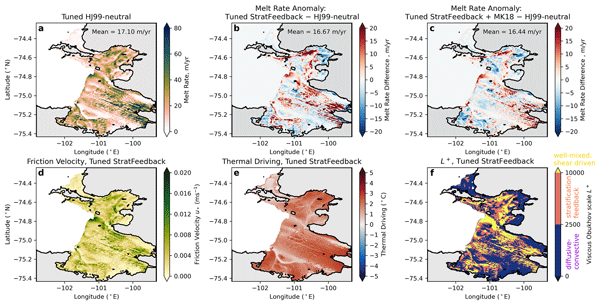
Ocean models are used to understand how the ocean interacts with the Antarctic Ice Sheet, but they are too coarse in resolution to capture the small-scale ocean processes driving melting and require a parameterisation to predict melt. Previous parameterisations ignore key processes occurring in some regions of Antarctica. We develop a parameterisation with the feedback of stratification on melting and test it in idealised and regional ocean models, finding changes to melt rate and circulation.
Fabio Boeira Dias, Matthew H. England, Adele K. Morrison, and Benjamin K. Galton-Fenzi
The Cryosphere, 19, 5231–5258, https://doi.org/10.5194/tc-19-5231-2025, https://doi.org/10.5194/tc-19-5231-2025, 2025
Short summary
Short summary
The Antarctic Ice Sheet melting dominates the sea-level projection uncertainties. Much uncertainty arises from our limited understanding of how ice shelves melt from below. Using a detailed ocean–ice-shelf model, we found that East Antarctic ice shelves experience seasonal melting driven by ocean heat transport variability. In contrast, West Antarctic ice shelves show consistent melting due to a steady supply of warm, deep water, indicating a potentially distinct response due to a warming climate.
Shenjie Zhou, Pierre Dutrieux, Claudia F. Giulivi, Adrian Jenkins, Alessandro Silvano, Christopher Auckland, E. Povl Abrahamsen, Michael Meredith, Irena Vaňková, Keith Nicholls, Peter E. D. Davis, Svein Østerhus, Arnold L. Gordon, Christopher J. Zappa, Tiago S. Dotto, Ted Scambos, Kathryn L. Gunn, Stephen R. Rintoul, Shigeru Aoki, Craig Stevens, Chengyan Liu, Sukyoung Yun, Tae-Wan Kim, Won Sang Lee, Markus Janout, Tore Hattermann, Julius Lauber, Elin Darelius, Anna Wåhlin, Leo Middleton, Pasquale Castagno, Giorgio Budillon, Karen J. Heywood, Jennifer Graham, Stephen Dye, Daisuke Hirano, and Una Kim Miller
Earth Syst. Sci. Data, 17, 5693–5706, https://doi.org/10.5194/essd-17-5693-2025, https://doi.org/10.5194/essd-17-5693-2025, 2025
Short summary
Short summary
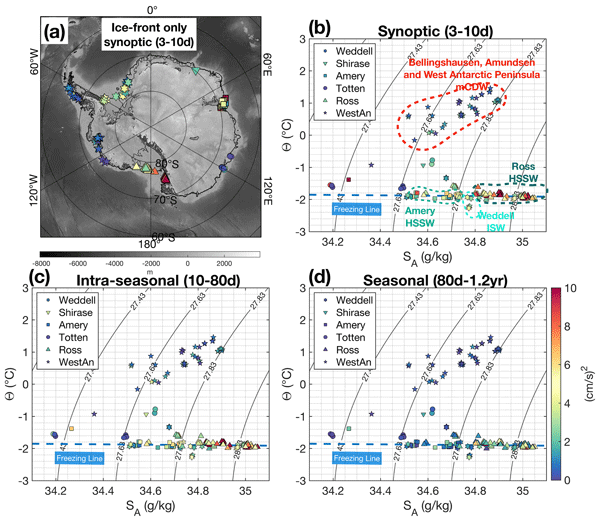
We created the first standardised dataset of in-situ ocean measurements time series from around Antarctica collected since 1970s. This includes temperature, salinity, pressure, and currents recorded by instruments deployed in icy, challenging conditions. Our analysis highlights the dominance of tidal currents and separates these from other patterns to study regional energy distribution. This unique dataset offers a foundation for future research on Antarctic ocean dynamics and ice interactions.
Mark R. Petersen, Xylar S. Asay-Davis, Alice M. Barthel, Carolyn Branecky Begeman, Siddhartha Bishnu, Steven R. Brus, Philip W. Jones, Hyun-Gyu Kang, Youngsung Kim, Azamat Mametjanov, Brian O’Neill, Kieran K. Ringel, Katherine M. Smith, Sarat Sreepathi, Luke P. Van Roekel, and Maciej Waruszewski
EGUsphere, https://doi.org/10.5194/egusphere-2025-3500, https://doi.org/10.5194/egusphere-2025-3500, 2025
This preprint is open for discussion and under review for Geoscientific Model Development (GMD).
Short summary
Short summary
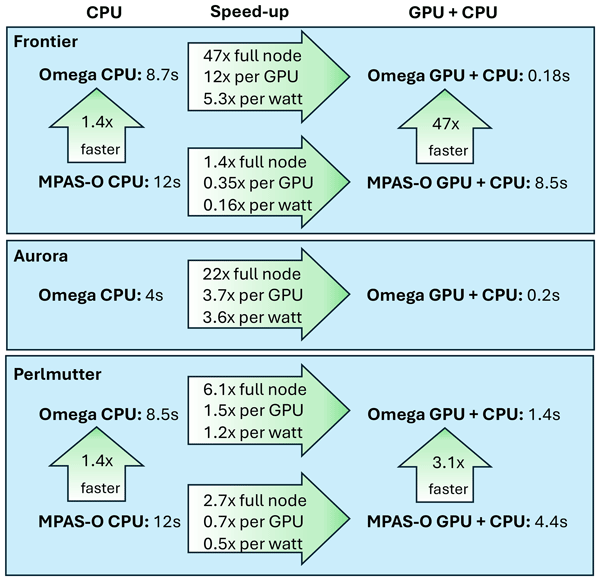
Ocean models are used to predict currents, temperature, and salinity of the earth’s oceans, much like weather forecasting. As supercomputer hardware changes with evolving technology, models must be updated, and sometimes rewritten. Here we document Omega, a new ocean model that was designed to run on the world’s fastest supercomputers. Testing shows that Omega accurately solves the model equations, and runs efficiently on many different computer architectures, including exascale computers.
Johanna Beckmann, Ronja Reese, Felicity S. McCormack, Sue Cook, Lawrence Bird, Dawid Gwyther, Daniel Richards, Matthias Scheiter, Yu Wang, Hélène Seroussi, Ayako Abe‐Ouchi, Torsten Albrecht, Jorge Alvarez‐Solas, Xylar S. Asay‐Davis, Jean‐Baptiste Barre, Constantijn J. Berends, Jorge Bernales, Javier Blasco, Justine Caillet, David M. Chandler, Violaine Coulon, Richard Cullather, Christophe Dumas, Benjamin K. Galton‐Fenzi, Julius Garbe, Fabien Gillet‐Chaulet, Rupert Gladstone, Heiko Goelzer, Nicholas R. Golledge, Ralf Greve, G. Hilmar Gudmundsson, Holly Kyeore Han, Trevor R. Hillebrand, Matthew J. Hoffman, Philippe Huybrechts, Nicolas C. Jourdain, Ann Kristin Klose, Petra M. Langebroek, Gunter R. Leguy, William H. Lipscomb, Daniel P. Lowry, Pierre Mathiot, Marisa Montoya, Mathieu Morlighem, Sophie Nowicki, Frank Pattyn, Antony J. Payne, Tyler Pelle, Aurélien Quiquet, Alexander Robinson, Leopekka Saraste, Erika G. Simon, Sainan Sun, Jake P. Twarog, Luke D. Trusel, Benoit Urruty, Jonas Van Breedam, Roderik S. W. van de Wal, Chen Zhao, and Thomas Zwinger
EGUsphere, https://doi.org/10.5194/egusphere-2025-4069, https://doi.org/10.5194/egusphere-2025-4069, 2025
This preprint is open for discussion and under review for The Cryosphere (TC).
Short summary
Short summary
Antarctica holds enough ice to raise sea levels by many meters, but its future is uncertain. Warm ocean water melts ice shelves from below, letting inland ice flow faster into the sea. By 2300, Antarctica could add 0.6–4.4 m to sea levels. Our study identifies two key factors—how strongly shelves melt and how the ice responds. These explain much of the range, and refining them in models may improve future predictions.
Luc Houriez, Eric Larour, Lambert Caron, Nicole-Jeanne Schlegel, Surendra Adhikari, Erik Ivins, Tyler Pelle, Hélène Seroussi, Eric Darve, and Martin Fischer
The Cryosphere, 19, 4355–4372, https://doi.org/10.5194/tc-19-4355-2025, https://doi.org/10.5194/tc-19-4355-2025, 2025
Short summary
Short summary
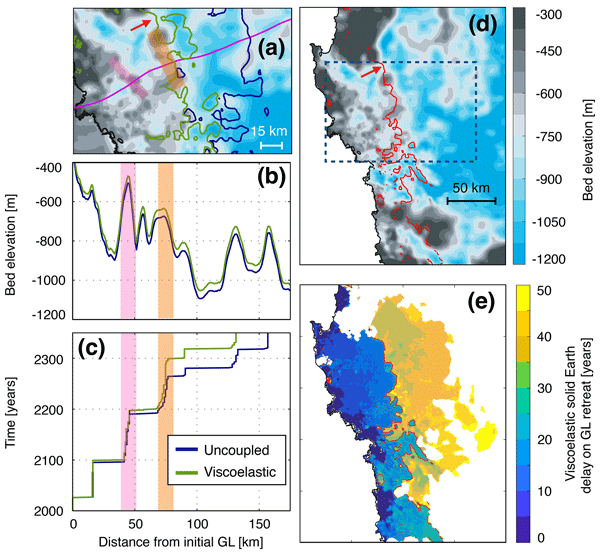
This work examines how interactions between the ice sheet and the Earth’s evolving surface affect the future of Thwaites Glacier in Antarctica. We find that small features in the bedrock play a major role in these interactions which can delay the glacier’s retreat by decades or even centuries. This can significantly reduce sea-level rise projections. Our study highlights resolution requirements for similar ice–earth models and the importance of bedrock mapping efforts in Antarctica.
Robin S. Smith, Tarkan A. Bilge, Thomas J. Bracegirdle, Paul R. Holland, Till Kuhlbrodt, Charlotte Lang, Spencer Liddicoat, Tom Mitcham, Jane Mulcahy, Kaitlin A. Naughten, Andrew Orr, Julien Palmieri, Antony J. Payne, Steven Rumbold, Marc Stringer, Ranjini Swaminathan, Sarah Taylor, Jeremy Walton, and Colin Jones
EGUsphere, https://doi.org/10.5194/egusphere-2025-4476, https://doi.org/10.5194/egusphere-2025-4476, 2025
This preprint is open for discussion and under review for Earth System Dynamics (ESD).
Short summary
Short summary
There is a dangerous amount of uncertainty in our predictions of climate change in polar regions because some of feedbacks that might lead to changes that are too rapid for us to adapt to, or that cannot be reversed. We have run a set of simulations with a state-of-the-art Earth System Model that helps improve our understanding of how climate in these regions might change. Some of the aspects we investigate are reversible but many are not, especially those affecting ice sheets and sea level.
Philip Browne, Eric de Boisseson, Sarah Keeley, Charles Pelletier, and Hao Zuo
EGUsphere, https://doi.org/10.5194/egusphere-2025-3991, https://doi.org/10.5194/egusphere-2025-3991, 2025
This preprint is open for discussion and under review for The Cryosphere (TC).
Short summary
Short summary
An initial estimate of sea ice conditions are required to start modern weather forecasting models. To get these we have to combine observations, typically from satellites, with previous estimates of the sea ice conditions. This paper talks about how we do this in the latest version of the model, where the sea ice state has to be specified for ice of different thicknesses. We describe the method that is used when we produce an estimate for every hour for the past 50 years.
Vincent Verjans, Alexander A. Robel, Lizz Ultee, Helene Seroussi, Andrew F. Thompson, Lars Ackermann, Youngmin Choi, and Uta Krebs-Kanzow
The Cryosphere, 19, 3749–3783, https://doi.org/10.5194/tc-19-3749-2025, https://doi.org/10.5194/tc-19-3749-2025, 2025
Short summary
Short summary
This study examines how random variations in climate may influence future ice loss from the Greenland ice sheet. We find that random climate variations are important for predicting future ice loss from the entire Greenland ice sheet over the next 20–30 years but relatively unimportant after that period. Thus, uncertainty in sea level projections from the effect of climate variability on Greenland may play a role in coastal decision-making about sea level rise over the next few decades.
Trevor R. Hillebrand, Matthew J. Hoffman, Holly K. Han, Mauro Perego, Alexander O. Hager, Andrew Nolan, Xylar Asay-Davis, Stephen F. Price, Jerry Watkins, and Max Carlson
EGUsphere, https://doi.org/10.5194/egusphere-2025-3942, https://doi.org/10.5194/egusphere-2025-3942, 2025
Short summary
Short summary
We present new simulations that complement our contribution to the ISMIP6-Antarctica-2300 ensemble. We find significant mass loss after 2300 under both low-emissions and present-day forcing. Thermal evolution is extremely important, with fixed temperature yielding up to twice as much mass loss as simulations with evolving temperature. External forcing uncertainty dominates the ensemble spread after 2050. Initial condition uncertainty could explain the inter-model spread in the ISMIP6 ensembles.
Lawrence A. Bird, Vitaliy Ogarko, Laurent Ailleres, Lachlan Grose, Jérémie Giraud, Felicity S. McCormack, David E. Gwyther, Jason L. Roberts, Richard S. Jones, and Andrew N. Mackintosh
The Cryosphere, 19, 3355–3380, https://doi.org/10.5194/tc-19-3355-2025, https://doi.org/10.5194/tc-19-3355-2025, 2025
Short summary
Short summary
The terrain of the seafloor has important controls on the access of warm water below floating ice shelves around Antarctica. Here, we present an open-source method to infer what the seafloor looks like around the Antarctic continent and within these ice shelf cavities, using measurements of the Earth's gravitational field. We present an improved seafloor map for the Vincennes Bay region in East Antarctica and assess its impact on ice melt rates.
Florian Sauerland, Pierre-Vincent Huot, Sylvain Marchi, Thierry Fichefet, Hugues Goosse, Konstanze Haubner, François Klein, François Massonnet, Bianca Mezzina, Eduardo Moreno-Chamarro, Pablo Ortega, Frank Pattyn, Charles Pelletier, Deborah Verfaillie, Lars Zipf, and Nicole van Lipzig
EGUsphere, https://doi.org/10.5194/egusphere-2025-2889, https://doi.org/10.5194/egusphere-2025-2889, 2025
This preprint is open for discussion and under review for Earth System Dynamics (ESD).
Short summary
Short summary
We simulated the Antarctic climate from 1985 to 2014. Our model is driven using the ERA-5 reanalysis for one simulation and the EC-Earth global climate model for three others. Most of the simulated trends, such as sea ice extent and precipitation over land, have opposite signs for the two drivers, but agree between the three EC-Earth driven simulations. We conclude that these opposing trends must be due to the different drivers, and that the climate over land is less predictable than over sea.
Francisco J. Doblas-Reyes, Jenni Kontkanen, Irina Sandu, Mario Acosta, Mohammed Hussam Al Turjmam, Ivan Alsina-Ferrer, Miguel Andrés-Martínez, Leo Arriola, Marvin Axness, Marc Batlle Martín, Peter Bauer, Tobias Becker, Daniel Beltrán, Sebastian Beyer, Hendryk Bockelmann, Pierre-Antoine Bretonnière, Sebastien Cabaniols, Silvia Caprioli, Miguel Castrillo, Aparna Chandrasekar, Suvarchal Cheedela, Victor Correal, Emanuele Danovaro, Paolo Davini, Jussi Enkovaara, Claudia Frauen, Barbara Früh, Aina Gaya Àvila, Paolo Ghinassi, Rohit Ghosh, Supriyo Ghosh, Iker González, Katherine Grayson, Matthew Griffith, Ioan Hadade, Christopher Haine, Carl Hartick, Utz-Uwe Haus, Shane Hearne, Heikki Järvinen, Bernat Jiménez, Amal John, Marlin Juchem, Thomas Jung, Jessica Kegel, Matthias Kelbling, Kai Keller, Bruno Kinoshita, Theresa Kiszler, Daniel Klocke, Lukas Kluft, Nikolay Koldunov, Tobias Kölling, Joonas Kolstela, Luis Kornblueh, Sergey Kosukhin, Aleksander Lacima-Nadolnik, Jeisson Javier Leal Rojas, Jonni Lehtiranta, Tuomas Lunttila, Anna Luoma, Pekka Manninen, Alexey Medvedev, Sebastian Milinski, Ali Omar Abdelazim Mohammed, Sebastian Müller, Devaraju Naryanappa, Natalia Nazarova, Sami Niemelä, Bimochan Niraula, Henrik Nortamo, Aleksi Nummelin, Matteo Nurisso, Pablo Ortega, Stella Paronuzzi, Xabier Pedruzo Bagazgoitia, Charles Pelletier, Carlos Peña, Suraj Polade, Himansu Pradhan, Rommel Quintanilla, Tiago Quintino, Thomas Rackow, Jouni Räisänen, Maqsood Mubarak Rajput, René Redler, Balthasar Reuter, Nuno Rocha Monteiro, Francesc Roura-Adserias, Silva Ruppert, Susan Sayed, Reiner Schnur, Tanvi Sharma, Dmitry Sidorenko, Outi Sievi-Korte, Albert Soret, Christian Steger, Bjorn Stevens, Jan Streffing, Jaleena Sunny, Luiggi Tenorio, Stephan Thober, Ulf Tigerstedt, Oriol Tinto, Juha Tonttila, Heikki Tuomenvirta, Lauri Tuppi, Ginka Van Thielen, Emanuele Vitali, Jost von Hardenberg, Ingo Wagner, Nils Wedi, Jan Wehner, Sven Willner, Xavier Yepes-Arbós, Florian Ziemen, and Janos Zimmermann
EGUsphere, https://doi.org/10.5194/egusphere-2025-2198, https://doi.org/10.5194/egusphere-2025-2198, 2025
Short summary
Short summary
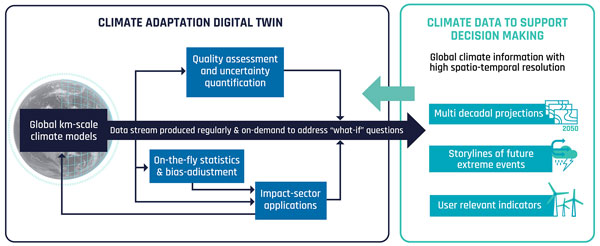
The Climate Change Adaptation Digital Twin (Climate DT) pioneers the operationalisation of climate projections. The system produces global simulations with local granularity for adaptation decision-making. Applications are embedded to generate tailored indicators. A unified workflow orchestrates all components in several supercomputers. Data management ensures consistency and streaming enables real-time use. It is a complementary innovation to initiatives like CMIP, CORDEX, and climate services.
Guillaume Liniger, Delphine Lannuzel, Sébastien Moreau, Michael S. Dinniman, and Peter G. Strutton
EGUsphere, https://doi.org/10.5194/egusphere-2025-3149, https://doi.org/10.5194/egusphere-2025-3149, 2025
Short summary
Short summary
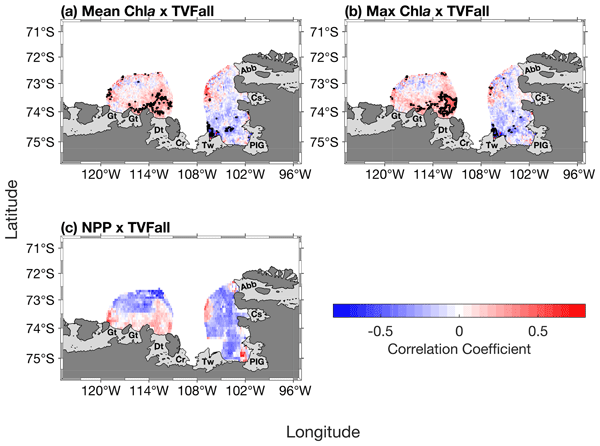
Our study investigates the links between the phytoplankton bloom and environmental parameters in the Amundsen polynyas (areas of open water within sea ice). Between 1998 and 2017, we find that changes in melting ice shelves may have different impacts on biological productivity between the Pine Island (PIP) and Amundsen Sea (ASP) polynyas. While ice shelf melting seems to play an important role for phytoplankton growth in the ASP, light and warmer waters appear to be more important in the PIP.
Sebastian H. R. Rosier, G. Hilmar Gudmundsson, Adrian Jenkins, and Kaitlin A. Naughten
The Cryosphere, 19, 2527–2557, https://doi.org/10.5194/tc-19-2527-2025, https://doi.org/10.5194/tc-19-2527-2025, 2025
Short summary
Short summary
Glaciers in the Amundsen Sea region of Antarctica have been retreating and losing mass, but their future contribution to global sea level rise remains highly uncertain. We use an ice sheet model and uncertainty quantification methods to evaluate the probable range of mass loss from this region for two future climate scenarios. We find that the rate of ice loss until 2100 will likely remain similar to present-day observations, with little sensitivity to climate scenario over this short time frame.
Vanessa Teske, Ralph Timmermann, Cara Nissen, Rolf Zentek, Tido Semmler, and Günther Heinemann
Ocean Sci., 21, 1205–1221, https://doi.org/10.5194/os-21-1205-2025, https://doi.org/10.5194/os-21-1205-2025, 2025
Short summary
Short summary
We investigate the structural changes the Antarctic Slope Front in the southern Weddell Sea experiences in a warming climate by conducting two ocean simulations driven by atmospheric data of different horizontal resolutions. Cross-slope currents associated with a regime shift from a cold to a warm Filchner Trough on the continental shelf temporarily disturb the structure of the slope front and reduce its depth, but the primary reason for a regime shift is the cross-slope density gradient.
Shfaqat A. Khan, Helene Seroussi, Mathieu Morlighem, William Colgan, Veit Helm, Gong Cheng, Danjal Berg, Valentina R. Barletta, Nicolaj K. Larsen, William Kochtitzky, Michiel van den Broeke, Kurt H. Kjær, Andy Aschwanden, Brice Noël, Jason E. Box, Joseph A. MacGregor, Robert S. Fausto, Kenneth D. Mankoff, Ian M. Howat, Kuba Oniszk, Dominik Fahrner, Anja Løkkegaard, Eigil Y. H. Lippert, Alicia Bråtner, and Javed Hassan
Earth Syst. Sci. Data, 17, 3047–3071, https://doi.org/10.5194/essd-17-3047-2025, https://doi.org/10.5194/essd-17-3047-2025, 2025
Short summary
Short summary
The surface elevation of the Greenland Ice Sheet is changing due to surface mass balance processes and ice dynamics, each exhibiting distinct spatiotemporal patterns. Here, we employ satellite and airborne altimetry data with fine spatial (1 km) and temporal (monthly) resolutions to document this spatiotemporal evolution from 2003 to 2023. This dataset of fine-resolution altimetry data in both space and time will support studies of ice mass loss and be useful for GIS ice sheet modeling.
Claire K. Yung, Xylar S. Asay-Davis, Alistair Adcroft, Christopher Y. S. Bull, Jan De Rydt, Michael S. Dinniman, Benjamin K. Galton-Fenzi, Daniel Goldberg, David E. Gwyther, Robert Hallberg, Matthew Harrison, Tore Hattermann, David M. Holland, Denise Holland, Paul R. Holland, James R. Jordan, Nicolas C. Jourdain, Kazuya Kusahara, Gustavo Marques, Pierre Mathiot, Dimitris Menemenlis, Adele K. Morrison, Yoshihiro Nakayama, Olga Sergienko, Robin S. Smith, Alon Stern, Ralph Timmermann, and Qin Zhou
EGUsphere, https://doi.org/10.5194/egusphere-2025-1942, https://doi.org/10.5194/egusphere-2025-1942, 2025
Short summary
Short summary
ISOMIP+ compares 12 ocean models that simulate ice-ocean interactions in a common, idealised, static ice shelf cavity setup, aiming to assess and understand inter-model variability. Models simulate similar basal melt rate patterns, ocean profiles and circulation but differ in ice-ocean boundary layer properties and spatial distributions of melting. Ice-ocean boundary layer representation is a key area for future work, as are realistic-domain ice sheet-ocean model intercomparisons.
Ole Richter, Ralph Timmermann, G. Hilmar Gudmundsson, and Jan De Rydt
Geosci. Model Dev., 18, 2945–2960, https://doi.org/10.5194/gmd-18-2945-2025, https://doi.org/10.5194/gmd-18-2945-2025, 2025
Short summary
Short summary
The new coupled ice sheet–ocean model addresses challenges related to horizontal resolution through advanced mesh flexibility, enabled by the use of unstructured grids. We describe the new model, verify its functioning in an idealised setting and demonstrate its advantages in a global-ocean–Antarctic ice sheet domain. The results of this study comprise an important step towards improving predictions of the Antarctic contribution to sea level rise over centennial timescales.
Torsten Kanzow, Angelika Humbert, Thomas Mölg, Mirko Scheinert, Matthias Braun, Hans Burchard, Francesca Doglioni, Philipp Hochreuther, Martin Horwath, Oliver Huhn, Maria Kappelsberger, Jürgen Kusche, Erik Loebel, Katrina Lutz, Ben Marzeion, Rebecca McPherson, Mahdi Mohammadi-Aragh, Marco Möller, Carolyne Pickler, Markus Reinert, Monika Rhein, Martin Rückamp, Janin Schaffer, Muhammad Shafeeque, Sophie Stolzenberger, Ralph Timmermann, Jenny Turton, Claudia Wekerle, and Ole Zeising
The Cryosphere, 19, 1789–1824, https://doi.org/10.5194/tc-19-1789-2025, https://doi.org/10.5194/tc-19-1789-2025, 2025
Short summary
Short summary
The Greenland Ice Sheet represents the second-largest contributor to global sea-level rise. We quantify atmosphere, ice and ocean processes related to the mass balance of glaciers in northeast Greenland, focusing on Greenland’s largest floating ice tongue, the 79° N Glacier. We find that together, the different in situ and remote sensing observations and model simulations reveal a consistent picture of a coupled atmosphere–ice sheet–ocean system that has entered a phase of major change.
Ziad Rashed, Alexander A. Robel, and Hélène Seroussi
The Cryosphere, 19, 1775–1788, https://doi.org/10.5194/tc-19-1775-2025, https://doi.org/10.5194/tc-19-1775-2025, 2025
Short summary
Short summary
Sermeq Kujalleq, Greenland's largest glacier, has significantly retreated since the late 1990s in response to warming ocean temperatures. Using a large-ensemble approach, our simulations show that the retreat is mainly initiated by the arrival of warm water but sustained and accelerated by the glacier's position over deeper bed troughs and vigorous calving. We highlight the need for models of ice mélange to project glacier behavior under rapid calving regimes.
Wilma G. C. Huneke, Andy McC. Hogg, Martin Dix, Daohua Bi, Arnold Sullivan, Shayne McGregor, Chiara Holgate, Siobhan P. O'Farrell, and Micael J. T. Oliveira
EGUsphere, https://doi.org/10.5194/egusphere-2025-1006, https://doi.org/10.5194/egusphere-2025-1006, 2025
Short summary
Short summary
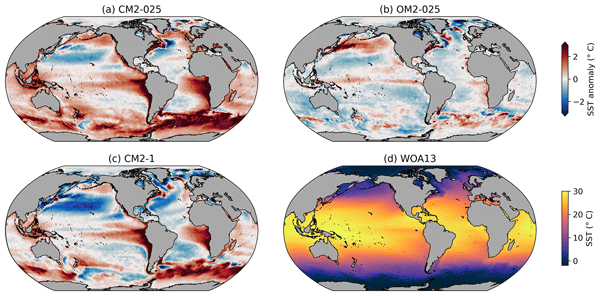
A new configuration of the Australian Community Climate and Earth System Simulator coupled model, ACCESS-CM2, with a higher resolution ocean-sea ice component is introduced. The new version of the coupled climate model was designed to better capture smaller-scale ocean motions. While this configuration improves the representation of many aspects of the climate system, some biases from the existing lower-resolution version persist.
Peter Van Katwyk, Baylor Fox-Kemper, Sophie Nowicki, Hélène Seroussi, and Karianne J. Bergen
EGUsphere, https://doi.org/10.5194/egusphere-2025-870, https://doi.org/10.5194/egusphere-2025-870, 2025
Preprint archived
Short summary
Short summary
We present ISEFlow, a machine learning emulator that predicts how the melting of the Antarctic and Greenland ice sheets will contribute to sea level. ISEFlow is fast and accurate, allowing scientists to explore different climate scenarios with greater confidence. ISEFlow distinguishes between high and low emissions scenarios, helping us understand how today’s choices impact future sea levels. ISEFlow supports more reliable climate predictions and helps scientists study the future of ice sheets.
James F. O'Neill, Tamsin L. Edwards, Daniel F. Martin, Courtney Shafer, Stephen L. Cornford, Hélène L. Seroussi, Sophie Nowicki, Mira Adhikari, and Lauren J. Gregoire
The Cryosphere, 19, 541–563, https://doi.org/10.5194/tc-19-541-2025, https://doi.org/10.5194/tc-19-541-2025, 2025
Short summary
Short summary
We use an ice sheet model to simulate the Antarctic contribution to sea level over the 21st century under a range of future climates and varying how sensitive the ice sheet is to different processes. We find that ocean temperatures increase and more snow falls on the ice sheet under stronger warming scenarios. When the ice sheet is sensitive to ocean warming, ocean melt-driven loss exceeds snowfall-driven gains, meaning that the sea level contribution is greater with more climate warming.
Irena Vaňková, Xylar Asay-Davis, Carolyn Branecky Begeman, Darin Comeau, Alexander Hager, Matthew Hoffman, Stephen F. Price, and Jonathan Wolfe
The Cryosphere, 19, 507–523, https://doi.org/10.5194/tc-19-507-2025, https://doi.org/10.5194/tc-19-507-2025, 2025
Short summary
Short summary
We study the effect of subglacial discharge on basal melting for Antarctic ice shelves. We find that the results from previous studies of vertical ice fronts and two-dimensional ice tongues do not translate to the rotating ice-shelf framework. The melt rate dependence on discharge is stronger in the rotating framework. Further, there is a substantial melt-rate sensitivity to the location of the discharge along the grounding line relative to the directionality of the Coriolis force.
Qin Zhou, Chen Zhao, Rupert Gladstone, Tore Hattermann, David Gwyther, and Benjamin Galton-Fenzi
Geosci. Model Dev., 17, 8243–8265, https://doi.org/10.5194/gmd-17-8243-2024, https://doi.org/10.5194/gmd-17-8243-2024, 2024
Short summary
Short summary
We introduce an accelerated forcing approach to address timescale discrepancies between the ice sheets and ocean components in coupled modelling by reducing the ocean simulation duration. The approach is evaluated using idealized coupled models, and its limitations in real-world applications are discussed. Our results suggest it can be a valuable tool for process-oriented coupled ice sheet–ocean modelling and downscaling climate simulations with such models.
Yu Wang, Chen Zhao, Rupert Gladstone, Thomas Zwinger, Benjamin K. Galton-Fenzi, and Poul Christoffersen
The Cryosphere, 18, 5117–5137, https://doi.org/10.5194/tc-18-5117-2024, https://doi.org/10.5194/tc-18-5117-2024, 2024
Short summary
Short summary
Our research delves into the future evolution of Antarctica's Wilkes Subglacial Basin (WSB) and its potential contribution to sea level rise, focusing on how basal melt is implemented at the grounding line in ice flow models. Our findings suggest that these implementation methods can significantly impact the magnitude of future ice loss projections. Under a high-emission scenario, the WSB ice sheet could undergo massive and rapid retreat between 2200 and 2300.
Xianwei Wang, Hilmar Gudmundsson, and David Holland
EGUsphere, https://doi.org/10.5194/egusphere-2024-2790, https://doi.org/10.5194/egusphere-2024-2790, 2024
Preprint archived
Short summary
Short summary
Understanding why iceberg calved during drifting in the ocean is important to understand the life cycle and the influence on the surrounding ocean of an iceberg. This study explains why iceberg A68a calved when approaching the South Georgia Island in late 2020 during its drifting in the Southern Ocean using satellite observation and modeling, which was caused by collision with seamount.
Jean-Baptiste Sallée, Lucie Vignes, Audrey Minière, Nadine Steiger, Etienne Pauthenet, Antonio Lourenco, Kevin Speer, Peter Lazarevich, and Keith W. Nicholls
Ocean Sci., 20, 1267–1280, https://doi.org/10.5194/os-20-1267-2024, https://doi.org/10.5194/os-20-1267-2024, 2024
Short summary
Short summary
In the Weddell Sea, we investigated how warm deep currents and cold waters containing freshwater released from the Antarctic are connected. We used autonomous observation devices that have never been used in this region previously and that allow us to track the movement and characteristics of water masses under the sea ice. Our findings show a dynamic interaction between warm masses, providing key insights to understand climate-related changes in the region.
Jan De Rydt, Nicolas C. Jourdain, Yoshihiro Nakayama, Mathias van Caspel, Ralph Timmermann, Pierre Mathiot, Xylar S. Asay-Davis, Hélène Seroussi, Pierre Dutrieux, Ben Galton-Fenzi, David Holland, and Ronja Reese
Geosci. Model Dev., 17, 7105–7139, https://doi.org/10.5194/gmd-17-7105-2024, https://doi.org/10.5194/gmd-17-7105-2024, 2024
Short summary
Short summary
Global climate models do not reliably simulate sea-level change due to ice-sheet–ocean interactions. We propose a community modelling effort to conduct a series of well-defined experiments to compare models with observations and study how models respond to a range of perturbations in climate and ice-sheet geometry. The second Marine Ice Sheet–Ocean Model Intercomparison Project will continue to lay the groundwork for including ice-sheet–ocean interactions in global-scale IPCC-class models.
Matthew J. Hoffman, Carolyn Branecky Begeman, Xylar S. Asay-Davis, Darin Comeau, Alice Barthel, Stephen F. Price, and Jonathan D. Wolfe
The Cryosphere, 18, 2917–2937, https://doi.org/10.5194/tc-18-2917-2024, https://doi.org/10.5194/tc-18-2917-2024, 2024
Short summary
Short summary
The Filchner–Ronne Ice Shelf in Antarctica is susceptible to the intrusion of deep, warm ocean water that could increase the melting at the ice-shelf base by a factor of 10. We show that representing this potential melt regime switch in a low-resolution climate model requires careful treatment of iceberg melting and ocean mixing. We also demonstrate a possible ice-shelf melt domino effect where increased melting of nearby ice shelves can lead to the melt regime switch at Filchner–Ronne.
Rebecca B. Latto, Ross J. Turner, Anya M. Reading, Sue Cook, Bernd Kulessa, and J. Paul Winberry
The Cryosphere, 18, 2081–2101, https://doi.org/10.5194/tc-18-2081-2024, https://doi.org/10.5194/tc-18-2081-2024, 2024
Short summary
Short summary
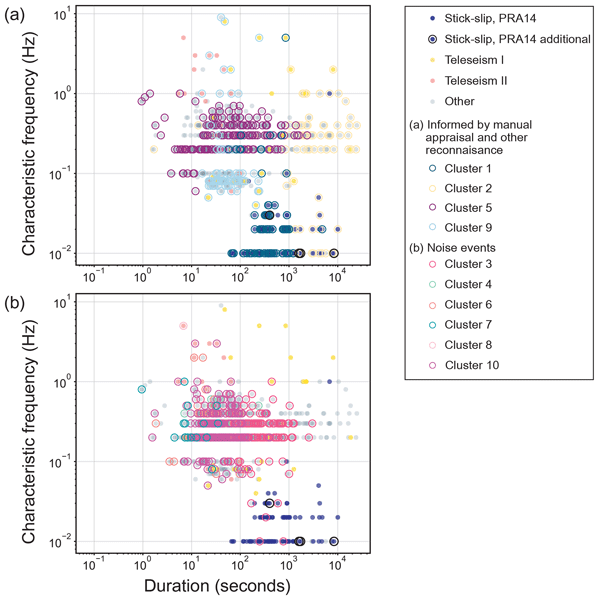
Seismic catalogues are potentially rich sources of information on glacier processes. In a companion study, we constructed an event catalogue for seismic data from the Whillans Ice Stream. Here, we provide a semi-automated workflow for consistent catalogue analysis using an unsupervised cluster analysis. We discuss the defining characteristics of identified signal types found in this catalogue and possible mechanisms for the underlying glacier processes and noise sources.
Jan De Rydt and Kaitlin Naughten
The Cryosphere, 18, 1863–1888, https://doi.org/10.5194/tc-18-1863-2024, https://doi.org/10.5194/tc-18-1863-2024, 2024
Short summary
Short summary
The West Antarctic Ice Sheet is losing ice at an accelerating pace. This is largely due to the presence of warm ocean water around the periphery of the Antarctic continent, which melts the ice. It is generally assumed that the strength of this process is controlled by the temperature of the ocean. However, in this study we show that an equally important role is played by the changing geometry of the ice sheet, which affects the strength of the ocean currents and thereby the melt rates.
Ole Zeising, Niklas Neckel, Nils Dörr, Veit Helm, Daniel Steinhage, Ralph Timmermann, and Angelika Humbert
The Cryosphere, 18, 1333–1357, https://doi.org/10.5194/tc-18-1333-2024, https://doi.org/10.5194/tc-18-1333-2024, 2024
Short summary
Short summary
The 79° North Glacier in Greenland has experienced significant changes over the last decades. Due to extreme melt rates, the ice has thinned significantly in the vicinity of the grounding line, where a large subglacial channel has formed since 2010. We attribute these changes to warm ocean currents and increased subglacial discharge from surface melt. However, basal melting has decreased since 2018, indicating colder water inflow into the cavity below the glacier.
Colette Gabrielle Kerry, Moninya Roughan, Shane Keating, David Gwyther, Gary Brassington, Adil Siripatana, and Joao Marcos A. C. Souza
Geosci. Model Dev., 17, 2359–2386, https://doi.org/10.5194/gmd-17-2359-2024, https://doi.org/10.5194/gmd-17-2359-2024, 2024
Short summary
Short summary
Ocean forecasting relies on the combination of numerical models and ocean observations through data assimilation (DA). Here we assess the performance of two DA systems in a dynamic western boundary current, the East Australian Current, across a common modelling and observational framework. We show that the more advanced, time-dependent method outperforms the time-independent method for forecast horizons of 5 d. This advocates the use of advanced methods for highly variable oceanic regions.
Cara Nissen, Ralph Timmermann, Mathias van Caspel, and Claudia Wekerle
Ocean Sci., 20, 85–101, https://doi.org/10.5194/os-20-85-2024, https://doi.org/10.5194/os-20-85-2024, 2024
Short summary
Short summary
The southeastern Weddell Sea is important for global ocean circulation due to the cross-shelf-break exchange of Dense Shelf Water and Warm Deep Water, but their exact circulation pathways remain elusive. Using Lagrangian model experiments in an eddy-permitting ocean model, we show how present circulation pathways and transit times of these water masses on the continental shelf are altered by 21st-century climate change, which has implications for local ice-shelf basal melt rates and ecosystems.
Kazuya Kusahara, Daisuke Hirano, Masakazu Fujii, Alexander D. Fraser, Takeshi Tamura, Kohei Mizobata, Guy D. Williams, and Shigeru Aoki
The Cryosphere, 18, 43–73, https://doi.org/10.5194/tc-18-43-2024, https://doi.org/10.5194/tc-18-43-2024, 2024
Short summary
Short summary
This study focuses on the Totten and Moscow University ice shelves, East Antarctica. We used an ocean–sea ice–ice shelf model to better understand regional interactions between ocean, sea ice, and ice shelf. We found that a combination of warm ocean water and local sea ice production influences the regional ice shelf basal melting. Furthermore, the model reproduced the summertime undercurrent on the upper continental slope, regulating ocean heat transport onto the continental shelf.
Youngmin Choi, Helene Seroussi, Mathieu Morlighem, Nicole-Jeanne Schlegel, and Alex Gardner
The Cryosphere, 17, 5499–5517, https://doi.org/10.5194/tc-17-5499-2023, https://doi.org/10.5194/tc-17-5499-2023, 2023
Short summary
Short summary
Ice sheet models are often initialized using snapshot observations of present-day conditions, but this approach has limitations in capturing the transient evolution of the system. To more accurately represent the accelerating changes in glaciers, we employed time-dependent data assimilation. We found that models calibrated with the transient data better capture past trends and more accurately reproduce changes after the calibration period, even with limited observations.
Lukrecia Stulic, Ralph Timmermann, Stephan Paul, Rolf Zentek, Günther Heinemann, and Torsten Kanzow
Ocean Sci., 19, 1791–1808, https://doi.org/10.5194/os-19-1791-2023, https://doi.org/10.5194/os-19-1791-2023, 2023
Short summary
Short summary
In the southern Weddell Sea, the strong sea ice growth in coastal polynyas drives formation of dense shelf water. By using a sea ice–ice shelf–ocean model with representation of the changing icescape based on satellite data, we find that polynya sea ice growth depends on both the regional atmospheric forcing and the icescape. Not just strength but also location of the sea ice growth in polynyas affects properties of the dense shelf water and the basal melting of the Filchner–Ronne Ice Shelf.
Hélène Seroussi, Vincent Verjans, Sophie Nowicki, Antony J. Payne, Heiko Goelzer, William H. Lipscomb, Ayako Abe-Ouchi, Cécile Agosta, Torsten Albrecht, Xylar Asay-Davis, Alice Barthel, Reinhard Calov, Richard Cullather, Christophe Dumas, Benjamin K. Galton-Fenzi, Rupert Gladstone, Nicholas R. Golledge, Jonathan M. Gregory, Ralf Greve, Tore Hattermann, Matthew J. Hoffman, Angelika Humbert, Philippe Huybrechts, Nicolas C. Jourdain, Thomas Kleiner, Eric Larour, Gunter R. Leguy, Daniel P. Lowry, Chistopher M. Little, Mathieu Morlighem, Frank Pattyn, Tyler Pelle, Stephen F. Price, Aurélien Quiquet, Ronja Reese, Nicole-Jeanne Schlegel, Andrew Shepherd, Erika Simon, Robin S. Smith, Fiammetta Straneo, Sainan Sun, Luke D. Trusel, Jonas Van Breedam, Peter Van Katwyk, Roderik S. W. van de Wal, Ricarda Winkelmann, Chen Zhao, Tong Zhang, and Thomas Zwinger
The Cryosphere, 17, 5197–5217, https://doi.org/10.5194/tc-17-5197-2023, https://doi.org/10.5194/tc-17-5197-2023, 2023
Short summary
Short summary
Mass loss from Antarctica is a key contributor to sea level rise over the 21st century, and the associated uncertainty dominates sea level projections. We highlight here the Antarctic glaciers showing the largest changes and quantify the main sources of uncertainty in their future evolution using an ensemble of ice flow models. We show that on top of Pine Island and Thwaites glaciers, Totten and Moscow University glaciers show rapid changes and a strong sensitivity to warmer ocean conditions.
Verena Haid, Ralph Timmermann, Özgür Gürses, and Hartmut H. Hellmer
Ocean Sci., 19, 1529–1544, https://doi.org/10.5194/os-19-1529-2023, https://doi.org/10.5194/os-19-1529-2023, 2023
Short summary
Short summary
Recently, it was found that cold-to-warm changes in Antarctic shelf sea areas are possible and lead to higher ice shelf melt rates. In modelling experiments, we found that if the highest density in front of the ice shelf becomes lower than the density of the warmer water off-shelf at the deepest access to the shelf, the off-shelf water will flow onto the shelf. Our results also indicate that this change will offer some, although not much, resistance to reversal and constitutes a tipping point.
Felicity S. McCormack, Jason L. Roberts, Bernd Kulessa, Alan Aitken, Christine F. Dow, Lawrence Bird, Benjamin K. Galton-Fenzi, Katharina Hochmuth, Richard S. Jones, Andrew N. Mackintosh, and Koi McArthur
The Cryosphere, 17, 4549–4569, https://doi.org/10.5194/tc-17-4549-2023, https://doi.org/10.5194/tc-17-4549-2023, 2023
Short summary
Short summary
Changes in Antarctic surface elevation can cause changes in ice and basal water flow, impacting how much ice enters the ocean. We find that ice and basal water flow could divert from the Totten to the Vanderford Glacier, East Antarctica, under only small changes in the surface elevation, with implications for estimates of ice loss from this region. Further studies are needed to determine when this could occur and if similar diversions could occur elsewhere in Antarctica due to climate change.
Ronja Reese, Julius Garbe, Emily A. Hill, Benoît Urruty, Kaitlin A. Naughten, Olivier Gagliardini, Gaël Durand, Fabien Gillet-Chaulet, G. Hilmar Gudmundsson, David Chandler, Petra M. Langebroek, and Ricarda Winkelmann
The Cryosphere, 17, 3761–3783, https://doi.org/10.5194/tc-17-3761-2023, https://doi.org/10.5194/tc-17-3761-2023, 2023
Short summary
Short summary
We use an ice sheet model to test where current climate conditions in Antarctica might lead. We find that present-day ocean and atmosphere conditions might commit an irreversible collapse of parts of West Antarctica which evolves over centuries to millennia. Importantly, this collapse is not irreversible yet.
Hyein Jeong, Adrian K. Turner, Andrew F. Roberts, Milena Veneziani, Stephen F. Price, Xylar S. Asay-Davis, Luke P. Van Roekel, Wuyin Lin, Peter M. Caldwell, Hyo-Seok Park, Jonathan D. Wolfe, and Azamat Mametjanov
The Cryosphere, 17, 2681–2700, https://doi.org/10.5194/tc-17-2681-2023, https://doi.org/10.5194/tc-17-2681-2023, 2023
Short summary
Short summary
We find that E3SM-HR reproduces the main features of the Antarctic coastal polynyas. Despite the high amount of coastal sea ice production, the densest water masses are formed in the open ocean. Biases related to the lack of dense water formation are associated with overly strong atmospheric polar easterlies. Our results indicate that the large-scale polar atmospheric circulation must be accurately simulated in models to properly reproduce Antarctic dense water formation.
Xiaoqiao Wang, Zhaoru Zhang, Michael S. Dinniman, Petteri Uotila, Xichen Li, and Meng Zhou
The Cryosphere, 17, 1107–1126, https://doi.org/10.5194/tc-17-1107-2023, https://doi.org/10.5194/tc-17-1107-2023, 2023
Short summary
Short summary
The bottom water of the global ocean originates from high-salinity water formed in polynyas in the Southern Ocean where sea ice coverage is low. This study reveals the impacts of cyclones on sea ice and water mass formation in the Ross Ice Shelf Polynya using numerical simulations. Sea ice production is rapidly increased caused by enhancement in offshore wind, promoting high-salinity water formation in the polynya. Cyclones also modulate the transport of this water mass by wind-driven currents.
Yafei Nie, Chengkun Li, Martin Vancoppenolle, Bin Cheng, Fabio Boeira Dias, Xianqing Lv, and Petteri Uotila
Geosci. Model Dev., 16, 1395–1425, https://doi.org/10.5194/gmd-16-1395-2023, https://doi.org/10.5194/gmd-16-1395-2023, 2023
Short summary
Short summary
State-of-the-art Earth system models simulate the observed sea ice extent relatively well, but this is often due to errors in the dynamic and other processes in the simulated sea ice changes cancelling each other out. We assessed the sensitivity of these processes simulated by the coupled ocean–sea ice model NEMO4.0-SI3 to 18 parameters. The performance of the model in simulating sea ice change processes was ultimately improved by adjusting the three identified key parameters.
Hugues Goosse, Sofia Allende Contador, Cecilia M. Bitz, Edward Blanchard-Wrigglesworth, Clare Eayrs, Thierry Fichefet, Kenza Himmich, Pierre-Vincent Huot, François Klein, Sylvain Marchi, François Massonnet, Bianca Mezzina, Charles Pelletier, Lettie Roach, Martin Vancoppenolle, and Nicole P. M. van Lipzig
The Cryosphere, 17, 407–425, https://doi.org/10.5194/tc-17-407-2023, https://doi.org/10.5194/tc-17-407-2023, 2023
Short summary
Short summary
Using idealized sensitivity experiments with a regional atmosphere–ocean–sea ice model, we show that sea ice advance is constrained by initial conditions in March and the retreat season is influenced by the magnitude of several physical processes, in particular by the ice–albedo feedback and ice transport. Atmospheric feedbacks amplify the response of the winter ice extent to perturbations, while some negative feedbacks related to heat conduction fluxes act on the ice volume.
David E. Gwyther, Shane R. Keating, Colette Kerry, and Moninya Roughan
Geosci. Model Dev., 16, 157–178, https://doi.org/10.5194/gmd-16-157-2023, https://doi.org/10.5194/gmd-16-157-2023, 2023
Short summary
Short summary
Ocean eddies are important for weather, climate, biology, navigation, and search and rescue. Since eddies change rapidly, models that incorporate or assimilate observations are required to produce accurate eddy timings and locations, yet the model accuracy is rarely assessed below the surface. We use a unique type of ocean model experiment to assess three-dimensional eddy structure in the East Australian Current and explore two pathways in which this subsurface structure is being degraded.
Paul R. Holland, Gemma K. O'Connor, Thomas J. Bracegirdle, Pierre Dutrieux, Kaitlin A. Naughten, Eric J. Steig, David P. Schneider, Adrian Jenkins, and James A. Smith
The Cryosphere, 16, 5085–5105, https://doi.org/10.5194/tc-16-5085-2022, https://doi.org/10.5194/tc-16-5085-2022, 2022
Short summary
Short summary
The Antarctic Ice Sheet is losing ice, causing sea-level rise. However, it is not known whether human-induced climate change has contributed to this ice loss. In this study, we use evidence from climate models and palaeoclimate measurements (e.g. ice cores) to suggest that the ice loss was triggered by natural climate variations but is now sustained by human-forced climate change. This implies that future greenhouse-gas emissions may influence sea-level rise from Antarctica.
Chengzhu Zhang, Jean-Christophe Golaz, Ryan Forsyth, Tom Vo, Shaocheng Xie, Zeshawn Shaheen, Gerald L. Potter, Xylar S. Asay-Davis, Charles S. Zender, Wuyin Lin, Chih-Chieh Chen, Chris R. Terai, Salil Mahajan, Tian Zhou, Karthik Balaguru, Qi Tang, Cheng Tao, Yuying Zhang, Todd Emmenegger, Susannah Burrows, and Paul A. Ullrich
Geosci. Model Dev., 15, 9031–9056, https://doi.org/10.5194/gmd-15-9031-2022, https://doi.org/10.5194/gmd-15-9031-2022, 2022
Short summary
Short summary
Earth system model (ESM) developers run automated analysis tools on data from candidate models to inform model development. This paper introduces a new Python package, E3SM Diags, that has been developed to support ESM development and use routinely in the development of DOE's Energy Exascale Earth System Model. This tool covers a set of essential diagnostics to evaluate the mean physical climate from simulations, as well as several process-oriented and phenomenon-based evaluation diagnostics.
Vincent Verjans, Alexander A. Robel, Helene Seroussi, Lizz Ultee, and Andrew F. Thompson
Geosci. Model Dev., 15, 8269–8293, https://doi.org/10.5194/gmd-15-8269-2022, https://doi.org/10.5194/gmd-15-8269-2022, 2022
Short summary
Short summary
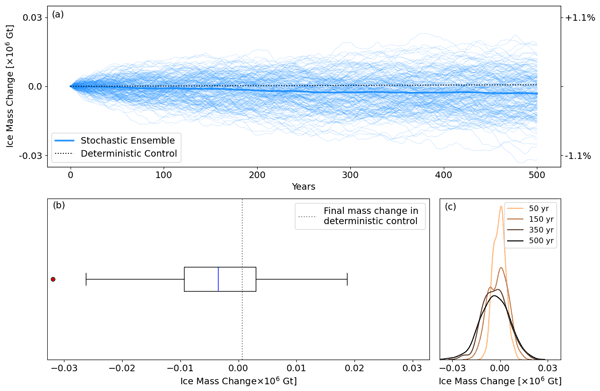
We describe the development of the first large-scale ice sheet model that accounts for stochasticity in a range of processes. Stochasticity allows the impacts of inherently uncertain processes on ice sheets to be represented. This includes climatic uncertainty, as the climate is inherently chaotic. Furthermore, stochastic capabilities also encompass poorly constrained glaciological processes that display strong variability at fine spatiotemporal scales. We present the model and test experiments.
Angelika Humbert, Julia Christmann, Hugh F. J. Corr, Veit Helm, Lea-Sophie Höyns, Coen Hofstede, Ralf Müller, Niklas Neckel, Keith W. Nicholls, Timm Schultz, Daniel Steinhage, Michael Wolovick, and Ole Zeising
The Cryosphere, 16, 4107–4139, https://doi.org/10.5194/tc-16-4107-2022, https://doi.org/10.5194/tc-16-4107-2022, 2022
Short summary
Short summary
Ice shelves are normally flat structures that fringe the Antarctic continent. At some locations they have channels incised into their underside. On Filchner Ice Shelf, such a channel is more than 50 km long and up to 330 m high. We conducted field measurements of basal melt rates and found a maximum of 2 m yr−1. Simulations represent the geometry evolution of the channel reasonably well. There is no reason to assume that this type of melt channel is destabilizing ice shelves.
David E. Gwyther, Colette Kerry, Moninya Roughan, and Shane R. Keating
Geosci. Model Dev., 15, 6541–6565, https://doi.org/10.5194/gmd-15-6541-2022, https://doi.org/10.5194/gmd-15-6541-2022, 2022
Short summary
Short summary
The ocean current flowing along the southeastern coast of Australia is called the East Australian Current (EAC). Using computer simulations, we tested how surface and subsurface observations might improve models of the EAC. Subsurface observations are particularly important for improving simulations, and if made in the correct location and time, can have impact 600 km upstream. The stability of the current affects model estimates could be capitalized upon in future observing strategies.
Madelaine Rosevear, Benjamin Galton-Fenzi, and Craig Stevens
Ocean Sci., 18, 1109–1130, https://doi.org/10.5194/os-18-1109-2022, https://doi.org/10.5194/os-18-1109-2022, 2022
Short summary
Short summary
Understanding ocean-driven melting of Antarctic ice shelves is critical for predicting future sea level. However, ocean observations from beneath ice shelves are scarce. Here, we present unique ocean and melting data from the Amery Ice Shelf, East Antarctica. We use our observations to evaluate common methods of representing melting in ocean–climate models (melting
parameterisations) and show that these parameterisations overestimate melting when the ocean is warm and/or currents are weak.
Chen Zhao, Rupert Gladstone, Benjamin Keith Galton-Fenzi, David Gwyther, and Tore Hattermann
Geosci. Model Dev., 15, 5421–5439, https://doi.org/10.5194/gmd-15-5421-2022, https://doi.org/10.5194/gmd-15-5421-2022, 2022
Short summary
Short summary
We use a coupled ice–ocean model to explore an oscillation feature found in several contributing models to MISOMIP1. The oscillation is closely related to the discretized grounding line retreat and likely strengthened by the buoyancy–melt feedback and/or melt–geometry feedback near the grounding line, and frequent ice–ocean coupling. Our model choices have a non-trivial impact on mean melt and ocean circulation strength, which might be interesting for the coupled ice–ocean community.
Ole Zeising, Daniel Steinhage, Keith W. Nicholls, Hugh F. J. Corr, Craig L. Stewart, and Angelika Humbert
The Cryosphere, 16, 1469–1482, https://doi.org/10.5194/tc-16-1469-2022, https://doi.org/10.5194/tc-16-1469-2022, 2022
Short summary
Short summary
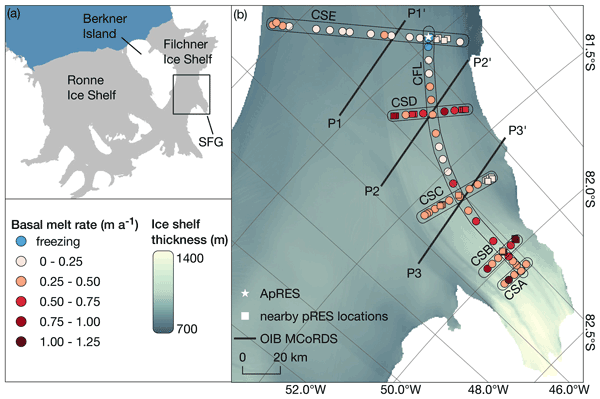
Remote-sensing-derived basal melt rates of ice shelves are of great importance due to their capability to cover larger areas. We performed in situ measurements with a phase-sensitive radar on the southern Filchner Ice Shelf, showing moderate melt rates and low small-scale spatial variability. The comparison with remote-sensing-based melt rates revealed large differences caused by the estimation of vertical strain rates from remote sensing velocity fields that modern fields can overcome.
Ole Richter, David E. Gwyther, Matt A. King, and Benjamin K. Galton-Fenzi
The Cryosphere, 16, 1409–1429, https://doi.org/10.5194/tc-16-1409-2022, https://doi.org/10.5194/tc-16-1409-2022, 2022
Short summary
Short summary
Tidal currents may play an important role in Antarctic ice sheet retreat by changing the rate at which the ocean melts glaciers. Here, using a computational ocean model, we derive the first estimate of present-day tidal melting that covers all of Antarctica. Our results suggest that large-scale ocean models aiming to accurately predict ice melt rates will need to account for the effects of tides. The inclusion of tide-induced friction at the ice–ocean interface should be prioritized.
Yu Wang, Chen Zhao, Rupert Gladstone, Ben Galton-Fenzi, and Roland Warner
The Cryosphere, 16, 1221–1245, https://doi.org/10.5194/tc-16-1221-2022, https://doi.org/10.5194/tc-16-1221-2022, 2022
Short summary
Short summary
The thermal structure of the Amery Ice Shelf and its spatial pattern are evaluated and analysed through temperature observations from six boreholes and numerical simulations. The simulations demonstrate significant ice warming downstream along the ice flow and a great variation of the thermal structure across the ice flow. We suggest that the thermal structure of the Amery Ice Shelf is unlikely to be affected by current climate changes on decadal timescales.
Alexander A. Robel, Earle Wilson, and Helene Seroussi
The Cryosphere, 16, 451–469, https://doi.org/10.5194/tc-16-451-2022, https://doi.org/10.5194/tc-16-451-2022, 2022
Short summary
Short summary
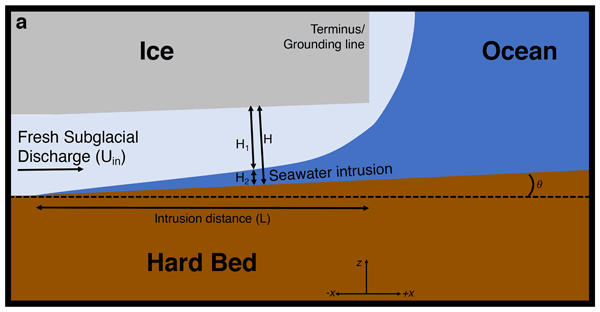
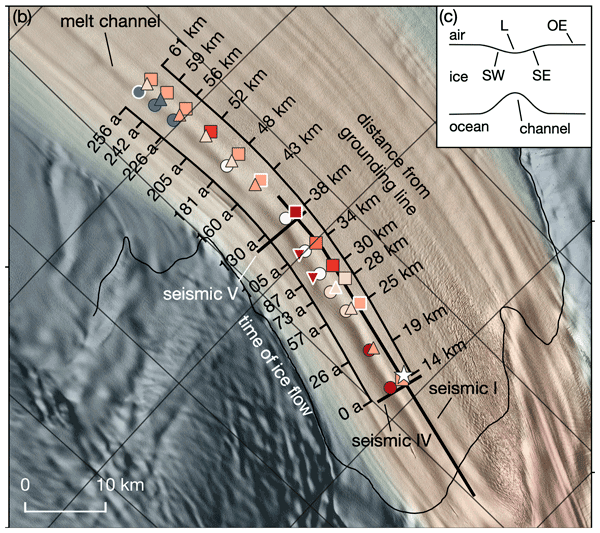
Warm seawater may intrude as a thin layer below glaciers in contact with the ocean. Mathematical theory predicts that this intrusion may extend over distances of kilometers under realistic conditions. Computer models demonstrate that if this warm seawater causes melting of a glacier bottom, it can cause rates of glacier ice loss and sea level rise to be up to 2 times faster in response to potential future ocean warming.
Jessica Cartwright, Alexander D. Fraser, and Richard Porter-Smith
Earth Syst. Sci. Data, 14, 479–490, https://doi.org/10.5194/essd-14-479-2022, https://doi.org/10.5194/essd-14-479-2022, 2022
Short summary
Short summary
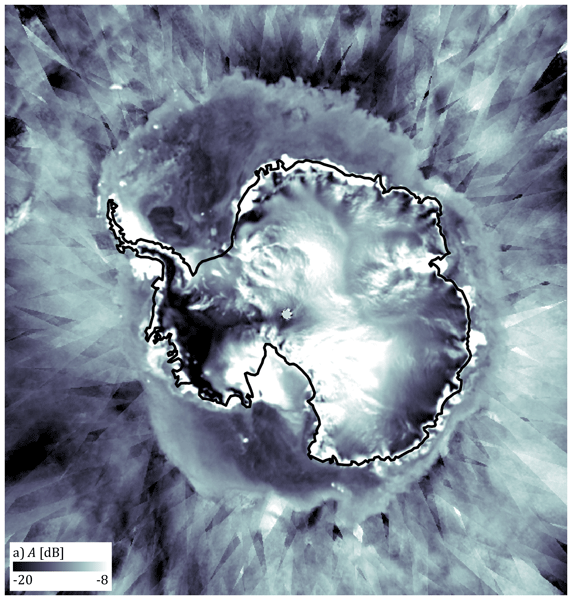
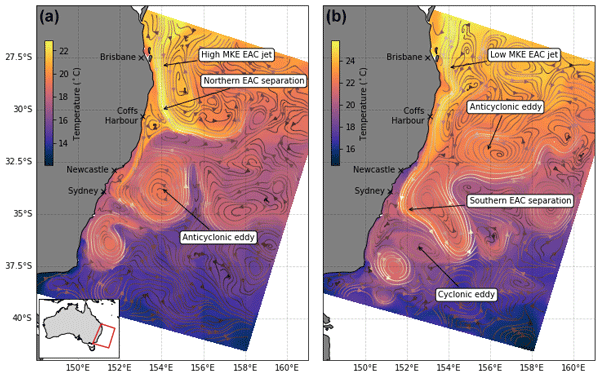
Due to the scale and remote nature of the polar regions, it is essential to use satellite remote sensing to monitor and understand them and their dynamics. Here we present data from the Advanced Scatterometer (ASCAT), processed in a manner proven for use in cryosphere studies. The data have been processed on three timescales (5 d, 2 d and 1 d) in order to optimise temporal resolution as each of the three MetOp satellites is launched.
Ole Richter, David E. Gwyther, Benjamin K. Galton-Fenzi, and Kaitlin A. Naughten
Geosci. Model Dev., 15, 617–647, https://doi.org/10.5194/gmd-15-617-2022, https://doi.org/10.5194/gmd-15-617-2022, 2022
Short summary
Short summary
Here we present an improved model of the Antarctic continental shelf ocean and demonstrate that it is capable of reproducing present-day conditions. The improvements are fundamental and regard the inclusion of tides and ocean eddies. We conclude that the model is well suited to gain new insights into processes that are important for Antarctic ice sheet retreat and global ocean changes. Hence, the model will ultimately help to improve projections of sea level rise and climate change.
Charles Pelletier, Thierry Fichefet, Hugues Goosse, Konstanze Haubner, Samuel Helsen, Pierre-Vincent Huot, Christoph Kittel, François Klein, Sébastien Le clec'h, Nicole P. M. van Lipzig, Sylvain Marchi, François Massonnet, Pierre Mathiot, Ehsan Moravveji, Eduardo Moreno-Chamarro, Pablo Ortega, Frank Pattyn, Niels Souverijns, Guillian Van Achter, Sam Vanden Broucke, Alexander Vanhulle, Deborah Verfaillie, and Lars Zipf
Geosci. Model Dev., 15, 553–594, https://doi.org/10.5194/gmd-15-553-2022, https://doi.org/10.5194/gmd-15-553-2022, 2022
Short summary
Short summary
We present PARASO, a circumpolar model for simulating the Antarctic climate. PARASO features five distinct models, each covering different Earth system subcomponents (ice sheet, atmosphere, land, sea ice, ocean). In this technical article, we describe how this tool has been developed, with a focus on the
coupling interfacesrepresenting the feedbacks between the distinct models used for contribution. PARASO is stable and ready to use but is still characterized by significant biases.
Carolyn Branecky Begeman, Xylar Asay-Davis, and Luke Van Roekel
The Cryosphere, 16, 277–295, https://doi.org/10.5194/tc-16-277-2022, https://doi.org/10.5194/tc-16-277-2022, 2022
Short summary
Short summary
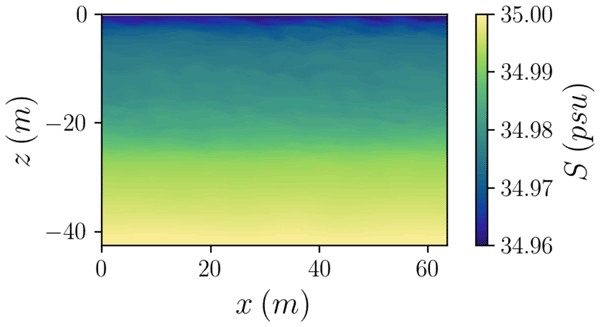
This study uses ocean modeling at ultra-high resolution to study the small-scale ocean mixing that controls ice-shelf melting. It offers some insights into the relationship between ice-shelf melting and ocean temperature far from the ice base, which may help us project how fast ice will melt when ocean waters entering the cavity warm. This study adds to a growing body of research that indicates we need a more sophisticated treatment of ice-shelf melting in coarse-resolution ocean models.
Alexander D. Fraser, Robert A. Massom, Mark S. Handcock, Phillip Reid, Kay I. Ohshima, Marilyn N. Raphael, Jessica Cartwright, Andrew R. Klekociuk, Zhaohui Wang, and Richard Porter-Smith
The Cryosphere, 15, 5061–5077, https://doi.org/10.5194/tc-15-5061-2021, https://doi.org/10.5194/tc-15-5061-2021, 2021
Short summary
Short summary
Landfast ice is sea ice that remains stationary by attaching to Antarctica's coastline and grounded icebergs. Although a variable feature, landfast ice exerts influence on key coastal processes involving pack ice, the ice sheet, ocean, and atmosphere and is of ecological importance. We present a first analysis of change in landfast ice over an 18-year period and quantify trends (−0.19 ± 0.18 % yr−1). This analysis forms a reference of landfast-ice extent and variability for use in other studies.
Gunter R. Leguy, William H. Lipscomb, and Xylar S. Asay-Davis
The Cryosphere, 15, 3229–3253, https://doi.org/10.5194/tc-15-3229-2021, https://doi.org/10.5194/tc-15-3229-2021, 2021
Short summary
Short summary
We present numerical features of the Community Ice Sheet Model in representing ocean termini glaciers. Using idealized test cases, we show that applying melt in a partly grounded cell is beneficial, in contrast to recent studies. We confirm that parameterizing partly grounded cells yields accurate ice sheet representation at a grid resolution of ~2 km (arguably 4 km), allowing ice sheet simulations at a continental scale. The choice of basal friction law also influences the ice flow.
Richard Porter-Smith, John McKinlay, Alexander D. Fraser, and Robert A. Massom
Earth Syst. Sci. Data, 13, 3103–3114, https://doi.org/10.5194/essd-13-3103-2021, https://doi.org/10.5194/essd-13-3103-2021, 2021
Short summary
Short summary
This study quantifies the characteristic complexity
signaturesaround the Antarctic outer coastal margin, giving a multiscale estimate of the magnitude and direction of undulation or complexity at each point location along the entire coastline. It has numerous applications for both geophysical and biological studies and will contribute to Antarctic research requiring quantitative information about this important interface.
Lisa Craw, Adam Treverrow, Sheng Fan, Mark Peternell, Sue Cook, Felicity McCormack, and Jason Roberts
The Cryosphere, 15, 2235–2250, https://doi.org/10.5194/tc-15-2235-2021, https://doi.org/10.5194/tc-15-2235-2021, 2021
Short summary
Short summary
Ice sheet and ice shelf models rely on data from experiments to accurately represent the way ice moves. Performing experiments at the temperatures and stresses that are generally present in nature takes a long time, and so there are few of these datasets. Here, we test the method of speeding up an experiment by running it initially at a higher temperature, before dropping to a lower target temperature to generate the relevant data. We show that this method can reduce experiment time by 55 %.
Thiago Dias dos Santos, Mathieu Morlighem, and Hélène Seroussi
Geosci. Model Dev., 14, 2545–2573, https://doi.org/10.5194/gmd-14-2545-2021, https://doi.org/10.5194/gmd-14-2545-2021, 2021
Short summary
Short summary
Numerical models are routinely used to understand the past and future behavior of ice sheets in response to climate evolution. As is always the case with numerical modeling, one needs to minimize biases and numerical artifacts due to the choice of numerical scheme employed in such models. Here, we assess different numerical schemes in time-dependent simulations of ice sheets. We also introduce a new parameterization for the driving stress, the force that drives the ice sheet flow.
Kazuya Kusahara, Daisuke Hirano, Masakazu Fujii, Alexander D. Fraser, and Takeshi Tamura
The Cryosphere, 15, 1697–1717, https://doi.org/10.5194/tc-15-1697-2021, https://doi.org/10.5194/tc-15-1697-2021, 2021
Short summary
Short summary
We used an ocean–sea ice–ice shelf model with a 2–3 km horizontal resolution to investigate ocean–ice shelf/glacier interactions in Lützow-Holm Bay, East Antarctica. The numerical model reproduced the observed warm water intrusion along the deep trough in the bay. We examined in detail (1) water mass changes between the upper continental slope and shelf regions and (2) the fast-ice role in the ocean conditions and basal melting at the Shirase Glacier tongue.
Rupert Gladstone, Benjamin Galton-Fenzi, David Gwyther, Qin Zhou, Tore Hattermann, Chen Zhao, Lenneke Jong, Yuwei Xia, Xiaoran Guo, Konstantinos Petrakopoulos, Thomas Zwinger, Daniel Shapero, and John Moore
Geosci. Model Dev., 14, 889–905, https://doi.org/10.5194/gmd-14-889-2021, https://doi.org/10.5194/gmd-14-889-2021, 2021
Short summary
Short summary
Retreat of the Antarctic ice sheet, and hence its contribution to sea level rise, is highly sensitive to melting of its floating ice shelves. This melt is caused by warm ocean currents coming into contact with the ice. Computer models used for future ice sheet projections are not able to realistically evolve these melt rates. We describe a new coupling framework to enable ice sheet and ocean computer models to interact, allowing projection of the evolution of melt and its impact on sea level.
William H. Lipscomb, Gunter R. Leguy, Nicolas C. Jourdain, Xylar Asay-Davis, Hélène Seroussi, and Sophie Nowicki
The Cryosphere, 15, 633–661, https://doi.org/10.5194/tc-15-633-2021, https://doi.org/10.5194/tc-15-633-2021, 2021
Short summary
Short summary
This paper describes Antarctic climate change experiments in which the Community Ice Sheet Model is forced with ocean warming predicted by global climate models. Generally, ice loss begins slowly, accelerates by 2100, and then continues unabated, with widespread retreat of the West Antarctic Ice Sheet. The mass loss by 2500 varies from about 150 to 1300 mm of equivalent sea level rise, based on the predicted ocean warming and assumptions about how this warming drives melting beneath ice shelves.
Cited articles
Asay-Davis, X. S., Cornford, S. L., Durand, G., Galton-Fenzi, B. K., Gladstone, R. M., Gudmundsson, G. H., Hattermann, T., Holland, D. M., Holland, D., Holland, P. R., Martin, D. F., Mathiot, P., Pattyn, F., and Seroussi, H.: Experimental design for three interrelated marine ice sheet and ocean model intercomparison projects: MISMIP v. 3 (MISMIP+), ISOMIP v. 2 (ISOMIP+) and MISOMIP v. 1 (MISOMIP1), Geosci. Model Dev., 9, 2471–2497, https://doi.org/10.5194/gmd-9-2471-2016, 2016. a, b
Bennetts, L., Shakespeare, C., Vreugdenhil, C., Foppert, A., Gayen, B., Meyer, A., Morrison, A., Padman, L., Phillips, H., Stevens, C., Toffoli, A., Constantinou, N., Cusack, J., Cyriac, A., Doddridge, E., England, M., Evans, D., Heil, P., Hogg, A., Holmes, R., Huneke, W., Jones, N., Keating, S., Kiss, A., Kraitzman, N., Malyarenko, A., McConnochie, C., Meucci, A., Montiel, F., Neme, J., Nikurashin, M., Patel, R., Peng, J., Rayson, M., Rosevear, M., Sohail, T., Spence, P., and Stanley, G.: Closing the Loops on Southern Ocean Dynamics: From the Circumpolar Current to Ice Shelves and From Bottom Mixing to Surface Waves, Reviews of Geophysics, 62, https://doi.org/10.1029/2022RG000781, 2024. a
Bintanja, R., van Oldenborgh, G. J., Drijfhout, S., Wouters, B., and Katsman, C.: Important role for ocean warming and increased ice-shelf melt in Antarctic sea-ice expansion, Nature Geoscience, 6, 376–379, 2013. a
Brunt, K., Fricker, H. A., and Padman, L.: Analysis of ice plains of the Filchner-Ronne Ice Shelf, Antarctica, using ICESat laser altimetry, Journal of Glaciology, 56, 965–975, https://doi.org/10.3189/002214311798043753, 2010. a
Burgard, C., Jourdain, N. C., Reese, R., Jenkins, A., and Mathiot, P.: An assessment of basal melt parameterisations for Antarctic ice shelves, The Cryosphere, 16, 4931–4975, https://doi.org/10.5194/tc-16-4931-2022, 2022. a, b
Burrough, P. A., McDonnell, R. A., and Lloyd, C. D.: Principles of geographical information systems, Oxford university press, ISBN 0198742843, 2015. a
Chen, J.-J., Swart, N. C., Beadling, R., Cheng, X., Hattermann, T., Jüling, A., Li, Q., Marshall, J., Martin, T., Muilwijk, M., Pauling, A. G., Purich, A., Smith, I. J., and Thomas, M.: Reduced Deep Convection and Bottom Water Formation Due To Antarctic Meltwater in a Multi-Model Ensemble, Geophysical Research Letters, 50, e2023GL106492, https://doi.org/10.1029/2023GL106492, 2023. a
Comeau, D., Asay-Davis, X. S., Begeman, C. B., Hoffman, M. J., Lin, W., Petersen, M. R., Price, S. F., Roberts, A. F., Van Roekel, L. P., Veneziani, M., Wolfe, J. D., Fyke, J. G., Ringler, T. D., and Turner, A. K.: The DOE E3SM v1.2 Cryosphere Configuration: Description and Simulated Antarctic Ice-Shelf Basal Melting, Journal of Advances in Modeling Earth Systems, 14, e2021MS002468, https://doi.org/10.1029/2021MS002468, 2022. a
Constable, A. J., Melbourne-Thomas, J., Corney, S. P., Arrigo, K. R., Barbraud, C., Barnes, D. K. A., Bindoff, N. L., Boyd, P. W., Brandt, A., Costa, D. P., Davidson, A. T., Ducklow, H. W., Emmerson, L., Fukuchi, M., Gutt, J., Hindell, M. A., Hofmann, E. E., Hosie, G. W., Iida, T., Jacob, S., Johnston, N. M., Kawaguchi, S., Kokubun, N., Koubbi, P., Lea, M.-A., Makhado, A., Massom, R. A., Meiners, K., Meredith, M. P., Murphy, E. J., Nicol, S., Reid, K., Richerson, K., Riddle, M. J., Rintoul, S. R., Smith, W. O., Southwell, C., Stark, J. S., Sumner, M., Swadling, K. M., Takahashi, K. T., Trathan, P. N., Welsford, D. C., Weimerskirch, H., Westwood, K. J., Wienecke, B. C., Wolf-Gladrow, D., Wright, S. W., Xavier, J. C., and Ziegler, P.: Climate change and Southern Ocean ecosystems I: how changes in physical habitats directly affect marine biota, Global Change Biology, 20, 3004–3025, https://doi.org/10.1111/gcb.12623, 2014. a
Cougnon, E., Galton-Fenzi, B., Rintoul, S., Williams, G., Fraser, A., and Hunter, J.: Regional changes in icescape impact shelf circulation and basal melting, Geophysical Research Letters, 44, 11–519, 2017. a
Cougnon, E. A., Galton-Fenzi, B. K., Meijers, A. J. S., and Legrésy, B.: Modeling interannual dense shelf water export in the region of the Mertz Glacier Tongue (1992–2007), Journal of Geophysical Research-Oceans, 118, 5858–5872, https://doi.org/10.1002/2013JC008790, 2013. a
Depoorter, M. A., Bamber, J. L., Griggs, J. A., Lenaerts, J. T., Ligtenberg, S. R., van den Broeke, M. R., and Moholdt, G.: Calving fluxes and basal melt rates of Antarctic ice shelves, Nature, 502, 89–92, https://doi.org/10.1038/nature12567, 2013. a
De Rydt, J., Jourdain, N. C., Nakayama, Y., van Caspel, M., Timmermann, R., Mathiot, P., Asay-Davis, X. S., Seroussi, H., Dutrieux, P., Galton-Fenzi, B., Holland, D., and Reese, R.: Experimental design for the Marine Ice Sheet–Ocean Model Intercomparison Project – phase 2 (MISOMIP2), Geosci. Model Dev., 17, 7105–7139, https://doi.org/10.5194/gmd-17-7105-2024, 2024. a
Dinniman, M. S., St-Laurent, P., Arrigo, K. R., Hofmann, E. E., and van Dijken, G. L.: Analysis of iron sources in Antarctic continental shelf waters, Journal of Geophysical Research-Oceans, 125, e2019JC015736, 2020. a
Favier, L., Pattyn, F., Berger, S., and Drews, R.: Dynamic influence of pinning points on marine ice-sheet stability: a numerical study in Dronning Maud Land, East Antarctica, The Cryosphere, 10, 2623–2635, https://doi.org/10.5194/tc-10-2623-2016, 2016. a
Finucane, G. and Stewart, A.: A predictive theory for heat transport into ice shelf cavities, Geophysical Research Letters, 51, e2024GL108196, https://doi.org/10.1029/2024GL108196, 2024. a
Fricker, H. A., Galton-Fenzi, B. K., Walker, C. C., Freer, B. I. D., Padman, L., and DeConto, R.: Antarctica in 2025: Drivers of deep uncertainty in projected ice loss, Science, 387, 601–609, https://doi.org/10.1126/science.adt9619, 2025. a, b
Gagliardini, O., Durand, G., Zwinger, T., Hindmarsh, R., and Le Meur, E.: Coupling of ice-shelf melting and buttressing is a key process in ice-sheets dynamics, Geophysical Research Letters, 37, https://doi.org/10.1029/2010GL043334, 2010. a
Galton-Fenzi, B. K., Porter-Smith, R., Cook, S., Cougnon, E., Gwyther, D. E., Huneke, W. G. C., Rosevear, M. G., Asay-Davis, X., Boeira Dias, F., Dinniman, M. S., Holland, D., Kusahara, K., Naughten, K. A., Nicholls, K. W., Pelletier, C., Richter, O., Seroussi, H., and Timmermann, R.: Multi-model estimate of Antarctic ice-shelf basal melting and ocean drivers: data, Ver 1, Australian Antarctic Data Centre [data set], https://doi.org/10.26179/q0rh-gt74, 2025. a
Galton-Fenzi, B., Fricker, H. A., Bassis, J. N., Crawford, A. J., Gomez, N., and Schoof, C.: The Antarctic Ice Sheet and sea level: contemporary changes and future projections, in: Antarctica and Planet Earth, edited by: Meredith, M., Melbourne-Thomas, J., Raphael, M., and Garabato, A. N., Taylor & Francis Group, https://doi.org/10.4324/9781003406471, 2025. a, b, c
Galton-Fenzi, B. K., Hunter, J. R., Coleman, R., Marsland, S. J., and Warner, R. C.: Modeling the basal melting and marine ice accretion of the Amery Ice Shelf, J. Geophys. Res., 117, https://doi.org/10.1029/2012JC008214, 2012. a, b
Gleckler, P. J., Taylor, K. E., and Doutriaux, C.: Performance metrics for climate models, Journal of Geophysical Research-Atmospheres, 113, https://doi.org/10.1029/2007JD008972, 2008. a
Gwyther, D., Galton-Fenzi, B., and Roberts, J.: Controls of the basal mass balance of floating ice shelves, in: 18th Australasian Fluid Mechanics Conference, 1–4, Launceston, Tasmania,Australia, 3–7 December 2012, 2012. a
Gwyther, D. E., O’Kane, T. J., Galton-Fenzi, B. K., Monselesan, D. P., and Greenbaum, J. S.: Intrinsic processes drive variability in basal melting of the Totten Glacier Ice Shelf, Nat. Commun., 9, https://doi.org/10.1038/s41467-018-05618-2, 2018. a
Gwyther, D. E., Kusahara, K., Asay-Davis, X. S., Dinniman, M. S., and Galton-Fenzi, B. J.: Vertical processes and resolution impact ice shelf basal melting: A multi-model study, Ocean Modelling, 147, https://doi.org/10.1016/j.ocemod.2020.101569, 2020a. a, b, c, d
Gwyther, D. E., Kusahara, K., Asay-Davis, X. S., Dinniman, M. S., and Galton-Fenzi, B. K.: Vertical processes and resolution impact ice shelf basal melting: A multi-model study, Ocean Modelling, 147, 101569, https://doi.org/10.1016/j.ocemod.2020.101569, 2020b. a, b
Hellmer, H. H., Hattermann, T., Schröder, M., Olbers, D., and Timmermann, R.: Twenty-first-century warming of a large Antarctic ice-shelf cavity by a redirected coastal current, Nature, 485, 225–228, https://doi.org/10.1038/nature11064, 2012. a
Holland, D., Hunter, J., Grosfeld, K., Hellmer, H., Jenkins, A., Morales Maqueda, M., Hemer, M., Williams, M., Klinck, J., and Dinniman, M.: The ice shelf-ocean model intercomparison project (ISOMIP), in: Eos Trans. AGU, 84, Fall Meet. Suppl., 2003, C41A–05, 2003. a
Holland, D. M. and Jenkins, A.: Modeling thermodynamic ice-ocean interactions at the base of an ice shelf, J. Phys. Oceanogr., 29, 1787–1800, 1999a. a
Holland, D. M. and Jenkins, A.: Modeling Thermodynamic Ice–Ocean Interactions at the Base of an Ice Shelf, Journal of Physical Oceanography, 29, 1787–1800, https://doi.org/10.1175/1520-0485(1999)029<1787:MTIOIA>2.0.CO;2, 1999b. a
Holland, P. R., Jenkins, A., and Holland, D. M.: The response of ice shelf basal melting to variations in ocean temperature, Journal of Climate, 21, 2558–2572, 2008a. a
Holland, P. R., Jenkins, A., and Holland, D. M.: The Response of Ice Shelf Basal Melting to Variations in Ocean Temperature, Journal of Climate, 21, 2558–2572, https://doi.org/10.1175/2007JCLI1909.1, 2008b. a
Hunter, J.: Specification for test models of ice shelf cavities, in: Technical Report June, Antarctic Climate & Ecosystems Cooperative Research Centre, 2006. a
Jacobs, S. S., Helmer, H. H., Jenkins, A., Doake, C. S. M., and Frolich, R. M.: Melting of ice shelves and the mass balance of Antarctica, Journal of Glaciology, 38, 375–387, 1992. a
Jenkins, A.: A simple model of the ice shelf–ocean boundary layer and current, Journal of Physical Oceanography, 46, 1785–1803, https://doi.org/10.1175/JPO-D-15-0194.1, 2016. a
Jenkins, A. and Bombosch, A.: Modeling the effects of frazil ice crystals on the dynamics and thermodynamics of ice shelf water plumes, Journal of Geophysical Research-Oceans, 100, 6967–6981, https://doi.org/10.1029/94JC03227, 1991. a
Jenkins, A., Nicholls, K. W., and Corr, H. F.: Observation and parameterization of ablation at the base of Ronne Ice Shelf, Antarctica, Journal of Physical Oceanography, 40, 2298–2312, https://doi.org/10.1175/2010JPO4317.1, 2010. a
Jourdain, N. C., Asay-Davis, X., Hattermann, T., Straneo, F., Seroussi, H., Little, C. M., and Nowicki, S.: A protocol for calculating basal melt rates in the ISMIP6 Antarctic ice sheet projections, The Cryosphere, 14, 3111–3134, https://doi.org/10.5194/tc-14-3111-2020, 2020. a, b
Khazendar, A., Rignot, E., Schroeder, D. M., Seroussi, H., Schodlok, M. P., Scheuchl, B., Mouginot, J., Sutterley, T. C., and Velicogna, I.: Rapid submarine ice melting in the grounding zones of ice shelves in West Antarctica, Nat. Commun., 7, 13243, https://doi.org/10.1038/ncomms13243, 2016. a
Knutti, R. and Sedláček, J.: Robustness and uncertainties in the new CMIP5 climate model projections, Nature climate change, 3, 369–373, https://doi.org/10.1038/NCLIMATE1716, 2013. a
Knutti, R., Abramowitz, G., Collins, M., Eyring, V., Gleckler, P., Hewitson, B., and Mearns, L.: Good practice guidance paper on assessing and combining multi model climate projections, in: Meeting Report of the Intergovernmental Panel on Climate Change Expert Meeting on Assessing and Combining Multi Model Climate Projections, edited by: Stocker, T. F., Qin, D., Plattner, G.-K., Tignor, M., and Midgley, P. M., 13, IPCC Working Group I Technical Support Unit, University of Bern, Bern, Switzerland, 2010. a
Kuipers Munneke, P., Ligtenberg, S. R. M., van den Broeke, M. R., Vaughan, D. G., B., M., and Rignot, E.: Calving fluxes and basal melt rates of Antarctic ice shelves, Nature, 502, 89–92, https://doi.org/10.1038/nature12567, 2013. a
Kusahara, K.: Summertime linkage between Antarctic sea-ice extent and ice-shelf basal melting through Antarctic coastal water masses’ variability: A circumpolar Southern Ocean model study, Environmental Research Letters, 16, 074042, https://doi.org/10.1088/1748-9326/ac0de0, 2021. a
Ligtenberg, S. R. M., Horwath, M., van den Broeke, M. R., and Legrésy, B.: Impact of firn compaction on Antarctic ice-mass balance, Annals of Glaciology, 56, 105–115, https://doi.org/10.3189/2015AoG70A010, 2014. a
Liu, Y., Moore, J. C., Cheng, X., Gladstone, R. M., Bassis, J. N., Liu, H., Wen, J., and Hui, F.: Ocean-driven thinning enhances iceberg calving and retreat of Antarctic ice shelves, Proceedings of the National Academy of Sciences, 112, 3263–3268, 2015. a
Longley, P. A., Goodchild, M. F., Maguire, D. J., and Rhind, D. W.: Geographic information systems and science, John Wiley & Sons, ISBN 0470870001, 2005. a
McDougall, T. J. and Barker, P. M.: Getting started with TEOS-10 and the Gibbs Seawater (GSW) oceanographic toolbox, Scor/Iapso WG, 127, 1–28, 2011. a
McDougall, T. J. and Wotherspoon, S. J.: A simple modification of Newton’s method to achieve convergence of order 1+ 2, Applied Mathematics Letters, 29, 20–25, 2014. a
McDougall, T. J., Barker, P. M., Feistel, R., and Galton-Fenzi, B. K.: Melting of ice and sea ice into seawater and frazil ice formation, Journal of Physical Oceanography, 44, 1751–1775, 2014. a
McMillan, M., Shepherd, A., Nienow, P., Gourmelen, N., Evangelinos, C., Rignot, E., and Sundal, A. V.: Increased ice losses from Antarctica detected by CryoSat-2, Geophysical Research Letters, 41, 3899–3905, https://doi.org/10.1002/2014GL060111, 2014. a
Mouginot, J., Scheuchl, B., and Rignot, E.: MEaSUREs Antarctic Boundaries for IPY 2007–2009 from Satellite Radar (NSIDC-0709, Version 2), Boulder, Colorado USA, NASA National Snow and Ice Data Center Distributed Active Archive Center [data set], https://doi.org/10.5067/AXE4121732AD (last access: 12 January 2025), 2017. a
Nakayama, Y., Timmermann, R., Rodehacke, C. B., Schröder, M., and Hellmer, H. H.: Modeling the spreading of glacial meltwater from the Amundsen and Bellingshausen Seas, Geophysical Research Letters, 41, 7942–7949, https://doi.org/10.1002/2014GL061600, 2014. a
Naughten, K. A., Meissner, K. J., Galton-Fenzi, B. K., England, M. H., Timmermann, R., Hellmer, H. H., Hattermann, T., and Debernard, J. B.: Intercomparison of Antarctic ice-shelf, ocean, and sea-ice interactions simulated by MetROMS-iceshelf and FESOM 1.4, Geosci. Model Dev., 11, 1257–1292, https://doi.org/10.5194/gmd-11-1257-2018, 2018. a, b, c, d
Nowicki, S., Goelzer, H., Seroussi, H., Payne, A. J., Lipscomb, W. H., Abe-Ouchi, A., Agosta, C., Alexander, P., Asay-Davis, X. S., Barthel, A., Bracegirdle, T. J., Cullather, R., Felikson, D., Fettweis, X., Gregory, J. M., Hattermann, T., Jourdain, N. C., Kuipers Munneke, P., Larour, E., Little, C. M., Morlighem, M., Nias, I., Shepherd, A., Simon, E., Slater, D., Smith, R. S., Straneo, F., Trusel, L. D., van den Broeke, M. R., and van de Wal, R.: Experimental protocol for sea level projections from ISMIP6 stand-alone ice sheet models, The Cryosphere, 14, 2331–2368, https://doi.org/10.5194/tc-14-2331-2020, 2020. a
Otosaka, I. N., Shepherd, A., Ivins, E. R., Schlegel, N.-J., Amory, C., van den Broeke, M. R., Horwath, M., Joughin, I., King, M. D., Krinner, G., Nowicki, S., Payne, A. J., Rignot, E., Scambos, T., Simon, K. M., Smith, B. E., Sørensen, L. S., Velicogna, I., Whitehouse, P. L., A, G., Agosta, C., Ahlstrøm, A. P., Blazquez, A., Colgan, W., Engdahl, M. E., Fettweis, X., Forsberg, R., Gallée, H., Gardner, A., Gilbert, L., Gourmelen, N., Groh, A., Gunter, B. C., Harig, C., Helm, V., Khan, S. A., Kittel, C., Konrad, H., Langen, P. L., Lecavalier, B. S., Liang, C.-C., Loomis, B. D., McMillan, M., Melini, D., Mernild, S. H., Mottram, R., Mouginot, J., Nilsson, J., Noël, B., Pattle, M. E., Peltier, W. R., Pie, N., Roca, M., Sasgen, I., Save, H. V., Seo, K.-W., Scheuchl, B., Schrama, E. J. O., Schröder, L., Simonsen, S. B., Slater, T., Spada, G., Sutterley, T. C., Vishwakarma, B. D., van Wessem, J. M., Wiese, D., van der Wal, W., and Wouters, B.: Mass balance of the Greenland and Antarctic ice sheets from 1992 to 2020, Earth Syst. Sci. Data, 15, 1597–1616, https://doi.org/10.5194/essd-15-1597-2023, 2023. a, b
Paolo, F., Fricker, H. A., and Padman, L.: Volume loss from Antarctic ice shelves is accelerating, Science, 348, https://doi.org/10.1126/science.aaa0940, 2015. a, b, c
Pelletier, C., Fichefet, T., Goosse, H., Haubner, K., Helsen, S., Huot, P.-V., Kittel, C., Klein, F., Le clec'h, S., van Lipzig, N. P. M., Marchi, S., Massonnet, F., Mathiot, P., Moravveji, E., Moreno-Chamarro, E., Ortega, P., Pattyn, F., Souverijns, N., Van Achter, G., Vanden Broucke, S., Vanhulle, A., Verfaillie, D., and Zipf, L.: PARASO, a circum-Antarctic fully coupled ice-sheet–ocean–sea-ice–atmosphere–land model involving f.ETISh1.7, NEMO3.6, LIM3.6, COSMO5.0 and CLM4.5, Geosci. Model Dev., 15, 553–594, https://doi.org/10.5194/gmd-15-553-2022, 2022. a, b
Richter, O., Gwyther, D. E., Galton-Fenzi, B. K., and Naughten, K. A.: The Whole Antarctic Ocean Model (WAOM v1.0): development and evaluation, Geosci. Model Dev., 15, 617–647, https://doi.org/10.5194/gmd-15-617-2022, 2022a. a, b, c, d
Richter, O., Gwyther, D. E., King, M. A., and Galton-Fenzi, B. K.: The impact of tides on Antarctic ice shelf melting, The Cryosphere, 16, 1409–1429, https://doi.org/10.5194/tc-16-1409-2022, 2022b. a
Rignot, E., Jacobs, S., Mouginot, J., and Scheuchl, B.: Ice-shelf melting around Antarctica, Science, 341, 266–270, https://doi.org/10.1126/science.1235798, 2013. a, b
Rignot, E., Mouginot, J., Scheuchl, B., van den Broeke, M., van Wessem, M. J., and Morlighem, M.: Four decades of Antarctic Ice Sheet mass balance from 1979–2017, P. Natl. Acad. Sci. USA, 116, 1095–1103, https://doi.org/10.1073/pnas.1812883116, 2019. a, b, c, d
Rintoul, S. R.: The global influence of localized dynamics in the Southern Ocean, Nature, 558, 209–218, https://doi.org/10.1038/s41586-018-0182-3, 2018. a
Rosevear, M., Galton-Fenzi, B., and Stevens, C.: Evaluation of basal melting parameterisations using in situ ocean and melting observations from the Amery Ice Shelf, East Antarctica, Ocean Sci., 18, 1109–1130, https://doi.org/10.5194/os-18-1109-2022, 2022a. a
Rosevear, M. G., Gayen, B., and Galton-Fenzi, B. K.: Regimes and Transitions in the Basal Melting of Antarctic Ice Shelves, Journal of Physical Oceanography, 52, 2589–2608, https://doi.org/10.1175/JPO-D-21-0317.1, 2022b. a
Rosevear, M. G., Gayen, B., Vreugdenhil, C., and Galton-Fenzi, B.: How Does the Ocean Melt Antarctic Ice Shelves?, Annual Review of Marine Science, 17, 325–353, https://doi.org/10.1146/annurev-marine-040323-074354, 2025. a
Sasgen, I., Konrad, H., Helm, V., Grosfeld, K., and Thomas, M.: Antarctic ice-mass balance 2002–2016 constrained by gravimetry and altimetry data, Earth and Planetary Science Letters, 510, 200–204, https://doi.org/10.1016/j.epsl.2018.12.003, 2019. a
Schoof, C.: Ice sheet grounding line dynamics: Steady states, stability, and hysteresis, Journal of Geophysical Research-Earth Surface, 112, F03S28, https://doi.org/10.1029/2006JF000664, 2007. a
Schröder, L., Horwath, M., Dietrich, R., Helm, V., van den Broeke, M. R., and Ligtenberg, S. R. M.: Four decades of Antarctic surface elevation changes from multi-mission satellite altimetry, The Cryosphere, 13, 427–449, https://doi.org/10.5194/tc-13-427-2019, 2019. a
Sen, Z.: Spatial modeling principles in earth sciences, vol. 10, Springer, ISBN 3319417584, 2016. a
Seroussi, H., Nowicki, S., Payne, A. J., Goelzer, H., Lipscomb, W. H., Abe-Ouchi, A., Agosta, C., Albrecht, T., Asay-Davis, X., Barthel, A., Calov, R., Cullather, R., Dumas, C., Galton-Fenzi, B. K., Gladstone, R., Golledge, N. R., Gregory, J. M., Greve, R., Hattermann, T., Hoffman, M. J., Humbert, A., Huybrechts, P., Jourdain, N. C., Kleiner, T., Larour, E., Leguy, G. R., Lowry, D. P., Little, C. M., Morlighem, M., Pattyn, F., Pelle, T., Price, S. F., Quiquet, A., Reese, R., Schlegel, N.-J., Shepherd, A., Simon, E., Smith, R. S., Straneo, F., Sun, S., Trusel, L. D., Van Breedam, J., van de Wal, R. S. W., Winkelmann, R., Zhao, C., Zhang, T., and Zwinger, T.: ISMIP6 Antarctica: a multi-model ensemble of the Antarctic ice sheet evolution over the 21st century, The Cryosphere, 14, 3033–3070, https://doi.org/10.5194/tc-14-3033-2020, 2020. a, b
Seroussi, H., Verjans, V., Nowicki, S., Payne, A. J., Goelzer, H., Lipscomb, W. H., Abe-Ouchi, A., Agosta, C., Albrecht, T., Asay-Davis, X., Barthel, A., Calov, R., Cullather, R., Dumas, C., Galton-Fenzi, B. K., Gladstone, R., Golledge, N. R., Gregory, J. M., Greve, R., Hattermann, T., Hoffman, M. J., Humbert, A., Huybrechts, P., Jourdain, N. C., Kleiner, T., Larour, E., Leguy, G. R., Lowry, D. P., Little, C. M., Morlighem, M., Pattyn, F., Pelle, T., Price, S. F., Quiquet, A., Reese, R., Schlegel, N.-J., Shepherd, A., Simon, E., Smith, R. S., Straneo, F., Sun, S., Trusel, L. D., Van Breedam, J., Van Katwyk, P., van de Wal, R. S. W., Winkelmann, R., Zhao, C., Zhang, T., and Zwinger, T.: Insights into the vulnerability of Antarctic glaciers from the ISMIP6 ice sheet model ensemble and associated uncertainty, The Cryosphere, 17, 5197–5217, https://doi.org/10.5194/tc-17-5197-2023, 2023. a
Shepherd, A., Ivins, E., Rignot, E., Smith, B., van den Broeke, M., Velicogna, I., Whitehouse, P., Briggs, K., Joughin, I., Krinner, G., Nowicki, S., Payne, T., Scambos, T., Schlegel, N., A, G., Agosta, C., Ahlstrom, A., Babonis, G., Barletta, V., Blazquez, A., Bonin, J., Csatho, B., Cullather, R., Felikson, D., Fettweis, X., Forsberg, R., Gallee, H., Gardner, A., Gilbert, L., Groh, A., Gunter, B., Hanna, E., Harig, C., Helm, V., Horvath, A., Horwath, M., Khan, S., Kjeldsen, K. K., Konrad, H., Langen, P., Lecavalier, B., Loomis, B., Luthcke, S., McMillan, M., Melini, D., Mernild, S., Mohajerani, Y., Moore, P., Mouginot, J., Moyano, G., Muir, A., Nagler, T., Nield, G., Nilsson, J., Noel, B., Otosaka, I., Pattle, M. E., Peltier, W. R., Pie, N., Rietbroek, R., Rott, H., Sandberg-Sorensen, L., Sasgen, I., Save, H., Scheuchl, B., Schrama, E., Schroeder, L., Seo, K.-W., Simonsen, S., Slater, T., Spada, G., Sutterley, T., Talpe, M., Tarasov, L., van de Berg, W. J., van der Wal, W., van Wessem, M., Vishwakarma, B. D., Wiese, D., Wouters, B., and Team, I.: Mass balance of the Antarctic Ice Sheet from 1992 to 2017, Nature, 558, 219–222, https://doi.org/10.1038/s41586-018-0179-y, 2018. a, b, c, d, e
Smith, B., Fricker, H. A., Gardner, A. S., Medley, B., Nilsson, J., Paolo, F. S., Holschuh, N., Adusumilli, S., Brunt, K., Csatho, B., Harbeck, K., Markus, T., Neumann, T., Siegfried, M. R., and Zwally, H. J.: Pervasive ice sheet mass loss reflects competing ocean and atmosphere processes, Science, 368, 1239–1242, https://doi.org/10.1126/science.aaz5845, 2020. a
Smith, R. L., Tebaldi, C., Nychka, D., and Mearns, L. O.: Bayesian modeling of uncertainty in ensembles of climate models, Journal of the American Statistical Association, 104, 97–116, https://doi.org/10.1198/jasa.2009.0007, 2009. a
Snyder, J. P.: Map projections–A working manual, vol. 1395, US Government Printing Office, ISBN 0318235625, 1987. a
Snyder, J. P. and Voxland, P. M.: An album of map projections, US Government Printing Office, ISBN 0160033683, 1989. a
Tamura, T., Ohshima, K. I., Nihashi, S., and Hasumi, H.: Estimation of Surface Heat/Salt Fluxes Associated with Sea Ice Growth/Melt in the Southern Ocean, SOLA, 7, 17–20, https://doi.org/10.2151/sola.2011-005, 2011. a
Tebaldi, C. and Knutti, R.: The use of the multi-model ensemble in probabilistic climate projections, Philosophical Transactions of the Royal Society A: Mathematical, Physical and Engineering Sciences, 365, 2053–2075, https://doi.org/10.1098/rsta.2007.2076, 2007. a
Thomas, R. H., Sanderson, T. J., and Rose, K. E.: Effect of climatic warming on the West Antarctic ice sheet, Nature, 277, 355–358, 1979. a
Timmermann, R., Hellmer, H. H., and Hund, I.: Sensitivity of Weddell Sea ice-shelf/ocean system to Filchner-Ronne Ice Shelf cavity shape, Journal of Geophysical Research-Oceans, 117, C02007, https://doi.org/10.1029/2011JC007268, 2012. a
Short summary
Quantifying melt and freeze beneath Antarctica’s floating ice shelves is vital to understanding present-day ice-sheet behavior and its potential to contribute to future sea-level rise. We compare 10 ice-shelf/ocean computer simulations with satellite data, providing the first multi-model estimate of melting and refreezing driven by the ocean. This new estimate offers a valuable tool for assessing ice-shelf roles in current and future ice-sheet changes, informing coastal adaptation strategies.
Quantifying melt and freeze beneath Antarctica’s floating ice shelves is vital to understanding...