
Articles | Volume 19, issue 12
https://doi.org/10.5194/tc-19-6461-2025
© Author(s) 2025. This work is distributed under
the Creative Commons Attribution 4.0 License.
the Creative Commons Attribution 4.0 License.
https://doi.org/10.5194/tc-19-6461-2025
© Author(s) 2025. This work is distributed under
the Creative Commons Attribution 4.0 License.
the Creative Commons Attribution 4.0 License.
Research article
| 
03 Dec 2025
Research article |
| 03 Dec 2025
| 03 Dec 2025
Distribution and characteristics of supraglacial channels on mountain glaciers in Valais, Switzerland
Holly Wytiahlowsky
CORRESPONDING AUTHOR

Department of Geography, Durham University, Durham, DH1 3LE, United Kingdom
Chris R. Stokes
Department of Geography, Durham University, Durham, DH1 3LE, United Kingdom
Rebecca A. Hodge
Department of Geography, Durham University, Durham, DH1 3LE, United Kingdom
Caroline C. Clason
Department of Geography, Durham University, Durham, DH1 3LE, United Kingdom
Stewart S. R. Jamieson
Department of Geography, Durham University, Durham, DH1 3LE, United Kingdom
Related authors
No articles found.
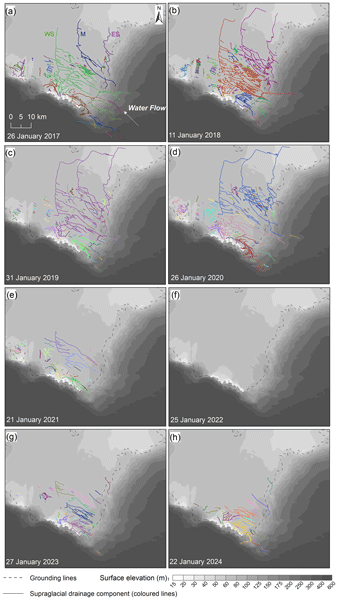
Jiao Chen, Rebecca A. Hodge, Stewart S. R. Jamieson, and Chris R. Stokes
The Cryosphere, 20, 5785–5811, https://doi.org/10.5194/tc-20-5785-2026, https://doi.org/10.5194/tc-20-5785-2026, 2026
Short summary
Short summary
Supraglacial drainage systems mediate meltwater transport over ice shelves and may influence their stability. Our mapping of Nivlisen Ice Shelf from satellite imagery shows significant variation in interannual and seasonal drainage extent. During warm summers, channels become increasingly connected, redistributing meltwater from high to low elevations across the ice shelf. Channel location is controlled by ice shelf structure, and annual extent is correlated with regional air temperature.
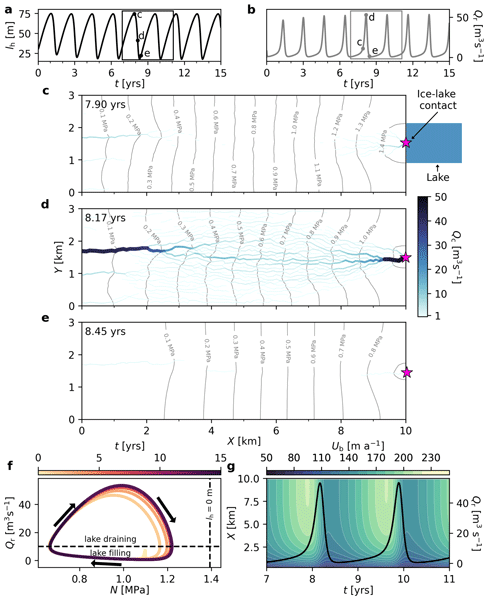
Adam J. Hepburn, Sammie Buzzard, Andrew J. Sole, Stephen J. Livingstone, Felix Ng, Mathieu Morlighem, Elizabeth A. Bagshaw, Caroline Clason, Lisa Craw, Christine F. Dow, Samuel Doyle, Jonathan Hawkins, Matthew Peacey, and Robert Storrar
The Cryosphere, 20, 5675–5696, https://doi.org/10.5194/tc-20-5675-2026, https://doi.org/10.5194/tc-20-5675-2026, 2026
Short summary
Short summary
Lakes at glacier margins can drain beneath the ice in devastating, floods called jökulhlaups. We present the first 2D model of jökulhlaup propagation, first applying it to a synthetic glacier, before then assessing its ability to reproduce an observed record of lake fill-drain cycles in Greenland. Our results match a 17-year record of flood timing but underpredicts peak discharge likely because we are missing certain physical processes. Our results hold promise for simulating jökulhlaups.
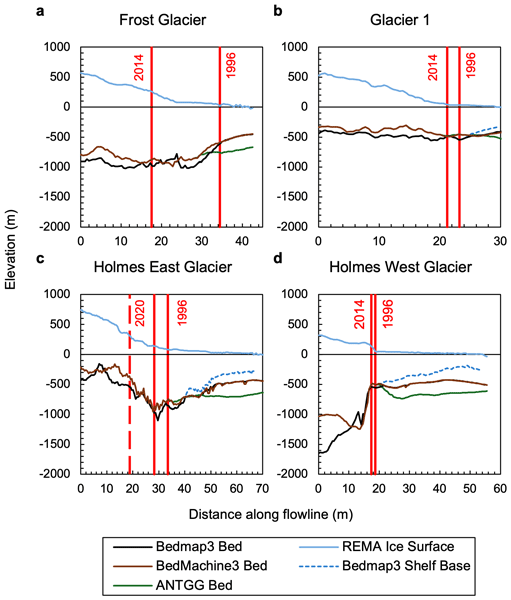
Matilda Weatherley, Chris R. Stokes, Stewart S. R. Jamieson, Sindhu Ramanath, and Alessandro Silvano
The Cryosphere, 20, 5509–5532, https://doi.org/10.5194/tc-20-5509-2026, https://doi.org/10.5194/tc-20-5509-2026, 2026
Short summary
Short summary
Parts of the East Antarctic Ice Sheet rest on a bed below sea level, making them vulnerable to ice dynamic changes and instability, but few glaciers have been studied in detail. Here we report on glaciers draining into Porpoise Bay, Wilkes Land, overlying the Aurora Subglacial Basin. We find ice surface thinning, grounding line retreat and ice surface velocity increase over recent decades, consistent with warm ocean waters intrusion. This highlights this region's vulnerability to future warming.
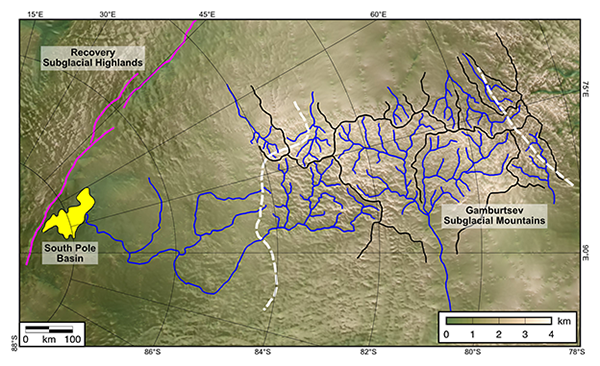
Guy J. G. Paxman, Fiona J. Clubb, Stewart S. R. Jamieson, and Alexander L. Densmore
Earth Surf. Dynam., 14, 575–599, https://doi.org/10.5194/esurf-14-575-2026, https://doi.org/10.5194/esurf-14-575-2026, 2026
Short summary
Short summary
This study focusses on the Gamburtsev Subglacial Mountains, a 600 km-long mountain range that is completely hidden beneath the Antarctic Ice Sheet. We look at the valley networks within the Gamburtsevs and use these to understand how the mountains formed. Our main findings are that the valleys were first cut by rivers that existed before Antarctica was glaciated, the shape of the valleys is affected by the bedrock geology, and the mountains are probably younger than previously thought.
Neil Ross, Rebecca J. Sanderson, Bernd Kulessa, Martin Siegert, Guy J. G. Paxman, Keir A. Nichols, Matthew R. Siegfried, Stewart S. R. Jamieson, Michael J. Bentley, Tom A. Jordan, Christine L. Batchelor, David Small, Olaf Eisen, Kate Winter, Robert G. Bingham, S. Louise Callard, Rachel Carr, Christine F. Dow, Helen A. Fricker, Emily Hill, Benjamin H. Hills, Coen Hofstede, Hafeez Jeofry, Felipe Napoleoni, and Wilson Sauthoff
The Cryosphere, 20, 3705–3737, https://doi.org/10.5194/tc-20-3705-2026, https://doi.org/10.5194/tc-20-3705-2026, 2026
Short summary
Short summary
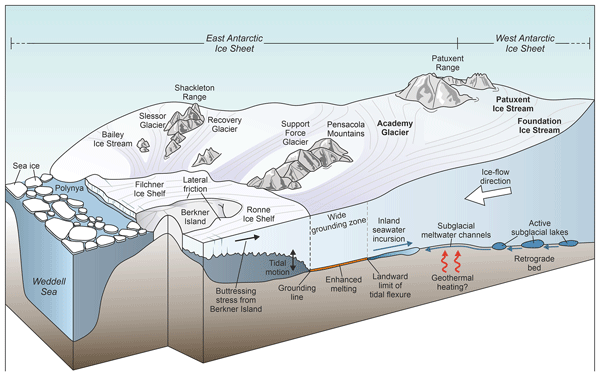
We review research about a group of fast-flowing Antarctic ice streams, the Foundation-Patuxent-Academy System. Previously, we knew little about how these ice streams flow, how they interact with each other and the ocean, what their geological history was, and how they might evolve in a warming world. By reviewing existing research, we have identified the future research needed to determine how these ice streams function, and how they might contribute to future global sea level rise.
Felipe Napoleoni, Michael J. Bentley, Neil Ross, Stewart S. R. Jamieson, José A. Uribe, Jonathan Oberreuter, Rodrigo Zamora, Andrés Rivera, Andrew M. Smith, Robert G. Bingham, and Kenichi Matsuoka
The Cryosphere, 20, 2793–2824, https://doi.org/10.5194/tc-20-2793-2026, https://doi.org/10.5194/tc-20-2793-2026, 2026
Short summary
Short summary
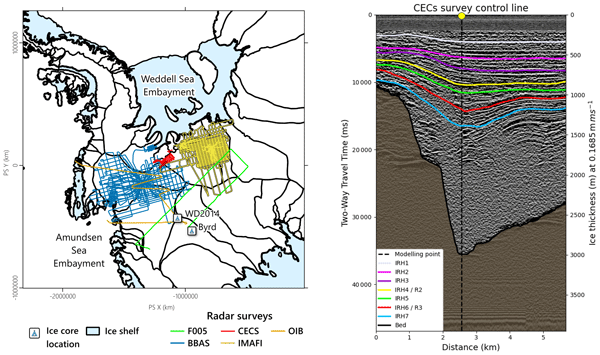
We mapped buried layers inside West Antarctic ice across 13,000 km² near the Amundsen–Weddell divide using radar. Some layers may be up to 17 kyr old. The layers remain well preserved in slow-moving ice but become distorted where ice flows faster. Snowfall has long been greater on one side of the divide, suggesting the ice divide has remained stable for thousands of years. Our study helps connect climate records across West Antarctica and improve models used to predict future ice-sheet change.
Charlotte M. Carter, Steven Franke, Daniela Jansen, Chris R. Stokes, Veit Helm, John Paden, and Olaf Eisen
The Cryosphere, 19, 5299–5315, https://doi.org/10.5194/tc-19-5299-2025, https://doi.org/10.5194/tc-19-5299-2025, 2025
Short summary
Short summary
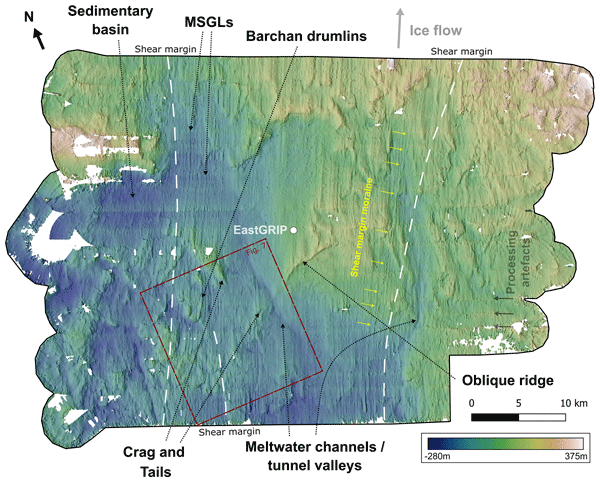
The subglacial landforms beneath actively fast-flowing ice in Greenland have not been explored in detail, as digital elevation models have not had a high enough resolution to see these features. We use swath radar imaging to visualise landforms at the onset of an ice stream, revealing mega-scale glacial lineations, that would usually be assumed to be indicative of faster ice flow than the current velocities. Interpretation of the landscape also gives an indication of the properties of the bed.
Benjamin J. Stoker, Helen E. Dulfer, Chris R. Stokes, Victoria H. Brown, Christopher D. Clark, Colm Ó Cofaigh, David J. A. Evans, Duane Froese, Sophie L. Norris, and Martin Margold
The Cryosphere, 19, 869–910, https://doi.org/10.5194/tc-19-869-2025, https://doi.org/10.5194/tc-19-869-2025, 2025
Short summary
Short summary
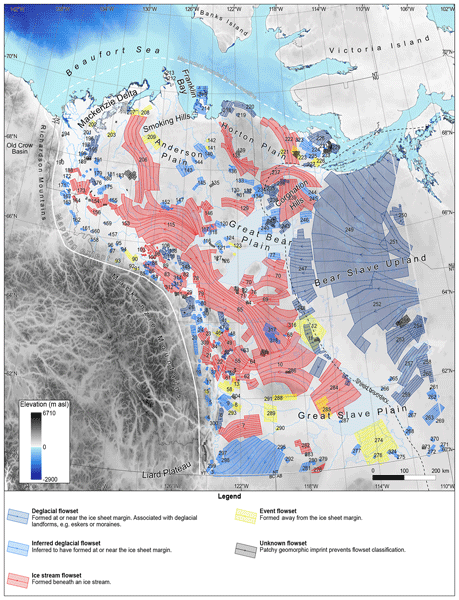
The retreat of the northwestern Laurentide Ice Sheet allows us to investigate how the ice drainage network evolves over millennial timescales and understand the influence of climate forcing, glacial lakes and the underlying geology on the rate of deglaciation. We reconstruct the changes in ice flow at 500-year intervals and identify rapid reorganisations of the drainage network, including variations in ice streaming that we link to climatically driven changes in the ice sheet surface slope.
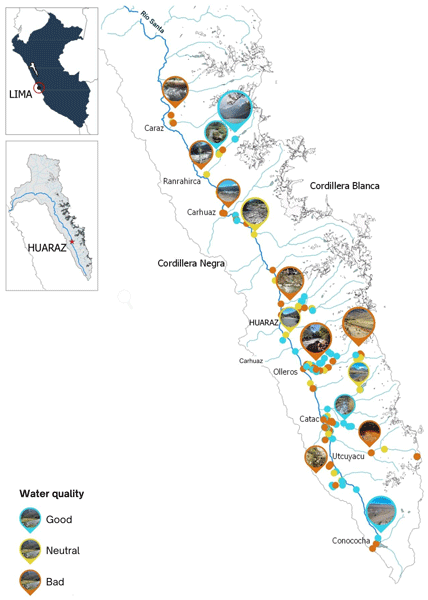
Sally Rangecroft, Caroline Clason, Rosa Maria Dextre, Isabel Richter, Claire Kelly, Cecilia Turin, Claudia V. Grados-Bueno, Beatriz Fuentealba, Mirtha Camacho Hernandez, Sergio Morera Julca, John Martin, and John Adam Guy
Geosci. Commun., 7, 145–150, https://doi.org/10.5194/gc-7-145-2024, https://doi.org/10.5194/gc-7-145-2024, 2024
Short summary
Short summary
The Nuestro Rio project (2021–22) developed a digital app to collect local perspectives on water quality in the Santa River basin, Peru. Here we share four key lessons from the project, discussing the importance and challenges of engaging local participants, the use of technology for data collection, and the need to integrate local perspectives with scientific observations. This article provides insights for researchers considering developing similar technological tools for environmental issues.
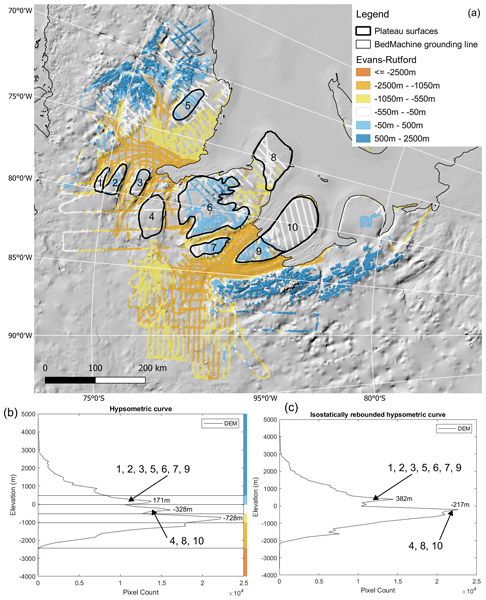
Charlotte M. Carter, Michael J. Bentley, Stewart S. R. Jamieson, Guy J. G. Paxman, Tom A. Jordan, Julien A. Bodart, Neil Ross, and Felipe Napoleoni
The Cryosphere, 18, 2277–2296, https://doi.org/10.5194/tc-18-2277-2024, https://doi.org/10.5194/tc-18-2277-2024, 2024
Short summary
Short summary
We use radio-echo sounding data to investigate the presence of flat surfaces beneath the Evans–Rutford region in West Antarctica. These surfaces may be what remains of laterally continuous surfaces, formed before the inception of the West Antarctic Ice Sheet, and we assess two hypotheses for their formation. Tectonic structures in the region may have also had a control on the growth of the ice sheet by focusing ice flow into troughs adjoining these surfaces.
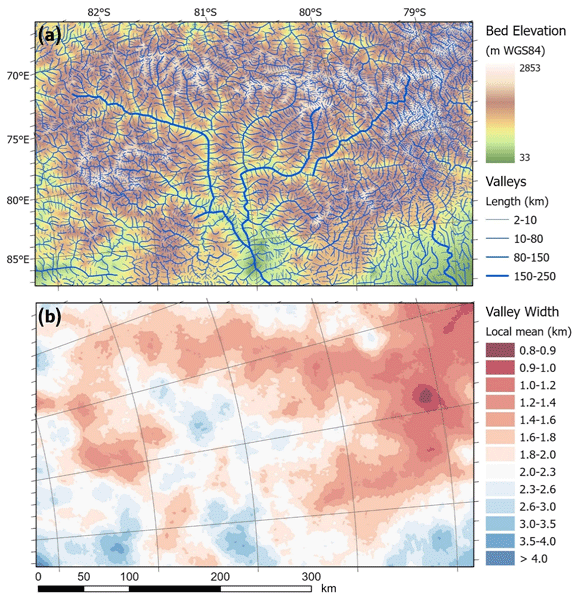
Edmund J. Lea, Stewart S. R. Jamieson, and Michael J. Bentley
The Cryosphere, 18, 1733–1751, https://doi.org/10.5194/tc-18-1733-2024, https://doi.org/10.5194/tc-18-1733-2024, 2024
Short summary
Short summary
We use the ice surface expression of the Gamburtsev Subglacial Mountains in East Antarctica to map the horizontal pattern of valleys and ridges in finer detail than possible from previous methods. In upland areas, valleys are spaced much less than 5 km apart, with consequences for the distribution of melting at the bed and hence the likelihood of ancient ice being preserved. Automated mapping techniques were tested alongside manual approaches, with a hybrid approach recommended for future work.
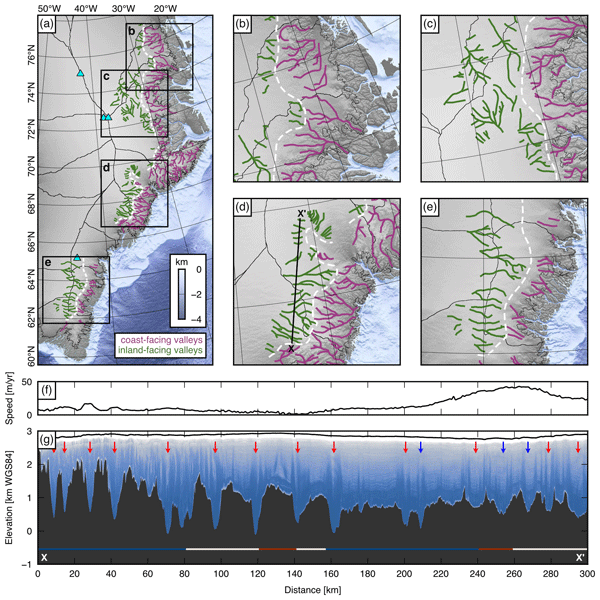
Guy J. G. Paxman, Stewart S. R. Jamieson, Aisling M. Dolan, and Michael J. Bentley
The Cryosphere, 18, 1467–1493, https://doi.org/10.5194/tc-18-1467-2024, https://doi.org/10.5194/tc-18-1467-2024, 2024
Short summary
Short summary
This study uses airborne radar data and satellite imagery to map mountainous topography hidden beneath the Greenland Ice Sheet. We find that the landscape records the former extent and configuration of ice masses that were restricted to areas of high topography. Computer models of ice flow indicate that valley glaciers eroded this landscape millions of years ago when local air temperatures were at least 4 °C higher than today and Greenland’s ice volume was < 10 % of that of the modern ice sheet.
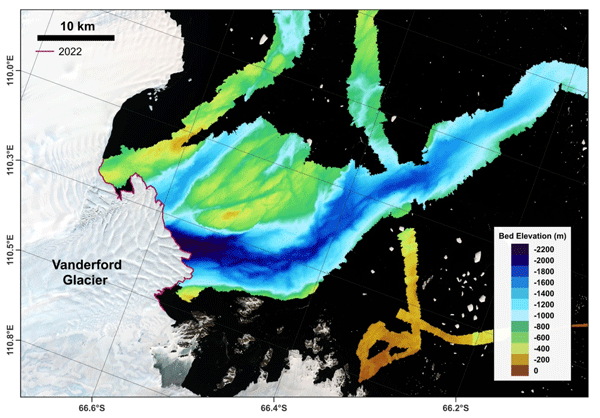
Hannah J. Picton, Chris R. Stokes, Stewart S. R. Jamieson, Dana Floricioiu, and Lukas Krieger
The Cryosphere, 17, 3593–3616, https://doi.org/10.5194/tc-17-3593-2023, https://doi.org/10.5194/tc-17-3593-2023, 2023
Short summary
Short summary
This study provides an overview of recent ice dynamics within Vincennes Bay, Wilkes Land, East Antarctica. This region was recently discovered to be vulnerable to intrusions of warm water capable of driving basal melt. Our results show extensive grounding-line retreat at Vanderford Glacier, estimated at 18.6 km between 1996 and 2020. This supports the notion that the warm water is able to access deep cavities below the Vanderford Ice Shelf, potentially making Vanderford Glacier unstable.
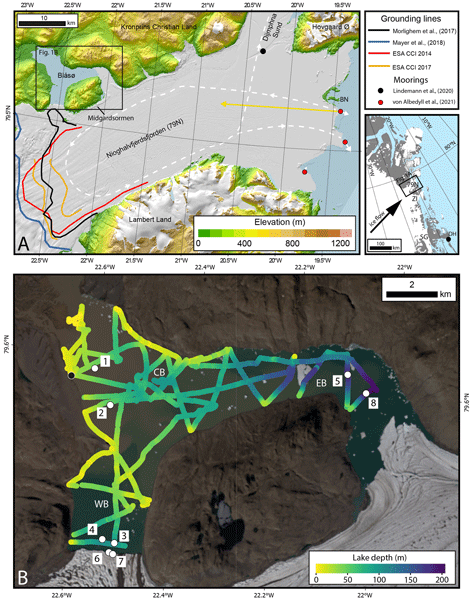
Michael J. Bentley, James A. Smith, Stewart S. R. Jamieson, Margaret R. Lindeman, Brice R. Rea, Angelika Humbert, Timothy P. Lane, Christopher M. Darvill, Jeremy M. Lloyd, Fiamma Straneo, Veit Helm, and David H. Roberts
The Cryosphere, 17, 1821–1837, https://doi.org/10.5194/tc-17-1821-2023, https://doi.org/10.5194/tc-17-1821-2023, 2023
Short summary
Short summary
The Northeast Greenland Ice Stream is a major outlet of the Greenland Ice Sheet. Some of its outlet glaciers and ice shelves have been breaking up and retreating, with inflows of warm ocean water identified as the likely reason. Here we report direct measurements of warm ocean water in an unusual lake that is connected to the ocean beneath the ice shelf in front of the 79° N Glacier. This glacier has not yet shown much retreat, but the presence of warm water makes future retreat more likely.
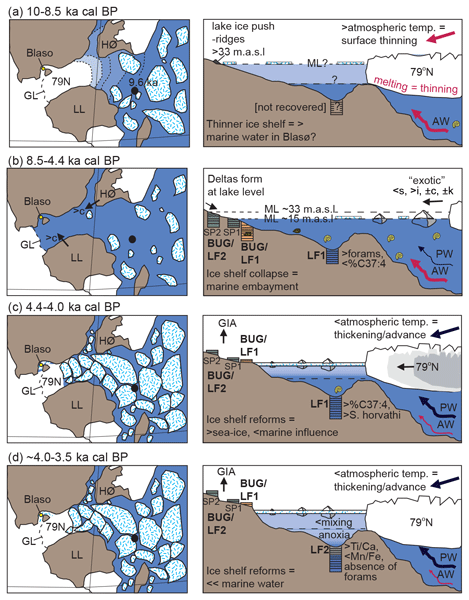
James A. Smith, Louise Callard, Michael J. Bentley, Stewart S. R. Jamieson, Maria Luisa Sánchez-Montes, Timothy P. Lane, Jeremy M. Lloyd, Erin L. McClymont, Christopher M. Darvill, Brice R. Rea, Colm O'Cofaigh, Pauline Gulliver, Werner Ehrmann, Richard S. Jones, and David H. Roberts
The Cryosphere, 17, 1247–1270, https://doi.org/10.5194/tc-17-1247-2023, https://doi.org/10.5194/tc-17-1247-2023, 2023
Short summary
Short summary
The Greenland Ice Sheet is melting at an accelerating rate. To understand the significance of these changes we reconstruct the history of one of its fringing ice shelves, known as 79° N ice shelf. We show that the ice shelf disappeared 8500 years ago, following a period of enhanced warming. An important implication of our study is that 79° N ice shelf is susceptible to collapse when atmospheric and ocean temperatures are ~2°C warmer than present, which could occur by the middle of this century.

Bertie W. J. Miles, Chris R. Stokes, Adrian Jenkins, Jim R. Jordan, Stewart S. R. Jamieson, and G. Hilmar Gudmundsson
The Cryosphere, 17, 445–456, https://doi.org/10.5194/tc-17-445-2023, https://doi.org/10.5194/tc-17-445-2023, 2023
Short summary
Short summary
Satellite observations have shown that the Shirase Glacier catchment in East Antarctica has been gaining mass over the past 2 decades, a trend largely attributed to increased snowfall. Our multi-decadal observations of Shirase Glacier show that ocean forcing has also contributed to some of this recent mass gain. This has been caused by strengthening easterly winds reducing the inflow of warm water underneath the Shirase ice tongue, causing the glacier to slow down and thicken.

Erin L. McClymont, Michael J. Bentley, Dominic A. Hodgson, Charlotte L. Spencer-Jones, Thomas Wardley, Martin D. West, Ian W. Croudace, Sonja Berg, Darren R. Gröcke, Gerhard Kuhn, Stewart S. R. Jamieson, Louise Sime, and Richard A. Phillips
Clim. Past, 18, 381–403, https://doi.org/10.5194/cp-18-381-2022, https://doi.org/10.5194/cp-18-381-2022, 2022
Short summary
Short summary
Sea ice is important for our climate system and for the unique ecosystems it supports. We present a novel way to understand past Antarctic sea-ice ecosystems: using the regurgitated stomach contents of snow petrels, which nest above the ice sheet but feed in the sea ice. During a time when sea ice was more extensive than today (24 000–30 000 years ago), we show that snow petrel diet had varying contributions of fish and krill, which we interpret to show changing sea-ice distribution.
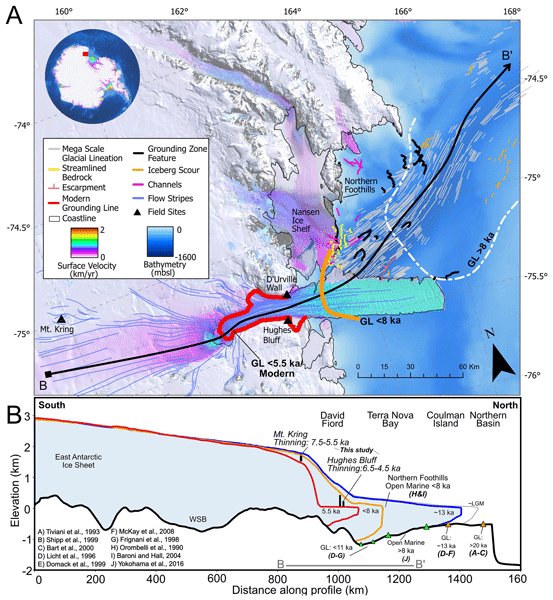
Jamey Stutz, Andrew Mackintosh, Kevin Norton, Ross Whitmore, Carlo Baroni, Stewart S. R. Jamieson, Richard S. Jones, Greg Balco, Maria Cristina Salvatore, Stefano Casale, Jae Il Lee, Yeong Bae Seong, Robert McKay, Lauren J. Vargo, Daniel Lowry, Perry Spector, Marcus Christl, Susan Ivy Ochs, Luigia Di Nicola, Maria Iarossi, Finlay Stuart, and Tom Woodruff
The Cryosphere, 15, 5447–5471, https://doi.org/10.5194/tc-15-5447-2021, https://doi.org/10.5194/tc-15-5447-2021, 2021
Short summary
Short summary
Understanding the long-term behaviour of ice sheets is essential to projecting future changes due to climate change. In this study, we use rocks deposited along the margin of the David Glacier, one of the largest glacier systems in the world, to reveal a rapid thinning event initiated over 7000 years ago and endured for ~ 2000 years. Using physical models, we show that subglacial topography and ocean heat are important drivers for change along this sector of the Antarctic Ice Sheet.
Caroline C. Clason, Will H. Blake, Nick Selmes, Alex Taylor, Pascal Boeckx, Jessica Kitch, Stephanie C. Mills, Giovanni Baccolo, and Geoffrey E. Millward
The Cryosphere, 15, 5151–5168, https://doi.org/10.5194/tc-15-5151-2021, https://doi.org/10.5194/tc-15-5151-2021, 2021
Short summary
Short summary
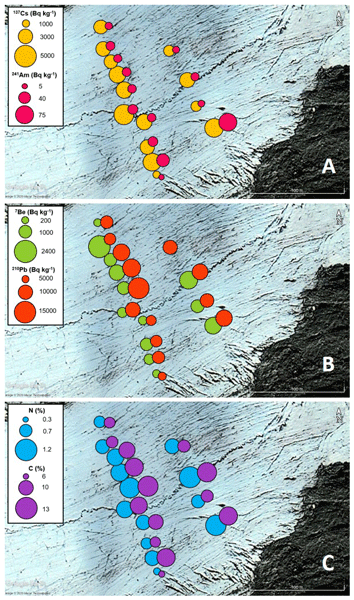
Our paper presents results of sample collection and subsequent geochemical analyses from the glaciated Isfallsglaciären catchment in Arctic Sweden. The data suggest that material found on the surface of glaciers,
cryoconite, is very efficient at accumulating products of nuclear fallout transported in the atmosphere following events such as the Chernobyl disaster. We investigate how this compares with samples in the downstream environment and consider potential environmental implications.
Melanie Marochov, Chris R. Stokes, and Patrice E. Carbonneau
The Cryosphere, 15, 5041–5059, https://doi.org/10.5194/tc-15-5041-2021, https://doi.org/10.5194/tc-15-5041-2021, 2021
Short summary
Short summary
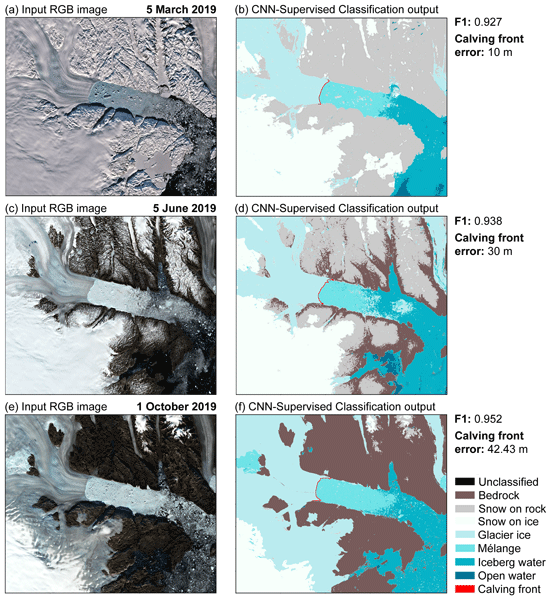
Research into the use of deep learning for pixel-level classification of landscapes containing marine-terminating glaciers is lacking. We adapt a novel and transferable deep learning workflow to classify satellite imagery containing marine-terminating outlet glaciers in Greenland. Our workflow achieves high accuracy and mimics human visual performance, potentially providing a useful tool to monitor glacier change and further understand the impacts of climate change in complex glacial settings.
Cited articles
Bamber, J. L., Oppenheimer, M., Kopp, R. E., Aspinall, W. P., and Cooke, R. M.: Ice sheet contributions to future sea-level rise from structured expert judgment, P. Natl. Acad. Sci. USA, 116, 11195–11200, https://doi.org/10.1073/pnas.1817205116, 2019.
Banwell, A., Hewitt, I., Willis, I., and Arnold, N.: Moulin density controls drainage development beneath the Greenland ice sheet, J. Geophys. Res.-Earth Surf., 121, 2248–2269, https://doi.org/10.1002/2015JF003801, 2016.
Bell, R. E., Chu, W., Kingslake, J., Das, I., Tedesco, M., Tinto, K. J., Zappa, C. J., Frezzotti, M., Boghosian, A., and Lee, W. S.: Antarctic ice shelf potentially stabilized by export of meltwater in surface river, Nature, 544, 344–348, https://doi.org/10.1038/nature22048, 2017.
Boyd, B., Goetz, S. L., and Ham, N. R.: Supraglacial stream incision into debris-covered ice, Matanuska Glacier, AK, Geol. Soc. Am. Abstr., 36, 11, https://gsa.confex.com/gsa/2004NC/webprogram/Paper71537.html (last access: 1 December 2025), 2024.
Brice, J. and Blodgett, J.: Countermeasures for hydraulic problems at bridges, volume I: analysis and assessment, Federal Highway Administration, Washington, report no. FHWA-RD-78-162, https://rosap.ntl.bts.gov/view/dot/25311 (last access: 1 December 2025), 1978.
Carey, M., Molden, O. C., Rasmussen, M. B., Jackson, M., Nolin, A. W., and Mark, B. G.: Impacts of glacier recession and declining meltwater on mountain societies, Ann. Am. Assoc. Geogr., 107, 350–359, https://doi.org/10.1080/24694452.2016.1243039, 2017.
Chen, J., Hodge, R. A., Jamieson, S. S. R., and Stokes, C. R.: Distribution and morphometry of supraglacial channel networks on Antarctic ice shelves, J. Glaciol., https://doi.org/10.1017/jog.2024.99, 2024.
Chu, V. W.: Greenland Ice Sheet hydrology: A review, Prog. Phys. Geogr., 38, 19–54, https://doi.org/10.1177/0309133313507075, 2014.
Clason, C. C., Coch, C., Jarsjö, J., Brugger, K., Jansson, P., and Rosqvist, G.: Dye tracing to determine flow properties of hydrocarbon-polluted Rabots glaciär, Kebnekaise, Sweden, Hydrol. Earth Syst. Sci., 19, 2701–2715, https://doi.org/10.5194/hess-19-2701-2015, 2015.
Clason, C. C, Rangecroft, S., Owens, P. N., Łokas, E., Baccolo, G., Selmes, N., Beard, D., Kitch, J., Dextre, R. M., Morera, S., and Blake, W.: Contribution of glaciers to water, energy and food security in mountain regions: current perspectives and future priorities, Ann. Glaciol., 63, 73–78, https://doi.org/10.1017/aog.2023.14, 2023.
Davaze, L., Rabatel, A., Dufour, A., Hugonnet, R., and Arnaud, Y.: Region-wide annual glacier surface mass balance for the European Alps from 2000 to 2016, Front. Earth Sci., 8, https://doi.org/10.3389/feart.2020.00149, 2020.
Davies, B., McNabb, R., Bendle, J., Carrivick, J., Ely, J., Holt, T., Markle, B., McNeil, C., Nicholson, L., and Pelto, M.: Accelerating glacier volume loss on Juneau Icefield driven by hypsometry and melt-accelerating feedbacks, Nat. Commun., 15, 5099, https://doi.org/10.1038/s41467-024-49269-y, 2024.
Delaney, I. and Adhikari, S.: Increased subglacial sediment discharge in a warming climate: consideration of ice dynamics, glacial erosion, and fluvial sediment transport, Geophys. Res. Lett., 47, e2019GL085672, https://doi.org/10.1029/2019GL085672, 2020.
Dozier, J.: An examination of the variance minimization tendencies of a supraglacial stream, J. Hydrol., 31, 359–380, https://doi.org/10.1016/0022-1694(76)90134-7, 1976.
Edwards, T. L., Nowicki, S., Marzeion, B., Hock, R., Goelzer, H., Seroussi, H., Jourdain, N. C., Slater, D. A., Turner, F. E., Smith, C. J., McKenna, C. M., Simon, E., Abe-Ouchi, A., Gregory, J. M., Larour, E., Lipscomb, W. H., Payne, A. J., Shepherd, A., Agosta, C., Alexander, P., Albrecht, T., Anderson, B., Asay-Davis, X., Aschwanden, A., Barthel, A., Bliss, A., Calov, R., Chambers, C., Champollion, N., Choi, Y., Cullather, R., Cuzzone, J., Dumas, C., Felikson, D., Fettweis, X., Fujita, K., Galton-Fenzi, B. K., Gladstone, R., Golledge, N. R., Greve, R., Hattermann, T., Hoffman, M. J., Humbert, A., Huss, M., Huybrechts, P., Immerzeel, W., Kleiner, T., Kraaijenbrink, P., Le clec'h, S., Lee, V., Leguy, G. R., Little, C. M., Lowry, D. P., Malles, J.-H., Martin, D. F., Maussion, F., Morlighem, M., O'Neill, J. F., Nias, I., Pattyn, F., Pelle, T., Price, S. F., Quiquet, A., Radić, V., Reese, R., Rounce, D. R., Rückamp, M., Sakai, A., Shafer, C., Schlegel, N.-J., Shannon, S., Smith, R. S., Straneo, F., Sun, S., Tarasov, L., Trusel, L. D., Van Breedam, J., van de Wal, R., van den Broeke, M., Winkelmann, R., Zekollari, H., Zhao, C., Zhang, T., and Zwinger, T.: Projected land ice contributions to twenty-first-century sea level rise, Nature, 593, 74–82, https://doi.org/10.1038/s41586-021-03302-y, 2021.
Esri: “Imagery” [basemap], Scale Not Given, “World Imagery”, 10 October 2024, https://www.arcgis.com/home/item.html?id=10df2279f9684e4a9f6a7f08febac2a9, last access: 22 October 2024.
Federal Office of Topography swisstopo: swissALTI3D, Federal Office of Topography swisstopo [data set], https://www.swisstopo.admin.ch (last access: 8 December 2023), 2019.
Federal Office of Topography swisstopo: SWISSIMAGE, Federal Office of Topography swisstopo [data set], https://www.swisstopo.admin.ch (last access: 7 September 2024), 2020.
Ferguson, R. I.: Sinuosity of supraglacial streams, Geol. Soc. Am. Bull., 84, 251–256, https://doi.org/10.1130/0016-7606(1973)84<251:SOSS>2.0.CO;2, 1973.
Finotello, A., Durkin, P. R., and Sylvester, Z.: Meandering streamflows across landscapes and scales: a review and discussion, Geological Society, London, Special Publications, 540, 1–41, https://doi.org/10.1144/SP540-2024-33, 2024.
Fischer, M., Huss, M., and Hoelzle, M.: Surface elevation and mass changes of all Swiss glaciers 1980–2010, The Cryosphere, 9, 525–540, https://doi.org/10.5194/tc-9-525-2015, 2015.
Fleischer, F., Otto, J.-C., Junker, R. R., and Hölbling, D.: Evolution of debris cover on glaciers of the Eastern Alps, Austria, between 1996 and 2015, Earth Surf. Process. Landf., 46, 1673–1691, https://doi.org/10.1002/esp.5065, 2021.
Frasson, R. P. D. M., Pavelsky, T. M., Fonstad, M. A., Durand, M. T., Allen, G. H., Schumann, G., Lion, C., Beighley, R. E., and Yang, X.: Global Relationships Between River Width, Slope, Catchment Area, Meander Wavelength, Sinuosity, and Discharge, Geophysical Research Letters, 46, 3252–3262, https://doi.org/10.1029/2019GL082027, 2019.
Glasser, N. F., Holt, T. O., Evans, Z. D., Davies, B. J., Pelto, M., and Harrison, S.: Recent spatial and temporal variations in debris cover on Patagonian glaciers, Geomorphology, 273, 202–216, https://doi.org/10.1016/j.geomorph.2016.07.036, 2016.
Gleason, C. J., Smith, L. C., Chu, V. W., Legleiter, C. J., Pitcher, L. H., Overstreet, B. T., Rennermalm, A. K., Forster, R. R., and Yang, K.: Characterizing supraglacial meltwater channel hydraulics on the Greenland Ice Sheet from in situ observations, Earth Surf. Process. Landf., 41, 2111–2122, https://doi.org/10.1002/esp.3977, 2016.
Gleason, C. J., Yang, K., Feng, D., Smith, L. C., Liu, K., Pitcher, L. H., Chu, V. W., Cooper, M. G., Overstreet, B. T., Rennermalm, A. K., and Ryan, J. C.: Hourly surface meltwater routing for a Greenlandic supraglacial catchment across hillslopes and through a dense topological channel network, The Cryosphere, 15, 2315–2331, https://doi.org/10.5194/tc-15-2315-2021, 2021.
Hambrey, M. J.: Supraglacial drainage and its relationship to structure, with particular reference to Charles Rabots Bre, Okstindan, Norway, Nor. Geogr. Tidsskr., 31, 69–77, https://doi.org/10.1080/00291957708545319, 1977.
Horton, R. E.: Erosional development of streams and their drainage basins; hydrophysical approach to quantitative morphology, Geol. Soc. Am. Bull., 56, 275–370, https://doi.org/10.1130/0016-7606(1945)56[275:EDOSAT]2.0.CO;2, 1945.
Hugonnet, R., McNabb, R., Berthier, E., Menounos, B., Nuth, C., Girod, L., Farinotti, D., Huss, M., Dussaillant, I., Brun, F., and Kääb, A.: Accelerated global glacier mass loss in the early twenty-first century, Nature, 592, 726–731, https://doi.org/10.1038/s41586-021-03436-z, 2021.
Huss, M., Bauder, A., Werder, M., Funk, M., and Hock, R.: Glacier-dammed lake outburst events of Gornersee, Switzerland, J. Glaciol., 53, 189–200, doi.org:10.3189/172756507782202784, 2007.
Immerzeel, W. W., Lutz, A. F., Andrade, M., Bahl, A., Biemans, H., Bolch, T., Hyde, S., Brumby, S., Davies, B. J., Elmore, A. C., Emmer, A., Feng, M., Fernández, A., Haritashya, U., Kargel, J. S., Koppes, M., Kraaijenbrink, P. D. A., Kulkarni, A. V., Mayewski, P. A., Nepal, S., Pacheco, P., Painter, T. H., Pellicciotti, F., Rajaram, H., Rupper, S., Sinisalo, A., Shrestha, A. B., Viviroli, D., Wada, Y., Xiao, C., Yao, T., and Baillie, J. E. M.: Importance and vulnerability of the world's water towers, Nature, 577, 364–369, https://doi.org/10.1038/s41586-019-1822-y, 2020.
Irvine-Fynn, T. D. L., Hodson, A. J., Moorman, B. J., Vatne, G., and Hubbard, A. L.: Polythermal glacier hydrology: a review, Rev. Geophys., 49, https://doi.org/10.1029/2010RG000350, 2011.
Jiskoot, H., Fox, T. A., and Wychen, W. V.: Flow and structure in a dendritic glacier with bedrock steps, J. Glaciol., 63, 912–928, https://doi.org/10.1017/jog.2017.58, 2017.
Jobard, S. and Dzikowski, M.: Evolution of glacial flow and drainage during the ablation season, J. Hydrol., 330, 663–671, https://doi.org/10.1016/j.jhydrol.2006.04.031, 2006.
Karlstrom, L. and Yang, K.: Fluvial supraglacial landscape evolution on the Greenland Ice Sheet, Geophys. Res. Lett., 43, 2683–2692, https://doi.org/10.1002/2016GL067697, 2016.
Khan, A. L., Xian, P., and Schwarz, J. P.: Black carbon concentrations and modeled smoke deposition fluxes to the bare-ice dark zone of the Greenland Ice Sheet, The Cryosphere, 17, 2909–2918, https://doi.org/10.5194/tc-17-2909-2023, 2023.
King, L., Hassan, M. A., Yang, K., and Flowers, G.: Flow routing for delineating supraglacial meltwater channel networks, Remote Sens., 8, 988, https://doi.org/10.3390/rs8120988, 2016.
Kingslake, J., Ely, J. C., Das, I., and Bell, R. E.: Widespread movement of meltwater onto and across Antarctic ice shelves, Nature, 544, 349–352, https://doi.org/10.1038/nature22049, 2017.
Knighton, A. D.: Channel form and flow characteristics of supraglacial streams, Austre Okstindbreen, Norway, Arct. Alp. Res., 13, 295, https://doi.org/10.2307/1551036, 1981.
Knighton, A. D.: Channel form adjustment in supraglacial streams, Austre Okstindbreen, Norway, Arct. Antarct. Alp. Res., 17, 451, https://doi.org/10.2307/1550870, 1985.
Knighton, A. D.: Meandering habit of supraglacial streams, Geol. Soc. Am. Bull., 83, 201–204, https://doi.org/10.1130/0016-7606(1972)83[201:MHOSS]2.0.CO;2, 1972.
Leeson, A. A., Shepherd, A., Briggs, K., Howat, I., Fettweis, X., Morlighem, M., and Rignot, E.: Supraglacial lakes on the Greenland Ice Sheet advance inland under warming climate, Nat. Clim. Change, 5, 51–55, https://doi.org/10.1038/nclimate2463, 2015.
Leidman, S. Z., Rennermalm, Å. K., Muthyala, R., Guo, Q., and Overeem, I.: The presence and widespread distribution of dark sediment in Greenland Ice Sheet supraglacial streams implies substantial impact of microbial communities on sediment deposition and albedo, Geophys. Res. Lett., 48, 2020GL088444, https://doi.org/10.1029/2020GL088444, 2021.
Leigh, J. R., Stokes, C. R., Carr, R. J., Evans, I. S., Andreassen, L. M., and Evans, D. J. A.: Identifying and mapping very small (<0.5 km2) mountain glaciers on coarse to high-resolution imagery, J. Glaciol., 65, 873–888, https://doi.org/10.1017/jog.2019.50, 2019.
Leinss, S. and Bernhard, P.: TanDEM-X:Deriving InSAR height changes and velocity dynamics of Great Aletsch Glacier, IEEE J. Sel. Top. Appl. Earth Obs. Remote Sens., 14, 4798–4815, https://doi.org/10.1109/JSTARS.2021.3078084, 2021.
Linsbauer, A., Huss, M., Hodel, E., Bauder, A., Fischer, M., Weidmann, Y., Bärtschi, H., and Schmassmann, E.: The new Swiss glacier inventory SGI2016: from a topographical to a glaciological dataset, Front. Earth Sci., 9, https://doi.org/10.3389/feart.2021.704189, 2021.
Mantelli, E., Camporeale, C., and Ridolfi, L.: Supraglacial channel inception: modeling and processes, Water Resour. Res., 51, 7044–7063, https://doi.org/10.1002/2015WR017075, 2015.
Marston, R. A.: Supraglacial stream dynamics on the Juneau Icefield, Ann. Am. Assoc. Geogr., 73, 597–608, https://doi.org/10.1111/j.1467-8306.1983.tb01861.x, 1983.
MeteoSwiss: https://www.meteoswiss.admin.ch/, last access: 1 February 2024.
Micheletti, N. and Lane, S. N.: Water yield and sediment export in small, partially glaciated Alpine watersheds in a warming climate, Water Resour. Res., 52, 4924–4943, https://doi.org/10.1002/2016WR018774, 2016.
Nienow, P., Sharp, M., and Willis, I.: Seasonal changes in the morphology of the subglacial drainage system, Haut Glacier d'Arolla, Switzerland, Earth Surf. Process. Landf., 23, 825–843, https://doi.org/10.1002/(SICI)1096-9837(199809)23:9<825::AID-ESP893>3.0.CO;2-2, 1998.
Paul, F., Rastner, P., Azzoni, R. S., Diolaiuti, G., Fugazza, D., Le Bris, R., Nemec, J., Rabatel, A., Ramusovic, M., Schwaizer, G., and Smiraglia, C.: Glacier inventory of the Alps from Sentinel-2, shape files, PANGAEA [data set], https://doi.org/10.1594/PANGAEA.909133, 2019
Pitcher, L. H. and Smith, L. C.: Supraglacial Streams and Rivers, Annu. Rev. Earth Planet. Sci., 47, 421–452, https://doi.org/10.1146/annurev-earth-053018-060212, 2019.
Rhoads, B. L. and Welford, M. R.: Initiation of river meandering, Progress in Physical Geography: Earth and Environment, 15, 127–156, https://doi.org/10.1177/030913339101500201, 1991.
Rippin, D. M., Pomfret, A., and King, N.: High resolution mapping of supra-glacial drainage pathways reveals link between micro-channel drainage density, surface roughness and surface reflectance, Earth Surf. Process. Landf., 40, 1279–1290, https://doi.org/10.1002/esp.3719, 2015.
Rounce, D. R., Hock, R., Maussion, F., Hugonnet, R., Kochtitzky, W., Huss, M., Berthier, E., Brinkerhoff, D., Compagno, L., Copland, L., Farinotti, D., Menounos, B., and McNabb, R. W.: Global glacier change in the 21st century: Every increase in temperature matters, Science, 379, 78–83, https://doi.org/10.1126/science.abo1324, 2023.
Ryan, J. C., Hubbard, A., Stibal, M., Irvine-Fynn, T. D., Cook, J., Smith, L. C., Cameron, K., and Box, J.: Dark zone of the Greenland Ice Sheet controlled by distributed biologically-active impurities, Nat. Commun., 9, 1065, https://doi.org/10.1038/s41467-018-03353-2, 2018.
Seaberg, S. Z., Seaberg, J. Z., Hooke, R. L., and Wiberg, D. W.: Character of the englacial and subglacial drainage system in the lower part of the ablation area of Storglaciären, Sweden, as Revealed by Dye-Trace Studies, J. Glaciol., 34, 217–227, https://doi.org/10.3189/S0022143000032263, 1988.
Schumm, S. A.: Sinuosity of alluvial rivers on the Great Plains, Geol. Soc. Am. Bull., 74, 1089–1100, https://doi.org/10.1130/0016-7606(1963)74[1089:SOAROT]2.0.CO;2, 1963.
Smith, L. C., Chu, V. W., Yang, K., Gleason, C. J., Pitcher, L. H., Rennermalm, A. K., Legleiter, C. J., Behar, A. E., Overstreet, B. T., Moustafa, S. E., Tedesco, M., Forster, R. R., LeWinter, A. L., Finnegan, D. C., Sheng, Y., and Balog, J.: Efficient meltwater drainage through supraglacial streams and rivers on the southwest Greenland Ice Sheet, P. Natl. Acad. Sci. USA, 112, 1001–1006, https://doi.org/10.1073/pnas.1413024112, 2015.
Sommer, C., Malz, P., Seehaus, T. C., Lippl, S., Zemp, M., and Braun, M. H.: Rapid glacier retreat and downwasting throughout the European Alps in the early 21st century, Nat. Commun., 11, 3209, https://doi.org/10.1038/s41467-020-16818-0, 2020.
St Germain, S. L. and Moorman, B. J.: Long-term observations of supraglacial streams on an Arctic glacier, J. Glaciol., 65, 900–911, https://doi.org/10.1017/jog.2019.60, 2019.
Swift, D. A., Nienow, P. W., Spedding, N., and Hoey, T. B.: Geomorphic implications of subglacial drainage configuration: rates of basal sediment evacuation controlled by seasonal drainage system evolution, Sediment. Geol., 149, 5–19, https://doi.org/10.1016/S0037-0738(01)00241-X, 2002.
Tepes, P., Gourmelen, N., Nienow, P., Tsamados, M., Shepherd, A., and Weissgerber, F.: Changes in elevation and mass of Arctic glaciers and ice caps, 2010–2017, Remote Sens. Environ., 261, 112481, https://doi.org/10.1016/j.rse.2021.112481, 2021.
The GlaMBIE Team: Community estimate of global glacier mass changes from 2000 to 2023, Nature, 1–7, https://doi.org/10.1038/s41586-024-08545-z, 2025.
Willis, I. C.: Intra-annual variations in glacier motion: a review, Prog. Phys. Geogr., 19. https://doi.org/10.1177/030913339501900104, 1995.
Wouters, B., Gardner, A. S., and Moholdt, G.: Global glacier mass loss during the GRACE satellite mission (2002–2016), Front. Earth Sci., 7, https://doi.org/10.3389/feart.2019.00096, 2019.
Yang, K. and Smith, L. C.: Supraglacial streams on the Greenland Ice Sheet delineated from combined spectral-shape information in high-resolution satellite imagery, IEEE Geosci. Remote Sens. Lett., 10, 801–805, https://doi.org/10.1109/LGRS.2012.2224316, 2013.
Yang, K. and Smith, L. C.: Internally drained catchments dominate supraglacial hydrology of the southwest Greenland Ice Sheet, J. Geophys. Res.-Earth Surf., 121, https://doi.org/10.1002/2016JF003927, 2016.
Yang, K., Smith, L. C., Chu, V. W., Gleason, C. J., and Li, M.: A caution on the use of surface digital elevation models to simulate supraglacial hydrology of the Greenland Ice Sheet, IEEE J. Sel. Top. Appl. Earth Observ. Remote Sens., 8, 5212–5224, https://doi.org/10.1109/JSTARS.2015.2483483, 2015.
Yang, K., Smith, L. C., Chu, V. W., Pitcher, L. H., Gleason, C. J., Rennermalm, A. K., and Li, M.: Fluvial morphometry of supraglacial river networks on the southwest Greenland Ice Sheet, GISci. Remote Sens., 53, 459–482, https://doi.org/10.1080/15481603.2016.1162345, 2016.
Yang, K., Smith, L. C., Cooper, M. G., Pitcher, L. H., As, D. van, Lu, Y., Lu, X., and Li, M.: Seasonal evolution of supraglacial lakes and rivers on the southwest Greenland Ice Sheet, J. Glaciol., 67, 592–602, https://doi.org/10.1017/jog.2021.10, 2021.
Yang, K., Smith, L. C., Karlstrom, L., Cooper, M. G., Tedesco, M., van As, D., Cheng, X., Chen, Z., and Li, M.: A new surface meltwater routing model for use on the Greenland Ice Sheet surface, The Cryosphere, 12, 3791–3811, https://doi.org/10.5194/tc-12-3791-2018, 2018.
Yang, K., Smith, L. C., Sole, A., Livingstone, S. J., Cheng, X., Chen, Z., and Li, M.: Supraglacial rivers on the northwest Greenland Ice Sheet, Devon Ice Cap, and Barnes Ice Cap mapped using Sentinel-2 imagery, Int. J. Appl. Earth Obs. Geoinf., 78, 1–13, https://doi.org/10.1016/j.jag.2019.01.008, 2019.
Yang, K., Sommers, A., Andrews, L. C., Smith, L. C., Lu, X., Fettweis, X., and Li, M.: Intercomparison of surface meltwater routing models for the Greenland ice sheet and influence on subglacial effective pressures, The Cryosphere, 14, 3349–3365, https://doi.org/10.5194/tc-14-3349-2020, 2020.
Yang, K., Smith, L. C., Andrews, L. C., Fettweis, X., and Li, M.: Supraglacial drainage efficiency of the Greenland Ice Sheet estimated from remote sensing and climate models, J. Geophys. Res.-Earth Surf., 127, e2021JF006269, https://doi.org/10.1029/2021JF006269, 2022.
Zekollari, H., Huss, M., and Farinotti, D.: Modelling the future evolution of glaciers in the European Alps under the EURO-CORDEX RCM ensemble, The Cryosphere, 13, 1125–1146, https://doi.org/10.5194/tc-13-1125-2019, 2019.
Zemp, M., Huss, M., Thibert, E., Eckert, N., McNabb, R., Huber, J., Barandun, M., Machguth, H., Nussbaumer, S. U., Gärtner-Roer, I., Thomson, L., Paul, F., Maussion, F., Kutuzov, S., and Cogley, J. G.: Global glacier mass changes and their contributions to sea-level rise from 1961 to 2016, Nature, 568, 382–386, https://doi.org/10.1038/s41586-019-1071-0, 2019.
Short summary
Channels on glaciers are important due to their role in transporting glacial meltwater into downstream river catchments. These channels have received little research in mountain environments. We manually mapped <2000 channels to determine their distribution and characteristics across 285 glaciers in Switzerland. We find that channels are mostly commonly found on low-elevation glaciers with gentle slopes and few crevasses. Most channels run off the glacier, but 20 % enter the glacier.
Channels on glaciers are important due to their role in transporting glacial meltwater into...


