
Articles | Volume 20, issue 10
https://doi.org/10.5194/tc-20-5941-2026
© Author(s) 2026. This work is distributed under
the Creative Commons Attribution 4.0 License.
the Creative Commons Attribution 4.0 License.
https://doi.org/10.5194/tc-20-5941-2026
© Author(s) 2026. This work is distributed under
the Creative Commons Attribution 4.0 License.
the Creative Commons Attribution 4.0 License.
Research article
| 
15 Oct 2026
Research article |
| 15 Oct 2026
| 15 Oct 2026
Seasonal surface melt onset and firn freeze-up across the central Wrangell and St. Elias Mountains
Ingalise Kindstedt
CORRESPONDING AUTHOR

Climate Change Institute, University of Maine, Orono, Maine, USA
School of Earth and Climate Sciences, University of Maine, Orono, Maine, USA
Andrew Johnson
Geophysical Institute, University of Alaska Fairbanks, Fairbanks, Alaska, USA
Kristin M. Schild
Climate Change Institute, University of Maine, Orono, Maine, USA
School of Earth and Climate Sciences, University of Maine, Orono, Maine, USA
Luke Copland
Department of Geography, Environment and Geomatics, University of Ottawa, Ottawa, Ontario, Canada
Christine Dow
Department of Geography and Environmental Management, University of Waterloo, Ontario, Canada
Alison Criscitiello
Department of Earth and Atmospheric Sciences, University of Alberta, Edmonton, Alberta, Canada
Dominic Winski
Climate Change Institute, University of Maine, Orono, Maine, USA
School of Earth and Climate Sciences, University of Maine, Orono, Maine, USA
Karl Kreutz
Climate Change Institute, University of Maine, Orono, Maine, USA
School of Earth and Climate Sciences, University of Maine, Orono, Maine, USA
Seth Campbell
Climate Change Institute, University of Maine, Orono, Maine, USA
School of Earth and Climate Sciences, University of Maine, Orono, Maine, USA
Related authors
Ingalise Kindstedt, Dominic Winski, C. Max Stevens, Emma Skelton, Luke Copland, Karl Kreutz, Mikaila Mannello, Renée Clavette, Jacob Holmes, Mary Albert, and Scott N. Williamson
The Cryosphere, 19, 3655–3680, https://doi.org/10.5194/tc-19-3655-2025, https://doi.org/10.5194/tc-19-3655-2025, 2025
Short summary
Short summary
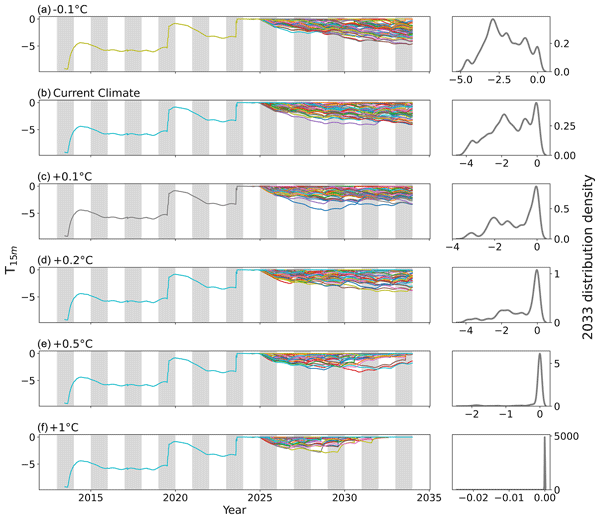
Atmospheric warming over mountain glaciers is leading to increased warming and melting of snow as it compresses into glacier ice. This affects both regional hydrology and climate records contained in the ice. Here we use field observations and modeling to show that surface melting and percolation at Eclipse Icefield (Yukon, Canada) are increasing with an increase in extreme melt events and that compressing snow at Eclipse is likely to continue warming even if air temperatures remain stable.
Ingalise Kindstedt, Kristin M. Schild, Dominic Winski, Karl Kreutz, Luke Copland, Seth Campbell, and Erin McConnell
The Cryosphere, 16, 3051–3070, https://doi.org/10.5194/tc-16-3051-2022, https://doi.org/10.5194/tc-16-3051-2022, 2022
Short summary
Short summary
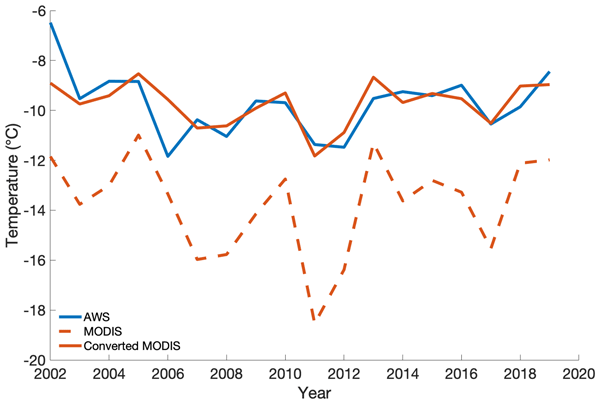
We show that neither the large spatial footprint of the MODIS sensor nor poorly constrained snow emissivity values explain the observed cold offset in MODIS land surface temperatures (LSTs) in the St. Elias. Instead, the offset is most prominent under conditions associated with near-surface temperature inversions. This work represents an advance in the application of MODIS LSTs to glaciated alpine regions, where we often depend solely on remote sensing products for temperature information.
Adam J. Hepburn, Sammie Buzzard, Andrew J. Sole, Stephen J. Livingstone, Felix Ng, Mathieu Morlighem, Elizabeth A. Bagshaw, Caroline Clason, Lisa Craw, Christine F. Dow, Samuel Doyle, Jonathan Hawkins, Matthew Peacey, and Robert Storrar
The Cryosphere, 20, 5675–5696, https://doi.org/10.5194/tc-20-5675-2026, https://doi.org/10.5194/tc-20-5675-2026, 2026
Short summary
Short summary
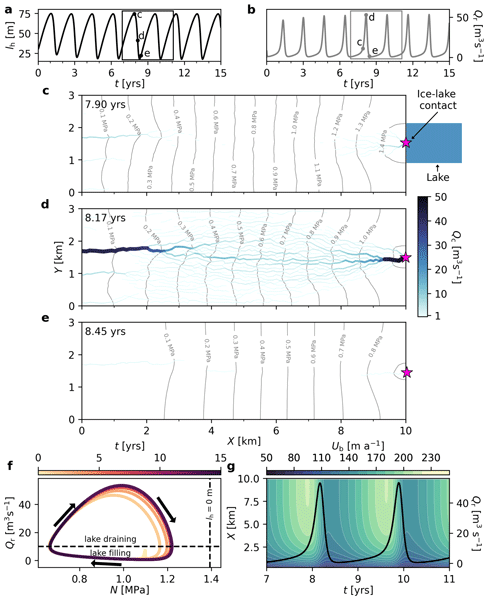
Lakes at glacier margins can drain beneath the ice in devastating, floods called jökulhlaups. We present the first 2D model of jökulhlaup propagation, first applying it to a synthetic glacier, before then assessing its ability to reproduce an observed record of lake fill-drain cycles in Greenland. Our results match a 17-year record of flood timing but underpredicts peak discharge likely because we are missing certain physical processes. Our results hold promise for simulating jökulhlaups.
Aaron Chesler, Dominic Winski, Karl Kreutz, Bess Koffman, Erich Osterberg, David Ferris, Zayta Thundercloud, Jihong Cole-Dai, Mark Wells, Aaron Putnam, and Katherine Anderson
Clim. Past, 22, 1741–1756, https://doi.org/10.5194/cp-22-1741-2026, https://doi.org/10.5194/cp-22-1741-2026, 2026
Short summary
Short summary
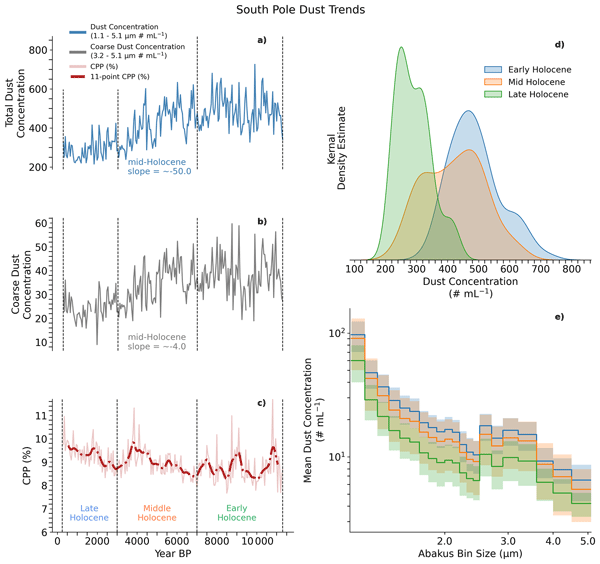
The Southern Hemisphere Westerly Winds impact global climate and Antarctic ice sheet stability; however, there are few complete records over the past 12 000 years. We use a new mineral dust record from a South Pole ice core and identify a decrease in particle concentration and an increase in coarse particle percentage over the past ~ 11 000 years. Together with other records, our data suggests a southward shift in the winds starting ~ 6500 years ago related to warming in the Southern Hemisphere.
Annika N. Horlings, Juliana Ruef, C. Max Stevens, Mikaila Mannello, Keegan Bellamy, Tahi Wiggins, Bradley Markle, and Seth Campbell
The Cryosphere, 20, 5401–5433, https://doi.org/10.5194/tc-20-5401-2026, https://doi.org/10.5194/tc-20-5401-2026, 2026
Short summary
Short summary
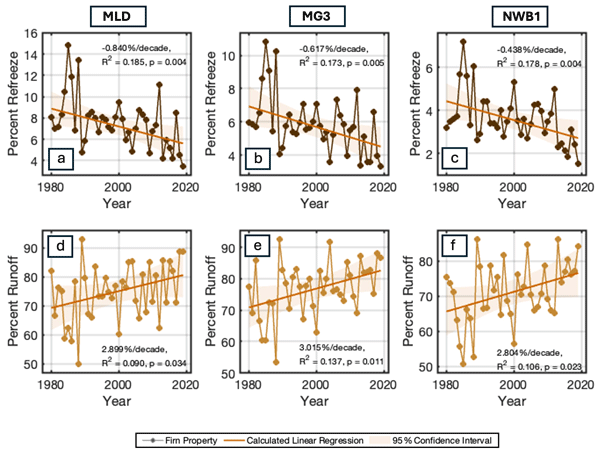
Firn, the permeable and porous material through which snow compacts into glacier ice, plays an important role in glacier hydrology, mass balance, and dynamics. We investigated seasonal to decadal evolution of firn on the Juneau Icefield using field measurements and firn modeling, and found that the firn is thinning and warming. Our study offers insights into consequent changes in firn hydrology, including declining refreezing capacity and inter-seasonal shifts in liquid-water retention.
Alexander Mattin, Simon J. Barker, V. Holly L. Winton, Andrea Burke, William Hutchison, Patrick J. Sugden, Kirstin Krüger, Alexa R. Van Eaton, Larry G. Mastin, Michael Sigl, Eric W. Wolff, Shuji Fujita, Kumiko Goto-Azuma, Ikumi Oyabu, Motohiro Hirabayashi, Anders Svensson, Magali Verkerk, Colin J. N. Wilson, Stephen B. Piva, Nels A. Iverson, Nelia W. Dunbar, Helle A. Kjær, Nancy A. N. Bertler, Mirko Severi, Andrei V. Kurbatov, and Dominic A. Winski
EGUsphere, https://doi.org/10.5194/egusphere-2026-3434, https://doi.org/10.5194/egusphere-2026-3434, 2026
This preprint is open for discussion and under review for Climate of the Past (CP).
Short summary
Short summary
This study presents evidence of the ~25.3 Ōruanui supereruption preserved in Antarctic ice cores. Glaciochemical signals and volcanic ash were identified across multiple sites, revealing regional differences in volcanic transport, deposition, and preservation. Combining ice core records with climate model simulations, we show the eruption likely caused substantial short-term global cooling and atmospheric change but was unlikely to trigger long-term climate shifts.
Max T. Nilssen, Tessa R. Vance, Poul Christoffersen, Sue Cook, Alison S. Criscitiello, and Nerilie J. Abram
EGUsphere, https://doi.org/10.5194/egusphere-2026-4880, https://doi.org/10.5194/egusphere-2026-4880, 2026
Short summary
Short summary
To better understand how snowfall in East Antarctica changes over time, we reconstructed annual snow accumulation from the Mount Brown South ice core over the last millennium. The record shows significant variability across time scales, including multiple centennial-length periods with much less snowfall than observed in the satellite era. Our results raise implications for assessments of future sea level rise.
Neil Ross, Rebecca J. Sanderson, Bernd Kulessa, Martin Siegert, Guy J. G. Paxman, Keir A. Nichols, Matthew R. Siegfried, Stewart S. R. Jamieson, Michael J. Bentley, Tom A. Jordan, Christine L. Batchelor, David Small, Olaf Eisen, Kate Winter, Robert G. Bingham, S. Louise Callard, Rachel Carr, Christine F. Dow, Helen A. Fricker, Emily Hill, Benjamin H. Hills, Coen Hofstede, Hafeez Jeofry, Felipe Napoleoni, and Wilson Sauthoff
The Cryosphere, 20, 3705–3737, https://doi.org/10.5194/tc-20-3705-2026, https://doi.org/10.5194/tc-20-3705-2026, 2026
Short summary
Short summary
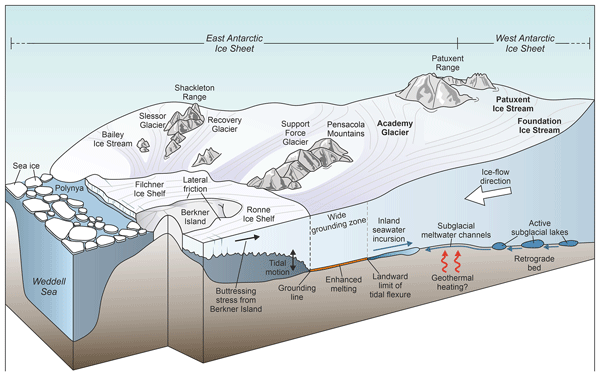
We review research about a group of fast-flowing Antarctic ice streams, the Foundation-Patuxent-Academy System. Previously, we knew little about how these ice streams flow, how they interact with each other and the ocean, what their geological history was, and how they might evolve in a warming world. By reviewing existing research, we have identified the future research needed to determine how these ice streams function, and how they might contribute to future global sea level rise.
Jing Zhang, Yang Lei, Laurane Charrier, Amaury Dehecq, Alex S. Gardner, Luke Copland, and Christine Dow
EGUsphere, https://doi.org/10.5194/egusphere-2026-2541, https://doi.org/10.5194/egusphere-2026-2541, 2026
This preprint is open for discussion and under review for The Cryosphere (TC).
Short summary
Short summary
Satellites can measure how fast glaciers move, which helps scientists understand ice loss and rising sea levels. However, these measurements have rarely been checked against ground-based observations on small mountain glaciers. We compared satellite-derived glacier speeds against precise ground measurements. The satellite data generally agreed well with ground observations. Our results help scientists use satellite glacier velocity data more reliably.
Steven Bernsen, Christopher Gerbi, Senthil Vel, Knut Christianson, and Seth Campbell
EGUsphere, https://doi.org/10.5194/egusphere-2026-1357, https://doi.org/10.5194/egusphere-2026-1357, 2026
Short summary
Short summary
We developed open-source software that simulates how elastic and electromagnetic waves travel through snow and ice with the aim to advance and make accessible ice and snow imaging methods. This helps researchers test survey designs and interpret field measurements without expensive or risky expeditions. Parameters influencing the mechanics of snow and ice are easily input from JSON files, and geometries can be generated using an image editor allowing for time effective production of models.
Robert G. Bingham, Julien A. Bodart, Marie G. P. Cavitte, Ailsa Chung, Rebecca J. Sanderson, Johannes C. R. Sutter, Olaf Eisen, Nanna B. Karlsson, Joseph A. MacGregor, Neil Ross, Duncan A. Young, David W. Ashmore, Andreas Born, Winnie Chu, Xiangbin Cui, Reinhard Drews, Steven Franke, Vikram Goel, John W. Goodge, A. Clara J. Henry, Antoine Hermant, Benjamin H. Hills, Nicholas Holschuh, Michelle R. Koutnik, Gwendolyn J.-M. C. Leysinger Vieli, Emma J. MacKie, Elisa Mantelli, Carlos Martín, Felix S. L. Ng, Falk M. Oraschewski, Felipe Napoleoni, Frédéric Parrenin, Sergey V. Popov, Therese Rieckh, Rebecca Schlegel, Dustin M. Schroeder, Martin J. Siegert, Xueyuan Tang, Thomas O. Teisberg, Kate Winter, Shuai Yan, Harry Davis, Christine F. Dow, Tyler J. Fudge, Tom A. Jordan, Bernd Kulessa, Kenichi Matsuoka, Clara J. Nyqvist, Maryam Rahnemoonfar, Matthew R. Siegfried, Shivangini Singh, Vjeran Višnjević, Rodrigo Zamora, and Alexandra Zuhr
The Cryosphere, 19, 4611–4655, https://doi.org/10.5194/tc-19-4611-2025, https://doi.org/10.5194/tc-19-4611-2025, 2025
Short summary
Short summary
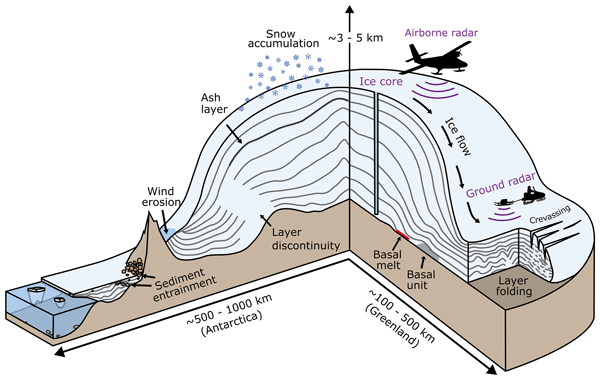
The ice sheets covering Antarctica have built up over millenia through successive snowfall events which become buried and preserved as internal surfaces of equal age detectable with ice-penetrating radar. This paper describes an international initiative working together on these archival data to build a comprehensive 3-D picture of how old the ice is everywhere across Antarctica and how this is being used to reconstruct past and to predict future ice and climate behaviour.
Laurane Charrier, Amaury Dehecq, Lei Guo, Fanny Brun, Romain Millan, Nathan Lioret, Luke Copland, Nathan Maier, Christine Dow, and Paul Halas
The Cryosphere, 19, 4555–4583, https://doi.org/10.5194/tc-19-4555-2025, https://doi.org/10.5194/tc-19-4555-2025, 2025
Short summary
Short summary
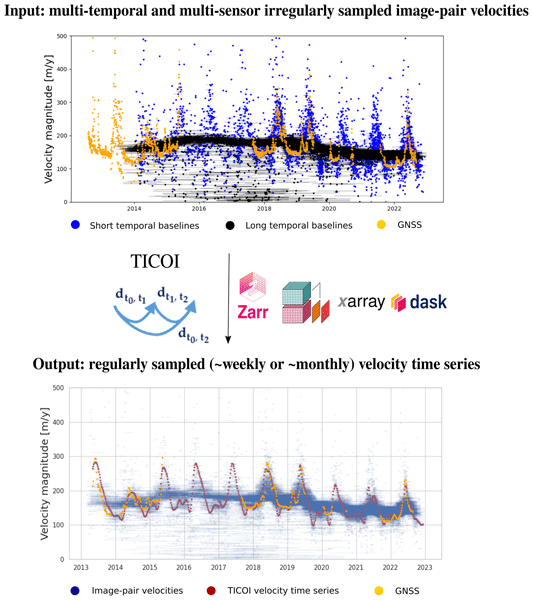
While global annual glacier velocities are openly accessible, sub-annual velocity time series are still lacking. This hinders our ability to understand flow processes and the integration of these observations in numerical models. We introduce an open source Python package called TICOI (Temporal Inversion using linear Combinations of Observations, and Interpolation) to fuse multi-temporal and multi-sensor image-pair velocities produced by different processing chains to produce standardized sub-annual velocity products.
Ingalise Kindstedt, Dominic Winski, C. Max Stevens, Emma Skelton, Luke Copland, Karl Kreutz, Mikaila Mannello, Renée Clavette, Jacob Holmes, Mary Albert, and Scott N. Williamson
The Cryosphere, 19, 3655–3680, https://doi.org/10.5194/tc-19-3655-2025, https://doi.org/10.5194/tc-19-3655-2025, 2025
Short summary
Short summary
Atmospheric warming over mountain glaciers is leading to increased warming and melting of snow as it compresses into glacier ice. This affects both regional hydrology and climate records contained in the ice. Here we use field observations and modeling to show that surface melting and percolation at Eclipse Icefield (Yukon, Canada) are increasing with an increase in extreme melt events and that compressing snow at Eclipse is likely to continue warming even if air temperatures remain stable.
Dorota Medrzycka, Luke Copland, Laura Thomson, William Kochtitzky, and Braden Smeda
Geosci. Instrum. Method. Data Syst., 14, 69–90, https://doi.org/10.5194/gi-14-69-2025, https://doi.org/10.5194/gi-14-69-2025, 2025
Short summary
Short summary
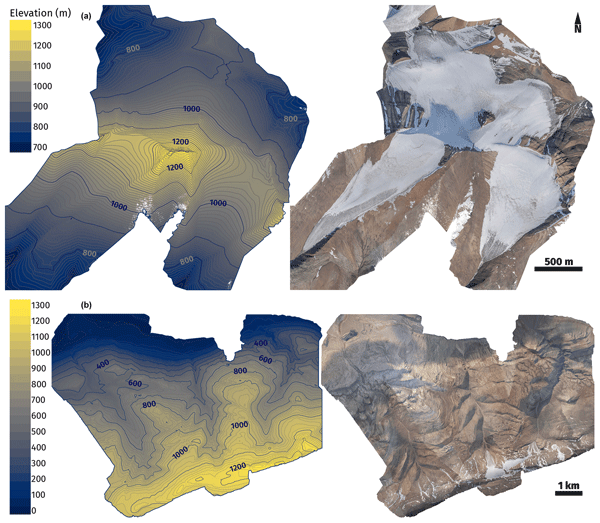
This work explores the use of aerial photography surveys for mapping glaciers, specifically in challenging environments. Using examples from two glaciers in Arctic Canada, we discuss the main factors which can affect data collection and review methods for capturing and processing images to create accurate topographic maps. Key recommendations include choosing the right camera and positioning equipment and adapting survey design to maximise data quality, even under less-than-ideal conditions.
Ursula A. Jongebloed, Jacob I. Chalif, Linia Tashmim, William C. Porter, Kelvin H. Bates, Qianjie Chen, Erich C. Osterberg, Bess G. Koffman, Jihong Cole-Dai, Dominic A. Winski, David G. Ferris, Karl J. Kreutz, Cameron P. Wake, and Becky Alexander
Atmos. Chem. Phys., 25, 4083–4106, https://doi.org/10.5194/acp-25-4083-2025, https://doi.org/10.5194/acp-25-4083-2025, 2025
Short summary
Short summary
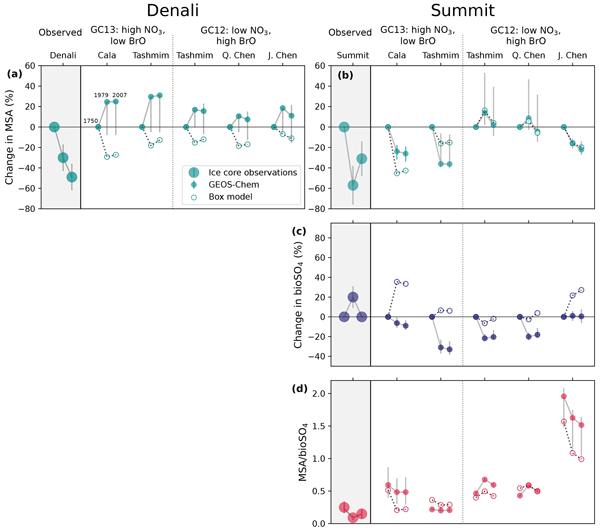
Marine phytoplankton emit dimethyl sulfide (DMS), which forms methanesulfonic acid (MSA) and sulfate. MSA concentrations in ice cores decreased over the industrial era, which has been attributed to pollution-driven changes in DMS chemistry. We use a model to investigate DMS chemistry compared to observations of DMS, MSA, and sulfate. We find that modeled DMS, MSA, and sulfate are influenced by pollution-sensitive oxidant concentrations, characterization of DMS chemistry, and other variables.
Joanne S. Johnson, John Woodward, Ian Nesbitt, Kate Winter, Seth Campbell, Keir A. Nichols, Ryan A. Venturelli, Scott Braddock, Brent M. Goehring, Brenda Hall, Dylan H. Rood, and Greg Balco
The Cryosphere, 19, 303–324, https://doi.org/10.5194/tc-19-303-2025, https://doi.org/10.5194/tc-19-303-2025, 2025
Short summary
Short summary
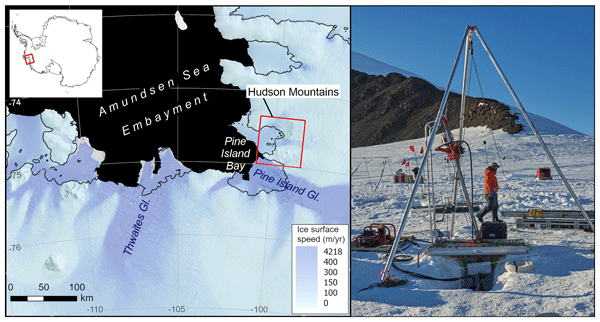
Determining where and when the Antarctic ice sheet was smaller than present requires recovery and exposure dating of subglacial bedrock. Here we use ice sheet model outputs and field data (geological and glaciological observations, bedrock samples, and ground-penetrating radar) to assess the suitability for subglacial drilling of sites in the Hudson Mountains, West Antarctica. We find that no sites are perfect, but two are feasible, with the most suitable being Winkie Nunatak (74.86°S, 99.77°W).
Adam J. Hepburn, Christine F. Dow, Antti Ojala, Joni Mäkinen, Elina Ahokangas, Jussi Hovikoski, Jukka-Pekka Palmu, and Kari Kajuutti
The Cryosphere, 18, 4873–4916, https://doi.org/10.5194/tc-18-4873-2024, https://doi.org/10.5194/tc-18-4873-2024, 2024
Short summary
Short summary
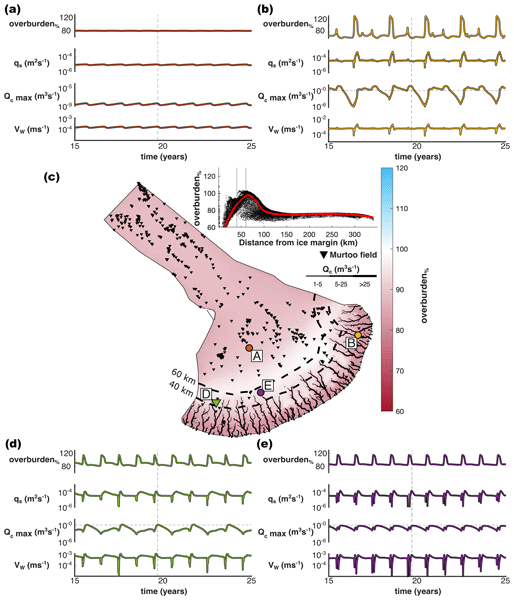
Terrain formerly occupied by ice sheets in the last ice age allows us to parameterize models of basal water flow using terrain and data unavailable beneath current ice sheets. Using GlaDS, a 2D basal hydrology model, we explore the origin of murtoos, a specific landform found throughout Finland that is thought to mark the upper limit of channels beneath the ice. Our results validate many of the predictions of murtoo origins and demonstrate that such models can be used to explore past ice sheets.
Siobhan F. Killingbeck, Anja Rutishauser, Martyn J. Unsworth, Ashley Dubnick, Alison S. Criscitiello, James Killingbeck, Christine F. Dow, Tim Hill, Adam D. Booth, Brittany Main, and Eric Brossier
The Cryosphere, 18, 3699–3722, https://doi.org/10.5194/tc-18-3699-2024, https://doi.org/10.5194/tc-18-3699-2024, 2024
Short summary
Short summary
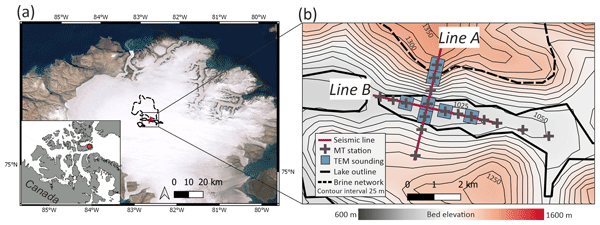
A subglacial lake was proposed to exist beneath Devon Ice Cap in the Canadian Arctic based on the analysis of airborne data. Our study presents a new interpretation of the subglacial material beneath the Devon Ice Cap from surface-based geophysical data. We show that there is no evidence of subglacial water, and the subglacial lake has likely been misidentified. Re-evaluation of the airborne data shows that overestimation of a critical processing parameter has likely occurred in prior studies.
Xin Yang, Kimberly Strong, Alison S. Criscitiello, Marta Santos-Garcia, Kristof Bognar, Xiaoyi Zhao, Pierre Fogal, Kaley A. Walker, Sara M. Morris, and Peter Effertz
Atmos. Chem. Phys., 24, 5863–5886, https://doi.org/10.5194/acp-24-5863-2024, https://doi.org/10.5194/acp-24-5863-2024, 2024
Short summary
Short summary
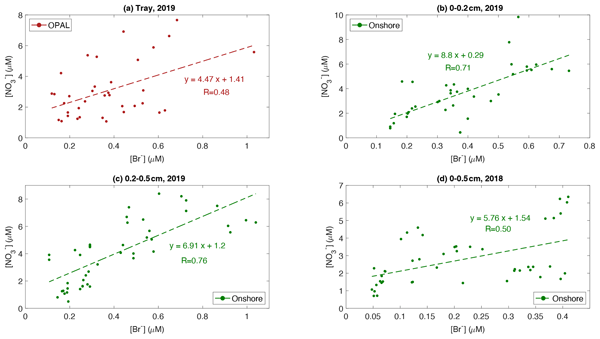
This study uses snow samples collected from a Canadian high Arctic site, Eureka, to demonstrate that surface snow in early spring is a net sink of atmospheric bromine and nitrogen. Surface snow bromide and nitrate are significantly correlated, indicating the oxidation of reactive nitrogen is accelerated by reactive bromine. In addition, we show evidence that snow photochemical release of reactive bromine is very weak, and its emission flux is much smaller than the deposition flux of bromide.
Tessa R. Vance, Nerilie J. Abram, Alison S. Criscitiello, Camilla K. Crockart, Aylin DeCampo, Vincent Favier, Vasileios Gkinis, Margaret Harlan, Sarah L. Jackson, Helle A. Kjær, Chelsea A. Long, Meredith K. Nation, Christopher T. Plummer, Delia Segato, Andrea Spolaor, and Paul T. Vallelonga
Clim. Past, 20, 969–990, https://doi.org/10.5194/cp-20-969-2024, https://doi.org/10.5194/cp-20-969-2024, 2024
Short summary
Short summary
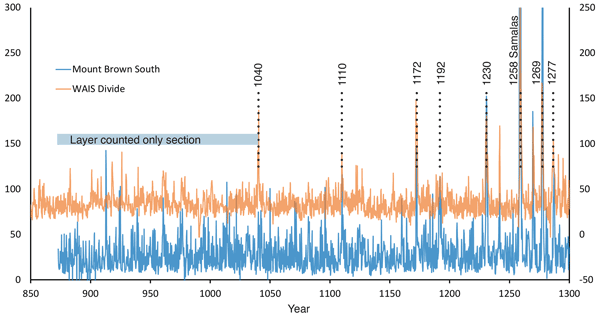
This study presents the chronologies from the new Mount Brown South ice cores from East Antarctica, which were developed by counting annual layers in the ice core data and aligning these to volcanic sulfate signatures. The uncertainty in the dating is quantified, and we discuss initial results from seasonal cycle analysis and mean annual concentrations. The chronologies will underpin the development of new proxy records for East Antarctica spanning the past millennium.
Christine F. Dow, Derek Mueller, Peter Wray, Drew Friedrichs, Alexander L. Forrest, Jasmin B. McInerney, Jamin Greenbaum, Donald D. Blankenship, Choon Ki Lee, and Won Sang Lee
The Cryosphere, 18, 1105–1123, https://doi.org/10.5194/tc-18-1105-2024, https://doi.org/10.5194/tc-18-1105-2024, 2024
Short summary
Short summary
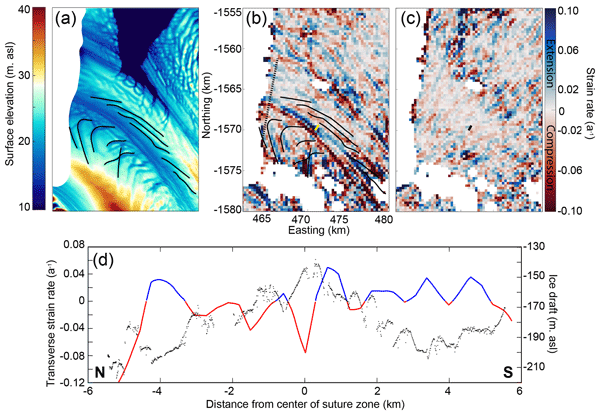
Ice shelves are a key control on Antarctic contribution to sea level rise. We examine the Nansen Ice Shelf in East Antarctica using a combination of field-based and satellite data. We find the basal topography of the ice shelf is highly variable, only partially visible in satellite datasets. We also find that the thinnest region of the ice shelf is altered over time by ice flow rates and ocean melting. These processes can cause fractures to form that eventually result in large calving events.
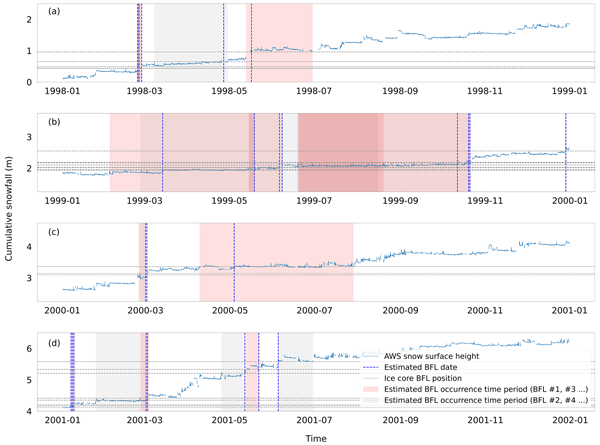
Lingwei Zhang, Tessa R. Vance, Alexander D. Fraser, Lenneke M. Jong, Sarah S. Thompson, Alison S. Criscitiello, and Nerilie J. Abram
The Cryosphere, 17, 5155–5173, https://doi.org/10.5194/tc-17-5155-2023, https://doi.org/10.5194/tc-17-5155-2023, 2023
Short summary
Short summary
Physical features in ice cores provide unique records of past variability. We identified 1–2 mm ice layers without bubbles in surface ice cores from Law Dome, East Antarctica, occurring on average five times per year. The origin of these bubble-free layers is unknown. In this study, we investigate whether they have the potential to record past atmospheric processes and circulation. We find that the bubble-free layers are linked to accumulation hiatus events and meridional moisture transport.
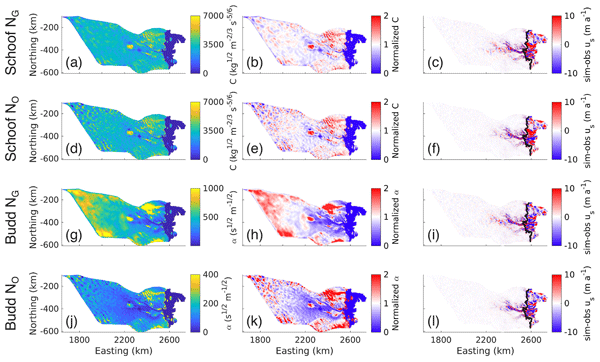
Koi McArthur, Felicity S. McCormack, and Christine F. Dow
The Cryosphere, 17, 4705–4727, https://doi.org/10.5194/tc-17-4705-2023, https://doi.org/10.5194/tc-17-4705-2023, 2023
Short summary
Short summary
Using subglacial hydrology model outputs for Denman Glacier, East Antarctica, we investigated the effects of various friction laws and effective pressure inputs on ice dynamics modeling over the same glacier. The Schoof friction law outperformed the Budd friction law, and effective pressure outputs from the hydrology model outperformed a typically prescribed effective pressure. We propose an empirical prescription of effective pressure to be used in the absence of hydrology model outputs.
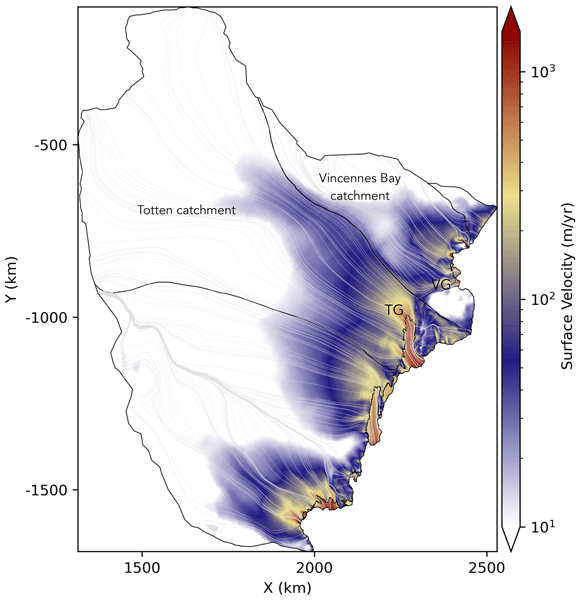
Felicity S. McCormack, Jason L. Roberts, Bernd Kulessa, Alan Aitken, Christine F. Dow, Lawrence Bird, Benjamin K. Galton-Fenzi, Katharina Hochmuth, Richard S. Jones, Andrew N. Mackintosh, and Koi McArthur
The Cryosphere, 17, 4549–4569, https://doi.org/10.5194/tc-17-4549-2023, https://doi.org/10.5194/tc-17-4549-2023, 2023
Short summary
Short summary
Changes in Antarctic surface elevation can cause changes in ice and basal water flow, impacting how much ice enters the ocean. We find that ice and basal water flow could divert from the Totten to the Vanderford Glacier, East Antarctica, under only small changes in the surface elevation, with implications for estimates of ice loss from this region. Further studies are needed to determine when this could occur and if similar diversions could occur elsewhere in Antarctica due to climate change.
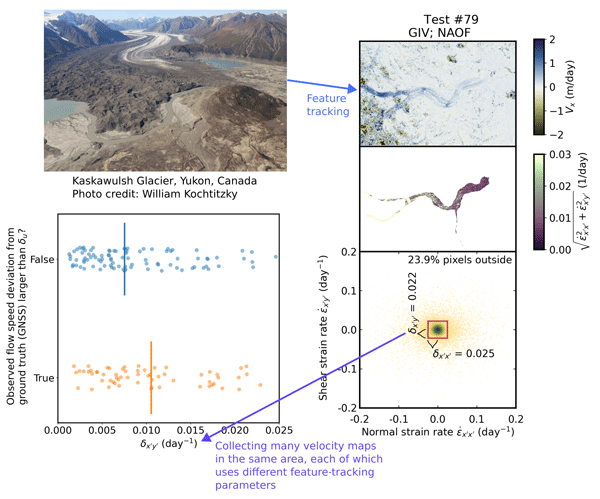
Whyjay Zheng, Shashank Bhushan, Maximillian Van Wyk De Vries, William Kochtitzky, David Shean, Luke Copland, Christine Dow, Renette Jones-Ivey, and Fernando Pérez
The Cryosphere, 17, 4063–4078, https://doi.org/10.5194/tc-17-4063-2023, https://doi.org/10.5194/tc-17-4063-2023, 2023
Short summary
Short summary
We design and propose a method that can evaluate the quality of glacier velocity maps. The method includes two numbers that we can calculate for each velocity map. Based on statistics and ice flow physics, velocity maps with numbers close to the recommended values are considered to have good quality. We test the method using the data from Kaskawulsh Glacier, Canada, and release an open-sourced software tool called GLAcier Feature Tracking testkit (GLAFT) to help users assess their velocity maps.
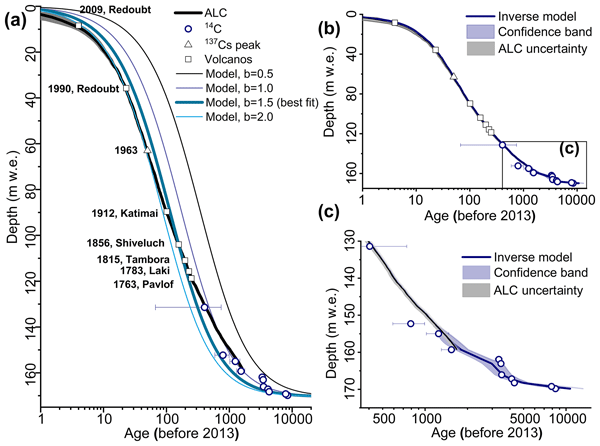
Ling Fang, Theo M. Jenk, Dominic Winski, Karl Kreutz, Hanna L. Brooks, Emma Erwin, Erich Osterberg, Seth Campbell, Cameron Wake, and Margit Schwikowski
The Cryosphere, 17, 4007–4020, https://doi.org/10.5194/tc-17-4007-2023, https://doi.org/10.5194/tc-17-4007-2023, 2023
Short summary
Short summary
Understanding the behavior of ocean–atmosphere teleconnections in the North Pacific during warm intervals can aid in predicting future warming scenarios. However, majority ice core records from Alaska–Yukon region only provide data for the last few centuries. This study introduces a continuous chronology for Denali ice core from Begguya, Alaska, using multiple dating methods. The early-Holocene-origin Denali ice core will facilitate future investigations of hydroclimate in the North Pacific.
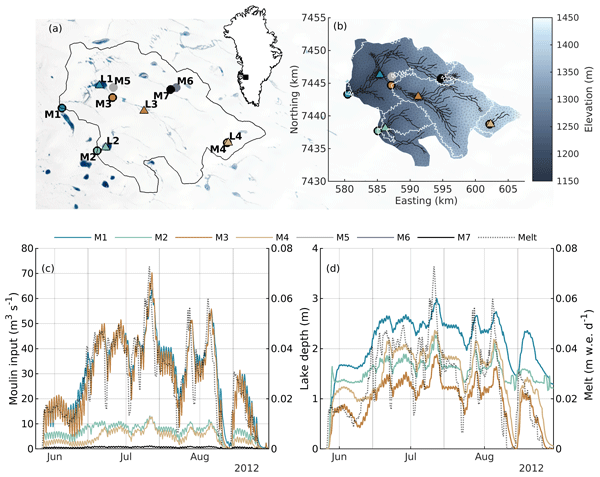
Tim Hill and Christine F. Dow
The Cryosphere, 17, 2607–2624, https://doi.org/10.5194/tc-17-2607-2023, https://doi.org/10.5194/tc-17-2607-2023, 2023
Short summary
Short summary
Water flow across the surface of the Greenland Ice Sheet controls the rate of water flow to the glacier bed. Here, we simulate surface water flow for a small catchment on the southwestern Greenland Ice Sheet. Our simulations predict significant differences in the form of surface water flow in high and low melt years depending on the rate and intensity of surface melt. These model outputs will be important in future work assessing the impact of surface water flow on subglacial water pressure.
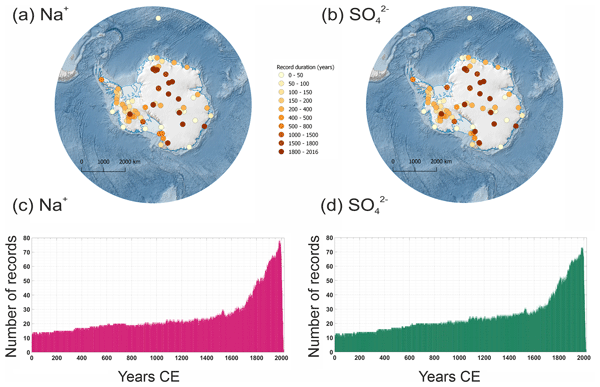
Elizabeth R. Thomas, Diana O. Vladimirova, Dieter R. Tetzner, B. Daniel Emanuelsson, Nathan Chellman, Daniel A. Dixon, Hugues Goosse, Mackenzie M. Grieman, Amy C. F. King, Michael Sigl, Danielle G. Udy, Tessa R. Vance, Dominic A. Winski, V. Holly L. Winton, Nancy A. N. Bertler, Akira Hori, Chavarukonam M. Laluraj, Joseph R. McConnell, Yuko Motizuki, Kazuya Takahashi, Hideaki Motoyama, Yoichi Nakai, Franciéle Schwanck, Jefferson Cardia Simões, Filipe Gaudie Ley Lindau, Mirko Severi, Rita Traversi, Sarah Wauthy, Cunde Xiao, Jiao Yang, Ellen Mosely-Thompson, Tamara V. Khodzher, Ludmila P. Golobokova, and Alexey A. Ekaykin
Earth Syst. Sci. Data, 15, 2517–2532, https://doi.org/10.5194/essd-15-2517-2023, https://doi.org/10.5194/essd-15-2517-2023, 2023
Short summary
Short summary
The concentration of sodium and sulfate measured in Antarctic ice cores is related to changes in both sea ice and winds. Here we have compiled a database of sodium and sulfate records from 105 ice core sites in Antarctica. The records span all, or part, of the past 2000 years. The records will improve our understanding of how winds and sea ice have changed in the past and how they have influenced the climate of Antarctica over the past 2000 years.
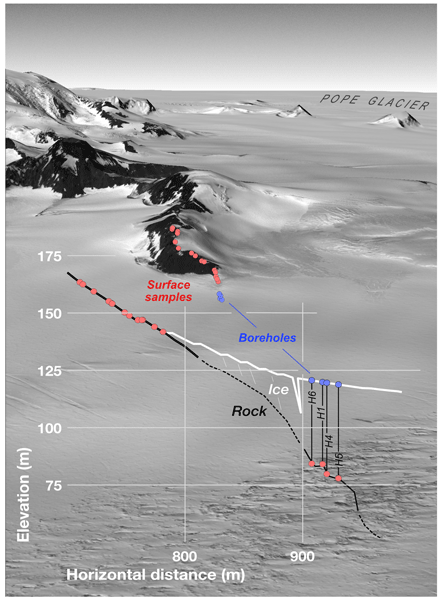
Greg Balco, Nathan Brown, Keir Nichols, Ryan A. Venturelli, Jonathan Adams, Scott Braddock, Seth Campbell, Brent Goehring, Joanne S. Johnson, Dylan H. Rood, Klaus Wilcken, Brenda Hall, and John Woodward
The Cryosphere, 17, 1787–1801, https://doi.org/10.5194/tc-17-1787-2023, https://doi.org/10.5194/tc-17-1787-2023, 2023
Short summary
Short summary
Samples of bedrock recovered from below the West Antarctic Ice Sheet show that part of the ice sheet was thinner several thousand years ago than it is now and subsequently thickened. This is important because of concern that present ice thinning in this region may lead to rapid, irreversible sea level rise. The past episode of thinning at this site that took place in a similar, although not identical, climate was not irreversible; however, reversal required at least 3000 years to complete.
Aaron Chesler, Dominic Winski, Karl Kreutz, Bess Koffman, Erich Osterberg, David Ferris, Zayta Thundercloud, Joseph Mohan, Jihong Cole-Dai, Mark Wells, Michael Handley, Aaron Putnam, Katherine Anderson, and Natalie Harmon
Clim. Past, 19, 477–492, https://doi.org/10.5194/cp-19-477-2023, https://doi.org/10.5194/cp-19-477-2023, 2023
Short summary
Short summary
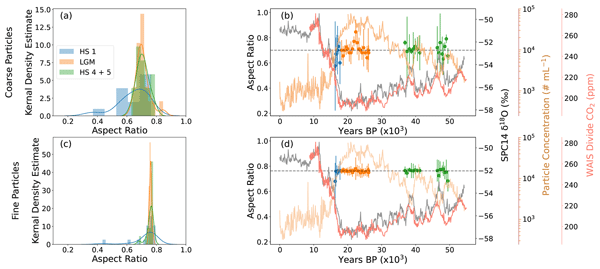
Ice core microparticle data typically use geometry assumptions to calculate particle mass and flux. We use dynamic particle imaging, a novel technique for ice core dust analyses, combined with traditional laser particle counting and Coulter counter techniques to assess particle shape in the South Pole Ice Core (SPC14) spanning 50–16 ka. Our results suggest that particles are dominantly ellipsoidal in shape and that spherical assumptions overestimate particle mass and flux.
Xin Yang, Kimberly Strong, Alison S. Criscitiello, Marta Santos-Garcia, Kristof Bognar, Xiaoyi Zhao, Pierre Fogal, Kaley A. Walker, Sara M. Morris, and Peter Effertz
EGUsphere, https://doi.org/10.5194/egusphere-2022-696, https://doi.org/10.5194/egusphere-2022-696, 2022
Preprint archived
Short summary
Short summary
Snow pack in high Arctic plays a key role in polar atmospheric chemistry, especially in spring when photochemistry becomes active. By sampling surface snow from a Canadian high Arctic location at Eureka, Nunavut (80° N, 86° W), we demonstrate that surface snow is a net sink rather than a source of atmospheric reactive bromine and nitrate. This finding is new and opposite to previous conclusions that snowpack is a large and direct source of reactive bromine in polar spring.
Ingalise Kindstedt, Kristin M. Schild, Dominic Winski, Karl Kreutz, Luke Copland, Seth Campbell, and Erin McConnell
The Cryosphere, 16, 3051–3070, https://doi.org/10.5194/tc-16-3051-2022, https://doi.org/10.5194/tc-16-3051-2022, 2022
Short summary
Short summary
We show that neither the large spatial footprint of the MODIS sensor nor poorly constrained snow emissivity values explain the observed cold offset in MODIS land surface temperatures (LSTs) in the St. Elias. Instead, the offset is most prominent under conditions associated with near-surface temperature inversions. This work represents an advance in the application of MODIS LSTs to glaciated alpine regions, where we often depend solely on remote sensing products for temperature information.

Joanne S. Johnson, Ryan A. Venturelli, Greg Balco, Claire S. Allen, Scott Braddock, Seth Campbell, Brent M. Goehring, Brenda L. Hall, Peter D. Neff, Keir A. Nichols, Dylan H. Rood, Elizabeth R. Thomas, and John Woodward
The Cryosphere, 16, 1543–1562, https://doi.org/10.5194/tc-16-1543-2022, https://doi.org/10.5194/tc-16-1543-2022, 2022
Short summary
Short summary
Recent studies have suggested that some portions of the Antarctic Ice Sheet were less extensive than present in the last few thousand years. We discuss how past ice loss and regrowth during this time would leave its mark on geological and glaciological records and suggest ways in which future studies could detect such changes. Determining timing of ice loss and gain around Antarctica and conditions under which they occurred is critical for preparing for future climate-warming-induced changes.
Anja Rutishauser, Donald D. Blankenship, Duncan A. Young, Natalie S. Wolfenbarger, Lucas H. Beem, Mark L. Skidmore, Ashley Dubnick, and Alison S. Criscitiello
The Cryosphere, 16, 379–395, https://doi.org/10.5194/tc-16-379-2022, https://doi.org/10.5194/tc-16-379-2022, 2022
Short summary
Short summary
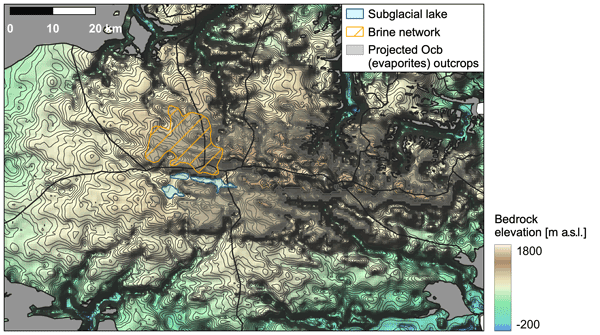
Recently, a hypersaline subglacial lake complex was hypothesized to lie beneath Devon Ice Cap, Canadian Arctic. Here, we present results from a follow-on targeted aerogeophysical survey. Our results support the evidence for a hypersaline subglacial lake and reveal an extensive brine network, suggesting more complex subglacial hydrological conditions than previously inferred. This hypersaline system may host microbial habitats, making it a compelling analog for bines on other icy worlds.
Cited articles
Baghdadi, N., Gauthier, Y., and Bernier, M.: Capability of multitemporal ERS-1 SAR data for wet-snow mapping, Remote Sens. Environ., 60, 174–186, https://doi.org/10.1016/S0034-4257(96)00180-0, 1997. a
Bevington, A. R. and Menounos, B.: Glaciers in western North America experience exceptional transient snowline rise over satellite era, Environ. Res. Lett., 20, 054044, https://doi.org/10.1088/1748-9326/adc9ca, 2025. a
Bezeau, P., Sharp, M., Burgess, D., and Gascon, G.: Firn profile changes in response to extreme 21st-century melting at Devon Ice Cap, Nunavut, Canada, J. Glaciol., 59, 981–991, https://doi.org/10.3189/2013JOG12J208, 2013. a
Brutsaert, W.: On a derivable formula for long-wave radiation from clear skies, Water Resour. Res., 11, 742–744, https://doi.org/10.1029/WR011i005p00742, 1975. a
Culberg, R., Schroeder, D. M., and Chu, W.: Extreme melt season ice layers reduce firn permeability across Greenland, Nat. Commun., 12, 2336, https://doi.org/10.1038/S41467-021-22656-5, 2021. a
European Space Agency (ESA): Digital Elevation Model, ESA [data set], https://doi.org/10.5270/ESA-c5d3d65, 2014. a
Fountain, A. G.: The Storage of Water in, and Hydraulic Characteristics of, the Firn of South Cascade Glacier, Washington State, U.S.A., Ann. Glaciol., 13, 69–75, https://doi.org/10.3189/S0260305500007667, 1989. a
Harper, J., Humphrey, N., Pfeffer, W. T., Brown, J., and Fettweis, X.: Greenland ice-sheet contribution to sea-level rise buffered by meltwater storage in firn, Nature, 491, 240–243, https://doi.org/10.1038/NATURE11566, 2012. a
Hock, R.: Temperature index melt modelling in mountain areas, J. Hydrol., 282, 104–115, https://doi.org/10.1016/S0022-1694(03)00257-9, 2003. a
Hock, R.: Glacier melt: a review of processes and their modelling, Progress in Physical Geography: Earth and Environment, 29, 362–391, https://doi.org/10.1191/0309133305pp453ra, 2005. a, b
Hogenson, K., Kristenson, H., Kennedy, J., Johnson, A., Rine, J., Logan, T., Zhu, J., Williams, F., Hermann, J., Smale, J., and Meyer, F.: Hybrid Pluggable Processing Pipeline (HyP3): A cloud-native infrastructure for generic processing of SAR data, Zenodo [software], https://doi.org/10.5281/zenodo.4646138, 2020. a
Holland, K. M., Criscitiello, A. S., McConnell, J. R., Markle, B. R., Yousif, H. A. K., Skelton, E., Wensman, S. M., Jensen, B. J. L., Winski, D. A., Campbell, S. W., and Chellman, N. J.: Unexpectedly High Accumulation Rates in the 2022 Mt. Logan Ice Core Reveal Warm-Season Drivers of Precipitation Variability, J. Geophys. Res.-Atmos., 131, e2025JD044951, https://doi.org/10.1029/2025JD044951, 2026. a
Horlings, A. N., Christianson, K., and Miège, C.: Expansion of Firn Aquifers in Southeast Greenland, J. Geophys. Res.-Earth, 127, e2022JF006753, https://doi.org/10.1029/2022JF006753, 2022. a
Jansson, P., Hock, R., and Schneider, T.: The concept of glacier storage: a review, J. Hydrol., 282, 116–129, https://doi.org/10.1016/S0022-1694(03)00258-0, 2003. a
Kindstedt, I., Winski, D., Stevens, C. M., Skelton, E., Copland, L., Kreutz, K., Mannello, M., Clavette, R., Holmes, J., Albert, M., and Williamson, S. N.: Ongoing firn warming at Eclipse Icefield, Yukon, indicates potential widespread meltwater percolation and retention in firn pack across the St. Elias Range, The Cryosphere, 19, 3655–3680, https://doi.org/10.5194/tc-19-3655-2025, 2025. a, b, c, d
Kindstedt, I., Winski, D., Copland, L., Loso, M., Kreutz, K., and Zdanowicz, C.: Air trajectories and snowfall over Alaska-Yukon icefields: Implications for ice-core accumulation studies, J. Glaciol., 72, e41, https://doi.org/10.1017/jog.2026.10142, 2026. a
Koenig, L. S., Miège, C., Forster, R. R., and Brucker, L.: Initial in situ measurements of perennial meltwater storage in the Greenland firn aquifer, Geophys. Res. Lett., 41, 81–85, https://doi.org/10.1002/2013GL058083, 2014. a
Lievens, H., Demuzere, M., Marshall, H. P., Reichle, R. H., Brucker, L., Brangers, I., de Rosnay, P., Dumont, M., Girotto, M., Immerzeel, W. W., Jonas, T., Kim, E. J., Koch, I., Marty, C., Saloranta, T., Schöber, J., and Lannoy, G. J. D.: Snow depth variability in the Northern Hemisphere mountains observed from space, Nat. Commun., 10, 4629, https://doi.org/10.1038/S41467-019-12566-Y, 2019. a
MacFerrin, M., Machguth, H., As, D. v., Charalampidis, C., Stevens, C. M., Heilig, A., Vandecrux, B., Langen, P. L., Mottram, R., Fettweis, X., Broeke, M. R. v. d., Pfeffer, W. T., Moussavi, M. S., and Abdalati, W.: Rapid expansion of Greenland’s low-permeability ice slabs, Nature, 573, 403–407, https://doi.org/10.1038/S41586-019-1550-3, 2019. a, b
Machguth, H., Macferrin, M., As, D. V., Box, J. E., Charalampidis, C., Colgan, W., Fausto, R. S., Meijer, H. A. J., Mosley-Thompson, E., and Wal, R. S. W. V. D.: Greenland meltwater storage in firn limited by near-surface ice formation, Nat. Clim. Change, 6, 390–393, https://doi.org/10.1038/NCLIMATE2899, 2016. a
Marcus, M. G. and Ragle, R. H.: Snow Accumulation in the Icefield Ranges, St. Elias Mountains, Yukon, Arctic Alp. Res., 2, 277–292, https://doi.org/10.1080/00040851.1970.12003587, 1970. a
Matthews, T., Perry, L. B., Koch, I., Aryal, D., Khadka, A., Shrestha, D., Abernathy, K., Elmore, A. C., Seimon, A., Tait, A., Elvin, S., Tuladhar, S., Baidya, S. K., Potocki, M., Birkel, S. D., Kang, S., Sherpa, T. C., Gajurel, A., and Mayewski, P. A.: Going to Extremes: Installing the World’s Highest Weather Stations on Mount Everest, B. Am. Meteorol. Soc., 101, E1870–E1890, https://doi.org/10.1175/BAMS-D-19-0198.1, 2020. a, b
Miller, M. M.: The terms “Névé” and “Firn”, J. Glaciol., 2, 150–151, https://doi.org/10.3189/S0022143000034195, 1952. a
Miège, C., Forster, R. R., Brucker, L., Koenig, L. S., Solomon, D. K., Paden, J. D., Box, J. E., Burgess, E. W., Miller, J. Z., McNerney, L., Brautigam, N., Fausto, R. S., and Gogineni, S.: Spatial extent and temporal variability of Greenland firn aquifers detected by ground and airborne radars, J. Geophys. Res.-Earth, 121, 2381–2398, https://doi.org/10.1002/2016JF003869, 2016. a
Nagler, T. and Rott, H.: Retrieval of wet snow by means of multitemporal SAR data, IEEE T. Geosci. Remote, 38, 754–765, https://doi.org/10.1109/36.842004, 2000. a, b, c
Nagler, T., Rott, H., Ripper, E., Bippus, G., and Hetzenecker, M.: Advancements for Snowmelt Monitoring by Means of Sentinel-1 SAR, Remote Sensing 2016, 8, 348, https://doi.org/10.3390/RS8040348, 2016. a
Newman, A. J., Clark, M. P., Wood, A. W., and Arnold, J. R.: Probabilistic Spatial Meteorological Estimates for Alaska and the Yukon, J. Geophys. Res.-Atmos., 125, https://doi.org/10.1029/2020JD032696, 2020. a
Noël, B., van de Berg, W. J., Lhermitte, S., Wouters, B., Schaffer, N., and van den Broeke, M. R.: Six Decades of Glacial Mass Loss in the Canadian Arctic Archipelago, J. Geophys. Res.-Earth, 123, 1430–1449, https://doi.org/10.1029/2017JF004304, 2018. a, b
Ochwat, N. E., Marshall, S. J., Moorman, B. J., Criscitiello, A. S., and Copland, L.: Evolution of the firn pack of Kaskawulsh Glacier, Yukon: meltwater effects, densification, and the development of a perennial firn aquifer, The Cryosphere, 15, 2021–2040, https://doi.org/10.5194/tc-15-2021-2021, 2021. a, b, c, d, e
Polashenski, C., Courville, Z., Benson, C., Wagner, A., Chen, J., Wong, G., Hawley, R., and Hall, D.: Observations of pronounced Greenland ice sheet firn warming and implications for runoff production, Geophys. Res. Lett., 41, 4238–4246, https://doi.org/10.1002/2014GL059806, 2014. a
Rau, F., Braun, M., Friedrich, M., Weber, F., and Goßmann, H.: Radar glacier zones and their boundaries as indicators of glacier mass balance and climatic variability, in: Proceedings of EARSeL-SIG-Workshop Land Ice and Snow, Bindschadler, https://earsel.org/wp-content/uploads/2016/12/01_1_rau1.pdf (last access: 18 October 2022), 2000. a
RGI 7.0 Consortium, R.: Randolph Glacier Inventory – A Dataset of Global Glacier Outlines, Version 7.0, NASA National Snow and Ice Data Center Distributed Active Archive Center [data set], https://doi.org/10.5067/f6jmovy5navz, 2023. a
Samimi, S. and Marshall, S. J.: Diurnal cycles of meltwater percolation, refreezing, and drainage in the supraglacial snowpack of Haig Glacier, Canadian Rocky Mountains, Frontiers in Earth Science, 5, 6, https://doi.org/10.3389/FEART.2017.00006, 2017. a
Savitzky, A. and Golay, M. J. E.: Smoothing and Differentiation of Data by Simplified Least Squares Procedures, Anal. Chem., 36, 1627–1639, https://doi.org/10.1021/ac60214a047, 1964. a
Scher, C., Steiner, N. C., and McDonald, K. C.: Mapping seasonal glacier melt across the Hindu Kush Himalaya with time series synthetic aperture radar (SAR), The Cryosphere, 15, 4465–4482, https://doi.org/10.5194/tc-15-4465-2021, 2021. a, b, c
Schneider, T.: Water movement in the firn of Storglaciären, Sweden, J. Glaciol., 45, 286–294, https://doi.org/10.3189/S0022143000001787, 1999. a
Sergeant, C. J., Falke, J. A., Bellmore, R. A., Bellmore, J. R., and Crumley, R. L.: A Classification of Streamflow Patterns Across the Coastal Gulf of Alaska, Water Resour. Res., 56, e2019WR026127, https://doi.org/10.1029/2019WR026127, 2020. a
Shi, J. and Dozier, J.: Inferring Snow Wetness Using C-Band Data from SIR-C's Polarimetric Synthetic Aperture Radar, IEEE Transactions on Geoscience and Remote Sensing, 33, 905–914, https://doi.org/10.1109/36.406676, 1995. a
Tsai, Y.-L. S., Dietz, A., Oppelt, N., and Kuenzer, C.: Remote Sensing of Snow Cover Using Spaceborne SAR: A Review, Remote Sensing, 11, 1456, https://doi.org/10.3390/rs11121456, 2019. a, b, c
Vandecrux, B., Fausto, R. S., van As, D., Colgan, W., Langen, P. L., Haubner, K., Ingeman-Nielsen, T., Heilig, A., Stevens, C. M., MacFerrin, M., Niwano, M., Steffen, K., and Box, J. E.: Firn cold content evolution at nine sites on the Greenland ice sheet between 1998 and 2017, J. Glaciol., 66, 591–602, https://doi.org/10.1017/jog.2020.30, 2020. a, b
Virtanen, P., Gommers, R., Oliphant, T. E., Haberland, M., Reddy, T., Cournapeau, D., Burovski, E., Peterson, P., Weckesser, W., Bright, J., van der Walt, S. J., Brett, M., Wilson, J., Millman, K. J., Mayorov, N., Nelson, A. R. J., Jones, E., Kern, R., Larson, E., Carey, C. J., Polat, İ., Feng, Y., Moore, E. W., VanderPlas, J., and SciPy 1.0 Contributors: SciPy 1.0: Fundamental Algorithms for Scientific Computing in Python, Nat. Methods, 17, 261–272, https://doi.org/10.1038/s41592-019-0686-2, 2020. a
Wells, A., Rounce, D. R., and Fahnestock, M.: Seasonal progression of melt and snowlines in Alaska from SAR reveals impacts of warming, npj Climate and Atmospheric Science, 9, 95, https://doi.org/10.1038/s41612-026-01321-y, 2026. a
Williamson, S. N., Zdanowicz, C., Anslow, F. S., Clarke, G. K. C., Copland, L., Danby, R. K., Flowers, G. E., Holdsworth, G., Jarosch, A. H., and Hik, D. S.: Evidence for elevation-dependent warming in the St. Elias Mountains, Yukon, Canada, J. Climate, 33, 3253–3269, https://doi.org/10.1175/JCLI-D-19-0405.1, 2020. a
Winsvold, S. H., Kääb, A., Nuth, C., Andreassen, L. M., van Pelt, W. J. J., and Schellenberger, T.: Using SAR satellite data time series for regional glacier mapping, The Cryosphere, 12, 867–890, https://doi.org/10.5194/tc-12-867-2018, 2018. a
Short summary
Mountain snow at high elevations is changing as warming causes more melting and water to linger within it. We use satellite radar images from 2015 to 2024 to track when melting starts and when snow refreezes across the Wrangell and St. Elias Mountains on the border of Alaska and Yukon. We find that melting now reaches nearly all elevations, and water often remains trapped well into fall. Only the highest areas stay fully dry, showing widespread impacts of warming on mountain snowpacks.
Mountain snow at high elevations is changing as warming causes more melting and water to linger...


