
Articles | Volume 20, issue 4
https://doi.org/10.5194/tc-20-2169-2026
Copyright waived. This work has been dedicated to the public domain (Creative Commons Public Domain Dedication).
https://doi.org/10.5194/tc-20-2169-2026
Copyright waived. This work has been dedicated to the public domain (Creative Commons Public Domain Dedication).
Brief communication
| 
17 Apr 2026
Brief communication |
| 17 Apr 2026
Evaluating snow depth measurements from ground-penetrating radar and airborne lidar in boreal forest and tundra environments during the NASA SnowEx 2023 campaign
Kajsa Holland-Goon
Department of Geosciences, Colorado State University, Fort Collins, Colorado, USA
Randall Bonnell
CORRESPONDING AUTHOR

U.S. Geological Survey, Water Resources Mission Area, Denver, Colorado, USA
Department of Geosciences, Colorado State University, Fort Collins, Colorado, USA
Daniel McGrath
CORRESPONDING AUTHOR
Department of Geosciences, Colorado State University, Fort Collins, Colorado, USA
W. Brad Baxter
Cold Regions Research and Engineering Laboratory, U.S. Army Corps of Engineers, Fairbanks, Alaska, USA
Tate Meehan
Cold Regions Research and Engineering Laboratory, U.S. Army Corps of Engineers, Hanover, New Hampshire, USA
Ryan Webb
Department of Civil and Architectural Engineering & Construction Management, University of Wyoming, Laramie, Wyoming, USA
Christopher F. Larsen
Geophysical Institute, University of Alaska, Fairbanks, Alaska, USA
Hans-Peter Marshall
Department of Geosciences, Boise State University, Boise, Idaho, USA
Megan Mason
Hydrological Sciences Laboratory, NASA Goddard Space Flight Center, Greenbelt, Maryland, USA
Science Systems Applications Inc., Lanham, Maryland, USA
Carrie Vuyovich
Hydrological Sciences Laboratory, NASA Goddard Space Flight Center, Greenbelt, Maryland, USA
Related authors
No articles found.
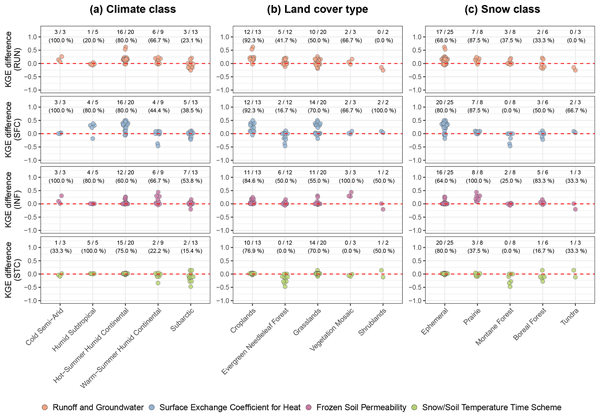
Eunsaem Cho, Eunsang Cho, Carrie Vuyovich, Bailing Li, and Jennifer M. Jacobs
Hydrol. Earth Syst. Sci., 30, 6359–6380, https://doi.org/10.5194/hess-30-6359-2026, https://doi.org/10.5194/hess-30-6359-2026, 2026
Short summary
Short summary
This study evaluated how alternative parameterization schemes in the Noah-Multiparameterization model affect snow and runoff in the Missouri River Basin. Simulations were compared with U.S. Geological Survey streamflow, University of Arizona snow water equivalent, and Global Land Evaporation Amsterdam Model evapotranspiration across 50 Hydro-Climate Data Network subbasins. As a result, we confirmed alternative schemes could improve groundwater, evapotranspiration, and runoff representation.
Zachary Hoppinen, Hans-Peter Marshall, Ross Palomaki, Coleman Kane, Siobhan Ciafone, Shad O'Neel, and Thomas Van Der Weide
EGUsphere, https://doi.org/10.5194/egusphere-2026-5140, https://doi.org/10.5194/egusphere-2026-5140, 2026
This preprint is open for discussion and under review for The Cryosphere (TC).
Short summary
Short summary
Mountain snow stores water for millions of people, but no satellite yet maps how much water it holds. The new NISAR radar satellite may be able to, because its signal slows down as it passes through snow. We tested this over a mountain site in Idaho by comparing the satellite measurement of new snow with maps of snow depth change from an airplane-mounted laser scanner. The two agreed well, especially in open terrain, giving the first evidence that NISAR can measure snowfall from space.
Farhaan Cooverji, Eunsang Cho, Bailing Li, Carrie Vuyovich, Jennifer M. Jacobs, Eunsaem Cho, Eric A. Sproles, and Samuel E. Tuttle
EGUsphere, https://doi.org/10.5194/egusphere-2026-4186, https://doi.org/10.5194/egusphere-2026-4186, 2026
Short summary
Short summary
Quantifying how much snowmelt feeds mountain rivers is hard. In a Missouri Headwater watershed, we estimated the region's water cycle, focusing on snowmelt generation. Well-validated hydrological data were more accurate individually, but the land surface model better balanced the annual water budget. It also underestimates evaporation and sublimation, inflating runoff estimates. This approach shows snowmelt supplies only about 32 % of runoff, well below earlier estimates near 65 %.
Justin Matthew Pflug, Kehan Yang, Nicoleta Cristea, Emma T. Boudreau, Carrie M. Vuyovich, and Sujay V. Kumar
EGUsphere, https://doi.org/10.5194/egusphere-2026-4850, https://doi.org/10.5194/egusphere-2026-4850, 2026
Short summary
Short summary
Fine scale snow cover is important for hydrological and ecological applications. We test whether commercial satellite imagery can downscale 3 m snow cover from free, coarse-resolution snow cover observations. While machine learning estimates work best, combining 30 m snow cover estimates from Landsat and Sentinel with information about the terrain can also achieve high accuracies. These results can inform the most data and cost-effective approaches for tracking snow cover in montane regions.
Siddharth Singh, Carrie Vuyovich, and Ana P. Barros
EGUsphere, https://doi.org/10.5194/egusphere-2026-3588, https://doi.org/10.5194/egusphere-2026-3588, 2026
Short summary
Short summary
Forests make it difficult to measure how much water is stored in snow because trees block and scatter signals from aircraft and satellites. This study combines weather-driven snow modeling with airborne radar observations to estimate snow depth and water stored in forested snowpacks. Results compared well with field and airborne measurements, showing that this approach can improve snow monitoring in forested regions important for water supply and flood forecasting.
Zachary Hoppinen, Simon Zwieback, Ross Palomaki, and Hans-Peter Marshall
EGUsphere, https://doi.org/10.5194/egusphere-2026-3772, https://doi.org/10.5194/egusphere-2026-3772, 2026
Short summary
Short summary
Radar satellites measure new snowfall by passing over the same ground twice and sensing how the snow delays their signal. To map it, they average each measurement over patches tens of meters wide, assuming snowfall is uniform within them. Aircraft laser surveys show it actually varies sharply below ~25 m, far from uniform. This unevenness degrades the measurement and biases the estimate, worst in steep terrain and big storms, as two radar image pairs over snowy and snow-free periods confirm.
Jipeng Liu, Eunsang Cho, and Carrie M. Vuyovich
EGUsphere, https://doi.org/10.5194/egusphere-2026-986, https://doi.org/10.5194/egusphere-2026-986, 2026
Short summary
Short summary
We analyzed airborne LiDAR data from NASA’s SnowEx 2023 campaign to study snow depth in Alaska’s boreal forests. Comparing LiDAR to ground measurements, we found it captures general snow patterns well, though tall trees and slopes reduce accuracy. This approach can help improve snow surveys and better manage water resources in remote forested areas.
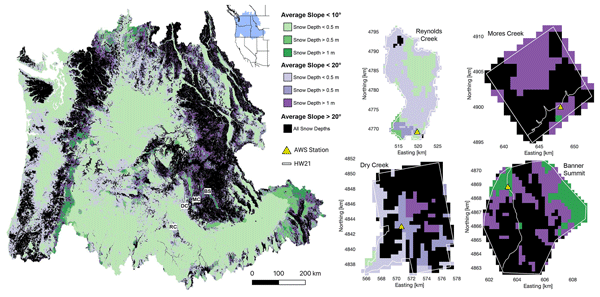
Karina Zikan, Ellyn M. Enderlin, Hans-Peter Marshall, and Shad O'Neel
The Cryosphere, 20, 3051–3072, https://doi.org/10.5194/tc-20-3051-2026, https://doi.org/10.5194/tc-20-3051-2026, 2026
Short summary
Short summary
We present an improved method for measuring mountain snow depth using NASA’s ICESat-2 satellite that accounts for steep terrain. By comparison to weather station and helicopter measurements, we show that ICESat-2 captures snow depth both over a season and across a mountain ridge. ICESat-2 works best when slopes are less than 20°. Enough mountain terrain falls within this slope range that ICESat-2 could dramatically expand snow depth observation and provide critical data for water management.
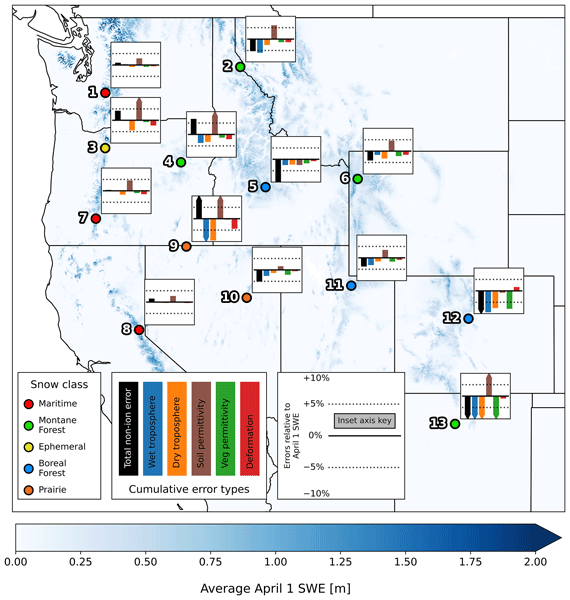
Ross Palomaki, Zachary Hoppinen, and Hans-Peter Marshall
The Cryosphere, 20, 2703–2721, https://doi.org/10.5194/tc-20-2703-2026, https://doi.org/10.5194/tc-20-2703-2026, 2026
Short summary
Short summary
The recently-launched NISAR satellite has potential to provide new measurements of the water stored in seasonal snow, but various non-snow factors can introduce error into these new measurements. We analyzed the effects of six non-snow errors and found that impacts from the ionosphere on NISAR phase data must be addressed for accurate snow measurements. Other non-snow factors can have partially offsetting effects on snow measurements, depending on environmental properties at a particular site.
Steven A. Margulis, Maya Hildebrand, Xiaolan Xu, Manuela Girotto, Hans-Peter Marshall, Rashmi Shah, Elias Deeb, Simon Yueh, Dara Entekhabi, and Jessica Lundquist
EGUsphere, https://doi.org/10.5194/egusphere-2026-1594, https://doi.org/10.5194/egusphere-2026-1594, 2026
Short summary
Short summary
This paper demonstrates the feasibility of using a Bayesian framework for estimating snow water equivalent (SWE) from InSAR phase data at C-, L-, and P-band wavelengths. The Bayesian approach shows promise as a value-added approach to estimating SWE from phase delay measurements that are not only accurate at the measurement times, but interpolate between measurements and extrapolate beyond measurements and provide distributional (uncertainty) estimates for SWE.
Anne Sledd, Michael R. Gallagher, Matthew D. Shupe, Christopher J. Cox, Robert Hawley, Michael S. Town, Heather Guy, Hans-Peter Marshall, Ryan R. Neely III, Claire Pettersen, Von P. Walden, Catherine Hebson, Andrew Martin, Erik Olson, and Derek Pickell
EGUsphere, https://doi.org/10.5194/egusphere-2026-1842, https://doi.org/10.5194/egusphere-2026-1842, 2026
Short summary
Short summary
Understanding energetic processes at the surface is important for understanding how the Greenland ice sheet melts. However, most temperature observations of firn are insufficient for studying energetic processes near the surface where melt happens. In this work we present new ground observations of high-resolution temperature profiles in the top meter of firn near the southwest coast of Greenland. Using these observations we characterize how temperature and energy vary during the melt season.
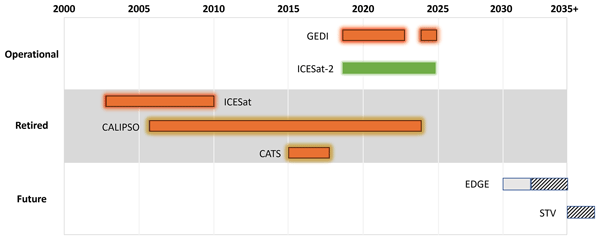
Zachary Fair, Carrie Vuyovich, Thomas Neumann, Justin Pflug, David Shean, Ellyn M. Enderlin, Karina Zikan, Hannah Besso, Jessica Lundquist, Cesar Deschamps-Berger, and Désirée Treichler
The Cryosphere, 19, 5671–5691, https://doi.org/10.5194/tc-19-5671-2025, https://doi.org/10.5194/tc-19-5671-2025, 2025
Short summary
Short summary
Lidar is commonly used to measure snow over global water reservoirs. However, ground-based and airborne lidar surveys are expensive, so satellite-based methods are needed. In this review, we outline the latest research using satellite-based lidar to monitor snow. Best practices for lidar-based snow monitoring are given, as is a discussion on challenges in this field of research.
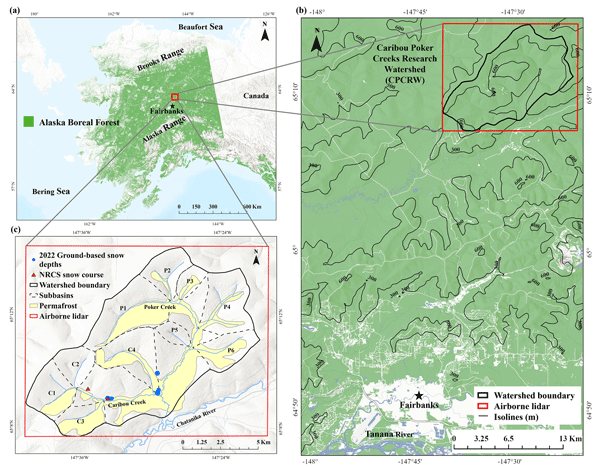
Lora D. May, Svetlana L. Stuefer, Scott D. Goddard, and Christopher F. Larsen
The Cryosphere, 19, 3477–3492, https://doi.org/10.5194/tc-19-3477-2025, https://doi.org/10.5194/tc-19-3477-2025, 2025
Short summary
Short summary
We contribute to limited boreal forest snow remote sensing research by analyzing field snow depth and airborne lidar data. Two new lidar snow depth and canopy height products are evaluated for application at a boreal forest site in Alaska. Our results show that airborne lidar can effectively estimate snow depths in the boreal forest, should be validated and assessed for errors using ground-based measurements, and can assist water and resource managers in estimating snow depth in boreal forests.
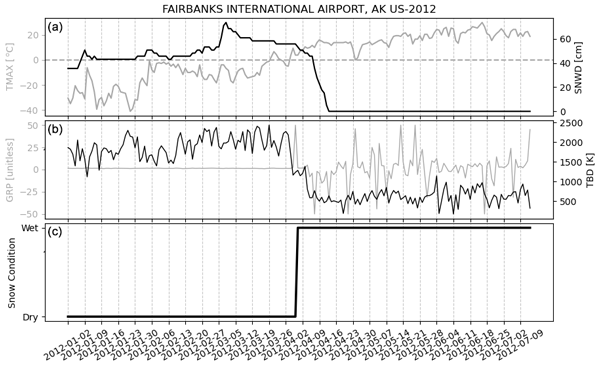
Caleb G. Pan, Kristofer Lasko, Sean P. Griffin, John S. Kimball, Jinyang Du, Tate G. Meehan, and Peter B. Kirchner
The Cryosphere, 19, 2797–2819, https://doi.org/10.5194/tc-19-2797-2025, https://doi.org/10.5194/tc-19-2797-2025, 2025
Short summary
Short summary
This study examines 35 years of snow cover changes in Alaska’s Yukon River Basin using machine learning to track snowmelt timing and disappearance. Results show snow is melting earlier and disappearing faster due to rising temperatures, highlighting the effects of climate change on water resources, ecosystems, and communities. The findings improve understanding of snow dynamics and provide critical insights for addressing climate-driven challenges in the region.
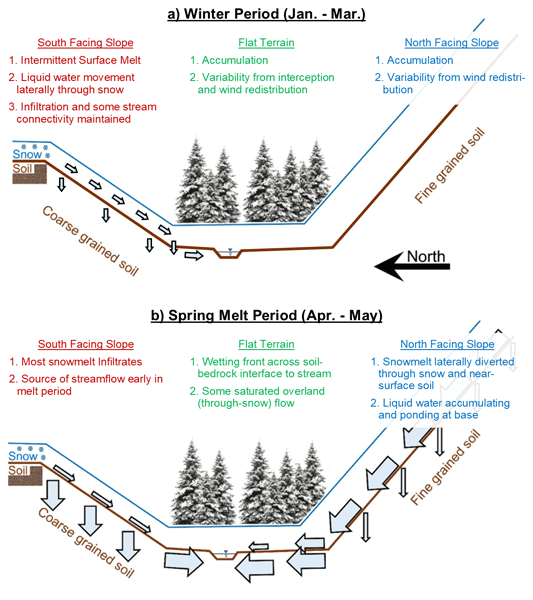
Kori L. Mooney and Ryan W. Webb
The Cryosphere, 19, 2507–2526, https://doi.org/10.5194/tc-19-2507-2025, https://doi.org/10.5194/tc-19-2507-2025, 2025
Short summary
Short summary
This study observes the movement of snow water equivalence (SWE) during mid-winter surface melt and spring snowmelt periods. We observed that the south-facing slope that experienced mid-winter surface melt events showed meltwater flowing downslope through the snow. The north-facing slope saw a similar redistribution of meltwater during the spring snowmelt period.
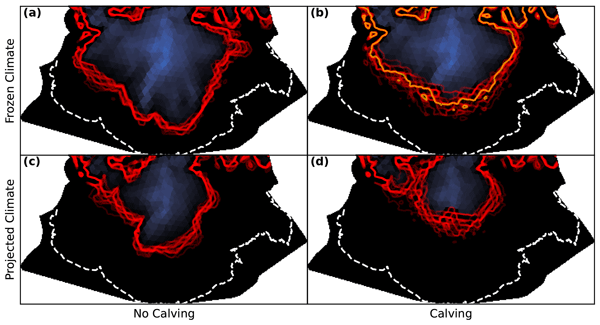
Douglas J. Brinkerhoff, Brandon S. Tober, Michael Daniel, Victor Devaux-Chupin, Michael S. Christoffersen, John W. Holt, Christopher F. Larsen, Mark Fahnestock, Michael G. Loso, Kristin M. F. Timm, Russell C. Mitchell, and Martin Truffer
The Cryosphere, 19, 2321–2353, https://doi.org/10.5194/tc-19-2321-2025, https://doi.org/10.5194/tc-19-2321-2025, 2025
Short summary
Short summary
Sít' Tlein is one of the largest glaciers in the world outside of the polar regions, and we know that it has been rapidly thinning. To forecast how this glacier will change in the future, we combine a computer model of ice flow with measurements from many different sources. Our model tells us that with high probability, Sít' Tlein's lower reaches are going to disappear in the next century and a half, creating a new bay or lake along Alaska's coastline.
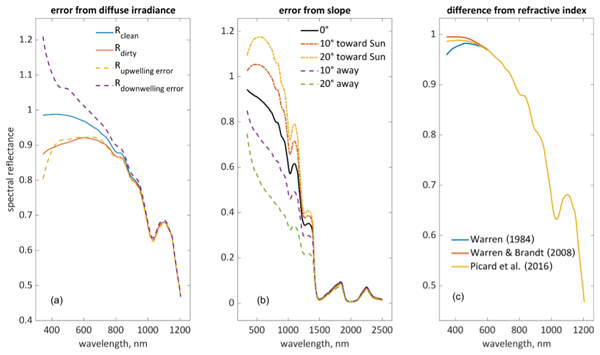
Edward H. Bair, Dar A. Roberts, David R. Thompson, Philip G. Brodrick, Brenton A. Wilder, Niklas Bohn, Christopher J. Crawford, Nimrod Carmon, Carrie M. Vuyovich, and Jeff Dozier
The Cryosphere, 19, 2315–2320, https://doi.org/10.5194/tc-19-2315-2025, https://doi.org/10.5194/tc-19-2315-2025, 2025
Short summary
Short summary
Key to the success of future satellite missions is understanding snowmelt in our warming climate, as this has implications for nearly 2 billion people. An obstacle is that an artifact, called the hook, is often mistaken for soot or dust. Instead, it is caused by three amplifying effects: (1) background reflectance that is too dark, (2) an assumption of level terrain, and (3) differences in optical constants of ice. Sensor calibration and directional effects may also contribute. Solutions are presented.
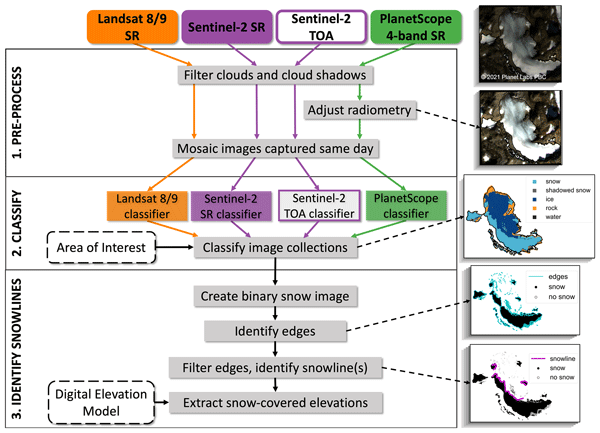
Rainey Aberle, Ellyn Enderlin, Shad O'Neel, Caitlyn Florentine, Louis Sass, Adam Dickson, Hans-Peter Marshall, and Alejandro Flores
The Cryosphere, 19, 1675–1693, https://doi.org/10.5194/tc-19-1675-2025, https://doi.org/10.5194/tc-19-1675-2025, 2025
Short summary
Short summary
Tracking seasonal snow on glaciers is critical for understanding glacier health. Yet previous work has not directly compared machine learning algorithms for snow classification across satellite image products. To address this, we developed a new automated workflow for tracking seasonal snow on glaciers using several image products and machine learning models. Applying this method can help provide insights into glacier health, water resources, and the effects of climate change on snow cover.
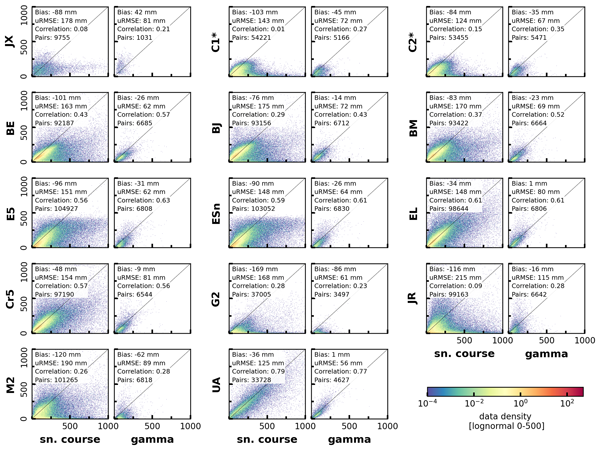
Colleen Mortimer, Lawrence Mudryk, Eunsang Cho, Chris Derksen, Mike Brady, and Carrie Vuyovich
The Cryosphere, 18, 5619–5639, https://doi.org/10.5194/tc-18-5619-2024, https://doi.org/10.5194/tc-18-5619-2024, 2024
Short summary
Short summary
Ground measurements of snow water equivalent (SWE) are vital for understanding the accuracy of large-scale estimates from satellites and climate models. We compare two types of measurements – snow courses and airborne gamma SWE estimates – and analyze how measurement type impacts the accuracy assessment of gridded SWE products. We use this analysis to produce a combined reference SWE dataset for North America, applicable for future gridded SWE product evaluations and other applications.
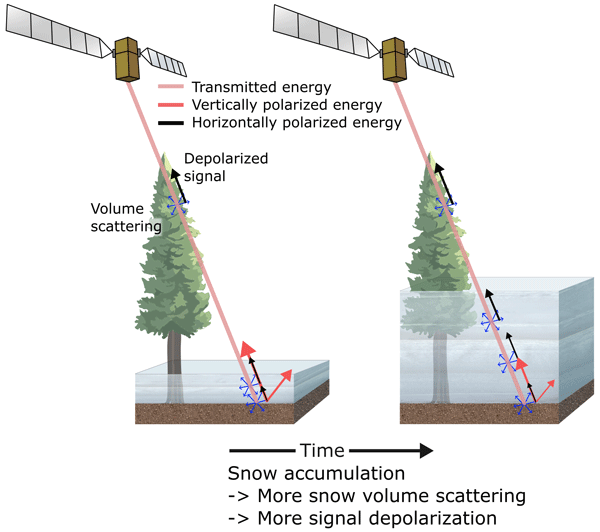
Zachary Hoppinen, Ross T. Palomaki, George Brencher, Devon Dunmire, Eric Gagliano, Adrian Marziliano, Jack Tarricone, and Hans-Peter Marshall
The Cryosphere, 18, 5407–5430, https://doi.org/10.5194/tc-18-5407-2024, https://doi.org/10.5194/tc-18-5407-2024, 2024
Short summary
Short summary
This study uses radar imagery from the Sentinel-1 satellite to derive snow depth from increases in the returning energy. These retrieved depths are then compared to nine lidar-derived snow depths across the western United State to assess the ability of this technique to be used to monitor global snow distributions. We also qualitatively compare the changes in underlying Sentinel-1 amplitudes against both the total lidar snow depths and nine automated snow monitoring stations.
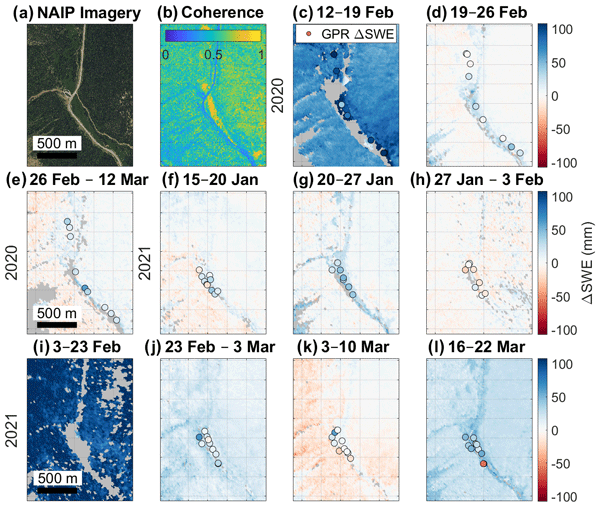
Randall Bonnell, Daniel McGrath, Jack Tarricone, Hans-Peter Marshall, Ella Bump, Caroline Duncan, Stephanie Kampf, Yunling Lou, Alex Olsen-Mikitowicz, Megan Sears, Keith Williams, Lucas Zeller, and Yang Zheng
The Cryosphere, 18, 3765–3785, https://doi.org/10.5194/tc-18-3765-2024, https://doi.org/10.5194/tc-18-3765-2024, 2024
Short summary
Short summary
Snow provides water for billions of people, but the amount of snow is difficult to detect remotely. During the 2020 and 2021 winters, a radar was flown over mountains in Colorado, USA, to measure the amount of snow on the ground, while our team collected ground observations to test the radar technique’s capabilities. The technique yielded accurate measurements of the snowpack that had good correlation with ground measurements, making it a promising application for the upcoming NISAR satellite.
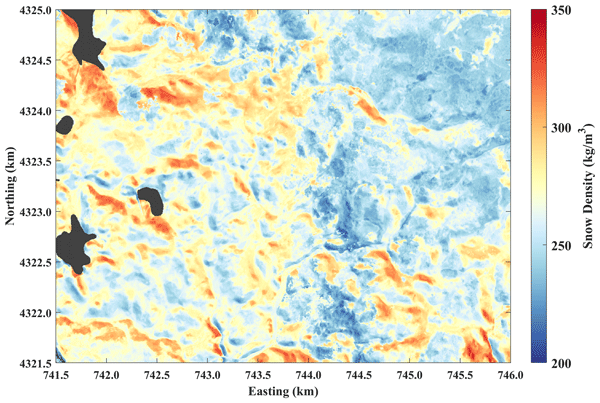
Tate G. Meehan, Ahmad Hojatimalekshah, Hans-Peter Marshall, Elias J. Deeb, Shad O'Neel, Daniel McGrath, Ryan W. Webb, Randall Bonnell, Mark S. Raleigh, Christopher Hiemstra, and Kelly Elder
The Cryosphere, 18, 3253–3276, https://doi.org/10.5194/tc-18-3253-2024, https://doi.org/10.5194/tc-18-3253-2024, 2024
Short summary
Short summary
Snow water equivalent (SWE) is a critical parameter for yearly water supply forecasting and can be calculated by multiplying the snow depth by the snow density. We combined high-spatial-resolution snow depth information with ground-based radar measurements to solve for snow density. Extrapolated density estimates over our study area resolved detailed patterns that agree with the known interactions of snow with wind, terrain, and vegetation and were utilized in the calculation of SWE.
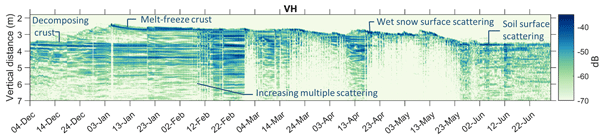
Isis Brangers, Hans-Peter Marshall, Gabrielle De Lannoy, Devon Dunmire, Christian Mätzler, and Hans Lievens
The Cryosphere, 18, 3177–3193, https://doi.org/10.5194/tc-18-3177-2024, https://doi.org/10.5194/tc-18-3177-2024, 2024
Short summary
Short summary
To better understand the interactions between C-band radar waves and snow, a tower-based experiment was set up in the Idaho Rocky Mountains. The reflections were collected in the time domain to measure the backscatter profile from the various snowpack and ground surface layers. The results demonstrate that C-band radar is sensitive to seasonal patterns in snow accumulation but that changes in microstructure, stratigraphy and snow wetness may complicate satellite-based snow depth retrievals.
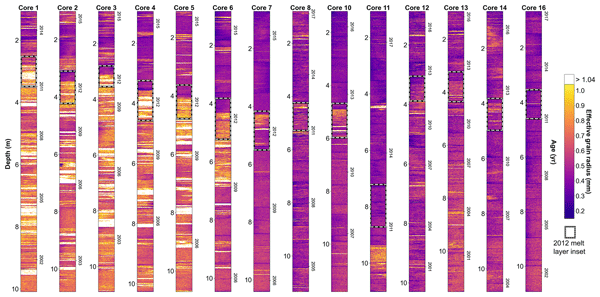
Ian E. McDowell, Kaitlin M. Keegan, S. McKenzie Skiles, Christopher P. Donahue, Erich C. Osterberg, Robert L. Hawley, and Hans-Peter Marshall
The Cryosphere, 18, 1925–1946, https://doi.org/10.5194/tc-18-1925-2024, https://doi.org/10.5194/tc-18-1925-2024, 2024
Short summary
Short summary
Accurate knowledge of firn grain size is crucial for many ice sheet research applications. Unfortunately, collecting detailed measurements of firn grain size is difficult. We demonstrate that scanning firn cores with a near-infrared imager can quickly produce high-resolution maps of both grain size and ice layer distributions. We map grain size and ice layer stratigraphy in 14 firn cores from Greenland and document changes to grain size and ice layer content from the extreme melt summer of 2012.
Alton C. Byers, Marcelo Somos-Valenzuela, Dan H. Shugar, Daniel McGrath, Mohan B. Chand, and Ram Avtar
The Cryosphere, 18, 711–717, https://doi.org/10.5194/tc-18-711-2024, https://doi.org/10.5194/tc-18-711-2024, 2024
Short summary
Short summary
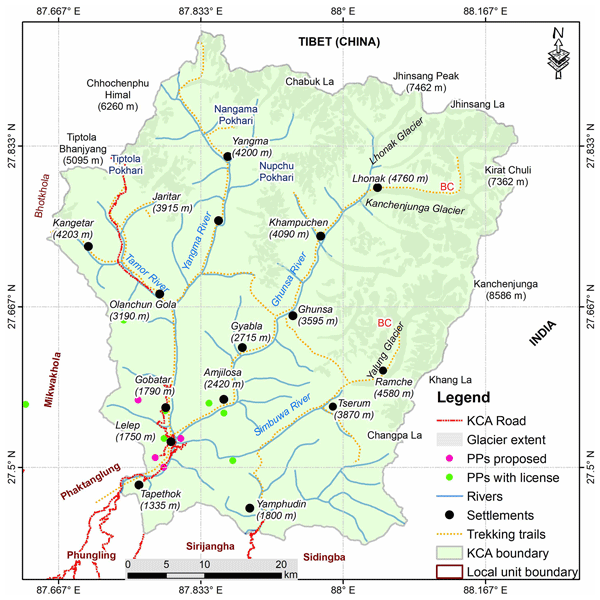
In spite of enhanced technologies, many large cryospheric events remain unreported because of their remoteness, inaccessibility, or poor communications. In this Brief communication, we report on a large ice-debris avalanche that occurred sometime between 16 and 21 August 2022 in the Kanchenjunga Conservation Area (KCA), eastern Nepal.
Justin M. Pflug, Melissa L. Wrzesien, Sujay V. Kumar, Eunsang Cho, Kristi R. Arsenault, Paul R. Houser, and Carrie M. Vuyovich
Hydrol. Earth Syst. Sci., 28, 631–648, https://doi.org/10.5194/hess-28-631-2024, https://doi.org/10.5194/hess-28-631-2024, 2024
Short summary
Short summary
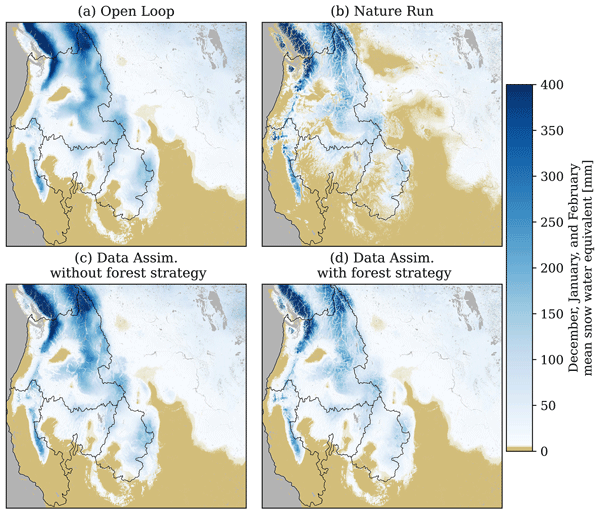
Estimates of 250 m of snow water equivalent in the western USA and Canada are improved by assimilating observations representative of a snow-focused satellite mission with a land surface model. Here, by including a gap-filling strategy, snow estimates could be improved in forested regions where remote sensing is challenging. This approach improved estimates of winter maximum snow water volume to within 4 %, on average, with persistent improvements to both spring snow and runoff in many regions.
Shadi Oveisgharan, Robert Zinke, Zachary Hoppinen, and Hans Peter Marshall
The Cryosphere, 18, 559–574, https://doi.org/10.5194/tc-18-559-2024, https://doi.org/10.5194/tc-18-559-2024, 2024
Short summary
Short summary
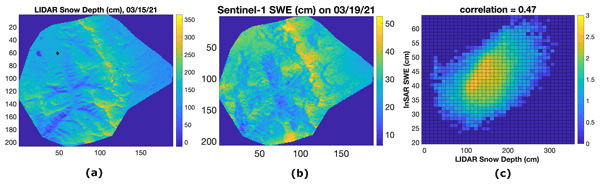
The seasonal snowpack provides water resources to billions of people worldwide. Large-scale mapping of snow water equivalent (SWE) with high resolution is critical for many scientific and economics fields. In this work we used the radar remote sensing interferometric synthetic aperture radar (InSAR) to estimate the SWE change between 2 d. The error in the estimated SWE change is less than 2 cm for in situ stations. Additionally, the retrieved SWE using InSAR is correlated with lidar snow depth.
Zachary Hoppinen, Shadi Oveisgharan, Hans-Peter Marshall, Ross Mower, Kelly Elder, and Carrie Vuyovich
The Cryosphere, 18, 575–592, https://doi.org/10.5194/tc-18-575-2024, https://doi.org/10.5194/tc-18-575-2024, 2024
Short summary
Short summary
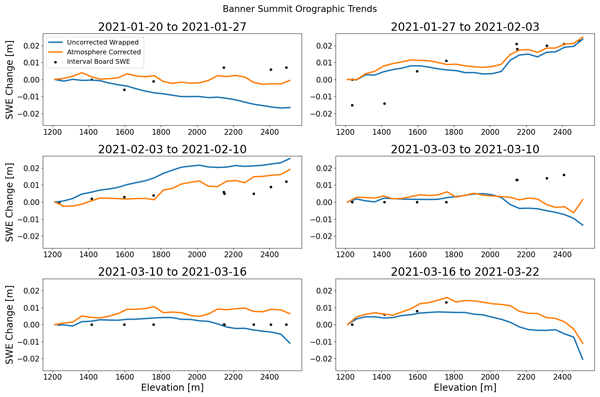
We used changes in radar echo travel time from multiple airborne flights to estimate changes in snow depths across Idaho for two winters. We compared our radar-derived retrievals to snow pits, weather stations, and a 100 m resolution numerical snow model. We had a strong Pearson correlation and root mean squared error of 10 cm relative to in situ measurements. Our retrievals also correlated well with our model, especially in regions of dry snow and low tree coverage.
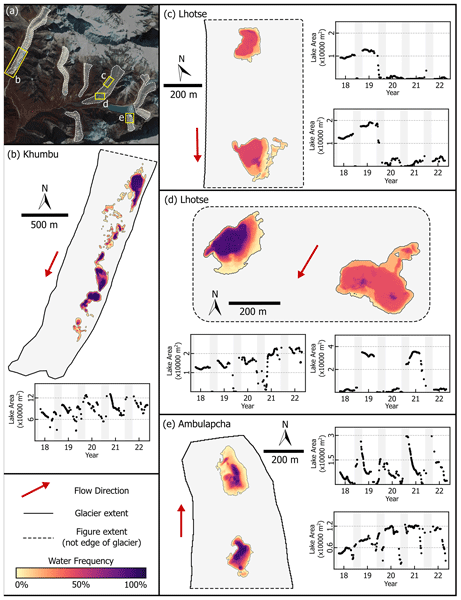
Lucas Zeller, Daniel McGrath, Scott W. McCoy, and Jonathan Jacquet
The Cryosphere, 18, 525–541, https://doi.org/10.5194/tc-18-525-2024, https://doi.org/10.5194/tc-18-525-2024, 2024
Short summary
Short summary
In this study we developed methods for automatically identifying supraglacial lakes in multiple satellite imagery sources for eight glaciers in Nepal. We identified a substantial seasonal variability in lake area, which was as large as the variability seen across entire decades. These complex patterns are not captured in existing regional-scale datasets. Our findings show that this seasonal variability must be accounted for in order to interpret long-term changes in debris-covered glaciers.
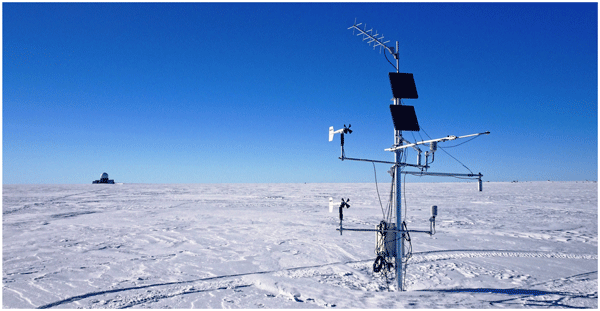
Baptiste Vandecrux, Jason E. Box, Andreas P. Ahlstrøm, Signe B. Andersen, Nicolas Bayou, William T. Colgan, Nicolas J. Cullen, Robert S. Fausto, Dominik Haas-Artho, Achim Heilig, Derek A. Houtz, Penelope How, Ionut Iosifescu Enescu, Nanna B. Karlsson, Rebecca Kurup Buchholz, Kenneth D. Mankoff, Daniel McGrath, Noah P. Molotch, Bianca Perren, Maiken K. Revheim, Anja Rutishauser, Kevin Sampson, Martin Schneebeli, Sandy Starkweather, Simon Steffen, Jeff Weber, Patrick J. Wright, Henry Jay Zwally, and Konrad Steffen
Earth Syst. Sci. Data, 15, 5467–5489, https://doi.org/10.5194/essd-15-5467-2023, https://doi.org/10.5194/essd-15-5467-2023, 2023
Short summary
Short summary
The Greenland Climate Network (GC-Net) comprises stations that have been monitoring the weather on the Greenland Ice Sheet for over 30 years. These stations are being replaced by newer ones maintained by the Geological Survey of Denmark and Greenland (GEUS). The historical data were reprocessed to improve their quality, and key information about the weather stations has been compiled. This augmented dataset is available at https://doi.org/10.22008/FK2/VVXGUT (Steffen et al., 2022).
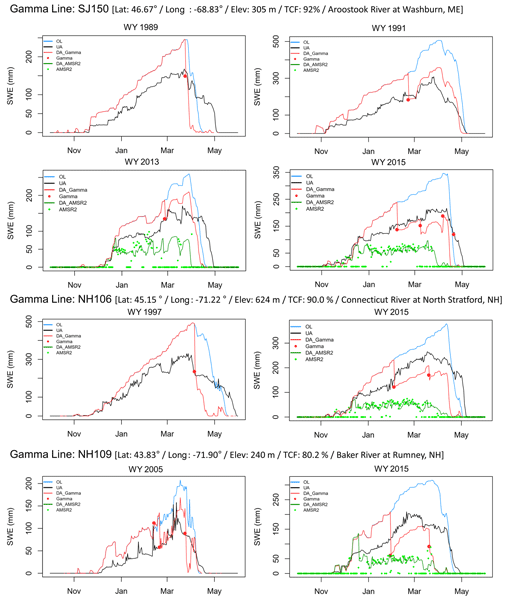
Eunsang Cho, Yonghwan Kwon, Sujay V. Kumar, and Carrie M. Vuyovich
Hydrol. Earth Syst. Sci., 27, 4039–4056, https://doi.org/10.5194/hess-27-4039-2023, https://doi.org/10.5194/hess-27-4039-2023, 2023
Short summary
Short summary
An airborne gamma-ray remote-sensing technique provides reliable snow water equivalent (SWE) in a forested area where remote-sensing techniques (e.g., passive microwave) typically have large uncertainties. Here, we explore the utility of assimilating the gamma snow data into a land surface model to improve the modeled SWE estimates in the northeastern US. Results provide new insights into utilizing the gamma SWE data for enhanced land surface model simulations in forested environments.
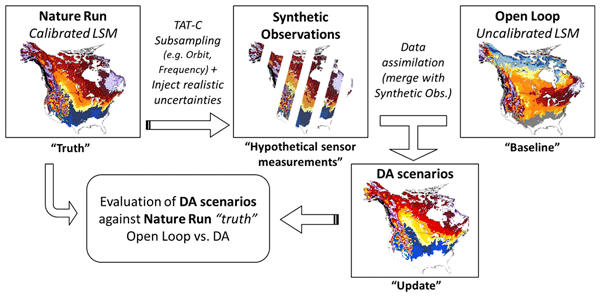
Eunsang Cho, Carrie M. Vuyovich, Sujay V. Kumar, Melissa L. Wrzesien, and Rhae Sung Kim
The Cryosphere, 17, 3915–3931, https://doi.org/10.5194/tc-17-3915-2023, https://doi.org/10.5194/tc-17-3915-2023, 2023
Short summary
Short summary
As a future snow mission concept, active microwave sensors have the potential to measure snow water equivalent (SWE) in deep snowpack and forested environments. We used a modeling and data assimilation approach (a so-called observing system simulation experiment) to quantify the usefulness of active microwave-based SWE retrievals over western Colorado. We found that active microwave sensors with a mature retrieval algorithm can improve SWE simulations by about 20 % in the mountainous domain.
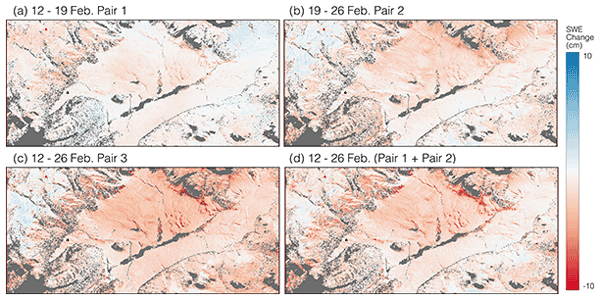
Jack Tarricone, Ryan W. Webb, Hans-Peter Marshall, Anne W. Nolin, and Franz J. Meyer
The Cryosphere, 17, 1997–2019, https://doi.org/10.5194/tc-17-1997-2023, https://doi.org/10.5194/tc-17-1997-2023, 2023
Short summary
Short summary
Mountain snowmelt provides water for billions of people across the globe. Despite its importance, we cannot currently measure the amount of water in mountain snowpacks from satellites. In this research, we test the ability of an experimental snow remote sensing technique from an airplane in preparation for the same sensor being launched on a future NASA satellite. We found that the method worked better than expected for estimating important snowpack properties.

Eunsang Cho, Carrie M. Vuyovich, Sujay V. Kumar, Melissa L. Wrzesien, Rhae Sung Kim, and Jennifer M. Jacobs
Hydrol. Earth Syst. Sci., 26, 5721–5735, https://doi.org/10.5194/hess-26-5721-2022, https://doi.org/10.5194/hess-26-5721-2022, 2022
Short summary
Short summary
While land surface models are a common approach for estimating macroscale snow water equivalent (SWE), the SWE accuracy is often limited by uncertainties in model physics and forcing inputs. In this study, we found large underestimations of modeled SWE compared to observations. Precipitation forcings and melting physics limitations dominantly contribute to the SWE underestimations. Results provide insights into prioritizing strategies to improve the SWE simulations for hydrologic applications.
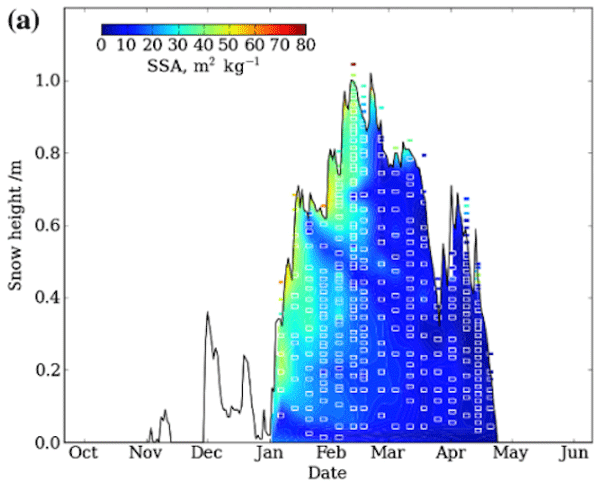
Leung Tsang, Michael Durand, Chris Derksen, Ana P. Barros, Do-Hyuk Kang, Hans Lievens, Hans-Peter Marshall, Jiyue Zhu, Joel Johnson, Joshua King, Juha Lemmetyinen, Melody Sandells, Nick Rutter, Paul Siqueira, Anne Nolin, Batu Osmanoglu, Carrie Vuyovich, Edward Kim, Drew Taylor, Ioanna Merkouriadi, Ludovic Brucker, Mahdi Navari, Marie Dumont, Richard Kelly, Rhae Sung Kim, Tien-Hao Liao, Firoz Borah, and Xiaolan Xu
The Cryosphere, 16, 3531–3573, https://doi.org/10.5194/tc-16-3531-2022, https://doi.org/10.5194/tc-16-3531-2022, 2022
Short summary
Short summary
Snow water equivalent (SWE) is of fundamental importance to water, energy, and geochemical cycles but is poorly observed globally. Synthetic aperture radar (SAR) measurements at X- and Ku-band can address this gap. This review serves to inform the broad snow research, monitoring, and application communities about the progress made in recent decades to move towards a new satellite mission capable of addressing the needs of the geoscience researchers and users.
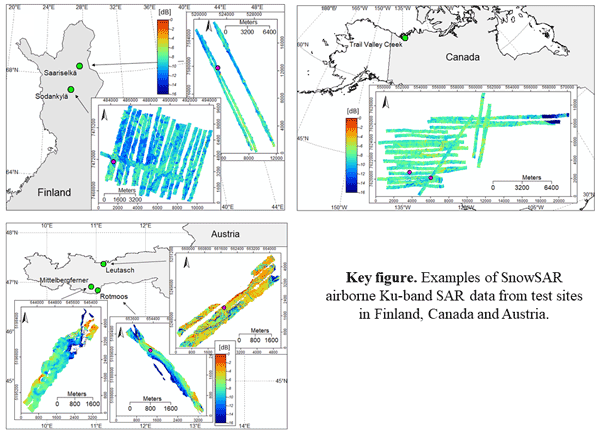
Juha Lemmetyinen, Juval Cohen, Anna Kontu, Juho Vehviläinen, Henna-Reetta Hannula, Ioanna Merkouriadi, Stefan Scheiblauer, Helmut Rott, Thomas Nagler, Elisabeth Ripper, Kelly Elder, Hans-Peter Marshall, Reinhard Fromm, Marc Adams, Chris Derksen, Joshua King, Adriano Meta, Alex Coccia, Nick Rutter, Melody Sandells, Giovanni Macelloni, Emanuele Santi, Marion Leduc-Leballeur, Richard Essery, Cecile Menard, and Michael Kern
Earth Syst. Sci. Data, 14, 3915–3945, https://doi.org/10.5194/essd-14-3915-2022, https://doi.org/10.5194/essd-14-3915-2022, 2022
Short summary
Short summary
The manuscript describes airborne, dual-polarised X and Ku band synthetic aperture radar (SAR) data collected over several campaigns over snow-covered terrain in Finland, Austria and Canada. Colocated snow and meteorological observations are also presented. The data are meant for science users interested in investigating X/Ku band radar signatures from natural environments in winter conditions.
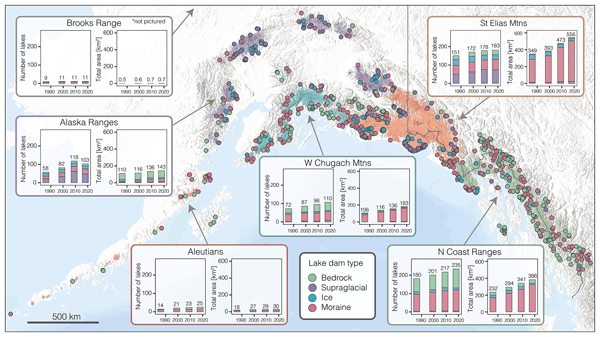
Brianna Rick, Daniel McGrath, William Armstrong, and Scott W. McCoy
The Cryosphere, 16, 297–314, https://doi.org/10.5194/tc-16-297-2022, https://doi.org/10.5194/tc-16-297-2022, 2022
Short summary
Short summary
Glacial lakes impact societies as both resources and hazards. Lakes form, grow, and drain as glaciers thin and retreat, and understanding lake evolution is a critical first step in assessing their hazard potential. We map glacial lakes in Alaska between 1984 and 2019. Overall, lakes grew in number and area, though lakes with different damming material (ice, moraine, bedrock) behaved differently. Namely, ice-dammed lakes decreased in number and area, a trend lost if dam type is not considered.
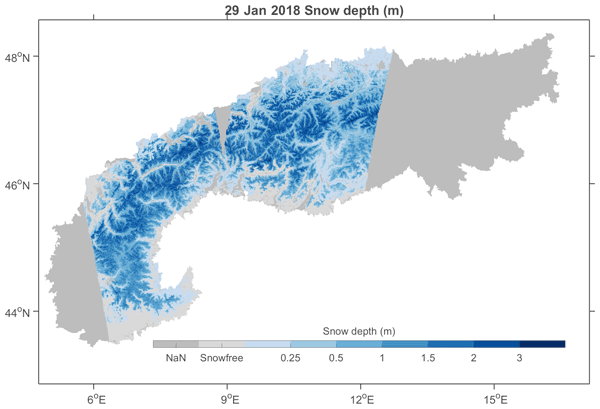
Hans Lievens, Isis Brangers, Hans-Peter Marshall, Tobias Jonas, Marc Olefs, and Gabriëlle De Lannoy
The Cryosphere, 16, 159–177, https://doi.org/10.5194/tc-16-159-2022, https://doi.org/10.5194/tc-16-159-2022, 2022
Short summary
Short summary
Snow depth observations at high spatial resolution from the Sentinel-1 satellite mission are presented over the European Alps. The novel observations can improve our knowledge of seasonal snow mass in areas with complex topography, where satellite-based estimates are currently lacking, and benefit a number of applications including water resource management, flood forecasting, and numerical weather prediction.
Cited articles
Aitchison, C. W.: Winter energy requirements of soricine shrews, Mammal Rev., 17, 25–38, https://doi.org/10.1111/j.1365-2907.1987.tb00046.x, 1987. a
Benson, C. S.: Polar regions snow cover, Physics of Snow and Ice: Proceedings, Sapporo, Japan, 1966, 1039–1063, 1967. a
Benson, C. S. and Sturm, M.: Structure and wind transport of seasonal snow on the Arctic slope of Alaska, Ann. Glaciol., 18, https://doi.org/10.3189/S0260305500011629, 1993. a
Berezovskaya, S. and Kane, D. L.: Measuring snow water equivalent for hydrological applications: part 1, accuracy observations, 16th International Northern Research Basins Symposium and Workshop, Petrozavodsk, Russia, 27 August–2 September 2007, 29–35, 2007. a
Bonnell, R., McGrath, D., Detre, A., and Holland-Goon, K.: SnowEx23 Mar23 IOP CSU 1 GHz Ground Penetrating Radar Raw, Version 1, NASA National Snow and Ice Data Center Distributed Active Archive Center [data set], https://doi.org/10.5067/3X5Q3X7Y87U3, 2025. a
Chen, J. Wu, Y., O'Connor, M., Cardenas, M. B., Schaefer, K., Michaelides, R., and Kling, G.: Active layer freeze-thaw and water storage dynamics in permafrost environments inferred from InSAR, Remote Sens. Environ., 248, 112007, https://doi.org/10.1016/j.rse.2020.112007, 2020. a, b
Duquette, L. S.: Snow Characteristics along Caribou Trails and within Feeding Areas during Spring Migration, Arctic, 41, 143–144, https://journalhosting.ucalgary.ca/index.php/arctic/article/view/64760/48674 (last access: 1 January 2026), 1988. a
Eppler, J., Rabus, B., and Morse, P.: Snow water equivalent change mapping from slope-correlated synthetic aperture radar interferometry (InSAR) phase variations, The Cryosphere, 16, 1497–1521, https://doi.org/10.5194/tc-16-1497-2022, 2022. a
Fair, Z., Vuyovich, C., Neumann, T. A., Larsen, C. F., Stuefer, S. L., Mason, M., and May, L.: Characterizing ICESat-2 Snow Depths Over the Boreal Forests and Tundra of Alaska in Support of the SnowEx 2023 Campaign, Water Resour. Res., 61, e2024WR039076, https://doi.org/10.1029/2024WR039076, 2025. a, b
Hopkinson, C., Sitar, M., Chasmer, L, and Treitz, P.: Mapping snowpack depth beneath forest canopies using airborne lidar, Photogramm. Eng. Rem. S., 70, 323–330, https://doi.org/10.14358/PERS.70.3.323, 2004. a
Jorgensen, T., Yoshikawam K., Kanevskiy, M., Shur, Y., Romanovsky, V., Marchenko, S., Grosse, G., Brown, J., and Jones, B.: Permafrost Characteristics of Alaska [map] https://permafrost.gi.alaska.edu/sites/default/files/AlaskaPermafrostMap_Front_Dec2008_Jorgenson_etal_2008.pdf (last access: 1 May 2025), 2008. a, b
Kelsey, K. C., Pedersen, S. H., Leffler, A. J., Sexton, J. O., Feng, M., and Welker, J. M.: Winter snow and spring temperature have differential effects on vegetation phenology and productivity across Arctic plant communities, Glob. Change Biol., 27, 1572–1586, https://doi.org/10.1111/gcb.15505, 2021. a
Kovacs, A., Gow, A. J., and Morey, R. M.: The in-situ dielectric constant of polar firn revisited, Cold Reg. Sci. Technol., 23, 245–256, https://doi.org/10.1016/0165-232X(94)00016-Q, 1995. a
Larsen, C.: SnowEx23 Airborne Lidar-Derived 0.25M Snow Depth and Canopy Height, Version 1, NASA National Snow and Ice Data Center Distributed Active Archive Center [data set], https://doi.org/10.5067/BV4D8RRU1H7U, 2024. a, b, c
Mason, M., Vuyovich, C. M., Stuefer, S., Elder, K., Vas, D., Marshall, H., and Durand, M.: SnowEx23 Mar23 Snow Pit Measurements, Version 1, NASA National Snow and Ice Data Center Distributed Active Archive Center [data set], https://doi.org/10.5067/SJZ90KNPKCYR, 2024. a
May, L. D., Stuefer, S. L., Goddard, S. D., and Larsen, C. F.: Analyzing vegetation effects on snow depth variability in Alaska's boreal forests with airborne lidar, The Cryosphere, 19, 3477–3492, https://doi.org/10.5194/tc-19-3477-2025, 2025. a
McGrath, D., Webb, R., Shean, D., Bonnell, R., Marshall, H.-P., Painter, T. H., Molotch, N. P., Elder, K., Hiemstra, C., and Brucker, L.: Spatially Extensive Ground-Penetrating Radar Snow Depth Observations During NASA's 2017 SnowEx Campaign: Comparison With In Situ, Airborne, and Satellite Observations, Water Resour. Res., 55, 10026–10036, https://doi.org/10.1029/2019WR024907, 2019. a
Meehan, T. G. and Rowland, T.: SnowEx23 CRREL Ground Penetrating Radar, Version 1, NASA National Snow and Ice Data Center Distributed Active Archive Center [data set], https://doi.org/10.5067/TSU0U7L4X2UW, 2024. a
Meehan, T. G., Hojatimalekshah, A., Marshall, H.-P., Deeb, E. J., O'Neel, S., McGrath, D., Webb, R. W., Bonnell, R., Raleigh, M. S., Hiemstra, C., and Elder, K.: Spatially distributed snow depth, bulk density, and snow water equivalent from ground-based and airborne sensor integration at Grand Mesa, Colorado, USA, The Cryosphere, 18, 3253–3276, https://doi.org/10.5194/tc-18-3253-2024, 2024. a
Meredith, M., Sommerkorn, M., Cassotta, S., Derksen, C., Ekaykin, A., Hollowed, A., Kofinas, G., Mackintosh, A., Melbourne-Thomas, J., Muelbert, M. M. C., Ottersen, G., Pritchard, H., and Schuur, E. A. G.: Polar Regions. IPCC Special Report on the Ocean and Cryosphere in a Changing Climate, 203–320, https://doi.org/10.1017/9781009157964.005, 2019. a
NASA Earth Observatory: Forest on the Threshold, [blog post], https://earthobservatory.nasa.gov/features/BorealThreshold/boreal_threshold4.php (last access: 1 May 2025), 2006. a
Obu, J., Westermann, S., Bartsch, A., Berdnikov, N., Christiansen, H. H., Dashtseren, A., Delaloye, R., Elberling, B., Etzelmüller, B., Kholodov, A., Khomutov, A., Kääb, A., Leibman, M. O., Lewkowicz, A. G., Panda, S. K., Romanovsky, V., Way, R. G., Westergaard-Nielsen, A., Wu, T., Yamkhin, J., and Zou, D.: Northern Hemisphere permafrost map based on TTOP modelling for 2000–2016 at 1 km2 scale, Earth-Sci. Rev., 193, 233–316, https://doi.org/10.1016/j.earscirev.2019.04.023, 2019. a
Penczykowski, R. M., Connolly, B. M., and Barton, B. T.: Winter is changing: Trophic interactions under altered snow regimes, Food Webs, 13, 80–91, https://doi.org/10.1016/j.fooweb.2017.02.006, 2017. a
Pedersen, S. H., Bentzen, T. W., Reinking, A. K., Liston, G. E., Elder, K., Lenart, E. A., Prichard, A. K., and Welker, J. M.: Quantifying effects of snow depth on caribou winter range selection and movement in Arctic Alaska, Movement Ecology, 9, 48, https://doi.org/10.1186/s40462-021-00276-4, 2021. a
Pomeroy, J. W. and Li, L.: Prairie and arctic areal snow cover mass balance using a blowing snow model, J. Geophys. Res.-Atmos., 105, 26619–26634, https://doi.org/10.1029/2000JD900149, 2000. a
Pruitt Jr., W.: Some ecological aspects of snow, Ecology of the Subarctic Regions: Proceedings of the Helsinki Symposium, UNESCO, Helsinki, Finland, 1970, 83–99, https://unesdoc.unesco.org/ark:/48223/pf0000004082 (last access: 1 January 2026), 1970. a
Stuefer, S. L., Hale, K., May, L. D., Mason, M., Vuyovich, C., Marshall, H. P., Vas, D., and Elder, K.: Snow depth measurements from Arctic tundra and boreal forest collected during NASA SnowEx Alaska Campaign, Sci. Data, 12, 919, https://doi.org/10.1038/s41597-025-05430-w, 2025. a
Vuyovich, C., Stuefer, S., Gleason, K., Durand, M., Marshall, H. P., Osmanoglu, B., Elder, K., Vas, D., Mason, M., Nolin, A., Youcha, E., Gelvin, A., Larsen, C., Pedersen, S., Hodkinson, D., Deeb, E., and Boyd, D.: NASA SnowEx 2023 Experiment Plan [science plan], https://snow.nasa.gov/sites/default/files/users/user354/SNEX-Campaigns/2023/NASA_SnowEx_Experiment_Plan_2023_draft_20June2024.pdf (last access: 1 May 2025), 2024. a, b, c, d
Webb, R.: SnowEx23 University of Wyoming Ground Penetrating Radar, Version 1, NASA National Snow and Ice Data Center Distributed Active Archive Center [data set], https://doi.org/10.5067/H3D9IT1W6JT6, 2024. a
Short summary
As part of the NASA SnowEx23 campaign, we conducted detailed snowpack experiments in Alaska's boreal forests and Arctic tundra. We collected ground-penetrating radar measurements of snow depth along 44 short transects. We then excavated the snowpack from below the transects and measured snow depth, noting any vegetation and void spaces. We used the detailed in situ measurements to evaluate uncertainties in ground-penetrating radar and airborne lidar methods for snow depth retrieval.
As part of the NASA SnowEx23 campaign, we conducted detailed snowpack experiments in Alaska's...


