
Articles | Volume 20, issue 2
https://doi.org/10.5194/tc-20-1379-2026
© Author(s) 2026. This work is distributed under
the Creative Commons Attribution 4.0 License.
the Creative Commons Attribution 4.0 License.
https://doi.org/10.5194/tc-20-1379-2026
© Author(s) 2026. This work is distributed under
the Creative Commons Attribution 4.0 License.
the Creative Commons Attribution 4.0 License.
Research article
| 
26 Feb 2026
Research article |
| 26 Feb 2026
| 26 Feb 2026
Radar isochrones as constraints on paleo–ice-sheet model simulations in two off-divide regions of East Antarctica

Climate and Environmental Physics, Physics Institute, University of Bern, Bern, Switzerland
Oeschger Centre for Climate Change Research, University of Bern, Bern, Switzerland
Vjeran Višnjević
Climate and Environmental Physics, Physics Institute, University of Bern, Bern, Switzerland
Oeschger Centre for Climate Change Research, University of Bern, Bern, Switzerland
Steven Franke
Department of Geosciences, Tübingen University, Tübingen, Germany
Veit Helm
Alfred Wegener Institute, Helmholtz Centre for Polar and Marine Research, Bremerhaven, Germany
Olaf Eisen
Alfred Wegener Institute, Helmholtz Centre for Polar and Marine Research, Bremerhaven, Germany
Faculty of Geosciences, University of Bremen, Bremen, Germany
Antoine Hermant
Climate and Environmental Physics, Physics Institute, University of Bern, Bern, Switzerland
Oeschger Centre for Climate Change Research, University of Bern, Bern, Switzerland
Alexandra M. Zuhr
Department of Geosciences, Tübingen University, Tübingen, Germany
Daniel Steinhage
Alfred Wegener Institute, Helmholtz Centre for Polar and Marine Research, Bremerhaven, Germany
Johannes C. R. Sutter
Climate and Environmental Physics, Physics Institute, University of Bern, Bern, Switzerland
Oeschger Centre for Climate Change Research, University of Bern, Bern, Switzerland
Related authors
Robert G. Bingham, Julien A. Bodart, Marie G. P. Cavitte, Ailsa Chung, Rebecca J. Sanderson, Johannes C. R. Sutter, Olaf Eisen, Nanna B. Karlsson, Joseph A. MacGregor, Neil Ross, Duncan A. Young, David W. Ashmore, Andreas Born, Winnie Chu, Xiangbin Cui, Reinhard Drews, Steven Franke, Vikram Goel, John W. Goodge, A. Clara J. Henry, Antoine Hermant, Benjamin H. Hills, Nicholas Holschuh, Michelle R. Koutnik, Gwendolyn J.-M. C. Leysinger Vieli, Emma J. MacKie, Elisa Mantelli, Carlos Martín, Felix S. L. Ng, Falk M. Oraschewski, Felipe Napoleoni, Frédéric Parrenin, Sergey V. Popov, Therese Rieckh, Rebecca Schlegel, Dustin M. Schroeder, Martin J. Siegert, Xueyuan Tang, Thomas O. Teisberg, Kate Winter, Shuai Yan, Harry Davis, Christine F. Dow, Tyler J. Fudge, Tom A. Jordan, Bernd Kulessa, Kenichi Matsuoka, Clara J. Nyqvist, Maryam Rahnemoonfar, Matthew R. Siegfried, Shivangini Singh, Vjeran Višnjević, Rodrigo Zamora, and Alexandra Zuhr
The Cryosphere, 19, 4611–4655, https://doi.org/10.5194/tc-19-4611-2025, https://doi.org/10.5194/tc-19-4611-2025, 2025
Short summary
Short summary
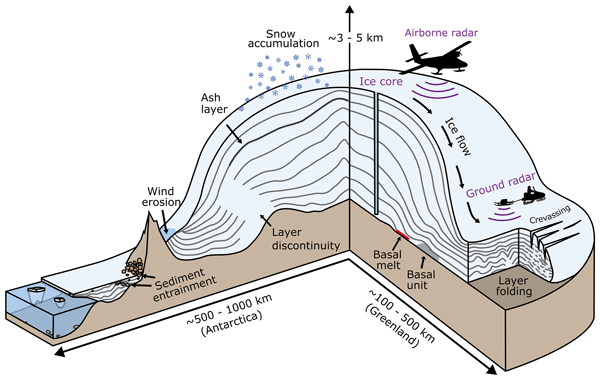
The ice sheets covering Antarctica have built up over millenia through successive snowfall events which become buried and preserved as internal surfaces of equal age detectable with ice-penetrating radar. This paper describes an international initiative working together on these archival data to build a comprehensive 3-D picture of how old the ice is everywhere across Antarctica and how this is being used to reconstruct past and to predict future ice and climate behaviour.
Steven Franke, Daniel Steinhage, Veit Helm, Alexandra M. Zuhr, Julien A. Bodart, Olaf Eisen, and Paul Bons
The Cryosphere, 19, 1153–1180, https://doi.org/10.5194/tc-19-1153-2025, https://doi.org/10.5194/tc-19-1153-2025, 2025
Short summary
Short summary
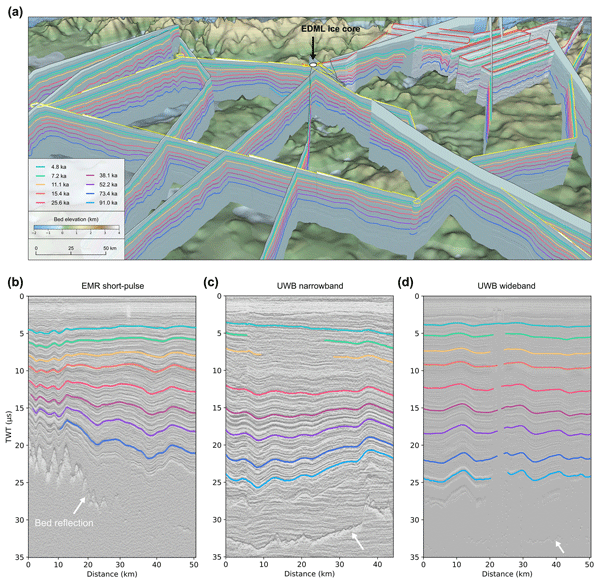
The study presents internal reflection horizons (IRHs) over an area of 450 000 km² from western Dronning Maud Land, Antarctica, spanning 4.8–91 ka. Using radar and ice core data, nine IRHs were dated and correlated with volcanic events. The data enhance our understanding of the ice sheet's age–depth architecture, accumulation, and dynamics. The findings inform ice flow models and contribute to Antarctic-wide comparisons of IRHs, supporting efforts toward a 3D age–depth ice sheet model.
Charlotte M. Carter, Michael J. Bentley, Stewart S. R. Jamieson, Guy J. G. Paxman, Tom A. Jordan, Julien A. Bodart, Neil Ross, and Felipe Napoleoni
The Cryosphere, 18, 2277–2296, https://doi.org/10.5194/tc-18-2277-2024, https://doi.org/10.5194/tc-18-2277-2024, 2024
Short summary
Short summary
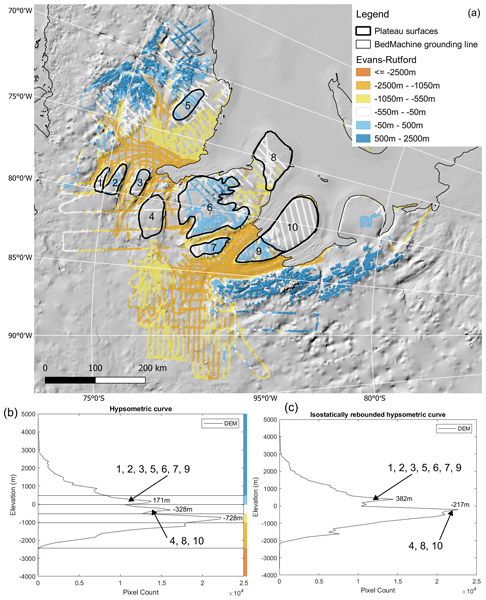
We use radio-echo sounding data to investigate the presence of flat surfaces beneath the Evans–Rutford region in West Antarctica. These surfaces may be what remains of laterally continuous surfaces, formed before the inception of the West Antarctic Ice Sheet, and we assess two hypotheses for their formation. Tectonic structures in the region may have also had a control on the growth of the ice sheet by focusing ice flow into troughs adjoining these surfaces.
Alice C. Frémand, Peter Fretwell, Julien A. Bodart, Hamish D. Pritchard, Alan Aitken, Jonathan L. Bamber, Robin Bell, Cesidio Bianchi, Robert G. Bingham, Donald D. Blankenship, Gino Casassa, Ginny Catania, Knut Christianson, Howard Conway, Hugh F. J. Corr, Xiangbin Cui, Detlef Damaske, Volkmar Damm, Reinhard Drews, Graeme Eagles, Olaf Eisen, Hannes Eisermann, Fausto Ferraccioli, Elena Field, René Forsberg, Steven Franke, Shuji Fujita, Yonggyu Gim, Vikram Goel, Siva Prasad Gogineni, Jamin Greenbaum, Benjamin Hills, Richard C. A. Hindmarsh, Andrew O. Hoffman, Per Holmlund, Nicholas Holschuh, John W. Holt, Annika N. Horlings, Angelika Humbert, Robert W. Jacobel, Daniela Jansen, Adrian Jenkins, Wilfried Jokat, Tom Jordan, Edward King, Jack Kohler, William Krabill, Mette Kusk Gillespie, Kirsty Langley, Joohan Lee, German Leitchenkov, Carlton Leuschen, Bruce Luyendyk, Joseph MacGregor, Emma MacKie, Kenichi Matsuoka, Mathieu Morlighem, Jérémie Mouginot, Frank O. Nitsche, Yoshifumi Nogi, Ole A. Nost, John Paden, Frank Pattyn, Sergey V. Popov, Eric Rignot, David M. Rippin, Andrés Rivera, Jason Roberts, Neil Ross, Anotonia Ruppel, Dustin M. Schroeder, Martin J. Siegert, Andrew M. Smith, Daniel Steinhage, Michael Studinger, Bo Sun, Ignazio Tabacco, Kirsty Tinto, Stefano Urbini, David Vaughan, Brian C. Welch, Douglas S. Wilson, Duncan A. Young, and Achille Zirizzotti
Earth Syst. Sci. Data, 15, 2695–2710, https://doi.org/10.5194/essd-15-2695-2023, https://doi.org/10.5194/essd-15-2695-2023, 2023
Short summary
Short summary
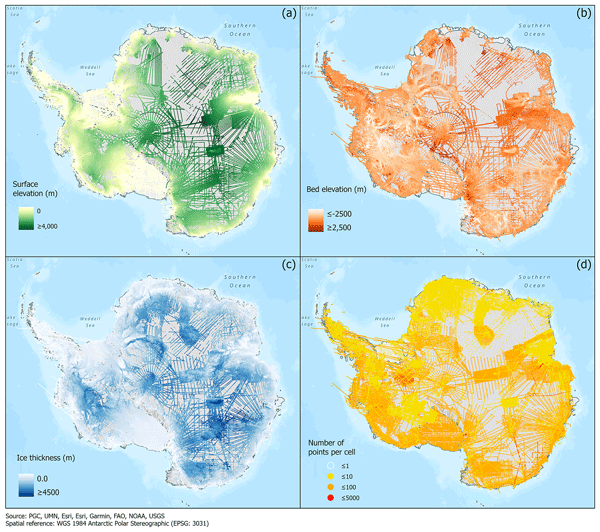
This paper presents the release of over 60 years of ice thickness, bed elevation, and surface elevation data acquired over Antarctica by the international community. These data are a crucial component of the Antarctic Bedmap initiative which aims to produce a new map and datasets of Antarctic ice thickness and bed topography for the international glaciology and geophysical community.
Julien A. Bodart, Robert G. Bingham, Duncan A. Young, Joseph A. MacGregor, David W. Ashmore, Enrica Quartini, Andrew S. Hein, David G. Vaughan, and Donald D. Blankenship
The Cryosphere, 17, 1497–1512, https://doi.org/10.5194/tc-17-1497-2023, https://doi.org/10.5194/tc-17-1497-2023, 2023
Short summary
Short summary
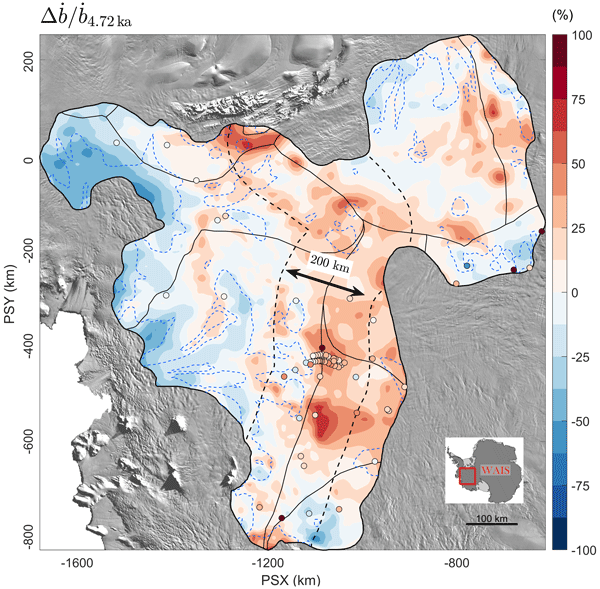
Estimating how West Antarctica will change in response to future climatic change depends on our understanding of past ice processes. Here, we use a reflector widely visible on airborne radar data across West Antarctica to estimate accumulation rates over the past 4700 years. By comparing our estimates with current atmospheric data, we find that accumulation rates were 18 % greater than modern rates. This has implications for our understanding of past ice processes in the region.
Alice C. Frémand, Julien A. Bodart, Tom A. Jordan, Fausto Ferraccioli, Carl Robinson, Hugh F. J. Corr, Helen J. Peat, Robert G. Bingham, and David G. Vaughan
Earth Syst. Sci. Data, 14, 3379–3410, https://doi.org/10.5194/essd-14-3379-2022, https://doi.org/10.5194/essd-14-3379-2022, 2022
Short summary
Short summary
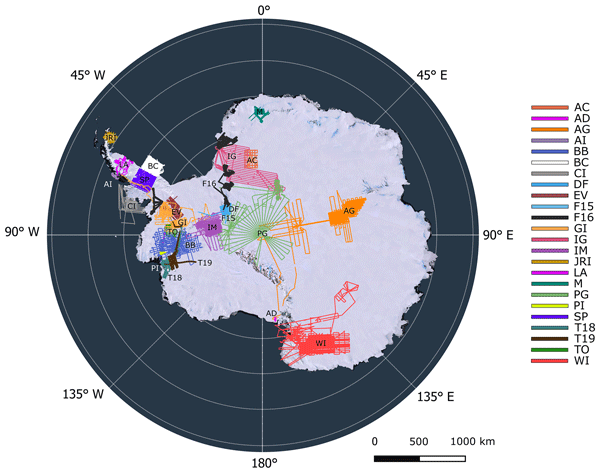
This paper presents the release of large swaths of airborne geophysical data (including gravity, magnetics, and radar) acquired between 1994 and 2020 over Antarctica by the British Antarctic Survey. These include a total of 64 datasets from 24 different surveys, amounting to >30 % of coverage over the Antarctic Ice Sheet. This paper discusses how these data were acquired and processed and presents the methods used to standardize and publish the data in an interactive and reproducible manner.
Ailsa Chung, Yéva Jeaumot, Frédéric Parrenin, Daniel Steinhage, and Olaf Eisen
EGUsphere, https://doi.org/10.5194/egusphere-2026-4351, https://doi.org/10.5194/egusphere-2026-4351, 2026
This preprint is open for discussion and under review for The Cryosphere (TC).
Short summary
Short summary
We use a 2.5D ice flow model constrained by radar data to estimate the age of ice, basal conditions and particle paths along a flow line from Dome Fuji (DF) to the EPICA Dronning Maud Land ice core site (EDML), Antarctica. Modelled basal melt rates are highest in bedrock dips and stagnant ice occurs on or slightly downstream of bedrock highs. At EDML, particle paths show that the deepest ice may originate 130 km upstream. We also identify a potential old-ice area (>1 Ma), ~200 km from DF.
Yéva Jeaumot, Frédéric Parrenin, Ailsa Chung, Olaf Eisen, Daniel Steinhage, Robert Mulvaney, Marie G. P. Cavitte, David A. Lilien, and Emilie Capron
EGUsphere, https://doi.org/10.5194/egusphere-2026-4174, https://doi.org/10.5194/egusphere-2026-4174, 2026
This preprint is open for discussion and under review for The Cryosphere (TC).
Short summary
Short summary
To choose good drilling sites and interpret ice cores correctly, scientists need reliable estimates of ice age at each depth. We developed a new way to model how ice behaves at the base of ice sheets, where it can melt or stop moving entirely, using radar data from Antarctica. Our estimates matched real measurements at a well-studied site, revealed a layer of stagnant ice at another, and predicted that a newly proposed drilling site could yield ice over two million years old.
Judith Freienstein, Charlotte Carter, Georg-Maximilian Hüttner, Olaf Eisen, Wolfgang Szwillus, and Jörg Ebbing
EGUsphere, https://doi.org/10.5194/egusphere-2026-4746, https://doi.org/10.5194/egusphere-2026-4746, 2026
Short summary
Short summary
The North East Greenland Ice Stream is a fast flowing ice stream with its formation so far inland remaining unclear. We used high-resolution bed topography data in 3D modeling to investigate its effects on geothermal heat flow (GHF). Results show local deviations of up to 20 % compared to 1D solutions. Our study highlights the importance of small-scale models to reduce uncertainty in GHF estimates to improve the understanding of ice stream dynamics.
Adrien Ooms, Mathieu Casado, Sonja Wahl, Thomas Laepple, Alexandra Zuhr, Pete Akers, Ghislain Picard, Laurent Arnaud, Joel Savarino, Kira Rehfeld, Barbara Stenni, Giuliano Dreossi, Mauro Masiol, Amaelle Landais, and Valérie Masson-Delmotte
EGUsphere, https://doi.org/10.5194/egusphere-2026-4801, https://doi.org/10.5194/egusphere-2026-4801, 2026
This preprint is open for discussion and under review for Climate of the Past (CP).
Short summary
Short summary
This work presents new insights in the archival process of multi-annual climatic signal in the near surface firn at Concordia Station, East-Antarctica, from the new data set of high resolution stable water isotope profiles measured in a snow trench. The dated isotopic profiles covering 20 years are compared against overlapping precipitation and surface snow observations. This highlights the strong contribution of stratigraphic noise and post depositional effects to individual trench profiles.
Rebecca Schlegel, Johannes Noll, Leah Sopie Muhle, Christian T. Wild, Falk M. Oraschewski, Olaf Eisen, and Reinhard Drews
EGUsphere, https://doi.org/10.5194/egusphere-2026-3900, https://doi.org/10.5194/egusphere-2026-3900, 2026
This preprint is open for discussion and under review for The Cryosphere (TC).
Short summary
Short summary
Step-like terraces at the base of Antarctic ice shelves are known from warm-water settings, but we show for the first time that they also occur at the base of a cold-water ice shelf. Repeat radar observations reveal that the terraces melt slowly and remain almost unchanged over one year. Our results suggest they form near the grounding line and are then transported with the flowing ice while melting only slowly.
Christian Wirths, Kyung-Sook Yun, Axel Timmermann, Hubertus Fischer, Thomas F. Stocker, and Johannes C. R. Sutter
EGUsphere, https://doi.org/10.5194/egusphere-2026-4275, https://doi.org/10.5194/egusphere-2026-4275, 2026
Short summary
Short summary
Ice drilled from deep inside Antarctica reveals how climate changed over hundreds of thousands of years. However, the ice sheet itself rises and sinks over time, which can distort temperatures read from the ice. Using three computer simulations covering the last two million years, we show that drilling sites rose and sank by up to 240 metres and their summits shifted by up to 120 kilometres, and we estimate how this biases climate records, including potential for the oldest ice.
Emma Pearce, Dimitri Zigone, Coen Hofstede, Andreas Fichtner, and Olaf Eisen
EGUsphere, https://doi.org/10.5194/egusphere-2026-3762, https://doi.org/10.5194/egusphere-2026-3762, 2026
Short summary
Short summary
When ice cores are drilled, they are broken before being brought back to the surface, generating small seismic signals. We tested whether these signals could be used to study the inside of the North East Greenland Ice Stream. Most possible signals were too weak or noisy, but a few clear examples produced realistic estimates of ice speed. The results show that this method is promising, but future experiments need better timing, quieter conditions, and sensors placed specifically for this purpose.
Neil Ross, Rebecca J. Sanderson, Bernd Kulessa, Martin Siegert, Guy J. G. Paxman, Keir A. Nichols, Matthew R. Siegfried, Stewart S. R. Jamieson, Michael J. Bentley, Tom A. Jordan, Christine L. Batchelor, David Small, Olaf Eisen, Kate Winter, Robert G. Bingham, S. Louise Callard, Rachel Carr, Christine F. Dow, Helen A. Fricker, Emily Hill, Benjamin H. Hills, Coen Hofstede, Hafeez Jeofry, Felipe Napoleoni, and Wilson Sauthoff
The Cryosphere, 20, 3705–3737, https://doi.org/10.5194/tc-20-3705-2026, https://doi.org/10.5194/tc-20-3705-2026, 2026
Short summary
Short summary
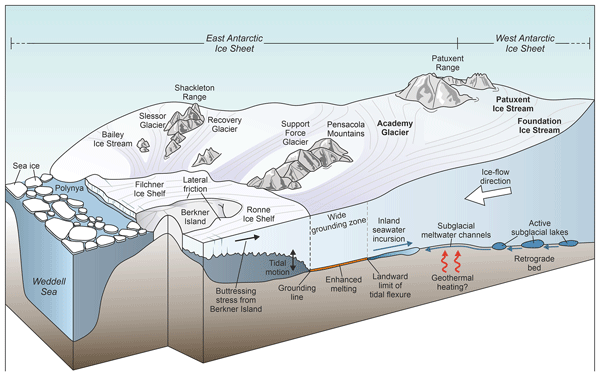
We review research about a group of fast-flowing Antarctic ice streams, the Foundation-Patuxent-Academy System. Previously, we knew little about how these ice streams flow, how they interact with each other and the ocean, what their geological history was, and how they might evolve in a warming world. By reviewing existing research, we have identified the future research needed to determine how these ice streams function, and how they might contribute to future global sea level rise.
Steven Franke, Daniel Steinhage, Veit Helm, Tobias Binder, Uwe Nixdorf, Heinrich Miller, Angelika Humbert, Daniela Jansen, Graeme Eagles, Hannes Eisermann, Wilfried Jokat, Antonia Ruppel, Reinhard Drews, Alexandra Zuhr, Amelie Driemel, Andreas Walter, Peter Konopatzky, Robin Heß, Antonie Haas, Roland Koppe, Pascal H. Andreas, and Olaf Eisen
The Cryosphere, 20, 2485–2530, https://doi.org/10.5194/tc-20-2485-2026, https://doi.org/10.5194/tc-20-2485-2026, 2026
Short summary
Short summary
This review synthesizes 30 years of Alfred Wegener Institute’s (AWI) airborne radar research in Antarctica and Greenland, detailing six radar systems and their applications in studying ice dynamics, basal properties, and subglacial landscapes. Moreover, it introduces the public release of AWI's airborne radar datasets via the Radar Data over Polar Ice Sheets Viewer and PANGAEA, ensuring findable, accessible, interoperable, and reusable access for future polar research.
Mirko Scheinert, Weisen Shen, Richard C. Aster, Lambert Caron, Michael D. Hartinger, Matt A. King, Andrew Lloyd, Anya M. Reading, J. Paul Winberry, Terry Wilson, Lucilla Alfonsi, Michael J. Bentley, Eric Buchta, Thomas Y. Chen, Peter J. Clarke, Jörg Ebbing, Olaf Eisen, Natalya Gomez, Esra Günaydın, Samantha Hansen, Erik R. Ivins, Achraf Koulali, Grace A. Nield, Frederick Richards, Mahmut O. Selbesoglu, Stephanie Sherman, Pippa L. Whitehouse, and Matthias Willen
EGUsphere, https://doi.org/10.5194/egusphere-2025-6370, https://doi.org/10.5194/egusphere-2025-6370, 2026
Short summary
Short summary
With an ongoing mass loss the Antarctic Ice Sheet contributes to global-mean sea level rise at a rate of 0.4 mm/a. Thus, it plays a key role in global climate and provides a natural laboratory to study processes that interlink cryosphere, solid Earth, atmosphere and ocean. We discuss how GNSS and seismic networks in Antarctica were used to significantly advance our understanding of these processes, and how they should be maintained and extended to answer key science questions in the future.
Maria T. Kappelsberger, Johan Nilsson, Martin Horwath, Veit Helm, and Alex S. Gardner
EGUsphere, https://doi.org/10.5194/egusphere-2025-5745, https://doi.org/10.5194/egusphere-2025-5745, 2025
Short summary
Short summary
We compare surface elevation changes of the Antarctic Ice Sheet interior as derived from satellite radar altimetry and laser altimetry between 2019 and 2024. Both methods indicate an increase in surface elevation across most of the study area, coinciding with an episode of excess snow accumulation as modelled. However, rates of surface elevation increase from radar altimetry are systematically lower than those from laser altimetry.
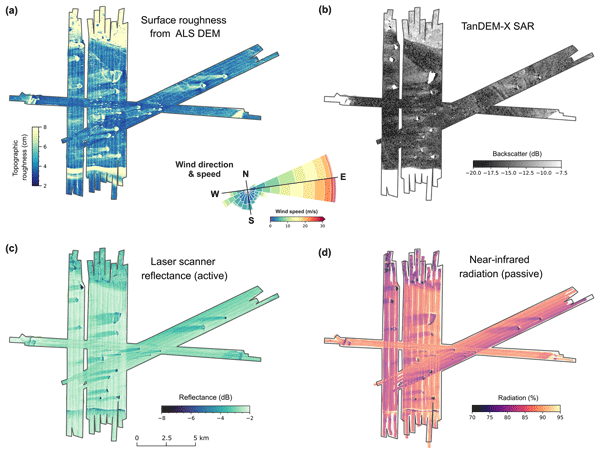
Steven Franke, Mara Neudert, Veit Helm, Arttu Jutila, Océane Hames, Niklas Neckel, Stefanie Arndt, and Christian Haas
The Cryosphere, 19, 6319–6339, https://doi.org/10.5194/tc-19-6319-2025, https://doi.org/10.5194/tc-19-6319-2025, 2025
Short summary
Short summary
Our research explored how icebergs affect the distribution of snow and flooding on Antarctic coastal sea ice. Using aircraft-based radar and laser scanning, we found that icebergs create thick snow drifts on their wind-facing sides and leave snow-free zones in their lee. The weight of these snow drifts often causes the ice below to flood, forming slush. These patterns, driven by wind and iceberg placement, are crucial for understanding sea ice changes and improving climate models.
Valerie Reppert, Olaf Eisen, Holger Schmithüsen, Stefanie Arndt, Guido Ascenso, Linda Ort, and Zsófia Jurányi
EGUsphere, https://doi.org/10.5194/egusphere-2025-5199, https://doi.org/10.5194/egusphere-2025-5199, 2025
Short summary
Short summary
We analyzed 33 years of snow accumulation measurements at Neumayer Station, Antarctica, to understand changes in the amount of snow building up on the surface over time. The long-term, high-resolution data show mostly stable accumulation, but rare positive extremes appeared in 2021 and 2023. Seasonal and multi-year patterns were identified, providing valuable data to improve climate models and satellite observations.
Chloé Bouscary, Georgina E. King, Melanie Kranz-Bartz, Maxime Bernard, Rabiul H. Biswas, Lily Bossin, Arnaud Duverger, Benny Guralnik, Frédéric Herman, Ugo Nanni, Nadja Stalder, Pierre G. Valla, Vjeran Visnjevic, and Xiaoxia Wen
EGUsphere, https://doi.org/10.5194/egusphere-2025-5474, https://doi.org/10.5194/egusphere-2025-5474, 2025
Short summary
Short summary
The OSLThermo and ESRThermo MATLAB libraries simulate how luminescence signals in feldspar and electron spin resonance signals in quartz minerals accumulate and fade over time, enabling reconstruction of recent rock cooling and surface temperature changes. By sharing these tools openly, we hope to promote collaboration, reproducibility, and broader use and development of these ultra-low-temperature thermochronology methods.
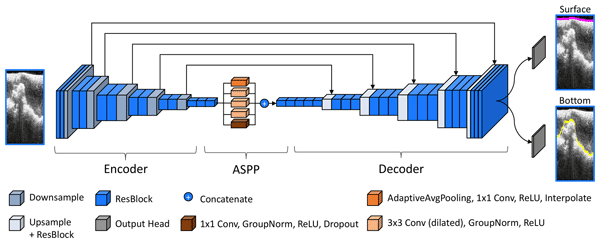
Marcel Dreier, Moritz Koch, Nora Gourmelon, Norbert Blindow, Daniel Steinhage, Fei Wu, Thorsten Seehaus, Matthias Braun, Andreas Maier, and Vincent Christlein
The Cryosphere, 19, 5337–5359, https://doi.org/10.5194/tc-19-5337-2025, https://doi.org/10.5194/tc-19-5337-2025, 2025
Short summary
Short summary
In this paper, we present a ready-to-use benchmark dataset to train machine learning approaches for detecting ice thickness from radar data. It includes radargrams of glaciers and ice sheets alongside annotations for their air–ice and ice–bedrock boundary. Furthermore, we introduce a baseline model and evaluate the influence of several geographical and glaciological factors on the performance of our model.
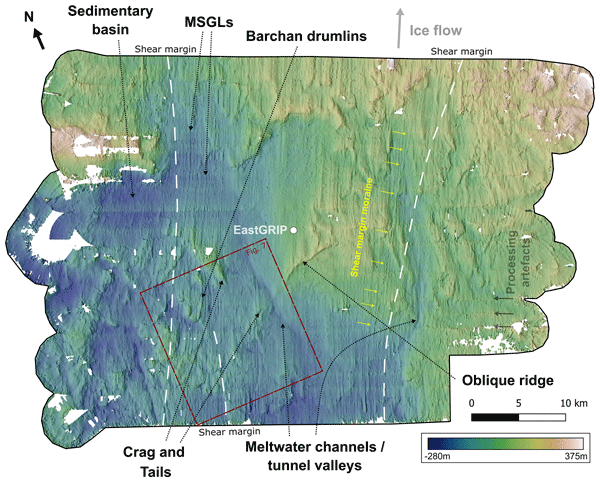
Charlotte M. Carter, Steven Franke, Daniela Jansen, Chris R. Stokes, Veit Helm, John Paden, and Olaf Eisen
The Cryosphere, 19, 5299–5315, https://doi.org/10.5194/tc-19-5299-2025, https://doi.org/10.5194/tc-19-5299-2025, 2025
Short summary
Short summary
The subglacial landforms beneath actively fast-flowing ice in Greenland have not been explored in detail, as digital elevation models have not had a high enough resolution to see these features. We use swath radar imaging to visualise landforms at the onset of an ice stream, revealing mega-scale glacial lineations, that would usually be assumed to be indicative of faster ice flow than the current velocities. Interpretation of the landscape also gives an indication of the properties of the bed.
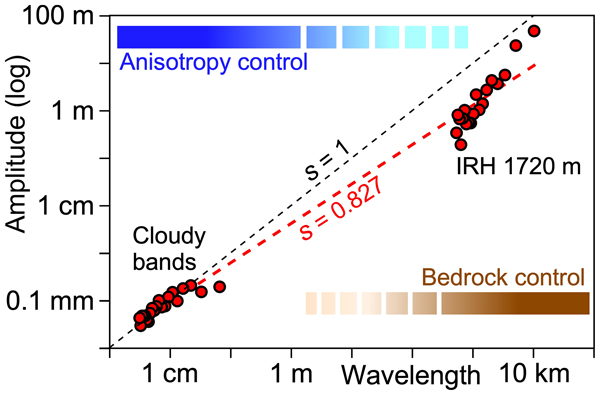
Paul D. Bons, Yuanbang Hu, M.-Gema Llorens, Steven Franke, Nicolas Stoll, Ilka Weikusat, Julien Westhoff, and Yu Zhang
The Cryosphere, 19, 5095–5109, https://doi.org/10.5194/tc-19-5095-2025, https://doi.org/10.5194/tc-19-5095-2025, 2025
Short summary
Short summary
What causes folds in ice layers from the km scale down to the scale visible in the drill core: buckle folding due to variations in viscosity between layers, or the effect of mechanical anisotropy of ice due to an alignment of the crystal-lattice planes? Power spectra of folds in ice, a biotite schist, and numerical simulations show that folding in ice is due to the anisotropy, as the folds are self-similar, meaning that there is no characteristic fold scale that would result from buckle folding.
Robert G. Bingham, Julien A. Bodart, Marie G. P. Cavitte, Ailsa Chung, Rebecca J. Sanderson, Johannes C. R. Sutter, Olaf Eisen, Nanna B. Karlsson, Joseph A. MacGregor, Neil Ross, Duncan A. Young, David W. Ashmore, Andreas Born, Winnie Chu, Xiangbin Cui, Reinhard Drews, Steven Franke, Vikram Goel, John W. Goodge, A. Clara J. Henry, Antoine Hermant, Benjamin H. Hills, Nicholas Holschuh, Michelle R. Koutnik, Gwendolyn J.-M. C. Leysinger Vieli, Emma J. MacKie, Elisa Mantelli, Carlos Martín, Felix S. L. Ng, Falk M. Oraschewski, Felipe Napoleoni, Frédéric Parrenin, Sergey V. Popov, Therese Rieckh, Rebecca Schlegel, Dustin M. Schroeder, Martin J. Siegert, Xueyuan Tang, Thomas O. Teisberg, Kate Winter, Shuai Yan, Harry Davis, Christine F. Dow, Tyler J. Fudge, Tom A. Jordan, Bernd Kulessa, Kenichi Matsuoka, Clara J. Nyqvist, Maryam Rahnemoonfar, Matthew R. Siegfried, Shivangini Singh, Vjeran Višnjević, Rodrigo Zamora, and Alexandra Zuhr
The Cryosphere, 19, 4611–4655, https://doi.org/10.5194/tc-19-4611-2025, https://doi.org/10.5194/tc-19-4611-2025, 2025
Short summary
Short summary
The ice sheets covering Antarctica have built up over millenia through successive snowfall events which become buried and preserved as internal surfaces of equal age detectable with ice-penetrating radar. This paper describes an international initiative working together on these archival data to build a comprehensive 3-D picture of how old the ice is everywhere across Antarctica and how this is being used to reconstruct past and to predict future ice and climate behaviour.
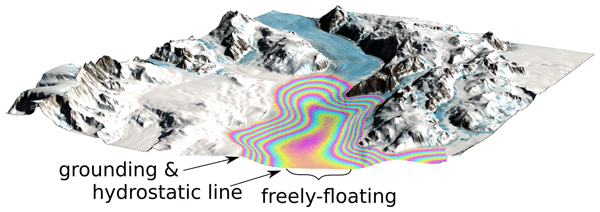
Christian T. Wild, Reinhard Drews, Niklas Neckel, Joohan Lee, Sihyung Kim, Hyangsun Han, Won Sang Lee, Veit Helm, Sebastian Harry Reid Rosier, Oliver J. Marsh, and Wolfgang Rack
The Cryosphere, 19, 4533–4554, https://doi.org/10.5194/tc-19-4533-2025, https://doi.org/10.5194/tc-19-4533-2025, 2025
Short summary
Short summary
The stability of the Antarctic Ice Sheet depends on how resistance along the sides of large glaciers slows down the flow of ice into the ocean. We present a method to map ice strength using the effect of ocean tides on floating ice shelves. Incorporating weaker ice in shear zones improves the accuracy of model predictions, compared with satellite observations. This demonstrates the untapped potential of radar satellites to map ice stiffness in the most critical areas for ice sheet stability.
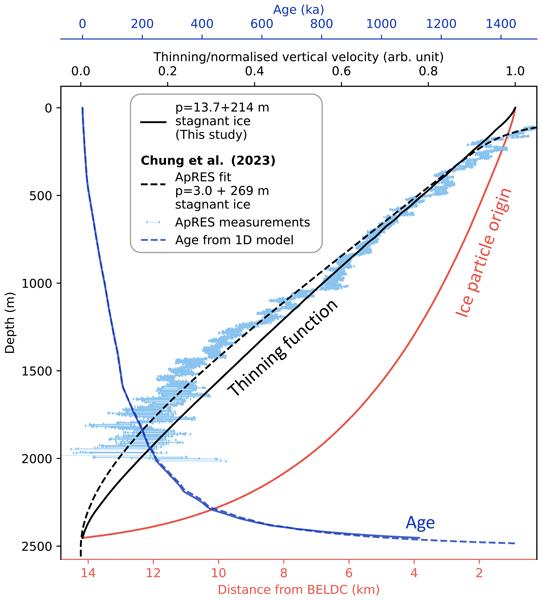
Ailsa Chung, Frédéric Parrenin, Robert Mulvaney, Luca Vittuari, Massimo Frezzotti, Antonio Zanutta, David A. Lilien, Marie G. P. Cavitte, and Olaf Eisen
The Cryosphere, 19, 4125–4140, https://doi.org/10.5194/tc-19-4125-2025, https://doi.org/10.5194/tc-19-4125-2025, 2025
Short summary
Short summary
We applied an ice flow model to a flow line from the summit of Dome C to the Beyond EPICA ice core drill site on Little Dome C in Antarctica. Results show that the oldest ice at the drill site may be 1.12 Ma (at an age density of 20 kyr m-1) and originate from around 15 km upstream. We also discuss the nature of the 200–250 m thick basal layer which could be composed of stagnant ice, disturbed ice or even accreted ice (possibly containing debris).
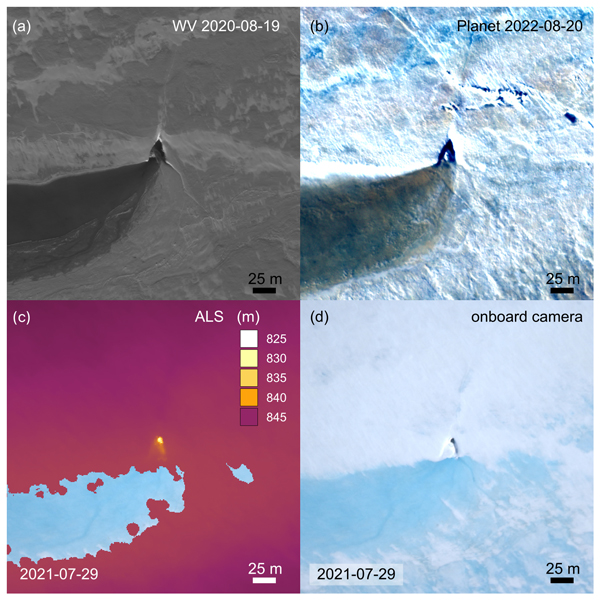
Angelika Humbert, Veit Helm, Ole Zeising, Niklas Neckel, Matthias H. Braun, Shfaqat Abbas Khan, Martin Rückamp, Holger Steeb, Julia Sohn, Matthias Bohnen, and Ralf Müller
The Cryosphere, 19, 3009–3032, https://doi.org/10.5194/tc-19-3009-2025, https://doi.org/10.5194/tc-19-3009-2025, 2025
Short summary
Short summary
We study the evolution of a massive lake on the Greenland Ice Sheet using satellite and airborne data and some modelling. The lake is emptying rapidly. Water flows to the glacier's base through cracks and triangular-shaped moulins that remain visible over the years. Some of them become reactivated. We find features inside the glacier that stem from drainage events with a width of even 1 km. These features are persistent over the years, although they are changing in shape.
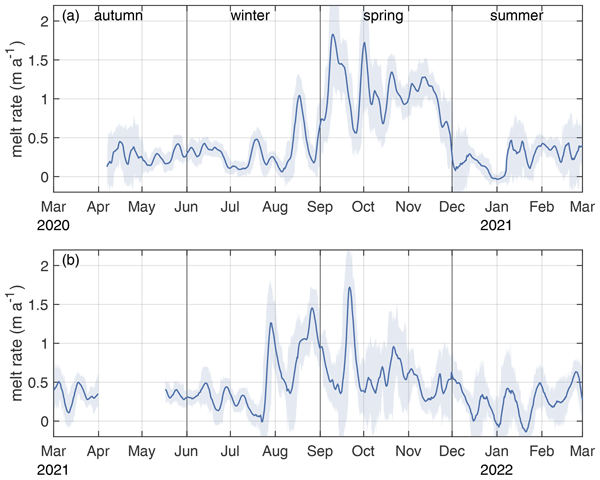
Ole Zeising, Tore Hattermann, Lars Kaleschke, Sophie Berger, Olaf Boebel, Reinhard Drews, M. Reza Ershadi, Tanja Fromm, Frank Pattyn, Daniel Steinhage, and Olaf Eisen
The Cryosphere, 19, 2837–2854, https://doi.org/10.5194/tc-19-2837-2025, https://doi.org/10.5194/tc-19-2837-2025, 2025
Short summary
Short summary
Basal melting of ice shelves impacts the mass loss of the Antarctic Ice Sheet. This study focuses on the Ekström Ice Shelf in East Antarctica, using multiyear data from an autonomous radar system. Results show a surprising seasonal pattern of high melt rates in winter and spring. The seasonalities of sea-ice growth and ocean density indicate that, in winter, dense water enhances plume activity and melt rates. Understanding these dynamics is crucial for improving future mass balance projections.
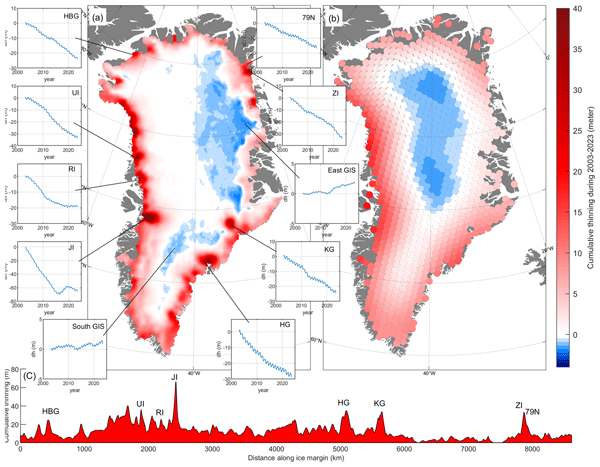
Shfaqat A. Khan, Helene Seroussi, Mathieu Morlighem, William Colgan, Veit Helm, Gong Cheng, Danjal Berg, Valentina R. Barletta, Nicolaj K. Larsen, William Kochtitzky, Michiel van den Broeke, Kurt H. Kjær, Andy Aschwanden, Brice Noël, Jason E. Box, Joseph A. MacGregor, Robert S. Fausto, Kenneth D. Mankoff, Ian M. Howat, Kuba Oniszk, Dominik Fahrner, Anja Løkkegaard, Eigil Y. H. Lippert, Alicia Bråtner, and Javed Hassan
Earth Syst. Sci. Data, 17, 3047–3071, https://doi.org/10.5194/essd-17-3047-2025, https://doi.org/10.5194/essd-17-3047-2025, 2025
Short summary
Short summary
The surface elevation of the Greenland Ice Sheet is changing due to surface mass balance processes and ice dynamics, each exhibiting distinct spatiotemporal patterns. Here, we employ satellite and airborne altimetry data with fine spatial (1 km) and temporal (monthly) resolutions to document this spatiotemporal evolution from 2003 to 2023. This dataset of fine-resolution altimetry data in both space and time will support studies of ice mass loss and be useful for GIS ice sheet modeling.
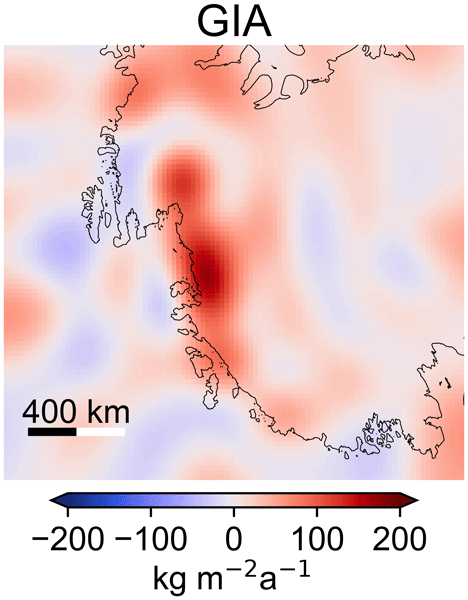
Matthias O. Willen, Bert Wouters, Taco Broerse, Eric Buchta, and Veit Helm
The Cryosphere, 19, 2213–2227, https://doi.org/10.5194/tc-19-2213-2025, https://doi.org/10.5194/tc-19-2213-2025, 2025
Short summary
Short summary
Collapse of the West Antarctic Ice Sheet in the Amundsen Sea Embayment is likely in the near future. Vertical uplift of bedrock due to glacial isostatic adjustment stabilizes the ice sheet and may delay its collapse. So far, only spatially and temporally sparse GPS measurements have been able to observe this bedrock motion. We have combined satellite data and quantified a region-wide bedrock motion that independently matches GPS measurements. This can improve ice sheet predictions.
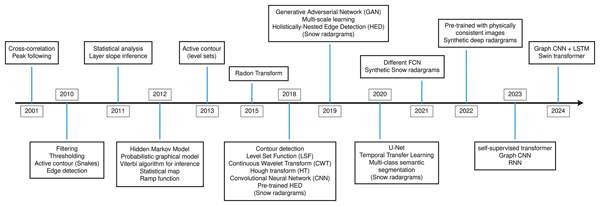
Hameed Moqadam and Olaf Eisen
The Cryosphere, 19, 2159–2196, https://doi.org/10.5194/tc-19-2159-2025, https://doi.org/10.5194/tc-19-2159-2025, 2025
Short summary
Short summary
This is an overview of methodologies that have been applied to map the internal reflection horizons, or ice-layer boundaries, of ice sheets on Earth and other planets. We briefly explain radar applications in glaciology and the methods which have been used and published. There are summaries of the published work of the last 2 decades. Finally, we conclude by introducing the gaps and opportunities for further advancement in this field, and we present possible future directions.
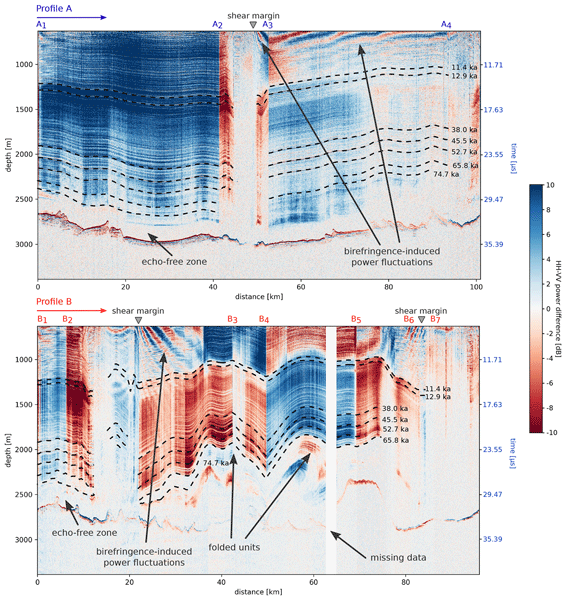
Tamara Annina Gerber, David A. Lilien, Niels F. Nymand, Daniel Steinhage, Olaf Eisen, and Dorthe Dahl-Jensen
The Cryosphere, 19, 1955–1971, https://doi.org/10.5194/tc-19-1955-2025, https://doi.org/10.5194/tc-19-1955-2025, 2025
Short summary
Short summary
This study examines how anisotropic scattering and birefringence affect radar signals in ice sheets. Using data from northeast Greenland, we show that anisotropic scattering – driven by subtle ice crystal orientation changes – dominates the azimuthal power response. We find a strong link between scattering strength, orientation, and stratigraphy. This suggests anisotropic scattering can reveal crystal fabric orientation and differentiate ice units from distinct climatic periods.
Steven Franke, Daniel Steinhage, Veit Helm, Alexandra M. Zuhr, Julien A. Bodart, Olaf Eisen, and Paul Bons
The Cryosphere, 19, 1153–1180, https://doi.org/10.5194/tc-19-1153-2025, https://doi.org/10.5194/tc-19-1153-2025, 2025
Short summary
Short summary
The study presents internal reflection horizons (IRHs) over an area of 450 000 km² from western Dronning Maud Land, Antarctica, spanning 4.8–91 ka. Using radar and ice core data, nine IRHs were dated and correlated with volcanic events. The data enhance our understanding of the ice sheet's age–depth architecture, accumulation, and dynamics. The findings inform ice flow models and contribute to Antarctic-wide comparisons of IRHs, supporting efforts toward a 3D age–depth ice sheet model.
Emma Pearce, Dimitri Zigone, Coen Hofstede, Andreas Fichtner, Joachim Rimpot, Sune Olander Rasmussen, Johannes Freitag, and Olaf Eisen
The Cryosphere, 18, 4917–4932, https://doi.org/10.5194/tc-18-4917-2024, https://doi.org/10.5194/tc-18-4917-2024, 2024
Short summary
Short summary
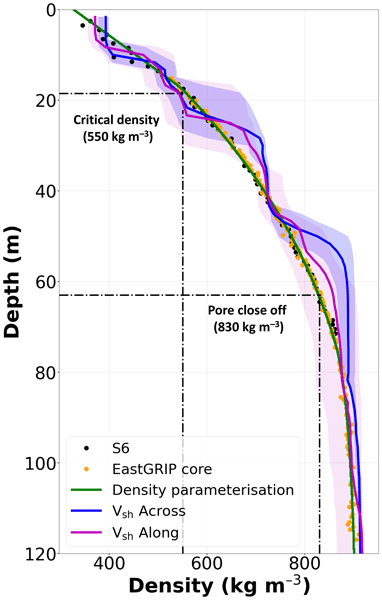
Our study near EastGRIP camp in Greenland shows varying firn properties by direction (crucial for studying ice stream stability, structure, surface mass balance, and past climate conditions). We used dispersion curve analysis of Love and Rayleigh waves to show firn is nonuniform along and across the flow of an ice stream due to wind patterns, seasonal variability, and the proximity to the edge of the ice stream. This method better informs firn structure, advancing ice stream understanding.
Antoine Hermant, Linnea Huusko, and Thorsten Mauritsen
Atmos. Chem. Phys., 24, 10707–10715, https://doi.org/10.5194/acp-24-10707-2024, https://doi.org/10.5194/acp-24-10707-2024, 2024
Short summary
Short summary
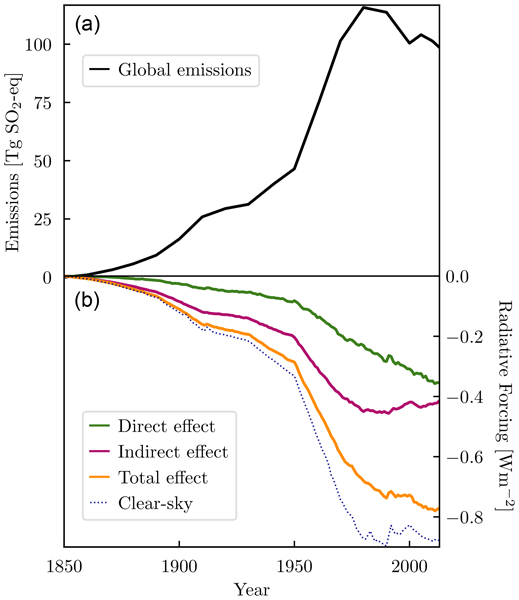
Aerosol particles, from natural and human sources, have a cooling effect on the climate, partially offsetting global warming. They do this through direct (sunlight reflection) and indirect (cloud property alteration) mechanisms. Using a global climate model, we found that, despite declining emissions, the direct effect of human aerosols has increased while the indirect effect has decreased, which is attributed to the shift in emissions from North America and Europe to Southeast Asia.
Christian Wirths, Thomas F. Stocker, and Johannes C. R. Sutter
The Cryosphere, 18, 4435–4462, https://doi.org/10.5194/tc-18-4435-2024, https://doi.org/10.5194/tc-18-4435-2024, 2024
Short summary
Short summary
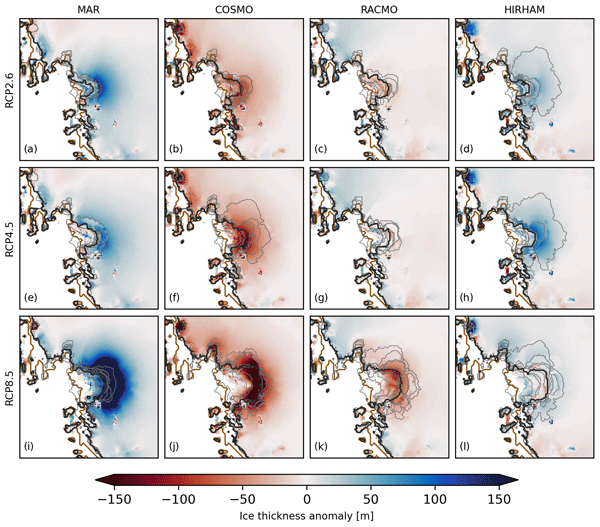
We investigated the influence of several regional climate models on the Antarctic Ice Sheet when applied as forcing for the Parallel Ice Sheet Model (PISM). Our study shows that the choice of regional climate model forcing results in uncertainties of around a tenth of those in future sea level rise projections and also affects the extent of grounding line retreat in West Antarctica.
Veit Helm, Alireza Dehghanpour, Ronny Hänsch, Erik Loebel, Martin Horwath, and Angelika Humbert
The Cryosphere, 18, 3933–3970, https://doi.org/10.5194/tc-18-3933-2024, https://doi.org/10.5194/tc-18-3933-2024, 2024
Short summary
Short summary
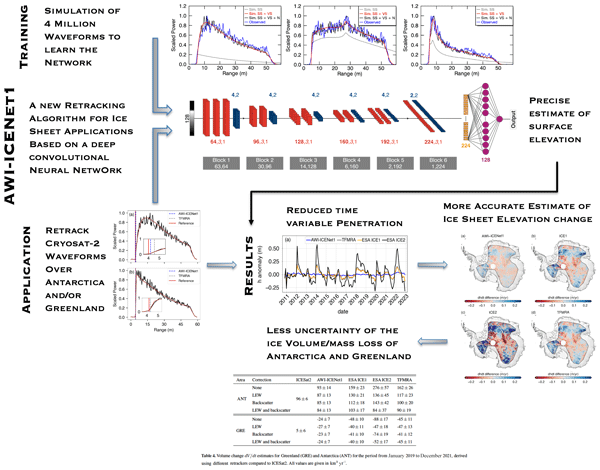
We present a new approach (AWI-ICENet1), based on a deep convolutional neural network, for analysing satellite radar altimeter measurements to accurately determine the surface height of ice sheets. Surface height estimates obtained with AWI-ICENet1 (along with related products, such as ice sheet height change and volume change) show improved and unbiased results compared to other products. This is important for the long-term monitoring of ice sheet mass loss and its impact on sea level rise.
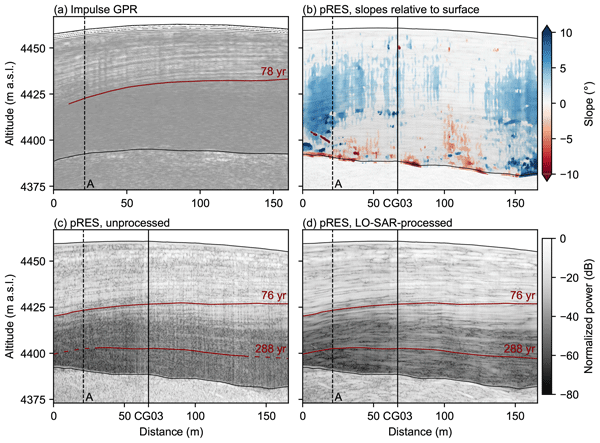
Falk M. Oraschewski, Inka Koch, M. Reza Ershadi, Jonathan D. Hawkins, Olaf Eisen, and Reinhard Drews
The Cryosphere, 18, 3875–3889, https://doi.org/10.5194/tc-18-3875-2024, https://doi.org/10.5194/tc-18-3875-2024, 2024
Short summary
Short summary
Mountain glaciers have a layered structure which contains information about past snow accumulation and ice flow. Using ground-penetrating radar instruments, the internal structure can be observed. The detection of layers in the deeper parts of a glacier is often difficult. Here, we present a new approach for imaging the englacial structure of an Alpine glacier (Colle Gnifetti, Switzerland and Italy) using a phase-sensitive radar that can detect reflection depth changes at sub-wavelength scales.
Charlotte M. Carter, Michael J. Bentley, Stewart S. R. Jamieson, Guy J. G. Paxman, Tom A. Jordan, Julien A. Bodart, Neil Ross, and Felipe Napoleoni
The Cryosphere, 18, 2277–2296, https://doi.org/10.5194/tc-18-2277-2024, https://doi.org/10.5194/tc-18-2277-2024, 2024
Short summary
Short summary
We use radio-echo sounding data to investigate the presence of flat surfaces beneath the Evans–Rutford region in West Antarctica. These surfaces may be what remains of laterally continuous surfaces, formed before the inception of the West Antarctic Ice Sheet, and we assess two hypotheses for their formation. Tectonic structures in the region may have also had a control on the growth of the ice sheet by focusing ice flow into troughs adjoining these surfaces.
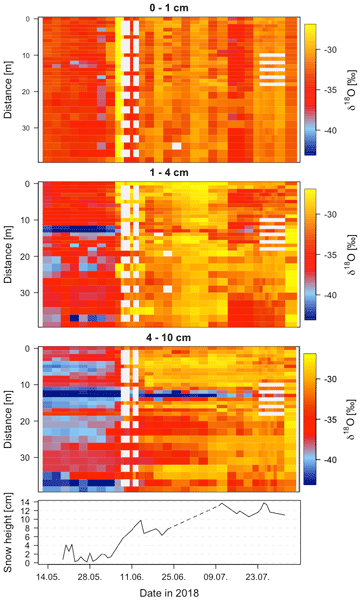
Alexandra M. Zuhr, Sonja Wahl, Hans Christian Steen-Larsen, Maria Hörhold, Hanno Meyer, Vasileios Gkinis, and Thomas Laepple
Earth Syst. Sci. Data, 16, 1861–1874, https://doi.org/10.5194/essd-16-1861-2024, https://doi.org/10.5194/essd-16-1861-2024, 2024
Short summary
Short summary
We present stable water isotope data from the accumulation zone of the Greenland ice sheet. A spatial sampling scheme covering 39 m and three depth layers was carried out between 14 May and 3 August 2018. The data suggest spatial and temporal variability related to meteorological conditions, such as wind-driven snow redistribution and vapour–snow exchange processes. The data can be used to study the formation of the stable water isotopes signal, which is seen as a climate proxy.
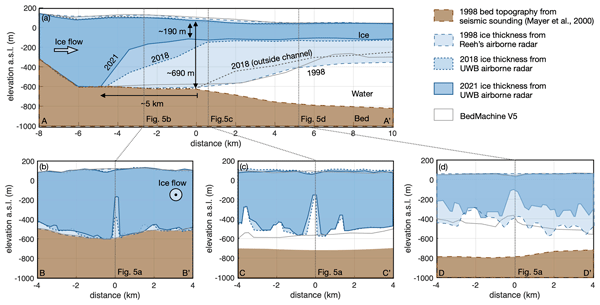
Ole Zeising, Niklas Neckel, Nils Dörr, Veit Helm, Daniel Steinhage, Ralph Timmermann, and Angelika Humbert
The Cryosphere, 18, 1333–1357, https://doi.org/10.5194/tc-18-1333-2024, https://doi.org/10.5194/tc-18-1333-2024, 2024
Short summary
Short summary
The 79° North Glacier in Greenland has experienced significant changes over the last decades. Due to extreme melt rates, the ice has thinned significantly in the vicinity of the grounding line, where a large subglacial channel has formed since 2010. We attribute these changes to warm ocean currents and increased subglacial discharge from surface melt. However, basal melting has decreased since 2018, indicating colder water inflow into the cavity below the glacier.
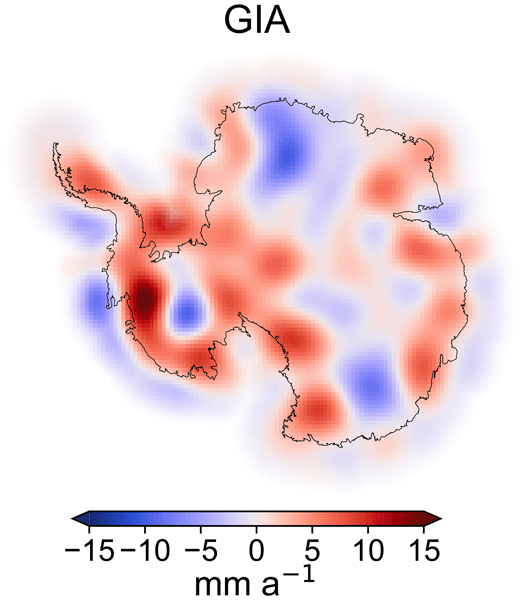
Matthias O. Willen, Martin Horwath, Eric Buchta, Mirko Scheinert, Veit Helm, Bernd Uebbing, and Jürgen Kusche
The Cryosphere, 18, 775–790, https://doi.org/10.5194/tc-18-775-2024, https://doi.org/10.5194/tc-18-775-2024, 2024
Short summary
Short summary
Shrinkage of the Antarctic ice sheet (AIS) leads to sea level rise. Satellite gravimetry measures AIS mass changes. We apply a new method that overcomes two limitations: low spatial resolution and large uncertainties due to the Earth's interior mass changes. To do so, we additionally include data from satellite altimetry and climate and firn modelling, which are evaluated in a globally consistent way with thoroughly characterized errors. The results are in better agreement with independent data.
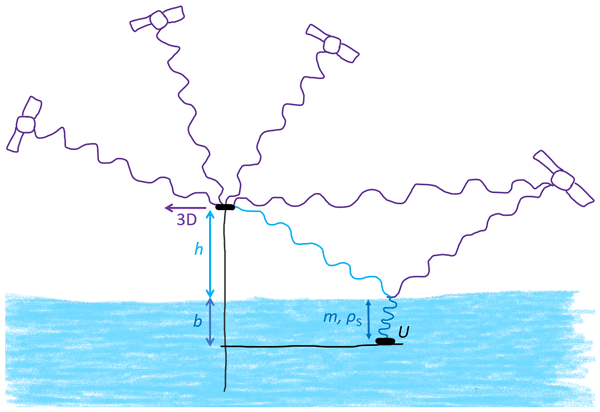
Ladina Steiner, Holger Schmithüsen, Jens Wickert, and Olaf Eisen
The Cryosphere, 17, 4903–4916, https://doi.org/10.5194/tc-17-4903-2023, https://doi.org/10.5194/tc-17-4903-2023, 2023
Short summary
Short summary
The present study illustrates the potential of a combined Global Navigation Satellite System reflectometry and refractometry (GNSS-RR) method for accurate, simultaneous, and continuous estimation of in situ snow accumulation, snow water equivalent, and snow density time series. The combined GNSS-RR method was successfully applied on a fast-moving, polar ice shelf. The combined GNSS-RR approach could be highly advantageous for a continuous quantification of ice sheet surface mass balances.
Alexandra M. Zuhr, Erik Loebel, Marek Muchow, Donovan Dennis, Luisa von Albedyll, Frigga Kruse, Heidemarie Kassens, Johanna Grabow, Dieter Piepenburg, Sören Brandt, Rainer Lehmann, Marlene Jessen, Friederike Krüger, Monika Kallfelz, Andreas Preußer, Matthias Braun, Thorsten Seehaus, Frank Lisker, Daniela Röhnert, and Mirko Scheinert
Polarforschung, 91, 73–80, https://doi.org/10.5194/polf-91-73-2023, https://doi.org/10.5194/polf-91-73-2023, 2023
Short summary
Short summary
Polar research is an interdisciplinary and multi-faceted field of research. Its diversity ranges from history to geology and geophysics to social sciences and education. This article provides insights into the different areas of German polar research. This was made possible by a seminar series, POLARSTUNDE, established in the summer of 2020 and organized by the German Society of Polar Research and the German National Committee of the Association of Polar Early Career Scientists (APECS Germany).
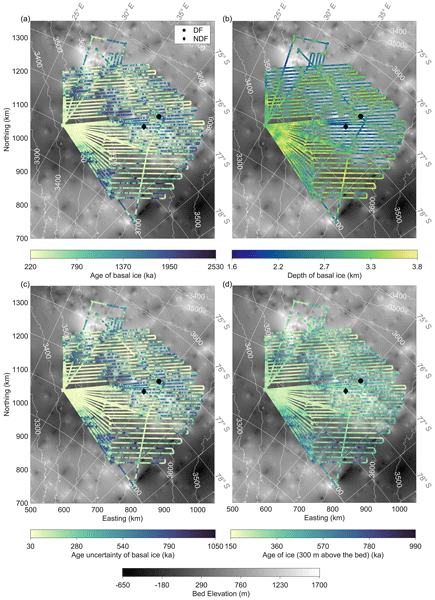
Zhuo Wang, Ailsa Chung, Daniel Steinhage, Frédéric Parrenin, Johannes Freitag, and Olaf Eisen
The Cryosphere, 17, 4297–4314, https://doi.org/10.5194/tc-17-4297-2023, https://doi.org/10.5194/tc-17-4297-2023, 2023
Short summary
Short summary
We combine radar-based observed internal layer stratigraphy of the ice sheet with a 1-D ice flow model in the Dome Fuji region. This results in maps of age and age density of the basal ice, the basal thermal conditions, and reconstructed accumulation rates. Based on modeled age we then identify four potential candidates for ice which is potentially 1.5 Myr old. Our map of basal thermal conditions indicates that melting prevails over the presence of stagnant ice in the study area.
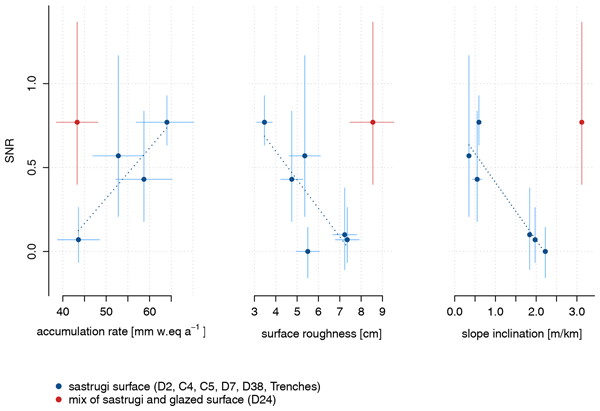
Nora Hirsch, Alexandra Zuhr, Thomas Münch, Maria Hörhold, Johannes Freitag, Remi Dallmayr, and Thomas Laepple
The Cryosphere, 17, 4207–4221, https://doi.org/10.5194/tc-17-4207-2023, https://doi.org/10.5194/tc-17-4207-2023, 2023
Short summary
Short summary
Stable water isotopes from firn cores provide valuable information on past climates, yet their utility is hampered by stratigraphic noise, i.e. the irregular deposition and wind-driven redistribution of snow. We found stratigraphic noise on the Antarctic Plateau to be related to the local accumulation rate, snow surface roughness and slope inclination, which can guide future decisions on sampling locations and thus increase the resolution of climate reconstructions from low-accumulation areas.
Ailsa Chung, Frédéric Parrenin, Daniel Steinhage, Robert Mulvaney, Carlos Martín, Marie G. P. Cavitte, David A. Lilien, Veit Helm, Drew Taylor, Prasad Gogineni, Catherine Ritz, Massimo Frezzotti, Charles O'Neill, Heinrich Miller, Dorthe Dahl-Jensen, and Olaf Eisen
The Cryosphere, 17, 3461–3483, https://doi.org/10.5194/tc-17-3461-2023, https://doi.org/10.5194/tc-17-3461-2023, 2023
Short summary
Short summary
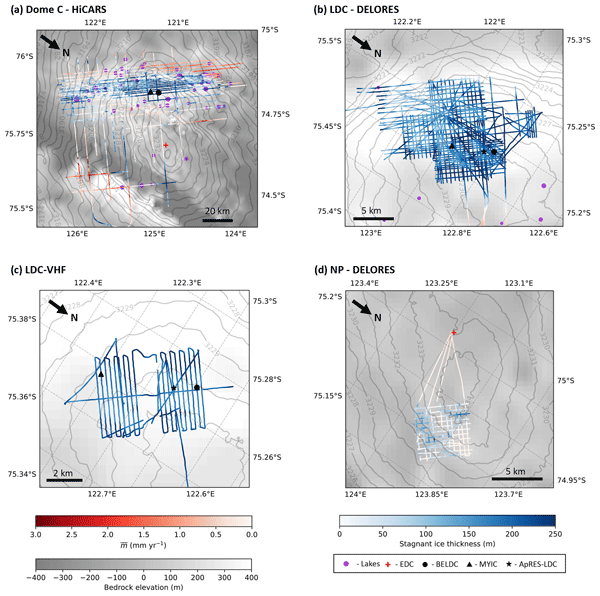
We combined a numerical model with radar measurements in order to determine the age of ice in the Dome C region of Antarctica. Our results show that at the current ice core drilling sites on Little Dome C, the maximum age of the ice is almost 1.5 Ma. We also highlight a new potential drill site called North Patch with ice up to 2 Ma. Finally, we explore the nature of a stagnant ice layer at the base of the ice sheet which has been independently observed and modelled but is not well understood.
Alice C. Frémand, Peter Fretwell, Julien A. Bodart, Hamish D. Pritchard, Alan Aitken, Jonathan L. Bamber, Robin Bell, Cesidio Bianchi, Robert G. Bingham, Donald D. Blankenship, Gino Casassa, Ginny Catania, Knut Christianson, Howard Conway, Hugh F. J. Corr, Xiangbin Cui, Detlef Damaske, Volkmar Damm, Reinhard Drews, Graeme Eagles, Olaf Eisen, Hannes Eisermann, Fausto Ferraccioli, Elena Field, René Forsberg, Steven Franke, Shuji Fujita, Yonggyu Gim, Vikram Goel, Siva Prasad Gogineni, Jamin Greenbaum, Benjamin Hills, Richard C. A. Hindmarsh, Andrew O. Hoffman, Per Holmlund, Nicholas Holschuh, John W. Holt, Annika N. Horlings, Angelika Humbert, Robert W. Jacobel, Daniela Jansen, Adrian Jenkins, Wilfried Jokat, Tom Jordan, Edward King, Jack Kohler, William Krabill, Mette Kusk Gillespie, Kirsty Langley, Joohan Lee, German Leitchenkov, Carlton Leuschen, Bruce Luyendyk, Joseph MacGregor, Emma MacKie, Kenichi Matsuoka, Mathieu Morlighem, Jérémie Mouginot, Frank O. Nitsche, Yoshifumi Nogi, Ole A. Nost, John Paden, Frank Pattyn, Sergey V. Popov, Eric Rignot, David M. Rippin, Andrés Rivera, Jason Roberts, Neil Ross, Anotonia Ruppel, Dustin M. Schroeder, Martin J. Siegert, Andrew M. Smith, Daniel Steinhage, Michael Studinger, Bo Sun, Ignazio Tabacco, Kirsty Tinto, Stefano Urbini, David Vaughan, Brian C. Welch, Douglas S. Wilson, Duncan A. Young, and Achille Zirizzotti
Earth Syst. Sci. Data, 15, 2695–2710, https://doi.org/10.5194/essd-15-2695-2023, https://doi.org/10.5194/essd-15-2695-2023, 2023
Short summary
Short summary
This paper presents the release of over 60 years of ice thickness, bed elevation, and surface elevation data acquired over Antarctica by the international community. These data are a crucial component of the Antarctic Bedmap initiative which aims to produce a new map and datasets of Antarctic ice thickness and bed topography for the international glaciology and geophysical community.
Angelika Humbert, Veit Helm, Niklas Neckel, Ole Zeising, Martin Rückamp, Shfaqat Abbas Khan, Erik Loebel, Jörg Brauchle, Karsten Stebner, Dietmar Gross, Rabea Sondershaus, and Ralf Müller
The Cryosphere, 17, 2851–2870, https://doi.org/10.5194/tc-17-2851-2023, https://doi.org/10.5194/tc-17-2851-2023, 2023
Short summary
Short summary
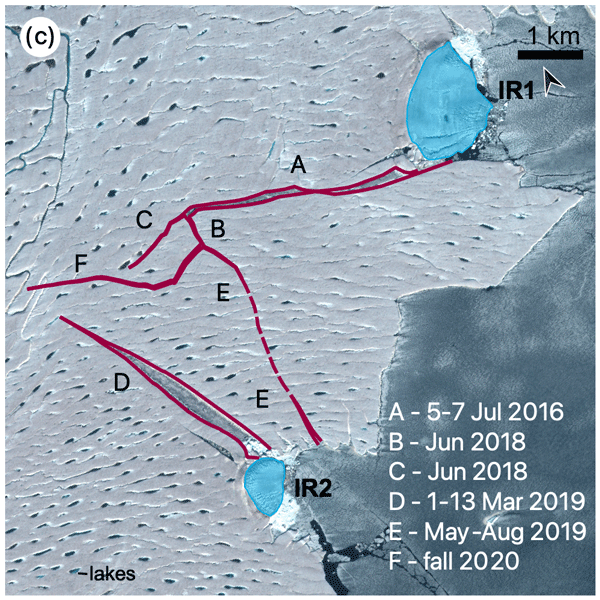
The largest floating glacier mass in Greenland, the 79° N Glacier, is showing signs of instability. We investigate how crack formation at the glacier's calving front has changed over the last decades by using satellite imagery and airborne data. The calving front is about to lose contact to stabilizing ice islands. Simulations show that the glacier will accelerate as a result of this, leading to an increase in ice discharge of more than 5.1 % if its calving front retreats by 46 %.
Michael J. Bentley, James A. Smith, Stewart S. R. Jamieson, Margaret R. Lindeman, Brice R. Rea, Angelika Humbert, Timothy P. Lane, Christopher M. Darvill, Jeremy M. Lloyd, Fiamma Straneo, Veit Helm, and David H. Roberts
The Cryosphere, 17, 1821–1837, https://doi.org/10.5194/tc-17-1821-2023, https://doi.org/10.5194/tc-17-1821-2023, 2023
Short summary
Short summary
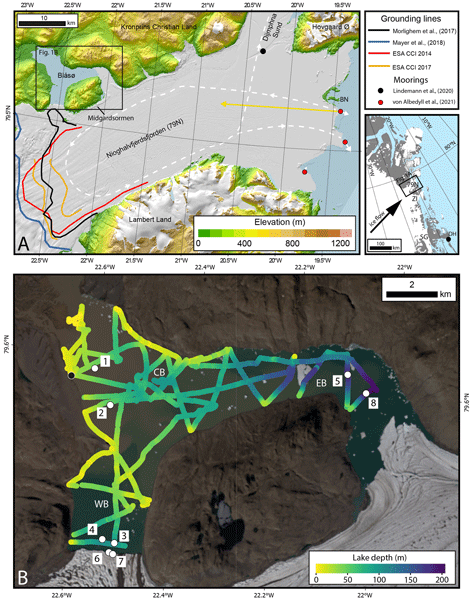
The Northeast Greenland Ice Stream is a major outlet of the Greenland Ice Sheet. Some of its outlet glaciers and ice shelves have been breaking up and retreating, with inflows of warm ocean water identified as the likely reason. Here we report direct measurements of warm ocean water in an unusual lake that is connected to the ocean beneath the ice shelf in front of the 79° N Glacier. This glacier has not yet shown much retreat, but the presence of warm water makes future retreat more likely.
Inès N. Otosaka, Andrew Shepherd, Erik R. Ivins, Nicole-Jeanne Schlegel, Charles Amory, Michiel R. van den Broeke, Martin Horwath, Ian Joughin, Michalea D. King, Gerhard Krinner, Sophie Nowicki, Anthony J. Payne, Eric Rignot, Ted Scambos, Karen M. Simon, Benjamin E. Smith, Louise S. Sørensen, Isabella Velicogna, Pippa L. Whitehouse, Geruo A, Cécile Agosta, Andreas P. Ahlstrøm, Alejandro Blazquez, William Colgan, Marcus E. Engdahl, Xavier Fettweis, Rene Forsberg, Hubert Gallée, Alex Gardner, Lin Gilbert, Noel Gourmelen, Andreas Groh, Brian C. Gunter, Christopher Harig, Veit Helm, Shfaqat Abbas Khan, Christoph Kittel, Hannes Konrad, Peter L. Langen, Benoit S. Lecavalier, Chia-Chun Liang, Bryant D. Loomis, Malcolm McMillan, Daniele Melini, Sebastian H. Mernild, Ruth Mottram, Jeremie Mouginot, Johan Nilsson, Brice Noël, Mark E. Pattle, William R. Peltier, Nadege Pie, Mònica Roca, Ingo Sasgen, Himanshu V. Save, Ki-Weon Seo, Bernd Scheuchl, Ernst J. O. Schrama, Ludwig Schröder, Sebastian B. Simonsen, Thomas Slater, Giorgio Spada, Tyler C. Sutterley, Bramha Dutt Vishwakarma, Jan Melchior van Wessem, David Wiese, Wouter van der Wal, and Bert Wouters
Earth Syst. Sci. Data, 15, 1597–1616, https://doi.org/10.5194/essd-15-1597-2023, https://doi.org/10.5194/essd-15-1597-2023, 2023
Short summary
Short summary
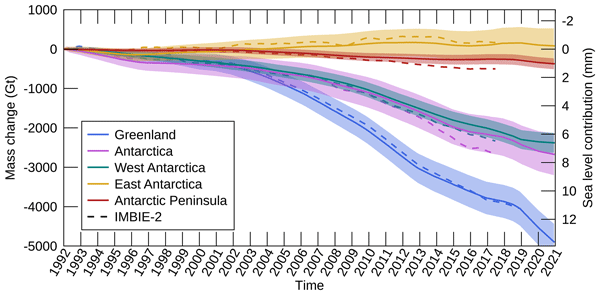
By measuring changes in the volume, gravitational attraction, and ice flow of Greenland and Antarctica from space, we can monitor their mass gain and loss over time. Here, we present a new record of the Earth’s polar ice sheet mass balance produced by aggregating 50 satellite-based estimates of ice sheet mass change. This new assessment shows that the ice sheets have lost (7.5 x 10¹²) t of ice between 1992 and 2020, contributing 21 mm to sea level rise.
Julien A. Bodart, Robert G. Bingham, Duncan A. Young, Joseph A. MacGregor, David W. Ashmore, Enrica Quartini, Andrew S. Hein, David G. Vaughan, and Donald D. Blankenship
The Cryosphere, 17, 1497–1512, https://doi.org/10.5194/tc-17-1497-2023, https://doi.org/10.5194/tc-17-1497-2023, 2023
Short summary
Short summary
Estimating how West Antarctica will change in response to future climatic change depends on our understanding of past ice processes. Here, we use a reflector widely visible on airborne radar data across West Antarctica to estimate accumulation rates over the past 4700 years. By comparing our estimates with current atmospheric data, we find that accumulation rates were 18 % greater than modern rates. This has implications for our understanding of past ice processes in the region.
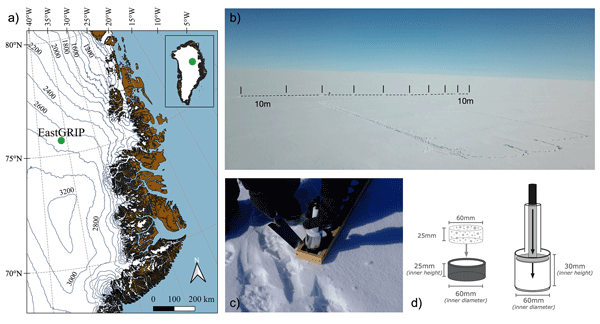
Romilly Harris Stuart, Anne-Katrine Faber, Sonja Wahl, Maria Hörhold, Sepp Kipfstuhl, Kristian Vasskog, Melanie Behrens, Alexandra M. Zuhr, and Hans Christian Steen-Larsen
The Cryosphere, 17, 1185–1204, https://doi.org/10.5194/tc-17-1185-2023, https://doi.org/10.5194/tc-17-1185-2023, 2023
Short summary
Short summary
This empirical study uses continuous daily measurements from the Greenland Ice Sheet to document changes in surface snow properties. Consistent changes in snow isotopic composition are observed in the absence of deposition due to surface processes, indicating the isotopic signal of deposited precipitation is not always preserved. Our observations have potential implications for the interpretation of water isotopes in ice cores – historically assumed to reflect isotopic composition at deposition.
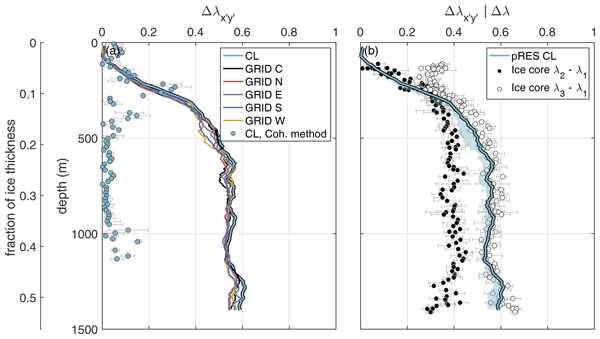
Ole Zeising, Tamara Annina Gerber, Olaf Eisen, M. Reza Ershadi, Nicolas Stoll, Ilka Weikusat, and Angelika Humbert
The Cryosphere, 17, 1097–1105, https://doi.org/10.5194/tc-17-1097-2023, https://doi.org/10.5194/tc-17-1097-2023, 2023
Short summary
Short summary
The flow of glaciers and ice streams is influenced by crystal fabric orientation. Besides sparse ice cores, these can be investigated by radar measurements. Here, we present an improved method which allows us to infer the horizontal fabric asymmetry using polarimetric phase-sensitive radar data. A validation of the method on a deep ice core from the Greenland Ice Sheet shows an excellent agreement, which is a large improvement over previously used methods.

Lena Nicola, Erik Loebel, and Alexandra M. Zuhr
Polarforschung, 90, 81–84, https://doi.org/10.5194/polf-90-81-2022, https://doi.org/10.5194/polf-90-81-2022, 2022
Short summary
Short summary
To facilitate the search for funding within Germany and internationally, APECS Germany has started to host a list of grant, fellowship and other funding opportunities at https://apecs-germany.de/funding/. In our article, we present our new website while describing the different stages of the quest to find funding and to highlight best practices for, for example, writing grant proposals.
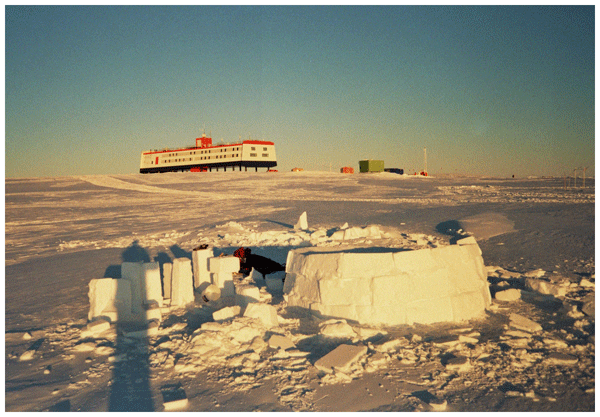
Steven Franke, Alfons Eckstaller, Tim Heitland, Thomas Schaefer, and Jölund Asseng
Polarforschung, 90, 65–79, https://doi.org/10.5194/polf-90-65-2022, https://doi.org/10.5194/polf-90-65-2022, 2022
Short summary
Short summary
For over 45 years, teams composed of scientists, technicians, doctors, and cooks have been wintering in Antarctica in the service of German Antarctic research. They thus form a cornerstone of long-term scientific measurements in this remote and unique place with regard to future scientific investigations. In this article, we highlight the research being conducted at the permanently crewed Neumayer Station III and its predecessors and the role of the overwinterers in this research endeavour.
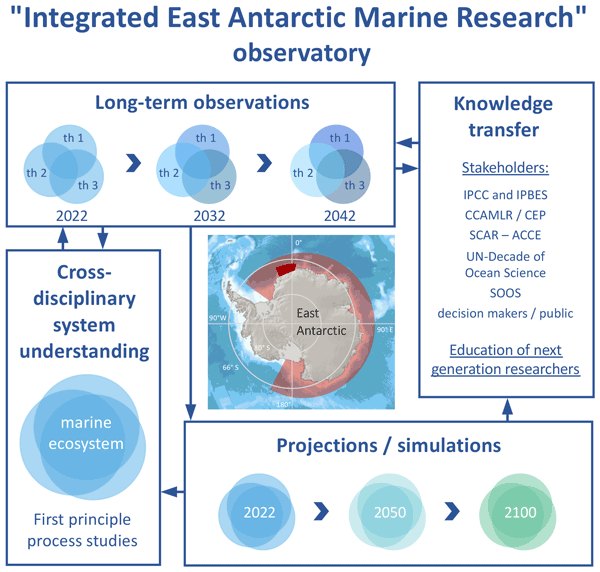
Julian Gutt, Stefanie Arndt, David Keith Alan Barnes, Horst Bornemann, Thomas Brey, Olaf Eisen, Hauke Flores, Huw Griffiths, Christian Haas, Stefan Hain, Tore Hattermann, Christoph Held, Mario Hoppema, Enrique Isla, Markus Janout, Céline Le Bohec, Heike Link, Felix Christopher Mark, Sebastien Moreau, Scarlett Trimborn, Ilse van Opzeeland, Hans-Otto Pörtner, Fokje Schaafsma, Katharina Teschke, Sandra Tippenhauer, Anton Van de Putte, Mia Wege, Daniel Zitterbart, and Dieter Piepenburg
Biogeosciences, 19, 5313–5342, https://doi.org/10.5194/bg-19-5313-2022, https://doi.org/10.5194/bg-19-5313-2022, 2022
Short summary
Short summary
Long-term ecological observations are key to assess, understand and predict impacts of environmental change on biotas. We present a multidisciplinary framework for such largely lacking investigations in the East Antarctic Southern Ocean, combined with case studies, experimental and modelling work. As climate change is still minor here but is projected to start soon, the timely implementation of this framework provides the unique opportunity to document its ecological impacts from the very onset.
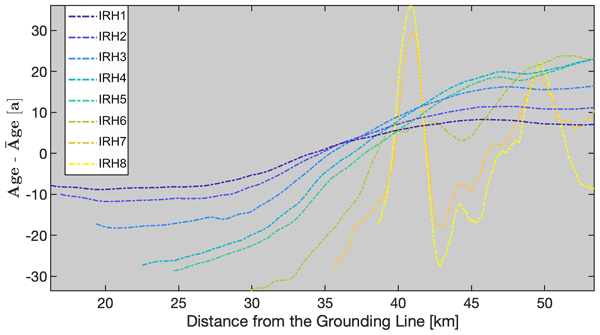
Vjeran Višnjević, Reinhard Drews, Clemens Schannwell, Inka Koch, Steven Franke, Daniela Jansen, and Olaf Eisen
The Cryosphere, 16, 4763–4777, https://doi.org/10.5194/tc-16-4763-2022, https://doi.org/10.5194/tc-16-4763-2022, 2022
Short summary
Short summary
We present a simple way to model the internal layers of an ice shelf and apply the method to the Roi Baudouin Ice Shelf in East Antarctica. Modeled results are compared to measurements obtained by radar. We distinguish between ice directly formed on the shelf and ice transported from the ice sheet, and we map the spatial changes in the volume of the locally accumulated ice. In this context, we discuss the sensitivity of the ice shelf to future changes in surface accumulation and basal melt.
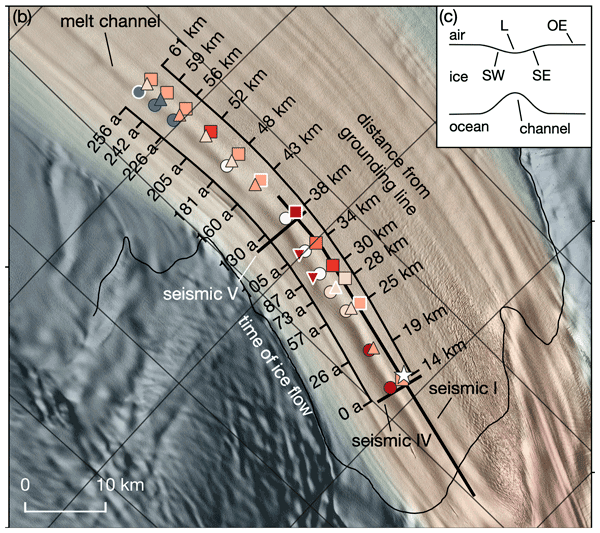
Angelika Humbert, Julia Christmann, Hugh F. J. Corr, Veit Helm, Lea-Sophie Höyns, Coen Hofstede, Ralf Müller, Niklas Neckel, Keith W. Nicholls, Timm Schultz, Daniel Steinhage, Michael Wolovick, and Ole Zeising
The Cryosphere, 16, 4107–4139, https://doi.org/10.5194/tc-16-4107-2022, https://doi.org/10.5194/tc-16-4107-2022, 2022
Short summary
Short summary
Ice shelves are normally flat structures that fringe the Antarctic continent. At some locations they have channels incised into their underside. On Filchner Ice Shelf, such a channel is more than 50 km long and up to 330 m high. We conducted field measurements of basal melt rates and found a maximum of 2 m yr−1. Simulations represent the geometry evolution of the channel reasonably well. There is no reason to assume that this type of melt channel is destabilizing ice shelves.
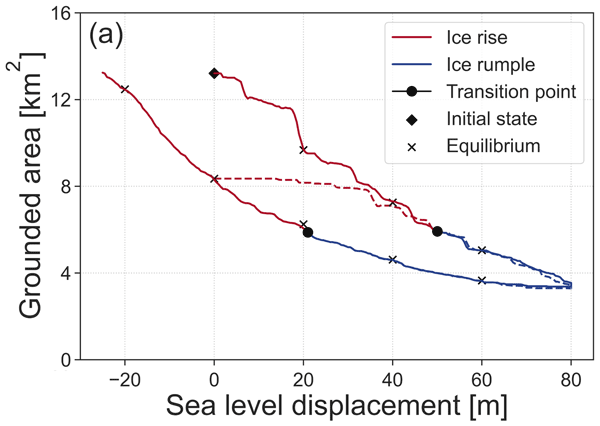
A. Clara J. Henry, Reinhard Drews, Clemens Schannwell, and Vjeran Višnjević
The Cryosphere, 16, 3889–3905, https://doi.org/10.5194/tc-16-3889-2022, https://doi.org/10.5194/tc-16-3889-2022, 2022
Short summary
Short summary
We used a 3D, idealised model to study features in coastal Antarctica called ice rises and ice rumples. These features regulate the rate of ice flow into the ocean. We show that when sea level is raised or lowered, the size of these features and the ice flow pattern can change. We find that the features depend on the ice history and do not necessarily fully recover after an equal increase and decrease in sea level. This shows that it is important to initialise models with accurate ice geometry.
Alice C. Frémand, Julien A. Bodart, Tom A. Jordan, Fausto Ferraccioli, Carl Robinson, Hugh F. J. Corr, Helen J. Peat, Robert G. Bingham, and David G. Vaughan
Earth Syst. Sci. Data, 14, 3379–3410, https://doi.org/10.5194/essd-14-3379-2022, https://doi.org/10.5194/essd-14-3379-2022, 2022
Short summary
Short summary
This paper presents the release of large swaths of airborne geophysical data (including gravity, magnetics, and radar) acquired between 1994 and 2020 over Antarctica by the British Antarctic Survey. These include a total of 64 datasets from 24 different surveys, amounting to >30 % of coverage over the Antarctic Ice Sheet. This paper discusses how these data were acquired and processed and presents the methods used to standardize and publish the data in an interactive and reproducible manner.
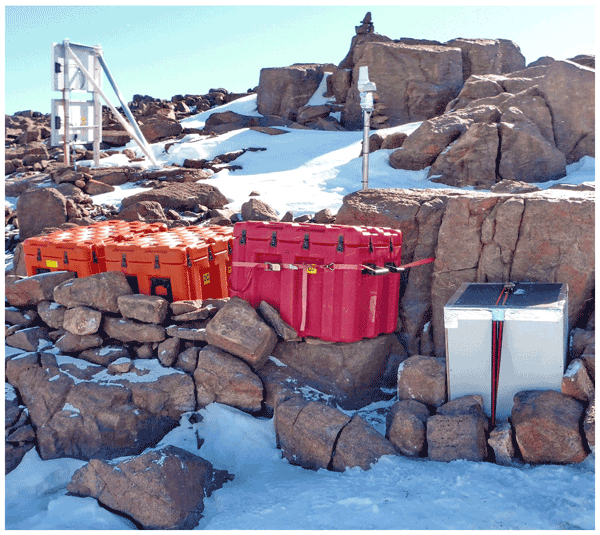
Alfons Eckstaller, Jölund Asseng, Erich Lippmann, and Steven Franke
Geosci. Instrum. Method. Data Syst., 11, 235–245, https://doi.org/10.5194/gi-11-235-2022, https://doi.org/10.5194/gi-11-235-2022, 2022
Short summary
Short summary
We present a mobile and self-sufficient seismometer station concept for operation in polar regions. The energy supply can be adapted as required using the modular cascading of battery boxes, wind generators, solar cells, or backup batteries, which enables optimum use of limited resources. Our system concept is not limited to the applications using seismological stations. It is a suitable system for managing the power supply of all types of self-sufficient measuring systems in polar regions.

Astrid Oetting, Emma C. Smith, Jan Erik Arndt, Boris Dorschel, Reinhard Drews, Todd A. Ehlers, Christoph Gaedicke, Coen Hofstede, Johann P. Klages, Gerhard Kuhn, Astrid Lambrecht, Andreas Läufer, Christoph Mayer, Ralf Tiedemann, Frank Wilhelms, and Olaf Eisen
The Cryosphere, 16, 2051–2066, https://doi.org/10.5194/tc-16-2051-2022, https://doi.org/10.5194/tc-16-2051-2022, 2022
Short summary
Short summary
This study combines a variety of geophysical measurements in front of and beneath the Ekström Ice Shelf in order to identify and interpret geomorphological evidences of past ice sheet flow, extent and retreat.
The maximal extent of grounded ice in this region was 11 km away from the continental shelf break.
The thickness of palaeo-ice on the calving front around the LGM was estimated to be at least 305 to 320 m.
We provide essential boundary conditions for palaeo-ice-sheet models.
M. Reza Ershadi, Reinhard Drews, Carlos Martín, Olaf Eisen, Catherine Ritz, Hugh Corr, Julia Christmann, Ole Zeising, Angelika Humbert, and Robert Mulvaney
The Cryosphere, 16, 1719–1739, https://doi.org/10.5194/tc-16-1719-2022, https://doi.org/10.5194/tc-16-1719-2022, 2022
Short summary
Short summary
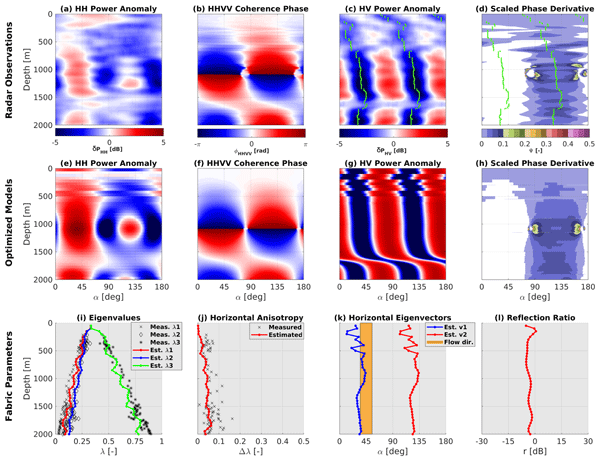
Radio waves transmitted through ice split up and inform us about the ice sheet interior and orientation of single ice crystals. This can be used to infer how ice flows and improve projections on how it will evolve in the future. Here we used an inverse approach and developed a new algorithm to infer ice properties from observed radar data. We applied this technique to the radar data obtained at two EPICA drilling sites, where ice cores were used to validate our results.
Ole Zeising, Daniel Steinhage, Keith W. Nicholls, Hugh F. J. Corr, Craig L. Stewart, and Angelika Humbert
The Cryosphere, 16, 1469–1482, https://doi.org/10.5194/tc-16-1469-2022, https://doi.org/10.5194/tc-16-1469-2022, 2022
Short summary
Short summary
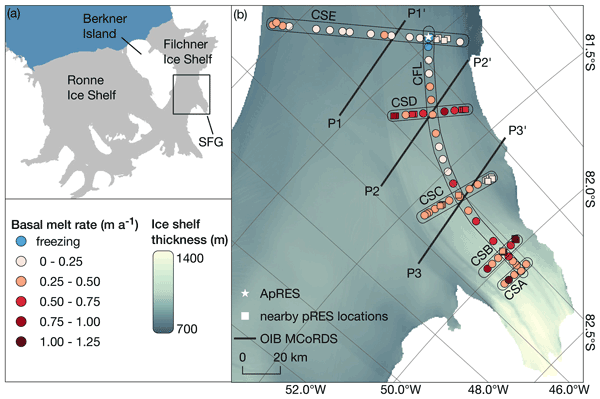
Remote-sensing-derived basal melt rates of ice shelves are of great importance due to their capability to cover larger areas. We performed in situ measurements with a phase-sensitive radar on the southern Filchner Ice Shelf, showing moderate melt rates and low small-scale spatial variability. The comparison with remote-sensing-based melt rates revealed large differences caused by the estimation of vertical strain rates from remote sensing velocity fields that modern fields can overcome.
Steven Franke, Daniela Jansen, Tobias Binder, John D. Paden, Nils Dörr, Tamara A. Gerber, Heinrich Miller, Dorthe Dahl-Jensen, Veit Helm, Daniel Steinhage, Ilka Weikusat, Frank Wilhelms, and Olaf Eisen
Earth Syst. Sci. Data, 14, 763–779, https://doi.org/10.5194/essd-14-763-2022, https://doi.org/10.5194/essd-14-763-2022, 2022
Short summary
Short summary
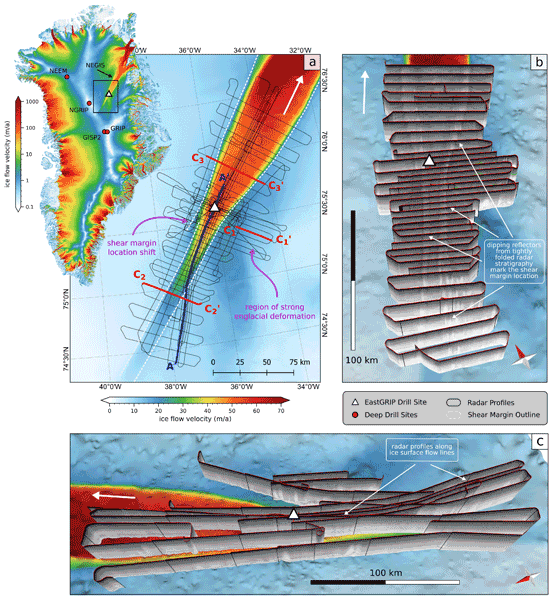
The Northeast Greenland Ice Stream (NEGIS) is the largest ice stream in Greenland. In order to better understand the past and future dynamics of the NEGIS, we present a high-resolution airborne radar data set (EGRIP-NOR-2018) for the onset region of the NEGIS. The survey area is centered at the location of the drill site of the East Greenland Ice-Core Project (EastGRIP), and radar profiles cover both shear margins and are aligned parallel to several flow lines.
Abigail G. Hughes, Sonja Wahl, Tyler R. Jones, Alexandra Zuhr, Maria Hörhold, James W. C. White, and Hans Christian Steen-Larsen
The Cryosphere, 15, 4949–4974, https://doi.org/10.5194/tc-15-4949-2021, https://doi.org/10.5194/tc-15-4949-2021, 2021
Short summary
Short summary
Water isotope records in Greenland and Antarctic ice cores are a valuable proxy for paleoclimate reconstruction and are traditionally thought to primarily reflect precipitation input. However,
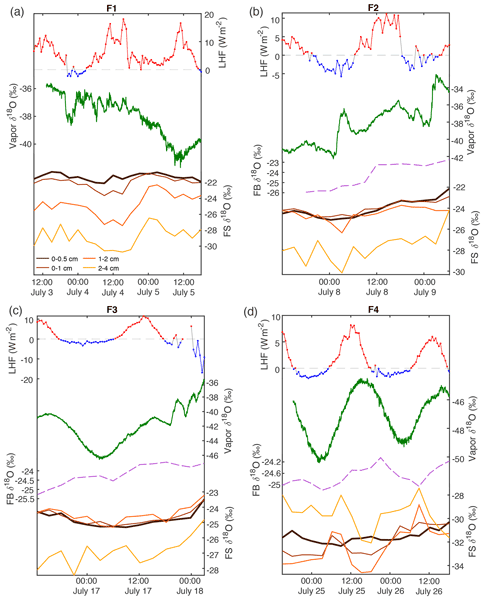
post-depositional processes are hypothesized to contribute to the isotope climate signal. In this study we use laboratory experiments, field experiments, and modeling to show that sublimation and vapor–snow isotope exchange can rapidly influence the isotopic composition of the snowpack.
Cited articles
Albrecht, T., Winkelmann, R., and Levermann, A.: Glacial-cycle simulations of the Antarctic Ice Sheet with the Parallel Ice Sheet Model (PISM) – Part 2: Parameter ensemble analysis, The Cryosphere, 14, 633–656, https://doi.org/10.5194/tc-14-633-2020, 2020. a, b
Alfred Wegener Institute: Polar aircraft Polar5 and Polar6 operated by the Alfred Wegener Institute, J. Large-Scale Res. Facil., 2, A87–A87, https://doi.org/10.17815/jlsrf-2-153, 2016. a
Arnold, E., Leuschen, C., Rodriguez-Morales, F., Li, J., Paden, J., Hale, R., and Keshmiri, S.: CReSIS airborne radars and platforms for ice and snow sounding, Ann. Glaciol., 61, 58–67, https://doi.org/10.1017/aog.2019.37, 2020. a
Ashmore, D. W., Bingham, R. G., Ross, N., Siegert, M. J., Jordan, T. A., and Mair, D. W.: Englacial architecture and age-depth constraints across the West Antarctic Ice Sheet, Geophys. Res. Lett., 47, e2019GL086663, https://doi.org/10.1029/2019GL086663, 2020. a, b, c, d
Balco, G., Brown, N., Nichols, K., Venturelli, R. A., Adams, J., Braddock, S., Campbell, S., Goehring, B., Johnson, J. S., Rood, D. H., Wilcken, K., Hall, B., and Woodward, J.: Reversible ice sheet thinning in the Amundsen Sea Embayment during the Late Holocene, The Cryosphere, 17, 1787–1801, https://doi.org/10.5194/tc-17-1787-2023, 2023. a
Barnes, P., Wolff, E. W., Mulvaney, R., Udisti, R., Castellano, E., Röthlisberger, R., and Steffensen, J.-P.: Effect of density on electrical conductivity of chemically laden polar ice, J. Geophys. Res.-Sol. Ea., 107, B22029, https://doi.org/10.1029/2000JB000080, 2002. a
Bart, P. J., Krogmeier, B. J., Bart, M. P., and Tulaczyk, S.: The paradox of a long grounding during West Antarctic Ice Sheet retreat in Ross Sea, Sci. Rep., 7, 1262, https://doi.org/10.1038/s41598-017-01329-8, 2017. a
Bazin, L., Landais, A., Lemieux-Dudon, B., Toyé Mahamadou Kele, H., Veres, D., Parrenin, F., Martinerie, P., Ritz, C., Capron, E., Lipenkov, V., Loutre, M.-F., Raynaud, D., Vinther, B., Svensson, A., Rasmussen, S. O., Severi, M., Blunier, T., Leuenberger, M., Fischer, H., Masson-Delmotte, V., Chappellaz, J., and Wolff, E.: An optimized multi-proxy, multi-site Antarctic ice and gas orbital chronology (AICC2012): 120–800 ka, Clim. Past, 9, 1715–1731, https://doi.org/10.5194/cp-9-1715-2013, 2013. a
Beem, L. H., Young, D. A., Greenbaum, J. S., Blankenship, D. D., Cavitte, M. G. P., Guo, J., and Bo, S.: Aerogeophysical characterization of Titan Dome, East Antarctica, and potential as an ice core target, The Cryosphere, 15, 1719–1730, https://doi.org/10.5194/tc-15-1719-2021, 2021. a, b, c, d
Bentley, M. J., Ó Cofaigh, C., Anderson, J. B., Conway, H., Davies, B., Graham, A. G. C., Hillenbrand, C.-D., Hodgson, D. A., Jamieson, S. S. R., Larter, R. D., Mackintosh, A., Smith, J. A., Verleyen, E., Ackert, R. P., Bart, P. J., Berg, S., Brunstein, D., Canals, M., Colhoun, E. A., Crosta, X., Dickens, W. A., Domack, E., Dowdeswell, J. A., Dunbar, R. B., Ehrmann, W., Evans, J., Favier, V., Fink, D., Fogwill, C. J., Glasser, N. F., Gohl, K., Golledge, N. R., Goodwin, I., Gore, D. B., Greenwood, S. L., Hall, B. L., Hall, K., Hedding, D. W., Hein, A. S., Hocking, E. P., Jakobsson, M., Johnson, J. S., Jomelli, V., Jones, R. S., Klages, J. P., Kristoffersen, Y., Kuhn, G., Leventer, A., Licht, K., Lilly, K., Lindow, J., Livingstone, S. J., Massé, G., McGlone, M. S., McKay, R. M., Melles, M., Miura, H., Mulvaney, R., Nel, W., Nitsche, F. O., O'Brien, P. E., Post, A. L., Roberts, S. J., Saunders, K. M., Selkirk, P. M., Simms, A. R., Spiegel, C., Stolldorf, T. D., Sugden, D. E., van der Putten, N., van Ommen, T., Verfaillie, D., Vyverman, W., Wagner, B., White, D. A., Witus, A. E., and Zwartz, D.: A community-based geological reconstruction of Antarctic Ice Sheet deglaciation since the Last Glacial Maximum, Quaternary Sci. Rev., 100, 1–9, https://doi.org/10.1016/j.quascirev.2014.06.025, 2014. a
Bingham, R. G., Bodart, J. A., Cavitte, M. G. P., Chung, A., Sanderson, R. J., Sutter, J. C. R., Eisen, O., Karlsson, N. B., MacGregor, J. A., Ross, N., Young, D. A., Ashmore, D. W., Born, A., Chu, W., Cui, X., Drews, R., Franke, S., Goel, V., Goodge, J. W., Henry, A. C. J., Hermant, A., Hills, B. H., Holschuh, N., Koutnik, M. R., Leysinger Vieli, G., MacKie, E. J., Mantelli, E., Martín, C., Ng, F. S. L., Oraschewski, F. M., Napoleoni, F., Parrenin, F., Popov, S. V., Rieckh, T., Schlegel, R., Schroeder, D. M., Siegert, M. J., Tang, X., Teisberg, T. O., Winter, K., Yan, S., Davis, H., Dow, C. F., Fudge, T. J., Jordan, T. A., Kulessa, B., Matsuoka, K., Nyqvist, C. J., Rahnemoonfar, M., Siegfried, M. R., Singh, S., Višnjević, V., Zamora, R., and Zuhr, A.: Review article: AntArchitecture – building an age–depth model from Antarctica's radiostratigraphy to explore ice-sheet evolution, The Cryosphere, 19, 4611–4655, https://doi.org/10.5194/tc-19-4611-2025, 2025. a, b, c, d, e, f
Blackburn, T., Edwards, G., Tulaczyk, S., Scudder, M., Piccione, G., Hallet, B., McLean, N., Zachos, J., Cheney, B., and Babbe, J.: Ice retreat in Wilkes Basin of East Antarctica during a warm interglacial, Nature, 583, 554–559, https://doi.org/10.1038/s41586-020-2484-5, 2020. a
Blankenship, D. D., Kempf, S. D., Young, D. A., Richter, T. G., Schroeder, D. M., Ng, G., Greenbaum, J. S., van Ommen, T. D., Warner, R. C., Roberts, J. L., Young, N. W., Lemeur, E., and Siegert, M. J.: IceBridge HiCARS 2 L1B Time-Tagged Echo Strength Profiles, Version 1, NASA National Snow and Ice Data Center Distributed Active Archive Center [data set], Boulder, Colorado USA, https://doi.org/10.5067/0I7PFBVQOGO5, 2017. a
Bodart, J. A. and Sutter, J. C.: Dated radar Internal Reflection Horizons (IRHs) from the Wilkes Subglacial Basin (East Antarctica) for ice-sheet model calibration, Zenodo [data set], https://doi.org/10.5281/zenodo.17348093, 2025a. a
Bodart, J. A. and Sutter, J. C.: Dated radar Internal Reflection Horizons (IRHs) from Dronning Maud Land (East Antarctica) for ice-sheet model calibration, Zenodo [data set], https://doi.org/10.5281/zenodo.17348975, 2025b. a
Bodart, J. A., Bingham, R. G., Young, D. A., MacGregor, J. A., Ashmore, D. W., Quartini, E., Hein, A. S., Vaughan, D. G., and Blankenship, D. D.: High mid-Holocene accumulation rates over West Antarctica inferred from a pervasive ice-penetrating radar reflector, The Cryosphere, 17, 1497–1512, https://doi.org/10.5194/tc-17-1497-2023, 2023. a, b
Bohleber, P., Wagner, N., and Eisen, O.: Permittivity of ice at radio frequencies: Part I. Coaxial transmission line cell, Cold Reg. Sci. Technol., 82, 56–67, https://doi.org/10.1016/j.coldregions.2012.05.011, 2012. a
Born, A.: Tracer transport in an isochronal ice-sheet model, J. Glaciol., 63, 22–38, https://doi.org/10.1017/jog.2016.111, 2017. a
Born, A. and Robinson, A.: Modeling the Greenland englacial stratigraphy, The Cryosphere, 15, 4539–4556, https://doi.org/10.5194/tc-15-4539-2021, 2021. a, b, c, d
Bouchet, M., Landais, A., Grisart, A., Parrenin, F., Prié, F., Jacob, R., Fourré, E., Capron, E., Raynaud, D., Lipenkov, V. Y., Loutre, M.-F., Extier, T., Svensson, A., Legrain, E., Martinerie, P., Leuenberger, M., Jiang, W., Ritterbusch, F., Lu, Z.-T., and Yang, G.-M.: The Antarctic Ice Core Chronology 2023 (AICC2023) chronological framework and associated timescale for the European Project for Ice Coring in Antarctica (EPICA) Dome C ice core, Clim. Past, 19, 2257–2286, https://doi.org/10.5194/cp-19-2257-2023, 2023. a, b
Bracegirdle, T. J., Colleoni, F., Abram, N. J., Bertler, N. A. N., Dixon, D. A., England, M., Favier, V., Fogwill, C. J., Fyfe, J. C., Goodwin, I., Goosse, H., Hobbs, W., Jones, J. M., Keller, E. D., Khan, A. L., Phipps, S. J., Raphael, M. N., Russell, J., Sime, L., Thomas, E. R., van den Broeke, M. R., and Wainer, I.: Back to the future: using long-term observational and paleo-proxy reconstructions to improve model projections of Antarctic climate, Geosciences, 9, 255, https://doi.org/10.3390/geosciences9060255, 2019. a, b
Braddock, S., Hall, B. L., Johnson, J. S., Balco, G., Spoth, M., Whitehouse, P. L., Campbell, S., Goehring, B. M., Rood, D. H., and Woodward, J.: Relative sea-level data preclude major late Holocene ice-mass change in Pine Island Bay, Nat. Geosci., 15, 568–572, https://doi.org/10.1038/s41561-022-00961-y, 2022. a
Bueler, E. and Brown, J.: Shallow shelf approximation as a “sliding law” in a thermomechanically coupled ice sheet model, J. Geophys. Res.-Earth, 114, https://doi.org/10.1029/2008JF001179, 2009. a
Bueler, E. and van Pelt, W.: Mass-conserving subglacial hydrology in the Parallel Ice Sheet Model version 0.6, Geosci. Model Dev., 8, 1613–1635, https://doi.org/10.5194/gmd-8-1613-2015, 2015. a
Bueler, E., Lingle, C. S., and Brown, J.: Fast computation of a viscoelastic deformable Earth model for ice-sheet simulations, Ann. Glaciol., 46, 97–105, https://doi.org/10.3189/172756407782871567, 2007. a
Buiron, D., Chappellaz, J., Stenni, B., Frezzotti, M., Baumgartner, M., Capron, E., Landais, A., Lemieux-Dudon, B., Masson-Delmotte, V., Montagnat, M., Parrenin, F., and Schilt, A.: TALDICE-1 age scale of the Talos Dome deep ice core, East Antarctica, Clim. Past, 7, 1–16, https://doi.org/10.5194/cp-7-1-2011, 2011. a, b
Buizert, C., Fudge, T. J., Roberts, W. H. G., Steig, E. J., Sherriff-Tadano, S., Ritz, C., Lefebvre, E., Edwards, J., Kawamura, K., Oyabu, I., Motoyama, H., Kahle, E. C., Jones, T. R., Abe-Ouchi, A., Obase, T., Martin, C., Corr, H., Severinghaus, J. P., Beaudette, R., Epifanio, J. A., Brook, E. J., Martin, K., Chappellaz, J., Aoki, S., Nakazawa, T., Sowers, T. A., Alley, R. B., Ahn, J., Sigl, M., Severi, M., Dunbar, N. W., Svensson, A., Fegyveresi, J. M., He, C., Liu, Z., Zhu, J., Otto-Bliesner, B. L., Lipenkov, V. Y., Kageyama, M., and Schwander, J.: Antarctic surface temperature and elevation during the Last Glacial Maximum, Science, 372, 1097–1101, https://doi.org/10.1126/science.abd2897, 2021. a
Catania, G., Conway, H., Raymond, C., and Scambos, T.: Surface morphology and internal layer stratigraphy in the downstream end of Kamb Ice Stream, West Antarctica, J. Glaciol., 51, 423–431, https://doi.org/10.3189/172756505781829142, 2005. a, b
Catania, G., Scambos, T., Conway, H., and Raymond, C.: Sequential stagnation of Kamb ice stream, West Antarctica, Geophys. Res. Lett., 33, https://doi.org/10.1029/2006GL026430, 2006. a, b
Catania, G., Hulbe, C., and Conway, H.: Grounding-line basal melt rates determined using radar-derived internal stratigraphy, J. Glaciol., 56, 545–554, https://doi.org/10.3189/002214310792447842, 2010. a
Cavitte, M. G., Blankenship, D. D., Young, D. A., Schroeder, D. M., Parrenin, F., Lemeur, E., Macgregor, J. A., and Siegert, M. J.: Deep radiostratigraphy of the East Antarctic plateau: connecting the Dome C and Vostok ice core sites, J. Glaciol., 62, 323–334, https://doi.org/10.1017/jog.2016.11, 2016. a, b, c, d, e
Cavitte, M. G., Parrenin, F., Ritz, C., Young, D. A., Van Liefferinge, B., Blankenship, D. D., Frezzotti, M., and Roberts, J. L.: Accumulation patterns around Dome C, East Antarctica, in the last 73 kyr, The Cryosphere, 12, 1401–1414, https://doi.org/10.5194/tc-12-1401-2018, 2018. a, b
Cavitte, M. G., Goosse, H., Matsuoka, K., Wauthy, S., Goel, V., Dey, R., Pratap, B., Van Liefferinge, B., Meloth, T., and Tison, J.-L.: Investigating the spatial representativeness of East Antarctic ice cores: a comparison of ice core and radar-derived surface mass balance over coastal ice rises and Dome Fuji, The Cryosphere, 17, 4779–4795, https://doi.org/10.5194/tc-17-4779-2023, 2023. a
Cavitte, M. G. P., Young, D. A., Mulvaney, R., Ritz, C., Greenbaum, J. S., Ng, G., Kempf, S. D., Quartini, E., Muldoon, G. R., Paden, J., Frezzotti, M., Roberts, J. L., Tozer, C. R., Schroeder, D. M., and Blankenship, D. D.: A detailed radiostratigraphic data set for the central East Antarctic Plateau spanning from the Holocene to the mid-Pleistocene, Earth Syst. Sci. Data, 13, 4759–4777, https://doi.org/10.5194/essd-13-4759-2021, 2021. a, b, c, d, e, f, g, h, i
Cavitte, M. M., Blankenship, D. D., Frezzotti, M., Kempf, S. D., and Muldoon, G.: Ice-penetrating radar internal stratigraphy over Dome C and the wider East Antarctic Plateau, U.S. Antarctic Program (USAP) Data Center [data set], https://doi.org/10.15784/601411, 2020. a
Chung, A., Parrenin, F., Steinhage, D., Mulvaney, R., Martín, C., Cavitte, M. G. P., Lilien, D. A., Helm, V., Taylor, D., Gogineni, P., Ritz, C., Frezzotti, M., O'Neill, C., Miller, H., Dahl-Jensen, D., and Eisen, O.: Stagnant ice and age modelling in the Dome C region, Antarctica, The Cryosphere, 17, 3461–3483, https://doi.org/10.5194/tc-17-3461-2023, 2023. a, b, c, d
Crotti, I., Quiquet, A., Landais, A., Stenni, B., Wilson, D. J., Severi, M., Mulvaney, R., Wilhelms, F., Barbante, C., and Frezzotti, M.: Wilkes subglacial basin ice sheet response to Southern Ocean warming during late Pleistocene interglacials, Nat. Commun., 13, 5328, https://doi.org/10.1038/s41467-022-32847-3, 2022. a
DeConto, R. M. and Pollard, D.: Contribution of Antarctica to past and future sea-level rise, Nature, 531, 591–597, https://doi.org/10.1038/nature17145, 2016. a
DeConto, R. M., Pollard, D., Alley, R. B., Velicogna, I., Gasson, E., Gomez, N., Sadai, S., Condron, A., Gilford, D. M., Ashe, E. L., Kopp, R. E., Li, D., and Dutton, A.: The Paris Climate Agreement and future sea-level rise from Antarctica, Nature, 593, 83–89, https://doi.org/10.1038/s41586-021-03427-0, 2021. a
Dowdeswell, J. A. and Evans, S.: Investigations of the form and flow of ice sheets and glaciers using radio-echo sounding, Rep. Prog. Phys., 67, 1821, https://doi.org/10.1088/0034-4885/67/10/R03, 2004. a
Eisen, O., Rack, W., Nixdorf, U., and Wilhelms, F.: Characteristics of accumulation around the EPICA deep-drilling site in Dronning Maud Land, Antarctica, Ann. Glaciol., 41, 41–46, https://doi.org/10.3189/172756405781813276, 2005. a
Eisen, O., Steinhage, D., Franke, S., Helm, V., Binder, T., Drews, R., Eagles, G., Humbert, A., Jansen, D., Jokat, W., Lambrecht, A., Mieth, M., Riedel, S., and Miller, H.: Collection of datasets from AWI's radio-echo sounding systems on ice sheets and glaciers, PANGAEA [data set], https://doi.org/10.1594/PANGAEA.972094, 2024. a
Ferraccioli, F., Armadillo, E., Jordan, T., Bozzo, E., and Corr, H.: Aeromagnetic exploration over the East Antarctic Ice Sheet: a new view of the Wilkes Subglacial Basin, Tectonophysics, 478, 62–77, https://doi.org/10.1016/j.tecto.2009.03.013, 2009. a
Ferraccioli, F., Forsberg, R., Matsuoka, K., Olesen, A., Jordan, T., Corr, H., Robinson, C., and Kohler, J.: Processed airborne radio-echo sounding data from the POLARGAP survey covering the South Pole, and Foundation and Recovery Glaciers, East Antarctica (2015/2016)(Version 1.0), NERC EDS UK Polar Data Centre [data set], https://doi.org/10.5285/70adab3d-3632-400d-9aa1-ddf2d62a11b3, 2021. a
Franke, S., Steinhage, D., Helm, V., Binder, T., Nixdorf, U., Miller, H., Humbert, A., Jansen, D., Eagles, G., Eisermann, H., Jokat, W., Ruppel, A., Drews, R., Zuhr, A., Driemel, A., Walter, A., Konopatzky, P., Heß, R., Haas, A., Koppe, R., Andreas, P. H., and Eisen, O.: Review article: 30 years of airborne radar surveys on the Antarctic and Greenland ice sheets by the Alfred Wegener Institute, EGUsphere [preprint], https://doi.org/10.5194/egusphere-2025-5328, 2025a. a, b, c, d, e, f
Franke, S., Steinhage, D., Helm, V., Zuhr, A. M., Bodart, J. A., Eisen, O., and Bons, P.: Age–depth distribution in western Dronning Maud Land, East Antarctica, and Antarctic-wide comparisons of internal reflection horizons, The Cryosphere, 19, 1153–1180, https://doi.org/10.5194/tc-19-1153-2025, 2025b. a, b, c, d, e, f, g, h, i, j, k, l, m, n, o, p, q, r, s, t, u, v, w, x, y, z
Franke, S., Steinhage, D., Helm, V., Zuhr, A. M., and Eisen, O.: Internal Reflection Horizons (IRHs) in western Dronning Maud Land, East Antarctica from airborne radar surveys (4.8–91.0 ka), PANGAEA [data set], https://doi.org/10.1594/PANGAEA.973266, 2025c. a
Frederick, B. C., Young, D. A., Blankenship, D. D., Richter, T. G., Kempf, S. D., Ferraccioli, F., and Siegert, M. J.: Distribution of subglacial sediments across the Wilkes Subglacial basin, East Antarctica, J. Geophys. Res.-Earth, 121, 790–813, https://doi.org/10.1002/2015JF003760, 2016. a
Frieler, K., Clark, P. U., He, F., Buizert, C., Reese, R., Ligtenberg, S. R., Van Den Broeke, M. R., Winkelmann, R., and Levermann, A.: Consistent evidence of increasing Antarctic accumulation with warming, Nat. Clim. Change, 5, 348–352, https://doi.org/10.1038/nclimate2574, 2015. a, b, c
Frémand, A. C., Bodart, J. A., Jordan, T. A., Ferraccioli, F., Robinson, C., Corr, H. F. J., Peat, H. J., Bingham, R. G., and Vaughan, D. G.: British Antarctic Survey's aerogeophysical data: releasing 25 years of airborne gravity, magnetic, and radar datasets over Antarctica, Earth Syst. Sci. Data, 14, 3379–3410, https://doi.org/10.5194/essd-14-3379-2022, 2022. a, b, c
Fudge, T., Markle, B. R., Cuffey, K. M., Buizert, C., Taylor, K. C., Steig, E. J., Waddington, E. D., Conway, H., and Koutnik, M.: Variable relationship between accumulation and temperature in West Antarctica for the past 31,000 years, Geophys. Res. Lett., 43, 3795–3803, https://doi.org/10.1002/2016GL068356, 2016. a
Golledge, N. R., Kowalewski, D. E., Naish, T. R., Levy, R. H., Fogwill, C. J., and Gasson, E. G.: The multi-millennial Antarctic commitment to future sea-level rise, Nature, 526, 421–425, https://doi.org/10.1038/nature15706, 2015. a
Haeger, C., Petrunin, A., and Kaban, M.: Geothermal heat flow and thermal structure of the Antarctic lithosphere, Geochem. Geophy. Geosy., 23, e2022GC010501, https://doi.org/10.1029/2022GC010501, 2022. a
Hale, R., Miller, H., Gogineni, S., Yan, J. B., Rodriguez-Morales, F., Leuschen, C., Paden, J., Li, J., Binder, T., Steinhage, D., Gehrmann, M., and Braaten, D.: Multi-Channel Ultra-Wideband Radar Sounder and Imager, 2016 IEEE International Geoscience and Remote Sensing Symposium (IGARSS), 2112–2115, https://doi.org/10.1109/igarss.2016.7729545, 2016. a
Haran, T., Klinger, M., Bohlander, J., Fahnestock, M., Painter, T., and Scambos, T.: MEaSUREs MODIS Mosaic of Antarctica 2013-2014 (MOA2014) Image Map, Version 1, NASA National Snow and Ice Data Center Distributed Active Archive Center [data set], Boulder, Colorado, USA, https://doi.org/10.5067/RNF17BP824UM, 2018. a
Helm, V., Franke, S., Steinhage, D., Eisen, O., Zuhr, A., Bodart, J. A., and Sutter, J.: ANT 2023/24: AWI airborne ultra-wideband radar data between Sør Rondane Mountains and the eastern DML ice divide (CHARISO Project), PANGAEA, https://doi.org/10.1594/PANGAEA.990049, 2026a. a
Helm, V., Steinhage, D., Eagles, G., Franke, S., Eisen, O., Bodart, J. A., and Sutter, J.: ANT 2023/24: AWI airborne ultra-wideband radar data between Sør Rondane Mountains and the eastern DML ice divide (CHARISO Project), PANGAEA, https://doi.org/10.1594/PANGAEA.991465, 2026b. a
Hillenbrand, C.-D., Melles, M., Kuhn, G., and Larter, R. D.: Marine geological constraints for the grounding-line position of the Antarctic Ice Sheet on the southern Weddell Sea shelf at the Last Glacial Maximum, Quaternary Sci. Rev., 32, 25–47, https://doi.org/10.1016/j.quascirev.2011.11.017, 2012. a
Iizuka, M., Seki, O., Wilson, D. J., Suganuma, Y., Horikawa, K., van de Flierdt, T., Ikehara, M., Itaki, T., Irino, T., Yamamoto, M., Hirabayashi, M., Matsuzaki, H., and Sugisaki, S.: Multiple episodes of ice loss from the Wilkes Subglacial Basin during the Last Interglacial, Nat. Commun., 14, 2129, https://doi.org/10.1038/s41467-023-37325-y, 2023. a
IMBIE: Mass balance of the Antarctic Ice Sheet from 1992 to 2017, Nature, 558, 219–222, https://doi.org/10.1038/s41586-018-0179-y, 2018. a, b
IPCC: Ocean, Cryosphere and Sea Level Change, 1211–1362, Cambridge University Press, https://doi.org/10.1017/9781009157896.011, 2023. a
Johnson, J. S., Bentley, M. J., Smith, J. A., Finkel, R., Rood, D., Gohl, K., Balco, G., Larter, R. D., and Schaefer, J.: Rapid thinning of Pine Island Glacier in the early Holocene, Science, 343, 999–1001, https://doi.org/10.1126/science.1247385, 2014. a
Johnson, J. S., Pollard, D., Whitehouse, P. L., Roberts, S. J., Rood, D. H., and Schaefer, J. M.: Comparing glacial-geological evidence and model simulations of ice sheet change since the last glacial period in the Amundsen Sea sector of Antarctica, J. Geophys. Res.-Earth, 126, e2020JF005827, https://doi.org/10.1029/2020JF005827, 2021. a, b, c, d
Jordan, T., Ferraccioli, F., Armadillo, E., and Bozzo, E.: Crustal architecture of the Wilkes Subglacial Basin in East Antarctica, as revealed from airborne gravity data, Tectonophysics, 585, 196–206, https://doi.org/10.1016/j.tecto.2012.06.041, 2013. a
Jouzel, J., Masson-Delmotte, V., Cattani, O., Dreyfus, G., Falourd, S., Hoffmann, G., Minster, B., Nouet, J., Barnola, J. M., Chappellaz, J., Fischer, H., Gallet, J. C., Johnsen, S., Leuenberger, M., Loulergue, L., Luethi, D., Oerter, H., Parrenin, F., Raisbeck, G., Raynaud, D., Schilt, A., Schwander, J., Selmo, E., Souchez, R., Spahni, R., Stauffer, B., Steffensen, J. P., Stenni, B., Stocker, T. F., Tison, J. L., Werner, M., and Wolff, E. W.: Orbital and millennial Antarctic climate variability over the past 800,000 years, Science, 317, 793–796, https://doi.org/10.1126/science.1141038, 2007. a
Karlsson, N. B., Rippin, D. M., Vaughan, D. G., and Corr, H. F.: The internal layering of Pine Island Glacier, West Antarctica, from airborne radar-sounding data, Ann. Glaciol., 50, 141–146, https://doi.org/10.3189/S0260305500250660, 2009. a
Karlsson, N. B., Bingham, R. G., Rippin, D. M., Hindmarsh, R. C., Corr, H. F., and Vaughan, D. G.: Constraining past accumulation in the central Pine Island Glacier basin, West Antarctica, using radio-echo sounding, J. Glaciol., 60, 553–562, https://doi.org/10.3189/2014JoG13J180, 2014. a
Kingslake, J., Scherer, R., Albrecht, T., Coenen, J., Powell, R., Reese, R., Stansell, N., Tulaczyk, S., Wearing, M., and Whitehouse, P.: Extensive retreat and re-advance of the West Antarctic Ice Sheet during the Holocene, Nature, 558, 430–434, https://doi.org/10.1038/s41586-018-0208-x, 2018. a
Koutnik, M. R., Fudge, T., Conway, H., Waddington, E. D., Neumann, T. A., Cuffey, K. M., Buizert, C., and Taylor, K. C.: Holocene accumulation and ice flow near the West Antarctic Ice Sheet Divide ice core site, J. Geophys. Res.-Earth, 121, 907–924, https://doi.org/10.1002/2015JF003668, 2016. a, b
Kovacs, A., Gow, A. J., and Morey, R. M.: The in-situ dielectric constant of polar firn revisited, Cold Reg. Sci. Technol., 23, 245–256, https://doi.org/10.1016/0165-232X(94)00016-Q, 1995. a
Larter, R. D., Anderson, J. B., Graham, A. G. C., Gohl, K., Hillenbrand, C.-D., Jakobsson, M., Johnson, J. S., Kuhn, G., Nitsche, F., Smith, J. A., Witus, A. E., Bentley, M. J., Dowdeswell, J. A., Ehrmann, W., Klages, J. P., Lindow, J., O Cofaigh, C., and Spiegel, C.: Reconstruction of changes in the Amundsen Sea and Bellingshausen sea sector of the West Antarctic ice sheet since the last glacial maximum, Quaternary Sci. Rev., 100, 55–86, https://doi.org/10.1016/j.quascirev.2013.10.016, 2014. a
Lecavalier, B. S. and Tarasov, L.: A history-matching analysis of the Antarctic Ice Sheet since the Last Interglacial–Part 1: Ice sheet evolution, The Cryosphere, 19, 919–953, https://doi.org/10.5194/tc-19-919-2025, 2025. a, b
Lecavalier, B. S., Tarasov, L., Balco, G., Spector, P., Hillenbrand, C.-D., Buizert, C., Ritz, C., Leduc-Leballeur, M., Mulvaney, R., Whitehouse, P. L., Bentley, M. J., and Bamber, J.: Antarctic Ice Sheet paleo-constraint database, Earth Syst. Sci. Data, 15, 3573–3596, https://doi.org/10.5194/essd-15-3573-2023, 2023. a
Leysinger Vieli, G. J., Siegert, M. J., and Payne, A. J.: Reconstructing ice-sheet accumulation rates at ridge B, East Antarctica, Ann. Glaciol., 39, 326–330, https://doi.org/10.3189/172756404781814519, 2004. a, b
Leysinger Vieli, G. J., Hindmarsh, R. C., and Siegert, M. J.: Three-dimensional flow influences on radar layer stratigraphy, Ann. Glaciol., 46, 22–28, https://doi.org/10.3189/172756407782871729, 2007. a, b
Leysinger Vieli, G. J., Hindmarsh, R. C. A., Siegert, M. J., and Bo, S.: Time‐dependence of the spatial pattern of accumulation rate in East Antarctica deduced from isochronic radar layers using a 3‐D numerical ice flow model, J. Geophys. Res.-Earth, 116, https://doi.org/10.1029/2010jf001785, 2011. a, b, c, d, e
Leysinger Vieli, G. J.-M. C., Martín, C., Hindmarsh, R. C. A., and Lüthi, M. P.: Basal freeze-on generates complex ice-sheet stratigraphy, Nat. Commun., 9, 4669, https://doi.org/10.1038/s41467-018-07083-3, 2018. a
Lingle, C. S. and Clark, J. A.: A numerical model of interactions between a marine ice sheet and the solid earth: Application to a West Antarctic ice stream, J. Geophys. Res.-Ocean., 90, 1100–1114, https://doi.org/10.1029/JC090iC01p01100, 1985. a
MacGregor, J. A., Matsuoka, K., Koutnik, M. R., Waddington, E. D., Studinger, M., and Winebrenner, D. P.: Millennially averaged accumulation rates for the Vostok Subglacial Lake region inferred from deep internal layers, Ann. Glaciol., 50, 25–34, https://doi.org/10.3189/172756409789097441, 2009. a, b, c
MacGregor, J. A., Fahnestock, M. A., Catania, G. A., Paden, J. D., Prasad Gogineni, S., Young, S. K., Rybarski, S. C., Mabrey, A. N., Wagman, B. M., and Morlighem, M.: Radiostratigraphy and age structure of the Greenland Ice Sheet, J. Geophys. Res.-Earth, 120, 212–241, https://doi.org/10.1002/2014JF003215, 2015. a
MacGregor, J. A., Boisvert, L. N., Medley, B., Petty, A. A., Harbeck, J. P., Bell, R. E., Blair, J. B., Blanchard-Wrigglesworth, E., Buckley, E. M., Christoffersen, M. S., Cochran, J. R., Csatho, B. M., De Marco, E. L., Dominguez, R. T., Fahnestock, M. A., Farrell, S. L., Gogineni, S. P., Greenbaum, J. S., Hansen, C. M., Hofton, M. A., Holt, J. W., Jezek, K. C., Koenig, L. S., Kurtz, N. T., Kwok, R., Larsen, C. F., Leuschen, C. J., Locke, C. D., Manizade, S. S., Martin, S., Neumann, T. A., Nowicki, S. M. J., Paden, J. D., Richter-Menge, J. A., Rignot, E. J., Rodriguez-Morales, F., Siegfried, M. R., Smith, B. E., Sonntag, J. G., Studinger, M., Tinto, K. J., Truffer, M., Wagner, T. P., Woods, J. E., Young, D. A., and Yungel, J. K.: The scientific legacy of NASA’s Operation IceBridge, Rev. Geophys., 59, e2020RG000712, https://doi.org/10.1029/2020RG000712, 2021. a
Morlighem, M., Rignot, E., Binder, T., Blankenship, D., Drews, R., Eagles, G., Eisen, O., Ferraccioli, F., Forsberg, R., Fretwell, P., Goel, V., Greenbaum, J. S., Gudmundsson, H., Guo, J., Helm, V., Hofstede, C., Howat, I., Humbert, A., Jokat, W., Karlsson, N. B., Lee, W. S., Matsuoka, K., Millan, R., Mouginot, J., Paden, J., Pattyn, F., Roberts, J., Rosier, S., Ruppel, A., Seroussi, H., Smith, E. C., Steinhage, D., Sun, B., Broeke, M. R. v. d., Ommen, T. D. v., Wessem, M. v., and Young, D. A.: Deep glacial troughs and stabilizing ridges unveiled beneath the margins of the Antarctic ice sheet, Nat. Geosci., 13, 132–137, https://doi.org/10.1038/s41561-019-0510-8, 2020. a, b
Morlighem, M., Goldberg, D., Barnes, J. M., Bassis, J. N., Benn, D. I., Crawford, A. J., Gudmundsson, G. H., and Seroussi, H.: The West Antarctic Ice Sheet may not be vulnerable to marine ice cliff instability during the 21st century, Sci. Adv., 10, eado7794, https://doi.org/10.1126/sciadv.ado7794, 2024. a
Muldoon, G. R., Jackson, C. S., Young, D. A., and Blankenship, D. D.: Bayesian estimation of englacial radar chronology in Central West Antarctica, Dynam. Stat. Clim. Syst., 3, dzy004, https://doi.org/10.1093/climatesystem/dzy004, 2018. a
Narcisi, B., Petit, J. R., and Tiepolo, M.: A volcanic marker (92 ka) for dating deep east Antarctic ice cores, Quaternary Sci. Rev., 25, 2682–2687, https://doi.org/10.1016/j.quascirev.2006.07.009, 2006. a
Nereson, N., Raymond, C., Waddington, E., and Jacobel, R.: Migration of the Siple Dome ice divide, West Antarctica, J. Glaciol., 44, 643–652, https://doi.org/10.3189/S0022143000002148, 1998. a
Neumann, T., Conway, H., Price, S., Waddington, E., Catania, G., and Morse, D.: Holocene accumulation and ice sheet dynamics in central West Antarctica, J. Geophys. Res.-Earth, 113, https://doi.org/10.1029/2007JF000764, 2008. a, b
Nichols, K. A., Goehring, B. M., Balco, G., Johnson, J. S., Hein, A. S., and Todd, C.: New last glacial maximum ice thickness constraints for the Weddell Sea Embayment, Antarctica, The Cryosphere, 13, 2935–2951, https://doi.org/10.5194/tc-13-2935-2019, 2019. a
Nixdorf, U., Steinhage, D., Meyer, U., Hempel, L., Jenett, M., Wachs, P., and Miller, H.: The newly developed airborne radio-echo sounding system of the AWI as a glaciological tool, Ann. Glaciol., 29, 231–238, https://doi.org/10.3189/172756499781821346, 1999. a
Pfeiffer, M. and Lohmann, G.: Greenland Ice Sheet influence on Last Interglacial climate: global sensitivity studies performed with an atmosphere–ocean general circulation model, Clim. Past, 12, 1313–1338, https://doi.org/10.5194/cp-12-1313-2016, 2016. a
Pritchard, H. D., Fretwell, P. T., Frémand, A. C., Bodart, J. A., Kirkham, J. D., Aitken, A., Bamber, J., Bell, R., Bianchi, C., Bingham, R. G., Blankenship, D. D., Casassa, G., Christianson, K., Conway, H., Corr, H. F. J., Cui, X., Damaske, D., Damm, V., Dorschel, B., Drews, R., Eagles, G., Eisen, O., Eisermann, H., Ferraccioli, F., Field, E., Forsberg, R., Franke, S., Goel, V., Gogineni, S. P., Greenbaum, J., Hills, B., Hindmarsh, R. C. A., Hoffman, A. O., Holschuh, N., Holt, J. W., Humbert, A., Jacobel, R. W., Jansen, D., Jenkins, A., Jokat, W., Jong, L., Jordan, T. A., King, E. C., Kohler, J., Krabill, W., Maton, J., Kusk Gillespie, M., Langley, K., Lee, J., Leitchenkov, G., Leuschen, C., Luyendyk, B., MacGregor, J. A., MacKie, E., Moholdt, G., Matsuoka, K., Morlighem, M., Mouginot, J., Nitsche, F. O., Nost, O. A., Paden, J., Pattyn, F., Popov, S., Rignot, E., Rippin, D. M., Rivera, A., Roberts, J. L., Ross, N., Ruppel, A., Schroeder, D. M., Siegert, M. J., Smith, A. M., Steinhage, D., Studinger, M., Sun, B., Tabacco, I., Tinto, K. J., Urbini, S., Vaughan, D. G., Wilson, D. S., Young, D. A., and Zirizzotti, A.: Bedmap3 updated ice bed, surface and thickness gridded datasets for Antarctica, Sci. Data, 12, 414, https://doi.org/10.1038/s41597-025-04672-y, 2025. a, b, c
Reese, R., Albrecht, T., Mengel, M., Asay-Davis, X., and Winkelmann, R.: Antarctic sub-shelf melt rates via PICO, The Cryosphere, 12, 1969–1985, https://doi.org/10.5194/tc-12-1969-2018, 2018. a
Rieckh, T., Born, A., Robinson, A., Law, R., and Gülle, G.: Design and performance of ELSA v2. 0: an isochronal model for ice-sheet layer tracing, Geosci. Model Dev., 17, 6987–7000, https://doi.org/10.5194/gmd-17-6987-2024, 2024. a
Rignot, E., Mouginot, J., and Scheuchl, B.: MEaSUREs InSAR-Based Antarctica Ice Velocity Map, v 2.0.0., NASA National Snow and Ice Data Center Distributed Active Archive Center [data set], Boulder, Colorado USA, https://doi.org/10.5067/D7GK8F5J8M8R, 2017. a
Robin, G. D. Q., Evans, S., and Bailey, J. T.: Interpretation of radio echo sounding in polar ice sheets, Philos. T. R. Soc. Lond. A, 265, 437–505, https://doi.org/10.1098/rsta.1969.0063, 1969. a
Rodriguez-Morales, F., Gogineni, S., Leuschen, C. J., Paden, J. D., Li, J., Lewis, C. C., Panzer, B., Gomez-Garcia Alvestegui, D., Patel, A., Byers, K., Crowe, R., Player, K., Hale, R. D., Arnold, E. J., Smith, L., Gifford, C. M., Braaten, D., and Panton, C.: Advanced multifrequency radar instrumentation for polar research, IEEE T. Geosci. Remote, 52, 2824–2842, https://doi.org/10.1109/TGRS.2013.2266415, 2013. a
Ruth, U., Barnola, J.-M., Beer, J., Bigler, M., Blunier, T., Castellano, E., Fischer, H., Fundel, F., Huybrechts, P., Kaufmann, P., Kipfstuhl, S., Lambrecht, A., Morganti, A., Oerter, H., Parrenin, F., Rybak, O., Severi, M., Udisti, R., Wilhelms, F., and Wolff, E.: “EDML1”: a chronology for the EPICA deep ice core from Dronning Maud Land, Antarctica, over the last 150 000 years, Clim. Past, 3, 475–484, https://doi.org/10.5194/cp-3-475-2007, 2007. a
Sanderson, R. J., Winter, K., Callard, S. L., Napoleoni, F., Ross, N., Jordan, T. A., and Bingham, R. G.: Englacial architecture of Lambert Glacier, East Antarctica, The Cryosphere, 17, 4853–4871, https://doi.org/10.5194/tc-17-4853-2023, 2023. a
Sanderson, R. J., Ross, N., Winter, K., Bingham, R. G., Callard, S. L., Jordan, T. A., and Young, D. A.: Dated radar-stratigraphy between Dome A and South Pole, East Antarctica: old ice potential and ice sheet history, J. Glaciol., 1–14, https://doi.org/10.1017/jog.2024.60, 2024. a, b, c
Schoof, C.: Coulomb friction and other sliding laws in a higher-order glacier flow model, Math. Mod. Meth. Appl. S., 20, 157–189, https://doi.org/10.1142/S0218202510004180, 2010. a
Seroussi, H., Nowicki, S., Payne, A. J., Goelzer, H., Lipscomb, W. H., Abe-Ouchi, A., Agosta, C., Albrecht, T., Asay-Davis, X., Barthel, A., Calov, R., Cullather, R., Dumas, C., Galton-Fenzi, B. K., Gladstone, R., Golledge, N. R., Gregory, J. M., Greve, R., Hattermann, T., Hoffman, M. J., Humbert, A., Huybrechts, P., Jourdain, N. C., Kleiner, T., Larour, E., Leguy, G. R., Lowry, D. P., Little, C. M., Morlighem, M., Pattyn, F., Pelle, T., Price, S. F., Quiquet, A., Reese, R., Schlegel, N.-J., Shepherd, A., Simon, E., Smith, R. S., Straneo, F., Sun, S., Trusel, L. D., Van Breedam, J., van de Wal, R. S. W., Winkelmann, R., Zhao, C., Zhang, T., and Zwinger, T.: ISMIP6 Antarctica: a multi-model ensemble of the Antarctic ice sheet evolution over the 21st century, The Cryosphere, 14, 3033–3070, https://doi.org/10.5194/tc-14-3033-2020, 2020. a, b, c
Shapiro, N. M. and Ritzwoller, M. H.: Inferring surface heat flux distributions guided by a global seismic model: particular application to Antarctica, Earth Planet. Sc. Lett., 223, 213–224, https://doi.org/10.1016/j.epsl.2004.04.011, 2004. a
Siegert, M., Alley, R. B., Rignot, E., Englander, J., and Corell, R.: Twenty-first century sea-level rise could exceed IPCC projections for strong-warming futures, One Earth, 3, 691–703, https://doi.org/10.1016/j.oneear.2020.11.002, 2020. a
Siegert, M. J.: Glacial–interglacial variations in central East Antarctic ice accumulation rates, Quaternary Sci. Rev., 22, 741–750, https://doi.org/10.1016/S0277-3791(02)00191-9, 2003. a, b
Siegert, M. J. and Payne, A. J.: Past rates of accumulation in central West Antarctica, Geophys. Res. Lett., 31, https://doi.org/10.1029/2004gl020290, 2004. a
Siegert, M. J., Welch, B., Morse, D., Vieli, A., Blankenship, D. D., Joughin, I., King, E. C., Leysinger Vieli, G. J. L., Payne, A. J., and Jacobel, R.: Ice Flow Direction Change in Interior West Antarctica, Science, 305, 1948–1951, https://doi.org/10.1126/science.1101072, 2004. a, b
Steinhage, D., Kipfstuhl, S., Nixdorf, U., and Miller, H.: Internal structure of the ice sheet between Kohnen station and Dome Fuji, Antarctica, revealed by airborne radio-echo sounding, Ann. Glaciol., 54, 163–167, https://doi.org/10.3189/2013aog64a113, 2013. a, b, c, d
Stokes, C. R., Tarasov, L., Blomdin, R., Cronin, T. M., Fisher, T. G., Gyllencreutz, R., Hättestrand, C., Heyman, J., Hindmarsh, R. C. A., Hughes, A. L. C., Jakobsson, M., Kirchner, N., Livingstone, S. J., Margold, M., Murton, J. B., Noormets, R., Peltier, W. R., Peteet, D. M., Piper, D. J. W., Preusser, F., Renssen, H., Roberts, D. H., Roche, D. M., Saint-Ange, F., Stroeven, A. P., and Teller, J. T.: On the reconstruction of palaeo-ice sheets: Recent advances and future challenges, Quaternary Sci. Rev., 125, 15–49, https://doi.org/10.1016/j.quascirev.2015.07.016, 2015. a
Sutter, J., Fischer, H., Grosfeld, K., Karlsson, N. B., Kleiner, T., Van Liefferinge, B., and Eisen, O.: Modelling the Antarctic Ice Sheet across the mid-Pleistocene transition–implications for Oldest Ice, The Cryosphere, 13, 2023–2041, https://doi.org/10.5194/tc-13-2023-2019, 2019. a
Sutter, J., Eisen, O., Werner, M., Grosfeld, K., Kleiner, T., and Fischer, H.: Limited retreat of the Wilkes Basin ice sheet during the Last Interglacial, Geophys. Res. Lett., 47, e2020GL088131, https://doi.org/10.1029/2020GL088131, 2020. a
The PISM authors: Repository for the Parallel Ice Sheet Model (PISM), GitHub [code], https://github.com/pism/pism, 2025. a
Veres, D., Bazin, L., Landais, A., Toyé Mahamadou Kele, H., Lemieux-Dudon, B., Parrenin, F., Martinerie, P., Blayo, E., Blunier, T., Capron, E., Chappellaz, J., Rasmussen, S. O., Severi, M., Svensson, A., Vinther, B., and Wolff, E. W.: The Antarctic ice core chronology (AICC2012): an optimized multi-parameter and multi-site dating approach for the last 120 thousand years, Clim. Past, 9, 1733–1748, https://doi.org/10.5194/cp-9-1733-2013, 2013. a
Waddington, E. D., Neumann, T. A., Koutnik, M. R., Marshall, H.-P., and Morse, D. L.: Inference of accumulation-rate patterns from deep layers in glaciers and ice sheets, J. Glaciol., 53, 694–712, https://doi.org/10.3189/002214307784409351, 2007. a, b
Wang, Z., Chung, A., Steinhage, D., Parrenin, F., Freitag, J., and Eisen, O.: Mapping age and basal conditions of ice in the Dome Fuji region, Antarctica, by combining radar internal layer stratigraphy and flow modeling, The Cryosphere, 17, 4297–4314, https://doi.org/10.5194/tc-17-4297-2023, 2023. a, b, c
Winkelmann, R., Martin, M. A., Haseloff, M., Albrecht, T., Bueler, E., Khroulev, C., and Levermann, A.: The Potsdam parallel ice sheet model (PISM-PIK)–Part 1: Model description, The Cryosphere, 5, 715–726, https://doi.org/10.5194/tc-5-715-2011, 2011. a, b, c
Winter, A., Steinhage, D., Arnold, E. J., Blankenship, D. D., Cavitte, M. G., Corr, H. F., Paden, J. D., Urbini, S., Young, D. A., and Eisen, O.: Comparison of measurements from different radio-echo sounding systems and synchronization with the ice core at Dome C, Antarctica, The Cryosphere, 11, 653–668, https://doi.org/10.5194/tc-11-653-2017, 2017. a
Winter, A., Steinhage, D., Creyts, T. T., and Eisen, O.: Radio-echo sounding isochrone depths in the East Antarctic Ice Sheet, PANGAEA [data set], https://doi.org/10.1594/PANGAEA.895528, 2018. a, b
Wirths, C., Hermant, A., Stepanek, C., Stocker, T. F., and Sutter, J. C.: Sequence of abrupt transitions in Antarctic drainage basins before and during the Mid-Pleistocene Transition, Nat. Commun., 16, 10391, https://doi.org/10.1038/s41467-025-65375-x, 2025. a
Yan, S., Koutnik, M. R., Blankenship, D. D., Greenbaum, J. S., Young, D. A., Roberts, J. L., van Ommen, T., Sun, B., and Siegert, M. J.: Holocene hydrological evolution of subglacial Lake Snow Eagle, East Antarctica implied by englacial radiostratigraphy, J. Glaciol., 1–38, https://doi.org/10.1017/jog.2025.15, 2025. a, b
Young, D., Schroeder, D., Blankenship, D., Kempf, S. D., and Quartini, E.: The distribution of basal water between Antarctic subglacial lakes from radar sounding, Philos. T. R. Soc. A, 374, 20140297, https://doi.org/10.1098/rsta.2014.0297, 2016. a
Short summary
We used radar data and computer models to study layers within Antarctic ice that record past snowfall and ice-sheet changes. These layers, called isochrones, are seldomly used to model Antarctica’s past. By comparing radar observations with simulations, we show how they can greatly improve model accuracy and provide two new datasets to help refine future reconstructions of Antarctic ice evolution.
We used radar data and computer models to study layers within Antarctic ice that record past...


