
Articles | Volume 20, issue 9
https://doi.org/10.5194/tc-20-5115-2026
© Author(s) 2026. This work is distributed under
the Creative Commons Attribution 4.0 License.
the Creative Commons Attribution 4.0 License.
https://doi.org/10.5194/tc-20-5115-2026
© Author(s) 2026. This work is distributed under
the Creative Commons Attribution 4.0 License.
the Creative Commons Attribution 4.0 License.
Research article
| 
14 Sep 2026
Research article |
| 14 Sep 2026
| 14 Sep 2026
Projecting the evolution of the Northern Patagonian Icefield until the year 2200

Institute of Geography, Friedrich-Alexander-Universität Erlangen-Nürnberg, Erlangen, Germany
Institute of Physical and Mathematical Sciences, Austral University of Chile, Valdivia, Chile
Ralf Greve
Institute of Low Temperature Science, Hokkaido University, Sapporo, Japan
Arctic Research Center, Hokkaido University, Sapporo, Japan
Ilaria Tabone
Institute of Geography, Friedrich-Alexander-Universität Erlangen-Nürnberg, Erlangen, Germany
Department of Geophysics, University of Concepción, Concepción, Chile
Johannes J. Fürst
Institute of Geography, Friedrich-Alexander-Universität Erlangen-Nürnberg, Erlangen, Germany
Matthias Braun
Institute of Geography, Friedrich-Alexander-Universität Erlangen-Nürnberg, Erlangen, Germany
Related authors
Iván Latorre, Marius Schaefer, and Felix Oesterle
EGUsphere, https://doi.org/10.5194/egusphere-2026-3951, https://doi.org/10.5194/egusphere-2026-3951, 2026
Short summary
Short summary
Route 115-CH, a mountain pass between Chile and Argentina, closes every winter for snow and avalanches, yet no study had mapped where avalanches actually reach the road. Using the open-source AvaFrame model and public data, we simulated 208 avalanche paths along 61 km. Most road crossings face destructive impact pressures, and avalanches arrive in under a minute, too fast to evacuate. Six short segments concentrate the hazard, showing where protection or preventive closures would help most.
Rodrigo Aguayo, Fabien Maussion, Lilian Schuster, Marius Schaefer, Alexis Caro, Patrick Schmitt, Jonathan Mackay, Lizz Ultee, Jorge Leon-Muñoz, and Mauricio Aguayo
The Cryosphere, 18, 5383–5406, https://doi.org/10.5194/tc-18-5383-2024, https://doi.org/10.5194/tc-18-5383-2024, 2024
Short summary
Short summary
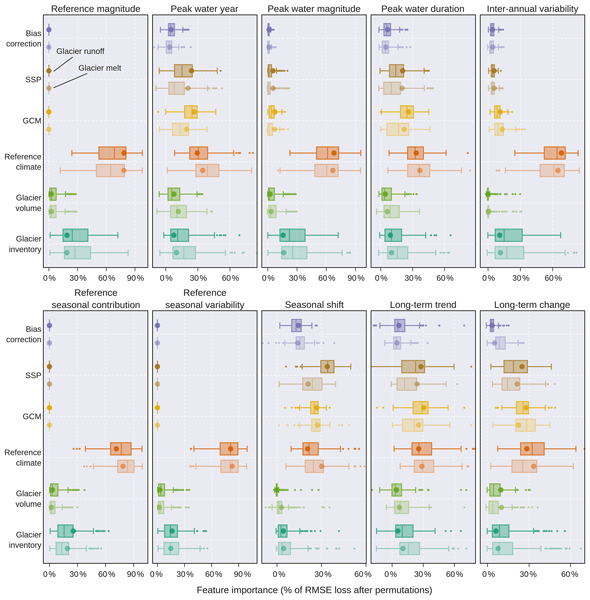
Predicting how much water will come from glaciers in the future is a complex task, and there are many factors that make it uncertain. Using a glacier model, we explored 1920 scenarios for each glacier in the Patagonian Andes. We found that the choice of the historical climate data was the most important factor, while other factors such as different data sources, climate models and emission scenarios played a smaller role.

Tomás Carrasco-Escaff, Maisa Rojas, René Darío Garreaud, Deniz Bozkurt, and Marius Schaefer
The Cryosphere, 17, 1127–1149, https://doi.org/10.5194/tc-17-1127-2023, https://doi.org/10.5194/tc-17-1127-2023, 2023
Short summary
Short summary
In this study, we investigate the interplay between climate and the Patagonian Icefields. By modeling the glacioclimatic conditions of the southern Andes, we found that the annual variations in net surface mass change experienced by these icefields are mainly controlled by annual variations in the air pressure field observed near the Drake Passage. Little dependence on main modes of variability was found, suggesting the Drake Passage as a key region for understanding the Patagonian Icefields.
Iván Latorre, Marius Schaefer, and Felix Oesterle
EGUsphere, https://doi.org/10.5194/egusphere-2026-3951, https://doi.org/10.5194/egusphere-2026-3951, 2026
Short summary
Short summary
Route 115-CH, a mountain pass between Chile and Argentina, closes every winter for snow and avalanches, yet no study had mapped where avalanches actually reach the road. Using the open-source AvaFrame model and public data, we simulated 208 avalanche paths along 61 km. Most road crossings face destructive impact pressures, and avalanches arrive in under a minute, too fast to evacuate. Six short segments concentrate the hazard, showing where protection or preventive closures would help most.
Oskar Herrmann, Veena Prasad, Anna Zöller, Alexander R. Groos, Samuel Cook, Christian Sommer, and Johannes J. Fürst
The Cryosphere, 20, 3817–3825, https://doi.org/10.5194/tc-20-3817-2026, https://doi.org/10.5194/tc-20-3817-2026, 2026
Short summary
Short summary
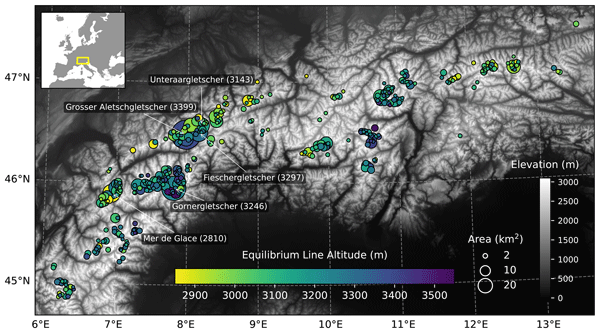
Glaciers in the European Alps are shrinking rapidly because of climate change. We developed a new open-source method that combines satellite observations with computer models to estimate where glaciers gain and lose ice. Applied to hundreds of glaciers, the results agree well with field measurements. This approach improves our understanding of glacier change and helps make more reliable predictions of their future.
Lucía Gutiérrez-González, Ilaria Tabone, Alexander Robinson, Jorge Álvarez-Solas, Jan Swierczek-Jereczek, Britta Grusdt, and Marisa Montoya
EGUsphere, https://doi.org/10.5194/egusphere-2026-3331, https://doi.org/10.5194/egusphere-2026-3331, 2026
Short summary
Short summary
The last deglaciation offers insights into ice-climate interactions, as paleoclimatic records document the retreat of ice sheets through a period of major climate changes. However, current ice-sheet models have difficulties reproducing key aspects of the Greenland Ice Sheet evolution. We present a new reconstruction based on an ensemble of 3000 simulations evaluated against observational constraints, improving upon previous studies, and we identify the parameters controlling model performance.
Christian Sommer, Alexander Raphael Groos, Johannes Fürst, and Matthias Braun
Earth Syst. Sci. Data Discuss., https://doi.org/10.5194/essd-2026-35, https://doi.org/10.5194/essd-2026-35, 2026
Preprint under review for ESSD
Short summary
Short summary
Measurements of glacier snow line altitudes (transition between ice and snow) provide information to constrain surface mass balance modelling. This study presents a database of ~200,000 snow lines from glaciers in the European Alps (2000–2025). Exposed ice and snow are automatically classified using adaptive thresholding of surface reflectance in visible and infrared spectra. Since 2000, we observe an increase in late summer snow lines of ~150 m, indicating widespread melt at high altitudes.
Veena Prasad, Oskar Herrmann, Ilaria Tabone, Mamta K C, Alexander R. Groos, Guillaume Jouvet, James R. Jordan, and Johannes J. Fürst
EGUsphere, https://doi.org/10.5194/egusphere-2026-508, https://doi.org/10.5194/egusphere-2026-508, 2026
Short summary
Short summary
We present the testing and implementation of a calving framework for simulating the evolution of glacier fronts in grounded glacier tongues. The approach is coupled with a level set method to track changes in the glacier front over time and with an eigen-calving law that allows calving to respond to ice flow and stress conditions. The framework is evaluated using a synthetic glacier domain and, when applied to marine-terminating glaciers in Svalbard, reproduces observed calving front patterns.

Lucía Gutiérrez-González, Alexander Robinson, Jorge Alvarez-Solas, Ilaria Tabone, Jan Swierczek-Jereczek, Daniel Moreno-Parada, and Marisa Montoya
The Cryosphere, 20, 1139–1162, https://doi.org/10.5194/tc-20-1139-2026, https://doi.org/10.5194/tc-20-1139-2026, 2026
Short summary
Short summary
The Greenland ice sheet is considered a tipping element: if temperatures exceed its threshold, it would transition to a virtually ice-free state and the ice losses could be irreversible on very long timescales. We study its stability across the full range of glacial-interglacial temperatures, as well as those expected in coming centuries. We find a future critical threshold between 1.5-2ºC of global warming, another under colder climates, and persistent hysteresis across the full range of study.
Vijaya Kumar Thota, Thorsten Seehaus, Friedrich Knuth, Amaury Dehecq, Christian Salewski, David Farías-Barahona, and Matthias H. Braun
Earth Syst. Sci. Data, 18, 597–615, https://doi.org/10.5194/essd-18-597-2026, https://doi.org/10.5194/essd-18-597-2026, 2026
Short summary
Short summary
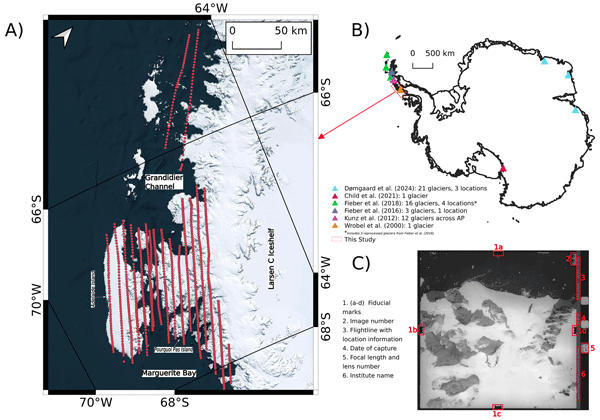
We reconstruct historical topography for a rapidly warming Antarctic region with limited existing data. Using approximately 2000 aerial photographs from the year 1989 over the western Antarctic Peninsula and nearby islands, we created detailed elevation models and orthoimages that have high accuracy compared to recent satellite data. This open dataset aids tracking historical ice loss and its role in sea level rise.
Moritz Koch, Jorge Berkhoff, Norbert Blindow, David Farías-Barahona, Pedro Skvarca, Johannes J. Fürst, and Matthias Braun
Earth Syst. Sci. Data Discuss., https://doi.org/10.5194/essd-2025-678, https://doi.org/10.5194/essd-2025-678, 2026
Preprint under review for ESSD
Short summary
Short summary
The Southern Patagonian Icefield is losing glacier area and ice volume rapidly. Although its glaciers share the same plateau, they retreat at different speeds and times. One reason for these differences lies in the unknown landscape beneath the ice. To reveal it, we used helicopter-based radar to measure the ice thickness and map the bedrock of Viedma, Upsala, and Perito Moreno Glaciers.
Marcel Dreier, Moritz Koch, Nora Gourmelon, Norbert Blindow, Daniel Steinhage, Fei Wu, Thorsten Seehaus, Matthias Braun, Andreas Maier, and Vincent Christlein
The Cryosphere, 19, 5337–5359, https://doi.org/10.5194/tc-19-5337-2025, https://doi.org/10.5194/tc-19-5337-2025, 2025
Short summary
Short summary
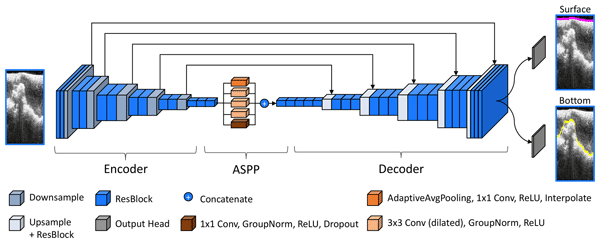
In this paper, we present a ready-to-use benchmark dataset to train machine learning approaches for detecting ice thickness from radar data. It includes radargrams of glaciers and ice sheets alongside annotations for their air–ice and ice–bedrock boundary. Furthermore, we introduce a baseline model and evaluate the influence of several geographical and glaciological factors on the performance of our model.
Johanna Beckmann, Ronja Reese, Felicity S. McCormack, Sue Cook, Lawrence Bird, Dawid Gwyther, Daniel Richards, Matthias Scheiter, Yu Wang, Hélène Seroussi, Ayako Abe‐Ouchi, Torsten Albrecht, Jorge Alvarez‐Solas, Xylar S. Asay‐Davis, Jean‐Baptiste Barre, Constantijn J. Berends, Jorge Bernales, Javier Blasco, Justine Caillet, David M. Chandler, Violaine Coulon, Richard Cullather, Christophe Dumas, Benjamin K. Galton‐Fenzi, Julius Garbe, Fabien Gillet‐Chaulet, Rupert Gladstone, Heiko Goelzer, Nicholas R. Golledge, Ralf Greve, G. Hilmar Gudmundsson, Holly Kyeore Han, Trevor R. Hillebrand, Matthew J. Hoffman, Philippe Huybrechts, Nicolas C. Jourdain, Ann Kristin Klose, Petra M. Langebroek, Gunter R. Leguy, William H. Lipscomb, Daniel P. Lowry, Pierre Mathiot, Marisa Montoya, Mathieu Morlighem, Sophie Nowicki, Frank Pattyn, Antony J. Payne, Tyler Pelle, Aurélien Quiquet, Alexander Robinson, Leopekka Saraste, Erika G. Simon, Sainan Sun, Jake P. Twarog, Luke D. Trusel, Benoit Urruty, Jonas Van Breedam, Roderik S. W. van de Wal, Chen Zhao, and Thomas Zwinger
EGUsphere, https://doi.org/10.5194/egusphere-2025-4069, https://doi.org/10.5194/egusphere-2025-4069, 2025
Short summary
Short summary
Antarctica holds enough ice to raise sea levels by many meters, but its future is uncertain. Warm ocean water melts ice shelves from below, letting inland ice flow faster into the sea. By 2300, Antarctica could add 0.6–4.4 m to sea levels. Our study identifies two key factors—how strongly shelves melt and how the ice responds. These explain much of the range, and refining them in models may improve future predictions.
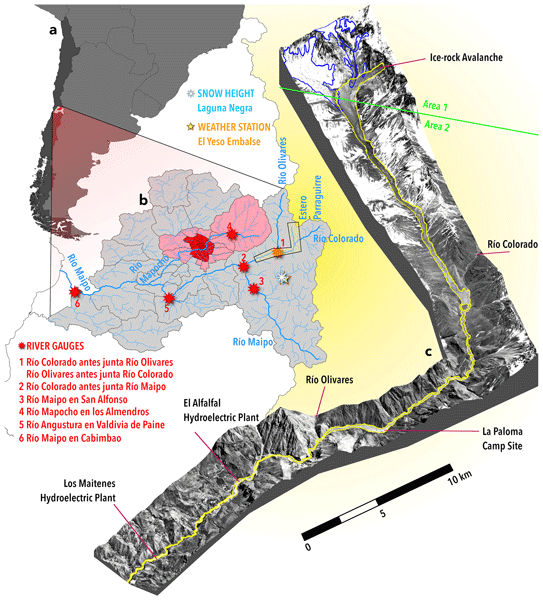
Johannes J. Fürst, David Farías-Barahona, Thomas Bruckner, Lucia Scaff, Martin Mergili, Santiago Montserrat, and Humberto Peña
Nat. Hazards Earth Syst. Sci., 25, 3559–3579, https://doi.org/10.5194/nhess-25-3559-2025, https://doi.org/10.5194/nhess-25-3559-2025, 2025
Short summary
Short summary
The 1987 Parraguirre ice–rock avalanche developed into a devastating debris flow, causing the loss of many lives and inflicting severe damage near Santiago, Chile. Here, we revise this event, combining various observational records with modelling techniques. In that year, important snow cover coincided with persistent warm periods in spring. We also put forward upward corrections for the trigger and flood volumes involved in this debris flow. Finally, temporary river damming was key for the flow ferocity.
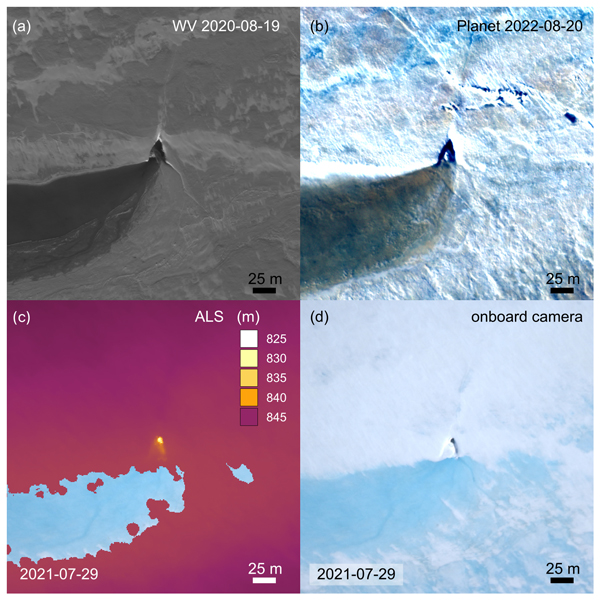
Angelika Humbert, Veit Helm, Ole Zeising, Niklas Neckel, Matthias H. Braun, Shfaqat Abbas Khan, Martin Rückamp, Holger Steeb, Julia Sohn, Matthias Bohnen, and Ralf Müller
The Cryosphere, 19, 3009–3032, https://doi.org/10.5194/tc-19-3009-2025, https://doi.org/10.5194/tc-19-3009-2025, 2025
Short summary
Short summary
We study the evolution of a massive lake on the Greenland Ice Sheet using satellite and airborne data and some modelling. The lake is emptying rapidly. Water flows to the glacier's base through cracks and triangular-shaped moulins that remain visible over the years. Some of them become reactivated. We find features inside the glacier that stem from drainage events with a width of even 1 km. These features are persistent over the years, although they are changing in shape.
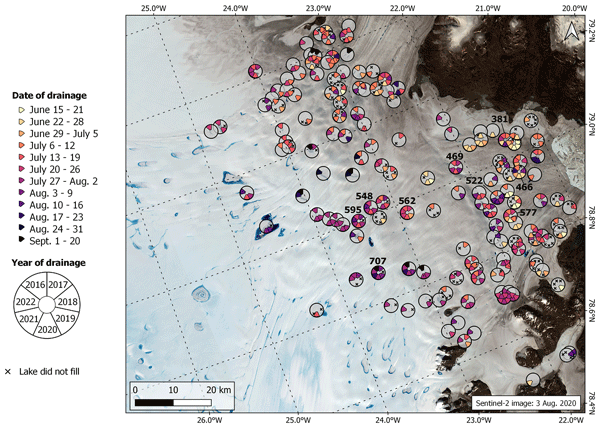
Katrina Lutz, Ilaria Tabone, Angelika Humbert, and Matthias Braun
The Cryosphere, 19, 2601–2614, https://doi.org/10.5194/tc-19-2601-2025, https://doi.org/10.5194/tc-19-2601-2025, 2025
Short summary
Short summary
Supraglacial lakes develop from meltwater collecting on the surface of glaciers. These lakes can drain rapidly, discharging meltwater to the glacier bed. In this study, we assess the spatial and temporal distribution of rapid drainages in Northeast Greenland using optical satellite images. After comparing rapid drainage occurrence with several environmental and geophysical parameters, little indication of the influencing conditions for a rapid drainage was found.
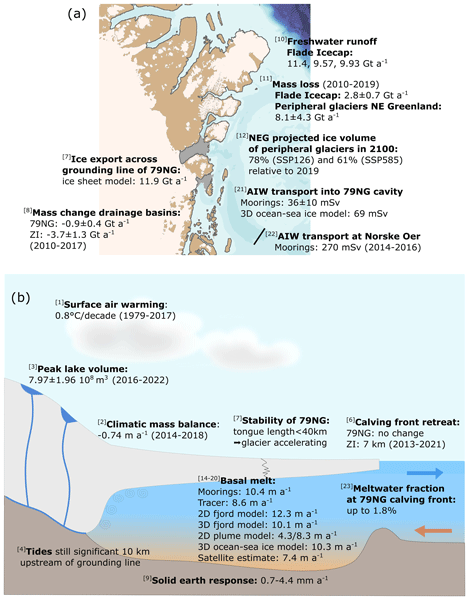
Torsten Kanzow, Angelika Humbert, Thomas Mölg, Mirko Scheinert, Matthias Braun, Hans Burchard, Francesca Doglioni, Philipp Hochreuther, Martin Horwath, Oliver Huhn, Maria Kappelsberger, Jürgen Kusche, Erik Loebel, Katrina Lutz, Ben Marzeion, Rebecca McPherson, Mahdi Mohammadi-Aragh, Marco Möller, Carolyne Pickler, Markus Reinert, Monika Rhein, Martin Rückamp, Janin Schaffer, Muhammad Shafeeque, Sophie Stolzenberger, Ralph Timmermann, Jenny Turton, Claudia Wekerle, and Ole Zeising
The Cryosphere, 19, 1789–1824, https://doi.org/10.5194/tc-19-1789-2025, https://doi.org/10.5194/tc-19-1789-2025, 2025
Short summary
Short summary
The Greenland Ice Sheet represents the second-largest contributor to global sea-level rise. We quantify atmosphere, ice and ocean processes related to the mass balance of glaciers in northeast Greenland, focusing on Greenland’s largest floating ice tongue, the 79° N Glacier. We find that together, the different in situ and remote sensing observations and model simulations reveal a consistent picture of a coupled atmosphere–ice sheet–ocean system that has entered a phase of major change.
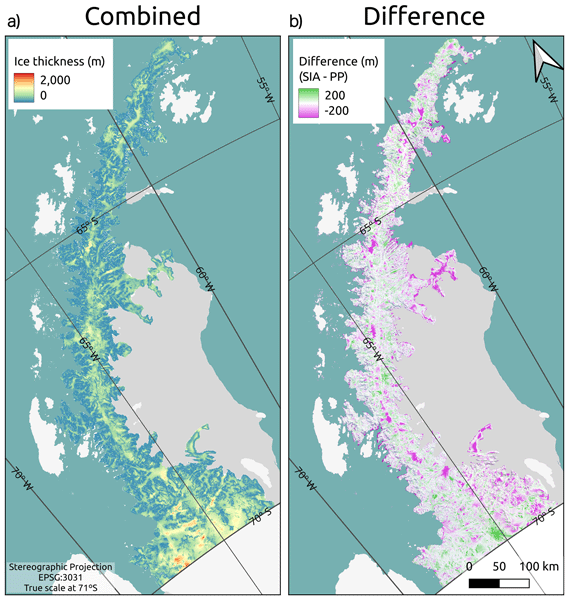
Kaian Shahateet, Johannes J. Fürst, Francisco Navarro, Thorsten Seehaus, Daniel Farinotti, and Matthias Braun
The Cryosphere, 19, 1577–1597, https://doi.org/10.5194/tc-19-1577-2025, https://doi.org/10.5194/tc-19-1577-2025, 2025
Short summary
Short summary
In the present work, we provide a new ice thickness reconstruction of the Antarctic Peninsula Ice Sheet north of 70º S using inversion modeling. This model consists of two steps: the first uses basic assumptions of the rheology of the glacier, and the second uses mass conservation to improve the reconstruction where the assumptions made previously are expected to fail. Validation with independent data showed that our reconstruction improved compared to other reconstructions that are available.
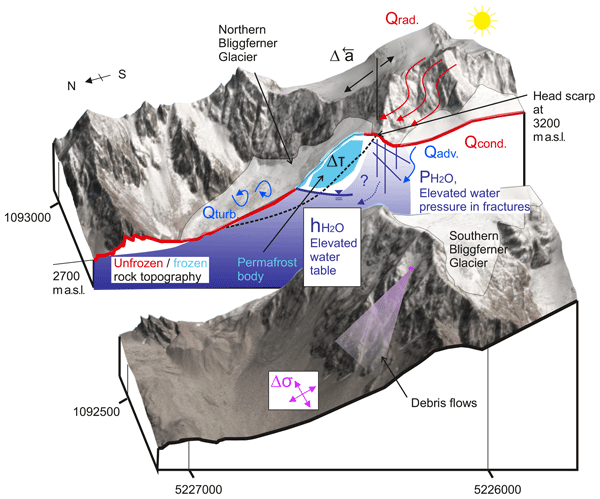
Felix Pfluger, Samuel Weber, Joseph Steinhauser, Christian Zangerl, Christine Fey, Johannes Fürst, and Michael Krautblatter
Earth Surf. Dynam., 13, 41–70, https://doi.org/10.5194/esurf-13-41-2025, https://doi.org/10.5194/esurf-13-41-2025, 2025
Short summary
Short summary
Our study explores permafrost–glacier interactions with a focus on their implications for preparing or triggering high-volume rock slope failures. Using the Bliggspitze rock slide as a case study, we demonstrate a new type of rock slope failure mechanism triggered by the uplift of the cold–warm dividing line in polythermal alpine glaciers, a widespread and currently under-explored phenomenon in alpine environments worldwide.
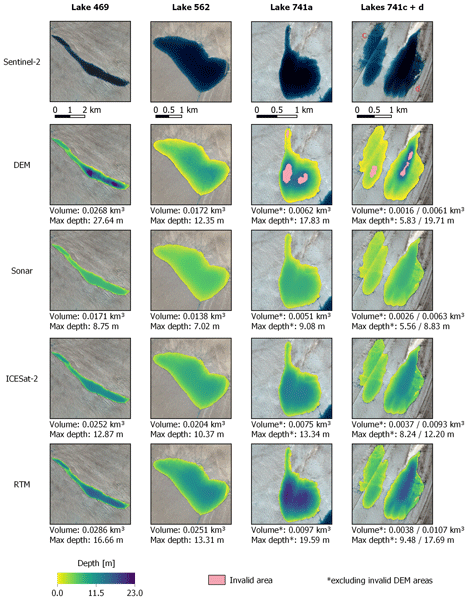
Katrina Lutz, Lily Bever, Christian Sommer, Thorsten Seehaus, Angelika Humbert, Mirko Scheinert, and Matthias Braun
The Cryosphere, 18, 5431–5449, https://doi.org/10.5194/tc-18-5431-2024, https://doi.org/10.5194/tc-18-5431-2024, 2024
Short summary
Short summary
The estimation of the amount of water found within supraglacial lakes is important for understanding how much water is lost from glaciers each year. Here, we develop two new methods for estimating supraglacial lake volume that can be easily applied on a large scale. Furthermore, we compare these methods to two previously developed methods in order to determine when it is best to use each method. Finally, three of these methods are applied to peak melt dates over an area in Northeast Greenland.
Rodrigo Aguayo, Fabien Maussion, Lilian Schuster, Marius Schaefer, Alexis Caro, Patrick Schmitt, Jonathan Mackay, Lizz Ultee, Jorge Leon-Muñoz, and Mauricio Aguayo
The Cryosphere, 18, 5383–5406, https://doi.org/10.5194/tc-18-5383-2024, https://doi.org/10.5194/tc-18-5383-2024, 2024
Short summary
Short summary
Predicting how much water will come from glaciers in the future is a complex task, and there are many factors that make it uncertain. Using a glacier model, we explored 1920 scenarios for each glacier in the Patagonian Andes. We found that the choice of the historical climate data was the most important factor, while other factors such as different data sources, climate models and emission scenarios played a smaller role.
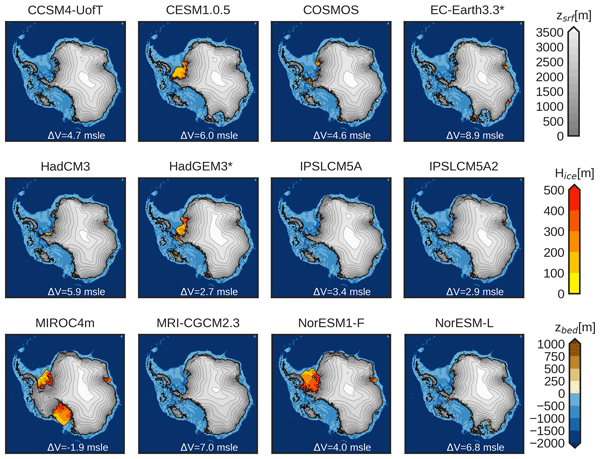
Javier Blasco, Ilaria Tabone, Daniel Moreno-Parada, Alexander Robinson, Jorge Alvarez-Solas, Frank Pattyn, and Marisa Montoya
Clim. Past, 20, 1919–1938, https://doi.org/10.5194/cp-20-1919-2024, https://doi.org/10.5194/cp-20-1919-2024, 2024
Short summary
Short summary
In this study, we assess Antarctic tipping points which may had been crossed during the mid-Pliocene Warm Period. For this, we use data from the PlioMIP2 ensemble. Additionally, we investigate various sources of uncertainty, like ice dynamics and bedrock configuration. Our research significantly enhances our comprehension of Antarctica's response to a warming climate, shedding light on potential future tipping points that may be surpassed.
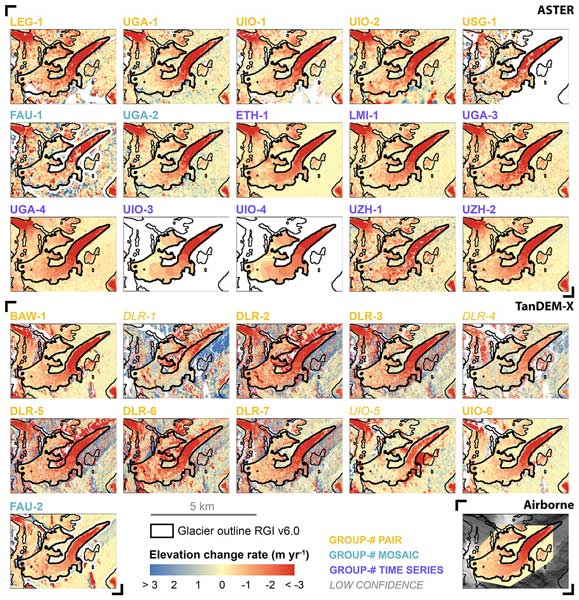
Livia Piermattei, Michael Zemp, Christian Sommer, Fanny Brun, Matthias H. Braun, Liss M. Andreassen, Joaquín M. C. Belart, Etienne Berthier, Atanu Bhattacharya, Laura Boehm Vock, Tobias Bolch, Amaury Dehecq, Inés Dussaillant, Daniel Falaschi, Caitlyn Florentine, Dana Floricioiu, Christian Ginzler, Gregoire Guillet, Romain Hugonnet, Matthias Huss, Andreas Kääb, Owen King, Christoph Klug, Friedrich Knuth, Lukas Krieger, Jeff La Frenierre, Robert McNabb, Christopher McNeil, Rainer Prinz, Louis Sass, Thorsten Seehaus, David Shean, Désirée Treichler, Anja Wendt, and Ruitang Yang
The Cryosphere, 18, 3195–3230, https://doi.org/10.5194/tc-18-3195-2024, https://doi.org/10.5194/tc-18-3195-2024, 2024
Short summary
Short summary
Satellites have made it possible to observe glacier elevation changes from all around the world. In the present study, we compared the results produced from two different types of satellite data between different research groups and against validation measurements from aeroplanes. We found a large spread between individual results but showed that the group ensemble can be used to reliably estimate glacier elevation changes and related errors from satellite data.
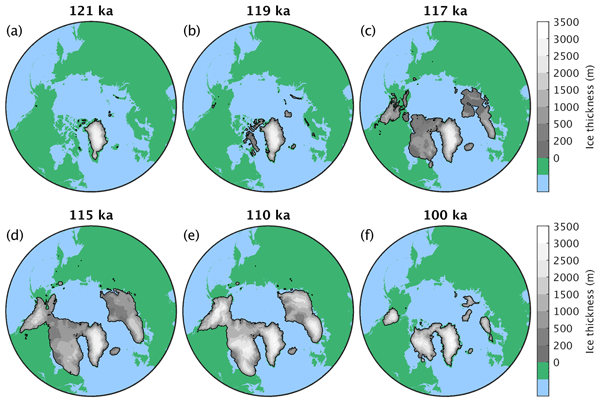
Matteo Willeit, Reinhard Calov, Stefanie Talento, Ralf Greve, Jorjo Bernales, Volker Klemann, Meike Bagge, and Andrey Ganopolski
Clim. Past, 20, 597–623, https://doi.org/10.5194/cp-20-597-2024, https://doi.org/10.5194/cp-20-597-2024, 2024
Short summary
Short summary
We present transient simulations of the last glacial inception with the coupled climate–ice sheet model CLIMBER-X showing a rapid increase in Northern Hemisphere ice sheet area and a sea level drop by ~ 35 m, with the vegetation feedback playing a key role. Overall, our simulations confirm and refine previous results showing that climate-vegetation–cryosphere–carbon cycle feedbacks play a fundamental role in the transition from interglacial to glacial states.
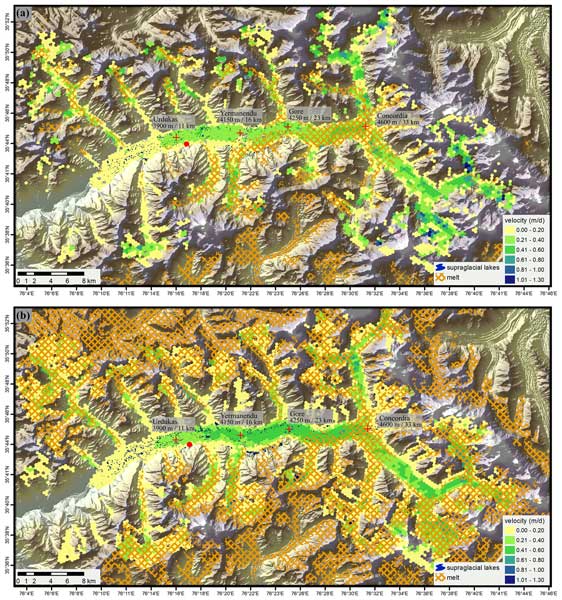
Anna Wendleder, Jasmin Bramboeck, Jamie Izzard, Thilo Erbertseder, Pablo d'Angelo, Andreas Schmitt, Duncan J. Quincey, Christoph Mayer, and Matthias H. Braun
The Cryosphere, 18, 1085–1103, https://doi.org/10.5194/tc-18-1085-2024, https://doi.org/10.5194/tc-18-1085-2024, 2024
Short summary
Short summary
This study analyses the basal sliding and the hydrological drainage of Baltoro Glacier, Pakistan. The surface velocity was characterized by a spring speed-up, summer peak, and autumn speed-up. Snow melt has the largest impact on the spring speed-up, summer velocity peak, and the transition from inefficient to efficient drainage. Drainage from supraglacial lakes contributed to the fall speed-up. Increased summer temperatures will intensify the magnitude of meltwater and thus surface velocities.
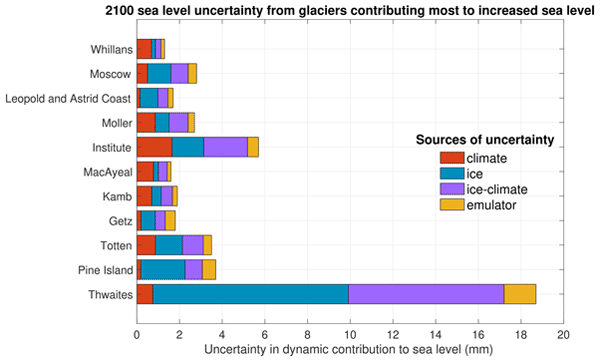
Hélène Seroussi, Vincent Verjans, Sophie Nowicki, Antony J. Payne, Heiko Goelzer, William H. Lipscomb, Ayako Abe-Ouchi, Cécile Agosta, Torsten Albrecht, Xylar Asay-Davis, Alice Barthel, Reinhard Calov, Richard Cullather, Christophe Dumas, Benjamin K. Galton-Fenzi, Rupert Gladstone, Nicholas R. Golledge, Jonathan M. Gregory, Ralf Greve, Tore Hattermann, Matthew J. Hoffman, Angelika Humbert, Philippe Huybrechts, Nicolas C. Jourdain, Thomas Kleiner, Eric Larour, Gunter R. Leguy, Daniel P. Lowry, Chistopher M. Little, Mathieu Morlighem, Frank Pattyn, Tyler Pelle, Stephen F. Price, Aurélien Quiquet, Ronja Reese, Nicole-Jeanne Schlegel, Andrew Shepherd, Erika Simon, Robin S. Smith, Fiammetta Straneo, Sainan Sun, Luke D. Trusel, Jonas Van Breedam, Peter Van Katwyk, Roderik S. W. van de Wal, Ricarda Winkelmann, Chen Zhao, Tong Zhang, and Thomas Zwinger
The Cryosphere, 17, 5197–5217, https://doi.org/10.5194/tc-17-5197-2023, https://doi.org/10.5194/tc-17-5197-2023, 2023
Short summary
Short summary
Mass loss from Antarctica is a key contributor to sea level rise over the 21st century, and the associated uncertainty dominates sea level projections. We highlight here the Antarctic glaciers showing the largest changes and quantify the main sources of uncertainty in their future evolution using an ensemble of ice flow models. We show that on top of Pine Island and Thwaites glaciers, Totten and Moscow University glaciers show rapid changes and a strong sensitivity to warmer ocean conditions.
Oskar Herrmann, Nora Gourmelon, Thorsten Seehaus, Andreas Maier, Johannes J. Fürst, Matthias H. Braun, and Vincent Christlein
The Cryosphere, 17, 4957–4977, https://doi.org/10.5194/tc-17-4957-2023, https://doi.org/10.5194/tc-17-4957-2023, 2023
Short summary
Short summary
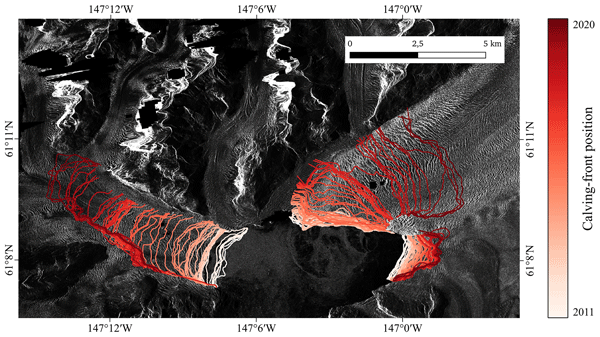
Delineating calving fronts of marine-terminating glaciers in satellite images is a labour-intensive task. We propose a method based on deep learning that automates this task. We choose a deep learning framework that adapts to any given dataset without needing deep learning expertise. The method is evaluated on a benchmark dataset for calving-front detection and glacier zone segmentation. The framework can beat the benchmark baseline without major modifications.
Alexandra M. Zuhr, Erik Loebel, Marek Muchow, Donovan Dennis, Luisa von Albedyll, Frigga Kruse, Heidemarie Kassens, Johanna Grabow, Dieter Piepenburg, Sören Brandt, Rainer Lehmann, Marlene Jessen, Friederike Krüger, Monika Kallfelz, Andreas Preußer, Matthias Braun, Thorsten Seehaus, Frank Lisker, Daniela Röhnert, and Mirko Scheinert
Polarforschung, 91, 73–80, https://doi.org/10.5194/polf-91-73-2023, https://doi.org/10.5194/polf-91-73-2023, 2023
Short summary
Short summary
Polar research is an interdisciplinary and multi-faceted field of research. Its diversity ranges from history to geology and geophysics to social sciences and education. This article provides insights into the different areas of German polar research. This was made possible by a seminar series, POLARSTUNDE, established in the summer of 2020 and organized by the German Society of Polar Research and the German National Committee of the Association of Polar Early Career Scientists (APECS Germany).
Franziska Temme, David Farías-Barahona, Thorsten Seehaus, Ricardo Jaña, Jorge Arigony-Neto, Inti Gonzalez, Anselm Arndt, Tobias Sauter, Christoph Schneider, and Johannes J. Fürst
The Cryosphere, 17, 2343–2365, https://doi.org/10.5194/tc-17-2343-2023, https://doi.org/10.5194/tc-17-2343-2023, 2023
Short summary
Short summary
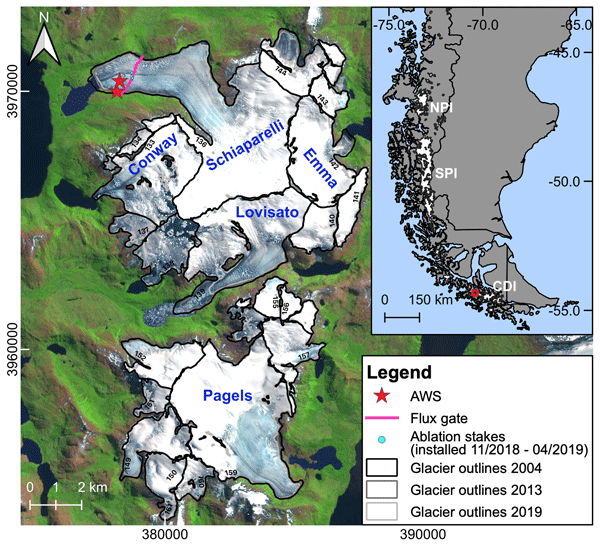
Calibration of surface mass balance (SMB) models on regional scales is challenging. We investigate different calibration strategies with the goal of achieving realistic simulations of the SMB in the Monte Sarmiento Massif, Tierra del Fuego. Our results show that the use of regional observations from satellite data can improve the model performance. Furthermore, we compare four melt models of different complexity to understand the benefit of increasing the processes considered in the model.
Christian Sommer, Johannes J. Fürst, Matthias Huss, and Matthias H. Braun
The Cryosphere, 17, 2285–2303, https://doi.org/10.5194/tc-17-2285-2023, https://doi.org/10.5194/tc-17-2285-2023, 2023
Short summary
Short summary
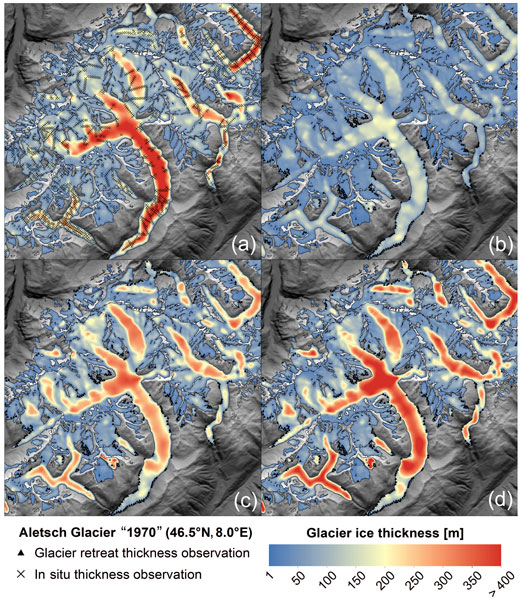
Knowledge on the volume of glaciers is important to project future runoff. Here, we present a novel approach to reconstruct the regional ice thickness distribution from easily available remote-sensing data. We show that past ice thickness, derived from spaceborne glacier area and elevation datasets, can constrain the estimated ice thickness. Based on the unique glaciological database of the European Alps, the approach will be most beneficial in regions without direct thickness measurements.
Tomás Carrasco-Escaff, Maisa Rojas, René Darío Garreaud, Deniz Bozkurt, and Marius Schaefer
The Cryosphere, 17, 1127–1149, https://doi.org/10.5194/tc-17-1127-2023, https://doi.org/10.5194/tc-17-1127-2023, 2023
Short summary
Short summary
In this study, we investigate the interplay between climate and the Patagonian Icefields. By modeling the glacioclimatic conditions of the southern Andes, we found that the annual variations in net surface mass change experienced by these icefields are mainly controlled by annual variations in the air pressure field observed near the Drake Passage. Little dependence on main modes of variability was found, suggesting the Drake Passage as a key region for understanding the Patagonian Icefields.
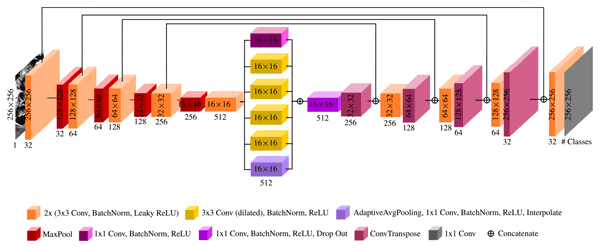
Nora Gourmelon, Thorsten Seehaus, Matthias Braun, Andreas Maier, and Vincent Christlein
Earth Syst. Sci. Data, 14, 4287–4313, https://doi.org/10.5194/essd-14-4287-2022, https://doi.org/10.5194/essd-14-4287-2022, 2022
Short summary
Short summary
Ice loss of glaciers shows in retreating calving fronts (i.e., the position where icebergs break off the glacier and drift into the ocean). This paper presents a benchmark dataset for calving front delineation in synthetic aperture radar (SAR) images. The dataset can be used to train and test deep learning techniques, which automate the monitoring of the calving front. Provided example models achieve front delineations with an average distance of 887 m to the correct calving front.
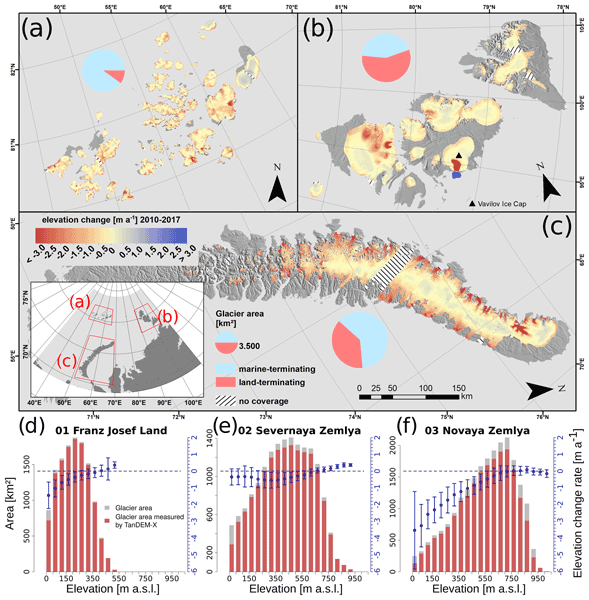
Christian Sommer, Thorsten Seehaus, Andrey Glazovsky, and Matthias H. Braun
The Cryosphere, 16, 35–42, https://doi.org/10.5194/tc-16-35-2022, https://doi.org/10.5194/tc-16-35-2022, 2022
Short summary
Short summary
Arctic glaciers have been subject to extensive warming due to global climate change, yet their contribution to sea level rise has been relatively small in the past. In this study we provide mass changes of most glaciers of the Russian High Arctic (Franz Josef Land, Severnaya Zemlya, Novaya Zemlya). We use TanDEM-X satellite measurements to derive glacier surface elevation changes. Our results show an increase in glacier mass loss and a sea level rise contribution of 0.06 mm/a (2010–2017).
Cited articles
Aguayo, R., Maussion, F., Schuster, L., Schaefer, M., Caro, A., Schmitt, P., Mackay, J., Ultee, L., Leon-Muñoz, J., and Aguayo, M.: Unravelling the sources of uncertainty in glacier runoff projections in the Patagonian Andes (40–56° S), The Cryosphere, 18, 5383–5406, https://doi.org/10.5194/tc-18-5383-2024, 2024. a, b, c, d, e
Barcaza, G., Nussbaumer, S. U., Tapia, G., Valdés, J., García, J.-L., Videla, Y., Albornoz, A., and Arias, V.: Glacier inventory and recent glacier variations in the Andes of Chile, South America, Ann. Glaciol., 58, 166–180, 2017. a
Bernales, J., Rogozhina, I., Greve, R., and Thomas, M.: Comparison of hybrid schemes for the combination of shallow approximations in numerical simulations of the Antarctic Ice Sheet, The Cryosphere, 11, 247–265, https://doi.org/10.5194/tc-11-247-2017, 2017. a
Blatter, H. and Greve, R.: Comparison and verification of enthalpy schemes for polythermal glaciers and ice sheets with a one-dimensional model, Polar Sci., 9, 196–207, https://doi.org/10.1016/j.polar.2015.04.001, 2015. a
Blindow, N., Salat, C., and Casassa, G.: Airborne GPR sounding of deep temperate glaciers – examples from the Northern Patagonian Icefield, in: Proceedings of the 14th International Conference on Ground Penetrating Radar (GPR2012), Tongji University, Shanghai, China, 4–8 June 2012, https://doi.org/10.1109/ICGPR.2012.6254945, 2012a. a, b
Bravo, C., Bozkurt, D., Ross, A. N., and Quincey, D. J.: Projected increases in surface melt and ice loss for the Northern and Southern Patagonian Icefields, Scientific Reports, 11, 16847, https://doi.org/10.1038/s41598-021-95725-w, 2021. a, b
Casassa, G.: Ice thickness deduced from gravity anomalies on Soler Glacier, Nef Glacier and the Northern Patagonian Icefield, Bulletin of Glacier Research, 4, 43–57, https://web.seppyo.org/bgr/pdf/4/BGR4P43.PDF (last access: 2 September 2026), 1987. a
Collao-Barrios, G., Gillet-Chaulet, F., Favier, V., Casassa, G., Berthier, E., Dussaillant, I., Mouginot, J., and Rignot, E.: Ice flow modelling to constrain the surface mass balance and ice discharge of San Rafael Glacier, Northern Patagonia Icefield, J. Glaciol., 64, 568–582, https://doi.org/10.1017/jog.2018.46, 2018. a, b, c, d
Dunse, T., Greve, R., Schuler, T. V., and Hagen, J. O.: Permanent fast flow versus cyclic surge behaviour: numerical simulations of the Austfonna ice cap, Svalbard, J. Glaciol., 57, 247–259, https://doi.org/10.3189/002214311796405979, 2011. a
Farr, T. G. and Kobrick, M.: Shuttle radar topography mission produces a wealth of data, Eos, Transactions American Geophysical Union, 81, 583–585, https://doi.org/10.1029/EO081i048p00583, 2000. a
Friedl, P., Seehaus, T., and Braun, M.: Global time series and temporal mosaics of glacier surface velocities derived from Sentinel-1 data, Earth Syst. Sci. Data, 13, 4653–4675, https://doi.org/10.5194/essd-13-4653-2021, 2021. a, b, c
Fürst, J. J., Farías-Barahona, D., Blindow, N., Casassa, G., Gacitúa, G., Koppes, M., Lodolo, E., Millan, R., Minowa, M., Mouginot, J., Pȩtlicki, M., Rignot, E., Rivera, A., Skvarca, P., Stuefer, M., Sugiyama, S., Uribe, J., Zamora, R., Braun, M. H., Gillet-Chaulet, F., Malz, P., Meier, W. J.-H., and Schaefer, M.: The foundations of the Patagonian icefields, Communications Earth & Environment, 5, 142, https://doi.org/10.1038/s43247-023-01193-7, 2024. a, b, c, d, e, f, g, h
Glasser, N., Harrison, S., Jansson, K., Anderson, K., and Cowley, A.: Global sea-level contribution from the Patagonian Icefields since the Little Ice Age maximum, Nat. Geosci., 4, 303–307, 2011. a
Gourlet, P., Rignot, E., Rivera, A., and Casassa, G.: Ice thickness of the northern half of the Patagonia Icefields of South America from high-resolution airborne gravity surveys, Geophys. Res. Lett., 43, 241–249, https://doi.org/10.1002/2015GL066728, 2016. a
Greve, R.: A continuum-mechanical formulation for shallow polythermal ice sheets, Philos. T. R. Soc. A, 355, 921–974, https://doi.org/10.1098/rsta.1997.0050, 1997a. a
Greve, R.: Application of a polythermal three-dimensional ice sheet model to the Greenland ice sheet: Response to steady-state and transient climate scenarios, J. Climate, 10, 901–918, https://doi.org/10.1175/1520-0442(1997)010<0901:AOAPTD>2.0.CO;2, 1997b. a
Greve, R. and Blatter, H.: Dynamics of Ice Sheets and Glaciers, Springer Dordrecht Heidelberg London New York, https://doi.org/10.1007/978-3-642-03415-2, 2009. a
Greve, R. and Blatter, H.: Comparison of thermodynamics solvers in the polythermal ice sheet model SICOPOLIS, Polar Sci., 10, 11–23, https://doi.org/10.1016/j.polar.2015.12.004, 2016. a
Greve, R., Calov, R., Obase, T., Saito, F., Tsutaki, S., and Abe-Ouchi, A.: ISMIP6 future projections for the Antarctic ice sheet with the model SICOPOLIS, Technical report, Zenodo, https://doi.org/10.5281/zenodo.3971232, 2020. a
Hamza, V. M. and Muñoz, M.: Heat flow map of South America, Geothermics, 25, 599–646, https://doi.org/10.1016/S0375-6505(96)00025-9, 1996. a
Huss, M. and Hock, R.: A new model for global glacier change and sea-level rise, Frontiers in Earth Science, 3, 54, https://doi.org/10.3389/feart.2015.00054, 2015. a
Koppes, M., Sylwester, R., Rivera, A., and Hallet, B.: Variations in sediment yield over the advance and retreat of a calving glacier, Laguna San Rafael, North Patagonian Icefield, Quaternary Res., 73, 84–95, https://doi.org/10.1016/j.yqres.2009.07.006, 2010. a
Koppes, M., Conway, H., Rasmussen, L. A., and Chernos, M.: Deriving mass balance and calving variations from reanalysis data and sparse observations, Glaciar San Rafael, northern Patagonia, 1950–2005, The Cryosphere, 5, 791–808, https://doi.org/10.5194/tc-5-791-2011, 2011. a
Le Brocq, A. M., Payne, A. J., and Siegert, M. J.: West Antarctic balance calculations: impact of flux-routing algorithm, smoothing algorithm and topography, Comput. Geosci., 32, 1780–1795, https://doi.org/10.1016/j.cageo.2006.05.003, 2006. a
Le Brocq, A. M., Payne, A. J., Siegert, M. J., and Alley, R. B.: A subglacial water-flow model for West Antarctica, J. Glaciol., 55, 879–888, https://doi.org/10.3189/002214309790152564, 2009. a
Lliboutry, L. and Duval, P.: Various isotropic and anisotropic ices found in glaciers and polar ice caps and their corresponding rheologies, Ann. Geophys., 3, 207–224, https://doi.org/10.1016/0148-9062(85)90267-0, 1985. a
Marzeion, B., Hock, R., Anderson, B., Bliss, A., Champollion, N., Fujita, K., Huss, M., Immerzeel, W. W., Kraaijenbrink, P., Malles, J.-H., Maussion, F., Radić, V., Rounce, D. R., Sakai, A., Shannon, S., van de Wal, R., and Zekollari, H.: Partitioning the uncertainty of ensemble projections of global glacier mass change, Earth's Future, 8, e2019EF001470, https://doi.org/10.1029/2019EF001470, 2020. a, b, c, d, e, f, g
Maussion, F., Butenko, A., Champollion, N., Dusch, M., Eis, J., Fourteau, K., Gregor, P., Jarosch, A. H., Landmann, J., Oesterle, F., Recinos, B., Rothenpieler, T., Vlug, A., Wild, C. T., and Marzeion, B.: The Open Global Glacier Model (OGGM) v1.1, Geosci. Model Dev., 12, 909–931, https://doi.org/10.5194/gmd-12-909-2019, 2019. a
Meier, W. J.-H., Grießinger, J., Hochreuther, P., and Braun, M. H.: An updated multi-temporal glacier inventory for the Patagonian Andes with changes between the Little Ice Age and 2016, Frontiers in Earth Science, 6, 62, https://doi.org/10.3389/feart.2018.00062, 2018. a, b
Millan, R., Rignot, E., Rivera, A., Martineau, V., Mouginot, J., Zamora, R., Uribe, J., Lenzano, G., De Fleurian, B., Li, X., Gim, Y., and Kirchner, D.: Ice thickness and bed elevation of the Northern and Southern Patagonian Icefields, Geophys. Res. Lett., 46, 6626–6635, https://doi.org/10.1029/2019GL082485, 2019. a, b
Minowa, M., Schaefer, M., Skarca, P., Matoba, S., and Gacitúa, G.: Glaciological traverse across the Southern Patagonian Icefield, Bulletin of Glaciological Research, 37, 47–56, 2019. a
Noël, B., Lhermitte, S., Wouters, B., and Fettweis, X.: Poleward shift of subtropical highs drives Patagonian glacier mass loss, Nat. Commun., 16, 3795, https://doi.org/10.1038/s41467-025-58974-1, 2025. a
Oerlemans, J.: Glaciers and Climate Change, A. A. Balkema Publishers, Lisse, Abingdon, Exton (PA), Tokyo, ISBN 9026518137, 2001. a
O'Neill, B. C., Tebaldi, C., van Vuuren, D. P., Eyring, V., Friedlingstein, P., Hurtt, G., Knutti, R., Kriegler, E., Lamarque, J.-F., Lowe, J., Meehl, G. A., Moss, R., Riahi, K., and Sanderson, B. M.: The Scenario Model Intercomparison Project (ScenarioMIP) for CMIP6, Geosci. Model Dev., 9, 3461–3482, https://doi.org/10.5194/gmd-9-3461-2016, 2016. a
Pętlicki, M., Rivera, A., Oberreuter, J., Uribe, J., Reinthaler, J., and Bown, F.: Frontal collapse of San Quintín glacier (Northern Patagonia Icefield), the last piedmont glacier lobe in the Andes, The Cryosphere Discuss. [preprint], https://doi.org/10.5194/tc-2023-10, 2023. a
RGI Consortium: Randolph Glacier Inventory (RGI) – A Dataset of Global Glacier Outlines: Version 6.0, GLIMS Technical Report, Global Land Ice Measurements from Space (GLIMS), Boulder, Colorado, USA, RGI Consortium [data set], https://doi.org/10.7265/N5-RGI-60, 2017. a, b
Rivera, A. I. (Ed.): Variaciones recientes de glaciares en respuesta al cambio climático: Características glaciológicas de los glaciares San Rafael, Nef y Colonia, Campo de Hielo Norte, S.I.T. No. 302, Centro de Estudios Científicos (CECSs) and Direccíon General de Aguas (DGA), Ministerio de Obras Públicas, Chile, https://bibliotecadigital.ciren.cl/items/03543f30-0ff7-4af9-a2a4-c73ae2b60e9e (last access: 2 September 2026), 2012. a
Roeckner, E., Bäuml, G., Bonaventura, L., Brokopf, R., Esch, M., Giorgetta, M., Hagemann, S., Kirchner, I., Kornblueh, L., Manzini, E., Rhodin, A., Schlese, U., Schulzweida, U., and Tompkins, A.: The atmospheric general circulation model ECHAM5 Part I, Tech. rep., Max-Planck-Institut für Meteorologie, https://docslib.org/doc/4530436/the-atmospheric-general-circulation-model-echam5 (last access: 2 September 2026), 2003. a
Rounce, D. R., Hock, R., Maussion, F., Hugonnet, R., Kochtitzky, W., Huss, M., Berthier, E., Brinkerhoff, D., Compagno, L., Copland, L., Farinotti, D., Menounos, B., and McNabb, R. W.: Global glacier change in the 21st century: Every increase in temperature matters, Science, 379, 78–83, https://doi.org/10.1126/science.abo1324, 2023. a
Schaefer, M. and Greve, R.: Projecting the evolution of the Northern Patagonian Icefield until the year 2200, Zenodo [data set], https://doi.org/10.5281/zenodo.22030287, 2026. a
Scheiter, M., Schaefer, M., Flández, E., Bozkurt, D., and Greve, R.: The 21st-century fate of the Mocho-Choshuenco ice cap in southern Chile, The Cryosphere, 15, 3637–3654, https://doi.org/10.5194/tc-15-3637-2021, 2021. a, b, c, d
Taylor, K. E., Stouffer, R. J., and Meehl, G. A.: An overview of CMIP5 and the experiment design, B. Am. Meteorol. Soc., 93, 485–498, 2012. a
Zekollari, H., Schuster, L., Maussion, F., Hock, R., Marzeion, B., Rounce, D. R., Compagno, L., Fujita, K., Huss, M., James, M., et al.: Glacier preservation doubled by limiting warming to 1.5 °C versus 2.7 °C, Science, 388, 979–983, 2025. a
Zemp, M., Huss, M., Thibert, E., Eckert, N., McNabb, R., Huber, J., Barandun, M., Machguth, H., Nussbaumer, S. U., Gärtner-Roer, I., Thomson, L., Paul, F., Maussion, F., Kutuzov, S., and Cogley, J. G.: Global glacier mass changes and their contributions to sea-level rise from 1961 to 2016, Nature, 568, 382–386, https://doi.org/10.1038/s41586-019-1071-0, 2019. a
Short summary
The Northern Patagonian Icefield is the second largest ice mass of South America, located at moderate latitudes. Using an ice-flow model which uses available atmosphere data as input and explicitly models iceberg discharge, we assess its evolution. With present climate, it will lose about 36 % until the year 2200. Climate change strongly accelerates losses and under Paris Agreement compliance it is between 38% and 75% and between 81% and 94% under a business-as-usual fossil fuel scenario.
The Northern Patagonian Icefield is the second largest ice mass of South America, located at...


