
Articles | Volume 20, issue 9
https://doi.org/10.5194/tc-20-5099-2026
© Author(s) 2026. This work is distributed under
the Creative Commons Attribution 4.0 License.
the Creative Commons Attribution 4.0 License.
https://doi.org/10.5194/tc-20-5099-2026
© Author(s) 2026. This work is distributed under
the Creative Commons Attribution 4.0 License.
the Creative Commons Attribution 4.0 License.
Research article
| Highlight paper
| 
10 Sep 2026
Research article | Highlight paper |
| 10 Sep 2026
| 10 Sep 2026
Evaluating surface mass balance variability from climate models using GPS Bedrock Vertical Time Series data
Jenan Rajavarathan
CORRESPONDING AUTHOR

School of Geography, Planning, and Spatial Sciences, University of Tasmania, Hobart, Tasmania, Australia
Matt King
School of Geography, Planning, and Spatial Sciences, University of Tasmania, Hobart, Tasmania, Australia
The Australian Centre for Excellence in Antarctic Science, University of Tasmania, Hobart, Tasmania, Australia
Christopher Watson
School of Geography, Planning, and Spatial Sciences, University of Tasmania, Hobart, Tasmania, Australia
The Australian Centre for Excellence in Antarctic Science, University of Tasmania, Hobart, Tasmania, Australia
Nicolaj Hansen
Department of National Centre for Climate Research (NCKF), Danish Meteorological Institute, Copenhagen, Denmark
Related authors
No articles found.
Clément Cherblanc, Charles Amory, Fredrik Boberg, Alexandra Gossart, Nicolaj Hansen, Marte Gé Hofsteenge, Christine Schøtt Hvidberg, Sylvain Marchi, Masashi Niwano, Florian Sauerland, Niels Souverijns, José Abraham Torres-Alavez, Baptiste Vandecrux, Christiaan van Dalum, Willem Jan van de Berg, Nicole van Lipzig, Maurice van Tiggelen, Kristiina Verro, and Ruth Mottram
EGUsphere, https://doi.org/10.5194/egusphere-2026-4690, https://doi.org/10.5194/egusphere-2026-4690, 2026
This preprint is open for discussion and under review for The Cryosphere (TC).
Short summary
Short summary
Regional Climate Models are known to improve the modelling of meteorological variables, like snow accumulation, in mountainous areas, relative to coarser global models. It was unclear whether they also improve the modelling over the Antarctic Ice Sheet, which is mostly a nearly flat, high-elevation plateau. We find that Regional Climate Models do perform better than global models on most metrics tested, building trust in the regional models for future Antarctic projections.
Sofie Hedetoft, Olivia Bang Brinck, Ruth Mottram, Andrea M. U. Gierisch, Steffen Malskær Olsen, Martin Olesen, Nicolaj Hansen, Anders Anker Bjørk, Erik Loebel, Anne Solgaard, and Peter Thejll
The Cryosphere, 20, 5071–5098, https://doi.org/10.5194/tc-20-5071-2026, https://doi.org/10.5194/tc-20-5071-2026, 2026
Short summary
Short summary
Iceberg mélange is the jumble of icebergs in front of some glaciers that calve into the sea. Some studies suggest mélange might help to control the retreat of glaciers. We studied 3 glaciers in NW Greenland where we used GPS sensors and satellites to track ice movement. We found that glaciers push forward and calve all year, including when mélange and landfast sea ice are present, suggesting mélange is not important in supporting glaciers, but may influence the seasonal calving cycle.
Xiaojun Ma, Matt King, Jonathan Bamber, Bin Liu, Wenke Sun, and Qiuyu Wang
EGUsphere, https://doi.org/10.5194/egusphere-2026-3461, https://doi.org/10.5194/egusphere-2026-3461, 2026
Short summary
Short summary
Satellite records of glacier change are only about two decades long, so short-term climate swings can strongly affect estimated trends. Using satellite gravity data, we show that the largest year-to-year changes in global glacier mass come from the Arctic and are linked to the North Atlantic Oscillation and Pacific Decadal Oscillation. Accounting for these effects makes Alaska’s estimated ice loss about one-third larger, improving interpretation of glacier change and future sea-level rise.
Fredrik Boberg, Xavier Fettweis, Nicolaj Hansen, Ruth Mottram, and Michiel R. van den Broeke
The Cryosphere, 20, 2947–2960, https://doi.org/10.5194/tc-20-2947-2026, https://doi.org/10.5194/tc-20-2947-2026, 2026
Short summary
Short summary
An ensemble of regional climate model simulations is used to estimate the 21st century change in precipitation on the Greenland ice sheet. For the end of the century, the change is in the range 40 to 170 Gt per year, depending on the emission scenario. Using annual values of 2 m air temperature and precipitation, we estimate an increase in precipitation of 35 Gt per year for every degree of warming.
Ella Gilbert, José Abraham Torres-Alavez, Marte G. Hofsteenge, Willem Jan van de Berg, Fredrik Boberg, Ole Bøssing Christensen, Christiaan Timo van Dalum, Xavier Fettweis, Siddharth Gumber, Nicolaj Hansen, Christoph Kittel, Clara Lambin, Damien Maure, Ruth Mottram, Martin Olesen, Andrew Orr, Tony Phillips, Maurice van Tiggelen, Kristiina Verro, and Priscilla A. Mooney
The Cryosphere, 20, 2629–2658, https://doi.org/10.5194/tc-20-2629-2026, https://doi.org/10.5194/tc-20-2629-2026, 2026
Short summary
Short summary
Here we present a new dataset – the PolarRES ensemble – of four state-of-the-art regional climate models, which capture the full complexity of Antarctica's climate. The ensemble out-performs other available tools, advancing our ability to explore Antarctic climate. While it still has limitations, the PolarRES ensemble offers a novel and exciting way of evaluating climate processes and features, and we encourage researchers to use the data, which are freely available.
Mirko Scheinert, Weisen Shen, Richard C. Aster, Lambert Caron, Michael D. Hartinger, Matt A. King, Andrew Lloyd, Anya M. Reading, J. Paul Winberry, Terry Wilson, Lucilla Alfonsi, Michael J. Bentley, Eric Buchta, Thomas Y. Chen, Peter J. Clarke, Jörg Ebbing, Olaf Eisen, Natalya Gomez, Esra Günaydın, Samantha Hansen, Erik R. Ivins, Achraf Koulali, Grace A. Nield, Frederick Richards, Mahmut O. Selbesoglu, Stephanie Sherman, Pippa L. Whitehouse, and Matthias Willen
EGUsphere, https://doi.org/10.5194/egusphere-2025-6370, https://doi.org/10.5194/egusphere-2025-6370, 2026
Short summary
Short summary
With an ongoing mass loss the Antarctic Ice Sheet contributes to global-mean sea level rise at a rate of 0.4 mm/a. Thus, it plays a key role in global climate and provides a natural laboratory to study processes that interlink cryosphere, solid Earth, atmosphere and ocean. We discuss how GNSS and seismic networks in Antarctica were used to significantly advance our understanding of these processes, and how they should be maintained and extended to answer key science questions in the future.
Benjamin Heurgue, Charles Amory, Christoph Kittel, Fredrik Boberg, Gaël Durand, Vincent Favier, Xavier Fettweis, Quentin Glaude, Heiko Goelzer, Nicolaj Hansen, Nicolas C. Jourdain, Ruth Mottram, Martin Olesen, Willem Jan Van de Berg, Michiel R. Van den Broeke, and René R. Wijngaard
EGUsphere, https://doi.org/10.5194/egusphere-2026-624, https://doi.org/10.5194/egusphere-2026-624, 2026
Short summary
Short summary
We studied how the Antarctic ice sheet surface mass balance may change by 2100 using three high-resolution climate models forced by the same future climate scenario. While the models agree for present-day conditions, they project very different futures, especially over floating ice shelves. These differences mainly come from how melting, refreezing, and temperature are represented. Our results show that future sea level projections strongly depend on how well models simulate today’s climate.
John Bright Ayabilah, Matt King, Danielle Udy, and Tessa Vance
The Cryosphere, 20, 1237–1255, https://doi.org/10.5194/tc-20-1237-2026, https://doi.org/10.5194/tc-20-1237-2026, 2026
Short summary
Short summary
Large-scale climate modes significantly influence Antarctic Ice Sheet (AIS) mass variability. This study investigates AIS variability during different El Niño-Southern Oscillation (ENSO) periods using GRACE data (2002–2022). Results show strong spatial variability driven by changes in the Amundsen Sea Low (ASL) and Southern Annular Mode (SAM). This highlights the importance of understanding these patterns for future ice mass estimates and sea level rise predictions.
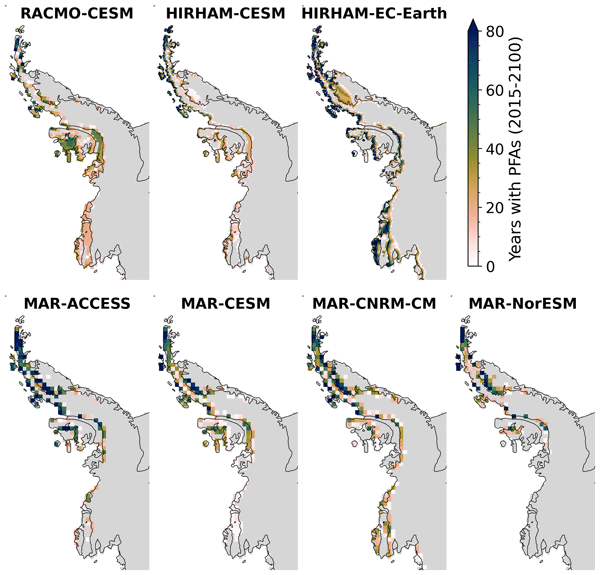
Sanne B. M. Veldhuijsen, Willem Jan van de Berg, Peter Kuipers Munneke, Nicolaj Hansen, Fredrik Boberg, Christoph Kittel, Charles Amory, and Michiel R. van den Broeke
The Cryosphere, 19, 5157–5173, https://doi.org/10.5194/tc-19-5157-2025, https://doi.org/10.5194/tc-19-5157-2025, 2025
Short summary
Short summary
Perennial firn aquifers (PFAs), year-round bodies of liquid water within firns, can potentially impact ice-shelf and ice-sheet stability. We developed a fast XGBoost firn emulator to predict the 21st-century distribution of PFAs in Antarctica for 12 climatic forcing datasets. Our findings suggest that, in low-emission scenarios, PFAs remain confined to the Antarctic Peninsula. However, in a high-emission scenario, PFAs are projected to expand to a region in West Antarctica and East Antarctica.
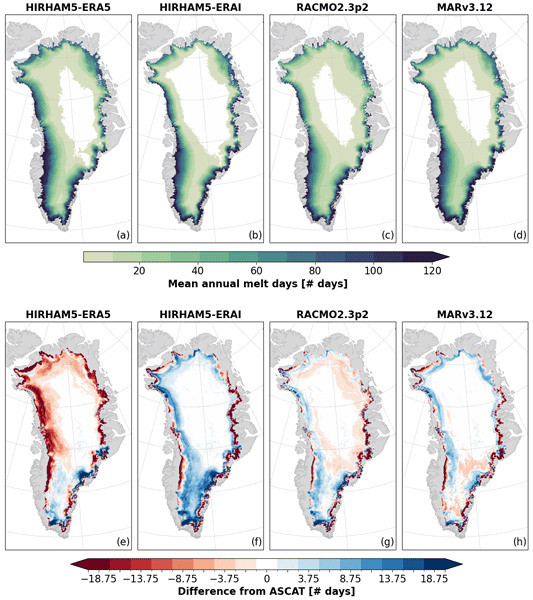
Anna Puggaard, Nicolaj Hansen, Ruth Mottram, Thomas Nagler, Stefan Scheiblauer, Sebastian B. Simonsen, Louise S. Sørensen, Jan Wuite, and Anne M. Solgaard
The Cryosphere, 19, 2963–2981, https://doi.org/10.5194/tc-19-2963-2025, https://doi.org/10.5194/tc-19-2963-2025, 2025
Short summary
Short summary
Regional climate models are currently the only source for assessing the melt volume of the Greenland Ice Sheet on a global scale. This study compares the modeled melt volume with observations from weather stations and melt extent observed from the Advanced SCATterometer (ASCAT) to assess the performance of the models. It highlights the importance of critically evaluating model outputs with high-quality satellite measurements to improve the understanding of variability among models.
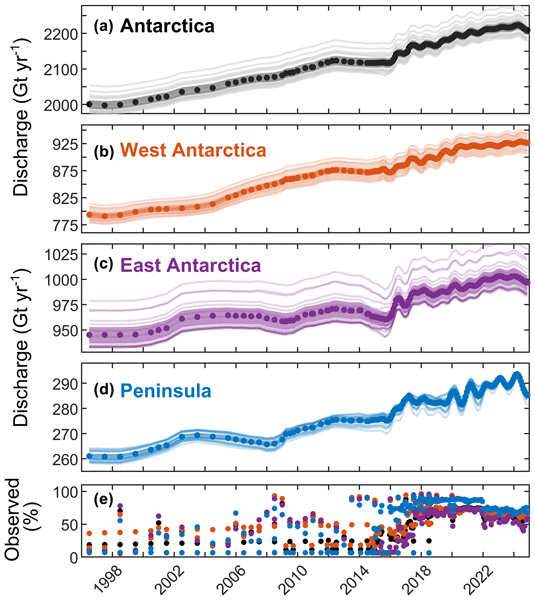
Benjamin J. Davison, Anna E. Hogg, Thomas Slater, Richard Rigby, and Nicolaj Hansen
Earth Syst. Sci. Data, 17, 3259–3281, https://doi.org/10.5194/essd-17-3259-2025, https://doi.org/10.5194/essd-17-3259-2025, 2025
Short summary
Short summary
Grounding line discharge is a measure of the amount of ice entering the ocean from an ice mass. This paper describes a dataset of grounding line discharge for the Antarctic Ice Sheet and each of its glaciers. The dataset shows that Antarctic Ice Sheet grounding line discharge has increased since 1996.
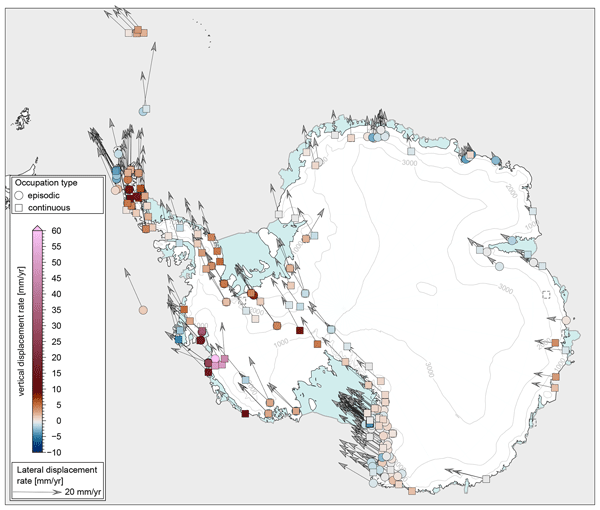
Eric Buchta, Mirko Scheinert, Matt A. King, Terry Wilson, Achraf Koulali, Peter J. Clarke, Demián Gómez, Eric Kendrick, Christoph Knöfel, and Peter Busch
Earth Syst. Sci. Data, 17, 1761–1780, https://doi.org/10.5194/essd-17-1761-2025, https://doi.org/10.5194/essd-17-1761-2025, 2025
Short summary
Short summary
Geodetic GPS measurements in Antarctica have been used to track bedrock displacement, which is vital for understanding geodynamic processes such as plate motion and glacial isostatic adjustment. However, the potential of GPS data has been limited by its partially fragmented availability and unreliable metadata. A new dataset, which spans the period from 1995 to 2021, offers consistently processed coordinate time series for 286 GPS sites and promises to enhance future geodynamic research.
Nicolaj Hansen, Andrew Orr, Xun Zou, Fredrik Boberg, Thomas J. Bracegirdle, Ella Gilbert, Peter L. Langen, Matthew A. Lazzara, Ruth Mottram, Tony Phillips, Ruth Price, Sebastian B. Simonsen, and Stuart Webster
The Cryosphere, 18, 2897–2916, https://doi.org/10.5194/tc-18-2897-2024, https://doi.org/10.5194/tc-18-2897-2024, 2024
Short summary
Short summary
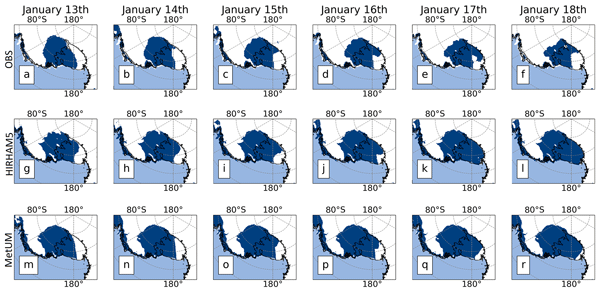
We investigated a melt event over the Ross Ice Shelf. We use regional climate models and a firn model to simulate the melt and compare the results with satellite data. We find that the firn model aligned well with observed melt days in certain parts of the ice shelf. The firn model had challenges accurately simulating the melt extent in the western sector. We identified potential reasons for these discrepancies, pointing to limitations in the models related to representing the cloud properties.
Nicolaj Hansen, Louise Sandberg Sørensen, Giorgio Spada, Daniele Melini, Rene Forsberg, Ruth Mottram, and Sebastian B. Simonsen
The Cryosphere Discuss., https://doi.org/10.5194/tc-2023-104, https://doi.org/10.5194/tc-2023-104, 2023
Preprint withdrawn
Short summary
Short summary
We use ICESat-2 to estimate the surface elevation change over Greenland and Antarctica in the period of 2018 to 2021. Numerical models have been used the compute the firn compaction and the vertical bedrock movement so non-mass-related elevation changes can be taken into account. We have made a parameterization of the surface density so we can convert the volume change to mass change. We find that Antarctica has lost 135.7±27.3 Gt per year, and the Greenland ice sheet 237.5±14.0 Gt per year.
Ole Richter, David E. Gwyther, Matt A. King, and Benjamin K. Galton-Fenzi
The Cryosphere, 16, 1409–1429, https://doi.org/10.5194/tc-16-1409-2022, https://doi.org/10.5194/tc-16-1409-2022, 2022
Short summary
Short summary
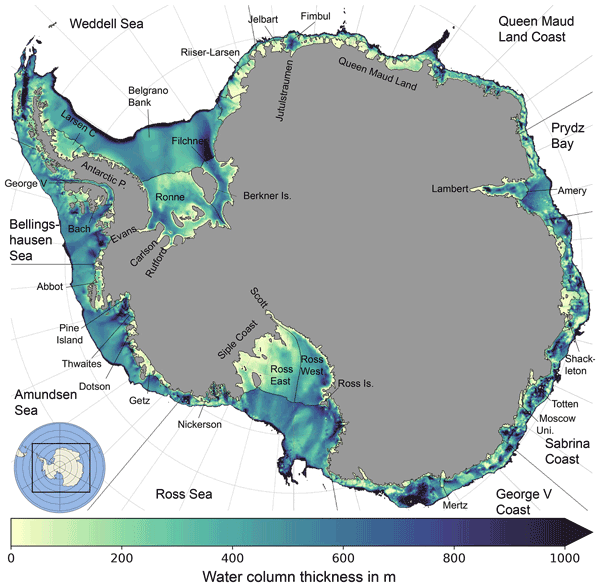
Tidal currents may play an important role in Antarctic ice sheet retreat by changing the rate at which the ocean melts glaciers. Here, using a computational ocean model, we derive the first estimate of present-day tidal melting that covers all of Antarctica. Our results suggest that large-scale ocean models aiming to accurately predict ice melt rates will need to account for the effects of tides. The inclusion of tide-induced friction at the ice–ocean interface should be prioritized.
Grace A. Nield, Matt A. King, Rebekka Steffen, and Bas Blank
Geosci. Model Dev., 15, 2489–2503, https://doi.org/10.5194/gmd-15-2489-2022, https://doi.org/10.5194/gmd-15-2489-2022, 2022
Short summary
Short summary
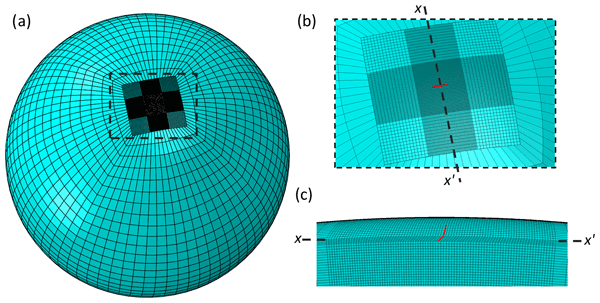
We present a finite-element model of post-seismic solid Earth deformation built in the software package Abaqus for the purpose of calculating post-seismic deformation in the far field of major earthquakes. The model is benchmarked against an existing open-source post-seismic model demonstrating good agreement. The advantage over existing models is the potential for simple modification to include 3-D Earth structure, non-linear rheologies and alternative or multiple sources of stress change.
Nicolaj Hansen, Sebastian B. Simonsen, Fredrik Boberg, Christoph Kittel, Andrew Orr, Niels Souverijns, J. Melchior van Wessem, and Ruth Mottram
The Cryosphere, 16, 711–718, https://doi.org/10.5194/tc-16-711-2022, https://doi.org/10.5194/tc-16-711-2022, 2022
Short summary
Short summary
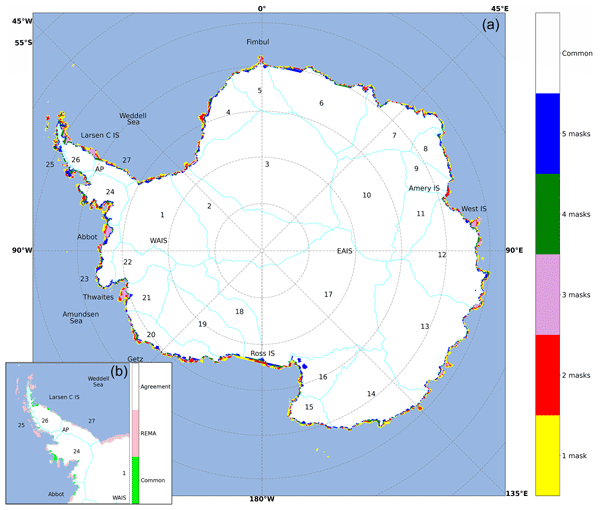
We investigate the impact of different ice masks when modelling surface mass balance over Antarctica. We used ice masks and data from five of the most used regional climate models and a common mask. We see large disagreement between the ice masks, which has a large impact on the surface mass balance, especially around the Antarctic Peninsula and some of the largest glaciers. We suggest a solution for creating a new, up-to-date, high-resolution ice mask that can be used in Antarctic modelling.
Fredrik Boberg, Ruth Mottram, Nicolaj Hansen, Shuting Yang, and Peter L. Langen
The Cryosphere, 16, 17–33, https://doi.org/10.5194/tc-16-17-2022, https://doi.org/10.5194/tc-16-17-2022, 2022
Short summary
Short summary
Using the regional climate model HIRHAM5, we compare two versions (v2 and v3) of the global climate model EC-Earth for the Greenland and Antarctica ice sheets. We are interested in the surface mass balance of the ice sheets due to its importance when making estimates of future sea level rise. We find that the end-of-century change in the surface mass balance for Antarctica is 420 Gt yr−1 (v2) and 80 Gt yr−1 (v3), and for Greenland it is −290 Gt yr−1 (v2) and −1640 Gt yr−1 (v3).
Cited articles
Argus, D. F., Peltier, W. R., Drummond, R., and Moore, A. W.: The Antarctica component of postglacial rebound model ICE-6G_C (VM5a) based on GPS positioning, exposure age dating of ice thicknesses, and relative sea level histories, Geophys. J. Int., 198, 537–563, https://doi.org/10.1093/gji/ggu140, 2014.
Barletta, V. R., Bevis, M., Smith, B. E., Wilson, T., Brown, A., Bordoni, A., Willis, M., Khan, S. A., Rovira-Navarro, M., Dalziel, I., Smalley, R., Kendrick, E., Konfal, S., Caccamise, D. J., Aster, R. C., Nyblade, A., and Wiens, D. A.: Observed rapid bedrock uplift in Amundsen Sea Embayment promotes ice-sheet stability, Science, 360, 1335–1339, https://doi.org/10.1126/science.aao1447, 2018.
Blewitt, G.: Self-consistency in reference frames, geocenter definition, and surface loading of the solid Earth, J. Geophys. Res.-Sol. Ea., 108, https://doi.org/10.1029/2002JB002082, 2003.
Blewitt, G. and Lavallée, D.: Effect of annual signals on geodetic velocity, J. Geophys. Res.-Sol. Ea., 107, ETG 9–1–ETG 9–11, https://doi.org/10.1029/2001JB000570, 2002.
Bos, M. S., Fernandes, R. M. S., Williams, S. D. P., and Bastos, L.: Fast error analysis of continuous GNSS observations with missing data, J. Geodesy, 87, 351–360, https://doi.org/10.1007/s00190-012-0605-0, 2013.
Buchta, E., Scheinert, M., King, M. A., Wilson, T., Clarke, P. J., Gómez, D., Kendrick, E., Knöfel, C., and Koulali, A.: Daily coordinate time series for GPS stations on bedrock for Antarctica and the sub Antarctic sector, 1995–2021, PANGAEA [data set], https://doi.org/10.1594/PANGAEA.967516, 2024.
Buchta, E., Scheinert, M., King, M. A., Wilson, T., Koulali, A., Clarke, P. J., Gómez, D., Kendrick, E., Knöfel, C., and Busch, P.: Advancing geodynamic research in Antarctica: reprocessing GNSS data to infer consistent coordinate time series (GIANT-REGAIN), Earth Syst. Sci. Data, 17, 1761–1780, https://doi.org/10.5194/essd-17-1761-2025, 2025.
Cavitte, M. G. P., Dalaiden, Q., Goosse, H., Lenaerts, J. T. M., and Thomas, E. R.: Reconciling the surface temperature–surface mass balance relationship in models and ice cores in Antarctica over the last 2 centuries, The Cryosphere, 14, 4083–4102, https://doi.org/10.5194/tc-14-4083-2020, 2020.
Dalaiden, Q., Goosse, H., Klein, F., Lenaerts, J. T. M., Holloway, M., Sime, L., and Thomas, E. R.: How useful is snow accumulation in reconstructing surface air temperature in Antarctica? A study combining ice core records and climate models, The Cryosphere, 14, 1187–1207, https://doi.org/10.5194/tc-14-1187-2020, 2020.
Dong, D., Dickey, J. O., Chao, Y., and Cheng, M. K.: Geocenter variations caused by atmosphere, ocean and surface ground water, Geophys. Res. Lett., 24, 1867–1870, https://doi.org/10.1029/97GL01849, 1997.
Dziewonski, A. M. and Anderson, D. L.: Preliminary reference Earth model, Phys. Earth Planet. In., 25, 297–356, https://doi.org/10.1016/0031-9201(81)90046-7, 1981.
Farrell, W. E.: Deformation of the Earth by surface loads, Rev. Geophys., 10, 761–797, https://doi.org/10.1029/RG010i003p00761, 1972.
Gardner, A. S., Schlegel, N.-J., and Larour, E.: Glacier Energy and Mass Balance (GEMB): a model of firn processes for cryosphere research, Geosci. Model Dev., 16, 2277–2302, https://doi.org/10.5194/gmd-16-2277-2023, 2023.
Gazeaux, J., Williams, S., King, M., Bos, M., Dach, R., Deo, M., Moore, A. W., Ostini, L., Petrie, E., Roggero, M., Teferle, F. N., Olivares, G., and Webb, F. H.: Detecting offsets in GPS time series: First results from the detection of offsets in GPS experiment, J. Geophys. Res.-So. Ea., 118, 2397–2407, https://doi.org/10.1002/jgrb.50152, 2013.
Gorodetskaya, I. V., Tsukernik, M., Claes, K., Ralph, M. F., Neff, W. D., and Van Lipzig, N. P. M.: The role of atmospheric rivers in anomalous snow accumulation in East Antarctica, Geophys. Res. Lett., 41, 6199–6206, https://doi.org/10.1002/2014GL060881, 2014.
Grapenthin, R., Kyle, P., Aster, R. C., Angarita, M., Wilson, T., and Chaput, J.: Deformation at the open-vent Erebus volcano, Antarctica, from more than 20 years of GNSS observations, J. Volcanol. Geoth. Res., 432, 107703, https://doi.org/10.1016/j.jvolgeores.2022.107703, 2022.
Hansen, N., Orr, A., Zou, X., Boberg, F., Bracegirdle, T. J., Gilbert, E., Langen, P. L., Lazzara, M. A., Mottram, R., Phillips, T., Price, R., Simonsen, S. B., and Webster, S.: The importance of cloud properties when assessing surface melting in an offline-coupled firn model over Ross Ice shelf, West Antarctica, The Cryosphere, 18, 2897–2916, https://doi.org/10.5194/tc-18-2897-2024, 2024.
Haran, T., Bohlander, J., Scambos, T., Painter, T., and Fahnestock, M.: MODIS Mosaic of Antarctica 2003–2004 (MOA2004) Image Map, Version 2, NSIDC [data set], http://nsidc.org/data/NSIDC-0280/versions/2 (last access: 9 November 2025), 2021.
Hattori, A., Aoyama, Y., Okuno, J., and Doi, K.: GNSS Observations of GIA-Induced Crustal Deformation in Lützow-Holm Bay, East Antarctica, Geophys. Res. Lett., 48, https://doi.org/10.1029/2021GL093479, 2021.
Huang, J., He, X., Hu, S., and Ming, F.: Impact of offsets on GNSS time series stochastic noise properties and velocity estimation, Adv. Space Res., 75, 3397–3413, https://doi.org/10.1016/j.asr.2024.12.016, 2025.
Jungclaus, J. H., Fischer, N., Haak, H., Lohmann, K., Marotzke, J., Matei, D., Mikolajewicz, U., Notz, D., and von Storch, J. S.: Characteristics of the ocean simulations in the Max Planck Institute Ocean Model (MPIOM) the ocean component of the MPI-Earth system model, J. Adv. Model. Earth Sy, 5, 422–446, https://doi.org/10.1002/jame.20023, 2013.
King, M., Lyu, K., and Zhang, X.: Climate variability a key driver of recent Antarctic ice-mass change, Nat. Geosci., 16, 1–8, https://doi.org/10.1038/s41561-023-01317-w, 2023.
King, M. A. and Watson, C. S.: Antarctic Surface Mass Balance: Natural Variability, Noise, and Detecting New Trends, Geophys. Res. Lett., 47, https://doi.org/10.1029/2020GL087493, 2020.
King, M. A., Keshin, M., Whitehouse, P. L., Thomas, I. D., Milne, G., and Riva, R. E. M.: Regional biases in absolute sea-level estimates from tide gauge data due to residual unmodeled vertical land movement, Geophys. Res. Lett., 39, https://doi.org/10.1029/2012GL052348, 2012.
King, M. A., Watson, C. S., and White, D.: GPS Rates of Vertical Bedrock Motion Suggest Late Holocene Ice-Sheet Readvance in a Critical Sector of East Antarctica, Geophys. Res. Lett., 49, https://doi.org/10.1029/2021GL097232, 2022.
Kittel, C., Amory, C., Agosta, C., Jourdain, N. C., Hofer, S., Delhasse, A., Doutreloup, S., Huot, P.-V., Lang, C., Fichefet, T., and Fettweis, X.: Diverging future surface mass balance between the Antarctic ice shelves and grounded ice sheet, The Cryosphere, 15, 1215–1236, https://doi.org/10.5194/tc-15-1215-2021, 2021.
Klos, A., Bos, M. S., and Bogusz, J.: Detecting time-varying seasonal signal in GPS position time series with different noise levels, GPS Solut., 22, 21, https://doi.org/10.1007/s10291-017-0686-6, 2017.
Koulali, A. and Clarke, P. J.: Effect of antenna snow intrusion on vertical GPS position time series in Antarctica, J. Geodesy, 94, 101, https://doi.org/10.1007/s00190-020-01403-6, 2020.
Koulali, A., Whitehouse, P. L., Clarke, P. J., van den Broeke, M. R., Nield, G. A., King, M. A., Bentley, M. J., Wouters, B., and Wilson, T.: GPS-Observed Elastic Deformation Due to Surface Mass Balance Variability in the Southern Antarctic Peninsula, Geophys. Res. Lett., 49, https://doi.org/10.1029/2021GL097109, 2022.
Koulali, A., King, M. A., Clarke, P. J., Nield, G. A., and Bentley, M. J.: Geodetic Observations Reveal Near-Zero Uplift Rates in the Transantarctic Mountains: Implications of Surface Mass Loading Deformation, Geophys. Res. Lett., 52, https://doi.org/10.1029/2025GL119082, 2025.
Langbein, J.: Noise in two-color electronic distance meter measurements revisited, J. Geophys. Res.-So. Ea., 109, https://doi.org/10.1029/2003JB002819, 2004.
Lenaerts, J. T. M., Medley, B., van den Broeke, M. R., and Wouters, B.: Observing and Modeling Ice Sheet Surface Mass Balance, Rev. Geophys., 57, 376–420, https://doi.org/10.1029/2018RG000622, 2019.
Ligtenberg, S. R. M., Helsen, M. M., and van den Broeke, M. R.: An improved semi-empirical model for the densification of Antarctic firn, The Cryosphere, 5, 809–819, https://doi.org/10.5194/tc-5-809-2011, 2011.
Macha, J. M. A., Mackintosh, A. N., McCormack, F. S., Henley, B. J., McGregor, H. V., van Dalum, C. T., and Purich, A.: How do extreme ENSO events affect Antarctic surface mass balance?, The Cryosphere, 19, 1915–1935, https://doi.org/10.5194/tc-19-1915-2025, 2025.
Martín-Español, A., Zammit-Mangion, A., Clarke, P. J., Flament, T., Helm, V., King, M. A., Luthcke, S. B., Petrie, E., Rémy, F., Schön, N., Wouters, B., and Bamber, J. L.: Spatial and temporal Antarctic Ice Sheet mass trends, glacio-isostatic adjustment, and surface processes from a joint inversion of satellite altimeter, gravity, and GPS data, J. Geophys. Res.-Earth, 121, 182–200, https://doi.org/10.1002/2015JF003550, 2016.
Medley, B., Neumann, T. A., Zwally, H. J., Smith, B. E., and Stevens, C. M.: Simulations of firn processes over the Greenland and Antarctic ice sheets: 1980–2021, The Cryosphere, 16, 3971–4011, https://doi.org/10.5194/tc-16-3971-2022, 2022.
Medley, B., Neumann, T., Zwally, H. J., Smith, B. E., and Stevens, C. M.: NASA GSFC Firn Densification Model version 1.2.1 (GSFC-FDMv1.2.1) for the Greenland and Antarctic Ice Sheets: Jan 1980–Jul 2024, Zenodo [data set], https://doi.org/10.5281/zenodo.17177289, 2025.
Melini, D., Spada, G., Gegout, P., and King, M.: REAR: a Regional ElAstic Rebound calculator, GitHub [code], https://github.com/danielemelini/rear (last access: 16 May 2024), 2015.
Mottram, R., Hansen, N., Kittel, C., van Wessem, J. M., Agosta, C., Amory, C., Boberg, F., van de Berg, W. J., Fettweis, X., Gossart, A., van Lipzig, N. P. M., van Meijgaard, E., Orr, A., Phillips, T., Webster, S., Simonsen, S. B., and Souverijns, N.: What is the surface mass balance of Antarctica? An intercomparison of regional climate model estimates, The Cryosphere, 15, 3751–3784, https://doi.org/10.5194/tc-15-3751-2021, 2021.
Nield, G. A., Bentley, M. J., Koulali, A., Clarke, P. J., King, M. A., Wilson, T., and Whitehouse, P. L.: Surface Mass Balance Variability Causes Viscoelastic Solid Earth Deformation in the Antarctic Peninsula, Geophys. Res. Lett., 52, https://doi.org/10.1029/2025GL114595, 2025.
Noël, B., van Wessem, J. M., Wouters, B., Trusel, L., Lhermitte, S., and van den Broeke, M. R.: Higher Antarctic ice sheet accumulation and surface melt rates revealed at 2 km resolution, Nat. Commun., 14, 7949, https://doi.org/10.1038/s41467-023-43584-6, 2023.
Nowak, A., Isaksson, E., Sunde, Ø., Elvevold, S., Sandven, H., Moholdt, G., Hudson, S. R., Urset, A., Edwards, A., Rassner, S. M. E., Pearce, D., Hamre, B., and Hodson, A.: Antarctic Blue Ice Areas are hydrologically active, nutrient rich and contain microbially diverse cryoconite holes, Commun Earth Environ., 5, 345, https://doi.org/10.1038/s43247-024-01487-4, 2024.
Otosaka, I. N., Shepherd, A., Ivins, E. R., Schlegel, N.-J., Amory, C., van den Broeke, M. R., Horwath, M., Joughin, I., King, M. D., Krinner, G., Nowicki, S., Payne, A. J., Rignot, E., Scambos, T., Simon, K. M., Smith, B. E., Sørensen, L. S., Velicogna, I., Whitehouse, P. L., A, G., Agosta, C., Ahlstrøm, A. P., Blazquez, A., Colgan, W., Engdahl, M. E., Fettweis, X., Forsberg, R., Gallée, H., Gardner, A., Gilbert, L., Gourmelen, N., Groh, A., Gunter, B. C., Harig, C., Helm, V., Khan, S. A., Kittel, C., Konrad, H., Langen, P. L., Lecavalier, B. S., Liang, C.-C., Loomis, B. D., McMillan, M., Melini, D., Mernild, S. H., Mottram, R., Mouginot, J., Nilsson, J., Noël, B., Pattle, M. E., Peltier, W. R., Pie, N., Roca, M., Sasgen, I., Save, H. V., Seo, K.-W., Scheuchl, B., Schrama, E. J. O., Schröder, L., Simonsen, S. B., Slater, T., Spada, G., Sutterley, T. C., Vishwakarma, B. D., van Wessem, J. M., Wiese, D., van der Wal, W., and Wouters, B.: Mass balance of the Greenland and Antarctic ice sheets from 1992 to 2020, Earth Syst. Sci. Data, 15, 1597–1616, https://doi.org/10.5194/essd-15-1597-2023, 2023.
Penna, N. T. and Stewart, M. P.: Aliased tidal signatures in continuous GPS height time series, Geophys. Res. Lett., 30, https://doi.org/10.1029/2003GL018828, 2003.
Petrov, L.: The international mass loading service, 2015, 79–83, https://doi.org/10.48550/arXiv.1503.00191, 2015.
Rajavarathan, J., King, M., and Watson, C.: Surface Mass Balance Loading in Antarctica 1979–2022, Institute for Marine and Antarctic Studies, IMAS [data set], https://doi.org/10.25959/Q6MX-1Q31, 2026.
Ray, J., Altamimi, Z., Collilieux, X., and van Dam, T.: Anomalous harmonics in the spectra of GPS position estimates, GPS Solut., 12, 55–64, https://doi.org/10.1007/s10291-007-0067-7, 2008.
Rignot, E., Mouginot, J., Scheuchl, B., van den Broeke, M., van Wessem, M. J., and Morlighem, M.: Four decades of Antarctic Ice Sheet mass balance from 1979–2017, P. Natl. Acad. Sci., 116, 1095–1103, https://doi.org/10.1073/pnas.1812883116, 2019.
Santamaría-Gómez, A. and Memin, A.: Geodetic secular velocity errors due to interannual surface loading deformation, Geophys. J. Int., 202, 763–767, https://doi.org/10.1093/gji/ggv190, 2015.
Schlegel, N.-J. and Gardner, A.: Output from the Glacier Energy and Mass Balance (GEMB v1.0) forced with 3-hourly ERA5 fields and gridded to 10 km, Greenland and Antarctica 1979–2022, Zenodo [data set], https://doi.org/10.5281/zenodo.7764391, 2023.
Seroussi, H., Nowicki, S., Payne, A. J., Goelzer, H., Lipscomb, W. H., Abe-Ouchi, A., Agosta, C., Albrecht, T., Asay-Davis, X., Barthel, A., Calov, R., Cullather, R., Dumas, C., Galton-Fenzi, B. K., Gladstone, R., Golledge, N. R., Gregory, J. M., Greve, R., Hattermann, T., Hoffman, M. J., Humbert, A., Huybrechts, P., Jourdain, N. C., Kleiner, T., Larour, E., Leguy, G. R., Lowry, D. P., Little, C. M., Morlighem, M., Pattyn, F., Pelle, T., Price, S. F., Quiquet, A., Reese, R., Schlegel, N.-J., Shepherd, A., Simon, E., Smith, R. S., Straneo, F., Sun, S., Trusel, L. D., Van Breedam, J., van de Wal, R. S. W., Winkelmann, R., Zhao, C., Zhang, T., and Zwinger, T.: ISMIP6 Antarctica: a multi-model ensemble of the Antarctic ice sheet evolution over the 21st century, The Cryosphere, 14, 3033–3070, https://doi.org/10.5194/tc-14-3033-2020, 2020.
Thomas, I. D., King, M. A., Bentley, M. J., Whitehouse, P. L., Penna, N. T., Williams, S. D. P., Riva, R. E. M., Lavallee, D. A., Clarke, P. J., King, E. C., Hindmarsh, R. C. A., and Koivula, H.: Widespread low rates of Antarctic glacial isostatic adjustment revealed by GPS observations, Geophys. Res. Lett., 38, https://doi.org/10.1029/2011GL049277, 2011.
Tregoning, P. and Watson, C.: Atmospheric effects and spurious signals in GPS analyses, J. Geophys. Res.-So. Ea., 114, https://doi.org/10.1029/2009JB006344, 2009.
Tröbs, M. and Heinzel, G.: Improved spectrum estimation from digitized time series on a logarithmic frequency axis, Measurement, 39, 120–129, https://doi.org/10.1016/j.measurement.2005.10.010, 2006.
van Dalum, C. T., van de Berg, W. J., van den Broeke, M. R., and van Tiggelen, M.: The surface mass balance and near-surface climate of the Antarctic ice sheet in RACMO2.4p1, EGUsphere [preprint], https://doi.org/10.5194/egusphere-2024-3728, 2025.
Vandecrux, B., Amory, C., Ahlstrøm, A., Akers, P., Albert, M., Alley, R., Castro, M., Arnaud, L., Bailey, H., Baker, I., Bales, R., Benson, C., Box, J., Brucker, L., Buizert, C., Chandler, D., Charalampidis, C., Cherblanc, C., and Clerx, N.: The SUMup collaborative database: Surface mass balance, subsurface temperature and density measurements from the Greenland and Antarctic ice sheets, Arctic Data Center [data set], https://doi.org/10.18739/A2M61BR5M, 2025.
van Wessem, J. M., van de Berg, W. J., Noël, B. P. Y., van Meijgaard, E., Amory, C., Birnbaum, G., Jakobs, C. L., Krüger, K., Lenaerts, J. T. M., Lhermitte, S., Ligtenberg, S. R. M., Medley, B., Reijmer, C. H., van Tricht, K., Trusel, L. D., van Ulft, L. H., Wouters, B., Wuite, J., and van den Broeke, M. R.: Modelling the climate and surface mass balance of polar ice sheets using RACMO2 – Part 2: Antarctica (1979–2016), The Cryosphere, 12, 1479–1498, https://doi.org/10.5194/tc-12-1479-2018, 2018.
Verjans, V., Leeson, A. A., McMillan, M., Stevens, C. M., van Wessem, J. M., van de Berg, W. J., van den Broeke, M. R., Kittel, C., Amory, C., Fettweis, X., Hansen, N., Boberg, F., and Mottram, R.: Uncertainty in East Antarctic Firn Thickness Constrained Using a Model Ensemble Approach, Geophys. Res. Lett., 48, https://doi.org/10.1029/2020GL092060, 2021.
Wahr, J., Khan, S. A., van Dam, T., Liu, L., van Angelen, J. H., van den Broeke, M. R., and Meertens, C. M.: The use of GPS horizontals for loading studies, with applications to northern California and southeast Greenland, J. Geophys. Res.-So. Ea., 118, 1795–1806, https://doi.org/10.1002/jgrb.50104, 2013.
Wang, X., Langen, P. L., Li, R., Qiao, G., Fan, X., Dou, Y., and Cui, X.: Comparing Surface Mass Balance and Surface Temperatures From Regional Climate Models and Reanalyses to Observations Over the Antarctic Ice Sheet, Int. J. Climatol., 45,https://doi.org/10.1002/joc.8767, 2025.
Wang, Y. and Xiao, C.: An Increase in the Antarctic Surface Mass Balance during the Past Three Centuries, Dampening Global Sea Level Rise, J. Climate, 36, 8127–8138, https://doi.org/10.1175/JCLI-D-22-0747.1, 2023.
Welch, P. D.: The Use of Fast Fourier Transform for the Estimation of Power Spectra: A Method Based on Time Averaging Over Short, Modified Periodograms, IEEE T. Acoust. Speech, 15, 70–73, https://doi.org/10.1109/TAU.1967.1161901, 1967.
Wille, J. D., Favier, V., Gorodetskaya, I. V., Agosta, C., Kittel, C., Beeman, J. C., Jourdain, N. C., Lenaerts, J. T. M., and Codron, F.: Antarctic Atmospheric River Climatology and Precipitation Impacts, J. Geophys. Res.-Atmos., 126, https://doi.org/10.1029/2020JD033788, 2021.
Willen, M. O., Horwath, M., Schröder, L., Groh, A., Ligtenberg, S. R. M., Kuipers Munneke, P., and van den Broeke, M. R.: Sensitivity of inverse glacial isostatic adjustment estimates over Antarctica, The Cryosphere, 14, 349–366, https://doi.org/10.5194/tc-14-349-2020, 2020.
Williams, S. D. P. and Penna, N. T.: Non-tidal ocean loading effects on geodetic GPS heights, Geophys. Res. Lett., 38, https://doi.org/10.1029/2011GL046940, 2011.
Editorial statement
The surface mass balance (SMB) of polar ice sheets is vital to their overall mass gain or loss. However, evaluating SMB across Antarctica is extremely difficult because observations that can validate climate-model estimates are widely lacking. In this manuscript, the authors present a highly original approach to this problem: they use GPS observations to evaluate SMB models. Analysis of GPS data from sites across Antarctica is used to evaluate the variability in SMB from several atmospheric models. The findings are timely and important, especially as more SMB models are available at increasingly fine spatial resolution. Overall, the study contributes valuable insights into estimates of ice-sheet mass variability and its varying contribution to sea-level change.
The surface mass balance (SMB) of polar ice sheets is vital to their overall mass gain or loss....
Short summary
Antarctic surface mass balance (SMB) is a source of major uncertainty in ice-sheet mass balance estimates, but its evaluation remains limited. We introduce a novel method using continuous, bedrock-fixed GPS vertical displacements as a spatially integrated constraint on low-frequency SMB variability over hundreds of kilometres. Applied across Antarctica, it reveals systematic, region-dependent differences with modelled SMB-driven displacements, guiding SMB model refinement.
Antarctic surface mass balance (SMB) is a source of major uncertainty in ice-sheet mass balance...


