
Articles | Volume 20, issue 8
https://doi.org/10.5194/tc-20-4345-2026
© Author(s) 2026. This work is distributed under
the Creative Commons Attribution 4.0 License.
the Creative Commons Attribution 4.0 License.
https://doi.org/10.5194/tc-20-4345-2026
© Author(s) 2026. This work is distributed under
the Creative Commons Attribution 4.0 License.
the Creative Commons Attribution 4.0 License.
Research article
| 
07 Aug 2026
Research article |
| 07 Aug 2026
| 07 Aug 2026
A nine-year record of slush on the Greenland Ice Sheet
Emily Glen
CORRESPONDING AUTHOR

Department of Geography, Pennsylvania State University, University Park, PA, USA
Lancaster Environment Centre, Lancaster University, Lancaster, UK
Centre for Polar Observation and Modelling, Lancaster University, Lancaster, UK
Alison F. Banwell
Cooperative Institute for Research in Environmental Sciences (CIRES), University of Colorado Boulder, Boulder, USA
Centre for Polar Observation and Modelling, School of Geography and Natural Sciences, Northumbria University, Newcastle upon Tyne, UK
Katie E. Miles
Lancaster Environment Centre, Lancaster University, Lancaster, UK
Amber A. Leeson
Lancaster Environment Centre, Lancaster University, Lancaster, UK
Centre for Polar Observation and Modelling, Lancaster University, Lancaster, UK
Rebecca L. Dell
Scott Polar Research Institute, University of Cambridge, Lensfield Road, Cambridge, UK
Malcolm McMillan
Lancaster Environment Centre, Lancaster University, Lancaster, UK
Centre for Polar Observation and Modelling, Lancaster University, Lancaster, UK
Jennifer Maddalena
Lancaster Environment Centre, Lancaster University, Lancaster, UK
Centre for Polar Observation and Modelling, Lancaster University, Lancaster, UK
Related authors
Emily Glen, Amber Leeson, Alison F. Banwell, Jennifer Maddalena, Diarmuid Corr, Olivia Atkins, Brice Noël, and Malcolm McMillan
The Cryosphere, 19, 1047–1066, https://doi.org/10.5194/tc-19-1047-2025, https://doi.org/10.5194/tc-19-1047-2025, 2025
Short summary
Short summary
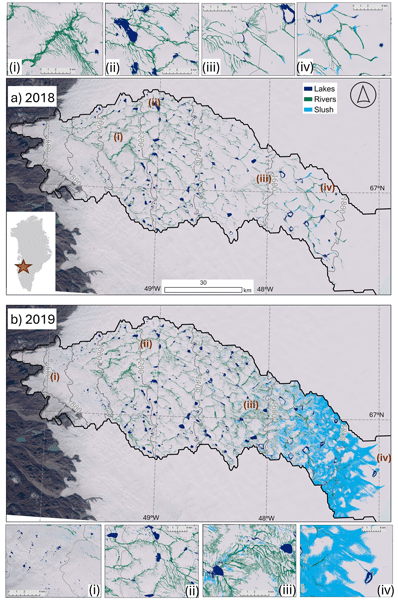
We compare surface meltwater features from optical satellite imagery in the Russell–Leverett glacier catchment during high (2019) and low (2018) melt years. In the high melt year, features appear at higher elevations, meltwater systems are more connected, small lakes are more frequent, and slush is more widespread. These findings provide insights into how a warming climate, where high melt years become common, could alter meltwater distribution and dynamics on the Greenland Ice Sheet.
Laura Melling, Amber Leeson, Malcolm McMillan, Jennifer Maddalena, Jade Bowling, Emily Glen, Louise Sandberg Sørensen, Mai Winstrup, and Rasmus Lørup Arildsen
The Cryosphere, 18, 543–558, https://doi.org/10.5194/tc-18-543-2024, https://doi.org/10.5194/tc-18-543-2024, 2024
Short summary
Short summary
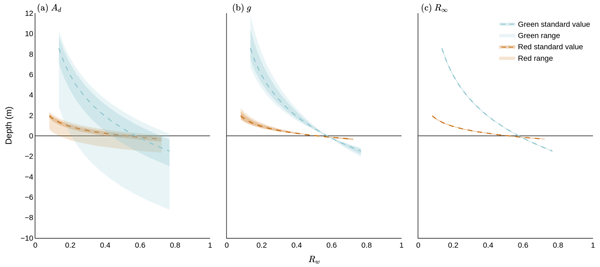
Lakes on glaciers hold large volumes of water which can drain through the ice, influencing estimates of sea level rise. To estimate water volume, we must calculate lake depth. We assessed the accuracy of three satellite-based depth detection methods on a study area in western Greenland and considered the implications for quantifying the volume of water within lakes. We found that the most popular method of detecting depth on the ice sheet scale has higher uncertainty than previously assumed.
Michela Savignano, Alison F. Banwell, Waleed Abdalati, Robin E. Bell, Alexandra Boghosian, W. Roger Buck, Sarah E. Esenther, Emily Glazer, Adam L. LeWinter, Laurence C. Smith, and Leigh A. Stearns
The Cryosphere, 20, 5247–5263, https://doi.org/10.5194/tc-20-5247-2026, https://doi.org/10.5194/tc-20-5247-2026, 2026
Short summary
Short summary
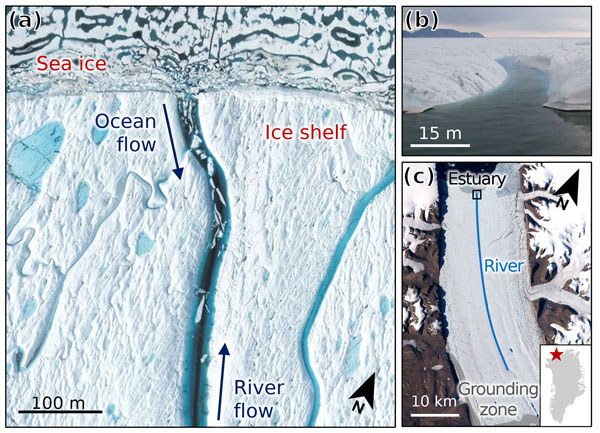
Surface rivers can transport meltwater from floating ice-shelves into the ocean, limiting ponding. However, if a river channel deepens to sea level, seawater can flow up into it and form an ice-shelf estuary. This adds load to the ice shelf and increases stresses that weaken the ice. Using high-resolution satellite imagery, we develop a new way to measure how quickly these rivers deepen, which we use to constrain the timing of Petermann Ice Shelf’s estuary formation over multiple melt seasons.
Seebany Datta-Barua, Alison F. Banwell, Jonah Wilkes, Alec Weedman, Roohollah Parvizi, Christian Allen, Aiden Verdin, Hiroki Kawai, Logan Garcia, and Kristine M. Larson
EGUsphere, https://doi.org/10.5194/egusphere-2026-5057, https://doi.org/10.5194/egusphere-2026-5057, 2026
This preprint is open for discussion and under review for Geoscientific Instrumentation, Methods and Data Systems (GI).
Short summary
Short summary
We tested reflected Global Navigation Satellite System (GNSS) signals as a way to monitor glacier surfaces using the Antarctic ice shelf near McMurdo Station during the 2023–24 austral summer. We collected GNSS, lidar, and camera data from: snow-covered ice near Phoenix airfield, and a mixed surface of bare ice and snow-covered ice at the former Pegasus airfield. The directly-reflected GNSS signal was too weak to extract surface conditions. GNSS interferometry data do differ between the sites.
Joe Phillips and Malcolm McMillan
The Cryosphere, 20, 1745–1769, https://doi.org/10.5194/tc-20-1745-2026, https://doi.org/10.5194/tc-20-1745-2026, 2026
Short summary
Short summary
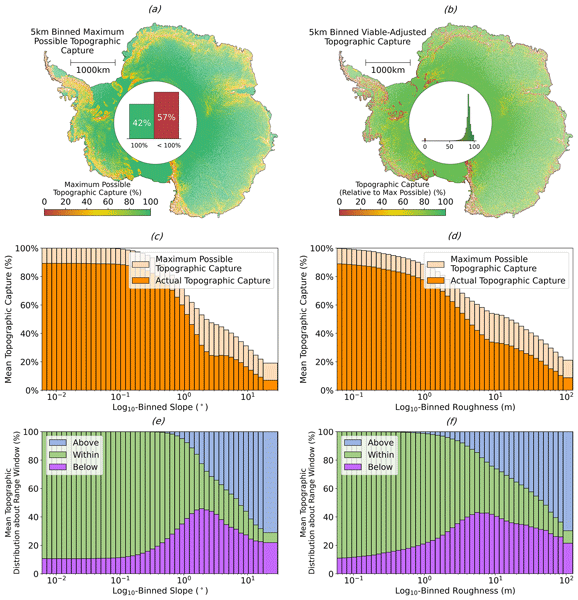
This study explores how well the Sentinel-3 satellites measure Antarctic ice sheet elevation, using new detailed maps of slopes and roughness created using the Reference Elevation Model of Antarctica. We found that while the satellites tend to perform well over smoother terrain, they can struggle over more complex surfaces. These findings can improve how we track ice sheet changes and guide future satellite missions, helping us better understand the impact of climate change on polar regions.
Karla Boxall, Malcolm McMillan, Alan Muir, Sarah Appleby, Sophie Dubber, Noel Gourmelen, Clare Willis, and Joe Phillips
EGUsphere, https://doi.org/10.5194/egusphere-2026-556, https://doi.org/10.5194/egusphere-2026-556, 2026
Short summary
Short summary
Satellite radar altimeters have measured ice sheet elevation since the 1990s, but associated uncertainty estimates are often absent or untested, despite being crucial for efforts to estimate past, present and future sea-level rise. Here, we present a new framework to generate and assess uncertainties associated with historical, current and future radar altimeters. Our results show uncertainty performance varies according to processing method, satellite and region.
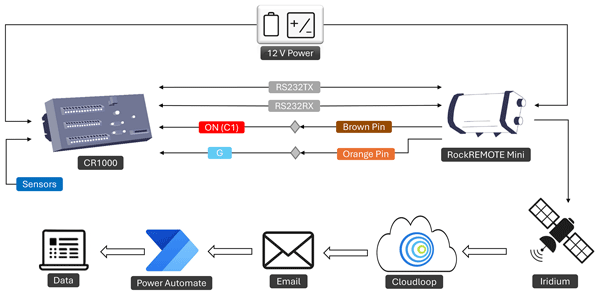
Sunil N. Oulkar, Matthew W. Peacey, Michael Mitrev, Duncan J. Quincey, Bryn Hubbard, Tom Matthews, Ankita S. Oulkar, Katie E. Miles, and Ann V. Rowan
Geosci. Instrum. Method. Data Syst., 15, 75–88, https://doi.org/10.5194/gi-15-75-2026, https://doi.org/10.5194/gi-15-75-2026, 2026
Short summary
Short summary
We designed and tested a system that can record and send data in near real time from extreme and remote locations, such as Mount Everest. Using solar power and satellite communication, the system worked reliably at high altitude, showing it can be applied in other remote regions. This approach will help scientists collect vital information on how the environment is changing in areas that are normally very difficult to study.
Rebecca L. Dell, Michelle L. Maclennan, Luke Trusel, and Mahsa Bahrami
EGUsphere, https://doi.org/10.5194/egusphere-2026-233, https://doi.org/10.5194/egusphere-2026-233, 2026
Short summary
Short summary
Surface meltwater export from Antarctic ice shelves is rarely observed. Here, we find evidence for the re-initiation of this phenomenon on Bach Ice Shelf, which is situated on the Antarctic Peninsula. If atmospheric warming continues, we may see increased surface meltwater export from Bach Ice Shelf and its neighbours, which will have consequences for ice-shelf stability, and ultimately, sea level rise.
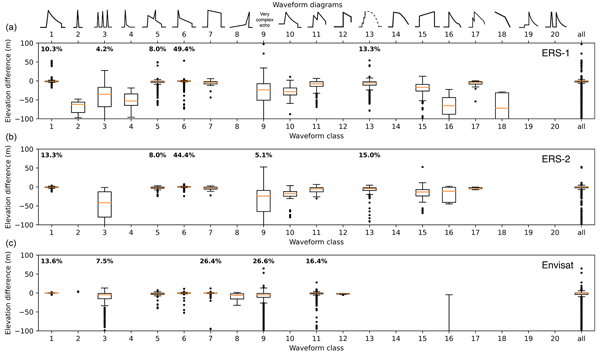
Maya Raghunath Suryawanshi, Malcolm McMillan, Jennifer Maddalena, Fanny Piras, Jérémie Aublanc, Jean-Alexis Daguzé, Clara Grau, and Qi Huang
The Cryosphere, 19, 2855–2880, https://doi.org/10.5194/tc-19-2855-2025, https://doi.org/10.5194/tc-19-2855-2025, 2025
Short summary
Short summary
Increasing melting rates of the polar ice sheets are contributing more and more to sea level rise. Due to the remoteness and expanse of ice sheets, these changes are mainly observed using satellites. However, the accuracy of these measurements depends on the processing of these datasets. Here we use advanced algorithms to provide improved historical ice sheet elevation measurements, derived from satellite altimeters flying between 1991 and 2012, which will benefit cryospheric applications.
Emily Glen, Amber Leeson, Alison F. Banwell, Jennifer Maddalena, Diarmuid Corr, Olivia Atkins, Brice Noël, and Malcolm McMillan
The Cryosphere, 19, 1047–1066, https://doi.org/10.5194/tc-19-1047-2025, https://doi.org/10.5194/tc-19-1047-2025, 2025
Short summary
Short summary
We compare surface meltwater features from optical satellite imagery in the Russell–Leverett glacier catchment during high (2019) and low (2018) melt years. In the high melt year, features appear at higher elevations, meltwater systems are more connected, small lakes are more frequent, and slush is more widespread. These findings provide insights into how a warming climate, where high melt years become common, could alter meltwater distribution and dynamics on the Greenland Ice Sheet.
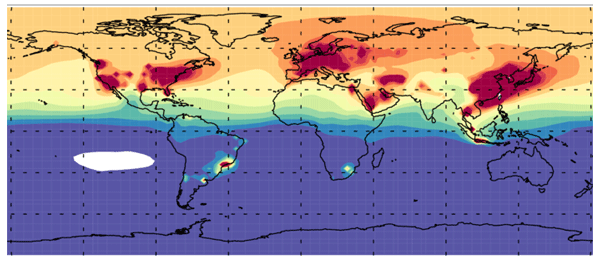
Ryan Hossaini, David Sherry, Zihao Wang, Martyn P. Chipperfield, Wuhu Feng, David E. Oram, Karina E. Adcock, Stephen A. Montzka, Isobel J. Simpson, Andrea Mazzeo, Amber A. Leeson, Elliot Atlas, and Charles C.-K. Chou
Atmos. Chem. Phys., 24, 13457–13475, https://doi.org/10.5194/acp-24-13457-2024, https://doi.org/10.5194/acp-24-13457-2024, 2024
Short summary
Short summary
DCE (1,2-dichloroethane) is an industrial chemical used to produce PVC (polyvinyl chloride). We analysed DCE production data to estimate global DCE emissions (2002–2020). The emissions were included in an atmospheric model and evaluated by comparing simulated DCE to DCE measurements in the troposphere. We show that DCE contributes ozone-depleting Cl to the stratosphere and that this has increased with increasing DCE emissions. DCE’s impact on stratospheric O3 is currently small but non-zero.
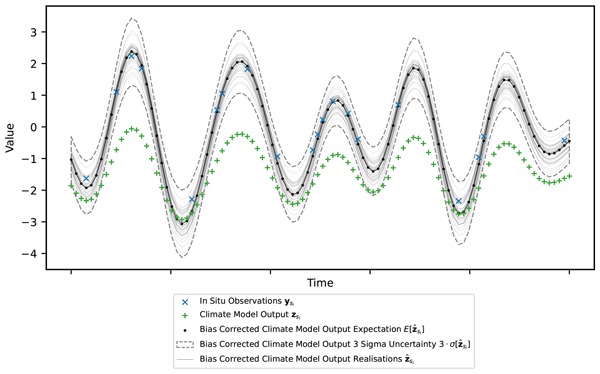
Jeremy Carter, Erick A. Chacón-Montalván, and Amber Leeson
Geosci. Model Dev., 17, 5733–5757, https://doi.org/10.5194/gmd-17-5733-2024, https://doi.org/10.5194/gmd-17-5733-2024, 2024
Short summary
Short summary
Climate models are essential tools in the study of climate change and its wide-ranging impacts on life on Earth. However, the output is often afflicted with some bias. In this paper, a novel model is developed to predict and correct bias in the output of climate models. The model captures uncertainty in the correction and explicitly models underlying spatial correlation between points. These features are of key importance for climate change impact assessments and resulting decision-making.
Naomi E. Ochwat, Ted A. Scambos, Alison F. Banwell, Robert S. Anderson, Michelle L. Maclennan, Ghislain Picard, Julia A. Shates, Sebastian Marinsek, Liliana Margonari, Martin Truffer, and Erin C. Pettit
The Cryosphere, 18, 1709–1731, https://doi.org/10.5194/tc-18-1709-2024, https://doi.org/10.5194/tc-18-1709-2024, 2024
Short summary
Short summary
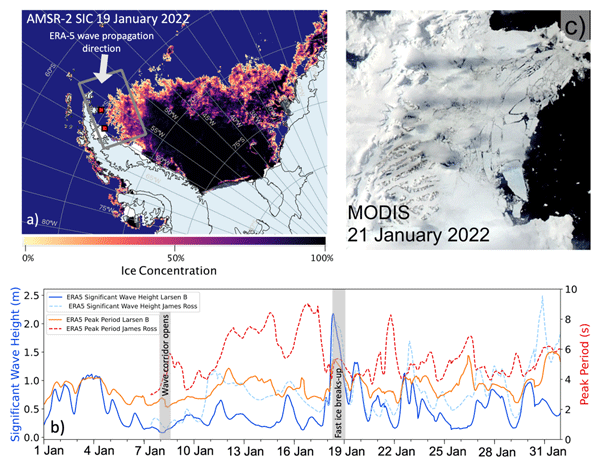
On the Antarctic Peninsula, there is a small bay that had sea ice fastened to the shoreline (
fast ice) for over a decade. The fast ice stabilized the glaciers that fed into the ocean. In January 2022, the fast ice broke away. Using satellite data we found that this was because of low sea ice concentrations and a high long-period ocean wave swell. We find that the glaciers have responded to this event by thinning, speeding up, and retreating by breaking off lots of icebergs at remarkable rates.
Laura Melling, Amber Leeson, Malcolm McMillan, Jennifer Maddalena, Jade Bowling, Emily Glen, Louise Sandberg Sørensen, Mai Winstrup, and Rasmus Lørup Arildsen
The Cryosphere, 18, 543–558, https://doi.org/10.5194/tc-18-543-2024, https://doi.org/10.5194/tc-18-543-2024, 2024
Short summary
Short summary
Lakes on glaciers hold large volumes of water which can drain through the ice, influencing estimates of sea level rise. To estimate water volume, we must calculate lake depth. We assessed the accuracy of three satellite-based depth detection methods on a study area in western Greenland and considered the implications for quantifying the volume of water within lakes. We found that the most popular method of detecting depth on the ice sheet scale has higher uncertainty than previously assumed.
Louise Sandberg Sørensen, Rasmus Bahbah, Sebastian B. Simonsen, Natalia Havelund Andersen, Jade Bowling, Noel Gourmelen, Alex Horton, Nanna B. Karlsson, Amber Leeson, Jennifer Maddalena, Malcolm McMillan, Anne Solgaard, and Birgit Wessel
The Cryosphere, 18, 505–523, https://doi.org/10.5194/tc-18-505-2024, https://doi.org/10.5194/tc-18-505-2024, 2024
Short summary
Short summary
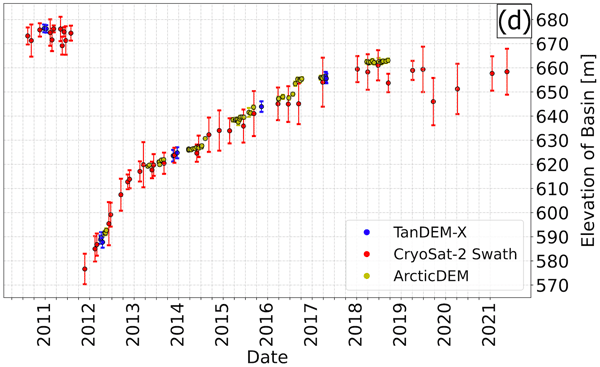
Under the right topographic and hydrological conditions, lakes may form beneath the large ice sheets. Some of these subglacial lakes are active, meaning that they periodically drain and refill. When a subglacial lake drains rapidly, it may cause the ice surface above to collapse, and here we investigate how to improve the monitoring of active subglacial lakes in Greenland by monitoring how their associated collapse basins change over time.
Prateek Gantayat, Alison F. Banwell, Amber A. Leeson, James M. Lea, Dorthe Petersen, Noel Gourmelen, and Xavier Fettweis
Geosci. Model Dev., 16, 5803–5823, https://doi.org/10.5194/gmd-16-5803-2023, https://doi.org/10.5194/gmd-16-5803-2023, 2023
Short summary
Short summary
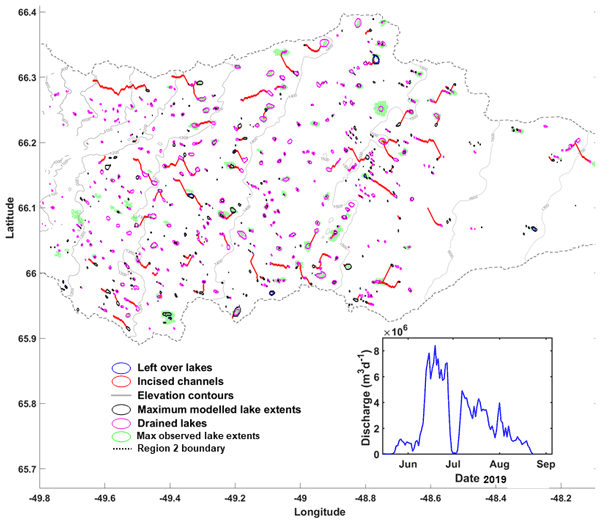
We developed a new supraglacial hydrology model for the Greenland Ice Sheet. This model simulates surface meltwater routing, meltwater drainage, supraglacial lake (SGL) overflow, and formation of lake ice. The model was able to reproduce 80 % of observed lake locations and provides a good match between the observed and modelled temporal evolution of SGLs.
Inès N. Otosaka, Andrew Shepherd, Erik R. Ivins, Nicole-Jeanne Schlegel, Charles Amory, Michiel R. van den Broeke, Martin Horwath, Ian Joughin, Michalea D. King, Gerhard Krinner, Sophie Nowicki, Anthony J. Payne, Eric Rignot, Ted Scambos, Karen M. Simon, Benjamin E. Smith, Louise S. Sørensen, Isabella Velicogna, Pippa L. Whitehouse, Geruo A, Cécile Agosta, Andreas P. Ahlstrøm, Alejandro Blazquez, William Colgan, Marcus E. Engdahl, Xavier Fettweis, Rene Forsberg, Hubert Gallée, Alex Gardner, Lin Gilbert, Noel Gourmelen, Andreas Groh, Brian C. Gunter, Christopher Harig, Veit Helm, Shfaqat Abbas Khan, Christoph Kittel, Hannes Konrad, Peter L. Langen, Benoit S. Lecavalier, Chia-Chun Liang, Bryant D. Loomis, Malcolm McMillan, Daniele Melini, Sebastian H. Mernild, Ruth Mottram, Jeremie Mouginot, Johan Nilsson, Brice Noël, Mark E. Pattle, William R. Peltier, Nadege Pie, Mònica Roca, Ingo Sasgen, Himanshu V. Save, Ki-Weon Seo, Bernd Scheuchl, Ernst J. O. Schrama, Ludwig Schröder, Sebastian B. Simonsen, Thomas Slater, Giorgio Spada, Tyler C. Sutterley, Bramha Dutt Vishwakarma, Jan Melchior van Wessem, David Wiese, Wouter van der Wal, and Bert Wouters
Earth Syst. Sci. Data, 15, 1597–1616, https://doi.org/10.5194/essd-15-1597-2023, https://doi.org/10.5194/essd-15-1597-2023, 2023
Short summary
Short summary
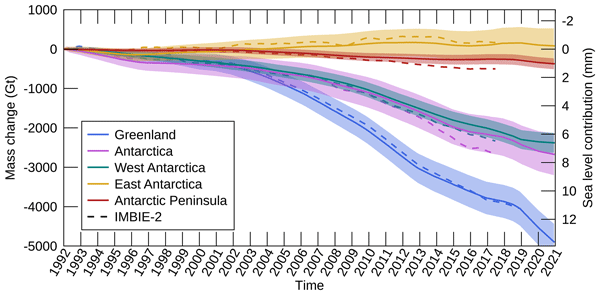
By measuring changes in the volume, gravitational attraction, and ice flow of Greenland and Antarctica from space, we can monitor their mass gain and loss over time. Here, we present a new record of the Earth’s polar ice sheet mass balance produced by aggregating 50 satellite-based estimates of ice sheet mass change. This new assessment shows that the ice sheets have lost (7.5 x 10¹²) t of ice between 1992 and 2020, contributing 21 mm to sea level rise.
Ghislain Picard, Marion Leduc-Leballeur, Alison F. Banwell, Ludovic Brucker, and Giovanni Macelloni
The Cryosphere, 16, 5061–5083, https://doi.org/10.5194/tc-16-5061-2022, https://doi.org/10.5194/tc-16-5061-2022, 2022
Short summary
Short summary
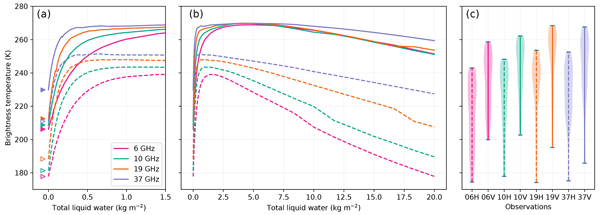
Using a snowpack radiative transfer model, we investigate in which conditions meltwater can be detected from passive microwave satellite observations from 1.4 to 37 GHz. In particular, we determine the minimum detectable liquid water content, the maximum depth of detection of a buried wet snow layer and the risk of false alarm due to supraglacial lakes. These results provide information for the developers of new, more advanced satellite melt products and for the users of the existing products.
Jeremy Carter, Amber Leeson, Andrew Orr, Christoph Kittel, and J. Melchior van Wessem
The Cryosphere, 16, 3815–3841, https://doi.org/10.5194/tc-16-3815-2022, https://doi.org/10.5194/tc-16-3815-2022, 2022
Short summary
Short summary
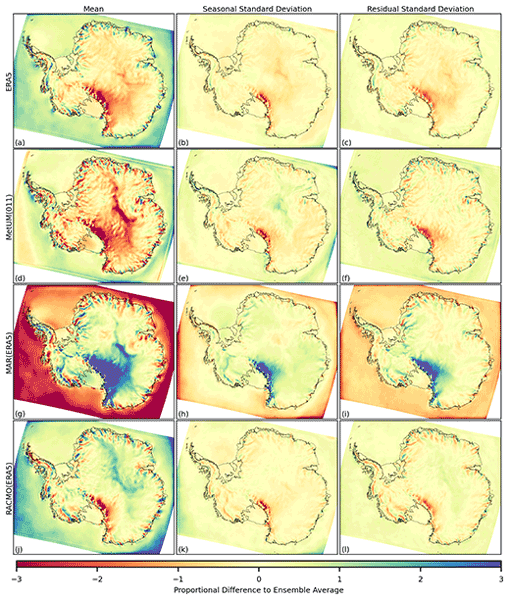
Climate models provide valuable information for studying processes such as the collapse of ice shelves over Antarctica which impact estimates of sea level rise. This paper examines variability across climate simulations over Antarctica for fields including snowfall, temperature and melt. Significant systematic differences between outputs are found, occurring at both large and fine spatial scales across Antarctica. Results are important for future impact assessments and model development.
Daniel Clarkson, Emma Eastoe, and Amber Leeson
The Cryosphere, 16, 1597–1607, https://doi.org/10.5194/tc-16-1597-2022, https://doi.org/10.5194/tc-16-1597-2022, 2022
Short summary
Short summary
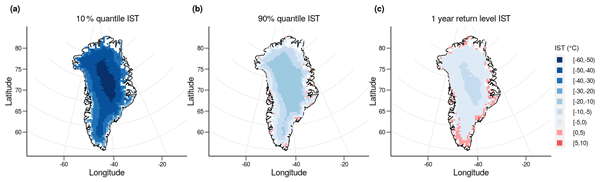
The Greenland ice sheet has seen large amounts of melt in recent years, and accurately modelling temperatures is vital to understand how much of the ice sheet is melting. We estimate the probability of melt from ice surface temperature data to identify which areas of the ice sheet have experienced melt and estimate temperature quantiles. Our results suggest that for large areas of the ice sheet, melt has become more likely over the past 2 decades and high temperatures are also becoming warmer.
Diarmuid Corr, Amber Leeson, Malcolm McMillan, Ce Zhang, and Thomas Barnes
Earth Syst. Sci. Data, 14, 209–228, https://doi.org/10.5194/essd-14-209-2022, https://doi.org/10.5194/essd-14-209-2022, 2022
Short summary
Short summary
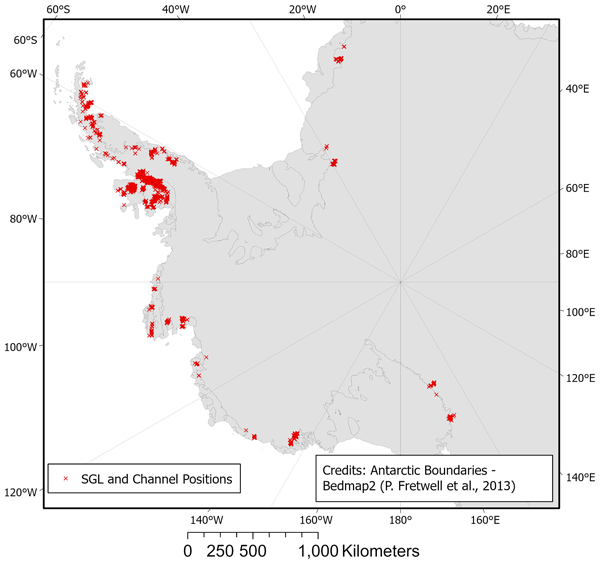
We identify 119 km2 of meltwater area over West Antarctica in January 2017. In combination with Stokes et al., 2019, this forms the first continent-wide assessment helping to quantify the mass balance of Antarctica and its contribution to global sea level rise. We apply thresholds for meltwater classification to satellite images, mapping the extent and manually post-processing to remove false positives. Our study provides a high-fidelity dataset to train and validate machine learning methods.
Cited articles
Banwell, A. F., Arnold, N. S., Willis, I. C., Tedesco, M., and Ahlstrøm, A. P.: Modeling supraglacial water routing and lake filling on the Greenland Ice Sheet, J. Geophys. Res.-Earth, 117, F04012, https://doi.org/10.1029/2012JF002393, 2012.
Banwell, A. F., Willis, I. C., and Arnold, N. S.: Modeling subglacial water routing at Paakitsoq, West Greenland, J. Geophys. Res.-Earth, 118, 1282–1295, https://doi.org/10.1002/jgrf.20093, 2013.
Banwell, A. F., Hewitt, I., Willis, I. C., and Arnold, N. S.: Moulin density controls drainage development beneath the Greenland Ice Sheet, J. Geophys. Res.-Earth, 121, 2248–2269, https://doi.org/10.1002/2015JF003801, 2016.
Banwell, A. F., Wever, N., Dunmire, D., and Picard, G.: Quantifying Antarctic-wide ice-shelf surface melt volume using microwave and firn model data: 1980 to 2021, Geophys. Res. Lett., 50, e2023GL102744, https://doi.org/10.1029/2023GL102744, 2023.
Bell, R. E., Banwell, A. F., Trusel, L. D., and Kingslake, J.: Antarctic surface hydrology and impacts on ice-sheet mass balance, Nat. Clim. Change, 8, 1044–1052, https://doi.org/10.1038/s41558-018-0326-3, 2018.
Bonsoms, J., Oliva, M., López-Moreno, J. I., and Fettweis, X.: Rising extreme meltwater trends in Greenland Ice Sheet (1950–2022): surface energy balance and large-scale circulation changes, J. Climate, 37, 4851–4866, https://doi.org/10.1175/JCLI-D-23-0396.1, 2024.
Box, J. E. and Ski, K.: Remote sounding of Greenland supraglacial melt lakes: implications for subglacial hydraulics, J. Glaciol., 53, 257–264, https://doi.org/10.3189/172756507782202883, 2007.
Breiman, L.: Random forests, Mach. Learn., 45, 5–32, https://doi.org/10.1023/A:1010933404324, 2001.
Brils, M., Kuipers Munneke, P., van de Berg, W. J., and van den Broeke, M.: Improved representation of the contemporary Greenland ice sheet firn layer by IMAU-FDM v1.2G, Geosci. Model Dev., 15, 7121–7138, https://doi.org/10.5194/gmd-15-7121-2022, 2022.
Chu, V. W.: Greenland Ice Sheet hydrology: a review, Prog. Phys. Geog., 38, 19–54, https://doi.org/10.1177/0309133313507075, 2014.
Chudley, T. R., Christoffersen, P., Doyle, S. H., Dowling, T. P. F., Law, R., Schoonman, C. M., Bougamont, M., and Hubbard, B.: Controls on water storage and drainage in crevasses on the Greenland Ice Sheet, J. Geophys. Res.-Earth, 126, e2021JF006287, https://doi.org/10.1029/2021JF006287, 2021.
Clerx, N., Machguth, H., Tedstone, A., Jullien, N., Wever, N., Weingartner, R., and Roessler, O.: In situ measurements of meltwater flow through snow and firn in the accumulation zone of the SW Greenland Ice Sheet, The Cryosphere, 16, 4379–4401, https://doi.org/10.5194/tc-16-4379-2022, 2022.
Cogley, J. G., Hock, R., Rasmussen, L. A., Arendt, A. A., Bauder, A., Braithwaite, R. J., Jansson, P., Kaser, G., Möller, M., Nicholson, L., and Zemp, M.: Glossary of glacier mass balance and related terms, IHP-VII Technical Documents in Hydrology No. 86, IACS Contribution No. 2, UNESCO-IHP, Paris, 114 pp., https://unesdoc.unesco.org/ark:/48223/pf0000192525 (last access: 15 September 2025), 2011.
Copernicus Climate Change Service (C3S): European State of the Climate 2022: Summary, European Centre for Medium-Range Weather Forecasts (ECMWF), https://doi.org/10.24381/gvaf-h066, 2023.
Corr, D., Leeson, A., McMillan, M., Zhang, C., and Barnes, T.: An inventory of supraglacial lakes and channels across the West Antarctic Ice Sheet, Earth Syst. Sci. Data, 14, 209–228, https://doi.org/10.5194/essd-14-209-2022, 2022.
Covi, F.: Processes in the percolation zone in southwest Greenland: Challenges in modeling surface energy balance and melt, and the role of topography in the formation of ice slabs, PhD thesis, University of Alaska Fairbanks, ProQuest Dissertations & Theses, publication no. 29997007, https://www.proquest.com/openview/9d4a36238a8f7c17959b33dfe070a2d2/1 (last access: 17 June 2026), 2022.
Culberg, R., Schroeder, D. M., and Chu, W.: Extreme melt season ice layers reduce firn permeability across Greenland, Nat. Commun., 12, 2336, https://doi.org/10.1038/s41467-021-22656-5, 2021.
Culberg, R., Michaelides, R. J., and Miller, J. Z.: Sentinel-1 detection of ice slabs on the Greenland Ice Sheet, The Cryosphere, 18, 2531–2555, https://doi.org/10.5194/tc-18-2531-2024, 2024.
de Fleurian, B., Werder, M. A., Beyer, S., Brinkerhoff, D. J., Delaney, I., Dow, C. F., Downs, J., Gagliardini, O., Hoffman, M. J., Hooke, R. LeB., Seguinot, J., and Sommers, A. N.: SHMIP – The Subglacial Hydrology Model Intercomparison Project, J. Glaciol., 64, 897–916, https://doi.org/10.1017/jog.2018.78, 2018.
Dell, R., Arnold, N., Willis, I., Banwell, A., Williamson, A., Pritchard, H., and Orr, A.: Lateral meltwater transfer across an Antarctic ice shelf, The Cryosphere, 14, 2313–2330, https://doi.org/10.5194/tc-14-2313-2020, 2020.
Dell, R. L., Banwell, A. F., Willis, I. C., Arnold, N. S., Halberstadt, A. R. W., Chudley, T. R., and Pritchard, H. D.: Supervised classification of slush and ponded water on Antarctic ice shelves using Landsat 8 imagery, J. Glaciol., 68, 401–414, https://doi.org/10.1017/jog.2021.114, 2022a.
Dell, R. L., Banwell, A. F., Willis, I. C., Arnold, N. S., Halberstadt, A. R. W., Chudley, T. R., and Pritchard, H. D.: Supplementary information for “Supervised classification of slush and ponded water on Antarctic ice shelves using Landsat 8 imagery”, Apollo – University of Cambridge Repository [data set], https://doi.org/10.17863/CAM.77156, 2022b.
Dell, R. L., Willis, I. C., Arnold, N. S., Banwell, A. F., and de Roda Husman, S.: Substantial contribution of slush to meltwater area across Antarctic ice shelves, Nat. Geosci., 17, 624–630, https://doi.org/10.1038/s41561-024-01466-6, 2024.
Dirscherl, M., Dietz, A. J., Kneisel, C., and Kuenzer, C.: Automated mapping of Antarctic supraglacial lakes using a machine-learning approach, Remote Sens., 12, 1203, https://doi.org/10.3390/rs12071203, 2020.
Dunmire, D., Banwell, A. F., Wever, N., Lenaerts, J. T. M., and Datta, R. T.: Contrasting regional variability of buried meltwater extent over 2 years across the Greenland Ice Sheet, The Cryosphere, 15, 2983–3005, https://doi.org/10.5194/tc-15-2983-2021, 2021.
Dunmire, D., Subramanian, A. C., Hossain, E., Gani, M. O., Banwell, A. F., Younas, H., and Myers, B.: Greenland Ice Sheet-wide supraglacial lake evolution and dynamics: insights from the 2018 and 2019 melt seasons, Earth Space Sci., 12, e2024EA003793, https://doi.org/10.1029/2024EA003793, 2025.
ESA: Sentinel-2 User Handbook, Issue 1, Revision 2, European Space Agency, https://sentinels.copernicus.eu/documents/247904/685211/Sentinel-2_User_Handbook (last access: 10 December 2025), 2015.
Esri: World Imagery [tile layer], Esri, https://www.arcgis.com/home/item.html?id=10df2279f9684e4a9f6a7f08febac2a9 (last access: 20 May 2024), 2024.
Fan, Y., Ke, C.-Q., Luo, L., Shen, X., Livingstone, S. J., and Lea, J. M.: Expansion of supraglacial lake area, volume, and extent on the Greenland Ice Sheet from 1985 to 2023, J. Glaciol., 71, e4, https://doi.org/10.1017/jog.2024.87, 2025.
Feng, S., Cook, J. M., Naegeli, K., Anesio, A. M., Benning, L. G., and Tranter, M.: The impact of bare-ice duration and geotopographical factors on the darkening of the Greenland Ice Sheet, Geophys. Res. Lett., 51, e2023GL104894, https://doi.org/10.1029/2023GL104894, 2024.
Fettweis, X., Tedesco, M., van den Broeke, M., and Ettema, J.: Melting trends over the Greenland ice sheet (1958–2009) from spaceborne microwave data and regional climate models, The Cryosphere, 5, 359–375, https://doi.org/10.5194/tc-5-359-2011, 2011.
Forster, R. R., Box, J. E., van den Broeke, M. R., Miège, C., Burgess, E. W., van Angelen, J. H., Lenaerts, J. T. M., Koenig, L. S., Paden, J., Lewis, C., Gogineni, S. P., Leuschen, C., and McConnell, J. R.: Extensive liquid meltwater storage in firn within the Greenland Ice Sheet, Nat. Geosci., 7, 95–98, https://doi.org/10.1038/ngeo2043, 2014.
Gantayat, P., Banwell, A. F., Leeson, A. A., Lea, J. M., Petersen, D., Gourmelen, N., and Fettweis, X.: A new model for supraglacial hydrology evolution and drainage for the Greenland Ice Sheet (SHED v1.0), Geosci. Model Dev., 16, 5803–5823, https://doi.org/10.5194/gmd-16-5803-2023, 2023.
Glen, E.: A nine-year record of slush on the Greenland Ice Sheet, Zenodo [code] and [data set], https://doi.org/10.5281/zenodo.21538204, 2026.
Glen, E., Leeson, A., Banwell, A. F., Maddalena, J., Corr, D., Atkins, O., Noël, B., and McMillan, M.: A comparison of supraglacial meltwater features throughout contrasting melt seasons: southwest Greenland, The Cryosphere, 19, 1047–1066, https://doi.org/10.5194/tc-19-1047-2025, 2025.
Gorelick, N., Hancher, M., Dixon, M., Ilyushchenko, S., Thau, D., and Moore, R.: Google Earth Engine: planetary-scale geospatial analysis for everyone, Remote Sens. Environ., 202, 18–27, https://doi.org/10.1016/j.rse.2017.06.031, 2017.
Greuell, W. and Knap, W. H.: Remote sensing of the albedo and detection of the slush line on the Greenland Ice Sheet, J. Geophys. Res.-Atmos., 105, 15567–15576, https://doi.org/10.1029/1999JD901162, 2000.
Halberstadt, A. R. W., Gleason, C. J., Moussavi, M. S., Pope, A., Trusel, L. D., and DeConto, R. M.: Antarctic supraglacial lake identification using Landsat 8 image classification, Remote Sens., 12, 1327, https://doi.org/10.3390/rs12081327, 2020.
Hanna, E., Cappelen, J., Fettweis, X., Mernild, S. H., Mote, T. L., Mottram, R., Steffen, K., Ballinger, T. J., and Hall, R. J.: Greenland surface air temperature changes from 1981 to 2019 and implications for ice-sheet melt and mass-balance change, Int. J. Climatol., 41, E1336–E1352, https://doi.org/10.1002/joc.6771, 2021.
Hanna, E., Topál, D., Box, J. E., Buzzard, S., Christie, F. D. W., Hvidberg, C., Morlighem, M., De Santis, L., Silvano, A., Colleoni, F., Sasgen, I., Banwell, A. F., van den Broeke, M. R., DeConto, R., De Rydt, J., Goelzer, H., Gossart, A., Gudmundsson, G. H., Lindbäck, K., Miles, B., Mottram, R., Pattyn, F., Reese, R., Rignot, E., Srivastava, A., Sun, S., Toller, J., Tuckett, P. A., and Ultee, L.: Short- and long-term variability of the Antarctic and Greenland ice sheets, Nat. Rev. Earth Environ., 5, 193–210, https://doi.org/10.1038/s43017-023-00509-7, 2024.
Harper, J., Humphrey, N., Pfeffer, W. T., Brown, J., and Fettweis, X.: Greenland Ice Sheet contribution to sea-level rise buffered by meltwater storage in firn, Nature, 491, 240–243, https://doi.org/10.1038/nature11566, 2012.
Hofer, S., Tedstone, A. J., Fettweis, X., and Bamber, J. L.: Decreasing cloud cover drives the recent mass loss on the Greenland Ice Sheet, Sci. Adv., 3, e1700584, https://doi.org/10.1126/sciadv.1700584, 2017.
Holmes, C. W.: Morphology and hydrology of the Mint Julep area, southwest Greenland, in: Project Mint Julep: Investigation of Smooth Ice Areas of the Greenland Ice Cap, 1953, Part II, Special Scientific Reports, Arctic, Desert, Tropic Information Center, Research Studies Institute, Air University, 1955.
Howat, I. M., de la Peña, S., van Angelen, J. H., Lenaerts, J. T. M., and van den Broeke, M. R.: Brief Communication “Expansion of meltwater lakes on the Greenland Ice Sheet”, The Cryosphere, 7, 201–204, https://doi.org/10.5194/tc-7-201-2013, 2013.
Hu, J., Huang, H., Chi, Z., Cheng, X., Wei, Z., Chen, P., Xu, X., Qi, S., Xu, Y., and Zheng, Y.: Distribution and evolution of supraglacial lakes in Greenland during the 2016–2018 melt seasons, Remote Sens., 14, 55, https://doi.org/10.3390/rs14010055, 2022.
Huai, B., van den Broeke, M. R., and Reijmer, C. H.: Long-term surface energy balance of the western Greenland Ice Sheet and the role of large-scale circulation variability, The Cryosphere, 14, 4181–4199, https://doi.org/10.5194/tc-14-4181-2020, 2020.
Humphrey, N. F., Harper, J. T., and Meierbachtol, T. W.: Physical limits to meltwater penetration in firn, J. Glaciol., 67, 952–960, https://doi.org/10.1017/jog.2021.44, 2021.
Jullien, N., Tedstone, A. J., Machguth, H., Karlsson, N. B., and Helm, V.: Greenland Ice Sheet ice-slab expansion and thickening, Geophys. Res. Lett., 50, e2022GL100911, https://doi.org/10.1029/2022GL100911, 2023.
Jullien, N., Tedstone, A. J., and Machguth, H.: Constraining ice-slab thickness at the onset of visible surface runoff from the Greenland Ice Sheet, J. Glaciol., 71, e36, https://doi.org/10.1017/jog.2025.25, 2025.
Koziol, C. P. and Arnold, N.: Modelling seasonal meltwater forcing of the velocity of land-terminating margins of the Greenland Ice Sheet, The Cryosphere, 12, 971–991, https://doi.org/10.5194/tc-12-971-2018, 2018.
Law, R., Arnold, N., Benedek, C. L., Tedesco, M., Banwell, A. F., and Willis, I. C.: Over-winter persistence of supraglacial lakes on the Greenland Ice Sheet: results and insights from a new model, J. Glaciol., 66, 362–372, https://doi.org/10.1017/jog.2020.7, 2020.
Leeson, A. A., Shepherd, A., Palmer, S., Sundal, A., and Fettweis, X.: Simulating the growth of supraglacial lakes at the western margin of the Greenland ice sheet, The Cryosphere, 6, 1077–1086, https://doi.org/10.5194/tc-6-1077-2012, 2012.
Leeson, A. A., Shepherd, A., Briggs, K., Howat, I., Fettweis, X., Morlighem, M., and Rignot, E.: Supraglacial lakes on the Greenland Ice Sheet advance inland under warming climate, Nat. Clim. Change, 5, 51–55, https://doi.org/10.1038/nclimate2463, 2015.
Liang, Y.-L., Colgan, W., Lv, Q., Steffen, K., Abdalati, W., Stroeve, J., Gallaher, D., and Bayou, N.: A decadal investigation of supraglacial lakes in West Greenland using a fully automatic detection and tracking algorithm, Remote Sens. Environ., 123, 127–138, https://doi.org/10.1016/j.rse.2012.03.020, 2012.
Lüthje, M., Pedersen, L. T., Reeh, N., and Greuell, W.: Modelling the evolution of supraglacial lakes on the West Greenland ice-sheet margin, J. Glaciol., 52, 608–618, https://doi.org/10.3189/172756506781828386, 2006.
MacFerrin, M., Machguth, H., van As, D., Charalampidis, C., Stevens, C. M., Heilig, A., Vandecrux, B., Langen, P. L., Mottram, R., Fettweis, X., van den Broeke, M. R., Pfeffer, W. T., Moussavi, M. S., and Abdalati, W.: Rapid expansion of Greenland's low-permeability ice slabs, Nature, 573, 403–407, https://doi.org/10.1038/s41586-019-1550-3, 2019.
Machguth, H., MacFerrin, M., van As, D., Box, J. E., Charalampidis, C., Colgan, W., Fausto, R. S., Meijer, H. A. J., Mosley-Thompson, E., and van de Wal, R. S. W.: Greenland meltwater storage in firn limited by near-surface ice formation, Nat. Clim. Change, 6, 390–393, https://doi.org/10.1038/nclimate2899, 2016.
Machguth, H., Tedstone, A., and Mattea, E.: Daily variations in western Greenland slush limits, 2000–2021, J. Glaciol., 69, 191–203, https://doi.org/10.1017/jog.2022.65, 2022.
Machguth, H., Tedstone, A., Kuipers Munneke, P., Brils, M., Noël, B., Clerx, N., Jullien, N., Fettweis, X., and van den Broeke, M.: Runoff from Greenland's firn area – why do MODIS, RCMs and a firn model disagree?, The Cryosphere, 20, 427–452, https://doi.org/10.5194/tc-20-427-2026, 2026.
McFeeters, S. K.: The use of the Normalized Difference Water Index (NDWI) in the delineation of open-water features, Int. J. Remote Sens., 17, 1425–1432, https://doi.org/10.1080/01431169608948714, 1996.
Melling, L., Leeson, A., McMillan, M., Maddalena, J., Bowling, J., Glen, E., Sandberg Sørensen, L., Winstrup, M., and Lørup Arildsen, R.: Evaluation of satellite methods for estimating supraglacial lake depth in southwest Greenland, The Cryosphere, 18, 543–558, https://doi.org/10.5194/tc-18-543-2024, 2024.
Miège, C., Forster, R. R., Brucker, L., Koenig, L. S., Solomon, D. K., Paden, J. D., Box, J. E., Burgess, E. W., Miller, J. Z., McNerney, L., and Brautigam, N.: Spatial extent and temporal variability of Greenland firn aquifers detected by ground and airborne radars, J. Geophys. Res.-Earth, 121, 2381–2398, https://doi.org/10.1002/2016JF003869, 2016.
Mikkelsen, A. B., Hubbard, A., MacFerrin, M., Box, J. E., Doyle, S. H., Fitzpatrick, A., Hasholt, B., Bailey, H. L., Lindbäck, K., and Pettersson, R.: Extraordinary runoff from the Greenland ice sheet in 2012 amplified by hypsometry and depleted firn retention, The Cryosphere, 10, 1147–1159, https://doi.org/10.5194/tc-10-1147-2016, 2016.
Miles, K. E., Willis, I. C., Benedek, C. L., Williamson, A. G., and Tedesco, M.: Toward monitoring surface and subsurface lakes on the Greenland Ice Sheet using Sentinel-1 SAR and Landsat 8 OLI imagery, Front. Earth Sci., 5, 58, https://doi.org/10.3389/feart.2017.00058, 2017.
Miller, O., Solomon, D. K., Miège, C., Koenig, L. S., Forster, R. R., Schmerr, N., Ligtenberg, S. R. M., Legchenko, A., Voss, C. I., Montgomery, L. N., and McConnell, J. R.: Hydrology of a perennial firn aquifer in southeast Greenland: an overview driven by field data, Water Resour. Res., 56, e2019WR026348, https://doi.org/10.1029/2019WR026348, 2020.
Moon, T. A., Mankoff, K. D., Fausto, R. S., Fettweis, X., Loomis, B. D., Mote, T. L., Poinar, K., Tedesco, M., Wehrlé, A., and Jensen, C. D.: Arctic Report Card 2022: Greenland Ice Sheet, NOAA Technical Report OAR ARC 22-05, National Oceanic and Atmospheric Administration, Office of Oceanic and Atmospheric Research, https://doi.org/10.25923/c430-hb50, 2022.
Mottram, R., Hansen, N., Hogg, A. E., Rodehacke, C. B., Simonsen, S. B., and Wallis, B. J.: The Greenlandification of Antarctica, Nat. Geosci., 18, 928–930, https://doi.org/10.1038/s41561-025-01805-1, 2025.
Mouginot, J. and Rignot, E.: Glacier catchments/basins for the Greenland Ice Sheet, DRYAD [data set], https://doi.org/10.7280/D1WT11, 2019.
Mouginot, J., Rignot, E., Bjørk, A. A., van den Broeke, M. R., Millan, R., Morlighem, M., Noël, B., Scheuchl, B., and Wood, M.: Forty-six years of Greenland Ice Sheet mass balance from 1972 to 2018, P. Natl. Acad. Sci. USA, 116, 9239–9244, https://doi.org/10.1073/pnas.1904242116, 2019.
Moussavi, M., Pope, A., Halberstadt, A. R. W., Trusel, L. D., Cioffi, L., and Abdalati, W.: Antarctic supraglacial lake detection using Landsat 8 and Sentinel-2 imagery: towards continental generation of lake volumes, Remote Sens., 12, 134, https://doi.org/10.3390/rs12010134, 2020.
Noël, B., van de Berg, W. J., van Wessem, J. M., van Meijgaard, E., van As, D., Lenaerts, J. T. M., Lhermitte, S., Kuipers Munneke, P., Smeets, C. J. P. P., van Ulft, L. H., van de Wal, R. S. W., and van den Broeke, M. R.: Modelling the climate and surface mass balance of polar ice sheets using RACMO2 – Part 1: Greenland (1958–2016), The Cryosphere, 12, 811–831, https://doi.org/10.5194/tc-12-811-2018, 2018.
Noël, B., van de Berg, W. J., Lhermitte, S., and van den Broeke, M. R.: Rapid ablation-zone expansion amplifies North Greenland mass loss, Sci. Adv., 5, eaaw0123, https://doi.org/10.1126/sciadv.aaw0123, 2019.
Otosaka, I. N., Shepherd, A., Ivins, E. R., Schlegel, N.-J., Amory, C., van den Broeke, M. R., Horwath, M., Joughin, I., King, M. D., Krinner, G., Nowicki, S., Payne, A. J., Rignot, E., Scambos, T., Simon, K. M., Smith, B. E., Sørensen, L. S., Velicogna, I., Whitehouse, P. L., A, G., Agosta, C., Ahlstrøm, A. P., Blazquez, A., Colgan, W., Engdahl, M. E., Fettweis, X., Forsberg, R., Gallée, H., Gardner, A., Gilbert, L., Gourmelen, N., Groh, A., Gunter, B. C., Harig, C., Helm, V., Khan, S. A., Kittel, C., Konrad, H., Langen, P. L., Lecavalier, B. S., Liang, C.-C., Loomis, B. D., McMillan, M., Melini, D., Mernild, S. H., Mottram, R., Mouginot, J., Nilsson, J., Noël, B., Pattle, M. E., Peltier, W. R., Pie, N., Roca, M., Sasgen, I., Save, H. V., Seo, K.-W., Scheuchl, B., Schrama, E. J. O., Schröder, L., Simonsen, S. B., Slater, T., Spada, G., Sutterley, T. C., Vishwakarma, B. D., van Wessem, J. M., Wiese, D., van der Wal, W., and Wouters, B.: Mass balance of the Greenland and Antarctic ice sheets from 1992 to 2020, Earth Syst. Sci. Data, 15, 1597–1616, https://doi.org/10.5194/essd-15-1597-2023, 2023.
Otto, J., Holmes, F. A., and Kirchner, N.: Supraglacial lake expansion, intensified lake-drainage frequency, and first observation of coupled lake drainage during 1985–2020 at Ryder Glacier, northern Greenland, Front. Earth Sci., 10, 978137, https://doi.org/10.3389/feart.2022.978137, 2022.
Porter, C., Howat, I., Noh, M.-J., Husby, E., Khuvis, S., Danish, E., Tomko, K., Gardiner, J., Negrete, A., Yadav, B., Klassen, J., Kelleher, C., Cloutier, M., Bakker, J., Enos, J., Arnold, G., Bauer, G., and Morin, P.: ArcticDEM, Version 4.1, Harvard Dataverse [data set], https://doi.org/10.7910/DVN/3VDC4W, 2023.
Qayyum, N., Ghuffar, S., Ahmad, H., Yousaf, A., and Shahid, I.: Glacial-lake mapping using multisatellite PlanetScope imagery and deep learning, ISPRS Int. J. Geo-Inf., 9, 560, https://doi.org/10.3390/ijgi9100560, 2020.
Rawlins, L. D., Rippin, D. M., Sole, A. J., Livingstone, S. J., and Yang, K.: Seasonal evolution of the supraglacial drainage network at Humboldt Glacier, northern Greenland, between 2016 and 2020, The Cryosphere, 17, 4729–4750, https://doi.org/10.5194/tc-17-4729-2023, 2023.
Rippin, D. M. and Rawlins, L. D.: Supraglacial river networks, in: International Encyclopedia of Geography, edited by: Richardson, D., Castree, N., Goodchild, M. F., Kobayashi, A., Liu, W., and Marston, R. A., Wiley, https://doi.org/10.1002/9781118786352.wbieg2072, 2021.
Ryan, J. C., Smith, L. C., van As, D., Cooley, S. W., Cooper, M. G., Pitcher, L. H., and Hubbard, A.: Greenland Ice Sheet surface melt amplified by snowline migration and bare-ice exposure, Sci. Adv., 5, eaav3738, https://doi.org/10.1126/sciadv.aav3738, 2019.
Ryan, J. C., Cooper, M. G., Cooley, S. W., Rennermalm, Å. K., and Smith, L. C.: Meltwater ponding has an underestimated radiative effect on the surface of the Greenland Ice Sheet, Nat. Commun., 16, 8274, https://doi.org/10.1038/s41467-025-62503-5, 2025.
Sasgen, I., Wouters, B., Gardner, A. S., King, M. D., Tedesco, M., Landerer, F. W., Dahle, C., Save, H., and Fettweis, X.: Return to rapid ice loss in Greenland and record loss in 2019 detected by the GRACE-FO satellites, Commun. Earth Environ., 1, 8, https://doi.org/10.1038/s43247-020-0001-2, 2020.
Selmes, N., Murray, T., and James, T. D.: Fast-draining lakes on the Greenland Ice Sheet, Geophys. Res. Lett., 38, L15501, https://doi.org/10.1029/2011GL047872, 2011.
Slater, T., Shepherd, A., McMillan, M., Leeson, A. A., Gilbert, L., Muir, A., Kuipers Munneke, P., Noël, B., Fettweis, X., van den Broeke, M. R., and Briggs, K.: Increased variability in Greenland Ice Sheet runoff from satellite observations, Nat. Commun., 12, 6069, https://doi.org/10.1038/s41467-021-26229-4, 2021.
Stokes, C. R., Sanderson, J. E., Miles, B. W. J., Jamieson, S. S. R., and Leeson, A. A.: Widespread distribution of supraglacial lakes around the margin of the East Antarctic Ice Sheet, Sci. Rep., 9, 13823, https://doi.org/10.1038/s41598-019-50343-5, 2019.
Sundal, A. V., Shepherd, A., Nienow, P., Hanna, E., Palmer, S., and Huybrechts, P.: Evolution of supraglacial lakes across the Greenland Ice Sheet, Remote Sens. Environ., 113, 2164–2171, https://doi.org/10.1016/j.rse.2009.05.018, 2009.
Tedesco, M.: A new record in 2007 for melting in Greenland, Eos T. Am. Geophys. Un., 88, 383, https://doi.org/10.1029/2007EO390003, 2007.
Tedesco, M. and Fettweis, X.: Unprecedented atmospheric conditions (1948–2019) drive the 2019 exceptional melting season over the Greenland ice sheet, The Cryosphere, 14, 1209–1223, https://doi.org/10.5194/tc-14-1209-2020, 2020.
Tedesco, M., Willis, I. C., Hoffman, M. J., Banwell, A. F., Alexander, P., and Arnold, N. S.: Ice-dynamic response to two modes of surface-lake drainage on the Greenland Ice Sheet, Environ. Res. Lett., 8, 034007, https://doi.org/10.1088/1748-9326/8/3/034007, 2013.
Tedstone, A. J. and Machguth, H.: Increasing surface runoff from Greenland's firn areas, Nat. Clim. Change, 12, 672–676, https://doi.org/10.1038/s41558-022-01371-z, 2022.
Tedstone, A. J., Bamber, J. L., Cook, J. M., Williamson, C. J., Fettweis, X., Hodson, A. J., and Tranter, M.: Dark ice dynamics of the south-west Greenland Ice Sheet, The Cryosphere, 11, 2491–2506, https://doi.org/10.5194/tc-11-2491-2017, 2017.
Tedstone, A. J., Machguth, H., Clerx, N., Jullien, N., Picton, H., Ducrey, J., van As, D., Colosio, P., Tedesco, M., and Lhermitte, S.: Concurrent superimposed-ice formation and meltwater runoff on Greenland's ice slabs, Nat. Commun., 16, 4494, https://doi.org/10.1038/s41467-025-59237-9, 2025.
The Firn Symposium Team: Firn on ice sheets, Nat. Rev. Earth Environ., 5, 79–99, https://doi.org/10.1038/s43017-023-00507-9, 2024.
The IMBIE Team: Mass balance of the Greenland Ice Sheet from 1992 to 2018, Nature, 579, 233–239, https://doi.org/10.1038/s41586-019-1855-2, 2020.
Trusel, L. D., Das, S. B., Osman, M. B., Evans, M. J., Smith, B. E., Fettweis, X., McConnell, J. R., Noël, B. P. Y., and van den Broeke, M. R.: Nonlinear rise in Greenland runoff in response to post-industrial Arctic warming, Nature, 564, 104–108, https://doi.org/10.1038/s41586-018-0752-4, 2018.
Tuckett, P. A., Sole, A. J., Livingstone, S. J., Jones, J. M., Lea, J. M., and Gilbert, E.: Continent-wide mapping shows increasing sensitivity of East Antarctica to meltwater ponding, Nat. Clim. Change, 15, 775–783, https://doi.org/10.1038/s41558-025-02363-5, 2025.
van As, D., Bech Mikkelsen, A., Holtegaard Nielsen, M., Box, J. E., Claesson Liljedahl, L., Lindbäck, K., Pitcher, L., and Hasholt, B.: Hypsometric amplification and routing moderation of Greenland ice sheet meltwater release, The Cryosphere, 11, 1371–1386, https://doi.org/10.5194/tc-11-1371-2017, 2017.
Vandecrux, B., MacFerrin, M., Machguth, H., Colgan, W. T., van As, D., Heilig, A., Stevens, C. M., Charalampidis, C., Fausto, R. S., Morris, E. M., Mosley-Thompson, E., Koenig, L., Montgomery, L. N., Miège, C., Simonsen, S. B., Ingeman-Nielsen, T., and Box, J. E.: Firn data compilation reveals widespread decrease of firn air content in western Greenland, The Cryosphere, 13, 845–859, https://doi.org/10.5194/tc-13-845-2019, 2019.
van den Broeke, M. R., Kuipers Munneke, P., Noël, B., Reijmer, C., Smeets, P., van de Berg, W. J., and van Wessem, J. M.: Contrasting current and future surface melt rates on the ice sheets of Greenland and Antarctica: lessons from in situ observations and climate models, PLOS Clim., 2, e0000203, https://doi.org/10.1371/journal.pclm.0000203, 2023.
Williamson, A. G., Arnold, N. S., Banwell, A. F., and Willis, I. C.: A fully automated supraglacial lake area and volume tracking (FAST) algorithm: development and application using MODIS imagery of West Greenland, Remote Sens. Environ., 196, 113–133, https://doi.org/10.1016/j.rse.2017.04.032, 2017.
Williamson, A. G., Banwell, A. F., Willis, I. C., and Arnold, N. S.: Dual-satellite (Sentinel-2 and Landsat 8) remote sensing of supraglacial lakes in Greenland, The Cryosphere, 12, 3045–3065, https://doi.org/10.5194/tc-12-3045-2018, 2018.
Yang, K. and Smith, L. C.: Supraglacial streams on the Greenland Ice Sheet delineated from combined spectral–shape information in high-resolution satellite imagery, IEEE Geosci. Remote Sens. Lett., 10, 801–805, https://doi.org/10.1109/LGRS.2012.2224316, 2012.
Zhang, W., Yang, K., Smith, L. C., Wang, Y., van As, D., Noël, B., Lu, Y., and Liu, J.: Pan-Greenland mapping of supraglacial rivers, lakes, and water-filled crevasses in a cool summer (2018) and a warm summer (2019), Remote Sens. Environ., 297, 113781, https://doi.org/10.1016/j.rse.2023.113781, 2023.
Short summary
Using satellite imagery and machine learning, we created the first Greenland-wide dataset of slush (waterlogged snow) from 2016 to 2024. Slush was widespread and varied strongly between years and across Greenland, becoming most extensive during high melt seasons. It was most common where melting was greater and snow had less capacity to store water. These findings show that slush should be included in models of future melting and sea-level rise.
Using satellite imagery and machine learning, we created the first Greenland-wide dataset of...


