
Articles | Volume 20, issue 7
https://doi.org/10.5194/tc-20-3817-2026
© Author(s) 2026. This work is distributed under
the Creative Commons Attribution 4.0 License.
the Creative Commons Attribution 4.0 License.
https://doi.org/10.5194/tc-20-3817-2026
© Author(s) 2026. This work is distributed under
the Creative Commons Attribution 4.0 License.
the Creative Commons Attribution 4.0 License.
Brief communication
| 
09 Jul 2026
Brief communication |
| 09 Jul 2026
| 09 Jul 2026
Brief communication: Inferring Glacier Equilibrium Line Altitudes in the Europe Alps with FROST

Institute of Geography, Friedrich-Alexander-Universität Erlangen-Nürnberg, Germany
Veena Prasad
Institute of Geography, Friedrich-Alexander-Universität Erlangen-Nürnberg, Germany
Anna Zöller
Institute of Geography, Friedrich-Alexander-Universität Erlangen-Nürnberg, Germany
Alexander R. Groos
Institute of Geography, Friedrich-Alexander-Universität Erlangen-Nürnberg, Germany
Samuel Cook
Institute of Geography, Friedrich-Alexander-Universität Erlangen-Nürnberg, Germany
Christian Sommer
Institute of Geography, Friedrich-Alexander-Universität Erlangen-Nürnberg, Germany
Johannes J. Fürst
Institute of Geography, Friedrich-Alexander-Universität Erlangen-Nürnberg, Germany
Related authors
Veena Prasad, Oskar Herrmann, Ilaria Tabone, Mamta K C, Alexander R. Groos, Guillaume Jouvet, James R. Jordan, and Johannes J. Fürst
EGUsphere, https://doi.org/10.5194/egusphere-2026-508, https://doi.org/10.5194/egusphere-2026-508, 2026
Short summary
Short summary
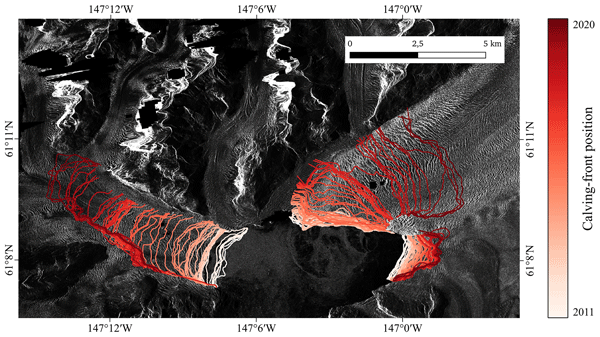
We present the testing and implementation of a calving framework for simulating the evolution of glacier fronts in grounded glacier tongues. The approach is coupled with a level set method to track changes in the glacier front over time and with an eigen-calving law that allows calving to respond to ice flow and stress conditions. The framework is evaluated using a synthetic glacier domain and, when applied to marine-terminating glaciers in Svalbard, reproduces observed calving front patterns.
Oskar Herrmann, Nora Gourmelon, Thorsten Seehaus, Andreas Maier, Johannes J. Fürst, Matthias H. Braun, and Vincent Christlein
The Cryosphere, 17, 4957–4977, https://doi.org/10.5194/tc-17-4957-2023, https://doi.org/10.5194/tc-17-4957-2023, 2023
Short summary
Short summary
Delineating calving fronts of marine-terminating glaciers in satellite images is a labour-intensive task. We propose a method based on deep learning that automates this task. We choose a deep learning framework that adapts to any given dataset without needing deep learning expertise. The method is evaluated on a benchmark dataset for calving-front detection and glacier zone segmentation. The framework can beat the benchmark baseline without major modifications.
Marius Schaefer, Ralf Greve, Ilaria Tabone, Johannes J. Fürst, and Matthias Braun
The Cryosphere, 20, 5115–5130, https://doi.org/10.5194/tc-20-5115-2026, https://doi.org/10.5194/tc-20-5115-2026, 2026
Short summary
Short summary
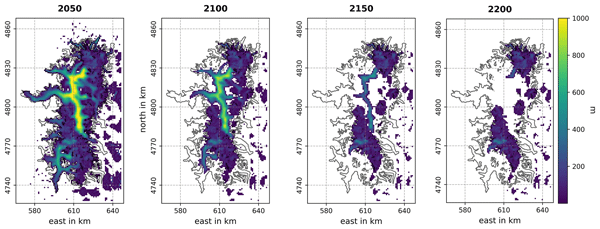
The Northern Patagonian Icefield is the second largest ice mass of South America, located at moderate latitudes. Using an ice-flow model which uses available atmosphere data as input and explicitly models iceberg discharge, we assess its evolution. With present climate, it will lose about 36 % until the year 2200. Climate change strongly accelerates losses and under Paris Agreement compliance it is between 38% and 75% and between 81% and 94% under a business-as-usual fossil fuel scenario.
Nikola Jovanovic, Timm Schultz, Angelika Humbert, Thomas Kleiner, and Samuel J. Cook
EGUsphere, https://doi.org/10.5194/egusphere-2026-4224, https://doi.org/10.5194/egusphere-2026-4224, 2026
Short summary
Short summary
The Greenland Ice Sheet (GrIS) has significantly melted in the last decades. However, melt formed on the surface can be stored in firn, a spongy layer between snow and ice. We use a model to simulate the change of the firn in a warming climate in regions of the GrIS. In southwest, thick ice layers (ice slabs) form. They limit the amount of water firn can store and their area increases with warming. In southeast, water bodies called firn aquifers form, that efficiently drain water into the ocean.
Akash M. Patil, Christoph Mayer, Theo M. Jenk, Astrid Lambrecht, Thorsten Seehaus, Alexander R. Groos, and Michelle Worek
The Cryosphere, 20, 4927–4955, https://doi.org/10.5194/tc-20-4927-2026, https://doi.org/10.5194/tc-20-4927-2026, 2026
Short summary
Short summary
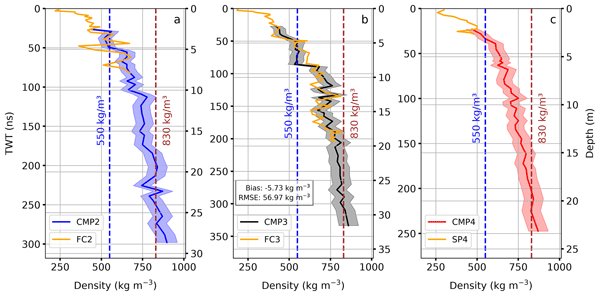
Our study focused on understanding how a warming climate affects the Aletsch Glacier accumulation area. We used multi-year radar measurements and direct firn‑core analyses to estimate changes in density and compaction rate of snow-to-ice over a year. Our results show that the upper layers of the glacier are changing faster due to stronger summer melt in the lower parts of the accumulation zone. Our findings help to improve firn densification models and glacier mass-balance estimation.
Samuel James Cook, Iain Wheel, Nick Hulton, Poul Christoffersen, and Doug Benn
EGUsphere, https://doi.org/10.5194/egusphere-2026-4213, https://doi.org/10.5194/egusphere-2026-4213, 2026
Short summary
Short summary
Accurate modelling of calving is a major problem that leads to uncertainties in sea-level rise. By modelling calving as a random process and testing how this interacts with water flow beneath the glacier, we show that including this water flow is essential to be able to fully reproduce real calving in a computer model. This may help guide future ice-sheet models as to how to improve their existing representations of Greenland and Antarctica.
Francesca Pellicciotti, Adrià Fontrodona-Bach, David R. Rounce, Catriona L. Fyffe, Leif S. Anderson, Álvaro Ayala, Ben W. Brock, Pascal Buri, Stefan Fugger, Koji Fujita, Prateek Gantayat, Alexander R. Groos, Walter Immerzeel, Marin Kneib, Christoph Mayer, Shelley MacDonell, Michael McCarthy, James McPhee, Evan Miles, Heather Purdie, Ekaterina Rets, Akiko Sakai, Thomas E. Shaw, Jakob Steiner, Patrick Wagnon, and Alex Winter-Billington
The Cryosphere, 20, 1895–1928, https://doi.org/10.5194/tc-20-1895-2026, https://doi.org/10.5194/tc-20-1895-2026, 2026
Short summary
Short summary
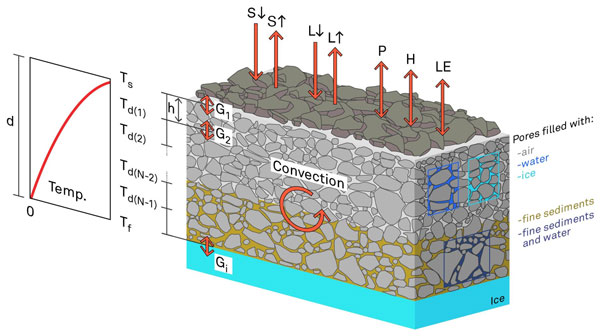
Rock debris covers many of the world glaciers, modifying the transfer of atmospheric energy to the debris and into the ice. Models of different complexity simulate this process, and we compare 15 models at 9 sites to show that the most complex models at the debris-atmosphere interface have the highest performance. However, we lack debris properties and their derivation from measurements is ambiguous, hindering global modelling and calling for both model development and data collection.
Christian Sommer, Alexander Raphael Groos, Johannes Fürst, and Matthias Braun
Earth Syst. Sci. Data Discuss., https://doi.org/10.5194/essd-2026-35, https://doi.org/10.5194/essd-2026-35, 2026
Preprint under review for ESSD
Short summary
Short summary
Measurements of glacier snow line altitudes (transition between ice and snow) provide information to constrain surface mass balance modelling. This study presents a database of ~200,000 snow lines from glaciers in the European Alps (2000–2025). Exposed ice and snow are automatically classified using adaptive thresholding of surface reflectance in visible and infrared spectra. Since 2000, we observe an increase in late summer snow lines of ~150 m, indicating widespread melt at high altitudes.
Veena Prasad, Oskar Herrmann, Ilaria Tabone, Mamta K C, Alexander R. Groos, Guillaume Jouvet, James R. Jordan, and Johannes J. Fürst
EGUsphere, https://doi.org/10.5194/egusphere-2026-508, https://doi.org/10.5194/egusphere-2026-508, 2026
Short summary
Short summary
We present the testing and implementation of a calving framework for simulating the evolution of glacier fronts in grounded glacier tongues. The approach is coupled with a level set method to track changes in the glacier front over time and with an eigen-calving law that allows calving to respond to ice flow and stress conditions. The framework is evaluated using a synthetic glacier domain and, when applied to marine-terminating glaciers in Svalbard, reproduces observed calving front patterns.
Moritz Koch, Jorge Berkhoff, Norbert Blindow, David Farías-Barahona, Pedro Skvarca, Johannes J. Fürst, and Matthias Braun
Earth Syst. Sci. Data Discuss., https://doi.org/10.5194/essd-2025-678, https://doi.org/10.5194/essd-2025-678, 2026
Preprint under review for ESSD
Short summary
Short summary
The Southern Patagonian Icefield is losing glacier area and ice volume rapidly. Although its glaciers share the same plateau, they retreat at different speeds and times. One reason for these differences lies in the unknown landscape beneath the ice. To reveal it, we used helicopter-based radar to measure the ice thickness and map the bedrock of Viedma, Upsala, and Perito Moreno Glaciers.
David Ibel, Thomas Mölg, and Christian Sommer
The Cryosphere, 19, 6629–6637, https://doi.org/10.5194/tc-19-6629-2025, https://doi.org/10.5194/tc-19-6629-2025, 2025
Short summary
Short summary
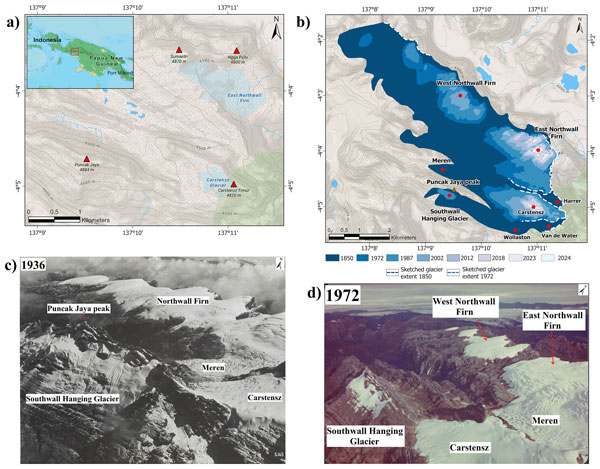
As the majority of (tropical) glaciers retreat on a global scale, we analysed area changes of the Puncak Jaya glaciers in South East Asia on West Papua, Indonesia, using high resolution optical satellite imagery, supported by historical glacier accounts. The results show a decrease of total glacier surface area by more than 99 % since 1850 and by ~65 % since the last survey in 2018, with glacier area (in 2024) amounting to 0.165 km2 ± 5 %. Puncak Jaya glaciers will likely disappear around 2030.
Alexander R. Groos, Nicolas Brand, Murat Bronz, and Andreas Philipp
Atmos. Meas. Tech., 18, 6493–6512, https://doi.org/10.5194/amt-18-6493-2025, https://doi.org/10.5194/amt-18-6493-2025, 2025
Short summary
Short summary
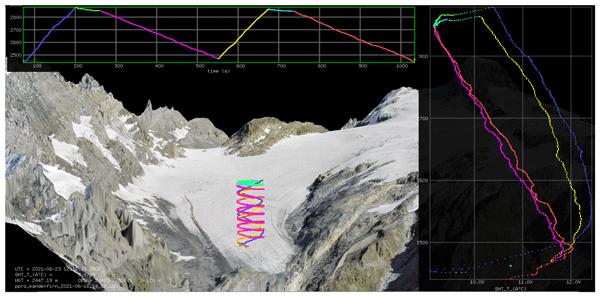
We have developed a low-cost, lightweight, and open-source fixed-wing drone to study vertical changes in air temperature, humidity, pressure, wind speed, wind direction and turbulence in the atmospheric boundary layer over mountain glaciers. The results of four measurement campaigns on a glacier in the Swiss Alps demonstrate the potential of the new measurement technique and reveal characteristic insights into glacier-atmosphere interactions and the mountain-valley wind circulation.
Akash M. Patil, Christoph Mayer, Thorsten Seehaus, Alexander R. Groos, and Andreas Bauder
The Cryosphere, 19, 5547–5577, https://doi.org/10.5194/tc-19-5547-2025, https://doi.org/10.5194/tc-19-5547-2025, 2025
Short summary
Short summary
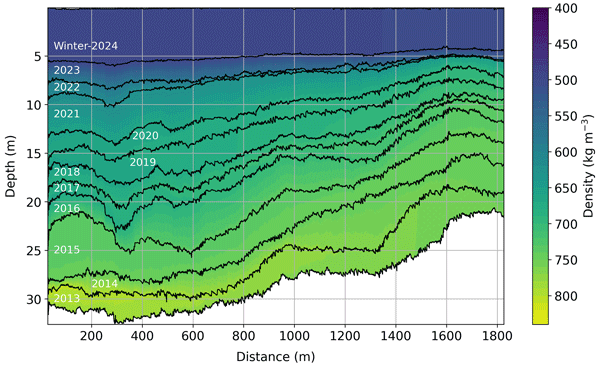
We studied how the density of snow to ice transition varies with depth in the Aletsch glacier using radar-based field measurements and some simple models. We showed that it is possible to track how much snow has accumulated in the last 10–14 years. This helps improve the uncertainties in glacier mass balance estimates. Overall, by utilising non-invasive radar techniques and models, we provide a novel approach to understanding the evolution of glaciers under regional climate conditions.
Johannes J. Fürst, David Farías-Barahona, Thomas Bruckner, Lucia Scaff, Martin Mergili, Santiago Montserrat, and Humberto Peña
Nat. Hazards Earth Syst. Sci., 25, 3559–3579, https://doi.org/10.5194/nhess-25-3559-2025, https://doi.org/10.5194/nhess-25-3559-2025, 2025
Short summary
Short summary
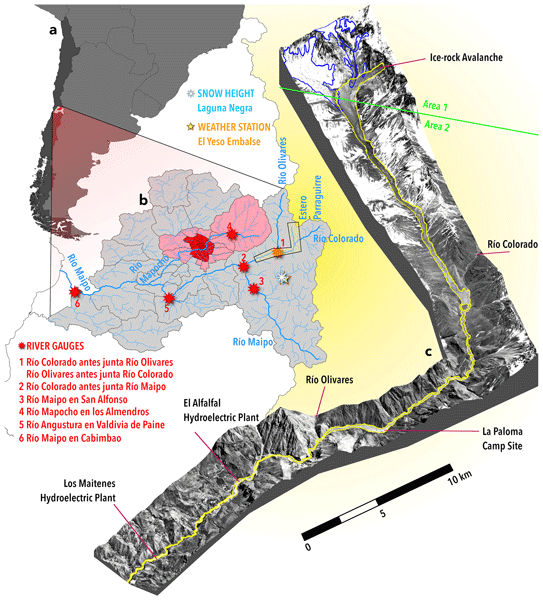
The 1987 Parraguirre ice–rock avalanche developed into a devastating debris flow, causing the loss of many lives and inflicting severe damage near Santiago, Chile. Here, we revise this event, combining various observational records with modelling techniques. In that year, important snow cover coincided with persistent warm periods in spring. We also put forward upward corrections for the trigger and flood volumes involved in this debris flow. Finally, temporary river damming was key for the flow ferocity.
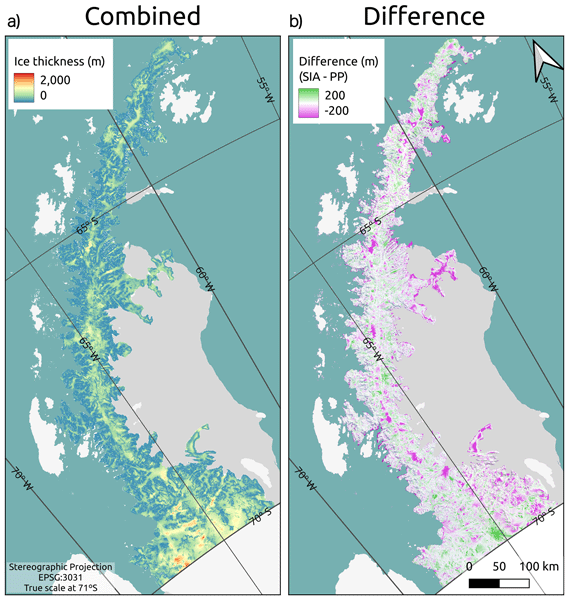
Kaian Shahateet, Johannes J. Fürst, Francisco Navarro, Thorsten Seehaus, Daniel Farinotti, and Matthias Braun
The Cryosphere, 19, 1577–1597, https://doi.org/10.5194/tc-19-1577-2025, https://doi.org/10.5194/tc-19-1577-2025, 2025
Short summary
Short summary
In the present work, we provide a new ice thickness reconstruction of the Antarctic Peninsula Ice Sheet north of 70º S using inversion modeling. This model consists of two steps: the first uses basic assumptions of the rheology of the glacier, and the second uses mass conservation to improve the reconstruction where the assumptions made previously are expected to fail. Validation with independent data showed that our reconstruction improved compared to other reconstructions that are available.
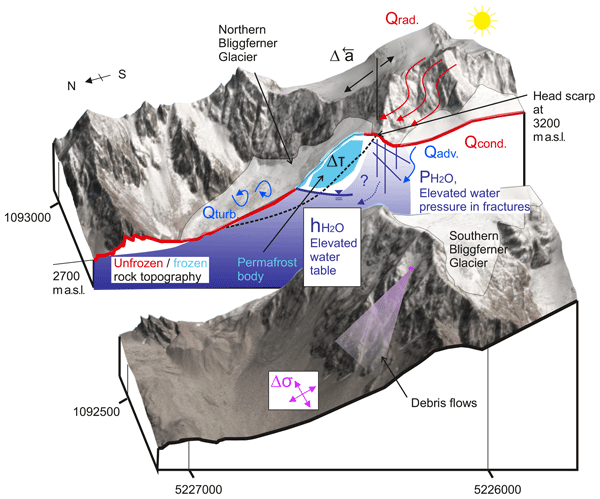
Felix Pfluger, Samuel Weber, Joseph Steinhauser, Christian Zangerl, Christine Fey, Johannes Fürst, and Michael Krautblatter
Earth Surf. Dynam., 13, 41–70, https://doi.org/10.5194/esurf-13-41-2025, https://doi.org/10.5194/esurf-13-41-2025, 2025
Short summary
Short summary
Our study explores permafrost–glacier interactions with a focus on their implications for preparing or triggering high-volume rock slope failures. Using the Bliggspitze rock slide as a case study, we demonstrate a new type of rock slope failure mechanism triggered by the uplift of the cold–warm dividing line in polythermal alpine glaciers, a widespread and currently under-explored phenomenon in alpine environments worldwide.
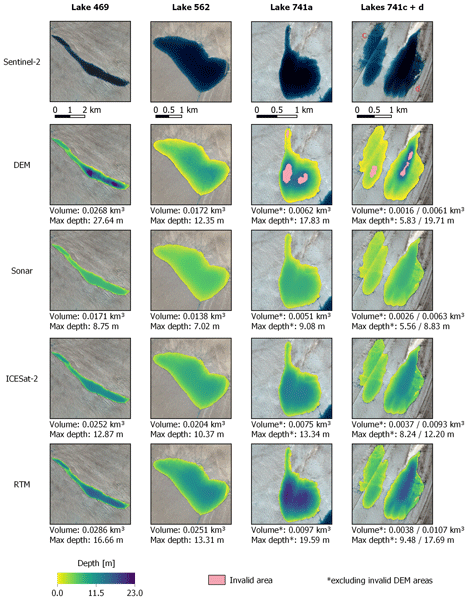
Katrina Lutz, Lily Bever, Christian Sommer, Thorsten Seehaus, Angelika Humbert, Mirko Scheinert, and Matthias Braun
The Cryosphere, 18, 5431–5449, https://doi.org/10.5194/tc-18-5431-2024, https://doi.org/10.5194/tc-18-5431-2024, 2024
Short summary
Short summary
The estimation of the amount of water found within supraglacial lakes is important for understanding how much water is lost from glaciers each year. Here, we develop two new methods for estimating supraglacial lake volume that can be easily applied on a large scale. Furthermore, we compare these methods to two previously developed methods in order to determine when it is best to use each method. Finally, three of these methods are applied to peak melt dates over an area in Northeast Greenland.
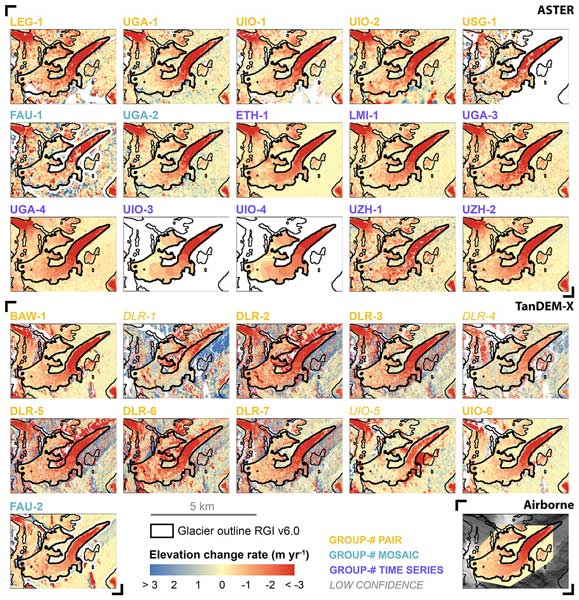
Livia Piermattei, Michael Zemp, Christian Sommer, Fanny Brun, Matthias H. Braun, Liss M. Andreassen, Joaquín M. C. Belart, Etienne Berthier, Atanu Bhattacharya, Laura Boehm Vock, Tobias Bolch, Amaury Dehecq, Inés Dussaillant, Daniel Falaschi, Caitlyn Florentine, Dana Floricioiu, Christian Ginzler, Gregoire Guillet, Romain Hugonnet, Matthias Huss, Andreas Kääb, Owen King, Christoph Klug, Friedrich Knuth, Lukas Krieger, Jeff La Frenierre, Robert McNabb, Christopher McNeil, Rainer Prinz, Louis Sass, Thorsten Seehaus, David Shean, Désirée Treichler, Anja Wendt, and Ruitang Yang
The Cryosphere, 18, 3195–3230, https://doi.org/10.5194/tc-18-3195-2024, https://doi.org/10.5194/tc-18-3195-2024, 2024
Short summary
Short summary
Satellites have made it possible to observe glacier elevation changes from all around the world. In the present study, we compared the results produced from two different types of satellite data between different research groups and against validation measurements from aeroplanes. We found a large spread between individual results but showed that the group ensemble can be used to reliably estimate glacier elevation changes and related errors from satellite data.
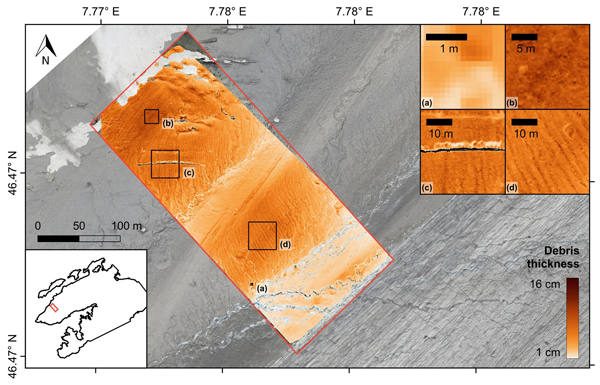
Jérôme Messmer and Alexander Raphael Groos
The Cryosphere, 18, 719–746, https://doi.org/10.5194/tc-18-719-2024, https://doi.org/10.5194/tc-18-719-2024, 2024
Short summary
Short summary
The lower part of mountain glaciers is often covered with debris. Knowing the thickness of the debris is important as it influences the melting and future evolution of the affected glaciers. We have developed an open-source approach to map variations in debris thickness on glaciers using a low-cost drone equipped with a thermal infrared camera. The resulting high-resolution maps of debris surface temperature and thickness enable more accurate monitoring and modelling of debris-covered glaciers.
Oskar Herrmann, Nora Gourmelon, Thorsten Seehaus, Andreas Maier, Johannes J. Fürst, Matthias H. Braun, and Vincent Christlein
The Cryosphere, 17, 4957–4977, https://doi.org/10.5194/tc-17-4957-2023, https://doi.org/10.5194/tc-17-4957-2023, 2023
Short summary
Short summary
Delineating calving fronts of marine-terminating glaciers in satellite images is a labour-intensive task. We propose a method based on deep learning that automates this task. We choose a deep learning framework that adapts to any given dataset without needing deep learning expertise. The method is evaluated on a benchmark dataset for calving-front detection and glacier zone segmentation. The framework can beat the benchmark baseline without major modifications.
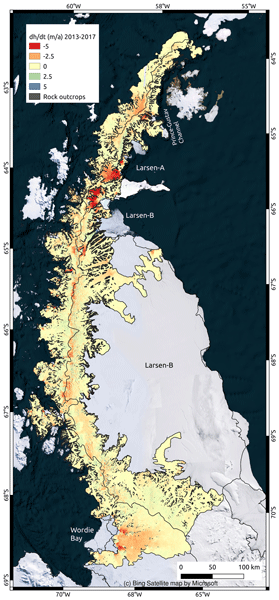
Thorsten Seehaus, Christian Sommer, Thomas Dethinne, and Philipp Malz
The Cryosphere, 17, 4629–4644, https://doi.org/10.5194/tc-17-4629-2023, https://doi.org/10.5194/tc-17-4629-2023, 2023
Short summary
Short summary
Existing mass budget estimates for the northern Antarctic Peninsula (>70° S) are affected by considerable limitations. We carried out the first region-wide analysis of geodetic mass balances throughout this region (coverage of 96.4 %) for the period 2013–2017 based on repeat pass bi-static TanDEM-X acquisitions. A total mass budget of −24.1±2.8 Gt/a is revealed. Imbalanced high ice discharge, particularly at former ice shelf tributaries, is the main driver of overall ice loss.
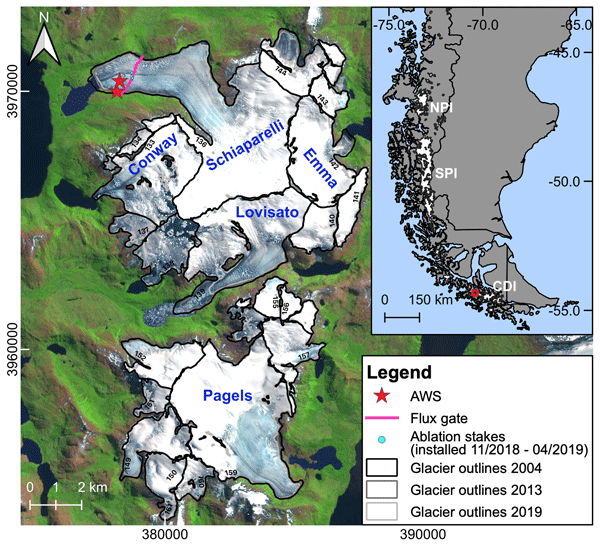
Franziska Temme, David Farías-Barahona, Thorsten Seehaus, Ricardo Jaña, Jorge Arigony-Neto, Inti Gonzalez, Anselm Arndt, Tobias Sauter, Christoph Schneider, and Johannes J. Fürst
The Cryosphere, 17, 2343–2365, https://doi.org/10.5194/tc-17-2343-2023, https://doi.org/10.5194/tc-17-2343-2023, 2023
Short summary
Short summary
Calibration of surface mass balance (SMB) models on regional scales is challenging. We investigate different calibration strategies with the goal of achieving realistic simulations of the SMB in the Monte Sarmiento Massif, Tierra del Fuego. Our results show that the use of regional observations from satellite data can improve the model performance. Furthermore, we compare four melt models of different complexity to understand the benefit of increasing the processes considered in the model.
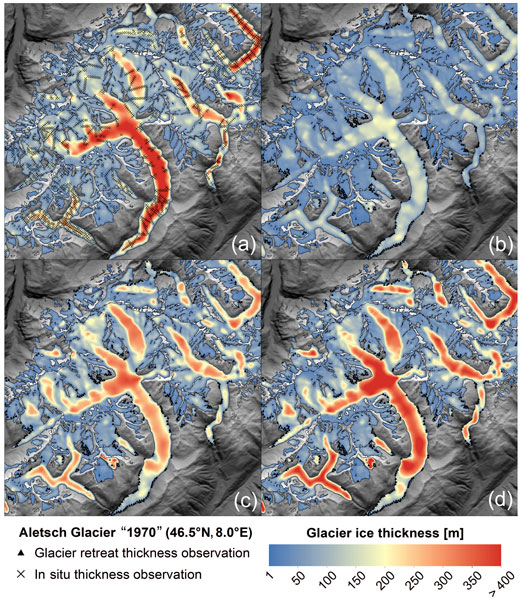
Christian Sommer, Johannes J. Fürst, Matthias Huss, and Matthias H. Braun
The Cryosphere, 17, 2285–2303, https://doi.org/10.5194/tc-17-2285-2023, https://doi.org/10.5194/tc-17-2285-2023, 2023
Short summary
Short summary
Knowledge on the volume of glaciers is important to project future runoff. Here, we present a novel approach to reconstruct the regional ice thickness distribution from easily available remote-sensing data. We show that past ice thickness, derived from spaceborne glacier area and elevation datasets, can constrain the estimated ice thickness. Based on the unique glaciological database of the European Alps, the approach will be most beneficial in regions without direct thickness measurements.
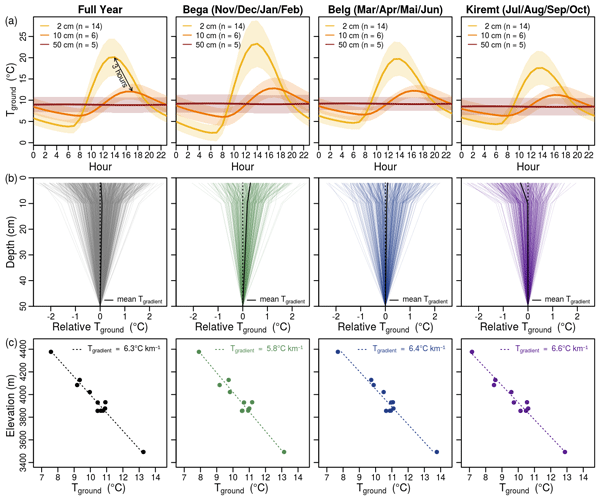
Alexander R. Groos, Janik Niederhauser, Bruk Lemma, Mekbib Fekadu, Wolfgang Zech, Falk Hänsel, Luise Wraase, Naki Akçar, and Heinz Veit
Earth Syst. Sci. Data, 14, 1043–1062, https://doi.org/10.5194/essd-14-1043-2022, https://doi.org/10.5194/essd-14-1043-2022, 2022
Short summary
Short summary
Continuous observations and measurements from high elevations are necessary to monitor recent climate and environmental changes in the tropical mountains of eastern Africa, but meteorological and ground temperature data from above 3000 m are very rare. Here we present a comprehensive ground temperature monitoring network that has been established between 3493 and 4377 m in the Bale Mountains (Ethiopian Highlands) to monitor and study the afro-alpine climate and ecosystem in this region.
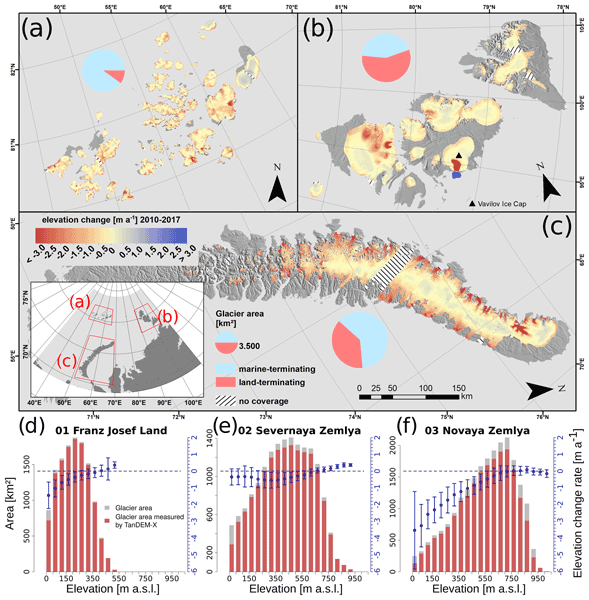
Christian Sommer, Thorsten Seehaus, Andrey Glazovsky, and Matthias H. Braun
The Cryosphere, 16, 35–42, https://doi.org/10.5194/tc-16-35-2022, https://doi.org/10.5194/tc-16-35-2022, 2022
Short summary
Short summary
Arctic glaciers have been subject to extensive warming due to global climate change, yet their contribution to sea level rise has been relatively small in the past. In this study we provide mass changes of most glaciers of the Russian High Arctic (Franz Josef Land, Severnaya Zemlya, Novaya Zemlya). We use TanDEM-X satellite measurements to derive glacier surface elevation changes. Our results show an increase in glacier mass loss and a sea level rise contribution of 0.06 mm/a (2010–2017).
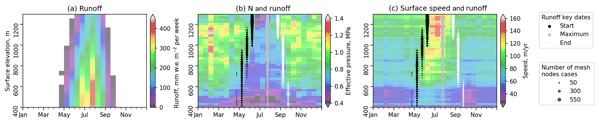
Anna Derkacheva, Fabien Gillet-Chaulet, Jeremie Mouginot, Eliot Jager, Nathan Maier, and Samuel Cook
The Cryosphere, 15, 5675–5704, https://doi.org/10.5194/tc-15-5675-2021, https://doi.org/10.5194/tc-15-5675-2021, 2021
Short summary
Short summary
Along the edges of the Greenland Ice Sheet surface melt lubricates the bed and causes large seasonal fluctuations in ice speeds during summer. Accurately understanding how these ice speed changes occur is difficult due to the inaccessibility of the glacier bed. We show that by using surface velocity maps with high temporal resolution and numerical modelling we can infer the basal conditions that control seasonal fluctuations in ice speed and gain insight into seasonal dynamics over large areas.
Cited articles
Bonan, B., Nodet, M., Ritz, C., and Peyaud, V.: An ETKF approach for initial state and parameter estimation in ice sheet modelling, Nonlinear Proc. Geoph., 21, 569–582, https://doi.org/10.5194/npg-21-569-2014, 2014. a
Cremona, A., Huss, M., Landmann, J. M., Marty, M., van der Meer, M., Ginzler, C., and Farinotti, D.: Seasonal mass balance drivers for Swiss glaciers over 2010–2024 inferred from remote-sensing observations and modelling, EGUsphere [preprint], https://doi.org/10.5194/egusphere-2025-2929, 2025. a
Crippen, R., Buckley, S., Agram, P., Belz, E., Gurrola, E., Hensley, S., Kobrick, M., Lavalle, M., Martin, J., Neumann, M., Nguyen, Q., Rosen, P., Shimada, J., Simard, M., and Tung, W.: NASADEM GLOBAL ELEVATION MODEL: METHODS AND PROGRESS, Int. Arch. Photogramm. Remote Sens. Spatial Inf. Sci., XLI-B4, 125–128, https://doi.org/10.5194/isprs-archives-XLI-B4-125-2016, 2016. a
Evensen, G.: Sequential data assimilation with a nonlinear quasi-geostrophic model using Monte Carlo methods to forecast error statistics, J. Geophys. Res.-Ocean., 99, 10143–10162, https://doi.org/10.1029/94JC00572, 1994. a, b
Frank, T., van Pelt, W. J. J., Rounce, D. R., Jouvet, G., and Hock, R.: Global glacier-free topography reveals a large potential for future lakes in presently ice-covered terrain, Nat. Commun., 17, 3985, https://doi.org/10.1038/s41467-026-72548-9, 2026. a
Friedl, P., Seehaus, T., and Braun, M.: Global time series and temporal mosaics of glacier surface velocities derived from Sentinel-1 data, Earth Syst. Sci. Data, 13, 4653–4675, https://doi.org/10.5194/essd-13-4653-2021, 2021. a, b
Gardner, A. S., Greene, C. A., Kennedy, J. H., Fahnestock, M. A., Liukis, M., López, L. A., Lei, Y., Scambos, T. A., and Dehecq, A.: ITS_LIVE global glacier velocity data in near-real time, The Cryosphere, 19, 3517–3533, https://doi.org/10.5194/tc-19-3517-2025, 2025. a
Gillet-Chaulet, F.: Assimilation of surface observations in a transient marine ice sheet model using an ensemble Kalman filter, The Cryosphere, 14, 811–832, https://doi.org/10.5194/tc-14-811-2020, 2020. a
GLAMOS: Swiss Glacier Mass Balance, Glacier Monitoring Switzerland [data set], https://doi.org/10.18750/massbalance.2020.r2021, 2021. a
GLAMOS: Swiss Glacier Volume Change (release 2023), https://doi.org/10.18750/VOLUMECHANGE.2023.R2023, 2023. a, b, c
Goldberg, D. N. and Heimbach, P.: Parameter and state estimation with a time-dependent adjoint marine ice sheet model, The Cryosphere, 7, 1659–1678, https://doi.org/10.5194/tc-7-1659-2013, 2013. a
Haeberli, W., Alean, J.-C., Müller, P., and Funk, M.: Assessing Risks from Glacier Hazards in High Mountain Regions: Some Experiences in the Swiss Alps, Ann. Glaciol., 13, 96–102, https://doi.org/10.3189/S0260305500007709, 2017. a
Hall, D. K., Ormsby, J. P., Bindschadler, R. A., and Siddalingaiah, H.: Characterization of Snow and Ice Reflectance Zones On Glaciers Using Landsat Thematic Mapper Data, Ann. Glaciol., 9, 104–108, https://doi.org/10.3189/S0260305500000471, 1987. a
Herrmann, O., Fürst, J., and Temme, F.: FAU-glacier-systems/FROST: DOI Release (v1.0.1), Zenodo [code], https://doi.org/10.5281/zenodo.21128855, 2026. a
Higdon, D., Pratola, M., Gattiker, J., Lawrence, E., Habib, S., Heitmann, K., Price, S., Jackson, C., and Tobis, M.: Computer Model Calibration using the Ensemble Kalman Filter, http://arxiv.org/abs/1204.3547 (last access: 27 May 2026), 2012. a
Hock, R., Bliss, A., Marzeion, B., Giesen, R. H., Hirabayashi, Y., Huss, M., Radić, V., and Slangen, A. B. A.: GlacierMIP – A model intercomparison of global-scale glacier mass-balance models and projections, J. Glaciol., 65, 453–467, https://doi.org/10.1017/jog.2019.22, 2019. a
Hugonnet, R., McNabb, R., Berthier, E., Menounos, B., Nuth, C., Girod, L., Farinotti, D., Huss, M., Dussaillant, I., Brun, F., and Kääb, A.: Accelerated global glacier mass loss in the early twenty-first century, Nature, 592, 726–731, https://doi.org/10.1038/s41586-021-03436-z, 2021a. a, b, c, d, e, f, g
Hugonnet, R., McNabb, R., Berthier, E., Menounos, B., Nuth, C., Girod, L., Farinotti, D., Huss, M., Dussaillant, I., Brun, F. and Kääb, A.: Accelerated global glacier mass loss in the early twenty-first century – Dataset, Theia [data set], https://doi.org/10.6096/13, 2021b. a
Huss, M. and Hock, R.: Global-scale hydrological response to future glacier mass loss, Nat.e Clim. Change, 8, 135–140, https://doi.org/10.1038/s41558-017-0049-x, 2018. a
Huss, M., Bookhagen, B., Huggel, C., Jacobsen, D., Bradley, R., Clague, J., Vuille, M., Buytaert, W., Cayan, D., Greenwood, G., Mark, B., Milner, A., Weingartner, R., and Winder, M.: Toward mountains without permanent snow and ice, Earth's Future, 5, 418–435, https://doi.org/10.1002/2016EF000514, 2017. a
Iglesias, M. A., Law, K. J. H., and Stuart, A. M.: Ensemble Kalman methods for inverse problems, Inverse Problems, 29, 045001, https://doi.org/10.1088/0266-5611/29/4/045001, 2013. a
Jouvet, G. and Cordonnier, G.: Ice-flow model emulator based on physics-informed deep learning, J. Glaciol., 69, 1941–1955, https://doi.org/10.1017/jog.2023.73, 2023. a, b, c
Knudsen, L., Park-Kaufmann, H., Corcoran, E., Robel, A., and Mayo, T.: The Potential of the Ensemble Kalman Filter to Improve Glacier Modeling, La Matematica, 3, 1085–1102, https://doi.org/10.1007/s44007-024-00116-y, 2024. a
Koboltschnig, G. R. and Schöner, W.: The relevance of glacier melt in the water cycle of the Alps: the example of Austria, Hydrol. Earth Syst. Sci., 15, 2039–2048, https://doi.org/10.5194/hess-15-2039-2011, 2011. a
Maussion, F., Butenko, A., Champollion, N., Dusch, M., Eis, J., Fourteau, K., Gregor, P., Jarosch, A. H., Landmann, J., Oesterle, F., Recinos, B., Rothenpieler, T., Vlug, A., Wild, C. T., and Marzeion, B.: The Open Global Glacier Model (OGGM) v1.1, Geosci. Model Dev., 12, 909–931, https://doi.org/10.5194/gmd-12-909-2019, 2019. a
Maussion, F., Rothenpieler, T., Dusch, M., Schmitt, P., Vlug, A., Schuster, L., Champollion, N., Li, F., Marzeion, B., Oberrauch, M., Eis, J., Landmann, J., Jarosch, A., Fischer, A., luzpaz, Hanus, S., Rounce, D., Castellani, M., Bartholomew, S. L., Minallah, S., bowenbelongstonature, Merrill, C., Otto, D., Loibl, D., Ultee, L., Thompson, S., anton ub, Gregor, P., and zhaohongyu: OGGM/oggm: v1.6.0, Zenodo, https://doi.org/10.5281/zenodo.7718476, 2023. a
Otsu, N.: A Threshold Selection Method from Gray-Level Histograms, IEEE T. Syst. Man Cyb., 9, 62–66, https://doi.org/10.1109/TSMC.1979.4310076, 1979. a
Rabatel, A., Ducasse, E., Millan, R., and Mouginot, J.: Satellite-Derived Annual Glacier Surface Flow Velocity Products for the European Alps, 2015–2021, Data, 8, 66, https://doi.org/10.3390/data8040066, 2023. a
Rettig, L., Huss, M., and Kneib, M.: Quantifying topoclimatic control on glacier Equilibrium Line Altitudes at the regional and global scale, EGU General Assembly 2026, Vienna, Austria, 3–8 May 2026, EGU26-12599, https://doi.org/10.5194/egusphere-egu26-12599, 2026. a
RGI Consortium: Randolph Glacier Inventory – A Dataset of Global Glacier Outlines, NSIDC-0770, Version 7, Boulder, Colorado USA, National Snow and Ice Data Center [data set], https://doi.org/10.5067/F6JMOVY5NAVZ, 2023. a, b, c
Rounce, D. R., Hock, R., Maussion, F., Hugonnet, R., Kochtitzky, W., Huss, M., Berthier, E., Brinkerhoff, D., Compagno, L., Copland, L., Farinotti, D., Menounos, B., and McNabb, R. W.: Global glacier change in the 21st century: Every increase in temperature matters, Science, 379, 78–83, https://doi.org/10.1126/science.abo1324, 2023. a, b
Schaefli, B., Manso, P., Fischer, M., Huss, M., and Farinotti, D.: The role of glacier retreat for Swiss hydropower production, Renew. Energ., 132, 615–627, https://doi.org/10.1016/j.renene.2018.07.104, 2019. a
Schmitt, P., Maussion, F., Goldberg, D. N., and Gregor, P.: AGILE v0.1: The Open Global Glacier Data Assimilation Framework, Geosci. Model Dev., 19, 1301–1319, https://doi.org/10.5194/gmd-19-1301-2026, 2026. a, b
Slater, T., Lawrence, I. R., Otosaka, I. N., Shepherd, A., Gourmelen, N., Jakob, L., Tepes, P., Gilbert, L., and Nienow, P.: Review article: Earth's ice imbalance, The Cryosphere, 15, 233–246, https://doi.org/10.5194/tc-15-233-2021, 2021. a
Sommer, C., Malz, P., Seehaus, T. C., Lippl, S., Zemp, M., and Braun, M. H.: Rapid glacier retreat and downwasting throughout the European Alps in the early 21st century, Nat. Commun., 11, 3209, https://doi.org/10.1038/s41467-020-16818-0, 2020. a
Sommer, C., Groos, A. R., Fürst, J., and Braun, M.: Transient snow line altitudes of glaciers in the European Alps from multi-mission remote sensing data (2000–2025), Earth Syst. Sci. Data Discuss. [preprint], https://doi.org/10.5194/essd-2026-35, in review, 2026a. a, b, c, d
Sommer, C., Groos, A. R., Fürst, J., and Braun, M.: Transient snow line altitudes of glaciers in the European Alps from multi-mission remote sensing data (2000–2025) (1.0), Zenodo [data set], https://doi.org/10.5281/zenodo.18223929, 2026b. a
Welty, E., Zemp, M., Navarro, F., Huss, M., Fürst, J. J., Gärtner-Roer, I., Landmann, J., Machguth, H., Naegeli, K., Andreassen, L. M., Farinotti, D., Li, H., and Contributors, G.: Worldwide version-controlled database of glacier thickness observations, Earth Syst. Sci. Data, 12, 3039–3055, https://doi.org/10.5194/essd-12-3039-2020, 2020. a, b
WGMS: Fluctuations of Glaciers Database. World Glacier Monitoring Service (WGMS), Zurich, Switzerland, https://doi.org/10.5904/wgms-fog-2024-01, 2024. a, b, c
WGMS: Fluctuations of Glaciers (FoG) Database, World Glacier Monitoring Service (WGMS) [data set], Zurich, Switzerland, https://doi.org/10.5904/wgms-fog-2026-02-10, 2026. a
Zekollari, H., Schuster, L., Maussion, F., Hock, R., Marzeion, B., Rounce, D. R., Compagno, L., Fujita, K., Huss, M., James, M., Kraaijenbrink, P. D. A., Lipscomb, W. H., Minallah, S., Oberrauch, M., Van Tricht, L., Champollion, N., Edwards, T., Farinotti, D., Immerzeel, W., Leguy, G., and Sakai, A.: Glacier preservation doubled by limiting warming to 1.5 °C versus 2.7 °C, Science, 388, 979–983, https://doi.org/10.1126/science.adu4675, 2025. a
Zemp, M., Jakob, L., Dussaillant, I., Nussbaumer, S. U., Gourmelen, N., Dubber, S., A, G., Abdullahi, S., Andreassen, L. M., Berthier, E., Bhattacharya, A., Blazquez, A., Boehm Vock, L. F., Bolch, T., Box, J., Braun, M. H., Brun, F., Cicero, E., Colgan, W., Eckert, N., Farinotti, D., Florentine, C., Floricioiu, D., Gardner, A., Harig, C., Hassan, J., Hugonnet, R., Huss, M., Jóhannesson, T., Liang, C.-C. A., Ke, C.-Q., Khan, S. A., King, O., Kneib, M., Krieger, L., Maussion, F., Mattea, E., McNabb, R., Menounos, B., Miles, E., Moholdt, G., Nilsson, J., Pálsson, F., Pfeffer, J., Piermattei, L., Plummer, S., Richter, A., Sasgen, I., Schuster, L., Seehaus, T., Shen, X., Sommer, C., Sutterley, T., Treichler, D., Velicogna, I., Wouters, B., Zekollari, H., Zheng, W., and The GlaMBIE Team: Community estimate of global glacier mass changes from 2000 to 2023, Nature, 639, 382–388, https://doi.org/10.1038/s41586-024-08545-z, 2025. a
Short summary
Glaciers in the European Alps are shrinking rapidly because of climate change. We developed a new open-source method that combines satellite observations with computer models to estimate where glaciers gain and lose ice. Applied to hundreds of glaciers, the results agree well with field measurements. This approach improves our understanding of glacier change and helps make more reliable predictions of their future.
Glaciers in the European Alps are shrinking rapidly because of climate change. We developed a...


