
Articles | Volume 20, issue 6
https://doi.org/10.5194/tc-20-3559-2026
© Author(s) 2026. This work is distributed under
the Creative Commons Attribution 4.0 License.
the Creative Commons Attribution 4.0 License.
https://doi.org/10.5194/tc-20-3559-2026
© Author(s) 2026. This work is distributed under
the Creative Commons Attribution 4.0 License.
the Creative Commons Attribution 4.0 License.
Research article
| 
22 Jun 2026
Research article |
| 22 Jun 2026
| 22 Jun 2026
30 m monthly glacier surface velocity mapping in the Kangri Karpo region (2015–2024) using multi-source remote sensing data fusion
Daoxun Gao
Institute of International Rivers and Eco-Security, Yunnan University, Kunming 650091, China
Yunnan Key Laboratory of International Rivers and Transboundary Eco-security, Yunnan University, Kunming 650091, China
Ministry of Education Key Laboratory for Transboundary Eco-Security of Southwest China, Yunnan University, Kunming 650091, China
Meili Snow Mountains Cryosphere Changes Observation and Research Station of Yunnan Province, Diqing 674400, Yunnan, China

Institute of International Rivers and Eco-Security, Yunnan University, Kunming 650091, China
Yunnan Key Laboratory of International Rivers and Transboundary Eco-security, Yunnan University, Kunming 650091, China
Yunpeng Duan
Institute of International Rivers and Eco-Security, Yunnan University, Kunming 650091, China
Yunnan Key Laboratory of International Rivers and Transboundary Eco-security, Yunnan University, Kunming 650091, China
Ministry of Education Key Laboratory for Transboundary Eco-Security of Southwest China, Yunnan University, Kunming 650091, China
Meili Snow Mountains Cryosphere Changes Observation and Research Station of Yunnan Province, Diqing 674400, Yunnan, China
Zhaoqi Ji
Institute of International Rivers and Eco-Security, Yunnan University, Kunming 650091, China
Yunnan Key Laboratory of International Rivers and Transboundary Eco-security, Yunnan University, Kunming 650091, China
Ministry of Education Key Laboratory for Transboundary Eco-Security of Southwest China, Yunnan University, Kunming 650091, China
Meili Snow Mountains Cryosphere Changes Observation and Research Station of Yunnan Province, Diqing 674400, Yunnan, China
Danyu Ma
Institute of International Rivers and Eco-Security, Yunnan University, Kunming 650091, China
Yunnan Key Laboratory of International Rivers and Transboundary Eco-security, Yunnan University, Kunming 650091, China
Ministry of Education Key Laboratory for Transboundary Eco-Security of Southwest China, Yunnan University, Kunming 650091, China
Meili Snow Mountains Cryosphere Changes Observation and Research Station of Yunnan Province, Diqing 674400, Yunnan, China
Tobias Bolch
Institute of Geodesy, Graz University of Technology, Graz, Austria
Cheng Huang
Yunnan Geological Environment Monitoring Institute, Kunming 650216, Yunnan, China
Shiyin Liu
Institute of International Rivers and Eco-Security, Yunnan University, Kunming 650091, China
Related authors
No articles found.
Lea Hartl, Jakob Abermann, Ayla Akgün, Giulia Bertolotti, Tobias Bolch, Svenja Conzelmann, Codrut-Andrei Diaconu, Iris Hansche, Anne Hartig, Anna Haut, Kay Helfricht, Bernhard Hynek, Marie Sophie Kaucher, Andreas Kellerer-Pirklbauer, Ann Christin Kogel, Julie Krippes, Marcela Violeta Lauria, Christoph Mayer, Jan-Christoph Otto, Rainer Prinz, Sina Prölß, Lorenzo Rieg, Lea Schönleber, Gabriele Schwaizer, Bernd Seiser, Martin Stocker-Waldhuber, Markus Strudl, Martin Verhounik, and Harald Zandler
The Cryosphere, 20, 5157–5180, https://doi.org/10.5194/tc-20-5157-2026, https://doi.org/10.5194/tc-20-5157-2026, 2026
Short summary
Short summary
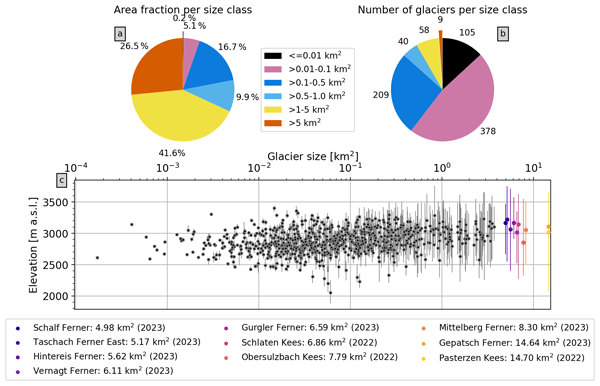
We mapped glacier outlines in Austria using recent, high resolution imagery. The resulting glacier inventory provides an update on glacier area in Austria in 2021-2023. More than 30% of glacier area was lost and 95 glaciers have disappeared since the mid-2000s. Glacier recession is accelerating and regular updates to glacier inventories are needed to understand downstream changes to the hydrological system, quantify glacier mass loss, and support planning and adaptation measures.
Zhangyu Sun, Tobias Bolch, Daniel Falaschi, Atanu Bhattacharya, and Lin Liu
EGUsphere, https://doi.org/10.5194/egusphere-2026-3678, https://doi.org/10.5194/egusphere-2026-3678, 2026
This preprint is open for discussion and under review for The Cryosphere (TC).
Short summary
Short summary
Ice-debris complexes (IDC) are common, but their evolution remains poorly understood. We investigated 4 IDCs and identified 3 major zones: a glacier, a glacier-affected, and a periglacial zone. Although glacier-affected and periglacial zones cover much smaller areas than glaciers, their ice volume losses are comparable. IDCs can evolve through multiple pathways, incl. gradual transformation of glacier into rock glaciers and the advance or embedding of glaciers onto pre-existing rock glaciers.
Xin Yang, Shiyin Liu, Fuming Xie, Jinyue Wei, Jun Zhou, Yunpeng Duan, Yiyuan Shen, Yu Zhu, Qiao Liu, Muhammad Mannan Afzal, and Muhammad Saifullah
EGUsphere, https://doi.org/10.5194/egusphere-2026-2836, https://doi.org/10.5194/egusphere-2026-2836, 2026
Short summary
Short summary
Glaciers in the Karakoram are changing but older maps often miss small ice bodies and blur the edges where ice is covered by rock. We made a clearer map by combining detailed satellite images, height information, surface temperature, computer-assisted mapping, and careful human checking. The new map shows about 13,900 glaciers and reveals that much rock-covered ice is concentrated on a small number of very large glaciers. This work helps people better understand water, risk, and mountain change.
Jakob Steiner, William Armstrong, Will Kochtitzky, Robert McNabb, Rodrigo Aguayo, Tobias Bolch, Fabien Maussion, Vibhor Agarwal, Iestyn Barr, Nathaniel R. Baurley, Mike Cloutier, Katelyn DeWater, Frank Donachie, Yoann Drocourt, Siddhi Garg, Gunjan Joshi, Byron Guzman, Stanislav Kutuzov, Thomas Loriaux, Caleb Mathias, Brian Menounos, Evan Miles, Aleksandra Osika, Kaleigh Potter, Adina Racoviteanu, Brianna Rick, Miles Sterner, Guy D. Tallentire, Levan Tielidze, Rebecca White, Kunpeng Wu, and Whyjay Zheng
Earth Syst. Sci. Data, 18, 1665–1681, https://doi.org/10.5194/essd-18-1665-2026, https://doi.org/10.5194/essd-18-1665-2026, 2026
Short summary
Short summary
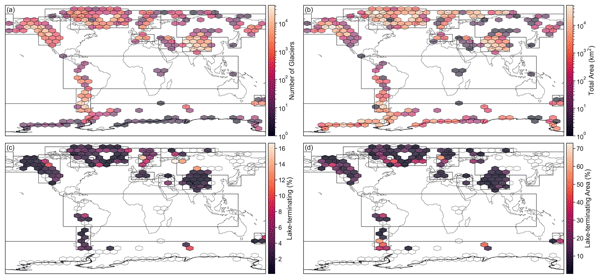
Many mountain glaciers around the world flow into lakes – exactly how many however, has never been mapped. Across a large team of experts we have now identified all glaciers that end in lakes. Only about 1% do so, but they are generally larger than those which end on land. This is important to understand, as lakes can influence the behaviour of glacier ice, including how fast it disappears. This new dataset allows us to better model glaciers at a global scale, accounting for the effect of lakes.
Samuel Schilling, Tobias Bolch, Andreas Dietz, Rebecca Jean Herman, and Claudia Kuenzer
EGUsphere, https://doi.org/10.5194/egusphere-2025-6280, https://doi.org/10.5194/egusphere-2025-6280, 2026
Short summary
Short summary
Snow stored in winter snowpacks supplies water to rivers that millions of people depend on. As warming reduces snow amounts, we studied whether melting snow still matters for river flow. Using long records from river basins on four continents, and cause and effect analysis, we found that in some basins melting snow can become more important for river flow even when less snow is available.
Line Rouyet, Tobias Bolch, Francesco Brardinoni, Rafael Caduff, Diego Cusicanqui, Margaret Darrow, Reynald Delaloye, Thomas Echelard, Christophe Lambiel, Cécile Pellet, Lucas Ruiz, Lea Schmid, Flavius Sirbu, and Tazio Strozzi
Earth Syst. Sci. Data, 17, 4125–4157, https://doi.org/10.5194/essd-17-4125-2025, https://doi.org/10.5194/essd-17-4125-2025, 2025
Short summary
Short summary
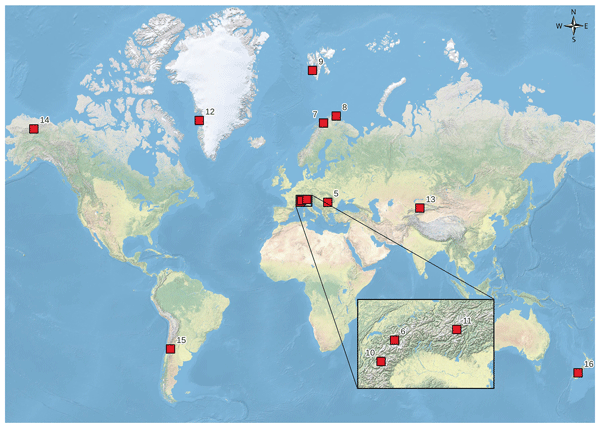
Rock glaciers are landforms generated by the creep of frozen ground (permafrost) in cold-climate mountains. Mapping rock glaciers contributes to documenting the distribution and the dynamics of mountain permafrost. We compiled inventories documenting the location, the characteristics, and the extent of rock glaciers in 12 mountain regions around the world. In each region, a team of operators performed the work following common rules and agreed on final solutions when discrepancies were identified.
Yu Zhu, Shiyin Liu, Junfeng Wei, Kunpeng Wu, Tobias Bolch, Junli Xu, Wanqin Guo, Zongli Jiang, Fuming Xie, Ying Yi, Donghui Shangguan, Xiaojun Yao, and Zhen Zhang
Earth Syst. Sci. Data, 17, 1851–1871, https://doi.org/10.5194/essd-17-1851-2025, https://doi.org/10.5194/essd-17-1851-2025, 2025
Short summary
Short summary
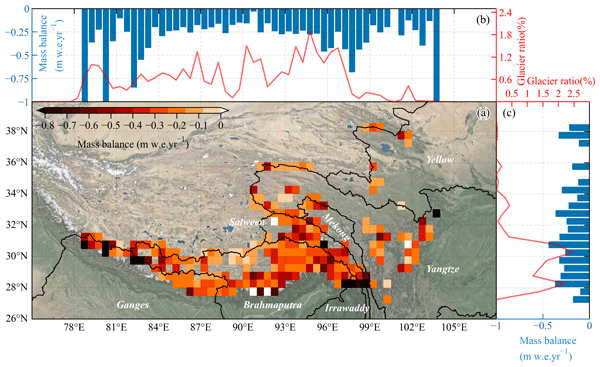
This study compiled a near-complete inventory of glacier mass changes across the eastern Tibetan Plateau using topographical maps. These data enhance our understanding of glacier change variability before 2000. When combined with existing research, our dataset provides a nearly 5-decade record of mass balance, aiding hydrological simulations and assessments of mountain glacier contributions to sea-level rise.
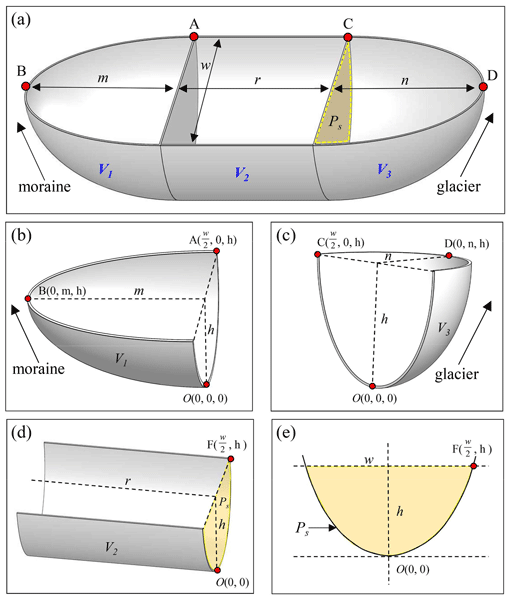
Miaomiao Qi, Shiyin Liu, Zhifang Zhao, Yongpeng Gao, Fuming Xie, Georg Veh, Letian Xiao, Jinlong Jing, Yu Zhu, and Kunpeng Wu
Hydrol. Earth Syst. Sci., 29, 969–982, https://doi.org/10.5194/hess-29-969-2025, https://doi.org/10.5194/hess-29-969-2025, 2025
Short summary
Short summary
Here we propose a new mathematically robust and cost-effective model to improve glacial lake water storage estimation. We have also provided a dataset of measured water storage in glacial lakes through field depth measurements. Our model incorporates an automated calculation process and outperforms previous ones, achieving an average relative error of only 14 %. This research offers a valuable tool for researchers seeking to improve the risk assessment of glacial lake outburst floods.
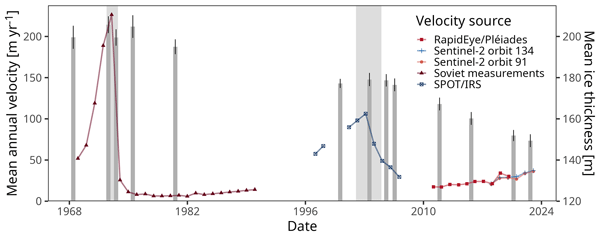
Enrico Mattea, Etienne Berthier, Amaury Dehecq, Tobias Bolch, Atanu Bhattacharya, Sajid Ghuffar, Martina Barandun, and Martin Hoelzle
The Cryosphere, 19, 219–247, https://doi.org/10.5194/tc-19-219-2025, https://doi.org/10.5194/tc-19-219-2025, 2025
Short summary
Short summary
We reconstruct the evolution of terminus position, ice thickness, and surface flow velocity of the reference Abramov glacier (Kyrgyzstan) from 1968 to present. We describe a front pulsation in the early 2000s and the multi-annual present-day buildup of a new pulsation. Such dynamic instabilities can challenge the representativity of Abramov as a reference glacier. For our work we used satellite‑based optical remote sensing from multiple platforms, including recently declassified archives.
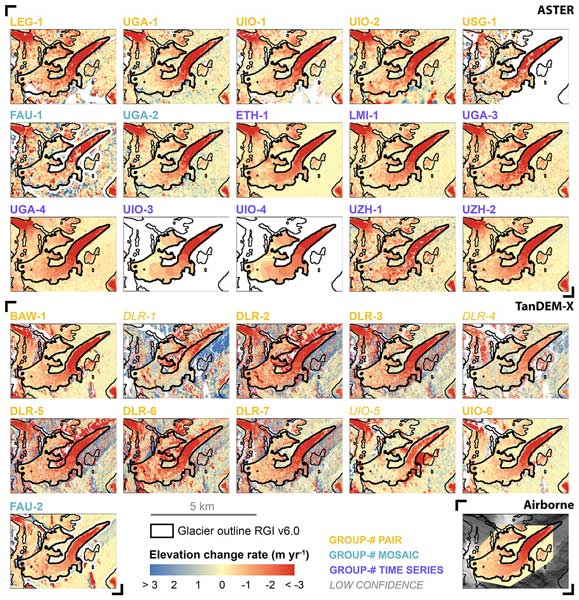
Livia Piermattei, Michael Zemp, Christian Sommer, Fanny Brun, Matthias H. Braun, Liss M. Andreassen, Joaquín M. C. Belart, Etienne Berthier, Atanu Bhattacharya, Laura Boehm Vock, Tobias Bolch, Amaury Dehecq, Inés Dussaillant, Daniel Falaschi, Caitlyn Florentine, Dana Floricioiu, Christian Ginzler, Gregoire Guillet, Romain Hugonnet, Matthias Huss, Andreas Kääb, Owen King, Christoph Klug, Friedrich Knuth, Lukas Krieger, Jeff La Frenierre, Robert McNabb, Christopher McNeil, Rainer Prinz, Louis Sass, Thorsten Seehaus, David Shean, Désirée Treichler, Anja Wendt, and Ruitang Yang
The Cryosphere, 18, 3195–3230, https://doi.org/10.5194/tc-18-3195-2024, https://doi.org/10.5194/tc-18-3195-2024, 2024
Short summary
Short summary
Satellites have made it possible to observe glacier elevation changes from all around the world. In the present study, we compared the results produced from two different types of satellite data between different research groups and against validation measurements from aeroplanes. We found a large spread between individual results but showed that the group ensemble can be used to reliably estimate glacier elevation changes and related errors from satellite data.
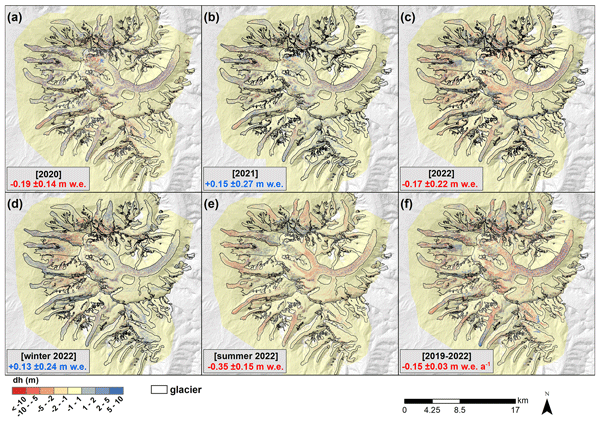
Daniel Falaschi, Atanu Bhattacharya, Gregoire Guillet, Lei Huang, Owen King, Kriti Mukherjee, Philipp Rastner, Tandong Yao, and Tobias Bolch
The Cryosphere, 17, 5435–5458, https://doi.org/10.5194/tc-17-5435-2023, https://doi.org/10.5194/tc-17-5435-2023, 2023
Short summary
Short summary
Because glaciers are crucial freshwater sources in the lowlands surrounding High Mountain Asia, constraining short-term glacier mass changes is essential. We investigate the potential of state-of-the-art satellite elevation data to measure glacier mass changes in two selected regions. The results demonstrate the ability of our dataset to characterize glacier changes of different magnitudes, allowing for an increase in the number of inaccessible glaciers that can be readily monitored.
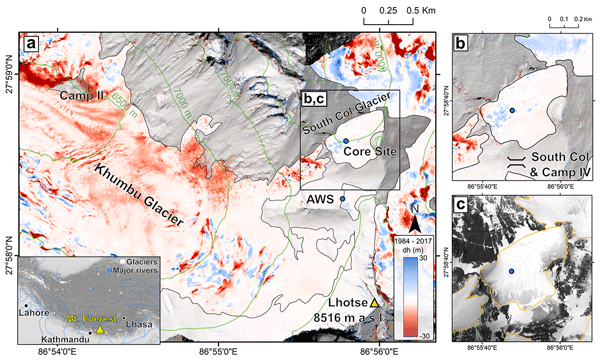
Fanny Brun, Owen King, Marion Réveillet, Charles Amory, Anton Planchot, Etienne Berthier, Amaury Dehecq, Tobias Bolch, Kévin Fourteau, Julien Brondex, Marie Dumont, Christoph Mayer, Silvan Leinss, Romain Hugonnet, and Patrick Wagnon
The Cryosphere, 17, 3251–3268, https://doi.org/10.5194/tc-17-3251-2023, https://doi.org/10.5194/tc-17-3251-2023, 2023
Short summary
Short summary
The South Col Glacier is a small body of ice and snow located on the southern ridge of Mt. Everest. A recent study proposed that South Col Glacier is rapidly losing mass. In this study, we examined the glacier thickness change for the period 1984–2017 and found no thickness change. To reconcile these results, we investigate wind erosion and surface energy and mass balance and find that melt is unlikely a dominant process, contrary to previous findings.
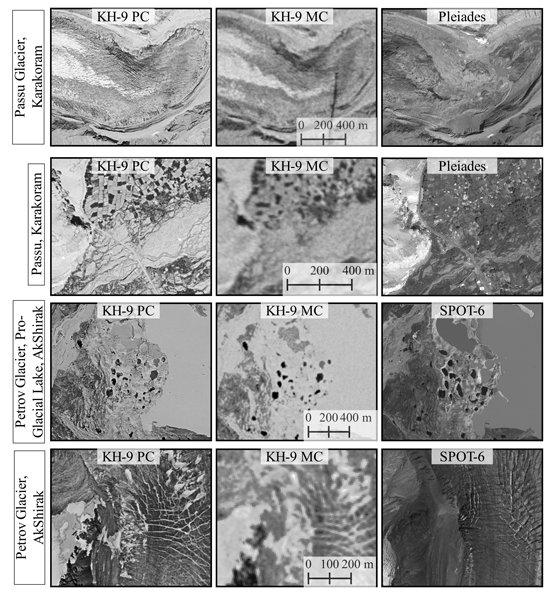
Sajid Ghuffar, Owen King, Grégoire Guillet, Ewelina Rupnik, and Tobias Bolch
The Cryosphere, 17, 1299–1306, https://doi.org/10.5194/tc-17-1299-2023, https://doi.org/10.5194/tc-17-1299-2023, 2023
Short summary
Short summary
The panoramic cameras (PCs) on board Hexagon KH-9 satellite missions from 1971–1984 captured very high-resolution stereo imagery with up to 60 cm spatial resolution. This study explores the potential of this imagery for glacier mapping and change estimation. The high resolution of KH-9PC leads to higher-quality DEMs which better resolve the accumulation region of glaciers in comparison to the KH-9 mapping camera, and KH-9PC imagery can be useful in several Earth observation applications.
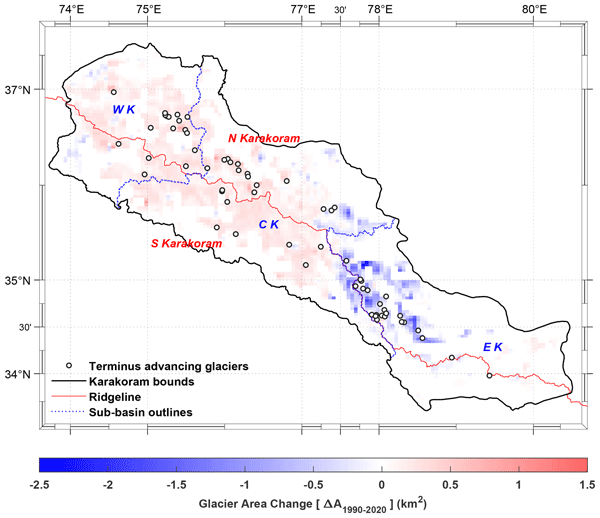
Fuming Xie, Shiyin Liu, Yongpeng Gao, Yu Zhu, Tobias Bolch, Andreas Kääb, Shimei Duan, Wenfei Miao, Jianfang Kang, Yaonan Zhang, Xiran Pan, Caixia Qin, Kunpeng Wu, Miaomiao Qi, Xianhe Zhang, Ying Yi, Fengze Han, Xiaojun Yao, Qiao Liu, Xin Wang, Zongli Jiang, Donghui Shangguan, Yong Zhang, Richard Grünwald, Muhammad Adnan, Jyoti Karki, and Muhammad Saifullah
Earth Syst. Sci. Data, 15, 847–867, https://doi.org/10.5194/essd-15-847-2023, https://doi.org/10.5194/essd-15-847-2023, 2023
Short summary
Short summary
In this study, first we generated inventories which allowed us to systematically detect glacier change patterns in the Karakoram range. We found that, by the 2020s, there were approximately 10 500 glaciers in the Karakoram mountains covering an area of 22 510.73 km2, of which ~ 10.2 % is covered by debris. During the past 30 years (from 1990 to 2020), the total glacier cover area in Karakoram remained relatively stable, with a slight increase in area of 23.5 km2.
Yu Zhu, Shiyin Liu, Junfeng Wei, Kunpeng Wu, Tobias Bolch, Junli Xu, Wanqin Guo, Zongli Jiang, Fuming Xie, Ying Yi, Donghui Shangguan, Xiaojun Yao, and Zhen Zhang
Earth Syst. Sci. Data Discuss., https://doi.org/10.5194/essd-2022-473, https://doi.org/10.5194/essd-2022-473, 2023
Preprint withdrawn
Short summary
Short summary
In this study, we presented a nearly complete inventory of glacier mass change dataset across the eastern Tibetan Plateau by using topographical maps, which will enhance the knowledge on the heterogeneity of glacier change before 2000. Our dataset, in combination with the published results, provide a nearly five decades mass balance to support hydrological simulation, and to evaluate the contribution of mountain glacier loss to sea level.
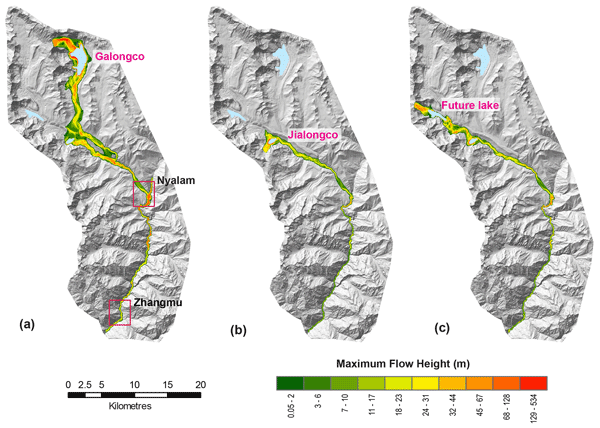
Simon K. Allen, Ashim Sattar, Owen King, Guoqing Zhang, Atanu Bhattacharya, Tandong Yao, and Tobias Bolch
Nat. Hazards Earth Syst. Sci., 22, 3765–3785, https://doi.org/10.5194/nhess-22-3765-2022, https://doi.org/10.5194/nhess-22-3765-2022, 2022
Short summary
Short summary
This study demonstrates how the threat of a very large outburst from a future lake can be feasibly assessed alongside that from current lakes to inform disaster risk management within a transboundary basin between Tibet and Nepal. Results show that engineering measures and early warning systems would need to be coupled with effective land use zoning and programmes to strengthen local response capacities in order to effectively reduce the risk associated with current and future outburst events.
Aldo Bertone, Chloé Barboux, Xavier Bodin, Tobias Bolch, Francesco Brardinoni, Rafael Caduff, Hanne H. Christiansen, Margaret M. Darrow, Reynald Delaloye, Bernd Etzelmüller, Ole Humlum, Christophe Lambiel, Karianne S. Lilleøren, Volkmar Mair, Gabriel Pellegrinon, Line Rouyet, Lucas Ruiz, and Tazio Strozzi
The Cryosphere, 16, 2769–2792, https://doi.org/10.5194/tc-16-2769-2022, https://doi.org/10.5194/tc-16-2769-2022, 2022
Short summary
Short summary
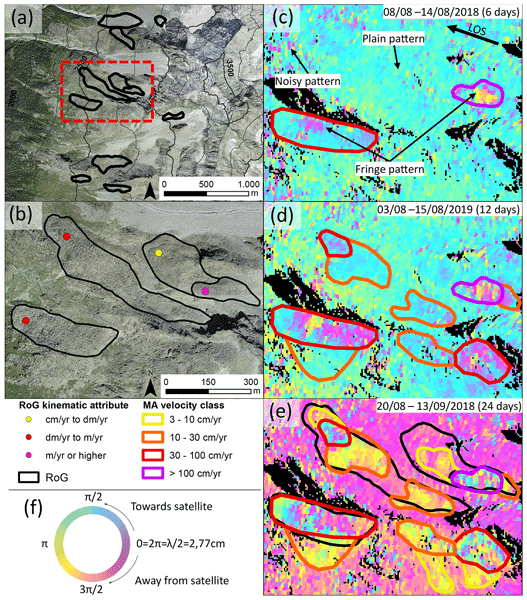
We present the guidelines developed by the IPA Action Group and within the ESA Permafrost CCI project to include InSAR-based kinematic information in rock glacier inventories. Nine operators applied these guidelines to 11 regions worldwide; more than 3600 rock glaciers are classified according to their kinematics. We test and demonstrate the feasibility of applying common rules to produce homogeneous kinematic inventories at global scale, useful for hydrological and climate change purposes.

Benjamin Aubrey Robson, Shelley MacDonell, Álvaro Ayala, Tobias Bolch, Pål Ringkjøb Nielsen, and Sebastián Vivero
The Cryosphere, 16, 647–665, https://doi.org/10.5194/tc-16-647-2022, https://doi.org/10.5194/tc-16-647-2022, 2022
Short summary
Short summary
This work uses satellite and aerial data to study glaciers and rock glacier changes in La Laguna catchment within the semi-arid Andes of Chile, where ice melt is an important factor in river flow. The results show the rate of ice loss of Tapado Glacier has been increasing since the 1950s, which possibly relates to a dryer, warmer climate over the previous decades. Several rock glaciers show high surface velocities and elevation changes between 2012 and 2020, indicating they may be ice-rich.
Gregoire Guillet, Owen King, Mingyang Lv, Sajid Ghuffar, Douglas Benn, Duncan Quincey, and Tobias Bolch
The Cryosphere, 16, 603–623, https://doi.org/10.5194/tc-16-603-2022, https://doi.org/10.5194/tc-16-603-2022, 2022
Short summary
Short summary
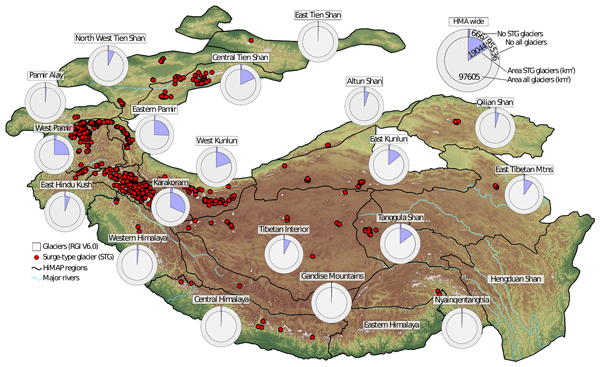
Surging glaciers show cyclical changes in flow behavior – between slow and fast flow – and can have drastic impacts on settlements in their vicinity.
One of the clusters of surging glaciers worldwide is High Mountain Asia (HMA).
We present an inventory of surging glaciers in HMA, identified from satellite imagery. We show that the number of surging glaciers was underestimated and that they represent 20 % of the area covered by glaciers in HMA, before discussing new physics for glacier surges.
Jan Bouke Pronk, Tobias Bolch, Owen King, Bert Wouters, and Douglas I. Benn
The Cryosphere, 15, 5577–5599, https://doi.org/10.5194/tc-15-5577-2021, https://doi.org/10.5194/tc-15-5577-2021, 2021
Short summary
Short summary
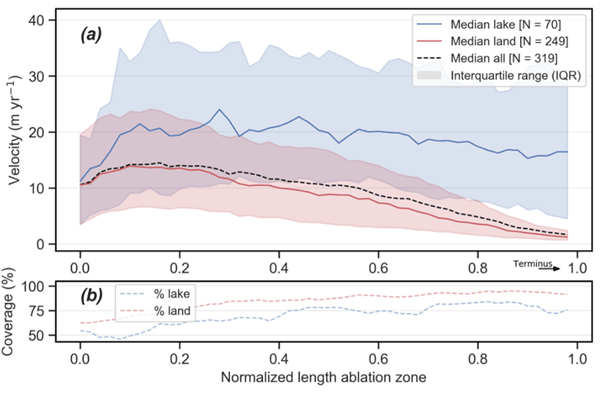
About 10 % of Himalayan glaciers flow directly into lakes. This study finds, using satellite imagery, that such glaciers show higher flow velocities than glaciers without ice–lake contact. In particular near the glacier tongue the impact of a lake on the glacier flow can be dramatic. The development of current and new meltwater bodies will influence the flow of an increasing number of Himalayan glaciers in the future, a scenario not currently considered in regional ice loss projections.
Cited articles
Berthier, E., Vadon, H., Baratoux, D., and Arnaud, Y.: Surface motion of mountain glaciers derived from satellite optical imagery, Remote Sens. Environ., 95, 14–28, https://doi.org/10.1016/j.rse.2004.11.005, 2005.
Charrier, L., Dehecq, A., Guo, L., Brun, F., Millan, R., Lioret, N., Copland, L., Maier, N., Dow, C., and Halas, P.: TICOI: an operational Python package to generate regular glacier velocity time series, The Cryosphere, 19, 4555–4583, https://doi.org/10.5194/tc-19-4555-2025, 2025.
Chen, H., Chen, Y., Li, W., and Li, Z.: Quantifying the contributions of snow/glacier meltwater to river runoff in the Tianshan Mountains, Central Asia, Global Planet. Change, 181, 102982, https://doi.org/10.1016/j.gloplacha.2019.01.002, 2019.
Copernicus: Copernicus DEM – Global and European Digital Elevation Model (COP-DEM), GLO-30, ESA, Copernicus [data set], https://dataspace.copernicus.eu/explore-data/, last access: 11 September 2025.
Copernicus Digital Elevation Model: Copernicus DEM GLO-30, European Space Agency, https://doi.org/10.5270/ESA-c5d3d65, 2023.
Dehecq, A., Gourmelen, N., Gardner, A. S., Brun, F., Goldberg, D., Nienow, P. W., Berthier, E., Vincent, C., Wagnon, P., and Trouve, E.: Twenty-first century glacier slowdown driven by mass loss in High Mountain Asia, Nat. Geosci., 12, 22–27, https://doi.org/10.1038/s41561-018-0271-9, 2019.
Derkacheva, A., Mouginot, J., Millan, R., Maier, N., and Gillet-Chaulet, F.: Data reduction using statistical and regression approaches for ice velocity derived by Landsat-8, Sentinel-1 and Sentinel-2, Remote Sens.-Basel, 12, 1935, https://doi.org/10.3390/rs12121935, 2020.
Earth Resources Observation and Science (EROS) Center: Landsat 8-9 Operational Land Imager/Thermal Infrared Sensor Level-1, Collection 2, U.S. Geological Survey [data set], https://doi.org/10.5066/P975CC9B, 2020.
Fahnestock, M., Scambos, T., Moon, T., Gardner, A., Haran, T., and Klinger, M.: Rapid large-area mapping of ice flow using Landsat 8, Remote Sens. Environ., 185, 84–94, https://doi.org/10.1016/j.rse.2015.11.023, 2016.
Fan, J., Wang, Q., Liu, G., Zhang, L., Guo, Z., Tong, L., and Peng, J.: Monitoring and analyzing mountain glacier surface movement using SAR data and a terrestrial laser scanner: a case study of the Himalayas North Slope Glacier Area, Remote Sens.-Basel, 11, 625, https://doi.org/10.3390/rs11060625, 2019.
Fountain, A. G., Campbell, J. L., and Schuur, E. A. G.: The disappearing cryosphere: impacts and ecosystem responses to rapid cryosphere loss, BioScience, 62, 405–415, https://doi.org/10.1525/bio.2012.62.4.11, 2012.
Fu, Y., Zhang, B., Liu, G., Zhang, R., and Liu, Q.: An optical flow SBAS technique for glacier surface velocity extraction using SAR images, IEEE T. Geosci. Remote, 60, 1–15, 2022.
Gao, D. and Wu, K.: 30 m Monthly Glacier Surface Velocity Dataset for the Kangri Karpo Region, 2015–2024, Zenodo [data set], https://doi.org/10.5281/zenodo.20361514, 2026.
Gardner, A. S., Moholdt, G., Scambos, T., Fahnstock, M., Ligtenberg, S., van den Broeke, M., and Nilsson, J.: Increased West Antarctic and unchanged East Antarctic ice discharge over the last 7 years, The Cryosphere, 12, 521–547, https://doi.org/10.5194/tc-12-521-2018, 2018.
Greene, C. A., Gardner, A. S., and Andrews, L. C.: Detecting seasonal ice dynamics in satellite images, The Cryosphere, 14, 4365–4378, https://doi.org/10.5194/tc-14-4365-2020, 2020.
Guillet, G., King, O., Lv, M., Ghuffar, S., Benn, D., Quincey, D., and Bolch, T.: A regionally resolved inventory of High Mountain Asia surge-type glaciers, derived from a multi-factor remote sensing approach, The Cryosphere, 16, 603–623, https://doi.org/10.5194/tc-16-603-2022, 2022.
Huang, L. and Li, Z.: Comparison of SAR and optical data in deriving glacier velocity with feature tracking, Int. J. Remote Sens., 32, 2481–2500, https://doi.org/10.1080/01431161003720395, 2011.
Huss, M. and Hock, R.: A new model for global glacier change and sea-level rise, Front. Earth Sci., 3, 54, https://doi.org/10.3389/feart.2015.00054, 2015.
Kääb, A., Huggel, C., Fischer, L., Guex, S., Paul, F., Roer, I., Salzmann, N., Schlaefli, S., Schmutz, K., Schneider, D., Strozzi, T., and Weidmann, Y.: Remote sensing of glacier- and permafrost-related hazards in high mountains: an overview, Nat. Hazards Earth Syst. Sci., 5, 527–554, https://doi.org/10.5194/nhess-5-527-2005, 2005.
Lei, Y., Gardner, A., and Agram, P.: Autonomous repeat image feature tracking (autoRIFT) and its application for tracking ice displacement, Remote Sens.-Basel, 13, 749, https://doi.org/10.3390/rs13040749, 2021.
Li, Z., Guo, W., Wang, Y., Zhang, Y., Zhang, S., Zhu, X., and Xu, N.: Glacier melting phenology changes in the Tibetan Plateau from 1981 to 2020, Catena, 257, 109199, https://doi.org/10.1016/j.catena.2025.109199, 2025.
Liu, S. Y., Wu, T. H., Wang, X., Wu, X. D., and Yao, X. J.: Changes in the global cryosphere and their impacts: a review and new perspective, Sci. Cold Arid Reg., 13, 1–12, http://www.scar.ac.cn/EN/10.3724/SP.J.1226.2020.00343 (last access: 12 June 2026), 2021.
Luckman, A., Murray, T., Jiskoot, H., and Pritchard, H.: ERS SAR feature-tracking measurement of outlet glacier velocities on a regional scale in East Greenland, Ann. Glaciol., 37, 129–134, https://doi.org/10.3189/172756403781816428, 2003.
Luckman, A., Quincey, D., and Bevan, S.: The potential of satellite radar interferometry and feature tracking for monitoring flow rates of Himalayan glaciers, Remote Sens. Environ., 111, 172–181, https://doi.org/10.1016/j.rse.2007.05.016, 2007.
Lv, M., Guo, H., Yan, S., Li, G., Jiang, D., Zhang, H., and Zhang, Z.: A dataset of surge-type glaciers in the High Mountain Asia based on elevation change and satellite imagery, China Scientific Data, 7, https://doi.org/10.11922/11-6035.ncdc.2021.0006.zh, 2022.
Maksymiuk, O., Mayer, C., and Stilla, U.: Velocity estimation of glaciers with physically-based spatial regularization – Experiments using satellite SAR intensity images, Remote Sens. Environ., 182, 283–296, https://doi.org/10.1016/j.rse.2015.11.007, 2016.
Mohanty, A., Srivastava, P. K., and Aggarwal, A.: Review of glacier velocity and facies characterization techniques using multi-sensor approach, Environ. Dev. Sustain., 27, 1–24, https://doi.org/10.1007/s10668-024-04604-7, 2025.
Muñoz-Sabater, J., Dutra, E., Agustí-Panareda, A., Albergel, C., Arduini, G., Balsamo, G., Boussetta, S., Choulga, M., Harrigan, S., Hersbach, H., Martens, B., Miralles, D. G., Piles, M., Rodríguez-Fernández, N. J., Zsoter, E., Buontempo, C., and Thépaut, J.-N.: ERA5-Land: a state-of-the-art global reanalysis dataset for land applications, Earth Syst. Sci. Data, 13, 4349–4383, https://doi.org/10.5194/essd-13-4349-2021, 2021.
Nan, Y., Tian, F., McDonnell, J., Ni, G., Tian, L., and Li, Z.: Glacier meltwater has limited contributions to the total runoff in the major rivers draining the Tibetan Plateau, npj Clim. Atmos. Sci., 8, 1060–1073, https://doi.org/10.1038/s41612-025-01060-6, 2025.
Nanni, U., Scherler, D., Ayoub, F., Millan, R., Herman, F., and Avouac, J.-P.: Climatic control on seasonal variations in mountain glacier surface velocity, The Cryosphere, 17, 1567–1583, https://doi.org/10.5194/tc-17-1567-2023, 2023.
Ren, J. W., Ye, B. S., Ding, Y. J., and Liu, S. Y.: Initial estimate of the contribution of cryospheric change in China to sea level rise, Chinese Sci. Bull., 56, 1375–1381, https://doi.org/10.1007/s11434-011-4474-3, 2011.
RGI Consortium: RGI Consortium: Randolph Glacier Inventory – A Dataset of Global Glacier Outlines. (NSIDC-0770, Version 7), Boulder, Colorado USA, National Snow and Ice Data Center [data set], https://doi.org/10.5067/F6JMOVY5NAVZ, 2023.
Scherler, D., Leprince, S., and Strecker, M. R.: Glacier-surface velocities in alpine terrain from optical satellite imagery – Accuracy improvement and quality assessment, Remote Sens. Environ., 112, 3806–3819, https://doi.org/10.1016/j.rse.2008.05.018 2008.
Slaymaker, O. and Kelly, R. E. J.: The Cryosphere and Global Environmental Change, Blackwell Publishing, Oxford, UK, ISBN 978-1-4051-2976-3, 2007.
Slemmons, K. E. H., Saros, J. E., and Simon, K.: The influence of glacial meltwater on alpine aquatic ecosystems: a review, Environ. Sci.-Proc. Imp., 15, 1794–1806, https://doi.org/10.1039/C3EM00243H, 2013.
Sun, Y., Jiang, L., Liu, L., Sun, Y., and Wang, H.: Spatial-temporal characteristics of glacier velocity in the Central Karakoram revealed with 1999–2003 Landsat-7 ETM+ Pan images, Remote Sens.-Basel, 9, 1064, https://doi.org/10.3390/rs9101064, 2017.
Wang, Q., Fan, J., Zhou, W., Tong, L., and Guo, Z.: 3D surface velocity retrieval of mountain glacier using an offset tracking technique applied to ascending and descending SAR constellation data, Int. J. Digit. Earth, 12, 1145–1162, https://doi.org/10.1080/17538947.2018.1470690, 2019.
Wu, K., Liu, S., Jiang, Z., Xu, J., Wei, J., and Guo, W.: Recent glacier mass balance and area changes in the Kangri Karpo Mountains from DEMs and glacier inventories, The Cryosphere, 12, 103–121, https://doi.org/10.5194/tc-12-103-2018, 2018.
Wu, K., Liu, S., Xu, J., Zhu, Y., Liu, Q., Jiang, Z., and Wei, J.: Spatiotemporal variability of surface velocities of monsoon temperate glaciers in the Kangri Karpo Mountains, southeastern Tibetan Plateau, J. Glaciol., 67, 186–191, https://doi.org/10.1017/jog.2020.98, 2021.
Wu, X., Zhu, R., Long, Y., and Zhang, W.: Spatial trend and impact of snowmelt rate in spring across China's three main stable snow cover regions over the past 40 years based on remote sensing, Remote Sensing, 14, 4176, https://doi.org/10.3390/rs14174176, 2022.
Xu, H., Ren, M., and Lin, M.: Cross-comparison of Landsat-8 and Landsat-9 data: a three-level approach based on underfly images, GISci. Remote Sens., 61, 2318071, https://doi.org/10.1080/15481603.2024.2318071, 2024.
Yan, S., Liu, G., Wang, Y., and Ruan, Z.: Accurate determination of glacier surface velocity fields with a DEM-assisted pixel-tracking technique from SAR imagery, Remote Sens.-Basel, 7, 10898–10914, https://doi.org/10.3390/rs70810898, 2015.
Yang, B., Bräuning, A., Dong, Z., and Zhang, Z.: Late Holocene monsoonal temperate glacier fluctuations on the Tibetan Plateau, Global Planet. Change, 60, 126–140, https://doi.org/10.1016/j.gloplacha.2006.07.035, 2008.
Yao, R., Li, S., and Chen, D.: Runoff response to climate in two river basins supplied by small glacier meltwater in Southern and Northern Tibetan Plateau, Atmosphere-Basel, 14, 711, https://doi.org/10.3390/atmos14040711, 2023.
Ye, Q., Wang, Y., Liu, L., Guo, L., Zhang, X., Dai, L., and Zhai, L.: Remote sensing and modeling of the cryosphere in high mountain Asia: a multidisciplinary review, Remote Sens.-Basel, 16, 1709, https://doi.org/10.3390/rs16101709, 2024.
Zemp, M., Huss, M., Thibert, E., Eckert, N., McNabb, R., Huber, J., Barandun, M., Machguth, H., Nussbaumer, S. U., Gärtner-Roer, I., Thomson, L., Paul, F., Maussion, F., Kutuzov, S., and Cogley, J. G.: Global glacier mass changes and their contributions to sea-level rise from 1961 to 2016, Nature, 568, 382–386, https://doi.org/10.1038/s41586-019-1071-0, 2019.
Zhang, Y., Liu, S., and Ding, Y.: Glacier meltwater and runoff modelling, Keqicar Baqi glacier, southwestern Tien Shan, China, J. Glaciol., 53, 91–98, https://doi.org/10.3189/172756507781833956, 2007.
Zhang, Y., Hirabayashi, Y., Liu, Q., and Liu, S.: Glacier runoff and its impact in a highly glacierized catchment in the southeastern Tibetan Plateau: past and future trends, J. Glaciol., 61, 713–730, https://doi.org/10.3189/2015JoG14J188, 2015.
Zhang, Y., Xu, C.-Y., Hao, Z., Zhang, L., Ju, Q., and Lai, X.: Variation of melt water and rainfall runoff and their impacts on streamflow changes during recent decades in two Tibetan Plateau basins, Water-Sui, 12, 3112, https://doi.org/10.3390/w12113112, 2020.
Zhou, J., Li, Z., and Guo, W.: Estimation and analysis of the surface velocity field of mountain glaciers in Muztag Ata using satellite SAR data, Environ. Earth Sci., 73, 5533–5545, https://doi.org/10.1007/s12665-013-2749-5, 2014.
Zongxing, L., Qi, F., Wang, Q. J., Song, Y., and Jianguo, L.: Quantitative evaluation on the influence from cryosphere meltwater on runoff in an inland river basin of China, Global Planet. Change, 146, 182–195, https://doi.org/10.1016/j.gloplacha.2016.06.005, 2016.
Short summary
We mapped monthly glacier flow speeds in the Kangri Karpo region from 2015 to 2024 by combining measurements from several satellites and a drone survey. The merged maps are more complete and detailed than maps from any single source, with fewer gaps caused by clouds or difficult terrain. The results show where glaciers move fastest, how their speed changes through the year, and which glaciers have been speeding up or slowing down over the past decade.
We mapped monthly glacier flow speeds in the Kangri Karpo region from 2015 to 2024 by...


