
Articles | Volume 20, issue 6
https://doi.org/10.5194/tc-20-3313-2026
© Author(s) 2026. This work is distributed under
the Creative Commons Attribution 4.0 License.
the Creative Commons Attribution 4.0 License.
https://doi.org/10.5194/tc-20-3313-2026
© Author(s) 2026. This work is distributed under
the Creative Commons Attribution 4.0 License.
the Creative Commons Attribution 4.0 License.
Research article
| 
03 Jun 2026
Research article |
| 03 Jun 2026
| 03 Jun 2026
Learning to melt: Emulating Greenland surface melt from a polar RCM with machine learning

Department of Environmental Science, iClimate, Aarhus University, Roskilde, Denmark
National Centre for Climate Research (NCKF), Danish Meteorological Institute, Copenhagen, Denmark
Sebastian Scher
Wegener Center for Climate and Global Change and Department of Geography and Regional Science, University of Graz, Graz, Austria
Ruth H. Mottram
National Centre for Climate Research (NCKF), Danish Meteorological Institute, Copenhagen, Denmark
Peter L. Langen
Department of Environmental Science, iClimate, Aarhus University, Roskilde, Denmark
Related authors
No articles found.
Øystein Godøy, Rodica Nitu, Jeffrey Key, Emma Pidduck, Carolina Adler, Tillmann Lübker, David Inglis Berry, Shawn Marshall, Baohong Ding, Janine Felden, Karen E. Alley, Mathias Bavay, Maria Shahgedanova, Regina Yulia Yasmin, Ruth Motram, and Xinyue Zhong
EGUsphere, https://doi.org/10.5194/egusphere-2026-6231, https://doi.org/10.5194/egusphere-2026-6231, 2026
This preprint is open for discussion and under review for The Cryosphere (TC).
Short summary
Short summary
Observational data on sea ice, snow, glaciers, ice sheets, and permafrost are critical to understand impacts of a changing cryosphere. However, observations from polar and high-mountain regions are often fragmented, heterogeneous, and underutilised. This paper addresses how access to data can be improved by bridging the gap between research communities and operational agencies and provide recommendations for standardisation, data governance, interoperability, and cross-community collaboration.
Clément Cherblanc, Charles Amory, Fredrik Boberg, Alexandra Gossart, Nicolaj Hansen, Marte Gé Hofsteenge, Christine Schøtt Hvidberg, Sylvain Marchi, Masashi Niwano, Florian Sauerland, Niels Souverijns, José Abraham Torres-Alavez, Baptiste Vandecrux, Christiaan van Dalum, Willem Jan van de Berg, Nicole van Lipzig, Maurice van Tiggelen, Kristiina Verro, and Ruth Mottram
EGUsphere, https://doi.org/10.5194/egusphere-2026-4690, https://doi.org/10.5194/egusphere-2026-4690, 2026
This preprint is open for discussion and under review for The Cryosphere (TC).
Short summary
Short summary
Regional Climate Models are known to improve the modelling of meteorological variables, like snow accumulation, in mountainous areas, relative to coarser global models. It was unclear whether they also improve the modelling over the Antarctic Ice Sheet, which is mostly a nearly flat, high-elevation plateau. We find that Regional Climate Models do perform better than global models on most metrics tested, building trust in the regional models for future Antarctic projections.
Sofie Hedetoft, Olivia Bang Brinck, Ruth Mottram, Andrea M. U. Gierisch, Steffen Malskær Olsen, Martin Olesen, Nicolaj Hansen, Anders Anker Bjørk, Erik Loebel, Anne Solgaard, and Peter Thejll
The Cryosphere, 20, 5071–5098, https://doi.org/10.5194/tc-20-5071-2026, https://doi.org/10.5194/tc-20-5071-2026, 2026
Short summary
Short summary
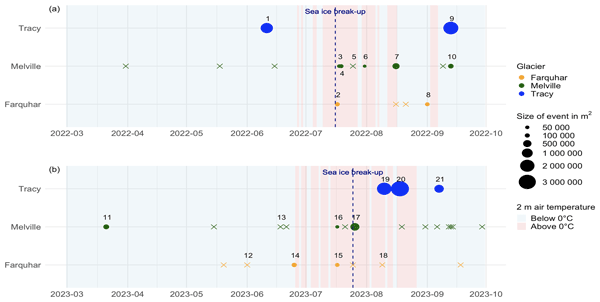
Iceberg mélange is the jumble of icebergs in front of some glaciers that calve into the sea. Some studies suggest mélange might help to control the retreat of glaciers. We studied 3 glaciers in NW Greenland where we used GPS sensors and satellites to track ice movement. We found that glaciers push forward and calve all year, including when mélange and landfast sea ice are present, suggesting mélange is not important in supporting glaciers, but may influence the seasonal calving cycle.
Kelsey Ennis and Sebastian Scher
EGUsphere, https://doi.org/10.5194/egusphere-2026-4059, https://doi.org/10.5194/egusphere-2026-4059, 2026
This preprint is open for discussion and under review for Geoscientific Model Development (GMD).
Short summary
Short summary
Complex terrain create sharp local temperature differences that global weather datasets are too coarse to capture. We trained a deep learning model to turn coarse hourly temperature data into detailed kilometre-scale maps of Austria and the surrounding Alps, guided by elevation and terrain information. The resulting analyses halve the errors of standard methods and realistically reproduce surface temperature patterns, improving data for climate and environmental applications.
Hideo Aochi, Masumi Yamada, Tung-Cheng Ho, Gonéri Le Cozannet, Arno Christian Hammann, and Ruth Mottram
Nat. Hazards Earth Syst. Sci., 26, 3291–3304, https://doi.org/10.5194/nhess-26-3291-2026, https://doi.org/10.5194/nhess-26-3291-2026, 2026
Short summary
Short summary
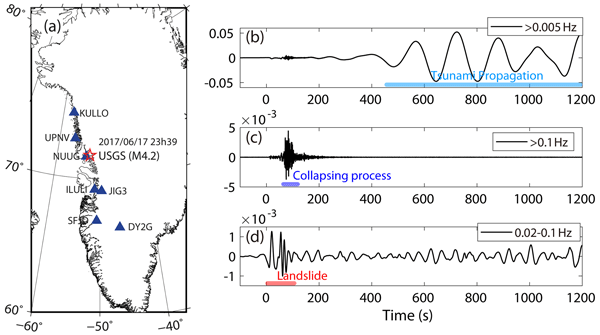
The 2017 Landslide-made tsunami in Greenland occurred in a context of global warming and heavily impacted local communities. We analyze this event using seismic data to reconstruct the whole chain of processes from the landslide to the tsunami. Our results validate a new approach to analyze crustal deformations caused by tsunami propagation in fjords, suggesting that alert systems based on seismic data are feasible, potentially allowing to reduce tsunami risks in polar regions.
Ian Simpson, Edward Hanna, Ryan S. Williams, Linh Luu, Andrew Orr, Julie Jones, Xavier Fettweis, Jose Abraham Torres Alavez, Ole Bøssing Christensen, Ella Gilbert, Sid Gumber, Christoph Kittel, Sihan Li, Damien Maure, Ruth Mottram, Tony Phillips, Willem Jan van de Berg, and Kristiina Verro
EGUsphere, https://doi.org/10.5194/egusphere-2026-2270, https://doi.org/10.5194/egusphere-2026-2270, 2026
Short summary
Short summary
The warming trend in global temperatures has potential to result in accelerated break up of the Antarctic ice shelves, which would contribute to rising sea levels. Here we present a novel database of Antarctic extreme weather events over a selection of the Antarctic ice shelves. We examine air temperature, precipitation, wind and surface pressure. In addition, we examine trends in the frequency of extreme events and the links with weather patterns around Antarctica.
Fredrik Boberg, Xavier Fettweis, Nicolaj Hansen, Ruth Mottram, and Michiel R. van den Broeke
The Cryosphere, 20, 2947–2960, https://doi.org/10.5194/tc-20-2947-2026, https://doi.org/10.5194/tc-20-2947-2026, 2026
Short summary
Short summary
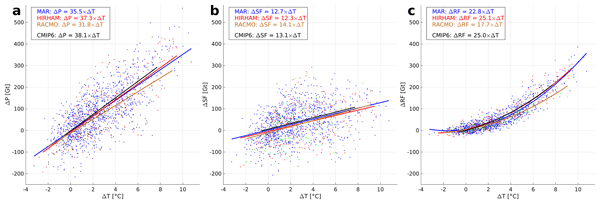
An ensemble of regional climate model simulations is used to estimate the 21st century change in precipitation on the Greenland ice sheet. For the end of the century, the change is in the range 40 to 170 Gt per year, depending on the emission scenario. Using annual values of 2 m air temperature and precipitation, we estimate an increase in precipitation of 35 Gt per year for every degree of warming.
Ella Gilbert, José Abraham Torres-Alavez, Marte G. Hofsteenge, Willem Jan van de Berg, Fredrik Boberg, Ole Bøssing Christensen, Christiaan Timo van Dalum, Xavier Fettweis, Siddharth Gumber, Nicolaj Hansen, Christoph Kittel, Clara Lambin, Damien Maure, Ruth Mottram, Martin Olesen, Andrew Orr, Tony Phillips, Maurice van Tiggelen, Kristiina Verro, and Priscilla A. Mooney
The Cryosphere, 20, 2629–2658, https://doi.org/10.5194/tc-20-2629-2026, https://doi.org/10.5194/tc-20-2629-2026, 2026
Short summary
Short summary
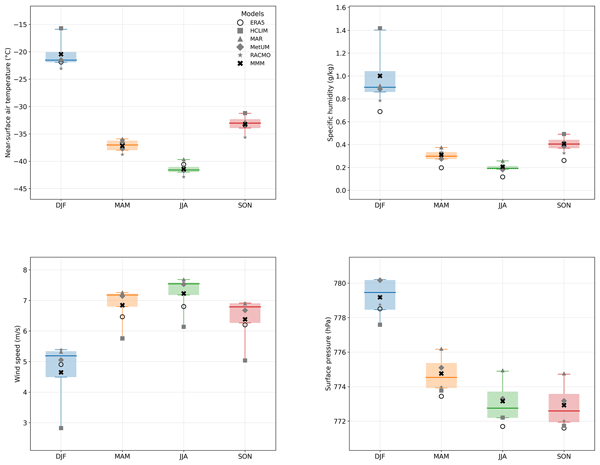
Here we present a new dataset – the PolarRES ensemble – of four state-of-the-art regional climate models, which capture the full complexity of Antarctica's climate. The ensemble out-performs other available tools, advancing our ability to explore Antarctic climate. While it still has limitations, the PolarRES ensemble offers a novel and exciting way of evaluating climate processes and features, and we encourage researchers to use the data, which are freely available.
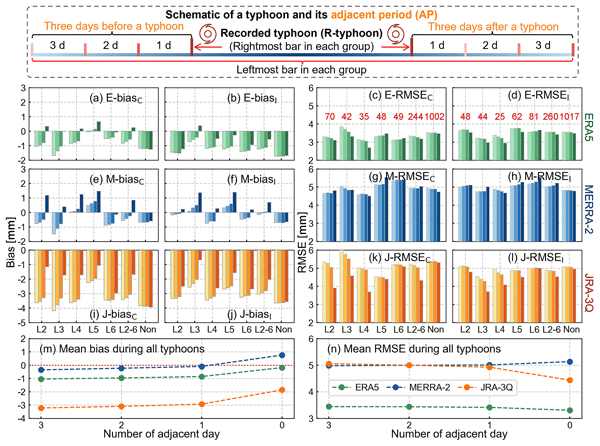
Jiaqi Shi, Min Li, Andrea K. Steiner, Sebastian Scher, Minghao Zhang, Jiayu Hu, Wenliang Gao, Yongzhao Fan, and Kefei Zhang
Atmos. Chem. Phys., 26, 4633–4650, https://doi.org/10.5194/acp-26-4633-2026, https://doi.org/10.5194/acp-26-4633-2026, 2026
Short summary
Short summary
This study evaluates how three reanalysis datasets represent precipitable water vapor (PWV) during more than 100 typhoons from 2020 to 2024 using multi-source observations. The fifth-generation European Centre for Medium-Range Weather Forecasts Reanalysis (ERA5) performs best, the Japanese Reanalysis for Three Quarters of a Century (JRA-3Q) improves during typhoons, and the Modern-Era Retrospective Analysis for Research and Applications Version 2 (MERRA-2) is less stable
Thea Quistgaard, Tanja Denager, Raphael J. M. Schneider, Jesper R. Christiansen, Simon Stisen, and Peter L. Langen
EGUsphere, https://doi.org/10.5194/egusphere-2026-1139, https://doi.org/10.5194/egusphere-2026-1139, 2026
Short summary
Short summary
We present a generative modelling framework for kilometre-scale precipitation downscaling that combines machine learning with physics-informed design. The model produces daily ensembles, not just single realisations. Using a structured evaluation setup across spatial, probabilistic, and climatological metrics, we show that realistic detail does not guarantee correct climatology and statistics, demonstrating key trade-offs which must be addressed cleanly for reliable impact and risk assessment.
Benjamin Heurgue, Charles Amory, Christoph Kittel, Fredrik Boberg, Gaël Durand, Vincent Favier, Xavier Fettweis, Quentin Glaude, Heiko Goelzer, Nicolaj Hansen, Nicolas C. Jourdain, Ruth Mottram, Martin Olesen, Willem Jan Van de Berg, Michiel R. Van den Broeke, and René R. Wijngaard
EGUsphere, https://doi.org/10.5194/egusphere-2026-624, https://doi.org/10.5194/egusphere-2026-624, 2026
Short summary
Short summary
We studied how the Antarctic ice sheet surface mass balance may change by 2100 using three high-resolution climate models forced by the same future climate scenario. While the models agree for present-day conditions, they project very different futures, especially over floating ice shelves. These differences mainly come from how melting, refreezing, and temperature are represented. Our results show that future sea level projections strongly depend on how well models simulate today’s climate.
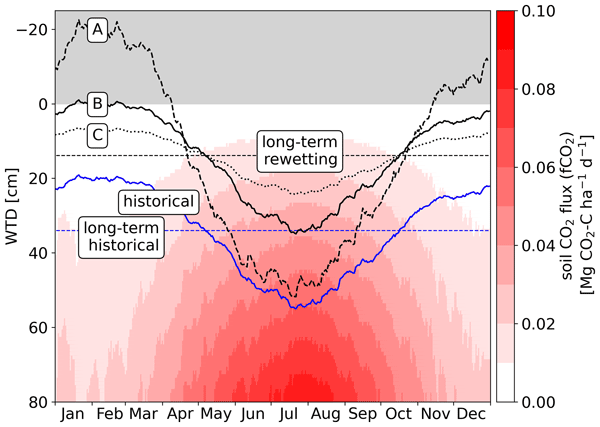
Tanja Denager, Jesper Riis Christiansen, Raphael Johannes Maria Schneider, Peter Langen, Thea Quistgaard, and Simon Stisen
Biogeosciences, 23, 441–462, https://doi.org/10.5194/bg-23-441-2026, https://doi.org/10.5194/bg-23-441-2026, 2026
Short summary
Short summary
This study demonstrates that incorporating both temperature and temporal variability in water level in emission models significantly influences CO2 emission from peat soil. Especially the co-occurrence of elevated air temperature and low groundwater table significantly influence CO2 emissions under scenarios of rewetting and climate change.
José Abraham Torres Alavez, Ruth Mottram, Thomas Lavergne, Rasmus Pedersen, and Ole Bøssing Christensen
EGUsphere, https://doi.org/10.5194/egusphere-2025-6183, https://doi.org/10.5194/egusphere-2025-6183, 2026
Short summary
Short summary
Coastal polynyas shape sea ice production and polar climate. This study analyses Greenland and Antarctic polynyas using two satellite sea-ice products and HCLIM simulations. The high-resolution CCI dataset improves polynya representation, boundary-layer structure, and near-surface conditions. Results show that integrating high-resolution sea-ice data enhances regional climate modelling and supports better reanalysis systems.

Heiko Goelzer, Constantijn J. Berends, Fredrik Boberg, Gael Durand, Tamsin L. Edwards, Xavier Fettweis, Fabien Gillet-Chaulet, Quentin Glaude, Philippe Huybrechts, Sébastien Le clec'h, Ruth Mottram, Brice Noël, Martin Olesen, Charlotte Rahlves, Jeremy Rohmer, Michiel van den Broeke, and Roderik S. W. van de Wal
The Cryosphere, 19, 6887–6906, https://doi.org/10.5194/tc-19-6887-2025, https://doi.org/10.5194/tc-19-6887-2025, 2025
Short summary
Short summary
We present an ensemble of ice sheet model projections for the Greenland ice sheet. The focus is on providing projections that improve our understanding of the range future sea-level rise and the inherent uncertainties over the next 100 to 300 years. Compared to earlier work we more fully account for some of the uncertainties in sea-level projections. We include a wider range of climate model output, more climate change scenarios and we extend projections schematically up to year 2300.
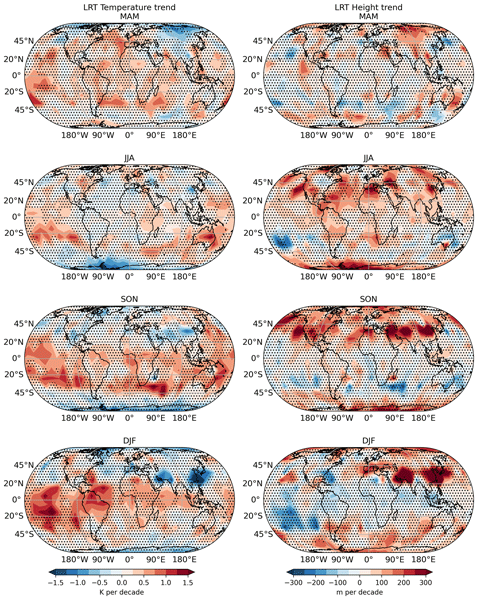
Florian Ladstädter, Matthias Stocker, Sebastian Scher, and Andrea K. Steiner
Atmos. Chem. Phys., 25, 16053–16062, https://doi.org/10.5194/acp-25-16053-2025, https://doi.org/10.5194/acp-25-16053-2025, 2025
Short summary
Short summary
The tropopause, the boundary between the lower and upper atmosphere, is a sensitive marker of climate change. We studied changes in tropopause height and temperature over the past two decades using precise satellite observations. We found warming in the tropics and rising tropopause heights in many regions, especially over Asia and the Middle East. These changes reflect how both atmospheric layers are responding to climate change and highlight the need for continued satellite monitoring.
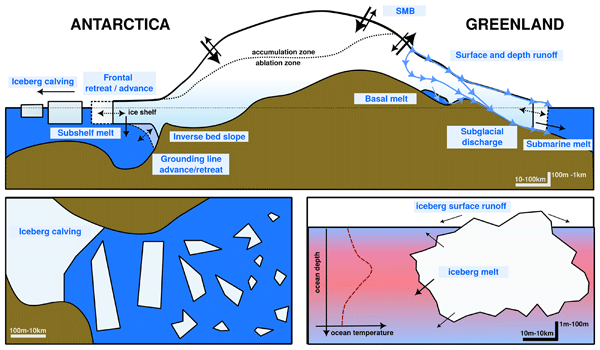
Gavin A. Schmidt, Kenneth D. Mankoff, Jonathan L. Bamber, Clara Burgard, Dustin Carroll, David M. Chandler, Violaine Coulon, Benjamin J. Davison, Matthew H. England, Paul R. Holland, Nicolas C. Jourdain, Qian Li, Juliana M. Marson, Pierre Mathiot, Clive R. McMahon, Twila A. Moon, Ruth Mottram, Sophie Nowicki, Anna Olivé Abelló, Andrew G. Pauling, Thomas Rackow, and Damien Ringeisen
Geosci. Model Dev., 18, 8333–8361, https://doi.org/10.5194/gmd-18-8333-2025, https://doi.org/10.5194/gmd-18-8333-2025, 2025
Short summary
Short summary
The impact of increasing mass loss from the Greenland and Antarctic ice sheets has not so far been included in historical climate model simulations. This paper describes the protocols and data available for modeling groups to add this anomalous freshwater to their ocean modules to better represent the impacts of these fluxes on ocean circulation, sea ice, salinity and sea level.
Florina Roana Schalamon, Sebastian Scher, Andreas Trügler, Lea Hartl, Wolfgang Schöner, and Jakob Abermann
Weather Clim. Dynam., 6, 1075–1088, https://doi.org/10.5194/wcd-6-1075-2025, https://doi.org/10.5194/wcd-6-1075-2025, 2025
Short summary
Short summary
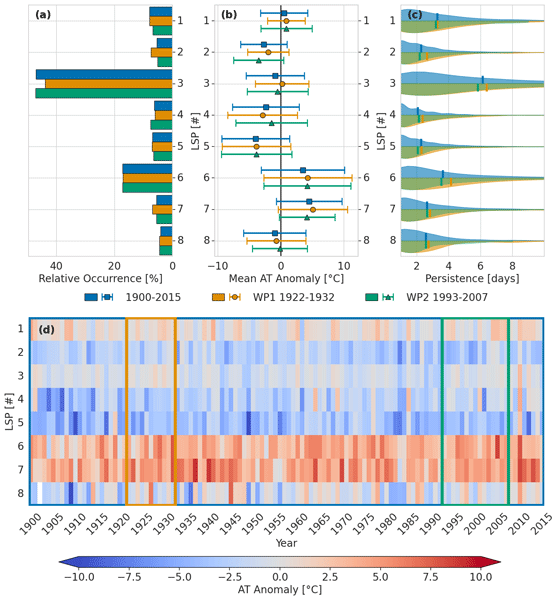
Atmospheric patterns influence the air temperature in Greenland. We investigate two warming periods, from 1922–1932 and 1993–2007, both showing similar temperature increases. Using a neural network-based clustering method, we defined predominant atmospheric patterns for further analysis. Our findings reveal that while the connection between these patterns and local air temperature remains stable, the distribution of patterns changes between the warming periods and the full period (1900–2015).
Anna Puggaard, Nicolaj Hansen, Ruth Mottram, Thomas Nagler, Stefan Scheiblauer, Sebastian B. Simonsen, Louise S. Sørensen, Jan Wuite, and Anne M. Solgaard
The Cryosphere, 19, 2963–2981, https://doi.org/10.5194/tc-19-2963-2025, https://doi.org/10.5194/tc-19-2963-2025, 2025
Short summary
Short summary
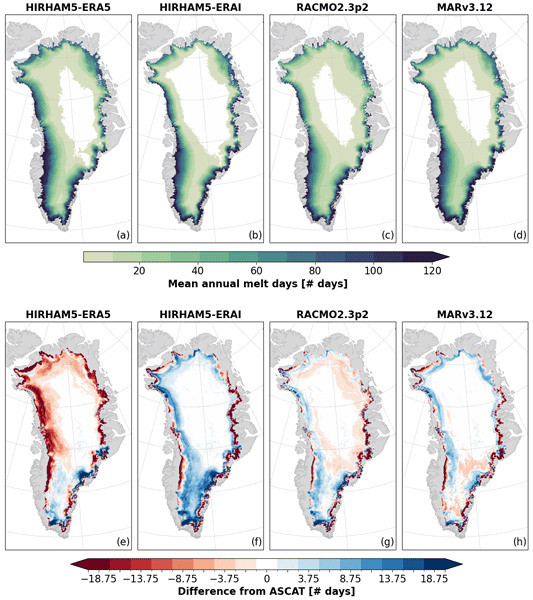
Regional climate models are currently the only source for assessing the melt volume of the Greenland Ice Sheet on a global scale. This study compares the modeled melt volume with observations from weather stations and melt extent observed from the Advanced SCATterometer (ASCAT) to assess the performance of the models. It highlights the importance of critically evaluating model outputs with high-quality satellite measurements to improve the understanding of variability among models.
Sindhu Vudayagiri, Bo Vinther, Johannes Freitag, Peter L. Langen, and Thomas Blunier
Clim. Past, 21, 517–528, https://doi.org/10.5194/cp-21-517-2025, https://doi.org/10.5194/cp-21-517-2025, 2025
Short summary
Short summary
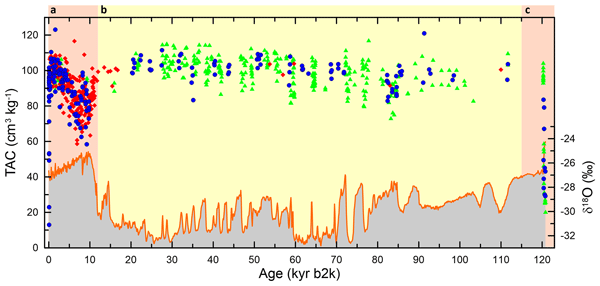
Air trapped in polar ice during snowfall reflects atmospheric pressure at the time of occlusion, serving as a proxy for elevation. However, melting, firn structure changes, and air pressure variability complicate this relationship. We measured total air content (TAC) in the RECAP ice core from Renland ice cap, eastern Greenland, spanning 121 000 years. Melt layers and short-term TAC variations, whose origins remain unclear, present challenges in interpreting elevation changes.
Jonathan Ortved Melcher, Sune Halkjær, Peter Ditlevsen, Peter L. Langen, Guido Vettoretti, and Sune Olander Rasmussen
Clim. Past, 21, 115–132, https://doi.org/10.5194/cp-21-115-2025, https://doi.org/10.5194/cp-21-115-2025, 2025
Short summary
Short summary
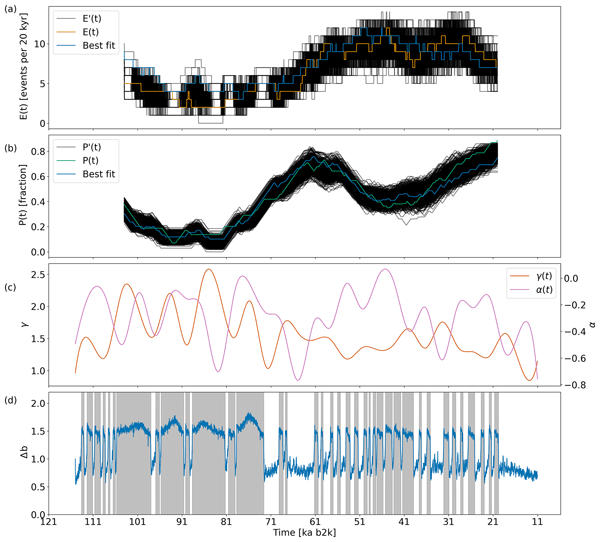
We introduce a new model that simulates Dansgaard–Oeschger events, dramatic and irregular climate shifts within past ice ages. The model consists of simplified equations inspired by ocean current dynamics. We fine-tune this model to capture the Dansgaard–Oeschger events with unprecedented accuracy, providing deeper insights into past climate patterns. This helps us understand and predict complex climate changes, aiding future climate change resilience efforts.
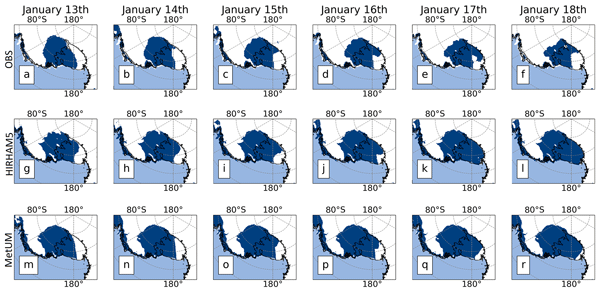
Nicolaj Hansen, Andrew Orr, Xun Zou, Fredrik Boberg, Thomas J. Bracegirdle, Ella Gilbert, Peter L. Langen, Matthew A. Lazzara, Ruth Mottram, Tony Phillips, Ruth Price, Sebastian B. Simonsen, and Stuart Webster
The Cryosphere, 18, 2897–2916, https://doi.org/10.5194/tc-18-2897-2024, https://doi.org/10.5194/tc-18-2897-2024, 2024
Short summary
Short summary
We investigated a melt event over the Ross Ice Shelf. We use regional climate models and a firn model to simulate the melt and compare the results with satellite data. We find that the firn model aligned well with observed melt days in certain parts of the ice shelf. The firn model had challenges accurately simulating the melt extent in the western sector. We identified potential reasons for these discrepancies, pointing to limitations in the models related to representing the cloud properties.
Xiaofeng Wang, Lu An, Peter L. Langen, and Rongxing Li
Int. Arch. Photogramm. Remote Sens. Spatial Inf. Sci., XLVIII-1-2024, 691–696, https://doi.org/10.5194/isprs-archives-XLVIII-1-2024-691-2024, https://doi.org/10.5194/isprs-archives-XLVIII-1-2024-691-2024, 2024
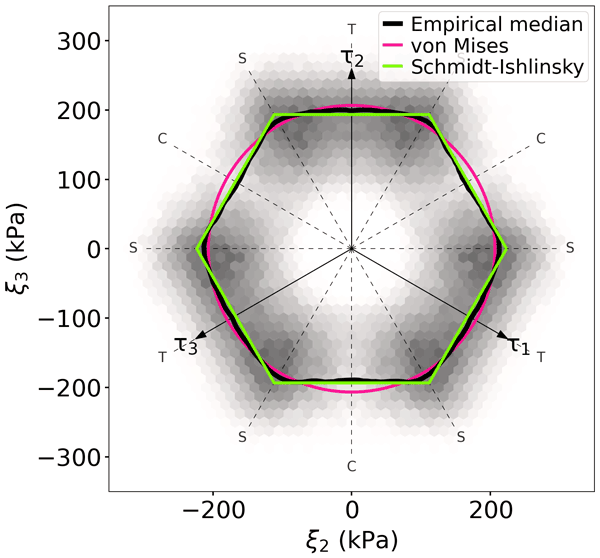
Aslak Grinsted, Nicholas Mossor Rathmann, Ruth Mottram, Anne Munck Solgaard, Joachim Mathiesen, and Christine Schøtt Hvidberg
The Cryosphere, 18, 1947–1957, https://doi.org/10.5194/tc-18-1947-2024, https://doi.org/10.5194/tc-18-1947-2024, 2024
Short summary
Short summary
Ice fracture can cause glacier crevassing and calving. These natural hazards can also modulate the flow and evolution of ice sheets. In a new study, we use a new high-resolution dataset to determine a new failure criterion for glacier ice. Surprisingly, the strength of ice depends on the mode of deformation, and this has potential implications for the currently used flow law of ice.
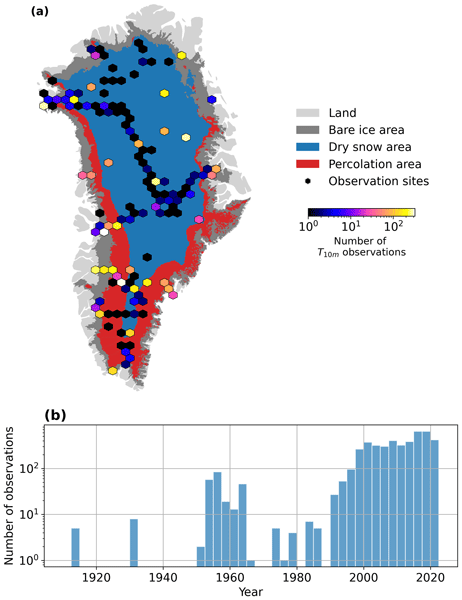
Baptiste Vandecrux, Robert S. Fausto, Jason E. Box, Federico Covi, Regine Hock, Åsa K. Rennermalm, Achim Heilig, Jakob Abermann, Dirk van As, Elisa Bjerre, Xavier Fettweis, Paul C. J. P. Smeets, Peter Kuipers Munneke, Michiel R. van den Broeke, Max Brils, Peter L. Langen, Ruth Mottram, and Andreas P. Ahlstrøm
The Cryosphere, 18, 609–631, https://doi.org/10.5194/tc-18-609-2024, https://doi.org/10.5194/tc-18-609-2024, 2024
Short summary
Short summary
How fast is the Greenland ice sheet warming? In this study, we compiled 4500+ temperature measurements at 10 m below the ice sheet surface (T10m) from 1912 to 2022. We trained a machine learning model on these data and reconstructed T10m for the ice sheet during 1950–2022. After a slight cooling during 1950–1985, the ice sheet warmed at a rate of 0.7 °C per decade until 2022. Climate models showed mixed results compared to our observations and underestimated the warming in key regions.
Nicolaj Hansen, Louise Sandberg Sørensen, Giorgio Spada, Daniele Melini, Rene Forsberg, Ruth Mottram, and Sebastian B. Simonsen
The Cryosphere Discuss., https://doi.org/10.5194/tc-2023-104, https://doi.org/10.5194/tc-2023-104, 2023
Preprint withdrawn
Short summary
Short summary
We use ICESat-2 to estimate the surface elevation change over Greenland and Antarctica in the period of 2018 to 2021. Numerical models have been used the compute the firn compaction and the vertical bedrock movement so non-mass-related elevation changes can be taken into account. We have made a parameterization of the surface density so we can convert the volume change to mass change. We find that Antarctica has lost 135.7±27.3 Gt per year, and the Greenland ice sheet 237.5±14.0 Gt per year.
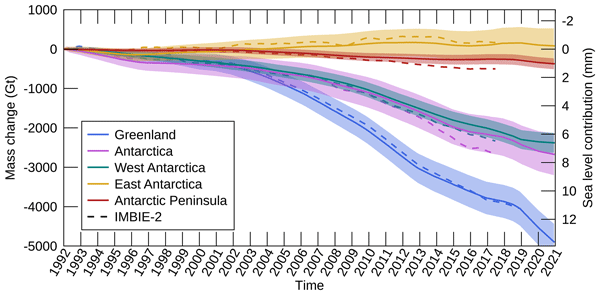
Inès N. Otosaka, Andrew Shepherd, Erik R. Ivins, Nicole-Jeanne Schlegel, Charles Amory, Michiel R. van den Broeke, Martin Horwath, Ian Joughin, Michalea D. King, Gerhard Krinner, Sophie Nowicki, Anthony J. Payne, Eric Rignot, Ted Scambos, Karen M. Simon, Benjamin E. Smith, Louise S. Sørensen, Isabella Velicogna, Pippa L. Whitehouse, Geruo A, Cécile Agosta, Andreas P. Ahlstrøm, Alejandro Blazquez, William Colgan, Marcus E. Engdahl, Xavier Fettweis, Rene Forsberg, Hubert Gallée, Alex Gardner, Lin Gilbert, Noel Gourmelen, Andreas Groh, Brian C. Gunter, Christopher Harig, Veit Helm, Shfaqat Abbas Khan, Christoph Kittel, Hannes Konrad, Peter L. Langen, Benoit S. Lecavalier, Chia-Chun Liang, Bryant D. Loomis, Malcolm McMillan, Daniele Melini, Sebastian H. Mernild, Ruth Mottram, Jeremie Mouginot, Johan Nilsson, Brice Noël, Mark E. Pattle, William R. Peltier, Nadege Pie, Mònica Roca, Ingo Sasgen, Himanshu V. Save, Ki-Weon Seo, Bernd Scheuchl, Ernst J. O. Schrama, Ludwig Schröder, Sebastian B. Simonsen, Thomas Slater, Giorgio Spada, Tyler C. Sutterley, Bramha Dutt Vishwakarma, Jan Melchior van Wessem, David Wiese, Wouter van der Wal, and Bert Wouters
Earth Syst. Sci. Data, 15, 1597–1616, https://doi.org/10.5194/essd-15-1597-2023, https://doi.org/10.5194/essd-15-1597-2023, 2023
Short summary
Short summary
By measuring changes in the volume, gravitational attraction, and ice flow of Greenland and Antarctica from space, we can monitor their mass gain and loss over time. Here, we present a new record of the Earth’s polar ice sheet mass balance produced by aggregating 50 satellite-based estimates of ice sheet mass change. This new assessment shows that the ice sheets have lost (7.5 x 10¹²) t of ice between 1992 and 2020, contributing 21 mm to sea level rise.
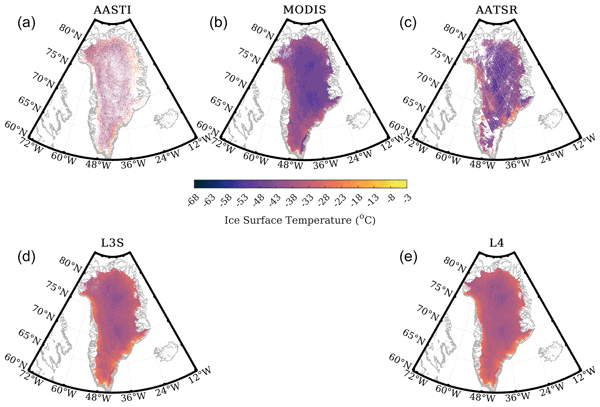
Ioanna Karagali, Magnus Barfod Suhr, Ruth Mottram, Pia Nielsen-Englyst, Gorm Dybkjær, Darren Ghent, and Jacob L. Høyer
The Cryosphere, 16, 3703–3721, https://doi.org/10.5194/tc-16-3703-2022, https://doi.org/10.5194/tc-16-3703-2022, 2022
Short summary
Short summary
Ice surface temperature (IST) products were used to develop the first multi-sensor, gap-free Level 4 (L4) IST product of the Greenland Ice Sheet (GIS) for 2012, when a significant melt event occurred. For the melt season, mean IST was −15 to −1 °C, and almost the entire GIS experienced at least 1 to 5 melt days. Inclusion of the L4 IST to a surface mass budget (SMB) model improved simulated surface temperatures during the key onset of the melt season, where biases are typically large.
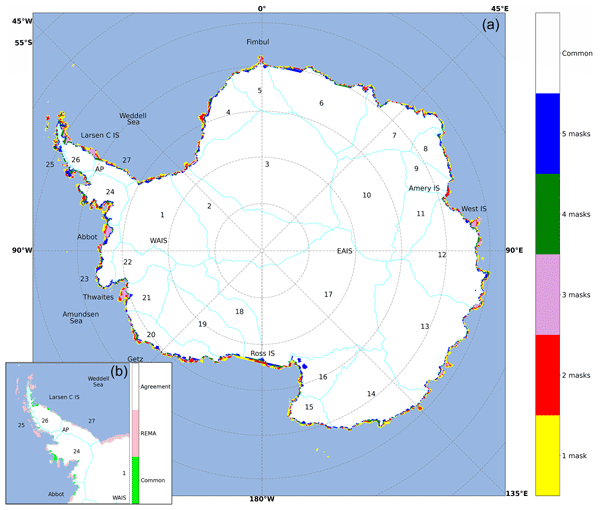
Nicolaj Hansen, Sebastian B. Simonsen, Fredrik Boberg, Christoph Kittel, Andrew Orr, Niels Souverijns, J. Melchior van Wessem, and Ruth Mottram
The Cryosphere, 16, 711–718, https://doi.org/10.5194/tc-16-711-2022, https://doi.org/10.5194/tc-16-711-2022, 2022
Short summary
Short summary
We investigate the impact of different ice masks when modelling surface mass balance over Antarctica. We used ice masks and data from five of the most used regional climate models and a common mask. We see large disagreement between the ice masks, which has a large impact on the surface mass balance, especially around the Antarctic Peninsula and some of the largest glaciers. We suggest a solution for creating a new, up-to-date, high-resolution ice mask that can be used in Antarctic modelling.
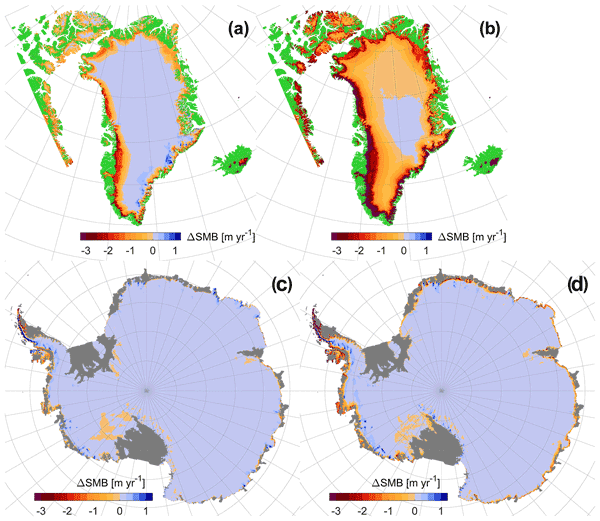
Fredrik Boberg, Ruth Mottram, Nicolaj Hansen, Shuting Yang, and Peter L. Langen
The Cryosphere, 16, 17–33, https://doi.org/10.5194/tc-16-17-2022, https://doi.org/10.5194/tc-16-17-2022, 2022
Short summary
Short summary
Using the regional climate model HIRHAM5, we compare two versions (v2 and v3) of the global climate model EC-Earth for the Greenland and Antarctica ice sheets. We are interested in the surface mass balance of the ice sheets due to its importance when making estimates of future sea level rise. We find that the end-of-century change in the surface mass balance for Antarctica is 420 Gt yr−1 (v2) and 80 Gt yr−1 (v3), and for Greenland it is −290 Gt yr−1 (v2) and −1640 Gt yr−1 (v3).
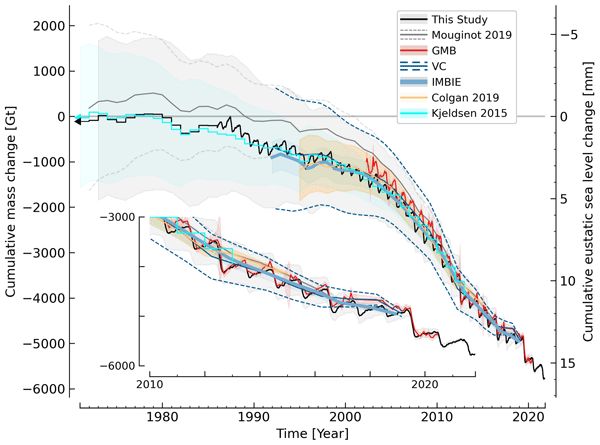
Kenneth D. Mankoff, Xavier Fettweis, Peter L. Langen, Martin Stendel, Kristian K. Kjeldsen, Nanna B. Karlsson, Brice Noël, Michiel R. van den Broeke, Anne Solgaard, William Colgan, Jason E. Box, Sebastian B. Simonsen, Michalea D. King, Andreas P. Ahlstrøm, Signe Bech Andersen, and Robert S. Fausto
Earth Syst. Sci. Data, 13, 5001–5025, https://doi.org/10.5194/essd-13-5001-2021, https://doi.org/10.5194/essd-13-5001-2021, 2021
Short summary
Short summary
We estimate the daily mass balance and its components (surface, marine, and basal mass balance) for the Greenland ice sheet. Our time series begins in 1840 and has annual resolution through 1985 and then daily from 1986 through next week. Results are operational (updated daily) and provided for the entire ice sheet or by commonly used regions or sectors. This is the first input–output mass balance estimate to include the basal mass balance.
Cited articles
Akiba, T., Sano, S., Yanase, T., Ohta, T., and Koyama, M.: Optuna: A next-generation hyperparameter optimization framework, in: Proceedings of the 25th ACM SIGKDD international conference on knowledge discovery & data mining, 2623–2631, https://doi.org/10.1145/3292500.3330701, 2019. a
Anilkumar, R., Bharti, R., Chutia, D., and Aggarwal, S. P.: Modelling point mass balance for the glaciers of the Central European Alps using machine learning techniques, The Cryosphere, 17, 2811–2828, https://doi.org/10.5194/tc-17-2811-2023, 2023. a, b
Auffarth, B.: Machine learning for time-series with Python, Packt Publishing United Kingdom, ISBN: 9781801819626, 2021. a
Bolibar, J., Rabatel, A., Gouttevin, I., Galiez, C., Condom, T., and Sauquet, E.: Deep learning applied to glacier evolution modelling, The Cryosphere, 14, 565–584, https://doi.org/10.5194/tc-14-565-2020, 2020. a
Bolibar, J., Rabatel, A., Gouttevin, I., Zekollari, H., and Galiez, C.: Nonlinear sensitivity of glacier mass balance to future climate change unveiled by deep learning, Nat. Commun., 13, 409, https://doi.org/10.1038/s41467-022-28033-0, 2022. a
Chen, T. and Guestrin, C.: XGBoost: A Scalable Tree Boosting System, in: Proceedings of the 22nd ACM SIGKDD International Conference on Knowledge Discovery and Data Mining, KDD '16, 785–794, Association for Computing Machinery, New York, NY, USA, San Francisco, California, USA, ISBN 9781450342322, https://doi.org/10.1145/2939672.2939785, 2016. a
Cipolla, R., Gal, Y., and Kendall, A.: Multi-task Learning Using Uncertainty to Weigh Losses for Scene Geometry and Semantics, in: 2018 IEEE/CVF Conference on Computer Vision and Pattern Recognition, 7482–7491, ISBN 2575-7075, https://doi.org/10.1109/CVPR.2018.00781, 2018. a, b
de Burgh-Day, C. O. and Leeuwenburg, T.: Machine learning for numerical weather and climate modelling: a review, Geosci. Model Dev., 16, 6433–6477, https://doi.org/10.5194/gmd-16-6433-2023, 2023. a
de Roda Husman, S., Hu, Z., van Tiggelen, M., Dell, R., Bolibar, J., Lhermitte, S., Wouters, B., and Munneke, P. K.: Physically-informed super-resolution downscaling of Antarctic surface melt, Wiley Online Library, J. Adv. Model. Earth Syst., 16, e2023MS004212, https://doi.org/10.1029/2023MS004212, 2024. a, b
Dubey, S. R., Singh, S. K., and Chaudhuri, B. B.: Activation functions in deep learning: A comprehensive survey and benchmark, Neurocomputing, 503, 92–108, https://doi.org/10.1016/j.neucom.2022.06.111, 2022. a
Dunmire, D., Wever, N., Banwell, A. F., and Lenaerts, J. T. M.: Antarctic-wide ice-shelf firn emulation reveals robust future firn air depletion signal for the Antarctic Peninsula, Commun. Earth Environ., 5, 100, https://doi.org/10.1038/s43247-024-01255-4, 2024. a
Fettweis, X., Franco, B., Tedesco, M., van Angelen, J. H., Lenaerts, J. T. M., van den Broeke, M. R., and Gallée, H.: Estimating the Greenland ice sheet surface mass balance contribution to future sea level rise using the regional atmospheric climate model MAR, The Cryosphere, 7, 469–489, https://doi.org/10.5194/tc-7-469-2013, 2013. a
Fettweis, X., Box, J. E., Agosta, C., Amory, C., Kittel, C., Lang, C., van As, D., Machguth, H., and Gallée, H.: Reconstructions of the 1900–2015 Greenland ice sheet surface mass balance using the regional climate MAR model, The Cryosphere, 11, 1015–1033, https://doi.org/10.5194/tc-11-1015-2017, 2017. a
Fettweis, X., Hofer, S., Krebs-Kanzow, U., Amory, C., Aoki, T., Berends, C. J., Born, A., Box, J. E., Delhasse, A., Fujita, K., Gierz, P., Goelzer, H., Hanna, E., Hashimoto, A., Huybrechts, P., Kapsch, M.-L., King, M. D., Kittel, C., Lang, C., Langen, P. L., Lenaerts, J. T. M., Liston, G. E., Lohmann, G., Mernild, S. H., Mikolajewicz, U., Modali, K., Mottram, R. H., Niwano, M., Noël, B., Ryan, J. C., Smith, A., Streffing, J., Tedesco, M., van de Berg, W. J., van den Broeke, M., van de Wal, R. S. W., van Kampenhout, L., Wilton, D., Wouters, B., Ziemen, F., and Zolles, T.: GrSMBMIP: intercomparison of the modelled 1980–2012 surface mass balance over the Greenland Ice Sheet, The Cryosphere, 14, 3935–3958, https://doi.org/10.5194/tc-14-3935-2020, 2020. a, b, c, d
Flora, M. L., Potvin, C. K., McGovern, A., and Handler, S.: A machine learning explainability tutorial for atmospheric sciences, Artificial Intelligence for the Earth Systems, 3, e230018, https://doi.org/10.1175/AIES-D-23-0018.1, 2024. a
Glaude, Q., Noël, B., Olesen, M., Van den Broeke, M., van de Berg, W. J., Mottram, R., Hansen, N., Delhasse, A., Amory, C., and Kittel, C.: A factor two difference in 21st-century Greenland ice sheet surface mass balance projections from three regional climate models under a strong warming scenario (SSP5-8.5), Geophys. Res. Lett., 51, e2024GL111902, https://doi.org/10.1029/2024GL111902, 2024. a, b, c
Goelzer, H., Huybrechts, P., Fürst, J., Nick, F., Andersen, M., Edwards, T., Fettweis, X., Payne, A., and Shannon, S.: Sensitivity of Greenland Ice Sheet Projections to Model Formulations, J. Glaciol., 59, 733–749, https://doi.org/10.3189/2013JoG12J182, 2013. a
Géron, A.: Hands-on machine learning with Scikit-Learn, Keras, and TensorFlow, O'Reilly Media, Inc., 2 Edn., ISBN 9781492032649, 2019. a
Hadjipetrou, S.: A review of statistical methods for climate downscaling: the underexplored potential of geostatistical simulation, Theor. Appl. Climatol., 157, 216, https://doi.org/10.1007/s00704-026-06120-2, 2026. a
Hochreiter, S. and Schmidhuber, J.: Long short-term memory, Neural Comput., 9, 1735–1780, 1997. a
Hu, Z., Kuipers Munneke, P., Lhermitte, S., Izeboud, M., and Van Den Broeke, M.: Improving surface melt estimation over the Antarctic Ice Sheet using deep learning: a proof of concept over the Larsen Ice Shelf, The Cryosphere, 15, 5639–5658, https://doi.org/10.5194/tc-15-5639-2021, 2021. a
Jeffries, M. O., Richter-Menge, J., and Overland, J. E.: Arctic report card 2014, Tech. rep., https://arctic.noaa.gov/report-card/report-card-archive/ (last access: 28 May 2026), 2014. a
Jiang, S., Sweet, L.-b., Blougouras, G., Brenning, A., Li, W., Reichstein, M., Denzler, J., Shangguan, W., Yu, G., Huang, F., and Zscheischler, J.: How Interpretable Machine Learning Can Benefit Process Understanding in the Geosciences, Earth's Future, 12, e2024EF004540, https://doi.org/10.1029/2024EF004540, 2024. a
Kingma, D. P. and Ba, J.: Adam: A method for stochastic optimization, arXiv preprint arXiv:1412.6980, 2014. a
Langen, P. L., Fausto, R. S., Vandecrux, B., Mottram, R. H., and Box, J. E.: Liquid Water Flow and Retention on the Greenland Ice Sheet in the Regional Climate Model HIRHAM5: Local and Large-Scale Impacts, Front. Earth Sci., 4, https://doi.org/10.3389/feart.2016.00110, 2017. a, b, c, d
Lenaerts, J., Camron, M. D., Wyburn-Powell, C. R., and Kay, J. E.: Present-day and future Greenland Ice Sheet precipitation frequency from CloudSat observations and the Community Earth System Model, The Cryosphere, 14, 2253–2265, https://doi.org/10.5194/tc-14-2253-2020, 2020. a
Lucas-Picher, P., Wulff-Nielsen, M., Christensen, J. H., Aðalgeirsdóttir, G., Mottram, R., and Simonsen, S. B.: Very high resolution regional climate model simulations over Greenland: Identifying added value, J. Geophys. Res.-Atmos., 117, https://doi.org/10.1029/2011JD016267, 2012. a
Lundberg, S. M. and Lee, S.-I.: A unified approach to interpreting model predictions, in: Proceedings of the 31st International Conference on Neural Information Processing Systems, 4768–4777, Curran Associates Inc., Long Beach, California, USA, ISBN 9781510860964, 2017. a
Mankin, J. S., Lehner, F., Coats, S., and McKinnon, K. A.: The value of initial condition large ensembles to robust adaptation decision-making, Earth's Future, 8, https://doi.org/10.1029/2020EF001610, 2020. a
Meredith, M., Sommerkorn, M., Cassotta, S., Derksen, C., Ekaykin, A., Hollowed, A., Kofinas, G., Mackintosh, A., Melbourne-Thomas, J., Muelbert, M., Ottersen, G., Pritchard, H., and Schuur, E.: Polar Regions, in: IPCC Special Report on the Ocean and Cryosphere in a Changing Climate, edited by: Pörtner, H.-O., Roberts, D. C., Masson-Delmotte, V., Zhai, P., Tignor, M., Poloczanska, E., Mintenbeck, K., Alegría, A., Nicolai, M., Okem, A., Petzold, J., Rama, B., and Weyer, N. M., Tech. rep., Cambridge University Press, Cambride, UK and New York, NY, USA, https://doi.org/10.1017/9781009157964.005, 2019. a
Molina, M. J., O'Brien, T. A., Anderson, G., Ashfaq, M., Bennett, K. E., Collins, W. D., Dagon, K., Restrepo, J. M., and Ullrich, P. A.: A review of recent and emerging machine learning applications for climate variability and weather phenomena, Artificial Intelligence for the Earth Systems, 2, 220086, https://doi.org/10.1175/AIES-D-22-0086.1, 2023. a
Molnar, C., König, G., Herbinger, J., Freiesleben, T., Dandl, S., Scholbeck, C. A., Casalicchio, G., Grosse-Wentrup, M., and Bischl, B.: General Pitfalls of Model-Agnostic Interpretation Methods for Machine Learning Models, in: xxAI – Beyond Explainable AI: International Workshop, Held in Conjunction with ICML 2020, July 18, 2020, Vienna, Austria, Revised and Extended Papers, edited by: Holzinger, A., Goebel, R., Fong, R., Moon, T., Müller, K.-R., and Samek, W., 39–68, Springer International Publishing, Cham, ISBN 978-3-031-04083-2, https://doi.org/10.1007/978-3-031-04083-2_4, 2022. a
Mottram, R., Boberg, F., Langen, P., Yang, S., Rodehacke, C., Christensen, J. H., and Madsen, M. S.: Surface mass balance of the Greenland ice sheet in the regional climate model HIRHAM5: Present state and future prospects, Low Temperature Science, 75, 105–115, https://doi.org/10.14943/lowtemsci.75.105, 2017. a
Noël, B., van de Berg, W. J., van Wessem, J. M., van Meijgaard, E., van As, D., Lenaerts, J. T. M., Lhermitte, S., Kuipers Munneke, P., Smeets, C. J. P. P., van Ulft, L. H., van de Wal, R. S. W., and van den Broeke, M. R.: Modelling the climate and surface mass balance of polar ice sheets using RACMO2 – Part 1: Greenland (1958–2016), The Cryosphere, 12, 811–831, https://doi.org/10.5194/tc-12-811-2018, 2018. a
Ogunmolasuyi, A., Meyer, C. R., McDowell, I., Thompson-Munson, M., and Baker, I.: FirnLearn: A neural network-based approach to firn density modeling in Antarctica, J. Glaciol., 71, e71, https://doi.org/10.1017/jog.2025.26, 2025. a
Pan, X., Chen, D., Pan, B., Huang, X., Yang, K., Piao, S., Zhou, T., Dai, Y., Chen, F., and Li, X.: Evolution and prospects of Earth system models: Challenges and opportunities, Earth-Sci. Rev., 260, 104986, https://doi.org/10.1016/j.earscirev.2024.104986, 2025. a
Reichstein, M., Camps-Valls, G., Stevens, B., Jung, M., Denzler, J., Carvalhais, N., and Prabhat: Deep learning and process understanding for data-driven Earth system science, Nature, 566, 195–204, https://doi.org/10.1038/s41586-019-0912-1, 2019. a
Richter-Menge, J., Overland, J. E., and Mathis, J. T.: Arctic Report Card 2016: persistent warming trend and loss of sea ice are triggering extensive Arctic changes, NOAA, https://arctic.noaa.gov/report-card/report-card-archive/ (last access: 28 May 2026), 2016. a
Roberts, D. R., Bahn, V., Ciuti, S., Boyce, M. S., Elith, J., Guillera-Arroita, G., Hauenstein, S., Lahoz-Monfort, J. J., Schröder, B., Thuiller, W., Warton, D. I., Wintle, B. A., Hartig, F., and Dormann, C. F.: Cross-validation strategies for data with temporal, spatial, hierarchical, or phylogenetic structure, Ecography, 40, 913–929, https://doi.org/10.1111/ecog.02881, 2017. a, b
Sadler, J. M., Appling, A. P., Read, J. S., Oliver, S. K., Jia, X., Zwart, J. A., and Kumar, V.: Multi-Task Deep Learning of Daily Streamflow and Water Temperature, Water Resour. Res., 58, e2021WR030138, https://doi.org/10.1029/2021WR030138, 2022. a
Schlager, E.: Code of Learning to melt: Emulating Greenland surface melt from a polar RCM with machine learning, Zenodo, https://doi.org/10.5281/zenodo.20271069, 2026a. a
Schlager, E.: Output of Learning to melt: Emulating Greenland surface melt from a polar RCM with machine learning, Zenodo, https://doi.org/10.5281/zenodo.19627367, 2026b. a
Sellevold, R. and Vizcaino, M.: First Application of Artificial Neural Networks to Estimate 21st Century Greenland Ice Sheet Surface Melt, Geophys. Res. Lett., 48, https://doi.org/10.1029/2021GL092449, 2021. a
Sun, Y., Deng, K., Ren, K., Liu, J., Deng, C., and Jin, Y.: Deep learning in statistical downscaling for deriving high spatial resolution gridded meteorological data: A systematic review, ISPRS J. Photogramm., 208, 14–38, https://doi.org/10.1016/j.isprsjprs.2023.12.011, 2024. a
Tebaldi, C., Selin, N. E., Ferrari, R., and Flierl, G.: Emulators of climate model output, Ann. Rev. Environ. Res., 50, https://doi.org/10.1146/annurev-environ-012125-085838, 2025. a
The IMBIE Team: Mass balance of the Greenland Ice Sheet from 1992 to 2018, Nature, 579, 233–239, https://doi.org/10.1038/s41586-019-1855-2, 2020. a
Theng, D. and Bhoyar, K. K.: Feature selection techniques for machine learning: a survey of more than two decades of research, Know. Inf. Syst., 66, 1575–1637, https://doi.org/10.1007/s10115-023-02010-5, 2024. a
Tyralis, H., Papacharalampous, G., and Langousis, A.: Super ensemble learning for daily streamflow forecasting: Large-scale demonstration and comparison with multiple machine learning algorithms, Neural Comput. Appl., 33, 3053–3068, https://doi.org/10.1007/s00521-020-05172-3, 2021. a, b
van der Meer, M., De Roda Husman, S., and Lhermitte, S.: Deep Learning Regional Climate Model Emulators: A Comparison of Two Downscaling Training Frameworks, J. Adv. Model. Earth Syst., 15, e2022MS003593, https://doi.org/10.1029/2022MS003593, 2023. a, b
Vandecrux, B., MacFerrin, M., Machguth, H., Colgan, W. T., van As, D., Heilig, A., Stevens, C. M., Charalampidis, C., Fausto, R. S., Morris, E. M., Mosley-Thompson, E., Koenig, L., Montgomery, L. N., Miège, C., Simonsen, S. B., Ingeman-Nielsen, T., and Box, J. E.: Firn data compilation reveals widespread decrease of firn air content in western Greenland, The Cryosphere, 13, 845–859, https://doi.org/10.5194/tc-13-845-2019, 2019. a
Vandecrux, B., Fausto, R. S., Box, J. E., Covi, F., Hock, R., Rennermalm, Ã. K., Heilig, A., Abermann, J., van As, D., Bjerre, E., Fettweis, X., Smeets, P. C. J. P., Kuipers Munneke, P., van den Broeke, M. R., Brils, M., Langen, P. L., Mottram, R., and Ahlström, A. P.: Recent warming trends of the Greenland ice sheet documented by historical firn and ice temperature observations and machine learning, The Cryosphere, 18, 609–631, https://doi.org/10.5194/tc-18-609-2024, 2024. a, b
Vaswani, A., Shazeer, N., Parmar, N., Uszkoreit, J., Jones, L., Gomez, A. N., Kaiser, Å., and Polosukhin, I.: Attention is all you need, Adv. Neur. In., 30, https://proceedings.neurips.cc/paper/2017/hash/3f5ee243547dee91fbd053c1c4a845aa-Abstract.html (last access: 28 May 2026), 2017. a
Veldhuijsen, S. B. M., van de Berg, W. J., Kuipers Munneke, P., Hansen, N., Boberg, F., Kittel, C., Amory, C., and van den Broeke, M. R.: Emulating the expansion of Antarctic perennial firn aquifers in the 21st century, The Cryosphere, 19, 5157–5173, https://doi.org/10.5194/tc-19-5157-2025, 2025. a, b
Wang, W., Zender, C. S., van As, D., Fausto, R. S., and Laffin, M. K.: Greenland Surface Melt Dominated by Solar and Sensible Heating, Geophys. Res. Lett., 48, e2020GL090653, https://doi.org/10.1029/2020GL090653, 2021. a
Webber, J. B. W.: A bi-symmetric log transformation for wide-range data, Meas. Sci. Technol., 24, 027001, https://doi.org/10.1088/0957-0233/24/2/027001, 2013. a
Wesselkamp, M., Chantry, M., Pinnington, E., Choulga, M., Boussetta, S., Kalweit, M., Bödecker, J., Dormann, C. F., Pappenberger, F., and Balsamo, G.: Advances in land surface forecasting: a comparison of LSTM, gradient boosting, and feed-forward neural networks as prognostic state emulators in a case study with ecLand, Geosci. Model Dev., 18, 921–937, https://doi.org/10.5194/gmd-18-921-2025, 2025. a, b
Short summary
Predicting Greenland's surface melt is critical for understanding sea-level rise, but traditional firn models are too slow for exploring many climate scenarios. We developed a neural network optimized through systematic input selection and network tuning to identify the necessary information to accurately emulate surface melt. This approach cuts computation costs by orders of magnitude and can be retrained for different climate forcings or extended to other surface mass balance properties.
Predicting Greenland's surface melt is critical for understanding sea-level rise, but...


