
Articles | Volume 20, issue 5
https://doi.org/10.5194/tc-20-2773-2026
© Author(s) 2026. This work is distributed under
the Creative Commons Attribution 4.0 License.
the Creative Commons Attribution 4.0 License.
https://doi.org/10.5194/tc-20-2773-2026
© Author(s) 2026. This work is distributed under
the Creative Commons Attribution 4.0 License.
the Creative Commons Attribution 4.0 License.
Research article
| 
19 May 2026
Research article |
| 19 May 2026
| 19 May 2026
Assimilation of synthetic observations of radar backscatters at Ku-band improves SWE estimates
Nicolas R. Leroux
CORRESPONDING AUTHOR

Meteorological Research Division, Environment and Climate Change Canada, Quebec, Canada
Vincent Vionnet
Meteorological Research Division, Environment and Climate Change Canada, Quebec, Canada
Courtney Bayer
Meteorological Research Division, Environment and Climate Change Canada, Quebec, Canada
Julien Meloche
Climate Research Division, Environment and Climate Change Canada, Ontario, Canada
Arlan Dirkson
Meteorological Research Division, Environment and Climate Change Canada, Quebec, Canada
Franck Lespinas
Meteorological Research Division, Environment and Climate Change Canada, Quebec, Canada
Mark Buehner
Meteorological Research Division, Environment and Climate Change Canada, Quebec, Canada
Marco Carrera
Meteorological Research Division, Environment and Climate Change Canada, Quebec, Canada
Benoit Montpetit
Climate Research Division, Environment and Climate Change Canada, Ontario, Canada
Bernard Bilodeau
Meteorological Research Division, Environment and Climate Change Canada, Quebec, Canada
Maria Abrahamowicz
Meteorological Research Division, Environment and Climate Change Canada, Quebec, Canada
Chris Derksen
Climate Research Division, Environment and Climate Change Canada, Ontario, Canada
Related authors
Georgina J. Woolley, Nick Rutter, Leanne Wake, Vincent Vionnet, Chris Derksen, Julien Meloche, Benoit Montpetit, Nicolas R. Leroux, Richard Essery, Gabriel Hould Gosselin, and Philip Marsh
The Cryosphere, 20, 1315–1338, https://doi.org/10.5194/tc-20-1315-2026, https://doi.org/10.5194/tc-20-1315-2026, 2026
Short summary
Short summary
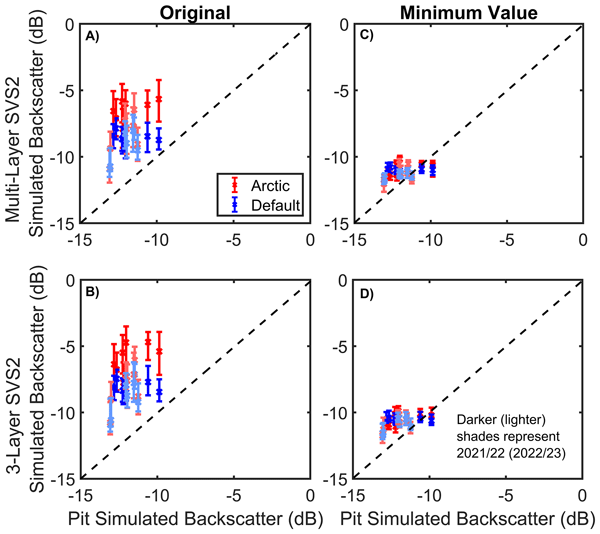
The impact of uncertainties in the simulation of density and specific surface area (SSA) by the snow model Crocus (embedded in the Soil, Vegetation and Snow v2 land surface model) on the simulation of snow backscatter (13.5 GHz) using the Snow Microwave Radiative Transfer model were quantified. The simulation of SSA was found to be a key model uncertainty. Underestimated SSA values lead to high errors in the simulation of backscatter, reduced by implementing a minimum SSA value (8.7 m2 kg−1).
Vincent Vionnet, Nicolas R. Leroux, Vincent Fortin, Maria Abrahamowicz, Georgina Woolley, Giulia Mazzotti, Manon Gaillard, Matthieu Lafaysse, Alain Royer, Florent Domine, Nathalie Gauthier, Nick Rutter, Chris Derksen, and Stéphane Bélair
Geosci. Model Dev., 18, 9119–9147, https://doi.org/10.5194/gmd-18-9119-2025, https://doi.org/10.5194/gmd-18-9119-2025, 2025
Short summary
Short summary
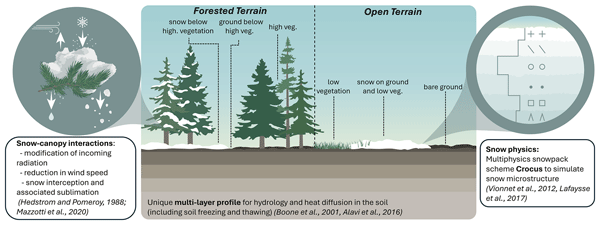
Snow microstructure controls snowpack properties, but most land surface models overlook this factor. To support future satellite missions, we created a new land surface model based on the Crocus scheme that simulates snow microstructure. Key improvements include better snow albedo representation, enhanced Arctic snow modeling, and improved forest module to capture Canada's diverse snow conditions. Results demonstrate improved simulations of snow density and melt across large regions of Canada.
Benoit Montpetit, Julien Meloche, Vincent Vionnet, Chris Derksen, Georgina Woolley, Nicolas R. Leroux, Paul Siqueira, J. Max Adam, and Mike Brady
The Cryosphere, 19, 5465–5484, https://doi.org/10.5194/tc-19-5465-2025, https://doi.org/10.5194/tc-19-5465-2025, 2025
Short summary
Short summary
This paper presents the workflow to retrieve snow water equivalent from radar measurements for the future Canadian radar satellite mission, Terrestrial Snow Mass Mission. The workflow is validated by using airborne radar data collected at Trail Valley Creek, Canada, during winter 2018–2019. We detail important considerations to have in the context of a satellite mission over a vast region such as Canada. Results show that it is possible to achieve the desired accuracy over an Arctic environment.
Julien Meloche, Nicolas R. Leroux, Benoit Montpetit, Vincent Vionnet, and Chris Derksen
The Cryosphere, 19, 2949–2962, https://doi.org/10.5194/tc-19-2949-2025, https://doi.org/10.5194/tc-19-2949-2025, 2025
Short summary
Short summary
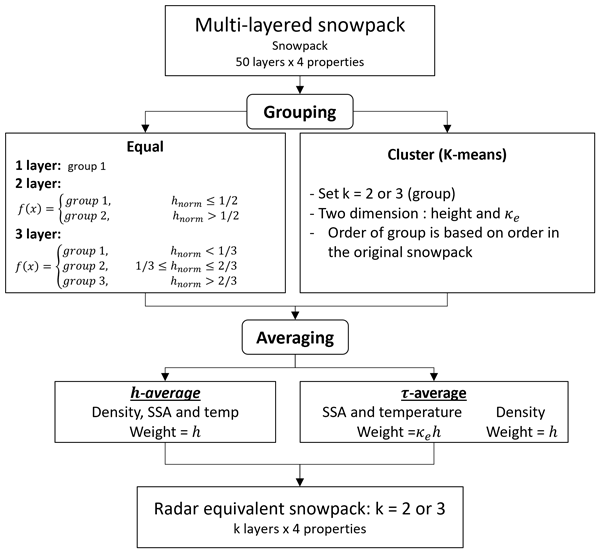
Measuring snow mass from radar measurements is possible with information on snow and a radar model to link the measurements to snow. A key variable in a retrieval is the number of snow layers, with more layers yielding richer information but at increased computational cost. Here, we show the capabilities of a new method for simplifying a complex snowpack while preserving the scattering behavior of the snowpack and conserving its mass.
Benoit Montpetit, Joshua King, Julien Meloche, Chris Derksen, Paul Siqueira, J. Max Adam, Peter Toose, Mike Brady, Anna Wendleder, Vincent Vionnet, and Nicolas R. Leroux
The Cryosphere, 18, 3857–3874, https://doi.org/10.5194/tc-18-3857-2024, https://doi.org/10.5194/tc-18-3857-2024, 2024
Short summary
Short summary
This paper validates the use of free open-source models to link distributed snow measurements to radar measurements in the Canadian Arctic. Using multiple radar sensors, we can decouple the soil from the snow contribution. We then retrieve the "microwave snow grain size" to characterize the interaction between the snow mass and the radar signal. This work supports future satellite mission development to retrieve snow mass information such as the future Canadian Terrestrial Snow Mass Mission.
Marlena Reil, Julia Kaltenborn, Donovan J. M. Allum, Francis Pelletier, Sebastian Roessler, Samip Shrestha, Zhibang Lv, John Truckenbrodt, Gabriele Schwaizer, Thomas Nagler, John W. Pomeroy, Christopher B. Marsh, Benoit Montpetit, Tobias Jonas, Gabriel Tseng, David Rolnick, Andreas J. Dietz, and Celia A. Baumhoer
EGUsphere, https://doi.org/10.5194/egusphere-2026-3833, https://doi.org/10.5194/egusphere-2026-3833, 2026
This preprint is open for discussion and under review for The Cryosphere (TC).
Short summary
Short summary
Many communities rely on snowmelt from the mountains for their water supply. However, monitoring snow from space is challenging because clouds and other factors can obscure satellite observations. We present SnowGalileo, an AI model that combines data from multiple satellites to produce snow maps. The model can produce accurate maps even when clouds are present and high-resolution data are missing. This helps to improve our understanding of snow conditions and their impact on water resources.
Benjamin Bouchard, Vincent Vionnet, Étienne Gaborit, and Vincent Fortin
Hydrol. Earth Syst. Sci., 30, 4823–4846, https://doi.org/10.5194/hess-30-4823-2026, https://doi.org/10.5194/hess-30-4823-2026, 2026
Short summary
Short summary
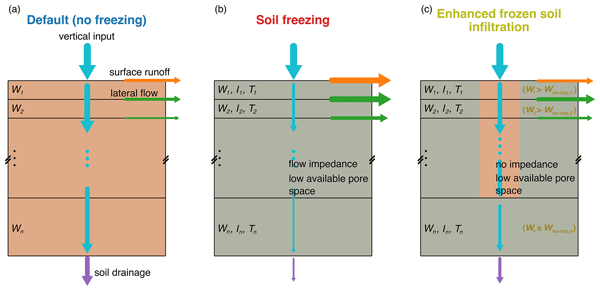
Enhancing frozen soil infiltration based on soil liquid water significantly improves streamflow simulation in the SVS land surface model. Tested at over 580 stations in the Great-Lakes and Saint-Lawrence region for five years, this approach can be easily transferred to other land surface models (LSM). Our results suggest that promoting frozen soil infiltration in LSM is key for realistic large-scale streamflow simulations and critical for operational hydrological prediction in cold regions.
Matthieu Lafaysse, Marie Dumont, Basile De Fleurian, Mathieu Fructus, Rafife Nheili, Léo Viallon-Galinier, Matthieu Baron, Aaron Boone, Axel Bouchet, Julien Brondex, Carlo Carmagnola, Bertrand Cluzet, Kévin Fourteau, Ange Haddjeri, Pascal Hagenmuller, Giulia Mazzotti, Marie Minvielle, Samuel Morin, Louis Quéno, Léon Roussel, Pierre Spandre, François Tuzet, and Vincent Vionnet
Geosci. Model Dev., 19, 6273–6334, https://doi.org/10.5194/gmd-19-6273-2026, https://doi.org/10.5194/gmd-19-6273-2026, 2026
Short summary
Short summary
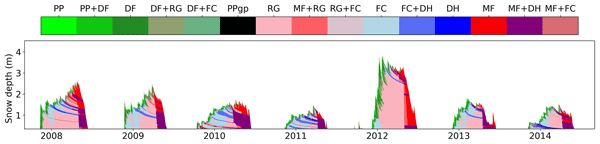
This article is a comprehensive description of the 3.0.2 stable release of the Crocus snowpack model. It describes various new implementations since the last reference article in 2012 and a review of the available scientific evaluations and applications of the model. This provides guidance for the future of numerical snow modelling.
Julien Meloche, Melody Sandells, Henning Löwe, Nick Rutter, Ghislain Picard, Richard Essery, Randall K. Scharien, Alexandre Langlois, Matthias Jaggi, Josh King, Peter Toose, Michele Scagliola, Jerome Bouffard, Alessandro Di Bella, and Christian Haas
EGUsphere, https://doi.org/10.5194/egusphere-2026-3615, https://doi.org/10.5194/egusphere-2026-3615, 2026
Short summary
Short summary
Sea ice thickness is essential for climate studies. Radar altimetry has provided sea ice thickness measurements, but uncertainty arises from the interaction of the signal with the snow cover. Therefore, modelling the signal interaction with the snow is necessary to improve retrieval. A radar model was used to simulate the radar signal from the snow-covered sea ice. This work paved the way to improved physical algorithms to retrieve snow depth and sea ice thickness for radar altimeter missions.
Charlotte Crevier, Alexandre Langlois, Chris Derksen, and Alexandre Roy
The Cryosphere, 20, 3369–3385, https://doi.org/10.5194/tc-20-3369-2026, https://doi.org/10.5194/tc-20-3369-2026, 2026
Short summary
Short summary
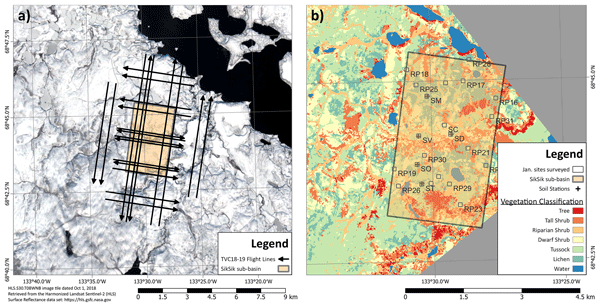
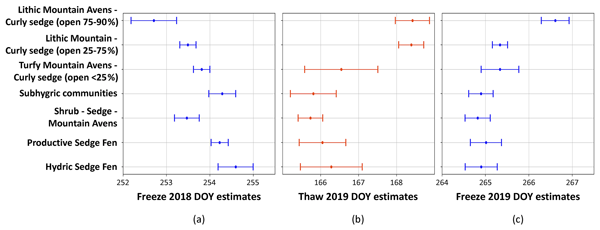
A multisensor C-Band Synthetic Aperture Radar (SAR) near-daily time series in an Arctic environment was developed to create a high-resolution freeze/thaw (FT) algorithm with an accuracy of 96 %. The FT detection was highly correlated to near-surface state as measured by soil temperature. Small but significant FT date differences were identified for different Arctic ecotypes, showing the spatial variability of freeze/thaw process in Arctic environment.
Alex Gélinas, Benoît Montpetit, Julien Meloche, Peter Toose, Zeinab Akhavan, Wei Wang, Richard Kelly, Alexandre Langlois, and Alexandre Roy
EGUsphere, https://doi.org/10.5194/egusphere-2026-656, https://doi.org/10.5194/egusphere-2026-656, 2026
Short summary
Short summary
This research validates a method to link radar measurements to soil properties beneath snow in a temperate farming region. By using multiple radar sensors and computer models, we successfully decoupled the ground's interference from the snow signal. Our results show that radar captures unique information that traditional ground tools miss during freeze-thaw cycles. This work provides a vital framework for the future Canadian Terrestrial Snow Mass Mission to monitor water resources.
Mickaël Lalande, Alexandre Roy, Libo Wang, Diana Verseghy, Vincent Vionnet, Florent Dominé, and Christophe Kinnard
EGUsphere, https://doi.org/10.5194/egusphere-2026-492, https://doi.org/10.5194/egusphere-2026-492, 2026
Short summary
Short summary
This study enhances a snow model for Arctic environments by improving the heat exchanges within the snowpack and at its interfaces, revising the compaction scheme, and adding consideration of blowing snow sublimation losses. Simulations at ten Arctic, mid-latitude, and Alpine sites show significant reductions in simulated soil and snow temperature biases and improved simulated snow depth and density, which are key features to improve simulated energy, water, and carbon budgets in the Arctic.
Zeinab Akhavan, Richard Kelly, Peter Toose, Aaron Thompson, Wei Wang, Benoit Montpetit, Alex Gélinas, and Alexandre Roy
EGUsphere, https://doi.org/10.5194/egusphere-2026-1065, https://doi.org/10.5194/egusphere-2026-1065, 2026
Short summary
Short summary
Soils in cold regions freeze and thaw seasonally, affecting water flow, flooding, and carbon exchange, but these changes are hard to track beneath snow. We studied a Canadian agricultural field using high-resolution airborne radar and ground measurements through winter. Radar signals changed clearly as soils froze and thawed, with one polarization being most sensitive. Our results improve understanding of frozen soils and support future satellite monitoring.
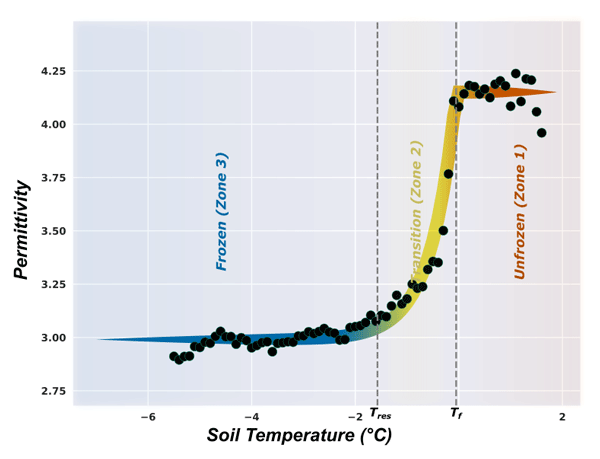
Hesam Salmabadi, Renato Pardo Lara, Aaron Berg, Alex Mavrovic, Chelene Hanes, Benoit Montpetit, and Alexandre Roy
The Cryosphere, 20, 1635–1654, https://doi.org/10.5194/tc-20-1635-2026, https://doi.org/10.5194/tc-20-1635-2026, 2026
Short summary
Short summary
Current satellite monitoring often oversimplifies soil freezing by assuming it happens exactly at 0°C. We analyzed ground data across Canada and found that soil often stays in a partially frozen state for months, even when air temperatures are well below freezing, revealing a major gap in how we track seasonally frozen ground.
Georgina J. Woolley, Nick Rutter, Leanne Wake, Vincent Vionnet, Chris Derksen, Julien Meloche, Benoit Montpetit, Nicolas R. Leroux, Richard Essery, Gabriel Hould Gosselin, and Philip Marsh
The Cryosphere, 20, 1315–1338, https://doi.org/10.5194/tc-20-1315-2026, https://doi.org/10.5194/tc-20-1315-2026, 2026
Short summary
Short summary
The impact of uncertainties in the simulation of density and specific surface area (SSA) by the snow model Crocus (embedded in the Soil, Vegetation and Snow v2 land surface model) on the simulation of snow backscatter (13.5 GHz) using the Snow Microwave Radiative Transfer model were quantified. The simulation of SSA was found to be a key model uncertainty. Underestimated SSA values lead to high errors in the simulation of backscatter, reduced by implementing a minimum SSA value (8.7 m2 kg−1).
Vincent Vionnet, Nicolas R. Leroux, Vincent Fortin, Maria Abrahamowicz, Georgina Woolley, Giulia Mazzotti, Manon Gaillard, Matthieu Lafaysse, Alain Royer, Florent Domine, Nathalie Gauthier, Nick Rutter, Chris Derksen, and Stéphane Bélair
Geosci. Model Dev., 18, 9119–9147, https://doi.org/10.5194/gmd-18-9119-2025, https://doi.org/10.5194/gmd-18-9119-2025, 2025
Short summary
Short summary
Snow microstructure controls snowpack properties, but most land surface models overlook this factor. To support future satellite missions, we created a new land surface model based on the Crocus scheme that simulates snow microstructure. Key improvements include better snow albedo representation, enhanced Arctic snow modeling, and improved forest module to capture Canada's diverse snow conditions. Results demonstrate improved simulations of snow density and melt across large regions of Canada.
Benoit Montpetit, Julien Meloche, Vincent Vionnet, Chris Derksen, Georgina Woolley, Nicolas R. Leroux, Paul Siqueira, J. Max Adam, and Mike Brady
The Cryosphere, 19, 5465–5484, https://doi.org/10.5194/tc-19-5465-2025, https://doi.org/10.5194/tc-19-5465-2025, 2025
Short summary
Short summary
This paper presents the workflow to retrieve snow water equivalent from radar measurements for the future Canadian radar satellite mission, Terrestrial Snow Mass Mission. The workflow is validated by using airborne radar data collected at Trail Valley Creek, Canada, during winter 2018–2019. We detail important considerations to have in the context of a satellite mission over a vast region such as Canada. Results show that it is possible to achieve the desired accuracy over an Arctic environment.
Julien Meloche, Nicolas R. Leroux, Benoit Montpetit, Vincent Vionnet, and Chris Derksen
The Cryosphere, 19, 2949–2962, https://doi.org/10.5194/tc-19-2949-2025, https://doi.org/10.5194/tc-19-2949-2025, 2025
Short summary
Short summary
Measuring snow mass from radar measurements is possible with information on snow and a radar model to link the measurements to snow. A key variable in a retrieval is the number of snow layers, with more layers yielding richer information but at increased computational cost. Here, we show the capabilities of a new method for simplifying a complex snowpack while preserving the scattering behavior of the snowpack and conserving its mass.
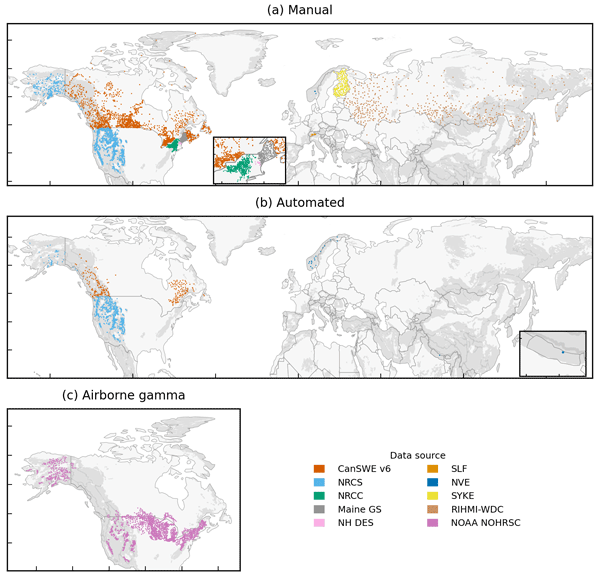
Colleen Mortimer and Vincent Vionnet
Earth Syst. Sci. Data, 17, 3619–3640, https://doi.org/10.5194/essd-17-3619-2025, https://doi.org/10.5194/essd-17-3619-2025, 2025
Short summary
Short summary
In situ observations of snow water equivalent (SWE) are critical for climate applications and resource management. NorSWE is a dataset of in situ SWE observations covering North America, Norway, Finland, Switzerland, Russia, and Nepal over the period 1979–2021. It includes more than 11.5 million observations from more than 10 000 different locations compiled from nine different sources. Snow depth and derived bulk snow density are included when available.

Alireza Amani, Marie-Amélie Boucher, Alexandre R. Cabral, Vincent Vionnet, and Étienne Gaborit
Hydrol. Earth Syst. Sci., 29, 2445–2465, https://doi.org/10.5194/hess-29-2445-2025, https://doi.org/10.5194/hess-29-2445-2025, 2025
Short summary
Short summary
Accurately estimating groundwater recharge using numerical models is particularly difficult in cold regions with snow and soil freezing. This study evaluated a physics-based model against high-resolution field measurements. Our findings highlight a need for a better representation of soil-freezing processes, offering a roadmap for future model development. This leads to more accurate models to aid in water resource management decisions in cold climates.
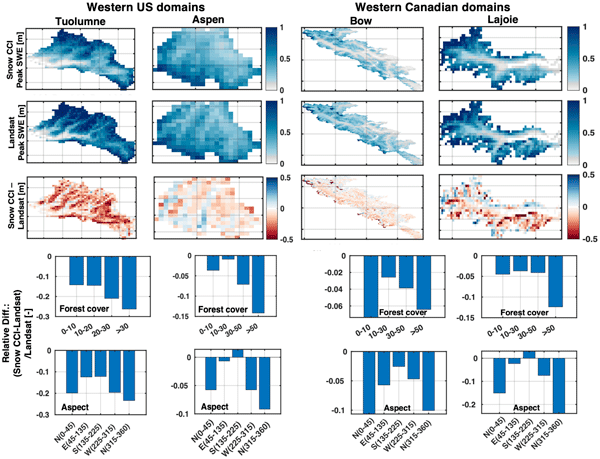
Haorui Sun, Yiwen Fang, Steven A. Margulis, Colleen Mortimer, Lawrence Mudryk, and Chris Derksen
The Cryosphere, 19, 2017–2036, https://doi.org/10.5194/tc-19-2017-2025, https://doi.org/10.5194/tc-19-2017-2025, 2025
Short summary
Short summary
The European Space Agency's Snow Climate Change Initiative (Snow CCI) developed a high-quality snow cover extent and snow water equivalent (SWE) climate data record. However, gaps exist in complex terrain due to challenges in using passive microwave sensing and in situ measurements. This study presents a methodology to fill the mountain SWE gap using Snow CCI snow cover fraction within a Bayesian SWE reanalysis framework, with potential applications in untested regions and with other sensors.
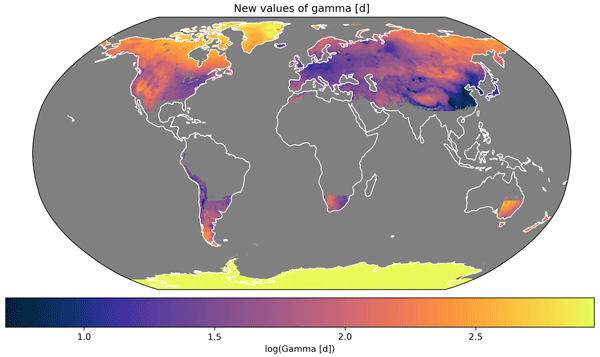
Manon Gaillard, Vincent Vionnet, Matthieu Lafaysse, Marie Dumont, and Paul Ginoux
The Cryosphere, 19, 769–792, https://doi.org/10.5194/tc-19-769-2025, https://doi.org/10.5194/tc-19-769-2025, 2025
Short summary
Short summary
This study presents an efficient method to improve large-scale snow albedo simulations by considering the spatial variability in light-absorbing particles (LAPs) like black carbon and dust. A global climatology of LAP deposition was created and used to optimize a parameter in the Crocus snow model. Testing at 10 global sites improved albedo predictions by 10 % on average and over 25 % in the Arctic. This method can enhance other snow models' predictions without complex simulations.
Lawrence Mudryk, Colleen Mortimer, Chris Derksen, Aleksandra Elias Chereque, and Paul Kushner
The Cryosphere, 19, 201–218, https://doi.org/10.5194/tc-19-201-2025, https://doi.org/10.5194/tc-19-201-2025, 2025
Short summary
Short summary
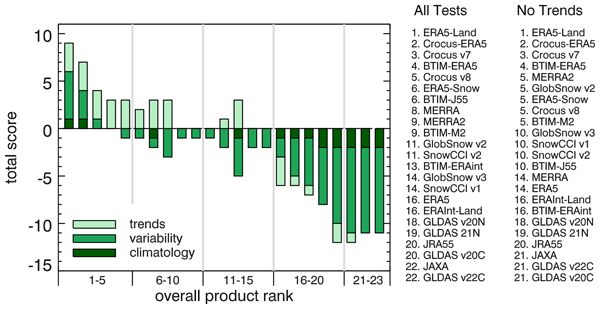
We evaluate and rank 23 different datasets on their ability to accurately estimate historical snow amounts. The evaluation uses new a set of surface snow measurements with improved spatial coverage, enabling evaluation across both mountainous and nonmountainous regions. Performance measures vary tremendously across the products: while most perform reasonably in nonmountainous regions, accurate representation of snow amounts in mountainous regions and of historical trends is much more variable.
Mark Buehner, Jean-Francois Caron, Ervig Lapalme, Alain Caya, Ping Du, Yves Rochon, Sergey Skachko, Maziar Bani Shahabadi, Sylvain Heilliette, Martin Deshaies-Jacques, Weiguang Chang, and Michael Sitwell
Geosci. Model Dev., 18, 1–18, https://doi.org/10.5194/gmd-18-1-2025, https://doi.org/10.5194/gmd-18-1-2025, 2025
Short summary
Short summary
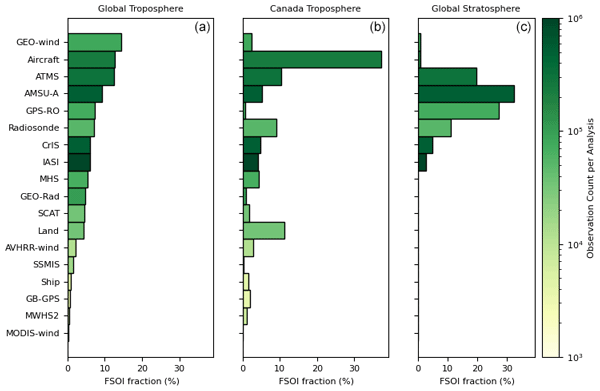
The Modular and Integrated Data Assimilation System (MIDAS) software is described. The flexible design of MIDAS enables both deterministic and ensemble prediction applications for the atmosphere and several other Earth system components. It is currently used for all main operational weather prediction systems in Canada and also for sea ice and sea surface temperature analysis. The use of MIDAS for multiple Earth system components will facilitate future research on coupled data assimilation.
Georgina J. Woolley, Nick Rutter, Leanne Wake, Vincent Vionnet, Chris Derksen, Richard Essery, Philip Marsh, Rosamond Tutton, Branden Walker, Matthieu Lafaysse, and David Pritchard
The Cryosphere, 18, 5685–5711, https://doi.org/10.5194/tc-18-5685-2024, https://doi.org/10.5194/tc-18-5685-2024, 2024
Short summary
Short summary
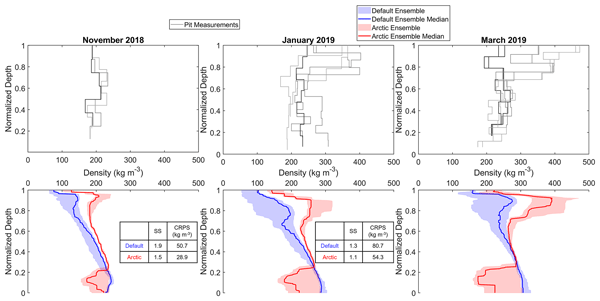
Parameterisations of Arctic snow processes were implemented into the multi-physics ensemble version of the snow model Crocus (embedded within the Soil, Vegetation, and Snow version 2 land surface model) and evaluated at an Arctic tundra site. Optimal combinations of parameterisations that improved the simulation of density and specific surface area featured modifications that raise wind speeds to increase compaction in surface layers, prevent snowdrift, and increase viscosity in basal layers.
Colleen Mortimer, Lawrence Mudryk, Eunsang Cho, Chris Derksen, Mike Brady, and Carrie Vuyovich
The Cryosphere, 18, 5619–5639, https://doi.org/10.5194/tc-18-5619-2024, https://doi.org/10.5194/tc-18-5619-2024, 2024
Short summary
Short summary
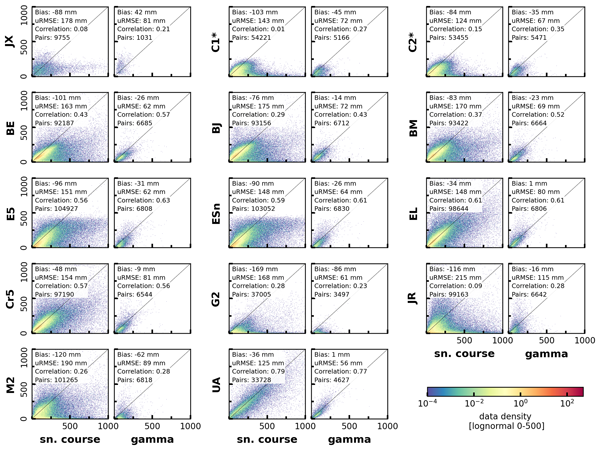
Ground measurements of snow water equivalent (SWE) are vital for understanding the accuracy of large-scale estimates from satellites and climate models. We compare two types of measurements – snow courses and airborne gamma SWE estimates – and analyze how measurement type impacts the accuracy assessment of gridded SWE products. We use this analysis to produce a combined reference SWE dataset for North America, applicable for future gridded SWE product evaluations and other applications.

Aleksandra Elias Chereque, Paul J. Kushner, Lawrence Mudryk, Chris Derksen, and Colleen Mortimer
The Cryosphere, 18, 4955–4969, https://doi.org/10.5194/tc-18-4955-2024, https://doi.org/10.5194/tc-18-4955-2024, 2024
Short summary
Short summary
We look at three commonly used snow depth datasets that are produced through a combination of snow modelling and historical measurements (reanalysis). When compared with each other, these datasets have differences that arise for various reasons. We show that a simple snow model can be used to examine these inconsistencies and highlight issues. This method indicates that one of the complex datasets should be excluded from further studies.
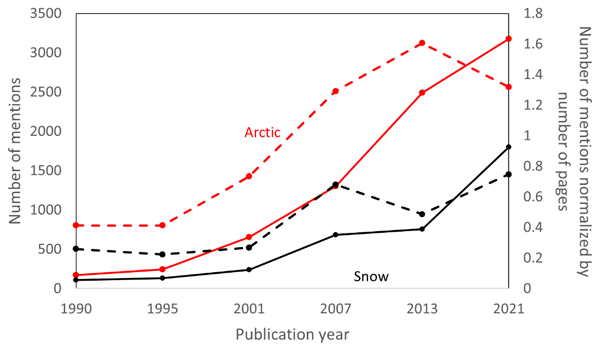
Cecile B. Menard, Sirpa Rasmus, Ioanna Merkouriadi, Gianpaolo Balsamo, Annett Bartsch, Chris Derksen, Florent Domine, Marie Dumont, Dorothee Ehrich, Richard Essery, Bruce C. Forbes, Gerhard Krinner, David Lawrence, Glen Liston, Heidrun Matthes, Nick Rutter, Melody Sandells, Martin Schneebeli, and Sari Stark
The Cryosphere, 18, 4671–4686, https://doi.org/10.5194/tc-18-4671-2024, https://doi.org/10.5194/tc-18-4671-2024, 2024
Short summary
Short summary
Computer models, like those used in climate change studies, are written by modellers who have to decide how best to construct the models in order to satisfy the purpose they serve. Using snow modelling as an example, we examine the process behind the decisions to understand what motivates or limits modellers in their decision-making. We find that the context in which research is undertaken is often more crucial than scientific limitations. We argue for more transparency in our research practice.
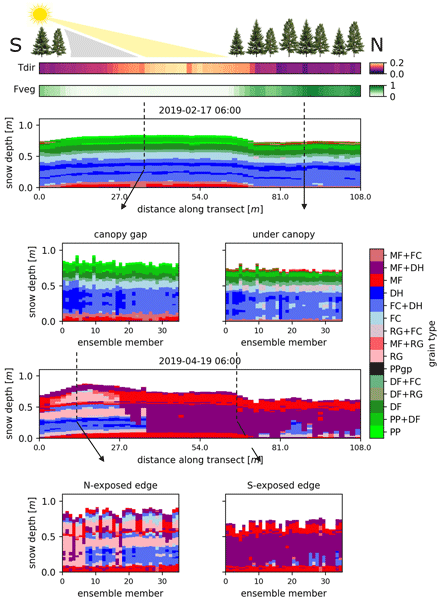
Giulia Mazzotti, Jari-Pekka Nousu, Vincent Vionnet, Tobias Jonas, Rafife Nheili, and Matthieu Lafaysse
The Cryosphere, 18, 4607–4632, https://doi.org/10.5194/tc-18-4607-2024, https://doi.org/10.5194/tc-18-4607-2024, 2024
Short summary
Short summary
As many boreal and alpine forests have seasonal snow, models are needed to predict forest snow under future environmental conditions. We have created a new forest snow model by combining existing, very detailed model components for the canopy and the snowpack. We applied it to forests in Switzerland and Finland and showed how complex forest cover leads to a snowpack layering that is very variable in space and time because different processes prevail at different locations in the forest.
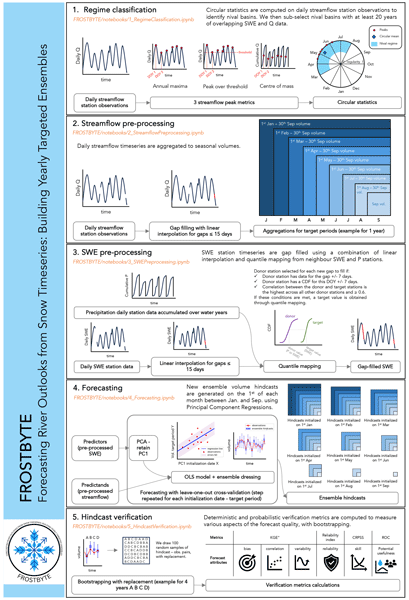
Louise Arnal, Martyn P. Clark, Alain Pietroniro, Vincent Vionnet, David R. Casson, Paul H. Whitfield, Vincent Fortin, Andrew W. Wood, Wouter J. M. Knoben, Brandi W. Newton, and Colleen Walford
Hydrol. Earth Syst. Sci., 28, 4127–4155, https://doi.org/10.5194/hess-28-4127-2024, https://doi.org/10.5194/hess-28-4127-2024, 2024
Short summary
Short summary
Forecasting river flow months in advance is crucial for water sectors and society. In North America, snowmelt is a key driver of flow. This study presents a statistical workflow using snow data to forecast flow months ahead in North American snow-fed rivers. Variations in the river flow predictability across the continent are evident, raising concerns about future predictability in a changing (snow) climate. The reproducible workflow hosted on GitHub supports collaborative and open science.
Benoit Montpetit, Joshua King, Julien Meloche, Chris Derksen, Paul Siqueira, J. Max Adam, Peter Toose, Mike Brady, Anna Wendleder, Vincent Vionnet, and Nicolas R. Leroux
The Cryosphere, 18, 3857–3874, https://doi.org/10.5194/tc-18-3857-2024, https://doi.org/10.5194/tc-18-3857-2024, 2024
Short summary
Short summary
This paper validates the use of free open-source models to link distributed snow measurements to radar measurements in the Canadian Arctic. Using multiple radar sensors, we can decouple the soil from the snow contribution. We then retrieve the "microwave snow grain size" to characterize the interaction between the snow mass and the radar signal. This work supports future satellite mission development to retrieve snow mass information such as the future Canadian Terrestrial Snow Mass Mission.
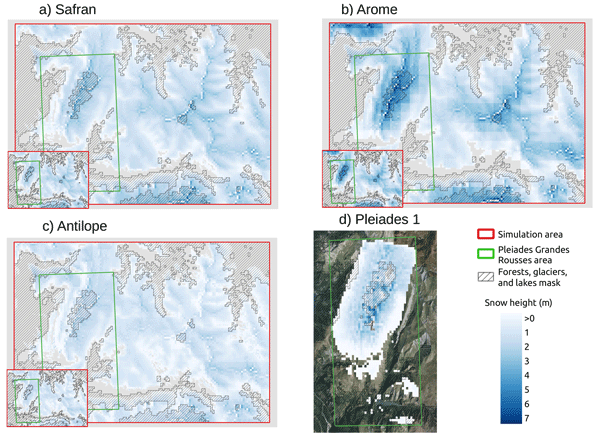
Ange Haddjeri, Matthieu Baron, Matthieu Lafaysse, Louis Le Toumelin, César Deschamps-Berger, Vincent Vionnet, Simon Gascoin, Matthieu Vernay, and Marie Dumont
The Cryosphere, 18, 3081–3116, https://doi.org/10.5194/tc-18-3081-2024, https://doi.org/10.5194/tc-18-3081-2024, 2024
Short summary
Short summary
Our study addresses the complex challenge of evaluating distributed alpine snow simulations with snow transport against snow depths from Pléiades stereo imagery and snow melt-out dates from Sentinel-2 and Landsat-8 satellites. Additionally, we disentangle error contributions between blowing snow, precipitation heterogeneity, and unresolved subgrid variability. Snow transport enhances the snow simulations at high elevations, while precipitation biases are the main error source in other areas.
Paul Billecocq, Alexandre Langlois, and Benoit Montpetit
The Cryosphere, 18, 2765–2782, https://doi.org/10.5194/tc-18-2765-2024, https://doi.org/10.5194/tc-18-2765-2024, 2024
Short summary
Short summary
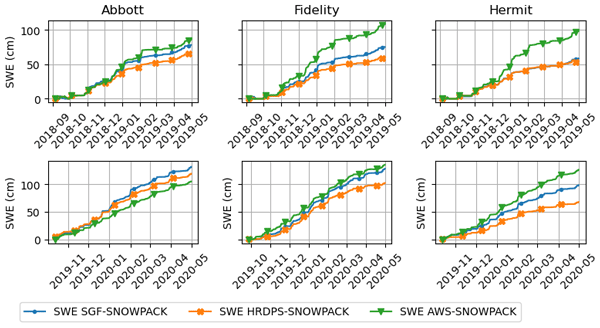
Snow covers a vast part of the globe, making snow water equivalent (SWE) crucial for climate science and hydrology. SWE can be inversed from satellite data, but the snow's complex structure highly affects the signal, and thus an educated first guess is mandatory. In this study, a subgridding framework was developed to model snow at the local scale from model weather data. The framework enhanced snow parameter modeling, paving the way for SWE inversion algorithms from satellite data.
Julien Meloche, Melody Sandells, Henning Löwe, Nick Rutter, Richard Essery, Ghislain Picard, Randall K. Scharien, Alexandre Langlois, Matthias Jaggi, Josh King, Peter Toose, Jérôme Bouffard, Alessandro Di Bella, and Michele Scagliola
EGUsphere, https://doi.org/10.5194/egusphere-2024-1583, https://doi.org/10.5194/egusphere-2024-1583, 2024
Preprint archived
Short summary
Short summary
Sea ice thickness is essential for climate studies. Radar altimetry has provided sea ice thickness measurement, but uncertainty arises from interaction of the signal with the snow cover. Therefore, modelling the signal interaction with the snow is necessary to improve retrieval. A radar model was used to simulate the radar signal from the snow-covered sea ice. This work paved the way to improved physical algorithm to retrieve snow depth and sea ice thickness for radar altimeter missions.
Stephen E. L. Howell, David G. Babb, Jack C. Landy, Isolde A. Glissenaar, Kaitlin McNeil, Benoit Montpetit, and Mike Brady
The Cryosphere, 18, 2321–2333, https://doi.org/10.5194/tc-18-2321-2024, https://doi.org/10.5194/tc-18-2321-2024, 2024
Short summary
Short summary
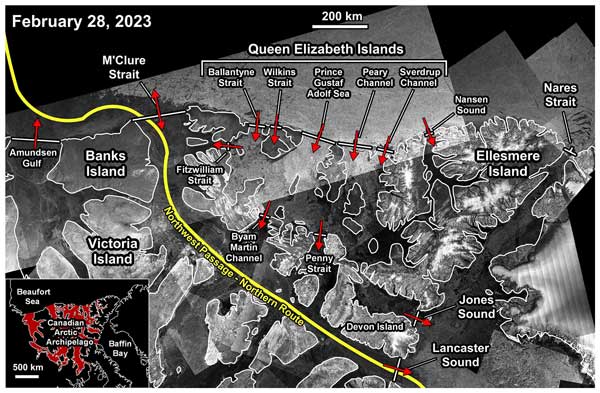
The CAA serves as both a source and a sink for sea ice from the Arctic Ocean, while also exporting sea ice into Baffin Bay. It is also an important region with respect to navigating the Northwest Passage. Here, we quantify sea ice transport and replenishment across and within the CAA from 2016 to 2022. We also provide the first estimates of the ice area and volume flux within the CAA from the Queen Elizabeth Islands to Parry Channel, which spans the central region of the Northwest Passage.
Victoria R. Dutch, Nick Rutter, Leanne Wake, Oliver Sonnentag, Gabriel Hould Gosselin, Melody Sandells, Chris Derksen, Branden Walker, Gesa Meyer, Richard Essery, Richard Kelly, Phillip Marsh, Julia Boike, and Matteo Detto
Biogeosciences, 21, 825–841, https://doi.org/10.5194/bg-21-825-2024, https://doi.org/10.5194/bg-21-825-2024, 2024
Short summary
Short summary
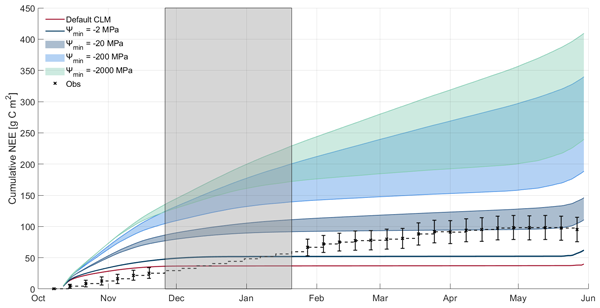
We undertake a sensitivity study of three different parameters on the simulation of net ecosystem exchange (NEE) during the snow-covered non-growing season at an Arctic tundra site. Simulations are compared to eddy covariance measurements, with near-zero NEE simulated despite observed CO2 release. We then consider how to parameterise the model better in Arctic tundra environments on both sub-seasonal timescales and cumulatively throughout the snow-covered non-growing season.
Matthieu Baron, Ange Haddjeri, Matthieu Lafaysse, Louis Le Toumelin, Vincent Vionnet, and Mathieu Fructus
Geosci. Model Dev., 17, 1297–1326, https://doi.org/10.5194/gmd-17-1297-2024, https://doi.org/10.5194/gmd-17-1297-2024, 2024
Short summary
Short summary
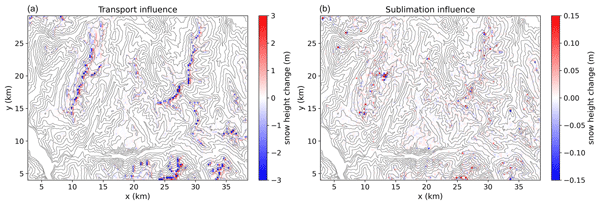
Increasing the spatial resolution of numerical systems simulating snowpack evolution in mountain areas requires representing small-scale processes such as wind-induced snow transport. We present SnowPappus, a simple scheme coupled with the Crocus snow model to compute blowing-snow fluxes and redistribute snow among grid points at 250 m resolution. In terms of numerical cost, it is suitable for large-scale applications. We present point-scale evaluations of fluxes and snow transport occurrence.
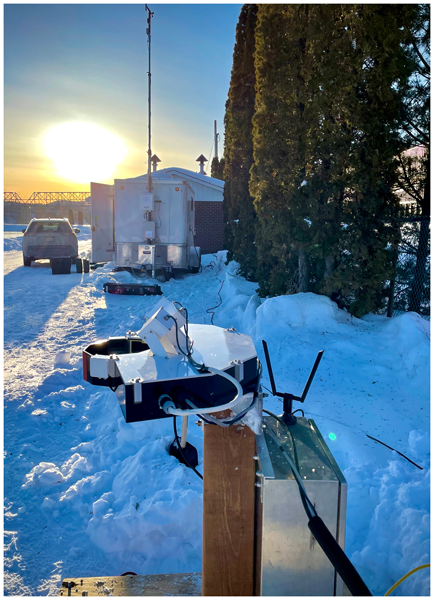
Hadleigh D. Thompson, Julie M. Thériault, Stephen J. Déry, Ronald E. Stewart, Dominique Boisvert, Lisa Rickard, Nicolas R. Leroux, Matteo Colli, and Vincent Vionnet
Earth Syst. Sci. Data, 15, 5785–5806, https://doi.org/10.5194/essd-15-5785-2023, https://doi.org/10.5194/essd-15-5785-2023, 2023
Short summary
Short summary
The Saint John River experiment on Cold Season Storms was conducted in northwest New Brunswick, Canada, to investigate the types of precipitation that can lead to ice jams and flooding along the river. We deployed meteorological instruments, took precipitation measurements and photographs of snowflakes, and launched weather balloons. These data will help us to better understand the atmospheric conditions that can affect local communities and townships downstream during the spring melt season.
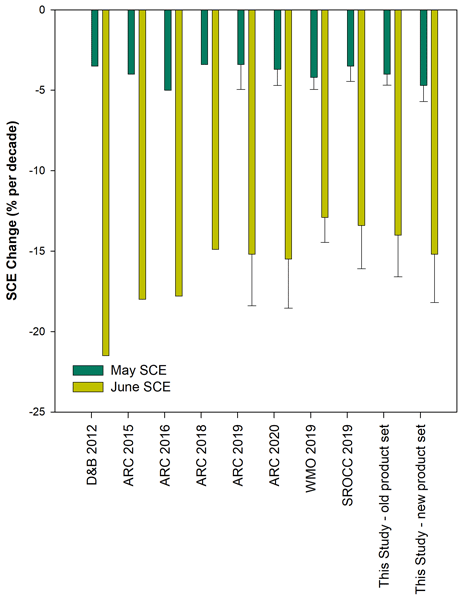
Chris Derksen and Lawrence Mudryk
The Cryosphere, 17, 1431–1443, https://doi.org/10.5194/tc-17-1431-2023, https://doi.org/10.5194/tc-17-1431-2023, 2023
Short summary
Short summary
We examine Arctic snow cover trends through the lens of climate assessments. We determine the sensitivity of change in snow cover extent to year-over-year increases in time series length, reference period, the use of a statistical methodology to improve inter-dataset agreement, version changes in snow products, and snow product ensemble size. By identifying the sensitivity to the range of choices available to investigators, we increase confidence in reported Arctic snow extent changes.
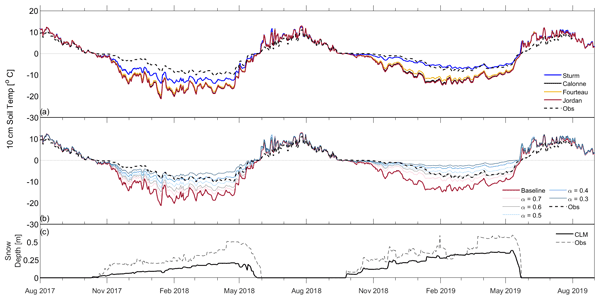
Victoria R. Dutch, Nick Rutter, Leanne Wake, Melody Sandells, Chris Derksen, Branden Walker, Gabriel Hould Gosselin, Oliver Sonnentag, Richard Essery, Richard Kelly, Phillip Marsh, Joshua King, and Julia Boike
The Cryosphere, 16, 4201–4222, https://doi.org/10.5194/tc-16-4201-2022, https://doi.org/10.5194/tc-16-4201-2022, 2022
Short summary
Short summary
Measurements of the properties of the snow and soil were compared to simulations of the Community Land Model to see how well the model represents snow insulation. Simulations underestimated snow thermal conductivity and wintertime soil temperatures. We test two approaches to reduce the transfer of heat through the snowpack and bring simulated soil temperatures closer to measurements, with an alternative parameterisation of snow thermal conductivity being more appropriate.
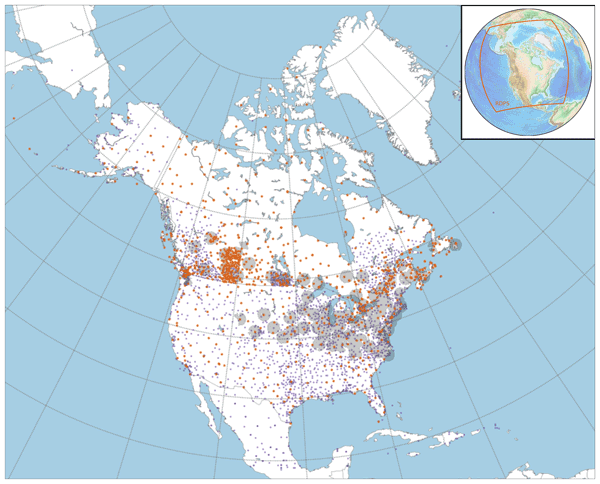
Dikraa Khedhaouiria, Stéphane Bélair, Vincent Fortin, Guy Roy, and Franck Lespinas
Nonlin. Processes Geophys., 29, 329–344, https://doi.org/10.5194/npg-29-329-2022, https://doi.org/10.5194/npg-29-329-2022, 2022
Short summary
Short summary
This study introduces a well-known use of hybrid methods in data assimilation (DA) algorithms that has not yet been explored for precipitation analyses. Our approach combined an ensemble-based DA approach with an existing deterministically based DA. Both DA scheme families have desirable aspects that can be leveraged if combined. The DA hybrid method showed better precipitation analyses in regions with a low rate of assimilated surface observations, which is typically the case in winter.
Leung Tsang, Michael Durand, Chris Derksen, Ana P. Barros, Do-Hyuk Kang, Hans Lievens, Hans-Peter Marshall, Jiyue Zhu, Joel Johnson, Joshua King, Juha Lemmetyinen, Melody Sandells, Nick Rutter, Paul Siqueira, Anne Nolin, Batu Osmanoglu, Carrie Vuyovich, Edward Kim, Drew Taylor, Ioanna Merkouriadi, Ludovic Brucker, Mahdi Navari, Marie Dumont, Richard Kelly, Rhae Sung Kim, Tien-Hao Liao, Firoz Borah, and Xiaolan Xu
The Cryosphere, 16, 3531–3573, https://doi.org/10.5194/tc-16-3531-2022, https://doi.org/10.5194/tc-16-3531-2022, 2022
Short summary
Short summary
Snow water equivalent (SWE) is of fundamental importance to water, energy, and geochemical cycles but is poorly observed globally. Synthetic aperture radar (SAR) measurements at X- and Ku-band can address this gap. This review serves to inform the broad snow research, monitoring, and application communities about the progress made in recent decades to move towards a new satellite mission capable of addressing the needs of the geoscience researchers and users.
Juha Lemmetyinen, Juval Cohen, Anna Kontu, Juho Vehviläinen, Henna-Reetta Hannula, Ioanna Merkouriadi, Stefan Scheiblauer, Helmut Rott, Thomas Nagler, Elisabeth Ripper, Kelly Elder, Hans-Peter Marshall, Reinhard Fromm, Marc Adams, Chris Derksen, Joshua King, Adriano Meta, Alex Coccia, Nick Rutter, Melody Sandells, Giovanni Macelloni, Emanuele Santi, Marion Leduc-Leballeur, Richard Essery, Cecile Menard, and Michael Kern
Earth Syst. Sci. Data, 14, 3915–3945, https://doi.org/10.5194/essd-14-3915-2022, https://doi.org/10.5194/essd-14-3915-2022, 2022
Short summary
Short summary
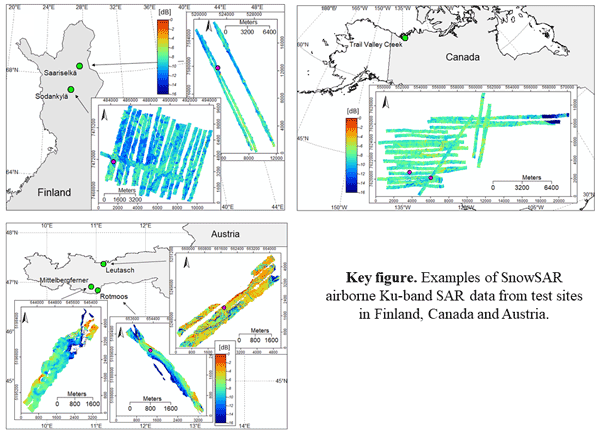
The manuscript describes airborne, dual-polarised X and Ku band synthetic aperture radar (SAR) data collected over several campaigns over snow-covered terrain in Finland, Austria and Canada. Colocated snow and meteorological observations are also presented. The data are meant for science users interested in investigating X/Ku band radar signatures from natural environments in winter conditions.
Juliane Mai, Hongren Shen, Bryan A. Tolson, Étienne Gaborit, Richard Arsenault, James R. Craig, Vincent Fortin, Lauren M. Fry, Martin Gauch, Daniel Klotz, Frederik Kratzert, Nicole O'Brien, Daniel G. Princz, Sinan Rasiya Koya, Tirthankar Roy, Frank Seglenieks, Narayan K. Shrestha, André G. T. Temgoua, Vincent Vionnet, and Jonathan W. Waddell
Hydrol. Earth Syst. Sci., 26, 3537–3572, https://doi.org/10.5194/hess-26-3537-2022, https://doi.org/10.5194/hess-26-3537-2022, 2022
Short summary
Short summary
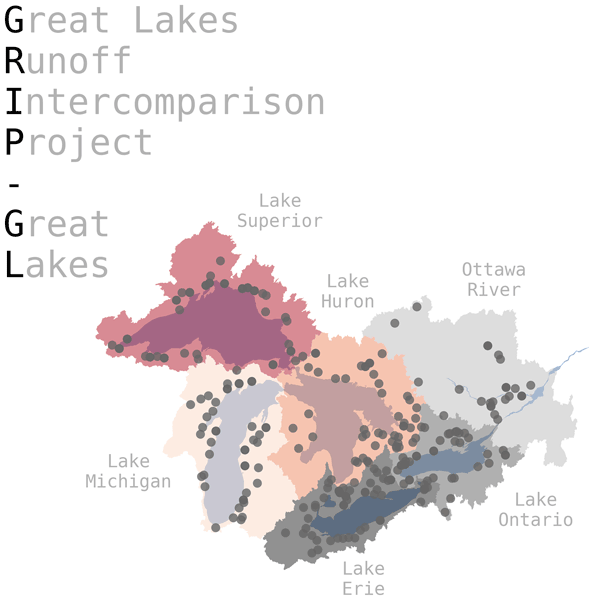
Model intercomparison studies are carried out to test various models and compare the quality of their outputs over the same domain. In this study, 13 diverse model setups using the same input data are evaluated over the Great Lakes region. Various model outputs – such as streamflow, evaporation, soil moisture, and amount of snow on the ground – are compared using standardized methods and metrics. The basin-wise model outputs and observations are made available through an interactive website.

Julien Meloche, Alexandre Langlois, Nick Rutter, Alain Royer, Josh King, Branden Walker, Philip Marsh, and Evan J. Wilcox
The Cryosphere, 16, 87–101, https://doi.org/10.5194/tc-16-87-2022, https://doi.org/10.5194/tc-16-87-2022, 2022
Short summary
Short summary
To estimate snow water equivalent from space, model predictions of the satellite measurement (brightness temperature in our case) have to be used. These models allow us to estimate snow properties from the brightness temperature by inverting the model. To improve SWE estimate, we proposed incorporating the variability of snow in these model as it has not been taken into account yet. A new parameter (coefficient of variation) is proposed because it improved simulation of brightness temperature.
Cited articles
Aalstad, K., Westermann, S., Schuler, T. V., Boike, J., and Bertino, L.: Ensemble-based assimilation of fractional snow-covered area satellite retrievals to estimate the snow distribution at Arctic sites, The Cryosphere, 12, 247–270, https://doi.org/10.5194/tc-12-247-2018, 2018. a, b
Alonso-González, E., Aalstad, K., Baba, M. W., Revuelto, J., López-Moreno, J. I., Fiddes, J., Essery, R., and Gascoin, S.: The Multiple Snow Data Assimilation System (MuSA v1.0), Geosci. Model Dev., 15, 9127–9155, https://doi.org/10.5194/gmd-15-9127-2022, 2022. a, b
Alonso-González, E., Aalstad, K., Pirk, N., Mazzolini, M., Treichler, D., Leclercq, P., Westermann, S., López-Moreno, J. I., and Gascoin, S.: Spatio-temporal information propagation using sparse observations in hyper-resolution ensemble-based snow data assimilation, Hydrol. Earth Syst. Sci., 27, 4637–4659, https://doi.org/10.5194/hess-27-4637-2023, 2023. a
Bartsch, A., Kidd, R. A., Wagner, W., and Bartalis, Z.: Temporal and spatial variability of the beginning and end of daily spring freeze/thaw cycles derived from scatterometer data, Remote Sens. Environ., 106, 360–374, https://doi.org/10.1016/j.rse.2006.09.004, 2007. a
Beaudoin-Galaise, M. and Jutras, S.: Comparison of manual snow water equivalent (SWE) measurements: seeking the reference for a true SWE value in a boreal biome, The Cryosphere, 16, 3199–3214, https://doi.org/10.5194/tc-16-3199-2022, 2022. a, b
Beniston, M.: Impacts of climatic change on water and associated economic activities in the Swiss Alps, J. Hydrol., 412–413, 291–296, https://doi.org/10.1016/j.jhydrol.2010.06.046, 2012. a
Bonnell, R., Elder, K., McGrath, D., Marshall, H. P., Starr, B., Adebisi, N., Palomaki, R. T., and Hoppinen, Z.: L-band InSAR snow water equivalent retrieval uncertainty increases with forest cover fraction, Geophys. Res. Lett., 51, e2024GL111708, https://doi.org/10.1029/2024GL111708, 2024. a
Borah, F. K., Tsang, L., Kang, D., Kim, E., Siqueira, P., Barros, A., and Durand, M.: Data analysis and SWE retrieval of airborne SAR data AT X band and KU bands, in: IGARSS 2022–2022 IEEE International Geoscience and Remote Sensing Symposium, IEEE, Kuala Lumpur, Malaysia, https://doi.org/10.1109/igarss46834.2022.9884965, 4252–4255, 2022. a
Brasnett, B.: A global analysis of snow depth for numerical weather prediction, J. Appl. Meteorol., 38, 726–740, https://doi.org/10.1175/1520-0450(1999)038<0726:AGAOSD>2.0.CO;2, 1999. a
Brun, E., David, P., Sudul, M., and Brunot, G.: A numerical model to simulate snow-cover stratigraphy for operational avalanche forecasting, J. Glaciol., 38, 13–22, https://doi.org/10.3189/S0022143000009552, 1992. a
Carmagnola, C. M., Morin, S., Lafaysse, M., Domine, F., Lesaffre, B., Lejeune, Y., Picard, G., and Arnaud, L.: Implementation and evaluation of prognostic representations of the optical diameter of snow in the SURFEX/ISBA-Crocus detailed snowpack model, The Cryosphere, 8, 417–437, https://doi.org/10.5194/tc-8-417-2014, 2014. a
Carrera, M. L., Bélair, S., and Bilodeau, B.: The Canadian Land Data Assimilation System (CaLDAS): description and synthetic evaluation study, J. Hydrometeorol., 16, 1293–1314, https://doi.org/10.1175/jhm-d-14-0089.1, 2015. a
Carrera, M. L., Bilodeau, B., Bélair, S., Abrahamowicz, M., Russell, A., and Wang, X.: Assimilation of passive L-band microwave brightness temperatures in the Canadian land data assimilation system: impacts on short-range warm season numerical weather prediction, J. Hydrometeorol., 20, 1053–1079, https://doi.org/10.1175/JHM-D-18-0133.1, 2019. a
Chang, T., Gloersen, P., Schmugge, T., Wilheit, T., and Zwally, H.: Microwave emission from snow and glacier ice, J. Glaciol., 16, 23–39, https://doi.org/10.3189/S0022143000031415, 1976. a
Cho, E., Jacobs, J. M., and Vuyovich, C. M.: The value of long-term (40 years) airborne gamma radiation SWE record for evaluating three observation-based gridded swe data sets by seasonal snow and land cover classifications, Water Resour. Res., 56, https://doi.org/10.1029/2019wr025813, 2020. a
Cho, E., Vuyovich, C. M., Kumar, S. V., Wrzesien, M. L., and Kim, R. S.: Evaluating the utility of active microwave observations as a snow mission concept using observing system simulation experiments, The Cryosphere, 17, 3915–3931, https://doi.org/10.5194/tc-17-3915-2023, 2023. a, b, c
Cluzet, B., Revuelto, J., Lafaysse, M., Tuzet, F., Cosme, E., Picard, G., Arnaud, L., and Dumont, M.: Towards the assimilation of satellite reflectance into semi-distributed ensemble snowpack simulations, Cold Reg. Sci. Technol., 170, 102918, https://doi.org/10.1016/j.coldregions.2019.102918, 2020. a
Cluzet, B., Lafaysse, M., Cosme, E., Albergel, C., Meunier, L.-F., and Dumont, M.: CrocO_v1.0: a particle filter to assimilate snowpack observations in a spatialised framework, Geosci. Model Dev., 14, 1595–1614, https://doi.org/10.5194/gmd-14-1595-2021, 2021. a, b, c, d
Cluzet, B., Lafaysse, M., Deschamps-Berger, C., Vernay, M., and Dumont, M.: Propagating information from snow observations with CrocO ensemble data assimilation system: a 10-years case study over a snow depth observation network, The Cryosphere, 16, 1281–1298, https://doi.org/10.5194/tc-16-1281-2022, 2022. a
De Lannoy, G. J. M. and Reichle, R. H.: Assimilation of SMOS brightness temperatures or soil moisture retrievals into a land surface model, Hydrol. Earth Syst. Sci., 20, 4895–4911, https://doi.org/10.5194/hess-20-4895-2016, 2016. a
De Lannoy, G. J. M., Reichle, R. H., Arsenault, K. R., Houser, P. R., Kumar, S., Verhoest, N. E. C., and Pauwels, V. R. N.: Multiscale assimilation of advanced microwave scanning radiometer–EOS snow water equivalent and moderate resolution imaging spectroradiometer snow cover fraction observations in northern Colorado, Water Resour. Res., 48, 2011WR010588, https://doi.org/10.1029/2011WR010588, 2012. a, b, c, d
Derksen, C., King, J., Belair, S., Garnaud, C., Vionnet, V., Fortin, V., Lemmetyinen, J., Crevier, Y., Plourde, P., Lawrence, B., Van Mierlo, H., Burbidge, G., and Siqueira, P.: Development of the terrestrial snow mass mission, in: 2021 IEEE International Geoscience and Remote Sensing Symposium IGARSS, IEEE, Brussels, Belgium, https://doi.org/10.1109/IGARSS47720.2021.9553496, 614–617, 2021. a, b
Deschamps-Berger, C., Cluzet, B., Dumont, M., Lafaysse, M., Berthier, E., Fanise, P., and Gascoin, S.: Improving the spatial distribution of snow cover simulations by assimilation of satellite stereoscopic imagery, Water Resour. Res., 58, e2021WR030271, https://doi.org/10.1029/2021WR030271, 2022. a
Dirkson, A. and Buehner, M.: Are We Misdiagnosing Ensemble Forecast Reliability? On the Insufficiency of Spread-Error and Rank-Based Reliability Metrics, arXiv [preprint], https://doi.org/10.48550/arXiv.2512.02160, 2025a. a
Dirkson, A. and Buehner, M.: The effect of ensemble size on the mean squared error and spread–error relationship, Mon. Weather Rev., 153, 1219–1229, https://doi.org/10.1175/MWR-D-24-0189.1, 2025b. a, b
Dolant, C., Langlois, A., Brucker, L., Royer, A., Roy, A., and Montpetit, B.: Meteorological inventory of rain-on-snow events in the Canadian Arctic Archipelago and satellite detection assessment using passive microwave data, Phys. Geogr., 39, 428–444, https://doi.org/10.1080/02723646.2017.1400339, 2018. a
Dumont, M., Durand, Y., Arnaud, Y., and Six, D.: Variational assimilation of albedo in a snowpack model and reconstruction of the spatial mass-balance distribution of an alpine glacier, J. Glaciol., 58, 151–164, https://doi.org/10.3189/2012JoG11J163, 2012. a
Durand, M. and Margulis, S. A.: Feasibility test of multifrequency radiometric data assimilation to estimate snow water equivalent, J. Hydrometeorol., 7, 443–457, https://doi.org/10.1175/JHM502.1, 2006. a, b, c
Durand, M., Kim, E. J., and Margulis, S. A.: Radiance assimilation shows promise for snowpack characterization, Geophys. Res. Lett., 36, 2008GL035214, https://doi.org/10.1029/2008GL035214, 2009. a, b, c
Durand, Y., Brun, E., Merindol, L., Guyomarc'h, G., Lesaffre, B., and Martin, E.: A meteorological estimation of relevant parameters for snow models, Ann. Glaciol., 18, 65–71, https://doi.org/10.3189/S0260305500011277, 1993. a
Fortin, V., Abaza, M., Anctil, F., and Turcotte, R.: Why should ensemble spread match the RMSE of the ensemble mean?, J. Hydrometeorol., 15, 1708–1713, https://doi.org/10.1175/JHM-D-14-0008.1, 2014. a
Foster, J. L., Sun, C., Walker, J. P., Kelly, R., Chang, A., Dong, J., and Powell, H.: Quantifying the uncertainty in passive microwave snow water equivalent observations, Remote Sens. Environ., 94, 187–203, https://doi.org/10.1016/j.rse.2004.09.012, 2005. a
Garnaud, C., Bélair, S., Carrera, M. L., Derksen, C., Bilodeau, B., Abrahamowicz, M., Gauthier, N., and Vionnet, V.: Quantifying snow mass mission concept trade-offs using an observing system simulation experiment, J. Hydrometeorol., 20, 155–173, https://doi.org/10.1175/jhm-d-17-0241.1, 2019. a
Garnaud, C., Vionnet, V., Gaborit, É., Fortin, V., Bilodeau, B., Carrera, M., and Durnford, D.: Improving snow analyses for hydrological forecasting at ECCC using satellite-derived data, Remote Sens.-Basel, 13, 5022, https://doi.org/10.3390/rs13245022, 2021. a, b
Gascoin, S., Luojus, K., Nagler, T., Lievens, H., Masiokas, M., Jonas, T., Zheng, Z., and De Rosnay, P.: Remote sensing of mountain snow from space: status and recommendations, Front. Earth Sci., 12, 1381323, https://doi.org/10.3389/feart.2024.1381323, 2024. a
Girotto, M., Musselman, K. N., and Essery, R. L. H.: Data assimilation improves estimates of climate-sensitive seasonal snow, Current Climate Change Reports, 6, 81–94, https://doi.org/10.1007/s40641-020-00159-7, 2020. a
Gordon, N., Salmond, D., and Smith, A.: Novel approach to nonlinear/non-Gaussian Bayesian state estimation, IEE Proc.-F, 140, 107, https://doi.org/10.1049/ip-f-2.1993.0015, 1993. a
Günther, D., Marke, T., Essery, R., and Strasser, U.: Uncertainties in snowpack simulations–assessing the impact of model structure, parameter choice, and forcing data error on point-scale energy balance snow model performance, Water Resour. Res., 55, 2779–2800, https://doi.org/10.1029/2018WR023403, 2019. a, b, c
Haeberli, W. and Whiteman, C.: Snow and ice-related hazards, risks, and disasters, in: Snow and Ice-Related Hazards, Risks, and Disasters, Elsevier, https://doi.org/10.1016/B978-0-12-394849-6.00001-9, 1–34, 2015. a
Hamlet, A. F. and Lettenmaier, D. P.: Effects of 20th century warming and climate variability on flood risk in the western U.S., Water Resour. Res., 43, 2006WR005099, https://doi.org/10.1029/2006WR005099, 2007. a
Hersbach, H.: Decomposition of the continuous ranked probability score for ensemble prediction systems, Weather Forecast., 15, 559–570, https://doi.org/10.1175/1520-0434(2000)015<0559:DOTCRP>2.0.CO;2, 2000. a
Johnson, C. and Bowler, N.: On the reliability and calibration of ensemble forecasts, Mon. Weather Rev., 137, 1717–1720, https://doi.org/10.1175/2009MWR2715.1, 2009. a
Kelly, R., Thompson, A., Wang, W., Akhavan, Z., Welch, J., Toose, P., Derksen, C., Montpetit, B., and Meta, A.: The airborne Cryospheric SAR System (CryoSAR): characterizing cold season hydrology using Ku and L-band polarimetric SAR observations, in: IGARSS 2024–2024 IEEE International Geoscience and Remote Sensing Symposium, IEEE, Athens, Greece, https://doi.org/10.1109/igarss53475.2024.10642350, 6559–6561, 2024. a, b, c
Khedhaouiria, D., Bélair, S., Fortin, V., Roy, G., and Lespinas, F.: High-resolution (2.5 km) ensemble precipitation analysis across Canada, J. Hydrometeorol., 21, 2023–2039, https://doi.org/10.1175/JHM-D-19-0282.1, 2020. a, b
Kuptametee, C. and Aunsri, N.: A review of resampling techniques in particle filtering framework, Measurement, 193, 110836, https://doi.org/10.1016/j.measurement.2022.110836, 2022. a
Lafaysse, M., Cluzet, B., Dumont, M., Lejeune, Y., Vionnet, V., and Morin, S.: A multiphysical ensemble system of numerical snow modelling, The Cryosphere, 11, 1173–1198, https://doi.org/10.5194/tc-11-1173-2017, 2017. a, b, c
Lafaysse, M., Dumont, M., De Fleurian, B., Fructus, M., Nheili, R., Viallon-Galinier, L., Baron, M., Boone, A., Bouchet, A., Brondex, J., Carmagnola, C., Cluzet, B., Fourteau, K., Haddjeri, A., Hagenmuller, P., Mazzotti, G., Minvielle, M., Morin, S., Quéno, L., Roussel, L., Spandre, P., Tuzet, F., and Vionnet, V.: Version 3.0 of the Crocus snowpack model, EGUsphere [preprint], https://doi.org/10.5194/egusphere-2025-4540, 2025. a
Lahmers, T. M., Kumar, S. V., Rosen, D., Dugger, A., Gochis, D. J., Santanello, J. A., Gangodagamage, C., and Dunlap, R.: Assimilation of NASA's airborne snow observatory snow measurements for improved hydrological modeling: a case study enabled by the coupled LIS/WRF-hydro system, Water Resour. Res., 58, e2021WR029867, https://doi.org/10.1029/2021WR029867, 2022. a, b
Larue, F., Royer, A., De Sève, D., Roy, A., Picard, G., Vionnet, V., and Cosme, E.: Simulation and assimilation of passive microwave data using a snowpack model coupled to a calibrated radiative transfer model over northeastern Canada, Water Resour. Res., 54, 4823–4848, https://doi.org/10.1029/2017WR022132, 2018b. a, b, c, d, e
Lemmetyinen, J., Derksen, C., Rott, H., Macelloni, G., King, J., Schneebeli, M., Wiesmann, A., Leppänen, L., Kontu, A., and Pulliainen, J.: Retrieval of effective correlation length and snow water equivalent from radar and passive microwave measurements, Remote Sens.-Basel, 10, 170, https://doi.org/10.3390/rs10020170, 2018. a, b, c, d
Leroux, N. R., Vionnet, V., and Thériault, J. M.: Performance of precipitation phase partitioning methods and their impact on snowpack evolution in a humid continental climate, Hydrol. Process., 37, e15028, https://doi.org/10.1002/hyp.15028, 2023. a
Leroux, N. R., Vionnet, V., Bayer, C., Meloche, J., Dirkson, A., Lespinas, F., Buehner, M., Carrera, M., Montpetit, B., Bilodeau, B., Abrahamowicz, M., and Derksen, C.: Code of the Soil Vegetation and Snow version 2 (SVS2) coupled with the Snow Microwave Radiative Transfer model (SMRT) within the The Multiple Snow Data Assimilation System (MuSA), Zenodo [data set, code], https://doi.org/10.5281/zenodo.17662807, 2025. a
Lespinas, F., Fortin, V., Roy, G., Rasmussen, P., and Stadnyk, T.: Performance evaluation of the Canadian Precipitation Analysis (CaPA), J. Hydrometeorol., 16, 2045–2064, https://doi.org/10.1175/JHM-D-14-0191.1, 2015. a, b
Li, D., Durand, M., and Margulis, S. A.: Estimating snow water equivalent in a Sierra Nevada watershed via spaceborne radiance data assimilation, Water Resour. Res., 53, 647–671, https://doi.org/10.1002/2016WR018878, 2017. a, b
Luojus, K., Pulliainen, J., Takala, M., Lemmetyinen, J., Mortimer, C., Derksen, C., Mudryk, L., Moisander, M., Hiltunen, M., Smolander, T., Ikonen, J., Cohen, J., Salminen, M., Norberg, J., Veijola, K., and Venäläinen, P.: GlobSnow v3.0 Northern Hemisphere snow water equivalent dataset, Scientific Data, 8, 163, https://doi.org/10.1038/s41597-021-00939-2, 2021. a
Madore, J.-B., Langlois, A., and Fierz, C.: Temporal Analysis of Snow Stratigraphy and Melt-Freeze Crusts Using a 24 Ghz Frequency Modulated Continuous Wave (Fmcw) Radar in Avalanche Terrain, SSRN [preprint], https://doi.org/10.2139/ssrn.4530309, 2023. a, b
Magnusson, J., Gustafsson, D., Hüsler, F., and Jonas, T.: Assimilation of point SWE data into a distributed snow cover model comparing two contrasting methods, Water Resour. Res., 50, 7816–7835, https://doi.org/10.1002/2014WR015302, 2014. a
Magnusson, J., Winstral, A., Stordal, A. S., Essery, R., and Jonas, T.: Improving physically based snow simulations by assimilating snow depths using the particle filter, Water Resour. Res., 53, 1125–1143, https://doi.org/10.1002/2016WR019092, 2017. a, b
Marti, R., Gascoin, S., Berthier, E., de Pinel, M., Houet, T., and Laffly, D.: Mapping snow depth in open alpine terrain from stereo satellite imagery, The Cryosphere, 10, 1361–1380, https://doi.org/10.5194/tc-10-1361-2016, 2016. a
Mätzler, C.: Relation between grain-size and correlation length of snow, J. Glaciol., 48, 461–466, https://doi.org/10.3189/172756502781831287, 2002. a
Mazzolini, M., Aalstad, K., Alonso-González, E., Westermann, S., and Treichler, D.: Spatio-temporal snow data assimilation with the ICESat-2 laser altimeter, The Cryosphere, 19, 3831–3848, https://doi.org/10.5194/tc-19-3831-2025, 2025. a
Meloche, J., Leroux, N. R., Montpetit, B., Vionnet, V., and Derksen, C.: Radar-equivalent snowpack: reducing the number of snow layers while retaining their microwave properties and bulk snow mass, The Cryosphere, 19, 2949–2962, https://doi.org/10.5194/tc-19-2949-2025, 2025. a
Milbrandt, J. A., Bélair, S., Faucher, M., Vallée, M., Carrera, M. L., and Glazer, A.: The pan-Canadian high resolution (2.5 km) deterministic prediction system, Weather Forecast., 31, 1791–1816, https://doi.org/10.1175/WAF-D-16-0035.1, 2016. a
Mironov, V. L., Kosolapova, L. G., Fomin, S. V., and Savin, I. V.: Experimental analysis and empirical model of the complex permittivity of five organic soils at 1.4 GHz in the temperature range from −30 °C to 25 °C, IEEE T. Geosci. Remote, 57, 3778–3787, https://doi.org/10.1109/TGRS.2018.2887117, 2019. a
Montpetit, B., Royer, A., Roy, A., Langlois, A., and Derksen, C.: Snow microwave emission modeling of ice lenses within a snowpack using the microwave emission model for layered snowpacks, IEEE T. Geosci. Remote, 51, 4705–4717, https://doi.org/10.1109/tgrs.2013.2250509, 2013. a
Montpetit, B., King, J., Meloche, J., Derksen, C., Siqueira, P., Adam, J. M., Toose, P., Brady, M., Wendleder, A., Vionnet, V., and Leroux, N. R.: Retrieval of snow and soil properties for forward radiative transfer modeling of airborne Ku-band SAR to estimate snow water equivalent: the Trail Valley Creek 2018/19 snow experiment, The Cryosphere, 18, 3857–3874, https://doi.org/10.5194/tc-18-3857-2024, 2024. a, b
Montpetit, B., Meloche, J., Vionnet, V., Derksen, C., Woolley, G., Leroux, N. R., Siqueira, P., Adam, J. M., and Brady, M.: Snow Water Equivalent from airborne Ku-band data: the Trail Valley Creek 2018/19 snow experiment, The Cryosphere, 19, 5465–5484, https://doi.org/10.5194/tc-19-5465-2025, 2025. a, b, c, d, e
Moradkhani, H., DeChant, C. M., and Sorooshian, S.: Evolution of ensemble data assimilation for uncertainty quantification using the particle filter-Markov chain Monte Carlo method, Water Resour. Res., 48, 2012WR012144, https://doi.org/10.1029/2012WR012144, 2012. a
Muhuri, A., Gascoin, S., Menzel, L., Kostadinov, T. S., Harpold, A. A., Sanmiguel-Vallelado, A., and Lopez-Moreno, J. I.: Performance assessment of optical satellite-based operational snow cover monitoring algorithms in forested landscapes, IEEE J. Sel. Top. Appl., 14, 7159–7178, https://doi.org/10.1109/JSTARS.2021.3089655, 2021. a
Oberrauch, M., Cluzet, B., Magnusson, J., and Jonas, T.: Improving fully distributed snowpack simulations by mapping perturbations of meteorological forcings inferred from particle filter assimilation of snow monitoring data, Water Resour. Res., 60, e2023WR036994, https://doi.org/10.1029/2023WR036994, 2024. a
Orio-Alonso, A., Alonso-González, E., Díez-González, C., Gómez-García, P., and Martínez-Ruiz Del Árbol, P.: Estimation of the snow water equivalent using muon scattering radiography, Geophys. Res. Lett., 50, e2023GL104128, https://doi.org/10.1029/2023GL104128, 2023. a, b
Pan, J., Durand, M., Lemmetyinen, J., Liu, D., and Shi, J.: Snow water equivalent retrieved from X- and dual Ku-band scatterometer measurements at Sodankylä using the Markov Chain Monte Carlo method, The Cryosphere, 18, 1561–1578, https://doi.org/10.5194/tc-18-1561-2024, 2024. a
Parkinson, C. L.: Arctic sea ice coverage from 43 years of satellite passive-microwave observations, Frontiers in Remote Sensing, 3, 1021781, https://doi.org/10.3389/frsen.2022.1021781, 2022. a
Pflug, J. M., Wrzesien, M. L., Kumar, S. V., Cho, E., Arsenault, K. R., Houser, P. R., and Vuyovich, C. M.: Extending the utility of space-borne snow water equivalent observations over vegetated areas with data assimilation, Hydrol. Earth Syst. Sci., 28, 631–648, https://doi.org/10.5194/hess-28-631-2024, 2024. a, b, c, d
Phan, X. V., Ferro-Famil, L., Gay, M., Durand, Y., Dumont, M., Morin, S., Allain, S., D'Urso, G., and Girard, A.: 1D-Var multilayer assimilation of X-band SAR data into a detailed snowpack model, The Cryosphere, 8, 1975–1987, https://doi.org/10.5194/tc-8-1975-2014, 2014. a, b
Piazzi, G., Thirel, G., Campo, L., and Gabellani, S.: A particle filter scheme for multivariate data assimilation into a point-scale snowpack model in an Alpine environment, The Cryosphere, 12, 2287–2306, https://doi.org/10.5194/tc-12-2287-2018, 2018. a, b, c
Picard, G., Sandells, M., and Löwe, H.: SMRT: an active–passive microwave radiative transfer model for snow with multiple microstructure and scattering formulations (v1.0), Geosci. Model Dev., 11, 2763–2788, https://doi.org/10.5194/gmd-11-2763-2018, 2018. a, b, c
Pomerleau, P., Royer, A., Langlois, A., Cliche, P., Courtemanche, B., Madore, J.-B., Picard, G., and Lefebvre, É.: Low cost and compact FMCW 24 GHz radar applications for snowpack and ice thickness measurements, Sensors, 20, 3909, https://doi.org/10.3390/s20143909, 2020. a, b
Pomeroy, J. W., Fang, X., and Marks, D. G.: The cold rain-on-snow event of June 2013 in the Canadian Rockies – characteristics and diagnosis, Hydrol. Process., 30, 2899–2914, https://doi.org/10.1002/hyp.10905, 2016. a
Raleigh, M. S., Lundquist, J. D., and Clark, M. P.: Exploring the impact of forcing error characteristics on physically based snow simulations within a global sensitivity analysis framework, Hydrol. Earth Syst. Sci., 19, 3153–3179, https://doi.org/10.5194/hess-19-3153-2015, 2015. a, b, c
Shaw, T. E., Gascoin, S., Mendoza, P. A., Pellicciotti, F., and McPhee, J.: Snow depth patterns in a high mountain Andean catchment from satellite optical tristereoscopic remote sensing, Water Resour. Res., 56, e2019WR024880, https://doi.org/10.1029/2019WR024880, 2020. a
Shrestha, P. and Barros, A. P.: Assimilation of L-band interferometric synthetic aperture radar (InSAR) snow depth retrievals for improved snowpack quantification, The Cryosphere, 19, 2895–2911, https://doi.org/10.5194/tc-19-2895-2025, 2025a. a, b
Slater, A. G. and Clark, M. P.: Snow data assimilation via an ensemble Kalman filter, J. Hydrometeorol., 7, 478–493, https://doi.org/10.1175/JHM505.1, 2006. a
Sturm, M., Goldstein, M. A., and Parr, C.: Water and life from snow: a trillion dollar science question, Water Resour. Res., 53, 3534–3544, https://doi.org/10.1002/2017WR020840, 2017. a
Su, H., Yang, Z.-L., Niu, G.-Y., and Dickinson, R. E.: Enhancing the estimation of continental-scale snow water equivalent by assimilating MODIS snow cover with the ensemble Kalman filter, J. Geophys. Res.-Atmos., 113, 2007JD009232, https://doi.org/10.1029/2007JD009232, 2008. a, b
Su, H., Yang, Z.-L., Dickinson, R. E., Wilson, C. R., and Niu, G.-Y.: Multisensor snow data assimilation at the continental scale: the value of gravity recovery and climate experiment terrestrial water storage information, J. Geophys. Res.-Atmos., 115, 2009JD013035, https://doi.org/10.1029/2009JD013035, 2010. a, b, c
Tsang, L., Durand, M., Derksen, C., Barros, A. P., Kang, D.-H., Lievens, H., Marshall, H.-P., Zhu, J., Johnson, J., King, J., Lemmetyinen, J., Sandells, M., Rutter, N., Siqueira, P., Nolin, A., Osmanoglu, B., Vuyovich, C., Kim, E., Taylor, D., Merkouriadi, I., Brucker, L., Navari, M., Dumont, M., Kelly, R., Kim, R. S., Liao, T.-H., Borah, F., and Xu, X.: Review article: Global monitoring of snow water equivalent using high-frequency radar remote sensing, The Cryosphere, 16, 3531–3573, https://doi.org/10.5194/tc-16-3531-2022, 2022. a, b
Viallon-Galinier, L., Hagenmuller, P., and Lafaysse, M.: Forcing and evaluating detailed snow cover models with stratigraphy observations, Cold Reg. Sci. Technol., 180, 103163, https://doi.org/10.1016/j.coldregions.2020.103163, 2020. a
Vionnet, V., Brun, E., Morin, S., Boone, A., Faroux, S., Le Moigne, P., Martin, E., and Willemet, J.-M.: The detailed snowpack scheme Crocus and its implementation in SURFEX v7.2, Geosci. Model Dev., 5, 773–791, https://doi.org/10.5194/gmd-5-773-2012, 2012. a, b, c
Vionnet, V., Verville, M., Fortin, V., Brugman, M., Abrahamowicz, M., Lemay, F., Thériault, J. M., Lafaysse, M., and Milbrandt, J. A.: Snow level from post-processing of atmospheric model improves snowfall estimate and snowpack prediction in mountains, Water Resour. Res., 58, e2021WR031778, https://doi.org/10.1029/2021WR031778, 2022. a
Vionnet, V., Leroux, N. R., Fortin, V., Abrahamowicz, M., Woolley, G., Mazzotti, G., Gaillard, M., Lafaysse, M., Royer, A., Domine, F., Gauthier, N., Rutter, N., Derksen, C., and Bélair, S.: Enhancing simulations of snowpack properties in land surface models with the Soil, Vegetation and Snow scheme v2.0 (SVS2), Geosci. Model Dev., 18, 9119–9147, https://doi.org/10.5194/gmd-18-9119-2025, 2025a. a, b, c, d
Vionnet, V., Leroux, N., Fortin, V., Abramowicz, M., Woolley, G., Mazzotti, G., Gaillard, M., Lafaysse, M., Royer, A., Domine, F., Gauthier, N., Rutter, N., Derksen, C., and Belair, S.: Code of the land surface scheme Soil Vegetation and Snow version 2 integrated in the MESH platform (v1.0.0), Zenodo [code], https://doi.org/10.5281/zenodo.14859639, 2025b. a
Wagner, T., Themeßl, M., Schüppel, A., Gobiet, A., Stigler, H., and Birk, S.: Impacts of climate change on stream flow and hydro power generation in the Alpine region, Environ. Earth Sci., 76, https://doi.org/10.1007/s12665-016-6318-6, 2017. a, b
Wang, L., Bartlett, P., Pouliot, D., Chan, E., Lamarche, C., Wulder, M. A., Defourny, P., and Brady, M.: Comparison and assessment of regional and global land cover datasets for use in CLASS over Canada, Remote Sens.-Basel, 11, 2286, https://doi.org/10.3390/rs11192286, 2019a. a
Wang, Y.-H., Broxton, P., Fang, Y., Behrangi, A., Barlage, M., Zeng, X., and Niu, G.-Y.: A wet-bulb temperature-based rain-snow partitioning scheme improves snowpack prediction over the drier Western United States, Geophys. Res. Lett., 46, 13825–13835, https://doi.org/10.1029/2019GL085722, 2019b. a
Woolley, G. J., Rutter, N., Wake, L., Vionnet, V., Derksen, C., Essery, R., Marsh, P., Tutton, R., Walker, B., Lafaysse, M., and Pritchard, D.: Multi-physics ensemble modelling of Arctic tundra snowpack properties, The Cryosphere, 18, 5685–5711, https://doi.org/10.5194/tc-18-5685-2024, 2024. a, b, c, d
Woolley, G., Rutter, N., Wake, L., Vionnet, V., Derksen, C., Meloche, J., Montpetit, B., Hould Gosselin, G., Essery, R., and Marsh, P.: Simulating snow properties and Ku-band backscatter across the forest-tundra ecotone, EGU General Assembly 2025, Vienna, Austria, 27 Apr–2 May 2025, EGU25-10619, https://doi.org/10.5194/egusphere-egu25-10619, 2025. a, b
Short summary
This study evaluates the assimilation of Ku-band radar backscatter into a multilayer snowpack model to support the upcoming Terrestrial Snow Mass Mission. Synthetic experiments were conducted at Arctic, continental, and alpine sites over three winters using a particle filter. Results show that assimilating backscatter improves estimates of snow water equivalent, depth, and vertical snow properties, laying the groundwork for future satellite missions focused on radar-based snow monitoring.
This study evaluates the assimilation of Ku-band radar backscatter into a multilayer snowpack...


