
Articles | Volume 20, issue 4
https://doi.org/10.5194/tc-20-2531-2026
© Author(s) 2026. This work is distributed under
the Creative Commons Attribution 4.0 License.
the Creative Commons Attribution 4.0 License.
https://doi.org/10.5194/tc-20-2531-2026
© Author(s) 2026. This work is distributed under
the Creative Commons Attribution 4.0 License.
the Creative Commons Attribution 4.0 License.
Research article
| 
29 Apr 2026
Research article |
| 29 Apr 2026
| 29 Apr 2026
Understanding slow glacier flow under climate change: A case study on Vernagtferner, Austria

Munich University of Applied Sciences, Department of Geoinformatics, 80333 Munich, Germany
Wilfried Hagg
Munich University of Applied Sciences, Department of Geoinformatics, 80333 Munich, Germany
Martin Rückamp
Bavarian Academy of Sciences and Humanities, Section Geodesy and Glaciology, Munich, Germany
Thorsten Seehaus
Institute of Geography, Friedrich-Alexander-Universität Erlangen-Nürnberg, Erlangen, Germany
Christoph Mayer
CORRESPONDING AUTHOR
Bavarian Academy of Sciences and Humanities, Section Geodesy and Glaciology, Munich, Germany
Related authors
No articles found.
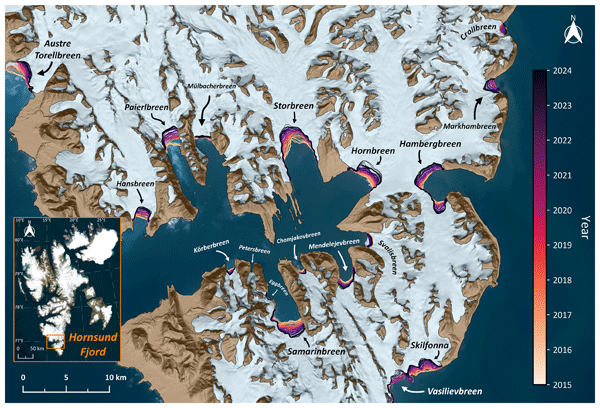
Dakota Pyles, Marcel Dreier, Anna Wendleder, Will Kochtitzky, Nora Gourmelon, Vincent Christlein, and Thorsten Seehaus
Earth Syst. Sci. Data, 18, 7319–7344, https://doi.org/10.5194/essd-18-7319-2026, https://doi.org/10.5194/essd-18-7319-2026, 2026
Short summary
Short summary
Monthly frontal ablation is quantified at 147 Svalbard tidewater glaciers from 2015–2024 using terminus positions derived from a deep-learning segmentation model's predictions of the calving fronts on satellite radar images. Our high spatio-temporal resolution results will improve the process understanding of frontal ablation, provide reference data for the modeling community, and deliver an ideal dataset for studying controls of frontal ablation.
Mariia Usoltseva, Roland Pail, Christoph Mayer, Martin Rückamp, and Anja Wendt
EGUsphere, https://doi.org/10.5194/egusphere-2026-4284, https://doi.org/10.5194/egusphere-2026-4284, 2026
This preprint is open for discussion and under review for The Cryosphere (TC).
Short summary
Short summary
This study investigates how two neighbouring glaciers in southern Chile changed between 2000 and 2026 using digital elevation models and climate data. Although both glaciers experienced warming temperatures and reduced snowfall, their responses were very different. The glacier with large outlets at low elevations lost mass rapidly, while the ice-cap glacier remained relatively stable for longer. The results show that glacier shape strongly influences how glaciers respond to climate change.
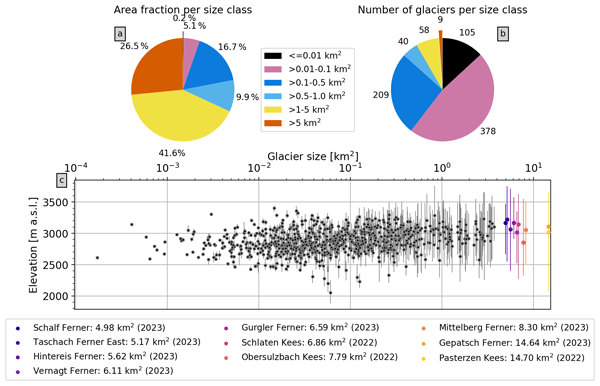
Lea Hartl, Jakob Abermann, Ayla Akgün, Giulia Bertolotti, Tobias Bolch, Svenja Conzelmann, Codrut-Andrei Diaconu, Iris Hansche, Anne Hartig, Anna Haut, Kay Helfricht, Bernhard Hynek, Marie Sophie Kaucher, Andreas Kellerer-Pirklbauer, Ann Christin Kogel, Julie Krippes, Marcela Violeta Lauria, Christoph Mayer, Jan-Christoph Otto, Rainer Prinz, Sina Prölß, Lorenzo Rieg, Lea Schönleber, Gabriele Schwaizer, Bernd Seiser, Martin Stocker-Waldhuber, Markus Strudl, Martin Verhounik, and Harald Zandler
The Cryosphere, 20, 5157–5180, https://doi.org/10.5194/tc-20-5157-2026, https://doi.org/10.5194/tc-20-5157-2026, 2026
Short summary
Short summary
We mapped glacier outlines in Austria using recent, high resolution imagery. The resulting glacier inventory provides an update on glacier area in Austria in 2021-2023. More than 30% of glacier area was lost and 95 glaciers have disappeared since the mid-2000s. Glacier recession is accelerating and regular updates to glacier inventories are needed to understand downstream changes to the hydrological system, quantify glacier mass loss, and support planning and adaptation measures.
Celia A. Baumhoer, Selina Straßburger, Sarah Leibrock, Andreas J. Dietz, and Christoph Mayer
EGUsphere, https://doi.org/10.5194/egusphere-2026-4768, https://doi.org/10.5194/egusphere-2026-4768, 2026
This preprint is open for discussion and under review for The Cryosphere (TC).
Short summary
Short summary
As glaciers move, cracks called crevasses form, and knowing where they occur matters both for science and for safety. We created the first nationwide map of visible crevasses across all glaciers in Austria, using aerial images. We found that crevasses are most common on steep, fast-moving glaciers and rarer on large, gently sloping ones, with surface shape and flow influencing where they appear. This dataset is already being used to improve hiking maps, helping people plan safer mountain routes
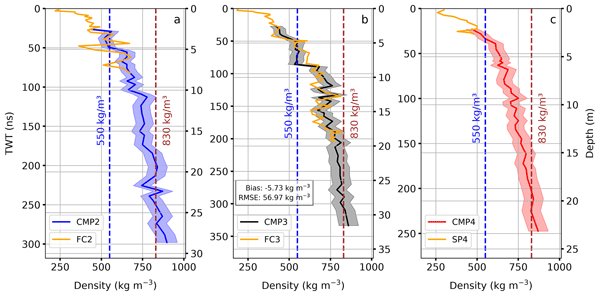
Akash M. Patil, Christoph Mayer, Theo M. Jenk, Astrid Lambrecht, Thorsten Seehaus, Alexander R. Groos, and Michelle Worek
The Cryosphere, 20, 4927–4955, https://doi.org/10.5194/tc-20-4927-2026, https://doi.org/10.5194/tc-20-4927-2026, 2026
Short summary
Short summary
Our study focused on understanding how a warming climate affects the Aletsch Glacier accumulation area. We used multi-year radar measurements and direct firn‑core analyses to estimate changes in density and compaction rate of snow-to-ice over a year. Our results show that the upper layers of the glacier are changing faster due to stronger summer melt in the lower parts of the accumulation zone. Our findings help to improve firn densification models and glacier mass-balance estimation.
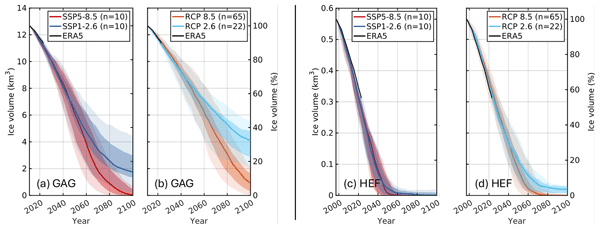
Martin Rückamp, Gong Cheng, Karlheinz Gutjahr, Marco Möller, Petri K. E. Pellikka, and Christoph Mayer
The Cryosphere, 20, 2999–3024, https://doi.org/10.5194/tc-20-2999-2026, https://doi.org/10.5194/tc-20-2999-2026, 2026
Short summary
Short summary
The study simulates the 21st-century evolution of Great Aletsch Glacier and Hintereisferner using full-Stokes ice dynamics and surface mass balance under different emission scenarios. Results show significant ice loss, with Hintereisferner expected to disappear by mid-century. Great Aletsch Glacier vanish by the end of the century under high-emission scenarios, but persist under lower-emission scenarios. These trends agree with large-scale models except some variability.
James R. Jordan, Frank Pattyn, Daniel Abele, Torsten Albrecht, Jorge Alvarez-Solas, Jowan M. Barnes, Tijn Berends, Jorge A. Bernales, Javier Blasco, Gong Cheng, Youngmin Choi, Stephen L. Cornford, Cruz Garcia-Molina, Fabien Gillet-Chaulet, G. Hilmar Gudmundsson, Angelika Humbert, Gunter R. Leguy, William H. Lipscomb, Marisa Montoya, Daniel Moreno-Parada, Mathieu Morlighem, Tyler Pelle, Alexander Robinson, Martin Rückamp, Hélène Seroussi, Yanmei Tian, Luisa Wagner, Roderick S. W. van de Wal, Liyun Zhao, and Thomas Zwinger
EGUsphere, https://doi.org/10.5194/egusphere-2026-1962, https://doi.org/10.5194/egusphere-2026-1962, 2026
Short summary
Short summary
Ice calving is a recent inclusion in ice sheet models and there has not been a systematic test of how well it has been implemented. We show that models can accurately represent a given rate of ice calving, properties at the ice front evolve smoothly during calving, and that there are no consistent differences in ice behaviour between various approaches to representing calving in numerical ice models. This gives us confidence in their ability for use in sea level rise prediction simulations.
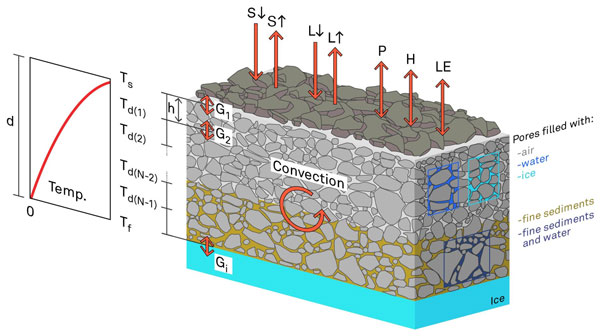
Francesca Pellicciotti, Adrià Fontrodona-Bach, David R. Rounce, Catriona L. Fyffe, Leif S. Anderson, Álvaro Ayala, Ben W. Brock, Pascal Buri, Stefan Fugger, Koji Fujita, Prateek Gantayat, Alexander R. Groos, Walter Immerzeel, Marin Kneib, Christoph Mayer, Shelley MacDonell, Michael McCarthy, James McPhee, Evan Miles, Heather Purdie, Ekaterina Rets, Akiko Sakai, Thomas E. Shaw, Jakob Steiner, Patrick Wagnon, and Alex Winter-Billington
The Cryosphere, 20, 1895–1928, https://doi.org/10.5194/tc-20-1895-2026, https://doi.org/10.5194/tc-20-1895-2026, 2026
Short summary
Short summary
Rock debris covers many of the world glaciers, modifying the transfer of atmospheric energy to the debris and into the ice. Models of different complexity simulate this process, and we compare 15 models at 9 sites to show that the most complex models at the debris-atmosphere interface have the highest performance. However, we lack debris properties and their derivation from measurements is ambiguous, hindering global modelling and calling for both model development and data collection.
Thorsten Seehaus, Alex S. Gardner, and Johan Nilsson
EGUsphere, https://doi.org/10.5194/egusphere-2025-6417, https://doi.org/10.5194/egusphere-2025-6417, 2026
Short summary
Short summary
Satellite altimeters only sample surface heights at scattered points. We developed a method to turn these measurements into maps of glacier height change while also estimating how reliable the results are. Applying this approach to glaciers in Svalbard and Antarctica shows strong ice loss and clearly captures short-lived events such as glacier surges. Our results improve the ability to monitor glacier change in difficult terrain and help better assess future contributions to sea level rise.
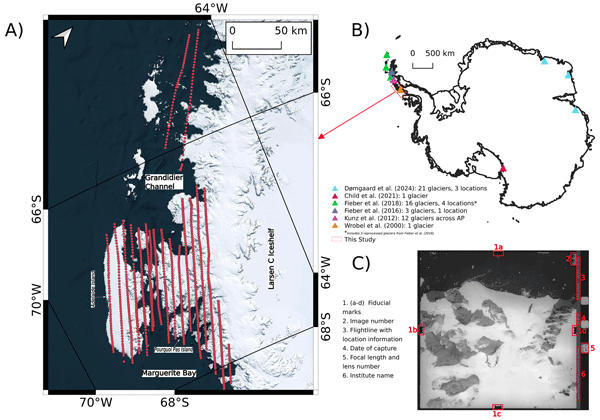
Vijaya Kumar Thota, Thorsten Seehaus, Friedrich Knuth, Amaury Dehecq, Christian Salewski, David Farías-Barahona, and Matthias H. Braun
Earth Syst. Sci. Data, 18, 597–615, https://doi.org/10.5194/essd-18-597-2026, https://doi.org/10.5194/essd-18-597-2026, 2026
Short summary
Short summary
We reconstruct historical topography for a rapidly warming Antarctic region with limited existing data. Using approximately 2000 aerial photographs from the year 1989 over the western Antarctic Peninsula and nearby islands, we created detailed elevation models and orthoimages that have high accuracy compared to recent satellite data. This open dataset aids tracking historical ice loss and its role in sea level rise.
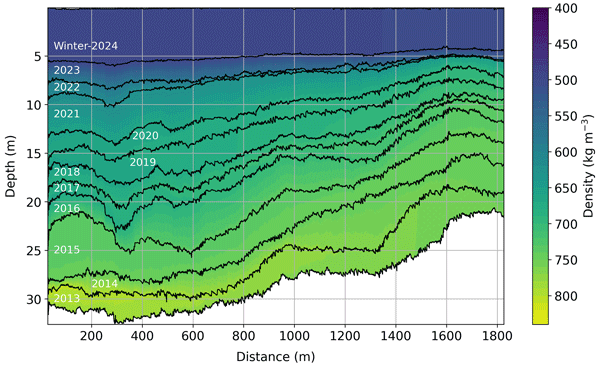
Akash M. Patil, Christoph Mayer, Thorsten Seehaus, Alexander R. Groos, and Andreas Bauder
The Cryosphere, 19, 5547–5577, https://doi.org/10.5194/tc-19-5547-2025, https://doi.org/10.5194/tc-19-5547-2025, 2025
Short summary
Short summary
We studied how the density of snow to ice transition varies with depth in the Aletsch glacier using radar-based field measurements and some simple models. We showed that it is possible to track how much snow has accumulated in the last 10–14 years. This helps improve the uncertainties in glacier mass balance estimates. Overall, by utilising non-invasive radar techniques and models, we provide a novel approach to understanding the evolution of glaciers under regional climate conditions.
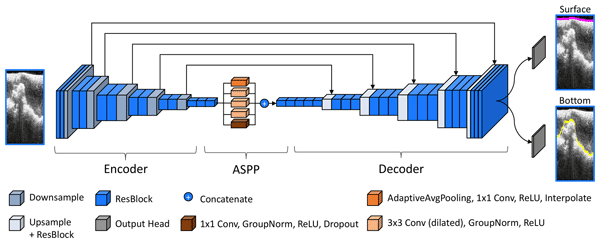
Marcel Dreier, Moritz Koch, Nora Gourmelon, Norbert Blindow, Daniel Steinhage, Fei Wu, Thorsten Seehaus, Matthias Braun, Andreas Maier, and Vincent Christlein
The Cryosphere, 19, 5337–5359, https://doi.org/10.5194/tc-19-5337-2025, https://doi.org/10.5194/tc-19-5337-2025, 2025
Short summary
Short summary
In this paper, we present a ready-to-use benchmark dataset to train machine learning approaches for detecting ice thickness from radar data. It includes radargrams of glaciers and ice sheets alongside annotations for their air–ice and ice–bedrock boundary. Furthermore, we introduce a baseline model and evaluate the influence of several geographical and glaciological factors on the performance of our model.
Angelika Humbert, Veit Helm, Ole Zeising, Niklas Neckel, Matthias H. Braun, Shfaqat Abbas Khan, Martin Rückamp, Holger Steeb, Julia Sohn, Matthias Bohnen, and Ralf Müller
The Cryosphere, 19, 3009–3032, https://doi.org/10.5194/tc-19-3009-2025, https://doi.org/10.5194/tc-19-3009-2025, 2025
Short summary
Short summary
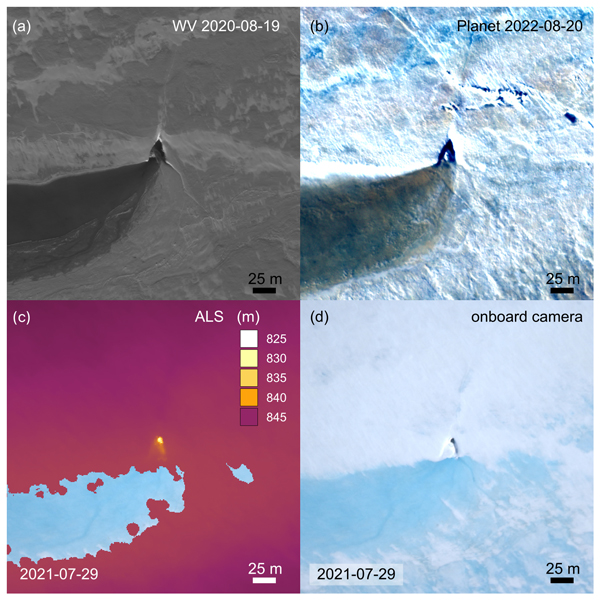
We study the evolution of a massive lake on the Greenland Ice Sheet using satellite and airborne data and some modelling. The lake is emptying rapidly. Water flows to the glacier's base through cracks and triangular-shaped moulins that remain visible over the years. Some of them become reactivated. We find features inside the glacier that stem from drainage events with a width of even 1 km. These features are persistent over the years, although they are changing in shape.

Lea-Sophie Höyns, Thomas Kleiner, Andreas Rademacher, Martin Rückamp, Michael Wolovick, and Angelika Humbert
The Cryosphere, 19, 2133–2158, https://doi.org/10.5194/tc-19-2133-2025, https://doi.org/10.5194/tc-19-2133-2025, 2025
Short summary
Short summary
The sliding of glaciers over bedrock is influenced by water pressure in the underlying hydrological system and the roughness of the land underneath the glacier. We estimate this roughness through a modeling approach that optimizes this unknown parameter. Additionally, we simulate water pressure, enhancing the reliability of the computed drag at the ice sheet base. The resulting data are provided to other modelers and scientists conducting geophysical field observations.
Kaian Shahateet, Johannes J. Fürst, Francisco Navarro, Thorsten Seehaus, Daniel Farinotti, and Matthias Braun
The Cryosphere, 19, 1577–1597, https://doi.org/10.5194/tc-19-1577-2025, https://doi.org/10.5194/tc-19-1577-2025, 2025
Short summary
Short summary
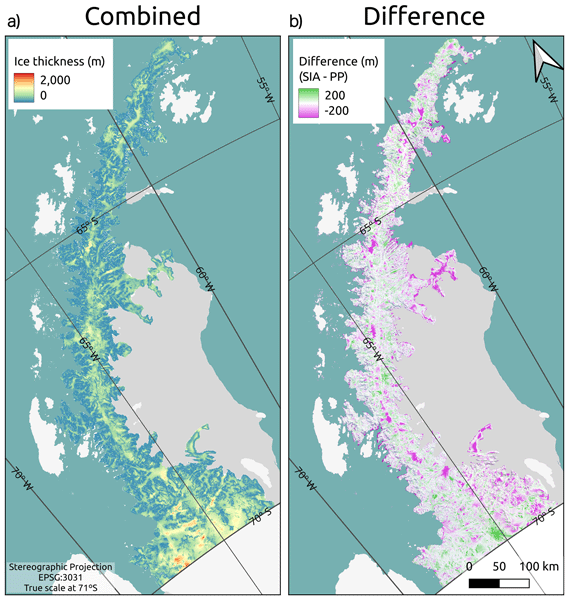
In the present work, we provide a new ice thickness reconstruction of the Antarctic Peninsula Ice Sheet north of 70º S using inversion modeling. This model consists of two steps: the first uses basic assumptions of the rheology of the glacier, and the second uses mass conservation to improve the reconstruction where the assumptions made previously are expected to fail. Validation with independent data showed that our reconstruction improved compared to other reconstructions that are available.
Katrina Lutz, Lily Bever, Christian Sommer, Thorsten Seehaus, Angelika Humbert, Mirko Scheinert, and Matthias Braun
The Cryosphere, 18, 5431–5449, https://doi.org/10.5194/tc-18-5431-2024, https://doi.org/10.5194/tc-18-5431-2024, 2024
Short summary
Short summary
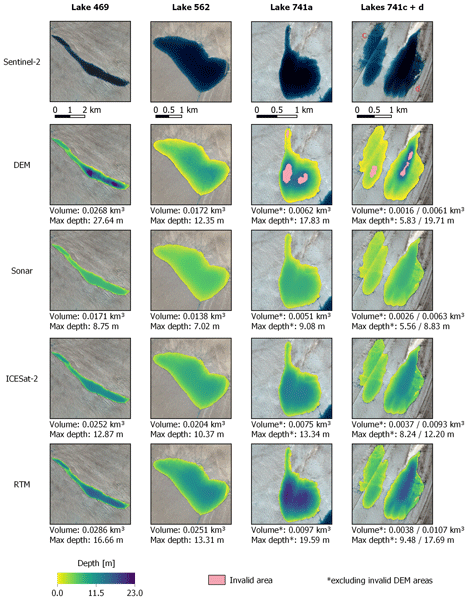
The estimation of the amount of water found within supraglacial lakes is important for understanding how much water is lost from glaciers each year. Here, we develop two new methods for estimating supraglacial lake volume that can be easily applied on a large scale. Furthermore, we compare these methods to two previously developed methods in order to determine when it is best to use each method. Finally, three of these methods are applied to peak melt dates over an area in Northeast Greenland.
Livia Piermattei, Michael Zemp, Christian Sommer, Fanny Brun, Matthias H. Braun, Liss M. Andreassen, Joaquín M. C. Belart, Etienne Berthier, Atanu Bhattacharya, Laura Boehm Vock, Tobias Bolch, Amaury Dehecq, Inés Dussaillant, Daniel Falaschi, Caitlyn Florentine, Dana Floricioiu, Christian Ginzler, Gregoire Guillet, Romain Hugonnet, Matthias Huss, Andreas Kääb, Owen King, Christoph Klug, Friedrich Knuth, Lukas Krieger, Jeff La Frenierre, Robert McNabb, Christopher McNeil, Rainer Prinz, Louis Sass, Thorsten Seehaus, David Shean, Désirée Treichler, Anja Wendt, and Ruitang Yang
The Cryosphere, 18, 3195–3230, https://doi.org/10.5194/tc-18-3195-2024, https://doi.org/10.5194/tc-18-3195-2024, 2024
Short summary
Short summary
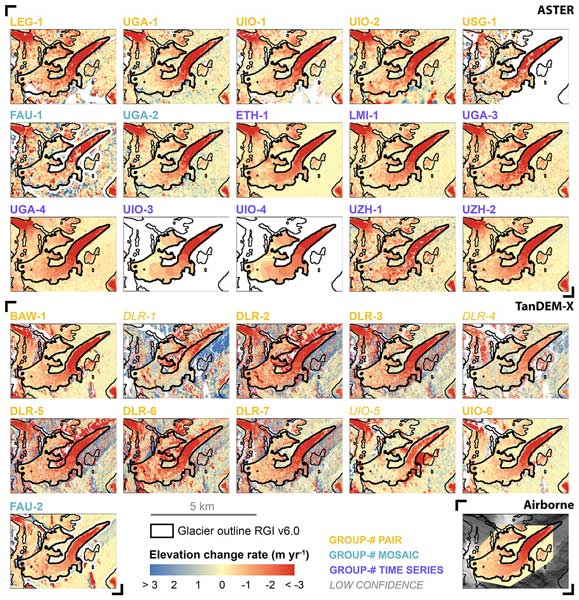
Satellites have made it possible to observe glacier elevation changes from all around the world. In the present study, we compared the results produced from two different types of satellite data between different research groups and against validation measurements from aeroplanes. We found a large spread between individual results but showed that the group ensemble can be used to reliably estimate glacier elevation changes and related errors from satellite data.
Anna Wendleder, Jasmin Bramboeck, Jamie Izzard, Thilo Erbertseder, Pablo d'Angelo, Andreas Schmitt, Duncan J. Quincey, Christoph Mayer, and Matthias H. Braun
The Cryosphere, 18, 1085–1103, https://doi.org/10.5194/tc-18-1085-2024, https://doi.org/10.5194/tc-18-1085-2024, 2024
Short summary
Short summary
This study analyses the basal sliding and the hydrological drainage of Baltoro Glacier, Pakistan. The surface velocity was characterized by a spring speed-up, summer peak, and autumn speed-up. Snow melt has the largest impact on the spring speed-up, summer velocity peak, and the transition from inefficient to efficient drainage. Drainage from supraglacial lakes contributed to the fall speed-up. Increased summer temperatures will intensify the magnitude of meltwater and thus surface velocities.
Oskar Herrmann, Nora Gourmelon, Thorsten Seehaus, Andreas Maier, Johannes J. Fürst, Matthias H. Braun, and Vincent Christlein
The Cryosphere, 17, 4957–4977, https://doi.org/10.5194/tc-17-4957-2023, https://doi.org/10.5194/tc-17-4957-2023, 2023
Short summary
Short summary
Delineating calving fronts of marine-terminating glaciers in satellite images is a labour-intensive task. We propose a method based on deep learning that automates this task. We choose a deep learning framework that adapts to any given dataset without needing deep learning expertise. The method is evaluated on a benchmark dataset for calving-front detection and glacier zone segmentation. The framework can beat the benchmark baseline without major modifications.
Thorsten Seehaus, Christian Sommer, Thomas Dethinne, and Philipp Malz
The Cryosphere, 17, 4629–4644, https://doi.org/10.5194/tc-17-4629-2023, https://doi.org/10.5194/tc-17-4629-2023, 2023
Short summary
Short summary
Existing mass budget estimates for the northern Antarctic Peninsula (>70° S) are affected by considerable limitations. We carried out the first region-wide analysis of geodetic mass balances throughout this region (coverage of 96.4 %) for the period 2013–2017 based on repeat pass bi-static TanDEM-X acquisitions. A total mass budget of −24.1±2.8 Gt/a is revealed. Imbalanced high ice discharge, particularly at former ice shelf tributaries, is the main driver of overall ice loss.
Alexandra M. Zuhr, Erik Loebel, Marek Muchow, Donovan Dennis, Luisa von Albedyll, Frigga Kruse, Heidemarie Kassens, Johanna Grabow, Dieter Piepenburg, Sören Brandt, Rainer Lehmann, Marlene Jessen, Friederike Krüger, Monika Kallfelz, Andreas Preußer, Matthias Braun, Thorsten Seehaus, Frank Lisker, Daniela Röhnert, and Mirko Scheinert
Polarforschung, 91, 73–80, https://doi.org/10.5194/polf-91-73-2023, https://doi.org/10.5194/polf-91-73-2023, 2023
Short summary
Short summary
Polar research is an interdisciplinary and multi-faceted field of research. Its diversity ranges from history to geology and geophysics to social sciences and education. This article provides insights into the different areas of German polar research. This was made possible by a seminar series, POLARSTUNDE, established in the summer of 2020 and organized by the German Society of Polar Research and the German National Committee of the Association of Polar Early Career Scientists (APECS Germany).
Fanny Brun, Owen King, Marion Réveillet, Charles Amory, Anton Planchot, Etienne Berthier, Amaury Dehecq, Tobias Bolch, Kévin Fourteau, Julien Brondex, Marie Dumont, Christoph Mayer, Silvan Leinss, Romain Hugonnet, and Patrick Wagnon
The Cryosphere, 17, 3251–3268, https://doi.org/10.5194/tc-17-3251-2023, https://doi.org/10.5194/tc-17-3251-2023, 2023
Short summary
Short summary
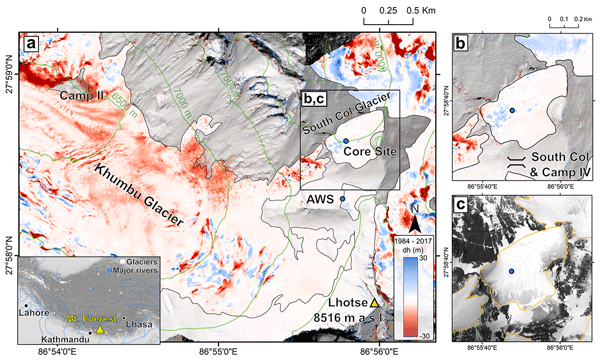
The South Col Glacier is a small body of ice and snow located on the southern ridge of Mt. Everest. A recent study proposed that South Col Glacier is rapidly losing mass. In this study, we examined the glacier thickness change for the period 1984–2017 and found no thickness change. To reconcile these results, we investigate wind erosion and surface energy and mass balance and find that melt is unlikely a dominant process, contrary to previous findings.
Angelika Humbert, Veit Helm, Niklas Neckel, Ole Zeising, Martin Rückamp, Shfaqat Abbas Khan, Erik Loebel, Jörg Brauchle, Karsten Stebner, Dietmar Gross, Rabea Sondershaus, and Ralf Müller
The Cryosphere, 17, 2851–2870, https://doi.org/10.5194/tc-17-2851-2023, https://doi.org/10.5194/tc-17-2851-2023, 2023
Short summary
Short summary
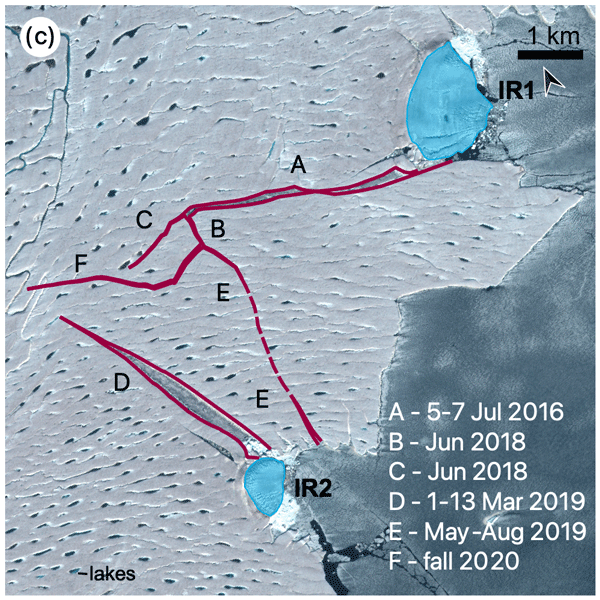
The largest floating glacier mass in Greenland, the 79° N Glacier, is showing signs of instability. We investigate how crack formation at the glacier's calving front has changed over the last decades by using satellite imagery and airborne data. The calving front is about to lose contact to stabilizing ice islands. Simulations show that the glacier will accelerate as a result of this, leading to an increase in ice discharge of more than 5.1 % if its calving front retreats by 46 %.
Franziska Temme, David Farías-Barahona, Thorsten Seehaus, Ricardo Jaña, Jorge Arigony-Neto, Inti Gonzalez, Anselm Arndt, Tobias Sauter, Christoph Schneider, and Johannes J. Fürst
The Cryosphere, 17, 2343–2365, https://doi.org/10.5194/tc-17-2343-2023, https://doi.org/10.5194/tc-17-2343-2023, 2023
Short summary
Short summary
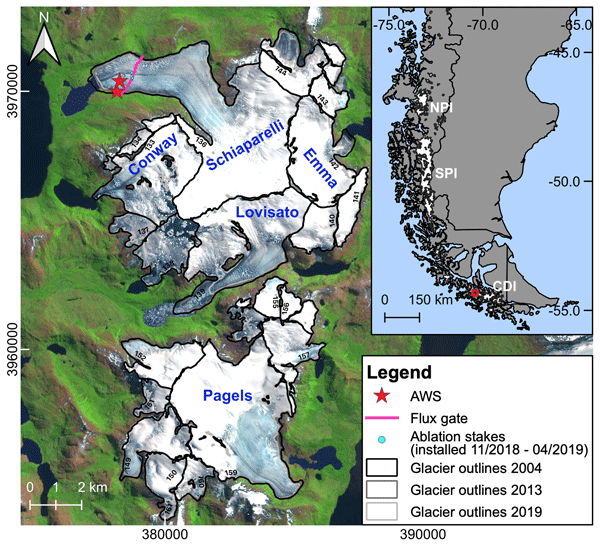
Calibration of surface mass balance (SMB) models on regional scales is challenging. We investigate different calibration strategies with the goal of achieving realistic simulations of the SMB in the Monte Sarmiento Massif, Tierra del Fuego. Our results show that the use of regional observations from satellite data can improve the model performance. Furthermore, we compare four melt models of different complexity to understand the benefit of increasing the processes considered in the model.

Lena Katharina Schmidt, Till Francke, Peter Martin Grosse, Christoph Mayer, and Axel Bronstert
Hydrol. Earth Syst. Sci., 27, 1841–1863, https://doi.org/10.5194/hess-27-1841-2023, https://doi.org/10.5194/hess-27-1841-2023, 2023
Short summary
Short summary
We present a suitable method to reconstruct sediment export from decadal records of hydroclimatic predictors (discharge, precipitation, temperature) and shorter suspended sediment measurements. This lets us fill the knowledge gap on how sediment export from glacierized high-alpine areas has responded to climate change. We find positive trends in sediment export from the two investigated nested catchments with step-like increases around 1981 which are linked to crucial changes in glacier melt.
Nora Gourmelon, Thorsten Seehaus, Matthias Braun, Andreas Maier, and Vincent Christlein
Earth Syst. Sci. Data, 14, 4287–4313, https://doi.org/10.5194/essd-14-4287-2022, https://doi.org/10.5194/essd-14-4287-2022, 2022
Short summary
Short summary
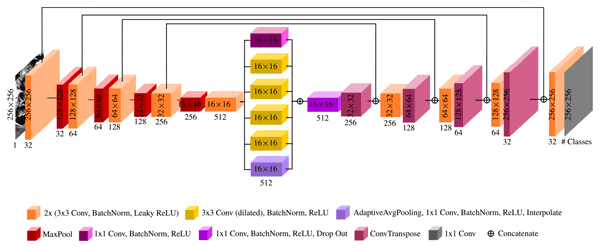
Ice loss of glaciers shows in retreating calving fronts (i.e., the position where icebergs break off the glacier and drift into the ocean). This paper presents a benchmark dataset for calving front delineation in synthetic aperture radar (SAR) images. The dataset can be used to train and test deep learning techniques, which automate the monitoring of the calving front. Provided example models achieve front delineations with an average distance of 887 m to the correct calving front.

Astrid Oetting, Emma C. Smith, Jan Erik Arndt, Boris Dorschel, Reinhard Drews, Todd A. Ehlers, Christoph Gaedicke, Coen Hofstede, Johann P. Klages, Gerhard Kuhn, Astrid Lambrecht, Andreas Läufer, Christoph Mayer, Ralf Tiedemann, Frank Wilhelms, and Olaf Eisen
The Cryosphere, 16, 2051–2066, https://doi.org/10.5194/tc-16-2051-2022, https://doi.org/10.5194/tc-16-2051-2022, 2022
Short summary
Short summary
This study combines a variety of geophysical measurements in front of and beneath the Ekström Ice Shelf in order to identify and interpret geomorphological evidences of past ice sheet flow, extent and retreat.
The maximal extent of grounded ice in this region was 11 km away from the continental shelf break.
The thickness of palaeo-ice on the calving front around the LGM was estimated to be at least 305 to 320 m.
We provide essential boundary conditions for palaeo-ice-sheet models.
Yannic Fischler, Martin Rückamp, Christian Bischof, Vadym Aizinger, Mathieu Morlighem, and Angelika Humbert
Geosci. Model Dev., 15, 3753–3771, https://doi.org/10.5194/gmd-15-3753-2022, https://doi.org/10.5194/gmd-15-3753-2022, 2022
Short summary
Short summary
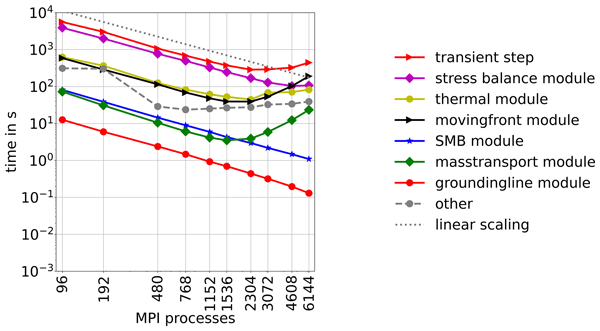
Ice sheet models are used to simulate the changes of ice sheets in future but are currently often run in coarse resolution and/or with neglecting important physics to make them affordable in terms of computational costs. We conducted a study simulating the Greenland Ice Sheet in high resolution and adequate physics to test where the ISSM ice sheet code is using most time and what could be done to improve its performance for future computer architectures that allow massive parallel computing.
Martin Rückamp, Thomas Kleiner, and Angelika Humbert
The Cryosphere, 16, 1675–1696, https://doi.org/10.5194/tc-16-1675-2022, https://doi.org/10.5194/tc-16-1675-2022, 2022
Short summary
Short summary
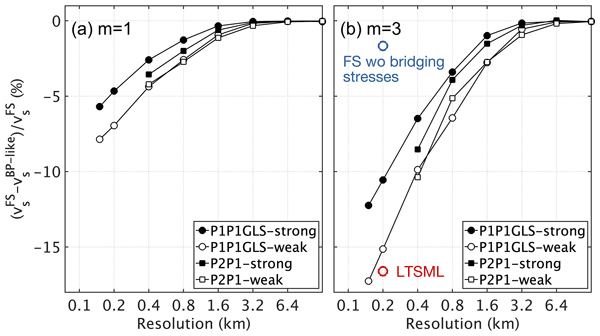
We present a comparative modelling study between the full-Stokes (FS) and Blatter–Pattyn (BP) approximation applied to the Northeast Greenland Ice Stream. Both stress regimes are implemented in one single ice sheet code to eliminate numerical issues. The simulations unveil minor differences in the upper ice stream but become considerable at the grounding line of the 79° North Glacier. Model differences are stronger for a power-law friction than a linear friction law.
Christian Sommer, Thorsten Seehaus, Andrey Glazovsky, and Matthias H. Braun
The Cryosphere, 16, 35–42, https://doi.org/10.5194/tc-16-35-2022, https://doi.org/10.5194/tc-16-35-2022, 2022
Short summary
Short summary
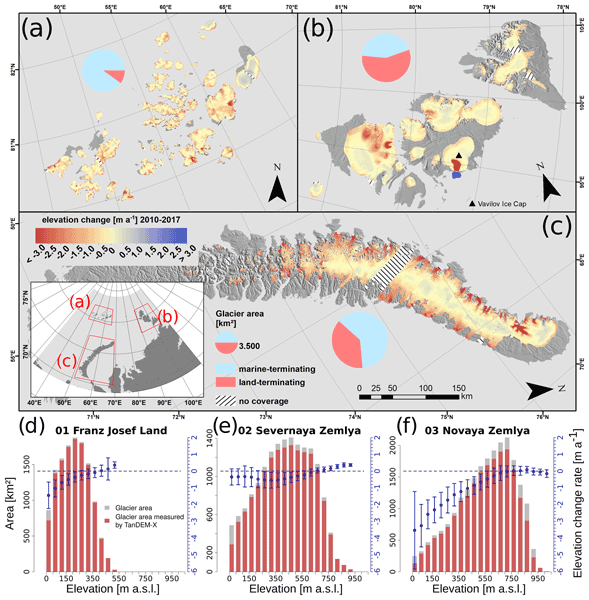
Arctic glaciers have been subject to extensive warming due to global climate change, yet their contribution to sea level rise has been relatively small in the past. In this study we provide mass changes of most glaciers of the Russian High Arctic (Franz Josef Land, Severnaya Zemlya, Novaya Zemlya). We use TanDEM-X satellite measurements to derive glacier surface elevation changes. Our results show an increase in glacier mass loss and a sea level rise contribution of 0.06 mm/a (2010–2017).

Peter Friedl, Thorsten Seehaus, and Matthias Braun
Earth Syst. Sci. Data, 13, 4653–4675, https://doi.org/10.5194/essd-13-4653-2021, https://doi.org/10.5194/essd-13-4653-2021, 2021
Short summary
Short summary
Consistent and continuous data on glacier surface velocity are important inputs to time series analyses, numerical ice dynamic modeling and glacier mass flux computations. We present a new data set of glacier surface velocities derived from Sentinel-1 radar satellite data that covers 12 major glaciated regions outside the polar ice sheets. The data comprise continuously updated scene-pair velocity fields, as well as monthly and annually averaged velocity mosaics at 200 m spatial resolution.
Cited articles
Amidror, I.: Scattered data interpolation methods for electronic imaging systems: a survey, J. Electron. Imaging, 11, 157, https://doi.org/10.1117/1.1455013, 2002. a
Arnold, N. S., Rees, W. G., Devereux, B. J., and Amable, G. S.: Evaluating the potential of high–resolution airborne LiDAR data in glaciology, Int. J. Remote Sens., 27, 1233–1251, https://doi.org/10.1080/01431160500353817, 2006. a
BAdW: Massenbilanz des Vernagtferners, https://geo.badw.de/vernagtferner-digital/massenbilanz.html (last access: 1 November 2025), 2026. a
Bartholomaus, T. C., Anderson, R. S., and Anderson, S. P.: Response of glacier basal motion to transient water storage, Nat. Geosci., 1, https://doi.org/10.1038/ngeo.2007.52, 2008. a
Burgess, E. W., Forster, R. R., Larsen, C. F., and Braun, M.: Surge dynamics on Bering Glacier, Alaska, in 2008–2011, The Cryosphere, 6, 1251–1262, https://doi.org/10.5194/tc-6-1251-2012, 2012. a
Cook, S. J., Jouvet, G., Millan, R., Rabatel, A., Zekollari, H., and Dussaillant, I.: Committed ice loss in the European Alps until 2050 using a deep-learning-aided 3D Ice-flow model with data assimilation, Geophys. Res. Lett., 50, e2023GL105029, https://doi.org/10.1029/2023GL105029, 2023. a
Das, S. B., Joughin, I., Behm, M. D., Howat, I. M., King, M. A., Lizarralde, D., and Bhatia, M. P.: Fracture propagation to the base of the Greenland ice sheet during supraglacial lake drainage, Science, 320, 778–781, https://doi.org/10.1126/science.1153360, 2008. a
Dirscherl, M., Dietz, A. J., Dech, S., and Kuenzer, C.: Remote sensing of ice motion in Antarctica – a review, Remote Sens. Environ., 237, 111595, https://doi.org/10.1016/j.rse.2019.111595, 2020. a
Dobler, T.: Multi-source glacier geometry and UAV datasets of Vernagtferner (Ötztal Alps, Austria), Zenodo [code], https://doi.org/10.5281/zenodo.17590496, 2026. a, b
Dobler, T., Lambrecht, A., Mayer, C., Rückamp, M., and Siebers, M.: Stake measurements(1966-2023) and velocity map (2018-2023) for Vernfagtferner, Austria, PANGAEA [data set], https://doi.org/10.1594/PANGAEA.982940, 2025. a, b, c
Finsterwalder, R.: Begleitwort zur Karte des Vernagtferners 1:10.000 vom Jahre 1969, Zeitschrift fur Gletscherkunde und Glazialgeologie, Band 8 , Heft 1-2, 5–10, 1972. a
Finsterwalder, S.: Der Vernagtferner: Seine Geschichte und seine Vermessung in den Jahren 1888 und 1889, Verlag des Deutschen und Österreichischen Alpenvereins, 1897. a
Friedl, P., Seehaus, T., and Braun, M.: Global time series and temporal mosaics of glacier surface velocities derived from Sentinel-1 data, Earth Syst. Sci. Data, 13, 4653–4675, https://doi.org/10.5194/essd-13-4653-2021, 2021. a, b, c, d
Gaffey, C. and Bhardwaj, A.: Applications of unmanned aerial vehicles in cryosphere: latest advances and prospects, Remote Sens.-Basel, 12, 948, https://doi.org/10.3390/rs12060948, 2020. a
Gardner, A., Fahnestock, M., and Scambos, T.: MEaSUREs ITS_LIVE Regional Glacier and Ice Sheet Surface Velocities, Version 1, NASA National Snow and Ice Data Center Distributed Active Archive Center [data set], https://doi.org/10.5067/6II6VW8LLWJ7, 2022. a, b, c, d
Geissler, J., Mayer, C., Jubanski, J., Münzer, U., and Siegert, F.: Analyzing glacier retreat and mass balances using aerial and UAV photogrammetry in the Ötztal Alps, Austria, The Cryosphere, 15, 3699–3717, https://doi.org/10.5194/tc-15-3699-2021, 2021. a
Grab, M., Mattea, E., Bauder, A., Huss, M., Rabenstein, L., Hodel, E., Linsbauer, A., Langhammer, L., Schmid, L., Church, G., Hellmann, S., Délèze, K., Schaer, P., Lathion, P., Farinotti, D., and Maurer, H.: Ice thickness distribution of all Swiss glaciers based on extended ground-penetrating radar data and glaciological modeling, J. Glaciol., 67, 1074–1092, https://doi.org/10.1017/jog.2021.55, 2021. a
Groos, A. R., Bertschinger, T. J., Kummer, C. M., Erlwein, S., Munz, L., and Philipp, A.: The Potential of Low-Cost UAVs and Open-Source Photogrammetry Software for High-Resolution Monitoring of Alpine Glaciers: A Case Study from the Kanderfirn (Swiss Alps), Geosciences, 9, 356, https://doi.org/10.3390/geosciences9080356, 2019. a
Heid, T. and Kääb, A.: Repeat optical satellite images reveal widespread and long term decrease in land-terminating glacier speeds, The Cryosphere, 6, 467–478, https://doi.org/10.5194/tc-6-467-2012, 2012. a, b
Hirtlreiter G.: Verteilung der Eisgeschwindigkeit an der Gletscheroberfläche im Ablauf der Jahre, dargestellt am Beispiel des Vernagtferners, Diplomarbeit am Institut für Geographie der Ludwig-Maximilians-Universität, unveröffentlicht, 1985. a
Hutter, K.: Theoretical Glaciology: Material Science of Ice and the Meachanics of Glaciers and Ice Sheets, D. Reidel, Dordrecht, the Netherlands, ISBN-10: 9027714738, 1983. a
Iken, A.: The effect of the subglacial water pressure on the sliding velocity of a glacier in an idealized numerical model, J. Glaciol., 27, 407–421, https://doi.org/10.3189/S0022143000011448, 1981. a
Iken, A. and Bindschadler, R. A.: Combined measurements of subglacial water pressure and surface velocity of Findelengletscher, Switzerland: conclusions about drainage system and sliding mechanism, J. Glaciol., 32, 101–119, https://doi.org/10.3189/S0022143000006936, 1986. a, b
Izzard, J., Quincey, D., Elliott, J., and Wendleder, A.: Feature tracking of sub-metre resolution Capella SAR imagery to measure mountain glacier ice flow, Progress in Physical Geography: Earth and Environment, 49, 236–255, https://doi.org/10.1177/03091333251337238, 2025. a
Khazaleh, T.: Die Oberfläche, horizontale Eisgeschwindigkeit des Vernagtferner im Zeitraum 1986–2001. Dynamik, Ursachen und räumlich-zeitliche Differenzierung, Diplomarbeit am Lehrstuhl der Physischen Geografie der Universität Augsburg in Zusammenarbeit mit der Kommission für Glaziologie der Bayerischen Akademie der Wisschenschaften in München, http://vernagtferner.de/literatur.htm (last access: 1 November 2025), 2002. a
Leprince, S., Berthier, E., Ayoub, F., Delacourt, C., and Avouac, J.: Monitoring Earth surface dynamics with optical imagery, EoS Transactions, 89, 1–2, https://doi.org/10.1029/2008EO010001, 2008. a
Łukosz, M., Hejmanowski, R., and Witkowski, W.: Evaluation of ICEYE microsatellites sensor for surface motion detection – Jakobshavn glacier case study, Energies, 3424, https://doi.org/10.3390/en14123424, 2021. a
Mair, D., Nienow, P., Sharp, M., Wohlleben, T., and Willis, I.: Influence of subglacial drainage system evolution on glacier surface motion: Haut Glacier d'Arolla, Switzerland, J. Geophys. Res.-Earth, 107, https://doi.org/10.1029/2001JB000514, 2002. a
Mattea, E., Berthier, E., Dehecq, A., Bolch, T., Bhattacharya, A., Ghuffar, S., Barandun, M., and Hoelzle, M.: Five decades of Abramov glacier dynamics reconstructed with multi-sensor optical remote sensing, The Cryosphere, 19, 219–247, https://doi.org/10.5194/tc-19-219-2025, 2025. a
Mayer, C., Escher-Vetter, H., and Weber, M.: 46 Jahre glaziologische Massenbilanz des Vernagtferners, in: Zeitschrift für Gletscherkunde und Glazialgeologie: Themenband zum fünfzigjährigen Gründungsjubiläum der Komission für Glaziologie der Bayerischen Akademie der Wissenschaft, München, edited by: Braun, L. and Escher-Vetter, H., Universitätsverlag Wagner, Innsbruck, Band 45/46, 219–234, ISBN 978 3 7030 0822 1, 2013a. a
Mayer, C., Lambrecht, A., Blumenthaler, U., and Eisen, O.: Vermessung und Eisdynamik des Vernagtferners, Ötztaler Alpen, in: Zeitschrift für Gletscherkunde und Glazialgeologie: Themenband zum fünfzigjährigen Gründungsjubiläum der Komission für Glaziologie der Bayerischen Akademie der Wissenschaft, München, edited by: Braun, L. and Escher-Vetter, H., Universitätsverlag Wagner, Innsbruck, Band 45/46, 1259–280, ISBN 978 3 7030 0822, 2013b. a, b, c, d
Millan, R., Mouginot, J., Rabatel, A., Jeong, S., Cusicanqui, D., Derkacheva, A., and Chekki, M.: Mapping surface flow velocity of glaciers at regional scale using a multiple sensors approach, Remote Sens.-Basel, 11, 2498, https://doi.org/10.3390/rs11212498, 2019. a
Millan, R., Mouginot, Jérémieand Rabatel, A., and Morlighem, M.: Ice velocity and thickness of the world's glaciers, Nat. Geosci., 15, 124–129, https://doi.org/10.1038/s41561-021-00885-z, 2022. a, b, c, d
Nanni, U., Scherler, D., Ayoub, F., Millan, R., Herman, F., and Avouac, J.-P.: Climatic control on seasonal variations in mountain glacier surface velocity, The Cryosphere, 17, 1567–1583, https://doi.org/10.5194/tc-17-1567-2023, 2023. a, b
Nye, J. F.: A method of determining the strain-rate tensor at the surface of a glacier, J. Glaciol., 3, 409–419, https://doi.org/10.3189/S0022143000017093, 1959. a
Oerter, H., Reinwarth, O., and Rufli, H.: Core drilling through a temperate alpine glacier (Vernagtferner, Oetztal Alps) in 1979, Zeitschrift für Gletscherkunde und Glazialgeologie, 18, 1–11, 1982. a
Paterson, W.: The Physics of glaciers, Academic Press, Fourth edition, https://doi.org/10.1016/C2009-0-14802-X, 1994. a
Patzelt, G.: The period of glacier advances in the Alps, 1960 to 1985, Zeitschrift fur Gletscherkunde und Glazialgeologie, 23, 403–407, 1985. a
Prats, P., Scheiber, R., Reigber, A., Andres, C., and Horn, R.: Estimation of the surface velocity field of the Aletsch Glacier using multibaseline airborne SAR interferometry, IEEE T. Geosci. Remote, 47, 419–430, https://doi.org/10.1109/TGRS.2008.2004277, 2009. a
Reinwarth, O. and Escher-Vetter, H.: Mass balance of vernagtferner, austria, from 1964/65 to 1996/97: results for three sections and the entire glacier, Geogr. Ann. A, 81, 743–751, https://doi.org/10.1111/j.0435-3676.1999.00102.x, 1999. a, b, c
Rentsch, H.: Die Orthophotokarte Vernagtferner 1979, Beschreibung eines kartographischen Projekts der Kommission für Glaziologie, Zeitschrift fur Gletscherkunde und Glazialgeologie, 18, 85–91, 1982. a
Sambridge, M., Braun, J., and McQueen, H.: Geophysical parametrization and interpolation of irregular data using natural neighbours, Geophys. J. Int., 122, 837–857, https://doi.org/10.1111/J.1365-246X.1995.TB06841.X, 1995. a
Sanders, J. W., Cuffey, K. M., Mac Gregor, K. R., Kavanaugh, J. L., and Dow, C. F.: Variations in the surface velocity of an alpine cirque glacier, J. Glaciol., 64, 969–976, https://doi.org/10.1017/jog.2018.85, 2018. a
Schubert, A., Faes, A., Kæb, A., and Meier, E.: Glacier surface velocity estimation using repeat TerraSAR-X images: Wavelet- vs. correlation-based image matching, ISPRS J. Photogramm., 82, 49–62, https://doi.org/10.1016/j.isprsjprs.2013.04.010, 2013. a
Seehaus, T., Marinsek, S., Helm, V., Skvarca, P., and Braun, M.: Changes in ice dynamics, elevation and mass discharge of Dinsmoor–Bombardier–Edgeworth glacier system, Antarctic Peninsula, Earth Planet. Sc. Lett., 427, 125–135, https://doi.org/10.1016/j.epsl.2015.06.047, 2015. a
Seehaus, T., Cook, A. J., Silva, A. B., and Braun, M.: Changes in glacier dynamics in the northern Antarctic Peninsula since 1985, The Cryosphere, 12, 577–594, https://doi.org/10.5194/tc-12-577-2018, 2018. a
Stocker-Waldhuber, M., Fischer, A., Helfricht, K., and Kuhn, M.: Long-term records of glacier surface velocities in the Ötztal Alps (Austria), Earth Syst. Sci. Data, 11, 705–715, https://doi.org/10.5194/essd-11-705-2019, 2019. a, b
Strasser, U., Marke, T., Braun, L., Escher-Vetter, H., Juen, I., Kuhn, M., Maussion, F., Mayer, C., Nicholson, L., Niedertscheider, K., Sailer, R., Stötter, J., Weber, M., and Kaser, G.: The Rofental: a high Alpine research basin (1890–3770 m a.s.l.) in the Ötztal Alps (Austria) with over 150 years of hydrometeorological and glaciological observations, Earth Syst. Sci. Data, 10, 151–171, https://doi.org/10.5194/essd-10-151-2018, 2018. a
Thomson, L. I. and Copland, L.: Multi-decadal reduction in glacier velocities and mechanisms driving deceleration at polythermal White Glacier, Arctic Canada, J. Glaciol., 63, 450–463, https://doi.org/10.1017/jog.2017.3, 2017. a
Tremel, H., Hornik, H., and Rentsch, H.: Bestimmung der Geodätischen Position von Gletschersignalen mit Hilfe des global positioning system (GPS), Zeitschrift für Gletscherkunde und Glazialgeologie, 29, 173–178, 1994. a
Troilo, F., Dematteis, N., Zucca, F., Funk, M., and Giordan, D.: Monthly velocity and seasonal variations of the Mont Blanc glaciers derived from Sentinel-2 between 2016 and 2024, The Cryosphere, 18, 3891–3909, https://doi.org/10.5194/tc-18-3891-2024, 2024. a, b
van de Wal, R. S. W., Boot, W., van den Broeke, M. R., Smeets, C. J. P. P., Reijmer, C. H., Donker, J. J. A., and Oerlemans, J.: Large and rapid melt-induced velocity changes in the ablation zone of the Greenland ice sheet, Science, 321, 111–113, https://doi.org/10.1126/science.1158540, 2008. a
Van Wyk de Vries, M. and Wickert, A. D.: Glacier Image Velocimetry: an open-source toolbox for easy and rapid calculation of high-resolution glacier velocity fields, The Cryosphere, 15, 2115–2132, https://doi.org/10.5194/tc-15-2115-2021, 2021. a
Vaughan, D. G.: Relating the occurrence of crevasses to surface strain rates, J. Glaciol., 39, 255–266, https://doi.org/10.3189/S0022143000015926, 1993. a
Vincent, C. and Moreau, L. U. C.: Sliding velocity fluctuations and subglacial hydrology over the last two decades on Argentière glacier, Mont Blanc area, J. Glaciol., 62, 805–815, https://doi.org/10.1017/jog.2016.35, 2016. a, b
Vincent, C., Vallon, M., Reynaud, L., and Le Meur, E.: Dynamic behaviour analysis of glacier de Saint Sorlin, France, from 40 years of observations, 1957–97, J. Glaciol., 46, 499–506, https://doi.org/10.3189/172756500781833052, 2000. a
Vincent, C., Soruco, A., Six, D., and Le Meur, E.: Glacier thickening and decay analysis from 50 years of glaciological observations performed on Glacier d'Argentière, Mont Blanc area, France, Ann. Glaciol., 50, 73–79, https://doi.org/10.3189/172756409787769500, 2009. a, b
Wang, Q., Fan, J., Zhou, W., Tong, L., Guo, Z., Liu, G., Yuan, W., Sousa, J., and Perski, Z.: 3D Surface velocity retrieval of mountain glacier using an offset tracking technique applied to ascending and descending SAR constellation data: a case study of the Yiga Glacier, Int. J. Digit. Earth, 614–624, https://doi.org/10.1080/17538947.2018.1470690, 2019. a
WGMS: Fluctuations of Glaciers Database. World Glacier Monitoring Service (WGMS), Zurich, Switzerland [data set], https://doi.org/10.5904/wgms-fog-2024-01, 2024. a, b, c
Wood, F. B.: Global Alpine glacier trends, 1960s to 1980s, Arctic Alpine Res., 20, 404–413, https://doi.org/10.1080/00040851.1988.12002693, 1988. a
Zemp, M., Thibert, E., Huss, M., Stumm, D., Rolstad Denby, C., Nuth, C., Nussbaumer, S. U., Moholdt, G., Mercer, A., Mayer, C., Joerg, P. C., Jansson, P., Hynek, B., Fischer, A., Escher-Vetter, H., Elvehøy, H., and Andreassen, L. M.: Reanalysing glacier mass balance measurement series, The Cryosphere, 7, 1227–1245, https://doi.org/10.5194/tc-7-1227-2013, 2013. a
Short summary
We studied how a glacier in the Austrian Alps moves more slowly over time due to climate change. By combining long-term field data with recent aerial images, we show how thinning reduce glacier flow. Our findings help understand changes in glacier behavior in a warming climate.
We studied how a glacier in the Austrian Alps moves more slowly over time due to climate change....


