
Articles | Volume 20, issue 4
https://doi.org/10.5194/tc-20-2485-2026
© Author(s) 2026. This work is distributed under
the Creative Commons Attribution 4.0 License.
the Creative Commons Attribution 4.0 License.
https://doi.org/10.5194/tc-20-2485-2026
© Author(s) 2026. This work is distributed under
the Creative Commons Attribution 4.0 License.
the Creative Commons Attribution 4.0 License.
Review article
| Highlight paper
| 
27 Apr 2026
Review article | Highlight paper |
| 27 Apr 2026
| 27 Apr 2026
Review article: 30 years of airborne radar surveys on the Antarctic and Greenland ice sheets by the Alfred Wegener Institute
Steven Franke
CORRESPONDING AUTHOR

Department of Geosciences, University of Tübingen, Tübingen, Germany
Alfred Wegener Institute, Helmholtz Centre for Polar and Marine Research, Bremerhaven, Germany
Daniel Steinhage
Alfred Wegener Institute, Helmholtz Centre for Polar and Marine Research, Bremerhaven, Germany
Veit Helm
Alfred Wegener Institute, Helmholtz Centre for Polar and Marine Research, Bremerhaven, Germany
Tobias Binder
Alfred Wegener Institute, Helmholtz Centre for Polar and Marine Research, Bremerhaven, Germany
now at: Atlas Elektronik GmbH, Hamburg, Germany
Uwe Nixdorf
Alfred Wegener Institute, Helmholtz Centre for Polar and Marine Research, Bremerhaven, Germany
Heinrich Miller
Alfred Wegener Institute, Helmholtz Centre for Polar and Marine Research, Bremerhaven, Germany
Angelika Humbert
Alfred Wegener Institute, Helmholtz Centre for Polar and Marine Research, Bremerhaven, Germany
Faculty of Geosciences, University of Bremen, Bremen, Germany
Daniela Jansen
Alfred Wegener Institute, Helmholtz Centre for Polar and Marine Research, Bremerhaven, Germany
Graeme Eagles
Alfred Wegener Institute, Helmholtz Centre for Polar and Marine Research, Bremerhaven, Germany
Hannes Eisermann
Alfred Wegener Institute, Helmholtz Centre for Polar and Marine Research, Bremerhaven, Germany
Wilfried Jokat
Alfred Wegener Institute, Helmholtz Centre for Polar and Marine Research, Bremerhaven, Germany
Faculty of Geosciences, University of Bremen, Bremen, Germany
Antonia Ruppel
Federal Institute for Geosciences and Natural Resources (BGR), Hanover, Germany
Reinhard Drews
Department of Geosciences, University of Tübingen, Tübingen, Germany
Alexandra Zuhr
Department of Geosciences, University of Tübingen, Tübingen, Germany
Amelie Driemel
Alfred Wegener Institute, Helmholtz Centre for Polar and Marine Research, Bremerhaven, Germany
Andreas Walter
Alfred Wegener Institute, Helmholtz Centre for Polar and Marine Research, Bremerhaven, Germany
Peter Konopatzky
Alfred Wegener Institute, Helmholtz Centre for Polar and Marine Research, Bremerhaven, Germany
Robin Heß
formerly at: Alfred Wegener Institute, Helmholtz Centre for Polar and Marine Research, Bremerhaven, Germany
Antonie Haas
Alfred Wegener Institute, Helmholtz Centre for Polar and Marine Research, Bremerhaven, Germany
Roland Koppe
Alfred Wegener Institute, Helmholtz Centre for Polar and Marine Research, Bremerhaven, Germany
Pascal H. Andreas
Alfred Wegener Institute, Helmholtz Centre for Polar and Marine Research, Bremerhaven, Germany
deceased, January 2026
Alfred Wegener Institute, Helmholtz Centre for Polar and Marine Research, Bremerhaven, Germany
Faculty of Geosciences, University of Bremen, Bremen, Germany
Related authors
Julien A. Bodart, Vjeran Višnjević, Steven Franke, Veit Helm, Olaf Eisen, Antoine Hermant, Alexandra M. Zuhr, Daniel Steinhage, and Johannes C. R. Sutter
The Cryosphere, 20, 1379–1404, https://doi.org/10.5194/tc-20-1379-2026, https://doi.org/10.5194/tc-20-1379-2026, 2026
Short summary
Short summary
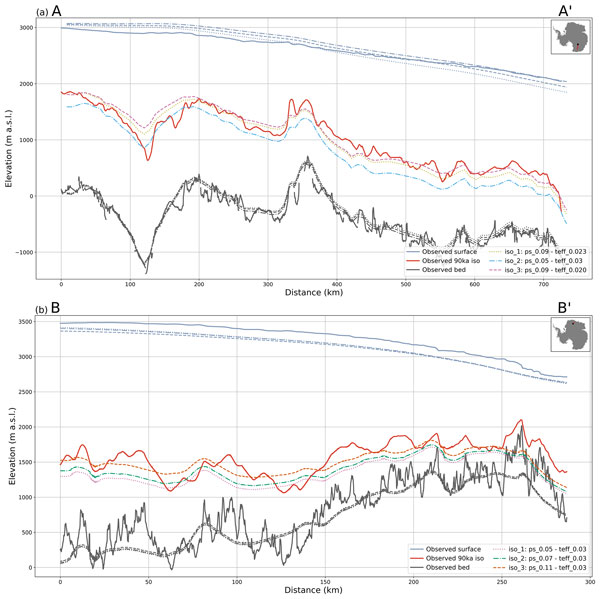
We used radar data and computer models to study layers within Antarctic ice that record past snowfall and ice-sheet changes. These layers, called isochrones, are seldomly used to model Antarctica’s past. By comparing radar observations with simulations, we show how they can greatly improve model accuracy and provide two new datasets to help refine future reconstructions of Antarctic ice evolution.
Steven Franke, Mara Neudert, Veit Helm, Arttu Jutila, Océane Hames, Niklas Neckel, Stefanie Arndt, and Christian Haas
The Cryosphere, 19, 6319–6339, https://doi.org/10.5194/tc-19-6319-2025, https://doi.org/10.5194/tc-19-6319-2025, 2025
Short summary
Short summary
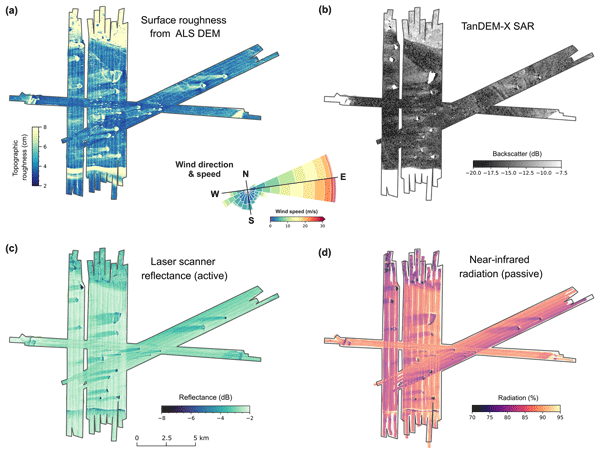
Our research explored how icebergs affect the distribution of snow and flooding on Antarctic coastal sea ice. Using aircraft-based radar and laser scanning, we found that icebergs create thick snow drifts on their wind-facing sides and leave snow-free zones in their lee. The weight of these snow drifts often causes the ice below to flood, forming slush. These patterns, driven by wind and iceberg placement, are crucial for understanding sea ice changes and improving climate models.
Charlotte M. Carter, Steven Franke, Daniela Jansen, Chris R. Stokes, Veit Helm, John Paden, and Olaf Eisen
The Cryosphere, 19, 5299–5315, https://doi.org/10.5194/tc-19-5299-2025, https://doi.org/10.5194/tc-19-5299-2025, 2025
Short summary
Short summary
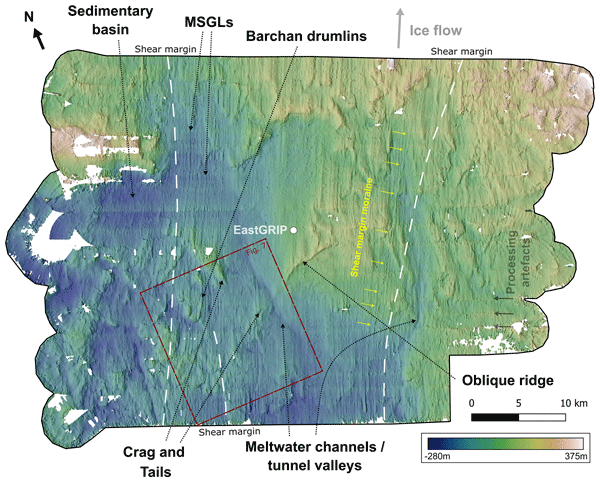
The subglacial landforms beneath actively fast-flowing ice in Greenland have not been explored in detail, as digital elevation models have not had a high enough resolution to see these features. We use swath radar imaging to visualise landforms at the onset of an ice stream, revealing mega-scale glacial lineations, that would usually be assumed to be indicative of faster ice flow than the current velocities. Interpretation of the landscape also gives an indication of the properties of the bed.
Paul D. Bons, Yuanbang Hu, M.-Gema Llorens, Steven Franke, Nicolas Stoll, Ilka Weikusat, Julien Westhoff, and Yu Zhang
The Cryosphere, 19, 5095–5109, https://doi.org/10.5194/tc-19-5095-2025, https://doi.org/10.5194/tc-19-5095-2025, 2025
Short summary
Short summary
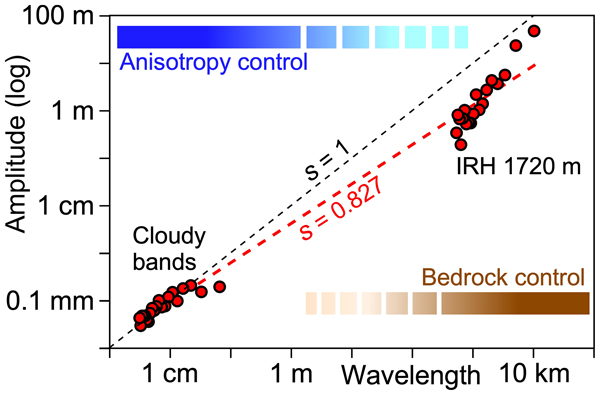
What causes folds in ice layers from the km scale down to the scale visible in the drill core: buckle folding due to variations in viscosity between layers, or the effect of mechanical anisotropy of ice due to an alignment of the crystal-lattice planes? Power spectra of folds in ice, a biotite schist, and numerical simulations show that folding in ice is due to the anisotropy, as the folds are self-similar, meaning that there is no characteristic fold scale that would result from buckle folding.
Robert G. Bingham, Julien A. Bodart, Marie G. P. Cavitte, Ailsa Chung, Rebecca J. Sanderson, Johannes C. R. Sutter, Olaf Eisen, Nanna B. Karlsson, Joseph A. MacGregor, Neil Ross, Duncan A. Young, David W. Ashmore, Andreas Born, Winnie Chu, Xiangbin Cui, Reinhard Drews, Steven Franke, Vikram Goel, John W. Goodge, A. Clara J. Henry, Antoine Hermant, Benjamin H. Hills, Nicholas Holschuh, Michelle R. Koutnik, Gwendolyn J.-M. C. Leysinger Vieli, Emma J. MacKie, Elisa Mantelli, Carlos Martín, Felix S. L. Ng, Falk M. Oraschewski, Felipe Napoleoni, Frédéric Parrenin, Sergey V. Popov, Therese Rieckh, Rebecca Schlegel, Dustin M. Schroeder, Martin J. Siegert, Xueyuan Tang, Thomas O. Teisberg, Kate Winter, Shuai Yan, Harry Davis, Christine F. Dow, Tyler J. Fudge, Tom A. Jordan, Bernd Kulessa, Kenichi Matsuoka, Clara J. Nyqvist, Maryam Rahnemoonfar, Matthew R. Siegfried, Shivangini Singh, Vjeran Višnjević, Rodrigo Zamora, and Alexandra Zuhr
The Cryosphere, 19, 4611–4655, https://doi.org/10.5194/tc-19-4611-2025, https://doi.org/10.5194/tc-19-4611-2025, 2025
Short summary
Short summary
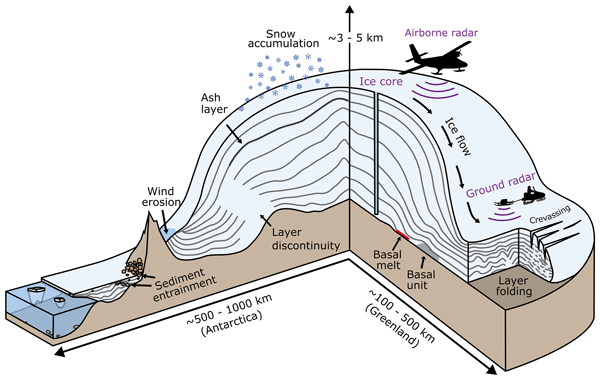
The ice sheets covering Antarctica have built up over millenia through successive snowfall events which become buried and preserved as internal surfaces of equal age detectable with ice-penetrating radar. This paper describes an international initiative working together on these archival data to build a comprehensive 3-D picture of how old the ice is everywhere across Antarctica and how this is being used to reconstruct past and to predict future ice and climate behaviour.
Steven Franke, Daniel Steinhage, Veit Helm, Alexandra M. Zuhr, Julien A. Bodart, Olaf Eisen, and Paul Bons
The Cryosphere, 19, 1153–1180, https://doi.org/10.5194/tc-19-1153-2025, https://doi.org/10.5194/tc-19-1153-2025, 2025
Short summary
Short summary
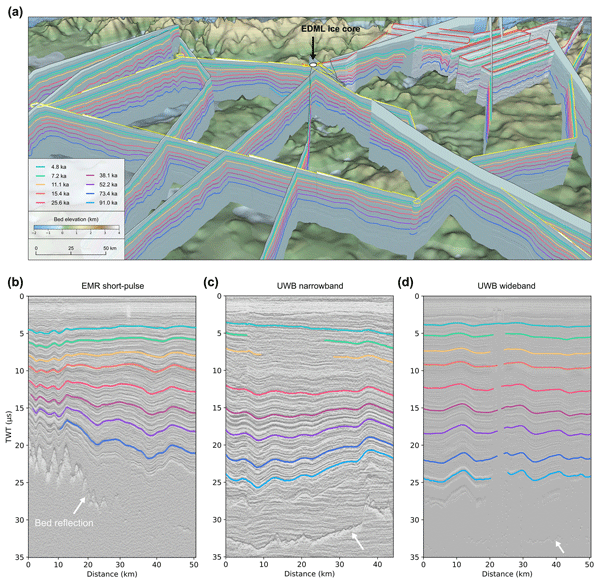
The study presents internal reflection horizons (IRHs) over an area of 450 000 km² from western Dronning Maud Land, Antarctica, spanning 4.8–91 ka. Using radar and ice core data, nine IRHs were dated and correlated with volcanic events. The data enhance our understanding of the ice sheet's age–depth architecture, accumulation, and dynamics. The findings inform ice flow models and contribute to Antarctic-wide comparisons of IRHs, supporting efforts toward a 3D age–depth ice sheet model.
Alice C. Frémand, Peter Fretwell, Julien A. Bodart, Hamish D. Pritchard, Alan Aitken, Jonathan L. Bamber, Robin Bell, Cesidio Bianchi, Robert G. Bingham, Donald D. Blankenship, Gino Casassa, Ginny Catania, Knut Christianson, Howard Conway, Hugh F. J. Corr, Xiangbin Cui, Detlef Damaske, Volkmar Damm, Reinhard Drews, Graeme Eagles, Olaf Eisen, Hannes Eisermann, Fausto Ferraccioli, Elena Field, René Forsberg, Steven Franke, Shuji Fujita, Yonggyu Gim, Vikram Goel, Siva Prasad Gogineni, Jamin Greenbaum, Benjamin Hills, Richard C. A. Hindmarsh, Andrew O. Hoffman, Per Holmlund, Nicholas Holschuh, John W. Holt, Annika N. Horlings, Angelika Humbert, Robert W. Jacobel, Daniela Jansen, Adrian Jenkins, Wilfried Jokat, Tom Jordan, Edward King, Jack Kohler, William Krabill, Mette Kusk Gillespie, Kirsty Langley, Joohan Lee, German Leitchenkov, Carlton Leuschen, Bruce Luyendyk, Joseph MacGregor, Emma MacKie, Kenichi Matsuoka, Mathieu Morlighem, Jérémie Mouginot, Frank O. Nitsche, Yoshifumi Nogi, Ole A. Nost, John Paden, Frank Pattyn, Sergey V. Popov, Eric Rignot, David M. Rippin, Andrés Rivera, Jason Roberts, Neil Ross, Anotonia Ruppel, Dustin M. Schroeder, Martin J. Siegert, Andrew M. Smith, Daniel Steinhage, Michael Studinger, Bo Sun, Ignazio Tabacco, Kirsty Tinto, Stefano Urbini, David Vaughan, Brian C. Welch, Douglas S. Wilson, Duncan A. Young, and Achille Zirizzotti
Earth Syst. Sci. Data, 15, 2695–2710, https://doi.org/10.5194/essd-15-2695-2023, https://doi.org/10.5194/essd-15-2695-2023, 2023
Short summary
Short summary
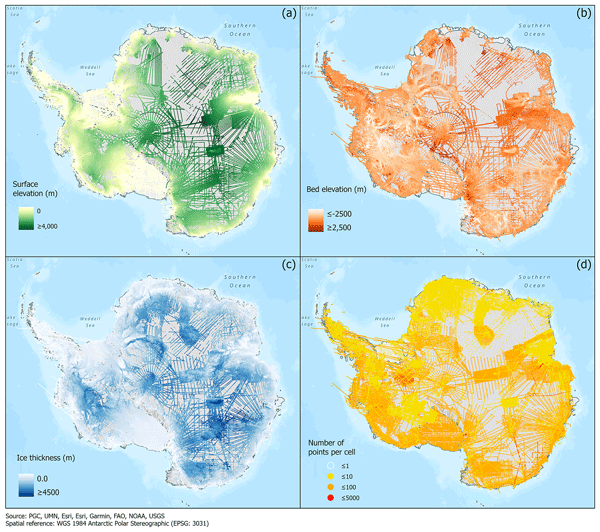
This paper presents the release of over 60 years of ice thickness, bed elevation, and surface elevation data acquired over Antarctica by the international community. These data are a crucial component of the Antarctic Bedmap initiative which aims to produce a new map and datasets of Antarctic ice thickness and bed topography for the international glaciology and geophysical community.
Steven Franke, Alfons Eckstaller, Tim Heitland, Thomas Schaefer, and Jölund Asseng
Polarforschung, 90, 65–79, https://doi.org/10.5194/polf-90-65-2022, https://doi.org/10.5194/polf-90-65-2022, 2022
Short summary
Short summary
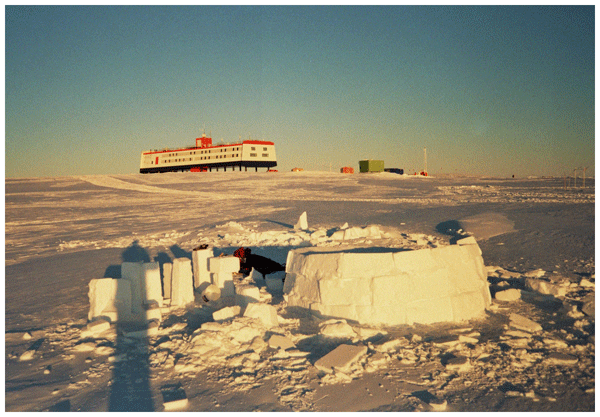
For over 45 years, teams composed of scientists, technicians, doctors, and cooks have been wintering in Antarctica in the service of German Antarctic research. They thus form a cornerstone of long-term scientific measurements in this remote and unique place with regard to future scientific investigations. In this article, we highlight the research being conducted at the permanently crewed Neumayer Station III and its predecessors and the role of the overwinterers in this research endeavour.
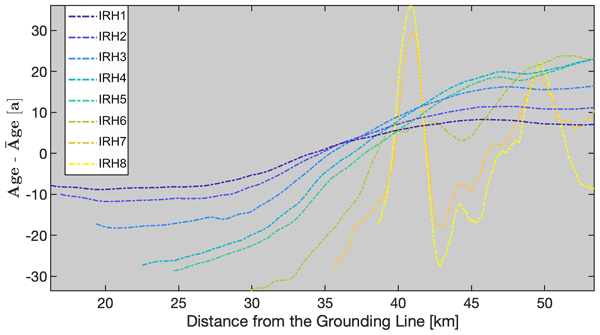
Vjeran Višnjević, Reinhard Drews, Clemens Schannwell, Inka Koch, Steven Franke, Daniela Jansen, and Olaf Eisen
The Cryosphere, 16, 4763–4777, https://doi.org/10.5194/tc-16-4763-2022, https://doi.org/10.5194/tc-16-4763-2022, 2022
Short summary
Short summary
We present a simple way to model the internal layers of an ice shelf and apply the method to the Roi Baudouin Ice Shelf in East Antarctica. Modeled results are compared to measurements obtained by radar. We distinguish between ice directly formed on the shelf and ice transported from the ice sheet, and we map the spatial changes in the volume of the locally accumulated ice. In this context, we discuss the sensitivity of the ice shelf to future changes in surface accumulation and basal melt.
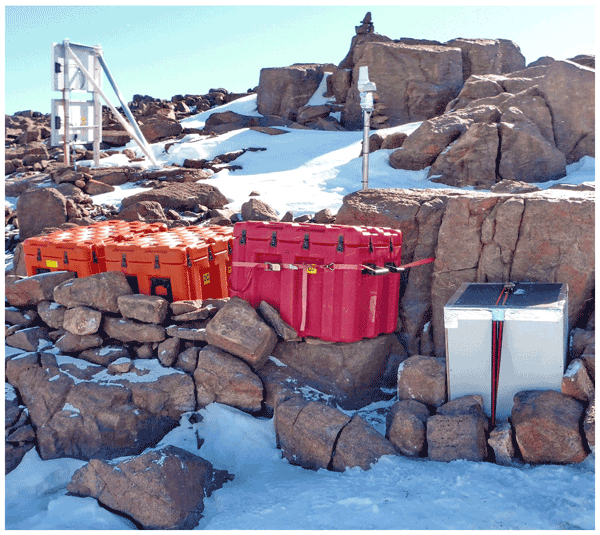
Alfons Eckstaller, Jölund Asseng, Erich Lippmann, and Steven Franke
Geosci. Instrum. Method. Data Syst., 11, 235–245, https://doi.org/10.5194/gi-11-235-2022, https://doi.org/10.5194/gi-11-235-2022, 2022
Short summary
Short summary
We present a mobile and self-sufficient seismometer station concept for operation in polar regions. The energy supply can be adapted as required using the modular cascading of battery boxes, wind generators, solar cells, or backup batteries, which enables optimum use of limited resources. Our system concept is not limited to the applications using seismological stations. It is a suitable system for managing the power supply of all types of self-sufficient measuring systems in polar regions.
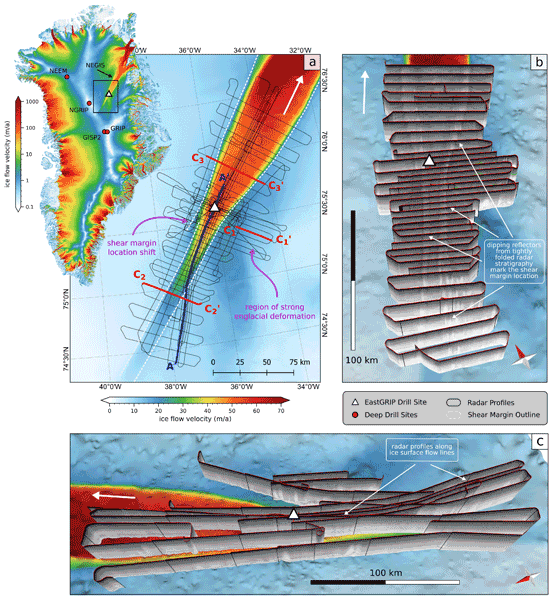
Steven Franke, Daniela Jansen, Tobias Binder, John D. Paden, Nils Dörr, Tamara A. Gerber, Heinrich Miller, Dorthe Dahl-Jensen, Veit Helm, Daniel Steinhage, Ilka Weikusat, Frank Wilhelms, and Olaf Eisen
Earth Syst. Sci. Data, 14, 763–779, https://doi.org/10.5194/essd-14-763-2022, https://doi.org/10.5194/essd-14-763-2022, 2022
Short summary
Short summary
The Northeast Greenland Ice Stream (NEGIS) is the largest ice stream in Greenland. In order to better understand the past and future dynamics of the NEGIS, we present a high-resolution airborne radar data set (EGRIP-NOR-2018) for the onset region of the NEGIS. The survey area is centered at the location of the drill site of the East Greenland Ice-Core Project (EastGRIP), and radar profiles cover both shear margins and are aligned parallel to several flow lines.
Yéva Jeaumot, Frédéric Parrenin, Ailsa Chung, Olaf Eisen, Daniel Steinhage, Robert Mulvaney, Marie G. P. Cavitte, David A. Lilien, and Emilie Capron
EGUsphere, https://doi.org/10.5194/egusphere-2026-4174, https://doi.org/10.5194/egusphere-2026-4174, 2026
This preprint is open for discussion and under review for The Cryosphere (TC).
Short summary
Short summary
To choose good drilling sites and interpret ice cores correctly, scientists need reliable estimates of ice age at each depth. We developed a new way to model how ice behaves at the base of ice sheets, where it can melt or stop moving entirely, using radar data from Antarctica. Our estimates matched real measurements at a well-studied site, revealed a layer of stagnant ice at another, and predicted that a newly proposed drilling site could yield ice over two million years old.
Nikola Jovanovic, Timm Schultz, Angelika Humbert, Thomas Kleiner, and Samuel J. Cook
EGUsphere, https://doi.org/10.5194/egusphere-2026-4224, https://doi.org/10.5194/egusphere-2026-4224, 2026
This preprint is open for discussion and under review for The Cryosphere (TC).
Short summary
Short summary
The Greenland Ice Sheet (GrIS) has significantly melted in the last decades. However, melt formed on the surface can be stored in firn, a spongy layer between snow and ice. We use a model to simulate the change of the firn in a warming climate in regions of the GrIS. In southwest, thick ice layers (ice slabs) form. They limit the amount of water firn can store and their area increases with warming. In southeast, water bodies called firn aquifers form, that efficiently drain water into the ocean.
Judith Freienstein, Charlotte Carter, Georg-Maximilian Hüttner, Olaf Eisen, Wolfgang Szwillus, and Jörg Ebbing
EGUsphere, https://doi.org/10.5194/egusphere-2026-4746, https://doi.org/10.5194/egusphere-2026-4746, 2026
This preprint is open for discussion and under review for Solid Earth (SE).
Short summary
Short summary
The North East Greenland Ice Stream is a fast flowing ice stream with its formation so far inland remaining unclear. We used high-resolution bed topography data in 3D modeling to investigate its effects on geothermal heat flow (GHF). Results show local deviations of up to 20 % compared to 1D solutions. Our study highlights the importance of small-scale models to reduce uncertainty in GHF estimates to improve the understanding of ice stream dynamics.
Adrien Ooms, Mathieu Casado, Sonja Wahl, Thomas Laepple, Alexandra Zuhr, Pete Akers, Ghislain Picard, Laurent Arnaud, Joel Savarino, Kira Rehfeld, Barbara Stenni, Giuliano Dreossi, Mauro Masiol, Amaelle Landais, and Valérie Masson-Delmotte
EGUsphere, https://doi.org/10.5194/egusphere-2026-4801, https://doi.org/10.5194/egusphere-2026-4801, 2026
This preprint is open for discussion and under review for Climate of the Past (CP).
Short summary
Short summary
This work presents new insights in the archival process of multi-annual climatic signal in the near surface firn at Concordia Station, East-Antarctica, from the new data set of high resolution stable water isotope profiles measured in a snow trench. The dated isotopic profiles covering 20 years are compared against overlapping precipitation and surface snow observations. This highlights the strong contribution of stratigraphic noise and post depositional effects to individual trench profiles.
Rebecca Schlegel, Johannes Noll, Leah Sopie Muhle, Christian T. Wild, Falk M. Oraschewski, Olaf Eisen, and Reinhard Drews
EGUsphere, https://doi.org/10.5194/egusphere-2026-3900, https://doi.org/10.5194/egusphere-2026-3900, 2026
This preprint is open for discussion and under review for The Cryosphere (TC).
Short summary
Short summary
Step-like terraces at the base of Antarctic ice shelves are known from warm-water settings, but we show for the first time that they also occur at the base of a cold-water ice shelf. Repeat radar observations reveal that the terraces melt slowly and remain almost unchanged over one year. Our results suggest they form near the grounding line and are then transported with the flowing ice while melting only slowly.
Emma Pearce, Dimitri Zigone, Coen Hofstede, Andreas Fichtner, and Olaf Eisen
EGUsphere, https://doi.org/10.5194/egusphere-2026-3762, https://doi.org/10.5194/egusphere-2026-3762, 2026
Short summary
Short summary
When ice cores are drilled, they are broken before being brought back to the surface, generating small seismic signals. We tested whether these signals could be used to study the inside of the North East Greenland Ice Stream. Most possible signals were too weak or noisy, but a few clear examples produced realistic estimates of ice speed. The results show that this method is promising, but future experiments need better timing, quieter conditions, and sensors placed specifically for this purpose.
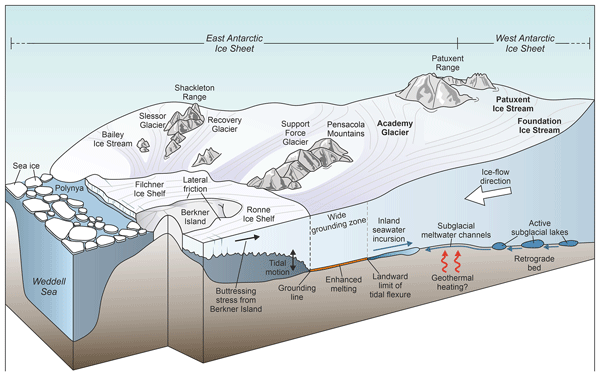
Neil Ross, Rebecca J. Sanderson, Bernd Kulessa, Martin Siegert, Guy J. G. Paxman, Keir A. Nichols, Matthew R. Siegfried, Stewart S. R. Jamieson, Michael J. Bentley, Tom A. Jordan, Christine L. Batchelor, David Small, Olaf Eisen, Kate Winter, Robert G. Bingham, S. Louise Callard, Rachel Carr, Christine F. Dow, Helen A. Fricker, Emily Hill, Benjamin H. Hills, Coen Hofstede, Hafeez Jeofry, Felipe Napoleoni, and Wilson Sauthoff
The Cryosphere, 20, 3705–3737, https://doi.org/10.5194/tc-20-3705-2026, https://doi.org/10.5194/tc-20-3705-2026, 2026
Short summary
Short summary
We review research about a group of fast-flowing Antarctic ice streams, the Foundation-Patuxent-Academy System. Previously, we knew little about how these ice streams flow, how they interact with each other and the ocean, what their geological history was, and how they might evolve in a warming world. By reviewing existing research, we have identified the future research needed to determine how these ice streams function, and how they might contribute to future global sea level rise.
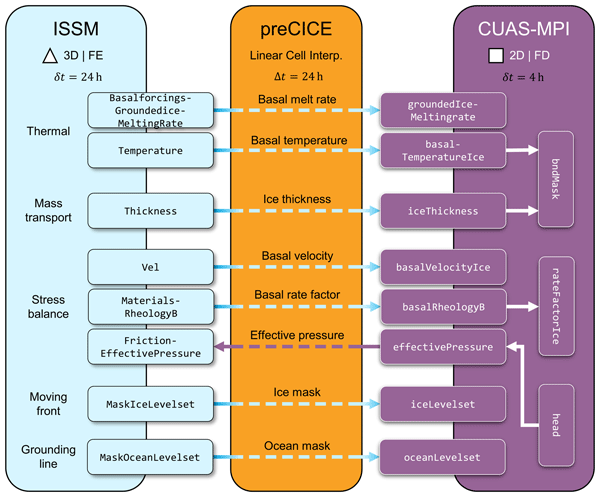
Daniel Abele, Thomas Kleiner, Yannic Fischler, Benjamin Uekermann, Gerasimos Chourdakis, Mathieu Morlighem, Achim Basermann, Christian Bischof, Hans-Joachim Bungartz, and Angelika Humbert
Geosci. Model Dev., 19, 5019–5039, https://doi.org/10.5194/gmd-19-5019-2026, https://doi.org/10.5194/gmd-19-5019-2026, 2026
Short summary
Short summary
Accurate simulations of ice-sheet evolution require a multi-physics approach that captures the interaction between glaciers and their subglacial environment. For this purpose, we have extended ice sheet and subglacial hydrology models using a coupling library. This simplifies coupled Earth systems simulations by allowing models to interact with minimal effort and computational expense. We have evaluated the solution regarding performance and choice of coupling library.
James R. Jordan, Frank Pattyn, Daniel Abele, Torsten Albrecht, Jorge Alvarez-Solas, Jowan M. Barnes, Tijn Berends, Jorge A. Bernales, Javier Blasco, Gong Cheng, Youngmin Choi, Stephen L. Cornford, Cruz Garcia-Molina, Fabien Gillet-Chaulet, G. Hilmar Gudmundsson, Angelika Humbert, Gunter R. Leguy, William H. Lipscomb, Marisa Montoya, Daniel Moreno-Parada, Mathieu Morlighem, Tyler Pelle, Alexander Robinson, Martin Rückamp, Hélène Seroussi, Yanmei Tian, Luisa Wagner, Roderick S. W. van de Wal, Liyun Zhao, and Thomas Zwinger
EGUsphere, https://doi.org/10.5194/egusphere-2026-1962, https://doi.org/10.5194/egusphere-2026-1962, 2026
Short summary
Short summary
Ice calving is a recent inclusion in ice sheet models and there has not been a systematic test of how well it has been implemented. We show that models can accurately represent a given rate of ice calving, properties at the ice front evolve smoothly during calving, and that there are no consistent differences in ice behaviour between various approaches to representing calving in numerical ice models. This gives us confidence in their ability for use in sea level rise prediction simulations.
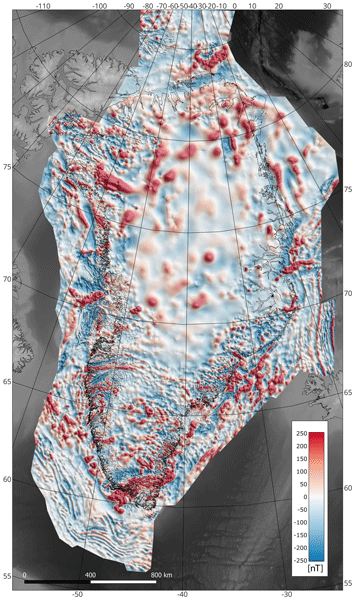
Björn H. Heincke, Wolfgang Szwillus, Judith Freienstein, Jörg Ebbing, Carmen Gaina, Antonia Ruppel, Yixiati Dilixiati, and Agnes Wansing
Earth Syst. Sci. Data, 18, 1943–1967, https://doi.org/10.5194/essd-18-1943-2026, https://doi.org/10.5194/essd-18-1943-2026, 2026
Short summary
Short summary
With over three-quarters of Greenland hidden beneath ice, direct geological observation is nearly impossible. Magnetic mapping provides now a passive and efficient geophysical method to image hidden subsurface features, offering a powerful tool for tectonic analysis and geological modeling in otherwise inaccessible regions. We have now developed a new magnetic anomaly map of Greenland using state-of-the-art technology providing new insight into Greenland's buried geology.
Julien A. Bodart, Vjeran Višnjević, Steven Franke, Veit Helm, Olaf Eisen, Antoine Hermant, Alexandra M. Zuhr, Daniel Steinhage, and Johannes C. R. Sutter
The Cryosphere, 20, 1379–1404, https://doi.org/10.5194/tc-20-1379-2026, https://doi.org/10.5194/tc-20-1379-2026, 2026
Short summary
Short summary
We used radar data and computer models to study layers within Antarctic ice that record past snowfall and ice-sheet changes. These layers, called isochrones, are seldomly used to model Antarctica’s past. By comparing radar observations with simulations, we show how they can greatly improve model accuracy and provide two new datasets to help refine future reconstructions of Antarctic ice evolution.
Mirko Scheinert, Weisen Shen, Richard C. Aster, Lambert Caron, Michael D. Hartinger, Matt A. King, Andrew Lloyd, Anya M. Reading, J. Paul Winberry, Terry Wilson, Lucilla Alfonsi, Michael J. Bentley, Eric Buchta, Thomas Y. Chen, Peter J. Clarke, Jörg Ebbing, Olaf Eisen, Natalya Gomez, Esra Günaydın, Samantha Hansen, Erik R. Ivins, Achraf Koulali, Grace A. Nield, Frederick Richards, Mahmut O. Selbesoglu, Stephanie Sherman, Pippa L. Whitehouse, and Matthias Willen
EGUsphere, https://doi.org/10.5194/egusphere-2025-6370, https://doi.org/10.5194/egusphere-2025-6370, 2026
Short summary
Short summary
With an ongoing mass loss the Antarctic Ice Sheet contributes to global-mean sea level rise at a rate of 0.4 mm/a. Thus, it plays a key role in global climate and provides a natural laboratory to study processes that interlink cryosphere, solid Earth, atmosphere and ocean. We discuss how GNSS and seismic networks in Antarctica were used to significantly advance our understanding of these processes, and how they should be maintained and extended to answer key science questions in the future.
Alessandro Cotronei, Ulrike Feudel, and Angelika Humbert
EGUsphere, https://doi.org/10.5194/egusphere-2025-6334, https://doi.org/10.5194/egusphere-2025-6334, 2026
Short summary
Short summary
We construct a mathematical model to describe the formation of lakes on the Greenland Ice Sheet across multiple years. The model represents the dynamics of ice, snow, and surface water, accounting for the influence of air temperature. Our results indicate that lakes can enhance ice melt by absorbing sunlight, thereby accelerating the loss of Greenland ice under realistic scenarios of temperature increase.
Maria T. Kappelsberger, Johan Nilsson, Martin Horwath, Veit Helm, and Alex S. Gardner
EGUsphere, https://doi.org/10.5194/egusphere-2025-5745, https://doi.org/10.5194/egusphere-2025-5745, 2025
Short summary
Short summary
We compare surface elevation changes of the Antarctic Ice Sheet interior as derived from satellite radar altimetry and laser altimetry between 2019 and 2024. Both methods indicate an increase in surface elevation across most of the study area, coinciding with an episode of excess snow accumulation as modelled. However, rates of surface elevation increase from radar altimetry are systematically lower than those from laser altimetry.
Steven Franke, Mara Neudert, Veit Helm, Arttu Jutila, Océane Hames, Niklas Neckel, Stefanie Arndt, and Christian Haas
The Cryosphere, 19, 6319–6339, https://doi.org/10.5194/tc-19-6319-2025, https://doi.org/10.5194/tc-19-6319-2025, 2025
Short summary
Short summary
Our research explored how icebergs affect the distribution of snow and flooding on Antarctic coastal sea ice. Using aircraft-based radar and laser scanning, we found that icebergs create thick snow drifts on their wind-facing sides and leave snow-free zones in their lee. The weight of these snow drifts often causes the ice below to flood, forming slush. These patterns, driven by wind and iceberg placement, are crucial for understanding sea ice changes and improving climate models.
Valerie Reppert, Olaf Eisen, Holger Schmithüsen, Stefanie Arndt, Guido Ascenso, Linda Ort, and Zsófia Jurányi
EGUsphere, https://doi.org/10.5194/egusphere-2025-5199, https://doi.org/10.5194/egusphere-2025-5199, 2025
Short summary
Short summary
We analyzed 33 years of snow accumulation measurements at Neumayer Station, Antarctica, to understand changes in the amount of snow building up on the surface over time. The long-term, high-resolution data show mostly stable accumulation, but rare positive extremes appeared in 2021 and 2023. Seasonal and multi-year patterns were identified, providing valuable data to improve climate models and satellite observations.
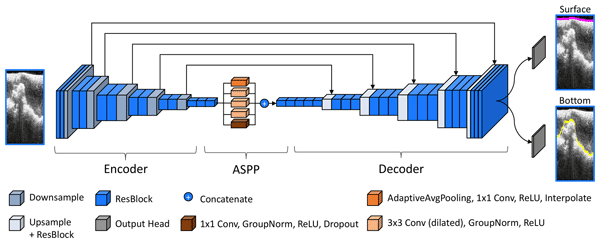
Marcel Dreier, Moritz Koch, Nora Gourmelon, Norbert Blindow, Daniel Steinhage, Fei Wu, Thorsten Seehaus, Matthias Braun, Andreas Maier, and Vincent Christlein
The Cryosphere, 19, 5337–5359, https://doi.org/10.5194/tc-19-5337-2025, https://doi.org/10.5194/tc-19-5337-2025, 2025
Short summary
Short summary
In this paper, we present a ready-to-use benchmark dataset to train machine learning approaches for detecting ice thickness from radar data. It includes radargrams of glaciers and ice sheets alongside annotations for their air–ice and ice–bedrock boundary. Furthermore, we introduce a baseline model and evaluate the influence of several geographical and glaciological factors on the performance of our model.
Charlotte M. Carter, Steven Franke, Daniela Jansen, Chris R. Stokes, Veit Helm, John Paden, and Olaf Eisen
The Cryosphere, 19, 5299–5315, https://doi.org/10.5194/tc-19-5299-2025, https://doi.org/10.5194/tc-19-5299-2025, 2025
Short summary
Short summary
The subglacial landforms beneath actively fast-flowing ice in Greenland have not been explored in detail, as digital elevation models have not had a high enough resolution to see these features. We use swath radar imaging to visualise landforms at the onset of an ice stream, revealing mega-scale glacial lineations, that would usually be assumed to be indicative of faster ice flow than the current velocities. Interpretation of the landscape also gives an indication of the properties of the bed.
Paul D. Bons, Yuanbang Hu, M.-Gema Llorens, Steven Franke, Nicolas Stoll, Ilka Weikusat, Julien Westhoff, and Yu Zhang
The Cryosphere, 19, 5095–5109, https://doi.org/10.5194/tc-19-5095-2025, https://doi.org/10.5194/tc-19-5095-2025, 2025
Short summary
Short summary
What causes folds in ice layers from the km scale down to the scale visible in the drill core: buckle folding due to variations in viscosity between layers, or the effect of mechanical anisotropy of ice due to an alignment of the crystal-lattice planes? Power spectra of folds in ice, a biotite schist, and numerical simulations show that folding in ice is due to the anisotropy, as the folds are self-similar, meaning that there is no characteristic fold scale that would result from buckle folding.
Robert G. Bingham, Julien A. Bodart, Marie G. P. Cavitte, Ailsa Chung, Rebecca J. Sanderson, Johannes C. R. Sutter, Olaf Eisen, Nanna B. Karlsson, Joseph A. MacGregor, Neil Ross, Duncan A. Young, David W. Ashmore, Andreas Born, Winnie Chu, Xiangbin Cui, Reinhard Drews, Steven Franke, Vikram Goel, John W. Goodge, A. Clara J. Henry, Antoine Hermant, Benjamin H. Hills, Nicholas Holschuh, Michelle R. Koutnik, Gwendolyn J.-M. C. Leysinger Vieli, Emma J. MacKie, Elisa Mantelli, Carlos Martín, Felix S. L. Ng, Falk M. Oraschewski, Felipe Napoleoni, Frédéric Parrenin, Sergey V. Popov, Therese Rieckh, Rebecca Schlegel, Dustin M. Schroeder, Martin J. Siegert, Xueyuan Tang, Thomas O. Teisberg, Kate Winter, Shuai Yan, Harry Davis, Christine F. Dow, Tyler J. Fudge, Tom A. Jordan, Bernd Kulessa, Kenichi Matsuoka, Clara J. Nyqvist, Maryam Rahnemoonfar, Matthew R. Siegfried, Shivangini Singh, Vjeran Višnjević, Rodrigo Zamora, and Alexandra Zuhr
The Cryosphere, 19, 4611–4655, https://doi.org/10.5194/tc-19-4611-2025, https://doi.org/10.5194/tc-19-4611-2025, 2025
Short summary
Short summary
The ice sheets covering Antarctica have built up over millenia through successive snowfall events which become buried and preserved as internal surfaces of equal age detectable with ice-penetrating radar. This paper describes an international initiative working together on these archival data to build a comprehensive 3-D picture of how old the ice is everywhere across Antarctica and how this is being used to reconstruct past and to predict future ice and climate behaviour.
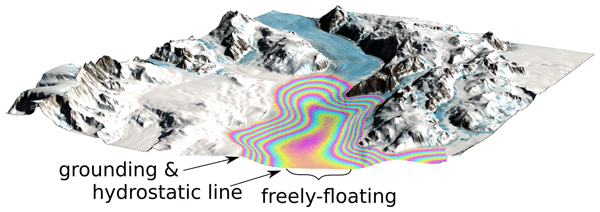
Christian T. Wild, Reinhard Drews, Niklas Neckel, Joohan Lee, Sihyung Kim, Hyangsun Han, Won Sang Lee, Veit Helm, Sebastian Harry Reid Rosier, Oliver J. Marsh, and Wolfgang Rack
The Cryosphere, 19, 4533–4554, https://doi.org/10.5194/tc-19-4533-2025, https://doi.org/10.5194/tc-19-4533-2025, 2025
Short summary
Short summary
The stability of the Antarctic Ice Sheet depends on how resistance along the sides of large glaciers slows down the flow of ice into the ocean. We present a method to map ice strength using the effect of ocean tides on floating ice shelves. Incorporating weaker ice in shear zones improves the accuracy of model predictions, compared with satellite observations. This demonstrates the untapped potential of radar satellites to map ice stiffness in the most critical areas for ice sheet stability.
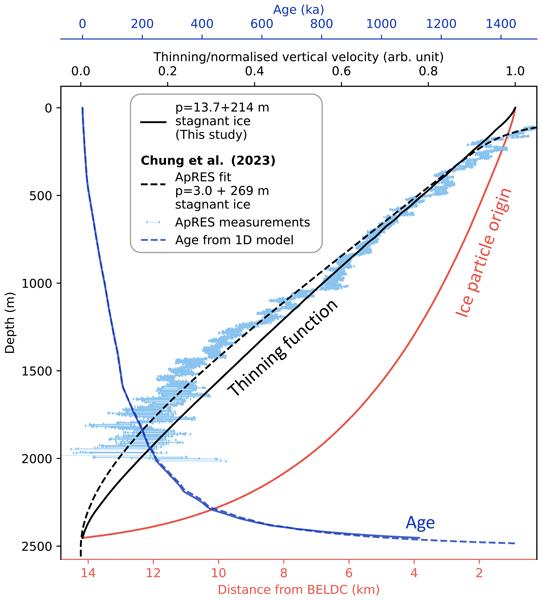
Ailsa Chung, Frédéric Parrenin, Robert Mulvaney, Luca Vittuari, Massimo Frezzotti, Antonio Zanutta, David A. Lilien, Marie G. P. Cavitte, and Olaf Eisen
The Cryosphere, 19, 4125–4140, https://doi.org/10.5194/tc-19-4125-2025, https://doi.org/10.5194/tc-19-4125-2025, 2025
Short summary
Short summary
We applied an ice flow model to a flow line from the summit of Dome C to the Beyond EPICA ice core drill site on Little Dome C in Antarctica. Results show that the oldest ice at the drill site may be 1.12 Ma (at an age density of 20 kyr m-1) and originate from around 15 km upstream. We also discuss the nature of the 200–250 m thick basal layer which could be composed of stagnant ice, disturbed ice or even accreted ice (possibly containing debris).
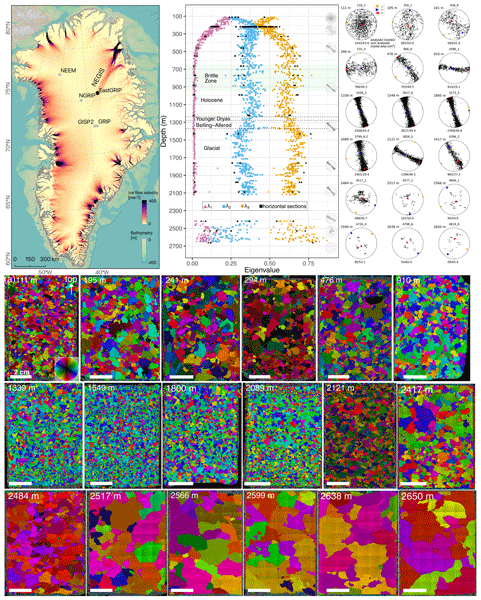
Nicolas Stoll, Ilka Weikusat, Daniela Jansen, Paul Bons, Kyra Darányi, Julien Westhoff, María-Gema Llorens, David Wallis, Jan Eichler, Tomotaka Saruya, Tomoyuki Homma, Sune Olander Rasmussen, Giulia Sinnl, Anders Svensson, Martyn Drury, Frank Wilhelms, Sepp Kipfstuhl, Dorthe Dahl-Jensen, and Johanna Kerch
The Cryosphere, 19, 3805–3830, https://doi.org/10.5194/tc-19-3805-2025, https://doi.org/10.5194/tc-19-3805-2025, 2025
Short summary
Short summary
A better understanding of ice flow requires more observational data. The EastGRIP core is the first ice core through an active ice stream. We discuss crystal orientation data determining the present deformation regimes. A comparison with other deep cores shows the unique properties of EastGRIP and shows that deep ice likely originates from the Eemian. We further show that the overall plug flow of NEGIS is characterised by many small-scale variations, which remain to be considered in ice flow models.
Izabella A. Baisheva, Birgit Heim, Jorge García Molinos, Amelie Stieg, Hanno Meyer, Ramesh Glückler, Kathleen R. Stoof-Leichsenring, Antje Eulenburg, Pier Paul Overduin, Evgenii S. Zakharov, Aital V. Egorov, Paraskovya V. Davydova, Lena A. Ushnitskaya, Sardana N. Levina, Ruslan M. Gorodnichev, Robert Jackisch, Antonie Haas, Stefan Kruse, Luidmila A. Pestryakova, and Ulrike Herzschuh
EGUsphere, https://doi.org/10.5194/egusphere-2025-4114, https://doi.org/10.5194/egusphere-2025-4114, 2025
Short summary
Short summary
Our study provides a new comprehensive assessment of the limnological state of 66 lakes in the Central Yakutian alaas landscapes and the Verkhoyansk mountain range. Our analyses suggest that specific lake-type properties within the thermokarst lake sequence seem to drive inorganic, organic, and isotopic lake hydrochemistry. Future warming may lead to less diversification within lake macrophyte assemblages in old alaas lakes.
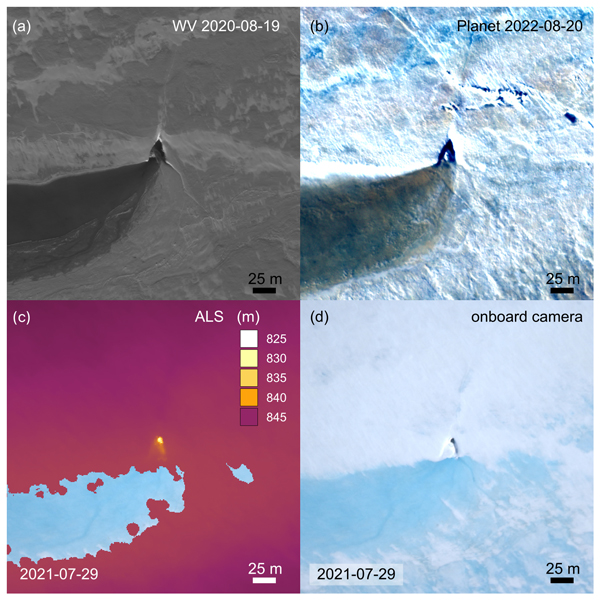
Angelika Humbert, Veit Helm, Ole Zeising, Niklas Neckel, Matthias H. Braun, Shfaqat Abbas Khan, Martin Rückamp, Holger Steeb, Julia Sohn, Matthias Bohnen, and Ralf Müller
The Cryosphere, 19, 3009–3032, https://doi.org/10.5194/tc-19-3009-2025, https://doi.org/10.5194/tc-19-3009-2025, 2025
Short summary
Short summary
We study the evolution of a massive lake on the Greenland Ice Sheet using satellite and airborne data and some modelling. The lake is emptying rapidly. Water flows to the glacier's base through cracks and triangular-shaped moulins that remain visible over the years. Some of them become reactivated. We find features inside the glacier that stem from drainage events with a width of even 1 km. These features are persistent over the years, although they are changing in shape.
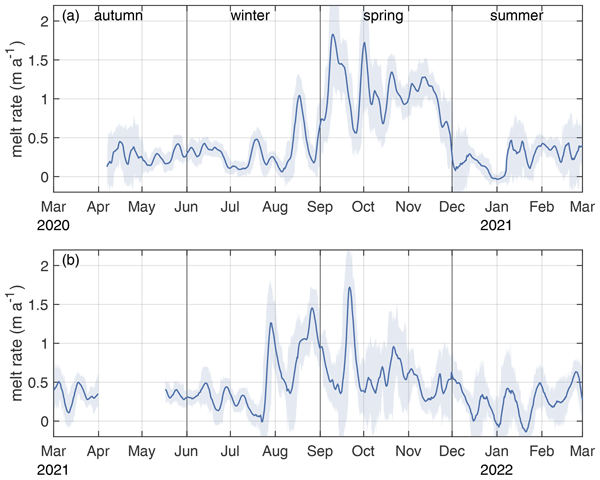
Ole Zeising, Tore Hattermann, Lars Kaleschke, Sophie Berger, Olaf Boebel, Reinhard Drews, M. Reza Ershadi, Tanja Fromm, Frank Pattyn, Daniel Steinhage, and Olaf Eisen
The Cryosphere, 19, 2837–2854, https://doi.org/10.5194/tc-19-2837-2025, https://doi.org/10.5194/tc-19-2837-2025, 2025
Short summary
Short summary
Basal melting of ice shelves impacts the mass loss of the Antarctic Ice Sheet. This study focuses on the Ekström Ice Shelf in East Antarctica, using multiyear data from an autonomous radar system. Results show a surprising seasonal pattern of high melt rates in winter and spring. The seasonalities of sea-ice growth and ocean density indicate that, in winter, dense water enhances plume activity and melt rates. Understanding these dynamics is crucial for improving future mass balance projections.
Katrina Lutz, Ilaria Tabone, Angelika Humbert, and Matthias Braun
The Cryosphere, 19, 2601–2614, https://doi.org/10.5194/tc-19-2601-2025, https://doi.org/10.5194/tc-19-2601-2025, 2025
Short summary
Short summary
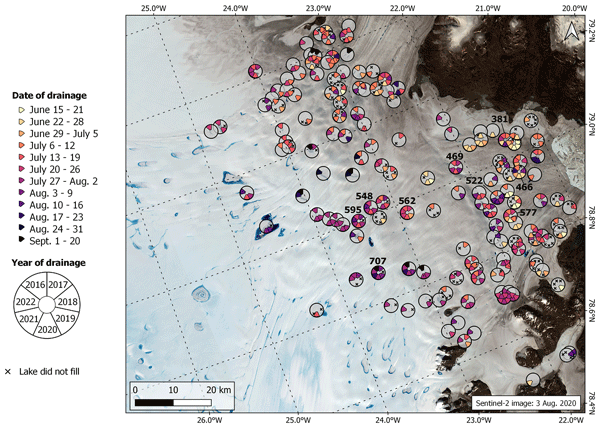
Supraglacial lakes develop from meltwater collecting on the surface of glaciers. These lakes can drain rapidly, discharging meltwater to the glacier bed. In this study, we assess the spatial and temporal distribution of rapid drainages in Northeast Greenland using optical satellite images. After comparing rapid drainage occurrence with several environmental and geophysical parameters, little indication of the influencing conditions for a rapid drainage was found.
Shfaqat A. Khan, Helene Seroussi, Mathieu Morlighem, William Colgan, Veit Helm, Gong Cheng, Danjal Berg, Valentina R. Barletta, Nicolaj K. Larsen, William Kochtitzky, Michiel van den Broeke, Kurt H. Kjær, Andy Aschwanden, Brice Noël, Jason E. Box, Joseph A. MacGregor, Robert S. Fausto, Kenneth D. Mankoff, Ian M. Howat, Kuba Oniszk, Dominik Fahrner, Anja Løkkegaard, Eigil Y. H. Lippert, Alicia Bråtner, and Javed Hassan
Earth Syst. Sci. Data, 17, 3047–3071, https://doi.org/10.5194/essd-17-3047-2025, https://doi.org/10.5194/essd-17-3047-2025, 2025
Short summary
Short summary
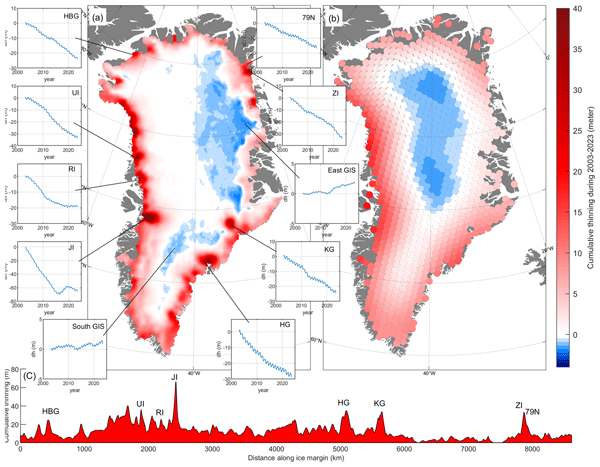
The surface elevation of the Greenland Ice Sheet is changing due to surface mass balance processes and ice dynamics, each exhibiting distinct spatiotemporal patterns. Here, we employ satellite and airborne altimetry data with fine spatial (1 km) and temporal (monthly) resolutions to document this spatiotemporal evolution from 2003 to 2023. This dataset of fine-resolution altimetry data in both space and time will support studies of ice mass loss and be useful for GIS ice sheet modeling.
Matthias O. Willen, Bert Wouters, Taco Broerse, Eric Buchta, and Veit Helm
The Cryosphere, 19, 2213–2227, https://doi.org/10.5194/tc-19-2213-2025, https://doi.org/10.5194/tc-19-2213-2025, 2025
Short summary
Short summary
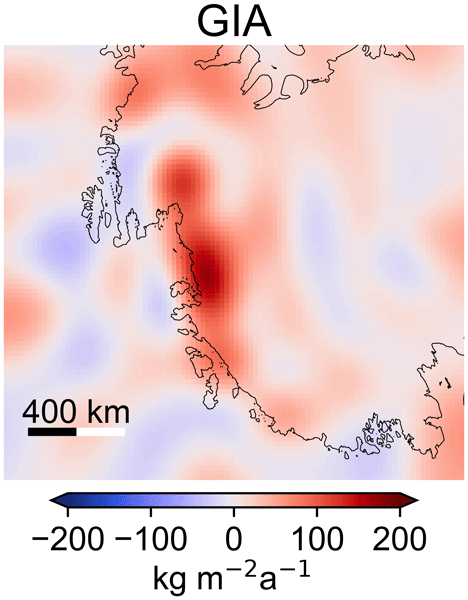
Collapse of the West Antarctic Ice Sheet in the Amundsen Sea Embayment is likely in the near future. Vertical uplift of bedrock due to glacial isostatic adjustment stabilizes the ice sheet and may delay its collapse. So far, only spatially and temporally sparse GPS measurements have been able to observe this bedrock motion. We have combined satellite data and quantified a region-wide bedrock motion that independently matches GPS measurements. This can improve ice sheet predictions.
Hameed Moqadam and Olaf Eisen
The Cryosphere, 19, 2159–2196, https://doi.org/10.5194/tc-19-2159-2025, https://doi.org/10.5194/tc-19-2159-2025, 2025
Short summary
Short summary
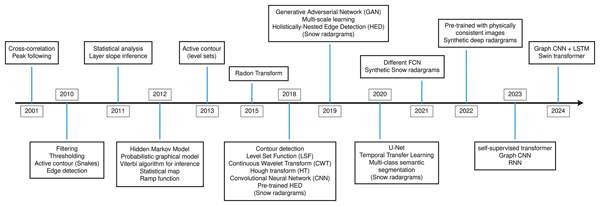
This is an overview of methodologies that have been applied to map the internal reflection horizons, or ice-layer boundaries, of ice sheets on Earth and other planets. We briefly explain radar applications in glaciology and the methods which have been used and published. There are summaries of the published work of the last 2 decades. Finally, we conclude by introducing the gaps and opportunities for further advancement in this field, and we present possible future directions.

Lea-Sophie Höyns, Thomas Kleiner, Andreas Rademacher, Martin Rückamp, Michael Wolovick, and Angelika Humbert
The Cryosphere, 19, 2133–2158, https://doi.org/10.5194/tc-19-2133-2025, https://doi.org/10.5194/tc-19-2133-2025, 2025
Short summary
Short summary
The sliding of glaciers over bedrock is influenced by water pressure in the underlying hydrological system and the roughness of the land underneath the glacier. We estimate this roughness through a modeling approach that optimizes this unknown parameter. Additionally, we simulate water pressure, enhancing the reliability of the computed drag at the ice sheet base. The resulting data are provided to other modelers and scientists conducting geophysical field observations.
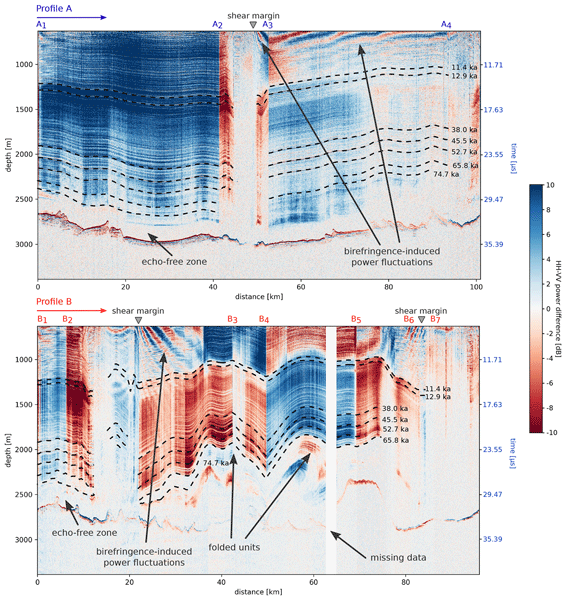
Tamara Annina Gerber, David A. Lilien, Niels F. Nymand, Daniel Steinhage, Olaf Eisen, and Dorthe Dahl-Jensen
The Cryosphere, 19, 1955–1971, https://doi.org/10.5194/tc-19-1955-2025, https://doi.org/10.5194/tc-19-1955-2025, 2025
Short summary
Short summary
This study examines how anisotropic scattering and birefringence affect radar signals in ice sheets. Using data from northeast Greenland, we show that anisotropic scattering – driven by subtle ice crystal orientation changes – dominates the azimuthal power response. We find a strong link between scattering strength, orientation, and stratigraphy. This suggests anisotropic scattering can reveal crystal fabric orientation and differentiate ice units from distinct climatic periods.
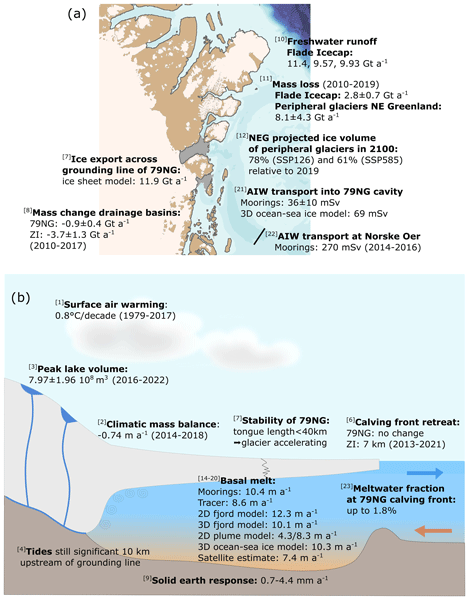
Torsten Kanzow, Angelika Humbert, Thomas Mölg, Mirko Scheinert, Matthias Braun, Hans Burchard, Francesca Doglioni, Philipp Hochreuther, Martin Horwath, Oliver Huhn, Maria Kappelsberger, Jürgen Kusche, Erik Loebel, Katrina Lutz, Ben Marzeion, Rebecca McPherson, Mahdi Mohammadi-Aragh, Marco Möller, Carolyne Pickler, Markus Reinert, Monika Rhein, Martin Rückamp, Janin Schaffer, Muhammad Shafeeque, Sophie Stolzenberger, Ralph Timmermann, Jenny Turton, Claudia Wekerle, and Ole Zeising
The Cryosphere, 19, 1789–1824, https://doi.org/10.5194/tc-19-1789-2025, https://doi.org/10.5194/tc-19-1789-2025, 2025
Short summary
Short summary
The Greenland Ice Sheet represents the second-largest contributor to global sea-level rise. We quantify atmosphere, ice and ocean processes related to the mass balance of glaciers in northeast Greenland, focusing on Greenland’s largest floating ice tongue, the 79° N Glacier. We find that together, the different in situ and remote sensing observations and model simulations reveal a consistent picture of a coupled atmosphere–ice sheet–ocean system that has entered a phase of major change.
Steven Franke, Daniel Steinhage, Veit Helm, Alexandra M. Zuhr, Julien A. Bodart, Olaf Eisen, and Paul Bons
The Cryosphere, 19, 1153–1180, https://doi.org/10.5194/tc-19-1153-2025, https://doi.org/10.5194/tc-19-1153-2025, 2025
Short summary
Short summary
The study presents internal reflection horizons (IRHs) over an area of 450 000 km² from western Dronning Maud Land, Antarctica, spanning 4.8–91 ka. Using radar and ice core data, nine IRHs were dated and correlated with volcanic events. The data enhance our understanding of the ice sheet's age–depth architecture, accumulation, and dynamics. The findings inform ice flow models and contribute to Antarctic-wide comparisons of IRHs, supporting efforts toward a 3D age–depth ice sheet model.
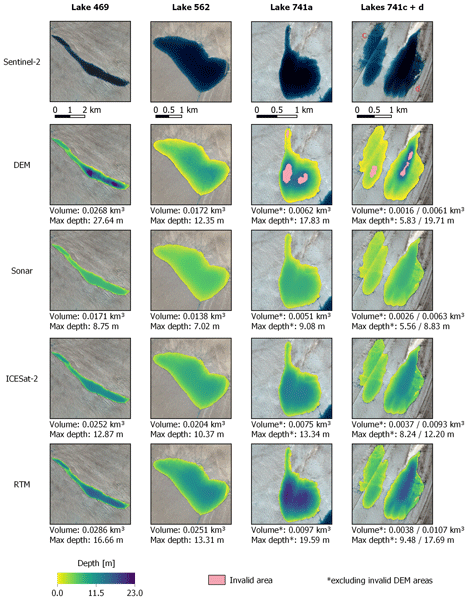
Katrina Lutz, Lily Bever, Christian Sommer, Thorsten Seehaus, Angelika Humbert, Mirko Scheinert, and Matthias Braun
The Cryosphere, 18, 5431–5449, https://doi.org/10.5194/tc-18-5431-2024, https://doi.org/10.5194/tc-18-5431-2024, 2024
Short summary
Short summary
The estimation of the amount of water found within supraglacial lakes is important for understanding how much water is lost from glaciers each year. Here, we develop two new methods for estimating supraglacial lake volume that can be easily applied on a large scale. Furthermore, we compare these methods to two previously developed methods in order to determine when it is best to use each method. Finally, three of these methods are applied to peak melt dates over an area in Northeast Greenland.
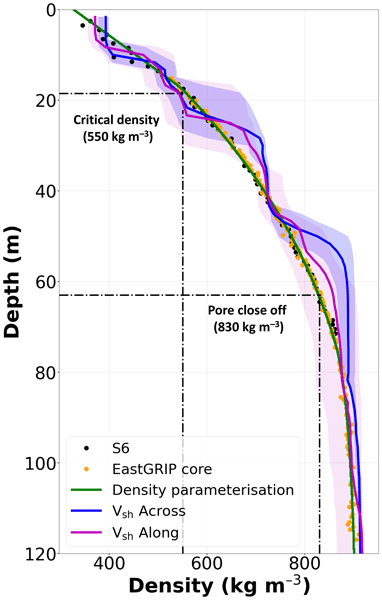
Emma Pearce, Dimitri Zigone, Coen Hofstede, Andreas Fichtner, Joachim Rimpot, Sune Olander Rasmussen, Johannes Freitag, and Olaf Eisen
The Cryosphere, 18, 4917–4932, https://doi.org/10.5194/tc-18-4917-2024, https://doi.org/10.5194/tc-18-4917-2024, 2024
Short summary
Short summary
Our study near EastGRIP camp in Greenland shows varying firn properties by direction (crucial for studying ice stream stability, structure, surface mass balance, and past climate conditions). We used dispersion curve analysis of Love and Rayleigh waves to show firn is nonuniform along and across the flow of an ice stream due to wind patterns, seasonal variability, and the proximity to the edge of the ice stream. This method better informs firn structure, advancing ice stream understanding.
Veit Helm, Alireza Dehghanpour, Ronny Hänsch, Erik Loebel, Martin Horwath, and Angelika Humbert
The Cryosphere, 18, 3933–3970, https://doi.org/10.5194/tc-18-3933-2024, https://doi.org/10.5194/tc-18-3933-2024, 2024
Short summary
Short summary
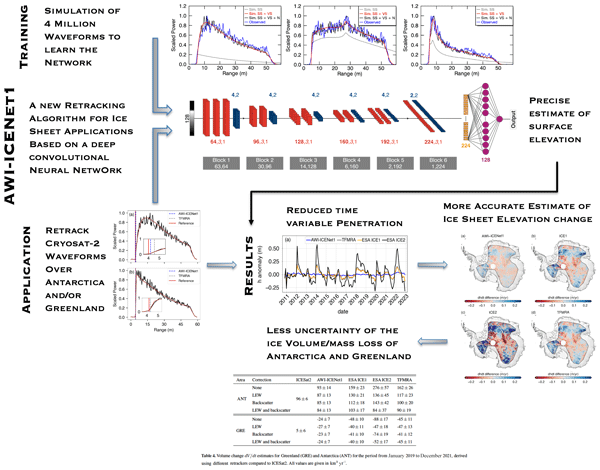
We present a new approach (AWI-ICENet1), based on a deep convolutional neural network, for analysing satellite radar altimeter measurements to accurately determine the surface height of ice sheets. Surface height estimates obtained with AWI-ICENet1 (along with related products, such as ice sheet height change and volume change) show improved and unbiased results compared to other products. This is important for the long-term monitoring of ice sheet mass loss and its impact on sea level rise.
Falk M. Oraschewski, Inka Koch, M. Reza Ershadi, Jonathan D. Hawkins, Olaf Eisen, and Reinhard Drews
The Cryosphere, 18, 3875–3889, https://doi.org/10.5194/tc-18-3875-2024, https://doi.org/10.5194/tc-18-3875-2024, 2024
Short summary
Short summary
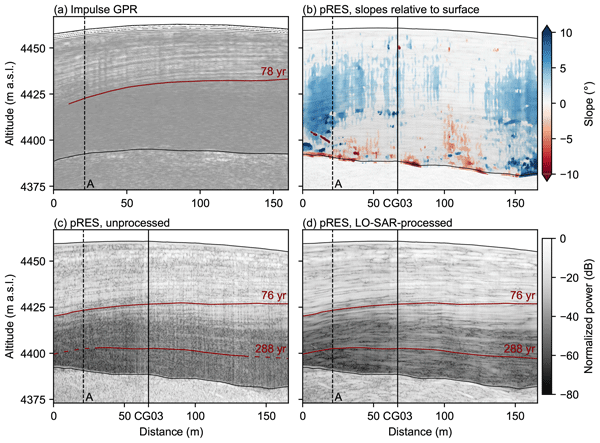
Mountain glaciers have a layered structure which contains information about past snow accumulation and ice flow. Using ground-penetrating radar instruments, the internal structure can be observed. The detection of layers in the deeper parts of a glacier is often difficult. Here, we present a new approach for imaging the englacial structure of an Alpine glacier (Colle Gnifetti, Switzerland and Italy) using a phase-sensitive radar that can detect reflection depth changes at sub-wavelength scales.
Erik Loebel, Mirko Scheinert, Martin Horwath, Angelika Humbert, Julia Sohn, Konrad Heidler, Charlotte Liebezeit, and Xiao Xiang Zhu
The Cryosphere, 18, 3315–3332, https://doi.org/10.5194/tc-18-3315-2024, https://doi.org/10.5194/tc-18-3315-2024, 2024
Short summary
Short summary
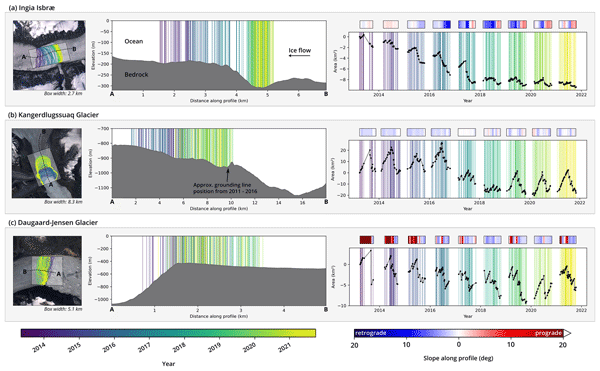
Comprehensive datasets of calving-front changes are essential for studying and modeling outlet glaciers. Current records are limited in temporal resolution due to manual delineation. We use deep learning to automatically delineate calving fronts for 23 glaciers in Greenland. Resulting time series resolve long-term, seasonal, and subseasonal patterns. We discuss the implications of our results and provide the cryosphere community with a data product and an implementation of our processing system.
Niko Schmidt, Angelika Humbert, and Thomas Slawig
Geosci. Model Dev., 17, 4943–4959, https://doi.org/10.5194/gmd-17-4943-2024, https://doi.org/10.5194/gmd-17-4943-2024, 2024
Short summary
Short summary
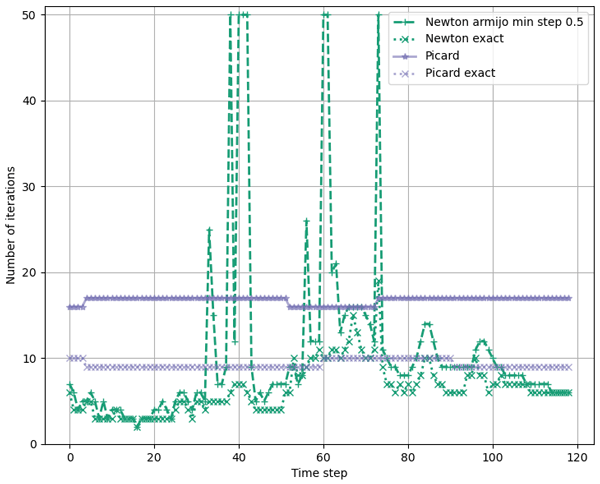
Future sea-level rise is of big significance for coastal regions. The melting and acceleration of glaciers plays a major role in sea-level change. Computer simulation of glaciers costs a lot of computational resources. In this publication, we test a new way of simulating glaciers. This approach produces the same results but has the advantage that it needs much less computation time. As simulations can be obtained with fewer computation resources, higher resolution and physics become affordable.
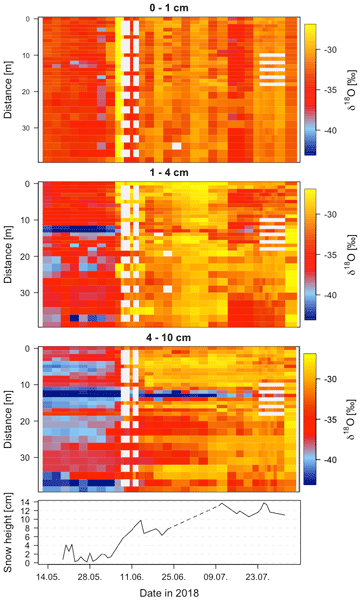
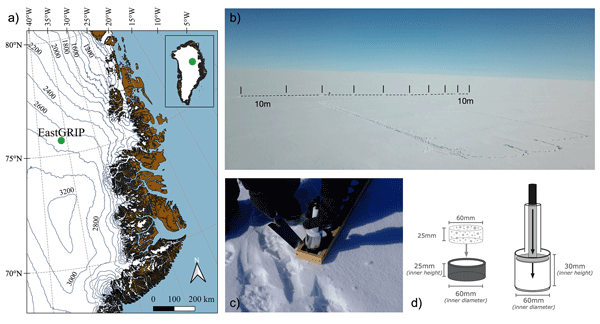
Alexandra M. Zuhr, Sonja Wahl, Hans Christian Steen-Larsen, Maria Hörhold, Hanno Meyer, Vasileios Gkinis, and Thomas Laepple
Earth Syst. Sci. Data, 16, 1861–1874, https://doi.org/10.5194/essd-16-1861-2024, https://doi.org/10.5194/essd-16-1861-2024, 2024
Short summary
Short summary
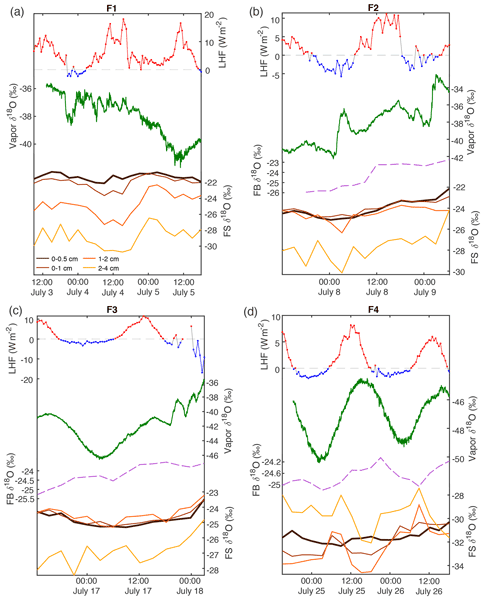
We present stable water isotope data from the accumulation zone of the Greenland ice sheet. A spatial sampling scheme covering 39 m and three depth layers was carried out between 14 May and 3 August 2018. The data suggest spatial and temporal variability related to meteorological conditions, such as wind-driven snow redistribution and vapour–snow exchange processes. The data can be used to study the formation of the stable water isotopes signal, which is seen as a climate proxy.
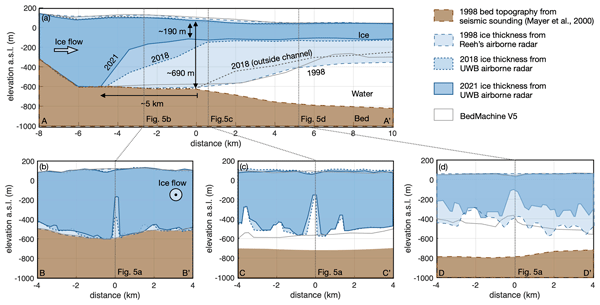
Ole Zeising, Niklas Neckel, Nils Dörr, Veit Helm, Daniel Steinhage, Ralph Timmermann, and Angelika Humbert
The Cryosphere, 18, 1333–1357, https://doi.org/10.5194/tc-18-1333-2024, https://doi.org/10.5194/tc-18-1333-2024, 2024
Short summary
Short summary
The 79° North Glacier in Greenland has experienced significant changes over the last decades. Due to extreme melt rates, the ice has thinned significantly in the vicinity of the grounding line, where a large subglacial channel has formed since 2010. We attribute these changes to warm ocean currents and increased subglacial discharge from surface melt. However, basal melting has decreased since 2018, indicating colder water inflow into the cavity below the glacier.
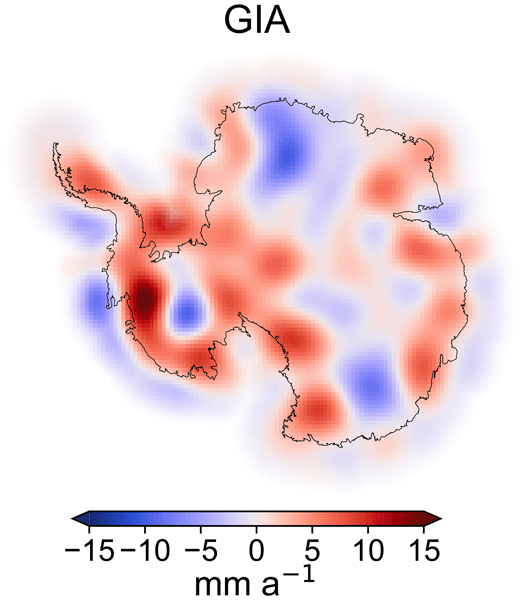
Matthias O. Willen, Martin Horwath, Eric Buchta, Mirko Scheinert, Veit Helm, Bernd Uebbing, and Jürgen Kusche
The Cryosphere, 18, 775–790, https://doi.org/10.5194/tc-18-775-2024, https://doi.org/10.5194/tc-18-775-2024, 2024
Short summary
Short summary
Shrinkage of the Antarctic ice sheet (AIS) leads to sea level rise. Satellite gravimetry measures AIS mass changes. We apply a new method that overcomes two limitations: low spatial resolution and large uncertainties due to the Earth's interior mass changes. To do so, we additionally include data from satellite altimetry and climate and firn modelling, which are evaluated in a globally consistent way with thoroughly characterized errors. The results are in better agreement with independent data.
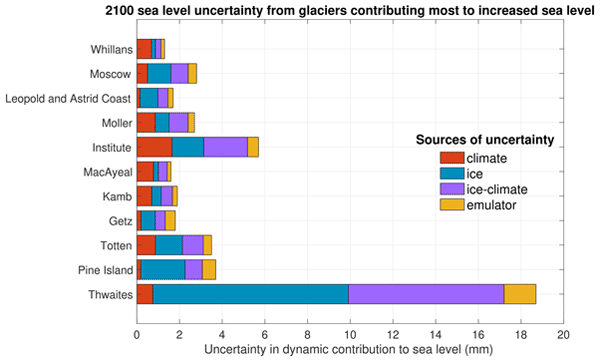
Hélène Seroussi, Vincent Verjans, Sophie Nowicki, Antony J. Payne, Heiko Goelzer, William H. Lipscomb, Ayako Abe-Ouchi, Cécile Agosta, Torsten Albrecht, Xylar Asay-Davis, Alice Barthel, Reinhard Calov, Richard Cullather, Christophe Dumas, Benjamin K. Galton-Fenzi, Rupert Gladstone, Nicholas R. Golledge, Jonathan M. Gregory, Ralf Greve, Tore Hattermann, Matthew J. Hoffman, Angelika Humbert, Philippe Huybrechts, Nicolas C. Jourdain, Thomas Kleiner, Eric Larour, Gunter R. Leguy, Daniel P. Lowry, Chistopher M. Little, Mathieu Morlighem, Frank Pattyn, Tyler Pelle, Stephen F. Price, Aurélien Quiquet, Ronja Reese, Nicole-Jeanne Schlegel, Andrew Shepherd, Erika Simon, Robin S. Smith, Fiammetta Straneo, Sainan Sun, Luke D. Trusel, Jonas Van Breedam, Peter Van Katwyk, Roderik S. W. van de Wal, Ricarda Winkelmann, Chen Zhao, Tong Zhang, and Thomas Zwinger
The Cryosphere, 17, 5197–5217, https://doi.org/10.5194/tc-17-5197-2023, https://doi.org/10.5194/tc-17-5197-2023, 2023
Short summary
Short summary
Mass loss from Antarctica is a key contributor to sea level rise over the 21st century, and the associated uncertainty dominates sea level projections. We highlight here the Antarctic glaciers showing the largest changes and quantify the main sources of uncertainty in their future evolution using an ensemble of ice flow models. We show that on top of Pine Island and Thwaites glaciers, Totten and Moscow University glaciers show rapid changes and a strong sensitivity to warmer ocean conditions.
Michael Wolovick, Angelika Humbert, Thomas Kleiner, and Martin Rückamp
The Cryosphere, 17, 5027–5060, https://doi.org/10.5194/tc-17-5027-2023, https://doi.org/10.5194/tc-17-5027-2023, 2023
Short summary
Short summary
The friction underneath ice sheets can be inferred from observed velocity at the top, but this inference requires smoothing. The selection of smoothing has been highly variable in the literature. Here we show how to rigorously select the best smoothing, and we show that the inferred friction converges towards the best knowable field as model resolution improves. We use this to learn about the best description of basal friction and to formulate recommended best practices for other modelers.
Ladina Steiner, Holger Schmithüsen, Jens Wickert, and Olaf Eisen
The Cryosphere, 17, 4903–4916, https://doi.org/10.5194/tc-17-4903-2023, https://doi.org/10.5194/tc-17-4903-2023, 2023
Short summary
Short summary
The present study illustrates the potential of a combined Global Navigation Satellite System reflectometry and refractometry (GNSS-RR) method for accurate, simultaneous, and continuous estimation of in situ snow accumulation, snow water equivalent, and snow density time series. The combined GNSS-RR method was successfully applied on a fast-moving, polar ice shelf. The combined GNSS-RR approach could be highly advantageous for a continuous quantification of ice sheet surface mass balances.
Alexandra M. Zuhr, Erik Loebel, Marek Muchow, Donovan Dennis, Luisa von Albedyll, Frigga Kruse, Heidemarie Kassens, Johanna Grabow, Dieter Piepenburg, Sören Brandt, Rainer Lehmann, Marlene Jessen, Friederike Krüger, Monika Kallfelz, Andreas Preußer, Matthias Braun, Thorsten Seehaus, Frank Lisker, Daniela Röhnert, and Mirko Scheinert
Polarforschung, 91, 73–80, https://doi.org/10.5194/polf-91-73-2023, https://doi.org/10.5194/polf-91-73-2023, 2023
Short summary
Short summary
Polar research is an interdisciplinary and multi-faceted field of research. Its diversity ranges from history to geology and geophysics to social sciences and education. This article provides insights into the different areas of German polar research. This was made possible by a seminar series, POLARSTUNDE, established in the summer of 2020 and organized by the German Society of Polar Research and the German National Committee of the Association of Polar Early Career Scientists (APECS Germany).
Zhuo Wang, Ailsa Chung, Daniel Steinhage, Frédéric Parrenin, Johannes Freitag, and Olaf Eisen
The Cryosphere, 17, 4297–4314, https://doi.org/10.5194/tc-17-4297-2023, https://doi.org/10.5194/tc-17-4297-2023, 2023
Short summary
Short summary
We combine radar-based observed internal layer stratigraphy of the ice sheet with a 1-D ice flow model in the Dome Fuji region. This results in maps of age and age density of the basal ice, the basal thermal conditions, and reconstructed accumulation rates. Based on modeled age we then identify four potential candidates for ice which is potentially 1.5 Myr old. Our map of basal thermal conditions indicates that melting prevails over the presence of stagnant ice in the study area.
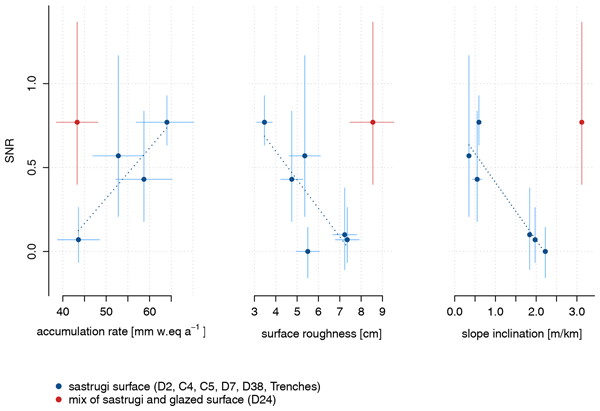
Nora Hirsch, Alexandra Zuhr, Thomas Münch, Maria Hörhold, Johannes Freitag, Remi Dallmayr, and Thomas Laepple
The Cryosphere, 17, 4207–4221, https://doi.org/10.5194/tc-17-4207-2023, https://doi.org/10.5194/tc-17-4207-2023, 2023
Short summary
Short summary
Stable water isotopes from firn cores provide valuable information on past climates, yet their utility is hampered by stratigraphic noise, i.e. the irregular deposition and wind-driven redistribution of snow. We found stratigraphic noise on the Antarctic Plateau to be related to the local accumulation rate, snow surface roughness and slope inclination, which can guide future decisions on sampling locations and thus increase the resolution of climate reconstructions from low-accumulation areas.
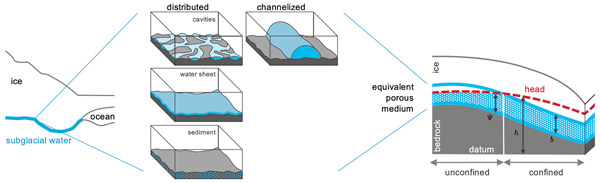
Yannic Fischler, Thomas Kleiner, Christian Bischof, Jeremie Schmiedel, Roiy Sayag, Raban Emunds, Lennart Frederik Oestreich, and Angelika Humbert
Geosci. Model Dev., 16, 5305–5322, https://doi.org/10.5194/gmd-16-5305-2023, https://doi.org/10.5194/gmd-16-5305-2023, 2023
Short summary
Short summary
Water underneath ice sheets affects the motion of glaciers. This study presents a newly developed code, CUAS-MPI, that simulates subglacial hydrology. It is designed for supercomputers and is hence a parallelized code. We measure the performance of this code for simulations of the entire Greenland Ice Sheet and find that the code works efficiently. Moreover, we validated the code to ensure the correctness of the solution. CUAS-MPI opens new possibilities for simulations of ice sheet hydrology.
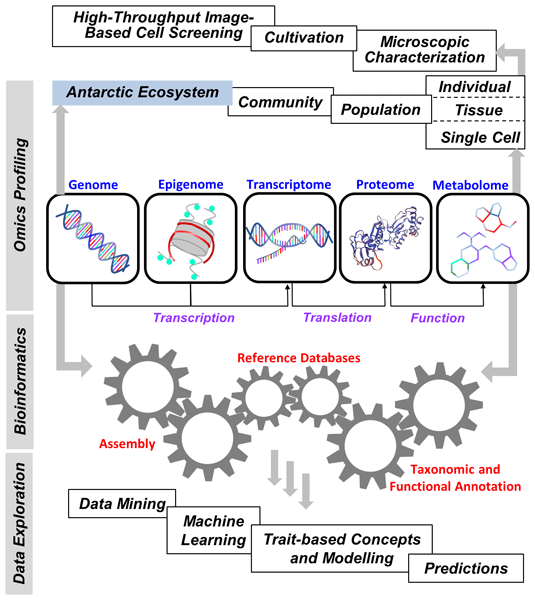
Angelika Graiff, Matthias Braun, Amelie Driemel, Jörg Ebbing, Hans-Peter Grossart, Tilmann Harder, Joseph I. Hoffman, Boris Koch, Florian Leese, Judith Piontek, Mirko Scheinert, Petra Quillfeldt, Jonas Zimmermann, and Ulf Karsten
Polarforschung, 91, 45–57, https://doi.org/10.5194/polf-91-45-2023, https://doi.org/10.5194/polf-91-45-2023, 2023
Short summary
Short summary
There are many approaches to better understanding Antarctic processes that generate very large data sets (
Antarctic big data). For these large data sets there is a pressing need for improved data acquisition, curation, integration, service, and application to support fundamental scientific research, and this article describes and evaluates the current status of big data in various Antarctic scientific disciplines, identifies current gaps, and provides solutions to fill these gaps.
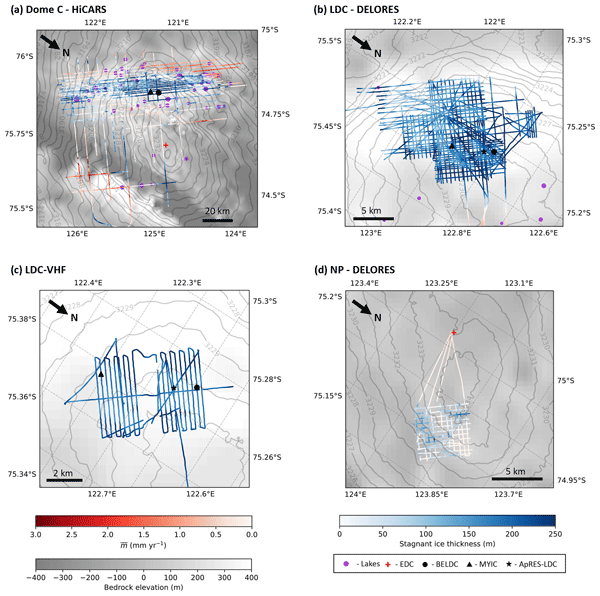
Ailsa Chung, Frédéric Parrenin, Daniel Steinhage, Robert Mulvaney, Carlos Martín, Marie G. P. Cavitte, David A. Lilien, Veit Helm, Drew Taylor, Prasad Gogineni, Catherine Ritz, Massimo Frezzotti, Charles O'Neill, Heinrich Miller, Dorthe Dahl-Jensen, and Olaf Eisen
The Cryosphere, 17, 3461–3483, https://doi.org/10.5194/tc-17-3461-2023, https://doi.org/10.5194/tc-17-3461-2023, 2023
Short summary
Short summary
We combined a numerical model with radar measurements in order to determine the age of ice in the Dome C region of Antarctica. Our results show that at the current ice core drilling sites on Little Dome C, the maximum age of the ice is almost 1.5 Ma. We also highlight a new potential drill site called North Patch with ice up to 2 Ma. Finally, we explore the nature of a stagnant ice layer at the base of the ice sheet which has been independently observed and modelled but is not well understood.
Alice C. Frémand, Peter Fretwell, Julien A. Bodart, Hamish D. Pritchard, Alan Aitken, Jonathan L. Bamber, Robin Bell, Cesidio Bianchi, Robert G. Bingham, Donald D. Blankenship, Gino Casassa, Ginny Catania, Knut Christianson, Howard Conway, Hugh F. J. Corr, Xiangbin Cui, Detlef Damaske, Volkmar Damm, Reinhard Drews, Graeme Eagles, Olaf Eisen, Hannes Eisermann, Fausto Ferraccioli, Elena Field, René Forsberg, Steven Franke, Shuji Fujita, Yonggyu Gim, Vikram Goel, Siva Prasad Gogineni, Jamin Greenbaum, Benjamin Hills, Richard C. A. Hindmarsh, Andrew O. Hoffman, Per Holmlund, Nicholas Holschuh, John W. Holt, Annika N. Horlings, Angelika Humbert, Robert W. Jacobel, Daniela Jansen, Adrian Jenkins, Wilfried Jokat, Tom Jordan, Edward King, Jack Kohler, William Krabill, Mette Kusk Gillespie, Kirsty Langley, Joohan Lee, German Leitchenkov, Carlton Leuschen, Bruce Luyendyk, Joseph MacGregor, Emma MacKie, Kenichi Matsuoka, Mathieu Morlighem, Jérémie Mouginot, Frank O. Nitsche, Yoshifumi Nogi, Ole A. Nost, John Paden, Frank Pattyn, Sergey V. Popov, Eric Rignot, David M. Rippin, Andrés Rivera, Jason Roberts, Neil Ross, Anotonia Ruppel, Dustin M. Schroeder, Martin J. Siegert, Andrew M. Smith, Daniel Steinhage, Michael Studinger, Bo Sun, Ignazio Tabacco, Kirsty Tinto, Stefano Urbini, David Vaughan, Brian C. Welch, Douglas S. Wilson, Duncan A. Young, and Achille Zirizzotti
Earth Syst. Sci. Data, 15, 2695–2710, https://doi.org/10.5194/essd-15-2695-2023, https://doi.org/10.5194/essd-15-2695-2023, 2023
Short summary
Short summary
This paper presents the release of over 60 years of ice thickness, bed elevation, and surface elevation data acquired over Antarctica by the international community. These data are a crucial component of the Antarctic Bedmap initiative which aims to produce a new map and datasets of Antarctic ice thickness and bed topography for the international glaciology and geophysical community.
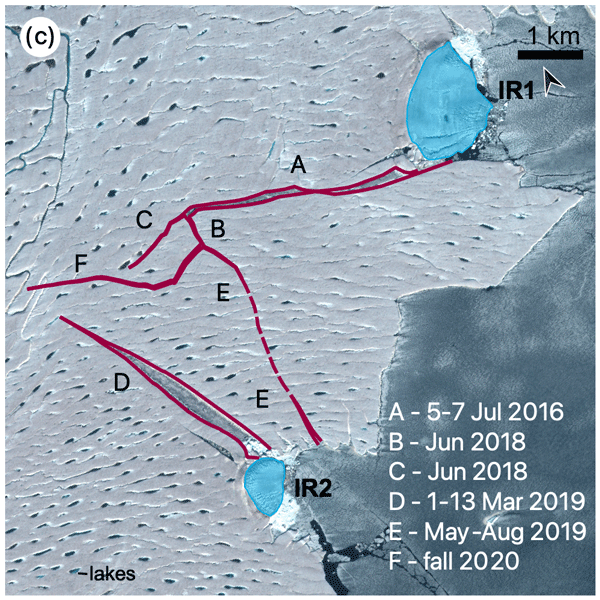
Angelika Humbert, Veit Helm, Niklas Neckel, Ole Zeising, Martin Rückamp, Shfaqat Abbas Khan, Erik Loebel, Jörg Brauchle, Karsten Stebner, Dietmar Gross, Rabea Sondershaus, and Ralf Müller
The Cryosphere, 17, 2851–2870, https://doi.org/10.5194/tc-17-2851-2023, https://doi.org/10.5194/tc-17-2851-2023, 2023
Short summary
Short summary
The largest floating glacier mass in Greenland, the 79° N Glacier, is showing signs of instability. We investigate how crack formation at the glacier's calving front has changed over the last decades by using satellite imagery and airborne data. The calving front is about to lose contact to stabilizing ice islands. Simulations show that the glacier will accelerate as a result of this, leading to an increase in ice discharge of more than 5.1 % if its calving front retreats by 46 %.
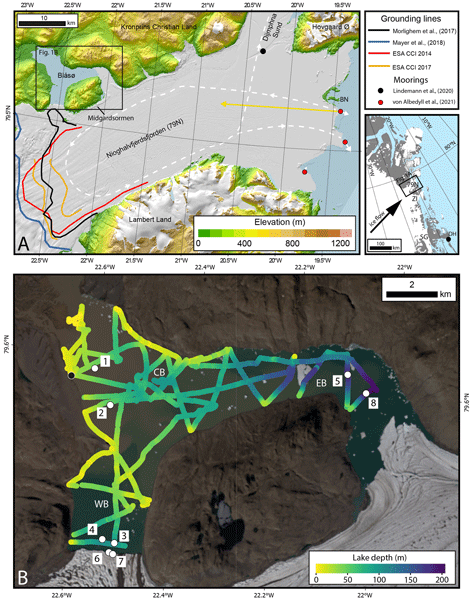
Michael J. Bentley, James A. Smith, Stewart S. R. Jamieson, Margaret R. Lindeman, Brice R. Rea, Angelika Humbert, Timothy P. Lane, Christopher M. Darvill, Jeremy M. Lloyd, Fiamma Straneo, Veit Helm, and David H. Roberts
The Cryosphere, 17, 1821–1837, https://doi.org/10.5194/tc-17-1821-2023, https://doi.org/10.5194/tc-17-1821-2023, 2023
Short summary
Short summary
The Northeast Greenland Ice Stream is a major outlet of the Greenland Ice Sheet. Some of its outlet glaciers and ice shelves have been breaking up and retreating, with inflows of warm ocean water identified as the likely reason. Here we report direct measurements of warm ocean water in an unusual lake that is connected to the ocean beneath the ice shelf in front of the 79° N Glacier. This glacier has not yet shown much retreat, but the presence of warm water makes future retreat more likely.
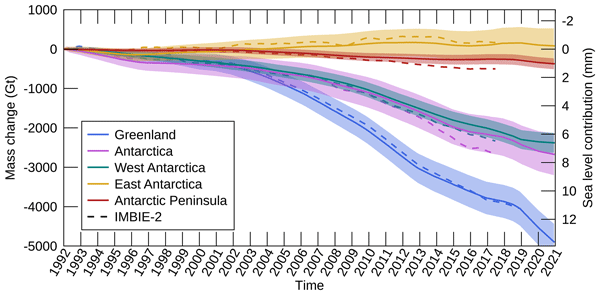
Inès N. Otosaka, Andrew Shepherd, Erik R. Ivins, Nicole-Jeanne Schlegel, Charles Amory, Michiel R. van den Broeke, Martin Horwath, Ian Joughin, Michalea D. King, Gerhard Krinner, Sophie Nowicki, Anthony J. Payne, Eric Rignot, Ted Scambos, Karen M. Simon, Benjamin E. Smith, Louise S. Sørensen, Isabella Velicogna, Pippa L. Whitehouse, Geruo A, Cécile Agosta, Andreas P. Ahlstrøm, Alejandro Blazquez, William Colgan, Marcus E. Engdahl, Xavier Fettweis, Rene Forsberg, Hubert Gallée, Alex Gardner, Lin Gilbert, Noel Gourmelen, Andreas Groh, Brian C. Gunter, Christopher Harig, Veit Helm, Shfaqat Abbas Khan, Christoph Kittel, Hannes Konrad, Peter L. Langen, Benoit S. Lecavalier, Chia-Chun Liang, Bryant D. Loomis, Malcolm McMillan, Daniele Melini, Sebastian H. Mernild, Ruth Mottram, Jeremie Mouginot, Johan Nilsson, Brice Noël, Mark E. Pattle, William R. Peltier, Nadege Pie, Mònica Roca, Ingo Sasgen, Himanshu V. Save, Ki-Weon Seo, Bernd Scheuchl, Ernst J. O. Schrama, Ludwig Schröder, Sebastian B. Simonsen, Thomas Slater, Giorgio Spada, Tyler C. Sutterley, Bramha Dutt Vishwakarma, Jan Melchior van Wessem, David Wiese, Wouter van der Wal, and Bert Wouters
Earth Syst. Sci. Data, 15, 1597–1616, https://doi.org/10.5194/essd-15-1597-2023, https://doi.org/10.5194/essd-15-1597-2023, 2023
Short summary
Short summary
By measuring changes in the volume, gravitational attraction, and ice flow of Greenland and Antarctica from space, we can monitor their mass gain and loss over time. Here, we present a new record of the Earth’s polar ice sheet mass balance produced by aggregating 50 satellite-based estimates of ice sheet mass change. This new assessment shows that the ice sheets have lost (7.5 x 10¹²) t of ice between 1992 and 2020, contributing 21 mm to sea level rise.
Romilly Harris Stuart, Anne-Katrine Faber, Sonja Wahl, Maria Hörhold, Sepp Kipfstuhl, Kristian Vasskog, Melanie Behrens, Alexandra M. Zuhr, and Hans Christian Steen-Larsen
The Cryosphere, 17, 1185–1204, https://doi.org/10.5194/tc-17-1185-2023, https://doi.org/10.5194/tc-17-1185-2023, 2023
Short summary
Short summary
This empirical study uses continuous daily measurements from the Greenland Ice Sheet to document changes in surface snow properties. Consistent changes in snow isotopic composition are observed in the absence of deposition due to surface processes, indicating the isotopic signal of deposited precipitation is not always preserved. Our observations have potential implications for the interpretation of water isotopes in ice cores – historically assumed to reflect isotopic composition at deposition.
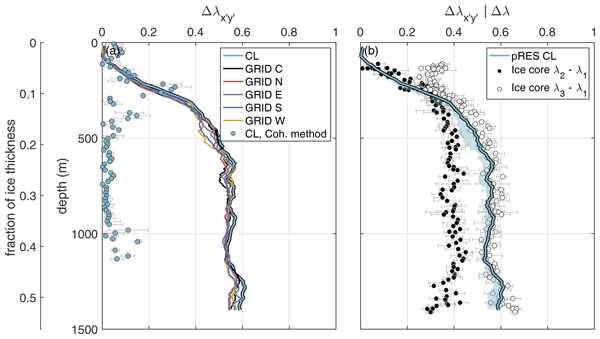
Ole Zeising, Tamara Annina Gerber, Olaf Eisen, M. Reza Ershadi, Nicolas Stoll, Ilka Weikusat, and Angelika Humbert
The Cryosphere, 17, 1097–1105, https://doi.org/10.5194/tc-17-1097-2023, https://doi.org/10.5194/tc-17-1097-2023, 2023
Short summary
Short summary
The flow of glaciers and ice streams is influenced by crystal fabric orientation. Besides sparse ice cores, these can be investigated by radar measurements. Here, we present an improved method which allows us to infer the horizontal fabric asymmetry using polarimetric phase-sensitive radar data. A validation of the method on a deep ice core from the Greenland Ice Sheet shows an excellent agreement, which is a large improvement over previously used methods.

Lena Nicola, Erik Loebel, and Alexandra M. Zuhr
Polarforschung, 90, 81–84, https://doi.org/10.5194/polf-90-81-2022, https://doi.org/10.5194/polf-90-81-2022, 2022
Short summary
Short summary
To facilitate the search for funding within Germany and internationally, APECS Germany has started to host a list of grant, fellowship and other funding opportunities at https://apecs-germany.de/funding/. In our article, we present our new website while describing the different stages of the quest to find funding and to highlight best practices for, for example, writing grant proposals.
Steven Franke, Alfons Eckstaller, Tim Heitland, Thomas Schaefer, and Jölund Asseng
Polarforschung, 90, 65–79, https://doi.org/10.5194/polf-90-65-2022, https://doi.org/10.5194/polf-90-65-2022, 2022
Short summary
Short summary
For over 45 years, teams composed of scientists, technicians, doctors, and cooks have been wintering in Antarctica in the service of German Antarctic research. They thus form a cornerstone of long-term scientific measurements in this remote and unique place with regard to future scientific investigations. In this article, we highlight the research being conducted at the permanently crewed Neumayer Station III and its predecessors and the role of the overwinterers in this research endeavour.
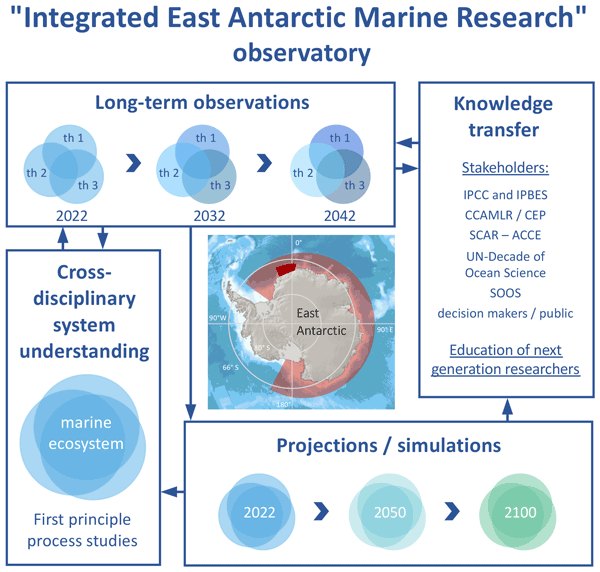
Julian Gutt, Stefanie Arndt, David Keith Alan Barnes, Horst Bornemann, Thomas Brey, Olaf Eisen, Hauke Flores, Huw Griffiths, Christian Haas, Stefan Hain, Tore Hattermann, Christoph Held, Mario Hoppema, Enrique Isla, Markus Janout, Céline Le Bohec, Heike Link, Felix Christopher Mark, Sebastien Moreau, Scarlett Trimborn, Ilse van Opzeeland, Hans-Otto Pörtner, Fokje Schaafsma, Katharina Teschke, Sandra Tippenhauer, Anton Van de Putte, Mia Wege, Daniel Zitterbart, and Dieter Piepenburg
Biogeosciences, 19, 5313–5342, https://doi.org/10.5194/bg-19-5313-2022, https://doi.org/10.5194/bg-19-5313-2022, 2022
Short summary
Short summary
Long-term ecological observations are key to assess, understand and predict impacts of environmental change on biotas. We present a multidisciplinary framework for such largely lacking investigations in the East Antarctic Southern Ocean, combined with case studies, experimental and modelling work. As climate change is still minor here but is projected to start soon, the timely implementation of this framework provides the unique opportunity to document its ecological impacts from the very onset.
Vjeran Višnjević, Reinhard Drews, Clemens Schannwell, Inka Koch, Steven Franke, Daniela Jansen, and Olaf Eisen
The Cryosphere, 16, 4763–4777, https://doi.org/10.5194/tc-16-4763-2022, https://doi.org/10.5194/tc-16-4763-2022, 2022
Short summary
Short summary
We present a simple way to model the internal layers of an ice shelf and apply the method to the Roi Baudouin Ice Shelf in East Antarctica. Modeled results are compared to measurements obtained by radar. We distinguish between ice directly formed on the shelf and ice transported from the ice sheet, and we map the spatial changes in the volume of the locally accumulated ice. In this context, we discuss the sensitivity of the ice shelf to future changes in surface accumulation and basal melt.
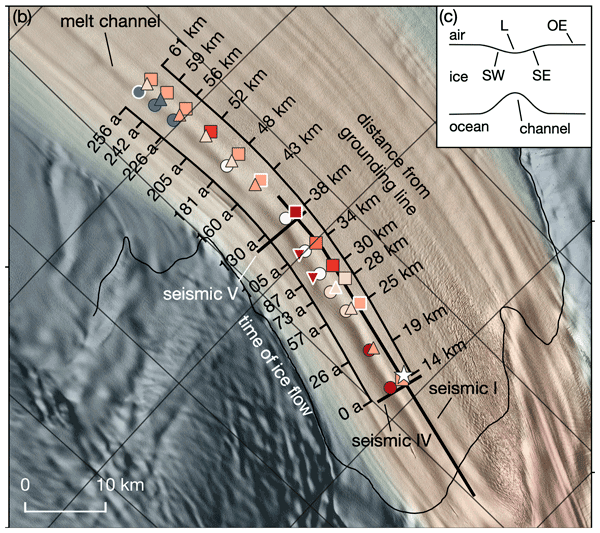
Angelika Humbert, Julia Christmann, Hugh F. J. Corr, Veit Helm, Lea-Sophie Höyns, Coen Hofstede, Ralf Müller, Niklas Neckel, Keith W. Nicholls, Timm Schultz, Daniel Steinhage, Michael Wolovick, and Ole Zeising
The Cryosphere, 16, 4107–4139, https://doi.org/10.5194/tc-16-4107-2022, https://doi.org/10.5194/tc-16-4107-2022, 2022
Short summary
Short summary
Ice shelves are normally flat structures that fringe the Antarctic continent. At some locations they have channels incised into their underside. On Filchner Ice Shelf, such a channel is more than 50 km long and up to 330 m high. We conducted field measurements of basal melt rates and found a maximum of 2 m yr−1. Simulations represent the geometry evolution of the channel reasonably well. There is no reason to assume that this type of melt channel is destabilizing ice shelves.
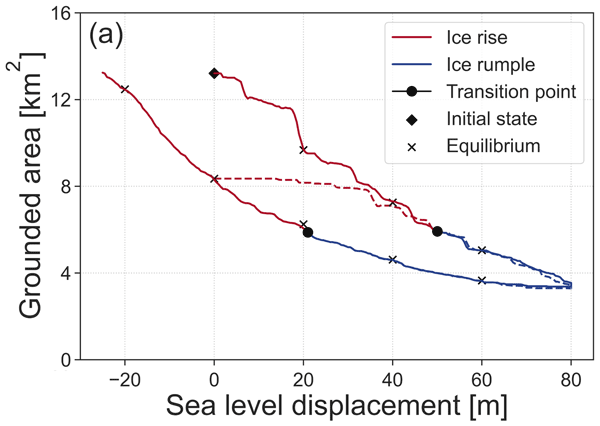
A. Clara J. Henry, Reinhard Drews, Clemens Schannwell, and Vjeran Višnjević
The Cryosphere, 16, 3889–3905, https://doi.org/10.5194/tc-16-3889-2022, https://doi.org/10.5194/tc-16-3889-2022, 2022
Short summary
Short summary
We used a 3D, idealised model to study features in coastal Antarctica called ice rises and ice rumples. These features regulate the rate of ice flow into the ocean. We show that when sea level is raised or lowered, the size of these features and the ice flow pattern can change. We find that the features depend on the ice history and do not necessarily fully recover after an equal increase and decrease in sea level. This shows that it is important to initialise models with accurate ice geometry.
Alfons Eckstaller, Jölund Asseng, Erich Lippmann, and Steven Franke
Geosci. Instrum. Method. Data Syst., 11, 235–245, https://doi.org/10.5194/gi-11-235-2022, https://doi.org/10.5194/gi-11-235-2022, 2022
Short summary
Short summary
We present a mobile and self-sufficient seismometer station concept for operation in polar regions. The energy supply can be adapted as required using the modular cascading of battery boxes, wind generators, solar cells, or backup batteries, which enables optimum use of limited resources. Our system concept is not limited to the applications using seismological stations. It is a suitable system for managing the power supply of all types of self-sufficient measuring systems in polar regions.

Astrid Oetting, Emma C. Smith, Jan Erik Arndt, Boris Dorschel, Reinhard Drews, Todd A. Ehlers, Christoph Gaedicke, Coen Hofstede, Johann P. Klages, Gerhard Kuhn, Astrid Lambrecht, Andreas Läufer, Christoph Mayer, Ralf Tiedemann, Frank Wilhelms, and Olaf Eisen
The Cryosphere, 16, 2051–2066, https://doi.org/10.5194/tc-16-2051-2022, https://doi.org/10.5194/tc-16-2051-2022, 2022
Short summary
Short summary
This study combines a variety of geophysical measurements in front of and beneath the Ekström Ice Shelf in order to identify and interpret geomorphological evidences of past ice sheet flow, extent and retreat.
The maximal extent of grounded ice in this region was 11 km away from the continental shelf break.
The thickness of palaeo-ice on the calving front around the LGM was estimated to be at least 305 to 320 m.
We provide essential boundary conditions for palaeo-ice-sheet models.
Yannic Fischler, Martin Rückamp, Christian Bischof, Vadym Aizinger, Mathieu Morlighem, and Angelika Humbert
Geosci. Model Dev., 15, 3753–3771, https://doi.org/10.5194/gmd-15-3753-2022, https://doi.org/10.5194/gmd-15-3753-2022, 2022
Short summary
Short summary
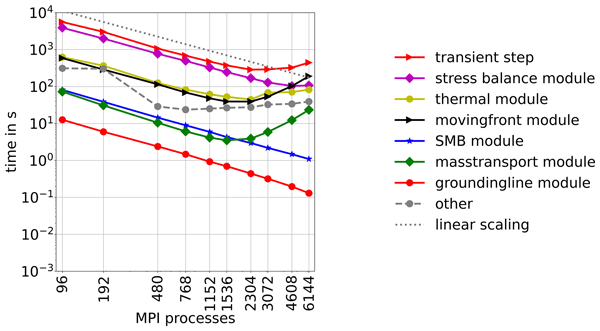
Ice sheet models are used to simulate the changes of ice sheets in future but are currently often run in coarse resolution and/or with neglecting important physics to make them affordable in terms of computational costs. We conducted a study simulating the Greenland Ice Sheet in high resolution and adequate physics to test where the ISSM ice sheet code is using most time and what could be done to improve its performance for future computer architectures that allow massive parallel computing.
M. Reza Ershadi, Reinhard Drews, Carlos Martín, Olaf Eisen, Catherine Ritz, Hugh Corr, Julia Christmann, Ole Zeising, Angelika Humbert, and Robert Mulvaney
The Cryosphere, 16, 1719–1739, https://doi.org/10.5194/tc-16-1719-2022, https://doi.org/10.5194/tc-16-1719-2022, 2022
Short summary
Short summary
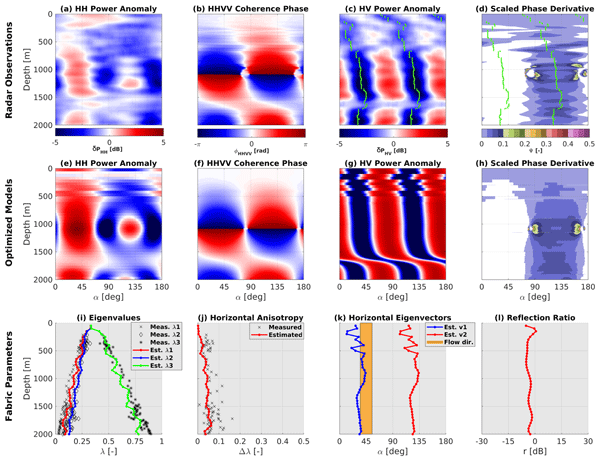
Radio waves transmitted through ice split up and inform us about the ice sheet interior and orientation of single ice crystals. This can be used to infer how ice flows and improve projections on how it will evolve in the future. Here we used an inverse approach and developed a new algorithm to infer ice properties from observed radar data. We applied this technique to the radar data obtained at two EPICA drilling sites, where ice cores were used to validate our results.
Martin Rückamp, Thomas Kleiner, and Angelika Humbert
The Cryosphere, 16, 1675–1696, https://doi.org/10.5194/tc-16-1675-2022, https://doi.org/10.5194/tc-16-1675-2022, 2022
Short summary
Short summary
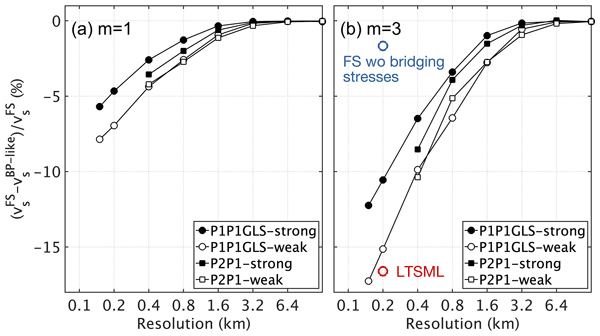
We present a comparative modelling study between the full-Stokes (FS) and Blatter–Pattyn (BP) approximation applied to the Northeast Greenland Ice Stream. Both stress regimes are implemented in one single ice sheet code to eliminate numerical issues. The simulations unveil minor differences in the upper ice stream but become considerable at the grounding line of the 79° North Glacier. Model differences are stronger for a power-law friction than a linear friction law.
Ole Zeising, Daniel Steinhage, Keith W. Nicholls, Hugh F. J. Corr, Craig L. Stewart, and Angelika Humbert
The Cryosphere, 16, 1469–1482, https://doi.org/10.5194/tc-16-1469-2022, https://doi.org/10.5194/tc-16-1469-2022, 2022
Short summary
Short summary
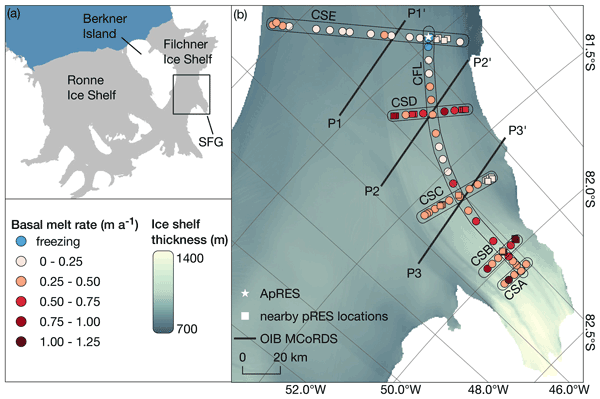
Remote-sensing-derived basal melt rates of ice shelves are of great importance due to their capability to cover larger areas. We performed in situ measurements with a phase-sensitive radar on the southern Filchner Ice Shelf, showing moderate melt rates and low small-scale spatial variability. The comparison with remote-sensing-based melt rates revealed large differences caused by the estimation of vertical strain rates from remote sensing velocity fields that modern fields can overcome.
Steven Franke, Daniela Jansen, Tobias Binder, John D. Paden, Nils Dörr, Tamara A. Gerber, Heinrich Miller, Dorthe Dahl-Jensen, Veit Helm, Daniel Steinhage, Ilka Weikusat, Frank Wilhelms, and Olaf Eisen
Earth Syst. Sci. Data, 14, 763–779, https://doi.org/10.5194/essd-14-763-2022, https://doi.org/10.5194/essd-14-763-2022, 2022
Short summary
Short summary
The Northeast Greenland Ice Stream (NEGIS) is the largest ice stream in Greenland. In order to better understand the past and future dynamics of the NEGIS, we present a high-resolution airborne radar data set (EGRIP-NOR-2018) for the onset region of the NEGIS. The survey area is centered at the location of the drill site of the East Greenland Ice-Core Project (EastGRIP), and radar profiles cover both shear margins and are aligned parallel to several flow lines.

Timm Schultz, Ralf Müller, Dietmar Gross, and Angelika Humbert
The Cryosphere, 16, 143–158, https://doi.org/10.5194/tc-16-143-2022, https://doi.org/10.5194/tc-16-143-2022, 2022
Short summary
Short summary
Firn is the interstage product between snow and ice. Simulations describing the process of firn densification are used in the context of estimating mass changes of the ice sheets and past climate reconstructions. The first stage of firn densification takes place in the upper few meters of the firn column. We investigate how well a material law describing the process of grain boundary sliding works for the numerical simulation of firn densification in this stage.
Abigail G. Hughes, Sonja Wahl, Tyler R. Jones, Alexandra Zuhr, Maria Hörhold, James W. C. White, and Hans Christian Steen-Larsen
The Cryosphere, 15, 4949–4974, https://doi.org/10.5194/tc-15-4949-2021, https://doi.org/10.5194/tc-15-4949-2021, 2021
Short summary
Short summary
Water isotope records in Greenland and Antarctic ice cores are a valuable proxy for paleoclimate reconstruction and are traditionally thought to primarily reflect precipitation input. However,
post-depositional processes are hypothesized to contribute to the isotope climate signal. In this study we use laboratory experiments, field experiments, and modeling to show that sublimation and vapor–snow isotope exchange can rapidly influence the isotopic composition of the snowpack.
Alexandra M. Zuhr, Thomas Münch, Hans Christian Steen-Larsen, Maria Hörhold, and Thomas Laepple
The Cryosphere, 15, 4873–4900, https://doi.org/10.5194/tc-15-4873-2021, https://doi.org/10.5194/tc-15-4873-2021, 2021
Short summary
Short summary
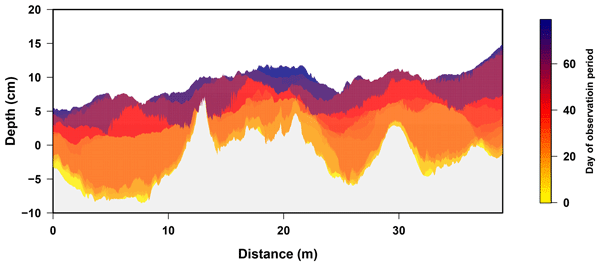
Firn and ice cores are used to infer past temperatures. However, the imprint of the climatic signal in stable water isotopes is influenced by depositional modifications. We present and use a photogrammetry structure-from-motion approach and find variability in the amount, the timing, and the location of snowfall. Depositional modifications of the surface are observed, leading to mixing of snow from different snowfall events and spatial locations and thus creating noise in the proxy record.
Cited articles
Alfred-Wegener-Institut, Helmholtz-Zentrum für Polar- und Meeresforschung: Neumayer III and Kohnen Station in Antarctica operated by the Alfred Wegener Institute, Journal of Large-Scale Research Facilities JLSRF, 2, 85, https://doi.org/10.17815/jlsrf-2-152, 2016a. a
Alfred-Wegener-Institut, Helmholtz-Zentrum für Polar- und Meeresforschung: Polar aircraft Polar5 and Polar6 operated by the Alfred Wegener Institute, Journal of Large-Scale Research Facilities JLSRF, 2, 87, https://doi.org/10.17815/jlsrf-2-153, 2016b. a, b
Anschütz, H., Eisen, O., Rack, W., and Scheinert, M.: Periodic surface features in coastal East Antarctica, Geophys. Res. Lett., 33, https://doi.org/10.1029/2006gl027871, 2006. a
Anschütz, H., Steinhage, D., Eisen, O., Oerter, H., Horwath, M., and Ruth, U.: Small-scale spatio-temporal characteristics of accumulation rates in western Dronning Maud Land, Antarctica, J. Glaciol., 54, 315–323, https://doi.org/10.3189/002214308784886243, 2008. a
Arenas-Pingarrón, Á., Corr, H. F. J., Robinson, C., Jordan, T. A., and Brennan, P. V.: Polarimetric airborne scientific instrument, mark 2, an ice-sounding airborne synthetic aperture radar for subglacial 3D imagery, IET Radar Sonar Nav., 17, 1391–1404, https://doi.org/10.1049/rsn2.12428, 2023. a
Arnold, E., Leuschen, C., Rodriguez-Morales, F., Li, J., Paden, J., Hale, R., and Keshmiri, S.: CReSIS airborne radars and platforms for ice and snow sounding, Ann. Glaciol., 61, 58–67, https://doi.org/10.1017/aog.2019.37, 2020. a
Bamber, J. L., Griggs, J. A., Hurkmans, R. T. W. L., Dowdeswell, J. A., Gogineni, S. P., Howat, I., Mouginot, J., Paden, J., Palmer, S., Rignot, E., and Steinhage, D.: A new bed elevation dataset for Greenland, The Cryosphere, 7, 499–510, https://doi.org/10.5194/tc-7-499-2013, 2013. a
Bindschadler, R., Vornberger, P., Fleming, A., Fox, A., Mullins, J., Binnie, D., Paulsen, S. J., Granneman, B., and Gorodetzky, D.: The Landsat Image Mosaic of Antarctica, Remote Sens. Environ., 112, 4214–4226, https://doi.org/10.1016/j.rse.2008.07.006, 2008. a
Bingham, R. G., Rippin, D. M., Karlsson, N. B., Corr, H. F. J., Ferraccioli, F., Jordan, T. A., Brocq, A. M. L., Rose, K. C., Ross, N., and Siegert, M. J.: Ice-flow structure and ice dynamic changes in the Weddell Sea sector of West Antarctica from radar-imaged internal layering, J. Geophys. Res.-Earth Surf., 120, 655–670, https://doi.org/10.1002/2014jf003291, 2015. a
Bingham, R. G., Bodart, J. A., Cavitte, M. G. P., Chung, A., Sanderson, R. J., Sutter, J. C. R., Eisen, O., Karlsson, N. B., MacGregor, J. A., Ross, N., Young, D. A., Ashmore, D. W., Born, A., Chu, W., Cui, X., Drews, R., Franke, S., Goel, V., Goodge, J. W., Henry, A. C. J., Hermant, A., Hills, B. H., Holschuh, N., Koutnik, M. R., Leysinger Vieli, G. J.-M. C., MacKie, E. J., Mantelli, E., Martín, C., Ng, F. S. L., Oraschewski, F. M., Napoleoni, F., Parrenin, F., Popov, S. V., Rieckh, T., Schlegel, R., Schroeder, D. M., Siegert, M. J., Tang, X., Teisberg, T. O., Winter, K., Yan, S., Davis, H., Dow, C. F., Fudge, T. J., Jordan, T. A., Kulessa, B., Matsuoka, K., Nyqvist, C. J., Rahnemoonfar, M., Siegfried, M. R., Singh, S., Višnjević, V., Zamora, R., and Zuhr, A.: Review article: AntArchitecture – building an age–depth model from Antarctica's radiostratigraphy to explore ice-sheet evolution, The Cryosphere, 19, 4611–4655, https://doi.org/10.5194/tc-19-4611-2025, 2025. a, b, c, d, e
Bodart, J. A., Bingham, R. G., Ashmore, D. W., Karlsson, N. B., Hein, A. S., and Vaughan, D. G.: Age-Depth Stratigraphy of Pine Island Glacier Inferred From Airborne Radar and Ice-Core Chronology, J. Geophys. Res.-Earth Surf., 126, https://doi.org/10.1029/2020jf005927, 2021. a
Bodart, J. A., Višnjević, V., Franke, S., Helm, V., Eisen, O., Hermant, A., Zuhr, A. M., Steinhage, D., and Sutter, J. C. R.: Radar isochrones as constraints on paleo–ice-sheet model simulations in two off-divide regions of East Antarctica, The Cryosphere, 20, 1379–1404, https://doi.org/10.5194/tc-20-1379-2026, 2026. a, b, c, d, e, f
Bons, P. D., Jansen, D., Mundel, F., Bauer, C. C., Binder, T., Eisen, O., Jessell, M. W., Llorens, M.-G., Steinbach, F., Steinhage, D., and Weikusat, I.: Converging flow and anisotropy cause large-scale folding in Greenland's ice sheet, Nat. Commun., 7, 11427, https://doi.org/10.1038/ncomms11427, 2016. a
Bons, P. D., de Riese, T., Franke, S., Llorens, M.-G., Sachau, T., Stoll, N., Weikusat, I., Westhoff, J., and Zhang, Y.: Comment on “Exceptionally high heat flux needed to sustain the Northeast Greenland Ice Stream” by Smith-Johnsen et al. (2020), The Cryosphere, 15, 2251–2254, https://doi.org/10.5194/tc-15-2251-2021, 2021. a
Bons, P. D., Hu, Y., Llorens, M.-G., Franke, S., Stoll, N., Weikusat, I., Westhoff, J., and Zhang, Y.: Folding due to anisotropy in ice, from drill-core-scale cloudy bands to km-scale internal reflection horizons, The Cryosphere, 19, 5095–5109, https://doi.org/10.5194/tc-19-5095-2025, 2025. a, b
Callens, D., Matsuoka, K., Steinhage, D., Smith, B., Witrant, E., and Pattyn, F.: Transition of flow regime along a marine-terminating outlet glacier in East Antarctica, The Cryosphere, 8, 867–875, https://doi.org/10.5194/tc-8-867-2014, 2014. a
Carter, C. M., Bentley, M. J., Jamieson, S. S. R., Paxman, G. J. G., Jordan, T. A., Bodart, J. A., Ross, N., and Napoleoni, F.: Extensive palaeo-surfaces beneath the Evans–Rutford region of the West Antarctic Ice Sheet control modern and past ice flow, The Cryosphere, 18, 2277–2296, https://doi.org/10.5194/tc-18-2277-2024, 2024. a
Carter, C. M., Franke, S., Paxman, G. J. G., Jamieson, S. S., Bentley, M. J., Jansen, D., Paden, J., and Eisen, O.: Topographic and geologic controls on the Northeast Greenland Ice Stream, Ann. Glaciol., 66, e29, https://doi.org/10.1017/aog.2025.10028, 2025b. a
Christmann, J., Helm, V., Khan, S. A., Kleiner, T., Müller, R., Morlighem, M., Neckel, N., Rückamp, M., Steinhage, D., Zeising, O., and Humbert, A.: Elastic deformation plays a non-negligible role in Greenland's outlet glacier flow, Commun. Earth Environ., 2, 232, https://doi.org/10.1038/s43247-021-00296-3, 2021. a, b, c
Chung, A., Parrenin, F., Steinhage, D., Mulvaney, R., Martín, C., Cavitte, M. G. P., Lilien, D. A., Helm, V., Taylor, D., Gogineni, P., Ritz, C., Frezzotti, M., O'Neill, C., Miller, H., Dahl-Jensen, D., and Eisen, O.: Stagnant ice and age modelling in the Dome C region, Antarctica, The Cryosphere, 17, 3461–3483, https://doi.org/10.5194/tc-17-3461-2023, 2023. a
Church, J. A., Clark, P. U., Cazenave, A., Gregory, J. M., Jevrejeva, S., Levermann, A., Merrifield, M. A., Milne, G. A., Nerem, R. S., Nunn, P. D., Payne, A. J., Pfeffer, W. T., Stammer, D., and Unnikrishnan, A. S.: Sea Level Change, in: Climate Change 2013: The Physical Science Basis. Contribution of Working Group I to the Fifth Assessment Report of the Intergovernmental Panel on Climate Change, edited by: Stocker, T. F., Qin, D., Plattner, G.-K., Tignor, M., Allen, S. K., Boschung, J., Nauels, A., Xia, Y., Bex, V., and Midgley, P. M., Cambridge University Press, Cambridge, United Kingdom and New York, NY, USA, 2013. a
Culberg, R., Schroeder, D. M., and Chu, W.: Extreme melt season ice layers reduce firn permeability across Greenland, Nat. Commun., 12, 2336, https://doi.org/10.1038/s41467-021-22656-5, 2021. a
Dahl-Jensen, D., Gundestrup, N., Keller, K., Johnsen, S., Gogineni, S., Allen, C., Chuah, T., Miller, H., Kipfstuhl, S., and Waddington, E.: A search in north Greenland for a new ice-core drill site, J. Glaciol., 43, 300–306, https://doi.org/10.3189/s0022143000003245, 1997. a
Dahl-Jensen, D., Gundestrup, N. S., Miller, H., Watanabe, O., Johnsen, S. J., Steffensen, J. P., Clausen, H. B., Svensson, A., and Larsen, L. B.: The NorthGRIP deep drilling programme, Ann. Glaciol., 35, 1–4, https://doi.org/10.3189/172756402781817275, 2002. a
Davis, C.: A robust threshold retracking algorithm for measuring ice-sheet surface elevation change from satellite radar altimeters, IEEE T. Geosci. Remote, 35, 974–979, https://doi.org/10.1109/36.602540, 1997. a
Dreier, M., Koch, M., Gourmelon, N., Blindow, N., Steinhage, D., Wu, F., Seehaus, T., Braun, M., Maier, A., and Christlein, V.: IceAnatomy: a benchmark dataset and methodology for automatic ice boundary extraction from radio-echo sounding data, The Cryosphere, 19, 5337–5359, https://doi.org/10.5194/tc-19-5337-2025, 2025. a
Drews, R., Eisen, O., Weikusat, I., Kipfstuhl, S., Lambrecht, A., Steinhage, D., Wilhelms, F., and Miller, H.: Layer disturbances and the radio-echo free zone in ice sheets, The Cryosphere, 3, 195–203, https://doi.org/10.5194/tc-3-195-2009, 2009. a
Drews, R., Eisen, O., Steinhage, D., Weikusat, I., Kipfstuhl, S., and Wilhelms, F.: Potential mechanisms for anisotropy in ice-penetrating radar data, J. Glaciol., 58, 613–624, https://doi.org/10.3189/2012jog11j114, 2012. a
Drews, R., Martín, C., Steinhage, D., and Eisen, O.: Characterizing the glaciological conditions at Halvfarryggen ice dome, Dronning Maud Land, Antarctica, J. Glaciol., 59, 9–20, https://doi.org/10.3189/2013jog12j134, 2013. a, b
Drews, R., Pattyn, F., Hewitt, I. J., Ng, F. S. L., Berger, S., Matsuoka, K., Helm, V., Bergeot, N., Favier, L., and Neckel, N.: Actively evolving subglacial conduits and eskers initiate ice shelf channels at an Antarctic grounding line, Nat. Commun., 8, 15228, https://doi.org/10.1038/ncomms15228, 2017. a, b
Drews, R., Schannwell, C., Ehlers, T. A., Gladstone, R., Pattyn, F., and Matsuoka, K.: Atmospheric and Oceanographic Signatures in the Ice Shelf Channel Morphology of Roi Baudouin Ice Shelf, East Antarctica, Inferred From Radar Data, J. Geophys. Res.-Earth Surf., 125, https://doi.org/10.1029/2020jf005587, 2020. a
Eagles, G., Karlsson, N. B., Ruppel, A., Steinhage, D., Jokat, W., and Läufer, A.: Erosion at extended continental margins: Insights from new aerogeophysical data in eastern Dronning Maud Land, Gondwana Res., 63, 105–116, https://doi.org/10.1016/j.gr.2018.05.011, 2018. a, b, c, d
Eisen, O., Wilhelms, F., Steinhage, D., and Schwander, J.: Improved method to determine radio-echo sounding reflector depths from ice-core profiles of permittivity and conductivity, J. Glaciol., 52, 299–310, https://doi.org/10.3189/172756506781828674, 2006. a
Eisen, O., Hamann, I., Kipfstuhl, S., Steinhage, D., and Wilhelms, F.: Direct evidence for continuous radar reflector originating from changes in crystal-orientation fabric, The Cryosphere, 1, 1–10, https://doi.org/10.5194/tc-1-1-2007, 2007. a, b
Eisen, O., Winter, A., Steinhage, D., Kleiner, T., and Humbert, A.: Basal roughness of the East Antarctic Ice Sheet in relation to flow speed and basal thermal state, Ann. Glaciol., 61, 162–175, https://doi.org/10.1017/aog.2020.47, 2020. a, b, c
Eisen, O., Steinhage, D., Franke, S., Helm, V., Binder, T., Drews, R., Eagles, G., Humbert, A., Jansen, D., Jokat, W., Lambrecht, A., Mieth, M., Riedel, S., and Miller, H.: Collection of datasets from AWI's radio-echo sounding systems on ice sheets and glaciers, PANGAEA [dataset bibliography], https://doi.org/10.1594/PANGAEA.972094, 2024. a, b, c, d, e, f, g, h
Eisen, O., Jansen, D., Franke, S., Helm, V., Zeising, O., Carter, C., Gerber, T., Nymand, N., Dahl-Jensen, D., Paden, J., and Steinhage, D.: Airborne radar polarimetry over the Northeast Greenland Ice Stream, EGU General Assembly 2025, Vienna, Austria, 27 April–2 May 2025, EGU25-1197, https://doi.org/10.5194/egusphere-egu25-1197, 2025. a
Eisermann, H., Eagles, G., Ruppel, A., Smith, E. C., and Jokat, W.: Bathymetry Beneath Ice Shelves of Western Dronning Maud Land, East Antarctica, and Implications on Ice Shelf Stability, Geophys. Res. Lett., 47, https://doi.org/10.1029/2019gl086724, 2020. a, b
Eisermann, H., Eagles, G., Ruppel, A. S., Läufer, A., and Jokat, W.: Bathymetric Control on Borchgrevink and Roi Baudouin Ice Shelves in East Antarctica, J. Geophys. Res.-Earth Surf., 126, https://doi.org/10.1029/2021jf006342, 2021. a, b
Eisermann, H., Eagles, G., and Jokat, W.: Coastal bathymetry in central Dronning Maud Land controls ice shelf stability, Sci. Rep., 14, 1367, https://doi.org/10.1038/s41598-024-51882-2, 2024. a
Eisermann, H., Ruppel, A., Hattermann, T., Matsuoka, K., Darelius, S. F. E., Johann, F., Finucane, G., Helm, V., Steinhage, D., Leinen, S., Läufer, A., and Eagles, G.: Uncovered bathymetry under Antarctica's fourth largest ice shelf reveals potential for seasonal warm water inflow, Research Square [preprint], https://doi.org/10.21203/rs.3.rs-6328160/v1, 2025. a
Ershadi, M. R., Drews, R., Tison, J.-L., Martin, C., Henry, A. C. J., Oraschewski, F. M., Tsibulskaya, V., Sun, S., Wauthy, S., Koch, I., Bons, P., Eisen, O., and Pattyn, F.: Investigating the dynamic history of a promontory ice rise using radar data, J. Glaciol., 71, 1–35, https://doi.org/10.1017/jog.2024.70, 2024. a, b
Fahnestock, M., Abdalati, W., Joughin, I., Brozena, J., and Gogineni, P.: High Geothermal Heat Flow, Basal Melt, and the Origin of Rapid Ice Flow in Central Greenland, Science, 294, 2338–2342, https://doi.org/10.1126/science.1065370, 2001. a
Felden, J., Möller, L., Schindler, U., Huber, R., Schumacher, S., Koppe, R., Diepenbroek, M., and Glöckner, F. O.: PANGAEA – Data Publisher for Earth & Environmental Science, Sci. Data, 10, 347, https://doi.org/10.1038/s41597-023-02269-x, 2023. a, b
Forster, R. R., Box, J. E., Broeke, M. R. van den, Miège, C., Burgess, E. W., Angelen, J. H. van, Lenaerts, J. T. M., Koenig, L. S., Paden, J., Lewis, C., Gogineni, S. P., Leuschen, C., and McConnell, J. R.: Extensive liquid meltwater storage in firn within the Greenland ice sheet, Nat. Geosci., 7, 95–98, https://doi.org/10.1038/ngeo2043, 2014. a
Franke, S., Jansen, D., Binder, T., Dörr, N., Helm, V., Paden, J., Steinhage, D., and Eisen, O.: Bed topography and subglacial landforms in the onset region of the Northeast Greenland Ice Stream, Ann. Glaciol., 61, 143–153, https://doi.org/10.1017/aog.2020.12, 2020. a, b
Franke, S., Eisermann, H., Jokat, W., Eagles, G., Asseng, J., Miller, H., Steinhage, D., Helm, V., Eisen, O., and Jansen, D.: Preserved landscapes underneath the Antarctic Ice Sheet reveal the geomorphological history of Jutulstraumen Basin, Earth Surf. Proc. Land., 46, 2728–2745, https://doi.org/10.1002/esp.5203, 2021a. a, b, c, d, e
Franke, S., Jansen, D., Beyer, S., Neckel, N., Binder, T., Paden, J., and Eisen, O.: Complex Basal Conditions and Their Influence on Ice Flow at the Onset of the Northeast Greenland Ice Stream, J. Geophys. Res.-Earth Surf., 126, https://doi.org/10.1029/2020jf005689, 2021b. a, b, c
Franke, S., Bons, P. D., Westhoff, J., Weikusat, I., Binder, T., Streng, K., Steinhage, D., Helm, V., Eisen, O., Paden, J. D., Eagles, G., and Jansen, D.: Holocene ice-stream shutdown and drainage basin reconfiguration in northeast Greenland, Nat. Geosci., 15, 995–1001, https://doi.org/10.1038/s41561-022-01082-2, 2022a. a, b, c
Franke, S., Eckstaller, A., Heitland, T., Schaefer, T., and Asseng, J.: The role of Antarctic overwintering teams and their significance for German polar research, Polarforschung, 90, 65–79, https://doi.org/10.5194/polf-90-65-2022, 2022b. a
Franke, S., Jansen, D., Binder, T., Paden, J. D., Dörr, N., Gerber, T. A., Miller, H., Dahl-Jensen, D., Helm, V., Steinhage, D., Weikusat, I., Wilhelms, F., and Eisen, O.: Airborne ultra-wideband radar sounding over the shear margins and along flow lines at the onset region of the Northeast Greenland Ice Stream, Earth Syst. Sci. Data, 14, 763–779, https://doi.org/10.5194/essd-14-763-2022, 2022c. a, b, c, d, e
Franke, S., Bons, P. D., Streng, K., Mundel, F., Binder, T., Weikusat, I., Bauer, C. C., Paden, J. D., Dörr, N., Helm, V., Steinhage, D., Eisen, O., and Jansen, D.: Three-dimensional topology dataset of folded radar stratigraphy in northern Greenland, Sci. Data, 10, 525, https://doi.org/10.1038/s41597-023-02339-0, 2023a. a, b
Franke, S., Gerber, T., Warren, C., Jansen, D., Eisen, O., and Dahl-Jensen, D.: Investigating the Radar Response of Englacial Debris Entrained Basal Ice Units in East Antarctica Using Electromagnetic Forward Modeling, IEEE T. Geosci. Remote, 61, 1–16, https://doi.org/10.1109/tgrs.2023.3277874, 2023b. a, b
Franke, S., Wolovick, M., Drews, R., Jansen, D., Matsuoka, K., and Bons, P. D.: Sediment Freeze-On and Transport Near the Onset of a Fast-Flowing Glacier in East Antarctica, Geophys. Res. Lett., 51, https://doi.org/10.1029/2023gl107164, 2024. a, b, c, d
Franke, S., Neudert, M., Helm, V., Jutila, A., Hames, O., Neckel, N., Arndt, S., and Haas, C.: Iceberg influence on snow distribution and slush formation on Antarctic landfast sea ice from airborne multi-sensor observations, The Cryosphere, 19, 6319–6339, https://doi.org/10.5194/tc-19-6319-2025, 2025a. a, b
Franke, S., Steinhage, D., Helm, V., Zuhr, A. M., Bodart, J. A., Eisen, O., and Bons, P.: Age–depth distribution in western Dronning Maud Land, East Antarctica, and Antarctic-wide comparisons of internal reflection horizons, The Cryosphere, 19, 1153–1180, https://doi.org/10.5194/tc-19-1153-2025, 2025b. a, b, c, d, e, f, g, h
Fretwell, P., Pritchard, H. D., Vaughan, D. G., Bamber, J. L., Barrand, N. E., Bell, R., Bianchi, C., Bingham, R. G., Blankenship, D. D., Casassa, G., Catania, G., Callens, D., Conway, H., Cook, A. J., Corr, H. F. J., Damaske, D., Damm, V., Ferraccioli, F., Forsberg, R., Fujita, S., Gim, Y., Gogineni, P., Griggs, J. A., Hindmarsh, R. C. A., Holmlund, P., Holt, J. W., Jacobel, R. W., Jenkins, A., Jokat, W., Jordan, T., King, E. C., Kohler, J., Krabill, W., Riger-Kusk, M., Langley, K. A., Leitchenkov, G., Leuschen, C., Luyendyk, B. P., Matsuoka, K., Mouginot, J., Nitsche, F. O., Nogi, Y., Nost, O. A., Popov, S. V., Rignot, E., Rippin, D. M., Rivera, A., Roberts, J., Ross, N., Siegert, M. J., Smith, A. M., Steinhage, D., Studinger, M., Sun, B., Tinto, B. K., Welch, B. C., Wilson, D., Young, D. A., Xiangbin, C., and Zirizzotti, A.: Bedmap2: improved ice bed, surface and thickness datasets for Antarctica, The Cryosphere, 7, 375–393, https://doi.org/10.5194/tc-7-375-2013, 2013. a
Frémand, A. C., Bodart, J. A., Jordan, T. A., Ferraccioli, F., Robinson, C., Corr, H. F. J., Peat, H. J., Bingham, R. G., and Vaughan, D. G.: British Antarctic Survey's aerogeophysical data: releasing 25 years of airborne gravity, magnetic, and radar datasets over Antarctica, Earth Syst. Sci. Data, 14, 3379–3410, https://doi.org/10.5194/essd-14-3379-2022, 2022. a
Frémand, A. C., Fretwell, P., Bodart, J. A., Pritchard, H. D., Aitken, A., Bamber, J. L., Bell, R., Bianchi, C., Bingham, R. G., Blankenship, D. D., Casassa, G., Catania, G., Christianson, K., Conway, H., Corr, H. F. J., Cui, X., Damaske, D., Damm, V., Drews, R., Eagles, G., Eisen, O., Eisermann, H., Ferraccioli, F., Field, E., Forsberg, R., Franke, S., Fujita, S., Gim, Y., Goel, V., Gogineni, S. P., Greenbaum, J., Hills, B., Hindmarsh, R. C. A., Hoffman, A. O., Holmlund, P., Holschuh, N., Holt, J. W., Horlings, A. N., Humbert, A., Jacobel, R. W., Jansen, D., Jenkins, A., Jokat, W., Jordan, T., King, E., Kohler, J., Krabill, W., Kusk Gillespie, M., Langley, K., Lee, J., Leitchenkov, G., Leuschen, C., Luyendyk, B., MacGregor, J., MacKie, E., Matsuoka, K., Morlighem, M., Mouginot, J., Nitsche, F. O., Nogi, Y., Nost, O. A., Paden, J., Pattyn, F., Popov, S. V., Rignot, E., Rippin, D. M., Rivera, A., Roberts, J., Ross, N., Ruppel, A., Schroeder, D. M., Siegert, M. J., Smith, A. M., Steinhage, D., Studinger, M., Sun, B., Tabacco, I., Tinto, K., Urbini, S., Vaughan, D., Welch, B. C., Wilson, D. S., Young, D. A., and Zirizzotti, A.: Antarctic Bedmap data: Findable, Accessible, Interoperable, and Reusable (FAIR) sharing of 60 years of ice bed, surface, and thickness data, Earth Syst. Sci. Data, 15, 2695–2710, https://doi.org/10.5194/essd-15-2695-2023, 2023. a, b
Gazdag, J.: Wave equation migration with the phase-shift method, Geophysics, 43, 1342–1351, https://doi.org/10.1190/1.1440899, 1978. a
Gerber, T. A., Hvidberg, C. S., Rasmussen, S. O., Franke, S., Sinnl, G., Grinsted, A., Jansen, D., and Dahl-Jensen, D.: Upstream flow effects revealed in the EastGRIP ice core using Monte Carlo inversion of a two-dimensional ice-flow model, The Cryosphere, 15, 3655–3679, https://doi.org/10.5194/tc-15-3655-2021, 2021. a, b
Gerber, T. A., Lilien, D. A., Rathmann, N. M., Franke, S., Young, T. J., Valero-Delgado, F., Ershadi, M. R., Drews, R., Zeising, O., Humbert, A., Stoll, N., Weikusat, I., Grinsted, A., Hvidberg, C. S., Jansen, D., Miller, H., Helm, V., Steinhage, D., O'Neill, C., Paden, J., Gogineni, S. P., Dahl-Jensen, D., and Eisen, O.: Crystal orientation fabric anisotropy causes directional hardening of the Northeast Greenland Ice Stream, Nat. Commun., 14, 2653, https://doi.org/10.1038/s41467-023-38139-8, 2023. a, b, c, d, e, f
Gerber, T. A., Lilien, D. A., Nymand, N. F., Steinhage, D., Eisen, O., and Dahl-Jensen, D.: Anisotropic scattering in radio-echo sounding: insights from northeast Greenland, The Cryosphere, 19, 1955–1971, https://doi.org/10.5194/tc-19-1955-2025, 2025. a
Goeller, S., Steinhage, D., Thoma, M., and Grosfeld, K.: Assessing the subglacial lake coverage of Antarctica, Ann. Glaciol., 57, 109–117, https://doi.org/10.1017/aog.2016.23, 2016. a, b, c, d
Gogineni, S., Chuah, T., Allen, C., Jezek, K., and Moore, R. K.: An improved coherent radar depth sounder, J. Glaciol., 44, 659–669, https://doi.org/10.3189/s0022143000002161, 1998. a
Golynsky, A. V., Ferraccioli, F., Hong, J. K., Golynsky, D. A., Frese, R. R. B. v., Young, D. A., Blankenship, D. D., Holt, J. W., Ivanov, S. V., Kiselev, A. V., Masolov, V. N., Eagles, G., Gohl, K., Jokat, W., Damaske, D., Finn, C., Aitken, A., Bell, R. E., Armadillo, E., Jordan, T. A., Greenbaum, J. S., Bozzo, E., Caneva, G., Forsberg, R., Ghidella, M., Galindo-Zaldivar, J., Bohoyo, F., Martos, Y. M., Nogi, Y., Quartini, E., Kim, H. R., and Roberts, J. L.: New Magnetic Anomaly Map of the Antarctic, Geophys. Res. Lett., 45, 6437–6449, https://doi.org/10.1029/2018gl078153, 2018. a
Graser, A., Sutton, T., and Bernasocchi, M.: The QGIS project: Spatial without compromise, Patterns, 6, 101265, https://doi.org/10.1016/j.patter.2025.101265, 2025. a
Gudlaugsson, E., Humbert, A., Kleiner, T., Kohler, J., and Andreassen, K.: The influence of a model subglacial lake on ice dynamics and internal layering, The Cryosphere, 10, 751–760, https://doi.org/10.5194/tc-10-751-2016, 2016. a
Guy, A., Eagles, G., and Eisen, O.: Tectonic structures of the Dome Fuji region, East Antarctica, based on new magnetic data, Sci. Rep., 14, 18607, https://doi.org/10.1038/s41598-024-69471-8, 2024. a, b
Hale, R., Miller, H., Gogineni, S., Yan, J. B., Rodriguez-Morales, F., Leuschen, C., Paden, J., Li, J., Binder, T., Steinhage, D., Gehrmann, M., and Braaten, D.: Multi-Channel Ultra-Wideband Radar Sounder and Imager, 2016 IEEE International Geoscience and Remote Sensing Symposium (IGARSS), 2112–2115, https://doi.org/10.1109/igarss.2016.7729545, 2016. a, b
Hames, O., Bouzdine, I., Helm, V., Haas, C., and Lehning, M.: Iceberg-induced snowdrift formation on Antarctic landfast sea ice: effects of wind and iceberg size, J. Glaciol., 72, e25, https://doi.org/10.1017/jog.2026.10139, 2026. a
Hawley, R. L., Morris, E. M., Cullen, R., Nixdorf, U., Shepherd, A. P., and Wingham, D. J.: ASIRAS airborne radar resolves internal annual layers in the dry-snow zone of Greenland, Geophys. Res. Lett., 33, https://doi.org/10.1029/2005gl025147, 2006. a
Heincke, B. H., Szwillus, W., Freienstein, J., Ebbing, J., Gaina, C., Ruppel, A., Dilixiati, Y., and Wansing, A.: A new magnetic anomaly map for Greenland based on a combination of equivalent source modeling and spherical harmonic expansion, Earth Syst. Sci. Data, 18, 1943–1967, https://doi.org/10.5194/essd-18-1943-2026, 2026. a, b
Helm, V., Rack, W., Cullen, R., Nienow, P., Mair, D., Parry, V., and Wingham, D. J.: Winter accumulation in the percolation zone of Greenland measured by airborne radar altimeter, Geophys. Res. Lett., 34, https://doi.org/10.1029/2006gl029185, 2007. a, b
Hempel, L., Thyssen, F., Gundestrup, N., Clausen, H. B., and Miller, H.: A comparison of radio-echo sounding data and electrical conductivity of the GRIP ice core, J. Glaciol., 46, 369–374, https://doi.org/10.3189/172756500781833070, 2000. a
Henry, A. C. J., Martín, C., and Drews, R.: Modelling the three-dimensional, diagnostic fabric anisotropy field of an ice rise, J. Glaciol., 71, e31, https://doi.org/10.1017/jog.2025.14, 2025a. a, b
Henry, A. C. J., Schannwell, C., Višnjević, V., Millstein, J., Bons, P. D., Eisen, O., and Drews, R.: Predicting the Three-Dimensional Stratigraphy of an Ice Rise, J. Geophys. Res.-Earth Surf., 130, https://doi.org/10.1029/2024jf007924, 2025b. a, b, c
Heß, R., Albers, K., Konopatzky, P., Koppe, R., and Walter, A.: The Earth Data Portal for Finding and Exploring Research Content, EGU General Assembly 2023, Vienna, Austria, 24–28 April 2023, EGU23-9952, https://doi.org/10.5194/egusphere-egu23-9952, 2023. a
Hills, B. H., Siegfried, M. R., and Schroeder, D. M.: Entrained Water in Basal Ice Suppresses Radar Bed-Echo Power at Active Subglacial Lakes, Geophys. Res. Lett., 51, https://doi.org/10.1029/2024gl109248, 2024. a
Hills, B. H., Young, T. J., Lilien, D. A., Babcock, E., Bienert, N., Blankenship, D., Bradford, J., Brighi, G., Brisbourne, A., Dall, J., Drews, R., Eisen, O., Ershadi, M. R., Gerber, T. A., Holschuh, N., Jansen, D., Jordan, T. M., Karlsson, N. B., Li, J., Martín, C., Matsuoka, K., May, D., Oraschewski, F. M., Paden, J., Rathmann, N. M., Ross, N., Schroeder, D. M., Siegert, M., Siegfried, M. R., Smith, E., and Zeising, O.: Radar Polarimetry in Glaciology: Theory, Measurement Techniques, and Scientific Applications for Investigating the Anisotropy of Ice Masses, Rev. Geophys., 63, https://doi.org/10.1029/2024rg000842, 2025. a, b
Holschuh, N., Christianson, K., Paden, J., Alley, R. B., and Anandakrishnan, S.: Linking postglacial landscapes to glacier dynamics using swath radar at Thwaites Glacier, Antarctica, Geology, 48, 268–272, https://doi.org/10.1130/g46772.1, 2020. a
Holschuh, N., Christianson, K., Dienstfrey, W., Hills, B., Hoffman, A. O., Paden, J., Winter, K., and Zuraw, R.: Entrained debris records regrowth of the Greenland Ice Sheet after the last interglacial, Nat. Geosci., 1–8, https://doi.org/10.1038/s41561-026-01950-1, 2026a. a
Holschuh, N., Eisen, O., Carter, C., Franke, S., Helm, V., Hoffman, A. O., Paden, J., and Christianson, K.: Radar swath imaging of glaciers and ice sheets, Phil. Trans. R. Soc. A, 384, 20240549, https://doi.org/10.1098/rsta.2024.0549, 2026b. a
Humbert, A. and Steinhage, D.: The evolution of the western rift area of the Fimbul Ice Shelf, Antarctica, The Cryosphere, 5, 931–944, https://doi.org/10.5194/tc-5-931-2011, 2011. a, b
Humbert, A., Gross, D., Müller, R., Braun, M., Wal, R. v. d., Broeke, M. v. d., Vaughan, D., and Berg, W. v. d.: Deformation and failure of the ice bridge on the Wilkins Ice Shelf, Antarctica, Ann. Glaciol., 51, 49–55, https://doi.org/10.3189/172756410791392709, 2010. a
Humbert, A., Steinhage, D., Helm, V., Hoerz, S., Berendt, J., Leipprand, E., Christmann, J., Plate, C., and Müller, R.: On the link between surface and basal structures of the Jelbart Ice Shelf, Antarctica, J. Glaciol., 61, 975–986, https://doi.org/10.3189/2015jog15j023, 2015. a, b, c
Humbert, A., Steinhage, D., Helm, V., Beyer, S., and Kleiner, T.: Missing Evidence of Widespread Subglacial Lakes at Recovery Glacier, Antarctica, J. Geophys. Res.-Earth Surf., 123, 2802–2826, https://doi.org/10.1029/2017jf004591, 2018. a, b, c, d
Humbert, A., Schröder, L., Schultz, T., Müller, R., Neckel, N., Helm, V., Zindler, R., Eleftheriadis, K., Salzano, R., and Salvatori, R.: Dark Glacier Surface of Greenland's Largest Floating Tongue Governed by High Local Deposition of Dust, Remote Sens., 12, 3793, https://doi.org/10.3390/rs12223793, 2020. a, b
Humbert, A., Gross, D., Sondershaus, R., Müller, R., Steeb, H., Braun, M., Brauchle, J., Stebner, K., and Rückamp, M.: Fractures in glaciers – Crack tips and their stress fields by observation and modeling, PAMM, 23, e202300260, https://doi.org/10.1002/pamm.202300260, 2023a. a
Humbert, A., Helm, V., Neckel, N., Zeising, O., Rückamp, M., Khan, S. A., Loebel, E., Brauchle, J., Stebner, K., Gross, D., Sondershaus, R., and Müller, R.: Precursor of disintegration of Greenland's largest floating ice tongue, The Cryosphere, 17, 2851–2870, https://doi.org/10.5194/tc-17-2851-2023, 2023b. a, b
Humbert, A., Helm, V., Zeising, O., Neckel, N., Braun, M. H., Khan, S. A., Rückamp, M., Steeb, H., Sohn, J., Bohnen, M., and Müller, R.: Insights into supraglacial lake drainage dynamics: triangular fracture formation, reactivation and long-lasting englacial features, The Cryosphere, 19, 3009–3032, https://doi.org/10.5194/tc-19-3009-2025, 2025. a, b, c, d, e
Huybrechts, P., Steinhage, D., Wilhelms, F., and Bamber, J.: Balance velocities and measured properties of the Antarctic ice sheet from a new compilation of gridded data for modelling, Ann. Glaciol., 30, 52–60, https://doi.org/10.3189/172756400781820778, 2000. a
Jansen, D., Franke, S., Bauer, C. C., Binder, T., Dahl-Jensen, D., Eichler, J., Eisen, O., Hu, Y., Kerch, J., Llorens, M.-G., Miller, H., Neckel, N., Paden, J., Riese, T. d., Sachau, T., Stoll, N., Weikusat, I., Wilhelms, F., Zhang, Y., and Bons, P. D.: Shear margins in upper half of Northeast Greenland Ice Stream were established two millennia ago, Nat. Commun., 15, 1193, https://doi.org/10.1038/s41467-024-45021-8, 2024. a, b, c, d, e, f
Jenett, M. and Steinhage, D.: Hochauflösendes, flugzeuggestütztes FMCW-Radargerät zur Bestimmung interner Eisschichtungen in den oberen 200 m polarer Eisschilde, Georadar – Erfahrungen und Perspektiven, I/2012, 26–31, 2012. a
Jezek, K., Wu, X., Gogineni, P., Rodríguez, E., Freeman, A., Rodriguez-Morales, F., and Clark, C. D.: Radar images of the bed of the Greenland Ice Sheet, Geophys. Res. Lett., 38, https://doi.org/10.1029/2010gl045519, 2011. a
Jezek, K. C., Bentley, C. R., and Clough, J. W.: Electromagnetic Sounding of Bottom Crevasses on the Ross Ice Shelf, Antarctica, J. Glaciol., 24, 321–330, https://doi.org/10.3189/S0022143000014842, 1979. a
Johann, F., Eisermann, H., and Eagles, G.: A comparison and combination of stable platform and strapdown airborne gravimeters, J. Appl. Geophys., 241, 105826, https://doi.org/10.1016/j.jappgeo.2025.105826, 2025. a, b
Joughin, I., Smith, B. E., and Howat, I. M.: A complete map of Greenland ice velocity derived from satellite data collected over 20 years, J. Glaciol., 64, 1–11, https://doi.org/10.1017/jog.2017.73, 2018. a, b
Jourdain, N. C., Mathiot, P., Burgard, C., Caillet, J., and Kittel, C.: Ice Shelf Basal Melt Rates in the Amundsen Sea at the End of the 21st Century, Geophys. Res. Lett., 49, e2022GL100629, https://doi.org/10.1029/2022GL100629, 2022. a
Jutila, A., Hendricks, S., Ricker, R., von Albedyll, L., Krumpen, T., and Haas, C.: Retrieval and parameterisation of sea-ice bulk density from airborne multi-sensor measurements, The Cryosphere, 16, 259–275, https://doi.org/10.5194/tc-16-259-2022, 2022. a, b
Jutila, A., King, J., Paden, J., Ricker, R., Hendricks, S., Polashenski, C., Helm, V., Binder, T., and Haas, C.: High-Resolution Snow Depth on Arctic Sea Ice From Low-Altitude Airborne Microwave Radar Data, IEEE T. Geosci. Remote, 60, 1–16, https://doi.org/10.1109/tgrs.2021.3063756, 2022. a, b, c
Karlsson, N. B., Binder, T., Eagles, G., Helm, V., Pattyn, F., Van Liefferinge, B., and Eisen, O.: Glaciological characteristics in the Dome Fuji region and new assessment for “Oldest Ice”, The Cryosphere, 12, 2413–2424, https://doi.org/10.5194/tc-12-2413-2018, 2018. a, b, c
Karlsson, N. B., Razik, S., Hörhold, M., Winter, A., Steinhage, D., Binder, T., and Eisen, O.: Surface accumulation in Northern Central Greenland during the last 300 years, Ann. Glaciol., 61, 214–224, https://doi.org/10.1017/aog.2020.30, 2020. a
Karlsson, N. B., Schroeder, D. M., Sørensen, L. S., Chu, W., Dall, J., Andersen, N. H., Dobson, R., Mackie, E. J., Köhn, S. J., Steinmetz, J. E., Tarzona, A. S., Teisberg, T. O., and Skou, N.: A newly digitized ice-penetrating radar data set acquired over the Greenland ice sheet in 1971–1979, Earth Syst. Sci. Data, 16, 3333–3344, https://doi.org/10.5194/essd-16-3333-2024, 2024. a
Kjær, K. H., Larsen, N. K., Binder, T., Bjørk, A. A., Eisen, O., Fahnestock, M. A., Funder, S., Garde, A. A., Haack, H., Helm, V., Houmark-Nielsen, M., Kjeldsen, K. K., Khan, S. A., Machguth, H., McDonald, I., Morlighem, M., Mouginot, J., Paden, J. D., Waight, T. E., Weikusat, C., Willerslev, E., and MacGregor, J. A.: A large impact crater beneath Hiawatha Glacier in northwest Greenland, Sci. Adv., 4, eaar8173, https://doi.org/10.1126/sciadv.aar8173, 2018. a, b, c
Kleiner, T. and Humbert, A.: Numerical simulations of major ice streams in Western Dronning Maud Land, Antarctica, under wet and dry basal conditions, J. Glaciol., 60, 215–232, https://doi.org/10.3189/2014jog13j006, 2014. a, b
Koch, I., Drews, R., Franke, S., Jansen, D., Oraschewski, F. M., Muhle, L. S., Višnjević, V., Matsuoka, K., Pattyn, F., and Eisen, O.: Radar internal reflection horizons from multisystem data reflect ice dynamic and surface accumulation history along the Princess Ragnhild Coast, Dronning Maud Land, East Antarctica, J. Glaciol., 70, 1–19, https://doi.org/10.1017/jog.2023.93, 2023. a, b, c, d, e
Konopatzky, P., Heß, R., Koppe, R., and Walter, A.: A flexible yet sustainable Spatial Data Infrastructure for the Integration of Distributed Research Data, EGU General Assembly 2023, Vienna, Austria, 24–28 April 2023, EGU23-17052, https://doi.org/10.5194/egusphere-egu23-17052, 2023. a
Kowalewski, S., Helm, V., Morris, E. M., and Eisen, O.: The regional-scale surface mass balance of Pine Island Glacier, West Antarctica, over the period 2005–2014, derived from airborne radar soundings and neutron probe measurements, The Cryosphere, 15, 1285–1305, https://doi.org/10.5194/tc-15-1285-2021, 2021. a, b
Lambrecht, A., Mayer, C., Hempel, L., Nixdorf, U., and Oerter, H.: Glaciological Investigations in the Grounding Line Area of the Foundation Ice Stream, Antarctica, Polarforschung, 65, 15–25, http://hdl.handle.net/10013/epic.29738.d001, 1997. a
Lambrecht, A., Mayer, C., Oerter, H., and Nixdorf, U.: Investigations of the mass balance of the southeastern Ronne Ice Shelf, Antarctica, Ann. Glaciol., 29, 250–254, https://doi.org/10.3189/172756499781820996, 1999. a
Lambrecht, A., Sandhäger, H., Vaughan, D., and Mayer, C.: New ice thickness maps of Filchner–Ronne Ice Shelf, Antarctica, with specific focus on grounding lines and marine ice, Antarct. Sci., 19, 521–532, https://doi.org/10.1017/s0954102007000661, 2007. a
Lentz, H., Braun, H.-M., Younis, M., Fischer, C., Wiesbeck, W., and Mavrocordatos, C.: Concept and Realization of an Airborne SAR/Interferometric Radar Altimeter System (ASIRAS), IEEE Int. Geosci. Remote Se., 6, 3099–3101, https://doi.org/10.1109/igarss.2002.1027097, 2002. a, b
Leuschen, C., Gogineni, S., and Tammana, D.: SAR processing of radar echo sounder data, IGARSS 2000. IEEE 2000 International Geoscience and Remote Sensing Symposium. Taking the Pulse of the Planet: The Role of Remote Sensing in Managing the Environment. Proceedings (Cat. No.00CH37120), 6, 2570–2572 vol.6, https://doi.org/10.1109/igarss.2000.859643, 2000. a
Lilien, D. A., Nymand, N. F., Gerber, T. A., Steinhage, D., Jansen, D., Thomson, L., Myers, M., Franke, S., Taylor, D., Gogineni, P., Lemes, M., Vinther, B. M., and Dahl-Jensen, D.: Potential to recover a record of Holocene climate and sea ice from Müller Ice Cap, Canada, J. Glaciol., 70, e72, https://doi.org/10.1017/jog.2024.75, 2024. a, b
Livingstone, S. J., Li, Y., Rutishauser, A., Sanderson, R. J., Winter, K., Mikucki, J. A., Björnsson, H., Bowling, J. S., Chu, W., Dow, C. F., Fricker, H. A., McMillan, M., Ng, F. S. L., Ross, N., Siegert, M. J., Siegfried, M., and Sole, A. J.: Subglacial lakes and their changing role in a warming climate, Nat. Rev. Earth Environ., 3, 1–19, https://doi.org/10.1038/s43017-021-00246-9, 2022. a
Lythe, M. B. and Vaughan, D. G.: BEDMAP: A new ice thickness and subglacial topographic model of Antarctica, J. Geophys. Res.-Sol. Ea., 106, 11335–11351, https://doi.org/10.1029/2000jb900449, 2001. a
MacFerrin, M., Machguth, H., As, D. V., Charalampidis, C., Stevens, C. M., Heilig, A., Vandecrux, B., Langen, P. L., Mottram, R., Fettweis, X., Broeke, M. R. v. d., Pfeffer, W. T., Moussavi, M. S., and Abdalati, W.: Rapid expansion of Greenland's low-permeability ice slabs, Nature, 573, 403–407, https://doi.org/10.1038/s41586-019-1550-3, 2019. a
MacGregor, J. A., Fahnestock, M. A., Catania, G. A., Paden, J. D., Gogineni, S. P., Young, S. K., Rybarski, S. C., Mabrey, A. N., Wagman, B. M., and Morlighem, M.: Radiostratigraphy and age structure of the Greenland Ice Sheet, J. Geophys. Res.-Earth Surf., 120, 212–241, https://doi.org/10.1002/2014jf003215, 2015. a
MacGregor, J. A., Fahnestock, M. A., Paden, J. D., Li, J., Harbeck, J. P., and Aschwanden, A.: A revised and expanded deep radiostratigraphy of the Greenland Ice Sheet from airborne radar sounding surveys between 1993 and 2019, Earth Syst. Sci. Data, 17, 2911–2931, https://doi.org/10.5194/essd-17-2911-2025, 2025. a
Matsuoka, K., Hindmarsh, R. C. A., Moholdt, G., Bentley, M. J., Pritchard, H. D., Brown, J., Conway, H., Drews, R., Durand, G., Goldberg, D., Hattermann, T., Kingslake, J., Lenaerts, J. T. M., Martín, C., Mulvaney, R., Nicholls, K. W., Pattyn, F., Ross, N., Scambos, T., and Whitehouse, P. L.: Antarctic ice rises and rumples: Their properties and significance for ice-sheet dynamics and evolution, Earth Sci. Rev., 150, 724–745, 2015. a
Matsuoka, K., Moholdt, G., Arthur, J. F., Bodart, J. A., Cui, X., Ferraccioli, F., Forsberg, R., Goel, V., Jordan, T. A., McCormack, F. S., Mottram, R., Pritchard, H. D., Shackleton, C., Tinto, K., Boberg, F., Cavitte, M. G. P., Drews, R., Dutrieux, P., Ebbing, J., Eisen, O., Eisermann, H., Gardner, A. S., Greene, C. A., Holschuh, N., Jamieson, S. S. R., Kim, B.-H., Krauzig, N., Kulessa, B., Leuschen, C., Li, J., Li, L., Liebsch, J., MacGregor, J. A., MacKie, E., Mahagaonkar, A., Maton, J., Morlighem, M., Navarro, F., Neff, P., Otosaka, I. N., Pattyn, F., Ruppel, A., Sanderson, R. J., Seroussi, H., Shepherd, A., Siegfried, M. R., Slater, T., Stroeven, A. P., Studinger, M., Teisberg, T., Venturelli, R. A., Winberry, P. J., Zhao, C., An, L., Bamber, J. L., Bell, R. E., Bingham, R. G., Brehmer-Moltmann, J., Eagles, G., Greenbaum, J., Gronset, J., Lee, W. S., Le Meur, E., Jon, L. M., Lindbäck, K., Lidström, S., Lösing, M., Minowa, M., Pandey, M., Ray, Y., Scheinert, M., Schroeder, D. M., Seehaus, T., Shahateet, K., Steinhage, D., Tang, X., Taylor, D., Verboncoeur, H., Yang, J., and Young, D. A.: Towards an improved understanding of the Antarctic coastal zone and its contribution to future global sea level, Rev. Geophys., in review, https://doi.org/10.22541/essoar.175241971.19851046/v1, 2025. a, b
Mavrocordatos, C., Attema, E., Davidson, M., Lentz, H., and Nixdorf, U.: Development of ASIRAS (airborne SAR/Interferometric altimeter system), in: IGARSS 2004. 2004 IEEE Int. Geosci. Remote Se., 4, 2465–2467, 2004. a
Mieth, M., Jacobs, J., Ruppel, A., Damaske, D., Läufer, A., and Jokat, W.: New detailed aeromagnetic and geological data of eastern Dronning Maud Land: Implications for refining the tectonic and structural framework of Sør Rondane, East Antarctica, Precambrian Res., 245, 174–185, https://doi.org/10.1016/j.precamres.2014.02.009, 2014. a, b, c, d
Millar, D. H. M.: Radio-echo layering in polar ice sheets and past volcanic activity, Nature, 292, 441–443, https://doi.org/10.1038/292441a0, 1981. a
Miège, C., Forster, R. R., Brucker, L., Koenig, L. S., Solomon, D. K., Paden, J. D., Box, J. E., Burgess, E. W., Miller, J. Z., McNerney, L., Brautigam, N., Fausto, R. S., and Gogineni, S.: Spatial extent and temporal variability of Greenland firn aquifers detected by ground and airborne radars, J. Geophys. Res.-Earth Surf., 121, 2381–2398, https://doi.org/10.1002/2016jf003869, 2016. a
Mohammadi-Aragh, M., Zeising, O., Reinert, M., Klingbeil, K., Humbert, A., McPherson, R., Morlighem, M., Timmermann, R., Wekerle, C., and Burchard, H.: Impact of Ice Topography, Basal Channels and Subglacial Discharge on Basal Melting Under the Floating Ice Tongue of 79N Glacier, Northeast Greenland, J. Adv. Model. Earth Sy., 17, e2024MS004735, https://doi.org/10.1029/2024MS004735, 2025. a, b
Mojtabavi, S., Eisen, O., Franke, S., Jansen, D., Steinhage, D., Paden, J., Dahl-Jensen, D., Weikusat, I., Eichler, J., and Wilhelms, F.: Origin of englacial stratigraphy at three deep ice core sites of the Greenland Ice Sheet by synthetic radar modelling, J. Glaciol., 68, 799–811, https://doi.org/10.1017/jog.2021.137, 2022. a
Moqadam, H. and Eisen, O.: Review article: Feature tracing in radio-echo sounding products of terrestrial ice sheets and planetary bodies, The Cryosphere, 19, 2159–2196, https://doi.org/10.5194/tc-19-2159-2025, 2025. a
Moqadam, H., Steinhage, D., Wilhelm, A., and Eisen, O.: Going Deeper With Deep Learning: Automatically Tracing Internal Reflection Horizons in Ice Sheets – Methodology and Benchmark Data Set, J. Geophys. Res.-Machine Learning and Computation, 2, e2024JH000493, https://doi.org/10.1029/2024JH000493, 2025. a
Morlighem, M., Williams, C. N., Rignot, E., An, L., Arndt, J. E., Bamber, J. L., Catania, G., Chauché, N., Dowdeswell, J. A., Dorschel, B., Fenty, I., Hogan, K., Howat, I., Hubbard, A., Jakobsson, M., Jordan, T. M., Kjeldsen, K. K., Millan, R., Mayer, L., Mouginot, J., Noël, B. P. Y., O'Cofaigh, C., Palmer, S., Rysgaard, S., Seroussi, H., Siegert, M. J., Slabon, P., Straneo, F., Broeke, M. R. v. d., Weinrebe, W., Wood, M., and Zinglersen, K. B.: BedMachine v3: Complete Bed Topography and Ocean Bathymetry Mapping of Greenland From Multibeam Echo Sounding Combined With Mass Conservation, Geophys. Res. Lett., 44, 11051–11061, https://doi.org/10.1002/2017gl074954, 2017. a, b, c, d, e
Morlighem, M., Rignot, E., Binder, T., Blankenship, D., Drews, R., Eagles, G., Eisen, O., Ferraccioli, F., Forsberg, R., Fretwell, P., Goel, V., Greenbaum, J. S., Gudmundsson, H., Guo, J., Helm, V., Hofstede, C., Howat, I., Humbert, A., Jokat, W., Karlsson, N. B., Lee, W. S., Matsuoka, K., Millan, R., Mouginot, J., Paden, J., Pattyn, F., Roberts, J., Rosier, S., Ruppel, A., Seroussi, H., Smith, E. C., Steinhage, D., Sun, B., Broeke, M. R. v. d., Ommen, T. D. v., Wessem, M. v., and Young, D. A.: Deep glacial troughs and stabilizing ridges unveiled beneath the margins of the Antarctic ice sheet, Nat. Geosci., 13, 132–137, https://doi.org/10.1038/s41561-019-0510-8, 2020. a, b, c
Mouginot, J., Rignot, E., Scheuchl, B., and Millan, R.: Comprehensive Annual Ice Sheet Velocity Mapping Using Landsat-8, Sentinel-1, and RADARSAT-2 Data, Remote Sens., 9, https://doi.org/10.3390/rs9040364, 2017. a, b, c
Mutter, E. L. and Holschuh, N.: Advancing interpretation of incoherent scattering in ice-penetrating radar data used for ice core site selection, The Cryosphere, 19, 3159–3176, https://doi.org/10.5194/tc-19-3159-2025, 2025. a
Neckel, N., Drews, R., Rack, W., and Steinhage, D.: Basal melting at the Ekström Ice Shelf, Antarctica, estimated from mass flux divergence, Ann. Glaciol., 53, 294–302, https://doi.org/10.3189/2012aog60a167, 2012. a, b
Neckel, N., Fuchs, N., Birnbaum, G., Hutter, N., Jutila, A., Buth, L., Albedyll, L. v., Ricker, R., and Haas, C.: Helicopter-borne RGB orthomosaics and photogrammetric digital elevation models from the MOSAiC Expedition, Sci. Data, 10, 426, https://doi.org/10.1038/s41597-023-02318-5, 2023. a, b, c
Nixdorf, U. and Göktas, F.: Spatial depth distribution of the subglacial bed and internal layers in the ice around NGRIP, Greenland, derived with airborne RES, J. Appl. Geophys., 47, 175–182, https://doi.org/10.1016/s0926-9851(01)00062-3, 2001. a, b, c
Nixdorf, U., Steinhage, D., Meyer, U., Hempel, L., Jenett, M., Wachs, P., and Miller, H.: The newly developed airborne radio-echo sounding system of the AWI as a glaciological tool, Ann. Glaciol., 29, 231–238, https://doi.org/10.3189/172756499781821346, 1999. a, b, c
Noble, T. L., Rohling, E. J., Aitken, A. R. A., Bostock, H. C., Chase, Z., Gomez, N., Jong, L. M., King, M. A., Mackintosh, A. N., McCormack, F. S., McKay, R. M., Menviel, L., Phipps, S. J., Weber, M. E., Fogwill, C. J., Gayen, B., Golledge, N. R., Gwyther, D. E., Hogg, A. M., Martos, Y. M., Pena-Molino, B., Roberts, J., van de Flierdt, T., and Williams, T.: The Sensitivity of the Antarctic Ice Sheet to a Changing Climate: Past, Present, and Future, Rev. Geophys., 58, e2019RG000663, https://doi.org/10.1029/2019RG000663, 2020. a
Nogi, Y., Jokat, W., Kitada, K., and Steinhage, D.: Geological structures inferred from airborne geophysical surveys around Lützow-Holm Bay, East Antarctica, Precambrian Res., 234, 279–287, https://doi.org/10.1016/j.precamres.2013.02.008, 2013. a, b
Nymand, N. F., Lilien, D. A., Gerber, T. A., Hvidberg, C. S., Steinhage, D., Gogineni, P., Taylor, D., and Dahl-Jensen, D.: Double Reflections in Polarized Radar Data Reveal Ice Fabric in the North East Greenland Ice Stream, Geophys. Res. Lett., 52, https://doi.org/10.1029/2024gl110453, 2025. a
Open Polar Radar: Open Polar Radar. opr (Version 3.0.1), Zenodo [computer software], https://doi.org/10.5281/zenodo.5683959, 2023. a, b, c, d
Oswald, G. K. A. and Robin, G. D. Q.: Lakes Beneath the Antarctic Ice Sheet, Nature, 245, 251–254, https://doi.org/10.1038/245251a0, 1973. a
Paden, J., Akins, T., Dunson, D., Allen, C., and Gogineni, P.: Ice-sheet bed 3-D tomography, J. Glaciol., 56, 3–11, https://doi.org/10.3189/002214310791190811, 2010. a
Paxman, G. J. G., Jamieson, S. S. R., Ferraccioli, F., Jordan, T. A., Bentley, M. J., Ross, N., Forsberg, R., Matsuoka, K., Steinhage, D., Eagles, G., and Casal, T. G.: Subglacial Geology and Geomorphology of the Pensacola-Pole Basin, East Antarctica, Geochem. Geophys. Geosyst., 20, 2786–2807, https://doi.org/10.1029/2018gc008126, 2019. a
Paxman, G. J. G., Jamieson, S. S. R., Ross, N., Bentley, M. J., Carter, C. M., Jordan, T. A., Cui, X., Lang, S., Sugden, D. E., and Siegert, M. J.: Extensive fluvial surfaces at the East Antarctic margin have modulated ice-sheet evolution, Nat. Geosci., 18, 724–731, https://doi.org/10.1038/s41561-025-01734-z, 2025. a
Paxman, G. J. G., Jordan, T. A., Bentley, M. J., Small, D., Jamieson, S. S. R., and Steinhage, D.: Subglacial Topography of Coats Land Records Post-Gondwanan Landscape Evolution and Early Ice-Sheet Behavior in East Antarctica, J. Geophys. Res.-Earth Surf., 131, https://doi.org/10.1029/2025jf008590, 2026. a
Pritchard, H. D., Fretwell, P. T., Fremand, A. C., Bodart, J. A., Kirkham, J. D., Aitken, A., Bamber, J., Bell, R., Bianchi, C., Bingham, R. G., Blankenship, D. D., Casassa, G., Christianson, K., Conway, H., Corr, H. F. J., Cui, X., Damaske, D., Damm, V., Dorschel, B., Drews, R., Eagles, G., Eisen, O., Eisermann, H., Ferraccioli, F., Field, E., Forsberg, R., Franke, S., Goel, V., Gogineni, S. P., Greenbaum, J., Hills, B., Hindmarsh, R. C. A., Hoffman, A. O., Holschuh, N., Holt, J. W., Humbert, A., Jacobel, R. W., Jansen, D., Jenkins, A., Jokat, W., Jong, L., Jordan, T. A., King, E. C., Kohler, J., Krabill, W., Maton, J., Gillespie, M. K., Langley, K., Lee, J., Leitchenkov, G., Leuschen, C., Luyendyk, B., MacGregor, J. A., MacKie, E., Moholdt, G., Matsuoka, K., Morlighem, M., Mouginot, J., Nitsche, F. O., Nost, O. A., Paden, J., Pattyn, F., Popov, S., Rignot, E., Rippin, D. M., Rivera, A., Roberts, J. L., Ross, N., Ruppel, A., Schroeder, D. M., Siegert, M. J., Smith, A. M., Steinhage, D., Studinger, M., Sun, B., Tabacco, I., Tinto, K. J., Urbini, S., Vaughan, D. G., Wilson, D. S., Young, D. A., and Zirizzotti, A.: Bedmap3 updated ice bed, surface and thickness gridded datasets for Antarctica, Sci. Data, 12, 414, https://doi.org/10.1038/s41597-025-04672-y, 2025. a, b, c, d
QGIS Development Team: QGIS Geographic Information System, QGIS Association, https://www.qgis.org (last access: 19 April 2026), 2025. a
Rahmstorf, S.: A semi-empirical approach to projecting future sea-level rise, Science, 315, 368–370, https://doi.org/10.1126/science.1135456, 2007. a
Raney, R.: The delay/Doppler radar altimeter, IEEE T. Geosci. Remote, 36, 1578–1588, https://doi.org/10.1109/36.718861, 1998. a, b
Raymond, C. F.: Deformation in the Vicinity of Ice Divides, J. Glaciol., 29, 357–373, https://doi.org/10.3189/S0022143000030288, 1983. a
Rignot, E., Mouginot, J., and Scheuchl, B.: MEaSUREs InSAR-Based Antarctica Ice Velocity Map, Version 2, Boulder, Colorado USA, NASA National Snow and Ice Data Center Distributed Active Archive Center [data set], https://doi.org/10.5067/D7GK8F5J8M8R, 2017. a, b
Rignot, E., Mouginot, J., Scheuchl, B., Broeke, M. v. d., Wessem, M. J. v., and Morlighem, M.: Four decades of Antarctic Ice Sheet mass balance from 1979–2017, P. Natl. Acad. Sci. USA, 116, 1095–1103, https://doi.org/10.1073/pnas.1812883116, 2019. a, b, c
Robin, G. D. Q., Evans, S., and Bailey, J. T.: Interpretation of radio echo sounding in polar ice sheets, Philos. T. R. Soc. Lond. A, 265, 437–505, https://doi.org/10.1098/rsta.1969.0063, 1969. a
Rodriguez-Morales, F., Byers, K., Crowe, R., Player, K., Hale, R. D., Arnold, E. J., Smith, L., Gifford, C. M., Braaten, D., Panton, C., Gogineni, S., Leuschen, C. J., Paden, J. D., Li, J., Lewis, C. C., Panzer, B., Alvestegui, D. G.-G., and Patel, A.: Advanced Multifrequency Radar Instrumentation for Polar Research, IEEE T. Geosci. Remote, 52, 2824–2842, https://doi.org/10.1109/tgrs.2013.2266415, 2013. a, b
Rotschky, G., Eisen, O., Wilhelms, F., Nixdorf, U., and Oerter, H.: Spatial distribution of surface mass balance on Amundsenisen plateau, Antarctica, derived from ice-penetrating radar studies, Ann. Glaciol., 39, 265–270, https://doi.org/10.3189/172756404781814618, 2004. a
Rückamp, M., Greve, R., and Humbert, A.: Comparative simulations of the evolution of the Greenland ice sheet under simplified Paris Agreement scenarios with the models SICOPOLIS and ISSM, Polar Sci., 21, 14–25, https://doi.org/10.1016/j.polar.2018.12.003, 2019a. a
Rückamp, M., Neckel, N., Berger, S., Humbert, A., and Helm, V.: Calving Induced Speedup of Petermann Glacier, J. Geophys. Res.-Earth Surf., 124, 216–228, https://doi.org/10.1029/2018jf004775, 2019b. a
Rückamp, M., Goelzer, H., and Humbert, A.: Sensitivity of Greenland ice sheet projections to spatial resolution in higher-order simulations: the Alfred Wegener Institute (AWI) contribution to ISMIP6 Greenland using the Ice-sheet and Sea-level System Model (ISSM), The Cryosphere, 14, 3309–3327, https://doi.org/10.5194/tc-14-3309-2020, 2020. a
Rückamp, M., Kleiner, T., and Humbert, A.: Comparison of ice dynamics using full-Stokes and Blatter–Pattyn approximation: application to the Northeast Greenland Ice Stream, The Cryosphere, 16, 1675–1696, https://doi.org/10.5194/tc-16-1675-2022, 2022. a
Schannwell, C., Drews, R., Ehlers, T. A., Eisen, O., Mayer, C., and Gillet-Chaulet, F.: Kinematic response of ice-rise divides to changes in ocean and atmosphere forcing, The Cryosphere, 13, 2673–2691, https://doi.org/10.5194/tc-13-2673-2019, 2019. a
Schannwell, C., Drews, R., Ehlers, T. A., Eisen, O., Mayer, C., Malinen, M., Smith, E. C., and Eisermann, H.: Quantifying the effect of ocean bed properties on ice sheet geometry over 40 000 years with a full-Stokes model, The Cryosphere, 14, 3917–3934, https://doi.org/10.5194/tc-14-3917-2020, 2020. a, b
Schröder, L., Neckel, N., Zindler, R., and Humbert, A.: Perennial Supraglacial Lakes in Northeast Greenland Observed by Polarimetric SAR, Remote Sens., 12, 2798, https://doi.org/10.3390/rs12172798, 2020. a
Smith-Johnsen, S., de Fleurian, B., Schlegel, N., Seroussi, H., and Nisancioglu, K.: Exceptionally high heat flux needed to sustain the Northeast Greenland Ice Stream, The Cryosphere, 14, 841–854, https://doi.org/10.5194/tc-14-841-2020, 2020. a
Steinhage, D.: Beitrage aus geophysikalischen Messungen in Dronning Maud Land, Antarktis, zur Auffindung eines optimalen Bohrpunktes für eine Eiskerntiefbohrung, Berichte zur Polar und Meeresforschung, 384, 91, https://doi.org/10.2312/BzPM_0384_2001, 2001. a
Steinhage, D., Nixdorf, U., Meyer, U., and Miller, H.: New maps of the ice thickness and subglacial topography in Dronning Maud Land, Antarctica, determined by means of airborne radio-echo sounding, Ann. Glaciol., 29, 267–272, https://doi.org/10.3189/172756499781821409, 1999. a, b, c
Steinhage, D., Nixdorf, U., Meyer, U., and Miller, H.: Subglacial topography and internal structure of central and western Dronning Maud Land, Antarctica, determined from airborne radio echo sounding, J. Appl. Geophys., 47, 183–189, https://doi.org/10.1016/s0926-9851(01)00063-5, 2001. a, b, c, d
Steinhage, D., Eisen, O., and Clausen, H. B.: Regional and temporal variation of accumulation around NorthGRIP derived from ground-penetrating radar, Ann. Glaciol., 42, 326–330, https://doi.org/10.3189/172756405781812574, 2005. a
Steinhage, D., Kipfstuhl, S., Nixdorf, U., and Miller, H.: Internal structure of the ice sheet between Kohnen station and Dome Fuji, Antarctica, revealed by airborne radio-echo sounding, Ann. Glaciol., 54, 163–167, https://doi.org/10.3189/2013aog64a113, 2013. a
Stoll, N., Weikusat, I., Jansen, D., Bons, P., Darányi, K., Westhoff, J., Llorens, M.-G., Wallis, D., Eichler, J., Saruya, T., Homma, T., Rasmussen, S. O., Sinnl, G., Svensson, A., Drury, M., Wilhelms, F., Kipfstuhl, S., Dahl-Jensen, D., and Kerch, J.: Linking crystallographic orientation and ice stream dynamics: evidence from the EastGRIP ice core, The Cryosphere, 19, 3805–3830, https://doi.org/10.5194/tc-19-3805-2025, 2025. a
Sutter, J., Fischer, H., Grosfeld, K., Karlsson, N. B., Kleiner, T., Van Liefferinge, B., and Eisen, O.: Modelling the Antarctic Ice Sheet across the mid-Pleistocene transition – implications for Oldest Ice, The Cryosphere, 13, 2023–2041, https://doi.org/10.5194/tc-13-2023-2019, 2019. a
Sutter, J., Fischer, H., and Eisen, O.: Investigating the internal structure of the Antarctic ice sheet: the utility of isochrones for spatiotemporal ice-sheet model calibration, The Cryosphere, 15, 3839–3860, https://doi.org/10.5194/tc-15-3839-2021, 2021. a, b, c
The IMBIE Team: Mass balance of the Greenland and Antarctic ice sheets from 1992 to 2018, Nature, 579, 233–239, https://doi.org/10.1038/s41586-019-1855-2, 2020. a
Theofilopoulos, A. and Born, A.: Sensitivity of isochrones to surface mass balance and dynamics, J. Glaciol., 69, 311–323, https://doi.org/10.1017/jog.2022.62, 2023. a
Thompson, S., Cook, S., Kulessa, B., Winberry, J., Fraser, A., and Galton-Fenzi, B.: Comparing satellite and helicopter-based methods for observing crevasses, application in East Antarctica, Cold Reg. Sci. Technol., 178, 103128, https://doi.org/10.1016/j.coldregions.2020.103128, 2020. a
Van Liefferinge, B., Pattyn, F., Cavitte, M. G. P., Karlsson, N. B., Young, D. A., Sutter, J., and Eisen, O.: Promising Oldest Ice sites in East Antarctica based on thermodynamical modelling, The Cryosphere, 12, 2773–2787, https://doi.org/10.5194/tc-12-2773-2018, 2018. a
Višnjević, V., Drews, R., Schannwell, C., Koch, I., Franke, S., Jansen, D., and Eisen, O.: Predicting the steady-state isochronal stratigraphy of ice shelves using observations and modeling, The Cryosphere, 16, 4763–4777, https://doi.org/10.5194/tc-16-4763-2022, 2022. a, b, c, d
Višnjević, V., Moss, G., Henry, A. C. J., Wild, C. T., Steinhage, D., and Drews, R.: Mapping the Composition of Antarctic Ice Shelves as a Metric for Their Susceptibility to Future Climate Change, Geophys. Res. Lett., 52, https://doi.org/10.1029/2024gl112585, 2025. a, b, c, d
Wang, Z., Gogineni, S., Rodriguez-Morales, F., Yan, J.-B., Paden, J., Leuschen, C., Hale, R. D., Li, J., Carabajal, C. L., Gomez-Garcia, D., Townley, B., Willer, R., Stearns, L., Child, S., and Braaten, D.: Multichannel Wideband Synthetic Aperture Radar for Ice Sheet Remote Sensing: Development and the First Deployment in Antarctica, IEEE J. Sel. Top. Appl. Earth Obs., 9, 980–993, https://doi.org/10.1109/jstars.2015.2403611, 2016. a
Wang, Z., Chung, A., Steinhage, D., Parrenin, F., Freitag, J., and Eisen, O.: Mapping age and basal conditions of ice in the Dome Fuji region, Antarctica, by combining radar internal layer stratigraphy and flow modeling, The Cryosphere, 17, 4297–4314, https://doi.org/10.5194/tc-17-4297-2023, 2023. a, b, c, d
Westhoff, J., Stoll, N., Franke, S., Weikusat, I., Bons, P., Kerch, J., Jansen, D., Kipfstuhl, S., and Dahl-Jensen, D.: A stratigraphy-based method for reconstructing ice core orientation, Ann. Glaciol., 62, 191–202, https://doi.org/10.1017/aog.2020.76, 2021. a
Wilhelms, F., Miller, H., Gerasimoff, M. D., Drücker, C., Frenzel, A., Fritzsche, D., Grobe, H., Hansen, S. B., Hilmarsson, S. Ã., Hoffmann, G., Hörnby, K., Jaeschke, A., Jakobsdóttir, S. S., Juckschat, P., Karsten, A., Karsten, L., Kaufmann, P. R., Karlin, T., Kohlberg, E., Kleffel, G., Lambrecht, A., Lambrecht, A., Lawer, G., Schärmeli, I., Schmitt, J., Sheldon, S. G., Takata, M., Trenke, M., Twarloh, B., Valero-Delgado, F., and Wilhelms-Dick, D.: The EPICA Dronning Maud Land deep drilling operation, Ann. Glaciol., 55, 355–366, https://doi.org/10.3189/2014aog68a189, 2014. a, b
Wilkinson, M. D., Dumontier, M., Aalbersberg, I. J., Appleton, G., Axton, M., Baak, A., Blomberg, N., Boiten, J.-W., Santos, L. B. d. S., Bourne, P. E., Bouwman, J., Brookes, A. J., Clark, T., Crosas, M., Dillo, I., Dumon, O., Edmunds, S., Evelo, C. T., Finkers, R., Gonzalez-Beltran, A., Gray, A. J., Groth, P., Goble, C., Grethe, J. S., Heringa, J., Hoen, P. A. â., Hooft, R., Kuhn, T., Kok, R., Kok, J., Lusher, S. J., Martone, M. E., Mons, A., Packer, A. L., Persson, B., Rocca-Serra, P., Roos, M., Schaik, R. v., Sansone, S.-A., Schultes, E., Sengstag, T., Slater, T., Strawn, G., Swertz, M. A., Thompson, M., Lei, J. v. d., Mulligen, E. v., Velterop, J., Waagmeester, A., Wittenburg, P., Wolstencroft, K., Zhao, J., and Mons, B.: The FAIR Guiding Principles for scientific data management and stewardship, Sci. Data, 3, 160018, https://doi.org/10.1038/sdata.2016.18, 2016. a
Winter, A., Steinhage, D., Arnold, E. J., Blankenship, D. D., Cavitte, M. G. P., Corr, H. F. J., Paden, J. D., Urbini, S., Young, D. A., and Eisen, O.: Comparison of measurements from different radio-echo sounding systems and synchronization with the ice core at Dome C, Antarctica, The Cryosphere, 11, 653–668, https://doi.org/10.5194/tc-11-653-2017, 2017. a, b
Yan, J.-B., Alvestegui, D. G.-G., McDaniel, J. W., Li, Y., Gogineni, S., Rodriguez-Morales, F., Brozena, J., and Leuschen, C. J.: Ultrawideband FMCW Radar for Airborne Measurements of Snow Over Sea Ice and Land, IEEE T. Geosci. Remote, 55, 834–843, https://doi.org/10.1109/tgrs.2016.2616134, 2017a. a, b
Yan, J.-B., Gogineni, S., Rodriguez-Morales, F., Gomez-Garcia, D., Paden, J., Li, J., Leuschen, C. J., Braaten, D., Richter-Menge, J., Farrell, S. L., Brozena, J., and Hale, R. D.: Airborne Measurements of Snow Thickness, IEEE Geoscience and Remote Sensing Magazine, 5, 57–76, https://doi.org/10.1109/mgrs.2017.2663325, 2017b. a
Young, D. A., Roberts, J. L., Ritz, C., Frezzotti, M., Quartini, E., Cavitte, M. G. P., Tozer, C. R., Steinhage, D., Urbini, S., Corr, H. F. J., van Ommen, T., and Blankenship, D. D.: High-resolution boundary conditions of an old ice target near Dome C, Antarctica, The Cryosphere, 11, 1897–1911, https://doi.org/10.5194/tc-11-1897-2017, 2017. a
Young, D. A., Paden, J. D., Yan, S., Kerr, M. E., Singh, S., González, A. V., Kaundinya, S. R., Greenbaum, J. S., Chan, K., Ng, G., Buhl, D. P., Kempf, S. D., and Blankenship, D. D.: Coupled Ice Sheet Structure and Bedrock Geology in the Deep Interior of East Antarctica: Results From Dome A and the South Pole Basin, Geophys. Res. Lett., 52, https://doi.org/10.1029/2025gl115729, 2025. a
Zeising, O., Neckel, N., Dörr, N., Helm, V., Steinhage, D., Timmermann, R., and Humbert, A.: Extreme melting at Greenland's largest floating ice tongue, The Cryosphere, 18, 1333–1357, https://doi.org/10.5194/tc-18-1333-2024, 2024. a, b, c
Zeising, O., Arenas-Pingarrón, Á., Brisbourne, A. M., and Martín, C.: Brief communication: Reduced bandwidth improves the depth limit of the radar coherence method for detecting ice crystal fabric asymmetry, The Cryosphere, 19, 2355–2363, https://doi.org/10.5194/tc-19-2355-2025, 2025. a
Zhang, Y., Sachau, T., Franke, S., Yang, H., Li, D., Weikusat, I., and Bons, P. D.: Formation Mechanisms of Large-Scale Folding in Greenland's Ice Sheet, Geophys. Res. Lett., 51, https://doi.org/10.1029/2024gl109492, 2024. a, b
Zhang, Y., Franke, S., Sachau, T., Jansen, D., Yang, H., Li, D., Hu, Y., Weikusat, I., and Bons, P.: How to make an ice stream, Nat. Commun. [preprint], https://doi.org/10.21203/rs.3.rs-5581877/v1, 2025. a
Zhou, Y., Franke, S., Kleiner, T., Drews, R., Humbert, A., Jansen, D., Steinhage, D., and Eisen, O.: Reactivation of a Subglacial Channel Around the Grounding Zone of Roi Baudouin Ice Shelf, Antarctica, Geophys. Res. Lett., 52, e2024GL112476, https://doi.org/10.1029/2024GL112476, 2025. a, b, c
Zuhr, A., Franke, S., Eisen, O., Steinhage, D., Hörhold, M., Freitag, J., Helm, V., Wilhelms, F., and Drews, R.: Airborne radar reveals area-wide decadal increase of surface mass balance on the Plateau in Dronning Maud Land, East Antarctica., Geophys. Res. Lett., 53, e2025GL118985, https://doi.org/10.1029/2025GL118985, 2026. a, b, c
Editorial statement
This review of airborne radar datasets describes a critical source of information used for many impactful studies of changing ice sheets in both polar regions.
This review of airborne radar datasets describes a critical source of information used for many...
Short summary
This review synthesizes 30 years of Alfred Wegener Institute’s (AWI) airborne radar research in Antarctica and Greenland, detailing six radar systems and their applications in studying ice dynamics, basal properties, and subglacial landscapes. Moreover, it introduces the public release of AWI's airborne radar datasets via the Radar Data over Polar Ice Sheets Viewer and PANGAEA, ensuring findable, accessible, interoperable, and reusable access for future polar research.
This review synthesizes 30 years of Alfred Wegener Institute’s (AWI) airborne radar research in...


