
Articles | Volume 20, issue 1
https://doi.org/10.5194/tc-20-87-2026
© Author(s) 2026. This work is distributed under
the Creative Commons Attribution 4.0 License.
the Creative Commons Attribution 4.0 License.
https://doi.org/10.5194/tc-20-87-2026
© Author(s) 2026. This work is distributed under
the Creative Commons Attribution 4.0 License.
the Creative Commons Attribution 4.0 License.
Research article
| 
07 Jan 2026
Research article |
| 07 Jan 2026
| 07 Jan 2026
Estimating Antarctic surface melt rates using passive microwave data calibrated with weather station observations

Institute for Marine and Atmospheric Research, Department of Physics, Utrecht University, Utrecht, the Netherlands
Peter Kuipers Munneke
Institute for Marine and Atmospheric Research, Department of Physics, Utrecht University, Utrecht, the Netherlands
Bert Wouters
Department of Geoscience and Remote Sensing, Delft University of Technology, Delft, the Netherlands
Michiel R. van den Broeke
Institute for Marine and Atmospheric Research, Department of Physics, Utrecht University, Utrecht, the Netherlands
Maurice van Tiggelen
Institute for Marine and Atmospheric Research, Department of Physics, Utrecht University, Utrecht, the Netherlands
Related authors
No articles found.
Clément Cherblanc, Charles Amory, Fredrik Boberg, Alexandra Gossart, Nicolaj Hansen, Marte Gé Hofsteenge, Christine Schøtt Hvidberg, Sylvain Marchi, Masashi Niwano, Florian Sauerland, Niels Souverijns, José Abraham Torres-Alavez, Baptiste Vandecrux, Christiaan van Dalum, Willem Jan van de Berg, Nicole van Lipzig, Maurice van Tiggelen, Kristiina Verro, and Ruth Mottram
EGUsphere, https://doi.org/10.5194/egusphere-2026-4690, https://doi.org/10.5194/egusphere-2026-4690, 2026
This preprint is open for discussion and under review for The Cryosphere (TC).
Short summary
Short summary
Regional Climate Models are known to improve the modelling of meteorological variables, like snow accumulation, in mountainous areas, relative to coarser global models. It was unclear whether they also improve the modelling over the Antarctic Ice Sheet, which is mostly a nearly flat, high-elevation plateau. We find that Regional Climate Models do perform better than global models on most metrics tested, building trust in the regional models for future Antarctic projections.
Samuel M. Tax, Maurice van Tiggelen, Thirza N. Feenstra, Paul C. J. P. Smeets, Srinidhi N. Gadde, Christiaan T. van Dalum, Willem Jan van de Berg, and Michiel R. van den Broeke
The Cryosphere, 20, 5609–5627, https://doi.org/10.5194/tc-20-5609-2026, https://doi.org/10.5194/tc-20-5609-2026, 2026
Short summary
Short summary
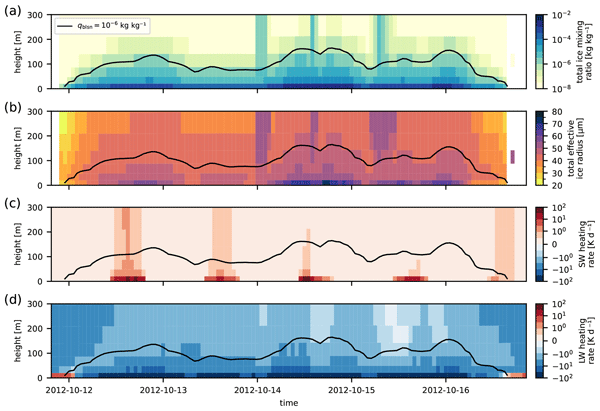
Strong winds can lift snow into the air, which influences the energy exchange between the surface and the atmosphere. We studied this phenomenon over the Greenland Ice Sheet using observations and a climate model. We found that blowing snow traps heat near the surface like a blanket and reflects incoming sunlight like a mirror. Simulating these processes increases the net energy at the surface and improves model accuracy. Therefore, we recommend including these effects in climate models.
Tesse E. A. van den Aker, Peter Kuipers Munneke, Willem Jan van de Berg, Walter W. Immerzeel, and Michiel R. van den Broeke
The Cryosphere, 20, 5475–5490, https://doi.org/10.5194/tc-20-5475-2026, https://doi.org/10.5194/tc-20-5475-2026, 2026
Short summary
Short summary
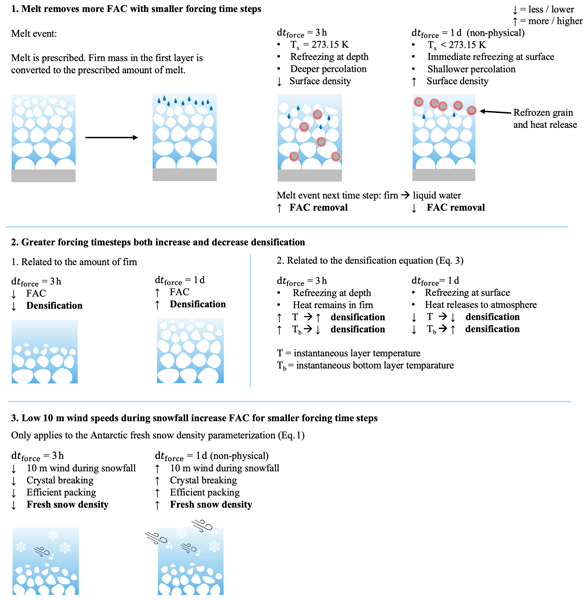
The firn layer, i.e. permanent snow, regulates how an ice sheet responds to climate change. Firn models are forced with with climate data at time steps from sub-daily to annual in literature, however, implications are barely evaluated. We test the impact of different climate forcing time steps on the modeled firn layer. We conclude that the climate forcing time step (1) affects firn model output, (2) can lead to non-physical behaviour, and (3) that resolving at least a diurnal cycle is required.
Linus Shihora, Laura Jensen, Eva Boergens, Volker Klemann, Robert Dill, Ingo Sasgen, Bert Wouters, Marius Schlaak, Jeanne Sauber-Rosenberg, Shin-Chan Han, Yoshiyuki Tanaka, Carla Braitenberg, Muhammad Tahir Javed, Gerardo Maurizio, Hugo Lecomte, Andrey Babeyko, Niels Hovius, and Henryk Dobslaw
Earth Syst. Sci. Data Discuss., https://doi.org/10.5194/essd-2026-576, https://doi.org/10.5194/essd-2026-576, 2026
Preprint under review for ESSD
Short summary
Short summary
Satellite gravimetry measures Earth's gravity in order to track water, ice, and air redistributions across the Earth. The new ESA Earth System Model 3.0 is a simulated dataset of these mass changes and designed to perform simulation studies of upcoming satellite missions which assess their capabilities to detect various signals. The dataset includes an update of the simulated atmosphere, oceans, hydrology, solid Earth, sea-level changes, earthquakes and selected regional signals.
Marte Gé Hofsteenge, Willem Jan van de Berg, Christiaan van Dalum, Kristiina Verro, Maurice van Tiggelen, and Michiel van den Broeke
The Cryosphere, 20, 4747–4766, https://doi.org/10.5194/tc-20-4747-2026, https://doi.org/10.5194/tc-20-4747-2026, 2026
Short summary
Short summary
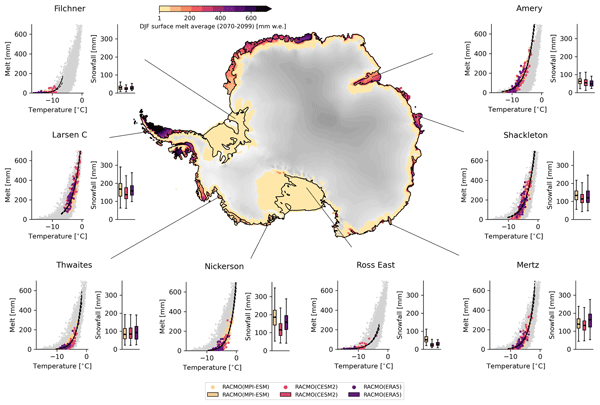
We use a regional climate model to study how surface melt on Antarctic ice shelves responds to air temperature. The relationship is strongly non-linear, mainly due to feedbacks in surface albedo, with other energy sources also contributing. Currently colder, drier, and more stable ice shelves will experience more melt at the same temperature than ice shelves in wetter climates, highlighting their vulnerability to fracturing, ice shelf instability, and contributions to global sea-level rise.
Sanne B. M. Veldhuijsen, Peter Kuipers Munneke, Willem Jan van de Berg, Michiel R. van den Broeke, and Luke D. Trusel
EGUsphere, https://doi.org/10.5194/egusphere-2026-3453, https://doi.org/10.5194/egusphere-2026-3453, 2026
This preprint is open for discussion and under review for The Cryosphere (TC).
Short summary
Short summary
Antarctica has floating ice shelves around its perimeter that provide stability to the ice sheet. As temperature rises, snow on the ice shelves may melt away, and ponding of meltwater may cause the ice shelves to collapse. If that happens, Antarctica may start to lose ice faster than before, resulting in accelerated sea-level rise. The tool presented in this article will be used in simulations of future climate to determine when climate change leads to collapse of the ice shelves in Antarctica.
Julia Pfeffer, Benoît Meyssignac, Rory Bingham, Alejandro Blazquez, Marie Bouih, Carla Braitenberg, Luca Brocca, Henryk Dobslaw, Ramiro Ferrari, Ehsan Forootan, Helena Gerdener, Muhammad Tahir Javed, Laura Jensen, Volker Klemann, Anna Kremer, Jürgen Kusche, Gilles Larnicol, Muhammad Usman Liaqat, Francesco Leopardi, Elisavet-Maria Mamagiannou, Gerardo Maurizio, Roland Pail, Isabelle Panet, Thomas Papanikolaou, Peyman Saemian, Ingo Sasgen, Maike Schumacher, Marius Schlaak, Linus Shihora, Alireza Sobouti, Nico Sneeuw, Mohammad Javad Tourian, Dimitrios Tsoulis, Georgios Vergos, Bert Wouters, Fan Yang, and Ilias Daras
EGUsphere, https://doi.org/10.5194/egusphere-2026-4642, https://doi.org/10.5194/egusphere-2026-4642, 2026
This preprint is open for discussion and under review for Earth Observation (EO).
Short summary
Short summary
The ESA SING project demonstrates how the future satellite gravity missions NGGM and MAGIC will improve observations of continental water storage, oceans, glaciers, sea level, earthquakes, and climate change. Their more accurate, higher-resolution gravity measurements will enhance Earth system monitoring, improve climate and hazard assessments, and strengthen operational services for water management, disaster preparedness, and environmental decision-making.
Shashwat Shukla, Bert Wouters, Sanne Veldhuijsen, Sophie de Roda Husman, Weiran Li, and Stef Lhermitte
Earth Obs., 1, 15–41, https://doi.org/10.5194/eo-1-15-2026, https://doi.org/10.5194/eo-1-15-2026, 2026
Short summary
Short summary
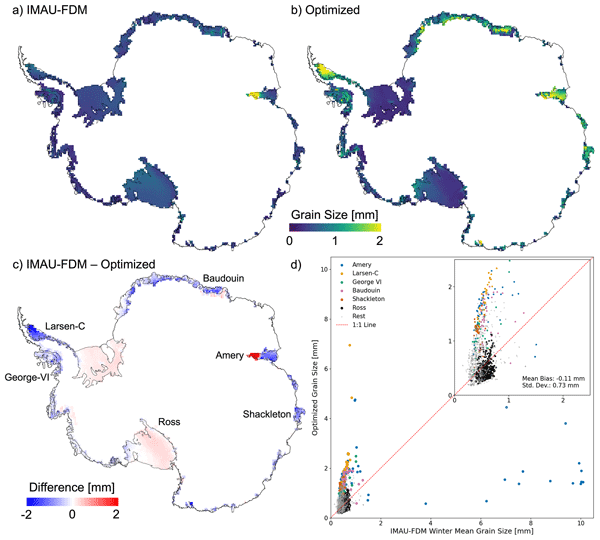
Antarctic ice shelves help slow ice flow into the ocean, but their stability depends partly on the upper firn layer. Air in firn affects how much meltwater can be stored, while grain size helps describe firn structure. We combined fifteen years of satellite radar data with physical models to estimate these properties across Antarctic ice shelves. Our results provide a new way to monitor conditions linked to meltwater build-up and possible instability.
Felix Dahle, Roderik Lindenbergh, and Bert Wouters
ISPRS Ann. Photogramm. Remote Sens. Spatial Inf. Sci., XI-3-2026, 671–678, https://doi.org/10.5194/isprs-annals-XI-3-2026-671-2026, https://doi.org/10.5194/isprs-annals-XI-3-2026-671-2026, 2026
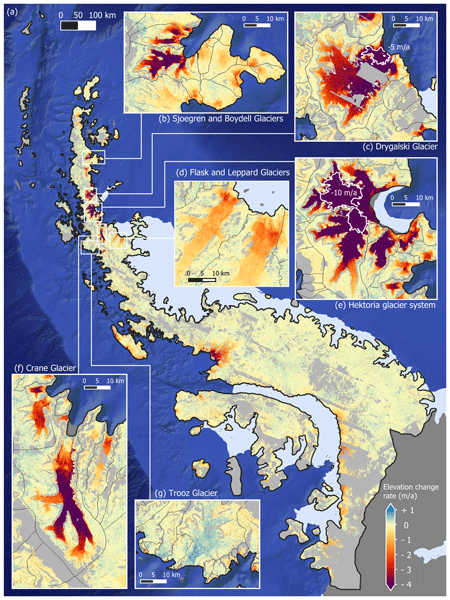
Maud Bernat, Etienne Berthier, Amaury Dehecq, Romain Hugonnet, Joaquin M. C. Belart, Naomi Ochwat, Peter Kuipers Munneke, Elizabeth Case, Ted Scambos, Louis-Marie Gauer, and David Youssefi
The Cryosphere, 20, 3025–3049, https://doi.org/10.5194/tc-20-3025-2026, https://doi.org/10.5194/tc-20-3025-2026, 2026
Short summary
Short summary
The Antarctic Peninsula is a mountainous region containing an ice sheet and peripheral glaciers. Differences remain between the methods used to estimate its mass changes. We use thousands of digital elevation models derived from high resolution stereoscopic images to calculate a new estimate of mass changes. We find that between 2007 and 2021, the ice sheet lost -28±6Gt/a and its peripheral glaciers -14±3Gt/a. We highlight the importance of resolving fine-scale changes in complex coastal areas.
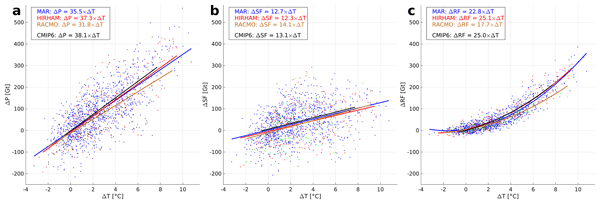
Fredrik Boberg, Xavier Fettweis, Nicolaj Hansen, Ruth Mottram, and Michiel R. van den Broeke
The Cryosphere, 20, 2947–2960, https://doi.org/10.5194/tc-20-2947-2026, https://doi.org/10.5194/tc-20-2947-2026, 2026
Short summary
Short summary
An ensemble of regional climate model simulations is used to estimate the 21st century change in precipitation on the Greenland ice sheet. For the end of the century, the change is in the range 40 to 170 Gt per year, depending on the emission scenario. Using annual values of 2 m air temperature and precipitation, we estimate an increase in precipitation of 35 Gt per year for every degree of warming.
Celia A. Baumhoer, Jonas Koehler, Bert Wouters, Stef Lhermitte, Andreas J. Dietz, and Claudia Kuenzer
Earth Syst. Sci. Data Discuss., https://doi.org/10.5194/essd-2025-569, https://doi.org/10.5194/essd-2025-569, 2026
Revised manuscript under review for ESSD
Short summary
Short summary
PolarLakes is a new open dataset tracking meltwater lakes on Antarctic ice shelves every two weeks from 2015–2024. Using AI and satellite data from different sensors the monitoring of lakes is improved even during cloudy conditions. The record shows significant variations in ponding and lake formation, with a continent-wide peak occurring in 2020 within the observed period. To end, the PolarLakes dataset helps us to better understand the dynamics of surface hydrology in Antarctica.
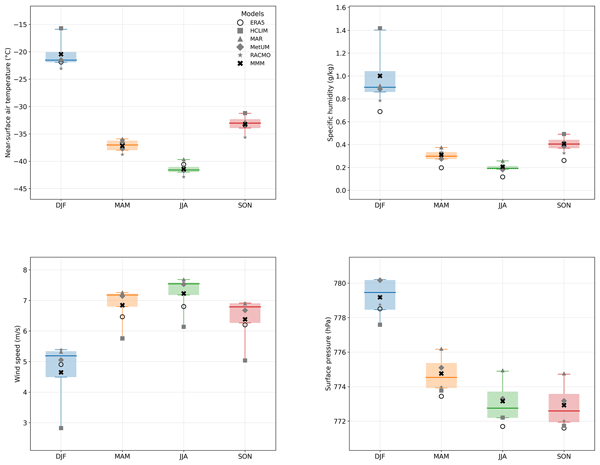
Ella Gilbert, José Abraham Torres-Alavez, Marte G. Hofsteenge, Willem Jan van de Berg, Fredrik Boberg, Ole Bøssing Christensen, Christiaan Timo van Dalum, Xavier Fettweis, Siddharth Gumber, Nicolaj Hansen, Christoph Kittel, Clara Lambin, Damien Maure, Ruth Mottram, Martin Olesen, Andrew Orr, Tony Phillips, Maurice van Tiggelen, Kristiina Verro, and Priscilla A. Mooney
The Cryosphere, 20, 2629–2658, https://doi.org/10.5194/tc-20-2629-2026, https://doi.org/10.5194/tc-20-2629-2026, 2026
Short summary
Short summary
Here we present a new dataset – the PolarRES ensemble – of four state-of-the-art regional climate models, which capture the full complexity of Antarctica's climate. The ensemble out-performs other available tools, advancing our ability to explore Antarctic climate. While it still has limitations, the PolarRES ensemble offers a novel and exciting way of evaluating climate processes and features, and we encourage researchers to use the data, which are freely available.
Benjamin Heurgue, Charles Amory, Christoph Kittel, Fredrik Boberg, Gaël Durand, Vincent Favier, Xavier Fettweis, Quentin Glaude, Heiko Goelzer, Nicolaj Hansen, Nicolas C. Jourdain, Ruth Mottram, Martin Olesen, Willem Jan Van de Berg, Michiel R. Van den Broeke, and René R. Wijngaard
EGUsphere, https://doi.org/10.5194/egusphere-2026-624, https://doi.org/10.5194/egusphere-2026-624, 2026
Short summary
Short summary
We studied how the Antarctic ice sheet surface mass balance may change by 2100 using three high-resolution climate models forced by the same future climate scenario. While the models agree for present-day conditions, they project very different futures, especially over floating ice shelves. These differences mainly come from how melting, refreezing, and temperature are represented. Our results show that future sea level projections strongly depend on how well models simulate today’s climate.
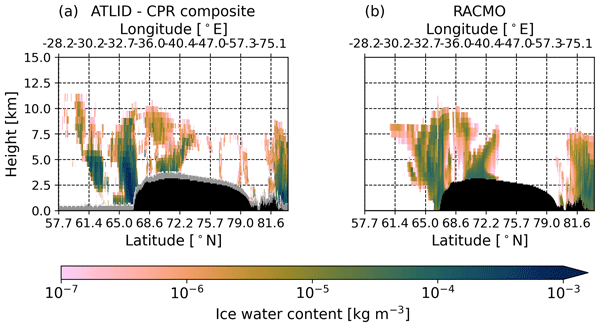
Thirza N. Feenstra, Willem Jan van de Berg, Gerd-Jan van Zadelhoff, David P. Donovan, Christiaan T. van Dalum, and Michiel R. van den Broeke
Atmos. Meas. Tech., 19, 1323–1344, https://doi.org/10.5194/amt-19-1323-2026, https://doi.org/10.5194/amt-19-1323-2026, 2026
Short summary
Short summary
Cloud representation brings large uncertainties in polar climate modeling. We show the first evaluation of Greenland clouds in the Regional Atmospheric Climate Model (RACMO2.4) with new EarthCARE satellite data. Comparing lidar and radar observations and retrieved cloud profiles with co-located RACMO output, we find RACMO captures low ice clouds but underestimates high clouds, mid-altitude liquid clouds, and snowfall. These results highlight EarthCARE's potential to improve polar climate models.
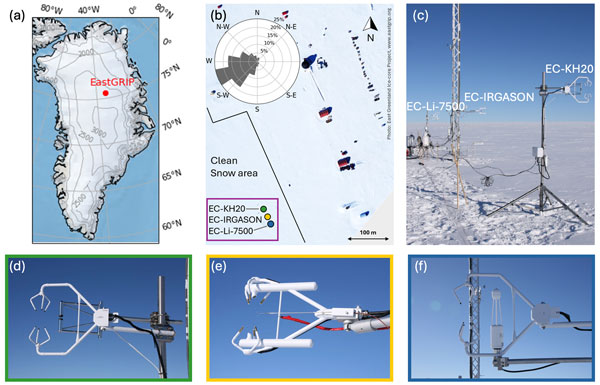
Ida Haven, Hans Christian Steen-Larsen, Laura J. Dietrich, Sonja Wahl, Jason E. Box, Michiel R. van den Broeke, Alun Hubbard, Stephan T. Kral, Joachim Reuder, and Maurice van Tiggelen
The Cryosphere, 20, 573–593, https://doi.org/10.5194/tc-20-573-2026, https://doi.org/10.5194/tc-20-573-2026, 2026
Short summary
Short summary
Three independent Eddy-Covariance measurement systems deployed on top of the Greenland Ice Sheet are compared. Using this dataset, we evaluate the reproducibility and quantify the differences between the systems. The fidelity of two regional climate models in capturing the seasonal variability in the latent and sensible heat flux between the snow surface and the atmosphere is assessed. We identify differences between observations and model simulations, especially during the winter period.

Horst Machguth, Andrew Tedstone, Peter Kuipers Munneke, Max Brils, Brice Noël, Nicole Clerx, Nicolas Jullien, Xavier Fettweis, and Michiel van den Broeke
The Cryosphere, 20, 427–452, https://doi.org/10.5194/tc-20-427-2026, https://doi.org/10.5194/tc-20-427-2026, 2026
Short summary
Short summary
Due to increasing air temperatures, surface melt expands to higher elevations on the Greenland ice sheet. This is visible on satellite imagery in the form of rivers of meltwater running across the surface of the ice sheet. We compare model results of meltwater at high elevations on the ice sheet to satellite observations. We find that each of the models shows strengths and weaknesses. A detailed look into the model results reveals potential reasons for the differences between models.

Heiko Goelzer, Constantijn J. Berends, Fredrik Boberg, Gael Durand, Tamsin L. Edwards, Xavier Fettweis, Fabien Gillet-Chaulet, Quentin Glaude, Philippe Huybrechts, Sébastien Le clec'h, Ruth Mottram, Brice Noël, Martin Olesen, Charlotte Rahlves, Jeremy Rohmer, Michiel van den Broeke, and Roderik S. W. van de Wal
The Cryosphere, 19, 6887–6906, https://doi.org/10.5194/tc-19-6887-2025, https://doi.org/10.5194/tc-19-6887-2025, 2025
Short summary
Short summary
We present an ensemble of ice sheet model projections for the Greenland ice sheet. The focus is on providing projections that improve our understanding of the range future sea-level rise and the inherent uncertainties over the next 100 to 300 years. Compared to earlier work we more fully account for some of the uncertainties in sea-level projections. We include a wider range of climate model output, more climate change scenarios and we extend projections schematically up to year 2300.
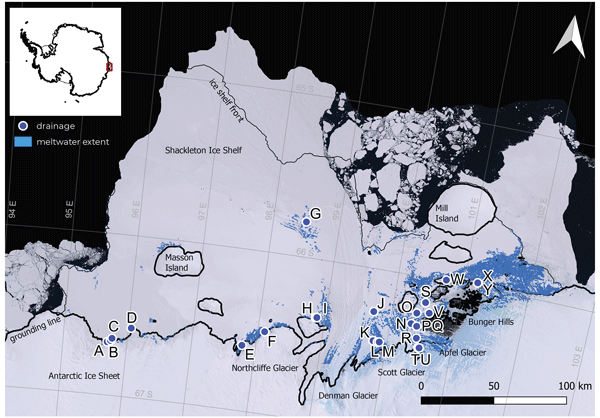
Julius Sommer, Maaike Izeboud, Sophie de Roda Husman, Bert Wouters, and Stef Lhermitte
The Cryosphere, 19, 5903–5912, https://doi.org/10.5194/tc-19-5903-2025, https://doi.org/10.5194/tc-19-5903-2025, 2025
Short summary
Short summary
Ice shelves, the floating extensions of Antarctica’s ice sheet, play a crucial role in preventing mass ice loss, and understanding their stability is crucial. If surface meltwater lakes drain rapidly through fractures, the ice shelf can destabilize. We analyzed satellite images of four years from the Shackleton Ice Shelf and found that lake drainages occurred in areas where damage is present and developing, and coincided with rising tides, offering insights into the drivers of this process.
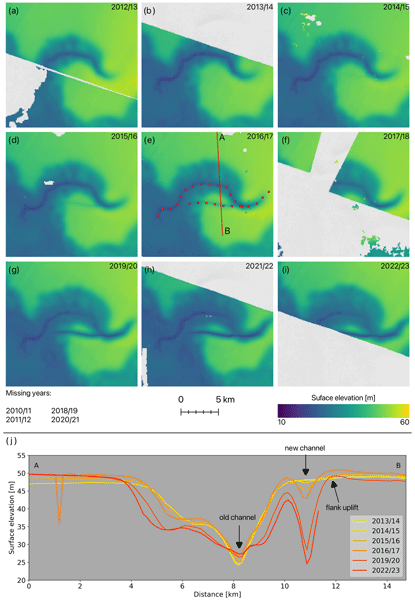
Ann-Sofie P. Zinck, Bert Wouters, Franka Jesse, and Stef Lhermitte
The Cryosphere, 19, 5509–5529, https://doi.org/10.5194/tc-19-5509-2025, https://doi.org/10.5194/tc-19-5509-2025, 2025
Short summary
Short summary
Ocean-driven basal melting of ice shelves can carve channels into the ice shelf base. These channels represent potential weak areas of the ice shelf. On George VI Ice shelf we discover a new channel which onset coincides with the 2015 El-Nino Southern Oscillation event. Since the channel has developed rapidly and is located within a highly channelized area close to the ice shelf front it poses a potential thread of ice shelf retreat.
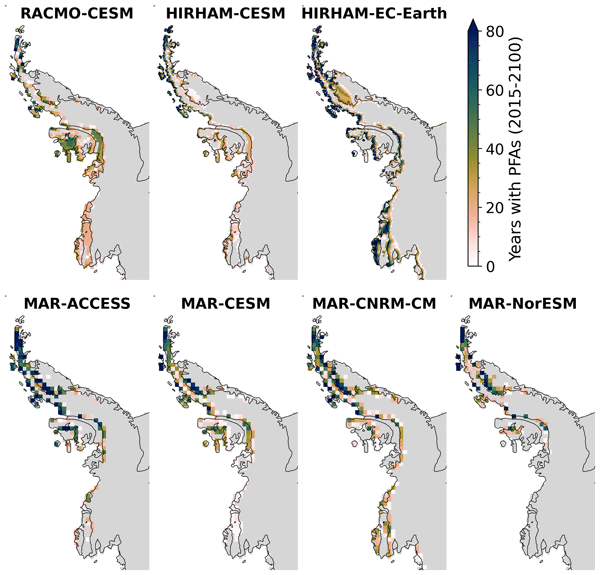
Sanne B. M. Veldhuijsen, Willem Jan van de Berg, Peter Kuipers Munneke, Nicolaj Hansen, Fredrik Boberg, Christoph Kittel, Charles Amory, and Michiel R. van den Broeke
The Cryosphere, 19, 5157–5173, https://doi.org/10.5194/tc-19-5157-2025, https://doi.org/10.5194/tc-19-5157-2025, 2025
Short summary
Short summary
Perennial firn aquifers (PFAs), year-round bodies of liquid water within firns, can potentially impact ice-shelf and ice-sheet stability. We developed a fast XGBoost firn emulator to predict the 21st-century distribution of PFAs in Antarctica for 12 climatic forcing datasets. Our findings suggest that, in low-emission scenarios, PFAs remain confined to the Antarctic Peninsula. However, in a high-emission scenario, PFAs are projected to expand to a region in West Antarctica and East Antarctica.
Christiaan T. van Dalum, Willem Jan van de Berg, Michiel R. van den Broeke, and Maurice van Tiggelen
The Cryosphere, 19, 4061–4090, https://doi.org/10.5194/tc-19-4061-2025, https://doi.org/10.5194/tc-19-4061-2025, 2025
Short summary
Short summary
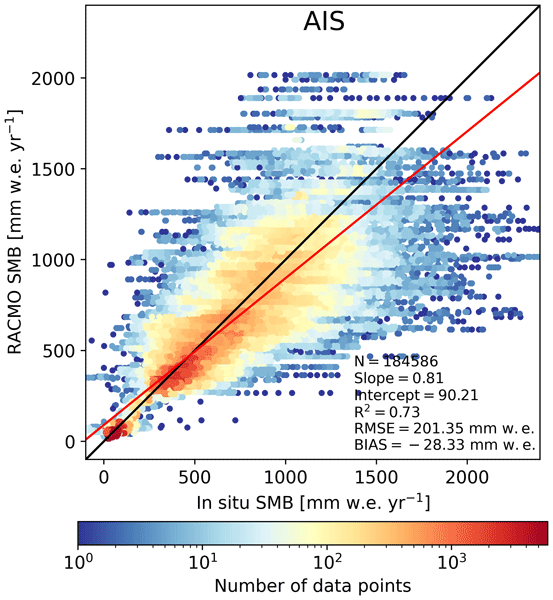
In this study, we present a new surface mass balance (SMB) and near-surface climate product for Antarctica with the regional climate model RACMO2.4p1. We assess the impact of major model updates on the climate of Antarctica. Locally, the SMB has changed substantially but also agrees well with observations. In addition, we show that the SMB components, surface energy budget, albedo, pressure, temperature, and wind speed compare well with in situ and remote sensing observations.
Maurice van Tiggelen, Paul C. J. P. Smeets, Carleen H. Reijmer, Peter Kuipers Munneke, and Michiel R. van den Broeke
Earth Syst. Sci. Data, 17, 4933–4955, https://doi.org/10.5194/essd-17-4933-2025, https://doi.org/10.5194/essd-17-4933-2025, 2025
Short summary
Short summary
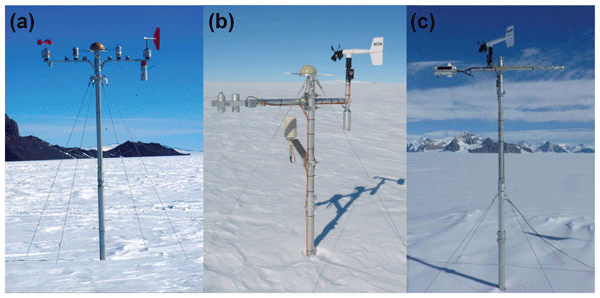
This paper describes the measurements from the 19 IMAU (Institute for Marine and Atmospheric research Utrecht) automatic weather stations that operated on the Antarctic ice sheet from 1995 through 2022. These stations also measured the net surface radiation and surface height change, allowing for the quantification of the surface energy and mass balance at hourly resolution. These data are invaluable for the evaluation of atmospheric models and for the detection of climatological changes.
Anneke L. Vries, Willem Jan van de Berg, Brice Noël, Lorenz Meire, and Michiel R. van den Broeke
The Cryosphere, 19, 3897–3914, https://doi.org/10.5194/tc-19-3897-2025, https://doi.org/10.5194/tc-19-3897-2025, 2025
Short summary
Short summary
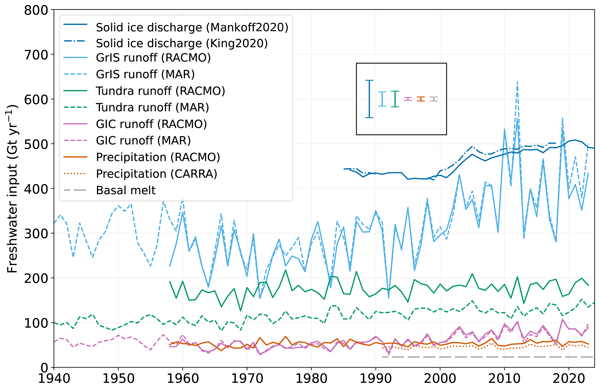
Freshwater flows into Greenland's fjords from various sources. Solid ice discharge (e.g. calving icebergs) dominates freshwater input in the southeast and northwest. In contrast, in the southwest, runoff from the ice sheet and tundra are the most significant. Seasonal data revealed that fjord precipitation and tundra runoff contribute up to 11 % and 35 % of the monthly freshwater input, respectively. Our results provide valuable input for ocean models and for researchers studying fjord ecosystems.
Weiran Li, Stef Lhermitte, Bert Wouters, Cornelis Slobbe, Max Brils, and Xavier Fettweis
The Cryosphere, 19, 3419–3442, https://doi.org/10.5194/tc-19-3419-2025, https://doi.org/10.5194/tc-19-3419-2025, 2025
Short summary
Short summary
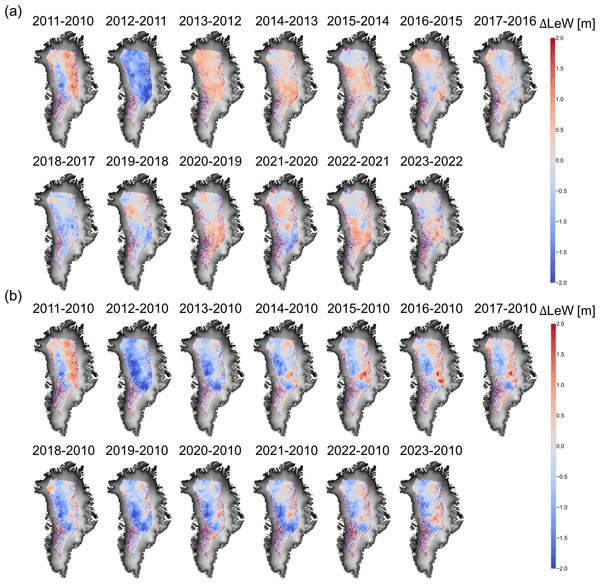
Due to recurrent melt and refreezing events in recent decades, the snow conditions over Greenland have changed. To observe this, we use a parameter (leading edge width; LeW) derived from satellite altimetry and analyse its spatial and temporal variations. By comparing the LeW variations with modelled firn parameters, we concluded that the 2012 melt event and the recent and increasingly frequent melt events have a long-lasting impact on the volume scattering of Greenland firn.
Shfaqat A. Khan, Helene Seroussi, Mathieu Morlighem, William Colgan, Veit Helm, Gong Cheng, Danjal Berg, Valentina R. Barletta, Nicolaj K. Larsen, William Kochtitzky, Michiel van den Broeke, Kurt H. Kjær, Andy Aschwanden, Brice Noël, Jason E. Box, Joseph A. MacGregor, Robert S. Fausto, Kenneth D. Mankoff, Ian M. Howat, Kuba Oniszk, Dominik Fahrner, Anja Løkkegaard, Eigil Y. H. Lippert, Alicia Bråtner, and Javed Hassan
Earth Syst. Sci. Data, 17, 3047–3071, https://doi.org/10.5194/essd-17-3047-2025, https://doi.org/10.5194/essd-17-3047-2025, 2025
Short summary
Short summary
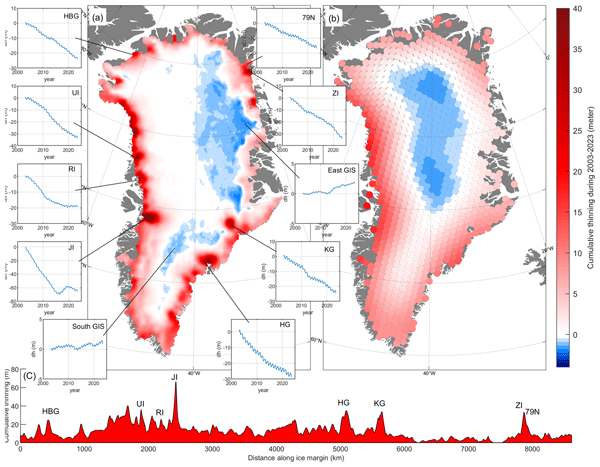
The surface elevation of the Greenland Ice Sheet is changing due to surface mass balance processes and ice dynamics, each exhibiting distinct spatiotemporal patterns. Here, we employ satellite and airborne altimetry data with fine spatial (1 km) and temporal (monthly) resolutions to document this spatiotemporal evolution from 2003 to 2023. This dataset of fine-resolution altimetry data in both space and time will support studies of ice mass loss and be useful for GIS ice sheet modeling.
Thirza Feenstra, Miren Vizcaino, Bert Wouters, Michele Petrini, Raymond Sellevold, and Katherine Thayer-Calder
The Cryosphere, 19, 2289–2314, https://doi.org/10.5194/tc-19-2289-2025, https://doi.org/10.5194/tc-19-2289-2025, 2025
Short summary
Short summary
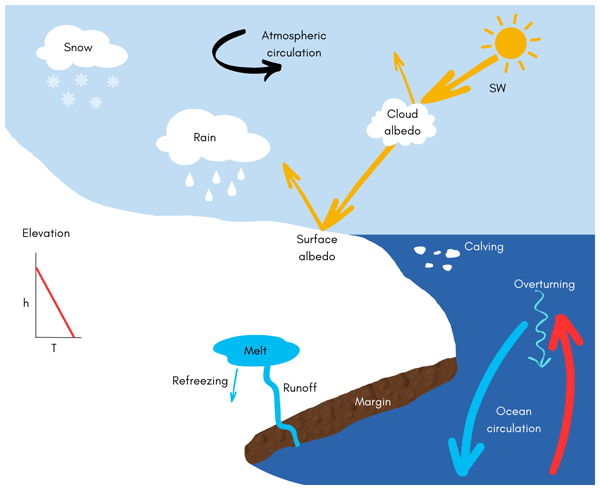
We present the first evaluation of Greenland ice sheet (GrIS) and climate feedbacks with a CMIP model. Under 4×CO2 forcing, lower elevations reduce GrIS summer blocking and incoming solar radiation and increase precipitation. Simulated increases of near-surface summer temperature are much lower than the 6 K km-1 lapse rate that is commonly used in non-coupled simulations. CO2 reduction to pre-industrial (PI) halts GrIS mass loss regardless of higher global warming and albedo than PI control.
Matthias O. Willen, Bert Wouters, Taco Broerse, Eric Buchta, and Veit Helm
The Cryosphere, 19, 2213–2227, https://doi.org/10.5194/tc-19-2213-2025, https://doi.org/10.5194/tc-19-2213-2025, 2025
Short summary
Short summary
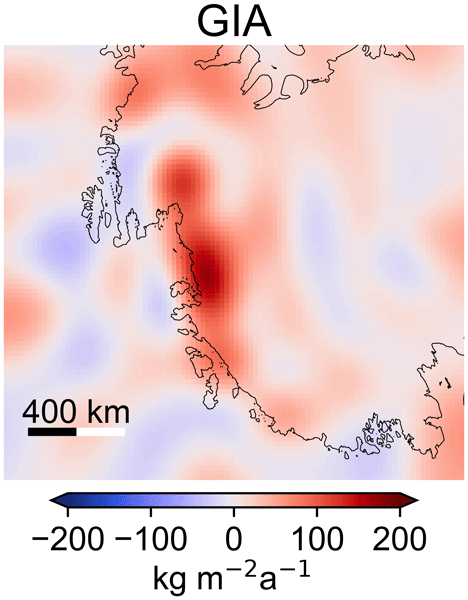
Collapse of the West Antarctic Ice Sheet in the Amundsen Sea Embayment is likely in the near future. Vertical uplift of bedrock due to glacial isostatic adjustment stabilizes the ice sheet and may delay its collapse. So far, only spatially and temporally sparse GPS measurements have been able to observe this bedrock motion. We have combined satellite data and quantified a region-wide bedrock motion that independently matches GPS measurements. This can improve ice sheet predictions.
Maria T. Kappelsberger, Martin Horwath, Eric Buchta, Matthias O. Willen, Ludwig Schröder, Sanne B. M. Veldhuijsen, Peter Kuipers Munneke, and Michiel R. van den Broeke
The Cryosphere, 18, 4355–4378, https://doi.org/10.5194/tc-18-4355-2024, https://doi.org/10.5194/tc-18-4355-2024, 2024
Short summary
Short summary
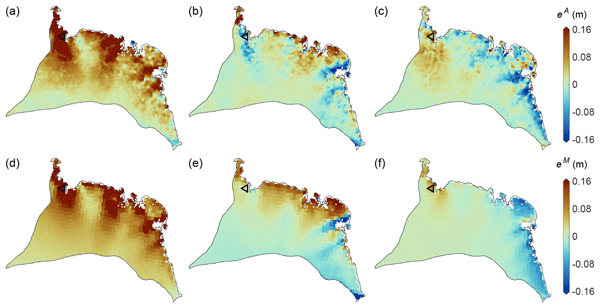
The interannual variations in the height of the Antarctic Ice Sheet (AIS) are mainly due to natural variations in snowfall. Precise knowledge of these variations is important for the detection of any long-term climatic trends in AIS surface elevation. We present a new product that spatially resolves these height variations over the period 1992–2017. The product combines the strengths of atmospheric modeling results and satellite altimetry measurements.
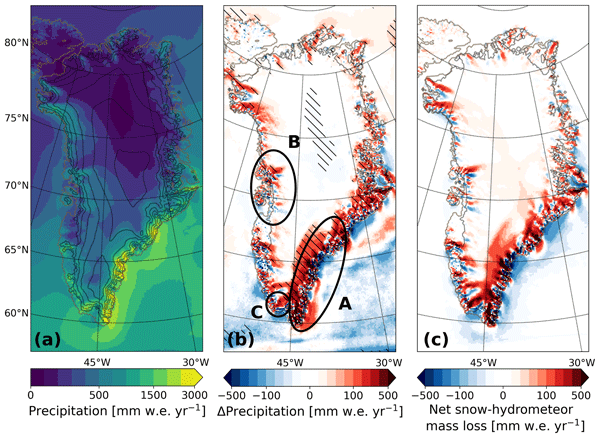
Christiaan T. van Dalum, Willem Jan van de Berg, Srinidhi N. Gadde, Maurice van Tiggelen, Tijmen van der Drift, Erik van Meijgaard, Lambertus H. van Ulft, and Michiel R. van den Broeke
The Cryosphere, 18, 4065–4088, https://doi.org/10.5194/tc-18-4065-2024, https://doi.org/10.5194/tc-18-4065-2024, 2024
Short summary
Short summary
We present a new version of the polar Regional Atmospheric Climate Model (RACMO), version 2.4p1, and show first results for Greenland, Antarctica and the Arctic. We provide an overview of all changes and investigate the impact that they have on the climate of polar regions. By comparing the results with observations and the output from the previous model version, we show that the model performs well regarding the surface mass balance of the ice sheets and near-surface climate.
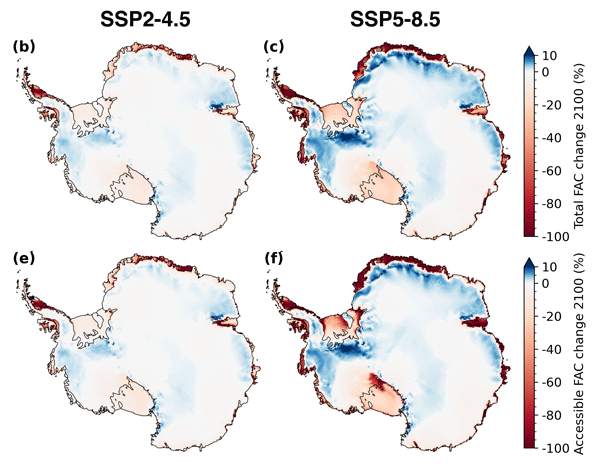
Sanne B. M. Veldhuijsen, Willem Jan van de Berg, Peter Kuipers Munneke, and Michiel R. van den Broeke
The Cryosphere, 18, 1983–1999, https://doi.org/10.5194/tc-18-1983-2024, https://doi.org/10.5194/tc-18-1983-2024, 2024
Short summary
Short summary
We use the IMAU firn densification model to simulate the 21st-century evolution of Antarctic firn air content. Ice shelves on the Antarctic Peninsula and the Roi Baudouin Ice Shelf in Dronning Maud Land are particularly vulnerable to total firn air content (FAC) depletion. Our results also underline the potentially large vulnerability of low-accumulation ice shelves to firn air depletion through ice slab formation.
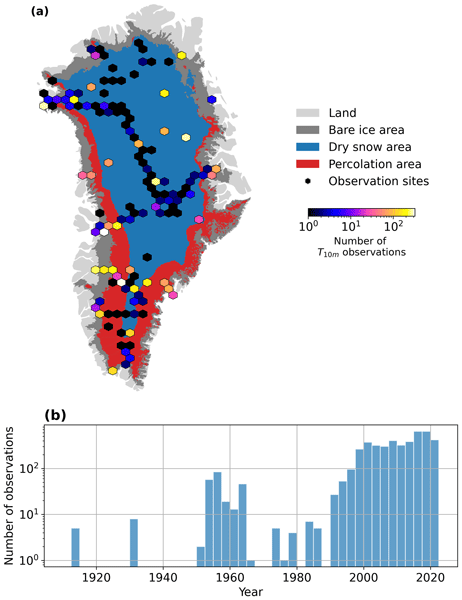
Baptiste Vandecrux, Robert S. Fausto, Jason E. Box, Federico Covi, Regine Hock, Åsa K. Rennermalm, Achim Heilig, Jakob Abermann, Dirk van As, Elisa Bjerre, Xavier Fettweis, Paul C. J. P. Smeets, Peter Kuipers Munneke, Michiel R. van den Broeke, Max Brils, Peter L. Langen, Ruth Mottram, and Andreas P. Ahlstrøm
The Cryosphere, 18, 609–631, https://doi.org/10.5194/tc-18-609-2024, https://doi.org/10.5194/tc-18-609-2024, 2024
Short summary
Short summary
How fast is the Greenland ice sheet warming? In this study, we compiled 4500+ temperature measurements at 10 m below the ice sheet surface (T10m) from 1912 to 2022. We trained a machine learning model on these data and reconstructed T10m for the ice sheet during 1950–2022. After a slight cooling during 1950–1985, the ice sheet warmed at a rate of 0.7 °C per decade until 2022. Climate models showed mixed results compared to our observations and underestimated the warming in key regions.
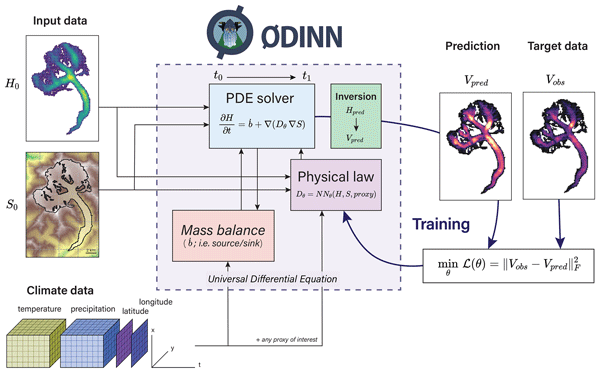
Jordi Bolibar, Facundo Sapienza, Fabien Maussion, Redouane Lguensat, Bert Wouters, and Fernando Pérez
Geosci. Model Dev., 16, 6671–6687, https://doi.org/10.5194/gmd-16-6671-2023, https://doi.org/10.5194/gmd-16-6671-2023, 2023
Short summary
Short summary
We developed a new modelling framework combining numerical methods with machine learning. Using this approach, we focused on understanding how ice moves within glaciers, and we successfully learnt a prescribed law describing ice movement for 17 glaciers worldwide as a proof of concept. Our framework has the potential to discover important laws governing glacier processes, aiding our understanding of glacier physics and their contribution to water resources and sea-level rise.
Lena G. Buth, Valeria Di Biase, Peter Kuipers Munneke, Stef Lhermitte, Sanne B. M. Veldhuijsen, Sophie de Roda Husman, Michiel R. van den Broeke, and Bert Wouters
EGUsphere, https://doi.org/10.5194/egusphere-2023-2000, https://doi.org/10.5194/egusphere-2023-2000, 2023
Preprint archived
Short summary
Short summary
Liquid meltwater which is stored in air bubbles in the compacted snow near the surface of Antarctica can affect ice shelf stability. In order to detect the presence of such firn aquifers over large scales, satellite remote sensing is needed. In this paper, we present our new detection method using radar satellite data as well as the results for the whole Antarctic Peninsula. Firn aquifers are found in the north and northwest of the peninsula, in agreement with locations predicted by models.
Ann-Sofie Priergaard Zinck, Bert Wouters, Erwin Lambert, and Stef Lhermitte
The Cryosphere, 17, 3785–3801, https://doi.org/10.5194/tc-17-3785-2023, https://doi.org/10.5194/tc-17-3785-2023, 2023
Short summary
Short summary
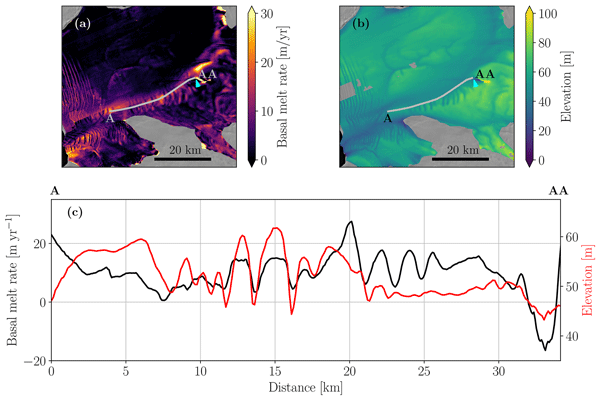
The ice shelves in Antarctica are melting from below, which puts their stability at risk. Therefore, it is important to observe how much and where they are melting. In this study we use high-resolution satellite imagery to derive 50 m resolution basal melt rates of the Dotson Ice Shelf. With the high resolution of our product we are able to uncover small-scale features which may in the future help us to understand the state and fate of the Antarctic ice shelves and their (in)stability.
Inès N. Otosaka, Andrew Shepherd, Erik R. Ivins, Nicole-Jeanne Schlegel, Charles Amory, Michiel R. van den Broeke, Martin Horwath, Ian Joughin, Michalea D. King, Gerhard Krinner, Sophie Nowicki, Anthony J. Payne, Eric Rignot, Ted Scambos, Karen M. Simon, Benjamin E. Smith, Louise S. Sørensen, Isabella Velicogna, Pippa L. Whitehouse, Geruo A, Cécile Agosta, Andreas P. Ahlstrøm, Alejandro Blazquez, William Colgan, Marcus E. Engdahl, Xavier Fettweis, Rene Forsberg, Hubert Gallée, Alex Gardner, Lin Gilbert, Noel Gourmelen, Andreas Groh, Brian C. Gunter, Christopher Harig, Veit Helm, Shfaqat Abbas Khan, Christoph Kittel, Hannes Konrad, Peter L. Langen, Benoit S. Lecavalier, Chia-Chun Liang, Bryant D. Loomis, Malcolm McMillan, Daniele Melini, Sebastian H. Mernild, Ruth Mottram, Jeremie Mouginot, Johan Nilsson, Brice Noël, Mark E. Pattle, William R. Peltier, Nadege Pie, Mònica Roca, Ingo Sasgen, Himanshu V. Save, Ki-Weon Seo, Bernd Scheuchl, Ernst J. O. Schrama, Ludwig Schröder, Sebastian B. Simonsen, Thomas Slater, Giorgio Spada, Tyler C. Sutterley, Bramha Dutt Vishwakarma, Jan Melchior van Wessem, David Wiese, Wouter van der Wal, and Bert Wouters
Earth Syst. Sci. Data, 15, 1597–1616, https://doi.org/10.5194/essd-15-1597-2023, https://doi.org/10.5194/essd-15-1597-2023, 2023
Short summary
Short summary
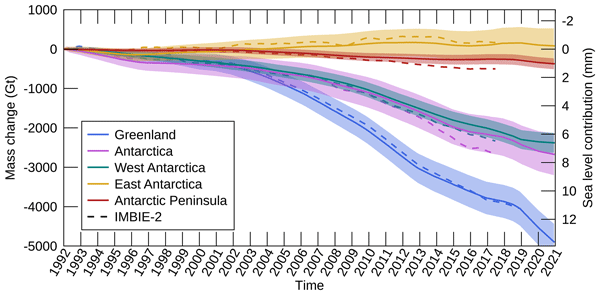
By measuring changes in the volume, gravitational attraction, and ice flow of Greenland and Antarctica from space, we can monitor their mass gain and loss over time. Here, we present a new record of the Earth’s polar ice sheet mass balance produced by aggregating 50 satellite-based estimates of ice sheet mass change. This new assessment shows that the ice sheets have lost (7.5 x 10¹²) t of ice between 1992 and 2020, contributing 21 mm to sea level rise.

Sanne B. M. Veldhuijsen, Willem Jan van de Berg, Max Brils, Peter Kuipers Munneke, and Michiel R. van den Broeke
The Cryosphere, 17, 1675–1696, https://doi.org/10.5194/tc-17-1675-2023, https://doi.org/10.5194/tc-17-1675-2023, 2023
Short summary
Short summary
Firn is the transition of snow to glacier ice and covers 99 % of the Antarctic ice sheet. Knowledge about the firn layer and its variability is important, as it impacts satellite-based estimates of ice sheet mass change. Also, firn contains pores in which nearly all of the surface melt is retained. Here, we improve a semi-empirical firn model and simulate the firn characteristics for the period 1979–2020. We evaluate the performance with field and satellite measures and test its sensitivity.
Marte G. Hofsteenge, Nicolas J. Cullen, Carleen H. Reijmer, Michiel van den Broeke, Marwan Katurji, and John F. Orwin
The Cryosphere, 16, 5041–5059, https://doi.org/10.5194/tc-16-5041-2022, https://doi.org/10.5194/tc-16-5041-2022, 2022
Short summary
Short summary
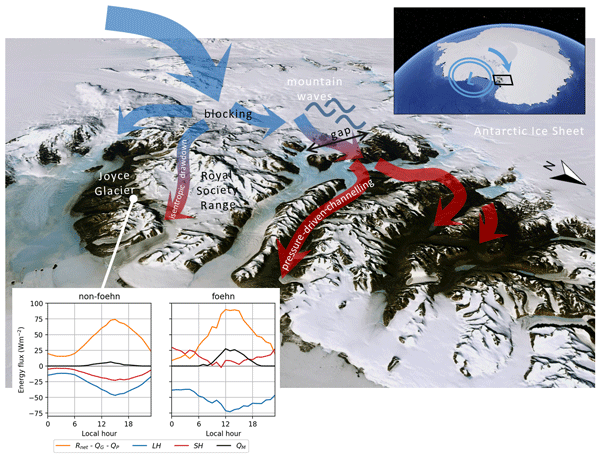
In the McMurdo Dry Valleys (MDV), foehn winds can impact glacial meltwater production and the fragile ecosystem that depends on it. We study these dry and warm winds at Joyce Glacier and show they are caused by a different mechanism than that found for nearby valleys, demonstrating the complex interaction of large-scale winds with the mountains in the MDV. We find that foehn winds increase sublimation of ice, increase heating from the atmosphere, and increase the occurrence and rates of melt.
Lena G. Buth, Bert Wouters, Sanne B. M. Veldhuijsen, Stef Lhermitte, Peter Kuipers Munneke, and Michiel R. van den Broeke
The Cryosphere Discuss., https://doi.org/10.5194/tc-2022-127, https://doi.org/10.5194/tc-2022-127, 2022
Manuscript not accepted for further review
Short summary
Short summary
Liquid meltwater which is stored in air bubbles in the compacted snow near the surface of Antarctica can affect ice shelf stability. In order to detect the presence of such firn aquifers over large scales, satellite remote sensing is needed. In this paper, we present our new detection method using radar satellite data as well as the results for the whole Antarctic Peninsula. Firn aquifers are found in the north and northwest of the peninsula, in agreement with locations predicted by models.
Max Brils, Peter Kuipers Munneke, Willem Jan van de Berg, and Michiel van den Broeke
Geosci. Model Dev., 15, 7121–7138, https://doi.org/10.5194/gmd-15-7121-2022, https://doi.org/10.5194/gmd-15-7121-2022, 2022
Short summary
Short summary
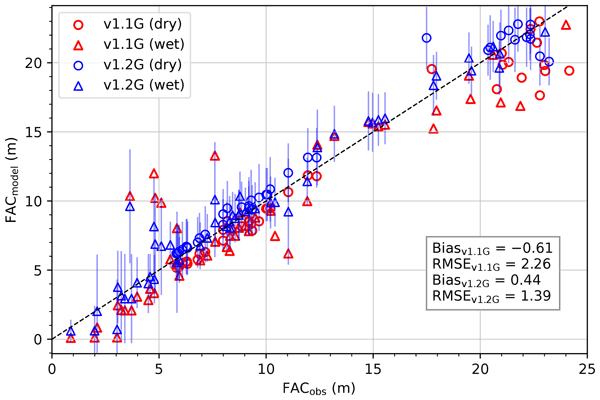
Firn covers the Greenland ice sheet (GrIS) and can temporarily prevent mass loss. Here, we present the latest version of our firn model, IMAU-FDM, with an application to the GrIS. We improved the density of fallen snow, the firn densification rate and the firn's thermal conductivity. This leads to a higher air content and 10 m temperatures. Furthermore we investigate three case studies and find that the updated model shows greater variability and an increased sensitivity in surface elevation.
Bas Altena, Andreas Kääb, and Bert Wouters
The Cryosphere, 16, 2285–2300, https://doi.org/10.5194/tc-16-2285-2022, https://doi.org/10.5194/tc-16-2285-2022, 2022
Short summary
Short summary
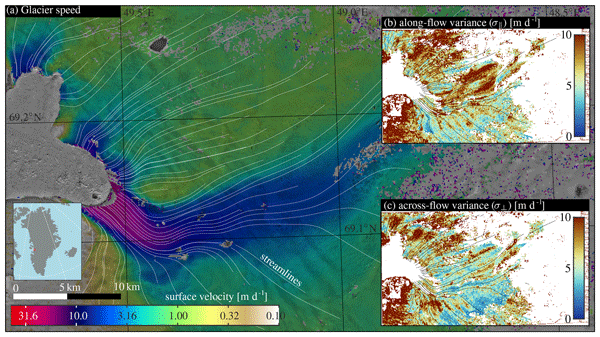
Repeat overflights of satellites are used to estimate surface displacements. However, such products lack a simple error description for individual measurements, but variation in precision occurs, since the calculation is based on the similarity of texture. Fortunately, variation in precision manifests itself in the correlation peak, which is used for the displacement calculation. This spread is used to make a connection to measurement precision, which can be of great use for model inversion.
F. Dahle, J. Tanke, B. Wouters, and R. Lindenbergh
ISPRS Ann. Photogramm. Remote Sens. Spatial Inf. Sci., V-2-2022, 237–244, https://doi.org/10.5194/isprs-annals-V-2-2022-237-2022, https://doi.org/10.5194/isprs-annals-V-2-2022-237-2022, 2022
Christiaan T. van Dalum, Willem Jan van de Berg, and Michiel R. van den Broeke
The Cryosphere, 16, 1071–1089, https://doi.org/10.5194/tc-16-1071-2022, https://doi.org/10.5194/tc-16-1071-2022, 2022
Short summary
Short summary
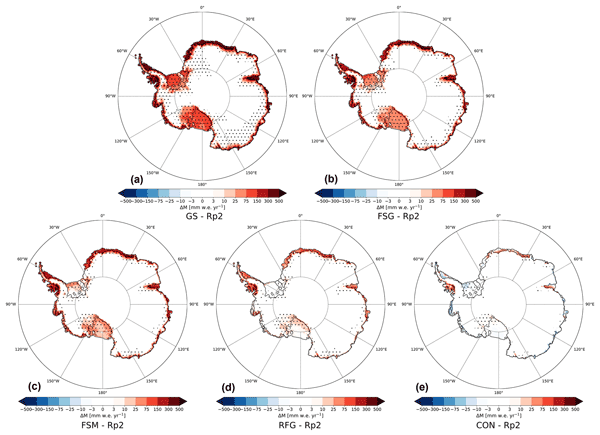
In this study, we improve the regional climate model RACMO2 and investigate the climate of Antarctica. We have implemented a new radiative transfer and snow albedo scheme and do several sensitivity experiments. When fully tuned, the results compare well with observations and snow temperature profiles improve. Moreover, small changes in the albedo and the investigated processes can lead to a strong overestimation of melt, locally leading to runoff and a reduced surface mass balance.
Zhongyang Hu, Peter Kuipers Munneke, Stef Lhermitte, Maaike Izeboud, and Michiel van den Broeke
The Cryosphere, 15, 5639–5658, https://doi.org/10.5194/tc-15-5639-2021, https://doi.org/10.5194/tc-15-5639-2021, 2021
Short summary
Short summary
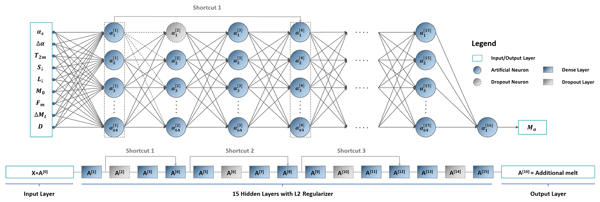
Antarctica is shrinking, and part of the mass loss is caused by higher temperatures leading to more snowmelt. We use computer models to estimate the amount of melt, but this can be inaccurate – specifically in the areas with the most melt. This is because the model cannot account for small, darker areas like rocks or darker ice. Thus, we trained a computer using artificial intelligence and satellite images that showed these darker areas. The model computed an improved estimate of melt.
Jan Bouke Pronk, Tobias Bolch, Owen King, Bert Wouters, and Douglas I. Benn
The Cryosphere, 15, 5577–5599, https://doi.org/10.5194/tc-15-5577-2021, https://doi.org/10.5194/tc-15-5577-2021, 2021
Short summary
Short summary
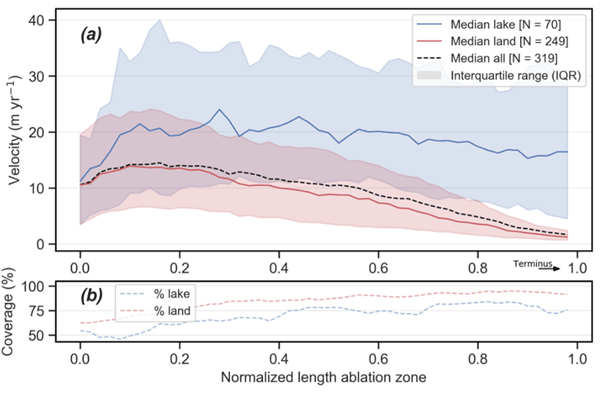
About 10 % of Himalayan glaciers flow directly into lakes. This study finds, using satellite imagery, that such glaciers show higher flow velocities than glaciers without ice–lake contact. In particular near the glacier tongue the impact of a lake on the glacier flow can be dramatic. The development of current and new meltwater bodies will influence the flow of an increasing number of Himalayan glaciers in the future, a scenario not currently considered in regional ice loss projections.
Rajashree Tri Datta and Bert Wouters
The Cryosphere, 15, 5115–5132, https://doi.org/10.5194/tc-15-5115-2021, https://doi.org/10.5194/tc-15-5115-2021, 2021
Short summary
Short summary
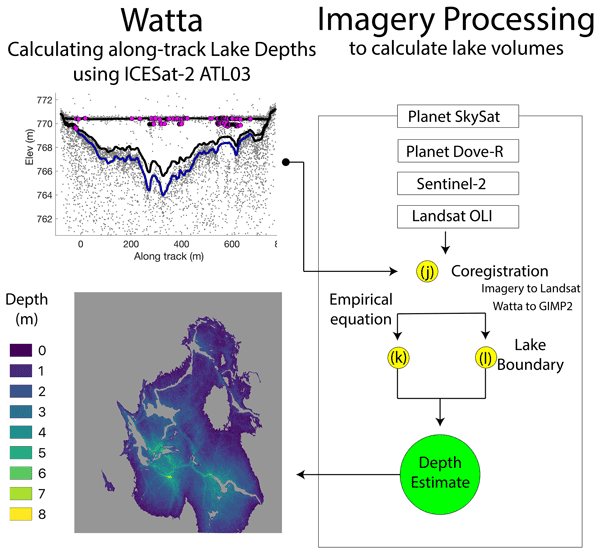
The ICESat-2 laser altimeter can detect the surface and bottom of a supraglacial lake. We introduce the Watta algorithm, automatically calculating lake surface, corrected bottom, and (sub-)surface ice at high resolution adapting to signal strength. ICESat-2 depths constrain full lake depths of 46 lakes over Jakobshavn glacier using multiple sources of imagery, including very high-resolution Planet imagery, used for the first time to extract supraglacial lake depths empirically using ICESat-2.
Kenneth D. Mankoff, Xavier Fettweis, Peter L. Langen, Martin Stendel, Kristian K. Kjeldsen, Nanna B. Karlsson, Brice Noël, Michiel R. van den Broeke, Anne Solgaard, William Colgan, Jason E. Box, Sebastian B. Simonsen, Michalea D. King, Andreas P. Ahlstrøm, Signe Bech Andersen, and Robert S. Fausto
Earth Syst. Sci. Data, 13, 5001–5025, https://doi.org/10.5194/essd-13-5001-2021, https://doi.org/10.5194/essd-13-5001-2021, 2021
Short summary
Short summary
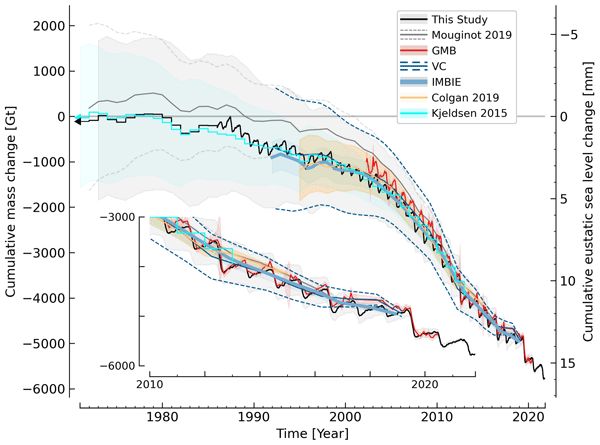
We estimate the daily mass balance and its components (surface, marine, and basal mass balance) for the Greenland ice sheet. Our time series begins in 1840 and has annual resolution through 1985 and then daily from 1986 through next week. Results are operational (updated daily) and provided for the entire ice sheet or by commonly used regions or sectors. This is the first input–output mass balance estimate to include the basal mass balance.
Cited articles
Abdalati, W. and Steffen, K.: Snowmelt on the Greenland ice sheet as derived from passive microwave satellite data, J. Climate, 10, 165–175, 1997. a
Anderson, E.: A point energy and mass balance model of a snow cover, Techn. Rep. NWS19, NOAA, https://hdsc.nws.noaa.gov/pub/hdsc/data/papers/articles/HRL_Pubs_PDF_May12_2009/HRL_PUBS_51-100/81_A_POINT_ENERGY_AND_MASS.pdf (last access: 1 December 2025), 1976. a
Banwell, A. F., Datta, R. T., Dell, R. L., Moussavi, M., Brucker, L., Picard, G., Shuman, C. A., and Stevens, L. A.: The 32-year record-high surface melt in 2019/2020 on the northern George VI Ice Shelf, Antarctic Peninsula, The Cryosphere, 15, 909–925, https://doi.org/10.5194/tc-15-909-2021, 2021. a
Banwell, A. F., Wever, N., Dunmire, D., and Picard, G.: Quantifying Antarctic-wide ice-shelf surface melt volume using microwave and firn model data: 1980 to 2021, Geophys. Res. Lett., 50, e2023GL102744, https://doi.org/10.1029/2023GL102744, 2023. a, b, c, d
Brodzik, M. J., Long, D., Hardman, M., Paget, A., and Armstrong, R.: Calibrated Enhanced-Resolution Passive Microwave Daily EASE-Grid 2.0 Brightness Temperature ESDR, Version 2, NASA National Snow and Ice Data Center Distributed Active Archive Center (NSIDC DAAC) [data set], https://doi.org/10.5067/19LHYLUXZ22M, 2024. a
Calonne, N., Milliancourt, L., Burr, A., Philip, A., Martin, C. L., Flin, F., and Geindreau, C.: Thermal conductivity of snow, firn, and porous ice from 3-D image-based computations, Geophys. Res. Lett., 46, 13079–13089, 2019. a
Cape, M. R., Vernet, M., Skvarca, P., Marinsek, S., Scambos, T., and Domack, E.: Foehn winds link climate-driven warming to ice shelf evolution in Antarctica, J. Geophys. Res.-Atmos., 120, 11037–11057, https://doi.org/10.1002/2015JD023465, 2015. a
Colliander, A., Mousavi, M., Marshall, S., Samimi, S., Kimball, J. S., Miller, J. Z., Johnson, J., and Burgin, M.: Ice sheet surface and subsurface melt water discrimination using multi-frequency microwave radiometry, Geophys. Res. Lett., 49, e2021GL096599, https://doi.org/10.1029/2021GL096599, 2022. a, b, c
de Roda Husman, S., Hu, Z., Wouters, B., Munneke, P. K., Veldhuijsen, S., and Lhermitte, S.: Remote sensing of surface melt on Antarctica: opportunities and challenges, IEEE J. Sel. Top. Appl., https://doi.org/10.1109/JSTARS.2022.3216953, 2022. a, b, c, d
de Roda Husman, S., Lhermitte, S., Bolibar, J., Izeboud, M., Hu, Z., Shukla, S., van der Meer, M., Long, D., and Wouters, B.: A high-resolution record of surface melt on Antarctic ice shelves using multi-source remote sensing data and deep learning, Remote Sens. Environ., 301, 113950, https://doi.org/10.1016/j.rse.2023.113950, 2024. a
Di Biase, V.: Annual Antarctic Surface Melt Maps (2011–12 to 2020–21) from SSMIS 19 GHz. Zenodo [data set], https://doi.org/10.5281/zenodo.16738423, 2025. a
Dunmire, D., Wever, N., Banwell, A. F., and Lenaerts, J. T. M.: Antarctic-wide ice-shelf firn emulation reveals robust future firn air depletion signal for the Antarctic Peninsula, Commun. Earth Environ., 5, https://doi.org/10.1038/s43247-024-01255-4, 2024. a
Gorelick, N., Hancher, M., Dixon, M., Ilyushchenko, S., Thau, D., and Moore, R.: Google Earth Engine: planetary-scale geospatial analysis for everyone, Remote Sens. Environ., 202, 18–27, 2017. a
Holland, P. R., Corr, H. F., Pritchard, H. D., Vaughan, D. G., Arthern, R. J., Jenkins, A., and Tedesco, M.: The air content of Larsen ice shelf, Geophys. Res. Lett., 38, https://doi.org/10.1029/2011GL047245, 2011. a, b
Jakobs, C. L., Reijmer, C. H., Smeets, C. J., Trusel, L. D., Van De Berg, W. J., Van Den Broeke, M. R., and Van Wessem, J. M.: A benchmark dataset of in situ Antarctic surface melt rates and energy balance, J. Glaciol., 66, 291–302, https://doi.org/10.1017/jog.2020.6, 2020. a, b, c
Kuipers Munneke, P., Ligtenberg, S. R. M., van den Broeke, M. R., van Angelen, J. H., and Forster, R. R.: Explaining the presence of perennial liquid water bodies in the firn of the Greenland Ice Sheet, Geophys. Res. Lett., 41, 476–483, https://doi.org/10.1002/2013GL058389, 2014. a, b
Leduc-Leballeur, M., Picard, G., Macelloni, G., Mialon, A., and Kerr, Y. H.: Melt in Antarctica derived from Soil Moisture and Ocean Salinity (SMOS) observations at L band, The Cryosphere, 14, 539–548, https://doi.org/10.5194/tc-14-539-2020, 2020. a
Luckman, A., Elvidge, A., Jansen, D., Kulessa, B., Munneke, P. K., King, J., and Barrand, N. E.: Surface melt and ponding on Larsen C Ice Shelf and the impact of föhn winds, Antarct. Sci., 26, 625–635, 2014. a
Mouginot, J.: MEaSUREs Antarctic boundaries for IPY 2007–2009 from satellite radar, Version 2, NASA National Snow and Ice Data Center Distributed Active Archive Center (NSIDC DAAC) [data set], https://doi.org/10.5067/AXE4121732AD, 2017. a
Mousavi, M., Colliander, A., Miller, J. Z., Entekhabi, D., Johnson, J. T., Shuman, C. A., Kimball, J. S., and Courville, Z. R.: Evaluation of surface melt on the Greenland ice sheet using SMAP L-band microwave radiometry, IEEE J. Sel. Top. Appl., 14, 11439–11449, 2021. a
Picard, G. and Fily, M.: Surface melting observations in Antarctica by microwave radiometers: correcting 26-year time series from changes in acquisition hours, Remote Sens. Environ., 104, 325–336, 2006. a
Ramage, J. M. and Isacks, B. L.: Determination of melt-onset and refreeze timing on southeast Alaskan icefields using SSM/I diurnal amplitude variations, Ann. Glaciol., 34, 391–398, 2002. a
Scambos, T. A., Hulbe, C., Fahnestock, M., and Bohlander, J.: The link between climate warming and break-up of ice shelves in the Antarctic Peninsula, J. Glaciol., 46, 516–530, 2000. a
Schmithüsen, H.: Basic and other measurements of radiation at Neumayer Station (1992-04 et seq), PANGAEA [data set], https://doi.org/10.1594/PANGAEA.932418, 2021. a
Schmithüsen, H.: Continuous meteorological observations at Neumayer station (1982-03 et seq), PANGAEA [data set], https://doi.org/10.1594/PANGAEA.962313, 2023a. a
Schmithüsen, H.: High resolved snow height measurements at Neumayer Station, Antarctica (2010 et seq), PANGAEA [data set], https://doi.org/10.1594/PANGAEA.958970, 2023b. a
Trusel, L. D., Frey, K. E., Das, S. B., Karnauskas, K. B., Kuipers Munneke, P., van Meijgaard, E., and van den Broeke, M. R.: Divergent trajectories of Antarctic surface melt under two twenty-first-century climate scenarios, Nat. Geosci., 8, 927–932, https://doi.org/10.1038/ngeo2563, 2015. a
Turner, J., Lu, H., White, I., King, J. C., Phillips, T., Hosking, J. S., Bracegirdle, T. J., Marshall, G. J., Mulvaney, R., and Deb, P.: Absence of 21st century warming on Antarctic Peninsula consistent with natural variability, Nature, 535, 411–415, 2016. a
van Dalum, C. T., van de Berg, W. J., van den Broeke, M. R., and van Tiggelen, M.: The surface mass balance and near-surface climate of the Antarctic ice sheet in RACMO2.4p1, The Cryosphere, 19, 4061–4090, https://doi.org/10.5194/tc-19-4061-2025, 2025. a, b, c
Van Den Broeke, M. R., Reijmer, C. H., and Van De Wal, R. S.: A study of the surface mass balance in Dronning Maud Land, Antarctica, using automatic weather stations, J. Glaciol., 50, 565–582, 2004. a
van den Broeke, M., Bus, C., Ettema, J., and Smeets, P.: Temperature thresholds for degree-day modelling of Greenland ice sheet melt rates, Geophys. Res. Lett., 37, https://doi.org/10.1029/2010GL044123, 2010. a
Van Tiggelen, M.: IMAU-ice-and-climate/IMAU-pyEBM: First version archived on Zenodo (v1.0.1), Zenodo [code], https://doi.org/10.5281/zenodo.15082295, 2025. a
Van Tiggelen, M., Smeets, P. C. J. P., Tijm-Reijmer, C. H., Kuipers Munneke, P., van den Broeke, M. R., Oerter, H., Eisen, O., Steinhage, D., Kipfstuhl, S., van Lipzig, N. P. M., Mangold, A., Lhermitte, S., and Lenaerts, J. T. M.: IMAU Antarctic automatic weather station data, including surface radiation balance (1995–2022), PANGAEA [data set], https://doi.org/10.1594/PANGAEA.974080, 2025a. a
van Tiggelen, M., Smeets, P. C. J. P., Reijmer, C. H., Kuipers Munneke, P., and van den Broeke, M. R.: Institute for Marine and Atmospheric Research Utrecht (IMAU) Antarctic automatic weather station data, including surface radiation balance (1995–2022), Earth Syst. Sci. Data, 17, 4933–4955, https://doi.org/10.5194/essd-17-4933-2025, 2025b. a, b, c, d
van Wessem, J. M., van de Berg, W. J., Noël, B. P. Y., van Meijgaard, E., Amory, C., Birnbaum, G., Jakobs, C. L., Krüger, K., Lenaerts, J. T. M., Lhermitte, S., Ligtenberg, S. R. M., Medley, B., Reijmer, C. H., van Tricht, K., Trusel, L. D., van Ulft, L. H., Wouters, B., Wuite, J., and van den Broeke, M. R.: Modelling the climate and surface mass balance of polar ice sheets using RACMO2 – Part 2: Antarctica (1979–2016), The Cryosphere, 12, 1479–1498, https://doi.org/10.5194/tc-12-1479-2018, 2018. a
Veldhuijsen, S. B. M., van de Berg, W. J., Kuipers Munneke, P., and van den Broeke, M. R.: Firn air content changes on Antarctic ice shelves under three future warming scenarios, The Cryosphere, 18, 1983–1999, https://doi.org/10.5194/tc-18-1983-2024, 2024. a
Wang, L., Toose, P., Brown, R., and Derksen, C.: Frequency and distribution of winter melt events from passive microwave satellite data in the pan-Arctic, 1988–2013, The Cryosphere, 10, 2589–2602, https://doi.org/10.5194/tc-10-2589-2016, 2016. a
Zheng, L., Cheng, X., Shang, X., Chen, Z., Liang, Q., and Wang, K.: Greenland Ice Sheet daily surface melt flux observed from space, Geophys. Res. Lett., 49, e2021GL096690, https://doi.org/10.1029/2021GL096690, 2022. a
Zwally, H. J. and Fiegles, S.: Extent and duration of Antarctic surface melting, J. Glaciol., 40, 463–475, 1994. a
Short summary
We produce annual maps of Antarctic surface melt volumes from 2012 to 2021 using satellite microwave data. We detect melting days from thresholds on the satellite signal and then use actual melt measurements from weather stations to convert those signals into water‑equivalent volumes. Our maps capture known melt hotspots and show slightly lower totals than climate models. This dataset supports climate and ice‑shelf studies.
We produce annual maps of Antarctic surface melt volumes from 2012 to 2021 using satellite...


