Articles | Volume 20, issue 8
https://doi.org/10.5194/tc-20-4367-2026
© Author(s) 2026. This work is distributed under
the Creative Commons Attribution 4.0 License.

https://doi.org/10.5194/tc-20-4367-2026
© Author(s) 2026. This work is distributed under
the Creative Commons Attribution 4.0 License.
Mapping snow on northern winter roads: a dual-frequency polarimetric radar approach for snow characterization over land, lake and sea ice
Julienne Stroeve

CORRESPONDING AUTHOR
Centre for Earth Observation Science (CEOS), Department of Environment and Geography, University of Manitoba, Winnipeg, MB, Canada
Alfred-Wegener-Institut, Helmholtz-Zentrum für Polar- und Meeresforschung (AWI), 48310 Bremerhaven, Germany
Institute of Environmental Physics (IUP), University of Bremen, Otto-Hahn-Allee 1, 28359 Bremen, Germany
National Snow and Ice Data Center (NSIDC), Cooperative Institute for Research in Environmental Sciences (CIRES), University of Colorado, Boulder, CO, USA
Rosemary Willatt
Centre for Polar Observation and Modelling, Department of Earth Sciences, University College London, London, UK
Madeleine Downie
Centre for Polar Observation and Modelling, Department of Earth Sciences, University College London, London, UK
Monojit Saha
University of Maryland, College Park and NASA Goddard, Greenbelt, MD, USA
Carmen Nab
Centre for Polar Observation and Modelling, Department of Earth Sciences, University College London, London, UK
British Antarctic Survey, Cambridge, UK
Alicia Fallows
Centre for Polar Observation and Modelling, Department of Earth Sciences, University College London, London, UK
Clement Soriot
Centre for Earth Observation Science (CEOS), Department of Environment and Geography, University of Manitoba, Winnipeg, MB, Canada
Robbie Mallett
Earth Observation Group, Department of Physics and Technology, UiT The Arctic University of Norway, Tromsø, Norway
Anton Komarov
Alfred-Wegener-Institut, Helmholtz-Zentrum für Polar- und Meeresforschung (AWI), 48310 Bremerhaven, Germany
Vishnu Nandan
Department of Geography, University of Calgary, Calgary, Canada
Thomas Newman
Centre for Polar Observation and Modelling, Department of Earth Sciences, University College London, London, UK
Jennifer Lukovich
Centre for Earth Observation Science (CEOS), Department of Environment and Geography, University of Manitoba, Winnipeg, MB, Canada
John Yackel
Department of Geography, University of Calgary, Calgary, Canada
Related authors
Lanqing Huang, Julienne Stroeve, Thomas Newman, Robbie Mallett, Rosemary Willatt, Lu Zhou, Malin Johansson, Carmen Nab, and Alicia Fallows
The Cryosphere, 20, 2825–2849, https://doi.org/10.5194/tc-20-2825-2026, https://doi.org/10.5194/tc-20-2825-2026, 2026
Short summary
Short summary
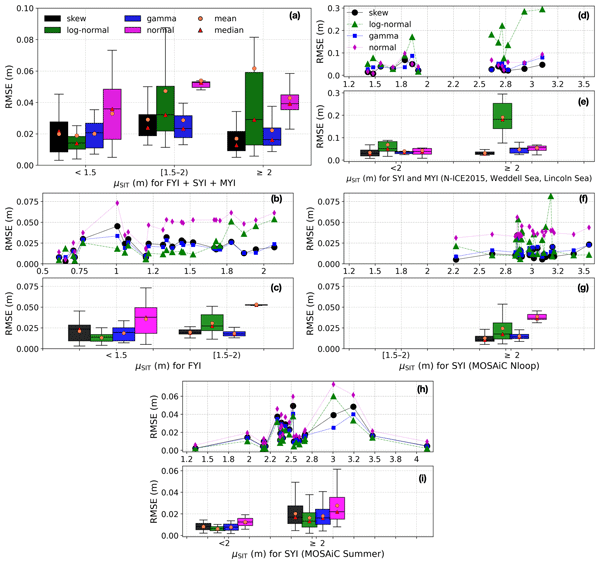
Understanding snow depth on sea ice is key for measuring ice thickness, studying ecosystems, and modelling climate. Using snow and ice thickness measurements from Arctic and Antarctic campaigns, this study examines sub-kilometre-scale (<1 km²) snow depth variations and identifies the most suitable statistical models for different ice ages, thicknesses, and weather conditions. These results can improve sub-grid snow parameterisations in snow models and remote sensing algorithms.
Rasmus Tage Tonboe, Vishnu Nandan, Marcus Huntemann, Julienne Stroeve, Randall Scharien, John Yackel, Lars Kaleschke, Hoyeon Shi, and Tânia Casal
EGUsphere, https://doi.org/10.5194/egusphere-2026-1440, https://doi.org/10.5194/egusphere-2026-1440, 2026
Short summary
Short summary
Scattering and absorption from air bubbles, voids, and brine pockets significantly affect radar and microwave radiometer measurements of sea ice and light propagation through sea ice. Here, we used a high-resolution dataset, collected during the 2019–20 MOSAiC expedition, of thin ice slices of various Arctic sea ice types to estimate the autocorrelation length and density of the inclusions. The data can be used to initialize sea ice scattering models and for understanding satellite data.
Nicole A. Loeb, Alex Crawford, Brice Noël, and Julienne Stroeve
The Cryosphere, 19, 5403–5422, https://doi.org/10.5194/tc-19-5403-2025, https://doi.org/10.5194/tc-19-5403-2025, 2025
Short summary
Short summary
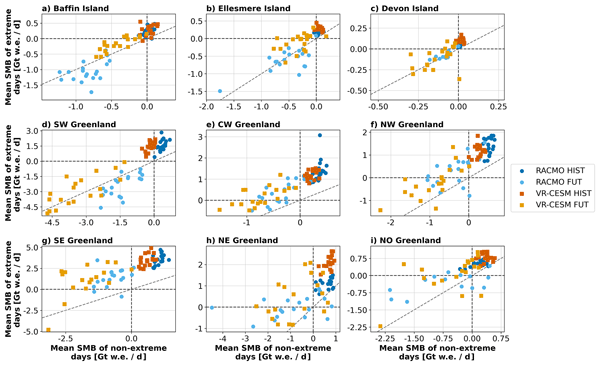
We examine how extreme precipitation days affect the seasonal mass balance (SMB) of land ice in Greenland and the Eastern Canadian Arctic in historical and future simulations. Past extreme precipitation led to higher SMB with snowfall. Future extreme precipitation may lead to the loss of ice mass as more falls as rain rather than snow in some regions, such as southwestern Greenland. Across the region, extreme precipitation becomes more important to seasonal SMB in the future, warmer climate.
Vaishali Chaudhary, Julienne Stroeve, Vishnu Nandan, and Dustin Isleifson
EGUsphere, https://doi.org/10.5194/egusphere-2025-2851, https://doi.org/10.5194/egusphere-2025-2851, 2025
Preprint archived
Short summary
Short summary
This study examines how changing weather is affecting sea ice near the Arctic community of Tuktoyaktuk in Canada. Using satellite images and weather records, we found that stronger winds from certain directions are causing the sea ice to break more often in winter. These changes pose risks for local people who depend on stable ice for travel and hunting. Our findings help understand how climate change is making Arctic ice less reliable and more dangerous.
Franck Eitel Kemgang Ghomsi, Muharrem Hilmi Erkoç, Roshin P. Raj, Atinç Pirti, Antonio Bonaduce, Babatunde J. Abiodun, and Julienne Stroeve
Int. Arch. Photogramm. Remote Sens. Spatial Inf. Sci., XLVIII-M-6-2025, 393–397, https://doi.org/10.5194/isprs-archives-XLVIII-M-6-2025-393-2025, https://doi.org/10.5194/isprs-archives-XLVIII-M-6-2025-393-2025, 2025
Monojit Saha, Julienne Stroeve, Dustin Isleifson, John Yackel, Vishnu Nandan, Jack Christopher Landy, and Hoi Ming Lam
The Cryosphere, 19, 325–346, https://doi.org/10.5194/tc-19-325-2025, https://doi.org/10.5194/tc-19-325-2025, 2025
Short summary
Short summary
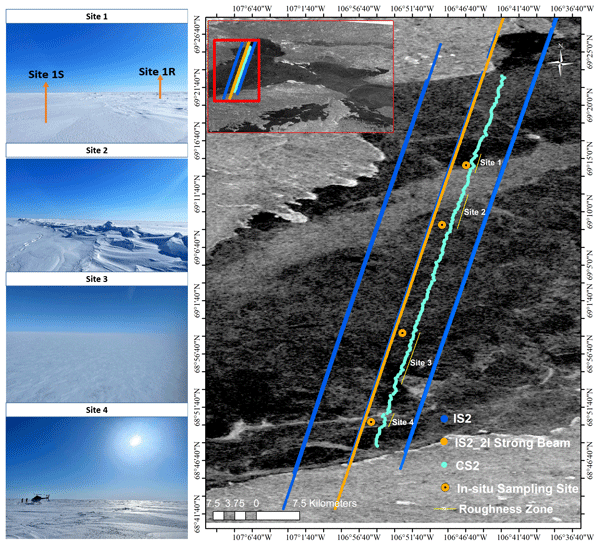
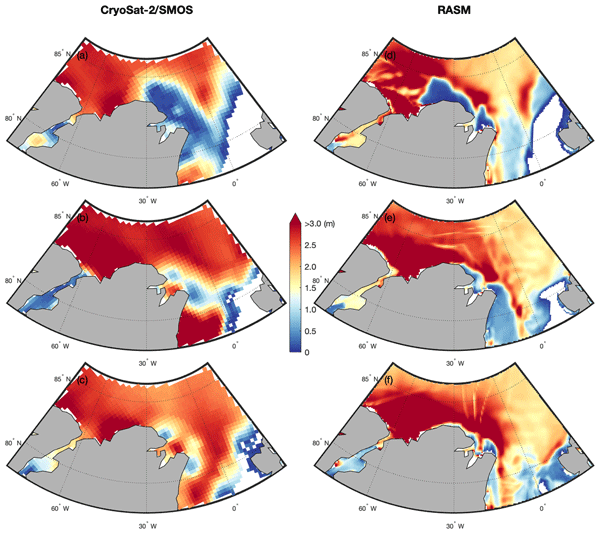
Snow on sea ice is vital for near-shore sea ice geophysical and biological processes. Past studies have measured snow depths using the satellite altimeters Cryosat-2 and ICESat-2 (Cryo2Ice), but estimating sea surface height from leadless landfast sea ice remains challenging. Snow depths from Cryo2Ice are compared to in situ data after adjusting for tides. Realistic snow depths are retrieved, but differences in roughness, satellite footprints, and snow geophysical properties are identified.
Caroline R. Holmes, Thomas J. Bracegirdle, Paul R. Holland, Julienne Stroeve, and Jeremy Wilkinson
The Cryosphere, 18, 5641–5652, https://doi.org/10.5194/tc-18-5641-2024, https://doi.org/10.5194/tc-18-5641-2024, 2024
Short summary
Short summary
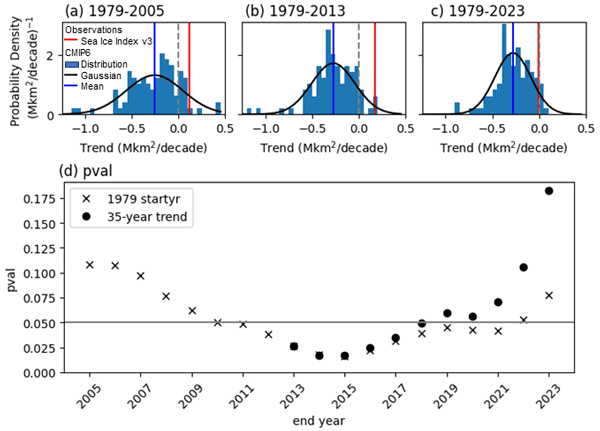
Until recently, satellite data showed an increase in Antarctic sea ice area since 1979, but climate models simulated a decrease over this period. This mismatch was one reason for low confidence in model projections of 21st-century sea ice loss. We show that following low Antarctic sea ice in 2022 and 2023, we can no longer conclude that modelled and observed trends differ. However, differences in the manner of the decline mean that model sea ice projections should still be viewed with caution.
Lu Zhou, Julienne Stroeve, Vishnu Nandan, Rosemary Willatt, Shiming Xu, Weixin Zhu, Sahra Kacimi, Stefanie Arndt, and Zifan Yang
The Cryosphere, 18, 4399–4434, https://doi.org/10.5194/tc-18-4399-2024, https://doi.org/10.5194/tc-18-4399-2024, 2024
Short summary
Short summary
Snow over Antarctic sea ice, influenced by highly variable meteorological conditions and heavy snowfall, has a complex stratigraphy and profound impact on the microwave signature. We employ advanced radiation transfer models to analyse the effects of complex snow properties on brightness temperatures over the sea ice in the Southern Ocean. Great potential lies in the understanding of snow processes and the application to satellite retrievals.
Wiebke Margitta Kolbe, Rasmus T. Tonboe, and Julienne Stroeve
Earth Syst. Sci. Data, 16, 1247–1264, https://doi.org/10.5194/essd-16-1247-2024, https://doi.org/10.5194/essd-16-1247-2024, 2024
Short summary
Short summary
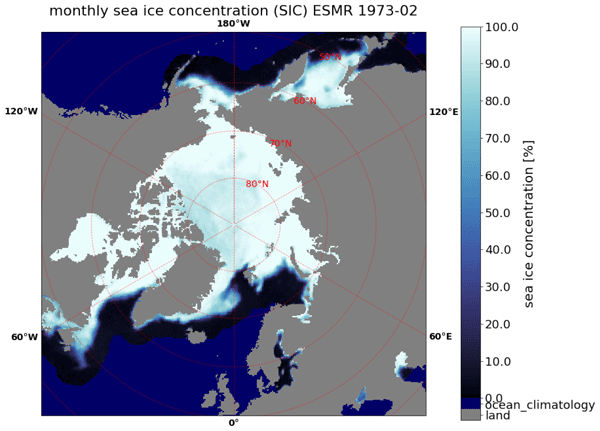
Current satellite-based sea-ice climate data records (CDRs) usually begin in October 1978 with the first multichannel microwave radiometer data. Here, we present a sea ice dataset based on the single-channel Electrical Scanning Microwave Radiometer (ESMR) that operated from 1972-1977 onboard NASA’s Nimbus 5 satellite. The data were processed using modern methods and include uncertainty estimations in order to provide an important, easy-to-use reference period of good quality for current CDRs.
Alistair Duffey, Robbie Mallett, Peter J. Irvine, Michel Tsamados, and Julienne Stroeve
Earth Syst. Dynam., 14, 1165–1169, https://doi.org/10.5194/esd-14-1165-2023, https://doi.org/10.5194/esd-14-1165-2023, 2023
Short summary
Short summary
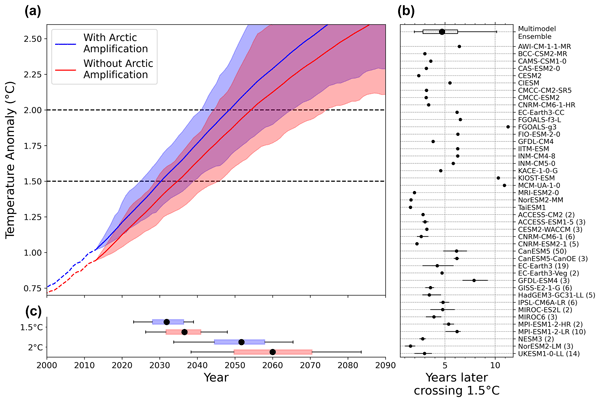
The Arctic is warming several times faster than the rest of the planet. Here, we use climate model projections to quantify for the first time how this faster warming in the Arctic impacts the timing of crossing the 1.5 °C and 2 °C thresholds defined in the Paris Agreement. We show that under plausible emissions scenarios that fail to meet the Paris 1.5 °C target, a hypothetical world without faster warming in the Arctic would breach that 1.5 °C target around 5 years later.
Vishnu Nandan, Rosemary Willatt, Robbie Mallett, Julienne Stroeve, Torsten Geldsetzer, Randall Scharien, Rasmus Tonboe, John Yackel, Jack Landy, David Clemens-Sewall, Arttu Jutila, David N. Wagner, Daniela Krampe, Marcus Huntemann, Mallik Mahmud, David Jensen, Thomas Newman, Stefan Hendricks, Gunnar Spreen, Amy Macfarlane, Martin Schneebeli, James Mead, Robert Ricker, Michael Gallagher, Claude Duguay, Ian Raphael, Chris Polashenski, Michel Tsamados, Ilkka Matero, and Mario Hoppmann
The Cryosphere, 17, 2211–2229, https://doi.org/10.5194/tc-17-2211-2023, https://doi.org/10.5194/tc-17-2211-2023, 2023
Short summary
Short summary
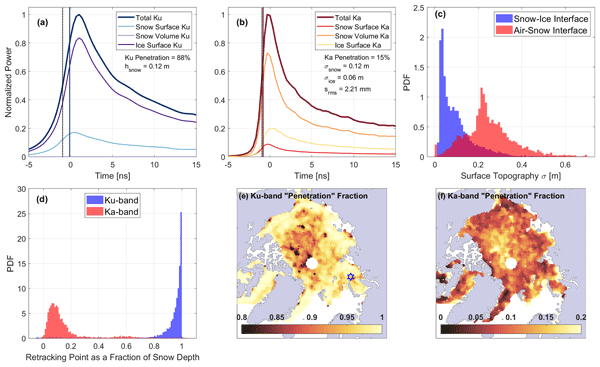
We show that wind redistributes snow on Arctic sea ice, and Ka- and Ku-band radar measurements detect both newly deposited snow and buried snow layers that can affect the accuracy of snow depth estimates on sea ice. Radar, laser, meteorological, and snow data were collected during the MOSAiC expedition. With frequent occurrence of storms in the Arctic, our results show that
wind-redistributed snow needs to be accounted for to improve snow depth estimates on sea ice from satellite radars.
Younjoo J. Lee, Wieslaw Maslowski, John J. Cassano, Jaclyn Clement Kinney, Anthony P. Craig, Samy Kamal, Robert Osinski, Mark W. Seefeldt, Julienne Stroeve, and Hailong Wang
The Cryosphere, 17, 233–253, https://doi.org/10.5194/tc-17-233-2023, https://doi.org/10.5194/tc-17-233-2023, 2023
Short summary
Short summary
During 1979–2020, four winter polynyas occurred in December 1986 and February 2011, 2017, and 2018 north of Greenland. Instead of ice melting due to the anomalous warm air intrusion, the extreme wind forcing resulted in greater ice transport offshore. Based on the two ensemble runs, representing a 1980s thicker ice vs. a 2010s thinner ice, a dominant cause of these winter polynyas stems from internal variability of atmospheric forcing rather than from the forced response to a warming climate.
Julienne Stroeve, Vishnu Nandan, Rosemary Willatt, Ruzica Dadic, Philip Rostosky, Michael Gallagher, Robbie Mallett, Andrew Barrett, Stefan Hendricks, Rasmus Tonboe, Michelle McCrystall, Mark Serreze, Linda Thielke, Gunnar Spreen, Thomas Newman, John Yackel, Robert Ricker, Michel Tsamados, Amy Macfarlane, Henna-Reetta Hannula, and Martin Schneebeli
The Cryosphere, 16, 4223–4250, https://doi.org/10.5194/tc-16-4223-2022, https://doi.org/10.5194/tc-16-4223-2022, 2022
Short summary
Short summary
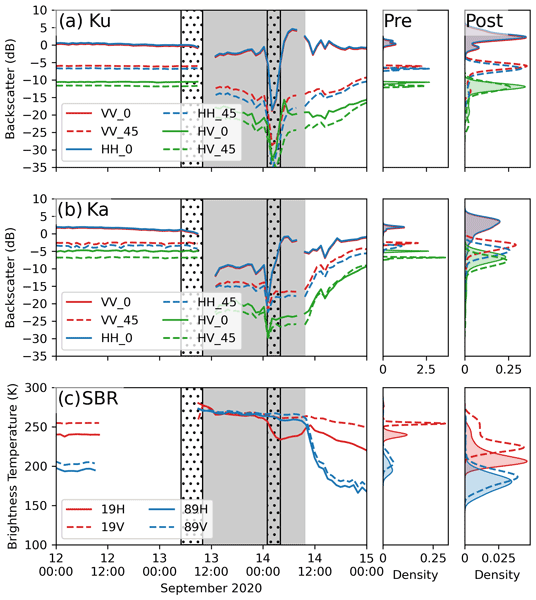
Impacts of rain on snow (ROS) on satellite-retrieved sea ice variables remain to be fully understood. This study evaluates the impacts of ROS over sea ice on active and passive microwave data collected during the 2019–20 MOSAiC expedition. Rainfall and subsequent refreezing of the snowpack significantly altered emitted and backscattered radar energy, laying important groundwork for understanding their impacts on operational satellite retrievals of various sea ice geophysical variables.
David N. Wagner, Matthew D. Shupe, Christopher Cox, Ola G. Persson, Taneil Uttal, Markus M. Frey, Amélie Kirchgaessner, Martin Schneebeli, Matthias Jaggi, Amy R. Macfarlane, Polona Itkin, Stefanie Arndt, Stefan Hendricks, Daniela Krampe, Marcel Nicolaus, Robert Ricker, Julia Regnery, Nikolai Kolabutin, Egor Shimanshuck, Marc Oggier, Ian Raphael, Julienne Stroeve, and Michael Lehning
The Cryosphere, 16, 2373–2402, https://doi.org/10.5194/tc-16-2373-2022, https://doi.org/10.5194/tc-16-2373-2022, 2022
Short summary
Short summary
Based on measurements of the snow cover over sea ice and atmospheric measurements, we estimate snowfall and snow accumulation for the MOSAiC ice floe, between November 2019 and May 2020. For this period, we estimate 98–114 mm of precipitation. We suggest that about 34 mm of snow water equivalent accumulated until the end of April 2020 and that at least about 50 % of the precipitated snow was eroded or sublimated. Further, we suggest explanations for potential snowfall overestimation.
William Gregory, Julienne Stroeve, and Michel Tsamados
The Cryosphere, 16, 1653–1673, https://doi.org/10.5194/tc-16-1653-2022, https://doi.org/10.5194/tc-16-1653-2022, 2022
Short summary
Short summary
This research was conducted to better understand how coupled climate models simulate one of the large-scale interactions between the atmosphere and Arctic sea ice that we see in observational data, the accurate representation of which is important for producing reliable forecasts of Arctic sea ice on seasonal to inter-annual timescales. With network theory, this work shows that models do not reflect this interaction well on average, which is likely due to regional biases in sea ice thickness.
Isolde A. Glissenaar, Jack C. Landy, Alek A. Petty, Nathan T. Kurtz, and Julienne C. Stroeve
The Cryosphere, 15, 4909–4927, https://doi.org/10.5194/tc-15-4909-2021, https://doi.org/10.5194/tc-15-4909-2021, 2021
Short summary
Short summary
Scientists can estimate sea ice thickness using satellites that measure surface height. To determine the sea ice thickness, we also need to know the snow depth and density. This paper shows that the chosen snow depth product has a considerable impact on the findings of sea ice thickness state and trends in Baffin Bay, showing mean thinning with some snow depth products and mean thickening with others. This shows that it is important to better understand and monitor snow depth on sea ice.
André Emil Toft Jensen, Rasmus Tage Tonboe, Hoyeon Shi, Suman Singha, Mads Hvid Ribergaard, Imke Sievers, Marcus Huntemann, Melody Sandells, and Vishnu Nandan
EGUsphere, https://doi.org/10.5194/egusphere-2026-3613, https://doi.org/10.5194/egusphere-2026-3613, 2026
This preprint is open for discussion and under review for The Cryosphere (TC).
Short summary
Short summary
Sea ice models are essential for understanding climate change, but evaluating them across the Arctic is challenging. We developed a method that compares model simulations directly with satellite measurements of microwave radiation. The resulting performance metric reflects the overall state of the sea ice and snow cover and provides a largely independent way to evaluate and improve large-scale sea ice models, helping to increase confidence in future climate studies.
Elie René-Bazin, Michel Tsamados, Sabrina Sofea Binti Aliff Raziuddin, Joel Perez Ferrer, Tudor Suciu, Carmen Nab, Chamkaur Ghag, Harry Heorton, Rosemary Willatt, Jack Landy, Matthew Fox, and Thomas Bodin
The Cryosphere, 20, 3913–3932, https://doi.org/10.5194/tc-20-3913-2026, https://doi.org/10.5194/tc-20-3913-2026, 2026
Short summary
Short summary
This paper introduces a new statistical approach to retrieve ice and snow depth over the Arctic Ocean, using satellite altimeters measurements. We demonstrate the ability of this method to compute efficiently the sea ice thickness and the snow depth over the Arctic, without major assumptions on the snow. In addition to the ice and snow depth, this approach is efficient to study the penetration of radar and laser pulses, paving the way for further research in satellite altimetry.
Lanqing Huang, Julienne Stroeve, Thomas Newman, Robbie Mallett, Rosemary Willatt, Lu Zhou, Malin Johansson, Carmen Nab, and Alicia Fallows
The Cryosphere, 20, 2825–2849, https://doi.org/10.5194/tc-20-2825-2026, https://doi.org/10.5194/tc-20-2825-2026, 2026
Short summary
Short summary
Understanding snow depth on sea ice is key for measuring ice thickness, studying ecosystems, and modelling climate. Using snow and ice thickness measurements from Arctic and Antarctic campaigns, this study examines sub-kilometre-scale (<1 km²) snow depth variations and identifies the most suitable statistical models for different ice ages, thicknesses, and weather conditions. These results can improve sub-grid snow parameterisations in snow models and remote sensing algorithms.
Catherine Taelman, Jack Landy, Robbie Mallett, and Polona Itkin
EGUsphere, https://doi.org/10.5194/egusphere-2026-1662, https://doi.org/10.5194/egusphere-2026-1662, 2026
Short summary
Short summary
Arctic sea ice thickness is commonly estimated using radar measurements from satellites. This technique assumes that the snow on sea ice is 'invisible' to the radar signals. We studied if this assumption is valid and found that the radar measurements work well in cold conditions, when air temperatures are below –10 °C. However, the radar measurements can overestimate ice thickness during warmer periods, especially if there is new snowfall and if the snow contains salt.
Rasmus Tage Tonboe, Vishnu Nandan, Marcus Huntemann, Julienne Stroeve, Randall Scharien, John Yackel, Lars Kaleschke, Hoyeon Shi, and Tânia Casal
EGUsphere, https://doi.org/10.5194/egusphere-2026-1440, https://doi.org/10.5194/egusphere-2026-1440, 2026
Short summary
Short summary
Scattering and absorption from air bubbles, voids, and brine pockets significantly affect radar and microwave radiometer measurements of sea ice and light propagation through sea ice. Here, we used a high-resolution dataset, collected during the 2019–20 MOSAiC expedition, of thin ice slices of various Arctic sea ice types to estimate the autocorrelation length and density of the inclusions. The data can be used to initialize sea ice scattering models and for understanding satellite data.
Léa Elise Bonnefoy, Catherine Prigent, Ghislain Picard, Clément Soriot, Alice Le Gall, Lise Kilic, and Carlos Jimenez
The Cryosphere, 20, 1297–1314, https://doi.org/10.5194/tc-20-1297-2026, https://doi.org/10.5194/tc-20-1297-2026, 2026
Short summary
Short summary
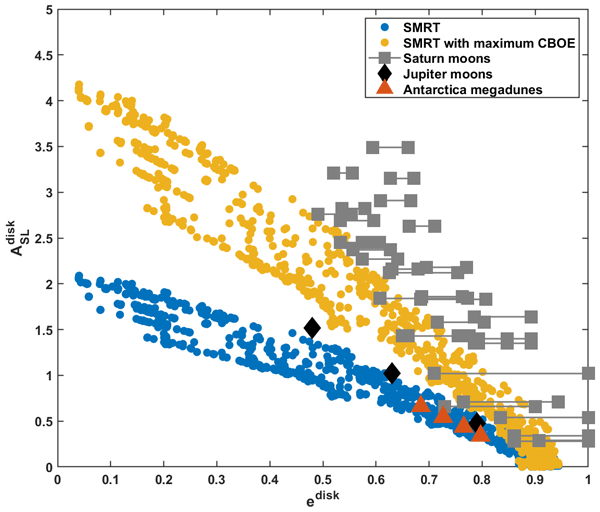
Microwave radiometry senses the thermal emission from a target, whereas its active counterpart, radar, sends a signal to the target and measures the reflected signal. We simultaneously model radar and radiometry over the East Antarctic ice sheet, which we propose as an analog for icy moons: we can reproduce most data with a unique model. The radar response of Saturn's moons cannot be reproduced and is likely caused by processes unaccounted for in the model and less efficient in the Antarctic.
Jack C. Landy, Claude de Rijke-Thomas, Carmen Nab, Isobel Lawrence, Isolde A. Glissenaar, Robbie D. C. Mallett, Renée M. Fredensborg Hansen, Alek Petty, Michel Tsamados, Amy R. Macfarlane, and Anne Braakmann-Folgmann
The Cryosphere, 20, 183–208, https://doi.org/10.5194/tc-20-183-2026, https://doi.org/10.5194/tc-20-183-2026, 2026
Short summary
Short summary
In this study, we use three satellites to test the planned remote sensing approach of the upcoming mission Copernicus Polar Ice and Snow Topography Altimeter (CRISTAL) over sea ice and that its dual radars will accurately measure the heights of the top and base of snow sitting atop floating sea ice floes. Our results suggest that CRISTAL's dual radars will not necessarily measure the snow top and base under all conditions. We find that accurate height measurements depend more on surface roughness than on snow properties, as is commonly assumed.
Nicole A. Loeb, Alex Crawford, Brice Noël, and Julienne Stroeve
The Cryosphere, 19, 5403–5422, https://doi.org/10.5194/tc-19-5403-2025, https://doi.org/10.5194/tc-19-5403-2025, 2025
Short summary
Short summary
We examine how extreme precipitation days affect the seasonal mass balance (SMB) of land ice in Greenland and the Eastern Canadian Arctic in historical and future simulations. Past extreme precipitation led to higher SMB with snowfall. Future extreme precipitation may lead to the loss of ice mass as more falls as rain rather than snow in some regions, such as southwestern Greenland. Across the region, extreme precipitation becomes more important to seasonal SMB in the future, warmer climate.
Vaishali Chaudhary, Julienne Stroeve, Vishnu Nandan, and Dustin Isleifson
EGUsphere, https://doi.org/10.5194/egusphere-2025-2851, https://doi.org/10.5194/egusphere-2025-2851, 2025
Preprint archived
Short summary
Short summary
This study examines how changing weather is affecting sea ice near the Arctic community of Tuktoyaktuk in Canada. Using satellite images and weather records, we found that stronger winds from certain directions are causing the sea ice to break more often in winter. These changes pose risks for local people who depend on stable ice for travel and hunting. Our findings help understand how climate change is making Arctic ice less reliable and more dangerous.
Franck Eitel Kemgang Ghomsi, Muharrem Hilmi Erkoç, Roshin P. Raj, Atinç Pirti, Antonio Bonaduce, Babatunde J. Abiodun, and Julienne Stroeve
Int. Arch. Photogramm. Remote Sens. Spatial Inf. Sci., XLVIII-M-6-2025, 393–397, https://doi.org/10.5194/isprs-archives-XLVIII-M-6-2025-393-2025, https://doi.org/10.5194/isprs-archives-XLVIII-M-6-2025-393-2025, 2025
Monojit Saha, Julienne Stroeve, Dustin Isleifson, John Yackel, Vishnu Nandan, Jack Christopher Landy, and Hoi Ming Lam
The Cryosphere, 19, 325–346, https://doi.org/10.5194/tc-19-325-2025, https://doi.org/10.5194/tc-19-325-2025, 2025
Short summary
Short summary
Snow on sea ice is vital for near-shore sea ice geophysical and biological processes. Past studies have measured snow depths using the satellite altimeters Cryosat-2 and ICESat-2 (Cryo2Ice), but estimating sea surface height from leadless landfast sea ice remains challenging. Snow depths from Cryo2Ice are compared to in situ data after adjusting for tides. Realistic snow depths are retrieved, but differences in roughness, satellite footprints, and snow geophysical properties are identified.
Caroline R. Holmes, Thomas J. Bracegirdle, Paul R. Holland, Julienne Stroeve, and Jeremy Wilkinson
The Cryosphere, 18, 5641–5652, https://doi.org/10.5194/tc-18-5641-2024, https://doi.org/10.5194/tc-18-5641-2024, 2024
Short summary
Short summary
Until recently, satellite data showed an increase in Antarctic sea ice area since 1979, but climate models simulated a decrease over this period. This mismatch was one reason for low confidence in model projections of 21st-century sea ice loss. We show that following low Antarctic sea ice in 2022 and 2023, we can no longer conclude that modelled and observed trends differ. However, differences in the manner of the decline mean that model sea ice projections should still be viewed with caution.
Lu Zhou, Julienne Stroeve, Vishnu Nandan, Rosemary Willatt, Shiming Xu, Weixin Zhu, Sahra Kacimi, Stefanie Arndt, and Zifan Yang
The Cryosphere, 18, 4399–4434, https://doi.org/10.5194/tc-18-4399-2024, https://doi.org/10.5194/tc-18-4399-2024, 2024
Short summary
Short summary
Snow over Antarctic sea ice, influenced by highly variable meteorological conditions and heavy snowfall, has a complex stratigraphy and profound impact on the microwave signature. We employ advanced radiation transfer models to analyse the effects of complex snow properties on brightness temperatures over the sea ice in the Southern Ocean. Great potential lies in the understanding of snow processes and the application to satellite retrievals.
Wiebke Margitta Kolbe, Rasmus T. Tonboe, and Julienne Stroeve
Earth Syst. Sci. Data, 16, 1247–1264, https://doi.org/10.5194/essd-16-1247-2024, https://doi.org/10.5194/essd-16-1247-2024, 2024
Short summary
Short summary
Current satellite-based sea-ice climate data records (CDRs) usually begin in October 1978 with the first multichannel microwave radiometer data. Here, we present a sea ice dataset based on the single-channel Electrical Scanning Microwave Radiometer (ESMR) that operated from 1972-1977 onboard NASA’s Nimbus 5 satellite. The data were processed using modern methods and include uncertainty estimations in order to provide an important, easy-to-use reference period of good quality for current CDRs.
Alistair Duffey, Robbie Mallett, Peter J. Irvine, Michel Tsamados, and Julienne Stroeve
Earth Syst. Dynam., 14, 1165–1169, https://doi.org/10.5194/esd-14-1165-2023, https://doi.org/10.5194/esd-14-1165-2023, 2023
Short summary
Short summary
The Arctic is warming several times faster than the rest of the planet. Here, we use climate model projections to quantify for the first time how this faster warming in the Arctic impacts the timing of crossing the 1.5 °C and 2 °C thresholds defined in the Paris Agreement. We show that under plausible emissions scenarios that fail to meet the Paris 1.5 °C target, a hypothetical world without faster warming in the Arctic would breach that 1.5 °C target around 5 years later.
Vishnu Nandan, Rosemary Willatt, Robbie Mallett, Julienne Stroeve, Torsten Geldsetzer, Randall Scharien, Rasmus Tonboe, John Yackel, Jack Landy, David Clemens-Sewall, Arttu Jutila, David N. Wagner, Daniela Krampe, Marcus Huntemann, Mallik Mahmud, David Jensen, Thomas Newman, Stefan Hendricks, Gunnar Spreen, Amy Macfarlane, Martin Schneebeli, James Mead, Robert Ricker, Michael Gallagher, Claude Duguay, Ian Raphael, Chris Polashenski, Michel Tsamados, Ilkka Matero, and Mario Hoppmann
The Cryosphere, 17, 2211–2229, https://doi.org/10.5194/tc-17-2211-2023, https://doi.org/10.5194/tc-17-2211-2023, 2023
Short summary
Short summary
We show that wind redistributes snow on Arctic sea ice, and Ka- and Ku-band radar measurements detect both newly deposited snow and buried snow layers that can affect the accuracy of snow depth estimates on sea ice. Radar, laser, meteorological, and snow data were collected during the MOSAiC expedition. With frequent occurrence of storms in the Arctic, our results show that
wind-redistributed snow needs to be accounted for to improve snow depth estimates on sea ice from satellite radars.
Younjoo J. Lee, Wieslaw Maslowski, John J. Cassano, Jaclyn Clement Kinney, Anthony P. Craig, Samy Kamal, Robert Osinski, Mark W. Seefeldt, Julienne Stroeve, and Hailong Wang
The Cryosphere, 17, 233–253, https://doi.org/10.5194/tc-17-233-2023, https://doi.org/10.5194/tc-17-233-2023, 2023
Short summary
Short summary
During 1979–2020, four winter polynyas occurred in December 1986 and February 2011, 2017, and 2018 north of Greenland. Instead of ice melting due to the anomalous warm air intrusion, the extreme wind forcing resulted in greater ice transport offshore. Based on the two ensemble runs, representing a 1980s thicker ice vs. a 2010s thinner ice, a dominant cause of these winter polynyas stems from internal variability of atmospheric forcing rather than from the forced response to a warming climate.
Julienne Stroeve, Vishnu Nandan, Rosemary Willatt, Ruzica Dadic, Philip Rostosky, Michael Gallagher, Robbie Mallett, Andrew Barrett, Stefan Hendricks, Rasmus Tonboe, Michelle McCrystall, Mark Serreze, Linda Thielke, Gunnar Spreen, Thomas Newman, John Yackel, Robert Ricker, Michel Tsamados, Amy Macfarlane, Henna-Reetta Hannula, and Martin Schneebeli
The Cryosphere, 16, 4223–4250, https://doi.org/10.5194/tc-16-4223-2022, https://doi.org/10.5194/tc-16-4223-2022, 2022
Short summary
Short summary
Impacts of rain on snow (ROS) on satellite-retrieved sea ice variables remain to be fully understood. This study evaluates the impacts of ROS over sea ice on active and passive microwave data collected during the 2019–20 MOSAiC expedition. Rainfall and subsequent refreezing of the snowpack significantly altered emitted and backscattered radar energy, laying important groundwork for understanding their impacts on operational satellite retrievals of various sea ice geophysical variables.
David N. Wagner, Matthew D. Shupe, Christopher Cox, Ola G. Persson, Taneil Uttal, Markus M. Frey, Amélie Kirchgaessner, Martin Schneebeli, Matthias Jaggi, Amy R. Macfarlane, Polona Itkin, Stefanie Arndt, Stefan Hendricks, Daniela Krampe, Marcel Nicolaus, Robert Ricker, Julia Regnery, Nikolai Kolabutin, Egor Shimanshuck, Marc Oggier, Ian Raphael, Julienne Stroeve, and Michael Lehning
The Cryosphere, 16, 2373–2402, https://doi.org/10.5194/tc-16-2373-2022, https://doi.org/10.5194/tc-16-2373-2022, 2022
Short summary
Short summary
Based on measurements of the snow cover over sea ice and atmospheric measurements, we estimate snowfall and snow accumulation for the MOSAiC ice floe, between November 2019 and May 2020. For this period, we estimate 98–114 mm of precipitation. We suggest that about 34 mm of snow water equivalent accumulated until the end of April 2020 and that at least about 50 % of the precipitated snow was eroded or sublimated. Further, we suggest explanations for potential snowfall overestimation.
William Gregory, Julienne Stroeve, and Michel Tsamados
The Cryosphere, 16, 1653–1673, https://doi.org/10.5194/tc-16-1653-2022, https://doi.org/10.5194/tc-16-1653-2022, 2022
Short summary
Short summary
This research was conducted to better understand how coupled climate models simulate one of the large-scale interactions between the atmosphere and Arctic sea ice that we see in observational data, the accurate representation of which is important for producing reliable forecasts of Arctic sea ice on seasonal to inter-annual timescales. With network theory, this work shows that models do not reflect this interaction well on average, which is likely due to regional biases in sea ice thickness.
Isolde A. Glissenaar, Jack C. Landy, Alek A. Petty, Nathan T. Kurtz, and Julienne C. Stroeve
The Cryosphere, 15, 4909–4927, https://doi.org/10.5194/tc-15-4909-2021, https://doi.org/10.5194/tc-15-4909-2021, 2021
Short summary
Short summary
Scientists can estimate sea ice thickness using satellites that measure surface height. To determine the sea ice thickness, we also need to know the snow depth and density. This paper shows that the chosen snow depth product has a considerable impact on the findings of sea ice thickness state and trends in Baffin Bay, showing mean thinning with some snow depth products and mean thickening with others. This shows that it is important to better understand and monitor snow depth on sea ice.
Cited articles
Abele, G.: Snow Roads and Runways, Cold Regions Research and Engineering Laboratory (CRREL), Monograph 90-3 (ADA231490), 1990.
Brown, L. C. and Duguay, C. R.: The response and role of ice cover in lake-climate interactions, Prog. Phys. Geog., 34, 671–704, https://doi.org/10.1177/0309133310375653, 2010.
Cruickshank, J. G.: Soils and Terrain Units Around Resolute, Cornwallis Island, Arctic, 24, 195–209, 1971.
Derksen, C., King, J., Belair, S., Garnaud, C., Vionnet, V., Fortin, V., Lemmetyinen, J., Crevier, Y., Plourde, P., Lawrence, B., and van Mierlo, H.: Development of the terrestrial snow mass mission, Int. Geosci. Remote Se., 614–617, 2021.
Dodonov, P. and Harper, K. A.: Spatial patterns of structural diversity across the boreal forest-tundra ecotone in Churchill, Canada, Acta Oecol., 117, 103862, https://doi.org/10.1016/j.actao.2022.103862, 2022.
Dong, Y., Xiao, P., Zhang, X., Ge, D., Yu, J., Chen, Y., Wu, Q., Ma, Y., Liu, R., Luan, W., Liu, H., and Bai, J.: Increased vulnerability of Arctic potential ice roads under climate change, Commun. Earth Environ., 6, 37, https://doi.org/10.1038/s43247-025-02011-y, 2025.
Drinkwater M. R. and Crocker, G. B.: Modelling Changes in Scattering Properties of the Dielectric and Young Snow-Covered Sea Ice at GHz Frequencies, J. Glaciolo., 34, 274–282, https://doi.org/10.3189/S0022143000007012, 1988.
Dutch, V. R., Rutter, N., Wake, L., Sandells, M., Derksen, C., Walker, B., Hould Gosselin, G., Sonnentag, O., Essery, R., Kelly, R., Marsh, P., King, J., and Boike, J.: Impact of measured and simulated tundra snowpack properties on heat transfer, The Cryosphere, 16, 4201–4222, https://doi.org/10.5194/tc-16-4201-2022, 2022.
Fatolahzadeh Gheysari, A., and Maghoul, P. A.: Framework to assess permafrost thaw threat for land transportation infrastructure in northern Canada, Commun. Earth. Environ., 5, 167, https://doi.org/10.1038/s43247-024-01317-7, 2024.
Frankenstein, G. and Garner, R.: Equations for Determining the Brine Volume of Sea Ice from −0.5 ° to −22.9 °C, J. Glaciolo., 6, 943–944, https://doi.org/10.3189/S0022143000020244, 1967.
Fredensborg Hansen, R. M., Skourup, H., Rinne, E., Jutila, A., Lawrence, I. R., Shepherd, A., Høyland, K. V., Li, J., Rodriguez-Morales, F., Simonsen, S. B., Wilkinson, J., Veyssiere, G., Yi, D., Forsberg, R., and Casal, T. G. D.: Multi-frequency altimetry snow depth estimates over heterogeneous snow-covered Antarctic summer sea ice – Part 1: C∕S-, Ku-, and Ka-band airborne observations, The Cryosphere, 19, 4167–4192, https://doi.org/10.5194/tc-19-4167-2025, 2025.
Geldsetzer, T., Langlois, A., and Yackel, J. J.: Dielectric properties of brine-wetted snow on first-year sea ice, Cold Reg. Sci. Technol., 58, 47–56, https://doi.org/10.1016/j.coldregions.2009.03.009, 2009.
Gold, L. W.: Use of ice covers for transportation, Can. Geotech. J., 8, 170–181, https://doi.org/10.1139/t71-018, 1971.
Guerreiro, K., Fleury, S., Zakharova, E., Rémy, F., and Kouraev, A.: Potential for estimation of snow depth on Arctic sea ice from CryoSat-2 and SARAL/AltiKa missions, Rem. Sens. Environ., 186, 339–349, 2016.
Hallikainen, M., Ulaby, F., and Abdelrazik, M.: Dielectric properties of snow in the 3 to 37 GHz range, IEEE T. Antenn. Propag., 34, 1329–1340, https://doi.org/10.1109/TAP.1986.1143757, 1986.
Huang, S., Willatt, R., Fallows, A., Murphy, M., Lyu, M., Mallett, R., Nandan, V., Mitchell, T., and Stroeve, J.: Salt transport in artificial snow on sea ice: laboratory experiments, Environmental Research Communications, 7, 125022, https://doi.org/10.1088/2515-7620/ae25c3, 2025.
Inman, H. F. and Bradley, E. L.: The overlapping coefficient as a measure of agreement between probability distributions and point estimation of the overlap of two normal densities, Commun. Stat.-Theor., 18, 3851–3874, https://doi.org/10.1080/03610928908830127, 1989.
Kern, M., Cullen, R., Berruti, B., Bouffard, J., Casal, T., Drinkwater, M. R., Gabriele, A., Lecuyot, A., Ludwig, M., Midthassel, R., Navas Traver, I., Parrinello, T., Ressler, G., Andersson, E., Martin-Puig, C., Andersen, O., Bartsch, A., Farrell, S., Fleury, S., Gascoin, S., Guillot, A., Humbert, A., Rinne, E., Shepherd, A., van den Broeke, M. R., and Yackel, J.: The Copernicus Polar Ice and Snow Topography Altimeter (CRISTAL) high-priority candidate mission, The Cryosphere, 14, 2235–2251, https://doi.org/10.5194/tc-14-2235-2020, 2020.
King, J., Howell, S., Brady, M., Toose, P., Derksen, C., Haas, C., and Beckers, J.: Local-scale variability of snow density on Arctic sea ice, The Cryosphere, 14, 4323–4339, https://doi.org/10.5194/tc-14-4323-2020, 2020.
Kirillov, S., Babb, D., Dmitrenko, I., Landy, J., Lukovich, J., Ehn, J., Sydor, K., Barber, D., and Stroeve, J.: Atmospheric Forcing Drives the Winter Sea Ice Thickness Asymmetry of Hudson Bay, J. Geophys. Res.-Oceans, 125, e2019JC015756, https://doi.org/10.1029/2019JC015756, 2020.
Klein, L. and Swift, C.: An improved model for the dielectric constant of sea water at microwave frequencies, IEEE T. Antenn. Propag., 25, 104–111, https://https://doi.org/10.1109/TAP.1977.1141539, 1977.
Kuzyk, Z. A., Macdonald, R. W., Granskog, M. A., Scharien, R. K., Galley, R. J., Michel, C., Barber, D., and Stern, G.: Sea ice, hydrological, and biological processes in the Churchill River estuary region, Hudson Bay, Estuar. Coast. Shelf S., 77, 369–384, https://doi.org/10.1016/j.ecss.2007.09.030, 2008.
Kwok, R., Kacimi, S., Webster, M. A., Kurtz, N. T., and Petty, A. A.: Arctic snow depth and sea ice thickness from ICESat-2 and CryoSat-2 freeboards: A first examination, J. Geophys. Res.-Oceans, 125, e2019JC016008, https://doi.org/10.1029/2019JC016008, 2020.
Landy, J. C., Petty, A. A., Tsamados, M., and Stroeve, J. C.: Sea ice roughness overlooked as a key source of uncertainty in CryoSat-2 ice freeboard retrievals, J. Geophys. Res.-Oceans, 125, e2019JC015820, https://doi.org/10.1029/2019JC015820, 2020.
Landy, J. C., de Rijke-Thomas, C., Nab, C., Lawrence, I., Glissenaar, I. A., Mallett, R. D. C., Fredensborg Hansen, R. M., Petty, A., Tsamados, M., Macfarlane, A. R., and Braakmann-Folgmann, A.: Anticipating CRISTAL: an exploration of multi-frequency satellite altimeter snow depth estimates over Arctic sea ice, 2018–2023, The Cryosphere, 20, 183–208, https://doi.org/10.5194/tc-20-183-2026, 2026.
Lawrence, I. R., Tsamados, M. C., Stroeve, J. C., Armitage, T. W. K., and Ridout, A. L.: Estimating snow depth over Arctic sea ice from calibrated dual-frequency radar freeboards, The Cryosphere, 12, 3551–3564, https://doi.org/10.5194/tc-12-3551-2018, 2018.
Laxon, S., Peacock, N., and Smith, D.: High interannual variability of sea ice thickness in the Arctic region, Nature, 425, 947–950, 2003.
Mallett, R., Nandan, V., Stroeve, J., Willatt, R., Saha, M., Yackel, J., Veysière, G., and Wilkinson, J.: Dye tracing of upward brine migration in snow, Ann. Glaciol., 65, e26, https://doi.org/10.1017/aog.2024.27, 2024.
Mangilli, A., Duguay, C. R., Murfitt, J., Moreau, T., Amraoui, S., Mugunthan, J. S., Thibaut, P., and Donlon, C.: Improving the Estimation of Lake Ice Thickness with High-Resolution Radar Altimetry Data, Remote Sens., 16, 2510, https://doi.org/10.3390/rs16142510, 2024.
Marshall, H. P., Storms, S., Deeb, E., Forster, R., Vuyovich, C., Elder, K., Durand, M., and Hiemstra, C.: Using Phase-Delay Approaches to Estimate Snow Properties: A Comparison of Airborne L-Band InSAR and Ground-Based 6-18 GHz FMCW Radar Observations During the NASA SnowEx 2020 Grand Mesa Campaign, IGARSS 2023–2023 IEEE Int. Geosc. Remote Se., Pasadena, CA, USA, 2023, 848–851, https://doi.org/10.1109/IGARSS52108.2023.10281420, 2023.
Massey Jr., F. J.: The Kolmogorov-Smirnov test for goodness of fit, J. Am. Stat. Assoc., 46, 68–78, https://doi.org/10.2307/2280095, 1951.
Mätzler, C: Microwave permittivity of dry snow, IEEE T. Geosci. Remote, 34, 573–581, https://doi.org/10.1109/36.485133, 1996.
Michel, B.: Ice Mechanics, Les Presses de l'Université Laval, Quebec, 449 pp., ISBN 10: 0774668768, ISBN 13: 9780774668767, 1978.
Murfitt, J., Duguay, C., Picard, G., and Gunn, G.: Investigating the Effect of Lake Ice Properties on Multifrequency Backscatter Using the Snow Microwave Radiative Transfer Model, IEEE T. Geosci. Remote, 60, 1–23, https://doi.org/10.1109/TGRS.2022.3197109, 2022.
Nandan, V., Geldsetzer, T., Islam, T., Yackel, J. J., Gill, J. P., Fuller, M. C., Gunn, G., and Duguay, C.: Ku-, X-and C-band measured and modeled microwave backscatter from a highly saline snow cover on first-year sea ice, Rem. Sens. Environ., 187, 62–75, 2016.
Nandan, V., Geldsetzer, T., Yackel, J., Mahmud, M., Scharien, R., Howell, S., King, J., Ricker, R., and Else, B.: Effect of Snow Salinity on CryoSat-2 Arctic First-Year Sea Ice Freeboard Measurements, Geophys. Res. Lett., 44, 10419–10426, https://doi.org/10.1002/2017GL074506, 2017.
Nandan, V., Willatt, R., Mallett, R., Stroeve, J., Geldsetzer, T., Scharien, R., Tonboe, R., Yackel, J., Landy, J., Clemens-Sewall, D., Jutila, A., Wagner, D. N., Krampe, D., Huntemann, M., Mahmud, M., Jensen, D., Newman, T., Hendricks, S., Spreen, G., Macfarlane, A., Schneebeli, M., Mead, J., Ricker, R., Gallagher, M., Duguay, C., Raphael, I., Polashenski, C., Tsamados, M., Matero, I., and Hoppmann, M.: Wind redistribution of snow impacts the Ka- and Ku-band radar signatures of Arctic sea ice, The Cryosphere, 17, 2211–2229, https://doi.org/10.5194/tc-17-2211-2023, 2023.
Newman, T., Stroeve, J., Nandan, V., Willatt, R., Mead, J., Mallett, R., Tsamados, M., Huntemann, M., Hendricks, S., Spreen, G., and Tonboe, R.: A Practical Approach to FMCW Radar Deconvolution in the Sea Ice Domain, IEEE Access, https://doi.org/10.1109/ACCESS.2024.3502502, 2024.
O'Neill, B. H. and Burn, C. R.: Impacts of variations in snow cover on permafrost stability, including simulated snow management, Dempster Highway, Peel Plateau, Northwest Territories, Arctic Science, 3, 150–178, https://doi.org/10.1139/as-2016-0036, 2017.
Ricker, R., Hendricks, S., Helm, V., Skourup, H., and Davidson, M.: Sensitivity of CryoSat-2 Arctic sea-ice freeboard and thickness on radar-waveform interpretation, The Cryosphere, 8, 1607–1622, https://doi.org/10.5194/tc-8-1607-2014, 2014.
Stogryn, A., and Desargant, G.: The dielectric properties of brine in sea ice at microwave frequencies, IEEE T. Antenn. Propag., 33, 523–532, https://doi.org/10.1109/TAP.1985.1143610, 1985.
Stroeve, J.: KuKa Resolute Data – April 2025, CanWIN [data set], https://doi.org/10.34992/ep9a-xt58, 2025.
Stroeve, J., Nandan, V., Willatt, R., Tonboe, R., Hendricks, S., Ricker, R., Mead, J., Mallett, R., Huntemann, M., Itkin, P., Schneebeli, M., Krampe, D., Spreen, G., Wilkinson, J., Matero, I., Hoppmann, M., and Tsamados, M.: Surface-based Ku- and Ka-band polarimetric radar for sea ice studies , The Cryosphere, 14, 4405–4426, https://doi.org/10.5194/tc-14-4405-2020, 2020.
Stroeve, J., Nandan, V., Willatt, R., Dadic, R., Rostosky, P., Gallagher, M., Mallett, R., Barrett, A., Hendricks, S., Tonboe, R., McCrystall, M., Serreze, M., Thielke, L., Spreen, G., Newman, T., Yackel, J., Ricker, R., Tsamados, M., Macfarlane, A., Hannula, H.-R., and Schneebeli, M.: Rain on snow (ROS) understudied in sea ice remote sensing: a multi-sensor analysis of ROS during MOSAiC (Multidisciplinary drifting Observatory for the Study of Arctic Climate), The Cryosphere, 16, 4223–4250, https://doi.org/10.5194/tc-16-4223-2022, 2022.
Stroeve, J., Saha, M., Nandan, V., et al.: Churchill KuKa Data 2021, CanWIN [data set], https://doi.org/10.34992/11tj-wr82, 2023.
Sturm, M. and Holmgren, J.: An Automatic Snow Depth Probe for Field Validation Campaigns, Water Resour. Res., 54, 9695–9701, https://doi.org/10.1029/2018WR023559, 2018.
Sturm, M., Holmgren, J., König, M., and Morris, K.: The thermal conductivity of seasonal snow, J. Glaciol., 43, 26–41, 1997.
Tiuri, T., Sihvola, A., Nyfors, E., and Hallikainen, M.: The complex dielectric constant of snow at microwave frequencies, IEEE J. Oceanic Eng., 9, 377–382, https://doi.org/10.1109/JOE.1984.1145645, 1984.
Ulaby, F. and Long, D.: Microwave Radar and Radiometric Remote Sensing, The University of Michigan Press, ISBN 978-0-472-11935-6, 2014.
Varshney, D., Rahnemoonfar, M., Yari, M., Paden, J., Ibikunle, O., and Li, J.: Deep Learning on Airborne Radar Echograms for Tracing Snow Accumulation Layers of the Greenland Ice Sheet, Remote Sens., 13, 2707, https://doi.org/10.3390/rs13142707, 2021.
Webster, M. A., Rigor, I. G., Nghiem, S. V., Kurtz, N. T., Farrell, S. L., Perovich, D. K., and Sturm, M.: Interdecadal changes in snow depth on Arctic sea ice, J. Geophys. Res.-Oceans, 119, 5395–5406, https://doi.org/10.1002/2014JC009985, 2014.
Willatt, R., Giles, K. A., Laxon, S. W., Stone-Drake, L., and Worby, A. P.: Field investigations of Ku-band radar penetration into snow cover on Antarctic sea ice, IEEE T. Geosci. Remote, 48, 365–372, https://doi.org/10.1109/TGRS.2009.2028237, 2010.
Willatt, R., Laxon, S., Giles, K., Cullen, R., Haas, C., and Helm, V.: Ku-band radar penetration into snow cover on Arctic sea ice using airborne data, Ann. Glaciol., 52, 197–205, 2011.
Willatt, R., Stroeve, J. C., Nandan, V., Newman, T., Mallett, R., Hendricks, S., Ricker, R., Mead, J., Itkin, P., Tonboe, R., Wagner, D. N., Spreen, G., Liston, G., Schneebeli, M., Krampe, D., Tsamados, M., Demir, O., Wilkinson, J., Jaggi, M., and Oggier, M.: Retrieval of Snow Depth on Arctic Sea Ice from Surface-Based, Polarimetric, Dual-Frequency Radar Altimetry, Geophys. Res. Lett., 50, e2023GL104461, https://doi.org/10.1029/2023GL104461, 2023.
Willatt, R., Mallett, R., Stroeve, J., Wilkinson, J., Nandan, V., and Newman, T. : Ku- and Ka-band polarimetric radar waveforms and snow depth estimation over multi-year Antarctic sea ice in the Weddell Sea, Geophys. Res. Lett., 52, e2024GL112870, https://doi.org/10.1029/2024GL112870, 2025.
Zakharova, E., Agafonova, S., Duguay, C., Frolova, N., and Kouraev, A.: River ice phenology and thickness from satellite altimetry: potential for ice bridge road operation and climate studies, The Cryosphere, 15, 5387–5407, https://doi.org/10.5194/tc-15-5387-2021, 2021.
Short summary
We evaluate polarimetry for snow depth retrieval on Arctic winter transport routes. Over landfast ice and tundra, traditional dual-frequency (Ku/Ka) methods often fail. We demonstrate that cross-polarization (VH) provides a more reliable marker for snow/ice and snow/ground interfaces. For lakes, we successfully resolve air, snow, and ice interfaces to retrieve snow and ice thickness simultaneously. These results establish a baseline for future polarimetric satellite missions.
We evaluate polarimetry for snow depth retrieval on Arctic winter transport routes. Over...