
Articles | Volume 20, issue 6
https://doi.org/10.5194/tc-20-3387-2026
© Author(s) 2026. This work is distributed under
the Creative Commons Attribution 4.0 License.
the Creative Commons Attribution 4.0 License.
https://doi.org/10.5194/tc-20-3387-2026
© Author(s) 2026. This work is distributed under
the Creative Commons Attribution 4.0 License.
the Creative Commons Attribution 4.0 License.
Research article
| 
15 Jun 2026
Research article |
| 15 Jun 2026
| 15 Jun 2026
A high-resolution snow dataset for Switzerland (2016–2025) combining physics-based simulations and in situ observations

WSL Institute for Snow and Avalanche Research SLF, Davos, Switzerland
Department of Civil, Environmental and Geomatic Engineering, ETH Zürich, Switzerland
Bertrand Cluzet
WSL Institute for Snow and Avalanche Research SLF, Davos, Switzerland
Jan Magnusson
WSL Institute for Snow and Avalanche Research SLF, Davos, Switzerland
Giulia Mazzotti
WSL Institute for Snow and Avalanche Research SLF, Davos, Switzerland
Université Grenoble Alpes, INRAE, CNRS, IRD, Grenoble INP, IGE, Grenoble, France
Rebecca Mott
WSL Institute for Snow and Avalanche Research SLF, Davos, Switzerland
Louis Quéno
WSL Institute for Snow and Avalanche Research SLF, Davos, Switzerland
Clare Webster
WSL Institute for Snow and Avalanche Research SLF, Davos, Switzerland
Department of Geography, University of Zurich, Zürich, Switzerland
Tobias Zolles
WSL Institute for Snow and Avalanche Research SLF, Davos, Switzerland
Tobias Jonas
WSL Institute for Snow and Avalanche Research SLF, Davos, Switzerland
Related authors
Moritz Oberrauch, Bertrand Cluzet, Jan Magnusson, Gabriele Schwaizer, and Tobias Jonas
EGUsphere, https://doi.org/10.5194/egusphere-2026-2725, https://doi.org/10.5194/egusphere-2026-2725, 2026
Short summary
Short summary
In mountain regions like the Swiss Alps, knowing how much snow is on the ground is important for managing water resources and natural hazards. Computer simulations are needed to estimate snow conditions across the terrain, and can be improved when combined with observations. This study uses snow-station measurements and satellite images to correct errors in both the weather input data and the model's representation of terrain effects, thereby reducing the snow model errors by around half.
Jens Oprel, Tobias Jonas, Andreas S. Stordal, Felix N. Matt, Gaute Lappegard, Manuela I. Brunner, and Jan Magnusson
EGUsphere, https://doi.org/10.5194/egusphere-2026-5026, https://doi.org/10.5194/egusphere-2026-5026, 2026
This preprint is open for discussion and under review for The Cryosphere (TC).
Short summary
Short summary
Snow models can be improved by adjusting snowfall inputs to match high-quality snow depth observations from airborne lidar scans. Existing methods cannot reliably adjust these inputs, especially in regions where melt occurred before the observations. By accounting for such losses, our new loss-compensated method provides a reliable way to integrate snow observations into models. Furthermore, this approach can also improve results in years without observations, using data from previous years.
Marin Kneib, Patrick Wagnon, Laurent Arnaud, Louise Balmas, Olivier Laarman, Bruno Jourdain, Amaury Dehecq, Emmanuel Lemeur, Fanny Brun, Andrea Kneib-Walter, Ilaria Santin, Laurane Charrier, Thierry Faug, Giulia Mazzotti, Antoine Rabatel, Delphine Six, and Daniel Farinotti
The Cryosphere, 20, 5327–5344, https://doi.org/10.5194/tc-20-5327-2026, https://doi.org/10.5194/tc-20-5327-2026, 2026
Short summary
Short summary
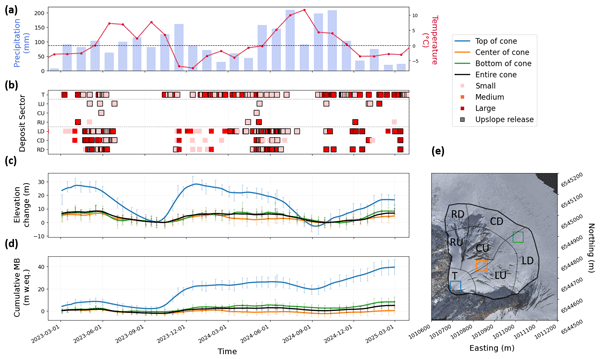
Avalanches are vital for glacier survival, yet their impact is difficult to quantify. We used low-cost cameras and drones to monitor an avalanche cone in the French Alps for two years. By accounting for ice flow, we found that avalanches can deposit 30 meters of snow annually – 50 times more than normal snowfall. This high-frequency data reveals that these cones fill until reaching a specific steepness, after which new snow slides further down to the base.
Marlena Reil, Julia Kaltenborn, Donovan J. M. Allum, Francis Pelletier, Sebastian Roessler, Samip Shrestha, Zhibang Lv, John Truckenbrodt, Gabriele Schwaizer, Thomas Nagler, John W. Pomeroy, Christopher B. Marsh, Benoit Montpetit, Tobias Jonas, Gabriel Tseng, David Rolnick, Andreas J. Dietz, and Celia A. Baumhoer
EGUsphere, https://doi.org/10.5194/egusphere-2026-3833, https://doi.org/10.5194/egusphere-2026-3833, 2026
This preprint is open for discussion and under review for The Cryosphere (TC).
Short summary
Short summary
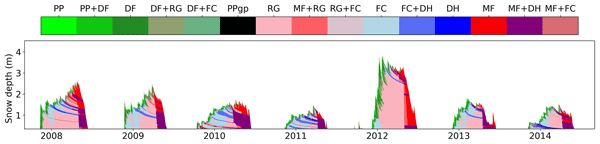
Many communities rely on snowmelt from the mountains for their water supply. However, monitoring snow from space is challenging because clouds and other factors can obscure satellite observations. We present SnowGalileo, an AI model that combines data from multiple satellites to produce snow maps. The model can produce accurate maps even when clouds are present and high-resolution data are missing. This helps to improve our understanding of snow conditions and their impact on water resources.
Matthieu Lafaysse, Marie Dumont, Basile De Fleurian, Mathieu Fructus, Rafife Nheili, Léo Viallon-Galinier, Matthieu Baron, Aaron Boone, Axel Bouchet, Julien Brondex, Carlo Carmagnola, Bertrand Cluzet, Kévin Fourteau, Ange Haddjeri, Pascal Hagenmuller, Giulia Mazzotti, Marie Minvielle, Samuel Morin, Louis Quéno, Léon Roussel, Pierre Spandre, François Tuzet, and Vincent Vionnet
Geosci. Model Dev., 19, 6273–6334, https://doi.org/10.5194/gmd-19-6273-2026, https://doi.org/10.5194/gmd-19-6273-2026, 2026
Short summary
Short summary
This article is a comprehensive description of the 3.0.2 stable release of the Crocus snowpack model. It describes various new implementations since the last reference article in 2012 and a review of the available scientific evaluations and applications of the model. This provides guidance for the future of numerical snow modelling.
Harsh Beria, Sven Kotlarski, Adrien Michel, Jan Magnusson, and Christoph Marty
EGUsphere, https://doi.org/10.5194/egusphere-2026-3478, https://doi.org/10.5194/egusphere-2026-3478, 2026
Short summary
Short summary
Snow is a vital water store for Switzerland, supporting hydropower, winter tourism, and aquatic ecosystems. Using the latest Swiss climate projections, we project future snow water across Switzerland at high spatial resolution. By the end of this century under high emission scenarios, low-lying regions are projected to become nearly snow-free, while even high mountains lose much of their snow. These results can support planning for future Alpine water resources under a warming climate.
Pau Wiersma, Jan Magnusson, Nadav Peleg, Bettina Schaefli, and Gregoire Mariethoz
Hydrol. Earth Syst. Sci., 30, 3331–3350, https://doi.org/10.5194/hess-30-3331-2026, https://doi.org/10.5194/hess-30-3331-2026, 2026
Short summary
Short summary
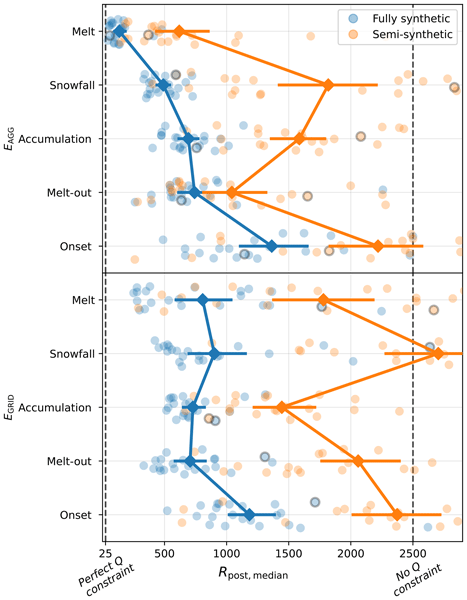
Streamflow observations contain information about snow, but their potential to constrain seasonal snow mass reconstructions remains underexplored. Using inverse hydrological modeling, we show that streamflow is particularly effective at constraining catchment-aggregated melt rates, but that non-uniqueness in the snow–streamflow relationship and uncertainties in the inverse modeling chain can easily limit inversion performance.
Moritz Oberrauch, Bertrand Cluzet, Jan Magnusson, Gabriele Schwaizer, and Tobias Jonas
EGUsphere, https://doi.org/10.5194/egusphere-2026-2725, https://doi.org/10.5194/egusphere-2026-2725, 2026
Short summary
Short summary
In mountain regions like the Swiss Alps, knowing how much snow is on the ground is important for managing water resources and natural hazards. Computer simulations are needed to estimate snow conditions across the terrain, and can be improved when combined with observations. This study uses snow-station measurements and satellite images to correct errors in both the weather input data and the model's representation of terrain effects, thereby reducing the snow model errors by around half.
Giulia Mazzotti, Félix Vaccaro, Antoine Courteaud, Mathieu Fructus, Jan Magnusson, Isabelle Gouttevin, Jari-Pekka Nousu, and Matthieu Lafaysse
EGUsphere, https://doi.org/10.5194/egusphere-2026-1464, https://doi.org/10.5194/egusphere-2026-1464, 2026
Short summary
Short summary
This study evaluates spatial simulations with the new snow model MEB-Crocus over mountainous, forested terrain. In lack of forest snow observations over large areas, simulations are assessed against simulations with the state-of-the art model FSM2oshd. Results show that the data characterizing the vegetation is as important for model performance as the mathematical description of physical processes. These insights inform future improvements of MEB-Crocus for its application to alpine regions.
Vincent Haagmans, Giulia Mazzotti, Clare Webster, and Tobias Jonas
Hydrol. Earth Syst. Sci., 30, 1691–1717, https://doi.org/10.5194/hess-30-1691-2026, https://doi.org/10.5194/hess-30-1691-2026, 2026
Short summary
Short summary
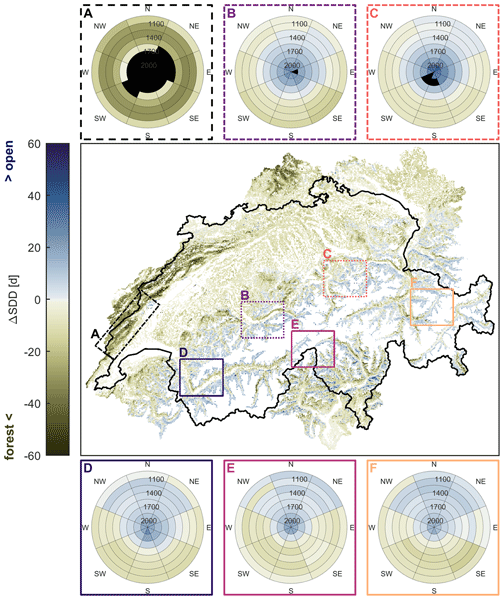
In the Central European Alps, forests store about 20–30 % of midwinter snow. The effect of forests on snow cover varies greatly with topography, forest structure, weather, and regions. Forests usually decrease snow accumulation and decelerate melt, often leading to a later snow disappearance, especially on sunny slopes. But annual variations are considerable and can even reverse such effects. Environmental shifts will further complicate snow cover dynamics in these mountain forests.
Marit van Tiel, Matthias Huss, Massimiliano Zappa, Tobias Jonas, and Daniel Farinotti
Hydrol. Earth Syst. Sci., 30, 23–43, https://doi.org/10.5194/hess-30-23-2026, https://doi.org/10.5194/hess-30-23-2026, 2026
Short summary
Short summary
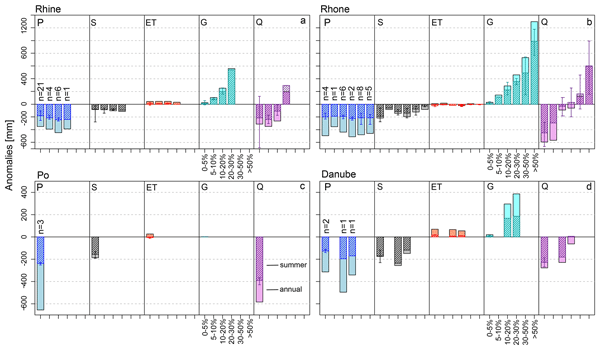
The summer of 2022 was extremely warm and dry in Europe, severely impacting water availability. We calculated water balance anomalies for 88 glacierized catchments in Switzerland, showing that glaciers played a crucial role in alleviating the drought situation by melting at record rates, partially compensating for the lack of rain and snowmelt. By comparing 2022 with past extreme years, we show that while glacier meltwater remains essential during droughts, its contribution is declining.
Vincent Vionnet, Nicolas R. Leroux, Vincent Fortin, Maria Abrahamowicz, Georgina Woolley, Giulia Mazzotti, Manon Gaillard, Matthieu Lafaysse, Alain Royer, Florent Domine, Nathalie Gauthier, Nick Rutter, Chris Derksen, and Stéphane Bélair
Geosci. Model Dev., 18, 9119–9147, https://doi.org/10.5194/gmd-18-9119-2025, https://doi.org/10.5194/gmd-18-9119-2025, 2025
Short summary
Short summary
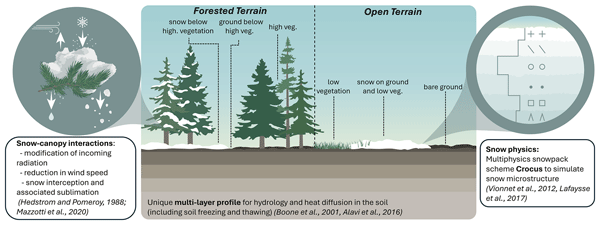
Snow microstructure controls snowpack properties, but most land surface models overlook this factor. To support future satellite missions, we created a new land surface model based on the Crocus scheme that simulates snow microstructure. Key improvements include better snow albedo representation, enhanced Arctic snow modeling, and improved forest module to capture Canada's diverse snow conditions. Results demonstrate improved simulations of snow density and melt across large regions of Canada.
Christoph Marty, Adrien Michel, Tobias Jonas, Cynthia Steijn, Regula Muelchi, and Sven Kotlarski
The Cryosphere, 19, 4391–4407, https://doi.org/10.5194/tc-19-4391-2025, https://doi.org/10.5194/tc-19-4391-2025, 2025
Short summary
Short summary
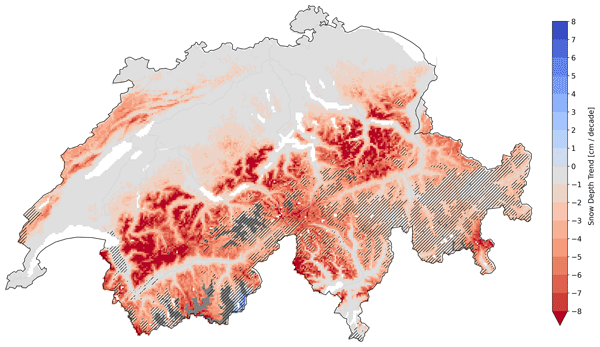
This work presents the first long-term (since 1962), daily, 1 km gridded dataset of snow depth and water storage for Switzerland. Its quality was assessed by comparing yearly, monthly, and weekly values to a higher-quality model and in situ measurements. Results show good overall performance, though some limitations exist at low elevations and short timescales. Despite this, the dataset effectively captures trends, offering valuable insights for climate monitoring and elevation-based changes.
Richard Essery, Giulia Mazzotti, Sarah Barr, Tobias Jonas, Tristan Quaife, and Nick Rutter
Geosci. Model Dev., 18, 3583–3605, https://doi.org/10.5194/gmd-18-3583-2025, https://doi.org/10.5194/gmd-18-3583-2025, 2025
Short summary
Short summary
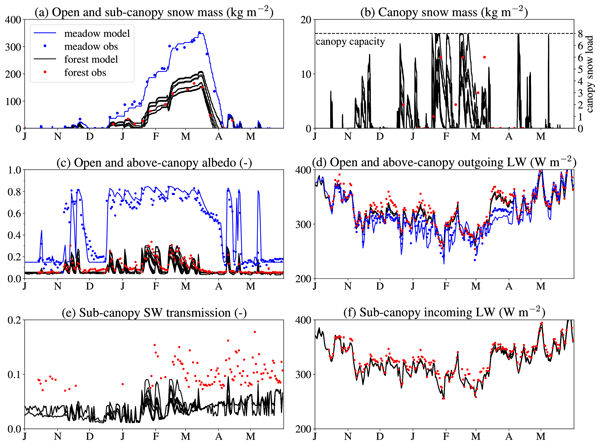
How forests influence accumulation and melt of snow on the ground is of long-standing interest, but uncertainty remains in how best to model forest snow processes. We developed the Flexible Snow Model version 2 to quantify these uncertainties. In a first model demonstration, how unloading of intercepted snow from the forest canopy is represented is responsible for the largest uncertainty. Global mapping of forest distribution is also likely to be a large source of uncertainty in existing models.
Jan Magnusson, Yves Bühler, Louis Quéno, Bertrand Cluzet, Giulia Mazzotti, Clare Webster, Rebecca Mott, and Tobias Jonas
Earth Syst. Sci. Data, 17, 703–717, https://doi.org/10.5194/essd-17-703-2025, https://doi.org/10.5194/essd-17-703-2025, 2025
Short summary
Short summary
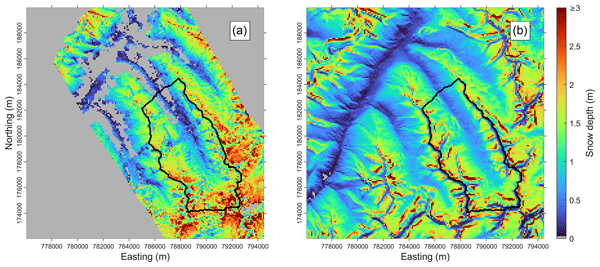
In this study, we present a dataset for the Dischma catchment in eastern Switzerland, which represents a typical high-alpine watershed in the European Alps. Accurate monitoring and reliable forecasting of snow and water resources in such basins are crucial for a wide range of applications. Our dataset is valuable for improving physics-based snow, land surface, and hydrological models, with potential applications in similar high-alpine catchments.
Adrien Michel, Johannes Aschauer, Tobias Jonas, Stefanie Gubler, Sven Kotlarski, and Christoph Marty
Geosci. Model Dev., 17, 8969–8988, https://doi.org/10.5194/gmd-17-8969-2024, https://doi.org/10.5194/gmd-17-8969-2024, 2024
Short summary
Short summary
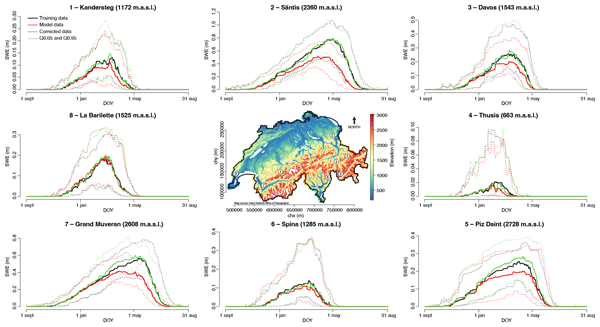
We present a method to correct snow cover maps (represented in terms of snow water equivalent) to match better-quality maps. The correction can then be extended backwards and forwards in time for periods when better-quality maps are not available. The method is fast and gives good results. It is then applied to obtain a climatology of the snow cover in Switzerland over the past 60 years at a resolution of 1 d and 1 km. This is the first time that such a dataset has been produced.
Bertrand Cluzet, Jan Magnusson, Louis Quéno, Giulia Mazzotti, Rebecca Mott, and Tobias Jonas
The Cryosphere, 18, 5753–5767, https://doi.org/10.5194/tc-18-5753-2024, https://doi.org/10.5194/tc-18-5753-2024, 2024
Short summary
Short summary
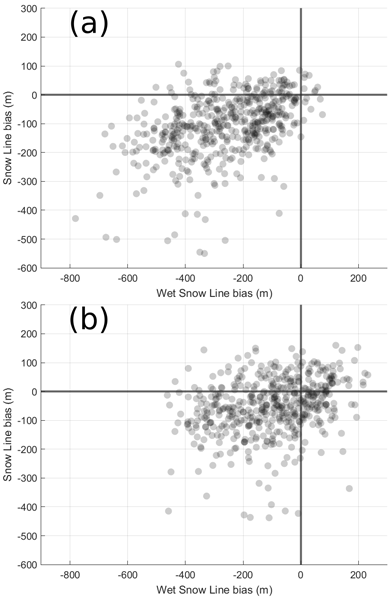
We use novel wet-snow maps from Sentinel-1 to evaluate simulations of a snow-hydrological model over Switzerland. These data are complementary to available in situ snow depth observations as they capture a broad diversity of topographic conditions. Wet-snow maps allow us to detect a delayed melt onset in the model, which we resolve thanks to an improved parametrization. This paves the way to further evaluation, calibration, and data assimilation using wet-snow maps.
Tobias Zolles and Andreas Born
The Cryosphere, 18, 4831–4844, https://doi.org/10.5194/tc-18-4831-2024, https://doi.org/10.5194/tc-18-4831-2024, 2024
Short summary
Short summary
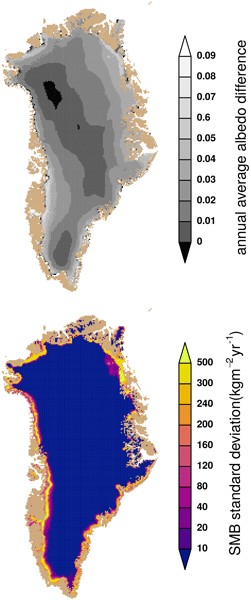
The Greenland ice sheet largely depends on the climate state. The uncertainties associated with the year-to-year variability have only a marginal impact on our simulated surface mass budget; this increases our confidence in projections and reconstructions. Basing the simulations on proxies, e.g., temperature, results in overestimates of the surface mass balance, as climatologies lead to small amounts of snowfall every day. This can be reduced by including sub-monthly precipitation variability.

Jari-Pekka Nousu, Kersti Leppä, Hannu Marttila, Pertti Ala-aho, Giulia Mazzotti, Terhikki Manninen, Mika Korkiakoski, Mika Aurela, Annalea Lohila, and Samuli Launiainen
Hydrol. Earth Syst. Sci., 28, 4643–4666, https://doi.org/10.5194/hess-28-4643-2024, https://doi.org/10.5194/hess-28-4643-2024, 2024
Short summary
Short summary
We used hydrological models, field measurements, and satellite-based data to study the soil moisture dynamics in a subarctic catchment. The role of groundwater was studied with different ways to model the groundwater dynamics and via comparisons to the observational data. The choice of groundwater model was shown to have a strong impact, and representation of lateral flow was important to capture wet soil conditions. Our results provide insights for ecohydrological studies in boreal regions.
Giulia Mazzotti, Jari-Pekka Nousu, Vincent Vionnet, Tobias Jonas, Rafife Nheili, and Matthieu Lafaysse
The Cryosphere, 18, 4607–4632, https://doi.org/10.5194/tc-18-4607-2024, https://doi.org/10.5194/tc-18-4607-2024, 2024
Short summary
Short summary
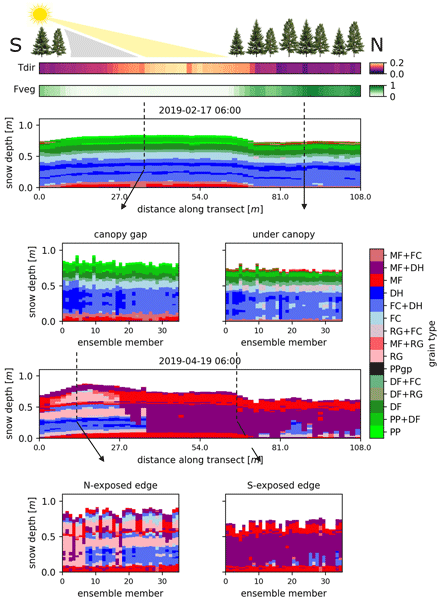
As many boreal and alpine forests have seasonal snow, models are needed to predict forest snow under future environmental conditions. We have created a new forest snow model by combining existing, very detailed model components for the canopy and the snowpack. We applied it to forests in Switzerland and Finland and showed how complex forest cover leads to a snowpack layering that is very variable in space and time because different processes prevail at different locations in the forest.
Dylan Reynolds, Louis Quéno, Michael Lehning, Mahdi Jafari, Justine Berg, Tobias Jonas, Michael Haugeneder, and Rebecca Mott
The Cryosphere, 18, 4315–4333, https://doi.org/10.5194/tc-18-4315-2024, https://doi.org/10.5194/tc-18-4315-2024, 2024
Short summary
Short summary
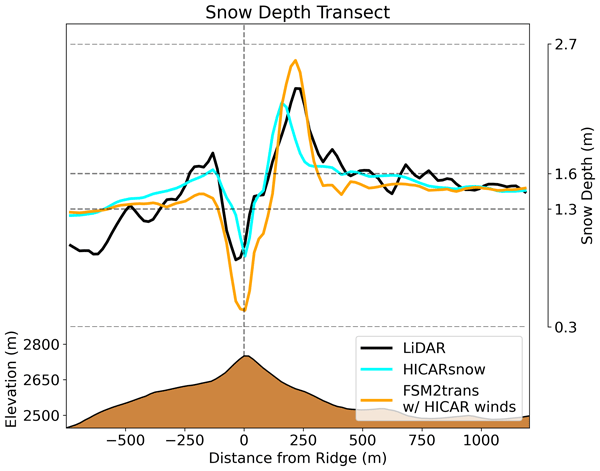
Information about atmospheric variables is needed to produce simulations of mountain snowpacks. We present a model that can represent processes that shape mountain snowpack, focusing on the accumulation of snow. Simulations show that this model can simulate the complex path that a snowflake takes towards the ground and that this leads to differences in the distribution of snow by the end of winter. Overall, this model shows promise with regard to improving forecasts of snow in mountains.
Johanna Teresa Malle, Giulia Mazzotti, Dirk Nikolaus Karger, and Tobias Jonas
Earth Syst. Dynam., 15, 1073–1115, https://doi.org/10.5194/esd-15-1073-2024, https://doi.org/10.5194/esd-15-1073-2024, 2024
Short summary
Short summary
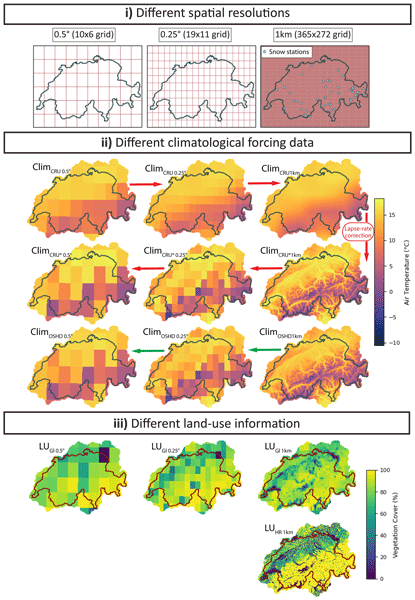
Land surface processes are crucial for the exchange of carbon, nitrogen, and energy in the Earth system. Using meteorological and land use data, we found that higher resolution improved not only the model representation of snow cover but also plant productivity and that water returned to the atmosphere. Only by combining high-resolution models with high-quality input data can we accurately represent complex spatially heterogeneous processes and improve our understanding of the Earth system.
Louis Quéno, Rebecca Mott, Paul Morin, Bertrand Cluzet, Giulia Mazzotti, and Tobias Jonas
The Cryosphere, 18, 3533–3557, https://doi.org/10.5194/tc-18-3533-2024, https://doi.org/10.5194/tc-18-3533-2024, 2024
Short summary
Short summary
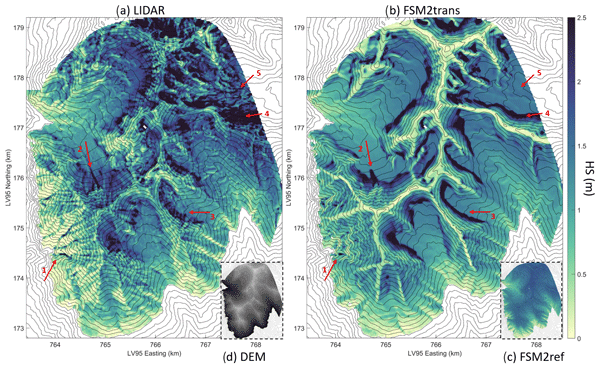
Snow redistribution by wind and avalanches strongly influences snow hydrology in mountains. This study presents a novel modelling approach to best represent these processes in an operational context. The evaluation of the simulations against airborne snow depth measurements showed remarkable improvement in the snow distribution in mountains of the eastern Swiss Alps, with a representation of snow accumulation and erosion areas, suggesting promising benefits for operational snow melt forecasts.
Benjamin Bouchard, Daniel F. Nadeau, Florent Domine, François Anctil, Tobias Jonas, and Étienne Tremblay
Hydrol. Earth Syst. Sci., 28, 2745–2765, https://doi.org/10.5194/hess-28-2745-2024, https://doi.org/10.5194/hess-28-2745-2024, 2024
Short summary
Short summary
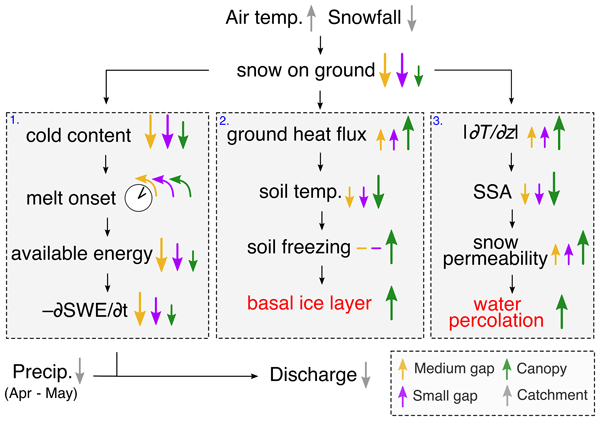
Observations and simulations from an exceptionally low-snow and warm winter, which may become the new norm in the boreal forest of eastern Canada, show an earlier and slower snowmelt, reduced soil temperature, stronger vertical temperature gradients in the snowpack, and a significantly lower spring streamflow. The magnitude of these effects is either amplified or reduced with regard to the complex structure of the canopy.
Florian Zellweger, Eric Sulmoni, Johanna T. Malle, Andri Baltensweiler, Tobias Jonas, Niklaus E. Zimmermann, Christian Ginzler, Dirk Nikolaus Karger, Pieter De Frenne, David Frey, and Clare Webster
Biogeosciences, 21, 605–623, https://doi.org/10.5194/bg-21-605-2024, https://doi.org/10.5194/bg-21-605-2024, 2024
Short summary
Short summary
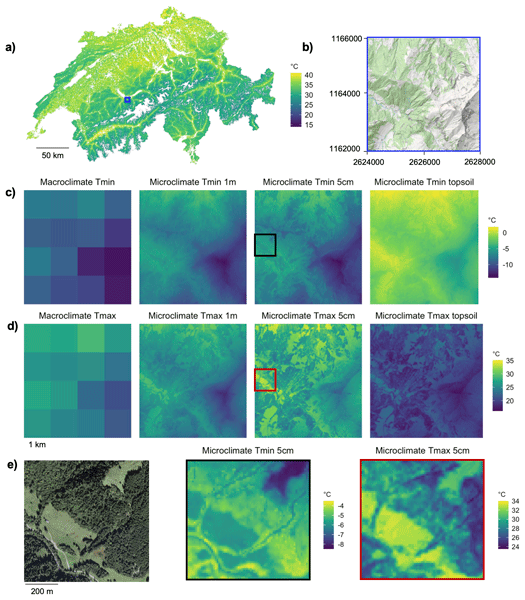
The microclimatic conditions experienced by organisms living close to the ground are not well represented in currently used climate datasets derived from weather stations. Therefore, we measured and mapped ground microclimate temperatures at 10 m spatial resolution across Switzerland using a novel radiation model. Our results reveal a high variability in microclimates across different habitats and will help to better understand climate and land use impacts on biodiversity and ecosystems.
Jari-Pekka Nousu, Matthieu Lafaysse, Giulia Mazzotti, Pertti Ala-aho, Hannu Marttila, Bertrand Cluzet, Mika Aurela, Annalea Lohila, Pasi Kolari, Aaron Boone, Mathieu Fructus, and Samuli Launiainen
The Cryosphere, 18, 231–263, https://doi.org/10.5194/tc-18-231-2024, https://doi.org/10.5194/tc-18-231-2024, 2024
Short summary
Short summary
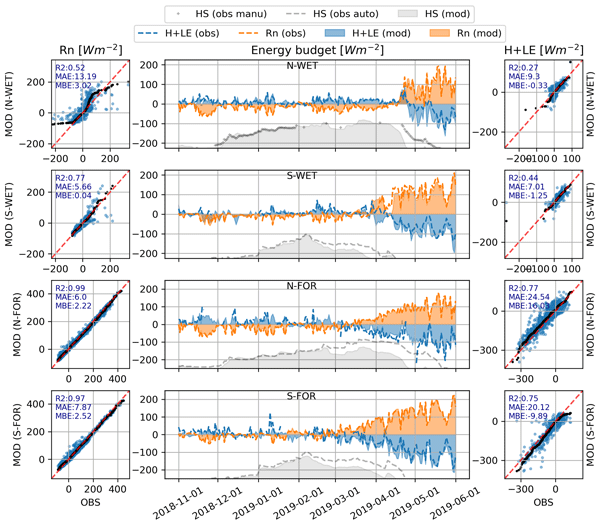
The snowpack has a major impact on the land surface energy budget. Accurate simulation of the snowpack energy budget is difficult, and studies that evaluate models against energy budget observations are rare. We compared predictions from well-known models with observations of energy budgets, snow depths and soil temperatures in Finland. Our study identified contrasting strengths and limitations for the models. These results can be used for choosing the right models depending on the use cases.
Dylan Reynolds, Ethan Gutmann, Bert Kruyt, Michael Haugeneder, Tobias Jonas, Franziska Gerber, Michael Lehning, and Rebecca Mott
Geosci. Model Dev., 16, 5049–5068, https://doi.org/10.5194/gmd-16-5049-2023, https://doi.org/10.5194/gmd-16-5049-2023, 2023
Short summary
Short summary
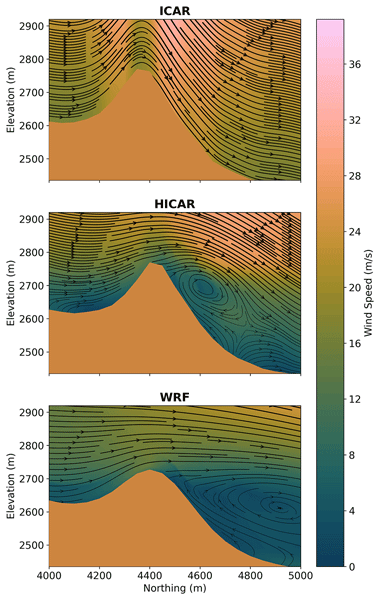
The challenge of running geophysical models is often compounded by the question of where to obtain appropriate data to give as input to a model. Here we present the HICAR model, a simplified atmospheric model capable of running at spatial resolutions of hectometers for long time series or over large domains. This makes physically consistent atmospheric data available at the spatial and temporal scales needed for some terrestrial modeling applications, for example seasonal snow forecasting.
Johannes Aschauer, Adrien Michel, Tobias Jonas, and Christoph Marty
Geosci. Model Dev., 16, 4063–4081, https://doi.org/10.5194/gmd-16-4063-2023, https://doi.org/10.5194/gmd-16-4063-2023, 2023
Short summary
Short summary
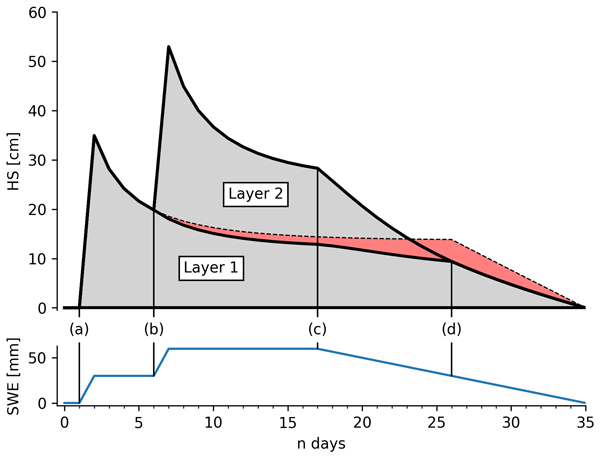
Snow water equivalent is the mass of water stored in a snowpack. Based on exponential settling functions, the empirical snow density model SWE2HS is presented to convert time series of daily snow water equivalent into snow depth. The model has been calibrated with data from Switzerland and validated with independent data from the European Alps. A reference implementation of SWE2HS is available as a Python package.
Giulia Mazzotti, Clare Webster, Louis Quéno, Bertrand Cluzet, and Tobias Jonas
Hydrol. Earth Syst. Sci., 27, 2099–2121, https://doi.org/10.5194/hess-27-2099-2023, https://doi.org/10.5194/hess-27-2099-2023, 2023
Short summary
Short summary
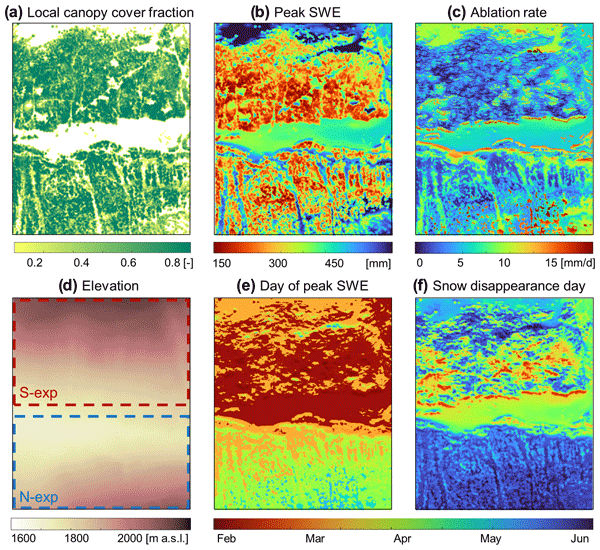
This study analyses snow cover evolution in mountainous forested terrain based on 2 m resolution simulations from a process-based model. We show that snow accumulation patterns are controlled by canopy structure, but topographic shading modulates the timing of melt onset, and variability in weather can cause snow accumulation and melt patterns to vary between years. These findings advance our ability to predict how snow regimes will react to rising temperatures and forest disturbances.
Michael Schirmer, Adam Winstral, Tobias Jonas, Paolo Burlando, and Nadav Peleg
The Cryosphere, 16, 3469–3488, https://doi.org/10.5194/tc-16-3469-2022, https://doi.org/10.5194/tc-16-3469-2022, 2022
Short summary
Short summary
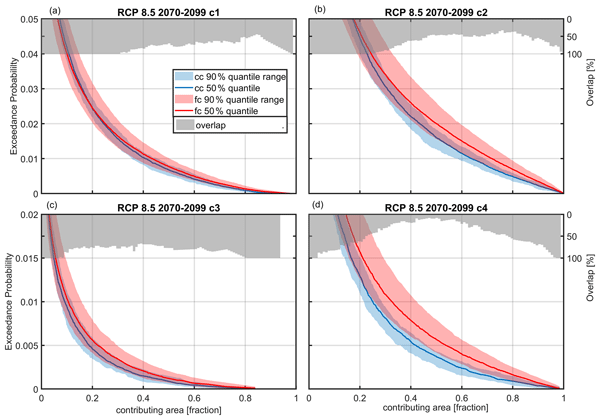
Rain is highly variable in time at a given location so that there can be both wet and dry climate periods. In this study, we quantify the effects of this natural climate variability and other sources of uncertainty on changes in flooding events due to rain on snow (ROS) caused by climate change. For ROS events with a significant contribution of snowmelt to runoff, the change due to climate was too small to draw firm conclusions about whether there are more ROS events of this important type.
Katharina M. Holube, Tobias Zolles, and Andreas Born
The Cryosphere, 16, 315–331, https://doi.org/10.5194/tc-16-315-2022, https://doi.org/10.5194/tc-16-315-2022, 2022
Short summary
Short summary
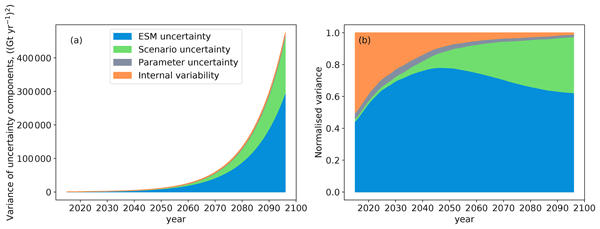
We simulated the surface mass balance of the Greenland Ice Sheet in the 21st century by forcing a snow model with the output of many Earth system models and four greenhouse gas emission scenarios. We quantify the contribution to uncertainty in surface mass balance of these two factors and the choice of parameters of the snow model. The results show that the differences between Earth system models are the main source of uncertainty. This effect is localised mostly near the equilibrium line.
Hans Lievens, Isis Brangers, Hans-Peter Marshall, Tobias Jonas, Marc Olefs, and Gabriëlle De Lannoy
The Cryosphere, 16, 159–177, https://doi.org/10.5194/tc-16-159-2022, https://doi.org/10.5194/tc-16-159-2022, 2022
Short summary
Short summary
Snow depth observations at high spatial resolution from the Sentinel-1 satellite mission are presented over the European Alps. The novel observations can improve our knowledge of seasonal snow mass in areas with complex topography, where satellite-based estimates are currently lacking, and benefit a number of applications including water resource management, flood forecasting, and numerical weather prediction.
Cited articles
Aalstad, K., Westermann, S., Schuler, T. V., Boike, J., and Bertino, L.: Ensemble-based assimilation of fractional snow-covered area satellite retrievals to estimate the snow distribution at Arctic sites, The Cryosphere, 12, 247–270, https://doi.org/10.5194/tc-12-247-2018, 2018. a
Alonso-González, E., López-Moreno, J. I., Gascoin, S., García-Valdecasas Ojeda, M., Sanmiguel-Vallelado, A., Navarro-Serrano, F., Revuelto, J., Ceballos, A., Esteban-Parra, M. J., and Essery, R.: Daily gridded datasets of snow depth and snow water equivalent for the Iberian Peninsula from 1980 to 2014, Earth Syst. Sci. Data, 10, 303–315, https://doi.org/10.5194/essd-10-303-2018, 2018. a
Alonso-González, E., Aalstad, K., Pirk, N., Mazzolini, M., Treichler, D., Leclercq, P., Westermann, S., López-Moreno, J. I., and Gascoin, S.: Spatio-temporal information propagation using sparse observations in hyper-resolution ensemble-based snow data assimilation, Hydrol. Earth Syst. Sci., 27, 4637–4659, https://doi.org/10.5194/hess-27-4637-2023, 2023. a
Anderson, E. A.: A Point Energy and Mass Balance Model of a Snow Cover, Tech. rep., United States National Weather Service, https://repository.library.noaa.gov/view/noaa/6392/noaa_6392_DS1.pdf (last access: 10 June 2026), 1976. a
Avanzi, F., Gabellani, S., Delogu, F., Silvestro, F., Pignone, F., Bruno, G., Pulvirenti, L., Squicciarino, G., Fiori, E., Rossi, L., Puca, S., Toniazzo, A., Giordano, P., Falzacappa, M., Ratto, S., Stevenin, H., Cardillo, A., Fioletti, M., Cazzuli, O., Cremonese, E., Morra di Cella, U., and Ferraris, L.: IT-SNOW: a snow reanalysis for Italy blending modeling, in situ data, and satellite observations (2010–2021), Earth Syst. Sci. Data, 15, 639–660, https://doi.org/10.5194/essd-15-639-2023, 2023. a
Baldauf, M., Seifert, A., Förstner, J., Majewski, D., Raschendorfer, M., and Reinhardt, T.: Operational convective-scale numerical weather prediction with the COSMO model: description and sensitivities, Mon. Weather Rev., 139, 3887–3905, https://doi.org/10.1175/MWR-D-10-05013.1, 2011. a
Barrett, A. P.: National Operational Hydrologic Remote Sensing Center SNOw Data Assimilation System (SNODAS) Products at NSIDC – NSIDC Special Report 11, Tech. Rep. NSIDC Special Report 11, National Snow and Ice Data Center, Boulder, Colorado, USA, https://nsidc.org/sites/default/files/nsidc_special_report_11.pdf (last access: 10 June 2026), 2003. a
Berg, J., Reynolds, D., Quéno, L., Jonas, T., Lehning, M., and Mott, R.: A seasonal snowpack model forced with dynamically downscaled forcing data resolves hydrologically relevant accumulation patterns, Front. Earth Sci., 12, 1393260, https://doi.org/10.3389/feart.2024.1393260, 2024. a
Bernhardt, M. and Schulz, K.: SnowSlide: a simple routine for calculating gravitational snow transport, Geophys. Res. Lett., 37, 11502, https://doi.org/10.1029/2010GL043086, 2010. a
Boone, A. and Etchevers, P.: An intercomparison of three snow schemes of varying complexity coupled to the same land surface model: local-scale evaluation at an Alpine site, J. Hydrometeorol., 2, 374–394, https://doi.org/10.1175/1525-7541(2001)002<0374:AIOTSS>2.0.CO;2, 2001. a
Bührle, L. J., Marty, M., Eberhard, L. A., Stoffel, A., Hafner, E. D., and Bühler, Y.: Spatially continuous snow depth mapping by aeroplane photogrammetry for annual peak of winter from 2017 to 2021 in open areas, The Cryosphere, 17, 3383–3408, https://doi.org/10.5194/tc-17-3383-2023, 2023. a
Chopin, N. and Papaspiliopoulos, O.: An Introduction to Sequential Monte Carlo, Vol. 4 of Springer Series in Statistics, Springer International Publishing, Cham, https://doi.org/10.1007/978-3-030-47845-2, 2020. a
Cluzet, B., Lafaysse, M., Deschamps-Berger, C., Vernay, M., and Dumont, M.: Propagating information from snow observations with CrocO ensemble data assimilation system: a 10-years case study over a snow depth observation network, The Cryosphere, 16, 1281–1298, https://doi.org/10.5194/tc-16-1281-2022, 2022. a
Cox, P. M., Betts, R. A., Bunton, C. B., Essery, R. L. H., Rowntree, P. R., and Smith, J.: The impact of new land surface physics on the GCM simulation of climate and climate sensitivity, Clim. Dynam., 15, 183–203, https://doi.org/10.1007/s003820050276, 1999. a
Douville, H., Royer, J. F., and Mahfouf, J. F.: A new snow parameterization for the Météo-France climate model: Part I: validation in stand-alone experiments, Clim. Dynam., 12, 21–35, https://doi.org/10.1007/BF00208760, 1995. a, b
Dozier, J., Bair, E. H., and Davis, R. E.: Estimating the spatial distribution of snow water equivalent in the world's mountains, WIREs Water, 3, 461–474, https://doi.org/10.1002/wat2.1140, 2016. a
Eckert, N., Corona, C., Giacona, F., Gaume, J., Mayer, S., van Herwijnen, A., Hagenmuller, P., and Stoffel, M.: Climate change impacts on snow avalanche activity and related risks, Nature Reviews Earth and Environment, 5, 369–389, https://doi.org/10.1038/s43017-024-00540-2, 2024. a
Essery, R., Mazzotti, G., Barr, S., Jonas, T., Quaife, T., and Rutter, N.: A Flexible Snow Model (FSM 2.1.1) including a forest canopy, Geosci. Model Dev., 18, 3583–3605, https://doi.org/10.5194/gmd-18-3583-2025, 2025. a, b
European Space Agency: ESA EXPRO+ AlpSnow, https://alpsnow.enveo.at/index.html (last access: 10 June 2026), 2025. a
European Union's Copernicus Land Monitoring Service information: CORINE Land Cover 2018 (vector/raster 100 m), Europe, 6-yearly, European Environment Agency [data set], https://doi.org/10.2909/960998c1-1870-4e82-8051-6485205ebbac, 2020. a
Fang, Y., Liu, Y., and Margulis, S. A.: A western United States snow reanalysis dataset over the Landsat era from water years 1985 to 2021, Scientific Data, 9, 1–17, https://doi.org/10.1038/S41597-022-01768-7, 2022. a
Fiddes, J., Aalstad, K., and Westermann, S.: Hyper-resolution ensemble-based snow reanalysis in mountain regions using clustering, Hydrol. Earth Syst. Sci., 23, 4717–4736, https://doi.org/10.5194/hess-23-4717-2019, 2019. a, b
Fierz, C., Armstrong, R., Durand, Y., Etchevers, P., Greene, E., Mcclung, D., Nishimura, K., Satyawali, P., and Sokratov, S.: The International Classification of Seasonal Snow on the Ground, https://cryosphericsciences.org/wp-content/uploads/2019/02/snowclass_2009-11-23-tagged-highres.pdf (last access: 10 June 2026), 2009. a
Floriancic, M. G., Berghuijs, W. R., Jonas, T., Kirchner, J. W., and Molnar, P.: Effects of climate anomalies on warm-season low flows in Switzerland, Hydrol. Earth Syst. Sci., 24, 5423–5438, https://doi.org/10.5194/hess-24-5423-2020, 2020. a
Gascoin, S., Grizonnet, M., Bouchet, M., Salgues, G., and Hagolle, O.: Theia Snow collection: high-resolution operational snow cover maps from Sentinel-2 and Landsat-8 data, Earth Syst. Sci. Data, 11, 493–514, https://doi.org/10.5194/essd-11-493-2019, 2019. a
Gascoin, S., Luojus, K., Nagler, T., Lievens, H., Masiokas, M., Jonas, T., Zheng, Z., and De Rosnay, P.: Remote sensing of mountain snow from space: status and recommendations, Front. Earth Sci., 12, 1381323, https://doi.org/10.3389/feart.2024.1381323, 2024. a, b
Girotto, M., Margulis, S. A., and Durand, M.: Probabilistic SWE reanalysis as a generalization of deterministic SWE reconstruction techniques, Hydrol. Process., 28, 3875–3895, https://doi.org/10.1002/hyp.9887, 2014. a
Godsey, S. E., Marks, D., Kormos, P. R., Seyfried, M. S., Enslin, C. L., Winstral, A. H., McNamara, J. P., and Link, T. E.: Eleven years of mountain weather, snow, soil moisture and streamflow data from the rain–snow transition zone – the Johnston Draw catchment, Reynolds Creek Experimental Watershed and Critical Zone Observatory, USA, Earth Syst. Sci. Data, 10, 1207–1216, https://doi.org/10.5194/essd-10-1207-2018, 2018. a
Griessinger, N., Seibert, J., Magnusson, J., and Jonas, T.: Assessing the benefit of snow data assimilation for runoff modeling in Alpine catchments, Hydrol. Earth Syst. Sci., 20, 3895–3905, https://doi.org/10.5194/hess-20-3895-2016, 2016. a
Grünewald, T. and Lehning, M.: Are flat-field snow depth measurements representative? A comparison of selected index sites with areal snow depth measurements at the small catchment scale, Hydrol. Process., 29, 1717–1728, https://doi.org/10.1002/HYP.10295, 2015. a
Grünewald, T., Schirmer, M., Mott, R., and Lehning, M.: Spatial and temporal variability of snow depth and ablation rates in a small mountain catchment, The Cryosphere, 4, 215–225, https://doi.org/10.5194/tc-4-215-2010, 2010. a
Gubler, S., Fukutome, S., and Scherrer, S. C.: On the statistical distribution of temperature and the classification of extreme events considering season and climate change – an application in Switzerland, Theor. Appl. Climatol., 153, 1273–1291, https://doi.org/10.1007/s00704-023-04530-0, 2023. a
Günther, D., Marke, T., Essery, R., and Strasser, U.: Uncertainties in snowpack simulations – assessing the impact of model structure, parameter choice, and forcing data error on point-scale energy balance snow model performance, Water Resour. Res., 55, 2779–2800, https://doi.org/10.1029/2018WR023403, 2019. a
Haagmans, V., Mazzotti, G., Webster, C., and Jonas, T.: How montane forests shape snow cover dynamics across the central European Alps, Hydrol. Earth Syst. Sci., 30, 1691–1717, https://doi.org/10.5194/hess-30-1691-2026, 2026. a, b, c, d
Haberkorn, A.: European Snow Booklet – an Inventory of Snow Measurements in Europe, EnviDat [data set], https://doi.org/10.16904/envidat.59, 2019. a
Hale, K. E., Musselman, K. N., Newman, A. J., Livneh, B., and Molotch, N. P.: Effects of snow water storage on hydrologic partitioning across the mountainous, western United States, Water Resour. Res., 59, e2023WR034690, https://doi.org/10.1029/2023WR034690, 2023. a
Han, J., Liu, Z., Woods, R., McVicar, T. R., Yang, D., Wang, T., Hou, Y., Guo, Y., Li, C., and Yang, Y.: Streamflow seasonality in a snow-dwindling world, Nature, 629, 1075–1081, https://doi.org/10.1038/s41586-024-07299-y, 2024. a
Helbig, N., Schirmer, M., Magnusson, J., Mäder, F., van Herwijnen, A., Quéno, L., Bühler, Y., Deems, J. S., and Gascoin, S.: A seasonal algorithm of the snow-covered area fraction for mountainous terrain, The Cryosphere, 15, 4607–4624, https://doi.org/10.5194/tc-15-4607-2021, 2021. a
Hersbach, H., Bell, B., Berrisford, P., Hirahara, S., Horányi, A., Muñoz-Sabater, J., Nicolas, J., Peubey, C., Radu, R., Schepers, D., Simmons, A., Soci, C., Abdalla, S., Abellan, X., Balsamo, G., Bechtold, P., Biavati, G., Bidlot, J., Bonavita, M., De Chiara, G., Dahlgren, P., Dee, D., Diamantakis, M., Dragani, R., Flemming, J., Forbes, R., Fuentes, M., Geer, A., Haimberger, L., Healy, S., Hogan, R. J., Hólm, E., Janisková, M., Keeley, S., Laloyaux, P., Lopez, P., Lupu, C., Radnoti, G., de Rosnay, P., Rozum, I., Vamborg, F., Villaume, S., and Thépaut, J. N.: The ERA5 global reanalysis, Q. J. Roy. Meteor. Soc., 146, 1999–2049, https://doi.org/10.1002/QJ.3803, 2020. a, b
Hou, Y., Yang, Y., Han, J., Woods, R., and Yan, Z.: Impacts of snow changes on hydropower potential under a changing climate, J. Hydrol., 661, 133747, https://doi.org/10.1016/J.JHYDROL.2025.133747, 2025. a
Jenicek, M., Seibert, J., Zappa, M., Staudinger, M., and Jonas, T.: Importance of maximum snow accumulation for summer low flows in humid catchments, Hydrol. Earth Syst. Sci., 20, 859–874, https://doi.org/10.5194/hess-20-859-2016, 2016. a
Jonas, T., Webster, C., Mazzotti, G., and Malle, J.: HPEval: a canopy shortwave radiation transmission model using high-resolution hemispherical images, Agr. Forest Meteorol., 284, 107903, https://doi.org/10.1016/J.AGRFORMET.2020.107903, 2020. a
Jörg-Hess, S., Fundel, F., Jonas, T., and Zappa, M.: Homogenisation of a gridded snow water equivalent climatology for Alpine terrain: methodology and applications, The Cryosphere, 8, 471–485, https://doi.org/10.5194/tc-8-471-2014, 2014. a
Kavetski, D. and Kuczera, G.: Model smoothing strategies to remove microscale discontinuities and spurious secondary optima in objective functions in hydrological calibration, Water Resour. Res., 43, 3411, https://doi.org/10.1029/2006WR005195, 2007. a
Keuris, L., Hetzenecker, M., Nagler, T., Mölg, N., and Schwaizer, G.: An adaptive method for the estimation of snow-covered fraction with error propagation for applications from local to global scales, Remote Sens.-Basel, 15, 1231, https://doi.org/10.3390/RS15051231, 2023. a
Kouki, K., Luojus, K., and Riihelä, A.: Evaluation of snow cover properties in ERA5 and ERA5-Land with several satellite-based datasets in the Northern Hemisphere in spring 1982–2018, The Cryosphere, 17, 5007–5026, https://doi.org/10.5194/tc-17-5007-2023, 2023. a
Largeron, C., Dumont, M., Morin, S., Boone, A., Lafaysse, M., Metref, S., Cosme, E., Jonas, T., Winstral, A., and Margulis, S. A.: Toward snow cover estimation in mountainous areas using modern data assimilation methods: a review, Front. Earth Sci., 8, https://doi.org/10.3389/feart.2020.00325, 2020. a
Li, D., Lettenmaier, D. P., Margulis, S. A., and Andreadis, K.: The role of rain-on-snow in flooding over the conterminous United States, Water Resour. Res., 55, 8492–8513, https://doi.org/10.1029/2019WR024950, 2019. a
Li, W., Chen, J., Li, L., Orsolini, Y. J., Xiang, Y., Senan, R., and de Rosnay, P.: Impacts of snow assimilation on seasonal snow and meteorological forecasts for the Tibetan Plateau, The Cryosphere, 16, 4985–5000, https://doi.org/10.5194/tc-16-4985-2022, 2022. a
Lievens, H., Demuzere, M., Marshall, H.-P., Reichle, R. H., Brucker, L., Brangers, I., de Rosnay, P., Dumont, M., Girotto, M., Immerzeel, W. W., Jonas, T., Kim, E. J., Koch, I., Marty, C., Saloranta, T., Schöber, J., and De Lannoy, G. J. M.: Snow depth variability in the Northern Hemisphere mountains observed from space, Nat. Commun., 10, 4629, https://doi.org/10.1038/s41467-019-12566-y, 2019. a
Lievens, H., Brangers, I., Marshall, H.-P., Jonas, T., Olefs, M., and De Lannoy, G.: Sentinel-1 snow depth retrieval at sub-kilometer resolution over the European Alps, The Cryosphere, 16, 159–177, https://doi.org/10.5194/tc-16-159-2022, 2022. a
Liston, G. E., Haehnel, R. B., Sturm, M., Hiemstra, C. A., Berezovskaya, S., and Tabler, R. D.: Simulating complex snow distributions in windy environments using SnowTran-3D, J. Glaciol., 53, 241–256, https://doi.org/10.3189/172756507782202865, 2007. a
Liu, Y., Fang, Y., and Margulis, S. A.: Spatiotemporal distribution of seasonal snow water equivalent in High Mountain Asia from an 18-year Landsat–MODIS era snow reanalysis dataset, The Cryosphere, 15, 5261–5280, https://doi.org/10.5194/tc-15-5261-2021, 2021. a, b
López-Moreno, J. I., Fassnacht, S. R., Heath, J. T., Musselman, K. N., Revuelto, J., Latron, J., Morán-Tejeda, E., and Jonas, T.: Small scale spatial variability of snow density and depth over complex alpine terrain: implications for estimating snow water equivalent, Adv. Water Resour., 55, 40–52, https://doi.org/10.1016/J.ADVWATRES.2012.08.010, 2013. a
Louis, J.-F.: A parametric model of vertical eddy fluxes in the atmosphere, Bound.-Lay. Meteorol., 17, 187–202, https://doi.org/10.1007/BF00117978, 1979. a
Magnusson, J., Gustafsson, D., Hüsler, F., and Jonas, T.: Assimilation of point SWE data into a distributed snow cover model comparing two contrasting methods, Water Resour. Res., 50, 7816–7835, https://doi.org/10.1002/2014WR015302, 2014. a
Magnusson, J., Nævdal, G., Matt, F., Burkhart, J. F., and Winstral, A.: Improving hydropower inflow forecasts by assimilating snow data, Hydrol. Res., 51, 226–237, https://doi.org/10.2166/NH.2020.025, 2020. a
Magnusson, J., Bühler, Y., Quéno, L., Cluzet, B., Mazzotti, G., Webster, C., Mott, R., and Jonas, T.: High-resolution hydrometeorological and snow data for the Dischma catchment in Switzerland, Earth Syst. Sci. Data, 17, 703–717, https://doi.org/10.5194/essd-17-703-2025, 2025. a, b
Margulis, S. A., Girotto, M., Cortés, G., and Durand, M.: A particle batch smoother approach to snow water equivalent estimation, J. Hydrometeorol., 16, 1752–1772, https://doi.org/10.1175/JHM-D-14-0177.1, 2015. a
Margulis, S. A., Cortés, G., Girotto, M., and Durand, M.: A Landsat-Era Sierra Nevada snow reanalysis (1985–2015), J. Hydrometeorol., 17, 1203–1221, https://doi.org/10.1175/JHM-D-15-0177.1, 2016. a, b
Mazzotti, G., Essery, R., Moeser, C. D., and Jonas, T.: Resolving small scale forest snow patterns using an energy balance snow model with a one layer canopy, Water Resour. Res., 56, https://doi.org/10.1029/2019WR026129, 2020a. a
Mazzotti, G., Essery, R., Webster, C., Malle, J., and Jonas, T.: Process level evaluation of a hyper resolution forest snow model using distributed multisensor observations, Water Resour. Res., 56, https://doi.org/10.1029/2020WR027572, 2020b. a
Mazzotti, G., Webster, C., Essery, R., and Jonas, T.: Increasing the physical representation of forest-snow processes in coarse-resolution models: lessons learned from upscaling hyper-resolution simulations, Water Resour. Res., 57, e2020WR029064, https://doi.org/10.1029/2020WR029064, 2021. a, b, c
Mazzotti, G., Webster, C., Quéno, L., Cluzet, B., and Jonas, T.: Canopy structure, topography, and weather are equally important drivers of small-scale snow cover dynamics in sub-alpine forests, Hydrol. Earth Syst. Sci., 27, 2099–2121, https://doi.org/10.5194/hess-27-2099-2023, 2023. a, b
Menard, C. B., Essery, R., Krinner, G., Arduini, G., Bartlett, P., Boone, A., Brutel-Vuilmet, C., Burke, E., Cuntz, M., Dai, Y., Decharme, B., Dutra, E., Fang, X., Fierz, C., Gusev, Y., Hagemann, S., Haverd, V., Kim, H., Lafaysse, M., Marke, T., Nasonova, O., Nitta, T., Niwano, M., Pomeroy, J., Schädler, G., Semenov, V. A., Smirnova, T., Strasser, U., Swenson, S., Turkov, D., Wever, N., and Yuan, H.: Scientific and human errors in a snow model intercomparison, B. Am. Meteorol. Soc., 102, E61–E79, https://doi.org/10.1175/BAMS-D-19-0329.1, 2021. a, b
MeteoSwiss: Project ICON-22 – MeteoSwiss, https://www.meteoswiss.admin.ch/about-us/research-and-cooperation/projects/2023/icon-22.html (last access: 10 June 2026), 2023. a
MeteoSwiss: The introduction of the new weather model ICON marks a milestone in Swiss weather forecasting – MeteoSwiss, https://www.meteoswiss.admin.ch/about-us/media/press-releases/2024/06/the-introduction-of-the-new-weather-model-icon-marks-a-milestone-in-swiss-weather-forecasting.html (last access: 10 June 2026), 2024. a, b
MeteoSwiss: The climate of Switzerland – MeteoSwiss, https://www.meteoswiss.admin.ch/climate/the-climate-of-switzerland.html (last access: 10 June 2026), 2025. a
Monteiro, D. and Morin, S.: Multi-decadal analysis of past winter temperature, precipitation and snow cover data in the European Alps from reanalyses, climate models and observational datasets, The Cryosphere, 17, 3617–3660, https://doi.org/10.5194/tc-17-3617-2023, 2023. a
Moreno-Gené, J., Sánchez-Pulido, L., Cristobal-Fransi, E., and Daries, N.: The economic sustainability of snow tourism: the case of ski resorts in Austria, France, and Italy, Sustainability, 10, 3012,, https://doi.org/10.3390/SU10093012, 2018. a
Morin, S., Samacoïts, R., François, H., Carmagnola, C. M., Abegg, B., Demiroglu, O. C., Pons, M., Soubeyroux, J. M., Lafaysse, M., Franklin, S., Griffiths, G., Kite, D., Hoppler, A. A., George, E., Buontempo, C., Almond, S., Dubois, G., and Cauchy, A.: Pan-European meteorological and snow indicators of climate change impact on ski tourism, Climate Services, 22, 100215, https://doi.org/10.1016/J.CLISER.2021.100215, 2021. a
Mortimer, C. and Vionnet, V.: Northern Hemisphere in situ snow water equivalent dataset (NorSWE, 1979–2021), Earth Syst. Sci. Data, 17, 3619–3640, https://doi.org/10.5194/essd-17-3619-2025, 2025. a
Mortimer, C., Mudryk, L., Derksen, C., Luojus, K., Brown, R., Kelly, R., and Tedesco, M.: Evaluation of long-term Northern Hemisphere snow water equivalent products, The Cryosphere, 14, 1579–1594, https://doi.org/10.5194/tc-14-1579-2020, 2020. a
Mott, R., Vionnet, V., and Grünewald, T.: The seasonal snow cover dynamics: review on wind-driven coupling processes, Front. Earth Sci., 6, 197, https://doi.org/10.3389/feart.2018.00197, 2018. a
Mott, R., Winstral, A., Cluzet, B., Helbig, N., Magnusson, J., Mazzotti, G., Queno, L., Schirmer, M., Webster, C., and Jonas, T.: FSM2oshd (v1.1.3), Zenodo [code], https://doi.org/10.5281/zenodo.20410047, 2026. a, b
Musselman, K. N., Lehner, F., Ikeda, K., Clark, M. P., Prein, A. F., Liu, C., Barlage, M., and Rasmussen, R.: Projected increases and shifts in rain-on-snow flood risk over western North America, Nat. Clim. Change, 8, 808–812, https://doi.org/10.1038/s41558-018-0236-4, 2018. a
Musselman, K. N., Addor, N., Vano, J. A., and Molotch, N. P.: Winter melt trends portend widespread declines in snow water resources, Nat. Clim. Change, 11, 418–424, https://doi.org/10.1038/S41558-021-01014-9, 2021. a
NASA GISS: Panoply 5 netCDF, HDF and GRIB Data Viewer, https://www.giss.nasa.gov/tools/panoply/ (last access: 10 June 2026), 2025. a
Oberrauch, M., Cluzet, B., Magnusson, J., and Jonas, T.: Improving fully distributed snowpack simulations by mapping perturbations of meteorological forcings inferred from particle filter assimilation of snow monitoring data, Water Resour. Res., 60, https://doi.org/10.1029/2023WR036994, 2024. a, b, c, d, e, f, g, h, i, j
Oberrauch, M., Cluzet, B., Magnusson, J., and Jonas, T.: The performance gains of assimilating limited information into a fully distributed snowpack model depend on model complexity and input data quality, Water Resour. Res., 61, https://doi.org/10.1029/2025WR040681, 2025. a, b, c, d, e, f, g, h, i, j, k, l, m
Oberrauch, M., Cluzet, B., Magnusson, J., Mazzotti, G., Mott, R., Quéno, L., Webster, C., Zolles, T., and Jonas, T.: A high-resolution snow dataset for Switzerland (2016–2025) combining physics-based simulations and in situ observations, Zenodo [code], https://doi.org/10.5281/zenodo.17313889, 2026. a, b, c
Odry, J., Boucher, M.-A., Lachance-Cloutier, S., Turcotte, R., and St-Louis, P.-Y.: Large-scale snow data assimilation using a spatialized particle filter: recovering the spatial structure of the particles, The Cryosphere, 16, 3489–3506, https://doi.org/10.5194/tc-16-3489-2022, 2022. a
Olefs, M., Koch, R., Schöner, W., and Marke, T.: Changes in Snow Depth, Snow Cover Duration, and Potential Snowmaking Conditions in Austria, 1961–2020 – a model based approach, Atmosphere-Basel, 11, 1330, https://doi.org/10.3390/ATMOS11121330, 2020. a
Painter, T. H., Berisford, D. F., Boardman, J. W., Bormann, K. J., Deems, J. S., Gehrke, F., Hedrick, A., Joyce, M., Laidlaw, R., Marks, D., Mattmann, C., McGurk, B., Ramirez, P., Richardson, M., Skiles, S. M. K., Seidel, F. C., and Winstral, A.: The Airborne Snow Observatory: fusion of scanning lidar, imaging spectrometer, and physically-based modeling for mapping snow water equivalent and snow albedo, Remote Sens. Environ., 184, 139–152, https://doi.org/10.1016/j.rse.2016.06.018, 2016. a
Publications Office of the European Union: Drought in Europe – March 2023 – GDO analytical report, Tech. rep., https://doi.org/10.2760/998985, 2023. a
Quéno, L., Mott, R., Morin, P., Cluzet, B., Mazzotti, G., and Jonas, T.: Snow redistribution in an intermediate-complexity snow hydrology modelling framework, The Cryosphere, 18, 3533–3557, https://doi.org/10.5194/tc-18-3533-2024, 2024. a, b, c
Rasul, G. and Molden, D.: The global social and economic consequences of mountain cryospheric change, Frontiers in Environmental Science, 7, 91, https://doi.org/10.3389/fenvs.2019.00091, 2019. a
Revuelto, J., Azorin-Molina, C., Alonso-González, E., Sanmiguel-Vallelado, A., Navarro-Serrano, F., Rico, I., and López-Moreno, J. I.: Meteorological and snow distribution data in the Izas Experimental Catchment (Spanish Pyrenees) from 2011 to 2017, Earth Syst. Sci. Data, 9, 993–1005, https://doi.org/10.5194/essd-9-993-2017, 2017. a
Reynolds, D., Quéno, L., Lehning, M., Jafari, M., Berg, J., Jonas, T., Haugeneder, M., and Mott, R.: Seasonal snow–atmosphere modeling: let's do it, The Cryosphere, 18, 4315–4333, https://doi.org/10.5194/tc-18-4315-2024, 2024. a
Siirila-Woodburn, E. R., Rhoades, A. M., Hatchett, B. J., Huning, L. S., Szinai, J., Tague, C., Nico, P. S., Feldman, D. R., Jones, A. D., Collins, W. D., and Kaatz, L.: A low-to-no snow future and its impacts on water resources in the western United States, Nature Reviews Earth and Environment, 2, 800–819, https://doi.org/10.1038/s43017-021-00219-y, 2021. a
Slatyer, R. A., Umbers, K. D., and Arnold, P. A.: Ecological responses to variation in seasonal snow cover, Conserv. Biol., 36, e13727, https://doi.org/10.1111/COBI.13727, 2022. a
Szerencsits, E.: Swiss tree lines – a GIS-based approximation, Landscape Online, 28, 28–28, https://doi.org/10.3097/LO.201228, 2012. a
Vernay, M., Lafaysse, M., Monteiro, D., Hagenmuller, P., Nheili, R., Samacoíts, R., Verfaillie, D., and Morin, S.: The S2M meteorological and snow cover reanalysis over the French mountainous areas: description and evaluation (1958–2021), Earth Syst. Sci. Data, 14, 1707–1733, https://doi.org/10.5194/essd-14-1707-2022, 2022. a, b
Vionnet, V., Brun, E., Morin, S., Boone, A., Faroux, S., Le Moigne, P., Martin, E., and Willemet, J.-M.: The detailed snowpack scheme Crocus and its implementation in SURFEX v7.2, Geosci. Model Dev., 5, 773–791, https://doi.org/10.5194/gmd-5-773-2012, 2012. a, b
Webster, C., Essery, R., Mazzotti, G., and Jonas, T.: Using just a canopy height model to obtain lidar-level accuracy in 3D forest canopy shortwave transmissivity estimates, Agr. Forest Meteorol., 338, 109429, https://doi.org/10.1016/J.AGRFORMET.2023.109429, 2023. a
Winstral, A., Jonas, T., and Helbig, N.: Statistical downscaling of gridded wind speed data using local topography, J. Hydrometeorol., 18, 335–348, https://doi.org/10.1175/JHM-D-16-0054.1, 2017. a
Xie, J., Kneubühler, M., Garonna, I., de Jong, R., Notarnicola, C., De Gregorio, L., and Schaepman, M. E.: Relative influence of timing and accumulation of snow on Alpine land surface phenology, J. Geophys. Res.-Biogeo., 123, 561–576, https://doi.org/10.1002/2017JG004099, 2018. a
Zängl, G., Reinert, D., Rípodas, P., and Baldauf, M.: The ICON (ICOsahedral Non hydrostatic) modelling framework of DWD and MPI M : Description of the non hydrostatic dynamical core, Q. J. Roy. Meteor. Soc., 141, 563–579, https://doi.org/10.1002/qj.2378, 2015. a, b
Short summary
We present a snow dataset that provides daily information on snow depth, snow amount, and meltwater for Switzerland from 2016 to 2025. It combines weather data, computer simulations, and ground observations to give the most complete picture of how snow changes over time. Because mountain snow strongly affects avalanches, floods, water resources, and ecosystems, this freely available dataset supports better understanding and decision-making in these areas.
We present a snow dataset that provides daily information on snow depth, snow amount, and...


