
Articles | Volume 20, issue 4
https://doi.org/10.5194/tc-20-2469-2026
© Author(s) 2026. This work is distributed under
the Creative Commons Attribution 4.0 License.
the Creative Commons Attribution 4.0 License.
https://doi.org/10.5194/tc-20-2469-2026
© Author(s) 2026. This work is distributed under
the Creative Commons Attribution 4.0 License.
the Creative Commons Attribution 4.0 License.
Research article
| 
27 Apr 2026
Research article |
| 27 Apr 2026
| 27 Apr 2026
Impact of spatial resolution on large-scale ice cover modelling of mountainous regions
Helen Werner
CORRESPONDING AUTHOR

Organic and Earth Surface Geochemistry, GFZ Helmholtz Centre for Geosciences, 14473 Potsdam, Germany
Earth Resilience Science Unit, PIK Potsdam Institute for Climate Impact Research, 14473 Potsdam, Germany
Dirk Scherler
Organic and Earth Surface Geochemistry, GFZ Helmholtz Centre for Geosciences, 14473 Potsdam, Germany
Institute of Geographical Sciences, Freie Universität Berlin, 12249 Berlin, Germany
Tancrède P. M. Leger
IDYST, Faculty of Geosciences and Environment, Université de Lausanne, 1015 Lausanne, Switzerland
Guillaume Jouvet
IDYST, Faculty of Geosciences and Environment, Université de Lausanne, 1015 Lausanne, Switzerland
Ricarda Winkelmann
Earth Resilience Science Unit, PIK Potsdam Institute for Climate Impact Research, 14473 Potsdam, Germany
Institute of Physics and Astronomy, University of Potsdam, 14476 Potsdam, Germany
Department of Integrative Earth System Science, Max Planck Institute of Geoanthropology, 07745 Jena, Germany
Related authors
No articles found.
Sjur Barndon, Augusto Lima, David M. Chandler, Abe T. Wiersma, Tancrède P. M. Leger, Raúl Pérez Prats, Eline S. Rentier, and Suzette G.A. Flantua
Earth Syst. Sci. Data Discuss., https://doi.org/10.5194/essd-2026-404, https://doi.org/10.5194/essd-2026-404, 2026
Preprint under review for ESSD
Short summary
Short summary
Mountain glacier history is hard to trace because field evidence is patchy and often erased by later ice advances. We used a fast computer model to simulate how glaciers grew and shrank over the last 130,000 years in nine mountain regions, and compared the results with mapped past and modern glaciers. By combining many plausible simulations, we map where glacier changes are reliable and where they are uncertain. The results provide a new baseline for studies of water, landscapes, and ecosystems.
Sebastian H. R. Rosier, Thomas Gregov, Guillaume Jouvet, and Andreas Vieli
EGUsphere, https://doi.org/10.5194/egusphere-2026-5523, https://doi.org/10.5194/egusphere-2026-5523, 2026
This preprint is open for discussion and under review for The Cryosphere (TC).
Short summary
Short summary
Mountain glacier projections usually rely on flowline models or simplified ice flow, because higher order models are too slow to run many times or at high resolution. We built a training set of 350,000 flow solutions across tens of thousands of synthetic glaciers, far larger than anything before, and trained a neural network on both these solutions and the flow physics itself. It matches the original solver on glaciers it has never seen, and is cheap enough to make large ensembles affordable.
Colin Jones, Isaline Bossert, Donovan P. Dennis, Hazel A. Jeffery, Chris D. Jones, Torben Koenigk, Sina Loriani, Benjamin Sanderson, Roland Séférian, Klaus Wyser, Shuting Yang, Manabu Abe, Sebastian Bathiany, Pascale Braconnot, Victor Brovkin, Friedrich A. Burger, Patrica Cadule, Frederic S. Castruccio, Gokhan Danabasoglu, Andrea Dittus, Jonathan F. Donges, Friederike Fröb, Thomas L. Frölicher, Goran Georgievski, Chuncheng Guo, Aixue Hu, Peter Lawrence, Paul Lerner, José Licón-Saláiz, Bette Otto-Bliesner, Anastasia Romanou, Elena Shevliakova, Yona Silvy, Didier Swingedouw, Jerry Tjiputra, Jeremy Walton, Andy Wiltshire, Ricarda Winkelmann, Richard Wood, Tokuta Yokohata, and Tilo Ziehn
Geosci. Model Dev., 19, 6941–6966, https://doi.org/10.5194/gmd-19-6941-2026, https://doi.org/10.5194/gmd-19-6941-2026, 2026
Short summary
Short summary
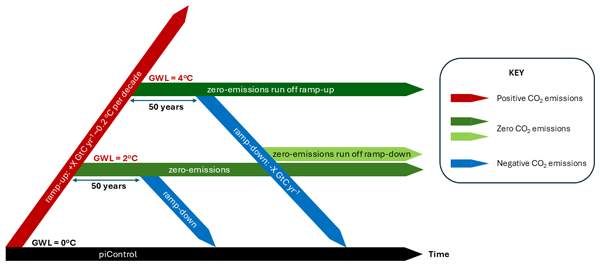
We introduce a new Earth system model experiment protocol to help researchers understand how Earth might respond to positive, zero, and negative carbon emissions. This protocol enables different models to be compared following similar warming and cooling rates. Researchers use the models to explore how the Earth reacts to different climate futures, including the risk of tipping points being exceeded and whether changes can be reversed. The results will support improved long-term climate policy.
Kobe De Maeyer, Jakob Harteg, Jonathan F. Donges, Ricarda Winkelmann, and Sina Loriani
EGUsphere, https://doi.org/10.5194/egusphere-2026-3389, https://doi.org/10.5194/egusphere-2026-3389, 2026
Short summary
Short summary
Understanding Earth system dynamics requires comparing outputs from many models and variables. Yet identifying where and when datasets agree on significant changes remains a challenge. We developed methods that combine detected signals across models and variables into shared patterns in space and time, providing robust signals from large model ensembles. Applied to Amazon rainforest simulations, we show that conclusions about Earth system change depend critically on how evidence is synthesised.
William Kearney, Gina Arnau, Theophil Bringezu, Michael Dietze, Boris Gailleton, Anna-Lena Lamprecht, Kilian Lenz, Richard Ott, Dirk Scherler, Philippe Steer, and Wolfgang Schwanghart
EGUsphere, https://doi.org/10.5194/egusphere-2026-2478, https://doi.org/10.5194/egusphere-2026-2478, 2026
Short summary
Short summary
TopoToolbox is a software package that enables users to analyze maps of the Earth's surface. The newest version of TopoToolbox makes it accessible to more users, makes it easier to integrate TopoToolbox with other software used to study the Earth's surface and establishes a new development process to ensure that TopoToolbox continues to meet the needs of its community of users. We present a series of examples to demonstrate how users can incorporate the new TopoToolbox version into their work.
Léa Rodari, Audrey Margirier, Ann V. Rowan, Christoph Schmidt, Remy Veness, Charlotte S. Curry, Alex C. Scoffield, Christiaan R. Diemont, Faye Perchanok, Guillaume Jouvet, Vivi Pedersen, Derek Fabel, and Georgina E. King
EGUsphere, https://doi.org/10.5194/egusphere-2026-1536, https://doi.org/10.5194/egusphere-2026-1536, 2026
Short summary
Short summary
By combining innovative dating techniques and glacier modelling, we studied how sediment is produced, transported, and stored within the Mer de Glace catchment in the French Alps. We show that whilst sediment is transported through the glacier in less than a millennium, some sediment can be stored for many thousands of years before being re-entrained into glacial transport. This long-term storage affects how landscapes evolve and how climate signals are preserved during deglaciation.
Tancrède P. M. Leger, Guillaume Jouvet, Sarah Kamleitner, Brandon D. Finley, Maxime Bernard, Balthazar Allegri, Frédéric Herman, Andreas Vieli, Andreas Henz, and Samuel U. Nussbaumer
Earth Surf. Dynam., 14, 361–389, https://doi.org/10.5194/esurf-14-361-2026, https://doi.org/10.5194/esurf-14-361-2026, 2026
Short summary
Short summary
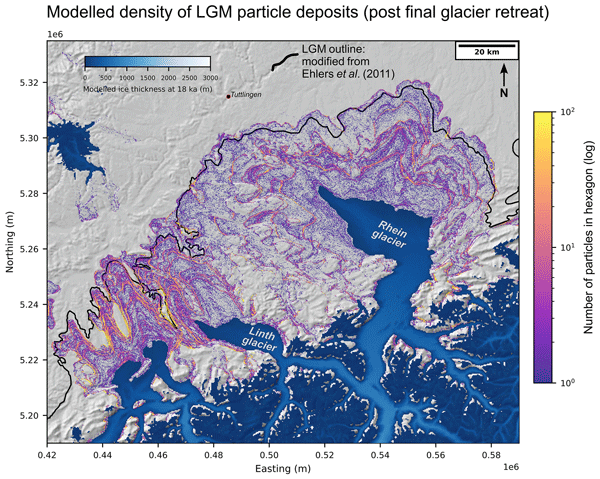
This study reconstructs for the first time the transport-pathways of sediments by glaciers during the last glaciation of the European Alps, 24000 years ago. This helps us understand how the European Alps were shaped by past glaciations and helps us better constrain the mechanisms of iceflow, glacier erosion and the movement of large sediment masses by ice. This breakthrough is achieved by coupling a smart particle-tracking algorithm to a machine-learning-enhanced glacier evolution model.
Didier Swingedouw, Laura Jackson, Aixue Hu, Anastasia Romanou, Nicole C. Laureanti, Wilbert Weijer, Sina Loriani, Bette Otto-Bliesner, Ayako Abe-Ouchi, Lucas Almeida, Alessio Bellucci, Reyk Börner, Gokhan Danabasoglu, Donovan P. Dennis, Marion Devilliers, Sybren Drijfhout, Jonathan Donges, Friederike Fröb, Thomas L. Frölicher, Guillaume Gastineau, Heiko Goelzer, Chuncheng Guo, Urs Hofmann, Anna Höse, Colin Jones, Torben Koenigk, Ann Kristin Klose, Valerio Lembo, Jose Licon-Salaiz, Ken Mankoff, Virna Meccia, Irina Melnikova, Oliver Mehling, Laurie Menviel, Juliette Mignot, Jon I. Robson, Gavin A. Schmidt, Robin Smith, Yuchen Sun, Irene Trombini, Matteo Willeit, Richard Wood, Fanghua Wu, Lin Zhaohui, and Ricarda Winkelmann
EGUsphere, https://doi.org/10.5194/egusphere-2026-1698, https://doi.org/10.5194/egusphere-2026-1698, 2026
Short summary
Short summary
This study presents a plan for climate model experiments to better understand how changes in freshwater in the North Atlantic affect major ocean currents. We designed coordinated simulations to test their response to warming, added freshwater, and possible recovery after weakening. Comparing results across models and past climate evidence helps improve confidence in projections and assess risks of large ocean circulation changes.
Gillian M. A. Smith, Daniel N. Goldberg, Guillaume Jouvet, James R. Maddison, and Hamish D. Pritchard
EGUsphere, https://doi.org/10.5194/egusphere-2026-788, https://doi.org/10.5194/egusphere-2026-788, 2026
Short summary
Short summary
We estimate the thickness of a large glacier in the Himalaya, using recently available thickness measurements and a computational model which uses higher-order physics to match estimated thickness with satellite-observed velocity. Our velocity inversion achieves similar accuracy to leading thickness estimates, while thickness-constrained inversions show increased accuracy, but limited interpolative power. We make recommendations for future measurement locations and for choosing model parameters.
Veena Prasad, Oskar Herrmann, Ilaria Tabone, Mamta K C, Alexander R. Groos, Guillaume Jouvet, James R. Jordan, and Johannes J. Fürst
EGUsphere, https://doi.org/10.5194/egusphere-2026-508, https://doi.org/10.5194/egusphere-2026-508, 2026
Short summary
Short summary
We present the testing and implementation of a calving framework for simulating the evolution of glacier fronts in grounded glacier tongues. The approach is coupled with a level set method to track changes in the glacier front over time and with an eigen-calving law that allows calving to respond to ice flow and stress conditions. The framework is evaluated using a synthetic glacier domain and, when applied to marine-terminating glaciers in Svalbard, reproduces observed calving front patterns.
Jakob Harteg, Lukas Röhrich, Kobe De Maeyer, Julius Garbe, Boris Sakschewski, Ann Kristin Klose, Jonathan F. Donges, Ricarda Winkelmann, and Sina Loriani
EGUsphere, https://doi.org/10.5194/egusphere-2026-356, https://doi.org/10.5194/egusphere-2026-356, 2026
Short summary
Short summary
Climate systems can undergo abrupt, potentially irreversible changes with major impacts on ecosystems and societies, yet consistent tools to detect these transitions across different models are lacking. We present an open-source software package for systematically detecting where and when such changes occur in climate simulations and quantifying variation in transition timing. This enables robust comparison of abrupt changes across models and contributes to assessing climate-tipping risks.
E. Keith Smith, Carl Folke, Niklas Kitzmann, Manjana Milkoreit, Per Olsson, Ricarda Winkelmann, Anne-Sophie Crépin, Christina Eder, Niklas Harring, Jobst Heitzig, Alexia Katsanidou, Timothy M. Lenton, Franz Mauelshagen, Kelton Minor, Ilona M. Otto, Armon Rezai, Jürgen Scheffran, Isabelle Stadelmann-Steffen, Rick van der Ploeg, Nico Wunderling, and Jonathan F. Donges
EGUsphere, https://doi.org/10.5194/egusphere-2026-177, https://doi.org/10.5194/egusphere-2026-177, 2026
This preprint is open for discussion and under review for Geoscientific Model Development (GMD).
Short summary
Short summary
Achieving climate and sustainability goals requires rapid, large-scale change. We introduce criticality – the likelihood a system is near a social tipping point – and critical agency – the capacity to shape those conditions. Our framework shows how coalitions and policies can trigger desired shifts and avoid harmful ones, linking complex systems theory with evidence to guide policymakers and practitioners.
Andreas Henz, Johannes Reinthaler, Samuel U. Nussbaumer, Tancrède P. M. Leger, Sarah Kamleitner, Guillaume Jouvet, and Andreas Vieli
The Cryosphere, 19, 5913–5937, https://doi.org/10.5194/tc-19-5913-2025, https://doi.org/10.5194/tc-19-5913-2025, 2025
Short summary
Short summary
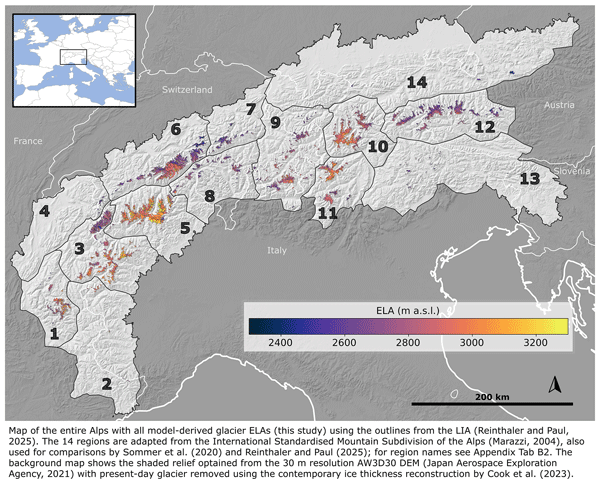
Glaciers are key to understanding climate change, reflecting historical variability. Using glacier models on the computer, we reconstructed European Alps glaciers during the Little Ice Age, with a total ice volume of 283 ± 42 cubic kilometres. Also, the study determines equilibrium line altitudes (ELAs) for over 4000 glaciers, showing patterns influenced by temperature, precipitation, and solar radiation. After all, we introduce a new ELA correction approach based on solar incidence.
Tancrède P. M. Leger, Jeremy C. Ely, Christopher D. Clark, Sarah L. Bradley, Rosie E. Archer, and Jiang Zhu
The Cryosphere, 19, 5719–5761, https://doi.org/10.5194/tc-19-5719-2025, https://doi.org/10.5194/tc-19-5719-2025, 2025
Short summary
Short summary
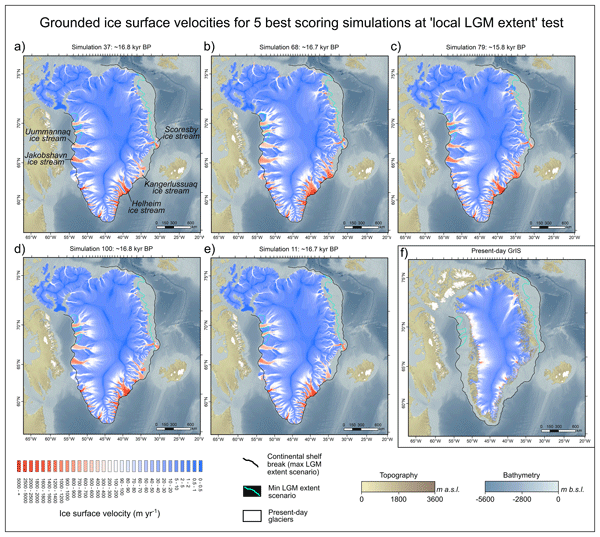
This study uses state-of-the-art computer simulations to better constrain the Greenland-Ice-Sheet's evolution over the past 24,000 years. By comparing model results with geological data, it reveals when and why the ice sheet grew and shrank, helping to improve future predictions of sea level rise and climate change.
Lena Nicola, Ronja Reese, Moritz Kreuzer, Torsten Albrecht, and Ricarda Winkelmann
The Cryosphere, 19, 2263–2287, https://doi.org/10.5194/tc-19-2263-2025, https://doi.org/10.5194/tc-19-2263-2025, 2025
Short summary
Short summary
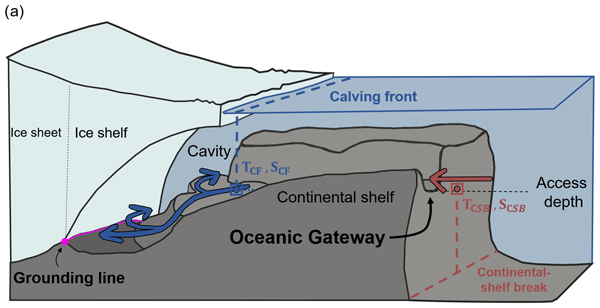
We identify potential oceanic gateways to Antarctic grounding lines based on high-resolution bathymetry data and examine the effect of access depths on ice-shelf melt rates. These gateways manifest the deepest topographic features that could channel warm water masses to the base of the ice sheet. We identify oceanic gateways in several Antarctic regions and estimate an upper bound of melt rate changes in case all warm water masses gain access to the cavities.
Ricarda Winkelmann, Donovan P. Dennis, Jonathan F. Donges, Sina Loriani, Ann Kristin Klose, Jesse F. Abrams, Jorge Alvarez-Solas, Torsten Albrecht, David Armstrong McKay, Sebastian Bathiany, Javier Blasco Navarro, Victor Brovkin, Eleanor Burke, Gokhan Danabasoglu, Reik V. Donner, Markus Drüke, Goran Georgievski, Heiko Goelzer, Anna B. Harper, Gabriele Hegerl, Marina Hirota, Aixue Hu, Laura C. Jackson, Colin Jones, Hyungjun Kim, Torben Koenigk, Peter Lawrence, Timothy M. Lenton, Hannah Liddy, José Licón-Saláiz, Maxence Menthon, Marisa Montoya, Jan Nitzbon, Sophie Nowicki, Bette Otto-Bliesner, Francesco Pausata, Stefan Rahmstorf, Karoline Ramin, Alexander Robinson, Johan Rockström, Anastasia Romanou, Boris Sakschewski, Christina Schädel, Steven Sherwood, Robin S. Smith, Norman J. Steinert, Didier Swingedouw, Matteo Willeit, Wilbert Weijer, Richard Wood, Klaus Wyser, and Shuting Yang
EGUsphere, https://doi.org/10.5194/egusphere-2025-1899, https://doi.org/10.5194/egusphere-2025-1899, 2025
Short summary
Short summary
The Tipping Points Modelling Intercomparison Project (TIPMIP) is an international collaborative effort to systematically assess tipping point risks in the Earth system using state-of-the-art coupled and stand-alone domain models. TIPMIP will provide a first global atlas of potential tipping dynamics, respective critical thresholds and key uncertainties, generating an important building block towards a comprehensive scientific basis for policy- and decision-making.
Josep Bonsoms, Marc Oliva, Juan Ignacio López-Moreno, and Guillaume Jouvet
The Cryosphere, 19, 1973–1993, https://doi.org/10.5194/tc-19-1973-2025, https://doi.org/10.5194/tc-19-1973-2025, 2025
Short summary
Short summary
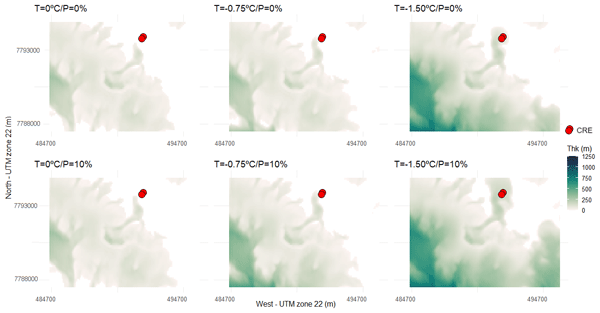
The extent to which Greenland's peripheral glaciers and ice caps current and future ice loss rates are unprecedented within the Holocene is poorly understood. This study connects the maximum ice extent of the Late Holocene with present and future glacier evolution in the Nuussuaq Peninsula (central western Greenland). By > 2050 glacier mass loss may have doubled in rate compared to the Late Holocene to the present, highlighting significant impacts of anthropogenic climate change.
E. Keith Smith, Marc Wiedermann, Jonathan F. Donges, Jobst Heitzig, and Ricarda Winkelmann
Earth Syst. Dynam., 16, 545–564, https://doi.org/10.5194/esd-16-545-2025, https://doi.org/10.5194/esd-16-545-2025, 2025
Short summary
Short summary
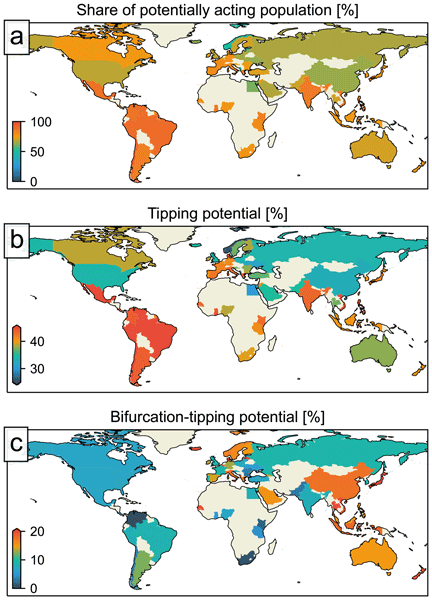
Social tipping dynamics have received recent attention as a potential mechanism for effective climate actions – yet how such tipping dynamics could unfold remains largely unquantified. We explore how social tipping processes can develop by enabling necessary conditions (exemplified by climate change concern) and increased perceptions of localized impacts (sea level rise). The likelihood of social tipping varies regionally, mostly along areas with the highest exposure to persistent risks.
Moritz Kreuzer, Torsten Albrecht, Lena Nicola, Ronja Reese, and Ricarda Winkelmann
The Cryosphere, 19, 1181–1203, https://doi.org/10.5194/tc-19-1181-2025, https://doi.org/10.5194/tc-19-1181-2025, 2025
Short summary
Short summary
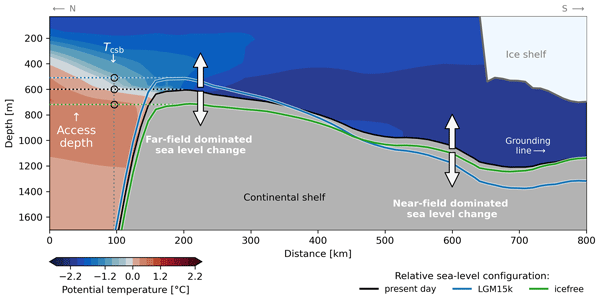
The study investigates how changing sea levels around Antarctica can potentially affect the melting of floating ice shelves. It utilizes numerical models for both the Antarctic Ice Sheet and the solid Earth, investigating features like troughs and sills that control the flow of ocean water onto the continental shelf. The research finds that compared to climatic changes, the effect of relative sea level on ice-shelf melting is small.
Shin Sugiyama, Shun Tsutaki, Daiki Sakakibara, Izumi Asaji, Ken Kondo, Yefan Wang, Evgeny Podolskiy, Guillaume Jouvet, and Martin Funk
The Cryosphere, 19, 525–540, https://doi.org/10.5194/tc-19-525-2025, https://doi.org/10.5194/tc-19-525-2025, 2025
Short summary
Short summary
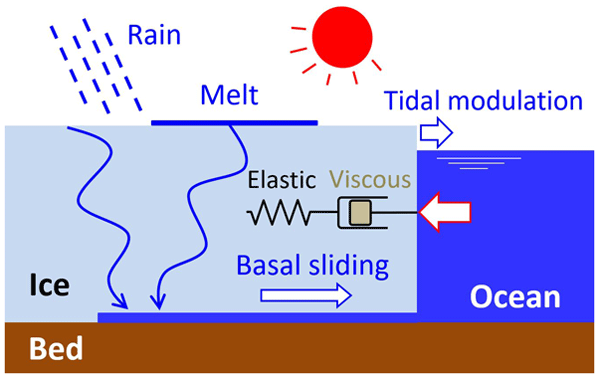
We report flow speed variations near the front of a tidewater glacier in Greenland. Ice flow near the glacier front is crucial for the mass loss of the Greenland ice sheet, but in situ data are hard to obtain. Our unique in situ GPS data revealed fine details of short-term speed variations associated with melting, ocean tides, and rain. The results are important for understanding the response of tidewater glaciers to changing environments, such as warming, more frequent rain, and ice thinning.
Marin Kneib, Amaury Dehecq, Adrien Gilbert, Auguste Basset, Evan S. Miles, Guillaume Jouvet, Bruno Jourdain, Etienne Ducasse, Luc Beraud, Antoine Rabatel, Jérémie Mouginot, Guillem Carcanade, Olivier Laarman, Fanny Brun, and Delphine Six
The Cryosphere, 18, 5965–5983, https://doi.org/10.5194/tc-18-5965-2024, https://doi.org/10.5194/tc-18-5965-2024, 2024
Short summary
Short summary
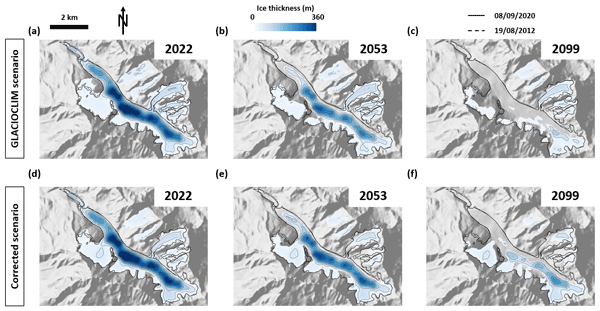
Avalanches contribute to increasing the accumulation on mountain glaciers by redistributing snow from surrounding mountains slopes. Here we quantified the contribution of avalanches to the mass balance of Argentière Glacier in the French Alps, by combining satellite and field observations to model the glacier dynamics. We show that the contribution of avalanches locally increases the accumulation by 60–70 % and that accounting for this effect results in less ice loss by the end of the century.
Ann Kristin Klose, Violaine Coulon, Frank Pattyn, and Ricarda Winkelmann
The Cryosphere, 18, 4463–4492, https://doi.org/10.5194/tc-18-4463-2024, https://doi.org/10.5194/tc-18-4463-2024, 2024
Short summary
Short summary
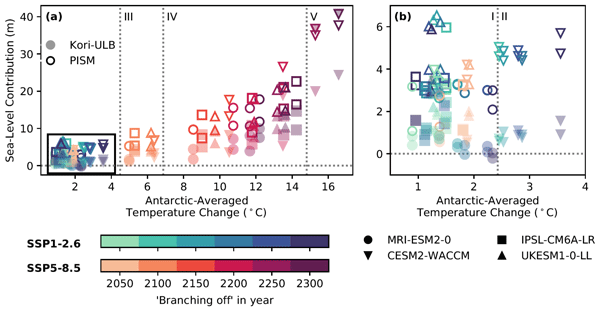
We systematically assess the long-term sea-level response from Antarctica to warming projected over the next centuries, using two ice-sheet models. We show that this committed Antarctic sea-level contribution is substantially higher than the transient sea-level change projected for the coming decades. A low-emission scenario already poses considerable risk of multi-meter sea-level increase over the next millennia, while additional East Antarctic ice loss unfolds under the high-emission pathway.
Johannes Feldmann, Anders Levermann, and Ricarda Winkelmann
The Cryosphere, 18, 4011–4028, https://doi.org/10.5194/tc-18-4011-2024, https://doi.org/10.5194/tc-18-4011-2024, 2024
Short summary
Short summary
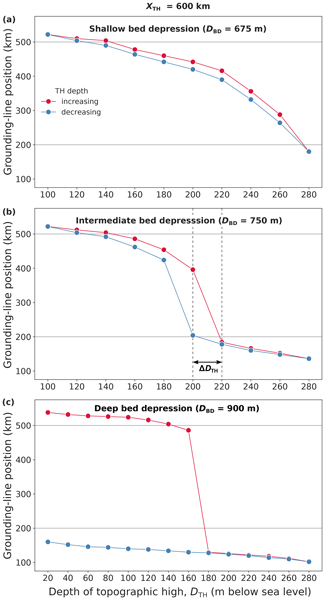
Here we show in simplified simulations that the (ir)reversibility of the retreat of instability-prone, Antarctica-type glaciers can strongly depend on the depth of the bed depression they rest on. If it is sufficiently deep, then the destabilized glacier does not recover from its collapsed state. Our results suggest that glaciers resting on a wide and deep bed depression, such as Antarctica's Thwaites Glacier, are particularly susceptible to irreversible retreat.
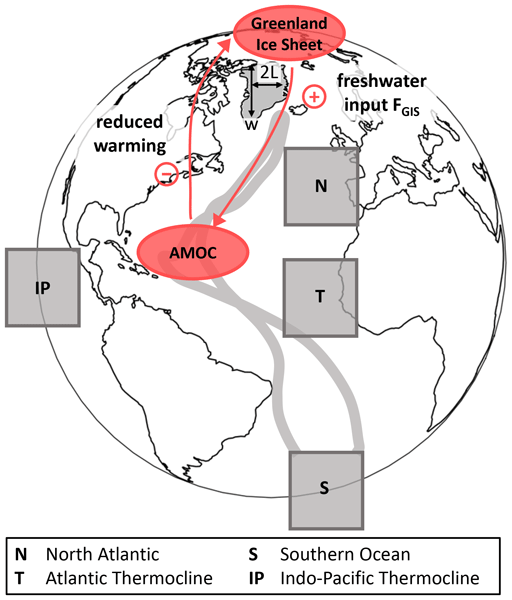
Ann Kristin Klose, Jonathan F. Donges, Ulrike Feudel, and Ricarda Winkelmann
Earth Syst. Dynam., 15, 635–652, https://doi.org/10.5194/esd-15-635-2024, https://doi.org/10.5194/esd-15-635-2024, 2024
Short summary
Short summary
We qualitatively study the long-term stability of the Greenland Ice Sheet and AMOC as tipping elements in the Earth system, which is largely unknown given their interaction in a positive–negative feedback loop. Depending on the timescales of ice loss and the position of the AMOC’s state relative to its critical threshold, we find distinct dynamic regimes of cascading tipping. These suggest that respecting safe rates of environmental change is necessary to mitigate potential domino effects.
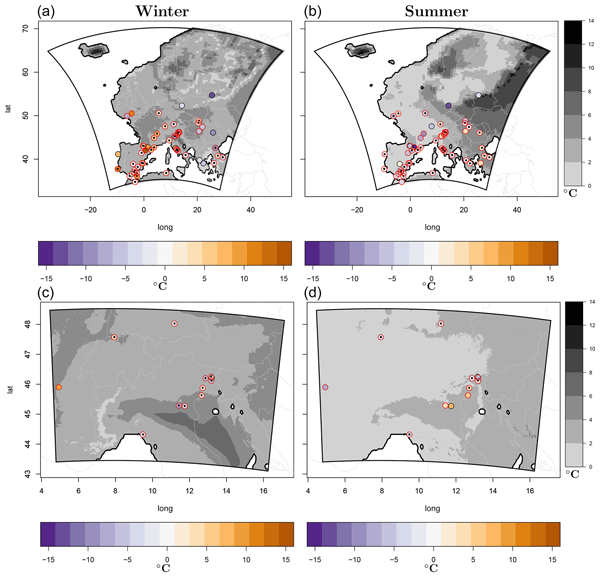
Emmanuele Russo, Jonathan Buzan, Sebastian Lienert, Guillaume Jouvet, Patricio Velasquez Alvarez, Basil Davis, Patrick Ludwig, Fortunat Joos, and Christoph C. Raible
Clim. Past, 20, 449–465, https://doi.org/10.5194/cp-20-449-2024, https://doi.org/10.5194/cp-20-449-2024, 2024
Short summary
Short summary
We present a series of experiments conducted for the Last Glacial Maximum (~21 ka) over Europe using the regional climate Weather Research and Forecasting model (WRF) at convection-permitting resolutions. The model, with new developments better suited to paleo-studies, agrees well with pollen-based climate reconstructions. This agreement is improved when considering different sources of uncertainty. The effect of convection-permitting resolutions is also assessed.
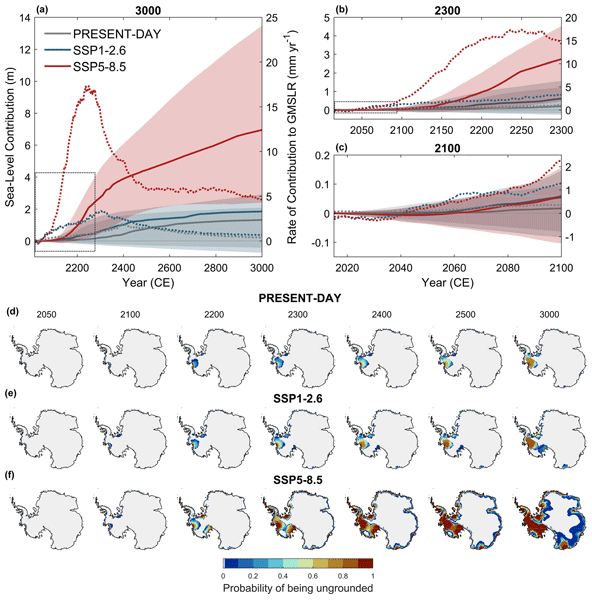
Violaine Coulon, Ann Kristin Klose, Christoph Kittel, Tamsin Edwards, Fiona Turner, Ricarda Winkelmann, and Frank Pattyn
The Cryosphere, 18, 653–681, https://doi.org/10.5194/tc-18-653-2024, https://doi.org/10.5194/tc-18-653-2024, 2024
Short summary
Short summary
We present new projections of the evolution of the Antarctic ice sheet until the end of the millennium, calibrated with observations. We show that the ocean will be the main trigger of future ice loss. As temperatures continue to rise, the atmosphere's role may shift from mitigating to amplifying Antarctic mass loss already by the end of the century. For high-emission scenarios, this may lead to substantial sea-level rise. Adopting sustainable practices would however reduce the rate of ice loss.
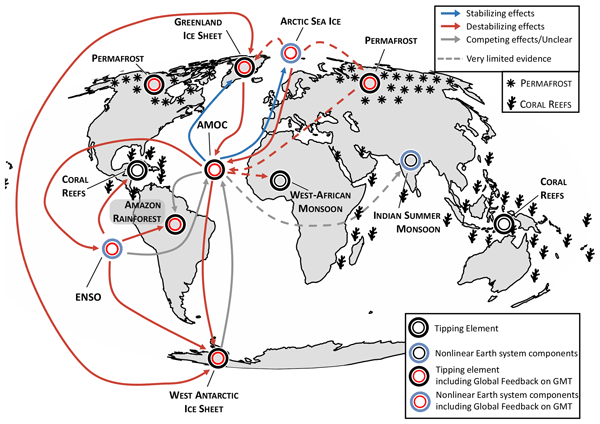
Nico Wunderling, Anna S. von der Heydt, Yevgeny Aksenov, Stephen Barker, Robbin Bastiaansen, Victor Brovkin, Maura Brunetti, Victor Couplet, Thomas Kleinen, Caroline H. Lear, Johannes Lohmann, Rosa Maria Roman-Cuesta, Sacha Sinet, Didier Swingedouw, Ricarda Winkelmann, Pallavi Anand, Jonathan Barichivich, Sebastian Bathiany, Mara Baudena, John T. Bruun, Cristiano M. Chiessi, Helen K. Coxall, David Docquier, Jonathan F. Donges, Swinda K. J. Falkena, Ann Kristin Klose, David Obura, Juan Rocha, Stefanie Rynders, Norman Julius Steinert, and Matteo Willeit
Earth Syst. Dynam., 15, 41–74, https://doi.org/10.5194/esd-15-41-2024, https://doi.org/10.5194/esd-15-41-2024, 2024
Short summary
Short summary
This paper maps out the state-of-the-art literature on interactions between tipping elements relevant for current global warming pathways. We find indications that many of the interactions between tipping elements are destabilizing. This means that tipping cascades cannot be ruled out on centennial to millennial timescales at global warming levels between 1.5 and 2.0 °C or on shorter timescales if global warming surpasses 2.0 °C.
Hélène Seroussi, Vincent Verjans, Sophie Nowicki, Antony J. Payne, Heiko Goelzer, William H. Lipscomb, Ayako Abe-Ouchi, Cécile Agosta, Torsten Albrecht, Xylar Asay-Davis, Alice Barthel, Reinhard Calov, Richard Cullather, Christophe Dumas, Benjamin K. Galton-Fenzi, Rupert Gladstone, Nicholas R. Golledge, Jonathan M. Gregory, Ralf Greve, Tore Hattermann, Matthew J. Hoffman, Angelika Humbert, Philippe Huybrechts, Nicolas C. Jourdain, Thomas Kleiner, Eric Larour, Gunter R. Leguy, Daniel P. Lowry, Chistopher M. Little, Mathieu Morlighem, Frank Pattyn, Tyler Pelle, Stephen F. Price, Aurélien Quiquet, Ronja Reese, Nicole-Jeanne Schlegel, Andrew Shepherd, Erika Simon, Robin S. Smith, Fiammetta Straneo, Sainan Sun, Luke D. Trusel, Jonas Van Breedam, Peter Van Katwyk, Roderik S. W. van de Wal, Ricarda Winkelmann, Chen Zhao, Tong Zhang, and Thomas Zwinger
The Cryosphere, 17, 5197–5217, https://doi.org/10.5194/tc-17-5197-2023, https://doi.org/10.5194/tc-17-5197-2023, 2023
Short summary
Short summary
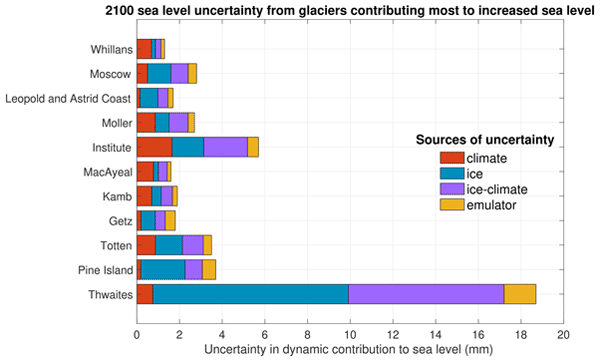
Mass loss from Antarctica is a key contributor to sea level rise over the 21st century, and the associated uncertainty dominates sea level projections. We highlight here the Antarctic glaciers showing the largest changes and quantify the main sources of uncertainty in their future evolution using an ensemble of ice flow models. We show that on top of Pine Island and Thwaites glaciers, Totten and Moscow University glaciers show rapid changes and a strong sensitivity to warmer ocean conditions.
Julius Garbe, Maria Zeitz, Uta Krebs-Kanzow, and Ricarda Winkelmann
The Cryosphere, 17, 4571–4599, https://doi.org/10.5194/tc-17-4571-2023, https://doi.org/10.5194/tc-17-4571-2023, 2023
Short summary
Short summary
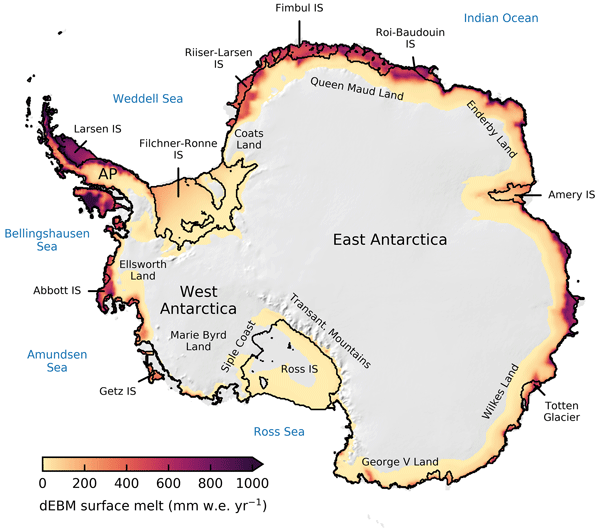
We adopt the novel surface module dEBM-simple in the Parallel Ice Sheet Model (PISM) to investigate the impact of atmospheric warming on Antarctic surface melt and long-term ice sheet dynamics. As an enhancement compared to traditional temperature-based melt schemes, the module accounts for changes in ice surface albedo and thus the melt–albedo feedback. Our results underscore the critical role of ice–atmosphere feedbacks in the future sea-level contribution of Antarctica on long timescales.
Emily A. Hill, Benoît Urruty, Ronja Reese, Julius Garbe, Olivier Gagliardini, Gaël Durand, Fabien Gillet-Chaulet, G. Hilmar Gudmundsson, Ricarda Winkelmann, Mondher Chekki, David Chandler, and Petra M. Langebroek
The Cryosphere, 17, 3739–3759, https://doi.org/10.5194/tc-17-3739-2023, https://doi.org/10.5194/tc-17-3739-2023, 2023
Short summary
Short summary
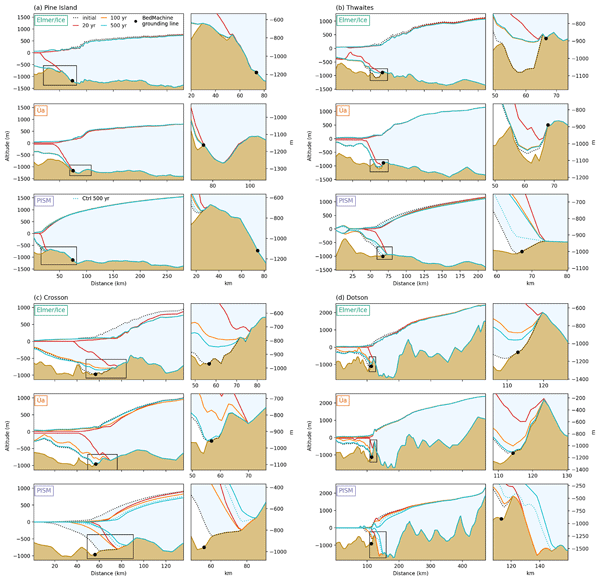
The grounding lines of the Antarctic Ice Sheet could enter phases of irreversible retreat or advance. We use three ice sheet models to show that the present-day locations of Antarctic grounding lines are reversible with respect to a small perturbation away from their current position. This indicates that present-day retreat of the grounding lines is not yet irreversible or self-enhancing.
Ronja Reese, Julius Garbe, Emily A. Hill, Benoît Urruty, Kaitlin A. Naughten, Olivier Gagliardini, Gaël Durand, Fabien Gillet-Chaulet, G. Hilmar Gudmundsson, David Chandler, Petra M. Langebroek, and Ricarda Winkelmann
The Cryosphere, 17, 3761–3783, https://doi.org/10.5194/tc-17-3761-2023, https://doi.org/10.5194/tc-17-3761-2023, 2023
Short summary
Short summary
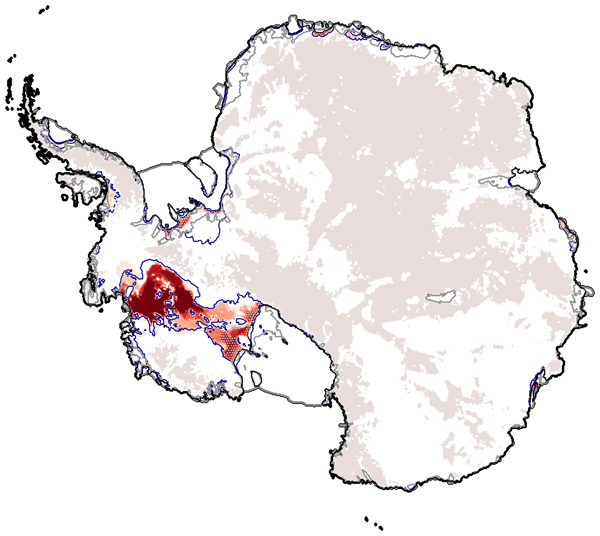
We use an ice sheet model to test where current climate conditions in Antarctica might lead. We find that present-day ocean and atmosphere conditions might commit an irreversible collapse of parts of West Antarctica which evolves over centuries to millennia. Importantly, this collapse is not irreversible yet.
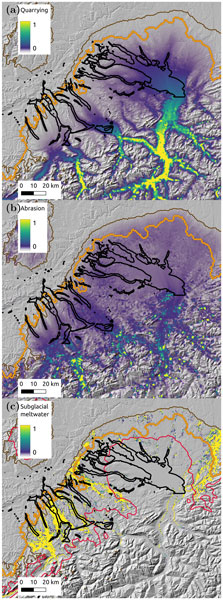
Denis Cohen, Guillaume Jouvet, Thomas Zwinger, Angela Landgraf, and Urs H. Fischer
E&G Quaternary Sci. J., 72, 189–201, https://doi.org/10.5194/egqsj-72-189-2023, https://doi.org/10.5194/egqsj-72-189-2023, 2023
Short summary
Short summary
During glacial times in Switzerland, glaciers of the Alps excavated valleys in low-lying regions that were later filled with sediment or water. How glaciers eroded these valleys is not well understood because erosion occurred near ice margins where ice moved slowly and was present for short times. Erosion is linked to the speed of ice and to water flowing under it. Here we present a model that estimates the location of water channels beneath the ice and links these locations to zones of erosion.
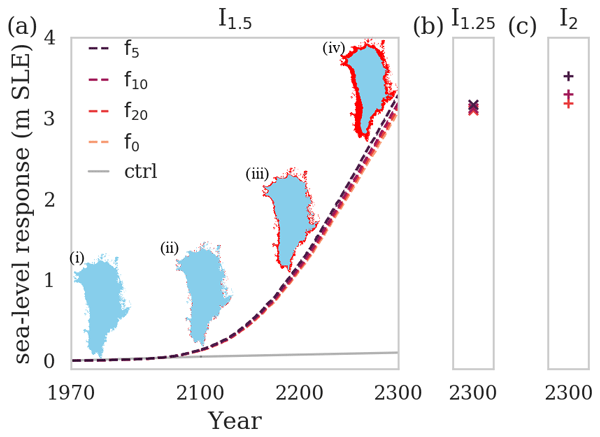
Johanna Beckmann and Ricarda Winkelmann
The Cryosphere, 17, 3083–3099, https://doi.org/10.5194/tc-17-3083-2023, https://doi.org/10.5194/tc-17-3083-2023, 2023
Short summary
Short summary
Over the past decade, Greenland has experienced several extreme melt events.
With progressing climate change, such extreme melt events can be expected to occur more frequently and potentially become more severe and persistent.
Strong melt events may considerably contribute to Greenland's mass loss, which in turn strongly determines future sea level rise. How important these extreme melt events could be in the future is assessed in this study for the first time.
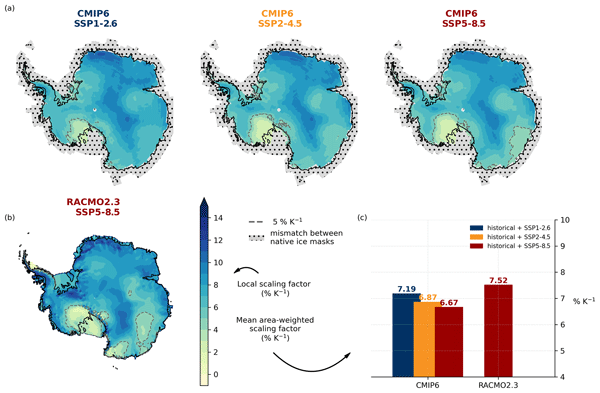
Lena Nicola, Dirk Notz, and Ricarda Winkelmann
The Cryosphere, 17, 2563–2583, https://doi.org/10.5194/tc-17-2563-2023, https://doi.org/10.5194/tc-17-2563-2023, 2023
Short summary
Short summary
For future sea-level projections, approximating Antarctic precipitation increases through temperature-scaling approaches will remain important, as coupled ice-sheet simulations with regional climate models remain computationally expensive, especially on multi-centennial timescales. We here revisit the relationship between Antarctic temperature and precipitation using different scaling approaches, identifying and explaining regional differences.
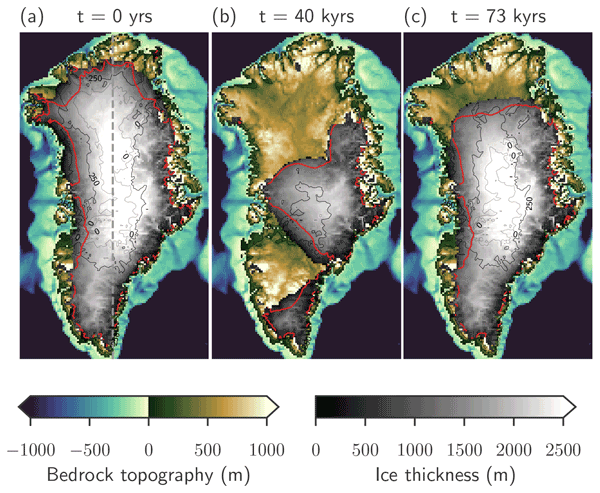
Maria Zeitz, Jan M. Haacker, Jonathan F. Donges, Torsten Albrecht, and Ricarda Winkelmann
Earth Syst. Dynam., 13, 1077–1096, https://doi.org/10.5194/esd-13-1077-2022, https://doi.org/10.5194/esd-13-1077-2022, 2022
Short summary
Short summary
The stability of the Greenland Ice Sheet under global warming is crucial. Here, using PISM, we study how the interplay of feedbacks between the ice sheet, the atmosphere and solid Earth affects the long-term response of the Greenland Ice Sheet under constant warming. Our findings suggest four distinct dynamic regimes of the Greenland Ice Sheet on the route to destabilization under global warming – from recovery via quasi-periodic oscillations in ice volume to ice sheet collapse.

Tanja Schlemm, Johannes Feldmann, Ricarda Winkelmann, and Anders Levermann
The Cryosphere, 16, 1979–1996, https://doi.org/10.5194/tc-16-1979-2022, https://doi.org/10.5194/tc-16-1979-2022, 2022
Short summary
Short summary
Marine cliff instability, if it exists, could dominate Antarctica's contribution to future sea-level rise. It is likely to speed up with ice thickness and thus would accelerate in most parts of Antarctica. Here, we investigate a possible mechanism that might stop cliff instability through cloaking by ice mélange. It is only a first step, but it shows that embayment geometry is, in principle, able to stop marine cliff instability in most parts of West Antarctica.
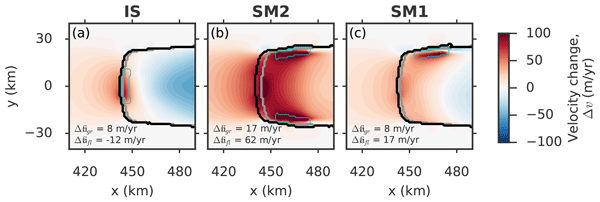
Johannes Feldmann, Ronja Reese, Ricarda Winkelmann, and Anders Levermann
The Cryosphere, 16, 1927–1940, https://doi.org/10.5194/tc-16-1927-2022, https://doi.org/10.5194/tc-16-1927-2022, 2022
Short summary
Short summary
We use a numerical model to simulate the flow of a simplified, buttressed Antarctic-type outlet glacier with an attached ice shelf. We find that after a few years of perturbation such a glacier responds much stronger to melting under the ice-shelf shear margins than to melting in the central fast streaming part of the ice shelf. This study explains the underlying physical mechanism which might gain importance in the future if melt rates under the Antarctic ice shelves continue to increase.
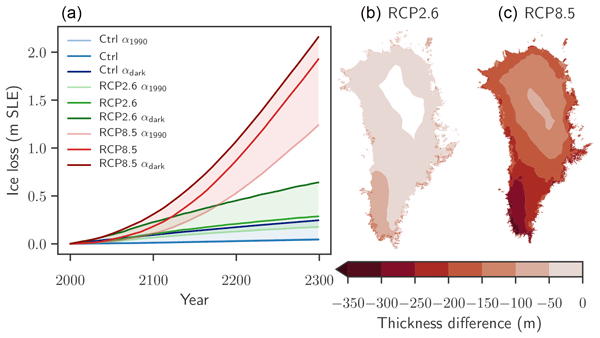
Maria Zeitz, Ronja Reese, Johanna Beckmann, Uta Krebs-Kanzow, and Ricarda Winkelmann
The Cryosphere, 15, 5739–5764, https://doi.org/10.5194/tc-15-5739-2021, https://doi.org/10.5194/tc-15-5739-2021, 2021
Short summary
Short summary
With the increasing melt of the Greenland Ice Sheet, which contributes to sea level rise, the surface of the ice darkens. The dark surfaces absorb more radiation and thus experience increased melt, resulting in the melt–albedo feedback. Using a simple surface melt model, we estimate that this positive feedback contributes to an additional 60 % ice loss in a high-warming scenario and additional 90 % ice loss for moderate warming. Albedo changes are important for Greenland’s future ice loss.
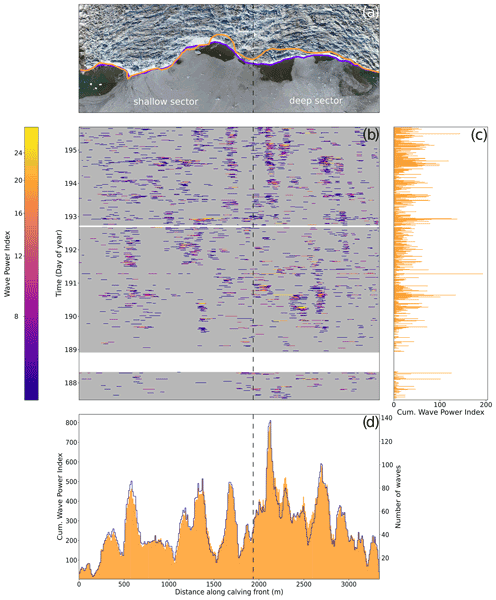
Adrien Wehrlé, Martin P. Lüthi, Andrea Walter, Guillaume Jouvet, and Andreas Vieli
The Cryosphere, 15, 5659–5674, https://doi.org/10.5194/tc-15-5659-2021, https://doi.org/10.5194/tc-15-5659-2021, 2021
Short summary
Short summary
We developed a novel automated method for the detection and the quantification of ocean waves generated by glacier calving. This method was applied to data recorded with a terrestrial radar interferometer at Eqip Sermia, Greenland. Results show a high calving activity at the glacier front sector ending in deep water linked with more frequent meltwater plumes. This suggests that rising subglacial meltwater plumes strongly affect glacier calving in deep water, but weakly in shallow water.
Cited articles
Aschwanden, A., Bueler, E., Khroulev, C., and Blatter, H.: An enthalpy formulation for glaciers and ice sheets, J. Glaciol., 58, 441–457, https://doi.org/10.3189/2012JoG11J088, 2012.
Aschwanden, A., Fahnestock, M. A., and Truffer, M.: Complex Greenland outlet glacier flow captured, Nat. Commun., 7, 10524, https://doi.org/10.1038/ncomms10524, 2016.
Bernard, M., Van Der Beek, P. A., Pedersen, V. K., and Colleps, C.: Production and Preservation of Elevated Low-Relief Surfaces in Mountainous Landscapes by Pliocene-Quaternary Glaciations, AGU Adv., 6, e2024AV001610, https://doi.org/10.1029/2024AV001610, 2025.
Blatter, H.: Velocity and stress fields in grounded glaciers: a simple algorithm for including deviatoric stress gradients, J. Glaciol., 41, 333–344, https://doi.org/10.3189/S002214300001621X, 1995.
Calov, R. and Greve, R.: A semi-analytical solution for the positive degree-day model with stochastic temperature variations, J. Glaciol., 51, 173–175, https://doi.org/10.3189/172756505781829601, 2005.
Cook, S. J., Jouvet, G., Millan, R., Rabatel, A., Zekollari, H., and Dussaillant, I.: Committed Ice Loss in the European Alps Until 2050 Using a Deep-Learning-Aided 3D Ice-Flow Model With Data Assimilation, Geophys. Res. Lett., 50, e2023GL105029, https://doi.org/10.1029/2023GL105029, 2023.
Cuffey, K. and Paterson, W. S. B.: The physics of glaciers, 4th ed., Butterworth-Heinemann, Burlington, Oxford, ISBN 978-0-12-369461-4, 2010.
Cuzzone, J. K., Schlegel, N.-J., Morlighem, M., Larour, E., Briner, J. P., Seroussi, H., and Caron, L.: The impact of model resolution on the simulated Holocene retreat of the southwestern Greenland ice sheet using the Ice Sheet System Model (ISSM), The Cryosphere, 13, 879–893, https://doi.org/10.5194/tc-13-879-2019, 2019.
Duncan, C., Masek, J., and Fielding, E.: How steep are the Himalaya? Characteristics and implications of along-strike topographic variations, Geology, 31, 75, https://doi.org/10.1130/0091-7613(2003)031<0075:HSATHC>2.0.CO;2, 2003.
Egholm, D. L., Jansen, J. D., Brædstrup, C. F., Pedersen, V. K., Andersen, J. L., Ugelvig, S. V., Larsen, N. K., and Knudsen, M. F.: Formation of plateau landscapes on glaciated continental margins, Nat. Geosci., 10, 592–597, https://doi.org/10.1038/ngeo2980, 2017.
Gagliardini, O., Zwinger, T., Gillet-Chaulet, F., Durand, G., Favier, L., de Fleurian, B., Greve, R., Malinen, M., Martín, C., Råback, P., Ruokolainen, J., Sacchettini, M., Schäfer, M., Seddik, H., and Thies, J.: Capabilities and performance of Elmer/Ice, a new-generation ice sheet model, Geosci. Model Dev., 6, 1299–1318, https://doi.org/10.5194/gmd-6-1299-2013, 2013.
Golledge, N. R., Hubbard, A., and Sugden, D. E.: High-resolution numerical simulation of Younger Dryas glaciation in Scotland, Quaternary Sci. Rev., 27, 888–904, https://doi.org/10.1016/j.quascirev.2008.01.019, 2008.
Golledge, N. R., Mackintosh, A. N., Anderson, B. M., Buckley, K. M., Doughty, A. M., Barrell, D. J. A., Denton, G. H., Vandergoes, M. J., Andersen, B. G., and Schaefer, J. M.: Last Glacial Maximum climate in New Zealand inferred from a modelled Southern Alps icefield, Quaternary Sci. Rev., 46, 30–45, https://doi.org/10.1016/j.quascirev.2012.05.004, 2012.
Goutorbe, B., Poort, J., Lucazeau, F., and Raillard, S.: Global heat flow trends resolved from multiple geological and geophysical proxies, Geophys. J. Int., 187, 1405–1419, https://doi.org/10.1111/j.1365-246X.2011.05228.x, 2011.
Hartmeyer, I., Delleske, R., Keuschnig, M., Krautblatter, M., Lang, A., Schrott, L., and Otto, J.-C.: Current glacier recession causes significant rockfall increase: the immediate paraglacial response of deglaciating cirque walls, Earth Surf. Dynam., 8, 729–751, https://doi.org/10.5194/esurf-8-729-2020, 2020.
Hindmarsh, R. C. A.: A numerical comparison of approximations to the Stokes equations used in ice sheet and glacier modeling, J. Geophys. Res.-Earth Surf., 109, https://doi.org/10.1029/2003JF000065, 2004.
Hock, R.: Temperature index melt modelling in mountain areas, J. Hydrol., 282, 104–115, https://doi.org/10.1016/S0022-1694(03)00257-9, 2003.
Huggel, C., Muccione, V., Carey, M., James, R., Jurt, C., and Mechler, R.: Loss and Damage in the mountain cryosphere, Reg. Environ. Change, 19, 1387–1399, https://doi.org/10.1007/s10113-018-1385-8, 2019.
Hugonnet, R., McNabb, R., Berthier, E., Menounos, B., Nuth, C., Girod, L., Farinotti, D., Huss, M., Dussaillant, I., Brun, F., and Kääb, A.: Accelerated global glacier mass loss in the early twenty-first century, Nature, 592, 726–731, https://doi.org/10.1038/s41586-021-03436-z, 2021.
Immerzeel, W. W., Lutz, A. F., Andrade, M., Bahl, A., Biemans, H., Bolch, T., Hyde, S., Brumby, S., Davies, B. J., Elmore, A. C., Emmer, A., Feng, M., Fernández, A., Haritashya, U., Kargel, J. S., Koppes, M., Kraaijenbrink, P. D. A., Kulkarni, A. V., Mayewski, P. A., Nepal, S., Pacheco, P., Painter, T. H., Pellicciotti, F., Rajaram, H., Rupper, S., Sinisalo, A., Shrestha, A. B., Viviroli, D., Wada, Y., Xiao, C., Yao, T., and Baillie, J. E. M.: Importance and vulnerability of the world's water towers, Nature, 577, 364–369, https://doi.org/10.1038/s41586-019-1822-y, 2020.
Isotta, F. A., Frei, C., Weilguni, V., Perčec Tadić, M., Lassègues, P., Rudolf, B., Pavan, V., Cacciamani, C., Antolini, G., Ratto, S. M., Munari, M., Micheletti, S., Bonati, V., Lussana, C., Ronchi, C., Panettieri, E., Marigo, G., and Vertačnik, G.: The climate of daily precipitation in the Alps: development and analysis of a high-resolution grid dataset from pan-Alpine rain-gauge data, Int. J. Climatol., 34, 1657–1675, https://doi.org/10.1002/joc.3794, 2014.
Ivy-Ochs, S.: Glacier variations in the European Alps at the end of the last glaciation, CIG, 41, 295–315, https://doi.org/10.18172/cig.2750, 2015.
Jouvet, G. and Cordonnier, G.: Ice-flow model emulator based on physics-informed deep learning, J. Glaciol., 69, 1941–1955, https://doi.org/10.1017/jog.2023.73, 2023.
Jouvet, G., Cohen, D., Russo, E., Buzan, J., Raible, C. C., Haeberli, W., Kamleitner, S., Ivy-Ochs, S., Imhof, M. A., Becker, J. K., Landgraf, A., and Fischer, U. H.: Coupled climate-glacier modelling of the last glaciation in the Alps, J. Glaciol., 69, 1956–1970, https://doi.org/10.1017/jog.2023.74, 2023.
Jouzel, J. and Masson-Delmotte, V.: EPICA Dome C Ice Core 800KYr deuterium data and temperature estimates, PANGAEA [data set], https://doi.org/10.1594/PANGAEA.683655, 2007.
Kamleitner, S., Ivy-Ochs, S., Monegato, G., Gianotti, F., Akçar, N., Vockenhuber, C., Christl, M., and Synal, H.-A.: The Ticino-Toce glacier system (Swiss-Italian Alps) in the framework of the Alpine Last Glacial Maximum, Quaternary Sci. Rev., 279, 107400, https://doi.org/10.1016/j.quascirev.2022.107400, 2022.
Kessler, M. A., Anderson, R. S., and Stock, G. M.: Modeling topographic and climatic control of east-west asymmetry in Sierra Nevada glacier length during the Last Glacial Maximum, J. Geophys. Res., 111, 2005JF000365, https://doi.org/10.1029/2005JF000365, 2006.
Korup, O., Schmidt, J., and McSaveney, M. J.: Regional relief characteristics and denudation pattern of the western Southern Alps, New Zealand, Geomorphology, 71, 402–423, https://doi.org/10.1016/j.geomorph.2005.04.013, 2005.
Leger, T., Jouvet, G., Kamleitner, S., Mey, J., Herman, F., Finley, B., Ivy-Ochs, S., Vieli, A., Henz, A., and Nussbaumer, S.: A data-consistent model of the last glaciation in the Alps achieved with physics-driven AI. In Nature Communications (Version 1), Zenodo [code and data set], https://doi.org/10.5281/zenodo.14275231, 2024.
Leger, T. P. M., Jouvet, G., Kamleitner, S., Mey, J., Herman, F., Finley, B. D., Ivy-Ochs, S., Vieli, A., Henz, A., and Nussbaumer, S. U.: A data-consistent model of the last glaciation in the Alps achieved with physics-driven AI, Nat. Commun., 16, 848, https://doi.org/10.1038/s41467-025-56168-3, 2025.
Levermann, A. and Winkelmann, R.: A simple equation for the melt elevation feedback of ice sheets, The Cryosphere, 10, 1799–1807, https://doi.org/10.5194/tc-10-1799-2016, 2016.
Liebl, M., Robl, J., Egholm, D. L., Prasicek, G., Stüwe, K., Gradwohl, G., and Hergarten, S.: Topographic signatures of progressive glacial landscape transformation, Earth Surf. Proc. Land., 46, 1964–1980, https://doi.org/10.1002/esp.5139, 2021.
Meier, W. J.-H., Grießinger, J., Hochreuther, P., and Braun, M. H.: An Updated Multi-Temporal Glacier Inventory for the Patagonian Andes With Changes Between the Little Ice Age and 2016, Front. Earth Sci., 6, 62, https://doi.org/10.3389/feart.2018.00062, 2018.
Météo France: Fiche climatologique, Statistiques 1981–2010 et records, Météo France [data set], https://donneepubliques.meteofrance.fr/FichesClim/FICHECLIM_73157002.pdf (last access: 28 November 2025), 2022.
Mey, J., Scherler, D., Wickert, A. D., Egholm, D. L., Tesauro, M., Schildgen, T. F., and Strecker, M. R.: Glacial isostatic uplift of the European Alps, Nat. Commun., 7, 13382, https://doi.org/10.1038/ncomms13382, 2016.
Millan, R., Mouginot, J., Rabatel, A., and Morlighem, M.: Ice velocity and thickness of the world's glaciers, Nat. Geosci., 15, 124–129, https://doi.org/10.1038/s41561-021-00885-z, 2022.
Minh, N. Q., Huong, N. T. T., Khanh, P. Q., Hien, L. P., and Bui, D. T.: Impacts of Resampling and Downscaling Digital Elevation Model and Its Morphometric Factors: A Comparison of Hopfield Neural Network, Bilinear, Bicubic, and Kriging Interpolations, Remote Sens., 16, 819, https://doi.org/10.3390/rs16050819, 2024.
Norris, S. L., Margold, M., Evans, D. J. A., Atkinson, N., and Froese, D. G.: Dynamical response of the southwestern Laurentide Ice Sheet to rapid Bølling–Allerød warming, The Cryosphere, 18, 1533–1559, https://doi.org/10.5194/tc-18-1533-2024, 2024.
Nowicki, S. M. J., Payne, A., Larour, E., Seroussi, H., Goelzer, H., Lipscomb, W., Gregory, J., Abe-Ouchi, A., and Shepherd, A.: Ice Sheet Model Intercomparison Project (ISMIP6) contribution to CMIP6, Geosci. Model Dev., 9, 4521–4545, https://doi.org/10.5194/gmd-9-4521-2016, 2016.
Patton, H., Hubbard, A., Andreassen, K., Auriac, A., Whitehouse, P. L., Stroeven, A. P., Shackleton, C., Winsborrow, M., Heyman, J., and Hall, A. M.: Deglaciation of the Eurasian ice sheet complex, Quaternary Sci. Rev., 169, 148–172, https://doi.org/10.1016/j.quascirev.2017.05.019, 2017.
Pattyn, F., Perichon, L., Aschwanden, A., Breuer, B., de Smedt, B., Gagliardini, O., Gudmundsson, G. H., Hindmarsh, R. C. A., Hubbard, A., Johnson, J. V., Kleiner, T., Konovalov, Y., Martin, C., Payne, A. J., Pollard, D., Price, S., Rückamp, M., Saito, F., Souček, O., Sugiyama, S., and Zwinger, T.: Benchmark experiments for higher-order and full-Stokes ice sheet models (ISMIP–HOM), The Cryosphere, 2, 95–108, https://doi.org/10.5194/tc-2-95-2008, 2008.
Penck, A. and Brückner, E.: Die Alpen im Eiszeitalter, Tauchnitz, 540 pp., 1909.
Rasmussen, S. O., Andersen, K. K., Svensson, A. M., Steffensen, J. P., Vinther, B. M., Clausen, H. B., Siggaard-Andersen, M. -L., Johnsen, S. J., Larsen, L. B., Dahl-Jensen, D., Bigler, M., Röthlisberger, R., Fischer, H., Goto-Azuma, K., Hansson, M. E., and Ruth, U.: A new Greenland ice core chronology for the last glacial termination, J. Geophys. Res., 111, 2005JD006079, https://doi.org/10.1029/2005JD006079, 2006.
Rückamp, M., Goelzer, H., and Humbert, A.: Sensitivity of Greenland ice sheet projections to spatial resolution in higher-order simulations: the Alfred Wegener Institute (AWI) contribution to ISMIP6 Greenland using the Ice-sheet and Sea-level System Model (ISSM), The Cryosphere, 14, 3309–3327, https://doi.org/10.5194/tc-14-3309-2020, 2020.
Rückamp, M., Kleiner, T., and Humbert, A.: Comparison of ice dynamics using full-Stokes and Blatter–Pattyn approximation: application to the Northeast Greenland Ice Stream, The Cryosphere, 16, 1675–1696, https://doi.org/10.5194/tc-16-1675-2022, 2022.
Schoof, C. and Hewitt, I.: Ice-Sheet Dynamics, Annu. Rev. Fluid Mech., 45, 217–239, https://doi.org/10.1146/annurev-fluid-011212-140632, 2013.
Seguinot, J., Ivy-Ochs, S., Jouvet, G., Huss, M., Funk, M., and Preusser, F.: Modelling last glacial cycle ice dynamics in the Alps, The Cryosphere, 12, 3265–3285, https://doi.org/10.5194/tc-12-3265-2018, 2018.
Strahler, A. N.: Quantitative analysis of watershed geomorphology, Eos Trans. AGU, 38, 913–920, https://doi.org/10.1029/TR038i006p00913, 1957.
Tadono, T., Ishida, H., Oda, F., Naito, S., Minakawa, K., and Iwamoto, H.: Precise Global DEM Generation by ALOS PRISM, ISPRS Ann. Photogramm. Remote Sens. Spatial Inf. Sci., II–4, 71–76, https://doi.org/10.5194/isprsannals-II-4-71-2014, 2014.
Valla, P. G., Shuster, D. L., and Van Der Beek, P. A.: Significant increase in relief of the European Alps during mid-Pleistocene glaciations, Nat. Geosci., 4, 688–692, https://doi.org/10.1038/ngeo1242, 2011.
Whitbread, K., Jansen, J., Bishop, P., and Attal, M.: Substrate, sediment, and slope controls on bedrock channel geometry in postglacial streams, J. Geophys. Res.-Earth Surf., 120, 779–798, https://doi.org/10.1002/2014JF003295, 2015.
Wickert, A. D.: Open-source modular solutions for flexural isostasy: gFlex v1.0, Geosci. Model Dev., 9, 997–1017, https://doi.org/10.5194/gmd-9-997-2016, 2016.
Williams, C. R., Thodoroff, P., Arthern, R. J., Byrne, J., Hosking, J. S., Kaiser, M., Lawrence, N. D., and Kazlauskaite, I.: Calculations of extreme sea level rise scenarios are strongly dependent on ice sheet model resolution, Commun. Earth Environ., 6, 60, https://doi.org/10.1038/s43247-025-02010-z, 2025.
Winkelmann, R., Martin, M. A., Haseloff, M., Albrecht, T., Bueler, E., Khroulev, C., and Levermann, A.: The Potsdam Parallel Ice Sheet Model (PISM-PIK) – Part 1: Model description, The Cryosphere, 5, 715–726, https://doi.org/10.5194/tc-5-715-2011, 2011.
Wirsig, C., Zasadni, J., Christl, M., Akçar, N., and Ivy-Ochs, S.: Dating the onset of LGM ice surface lowering in the High Alps, Quaternary Sci. Rev., 143, 37–50, https://doi.org/10.1016/j.quascirev.2016.05.001, 2016.
Yan, Z., Leng, W., Wang, Y., Xiao, C., and Zhang, T.: A comparison between three-dimensional, transient, thermomechanically coupled first-order and Stokes ice flow models, J. Glaciol., 69, 513–524, https://doi.org/10.1017/jog.2022.77, 2023.
Zhang, R., Zhang, Z., Jiang, D., Ramstein, G., Dupont-Nivet, G., and Li, X.: Tibetan Plateau Made Central Asian Drylands Move Northward, Concentrate in Narrow Latitudinal Bands, and Increase in Intensity During the Cenozoic, Geophys. Res. Lett., 49, e2021GL093718, https://doi.org/10.1029/2021GL093718, 2022.
Short summary
Coarse spatial resolutions reduce computational costs but poorly resolve complex topographies. Our simulations of an alpine ice field at 50 m to 2 km resolution show similar ice areas, yet much higher volumes at coarser resolutions. Resolutions of 300 m and finer accurately capture topographically constrained flow, while coarse resolutions flatten mountain slopes and peaks, affecting ice velocities, thickness, and thermal regimes which emphasizes the need for sufficiently high-resolution models.
Coarse spatial resolutions reduce computational costs but poorly resolve complex topographies....


