
Articles | Volume 19, issue 12
https://doi.org/10.5194/tc-19-6711-2025
© Author(s) 2025. This work is distributed under
the Creative Commons Attribution 4.0 License.
the Creative Commons Attribution 4.0 License.
https://doi.org/10.5194/tc-19-6711-2025
© Author(s) 2025. This work is distributed under
the Creative Commons Attribution 4.0 License.
the Creative Commons Attribution 4.0 License.
Research article
| 
11 Dec 2025
Research article |
| 11 Dec 2025
| 11 Dec 2025
Near sea ice-free conditions in the northern route of the Northwest Passage at the end of the 2024 melt season
Stephen E. L. Howell
CORRESPONDING AUTHOR

Climate Research Division, Environment and Climate Change Canada, Toronto, ON, Canada
Alex Cabaj
Climate Research Division, Environment and Climate Change Canada, Toronto, ON, Canada
David G. Babb
Centre for Earth Observation Science, University of Manitoba, Winnipeg, MB, Canada
Jack C. Landy
Department of Physics and Technology, The Arctic University of Norway, Tromsø, Norway
Jackie Dawson
Department of Geography, University of Ottawa, Ottawa, ON, Canada
Mallik Mahmud
Department of Geography, McGill University, Montreal, QC, Canada
Mike Brady
Climate Research Division, Environment and Climate Change Canada, Toronto, ON, Canada
Related authors
Mathieu Plante, Jean-François Lemieux, L. Bruno Tremblay, Amélie Bouchat, Damien Ringeisen, Philippe Blain, Stephen Howell, Mike Brady, Alexander S. Komarov, Béatrice Duval, Lekima Yakuden, and Frédérique Labelle
Earth Syst. Sci. Data, 17, 423–434, https://doi.org/10.5194/essd-17-423-2025, https://doi.org/10.5194/essd-17-423-2025, 2025
Short summary
Short summary
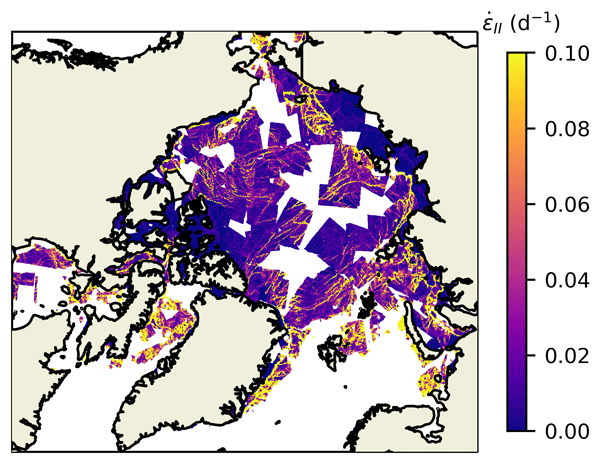
Sea ice forms a thin boundary between the ocean and the atmosphere, with complex, crust-like dynamics and ever-changing networks of sea ice leads and ridges. Statistics of these dynamical features are often used to evaluate sea ice models. Here, we present a new pan-Arctic dataset of sea ice deformations derived from satellite imagery, from 1 September 2017 to 31 August 2023. We discuss the dataset coverage and some limitations associated with uncertainties in the computed values.
Stephen E. L. Howell, David G. Babb, Jack C. Landy, Isolde A. Glissenaar, Kaitlin McNeil, Benoit Montpetit, and Mike Brady
The Cryosphere, 18, 2321–2333, https://doi.org/10.5194/tc-18-2321-2024, https://doi.org/10.5194/tc-18-2321-2024, 2024
Short summary
Short summary
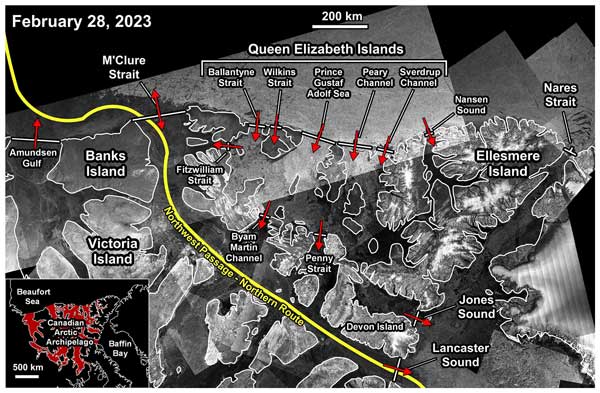
The CAA serves as both a source and a sink for sea ice from the Arctic Ocean, while also exporting sea ice into Baffin Bay. It is also an important region with respect to navigating the Northwest Passage. Here, we quantify sea ice transport and replenishment across and within the CAA from 2016 to 2022. We also provide the first estimates of the ice area and volume flux within the CAA from the Queen Elizabeth Islands to Parry Channel, which spans the central region of the Northwest Passage.
Vigan Mensah, Koji Fujita, Stephen Howell, Miho Ikeda, Mizuki Komatsu, and Kay I. Ohshima
EGUsphere, https://doi.org/10.5194/egusphere-2023-2492, https://doi.org/10.5194/egusphere-2023-2492, 2023
Preprint archived
Short summary
Short summary
We estimated the volume of freshwater released by sea ice, glaciers, rivers, and precipitation into Baffin Bay and the Labrador Sea, and their changes over the past 70 years. We found that the freshwater volume has risen in Baffin Bay due to increased glacier melting, and dropped in the Labrador Sea because of the decline in sea ice production. We also infer that freshwater from the Arctic Ocean has been exported to our study region for the past 30 years, possibly as a result of global warming.
Isolde A. Glissenaar, Jack C. Landy, David G. Babb, Geoffrey J. Dawson, and Stephen E. L. Howell
The Cryosphere, 17, 3269–3289, https://doi.org/10.5194/tc-17-3269-2023, https://doi.org/10.5194/tc-17-3269-2023, 2023
Short summary
Short summary
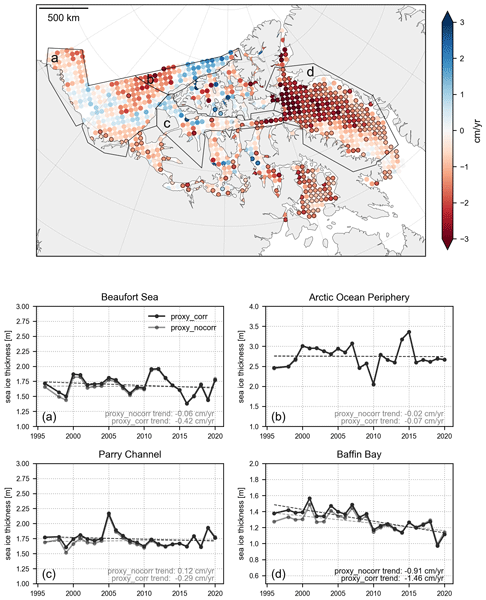
Observations of large-scale ice thickness have unfortunately only been available since 2003, a short record for researching trends and variability. We generated a proxy for sea ice thickness in the Canadian Arctic for 1996–2020. This is the longest available record for large-scale sea ice thickness available to date and the first record reliably covering the channels between the islands in northern Canada. The product shows that sea ice has thinned by 21 cm over the 25-year record in April.
Stephen E. L. Howell, Mike Brady, and Alexander S. Komarov
The Cryosphere, 16, 1125–1139, https://doi.org/10.5194/tc-16-1125-2022, https://doi.org/10.5194/tc-16-1125-2022, 2022
Short summary
Short summary
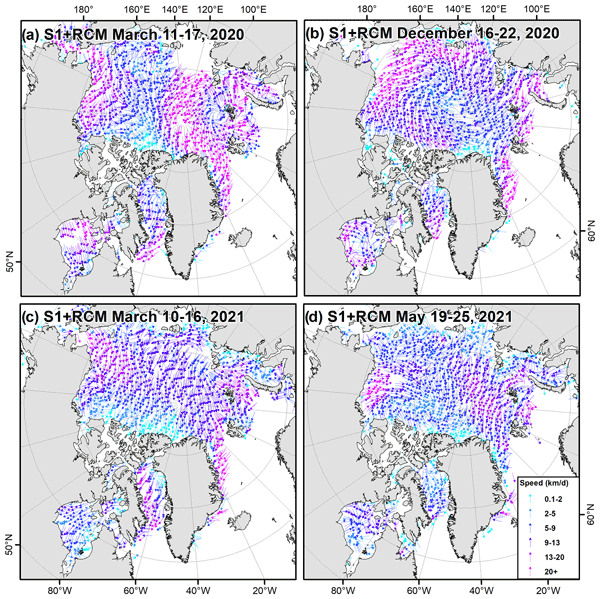
We describe, apply, and validate the Environment and Climate Change Canada automated sea ice tracking system (ECCC-ASITS) that routinely generates large-scale sea ice motion (SIM) over the pan-Arctic domain using synthetic aperture radar (SAR) images. The ECCC-ASITS was applied to the incoming image streams of Sentinel-1AB and the RADARSAT Constellation Mission from March 2020 to October 2021 using a total of 135 471 SAR images and generated new SIM datasets (i.e., 7 d 25 km and 3 d 6.25 km).
Ghislain Picard, Justin Murfitt, Elena Zakharova, Pierre Zeiger, Laurent Arnaud, Jeremie Aublanc, Jack C. Landy, Michele Scagliola, and Claude Duguay
Geosci. Model Dev., 19, 9103–9129, https://doi.org/10.5194/gmd-19-9103-2026, https://doi.org/10.5194/gmd-19-9103-2026, 2026
Short summary
Short summary
Radar altimeters measure ice-sheet elevation and sea-ice thickness. To improve their accuracy, we developed a model that simulates altimeter waveforms based on the physical properties of snow and sea ice. It computes the power, time, and Doppler shift of radar echoes as waves travel to the surface, interact with snow and ice, and return to the satellite. The model was verified internally, validated against other models and applied in Antarctica using in-situ snow measurements.
Alek Petty, Christopher Cardinale, Michel Tsamados, William Gregory, and Alex Cabaj
Earth Syst. Sci. Data Discuss., https://doi.org/10.5194/essd-2026-700, https://doi.org/10.5194/essd-2026-700, 2026
Preprint under review for ESSD
Short summary
Short summary
We combine laser-altimeter measurements with daily passive-microwave estimates of thin ice using Gaussian-process regression. The resulting dataset provides complete daily Arctic sea ice thickness maps across seven winter growth seasons, substantially improving spatial and temporal coverage, particularly during autumn freeze-up. It also better represents thin ice and enables consistent estimates of Arctic sea ice volume.
Ayush Prasad, Ioanna Merkouriadi, Aleksi Nummelin, Jack Landy, Arttu Jutila, and Glen E. Liston
EGUsphere, https://doi.org/10.5194/egusphere-2026-4727, https://doi.org/10.5194/egusphere-2026-4727, 2026
This preprint is open for discussion and under review for The Cryosphere (TC).
Short summary
Short summary
Snow on Arctic sea ice is blown by wind into uneven drifts around ridges, which affects how well we can measure the thickness of the ice from satellites. Numerical models can capture this but are far too slow to run across the whole Arctic. We trained a machine-learning model on detailed simulations of small patches of ice, then applied it across the Arctic using satellite measurements of how rough the ice surface is.
Wenxuan Liu, Ruibo Lei, Taoyong Jin, Heyang Sun, Michel Tsamados, Isolde A. Glissenaar, Jack Christopher Landy, and Yi Zhou
The Cryosphere, 20, 4839–4876, https://doi.org/10.5194/tc-20-4839-2026, https://doi.org/10.5194/tc-20-4839-2026, 2026
Short summary
Short summary
Arctic sea ice is thinning, but its height above the ocean is still hard to measure, especially in summer when melt ponds can look like open water from space. We developed a method that uses laser measurements from the Ice, Cloud, and land Elevation Satellite-2 and nearby satellite images to better separate ice from open water. It captures small ridges more clearly, improves lead detection, and provides year-round freeboard maps that can support better estimates of ice thickness.
Patrick C. Taylor, Armin Sorooshian, Rei Ueyama, Sebastian Schmidt, Ihab Abboud, Quincy Allison, Kevin Barry, Sebastian Becker, Holly A. Bender, Joseph R. Bennett, James B. Blair, Niklas Bohn, Linette Boisvert, Matthew D. Brown, Roelof Bruintjes, Anthony Bucholtz, Megan Buzanowicz, Brian Cairns, Filippo Calì Quaglia, Eduard Chemyakin, Bo Chen, Gao Chen, Hong Chen, Yu-Wen Chen, Zezhen Cheng, Swarup China, Dan Chirica, Yonghoon Choi, Peter Colarco, Brian Collister, Ewan Crosbie, Maurice J. Cross, Janet Daniels, Paul DeMott, Joshua P. DiGangi, Alcide Giorgio di Sarra, Glenn S. Diskin, Erica K. Dolinar, Eva-Lou Edwards, Samuel Ephraim, Nikolaos Evangeliou, Romanos Foskinis, Francesca Gallo, Lan Gao, José Luis Gómez-Amo, Daisy Gonzalez, Christine Groot Zwaaftink, Pawan Gupta, Ivan Heckman, Michael Hendrickson, Miguel Ricardo A. Hilario, Ken Hirata, Michelle Hofton, Andrew L. Holen, Ulas Im, Alia L. Khan, Ralph Kahn, Alexei V. Korolev, Sonia Kreidenweis, Thomas Krumpen, Nathan Kurtz, Leslie Lait, Bradley Lamkin, Jack Landy, Nurun Nahar Lata, Paul Lawson, Samuel LeBlanc, Sean Leavor, Jing Li, Thorsten Markus, Hal Maring, Andreas H. Massling, Camille Mavis, Flynn McGinnity, Kerry Meyer, Gabriel Mojica, Richard H. Moore, Parker Morris, Giovanni Muscari, Vikas Nataraja, Amin R. Nehrir, Athanasios Nenes, Edward P. Nowottnick, Matteo Ottaviani, Chelsea Parker, Ryan Patnaude, Michael Perez, Russell J. Perkins, Colten Peterson, Alek Petty, Stevie Phothisane, Chris Polashenski, Kerri A. Pratt, Kayla M. Preisler, John Prytherch, David Rabine, Jens Redemann, Ju-Mee Ryoo, Joseph S. Schlosser, Vanessa Selimovic, Michael A. Shook, Morgan Silverman, Henrik Skov, Alexander Smirnov, Cassidy Soloff, Amy Solomon, Snorre Stamnes, Azusa Takeishi, David R. Thompson, K. Lee Thornhill, Rachel Tilling, Michael Tjernström, Monica Tosco, Pedro C. Valdelomar, David Van Gilst, Jian Wang, Zhien Wang, Andrzej Wasilewski, Manfred Wendisch, Brent Wilder, Edward L. Winstead, Albert Wu, Peng Xian, Lauren M. Zamora, Jiaoshi Zhang, Lei Zhang, Lu Zhang, Luke Ziemba, and Paquita Zuidema
Earth Syst. Sci. Data Discuss., https://doi.org/10.5194/essd-2026-241, https://doi.org/10.5194/essd-2026-241, 2026
Preprint under review for ESSD
Short summary
Short summary
This article summarizes the data sets collected during the Arctic Radiation Cloud aerosol Sea ice Interaction eXperiment (ARCSIX), NASA's most comprehensive Arctic field campaign to date. The overarching goal was to quantify the contributions of surface, clouds, aerosol particles, and precipitation to summer sea ice melt. This paper describes the ARCSIX implementation including the flight strategy, instruments, complementary data sets, access, and usage details.
Anton Korosov, Jonathan Rheinlænder, Richard Davy, François Massonnet, and David Babb
State Planet Discuss., https://doi.org/10.5194/sp-2026-5, https://doi.org/10.5194/sp-2026-5, 2026
Preprint under review for SP
Short summary
Short summary
The Arctic sea ice cover has changed dramatically over the last few decades. Thick, old ice that has survived several years is being replaced by thinner ice that forms each winter and melts easily. We examined Arctic sea ice age from 1991 to 2025 using satellite observations and found that during the rapid transition from 2003 to 2008, the area covered by multi-year ice decreased sharply, likely due to altered sea ice dynamics. Then, the Arctic has remained in a new state with much less old ice.
Elie René-Bazin, Michel Tsamados, Sabrina Sofea Binti Aliff Raziuddin, Joel Perez Ferrer, Tudor Suciu, Carmen Nab, Chamkaur Ghag, Harry Heorton, Rosemary Willatt, Jack Landy, Matthew Fox, and Thomas Bodin
The Cryosphere, 20, 3913–3932, https://doi.org/10.5194/tc-20-3913-2026, https://doi.org/10.5194/tc-20-3913-2026, 2026
Short summary
Short summary
This paper introduces a new statistical approach to retrieve ice and snow depth over the Arctic Ocean, using satellite altimeters measurements. We demonstrate the ability of this method to compute efficiently the sea ice thickness and the snow depth over the Arctic, without major assumptions on the snow. In addition to the ice and snow depth, this approach is efficient to study the penetration of radar and laser pulses, paving the way for further research in satellite altimetry.
Catherine Taelman, Jack Landy, Robbie Mallett, and Polona Itkin
EGUsphere, https://doi.org/10.5194/egusphere-2026-1662, https://doi.org/10.5194/egusphere-2026-1662, 2026
Short summary
Short summary
Arctic sea ice thickness is commonly estimated using radar measurements from satellites. This technique assumes that the snow on sea ice is 'invisible' to the radar signals. We studied if this assumption is valid and found that the radar measurements work well in cold conditions, when air temperatures are below –10 °C. However, the radar measurements can overestimate ice thickness during warmer periods, especially if there is new snowfall and if the snow contains salt.
Nicholas Williams, Nicholas Byrne, Daniel Feltham, Peter Jan Van Leeuwen, Ross Bannister, David Schroeder, Isobel Lawrence, Lars Nerger, Jack Landy, and Geoffrey Dawson
EGUsphere, https://doi.org/10.5194/egusphere-2026-742, https://doi.org/10.5194/egusphere-2026-742, 2026
Short summary
Short summary
In this study we present three satellite era Arctic sea ice reanalyses, each assimilating different combinations of sea ice concentration and thickness observations. Results show that using year-round thickness observations substantially improves reanalysis compared to winter-only data. The best-performing reanalysis reveals a seasonally compensating bias cycle, suggesting errors in ice growth, leads, refreezing, marginal ice zone dynamics, redistribution, and melt timing mask model errors.
Anne Braakmann-Folgmann, Jack C. Landy, Geoffrey Dawson, and Robert Ricker
The Cryosphere, 20, 905–929, https://doi.org/10.5194/tc-20-905-2026, https://doi.org/10.5194/tc-20-905-2026, 2026
Short summary
Short summary
To calculate sea ice thickness from altimetry, returns from ice and leads need to be differentiated. During summer, melt ponds complicate this task, as they resemble leads. In this study, we improve a previously suggested neural network classifier by expanding the training dataset fivefold, tuning the network architecture and introducing an additional class for thinned floes. We show that this increases the accuracy from 77 ± 5 % to 84 ± 2 % and that more leads are found.
Valentin Ludwig, Caroline Ribere, Sara Fleury, Christian Haas, Michel Tsamados, Mahmoud El Hajj, Jerome Bouffard, Michele Scagliola, Marion Bocquet, Eric de Boisseson, Vincent Boulenger, Guillaume Boutin, Laurence Connor, Léo Edel, Stefan Hendricks, Ferran Hernández Macià, Marcus Huntemann, Lars Kaleschke, Frank Kauker, Jack Landy, Tom Megain, Alek Petty, Till Soya Rasmussen, Mads Hvid Ribergaard, Robert Ricker, Axel Schweiger, Hoyeon Shi, Xiangshan Tian-Kunze, Donghui Yi, and Alessandro Di Bella
EGUsphere, https://doi.org/10.5194/egusphere-2025-6201, https://doi.org/10.5194/egusphere-2025-6201, 2026
Short summary
Short summary
Our paper compares Arctic sea-ice thickness datasets from models, reanalyses, satellite-only, and multi-product sources. We validate them against Beaufort Sea reference data, compare large-scale products, and analyse time series. Cross-product biases range from 0.2–0.4 m, RMSDs from 0.4–0.9 m, and correlations from 0.5–0.8. We find no 2010–2023 trend, but 1995–2023 thinning of ~ 0.5 m in November and ~ 0.3 m in March.
Jack C. Landy, Claude de Rijke-Thomas, Carmen Nab, Isobel Lawrence, Isolde A. Glissenaar, Robbie D. C. Mallett, Renée M. Fredensborg Hansen, Alek Petty, Michel Tsamados, Amy R. Macfarlane, and Anne Braakmann-Folgmann
The Cryosphere, 20, 183–208, https://doi.org/10.5194/tc-20-183-2026, https://doi.org/10.5194/tc-20-183-2026, 2026
Short summary
Short summary
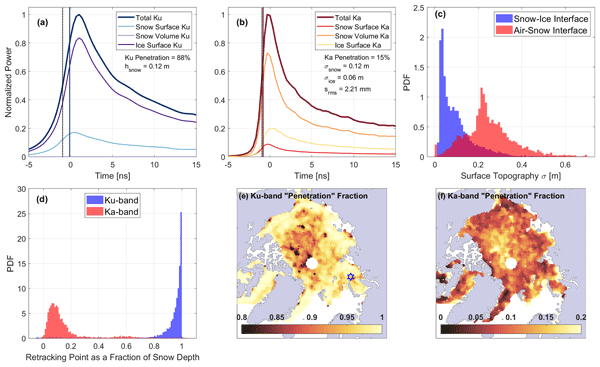
In this study, we use three satellites to test the planned remote sensing approach of the upcoming mission Copernicus Polar Ice and Snow Topography Altimeter (CRISTAL) over sea ice and that its dual radars will accurately measure the heights of the top and base of snow sitting atop floating sea ice floes. Our results suggest that CRISTAL's dual radars will not necessarily measure the snow top and base under all conditions. We find that accurate height measurements depend more on surface roughness than on snow properties, as is commonly assumed.
Benoit Montpetit, Julien Meloche, Vincent Vionnet, Chris Derksen, Georgina Woolley, Nicolas R. Leroux, Paul Siqueira, J. Max Adam, and Mike Brady
The Cryosphere, 19, 5465–5484, https://doi.org/10.5194/tc-19-5465-2025, https://doi.org/10.5194/tc-19-5465-2025, 2025
Short summary
Short summary
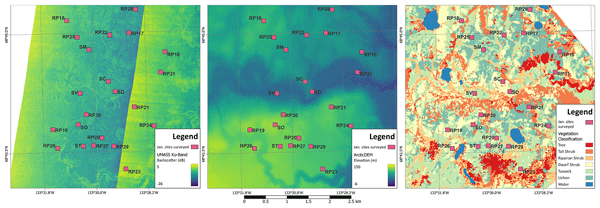
This paper presents the workflow to retrieve snow water equivalent from radar measurements for the future Canadian radar satellite mission, Terrestrial Snow Mass Mission. The workflow is validated by using airborne radar data collected at Trail Valley Creek, Canada, during winter 2018–2019. We detail important considerations to have in the context of a satellite mission over a vast region such as Canada. Results show that it is possible to achieve the desired accuracy over an Arctic environment.
Siqi Liu, Shiming Xu, Wenkai Guo, Yanfei Fan, Lu Zhou, Jack Landy, Malin Johansson, Weixin Zhu, and Alek Petty
The Cryosphere, 19, 5175–5199, https://doi.org/10.5194/tc-19-5175-2025, https://doi.org/10.5194/tc-19-5175-2025, 2025
Short summary
Short summary
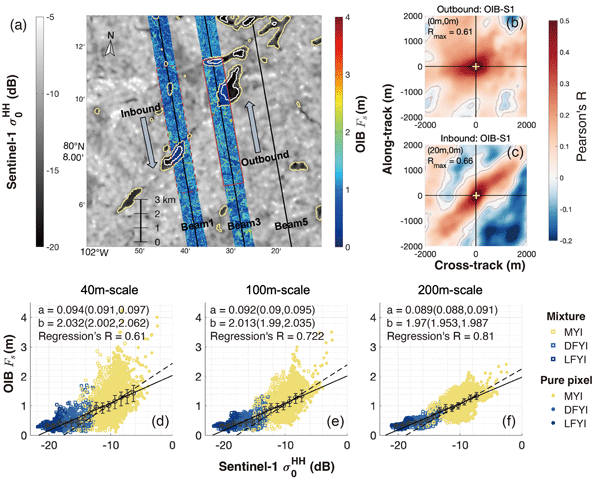
In this study, we explore the potential of using synthetic aperture radars (SAR) to predict the sea ice height measurements by the airborne campaign of Operation IceBridge. In particular, we predict the meter-scale sea ice height with the statistical relationship between the two, overcoming the resolution limitation of SAR images from Sentinel-1 satellites. The prediction and ice drift correction algorithms can be applied to the extrapolation of ICESat-2 measurements in the Arctic region.
Alex Cabaj, Paul J. Kushner, and Alek A. Petty
The Cryosphere, 19, 3033–3064, https://doi.org/10.5194/tc-19-3033-2025, https://doi.org/10.5194/tc-19-3033-2025, 2025
Short summary
Short summary
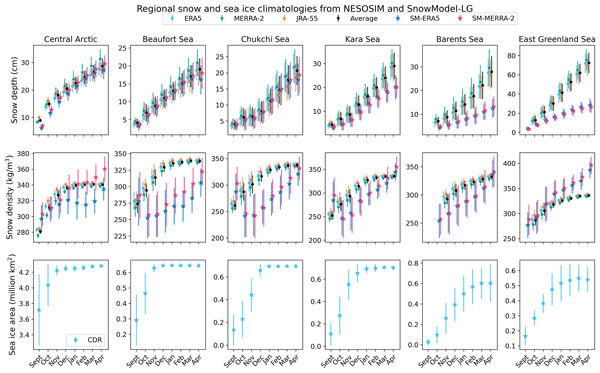
The output of snow-on-sea-ice models is influenced by the choice of snowfall input used. We ran such a model with different snowfall inputs and calibrated it to observations, produced a new calibrated snow product, and regionally compared the model outputs to outputs from another snow-on-sea-ice model. The two models agree best on the seasonal cycle of snow in the central Arctic Ocean. Observational comparisons highlight ongoing challenges in estimating the depth and density of snow on Arctic sea ice.
Evgenii Salganik, Odile Crabeck, Niels Fuchs, Nils Hutter, Philipp Anhaus, and Jack Christopher Landy
The Cryosphere, 19, 1259–1278, https://doi.org/10.5194/tc-19-1259-2025, https://doi.org/10.5194/tc-19-1259-2025, 2025
Short summary
Short summary
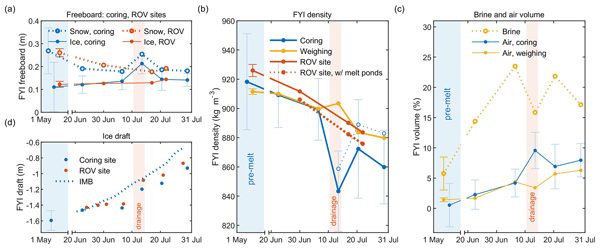
To measure Arctic ice thickness, we often check how much ice sticks out of the water. This method depends on knowing the ice's density, which drops significantly in summer. Our study, validated with sonar and laser data, shows that these seasonal changes in density can complicate melt measurements. We stress the importance of considering these density changes for more accurate ice thickness readings.
Mathieu Plante, Jean-François Lemieux, L. Bruno Tremblay, Amélie Bouchat, Damien Ringeisen, Philippe Blain, Stephen Howell, Mike Brady, Alexander S. Komarov, Béatrice Duval, Lekima Yakuden, and Frédérique Labelle
Earth Syst. Sci. Data, 17, 423–434, https://doi.org/10.5194/essd-17-423-2025, https://doi.org/10.5194/essd-17-423-2025, 2025
Short summary
Short summary
Sea ice forms a thin boundary between the ocean and the atmosphere, with complex, crust-like dynamics and ever-changing networks of sea ice leads and ridges. Statistics of these dynamical features are often used to evaluate sea ice models. Here, we present a new pan-Arctic dataset of sea ice deformations derived from satellite imagery, from 1 September 2017 to 31 August 2023. We discuss the dataset coverage and some limitations associated with uncertainties in the computed values.
Monojit Saha, Julienne Stroeve, Dustin Isleifson, John Yackel, Vishnu Nandan, Jack Christopher Landy, and Hoi Ming Lam
The Cryosphere, 19, 325–346, https://doi.org/10.5194/tc-19-325-2025, https://doi.org/10.5194/tc-19-325-2025, 2025
Short summary
Short summary
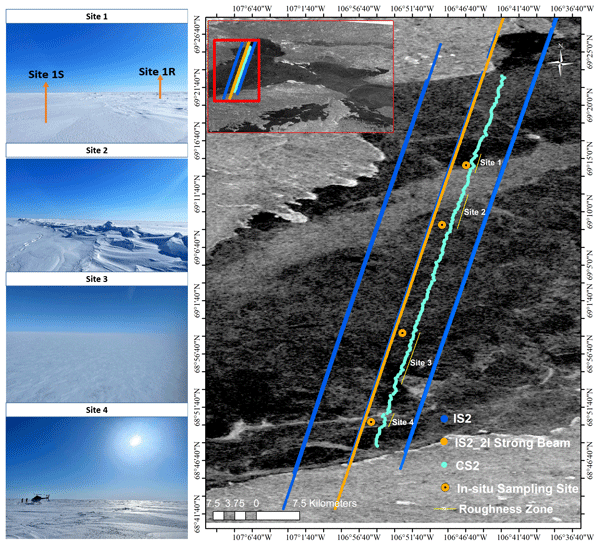
Snow on sea ice is vital for near-shore sea ice geophysical and biological processes. Past studies have measured snow depths using the satellite altimeters Cryosat-2 and ICESat-2 (Cryo2Ice), but estimating sea surface height from leadless landfast sea ice remains challenging. Snow depths from Cryo2Ice are compared to in situ data after adjusting for tides. Realistic snow depths are retrieved, but differences in roughness, satellite footprints, and snow geophysical properties are identified.
Igor A. Dmitrenko, Vladislav Petrusevich, Andreas Preußer, Ksenia Kosobokova, Caroline Bouchard, Maxime Geoffroy, Alexander S. Komarov, David G. Babb, Sergei A. Kirillov, and David G. Barber
Ocean Sci., 20, 1677–1705, https://doi.org/10.5194/os-20-1677-2024, https://doi.org/10.5194/os-20-1677-2024, 2024
Short summary
Short summary
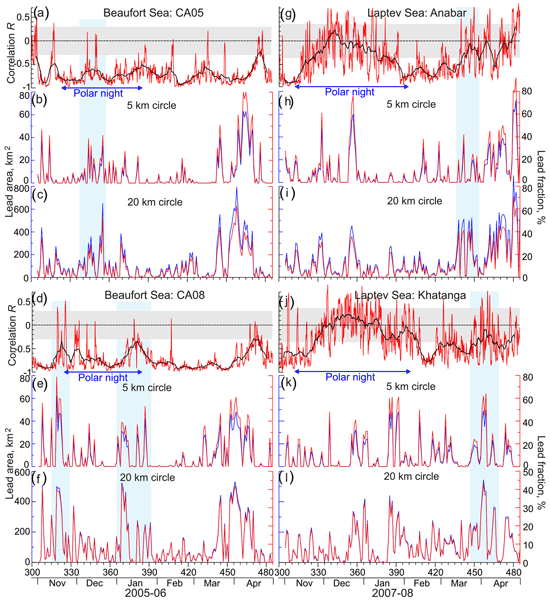
The diel vertical migration (DVM) of zooplankton is one of the largest species migrations to occur globally and is a key driver of regional ecosystems. Here, time series of acoustic data collected at the circumpolar Arctic polynya system were used to examine the annual cycle of DVM. We revealed that the formation of polynya open water disrupts DVM. This disruption is attributed to a predator avoidance behavior of zooplankton in response to higher polar cod abundance attracted by the polynya.
Colleen Mortimer, Lawrence Mudryk, Eunsang Cho, Chris Derksen, Mike Brady, and Carrie Vuyovich
The Cryosphere, 18, 5619–5639, https://doi.org/10.5194/tc-18-5619-2024, https://doi.org/10.5194/tc-18-5619-2024, 2024
Short summary
Short summary
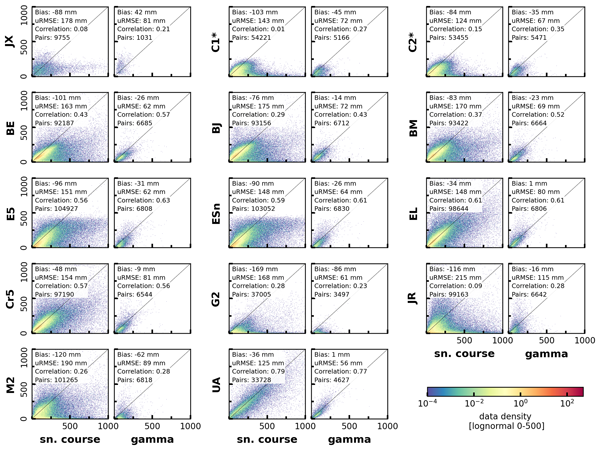
Ground measurements of snow water equivalent (SWE) are vital for understanding the accuracy of large-scale estimates from satellites and climate models. We compare two types of measurements – snow courses and airborne gamma SWE estimates – and analyze how measurement type impacts the accuracy assessment of gridded SWE products. We use this analysis to produce a combined reference SWE dataset for North America, applicable for future gridded SWE product evaluations and other applications.
Benoit Montpetit, Joshua King, Julien Meloche, Chris Derksen, Paul Siqueira, J. Max Adam, Peter Toose, Mike Brady, Anna Wendleder, Vincent Vionnet, and Nicolas R. Leroux
The Cryosphere, 18, 3857–3874, https://doi.org/10.5194/tc-18-3857-2024, https://doi.org/10.5194/tc-18-3857-2024, 2024
Short summary
Short summary
This paper validates the use of free open-source models to link distributed snow measurements to radar measurements in the Canadian Arctic. Using multiple radar sensors, we can decouple the soil from the snow contribution. We then retrieve the "microwave snow grain size" to characterize the interaction between the snow mass and the radar signal. This work supports future satellite mission development to retrieve snow mass information such as the future Canadian Terrestrial Snow Mass Mission.
Stephen E. L. Howell, David G. Babb, Jack C. Landy, Isolde A. Glissenaar, Kaitlin McNeil, Benoit Montpetit, and Mike Brady
The Cryosphere, 18, 2321–2333, https://doi.org/10.5194/tc-18-2321-2024, https://doi.org/10.5194/tc-18-2321-2024, 2024
Short summary
Short summary
The CAA serves as both a source and a sink for sea ice from the Arctic Ocean, while also exporting sea ice into Baffin Bay. It is also an important region with respect to navigating the Northwest Passage. Here, we quantify sea ice transport and replenishment across and within the CAA from 2016 to 2022. We also provide the first estimates of the ice area and volume flux within the CAA from the Queen Elizabeth Islands to Parry Channel, which spans the central region of the Northwest Passage.
Vigan Mensah, Koji Fujita, Stephen Howell, Miho Ikeda, Mizuki Komatsu, and Kay I. Ohshima
EGUsphere, https://doi.org/10.5194/egusphere-2023-2492, https://doi.org/10.5194/egusphere-2023-2492, 2023
Preprint archived
Short summary
Short summary
We estimated the volume of freshwater released by sea ice, glaciers, rivers, and precipitation into Baffin Bay and the Labrador Sea, and their changes over the past 70 years. We found that the freshwater volume has risen in Baffin Bay due to increased glacier melting, and dropped in the Labrador Sea because of the decline in sea ice production. We also infer that freshwater from the Arctic Ocean has been exported to our study region for the past 30 years, possibly as a result of global warming.
Geoffrey J. Dawson and Jack C. Landy
The Cryosphere, 17, 4165–4178, https://doi.org/10.5194/tc-17-4165-2023, https://doi.org/10.5194/tc-17-4165-2023, 2023
Short summary
Short summary
In this study, we compared measurements from CryoSat-2 and ICESat-2 over Arctic summer sea ice to understand any possible biases between the two satellites. We found that there is a difference when we measure elevation over summer sea ice using CryoSat-2 and ICESat-2, and this is likely due to surface melt ponds. The differences we found were in good agreement with theoretical predictions, and this work will be valuable for summer sea ice thickness measurements from both altimeters.
Isolde A. Glissenaar, Jack C. Landy, David G. Babb, Geoffrey J. Dawson, and Stephen E. L. Howell
The Cryosphere, 17, 3269–3289, https://doi.org/10.5194/tc-17-3269-2023, https://doi.org/10.5194/tc-17-3269-2023, 2023
Short summary
Short summary
Observations of large-scale ice thickness have unfortunately only been available since 2003, a short record for researching trends and variability. We generated a proxy for sea ice thickness in the Canadian Arctic for 1996–2020. This is the longest available record for large-scale sea ice thickness available to date and the first record reliably covering the channels between the islands in northern Canada. The product shows that sea ice has thinned by 21 cm over the 25-year record in April.

Vishnu Nandan, Rosemary Willatt, Robbie Mallett, Julienne Stroeve, Torsten Geldsetzer, Randall Scharien, Rasmus Tonboe, John Yackel, Jack Landy, David Clemens-Sewall, Arttu Jutila, David N. Wagner, Daniela Krampe, Marcus Huntemann, Mallik Mahmud, David Jensen, Thomas Newman, Stefan Hendricks, Gunnar Spreen, Amy Macfarlane, Martin Schneebeli, James Mead, Robert Ricker, Michael Gallagher, Claude Duguay, Ian Raphael, Chris Polashenski, Michel Tsamados, Ilkka Matero, and Mario Hoppmann
The Cryosphere, 17, 2211–2229, https://doi.org/10.5194/tc-17-2211-2023, https://doi.org/10.5194/tc-17-2211-2023, 2023
Short summary
Short summary
We show that wind redistributes snow on Arctic sea ice, and Ka- and Ku-band radar measurements detect both newly deposited snow and buried snow layers that can affect the accuracy of snow depth estimates on sea ice. Radar, laser, meteorological, and snow data were collected during the MOSAiC expedition. With frequent occurrence of storms in the Arctic, our results show that
wind-redistributed snow needs to be accounted for to improve snow depth estimates on sea ice from satellite radars.

Alek A. Petty, Nicole Keeney, Alex Cabaj, Paul Kushner, and Marco Bagnardi
The Cryosphere, 17, 127–156, https://doi.org/10.5194/tc-17-127-2023, https://doi.org/10.5194/tc-17-127-2023, 2023
Short summary
Short summary
We present upgrades to winter Arctic sea ice thickness estimates from NASA's ICESat-2. Our new thickness results show better agreement with independent data from ESA's CryoSat-2 compared to our first data release, as well as new, very strong comparisons with data collected by moorings in the Beaufort Sea. We analyse three winters of thickness data across the Arctic, including 50 cm thinning of the multiyear ice over this 3-year period.

Sergei Kirillov, Igor Dmitrenko, David G. Babb, Jens K. Ehn, Nikolay Koldunov, Søren Rysgaard, David Jensen, and David G. Barber
Ocean Sci., 18, 1535–1557, https://doi.org/10.5194/os-18-1535-2022, https://doi.org/10.5194/os-18-1535-2022, 2022
Short summary
Short summary
The sea ice bridge usually forms during winter in Nares Strait and prevents ice drifting south. However, this bridge has recently become unstable, and in this study we investigate the role of oceanic heat flux in this decline. Using satellite data, we identify areas where sea ice is relatively thin and further attribute those areas to the heat fluxes from the warm subsurface water masses. We also discuss the potential role of such an impact on ice bridge instability and earlier ice break up.
Stephen E. L. Howell, Mike Brady, and Alexander S. Komarov
The Cryosphere, 16, 1125–1139, https://doi.org/10.5194/tc-16-1125-2022, https://doi.org/10.5194/tc-16-1125-2022, 2022
Short summary
Short summary
We describe, apply, and validate the Environment and Climate Change Canada automated sea ice tracking system (ECCC-ASITS) that routinely generates large-scale sea ice motion (SIM) over the pan-Arctic domain using synthetic aperture radar (SAR) images. The ECCC-ASITS was applied to the incoming image streams of Sentinel-1AB and the RADARSAT Constellation Mission from March 2020 to October 2021 using a total of 135 471 SAR images and generated new SIM datasets (i.e., 7 d 25 km and 3 d 6.25 km).
Isolde A. Glissenaar, Jack C. Landy, Alek A. Petty, Nathan T. Kurtz, and Julienne C. Stroeve
The Cryosphere, 15, 4909–4927, https://doi.org/10.5194/tc-15-4909-2021, https://doi.org/10.5194/tc-15-4909-2021, 2021
Short summary
Short summary
Scientists can estimate sea ice thickness using satellites that measure surface height. To determine the sea ice thickness, we also need to know the snow depth and density. This paper shows that the chosen snow depth product has a considerable impact on the findings of sea ice thickness state and trends in Baffin Bay, showing mean thinning with some snow depth products and mean thickening with others. This shows that it is important to better understand and monitor snow depth on sea ice.
Igor A. Dmitrenko, Denis L. Volkov, Tricia A. Stadnyk, Andrew Tefs, David G. Babb, Sergey A. Kirillov, Alex Crawford, Kevin Sydor, and David G. Barber
Ocean Sci., 17, 1367–1384, https://doi.org/10.5194/os-17-1367-2021, https://doi.org/10.5194/os-17-1367-2021, 2021
Short summary
Short summary
Significant trends of sea ice in Hudson Bay have led to a considerable increase in shipping activity. Therefore, understanding sea level variability is an urgent issue crucial for safe navigation and coastal infrastructure. Using the sea level, atmospheric and river discharge data, we assess environmental factors impacting variability of sea level at Churchill. We find that it is dominated by wind forcing, with the seasonal cycle generated by the seasonal cycle in atmospheric circulation.
Cited articles
Alt, B., Wilson, K., and Carrieres, T.: A case study of old ice import and export through Peary and Sverdrup channels in the Canadian Arctic Archipelago: 1998–2004, Annals of Glaciology, 44, 329–338, https://doi.org/10.3189/172756406781811321, 2006.
Atkinson, D. E., Brown, R., Alt, B., Agnew, T., Bourgeois, J., Burgess, M., Duguay, C., Henry, G., Jeffers, S., Koerner, R., Lewkowicz, A. G., McCourt, S., Melling, H., Sharp, M., Smith, S., Walker, A., Wilson, K., Wolfe, S., Woo, M.-K., and Young, K. L.: Canadian cryospheric response to an anomalous warm summer: A synthesis of the climate change action fund project “The State of the Arctic Cryosphere During the Extreme Warm Summer of 1998”, Atmosphere-Ocean, 44, 347–375, https://doi.org/10.3137/ao.440403, 2006.
Babb, D. G. and Howell, S. E. L.: The loss of multiyear sea ice in the Arctic, Reference Module in Earth Systems and Environmental Sciences, https://doi.org/10.1016/B978-0-323-85242-5.00009-9, 2024.
Babb, D. G., Galley, R. J., Kirillov, S., Landy, J. C., Howell, S. E. L., Stroeve, J. C., Meier, W., Ehn, J. K., and Barber, D. G.: The stepwise reduction of multiyear sea ice area in the Arctic Ocean since 1980, Journal of Geophysical Research: Oceans, 128, https://doi.org/10.1029/2023JC020157, 2023.
Black, W. A.: Sea ice survey, Queen Elizabeth Islands Region summer 1962, Geographical paper no. 39, Queens Printer, Ottawa, Ont., Canada, 44 pp., https://publications.gc.ca/site/eng/9.883533/publication.html (last access: 8 December 2025), 1965.
Canadian Ice Service (CIS): Regional charts: History, accuracy, and caveats, Can. Ice Serv. Archive Doc. Ser. 1, Gatineau, Que., Canada, http://ice.ec.gc.ca/IA_DOC/cisads_no_001_e.pdf (last access: 8 December 2025), 2007.
Comiso, J. C.: Large decadal decline of the Arctic multiyear ice cover, Journal of Climate, 25, 1176–1193, https://doi.org/10.1175/JCLI-D-11-00113.1, 2012.
Cook, A. J., Dawson, J., Howell, S. E. L., Holloway, J. E., and Brady, M.: Sea ice choke points reduce the length of the shipping season in the Northwest Passage, Communications, Earth and Environment, 5, 362, https://doi.org/10.1038/s43247-024-01477-6, 2024.
Dawson, J., Pizzolato, L., Howell, S. E. L., Copland, L., and Johnston, M. E.: Temporal and Spatial Patterns of Ship Traffic in the Canadian Arctic from 1990 to 2015, Arctic, 71, 15, https://doi.org/10.14430/arctic4698, 2018.
Fol, M., Tremblay, B., Pfirman, S., Newton, R., Howell, S., and Lemieux, J.-F.: Revisiting the Last Ice Area projections from a high-resolution Global Earth System Model, Communications, Earth and Environment, 6, 46, https://doi.org/10.1038/s43247-025-02034-5, 2025.
Glissenaar, I. A., Landy, J. C., Babb, D. G., Dawson, G. J., and Howell, S. E. L.: A long-term proxy for sea ice thickness in the Canadian Arctic: 1996–2020, The Cryosphere, 17, 3269–3289, https://doi.org/10.5194/tc-17-3269-2023, 2023.
Haas, C. and Howell, S. E. L.: Ice thickness in the Northwest Passage, Geophysical Research Letters, 42, 7673–7680, https://doi.org/10.1002/2015GL065704, 2015.
Hersbach, H., Bell, B., Berrisford, P., Biavati, G., Horányi, A., Mu noz Sabater, J., Nicolas, J., Peubey, C., Radu, R., Rozum, I., Schepers, D., Simmons, A., Soci, C., Dee, D., and Thépaut, J.-N.: ERA5 monthly averaged data on single levels from 1940 to present, Copernicus Climate Change Service (C3S) Climate Data Store (CDS), https://doi.org/10.24381/cds.f17050d7, 2023.
Howell, S. E. L., Duguay, C. R., and Markus, T.: Sea ice conditions and melt season duration variability within the Canadian Arctic Archipelago: 1979–2008, Geophysical Research Letters, 36, 2009GL037681, https://doi.org/10.1029/2009GL037681, 2009.
Howell, S. E. L., Tivy, A., Agnew, T., Markus, T., and Derksen, C.: Extreme low sea ice years in the Canadian Arctic Archipelago: 1998 versus 2007, Journal of Geophysical Research, 115, C10053, https://doi.org/10.1029/2010JC006155, 2010.
Howell, S. E. L., Wohlleben, T., Komarov, A., Pizzolato, L., and Derksen, C.: Recent extreme light sea ice years in the Canadian Arctic Archipelago: 2011 and 2012 eclipse 1998 and 2007, The Cryosphere, 7, 1753–1768, https://doi.org/10.5194/tc-7-1753-2013, 2013.
Howell, S. E. L., Laliberté, F., Kwok, R., Derksen, C., and King, J.: Landfast ice thickness in the Canadian Arctic Archipelago from observations and models, The Cryosphere, 10, 1463–1475, https://doi.org/10.5194/tc-10-1463-2016, 2016.
Howell, S. E. L., Scharien, R. K., Landy, J., and Brady, M.: Spring melt pond fraction in the Canadian Arctic Archipelago predicted from RADARSAT-2, The Cryosphere, 14, 4675–4686, https://doi.org/10.5194/tc-14-4675-2020, 2020.
Howell, S. E. L., Brady, M., and Komarov, A. S.: Generating large-scale sea ice motion from Sentinel-1 and the RADARSAT Constellation Mission using the Environment and Climate Change Canada automated sea ice tracking system, The Cryosphere, 16, 1125–1139, https://doi.org/10.5194/tc-16-1125-2022, 2022.
Howell, S. E. L., Babb, D. G., Landy, J. C., and Brady, M.: Multi-Year Sea Ice Conditions in the Northwest Passage: 1968–2020, Atmosphere-Ocean, 61, 202–216, https://doi.org/10.1080/07055900.2022.2136061, 2023.
Howell, S. E. L., Babb, D. G., Landy, J. C., Glissenaar, I. A., McNeil, K., Montpetit, B., and Brady, M.: Sea ice transport and replenishment across and within the Canadian Arctic Archipelago, 2016–2022, The Cryosphere, 18, 2321–2333, https://doi.org/10.5194/tc-18-2321-2024, 2024.
Howell, S. E. L., Cabaj, A., Babb, D., Landy, J., Dawson, J., Mahmud, M., and Brady, M.: Near sea ice-free conditions in the northern route of the Northwest Passage at the end of the 2024 melt season – Timing of melt onset and ice area flux into the Northwest Passage, Environment and Climate Change Canada's (ECCC) Open Data Server [data set], https://crd-data-donnees-rdc.ec.gc.ca/CPS/products/IceFlux/Publications/Fluxes-MeltOnset-TheCryosphere-NWP-2025.xlsx (last access: 8 December 2025), 2025.
Jahn, A., Holland, M. M., and Kay, J. E.: Projections of an ice-free Arctic Ocean, Nat Rev Earth Environ, 5, 164–176, https://doi.org/10.1038/s43017-023-00515-9, 2024.
Jeffers, S., Agnew, T. A., Alt, B. T., de Abreu, R., and McCourt, S.: Investigating the anomalous sea-ice conditions in the Canadian High Arctic (Queen Elizabeth Islands) during summer 1998, Ann. Glaciol., 33, 507–512, 2001.
Kacimi, S. and Kwok, R.: Arctic snow depth, ice thickness, and volume from ICESat-2 and CryoSat-2: 2018–2021, Geophysical Research Letters, 49, https://doi.org/10.1029/2021GL097448, 2022.
Komarov, A. S. and Barber, D. G.: Sea ice motion tracking from sequential dual-polarization RADARSAT-2 images, IEEE Transactions on Geoscience and Remote Sensing, 52, 121–136, https://doi.org/10.1109/TGRS.2012.2236845, 2014.
Krumpen, T., von Albedyll, L., Bünger, H. J., Castellani, G., Hartmann, J., Helm, V., Hendricks, S., Hutter, N., Landy, J. C., Lisovski, S., Lüpkes, C., Rohde, J., Suhrhoff, M., and Haas, C.: Smoother sea ice with fewer pressure ridges in a more dynamic Arctic, Nature Climate Change, 15, 66–72, https://doi.org/10.1038/s41558-024-02199-5, 2025.
Kwok, R.: Arctic sea ice thickness, volume, and multiyear ice coverage: Losses and coupled variability (1958–2018), Environmental Research Letters, 13, 105005, https://doi.org/10.1088/1748-9326/aae3ec, 2018.
Lindsay, D. G.: Sea-ice atlas of Arctic Canada, 1961–1968, Department of Energy, Mines and Resources Canada, https://doi.org/10.4095/299024, 1976.
Lindsay, D. G.: Sea-ice atlas of arctic Canada 1969–1974, https://doi.org/10.4095/298827, 1977.
Mahmud, M. S., Howell, S. E. L., Geldsetzer, T., and Yackel, J.: Detection of melt onset over the northern Canadian Arctic Archipelago sea ice from RADARSAT, 1997–2014, Remote Sensing of Environment., 178, 59–69, https://doi.org/10.1016/j.rse.2016.03.003, 2016.
Melling, H.: Sea ice of the northern Canadian Arctic Archipelago, Journal of Geophysical Research, 107, https://doi.org/10.1029/2001JC001102, 2002.
Mudryk, L., Dawson, J. P., Howell, S. E. L., Derksen, C., Zagon, T., and Brady, M.: Impact of 1, 2, and 4 °C of global warming on ship navigation in the Canadian Arctic, Nature Climate Change, 11, 673–679, https://doi.org/10.1038/s41558-021-01087-6, 2021.
Nicoll, A., Dawson, J., Marty, J., Copland, L., and Sawada, M.: Analysis of shipping accident patterns among commercial and non-commercial vessels operating in ice-infested waters in Arctic Canada from 1990 to 2022, Journal of Transport Geography, 121, 104046, https://doi.org/10.1016/j.jtrangeo.2024.104046, 2024.
Nicoll, A., Dawson, J., Marty, J., Sawada, M., and Copland, L.: Comparative and critical analysis of data sources used for ship traffic spatial pattern analysis in Canada and across the global Arctic, Maritime Transport Research, 8, https://doi.org/10.1016/j.martra.2025.100129, 2025.
Notz, D. and SIMIP Community: Arctic sea ice in CMIP6, Geophysical Research Letters, 47, e2019GL086749, https://doi.org/10.1029/2019GL086749, 2020.
Parkinson, C. L. and DiGirolamo, N. E.: Sea ice extents continue to set new records: Arctic, Antarctic, and global results. Remote Sensing of Environment, 267, 112753, https://doi.org/10.1016/j.rse.2021.112753, 2021.
Perovich, D. K., Nghiem, S. V., Markus, T., and Schweiger, A.: Seasonal evolution and interannual variability of the local solar energy absorbed by the Arctic sea ice–ocean system, Journal of Geophysical Research., 112, C03005, https://doi.org/10.1029/2006JC003558, 2007.
Pizzolato, L., Howell, S. E. L., Dawson, J., Laliberté, F., and Copland, L.: The influence of declining sea ice on shipping activity in the Canadian Arctic, Geophysical Research Letters, 43, 12146–12154, https://doi.org/10.1002/2016GL071489, 2016.
Smith, L. C. and Stephenson, S. R.: New trans-Arctic shipping routes navigable by midcentury, Proceedings of the National Academy of Sciences of the United States of America, 110, E1191–E1195, https://doi.org/10.1073/pnas.1214212110, 2013.
Sumata, H., de Steur, L., Divine, D., Granskog, M. A., and Gerland, S.: Regime shift in Arctic Ocean sea ice thickness, Nature, 615, 443–449, 2023.
Thorndike, A. S. and Colony, R.: Sea ice motion in response to geostrophic winds, Journal of Geophysical Research, 87, 5845–5852, 1982.
Timmermans, M.-L. and Labe, Z.: Sea surface temperatures, in: “State of the Climate in 2024”, Bull. Amer. Meteor. Soc., 106, S320–S3322, https://doi.org/10.1175/BAMS-D-25-0104.1, 2025.
Tivy, A., Howell, S. E. L., Alt, B., McCourt, S., Chagnon, R., Crocker, G., Carrieres, T., and Yackel, J. J.: Trends and variability in summer sea ice cover in the Canadian Arctic based on the Canadian ice service digital archive, 1960–2008 and 1968–2008, Journal of Geophysical Research, 116, C03007, https://doi.org/10.1029/2009JC005855, 2011.
Wang, X. and Key, J. R.: Arctic surface, cloud, and radiation properties based on the AVHRR Polar Pathfinder dataset, Part I: Spatial and temporal characteristics, Journal of Climate, 18, 2575–2593, https://doi.org/10.1175/JCLI3439.1, 2005.
Zhang, X., Flato, G., Kirchmeier-Young, M., Vincent, L., Wan, H., Wang, X., Rong, R., Fyfe, J., Li, G., and Kharin, V. V.: Changes in temperature and precipitation across Canada; Chapter 4, in: Canada's Changing Climate Report, edited by: Bush, E. and Lemmen, D. S., Government of Canada, Ottawa, Ontario, 112–193, 2019.
Short summary
The Northwest Passage provides a shorter transit route connecting the Atlantic Ocean to the Pacific Ocean but ever-present sea ice has prevented its practical navigation. Sea ice area in the northern route of the Northwest Passage on September 30, 2024 fell to a minimum of 4×10³ km2 or ~3% of its total area, the lowest ice area observed since 1960. This paper describes the unique processes that contributed to the record low sea ice area in the northern route of the Northwest Passage in 2024.
The Northwest Passage provides a shorter transit route connecting the Atlantic Ocean to the...


