
Articles | Volume 19, issue 12
https://doi.org/10.5194/tc-19-6381-2025
© Author(s) 2025. This work is distributed under
the Creative Commons Attribution 4.0 License.
the Creative Commons Attribution 4.0 License.
https://doi.org/10.5194/tc-19-6381-2025
© Author(s) 2025. This work is distributed under
the Creative Commons Attribution 4.0 License.
the Creative Commons Attribution 4.0 License.
Research article
| 
01 Dec 2025
Research article |
| 01 Dec 2025
| 01 Dec 2025
Extended seasonal prediction of Antarctic sea ice concentration using ANTSIC-UNet
Ziying Yang
National Arctic and Antarctic Data Center, Polar Research Institute of China, Shanghai, 201209, China
Institute of Atmospheric Physics, Chinese Academy of Sciences, Beijing, 100029, China
Jiping Liu
CORRESPONDING AUTHOR

School of Atmospheric Sciences, Sun Yat-sen University, and Southern Marine Science and Engineering Guangdong Laboratory (Zhuhai), Zhuhai, 519082, China
Mirong Song
Institute of Atmospheric Physics, Chinese Academy of Sciences, Beijing, 100029, China
Yongyun Hu
Department of Atmospheric and Oceanic Sciences, School of Physics, Peking University, Beijing, 100087, China
Qinghua Yang
School of Atmospheric Sciences, Sun Yat-sen University, and Southern Marine Science and Engineering Guangdong Laboratory (Zhuhai), Zhuhai, 519082, China
Ke Fan
School of Atmospheric Sciences, Sun Yat-sen University, and Southern Marine Science and Engineering Guangdong Laboratory (Zhuhai), Zhuhai, 519082, China
Rune Grand Graversen
Department of Physics and Technology, Arctic University of Norway, Tromsø 9019, Norway
Institute for Marine and Atmospheric research Utrecht, Utrecht University, Utrecht 3584 CC, the Netherlands
Related authors
No articles found.
Kristoffer Kvist, Eirik Mikal Samuelsen, and Rune Grand Graversen
EGUsphere, https://doi.org/10.5194/egusphere-2026-6079, https://doi.org/10.5194/egusphere-2026-6079, 2026
This preprint is open for discussion and under review for Atmospheric Chemistry and Physics (ACP).
Short summary
Short summary
Ice forms in clouds on rare airborne particles, which affects how clouds reflect sunlight and produce rain. We compiled 110,000 measurements of these particles from 59 field campaigns worldwide and developed a method to compare campaigns that sampled the air differently. Concentrations differ ten-thousandfold between regions but only threefold at one site, vary on time scales from days to seasons, and are dominated by organic material, not mineral dust. The data help test climate models.
Yudong Sun, Yonggang Liu, Jiacheng Wu, Kai Man, Haonan Yu, Shuai Yuan, Yizhang Liu, Yue Liu, Qi Cui, Qiang Wei, and Yongyun Hu
Clim. Past, 22, 1781–1802, https://doi.org/10.5194/cp-22-1781-2026, https://doi.org/10.5194/cp-22-1781-2026, 2026
Short summary
Short summary
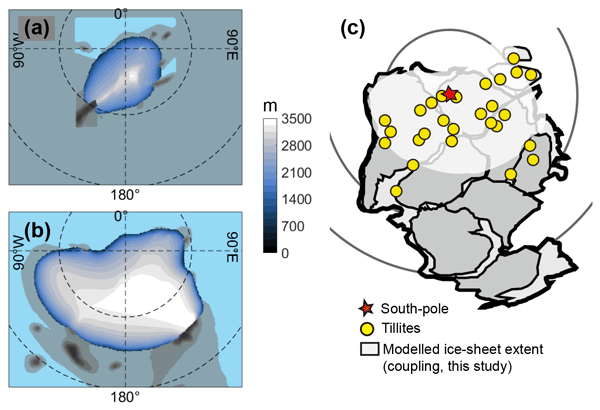
This study investigates the dramatic global cooling during the Late Ordovician, 440 million years ago. Our simulations reveal a powerful feedback loop: as the ice sheet grew, it generated strong, cold winds flowing down its slopes. These winds further cooled the continents, causing the ice sheet to expand even more. The super ice sheet led to a substantial global temperature drop of about 1.5 °C. Interestingly, while continents froze, the oceans warmed.
Hang Wang, Hu Yang, Xiaoxu Shi, Jiping Liu, Gerrit Lohmann, Jiawang Wu, Jun Tian, Francisco W. Cruz, Jianbo Cheng, and Dake Chen
EGUsphere, https://doi.org/10.5194/egusphere-2026-5495, https://doi.org/10.5194/egusphere-2026-5495, 2026
This preprint is open for discussion and under review for Climate of the Past (CP).
Short summary
Short summary
Geological records of past Saharan climate are often incomplete and difficult to date, while long climate simulations require extensive computing. We therefore developed an efficient empirical model from 30 climate simulations and records of Earth's orbit, carbon dioxide and sea level. It provides a practical way to study long-term Saharan climate change and can guide future simulations, field sampling and the dating of geological and archaeological records.
Siran Chen, Jiping Liu, and Xianxian Han
Ocean Sci., 22, 2691–2709, https://doi.org/10.5194/os-22-2691-2026, https://doi.org/10.5194/os-22-2691-2026, 2026
Short summary
Short summary
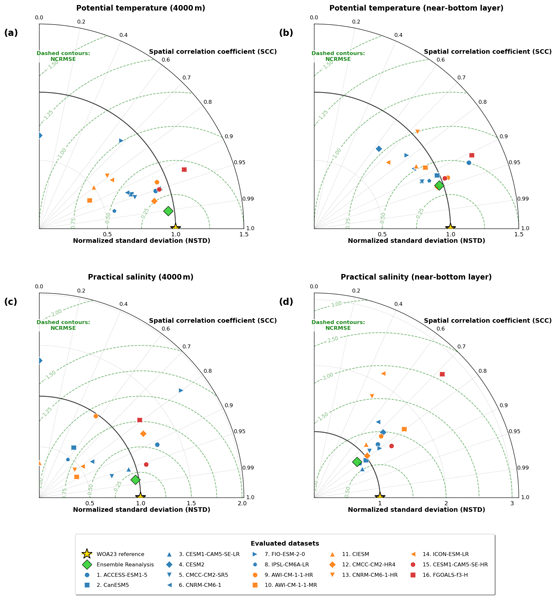
Antarctic Bottom Water influences global ocean circulation, heat storage, and carbon uptake. We compared an observational atlas, an ocean reconstruction, and 16 climate models by separating this water into three regional types. The reconstruction matched the observed large-scale patterns well, but many climate models showed substantial regional temperature and salinity errors. Correcting average biases improved some models, although errors in spatial structure remained.
An Yi, Jiping Liu, Ian Renfrew, Chaoyuan Yang, Changming Dong, Xiangzhou Song, and Qinghua Yang
Earth Syst. Sci. Data Discuss., https://doi.org/10.5194/essd-2026-476, https://doi.org/10.5194/essd-2026-476, 2026
Preprint under review for ESSD
Short summary
Short summary
This dataset quantifies the critical but overlooked role of sea spray in Southern Ocean air-sea heat exchange. We present a new gridded dataset of spray-mediated latent and sensible heat fluxes incorporating a full spray microphysical model, where spray generation depends on wind and wave states. Results show spray can double turbulent heat fluxes during extreme cyclones compared to bulk algorithms. This data is vital for understanding the Southern Ocean's impact on the global energy budget.
Xiaoxu Shi, Xiya Liu, Jiping Liu, Martin Werner, Hu Yang, Francisco W. Cruz, Chaoyuan Yang, and Gerrit Lohmann
EGUsphere, https://doi.org/10.5194/egusphere-2026-3894, https://doi.org/10.5194/egusphere-2026-3894, 2026
This preprint is open for discussion and under review for Climate of the Past (CP).
Short summary
Short summary
Cave stalagmites record the oxygen isotope of past rainfall and are used to reconstruct how monsoons changed, but due to the complexity of isotope impacting factors, what these records tell us is debated. We performed a 8300-year simulation with an isotope-enabled climate model, and show that rainfall amount is the key stable driver across global monsoons, while temperature and moisture pathways vary with region and time. Single-site records are noisy, but regional averages recover the signal.
Jiaxi Zhao, Yonggang Liu, and Yongyun Hu
Geosci. Model Dev., 19, 6857–6878, https://doi.org/10.5194/gmd-19-6857-2026, https://doi.org/10.5194/gmd-19-6857-2026, 2026
Short summary
Short summary
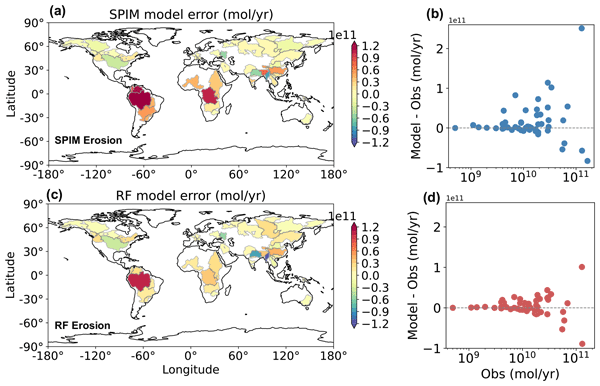
By using artificial intelligence and geological measurements, we built a machine learning model that accurately shows how landscapes erode. With this module included we developed a new silicate weatherig model, named MErSiM v1.0, which corrected a major overestimation of weathering flux in models simulating Earth’s long-term carbon cycle. This revealed that Earth's natural ability to remove atmospheric carbon dioxide is profoundly weaker under intense warming than previously understood.
Qi Cui, Qifan Lin, Jiaqi Guo, Yonggang Liu, Yue Liu, Xiujuan Bao, Xiang Li, Zhibo Li, Haoyue Zuo, Shuai Yuan, Yihui Chen, Shiyan Zhang, Jian Zhang, and Yongyun Hu
EGUsphere, https://doi.org/10.5194/egusphere-2026-3925, https://doi.org/10.5194/egusphere-2026-3925, 2026
This preprint is open for discussion and under review for Climate of the Past (CP).
Short summary
Short summary
Atmospheric dust affects Earth's climate and ocean life, yet its long-term history remained unclear. Using the Earth system model CESM 1.2.2, coupled with the vegetation model BIOME4, we reconstructed changes in global dust activity over the past 540 million years, examining how land plants, shifting continental configurations, and evolving climate jointly controlled the global dust cycle and its impact on climate.
Fengguan Gu, Changwei Liu, Bo Han, Qinghua Yang, and Jiping Liu
EGUsphere, https://doi.org/10.5194/egusphere-2026-2179, https://doi.org/10.5194/egusphere-2026-2179, 2026
Short summary
Short summary
Snow strongly affects how sea ice grows and melts by insulating the ice and reflecting sunlight. Using observations from a year-long Arctic expedition, we evaluated how models represent snow movement by wind. We found that ignoring snow redistribution leads to too much snow, while improved methods better match observations. Adjusting key parameters further improves results. This work helps make sea ice models more accurate and reliable for climate studies.
Lanqing Huang, Julienne Stroeve, Thomas Newman, Robbie Mallett, Rosemary Willatt, Lu Zhou, Malin Johansson, Carmen Nab, and Alicia Fallows
The Cryosphere, 20, 2825–2849, https://doi.org/10.5194/tc-20-2825-2026, https://doi.org/10.5194/tc-20-2825-2026, 2026
Short summary
Short summary
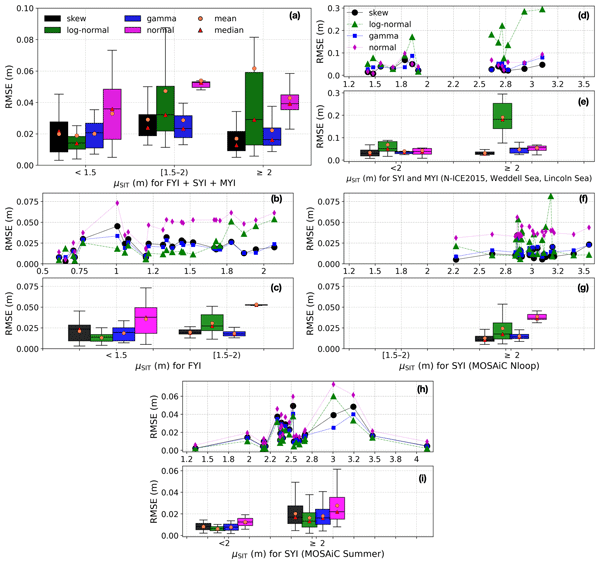
Understanding snow depth on sea ice is key for measuring ice thickness, studying ecosystems, and modelling climate. Using snow and ice thickness measurements from Arctic and Antarctic campaigns, this study examines sub-kilometre-scale (<1 km²) snow depth variations and identifies the most suitable statistical models for different ice ages, thicknesses, and weather conditions. These results can improve sub-grid snow parameterisations in snow models and remote sensing algorithms.
Morteza Babaei, Rune Grand Graversen, Johannes Patrick Stoll, and Jakub Petříček
Weather Clim. Dynam., 7, 825–841, https://doi.org/10.5194/wcd-7-825-2026, https://doi.org/10.5194/wcd-7-825-2026, 2026
Short summary
Short summary
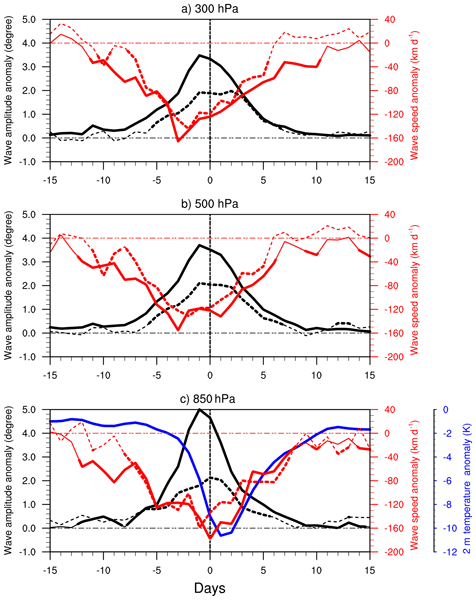
Extreme weather events have historically caused major challenges for humanity. Yet, our understanding of the mechanisms that contribute to their formation remains unclear. Our study provides evidence that locally amplified and slow-moving Rossby waves are responsible for the formation of extreme cold spells. These findings are obtained based on two novel metrics assessing the amplitude and speed of ridges and troughs separately at all longitudes around latitude circles.
Chengyan Liu, Zhaomin Wang, Dake Chen, Xianxian Han, Hengling Leng, Xi Liang, Liangjun Yan, Xiang Li, Craig Stevens, Andrew McC. Hogg, Kazuya Kusahara, Kaihe Yamazaki, Kay I. Ohshima, Meng Zhou, Xiao Cheng, Dongxiao Wang, Changming Dong, Jiping Liu, Qinghua Yang, Xichen Li, Ruibo Lei, Minghu Ding, Zhaoru Zhang, Dujuan Kang, Di Qi, Tongya Liu, Jihai Dong, Lu An, Ru Chen, Tong Zhang, Xiaoming Hu, Bo Han, Haibo Bi, Qi Shu, Longjiang Mu, Shiming Xu, Hu Yang, Hailong Liu, Tingfeng Dou, Zhixuan Feng, Lei Zheng, Xueyuan Tang, Guitao Shi, Yongqing Cai, Bingrui Li, Yang Wu, Xia Lin, Wenjin Sun, Yu Liu, Kai Yu, Yu Zhang, Weizeng Shao, Xiaoyu Wang, Shaojun Zheng, Chengyi Yuan, Chunxia Zhou, Jian Liu, Yang Liu, Yue Xia, Xiaoyu Pan, Jiabao Zeng, Kechen Liu, Jiahao Fan, Chen Cheng, and Qi Li
Geosci. Model Dev., 19, 2985–3033, https://doi.org/10.5194/gmd-19-2985-2026, https://doi.org/10.5194/gmd-19-2985-2026, 2026
Short summary
Short summary
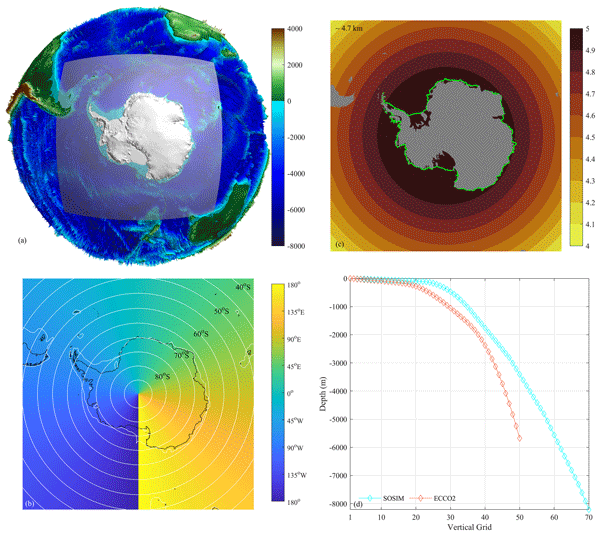
We developed a high-resolution computer model to simulate how the ocean, sea ice, and ice shelves interact around Antarctica. This helps us understand their critical role in global climate and sea-level rise. Our model successfully captures essential features like major currents and seasonal ice changes. Despite some remaining biases, it provides a useful tool for predicting future changes in this vital and rapidly evolving region.
Jinfei Wang, Maike Sonnewald, Noé Pirlet, François Massonnet, Hugues Goosse, Dake Chen, and Qinghua Yang
EGUsphere, https://doi.org/10.5194/egusphere-2026-1301, https://doi.org/10.5194/egusphere-2026-1301, 2026
Short summary
Short summary
Antarctic sea ice has shifted from expansion to rapid decline since 2016. Using model outputs and data mining, we identified six sea ice regimes, shaped by different dynamic and thermodynamic conditions. A coastal regime, featured by sea ice transport and new ice formation, has shown area loss since 1979, accelerating after 2016. This coastal regime and a pack ice regime together control overall sea ice variability. Our work offers a new framework for understanding Antarctic sea ice changes.
Kai-Uwe Eiselt and Rune Grand Graversen
The Cryosphere, 20, 1867–1893, https://doi.org/10.5194/tc-20-1867-2026, https://doi.org/10.5194/tc-20-1867-2026, 2026
Short summary
Short summary
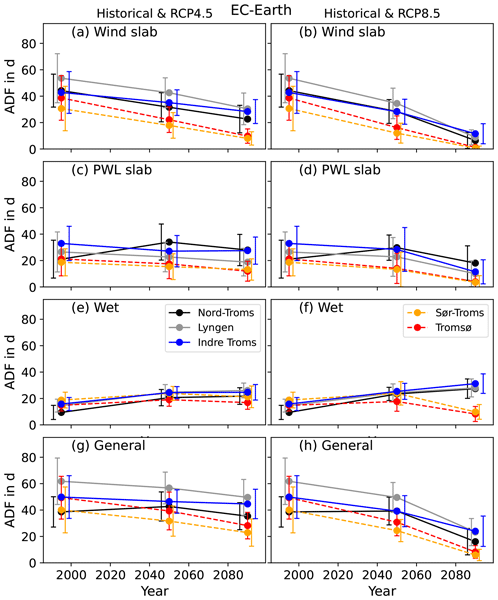
We train machine-learning models to predict avalanche problems from meteorological and snow-cover data in northern Norway. A major part of the work is the estimation of avalanche-problem changes throughout the 21st century based on future climate projections. We find that while the avalanche danger generally declines towards 2100, the avalanche characteristics will likely change, meaning fewer dry but more wet avalanches, having potential implications for the avalanche-danger forecast quality.
Anni Zhao, Chris Brierley, Venni Arra-Kastrati, Xiaoxu Shi, and Yongyun Hu
Clim. Past, 22, 689–708, https://doi.org/10.5194/cp-22-689-2026, https://doi.org/10.5194/cp-22-689-2026, 2026
Short summary
Short summary
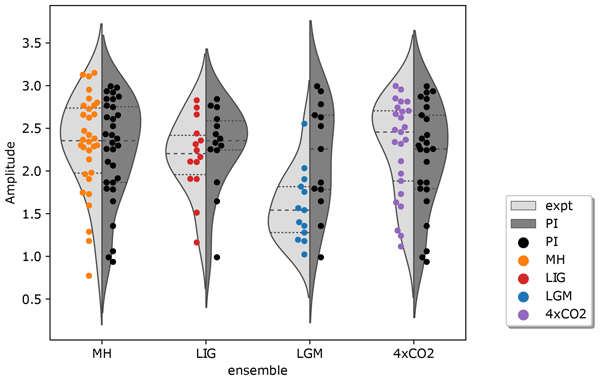
The North Atlantic Oscillation has large impacts on the European climate, whose future behaviour remains uncertain. We assess the NAO response in three past experiments (midHolocene, lig127k, lgm) and an abrupt quadrupled CO2 experiment (abrupt4xCO2). Our results show that NAO weakens (enhances) in response to cooling (warming), while it is not sensitive to orbital configurations. The associated teleconnections change consistently with the theory and are sensitive to the change in NAO amplitude.
Chao-Yuan Yang, Fengguan Gu, Jiping Liu, Annette Rinke, Hu Yang, and Xiaoxu Shi
EGUsphere, https://doi.org/10.5194/egusphere-2026-362, https://doi.org/10.5194/egusphere-2026-362, 2026
Short summary
Short summary
Accurately exchanging energy between the atmosphere and the ocean-ice systems through surface heat fluxes is crucial for climate modelling. We present an improved version of Coupled Arctic Prediction System (CAPS) by revising flux coupling for conservation of heat. Our results show that the model with improved flux coupling can better simulate sea ice conditions during the period of Multidisciplinary drifting Observatory for the Study of Arctic Climate (MOSAiC).
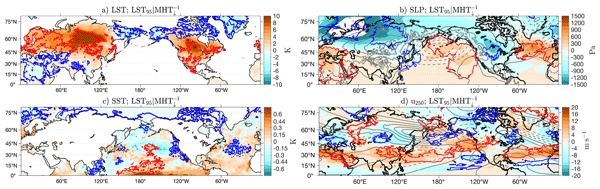
Valerio Lembo, Gabriele Messori, Davide Faranda, Vera Melinda Galfi, Rune Grand Graversen, and Flavio Emanuele Pons
Weather Clim. Dynam., 7, 453–473, https://doi.org/10.5194/wcd-7-453-2026, https://doi.org/10.5194/wcd-7-453-2026, 2026
Short summary
Short summary
Hemispheric heatwaves have fundamental implications for ecosystems and societies. They are studied together with large-scale atmospheric dynamics, through the lens of poleward heat transports by planetary-scale waves. Extremely weak transports of heat towards the North Pole are found to be associated with hemispheric heatwaves in the Northern Hemisphere mid-latitudes. Therefore, we conclude that heat transports are a possible indicator and a precursor of concurrent hemispheric heatwaves.
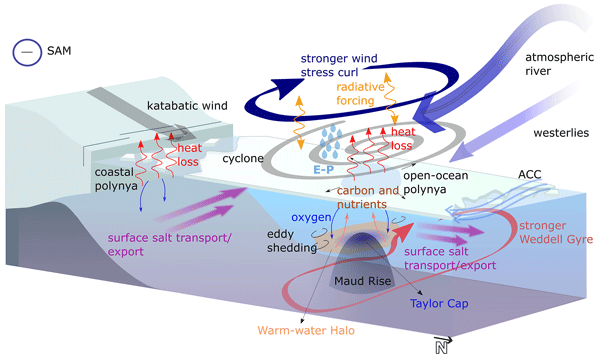
Lu Zhou, Holly Ayres, Birte Gülk, Aditya Narayanan, Casimir de Lavergne, Malin Ödalen, Alessandro Silvano, Xingchi Wang, Margaret Lindeman, and Nadine Steiger
The Cryosphere, 20, 285–308, https://doi.org/10.5194/tc-20-285-2026, https://doi.org/10.5194/tc-20-285-2026, 2026
Short summary
Short summary
Polynyas are large openings in polar sea ice that can influence global climate and ocean circulation. After disappearing for 40 years, major polynyas reappeared in the Weddell Sea in 2016 and 2017, sparking new scientific questions. Our review explores how ocean currents, atmospheric conditions, and deep ocean heat drive their formation. These polynyas impact ecosystems, carbon exchange, and deep water formation, but their future remains uncertain, requiring better observations and models.
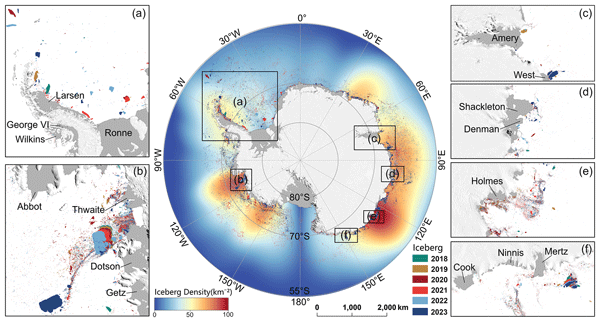
Zilong Chen, Xuying Liu, Zhenfu Guan, Teng Li, Xiao Cheng, Tian Li, Yan Liu, Qi Liang, Lei Zheng, and Jiping Liu
Earth Syst. Sci. Data, 18, 147–166, https://doi.org/10.5194/essd-18-147-2026, https://doi.org/10.5194/essd-18-147-2026, 2026
Short summary
Short summary
Our study uses Google Earth Engine to create a dataset of Antarctic icebergs in the Southern Ocean (south of 55° S) from October 2018 to 2023. The dataset includes icebergs larger than 0.04 km², with details on their locations, sizes, and shapes. It shows significant changes in iceberg number and area, mainly driven by major ice shelf calving events – especially in the Weddell Sea. This resource fills key gaps in understanding iceberg impacts on the ocean and climate.
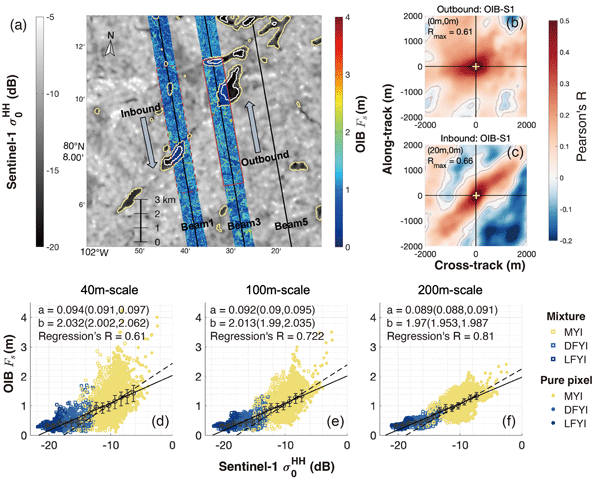
Siqi Liu, Shiming Xu, Wenkai Guo, Yanfei Fan, Lu Zhou, Jack Landy, Malin Johansson, Weixin Zhu, and Alek Petty
The Cryosphere, 19, 5175–5199, https://doi.org/10.5194/tc-19-5175-2025, https://doi.org/10.5194/tc-19-5175-2025, 2025
Short summary
Short summary
In this study, we explore the potential of using synthetic aperture radars (SAR) to predict the sea ice height measurements by the airborne campaign of Operation IceBridge. In particular, we predict the meter-scale sea ice height with the statistical relationship between the two, overcoming the resolution limitation of SAR images from Sentinel-1 satellites. The prediction and ice drift correction algorithms can be applied to the extrapolation of ICESat-2 measurements in the Arctic region.
Yanjun Li, Violaine Coulon, Javier Blasco, Gang Qiao, Qinghua Yang, and Frank Pattyn
The Cryosphere, 19, 4373–4390, https://doi.org/10.5194/tc-19-4373-2025, https://doi.org/10.5194/tc-19-4373-2025, 2025
Short summary
Short summary
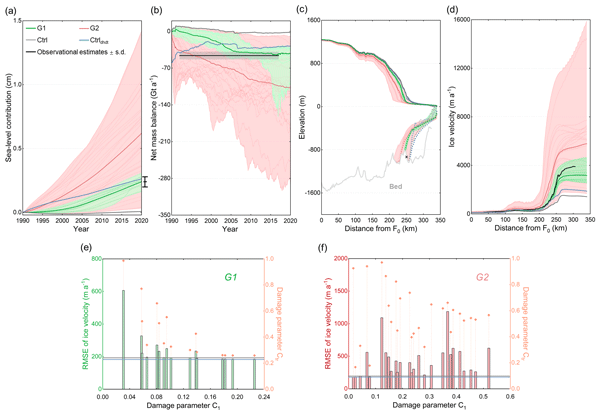
We incorporate ice damage processes into an ice-sheet model and apply the new model to Thwaites Glacier. The upgraded model more accurately captures the observed ice mass loss of Thwaites Glacier over 1990–2020. Our simulations show that ice damage has a notable impact on the ice mass loss, grounding-line retreat, ice velocity, and ice thickness of the Thwaites Glacier basin. This study highlights the necessity for incorporating ice damage into ice-sheet models.
Hu Yang, Xiaoxu Shi, Xulong Wang, Qingsong Liu, Yi Zhong, Xiaodong Liu, Youbin Sun, Yanjun Cai, Fei Liu, Gerrit Lohmann, Martin Werner, Zhimin Jian, Tainã M. L. Pinho, Hai Cheng, Lijuan Lu, Jiping Liu, Chao-Yuan Yang, Qinghua Yang, Yongyun Hu, Xing Cheng, Jingyu Zhang, and Dake Chen
Clim. Past, 21, 1263–1279, https://doi.org/10.5194/cp-21-1263-2025, https://doi.org/10.5194/cp-21-1263-2025, 2025
Short summary
Short summary
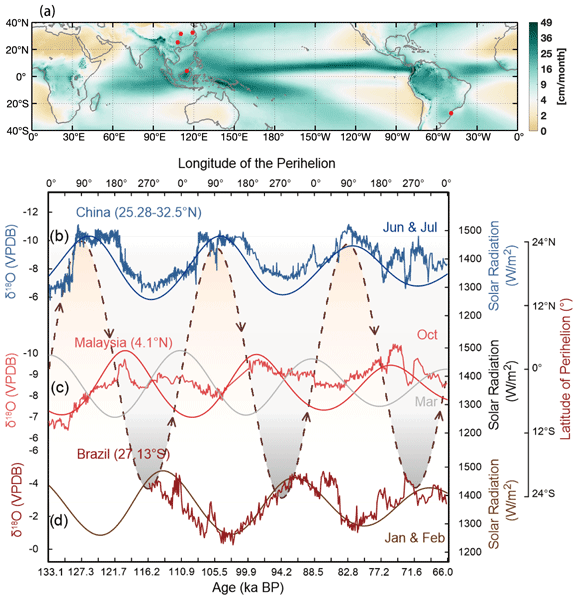
For 1 century, the hemispheric summer insolation is proposed as a key pacemaker of astronomical climate change. However, an increasing number of geologic records reveal that the low-latitude hydrological cycle shows asynchronous precessional evolutions that are very often out of phase with the summer insolation. Here, we propose that the astronomically driven low-latitude hydrological cycle is not paced by summer insolation but by shifting perihelion.
Kai-Uwe Eiselt and Rune Grand Graversen
The Cryosphere, 19, 1849–1871, https://doi.org/10.5194/tc-19-1849-2025, https://doi.org/10.5194/tc-19-1849-2025, 2025
Short summary
Short summary
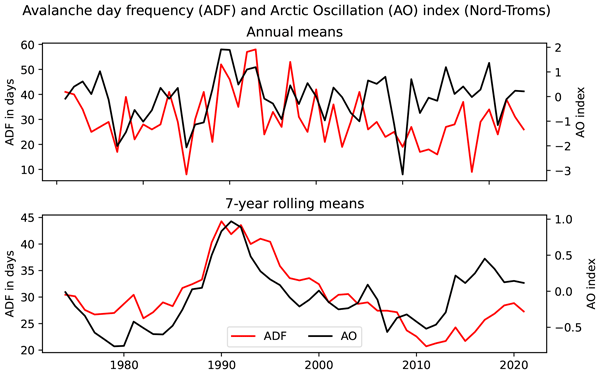
In this study we optimise and train a random forest model to predict avalanche danger in northern Norway based on meteorological reanalysis data. The model performance is at the low end compared to recent similar studies. A hindcast of the frequency of avalanche days (based on the avalanche-danger level) is performed from 1970 to 2024, and a correlation is found with the Arctic Oscillation. This has potential implications for longer-term avalanche predictability.

Colin G. Jones, Fanny Adloff, Ben B. B. Booth, Peter M. Cox, Veronika Eyring, Pierre Friedlingstein, Katja Frieler, Helene T. Hewitt, Hazel A. Jeffery, Sylvie Joussaume, Torben Koenigk, Bryan N. Lawrence, Eleanor O'Rourke, Malcolm J. Roberts, Benjamin M. Sanderson, Roland Séférian, Samuel Somot, Pier Luigi Vidale, Detlef van Vuuren, Mario Acosta, Mats Bentsen, Raffaele Bernardello, Richard Betts, Ed Blockley, Julien Boé, Tom Bracegirdle, Pascale Braconnot, Victor Brovkin, Carlo Buontempo, Francisco Doblas-Reyes, Markus Donat, Italo Epicoco, Pete Falloon, Sandro Fiore, Thomas Frölicher, Neven S. Fučkar, Matthew J. Gidden, Helge F. Goessling, Rune Grand Graversen, Silvio Gualdi, José M. Gutiérrez, Tatiana Ilyina, Daniela Jacob, Chris D. Jones, Martin Juckes, Elizabeth Kendon, Erik Kjellström, Reto Knutti, Jason Lowe, Matthew Mizielinski, Paola Nassisi, Michael Obersteiner, Pierre Regnier, Romain Roehrig, David Salas y Mélia, Carl-Friedrich Schleussner, Michael Schulz, Enrico Scoccimarro, Laurent Terray, Hannes Thiemann, Richard A. Wood, Shuting Yang, and Sönke Zaehle
Earth Syst. Dynam., 15, 1319–1351, https://doi.org/10.5194/esd-15-1319-2024, https://doi.org/10.5194/esd-15-1319-2024, 2024
Short summary
Short summary
We propose a number of priority areas for the international climate research community to address over the coming decade. Advances in these areas will both increase our understanding of past and future Earth system change, including the societal and environmental impacts of this change, and deliver significantly improved scientific support to international climate policy, such as future IPCC assessments and the UNFCCC Global Stocktake.

Lu Zhou, Julienne Stroeve, Vishnu Nandan, Rosemary Willatt, Shiming Xu, Weixin Zhu, Sahra Kacimi, Stefanie Arndt, and Zifan Yang
The Cryosphere, 18, 4399–4434, https://doi.org/10.5194/tc-18-4399-2024, https://doi.org/10.5194/tc-18-4399-2024, 2024
Short summary
Short summary
Snow over Antarctic sea ice, influenced by highly variable meteorological conditions and heavy snowfall, has a complex stratigraphy and profound impact on the microwave signature. We employ advanced radiation transfer models to analyse the effects of complex snow properties on brightness temperatures over the sea ice in the Southern Ocean. Great potential lies in the understanding of snow processes and the application to satellite retrievals.

Chenhui Ning, Shiming Xu, Yan Zhang, Xuantong Wang, Zhihao Fan, and Jiping Liu
Geosci. Model Dev., 17, 6847–6866, https://doi.org/10.5194/gmd-17-6847-2024, https://doi.org/10.5194/gmd-17-6847-2024, 2024
Short summary
Short summary
Sea ice models are mainly based on non-moving structured grids, which is different from buoy measurements that follow the ice drift. To facilitate Lagrangian analysis, we introduce online tracking of sea ice in Community Ice CodE (CICE). We validate the sea ice tracking with buoys and evaluate the sea ice deformation in high-resolution simulations, which show multi-fractal characteristics. The source code is openly available and can be used in various scientific and operational applications.
Weixin Zhu, Siqi Liu, Shiming Xu, and Lu Zhou
Earth Syst. Sci. Data, 16, 2917–2940, https://doi.org/10.5194/essd-16-2917-2024, https://doi.org/10.5194/essd-16-2917-2024, 2024
Short summary
Short summary
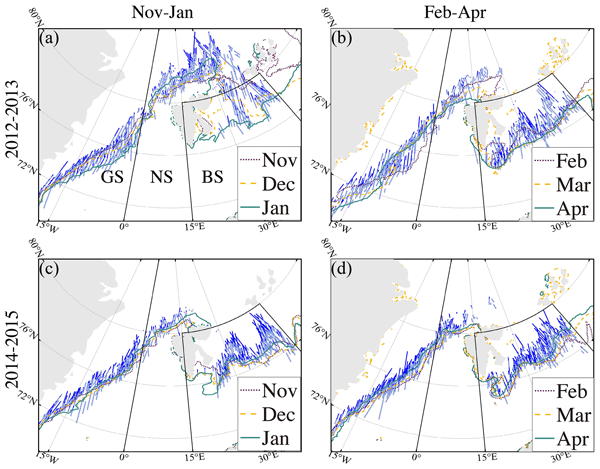
In the polar ocean, wind waves generate and propagate into the sea ice cover, forming marginal ice zones (MIZs). Using ESA's CryoSat-2, we construct a 12-year dataset of the MIZ in the Atlantic Arctic, a key region for climate change and human activities. The dataset is validated with high-resolution observations by ICESat2 and Sentinel-1. MIZs over 300 km wide are found under storms in the Barents Sea. The new dataset serves as the basis for research areas, including wave–ice interactions.
Anni Zhao, Ran Feng, Chris M. Brierley, Jian Zhang, and Yongyun Hu
Clim. Past, 20, 1195–1211, https://doi.org/10.5194/cp-20-1195-2024, https://doi.org/10.5194/cp-20-1195-2024, 2024
Short summary
Short summary
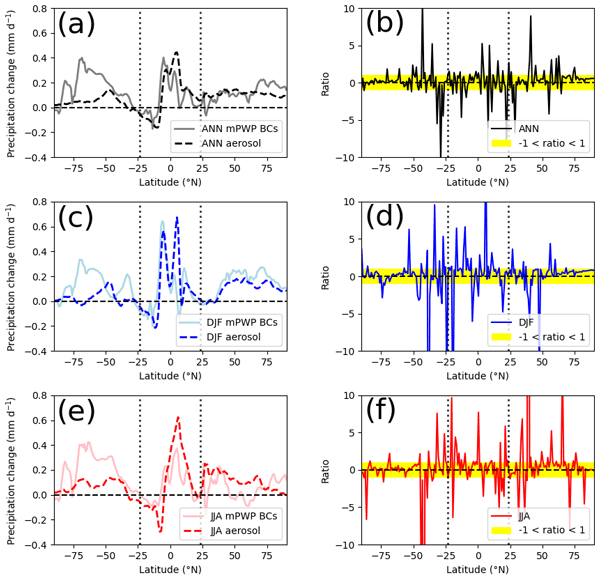
We analyse simulations with idealised aerosol scenarios to examine the importance of aerosol forcing on mPWP precipitation and how aerosol uncertainty could explain the data–model mismatch. We find further warming, a narrower and stronger ITCZ, and monsoon domain rainfall change after removal of industrial emissions. Aerosols have more impacts on tropical precipitation than the mPWP boundary conditions. This highlights the importance of prescribed aerosol scenarios in simulating mPWP climate.
Haoyue Zuo, Yonggang Liu, Gaojun Li, Zhifang Xu, Liang Zhao, Zhengtang Guo, and Yongyun Hu
Geosci. Model Dev., 17, 3949–3974, https://doi.org/10.5194/gmd-17-3949-2024, https://doi.org/10.5194/gmd-17-3949-2024, 2024
Short summary
Short summary
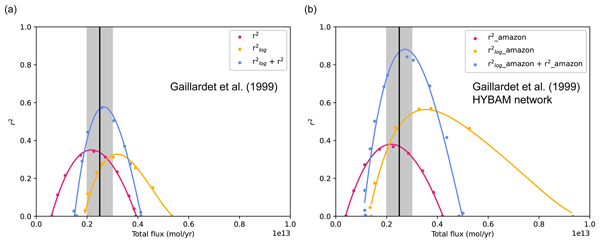
Compared to the silicate weathering fluxes measured at large river basins, the current models tend to systematically overestimate the fluxes over the tropical region, which leads to an overestimation of the global total weathering flux. The most possible cause of such bias is found to be the overestimation of tropical surface erosion, which indicates that the tropical vegetation likely slows down physical erosion significantly. We propose a way of taking this effect into account in models.
Chao-Yuan Yang, Jiping Liu, and Dake Chen
The Cryosphere, 18, 1215–1239, https://doi.org/10.5194/tc-18-1215-2024, https://doi.org/10.5194/tc-18-1215-2024, 2024
Short summary
Short summary
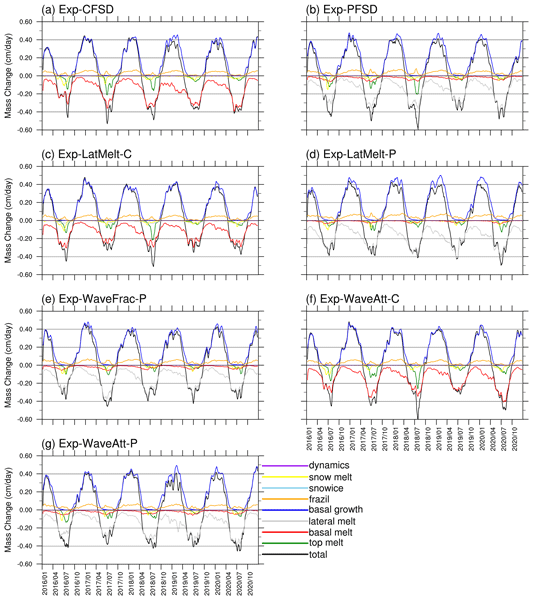
We present a new atmosphere–ocean–wave–sea ice coupled model to study the influences of ocean waves on Arctic sea ice simulation. Our results show (1) smaller ice-floe size with wave breaking increases ice melt, (2) the responses in the atmosphere and ocean to smaller floe size partially reduce the effect of the enhanced ice melt, (3) the limited oceanic energy is a strong constraint for ice melt enhancement, and (4) ocean waves can indirectly affect sea ice through the atmosphere and the ocean.
Xiaoxu Shi, Martin Werner, Hu Yang, Roberta D'Agostino, Jiping Liu, Chaoyuan Yang, and Gerrit Lohmann
Clim. Past, 19, 2157–2175, https://doi.org/10.5194/cp-19-2157-2023, https://doi.org/10.5194/cp-19-2157-2023, 2023
Short summary
Short summary
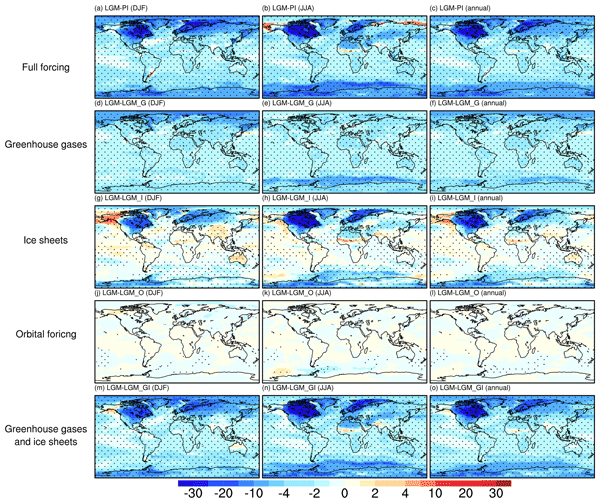
The Last Glacial Maximum (LGM) marks the most recent extremely cold and dry time period of our planet. Using AWI-ESM, we quantify the relative importance of Earth's orbit, greenhouse gases (GHG) and ice sheets (IS) in determining the LGM climate. Our results suggest that both GHG and IS play important roles in shaping the LGM temperature. Continental ice sheets exert a major control on precipitation, atmospheric dynamics, and the intensity of El Niño–Southern Oscillation.
Shijie Peng, Qinghua Yang, Matthew D. Shupe, Xingya Xi, Bo Han, Dake Chen, Sandro Dahlke, and Changwei Liu
Atmos. Chem. Phys., 23, 8683–8703, https://doi.org/10.5194/acp-23-8683-2023, https://doi.org/10.5194/acp-23-8683-2023, 2023
Short summary
Short summary
Due to a lack of observations, the structure of the Arctic atmospheric boundary layer (ABL) remains to be further explored. By analyzing a year-round radiosonde dataset collected over the Arctic sea-ice surface, we found the annual cycle of the ABL height (ABLH) is primarily controlled by the evolution of ABL thermal structure, and the surface conditions also show a high correlation with ABLH variation. In addition, the Arctic ABLH is found to be decreased in summer compared with 20 years ago.

Patrick Johannes Stoll, Rune Grand Graversen, and Gabriele Messori
Weather Clim. Dynam., 4, 1–17, https://doi.org/10.5194/wcd-4-1-2023, https://doi.org/10.5194/wcd-4-1-2023, 2023
Short summary
Short summary
The atmosphere is in motion and hereby transporting warm, cold, moist, and dry air to different climate zones. In this study, we investigate how this transport of energy organises in different manners. Outside the tropics, atmospheric waves of sizes between 2000 and 8000 km, which we perceive as cyclones from the surface, transport most of the energy and moisture poleward. In the winter, large-scale weather situations become very important for transporting energy into the polar regions.
Jinfei Wang, Chao Min, Robert Ricker, Qian Shi, Bo Han, Stefan Hendricks, Renhao Wu, and Qinghua Yang
The Cryosphere, 16, 4473–4490, https://doi.org/10.5194/tc-16-4473-2022, https://doi.org/10.5194/tc-16-4473-2022, 2022
Short summary
Short summary
The differences between Envisat and ICESat sea ice thickness (SIT) reveal significant temporal and spatial variations. Our findings suggest that both overestimation of Envisat sea ice freeboard, potentially caused by radar backscatter originating from inside the snow layer, and the AMSR-E snow depth biases and sea ice density uncertainties can possibly account for the differences between Envisat and ICESat SIT.

Alena Dekhtyareva, Mark Hermanson, Anna Nikulina, Ove Hermansen, Tove Svendby, Kim Holmén, and Rune Grand Graversen
Atmos. Chem. Phys., 22, 11631–11656, https://doi.org/10.5194/acp-22-11631-2022, https://doi.org/10.5194/acp-22-11631-2022, 2022
Short summary
Short summary
Despite decades of industrial activity in Svalbard, there is no continuous air pollution monitoring in the region’s settlements except Ny-Ålesund. The NOx and O3 observations from the three-station network have been compared for the first time in this study. It has been shown how the large-scale weather regimes control the synoptic meteorological conditions and determine the atmospheric long-range transport pathways and efficiency of local air pollution dispersion.
Valerio Lembo, Federico Fabiano, Vera Melinda Galfi, Rune Grand Graversen, Valerio Lucarini, and Gabriele Messori
Weather Clim. Dynam., 3, 1037–1062, https://doi.org/10.5194/wcd-3-1037-2022, https://doi.org/10.5194/wcd-3-1037-2022, 2022
Short summary
Short summary
Eddies in mid-latitudes characterize the exchange of heat between the tropics and the poles. This exchange is largely uneven, with a few extreme events bearing most of the heat transported across latitudes in a season. It is thus important to understand what the dynamical mechanisms are behind these events. Here, we identify recurrent weather regime patterns associated with extreme transports, and we identify scales of mid-latitudinal eddies that are mostly responsible for the transport.
Fengguan Gu, Qinghua Yang, Frank Kauker, Changwei Liu, Guanghua Hao, Chao-Yuan Yang, Jiping Liu, Petra Heil, Xuewei Li, and Bo Han
The Cryosphere, 16, 1873–1887, https://doi.org/10.5194/tc-16-1873-2022, https://doi.org/10.5194/tc-16-1873-2022, 2022
Short summary
Short summary
The sea ice thickness was simulated by a single-column model and compared with in situ observations obtained off Zhongshan Station in the Antarctic. It is shown that the unrealistic precipitation in the atmospheric forcing data leads to the largest bias in sea ice thickness and snow depth modeling. In addition, the increasing snow depth gradually inhibits the growth of sea ice associated with thermal blanketing by the snow.
Sutao Liao, Hao Luo, Jinfei Wang, Qian Shi, Jinlun Zhang, and Qinghua Yang
The Cryosphere, 16, 1807–1819, https://doi.org/10.5194/tc-16-1807-2022, https://doi.org/10.5194/tc-16-1807-2022, 2022
Short summary
Short summary
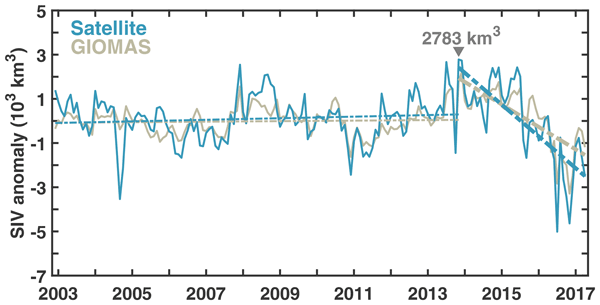
The Global Ice-Ocean Modeling and Assimilation System (GIOMAS) can basically reproduce the observed variability in Antarctic sea-ice volume and its changes in the trend before and after 2013, and it underestimates Antarctic sea-ice thickness (SIT) especially in deformed ice zones. Assimilating additional sea-ice observations with advanced assimilation methods may result in a more accurate estimation of Antarctic SIT.
Cited articles
Abernathey, R. P., Cerovecki, I., Holland, P. R., Newsom, E., Mazloff, M., and Talley, L. D.: Water-mass transformation by sea ice in the upper branch of the Southern Ocean overturning, Nat. Geosci., 9, 596–601, https://doi.org/10.1038/ngeo2749, 2016.
Andersson, T. R., Hosking, J. S., Pérez-Ortiz, M., Paige, B., Elliott, A., Russell, C., Law, S., Jones, D. C., Wilkinson, J., Phillips, T., Byrne, J., Tietsche, S., Sarojini, B. B., Blanchard-Wrigglesworth, E., Aksenov, Y., Downie, R., and Shuckburgh, E.: Seasonal Arctic sea ice forecasting with probabilistic deep learning, Nat. Commun., 12, 5124, https://doi.org/10.1038/s41467-021-25257-4, 2021.
Bianco, E., Iovino, D., Masina, S., Materia, S., and Ruggieri, P.: The role of upper-ocean heat content in the regional variability of Arctic sea ice at sub-seasonal timescales, The Cryosphere, 18, 2357–2379, https://doi.org/10.5194/tc-18-2357-2024, 2024.
Bintanja, R., van Oldenborgh, G. J., Drijfhout, S. S., Wouters, B., and Katsman, C. A.: Important role for ocean warming and increased ice-shelf melt in Antarctic sea-ice expansion, Nat. Geosci., 6, 376–379, https://doi.org/10.1038/ngeo1767, 2013.
Bourassa, M. A., Gille, S. T., Bitz, C., Carlson, D., Cerovecki, I., Clayson, C. A., Cronin, M. F., Drennan, W. M., Fairall, C. W., Hoffman, R. N., Magnusdottir, G., Pinker, R. T., Renfrew, I. A., Serreze, M., Speer, K., Talley, L. D., and Wick, G. A.: High-Latitude Ocean and Sea Ice Surface Fluxes: Challenges for Climate Research, Bulletin of the American Meteorological Society, 94, 403–423, https://doi.org/10.1175/BAMS-D-11-00244.1, 2013.
Bracegirdle, T. J. and Marshall, G. J.: The Reliability of Antarctic Tropospheric Pressure and Temperature in the Latest Global Reanalyses, Journal of Climate, 25, 7138–7146, https://doi.org/10.1175/JCLI-D-11-00685.1, 2012.
Breiman, L.: Random Forests, Machine Learning, 45, 5–32, https://doi.org/10.1023/A:1010933404324, 2001.
Bromwich, D. H., Nicolas, J. P., and Monaghan, A. J.: An Assessment of Precipitation Changes over Antarctica and the Southern Ocean since 1989 in Contemporary Global Reanalyses, Journal of Climate, 24, 4189–4209, https://doi.org/10.1175/2011JCLI4074.1, 2011.
Bushuk, M., Winton, M., Haumann, F. A., Delworth, T., Lu, F., Zhang, Y., Jia, L., Zhang, L., Cooke, W., Harrison, M., Hurlin, B., Johnson, N. C., Kapnick, S. B., McHugh, C., Murakami, H., Rosati, A., Tseng, K.-C., Wittenberg, A. T., Yang, X., and Zeng, F.: Seasonal Prediction and Predictability of Regional Antarctic Sea Ice, Journal of Climate, 34, 6207–6233, https://doi.org/10.1175/JCLI-D-20-0965.1, 2021.
Cai, W., Jia, F., Li, S., Purich, A., Wang, G., Wu, L., Gan, B., Santoso, A., Geng, T., Ng, B., Yang, Y., Ferreira, D., Meehl, G. A., and McPhaden, M. J.: Antarctic shelf ocean warming and sea ice melt affected by projected El Niño changes, Nat. Clim. Change, 13, 235–239, https://doi.org/10.1038/s41558-023-01610-x, 2023.
Cavalieri, D. J. and Parkinson, C. L.: Antarctic sea ice variability and trends, 1979–2006, Journal of Geophysical Research: Oceans, 113, https://doi.org/10.1029/2007JC004564, 2008.
Chen, D. and Yuan, X.: A Markov Model for Seasonal Forecast of Antarctic Sea Ice, Journal of Climate, 17, 3156–3168, https://doi.org/10.1175/1520-0442(2004)017<3156:AMMFSF>2.0.CO;2, 2004.
Chi, J. and Kim, H.: Prediction of Arctic Sea Ice Concentration Using a Fully Data Driven Deep Neural Network, Remote Sensing, 9, 1305, https://doi.org/10.3390/rs9121305, 2017.
Choi, J., Son, S.-W., Ham, Y.-G., Lee, J.-Y., and Kim, H.-M.: Seasonal-to-Interannual Prediction Skills of Near-Surface Air Temperature in the CMIP5 Decadal Hindcast Experiments, Journal of Climate, 29, 1511–1527, https://doi.org/10.1175/jcli-d-15-0182.1, 2016.
Comiso, J. C. and Nishio, F.: Trends in the sea ice cover using enhanced and compatible AMSR-E, SSM/I, and SMMR data, Journal of Geophysical Research: Oceans, 113, https://doi.org/10.1029/2007JC004257, 2008.
Comiso, J. C., Cavalieri, D. J., Parkinson, C. L., and Gloersen, P.: Passive microwave algorithms for sea ice concentration: A comparison of two techniques, Remote Sensing of Environment, 60, 357–384, https://doi.org/10.1016/S0034-4257(96)00220-9, 1997.
Comiso, J. C., Gersten, R. A., Stock, L. V., Turner, J., Perez, G. J., and Cho, K.: Positive Trend in the Antarctic Sea Ice Cover and Associated Changes in Surface Temperature, Journal of Climate, 30, 2251–2267, https://doi.org/10.1175/JCLI-D-16-0408.1, 2017.
Cordero, R. R., Feron, S., Damiani, A., Llanillo, P. J., Carrasco, J., Khan, A. L., Bintanja, R., Ouyang, Z., and Casassa, G.: Signature of the stratosphere–troposphere coupling on recent record-breaking Antarctic sea-ice anomalies, The Cryosphere, 17, 4995–5006, https://doi.org/10.5194/tc-17-4995-2023, 2023.
Dong, X., Nie, Y., Wang, J., Luo, H., Gao, Y., Wang, Y., Liu, J., Chen, D., and Yang, Q.: Deep Learning Shows Promise for Seasonal Prediction of Antarctic Sea Ice in a Rapid Decline Scenario, Adv. Atmos. Sci., 41, 1569–1573, https://doi.org/10.1007/s00376-024-3380-y, 2024.
Eayrs, C., Holland, D., Francis, D., Wagner, T., Kumar, R., and Li, X.: Understanding the Seasonal Cycle of Antarctic Sea Ice Extent in the Context of Longer-Term Variability, Reviews of Geophysics, 57, 1037–1064, https://doi.org/10.1029/2018RG000631, 2019.
Fisher, A., Rudin, C., and Dominici, F.: All Models are Wrong, but Many are Useful: Learning a Variable’s Importance by Studying an Entire Class of Prediction Models Simultaneously, Journal of Machine Learning Research, 20, 1–81, https://jmlr.org/papers/v20/18-760.html (last access: 8 April 2025), 2019.
Fogt, R. L., Sleinkofer, A. M., Raphael, M. N., and Handcock, M. S.: A regime shift in seasonal total Antarctic sea ice extent in the twentieth century, Nature Climate Change, 12, 54–62, https://doi.org/10.1038/s41558-021-01254-9, 2022.
Fons, S., Kurtz, N., and Bagnardi, M.: A decade-plus of Antarctic sea ice thickness and volume estimates from CryoSat-2 using a physical model and waveform fitting, The Cryosphere, 17, 2487–2508, https://doi.org/10.5194/tc-17-2487-2023, 2023.
Fritzner, S., Graversen, R., and Christensen, K. H.: Assessment of High-Resolution Dynamical and Machine Learning Models for Prediction of Sea Ice Concentration in a Regional Application, Journal of Geophysical Research: Oceans, 125, https://doi.org/10.1029/2020jc016277, 2020.
Goddard, L., Kumar, A., Solomon, A., Smith, D., Boer, G., Gonzalez, P., Kharin, V., Merryfield, W., Deser, C., Mason, S. J., Kirtman, B. P., Msadek, R., Sutton, R., Hawkins, E., Fricker, T., Hegerl, G., Ferro, C. A. T., Stephenson, D. B., Meehl, G. A., Stockdale, T., Burgman, R., Greene, A. M., Kushnir, Y., Newman, M., Carton, J., Fukumori, I., and Delworth, T.: A verification framework for interannual-to-decadal predictions experiments, Climate Dynamics, 40, 245–272, https://doi.org/10.1007/s00382-012-1481-2, 2012.
Goessling, H. F., Tietsche, S., Day, J. J., Hawkins, E., and Jung, T.: Predictability of the Arctic sea ice edge, Geophysical Research Letters, 43, 1642–1650, https://doi.org/10.1002/2015GL067232, 2016.
Grieger, J., Leckebusch, G. C., Raible, C. C., Rudeva, I., and Simmonds, I.: Subantarctic cyclones identified by 14 tracking methods, and their role for moisture transports into the continent, Tellus A, 70, 1–18, https://doi.org/10.1080/16000870.2018.1454808 2018.
Hendricks, S., Paul, S., and Rinne, E.: ESA Sea Ice Climate Change Initiative (Sea_Ice_cci): Southern hemisphere sea ice thickness from CryoSat-2 on the satellite swath (L2P), v2.0, Centre for Environmental Data Analysis [data set], https://doi.org/10.5285/FBFAE06E787B4FEFB4B03CBA2FD04BC3, 2018.
Hersbach, H., Bell, B., Berrisford, P., Hirahara, S., Horányi, A., Muñoz-Sabater, J., Nicolas, J., Peubey, C., Radu, R., Schepers, D., Simmons, A., Soci, C., Abdalla, S., Abellan, X., Balsamo, G., Bechtold, P., Biavati, G., Bidlot, J., Bonavita, M., De Chiara, G., Dahlgren, P., Dee, D., Diamantakis, M., Dragani, R., Flemming, J., Forbes, R., Fuentes, M., Geer, A., Haimberger, L., Healy, S., Hogan, R. J., Hólm, E., Janisková, M., Keeley, S., Laloyaux, P., Lopez, P., Lupu, C., Radnoti, G., de Rosnay, P., Rozum, I., Vamborg, F., Villaume, S., and Thépaut, J.-N.: The ERA5 global reanalysis, Quarterly Journal of the Royal Meteorological Society, 146, 1999–2049, https://doi.org/10.1002/qj.3803, 2020.
Hobbs, W. R., Massom, R., Stammerjohn, S., Reid, P., Williams, G., and Meier, W.: A review of recent changes in Southern Ocean sea ice, their drivers and forcings, Global and Planetary Change, 143, 228–250, https://doi.org/10.1016/j.gloplacha.2016.06.008, 2016.
Hogg, J., Fonoberova, M., and Mezić, I.: Exponentially decaying modes and long-term prediction of sea ice concentration using Koopman mode decomposition, Scientific Reports, 10, 16313, https://doi.org/10.1038/s41598-020-73211-z, 2020.
Holland, P. R. and Kwok, R.: Wind-driven trends in Antarctic sea-ice drift, Nature Geosci, 5, 872–875, https://doi.org/10.1038/ngeo1627, 2012.
Hosking, J. S., Orr, A., Marshall, G. J., Turner, J., and Phillips, T.: The Influence of the Amundsen–Bellingshausen Seas Low on the Climate of West Antarctica and Its Representation in Coupled Climate Model Simulations, Journal of Climate, 26, 6633–6648, https://doi.org/10.1175/JCLI-D-12-00813.1, 2013.
Johnson, S. J., Stockdale, T. N., Ferranti, L., Balmaseda, M. A., Molteni, F., Magnusson, L., Tietsche, S., Decremer, D., Weisheimer, A., Balsamo, G., Keeley, S. P. E., Mogensen, K., Zuo, H., and Monge-Sanz, B. M.: SEAS5: the new ECMWF seasonal forecast system, Geosci. Model Dev., 12, 1087–1117, https://doi.org/10.5194/gmd-12-1087-2019, 2019.
Josey, S. A., Meijers, A. J. S., Blaker, A. T., Grist, J. P., Mecking, J., and Ayres, H. C.: Record-low Antarctic sea ice in 2023 increased ocean heat loss and storms, Nature, 636, 635–639, https://doi.org/10.1038/s41586-024-08368-y, 2024.
Kacimi, S. and Kwok, R.: The Antarctic sea ice cover from ICESat-2 and CryoSat-2: Freeboard, snow depth, and ice thickness, The Cryosphere, 14, 4453–4474, https://doi.org/10.5194/tc-14-4453-2020, 2020.
Kidston, J., Taschetto, A. S., Thompson, D. W. J., and England, M. H.: The influence of Southern Hemisphere sea-ice extent on the latitude of the mid-latitude jet stream, Geophysical Research Letters, 38, https://doi.org/10.1029/2011GL048056, 2011.
Kim, Y. J., Kim, H.-C., Han, D., Lee, S., and Im, J.: Prediction of monthly Arctic sea ice concentrations using satellite and reanalysis data based on convolutional neural networks, The Cryosphere, 14, 1083–1104, https://doi.org/10.5194/tc-14-1083-2020, 2020.
Liang, K., Wang, J., Luo, H., and Yang, Q.: The Role of Atmospheric Rivers in Antarctic Sea Ice Variations, Geophysical Research Letters, 50, e2022GL102588, https://doi.org/10.1029/2022GL102588, 2023.
Li, X., Cai, W., Meehl, G. A., Chen, D., Yuan, X., Raphael, M., Holland, D. M., Ding, Q., Fogt, R. L., Markle, B. R., Wang, G., Bromwich, D. H., Turner, J., Xie, S.-P., Steig, E. J., Gille, S. T., Xiao, C., Wu, B., Lazzara, M. A., Chen, X., Stammerjohn, S., Holland, P. R., Holland, M. M., Cheng, X., Price, S. F., Wang, Z., Bitz, C. M., Shi, J., Gerber, E. P., Liang, X., Goosse, H., Yoo, C., Ding, M., Geng, L., Xin, M., Li, C., Dou, T., Liu, C., Sun, W., Wang, X., and Song, C.: Tropical teleconnection impacts on Antarctic climate changes, Nat. Rev. Earth Environ., 2, 680–698, https://doi.org/10.1038/s43017-021-00204-5, 2021.
Libera, S., Hobbs, W., Klocker, A., Meyer, A., and Matear, R.: Ocean-Sea Ice Processes and Their Role in Multi-Month Predictability of Antarctic Sea Ice, Geophysical Research Letters, 49, e2021GL097047, https://doi.org/10.1029/2021GL097047, 2022.
Lin, Y., Yang, Q., Li, X., Dong, X., Luo, H., Nie, Y., Wang, J., Wang, Y., and Min, C.: Ice-kNN-South: A Lightweight Machine Learning Model for Antarctic Sea Ice Prediction, Journal of Geophysical Research: Machine Learning and Computation, 2, e2024JH000433, https://doi.org/10.1029/2024JH000433, 2025.
Liu, J., Curry, J. A., and Martinson, D. G.: Interpretation of recent Antarctic sea ice variability, Geophysical Research Letters, 31, https://doi.org/10.1029/2003GL018732, 2004.
Liu, J., Zhu, Z., and Chen, D.: Lowest Antarctic Sea Ice Record Broken for the Second Year in a Row, Ocean-Land-Atmosphere Research, 2, 7, https://doi.org/10.34133/olar.0007, 2023.
Marchi, S., Fichefet, T., Goosse, H., Zunz, V., Tietsche, S., Day, J. J., and Hawkins, E.: Reemergence of Antarctic sea ice predictability and its link to deep ocean mixing in global climate models, Climate Dynamics, 52, 2775–2797, https://doi.org/10.1007/s00382-018-4292-2, 2019.
Marmanis, D., Datcu, M., Esch, T., and Stilla, U.: Deep Learning Earth Observation Classification Using ImageNet Pretrained Networks, IEEE Geoscience and Remote Sensing Letters, 13, 105–109, https://doi.org/10.1109/LGRS.2015.2499239, 2016.
Massom, R. A. and Stammerjohn, S. E.: Antarctic sea ice change and variability – Physical and ecological implications, Polar Science, 4, 149–186, https://doi.org/10.1016/j.polar.2010.05.001, 2010.
Massonnet, F., Barreira, S., Barthélemy, A., Bilbao, R., Blanchard-Wrigglesworth, E., Blockley, E., Bromwich, D. H., Bushuk, M., Dong, X., Goessling, H. F., Hobbs, W., Iovino, D., Lee, W.-S., Li, C., Meier, W. N., Merryfield, W. J., Moreno-Chamarro, E., Morioka, Y., Li, X., Niraula, B., Petty, A., Sanna, A., Scilingo, M., Shu, Q., Sigmond, M., Sun, N., Tietsche, S., Wu, X., Yang, Q., and Yuan, X.: SIPN South: six years of coordinated seasonal Antarctic sea ice predictions, Frontiers in Marine Science, 10, https://doi.org/10.3389/fmars.2023.1148899, 2023.
Mezzina, B., Goosse, H., Klein, F., Barthélemy, A., and Massonnet, F.: The role of atmospheric conditions in the Antarctic sea ice extent summer minima, The Cryosphere, 18, 3825–3839, https://doi.org/10.5194/tc-18-3825-2024, 2024.
Molnar, C.: Interpretable Machine Learning. A Guide for Making Black Box Models Explainable, https://christophm.github.io/interpretable-ml-book/ (last access: 8 April 2025), 2019.
Morioka, Y., Doi, T., Iovino, D., Masina, S., and Behera, S. K.: Role of sea-ice initialization in climate predictability over the Weddell Sea, Sci. Rep., 9, 2457, https://doi.org/10.1038/s41598-019-39421-w, 2019.
Murphy, A. H.: Skill Scores Based on the Mean Square Error and Their Relationships to the Correlation Coefficient, Monthly Weather Review, 116, 2417–2424, https://doi.org/10.1175/1520-0493(1988)116<2417:SSBOTM>2.0.CO;2, 1988.
Niraula, B. and Goessling, H. F.: Spatial Damped Anomaly Persistence of the Sea Ice Edge as a Benchmark for Dynamical Forecast Systems, Journal of Geophysical Research: Oceans, 126, e2021JC017784, https://doi.org/10.1029/2021JC017784, 2021.
Pei, Y.: Cyclostationary EOF Modes of Antarctic Sea Ice and Their Application in Prediction, Journal of Geophysical Research: Oceans, 126, e2021JC017179, https://doi.org/10.1029/2021JC017179, 2021.
Purich, A. and Doddridge, E. W.: Record low Antarctic sea ice coverage indicates a new sea ice state, Commun. Earth Environ., 4, 1–9, https://doi.org/10.1038/s43247-023-00961-9, 2023.
Purich, A., England, M. H., Cai, W., Sullivan, A., and Durack, P. J.: Impacts of Broad-Scale Surface Freshening of the Southern Ocean in a Coupled Climate Model, Journal of Climate, 31, 2613–2632, https://doi.org/10.1175/JCLI-D-17-0092.1, 2018.
Prechelt, L.: Early Stopping – But When?, in: Neural Networks: Tricks of the Trade: Second Edition, edited by: Montavon, G., Orr, G. B., and Müller, K.-R., Springer Berlin Heidelberg, Berlin, Heidelberg, 53–67, https://doi.org/10.1007/978-3-642-35289-8_5, 2012.
Raphael, M. N. and Hobbs, W.: The influence of the large-scale atmospheric circulation on Antarctic sea ice during ice advance and retreat seasons, Geophysical Research Letters, 41, 5037–5045, https://doi.org/10.1002/2014GL060365, 2014.
Ren, Y. and Li, X.: Predicting Daily Arctic Sea Ice Concentration in the Melt Season Based on a Deep Fully Convolution Network Model, in: 2021 IEEE International Geoscience and Remote Sensing Symposium IGARSS, 2021 IEEE International Geoscience and Remote Sensing Symposium IGARSS, journalAbbreviation: 2021 IEEE International Geoscience and Remote Sensing Symposium IGARSS, 5540–5543, https://doi.org/10.1109/IGARSS47720.2021.9554118, 2021.
Ren, Y. and Li, X.: Predicting the Daily Sea Ice Concentration on a Sub-Seasonal Scale of the Pan-Arctic During the Melting Season by a Deep Learning Model, IEEE Transactions on Geoscience and Remote Sensing, 1–1, https://doi.org/10.1109/TGRS.2023.3279089, 2023.
Saenz, B. T., McKee, D. C., Doney, S. C., Martinson, D. G., and Stammerjohn, S. E.: Influence of seasonally varying sea-ice concentration and subsurface ocean heat on sea-ice thickness and sea-ice seasonality for a “warm-shelf” region in Antarctica, Journal of Glaciology, 69, 1466–1482, https://doi.org/10.1017/jog.2023.36, 2003.
Son, S.-W., Tandon, N. F., Polvani, L. M., and Waugh, D. W.: Ozone hole and Southern Hemisphere climate change, Geophysical Research Letters, 36, https://doi.org/10.1029/2009gl038671, 2009.
Schlosser, E., Haumann, F. A., and Raphael, M. N.: Atmospheric influences on the anomalous 2016 Antarctic sea ice decay, The Cryosphere, 12, 1103–1119, https://doi.org/10.5194/tc-12-1103-2018, 2018.
Stammerjohn, S. E., Drinkwater, M. R., Smith, R. C., and Liu, X.: Ice-atmosphere interactions during sea-ice advance and retreat in the western Antarctic Peninsula region, Journal of Geophysical Research: Oceans, 108, https://doi.org/10.1029/2002JC001543, 2003.
Thépaut, J.-N., Dee, D., Engelen, R., and Pinty, B.: The Copernicus Programme and its Climate Change Service, in: IGARSS 2018 – 2018 IEEE International Geoscience and Remote Sensing Symposium, IGARSS 2018 – 2018 IEEE International Geoscience and Remote Sensing Symposium, 1591–1593, https://doi.org/10.1109/IGARSS.2018.8518067, 2018.
Turner, J., Phillips, T., Marshall, G. J., Hosking, J. S., Pope, J. O., Bracegirdle, T. J., and Deb, P.: Unprecedented springtime retreat of Antarctic sea ice in 2016, Geophysical Research Letters, 44, 6868–6875, https://doi.org/10.1002/2017GL073656, 2017.
Turner, J., Holmes, C., Caton Harrison, T., Phillips, T., Jena, B., Reeves-Francois, T., Fogt, R., Thomas, E. R., and Bajish, C. C.: Record Low Antarctic Sea Ice Cover in February 2022, Geophysical Research Letters, 49, e2022GL098904, https://doi.org/10.1029/2022GL098904, 2022.
Turner, J., Bracegirdle, T. J., Phillips, T., Marshall, G. J., and Hosking, J. S.: An Initial Assessment of Antarctic Sea Ice Extent in the CMIP5 Models, Journal of Climate, 26, 1473–1484, https://doi.org/10.1175/JCLI-D-12-00068.1, 2013.
Turner, J., Hosking, J. S., Marshall, G. J., Phillips, T., and Bracegirdle, T. J.: Antarctic sea ice increase consistent with intrinsic variability of the Amundsen Sea Low, Clim. Dyn., 46, 2391–2402, https://doi.org/10.1007/s00382-015-2708-9, 2016.
Uebbing, L., Joakimsen, H. L., Luppino, L. T., Martinsen, I., McDonald, A., Wickstrøm, K. K., Lefèvre, S., Salberg, A. B., Hosking, S., and Jenssen, R.: Investigating the Impact of Feature Reduction for Deep Learning-based Seasonal Sea Ice Forecasting, in: Proceedings of the 6th Northern Lights Deep Learning Conference (NLDL), 245–254, https://proceedings.mlr.press/v265/uebbing25a.html (last access: 8 April 2025), 2025.
Wang, G., Hendon, H. H., Arblaster, J. M., Lim, E.-P., Abhik, S., and van Rensch, P.: Compounding tropical and stratospheric forcing of the record low Antarctic sea-ice in 2016, Nat. Commun., 10, 13, https://doi.org/10.1038/s41467-018-07689-7, 2019.
Wang, J., Luo, H., Yang, Q., Liu, J., Yu, L., Shi, Q., and Han, B.: An Unprecedented Record Low Antarctic Sea-ice Extent during Austral Summer 2022, Adv. Atmos. Sci., 39, 1591–1597, https://doi.org/10.1007/s00376-022-2087-1, 2022.
Wang, L., Yuan, X., Ting, M., and Li, C.: Predicting Summer Arctic Sea Ice Concentration Intraseasonal Variability Using a Vector Autoregressive Model, Journal of Climate, 29, 1529–1543, https://doi.org/10.1175/JCLI-D-15-0313.1, 2016.
Wang, S., Liu, J., Cheng, X., Kerzenmacher, T., Hu, Y., Hui, F., and Braesicke, P.: How Do Weakening of the Stratospheric Polar Vortex in the Southern Hemisphere Affect Regional Antarctic Sea Ice Extent?, Geophysical Research Letters, 48, e2021GL092582, https://doi.org/10.1029/2021GL092582, 2021.
Wang, X., Hu, Z., Shi, S., Hou, M., Xu, L., and Zhang, X.: A deep learning method for optimizing semantic segmentation accuracy of remote sensing images based on improved UNet, Sci. Rep., 13, 7600, https://doi.org/10.1038/s41598-023-34379-2, 2023.
Wang, Y., Yuan, X., Ren, Y., Bushuk, M., Shu, Q., Li, C., and Li, X.: Subseasonal Prediction of Regional Antarctic Sea Ice by a Deep Learning Model, Geophysical Research Letters, 50, e2023GL104347, https://doi.org/10.1029/2023GL104347, 2023.
Wang, Z., Turner, J., Sun, B., Li, B., and Liu, C.: Cyclone-induced rapid creation of extreme Antarctic sea ice conditions, Sci. Rep., 4, 5317, https://doi.org/10.1038/srep05317, 2014.
Wayand, N. E., Bitz, C. M., and Blanchard-Wrigglesworth, E.: A Year-Round Subseasonal-to-Seasonal Sea Ice Prediction Portal, Geophysical Research Letters, 46, 3298–3307, https://doi.org/10.1029/2018GL081565, 2019.
Yadav, J., Kumar, A., Srivastava, A., and Mohan, R.: Sea ice variability and trends in the Indian Ocean sector of Antarctica: Interaction with ENSO and SAM, Environmental Research, 212, 113481, https://doi.org/10.1016/j.envres.2022.113481, 2022.
Zampieri, L., Goessling, H. F., and Jung, T.: Predictability of Antarctic Sea Ice Edge on Subseasonal Time Scales, Geophysical Research Letters, 46, 9719–9727, https://doi.org/10.1029/2019GL084096, 2019.
Zhu, Z., Liu, J., Song, M., and Hu, Y.: Changes in Extreme Temperature and Precipitation over the Southern Extratropical Continents in Response to Antarctic Sea Ice Loss, Journal of Climate, 36, 4755–4775, https://doi.org/10.1175/JCLI-D-22-0577.1, 2023.
Zuo, H., Balmaseda, M. A., Tietsche, S., Mogensen, K., and Mayer, M.: The ECMWF operational ensemble reanalysis–analysis system for ocean and sea ice: a description of the system and assessment, Ocean Sci., 15, 779–808, https://doi.org/10.5194/os-15-779-2019, 2019.
Zwally, H. J., Comiso, J. C., Parkinson, C. L., Cavalieri, D. J., and Gloersen, P.: Variability of Antarctic sea ice 1979–1998, Journal of Geophysical Research: Oceans, 107, 9-1–9-19, https://doi.org/10.1029/2000JC000733, 2002.
Short summary
Antarctic sea ice has changed rapidly in recent years. Here we developed a deep learning model trained by multiple climate variables for extended seasonal Antarctic sea ice prediction. Our model shows high predictive skills up to 6 months in advance, particularly in predicting extreme events. It also shows skillful predictions at the sea ice edge and year-to-year sea ice changes. Variable importance analyses suggest what variables are more important for prediction at different lead times.
Antarctic sea ice has changed rapidly in recent years. Here we developed a deep learning model...


