
Articles | Volume 20, issue 1
https://doi.org/10.5194/tc-20-777-2026
© Author(s) 2026. This work is distributed under
the Creative Commons Attribution 4.0 License.
the Creative Commons Attribution 4.0 License.
https://doi.org/10.5194/tc-20-777-2026
© Author(s) 2026. This work is distributed under
the Creative Commons Attribution 4.0 License.
the Creative Commons Attribution 4.0 License.
Research article
| 
29 Jan 2026
Research article |
| 29 Jan 2026
| 29 Jan 2026
Modelling the sensitivity of ice loss to calving front retreat rates in the Amundsen Sea Embayment, West Antarctica
Jowan M. Barnes
CORRESPONDING AUTHOR

School of Geography and Natural Sciences, Northumbria University, Newcastle upon Tyne, UK
School of Geosciences, University of Edinburgh, Edinburgh, UK
G. Hilmar Gudmundsson
School of Geography and Natural Sciences, Northumbria University, Newcastle upon Tyne, UK
Daniel N. Goldberg
School of Geosciences, University of Edinburgh, Edinburgh, UK
Sainan Sun
School of Geography and Natural Sciences, Northumbria University, Newcastle upon Tyne, UK
Related authors
James R. Jordan, Frank Pattyn, Daniel Abele, Torsten Albrecht, Jorge Alvarez-Solas, Jowan M. Barnes, Tijn Berends, Jorge A. Bernales, Javier Blasco, Gong Cheng, Youngmin Choi, Stephen L. Cornford, Cruz Garcia-Molina, Fabien Gillet-Chaulet, G. Hilmar Gudmundsson, Angelika Humbert, Gunter R. Leguy, William H. Lipscomb, Marisa Montoya, Daniel Moreno-Parada, Mathieu Morlighem, Tyler Pelle, Alexander Robinson, Martin Rückamp, Hélène Seroussi, Yanmei Tian, Luisa Wagner, Roderick S. W. van de Wal, Liyun Zhao, and Thomas Zwinger
EGUsphere, https://doi.org/10.5194/egusphere-2026-1962, https://doi.org/10.5194/egusphere-2026-1962, 2026
Short summary
Short summary
Ice calving is a recent inclusion in ice sheet models and there has not been a systematic test of how well it has been implemented. We show that models can accurately represent a given rate of ice calving, properties at the ice front evolve smoothly during calving, and that there are no consistent differences in ice behaviour between various approaches to representing calving in numerical ice models. This gives us confidence in their ability for use in sea level rise prediction simulations.
Indrani Das, Jowan Barnes, James Smith, Renata Constantino, Sidney Hemming, and Laurie Padman
EGUsphere, https://doi.org/10.5194/egusphere-2024-1564, https://doi.org/10.5194/egusphere-2024-1564, 2024
Preprint archived
Short summary
Short summary
George VI Ice Shelf (GVIIS) on the Antarctic Peninsula is currently thinning and the glaciers feeding it are accelerating. Geologic evidence indicates that GVIIS had disintegrated several thousand years ago due to ocean and atmosphere warming. Here, we use remote sensing and numerical modeling to show that strain thinning reduces buttressing of grounded ice, creating a positive feedback of accelerated ice inflow to the southern GVIIS, likely making it more vulnerable than the northern sector.
Jowan M. Barnes and G. Hilmar Gudmundsson
The Cryosphere, 16, 4291–4304, https://doi.org/10.5194/tc-16-4291-2022, https://doi.org/10.5194/tc-16-4291-2022, 2022
Short summary
Short summary
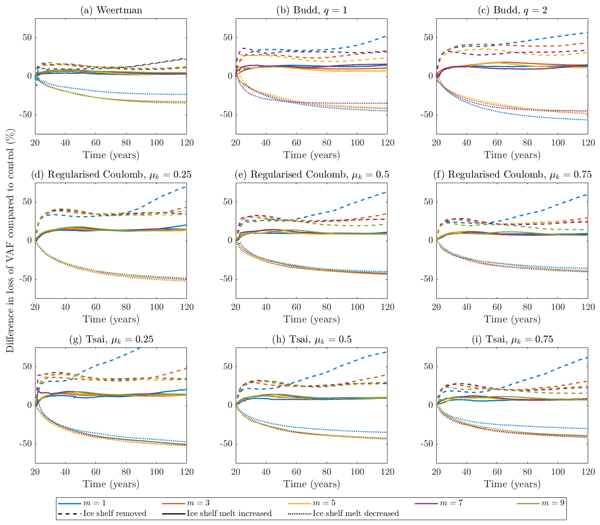
Models must represent how glaciers slide along the bed, but there are many ways to do so. In this paper, several sliding laws are tested and found to affect different regions of the Antarctic Ice Sheet in different ways and at different speeds. However, the variability in ice volume loss due to sliding-law choices is low compared to other factors, so limited empirical knowledge of sliding does not prevent us from making predictions of how an ice sheet will evolve.
Camilla A. O. Schelpe and G. Hilmar Gudmundsson
The Cryosphere, 20, 6003–6020, https://doi.org/10.5194/tc-20-6003-2026, https://doi.org/10.5194/tc-20-6003-2026, 2026
Short summary
Short summary
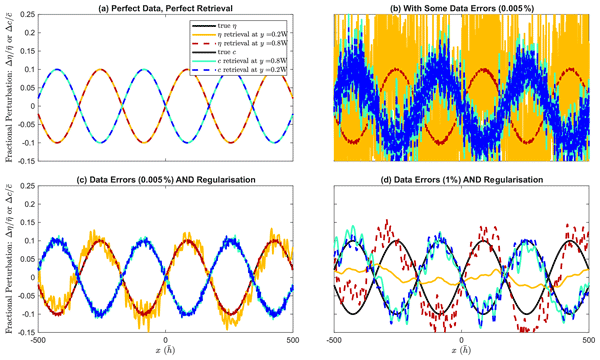
In this study, we investigate the ability to extract information about ice viscosity at the same as basal slipperiness in the inversion procedure of large-scale ice-sheet models. This is an essential part of the initialisation of many large-scale computational ice-sheet models. However, there is a lack of consensus on whether a joint inversion is possible to determine these fields. We present a theoretical framework to better understand the factors influencing the retrieval.
Deborah Rhee, Sainan Sun, and G. Hilmar Gudmundsson
EGUsphere, https://doi.org/10.5194/egusphere-2026-4978, https://doi.org/10.5194/egusphere-2026-4978, 2026
This preprint is open for discussion and under review for Geoscientific Model Development (GMD).
Short summary
Short summary
The shallow-shelf approximation (SSA) is widely used to model the evolution of fast-flowing ice. Various numerical schemes are used to solve the equations resulting from the SSA. We find the range of parameters under which each scheme remains stable and accurate. The optimum tested scheme solves the equations simultaneously using the finite element method with Lax-Wendroff time stepping. Results in this manuscript inform the development of future models and parameter choices in current models.
Daniel N. Goldberg, Paul R. Holland, and Kaitlin A. Naughten
EGUsphere, https://doi.org/10.5194/egusphere-2026-3779, https://doi.org/10.5194/egusphere-2026-3779, 2026
Short summary
Short summary
Antarctica’s Amundsen Sea glaciers are major contributors to sea-level rise. Using multi-century, high-resolution coupled ice–ocean simulations of the region, we show that 21st century predictions depend strongly on how ice-sheet models are initialized, especially for Thwaites Glacier. By the 22nd century, however, ocean warming becomes the dominant driver, leading to much faster ice loss under high-emissions scenarios, highlighting the importance of improving coupled climate–ice models.
Laure Moinat, Florian Franziskakis, Christian Vérard, Daniel Nathan Goldberg, and Maura Brunetti
Geosci. Model Dev., 19, 4357–4384, https://doi.org/10.5194/gmd-19-4357-2026, https://doi.org/10.5194/gmd-19-4357-2026, 2026
Short summary
Short summary
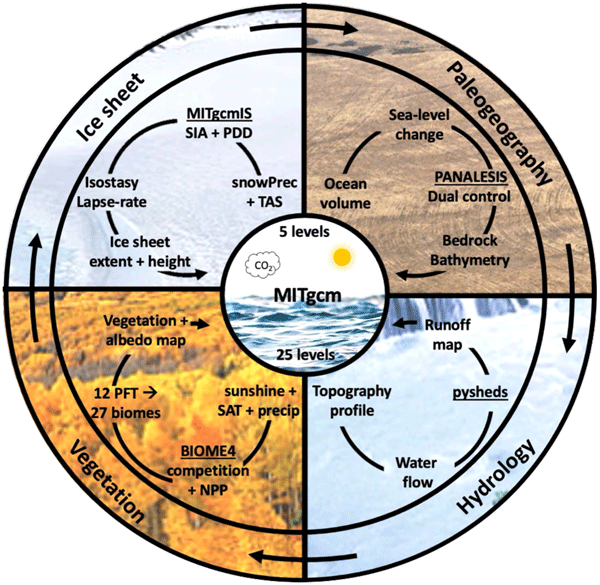
We describe a new tool, BIG-MITgcm, that consistently reproduces the global-scale dynamics of the ocean, atmosphere, vegetation and ice on multimillennial timescales at a low computational cost. Evaluated against observations and state-of-the-art Earth system models, it includes asynchronous coupling to models of vegetation, hydrology and a newly developed global-scale ice sheet. Using arbitrary continental configurations, it enables studies of past and present climates on Earth or exoplanets.
James R. Jordan, Frank Pattyn, Daniel Abele, Torsten Albrecht, Jorge Alvarez-Solas, Jowan M. Barnes, Tijn Berends, Jorge A. Bernales, Javier Blasco, Gong Cheng, Youngmin Choi, Stephen L. Cornford, Cruz Garcia-Molina, Fabien Gillet-Chaulet, G. Hilmar Gudmundsson, Angelika Humbert, Gunter R. Leguy, William H. Lipscomb, Marisa Montoya, Daniel Moreno-Parada, Mathieu Morlighem, Tyler Pelle, Alexander Robinson, Martin Rückamp, Hélène Seroussi, Yanmei Tian, Luisa Wagner, Roderick S. W. van de Wal, Liyun Zhao, and Thomas Zwinger
EGUsphere, https://doi.org/10.5194/egusphere-2026-1962, https://doi.org/10.5194/egusphere-2026-1962, 2026
Short summary
Short summary
Ice calving is a recent inclusion in ice sheet models and there has not been a systematic test of how well it has been implemented. We show that models can accurately represent a given rate of ice calving, properties at the ice front evolve smoothly during calving, and that there are no consistent differences in ice behaviour between various approaches to representing calving in numerical ice models. This gives us confidence in their ability for use in sea level rise prediction simulations.
Jaime Otero, Daniel Goldberg, Peter Nienow, and Yefan Wang
EGUsphere, https://doi.org/10.5194/egusphere-2026-2298, https://doi.org/10.5194/egusphere-2026-2298, 2026
Short summary
Short summary
As climate change creates new lakes at the front of retreating glaciers, these ice bodies often accelerate and lose mass more quickly. We used a computer model to study this process at an Icelandic glacier. Our results show that thinning ice is the main driver for recent acceleration, with 37 % of the total ice loss resulting from the presence of the lake. These findings imply that as lakes grow globally, glaciers could vanish more rapidly than predicted, enhancing the rate of sea level rise.
Claire K. Yung, Xylar S. Asay-Davis, Alistair Adcroft, Christopher Y. S. Bull, Jan De Rydt, Michael S. Dinniman, Benjamin K. Galton-Fenzi, Daniel Goldberg, David E. Gwyther, Robert Hallberg, Matthew Harrison, Tore Hattermann, David M. Holland, Denise Holland, Paul R. Holland, James R. Jordan, Nicolas C. Jourdain, Kazuya Kusahara, Gustavo Marques, Pierre Mathiot, Dimitris Menemenlis, Adele K. Morrison, Yoshihiro Nakayama, Olga Sergienko, Robin S. Smith, Alon Stern, Ralph Timmermann, and Qin Zhou
The Cryosphere, 20, 2053–2088, https://doi.org/10.5194/tc-20-2053-2026, https://doi.org/10.5194/tc-20-2053-2026, 2026
Short summary
Short summary
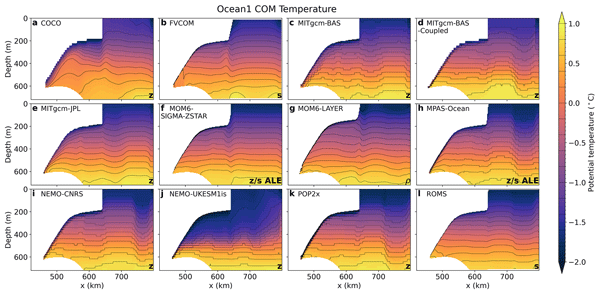
The second Ice Shelf-Ocean Model Intercomparison Project, ISOMIP+, compares 12 ice shelf-ocean models with a common, idealised, static configuration, aiming to assess inter-model variability. Models show similar basal melt rate patterns, ocean profiles and circulation but differ in ice-ocean boundary layer properties. Ice-ocean boundary layer representation is a key area for future work, as are realistic-domain ice sheet-ocean model intercomparisons.
Gillian M. A. Smith, Daniel N. Goldberg, Guillaume Jouvet, James R. Maddison, and Hamish D. Pritchard
EGUsphere, https://doi.org/10.5194/egusphere-2026-788, https://doi.org/10.5194/egusphere-2026-788, 2026
Short summary
Short summary
We estimate the thickness of a large glacier in the Himalaya, using recently available thickness measurements and a computational model which uses higher-order physics to match estimated thickness with satellite-observed velocity. Our velocity inversion achieves similar accuracy to leading thickness estimates, while thickness-constrained inversions show increased accuracy, but limited interpolative power. We make recommendations for future measurement locations and for choosing model parameters.
Brad Reed, Jan De Rydt, Kaitlin A. Naughten, and Daniel N. Goldberg
EGUsphere, https://doi.org/10.5194/egusphere-2026-931, https://doi.org/10.5194/egusphere-2026-931, 2026
Short summary
Short summary
Melting beneath Antarctic ice shelves drives ice loss and raises sea levels, but the computer models we use to predict this are poorly constrained. We improved how these models are set up by using multiple real-world observations of ice thinning and glacier speed, rather than melt rates alone. This better captures how the ice and ocean interact. Our projections show this approach adds 14 mm of extra sea-level rise by 2100, which is more than switching to a warmer climate scenario alone.
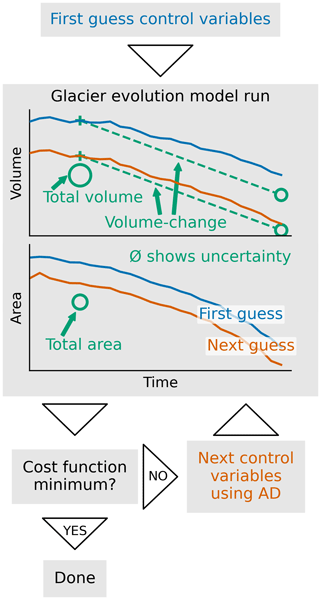
Patrick Schmitt, Fabien Maussion, Daniel N. Goldberg, and Philipp Gregor
Geosci. Model Dev., 19, 1301–1319, https://doi.org/10.5194/gmd-19-1301-2026, https://doi.org/10.5194/gmd-19-1301-2026, 2026
Short summary
Short summary
To improve large-scale understanding of glaciers, we developed a new data assimilation method that integrates available observations in a dynamically consistent way, while taking their timestamps into account. It is designed to flexibly include new glacier data as it becomes available. We tested the method with idealized experiments and found promising results in terms of accuracy and efficiency, showing strong potential for real-world applications.
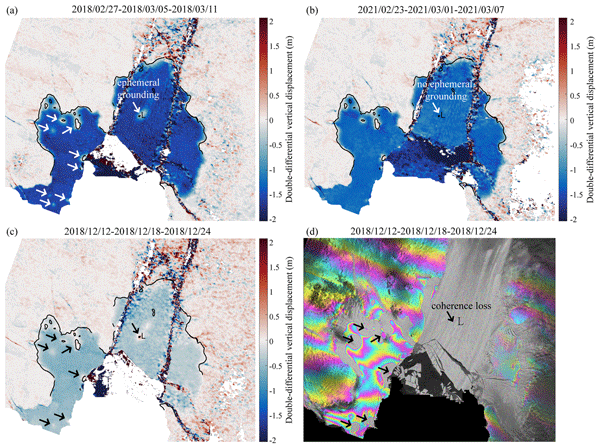
Yite Chien, Chunxia Zhou, Sainan Sun, Yiming Chen, Tao Wang, and Baojun Zhang
The Cryosphere, 20, 245–263, https://doi.org/10.5194/tc-20-245-2026, https://doi.org/10.5194/tc-20-245-2026, 2026
Short summary
Short summary
Our research examines how temporary contact between floating ice shelves and the seafloor affects ice flow and stability. Analyzing satellite data from 2014 to 2023, we found that tidal forces, ice thickness, and underwater terrain influence grounding events at Pine Island Ice Shelf. These events may have triggered rifts that led to the 2020 iceberg breakoff. Our study emphasizes the need for ongoing monitoring to better predict future changes in Antarctica’s vulnerable ice regions.
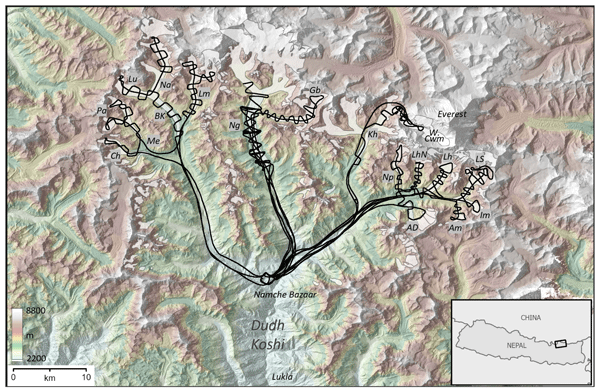
Hamish D. Pritchard, Edward C. King, David J. Goodger, Douglas Boyle, Daniel N. Goldberg, Beatriz Recinos, Andrew Orr, and Dhananjay Regmi
Earth Syst. Sci. Data, 18, 199–217, https://doi.org/10.5194/essd-18-199-2026, https://doi.org/10.5194/essd-18-199-2026, 2026
Short summary
Short summary
We present a new and uniquely extensive dataset of glacier thickness from the Khumbu Himal around Mount Everest that stretches for 119 km, doubling the extent of thickness measurements in High Mountain Asia. Such measurements are key inputs for models that estimate how much ice is stored on the whole mountain range scale and for models that predict how this ice reserve will change in future, and what impact this will have on water supply for the large populations living downstream.
Johanna Beckmann, Ronja Reese, Felicity S. McCormack, Sue Cook, Lawrence Bird, Dawid Gwyther, Daniel Richards, Matthias Scheiter, Yu Wang, Hélène Seroussi, Ayako Abe‐Ouchi, Torsten Albrecht, Jorge Alvarez‐Solas, Xylar S. Asay‐Davis, Jean‐Baptiste Barre, Constantijn J. Berends, Jorge Bernales, Javier Blasco, Justine Caillet, David M. Chandler, Violaine Coulon, Richard Cullather, Christophe Dumas, Benjamin K. Galton‐Fenzi, Julius Garbe, Fabien Gillet‐Chaulet, Rupert Gladstone, Heiko Goelzer, Nicholas R. Golledge, Ralf Greve, G. Hilmar Gudmundsson, Holly Kyeore Han, Trevor R. Hillebrand, Matthew J. Hoffman, Philippe Huybrechts, Nicolas C. Jourdain, Ann Kristin Klose, Petra M. Langebroek, Gunter R. Leguy, William H. Lipscomb, Daniel P. Lowry, Pierre Mathiot, Marisa Montoya, Mathieu Morlighem, Sophie Nowicki, Frank Pattyn, Antony J. Payne, Tyler Pelle, Aurélien Quiquet, Alexander Robinson, Leopekka Saraste, Erika G. Simon, Sainan Sun, Jake P. Twarog, Luke D. Trusel, Benoit Urruty, Jonas Van Breedam, Roderik S. W. van de Wal, Chen Zhao, and Thomas Zwinger
EGUsphere, https://doi.org/10.5194/egusphere-2025-4069, https://doi.org/10.5194/egusphere-2025-4069, 2025
Short summary
Short summary
Antarctica holds enough ice to raise sea levels by many meters, but its future is uncertain. Warm ocean water melts ice shelves from below, letting inland ice flow faster into the sea. By 2300, Antarctica could add 0.6–4.4 m to sea levels. Our study identifies two key factors—how strongly shelves melt and how the ice responds. These explain much of the range, and refining them in models may improve future predictions.
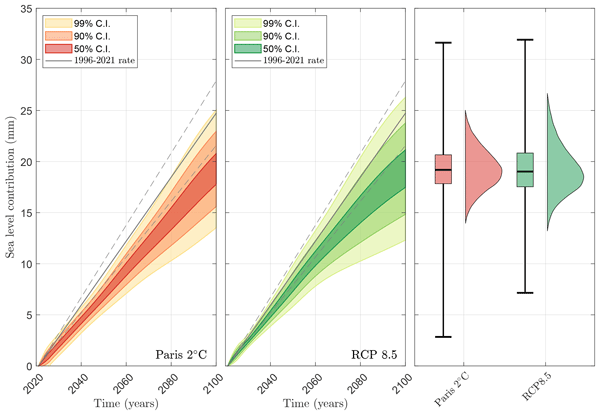
Sebastian H. R. Rosier, G. Hilmar Gudmundsson, Adrian Jenkins, and Kaitlin A. Naughten
The Cryosphere, 19, 2527–2557, https://doi.org/10.5194/tc-19-2527-2025, https://doi.org/10.5194/tc-19-2527-2025, 2025
Short summary
Short summary
Glaciers in the Amundsen Sea region of Antarctica have been retreating and losing mass, but their future contribution to global sea level rise remains highly uncertain. We use an ice sheet model and uncertainty quantification methods to evaluate the probable range of mass loss from this region for two future climate scenarios. We find that the rate of ice loss until 2100 will likely remain similar to present-day observations, with little sensitivity to climate scenario over this short time frame.
Ole Richter, Ralph Timmermann, G. Hilmar Gudmundsson, and Jan De Rydt
Geosci. Model Dev., 18, 2945–2960, https://doi.org/10.5194/gmd-18-2945-2025, https://doi.org/10.5194/gmd-18-2945-2025, 2025
Short summary
Short summary
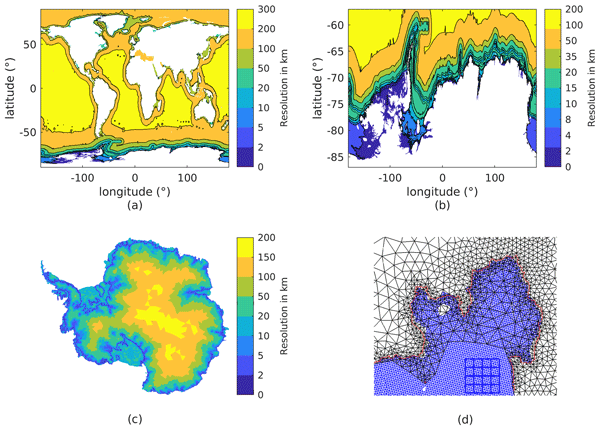
The new coupled ice sheet–ocean model addresses challenges related to horizontal resolution through advanced mesh flexibility, enabled by the use of unstructured grids. We describe the new model, verify its functioning in an idealised setting and demonstrate its advantages in a global-ocean–Antarctic ice sheet domain. The results of this study comprise an important step towards improving predictions of the Antarctic contribution to sea level rise over centennial timescales.
Richard Parsons, Sainan Sun, G. Hilmar Gudmundsson, Jan Wuite, and Thomas Nagler
The Cryosphere, 18, 5789–5801, https://doi.org/10.5194/tc-18-5789-2024, https://doi.org/10.5194/tc-18-5789-2024, 2024
Short summary
Short summary
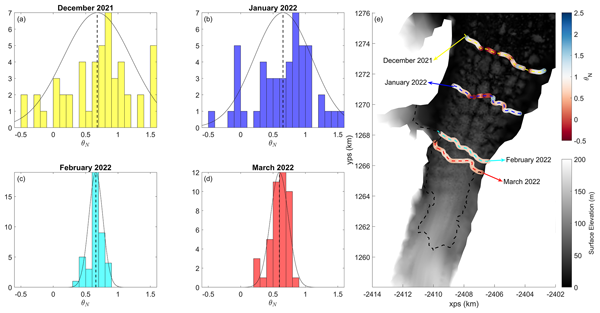
In 2022, multi-year landfast sea ice in Antarctica's Larsen B embayment disintegrated, after which time an increase in the rate at which Crane Glacier discharged ice into the ocean was observed. As the fast ice was joined to the glacier terminus, it could provide resistance against the glacier's flow, slowing down the rate of ice discharge. We used numerical modelling to quantify this resistive stress and found that the fast ice provided significant support to Crane prior to its disintegration.
Xianwei Wang, Hilmar Gudmundsson, and David Holland
EGUsphere, https://doi.org/10.5194/egusphere-2024-2790, https://doi.org/10.5194/egusphere-2024-2790, 2024
Preprint archived
Short summary
Short summary
Understanding why iceberg calved during drifting in the ocean is important to understand the life cycle and the influence on the surrounding ocean of an iceberg. This study explains why iceberg A68a calved when approaching the South Georgia Island in late 2020 during its drifting in the Southern Ocean using satellite observation and modeling, which was caused by collision with seamount.
Brad Reed, J. A. Mattias Green, Adrian Jenkins, and G. Hilmar Gudmundsson
The Cryosphere, 18, 4567–4587, https://doi.org/10.5194/tc-18-4567-2024, https://doi.org/10.5194/tc-18-4567-2024, 2024
Short summary
Short summary
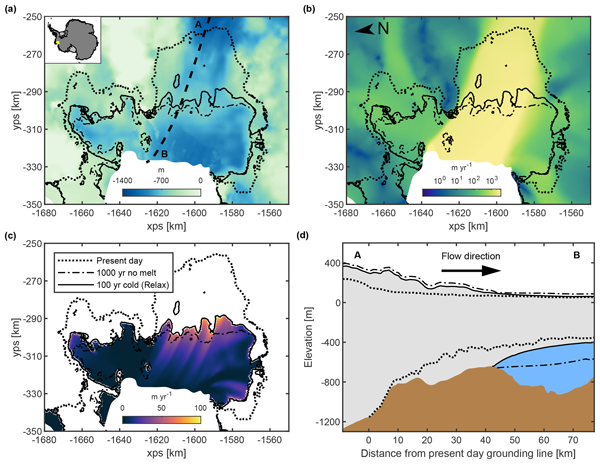
We use a numerical ice-flow model to simulate the response of a 1940s Pine Island Glacier to changes in melting beneath its ice shelf. A decadal period of warm forcing is sufficient to push the glacier into an unstable, irreversible retreat from its long-term position on a subglacial ridge to an upstream ice plain. This retreat can only be stopped when unrealistic cold forcing is applied. These results show that short warm anomalies can lead to quick and substantial increases in ice flux.
Gong Cheng, Mathieu Morlighem, and G. Hilmar Gudmundsson
Geosci. Model Dev., 17, 6227–6247, https://doi.org/10.5194/gmd-17-6227-2024, https://doi.org/10.5194/gmd-17-6227-2024, 2024
Short summary
Short summary
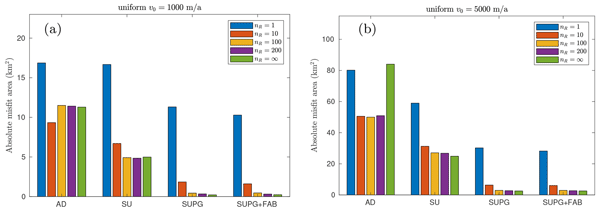
We conducted a comprehensive analysis of the stabilization and reinitialization techniques currently employed in ISSM and Úa for solving level-set equations, specifically those related to the dynamic representation of moving ice fronts within numerical ice sheet models. Our results demonstrate that the streamline upwind Petrov–Galerkin (SUPG) method outperforms the other approaches. We found that excessively frequent reinitialization can lead to exceptionally high errors in simulations.
Indrani Das, Jowan Barnes, James Smith, Renata Constantino, Sidney Hemming, and Laurie Padman
EGUsphere, https://doi.org/10.5194/egusphere-2024-1564, https://doi.org/10.5194/egusphere-2024-1564, 2024
Preprint archived
Short summary
Short summary
George VI Ice Shelf (GVIIS) on the Antarctic Peninsula is currently thinning and the glaciers feeding it are accelerating. Geologic evidence indicates that GVIIS had disintegrated several thousand years ago due to ocean and atmosphere warming. Here, we use remote sensing and numerical modeling to show that strain thinning reduces buttressing of grounded ice, creating a positive feedback of accelerated ice inflow to the southern GVIIS, likely making it more vulnerable than the northern sector.
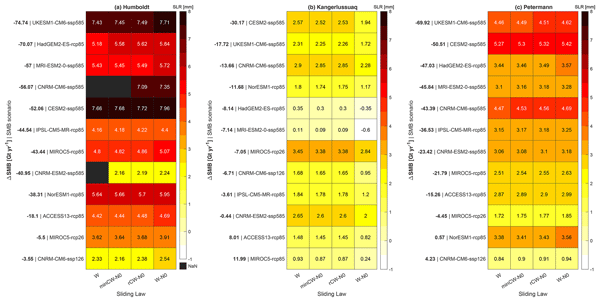
J. Rachel Carr, Emily A. Hill, and G. Hilmar Gudmundsson
The Cryosphere, 18, 2719–2737, https://doi.org/10.5194/tc-18-2719-2024, https://doi.org/10.5194/tc-18-2719-2024, 2024
Short summary
Short summary
The Greenland Ice Sheet is one of the world's largest glaciers and is melting quickly in response to climate change. It contains fast-flowing channels of ice that move ice from Greenland's centre to its coasts and allow Greenland to react quickly to climate warming. As a result, we want to predict how these glaciers will behave in the future, but there are lots of uncertainties. Here we assess the impacts of two main sources of uncertainties in glacier models.
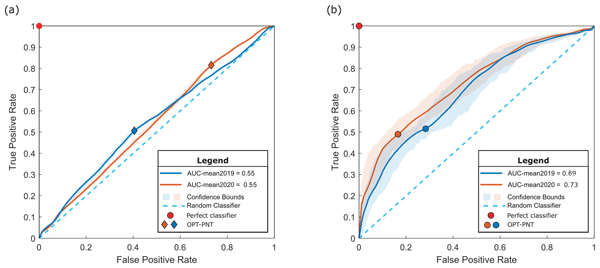
Cristina Gerli, Sebastian Rosier, G. Hilmar Gudmundsson, and Sainan Sun
The Cryosphere, 18, 2677–2689, https://doi.org/10.5194/tc-18-2677-2024, https://doi.org/10.5194/tc-18-2677-2024, 2024
Short summary
Short summary
Recent efforts have focused on using AI and satellite imagery to track crevasses for assessing ice shelf damage and informing ice flow models. Our study reveals a weak connection between these observed products and damage maps inferred from ice flow models. While there is some improvement in crevasse-dense regions, this association remains limited. Directly mapping ice damage from satellite observations may not significantly improve the representation of these processes within ice flow models.
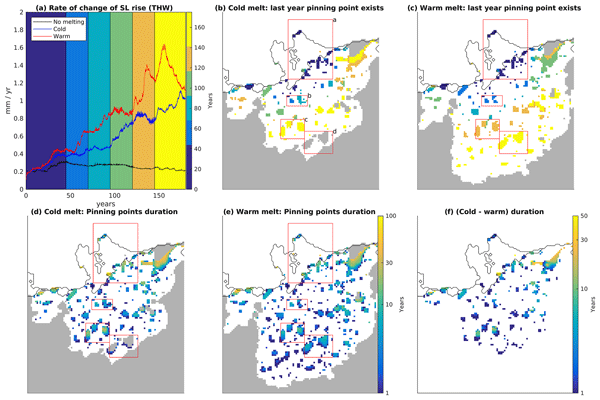
David T. Bett, Alexander T. Bradley, C. Rosie Williams, Paul R. Holland, Robert J. Arthern, and Daniel N. Goldberg
The Cryosphere, 18, 2653–2675, https://doi.org/10.5194/tc-18-2653-2024, https://doi.org/10.5194/tc-18-2653-2024, 2024
Short summary
Short summary
A new ice–ocean model simulates future ice sheet evolution in the Amundsen Sea sector of Antarctica. Substantial ice retreat is simulated in all scenarios, with some retreat still occurring even with no future ocean melting. The future of small "pinning points" (islands of ice that contact the seabed) is an important control on this retreat. Ocean melting is crucial in causing these features to go afloat, providing the link by which climate change may affect this sector's sea level contribution.
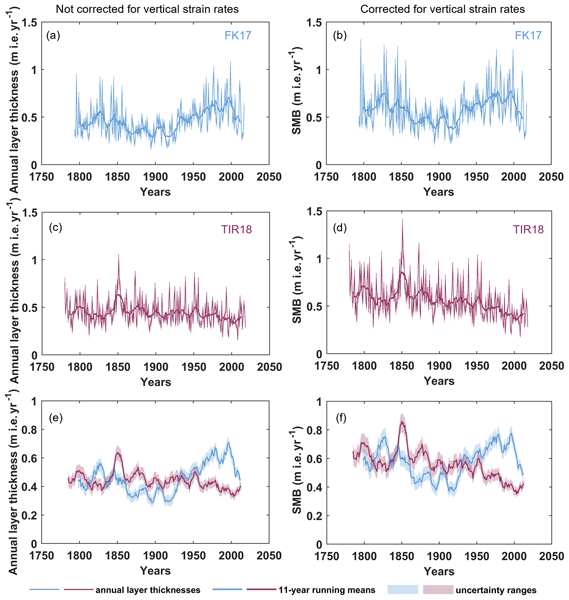
Sarah Wauthy, Jean-Louis Tison, Mana Inoue, Saïda El Amri, Sainan Sun, François Fripiat, Philippe Claeys, and Frank Pattyn
Earth Syst. Sci. Data, 16, 35–58, https://doi.org/10.5194/essd-16-35-2024, https://doi.org/10.5194/essd-16-35-2024, 2024
Short summary
Short summary
The datasets presented are the density, water isotopes, ions, and conductivity measurements, as well as age models and surface mass balance (SMB) from the top 120 m of two ice cores drilled on adjacent ice rises in Dronning Maud Land, dating from the late 18th century. They offer many development possibilities for the interpretation of paleo-profiles and for addressing the mechanisms behind the spatial and temporal variability of SMB and proxies observed at the regional scale in East Antarctica.
Hélène Seroussi, Vincent Verjans, Sophie Nowicki, Antony J. Payne, Heiko Goelzer, William H. Lipscomb, Ayako Abe-Ouchi, Cécile Agosta, Torsten Albrecht, Xylar Asay-Davis, Alice Barthel, Reinhard Calov, Richard Cullather, Christophe Dumas, Benjamin K. Galton-Fenzi, Rupert Gladstone, Nicholas R. Golledge, Jonathan M. Gregory, Ralf Greve, Tore Hattermann, Matthew J. Hoffman, Angelika Humbert, Philippe Huybrechts, Nicolas C. Jourdain, Thomas Kleiner, Eric Larour, Gunter R. Leguy, Daniel P. Lowry, Chistopher M. Little, Mathieu Morlighem, Frank Pattyn, Tyler Pelle, Stephen F. Price, Aurélien Quiquet, Ronja Reese, Nicole-Jeanne Schlegel, Andrew Shepherd, Erika Simon, Robin S. Smith, Fiammetta Straneo, Sainan Sun, Luke D. Trusel, Jonas Van Breedam, Peter Van Katwyk, Roderik S. W. van de Wal, Ricarda Winkelmann, Chen Zhao, Tong Zhang, and Thomas Zwinger
The Cryosphere, 17, 5197–5217, https://doi.org/10.5194/tc-17-5197-2023, https://doi.org/10.5194/tc-17-5197-2023, 2023
Short summary
Short summary
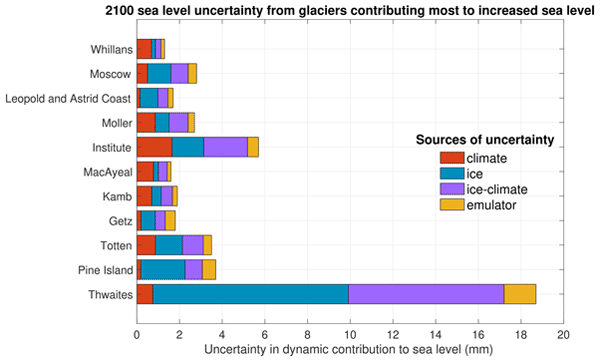
Mass loss from Antarctica is a key contributor to sea level rise over the 21st century, and the associated uncertainty dominates sea level projections. We highlight here the Antarctic glaciers showing the largest changes and quantify the main sources of uncertainty in their future evolution using an ensemble of ice flow models. We show that on top of Pine Island and Thwaites glaciers, Totten and Moscow University glaciers show rapid changes and a strong sensitivity to warmer ocean conditions.
Beatriz Recinos, Daniel Goldberg, James R. Maddison, and Joe Todd
The Cryosphere, 17, 4241–4266, https://doi.org/10.5194/tc-17-4241-2023, https://doi.org/10.5194/tc-17-4241-2023, 2023
Short summary
Short summary
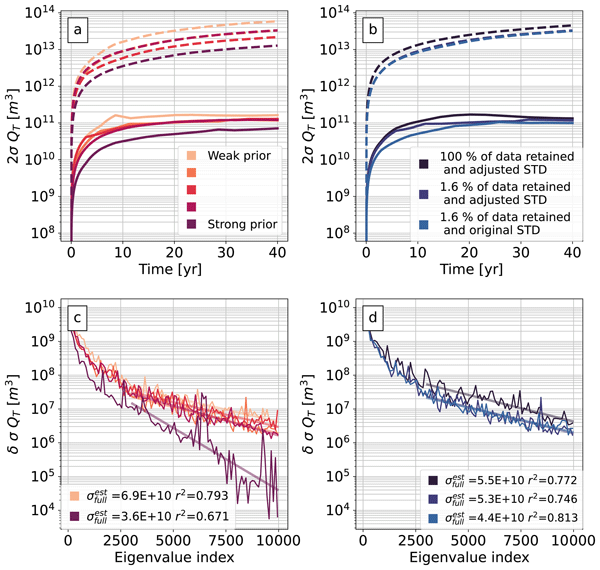
Ice sheet models generate forecasts of ice sheet mass loss, a significant contributor to sea level rise; thus, capturing the complete range of possible projections of mass loss is of critical societal importance. Here we add to data assimilation techniques commonly used in ice sheet modelling (a Bayesian inference approach) and fully characterize calibration uncertainty. We successfully propagate this type of error onto sea level rise projections of three ice streams in West Antarctica.
Ronja Reese, Julius Garbe, Emily A. Hill, Benoît Urruty, Kaitlin A. Naughten, Olivier Gagliardini, Gaël Durand, Fabien Gillet-Chaulet, G. Hilmar Gudmundsson, David Chandler, Petra M. Langebroek, and Ricarda Winkelmann
The Cryosphere, 17, 3761–3783, https://doi.org/10.5194/tc-17-3761-2023, https://doi.org/10.5194/tc-17-3761-2023, 2023
Short summary
Short summary
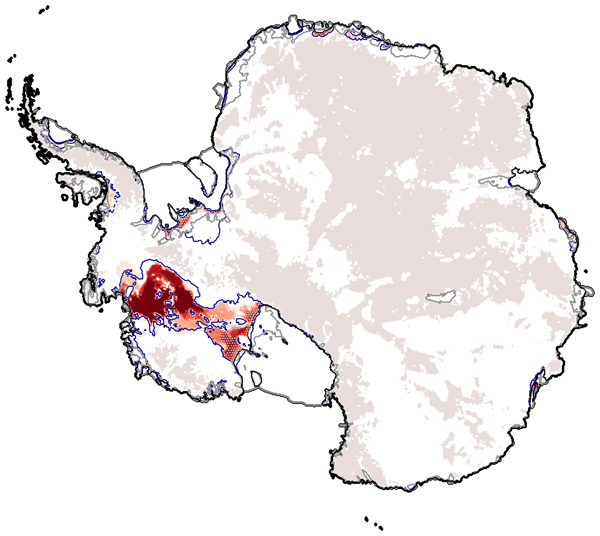
We use an ice sheet model to test where current climate conditions in Antarctica might lead. We find that present-day ocean and atmosphere conditions might commit an irreversible collapse of parts of West Antarctica which evolves over centuries to millennia. Importantly, this collapse is not irreversible yet.
Emily A. Hill, Benoît Urruty, Ronja Reese, Julius Garbe, Olivier Gagliardini, Gaël Durand, Fabien Gillet-Chaulet, G. Hilmar Gudmundsson, Ricarda Winkelmann, Mondher Chekki, David Chandler, and Petra M. Langebroek
The Cryosphere, 17, 3739–3759, https://doi.org/10.5194/tc-17-3739-2023, https://doi.org/10.5194/tc-17-3739-2023, 2023
Short summary
Short summary
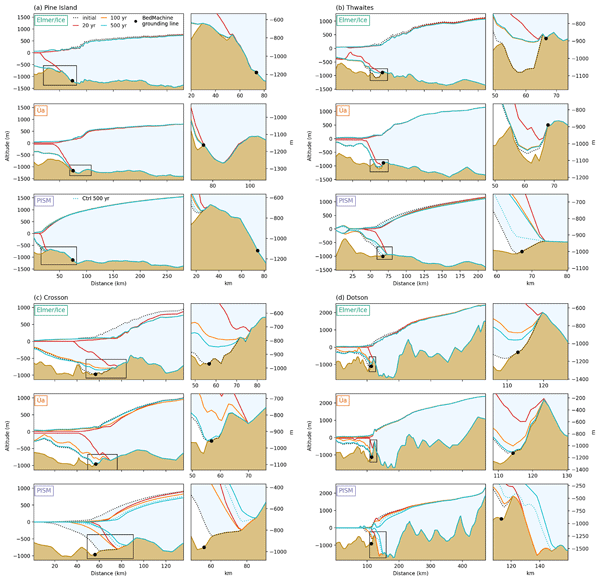
The grounding lines of the Antarctic Ice Sheet could enter phases of irreversible retreat or advance. We use three ice sheet models to show that the present-day locations of Antarctic grounding lines are reversible with respect to a small perturbation away from their current position. This indicates that present-day retreat of the grounding lines is not yet irreversible or self-enhancing.
Sebastian H. R. Rosier, Christopher Y. S. Bull, Wai L. Woo, and G. Hilmar Gudmundsson
The Cryosphere, 17, 499–518, https://doi.org/10.5194/tc-17-499-2023, https://doi.org/10.5194/tc-17-499-2023, 2023
Short summary
Short summary
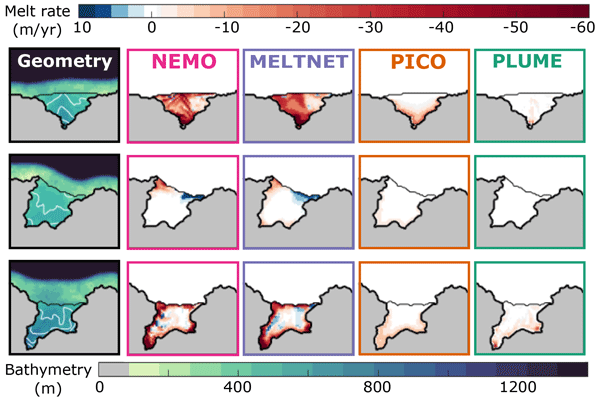
Future ice loss from Antarctica could raise sea levels by several metres, and key to this is the rate at which the ocean melts the ice sheet from below. Existing methods for modelling this process are either computationally expensive or very simplified. We present a new approach using machine learning to mimic the melt rates calculated by an ocean model but in a fraction of the time. This approach may provide a powerful alternative to existing methods, without compromising on accuracy or speed.

Bertie W. J. Miles, Chris R. Stokes, Adrian Jenkins, Jim R. Jordan, Stewart S. R. Jamieson, and G. Hilmar Gudmundsson
The Cryosphere, 17, 445–456, https://doi.org/10.5194/tc-17-445-2023, https://doi.org/10.5194/tc-17-445-2023, 2023
Short summary
Short summary
Satellite observations have shown that the Shirase Glacier catchment in East Antarctica has been gaining mass over the past 2 decades, a trend largely attributed to increased snowfall. Our multi-decadal observations of Shirase Glacier show that ocean forcing has also contributed to some of this recent mass gain. This has been caused by strengthening easterly winds reducing the inflow of warm water underneath the Shirase ice tongue, causing the glacier to slow down and thicken.

Elise Kazmierczak, Sainan Sun, Violaine Coulon, and Frank Pattyn
The Cryosphere, 16, 4537–4552, https://doi.org/10.5194/tc-16-4537-2022, https://doi.org/10.5194/tc-16-4537-2022, 2022
Short summary
Short summary
The water at the interface between ice sheets and underlying bedrock leads to lubrication between the ice and the bed. Due to a lack of direct observations, subglacial conditions beneath the Antarctic ice sheet are poorly understood. Here, we compare different approaches in which the subglacial water could influence sliding on the underlying bedrock and suggest that it modulates the Antarctic ice sheet response and increases uncertainties, especially in the context of global warming.
Jowan M. Barnes and G. Hilmar Gudmundsson
The Cryosphere, 16, 4291–4304, https://doi.org/10.5194/tc-16-4291-2022, https://doi.org/10.5194/tc-16-4291-2022, 2022
Short summary
Short summary
Models must represent how glaciers slide along the bed, but there are many ways to do so. In this paper, several sliding laws are tested and found to affect different regions of the Antarctic Ice Sheet in different ways and at different speeds. However, the variability in ice volume loss due to sliding-law choices is low compared to other factors, so limited empirical knowledge of sliding does not prevent us from making predictions of how an ice sheet will evolve.
Helen Ockenden, Robert G. Bingham, Andrew Curtis, and Daniel Goldberg
The Cryosphere, 16, 3867–3887, https://doi.org/10.5194/tc-16-3867-2022, https://doi.org/10.5194/tc-16-3867-2022, 2022
Short summary
Short summary
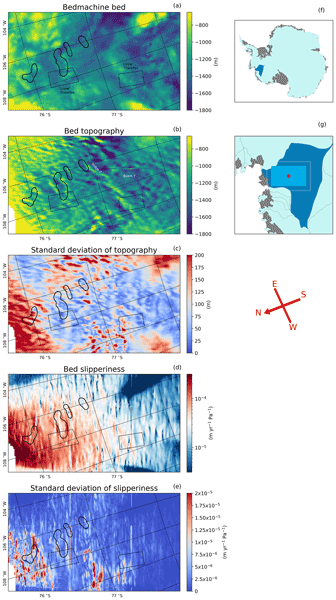
Hills and valleys hidden under the ice of Thwaites Glacier have an impact on ice flow and future ice loss, but there are not many three-dimensional observations of their location or size. We apply a mathematical theory to new high-resolution observations of the ice surface to predict the bed topography beneath the ice. There is a good correlation with ice-penetrating radar observations. The method may be useful in areas with few direct observations or as a further constraint for other methods.
Tom Mitcham, G. Hilmar Gudmundsson, and Jonathan L. Bamber
The Cryosphere, 16, 883–901, https://doi.org/10.5194/tc-16-883-2022, https://doi.org/10.5194/tc-16-883-2022, 2022
Short summary
Short summary
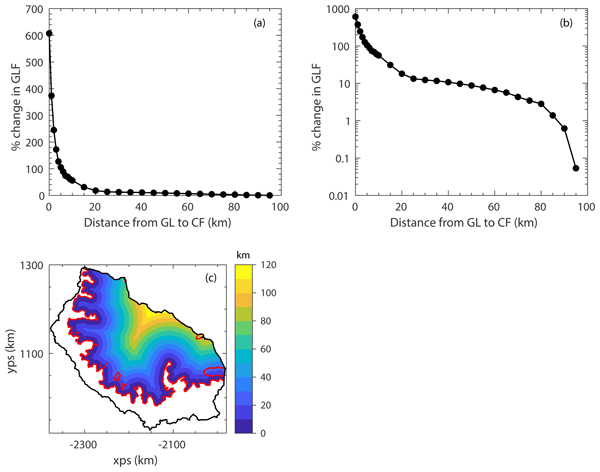
We modelled the response of the Larsen C Ice Shelf (LCIS) and its tributary glaciers to the calving of the A68 iceberg and validated our results with observations. We found that the impact was limited, confirming that mostly passive ice was calved. Through further calving experiments we quantified the total buttressing provided by the LCIS and found that over 80 % of the buttressing capacity is generated in the first 5 km of the ice shelf downstream of the grounding line.
Alexander Robinson, Daniel Goldberg, and William H. Lipscomb
The Cryosphere, 16, 689–709, https://doi.org/10.5194/tc-16-689-2022, https://doi.org/10.5194/tc-16-689-2022, 2022
Short summary
Short summary
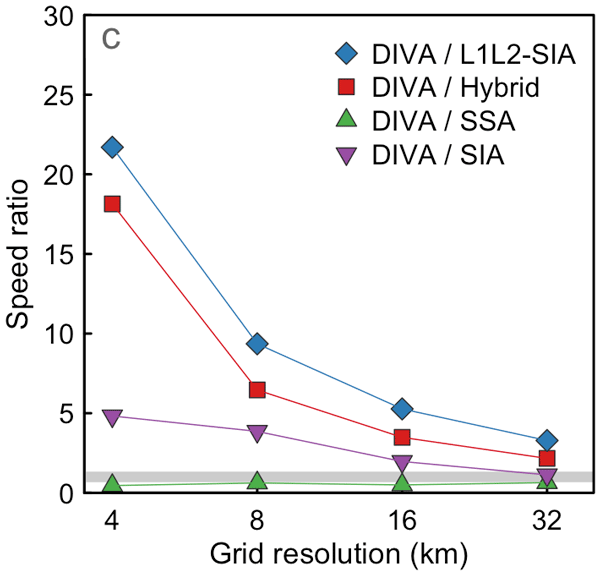
Here we investigate the numerical stability of several commonly used methods in order to determine which of them are capable of resolving the complex physics of the ice flow and are also computationally efficient. We find that the so-called DIVA solver outperforms the others. Its representation of the physics is consistent with more complex methods, while it remains computationally efficient at high resolution.
Cited articles
Barnes, J.: Modelling the sensitivity of ice loss to calving front retreat rates – Video 1, TIB AV-Portal [video], https://doi.org/10.5446/69727, 2025a. a
Barnes, J.: Modelling the sensitivity of ice loss to calving front retreat rates – Video 2, TIB AV-Portal [video], https://doi.org/10.5446/69728, 2025b. a
Barnes, J.: Modelling the sensitivity of ice loss to calving front retreat rates – Video 3, TIB AV-Portal [video], https://doi.org/10.5446/69729, 2025c. a
Barnes, J. M., Dias dos Santos, T., Goldberg, D., Gudmundsson, G. H., Morlighem, M., and De Rydt, J.: The transferability of adjoint inversion products between different ice flow models, The Cryosphere, 15, 1975–2000, https://doi.org/10.5194/tc-15-1975-2021, 2021. a
Benn, D. I., Warren, C. R., and Mottram, R. H.: Calving processes and the dynamics of calving glaciers, Earth-Science Reviews, 82, 143–179, 2007. a
Benn, D. I., Luckman, A., Åström, J. A., Crawford, A. J., Cornford, S. L., Bevan, S. L., Zwinger, T., Gladstone, R., Alley, K., Pettit, E., and Bassis, J.: Rapid fragmentation of Thwaites Eastern Ice Shelf, The Cryosphere, 16, 2545–2564, https://doi.org/10.5194/tc-16-2545-2022, 2022. a
Charette, M. A. and Smith, W. H.: The volume of Earth's ocean, Oceanography, 23, 112–114, 2010. a
Cheng, G., Morlighem, M., and Gudmundsson, G. H.: Numerical stabilization methods for level-set-based ice front migration, Geoscientific Model Development, 17, 6227–6247, https://doi.org/10.5194/gmd-17-6227-2024, 2024. a
Choi, Y., Morlighem, M., Wood, M., and Bondzio, J. H.: Comparison of four calving laws to model Greenland outlet glaciers, The Cryosphere, 12, 3735–3746, https://doi.org/10.5194/tc-12-3735-2018, 2018. a, b
Collins, W. J., Bellouin, N., Doutriaux-Boucher, M., Gedney, N., Halloran, P., Hinton, T., Hughes, J., Jones, C. D., Joshi, M., Liddicoat, S., Martin, G., O'Connor, F., Rae, J., Senior, C., Sitch, S., Totterdell, I., Wiltshire, A., and Woodward, S.: Development and evaluation of an Earth-System model – HadGEM2, Geoscientific Model Development, 4, 1051–1075, https://doi.org/10.5194/gmd-4-1051-2011, 2011. a
Crawford, A. J., Benn, D. I., Todd, J., Åström, J. A., Bassis, J. N., and Zwinger, T.: Marine ice-cliff instability modeling shows mixed-mode ice-cliff failure and yields calving rate parameterization, Nature Communications, 12, 2701, https://doi.org/10.1038/s41467-021-23070-7, 2021. a
Danabasoglu, G., Lamarque, J.-F., Bacmeister, J., Bailey, D., DuVivier, A., Edwards, J., Emmons, L., Fasullo, J., Garcia, R., Gettelman, A., et al.: The community earth system model version 2 (CESM2), Journal of Advances in Modeling Earth Systems, 12, e2019MS001916, https://doi.org/10.1029/2019MS001916, 2020. a
Depoorter, M. A., Bamber, J. L., Griggs, J. A., Lenaerts, J. T., Ligtenberg, S. R., van den Broeke, M. R., and Moholdt, G.: Calving fluxes and basal melt rates of Antarctic ice shelves, Nature, 502, 89–92, 2013. a
Duddu, R., Bassis, J., and Waisman, H.: A numerical investigation of surface crevasse propagation in glaciers using nonlocal continuum damage mechanics, Geophysical Research Letters, 40, 3064–3068, 2013. a
Engwirda, D.: Locally optimal Delaunay-refinement and optimisation-based mesh generation, Ph.D. thesis, School of Mathematics and Statistics, The University of Sydney, http://hdl.handle.net/2123/13148 (last access: 26 January 2026), 2014. a
Eyring, V., Bony, S., Meehl, G. A., Senior, C. A., Stevens, B., Stouffer, R. J., and Taylor, K. E.: Overview of the Coupled Model Intercomparison Project Phase 6 (CMIP6) experimental design and organization, Geoscientific Model Development, 9, 1937–1958, https://doi.org/10.5194/gmd-9-1937-2016, 2016. a
Gent, P. R., Danabasoglu, G., Donner, L. J., Holland, M. M., Hunke, E. C., Jayne, S. R., Lawrence, D. M., Neale, R. B., Rasch, P. J., Vertenstein, M., Worley, P. H., Yang, Z. L., and Zhang, M.: The community climate system model version 4, Journal of Climate, 24, 4973–4991, https://doi.org/10.1175/2011JCLI4083.1, 2011. a
Glen, J.: The flow law of ice: A discussion of the assumptions made in glacier theory, their experimental foundations and consequences, IASH Publ., 47, 171–183, http://go.owu.edu/~chjackso/Climate/papers/Glen_1958_The flow law of ice.pdf (last access: 26 January 2026), 1958. a
Gudmundsson, G. H.: GHilmarG/UaSource: Ua2023b (Version v2023b), Zenodo [data set], https://doi.org/10.5281/zenodo.10829346, 2024. a, b, c
Gudmundsson, H.: GHilmarG/UaSource: Ua-R2025b (Version v2025b), Zenodo [code], https://doi.org/10.5281/zenodo.18038229, 2025. a
Gudmundsson, G. H., Barnes, J. M., Goldberg, D., and Morlighem, M.: Limited impact of Thwaites Ice Shelf on future ice loss from Antarctica, Geophysical Research Letters, 50, e2023GL102880, https://doi.org/10.1029/2023GL102880, 2023. a
Iversen, T., Bentsen, M., Bethke, I., Debernard, J. B., Kirkevåg, A., Seland, Ø., Drange, H., Kristjansson, J. E., Medhaug, I., Sand, M., and Seierstad, I. A.: The Norwegian Earth System Model, NorESM1-M – Part 2: Climate response and scenario projections, Geoscientific Model Development, 6, 389–415, https://doi.org/10.5194/gmd-6-389-2013, 2013. a
Jordan, J. R.: CalvingMIP wiki, GitHub, https://github.com/JRowanJordan/CalvingMIP/wiki (last access: 26 January 2026), 2024. a
Jourdain, N. C., Asay-Davis, X., Hattermann, T., Straneo, F., Seroussi, H., Little, C. M., and Nowicki, S.: A protocol for calculating basal melt rates in the ISMIP6 Antarctic ice sheet projections, The Cryosphere, 14, 3111–3134, https://doi.org/10.5194/tc-14-3111-2020, 2020. a, b
Krug, J., Weiss, J., Gagliardini, O., and Durand, G.: Combining damage and fracture mechanics to model calving, The Cryosphere, 8, 2101–2117, https://doi.org/10.5194/tc-8-2101-2014, 2014. a
Levermann, A., Albrecht, T., Winkelmann, R., Martin, M. A., Haseloff, M., and Joughin, I.: Kinematic first-order calving law implies potential for abrupt ice-shelf retreat, The Cryosphere, 6, 273–286, https://doi.org/10.5194/tc-6-273-2012, 2012. a, b
Liu, S., Su, S., Cheng, Y., Tong, X., and Li, R.: Long-Term Monitoring and Change Analysis of Pine Island Ice Shelf Based on Multi-Source Satellite Observations during 1973–2020, Journal of Marine Science and Engineering, 10, 976, https://doi.org/10.3390/jmse10070976, 2022. a
Luo, K., Shao, C., Chai, M., and Fan, J.: Level set method for atomization and evaporation simulations, Progress in Energy and Combustion Science, 73, 65–94, https://doi.org/10.1016/j.pecs.2019.03.001, 2019. a
MacAyeal, D. R.: Large-scale ice flow over a viscous basal sediment: Theory and application to ice stream B, Antarctica, Journal of Geophysical Research: Solid Earth, 94, 4071–4087, 1989. a
Morlighem, M.: MEaSUREs BedMachine Antarctica, Version 3, National Snow and Ice Data Center (NSIDC) [data set], https://doi.org/10.5067/FPSU0V1MWUB6, 2022. a
Morlighem, M., Bondzio, J., Seroussi, H., Rignot, E., Larour, E., Humbert, A., and Rebuffi, S.: Modeling of Store Gletscher's calving dynamics, West Greenland, in response to ocean thermal forcing, Geophysical Research Letters, 43, 2659–2666, 2016. a
Morlighem, M., Rignot, E., Binder, T., Blankenship, D. D., Drews, R., Eagles, G., Eisen, O., Ferraccioli, F., Forsberg, R., Fretwell, P., Goel, V., Greenbaum, J. S., Gudmundsson, H., Guo, J., Helm, V., Hofstede, C., Howat, I., Humbert, A., Jokat, W., Karlsson, N. B., Lee, W., Matsuoka, K., Millan, R., Mouginot, J., Paden, J., Pattyn, F., Roberts, J. L., Rosier, S., Ruppel, A., Seroussi, H., Smith, E. C., Steinhage, D., Sun, B., van den Broeke, M. R., van Ommen, T., van Wessem, M., and Young, D. A.: Deep glacial troughs and stabilizing ridges unveiled beneath the margins of the Antarctic ice sheet, Nature Geoscience, 13, 132–137, 2020. a
Morlighem, M., Goldberg, D., Dias dos Santos, T., Lee, J., and Sagebaum, M.: Mapping the sensitivity of the Amundsen sea embayment to changes in external forcings using automatic differentiation, Geophysical Research Letters, 48, e2021GL095440, https://doi.org/10.1029/2021GL095440, 2021. a, b
Naughten, K. A., Holland, P. R., and De Rydt, J.: Unavoidable future increase in West Antarctic ice-shelf melting over the twenty-first century, Nature Climate Change, 13, 1222–1228, 2023. a
Nias, I., Cornford, S., and Payne, A.: New mass-conserving bedrock topography for Pine Island Glacier impacts simulated decadal rates of mass loss, Geophysical Research Letters, 45, 3173–3181, 2018. a
Nick, F. M., Van der Veen, C. J., Vieli, A., and Benn, D. I.: A physically based calving model applied to marine outlet glaciers and implications for the glacier dynamics, Journal of Glaciology, 56, 781–794, 2010. a
Nowicki, S. and ISMIP6-Team: ISMIP6 23rd Century Forcing Datasets, Zenodo [data set], https://doi.org/10.5281/zenodo.13135571, 2024. a
Pattyn, F., Favier, L., Sun, S., and Durand, G.: Progress in numerical modeling of Antarctic ice-sheet dynamics, Current Climate Change Reports, 3, 174–184, 2017. a
Rignot, E., Vaughan, D. G., Schmeltz, M., Dupont, T., and MacAyeal, D.: Acceleration of Pine island and Thwaites glaciers, west Antarctica, Annals of Glaciology, 34, 189–194, 2002. a
Rignot, E., Jacobs, S., Mouginot, J., and Scheuchl, B.: Ice-shelf melting around Antarctica, Science, 341, 266–270, 2013. a
Rignot, E., Mouginot, J., Scheuchl, B., van den Broeke, M., van Wessem, M. J., and Morlighem, M.: Four decades of Antarctic Ice Sheet mass balance from 1979–2017, Proceedings of the National Academy of Sciences, 116, 1095–1103, 2019. a
Sellar, A. A., Jones, C. G., Mulcahy, J. P., Tang, Y., Yool, A., Wiltshire, A., O’Connor, F. M., Stringer, M., Hill, R., Palmieri, J., Woodward, S., de Mora, L., Kuhlbrodt, T., Rumbold, S. T., Kelley, D. I., Ellis, R., Johnson, C. E., Walton, J., Abraham, N. L., Andrews, M. B., Andrews, T., Archibald, A. T., Berthou, S., Burke, E., Blockley, E., Carslaw, K., Dalvi, M., Edwards, J., Folberth, G. A., Gedney, N., Griffiths, P. T., Harper, A., B., Hendry, M. A., Hewitt, A. J., Johnson, B., Jones, A., Jones, C. D., Keeble, J., Liddicoat, S., Morgenstern, O., Parker, R. J., Predoi, V., Robertson, E., Siahaan, A., Smith, R. S., Swaminathan, R., Woodhouse, M. T., Zeng, G., and Zerroukat, M.: UKESM1: Description and evaluation of the UK Earth System Model, Journal of Advances in Modeling Earth Systems, 11, 4513–4558, 2019. a
Seroussi, H., Nowicki, S., Payne, A. J., Goelzer, H., Lipscomb, W. H., Abe-Ouchi, A., Agosta, C., Albrecht, T., Asay-Davis, X., Barthel, A., Calov, R., Cullather, R., Dumas, C., Galton-Fenzi, B. K., Gladstone, R., Golledge, N. R., Gregory, J. M., Greve, R., Hattermann, T., Hoffman, M. J., Humbert, A., Huybrechts, P., Jourdain, N. C., Kleiner, T., Larour, E., Leguy, G. R., Lowry, D. P., Little, C. M., Morlighem, M., Pattyn, F., Pelle, T., Price, S. F., Quiquet, A., Reese, R., Schlegel, N.-J., Shepherd, A., Simon, E., Smith, R. S., Straneo, F., Sun, S., Trusel, L. D., Van Breedam, J., van de Wal, R. S. W., Winkelmann, R., Zhao, C., Zhang, T., and Zwinger, T.: ISMIP6 Antarctica: a multi-model ensemble of the Antarctic ice sheet evolution over the 21st century, The Cryosphere, 14, 3033–3070, https://doi.org/10.5194/tc-14-3033-2020, 2020. a
Seroussi, H., Pelle, T., Lipscomb, W. H., Abe-Ouchi, A., Albrecht, T., Alvarez-Solas, J., Asay-Davis, X., Barre, J.-B., Berends, C. J., Bernales, J., et al.: Evolution of the Antarctic Ice Sheet over the next three centuries from an ISMIP6 model ensemble, Earth's Future, 12, e2024EF004561, https://doi.org/10.1029/2024EF004561, 2024. a
Shepherd, A., Ivins, E., Rignot, E., et al.: Mass balance of the Antarctic Ice Sheet from 1992 to 2017, Nature, 558, 219–222, 2018. a
Sun, S., Cornford, S. L., Liu, Y., and Moore, J. C.: Dynamic response of Antarctic ice shelves to bedrock uncertainty, The Cryosphere, 8, 1561–1576, https://doi.org/10.5194/tc-8-1561-2014, 2014. a
Sun, S., Pattyn, F., Simon, E. G., Albrecht, T., Cornford, S., Calov, R., Dumas, C., Gillet-Chaulet, F., Goelzer, H., Golledge, N. R, Greve, R., Hoffman, M. J., Humbert, A., Kazmierczak, E., Kleiner, T., Leguy, G. R., Lipscomb, W. H., Martin, D., Morlighem, M., Nowicki, S., Pollard, D., Price, S., Quiquet, A., Seroussi, H., Schlemm, T., Sutter, J., van de Wal, R. S. W., Winkelmann, R., and Zhang, T.: Antarctic ice sheet response to sudden and sustained ice-shelf collapse (ABUMIP), Journal of Glaciology, 66, 891–904, 2020. a
Sutterley, T. C., Velicogna, I., Rignot, E., Mouginot, J., Flament, T., Van Den Broeke, M. R., Van Wessem, J. M., and Reijmer, C. H.: Mass loss of the Amundsen Sea Embayment of West Antarctica from four independent techniques, Geophysical Research Letters, 41, 8421–8428, 2014. a
Taylor, K. E., Stouffer, R. J., and Meehl, G. A.: An overview of CMIP5 and the experiment design, Bulletin of the American Meteorological Society, 93, 485–498, 2012. a
Weertman, J.: On the sliding of glaciers, Journal of Glaciology, 3, 33–38, 1957. a
Wernecke, A., Edwards, T. L., Holden, P. B., Edwards, N. R., and Cornford, S. L.: Quantifying the impact of bedrock topography uncertainty in Pine Island Glacier projections for this century, Geophysical Research Letters, 49, e2021GL096589, https://doi.org/10.1029/2021GL096589, 2022. a
Wild, C. T., Alley, K. E., Muto, A., Truffer, M., Scambos, T. A., and Pettit, E. C.: Weakening of the pinning point buttressing Thwaites Glacier, West Antarctica, The Cryosphere, 16, 397–417, https://doi.org/10.5194/tc-16-397-2022, 2022. a
Wilner, J. A., Morlighem, M., and Cheng, G.: Evaluation of four calving laws for Antarctic ice shelves, The Cryosphere, 17, 4889–4901, https://doi.org/10.5194/tc-17-4889-2023, 2023. a
Yu, H., Rignot, E., Morlighem, M., and Seroussi, H.: Iceberg calving of Thwaites Glacier, West Antarctica: full-Stokes modeling combined with linear elastic fracture mechanics, The Cryosphere, 11, 1283–1296, https://doi.org/10.5194/tc-11-1283-2017, 2017. a
Short summary
Calving is where ice breaks off the front of glaciers. It has not been included widely in modelling as it is difficult to represent. We use our ice flow model to investigate the effects of calving floating ice shelves in West Antarctica. More calving leads to more ice loss and greater sea level rise, with local differences due to the shape of the bedrock. We find that ocean forcing and calving should be considered equally when trying to improve how models represent the real world.
Calving is where ice breaks off the front of glaciers. It has not been included widely in...


