
Articles | Volume 20, issue 11
https://doi.org/10.5194/tc-20-6157-2026
© Author(s) 2026. This work is distributed under
the Creative Commons Attribution 4.0 License.
the Creative Commons Attribution 4.0 License.
https://doi.org/10.5194/tc-20-6157-2026
© Author(s) 2026. This work is distributed under
the Creative Commons Attribution 4.0 License.
the Creative Commons Attribution 4.0 License.
Research article
| 
30 Oct 2026
Research article |
| 30 Oct 2026
| 30 Oct 2026
Assessment of snow depth retrievability from passive microwave observations over Arctic sea ice: a global sensitivity analysis
Ziyu Yan
School of Geospatial Engineering and Science, Sun Yat-sen University, Zhuhai, China
Southern Marine Science and Engineering Guangdong Laboratory (Zhuhai), Zhuhai, China
Key Laboratory of Comprehensive Observation of Polar Environment, Sun Yat-sen University, Ministry of Education, Zhuhai, China

School of Geospatial Engineering and Science, Sun Yat-sen University, Zhuhai, China
Southern Marine Science and Engineering Guangdong Laboratory (Zhuhai), Zhuhai, China
Key Laboratory of Comprehensive Observation of Polar Environment, Sun Yat-sen University, Ministry of Education, Zhuhai, China
Georg Heygster
Institute of Environmental Physics, University of Bremen, Bremen, Germany
Bin Cheng
Finnish Meteorological Institute, Helsinki, Finland
Carolina Gabarró
Barcelona Polar Lab, Institute of Marine Sciences, Barcelona, Spain
Ferran Hernández-Macià
Barcelona Polar Lab, Institute of Marine Sciences, Barcelona, Spain
Xiao Cheng
School of Geospatial Engineering and Science, Sun Yat-sen University, Zhuhai, China
Southern Marine Science and Engineering Guangdong Laboratory (Zhuhai), Zhuhai, China
Key Laboratory of Comprehensive Observation of Polar Environment, Sun Yat-sen University, Ministry of Education, Zhuhai, China
Related authors
No articles found.
Lian He, Xinning Peng, Yi Zhou, Fengming Hui, Zhuoqi Chen, Liangbing Chen, Xianwei Wang, and Xiao Cheng
Earth Syst. Sci. Data Discuss., https://doi.org/10.5194/essd-2026-626, https://doi.org/10.5194/essd-2026-626, 2026
Preprint under review for ESSD
Short summary
Short summary
This study presents the SYSU SnowDepth dataset (1978–2025), the longest pan-Arctic snow depth on sea ice record covering both first-year ice and multi-year ice. Derived from passive microwave sensors using a new algorithm incorporating GRV(37/19), snow density, and time factor, it was validated against independent observations. Accuracy was high with root-mean-error-square (RMSE) values ranging from ~3 to 17 cm, offering vital support for climate and sea ice modeling.
Marta Umbert, Nina Hoareau, Júlia Crespin, Maria Sánchez-Urrea, Ferran Hernández-Macià, Carolina Gabarró, and Eva De-Andrés
Earth Syst. Sci. Data, 18, 6321–6343, https://doi.org/10.5194/essd-18-6321-2026, https://doi.org/10.5194/essd-18-6321-2026, 2026
Short summary
Short summary
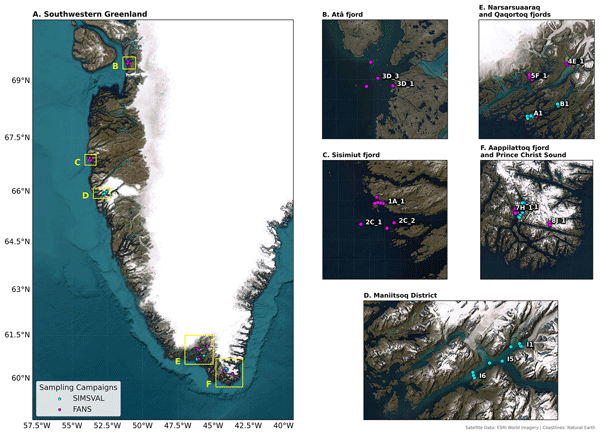
Greenland fjords are changing rapidly, but observations in winter and early spring are rare. We collected 73 temperature and salinity profiles from southwest Greenland fjords during two ship campaigns in March and April 2025. The data reveal the start of spring surface freshening, strongest near glacier-fed fjords, while deeper waters changed little. The open dataset will help improve studies of glacier melt, ocean change, and climate models.
Shuo Wei, Lei Zheng, Qi Liang, Teng Li, and Xiao Cheng
Earth Syst. Sci. Data Discuss., https://doi.org/10.5194/essd-2026-353, https://doi.org/10.5194/essd-2026-353, 2026
Preprint under review for ESSD
Short summary
Short summary
Supraglacial lakes on Antarctica affect ice stability. Because tracking their rapid changes is difficult, we combined satellite images using artificial intelligence to map these lakes every eight days from 2000 to 2023. We found that most lakes are very short-lived and primarily form near the edges of the ice. This record helps scientists understand fast-melting processes and their impact on future global sea level rise.
Mengmeng Li, Jianwei Ma, Yang Li, Juha Karvonen, Bin Cheng, Yingfei Wang, Haili Li, Yafei Nie, and Zheng Duan
EGUsphere, https://doi.org/10.5194/egusphere-2026-2504, https://doi.org/10.5194/egusphere-2026-2504, 2026
Short summary
Short summary
We retrieved Arctic snow depth (2012–2021) using satellite data and four machine learning methods. A simple linear regression performed best against independent aircraft data, while complex models overfit. A measurement at 89 GHz was key for older ice. Using our snow depth data greatly reduced errors in ice thickness estimates. This provides a reliable Arctic snow depth dataset.
Xiyue Zhang, Minghu Ding, Diyi Yang, Bin Cheng, Ian Allison, Kongju Zhu, Yuande Yang, Xiangbin Cui, Petra Heil, Chuanjin Li, and Cunde Xiao
EGUsphere, https://doi.org/10.5194/egusphere-2026-2150, https://doi.org/10.5194/egusphere-2026-2150, 2026
Short summary
Short summary
Stake measurements underestimate Antarctic surface mass balance (SMB) due to firn compaction. Using a firn densification model, we correct 2008-2024 stake records from Dome A. The corrected mean annual SMB is 24.14 kg m-2 yr-1, 8.8 % higher than uncorrected values, whereas RACMO2.4p1 gives 17.50 kg m-2 yr-1. The net vapor flux is equivalent to 5.7 % of the total mass input. This framework provides observational benchmarks for climate models, and supports oldest‑ice drilling at Dome A.
Chengyan Liu, Zhaomin Wang, Dake Chen, Xianxian Han, Hengling Leng, Xi Liang, Liangjun Yan, Xiang Li, Craig Stevens, Andrew McC. Hogg, Kazuya Kusahara, Kaihe Yamazaki, Kay I. Ohshima, Meng Zhou, Xiao Cheng, Dongxiao Wang, Changming Dong, Jiping Liu, Qinghua Yang, Xichen Li, Ruibo Lei, Minghu Ding, Zhaoru Zhang, Dujuan Kang, Di Qi, Tongya Liu, Jihai Dong, Lu An, Ru Chen, Tong Zhang, Xiaoming Hu, Bo Han, Haibo Bi, Qi Shu, Longjiang Mu, Shiming Xu, Hu Yang, Hailong Liu, Tingfeng Dou, Zhixuan Feng, Lei Zheng, Xueyuan Tang, Guitao Shi, Yongqing Cai, Bingrui Li, Yang Wu, Xia Lin, Wenjin Sun, Yu Liu, Kai Yu, Yu Zhang, Weizeng Shao, Xiaoyu Wang, Shaojun Zheng, Chengyi Yuan, Chunxia Zhou, Jian Liu, Yang Liu, Yue Xia, Xiaoyu Pan, Jiabao Zeng, Kechen Liu, Jiahao Fan, Chen Cheng, and Qi Li
Geosci. Model Dev., 19, 2985–3033, https://doi.org/10.5194/gmd-19-2985-2026, https://doi.org/10.5194/gmd-19-2985-2026, 2026
Short summary
Short summary
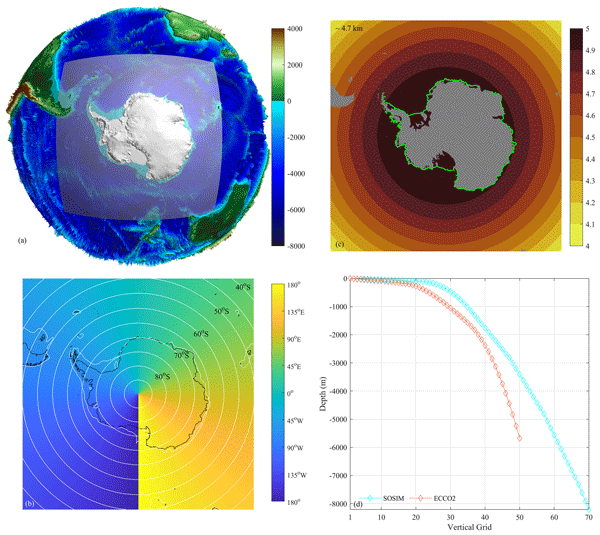
We developed a high-resolution computer model to simulate how the ocean, sea ice, and ice shelves interact around Antarctica. This helps us understand their critical role in global climate and sea-level rise. Our model successfully captures essential features like major currents and seasonal ice changes. Despite some remaining biases, it provides a useful tool for predicting future changes in this vital and rapidly evolving region.
Ferran Hernández-Macià, Marcus Huntemann, Carolina Gabarró, Gunnar Spreen, and Randall K. Scharien
EGUsphere, https://doi.org/10.5194/egusphere-2026-1336, https://doi.org/10.5194/egusphere-2026-1336, 2026
Preprint archived
Short summary
Short summary
Radiometric low-frequency microwave measurements collected in the Canadian Arctic are used to evaluate how well different models reproduce the emission of snow-covered sea ice. Standard models assume that radiation from different layers does not interfere, but the in situ observations can only be explained when interference effects are included. The results show that this coherent approach reproduces the measurements better, highlighting an effect often neglected in current approaches.
Ferran Hernández-Macià, Maria José Escorihuela, Carolina Gabarró, Gemma Sanjuan Gomez, and Albert Garcia-Mondéjar
EGUsphere, https://doi.org/10.5194/egusphere-2026-422, https://doi.org/10.5194/egusphere-2026-422, 2026
Short summary
Short summary
We propose a new way to improve measurements of thin sea ice from space, as current estimates are uncertain. By combining observations from two satellites, where one helps interpret the signal of the other, we better estimated key ice properties. Tests with field data show more accurate and stable thickness results for young ice, improving polar monitoring and supporting future Earth observation missions.
Hong Lin, Jinyang Du, John S. Kimball, Xiao Cheng, J. Patrick Donnelly, Jennifer D. Watts, and Annett Bartsch
Earth Syst. Sci. Data, 18, 535–549, https://doi.org/10.5194/essd-18-535-2026, https://doi.org/10.5194/essd-18-535-2026, 2026
Short summary
Short summary
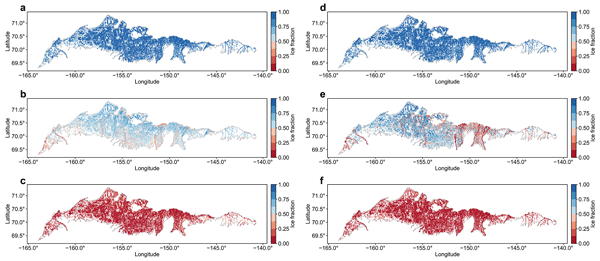
Ice cover on small water bodies is highly sensitive to climate change and influences ecosystems, water, and the carbon cycle. We produced a satellite-based ice fraction dataset for small water bodies on the Arctic Coastal Plain from 2017 to 2023. The dataset captures freeze-up and break-up timing and reveals spatial variability. It will support studies of climate–ice interactions and improve models of water and carbon processes.
Valentin Ludwig, Caroline Ribere, Sara Fleury, Christian Haas, Michel Tsamados, Mahmoud El Hajj, Jerome Bouffard, Michele Scagliola, Marion Bocquet, Eric de Boisseson, Vincent Boulenger, Guillaume Boutin, Laurence Connor, Léo Edel, Stefan Hendricks, Ferran Hernández Macià, Marcus Huntemann, Lars Kaleschke, Frank Kauker, Jack Landy, Tom Megain, Alek Petty, Till Soya Rasmussen, Mads Hvid Ribergaard, Robert Ricker, Axel Schweiger, Hoyeon Shi, Xiangshan Tian-Kunze, Donghui Yi, and Alessandro Di Bella
EGUsphere, https://doi.org/10.5194/egusphere-2025-6201, https://doi.org/10.5194/egusphere-2025-6201, 2026
Short summary
Short summary
Our paper compares Arctic sea-ice thickness datasets from models, reanalyses, satellite-only, and multi-product sources. We validate them against Beaufort Sea reference data, compare large-scale products, and analyse time series. Cross-product biases range from 0.2–0.4 m, RMSDs from 0.4–0.9 m, and correlations from 0.5–0.8. We find no 2010–2023 trend, but 1995–2023 thinning of ~ 0.5 m in November and ~ 0.3 m in March.
Zilong Chen, Xuying Liu, Zhenfu Guan, Teng Li, Xiao Cheng, Tian Li, Yan Liu, Qi Liang, Lei Zheng, and Jiping Liu
Earth Syst. Sci. Data, 18, 147–166, https://doi.org/10.5194/essd-18-147-2026, https://doi.org/10.5194/essd-18-147-2026, 2026
Short summary
Short summary
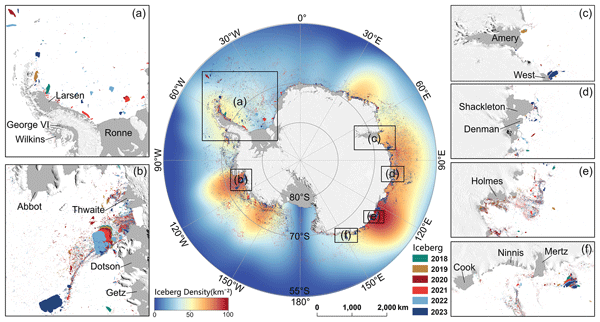
Our study uses Google Earth Engine to create a dataset of Antarctic icebergs in the Southern Ocean (south of 55° S) from October 2018 to 2023. The dataset includes icebergs larger than 0.04 km², with details on their locations, sizes, and shapes. It shows significant changes in iceberg number and area, mainly driven by major ice shelf calving events – especially in the Weddell Sea. This resource fills key gaps in understanding iceberg impacts on the ocean and climate.
Yubing Cheng, Bin Cheng, Roberta Pirazzini, Amy R. Macfarlane, Timo Vihma, Wolfgang Dorn, Ruzica Dadic, Martin Schneebeli, Stefanie Arndt, and Annette Rinke
The Cryosphere, 19, 6001–6021, https://doi.org/10.5194/tc-19-6001-2025, https://doi.org/10.5194/tc-19-6001-2025, 2025
Short summary
Short summary
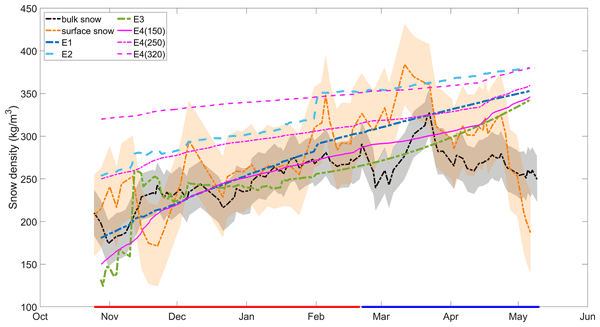
We study snow density from the MOSAiC expedition. Several snow density schemes were tested and compared with observation. A thermodynamic ice model was employed to assess the impact of snow density and precipitation on the thermal regime of sea ice. The parameterized mean snow densities are consistent with observations. Increased snow density reduces snow and ice temperatures, promoting ice growth, while increased precipitation leads to warmer snow and ice temperatures and reduced ice thickness.
Verónica González-Gambau, Estrella Olmedo, Aina García-Espriu, Cristina González-Haro, Antonio Turiel, Carolina Gabarró, Alessandro Silvano, Aditya Narayanan, Alberto Naveira-Garabato, Rafael Catany, Nina Hoareau, Marta Umbert, Giuseppe Aulicino, Yuri Cotroneo, Roberto Sabia, and Diego Fernández-Prieto
Earth Syst. Sci. Data, 17, 5089–5111, https://doi.org/10.5194/essd-17-5089-2025, https://doi.org/10.5194/essd-17-5089-2025, 2025
Short summary
Short summary
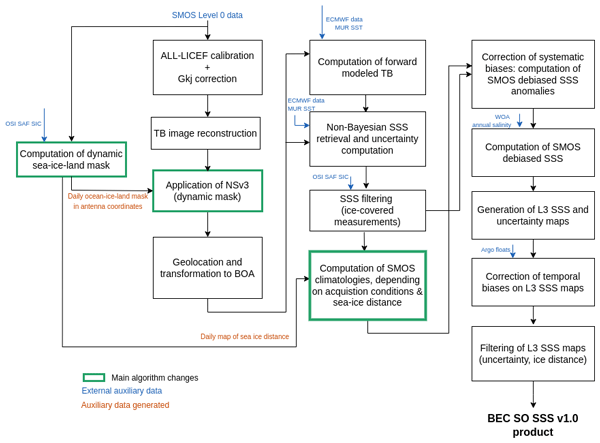
This paper introduces a new Sea Surface Salinity product for the Southern Ocean, based on SMOS data and developed by the Barcelona Expert Center. It offers 9 d maps on a 25 km EASE-SL grid, from 2011 to 2023, covering areas south of 30° S. The product is accurate beyond 150 km from sea ice, with nearly zero bias and a ~0.22 STD. It tracks well seasonal and interannual changes and will contribute to the understanding of processes influenced by upper-ocean salinity, including ice formation/melt.
Fangru Mu, Chengfei Jiang, Bin Cheng, Keguang Wang, Caixin Wang, Yuhan Chen, Zhiyuan Shao, and Jiechen Zhao
EGUsphere, https://doi.org/10.5194/egusphere-2025-3214, https://doi.org/10.5194/egusphere-2025-3214, 2025
Preprint archived
Short summary
Short summary
Icebergs pose risks to ships and are an important part of the polar environment. We developed an iceberg detection algorithm based on the Swin transformer model (IDAS-Transformer). The IDAS-Transformer is capable of handling complex surface characteristic mixtures, including fast ice, pack ice, and open water, to identify icebergs.
Cecilia Äijälä, Yafei Nie, Lucía Gutiérrez-Loza, Chiara De Falco, Siv Kari Lauvset, Bin Cheng, David Anthony Bailey, and Petteri Uotila
Geosci. Model Dev., 18, 4823–4853, https://doi.org/10.5194/gmd-18-4823-2025, https://doi.org/10.5194/gmd-18-4823-2025, 2025
Short summary
Short summary
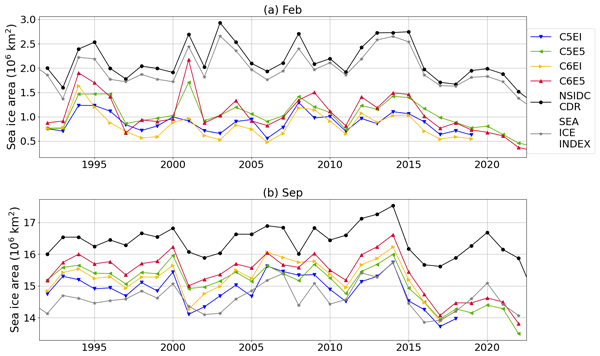
The sea ice around Antarctica has experienced record lows in recent years. To understand these changes, models are needed. MetROMS-UHel is a new version of an ocean–sea ice model with updated sea ice code and the atmospheric data. We investigate the effect of our updates on different variables with a focus on sea ice and show an improved sea ice representation as compared with observations.
Mingyue Nong, Xuying Liu, Teng Li, Baogang Zhang, Qi Liang, Lei Zheng, Tiancheng Zhao, and Xiao Cheng
EGUsphere, https://doi.org/10.5194/egusphere-2025-1884, https://doi.org/10.5194/egusphere-2025-1884, 2025
Preprint archived
Short summary
Short summary
We extracted nearshore small icebergs in front of Dalk Glacier using UAV high-resolution data and directly obtained geometric parameters of the icebergs and analyzed their distribution patterns. The area/volume relationship of our icebergs aligns with the medium to large icebergs in existing ocean model. The study demonstrates UAVs' effectiveness in polar research and the importance of including all iceberg sizes in ocean modeling for better environmental impact predictions.
Fukai Peng, Xiaoli Deng, Yunzhong Shen, and Xiao Cheng
Earth Syst. Sci. Data, 17, 1441–1460, https://doi.org/10.5194/essd-17-1441-2025, https://doi.org/10.5194/essd-17-1441-2025, 2025
Short summary
Short summary
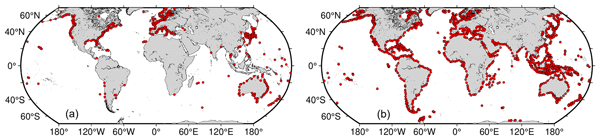
A new reprocessed altimeter coastal sea level dataset, International Altimetry Service 2024 (IAS2024), for monitoring sea level changes along the world’s coastlines is presented. The evaluation and validation results confirm the reliability of this dataset. The altimeter-based virtual stations along the world’s coastlines can be built using this dataset to monitor the coastal sea level changes where tide gauges are unavailable. Therefore, it is beneficial for both oceanographic communities and policymakers.
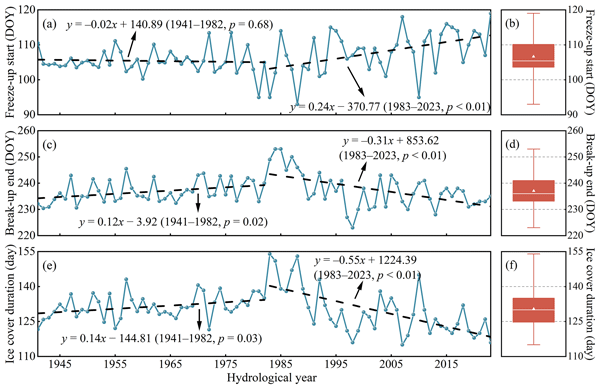
Puzhen Huo, Peng Lu, Bin Cheng, Miao Yu, Qingkai Wang, Xuewei Li, and Zhijun Li
The Cryosphere, 19, 849–868, https://doi.org/10.5194/tc-19-849-2025, https://doi.org/10.5194/tc-19-849-2025, 2025
Short summary
Short summary
We developed a new method for retrieving lake ice phenology for a lake with complex surface cover. The method is particularly useful for mixed-pixel satellite data. We implement this method on Lake Ulansu, a lake characterized by complex shorelines and aquatic plants in northwestern China. In connection with a random forest model, we reconstructed the longest lake ice phenology in China.
Yan Sun, Shaoyin Wang, Xiao Cheng, Teng Li, Chong Liu, Yufang Ye, and Xi Zhao
EGUsphere, https://doi.org/10.5194/egusphere-2024-2760, https://doi.org/10.5194/egusphere-2024-2760, 2025
Preprint archived
Short summary
Short summary
This manuscript proposes to combine semantic segmentation of ice region using a U-Net model and multi-stage detection of ice pixels using the Multi-textRG algorithm to achieve fine ice-water classification. Novel proccessings for the HV/HH polarization ratio and the GLCM textures, as well as the usage of regional growing, largely improve the method accuracy and robustness. The proposed algorithm framework achieved automated sea-ice labelling.
Yan Sun, Shaoyin Wang, Xiao Cheng, Teng Li, Chong Liu, Yufang Ye, and Xi Zhao
EGUsphere, https://doi.org/10.5194/egusphere-2024-1177, https://doi.org/10.5194/egusphere-2024-1177, 2024
Preprint archived
Short summary
Short summary
Arctic sea ice has rapidly declined due to global warming, leading to extreme weather events. Accurate ice monitoring is vital for understanding and forecasting these impacts. Combining SAR and AMSR2 data with machine learning is efficient but requires sufficient labels. We propose a framework integrating the U-Net model with the Multi-textRG algorithm to achieve ice-water classification at SAR-level resolution and to generate accurate labels for improved U-Net model training.

Dunwang Lu, Jianqiang Liu, Lijian Shi, Tao Zeng, Bin Cheng, Suhui Wu, and Manman Wang
The Cryosphere, 18, 1419–1441, https://doi.org/10.5194/tc-18-1419-2024, https://doi.org/10.5194/tc-18-1419-2024, 2024
Short summary
Short summary
We retrieved sea ice drift in Fram Strait using the Chinese HaiYang 1D Coastal Zone Imager. The dataset is has hourly and daily intervals for analysis, and validation is performed using a synthetic aperture radar (SAR)-based product and International Arctic Buoy Programme (IABP) buoys. The differences between them are explained by investigating the spatiotemporal variability in sea ice motion. The accuracy of flow direction retrieval for sea ice drift is also related to sea ice displacement.

Yurii Batrak, Bin Cheng, and Viivi Kallio-Myers
The Cryosphere, 18, 1157–1183, https://doi.org/10.5194/tc-18-1157-2024, https://doi.org/10.5194/tc-18-1157-2024, 2024
Short summary
Short summary
Atmospheric reanalyses provide consistent series of atmospheric and surface parameters in a convenient gridded form. In this paper, we study the quality of sea ice in a recently released regional reanalysis and assess its added value compared to a global reanalysis. We show that the regional reanalysis, having a more complex sea ice model, gives an improved representation of sea ice, although there are limitations indicating potential benefits in using more advanced approaches in the future.
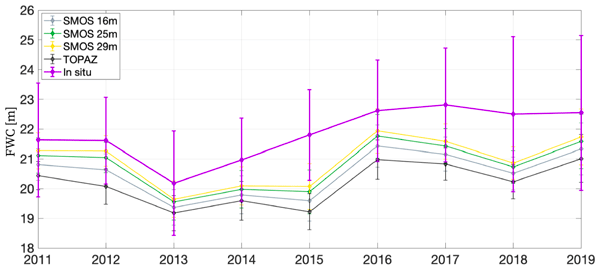
Marta Umbert, Eva De Andrés, Maria Sánchez, Carolina Gabarró, Nina Hoareau, Veronica González-Gambau, Aina García-Espriu, Estrella Olmedo, Roshin P. Raj, Jiping Xie, and Rafael Catany
Ocean Sci., 20, 279–291, https://doi.org/10.5194/os-20-279-2024, https://doi.org/10.5194/os-20-279-2024, 2024
Short summary
Short summary
Satellite retrievals of sea surface salinity (SSS) offer insights into freshwater changes in the Arctic Ocean. This study evaluates freshwater content in the Beaufort Gyre using SMOS and reanalysis data, revealing underestimation with reanalysis alone. Incorporating satellite SSS measurements improves freshwater content estimation, especially near ice-melting areas. Adding remotely sensed salinity aids in monitoring Arctic freshwater content and in understanding its impact on global climate.
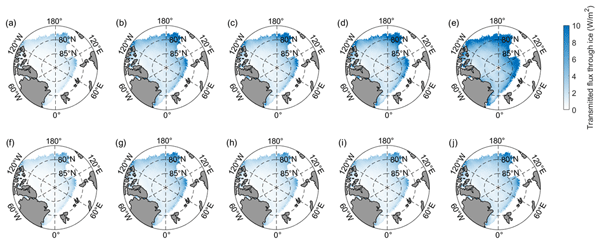
Miao Yu, Peng Lu, Matti Leppäranta, Bin Cheng, Ruibo Lei, Bingrui Li, Qingkai Wang, and Zhijun Li
The Cryosphere, 18, 273–288, https://doi.org/10.5194/tc-18-273-2024, https://doi.org/10.5194/tc-18-273-2024, 2024
Short summary
Short summary
Variations in Arctic sea ice are related not only to its macroscale properties but also to its microstructure. Arctic ice cores in the summers of 2008 to 2016 were used to analyze variations in the ice inherent optical properties related to changes in the ice microstructure. The results reveal changing ice microstructure greatly increased the amount of solar radiation transmitted to the upper ocean even when a constant ice thickness was assumed, especially in marginal ice zones.
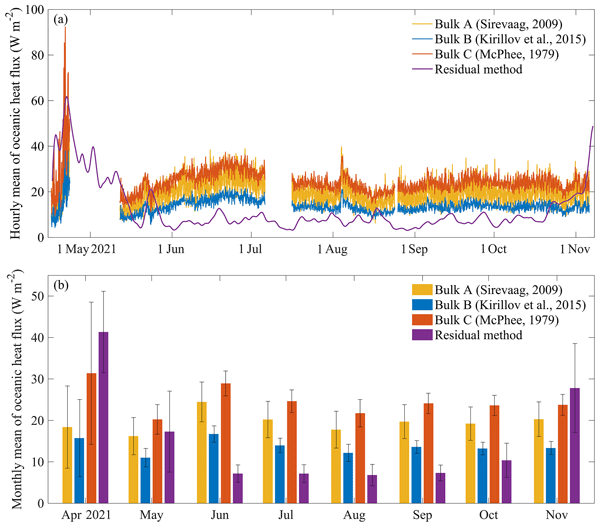
Haihan Hu, Jiechen Zhao, Petra Heil, Zhiliang Qin, Jingkai Ma, Fengming Hui, and Xiao Cheng
The Cryosphere, 17, 2231–2244, https://doi.org/10.5194/tc-17-2231-2023, https://doi.org/10.5194/tc-17-2231-2023, 2023
Short summary
Short summary
The oceanic characteristics beneath sea ice significantly affect ice growth and melting. The high-frequency and long-term observations of oceanic variables allow us to deeply investigate their diurnal and seasonal variation and evaluate their influences on sea ice evolution. The large-scale sea ice distribution and ocean circulation contributed to the seasonal variation of ocean variables, revealing the important relationship between large-scale and local phenomena.
Jiping Xie, Roshin P. Raj, Laurent Bertino, Justino Martínez, Carolina Gabarró, and Rafael Catany
Ocean Sci., 19, 269–287, https://doi.org/10.5194/os-19-269-2023, https://doi.org/10.5194/os-19-269-2023, 2023
Short summary
Short summary
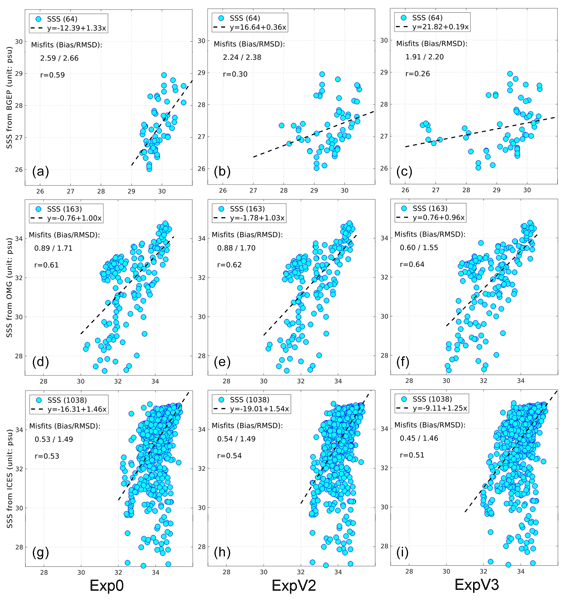
Sea ice melt, together with other freshwater sources, has effects on the Arctic environment. Sea surface salinity (SSS) plays a key role in representing water mixing. Recently the satellite SSS from SMOS was developed in the Arctic region. In this study, we first evaluate the impact of assimilating these satellite data in an Arctic reanalysis system. It shows that SSS errors are reduced by 10–50 % depending on areas, encouraging its use in a long-time reanalysis to monitor the Arctic water cycle.
Yafei Nie, Chengkun Li, Martin Vancoppenolle, Bin Cheng, Fabio Boeira Dias, Xianqing Lv, and Petteri Uotila
Geosci. Model Dev., 16, 1395–1425, https://doi.org/10.5194/gmd-16-1395-2023, https://doi.org/10.5194/gmd-16-1395-2023, 2023
Short summary
Short summary
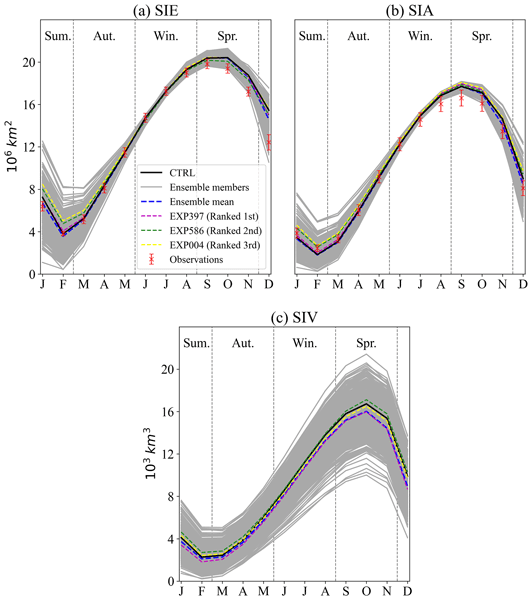
State-of-the-art Earth system models simulate the observed sea ice extent relatively well, but this is often due to errors in the dynamic and other processes in the simulated sea ice changes cancelling each other out. We assessed the sensitivity of these processes simulated by the coupled ocean–sea ice model NEMO4.0-SI3 to 18 parameters. The performance of the model in simulating sea ice change processes was ultimately improved by adjusting the three identified key parameters.
Na Li, Ruibo Lei, Petra Heil, Bin Cheng, Minghu Ding, Zhongxiang Tian, and Bingrui Li
The Cryosphere, 17, 917–937, https://doi.org/10.5194/tc-17-917-2023, https://doi.org/10.5194/tc-17-917-2023, 2023
Short summary
Short summary
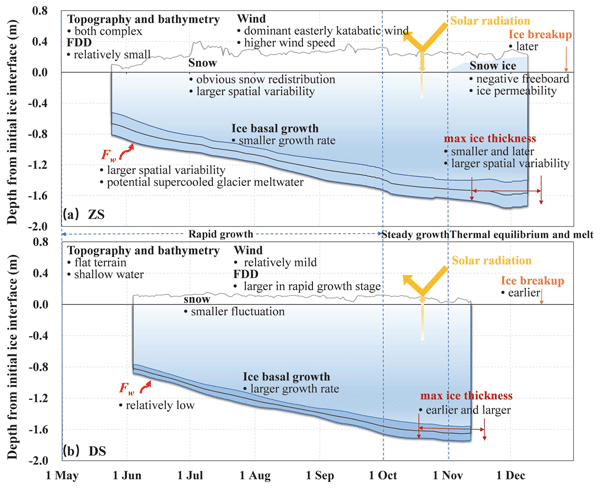
The observed annual maximum landfast ice (LFI) thickness off Zhongshan (Davis) was 1.59±0.17 m (1.64±0.08 m). Larger interannual and local spatial variabilities for the seasonality of LFI were identified at Zhongshan, with the dominant influencing factors of air temperature anomaly, snow atop, local topography and wind regime, and oceanic heat flux. The variability of LFI properties across the study domain prevailed at interannual timescales, over any trend during the recent decades.
Ruibo Lei, Mario Hoppmann, Bin Cheng, Marcel Nicolaus, Fanyi Zhang, Benjamin Rabe, Long Lin, Julia Regnery, and Donald K. Perovich
The Cryosphere Discuss., https://doi.org/10.5194/tc-2023-25, https://doi.org/10.5194/tc-2023-25, 2023
Manuscript not accepted for further review
Short summary
Short summary
To characterize the freezing and melting of different types of sea ice, we deployed four IMBs during the MOSAiC second drift. The drifting pattern, together with a large snow accumulation, relatively warm air temperatures, and a rapid increase in oceanic heat close to Fram Strait, determined the seasonal evolution of the ice mass balance. The refreezing of ponded ice and voids within the unconsolidated ridges amplifies the anisotropy of the heat exchange between the ice and the atmosphere/ocean.
Yufang Ye, Yanbing Luo, Yan Sun, Mohammed Shokr, Signe Aaboe, Fanny Girard-Ardhuin, Fengming Hui, Xiao Cheng, and Zhuoqi Chen
The Cryosphere, 17, 279–308, https://doi.org/10.5194/tc-17-279-2023, https://doi.org/10.5194/tc-17-279-2023, 2023
Short summary
Short summary
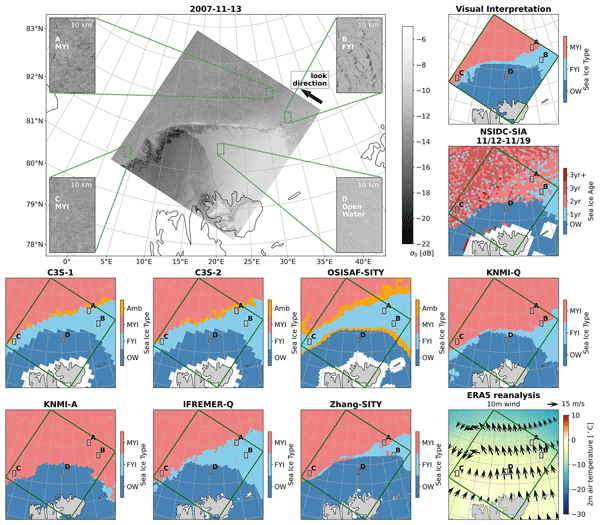
Arctic sea ice type (SITY) variation is a sensitive indicator of climate change. This study gives a systematic inter-comparison and evaluation of eight SITY products. Main results include differences in SITY products being significant, with average Arctic multiyear ice extent up to 1.8×10⁶ km2; Ku-band scatterometer SITY products generally performing better; and factors such as satellite inputs, classification methods, training datasets and post-processing highly impacting their performance.

Christian Melsheimer, Gunnar Spreen, Yufang Ye, and Mohammed Shokr
The Cryosphere, 17, 105–126, https://doi.org/10.5194/tc-17-105-2023, https://doi.org/10.5194/tc-17-105-2023, 2023
Short summary
Short summary
It is necessary to know the type of Antarctic sea ice present – first-year ice (grown in one season) or multiyear ice (survived one summer melt) – to understand and model its evolution, as the ice types behave and react differently. We have adapted and extended an existing method (originally for the Arctic), and now, for the first time, daily maps of Antarctic sea ice types can be derived from microwave satellite data. This will allow a new data set from 2002 well into the future to be built.
Chong Liu, Xiaoqing Xu, Xuejie Feng, Xiao Cheng, Caixia Liu, and Huabing Huang
Earth Syst. Sci. Data, 15, 133–153, https://doi.org/10.5194/essd-15-133-2023, https://doi.org/10.5194/essd-15-133-2023, 2023
Short summary
Short summary
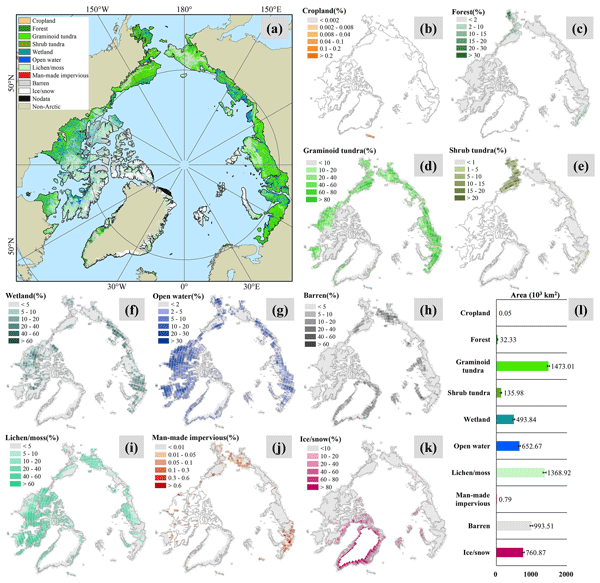
Rapid Arctic changes are increasingly influencing human society, both locally and globally. Land cover offers a basis for characterizing the terrestrial world, yet spatially detailed information on Arctic land cover is lacking. We employ multi-source data to develop a new land cover map for the circumpolar Arctic. Our product reveals regionally contrasting biome distributions not fully documented in existing studies and thus enhances our understanding of the Arctic’s terrestrial system.

Qi Liang, Wanxin Xiao, Ian Howat, Xiao Cheng, Fengming Hui, Zhuoqi Chen, Mi Jiang, and Lei Zheng
The Cryosphere, 16, 2671–2681, https://doi.org/10.5194/tc-16-2671-2022, https://doi.org/10.5194/tc-16-2671-2022, 2022
Short summary
Short summary
Using multi-temporal ArcticDEM and ICESat-2 altimetry data, we document changes in surface elevation of a subglacial lake basin from 2012 to 2021. The long-term measurements show that the subglacial lake was recharged by surface meltwater and that a rapid drainage event in late August 2019 induced an abrupt ice velocity change. Multiple factors regulate the episodic filling and drainage of the lake. Our study also reveals ~ 64 % of the surface meltwater successfully descended to the bed.
Verónica González-Gambau, Estrella Olmedo, Antonio Turiel, Cristina González-Haro, Aina García-Espriu, Justino Martínez, Pekka Alenius, Laura Tuomi, Rafael Catany, Manuel Arias, Carolina Gabarró, Nina Hoareau, Marta Umbert, Roberto Sabia, and Diego Fernández
Earth Syst. Sci. Data, 14, 2343–2368, https://doi.org/10.5194/essd-14-2343-2022, https://doi.org/10.5194/essd-14-2343-2022, 2022
Short summary
Short summary
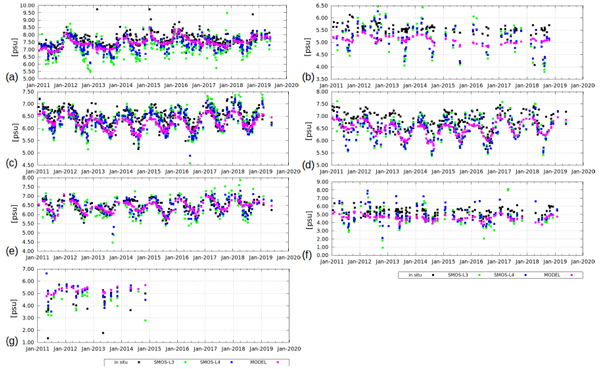
We present the first Soil Moisture and Ocean Salinity Sea Surface Salinity (SSS) dedicated products over the Baltic Sea (ESA Baltic+ Salinity Dynamics). The Baltic+ L3 product covers 9 days in a 0.25° grid. The Baltic+ L4 is derived by merging L3 SSS with sea surface temperature information, giving a daily product in a 0.05° grid. The accuracy of L3 is 0.7–0.8 and 0.4 psu for the L4. Baltic+ products have shown to be useful, covering spatiotemporal data gaps and for validating numerical models.
Hanna K. Lappalainen, Tuukka Petäjä, Timo Vihma, Jouni Räisänen, Alexander Baklanov, Sergey Chalov, Igor Esau, Ekaterina Ezhova, Matti Leppäranta, Dmitry Pozdnyakov, Jukka Pumpanen, Meinrat O. Andreae, Mikhail Arshinov, Eija Asmi, Jianhui Bai, Igor Bashmachnikov, Boris Belan, Federico Bianchi, Boris Biskaborn, Michael Boy, Jaana Bäck, Bin Cheng, Natalia Chubarova, Jonathan Duplissy, Egor Dyukarev, Konstantinos Eleftheriadis, Martin Forsius, Martin Heimann, Sirkku Juhola, Vladimir Konovalov, Igor Konovalov, Pavel Konstantinov, Kajar Köster, Elena Lapshina, Anna Lintunen, Alexander Mahura, Risto Makkonen, Svetlana Malkhazova, Ivan Mammarella, Stefano Mammola, Stephany Buenrostro Mazon, Outi Meinander, Eugene Mikhailov, Victoria Miles, Stanislav Myslenkov, Dmitry Orlov, Jean-Daniel Paris, Roberta Pirazzini, Olga Popovicheva, Jouni Pulliainen, Kimmo Rautiainen, Torsten Sachs, Vladimir Shevchenko, Andrey Skorokhod, Andreas Stohl, Elli Suhonen, Erik S. Thomson, Marina Tsidilina, Veli-Pekka Tynkkynen, Petteri Uotila, Aki Virkkula, Nadezhda Voropay, Tobias Wolf, Sayaka Yasunaka, Jiahua Zhang, Yubao Qiu, Aijun Ding, Huadong Guo, Valery Bondur, Nikolay Kasimov, Sergej Zilitinkevich, Veli-Matti Kerminen, and Markku Kulmala
Atmos. Chem. Phys., 22, 4413–4469, https://doi.org/10.5194/acp-22-4413-2022, https://doi.org/10.5194/acp-22-4413-2022, 2022
Short summary
Short summary
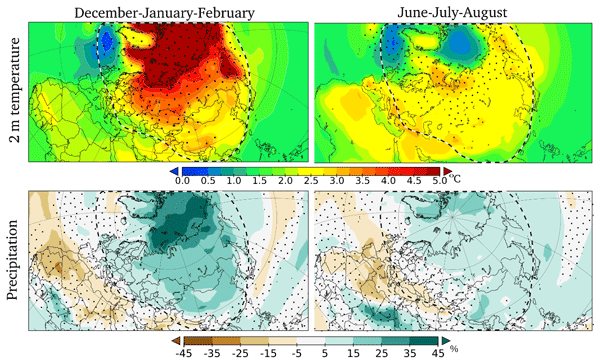
We summarize results during the last 5 years in the northern Eurasian region, especially from Russia, and introduce recent observations of the air quality in the urban environments in China. Although the scientific knowledge in these regions has increased, there are still gaps in our understanding of large-scale climate–Earth surface interactions and feedbacks. This arises from limitations in research infrastructures and integrative data analyses, hindering a comprehensive system analysis.
Yu Liang, Haibo Bi, Haijun Huang, Ruibo Lei, Xi Liang, Bin Cheng, and Yunhe Wang
The Cryosphere, 16, 1107–1123, https://doi.org/10.5194/tc-16-1107-2022, https://doi.org/10.5194/tc-16-1107-2022, 2022
Short summary
Short summary
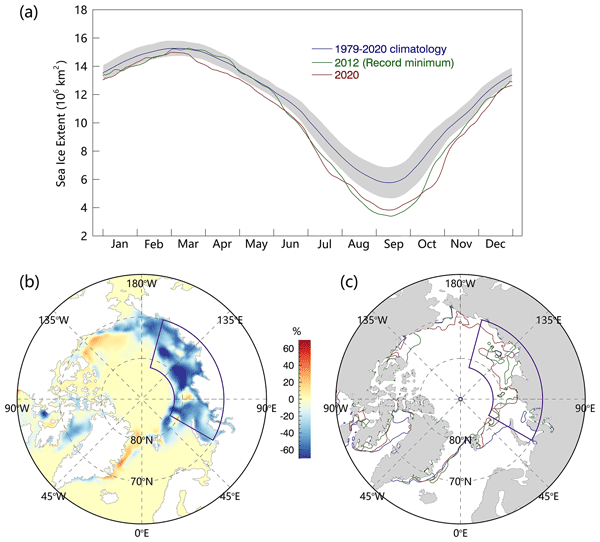
A record minimum July sea ice extent, since 1979, was observed in 2020. Our results reveal that an anomalously high advection of energy and water vapor prevailed during spring (April to June) 2020 over regions with noticeable sea ice retreat. The large-scale atmospheric circulation and cyclones act in concert to trigger the exceptionally warm and moist flow. The convergence of the transport changed the atmospheric characteristics and the surface energy budget, thus causing a severe sea ice melt.
Justino Martínez, Carolina Gabarró, Antonio Turiel, Verónica González-Gambau, Marta Umbert, Nina Hoareau, Cristina González-Haro, Estrella Olmedo, Manuel Arias, Rafael Catany, Laurent Bertino, Roshin P. Raj, Jiping Xie, Roberto Sabia, and Diego Fernández
Earth Syst. Sci. Data, 14, 307–323, https://doi.org/10.5194/essd-14-307-2022, https://doi.org/10.5194/essd-14-307-2022, 2022
Short summary
Short summary
Measuring salinity from space is challenging since the sensitivity of the brightness temperature to sea surface salinity is low, but the retrieval of SSS in cold waters is even more challenging. In 2019, the ESA launched a specific initiative called Arctic+Salinity to produce an enhanced Arctic SSS product with better quality and resolution than the available products. This paper presents the methodologies used to produce the new enhanced Arctic SMOS SSS product.
Yijing Lin, Yan Liu, Zhitong Yu, Xiao Cheng, Qiang Shen, and Liyun Zhao
The Cryosphere Discuss., https://doi.org/10.5194/tc-2021-325, https://doi.org/10.5194/tc-2021-325, 2021
Preprint withdrawn
Short summary
Short summary
We introduce an uncertainty analysis framework for comprehensively and systematically quantifying the uncertainties of the Antarctic mass balance using the Input and Output Method. It is difficult to use the previous strategies employed in various methods and the available data to achieve the goal of estimation accuracy. The dominant cause of the future uncertainty is the ice thickness data gap. The interannual variability of ice discharge caused by velocity and thickness is also nonnegligible.
Cited articles
Arndt, S., Haas, C., Meyer, H., Peeken, I., and Krumpen, T.: Recent observations of superimposed ice and snow ice on sea ice in the northwestern Weddell Sea, The Cryosphere, 15, 4165–4178, https://doi.org/10.5194/tc-15-4165-2021, 2021.
Braakmann-Folgmann, A. and Donlon, C.: Estimating snow depth on Arctic sea ice using satellite microwave radiometry and a neural network, The Cryosphere, 13, 2421–2438, https://doi.org/10.5194/tc-13-2421-2019, 2019.
Burgard, C., Notz, D., Pedersen, L. T., and Tonboe, R. T.: The Arctic Ocean Observation Operator for 6.9 GHz (ARC3O) – Part 1: How to obtain sea ice brightness temperatures at 6.9 GHz from climate model output, The Cryosphere, 14, 2369–2386, https://doi.org/10.5194/tc-14-2369-2020, 2020.
Colbeck, S. C.: The capillary effects on water percolation in homogeneous snow, J. Glaciol., 13, 85–97, https://doi.org/10.3189/S002214300002339X, 1974.
Colbeck, S. C.: An overview of seasonal snow metamorphism, Rev. Geophys., 20, 45–61, https://doi.org/10.1029/RG020i001p00045, 1982.
Cox, G. F. and Weeks, W. F.: Salinity variations in sea ice, J. Glaciol., 13, 109–120, https://doi.org/10.3189/S0022143000023418, 1974.
Cox, G. F. and Weeks, W. F.: Equations for determining the gas and brine volumes in sea-ice samples, J. Glaciol., 29, 306–316, https://doi.org/10.3189/S0022143000008364, 1983.
Crewell, S., Ebell, K., Konjari, P., Mech, M., Nomokonova, T., Radovan, A., Strack, D., Triana-Gómez, A. M., Noël, S., Scarlat, R., Spreen, G., Maturilli, M., Rinke, A., Gorodetskaya, I., Viceto, C., August, T., and Schröder, M.: A systematic assessment of water vapor products in the Arctic: from instantaneous measurements to monthly means, Atmos. Meas. Tech., 14, 4829–4856, https://doi.org/10.5194/amt-14-4829-2021, 2021.
Debye, P., Anderson, J., and Brumberger, H.: Scattering by an Inhomogeneous Solid, II. The Correlation Function and Its Application, J. Appl. Phys., 28, 679–683, https://doi.org/10.1063/1.1722830, 1957.
Domine, F.: Physical properties of snow, in: Encyclopedia of Snow, Ice and Glaciers, Springer, Dordrecht, 859–863, https://doi.org/10.1007/978-90-481-2642-2_422, 2011.
Domine, F., Sparapani, R., Ianniello, A., and Beine, H. J.: The origin of sea salt in snow on Arctic sea ice and in coastal regions, Atmos. Chem. Phys., 4, 2259–2271, https://doi.org/10.5194/acp-4-2259-2004, 2004.
Domine, F., Taillandier, A. S., and Simpson, W. R.: A parameterisation of the specific surface area of seasonal snow for field use and for models of snowpack evolution, J. Geophys. Res.-Earth, 112, F2, https://doi.org/10.1029/2006JF000512, 2007.
Domine, F., Albert, M., Huthwelker, T., Jacobi, H.-W., Kokhanovsky, A. A., Lehning, M., Picard, G., and Simpson, W. R.: Snow physics as relevant to snow photochemistry, Atmos. Chem. Phys., 8, 171–208, https://doi.org/10.5194/acp-8-171-2008, 2008.
Frickenhaus, S., Ransby, D., Shupe, M., Jaiser, R., and Nicolaus, M.: Data from the MOSAiC Arctic Ocean drift experiment, Scientific Data, 9, 568, https://doi.org/10.1038/s41597-022-01678-8, 2022.
Fuhrhop, R., Grenfell, T. C., Heygster, G., Johnsen, K. P., Schlüssel, P., Schrader, M., and Simmer, C.: A combined radiative transfer model for sea ice, open ocean, and atmosphere, Radio Sci., 33, 303–316, https://doi.org/10.1029/97RS03020, 1998.
Gao, S., Li, Z., Zhang, P., Chen, Q., Huang, L., Zhou, J., Zhao, C., Qiao, H., and Zheng, Z.: A novel global snow depth retrieval method considering snow metamorphism and forest influence, Remote Sens. Environ., 295, 113712, https://doi.org/10.1016/j.rse.2023.113712, 2023.
Granskog, M. A., Vihma, T., Pirazzini, R., and Cheng, B.: Superimposed ice formation and surface energy fluxes on sea ice during the spring melt–freeze period in the Baltic Sea, J. Glaciol., 52, 119–127, https://doi.org/10.3189/172756506781828971, 2006.
He, L., Xue, B., Hui, F., Xu, S., Chen, Z., and Cheng, X.: Toward daily snow depth estimation on Arctic sea ice during the whole winter season from passive microwave radiometer data, IEEE T. Geosci. Remote, 62, 1–15, https://doi.org/10.1109/TGRS.2024.3358340, 2024.
Hou, W., Li, Z., Wang, J., Xu, X., Goloub, P., and Qie, L.: Improving remote sensing of aerosol microphysical properties by near-infrared polarimetric measurements over vegetated land: Information content analysis, J. Geophys. Res.-Atmos., 123, 2215–2243, https://doi.org/10.1002/2017JD027388, 2018.
Kacimi, S. and Kwok, R.: Arctic snow depth, ice thickness, and volume from ICESat-2 and CryoSat-2: 2018–2021, Geophys. Res. Lett., 49, e2021GL097448, https://doi.org/10.1029/2021GL097448, 2022.
Kang, D. H., Tan, S., and Kim, E. J.: Evaluation of brightness temperature sensitivity to snowpack physical properties using coupled snow physics and microwave radiative transfer models, IEEE T. Geosci. Remote, 57, 10241–10251, https://doi.org/10.1109/TGRS.2019.2932732, 2019.
Kilic, L., Tonboe, R. T., Prigent, C., and Heygster, G.: Estimating the snow depth, the snow–ice interface temperature, and the effective temperature of Arctic sea ice using Advanced Microwave Scanning Radiometer 2 and ice mass balance buoy data, The Cryosphere, 13, 1283–1296, https://doi.org/10.5194/tc-13-1283-2019, 2019.
Landrum, L. L. and Holland, M. M.: Influences of changing sea ice and snow thicknesses on simulated Arctic winter heat fluxes, The Cryosphere, 16, 1483–1495, https://doi.org/10.5194/tc-16-1483-2022, 2022.
Lee, S., Sohn, B., and Shi, H.: Impact of ice surface and volume scatterings on the microwave sea ice apparent emissivity, J. Geophys. Res.-Atmos., 123, 9220–9237, https://doi.org/10.1029/2018JD028688, 2018.
Löwe, H. and Picard, G.: Microwave scattering coefficient of snow in MEMLS and DMRT-ML revisited: the relevance of sticky hard spheres and tomography-based estimates of stickiness, The Cryosphere, 9, 2101–2117, https://doi.org/10.5194/tc-9-2101-2015, 2015.
Macfarlane, A. R., Schneebeli, M., Dadic, R., Wagner, D. N., Arndt, S., Clemens-Sewall, D., Hämmerle, S., Hannula, H.-R., Jaggi, M., Kolabutin, N., Krampe, D., Lehning, M., Matero, I., Nicolaus, M., Oggier, M., Pirazzini, R., Polashenski, C., Raphael, I., Regnery, J., Shimanchuck, E., Smith, M. M., and Tavri, A.: Snowpit raw data collected during the MOSAiC expedition, PANGAEA [data set], https://doi.org/10.1594/PANGAEA.935934, 2021.
Macfarlane, A. R., Schneebeli, M., Wagner, D. N., Dadic, R., Jaggi, M., and Hämmerle, S.: MicroCT density and specific surface area snowpit profiles during the MOSAiC expedition, PANGAEA [data set], https://doi.org/10.1594/PANGAEA.952794, 2022a.
Macfarlane, A. R., Schneebeli, M., Dadic, R., Wagner, D. N., Arndt, S., Clemens-Sewall, D., Hämmerle, S., Hannula, H.-R., Jaggi, M., Kolabutin, N., Krampe, D., Lehning, M., Matero, I., Nicolaus, M., Oggier, M., Pirazzini, R., Polashenski, C., Raphael, I., Regnery, J., Shimanchuck, E., Smith, M. M., and Tavri, A.: Snowpit temperature profiles measured during the MOSAiC expedition, PANGAEA [data set], https://doi.org/10.1594/PANGAEA.940200, 2022b.
Macfarlane, A. R., Schneebeli, M., Dadic, R., Wagner, D. N., Arndt, S., Clemens-Sewall, D., Hämmerle, S., Hannula, H.-R., Jaggi, M., Kolabutin, N., Krampe, D., Lehning, M., Matero, I., Nicolaus, M., Oggier, M., Pirazzini, R., Polashenski, C., Raphael, I., Regnery, J., Shimanchuck, E., Smith, M. M., and Tavri, A.: Snowpit salinity profiles during the MOSAiC expedition, PANGAEA [data set], https://doi.org/10.1594/PANGAEA.946807, 2022c.
Macfarlane, A. R., Löwe, H., Gimenes, L., Wagner, D. N., Dadic, R., Ottersberg, R., Hämmerle, S., and Schneebeli, M.: Temporospatial variability of snow's thermal conductivity on Arctic sea ice, The Cryosphere, 17, 5417–5434, https://doi.org/10.5194/tc-17-5417-2023, 2023.
Maeda, T., Taniguchi, Y., and Imaoka, K.: GCOM-W1 AMSR2 Level 1R Product: Dataset of Brightness Temperature Modified Using the Antenna Pattern Matching Technique, IEEE T. Geosci. Remote, 54, 770–782, https://doi.org/10.1109/TGRS.2015.2465170, 2016.
Mallett, R., Nandan, V., Stroeve, J., Willatt, R., Saha, M., Yackel, J., Veysière, G., and Wilkinson, J.: Dye tracing of upward brine migration in snow, Ann. Glaciol., 65, e26, https://doi.org/10.1017/aog.2024.27, 2024.
Markus, T. and Cavalieri, D. J.: Snow depth distribution over sea ice in the Southern Ocean from satellite passive microwave data, in: Antarctic Sea Ice: Physical Processes, Interactions and Variability, 74, 19–39, https://doi.org/10.1029/AR074p0019, 1998.
Marino, S., Hogue, I. B., Ray, C. J., and Kirschner, D. E.: A methodology for performing global uncertainty and sensitivity analysis in systems biology, J. Theor. Biol., 254, 178–196, https://doi.org/10.1016/j.jtbi.2008.04.011, 2008.
Markus, T., Powell, D. C., and Wang, J. R.: Sensitivity of passive microwave snow depth retrievals to weather effects and snow evolution, IEEE T. Geosci. Remote, 44, 68–77, https://doi.org/10.1109/TGRS.2005.860208, 2006.
Mätzler, C.: Improved Born approximation for scattering of radiation in a granular medium, J. Appl. Phys., 83, 6111–6117, https://doi.org/10.1063/1.367496, 1998.
Mätzler, C.: Relation between grain-size and correlation length of snow, J. Glaciol., 48, 461–466, https://doi.org/10.3189/172756502781831287, 2002.
Meloche, J., Royer, A., Roy, A., Langlois, A., and Picard, G.: Improvement of polar snow microwave brightness temperature simulations for dense wind slab and large grain, IEEE T. Geosci. Remote, 62, 1–10, https://doi.org/10.1109/TGRS.2024.3428394, 2024.
Meloche, J., Sandells, M., Löwe, H., Rutter, N., Picard, G., Essery, R., Scharien, R. K., Langlois, A., Jaggi, M., King, J., Toose, P., Scagliola, M., Bouffard, J., Di Bella, A., and Haas, C.: Altimetric Ku-band Radar Observations of Snow on Sea Ice Simulated with SMRT, EGUsphere [preprint], https://doi.org/10.5194/egusphere-2026-3615, 2026.
Merkouriadi, I., Cheng, B., Graham, R. M., Rösel, A., and Granskog, M. A.: Critical role of snow on sea ice growth in the Atlantic sector of the Arctic Ocean, Geophys. Res. Lett., 44, 479–485, https://doi.org/10.1002/2017GL075494, 2017.
Merkouriadi, I., Liston, G. E., Graham, R. M., and Granskog, M. A.: Quantifying the potential for snow-ice formation in the Arctic Ocean, Geophys. Res. Lett., 47, https://doi.org/10.1029/2019GL085020, 2020.
Murfitt, J., Duguay, C., Picard, G., and Lemmetyinen, J.: Forward modelling of synthetic-aperture radar (SAR) backscatter during lake ice melt conditions using the Snow Microwave Radiative Transfer (SMRT) model, The Cryosphere, 18, 869–888, https://doi.org/10.5194/tc-18-869-2024, 2024.
Nandan, V., Geldsetzer, T., Yackel, J., Mahmud, M., Scharien, R., Howell, S., King, J., Ricker, R., and Else, B.: Effect of snow salinity on CryoSat-2 Arctic first-year sea ice freeboard measurements, Geophys. Res. Lett., 44, 10419–10426, https://doi.org/10.1002/2017GL074506, 2017.
Nicolaus, M., Haas, C., and Bareiss, J.: Observations of superimposed ice formation at melt-onset on fast ice on Kongsfjorden, Svalbard, Phys. Chem. Earth, Pt. A/B/C, 28, 1241–1248, https://doi.org/10.1016/j.pce.2003.08.048, 2003.
Notz, D. and Worster, M. G.: Desalination processes of sea ice revisited, J. Geophys. Res.-Oceans, 114, C5, https://doi.org/10.1029/2008JC004885, 2009.
Oggier, M., Salganik, E., Whitmore, L. M., Fong, A. A., Hoppe, C. J. M., Rember, R., Høyland, K. V., Gradinger, R., Divine, D. V., Fons, S. W., Abrahamsson, K., Aguilar-Islas, A. M., Angelopoulos, M., Arndt, S., Balmonte, J. P., Bozzato, D., Bowman, J. S., Castellani, G., Chamberlain, E., Creamean, J., D'Angelo, A., Damm, E., Dietrich, U., Droste, E. S., Dumitrascu, A., Eggers, L., Gardner, J., Grosfeld, L., Haapala, J., Heitmann, L., Immerz, A., Kolabutin, N., Lange, B. A., Lei, R., Marsay, C. M., Maus, S., Müller, O., Olsen, L. M., Nuibom, A., Ren, J., Rinke, A., Schmidt, K., Sheikin, I., Shimanchuk, E., Snoeijs-Leijonmalm, P., Spahic, S., Stefels, J., Torres-Valdés, S., Torstensson, A., Ulfsbo, A., Verdugo, J., Vortkamp, M., Wang, L., Webster, M., and Granskog, M. A.: First-year sea-ice salinity, temperature, density, nutrient, oxygen and hydrogen isotope composition from the main coring site (MCS-FYI) during MOSAiC legs 1 to 4 in 2019/2020, version 2, PANGAEA [data set], https://doi.org/10.1594/PANGAEA.971385, 2024.
Oggier, M., Salganik, E., Whitmore, L. M., Fong, A. A., Hoppe, C. J. M., Rember, R., Høyland, K. V., Gradinger, R., Divine, D. V., Fons, S. W., Abrahamsson, K., Aguilar-Islas, A. M., Angelopoulos, M., Arndt, S., Balmonte, J. P., Bozzato, D., Bowman, J. S., Castellani, G., Chamberlain, E., Creamean, J., D'Angelo, A., Damm, E., Dietrich, U., Droste, E. S., Dumitrascu, A., Eggers, S. L., Gardner, J., Grosfeld, L., Haapala, J., Heitmann, L., Immerz, A., Kolabutin, N., Lange, B. A., Lei, R., Marsay, C. M., Maus, S., Olsen, L. M., Müller, O., Nuibom, A., Ren, J., Rinke, A., Schmidt, K., Sheikin, I., Shimanchuk, E., Snoeijs-Leijonmalm, P., Spahic, S., Stefels, J., Torres-Valdés, S., Torstensson, A., Ulfsbo, A., Verdugo, J., Vortkamp, M., Wang, L., Webster, M., and Granskog, M. A.: Second-year sea-ice salinity, temperature, density, nutrient, oxygen and hydrogen isotope composition from the main coring site (MCS-SYI) during MOSAiC legs 1 to 4 in 2019/2020, version 2, PANGAEA [data set], https://doi.org/10.1594/PANGAEA.974764, 2025.
Ottaviani, M., Myers, G. H., and Chen, N.: Global sensitivity analysis of simulated remote sensing polarimetric observations over snow, Atmos. Meas. Tech., 17, 4737–4756, https://doi.org/10.5194/amt-17-4737-2024, 2024.
Picard, G., Brucker, L., Roy, A., Dupont, F., Fily, M., Royer, A., and Harlow, C.: Simulation of the microwave emission of multi-layered snowpacks using the Dense Media Radiative transfer theory: the DMRT-ML model, Geosci. Model Dev., 6, 1061–1078, https://doi.org/10.5194/gmd-6-1061-2013, 2013.
Picard, G., Sandells, M., and Löwe, H.: SMRT: an active–passive microwave radiative transfer model for snow with multiple microstructure and scattering formulations (v1.0), Geosci. Model Dev., 11, 2763–2788, https://doi.org/10.5194/gmd-11-2763-2018, 2018.
Picard, G., Löwe, H., Domine, F., Arnaud, L., Larue, F., Favier, V., Le Meur, E., Lefebvre, E., Savarino, J., and Royer, A.: The microwave snow grain size: A new concept to predict satellite observations over snow-covered regions, AGU Advances, 3, e2021AV000630, https://doi.org/10.1029/2021AV000630, 2022a.
Picard, G., Leduc-Leballeur, M., Banwell, A. F., Brucker, L., and Macelloni, G.: The sensitivity of satellite microwave observations to liquid water in the Antarctic snowpack, The Cryosphere, 16, 5061–5083, https://doi.org/10.5194/tc-16-5061-2022, 2022b.
Picard, G., Löwe, H., and Mätzler, C.: Brief communication: A continuous formulation of microwave scattering from fresh snow to bubbly ice from first principles, The Cryosphere, 16, 3861–3866, https://doi.org/10.5194/tc-16-3861-2022, 2022c.
Powell, D. C., Markus, T., Cavalieri, D. J., Gasiewski, A. J., Klein, M., Maslanik, J. A., Stroeve, J. C., and Sturm, M.: Microwave signatures of snow on sea ice: Modelling, IEEE T. Geosci. Remote, 44, 3091–3102, https://doi.org/10.1109/TGRS.2006.882139, 2006.
Rodgers, C. D.: Inverse Methods for Atmospheric Sounding: Theory and Practice, World Scientific Publishing Co. Pte. Ltd., London, https://doi.org/10.1142/3171, 2000.
Rösel, A., Farrell, S. L., Nandan, V., Richter-Menge, J., Spreen, G., Divine, D. V., Steer, A., Gallet, J.-C., and Gerland, S.: Implications of surface flooding on airborne estimates of snow depth on sea ice, The Cryosphere, 15, 2819–2833, https://doi.org/10.5194/tc-15-2819-2021, 2021.
Rostosky, P., Spreen, G., Farrell, S. L., Frost, T., Heygster, G., and Melsheimer, C.: Snow depth retrieval on Arctic sea ice from passive microwave radiometers – Improvements and extensions to multiyear ice using lower frequencies, J. Geophys. Res.-Oceans, 123, 7120–7138, https://doi.org/10.1029/2018JC014028, 2018.
Rostosky, P., Spreen, G., Gerland, S., Huntemann, M., and Mech, M.: Modelling the microwave emission of snow on Arctic sea ice for estimating the uncertainty of satellite retrievals, J. Geophys. Res.-Oceans, 125, e2019JC015465, https://doi.org/10.1029/2019JC015465, 2020.
Rückert, J. E., Huntemann, M., Tonboe, R. T., and Spreen, G.: Modelling snow and ice microwave emissions in the Arctic for a multi-parameter retrieval of surface and atmospheric variables from microwave radiometer satellite data, Earth and Space Science, 10, e2023EA003177, https://doi.org/10.1029/2023EA003177, 2023.
Saltelli, A., Tarantola, S., and Chan, K. S.: A quantitative model-independent method for global sensitivity analysis of model output, Technometrics, 41, 39–56, https://doi.org/10.1080/00401706.1999.10485594, 1999.
Scarlat, R. C., Heygster, G., and Pedersen, L. T.: Experiences with an optimal estimation algorithm for surface and atmospheric parameter retrieval from passive microwave data in the Arctic, IEEE J. Sel. Top. Appl., 10, 3934–3947, https://doi.org/10.1109/JSTARS.2017.2739858, 2017.
Schleef, S., Löwe, H., and Schneebeli, M.: Influence of stress, temperature and crystal morphology on isothermal densification and specific surface area decrease of new snow, The Cryosphere, 8, 1825–1838, https://doi.org/10.5194/tc-8-1825-2014, 2014.
Shokr, M. E. and Sinha, N. K.: Arctic sea ice microstructure observations relevant to microwave scattering, Arctic, 265–279, http://www.jstor.org/stable/40511575 (last access:1 March 2026), 1994.
Soriot, C., Picard, G., Prigent, C., Frappart, F., and Domine, F.: Year-round sea ice and snow characterization from combined passive and active microwave observations and radiative transfer modelling, Remote Sens. Environ., 278, 113061, https://doi.org/10.1016/j.rse.2022.113061, 2022.
Stöffelmair, U., Popp, T., Vountas, M., and Bösch, H.: Aerosol composition retrieval from a combination of three different spaceborne instruments: information content analysis, Atmos. Meas. Tech., 18, 2005–2020, https://doi.org/10.5194/amt-18-2005-2025, 2025.
Stroeve, J. C., Markus, T., Maslanik, J. A., Cavalieri, D. J., Gasiewski, A. J., Heinrichs, J. F., Holmgren, J., Perovich, D. K., and Sturm, M.: Impact of surface roughness on AMSR-E sea ice products, IEEE T. Geosci. Remote, 44, 3103–3117, https://doi.org/10.1109/TGRS.2006.880619, 2006.
Sturm, M. and Benson, C. S.: Vapor transport, grain growth and depth-hoar development in the subarctic snow, J. Glaciol., 43, 42–59, https://doi.org/10.3189/S0022143000002793, 1997.
Sturm, M., Holmgren, J., and Perovich, D. K.: Winter snow cover on the sea ice of the Arctic Ocean at the Surface Heat Budget of the Arctic Ocean (SHEBA): Temporal evolution and spatial variability, J. Geophys. Res.-Oceans, 107, SHE–23, https://doi.org/10.1029/2000JC000400, 2002.
Tarantola, A.: Inverse Problem Theory and Methods for Model Parameter Estimation, Society for Industrial and Applied Mathematics (SIAM), Philadelphia, PA, USA, https://doi.org/10.1137/1.9780898717921, 2005.
Tonboe, R. T.: The simulated sea ice thermal microwave emission at window and sounding frequencies, Tellus A, 62, 333–344, https://doi.org/10.1111/j.1600-0870.2010.00434.x, 2010.
Vargel, C., Royer, A., St-Jean-Rondeau, O., Picard, G., Roy, A., Sasseville, V., and Langlois, A.: Arctic and subarctic snow microstructure analysis for microwave brightness temperature simulations, Remote Sens. Environ., 242, 111754, https://doi.org/10.1016/j.rse.2020.111754, 2020.
Vérin, G., Domine, F., Babin, M., Picard, G., and Arnaud, L.: Metamorphism of snow on Arctic sea ice during the melt season: impact on spectral albedo and radiative fluxes through snow, The Cryosphere, 16, 3431–3449, https://doi.org/10.5194/tc-16-3431-2022, 2022.
Vuyovich, C. M., Jacobs, J. M., Hiemstra, C. A., and Deeb, E. J.: Effect of spatial variability of wet snow on modeled and observed microwave emissions, Remote Sens. Environ., 198, 310–320, https://doi.org/10.1016/j.rse.2017.06.016, 2017.
Welch, J. J. and Kelly, R. E. J.: A prototype passive microwave retrieval algorithm for tundra snow density, The Cryosphere, 19, 5259–5282, https://doi.org/10.5194/tc-19-5259-2025, 2025.
Wever, N., Fierz, C., Mitterer, C., Hirashima, H., and Lehning, M.: Solving Richards Equation for snow improves snowpack meltwater runoff estimations in detailed multi-layer snowpack model, The Cryosphere, 8, 257–274, https://doi.org/10.5194/tc-8-257-2014, 2014.
Wever, N., Würzer, S., Fierz, C., and Lehning, M.: Simulating ice layer formation under the presence of preferential flow in layered snowpacks, The Cryosphere, 10, 2731–2744, https://doi.org/10.5194/tc-10-2731-2016, 2016.
Wivell, K., Fox, S., Sandells, M., Harlow, C., Essery, R., and Rutter, N.: Evaluating Snow Microwave Radiative Transfer (SMRT) model emissivities with 89 to 243 GHz observations of Arctic tundra snow, The Cryosphere, 17, 4325–4341, https://doi.org/10.5194/tc-17-4325-2023, 2023.
Yang, J. W., Jiang, L. M., Lemmetyinen, J., Pan, J. M., Luojus, K., and Takala, M.: Improving snow depth estimation by coupling HUT-optimized effective snow grain size parameters with the random forest approach, Remote Sens. Environ., 264, 112630, https://doi.org/10.1016/j.rse.2021.112630, 2021.
Ye, Y., Yan, Z., Wang, X., Chen, Z., Shokr, M., and Cheng, X.: Influence of radiative transfer model-based atmospheric correction and dynamic tie points on sea ice concentration retrieval from near-90 GHz algorithm with FY-3D MWRI data, IEEE T. Geosci. Remote, https://doi.org/10.1109/TGRS.2025.3551941, 2025.
Zhou, L., Stroeve, J., Xu, S., Petty, A., Tilling, R., Winstrup, M., Rostosky, P., Lawrence, I. R., Liston, G. E., Ridout, A., Tsamados, M., and Nandan, V.: Inter-comparison of snow depth over Arctic sea ice from reanalysis reconstructions and satellite retrieval, The Cryosphere, 15, 345–367, https://doi.org/10.5194/tc-15-345-2021, 2021.
Short summary
Passive microwave retrieval of snow depth remains constrained by snow and ice conditions. By combining the Snow Microwave Radiative Transfer model with global sensitivity analysis, this study quantifies how snow grain radius, density, and sea ice type affect snow depth retrievability across channels. The small grain radius of new snow limits retrieval performance and increases its sensitivity to sea ice type, while the use of the 89 GHz channel may help address this limitation.
Passive microwave retrieval of snow depth remains constrained by snow and ice conditions. By...


Altmetrics
Final-revised paper
Preprint