
Articles | Volume 20, issue 9
https://doi.org/10.5194/tc-20-5393-2026
© Author(s) 2026. This work is distributed under
the Creative Commons Attribution 4.0 License.
the Creative Commons Attribution 4.0 License.
https://doi.org/10.5194/tc-20-5393-2026
© Author(s) 2026. This work is distributed under
the Creative Commons Attribution 4.0 License.
the Creative Commons Attribution 4.0 License.
Brief communication
| 
21 Sep 2026
Brief communication |
| 21 Sep 2026
| 21 Sep 2026
Brief communication: On the potential of dual-coil frequency-domain electromagnetic (FDEM) systems to detect frozen layers in mountain permafrost environments

Department of Geosciences, University of Padua, Padova, Italy
Mauro Guglielmin
Department of Theoretical and Applied Sciences, University of Insubria, Varese, Italy
Alexander Bast
Climate Change, Extremes and Natural Hazards in Alpine Regions Research Center CERC, Davos Dorf, Switzerland
WSL Institute for Snow and Avalanche Research SLF, Permafrost Research Group, Davos Dorf, Switzerland
Stefano Ponti
Department of Theoretical and Applied Sciences, University of Insubria, Varese, Italy
Emanuele Forte
Department of Mathematics, Informatics and Geosciences, University of Trieste, Trieste, Italy
Alberto Carrera
Department of Geosciences, University of Padua, Padova, Italy
Luca Peruzzo
Department of Geosciences, University of Padua, Padova, Italy
Simone Peracchi
Department of Geosciences, University of Padua, Padova, Italy
Giorgio Cassiani
Department of Geosciences, University of Padua, Padova, Italy
Jacopo Boaga
Department of Geosciences, University of Padua, Padova, Italy
Related authors
Ilaria Barone, Alexander Bast, Mirko Pavoni, Steven Javier Gaona Torres, Luca Peruzzo, and Jacopo Boaga
The Cryosphere, 20, 1163–1178, https://doi.org/10.5194/tc-20-1163-2026, https://doi.org/10.5194/tc-20-1163-2026, 2026
Short summary
Short summary
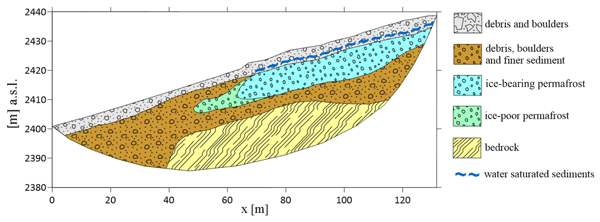
Different geophysical methods such as electrical resistivity tomography (ERT), seismic refraction tomography (SRT) and multichannel analysis of surface waves (MASW) were jointly used to characterize the internal structure of the Flüela rock glacier, Switzerland. We show that the MASW method can efficiently resolve an ice-rich layer even in presence of a supra-permafrost water flow and noisy data, a situation when SRT may fail. Our results are corroborated by seismic synthetic modelling.
Luca Peruzzo, Ulrike Werban, Marco Pohle, Mirko Pavoni, Benjamin Mary, Giorgio Cassiani, Simona Consoli, and Daniela Vanella
SOIL, 11, 811–831, https://doi.org/10.5194/soil-11-811-2025, https://doi.org/10.5194/soil-11-811-2025, 2025
Short summary
Short summary
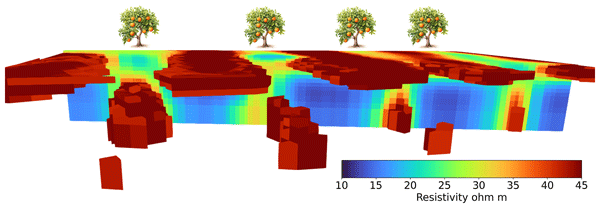
Both spatial and temporal information is important in agriculture. Information regarding the aboveground variables is ever increasing in terms of density and precision. On the contrary, belowground information lags behind and has been typically limited to time series. This study uses methods that map the subsurface spatial variability. Numerical simulations of aboveground and belowground water fluxes are then based on such spatial information and additional time-oriented datasets that are common in agriculture.
Mirko Pavoni, Luca Peruzzo, Jacopo Boaga, Alberto Carrera, Ilaria Barone, and Alexander Bast
The Cryosphere, 19, 4141–4148, https://doi.org/10.5194/tc-19-4141-2025, https://doi.org/10.5194/tc-19-4141-2025, 2025
Short summary
Short summary
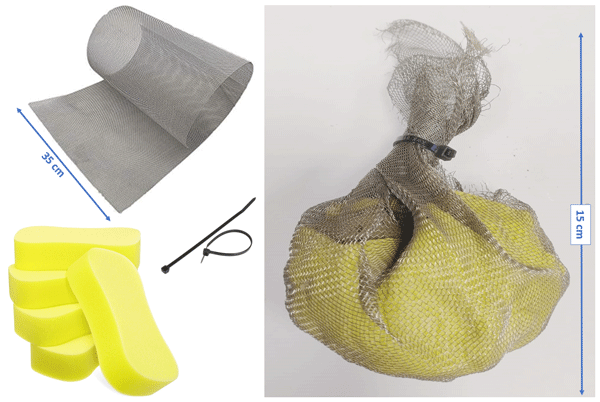
We propose an alternative electrode to perform Electrical Resistivity Tomography measurements in coarse blocky environments, such as rock glaciers. Compared to the traditional steel spike electrodes, which need to be hammered between the blocks, the proposed steel-net electrodes can be easily pushed between the builders by hand and then removed. Furthermore, the steel-net electrode weighs one-sixth of the steel spike, and is, therefore, easier to carry in challenging mountain environments.
Luca Carturan, Giulia Zuecco, Angela Andreotti, Jacopo Boaga, Costanza Morino, Mirko Pavoni, Roberto Seppi, Monica Tolotti, Thomas Zanoner, and Matteo Zumiani
The Cryosphere, 18, 5713–5733, https://doi.org/10.5194/tc-18-5713-2024, https://doi.org/10.5194/tc-18-5713-2024, 2024
Short summary
Short summary
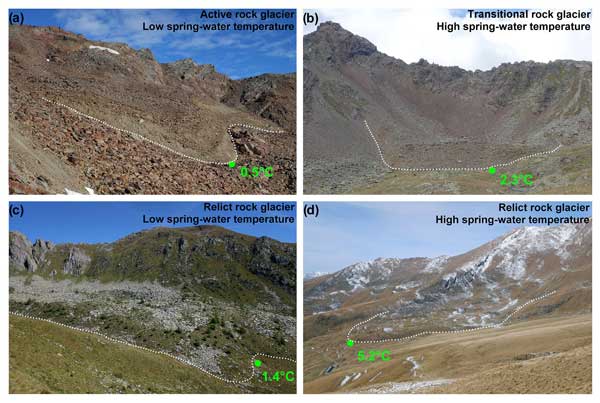
Pseudo-relict rock glaciers look relict but contain patches of permafrost. They are poorly known in terms of permafrost content, spatial distribution and frequency. Here we use spring-water temperature for a preliminary estimate of the permafrost presence in rock glaciers of a 795 km2 catchment in the Italian Alps. The results show that ~50 % of rock glaciers classified as relict might be pseudo-relict and might contain ~20 % of the ice stored in the rock glaciers in the study area.
Jacopo Boaga, Mirko Pavoni, Alexander Bast, and Samuel Weber
The Cryosphere, 18, 3231–3236, https://doi.org/10.5194/tc-18-3231-2024, https://doi.org/10.5194/tc-18-3231-2024, 2024
Short summary
Short summary
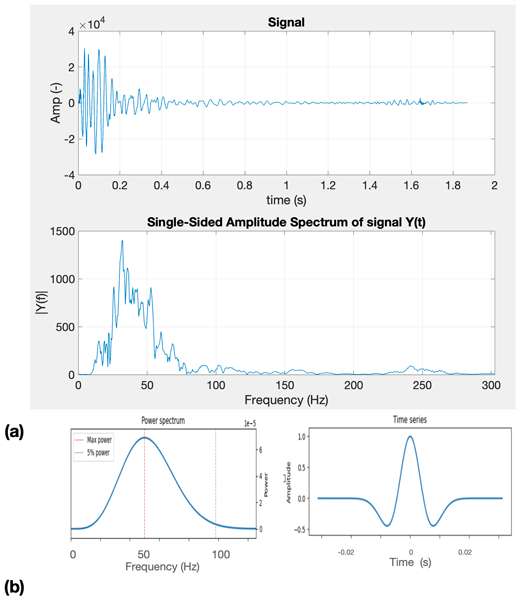
Reversal polarity is observed in rock glacier seismic refraction tomography. We collected several datasets observing this phenomenon in Switzerland and Italy. This phase change may be linked to interferences due to the presence of a thin low-velocity layer. Our results are confirmed by the modelling and analysis of synthetic seismograms to demonstrate that the presence of a low-velocity layer produces a polarity reversal on the seismic gather.
Mirko Pavoni, Jacopo Boaga, Alberto Carrera, Giulia Zuecco, Luca Carturan, and Matteo Zumiani
The Cryosphere, 17, 1601–1607, https://doi.org/10.5194/tc-17-1601-2023, https://doi.org/10.5194/tc-17-1601-2023, 2023
Short summary
Short summary
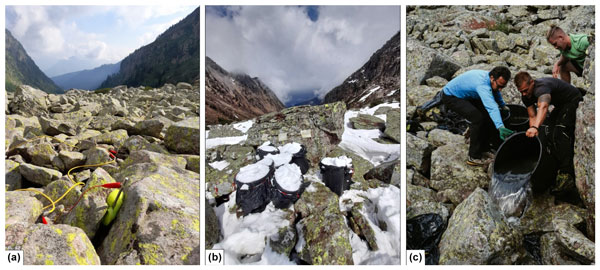
In the last decades, geochemical investigations at the springs of rock glaciers have been used to estimate their drainage processes, and the frozen layer is typically considered to act as an aquiclude or aquitard. In this work, we evaluated the hydraulic behavior of a mountain permafrost site by executing a geophysical monitoring experiment. Several hundred liters of salt water have been injected into the subsurface, and geoelectrical measurements have been performed to define the water flow.
Marcia Phillips, Chasper Buchli, Samuel Weber, Jacopo Boaga, Mirko Pavoni, and Alexander Bast
The Cryosphere, 17, 753–760, https://doi.org/10.5194/tc-17-753-2023, https://doi.org/10.5194/tc-17-753-2023, 2023
Short summary
Short summary
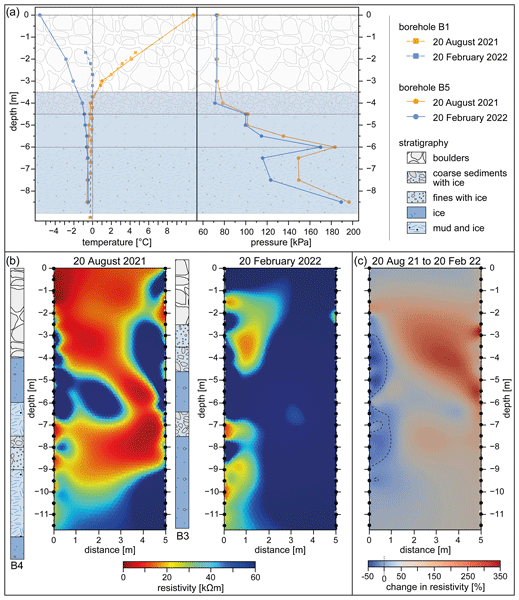
A new combination of temperature, water pressure and cross-borehole electrical resistivity data is used to investigate ice/water contents in an ice-rich rock glacier. The landform is close to 0°C and has locally heterogeneous characteristics, ice/water contents and temperatures. The techniques presented continuously monitor temporal and spatial phase changes to a depth of 12 m and provide the basis for a better understanding of accelerating rock glacier movements and future water availability.
Mirko Pavoni, Jacopo Boaga, Alberto Carrera, Stefano Urbini, Fabrizio de Blasi, and Jacopo Gabrieli
The Cryosphere Discuss., https://doi.org/10.5194/tc-2022-190, https://doi.org/10.5194/tc-2022-190, 2022
Revised manuscript not accepted
Short summary
Short summary
The Ice Memory project aims to extract, analyze, and store ice cores from worldwide retreating glaciers. One of the selected sites is the last remaining ice body in the Apennines, the Calderone Glacier. To assess the most suitable drilling position, geophysical surveys were performed. Reliable ground penetrating radar measurements have been positively combined with a geophysical technique rarely applied in glacier environments, the Frequency Domain Electro-Magnetic prospection.
Nunzio Romano, Harry Vereecken, Heye R. Bogena, Giorgio Cassiani, Matteo Censini, Giovanna Armiento, Marco Proposito, Lorenzo De Silvestri, Eyal Ben Dor, Nicolas Francos, Christian Massari, János Mészáros, Tünde Takáts, Caterina Mazzitelli, Benedetto Sica, Ugo Lazzaro, and Paolo Nasta
Earth Syst. Sci. Data Discuss., https://doi.org/10.5194/essd-2026-725, https://doi.org/10.5194/essd-2026-725, 2026
Preprint under review for ESSD
Short summary
Short summary
Understanding how climate and land-use change affect water resources requires observations that connect processes from soils and vegetation to groundwater and streams. The Alento dataset is presented that integrates environmental monitoring with targeted field observations across multiple Critical Zone components and scales. The dataset offers a distinctive resource for studying water storage and movement, evaluating environmental models, and improving understanding of water-limited regions.
Tobias Halter, Manfred Stähli, Alexander Bast, Peter Lehmann, and Jordan Aaron
EGUsphere, https://doi.org/10.5194/egusphere-2026-2858, https://doi.org/10.5194/egusphere-2026-2858, 2026
Short summary
Short summary
Despite substantial progress in predicting landslide susceptibility, landslides still occur at unexpected locations. In this article, we investigated the root causes of these mispredictions by analysing surface and subsurface field observations. Our findings highlight the inherent limitations of state-of-the-art machine learning models. The articles advocates for a shift toward process-based understanding and the integration and advancement of high-resolution in-situ and remote sensing data.
Ilaria Barone, Alexander Bast, Mirko Pavoni, Steven Javier Gaona Torres, Luca Peruzzo, and Jacopo Boaga
The Cryosphere, 20, 1163–1178, https://doi.org/10.5194/tc-20-1163-2026, https://doi.org/10.5194/tc-20-1163-2026, 2026
Short summary
Short summary
Different geophysical methods such as electrical resistivity tomography (ERT), seismic refraction tomography (SRT) and multichannel analysis of surface waves (MASW) were jointly used to characterize the internal structure of the Flüela rock glacier, Switzerland. We show that the MASW method can efficiently resolve an ice-rich layer even in presence of a supra-permafrost water flow and noisy data, a situation when SRT may fail. Our results are corroborated by seismic synthetic modelling.
Samuel Weber, Jan Beutel, Michael Dietze, Alexander Bast, Robert Kenner, Marcia Phillips, Johannes Leinauer, Simon Mühlbauer, Felix Pfluger, and Michael Krautblatter
Earth Surf. Dynam., 13, 1157–1179, https://doi.org/10.5194/esurf-13-1157-2025, https://doi.org/10.5194/esurf-13-1157-2025, 2025
Short summary
Short summary
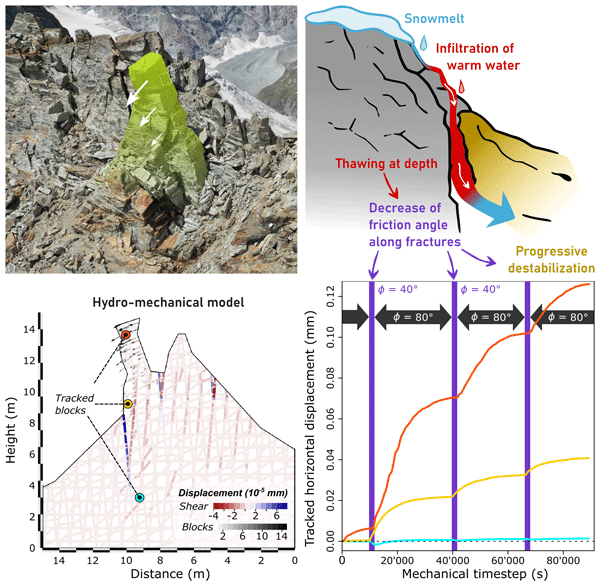
On 13 June 2023, a freestanding rock pillar on the Matterhorn collapsed after years of weakening. Our study examines this progressive destabilization by analyzing field data and integrating lab experiments into a hydro-mechanical model. We highlight the critical role of water infiltration into frozen rock, intensified by climate warming, as a widespread driver of the rising frequency of rockfalls in high mountain permafrost regions.
Luca Peruzzo, Ulrike Werban, Marco Pohle, Mirko Pavoni, Benjamin Mary, Giorgio Cassiani, Simona Consoli, and Daniela Vanella
SOIL, 11, 811–831, https://doi.org/10.5194/soil-11-811-2025, https://doi.org/10.5194/soil-11-811-2025, 2025
Short summary
Short summary
Both spatial and temporal information is important in agriculture. Information regarding the aboveground variables is ever increasing in terms of density and precision. On the contrary, belowground information lags behind and has been typically limited to time series. This study uses methods that map the subsurface spatial variability. Numerical simulations of aboveground and belowground water fluxes are then based on such spatial information and additional time-oriented datasets that are common in agriculture.
Mirko Pavoni, Luca Peruzzo, Jacopo Boaga, Alberto Carrera, Ilaria Barone, and Alexander Bast
The Cryosphere, 19, 4141–4148, https://doi.org/10.5194/tc-19-4141-2025, https://doi.org/10.5194/tc-19-4141-2025, 2025
Short summary
Short summary
We propose an alternative electrode to perform Electrical Resistivity Tomography measurements in coarse blocky environments, such as rock glaciers. Compared to the traditional steel spike electrodes, which need to be hammered between the blocks, the proposed steel-net electrodes can be easily pushed between the builders by hand and then removed. Furthermore, the steel-net electrode weighs one-sixth of the steel spike, and is, therefore, easier to carry in challenging mountain environments.
Luca Carturan, Giulia Zuecco, Angela Andreotti, Jacopo Boaga, Costanza Morino, Mirko Pavoni, Roberto Seppi, Monica Tolotti, Thomas Zanoner, and Matteo Zumiani
The Cryosphere, 18, 5713–5733, https://doi.org/10.5194/tc-18-5713-2024, https://doi.org/10.5194/tc-18-5713-2024, 2024
Short summary
Short summary
Pseudo-relict rock glaciers look relict but contain patches of permafrost. They are poorly known in terms of permafrost content, spatial distribution and frequency. Here we use spring-water temperature for a preliminary estimate of the permafrost presence in rock glaciers of a 795 km2 catchment in the Italian Alps. The results show that ~50 % of rock glaciers classified as relict might be pseudo-relict and might contain ~20 % of the ice stored in the rock glaciers in the study area.
Alberto Carrera, Luca Peruzzo, Matteo Longo, Giorgio Cassiani, and Francesco Morari
SOIL, 10, 843–857, https://doi.org/10.5194/soil-10-843-2024, https://doi.org/10.5194/soil-10-843-2024, 2024
Short summary
Short summary
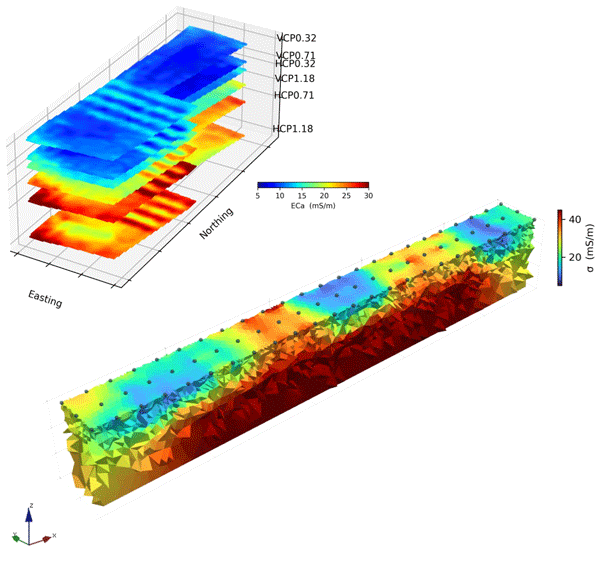
Soil compaction resulting from inappropriate agricultural practices affects soil ecological functions, decreasing the water-use efficiency of plants. Recent developments contributed to innovative sensing approaches aimed at safeguarding soil health. Here, we explored how the most used geophysical methods detect soil compaction. Results, validated with traditional characterization methods, show the pros and cons of non-invasive techniques and their ability to characterize compacted areas.
Jacopo Boaga, Mirko Pavoni, Alexander Bast, and Samuel Weber
The Cryosphere, 18, 3231–3236, https://doi.org/10.5194/tc-18-3231-2024, https://doi.org/10.5194/tc-18-3231-2024, 2024
Short summary
Short summary
Reversal polarity is observed in rock glacier seismic refraction tomography. We collected several datasets observing this phenomenon in Switzerland and Italy. This phase change may be linked to interferences due to the presence of a thin low-velocity layer. Our results are confirmed by the modelling and analysis of synthetic seismograms to demonstrate that the presence of a low-velocity layer produces a polarity reversal on the seismic gather.
Alexander Bast, Robert Kenner, and Marcia Phillips
The Cryosphere, 18, 3141–3158, https://doi.org/10.5194/tc-18-3141-2024, https://doi.org/10.5194/tc-18-3141-2024, 2024
Short summary
Short summary
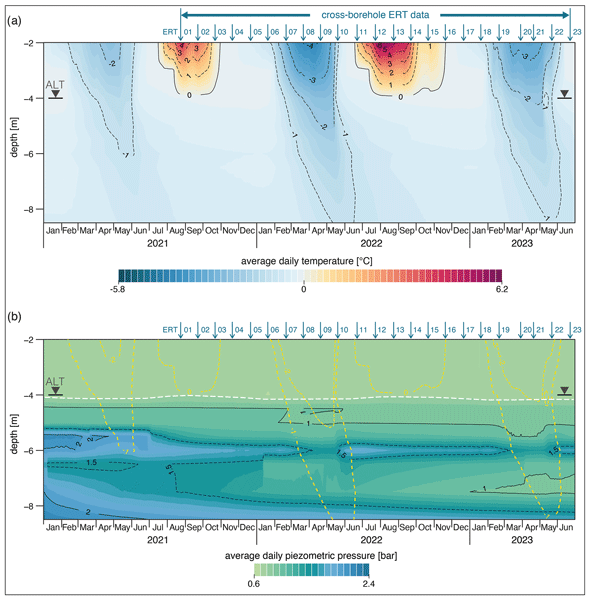
We monitor ground temperature, water pressure, and relative ice/water contents in a creeping ice-rich rock glacier in mountain permafrost to study its characteristics during a deceleration period with dry conditions and a summer heat wave. The snowpack has an important role as a provider of water and as a thermal insulator. Snow-poor winters, followed by dry summers, induce cooling and drying of the permafrost, leading to rock glacier deceleration.
Davide Scafidi, Alfio Viganò, Jacopo Boaga, Valeria Cascone, Simone Barani, Daniele Spallarossa, Gabriele Ferretti, Mauro Carli, and Giancarlo De Marchi
Nat. Hazards Earth Syst. Sci., 24, 1249–1260, https://doi.org/10.5194/nhess-24-1249-2024, https://doi.org/10.5194/nhess-24-1249-2024, 2024
Short summary
Short summary
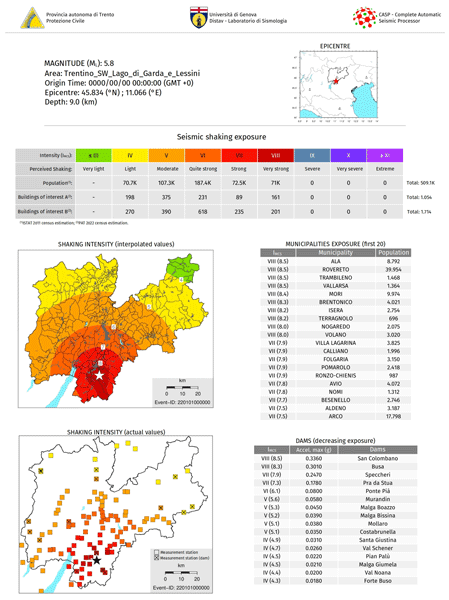
Our paper concerns the use of a dense network of low-cost seismic accelerometers in populated areas to achieve rapid and reliable estimation of exposure maps in Trentino (northeast Italy). These additional data, in conjunction with the automatic monitoring procedure, allow us to obtain dense measurements which only rely on actual recorded data, avoiding the use of ground motion prediction equations. This leads to a more reliable picture of the actual ground shaking.
Benjamin Mary, Veronika Iván, Franco Meggio, Luca Peruzzo, Guillaume Blanchy, Chunwei Chou, Benedetto Ruperti, Yuxin Wu, and Giorgio Cassiani
Biogeosciences, 20, 4625–4650, https://doi.org/10.5194/bg-20-4625-2023, https://doi.org/10.5194/bg-20-4625-2023, 2023
Short summary
Short summary
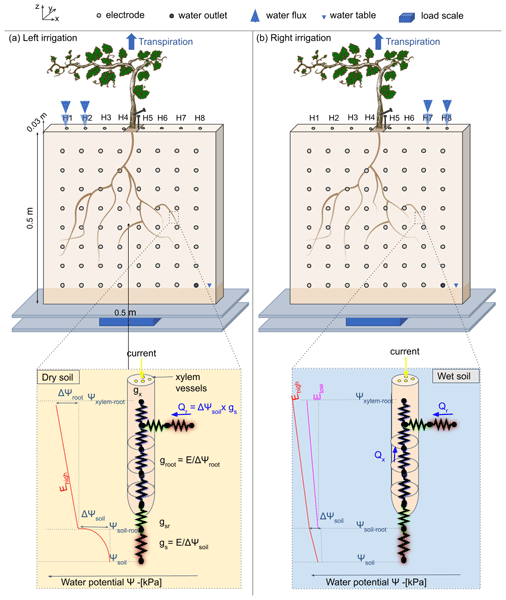
The study explores the partial root zone drying method, an irrigation strategy aimed at improving water use efficiency. We imaged the root–soil interaction using non-destructive techniques consisting of soil and plant current stimulation. The study found that imaging the processes in time was effective in identifying spatial patterns associated with irrigation and root water uptake. The results will be useful for developing more efficient root detection methods in natural soil conditions.
Mirko Pavoni, Jacopo Boaga, Alberto Carrera, Giulia Zuecco, Luca Carturan, and Matteo Zumiani
The Cryosphere, 17, 1601–1607, https://doi.org/10.5194/tc-17-1601-2023, https://doi.org/10.5194/tc-17-1601-2023, 2023
Short summary
Short summary
In the last decades, geochemical investigations at the springs of rock glaciers have been used to estimate their drainage processes, and the frozen layer is typically considered to act as an aquiclude or aquitard. In this work, we evaluated the hydraulic behavior of a mountain permafrost site by executing a geophysical monitoring experiment. Several hundred liters of salt water have been injected into the subsurface, and geoelectrical measurements have been performed to define the water flow.
Marcia Phillips, Chasper Buchli, Samuel Weber, Jacopo Boaga, Mirko Pavoni, and Alexander Bast
The Cryosphere, 17, 753–760, https://doi.org/10.5194/tc-17-753-2023, https://doi.org/10.5194/tc-17-753-2023, 2023
Short summary
Short summary
A new combination of temperature, water pressure and cross-borehole electrical resistivity data is used to investigate ice/water contents in an ice-rich rock glacier. The landform is close to 0°C and has locally heterogeneous characteristics, ice/water contents and temperatures. The techniques presented continuously monitor temporal and spatial phase changes to a depth of 12 m and provide the basis for a better understanding of accelerating rock glacier movements and future water availability.
Mirko Pavoni, Jacopo Boaga, Alberto Carrera, Stefano Urbini, Fabrizio de Blasi, and Jacopo Gabrieli
The Cryosphere Discuss., https://doi.org/10.5194/tc-2022-190, https://doi.org/10.5194/tc-2022-190, 2022
Revised manuscript not accepted
Short summary
Short summary
The Ice Memory project aims to extract, analyze, and store ice cores from worldwide retreating glaciers. One of the selected sites is the last remaining ice body in the Apennines, the Calderone Glacier. To assess the most suitable drilling position, geophysical surveys were performed. Reliable ground penetrating radar measurements have been positively combined with a geophysical technique rarely applied in glacier environments, the Frequency Domain Electro-Magnetic prospection.
Cited articles
Bast, A., Pavoni, M., Lichtenegger, M., Buckel, J., and Boaga, J.: The Use of Textile Electrodes for Electrical Resistivity Tomography in Periglacial, Coarse Blocky Terrain: A Comparison With Conventional Steel Electrodes, Permafrost Periglac., 36, 110–122, https://doi.org/10.1002/ppp.2257, 2025.
Binley, A. and Slater, L.: Resistivity and induced polarization: Theory and applications to the near-surface earth, Cambridge University Press, https://doi.org/10.1017/9781108685955, 2020.
Blanchy, G., Saneiyan, S., Boyd, J., McLachlan, P., and Binley, A.: ResIPy, an intuitive open source software for complex geoelectrical inversion/modeling, Comput. Geosci., 137, 104423, https://doi.org/10.1016/j.cageo.2020.104423, 2020.
Boaga, J.: The use of FDEM in hydrogeophysics: A review, J. Appl. Geophys., 139, 36–46, https://doi.org/10.1016/j.jappgeo.2017.02.011, 2017.
Boaga, J., Phillips, M., Noetzli, J., Haberkorn, A., Kenner, R., and Bast, A.: A comparison of frequency domain electro-magnetometry, electrical resistivity tomography and borehole temperatures to assess the presence of ice in a rock glacier, Front. Earth Sci., 8, 586430, https://doi.org/10.3389/feart.2020.586430, 2020.
Boaga, J., Pavoni, M., Bast, A., and Weber, S.: Brief communication: On the potential of seismic polarity reversal to identify a thin low-velocity layer above a high-velocity layer in ice-rich rock glaciers, The Cryosphere, 18, 3231–3236, https://doi.org/10.5194/tc-18-3231-2024, 2024.
Carrera, A., Peruzzo, L., Longo, M., Cassiani, G., and Morari, F.: Uncovering soil compaction: performance of electrical and electromagnetic geophysical methods, SOIL, 10, 843–857, https://doi.org/10.5194/soil-10-843-2024, 2024.
Etzelmüller, B, Guglielmin, M, Hauck, C., Hilbich, C., Hoelzle, M., Isaksen, K., Noetzli, J., Oliva, M., and Ramos, M.: Twenty years of European mountain permafrost dynamics-the PACE legacy, Environ. Res. Lett., 15, 104070, https://doi.org/10.1088/1748-9326/abae9d, 2020.
Guglielmin, M. and Tellini, C.: Contributo alla conoscenza dei rock glaciers delle Alpi italiane. I rock glaciers del Livignasco (Alta Valtellina), Rivista Geografica Italiana, 99, 395–414, 1992.
Hauck, C. and Kneisel, C.: Applied geophysics in periglacial environments, Cambridge University Press, ISBN 9780521889667, 2008.
Herring, T. and Lewkowicz, A. G.: A systematic evaluation of electrical resistivity tomography for permafrost interface detection using forward modeling, Permafrost Periglac., 33, 134–146, https://doi.org/10.1002/ppp.2141, 2022.
McLachlan, P., Blanchy, G., and Binley, A.: EMagPy: Open-source standalone software for processing, forward modeling and inversion of electromagnetic induction data, Comput. Geosci., 146, 104561, https://doi.org/10.1016/j.cageo.2020.104561, 2021.
McNeill, J. D.: Electromagnetic terrain conductivity measurement at low induction numbers, Geonics Ltd., Technical Note TN-6, Mississauga, Ontario, https://www.geonics.com/pdfs/technicalnotes/tn6.pdf (last access: 21 September 2026), 1980.
Pavoni, M.: Frequency Domain Electromagnetic (FDEM) datasets: Fluela Pass, Stelvio Pass, and Scorluzzo. Brief Communication EGUSPHERE-2026-1264, Zenodo [data set], https://doi.org/10.5281/zenodo.22092969, 2026.
Pavoni, M., Sirch, F., and Boaga, J.: Electrical and electromagnetic geophysical prospecting for the monitoring of rock glaciers in the Dolomites, Northeast Italy, Sensors, 21, 1294, https://doi.org/10.3390/s21041294, 2021.
Pavoni, M., Carrera, A., and Boaga, J.: Improving the galvanic contact resistance for geoelectrical measurements in debris areas: A case study, Near Surf. Geophys., 20, 178–191, https://doi.org/10.1002/nsg.12192, 2022.
Pavoni, M., Boaga, J., Carrera, A., Urbini, S., de Blasi, F., and Gabrieli, J.: Combining Ground Penetrating Radar and Frequency Domain Electromagnetic Surveys to Characterize the Structure of the Calderone Glacieret (Gran Sasso d'Italia, Italy), Remote Sensing, 15, 2615, https://doi.org/10.3390/rs15102615, 2023.
Pavoni, M., Peruzzo, L., Boaga, J., Carrera, A., Barone, I., and Bast, A.: Brief communication: Use of lightweight and low-cost steel net electrodes for electrical resistivity tomography (ERT) surveys performed on coarse-blocky surface environments, The Cryosphere, 19, 4141–4148, https://doi.org/10.5194/tc-19-4141-2025, 2025.
Phillips, M., Buchli, C., Weber, S., Boaga, J., Pavoni, M., and Bast, A.: Brief communication: Combining borehole temperature, borehole piezometer and cross-borehole electrical resistivity tomography measurements to investigate seasonal changes in ice-rich mountain permafrost, The Cryosphere, 17, 753–760, https://doi.org/10.5194/tc-17-753-2023, 2023.
van't Veen, K. M., Ferré, T. P. A., Iversen, B. V., and Børgesen, C. D.: Using machine learning to predict optimal electromagnetic induction instrument configurations for characterizing the shallow subsurface, Hydrol. Earth Syst. Sci., 26, 55–70, https://doi.org/10.5194/hess-26-55-2022, 2022.
Wagner, F. M. and Uhlemann, S.: An overview of multimethod imaging approaches in environmental geophysics, Adv. Geophys., 62, 1–72, 2021.
Short summary
This study explores the potential of the frequency-domain electromagnetic (FDEM) method for investigating mountain permafrost environments such as rock glaciers. Although less accurate than electrical resistivity tomography (ERT), FDEM allows rapid measurements of subsurface electrical properties and requires much lower logistical effort, making it suitable for preliminary surveys in remote areas and for large-scale site characterization.
This study explores the potential of the frequency-domain electromagnetic (FDEM) method for...


