
Articles | Volume 20, issue 9
https://doi.org/10.5194/tc-20-5199-2026
© Author(s) 2026. This work is distributed under
the Creative Commons Attribution 4.0 License.
the Creative Commons Attribution 4.0 License.
https://doi.org/10.5194/tc-20-5199-2026
© Author(s) 2026. This work is distributed under
the Creative Commons Attribution 4.0 License.
the Creative Commons Attribution 4.0 License.
Research article
| 
18 Sep 2026
Research article |
| 18 Sep 2026
| 18 Sep 2026
Air temperature partitioning of snow accumulation, erosion and melt: a regime shift occurring on Mt. Ortles (Eastern Italian Alps)
Tiziana Lazzarina Zendrini
CORRESPONDING AUTHOR

Department of Land, Environment, Agriculture and Forestry, University of Padua, Legnaro, Italy
Luca Carturan
Department of Land, Environment, Agriculture and Forestry, University of Padua, Legnaro, Italy
Michael Lehning
WSL Institute for Snow and Avalanche Research SLF, Davos, Switzerland
CRYOS, School of Architecture, Civil and Environmental Engineering, EPFL, Lausanne, Switzerland
Mathias Bavay
WSL Institute for Snow and Avalanche Research SLF, Davos, Switzerland
Federico Cazorzi
Department of Agrifood, Environmental and Animal Sciences, University of Udine, Udine, Italy
Paolo Gabrielli
Italian Glaciological Committee c/o University of Turin, Turin, Italy
current address: Oak Crest Academy, 2350 S Garey Ave, Pomona, CA 91766, USA
Nander Wever
WSL Institute for Snow and Avalanche Research SLF, Davos, Switzerland
Giancarlo Dalla Fontana
Department of Land, Environment, Agriculture and Forestry, University of Padua, Legnaro, Italy
Related authors
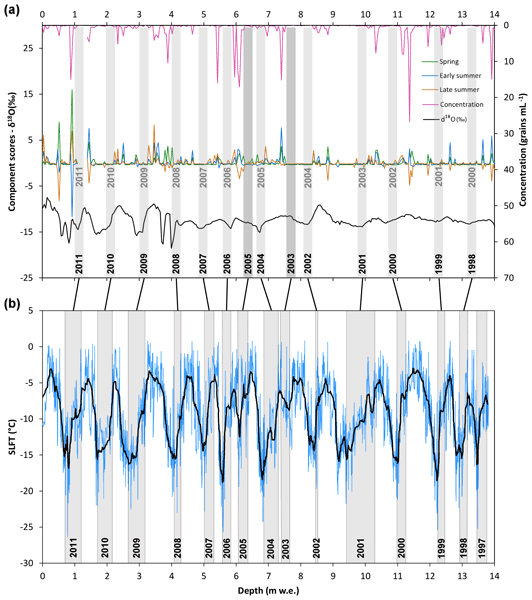
Luca Carturan, Alexander C. Ihle, Federico Cazorzi, Tiziana Lazzarina Zendrini, Fabrizio De Blasi, Giancarlo Dalla Fontana, Giuliano Dreossi, Daniela Festi, Bryan Mark, Klaus Dieter Oeggl, Roberto Seppi, Barbara Stenni, and Paolo Gabrielli
The Cryosphere, 19, 3443–3458, https://doi.org/10.5194/tc-19-3443-2025, https://doi.org/10.5194/tc-19-3443-2025, 2025
Short summary
Short summary
Paleoclimatic glacial archives in low-latitude mountains are increasingly affected by melt, causing heavy percolation and removing snow and firn accumulated across months, seasons, or even years. Here we present a proxy system model that explicitly accounts for melt in ice and firn cores. Compared to traditional annual layer counting, the model significantly improved the interpretation and annual dating of the Mt Ortles firn core, in the Italian Alps, which includes the very warm summer of 2003.
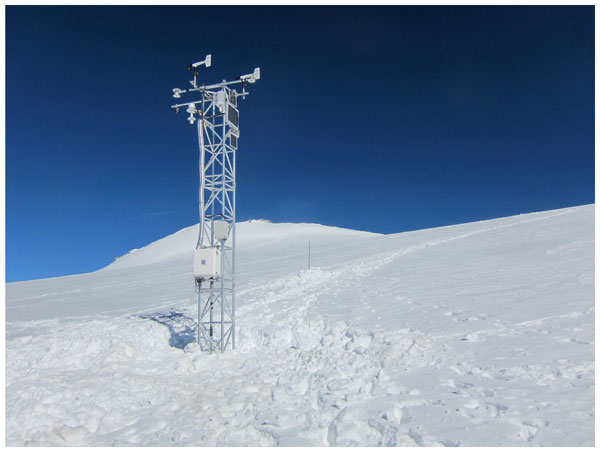
Luca Carturan, Fabrizio De Blasi, Roberto Dinale, Gianfranco Dragà, Paolo Gabrielli, Volkmar Mair, Roberto Seppi, David Tonidandel, Thomas Zanoner, Tiziana Lazzarina Zendrini, and Giancarlo Dalla Fontana
Earth Syst. Sci. Data, 15, 4661–4688, https://doi.org/10.5194/essd-15-4661-2023, https://doi.org/10.5194/essd-15-4661-2023, 2023
Short summary
Short summary
This paper presents a new dataset of air, englacial, soil surface and rock wall temperatures collected between 2010 and 2016 on Mt Ortles, which is the highest summit of South Tyrol, Italy. Details are provided on instrument type and characteristics, field methods, and data quality control and assessment. The obtained data series are available through an open data repository. This is a rare dataset from a summit area lacking observations on permafrost and glaciers and their climatic response.
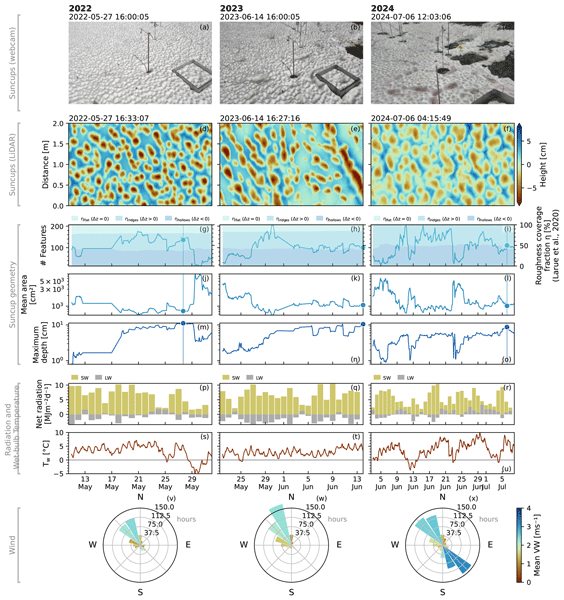
Francesca Carletti, Nora Helbig, Nander Wever, Loïc Brouet, Mathias Bavay, Benjamin Walter, and Michael Lehning
The Cryosphere, 20, 5653–5673, https://doi.org/10.5194/tc-20-5653-2026, https://doi.org/10.5194/tc-20-5653-2026, 2026
Short summary
Short summary
Melting alpine snowfields develop cup-shaped hollows that reduce how much sunlight the snow reflects, accelerating melt. Over three seasons in the Swiss Alps, we monitored how these hollows form and grow with a laser scanner. Two processes reduce reflectivity at the same time: hollows trap light through internal reflections, and meltwater washes dark particles into them. Because they are difficult to separate, surface roughness alone emerges as a proxy for overall reflectivity loss.
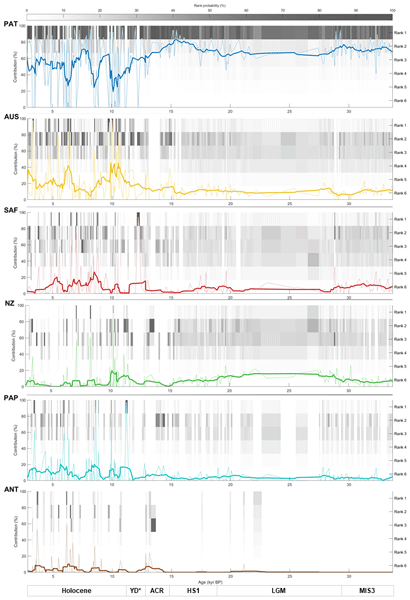
Sibylle Boxho, Aubry Vanderstraeten, Nadine Mattielli, Goulven G. Laruelle, Aloys Bory, Paolo Gabrielli, and Steeve Bonneville
Clim. Past, 22, 1655–1674, https://doi.org/10.5194/cp-22-1655-2026, https://doi.org/10.5194/cp-22-1655-2026, 2026
Short summary
Short summary
We present a high-resolution, quantitative reconstruction of dust provenance in the EPICA Dome C ice core (33.7–2.8 kyr BP) using Rare Earth Elements (REE). Dust was mainly sourced from Patagonia during glacial periods, shifting toward Australia, Southern Africa, and the Puna-Altiplano after 14.5 kyr BP due to sea-level rise and hydrological rearrangement in Patagonia. These changes also reflect major reorganizations of Southern Hemisphere atmospheric circulation.
Gwendolyn Dasser, Valentin T. Bickel, Marius Rüetschi, Mylène Jacquemart, Mathias Bavay, Elisabeth Hafner-Aeschbacher, Alec van Herwijnen, David Small, and Andrea Manconi
The Cryosphere, 20, 4811–4837, https://doi.org/10.5194/tc-20-4811-2026, https://doi.org/10.5194/tc-20-4811-2026, 2026
Short summary
Short summary
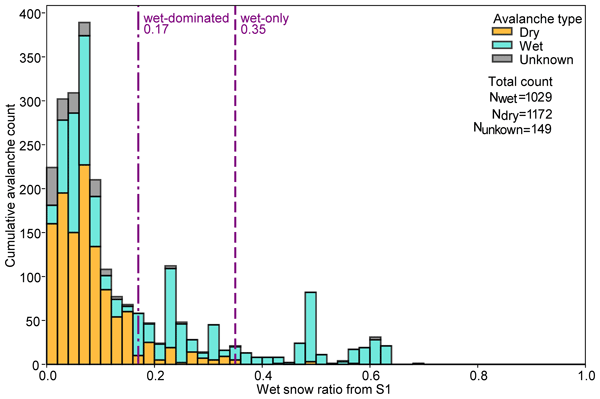
Understanding snowpack wetness is key to predicting wet snow avalanche releases, but detailed data is often limited. Using satellite radar, we monitored snowmelt over several seasons. We extracted a wet snow ratio threshold where the change from dry to wet snow avalanche dominated conditions is expected. By using local resolution weighting composites, we improved spatial resolution and showed our product to be more feasible for use in practice than the publicly available SAR Wet Snow layer.
Isabella Anglin, Adriaan J. Teuling, Marius G. Floriancic, Michael Lehning, and Harsh Beria
EGUsphere, https://doi.org/10.5194/egusphere-2026-4268, https://doi.org/10.5194/egusphere-2026-4268, 2026
Short summary
Short summary
Snow sublimation is the direct vapor loss of snow to the atmosphere, reducing spring snowmelt that recharges soils, groundwater, and rivers. Using eddy-covariance measurements over a full winter in the eastern Swiss Alps, we found that sublimation removed about 25 mm of water, or nearly 6 % of the season’s peak snow water storage. Sublimation losses were highest late in the season, showing that this hidden process can meaningfully reduce mountain water supplies.
Noah Liguori-Bills, Catherine E. Scott, Ken S. Carslaw, Natalie Kehrwald, Stijn Hantson, Susan Kaspari, Carlo Barbante, Elena Barbaro, Paolo Gabrielli, Roberta Zangrando, Lonnie G. Thompson, and Douglas S. Hamilton
EGUsphere, https://doi.org/10.5194/egusphere-2026-2728, https://doi.org/10.5194/egusphere-2026-2728, 2026
Short summary
Short summary
Ice cores preserve changes in landscape fires and human-caused combustion. In this study, we compared ice core data from every continent, except Oceania, to computer model simulations of fire. We found a large disagreement in the 1850 CE to 1980 CE black carbon ratio. After exploring changes in emissions, transport, and aerosol microphysical processes as potential reasons for this disagreement, our results suggested that fire emission input datasets for climate models are the primary cause.
Paolo Gabrielli, Theo M. Jenk, Michele Bertó, Giuliano Dreossi, Daniela Festi, Werner Kofler, Mai Winstrup, Klaus Oeggl, Margit Schwikowski, Barbara Stenni, and Carlo Barbante
Clim. Past, 22, 1037–1055, https://doi.org/10.5194/cp-22-1037-2026, https://doi.org/10.5194/cp-22-1037-2026, 2026
Short summary
Short summary
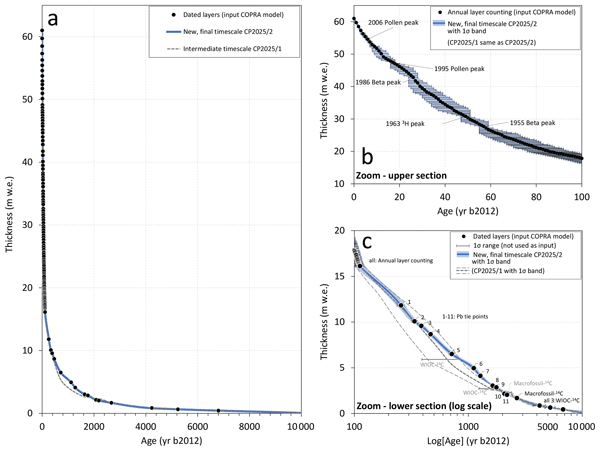
A low latitude-high altitude Alpine ice core record was obtained in 2011 from the glacier Alto dell’Ortles (Eastern Alps, Italy) and provided evidence of one of the oldest Alpine ice core records spanning the last ~7000 years, back to the last Northern Hemisphere Climatic Optimum. Here we provide a new Alto dell’Ortles chronology of improved accuracy that will allow to constrain Holocene climatic and environmental histories emerging from this high-altitude glacial archive of Central Europe.
Mahdi Jafari and Michael Lehning
The Cryosphere, 20, 2439–2467, https://doi.org/10.5194/tc-20-2439-2026, https://doi.org/10.5194/tc-20-2439-2026, 2026
Short summary
Short summary
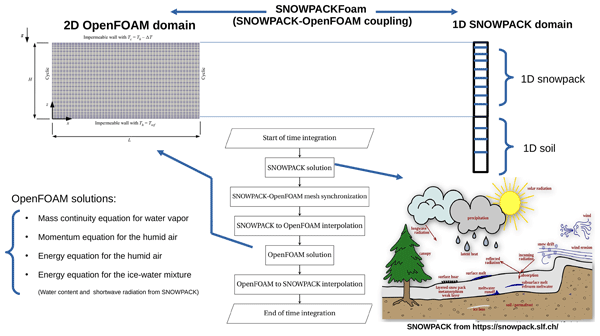
We studied how air moves within snow in Arctic regions and how this affects the snow's structure. Using a new method that links two computer models, we found that cold weather can trigger air movement inside the snow, creating vertical channels and changing the snow's density and temperature. These changes are not captured by traditional models, so our work helps improve how snow and climate processes are simulated in cold environments.
Samuele Viaro, Armin Sigmund, Evan Thomas, and Michael Lehning
EGUsphere, https://doi.org/10.5194/egusphere-2026-2132, https://doi.org/10.5194/egusphere-2026-2132, 2026
Preprint archived
Short summary
Short summary
Our research focuses in understanding snow processes at the surface-atmosphere interface, and their influence at larger scales. The use of our advanced numerical model, which includes blowing snow equations, proved to be valuable in predicting the observed ice crystal concentration number at an alpine site. We further demonstrate the effect of blowing snow particles in precipitation and erosion-deposition patterns. Finally, secondary ice production mechanisms are also treated.
Brandon Jacobus Adrianus van Schaik, Alice Juliette Baruzier, Clément Loyer, Hendrik Huwald, and Michael Lehning
Wind Energ. Sci. Discuss., https://doi.org/10.5194/wes-2025-271, https://doi.org/10.5194/wes-2025-271, 2025
Preprint under review for WES
Short summary
Short summary
We created a new way to estimate how much energy a wind turbine can produce by using the full change of wind with height instead of a single measurement. Testing it on turbines in the Swiss Alps showed that it predicts energy production more accurately and smoothly than current industry methods. It performs as well as advanced models but is much faster, helping guide future wind projects in complex landscapes.
Francesca Carletti, Carlo Marin, Chiara Ghielmini, Mathias Bavay, and Michael Lehning
The Cryosphere, 19, 5579–5612, https://doi.org/10.5194/tc-19-5579-2025, https://doi.org/10.5194/tc-19-5579-2025, 2025
Short summary
Short summary
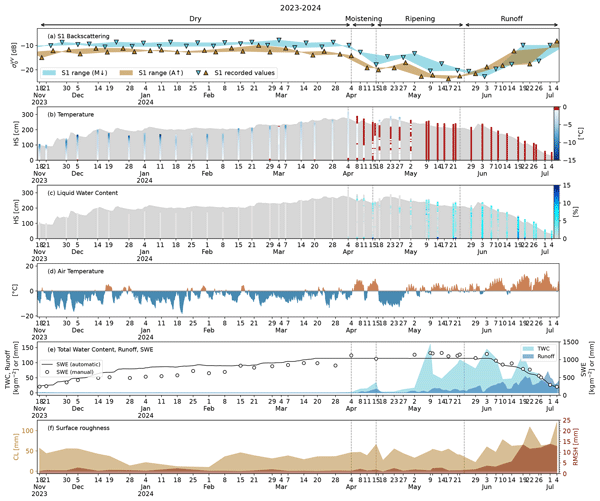
This work presents the first high-resolution dataset of wet-snow properties for satellite applications. With it, we validate links between Sentinel-1 backscatter and snowmelt stages and investigate scattering mechanisms through a radiative transfer model. We disclose the influence of liquid water content and surface roughness at different melting stages and address future challenges, such as capturing large-scale scattering mechanisms and enhancing radiative transfer modules for wet snow.
Hongxiang Yu, Li Guang, Benjamin Walter, Jianping Huang, Ning Huang, and Michael Lehning
The Cryosphere, 19, 5389–5402, https://doi.org/10.5194/tc-19-5389-2025, https://doi.org/10.5194/tc-19-5389-2025, 2025
Short summary
Short summary
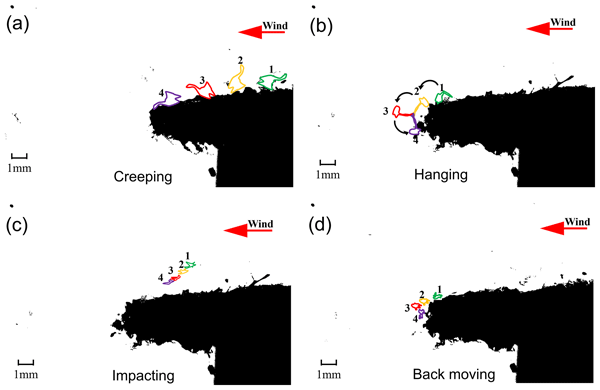
Cornices are overhanging snow accumulations that form on mountain crests. Using wind-tunnel experiments and high-speed photography, the study tracks particle trajectories around cornices and finds distinct differences between edge and surface deposition. A static adhesion model for edge deposition was developed and validated to predict how particle size and shape affect adhesion. The work clarifies the microdynamics of early cornice growth and provides a foundation for avalanche modeling.
Elizaveta Sharaborova, Michael Lehning, Nander Wever, Marcia Phillips, and Hendrik Huwald
The Cryosphere, 19, 4277–4301, https://doi.org/10.5194/tc-19-4277-2025, https://doi.org/10.5194/tc-19-4277-2025, 2025
Short summary
Short summary
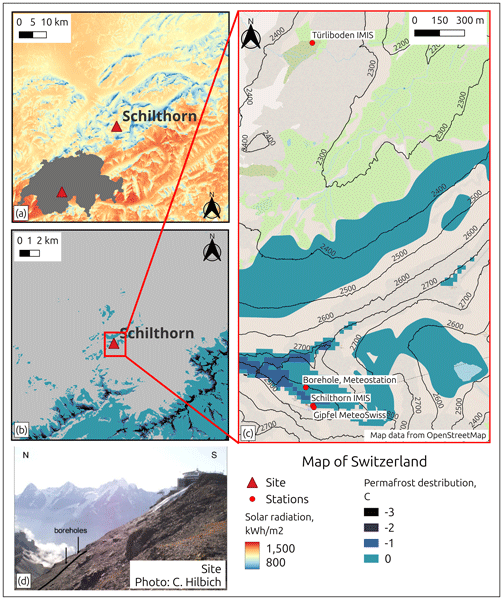
Global warming provokes permafrost to thaw, damaging landscapes and infrastructure. This study explores methods to slow this thawing at an alpine site. We investigate different methods based on passive and active cooling. The best approach mixes both methods and manages heat flow, potentially allowing excess energy to be used locally.
Luca Carturan, Alexander C. Ihle, Federico Cazorzi, Tiziana Lazzarina Zendrini, Fabrizio De Blasi, Giancarlo Dalla Fontana, Giuliano Dreossi, Daniela Festi, Bryan Mark, Klaus Dieter Oeggl, Roberto Seppi, Barbara Stenni, and Paolo Gabrielli
The Cryosphere, 19, 3443–3458, https://doi.org/10.5194/tc-19-3443-2025, https://doi.org/10.5194/tc-19-3443-2025, 2025
Short summary
Short summary
Paleoclimatic glacial archives in low-latitude mountains are increasingly affected by melt, causing heavy percolation and removing snow and firn accumulated across months, seasons, or even years. Here we present a proxy system model that explicitly accounts for melt in ice and firn cores. Compared to traditional annual layer counting, the model significantly improved the interpretation and annual dating of the Mt Ortles firn core, in the Italian Alps, which includes the very warm summer of 2003.
Ella Gilbert, Denis Pishniak, José Abraham Torres, Andrew Orr, Michelle Maclennan, Nander Wever, and Kristiina Verro
The Cryosphere, 19, 597–618, https://doi.org/10.5194/tc-19-597-2025, https://doi.org/10.5194/tc-19-597-2025, 2025
Short summary
Short summary
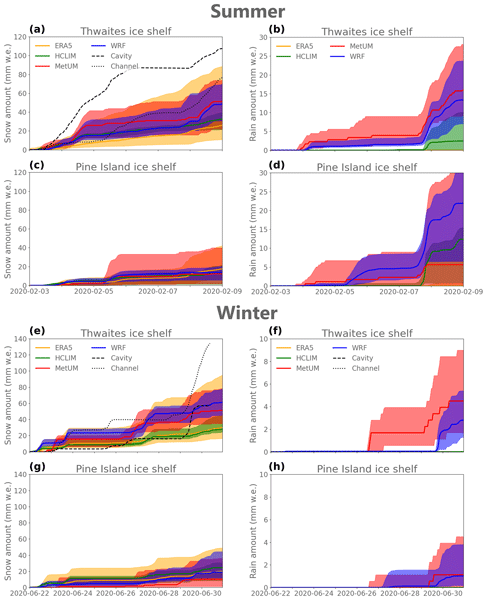
We use three sophisticated climate models to examine extreme precipitation in a critical region of West Antarctica. We found that rainfall probably occurred during the two cases we examined and that it was generated by the interaction of air with steep topography. Our results show that kilometre-scale models are useful tools for exploring extreme precipitation in this region and that more observations of rainfall are needed.
Luca Carturan, Giulia Zuecco, Angela Andreotti, Jacopo Boaga, Costanza Morino, Mirko Pavoni, Roberto Seppi, Monica Tolotti, Thomas Zanoner, and Matteo Zumiani
The Cryosphere, 18, 5713–5733, https://doi.org/10.5194/tc-18-5713-2024, https://doi.org/10.5194/tc-18-5713-2024, 2024
Short summary
Short summary
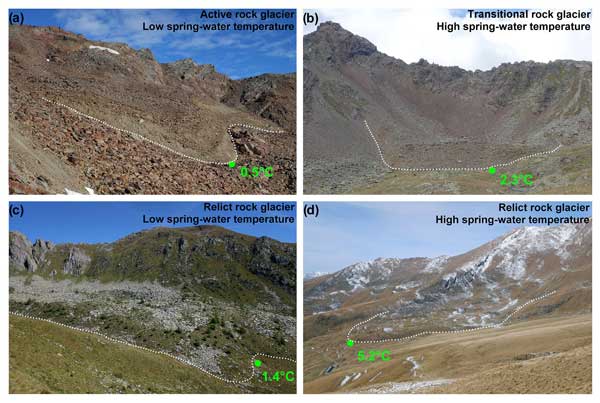
Pseudo-relict rock glaciers look relict but contain patches of permafrost. They are poorly known in terms of permafrost content, spatial distribution and frequency. Here we use spring-water temperature for a preliminary estimate of the permafrost presence in rock glaciers of a 795 km2 catchment in the Italian Alps. The results show that ~50 % of rock glaciers classified as relict might be pseudo-relict and might contain ~20 % of the ice stored in the rock glaciers in the study area.
Riccardo Barella, Mathias Bavay, Francesca Carletti, Nicola Ciapponi, Valentina Premier, and Carlo Marin
The Cryosphere, 18, 5323–5345, https://doi.org/10.5194/tc-18-5323-2024, https://doi.org/10.5194/tc-18-5323-2024, 2024
Short summary
Short summary
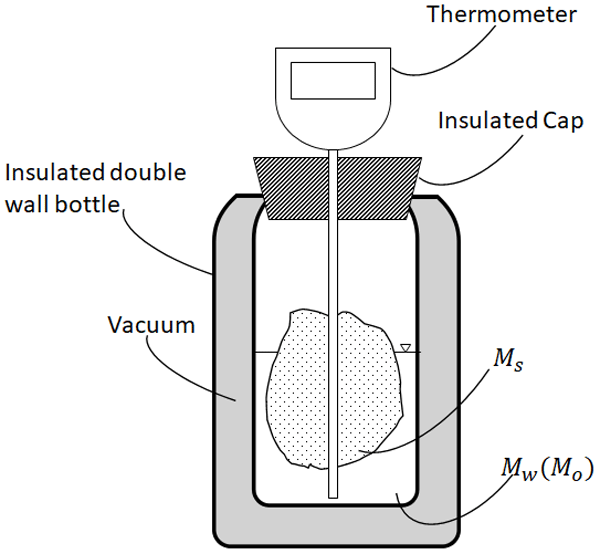
This research revisits a classic scientific technique, melting calorimetry, to measure snow liquid water content. This study shows with a novel uncertainty propagation framework that melting calorimetry, traditionally less trusted than freezing calorimetry, can produce accurate results. The study defines optimal experiment parameters and a robust field protocol. Melting calorimetry has the potential to become a valuable tool for validating other liquid water content measuring techniques.
Sonja Wahl, Benjamin Walter, Franziska Aemisegger, Luca Bianchi, and Michael Lehning
The Cryosphere, 18, 4493–4515, https://doi.org/10.5194/tc-18-4493-2024, https://doi.org/10.5194/tc-18-4493-2024, 2024
Short summary
Short summary
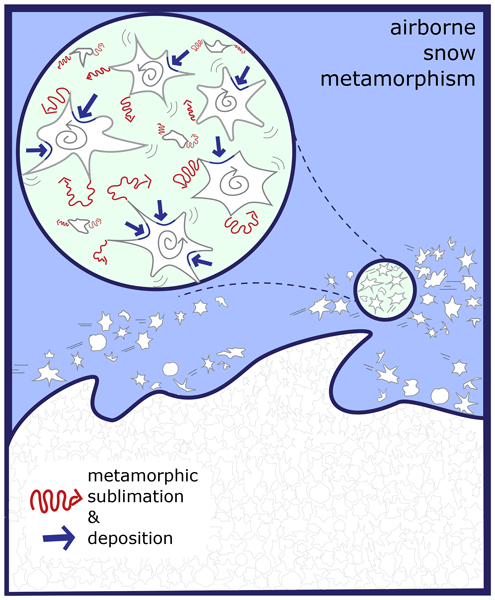
Wind-driven airborne transport of snow is a frequent phenomenon in snow-covered regions and a process difficult to study in the field as it is unfolding over large distances. Thus, we use a ring wind tunnel with infinite fetch positioned in a cold laboratory to study the evolution of the shape and size of airborne snow. With the help of stable water isotope analyses, we identify the hitherto unobserved process of airborne snow metamorphism that leads to snow particle rounding and growth.
Dylan Reynolds, Louis Quéno, Michael Lehning, Mahdi Jafari, Justine Berg, Tobias Jonas, Michael Haugeneder, and Rebecca Mott
The Cryosphere, 18, 4315–4333, https://doi.org/10.5194/tc-18-4315-2024, https://doi.org/10.5194/tc-18-4315-2024, 2024
Short summary
Short summary
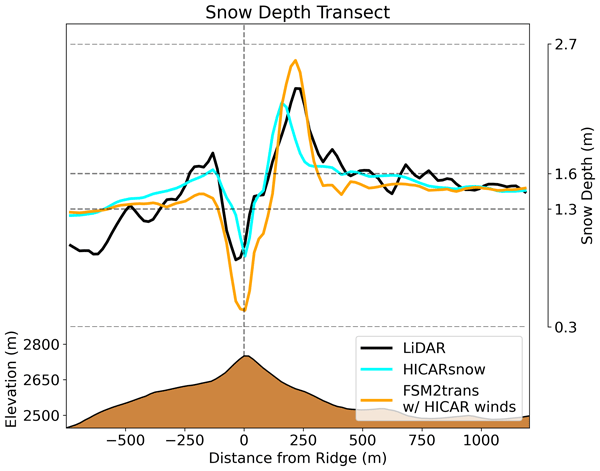
Information about atmospheric variables is needed to produce simulations of mountain snowpacks. We present a model that can represent processes that shape mountain snowpack, focusing on the accumulation of snow. Simulations show that this model can simulate the complex path that a snowflake takes towards the ground and that this leads to differences in the distribution of snow by the end of winter. Overall, this model shows promise with regard to improving forecasts of snow in mountains.
Benjamin Bouchard, Daniel F. Nadeau, Florent Domine, Nander Wever, Adrien Michel, Michael Lehning, and Pierre-Erik Isabelle
The Cryosphere, 18, 2783–2807, https://doi.org/10.5194/tc-18-2783-2024, https://doi.org/10.5194/tc-18-2783-2024, 2024
Short summary
Short summary
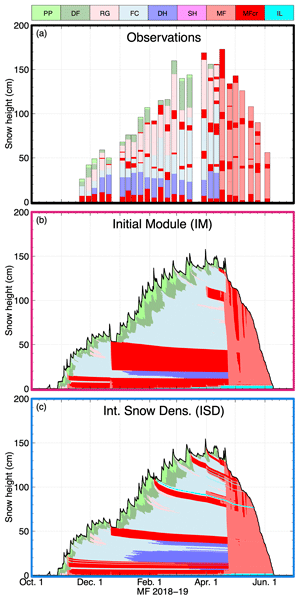
Observations over several winters at two boreal sites in eastern Canada show that rain-on-snow (ROS) events lead to the formation of melt–freeze layers and that preferential flow is an important water transport mechanism in the sub-canopy snowpack. Simulations with SNOWPACK generally show good agreement with observations, except for the reproduction of melt–freeze layers. This was improved by simulating intercepted snow microstructure evolution, which also modulates ROS-induced runoff.
Daniela Brito Melo, Armin Sigmund, and Michael Lehning
The Cryosphere, 18, 1287–1313, https://doi.org/10.5194/tc-18-1287-2024, https://doi.org/10.5194/tc-18-1287-2024, 2024
Short summary
Short summary
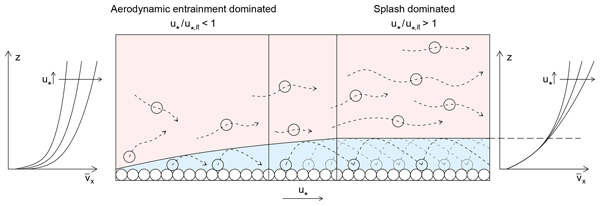
Snow saltation – the transport of snow close to the surface – occurs when the wind blows over a snow-covered surface with sufficient strength. This phenomenon is represented in some climate models; however, with limited accuracy. By performing numerical simulations and a detailed analysis of previous works, we show that snow saltation is characterized by two regimes. This is not represented in climate models in a consistent way, which hinders the quantification of snow transport and sublimation.
Riccardo Barella, Mathias Bavay, Francesca Carletti, Nicola Ciapponi, Valentina Premier, and Carlo Marin
EGUsphere, https://doi.org/10.5194/egusphere-2023-2892, https://doi.org/10.5194/egusphere-2023-2892, 2024
Preprint archived
Short summary
Short summary
Unlocking the potential of melting calorimetry, traditionally confined to school labs, this paper demonstrates its application in the field for accurate measurement of liquid water content in snow. Dispelling misconceptions about measurement uncertainty, it provide a robust protocol and quantifies associated uncertainties. The findings endorse the broader adoption of melting calorimetry for quantification of snow liquid water content in operational context.
Luca Carturan, Fabrizio De Blasi, Roberto Dinale, Gianfranco Dragà, Paolo Gabrielli, Volkmar Mair, Roberto Seppi, David Tonidandel, Thomas Zanoner, Tiziana Lazzarina Zendrini, and Giancarlo Dalla Fontana
Earth Syst. Sci. Data, 15, 4661–4688, https://doi.org/10.5194/essd-15-4661-2023, https://doi.org/10.5194/essd-15-4661-2023, 2023
Short summary
Short summary
This paper presents a new dataset of air, englacial, soil surface and rock wall temperatures collected between 2010 and 2016 on Mt Ortles, which is the highest summit of South Tyrol, Italy. Details are provided on instrument type and characteristics, field methods, and data quality control and assessment. The obtained data series are available through an open data repository. This is a rare dataset from a summit area lacking observations on permafrost and glaciers and their climatic response.
Dylan Reynolds, Ethan Gutmann, Bert Kruyt, Michael Haugeneder, Tobias Jonas, Franziska Gerber, Michael Lehning, and Rebecca Mott
Geosci. Model Dev., 16, 5049–5068, https://doi.org/10.5194/gmd-16-5049-2023, https://doi.org/10.5194/gmd-16-5049-2023, 2023
Short summary
Short summary
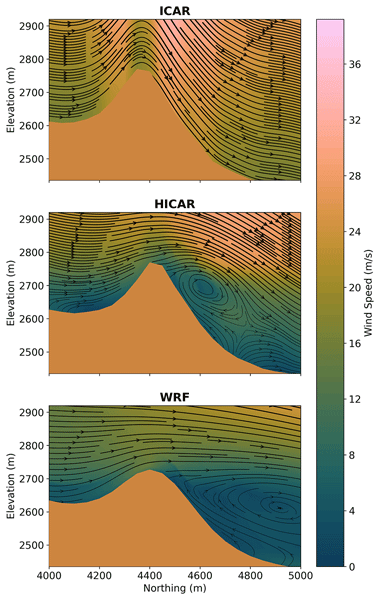
The challenge of running geophysical models is often compounded by the question of where to obtain appropriate data to give as input to a model. Here we present the HICAR model, a simplified atmospheric model capable of running at spatial resolutions of hectometers for long time series or over large domains. This makes physically consistent atmospheric data available at the spatial and temporal scales needed for some terrestrial modeling applications, for example seasonal snow forecasting.
Eric Keenan, Nander Wever, Jan T. M. Lenaerts, and Brooke Medley
Geosci. Model Dev., 16, 3203–3219, https://doi.org/10.5194/gmd-16-3203-2023, https://doi.org/10.5194/gmd-16-3203-2023, 2023
Short summary
Short summary
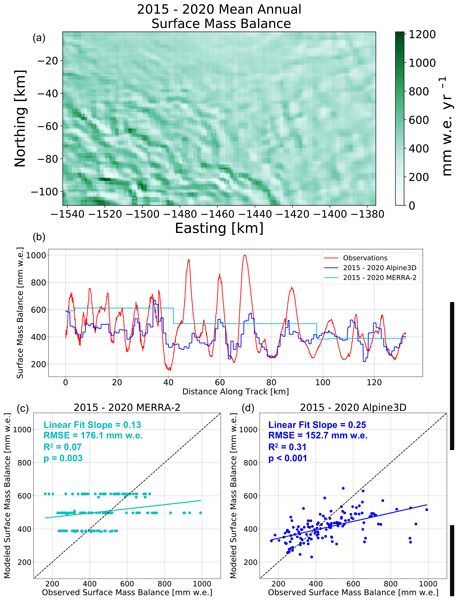
Ice sheets gain mass via snowfall. However, snowfall is redistributed by the wind, resulting in accumulation differences of up to a factor of 5 over distances as short as 5 km. These differences complicate estimates of ice sheet contribution to sea level rise. For this reason, we have developed a new model for estimating wind-driven snow redistribution on ice sheets. We show that, over Pine Island Glacier in West Antarctica, the model improves estimates of snow accumulation variability.
Megan Thompson-Munson, Nander Wever, C. Max Stevens, Jan T. M. Lenaerts, and Brooke Medley
The Cryosphere, 17, 2185–2209, https://doi.org/10.5194/tc-17-2185-2023, https://doi.org/10.5194/tc-17-2185-2023, 2023
Short summary
Short summary
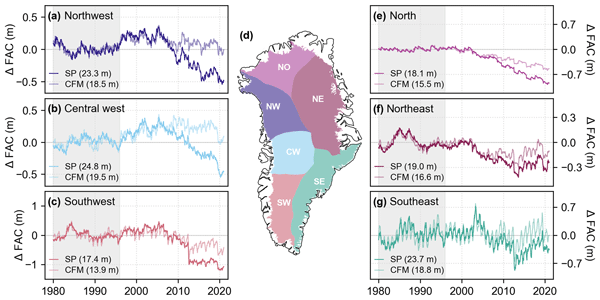
To better understand the Greenland Ice Sheet’s firn layer and its ability to buffer sea level rise by storing meltwater, we analyze firn density observations and output from two firn models. We find that both models, one physics-based and one semi-empirical, simulate realistic density and firn air content when compared to observations. The models differ in their representation of firn air content, highlighting the uncertainty in physical processes and the paucity of deep-firn measurements.
Mirko Pavoni, Jacopo Boaga, Alberto Carrera, Giulia Zuecco, Luca Carturan, and Matteo Zumiani
The Cryosphere, 17, 1601–1607, https://doi.org/10.5194/tc-17-1601-2023, https://doi.org/10.5194/tc-17-1601-2023, 2023
Short summary
Short summary
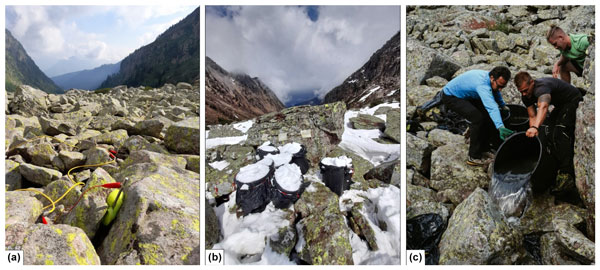
In the last decades, geochemical investigations at the springs of rock glaciers have been used to estimate their drainage processes, and the frozen layer is typically considered to act as an aquiclude or aquitard. In this work, we evaluated the hydraulic behavior of a mountain permafrost site by executing a geophysical monitoring experiment. Several hundred liters of salt water have been injected into the subsurface, and geoelectrical measurements have been performed to define the water flow.
Michelle L. Maclennan, Jan T. M. Lenaerts, Christine A. Shields, Andrew O. Hoffman, Nander Wever, Megan Thompson-Munson, Andrew C. Winters, Erin C. Pettit, Theodore A. Scambos, and Jonathan D. Wille
The Cryosphere, 17, 865–881, https://doi.org/10.5194/tc-17-865-2023, https://doi.org/10.5194/tc-17-865-2023, 2023
Short summary
Short summary
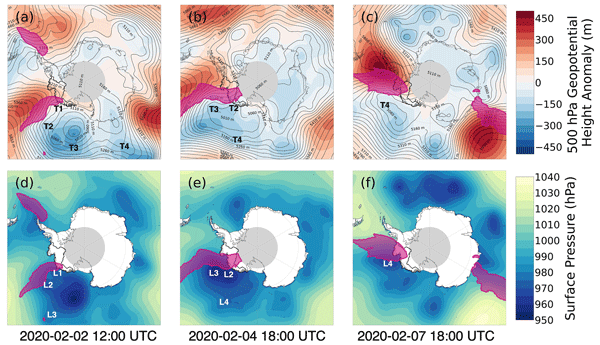
Atmospheric rivers are air masses that transport large amounts of moisture and heat towards the poles. Here, we use a combination of weather observations and models to quantify the amount of snowfall caused by atmospheric rivers in West Antarctica which is about 10 % of the total snowfall each year. We then examine a unique event that occurred in early February 2020, when three atmospheric rivers made landfall over West Antarctica in rapid succession, leading to heavy snowfall and surface melt.

Hongxiang Yu, Guang Li, Benjamin Walter, Michael Lehning, Jie Zhang, and Ning Huang
The Cryosphere, 17, 639–651, https://doi.org/10.5194/tc-17-639-2023, https://doi.org/10.5194/tc-17-639-2023, 2023
Short summary
Short summary
Snow cornices lead to the potential risk of causing snow avalanche hazards, which are still unknown so far. We carried out a wind tunnel experiment in a cold lab to investigate the environmental conditions for snow cornice accretion recorded by a camera. The length growth rate of the cornices reaches a maximum for wind speeds approximately 40 % higher than the threshold wind speed. Experimental results improve our understanding of the cornice formation process.
Varun Sharma, Franziska Gerber, and Michael Lehning
Geosci. Model Dev., 16, 719–749, https://doi.org/10.5194/gmd-16-719-2023, https://doi.org/10.5194/gmd-16-719-2023, 2023
Short summary
Short summary
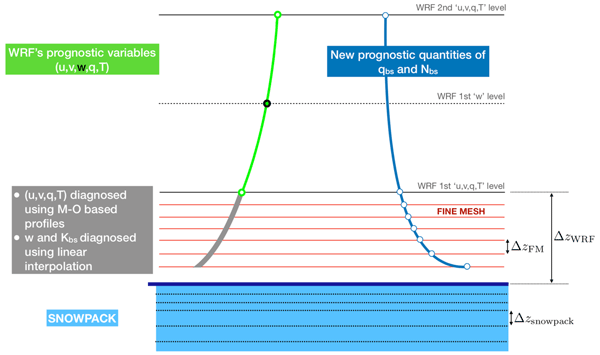
Most current generation climate and weather models have a relatively simplistic description of snow and snow–atmosphere interaction. One reason for this is the belief that including an advanced snow model would make the simulations too computationally demanding. In this study, we bring together two state-of-the-art models for atmosphere (WRF) and snow cover (SNOWPACK) and highlight both the feasibility and necessity of such coupled models to explore underexplored phenomena in the cryosphere.
Nicole Clerx, Horst Machguth, Andrew Tedstone, Nicolas Jullien, Nander Wever, Rolf Weingartner, and Ole Roessler
The Cryosphere, 16, 4379–4401, https://doi.org/10.5194/tc-16-4379-2022, https://doi.org/10.5194/tc-16-4379-2022, 2022
Short summary
Short summary
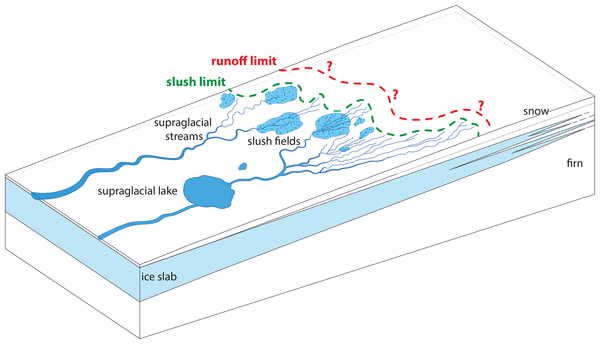
Meltwater runoff is one of the main contributors to mass loss on the Greenland Ice Sheet that influences global sea level rise. However, it remains unclear where meltwater runs off and what processes cause this. We measured the velocity of meltwater flow through snow on the ice sheet, which ranged from 0.17–12.8 m h−1 for vertical percolation and from 1.3–15.1 m h−1 for lateral flow. This is an important step towards understanding where, when and why meltwater runoff occurs on the ice sheet.
Océane Hames, Mahdi Jafari, David Nicholas Wagner, Ian Raphael, David Clemens-Sewall, Chris Polashenski, Matthew D. Shupe, Martin Schneebeli, and Michael Lehning
Geosci. Model Dev., 15, 6429–6449, https://doi.org/10.5194/gmd-15-6429-2022, https://doi.org/10.5194/gmd-15-6429-2022, 2022
Short summary
Short summary
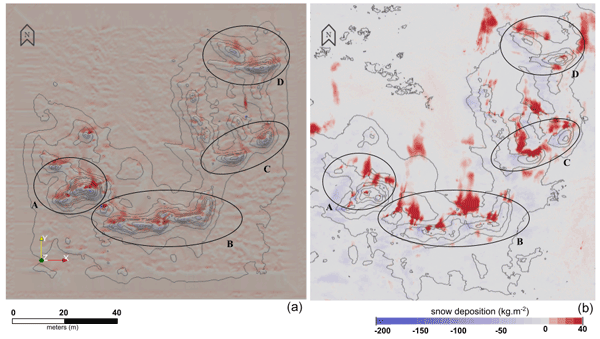
This paper presents an Eulerian–Lagrangian snow transport model implemented in the fluid dynamics software OpenFOAM, which we call snowBedFoam 1.0. We apply this model to reproduce snow deposition on a piece of ridged Arctic sea ice, which was produced during the MOSAiC expedition through scan measurements. The model appears to successfully reproduce the enhanced snow accumulation and deposition patterns, although some quantitative uncertainties were shown.

Francesca Carletti, Adrien Michel, Francesca Casale, Alice Burri, Daniele Bocchiola, Mathias Bavay, and Michael Lehning
Hydrol. Earth Syst. Sci., 26, 3447–3475, https://doi.org/10.5194/hess-26-3447-2022, https://doi.org/10.5194/hess-26-3447-2022, 2022
Short summary
Short summary
High Alpine catchments are dominated by the melting of seasonal snow cover and glaciers, whose amount and seasonality are expected to be modified by climate change. This paper compares the performances of different types of models in reproducing discharge among two catchments under present conditions and climate change. Despite many advantages, the use of simpler models for climate change applications is controversial as they do not fully represent the physics of the involved processes.
David N. Wagner, Matthew D. Shupe, Christopher Cox, Ola G. Persson, Taneil Uttal, Markus M. Frey, Amélie Kirchgaessner, Martin Schneebeli, Matthias Jaggi, Amy R. Macfarlane, Polona Itkin, Stefanie Arndt, Stefan Hendricks, Daniela Krampe, Marcel Nicolaus, Robert Ricker, Julia Regnery, Nikolai Kolabutin, Egor Shimanshuck, Marc Oggier, Ian Raphael, Julienne Stroeve, and Michael Lehning
The Cryosphere, 16, 2373–2402, https://doi.org/10.5194/tc-16-2373-2022, https://doi.org/10.5194/tc-16-2373-2022, 2022
Short summary
Short summary
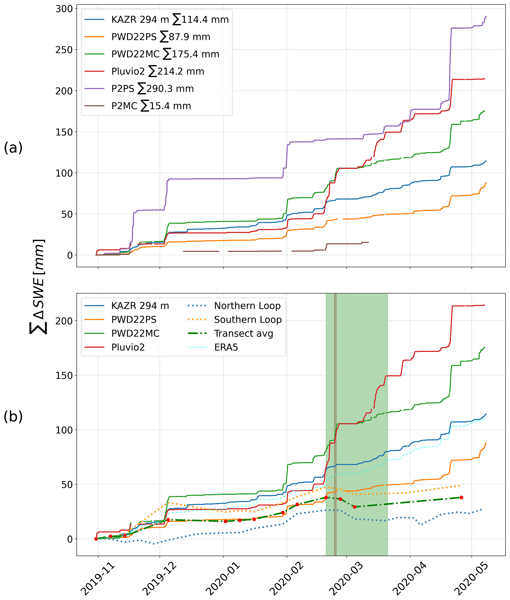
Based on measurements of the snow cover over sea ice and atmospheric measurements, we estimate snowfall and snow accumulation for the MOSAiC ice floe, between November 2019 and May 2020. For this period, we estimate 98–114 mm of precipitation. We suggest that about 34 mm of snow water equivalent accumulated until the end of April 2020 and that at least about 50 % of the precipitated snow was eroded or sublimated. Further, we suggest explanations for potential snowfall overestimation.
Paolo Gabrielli, Theo Manuel Jenk, Michele Bertó, Giuliano Dreossi, Daniela Festi, Werner Kofler, Mai Winstrup, Klaus Oeggl, Margit Schwikowski, Barbara Stenni, and Carlo Barbante
Clim. Past Discuss., https://doi.org/10.5194/cp-2022-20, https://doi.org/10.5194/cp-2022-20, 2022
Revised manuscript not accepted
Short summary
Short summary
We present a methodology that reduces the chronological uncertainty of an Alpine ice core record from the glacier Alto dell’Ortles, Italy. This chronology will allow the constraint of the Holocene climatic and environmental histories emerging from this archive of Central Europe. This method will allow to obtain accurate chronologies also from other ice cores from-low latitude/high-altitude glaciers that typically suffer from larger dating uncertainties compared with well dated polar records.
Joel Fiddes, Kristoffer Aalstad, and Michael Lehning
Geosci. Model Dev., 15, 1753–1768, https://doi.org/10.5194/gmd-15-1753-2022, https://doi.org/10.5194/gmd-15-1753-2022, 2022
Short summary
Short summary
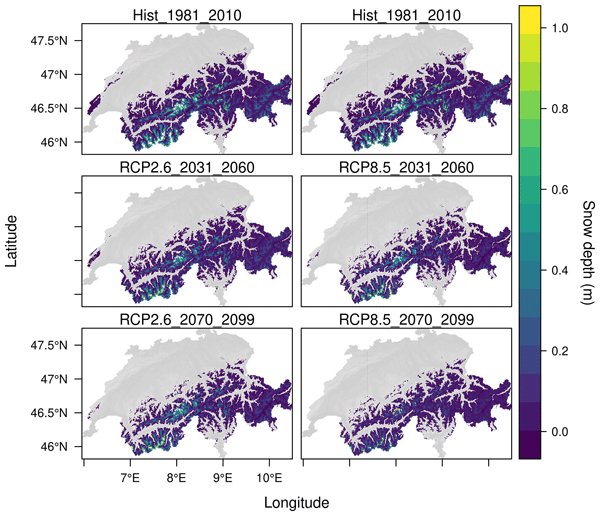
This study describes and evaluates a new downscaling scheme that addresses the need for hillslope-scale atmospheric forcing time series for modelling the local impact of regional climate change on the land surface in mountain areas. The method has a global scope and is able to generate all model forcing variables required for hydrological and land surface modelling. This is important, as impact models require high-resolution forcings such as those generated here to produce meaningful results.
Adrien Michel, Bettina Schaefli, Nander Wever, Harry Zekollari, Michael Lehning, and Hendrik Huwald
Hydrol. Earth Syst. Sci., 26, 1063–1087, https://doi.org/10.5194/hess-26-1063-2022, https://doi.org/10.5194/hess-26-1063-2022, 2022
Short summary
Short summary
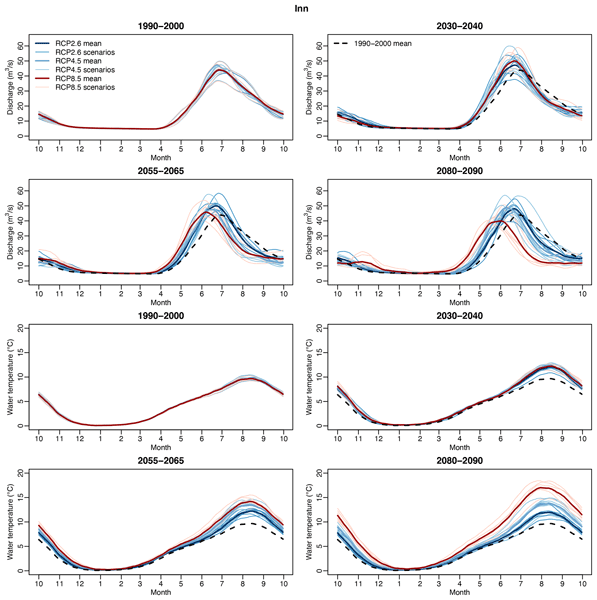
This study presents an extensive study of climate change impacts on river temperature in Switzerland. Results show that, even for low-emission scenarios, water temperature increase will lead to adverse effects for both ecosystems and socio-economic sectors throughout the 21st century. For high-emission scenarios, the effect will worsen. This study also shows that water seasonal warming will be different between the Alpine regions and the lowlands. Finally, efficiency of models is assessed.
Mathias Bavay, Michael Reisecker, Thomas Egger, and Daniela Korhammer
Geosci. Model Dev., 15, 365–378, https://doi.org/10.5194/gmd-15-365-2022, https://doi.org/10.5194/gmd-15-365-2022, 2022
Short summary
Short summary
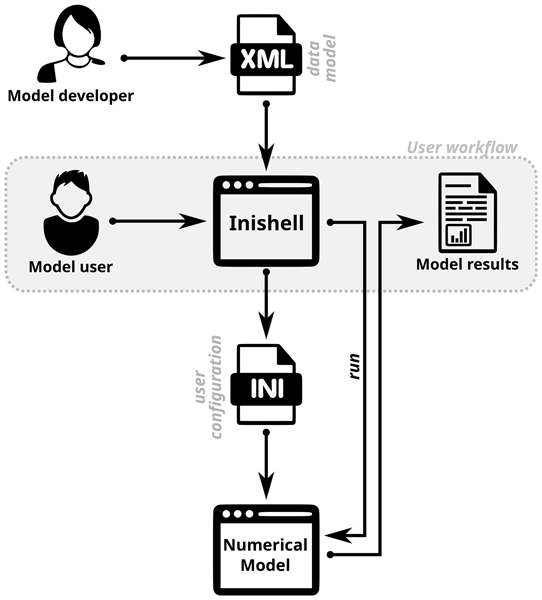
Most users struggle with the configuration of numerical models. This can be improved by relying on a GUI, but this requires a significant investment and a specific skill set and does not fit with the daily duties of model developers, leading to major maintenance burdens. Inishell generates a GUI on the fly based on an XML description of the required configuration elements, making maintenance very simple. This concept has been shown to work very well in our context.
Cited articles
Adler, S.: Das Klima von Tirol-Südtirol-Belluno: 1981–2010; Vergangenheit–Gegenwart–Zukunft, Zentralanstalt für Meteorologie und Geodynamik, Südtirol Abteilung Brand- und Zivilschutz, Bozen, 102, https://www.provinz.bz.it/wetter/download/Das_Klima_von_Tirol-Suedtirol-Belluno.pdf (last access: 16 September 2026), 2015.
Avanzi, F., Ercolani, G., Gabellani, S., Cremonese, E., Pogliotti, P., Filippa, G., Morra di Cella, U., Ratto, S., Stevenin, H., Cauduro, M., and Juglair, S.: Learning about precipitation lapse rates from snow course data improves water balance modeling, Hydrol. Earth Syst. Sci., 25, 2109–2131, https://doi.org/10.5194/hess-25-2109-2021, 2021.
Ayala, A., Pellicciotti, F., and Shea, J. M.: Modeling 2 m air temperatures over mountain glaciers: Exploring the influence of katabatic cooling and external warming, J. Geophys. Res., 120, 3139–3157, https://doi.org/10.1002/2015JD023137, 2015.
Bartelt, P. and Lehning, M.: A physical SNOWPACK model for the Swiss avalanche warning, Part I: Numerical model, Cold Reg. Sci. Technol., 35, 123–145, 2002.
Bavay, M. and Egger, T.: MeteoIO 2.4.2: a preprocessing library for meteorological data, Geosci. Model Dev., 7, 3135–3151, https://doi.org/10.5194/gmd-7-3135-2014, 2014.
Bavay, M., Lehning, M., Jonas, T., and Löwe, H.: Simulations of future snow cover and discharge in Alpine headwater catchments, Hydrol. Process., 23, 95–108, https://doi.org/10.1002/hyp.7195, 2009.
Bavay, M., Grünewald, T., and Lehning, M.: Response of snow cover and runoff to climate change in high Alpine catchments of Eastern Switzerland, Adv. Water Resour., 55, 4–16, https://doi.org/10.1016/j.advwatres.2012.12.009, 2013.
Beniston, M.: The 2003 heat wave in Europe: A shape of things to come? An analysis based on Swiss climatological data and model simulations, Geophys. Res. Lett., 31, L02202, https://doi.org/10.1029/2003GL018857, 2004.
Benn, D. I. and Evans, D. J. A.: Glaciers and Glaciation, 2nd edn., Routledge, https://doi.org/10.4324/9780203785010, 2014.
Bohleber, P.: Alpine Ice Cores as Climate and Environmental Archives, in: Oxford Research Encyclopedia of Climate Science, edited by: Bohleber, P., Oxford University Press, https://doi.org/10.1093/acrefore/9780190228620.013.743, 2019.
Brunetti, M., Lentini, G., Maugeri, M., Nanni, T., Auer, I., Bohm, R., and Schoner, W.: Climate variability and change in the Greater Alpine Region over the last two centuries based on multi-variable analysis, Int. J. Climatol., 29, 2197–2225, https://doi.org/10.1002/joc.1857, 2009.
Capt, M., Bosson, J. B., Fischer, M., Micheletti, N., and Lambiel, C.: Decadal evolution of a very small heavily debris-covered Glacier in an Alpine permafrost environment, J. Glaciol., 62, 535–551, https://doi.org/10.1017/jog.2016.56, 2016.
Carrivick, J. L., Berry, K., Geilhausen, M., James, W. H. M., Williams, C., Brown, L. E., Rippin, D. M., and Carver, S. J.: Decadal-Scale Changes of the Ödenwinkelkees, Central Austria, Suggest Increasing Control of Topography and Evolution Towards Steady State, Geogr. Ann. A, 97, 543–562, https://doi.org/10.1111/geoa.12100, 2015.
Carturan, L.: Mass balance, stable isotopes and pollen data from 1997 to 2014 on Mt. Ortles (Eastern European Alps), Zenodo [data set], https://doi.org/10.5281/zenodo.15669722, 2025.
Carturan, L., Dalla Fontana, G., and Borga, M.: Estimation of winter precipitation in a high-altitude catchment of the Eastern Italian Alps: validation by means of glacier mass balance observations, Geogr. Fis. e Din. Quat., 35, 37–48, https://doi.org/10.4461/GFDQ.2012.35.4, 2012.
Carturan, L., Filippi, R., Seppi, R., Gabrielli, P., Notarnicola, C., Bertoldi, L., Paul, F., Rastner, P., Cazorzi, F., Dinale, R., and Dalla Fontana, G.: Area and volume loss of the glaciers in the Ortles-Cevedale group (Eastern Italian Alps): controls and imbalance of the remaining glaciers, The Cryosphere, 7, 1339–1359, https://doi.org/10.5194/tc-7-1339-2013, 2013.
Carturan, L., De Blasi, F., Cazorzi, F., Zoccatelli, D., Bonato, P., Borga, M., and Dalla Fontana, G.: Relevance and scale dependence of hydrological changes in glacierized catchments: insights from historical data series in the eastern Italian Alps, Water, 11, 89, https://doi.org/10.3390/w11010089, 2019.
Carturan, L., De Blasi, F., Dinale, R., Dragà, G., Gabrielli, P., Mair, V., Seppi, R., Tonidandel, D., Zanoner, T., Zendrini, T. L., and Dalla Fontana, G.: Modern air, englacial and permafrost temperatures at high altitude on Mt Ortles (3905 m a.s.l.), in the eastern European Alps, Earth Syst. Sci. Data, 15, 4661–4688, https://doi.org/10.5194/essd-15-4661-2023, 2023.
Carturan, L., Ihle, A. C., Cazorzi, F., Zendrini, T. L., De Blasi, F., Dalla Fontana, G., Dreossi, G., Festi, D., Mark, B., Oeggl, K. D., Seppi, R., Stenni, B., and Gabrielli, P.: Reconstruction of mass balance and firn stratigraphy during the 1996–2011 warm period at high altitude on Mount Ortles, Eastern Alps: a comparison of modelled and ice core results, The Cryosphere, 19, 3443–3458, https://doi.org/10.5194/tc-19-3443-2025, 2025.
Clark, M. P., Hendrikx, J., Slater, A. G., Kavetski, D., Anderson, B., Cullen, N. J., Woods, R., Zammit, C., and Schmidt, J.: Representing spatial variability of snow water equivalent in hydrologic and land-surface models: A review, Water Resour. Res., 47, W07539, https://doi.org/10.1029/2011WR010745, 2011.
Cremona, A., Huss, M., Landmann, J. M., Schwaizer, G., Paul, F., Farinotti, D.: Constraining sub-seasonal glacier mass balance in the Swiss Alps using Sentinel-2-derived snow-cover observations, J. Glaciol., 71, e25, https://doi.org/10.1017/jog.2025.1, 2025.
De Blasi, F.: Scale dependence of hydrological effects from different climatic conditions on glacierized catchments, PhD thesis, University of Padova, https://www.research.unipd.it/handle/11577/3427154 (last access: 16 September 2026), 2018.
De Marco, J., Carturan, L., Piermattei, L., Cucchiaro, S., Moro, D., Dalla Fontana, G., and Cazorzi, F.: Minor imbalance of the lowermost Italian glacier from 2006 to 2019, Water, 12, 2503, https://doi.org/10.3390/w12092503, 2020.
Dumont, M., Monteiro, D., Filhol, S., Gascoin, S., Marty, C., Hagenmuller, P., Morin, S., Choler, P., and Thuiller, W.: The European Alps in a changing climate: physical trends and impacts, C. R. Géosci., 357, 25–42, https://doi.org/10.5802/crgeos.288, 2025.
Evans, M. N., Tolwinski-Ward, S. E., Thompson, D. M., and Anchukaitis, K. J.: Applications of proxy system modeling in high resolution paleoclimatology, Quaternary Sci. Rev., 76, 16–28, https://doi.org/10.1016/j.quascirev.2013.05.024, 2013.
Fierz, C., Armstrong, R. L., Durand, Y., Etchevers, P., Greene, E., McClung, D. M., Nishimura, K., Satyawali, P. K., and Sokratov, S. A.: The International Classification for Seasonal Snow on the Ground. IHP-VII Technical Documents in Hydrology No. 83, IACS Contribution No. 1, UNESCO-IHP, Paris, https://unesdoc.unesco.org/ark:/48223/pf0000186462 (last access: 16 September 2026), 2009.
Gabrielli, P., Carturan, L., Gabrieli, J., Dinale, R., Krainer, K., Hausmann, H., Davis, M., Zagorodnov, V., Seppi, R., Barbante, C., Fontana, G. D., and Thompson, L. G.: Atmospheric warming threatens the untapped glacial archive of Ortles mountain, South Tyrol, J. Glaciol., 56, 843–853, https://doi.org/10.3189/002214310794457263, 2010.
Gabrielli, P., Barbante, C., Carturan, L., Cozzi, G., Dalla Fontana, G., Dinale, R., Draga, G., Gabrieli, J., Kehrwald, N., Mair, V., Mikhalenko, V. N., Piffer, G., Rinaldi, M., Seppi, R., Spolaor, A., Thompson, L. G., and Tonidandel, D.: Discovery of cold ice in a new drilling site in the Eastern European Alps, Geogr. Fis. Din. Quat., 35, 101–105, https://doi.org/10.4461/GFDQ.2012.35.10, 2012.
Gabrielli, P., Barbante, C., Bertagna, G., Bertó, M., Binder, D., Carton, A., Carturan, L., Cazorzi, F., Cozzi, G., Dalla Fontana, G., Davis, M., De Blasi, F., Dinale, R., Dragà, G., Dreossi, G., Festi, D., Frezzotti, M., Gabrieli, J., Galos, S. P., Ginot, P., Heidenwolf, P., Jenk, T. M., Kehrwald, N., Kenny, D., Magand, O., Mair, V., Mikhalenko, V., Lin, P. N., Oeggl, K., Piffer, G., Rinaldi, M., Schotterer, U., Schwikowski, M., Seppi, R., Spolaor, A., Stenni, B., Tonidandel, D., Uglietti, C., Zagorodnov, V., Zanoner, T., and Zennaro, P.: Age of the Mt. Ortles ice cores, the Tyrolean Iceman and glaciation of the highest summit of South Tyrol since the Northern Hemisphere Climatic Optimum, The Cryosphere, 10, 2779–2797, https://doi.org/10.5194/tc-10-2779-2016, 2016.
Gabrielli, P., Jenk, T. M., Bertó, M., Dreossi, G., Festi, D., Kofler, W., Winstrup, M., Oeggl, K., Schwikowski, M., Stenni, B., and Barbante, C.: A multimillennial Alpine ice core chronology synchronized with an accurately dated Arctic Pb record, Clim. Past, 22, 1037–1055, https://doi.org/10.5194/cp-22-1037-2026, 2026.
Gobiet, A., Kotlarski, S., Beniston, M., Heinrich, G., Rajczak, J., and Stoffel, M.: 21st century climate change in the European Alps – A review, Sci. Total Environ., 493, 1138–1151, https://doi.org/10.1016/j.scitotenv.2013.07.050, 2014.
Haeberli, W. and Alean, J.: Temperature and accumulation of high altitude firn in the Alps, Ann. Glaciol., 6, 161–163, https://doi.org/10.3189/1985AoG6-1-161-163, 1985.
He, S. and Ohara, N.: A new formula for estimating the threshold wind speed for snow movement, J. Adv. Model. Earth. Sy., 9, 2514–2525, https://doi.org/10.1002/2017MS000982, 2017.
Hock, R. and Huss, M.: Glaciers and climate change, Chapter 9, in: Climate Change, 3rd edn., edited by: Letcher, T. M., Elsevier, 157–176, ISBN 978-0-12-821575-3, https://doi.org/10.1016/B978-0-12-821575-3.00009-8, 2021.
Hock, R., Hutchings, J. K., and Lehning, M.: Grand challenges in cryospheric sciences: Toward better predictability of glaciers, snow and sea ice, Front. Earth Sci., 5, 64, https://doi.org/10.3389/feart.2017.00064, 2017.
Houze, R. A.: Orographic effects on precipitating clouds, Rev. Geophys., 50, https://doi.org/10.1029/2011RG000365, 2012.
Humlum, O.: Glacier behaviour and the influence of upper-air conditions during the Little Ice Age in Disko, central West Greenland, Geogr. Tidsskr.-Dan., 87, 1–12, https://doi.org/10.1080/00167223.1987.10649234, 1987.
Huss, M., Bauder, A., Funk, M., and Hock, R.: Determination of the seasonal mass balance of four Alpine glaciers since 1865, J. Geophys. Res., 113, F01015, https://doi.org/10.1029/2007JF000803, 2008.
IPCC: Climate Change 2022: Impacts, Adaptation, and Vulnerability, Contribution of Working Group II to the Sixth Assessment Report of the Intergovernmental Panel on Climate Change, Cambridge University Press, Cambridge, UK, New York, NY, USA, 3056 pp., https://doi.org/10.1017/9781009325844, 2022.
Jackson, P. S. and Hunt, J. C. R.: Turbulent wind flow over a low hill, Q. J. Roy. Meteor. Soc., 101, 929–955, https://doi.org/10.1002/qj.49710143015, 1975.
Jacquemart, M., Weber, S., Chiarle, M., Chmiel, M., Cicoira, A., Corona, C., Eckert, N., Gaume, J., Giacona, F., Hirschberg, J., Kaitna, R., Magnin, F., Mayer, S., Moos, C., van Herwijnen, A., and Stoffel, M.: Detecting the impact of climate change on alpine mass movements in observational records from the European Alps, Earth-Sci. Rev., 258, 104886, https://doi.org/10.1016/j.earscirev.2024.104886, 2024.
Johnson, E. and Rupper, S.: An Examination of Physical Processes That Trigger the Albedo-Feedback on Glacier Surfaces and Implications for Regional Glacier Mass Balance Across High Mountain Asia, Front. Earth. Sci. (Lausanne), 8, https://doi.org/10.3389/feart.2020.00129, 2020.
Klok, E. J. and Oerlemans, J.: Modelled climate sensitivity of the mass balance of Morteratschgletscher and its dependence on albedo parameterization, Int. J. Climatol., 24, 231–245, https://doi.org/10.1002/joc.994, 2004.
Kochendorfer, J., Rasmussen, R., Wolff, M., Baker, B., Hall, M. E., Meyers, T., Landolt, S., Jachcik, A., Isaksen, K., Brækkan, R., and Leeper, R.: The quantification and correction of wind-induced precipitation measurement errors, Hydrol. Earth Syst. Sci., 21, 1973–1989, https://doi.org/10.5194/hess-21-1973-2017, 2017.
Konrad, H., Bohleber, P., Wagenbach, D., Vincent, C., and Eisen, O.: Determining the age distribution of Colle Gnifetti, Monte Rosa, Alps, by combining ice cores, ground-penetrating radar and a simple flow model, J. Glaciol., 59, 179–189, https://doi.org/10.3189/2013JoG12J072, 2013.
Kotlarski, S., Gobiet, A., Morin, S., Olefs, M., Rajczak, J., and Samacoïts, R.: 21st Century alpine climate change, Clim. Dynam., 60, 65–86, https://doi.org/10.1007/s00382-022-06303-3, 2023.
Lehning, M. and Fierz, C.: Assessment of snow transport in avalanche terrain, Cold Reg. Sci. Technol., 51, 240–252, https://doi.org/10.1016/j.coldregions.2007.05.012, 2008.
Lehning, M., Doorschot, J., and Bartelt, P.: A snowdrift index based on SNOWPACK model calculations, Ann. Glaciol., 31, 382–386, https://doi.org/10.3189/172756400781819770, 2000.
Lehning, M., Bartelt, P., Brown, B., and Fierz, C.: A physical SNOWPACK model for the Swiss avalanche warning: Part III: meteorological forcing, thin layer formation and evaluation, Cold Reg. Sci. Technol., 35, 169–184, https://doi.org/10.1016/S0165-232X(02)00072-1, 2002a.
Lehning, M., Bartelt, P., Brown, B., Fierz, C., and Satyawali, P.: A physical SNOWPACK model for the Swiss avalanche warning: Part II. Snow microstructure, Cold Reg. Sci. Technol., 35, 147–167, https://doi.org/10.1016/S0165-232X(02)00073-3, 2002b.
Lehning, M., Löwe, H., Ryser, M., and Raderschall, N.: Inhomogeneous precipitation distribution and snow transport in steep terrain, Water Resour. Res., 44, W07404, https://doi.org/10.1029/2007WR006545, 2008.
Li, L. and Pomeroy, J. W.: Probability of occurrence of blowing snow, J. Geophys. Res.-Atmos., 102, 21955–21964, https://doi.org/10.1029/97JD01522, 1997a.
Li, L. and Pomeroy, J. W.: Estimates of threshold wind speeds for snow transport using meteorological data, J. Appl. Meteorol. Clim., 36, 205–213, https://doi.org/10.1175/1520-0450(1997)036<0205:EOTWSF>2.0.CO;2, 1997b.
Liston, G. E., Polashenski, C., Rösel, A., Itkin, P., King, J., Merkouriadi, I., and Haapala, J.: A distributed snow-evolution model for sea-ice applications (SnowModel), J. Geophys. Res.-Oceans, 123, 3786–3810, https://doi.org/10.1002/2017JC013706, 2018.
Luetschg, M., Lehning, M., and Haeberli, W.: A sensitivity study of factors influencing warm/thin permafrost in the Swiss Alps, J. Glaciol., 54, 696–704, https://doi.org/10.3189/002214308786570881, 2008.
Meirold-Mautner, I. and Lehning, M.: Measurements and model calculations of the solar shortwave fluxes in snow on Summit, Greenland, Ann. Glaciol., 38, 279–284, https://doi.org/10.3189/172756404781814753, 2004.
Mott, R., Schirmer, M., Bavay, M., Grünewald, T., and Lehning, M.: Understanding snow-transport processes shaping the mountain snow-cover, The Cryosphere, 4, 545–559, https://doi.org/10.5194/tc-4-545-2010, 2010.
Mott, R., Scipión, D., Schneebeli, M., Dawes, N., Berne, A., and Lehning, M.: Orographic effects on snow deposition patterns in mountainous terrain, J. Geophys. Res.-Atmos., 119, 1419–1439, https://doi.org/10.1002/2013JD019880, 2014.
Mott, R., Vionnet, V., and Grünewald, T.: The seasonal snow cover dynamics: review on wind-driven snow transport and sublimation, Front. Earth Sci., 6, 197, https://doi.org/10.3389/feart.2018.00197, 2018.
Obleitner, F. and Lehning, M.: Measurement and simulation of snow and superimposed ice at the Kongsvegen glacier, Svalbard (Spitzbergen), J. Geophys. Res.-Atmos., 109, https://doi.org/10.1029/2003jd003945, 2004.
Panofsky, H. A. and Zhao, M.: Characteristics of wind profiles over complex terrain, J. Wind Eng. Ind. Aerodyn., 15, 177–183, https://doi.org/10.1016/0167-6105(83)90188-5, 1983.
Pellegrini, C. C. and Bodstein, G. C. R.: The height of maximum speed-up in the atmospheric boundary layer flow over low hills, J. Braz. Soc. Mech. Sci., 26, 249–259, https://doi.org/10.1590/S1678-58782004000300001, 2004.
Pepin, N., Apple, M., Knowles, J., Terzago, S., Arnone, E., Hänchen, L., Napoli, A., Potter, E., Steiner, J., Williamson, S. N., Ahrens, B., Dhar, T., Dimri, A. P., Palazzi, E., Rameshan, A., Salzmann, N., Shahgedanova, M., de Deus Vidal, J., and Zardi, D.: Elevation-dependent climate change in mountain environments, Nature Reviews Earth and Environment, 6, 772–788, https://doi.org/10.1038/s43017-025-00740-4, 2025.
Raderschall, N., Lehning, M., and Schär, C.: Fine-scale modeling of the boundary layer wind field over steep topography, Water Resour. Res., 44, https://doi.org/10.1029/2007WR006544, 2008.
Rasmus, S., Räisänen, J., and Lehning, M.: Estimating snow conditions in Finland in the late 21st century using the SNOWPACK model with regional climate scenario data as input, Ann. Glaciol., 38, 238–244, https://doi.org/10.3189/172756404781814843, 2004.
Rasmussen, R., Baker, B., Kochendorfer, J., Meyers, T., Landolt, S., Fischer, A. P., Black, J., Thériault, J. M., Kucera, P., Gochis, D., Smith, C., Nitu, R., Hall, M., Ikeda, K., and Gutmann, E.: How Well Are We Measuring Snow: The NOAA/FAA/NCAR Winter Precipitation Test Bed, B. Am. Meteorol. Soc., 93, 811–829, https://doi.org/10.1175/BAMS-D-11-00052.1, 2012.
Roe, G. H.: Orographic precipitation, Annu. Rev. Earth Pl. Sc., 33, 645–671, https://doi.org/10.1146/annurev.earth.33.092203.122541, 2005.
Schäfer, M., Möller, M., Zwinger, T., and Moore, J. C.: Dynamic modelling of future glacier changes: mass-balance/elevation feedback in projections for the Vestfonna Ice Cap, Nordaustlandet, Svalbard, J. Glaciol., 61, 1121–1136, https://doi.org/10.3189/2015JoG14J184, 2015.
Schmidt, R. A.: Threshold wind-speeds and elastic impact in snow transport, J. Glaciol., 26, 453–467, https://doi.org/10.3189/S0022143000010972, 1980.
Schmucki, E., Marty, C., Fierz, C., and Lehning, M.: Simulations of 21st century snow response to climate change in Switzerland from a set of RCMs, Int. J. Climatol., 35, https://doi.org/10.1002/joc.4205, 2015.
Schuler, T. V., Hock, R., Jackson, M., Elvehøy, H., Braun, M., Brown, I., and Hagen, J.-O.: Distributed mass-balance and climate sensitivity modelling of Engabreen, Ann. Glaciol., 42, 395–401, https://doi.org/10.3189/172756405781812998, 2005.
Shaw, T. E., Buri, P., McCarthy, M., Miles, E. S., Ayala, Á., and Pellicciotti, F.: The Decaying Near-Surface Boundary Layer of a Retreating Alpine Glacier, Geophys. Res. Lett., 50, https://doi.org/10.1029/2023gl103043, 2023.
Shaw, T. E., Miles, E. S., McCarthy, M., Buri, P., Guyennon, N., Salerno, F., Carturan, L., Brock, B., and Pellicciotti, F.: Mountain glaciers recouple to atmospheric warming over the twenty-first century, Nat. Clim. Change, 15, 1212–1218, https://doi.org/10.1038/s41558-025-02449-0, 2025.
Stiperski, I. and Rotach, M. W.: On the Measurement of Turbulence over Complex Mountainous Terrain, Bound.-Lay. Meteorol, 159, 97–121, https://doi.org/10.1007/s10546-015-0103-z , 2016.
Taylor, P. A., Mason, P. J., and Bradley, E. F.: Boundary-layer flow over low hills, Bound.-Lay. Meteorol., 39, 107–132, https://doi.org/10.1007/BF00121870, 1987.
Wever, N., Keenan, E., Amory, C., Lehning, M., Sigmund, A., Huwald, H., and Lenaerts, J. T. M.: Observations and simulations of new snow density in the drifting snow-dominated environment of Antarctica, J. Glaciol., 69, 823–840, https://doi.org/10.1017/jog.2022.102, 2023.
Zemp, M., Thibert, E., Huss, M., Stumm, D., Rolstad Denby, C., Nuth, C., Nussbaumer, S. U., Moholdt, G., Mercer, A., Mayer, C., Joerg, P. C., Jansson, P., Hynek, B., Fischer, A., Escher-Vetter, H., Elvehøy, H., and Andreassen, L. M.: Reanalysing glacier mass balance measurement series, The Cryosphere, 7, 1227–1245, https://doi.org/10.5194/tc-7-1227-2013, 2013.
Zhao, F., Long, D., Li, X., Huang, Q., and Han, P.: Rapid glacier mass loss in the Southeastern Tibetan Plateau since the year 2000 from satellite observations, Remote Sens. Environ., 270, 112853, https://doi.org/10.1016/J.RSE.2021.112853, 2022.
Short summary
By combining in situ mass balance data with a physics‐based snow model at Mt. Ortles, in the Italian Alps, we investigate snow accumulation, erosion and melt processes, and their sensitivity to air temperature. We found that wind erosion is currently the major ablation process at this high-elevation site, whereas melt plays a minor role. Quickly rising air temperature is affecting this partitioning and suggests a future shift from an erosion-dominated to a melt-dominated mass balance regime.
By combining in situ mass balance data with a physics‐based snow model at Mt. Ortles, in the...


