
Articles | Volume 20, issue 7
https://doi.org/10.5194/tc-20-4157-2026
© Author(s) 2026. This work is distributed under
the Creative Commons Attribution 4.0 License.
the Creative Commons Attribution 4.0 License.
https://doi.org/10.5194/tc-20-4157-2026
© Author(s) 2026. This work is distributed under
the Creative Commons Attribution 4.0 License.
the Creative Commons Attribution 4.0 License.
Research article
| 
28 Jul 2026
Research article |
| 28 Jul 2026
| 28 Jul 2026
Evaluation of representation of seasonally frozen ground characteristics in Land Surface Models: JSBACH and CLM
Mittal Parmar
CORRESPONDING AUTHOR

Institute for Atmospheric and Environmental Sciences, Goethe University Frankfurt, Frankfurt a. M., Germany
Kristina Fröhlich
Deutscher Wetterdienst, Offenbach, Germany
Antonella Sanna
Fondazione Centro Euro-Mediterraneo sui Cambiamenti Climatici, CMCC, Bologna, Italy
Tobias Stacke
Max Planck Institute for Meteorology, Hamburg, Germany
Marianna Benassi
Fondazione Centro Euro-Mediterraneo sui Cambiamenti Climatici, CMCC, Bologna, Italy
Zhicheng Luo
Institute for Atmospheric and Environmental Sciences, Goethe University Frankfurt, Frankfurt a. M., Germany
Daniele Peano
Fondazione Centro Euro-Mediterraneo sui Cambiamenti Climatici, CMCC, Bologna, Italy
Bodo Ahrens
Institute for Atmospheric and Environmental Sciences, Goethe University Frankfurt, Frankfurt a. M., Germany
Related authors
No articles found.
Philipp de Vrese, Tobias Stacke, Veronika Gayler, Helena Bergstedt, Clemens von Baeckmann, Melanie Thurner, Christian Beer, and Victor Brovkin
Geosci. Model Dev., 19, 9203–9234, https://doi.org/10.5194/gmd-19-9203-2026, https://doi.org/10.5194/gmd-19-9203-2026, 2026
Short summary
Short summary
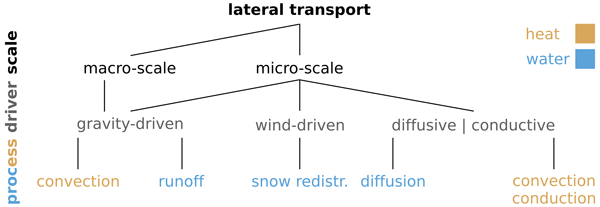
The spatial variability in the land surface properties is often not captured by the resolution of land surface models. To overcome this limitation, most models subdivide the grid cells into fractions with homogeneous characteristics, for which the land processes are calculated separately. In reality, the fractions interact via the lateral exchange of water and heat, and the present manuscript details an approach to include these fluxes in the land component of the ICON modeling framework.
Jörg Schwinger, Leon Merfort, Nico Bauer, Raffaele Bernardello, Momme Butenschön, Timothée Bourgeois, Matthew J. Gidden, Shraddha Gupta, Hanna Lee, Nadine Mengis, Yiannis Moustakis, Helene Muri, Lars Nieradzik, Daniele Peano, Julia Pongratz, Pascal Sauer, Etienne Tourigny, and David Wårlind
Earth Syst. Dynam., 17, 1341–1363, https://doi.org/10.5194/esd-17-1341-2026, https://doi.org/10.5194/esd-17-1341-2026, 2026
Short summary
Short summary
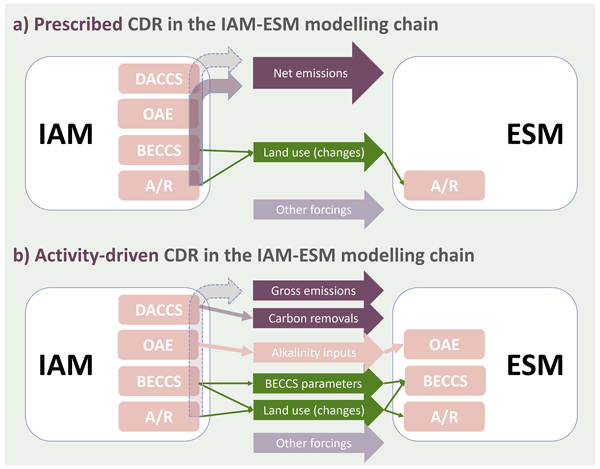
Earth system models can simulate CO2 removal by representing the activity that draws down atmospheric CO2, e.g. growing bioenergy crops for energy production with carbon capture and storage or enhancing the oceans’ alkalinity. We describe a simulation framework, spanning the modeling chain from integrated assessment to Earth system models, that allows separating the intrinsic efficiency of CO2 removal and the overall atmospheric CO2 reduction, the latter being affected by Earth system feedbacks.
Stiig Wilkenskjeld, Thomas Kleinen, Tobias Stacke, and Victor Brovkin
Biogeosciences, 23, 6583–6598, https://doi.org/10.5194/bg-23-6583-2026, https://doi.org/10.5194/bg-23-6583-2026, 2026
Short summary
Short summary
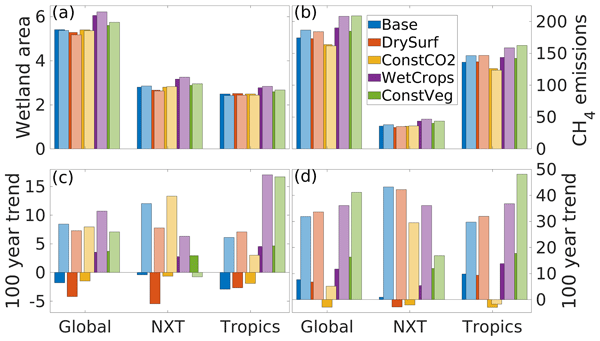
Methane is the second most important greenhouse gas with high potential for short term reductions of human induced global warming. We model methane emissions from the most important and most uncertain natural source: wetlands. We investigate how a number of assumptions, including human impact on natural wetlands, influences the wetlands and their methane emissions. Of the tested influences we find the most important to be how humans are altering the soil surface.
Francesco De Rovere, Giulia Bonino, Ronan McAdam, Enrico Scoccimarro, Samuel Somot, Iván M. Parras-Berrocal, Bodo Ahrens, Vladimir Djurdjevic, Laurent Li, and Simona Masina
Ocean Sci., 22, 2725–2742, https://doi.org/10.5194/os-22-2725-2026, https://doi.org/10.5194/os-22-2725-2026, 2026
Short summary
Short summary
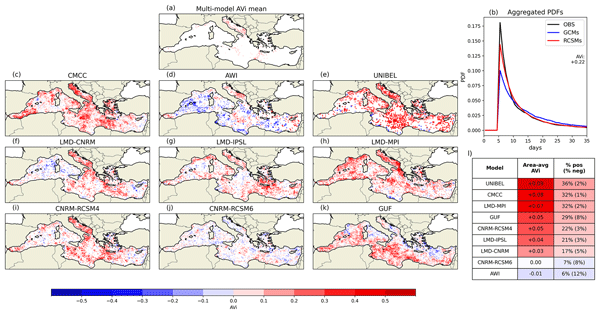
Marine heatwaves in the Mediterranean Sea are intensifying, posing growing threats to marine life and coastal communities. We evaluated if high-resolution regional climate models better capture these extremes compared to the global models driving them. Regional models reliably improve sea surface temperature patterns and marine heatwave duration, but struggle more with heatwave intensity. Higher horizontal resolution alone is not enough, advances in other model components are equally needed.
Ronan McAdam, Antonella Sanna, Giulia Bonino, and Enrico Scoccimarro
EGUsphere, https://doi.org/10.5194/egusphere-2026-5138, https://doi.org/10.5194/egusphere-2026-5138, 2026
This preprint is open for discussion and under review for Ocean Science (OS).
Short summary
Short summary
Wind-driven upwelling brings nutrient-rich water to the surface, supporting rich ecosystems and fisheries. In 2025, the Gulf of Panama's upwelling collapsed, causing unusually warm water with little chlorophyll. We tested whether seasonal forecasts could have predicted this event. Forecasts captured the weak winds and warm temperatures a season ahead. This shows seasonal forecasting can give early warning of upwelling collapse, helping coastal communities and authorities prepare.
Thomas Kleinen, Helena Bergstedt, Philipp de Vrese, Tobias Stacke, and Victor Brovkin
EGUsphere, https://doi.org/10.5194/egusphere-2026-3098, https://doi.org/10.5194/egusphere-2026-3098, 2026
Short summary
Short summary
The Arctic holds a large amount of carbon in frozen permafrost soils. Climate change will thaw the permafrost, leading to carbon decomposition and CO2 emission. Using a land surface model, we tested the effect of plant distribution changes in low, medium and high warming futures. If the plant distribution is allowed to adapt to a changed climate, biomass increases strongly, limiting carbon losses to ~70 PgC under high warming, and even a small net gain of carbon in low warming scenarios.
Yue Li, Gang Tang, Eleanor O'Rourke, Samar Minallah, Martim Mas e Braga, Sophie Nowicki, Robin S. Smith, David M. Lawrence, George C. Hurtt, Daniele Peano, Gesa Meyer, Birgit Hassler, Jiafu Mao, Yongkang Xue, and Martin Juckes
Geosci. Model Dev., 19, 3129–3155, https://doi.org/10.5194/gmd-19-3129-2026, https://doi.org/10.5194/gmd-19-3129-2026, 2026
Short summary
Short summary
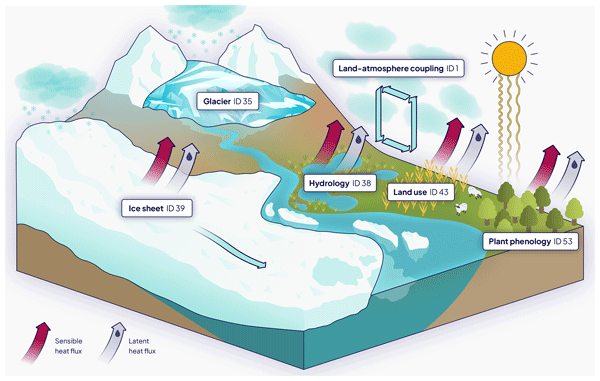
Land and Land Ice Theme Opportunities describe a list that contains 25 variable groups with 716 variables, which are potentially available to the broad scientific audience for performing analysis in land–atmosphere coupling, hydrological processes and freshwater systems, glacier and ice sheet mass balance and their influence on the sea levels, land use, and plant phenology.
Paul Voit, Marie Hundhausen, Larisa Seregina, Hendrik Feldmann, Bodo Ahrens, and Maik Heistermann
EGUsphere, https://doi.org/10.5194/egusphere-2026-1229, https://doi.org/10.5194/egusphere-2026-1229, 2026
Short summary
Short summary
Extreme rainfall is expected to increase with a warming climate. However, it remains unclear how this will impact future floods. This study utilizes an ensemble of 6 new datasets, containing the future projected rainfall, and compares the simulated flash floods of the past (1971–2000) and future (2071–2100) under the RCP8.5 scenario for the German part of the Danube catchment. Our results indicate an increase of 100-yr flood return levels of 30 % across all subcatchments under this scenario.

Fanni Dóra Kelemen, Richard Lohmann, Jiang Zhu, and Bodo Ahrens
Clim. Past, 22, 505–516, https://doi.org/10.5194/cp-22-505-2026, https://doi.org/10.5194/cp-22-505-2026, 2026
Short summary
Short summary
The arrangement of continents and oceans strongly affects climate by shaping large-scale circulation patterns. We study, how early Eocene geography (53.5 Ma) influenced mid-latitude storms and persistent high-pressure systems, focusing on the West Siberian Sea and absent Antarctic Circumpolar Current. The climate model simulation of the early Eocene, shows a more balanced hemispheric distribution, through increased northern and decreased southern mid-latitude storm activity compared to today.
Kseniia Ivanova, Anna-Maria Virkkala, Victor Brovkin, Tobias Stacke, Barbara Widhalm, Annett Bartsch, Carolina Voigt, Oliver Sonnentag, and Mathias Göckede
Biogeosciences, 23, 233–262, https://doi.org/10.5194/bg-23-233-2026, https://doi.org/10.5194/bg-23-233-2026, 2026
Short summary
Short summary
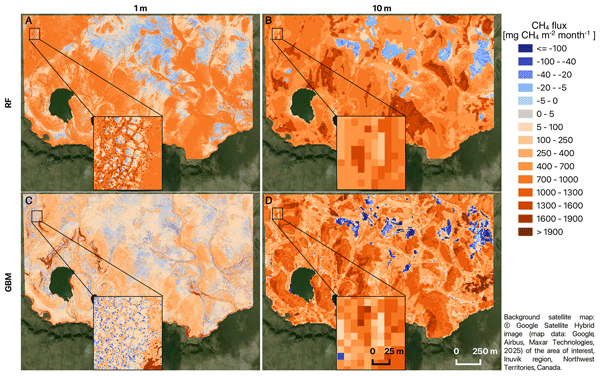
We measured over 13,000 methane fluxes at a site in the Canadian Arctic and linked them with drone and free satellite images. We tested four machine-learning methods and two map scales. Metre-scale maps captured small wet and dry features that strongly affect methane release, while coarser maps blurred them. Different models shifted the monthly methane estimate. This helps choose the right data and tools to map methane, design monitoring networks, and check climate models.
Prashant Singh and Bodo Ahrens
Atmos. Chem. Phys., 25, 17869–17888, https://doi.org/10.5194/acp-25-17869-2025, https://doi.org/10.5194/acp-25-17869-2025, 2025
Short summary
Short summary
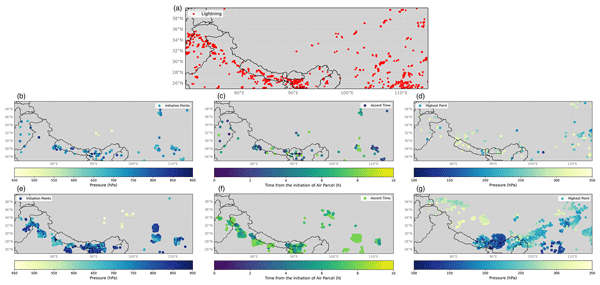
Intense deep convective clouds (e.g. lightning events) can rapidly move water vapour and other gases into the upper troposphere. The Third Pole region, especially the Himalayas, frequently experiences such storms. ICON (Icosahedral Nonhydrostatic )-CLM (climate limited-area mode) (3.3 km) and ERA5 reanalysis data (30 km), these convective events can lift water vapour into the upper troposphere but rarely into the lower stratosphere in the Third Pole. After reaching the upper troposphere, the water vapour tends to move horizontally away from the region.
Zhicheng Luo, Danny Risto, and Bodo Ahrens
The Cryosphere, 19, 6547–6576, https://doi.org/10.5194/tc-19-6547-2025, https://doi.org/10.5194/tc-19-6547-2025, 2025
Short summary
Short summary
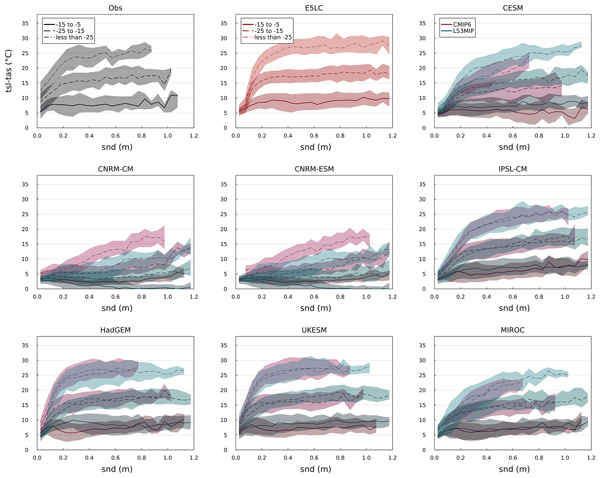
Climate models face challenges in accurately simulating cold regions' soil temperatures and snow conditions. By comparing different models, we found that the land surface models have a strong impact on simulation errors. Additionally, they struggle to account for snow’s insulating effect on the ground properly. Our findings highlight the need for improving frozen soil simulation, which is crucial for understanding the climate impacts of frozen soil.
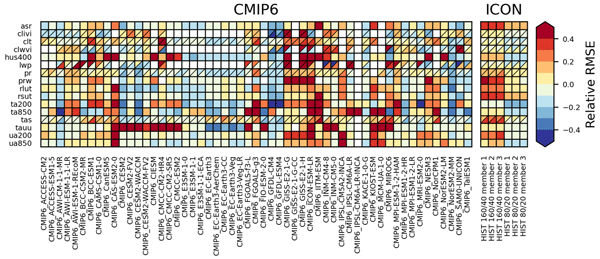
Wolfgang A. Müller, Stephan Lorenz, Trang V. Pham, Andrea Schneidereit, Renate Brokopf, Victor Brovkin, Nils Brüggemann, Fatemeh Chegini, Dietmar Dommenget, Kristina Fröhlich, Barbara Früh, Veronika Gayler, Helmuth Haak, Stefan Hagemann, Moritz Hanke, Tatiana Ilyina, Johann Jungclaus, Martin Köhler, Peter Korn, Luis Kornblueh, Clarissa A. Kroll, Julian Krüger, Karel Castro-Morales, Ulrike Niemeier, Holger Pohlmann, Iuliia Polkova, Roland Potthast, Thomas Riddick, Manuel Schlund, Tobias Stacke, Roland Wirth, Dakuan Yu, and Jochem Marotzke
Geosci. Model Dev., 18, 9385–9415, https://doi.org/10.5194/gmd-18-9385-2025, https://doi.org/10.5194/gmd-18-9385-2025, 2025
Short summary
Short summary
We provide a new Earth System model configuration framed into the ICON architecture, which provides the baseline for the next generation of climate predictions and projections (hereafter ICON XPP). Two resolutions of ICON XPP are presented that show high runtime performances making it suitable to run long integrations and large-ensemble experiments. ICON XPP similarly perform to CMIP6-class of climate models making it a good basis for climate forecasts and projections, and climate research.
Daniele Peano, Deborah Hemming, Christine Delire, Yuanchao Fan, Hanna Lee, Stefano Materia, Julia E. M. S. Nabel, Taejin Park, David Wårlind, Andy Wiltshire, and Sönke Zaehle
Biogeosciences, 22, 7117–7135, https://doi.org/10.5194/bg-22-7117-2025, https://doi.org/10.5194/bg-22-7117-2025, 2025
Short summary
Short summary
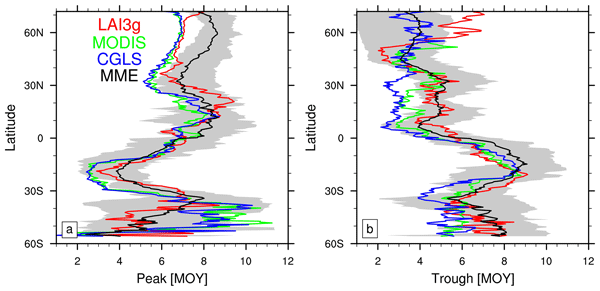
Earth System Models are the principal tools for scientists to study past, present, and future climate changes. This work investigates the ability of a set of them to represent the observed changes in vegetation, which are vital to estimating the impact of future climate mitigation and adaptation strategies. This study highlights the main limitations in correctly representing vegetation variability. These tools still need further development to improve our understanding of future changes.
Nikolina Mileva, Julia Pongratz, Vivek K. Arora, Akihiko Ito, Sebastiaan Luyssaert, Sonali S. McDermid, Paul A. Miller, Daniele Peano, Roland Séférian, Yanwu Zhang, and Wolfgang Buermann
Earth Syst. Dynam., 16, 2137–2160, https://doi.org/10.5194/esd-16-2137-2025, https://doi.org/10.5194/esd-16-2137-2025, 2025
Short summary
Short summary
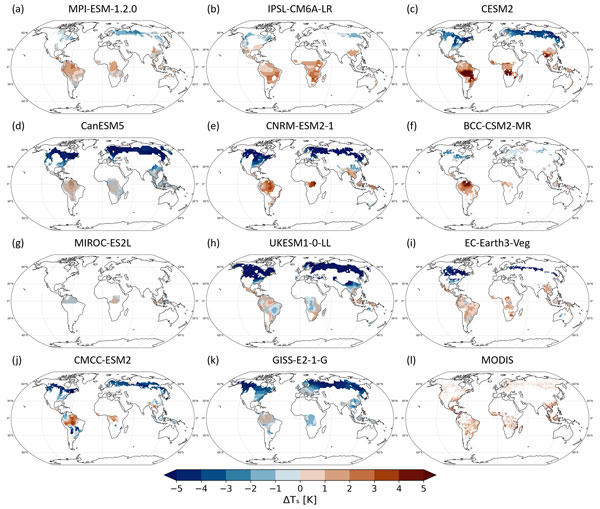
Despite forests being so important for mitigating climate change, there are still uncertainties about how much the changes in forest cover contribute to the cooling/warming of the climate. Climate models and real-world observations often disagree about the magnitude and even the direction of these changes. We constrain climate models scenarios of widespread deforestation with satellite and in-situ data and show that models still have difficulties representing the movement of heat and water.
Christian Czakay, Larisa Tarasova, and Bodo Ahrens
EGUsphere, https://doi.org/10.5194/egusphere-2025-3532, https://doi.org/10.5194/egusphere-2025-3532, 2025
Short summary
Short summary
In this study, we simulated streamflow in German river catchments for climate projections using a deep learning model. Flood-generating processes were identified using explainable artificial intelligence. In the median, the models project mostly less rain-on-snow floods in Germany in the future and an overall lower importance of snowmelt. The average and strongest rain-on-snow floods will have a higher magnitude. The trends found for the individual climate models can vary considerably.
Matteo Mastropierro, Daniele Peano, and Davide Zanchettin
Biogeosciences, 22, 5231–5246, https://doi.org/10.5194/bg-22-5231-2025, https://doi.org/10.5194/bg-22-5231-2025, 2025
Short summary
Short summary
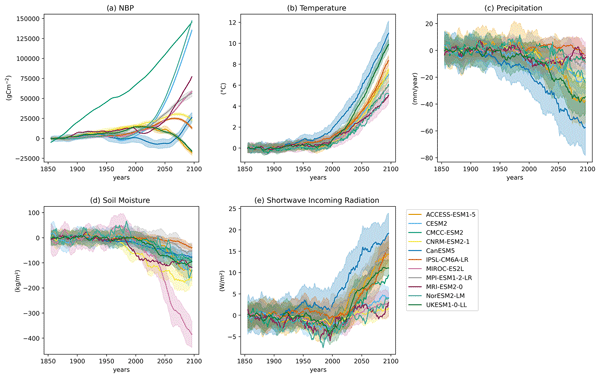
We analyse how Earth system models represent vegetation carbon flux variability in the Amazon. By assessing environmental factors influencing vegetation, we identified CO2 fertilization, photosynthetic sensitivity to solar radiation and heterotrophic respiration as key sources of model uncertainty under climate change. We also identified a stronger El Niño–Southern Oscillation (ENSO)-driven temperature impact under global warming. Reducing these uncertainties will enhance the reliability of tropical carbon–climate projections.
Richard Lohmann, Christopher Purr, and Bodo Ahrens
EGUsphere, https://doi.org/10.5194/egusphere-2025-3670, https://doi.org/10.5194/egusphere-2025-3670, 2025
Short summary
Short summary
This study investigates the relationship between atmospheric blocking and the extreme events heatwaves, heavy rainfall and calm events in Germany in atmospheric reanalyses and CMIP6 climate simulations. In the reanalyses, the statistical relationship is more pronounced between blocking and calms than between blocking and heavy precipitation. In the simulated future climate, the frequency of the three extreme event types increases with nearly unchanged relationship of blocking with the extremes.
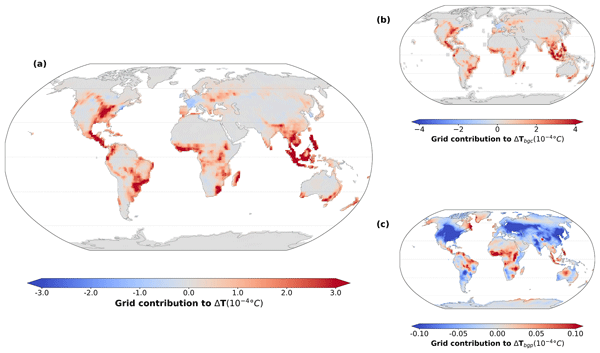
Amali A. Amali, Clemens Schwingshackl, Akihiko Ito, Alina Barbu, Christine Delire, Daniele Peano, David M. Lawrence, David Wårlind, Eddy Robertson, Edouard L. Davin, Elena Shevliakova, Ian N. Harman, Nicolas Vuichard, Paul A. Miller, Peter J. Lawrence, Tilo Ziehn, Tomohiro Hajima, Victor Brovkin, Yanwu Zhang, Vivek K. Arora, and Julia Pongratz
Earth Syst. Dynam., 16, 803–840, https://doi.org/10.5194/esd-16-803-2025, https://doi.org/10.5194/esd-16-803-2025, 2025
Short summary
Short summary
Our study explored the impact of anthropogenic land-use change (LUC) on climate dynamics, focusing on biogeophysical (BGP) and biogeochemical (BGC) effects using data from the Land Use Model Intercomparison Project (LUMIP) and the Coupled Model Intercomparison Project Phase 6 (CMIP6). We found that LUC-induced carbon emissions contribute to a BGC warming of 0.21 °C, with BGC effects dominating globally over BGP effects, which show regional variability. Our findings highlight discrepancies in model simulations and emphasize the need for improved representations of LUC processes.
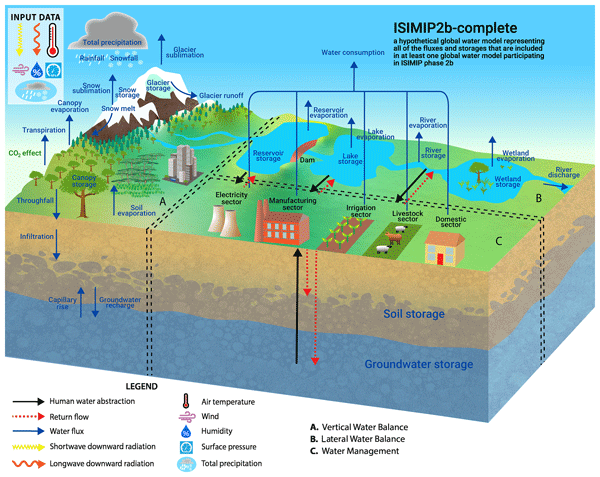
Hannes Müller Schmied, Simon Newland Gosling, Marlo Garnsworthy, Laura Müller, Camelia-Eliza Telteu, Atiq Kainan Ahmed, Lauren Seaby Andersen, Julien Boulange, Peter Burek, Jinfeng Chang, He Chen, Lukas Gudmundsson, Manolis Grillakis, Luca Guillaumot, Naota Hanasaki, Aristeidis Koutroulis, Rohini Kumar, Guoyong Leng, Junguo Liu, Xingcai Liu, Inga Menke, Vimal Mishra, Yadu Pokhrel, Oldrich Rakovec, Luis Samaniego, Yusuke Satoh, Harsh Lovekumar Shah, Mikhail Smilovic, Tobias Stacke, Edwin Sutanudjaja, Wim Thiery, Athanasios Tsilimigkras, Yoshihide Wada, Niko Wanders, and Tokuta Yokohata
Geosci. Model Dev., 18, 2409–2425, https://doi.org/10.5194/gmd-18-2409-2025, https://doi.org/10.5194/gmd-18-2409-2025, 2025
Short summary
Short summary
Global water models contribute to the evaluation of important natural and societal issues but are – as all models – simplified representation of reality. So, there are many ways to calculate the water fluxes and storages. This paper presents a visualization of 16 global water models using a standardized visualization and the pathway towards this common understanding. Next to academic education purposes, we envisage that these diagrams will help researchers, model developers, and data users.
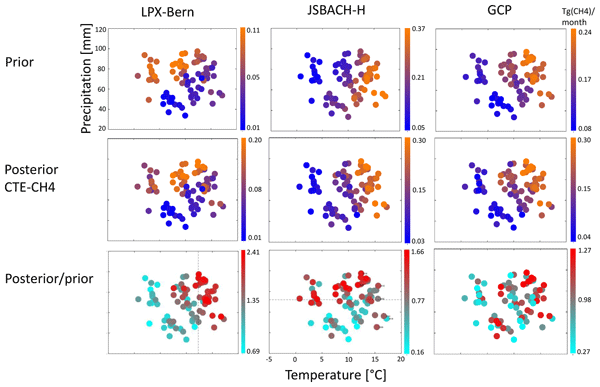
Tuula Aalto, Aki Tsuruta, Jarmo Mäkelä, Jurek Müller, Maria Tenkanen, Eleanor Burke, Sarah Chadburn, Yao Gao, Vilma Mannisenaho, Thomas Kleinen, Hanna Lee, Antti Leppänen, Tiina Markkanen, Stefano Materia, Paul A. Miller, Daniele Peano, Olli Peltola, Benjamin Poulter, Maarit Raivonen, Marielle Saunois, David Wårlind, and Sönke Zaehle
Biogeosciences, 22, 323–340, https://doi.org/10.5194/bg-22-323-2025, https://doi.org/10.5194/bg-22-323-2025, 2025
Short summary
Short summary
Wetland methane responses to temperature and precipitation were studied in a boreal wetland-rich region in northern Europe using ecosystem models, atmospheric inversions, and upscaled flux observations. The ecosystem models differed in their responses to temperature and precipitation and in their seasonality. However, multi-model means, inversions, and upscaled fluxes had similar seasonality, and they suggested co-limitation by temperature and precipitation.
Alberto Elizalde, Gibran Romero-Mujalli, Tobias Stacke, and Stefan Hagemann
EGUsphere, https://doi.org/10.5194/egusphere-2024-3645, https://doi.org/10.5194/egusphere-2024-3645, 2025
Preprint archived
Short summary
Short summary
This study examines phosphorus land-to-sea transport in Europe, exploring changes over time and predicting future trends under various scenarios. It integrates human and environmental factors, offering a comprehensive analysis. Our findings show how global warming-induced rainfall patterns affect phosphorus levels. While pollution reduction policies are helpful, population growth, land-use changes, and increased rainfall could lead to higher phosphorus levels in the future.
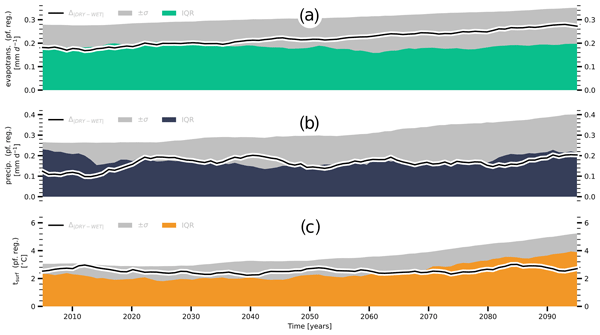
Philipp de Vrese, Goran Georgievski, Jesus Fidel Gonzalez Rouco, Dirk Notz, Tobias Stacke, Norman Julius Steinert, Stiig Wilkenskjeld, and Victor Brovkin
The Cryosphere, 17, 2095–2118, https://doi.org/10.5194/tc-17-2095-2023, https://doi.org/10.5194/tc-17-2095-2023, 2023
Short summary
Short summary
The current generation of Earth system models exhibits large inter-model differences in the simulated climate of the Arctic and subarctic zone. We used an adapted version of the Max Planck Institute (MPI) Earth System Model to show that differences in the representation of the soil hydrology in permafrost-affected regions could help explain a large part of this inter-model spread and have pronounced impacts on important elements of Earth systems as far to the south as the tropics.
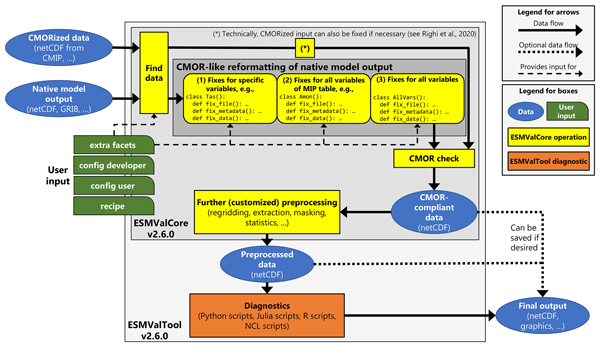
Manuel Schlund, Birgit Hassler, Axel Lauer, Bouwe Andela, Patrick Jöckel, Rémi Kazeroni, Saskia Loosveldt Tomas, Brian Medeiros, Valeriu Predoi, Stéphane Sénési, Jérôme Servonnat, Tobias Stacke, Javier Vegas-Regidor, Klaus Zimmermann, and Veronika Eyring
Geosci. Model Dev., 16, 315–333, https://doi.org/10.5194/gmd-16-315-2023, https://doi.org/10.5194/gmd-16-315-2023, 2023
Short summary
Short summary
The Earth System Model Evaluation Tool (ESMValTool) is a community diagnostics and performance metrics tool for routine evaluation of Earth system models. Originally, ESMValTool was designed to process reformatted output provided by large model intercomparison projects like the Coupled Model Intercomparison Project (CMIP). Here, we describe a new extension of ESMValTool that allows for reading and processing native climate model output, i.e., data that have not been reformatted before.
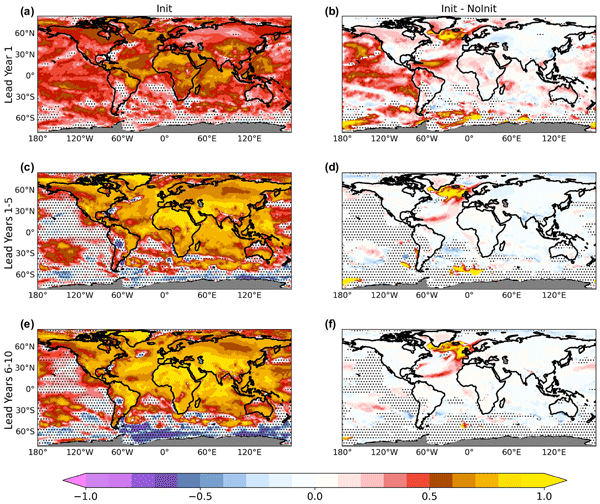
Dario Nicolì, Alessio Bellucci, Paolo Ruggieri, Panos J. Athanasiadis, Stefano Materia, Daniele Peano, Giusy Fedele, Riccardo Hénin, and Silvio Gualdi
Geosci. Model Dev., 16, 179–197, https://doi.org/10.5194/gmd-16-179-2023, https://doi.org/10.5194/gmd-16-179-2023, 2023
Short summary
Short summary
Decadal climate predictions, obtained by constraining the initial condition of a dynamical model through a truthful estimate of the observed climate state, provide an accurate assessment of the near-term climate and are useful for informing decision-makers on future climate-related risks. The predictive skill for key variables is assessed from the operational decadal prediction system compared with non-initialized historical simulations so as to quantify the added value of initialization.
Praveen Kumar Pothapakula, Amelie Hoff, Anika Obermann-Hellhund, Timo Keber, and Bodo Ahrens
Earth Syst. Dynam. Discuss., https://doi.org/10.5194/esd-2022-24, https://doi.org/10.5194/esd-2022-24, 2022
Preprint withdrawn
Short summary
Short summary
The Vb-cyclones simulated with a coupled regional climate model with two different driving data sets are compared against each other in historical period, thereafter the future climate predictions were analyzed. The Vb-cyclones in two simulations agree well in terms of their occurrence, intensity and track in two simulations, though there are discrepancies in seasonal cycles and their process linking Mediterranean Sea in historical period. So significant changes were observed in the future.
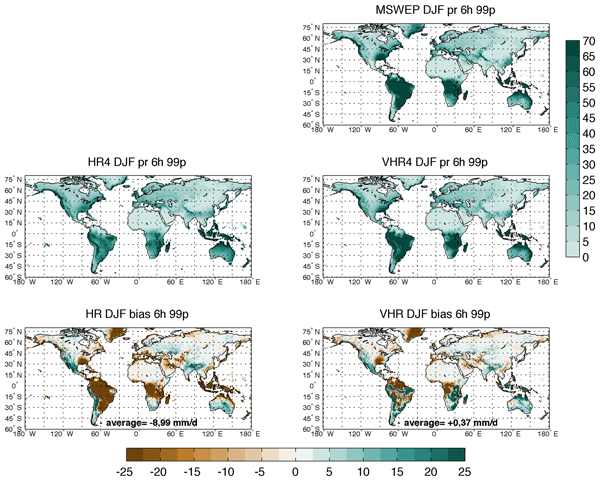
Enrico Scoccimarro, Daniele Peano, Silvio Gualdi, Alessio Bellucci, Tomas Lovato, Pier Giuseppe Fogli, and Antonio Navarra
Geosci. Model Dev., 15, 1841–1854, https://doi.org/10.5194/gmd-15-1841-2022, https://doi.org/10.5194/gmd-15-1841-2022, 2022
Short summary
Short summary
This study evaluated the ability of the CMCC-CM2 climate model participating to the last CMIP6 effort, in representing extreme events of precipitation and temperature at the daily and 6-hourly frequencies. The 1/4° resolution version of the atmospheric model provides better results than the version at 1° resolution for temperature extremes, at both time frequencies. For precipitation extremes, especially at the daily time frequency, the higher resolution does not improve model results.
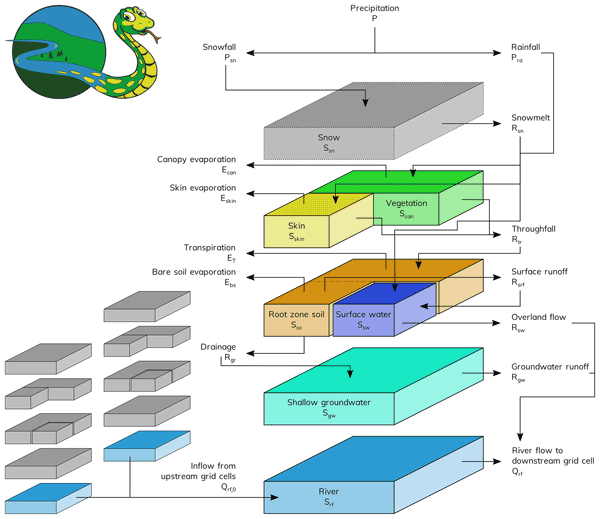
Tobias Stacke and Stefan Hagemann
Geosci. Model Dev., 14, 7795–7816, https://doi.org/10.5194/gmd-14-7795-2021, https://doi.org/10.5194/gmd-14-7795-2021, 2021
Short summary
Short summary
HydroPy is a new version of an established global hydrology model. It was rewritten from scratch and adapted to a modern object-oriented infrastructure to facilitate its future development and application. With this study, we provide a thorough documentation and evaluation of our new model. At the same time, we open our code base and publish the model's source code in a public software repository. In this way, we aim to contribute to increasing transparency and reproducibility in science.
Cited articles
Akyurek, Z., Kuter, S., Karaman, Ç. H., and Akpınar, B.: Understanding the Snow Cover Climatology over Turkey from ERA5-Land Reanalysis Data and MODIS Snow Cover Frequency Product, Geosciences, 13, 311, https://doi.org/10.3390/geosciences13100311, 2023. a
Anderson, E. A.: A point energy and mass balance model of a snow cover, Stanford University, https://repository.library.noaa.gov/view/noaa/6392 (last access: 14 October 2025), 1976. a
Bender, E., Lehning, M., and Fiddes, J.: Changes in Climatology, Snow Cover, and Ground Temperatures at High Alpine Locations, Frontiers in Earth Science, 8, https://doi.org/10.3389/feart.2020.00100, 2020. a
Bian, Q., Xu, Z., Zhao, L., Zhang, Y.-F., Zheng, H., Shi, C., Zhang, S., Xie, C., and Yang, Z.-L.: Evaluation and Intercomparison of Multiple Snow Water Equivalent Products over the Tibetan Plateau, J. Hydrometeorol., 20, 2043–2055, https://doi.org/10.1175/JHM-D-19-0011.1, 2019. a
Boli, C., Siqiong, L., Shihua, L., Yu, Z., and Di, M.: Effects of the soil freeze-thaw process on the regional climate of the Qinghai-Tibet Plateau, Climate Research, 59, 243–257, https://doi.org/10.3354/cr01217, 2014. a
Brovkin, V., Raddatz, T., Reick, C. H., Claussen, M., and Gayler, V.: Global biogeophysical interactions between forest and climate, Geophys. Res. Lett., 36, 2009GL037543, https://doi.org/10.1029/2009GL037543, 2009. a
Brown, J., Ferrians, O. J. J., Heginbottom, J. A., and Melnikov, E. S.: Circum-Arctic map of permafrost and ground ice conditions, US Geological Survey, Reston, VA, https://doi.org/10.13140/RG.2.1.2994.9040, 1997. a
Burke, E. J., Zhang, Y., and Krinner, G.: Evaluating permafrost physics in the Coupled Model Intercomparison Project 6 (CMIP6) models and their sensitivity to climate change, The Cryosphere, 14, 3155–3174, https://doi.org/10.5194/tc-14-3155-2020, 2020. a
Calonne, N., Flin, F., Morin, S., Lesaffre, B., Du Roscoat, S. R., and Geindreau, C.: Numerical and experimental investigations of the effective thermal conductivity of snow, Geophys. Res. Letters, 38, https://doi.org/10.1029/2011GL049234, 2011. a
Cao, B., Gruber, S., Zheng, D., and Li, X.: The ERA5-Land soil temperature bias in permafrost regions, The Cryosphere, 14, 2581–2595, https://doi.org/10.5194/tc-14-2581-2020, 2020. a, b
Cao, B., Arduini, G., and Zsoter, E.: Brief communication: Improving ERA5-Land soil temperature in permafrost regions using an optimized multi-layer snow scheme, The Cryosphere, 16, 2701–2708, https://doi.org/10.5194/tc-16-2701-2022, 2022. a, b, c
Cao, Z., Nan, Z., Hu, J., Chen, Y., and Zhang, Y.: A new 2010 permafrost distribution map over the Qinghai–Tibet Plateau based on subregion survey maps: a benchmark for regional permafrost modeling, Earth Syst. Sci. Data, 15, 3905–3930, https://doi.org/10.5194/essd-15-3905-2023, 2023. a
Chang, Y., Lyu, S., Luo, S., Li, Z., Fang, X., Chen, B., Li, R., and Chen, S.: Estimation of permafrost on the Tibetan Plateau under current and future climate conditions using the CMIP5 data, Int. J. Climatol., 38, 5659–5676, https://doi.org/10.1002/joc.5770, 2018. a
Chen, C., Peng, X., Frauenfeld, O. W., Zhao, Y., Yang, G., Tian, W., Li, X., Du, R., and Li, X.: Comprehensive Assessment of Seasonally Frozen Ground Changes in the Northern Hemisphere Based on Observations, J. Geophys. Res.-Atmos., 127, e2022JD037306, https://doi.org/10.1029/2022JD037306, 2022. a, b
Danabasoglu, G., Lamarque, J.-F., Bacmeister, J., Bailey, D., DuVivier, A., Edwards, J., Emmons, L., Fasullo, J., Garcia, R., Gettelman, A., Hannay, C., Holland, M. M., Large, W. G., Lauritzen, P. H., Lawrence, D. M., Lenaerts, J. T. M., Lindsay, K., Lipscomb, W. H., Mills, M. J., Neale, R., Oleson, K. W., Otto-Bliesner, B., Phillips, A. S., Sacks, W., Tilmes, S., van Kampenhout, L., Vertenstein, M., Bertini, A., Dennis, J., Deser, C., Fischer, C., Fox-Kemper, B., Kay, J. E., Kinnison, D., Kushner, P. J., Larson, V. E., Long, M. C., Mickelson, S., Moore, J. K., Nienhouse, E., Polvani, L., Rasch, P. J., and Strand, W. G.: The community earth system model version 2 (CESM2), J. Adv. Model. Earth Sy., 12, e2019MS001916, https://doi.org/10.1029/2019MS001916, 2020. a
De Vrese, P., Georgievski, G., Gonzalez Rouco, J. F., Notz, D., Stacke, T., Steinert, N. J., Wilkenskjeld, S., and Brovkin, V.: Representation of soil hydrology in permafrost regions may explain large part of inter-model spread in simulated Arctic and subarctic climate, The Cryosphere, 17, 2095–2118, https://doi.org/10.5194/tc-17-2095-2023, 2023. a, b
Ekici, A., Beer, C., Hagemann, S., Boike, J., Langer, M., and Hauck, C.: Simulating high-latitude permafrost regions by the JSBACH terrestrial ecosystem model, Geosci. Model Dev., 7, 631–647, https://doi.org/10.5194/gmd-7-631-2014, 2014. a, b, c
Farouki, O. T.: The thermal properties of soils in cold regions, Cold Reg. Sci. Technol., 5, 67–75, https://doi.org/10.1016/0165-232X(81)90041-0, 1981. a
Frauenfeld, O. W. and Zhang, T.: An observational 71-year history of seasonally frozen ground changes in the Eurasian high latitudes, Environ. Res. Lett., 6, 044024, https://doi.org/10.1088/1748-9326/6/4/044024, 2011. a, b
Frauenfeld, O. W., Zhang, T., Barry, R. G., and Gilichinsky, D.: Interdecadal changes in seasonal freeze and thaw depths in Russia, J. Geophys. Res.-Atmos., 109, 2003JD004245, https://doi.org/10.1029/2003JD004245, 2004. a
González-Rouco, J. F., Steinert, N. J., García-Bustamante, E., Hagemann, S., De Vrese, P., Jungclaus, J. H., Lorenz, S. J., Melo-Aguilar, C., García-Pereira, F., and Navarro, J.: Increasing the Depth of a Land Surface Model. Part I: Impacts on the Subsurface Thermal Regime and Energy Storage, J. Hydrometeorol., 22, 3211–3230, https://doi.org/10.1175/JHM-D-21-0024.1, 2021. a
Gruber, S.: Derivation and analysis of a high-resolution estimate of global permafrost zonation, The Cryosphere, 6, 221–233, https://doi.org/10.5194/tc-6-221-2012, 2012. a
Guo, D., Wang, H., and Li, D.: A projection of permafrost degradation on the Tibetan Plateau during the 21st century, J. Geophys. Res., 117, 2011JD016545, https://doi.org/10.1029/2011JD016545, 2012. a
Guo, H. and Yang, Y.: Spring snow-albedo feedback from satellite observation, reanalysis and model simulations over the Northern Hemisphere, Sci. China Earth Sci., 65, 1463–1476, https://doi.org/10.1007/s11430-021-9913-1, 2022. a
Heise, E., Ritter, B., and Schrodin, R.: COSMO Technical Report No. 9: Operational Implementation of the Multilayer Soil Model, https://doi.org/10.5676/DWD_PUB/NWV/COSMO-TR_9, 2006. a, b
Hersbach, H., Bell, B., Berrisford, P., Hirahara, S., Horányi, A., Muñoz‐Sabater, J., Nicolas, J., Peubey, C., Radu, R., Schepers, D., Simmons, A., Soci, C., Abdalla, S., Abellan, X., Balsamo, G., Bechtold, P., Biavati, G., Bidlot, J., Bonavita, M., De Chiara, G., Dahlgren, P., Dee, D., Diamantakis, M., Dragani, R., Flemming, J., Forbes, R., Fuentes, M., Geer, A., Haimberger, L., Healy, S., Hogan, R. J., Hólm, E., Janisková, M., Keeley, S., Laloyaux, P., Lopez, P., Lupu, C., Radnoti, G., De Rosnay, P., Rozum, I., Vamborg, F., Villaume, S., and Thépaut, J.: The ERA5 global reanalysis, Q. J. Roy. Meteorol. Soc., 146, 1999–2049, https://doi.org/10.1002/qj.3803, 2020. a, b
Hua, H., Wang, J., Zohner, C. M., Peñuelas, J., Ran, Y., and Wu, C.: Accelerated land surface greening caused by earlier permafrost thawing, Nat. Commun., https://doi.org/10.1038/s41467-025-67644-1, 2025. a
Jan, A., Ogden, F. L., Kindl da Cunha, L. L., McDaniel, R., Flowers, T., and Jennings, K. S.: Evaluating Soil Freeze Thaw Approaches for Hydrologic Models Using the Next Generation Water Resources Modeling Framework, AGU Fall Meeting Abstracts, 2022, 2022AGUFM.H45I1501J, 2022. a
Jin, H., He, R., Cheng, G., Wu, Q., Wang, S., Lü, L., and Chang, X.: Changes in frozen ground in the Source Area of the Yellow River on the Qinghai–Tibet Plateau, China, and their eco-environmental impacts, Environ. Res. Lett., 4, 045206, https://doi.org/10.1088/1748-9326/4/4/045206, 2009. a
Johansen, O.: Thermal conductivity of soils, https://apps.dtic.mil/sti/html/tr/ADA044002/ (last access: 15 October 2025), 1977. a
Jordan, R. E.: A One-dimensional temperature model for a snow cover: technical documentation for SNTHERM.89, https://hdl.handle.net/11681/11677 (last access: 20 October 2025), 1991. a
Jungclaus, J. H., Lorenz, S. J., Schmidt, H., Brovkin, V., Brüggemann, N., Chegini, F., Crüger, T., De‐Vrese, P., Gayler, V., Giorgetta, M. A., Gutjahr, O., Haak, H., Hagemann, S., Hanke, M., Ilyina, T., Korn, P., Kröger, J., Linardakis, L., Mehlmann, C., Mikolajewicz, U., Müller, W. A., Nabel, J. E. M. S., Notz, D., Pohlmann, H., Putrasahan, D. A., Raddatz, T., Ramme, L., Redler, R., Reick, C. H., Riddick, T., Sam, T., Schneck, R., Schnur, R., Schupfner, M., Von Storch, J. ‐S., Wachsmann, F., Wieners, K. ‐H., Ziemen, F., Stevens, B., Marotzke, J., and Claussen, M.: The ICON Earth System Model Version 1.0, J. Adv. Model. Earth Sy., 14, e2021MS002813, https://doi.org/10.1029/2021MS002813, 2022. a
Kouki, K., Luojus, K., and Riihelä, A.: Evaluation of snow cover properties in ERA5 and ERA5-Land with several satellite-based datasets in the Northern Hemisphere in spring 1982–2018, The Cryosphere, 17, 5007–5026, https://doi.org/10.5194/tc-17-5007-2023, 2023. a, b
Koven, C. D., Riley, W. J., Subin, Z. M., Tang, J. Y., Torn, M. S., Collins, W. D., Bonan, G. B., Lawrence, D. M., and Swenson, S. C.: The effect of vertically resolved soil biogeochemistry and alternate soil C and N models on C dynamics of CLM4, Biogeosciences, 10, 7109–7131, https://doi.org/10.5194/bg-10-7109-2013, 2013a. a
Koven, C. D., Riley, W. J., and Stern, A.: Analysis of Permafrost Thermal Dynamics and Response to Climate Change in the CMIP5 Earth System Models, J. Climate, 26, 1877–1900, https://doi.org/10.1175/JCLI-D-12-00228.1, 2013b. a
Langer, M., Nitzbon, J., Groenke, B., Assmann, L.-M., Schneider von Deimling, T., Stuenzi, S. M., and Westermann, S.: The evolution of Arctic permafrost over the last 3 centuries from ensemble simulations with the CryoGridLite permafrost model, The Cryosphere, 18, 363–385, https://doi.org/10.5194/tc-18-363-2024, 2024. a
Lawrence, D. M. and Slater, A. G.: The contribution of snow condition trends to future ground climate, Clim. Dynam., 34, 969–981, https://doi.org/10.1007/s00382-009-0537-4, 2010. a, b
Lawrence, D. M., Slater, A. G., Romanovsky, V. E., and Nicolsky, D. J.: Sensitivity of a model projection of near‐surface permafrost degradation to soil column depth and representation of soil organic matter, J. Geophys. Res.-Earth, 113, 2007JF000883, https://doi.org/10.1029/2007JF000883, 2008. a
Lawrence, D. M., Slater, A. G., and Swenson, S. C.: Simulation of Present-Day and Future Permafrost and Seasonally Frozen Ground Conditions in CCSM4, J. Climate, 25, 2207–2225, https://doi.org/10.1175/JCLI-D-11-00334.1, 2012. a
Lawrence, D. M., Fisher, R. A., Koven, C. D., Oleson, K. W., Swenson, S. C., Bonan, G., Collier, N., Ghimire, B., Van Kampenhout, L., Kennedy, D., Kluzek, E., Lawrence, P. J., Li, F., Li, H., Lombardozzi, D., Riley, W. J., Sacks, W. J., Shi, M., Vertenstein, M., Wieder, W. R., Xu, C., Ali, A. A., Badger, A. M., Bisht, G., Van Den Broeke, M., Brunke, M. A., Burns, S. P., Buzan, J., Clark, M., Craig, A., Dahlin, K., Drewniak, B., Fisher, J. B., Flanner, M., Fox, A. M., Gentine, P., Hoffman, F., Keppel‐Aleks, G., Knox, R., Kumar, S., Lenaerts, J., Leung, L. R., Lipscomb, W. H., Lu, Y., Pandey, A., Pelletier, J. D., Perket, J., Randerson, J. T., Ricciuto, D. M., Sanderson, B. M., Slater, A., Subin, Z. M., Tang, J., Thomas, R. Q., Val Martin, M., and Zeng, X.: The Community Land Model Version 5: Description of New Features, Benchmarking, and Impact of Forcing Uncertainty, J. Adv. Model. Earth Sy., 11, 4245–4287, https://doi.org/10.1029/2018MS001583, 2019. a, b, c, d
Li, T., Chen, Y.-Z., Han, L.-J., Cheng, L.-H., Lv, Y.-H., Fu, B.-J., Feng, X.-M., and Wu, X.: Shortened duration and reduced area of frozen soil in the Northern Hemisphere, The Innovation, 2, 100146, https://doi.org/10.1016/j.xinn.2021.100146, 2021. a, b, c
Li, X., Jin, R., Pan, X., Zhang, T., and Guo, J.: Changes in the near-surface soil freeze–thaw cycle on the Qinghai-Tibetan Plateau, Int. J. Appl. Earth Obs., 17, 33–42, https://doi.org/10.1016/j.jag.2011.12.002, 2012. a
Luo, S., Fang, X., Lyu, S., Ma, D., Chang, Y., Song, M., and Chen, H.: Frozen ground temperature trends associated with climate change in the Tibetan Plateau Three River Source Region from 1980 to 2014, Climate Research, 67, 241–255, https://doi.org/10.3354/cr01371, 2016. a
Luo, S., Wang, J., Pomeroy, J. W., and Lyu, S.: Freeze–Thaw Changes of Seasonally Frozen Ground on the Tibetan Plateau from 1960 to 2014, J. Climate, 33, 9427–9446, https://doi.org/10.1175/JCLI-D-19-0923.1, 2020. a, b, c
Luo, Z., Risto, D., and Ahrens, B.: Assessing uncertainties in modeling the climate of the Siberian frozen soils by contrasting CMIP6 and LS3MIP, The Cryosphere, 19, 6547–6576, https://doi.org/10.5194/tc-19-6547-2025, 2025. a
Matthes, H., Damseaux, A., Westermann, S., Beer, C., Boone, A., Burke, E., Decharme, B., Genet, H., Jafarov, E., Langer, M., Parmentier, F., Porada, P., Gagne‐Landmann, A., Huntzinger, D., Rogers, B. M., Schädel, C., Stacke, T., Wells, J., and Wieder, W. R.: Advances in Permafrost Representation: Biophysical Processes in Earth System Models and the Role of Offline Models, Permafrost Periglac., 36, 302–318, https://doi.org/10.1002/ppp.2269, 2025. a
Muñoz-Sabater, J., Dutra, E., Agustí-Panareda, A., Albergel, C., Arduini, G., Balsamo, G., Boussetta, S., Choulga, M., Harrigan, S., Hersbach, H., Martens, B., Miralles, D. G., Piles, M., Rodríguez-Fernández, N. J., Zsoter, E., Buontempo, C., and Thépaut, J.-N.: ERA5-Land: a state-of-the-art global reanalysis dataset for land applications, Earth System Science Data, 13, 4349–4383, https://doi.org/10.5194/essd-13-4349-2021, 2021. a, b
Muñoz Sabater, J., Comyn-Platt, E., Hersbach, H., Bell, B., Berrisford, P., Biavati, G., Horányi, A., Muñoz Sabater, J., Nicolas, J., Peubey, C., Radu, R., Rozum, I., Schepers, D., Simmons, A., Soci, C., Dee, D., Thépaut, J.-N., Cagnazo, C., and Cucchi, M.: ERA5-land post-processed daily-statistics from 1950 to present, Copernicus Climate Change Service (C3S) Climate Data Store (CDS) [data set], https://doi.org/10.24381/cds.e9c9c792, 2024. a
Niu, G.-Y. and Yang, Z.-L.: Effects of Frozen Soil on Snowmelt Runoff and Soil Water Storage at a Continental Scale, J. Hydrometeorol., 7, 937–952, https://doi.org/10.1175/JHM538.1, 2006. a, b
Osokin, N. I., Samoylov, R. S., Sosnovskiy, A. V., Sokratov, S. A., and Zhidkov, V. A.: Model of the influence of snow cover on soil freezing, Ann. Glaciol., 31, 417–421, https://doi.org/10.3189/172756400781820282, 2000. a
Pan, Y., Li, X., and Li, S.: Effects of different soil thermal conductivity schemes on the simulation of permafrost on the Tibetan Plateau, Geoderma, 442, 116789, https://doi.org/10.1016/j.geoderma.2024.116789, 2024. a
Parmar, M., Fröhlich, K., Stacke, T., Sanna, A., Luo, Z., Peano, D., Benassi, M., and Ahrens, B.: Evaluation of representation of seasonally frozen ground characteristics in Land Surface Models: JSBACH and CLM, Zenodo [software], https://doi.org/10.5281/zenodo.18110147, 2025. a
Peng, X., Zhang, T., Cao, B., Wang, Q., Wang, K., Shao, W., and Guo, H.: Changes in Freezing-Thawing Index and Soil Freeze Depth Over the Heihe River Basin, Western China, Arct. Antarct. Alp. Res., 48, 161–176, https://doi.org/10.1657/AAAR00C-13-127, 2016. a
Peng, X., Zhang, T., Frauenfeld, O. W., Wang, K., Cao, B., Zhong, X., Su, H., and Mu, C.: Response of seasonal soil freeze depth to climate change across China, The Cryosphere, 11, 1059–1073, https://doi.org/10.5194/tc-11-1059-2017, 2017. a
Peng, X., Zhang, T., Frauenfeld, O. W., Du, R., Wei, Q., and Liang, B.: Soil freeze depth variability across Eurasia during 1850–2100, Climatic Change, 158, 531–549, https://doi.org/10.1007/s10584-019-02586-4, 2020. a
Peng, X., Zhang, T., Frauenfeld, O. W., Mu, C., Wang, K., Wu, X., Guo, D., Luo, J., Hjort, J., Aalto, J., Karjalainen, O., and Luoto, M.: Active Layer Thickness and Permafrost Area Projections for the 21st Century, Earth’s Future, 11, e2023EF003573, https://doi.org/10.1029/2023EF003573, 2023. a
Raddatz, T. J., Reick, C. H., Knorr, W., Kattge, J., Roeckner, E., Schnur, R., Schnitzler, K.-G., Wetzel, P., and Jungclaus, J.: Will the tropical land biosphere dominate the climate–carbon cycle feedback during the twenty-first century?, Clim. Dynam., 29, 565–574, https://doi.org/10.1007/s00382-007-0247-8, 2007. a
Ran, Y., Li, X., Cheng, G., Nan, Z., Che, J., Sheng, Y., Wu, Q., Jin, H., Luo, D., Tang, Z., and Wu, X.: Mapping the permafrost stability on the Tibetan Plateau for 2005–2015, Science China Earth Sciences, 64, 62–79, https://doi.org/10.1007/s11430-020-9685-3, 2021. a
Ran, Y., Li, X., Cheng, G., Che, J., Aalto, J., Karjalainen, O., Hjort, J., Luoto, M., Jin, H., Obu, J., Hori, M., Yu, Q., and Chang, X.: New high-resolution estimates of the permafrost thermal state and hydrothermal conditions over the Northern Hemisphere, Earth Syst. Sci. Data, 14, 865–884, https://doi.org/10.5194/essd-14-865-2022, 2022. a, b, c
Reick, C. H., Raddatz, T., Brovkin, V., and Gayler, V.: Representation of natural and anthropogenic land cover change in MPI‐ESM, J. Adv. Model. Earth Sy., 5, 459–482, https://doi.org/10.1002/jame.20022, 2013. a
Reick, C. H., Gayler, V., Goll, D., Hagemann, S., Heidkamp, M., Nabel, J. E. M. S., Raddatz, T., Roeckner, E., Schnur, R., and Wilkenskjeld, S.: JSBACH 3 – The land component of the MPI Earth System Model: documentation of version Berichte zur Erdsystemforschung, 240, https://doi.org/10.17617/2.3279802, 2021. a, b, c
Risto, D., Fröhlich, K., and Ahrens, B.: Snow Representation over Siberia in Operational Seasonal Forecasting Systems, Atmosphere, 13, 1002, https://doi.org/10.3390/atmos13071002, 2022. a
Sarpong, R. and Nazemi, A.: Benchmarking Snow Fields of ERA5-Land in the Northern Regions of North America, EGUsphere [preprint], https://doi.org/10.5194/egusphere-2024-4150, 2025. a
Schmidt, M. W. I., Torn, M. S., Abiven, S., Dittmar, T., Guggenberger, G., Janssens, I. A., Kleber, M., Kögel-Knabner, I., Lehmann, J., Manning, D. A. C., Nannipieri, P., Rasse, D. P., Weiner, S., and Trumbore, S. E.: Persistence of soil organic matter as an ecosystem property, Nature, 478, 49–56, https://doi.org/10.1038/nature10386, 2011. a
Schneck, R., Gayler, V., Nabel, J. E. M. S., Raddatz, T., Reick, C. H., and Schnur, R.: Assessment of JSBACHv4.30 as a land component of ICON-ESM-V1 in comparison to its predecessor JSBACHv3.2 of MPI-ESM1.2, Geosci. Model Dev., 15, 8581–8611, https://doi.org/10.5194/gmd-15-8581-2022, 2022. a, b, c
Schuur, E. A. G., Vogel, J. G., Crummer, K. G., Lee, H., Sickman, J. O., and Osterkamp, T. E.: The effect of permafrost thaw on old carbon release and net carbon exchange from tundra, Nature, 459, 556–559, https://doi.org/10.1038/nature08031, 2009. a
Slater, A. G. and Lawrence, D. M.: Diagnosing Present and Future Permafrost from Climate Models, J. Climate, 26, 5608–5623, https://doi.org/10.1175/JCLI-D-12-00341.1, 2013. a, b
Slater, A. G., Bohn, T. J., McCreight, J. L., Serreze, M. C., and Lettenmaier, D. P.: A multimodel simulation of pan‐Arctic hydrology, J. Geophys. Res.-Biogeo., 112, 2006JG000303, https://doi.org/10.1029/2006JG000303, 2007. a
Steinert, N. J., Debolskiy, M. V., Burke, E. J., García-Pereira, F., and Lee, H.: Evaluating permafrost definitions for global permafrost area estimates in CMIP6 climate models, Environ. Res. Lett., 19, 014033, https://doi.org/10.1088/1748-9326/ad10d7, 2024. a
Steurer, P. M. and Crandell, J. H.: Comparison of methods used to create estimate of air-freezing index, J. Cold Reg. Eng., 9, 64–74, 1995. a
Stuurop, J. C., Van Der Zee, S. E. A. T. M., and French, H. K.: The influence of soil texture and environmental conditions on frozen soil infiltration: A numerical investigation, Cold Reg. Sci. Technol., 194, 103456, https://doi.org/10.1016/j.coldregions.2021.103456, 2022. a
Verseghy, D. L.: Class – A Canadian land surface scheme for GCMS. I. Soil model, Int. J. Climatol., 11, 111–133, https://doi.org/10.1002/joc.3370110202, 1991. a
Wang, K., Zhang, T., and Zhong, X.: Changes in the timing and duration of the near-surface soil freeze/thaw status from 1956 to 2006 across China, The Cryosphere, 9, 1321–1331, https://doi.org/10.5194/tc-9-1321-2015, 2015. a
Wang, W., Rinke, A., Moore, J. C., Ji, D., Cui, X., Peng, S., Lawrence, D. M., McGuire, A. D., Burke, E. J., Chen, X., Decharme, B., Koven, C., MacDougall, A., Saito, K., Zhang, W., Alkama, R., Bohn, T. J., Ciais, P., Delire, C., Gouttevin, I., Hajima, T., Krinner, G., Lettenmaier, D. P., Miller, P. A., Smith, B., Sueyoshi, T., and Sherstiukov, A. B.: Evaluation of air–soil temperature relationships simulated by land surface models during winter across the permafrost region, The Cryosphere, 10, 1721–1737, https://doi.org/10.5194/tc-10-1721-2016, 2016. a, b
Wang, X. and Chen, R.: Influence of snow cover on soil freeze depth across China, Geoderma, 428, 116195, https://doi.org/10.1016/j.geoderma.2022.116195, 2022. a, b
Wang, X. and Chen, R.: Freezing and thawing characteristics of seasonally frozen ground across China, Geoderma, 448, 116966, https://doi.org/10.1016/j.geoderma.2024.116966, 2024. a
Wigmosta, M. S., Vail, L. W., and Lettenmaier, D. P.: A distributed hydrology‐vegetation model for complex terrain, Water Resour. Res., 30, 1665–1679, https://doi.org/10.1029/94WR00436, 1994. a
Yang, S., Li, R., Wu, T., Wu, X., Zhao, L., Hu, G., Zhu, X., Du, Y., Xiao, Y., Zhang, Y., Ma, J., Du, E., Shi, J., and Qiao, Y.: Evaluation of soil thermal conductivity schemes incorporated into CLM5.0 in permafrost regions on the Tibetan Plateau, Geoderma, 401, 115330, https://doi.org/10.1016/j.geoderma.2021.115330, 2021. a
Yang, S., Li, R., Zhao, L., Wu, T., Wu, X., Zhang, Y., Shi, J., and Qiao, Y.: Evaluation of the Performance of CLM5.0 in Soil Hydrothermal Dynamics in Permafrost Regions on the Qinghai–Tibet Plateau, Remote Sensing, 14, 6228, https://doi.org/10.3390/rs14246228, 2022. a
Zhang, T.: Distribution of seasonally and perennially frozen ground in the northern hemisphere, in: Proceedings of the 8th International Conference on Permafrost, 21–25 July 2003, Zurich, Switzerland, 1289–1294, https://www.researchgate.net/publication/272792615_Distribution_of_seasonally_and_perenially_frozen_ground_in_the_Northern_Hemisphere (last access: 10 October 2025), 2003. a
Zhang, T.: Influence of the seasonal snow cover on the ground thermal regime: An overview, Rev. Geophys., 43, 2004RG000157, https://doi.org/10.1029/2004RG000157, 2005. a, b
Zhang, T., Osterkamp, T. E., and Stamnes, K.: Effects of Climate on the Active Layer and Permafrost on the North Slope of Alaska, U.S.A., Permafrost Periglac., 8, 45–67, https://doi.org/10.1002/(SICI)1099-1530(199701)8:1<45::AID-PPP240>3.0.CO;2-K, 1997. a
Zhang, T., Heginbottom, J. A., Barry, R. G., and Brown, J.: Further statistics on the distribution of permafrost and ground ice in the Northern Hemisphere1, Polar Geography, 24, 126–131, https://doi.org/10.1080/10889370009377692, 2000. a
Zhang, T., Frauenfeld, O. W., Serreze, M. C., Etringer, A., Oelke, C., McCreight, J., Barry, R. G., Gilichinsky, D., Yang, D., Ye, H., Ling, F., and Chudinova, S.: Spatial and temporal variability in active layer thickness over the Russian Arctic drainage basin, J. Geophys. Res.-Atmos., 110, 2004JD005642, https://doi.org/10.1029/2004JD005642, 2005. a
Zhang, W., Shen, Y., Wang, X., Kang, S., Chen, A., Mao, W., and Zhong, X.: Snow cover controls seasonally frozen ground regime on the southern edge of Altai Mountains, Agr. Forest Meteorol., 297, 108271, https://doi.org/10.1016/j.agrformet.2020.108271, 2021. a
Zhao, Z., Fu, R., Liu, J., Dai, L., Guo, X., Du, Y., Hu, Z., and Cao, G.: Response of Seasonally Frozen Ground to Climate Changes in the Northeastern Qinghai-Tibet Plateau, Frontiers in Environmental Science, 10, 912209, https://doi.org/10.3389/fenvs.2022.912209, 2022. a
Zheng, D., Van Der Velde, R., Su, Z., Wen, J., and Wang, X.: Assessment of Noah land surface model with various runoff parameterizations over a Tibetan river, J. Geophys. Res.-Atmos., 122, 1488–1504, https://doi.org/10.1002/2016JD025572, 2017. a, b
Short summary
Seasonally frozen ground strongly influences land–atmosphere interactions, yet its simulation remains uncertain in land surface models. This study evaluates 2 standalone LSM simulations forced by reanalysis data (1986-2022) and validates results against reference observations at 26 Russian sites. Results show contrasting biases linked to snow insulation and freeze–thaw processes, highlighting the need for improved snow and soil parameterizations.
Seasonally frozen ground strongly influences land–atmosphere interactions, yet its simulation...


