
Articles | Volume 20, issue 6
https://doi.org/10.5194/tc-20-3415-2026
© Author(s) 2026. This work is distributed under
the Creative Commons Attribution 4.0 License.
the Creative Commons Attribution 4.0 License.
https://doi.org/10.5194/tc-20-3415-2026
© Author(s) 2026. This work is distributed under
the Creative Commons Attribution 4.0 License.
the Creative Commons Attribution 4.0 License.
Research article
| 
16 Jun 2026
Research article |
| 16 Jun 2026
| 16 Jun 2026
Thinning-induced glacier deceleration in the Zanskar Himalayas
Tirthankar Ghosh
CORRESPONDING AUTHOR

IITB-Monash Research Academy, Mumbai, India
Hydro-Remote Sensing Applications (H-RSA) Group, Department of Civil Engineering, Indian Institute of Technology Bombay, Mumbai, India
School of Earth, Atmosphere and Environment, Monash University, Clayton, VIC, Australia
RAAJ Ramsankaran
CORRESPONDING AUTHOR
Hydro-Remote Sensing Applications (H-RSA) Group, Department of Civil Engineering, Indian Institute of Technology Bombay, Mumbai, India
Felicity S. McCormack
School of Earth, Atmosphere and Environment, Monash University, Clayton, VIC, Australia
Andrew N. Mackintosh
School of Earth, Atmosphere and Environment, Monash University, Clayton, VIC, Australia
Related authors
No articles found.
Lena Nicola, Johanna Beckmann, Felicity S. McCormack, and Ricarda Winkelmann
EGUsphere, https://doi.org/10.5194/egusphere-2026-6030, https://doi.org/10.5194/egusphere-2026-6030, 2026
This preprint is open for discussion and under review for The Cryosphere (TC).
Short summary
Short summary
Record-breaking extreme events, including heatwaves leading to surface melt and extreme snowfall, have been observed in Antarctica in recent years. Such extreme events are generally expected to become more frequent and intense with anthropogenic climate change. Here, with a suite of numerical ice-sheet simulations, we explore the additional Antarctic contribution to future sea-level rise when including atmospheric temperature extremes of varying frequency and intensity in projections.
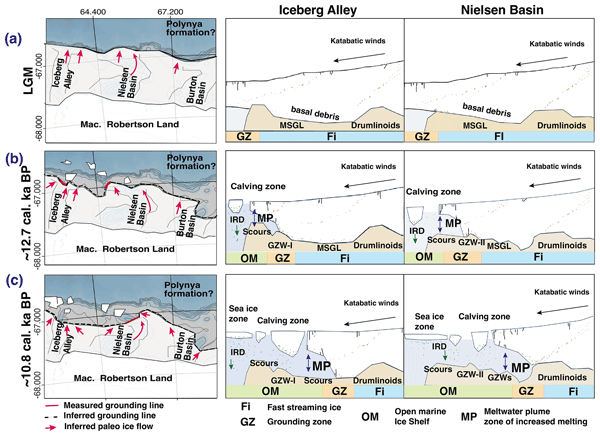
Janina Güntzel, Juliane Müller, Ralf Tiedemann, Gesine Mollenhauer, Lester Lembke-Jene, Estella Weigelt, Lasse Schopen, Niklas Wesch, Laura Kattein, Andrew N. Mackintosh, and Johann P. Klages
The Cryosphere, 20, 3739–3758, https://doi.org/10.5194/tc-20-3739-2026, https://doi.org/10.5194/tc-20-3739-2026, 2026
Short summary
Short summary
Combined multi-proxy sediment core analyses and bathymetry data reveal the deglaciation along the Mac. Robertson Shelf, a yet insufficiently studied sector of the East Antarctic margin. Grounding line extent towards the continental shelf break prior to ~12.7 cal. ka BP and subsequent episodic mid-shelf retreat until the early Holocene prevented Dense Shelf Water formation in its current form, hence suggesting a different formation mechanism under such full glacial conditions.
R. Chandra Prabha and RAAJ Ramsankaran
EGUsphere, https://doi.org/10.5194/egusphere-2026-1207, https://doi.org/10.5194/egusphere-2026-1207, 2026
Short summary
Short summary
This study demonstrates a simple, practical, and scalable method for measuring the depth of snow from satellite radar imagery that is not only easy to implement across large regions but also provides improved quantification compared to existing studies. In addition, AI techniques are applied to better understand the characteristics of radar signals associated with different snow types across diverse mountainous regions, highlighting variability in the underlying physical mechanisms.
Ajay Godara, P. Jayaraman Navinkumar, Tirthankar Ghosh, and RAAJ Ramsankaran
EGUsphere, https://doi.org/10.5194/egusphere-2025-5601, https://doi.org/10.5194/egusphere-2025-5601, 2026
Preprint archived
Short summary
Short summary
Using drone we created ultra high resolution maps, allowing us to track where ice and snow increased or melted on the ice sheet near India’s Maitri Station in Antarctica over days, weeks, and a full year. This approach shows how drone based monitoring can improve our understanding of ice changes in remote polar regions and support climate monitoring. We also documented some challenges faced in drone surveying and provided few practical recommendations for future studies.
Johanna Beckmann, Ronja Reese, Felicity S. McCormack, Sue Cook, Lawrence Bird, Dawid Gwyther, Daniel Richards, Matthias Scheiter, Yu Wang, Hélène Seroussi, Ayako Abe‐Ouchi, Torsten Albrecht, Jorge Alvarez‐Solas, Xylar S. Asay‐Davis, Jean‐Baptiste Barre, Constantijn J. Berends, Jorge Bernales, Javier Blasco, Justine Caillet, David M. Chandler, Violaine Coulon, Richard Cullather, Christophe Dumas, Benjamin K. Galton‐Fenzi, Julius Garbe, Fabien Gillet‐Chaulet, Rupert Gladstone, Heiko Goelzer, Nicholas R. Golledge, Ralf Greve, G. Hilmar Gudmundsson, Holly Kyeore Han, Trevor R. Hillebrand, Matthew J. Hoffman, Philippe Huybrechts, Nicolas C. Jourdain, Ann Kristin Klose, Petra M. Langebroek, Gunter R. Leguy, William H. Lipscomb, Daniel P. Lowry, Pierre Mathiot, Marisa Montoya, Mathieu Morlighem, Sophie Nowicki, Frank Pattyn, Antony J. Payne, Tyler Pelle, Aurélien Quiquet, Alexander Robinson, Leopekka Saraste, Erika G. Simon, Sainan Sun, Jake P. Twarog, Luke D. Trusel, Benoit Urruty, Jonas Van Breedam, Roderik S. W. van de Wal, Chen Zhao, and Thomas Zwinger
EGUsphere, https://doi.org/10.5194/egusphere-2025-4069, https://doi.org/10.5194/egusphere-2025-4069, 2025
Short summary
Short summary
Antarctica holds enough ice to raise sea levels by many meters, but its future is uncertain. Warm ocean water melts ice shelves from below, letting inland ice flow faster into the sea. By 2300, Antarctica could add 0.6–4.4 m to sea levels. Our study identifies two key factors—how strongly shelves melt and how the ice responds. These explain much of the range, and refining them in models may improve future predictions.
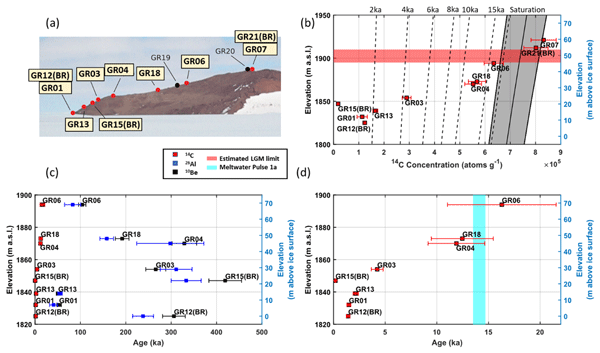
Cari Rand, Richard S. Jones, Andrew N. Mackintosh, Brent Goehring, and Kat Lilly
The Cryosphere, 19, 3681–3691, https://doi.org/10.5194/tc-19-3681-2025, https://doi.org/10.5194/tc-19-3681-2025, 2025
Short summary
Short summary
In this study, we determine how recently samples from a mountain in East Antarctica were last covered by the East Antarctic Ice Sheet. By examining concentrations of 14C in rock samples, we determined that all but the summit of the mountain was buried under glacial ice within the last 15 kyr. Other methods of estimating past ice thicknesses are not sensitive enough to capture ice cover this recent, so we were previously unaware that ice at this site was thicker at this time.
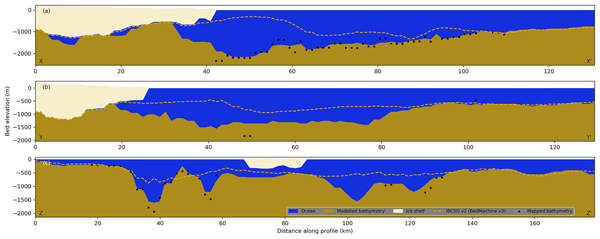
Lawrence A. Bird, Vitaliy Ogarko, Laurent Ailleres, Lachlan Grose, Jérémie Giraud, Felicity S. McCormack, David E. Gwyther, Jason L. Roberts, Richard S. Jones, and Andrew N. Mackintosh
The Cryosphere, 19, 3355–3380, https://doi.org/10.5194/tc-19-3355-2025, https://doi.org/10.5194/tc-19-3355-2025, 2025
Short summary
Short summary
The terrain of the seafloor has important controls on the access of warm water below floating ice shelves around Antarctica. Here, we present an open-source method to infer what the seafloor looks like around the Antarctic continent and within these ice shelf cavities, using measurements of the Earth's gravitational field. We present an improved seafloor map for the Vincennes Bay region in East Antarctica and assess its impact on ice melt rates.
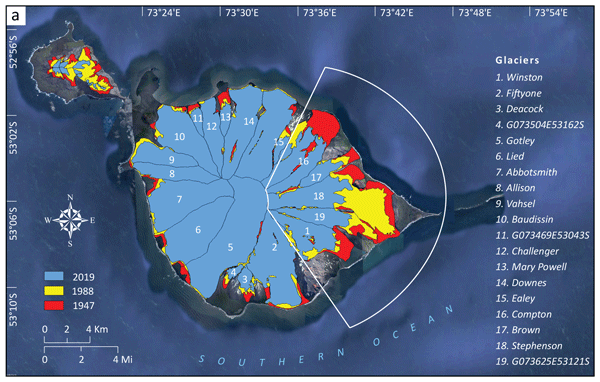
Levan G. Tielidze, Andrew N. Mackintosh, and Weilin Yang
The Cryosphere, 19, 2677–2694, https://doi.org/10.5194/tc-19-2677-2025, https://doi.org/10.5194/tc-19-2677-2025, 2025
Short summary
Short summary
Heard Island is a UNESCO World Heritage site due to its outstanding physical and biological features which are being affected by significant ongoing climatic changes. As one of the only sub-Antarctic islands mostly free of introduced species, its largely undisturbed ecosystems are at risk from the impact of glacier retreat. This glacier inventory will help in designing effective conservation strategies and managing protected areas to ensure the preservation of the biodiversity they support.
Jessica M. A. Macha, Andrew N. Mackintosh, Felicity S. McCormack, Benjamin J. Henley, Helen V. McGregor, Christiaan T. van Dalum, and Ariaan Purich
The Cryosphere, 19, 1915–1935, https://doi.org/10.5194/tc-19-1915-2025, https://doi.org/10.5194/tc-19-1915-2025, 2025
Short summary
Short summary
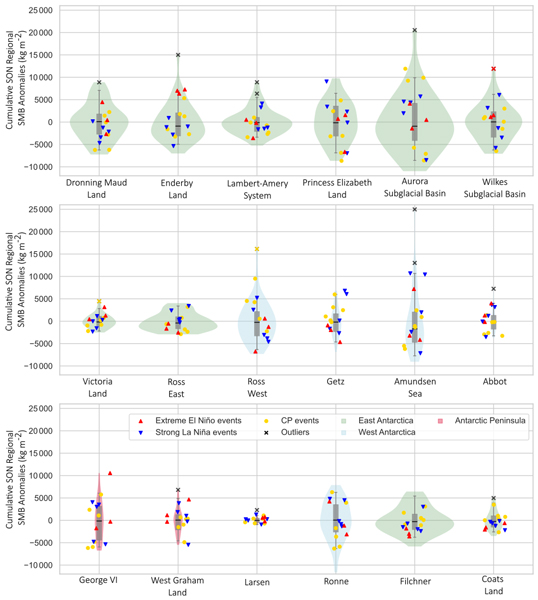
Extreme El Niño–Southern Oscillation (ENSO) events have global impacts, but their Antarctic impacts are poorly understood. Examining Antarctic snow accumulation anomalies of past observed extreme ENSO events, we show that accumulation changes differ between events and are insignificant during most events. Significant changes occur during 2015/16 and in Enderby Land during all extreme El Niños. Historical data limit conclusions, but future greater extremes could cause Antarctic accumulation changes.
Lawrence A. Bird, Felicity S. McCormack, Johanna Beckmann, Richard S. Jones, and Andrew N. Mackintosh
The Cryosphere, 19, 955–973, https://doi.org/10.5194/tc-19-955-2025, https://doi.org/10.5194/tc-19-955-2025, 2025
Short summary
Short summary
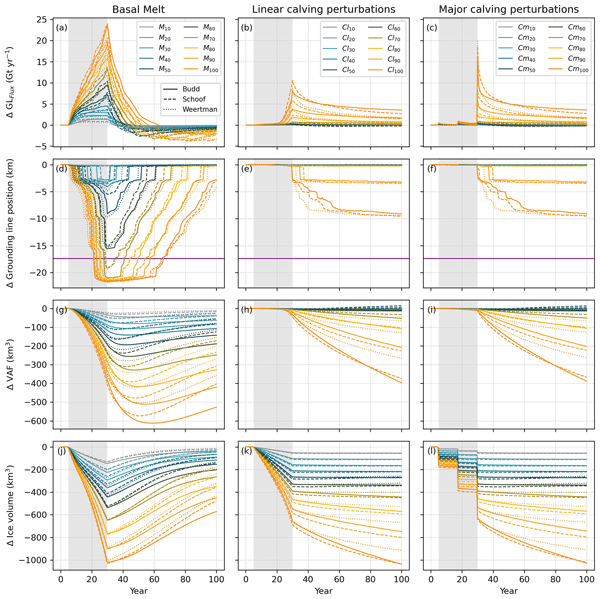
Vanderford Glacier is the fastest-retreating glacier in East Antarctica and may have important implications for future ice loss from the Aurora Subglacial Basin. Our ice sheet model simulations suggest that grounding line retreat is driven by sub-ice-shelf basal melting, in which warm ocean waters melt ice close to the grounding line. We show that current estimates of basal melt are likely too low, highlighting the need for improved estimates and direct measurements of basal melt in the region.
Sanjay Saifi and RAAJ Ramsankaran
Proc. IAHS, 387, 73–77, https://doi.org/10.5194/piahs-387-73-2024, https://doi.org/10.5194/piahs-387-73-2024, 2024
Short summary
Short summary
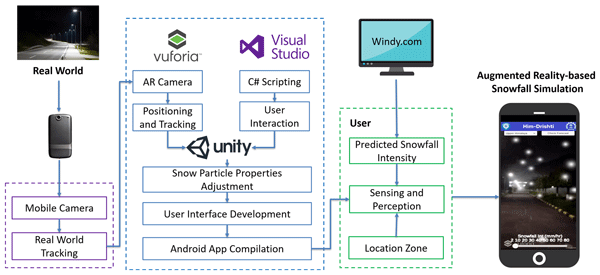
Visibility assessment is crucial for informed decision-making and disaster preparedness in mountainous regions due to snow-induced disasters. This paper presents an innovative approach using augmented reality (AR) to address this challenge. The Him-Drishti application harnesses the established correlation between snowfall intensity and visibility to create a predictive visibility simulation model. This study demonstrates the capacity of AR in disaster management and risk reduction.
Imtiyaz Ahmad Bhat, Irfan Rashid, RAAJ Ramsankaran, Argha Banerjee, and Saurabh Vijay
Earth Syst. Sci. Data Discuss., https://doi.org/10.5194/essd-2023-522, https://doi.org/10.5194/essd-2023-522, 2024
Preprint withdrawn
Short summary
Short summary
A comprehensive rock glacier inventory (n = 5492) has been generated through manual delineation in a GIS environment for the western Himalayan region. The inventory has characterized each rock glacier with 22 attributes following the standard protocols. This inventory shall serve as a baseline for the future research related to rock glacier dynamics, their hydrological contribution and response to climate change.
Dhiraj Kumar Singh, Srinivasarao Tanniru, Kamal Kant Singh, Harendra Singh Negi, and RAAJ Ramsankaran
The Cryosphere, 18, 451–474, https://doi.org/10.5194/tc-18-451-2024, https://doi.org/10.5194/tc-18-451-2024, 2024
Short summary
Short summary
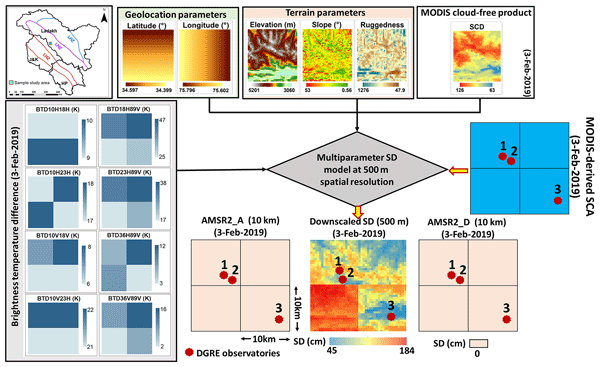
In situ techniques for snow depth (SD) measurement are not adequate to represent the spatiotemporal variability in SD in the Western Himalayan region. Therefore, this study focuses on the high-resolution mapping of daily snow depth in the Indian Western Himalayan region using passive microwave remote-sensing-based algorithms. Overall, the proposed multifactor SD models demonstrated substantial improvement compared to the operational products. However, there is a scope for further improvement.
Koi McArthur, Felicity S. McCormack, and Christine F. Dow
The Cryosphere, 17, 4705–4727, https://doi.org/10.5194/tc-17-4705-2023, https://doi.org/10.5194/tc-17-4705-2023, 2023
Short summary
Short summary
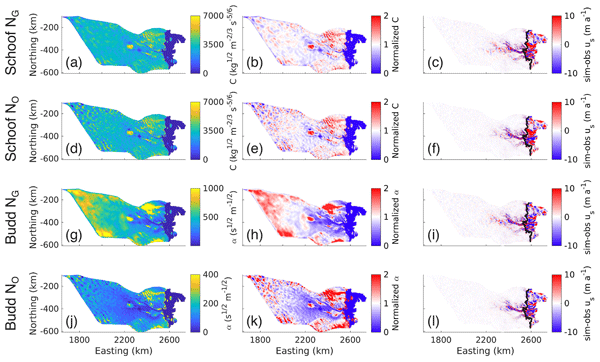
Using subglacial hydrology model outputs for Denman Glacier, East Antarctica, we investigated the effects of various friction laws and effective pressure inputs on ice dynamics modeling over the same glacier. The Schoof friction law outperformed the Budd friction law, and effective pressure outputs from the hydrology model outperformed a typically prescribed effective pressure. We propose an empirical prescription of effective pressure to be used in the absence of hydrology model outputs.
Felicity S. McCormack, Jason L. Roberts, Bernd Kulessa, Alan Aitken, Christine F. Dow, Lawrence Bird, Benjamin K. Galton-Fenzi, Katharina Hochmuth, Richard S. Jones, Andrew N. Mackintosh, and Koi McArthur
The Cryosphere, 17, 4549–4569, https://doi.org/10.5194/tc-17-4549-2023, https://doi.org/10.5194/tc-17-4549-2023, 2023
Short summary
Short summary
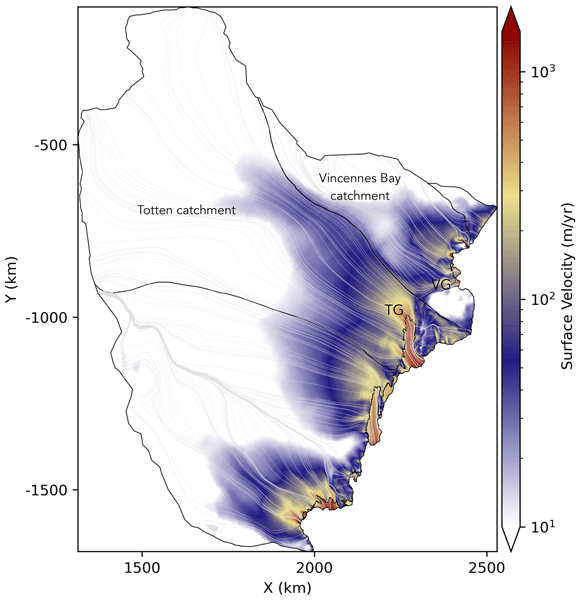
Changes in Antarctic surface elevation can cause changes in ice and basal water flow, impacting how much ice enters the ocean. We find that ice and basal water flow could divert from the Totten to the Vanderford Glacier, East Antarctica, under only small changes in the surface elevation, with implications for estimates of ice loss from this region. Further studies are needed to determine when this could occur and if similar diversions could occur elsewhere in Antarctica due to climate change.
Dominic Saunderson, Andrew Mackintosh, Felicity McCormack, Richard Selwyn Jones, and Ghislain Picard
The Cryosphere, 16, 4553–4569, https://doi.org/10.5194/tc-16-4553-2022, https://doi.org/10.5194/tc-16-4553-2022, 2022
Short summary
Short summary
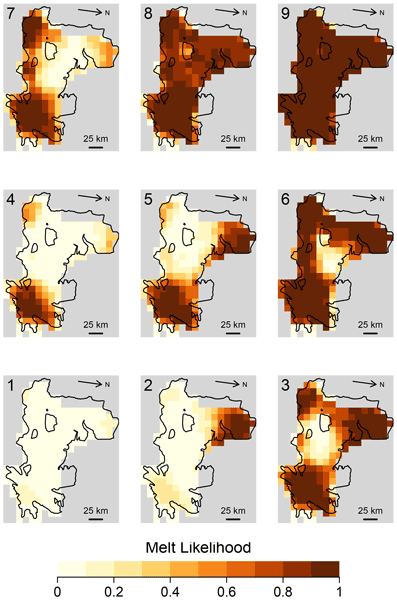
We investigate the variability in surface melt on the Shackleton Ice Shelf in East Antarctica over the last 2 decades (2003–2021). Using daily satellite observations and the machine learning approach of a self-organising map, we identify nine distinct spatial patterns of melt. These patterns allow comparisons of melt within and across melt seasons and highlight the importance of both air temperatures and local controls such as topography, katabatic winds, and albedo in driving surface melt.
Vasaw Tripathi, Andreas Groh, Martin Horwath, and Raaj Ramsankaran
Hydrol. Earth Syst. Sci., 26, 4515–4535, https://doi.org/10.5194/hess-26-4515-2022, https://doi.org/10.5194/hess-26-4515-2022, 2022
Short summary
Short summary
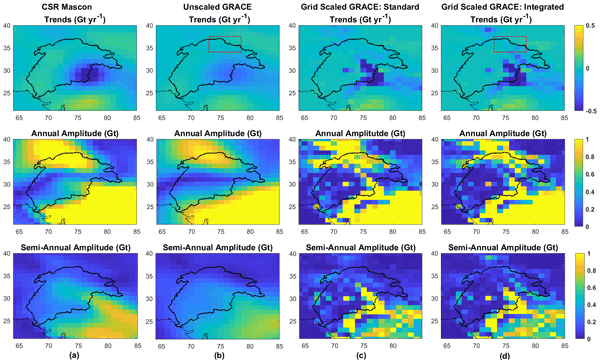
GRACE/GRACE-FO provided global observations of water storage change since 2002. Scaling is a common approach to compensate for the spatial filtering inherent to the results. However, for complex hydrological basins, the compatibility of scaling with the characteristics of regional hydrology has been rarely assessed. We assess traditional scaling approaches and a new scaling approach for the Indus Basin. Our results will help users with regional focus understand implications of scaling choices.

Zhiang Xie, Dietmar Dommenget, Felicity S. McCormack, and Andrew N. Mackintosh
Geosci. Model Dev., 15, 3691–3719, https://doi.org/10.5194/gmd-15-3691-2022, https://doi.org/10.5194/gmd-15-3691-2022, 2022
Short summary
Short summary
Paleoclimate research requires better numerical model tools to explore interactions among the cryosphere, atmosphere, ocean and land surface. To explore those interactions, this study offers a tool, the GREB-ISM, which can be run for 2 million model years within 1 month on a personal computer. A series of experiments show that the GREB-ISM is able to reproduce the modern ice sheet distribution as well as classic climate oscillation features under paleoclimate conditions.
Jamey Stutz, Andrew Mackintosh, Kevin Norton, Ross Whitmore, Carlo Baroni, Stewart S. R. Jamieson, Richard S. Jones, Greg Balco, Maria Cristina Salvatore, Stefano Casale, Jae Il Lee, Yeong Bae Seong, Robert McKay, Lauren J. Vargo, Daniel Lowry, Perry Spector, Marcus Christl, Susan Ivy Ochs, Luigia Di Nicola, Maria Iarossi, Finlay Stuart, and Tom Woodruff
The Cryosphere, 15, 5447–5471, https://doi.org/10.5194/tc-15-5447-2021, https://doi.org/10.5194/tc-15-5447-2021, 2021
Short summary
Short summary
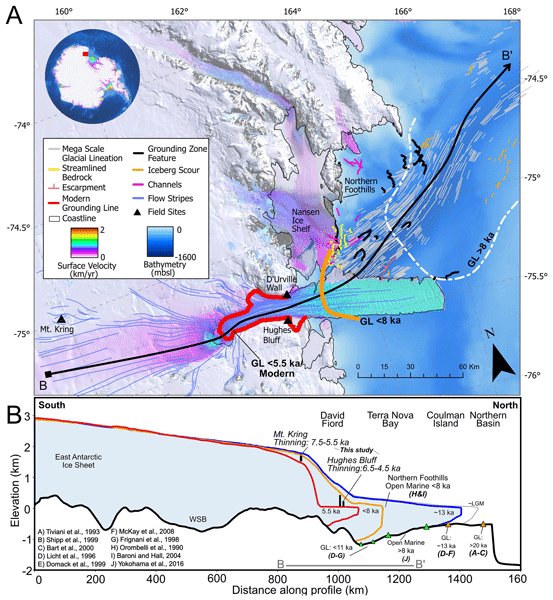
Understanding the long-term behaviour of ice sheets is essential to projecting future changes due to climate change. In this study, we use rocks deposited along the margin of the David Glacier, one of the largest glacier systems in the world, to reveal a rapid thinning event initiated over 7000 years ago and endured for ~ 2000 years. Using physical models, we show that subglacial topography and ocean heat are important drivers for change along this sector of the Antarctic Ice Sheet.
Cited articles
Agarwal, V., Van Wyk De Vries, M., Haritashya, U. K., Garg, S., Kargel, J. S., Chen, Y.-J., and Shugar, D. H.: Long-term analysis of glaciers and glacier lakes in the Central and Eastern Himalaya, Sci. Total Environ., 898, 165598, https://doi.org/10.1016/j.scitotenv.2023.165598, 2023.
Altena, B., Scambos, T., Fahnestock, M., and Kääb, A.: Extracting recent short-term glacier velocity evolution over southern Alaska and the Yukon from a large collection of Landsat data, The Cryosphere, 13, 795–814, https://doi.org/10.5194/tc-13-795-2019, 2019.
Archer, D. R. and Fowler, H. J.: Spatial and temporal variations in precipitation in the Upper Indus Basin, global teleconnections and hydrological implications, Hydrol. Earth Syst. Sci., 8, 47–61, https://doi.org/10.5194/hess-8-47-2004, 2004.
Azam, M. F., Wagnon, P., Ramanathan, A., Vincent, C., Sharma, P., Arnaud, Y., Linda, A., Pottakkal, J. G., Chevallier, P., Singh, V. B., and Berthier, E.: From balance to imbalance: a shift in the dynamic behaviour of Chhota Shigri glacier, western Himalaya, India, J. Glaciol., 58, 315–324, https://doi.org/10.3189/2012JoG11J123, 2012.
Azam, M. F., Wagnon, P., Vincent, C., Ramanathan, A., Linda, A., and Singh, V. B.: Reconstruction of the annual mass balance of Chhota Shigri glacier, Western Himalaya, India, since 1969, Ann. Glaciol., 55, 69–80, https://doi.org/10.3189/2014AoG66A104, 2014.
Azam, M. F., Kargel, J. S., Shea, J. M., Nepal, S., Haritashya, U. K., Srivastava, S., Maussion, F., Qazi, N., Chevallier, P., Dimri, A. P., Kulkarni, A. V., Cogley, J. G., and Bahuguna, I.: Glaciohydrology of the Himalaya-Karakoram, Science, 373, eabf3668, https://doi.org/10.1126/science.abf3668, 2021.
Azam, M. F., Hussain, Md. A., Kaushik, H., Srivastava, S., Munda, M. K., Mandal, A., Bahuguna, I., Singh, S. K., and Jawad, M.: Initial glaciological investigations on a large Himalayan glacier: Drang Drung (Zanskar, Ladakh, India), J. Glaciol., 1–22, https://doi.org/10.1017/jog.2024.102, 2025.
Barnett, T. P., Adam, J. C., and Lettenmaier, D. P.: Potential impacts of a warming climate on water availability in snow-dominated regions, Nature, 438, 303–309, https://doi.org/10.1038/nature04141, 2005.
Bhambri, R., Bolch, T., Chaujar, R. K., and Kulshreshtha, S. C.: Glacier changes in the Garhwal Himalaya, India, from 1968 to 2006 based on remote sensing, J. Glaciol., 57, 543–556, https://doi.org/10.3189/002214311796905604, 2011.
Bhambri, R., Schmidt, S., Chand, P., Nüsser, M., Haritashya, U., Sain, K., Tiwari, S. K., and Yadav, J. S.: Heterogeneity in glacier thinning and slowdown of ice movement in the Garhwal Himalaya, India, Sci. Total Environ., 875, 162625, https://doi.org/10.1016/j.scitotenv.2023.162625, 2023.
Bhattacharjee, S., Garg, R. D., and Pandey, A. C.: Monitoring glacier surface velocity in Zanskar Valley, India: Insights from DInSAR-based 2D velocity estimation, Results Earth Sci., 3, 100092, https://doi.org/10.1016/j.rines.2025.100092, 2025.
Bhattacharya, A., Bolch, T., Mukherjee, K., Pieczonka, T., Kropáček, J., and Buchroithner, M. F.: Overall recession and mass budget of Gangotri Glacier, Garhwal Himalayas, from 1965 to 2015 using remote sensing data, J. Glaciol., 62, 1115–1133, https://doi.org/10.1017/jog.2016.96, 2016.
Bhushan, S., Syed, T. H., Kulkarni, A. V., Gantayat, P., and Agarwal, V.: Quantifying Changes in the Gangotri Glacier of Central Himalaya: Evidence for Increasing Mass Loss and Decreasing Velocity, IEEE J. Sel. Top. Appl., 10, 5295–5306, https://doi.org/10.1109/JSTARS.2017.2771215, 2017.
Bhushan, S., Syed, T. H., Arendt, A. A., Kulkarni, A. V., and Sinha, D.: Assessing controls on mass budget and surface velocity variations of glaciers in Western Himalaya, Sci. Rep., 8, 8885, https://doi.org/10.1038/s41598-018-27014-y, 2018.
Bindschadler, R.: The Importance of Pressurized Subglacial Water in Separation and Sliding at the Glacier Bed, J. Glaciol., 29, 3–19, https://doi.org/10.3189/S0022143000005104, 1983.
Bolch, T.: Asian glaciers are a reliable water source, Nature, 545, 161–162, https://doi.org/10.1038/545161a, 2017.
Bolch, T., Kulkarni, A., Kääb, A., Huggel, C., Paul, F., Cogley, J. G., Frey, H., Kargel, J. S., Fujita, K., Scheel, M., Bajracharya, S., and Stoffel, M.: The State and Fate of Himalayan Glaciers, Science, 336, 310–314, https://doi.org/10.1126/science.1215828, 2012a.
Bolch, T., Kulkarni, A., Kääb, A., Huggel, C., Paul, F., Cogley, J. G., Frey, H., Kargel, J. S., Fujita, K., Scheel, M., Bajracharya, S., and Stoffel, M.: The State and Fate of Himalayan Glaciers, Science, 336, 310–314, https://doi.org/10.1126/science.1215828, 2012b.
Brun, F., Buri, P., Miles, E. S., Wagnon, P., Steiner, J., Berthier, E., Ragettli, S., Kraaijenbrink, P., Immerzeel, W. W., and Pellicciotti, F.: Quantifying volume loss from ice cliffs on debris-covered glaciers using high-resolution terrestrial and aerial photogrammetry, J. Glaciol., 62, 684–695, https://doi.org/10.1017/jog.2016.54, 2016.
Brun, F., Berthier, E., Wagnon, P., Kääb, A., and Treichler, D.: A spatially resolved estimate of High Mountain Asia glacier mass balances from 2000 to 2016, Nat. Geosci., 10, 668–673, https://doi.org/10.1038/ngeo2999, 2017.
Carrivick, J. L. and Tweed, F. S.: Proglacial lakes: character, behaviour and geological importance, Quaternary Sci. Rev., 78, 34–52, https://doi.org/10.1016/j.quascirev.2013.07.028, 2013.
Copernicus Climate Change Service: ERA5-Land monthly averaged data from 2001 to present, Copernicus Climate Change Service (C3S) Climate Data Store (CDS) [data set], https://doi.org/10.24381/CDS.68D2BB30, 2019.
Cuffey, K. M. and Paterson, W. S. B.: The physics of glaciers, 4. ed., Butterworth-Heineman, Amsterdam Heidelberg, 693 pp., ISBN 978-0-12-369461-4, 2010.
Das, S. and Sharma, M. C.: Glacier surface velocities in the Jankar Chhu Watershed, western Himalaya, India: Study using Landsat time series data (1992–2020), Remote Sens. Appl. Soc. Environ., 24, 100615, https://doi.org/10.1016/j.rsase.2021.100615, 2021.
Dehecq, A., Gourmelen, N., and Trouve, E.: Deriving large-scale glacier velocities from a complete satellite archive: Application to the Pamir–Karakoram–Himalaya, Remote Sens. Environ., 162, 55–66, https://doi.org/10.1016/j.rse.2015.01.031, 2015.
Dehecq, A., Gourmelen, N., Gardner, A. S., Brun, F., Goldberg, D., Nienow, P. W., Berthier, E., Vincent, C., Wagnon, P., and Trouvé, E.: Twenty-first century glacier slowdown driven by mass loss in High Mountain Asia, Nat. Geosci., 12, 22–27, https://doi.org/10.1038/s41561-018-0271-9, 2019.
Dematteis, N., Giordan, D., Troilo, F., Wrzesniak, A., and Godone, D.: Ten-Year Monitoring of the Grandes Jorasses Glaciers Kinematics. Limits, Potentialities, and Possible Applications of Different Monitoring Systems, Remote Sens., 13, 3005, https://doi.org/10.3390/rs13153005, 2021.
Fahnestock, M., Scambos, T., Moon, T., Gardner, A., Haran, T., and Klinger, M.: Rapid large-area mapping of ice flow using Landsat 8, Remote Sens. Environ., 185, 84–94, https://doi.org/10.1016/j.rse.2015.11.023, 2016.
Garg, S., Shukla, A., Garg, P. K., Yousuf, B., and Shukla, U. K.: Surface evolution and dynamics of the Kangriz glacier, western Himalaya in past 50 years, Cold Reg. Sci. Technol., 196, 103496, https://doi.org/10.1016/j.coldregions.2022.103496, 2022.
Garg, S., Agarwal, V., Haritashya, U. K., Kargel, J. S., and Shukla, A.: Evolving glacier patterns in the Chenab River Basin (1993–2021): Drivers and environmental implications, Sci. Total Environ., 962, 178430, https://doi.org/10.1016/j.scitotenv.2025.178430, 2025.
Ghosh, T., Ramsankaran, R., McCormack, F. S., and Mackintosh, A. N.: Dataset generated during the study, Zenodo [data set], https://doi.org/10.5281/zenodo.20175928, 2026.
Govindha Raj, K. B.: Remote sensing based hazard assessment of glacial lakes: a case study in Zanskar basin, Jammu and Kashmir, India, Geomat. Nat. Haz. Risk, 1, 339–347, https://doi.org/10.1080/19475705.2010.532973, 2010.
Greene, C. A. and Gardner, A. S.: Seasonal dynamics of Earth's glaciers and ice sheets, Science, 390, 945–950, https://doi.org/10.1126/science.adx6654, 2025.
Heid, T. and Kääb, A.: Repeat optical satellite images reveal widespread and long term decrease in land-terminating glacier speeds, The Cryosphere, 6, 467–478, https://doi.org/10.5194/tc-6-467-2012, 2012.
Hooke, R. LeB., Calla, P., Holmlund, P., Nilsson, M., and Stroeven, A.: A 3 Year Record of Seasonal Variations in Surface Velocity, StorglaciÄren, Sweden, J. Glaciol., 35, 235–247, https://doi.org/10.3189/S0022143000004561, 1989.
Hugonnet, R., McNabb, R., Berthier, E., Menounos, B., Nuth, C., Girod, L., Farinotti, D., Huss, M., Dussaillant, I., Brun, F., and Kääb, A.: Accelerated global glacier mass loss in the early twenty-first century, Nature, 592, 726–731, https://doi.org/10.1038/s41586-021-03436-z, 2021a.
Hugonnet, R., McNabb, R., Berthier, E., Menounos, B., Nuth, C., Girod, L., Farinotti, D., Huss, M., Dussaillant, I., Brun, F., and Kääb, A.: Accelerated global glacier mass loss in the early twenty-first century – Dataset, Theia [data set], https://doi.org/10.6096/13 (last access: 22 April 2025), 2021b.
Huss, M. and Hock, R.: Global-scale hydrological response to future glacier mass loss, Nat. Clim. Change, 8, 135–140, https://doi.org/10.1038/s41558-017-0049-x, 2018.
Hyde, A., Carr, R., Dunning, S. A., and Van Wyk De Vries, M.: Quantifying heterogeneous glacier dynamics in Lunana, Bhutan, using spatiotemporally high-resolution satellite imagery, J. Glaciol., 71, e126, https://doi.org/10.1017/jog.2025.10103, 2025.
Iken, A. and Bindschadler, R. A.: Combined measurements of Subglacial Water Pressure and Surface Velocity of Findelengletscher, Switzerland: Conclusions about Drainage System and Sliding Mechanism, J. Glaciol., 32, 101–119, https://doi.org/10.3189/S0022143000006936, 1986.
Immerzeel, W. W., Van Beek, L. P. H., and Bierkens, M. F. P.: Climate Change Will Affect the Asian Water Towers, Science, 328, 1382–1385, https://doi.org/10.1126/science.1183188, 2010.
Jiskoot, H., Curran, C. J., Tessler, D. L., and Shenton, L. R.: Changes in Clemenceau Icefield and Chaba Group glaciers, Canada, related to hypsometry, tributary detachment, length–slope and area–aspect relations, Ann. Glaciol., 50, 133–143, https://doi.org/10.3189/172756410790595796, 2009.
Kamp, U., Byrne, M., and Bolch, T.: Glacier fluctuations between 1975 and 2008 in the Greater Himalaya Range of Zanskar, southern Ladakh, J. Mt. Sci., 8, 374–389, https://doi.org/10.1007/s11629-011-2007-9, 2011.
Kim, T. K.: T test as a parametric statistic, Korean J. Anesthesiol., 68, 540, https://doi.org/10.4097/kjae.2015.68.6.540, 2015.
King, O., Bhattacharya, A., Bhambri, R., and Bolch, T.: Glacial lakes exacerbate Himalayan glacier mass loss, Sci. Rep., 9, 18145, https://doi.org/10.1038/s41598-019-53733-x, 2019.
Koblet, T., Gärtner-Roer, I., Zemp, M., Jansson, P., Thee, P., Haeberli, W., and Holmlund, P.: Reanalysis of multi-temporal aerial images of Storglaciären, Sweden (1959–99) – Part 1: Determination of length, area, and volume changes, The Cryosphere, 4, 333–343, https://doi.org/10.5194/tc-4-333-2010, 2010.
Kraaijenbrink, P., Meijer, S. W., Shea, J. M., Pellicciotti, F., De Jong, S. M., and Immerzeel, W. W.: Seasonal surface velocities of a Himalayan glacier derived by automated correlation of unmanned aerial vehicle imagery, Ann. Glaciol., 57, 103–113, https://doi.org/10.3189/2016AoG71A072, 2016.
Lee, S. Y., Seong, Y. B., Owen, L. A., Murari, M. K., Lim, H. S., Yoon, H. I., and Yoo, K.: Late Quaternary glaciation in the Nun-K un massif, northwestern India, Boreas, 43, 67–89, https://doi.org/10.1111/bor.12022, 2014.
Leprince, S., Barbot, S., Ayoub, F., and Avouac, J.-P.: Automatic and Precise Orthorectification, Coregistration, and Subpixel Correlation of Satellite Images, Application to Ground Deformation Measurements, IEEE T. Geosci. Remote, 45, 1529–1558, https://doi.org/10.1109/TGRS.2006.888937, 2007a.
Leprince, S., Ayoub, F., Klinger, Y., and Avouac, J.-P.: Co-Registration of Optically Sensed Images and Correlation (COSI-Corr): an operational methodology for ground deformation measurements, in: 2007 IEEE International Geoscience and Remote Sensing Symposium, 2007 IEEE International Geoscience and Remote Sensing Symposium, 1943–1946, https://doi.org/10.1109/IGARSS.2007.4423207, 2007b.
Li, Z., Sun, W., and Zeng, Q.: Measurements of Glacier Variation in the Tibetan Plateau Using Landsat Data, Remote Sens. Environ., 63, 258–264, https://doi.org/10.1016/S0034-4257(97)00140-5, 1998.
Mackintosh, A. N., Anderson, B. M., and Pierrehumbert, R. T.: Reconstructing Climate from Glaciers, Annu. Rev. Earth Pl. Sc., 45, 649–680, https://doi.org/10.1146/annurev-earth-063016-020643, 2017.
Mandal, A., Vishwakarma, B. D., Angchuk, T., Azam, M. F., Garg, P. K., and Soheb, M.: Glacier mass balance and its climatic and nonclimatic drivers in the Ladakh region during 2000–2021 from remote sensing data, J. Glaciol., 1–23, https://doi.org/10.1017/jog.2024.19, 2024.
Maurer, J. M., Schaefer, J. M., Rupper, S., and Corley, A.: Acceleration of ice loss across the Himalayas over the past 40 years, Sci. Adv., 5, eaav7266, https://doi.org/10.1126/sciadv.aav7266, 2019.
Mehta, M., Kumar, V., Garg, S., and Shukla, A.: Little Ice Age glacier extent and temporal changes in annual mass balance (2016–2019) of Pensilungpa Glacier, Zanskar Himalaya, Reg. Environ. Change, 21, https://doi.org/10.1007/s10113-021-01766-2, 2021.
Millan, R., Mouginot, J., Rabatel, A., and Morlighem, M.: Ice velocity and thickness of the world's glaciers, Nat. Geosci., 15, 124–129, https://doi.org/10.1038/s41561-021-00885-z, 2022.
Minchew, B. and Joughin, I.: Toward a universal glacier slip law, Science, 368, 29–30, https://doi.org/10.1126/science.abb3566, 2020.
Minowa, M., Schaefer, M., and Skvarca, P.: Effects of topography on dynamics and mass loss of lake-terminating glaciers in southern Patagonia, J. Glaciol., 69, 1580–1597, https://doi.org/10.1017/jog.2023.42, 2023.
Nanni, U., Scherler, D., Ayoub, F., Millan, R., Herman, F., and Avouac, J.-P.: Climatic control on seasonal variations in mountain glacier surface velocity, The Cryosphere, 17, 1567–1583, https://doi.org/10.5194/tc-17-1567-2023, 2023.
Nüsser, M., Schmidt, S., and Dame, J.: Irrigation and Development in the Upper Indus Basin: Characteristics and Recent Changes of a Socio-hydrological System in Central Ladakh, India, Mt. Res. Dev., 32, 51–61, https://doi.org/10.1659/MRD-JOURNAL-D-11-00091.1, 2012.
Oerlemans, J.: On the Response of Valley Glaciers to Climatic Change, in: Glacier Fluctuations and Climatic Change, vol. 6, edited by: Oerlemans, J., Springer Netherlands, Dordrecht, 353–371, https://doi.org/10.1007/978-94-015-7823-3_23, 1989.
Patel, L. K., Sharma, P., Singh, A. T., Pratap, B., Oulkar, S., and Thamban, M.: Spatial surface velocity pattern in the glaciers of Chandra Basin, Western Himalaya, Geocarto Int., 37, 5327–5344, https://doi.org/10.1080/10106049.2021.1920627, 2022.
Pellicciotti, F., Stephan, C., Miles, E., Herreid, S., Immerzeel, W. W., and Bolch, T.: Mass-balance changes of the debris-covered glaciers in the Langtang Himal, Nepal, from 1974 to 1999, J. Glaciol., 61, 373–386, https://doi.org/10.3189/2015jog13j237, 2015.
Pritchard, H. D.: Asia's shrinking glaciers protect large populations from drought stress, Nature, 569, 649–654, https://doi.org/10.1038/s41586-019-1240-1, 2019.
Pronk, J. B., Bolch, T., King, O., Wouters, B., and Benn, D. I.: Contrasting surface velocities between lake- and land-terminating glaciers in the Himalayan region, The Cryosphere, 15, 5577–5599, https://doi.org/10.5194/tc-15-5577-2021, 2021.
Rana, A. S., Kunmar, P., Mehta, M., and Kumar, V.: Glacier retreat, dynamics and bed overdeepenings of Parkachik Glacier, Ladakh Himalaya, India, Ann. Glaciol., 64, 254–267, https://doi.org/10.1017/aog.2023.50, 2023.
Rashid, I. and Majeed, U.: Recent recession and potential future lake formation on Drang Drung glacier, Zanskar Himalaya, as assessed with earth observation data and glacier modelling, Environ. Earth Sci., 77, 429, https://doi.org/10.1007/s12665-018-7601-5, 2018.
Reznichenko, N., Davies, T., Shulmeister, J., and McSaveney, M.: Effects of debris on ice-surface melting rates: an experimental study, J. Glaciol., 56, 384–394, https://doi.org/10.3189/002214310792447725, 2010.
RGI Consortium: Randolph Glacier Inventory – A Dataset of Global Glacier Outlines, Version 7, National Snow and Ice Data Center [data set], https://doi.org/10.5067/F6JMOVY5NAVZ, 2023.
Rounce, D. R., Hock, R., Maussion, F., Hugonnet, R., Kochtitzky, W., Huss, M., Berthier, E., Brinkerhoff, D., Compagno, L., Copland, L., Farinotti, D., Menounos, B., and McNabb, R. W.: Global glacier change in the 21st century: Every increase in temperature matters, Science, 379, 78–83, https://doi.org/10.1126/science.abo1324, 2023.
Sam, L., Bhardwaj, A., Kumar, R., Buchroithner, M. F., and Martín-Torres, F. J.: Heterogeneity in topographic control on velocities of Western Himalayan glaciers, Sci. Rep., 8, 12843, https://doi.org/10.1038/s41598-018-31310-y, 2018.
Satyabala, S. P.: Spatiotemporal variations in surface velocity of the Gangotri glacier, Garhwal Himalaya, India: Study using synthetic aperture radar data, Remote Sens. Environ., 181, 151–161, https://doi.org/10.1016/j.rse.2016.03.042, 2016.
Satyapragyan, S., Yadav, J. S., and Bhambri, R.: Bias corrections of ERA5 and ERA5-land temperature using automatic weather station data in the Higher Central Himalaya: implications for hydro-meteorological and glaciological research, J. Hydrol. Reg. Stud., 63, 103079, https://doi.org/10.1016/j.ejrh.2025.103079, 2026.
Scherler, D. and Strecker, M. R.: Large surface velocity fluctuations of Biafo Glacier, central Karakoram, at high spatial and temporal resolution from optical satellite images, J. Glaciol., 58, 569–580, https://doi.org/10.3189/2012JoG11J096, 2012.
Scherler, D., Leprince, S., and Strecker, M.: Glacier-surface velocities in alpine terrain from optical satellite imagery – Accuracy improvement and quality assessment, Remote Sens. Environ., 112, 3806–3819, https://doi.org/10.1016/j.rse.2008.05.018, 2008.
Scherler, D., Wulf, H., and Gorelick, N.: Global Assessment of Supraglacial Debris-Cover Extents, Geophys. Res. Lett., 45, https://doi.org/10.1029/2018GL080158, 2018a.
Scherler, D., Wulf, H., and Gorelick, N.: Supraglacial Debris Cover, V. 1.0., GFZ Data Services [data set], https://doi.org/10.5880/GFZ.3.3.2018.005, 2018b.
Schmidt, S. and Nüsser, M.: Changes of High Altitude Glaciers in the Trans-Himalaya of Ladakh over the Past Five Decades (1969–2016), Geosciences, 7, 27, https://doi.org/10.3390/geosciences7020027, 2017.
Shean, D. E., Bhushan, S., Montesano, P., Rounce, D. R., Arendt, A., and Osmanoglu, B.: A Systematic, Regional Assessment of High Mountain Asia Glacier Mass Balance, Front. Earth Sci., 7, 363, https://doi.org/10.3389/feart.2019.00363, 2020.
Shrivastava, D., Sangewar, C. V., Kaul, M. K., and Jamwal, K. S.: Mass balance of Rulung Glacier- a Trans-Himalayan glacier, Indus basin, Ladakh, in: Proc. Symp. Snow, Ice and Glacier, Symposium on Snow, Ice and Glacier, 41–46, 1999.
Shukla, A. and Garg, P. K.: Spatio-temporal trends in the surface ice velocities of the central Himalayan glaciers, India, Global Planet. Change, 190, 103187, https://doi.org/10.1016/j.gloplacha.2020.103187, 2020.
Singh Jasrotia, A., Ahmad, S., Ridwan, Q., Ahmad Wani, Z., Siddiqui, S., Siddiqua, A., and Ali Morfeine Aika, E.: Estimation of Surface Ice Velocity of Durung Drung Glacier, Western Himalaya using COSI-Corr from Landsat images, Egypt J. Remote Sens. Space Sci., 27, 369–381, https://doi.org/10.1016/j.ejrs.2024.04.006, 2024.
Soheb, M., Ramanathan, A., Angchuk, T., Mandal, A., Kumar, N., and Lotus, S.: Mass-balance observation, reconstruction and sensitivity of Stok glacier, Ladakh region, India, between 1978 and 2019, J. Glaciol., 66, 627–642, https://doi.org/10.1017/jog.2020.34, 2020.
Soheb, M., Ramanathan, A., Bhardwaj, A., Coleman, M., Rea, B. R., Spagnolo, M., Singh, S., and Sam, L.: Multitemporal glacier inventory revealing four decades of glacier changes in the Ladakh region, Earth Syst. Sci. Data, 14, 4171–4185, https://doi.org/10.5194/essd-14-4171-2022, 2022.
Stevens, N. T., Roland, C. J., Zoet, L. K., Alley, R. B., Hansen, D. D., and Schwans, E.: Multi-decadal basal slip enhancement at Saskatchewan Glacier, Canadian Rocky Mountains, J. Glaciol., 69, 71–86, https://doi.org/10.1017/jog.2022.45, 2023.
Sugiyama, S., Fukui, K., Fujita, K., Tone, K., and Yamaguchi, S.: Changes in ice thickness and flow velocity of Yala Glacier, Langtang Himal, Nepal, from 1982 to 2009, Ann. Glaciol., 54, 157–162, https://doi.org/10.3189/2013AoG64A111, 2013.
Sutherland, J. L., Carrivick, J. L., Gandy, N., Shulmeister, J., Quincey, D. J., and Cornford, S. L.: Proglacial Lakes Control Glacier Geometry and Behavior During Recession, Geophys. Res. Lett., 47, e2020GL088865, https://doi.org/10.1029/2020GL088865, 2020.
Thayyen, R. J. and Gergan, J. T.: Role of glaciers in watershed hydrology: a preliminary study of a “Himalayan catchment,” The Cryosphere, 4, 115–128, https://doi.org/10.5194/tc-4-115-2010, 2010.
The GlaMBIE Team, Zemp, M., Jakob, L., Dussaillant, I., Nussbaumer, S. U., Gourmelen, N., Dubber, S., A, G., Abdullahi, S., Andreassen, L. M., Berthier, E., Bhattacharya, A., Blazquez, A., Boehm Vock, L. F., Bolch, T., Box, J., Braun, M. H., Brun, F., Cicero, E., Colgan, W., Eckert, N., Farinotti, D., Florentine, C., Floricioiu, D., Gardner, A., Harig, C., Hassan, J., Hugonnet, R., Huss, M., Jóhannesson, T., Liang, C.-C. A., Ke, C.-Q., Khan, S. A., King, O., Kneib, M., Krieger, L., Maussion, F., Mattea, E., McNabb, R., Menounos, B., Miles, E., Moholdt, G., Nilsson, J., Pálsson, F., Pfeffer, J., Piermattei, L., Plummer, S., Richter, A., Sasgen, I., Schuster, L., Seehaus, T., Shen, X., Sommer, C., Sutterley, T., Treichler, D., Velicogna, I., Wouters, B., Zekollari, H., and Zheng, W.: Community estimate of global glacier mass changes from 2000 to 2023, Nature, 639, 382–388, https://doi.org/10.1038/s41586-024-08545-z, 2025.
Tripathi, N., Singh, S. K., Rathore, B. P., Oza, S. R., and Bahuguna, I. M.: Topographical and morphological variability explicates the regional heterogeneity in glacier surface ice velocity across Karakoram-Himalaya, Remote Sens. Appl. Soc. Environ., 29, 100892, https://doi.org/10.1016/j.rsase.2022.100892, 2023.
Troilo, F., Dematteis, N., Zucca, F., Funk, M., and Giordan, D.: Monthly velocity and seasonal variations of the Mont Blanc glaciers derived from Sentinel-2 between 2016 and 2024, The Cryosphere, 18, 3891–3909, https://doi.org/10.5194/tc-18-3891-2024, 2024.
Tucker, C. J., Grant, D. M., and Dykstra, J. D.: NASA's Global Orthorectified Landsat Data Set, Photogramm. Eng. Rem. S., 70, 313–322, https://doi.org/10.14358/PERS.70.3.313, 2004.
Vincent, C., Gilbert, A., Walpersdorf, A., Gimbert, F., Gagliardini, O., Jourdain, B., Roldan Blasco, J. P., Laarman, O., Piard, L., Six, D., Moreau, L., Cusicanqui, D., and Thibert, E.: Evidence of Seasonal Uplift in the Argentière Glacier (Mont Blanc Area, France), J. Geophys. Res.-Earth, 127, e2021JF006454, https://doi.org/10.1029/2021JF006454, 2022.
Viviroli, D., Archer, D. R., Buytaert, W., Fowler, H. J., Greenwood, G. B., Hamlet, A. F., Huang, Y., Koboltschnig, G., Litaor, M. I., López-Moreno, J. I., Lorentz, S., Schädler, B., Schreier, H., Schwaiger, K., Vuille, M., and Woods, R.: Climate change and mountain water resources: overview and recommendations for research, management and policy, Hydrol. Earth Syst. Sci., 15, 471–504, https://doi.org/10.5194/hess-15-471-2011, 2011.
Wagnon, P., Linda, A., Arnaud, Y., Kumar, R., Sharma, P., Vincent, C., Pottakkal, J. G., Berthier, E., Ramanathan, A., Hasnain, S. I., and Chevallier, P.: Four years of mass balance on Chhota Shigri Glacier, Himachal Pradesh, India, a new benchmark glacier in the western Himalaya, J. Glaciol., 53, 603–611, https://doi.org/10.3189/002214307784409306, 2007.
Weertman, J.: On the Sliding of Glaciers, J. Glaciol., 3, 33–38, https://doi.org/10.3189/S0022143000024709, 1957.
Wester, P., Mishra, A., Mukherji, A., and Shrestha, A. B. (Eds.): The Hindu Kush Himalaya Assessment: Mountains, Climate Change, Sustainability and People, Springer International Publishing, Cham, https://doi.org/10.1007/978-3-319-92288-1, 2019.
World Glacier Monitoring Service (WGMS): FLUCTUATIONS OF GLACIERS DATABASE, World Glacier Monitoring Service (WGMS), https://doi.org/10.5904/WGMS-FOG-2023-09, 2023.
Wu, K., Liu, S., Zhu, Y., Liu, Q., and Jiang, Z.: Dynamics of glacier surface velocity and ice thickness for maritime glaciers in the southeastern Tibetan Plateau, J. Hydrol., 590, 125527, https://doi.org/10.1016/j.jhydrol.2020.125527, 2020.
Zhang, G., Bolch, T., Yao, T., Rounce, D. R., Chen, W., Veh, G., King, O., Allen, S. K., Wang, M., and Wang, W.: Underestimated mass loss from lake-terminating glaciers in the greater Himalaya, Nat. Geosci., 16, 333–338, https://doi.org/10.1038/s41561-023-01150-1, 2023.
Zhang, J., Jia, L., Menenti, M., and Ren, S.: Interannual and Seasonal Variability of Glacier Surface Velocity in the Parlung Zangbo Basin, Tibetan Plateau, Remote Sens., 13, 80, https://doi.org/10.3390/rs13010080, 2020.
Zhou, Y., Chen, J., and Cheng, X.: Glacier Velocity Changes in the Himalayas in Relation to Ice Mass Balance, Remote Sens., 13, 3825, https://doi.org/10.3390/rs13193825, 2021.
Short summary
Our long-term analysis (1992–2023) shows that glaciers in the Zanskar Himalayas are undergoing sustained flow deceleration, closely associated with progressive thinning and the resulting reduction in driving stress. Glacier-specific factors, including geometry, topography, debris cover, and terminus type, further modulate individual glacier response. Overall, these results provide new insight into the long-term dynamic response of glaciers in the region to ongoing mass loss.
Our long-term analysis (1992–2023) shows that glaciers in the Zanskar Himalayas are undergoing...


