
Articles | Volume 20, issue 4
https://doi.org/10.5194/tc-20-2557-2026
© Author(s) 2026. This work is distributed under
the Creative Commons Attribution 4.0 License.
the Creative Commons Attribution 4.0 License.
https://doi.org/10.5194/tc-20-2557-2026
© Author(s) 2026. This work is distributed under
the Creative Commons Attribution 4.0 License.
the Creative Commons Attribution 4.0 License.
Research article
| 
29 Apr 2026
Research article |
| 29 Apr 2026
| 29 Apr 2026
The importance of initial conditions in seasonal predictions of Antarctic sea ice
Elio Campitelli
CORRESPONDING AUTHOR

School of Earth, Atmosphere and Environment, Monash University, Kulin Nations, Clayton, Victoria, Australia
ARC Special Research Initiative for Securing Antarctica's Environmental Future, Clayton, Kulin Nations, Victoria, Australia
Ariaan Purich
School of Earth, Atmosphere and Environment, Monash University, Kulin Nations, Clayton, Victoria, Australia
ARC Special Research Initiative for Securing Antarctica's Environmental Future, Clayton, Kulin Nations, Victoria, Australia
Julie Arblaster
School of Earth, Atmosphere and Environment, Monash University, Kulin Nations, Clayton, Victoria, Australia
ARC Special Research Initiative for Securing Antarctica's Environmental Future, Clayton, Kulin Nations, Victoria, Australia
Eun-Pa Lim
Research, Bureau of Meteorology, Melbourne, Australia
Matthew C. Wheeler
Research, Bureau of Meteorology, Melbourne, Australia
Phillip Reid
Research, Bureau of Meteorology, Melbourne, Australia
Related authors
No articles found.
Andrew G. Pauling, Inga J. Smith, Torge Martin, Jeff K. Ridley, David P. Stevens, Max Thomas, Rebecca L. Beadling, Christopher Danek, Tore Hattermann, Qian Li, John Marshall, Morven Muilwijk, Ariaan Purich, and Neil C. Swart
The Cryosphere, 20, 5761–5783, https://doi.org/10.5194/tc-20-5761-2026, https://doi.org/10.5194/tc-20-5761-2026, 2026
Short summary
Short summary
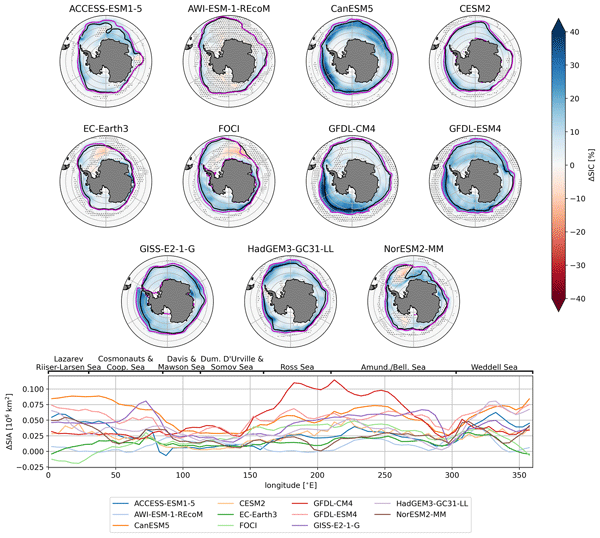
Climate models typically do not include meltwater entering the Southern Ocean due to Antarctic ice sheet mass loss. Previous work shows this meltwater drives sea ice growth, but the varying responses have been difficult to compare across models. We ran 11 climate models using the same meltwater input and found a wide range of sea ice responses depending on the background state in each model. Understanding this uncertainty in response is important for future projections of Antarctic sea ice.
William J. M. Seviour, Justin Finkel, Philip Rupp, Regan Mudhar, Amy H. Butler, Chaim I. Garfinkel, Peter Hitchcock, Blanca Ayarzagüena, Dong-Chan Hong, Yu-Kyung Hyun, Hera Kim, Eun-Pa Lim, Daniel De Maeseneire, Gabriele Messori, Gerbrand Koren, Michael Sigmond, Isla R. Simpson, and Seok-Woo Son
Weather Clim. Dynam., 7, 1405–1423, https://doi.org/10.5194/wcd-7-1405-2026, https://doi.org/10.5194/wcd-7-1405-2026, 2026
Short summary
Short summary
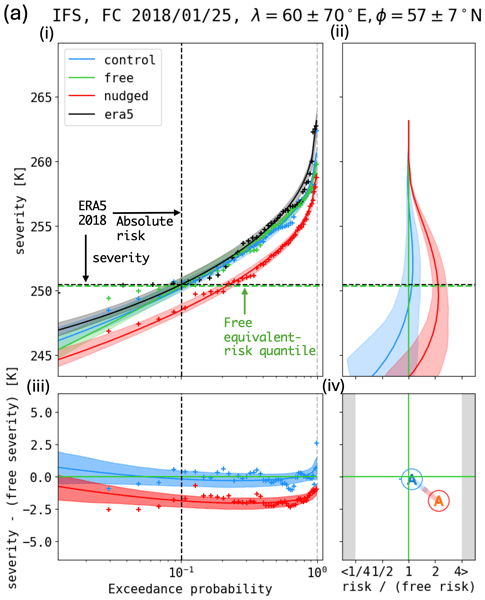
Variability of the stratospheric polar vortex is thought to play a role in driving weather extremes, but quantifying this role for a given event has proved challenging. Using a new set of perturbed subseasonal forecast experiments from 7 modelling centres, we determine the stratospheric contribution to the risk and severity of three recent extreme weather events. The forecast-based methodology that we develop is applicable to understanding a range of other drivers of weather extremes.
Raina Roy, Julie M. Arblaster, Matthew C. Wheeler, Eun-Pa Lim, and Jadwiga H. Richter
Weather Clim. Dynam., 7, 1385–1403, https://doi.org/10.5194/wcd-7-1385-2026, https://doi.org/10.5194/wcd-7-1385-2026, 2026
Short summary
Short summary
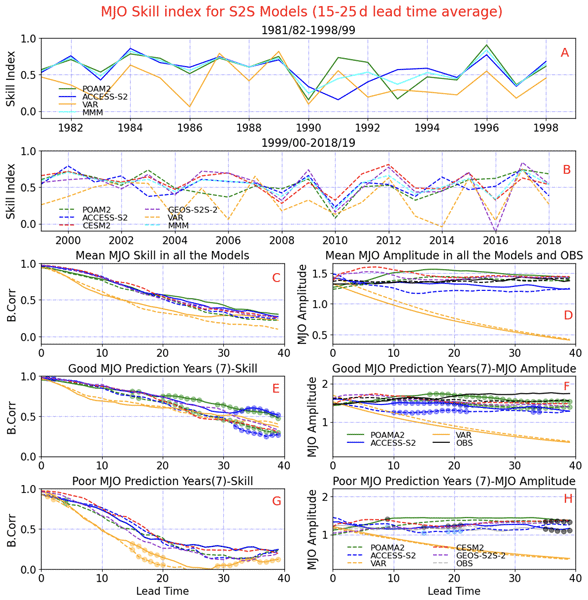
A key pattern of tropical weather, the Madden-Julian Oscillation, has become significantly harder to predict since the late 1990s. We discovered this by comparing forecasts from major models across two time periods. The decrease in forecast skill is linked to changes in large-scale climate patterns, not just model errors. This means to improve long-range weather forecasts, models must better simulate how these large-scale patterns interact with tropical weather.
Prince Xavier, Martin Willett, Tim Graham, Paul Earnshaw, Dan Copsey, Nikesh Narayan, Charline Marzin, Alistair Sellar, Duncan Ackerley, Adam Blaker, Ed Blockley, Alejandro Bodas-Salcedo, Andrew Bushell, Nakbin Choi, Xin Rong Chua, Catherine Guiavarc'h, Muhammad Hassim, Julian Heming, Debra Hudson, Sarah Ineson, Anthony Jones, Colin Jones, Richard Keane, Kiwook Kim, Jiyeong Kim, Till Kuhlbrodt, Myong-In Lee, Richard Levine, Chen Li, Gill Martin, Alex Megann, Anne Mccabe, Aurel Moise, Leighton Regayre, Jeff Ridley, Luke Roberts, Sandeep Sahany, Reinhard K. H. Schiemann, David Storkey, Warren Tennant, Lorenzo Tomassini, Yoko Tsushima, Graham P. Weedon, Alex West, Matthew C. Wheeler, Keith Williams, Xiaobing Zhou, and Hongyan Zhu
EGUsphere, https://doi.org/10.5194/egusphere-2026-4281, https://doi.org/10.5194/egusphere-2026-4281, 2026
Short summary
Short summary
GC5 is the Met Office's newest climate and weather model, combining an updated atmosphere/land component with an improved ocean and sea-ice component. Compared to its predecessor GC4, it better simulates global temperatures, winds, monsoons over India and SE Asia, and African weather, and forecasts tropical cyclones more accurately. Southern Ocean errors shrank too. Some tropical patterns and regional biases worsened slightly. A lower-resolution version will underpin the UK's Earth System Model.
Nathan J. Teder, Luke G. Bennetts, Phillp A. Reid, and Robert A. Massom
EGUsphere, https://doi.org/10.5194/egusphere-2026-3544, https://doi.org/10.5194/egusphere-2026-3544, 2026
Short summary
Short summary
Motivated by evidence of Antarctic ice shelf calving events being triggered by sea ice loss allowing ocean swell to flex ice shelf fronts, we use data and models to assess the flexural stress imposed on 14 ice shelves over a decade. We quantify major increases in ice shelf flexure during the record sea ice lows of 2022–2023 alongside identifying the drivers of this increase. We use future scenarios to highlight the most vulnerable Antarctic ice shelves to sea ice loss and swell impacts.
Robert A. Massom, Phillip A. Reid, Stephen G. Warren, Bonnie Light, Donald K. Perovich, Luke G. Bennetts, Petteri Uotila, Siobhan P. O'Farrell, Michael H. Meylan, Klaus M. Meiners, Pat Wongpan, Alexander D. Fraser, Alessandro Toffoli, Giulio Passerotti, Peter G. Strutton, Sean M. T. Chua, and Melissa Fedrigo
The Cryosphere, 20, 3271–3298, https://doi.org/10.5194/tc-20-3271-2026, https://doi.org/10.5194/tc-20-3271-2026, 2026
Short summary
Short summary
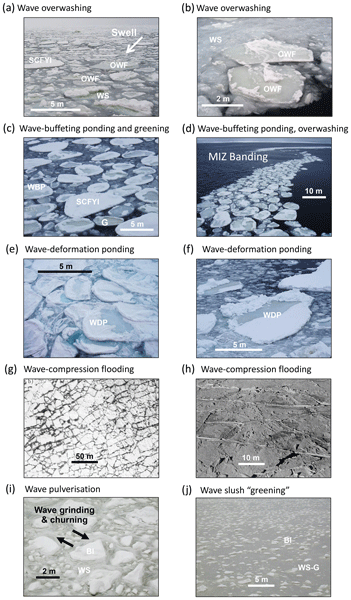
This paper advances understanding of why and how Antarctic sea ice can retreat so rapidly each summer, and identifies critical gaps in climate models, by highlighting 3 previously-neglected wave-driven processes and 5 associated feedbacks that accelerate seasonal ice melting and link physics to biology (wave flooding, wave pulverisation and wave greening). There are major implications for Earth’s radiation budget, Antarctic ecosystems and the accuracy of future sea-ice and climate projections.
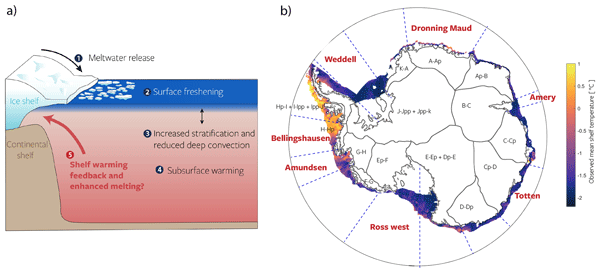
Morven Muilwijk, Tore Hattermann, Rebecca L. Beadling, Neil C. Swart, Aleksi Nummelin, Chuncheng Guo, David M. Chandler, Petra M. Langebroek, Shenjie Zhou, Pierre Dutrieux, Jia-Jia Chen, Christopher Danek, Matthew H. England, Stephen M. Griffies, F. Alexander Haumann, André Jüling, Ombeline Jouet, Qian Li, Torge Martin, John Marshall, Andrew G. Pauling, Ariaan Purich, Zihan Song, Inga J. Smith, Max Thomas, Irene Trombini, Eveline C. van der Linden, and Xiaoqi Xu
The Cryosphere, 20, 1087–1117, https://doi.org/10.5194/tc-20-1087-2026, https://doi.org/10.5194/tc-20-1087-2026, 2026
Short summary
Short summary
Antarctic meltwater affects ocean stratification and temperature, which in turn influences the rate of ice shelf melting – a coupling missing in most climate models. We analyze a suite of climate models with added meltwater to explore this feedback in different regions. While meltwater generally enhances ocean warming and melt, in West Antarctica most models simulate coastal cooling, suggesting a negative feedback that could slow future ice loss there.
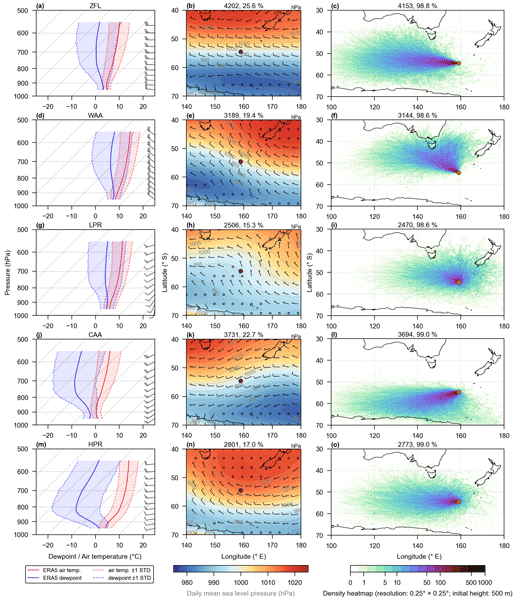
Zhaoyang Kong, Andrew T. Prata, Peter T. May, Ariaan Purich, Yi Huang, and Steven T. Siems
Weather Clim. Dynam., 6, 1643–1660, https://doi.org/10.5194/wcd-6-1643-2025, https://doi.org/10.5194/wcd-6-1643-2025, 2025
Short summary
Short summary
To investigate why ERA5 (European Centre for Medium-Range Weather Forecasts Reanalysis v5) does not accurately capture the observed increase in annual precipitation at Macquarie Island during 1979 to 2023, we classify daily synoptic systems using k-means clustering. Find that the increase in mean intensity across all systems is the main contributor to the observed annual precipitation trend and the resulting discrepancy, rather than changes in the frequency. And this increase may also have a substantial impact on the freshwater fluxes over the Southern Ocean.
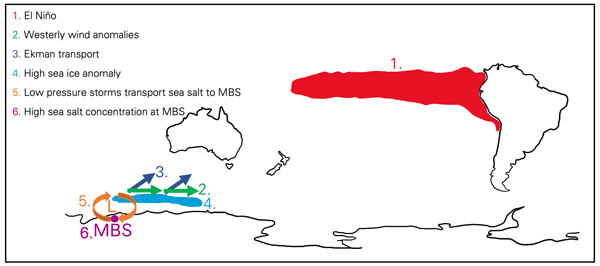
Helen J. Shea, Ailie Gallant, Ariaan Purich, and Tessa R. Vance
Clim. Past, 21, 2009–2030, https://doi.org/10.5194/cp-21-2009-2025, https://doi.org/10.5194/cp-21-2009-2025, 2025
Short summary
Short summary
Ice core data from Mount Brown South (MBS), East Antarctica links high sea salt years to stronger westerly winds and increased sea ice near MBS's northeast coast. Low pressure storms off the coast might transport sea salts from sea ice regions to MBS. The tropical Pacific influences sea salt levels with El Niño events affecting wind patterns around MBS, impacting sea salt sources. Identifying these mechanisms aids in the understanding of climate variability before instrumental records.
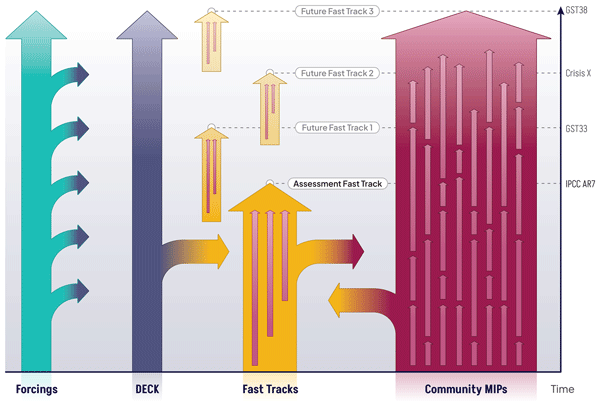
John P. Dunne, Helene T. Hewitt, Julie M. Arblaster, Frédéric Bonou, Olivier Boucher, Tereza Cavazos, Beth Dingley, Paul J. Durack, Birgit Hassler, Martin Juckes, Tomoki Miyakawa, Matt Mizielinski, Vaishali Naik, Zebedee Nicholls, Eleanor O'Rourke, Robert Pincus, Benjamin M. Sanderson, Isla R. Simpson, and Karl E. Taylor
Geosci. Model Dev., 18, 6671–6700, https://doi.org/10.5194/gmd-18-6671-2025, https://doi.org/10.5194/gmd-18-6671-2025, 2025
Short summary
Short summary
The seventh phase of the Coupled Model Intercomparison Project (CMIP7) coordinates efforts to answer key and timely climate science questions and facilitate delivery of relevant multi-model simulations for prediction and projection; characterization, attribution, and process understanding; and vulnerability, impact, and adaptation analysis. Key to the CMIP7 design are the mandatory Diagnostic, Evaluation and Characterization of Klima and optional Assessment Fast Track experiments.
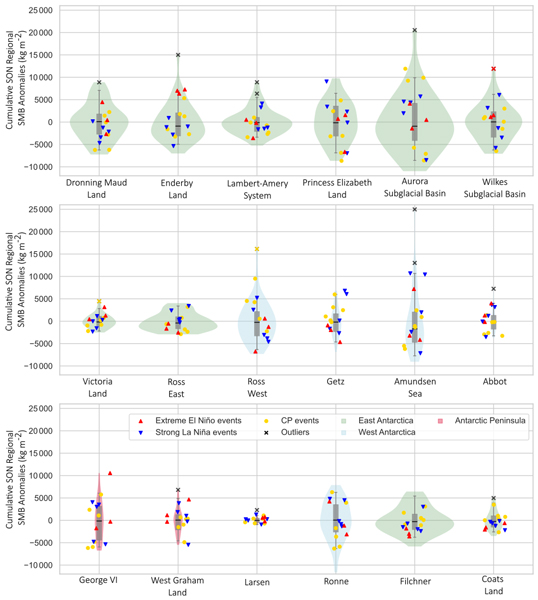
Jessica M. A. Macha, Andrew N. Mackintosh, Felicity S. McCormack, Benjamin J. Henley, Helen V. McGregor, Christiaan T. van Dalum, and Ariaan Purich
The Cryosphere, 19, 1915–1935, https://doi.org/10.5194/tc-19-1915-2025, https://doi.org/10.5194/tc-19-1915-2025, 2025
Short summary
Short summary
Extreme El Niño–Southern Oscillation (ENSO) events have global impacts, but their Antarctic impacts are poorly understood. Examining Antarctic snow accumulation anomalies of past observed extreme ENSO events, we show that accumulation changes differ between events and are insignificant during most events. Significant changes occur during 2015/16 and in Enderby Land during all extreme El Niños. Historical data limit conclusions, but future greater extremes could cause Antarctic accumulation changes.
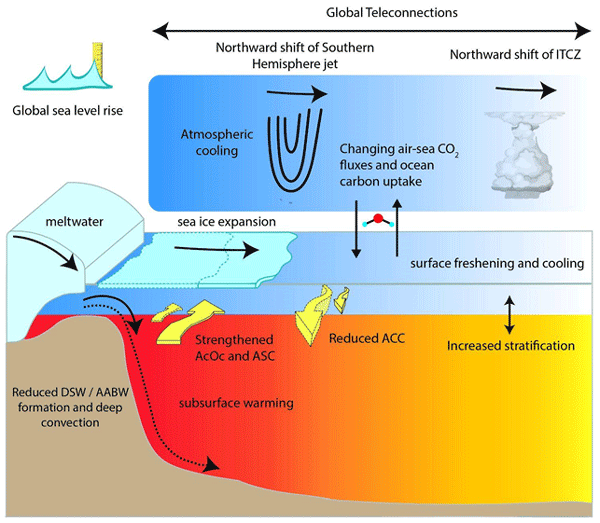
Neil C. Swart, Torge Martin, Rebecca Beadling, Jia-Jia Chen, Christopher Danek, Matthew H. England, Riccardo Farneti, Stephen M. Griffies, Tore Hattermann, Judith Hauck, F. Alexander Haumann, André Jüling, Qian Li, John Marshall, Morven Muilwijk, Andrew G. Pauling, Ariaan Purich, Inga J. Smith, and Max Thomas
Geosci. Model Dev., 16, 7289–7309, https://doi.org/10.5194/gmd-16-7289-2023, https://doi.org/10.5194/gmd-16-7289-2023, 2023
Short summary
Short summary
Current climate models typically do not include full representation of ice sheets. As the climate warms and the ice sheets melt, they add freshwater to the ocean. This freshwater can influence climate change, for example by causing more sea ice to form. In this paper we propose a set of experiments to test the influence of this missing meltwater from Antarctica using multiple different climate models.
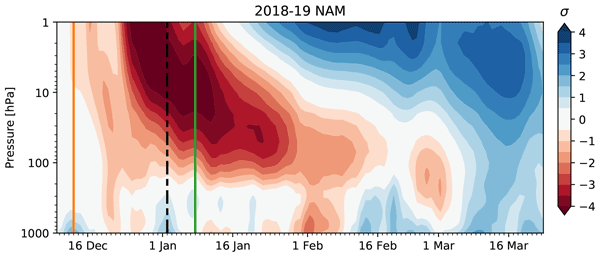
Peter Hitchcock, Amy Butler, Andrew Charlton-Perez, Chaim I. Garfinkel, Tim Stockdale, James Anstey, Dann Mitchell, Daniela I. V. Domeisen, Tongwen Wu, Yixiong Lu, Daniele Mastrangelo, Piero Malguzzi, Hai Lin, Ryan Muncaster, Bill Merryfield, Michael Sigmond, Baoqiang Xiang, Liwei Jia, Yu-Kyung Hyun, Jiyoung Oh, Damien Specq, Isla R. Simpson, Jadwiga H. Richter, Cory Barton, Jeff Knight, Eun-Pa Lim, and Harry Hendon
Geosci. Model Dev., 15, 5073–5092, https://doi.org/10.5194/gmd-15-5073-2022, https://doi.org/10.5194/gmd-15-5073-2022, 2022
Short summary
Short summary
This paper describes an experimental protocol focused on sudden stratospheric warmings to be carried out by subseasonal forecast modeling centers. These will allow for inter-model comparisons of these major disruptions to the stratospheric polar vortex and their impacts on the near-surface flow. The protocol will lead to new insights into the contribution of the stratosphere to subseasonal forecast skill and new approaches to the dynamical attribution of extreme events.
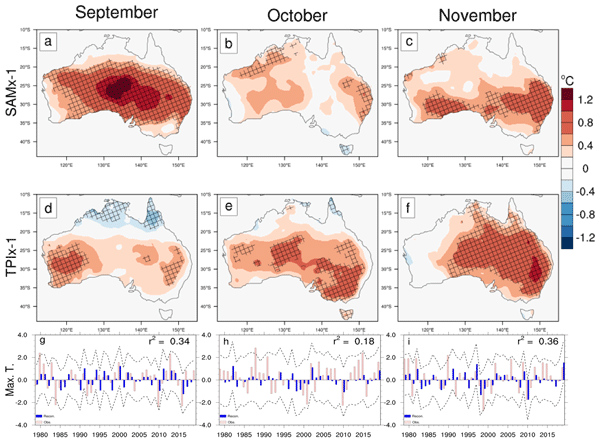
Roseanna C. McKay, Julie M. Arblaster, and Pandora Hope
Weather Clim. Dynam., 3, 413–428, https://doi.org/10.5194/wcd-3-413-2022, https://doi.org/10.5194/wcd-3-413-2022, 2022
Short summary
Short summary
Understanding what makes it hot in Australia in spring helps us better prepare for harmful impacts. We look at how the higher latitudes and tropics change the atmospheric circulation from early to late spring and how that changes maximum temperatures in Australia. We find that the relationship between maximum temperatures and the tropics is stronger in late spring than early spring. These findings could help improve forecasts of hot months in Australia in spring.
Adam A. Scaife, Mark P. Baldwin, Amy H. Butler, Andrew J. Charlton-Perez, Daniela I. V. Domeisen, Chaim I. Garfinkel, Steven C. Hardiman, Peter Haynes, Alexey Yu Karpechko, Eun-Pa Lim, Shunsuke Noguchi, Judith Perlwitz, Lorenzo Polvani, Jadwiga H. Richter, John Scinocca, Michael Sigmond, Theodore G. Shepherd, Seok-Woo Son, and David W. J. Thompson
Atmos. Chem. Phys., 22, 2601–2623, https://doi.org/10.5194/acp-22-2601-2022, https://doi.org/10.5194/acp-22-2601-2022, 2022
Short summary
Short summary
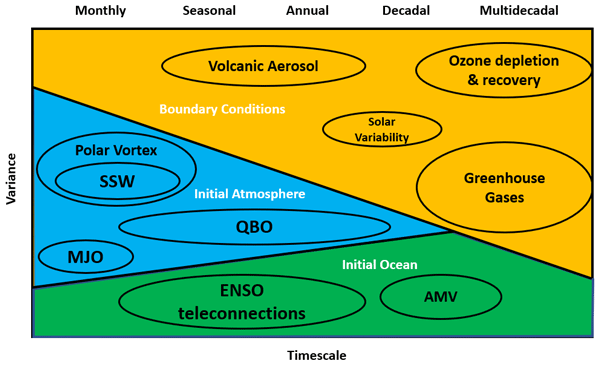
Great progress has been made in computer modelling and simulation of the whole climate system, including the stratosphere. Since the late 20th century we also gained a much clearer understanding of how the stratosphere interacts with the lower atmosphere. The latest generation of numerical prediction systems now explicitly represents the stratosphere and its interaction with surface climate, and here we review its role in long-range predictions and projections from weeks to decades ahead.
Alexander D. Fraser, Robert A. Massom, Mark S. Handcock, Phillip Reid, Kay I. Ohshima, Marilyn N. Raphael, Jessica Cartwright, Andrew R. Klekociuk, Zhaohui Wang, and Richard Porter-Smith
The Cryosphere, 15, 5061–5077, https://doi.org/10.5194/tc-15-5061-2021, https://doi.org/10.5194/tc-15-5061-2021, 2021
Short summary
Short summary
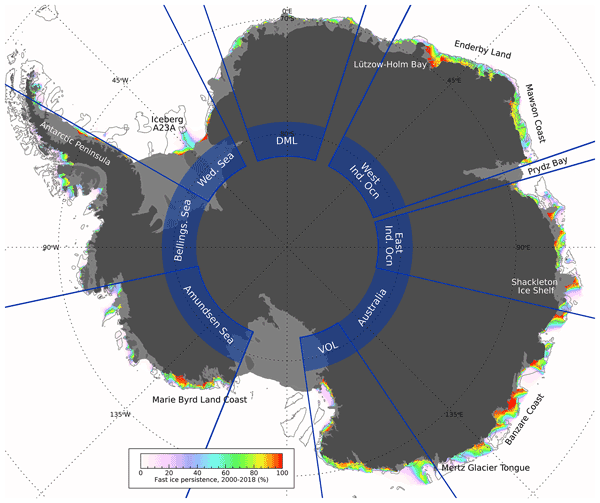
Landfast ice is sea ice that remains stationary by attaching to Antarctica's coastline and grounded icebergs. Although a variable feature, landfast ice exerts influence on key coastal processes involving pack ice, the ice sheet, ocean, and atmosphere and is of ecological importance. We present a first analysis of change in landfast ice over an 18-year period and quantify trends (−0.19 ± 0.18 % yr−1). This analysis forms a reference of landfast-ice extent and variability for use in other studies.
Cited articles
Allaire, J., Teague, C., Xie, Y., and Dervieux, C.: Quarto, Zenodo [code], https://doi.org/10.5281/zenodo.5960048, 2022. a
Best, M. J., Pryor, M., Clark, D. B., Rooney, G. G., Essery, R. L. H., Ménard, C. B., Edwards, J. M., Hendry, M. A., Porson, A., Gedney, N., Mercado, L. M., Sitch, S., Blyth, E., Boucher, O., Cox, P. M., Grimmond, C. S. B., and Harding, R. J.: The Joint UK Land Environment Simulator (JULES), model description – Part 1: Energy and water fluxes, Geosci. Model Dev., 4, 677–699, https://doi.org/10.5194/gmd-4-677-2011, 2011. a
Bunzel, F., Notz, D., Baehr, J., Müller, W. A., and Fröhlich, K.: Seasonal Climate Forecasts Significantly Affected by Observational Uncertainty of Arctic Sea Ice Concentration, Geophys. Res. Lett., 43, 852–859, https://doi.org/10.1002/2015GL066928, 2016. a
Bushuk, M., Winton, M., Haumann, F. A., Delworth, T., Lu, F., Zhang, Y., Jia, L., Zhang, L., Cooke, W., Harrison, M., Hurlin, B., Johnson, N. C., Kapnick, S. B., McHugh, C., Murakami, H., Rosati, A., Tseng, K.-C., Wittenberg, A. T., Yang, X., and Zeng, F.: Seasonal Prediction and Predictability of Regional Antarctic Sea Ice, J. Climate, 34, 6207–6233, https://doi.org/10.1175/JCLI-D-20-0965.1, 2021. a, b
Campitelli, E., van den Brand, T., olivroy, Matt, Corrales, P., and Murrell, P.: eliocamp/metR: metR 0.18.3 (v0.18.3), Zenodo [code], https://doi.org/10.5281/zenodo.18168292, 2026. a
Campitelli, E.: Data for “The Importance of Initial Conditions in Seasonal Predictions of Antarctic Sea Ice”, Zenodo [data set], https://doi.org/10.5281/zenodo.18844394, 2025. a
Campitelli, E.: eliocamp/access-s2_ice-eval: Accepted version (v1.2.0), Zenodo [code], https://doi.org/10.5281/zenodo.19836407, 2026. a
Cavalieri, D. J., Gloersen, P., and Campbell, W. J.: Determination of Sea Ice Parameters with the NIMBUS 7 SMMR, J. Geophys. Res.-Atmos., 89, 5355–5369, https://doi.org/10.1029/JD089iD04p05355, 1984. a
Cavalieri, D. J., Crawford, J. P., Drinkwater, M. R., Eppler, D. T., Farmer, L. D., Jentz, R. R., and Wackerman, C. C.: Aircraft Active and Passive Microwave Validation of Sea Ice Concentration from the Defense Meteorological Satellite Program Special Sensor Microwave Imager, J. Geophys. Res.-Oceans, 96, 21989–22008, https://doi.org/10.1029/91JC02335, 1991. a
Clem, K. R. and Fogt, R. L.: Varying Roles of ENSO and SAM on the Antarctic Peninsula Climate in Austral Spring, J. Geophys. Res.-Atmos., 118, 11481–11492, https://doi.org/10.1002/jgrd.50860, 2013. a
Comiso, J.: Bootstrap Sea Ice Concentrations from Nimbus-7 SMMR and DMSP SSM/I-SSMIS (NSIDC-0079, Version 4), NASA National Snow and Ice Data Center Distributed Active Archive Center, https://doi.org/10.5067/X5LG68MH013O, 2023. a
Day, J. J., Hawkins, E., and Tietsche, S.: Will Arctic Sea Ice Thickness Initialization Improve Seasonal Forecast Skill?, Geophys. Res. Lett., 41, 7566–7575, https://doi.org/10.1002/2014GL061694, 2014. a, b
De Silva, L. W. A., Inoue, J., Yamaguchi, H., and Terui, T.: Medium Range Sea Ice Prediction in Support of Japanese Research Vessel MIRAI's Expedition Cruise in 2018, Polar Geography, 43, 223–239, https://doi.org/10.1080/1088937X.2019.1707317, 2020. a
Dee, D. P., Uppala, S. M., Simmons, A. J., Berrisford, P., Poli, P., Kobayashi, S., Andrae, U., Balmaseda, M. A., Balsamo, G., Bauer, P., Bechtold, P., Beljaars, A. C. M., van de Berg, L., Bidlot, J., Bormann, N., Delsol, C., Dragani, R., Fuentes, M., Geer, A. J., Haimberger, L., Healy, S. B., Hersbach, H., Hólm, E. V., Isaksen, L., Kållberg, P., Köhler, M., Matricardi, M., McNally, A. P., Monge-Sanz, B. M., Morcrette, J.-J., Park, B.-K., Peubey, C., de Rosnay, P., Tavolato, C., Thépaut, J.-N., and Vitart, F.: The ERA-Interim Reanalysis: Configuration and Performance of the Data Assimilation System, Q. J. Roy. Meteor. Soc., 137, 553–597, https://doi.org/10.1002/qj.828, 2011. a
Dong, X., Yang, Q., Nie, Y., Zampieri, L., Wang, J., Liu, J., and Chen, D.: Antarctic Sea Ice Prediction with A Convolutional Long Short-Term Memory Network, Ocean Model., 190, 102386, https://doi.org/10.1016/j.ocemod.2024.102386, 2024. a
Dowle, M. and Srinivasan, A.: Data.Table: Extension of “Data.Frame”, CRAN [code], https://doi.org/10.32614/CRAN.package.data.table, 2020. a
EUMETSAT Ocean and Sea Ice Satellite Application Facility: Global Sea Ice Concentration Climate Data Record 1978–2020 (v3.0), OSI-450-a, EUMETSAT SAF on Ocean and Sea Ice, https://doi.org/10.15770/EUM_SAF_OSI_NRT_2023, 2022. a
Gao, Y., Xiu, Y., Nie, Y., Luo, H., Yang, Q., Zampieri, L., Lv, X., and Uotila, P.: An Assessment of Subseasonal Prediction Skill of the Antarctic Sea Ice Edge, J. Geophys. Res.-Oceans, 129, e2024JC021499, https://doi.org/10.1029/2024JC021499, 2024. a
Good, S. A., Martin, M. J., and Rayner, N. A.: EN4: Quality Controlled Ocean Temperature and Salinity Profiles and Monthly Objective Analyses with Uncertainty Estimates, J. Geophys. Res.-Oceans, 118, 6704–6716, https://doi.org/10.1002/2013JC009067, 2013. a
Guemas, V., Chevallier, M., Déqué, M., Bellprat, O., and Doblas-Reyes, F.: Impact of Sea Ice Initialization on Sea Ice and Atmosphere Prediction Skill on Seasonal Timescales, Geophys. Res. Lett., 43, 3889–3896, https://doi.org/10.1002/2015GL066626, 2016. a
Gurvan, M., Bourdallé-Badie, R., Bouttier, P.-A., Bricaud, C., Bruciaferri, D., Calvert, D., Chanut, J., Clementi, E., Coward, A., Delrosso, D., Ethé, C., Flavoni, S., Graham, T., Harle, J., Iovino, D., Lea, D., Lévy, C., Lovato, T., Martin, N., Masson, S., Mocavero, S., Paul, J., Rousset, C., Storkey, D., Storto, A., and Vancoppenolle, M.: NEMO Ocean Engine, Zenodo, https://doi.org/10.5281/zenodo.1475234, 2013. a
Hudson, D., Alves, O., Hendon, H. H., Lim, E.-P., Liu, G., Luo, J.-J., MacLachlan, C., Marshall, A. G., Shi, L., Wang, G., Wedd, R., Young, G., Zhao, M., and Zhou, X.: ACCESS-S1 The New Bureau of Meteorology Multi-Week to Seasonal Prediction System, Journal of Southern Hemisphere Earth Systems Science, 67, 132–159, https://doi.org/10.1071/es17009, 2017. a, b, c
Libera, S., Hobbs, W., Klocker, A., Meyer, A., and Matear, R.: Ocean-Sea Ice Processes and Their Role in Multi-Month Predictability of Antarctic Sea Ice, Geophys. Res. Lett., 49, e2021GL097047, https://doi.org/10.1029/2021GL097047, 2022. a, b, c
Lin, Y., Yang, Q., Li, X., Dong, X., Luo, H., Nie, Y., Wang, J., Wang, Y., and Min, C.: Ice-kNN-South: A Lightweight Machine Learning Model for Antarctic Sea Ice Prediction, Journal of Geophysical Research: Machine Learning and Computation, 2, e2024JH000433, https://doi.org/10.1029/2024JH000433, 2025. a
Marchi, S., Fichefet, T., and Goosse, H.: Respective Influences of Perturbed Atmospheric and Ocean–Sea Ice Initial Conditions on the Skill of Seasonal Antarctic Sea Ice Predictions: A Study with NEMO3.6–LIM3, Ocean Model., 148, 101591, https://doi.org/10.1016/j.ocemod.2020.101591, 2020. a, b, c, d
Massonnet, F., Barreira, S., Barthélemy, A., Bilbao, R., Blanchard-Wrigglesworth, E., Blockley, E., Bromwich, D. H., Bushuk, M., Dong, X., Goessling, H. F., Hobbs, W., Iovino, D., Lee, W.-S., Li, C., Meier, W. N., Merryfield, W. J., Moreno-Chamarro, E., Morioka, Y., Li, X., Niraula, B., Petty, A., Sanna, A., Scilingo, M., Shu, Q., Sigmond, M., Sun, N., Tietsche, S., Wu, X., Yang, Q., and Yuan, X.: SIPN South: Six Years of Coordinated Seasonal Antarctic Sea Ice Predictions, Frontiers in Marine Science, 10, https://doi.org/10.3389/fmars.2023.1148899, 2023. a, b
Megann, A., Storkey, D., Aksenov, Y., Alderson, S., Calvert, D., Graham, T., Hyder, P., Siddorn, J., and Sinha, B.: GO5.0: the joint NERC–Met Office NEMO global ocean model for use in coupled and forced applications, Geosci. Model Dev., 7, 1069–1092, https://doi.org/10.5194/gmd-7-1069-2014, 2014. a
Meier, W. N. and Stewart, J. S.: Assessing Uncertainties in Sea Ice Extent Climate Indicators, Environ. Res. Lett., 14, 035005, https://doi.org/10.1088/1748-9326/aaf52c, 2019. a
Meier, W. N., Peng, G., Scott, D. J., and Savoie, M. H.: Verification of a New NOAA/NSIDC Passive Microwave Sea-Ice Concentration Climate Record, Polar Res., https://doi.org/10.3402/polar.v33.21004, 2014. a, b
Meier, W. N., Fetterer, F., Windnagel, A. K., and Stewart, J. S.: NOAA/NSIDC Climate Data Record of Passive Microwave Sea Ice Concentration, NSIDC, https://doi.org/10.7265/efmz-2t65, 2021. a
Mo, K. C. and Paegle, J. N.: The Pacific–South American Modes and Their Downstream Effects, Int. J. Climatol., 21, 1211–1229, https://doi.org/10.1002/joc.685, 2001. a
Morioka, Y., Iovino, D., Cipollone, A., Masina, S., and Behera, S. K.: Decadal Sea Ice Prediction in the West Antarctic Seas with Ocean and Sea Ice Initializations, Communications Earth & Environment, 3, 189, https://doi.org/10.1038/s43247-022-00529-z, 2022. a, b, c
Murphy, A. H. and Daan, H.: Forecast Evaluation, in: Probability, Statistics, And Decision Making In The Atmospheric Sciences, CRC Press, https://doi.org/10.1201/9780429303081, ISBN 9780429303081, 1985. a
R Core Team: R: A Language and Environment for Statistical Computing, R Foundation for Statistical Computing, Vienna, Austria, https://doi.org/10.32614/R.manuals, 2020. a
Rae, J. G. L., Hewitt, H. T., Keen, A. B., Ridley, J. K., West, A. E., Harris, C. M., Hunke, E. C., and Walters, D. N.: Development of the Global Sea Ice 6.0 CICE configuration for the Met Office Global Coupled model, Geosci. Model Dev., 8, 2221–2230, https://doi.org/10.5194/gmd-8-2221-2015, 2015. a
Reynolds, R. W., Smith, T. M., Liu, C., Chelton, D. B., Casey, K. S., and Schlax, M. G.: Daily High-Resolution-Blended Analyses for Sea Surface Temperature, J. Climate, 20, 5473–5496, https://doi.org/10.1175/2007JCLI1824.1, 2007. a
Rinke, A., Maslowski, W., Dethloff, K., and Clement, J.: Influence of Sea Ice on the Atmosphere: A Study with an Arctic Atmospheric Regional Climate Model, J. Geophys. Res.-Atmos., 111, https://doi.org/10.1029/2005JD006957, 2006. a
Roach, L. A., Dörr, J., Holmes, C. R., Massonnet, F., Blockley, E. W., Notz, D., Rackow, T., Raphael, M. N., O'Farrell, S. P., Bailey, D. A., and Bitz, C. M.: Antarctic Sea Ice Area in CMIP6, Geophys. Res. Lett., 47, e2019GL086729, https://doi.org/10.1029/2019GL086729, 2020. a
Schulzweida, U.: CDO User Guide, Zenodo, https://doi.org/10.5281/zenodo.10020800, 2023. a
Semmler, T., Kasper, M. A., Jung, T., and Serrar, S.: Remote Impact of the Antarctic Atmosphere on the Southern Mid-Latitudes, Meteorol. Z., 25, 71–77, https://doi.org/10.1127/metz/2015/0685, 2016. a
Wagner, P. M., Hughes, N., Bourbonnais, P., Stroeve, J., Rabenstein, L., Bhatt, U., Little, J., Wiggins, H., and Fleming, A.: Sea-Ice Information and Forecast Needs for Industry Maritime Stakeholders, Polar Geography, 43, 160–187, https://doi.org/10.1080/1088937X.2020.1766592, 2020. a
Wang, J., Luo, H., Yu, L., Li, X., Holland, P. R., and Yang, Q.: The Impacts of Combined SAM and ENSO on Seasonal Antarctic Sea Ice Changes, J. Climate, 36, 3553–3569, https://doi.org/10.1175/JCLI-D-22-0679.1, 2023. a
Wang, Z., Fraser, A. D., Reid, P., Coleman, R., and O'Farrell, S.: The Influence of Time-Varying Sea Ice Concentration on Antarctic and Southern Ocean Numerical Weather Prediction, Weather Forecast., 39, 293–310, https://doi.org/10.1175/WAF-D-22-0220.1, 2024. a
Waters, J., Lea, D. J., Martin, M. J., Mirouze, I., Weaver, A., and While, J.: Implementing a Variational Data Assimilation System in an Operational
Waters, J., Bell, M. J., Martin, M. J., and Lea, D. J.: Reducing Ocean Model Imbalances in the Equatorial Region Caused by Data Assimilation, Q. J. Roy. Meteor. Soc., 143, 195–208, https://doi.org/10.1002/qj.2912, 2017. a, b
Wedd, R., Alves, O., de Burgh-Day, C., Down, C., Griffiths, M., Hendon, H. H., Hudson, D., Li, S., Lim, E.-P., Marshall, A. G., Shi, L., Smith, P., Smith, G., Spillman, C. M., Wang, G., Wheeler, M. C., Yan, H., Yin, Y., Young, G., Zhao, M., Xiao, Y., and Zhou, X.: ACCESS-S2: The Upgraded Bureau of Meteorology Multi-Week to Seasonal Prediction System, Journal of Southern Hemisphere Earth Systems Science, 72, 218–242, https://doi.org/10.1071/ES22026, 2022. a, b, c, d, e, f, g
Wickham, H.: Ggplot2: Elegant Graphics for Data Analysis, Use R!, Springer-Verlag, New York, https://doi.org/10.1007/978-0-387-98141-3, 2009. a
Williams, K. D., Harris, C. M., Bodas-Salcedo, A., Camp, J., Comer, R. E., Copsey, D., Fereday, D., Graham, T., Hill, R., Hinton, T., Hyder, P., Ineson, S., Masato, G., Milton, S. F., Roberts, M. J., Rowell, D. P., Sanchez, C., Shelly, A., Sinha, B., Walters, D. N., West, A., Woollings, T., and Xavier, P. K.: The Met Office Global Coupled model 2.0 (GC2) configuration, Geosci. Model Dev., 8, 1509–1524, https://doi.org/10.5194/gmd-8-1509-2015, 2015. a
Xie, Y.: Dynamic Documents with R and Knitr, 2 edn., Chapman and Hall/CRC, Boca Raton, Florida, https://doi.org/10.1201/9781315382487, ISBN 9781315382487, 2015. a
Zampieri, L., Goessling, H. F., and Jung, T.: Predictability of Antarctic Sea Ice Edge on Subseasonal Time Scales, Geophys. Res. Lett., 46, 9719–9727, https://doi.org/10.1029/2019GL084096, 2019. a, b, c
Zhou, X. and Alves, O.: Evaluating Sea Ice in ACCESS-S2, Tech. rep., Boureau of Meteorology, ISBN is 9781925738551, 2022. a
Zweng, M. M., Reagan, J. R., Antonov, J. I., Locarnini, R. A., Mishonov, A. V., Boyer, T. P., Garcia, H. E., Baranova, O. K., Johnson, D. R., Seidov, D., and Biddle, M. M.: World Ocean Atlas 2013, Volume 2, Salinity, https://doi.org/10.7289/V5251G4D, 2013. a
Short summary
By comparing sea-ice forecasts made by the same model but using different initial conditions, we show that better initial sea-ice initial conditions improve sea-ice forecasts a lot in Summer and Autumn, but not as much in winter. This means that forecasting groups should focus efforts in assimilating observations in Summer and that research on how easy it is to predict sea ice need to analyse all seasons.
By comparing sea-ice forecasts made by the same model but using different initial conditions,...


