
Articles | Volume 19, issue 12
https://doi.org/10.5194/tc-19-6483-2025
© Author(s) 2025. This work is distributed under
the Creative Commons Attribution 4.0 License.
the Creative Commons Attribution 4.0 License.
https://doi.org/10.5194/tc-19-6483-2025
© Author(s) 2025. This work is distributed under
the Creative Commons Attribution 4.0 License.
the Creative Commons Attribution 4.0 License.
Brief communication
| 
03 Dec 2025
Brief communication |
| 03 Dec 2025
| 03 Dec 2025
Brief communication: Annual variability of the atmospheric circulation at large spatial scale reconstructed from a data assimilation framework cannot explain local East Antarctic ice rises' surface mass balance records
Marie G. P. Cavitte
CORRESPONDING AUTHOR

Earth and Life Institute (ELI), Université catholique de Louvain-La-Neuve (UCLouvain), Louvain-la-Neuve, Belgium
Water and Climate Department, Vrije Universiteit Brussel, Brussels, Belgium
Hugues Goosse
Earth and Life Institute (ELI), Université catholique de Louvain-La-Neuve (UCLouvain), Louvain-la-Neuve, Belgium
Quentin Dalaiden
Earth and Life Institute (ELI), Université catholique de Louvain-La-Neuve (UCLouvain), Louvain-la-Neuve, Belgium
Nansen Environmental and Remote Sensing Center and Bjerknes Center for Climate Research, Bergen, Norway
Nicolas Ghilain
Royal Meteorological Institute of Belgium, Brussels, Belgium
Département de géographie, Climatologie et Topoclimatologie, Université de Liège, Liège, Belgium
Related authors
Yéva Jeaumot, Frédéric Parrenin, Ailsa Chung, Olaf Eisen, Daniel Steinhage, Robert Mulvaney, Marie G. P. Cavitte, David A. Lilien, and Emilie Capron
EGUsphere, https://doi.org/10.5194/egusphere-2026-4174, https://doi.org/10.5194/egusphere-2026-4174, 2026
This preprint is open for discussion and under review for The Cryosphere (TC).
Short summary
Short summary
To choose good drilling sites and interpret ice cores correctly, scientists need reliable estimates of ice age at each depth. We developed a new way to model how ice behaves at the base of ice sheets, where it can melt or stop moving entirely, using radar data from Antarctica. Our estimates matched real measurements at a well-studied site, revealed a layer of stagnant ice at another, and predicted that a newly proposed drilling site could yield ice over two million years old.

Thore Kausch, Stef Lhermitte, Marie G. P. Cavitte, Eric Keenan, and Shashwat Shukla
The Cryosphere, 20, 511–526, https://doi.org/10.5194/tc-20-511-2026, https://doi.org/10.5194/tc-20-511-2026, 2026
Short summary
Short summary
Determining the net balance of snow accumulation on the surface of Antarctica is challenging. Sentinel-1 satellite sensors, which can see through snow, offer a promising method. However, linking their signals to snow amounts is complex due to snow's internal structure and limited on-the-ground data. This study found a connection between satellite signals and snow levels at three locations in Dronning Maud Land. Using models and field data, the method shows potential for wider use in Antarctica.
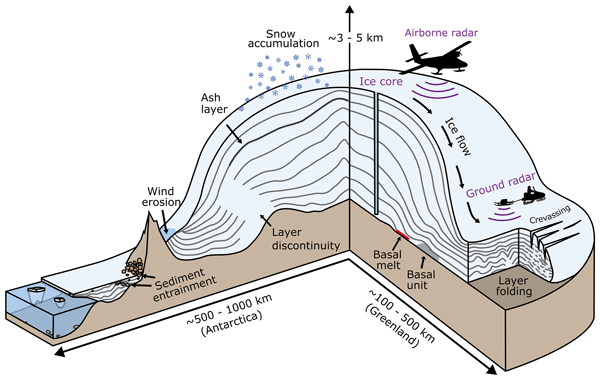
Robert G. Bingham, Julien A. Bodart, Marie G. P. Cavitte, Ailsa Chung, Rebecca J. Sanderson, Johannes C. R. Sutter, Olaf Eisen, Nanna B. Karlsson, Joseph A. MacGregor, Neil Ross, Duncan A. Young, David W. Ashmore, Andreas Born, Winnie Chu, Xiangbin Cui, Reinhard Drews, Steven Franke, Vikram Goel, John W. Goodge, A. Clara J. Henry, Antoine Hermant, Benjamin H. Hills, Nicholas Holschuh, Michelle R. Koutnik, Gwendolyn J.-M. C. Leysinger Vieli, Emma J. MacKie, Elisa Mantelli, Carlos Martín, Felix S. L. Ng, Falk M. Oraschewski, Felipe Napoleoni, Frédéric Parrenin, Sergey V. Popov, Therese Rieckh, Rebecca Schlegel, Dustin M. Schroeder, Martin J. Siegert, Xueyuan Tang, Thomas O. Teisberg, Kate Winter, Shuai Yan, Harry Davis, Christine F. Dow, Tyler J. Fudge, Tom A. Jordan, Bernd Kulessa, Kenichi Matsuoka, Clara J. Nyqvist, Maryam Rahnemoonfar, Matthew R. Siegfried, Shivangini Singh, Vjeran Višnjević, Rodrigo Zamora, and Alexandra Zuhr
The Cryosphere, 19, 4611–4655, https://doi.org/10.5194/tc-19-4611-2025, https://doi.org/10.5194/tc-19-4611-2025, 2025
Short summary
Short summary
The ice sheets covering Antarctica have built up over millenia through successive snowfall events which become buried and preserved as internal surfaces of equal age detectable with ice-penetrating radar. This paper describes an international initiative working together on these archival data to build a comprehensive 3-D picture of how old the ice is everywhere across Antarctica and how this is being used to reconstruct past and to predict future ice and climate behaviour.
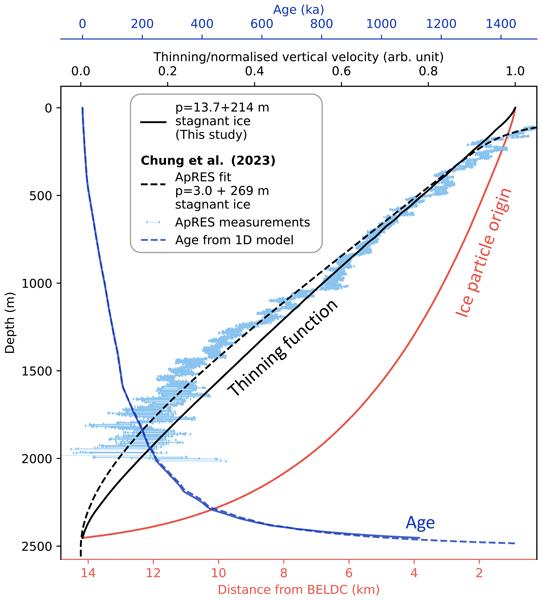
Ailsa Chung, Frédéric Parrenin, Robert Mulvaney, Luca Vittuari, Massimo Frezzotti, Antonio Zanutta, David A. Lilien, Marie G. P. Cavitte, and Olaf Eisen
The Cryosphere, 19, 4125–4140, https://doi.org/10.5194/tc-19-4125-2025, https://doi.org/10.5194/tc-19-4125-2025, 2025
Short summary
Short summary
We applied an ice flow model to a flow line from the summit of Dome C to the Beyond EPICA ice core drill site on Little Dome C in Antarctica. Results show that the oldest ice at the drill site may be 1.12 Ma (at an age density of 20 kyr m-1) and originate from around 15 km upstream. We also discuss the nature of the 200–250 m thick basal layer which could be composed of stagnant ice, disturbed ice or even accreted ice (possibly containing debris).
Marie G. P. Cavitte, Hugues Goosse, Kenichi Matsuoka, Sarah Wauthy, Vikram Goel, Rahul Dey, Bhanu Pratap, Brice Van Liefferinge, Thamban Meloth, and Jean-Louis Tison
The Cryosphere, 17, 4779–4795, https://doi.org/10.5194/tc-17-4779-2023, https://doi.org/10.5194/tc-17-4779-2023, 2023
Short summary
Short summary
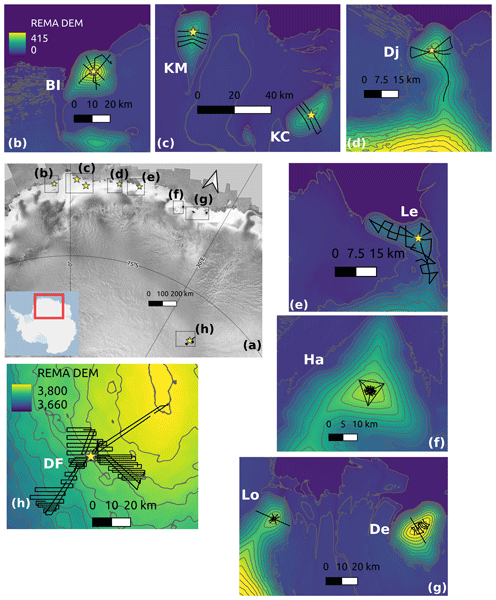
The net accumulation of snow over Antarctica is key for assessing current and future sea-level rise. Ice cores record a noisy snowfall signal to verify model simulations. We find that ice core net snowfall is biased to lower values for ice rises and the Dome Fuji site (Antarctica), while the relative uncertainty in measuring snowfall increases rapidly with distance away from the ice core sites at the ice rises but not at Dome Fuji. Spatial variation in snowfall must therefore be considered.
Ailsa Chung, Frédéric Parrenin, Daniel Steinhage, Robert Mulvaney, Carlos Martín, Marie G. P. Cavitte, David A. Lilien, Veit Helm, Drew Taylor, Prasad Gogineni, Catherine Ritz, Massimo Frezzotti, Charles O'Neill, Heinrich Miller, Dorthe Dahl-Jensen, and Olaf Eisen
The Cryosphere, 17, 3461–3483, https://doi.org/10.5194/tc-17-3461-2023, https://doi.org/10.5194/tc-17-3461-2023, 2023
Short summary
Short summary
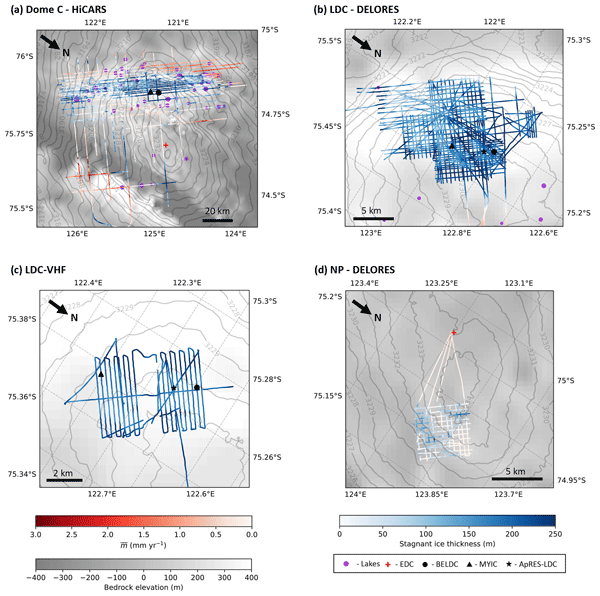
We combined a numerical model with radar measurements in order to determine the age of ice in the Dome C region of Antarctica. Our results show that at the current ice core drilling sites on Little Dome C, the maximum age of the ice is almost 1.5 Ma. We also highlight a new potential drill site called North Patch with ice up to 2 Ma. Finally, we explore the nature of a stagnant ice layer at the base of the ice sheet which has been independently observed and modelled but is not well understood.

Marie G. P. Cavitte, Duncan A. Young, Robert Mulvaney, Catherine Ritz, Jamin S. Greenbaum, Gregory Ng, Scott D. Kempf, Enrica Quartini, Gail R. Muldoon, John Paden, Massimo Frezzotti, Jason L. Roberts, Carly R. Tozer, Dustin M. Schroeder, and Donald D. Blankenship
Earth Syst. Sci. Data, 13, 4759–4777, https://doi.org/10.5194/essd-13-4759-2021, https://doi.org/10.5194/essd-13-4759-2021, 2021
Short summary
Short summary
We present a data set consisting of ice-penetrating-radar internal stratigraphy: 26 internal reflecting horizons that cover the greater Dome C area, East Antarctica, the most extensive IRH data set to date in the region. This data set uses radar surveys collected over the span of 10 years, starting with an airborne international collaboration in 2008 to explore the region, up to the detailed ground-based surveys in support of the European Beyond EPICA – Oldest Ice (BE-OI) project.
Yéva Jeaumot, Frédéric Parrenin, Ailsa Chung, Olaf Eisen, Daniel Steinhage, Robert Mulvaney, Marie G. P. Cavitte, David A. Lilien, and Emilie Capron
EGUsphere, https://doi.org/10.5194/egusphere-2026-4174, https://doi.org/10.5194/egusphere-2026-4174, 2026
This preprint is open for discussion and under review for The Cryosphere (TC).
Short summary
Short summary
To choose good drilling sites and interpret ice cores correctly, scientists need reliable estimates of ice age at each depth. We developed a new way to model how ice behaves at the base of ice sheets, where it can melt or stop moving entirely, using radar data from Antarctica. Our estimates matched real measurements at a well-studied site, revealed a layer of stagnant ice at another, and predicted that a newly proposed drilling site could yield ice over two million years old.

Emile Neimry, Hugues Goosse, and Mathieu Jonard
Weather Clim. Dynam., 7, 1759–1778, https://doi.org/10.5194/wcd-7-1759-2026, https://doi.org/10.5194/wcd-7-1759-2026, 2026
Short summary
Short summary
This study examines 180 years of drought variability in western Central Europe and its links to atmospheric circulation using three evaluated reanalysis datasets. Results reveal strong multidecadal variability, winter wetting, summer drying, and a growing influence of atmospheric evaporative demand through warming. Four circulation patterns are identified, with recent droughts increasingly tied to the European High, marking a shift toward dynamics that intensify drought under climate change.
Sai Prabala Swetha Chittella, Andrew Orr, Pranab Deb, and Quentin Dalaiden
The Cryosphere, 20, 5005–5023, https://doi.org/10.5194/tc-20-5005-2026, https://doi.org/10.5194/tc-20-5005-2026, 2026
Short summary
Short summary
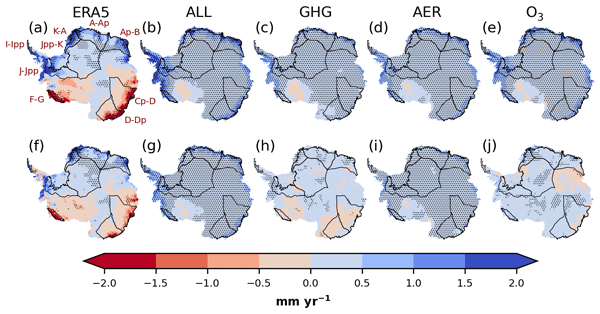
Extreme precipitation is a major contributor to total precipitation over Antarctica and its variability. We examined changes in total and extreme precipitation from 1979 to 2023 using reanalysis data and large climate model simulations. Significant increases were found across parts of East Antarctica, with external forcings contributing to these trends. Greenhouse gases and stratospheric ozone were identified as important drivers of precipitation increases in East Antarctica.
Quentin Dalaiden, François Counillon, Lea Svendsen, Ingo Bethke, and Noel Keenlyside
Earth Syst. Sci. Data Discuss., https://doi.org/10.5194/essd-2026-433, https://doi.org/10.5194/essd-2026-433, 2026
Preprint under review for ESSD
Short summary
Short summary
Instrumental observations only cover a small part of Earth’s climate history, making it difficult to understand long-term climate changes. We combined information from natural climate archives, such as tree rings, corals, and ice cores, with a climate model to reconstruct climate variability over the last 500 years. Our reconstruction displays a good performance when compared with observations, provide a physically consistent picture of how the atmosphere and ocean evolved together through time.
Benjamin Richaud, Dániel Topál, François Massonnet, Thierry Fichefet, Hugues Goosse, and Antoine Barthélemy
EGUsphere, https://doi.org/10.5194/egusphere-2026-3552, https://doi.org/10.5194/egusphere-2026-3552, 2026
Short summary
Short summary
How does increased horizontal resolution impact the skills of an ice-ocean numerical model to simulate sea ice in the Arctic and Antarctic? We address this question using the NEMO-SI3 model at three different resolutions. While some regional improvements are noticeable in winter in both Arctic and Antarctic, particularly where the ocean is known to influence sea ice, the overall added benefits of using a higher resolution are not systematic.
Guillaume Timmermans, Brice Noël, Christoph Kittel, Thomas Dethinne, Nicolas Ghilain, and Xavier Fettweis
EGUsphere, https://doi.org/10.5194/egusphere-2026-2341, https://doi.org/10.5194/egusphere-2026-2341, 2026
Short summary
Short summary
We assess how well a regional climate model reproduces changes in the mass of the Greenland Ice Sheet due to surface processes, an important driver of sea level rise. By comparing model results with observations, we show that high-resolution simulations closely match reality. Coarser simulations are less detailed near the edges but remain reliable overall. A resolution of 10 kilometers provides a good balance between accuracy and computing cost for long-term projections.
Hugues Goosse, Cecile Davrinche, Benjamin Richaud, Dániel Topál, Stephy Libera, Alberto C. Naveira Garabato, Alessandro Silvano, Martin Vancoppenolle, and Pablo Ortega
EGUsphere, https://doi.org/10.5194/egusphere-2026-1823, https://doi.org/10.5194/egusphere-2026-1823, 2026
Short summary
Short summary
The variability of the winter sea ice edge is much higher in regions close to the main topographic features of the Southern Ocean than over the smoother abyssal plain. The oceanic bathymetry influences mesoscale eddy activity and the Antarctic Circumpolar Current jets, affecting both oceanic heat transport and sea ice velocity and subsequently sea ice variability.
Josip Brajkovic, Pierre Archambeau, Nicolas Ghilain, and Sébastien Doutreloup
EGUsphere, https://doi.org/10.5194/egusphere-2026-2315, https://doi.org/10.5194/egusphere-2026-2315, 2026
Short summary
Short summary
Cut-off lows (COLs) are upper-level systems that can trigger heavy rainfall in Europe. We develop an objective detection algorithm based on 500 hPa data to identify COLs and link them to extreme precipitation. About 49% of the most intense events are associated with COLs. Climate models underestimate their frequency, especially over the Mediterranean. Trends in extremes mainly reflect thermodynamic changes rather than changes in COL occurrence.
Quentin Dalaiden and Ingo Bethke
The Cryosphere, 20, 2089–2098, https://doi.org/10.5194/tc-20-2089-2026, https://doi.org/10.5194/tc-20-2089-2026, 2026
Short summary
Short summary
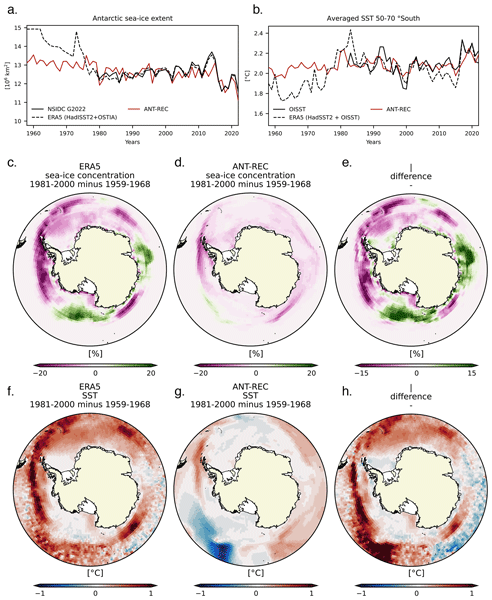
Historical Antarctic climate before satellites contain uncertainties, a modern state-of-the-art atmospheric reanalysis indicates an unrealistically cold Antarctica in 1958–1978. We test how much of this bias comes from uncertain ocean and sea-ice conditions by performing two climate model ensembles with different ocean datasets. These differences affect Antarctic climate, but they explain only a fraction of the cold bias, meaning other factors also contribute.
Jinfei Wang, Maike Sonnewald, Noé Pirlet, François Massonnet, Hugues Goosse, Dake Chen, and Qinghua Yang
EGUsphere, https://doi.org/10.5194/egusphere-2026-1301, https://doi.org/10.5194/egusphere-2026-1301, 2026
Short summary
Short summary
Antarctic sea ice has shifted from expansion to rapid decline since 2016. Using model outputs and data mining, we identified six sea ice regimes, shaped by different dynamic and thermodynamic conditions. A coastal regime, featured by sea ice transport and new ice formation, has shown area loss since 1979, accelerating after 2016. This coastal regime and a pack ice regime together control overall sea ice variability. Our work offers a new framework for understanding Antarctic sea ice changes.
Kwinten Van Weverberg, Nina Neutens, Simon De Corte, Armani Passtoors, Stephan Calderan, Nicolas Ghilain, Ricardo Reinoso-Rondinel, Maarten Reyniers, Aart Overeem, Hans Van de Vyver, Bert Van Schaeybroeck, Bart De Wit, and Remko Uijlenhoet
EGUsphere, https://doi.org/10.5194/egusphere-2026-457, https://doi.org/10.5194/egusphere-2026-457, 2026
Short summary
Short summary
Accurate rainfall estimation remains challenging. This study tested whether signals from telecommunications networks could help track rainfall alongside traditional rain gauges and weather radar. Analyzing four intense summer storms in Belgium using over 2800 microwave links, researchers found that with careful processing, these signals match or outperform standard methods, especially in cities. Integrating such data could improve predictions for urban flooding and extreme weather.
Sarah Wauthy and Quentin Dalaiden
The Cryosphere, 20, 1279–1296, https://doi.org/10.5194/tc-20-1279-2026, https://doi.org/10.5194/tc-20-1279-2026, 2026
Short summary
Short summary
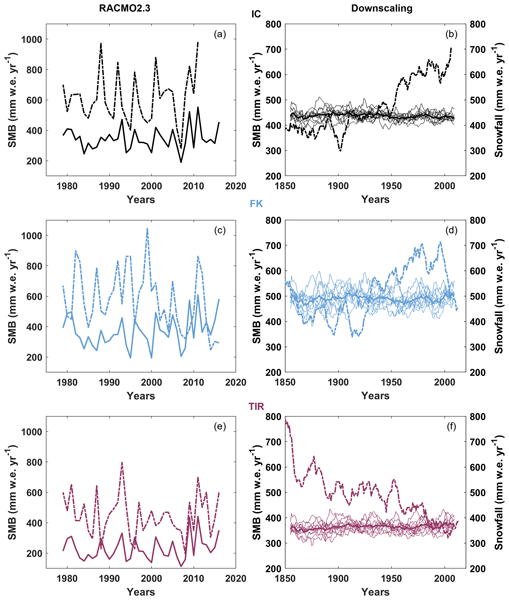
The surface mass balance (SMB) is one of the main drivers of future Antarctic mass changes. The interannual variability of the SMB is dominated by precipitation and extreme precipitation events (EPEs). In this study, we analyze the role of precipitation and EPEs in the contrasting SMB trends observed in the ice-core records of three adjacent ice rises. Our results show that precipitation and EPEs alone cannot explain the observed contrasts and suggest that other processes may be at work.
Thore Kausch, Stef Lhermitte, Marie G. P. Cavitte, Eric Keenan, and Shashwat Shukla
The Cryosphere, 20, 511–526, https://doi.org/10.5194/tc-20-511-2026, https://doi.org/10.5194/tc-20-511-2026, 2026
Short summary
Short summary
Determining the net balance of snow accumulation on the surface of Antarctica is challenging. Sentinel-1 satellite sensors, which can see through snow, offer a promising method. However, linking their signals to snow amounts is complex due to snow's internal structure and limited on-the-ground data. This study found a connection between satellite signals and snow levels at three locations in Dronning Maud Land. Using models and field data, the method shows potential for wider use in Antarctica.
Hugues Goosse, Stephy Libera, Alberto C. Naveira Garabato, Benjamin Richaud, Alessandro Silvano, and Martin Vancoppenolle
The Cryosphere, 19, 5763–5779, https://doi.org/10.5194/tc-19-5763-2025, https://doi.org/10.5194/tc-19-5763-2025, 2025
Short summary
Short summary
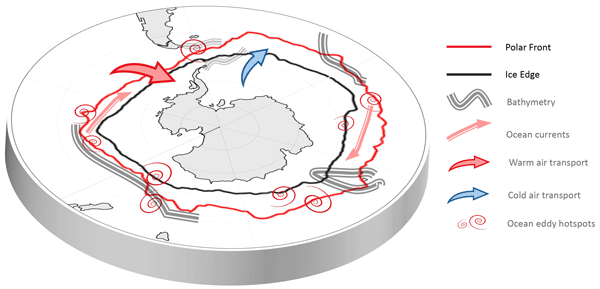
The position of the winter sea ice edge in the Southern Ocean is strongly linked to the one of the Antarctic Circumpolar Current and thus to ocean bathymetry. This is due to the influence of the Antarctic Circumpolar Current on the southward heat flux that limits sea ice expansion, directly through oceanic processes and indirectly through its influence on atmospheric heat transport.
Atsushi Okazaki, Diego S. Carrió, Quentin Dalaiden, Jarrah Harrison-Lofthouse, Shunji Kotsuki, and Kei Yoshimura
Clim. Past, 21, 1801–1819, https://doi.org/10.5194/cp-21-1801-2025, https://doi.org/10.5194/cp-21-1801-2025, 2025
Short summary
Short summary
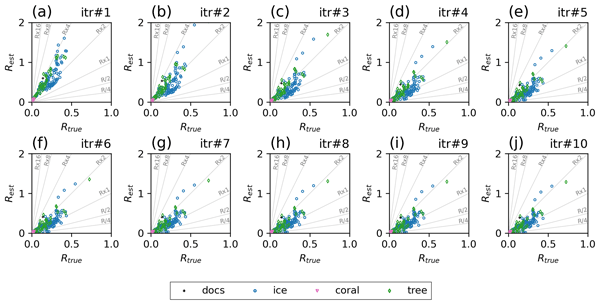
Data assimilation (DA) has been used to reconstruct paleoclimate fields. DA integrates model simulations and climate proxies based on their error sizes. Consequently, error information is vital for DA to function optimally. This study estimated observation errors using "innovation statistics" and demonstrated that DA with estimated errors outperformed previous studies.
Thomas Dethinne, Nicolas Ghilain, Christoph Kittel, Benjamin Lecart, Xavier Fettweis, and François Jonard
EGUsphere, https://doi.org/10.5194/egusphere-2025-3907, https://doi.org/10.5194/egusphere-2025-3907, 2025
Short summary
Short summary
This study replace standard vegetation input of a regional climate model with a satellite-based vegetation dataset to assess how vegetation influences climate during extreme events and to test the sensitivity of the model. The results show a non-linear sensitivity to vegetation, and using an observation-based vegetation input allows for a better representation of the extreme events, highlight the need for an advanced representation of vegetation in climate model to improve climate predictions.
Ting-Chen Chen, Hugues Goosse, Cécile Davrinche, Stephy Libera, Christopher Roberts, Matthias Aengenheyster, Kristian Strommen, Malcolm Roberts, Rohit Ghosh, and Jin-Song von Storch
Weather Clim. Dynam., 6, 1179–1193, https://doi.org/10.5194/wcd-6-1179-2025, https://doi.org/10.5194/wcd-6-1179-2025, 2025
Short summary
Short summary
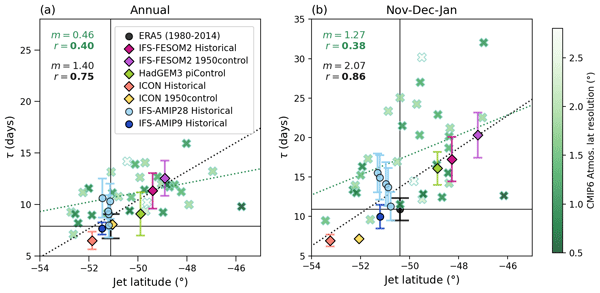
Southern Annular Mode (SAM) is a leading mode of Southern Hemisphere climate variability, but global models often overestimate its persistence in summer. Bias in SAM persistence is reduced and jet latitude improved using high-resolution sea surface temperature (SST)-prescribed models, pointing to the central role of SSTs. Control experiments explore the influence of model resolution and mesoscale ocean features on SAM persistence, highlighting the complex and subtle nature of air-sea coupling.
Robert G. Bingham, Julien A. Bodart, Marie G. P. Cavitte, Ailsa Chung, Rebecca J. Sanderson, Johannes C. R. Sutter, Olaf Eisen, Nanna B. Karlsson, Joseph A. MacGregor, Neil Ross, Duncan A. Young, David W. Ashmore, Andreas Born, Winnie Chu, Xiangbin Cui, Reinhard Drews, Steven Franke, Vikram Goel, John W. Goodge, A. Clara J. Henry, Antoine Hermant, Benjamin H. Hills, Nicholas Holschuh, Michelle R. Koutnik, Gwendolyn J.-M. C. Leysinger Vieli, Emma J. MacKie, Elisa Mantelli, Carlos Martín, Felix S. L. Ng, Falk M. Oraschewski, Felipe Napoleoni, Frédéric Parrenin, Sergey V. Popov, Therese Rieckh, Rebecca Schlegel, Dustin M. Schroeder, Martin J. Siegert, Xueyuan Tang, Thomas O. Teisberg, Kate Winter, Shuai Yan, Harry Davis, Christine F. Dow, Tyler J. Fudge, Tom A. Jordan, Bernd Kulessa, Kenichi Matsuoka, Clara J. Nyqvist, Maryam Rahnemoonfar, Matthew R. Siegfried, Shivangini Singh, Vjeran Višnjević, Rodrigo Zamora, and Alexandra Zuhr
The Cryosphere, 19, 4611–4655, https://doi.org/10.5194/tc-19-4611-2025, https://doi.org/10.5194/tc-19-4611-2025, 2025
Short summary
Short summary
The ice sheets covering Antarctica have built up over millenia through successive snowfall events which become buried and preserved as internal surfaces of equal age detectable with ice-penetrating radar. This paper describes an international initiative working together on these archival data to build a comprehensive 3-D picture of how old the ice is everywhere across Antarctica and how this is being used to reconstruct past and to predict future ice and climate behaviour.
Ailsa Chung, Frédéric Parrenin, Robert Mulvaney, Luca Vittuari, Massimo Frezzotti, Antonio Zanutta, David A. Lilien, Marie G. P. Cavitte, and Olaf Eisen
The Cryosphere, 19, 4125–4140, https://doi.org/10.5194/tc-19-4125-2025, https://doi.org/10.5194/tc-19-4125-2025, 2025
Short summary
Short summary
We applied an ice flow model to a flow line from the summit of Dome C to the Beyond EPICA ice core drill site on Little Dome C in Antarctica. Results show that the oldest ice at the drill site may be 1.12 Ma (at an age density of 20 kyr m-1) and originate from around 15 km upstream. We also discuss the nature of the 200–250 m thick basal layer which could be composed of stagnant ice, disturbed ice or even accreted ice (possibly containing debris).
Florian Sauerland, Pierre-Vincent Huot, Sylvain Marchi, Thierry Fichefet, Hugues Goosse, Konstanze Haubner, François Klein, François Massonnet, Bianca Mezzina, Eduardo Moreno-Chamarro, Pablo Ortega, Frank Pattyn, Charles Pelletier, Deborah Verfaillie, Lars Zipf, and Nicole van Lipzig
EGUsphere, https://doi.org/10.5194/egusphere-2025-2889, https://doi.org/10.5194/egusphere-2025-2889, 2025
Short summary
Short summary
We simulated the Antarctic climate from 1985 to 2014. Our model is driven using the ERA-5 reanalysis for one simulation and the EC-Earth global climate model for three others. Most of the simulated trends, such as sea ice extent and precipitation over land, have opposite signs for the two drivers, but agree between the three EC-Earth driven simulations. We conclude that these opposing trends must be due to the different drivers, and that the climate over land is less predictable than over sea.
Jean-François Grailet, Robin J. Hogan, Nicolas Ghilain, David Bolsée, Xavier Fettweis, and Marilaure Grégoire
Geosci. Model Dev., 18, 1965–1988, https://doi.org/10.5194/gmd-18-1965-2025, https://doi.org/10.5194/gmd-18-1965-2025, 2025
Short summary
Short summary
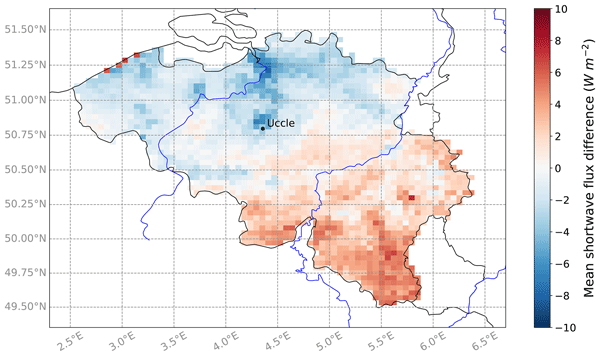
The MAR (Modèle Régional Atmosphérique) is a regional climate model used for weather forecasting and studying the climate over various regions. This paper presents an update of MAR thanks to which it can precisely decompose solar radiation, in particular in the UV (ultraviolet) and photosynthesis ranges, both being critical to human health and ecosystems. As a first application of this new capability, this paper presents a method for predicting UV indices with MAR.
Bianca Mezzina, Hugues Goosse, François Klein, Antoine Barthélemy, and François Massonnet
The Cryosphere, 18, 3825–3839, https://doi.org/10.5194/tc-18-3825-2024, https://doi.org/10.5194/tc-18-3825-2024, 2024
Short summary
Short summary
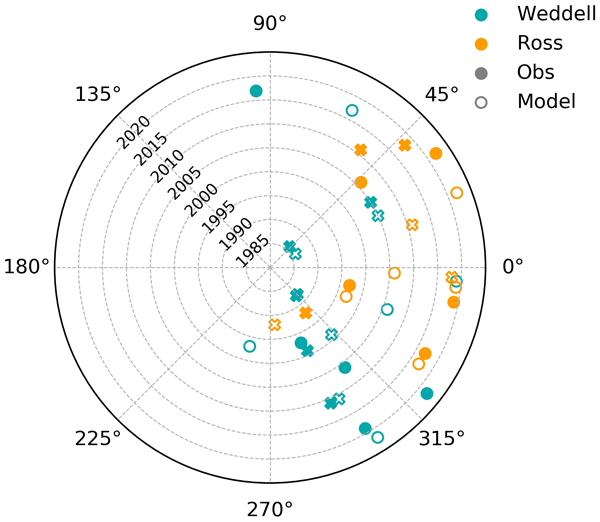
We analyze years with extraordinarily low sea ice extent in Antarctica during summer, until the striking record in 2022. We highlight common aspects among these events, such as the fact that the exceptional melting usually occurs in two key regions and that it is related to winds with a similar direction. We also investigate whether the summer conditions are preceded by an unusual state of the sea ice during the previous winter, as well as the physical processes involved.
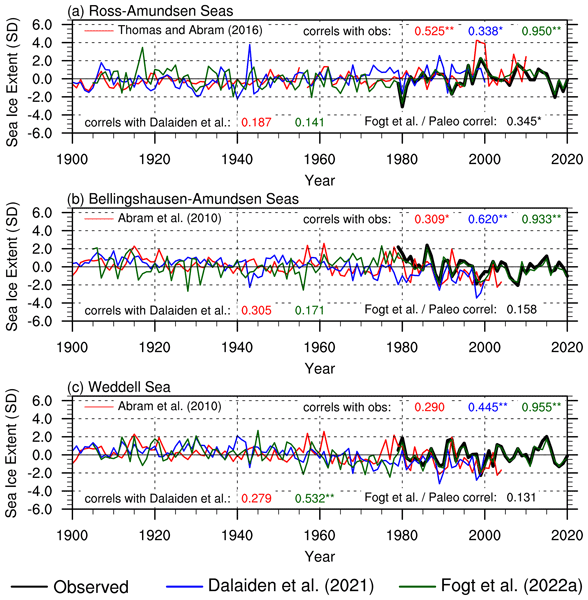
Ryan L. Fogt, Quentin Dalaiden, and Gemma K. O'Connor
Clim. Past, 20, 53–76, https://doi.org/10.5194/cp-20-53-2024, https://doi.org/10.5194/cp-20-53-2024, 2024
Short summary
Short summary
Antarctic sea ice is rapidly changing, with record lows set in 2017, 2022, and 2023 following decades of increase. To place these changes in a longer historical context, reconstructions have been created; however, they are quite different prior to observations. Here we find that the differences are more strongly tied to the implied connection of each reconstruction with the atmospheric circulation rather than differences in seasonality or geographic representation.
Marie G. P. Cavitte, Hugues Goosse, Kenichi Matsuoka, Sarah Wauthy, Vikram Goel, Rahul Dey, Bhanu Pratap, Brice Van Liefferinge, Thamban Meloth, and Jean-Louis Tison
The Cryosphere, 17, 4779–4795, https://doi.org/10.5194/tc-17-4779-2023, https://doi.org/10.5194/tc-17-4779-2023, 2023
Short summary
Short summary
The net accumulation of snow over Antarctica is key for assessing current and future sea-level rise. Ice cores record a noisy snowfall signal to verify model simulations. We find that ice core net snowfall is biased to lower values for ice rises and the Dome Fuji site (Antarctica), while the relative uncertainty in measuring snowfall increases rapidly with distance away from the ice core sites at the ice rises but not at Dome Fuji. Spatial variation in snowfall must therefore be considered.
Ailsa Chung, Frédéric Parrenin, Daniel Steinhage, Robert Mulvaney, Carlos Martín, Marie G. P. Cavitte, David A. Lilien, Veit Helm, Drew Taylor, Prasad Gogineni, Catherine Ritz, Massimo Frezzotti, Charles O'Neill, Heinrich Miller, Dorthe Dahl-Jensen, and Olaf Eisen
The Cryosphere, 17, 3461–3483, https://doi.org/10.5194/tc-17-3461-2023, https://doi.org/10.5194/tc-17-3461-2023, 2023
Short summary
Short summary
We combined a numerical model with radar measurements in order to determine the age of ice in the Dome C region of Antarctica. Our results show that at the current ice core drilling sites on Little Dome C, the maximum age of the ice is almost 1.5 Ma. We also highlight a new potential drill site called North Patch with ice up to 2 Ma. Finally, we explore the nature of a stagnant ice layer at the base of the ice sheet which has been independently observed and modelled but is not well understood.
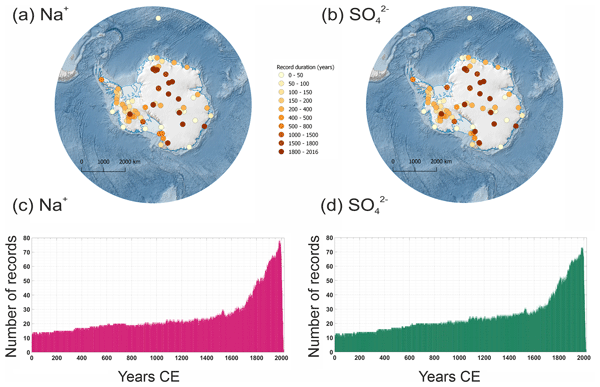
Elizabeth R. Thomas, Diana O. Vladimirova, Dieter R. Tetzner, B. Daniel Emanuelsson, Nathan Chellman, Daniel A. Dixon, Hugues Goosse, Mackenzie M. Grieman, Amy C. F. King, Michael Sigl, Danielle G. Udy, Tessa R. Vance, Dominic A. Winski, V. Holly L. Winton, Nancy A. N. Bertler, Akira Hori, Chavarukonam M. Laluraj, Joseph R. McConnell, Yuko Motizuki, Kazuya Takahashi, Hideaki Motoyama, Yoichi Nakai, Franciéle Schwanck, Jefferson Cardia Simões, Filipe Gaudie Ley Lindau, Mirko Severi, Rita Traversi, Sarah Wauthy, Cunde Xiao, Jiao Yang, Ellen Mosely-Thompson, Tamara V. Khodzher, Ludmila P. Golobokova, and Alexey A. Ekaykin
Earth Syst. Sci. Data, 15, 2517–2532, https://doi.org/10.5194/essd-15-2517-2023, https://doi.org/10.5194/essd-15-2517-2023, 2023
Short summary
Short summary
The concentration of sodium and sulfate measured in Antarctic ice cores is related to changes in both sea ice and winds. Here we have compiled a database of sodium and sulfate records from 105 ice core sites in Antarctica. The records span all, or part, of the past 2000 years. The records will improve our understanding of how winds and sea ice have changed in the past and how they have influenced the climate of Antarctica over the past 2000 years.
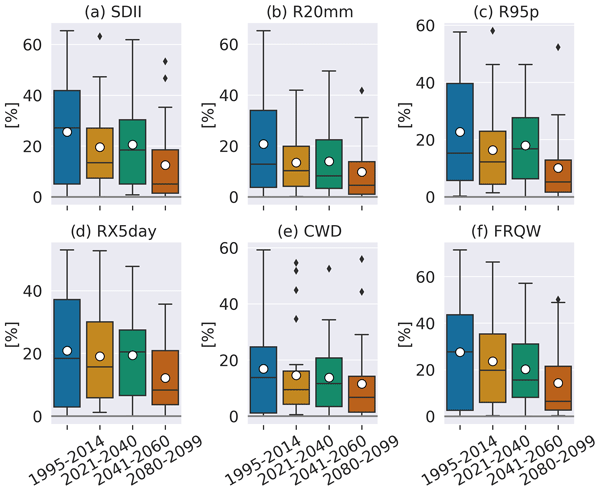
Koffi Worou, Thierry Fichefet, and Hugues Goosse
Weather Clim. Dynam., 4, 511–530, https://doi.org/10.5194/wcd-4-511-2023, https://doi.org/10.5194/wcd-4-511-2023, 2023
Short summary
Short summary
The Atlantic equatorial mode (AEM) of variability is partly responsible for the year-to-year rainfall variability over the Guinea coast. We used the current climate models to explore the present-day and future links between the AEM and the extreme rainfall indices over the Guinea coast. Under future global warming, the total variability of the extreme rainfall indices increases over the Guinea coast. However, the future impact of the AEM on extreme rainfall events decreases over the region.
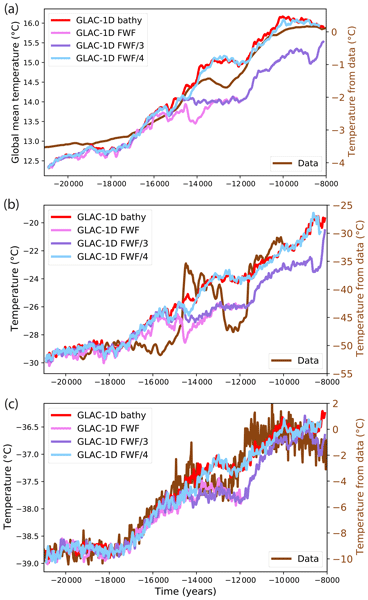
Nathaelle Bouttes, Fanny Lhardy, Aurélien Quiquet, Didier Paillard, Hugues Goosse, and Didier M. Roche
Clim. Past, 19, 1027–1042, https://doi.org/10.5194/cp-19-1027-2023, https://doi.org/10.5194/cp-19-1027-2023, 2023
Short summary
Short summary
The last deglaciation is a period of large warming from 21 000 to 9000 years ago, concomitant with ice sheet melting. Here, we evaluate the impact of different ice sheet reconstructions and different processes linked to their changes. Changes in bathymetry and coastlines, although not often accounted for, cannot be neglected. Ice sheet melt results in freshwater into the ocean with large effects on ocean circulation, but the timing cannot explain the observed abrupt climate changes.

Andrew P. Schurer, Gabriele C. Hegerl, Hugues Goosse, Massimo A. Bollasina, Matthew H. England, Michael J. Mineter, Doug M. Smith, and Simon F. B. Tett
Clim. Past, 19, 943–957, https://doi.org/10.5194/cp-19-943-2023, https://doi.org/10.5194/cp-19-943-2023, 2023
Short summary
Short summary
We adopt an existing data assimilation technique to constrain a model simulation to follow three important modes of variability, the North Atlantic Oscillation, El Niño–Southern Oscillation and the Southern Annular Mode. How it compares to the observed climate is evaluated, with improvements over simulations without data assimilation found over many regions, particularly the tropics, the North Atlantic and Europe, and discrepancies with global cooling following volcanic eruptions are reconciled.
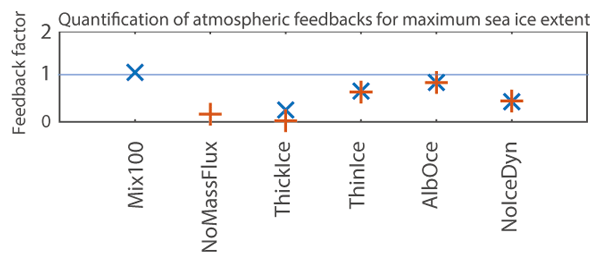
Hugues Goosse, Sofia Allende Contador, Cecilia M. Bitz, Edward Blanchard-Wrigglesworth, Clare Eayrs, Thierry Fichefet, Kenza Himmich, Pierre-Vincent Huot, François Klein, Sylvain Marchi, François Massonnet, Bianca Mezzina, Charles Pelletier, Lettie Roach, Martin Vancoppenolle, and Nicole P. M. van Lipzig
The Cryosphere, 17, 407–425, https://doi.org/10.5194/tc-17-407-2023, https://doi.org/10.5194/tc-17-407-2023, 2023
Short summary
Short summary
Using idealized sensitivity experiments with a regional atmosphere–ocean–sea ice model, we show that sea ice advance is constrained by initial conditions in March and the retreat season is influenced by the magnitude of several physical processes, in particular by the ice–albedo feedback and ice transport. Atmospheric feedbacks amplify the response of the winter ice extent to perturbations, while some negative feedbacks related to heat conduction fluxes act on the ice volume.
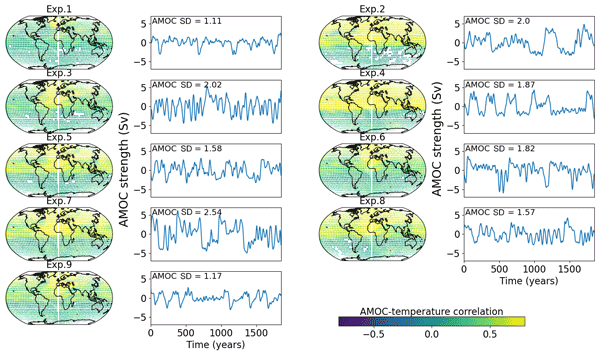
Pepijn Bakker, Hugues Goosse, and Didier M. Roche
Clim. Past, 18, 2523–2544, https://doi.org/10.5194/cp-18-2523-2022, https://doi.org/10.5194/cp-18-2523-2022, 2022
Short summary
Short summary
Natural climate variability plays an important role in the discussion of past and future climate change. Here we study centennial temperature variability and the role of large-scale ocean circulation variability using different climate models, geological reconstructions and temperature observations. Unfortunately, uncertainties in models and geological reconstructions are such that more research is needed before we can describe the characteristics of natural centennial temperature variability.
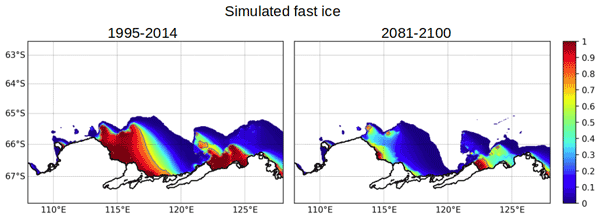
Guillian Van Achter, Thierry Fichefet, Hugues Goosse, and Eduardo Moreno-Chamarro
The Cryosphere, 16, 4745–4761, https://doi.org/10.5194/tc-16-4745-2022, https://doi.org/10.5194/tc-16-4745-2022, 2022
Short summary
Short summary
We investigate the changes in ocean–ice interactions in the Totten Glacier area between the last decades (1995–2014) and the end of the 21st century (2081–2100) under warmer climate conditions. By the end of the 21st century, the sea ice is strongly reduced, and the ocean circulation close to the coast is accelerated. Our research highlights the importance of including representations of fast ice to simulate realistic ice shelf melt rate increase in East Antarctica under warming conditions.
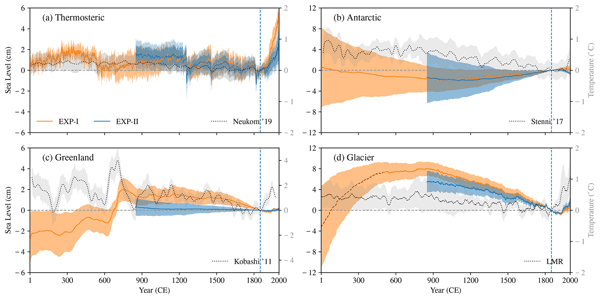
Nidheesh Gangadharan, Hugues Goosse, David Parkes, Heiko Goelzer, Fabien Maussion, and Ben Marzeion
Earth Syst. Dynam., 13, 1417–1435, https://doi.org/10.5194/esd-13-1417-2022, https://doi.org/10.5194/esd-13-1417-2022, 2022
Short summary
Short summary
We describe the contributions of ocean thermal expansion and land-ice melting (ice sheets and glaciers) to global-mean sea-level (GMSL) changes in the Common Era. The mass contributions are the major sources of GMSL changes in the pre-industrial Common Era and glaciers are the largest contributor. The paper also describes the current state of climate modelling, uncertainties and knowledge gaps along with the potential implications of the past variabilities in the contemporary sea-level rise.
Jeanne Rezsöhazy, Quentin Dalaiden, François Klein, Hugues Goosse, and Joël Guiot
Clim. Past, 18, 2093–2115, https://doi.org/10.5194/cp-18-2093-2022, https://doi.org/10.5194/cp-18-2093-2022, 2022
Short summary
Short summary
Using statistical tree-growth proxy system models in the data assimilation framework may have limitations. In this study, we successfully incorporate the process-based dendroclimatic model MAIDEN into a data assimilation procedure to robustly compare the outputs of an Earth system model with tree-ring width observations. Important steps are made to demonstrate that using MAIDEN as a proxy system model is a promising way to improve large-scale climate reconstructions with data assimilation.
Nicolas Ghilain, Stéphane Vannitsem, Quentin Dalaiden, Hugues Goosse, Lesley De Cruz, and Wenguang Wei
Earth Syst. Sci. Data, 14, 1901–1916, https://doi.org/10.5194/essd-14-1901-2022, https://doi.org/10.5194/essd-14-1901-2022, 2022
Short summary
Short summary
Modeling the climate at high resolution is crucial to represent the snowfall accumulation over the complex orography of the Antarctic coast. While ice cores provide a view constrained spatially but over centuries, climate models can give insight into its spatial distribution, either at high resolution over a short period or vice versa. We downscaled snowfall accumulation from climate model historical simulations (1850–present day) over Dronning Maud Land at 5.5 km using a statistical method.
Koffi Worou, Hugues Goosse, Thierry Fichefet, and Fred Kucharski
Earth Syst. Dynam., 13, 231–249, https://doi.org/10.5194/esd-13-231-2022, https://doi.org/10.5194/esd-13-231-2022, 2022
Short summary
Short summary
Over the Guinea Coast, the increased rainfall associated with warm phases of the Atlantic Niño is reasonably well simulated by 24 climate models out of 31, for the present-day conditions. In a warmer climate, general circulation models project a gradual decrease with time of the rainfall magnitude associated with the Atlantic Niño for the 2015–2039, 2040–2069 and 2070–2099 periods. There is a higher confidence in these changes over the equatorial Atlantic than over the Guinea Coast.

Charles Pelletier, Thierry Fichefet, Hugues Goosse, Konstanze Haubner, Samuel Helsen, Pierre-Vincent Huot, Christoph Kittel, François Klein, Sébastien Le clec'h, Nicole P. M. van Lipzig, Sylvain Marchi, François Massonnet, Pierre Mathiot, Ehsan Moravveji, Eduardo Moreno-Chamarro, Pablo Ortega, Frank Pattyn, Niels Souverijns, Guillian Van Achter, Sam Vanden Broucke, Alexander Vanhulle, Deborah Verfaillie, and Lars Zipf
Geosci. Model Dev., 15, 553–594, https://doi.org/10.5194/gmd-15-553-2022, https://doi.org/10.5194/gmd-15-553-2022, 2022
Short summary
Short summary
We present PARASO, a circumpolar model for simulating the Antarctic climate. PARASO features five distinct models, each covering different Earth system subcomponents (ice sheet, atmosphere, land, sea ice, ocean). In this technical article, we describe how this tool has been developed, with a focus on the
coupling interfacesrepresenting the feedbacks between the distinct models used for contribution. PARASO is stable and ready to use but is still characterized by significant biases.
Marie G. P. Cavitte, Duncan A. Young, Robert Mulvaney, Catherine Ritz, Jamin S. Greenbaum, Gregory Ng, Scott D. Kempf, Enrica Quartini, Gail R. Muldoon, John Paden, Massimo Frezzotti, Jason L. Roberts, Carly R. Tozer, Dustin M. Schroeder, and Donald D. Blankenship
Earth Syst. Sci. Data, 13, 4759–4777, https://doi.org/10.5194/essd-13-4759-2021, https://doi.org/10.5194/essd-13-4759-2021, 2021
Short summary
Short summary
We present a data set consisting of ice-penetrating-radar internal stratigraphy: 26 internal reflecting horizons that cover the greater Dome C area, East Antarctica, the most extensive IRH data set to date in the region. This data set uses radar surveys collected over the span of 10 years, starting with an airborne international collaboration in 2008 to explore the region, up to the detailed ground-based surveys in support of the European Beyond EPICA – Oldest Ice (BE-OI) project.
Cited articles
Agosta, C., Amory, C., Kittel, C., Orsi, A., Favier, V., Gallée, H., van den Broeke, M. R., Lenaerts, J. T. M., van Wessem, J. M., van de Berg, W. J., and Fettweis, X.: Estimation of the Antarctic surface mass balance using the regional climate model MAR (1979–2015) and identification of dominant processes, The Cryosphere, 13, 281–296, https://doi.org/10.5194/tc-13-281-2019, 2019. a, b, c
Casado, M., Münch, T., and Laepple, T.: Climatic information archived in ice cores: impact of intermittency and diffusion on the recorded isotopic signal in Antarctica, Clim. Past, 16, 1581–1598, https://doi.org/10.5194/cp-16-1581-2020, 2020. a
Cavitte, M.: Gridded surface mass balance derived from shallow radar stratigraphy over eight ice rises along the Dronning Maud Land coast and one site in the Dome Fuji region, Antarctica, Open Data @ UCLouvain [data set], https://doi.org/10.14428/DVN/J34MQO, 2023. a
Cavitte, M. G., Goosse, H., Wauthy, S., Kausch, T., Tison, J.-L., Van Liefferinge, B., Pattyn, F., Lenaerts, J. T., and Claeys, P.: From ice core to ground-penetrating radar: representativeness of SMB at three ice rises along the Princess Ragnhild Coast, East Antarctica, Journal of Glaciology, 68, 1221–1233, https://doi.org/10.1017/jog.2022.39, 2022. a, b, c, d, e
Cavitte, M. G. P., Dalaiden, Q., Goosse, H., Lenaerts, J. T. M., and Thomas, E. R.: Reconciling the surface temperature–surface mass balance relationship in models and ice cores in Antarctica over the last 2 centuries, The Cryosphere, 14, 4083–4102, https://doi.org/10.5194/tc-14-4083-2020, 2020. a
Cavitte, M. G. P., Goosse, H., Matsuoka, K., Wauthy, S., Goel, V., Dey, R., Pratap, B., Van Liefferinge, B., Meloth, T., and Tison, J.-L.: Investigating the spatial representativeness of East Antarctic ice cores: a comparison of ice core and radar-derived surface mass balance over coastal ice rises and Dome Fuji, The Cryosphere, 17, 4779–4795, https://doi.org/10.5194/tc-17-4779-2023, 2023. a, b, c, d, e
Dalaiden, Q., Goosse, H., Rezsohazy, J., and Thomas, E. R.: Reconstructing atmospheric circulation and sea-ice extent in the West Antarctic over the past 200 years using data assimilation, Climate Dynamics, 3479–3503, https://doi.org/10.1007/s00382-021-05879-6, 2021. a, b, c
Dalaiden, Q., Rezsöhazy, J., Goosse, H., Thomas, E. R., Vladimirova, D. O., and Tetzner, D.: An Unprecedented Sea Ice Retreat in the Weddell Sea Driving an Overall Decrease of the Antarctic Sea-Ice Extent Over the 20th Century, Geophysical Research Letters, 50, e2023GL104666, https://doi.org/10.1029/2023GL104666, e 2023. a
Dallmayr, R., Laepple, T., Freitag, J., Behrens, M., Lisovski, S., Jansen, D., Wilhelms, F., and Hörhold, M.: Topographic Effect Creates Non-climatic Variations in Ice-Core Based Temperature Records of the Last Millennium in Dronning Maud Land, Antarctica, Geophysical Research Letters, 52, e2025GL115124, https://doi.org/10.1029/2025GL115124, 2025. a
Danabasoglu, G., Lamarque, J.-F., Bacmeister, J., Bailey, D. A., DuVivier, A. K., Edwards, J., Emmons, L. K., Fasullo, J., Garcia, R., Gettelman, A., Hannay, C., Holland, M. M., Large, W. G., Lauritzen, P. H., Lawrence, D. M., Lenaerts, J. T. M., Lindsay, K., Lipscomb, W. H., Mills, M. J., Neale, R., Oleson, K. W., Otto-Bliesner, B., Phillips, A. S., Sacks, W., Tilmes, S., van Kampenhout, L., Vertenstein, M., Bertini, A., Dennis, J., Deser, C., Fischer, C., Fox-Kemper, B., Kay, J. E., Kinnison, D., Kushner, P. J., Larson, V. E., Long, M. C., Mickelson, S., Moore, J. K., Nienhouse, E., Polvani, L., Rasch, P. J., and Strand, W. G.: The Community Earth System Model Version 2 (CESM2), Journal of Advances in Modeling Earth Systems, 12, e2019MS001916, https://doi.org/10.1029/2019MS001916, 2020. a, b
Dey, R., Thamban, M., Laluraj, C. M., Mahalinganathan, K., Redkar, B. L., Kumar, S., and Matsuoka, K.: Application of visual stratigraphy from line-scan images to constrain chronology and melt features of a firn core from coastal Antarctica, Journal of Glaciology, 69, 179–190, https://doi.org/10.1017/jog.2022.59, 2023. a, b
Dubinkina, S., Goosse, H., Sallaz-Damaz, Y., Crespin, E., and Crucifix, M.: Testing a particle filter to reconstruct climate changes over the past centures, International Journal of Bifurcation and Chaos, 21, 3611–3618, https://doi.org/10.1142/S0218127411030763, 2011. a, b
Ghilain, N. and Cavitte, M.: MASS2ANT Surface (10 meters height) wind field Dataset (Downscaling CESM2 @5.5km over Dronning Maud Land, Antarctica, 1850–2014), Zenodo [data set], https://doi.org/10.5281/zenodo.17366618, 2025. a
Ghilain, N., Vannitsem, S., Dalaiden, Q., Goosse, H., and De Cruz, L.: MASS2ANT Snowfall Dataset (Downscaling @5.5km over Dronning Maud Land, Antarctica, 1850–2014), Zenodo [data set], https://doi.org/10.5281/zenodo.4287517, 2021. a, b, c
Ghilain, N., Vannitsem, S., Dalaiden, Q., Goosse, H., De Cruz, L., and Wei, W.: Large ensemble of downscaled historical daily snowfall from an earth system model to 5.5 km resolution over Dronning Maud Land, Antarctica, Earth Syst. Sci. Data, 14, 1901–1916, https://doi.org/10.5194/essd-14-1901-2022, 2022. a, b, c, d
Hersbach, H., Bell, B., Berrisford, P., Hirahara, S., Horányi, A., Muñoz-Sabater, J., Nicolas, J., Peubey, C., Radu, R., Schepers, D., Simmons, A., Soci, C., Abdalla, S., Abellan, X., Balsamo, G., Bechtold, P., Biavati, G., Bidlot, J., Bonavita, M., De Chiara, G., Dahlgren, P., Dee, D., Diamantakis, M., Dragani, R., Flemming, J., Forbes, R., Fuentes, M., Geer, A., Haimberger, L., Healy, S., Hogan, R. J., Hólm, E., Janisková, M., Keeley, S., Laloyaux, P., Lopez, P., Lupu, C., Radnoti, G., de Rosnay, P., Rozum, I., Vamborg, F., Villaume, S., and Thépaut, J.-N.: The ERA5 global reanalysis, Quarterly Journal of the Royal Meteorological Society, 146, 1999–2049, https://doi.org/10.1002/qj.3803, 2020. a
Hirsch, N., Zuhr, A., Münch, T., Hörhold, M., Freitag, J., Dallmayr, R., and Laepple, T.: Stratigraphic noise and its potential drivers across the plateau of Dronning Maud Land, East Antarctica, The Cryosphere, 17, 4207–4221, https://doi.org/10.5194/tc-17-4207-2023, 2023. a
Jezek, K. C., Curlander, J. C., Carsey, F., Wales, C., and Barry, R. G.: RAMP AMM-1 SAR Image Mosaic of Antarctica [data set], https://nsidc.org/data/nsidc-0103/versions/2 (last access: 2024), 2013. a
Kausch, T., Lhermitte, S., Lenaerts, J. T. M., Wever, N., Inoue, M., Pattyn, F., Sun, S., Wauthy, S., Tison, J.-L., and van de Berg, W. J.: Impact of coastal East Antarctic ice rises on surface mass balance: insights from observations and modeling, The Cryosphere, 14, 3367–3380, https://doi.org/10.5194/tc-14-3367-2020, 2020. a, b, c, d
Lenaerts, J., Lhermitte, S., Drews, R., Ligtenberg, S., Berger, S., Helm, V., Smeets, C., Van den Broeke, M., Van De Berg, W. J., Van Meijgaard, E., Eijkelboom, M., Eisen, O., and Pattyn, F.: Meltwater produced by wind–albedo interaction stored in an East Antarctic ice shelf, Nat. Clim. Chang., 7, 58, https://doi.org/10.1038/nclimate3180, 2017. a, b, c, d
Lenaerts, J. T. M., Medley, B., van den Broeke, M. R., and Wouters, B.: Observing and Modeling Ice Sheet Surface Mass Balance, Reviews of Geophysics, 57, 376–420, https://doi.org/10.1029/2018RG000622, 2019. a, b
Medley, B. and Thomas, E.: Increased snowfall over the Antarctic Ice Sheet mitigated twentieth-century sea-level rise, Nature Climate Change, 9, 34, https://doi.org/10.1038/s41558-018-0356-x, 2019. a
Münch, T., Kipfstuhl, S., Freitag, J., Meyer, H., and Laepple, T.: Constraints on post-depositional isotope modifications in East Antarctic firn from analysing temporal changes of isotope profiles, The Cryosphere, 11, 2175–2188, https://doi.org/10.5194/tc-11-2175-2017, 2017. a
Philippe, M., Tison, J.-L., Fjøsne, K., Hubbard, B., Kjær, H. A., Lenaerts, J. T. M., Drews, R., Sheldon, S. G., De Bondt, K., Claeys, P., and Pattyn, F.: Ice core evidence for a 20th century increase in surface mass balance in coastal Dronning Maud Land, East Antarctica, The Cryosphere, 10, 2501–2516, https://doi.org/10.5194/tc-10-2501-2016, 2016. a
Valler, V., Brugnara, Y., Franke, J., and Brönnimann, S.: Assimilating monthly precipitation data in a paleoclimate data assimilation framework, Clim. Past, 16, 1309–1323, https://doi.org/10.5194/cp-16-1309-2020, 2020. a
van Wessem, J. M., van de Berg, W. J., Noël, B. P. Y., van Meijgaard, E., Amory, C., Birnbaum, G., Jakobs, C. L., Krüger, K., Lenaerts, J. T. M., Lhermitte, S., Ligtenberg, S. R. M., Medley, B., Reijmer, C. H., van Tricht, K., Trusel, L. D., van Ulft, L. H., Wouters, B., Wuite, J., and van den Broeke, M. R.: Modelling the climate and surface mass balance of polar ice sheets using RACMO2 – Part 2: Antarctica (1979–2016), The Cryosphere, 12, 1479–1498, https://doi.org/10.5194/tc-12-1479-2018, 2018. a
Vega, C. P., Schlosser, E., Divine, D. V., Kohler, J., Martma, T., Eichler, A., Schwikowski, M., and Isaksson, E.: Surface mass balance and water stable isotopes derived from firn cores on three ice rises, Fimbul Ice Shelf, Antarctica, The Cryosphere, 10, 2763–2777, https://doi.org/10.5194/tc-10-2763-2016, 2016. a, b, c
Wang, Y., Ding, M., Reijmer, C. H., Smeets, P. C. J. P., Hou, S., and Xiao, C.: The AntSMB dataset: a comprehensive compilation of surface mass balance field observations over the Antarctic Ice Sheet, Earth Syst. Sci. Data, 13, 3057–3074, https://doi.org/10.5194/essd-13-3057-2021, 2021. a
Wauthy, S., Tison, J.-L., Inoue, M., El Amri, S., Sun, S., Fripiat, F., Claeys, P., and Pattyn, F.: Spatial and temporal variability of environmental proxies from the top 120 m of two ice cores in Dronning Maud Land (East Antarctica), Earth Syst. Sci. Data, 16, 35–58, https://doi.org/10.5194/essd-16-35-2024, 2024. a, b
Short summary
Ice cores are influenced by local processes that alter SMB (surface mass balance) records. To evaluate if atmospheric circulation on large spatial scales can explain differing snowfall trends at 8 East Antarctic ice rises, we assimilated their ice core SMB records within a high-resolution downscaled atmospheric model with quantified local errors from radar constraints. The reconstruction captures the SMB records’ variability but may over-fit by introducing unrealistic spatial heterogeneity.
Ice cores are influenced by local processes that alter SMB (surface mass balance) records. To...


