
Articles | Volume 19, issue 12
https://doi.org/10.5194/tc-19-6355-2025
© Author(s) 2025. This work is distributed under
the Creative Commons Attribution 4.0 License.
the Creative Commons Attribution 4.0 License.
https://doi.org/10.5194/tc-19-6355-2025
© Author(s) 2025. This work is distributed under
the Creative Commons Attribution 4.0 License.
the Creative Commons Attribution 4.0 License.
Research article
| 
01 Dec 2025
Research article |
| 01 Dec 2025
| 01 Dec 2025
Monitoring Arctic permafrost – examining the contribution of volunteered geographic information to mapping ice-wedge polygons
Pauline Walz
Heidelberg Institute for Geoinformation Technology (HeiGIT), Schloss-Wolfsbrunnenweg 33, 69118 Heidelberg, Germany
Heidelberg Institute for Geoinformation Technology (HeiGIT), Schloss-Wolfsbrunnenweg 33, 69118 Heidelberg, Germany
Sabrina Marx
Heidelberg Institute for Geoinformation Technology (HeiGIT), Schloss-Wolfsbrunnenweg 33, 69118 Heidelberg, Germany
Marlin M. Mueller
German Aerospace Center (DLR), Institute of Data Science, Mälzerstraße 3–5, 07745 Jena, Germany
Christian Thiel
German Aerospace Center (DLR), Institute of Data Science, Mälzerstraße 3–5, 07745 Jena, Germany
Josefine Lenz
Permafrost Research Section, Alfred Wegener Institute Helmholtz Centre for Polar and Marine Research, Telegrafenberg A45, 14473 Potsdam, Germany
Soraya Kaiser
Permafrost Research Section, Alfred Wegener Institute Helmholtz Centre for Polar and Marine Research, Telegrafenberg A45, 14473 Potsdam, Germany
Roxanne Frappier
Department of Earth Sciences, Vrije Universiteit Amsterdam, De Boelelaan 1085, 1081 HV Amsterdam, the Netherlands
Alexander Zipf
Heidelberg Institute for Geoinformation Technology (HeiGIT), Schloss-Wolfsbrunnenweg 33, 69118 Heidelberg, Germany
GIScience Research Group, Institute of Geography, Heidelberg University, Im Neuenheimer Feld 368, 69120 Heidelberg, Germany
Moritz Langer
CORRESPONDING AUTHOR

Department of Earth Sciences, Vrije Universiteit Amsterdam, De Boelelaan 1085, 1081 HV Amsterdam, the Netherlands
Permafrost Research Section, Alfred Wegener Institute Helmholtz Centre for Polar and Marine Research, Telegrafenberg A45, 14473 Potsdam, Germany
Related authors
No articles found.
Clemens Langer, Celina Thomé, Nir Fulman, Steffen Knoblauch, Alexander Zipf, and Yulia Grinblat
AGILE GIScience Ser., 7, 32, https://doi.org/10.5194/agile-giss-7-32-2026, https://doi.org/10.5194/agile-giss-7-32-2026, 2026
Nir Fulman, Abdulkadir Memduhoğlu, Johannes Huber, and Alexander Zipf
AGILE GIScience Ser., 7, 23, https://doi.org/10.5194/agile-giss-7-23-2026, https://doi.org/10.5194/agile-giss-7-23-2026, 2026

Ferdinand Seyffer, Anne Schauss, Suella Tirai, Marcel Maurer, Sven Lautenbach, and Alexander Zipf
AGILE GIScience Ser., 7, 17, https://doi.org/10.5194/agile-giss-7-17-2026, https://doi.org/10.5194/agile-giss-7-17-2026, 2026

Sven Lautenbach, Marcel Maurer, and Alexander Zipf
AGILE GIScience Ser., 7, 9, https://doi.org/10.5194/agile-giss-7-9-2026, https://doi.org/10.5194/agile-giss-7-9-2026, 2026
Hong Yang, Simone Maria Stuenzi, Yanqiu Xing, Fulai Feng, and Moritz Langer
EGUsphere, https://doi.org/10.5194/egusphere-2026-870, https://doi.org/10.5194/egusphere-2026-870, 2026
Short summary
Short summary
Boreal forests store large amounts of carbon, yet it is unclear how thawing permafrost will affect their role in slowing climate change. Many models do not fully capture how frozen soils warm and alter water supply for plants. We improved a vegetation model to better represent soil processes and tested it in Northeast China. The updated model more accurately reproduced soil conditions and carbon storage, showing that thaw-related warming and drying can reduce carbon uptake and alter forests.
Wangshu Wang, Alexander Zipf, and Liqiu Meng
Abstr. Int. Cartogr. Assoc., 10, 297, https://doi.org/10.5194/ica-abs-10-297-2025, https://doi.org/10.5194/ica-abs-10-297-2025, 2025
Mehriban Aliyeva, Michael Angelopoulos, Julia Boike, Moritz Langer, Frederieke Miesner, Scott Dallimore, Dustin Whalen, Lukas U. Arenson, and Pier Paul Overduin
EGUsphere, https://doi.org/10.5194/egusphere-2025-2675, https://doi.org/10.5194/egusphere-2025-2675, 2025
Preprint archived
Short summary
Short summary
In this study, we investigate the ongoing transformation of terrestrial permafrost into subsea permafrost on a rapidly eroding Arctic island using electrical resistivity tomography and numerical modelling. We draw on 60 years of shoreline data to support our findings. This work is important for understanding permafrost loss in Arctic coastal areas and for guiding future efforts to protect vulnerable shorelines.

Anke Fluhrer, Martin J. Baur, María Piles, Bagher Bayat, Mehdi Rahmati, David Chaparro, Clémence Dubois, Florian M. Hellwig, Carsten Montzka, Angelika Kübert, Marlin M. Mueller, Isabel Augscheller, Francois Jonard, Konstantin Schellenberg, and Thomas Jagdhuber
Biogeosciences, 22, 3721–3746, https://doi.org/10.5194/bg-22-3721-2025, https://doi.org/10.5194/bg-22-3721-2025, 2025
Short summary
Short summary
This study compares established evapotranspiration products in central Europe and evaluates their multi-seasonal performance during wet and drought phases in 2017–2020 together with important soil–plant–atmosphere drivers. Results show that SEVIRI, ERA5-land, and GLEAM perform best compared to ICOS (Integrated Carbon Observation System) measurements. During moisture-limited drought years, ET (evapotranspiration) decreases due to decreasing soil moisture and increasing vapor pressure deficit, while in other years ET is mainly controlled by VPD (vapor pressure deficit).

Ricardo Ruiz Sánchez, Marcel Reinmuth, Cristian Albornoz, Sven Lautenbach, and Alexander Zipf
AGILE GIScience Ser., 6, 10, https://doi.org/10.5194/agile-giss-6-10-2025, https://doi.org/10.5194/agile-giss-6-10-2025, 2025

Johannes Huber, Christina Ludwig, Kathrin Foshag, Nikolaos Kolaxidis, Alexander Zipf, and Sven Lautenbach
AGILE GIScience Ser., 6, 4, https://doi.org/10.5194/agile-giss-6-4-2025, https://doi.org/10.5194/agile-giss-6-4-2025, 2025
Lydia Stolpmann, Ingmar Nitze, Ingeborg Bussmann, Benjamin M. Jones, Josefine Lenz, Hanno Meyer, Juliane Wolter, and Guido Grosse
EGUsphere, https://doi.org/10.5194/egusphere-2024-2822, https://doi.org/10.5194/egusphere-2024-2822, 2024
Preprint archived
Short summary
Short summary
We combine hydrochemical and lake change data to show consequences of permafrost thaw induced lake changes on hydrochemistry, which are relevant for the global carbon cycle. We found higher methane concentrations in lakes that do not freeze to the ground and show that lagoons have lower methane concentrations than lakes. Our detailed lake sampling approach show higher concentrations in Dissolved Organic Carbon in areas of higher erosion rates, that might increase under the climate warming.
Nathan Damas Antonio, Silvana Camboim, and Alexander Zipf
Abstr. Int. Cartogr. Assoc., 7, 6, https://doi.org/10.5194/ica-abs-7-6-2024, https://doi.org/10.5194/ica-abs-7-6-2024, 2024
Soraya Kaiser, Julia Boike, Guido Grosse, and Moritz Langer
Earth Syst. Sci. Data, 16, 3719–3753, https://doi.org/10.5194/essd-16-3719-2024, https://doi.org/10.5194/essd-16-3719-2024, 2024
Short summary
Short summary
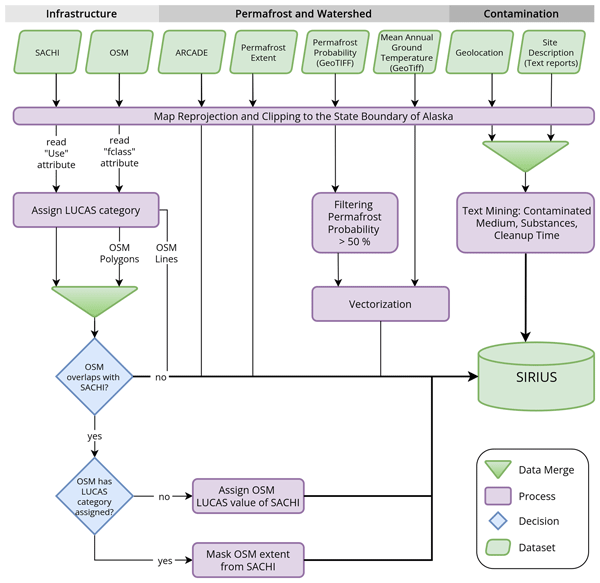
Arctic warming, leading to permafrost degradation, poses primary threats to infrastructure and secondary ecological hazards from possible infrastructure failure. Our study created a comprehensive Alaska inventory combining various data sources with which we improved infrastructure classification and data on contaminated sites. This resource is presented as a GeoPackage allowing planning of infrastructure damage and possible implications for Arctic communities facing permafrost challenges.
Daniel Kwakye, Sabrina Marx, Benjamin Herfort, Moritz Langer, and Sven Lautenbach
AGILE GIScience Ser., 5, 34, https://doi.org/10.5194/agile-giss-5-34-2024, https://doi.org/10.5194/agile-giss-5-34-2024, 2024
Moritz Langer, Jan Nitzbon, Brian Groenke, Lisa-Marie Assmann, Thomas Schneider von Deimling, Simone Maria Stuenzi, and Sebastian Westermann
The Cryosphere, 18, 363–385, https://doi.org/10.5194/tc-18-363-2024, https://doi.org/10.5194/tc-18-363-2024, 2024
Short summary
Short summary
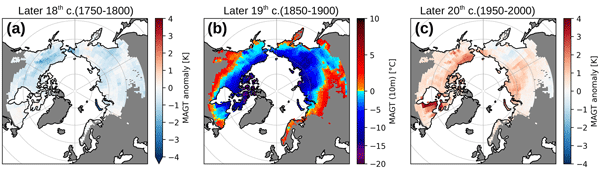
Using a model that can simulate the evolution of Arctic permafrost over centuries to millennia, we find that post-industrialization permafrost warming has three "hotspots" in NE Canada, N Alaska, and W Siberia. The extent of near-surface permafrost has decreased substantially since 1850, with the largest area losses occurring in the last 50 years. The simulations also show that volcanic eruptions have in some cases counteracted the loss of near-surface permafrost for a few decades.
Léo C. P. Martin, Sebastian Westermann, Michele Magni, Fanny Brun, Joel Fiddes, Yanbin Lei, Philip Kraaijenbrink, Tamara Mathys, Moritz Langer, Simon Allen, and Walter W. Immerzeel
Hydrol. Earth Syst. Sci., 27, 4409–4436, https://doi.org/10.5194/hess-27-4409-2023, https://doi.org/10.5194/hess-27-4409-2023, 2023
Short summary
Short summary
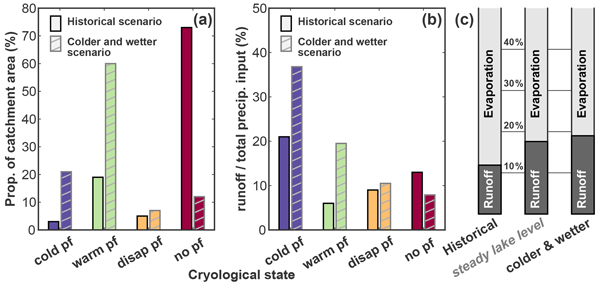
Across the Tibetan Plateau, many large lakes have been changing level during the last decades as a response to climate change. In high-mountain environments, water fluxes from the land to the lakes are linked to the ground temperature of the land and to the energy fluxes between the ground and the atmosphere, which are modified by climate change. With a numerical model, we test how these water and energy fluxes have changed over the last decades and how they influence the lake level variations.
Juditha Aga, Julia Boike, Moritz Langer, Thomas Ingeman-Nielsen, and Sebastian Westermann
The Cryosphere, 17, 4179–4206, https://doi.org/10.5194/tc-17-4179-2023, https://doi.org/10.5194/tc-17-4179-2023, 2023
Short summary
Short summary
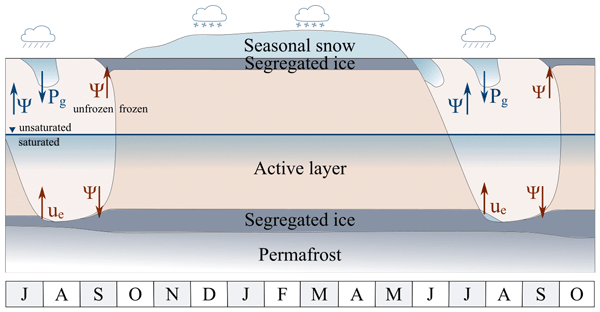
This study presents a new model scheme for simulating ice segregation and thaw consolidation in permafrost environments, depending on ground properties and climatic forcing. It is embedded in the CryoGrid community model, a land surface model for the terrestrial cryosphere. We describe the model physics and functionalities, followed by a model validation and a sensitivity study of controlling factors.
Brian Groenke, Moritz Langer, Jan Nitzbon, Sebastian Westermann, Guillermo Gallego, and Julia Boike
The Cryosphere, 17, 3505–3533, https://doi.org/10.5194/tc-17-3505-2023, https://doi.org/10.5194/tc-17-3505-2023, 2023
Short summary
Short summary
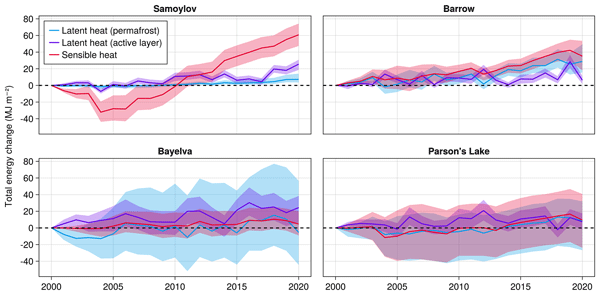
It is now well known from long-term temperature measurements that Arctic permafrost, i.e., ground that remains continuously frozen for at least 2 years, is warming in response to climate change. Temperature, however, only tells half of the story. In this study, we use computer modeling to better understand how the thawing and freezing of water in the ground affects the way permafrost responds to climate change and what temperature trends can and cannot tell us about how permafrost is changing.
Zoé Rehder, Thomas Kleinen, Lars Kutzbach, Victor Stepanenko, Moritz Langer, and Victor Brovkin
Biogeosciences, 20, 2837–2855, https://doi.org/10.5194/bg-20-2837-2023, https://doi.org/10.5194/bg-20-2837-2023, 2023
Short summary
Short summary
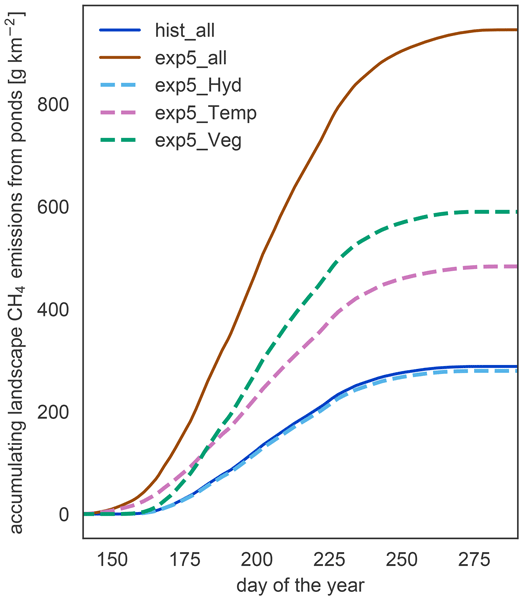
We use a new model to investigate how methane emissions from Arctic ponds change with warming. We find that emissions increase substantially. Under annual temperatures 5 °C above present temperatures, pond methane emissions are more than 3 times higher than now. Most of this increase is caused by an increase in plant productivity as plants provide the substrate microbes used to produce methane. We conclude that vegetation changes need to be included in predictions of pond methane emissions.
C. Ludwig, J. Psotta, A. Buch, N. Kolaxidis, S. Fendrich, M. Zia, J. Fürle, A. Rousell, and A. Zipf
Int. Arch. Photogramm. Remote Sens. Spatial Inf. Sci., XLVIII-4-W7-2023, 109–116, https://doi.org/10.5194/isprs-archives-XLVIII-4-W7-2023-109-2023, https://doi.org/10.5194/isprs-archives-XLVIII-4-W7-2023-109-2023, 2023

Simon Groß, Benjamin Herfort, Sabrina Marx, and Alexander Zipf
AGILE GIScience Ser., 4, 5, https://doi.org/10.5194/agile-giss-4-5-2023, https://doi.org/10.5194/agile-giss-4-5-2023, 2023
Francisco José Cuesta-Valero, Hugo Beltrami, Almudena García-García, Gerhard Krinner, Moritz Langer, Andrew H. MacDougall, Jan Nitzbon, Jian Peng, Karina von Schuckmann, Sonia I. Seneviratne, Wim Thiery, Inne Vanderkelen, and Tonghua Wu
Earth Syst. Dynam., 14, 609–627, https://doi.org/10.5194/esd-14-609-2023, https://doi.org/10.5194/esd-14-609-2023, 2023
Short summary
Short summary
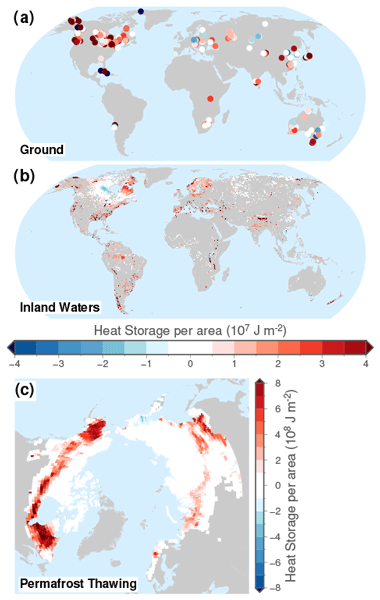
Climate change is caused by the accumulated heat in the Earth system, with the land storing the second largest amount of this extra heat. Here, new estimates of continental heat storage are obtained, including changes in inland-water heat storage and permafrost heat storage in addition to changes in ground heat storage. We also argue that heat gains in all three components should be monitored independently of their magnitude due to heat-dependent processes affecting society and ecosystems.
Sebastian Westermann, Thomas Ingeman-Nielsen, Johanna Scheer, Kristoffer Aalstad, Juditha Aga, Nitin Chaudhary, Bernd Etzelmüller, Simon Filhol, Andreas Kääb, Cas Renette, Louise Steffensen Schmidt, Thomas Vikhamar Schuler, Robin B. Zweigel, Léo Martin, Sarah Morard, Matan Ben-Asher, Michael Angelopoulos, Julia Boike, Brian Groenke, Frederieke Miesner, Jan Nitzbon, Paul Overduin, Simone M. Stuenzi, and Moritz Langer
Geosci. Model Dev., 16, 2607–2647, https://doi.org/10.5194/gmd-16-2607-2023, https://doi.org/10.5194/gmd-16-2607-2023, 2023
Short summary
Short summary
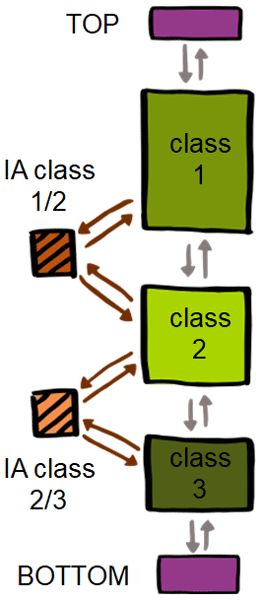
The CryoGrid community model is a new tool for simulating ground temperatures and the water and ice balance in cold regions. It is a modular design, which makes it possible to test different schemes to simulate, for example, permafrost ground in an efficient way. The model contains tools to simulate frozen and unfrozen ground, snow, glaciers, and other massive ice bodies, as well as water bodies.
Karina von Schuckmann, Audrey Minière, Flora Gues, Francisco José Cuesta-Valero, Gottfried Kirchengast, Susheel Adusumilli, Fiammetta Straneo, Michaël Ablain, Richard P. Allan, Paul M. Barker, Hugo Beltrami, Alejandro Blazquez, Tim Boyer, Lijing Cheng, John Church, Damien Desbruyeres, Han Dolman, Catia M. Domingues, Almudena García-García, Donata Giglio, John E. Gilson, Maximilian Gorfer, Leopold Haimberger, Maria Z. Hakuba, Stefan Hendricks, Shigeki Hosoda, Gregory C. Johnson, Rachel Killick, Brian King, Nicolas Kolodziejczyk, Anton Korosov, Gerhard Krinner, Mikael Kuusela, Felix W. Landerer, Moritz Langer, Thomas Lavergne, Isobel Lawrence, Yuehua Li, John Lyman, Florence Marti, Ben Marzeion, Michael Mayer, Andrew H. MacDougall, Trevor McDougall, Didier Paolo Monselesan, Jan Nitzbon, Inès Otosaka, Jian Peng, Sarah Purkey, Dean Roemmich, Kanako Sato, Katsunari Sato, Abhishek Savita, Axel Schweiger, Andrew Shepherd, Sonia I. Seneviratne, Leon Simons, Donald A. Slater, Thomas Slater, Andrea K. Steiner, Toshio Suga, Tanguy Szekely, Wim Thiery, Mary-Louise Timmermans, Inne Vanderkelen, Susan E. Wjiffels, Tonghua Wu, and Michael Zemp
Earth Syst. Sci. Data, 15, 1675–1709, https://doi.org/10.5194/essd-15-1675-2023, https://doi.org/10.5194/essd-15-1675-2023, 2023
Short summary
Short summary
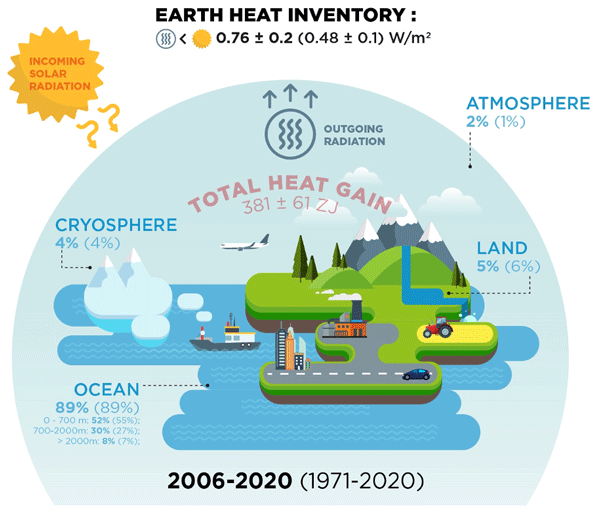
Earth's climate is out of energy balance, and this study quantifies how much heat has consequently accumulated over the past decades (ocean: 89 %, land: 6 %, cryosphere: 4 %, atmosphere: 1 %). Since 1971, this accumulated heat reached record values at an increasing pace. The Earth heat inventory provides a comprehensive view on the status and expectation of global warming, and we call for an implementation of this global climate indicator into the Paris Agreement’s Global Stocktake.
Ngai-Ham Chan, Moritz Langer, Bennet Juhls, Tabea Rettelbach, Paul Overduin, Kimberly Huppert, and Jean Braun
Earth Surf. Dynam., 11, 259–285, https://doi.org/10.5194/esurf-11-259-2023, https://doi.org/10.5194/esurf-11-259-2023, 2023
Short summary
Short summary
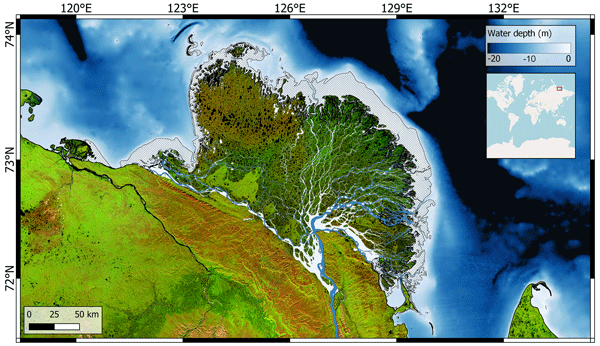
Arctic river deltas influence how nutrients and soil organic carbon, carried by sediments from the Arctic landscape, are retained or released into the Arctic Ocean. Under climate change, the deltas themselves and their ecosystems are becoming more vulnerable. We build upon previous models to reproduce for the first time an important feature ubiquitous to Arctic deltas and simulate its future under climate warming. This can impact the future of Arctic deltas and the carbon release they moderate.
M. Schott, S. Lautenbach, L. Größchen, and A. Zipf
Int. Arch. Photogramm. Remote Sens. Spatial Inf. Sci., XLVIII-4-W1-2022, 395–402, https://doi.org/10.5194/isprs-archives-XLVIII-4-W1-2022-395-2022, https://doi.org/10.5194/isprs-archives-XLVIII-4-W1-2022-395-2022, 2022
H. Li and A. Zipf
Int. Arch. Photogramm. Remote Sens. Spatial Inf. Sci., XLIII-B4-2022, 253–259, https://doi.org/10.5194/isprs-archives-XLIII-B4-2022-253-2022, https://doi.org/10.5194/isprs-archives-XLIII-B4-2022-253-2022, 2022
Stefan Kruse, Simone M. Stuenzi, Julia Boike, Moritz Langer, Josias Gloy, and Ulrike Herzschuh
Geosci. Model Dev., 15, 2395–2422, https://doi.org/10.5194/gmd-15-2395-2022, https://doi.org/10.5194/gmd-15-2395-2022, 2022
Short summary
Short summary
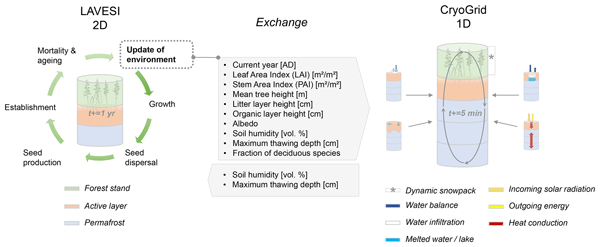
We coupled established models for boreal forest (LAVESI) and permafrost dynamics (CryoGrid) in Siberia to investigate interactions of the diverse vegetation layer with permafrost soils. Our tests showed improved active layer depth estimations and newly included species growth according to their species-specific limits. We conclude that the new model system can be applied to simulate boreal forest dynamics and transitions under global warming and disturbances, expanding our knowledge.
Cited articles
Abolt, C. J. and Young, M. H.: High-resolution mapping of spatial heterogeneity in ice wedge polygon geomorphology near Prudhoe Bay, Alaska, Scientific Data, 7, https://doi.org/10.1038/s41597-020-0423-9, 2019. a
Abolt, C. J., Young, M. H., Atchley, A. L., and Wilson, C. J.: Rapid machine-learning-based extraction and measurement of ice wedge polygons in high-resolution digital elevation models, Cryosphere, 13, 237–245, 2019. a
Alaska Climate Research Center: Alaska Climate Data, https://akclimate.org/data/, last access: 17 August 2024, 2023. a
Albuquerque, J., Herfort, B., and Eckle, M.: The Tasks of the Crowd: A Typology of Tasks in Geographic Information Crowdsourcing and a Case Study in Humanitarian Mapping, Remote Sensing, 8, 859, https://doi.org/10.3390/rs8100859, 2016. a, b, c
Arcanjo, J. S., Luz, E. F., Fazenda, A. L., and Ramos, F. M.: Methods for evaluating volunteers' contributions in a deforestation detection citizen science project, Future Gener. Comp. Sy., 56, 550–557, https://doi.org/10.1016/j.future.2015.07.005, 2016. a
Barrington, L., Ghosh, S., Greene, M., Har-Noy, S., Jay, B., Gill, S., Yu-Min, A., and Huyck, C.: Crowdsourcing earthquake damage assessment using remote sensing imagery, Ann. Geophys., 54, https://doi.org/10.4401/ag-5324, 2012. a
Bernard-Grand'Maison, C. and Pollard, W.: An estimate of ice wedge volume for a High Arctic polar desert environment, Fosheim Peninsula, Ellesmere Island, The Cryosphere, 12, 3589–3604, https://doi.org/10.5194/tc-12-3589-2018, 2018. a, b
Climate Atlas of Canada: Climate Atlas of Canada: Map of Days Above 30 °C by 2030, https://climateatlas.ca/map/canada/plus30_2030_85#lat=68.27&lng=-130.45&z=7&city=79, last access: 17 August 2024, 2023. a
Couture, N. J. and Pollard, W. H.: A Model for Quantifying Ground-Ice Volume, Yukon Coast, Western Arctic Canada, Permafrost Periglac., 28, 534–542, https://doi.org/10.1002/ppp.1952, 2017. a
Cresto Aleina, F., Brovkin, V., Muster, S., Boike, J., Kutzbach, L., Sachs, T., and Zuyev, S.: A stochastic model for the polygonal tundra based on Poisson–Voronoi diagrams, Earth Syst. Dynam., 4, 187–198, https://doi.org/10.5194/esd-4-187-2013, 2013. a, b, c
Eckle-Elze, M. and De Albuquerque, J.: Quality Assessment of Remote Mapping in OpenStreetMap for Disaster Management Purposes, 12th Proceedings of the International Conference on Information Systems for Crisis Response and Management, Krystiansand, Norway, 24–27 May 2015, edited by: Palen, L., Büscher, M., Comes, T., and Hughes, A. L., ISCRAM Association, 100–106, ISBN 978-82-7117-788-1, 2015. a
Edelsbrunner, H., Kirkpatrick, D., and Seidel, R.: On the shape of a set of points in the plane, IEEE Transactions on Information Theory, 29, 551–559, https://doi.org/10.1109/TIT.1983.1056714, 1983. a
Ehlers, J.: Das Eiszeitalter, Spektrum Akademischer Verlag, Heidelberg, Germany, https://doi.org/10.1007/978-3-662-60582-0, 2011. a
Ester, M., Kriegel, H.-P., Sander, J., and Xu, X.: A density-based algorithm for discovering clusters in large spatial databases with noise, Proceedings of the Second International Conference on Knowledge Discovery and Data Mining, KDD'96, Portland, Oregon, August 2–4 1996, 226–231, AAAI Press, https://cdn.aaai.org/KDD/1996/KDD96-037.pdf (last access: 24 November 2025), 1996. a
Frappier, R. and Lacelle, D.: Distribution, morphometry, and ice content of ice-wedge polygons in Tombstone Territorial Park, central Yukon, Canada, Permafrost Periglac., 32, 587–600, https://doi.org/10.1002/ppp.2123, 2021. a, b, c
Fritz, O., Marx, S., Herfort, B., Kaiser, S., Langer, M., Lenz, J., Thiel, C., and Zipf, A.: Das Potenzial von Citizen Science für die Kartierung von Landschaftsveränderungen in arktischen Permafrostregionen, AGIT – Journal für Angewandte Geoinformatik, 8, 30–40, https://doi.org/10.14627/537728004, 2022. a
Goodchild, M. F. and Glennon, J. A.: Crowdsourcing geographic information for disaster response: a research frontier, International Journal of Digital Earth, 3, 231–241, https://doi.org/10.1080/17538941003759255, 2010. a
Grosse, G., Nitze, I., and Rettelbach, T.: Master track from POLAR 6 flight P6_224_Perma_X_2021_2106250301 in 1 sec resolution (zipped, 138 kBytes), https://doi.org/10.1594/PANGAEA.936807, 2021. a
Hagberg, A., Swart, P., and Chult, S. D.: Exploring network structure, dynamics, and function using NetworkX, Tech. rep., Los Alamos National Lab.(LANL), Los Alamos, NM (United States), OSTI ID 960616, 2008. a
Haltigin, T. W., Pollard, W. H., Dutilleul, P., and Osinski, G. R.: Geometric Evolution of Polygonal Terrain Networks in the Canadian High Arctic: Evidence of Increasing Regularity over Time, Permafrost Periglac., 23, 178–186, https://doi.org/10.1002/ppp.1741, 2012. a
Haque, R. A., Mitra, A. J., Tarafdar, S., and Dutta, T.: Evolution of polygonal crack patterns in mud when subjected to repeated wetting–drying cycles, Chaos Soliton. Fract., 174, 113894, https://doi.org/10.1016/j.chaos.2023.113894, 2023. a
Herfort, B.: Understanding MapSwipe: Analysing Data Quality of Crowdsourced Classifications on Human Settlements, MS, Ruprecht-Karls-Universität Heidelberg, https://doi.org/10.11588/heidok.00024257, 2018. a
Herfort, B., Reinmuth, M., Porto de Albuquerque, J., and Zipf, A.: Towards evaluating crowdsourced image classification on mobile devices to generate geographic information about human settlements, in: Societal Geo-Innovation: short papers, posters and poster abstracts of the 20th AGILE Conference on Geographic Information Science, Wageningen University & Research, 9–12 May 2017, Wageningen, the Netherlands, ISBN 978-90-816960-7-4, 2017. a
Hopkins, D. M., McCulloch, D. S., and Jandra, R. J.: Pleistocene stratigraphy and structure of Baldwin Peninsula, Kotzebue Sound, Geol. Soc. Am. Spec. Pap., 68, 150–151, 1961. a
Huang, L., Willis, M. J., Li, G., Lantz, T. C., Schaefer, K., Wig, E., Cao, G., and Tiampo, K. F.: Identifying active retrogressive thaw slumps from ArcticDEM, ISPRS Journal of Photogrammetry and Remote Sensing, 205, 301–316, https://doi.org/10.1016/j.isprsjprs.2023.10.008, 2023. a
Jongejans, L. L.: Paleodynamics and Organic Carbon Characteristics in a Thermokarst Affected Landscape in West Alaska, PhD thesis, Utrecht University, Utrecht, the Netherlands, https://hdl.handle.net/10013/epic.51542 (last access: 26 November 2025), 2017. a
Jorgenson, M., Yoshikawa, K., Kanevskiy, M., Shur, Y., Romanovsky, V., Marchenko, S., Grosse, G., Brown, J., and Jones, B.: Permafrost Characteristics of Alaska, Proceedings of the Ninth International Conference on Permafrost, Fairbanks, Alaska, USA, 29 June–3 July 2008, 121–122, ISBN 978 0 9800179 2 2, 2008. a
Jorgenson, M. T., Kanevskiy, M., Shur, Y., Moskalenko, N., Brown, D., Wickland, K., Striegl, R., and Koch, J.: Role of ground ice dynamics and ecological feedbacks in recent ice wedge degradation and stabilization, J. Geophys. Res. Earth Surf., 120, 2280–2297, https://doi.org/10.1002/2015JF003602, 2015. a, b
Kanevskiy, M., Shur, Y., Jorgenson, T., Brown, D. R., Moskalenko, N., Brown, J., Walker, D. A., Raynolds, M. K., and Buchhorn, M.: Degradation and stabilization of ice wedges: Implications for assessing risk of thermokarst in northern Alaska, Geomorphology, 297, 20–42, https://doi.org/10.1016/j.geomorph.2017.09.001, 2017. a
Kohns, J., Zahs, V., Ullah, T., Schorlemmer, D., Nievas, C., Glock, K., Meyer, F., Mey, H., Stempniewski, L., Herfort, B., Zipf, A., and Höfle, B.: Innovative methods for earthquake damage detection and classification using airborne observation of critical infrastructures (project LOKI), other, pico, https://doi.org/10.5194/egusphere-egu21-2712, 2021. a
Lachenbruch, A. H.: Mechanics of Thermal Contraction Cracks and Ice-Wedge Polygons in Permafrost, vol. 70 of Mechanics of Thermal Contraction Cracks and Ice-Wedge Polygons in Permafrost, p. 0, Geological Society of America, https://doi.org/10.1130/SPE70-p1, 1962. a
Lake, B. M., Salakhutdinov, R., and Tenenbaum, J. B.: Human-level concept learning through probabilistic program induction, Science, 350, 1332–1338, https://doi.org/10.1126/science.aab3050, 2015. a
Langer, M., Westermann, S., Muster, S., Piel, K., and Boike, J.: The surface energy balance of a polygonal tundra site in northern Siberia – Part 1: Spring to fall, The Cryosphere, 5, 151–171, https://doi.org/10.5194/tc-5-151-2011, 2011a. a
Langer, M., Westermann, S., Muster, S., Piel, K., and Boike, J.: The surface energy balance of a polygonal tundra site in northern Siberia – Part 2: Winter, The Cryosphere, 5, 509–524, https://doi.org/10.5194/tc-5-509-2011, 2011b. a
Liljedahl, A. K., Boike, J., Daanen, R. P., Fedorov, A. N., Frost, G. V., Grosse, G., Hinzman, L. D., Iijma, Y., Jorgenson, J. C., Matveyeva, N., Necsoiu, M., Raynolds, M. K., Romanovsky, V. E., Schulla, J., Tape, K. D., Walker, D. A., Wilson, C. J., Yabuki, H., and Zona, D.: Pan-Arctic ice-wedge degradation in warming permafrost and its influence on tundra hydrology, Nat. Geosci., 9, 312–318, https://doi.org/10.1038/ngeo2674, 2016. a, b
Liljedahl, A. K., Witharana, C., and Manos, E.: The capillaries of the Arctic tundra, Nature Water, 2, 611–614, https://doi.org/10.1038/s44221-024-00276-9, 2024. a
Lousada, M., Pina, P., Vieira, G., Bandeira, L., and Mora, C.: Evaluation of the use of very high resolution aerial imagery for accurate ice-wedge polygon mapping (Adventdalen, Svalbard), Sci. Total Environ., 615, 1574–1583, https://doi.org/10.1016/j.scitotenv.2017.09.153, 2018. a
Marra, W. A., Kleinhans, M. G., and Addink, E. A.: Network concepts to describe channel importance and change in multichannel systems: test results for the Jamuna River, Bangladesh, Earth Surf. Proc. Land., 39, 766–778, https://doi.org/10.1002/esp.3482, 2014. a
Mocnik, F.-B., Zipf, A., and Fan, H.: Data Quality and Fitness for Purpose, in: Societal Geo-Innovation: short papers, posters and poster abstracts of the 20th AGILE Conference on Geographic Information Science, Wageningen University & Research, 9–12 May 2017, Wageningen, the Netherlands, ISBN 978-90-816960-7-4, 2017. a
Morse, P. and Burn, C.: Field observations of syngenetic ice wedge polygons, outer Mackenzie Delta, western Arctic coast, Canada, J. Geophys. Res. Earth Surf., 118, 1320–1332, https://doi.org/10.1002/jgrf.20086, 2013. a
Mueller, M. M., Dietenberger, S., Nestler, M., Hese, S., Ziemer, J., Bachmann, F., Leiber, J., Dubois, C., and Thiel, C.: Novel UAV Flight Designs for Accuracy Optimization of Structure from Motion Data Products, Remote Sensing, 15, https://doi.org/10.3390/rs15174308, 2023. a
Mueller, M. M., Thiel, C., Kaiser, S., Lenz, J., Langer, M., Fritz, O., and Marx, S.: High-resolution UAV Orthomosaic and DSM Dataset – Blueberry Hill (Aklavik, NWT, CA) 5 cm GSD [2022], Zenodo [data set], https://doi.org/10.5281/zenodo.14283656, 2024. a, b, c
Nitzbon, J., Langer, M., Westermann, S., Martin, L., Aas, K. S., and Boike, J.: Pathways of ice-wedge degradation in polygonal tundra under different hydrological conditions, The Cryosphere, 13, 1089–1123, https://doi.org/10.5194/tc-13-1089-2019, 2019. a
Nitzbon, J., Schneider von Deimling, T., Aliyeva, M., Chadburn, S. E., Grosse, G., Laboor, S., Lee, H., Lohmann, G., Steinert, N. J., Stuenzi, S. M., Werner, M., Westermann, S., and Langer, M.: No respite from permafrost-thaw impacts in the absence of a global tipping point, Nature Climate Change, https://doi.org/10.1038/s41558-024-02011-4, 2024. a
Nitze, I., Grosse, G., Jones, B. M., Romanovsky, V. E., and Boike, J.: Remote sensing quantifies widespread abundance of permafrost region disturbances across the Arctic and Subarctic, Nat. Commun., 9, 5423, https://doi.org/10.1038/s41467-018-07663-3, 2018. a
Obu, J., Westermann, S., Kääb, A., and Bartsch, A.: Ground Temperature Map, 2000–2016, Northern Hemisphere Permafrost, https://doi.org/10.1594/PANGAEA.888600, 2018. a
O'Neill, H. B., Wolfe, S. A., and Duchesne, C.: New ground ice maps for Canada using a paleogeographic modelling approach, The Cryosphere, 13, 753–773, https://doi.org/10.5194/tc-13-753-2019, 2019. a
O'Connor, J., Smith, M. J., and James, M. R.: Cameras and settings for aerial surveys in the geosciences: Optimising image data, Prog. Phys. Geog.: Earth and Environment, 41, 325–344, https://doi.org/10.1177/0309133317703092, 2017. a
Porter, C., Howat, I., Noh, M.-J., Husby, E., Khuvis, S., Danish, E., Tomko, K., Gardiner, J., Negrete, A., Yadav, B., Klassen, J., Kelleher, C., Cloutier, M., Bakker, J., Enos, J., Arnold, G., Bauer, G., and Morin, P.: ArcticDEM – Strips, Version 4.1, https://doi.org/10.7910/DVN/C98DVS, 2022. a
Rettelbach, T., Langer, M., Nitze, I., Jones, B., Helm, V., Freytag, J.-C., and Grosse, G.: A Quantitative Graph-Based Approach to Monitoring Ice-Wedge Trough Dynamics in Polygonal Permafrost Landscapes, Remote Sensing, 13, https://doi.org/10.3390/rs13163098, 2021. a, b, c
Rettelbach, T., Nitze, I., Grünberg, I., Hammar, J., Schäffler, S., Hein, D., Gessner, M., Bucher, T., Brauchle, J., Hartmann, J., Sachs, T., Boike, J., and Grosse, G.: Super-high-resolution aerial imagery, digital surface models and 3D point clouds of Meade Fire Scar, Alaska, PANGAEA [data set], https://doi.org/10.1594/PANGAEA.962535, 2024. a, b, c
Rettelbach, T., Nitze, I., Grünberg, I., Hammar, J., Schäffler, S., Hein, D., Gessner, M., Bucher, T., Brauchle, J., Hartmann, J., Sachs, T., Boike, J., and Grosse, G.: Very high resolution aerial image orthomosaics, point clouds, and elevation datasets of select permafrost landscapes in Alaska and northwestern Canada, Earth Syst. Sci. Data, 16, 5767–5798, https://doi.org/10.5194/essd-16-5767-2024, 2024. a
Runge, A., Nitze, I., and Grosse, G.: Remote sensing annual dynamics of rapid permafrost thaw disturbances with LandTrendr, Remote Sens. Environ., 268, 112752, https://doi.org/10.1016/j.rse.2021.112752, 2022. a
Scholz, S., Knight, P., Eckle, M., Marx, S., and Zipf, A.: Volunteered Geographic Information for Disaster Risk Reduction–The Missing Maps Approach and Its Potential within the Red Cross and Red Crescent Movement, Remote Sensing, 10, 1239, https://doi.org/10.3390/rs10081239, 2018. a
Seabold, S. and Perktold, J.: Statsmodels: Econometric and Statistical Modeling with Python, Proceedings of the 9th Python in Science Conference, Austin, Texas, USA, June 28–July 3 2010, 92–96, https://doi.org/10.25080/majora-92bf1922-011, 2010. a
Short, N. and Fraser, R.: Comparison of RADARSAT-2 and Sentinel-1 DInSAR displacements over upland ice-wedge polygonal terrain, Banks Island, Northwest Territories, Canada, Geomatics Canada, Open File 73, https://doi.org/10.4095/331683, 2023. a
Skurikhin, A. N., Chandana Gangodagamage, J. C. R., and Wilson, C. J.: Arctic tundra ice-wedge landscape characterization by active contours without edges and structural analysis using high-resolution satellite imagery, Remote Sensing Letters, 4, 1077–1086, https://doi.org/10.1080/2150704X.2013.840404, 2013. a
Sletten, R. S., Hallet, B., and Fletcher, R. C.: Resurfacing time of terrestrial surfaces by the formation and maturation of polygonal patterned ground, J. Geophys. Res.-Planets, 108, 2002JE001914, https://doi.org/10.1029/2002JE001914, 2003. a
Stewart, C., Labrèche, G., and González, D. L.: A Pilot Study on Remote Sensing and Citizen Science for Archaeological Prospection, Remote Sensing, 12, 2795, https://doi.org/10.3390/rs12172795, 2020. a
Strauss, J., Grosse, G., Jongejans, L. L., Jones, B. M., Fuchs, M., Nitze, I., Laboor, S., and Lenz, J.: Filling a White Spot on the Yedoma Map: the Baldwin Peninsula, West Alaska, 2nd Asian Conference on Permafrost, Sapporo, Japan, 2 July 2017–6 July 2017, https://epic.awi.de/id/eprint/45150/ (last access: 26 November 2025), 2017. a, b
Van der Sluijs, J., Kokelj, S. V., Fraser, R. H., Tunnicliffe, J., and Lacelle, D.: Permafrost terrain dynamics and infrastructure impacts revealed by UAV photogrammetry and thermal imaging, Remote Sensing, 10, 1734, https://doi.org/10.3390/rs10111734, 2018. a, b
Walz, P.: Code for publication: Monitoring Arctic Permafrost – Examining the Contribution of Volunteered Geographic Information to Mapping Ice-Wedge Polygons, Zenodo [code], https://doi.org/10.5281/zenodo.17296844, 2025. a
Walz, P., Fritz, O., Marx, S., Zipf, A., Mueller, M., Thiel, C., Kaiser, S., Lenz, J., and Langer, M.: Monitoring Arctic Permafrost – Crowdsourced Ice-wedge Polygon Center Points (1.0.0), Zenodo [data set], https://doi.org/10.5281/zenodo.14756139, 2025. a
Wang, Y., Li, C., Liu, X., Li, H., Yao, Z., and Zhao, Y.: How well do the volunteers label land cover types in manual interpretation of remote sensing imagery?, International Journal of Digital Earth, 17, 2347443, https://doi.org/10.1080/17538947.2024.2347443, 2024. a
Wei, S., Zhang, T., Yu, D., Ji, S., Zhang, Y., and Gong, J.: From lines to Polygons: Polygonal building contour extraction from High-Resolution remote sensing imagery, ISPRS Journal of Photogrammetry and Remote Sensing, 209, 213–232, https://doi.org/10.1016/j.isprsjprs.2024.02.001, 2024. a
Westermann, S., Duguay, C. R., Grosse, G., and Kääb, A.: Remote sensing of permafrost and frozen ground, Chap. 13, John Wiley & Sons, Ltd., 307–344, https://doi.org/10.1002/9781118368909.ch13, 2015. a
Witharana, C., Bhuiyan, M. A. E., Liljedahl, A. K., Kanevskiy, M., Epstein, H. E., Jones, B. M., Daanen, R., Griffin, C. G., Kent, K., and Ward Jones, M. K.: Understanding the synergies of deep learning and data fusion of multispectral and panchromatic high resolution commercial satellite imagery for automated ice-wedge polygon detection, ISPRS Journal of Photogrammetry and Remote Sensing, 170, 174–191, https://doi.org/10.1016/j.isprsjprs.2020.10.010, 2020. a
Witharana, C., Bhuiyan, M. A. E., Liljedahl, A. K., Kanevskiy, M., Jorgenson, T., Jones, B. M., Daanen, R., Epstein, H. E., Griffin, C. G., Kent, K., and Ward Jones, M. K.: An Object-Based Approach for Mapping Tundra Ice-Wedge Polygon Troughs from Very High Spatial Resolution Optical Satellite Imagery, Remote Sensing, 13, https://doi.org/10.3390/rs13040558, 2021. a
Zhang, W., Witharana, C., Liljedahl, A. K., and Kanevskiy, M.: Deep Convolutional Neural Networks for Automated Characterization of Arctic Ice-Wedge Polygons in Very High Spatial Resolution Aerial Imagery, Remote Sensing, 10, https://doi.org/10.3390/rs10091487, 2018. a, b, c
Short summary
We explored how citizen scientists can help map changes in Arctic landscapes. Using a web tool we created, more than 100 volunteers contributed the approximate center points of particular ground patterns called ice-wedge polygons in aerial images from Alaska and Canada. Our work shows that the data created by volunteers can be used to reconstruct ice-wedge polygon networks and provide valuable insights on the state of frozen ground in the Arctic.
We explored how citizen scientists can help map changes in Arctic landscapes. Using a web tool...


