
Articles | Volume 20, issue 2
https://doi.org/10.5194/tc-20-931-2026
© Author(s) 2026. This work is distributed under
the Creative Commons Attribution 4.0 License.
the Creative Commons Attribution 4.0 License.
https://doi.org/10.5194/tc-20-931-2026
© Author(s) 2026. This work is distributed under
the Creative Commons Attribution 4.0 License.
the Creative Commons Attribution 4.0 License.
Research article
| 
04 Feb 2026
Research article |
| 04 Feb 2026
| 04 Feb 2026
Antarctic ice sheet model comparison with uncurated geological constraints shows that higher spatial resolution improves deglacial reconstructions
Anna Ruth W. Halberstadt
CORRESPONDING AUTHOR

Department of Earth and Planetary Sciences, University of Texas at Austin, Austin, TX, USA
Greg Balco
Lawrence Livermore National Laboratory, Livermore, CA, USA
Berkeley Geochronology Center, Berkeley, CA, USA
Related authors
Natalie J. Burls, Nicky M. Wright, R. Paul Acosta, Catherine D. Bradshaw, Edward Gasson, Lennert B. Stap, Gilles Ramstein, Anna Ruth W. Halberstadt, Agatha M. De Boer, Funda Akgün, David J. Cantrill, Manuel Casas-Gallego, Nela Doláková, Boglarka Erdei, Alex Farnsworth, Sarah Feakins, Ran Feng, Tamara Fletcher, Frédéric Fluteau, J. A. Mattias Green, Anna S. von der Heydt, Matthew Huber, David K. Hutchinson, Dimiter Ivanov, Mine Sezgül Kayseri-Özer, Gregor Knorr, Marianna Kováčová, Caroline H. Lear, Allegra N. LeGrande, Shufeng Li, Xiaoqing Liu, Daniel J. Lunt, Katrin Meissner, Yunfa Miao, Trusha J. Naik, Javier B. Navarro, Joseph B. Novak, Diana Ochoa, Guy J.G. Paxman, Matthew J. Pound, James W. B. Rae, Tammo Reichgelt, Martin Renoult, Francesca Sangiorgi, Anta-Clarisse Sarr, Diane Segalla, Pierre Sepulchre, Amelia Shevenell, Sebastian Steinig, Eivind Straume, Caroline A. E. Strömberg, Clay Tabor, Torsten Utescher, Julia E. Weiffenbach, Elżbieta Worobiec, Yurui Zhang, Feng Zhu, Jiang Zhu, Alexandra Auderset, Florence Colleoni, Aisling Dolan, Rachel Havranek, Ann Holbourn, Nicholas Herold, Daeun Lee, James W. Marschalek, Bryce Mitsunaga, Sevi Modestou, Lina Perez-Angel, Mae Saslaw, Sinda Sosdian, Elena Stiles, Yong Sun, Ning Tan, Zhongshi Zhang, and Yan Zhao
EGUsphere, https://doi.org/10.5194/egusphere-2026-3595, https://doi.org/10.5194/egusphere-2026-3595, 2026
This preprint is open for discussion and under review for Geoscientific Model Development (GMD).
Short summary
Short summary
Simulating warm paleoclimates increases our understanding of the mechanisms that drive climatic change and tipping points. The Miocene Epoch, specifically the Miocene Climatic Optimum, has been identified as a particularly valuable past warm climate to simulate, meriting the design of a coordinated Miocene Model Intercomparison Project. Here we synthesize the latest available literature and present the experimental design for coordinated Miocene simulations and sensitivity studies.
Natalie J. Burls, Nicky M. Wright, R. Paul Acosta, Catherine D. Bradshaw, Edward Gasson, Lennert B. Stap, Gilles Ramstein, Anna Ruth W. Halberstadt, Agatha M. De Boer, Funda Akgün, David J. Cantrill, Manuel Casas-Gallego, Nela Doláková, Boglarka Erdei, Alex Farnsworth, Sarah Feakins, Ran Feng, Tamara Fletcher, Frédéric Fluteau, J. A. Mattias Green, Anna S. von der Heydt, Matthew Huber, David K. Hutchinson, Dimiter Ivanov, Mine Sezgül Kayseri-Özer, Gregor Knorr, Marianna Kováčová, Caroline H. Lear, Allegra N. LeGrande, Shufeng Li, Xiaoqing Liu, Daniel J. Lunt, Katrin Meissner, Yunfa Miao, Trusha J. Naik, Javier B. Navarro, Joseph B. Novak, Diana Ochoa, Guy J.G. Paxman, Matthew J. Pound, James W. B. Rae, Tammo Reichgelt, Martin Renoult, Francesca Sangiorgi, Anta-Clarisse Sarr, Diane Segalla, Pierre Sepulchre, Amelia Shevenell, Sebastian Steinig, Eivind Straume, Caroline A. E. Strömberg, Clay Tabor, Torsten Utescher, Julia E. Weiffenbach, Elżbieta Worobiec, Yurui Zhang, Feng Zhu, Jiang Zhu, Alexandra Auderset, Florence Colleoni, Aisling Dolan, Rachel Havranek, Ann Holbourn, Nicholas Herold, Daeun Lee, James W. Marschalek, Bryce Mitsunaga, Sevi Modestou, Lina Perez-Angel, Mae Saslaw, Sinda Sosdian, Elena Stiles, Yong Sun, Ning Tan, Zhongshi Zhang, and Yan Zhao
EGUsphere, https://doi.org/10.5194/egusphere-2026-3595, https://doi.org/10.5194/egusphere-2026-3595, 2026
This preprint is open for discussion and under review for Geoscientific Model Development (GMD).
Short summary
Short summary
Simulating warm paleoclimates increases our understanding of the mechanisms that drive climatic change and tipping points. The Miocene Epoch, specifically the Miocene Climatic Optimum, has been identified as a particularly valuable past warm climate to simulate, meriting the design of a coordinated Miocene Model Intercomparison Project. Here we synthesize the latest available literature and present the experimental design for coordinated Miocene simulations and sensitivity studies.
Marie Bergelin, Greg Balco, and Richard A. Ketcham
Geochronology, 8, 19–35, https://doi.org/10.5194/gchron-8-19-2026, https://doi.org/10.5194/gchron-8-19-2026, 2026
Short summary
Short summary
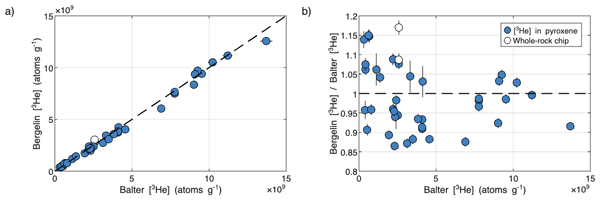
We developed a faster and simpler method to measure helium gas in targeted minerals within whole rocks to determine how long they have been exposed at Earth's surface. Instead of manually separating minerals, our method uses heat to release gas from the specific minerals of interest. This reduces time, cost, and physical effort, making it easier to collect large amounts of data when studying landscape change or when only small rock samples are available.
Marie Bergelin, Andrew L. Gorin, Greg Balco, and William S. Cassata
Geochronology, 7, 493–511, https://doi.org/10.5194/gchron-7-493-2025, https://doi.org/10.5194/gchron-7-493-2025, 2025
Short summary
Short summary
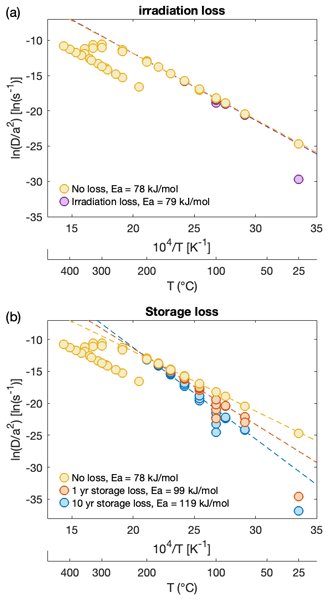
Helium gas accumulates over time in minerals, but loss can occur depending on temperature. If partially retained, its loss can potentially be used for determining past surface temperatures. This study uses a model that accounts for complex gas loss to analyze helium retention in two minerals commonly found on the surface of Antarctica. We find one of the minerals retains helium, while the other loses nearly all of the gas within 100 years, making it unsuitable as a climate reconstruction.
Greg Balco
Geochronology, 7, 247–253, https://doi.org/10.5194/gchron-7-247-2025, https://doi.org/10.5194/gchron-7-247-2025, 2025
Short summary
Short summary
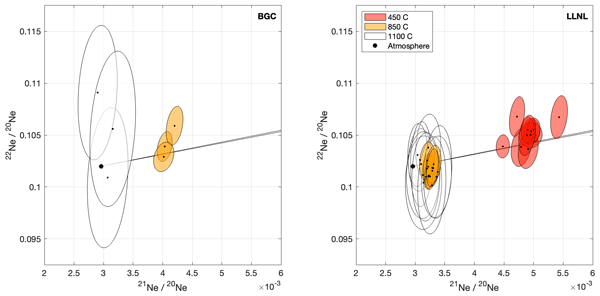
This paper describes measurements of cosmogenic neon-21 concentrations in a widely distributed mineral standard material that is routinely used for quality control and interlaboratory comparison for measurements of other cosmic-ray-produced nuclides useful for various geochronology applications. Broadly, this facilitates improvement of precision and accuracy of these measurements and their applications in geochronology.
Joanne S. Johnson, John Woodward, Ian Nesbitt, Kate Winter, Seth Campbell, Keir A. Nichols, Ryan A. Venturelli, Scott Braddock, Brent M. Goehring, Brenda Hall, Dylan H. Rood, and Greg Balco
The Cryosphere, 19, 303–324, https://doi.org/10.5194/tc-19-303-2025, https://doi.org/10.5194/tc-19-303-2025, 2025
Short summary
Short summary
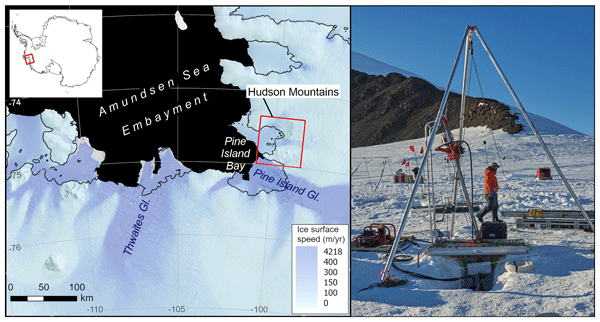
Determining where and when the Antarctic ice sheet was smaller than present requires recovery and exposure dating of subglacial bedrock. Here we use ice sheet model outputs and field data (geological and glaciological observations, bedrock samples, and ground-penetrating radar) to assess the suitability for subglacial drilling of sites in the Hudson Mountains, West Antarctica. We find that no sites are perfect, but two are feasible, with the most suitable being Winkie Nunatak (74.86°S, 99.77°W).
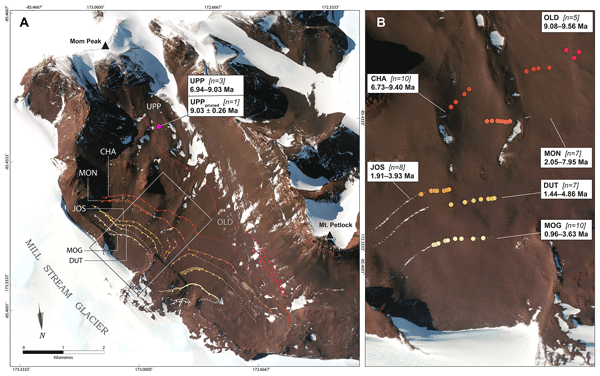
Gordon R. M. Bromley, Greg Balco, Margaret S. Jackson, Allie Balter-Kennedy, and Holly Thomas
Clim. Past, 21, 145–160, https://doi.org/10.5194/cp-21-145-2025, https://doi.org/10.5194/cp-21-145-2025, 2025
Short summary
Short summary
We constructed a geologic record of East Antarctic Ice Sheet thickness from deposits at Otway Massif to directly assess how Earth's largest ice sheet responds to warmer-than-present climate. Our record confirms the long-term dominance of a cold polar climate but lacks a clear ice sheet response to the mid-Pliocene Warm Period, a common analogue for the future. Instead, an absence of moraines from the late Miocene–early Pliocene suggests the ice sheet was less extensive than present at that time.
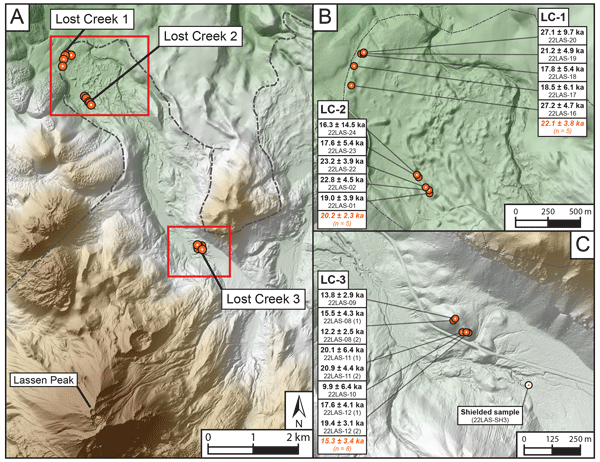
Joseph P. Tulenko, Greg Balco, Michael A. Clynne, and L. J. Patrick Muffler
Geochronology, 6, 639–652, https://doi.org/10.5194/gchron-6-639-2024, https://doi.org/10.5194/gchron-6-639-2024, 2024
Short summary
Short summary
Cosmogenic nuclide exposure dating is an exceptional tool for reconstructing glacier histories, but reconstructions based on common target nuclides (e.g., 10Be) can be costly and time-consuming to generate. Here, we present a cost-effective proof-of-concept 21Ne exposure age chronology from Lassen Volcanic National Park, CA, USA, that broadly agrees with nearby 10Be chronologies but at lower precision.
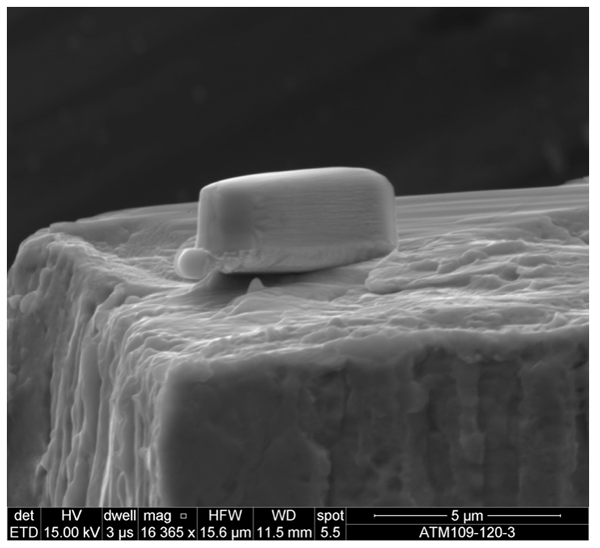
Greg Balco, Andrew J. Conant, Dallas D. Reilly, Dallin Barton, Chelsea D. Willett, and Brett H. Isselhardt
Geochronology, 6, 571–584, https://doi.org/10.5194/gchron-6-571-2024, https://doi.org/10.5194/gchron-6-571-2024, 2024
Short summary
Short summary
This paper describes how krypton isotopes produced by nuclear fission can be used to determine the age of microscopic particles of used nuclear fuel. This is potentially useful for international safeguard applications aimed at tracking and identifying nuclear materials, as well as geoscience applications involving dating post-1950s sediments or understanding environmental transport of nuclear materials.
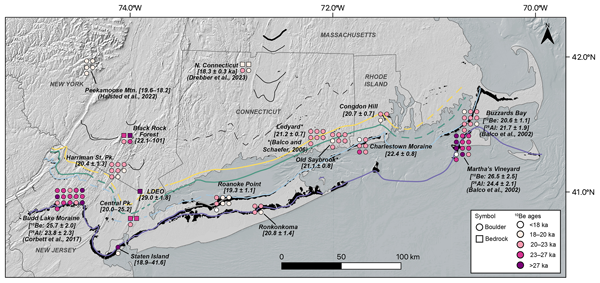
Allie Balter-Kennedy, Joerg M. Schaefer, Greg Balco, Meredith A. Kelly, Michael R. Kaplan, Roseanne Schwartz, Bryan Oakley, Nicolás E. Young, Jean Hanley, and Arianna M. Varuolo-Clarke
Clim. Past, 20, 2167–2190, https://doi.org/10.5194/cp-20-2167-2024, https://doi.org/10.5194/cp-20-2167-2024, 2024
Short summary
Short summary
We date sedimentary deposits showing that the southeastern Laurentide Ice Sheet was at or near its southernmost extent from ~ 26 000 to 21 000 years ago, when sea levels were at their lowest, with climate records indicating glacial conditions. Slow deglaciation began ~ 22 000 years ago, shown by a rise in modeled local summer temperatures, but significant deglaciation in the region did not begin until ~ 18 000 years ago, when atmospheric CO2 began to rise, marking the end of the last ice age.
Marie Bergelin, Greg Balco, Lee B. Corbett, and Paul R. Bierman
Geochronology, 6, 491–502, https://doi.org/10.5194/gchron-6-491-2024, https://doi.org/10.5194/gchron-6-491-2024, 2024
Short summary
Short summary
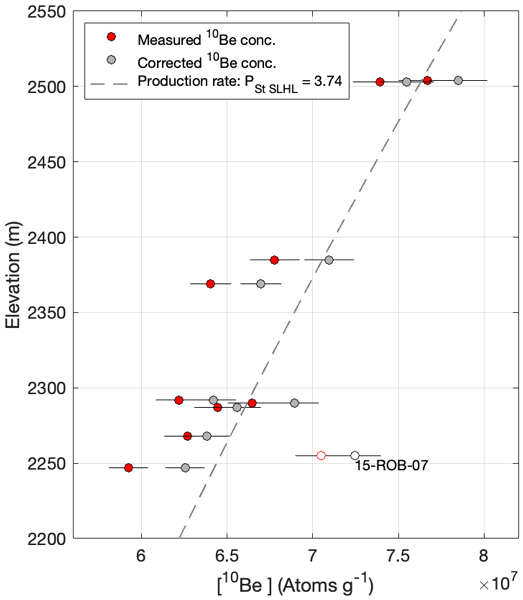
Cosmogenic nuclides, such as 10Be, are rare isotopes produced in rocks when exposed at Earth's surface and are valuable for understanding surface processes and landscape evolution. However, 10Be is usually measured in quartz minerals. Here we present advances in efficiently extracting and measuring 10Be in the pyroxene mineral. These measurements expand the use of 10Be as a dating tool for new rock types and provide opportunities to understand landscape processes in areas that lack quartz.
Greg Balco, Alan J. Hidy, William T. Struble, and Joshua J. Roering
Geochronology, 6, 71–76, https://doi.org/10.5194/gchron-6-71-2024, https://doi.org/10.5194/gchron-6-71-2024, 2024
Short summary
Short summary
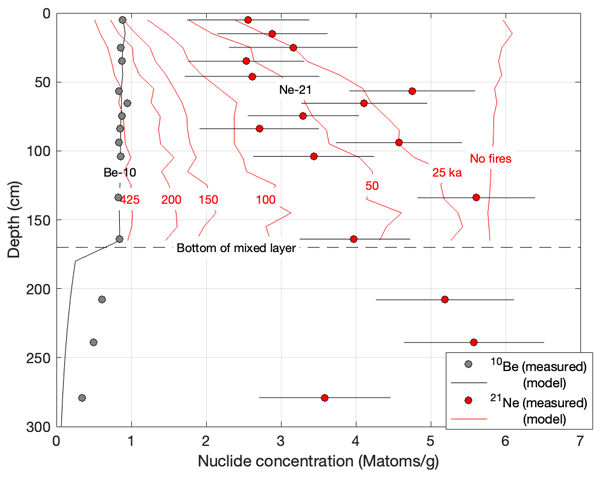
We describe a new method of reconstructing the long-term, pre-observational frequency and/or intensity of wildfires in forested landscapes using trace concentrations of the noble gases helium and neon that are formed in soil mineral grains by cosmic-ray bombardment of the Earth's surface.
Benoit S. Lecavalier, Lev Tarasov, Greg Balco, Perry Spector, Claus-Dieter Hillenbrand, Christo Buizert, Catherine Ritz, Marion Leduc-Leballeur, Robert Mulvaney, Pippa L. Whitehouse, Michael J. Bentley, and Jonathan Bamber
Earth Syst. Sci. Data, 15, 3573–3596, https://doi.org/10.5194/essd-15-3573-2023, https://doi.org/10.5194/essd-15-3573-2023, 2023
Short summary
Short summary
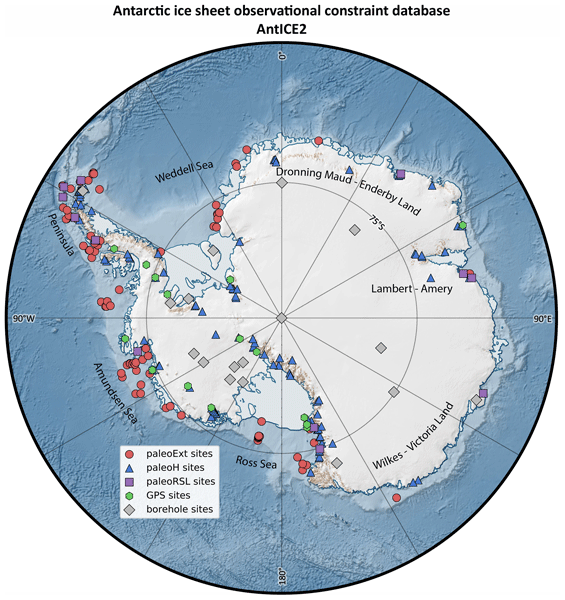
The Antarctic Ice Sheet Evolution constraint database version 2 (AntICE2) consists of a large variety of observations that constrain the evolution of the Antarctic Ice Sheet over the last glacial cycle. This includes observations of past ice sheet extent, past ice thickness, past relative sea level, borehole temperature profiles, and present-day bedrock displacement rates. The database is intended to improve our understanding of past Antarctic changes and for ice sheet model calibrations.
Allie Balter-Kennedy, Joerg M. Schaefer, Roseanne Schwartz, Jennifer L. Lamp, Laura Penrose, Jennifer Middleton, Jean Hanley, Bouchaïb Tibari, Pierre-Henri Blard, Gisela Winckler, Alan J. Hidy, and Greg Balco
Geochronology, 5, 301–321, https://doi.org/10.5194/gchron-5-301-2023, https://doi.org/10.5194/gchron-5-301-2023, 2023
Short summary
Short summary
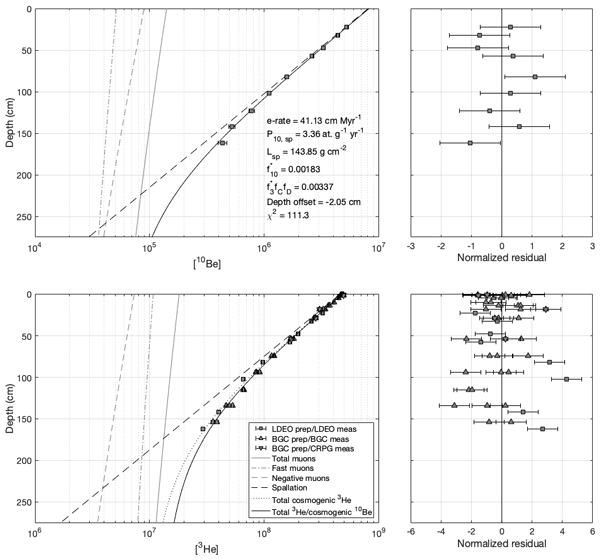
Cosmogenic nuclides like 10Be are rare isotopes created in rocks exposed at the Earth’s surface and can be used to understand glacier histories and landscape evolution. 10Be is usually measured in the mineral quartz. Here, we show that 10Be can be reliably measured in the mineral pyroxene. We use the measurements to determine exposure ages and understand landscape processes in rocks from Antarctica that do not have quartz, expanding the use of this method to new rock types.
Greg Balco, Nathan Brown, Keir Nichols, Ryan A. Venturelli, Jonathan Adams, Scott Braddock, Seth Campbell, Brent Goehring, Joanne S. Johnson, Dylan H. Rood, Klaus Wilcken, Brenda Hall, and John Woodward
The Cryosphere, 17, 1787–1801, https://doi.org/10.5194/tc-17-1787-2023, https://doi.org/10.5194/tc-17-1787-2023, 2023
Short summary
Short summary
Samples of bedrock recovered from below the West Antarctic Ice Sheet show that part of the ice sheet was thinner several thousand years ago than it is now and subsequently thickened. This is important because of concern that present ice thinning in this region may lead to rapid, irreversible sea level rise. The past episode of thinning at this site that took place in a similar, although not identical, climate was not irreversible; however, reversal required at least 3000 years to complete.
Anna Ruth W. Halberstadt, Greg Balco, Hannah Buchband, and Perry Spector
The Cryosphere, 17, 1623–1643, https://doi.org/10.5194/tc-17-1623-2023, https://doi.org/10.5194/tc-17-1623-2023, 2023
Short summary
Short summary
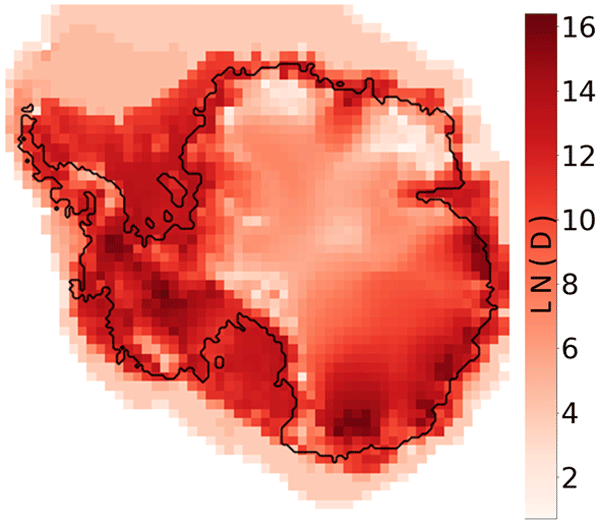
This paper explores the use of multimillion-year exposure ages from Antarctic bedrock outcrops to benchmark ice sheet model predictions and thereby infer ice sheet sensitivity to warm climates. We describe a new approach for model–data comparison, highlight an example where observational data are used to distinguish end-member models, and provide guidance for targeted sampling around Antarctica that can improve understanding of ice sheet response to climate warming in the past and future.

Jonathan R. Adams, Joanne S. Johnson, Stephen J. Roberts, Philippa J. Mason, Keir A. Nichols, Ryan A. Venturelli, Klaus Wilcken, Greg Balco, Brent Goehring, Brenda Hall, John Woodward, and Dylan H. Rood
The Cryosphere, 16, 4887–4905, https://doi.org/10.5194/tc-16-4887-2022, https://doi.org/10.5194/tc-16-4887-2022, 2022
Short summary
Short summary
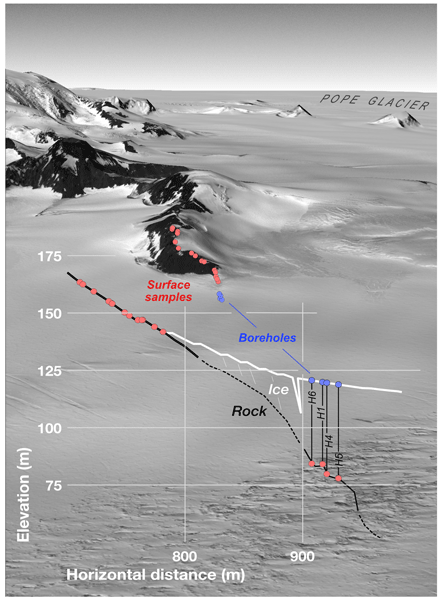
Glaciers in West Antarctica are experiencing significant ice loss. Geological data provide historical context for ongoing ice loss in West Antarctica, including constraints on likely future ice sheet behaviour in response to climatic warming. We present evidence from rare isotopes measured in rocks collected from an outcrop next to Pope Glacier. These data suggest that Pope Glacier thinned faster and sooner after the last ice age than previously thought.

Natacha Gribenski, Marissa M. Tremblay, Pierre G. Valla, Greg Balco, Benny Guralnik, and David L. Shuster
Geochronology, 4, 641–663, https://doi.org/10.5194/gchron-4-641-2022, https://doi.org/10.5194/gchron-4-641-2022, 2022
Short summary
Short summary
We apply quartz 3He paleothermometry along two deglaciation profiles in the European Alps to reconstruct temperature evolution since the Last Glacial Maximum. We observe a 3He thermal signal clearly colder than today in all bedrock surface samples exposed prior the Holocene. Current uncertainties in 3He diffusion kinetics do not permit distinguishing if this signal results from Late Pleistocene ambient temperature changes or from recent ground temperature variation due to permafrost degradation.
Marie Bergelin, Jaakko Putkonen, Greg Balco, Daniel Morgan, Lee B. Corbett, and Paul R. Bierman
The Cryosphere, 16, 2793–2817, https://doi.org/10.5194/tc-16-2793-2022, https://doi.org/10.5194/tc-16-2793-2022, 2022
Short summary
Short summary
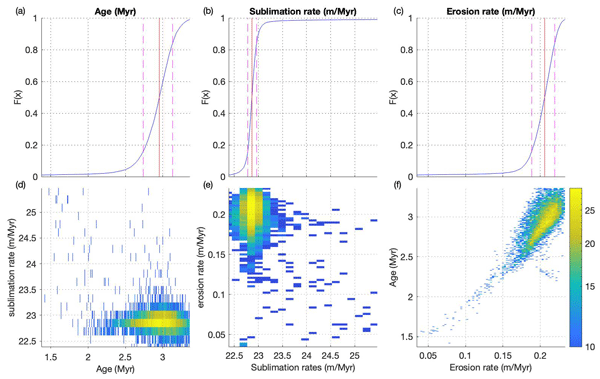
Glacier ice contains information on past climate and can help us understand how the world changes through time. We have found and sampled a buried ice mass in Antarctica that is much older than most ice on Earth and difficult to date. Therefore, we developed a new dating application which showed the ice to be 3 million years old. Our new dating solution will potentially help to date other ancient ice masses since such old glacial ice could yield data on past environmental conditions on Earth.
Mae Kate Campbell, Paul R. Bierman, Amanda H. Schmidt, Rita Sibello Hernández, Alejandro García-Moya, Lee B. Corbett, Alan J. Hidy, Héctor Cartas Águila, Aniel Guillén Arruebarrena, Greg Balco, David Dethier, and Marc Caffee
Geochronology, 4, 435–453, https://doi.org/10.5194/gchron-4-435-2022, https://doi.org/10.5194/gchron-4-435-2022, 2022
Short summary
Short summary
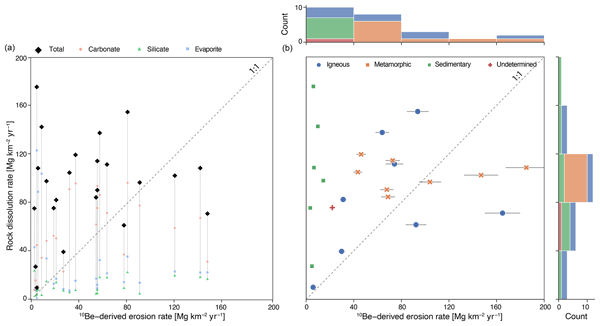
We used cosmogenic radionuclides in detrital river sediment to measure erosion rates of watersheds in central Cuba; erosion rates are lower than rock dissolution rates in lowland watersheds. Data from two different cosmogenic nuclides suggest that some basins may have a mixed layer deeper than is typically modeled and could have experienced significant burial after or during exposure. We conclude that significant mass loss may occur at depth through chemical weathering processes.

Joanne S. Johnson, Ryan A. Venturelli, Greg Balco, Claire S. Allen, Scott Braddock, Seth Campbell, Brent M. Goehring, Brenda L. Hall, Peter D. Neff, Keir A. Nichols, Dylan H. Rood, Elizabeth R. Thomas, and John Woodward
The Cryosphere, 16, 1543–1562, https://doi.org/10.5194/tc-16-1543-2022, https://doi.org/10.5194/tc-16-1543-2022, 2022
Short summary
Short summary
Recent studies have suggested that some portions of the Antarctic Ice Sheet were less extensive than present in the last few thousand years. We discuss how past ice loss and regrowth during this time would leave its mark on geological and glaciological records and suggest ways in which future studies could detect such changes. Determining timing of ice loss and gain around Antarctica and conditions under which they occurred is critical for preparing for future climate-warming-induced changes.
Jamey Stutz, Andrew Mackintosh, Kevin Norton, Ross Whitmore, Carlo Baroni, Stewart S. R. Jamieson, Richard S. Jones, Greg Balco, Maria Cristina Salvatore, Stefano Casale, Jae Il Lee, Yeong Bae Seong, Robert McKay, Lauren J. Vargo, Daniel Lowry, Perry Spector, Marcus Christl, Susan Ivy Ochs, Luigia Di Nicola, Maria Iarossi, Finlay Stuart, and Tom Woodruff
The Cryosphere, 15, 5447–5471, https://doi.org/10.5194/tc-15-5447-2021, https://doi.org/10.5194/tc-15-5447-2021, 2021
Short summary
Short summary
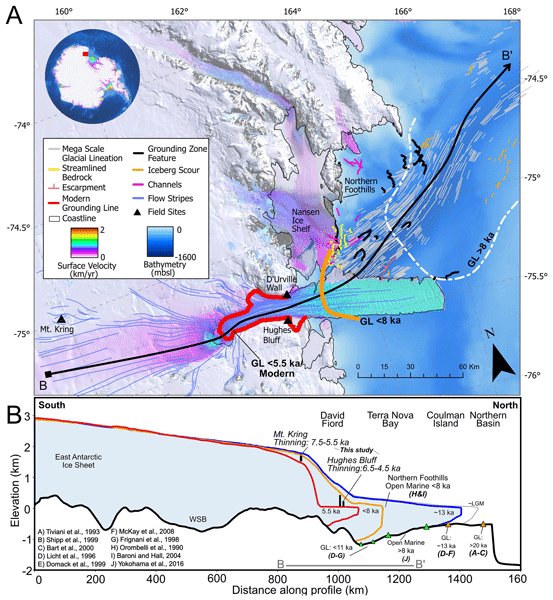
Understanding the long-term behaviour of ice sheets is essential to projecting future changes due to climate change. In this study, we use rocks deposited along the margin of the David Glacier, one of the largest glacier systems in the world, to reveal a rapid thinning event initiated over 7000 years ago and endured for ~ 2000 years. Using physical models, we show that subglacial topography and ocean heat are important drivers for change along this sector of the Antarctic Ice Sheet.
Cited articles
Albrecht, T., Winkelmann, R., and Levermann, A.: Glacial-cycle simulations of the Antarctic Ice Sheet with the Parallel Ice Sheet Model (PISM) – Part 2: Parameter ensemble analysis, The Cryosphere, 14, 633–656, https://doi.org/10.5194/tc-14-633-2020, 2020a.
Albrecht, T., Winkelmann, R., and Levermann, A.: Glacial-cycle simulations of the Antarctic Ice Sheet with the Parallel Ice Sheet Model (PISM) – Part 1: Boundary conditions and climatic forcing, The Cryosphere, 14, 599–632, https://doi.org/10.5194/tc-14-599-2020, 2020b.
Anderson, J. T. H., Wilson, G. S., Fink, D., Lilly, K., Levy, R. H., and Townsend, D.: Reconciling marine and terrestrial evidence for post LGM ice sheet retreat in southern McMurdo Sound, Antarctica, Quat. Sci. Rev., 157, 1–13, https://doi.org/10.1016/j.quascirev.2016.12.007, 2017.
Balco, G.: Technical note: A prototype transparent-middle-layer data management and analysis infrastructure for cosmogenic-nuclide exposure dating, Geochronology, 2, 169–175, https://doi.org/10.5194/gchron-2-169-2020, 2020.
Balco, G., Todd, C., Huybers, K., Campbell, S., Vermeulen, M., Hegland, M., Goehring, B. M., and Hillebrand, T. R.: Cosmogenic-nuclide exposure ages from the Pensacola Mountains adjacent to the foundation ice stream, Antarctica, Am. J. Sci., 316, 542–577, https://doi.org/10.2475/06.2016.02, 2016.
Balco, G., Todd, C., Goehring, B. M., Moening-Swanson, I., and Nichols, K.: Glacial geology and cosmogenic-nuclide exposure ages from the Tucker glacier – Whitehall glacier confluence, northern Victoria Land, Antarctica, Am. J. Sci., 319, 255–286, https://doi.org/10.2475/04.2019.01, 2019.
Bentley, M. J., Hein, A. S., Sugden, D. E., Whitehouse, P. L., Shanks, R., Xu, S., and Freeman, S. P. H. T.: Deglacial history of the Pensacola Mountains, Antarctica from glacial geomorphology and cosmogenic nuclide surface exposure dating, Quat. Sci. Rev., 158, 58–76, https://doi.org/10.1016/j.quascirev.2016.09.028, 2017.
Bintanja, R.: On the glaciological, meteorological, and climatological significance of Antarctic blue ice areas, Rev. Geophys. 37, 337–359, https://doi.org/10.1029/1999RG900007, 1999.
Briggs, R. D. and Tarasov, L.: How to evaluate model-derived deglaciation chronologies: A case study using Antarctica, Quat. Sci. Rev., 63, 109–127, https://doi.org/10.1016/j.quascirev.2012.11.021, 2013.
Briggs, R. D., Pollard, D., and Tarasov, L.: A data-constrained large ensemble analysis of Antarctic evolution since the Eemian, Quat. Sci. Rev., 103, 91–115, https://doi.org/10.1016/j.quascirev.2014.09.003, 2014.
Buizert, C., Fudge, T. J., Roberts, W. H. G., Steig, E. J., Sherriff-Tadano, S., Ritz, C., Lefebvre, E., Edwards, J., Kawamura, K., Oyabu, I., Motoyama, H., Kahle, E. C., Jones, T. R., Abe-Ouchi, A., Obase, T., Martin, C., Corr, H., Severinghaus, J. P., Beaudette, R., Epifanio, J. A., Brook, E. J., Martin, K., Chappellaz, J., Aoki, S., Nakazawa, T., Sowers, T. A., Alley, R. B., Ahn, J., Sigl, M., Severi, M., Dunbar, N. W., Svensson, A., Fegyveresi, J. M., He, C., Liu, Z., Zhu, J., Otto-Bliesner, B. L., Lipenkov, V. Y., Kageyama, M., and Schwander, J.: Antarctic surface temperature and elevation during the Last Glacial Maximum, Science, 372, 1097–1101, https://doi.org/10.1126/science.abd2897, 2021.
Cornford, S. L., Seroussi, H., Asay-Davis, X. S., Gudmundsson, G. H., Arthern, R., Borstad, C., Christmann, J., Dias dos Santos, T., Feldmann, J., Goldberg, D., Hoffman, M. J., Humbert, A., Kleiner, T., Leguy, G., Lipscomb, W. H., Merino, N., Durand, G., Morlighem, M., Pollard, D., Rückamp, M., Williams, C. R., and Yu, H.: Results of the third Marine Ice Sheet Model Intercomparison Project (MISMIP+), The Cryosphere, 14, 2283–2301, https://doi.org/10.5194/tc-14-2283-2020, 2020.
DeConto, R. M., Pollard, D., Alley, R. B., Velicogna, I., Gasson, E., Gomez, N., Sadai, S., Condron, A., Gilford, D. M., Ashe, E. L., Kopp, R. E., Li, D., and Dutton, A.: The Paris Climate Agreement and future sea level rise from Antarctica, Nature, 593, https://doi.org/10.1038/s41586-021-03427-0, 2021.
Ely, J. C., Clark, C. D., Small, D., and Hindmarsh, R. C. A.: ATAT 1.1, the Automated Timing Accordance Tool for comparing ice-sheet model output with geochronological data, Geosci. Model Dev., 12, 933–953, https://doi.org/10.5194/gmd-12-933-2019, 2019.
Fretwell, P., Pritchard, H. D., Vaughan, D. G., Bamber, J. L., Barrand, N. E., Bell, R., Bianchi, C., Bingham, R. G., Blankenship, D. D., Casassa, G., Catania, G., Callens, D., Conway, H., Cook, A. J., Corr, H. F. J., Damaske, D., Damm, V., Ferraccioli, F., Forsberg, R., Fujita, S., Gim, Y., Gogineni, P., Griggs, J. A., Hindmarsh, R. C. A., Holmlund, P., Holt, J. W., Jacobel, R. W., Jenkins, A., Jokat, W., Jordan, T., King, E. C., Kohler, J., Krabill, W., Riger-Kusk, M., Langley, K. A., Leitchenkov, G., Leuschen, C., Luyendyk, B. P., Matsuoka, K., Mouginot, J., Nitsche, F. O., Nogi, Y., Nost, O. A., Popov, S. V., Rignot, E., Rippin, D. M., Rivera, A., Roberts, J., Ross, N., Siegert, M. J., Smith, A. M., Steinhage, D., Studinger, M., Sun, B., Tinto, B. K., Welch, B. C., Wilson, D., Young, D. A., Xiangbin, C., and Zirizzotti, A.: Bedmap2: improved ice bed, surface and thickness datasets for Antarctica, The Cryosphere 7, 375–393, https://doi.org/10.5194/tc-7-375-2013, 2013.
Goehring, B. M., Balco, G., Todd, C., Moening-Swanson, I., and Nichols, K.: Late-glacial grounding line retreat in the northern Ross Sea, Antarctica, Geology, 47, 291–294, https://doi.org/10.1130/G45413.1, 2019.
Halberstadt, A. R., Balco, G., Tulenko, J., and Jones-Ivey, R.: Model-data deglacial ice sheet thinning comparison, Zenodo [data set], https://doi.org/10.5281/zenodo.15284166, 2025.
Hillebrand, T. R., Stone, J. O., Koutnik, M., King, C., Conway, H., Hall, B., Nichols, K., Goehring, B., and Gillespie, M. K.: Holocene thinning of Darwin and Hatherton glaciers, Antarctica, and implications for grounding-line retreat in the Ross Sea, The Cryosphere, 15, 3329–3354, https://doi.org/10.5194/tc-15-3329-2021, 2021.
Jones, R. S., Mackintosh, A. N., Norton, K. P., Golledge, N. R., Fogwill, C. J., Kubik, P. W., Christl, M., and Greenwood, S. L.: Rapid Holocene thinning of an East Antarctic outlet glacier driven by marine ice sheet instability, Nat. Commun., 6, 8910, https://doi.org/10.1038/ncomms9910, 2015.
Jones, R. S., Johnson, J. S., Lin, Y., Sefton, J. P., Smith, J. A., Thomas, E. R., and Whitehouse, P. L.: Stability of the Antarctic Ice Sheet during the pre-industrial Holocene, Nat. Rev. Earth Environ., 3, 500–515, https://doi.org/10.1038/s43017-022-00309-5, 2022.
Le Brocq, A. M., Payne, A. J., and Vieli, A.: An improved Antarctic dataset for high resolution numerical ice sheet models (ALBMAP v1), Earth Syst. Sci. Data, 2, 247–260, https://doi.org/10.5194/essd-2-247-2010, 2010.
Lecavalier, B. S. and Tarasov, L.: A history-matching analysis of the Antarctic Ice Sheet since the Last Interglacial – Part 1: Ice sheet evolution, The Cryosphere, 19, 919–953, https://doi.org/10.5194/tc-19-919-2025, 2025.
Lecavalier, B. S., Tarasov, L., Balco, G., Spector, P., Hillenbrand, C. D., Buizert, C., Ritz, C., Leduc-Leballeur, M., Mulvaney, R., Whitehouse, P. L., Bentley, M. J., and Bamber, J.: Antarctic Ice Sheet paleo-constraint database, Earth Syst. Sci. Data, 15, 3573–3596, https://doi.org/10.5194/essd-15-3573-2023, 2023.
Lisiecki, L. E. and Raymo, M. E.: A Pliocene-Pleistocene stack of 57 globally distributed benthic δ18O records, Paleoceanography, 20, https://doi.org/10.1029/2004PA001071, 2005.
Liu, Z., Otto-Bliesner, B. L., He, F., Brady, E. C., Tomas, R., Clark, P. U., Carlson, A. E., Lynch-Stieglitz, J., Curry, W., Brook, E., Erickson, D., Jacob, R., Kutzbach, J., and Cheng, J.: Transient Simulation of Last Deglaciation with a New Mechanism for Bølling-Allerød Warming, Science, 325, 310–314, 2009.
Lowry, D. P., Golledge, N. R., Bertler, N. A. N., Jones, R. S., and McKay, R.: Deglacial grounding-line retreat in the Ross Embayment, Antarctica, controlled by ocean and atmosphere forcing, Sci. Adv., 5, eaav8754, https://doi.org/10.1126/sciadv.aav8754, 2019.
Mas e Braga, M., Selwyn Jones, R., Newall, J. C. H., Rogozhina, I., Andersen, J. L., Lifton, N. A., and Stroeven, A. P.: Nunataks as barriers to ice flow: implications for palaeo ice sheet reconstructions, The Cryosphere, 15, 4929–4947, https://doi.org/10.5194/tc-15-4929-2021, 2021.
Nichols, K. A.: A decade of in situ cosmogenic14C in Antarctica, Ann. Glaciol., 286, https://doi.org/10.1017/aog.2023.13, 2023.
Nichols, K. A., Rood, D. H., Venturelli, R. A., Balco, G., Adams, J. R., Guillaume, L., Campbell, S., Goehring, B. M., Hall, B. L., Wilcken, K., Woodward, J., and Johnson, J. S.: Offshore-onshore record of Last Glacial Maximum to present grounding line retreat at Pine Island Glacier, Antarctica, Geology, 51, 1033–1037, https://doi.org/10.1130/G51326.1, 2023.
Peltier, W. R.: Global glacial isostasy and the surface of the ice-age earth: The ICE-5G (VM2) model and GRACE, Annual Reviews, 32, 111–149, https://doi.org/10.1146/annurev.earth.32.082503.144359, 2004.
Pittard, M. L., Whitehouse, P. L., Bentley, M. J., and Small, D.: An ensemble of Antarctic deglacial simulations constrained by geological observations, Quat. Sci. Rev., 298, 107800, https://doi.org/10.1016/j.quascirev.2022.107800, 2022.
Pollard, D. and DeConto, R. M.: A simple inverse method for the distribution of basal sliding coefficients under ice sheets, applied to Antarctica, The Cryosphere, 6, 953–971, https://doi.org/10.5194/tc-6-953-2012, 2012a.
Pollard, D. and DeConto, R. M.: Description of a hybrid ice sheet-shelf model, and application to Antarctica, Geosci. Model Dev., 5, 1273–1295, https://doi.org/10.5194/gmd-5-1273-2012, 2012b.
Pollard, D., DeConto, R. M., and Alley, R. B.: Potential Antarctic Ice Sheet retreat driven by hydrofracturing and ice cliff failure, Earth Planet Sci. Lett., 412, 112–121, https://doi.org/10.1016/j.epsl.2014.12.035, 2015.
Pollard, D., Chang, W., Haran, M., Applegate, P., and DeConto, R.: Large ensemble modeling of the last deglacial retreat of the West Antarctic Ice Sheet: Comparison of simple and advanced statistical techniques, Geosci. Model Dev., 9, 1697–1723, https://doi.org/10.5194/gmd-9-1697-2016, 2016.
Pritchard, H. D., Arthern, R. J., Vaughan, D. G., and Edwards, L. A.: Extensive dynamic thinning on the margins of the Greenland and Antarctic ice sheets, Nature, 461, 971–975, https://doi.org/10.1038/nature08471, 2009.
Rand, C., Jones, R. S., Mackintosh, A. N., Goehring, B., and Lilly, K.: A thicker, rather than thinner, East Antarctic Ice Sheet plateau during the Last Glacial Maximum, EGUsphere [preprint], https://doi.org/10.5194/egusphere-2024-2674, 2024.
Rignot, E., Mouginot, J., and Scheuchl, B.: Ice Flow of the Antarctic Ice Sheet, Science, 333, 1427–1430, https://doi.org/10.1126/science.1207922, 2011.
Schoof, C.: Ice sheet grounding line dynamics: Steady states, stability, and hysteresis, J. Geophys. Res.-Earth Surf., 112, 1–19, https://doi.org/10.1029/2006JF000664, 2007.
Spector, P., Stone, J., Cowdery, S. G., Hall, B., Conway, H., and Bromley, G.: Rapid early-Holocene deglaciation in the Ross Sea, Antarctica, Geophys. Res. Lett. 44, 7817–7825. https://doi.org/10.1002/2017GL074216, 2017.
Stutz, J., Mackintosh, A., Norton, K., Whitmore, R., Baroni, C., Jamieson, S. S. R., Jones, R. S., Balco, G., Salvatore, M. C., Casale, S., Lee, J. I., Seong, Y. B., McKay, R., Vargo, L. J., Lowry, D., Spector, P., Christl, M., Ivy Ochs, S., Di Nicola, L., Iarossi, M., Stuart, F., and Woodruff, T.: Mid-Holocene thinning of David Glacier, Antarctica: chronology and controls, The Cryosphere, 15, 5447–5471, https://doi.org/10.5194/tc-15-5447-2021, 2021.
Stutz, J., Eaves, S., Norton, K., Wilcken, K. M., Moore, C., McKay, R., Lowry, D., Licht, K., and Johnson, K.: Inland thinning of Byrd Glacier, Antarctica, during Ross Ice Shelf formation, Earth Surf. Process. Landf., 48, 3363–3380, https://doi.org/10.1002/esp.5701, 2023.
Suganuma, Y., Kaneda, H., Mas e Braga, M., Ishiwa, T., Koyama, T., Newall, J. C., Okuno, J., Obase, T., Saito, F., Rogozhina, I., Andersen, J. L., Kawamata, M., Hirabayashi, M., Lifton, N. A., Fredin, O., Harbor, J. M., Stroeven, A. P., and Abe-ouchi, A.: Regional sea-level highstand triggered Holocene ice sheet thinning across coastal Dronning Maud Land, East Antarctica, Commun. Earth Environ., 3, 1–11, https://doi.org/10.1038/s43247-022-00599-z, 2022.
Sugden, D. E., Balco, G., Cowdery, S. G., Stone, J. O., and Sass, L. C.: Selective glacial erosion and weathering zones in the coastal mountains of Marie Byrd Land, Antarctica, Geomorphology, 67, 317–334, https://doi.org/10.1016/j.geomorph.2004.10.007, 2005.
The RAISED Consortium, Bentley, M. J., OCofaigh, C., Anderson, J. B., Conway, H., Davies, B., Graham, A. G. C., Hillenbrand, C. D., Hodgson, D. A., Jamieson, S. S. R., Larter, R. D., Mackintosh, A., Smith, J. A., Verleyen, E., Ackert, R. P., Bart, P. J., Berg, S., Brunstein, D., Canals, M., Colhoun, E. A., Crosta, X., Dickens, W. A., Domack, E., Dowdeswell, J. A., Dunbar, R., Ehrmann, W., Evans, J., Favier, V., Fink, D., Fogwill, C. J., Glasser, N. F., Gohl, K., Golledge, N. R., Goodwin, I., Gore, D. B., Greenwood, S. L., Hall, B. L., Hall, K., Hedding, D. W., Hein, A. S., Hocking, E. P., Jakobsson, M., Johnson, J. S., Jomelli, V., Jones, R. S., Klages, J. P., Kristoffersen, Y., Kuhn, G., Leventer, A., Licht, K., Lilly, K., Lindow, J., Livingstone, S. J., Mass??, G., McGlone, M. S., McKay, R. M., Melles, M., Miura, H., Mulvaney, R., Nel, W., Nitsche, F. O., O'Brien, P. E., Post, A. L., Roberts, S. J., Saunders, K. M., Selkirk, P. M., Simms, A. R., Spiegel, C., Stolldorf, T. D., Sugden, D. E., van der Putten, N., van Ommen, T., Verfaillie, D., Vyverman, W., Wagner, B., White, D. A., Witus, A. E., and Zwartz, D.: A community-based geological reconstruction of Antarctic Ice Sheet deglaciation since the Last Glacial Maximum, Quat. Sci. Rev., 100, 1–9, https://doi.org/10.1016/j.quascirev.2014.06.025, 2014.
Todd, C., Stone, J., Conway, H., Hall, B., and Bromley, G.: Late Quaternary evolution of Reedy Glacier, Antarctica, Quat. Sci. Rev., 29, 1328–1341, https://doi.org/10.1016/j.quascirev.2010.02.001, 2010.
White, D. A., Fink, D., and Gore, D. B.: Cosmogenic nuclide evidence for enhanced sensitivity of an East Antarctic ice stream to change during the last deglaciation, Geology 39, 23–26, https://doi.org/10.1130/G31591.1, 2011.
Short summary
We developed a new framework for testing how well computer models of the Antarctic ice sheet match geological measurements of past ice thinning. By using more data and higher-spatial-resolution modeling, we improve how well models capture complex regions. Our approach also makes it easier to include new data as they become available. We describe multiple metrics for comparing models and data. This can help scientists better understand how the ice sheet changed in the past.
We developed a new framework for testing how well computer models of the Antarctic ice sheet...


