
Articles | Volume 20, issue 11
https://doi.org/10.5194/tc-20-6263-2026
© Author(s) 2026. This work is distributed under
the Creative Commons Attribution 4.0 License.
the Creative Commons Attribution 4.0 License.
https://doi.org/10.5194/tc-20-6263-2026
© Author(s) 2026. This work is distributed under
the Creative Commons Attribution 4.0 License.
the Creative Commons Attribution 4.0 License.
Research article
| 
03 Nov 2026
Research article |
| 03 Nov 2026
| 03 Nov 2026
Seasonal icings reveal subsurface water drainage of a Greenland Ice Sheet outlet glacier
Rebecca McCerery
CORRESPONDING AUTHOR

School of Geography and Natural Sciences, Northumbria University, Newcastle Upon Tyne, NE1 8ST, UK
Joseph A. Graly
School of Geography and Natural Sciences, Northumbria University, Newcastle Upon Tyne, NE1 8ST, UK
Christopher L. Hansen
Department of Plant and Microbial Biology, University of Minnesota, Saint Paul, MN 55108, USA
Kate Winter
School of Geography and Natural Sciences, Northumbria University, Newcastle Upon Tyne, NE1 8ST, UK
William P. Gilhooly III
Department of Earth & Environmental Sciences, Indiana University Indianapolis, Indianapolis, IN 46202, USA
Trinity L. Hamilton
Department of Plant and Microbial Biology, University of Minnesota, Saint Paul, MN 55108, USA
The BioTechnology Institute, University of Minnesota, Saint Paul, MN 55108, USA
Moses Jatta
Department of Earth & Environmental Sciences, Indiana University Indianapolis, Indianapolis, IN 46202, USA
Jeff R. Havig
Department of Plant and Microbial Biology, University of Minnesota, Saint Paul, MN 55108, USA
Felipe Napoleoni
School of Geography and Natural Sciences, Northumbria University, Newcastle Upon Tyne, NE1 8ST, UK
School of Geosciences, University of Edinburgh, Edinburgh, EH8 9XP, UK
Alicia M. Rutledge
Department of Astronomy and Planetary Science, Northern Arizona University, Flagstaff, AZ 86011, USA
Matthew Terrell
Department of Earth & Environmental Sciences, Indiana University Indianapolis, Indianapolis, IN 46202, USA
Tanya M. Trott
School of Biosciences, Geography and Physics, Swansea University, Swansea, SA2 8PP, UK
Kayla Woodie
Department of Earth & Environmental Sciences, Indiana University Indianapolis, Indianapolis, IN 46202, USA
Bernd Kulessa
School of Biosciences, Geography and Physics, Swansea University, Swansea, SA2 8PP, UK
Sevi Modestou
School of Geography and Natural Sciences, Northumbria University, Newcastle Upon Tyne, NE1 8ST, UK
Hannah Bahrani
School of Geography and Natural Sciences, Northumbria University, Newcastle Upon Tyne, NE1 8ST, UK
Tori Kennedy
Department of Earth & Environmental Sciences, Indiana University Indianapolis, Indianapolis, IN 46202, USA
Alexandra Messerli
Asiaq Greenland Survey, Nuuk, GL, Greenland
Kathy Licht
Department of Earth & Environmental Sciences, Indiana University Indianapolis, Indianapolis, IN 46202, USA
Related authors
No articles found.
Alexandra Auderset, Xiaoqing Liu, Neeraj S. Shah, Sarah J. Feakins, Francesca Sangiorgi, Amelia Shevenell, Kasia K. Śliwińska, Appy Sluijs, Evi Wubben, Yi Ge Zhang, Sevasti Modestou, Sindia Sosdian, and Ann Holbourn
Earth Syst. Sci. Data Discuss., https://doi.org/10.5194/essd-2026-711, https://doi.org/10.5194/essd-2026-711, 2026
Preprint under review for ESSD
Short summary
Short summary
Climate models struggle to reproduce Miocene (23–5.3 million years ago) ocean temperatures, a period when CO2 levels overlapped near-future projections. Understanding this model–data mismatch requires evaluating available temperature records and uncertainties. We compiled MioTEX, a standardized global dataset of Miocene ocean temperatures from 46 sites using the TEX86 proxy. Calibration choices influence absolute temperatures. MioTEX is freely accessible via an interactive web platform.
Sindia M. Sosdian, Alexandra Auderset, Sevasti Modestou, Ann Holbourn, Flavia Boscolo-Galazzo, Anna Joy Drury, Anya V. Hess, Karlos G. D. Kochhann, Diederik Liebrand, Xiaoqing Liu, Jared Nirenberg, Neeraj S. Shah, Deborah Tangunan, Gerald Auer, Marcus P. S. Badger, Clara Bolton, Alexander Clark, Anya Crocker, David Evans, Sarah Feakins, Timothy Herbert, Emily Judd, Jennifer Kasbohm, David King, Wout Krijgsman, Wolfgang Kuhnt, Kira Lawrence, Caroline H. Lear, Kim Marshall-Mills, Erin McClymont, Nele Meckler, Paul Minton, Katrina Nilsson-Kerr, Diana Ochoa, Marci Robinson, Thamizharasan Sakthivel, Francesca Sangiorgi, Amelia E. Shevenell, Weimin Si, Elizabeth Sibert, Kasia K. Sliwinska, Appy Sluijs, Heather Stoll, Victoria Taylor, Tim van Peer, Bridget Wade, Thomas Westerhold, Evi Wubben, Yige Zhang, and Martin Ziegler
Earth Syst. Sci. Data Discuss., https://doi.org/10.5194/essd-2026-699, https://doi.org/10.5194/essd-2026-699, 2026
Preprint under review for ESSD
Short summary
Short summary
The MioOcean database hosts Miocene (23–5.3 million years ago) ocean temperatures, standardised and with updated age information, comprising 22,941 data points from 101 scientific studies. As parts of the Miocene were warmer than present, with estimated CO2 levels similar to those projected for the near future, this database enables assessment of how past oceans responded to climate variations, which may improve predictions of climate responses to anticipated future warming.
Sindia M. Sosdian, Karlos G. D. Kochhann, Anya V. Hess, Clara Bolton, Anna Joy Drury, Emily J. Judd, Wolfgang Kuhnt, Caroline H. Lear, Paul Minton, Alexandra Auderset, Sevasti Modestou, and Ann Holbourn
Earth Syst. Sci. Data Discuss., https://doi.org/10.5194/essd-2026-697, https://doi.org/10.5194/essd-2026-697, 2026
Preprint under review for ESSD
Short summary
Short summary
From 23.0 and 5.3 Million years ago (Miocene epoch), atmospheric carbon dioxide levels were similar to those projected for the future. To assess their impact on global climate, it is crucial to robustly reconst ocean temperatures using proxies, such as the magnesium-to-calcium (Mg/Ca) ratio in microfossils called foraminifera. Here we reevaluate global Miocene foraminiferal Mg/Ca records, and use revised calibrations to recalculate, assessing uncertainties, upper and deep ocean temperatures.
Natalie J. Burls, Nicky M. Wright, R. Paul Acosta, Catherine D. Bradshaw, Edward Gasson, Lennert B. Stap, Gilles Ramstein, Anna Ruth W. Halberstadt, Agatha M. De Boer, Funda Akgün, David J. Cantrill, Manuel Casas-Gallego, Nela Doláková, Boglarka Erdei, Alex Farnsworth, Sarah Feakins, Ran Feng, Tamara Fletcher, Frédéric Fluteau, J. A. Mattias Green, Anna S. von der Heydt, Matthew Huber, David K. Hutchinson, Dimiter Ivanov, Mine Sezgül Kayseri-Özer, Gregor Knorr, Marianna Kováčová, Caroline H. Lear, Allegra N. LeGrande, Shufeng Li, Xiaoqing Liu, Daniel J. Lunt, Katrin Meissner, Yunfa Miao, Trusha J. Naik, Javier B. Navarro, Joseph B. Novak, Diana Ochoa, Guy J.G. Paxman, Matthew J. Pound, James W. B. Rae, Tammo Reichgelt, Martin Renoult, Francesca Sangiorgi, Anta-Clarisse Sarr, Diane Segalla, Pierre Sepulchre, Amelia Shevenell, Sebastian Steinig, Eivind Straume, Caroline A. E. Strömberg, Clay Tabor, Torsten Utescher, Julia E. Weiffenbach, Elżbieta Worobiec, Yurui Zhang, Feng Zhu, Jiang Zhu, Alexandra Auderset, Florence Colleoni, Aisling Dolan, Rachel Havranek, Ann Holbourn, Nicholas Herold, Daeun Lee, James W. Marschalek, Bryce Mitsunaga, Sevi Modestou, Lina Perez-Angel, Mae Saslaw, Sinda Sosdian, Elena Stiles, Yong Sun, Ning Tan, Zhongshi Zhang, and Yan Zhao
EGUsphere, https://doi.org/10.5194/egusphere-2026-3595, https://doi.org/10.5194/egusphere-2026-3595, 2026
Short summary
Short summary
Simulating warm paleoclimates increases our understanding of the mechanisms that drive climatic change and tipping points. The Miocene Epoch, specifically the Miocene Climatic Optimum, has been identified as a particularly valuable past warm climate to simulate, meriting the design of a coordinated Miocene Model Intercomparison Project. Here we synthesize the latest available literature and present the experimental design for coordinated Miocene simulations and sensitivity studies.
Victoria R. Dutch, Nick Rutter, Muhammad Waqas Khan, Alex Mavrovic, Alexandre Roy, Sevi Modestou, Oliver Sonnentag, Carolina Voigt, Philip Marsh, and Paul J. Mann
EGUsphere, https://doi.org/10.5194/egusphere-2026-3835, https://doi.org/10.5194/egusphere-2026-3835, 2026
This preprint is open for discussion and under review for Biogeosciences (BG).
Short summary
Short summary
We use low-cost CO2 sensors to measure the release of CO2 from an Arctic tundra environment in two winters. We find CO2 emissions to be positive across a range of snow depths and different vegetation types. The winter-to-spring transition influences the release of CO2, with warming temperatures allowing more CO2 to be released, similar to other data from across the Arctic. We show our low-cost sensors may be used to investigate processes controlling CO2 release at high temporal resolution.
Neil Ross, Rebecca J. Sanderson, Bernd Kulessa, Martin Siegert, Guy J. G. Paxman, Keir A. Nichols, Matthew R. Siegfried, Stewart S. R. Jamieson, Michael J. Bentley, Tom A. Jordan, Christine L. Batchelor, David Small, Olaf Eisen, Kate Winter, Robert G. Bingham, S. Louise Callard, Rachel Carr, Christine F. Dow, Helen A. Fricker, Emily Hill, Benjamin H. Hills, Coen Hofstede, Hafeez Jeofry, Felipe Napoleoni, and Wilson Sauthoff
The Cryosphere, 20, 3705–3737, https://doi.org/10.5194/tc-20-3705-2026, https://doi.org/10.5194/tc-20-3705-2026, 2026
Short summary
Short summary
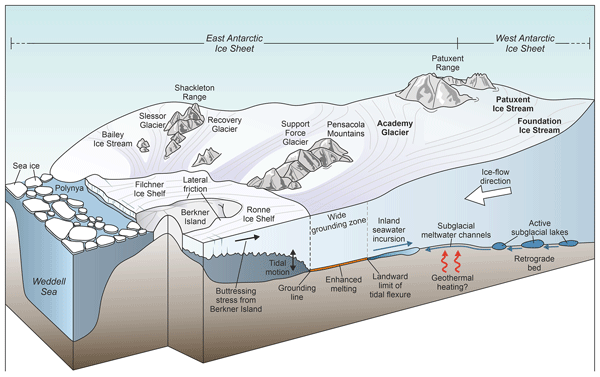
We review research about a group of fast-flowing Antarctic ice streams, the Foundation-Patuxent-Academy System. Previously, we knew little about how these ice streams flow, how they interact with each other and the ocean, what their geological history was, and how they might evolve in a warming world. By reviewing existing research, we have identified the future research needed to determine how these ice streams function, and how they might contribute to future global sea level rise.
Felipe Napoleoni, Michael J. Bentley, Neil Ross, Stewart S. R. Jamieson, José A. Uribe, Jonathan Oberreuter, Rodrigo Zamora, Andrés Rivera, Andrew M. Smith, Robert G. Bingham, and Kenichi Matsuoka
The Cryosphere, 20, 2793–2824, https://doi.org/10.5194/tc-20-2793-2026, https://doi.org/10.5194/tc-20-2793-2026, 2026
Short summary
Short summary
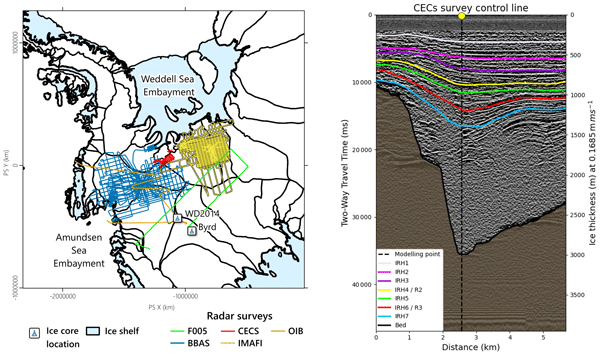
We mapped buried layers inside West Antarctic ice across 13,000 km² near the Amundsen–Weddell divide using radar. Some layers may be up to 17 kyr old. The layers remain well preserved in slow-moving ice but become distorted where ice flows faster. Snowfall has long been greater on one side of the divide, suggesting the ice divide has remained stable for thousands of years. Our study helps connect climate records across West Antarctica and improve models used to predict future ice-sheet change.
Robert S. Fausto, Penelope How, Baptiste Vandecrux, Mads C. Lund, Jason E. Box, Kenneth D. Mankoff, Signe B. Andersen, Dirk van As, Rasmus Bahbah, Michele Citterio, William Colgan, Henrik T. Jakobsgaard, Nanna B. Karlsson, Kristian K. Kjeldsen, Signe H. Larsen, Charlotte Olsen, Falk M. Oraschewski, Anja Rutishauser, Christopher L. Shields, Anne M. Solgaard, Ian T. Stevens, Synne H. Svendsen, Kirsty Langley, Alexandra Messerli, Anders A. Bjørk, Jonas K. Andersen, Jakob Abermann, Jakob Steiner, Rainer Prinz, Berhard Hynek, James M. Lea, Stephen Brough, and Andreas P. Ahlstrøm
Earth Syst. Sci. Data, 18, 2829–2873, https://doi.org/10.5194/essd-18-2829-2026, https://doi.org/10.5194/essd-18-2829-2026, 2026
Short summary
Short summary
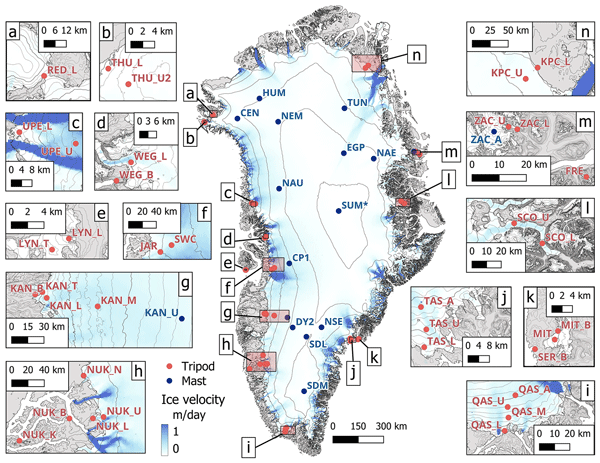
In summary, the PROMICE (Programme for Monitoring of the Greenland Ice Sheet ) | GC-NET AWS (Greenland Climate Network automatic weather station) data product update represents a significant advancement in Arctic climate monitoring. Through enhanced station designs, state-of-the-art instrumentation, and a transparent, automated data processing workflow, the dataset offers an essential resource for studying the Greenland Ice Sheet and its periphery, validating climate models, and supporting global assessments of cryospheric change.
Penelope How, Dorthe Petersen, Kristian K. Kjeldsen, Katrine Raundrup, Nanna B. Karlsson, Alexandra Messerli, Anja Rutishauser, Jonathan L. Carrivick, James M. Lea, Robert S. Fausto, Andreas P. Ahlstrøm, and Signe B. Andersen
Earth Syst. Sci. Data, 17, 6331–6351, https://doi.org/10.5194/essd-17-6331-2025, https://doi.org/10.5194/essd-17-6331-2025, 2025
Short summary
Short summary
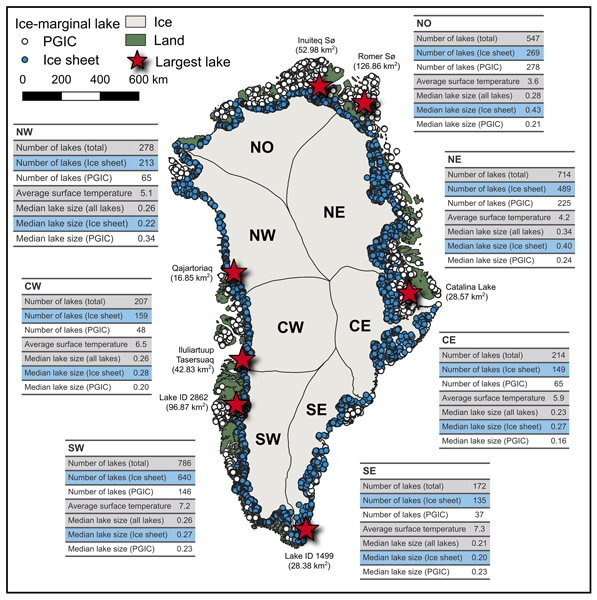
We mapped 2918 ice-marginal lakes across Greenland (2016–2023), revealing changes in size, abundance and temperature. This open dataset improves understanding of terrestrial water storage, glacier dynamics, and Arctic ecology, supporting research on sea level rise, glacier-lake interactions, and sustainable resource planning including hydropower development under Greenland’s climate commitments.
Robert G. Bingham, Julien A. Bodart, Marie G. P. Cavitte, Ailsa Chung, Rebecca J. Sanderson, Johannes C. R. Sutter, Olaf Eisen, Nanna B. Karlsson, Joseph A. MacGregor, Neil Ross, Duncan A. Young, David W. Ashmore, Andreas Born, Winnie Chu, Xiangbin Cui, Reinhard Drews, Steven Franke, Vikram Goel, John W. Goodge, A. Clara J. Henry, Antoine Hermant, Benjamin H. Hills, Nicholas Holschuh, Michelle R. Koutnik, Gwendolyn J.-M. C. Leysinger Vieli, Emma J. MacKie, Elisa Mantelli, Carlos Martín, Felix S. L. Ng, Falk M. Oraschewski, Felipe Napoleoni, Frédéric Parrenin, Sergey V. Popov, Therese Rieckh, Rebecca Schlegel, Dustin M. Schroeder, Martin J. Siegert, Xueyuan Tang, Thomas O. Teisberg, Kate Winter, Shuai Yan, Harry Davis, Christine F. Dow, Tyler J. Fudge, Tom A. Jordan, Bernd Kulessa, Kenichi Matsuoka, Clara J. Nyqvist, Maryam Rahnemoonfar, Matthew R. Siegfried, Shivangini Singh, Vjeran Višnjević, Rodrigo Zamora, and Alexandra Zuhr
The Cryosphere, 19, 4611–4655, https://doi.org/10.5194/tc-19-4611-2025, https://doi.org/10.5194/tc-19-4611-2025, 2025
Short summary
Short summary
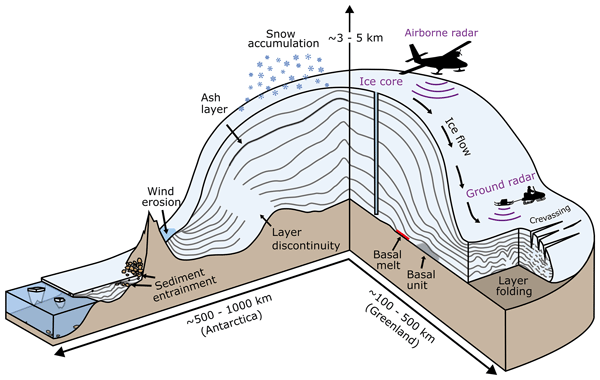
The ice sheets covering Antarctica have built up over millenia through successive snowfall events which become buried and preserved as internal surfaces of equal age detectable with ice-penetrating radar. This paper describes an international initiative working together on these archival data to build a comprehensive 3-D picture of how old the ice is everywhere across Antarctica and how this is being used to reconstruct past and to predict future ice and climate behaviour.

Stuart Umbo, Franziska Lechleitner, Thomas Opel, Sevasti Modestou, Tobias Braun, Anton Vaks, Gideon Henderson, Pete Scott, Alexander Osintzev, Alexandr Kononov, Irina Adrian, Yuri Dublyansky, Alena Giesche, and Sebastian F. M. Breitenbach
Clim. Past, 21, 1533–1551, https://doi.org/10.5194/cp-21-1533-2025, https://doi.org/10.5194/cp-21-1533-2025, 2025
Short summary
Short summary
We use cave rocks to reconstruct northern Siberian climate in 8.68 ± 0.09 Ma. We show that when the global average temperature was about 4.5 °C warmer than today (similar to what is expected in the coming decades should carbon emissions continue unabated), the Siberian Arctic temperature increased by more than 18 °C.
Lutz Schirrmeister, Margret C. Fuchs, Thomas Opel, Andrei Andreev, Frank Kienast, Andrea Schneider, Larisa Nazarova, Larisa Frolova, Svetlana Kuzmina, Tatiana Kuznetsova, Vladimir Tumskoy, Heidrun Matthes, Gerrit Lohmann, Guido Grosse, Viktor Kunitsky, Hanno Meyer, Heike H. Zimmermann, Ulrike Herzschuh, Thomas Böhmer, Stuart Umbo, Sevi Modestou, Sebastian F. M. Breitenbach, Anfisa Pismeniuk, Georg Schwamborn, Stephanie Kusch, and Sebastian Wetterich
Clim. Past, 21, 1143–1184, https://doi.org/10.5194/cp-21-1143-2025, https://doi.org/10.5194/cp-21-1143-2025, 2025
Short summary
Short summary
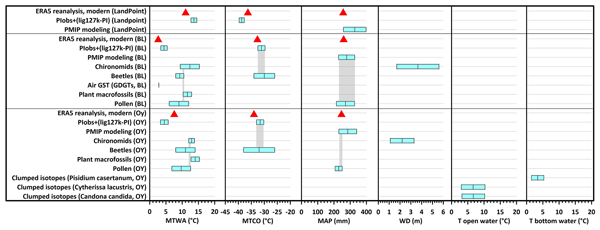
Geochronological, cryolithological, paleoecological, and modeling data reconstruct the Last Interglacial (LIG) climate around the New Siberian Islands and reveal significantly warmer conditions compared to today. The critical challenges in predicting future ecosystem responses lie in the fact that the land–ocean distribution during the LIG was markedly different from today, affecting the degree of continentality, which played a major role in modulating climate and ecosystem dynamics.
Joanne S. Johnson, John Woodward, Ian Nesbitt, Kate Winter, Seth Campbell, Keir A. Nichols, Ryan A. Venturelli, Scott Braddock, Brent M. Goehring, Brenda Hall, Dylan H. Rood, and Greg Balco
The Cryosphere, 19, 303–324, https://doi.org/10.5194/tc-19-303-2025, https://doi.org/10.5194/tc-19-303-2025, 2025
Short summary
Short summary
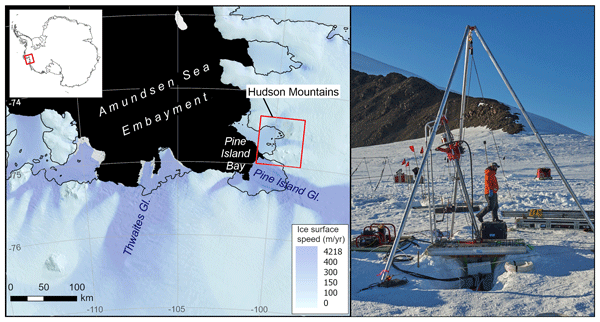
Determining where and when the Antarctic ice sheet was smaller than present requires recovery and exposure dating of subglacial bedrock. Here we use ice sheet model outputs and field data (geological and glaciological observations, bedrock samples, and ground-penetrating radar) to assess the suitability for subglacial drilling of sites in the Hudson Mountains, West Antarctica. We find that no sites are perfect, but two are feasible, with the most suitable being Winkie Nunatak (74.86°S, 99.77°W).
Charlotte M. Carter, Michael J. Bentley, Stewart S. R. Jamieson, Guy J. G. Paxman, Tom A. Jordan, Julien A. Bodart, Neil Ross, and Felipe Napoleoni
The Cryosphere, 18, 2277–2296, https://doi.org/10.5194/tc-18-2277-2024, https://doi.org/10.5194/tc-18-2277-2024, 2024
Short summary
Short summary
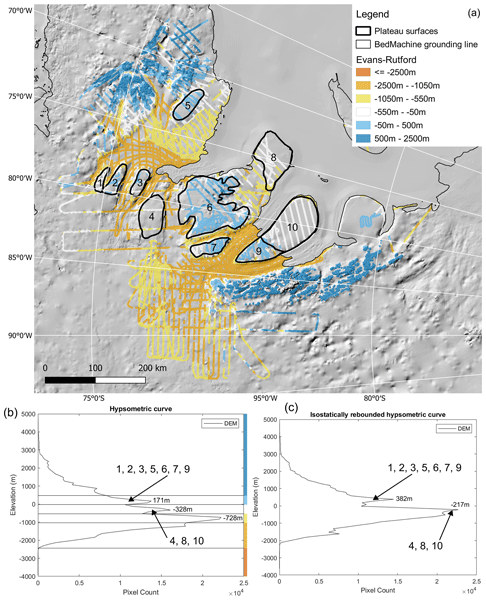
We use radio-echo sounding data to investigate the presence of flat surfaces beneath the Evans–Rutford region in West Antarctica. These surfaces may be what remains of laterally continuous surfaces, formed before the inception of the West Antarctic Ice Sheet, and we assess two hypotheses for their formation. Tectonic structures in the region may have also had a control on the growth of the ice sheet by focusing ice flow into troughs adjoining these surfaces.
Rebecca B. Latto, Ross J. Turner, Anya M. Reading, Sue Cook, Bernd Kulessa, and J. Paul Winberry
The Cryosphere, 18, 2081–2101, https://doi.org/10.5194/tc-18-2081-2024, https://doi.org/10.5194/tc-18-2081-2024, 2024
Short summary
Short summary
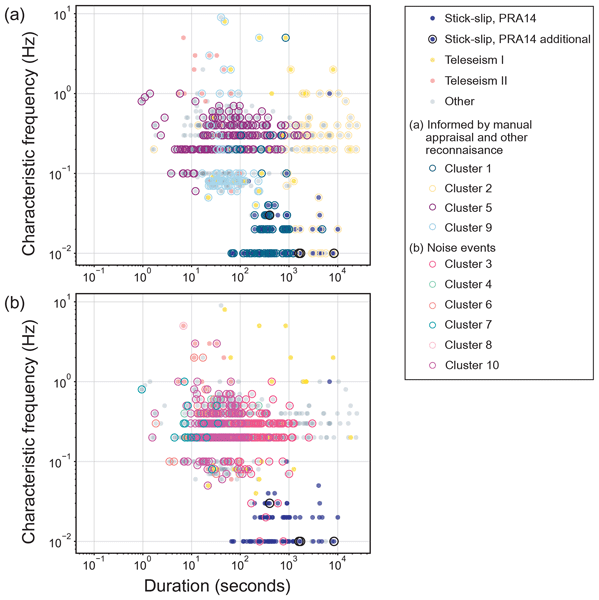
Seismic catalogues are potentially rich sources of information on glacier processes. In a companion study, we constructed an event catalogue for seismic data from the Whillans Ice Stream. Here, we provide a semi-automated workflow for consistent catalogue analysis using an unsupervised cluster analysis. We discuss the defining characteristics of identified signal types found in this catalogue and possible mechanisms for the underlying glacier processes and noise sources.
Tobias Roylands, Robert G. Hilton, Erin L. McClymont, Mark H. Garnett, Guillaume Soulet, Sébastien Klotz, Mathis Degler, Felipe Napoleoni, and Caroline Le Bouteiller
Earth Surf. Dynam., 12, 271–299, https://doi.org/10.5194/esurf-12-271-2024, https://doi.org/10.5194/esurf-12-271-2024, 2024
Short summary
Short summary
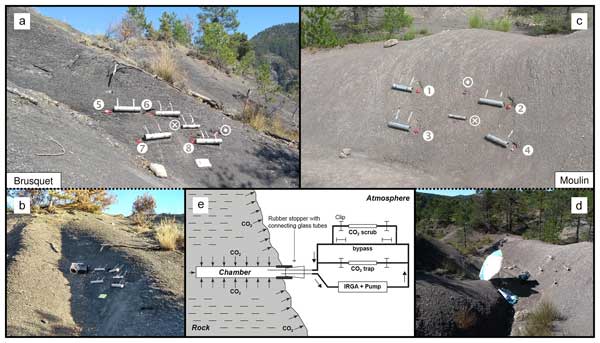
Chemical weathering of sedimentary rocks can release carbon dioxide and consume oxygen. We present a new field-based method to measure the exchange of these gases in real time, which allows us to directly compare the amount of reactants and products. By studying two sites with different rock types, we show that the chemical composition is an important factor in driving the weathering reactions. Locally, the carbon dioxide release changes alongside temperature and precipitation.
Rebecca J. Sanderson, Kate Winter, S. Louise Callard, Felipe Napoleoni, Neil Ross, Tom A. Jordan, and Robert G. Bingham
The Cryosphere, 17, 4853–4871, https://doi.org/10.5194/tc-17-4853-2023, https://doi.org/10.5194/tc-17-4853-2023, 2023
Short summary
Short summary
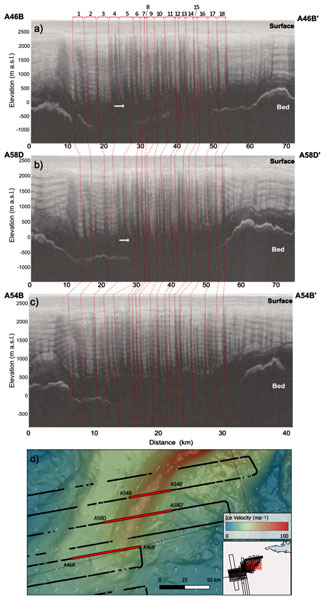
Ice-penetrating radar allows us to explore the internal structure of glaciers and ice sheets to constrain past and present ice-flow conditions. In this paper, we examine englacial layers within the Lambert Glacier in East Antarctica using a quantitative layer tracing tool. Analysis reveals that the ice flow here has been relatively stable, but evidence for former fast flow along a tributary suggests that changes have occurred in the past and could change again in the future.
Felicity S. McCormack, Jason L. Roberts, Bernd Kulessa, Alan Aitken, Christine F. Dow, Lawrence Bird, Benjamin K. Galton-Fenzi, Katharina Hochmuth, Richard S. Jones, Andrew N. Mackintosh, and Koi McArthur
The Cryosphere, 17, 4549–4569, https://doi.org/10.5194/tc-17-4549-2023, https://doi.org/10.5194/tc-17-4549-2023, 2023
Short summary
Short summary
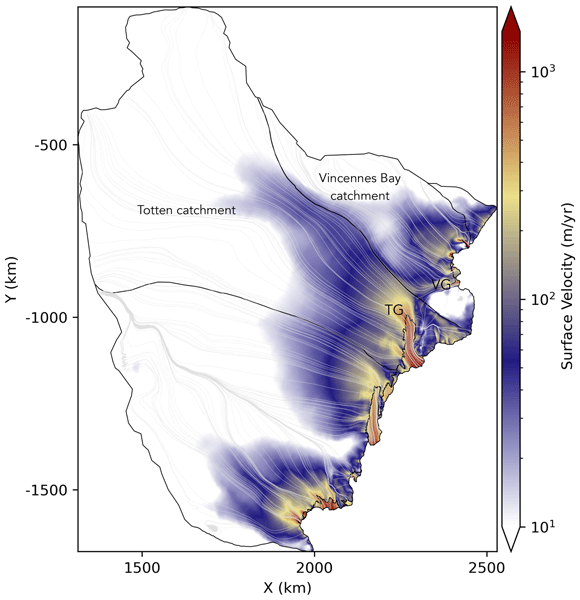
Changes in Antarctic surface elevation can cause changes in ice and basal water flow, impacting how much ice enters the ocean. We find that ice and basal water flow could divert from the Totten to the Vanderford Glacier, East Antarctica, under only small changes in the surface elevation, with implications for estimates of ice loss from this region. Further studies are needed to determine when this could occur and if similar diversions could occur elsewhere in Antarctica due to climate change.
Pablo Almela, James J. Elser, J. Joseph Giersch, Scott Hotaling, and Trinity L. Hamilton
EGUsphere, https://doi.org/10.5194/egusphere-2023-2379, https://doi.org/10.5194/egusphere-2023-2379, 2023
Preprint archived
Short summary
Short summary
In the summer, snow algae blooms are common in alpine and polar regions, visible as colorful spots on the snow. These algae reduce the snow's reflectivity and accelerate the melting process. Previous research mainly focused on visible surface algae. Our study delves into the effects of sub-surface snow algae on albedo reduction. We found that these hidden algae still absorb sunlight across different wavelengths, potentially influencing snow melt rates.
Sarah S. Thompson, Bernd Kulessa, Adrian Luckman, Jacqueline A. Halpin, Jamin S. Greenbaum, Tyler Pelle, Feras Habbal, Jingxue Guo, Lenneke M. Jong, Jason L. Roberts, Bo Sun, and Donald D. Blankenship
The Cryosphere, 17, 157–174, https://doi.org/10.5194/tc-17-157-2023, https://doi.org/10.5194/tc-17-157-2023, 2023
Short summary
Short summary
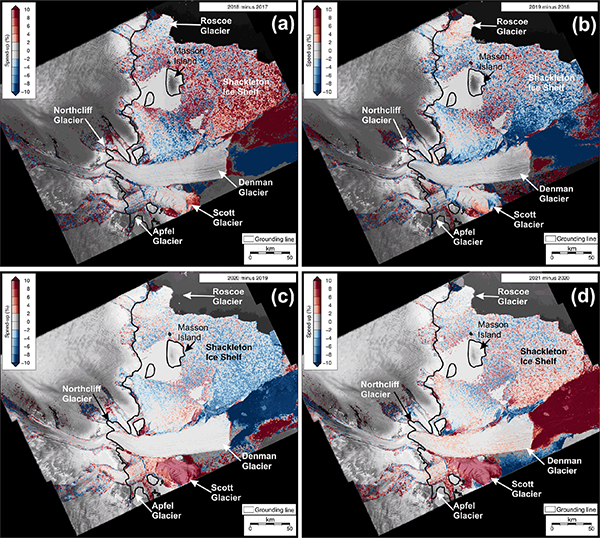
We use satellite imagery and ice penetrating radar to investigate the stability of the Shackleton system in East Antarctica. We find significant changes in surface structures across the system and observe a significant increase in ice flow speed (up to 50 %) on the floating part of Scott Glacier. We conclude that knowledge remains woefully insufficient to explain recent observed changes in the grounded and floating regions of the system.
Cited articles
Alley, R. B., Lawson, D. E., Evenson, E. B., Strasser, J. C., and Larson, G. J.: Glaciohydraulic supercooling: a freeze-on mechanism to create stratified, debris-rich basal ice: II. Theory, J. Glaciol., 44, 563–569, https://doi.org/10.3189/S0022143000002070, 1998.
Bartholomew, I., Nienow, P., Sole, A., Mair, D., Cowton, T., Palmer, S., and Wadham, J.: Supraglacial forcing of subglacial drainage in the ablation zone of the Greenland ice sheet, Geophys. Res. Lett., 38, 8, https://doi.org/10.1029/2011GL047063, 2011.
Bhatia, M. P., Das, S. B., Xu, L., Charette, M. A., Wadham, J. L., and Kujawinski, E. B.: Organic carbon export from the Greenland ice sheet, Geochim. Cosmochim. Ac., 109, 329–344, https://doi.org/10.1016/j.gca.2013.02.006, 2013.
Blanchy, G., Saneiyan, S., Boyd, J., McLachlan, P., and Binley, A.: ResIPy, an intuitive open source software for complex geoelectrical inversion/modeling, Comput. Geosci., 137, 104423, https://doi.org/10.1016/j.cageo.2020.104423, 2020.
Carey, K. L.: Icings developed from surface water and ground water, Cold Regions Science and Engineering Monograph III-3D, Corps of Engineering US Army, Cold Regions Research and Engineering Laboratory, Hanover, New Hampshire, USA, 1973.
Chandler, D. M., Wadham, J. L., Lis, G. P., Cowton, T., Sole, A., Bartholomew, I., Telling, J., Nienow, P., Bagshaw, E. B., Mair, D., Vinen, S., and Hubbard, A.: Evolution of the subglacial drainage system beneath the Greenland Ice Sheet revealed by tracers, Nat. Geosci., 6, 195–198, https://doi.org/10.1038/NGEO1737, 2013.
Chu, W., Schroeder, D. M., Seroussi, H., Creyts, T. T., Palmer, S. J., and Bell, R. E.: Extensive winter subglacial water storage beneath the Greenland Ice Sheet, Geophys. Res. Lett., 43, 12–484, https://doi.org/10.1002/2016GL071538, 2016.
Cook, S. J., Waller, R. I., Knight, P. G., and Simon J. Cook, R. I. W., and Knight, P. G.: Glaciohydraulic supercooling: the process and its significance, Prog. Phys. Geog., 30, 577–588, https://doi.org/10.1177/0309133306071141, 2006.
Davison, B. J., Sole, A. J., Livingstone, S. J., Cowton, T. R., and Nienow, P. W.: The influence of hydrology on the dynamics of land-terminating sectors of the Greenland ice sheet, Front. Earth Sci., 7, 10, https://doi.org/10.3389/feart.2019.00010, 2019.
Evenson, E. B., Lawson, D. E., Strasser, J. C., Larson, G. J., Alley, R. B., Ensminger, S. L., and Stevenson, W. E.: Field evidence for the recognition of glaciohydrologic supercooling, Glacial Processes Past and Present, Geological Society of America, ISBN 9780813723372, https://doi.org/10.1130/0-8137-2337-X.23, 1999.
Gokhman, V. V., Gokhman, V. V., and Gokhman, V. V.: Distribution and conditions of formation of glacial icings on Spitsbergen, Polar Geography, 249–260, https://doi.org/10.1080/10889378709377334, 1987.
Graly, J. A. and McCerery, R.: Geochemistry of proglacial waters from Isunnguata Sermia and Leverett Glacier, West Greenland, 2022–2024 (Version 1.0), NERC EDS UK Polar Data Centre [data set], https://doi.org/10.5285/59406f3e-7971-4fe4-aa61-e1e112c84bce, 2026.
Graly, J. A., Humphrey, N. F., Landowski, C. M., and Harper, J. T.: Chemical weathering under the Greenland ice sheet, Geology, 42, 551–554, https://doi.org/10.1130/G35370.1, 2014.
Graly, J., Harrington, J., and Humphrey, N.: Combined diurnal variations of discharge and hydrochemistry of the Isunnguata Sermia outlet, Greenland Ice Sheet, The Cryosphere, 11, 1131–1140, https://doi.org/10.5194/tc-11-1131-2017, 2017.
Graly, J. A., Humphrey, N. F., and Licht, K. J.: Two Metrics Describing the Causes of Seasonal and Spatial Changes in Subglacial Aqueous Chemistry, Frontiers in Earth Science, 6, 195, https://doi.org/10.3389/feart.2018.00195, 2018.
Halde, R.: Concentration of impurities by progressive freezing, Water Res., 14, 575–580, https://doi.org/10.1016/0043-1354(80)90115-3, 1980.
Harden, D., Barnes, P., and Reimnitz, E.: Distribution and Character of Naleds in Northeastern Alaska, Arctic, 30, 28–40, 1977.
Hauck, C. and Kneisel, C.: Applied geophysics in periglacial environments (Vol. 10), Cambridge University Press, ISBN 0-521-88966-9, https://doi.org/10.1657/1938-4246-41.2.280a, 2008.
Hawkings, J., Wadham, J., Tranter, M., Telling, J., Bagshaw, E., Beaton, A., Simmons, S.-L., Chandler, D., Tedstone, A., and Nienow, P.: The Greenland Ice Sheet as a hot spot of phosphorus weathering and export in the Arctic, Glob. Biogeochem. Cy., 30, 191–210, 191–210, https://doi.org/10.1002/2015GB005237, 2016.
Hawkings, J. R., Bradley, J. A., Doting, E. L., Hassan, N., Hendry, K. R., Holt, A. D., Hood, E., Spencer, R. G., Stibal, M., Tranter, M., and Venturelli, R. A.: Glacier biogeochemical cycling and downstream impacts, Nature Reviews Earth & Environment, 1–20, https://doi.org/10.1038/s43017-025-00751-1, 2026.
Hodgkins, R., Tranter, M., and Dowdeswell, J. A.: The Characteristics and Formation of a High-Arctic Proglacial Icing, Geogr. Ann. A, 86, 265–275, https://doi.org/10.1111/j.0435-3676.2004.00230.x, 2004.
Jouzel, J. and Souchez, R. A.: Melting–Refreezing at the Glacier Sole and the Isotopic Composition of the Ice, J. Glaciol., 28, 35–42, https://doi.org/10.3189/S0022143000011771, 1982.
Kane, D. L.: Physical mechanics of aufeis growth, Can. J. Civil Eng., 8, 186–195, 1981.
Kneisel, C., Emmert, A., and Kästl, J.: Application of 3D electrical resistivity imaging for mapping frozen ground conditions exemplified by three case studies, Geomorphology, 210, 71–82, https://doi.org/10.1016/j.geomorph.2013.12.022, 2014.
Lawson, D. E., Strasser, J. C., Evenson, E. B., Alley, R. B., Larson, G. J., and Arcone, S. A.: Glaciohydraulic supercooling: a freeze-on mechanism to create stratified, debris-rich basal ice: I. Field evidence, J. Glaciol., 44, 547–562, https://doi.org/10.3189/S0022143000002069, 1998.
Lawson, E. C., Wadham, J. L., Tranter, M., Stibal, M., Lis, G. P., Butler, C. E. H., Laybourn-Parry, J., Nienow, P., Chandler, D., and Dewsbury, P.: Greenland Ice Sheet exports labile organic carbon to the Arctic oceans, Biogeosciences, 11, 4015–4028, https://doi.org/10.5194/bg-11-4015-2014, 2014.
Lindbäck, K., Pettersson, R., Doyle, S. H., Helanow, C., Jansson, P., Kristensen, S. S., Stenseng, L., Forsberg, R., and Hubbard, A. L.: High-resolution ice thickness and bed topography of a land-terminating section of the Greenland Ice Sheet, Earth Syst. Sci. Data, 6, 331–338, https://doi.org/10.5194/essd-6-331-2014, 2014.
Lindbäck, K., Pettersson, R., Hubbard, A. L., Doyle, S. H., As, D., Mikkelsen, A. B., and Fitzpatrick, A. A.: Subglacial water drainage, storage, and piracy beneath the Greenland ice sheet, Geophys. Res. Lett., 42, 7606–7614, https://doi.org/10.1002/2015GL065393, 2015.
Livingstone S., Storrar R., Doyle S., Thorpe S., Moffatt A., Sole A., Chudley T. R., Gimbert F., Graly J., Licht K., Winter K., Jayarapu, A., Bagshaw, E., Barruol, G., Bauer, K., Bianchi, G., Buzzard, S., Clason, C., Craw, L., Davison, B., Edwards, L., Gilhooly, W., Hamilton, T. L., Hansen, C., Hawkins, J., Ing, R., Jatta, M., Jones, A., Kennedy, T., Killingbeck, S., Le Bris, T., McCerery, R., Messerli, A., Michel, A., Napoleoni, F., Peacey, M., Prior-Jones, M. R., Ross, N., Veness, R., Hepburn, A., and Booth, A.: Ice dynamic and hydrological response to ice-dammed lake drainages at Isunnguata Sermia, West Greenland, J. Glaciol., 2026.
Livingstone, S. J., Sole, A. J., Storrar, R. D., Harrison, D., Ross, N., and Bowling, J.: Brief communication: Subglacial lake drainage beneath Isunguata Sermia, West Greenland: geomorphic and ice dynamic effects, The Cryosphere, 13, 2789–2796, https://doi.org/10.5194/tc-13-2789-2019, 2019.
Mallinson, L., Swift, D. A., and Sole, A. J.: Proglacial icings as indicators of glacier thermal regime: ice thickness changes and icing occurrence in Svalbard, Geogr. Ann. A, 101, 334–349, https://doi.org/10.1080/04353676.2019.1670952, 2019.
McCerery, R. and Graly, J.: Seasonal icings reveal subsurface water drainage of a Greenland Ice Sheet outlet glacier, Zenodo [data set], https://doi.org/10.5281/zenodo.23159526, 2026.
Meierbachtol, T., Harper, J., and Humphrey, N.: Basal drainage system response to increasing surface melt on the Greenland Ice Sheet, Science, 341, 777–779, https://doi.org/10.1126/science.1235905, 2013.
Meire, L., Meire, P., Struyf, E., Krawczyk, D. W., Arendt, K. E., Yde, J. C., Pedersen, T. J., Hopwood, M. J., Rysgaard, S., and Meysman, F. J. R.: High export of dissolved silica from the Greenland Ice Sheet, Geophys. Res. Lett., 43, 9173–9182, https://doi.org/10.1002/2016GL070191, 2016.
Morse, P. D. and Wolfe, S. A.: Geological and meteorological controls on icing (aufeis) dynamics (1985 to 2014) in subarctic Canada, J. Geophys. Res.-Earth, 120, 1670–1686, https://doi.org/10.1002/2015JF003534, 2015.
Pain, A. J., Martin, J. B., Martin, E. E., Rennermalm, Å. K., and Rahman, S.: Heterogeneous CO2 and CH4 content of glacial meltwater from the Greenland Ice Sheet and implications for subglacial carbon processes, The Cryosphere, 15, 1627–1644, https://doi.org/10.5194/tc-15-1627-2021, 2021.
Palacky, G. J.: Resistivity characteristics of geologic targets, in: Electromagnetic methods in applied geophysics, Society of Exploration Geophysicists, https://doi.org/10.1190/1.9781560802631.ch3, 1987.
Pitcher, L. H., Smith, L. C., Gleason, C. J., Miège, C., Ryan, J. C., Hagedorn, B., van As, D., Chu, W., and Forster, R. R.: Direct observation of winter meltwater drainage from the Greenland Ice Sheet, Geophys. Res. Lett., 47, e2019GL086521, https://doi.org/10.1029/2019GL086521, 2020.
Reynolds, J. M.: An introduction to applied and environmental geophysics, John Wiley & Sons, ISBN 978-0-471-48535-3, 2011.
Roberts, M. J., Russell, A. J., Tweed, F. S., and Knudsen, Ó.: Controls on englacial sediment deposition during the November 1996 jökulhlaup, Skeiđarárjökull, Iceland, Earth Surf. Proc. Land., 26, 935–952, https://doi.org/10.1002/esp.236, 2001.
Roberts, M. J., Tweed, F. S., Russell, A. J., Knudsen, O. S., Lawson, D. E., Larson, G. J., Evenson, E. B., and Björnsson, H.: Glaciohydraulic supercooling in Iceland, Geology, 30, 871–874, https://doi.org/10.1130/0091-7613(2002)030<0439:GSII>2.0.CO;2, 2002.
Schohl, G. A. and Ettema, R.: Theory and Laboratory Observations of Naled Ice Growth, J. Glaciol., 32, 168–177, https://doi.org/10.3189/S0022143000015483, 1986.
Sobota, I.: Icings and their role as an important element of the cryosphere in High Arctic glacier forefields, Bulletin of Geography: Physical Geography Series, 81–93, https://doi.org/10.1515/bgeo-2016-0006, 2016.
Sodemann, H., Mørkved, P. T., and Wahl, S.: FLIIMP – a community software for the processing, calibration, and reporting of liquid water isotope measurements on cavity-ring down spectrometers, MethodsX, 11, 102297, https://doi.org/10.1016/j.mex.2023.102297, 2023.
Souchez, R. A. and Jouzel, J.: On the Isotopic Composition in δD and δ18O of Water and Ice During Freezing, J. Glaciol., 30, 369–372, https://doi.org/10.3189/S0022143000006249, 1984.
Stachnik, L., Yde, J. C., Kondracka, M., D., I., and Grzesik, M.: Glacier naled evolution and relation to the subglacial drainage system based on water chemistry and GPR surveys (Werenskioldbreen, SW Svalbard), Ann. Glaciol., 57, 19–30, https://doi.org/10.1017/aog.2016.9, 2016.
van Gool, J. A. M., Connelly, J. N., Marker, M., and Mengel, F. C.: The Nagssugtoqidian Orogen of West Greenland: Tectonic evolution and regional correlations from a West Greenland perspective, Can. J. Earth Sci., 39, 665–686, https://doi.org/10.1139/E02-027, 2002.
Wadham, J. L., Tranter, M., and Dowdeswell, J. A.: Hydrochemistry of meltwaters draining a polythermal-based, high-Arctic glacier, south Svalbard: II. Winter and early Spring, Hydrol. Process., 14, 1767–1786, https://doi.org/10.1002/1099-1085(200007)14:10<1767:aid-hyp103>3.0.co;2-q, 2000.
Wadham, J. L., Hawkings, J., Telling, J., Chandler, D., Alcock, J., O'Donnell, E., Kaur, P., Bagshaw, E., Tranter, M., Tedstone, A., and Nienow, P.: Sources, cycling and export of nitrogen on the Greenland Ice Sheet, Biogeosciences, 13, 6339–6352, https://doi.org/10.5194/bg-13-6339-2016, 2016.
Weng, Y., Touzeau, A., and Sodemann, H.: Correcting the impact of the isotope composition on the mixing ratio dependency of water vapour isotope measurements with cavity ring-down spectrometers, Atmos. Meas. Tech., 13, 3167–3190, https://doi.org/10.5194/amt-13-3167-2020, 2020.
Yde, J. C., Hodson, A. J., Solovjanova, I., Steffensen, J. P., Nørnberg, P., Heinemeier, J., and Olsen, J.: Chemical and isotopic characteristics of a glacier-derived naled in front of Austre Grønfjordbreen, Svalbard, Polar Res., 31, 17628, https://doi.org/10.3402/polar.v31i0.17628, 2012.
Yde, J. C., Knudsen, N. T., Hasholt, B., and Mikkelsen, A. B.: Meltwater chemistry and solute export from a Greenland Ice Sheet catchment, Watson River, West Greenland, J. Hydrol., 519, 2165–2179, https://doi.org/10.1016/j.jhydrol.2014.10.018, 2014.
Yoshikawa, K., Hinzman, L. D., and Kane, D. L.: Spring and aufeis (icing) hydrology in Brooks Range, Alaska, J. Geophys. Res.-Biogeo., 112, https://doi.org/10.1029/2006JG000294, 2007.
Short summary
Ice cores from Isunnguata Sermia’s forefield reveal how proglacial naled and accreted ices form in Greenland. Naledi build up in winter from precipitation and mineral-rich subglacial water, while accreted ice forms in summer through supercooled water upwelling. Geophysical surveys indicate both are fed by subsurface flows potentially originating from the glacier bed. Here, we present the first conceptual model of these formations in Greenland.
Ice cores from Isunnguata Sermia’s forefield reveal how proglacial naled and accreted ices form...


Altmetrics
Final-revised paper
Preprint