
Articles | Volume 20, issue 10
https://doi.org/10.5194/tc-20-5895-2026
© Author(s) 2026. This work is distributed under
the Creative Commons Attribution 4.0 License.
the Creative Commons Attribution 4.0 License.
https://doi.org/10.5194/tc-20-5895-2026
© Author(s) 2026. This work is distributed under
the Creative Commons Attribution 4.0 License.
the Creative Commons Attribution 4.0 License.
Research article
| Highlight paper
| 
15 Oct 2026
Research article | Highlight paper |
| 15 Oct 2026
| 15 Oct 2026
Propagating meteorological uncertainty in physically based mountain snow modeling
David R. Casson
CORRESPONDING AUTHOR

Civil Engineering, Schulich School of Engineering, University of Calgary, Calgary, AB, Canada
Guoqiang Tang
State Key Laboratory of Water Resources Engineering and Management, Wuhan University, Wuhan, China
Nicolás Vásquez
Civil Engineering, Schulich School of Engineering, University of Calgary, Calgary, AB, Canada
Andrew W. Wood
Climate and Global Dynamics, National Center for Atmospheric Research, Boulder, USA
Civil and Environmental Engineering, Colorado School of Mines, Golden, USA
Martyn P. Clark
Civil Engineering, Schulich School of Engineering, University of Calgary, Calgary, AB, Canada
Related authors
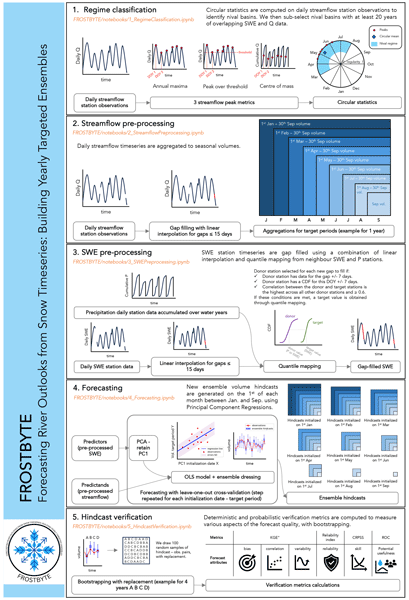
Louise Arnal, Martyn P. Clark, Alain Pietroniro, Vincent Vionnet, David R. Casson, Paul H. Whitfield, Vincent Fortin, Andrew W. Wood, Wouter J. M. Knoben, Brandi W. Newton, and Colleen Walford
Hydrol. Earth Syst. Sci., 28, 4127–4155, https://doi.org/10.5194/hess-28-4127-2024, https://doi.org/10.5194/hess-28-4127-2024, 2024
Short summary
Short summary
Forecasting river flow months in advance is crucial for water sectors and society. In North America, snowmelt is a key driver of flow. This study presents a statistical workflow using snow data to forecast flow months ahead in North American snow-fed rivers. Variations in the river flow predictability across the continent are evident, raising concerns about future predictability in a changing (snow) climate. The reproducible workflow hosted on GitHub supports collaborative and open science.
Lauren H. North, Adrienne M. Marshall, Glenn A. Tootle, Lisa Davis, Andy W. Wood, and Eric J. Anderson
Hydrol. Earth Syst. Sci., 30, 5195–5214, https://doi.org/10.5194/hess-30-5195-2026, https://doi.org/10.5194/hess-30-5195-2026, 2026
Short summary
Short summary
We assessed the U.S. National Hydrologic Model's ability to simulate several components of the water cycle using multiple datasets of environmental variables. We find that the model's accuracy in streamflow simulation is positively and negatively impacted by the additional constraints, and more model parameters are identified as important. Our results inform operational hydrologic modeling by illuminating the complexities of using the continually expanding suite of data products.
Cyril Thébault, Wouter J. M. Knoben, Nans Addor, Andrew J. Newman, Diana Spieler, Nicolás A. Vásquez, Yalan Song, Gaby J. Gründemann, Shaun Carney, Mukesh Kumar, Katie van Werkhoven, Chaopeng Shen, Andrew W. Wood, and Martyn P. Clark
Hydrol. Earth Syst. Sci., 30, 3945–3977, https://doi.org/10.5194/hess-30-3945-2026, https://doi.org/10.5194/hess-30-3945-2026, 2026
Short summary
Short summary
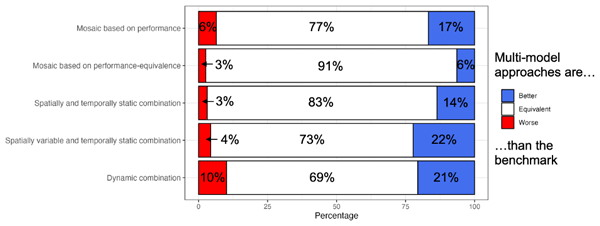
Reliable river flow prediction guide water supply planning and flood protection. We tested whether selecting or combining multiple models improves accuracy compared with a single model. 78 models were used and tested in 559 river basins across the United States. A carefully chosen single model nearly matched more complex multi-model approaches, while combining models gave slightly higher accuracy and lower uncertainty. However, no approach worked best everywhere.
Gaby J. Gründemann, Wouter J. M. Knoben, Yalan Song, Katie van Werkhoven, and Martyn P. Clark
Hydrol. Earth Syst. Sci., 30, 3439–3453, https://doi.org/10.5194/hess-30-3439-2026, https://doi.org/10.5194/hess-30-3439-2026, 2026
Short summary
Short summary
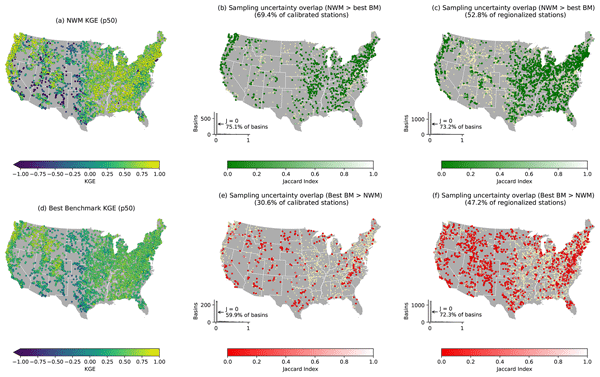
The quality of large-domain hydrologic model simulations is often quantified with so-called accuracy metrics. Here we use simple benchmarks to provide relevant context for these accuracy metrics. Results show that areas where the model cannot beat the benchmarks do not always align with areas where the accuracy metrics are low. This suggests that model improvements are possible in regions that under more typical model evaluation approaches (i.e., without benchmarks) might not be obvious.
Nicolás A. Vásquez, Pablo A. Mendoza, Wouter Knoben, Martyn Clark, Tricia Stadnyk, and Naoki Mizukami
EGUsphere, https://doi.org/10.5194/egusphere-2026-1363, https://doi.org/10.5194/egusphere-2026-1363, 2026
Short summary
Short summary
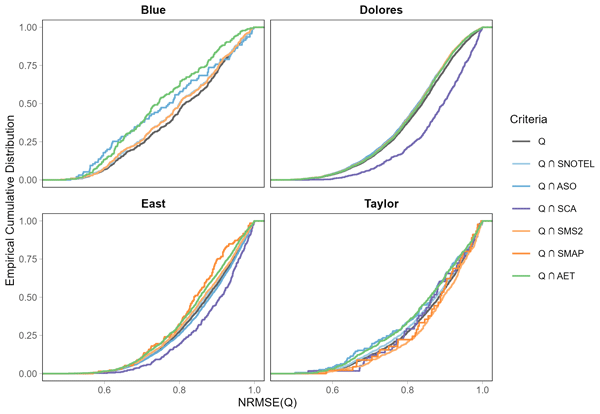
Although distributed hydrological models are often calibrated using only streamflow data, this practice may provide unrealistic representations of the water cycle. We show that, while streamflow annual cycles can be reasonably simulated, the seasonality of other key variables - such as evapotranspiration, soil moisture, and snow cover - may be severely misrepresented. Our results highlight the need to assess seasonal patterns of variables beyond streamflow when calibrating hydrological models.
Delanie Williams, Mukesh Kumar, Katie van Werkhoven, Martyn Clark, Christopher Wilson, and Paul Miller
EGUsphere, https://doi.org/10.5194/egusphere-2026-583, https://doi.org/10.5194/egusphere-2026-583, 2026
Preprint archived
Short summary
Short summary
Machine learning (ML) models have potential within water resource management to be used in place of traditional models. However, there is hesitance for many agencies and institutions to pursue ML models, due to existing familiarity, reliability, interpretability, resources, and workflows. Thus, instead of opting for complete retention of traditional models, or complete replacement by ML models, this perspective argues for the selective integration of ML within existing models.
Scott Peckham, Keith Jennings, Wanru Wu, Andy Wood, and Lauren Bolotin
EGUsphere, https://doi.org/10.5194/egusphere-2025-5786, https://doi.org/10.5194/egusphere-2025-5786, 2026
Preprint archived
Short summary
Short summary
Several US federal agencies (e.g., USGS, NOAA, USDA, and NSF) collect information for river basins to support their water-related missions. Data is published online in named collection that each have their own attributes and objectives. HARBOR harmonizes and brings together all these datasets, just as many large cargo ships can be moored in one harbor. It also classifies basins based on hydrologic similarity, helping researchers find the best model for predicting their hydrologic response.
Ethan Ritchie, Andrew W. Wood, Ryan Johnson, Adrienne Marshall, Josh Sturtevant, Dane Liljestrand, and Emily Golitzin
EGUsphere, https://doi.org/10.5194/egusphere-2025-5514, https://doi.org/10.5194/egusphere-2025-5514, 2025
Short summary
Short summary
Snow water equivalent (SWE) is a critical water resource to many regions globally. Estimating SWE remains a challenge in hydrology highlighting the need for consistent evaluation frameworks. This study applied a standard approach for SWE evaluation across a range of datasets in the western US, using the Airborne Snow Observatory (ASO) SWE dataset as the reference observational dataset. We outline and demonstrate an example of a community evaluation protocol using datasets in this study.
Wouter J. M. Knoben, Cyril Thébault, Kasra Keshavarz, Laura Torres-Rojas, Nathaniel W. Chaney, Alain Pietroniro, and Martyn P. Clark
Hydrol. Earth Syst. Sci., 29, 5791–5833, https://doi.org/10.5194/hess-29-5791-2025, https://doi.org/10.5194/hess-29-5791-2025, 2025
Short summary
Short summary
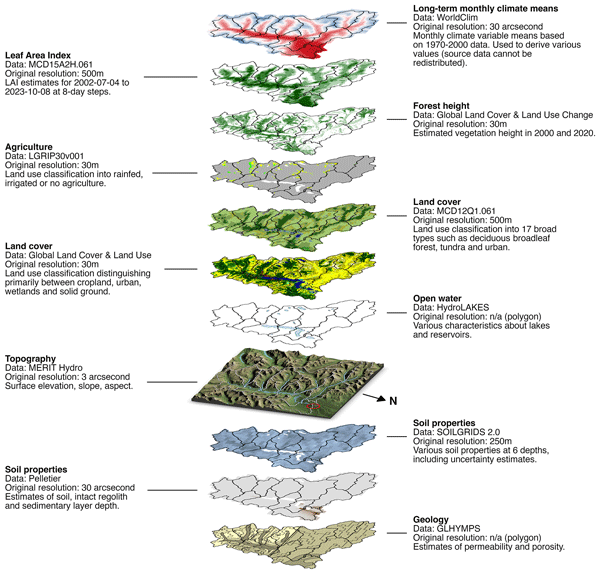
Many existing datasets for hydrologic analysis tend to treat catchments as single spatially homogeneous units focusing on daily data and typically do not support more complex models. This paper introduces a dataset that goes beyond this set-up by (1) providing data at a higher spatial and temporal resolution, (2) specifically considering the data requirements of all common hydrologic model types, and (3) using statistical summaries of the data aimed at quantifying spatial and temporal heterogeneity.
Mozhgan A. Farahani, Andrew W. Wood, Guoqiang Tang, and Naoki Mizukami
Hydrol. Earth Syst. Sci., 29, 4515–4537, https://doi.org/10.5194/hess-29-4515-2025, https://doi.org/10.5194/hess-29-4515-2025, 2025
Short summary
Short summary
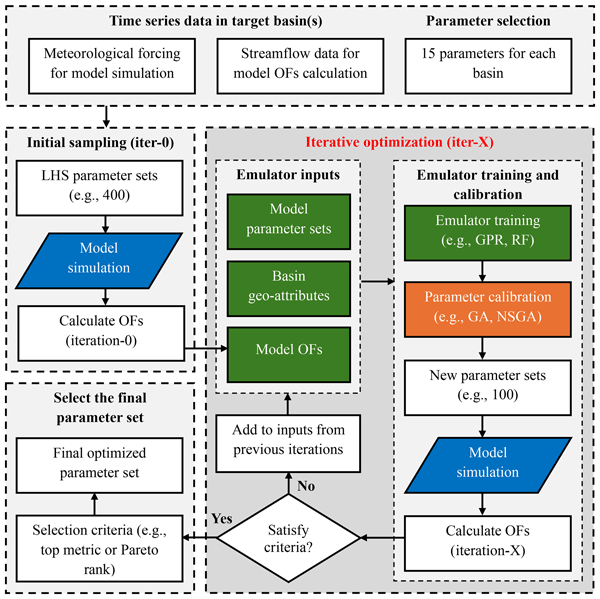
We present a new strategy to calibrate large-domain land/hydrology models over diverse regions. Using the Structure for Unifying Multiple Modeling Alternatives (SUMMA) and mizuRoute models, our approach integrates catchment attributes, parameters, and performance metrics to optimize streamflow simulations. Leveraging advances in machine learning for hydrology, we improve calibration and enable regionalization to ungauged basins, which is valuable for national-scale water security studies.
Simon Moulds, Louise Slater, Louise Arnal, and Andrew W. Wood
Hydrol. Earth Syst. Sci., 29, 2393–2406, https://doi.org/10.5194/hess-29-2393-2025, https://doi.org/10.5194/hess-29-2393-2025, 2025
Short summary
Short summary
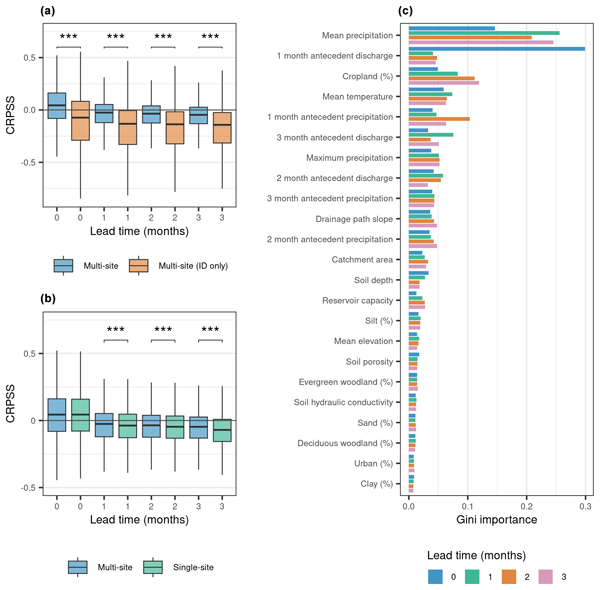
Seasonal streamflow forecasts are an important component of flood risk management. Here, we train and test a machine learning model to predict the monthly maximum daily streamflow up to 4 months ahead. We train the model on precipitation and temperature forecasts to produce probabilistic hindcasts for 579 stations across the UK for the period 2004–2016. We show skilful results up to 4 months ahead in many locations, although, in general, the skill declines with increasing lead time.
Wouter J. M. Knoben, Ashwin Raman, Gaby J. Gründemann, Mukesh Kumar, Alain Pietroniro, Chaopeng Shen, Yalan Song, Cyril Thébault, Katie van Werkhoven, Andrew W. Wood, and Martyn P. Clark
Hydrol. Earth Syst. Sci., 29, 2361–2375, https://doi.org/10.5194/hess-29-2361-2025, https://doi.org/10.5194/hess-29-2361-2025, 2025
Short summary
Short summary
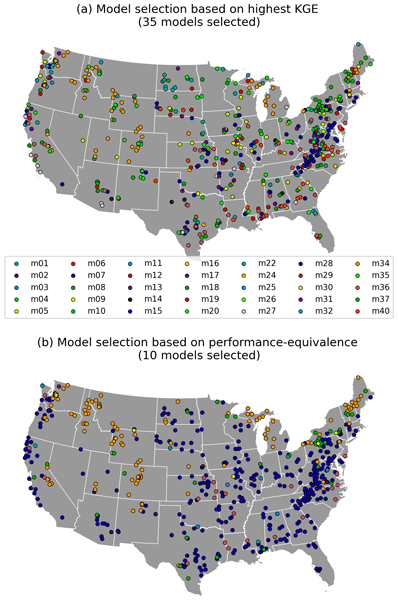
Hydrologic models are needed to provide simulations of water availability, floods, and droughts. The accuracy of these simulations is often quantified with so-called performance scores. A common thought is that different models are more or less applicable to different landscapes, depending on how the model works. We show that performance scores are not helpful in distinguishing between different models and thus cannot easily be used to select an appropriate model for a specific place.
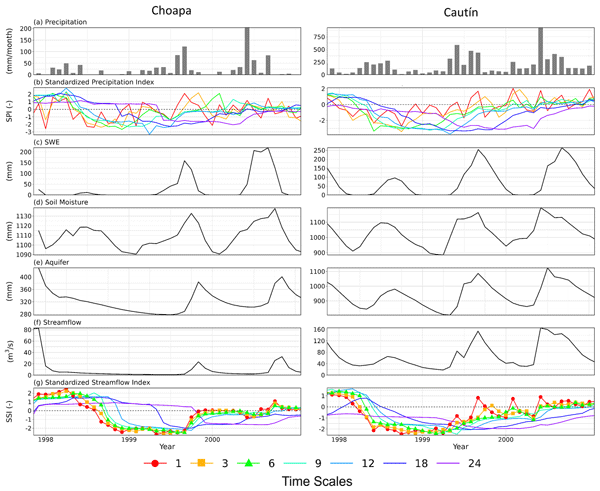
Fabián Lema, Pablo A. Mendoza, Nicolás A. Vásquez, Naoki Mizukami, Mauricio Zambrano-Bigiarini, and Ximena Vargas
Hydrol. Earth Syst. Sci., 29, 1981–2002, https://doi.org/10.5194/hess-29-1981-2025, https://doi.org/10.5194/hess-29-1981-2025, 2025
Short summary
Short summary
Hydrological droughts affect ecosystems and socioeconomic activities worldwide. Despite the fact that they are commonly described with the Standardized Streamflow Index (SSI), there is limited understanding of what they truly reflect in terms of water cycle processes. Here, we used state-of-the-art hydrological models in Andean basins to examine drivers of SSI fluctuations. The results highlight the importance of careful selection of indices and timescales for accurate drought characterization and monitoring.
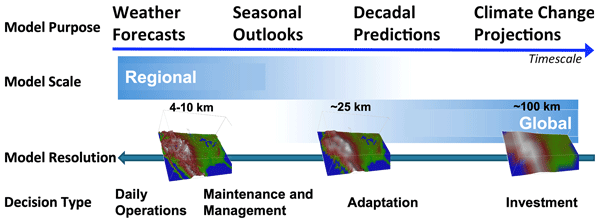
Mari R. Tye, Ming Ge, Jadwiga H. Richter, Ethan D. Gutmann, Allyson Rugg, Cindy L. Bruyère, Sue Ellen Haupt, Flavio Lehner, Rachel McCrary, Andrew J. Newman, and Andy Wood
Hydrol. Earth Syst. Sci., 29, 1117–1133, https://doi.org/10.5194/hess-29-1117-2025, https://doi.org/10.5194/hess-29-1117-2025, 2025
Short summary
Short summary
There is a perceived mismatch between the spatial scales on which global climate models can produce data and those needed for water management decisions. However, poor communication of specific metrics relevant to local decisions is also a problem. We assessed the credibility of a set of water management decision metrics in the Community Earth System Model v2 (CESM2). CESM2 shows potentially greater use of its output in long-range water management decisions.
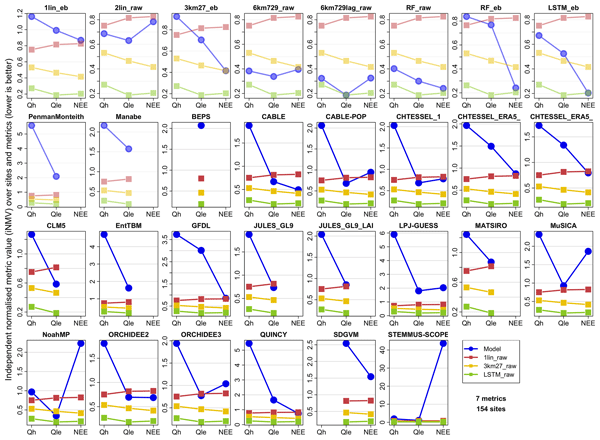
Gab Abramowitz, Anna Ukkola, Sanaa Hobeichi, Jon Cranko Page, Mathew Lipson, Martin G. De Kauwe, Samuel Green, Claire Brenner, Jonathan Frame, Grey Nearing, Martyn Clark, Martin Best, Peter Anthoni, Gabriele Arduini, Souhail Boussetta, Silvia Caldararu, Kyeungwoo Cho, Matthias Cuntz, David Fairbairn, Craig R. Ferguson, Hyungjun Kim, Yeonjoo Kim, Jürgen Knauer, David Lawrence, Xiangzhong Luo, Sergey Malyshev, Tomoko Nitta, Jerome Ogee, Keith Oleson, Catherine Ottlé, Phillipe Peylin, Patricia de Rosnay, Heather Rumbold, Bob Su, Nicolas Vuichard, Anthony P. Walker, Xiaoni Wang-Faivre, Yunfei Wang, and Yijian Zeng
Biogeosciences, 21, 5517–5538, https://doi.org/10.5194/bg-21-5517-2024, https://doi.org/10.5194/bg-21-5517-2024, 2024
Short summary
Short summary
This paper evaluates land models – computer-based models that simulate ecosystem dynamics; land carbon, water, and energy cycles; and the role of land in the climate system. It uses machine learning and AI approaches to show that, despite the complexity of land models, they do not perform nearly as well as they could given the amount of information they are provided with about the prediction problem.
Louise Arnal, Martyn P. Clark, Alain Pietroniro, Vincent Vionnet, David R. Casson, Paul H. Whitfield, Vincent Fortin, Andrew W. Wood, Wouter J. M. Knoben, Brandi W. Newton, and Colleen Walford
Hydrol. Earth Syst. Sci., 28, 4127–4155, https://doi.org/10.5194/hess-28-4127-2024, https://doi.org/10.5194/hess-28-4127-2024, 2024
Short summary
Short summary
Forecasting river flow months in advance is crucial for water sectors and society. In North America, snowmelt is a key driver of flow. This study presents a statistical workflow using snow data to forecast flow months ahead in North American snow-fed rivers. Variations in the river flow predictability across the continent are evident, raising concerns about future predictability in a changing (snow) climate. The reproducible workflow hosted on GitHub supports collaborative and open science.
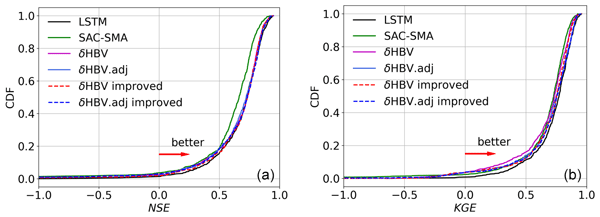
Yalan Song, Wouter J. M. Knoben, Martyn P. Clark, Dapeng Feng, Kathryn Lawson, Kamlesh Sawadekar, and Chaopeng Shen
Hydrol. Earth Syst. Sci., 28, 3051–3077, https://doi.org/10.5194/hess-28-3051-2024, https://doi.org/10.5194/hess-28-3051-2024, 2024
Short summary
Short summary
Differentiable models (DMs) integrate neural networks and physical equations for accuracy, interpretability, and knowledge discovery. We developed an adjoint-based DM for ordinary differential equations (ODEs) for hydrological modeling, reducing distorted fluxes and physical parameters from errors in models that use explicit and operation-splitting schemes. With a better numerical scheme and improved structure, the adjoint-based DM matches or surpasses long short-term memory (LSTM) performance.
Guoqiang Tang, Andrew W. Wood, Andrew J. Newman, Martyn P. Clark, and Simon Michael Papalexiou
Geosci. Model Dev., 17, 1153–1173, https://doi.org/10.5194/gmd-17-1153-2024, https://doi.org/10.5194/gmd-17-1153-2024, 2024
Short summary
Short summary
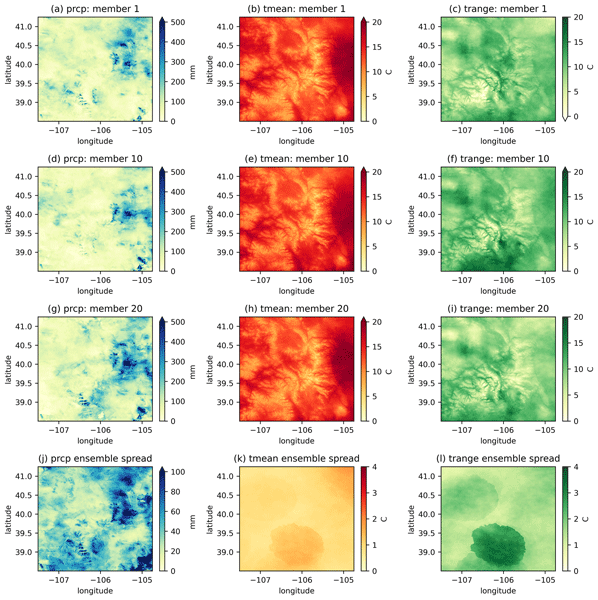
Ensemble geophysical datasets are crucial for understanding uncertainties and supporting probabilistic estimation/prediction. However, open-access tools for creating these datasets are limited. We have developed the Python-based Geospatial Probabilistic Estimation Package (GPEP). Through several experiments, we demonstrate GPEP's ability to estimate precipitation, temperature, and snow water equivalent. GPEP will be a useful tool to support uncertainty analysis in Earth science applications.
Diogo Costa, Kyle Klenk, Wouter Knoben, Andrew Ireson, Raymond J. Spiteri, and Martyn Clark
EGUsphere, https://doi.org/10.5194/egusphere-2023-2787, https://doi.org/10.5194/egusphere-2023-2787, 2023
Preprint archived
Short summary
Short summary
This work helps improve water quality simulations in aquatic ecosystems through a new modeling concept, which we termed “OpenWQ”. It allows tailoring biogeochemistry calculations and integration with existing hydrological (water quantity) simulation tools. The integration is demonstrated with two hydrological models. The models were tested for different pollution scenarios. This paper helps improve interoperability, transparency, flexibility, and reproducibility in water quality simulations.
Nicolás Cortés-Salazar, Nicolás Vásquez, Naoki Mizukami, Pablo A. Mendoza, and Ximena Vargas
Hydrol. Earth Syst. Sci., 27, 3505–3524, https://doi.org/10.5194/hess-27-3505-2023, https://doi.org/10.5194/hess-27-3505-2023, 2023
Short summary
Short summary
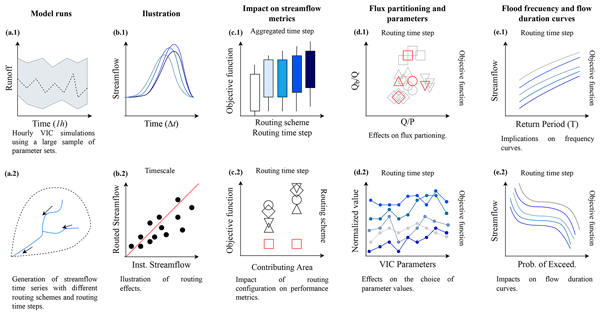
This paper shows how important river models can be for water resource applications that involve hydrological models and, in particular, parameter calibration. To this end, we conduct numerical experiments in a pilot basin using a combination of hydrologic model simulations obtained from a large sample of parameter sets and different routing methods. We find that routing can affect streamflow simulations, even at monthly time steps; the choice of parameters; and relevant streamflow metrics.
Louise J. Slater, Louise Arnal, Marie-Amélie Boucher, Annie Y.-Y. Chang, Simon Moulds, Conor Murphy, Grey Nearing, Guy Shalev, Chaopeng Shen, Linda Speight, Gabriele Villarini, Robert L. Wilby, Andrew Wood, and Massimiliano Zappa
Hydrol. Earth Syst. Sci., 27, 1865–1889, https://doi.org/10.5194/hess-27-1865-2023, https://doi.org/10.5194/hess-27-1865-2023, 2023
Short summary
Short summary
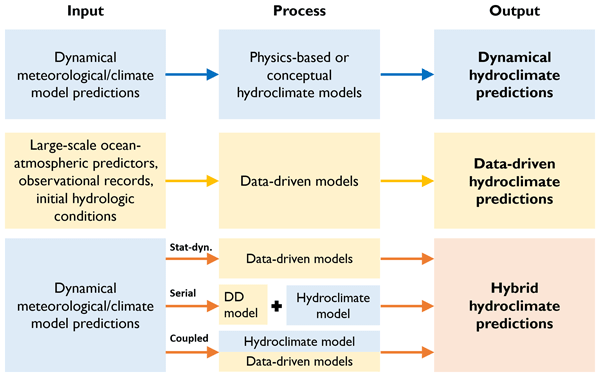
Hybrid forecasting systems combine data-driven methods with physics-based weather and climate models to improve the accuracy of predictions for meteorological and hydroclimatic events such as rainfall, temperature, streamflow, floods, droughts, tropical cyclones, or atmospheric rivers. We review recent developments in hybrid forecasting and outline key challenges and opportunities in the field.
Cited articles
Anderson, G. S.: Hydrologic Reconnaissance of the Tanana Basin, Central Alaska, Hydrologic Atlas, U.S. Geological Survey (USGS), https://doi.org/10.3133/ha319, 1970. a
Arnal, L., Clark, M. P., Pietroniro, A., Vionnet, V., Casson, D. R., Whitfield, P. H., Fortin, V., Wood, A. W., Knoben, W. J. M., Newton, B. W., and Walford, C.: FROSTBYTE: a reproducible data-driven workflow for probabilistic seasonal streamflow forecasting in snow-fed river basins across North America, Hydrol. Earth Syst. Sci., 28, 4127–4155, https://doi.org/10.5194/hess-28-4127-2024, 2024. a
Baez-Villanueva, O. M., Zambrano-Bigiarini, M., Beck, H. E., McNamara, I., Ribbe, L., Nauditt, A., Birkel, C., Verbist, K., Giraldo-Osorio, J. D., and Xuan Thinh, N.: RF-MEP: A Novel Random Forest Method for Merging Gridded Precipitation Products and Ground-Based Measurements, Remote Sens. Environ., 239, 111606, https://doi.org/10.1016/j.rse.2019.111606, 2020. a, b
Barlage, M., Chen, F., Tewari, M., Ikeda, K., Gochis, D., Dudhia, J., Rasmussen, R., Livneh, B., Ek, M., and Mitchell, K.: Noah Land Surface Model Modifications to Improve Snowpack Prediction in the Colorado Rocky Mountains, J. Geophys. Res.-Atmos., 115, https://doi.org/10.1029/2009JD013470, 2010. a
Bash, E. A. and Marshall, S. J.: Estimation of Glacial Melt Contributions to the Bow River, Alberta, Canada, Using a Radiation-Temperature Melt Model, Ann. Glaciol., 55, 138–152, https://doi.org/10.3189/2014AoG66A226, 2014. a
Beck, H. E., Vergopolan, N., Pan, M., Levizzani, V., van Dijk, A. I. J. M., Weedon, G. P., Brocca, L., Pappenberger, F., Huffman, G. J., and Wood, E. F.: Global-scale evaluation of 22 precipitation datasets using gauge observations and hydrological modeling, Hydrol. Earth Syst. Sci., 21, 6201–6217, https://doi.org/10.5194/hess-21-6201-2017, 2017. a, b
Beck, H. E., Wood, E. F., Pan, M., Fisher, C. K., Miralles, D. G., van Dijk, A. I. J. M., McVicar, T. R., and Adler, R. F.: MSWEP V2 Global 3-Hourly 0.1∘ Precipitation: Methodology and Quantitative Assessment, B. Am Meteorol. Soc., https://doi.org/10.1175/BAMS-D-17-0138.1, 2019. a
Behrangi, A., Gardner, A., Reager, J. T., Fisher, J. B., Yang, D., Huffman, G. J., and Adler, R. F.: Using GRACE to Estitmate Snowfall Accumulation and Assess Gauge Undercatch Corrections in High Latitudes, J. Climate, https://doi.org/10.1175/JCLI-D-18-0163.1, 2018. a
Bennett, A. R., Hamman, J. J., and Nijssen, B.: MetSim: A Python Package for Estimation and Disaggregation of Meteorological Data, Journal of Open Source Software, 5, 2042, https://doi.org/10.21105/joss.02042, 2020. a, b
Bennett, K. E., Cherry, J. E., Balk, B., and Lindsey, S.: Using MODIS estimates of fractional snow cover area to improve streamflow forecasts in interior Alaska, Hydrol. Earth Syst. Sci., 23, 2439–2459, https://doi.org/10.5194/hess-23-2439-2019, 2019. a
Berg, J., Reynolds, D., Quéno, L., Jonas, T., Lehning, M., and Mott, R.: A Seasonal Snowpack Model Forced with Dynamically Downscaled Forcing Data Resolves Hydrologically Relevant Accumulation Patterns, Frontiers in Earth Science, 12, https://doi.org/10.3389/feart.2024.1393260, 2024. a, b, c
Blöschl, G. and Sivapalan, M.: Scale Issues in Hydrological Modelling: A Review, Hydrol. Process., 9, 251–290, https://doi.org/10.1002/hyp.3360090305, 1995. a
Bohn, T. J., Livneh, B., Oyler, J. W., Running, S. W., Nijssen, B., and Lettenmaier, D. P.: Global Evaluation of MTCLIM and Related Algorithms for Forcing of Ecological and Hydrological Models, Agr. Forest Meteorol., 176, 38–49, https://doi.org/10.1016/j.agrformet.2013.03.003, 2013. a, b
Böhner, J. and Antonić, O.: Land-Surface Parameters Specific to Topo-Climatology, Chapter 8 in: Developments in Soil Science, edited by: Hengl, T. and Reuter, H. I., vol. 33 of Geomorphometry, Elsevier, 195–226, https://doi.org/10.1016/S0166-2481(08)00008-1, 2009. a, b
BRCB: Bow River Basin State of the Watershed Summary, 2010, Bow River Council, Bow River Watershed (Alta.), https://sswm.info/sites/default/files/reference_attachments/BOW_RIVER_BASIN_COUNCIL_2010_Bow_River_Basin_State_of_the_Watershed_Summary_2010.pdf (last access: 8 October 2026), 2010. a
Breiman, L.: Random Forests, Mach. Learn., 45, 5–32, https://doi.org/10.1023/A:1010933404324, 2001. a
Brown, R. D., Fang, B., and Mudryk, L.: Update of Canadian Historical Snow Survey Data and Analysis of Snow Water Equivalent Trends, 1967–2016, Atmos. Ocean, 57, 149–156, https://doi.org/10.1080/07055900.2019.1598843, 2019. a
Bunn, P. T., Wood, A. W., Newman, A. J., Chang, H.-I., Castro, C. L., Clark, M. P., and Arnold, J. R.: Improving Station-Based Ensemble Surface Meteorological Analyses Using Numerical Weather Prediction: A Case Study of the Oroville Dam Crisis Precipitation Event, J. Hydrometeorol., https://doi.org/10.1175/JHM-D-21-0193.1, 2022. a, b, c, d
Carlson, K. A., Levin, H. K., Morris, A. L., Candela, S. G., Rivera, A. M. M., Huening, V. G., and Fredericks, J. G.: TDX-hydro: Global High-Resolution Hydrography Derived from TanDEM-x, ESS Open Archive, https://doi.org/10.22541/essoar.171629686.65893579/v1, 2024. a
Carlstein, E.: The Use of Subseries Values for Estimating the Variance of a General Statistic from a Stationary Sequence, Ann. Stat., 14, 1171–1179, 1986. a
Casson, D. R.: Ensemble Meteorological Forcing for Chena, Bow and Tuolumne, Federated Research Data Repository (FRDR) [data set], https://doi.org/10.20383/103.01532, 2025a. a
Casson, D. R.: Gpep_snakemake: Workflow for Generating Probabilistic Ensemble Meteorological Forcings, Zenodo [code], https://doi.org/10.5281/zenodo.17727619, 2025b. a
Casson, D. R.: Gpep_to_summa_snakemake: Workflow for Coupling GPEP Ensemble Forcings to the Physically Based Hydrological Modelling, Zenodo [code], https://doi.org/10.5281/zenodo.17727623, 2025c. a
Casson, D. R.: SUMMA Model and GPEP Input Files, Zenodo [data set], https://doi.org/10.5281/zenodo.17740654, 2025d. a
Casson, D. R., Werner, M., Weerts, A., and Solomatine, D.: Global re-analysis datasets to improve hydrological assessment and snow water equivalent estimation in a sub-Arctic watershed, Hydrol. Earth Syst. Sci., 22, 4685–4697, https://doi.org/10.5194/hess-22-4685-2018, 2018. a
Chaney, N. W., Van Huijgevoort, M. H. J., Shevliakova, E., Malyshev, S., Milly, P. C. D., Gauthier, P. P. G., and Sulman, B. N.: Harnessing big data to rethink land heterogeneity in Earth system models, Hydrol. Earth Syst. Sci., 22, 3311–3330, https://doi.org/10.5194/hess-22-3311-2018, 2018. a
Clark, M. P., Slater, A. G., Barrett, A. P., Hay, L. E., McCabe, G. J., Rajagopalan, B., and Leavesley, G. H.: Assimilation of Snow Covered Area Information into Hydrologic and Land-Surface Models, Adv. Water Resour., 29, 1209–1221, https://doi.org/10.1016/j.advwatres.2005.10.001, 2006. a, b
Clark, M. P., Hendrikx, J., Slater, A. G., Kavetski, D., Anderson, B., Cullen, N. J., Kerr, T., Hreinsson, E. Ö., and Woods, R. A.: Representing Spatial Variability of Snow Water Equivalent in Hydrologic and Land-Surface Models: A Review, Water Resour. Res., 47, https://doi.org/10.1029/2011WR010745, 2011. a, b, c
Clark, M. P., Nijssen, B., Lundquist, D., Kavetski, D., Rupp, E., Woods, A., Freer, E., Gutmann, D., Wood, W., Brekke, D., Arnold, R., Gochis, J., Rasmussen, M., Tarboton, G., Mahat, V., Flerchinger, N., and Marks, G.: The Structure for Unifying Multiple Modeling Alternatives (SUMMA), Version 1.0: Technical Description, National Center for Atmospheric Research (NCAR), https://doi.org/10.5065/D6WQ01TD, 2015a. a, b, c
Clark, M. P., Nijssen, B., Lundquist, J. D., Kavetski, D., Rupp, D. E., Woods, R. A., Freer, J. E., Gutmann, E. D., Wood, A. W., Brekke, L. D., Arnold, J. R., Gochis, D. J., and Rasmussen, R. M.: A Unified Approach for Process-Based Hydrologic Modeling: 1. Modeling Concept, Water Resour. Res., 51, 2498–2514, https://doi.org/10.1002/2015WR017198, 2015b. a, b
Clark, M. P., Nijssen, B., Lundquist, J. D., Kavetski, D., Rupp, D. E., Woods, R. A., Freer, J. E., Gutmann, E. D., Wood, A. W., Gochis, D. J., Rasmussen, R. M., Tarboton, D. G., Mahat, V., Flerchinger, G. N., and Marks, D. G.: A Unified Approach for Process-Based Hydrologic Modeling: 2. Model Implementation and Case Studies, Water Resour. Res., 51, 2515–2542, https://doi.org/10.1002/2015WR017200, 2015c. a, b
Clark, M. P., Vogel, R. M., Lamontagne, J. R., Mizukami, N., Knoben, W. J. M., Tang, G., Gharari, S., Freer, J. E., Whitfield, P. H., Shook, K. R., and Papalexiou, S. M.: The Abuse of Popular Performance Metrics in Hydrologic Modeling, Water Resour. Res., 57, e2020WR029001, https://doi.org/10.1029/2020WR029001, 2021a. a
Clark, M. P., Zolfaghari, R., Green, K. R., Trim, S., Knoben, W. J. M., Bennett, A., Nijssen, B., Ireson, A., and Spiteri, R. J.: The Numerical Implementation of Land Models: Problem Formulation and Laugh Tests, J. Hydrometeorol., 22, 1627–1648, https://doi.org/10.1175/JHM-D-20-0175.1, 2021b. a
Cloke, H. L. and Pappenberger, F.: Ensemble Flood Forecasting: A Review, J. Hydrol., 375, 613–626, https://doi.org/10.1016/j.jhydrol.2009.06.005, 2009. a
Colli, M., Pollock, M., Stagnaro, M., Lanza, L. G., Dutton, M., and O'Connell, E.: A Computational Fluid-Dynamics Assessment of the Improved Performance of Aerodynamic Rain Gauges, Water Resour. Res., 54, 779–796, https://doi.org/10.1002/2017WR020549, 2018. a
Colli, M., Stagnaro, M., Lanza, L. G., Rasmussen, R., and Thériault, J. M.: Adjustments for Wind-Induced Undercatch in Snowfall Measurements Based on Precipitation Intensity, J. Hydrometeorol., https://doi.org/10.1175/JHM-D-19-0222.1, 2020. a
Collins, M.: Ensembles and Probabilities: A New Era in the Prediction of Climate Change, Philos. T. R. Soc. A, 365, 1957–1970, https://doi.org/10.1098/rsta.2007.2068, 2007. a
Contractor, S., Donat, M. G., Alexander, L. V., Ziese, M., Meyer-Christoffer, A., Schneider, U., Rustemeier, E., Becker, A., Durre, I., and Vose, R. S.: Rainfall Estimates on a Gridded Network (REGEN) – a global land-based gridded dataset of daily precipitation from 1950 to 2016, Hydrol. Earth Syst. Sci., 24, 919–943, https://doi.org/10.5194/hess-24-919-2020, 2020. a
Cristea, N. C., Lundquist, J. D., Loheide II, S. P., Lowry, C. S., and Moore, C. E.: Modelling How Vegetation Cover Affects Climate Change Impacts on Streamflow Timing and Magnitude in the Snowmelt-Dominated Upper Tuolumne Basin, Sierra Nevada, Hydrol. Process., 28, 3896–3918, https://doi.org/10.1002/hyp.9909, 2014. a
Crumley, R. L., Palomaki, R. T., Nolin, A. W., Sproles, E. A., and Mar, E. J.: SnowCloudMetrics: Snow Information for Everyone, Remote Sens., 12, 3341, https://doi.org/10.3390/rs12203341, 2020. a, b
Currier, W. R. and Lundquist, J. D.: Snow Depth Variability at the Forest Edge in Multiple Climates in the Western United States, Water Resour. Res., 54, 8756–8773, https://doi.org/10.1029/2018WR022553, 2018. a
Cutler, D. R., Edwards Jr., T. C., Beard, K. H., Cutler, A., Hess, K. T., Gibson, J., and Lawler, J. J.: Random Forests for Classification in Ecology, Ecology, 88, 2783–2792, https://doi.org/10.1890/07-0539.1, 2007. a
Daly, C., Neilson, R. P., and Phillips, D. L.: A Statistical-Topographic Model for Mapping Climatological Precipitation over Mountainous Terrain, J. Appl. Meteorol. Climatol., 33, 140–158, https://doi.org/10.1175/1520-0450(1994)033<0140:ASTMFM>2.0.CO;2, 1994. a
Daly, C., Halbleib, M., Smith, J. I., Gibson, W. P., Doggett, M. K., Taylor, G. H., Curtis, J., and Pasteris, P. P.: Physiographically Sensitive Mapping of Climatological Temperature and Precipitation across the Conterminous United States, Int. J. Climatol., 28, 2031–2064, https://doi.org/10.1002/joc.1688, 2008. a, b, c
Daly, C., Doggett, M. K., Smith, J. I., Olson, K. V., Halbleib, M. D., Dimcovic, Z., Keon, D., Loiselle, R. A., Steinberg, B., Ryan, A. D., Pancake, C. M., and Kaspar, E. M.: Challenges in Observation-Based Mapping of Daily Precipitation across the Conterminous United States, J. Atmos. Ocean. Tech., 38, 1979–1992, https://doi.org/10.1175/JTECH-D-21-0054.1, 2021. a, b, c
Daly, S. F. and Vuyovich, C. M.: The Chena River Watershed Hydrology Model, Technical Report ERDC/CRREL TR-12-1, U. S. Army Engineer Research and Development Center, Cold Regions Research and Engineering Laboratory (ERDC/CRREL), https://hdl.handle.net/11681/5364 (last access: 8 October 2026), 2012. a, b, c
Deems, J. S., Painter, T. H., and Finnegan, D. C.: Lidar Measurement of Snow Depth: A Review, J. Glaciol., 59, 467–479, 2013. a
Dozier, J., Bair, E. H., and Davis, R. E.: Estimating the Spatial Distribution of Snow Water Equivalent in the World's Mountains, WIREs Water, 3, 461–474, https://doi.org/10.1002/wat2.1140, 2016. a, b
Durre, I., Menne, M. J., Gleason, B. E., Houston, T. G., and Vose, R. S.: Comprehensive Automated Quality Assurance of Daily Surface Observations, J. Appl. Meteorol. Climatol., 49, 1615–1633, https://doi.org/10.1175/2010JAMC2375.1, 2010. a, b
Ensor, L. A. and Robeson, S. M.: Statistical Characteristics of Daily Precipitation: Comparisons of Gridded and Point Datasets, J. Appl. Meteorol. Climatol., 47, 2468–2476, https://doi.org/10.1175/2008JAMC1757.1, 2008. a
Essery, R., Morin, S., Lejeune, Y., and B Ménard, C.: A Comparison of 1701 Snow Models Using Observations from an Alpine Site, Adv. Water Resour., 55, 131–148, https://doi.org/10.1016/j.advwatres.2012.07.013, 2013. a, b, c, d
Fang, X., Pomeroy, J. W., DeBeer, C. M., Harder, P., and Siemens, E.: Hydrometeorological data from Marmot Creek Research Basin, Canadian Rockies, Earth Syst. Sci. Data, 11, 455–471, https://doi.org/10.5194/essd-11-455-2019, 2019. a
Farahani, M. A., Wood, A. W., Tang, G., and Mizukami, N.: Calibrating a large-domain land/hydrology process model in the age of AI: the SUMMA CAMELS emulator experiments, Hydrol. Earth Syst. Sci., 29, 4515–4537, https://doi.org/10.5194/hess-29-4515-2025, 2025. a, b, c
Fleming, S. W., Zukiewicz, L., Strobel, M. L., Hofman, H., and Goodbody, A. G.: SNOTEL, the Soil Climate Analysis Network, and Water Supply Forecasting at the Natural Resources Conservation Service: Past, Present, and Future, JAWRA J. Am. Water Resour. Assoc., 59, 585–599, https://doi.org/10.1111/1752-1688.13104, 2023. a
Fox, E. W., Hoef, J. M. V., and Olsen, A. R.: Comparing Spatial Regression to Random Forests for Large Environmental Data Sets, PLOS ONE, 15, e0229509, https://doi.org/10.1371/journal.pone.0229509, 2020. a
Frei, C. and Isotta, F. A.: Ensemble Spatial Precipitation Analysis From Rain Gauge Data: Methodology and Application in the European Alps, J. Geophys. Res.-Atmos., 2018JD030004, https://doi.org/10.1029/2018JD030004, 2019. a, b, c, d
Frey, P. J., Mueller, E. W., and Berry, E. C.: The Chena River: The Study of a Subarctic Stream, Federal Water Quality Administration, Department of the Interior, Alaska Water Laboratory, https://books.google.com/books/about/The_Chena_River.html?id=XXMg0gEACAAJ (last access: 8 October 2026), 1970. a
Friedl, M. and Sulla-Menashe, D.: MCD12Q1 MODIS/Terra+Aqua Land Cover Type Yearly L3 Global 500m SIN Grid V006, NASA Land Processes Distributed Active Archive Center, https://doi.org/10.5067/MODIS/MCD12Q1.006, 2019. a, b
Froidurot, S., Zin, I., Hingray, B., and Gautheron, A.: Sensitivity of Precipitation Phase over the Swiss Alps to Different Meteorological Variables, J. Hydrometeorol., 15, 685–696, https://doi.org/10.1175/JHM-D-13-073.1, 2014. a
Gascoin, S., Luojus, K., Nagler, T., Lievens, H., Masiokas, M., Jonas, T., Zheng, Z., and De Rosnay, P.: Remote Sensing of Mountain Snow from Space: Status and Recommendations, Frontiers in Earth Science, 12, https://doi.org/10.3389/feart.2024.1381323, 2024. a
Gasset, N., Fortin, V., Dimitrijevic, M., Carrera, M., Bilodeau, B., Muncaster, R., Gaborit, É., Roy, G., Pentcheva, N., Bulat, M., Wang, X., Pavlovic, R., Lespinas, F., Khedhaouiria, D., and Mai, J.: A 10 km North American precipitation and land-surface reanalysis based on the GEM atmospheric model, Hydrol. Earth Syst. Sci., 25, 4917–4945, https://doi.org/10.5194/hess-25-4917-2021, 2021. a, b
Gervais, M., Tremblay, L. B., Gyakum, J. R., and Atallah, E.: Representing Extremes in a Daily Gridded Precipitation Analysis over the United States: Impacts of Station Density, Resolution, and Gridding Methods, J. Climate, 27, 5201–5218, https://doi.org/10.1175/JCLI-D-13-00319.1, 2014. a
Gharari, S., Keshavarz, K., Knoben, W. J. M., Tang, G., and Clark, M. P.: EASYMORE: A Python Package to Streamline the Remapping of Variables for Earth System Models, SoftwareX, 24, https://doi.org/10.1016/j.softx.2023.101547, 2023. a
Gil, Y., David, C. H., Demir, I., Essawy, B. T., Fulweiler, R. W., Goodall, J. L., Karlstrom, L., Lee, H., Mills, H. J., Oh, J.-H., Pierce, S. A., Pope, A., Tzeng, M. W., Villamizar, S. R., and Yu, X.: Toward the Geoscience Paper of the Future: Best Practices for Documenting and Sharing Research from Data to Software to Provenance, Earth Space Sci., 3, 388–415, https://doi.org/10.1002/2015EA000136, 2016. a
Girotto, M., Musselman, K. N., and Essery, R. L. H.: Data Assimilation Improves Estimates of Climate-Sensitive Seasonal Snow, Current Climate Change Reports, 6, 81–94, https://doi.org/10.1007/s40641-020-00159-7, 2020. a, b, c, d
Günther, D., Marke, T., Essery, R., and Strasser, U.: Uncertainties in Snowpack Simulations–Assessing the Impact of Model Structure, Parameter Choice, and Forcing Data Error on Point-Scale Energy Balance Snow Model Performance, Water Resour. Res., 55, 2779–2800, https://doi.org/10.1029/2018WR023403, 2019. a, b
Hall, D. K. and Riggs, G. A.: MODIS/Terra Snow Cover Daily L3 Global 500m SIN Grid, Version 61, National Snow and Ice Data Center [data set], https://doi.org/10.5067/MODIS/MOD10A1.061, 2021. a, b
Hallouin, T., Bourgin, F., Perrin, C., Ramos, M.-H., and Andréassian, V.: EvalHyd v0.1.2: a polyglot tool for the evaluation of deterministic and probabilistic streamflow predictions, Geosci. Model Dev., 17, 4561–4578, https://doi.org/10.5194/gmd-17-4561-2024, 2024. a, b
Hedrick, A. R., Marks, D., Marshall, H.-P., McNamara, J., Havens, S., Trujillo, E., Sandusky, M., Robertson, M., Johnson, M., Bormann, K. J., and Painter, T. H.: From Drought to Flood: A Water Balance Analysis of the Tuolumne River Basin during Extreme Conditions (2015–2017), Hydrol. Process., 34, 2560–2574, https://doi.org/10.1002/hyp.13749, 2020. a
Hedstrom, N. R. and Pomeroy, J. W.: Measurements and Modelling of Snow Interception in the Boreal Forest, Hydrol. Process., 12, 1611–1625, https://doi.org/10.1002/(SICI)1099-1085(199808/09)12:10/11<1611::AID-HYP684>3.0.CO;2-4, 1998. a
Helbig, N., Mott, R., van Herwijnen, A., Winstral, A., and Jonas, T.: Parameterizing Surface Wind Speed over Complex Topography, J. Geophys. Res.-Atmos., 122, 651–667, https://doi.org/10.1002/2016JD025593, 2017. a
Hengl, T., de Jesus, J. M., Heuvelink, G. B. M., Gonzalez, M. R., Kilibarda, M., Blagotić, A., Shangguan, W., Wright, M. N., Geng, X., Bauer-Marschallinger, B., Guevara, M. A., Vargas, R., MacMillan, R. A., Batjes, N. H., Leenaars, J. G. B., Ribeiro, E., Wheeler, I., Mantel, S., and Kempen, B.: SoilGrids250m: Global Gridded Soil Information Based on Machine Learning, PLOS ONE, 12, e0169748, https://doi.org/10.1371/journal.pone.0169748, 2017. a, b
Henn, B., Clark, M. P., Kavetski, D., McGurk, B., Painter, T. H., and Lundquist, J. D.: Combining Snow, Streamflow, and Precipitation Gauge Observations to Infer Basin-Mean Precipitation, Water Resour. Res., 52, 8700–8723, https://doi.org/10.1002/2015WR018564, 2016. a, b
Henn, B., Clark, M. P., Kavetski, D., Newman, A. J., Hughes, M., McGurk, B., and Lundquist, J. D.: Spatiotemporal Patterns of Precipitation Inferred from Streamflow Observations across the Sierra Nevada Mountain Range, J. Hydrol., 556, 993–1012, https://doi.org/10.1016/j.jhydrol.2016.08.009, 2018a. a
Henn, B., Newman, A. J., Livneh, B., Daly, C., and Lundquist, J. D.: An Assessment of Differences in Gridded Precipitation Datasets in Complex Terrain, J. Hydrol., 556, 1205–1219, https://doi.org/10.1016/j.jhydrol.2017.03.008, 2018b. a, b
Henn, B., Painter, T. H., Bormann, K. J., McGurk, B., Flint, A. L., Flint, L. E., White, V., and Lundquist, J. D.: High-Elevation Evapotranspiration Estimates During Drought: Using Streamflow and NASA Airborne Snow Observatory SWE Observations to Close the Upper Tuolumne River Basin Water Balance, Water Resour. Res., 54, 746–766, https://doi.org/10.1002/2017WR020473, 2018c. a
Hersbach, H., Bell, B., Berrisford, P., Hirahara, S., Horányi, A., Muñoz-Sabater, J., Nicolas, J., Peubey, C., Radu, R., Schepers, D., Simmons, A., Soci, C., Abdalla, S., Abellan, X., Balsamo, G., Bechtold, P., Biavati, G., Bidlot, J., Bonavita, M., Chiara, G. D., Dahlgren, P., Dee, D., Diamantakis, M., Dragani, R., Flemming, J., Forbes, R., Fuentes, M., Geer, A., Haimberger, L., Healy, S., Hogan, R. J., Hólm, E., Janisková, M., Keeley, S., Laloyaux, P., Lopez, P., Lupu, C., Radnoti, G., de Rosnay, P., Rozum, I., Vamborg, F., Villaume, S., and Thépaut, J.-N.: The ERA5 Global Reanalysis, Q. J. Roy. Meteor. Soc., 146, 1999–2049, https://doi.org/10.1002/qj.3803, 2020. a, b
Hong, Y., Xuan Do, H., Kessler, J., Fry, L., Read, L., Rafieei Nasab, A., Gronewold, A. D., Mason, L., and Anderson, E. J.: Evaluation of Gridded Precipitation Datasets over International Basins and Large Lakes, J. Hydrol., 607, 127507, https://doi.org/10.1016/j.jhydrol.2022.127507, 2022. a, b
Hotovy, O., Nedelcev, O., Seibert, J., and Jenicek, M.: Rain-on-snow events in mountainous catchments under climate change, Hydrol. Earth Syst. Sci., 29, 4199–4217, https://doi.org/10.5194/hess-29-4199-2025, 2025. a
Hrachowitz, M. and Clark, M. P.: HESS Opinions: The complementary merits of competing modelling philosophies in hydrology, Hydrol. Earth Syst. Sci., 21, 3953–3973, https://doi.org/10.5194/hess-21-3953-2017, 2017. a
Huidobro, G., Chiu, C.-M., Byun, K., and Hamlet, A. F.: Meteorological Driving Datasets for the U. S. Midwest and Great Lakes Region Incorporating Precipitation Gauge Undercatch Corrections, J. Hydrometeorol., 24, 873–895, https://doi.org/10.1175/JHM-D-22-0148.1, 2023. a, b, c, d
Hungerford, R. D., Nemani, R. R., Running, S. W., and Coughlan, J. C.: MTCLIM: A Mountain Microclimate Simulation Model, Tech. Rep. INT-RP-414, U. S. Department of Agriculture, Forest Service, Intermountain Forest and Range Experiment Station, Ogden, UT, https://doi.org/10.2737/INT-RP-414, 1989. a
Huning, L. S. and AghaKouchak, A.: Global Snow Drought Hot Spots and Characteristics, P. Natl. Acad. Sci. USA, 117, 19753–19759, https://doi.org/10.1073/pnas.1915921117, 2020. a
Immerzeel, W. W., Lutz, A. F., Andrade, M., Bahl, A., Biemans, H., Bolch, T., Hyde, S., Brumby, S., Davies, B. J., Elmore, A. C., Emmer, A., Feng, M., Fernández, A., Haritashya, U., Kargel, J. S., Koppes, M., Kraaijenbrink, P. D. A., Kulkarni, A. V., Mayewski, P. A., Nepal, S., Pacheco, P., Painter, T. H., Pellicciotti, F., Rajaram, H., Rupper, S., Sinisalo, A., Shrestha, A. B., Viviroli, D., Wada, Y., Xiao, C., Yao, T., and Baillie, J. E. M.: Importance and Vulnerability of the World's Water Towers, Nature, 577, 364–369, https://doi.org/10.1038/s41586-019-1822-y, 2020. a
Jolliff, J. K., Kindle, J. C., Shulman, I., Penta, B., Friedrichs, M. A. M., Helber, R., and Arnone, R. A.: Summary Diagrams for Coupled Hydrodynamic-Ecosystem Model Skill Assessment, J. Mar. Syst., 76, 64–82, https://doi.org/10.1016/j.jmarsys.2008.05.014, 2009. a
Jordan, R.: A One-Dimensional Temperature Model for a Snow Cover, Special report, Cold Regions Research and Engineering Laboratory (U.S.), https://hdl.handle.net/11681/11677 (last access: 8 October 2026), 1991. a
Kim, R. S., Kumar, S., Vuyovich, C., Houser, P., Lundquist, J., Mudryk, L., Durand, M., Barros, A., Kim, E. J., Forman, B. A., Gutmann, E. D., Wrzesien, M. L., Garnaud, C., Sandells, M., Marshall, H.-P., Cristea, N., Pflug, J. M., Johnston, J., Cao, Y., Mocko, D., and Wang, S.: Snow Ensemble Uncertainty Project (SEUP): quantification of snow water equivalent uncertainty across North America via ensemble land surface modeling, The Cryosphere, 15, 771–791, https://doi.org/10.5194/tc-15-771-2021, 2021. a, b
Kimball, J. S., Running, S. W., and Nemani, R.: An Improved Method for Estimating Surface Humidity from Daily Minimum Temperature, Agr. Forest Meteorol., 85, 87–98, https://doi.org/10.1016/S0168-1923(96)02366-0, 1997. a
Knoben, W.: Global USDA-NRCS Soil Texture Class Map, Hydroshare, https://doi.org/10.4211/hs.1361509511e44adfba814f6950c6e742, 2021. a
Knoben, W. J. M., Clark, M. P., Bales, J., Bennett, A., Gharari, S., Marsh, C. B., Nijssen, B., Pietroniro, A., Spiteri, R. J., Tang, G., Tarboton, D. G., and Wood, A. W.: Community Workflows to Advance Reproducibility in Hydrologic Modeling: Separating Model-Agnostic and Model-Specific Configuration Steps in Applications of Large-Domain Hydrologic Models, Water Resour. Res., 58, e2021WR031753, https://doi.org/10.1029/2021WR031753, 2022. a, b, c
Kochendorfer, J., Nitu, R., Wolff, M., Mekis, E., Rasmussen, R., Baker, B., Earle, M. E., Reverdin, A., Wong, K., Smith, C. D., Yang, D., Roulet, Y.-A., Buisan, S., Laine, T., Lee, G., Aceituno, J. L. C., Alastrué, J., Isaksen, K., Meyers, T., Brækkan, R., Landolt, S., Jachcik, A., and Poikonen, A.: Analysis of single-Alter-shielded and unshielded measurements of mixed and solid precipitation from WMO-SPICE, Hydrol. Earth Syst. Sci., 21, 3525–3542, https://doi.org/10.5194/hess-21-3525-2017, 2017a. a, b, c, d, e, f, g
Kochendorfer, J., Rasmussen, R., Wolff, M., Baker, B., Hall, M. E., Meyers, T., Landolt, S., Jachcik, A., Isaksen, K., Brækkan, R., and Leeper, R.: The quantification and correction of wind-induced precipitation measurement errors, Hydrol. Earth Syst. Sci., 21, 1973–1989, https://doi.org/10.5194/hess-21-1973-2017, 2017b. a, b, c, d, e, f
Köster, J. and Rahmann, S.: Snakemake – a Scalable Bioinformatics Workflow Engine, Bioinformatics, 28, 2520–2522, https://doi.org/10.1093/bioinformatics/bts480, 2012. a, b
Largeron, C., Dumont, M., Morin, S., Boone, A., Lafaysse, M., Metref, S., Cosme, E., Jonas, T., Winstral, A., and Margulis, S. A.: Toward Snow Cover Estimation in Mountainous Areas Using Modern Data Assimilation Methods: A Review, Frontiers in Earth Science, 8, https://doi.org/10.3389/feart.2020.00325, 2020. a, b, c, d
Lawrence, D. M., Oleson, K. W., Flanner, M. G., Thornton, P. E., Swenson, S. C., Lawrence, P. J., Zeng, X., Yang, Z.-L., Levis, S., Sakaguchi, K., Bonan, G. B., and Slater, A. G.: Parameterization Improvements and Functional and Structural Advances in Version 4 of the Community Land Model, J. Adv. Model. Earth Sy., 3, https://doi.org/10.1029/2011MS00045, 2011. a
Liao, C. and Zhuang, Q.: Quantifying the Role of Snowmelt in Stream Discharge in an Alaskan Watershed: An Analysis Using a Spatially Distributed Surface Hydrology Model, J. Geophys. Res.-Earth, 122, 2183–2195, https://doi.org/10.1002/2017JF004214, 2017. a
Liu, H., Wood, A. W., Newman, A. J., and Clark, M. P.: Ensemble Dressing of Meteorological Fields: Using Spatial Regression to Estimate Uncertainty in Deterministic Gridded Meteorological Datasets, J. Hydrometeorol., 23, 1525–1543, https://doi.org/10.1175/JHM-D-21-0176.1, 2022. a
Lundquist, J., Abel, M. R., Gutmann, E., and Kapnick, S.: Our Skill in Modeling Mountain Rain and Snow Is Bypassing the Skill of Our Observational Networks, B. Am. Meteorol. Soc., 100, 2473–2490, https://doi.org/10.1175/BAMS-D-19-0001.1, 2019. a
Lundquist, J. D., Abel, M. R., Henn, B., Gutmann, E. D., Livneh, B., Dozier, J., and Neiman, P.: High-Elevation Precipitation Patterns: Using Snow Measurements to Assess Daily Gridded Datasets across the Sierra Nevada, California, J. Hydrometeorol., 16, 1773–1792, https://doi.org/10.1175/JHM-D-15-0019.1, 2015a. a
Lundquist, J. D., Wayand, N. E., Massmann, A., Clark, M. P., Lott, F., and Cristea, N. C.: Diagnosis of Insidious Data Disasters, Water Resour. Res., 51, 3815–3827, https://doi.org/10.1002/2014WR016585, 2015b. a
Lundquist, J. D., Roche, J. W., Forrester, H., Moore, C., Keenan, E., Perry, G., Cristea, N., Henn, B., Lapo, K., McGurk, B., Cayan, D. R., and Dettinger, M. D.: Yosemite Hydroclimate Network: Distributed Stream and Atmospheric Data for the Tuolumne River Watershed and Surroundings, Water Resour. Res., 52, 7478–7489, https://doi.org/10.1002/2016WR019261, 2016. a
Lussana, C., Saloranta, T., Skaugen, T., Magnusson, J., Tveito, O. E., and Andersen, J.: seNorge2 daily precipitation, an observational gridded dataset over Norway from 1957 to the present day, Earth Syst. Sci. Data, 10, 235–249, https://doi.org/10.5194/essd-10-235-2018, 2018. a, b
Magnusson, J., Wever, N., Essery, R., Helbig, N., Winstral, A., and Jonas, T.: Evaluating Snow Models with Varying Process Representations for Hydrological Applications, Water Resour. Res., 51, 2707–2723, https://doi.org/10.1002/2014WR016498, 2015. a
Margulis, S. A., Fang, Y., Li, D., Lettenmaier, D. P., and Andreadis, K.: The Utility of Infrequent Snow Depth Images for Deriving Continuous Space-Time Estimates of Seasonal Snow Water Equivalent, Geophys. Res. Lett., 46, 5331–5340, https://doi.org/10.1029/2019GL082507, 2019. a, b
Marks, D., Kimball, J., Tingey, D., and Link, T.: The Sensitivity of Snowmelt Processes to Climate Conditions and Forest Cover during Rain-on-Snow: A Case Study of the 1996 Pacific Northwest Flood, Hydrol. Process., 12, 1569–1587, https://doi.org/10.1002/(SICI)1099-1085(199808/09)12:10/11<1569::AID-HYP682>3.0.CO;2-L, 1998. a
Marsh, C. B., Vionnet, V., and Pomeroy, J. W.: Windmapper: An Efficient Wind Downscaling Method for Hydrological Models, Water Resour. Res., 59, e2022WR032683, https://doi.org/10.1029/2022WR032683, 2023. a
Marsh, C. B., Lv, Z., Vionnet, V., Harder, P., Spiteri, R. J., and Pomeroy, J. W.: Snowdrift-Permitting Simulations of Seasonal Snowpack Processes Over Large Mountain Extents, Water Resour. Res., 60, e2023WR036948, https://doi.org/10.1029/2023WR036948, 2024. a, b, c
Mekis, É. and Vincent, L. A.: An Overview of the Second Generation Adjusted Daily Precipitation Dataset for Trend Analysis in Canada, Atmos. Ocean, 49, 163–177, https://doi.org/10.1080/07055900.2011.583910, 2011. a
Mekis, E., Donaldson, N., Reid, J., Zucconi, A., Hoover, J., Li, Q., Nitu, R., and Melo, S.: An Overview of Surface-Based Precipitation Observations at Environment and Climate Change Canada, Atmos. Ocean, 56, 71–95, https://doi.org/10.1080/07055900.2018.1433627, 2018. a, b
Menard, C. B., Essery, R., Krinner, G., Arduini, G., Bartlett, P., Boone, A., Brutel-Vuilmet, C., Burke, E., Cuntz, M., Dai, Y., Decharme, B., Dutra, E., Fang, X., Fierz, C., Gusev, Y., Hagemann, S., Haverd, V., Kim, H., Lafaysse, M., Marke, T., Nasonova, O., Nitta, T., Niwano, M., Pomeroy, J., Schädler, G., Semenov, V. A., Smirnova, T., Strasser, U., Swenson, S., Turkov, D., Wever, N., and Yuan, H.: Scientific and Human Errors in a Snow Model Intercomparison, B. Am. Meteorol. Soc., 102, E61–E79, https://doi.org/10.1175/BAMS-D-19-0329.1, 2021. a, b
Menne, M. J., Durre, I., Vose, R. S., Gleason, B. E., and Houston, T. G.: An Overview of the Global Historical Climatology Network-Daily Database, J. Atmos. Ocean. Tech., 29, 897–910, https://doi.org/10.1175/JTECH-D-11-00103.1, 2012. a
Miller, Z. S., Peitzsch, E. H., Sproles, E. A., Birkeland, K. W., and Palomaki, R. T.: Assessing the seasonal evolution of snow depth spatial variability and scaling in complex mountain terrain, The Cryosphere, 16, 4907–4930, https://doi.org/10.5194/tc-16-4907-2022, 2022. a
Mortimer, C. and Vionnet, V.: Northern Hemisphere in situ snow water equivalent dataset (NorSWE, 1979–2021), Earth Syst. Sci. Data, 17, 3619–3640, https://doi.org/10.5194/essd-17-3619-2025, 2025a. a, b, c, d
Mortimer, C. and Vionnet, V.: Northern Hemisphere Historical In-Situ Snow Water Equivalent Dataset (NorSWE, 1979–2021), Zenodo [data set], https://doi.org/10.5281/zenodo.15263370, 2025b. a
Mosier, T. M., Hill, D. F., and Sharp, K. V.: How much cryosphere model complexity is just right? Exploration using the conceptual cryosphere hydrology framework, The Cryosphere, 10, 2147–2171, https://doi.org/10.5194/tc-10-2147-2016, 2016. a
Mott, R., Vionnet, V., and Grünewald, T.: The Seasonal Snow Cover Dynamics: Review on Wind-Driven Coupling Processes, Frontiers in Earth Science, 6, 197, https://doi.org/10.3389/feart.2018.00197, 2018. a
Mott, R., Winstral, A., Cluzet, B., Helbig, N., Magnusson, J., Mazzotti, G., Quéno, L., Schirmer, M., Webster, C., and Jonas, T.: Operational Snow-Hydrological Modeling for Switzerland, Frontiers in Earth Science, 11, https://doi.org/10.3389/feart.2023.1228158, 2023. a, b
Mudryk, L., Mortimer, C., Derksen, C., Elias Chereque, A., and Kushner, P.: Benchmarking of snow water equivalent (SWE) products based on outcomes of the SnowPEx+ Intercomparison Project, The Cryosphere, 19, 201–218, https://doi.org/10.5194/tc-19-201-2025, 2025. a, b
Musselman, K. N., Lehner, F., Ikeda, K., Clark, M. P., Prein, A. F., Liu, C., Barlage, M., and Rasmussen, R.: Projected Increases and Shifts in Rain-on-Snow Flood Risk over Western North America, Nat. Clim. Change, 8, 808–812, https://doi.org/10.1038/s41558-018-0236-4, 2018. a
Napoli, A., Crespi, A., Ragone, F., Maugeri, M., and Pasquero, C.: Variability of Orographic Enhancement of Precipitation in the Alpine Region, Sci. Rep., 9, 13352, https://doi.org/10.1038/s41598-019-49974-5, 2019. a
Newman, A. J., Clark, M. P., Craig, J., Nijssen, B., Wood, A., Gutmann, E., Mizukami, N., Brekke, L., and Arnold, J. R.: Gridded Ensemble Precipitation and Temperature Estimates for the Contiguous United States, J. Hydrometeorol., 16, 2481–2500, https://doi.org/10.1175/JHM-D-15-0026.1, 2015. a, b, c, d
Painter, T.: ASO L4 Lidar Snow Water Equivalent 50m UTM Grid, Version 1, National Snow and Ice Data Center [data set], https://doi.org/10.5067/M4TUH28NHL4Z, 2018. a, b
Painter, T. H., Berisford, D. F., Boardman, J. W., Bormann, K. J., Deems, J. S., Gehrke, F., Hedrick, A., Joyce, M., Laidlaw, R., Marks, D., Mattmann, C., McGurk, B., Ramirez, P., Richardson, M., Skiles, S. M., Seidel, F. C., and Winstral, A.: The Airborne Snow Observatory: Fusion of Scanning Lidar, Imaging Spectrometer, and Physically-Based Modeling for Mapping Snow Water Equivalent and Snow Albedo, Remote Sens. Environ., 184, 139–152, https://doi.org/10.1016/j.rse.2016.06.018, 2016. a, b, c
Pedregosa, F., Varoquaux, G., Gramfort, A., Michel, V., Thirion, B., Grisel, O., Blondel, M., Prettenhofer, P., Weiss, R., Dubourg, V., Vanderplas, J., Passos, A., Cournapeau, D., Brucher, M., Perrot, M., and Duchesnay, É.: Scikit-Learn: Machine Learning in Python, J. Mach. Learn. Res., 12, 2825–2830, 2011. a
Pflug, J. M. and Lundquist, J. D.: Inferring Distributed Snow Depth by Leveraging Snow Pattern Repeatability: Investigation Using 47 Lidar Observations in the Tuolumne Watershed, Sierra Nevada, California, Water Resour. Res., 56, e2020WR027243, https://doi.org/10.1029/2020WR027243, 2020. a, b
Pierre, A., Jutras, S., Smith, C., Kochendorfer, J., Fortin, V., and Anctil, F.: Evaluation of Catch Efficiency Transfer Functions for Unshielded and Single-Alter-Shielded Solid Precipitation Measurements, J. Atmos. Ocean. Tech., 36, 865–881, https://doi.org/10.1175/JTECH-D-18-0112.1, 2019. a
Pomeroy, J. W., Gray, D. M., Brown, T., Hedstrom, N. R., Quinton, W. L., Granger, R. J., and Carey, S. K.: The Cold Regions Hydrological Model: A Platform for Basing Process Representation and Model Structure on Physical Evidence, Hydrol. Process., 21, 2650–2667, https://doi.org/10.1002/hyp.6787, 2007. a, b
Pomeroy, J. W., Fang, X., and Marks, D. G.: The Cold Rain-on-Snow Event of June 2013 in the Canadian Rockies – Characteristics and Diagnosis, Hydrol. Process., 30, 2899–2914, https://doi.org/10.1002/hyp.10905, 2016. a
Raleigh, M. S., Lundquist, J. D., and Clark, M. P.: Exploring the impact of forcing error characteristics on physically based snow simulations within a global sensitivity analysis framework, Hydrol. Earth Syst. Sci., 19, 3153–3179, https://doi.org/10.5194/hess-19-3153-2015, 2015. a
Rice, R., Bales, R. C., Painter, T. H., and Dozier, J.: Snow Water Equivalent along Elevation Gradients in the Merced and Tuolumne River Basins of the Sierra Nevada, Water Resour. Res., 47, https://doi.org/10.1029/2010WR009278, 2011. a
Robert, S., Foresti, L., and Kanevski, M.: Spatial Prediction of Monthly Wind Speeds in Complex Terrain with Adaptive General Regression Neural Networks, Int. J. Climatol., 33, 1793–1804, https://doi.org/10.1002/joc.3550, 2013. a
Santos, L., Thirel, G., and Perrin, C.: Technical note: Pitfalls in using log-transformed flows within the KGE criterion, Hydrol. Earth Syst. Sci., 22, 4583–4591, https://doi.org/10.5194/hess-22-4583-2018, 2018. a
Schreiner-McGraw, A. P. and Ajami, H.: Combined impacts of uncertainty in precipitation and air temperature on simulated mountain system recharge from an integrated hydrologic model, Hydrol. Earth Syst. Sci., 26, 1145–1164, https://doi.org/10.5194/hess-26-1145-2022, 2022. a, b
Sekulić, A., Kilibarda, M., Heuvelink, G. B. M., Nikolić, M., and Bajat, B.: Random Forest Spatial Interpolation, Remote Sens., 12, 1687, https://doi.org/10.3390/rs12101687, 2020. a
Smith, C. D., Mekis, E., Hartwell, M., and Ross, A.: The hourly wind-bias-adjusted precipitation data set from the Environment and Climate Change Canada automated surface observation network (2001–2019), Earth Syst. Sci. Data, 14, 5253–5265, https://doi.org/10.5194/essd-14-5253-2022, 2022. a, b, c, d, e, f, g
Stagge, J. H., Rosenberg, D. E., Abdallah, A. M., Akbar, H., Attallah, N. A., and James, R.: Assessing Data Availability and Research Reproducibility in Hydrology and Water Resources, Sci. Data, 6, 190030, https://doi.org/10.1038/sdata.2019.30, 2019. a
Stillinger, T., Rittger, K., Raleigh, M. S., Michell, A., Davis, R. E., and Bair, E. H.: Landsat, MODIS, and VIIRS snow cover mapping algorithm performance as validated by airborne lidar datasets, The Cryosphere, 17, 567–590, https://doi.org/10.5194/tc-17-567-2023, 2023. a, b
Sturm, M., Taras, B., Liston, G. E., Derksen, C., Jonas, T., and Lea, J.: Estimating Snow Water Equivalent Using Snow Depth Data and Climate Classes, J. Hydrometeorol., 11, 1380–1394, https://doi.org/10.1175/2010JHM1202.1, 2010. a, b
Sturm, M., Goldstein, M. A., and Parr, C.: Water and Life from Snow: A Trillion Dollar Science Question, Water Resour. Res., 53, 3534–3544, https://doi.org/10.1002/2017WR020840, 2017. a
Sun, H. and Margulis, S. A.: Assessing the impact of meteorological forcing and its uncertainty on snow modeling and reanalysis, The Cryosphere, 20, 3345–3367, https://doi.org/10.5194/tc-20-3345-2026, 2026. a
Sun, N., Yan, H., Wigmosta, M. S., Leung, L. R., Skaggs, R., and Hou, Z.: Regional Snow Parameters Estimation for Large-Domain Hydrological Applications in the Western United States, J. Geophys. Res.-Atmos., 124, 5296–5313, https://doi.org/10.1029/2018JD030140, 2019. a, b, c, d
Tang, G., Clark, M. P., Newman, A. J., Wood, A. W., Papalexiou, S. M., Vionnet, V., and Whitfield, P. H.: SCDNA: a serially complete precipitation and temperature dataset for North America from 1979 to 2018, Earth Syst. Sci. Data, 12, 2381–2409, https://doi.org/10.5194/essd-12-2381-2020, 2020. a
Tang, G., Clark, M. P., and Papalexiou, S. M.: SC-Earth: A Station-Based Serially Complete Earth Dataset from 1950 to 2019, J. Climate, 34, 6493–6511, https://doi.org/10.1175/JCLI-D-21-0067.1, 2021. a, b, c, d
Tang, G., Clark, M. P., Knoben, W. J. M., Liu, H., Gharari, S., Arnal, L., Wood, A. W., Newman, A. J., Freer, J., and Papalexiou, S. M.: Uncertainty Hotspots in Global Hydrologic Modeling: The Impact of Precipitation and Temperature Forcings, B. Am. Meteorol. Soc., 106, E146–E166, https://doi.org/10.1175/BAMS-D-24-0007.1, 2025a. a
Tang, G., Wood, A. W., and Swenson, S.: On Using AI-Based Large-Sample Emulators for Land/Hydrology Model Calibration and Regionalization, Water Resour. Res., 61, e2024WR039525, https://doi.org/10.1029/2024WR039525, 2025b. a, b
Tanzeeba, S. and Gan, T. Y.: Potential Impact of Climate Change on the Water Availability of South Saskatchewan River Basin, Climatic Change, 112, 355–386, https://doi.org/10.1007/s10584-011-0221-7, 2012. a
Taylor, K. E.: Summarizing Multiple Aspects of Model Performance in a Single Diagram, J. Geophys. Res.-Atmos., 106, 7183–7192, https://doi.org/10.1029/2000JD900719, 2001. a, b, c
Thornton, P. E., Running, S. W., and White, M. A.: Generating Surfaces of Daily Meteorological Variables over Large Regions of Complex Terrain, J. Hydrol., 190, 214–251, https://doi.org/10.1016/S0022-1694(96)03128-9, 1997. a
Tyralis, H., Papacharalampous, G., and Langousis, A.: A Brief Review of Random Forests for Water Scientists and Practitioners and Their Recent History in Water Resources, Water, 11, 910, https://doi.org/10.3390/w11050910, 2019. a
Tyson, C., Longyang, Q., Neilson, B. T., Zeng, R., and Xu, T.: Effects of Meteorological Forcing Uncertainty on High-Resolution Snow Modeling and Streamflow Prediction in a Mountainous Karst Watershed, J. Hydrol., 619, 129304, https://doi.org/10.1016/j.jhydrol.2023.129304, 2023. a
Vernay, M., Lafaysse, M., Mérindol, L., Giraud, G., and Morin, S.: Ensemble Forecasting of Snowpack Conditions and Avalanche Hazard, Cold Reg. Sci. Technol., 120, 251–262, https://doi.org/10.1016/j.coldregions.2015.04.010, 2015. a
Verseghy, D. L.: Class – A Canadian Land Surface Scheme for GCMS. I. Soil Model, Int. J. Climatol., 11, 111–133, https://doi.org/10.1002/joc.3370110202, 1991. a
Vionnet, V., Fortin, V., Gaborit, E., Roy, G., Abrahamowicz, M., Gasset, N., and Pomeroy, J. W.: Assessing the factors governing the ability to predict late-spring flooding in cold-region mountain basins, Hydrol. Earth Syst. Sci., 24, 2141–2165, https://doi.org/10.5194/hess-24-2141-2020, 2020. a, b
Vionnet, V., Marsh, C. B., Menounos, B., Gascoin, S., Wayand, N. E., Shea, J., Mukherjee, K., and Pomeroy, J. W.: Multi-scale snowdrift-permitting modelling of mountain snowpack, The Cryosphere, 15, 743–769, https://doi.org/10.5194/tc-15-743-2021, 2021a. a, b, c
Vionnet, V., Mortimer, C., Brady, M., Arnal, L., and Brown, R.: Canadian historical Snow Water Equivalent dataset (CanSWE, 1928–2020), Earth Syst. Sci. Data, 13, 4603–4619, https://doi.org/10.5194/essd-13-4603-2021, 2021b. a
Wilkinson, M. D., Dumontier, M., Aalbersberg, I. J., Appleton, G., Axton, M., Baak, A., Blomberg, N., Boiten, J.-W., da Silva Santos, L. B., Bourne, P. E., Bouwman, J., Brookes, A. J., Clark, T., Crosas, M., Dillo, I., Dumon, O., Edmunds, S., Evelo, C. T., Finkers, R., Gonzalez-Beltran, A., Gray, A. J. G., Groth, P., Goble, C., Grethe, J. S., Heringa, J., 't Hoen, P. A. C., Hooft, R., Kuhn, T., Kok, R., Kok, J., Lusher, S. J., Martone, M. E., Mons, A., Packer, A. L., Persson, B., Rocca-Serra, P., Roos, M., van Schaik, R., Sansone, S.-A., Schultes, E., Sengstag, T., Slater, T., Strawn, G., Swertz, M. A., Thompson, M., van der Lei, J., van Mulligen, E., Velterop, J., Waagmeester, A., Wittenburg, P., Wolstencroft, K., Zhao, J., and Mons, B.: The FAIR Guiding Principles for Scientific Data Management and Stewardship, Sci. Data, 3, 160018, https://doi.org/10.1038/sdata.2016.18, 2016. a
Wilks, D. S.: Forecast Verification, Chapter 8 in: International Geophysics, edited by: Wilks, D. S., vol. 100 of Statistical Methods in the Atmospheric Sciences, Academic Press, 301–394, https://doi.org/10.1016/B978-0-12-385022-5.00008-7, 2011. a
Wolfensberger, D., Gabella, M., Boscacci, M., Germann, U., and Berne, A.: RainForest: a random forest algorithm for quantitative precipitation estimation over Switzerland, Atmos. Meas. Tech., 14, 3169–3193, https://doi.org/10.5194/amt-14-3169-2021, 2021. a, b, c
Wood, A., Hopson, T., Newman, J., Brekke, L., Arnold, J., and Clark, M.: Quantifying Streamflow Forecast Skill Elasticity to Initial Condition and Climate Prediction Skill, J. Hydrometeorol., 651–668, https://doi.org/10.1175/JHM-D-14-0213.1, 2016. a
Wood, A. W. and Lettenmaier, D. P.: An Ensemble Approach for Attribution of Hydrologic Prediction Uncertainty, Geophys. Res. Lett., 35, https://doi.org/10.1029/2008GL034648, 2008. a
Wu, W., Emerton, R., Duan, Q., Wood, A., Wetterhall, F., and Robertson, D.: Ensemble Flood Forecasting: Current Status and Future Opportunities, WIREs Water, 7, e1432, https://doi.org/10.1002/wat2.1432, 2020. a
Yamazaki, D., Ikeshima, D., Tawatari, R., Yamaguchi, T., O'Loughlin, F., Neal, J. C., Sampson, C. C., Kanae, S., and Bates, P. D.: A High-Accuracy Map of Global Terrain Elevations, Geophys. Res. Lett., 44, 5844–5853, https://doi.org/10.1002/2017GL072874, 2017. a, b
Yamazaki, D., Ikeshima, D., Sosa, J., Bates, P. D., Allen, G. H., and Pavelsky, T. M.: MERIT Hydro: A High-Resolution Global Hydrography Map Based on Latest Topography Dataset, Water Resour. Res., 55, 5053–5073, https://doi.org/10.1029/2019WR024873, 2019. a
Yang, D., Goodison, B. E., Metcalfe, J. R., Golubev, V. S., Bates, R., Pangburn, T., and Hanson, C. L.: Accuracy of NWS 8” Standard Nonrecording Precipitation Gauge: Results and Application of WMO Intercomparison, J. Atmos. Ocean. Tech., 15, 54–68, https://doi.org/10.1175/1520-0426(1998)015<0054:AONSNP>2.0.CO;2, 1998. a, b, c, d
Zhao, W. and Li, A.: A Review on Land Surface Processes Modelling over Complex Terrain, Adv. Meteorol., 2015, 607181, https://doi.org/10.1155/2015/607181, 2015. a
Editorial statement
Quantifying the distribution of mountain snow is critical issue to ensure effective water resource management, skillful hydrological prediction, and hazard mitigation. This manuscript presents a highly impactful framework for quantifying meteorological forcing uncertainty in model simulations of mountain snow using novel machine learning applications and large sample emulators. By strictly adhering to FAIR data principles and utilizing open-source, automated workflows, the study provides a compelling demonstration of best practices in hydrological modeling. This paper will serve as an invaluable guide for early-career hydrologists seeking practical examples of rigorous code development and modeling workflows.
Quantifying the distribution of mountain snow is critical issue to ensure effective water...
Short summary
Improving mountain snow prediction requires better representation of meteorological uncertainty. This study generates meteorological ensembles accounting for topography, gauge undercatch, and large-scale atmospheric patterns. Driving a physics-based snow model calibrated using a Large Sample Emulator with these ensembles propagates forcing uncertainty into snow accumulation and melt, producing probablistic estimates for data assimilation and hydrological forecasting.
Improving mountain snow prediction requires better representation of meteorological uncertainty....


