
Articles | Volume 20, issue 9
https://doi.org/10.5194/tc-20-5435-2026
© Author(s) 2026. This work is distributed under
the Creative Commons Attribution 4.0 License.
the Creative Commons Attribution 4.0 License.
https://doi.org/10.5194/tc-20-5435-2026
© Author(s) 2026. This work is distributed under
the Creative Commons Attribution 4.0 License.
the Creative Commons Attribution 4.0 License.
Research article
| 
22 Sep 2026
Research article |
| 22 Sep 2026
| 22 Sep 2026
Numerical modeling on the mechanisms of chlorine chemistry in snowpack and their impact on secondary atmospheric pollution
Shengjin Xie
State Key Laboratory of Black Soils Conservation and Utilization, Northeast Institute of Geography and Agroecology, Chinese Academy of Sciences, Changchun, China
School of Environment, Harbin Institute of Technology, Harbin, China

State Key Laboratory of Black Soils Conservation and Utilization, Northeast Institute of Geography and Agroecology, Chinese Academy of Sciences, Changchun, China
School of Geographical Sciences, Liaoning Normal University, Dalian, China
Aijun Xiu
State Key Laboratory of Black Soils Conservation and Utilization, Northeast Institute of Geography and Agroecology, Chinese Academy of Sciences, Changchun, China
Hong Qi
School of Environment, Harbin Institute of Technology, Harbin, China
Shengrui Tong
State Key Laboratory for Structural Chemistry of Unstable and Stable Species, CAS Research/Education Center for Excellence in Molecular Sciences, Institute of Chemistry, Chinese Academy of Sciences, Beijing, China
Qianjie Chen
Department of Civil and Environmental Engineering, The Hong Kong Polytechnic University, Hong Kong SAR, China
Chao Gao
State Key Laboratory of Black Soils Conservation and Utilization, Northeast Institute of Geography and Agroecology, Chinese Academy of Sciences, Changchun, China
Hongmei Zhao
State Key Laboratory of Black Soils Conservation and Utilization, Northeast Institute of Geography and Agroecology, Chinese Academy of Sciences, Changchun, China
Shichun Zhang
State Key Laboratory of Black Soils Conservation and Utilization, Northeast Institute of Geography and Agroecology, Chinese Academy of Sciences, Changchun, China
Stephen Dauda Yabo
Department of Geomatics, Faculty of Environmental Design, Ahmadu Bello University, Zaria, Nigeria
Yiming Liu
Guangdong Province Key Laboratory for Climate Change and Natural Disaster Studies, School of Atmospheric Sciences, Sun Yat-sen University, Guangzhou, China
Siting Li
Guangdong Province Key Laboratory for Climate Change and Natural Disaster Studies, School of Atmospheric Sciences, Sun Yat-sen University, Guangzhou, China
Mengduo Zhang
School of Urban and Rural Planning, Henan University of Economics and Law, Zhengzhou, China
Related authors
Chao Gao, Xuelei Zhang, Aijun Xiu, Qingqing Tong, Hongmei Zhao, Shichun Zhang, Guangyi Yang, Mengduo Zhang, and Shengjin Xie
Geosci. Model Dev., 17, 2471–2492, https://doi.org/10.5194/gmd-17-2471-2024, https://doi.org/10.5194/gmd-17-2471-2024, 2024
Short summary
Short summary
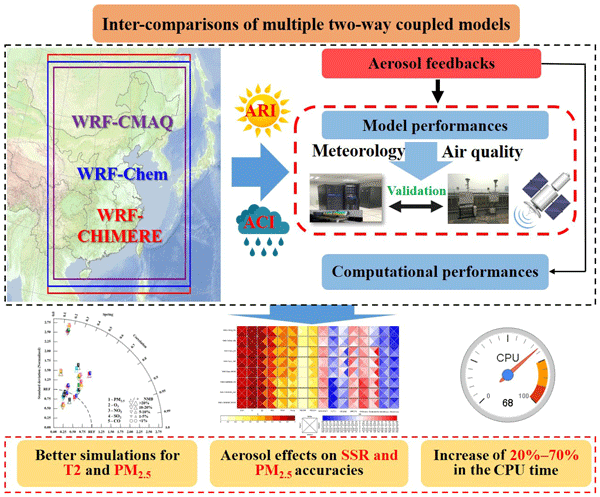
A comprehensive comparison study is conducted targeting the performances of three two-way coupled meteorology and air quality models (WRF-CMAQ, WRF-Chem, and WRF-CHIMERE) for eastern China during 2017. The impacts of aerosol–radiation–cloud interactions on these models’ results are evaluated against satellite and surface observations. Further improvements to the calculation of aerosol–cloud interactions in these models are crucial to ensure more accurate and timely air quality forecasts.
Jing Chen, Xianyi Sun, Chuang Qin, Jie Li, Qianjie Chen, and Xiao Fu
Atmos. Chem. Phys., 26, 9809–9826, https://doi.org/10.5194/acp-26-9809-2026, https://doi.org/10.5194/acp-26-9809-2026, 2026
Short summary
Short summary
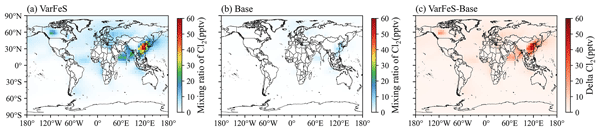
By incorporating an iron-mediated molecular chlorine (Cl2) formation pathway into the GEOS-Chem global atmospheric chemistry transport model, simulated surface Cl2 concentrations align better with observations. Reactive chlorine species increase substantially, thereby altering atmospheric oxidative capacity. Stronger oxidation elevates PM2.5 levels in polluted regions, especially in winter, underscoring the need to consider iron–halogen coupling chemistry in future air-quality mitigation.
Chao Gao, Xuelei Zhang, Hu Yang, Ling Huang, Hongmei Zhao, Shichun Zhang, and Aijun Xiu
Atmos. Chem. Phys., 26, 3765–3781, https://doi.org/10.5194/acp-26-3765-2026, https://doi.org/10.5194/acp-26-3765-2026, 2026
Short summary
Short summary
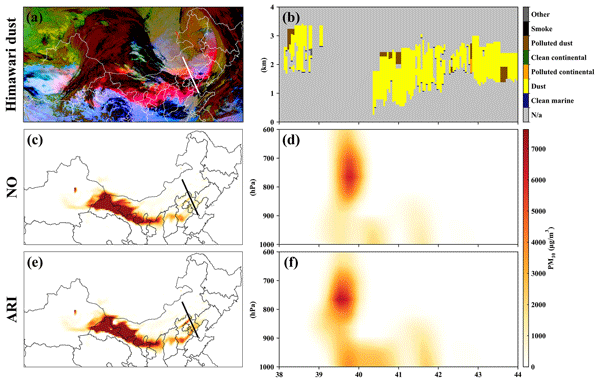
Mineral dust impacts climate and air quality, varying by composition. This study examined its effects on radiation and pollution during a North China dust storm using WRF-CHIMERE and three dust atlases. Bulk dust had a shortwave radiative forcing of -5.72 W/m², while mineral-specific effects increased it by +0.10 W/m². Aerosol-radiation interactions raised PM₁₀ to 1189.48 μg/m³. Accurate mineral data is essential for improving dust-related climate and air quality simulations.
Meifang Chen, Shengrui Tong, Shanshan Yu, Xiaofan Lv, Yanyong Xu, Hailiang Zhang, and Maofa Ge
Atmos. Chem. Phys., 26, 2103–2116, https://doi.org/10.5194/acp-26-2103-2026, https://doi.org/10.5194/acp-26-2103-2026, 2026
Short summary
Short summary
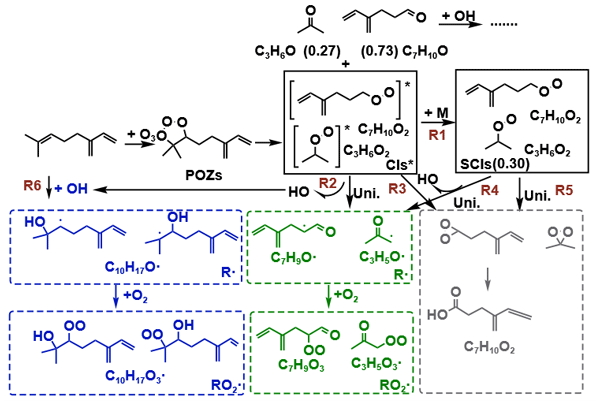
The critical role of Criegee intermediates (CIs) in the myrcene ozonolysis was elucidated through the combined approach of matrix isolation Fourier transform infrared spectroscopy and smog chamber experiments. Distinct mechanisms of different-sized CIs in secondary organic aerosol formation were proposed, and a synergistic effect between RO2 autoxidation and CIs oligomerization was identified. This study provided new insights into the ozonolysis process from the Criegee chemistry perspective.
Mingzhu Zhai, Shengrui Tong, Wenqian Zhang, Hailiang Zhang, Xin Li, Xiaoqi Wang, and Maofa Ge
Atmos. Chem. Phys., 25, 16679–16695, https://doi.org/10.5194/acp-25-16679-2025, https://doi.org/10.5194/acp-25-16679-2025, 2025
Short summary
Short summary
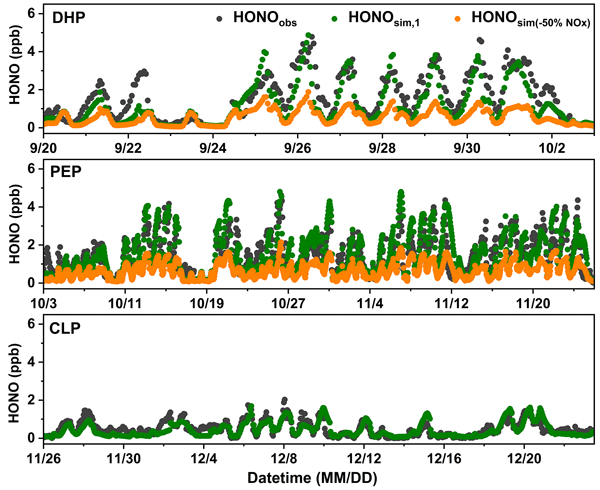
To explore how anthropogenic activities affect HONO formation, we conducted comprehensive observations in Beijing. During clean periods with a 53 % drop in Traffic Performance Index, HONO, CO, and NO2 levels decreased by 2–3 times compared to polluted periods. Emission reduction simulations showed that a 50 % NOx reduction could lower HONO by up to 46.3 %, indicating that reducing anthropogenic activities significantly suppresses HONO formation and provides direct evidence for pollution control.
Yinbao Jin, Heng Huang, Jian Liu, Yiming Liu, Xiaoyang Chen, Yongqiang Chen, Licheng Li, and Qi Fan
Earth Syst. Sci. Data Discuss., https://doi.org/10.5194/essd-2025-515, https://doi.org/10.5194/essd-2025-515, 2025
Revised manuscript not accepted
Short summary
Short summary
Fires in Southeast and East Asia release large amounts of smoke that harm air quality, weather, and climate. Existing datasets often miss night-time burning and how smoke rises in the atmosphere. We created an open dataset for 2023 that records fire emissions every hour in three dimensions at high resolution. By combining satellite data and machine learning, it improves understanding of when and where smoke is released and supports better forecasts and policy decisions.
Yingying Hong, Yuqi Zhu, Yuxuan Huang, Yiming Liu, Chuqi Xiong, and Qi Fan
Atmos. Chem. Phys., 25, 11847–11866, https://doi.org/10.5194/acp-25-11847-2025, https://doi.org/10.5194/acp-25-11847-2025, 2025
Short summary
Short summary
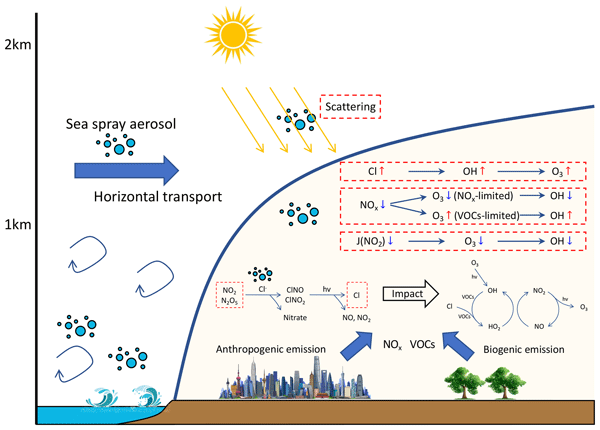
This study investigates the impact of sea spray aerosol on ozone formation across Eastern China, highlighting its complex influence through both chemical reactions and radiative effects, which vary seasonally and geographically.
Zhouxing Zou, Tianshu Chen, Qianjie Chen, Weihang Sun, Shichun Han, Zhuoyue Ren, Xinyi Li, Wei Song, Aoqi Ge, Qi Wang, Xiao Tian, Chenglei Pei, Xinming Wang, Yanli Zhang, and Tao Wang
Atmos. Chem. Phys., 25, 8147–8161, https://doi.org/10.5194/acp-25-8147-2025, https://doi.org/10.5194/acp-25-8147-2025, 2025
Short summary
Short summary
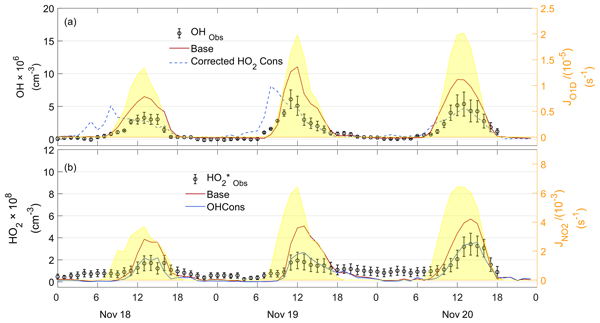
We measured ambient OH and HO2* (HO2 and contribution from RO2, organic peroxyl radicals) concentrations at a subtropical rural site and compared our observations with model results. During warm periods, the model overestimated concentrations of OH and HO2, leading to overestimation of ozone and nitric acid production. Our findings highlight the need to better understand how OH and HO2 are formed and removed, which is important for accurate air quality and climate predictions.
Xiao Lu, Yiming Liu, Jiayin Su, Xiang Weng, Tabish Ansari, Yuqiang Zhang, Guowen He, Yuqi Zhu, Haolin Wang, Ganquan Zeng, Jingyu Li, Cheng He, Shuai Li, Teerachai Amnuaylojaroen, Tim Butler, Qi Fan, Shaojia Fan, Grant L. Forster, Meng Gao, Jianlin Hu, Yugo Kanaya, Mohd Talib Latif, Keding Lu, Philippe Nédélec, Peer Nowack, Bastien Sauvage, Xiaobin Xu, Lin Zhang, Ke Li, Ja-Ho Koo, and Tatsuya Nagashima
Atmos. Chem. Phys., 25, 7991–8028, https://doi.org/10.5194/acp-25-7991-2025, https://doi.org/10.5194/acp-25-7991-2025, 2025
Short summary
Short summary
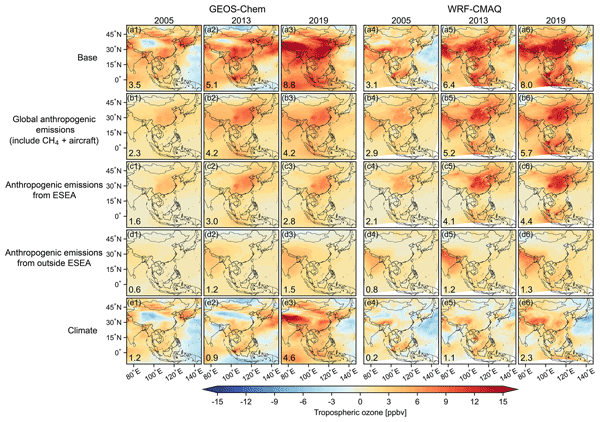
This study analyzes summertime ozone trends in East and Southeast Asia derived from a comprehensive observational database spanning from 1995 to 2019, incorporating aircraft observations, ozonesonde data, and measurements from 2500 surface sites. Multiple models are applied to attribute to changes in anthropogenic emissions and climate. The results highlight that increases in anthropogenic emissions are the primary driver of ozone increases both in the free troposphere and at the surface.
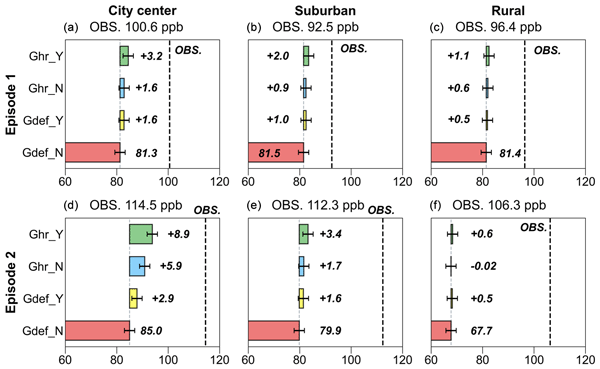
Haofan Wang, Yuejin Li, Yiming Liu, Xiao Lu, Yang Zhang, Qi Fan, Chong Shen, Senchao Lai, Yan Zhou, Tao Zhang, and Dingli Yue
Atmos. Chem. Phys., 25, 5233–5250, https://doi.org/10.5194/acp-25-5233-2025, https://doi.org/10.5194/acp-25-5233-2025, 2025
Short summary
Short summary
This study explores how urban green spaces (UGSs) in Guangzhou influence ozone levels. By using advanced models, we found that natural emissions from these areas can significantly affect air quality. Our results suggest that the design and planning of UGSs should not only consider aesthetics and social factors but also their environmental impacts on air quality.
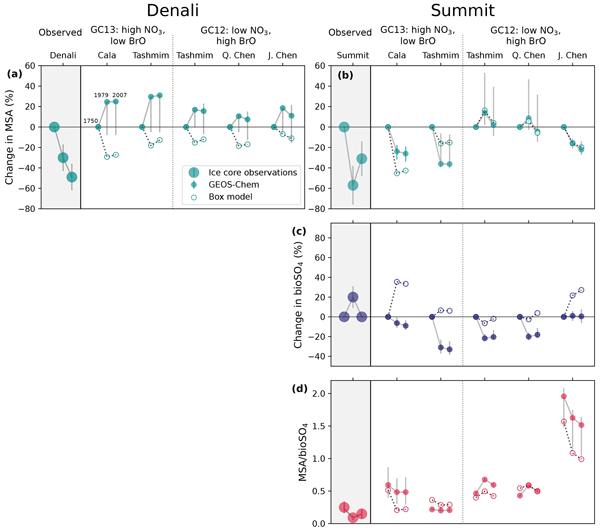
Ursula A. Jongebloed, Jacob I. Chalif, Linia Tashmim, William C. Porter, Kelvin H. Bates, Qianjie Chen, Erich C. Osterberg, Bess G. Koffman, Jihong Cole-Dai, Dominic A. Winski, David G. Ferris, Karl J. Kreutz, Cameron P. Wake, and Becky Alexander
Atmos. Chem. Phys., 25, 4083–4106, https://doi.org/10.5194/acp-25-4083-2025, https://doi.org/10.5194/acp-25-4083-2025, 2025
Short summary
Short summary
Marine phytoplankton emit dimethyl sulfide (DMS), which forms methanesulfonic acid (MSA) and sulfate. MSA concentrations in ice cores decreased over the industrial era, which has been attributed to pollution-driven changes in DMS chemistry. We use a model to investigate DMS chemistry compared to observations of DMS, MSA, and sulfate. We find that modeled DMS, MSA, and sulfate are influenced by pollution-sensitive oxidant concentrations, characterization of DMS chemistry, and other variables.
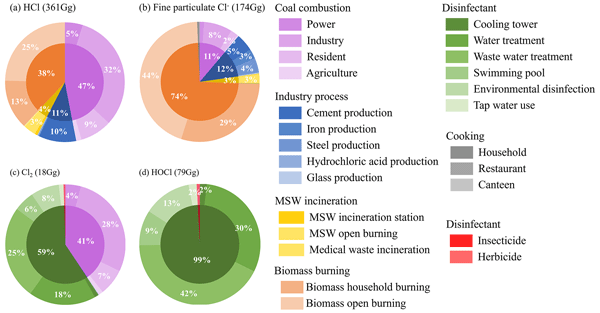
Siting Li, Yiming Liu, Yuqi Zhu, Yinbao Jin, Yingying Hong, Ao Shen, Yifei Xu, Haofan Wang, Haichao Wang, Xiao Lu, Shaojia Fan, and Qi Fan
Atmos. Chem. Phys., 24, 11521–11544, https://doi.org/10.5194/acp-24-11521-2024, https://doi.org/10.5194/acp-24-11521-2024, 2024
Short summary
Short summary
This study establishes an inventory of anthropogenic chlorine emissions in China in 2019 with expanded species (HCl, Cl-, Cl2, HOCl) and sources (41 specific sources). The inventory is validated by a modeling study against the observations. This study enhances the understanding of anthropogenic chlorine emissions in the atmosphere, identifies key sources, and provides scientific support for pollution control and climate change.
Chao Gao, Xuelei Zhang, Aijun Xiu, Qingqing Tong, Hongmei Zhao, Shichun Zhang, Guangyi Yang, Mengduo Zhang, and Shengjin Xie
Geosci. Model Dev., 17, 2471–2492, https://doi.org/10.5194/gmd-17-2471-2024, https://doi.org/10.5194/gmd-17-2471-2024, 2024
Short summary
Short summary
A comprehensive comparison study is conducted targeting the performances of three two-way coupled meteorology and air quality models (WRF-CMAQ, WRF-Chem, and WRF-CHIMERE) for eastern China during 2017. The impacts of aerosol–radiation–cloud interactions on these models’ results are evaluated against satellite and surface observations. Further improvements to the calculation of aerosol–cloud interactions in these models are crucial to ensure more accurate and timely air quality forecasts.
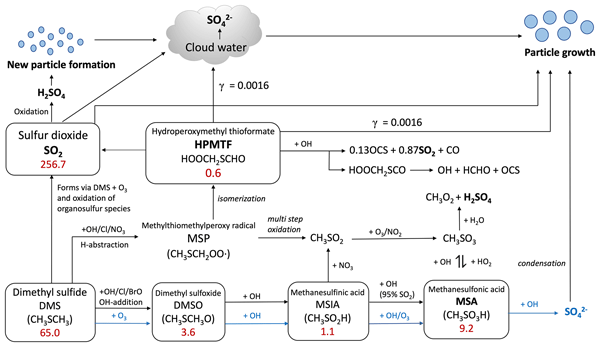
Linia Tashmim, William C. Porter, Qianjie Chen, Becky Alexander, Charles H. Fite, Christopher D. Holmes, Jeffrey R. Pierce, Betty Croft, and Sakiko Ishino
Atmos. Chem. Phys., 24, 3379–3403, https://doi.org/10.5194/acp-24-3379-2024, https://doi.org/10.5194/acp-24-3379-2024, 2024
Short summary
Short summary
Dimethyl sulfide (DMS) is mostly emitted from ocean surfaces and represents the largest natural source of sulfur for the atmosphere. Once in the atmosphere, DMS forms stable oxidation products such as SO2 and H2SO4, which can subsequently contribute to airborne particle formation and growth. In this study, we update the DMS oxidation mechanism in the chemical transport model GEOS-Chem and describe resulting changes in particle growth as well as the overall global sulfur budget.
Yinbao Jin, Yiming Liu, Xiao Lu, Xiaoyang Chen, Ao Shen, Haofan Wang, Yinping Cui, Yifei Xu, Siting Li, Jian Liu, Ming Zhang, Yingying Ma, and Qi Fan
Atmos. Chem. Phys., 24, 367–395, https://doi.org/10.5194/acp-24-367-2024, https://doi.org/10.5194/acp-24-367-2024, 2024
Short summary
Short summary
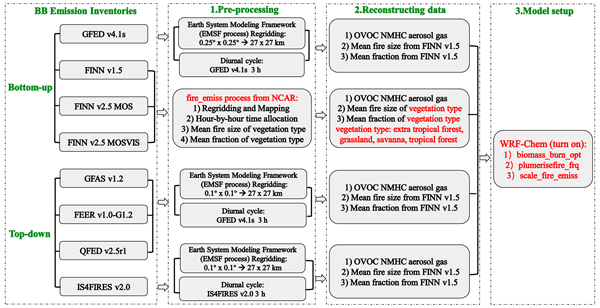
This study aims to address these issues by evaluating eight independent biomass burning (BB) emission inventories (GFED, FINN1.5, FINN2.5 MOS, FINN2.5 MOSVIS, GFAS, FEER, QFED, and IS4FIRES) using the WRF-Chem model and analyzing their impact on aerosol optical properties (AOPs) and direct radiative forcing (DRF) during wildfire events in peninsular Southeast Asia (PSEA) that occurred in March 2019.
Guowen He, Cheng He, Haofan Wang, Xiao Lu, Chenglei Pei, Xiaonuan Qiu, Chenxi Liu, Yiming Wang, Nanxi Liu, Jinpu Zhang, Lei Lei, Yiming Liu, Haichao Wang, Tao Deng, Qi Fan, and Shaojia Fan
Atmos. Chem. Phys., 23, 13107–13124, https://doi.org/10.5194/acp-23-13107-2023, https://doi.org/10.5194/acp-23-13107-2023, 2023
Short summary
Short summary
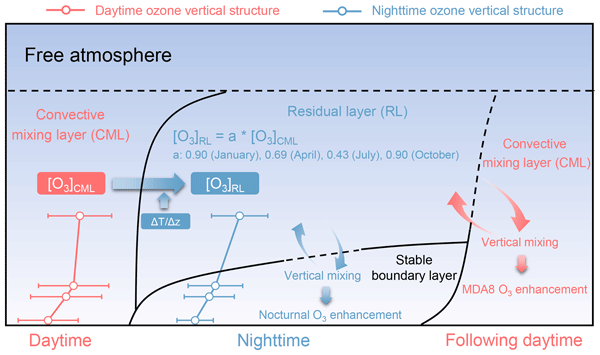
We analyze nighttime ozone in the lower boundary layer (up to 500 m) from the 2017–2019 measurements at the Canton Tower and the WRF-CMAQ model. We identify a strong ability of the residual layer to store daytime ozone in the convective mixing layer, investigate the chemical and meteorological factors controlling nighttime ozone in the residual layer, and quantify the contribution of nighttime ozone in the residual layer to both the nighttime and the following day’s surface ozone air quality.
A. Bala, T. T. Youngu, S. Azua, A. O. Aliyu, S. D. Yabo, and A. U. Aliyu
Int. Arch. Photogramm. Remote Sens. Spatial Inf. Sci., XLVIII-M-3-2023, 293–298, https://doi.org/10.5194/isprs-archives-XLVIII-M-3-2023-293-2023, https://doi.org/10.5194/isprs-archives-XLVIII-M-3-2023-293-2023, 2023
Haofan Wang, Jiaxin Qiu, Yiming Liu, Qi Fan, Xiao Lu, Yang Zhang, Kai Wu, Ao Shen, Yifei Xu, Yinbao Jin, Yuqi Zhu, Jiayin Sun, and Haolin Wang
EGUsphere, https://doi.org/10.5194/egusphere-2023-1309, https://doi.org/10.5194/egusphere-2023-1309, 2023
Preprint withdrawn
Short summary
Short summary
This tool improves existing methods by providing temporal and species allocation modules and enabling emission file generation in advance for any time period. The tool is also capable of vertical plane distribution for high altitude emissions and accurately tracks road-related emissions, an area overlooked by other tools. It utilizes 50 % of the CPU capacity for efficient parallel processing during allocation.
Zhouxing Zou, Qianjie Chen, Men Xia, Qi Yuan, Yi Chen, Yanan Wang, Enyu Xiong, Zhe Wang, and Tao Wang
Atmos. Chem. Phys., 23, 7057–7074, https://doi.org/10.5194/acp-23-7057-2023, https://doi.org/10.5194/acp-23-7057-2023, 2023
Short summary
Short summary
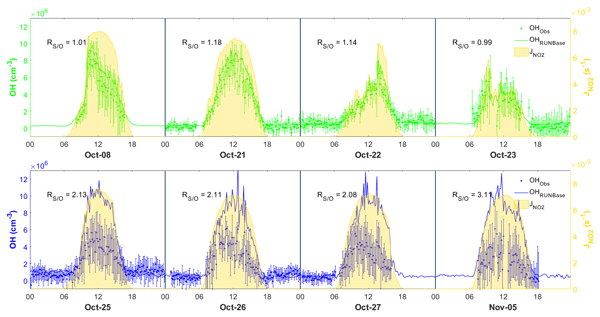
We present OH observation and model simulation results at a coastal site in Hong Kong. The model predicted the OH concentration under high-NOx well but overpredicted it under low-NOx conditions. This implies an insufficient understanding of OH chemistry under low-NOx conditions. We show evidence of missing OH sinks as a possible cause of the overprediction.
Kun Wang, Chao Gao, Kai Wu, Kaiyun Liu, Haofan Wang, Mo Dan, Xiaohui Ji, and Qingqing Tong
Geosci. Model Dev., 16, 1961–1973, https://doi.org/10.5194/gmd-16-1961-2023, https://doi.org/10.5194/gmd-16-1961-2023, 2023
Short summary
Short summary
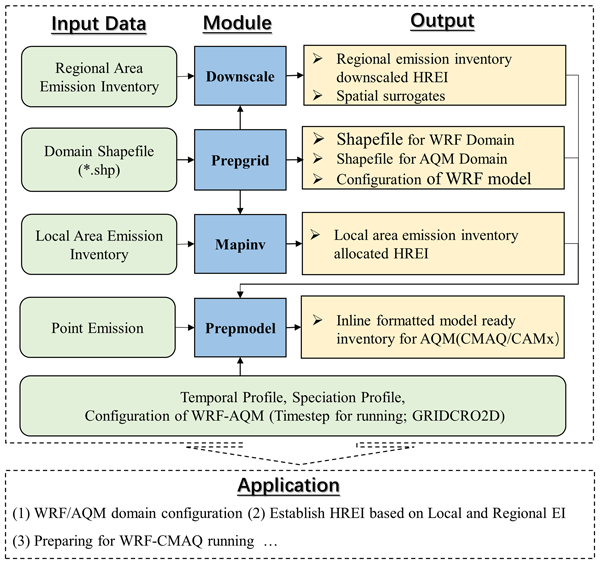
This study establishes an easy-to-use and integrated framework for a model-ready emission inventory for the Weather Research and Forecasting (WRF)–Air Quality Numerical Model (AQM). A free tool called the ISAT (Inventory Spatial Allocation Tool) was developed based on this framework. ISAT helps users complete the workflow from the WRF nested-domain configuration to a model-ready emission inventory for AQM with a regional emission inventory and a shapefile for the target region.

Qianjie Chen, Jessica A. Mirrielees, Sham Thanekar, Nicole A. Loeb, Rachel M. Kirpes, Lucia M. Upchurch, Anna J. Barget, Nurun Nahar Lata, Angela R. W. Raso, Stephen M. McNamara, Swarup China, Patricia K. Quinn, Andrew P. Ault, Aaron Kennedy, Paul B. Shepson, Jose D. Fuentes, and Kerri A. Pratt
Atmos. Chem. Phys., 22, 15263–15285, https://doi.org/10.5194/acp-22-15263-2022, https://doi.org/10.5194/acp-22-15263-2022, 2022
Short summary
Short summary
During a spring field campaign in the coastal Arctic, ultrafine particles were enhanced during high wind speeds, and coarse-mode particles were reduced during blowing snow. Calculated periods blowing snow were overpredicted compared to observations. Sea spray aerosols produced by sea ice leads affected the composition of aerosols and snowpack. An improved understanding of aerosol emissions from leads and blowing snow is critical for predicting the future climate of the rapidly warming Arctic.
Cheng He, Xiao Lu, Haolin Wang, Haichao Wang, Yan Li, Guowen He, Yuanping He, Yurun Wang, Youlang Zhang, Yiming Liu, Qi Fan, and Shaojia Fan
Atmos. Chem. Phys., 22, 15243–15261, https://doi.org/10.5194/acp-22-15243-2022, https://doi.org/10.5194/acp-22-15243-2022, 2022
Short summary
Short summary
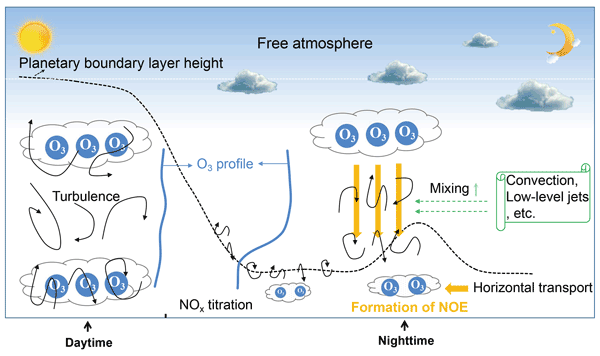
We report that nocturnal ozone enhancement (NOE) events are observed at a high annual frequency of 41 % over 800 sites in China in 2014–2019 (about 50 % higher than that over Europe or the US). High daytime ozone provides a rich ozone source in the nighttime residual layer, determining the overall high frequency of NOE events in China, and enhanced atmospheric mixing then triggers NOE events by allowing the ozone-rich air in the residual layer to be mixed into the nighttime boundary layer.
William F. Swanson, Chris D. Holmes, William R. Simpson, Kaitlyn Confer, Louis Marelle, Jennie L. Thomas, Lyatt Jaeglé, Becky Alexander, Shuting Zhai, Qianjie Chen, Xuan Wang, and Tomás Sherwen
Atmos. Chem. Phys., 22, 14467–14488, https://doi.org/10.5194/acp-22-14467-2022, https://doi.org/10.5194/acp-22-14467-2022, 2022
Short summary
Short summary
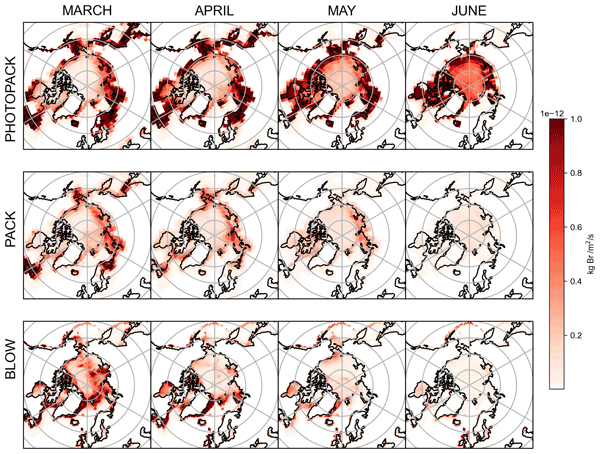
Radical bromine molecules are seen at higher concentrations during the Arctic spring. We use the global model GEOS-Chem to test whether snowpack and wind-blown snow sources can explain high bromine concentrations. We run this model for the entire year of 2015 and compare results to observations of bromine from floating platforms on the Arctic Ocean and at Utqiaġvik. We find that the model performs best when both sources are enabled but may overestimate bromine production in summer and fall.
Haolin Wang, Xiao Lu, Daniel J. Jacob, Owen R. Cooper, Kai-Lan Chang, Ke Li, Meng Gao, Yiming Liu, Bosi Sheng, Kai Wu, Tongwen Wu, Jie Zhang, Bastien Sauvage, Philippe Nédélec, Romain Blot, and Shaojia Fan
Atmos. Chem. Phys., 22, 13753–13782, https://doi.org/10.5194/acp-22-13753-2022, https://doi.org/10.5194/acp-22-13753-2022, 2022
Short summary
Short summary
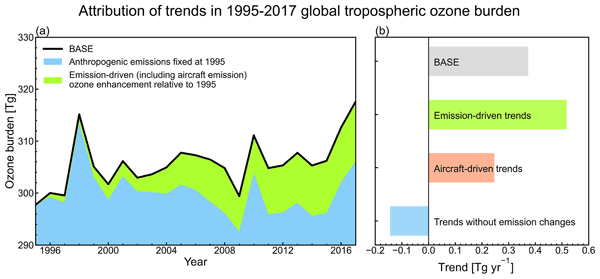
We report significant global tropospheric ozone increases in 1995–2017 based on extensive aircraft and ozonesonde observations. Using GEOS-Chem (Goddard Earth Observing System chemistry model) multi-decadal global simulations, we find that changes in global anthropogenic emissions, in particular the rapid increases in aircraft emissions, contribute significantly to the increases in tropospheric ozone and resulting radiative impact.
Chao Gao, Aijun Xiu, Xuelei Zhang, Qingqing Tong, Hongmei Zhao, Shichun Zhang, Guangyi Yang, and Mengduo Zhang
Atmos. Chem. Phys., 22, 5265–5329, https://doi.org/10.5194/acp-22-5265-2022, https://doi.org/10.5194/acp-22-5265-2022, 2022
Short summary
Short summary
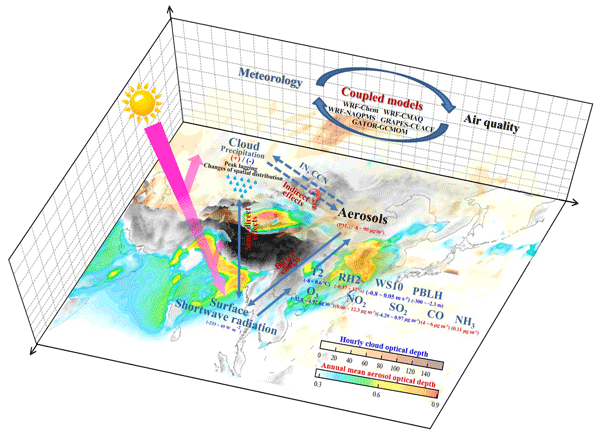
With ever-growing applications of two-way coupled meteorology and air quality models in Asia over the past decade, this paper summarizes the current status and research focuses, as well as how aerosol effects impact model performance, meteorology, and air quality. These models enable investigations of ARI and ACI effects induced by natural and anthropogenic aerosols in Asia, which has serious air pollution problems. The current gaps and perspectives are also presented and discussed.
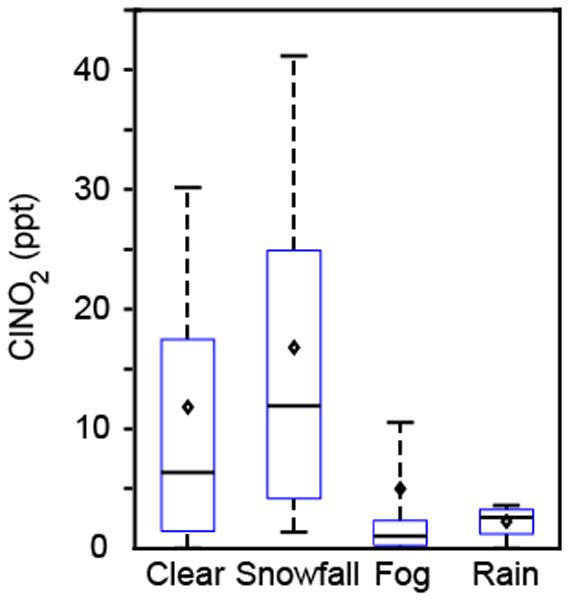
Kathryn D. Kulju, Stephen M. McNamara, Qianjie Chen, Hannah S. Kenagy, Jacinta Edebeli, Jose D. Fuentes, Steven B. Bertman, and Kerri A. Pratt
Atmos. Chem. Phys., 22, 2553–2568, https://doi.org/10.5194/acp-22-2553-2022, https://doi.org/10.5194/acp-22-2553-2022, 2022
Short summary
Short summary
N2O5 uptake by chloride-containing surfaces produces ClNO2, which photolyzes, producing NO2 and highly reactive Cl radicals that impact air quality. In the inland urban atmosphere, ClNO2 was elevated during lower air turbulence and over snow-covered ground, from snowpack ClNO2 production. N2O5 and ClNO2 levels were lowest, on average, during rainfall and fog because of scavenging, with N2O5 scavenging by fog droplets likely contributing to observed increased particulate nitrate concentrations.
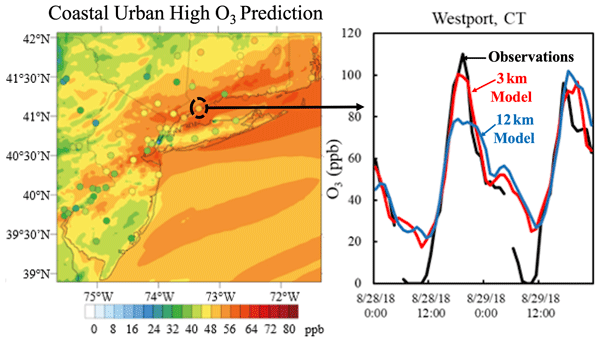
Siqi Ma, Daniel Tong, Lok Lamsal, Julian Wang, Xuelei Zhang, Youhua Tang, Rick Saylor, Tianfeng Chai, Pius Lee, Patrick Campbell, Barry Baker, Shobha Kondragunta, Laura Judd, Timothy A. Berkoff, Scott J. Janz, and Ivanka Stajner
Atmos. Chem. Phys., 21, 16531–16553, https://doi.org/10.5194/acp-21-16531-2021, https://doi.org/10.5194/acp-21-16531-2021, 2021
Short summary
Short summary
Predicting high ozone gets more challenging as urban emissions decrease. How can different techniques be used to foretell the quality of air to better protect human health? We tested four techniques with the CMAQ model against observations during a field campaign over New York City. The new system proves to better predict the magnitude and timing of high ozone. These approaches can be extended to other regions to improve the predictability of high-O3 episodes in contemporary urban environments.
Cited articles
Apodaca, R. L., Huff, D. M., and Simpson, W. R.: The role of ice in N2O5 heterogeneous hydrolysis at high latitudes, Atmos. Chem. Phys., 8, 7451–7463, https://doi.org/10.5194/acp-8-7451-2008, 2008.
Bertram, T. H. and Thornton, J. A.: Toward a general parameterization of N2O5 reactivity on aqueous particles: the competing effects of particle liquid water, nitrate and chloride, Atmos. Chem. Phys., 9, 8351–8363, https://doi.org/10.5194/acp-9-8351-2009, 2009.
Chen, Q., Edebeli, J., McNamara, S. M., Kulju, K. D., May, N. W., Bertman, S. B., Thanekar, S., Fuentes, J. D., and Pratt, K. A.: HONO, particulate nitrite, and snow nitrite at a midlatitude urban site during wintertime, ACS Earth Space Chem., 3, 811–822, https://doi.org/10.1021/acsearthspacechem.9b00023, 2019.
Dai, J., Liu, Y., Wang, P., Fu, X., Xia, M., and Wang, T.: The impact of sea-salt chloride on ozone through heterogeneous reaction with N2O5 in a coastal region of south China, Atmos. Environ., 236, 117604, https://doi.org/10.1016/j.atmosenv.2020.117604, 2020.
Emery, C., Baker, K., Wilson, G., and Yarwood, G.: Comprehensive Air Quality Model with Extensions: Formulation and Evaluation for Ozone and Particulate Matter over the US, Atmosphere, 15, 1158, https://doi.org/10.3390/atmos15101158, 2024.
Gaston, C. J., Thornton, J. A., and Ng, N. L.: Reactive uptake of N2O5 to internally mixed inorganic and organic particles: the role of organic carbon oxidation state and inferred organic phase separations, Atmos. Chem. Phys., 14, 5693–5707, https://doi.org/10.5194/acp-14-5693-2014, 2014.
George, C., Ponche, J., Mirabel, P., Behnke, W., Scheer, V., and Zetzsch, C.: Study of the uptake of N2O5 by water and NaCl solutions, J. Phys. Chem., 98, 8780–8784, https://doi.org/10.1021/j100086a031, 1994.
Hanson, D. R. and Ravishankara, A. R.: The reaction probabilities of ClONO2 and N2O5 on polar stratospheric cloud materials, J. Geophys. Res.: Atmos., 96, 5081–5090, https://doi.org/10.1029/90jd02613, 1991.
Hong, Y., Liu, Y., Chen, X., Fan, Q., Chen, C., Chen, X., and Wang, M.: The role of anthropogenic chlorine emission in surface ozone formation during different seasons over eastern China, Sci. Total Environ., 723, 137697, https://doi.org/10.1016/j.scitotenv.2020.137697, 2020.
Huff, D. M., Joyce, P. L., Fochesatto, G. J., and Simpson, W. R.: Deposition of dinitrogen pentoxide, N2O5, to the snowpack at high latitudes, Atmos. Chem. Phys., 11, 4929–4938, https://doi.org/10.5194/acp-11-4929-2011, 2011.
Jeong, D., McNamara, S. M., Chen, Q., Mirrielees, J., Edebeli, J., Kulju, K. D., Wang, S., Hayani, L., Kirpes, R. M., and Lata, N. N.: Quantifying the contributions of aerosol-and snow-produced ClNO2 through observations and 1D modeling, ACS Earth Space Chem., 7, 2548–2561, https://doi.org/10.1021/acsearthspacechem.3c00237, 2023.
Karamchandani, P., Emery, C., Yarwood, G., Lefer, B., Stutz, J., Couzo, E., and Vizuete, W.: Implementation and refinement of a surface model for heterogeneous HONO formation in a 3-D chemical transport model, Atmos. Environ., 112, 356–368, https://doi.org10.1016/j.atmosenv.2015.01.046, 2015.
Kulju, K. D., McNamara, S. M., Chen, Q., Edebeli, J., Fuentes, J. D., Bertman, S. B., and Pratt, K. A.: Urban inland wintertime N2O5 and ClNO2 influenced by snow-covered ground, air turbulence, and precipitation, Atmos. Chem. Phys., 22, 2553–2568, https://doi.org/10.5194/acp-22-2553-2022, 2022.
Li, Q., Zhang, L., Wang, T., Tham, Y. J., Ahmadov, R., Xue, L., Zhang, Q., and Zheng, J.: Impacts of heterogeneous uptake of dinitrogen pentoxide and chlorine activation on ozone and reactive nitrogen partitioning: improvement and application of the WRF-Chem model in southern China, Atmos. Chem. Phys., 16, 14875–14890, https://doi.org/10.5194/acp-16-14875-2016, 2016.
Li, S., Liu, Y., Zhu, Y., Jin, Y., Hong, Y., Shen, A., Xu, Y., Wang, H., Wang, H., Lu, X., Fan, S., and Fan, Q.: ACEIC: a comprehensive anthropogenic chlorine emission inventory for China, Atmos. Chem. Phys., 24, 11521–11544, https://doi.org/10.5194/acp-24-11521-2024, 2024.
Li, X., Zhao, W., Yang, Y., Ma, Y., Ye, J., Zhao, H., Zhang, S., Zhang, X., and Xiu, A.: Impact of reactive chlorine on atmospheric oxidative capacity in a snowy polluted environment, Environ. Sci. Technol., 59, 19363–19376, https://doi.org/10.1021/acs.est.5c08841, 2025.
Liu, Y., Fan, Q., Chen, X., Zhao, J., Ling, Z., Hong, Y., Li, W., Chen, X., Wang, M., and Wei, X.: Modeling the impact of chlorine emissions from coal combustion and prescribed waste incineration on tropospheric ozone formation in China, Atmos. Chem. Phys., 18, 2709–2724, https://doi.org/10.5194/acp-18-2709-2018, 2018.
Lopez-Hilfiker, F. D., Constantin, K., Kercher, J. P., and Thornton, J. A.: Temperature dependent halogen activation by N2O5 reactions on halide-doped ice surfaces, Atmos. Chem. Phys., 12, 5237–5247, https://doi.org/10.5194/acp-12-5237-2012, 2012.
Lu, K. D., Rohrer, F., Holland, F., Fuchs, H., Brauers, T., Oebel, A., Dlugi, R., Hu, M., Li, X., Lou, S. R., Shao, M., Zhu, T., Wahner, A., Zhang, Y. H., and Hofzumahaus, A.: Nighttime observation and chemistry of HOx in the Pearl River Delta and Beijing in summer 2006, Atmos. Chem. Phys., 14, 4979–4999, https://doi.org/10.5194/acp-14-4979-2014, 2014.
McDuffie, E. E., Fibiger, D. L., Dubé, W. P., Lopez Hilfiker, F., Lee, B. H., Jaeglé, L., Guo, H., Weber, R. J., Reeves, J. M., and Weinheimer, A. J.: ClNO2 yields from aircraft measurements during the 2015 WINTER campaign and critical evaluation of the current parameterization, J. Geophys. Res.: Atmos., 123, 12–994, https://doi.org/10.1029/2018jd029358, 2018a.
McDuffie, E. E., Fibiger, D. L., Dubé, W. P., Lopez Hilfiker, F., Lee, B. H., Thornton, J. A., Shah, V., Jaeglé, L., Guo, H., and Weber, R. J.: Heterogeneous N2O5 uptake during winter: Aircraft measurements during the 2015 WINTER campaign and critical evaluation of current parameterizations, J. Geophys. Res.: Atmos., 123, 4345–4372, https://doi.org/10.1002/2018jd028336, 2018b.
McNamara, S. M., Raso, A. R., Wang, S., Thanekar, S., Boone, E. J., Kolesar, K. R., Peterson, P. K., Simpson, W. R., Fuentes, J. D., and Shepson, P. B.: Springtime nitrogen oxide-influenced chlorine chemistry in the coastal arctic, Environ. Sci. Technol., 53, 8057–8067, https://doi.org/10.1021/acs.est.9b01797, 2019.
McNamara, S. M., Kolesar, K. R., Wang, S., Kirpes, R. M., May, N. W., Gunsch, M. J., Cook, R. D., Fuentes, J. D., Hornbrook, R. S., and Apel, E. C.: Observation of road salt aerosol driving inland wintertime atmospheric chlorine chemistry, ACS Cent. Sci., 6, 684–694, https://doi.org/10.1021/acscentsci.9b00994, 2020.
McNamara, S. M., Chen, Q., Edebeli, J., Kulju, K. D., Mumpfield, J., Fuentes, J. D., Bertman, S. B., and Pratt, K. A.: Observation of N2O5 deposition and ClNO2 production on the saline snowpack, ACS Earth Space Chem., 5, 1020–1031, https://doi.org/10.1021/acsearthspacechem.0c00317, 2021.
Mentel, T. F., Sohn, M., and Wahner, A.: Nitrate effect in the heterogeneous hydrolysis of dinitrogen pentoxide on aqueous aerosols, Phys. Chem. Chem. Phys., 1, 5451–5457, https://doi.org/10.1039/a905338g, 1999.
Mielke, L. H., Stutz, J., Tsai, C., Hurlock, S. C., Roberts, J. M., Veres, P. R., Froyd, K. D., Hayes, P. L., Cubison, M. J., and Jimenez, J. L.: Heterogeneous formation of nitryl chloride and its role as a nocturnal NOx reservoir species during CalNex‐LA 2010, J. Geophys. Res.: Atmos., 118, 10–638, https://doi.org/10.1002/jgrd.50783, 2013.
Ramboll: The CAMx v7.1 User's Guide, Version 7.1, Ramboll, https://www.camx.com/Files/CAMxUsersGuide_v7.10.pdf (last access: 17 September 2026), 2021.
Sun, W., Chen, X., Jiang, Y., Shen, H., Zong, Z., Xue, L., Wang, X., Yao, X., Gao, Y., and Wang, T.: High levels of ClNO2 enhance wintertime atmospheric oxidation capacity at a coastal site in North China, J. Environ. Sci., 169, 848–855, https://doi.org/10.1016/j.jes.2026.02.027, 2026.
Tham, Y. J., Wang, Z., Li, Q., Wang, W., Wang, X., Lu, K., Ma, N., Yan, C., Kecorius, S., and Wiedensohler, A.: Heterogeneous N2O5 uptake coefficient and production yield of ClNO2 in polluted northern China: roles of aerosol water content and chemical composition, Atmos. Chem. Phys., 18, 13155–13171, https://doi.org/10.5194/acp-18-13155-2018, 2018.
Thornton, J. A. and Abbatt, J. P.: N2O5 reaction on submicron sea salt aerosol: Kinetics, products, and the effect of surface active organics, J. Phys. Chem. A, 109, 10004–10012, https://doi.org/10.1021/jp054183t, 2005.
Thornton, J. A., Kercher, J. P., Riedel, T. P., Wagner, N. L., and Cozic, J.: A large atomic chlorine source inferred from mid-continental reactive nitrogen chemistry, Nature, 464, 271–274, https://doi.org/10.1038/nature08905, 2010.
Wagner, N. L., Riedel, T. P., Young, C. J., Bahreini, R., Brock, C. A., Dubé, W. P., Kim, S., Middlebrook, A. M., Öztürk, F., and Roberts, J. M.: N2O5 uptake coefficients and nocturnal NO2 removal rates determined from ambient wintertime measurements, J. Geophys. Res.: Atmos., 118, 9331–9350, https://doi.org/10.1002/jgrd.50653, 2013.
Wang, H., Peng, C., Wang, X., Lou, S., Lu, K., Gan, G., Jia, X., Chen, X., Chen, J., and Wang, H.: N2O5 uptake onto saline mineral dust: a potential missing source of tropospheric ClNO2 in inland China, Atmos. Chem. Phys., 22, 1845–1859, https://doi.org/10.5194/acp-22-1845-2022, 2022.
Wang, S., McNamara, S. M., Kolesar, K. R., May, N. W., Fuentes, J. D., Cook, R. D., Gunsch, M. J., Mattson, C. N., Hornbrook, R. S., and Apel, E. C.: Urban snowpack ClNO2 production and fate: A one-dimensional modeling Study, ACS Earth Space Chem., 4, 1140–1148, https://doi.org/10.1021/acsearthspacechem.0c00116, 2020.
Wang, X., Wang, H., Xue, L., Wang, T., Wang, L., Gu, R., Wang, W., Tham, Y. J., and Wang, Z.: Observations of N2O5 and ClNO2 at a polluted urban surface site in North China: High N2O5 uptake coefficients and low ClNO2 product yields, Atmos Environ, 156, 125–134, https://doi.org/10.1016/j.atmosenv.2017.02.035, 2017.
Wang, X., Jacob, D. J., Eastham, S. D., Sulprizio, M. P., Zhu, L., Chen, Q., Alexander, B., Sherwen, T., Evans, M. J., Lee, B. H., Haskins, J. D., Lopez-Hilfiker, F. D., Thornton, J. A., Huey, G. L., and Liao, H.: The role of chlorine in global tropospheric chemistry, Atmos. Chem. Phys., 19, 3981–4003, https://doi.org/10.5194/acp-19-3981-2019, 2019.
Wang, X., Jacob, D. J., Fu, X., Wang, T., Breton, M. L., Hallquist, M., Liu, Z., McDuffie, E. E., and Liao, H.: Effects of anthropogenic chlorine on PM2.5 and ozone air quality in China, Environ. Sci. Technol., 54, 9908–9916, https://doi.org/10.1021/acs.est.0c02296, 2020.
Xia, M., Wang, T., Peng, X., Wang, W., Yu, C., Sun, P., Li, Y., Liu, Y., Xu, Z., Wang, Z., Xu, Z., Nie, W., and Ding, A.: Significant production of ClNO2 and possible source of Cl2 from N2O5 uptake at a suburban site in eastern China, EGU General Assembly 2020, Online, 4–8 May 2020, EGU2020-12946, https://doi.org/10.5194/egusphere-egu2020-12946, 2020.
Xia, M., Peng, X., Wang, W., Yu, C., Wang, Z., Tham, Y. J., Chen, J., Chen, H., Mu, Y., Zhang, C., Liu, P., Xue, L., Wang, X., Gao, J., Li, H., and Wang, T.: Winter ClNO2 formation in the region of fresh anthropogenic emissions: seasonal variability and insights into daytime peaks in northern China, Atmos. Chem. Phys., 21, 15985–16000, https://doi.org/10.5194/acp-21-15985-2021, 2021.
Xie, S.: Modified model code for N2O5 heterogeneous chemistry (v7.10 REVSED), Zenodo [data set], https://doi.org/10.5281/zenodo.22821984, 2026.
Xie, S., Qi, H., Xiu, A., Zhang, X., Lu, L., Jiang, J., Liu, Y., and Liu, S.: The impact of anthropogenic chlorine emissions from coal combustion during the winter snow period on atmospheric ClNO2, Environ. Chem., 44, 1356–1369, https://doi.org/10.7524/j.issn.0254-6108.2024081101, 2025.
Yang, X., Wang, Q., Ma, N., Hu, W., Gao, Y., Huang, Z., Zheng, J., Yuan, B., Yang, N., Tao, J., Hong, J., Cheng, Y., and Su, H.: The impact of chlorine chemistry combined with heterogeneous N2O5 reactions on air quality in China, Atmos. Chem. Phys., 22, 3743–3762, https://doi.org/10.5194/acp-22-3743-2022, 2022.
Yi, X., Yin, S., Huang, L., Li, H., Wang, Y., Wang, Q., Chan, A., Traoré, D., Ooi, M. C. G., and Chen, Y.: Anthropogenic emissions of atomic chlorine precursors in the Yangtze River Delta region, China, Sci. Total Environ., 771, 144644, https://doi.org/10.1016/j.scitotenv.2020.144644, 2021.
Yu, C., Wang, Z., Xia, M., Fu, X., Wang, W., Tham, Y. J., Chen, T., Zheng, P., Li, H., Shan, Y., Wang, X., Xue, L., Zhou, Y., Yue, D., Ou, Y., Gao, J., Lu, K., Brown, S. S., Zhang, Y., and Wang, T.: Heterogeneous N2O5 reactions on atmospheric aerosols at four Chinese sites: improving model representation of uptake parameters, Atmos. Chem. Phys., 20, 4367–4378, https://doi.org/10.5194/acp-20-4367-2020, 2020.
Zhu, Q., Laughner, J. L., and Cohen, R. C.: Combining machine learning and satellite observations to predict spatial and temporal variation of near surface OH in North American cities, Environ. Sci. Technol., 56, 7362–7371, https://doi.org/10.1021/acs.est.1c05636, 2022.
Short summary
This study examines how snow-covered surfaces affect air pollution in Northeast China. Using numerical simulations, we explore chlorine-related chemical reactions that generate reactive species, enhancing fine particles and ozone. Results show that snow-surface reactions drive nighttime pollutant accumulation and notably improve model performance, providing new insights into how snow and surface chemistry influence regional air quality.
This study examines how snow-covered surfaces affect air pollution in Northeast China. Using...


