
Articles | Volume 20, issue 9
https://doi.org/10.5194/tc-20-5271-2026
© Author(s) 2026. This work is distributed under
the Creative Commons Attribution 4.0 License.
the Creative Commons Attribution 4.0 License.
https://doi.org/10.5194/tc-20-5271-2026
© Author(s) 2026. This work is distributed under
the Creative Commons Attribution 4.0 License.
the Creative Commons Attribution 4.0 License.
Research article
| 
21 Sep 2026
Research article |
| 21 Sep 2026
| 21 Sep 2026
Accelerated lowland thermokarst development revealed by UAS photogrammetric surveys in the Stordalen mire, Abisko, Sweden

Earth and Life Institute, Université catholique de Louvain, Louvain-la-Neuve, Belgium
Thomas Moenaert
Earth and Life Institute, Université catholique de Louvain, Louvain-la-Neuve, Belgium
Julien Radoux
Earth and Life Institute, Université catholique de Louvain, Louvain-la-Neuve, Belgium
Baptiste Delhez
Earth and Life Institute, Université catholique de Louvain, Louvain-la-Neuve, Belgium
Eléonore du Bois d'Aische
Earth and Life Institute, Université catholique de Louvain, Louvain-la-Neuve, Belgium
Maëlle Villani
Earth and Life Institute, Université catholique de Louvain, Louvain-la-Neuve, Belgium
Catherine Hirst
Earth and Life Institute, Université catholique de Louvain, Louvain-la-Neuve, Belgium
Department of Earth Sciences, Durham University, Durham, UK
Erik Lundin
Abisko Scientific Research Station, Swedish Polar Research Secretariat, Abisko, Sweden
François Jonard
Earth Observation and Ecosystem Modelling Laboratory, Université de Liège, Liège, Belgium
Sébastien Lambot
Earth and Life Institute, Université catholique de Louvain, Louvain-la-Neuve, Belgium
Kristof Van Oost
Earth and Life Institute, Université catholique de Louvain, Louvain-la-Neuve, Belgium
Veerle Vanacker
Earth and Life Institute, Université catholique de Louvain, Louvain-la-Neuve, Belgium
Soil Geography and Landscape Group, Wageningen University & Research, Wageningen, the Netherlands
Matthias B. Siewert
Department of Ecology and Environmental Science, Umeå University, Umeå, Sweden
Carl-Magnus Mörth
Department of Geological Sciences, Stockholm University, Stockholm, Sweden
Michael W. Palace
Department of Earth Sciences and Institute for the Study of Earth, Oceans and Space, University of New Hampshire, Durham, NH, USA
Earth Systems Research Center, Institute for the Study of Earth, Oceans and Space, University of New Hampshire, Durham, NH, USA
Ruth K. Varner
Department of Geological Sciences, Stockholm University, Stockholm, Sweden
Department of Earth Sciences and Institute for the Study of Earth, Oceans and Space, University of New Hampshire, Durham, NH, USA
Earth Systems Research Center, Institute for the Study of Earth, Oceans and Space, University of New Hampshire, Durham, NH, USA
Franklin B. Sullivan
Earth Systems Research Center, Institute for the Study of Earth, Oceans and Space, University of New Hampshire, Durham, NH, USA
Christina Herrick
Earth Systems Research Center, Institute for the Study of Earth, Oceans and Space, University of New Hampshire, Durham, NH, USA
Sophie Opfergelt
Earth and Life Institute, Université catholique de Louvain, Louvain-la-Neuve, Belgium
Related authors
Maxime Thomas, Julien Fouché, Hugues Titeux, Charlotte Morelle, Nathan Bemelmans, Melissa J. Lafrenière, Joanne K. Heslop, and Sophie Opfergelt
SOIL, 12, 633–664, https://doi.org/10.5194/soil-12-633-2026, https://doi.org/10.5194/soil-12-633-2026, 2026
Short summary
Short summary
This study examines organic carbon (OC)–mineral interactions in permafrost soils undergoing thermokarst degradation in Cape Bounty (Melville Island, Canada). Chemically stabilized OC accounts for 13 ± 5 % as organo-metallic complexes and 6 ± 2 % as associations with iron oxides. Including physical protection, up to 64 ± 10 % of OC is mineral-protected. Deeper layers show a sharp decline in mineral-bound OC, suggesting increased vulnerability to degradation when exposed by deep thaw features.
Maud Henrion, Sophie Opfergelt, Maëlle Villani, Philippe Roux, Djim Verleene, Eléonore du Bois d'Aische, Maxime Thomas, Gilles Denis, Edward A. G. Schuur, François Jonard, Veerle Vanacker, Kristof Van Oost, and Sébastien Lambot
EGUsphere, https://doi.org/10.5194/egusphere-2025-4667, https://doi.org/10.5194/egusphere-2025-4667, 2025
Preprint archived
Short summary
Short summary
Taliks play an important role in permafrost degradation. This study used Ground-penetrating radar to map taliks in Alaska, focusing on water tracks. The method successfully detected taliks and determined their upper depth. These were more frequent, shallower, and thicker under water tracks. This study showed that water tracks are hotspots for talik formation, with major implications for winter water flow in permafrost landscapes.
Jordan Steven Bates, Carsten Montzka, Harry Vereecken, and François Jonard
Biogeosciences, 23, 7253–7288, https://doi.org/10.5194/bg-23-7253-2026, https://doi.org/10.5194/bg-23-7253-2026, 2026
Short summary
Short summary
We used drones with thermal, multispectral, and laser sensors to measure crop water use across three growing seasons. Combining temperature with information on both green and structural plant growth improved estimates of crop water use, particularly as crops aged or experienced stress. The approach revealed detailed patterns of reduced water use across fields, supporting earlier identification of crop stress.
Angus Moore, Maud Henrion, Yanfei Li, Eléonore du Bois d'Aische, Philip Gautschi, Marcus Christl, François Jonard, Sébastien Lambot, Kristof Van Oost, Sophie Opfergelt, and Veerle Vanacker
Earth Surf. Dynam., 14, 763–780, https://doi.org/10.5194/esurf-14-763-2026, https://doi.org/10.5194/esurf-14-763-2026, 2026
Short summary
Short summary
Studying peatland dynamics over long timescales requires a proxy for past peat cover. In this paper, we explore using cosmogenic nuclides to infer peat thicknesses averaged over 100 kyr timescales. We find that long-term peat thicknesses inferred from cosmogenic nuclides at an upland peatland site in the Belgian Ardennes are consistent with independent constraints, but exceed modern peat thicknesses. We attribute this discrepancy to peat degradation associated with historical land use.
Maëlle Villani, Louise M. Farquharson, Vladimir E. Romanovsky, and Sophie Opfergelt
EGUsphere, https://doi.org/10.5194/egusphere-2026-5453, https://doi.org/10.5194/egusphere-2026-5453, 2026
This preprint is open for discussion and under review for Biogeosciences (BG).
Short summary
Short summary
Taliks, unfrozen ground within permafrost, sustain year-round biogeochemical processes, mobilizing carbon, nutrients, and contaminants through lateral and open taliks, while closed and isolated taliks confine reactions locally. In this manuscript, we argue that taliks represent a critical and overlooked driver of Arctic and sub-Arctic biogeochemical processes. We put forward three testable hypotheses to advance the study of talik biogeochemical functioning and we propose a related road map.
Tiia M. Määttä, Samantha H. Bosman, Jeffrey P. Chanton, Patrick Crill, Suzanne B. Hodgkins, Jalisha Theanutti Kallingal, Rachel M. Wilson, Ruth Varner, and Avni Malhotra
Biogeosciences, 23, 6639–6670, https://doi.org/10.5194/bg-23-6639-2026, https://doi.org/10.5194/bg-23-6639-2026, 2026
Short summary
Short summary
Permafrost thaw can lead to vegetation shifts and higher methane (CH4) emissions in peatlands. However, plant belowground controls of these emissions are uncertain. We investigated how plant roots and rhizomes contribute to CH4 emissions along a peatland permafrost thaw gradient. We found that low herbaceous plant root tissue density and high rhizome surface area were associated with higher CH4 emissions. This indicated increased plant-mediated CH4 transport with thaw.
Patryk Łakomiec, Jutta Holst, Niklas Rakos, Erik Lundin, Patrick Crill, Thomas Friborg, Hongxiao Jin, Lars Eklundh, and Janne Rinne
EGUsphere, https://doi.org/10.5194/egusphere-2026-5405, https://doi.org/10.5194/egusphere-2026-5405, 2026
This preprint is open for discussion and under review for Biogeosciences (BG).
Short summary
Short summary
Permafrost thaw can change how Arctic peatlands take up and release carbon. We compared carbon dioxide exchange in a Swedish peatland across areas with permafrost, partly thawed, and absent permafrost using measurements from two monitoring towers. The thawed and permafrost areas behaved similarly, while the area without permafrost showed stronger carbon uptake by plants and greater carbon release. These results suggest that carbon dioxide exchange may change less with thaw than methane.
Jordan Steven Bates, Carsten Montzka, Rajina Bajracharya, Harry Vereecken, and François Jonard
Biogeosciences, 23, 6179–6210, https://doi.org/10.5194/bg-23-6179-2026, https://doi.org/10.5194/bg-23-6179-2026, 2026
Short summary
Short summary
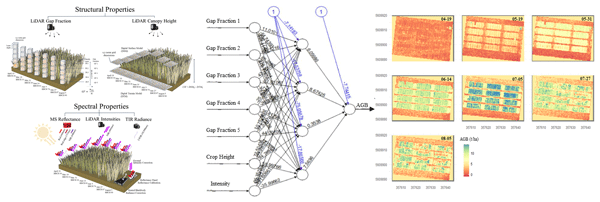
This study compared drone-based laser, multispectral, and thermal sensors for estimating winter wheat biomass. Combining laser-derived crop structure and signal intensity improved predictions compared with crop height or multispectral data alone, while combining multispectral and thermal data with laser-derived features provided additional information during particular growth stages. The results highlight the potential of underutilized laser-derived features for crop biomass monitoring.
Anna-Maria Virkkala, Isabel Wargowsky, Judith Vogt, McKenzie A. Kuhn, Simran Madaan, Tiffany Windholz, Kyle A. Arndt, Gerard Rocher-Ros, Mathias Göckede, David Olefeldt, Edward A. G. Schuur, David Bastviken, Richard O'Keefe, Brendan M. Rogers, Jennifer D. Watts, Kelcy Kent, Kristoffer Aalstad, Kelly Aho, Joonatan Ala-Könni, Haley Alcock, Inge Althuizen, Christopher D. Arp, Jun Asanuma, Mika Aurela, Sivakiruthika Balathandayuthabani, Katrin Attermeyer, Alan Barr, Maialen Barret, Ochirbat Batkhishig, Christina Biasi, Mats P. Björkman, Andrew Black, Elena Blanc-Betes, Pascal Bodmer, Julia Boike, Abdullah Bolek, Frédéric Bouchard, Ingeborg Bussmann, Lea Cabrol, Eleonora Canfora, Sean Carey, Karel Castro-Morales, Namyi Chae, Andreas Christen, Torben R. Christensen, Casper T. Christiansen, Housen Chu, Graham Clark, Francois Clayer, Patrick Crill, Christopher Cunada, Scott J. Davidson, Joshua F. Dean, Sigrid Dengel, Matteo Detto, Catherine Dieleman, Florent Domine, Egor Dyukarev, Colin Edgar, Bo Elberling, Craig A. Emmerton, Eugenie Euskirchen, Grant Falvo, Thomas Friborg, Michelle Garneau, Mariasilvia Giamberini, Mikhail V. Glagolev, Miquel A. Gonzalez-Meler, Gustaf Granath, Jón Guðmundsson, Konsta Happonen, Yoshinobu Harazono, Lorna Harris, Josh Hashemi, Nicholas Hasson, Janna Heerah, Liam Heffernan, Manuel Helbig, Warren Helgason, Michal Heliasz, Greg Henry, Geert Hensgens, Tetsuya Hiyama, Beth Holmes, Macall Hock, David Holl, Jutta Holst, Thomas Holst, Gabriel Hould-Gosselin, Elyn Humphreys, Jacqueline Hung, Jussi Huotari, Hiroki Ikawa, Danil V. Ilyasov, Mamoru Ishikawa, Go Iwahana, Hiroki Iwata, Marcin Antoni Jackowicz-Korczynski, Joachim Jansen, Järvi Järveoja, Vincent E. J. Jassey, Rasmus Jensen, Katharina Jentzsch, Robert G. Jespersen, Carl-Fredrik Johannesson, Cheristy P. Jones, Anders Jonsson, Ji Young Jung, Sari Juutinen, Evan Kane, Jan Karlsson, Sergey Karsanaev, Kuno Kasak, Julia Kelly, Kasha Kempton, Marcus Klaus, George W. Kling, Natascha Kljun, Jacqueline Knutson, Hideki Kobayashi, John Kochendorfer, Kukka-Maaria Kohonen, Pasi Kolari, Mika Korkiakoski, Aino Korrensalo, Pirkko Kortelainen, Egle Koster, Kajar Koster, Ayumi Kotani, Praveena Krishnan, Juliya Kurbatova, Lars Kutzbach, Min Jung Kwon, Ethan D. Kyzivat, Jessica Lagroix, Theodore Langhorst, Elena Lapshina, Tuula Larmola, Klaus S. Larsen, Isabelle Laurion, Justin Ledman, Hanna Lee, A. Joshua Leffler, Lance Lesack, Anders Lindroth, David Lipson, Annalea Lohila, Efrén López-Blanco, Vincent L. St. Louis, Erik Lundin, Miska Luoto, Takashi Machimura, Marta Magnani, Avni Malhotra, Marja Maljanen, Ivan Mammarella, Elisa Männistö, Luca Belelli Marchesini, Phil Marsh, Pertti J. Martikainen, Maija E. Marushchak, Mikhail Mastepanov, Alex Mavrovic, Trofim Maximov, Christina Minions, Daniel F. Nadeau, Marco Montemayor, Tomoaki Morishita, Patrick Murphy, Erin Nicholls, Mats B. Nilsson, Anastasia Niyazova, Jenni Nordén, Koffi Dodji Noumonvi, Hannu Nykänen, Walter Oechel, Anne Ojala, Tomohiro Okadera, Sujan Pal, Alexey V. Panov, Tim Papakyriakou, Dario Papale, Sang-Jong Park, Frans-Jan W. Parmentier, Gilberto Pastorello, Mike Peacock, Matthias Peichl, Roman Petrov, Kyra St. Pierre, Norbert Pirk, Jessica Plein, Vilmantas Preskienis, Anatoly Prokushkin, Jukka Pumpanen, Hilary A. Rains, Niklas Rakos, Aleksi Räsänen, Helena Rautakoski, Riikka Rinnan, Janne Rinne, Adrian Rocha, Nigel Roulet, Alexandre Roy, Anna Rutgersson, Aleksandr F. Sabrekov, Torsten Sachs, Erik Sahlée, Alejandro Salazar, Henrique Oliveira Sawakuchi, Christopher Schulze, Roger Seco, Armando Sepulveda-Jauregui, Svetlana Serikova, Abbey Serrone, Hanna M. Silvennoinen, Sofie Sjogersten, June Skeeter, Jo Snöälv, Sebastian Sobek, Oliver Sonnentag, Emily H. Stanley, Maria Strack, Lena Strom, Patrick Sullivan, Ryan Sullivan, Anna Sytiuk, Torbern Tagesson, Pierre Taillardat, Julie Talbot, Suzanne E. Tank, Mario Tenuta, Irina Terenteva, Frederic Thalasso, Antoine Thiboult, Halldor Thorgeirsson, Fenix Garcia Tigreros, Margaret Torn, Amy Townsend-Small, Claire Treat, Alain Tremblay, Carlo Trotta, Eeva-Stiina Tuittila, Merritt Turetsky, Masahito Ueyama, Muhammad Umair, Aki Vähä, Lona van Delden, Maarten van Hardenbroek, Andrej Varlagin, Ruth K. Varner, Tarmo Virtanen, Elena Veretennikova, Timo Vesala, Carolina Voigt, Jorien E. Vonk, Robert Wagner, Katey Walter Anthony, Qinxue Wang, Masataka Watanabe, Hailey Webb, Jeffrey M. Welker, Andreas Westergaard-Nielsen, Sebastian Westermann, Jeffrey R. White, Christian Wille, Scott N. Williamson, Scott Zolkos, Donatella Zona, and Susan M. Natali
Earth Syst. Sci. Data, 18, 6357–6409, https://doi.org/10.5194/essd-18-6357-2026, https://doi.org/10.5194/essd-18-6357-2026, 2026
Short summary
Short summary
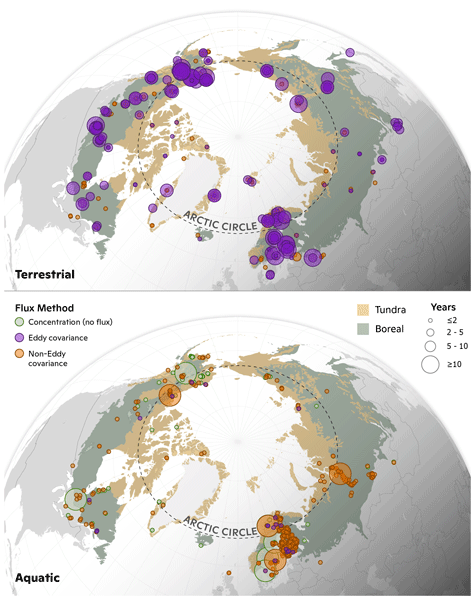
This dataset includes monthly measurements of carbon dioxide and methane exchange between land, water, and the atmosphere from over 1000 sites in Arctic and boreal regions. It combines measurements from a variety of ecosystems, including wetlands, forests, tundra, lakes, and rivers, gathered by over 260 researchers from 1984–2024. This dataset can be used to improve and reduce uncertainty in carbon budgets in order to strengthen our understanding of climate feedbacks in a warming world.
Sparkle L. Malone, Jaclyn H. Matthes, Cove S. Sturtevant, Angel Chen, Roisin Commane, Kyle B. Delwiche, Ankur R. Desai, Christopher R. Florian, Jonathan D. Gewirtzman, Samuel A. Jurado, David E. Reed, Jinshu Chi, Hiroki Iwata, Erik J. Lundin, Ivan Mammarella, Matthias Peichl, Masahito Ueyama, and Camilo Rey-Sanchez
Earth Syst. Sci. Data Discuss., https://doi.org/10.5194/essd-2026-413, https://doi.org/10.5194/essd-2026-413, 2026
Preprint under review for ESSD
Short summary
Short summary
We created the first continent-wide dataset to test the gradient flux method, which estimates how gases move between ecosystems and the atmosphere. This approach can provide reliable results when sensors are placed under favorable conditions, especially for shorter, less complex vegetation. The dataset will help improve future monitoring and support a better understanding of ecosystem responses to environmental change.
Alessandro Fabrizi, Peter Fiener, Kristof Van Oost, and Florian Wilken
SOIL, 12, 715–731, https://doi.org/10.5194/soil-12-715-2026, https://doi.org/10.5194/soil-12-715-2026, 2026
Short summary
Short summary
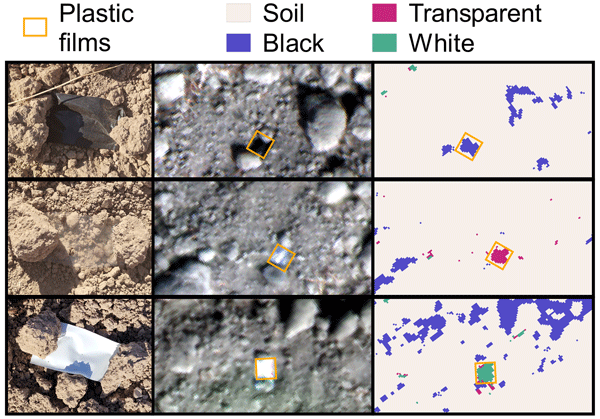
Drones can be used to identify the presence of macroplastic residues after plastic film use, allowing sustainable management practices and assessing the risk of soil plastic contamination. We highlight the potential and the limitations of current technologies, providing practical strategies to overcome them. We demonstrate the possibility of building cameras tailored to plastic detection and point the way towards necessary technological development.
Maxime Thomas, Julien Fouché, Hugues Titeux, Charlotte Morelle, Nathan Bemelmans, Melissa J. Lafrenière, Joanne K. Heslop, and Sophie Opfergelt
SOIL, 12, 633–664, https://doi.org/10.5194/soil-12-633-2026, https://doi.org/10.5194/soil-12-633-2026, 2026
Short summary
Short summary
This study examines organic carbon (OC)–mineral interactions in permafrost soils undergoing thermokarst degradation in Cape Bounty (Melville Island, Canada). Chemically stabilized OC accounts for 13 ± 5 % as organo-metallic complexes and 6 ± 2 % as associations with iron oxides. Including physical protection, up to 64 ± 10 % of OC is mineral-protected. Deeper layers show a sharp decline in mineral-bound OC, suggesting increased vulnerability to degradation when exposed by deep thaw features.
Gabrielle K. F. Hatten, Steven V. Kokelj, Sophie Opfergelt, Duane G. Froese, Alejandro Alvarez, Joseph M. Young, and Suzanne E. Tank
EGUsphere, https://doi.org/10.5194/egusphere-2026-1844, https://doi.org/10.5194/egusphere-2026-1844, 2026
Short summary
Short summary
Sorption of organic matter (OM) to recently thawed permafrost sediments can critically alter OM fate. Using 32 sediment samples from a suite of diverse permafrost landscapes, we show that organo-mineral interactions “sort” dissolved OM, enriching the aquatic matrix in labile compounds and increasing biodegradation via shifts in OM composition and nutrient release. Sorption potential varied across and within regions and was tied to sediment characteristics, dictated by landscape history.
David Bastviken, Blaize A Denfeld, Holger Villwock, Jonathan Schenk, Leif Klemedtsson, Hjalmar Laudon, Niels Aagard Jakobsen, Stefan Bertilsson, Kevin Bishop, William Colom Montero, Silke Langenheder, Amelie Lindgren, Erik Lundin, Niklas Rakos, Johannes Tiwari, Per Weslien, and Marcus B. Wallin
Earth Syst. Sci. Data Discuss., https://doi.org/10.5194/essd-2026-141, https://doi.org/10.5194/essd-2026-141, 2026
Preprint under review for ESSD
Short summary
Short summary
Lakes are significant methane sources, a powerful greenhouse gas, but long-term, consistent measurements are rare. Five lakes within Swedish Infrastructure of Ecosystem Science were monitored during 2016–2022 to better understand how methane emissions vary across space and time. Ebullition was a major flux pathway, and emissions rise with temperature in ways that differed within and between lakes, highlighting the need for coordinated monitoring and temperature-adjusted comparisons.
Nathan Carlier, Matti Barthel, Antoine de Clippele, Lissie Willemijn de Groot, Travis William Drake, Jordon Dennis Hemingway, Yi Hou, José Nlandu Wabakanghanzi, Joseph Zambo Mandea, Pengzhi Zhao, Johan Six, and Kristof Van Oost
EGUsphere, https://doi.org/10.5194/egusphere-2026-247, https://doi.org/10.5194/egusphere-2026-247, 2026
Short summary
Short summary
The Congo River Basin, a region of global significance, is undergoing a strong increase in population, which will in turn increase soil erosion, impacting soil fertility and the carbon cycle. We examined river sediment (eroded soil) transport, whereby we provided information on the main contributors of sediment to the Congo River. We also highlighted the role of a swampy region which removes large amounts of sediment from the water, acting as a regulator sediment transport to the Congo River.
Asta Laasonen, Alexander Buzacott, Kukka-Maaria Kohonen, Erik Lundin, Alexander Meire, Mari Pihlatie, and Ivan Mammarella
Biogeosciences, 22, 7505–7518, https://doi.org/10.5194/bg-22-7505-2025, https://doi.org/10.5194/bg-22-7505-2025, 2025
Short summary
Short summary
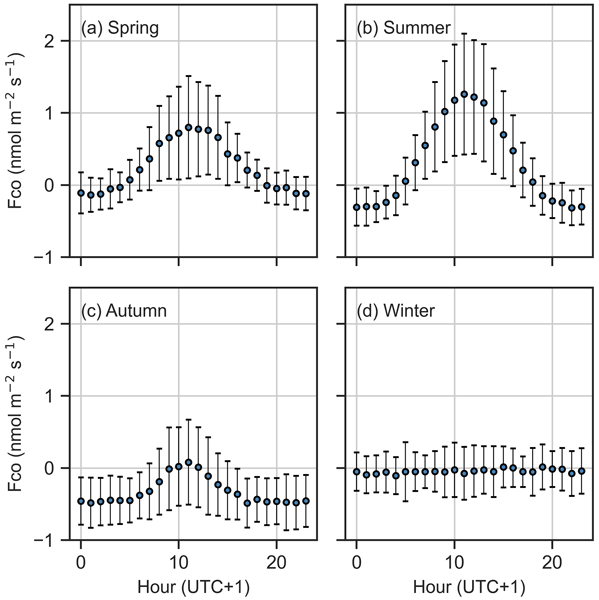
Carbon monoxide (CO) is an important indirect greenhouse gas, but its terrestrial sinks and sources are poorly understood. We present the first CO flux measurements using the eddy covariance method in an Arctic peatland. Our results show that CO fluxes are dominated by two processes: radiation-driven emissions and soil uptake. Dry peatland areas acted as CO sinks, while wetter areas were CO sources. Our findings suggest that current global models may underestimate Arctic CO emissions.
Yanfei Li, Maud Henrion, Angus Moore, Sébastien Lambot, Sophie Opfergelt, Veerle Vanacker, François Jonard, and Kristof Van Oost
Biogeosciences, 22, 6369–6392, https://doi.org/10.5194/bg-22-6369-2025, https://doi.org/10.5194/bg-22-6369-2025, 2025
Short summary
Short summary
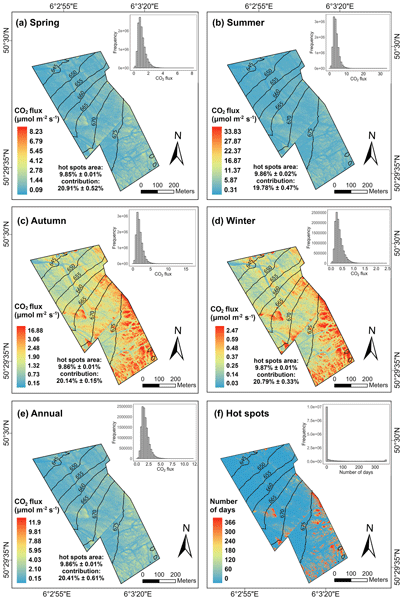
Combining Unmanned Aerial Vehicle (UAV) remote sensing with in-situ monitoring provides high spatial-temporal insights into CO2 fluxes from temperate peatlands. Dynamic factors (soil temperature and moisture) are the primary drivers contributing to 29 % of the spatial and 43 % of the seasonal variation. UAVs are effective tools for mapping daily soil respiration. CO2 fluxes from hot spots & moments contribute 20 % and 30 % of total CO2 fluxes, despite representing only 10 % of the area and time.
Maud Henrion, Sophie Opfergelt, Maëlle Villani, Philippe Roux, Djim Verleene, Eléonore du Bois d'Aische, Maxime Thomas, Gilles Denis, Edward A. G. Schuur, François Jonard, Veerle Vanacker, Kristof Van Oost, and Sébastien Lambot
EGUsphere, https://doi.org/10.5194/egusphere-2025-4667, https://doi.org/10.5194/egusphere-2025-4667, 2025
Preprint archived
Short summary
Short summary
Taliks play an important role in permafrost degradation. This study used Ground-penetrating radar to map taliks in Alaska, focusing on water tracks. The method successfully detected taliks and determined their upper depth. These were more frequent, shallower, and thicker under water tracks. This study showed that water tracks are hotspots for talik formation, with major implications for winter water flow in permafrost landscapes.
Thomas Dethinne, Nicolas Ghilain, Christoph Kittel, Benjamin Lecart, Xavier Fettweis, and François Jonard
EGUsphere, https://doi.org/10.5194/egusphere-2025-3907, https://doi.org/10.5194/egusphere-2025-3907, 2025
Short summary
Short summary
This study replace standard vegetation input of a regional climate model with a satellite-based vegetation dataset to assess how vegetation influences climate during extreme events and to test the sensitivity of the model. The results show a non-linear sensitivity to vegetation, and using an observation-based vegetation input allows for a better representation of the extreme events, highlight the need for an advanced representation of vegetation in climate model to improve climate predictions.
Eunsang Cho, Megan Verfaillie, Jennifer M. Jacobs, Adam G. Hunsaker, Franklin B. Sullivan, Michael Palace, and Cameron Wagner
Hydrol. Earth Syst. Sci., 29, 4539–4556, https://doi.org/10.5194/hess-29-4539-2025, https://doi.org/10.5194/hess-29-4539-2025, 2025
Short summary
Short summary
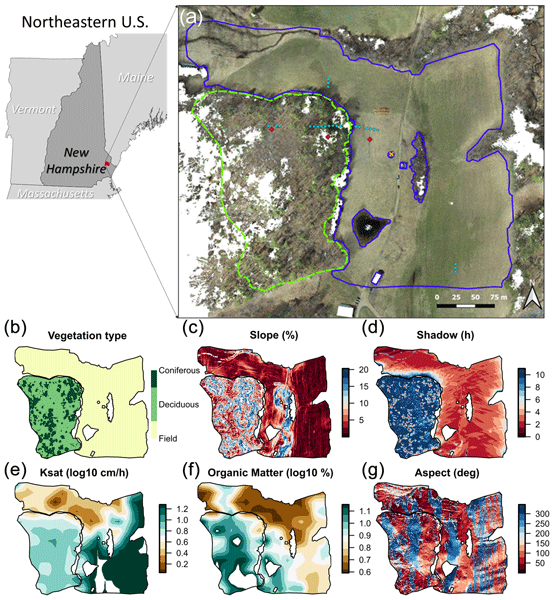
Unpiloted aerial system (UAS) lidar and structure-from-motion (SfM) photogrammetry effectively map high-resolution snow depths. Our study found that UAS lidar outperformed SfM, particularly in capturing stable snow distribution patterns. Vegetation type was the primary factor influencing snow depth across forest and field areas, reflecting soil variables, such as organic matter. When analyzed separately, slope and forest canopy shadowing played key roles.
Cécile Osy, Sophie Opfergelt, Arsène Druel, and François Massonnet
EGUsphere, https://doi.org/10.5194/egusphere-2025-3680, https://doi.org/10.5194/egusphere-2025-3680, 2025
Preprint archived
Short summary
Short summary
The refreezing period of the active layer (the layer on top of the permafrost that freezes and thaws each year) is changing, with a delay of about five days over a large area in Siberia from 1950 to 2020 in the ERA5-Land reanalysis data. We investigate the drivers of this delay, and find that 2 m air temperature is the main driver of these changes at the large scale, which contrasts with field results in which snow cover is the main driver of changes in refreezing dynamics.

Anke Fluhrer, Martin J. Baur, María Piles, Bagher Bayat, Mehdi Rahmati, David Chaparro, Clémence Dubois, Florian M. Hellwig, Carsten Montzka, Angelika Kübert, Marlin M. Mueller, Isabel Augscheller, Francois Jonard, Konstantin Schellenberg, and Thomas Jagdhuber
Biogeosciences, 22, 3721–3746, https://doi.org/10.5194/bg-22-3721-2025, https://doi.org/10.5194/bg-22-3721-2025, 2025
Short summary
Short summary
This study compares established evapotranspiration products in central Europe and evaluates their multi-seasonal performance during wet and drought phases in 2017–2020 together with important soil–plant–atmosphere drivers. Results show that SEVIRI, ERA5-land, and GLEAM perform best compared to ICOS (Integrated Carbon Observation System) measurements. During moisture-limited drought years, ET (evapotranspiration) decreases due to decreasing soil moisture and increasing vapor pressure deficit, while in other years ET is mainly controlled by VPD (vapor pressure deficit).
Antoine de Clippele, Astrid C. H. Jaeger, Simon Baumgartner, Marijn Bauters, Pascal Boeckx, Clement Botefa, Glenn Bush, Jessica Carilli, Travis W. Drake, Christian Ekamba, Gode Lompoko, Nivens Bey Mukwiele, Kristof Van Oost, Roland A. Werner, Joseph Zambo, Johan Six, and Matti Barthel
Biogeosciences, 22, 3011–3027, https://doi.org/10.5194/bg-22-3011-2025, https://doi.org/10.5194/bg-22-3011-2025, 2025
Short summary
Short summary
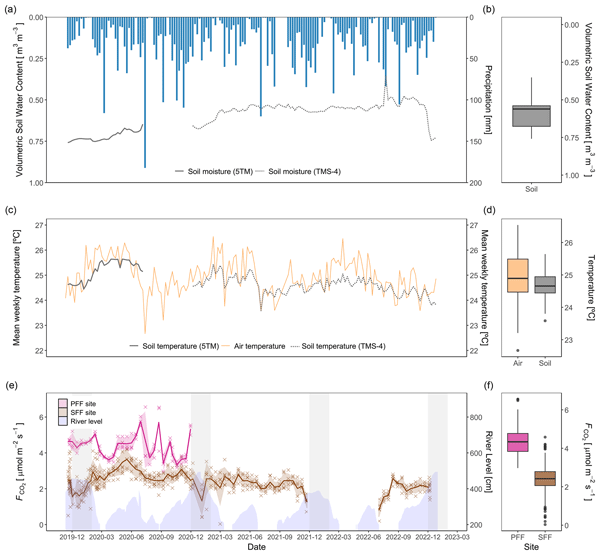
Tropical forest soils as a large terrestrial source of carbon dioxide (CO2) contribute to the global greenhouse gas budget. Despite this, carbon flux data from forested wetlands are scarce in tropical Africa. The study presents 3 years of semi-continuous measurements of surface CO2 fluxes within the Congo Basin. Although no seasonal patterns were evident, our results show a positive effect of soil temperature and moisture, while a quadratic relationship was observed with the water table.
Janet C. Richardson, Veerle Vanacker, David M. Hodgson, Marcus Christl, and Andreas Lang
Earth Surf. Dynam., 13, 315–339, https://doi.org/10.5194/esurf-13-315-2025, https://doi.org/10.5194/esurf-13-315-2025, 2025
Short summary
Short summary
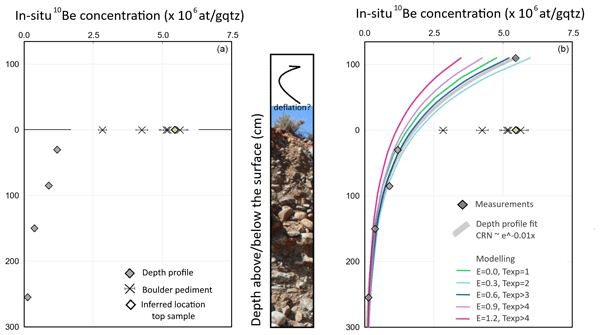
Pediments are long flat surfaces that extend outwards from the foot of mountains; within South Africa they are regarded as ancient landforms that can give key insights into landscape and mantle dynamics. Cosmogenic nuclide dating has been incorporated with geological (soil formation) and geomorphological (river incision) evidence, which shows that the pediments are long-lived features beyond the ages reported by cosmogenic nuclide dating.
Fred Worrall, Gareth Clay, Catherine Moody, and Catherine Hirst
EGUsphere, https://doi.org/10.5194/egusphere-2025-1469, https://doi.org/10.5194/egusphere-2025-1469, 2025
Preprint archived
Short summary
Short summary
Understanding global carbon budgets requires a knowledge of the balance between carbon dioxide and oxygen gas fluxes – oxidative ratio (OR). The OR has proved difficult to measure for terrestrial environments. We present a novel method for measuring OR using an ecosystem's carbon budget and organic matter elemental composition. We found an OR of 0.88, significantly lower than the IPCC's assumed 1.1. This lower OR value implies that terrestrial biosphere carbon budgets have been underestimated.
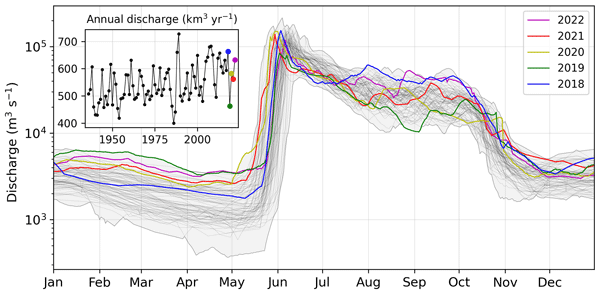
Bennet Juhls, Anne Morgenstern, Jens Hölemann, Antje Eulenburg, Birgit Heim, Frederieke Miesner, Hendrik Grotheer, Gesine Mollenhauer, Hanno Meyer, Ephraim Erkens, Felica Yara Gehde, Sofia Antonova, Sergey Chalov, Maria Tereshina, Oxana Erina, Evgeniya Fingert, Ekaterina Abramova, Tina Sanders, Liudmila Lebedeva, Nikolai Torgovkin, Georgii Maksimov, Vasily Povazhnyi, Rafael Gonçalves-Araujo, Urban Wünsch, Antonina Chetverova, Sophie Opfergelt, and Pier Paul Overduin
Earth Syst. Sci. Data, 17, 1–28, https://doi.org/10.5194/essd-17-1-2025, https://doi.org/10.5194/essd-17-1-2025, 2025
Short summary
Short summary
The Siberian Arctic is warming fast: permafrost is thawing, river chemistry is changing, and coastal ecosystems are affected. We aimed to understand changes in the Lena River, a major Arctic river flowing to the Arctic Ocean, by collecting 4.5 years of detailed water data, including temperature and carbon and nutrient contents. This dataset records current conditions and helps us to detect future changes. Explore it at https://doi.org/10.1594/PANGAEA.913197 and https://lena-monitoring.awi.de/.
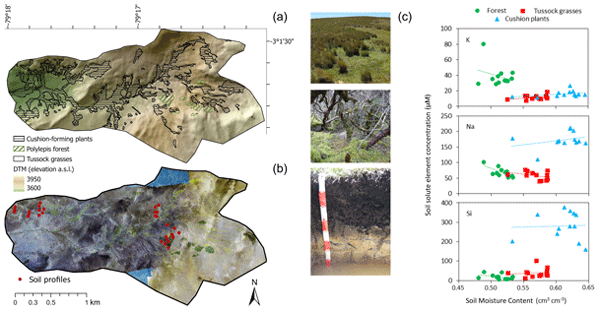
Armando Molina, Veerle Vanacker, Oliver Chadwick, Santiago Zhiminaicela, Marife Corre, and Edzo Veldkamp
Biogeosciences, 21, 3075–3091, https://doi.org/10.5194/bg-21-3075-2024, https://doi.org/10.5194/bg-21-3075-2024, 2024
Short summary
Short summary
The tropical Andes contains unique landscapes where forest patches are surrounded by tussock grasses and cushion-forming plants. The aboveground vegetation composition informs us about belowground nutrient availability: patterns in plant-available nutrients resulted from strong biocycling of cations and removal of soil nutrients by plant uptake or leaching. Future changes in vegetation distribution will affect soil water and solute fluxes and the aquatic ecology of Andean rivers and lakes.
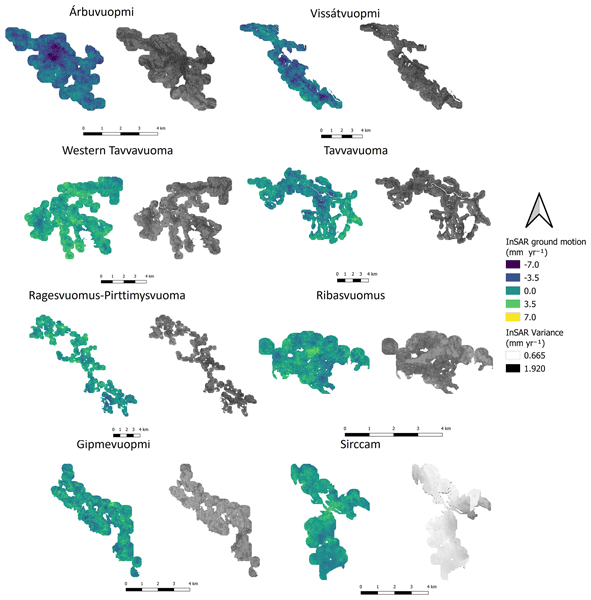
Samuel Valman, Matthias B. Siewert, Doreen Boyd, Martha Ledger, David Gee, Betsabé de la Barreda-Bautista, Andrew Sowter, and Sofie Sjögersten
The Cryosphere, 18, 1773–1790, https://doi.org/10.5194/tc-18-1773-2024, https://doi.org/10.5194/tc-18-1773-2024, 2024
Short summary
Short summary
Climate warming is thawing permafrost that makes up palsa (frost mound) peatlands, risking ecosystem collapse and carbon release as methane. We measure this regional degradation using radar satellite technology to examine ground elevation changes and show how terrain roughness measurements can be used to estimate local permafrost damage. We find that over half of Sweden's largest palsa peatlands are degrading, with the worse impacts to the north linked to increased winter precipitation.
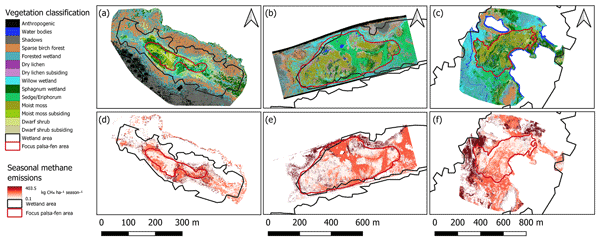
Sofie Sjögersten, Martha Ledger, Matthias Siewert, Betsabé de la Barreda-Bautista, Andrew Sowter, David Gee, Giles Foody, and Doreen S. Boyd
Biogeosciences, 20, 4221–4239, https://doi.org/10.5194/bg-20-4221-2023, https://doi.org/10.5194/bg-20-4221-2023, 2023
Short summary
Short summary
Permafrost thaw in Arctic regions is increasing methane emissions, but quantification is difficult given the large and remote areas impacted. We show that UAV data together with satellite data can be used to extrapolate emissions across the wider landscape as well as detect areas at risk of higher emissions. A transition of currently degrading areas to fen type vegetation can increase emission by several orders of magnitude, highlighting the importance of quantifying areas at risk.
Elisabeth Mauclet, Maëlle Villani, Arthur Monhonval, Catherine Hirst, Edward A. G. Schuur, and Sophie Opfergelt
Earth Syst. Sci. Data, 15, 3891–3904, https://doi.org/10.5194/essd-15-3891-2023, https://doi.org/10.5194/essd-15-3891-2023, 2023
Short summary
Short summary
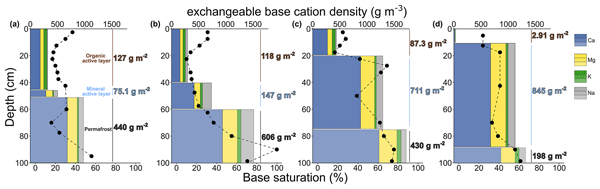
Permafrost ecosystems are limited in nutrients for vegetation development and constrain the biological activity to the active layer. Upon Arctic warming, permafrost degradation exposes organic and mineral soil material that may directly influence the capacity of the soil to retain key nutrients for vegetation growth and development. Here, we demonstrate that the average total exchangeable nutrient density (Ca, K, Mg, and Na) is more than 2 times higher in the permafrost than in the active layer.
Holly Proulx, Jennifer M. Jacobs, Elizabeth A. Burakowski, Eunsang Cho, Adam G. Hunsaker, Franklin B. Sullivan, Michael Palace, and Cameron Wagner
The Cryosphere, 17, 3435–3442, https://doi.org/10.5194/tc-17-3435-2023, https://doi.org/10.5194/tc-17-3435-2023, 2023
Short summary
Short summary
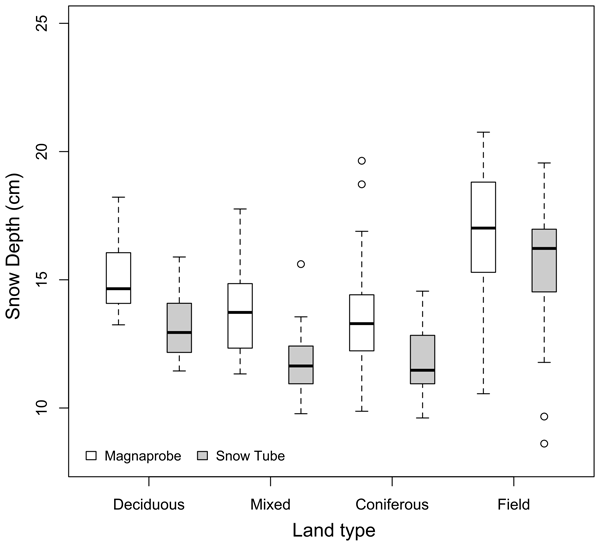
This study compares snow depth measurements from two manual instruments in a field and forest. Snow depths measured using a magnaprobe were typically 1 to 3 cm deeper than those measured using a snow tube. These differences were greater in the forest than in the field.

Sebastián Páez-Bimos, Armando Molina, Marlon Calispa, Pierre Delmelle, Braulio Lahuatte, Marcos Villacís, Teresa Muñoz, and Veerle Vanacker
Hydrol. Earth Syst. Sci., 27, 1507–1529, https://doi.org/10.5194/hess-27-1507-2023, https://doi.org/10.5194/hess-27-1507-2023, 2023
Short summary
Short summary
This study analyzes how vegetation influences soil hydrology, water fluxes, and chemical weathering rates in the high Andes. There are clear differences in the A horizon. The extent of soil chemical weathering varies depending on vegetation type. This difference is attributed mainly to the water fluxes. Our findings reveal that vegetation can modify soil properties in the uppermost horizon, altering the water balance, solutes, and chemical weathering throughout the entire soil profile.
Kristof Van Oost and Johan Six
Biogeosciences, 20, 635–646, https://doi.org/10.5194/bg-20-635-2023, https://doi.org/10.5194/bg-20-635-2023, 2023
Short summary
Short summary
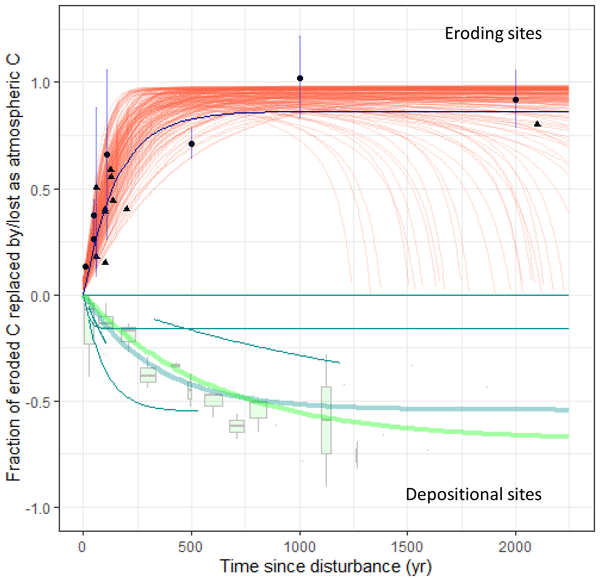
The direction and magnitude of the net erosion-induced land–atmosphere C exchange have been the topic of a big scientific debate for more than a decade now. Many have assumed that erosion leads to a loss of soil carbon to the atmosphere, whereas others have shown that erosion ultimately leads to a carbon sink. Here, we show that the soil carbon erosion source–sink paradox is reconciled when the broad range of temporal and spatial scales at which the underlying processes operate are considered.
Nathan Vandermaelen, Koen Beerten, François Clapuyt, Marcus Christl, and Veerle Vanacker
Geochronology, 4, 713–730, https://doi.org/10.5194/gchron-4-713-2022, https://doi.org/10.5194/gchron-4-713-2022, 2022
Short summary
Short summary
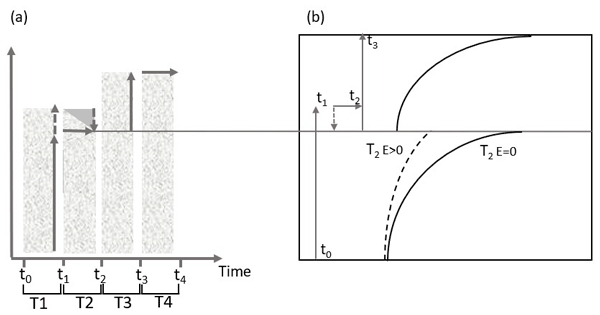
We constrained deposition phases of fluvial sediments (NE Belgium) over the last 1 Myr with analysis and modelling of rare isotopes accumulation within sediments, occurring as a function of time and inverse function of depth. They allowed the determination of three superposed deposition phases and intercalated non-deposition periods of ~ 40 kyr each. These phases correspond to 20 % of the sediment age, which highlights the importance of considering deposition phase when dating fluvial sediments.
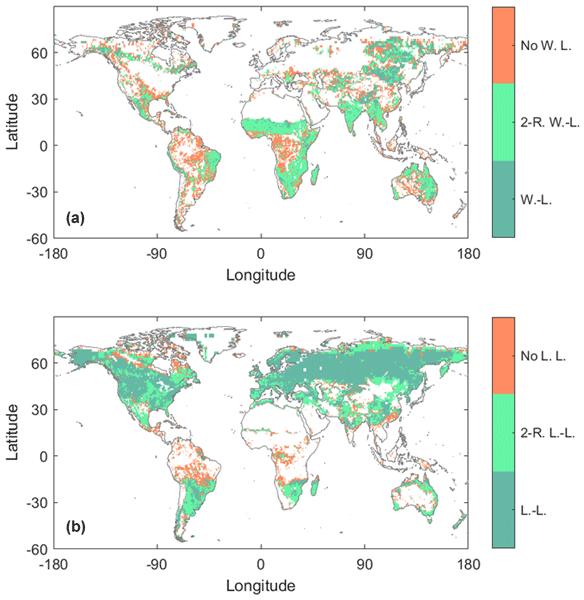
François Jonard, Andrew F. Feldman, Daniel J. Short Gianotti, and Dara Entekhabi
Biogeosciences, 19, 5575–5590, https://doi.org/10.5194/bg-19-5575-2022, https://doi.org/10.5194/bg-19-5575-2022, 2022
Short summary
Short summary
We investigate the spatial and temporal patterns of light and water limitation in plant function at the ecosystem scale. Using satellite observations, we characterize the nonlinear relationships between sun-induced chlorophyll fluorescence (SIF) and water and light availability. This study highlights that soil moisture limitations on SIF are found primarily in drier environments, while light limitations are found in intermediately wet regions.
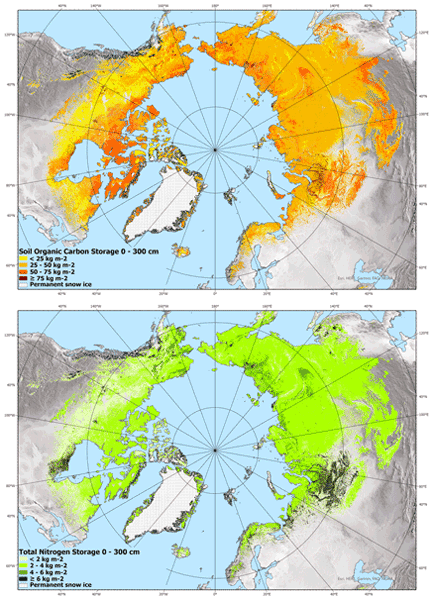
Juri Palmtag, Jaroslav Obu, Peter Kuhry, Andreas Richter, Matthias B. Siewert, Niels Weiss, Sebastian Westermann, and Gustaf Hugelius
Earth Syst. Sci. Data, 14, 4095–4110, https://doi.org/10.5194/essd-14-4095-2022, https://doi.org/10.5194/essd-14-4095-2022, 2022
Short summary
Short summary
The northern permafrost region covers 22 % of the Northern Hemisphere and holds almost twice as much carbon as the atmosphere. This paper presents data from 651 soil pedons encompassing more than 6500 samples from 16 different study areas across the northern permafrost region. We use this dataset together with ESA's global land cover dataset to estimate soil organic carbon and total nitrogen storage up to 300 cm soil depth, with estimated values of 813 Pg for carbon and 55 Pg for nitrogen.
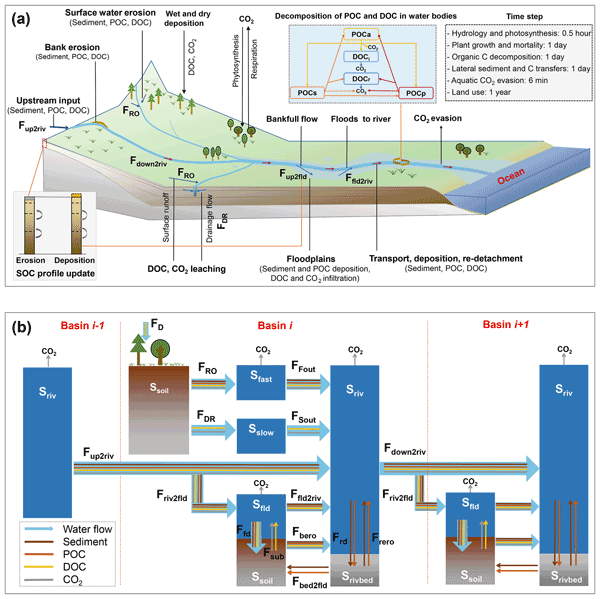
Haicheng Zhang, Ronny Lauerwald, Pierre Regnier, Philippe Ciais, Kristof Van Oost, Victoria Naipal, Bertrand Guenet, and Wenping Yuan
Earth Syst. Dynam., 13, 1119–1144, https://doi.org/10.5194/esd-13-1119-2022, https://doi.org/10.5194/esd-13-1119-2022, 2022
Short summary
Short summary
We present a land surface model which can simulate the complete lateral transfer of sediment and carbon from land to ocean through rivers. Our model captures the water, sediment, and organic carbon discharges in European rivers well. Application of our model in Europe indicates that lateral carbon transfer can strongly change regional land carbon budgets by affecting organic carbon distribution and soil moisture.
Jordan Bates, Francois Jonard, Rajina Bajracharya, Harry Vereecken, and Carsten Montzka
AGILE GIScience Ser., 3, 23, https://doi.org/10.5194/agile-giss-3-23-2022, https://doi.org/10.5194/agile-giss-3-23-2022, 2022
M. C. A. Picoli, J. Radoux, X. Tong, A. Bey, P. Rufin, M. Brandt, R. Fensholt, and P. Meyfroidt
Int. Arch. Photogramm. Remote Sens. Spatial Inf. Sci., XLIII-B3-2022, 975–981, https://doi.org/10.5194/isprs-archives-XLIII-B3-2022-975-2022, https://doi.org/10.5194/isprs-archives-XLIII-B3-2022-975-2022, 2022
B. Beaumont, Y. Loozen, T. Castin, J. Radoux, C. Wyard, D. Lauwaet, F. Lefebre, T. Halford, M. Haid, P. Defourny, and E. Hallot
ISPRS Ann. Photogramm. Remote Sens. Spatial Inf. Sci., V-4-2022, 243–250, https://doi.org/10.5194/isprs-annals-V-4-2022-243-2022, https://doi.org/10.5194/isprs-annals-V-4-2022-243-2022, 2022
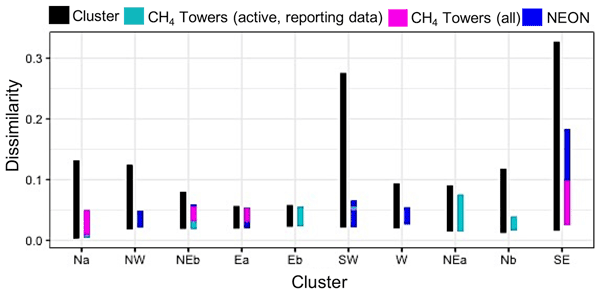
Sparkle L. Malone, Youmi Oh, Kyle A. Arndt, George Burba, Roisin Commane, Alexandra R. Contosta, Jordan P. Goodrich, Henry W. Loescher, Gregory Starr, and Ruth K. Varner
Biogeosciences, 19, 2507–2522, https://doi.org/10.5194/bg-19-2507-2022, https://doi.org/10.5194/bg-19-2507-2022, 2022
Short summary
Short summary
To understand the CH4 flux potential of natural ecosystems and agricultural lands in the United States of America, a multi-scale CH4 observation network focused on CH4 flux rates, processes, and scaling methods is required. This can be achieved with a network of ground-based observations that are distributed based on climatic regions and land cover.
Elisabeth Mauclet, Yannick Agnan, Catherine Hirst, Arthur Monhonval, Benoît Pereira, Aubry Vandeuren, Maëlle Villani, Justin Ledman, Meghan Taylor, Briana L. Jasinski, Edward A. G. Schuur, and Sophie Opfergelt
Biogeosciences, 19, 2333–2351, https://doi.org/10.5194/bg-19-2333-2022, https://doi.org/10.5194/bg-19-2333-2022, 2022
Short summary
Short summary
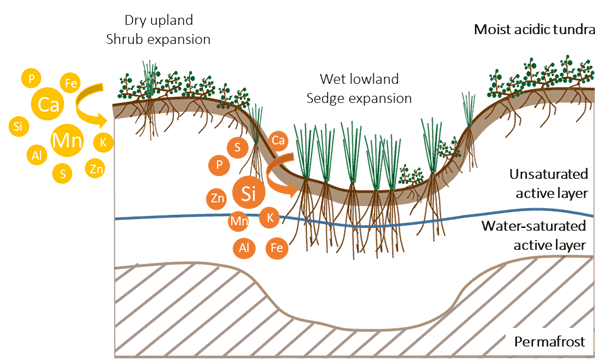
Arctic warming and permafrost degradation largely affect tundra vegetation. Wetter lowlands show an increase in sedges, whereas drier uplands favor shrub expansion. Here, we demonstrate that the difference in the foliar elemental composition of typical tundra vegetation species controls the change in local foliar elemental stock and potential mineral element cycling through litter production upon a shift in tundra vegetation.
Veerle Vanacker, Armando Molina, Miluska A. Rosas, Vivien Bonnesoeur, Francisco Román-Dañobeytia, Boris F. Ochoa-Tocachi, and Wouter Buytaert
SOIL, 8, 133–147, https://doi.org/10.5194/soil-8-133-2022, https://doi.org/10.5194/soil-8-133-2022, 2022
Short summary
Short summary
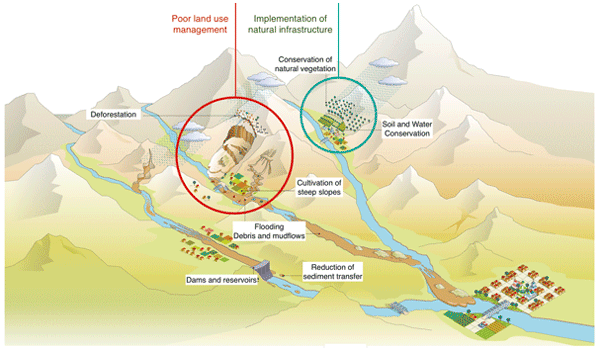
The Andes region is prone to natural hazards due to its steep topography and climatic variability. Anthropogenic activities further exacerbate environmental hazards and risks. This systematic review synthesizes the knowledge on the effectiveness of nature-based solutions. Conservation of natural vegetation and implementation of soil and water conservation measures had significant and positive effects on soil erosion mitigation and topsoil organic carbon concentrations.
Holly Proulx, Jennifer M. Jacobs, Elizabeth A. Burakowski, Eunsang Cho, Adam G. Hunsaker, Franklin B. Sullivan, Michael Palace, and Cameron Wagner
The Cryosphere Discuss., https://doi.org/10.5194/tc-2022-7, https://doi.org/10.5194/tc-2022-7, 2022
Manuscript not accepted for further review
Short summary
Short summary
This study compares snow depth measurements from two manual instruments and an airborne platform in a field and forest. The manual instruments’ snow depths differed by 1 to 3 cm. The airborne measurements , which do not penetrate the leaf litter, were consistently shallower than either manual instrument. When combining airborne snow depth maps with manual density measurements, corrections may be required to create unbiased maps of snow properties.
Pengzhi Zhao, Daniel Joseph Fallu, Sara Cucchiaro, Paolo Tarolli, Clive Waddington, David Cockcroft, Lisa Snape, Andreas Lang, Sebastian Doetterl, Antony G. Brown, and Kristof Van Oost
Biogeosciences, 18, 6301–6312, https://doi.org/10.5194/bg-18-6301-2021, https://doi.org/10.5194/bg-18-6301-2021, 2021
Short summary
Short summary
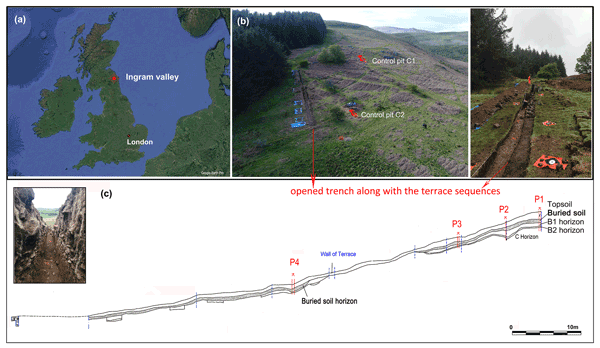
We investigate the factors controlling the soil organic carbon (SOC) stability and temperature sensitivity of abandoned prehistoric agricultural terrace soils. Results suggest that the burial of former topsoil due to terracing provided an SOC stabilization mechanism. Both the soil C : N ratio and SOC mineral protection regulate soil SOC temperature sensitivity. However, which mechanism predominantly controls SOC temperature sensitivity depends on the age of the buried terrace soils.
McKenzie A. Kuhn, Ruth K. Varner, David Bastviken, Patrick Crill, Sally MacIntyre, Merritt Turetsky, Katey Walter Anthony, Anthony D. McGuire, and David Olefeldt
Earth Syst. Sci. Data, 13, 5151–5189, https://doi.org/10.5194/essd-13-5151-2021, https://doi.org/10.5194/essd-13-5151-2021, 2021
Short summary
Short summary
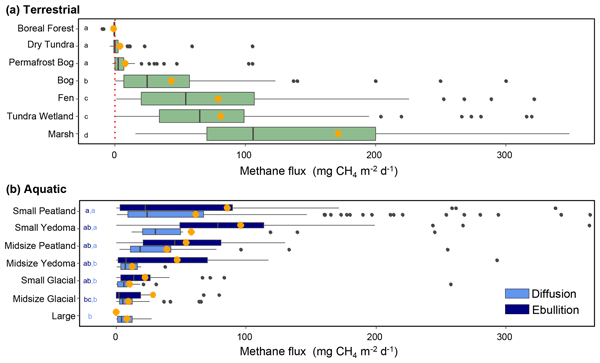
Methane (CH4) emissions from the boreal–Arctic region are globally significant, but the current magnitude of annual emissions is not well defined. Here we present a dataset of surface CH4 fluxes from northern wetlands, lakes, and uplands that was built alongside a compatible land cover dataset, sharing the same classifications. We show CH4 fluxes can be split by broad land cover characteristics. The dataset is useful for comparison against new field data and model parameterization or validation.
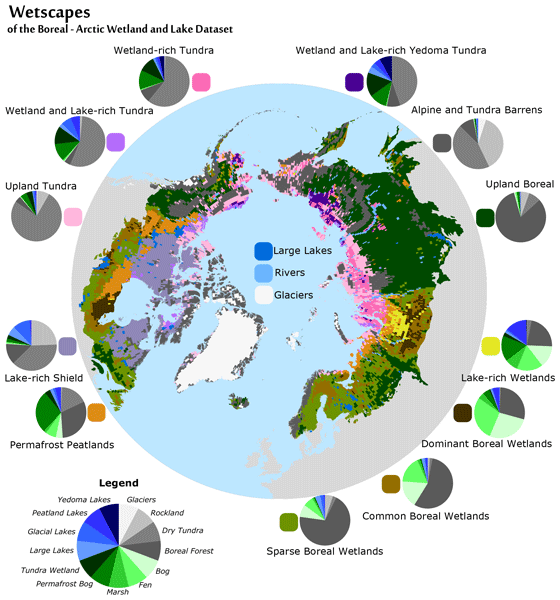
David Olefeldt, Mikael Hovemyr, McKenzie A. Kuhn, David Bastviken, Theodore J. Bohn, John Connolly, Patrick Crill, Eugénie S. Euskirchen, Sarah A. Finkelstein, Hélène Genet, Guido Grosse, Lorna I. Harris, Liam Heffernan, Manuel Helbig, Gustaf Hugelius, Ryan Hutchins, Sari Juutinen, Mark J. Lara, Avni Malhotra, Kristen Manies, A. David McGuire, Susan M. Natali, Jonathan A. O'Donnell, Frans-Jan W. Parmentier, Aleksi Räsänen, Christina Schädel, Oliver Sonnentag, Maria Strack, Suzanne E. Tank, Claire Treat, Ruth K. Varner, Tarmo Virtanen, Rebecca K. Warren, and Jennifer D. Watts
Earth Syst. Sci. Data, 13, 5127–5149, https://doi.org/10.5194/essd-13-5127-2021, https://doi.org/10.5194/essd-13-5127-2021, 2021
Short summary
Short summary
Wetlands, lakes, and rivers are important sources of the greenhouse gas methane to the atmosphere. To understand current and future methane emissions from northern regions, we need maps that show the extent and distribution of specific types of wetlands, lakes, and rivers. The Boreal–Arctic Wetland and Lake Dataset (BAWLD) provides maps of five wetland types, seven lake types, and three river types for northern regions and will improve our ability to predict future methane emissions.
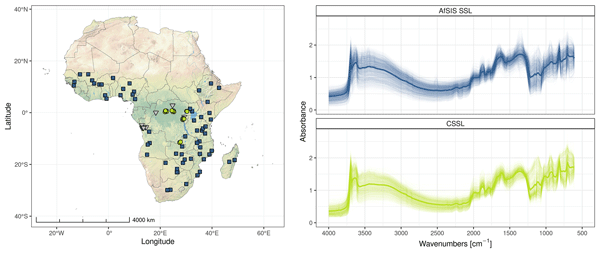
Laura Summerauer, Philipp Baumann, Leonardo Ramirez-Lopez, Matti Barthel, Marijn Bauters, Benjamin Bukombe, Mario Reichenbach, Pascal Boeckx, Elizabeth Kearsley, Kristof Van Oost, Bernard Vanlauwe, Dieudonné Chiragaga, Aimé Bisimwa Heri-Kazi, Pieter Moonen, Andrew Sila, Keith Shepherd, Basile Bazirake Mujinya, Eric Van Ranst, Geert Baert, Sebastian Doetterl, and Johan Six
SOIL, 7, 693–715, https://doi.org/10.5194/soil-7-693-2021, https://doi.org/10.5194/soil-7-693-2021, 2021
Short summary
Short summary
We present a soil mid-infrared library with over 1800 samples from central Africa in order to facilitate soil analyses of this highly understudied yet critical area. Together with an existing continental library, we demonstrate a regional analysis and geographical extrapolation to predict total carbon and nitrogen. Our results show accurate predictions and highlight the value that the data contribute to existing libraries. Our library is openly available for public use and for expansion.
Cited articles
AMAP: Arctic Climate Change Update 2021: Key Trends and Impacts. Summary for Policy-makers, Arctic Monitoring and Assessment Programme (AMAP), Tromsø, Norway, 2021.
Arndt, S., Jørgensen, B. B., LaRowe, D. E., Middelburg, J. J., Pancost, R. D., and Regnier, P.: Quantifying the degradation of organic matter in marine sediments: A review and synthesis, Earth-Sci. Rev., 123, 53–86, https://doi.org/10.1016/j.earscirev.2013.02.008, 2013.
Bäckstrand, K., Crill, P. M., Mastepanov, M., Christensen, T. R., and Bastviken, D.: Total hydrocarbon flux dynamics at a subarctic mire in northern Sweden, J. Geophys. Res.-Biogeo., 113, https://doi.org/10.1029/2008JG000703, 2008.
Barry, R. G. and Hall-McKim, E. A.: Polar Environments and Global Change, Cambridge University Press, 445 pp., ISBN 978-1-108-42316-8, 2018.
Borge, A. F., Westermann, S., Solheim, I., and Etzelmüller, B.: Strong degradation of palsas and peat plateaus in northern Norway during the last 60 years, The Cryosphere, 11, 1–16, https://doi.org/10.5194/tc-11-1-2017, 2017.
Bosiö, J., Johansson, M., Callaghan, T. V., Johansen, B., and Christensen, T. R.: Future vegetation changes in thawing subarctic mires and implications for greenhouse gas exchange—a regional assessment, Climatic Change, 115, 379–398, https://doi.org/10.1007/s10584-012-0445-1, 2012.
Burke, S. A., Wik, M., Lang, A., Contosta, A. R., Palace, M., Crill, P. M., and Varner, R. K.: Long-Term Measurements of Methane Ebullition From Thaw Ponds, J. Geophys. Res.-Biogeo., 124, 2208–2221, https://doi.org/10.1029/2018JG004786, 2019.
Burn, C. R. and Lewkowicz, A. G.: Canadian Landform Examples – Retrogressive Thaw Slumps, Can. Geogr., 34, 273–276, https://doi.org/10.1111/j.1541-0064.1990.tb01092.x, 1990.
Callaghan, T. V., Bergholm, F., Christensen, T. R., Jonasson, C., Kokfelt, U., and Johansson, M.: A new climate era in the sub-Arctic: Accelerating climate changes and multiple impacts, Geophys. Res. Lett., 37, https://doi.org/10.1029/2009GL042064, 2010.
Canadell, J. G., Monteiro, P. M. S., Costa, M. H., Cotrim da Cunha, L., Cox, P. M., Eliseev, A. V., Henson, S., Ishii, M., Jaccard, J., Koven, C., Lohila, A., Patra, P. K., Piao, S., Rogelj, J., Syampungani, S., Zaehle, S., and Zickfeld, K.: Global Carbon and other Biogeochemical Cycles and Feedbacks, in: Climate Change 2021: The Physical Science Basis, edited by: Masson-Delmotte, V., Zhai, P., Pirani, A., Connors, S. L., Péan, C., Berger, S., Caud, N., Chen, Y., Goldfarb, L., Gomis, M. I., Huang, M., Leitzell, K., Lonnoy, E., Matthews, J. B. R., Maycock, T. K., Waterfield, T., Yelekçi, O., Yu, R., and Zhou, B., Cambridge, UK and New York, NY, USA, 673–816, https://doi.org/10.1017/9781009157896.007, 2021.
Canfield, D. E.: Factors influencing organic carbon preservation in marine sediments, Chem. Geol., 114, 315–329, https://doi.org/10.1016/0009-2541(94)90061-2, 1994.
Chang, K.-Y., Riley, W. J., Crill, P. M., Grant, R. F., Rich, V. I., and Saleska, S. R.: Large carbon cycle sensitivities to climate across a permafrost thaw gradient in subarctic Sweden, The Cryosphere, 13, 647–663, https://doi.org/10.5194/tc-13-647-2019, 2019a.
Chang, K.-Y., Riley, W. J., Brodie, E. L., McCalley, C. K., Crill, P. M., and Grant, R. F.: Methane Production Pathway Regulated Proximally by Substrate Availability and Distally by Temperature in a High-Latitude Mire Complex, J. Geophys. Res.-Biogeo., 124, 3057–3074, https://doi.org/10.1029/2019JG005355, 2019b.
Chasmer, L. and Hopkinson, C.: Threshold loss of discontinuous permafrost and landscape evolution, Glob. Change Biol., 23, 2672–2686, https://doi.org/10.1111/gcb.13537, 2017.
Christensen, T. R., Johansson, T., Åkerman, H. J., Mastepanov, M., Malmer, N., Friborg, T., Crill, P., and Svensson, B. H.: Thawing sub-arctic permafrost: Effects on vegetation and methane emissions, Geophys. Res. Lett., 31, https://doi.org/10.1029/2003GL018680, 2004.
Czaplewski, R. L. and Catts, G. P.: Calibration of remotely sensed proportion or area estimates for misclassification error, Remote Sens. Environ., 39, 29–43, https://doi.org/10.1016/0034-4257(92)90138-A, 1992.
de la Barreda-Bautista, B., Boyd, D. S., Ledger, M., Siewert, M. B., Chandler, C., Bradley, A. V., Gee, D., Large, D. J., Olofsson, J., Sowter, A., and Sjögersten, S.: Towards a Monitoring Approach for Understanding Permafrost Degradation and Linked Subsidence in Arctic Peatlands, Remote Sens., 14, 444, https://doi.org/10.3390/rs14030444, 2022.
DelGreco, J.: Four Years of Unmanned Aerial System Imagery Reveals Vegetation Change in a Sub-Arctic Mire Due to Permafrost Thaw, Master Thesis, University of New Hampshire, Durham, NH 03824, USA, 48 pp., 2018.
DelGreco, J., Palace, M. W., Herrick, C., and Varner, R. K.: Unmanned Aerial Imagery over Stordalen Mire, Northern Sweden, 2017, Harvard Dataverse [data set], https://doi.org/10.7910/DVN/NZWLHE, 2022.
Doolittle, J. A. and Brevik, E. C.: The use of electromagnetic induction techniques in soils studies, Geoderma, 223–225, 33–45, https://doi.org/10.1016/j.geoderma.2014.01.027, 2014.
Esri and Maxar: “World Imagery”, Esri [basemap], https://services.arcgisonline.com/ArcGIS/rest/services/World_Imagery/MapServer (last access: 30 December 2024), 2022.
Farquharson, L. M., Romanovsky, V. E., Cable, W. L., Walker, D. A., Kokelj, S. V., and Nicolsky, D.: Climate Change Drives Widespread and Rapid Thermokarst Development in Very Cold Permafrost in the Canadian High Arctic, Geophys. Res. Lett., 46, 6681–6689, https://doi.org/10.1029/2019GL082187, 2019.
Fewster, R. E., Morris, P. J., Ivanovic, R. F., Swindles, G. T., Peregon, A. M., and Smith, C. J.: Imminent loss of climate space for permafrost peatlands in Europe and Western Siberia, Nat. Clim. Change, 12, 373–379, https://doi.org/10.1038/s41558-022-01296-7, 2022.
Fox-Kemper, B., Hewitt, H. T., Xiao, C., Aðalgeirsdóttir, G., Drijfhout, S. S., Edwards, T. L., Golledge, N. R., Hemer, M., Koop, R. E., Krinner, G., Mix, A., Notz, D., Nowicki, S., Nurhati, I. S., Ruiz, L., Sallée, J.-B., Slangen, A. B. A., and Yu, Y.: Ocean, Cryosphere and Sea Level Change, in: Climate Change 2021: The Physical Science Basis. Contribution of Working Group I to the Sixth Assessment Report of the Intergovernmental Panel on Climate Change, edited by: Masson-Delmotte, V., Zhai, P., Pirani, A., Connors, S. L., Péan, C., Berger, S., Caud, N., Chen, Y., Goldfarb, L., Gomis, M. I., Huang, M., Leitzell, K., Lonnoy, E., Matthews, J. B. R., Maycock, T. K., Waterfield, T., Yelekçi, O., Yu, R., and Zhou, B., Cambridge University Press, Cambridge, UK and New York, NY, USA, 1211–1362, https://doi.org/10.1017/9781009157896.011, 2021.
Fuchs, M., Kuhry, P., and Hugelius, G.: Low below-ground organic carbon storage in a subarctic Alpine permafrost environment, The Cryosphere, 9, 427–438, https://doi.org/10.5194/tc-9-427-2015, 2015.
Godin, E. and Fortier, D.: Geomorphology of a thermo-erosion gully, Bylot Island, Nunavut, Canada, This article is one of a series of papers published in this CJES Special Issue on the theme of Fundamental and applied research on permafrost in Canada, Polar Continental Shelf Project Contribution 043-11, Can. J. Earth Sci., 49, 979–986, https://doi.org/10.1139/e2012-015, 2012.
Grosse, G., Schirrmeister, L., and Malthus, T. J.: Application of Landsat-7 satellite data and a DEM for the quantification of thermokarst-affected terrain types in the periglacial Lena–Anabar coastal lowland, Polar Res., 25, 51–67, https://doi.org/10.3402/polar.v25i1.6238, 2006.
Hall-Beyer, M.: Practical guidelines for choosing GLCM textures to use in landscape classification tasks over a range of moderate spatial scales, Int. J. Remote Sens., 38, 1312–1338, https://doi.org/10.1080/01431161.2016.1278314, 2017.
Haralick, R. M.: Statistical and structural approaches to texture, P. IEEE, 67, 786–804, https://doi.org/10.1109/PROC.1979.11328, 1979.
Haralick, R. M., Shanmugam, K., and Dinstein, I.: Textural Features for Image Classification, IEEE T. Syst. Man Cyb., SMC-3, 610–621, https://doi.org/10.1109/TSMC.1973.4309314, 1973.
Hay, A. M.: The derivation of global estimates from a confusion matrix, Int. J. Remote Sens., 9, 1395–1398, https://doi.org/10.1080/01431168808954945, 1988.
Heginbottom, J. A., Brown, J., Humlum, O., and Svensson, H.: Permafrost and Periglacial Environments, in: State of the Earth's cryosphere at the beginning of the 21st century: glaciers, global snow cover, floating ice, and permafrost and periglacial environments, U. S. Geological Survey, Reston, VA, A425–A496, 2012.
Heil, K. and Schmidhalter, U.: The Application of EM38: Determination of Soil Parameters, Selection of Soil Sampling Points and Use in Agriculture and Archaeology, Sensors, 17, 2540, https://doi.org/10.3390/s17112540, 2017.
Hemingway, J. D., Rothman, D. H., Grant, K. E., Rosengard, S. Z., Eglinton, T. I., Derry, L. A., and Galy, V. V.: Mineral protection regulates long-term global preservation of natural organic carbon, Nature, 570, 228–231, https://doi.org/10.1038/s41586-019-1280-6, 2019.
Henrion, M., Li, Y., Koganti, T., Bechtold, M., Jonard, F., Opfergelt, S., Vanacker, V., Van Oost, K., and Lambot, S.: Mapping and monitoring peatlands in the Belgian Hautes Fagnes: Insights from Ground-penetrating radar and Electromagnetic induction characterization, Geoderma Regional, 37, e00795, https://doi.org/10.1016/j.geodrs.2024.e00795, 2024.
Hodgkins, S. B., Tfaily, M. M., McCalley, C. K., Logan, T. A., Crill, P. M., Saleska, S. R., Rich, V. I., and Chanton, J. P.: Changes in peat chemistry associated with permafrost thaw increase greenhouse gas production, P. Natl. Acad. Sci. USA, 111, 5819–5824, https://doi.org/10.1073/pnas.1314641111, 2014.
Hugelius, G., Tarnocai, C., Broll, G., Canadell, J. G., Kuhry, P., and Swanson, D. K.: The Northern Circumpolar Soil Carbon Database: spatially distributed datasets of soil coverage and soil carbon storage in the northern permafrost regions, Earth Syst. Sci. Data, 5, 3–13, https://doi.org/10.5194/essd-5-3-2013, 2013.
Hugelius, G., Strauss, J., Zubrzycki, S., Harden, J. W., Schuur, E. A. G., Ping, C.-L., Schirrmeister, L., Grosse, G., Michaelson, G. J., Koven, C. D., O'Donnell, J. A., Elberling, B., Mishra, U., Camill, P., Yu, Z., Palmtag, J., and Kuhry, P.: Estimated stocks of circumpolar permafrost carbon with quantified uncertainty ranges and identified data gaps, Biogeosciences, 11, 6573–6593, https://doi.org/10.5194/bg-11-6573-2014, 2014.
Hugelius, G., Loisel, J., Chadburn, S., Jackson, R. B., Jones, M., MacDonald, G., Marushchak, M., Olefeldt, D., Packalen, M., Siewert, M. B., Treat, C., Turetsky, M., Voigt, C., and Yu, Z.: Large stocks of peatland carbon and nitrogen are vulnerable to permafrost thaw, P. Natl. Acad. Sci. USA, 117, 20438–20446, https://doi.org/10.1073/pnas.1916387117, 2020.
ICOS Sweden: Collection of Abisko Stordalen Palsa Bog Swedish network data, ICOS National Network Sweden [data set], https://doi.org/10.18160/Q6H6-B94B, 2023.
ICOS Sweden: Abisko-Stordalen Palsa Bog, ICOS National Network Sweden, https://www.icos-sweden.se/abisko-stordalen, last access: 29 August 2025.
Johansson, T., Malmer, N., Crill, P. M., Friborg, T., Åkerman, J. H., Mastepanov, M., and Christensen, T. R.: Decadal vegetation changes in a northern peatland, greenhouse gas fluxes and net radiative forcing, Glob. Change Biol., 12, 2352–2369, https://doi.org/10.1111/j.1365-2486.2006.01267.x, 2006.
Keil, R. G. and Mayer, L. M.: Mineral Matrices and Organic Matter, in: Treatise on Geochemistry (Second Edition), edited by: Holland, H. D. and Turekian, K. K., Elsevier, Oxford, 337–359, https://doi.org/10.1016/B978-0-08-095975-7.01024-X, 2014.
Kokelj, S. V. and Jorgenson, M. T.: Advances in Thermokarst Research, Permafrost Periglac., 24, 108–119, https://doi.org/10.1002/ppp.1779, 2013.
Kokelj, S. V., Lantz, T. C., Tunnicliffe, J., Segal, R., and Lacelle, D.: Climate-driven thaw of permafrost preserved glacial landscapes, northwestern Canada, Geology, 45, 371–374, https://doi.org/10.1130/G38626.1, 2017.
Kokelj, S. V., Kokoszka, J., van der Sluijs, J., Rudy, A. C. A., Tunnicliffe, J., Shakil, S., Tank, S. E., and Zolkos, S.: Thaw-driven mass wasting couples slopes with downstream systems, and effects propagate through Arctic drainage networks, The Cryosphere, 15, 3059–3081, https://doi.org/10.5194/tc-15-3059-2021, 2021.
Łakomiec, P., Holst, J., Friborg, T., Crill, P., Rakos, N., Kljun, N., Olsson, P.-O., Eklundh, L., Persson, A., and Rinne, J.: Field-scale CH4 emission at a subarctic mire with heterogeneous permafrost thaw status, Biogeosciences, 18, 5811–5830, https://doi.org/10.5194/bg-18-5811-2021, 2021.
Lamoureux, S. F. and Lafrenière, M. J.: Fluvial Impact of Extensive Active Layer Detachments, Cape Bounty, Melville Island, Canada, Arct. Antarct. Alp. Res., 41, 59–68, https://doi.org/10.1657/1523-0430-41.1.59, 2009.
Lantz, T. C. and Kokelj, S. V.: Increasing rates of retrogressive thaw slump activity in the Mackenzie Delta region, N. W. T., Canada, Geophys. Res. Lett., 35, https://doi.org/10.1029/2007GL032433, 2008.
Lehmann, J. and Kleber, M.: The contentious nature of soil organic matter, Nature, 528, 60–68, https://doi.org/10.1038/nature16069, 2015.
Leppiniemi, O., Karjalainen, O., Aalto, J., Luoto, M., and Hjort, J.: Environmental spaces for palsas and peat plateaus are disappearing at a circumpolar scale, The Cryosphere, 17, 3157–3176, https://doi.org/10.5194/tc-17-3157-2023, 2023.
Lewkowicz, A. G.: Dynamics of active-layer detachment failures, Fosheim Peninsula, Ellesmere Island, Nunavut, Canada, Permafrost Periglac., 18, 89–103, https://doi.org/10.1002/ppp.578, 2007.
Lewkowicz, A. G. and Way, R. G.: Extremes of summer climate trigger thousands of thermokarst landslides in a High Arctic environment, Nat. Commun., 10, 1329, https://doi.org/10.1038/s41467-019-09314-7, 2019.
Li, Q., Wang, L., Fu, Y., Lin, D., Hou, M., Li, X., Hu, D., and Wang, Z.: Transformation of soil organic matter subjected to environmental disturbance and preservation of organic matter bound to soil minerals: a review, J. Soils Sediments, 23, 1485–1500, https://doi.org/10.1007/s11368-022-03381-y, 2023.
Mamet, S. D., Chun, K. P., Kershaw, G. G. L., Loranty, M. M., and Peter Kershaw, G.: Recent Increases in Permafrost Thaw Rates and Areal Loss of Palsas in the Western Northwest Territories, Canada, Permafrost Periglac., 28, 619–633, https://doi.org/10.1002/ppp.1951, 2017.
Martin, L. C. P., Nitzbon, J., Scheer, J., Aas, K. S., Eiken, T., Langer, M., Filhol, S., Etzelmüller, B., and Westermann, S.: Lateral thermokarst patterns in permafrost peat plateaus in northern Norway, The Cryosphere, 15, 3423–3442, https://doi.org/10.5194/tc-15-3423-2021, 2021.
McNeill, J. D.: Electromagnetic terrain conductivity measurement at low induction numbers, Tech. Note TN-6, 8, Geonics Limited, 1980.
Meredith, M., Sommerkorn, M., Cassotta, S., Derksen, C., Ekaykin, A., Hollowed, A., Kofinas, G., Mackintosh, A., Melbourne-Thomas, J., Muelbert, M. M. C., Ottersen, G., Pritchard, H., and Schuur, E. A. G.: Polar Regions, in: IPCC Special Report on the Ocean and Cryosphere in a Changing Climate, edited by: Pörtner, H.-O., Roberts, D. C., Masson-Delmotte, V., Zhai, P., Tignor, M., Poloczanska, E., Mintenbeck, K., Alegría, A., Nicolai, M., Okem, A., Petzold, J., Rama, B., and Weyer, N. M., Cambridge University Press, Cambridge, UK and New York, NY, USA, 203–320, 2019.
Mollaret, C., Hilbich, C., Pellet, C., Flores-Orozco, A., Delaloye, R., and Hauck, C.: Mountain permafrost degradation documented through a network of permanent electrical resistivity tomography sites, The Cryosphere, 13, 2557–2578, https://doi.org/10.5194/tc-13-2557-2019, 2019.
Mondav, R., Woodcroft, B. J., Kim, E.-H., McCalley, C. K., Hodgkins, S. B., Crill, P. M., Chanton, J., Hurst, G. B., VerBerkmoes, N. C., Saleska, S. R., Hugenholtz, P., Rich, V. I., and Tyson, G. W.: Discovery of a novel methanogen prevalent in thawing permafrost, Nat. Commun., 5, 3212, https://doi.org/10.1038/ncomms4212, 2014.
Monhonval, A., Mauclet, E., Hirst, C., Bemelmans, N., Eekman, E., Schuur, E. A. G., and Opfergelt, S.: Mineral organic carbon interactions in dry versus wet tundra soils, Geoderma, 436, 116552, https://doi.org/10.1016/j.geoderma.2023.116552, 2023.
Natali, S. M., Holdren, J. P., Rogers, B. M., Treharne, R., Duffy, P. B., Pomerance, R., and MacDonald, E.: Permafrost carbon feedbacks threaten global climate goals, P. Natl. Acad. Sci. USA, 118, e2100163118, https://doi.org/10.1073/pnas.2100163118, 2021.
National Geographic, Esri, DeLorme, HERE, UNEP-WCMC, USGS, NASA, ESA, METI, NRCAN, GEBCO, NOAA, and iPC: “National Geographic World Map”, Esri [basemap], https://services.arcgisonline.com/ArcGIS/rest/services/NatGeo_World_Map/MapServer (last access: 30 December 2024), 2011.
Nicolsky, D. J., Romanovsky, V. E., Panda, S. K., Marchenko, S. S., and Muskett, R. R.: Applicability of the ecosystem type approach to model permafrost dynamics across the Alaska North Slope, J. Geophys. Res.-Earth, 122, 50–75, https://doi.org/10.1002/2016JF003852, 2017.
Nitze, I., Grosse, G., Jones, B. M., Romanovsky, V. E., and Boike, J.: Remote sensing quantifies widespread abundance of permafrost region disturbances across the Arctic and Subarctic, Nat. Commun., 9, 5423, https://doi.org/10.1038/s41467-018-07663-3, 2018.
Olefeldt, D., Goswami, S., Grosse, G., Hayes, D., Hugelius, G., Kuhry, P., McGuire, A. D., Romanovsky, V. E., Sannel, A. B. K., Schuur, E. a. G., and Turetsky, M. R.: Circumpolar distribution and carbon storage of thermokarst landscapes, Nat. Commun., 7, 1–11, https://doi.org/10.1038/ncomms13043, 2016.
Olvmo, M., Holmer, B., Thorsson, S., Reese, H., and Lindberg, F.: Sub-arctic palsa degradation and the role of climatic drivers in the largest coherent palsa mire complex in Sweden (Vissátvuopmi), 1955–2016, Sci. Rep., 10, 8937, https://doi.org/10.1038/s41598-020-65719-1, 2020.
Palace, M., Herrick, C., DelGreco, J., Finnell, D., Garnello, A. J., McCalley, C., McArthur, K., Sullivan, F., and Varner, R. K.: Determining Subarctic Peatland Vegetation Using an Unmanned Aerial System (UAS), Remote Sens., 10, 1498, https://doi.org/10.3390/rs10091498, 2018.
Palace, M., Herrick, C., DelGreco, J., Varner, R., Finnell, D., and Garnello, A. J.: Unmanned Aerial Imagery over Stordalen Mire, Northern Sweden, 2014, Harvard Dataverse [data set], https://doi.org/10.7910/DVN/SJKV4T, 2019.
Palace, M., Herrick, C., and Sullivan, F.: Unmanned Aerial Imagery over Stordalen Mire, Northern Sweden, 2018, Harvard Dataverse [data set], https://doi.org/10.7910/DVN/2JXWVW, 2025a.
Palace, M., Herrick, C., Sullivan, F., and Varner, R.: Unmanned Aerial Imagery over Stordalen Mire, Northern Sweden, 2022, Harvard Dataverse [data set], https://doi.org/10.7910/DVN/G9Y8WC, 2025b.
Palace, M. W., DelGreco, J., McArthur, K., Herrick, C., and Varner, R. K.: Unmanned Aerial Imagery over Stordalen Mire, Northern Sweden, 2015, Harvard Dataverse [data set], https://doi.org/10.7910/DVN/NUXE30, 2022a.
Palace, M. W., Herrick, C., and Varner, R. K.: Unmanned Aerial Imagery over Stordalen Mire, Northern Sweden, 2016, Harvard Dataverse [data set], https://doi.org/10.7910/DVN/IAXSRD, 2022b.
Palmtag, J., Hugelius, G., Lashchinskiy, N., Tamstorf, M. P., Richter, A., Elberling, B., and Kuhry, P.: Storage, Landscape Distribution, and Burial History of Soil Organic Matter in Contrasting Areas of Continuous Permafrost, Arct. Antarct. Alp. Res., 47, 71–88, https://doi.org/10.1657/AAAR0014-027, 2015.
Patzner, M. S., Mueller, C. W., Malusova, M., Baur, M., Nikeleit, V., Scholten, T., Hoeschen, C., Byrne, J. M., Borch, T., Kappler, A., and Bryce, C.: Iron mineral dissolution releases iron and associated organic carbon during permafrost thaw, Nat, Commun,, 11, 6329, https://doi.org/10.1038/s41467-020-20102-6, 2020.
Payette, S., Delwaide, A., Caccianiga, M., and Beauchemin, M.: Accelerated thawing of subarctic peatland permafrost over the last 50 years, Geophys. Res. Lett., 31, https://doi.org/10.1029/2004GL020358, 2004.
Petrescu, A. M. R., van Huissteden, J., Jackowicz-Korczynski, M., Yurova, A., Christensen, T. R., Crill, P. M., Bäckstrand, K., and Maximov, T. C.: Modelling CH4 emissions from arctic wetlands: effects of hydrological parameterization, Biogeosciences, 5, 111–121, https://doi.org/10.5194/bg-5-111-2008, 2008.
Porter, C., Howat, I., Noh, M.-J., Husby, E., Khuvis, S., Danish, E., Tomko, K., Gardiner, J., Negrete, A., Yadav, B., Klassen, J., Kelleher, C., Cloutier, M., Bakker, J., Enos, J., Arnold, G., Bauer, G., and Morin, P.: ArcticDEM – Mosaics, Version 4. 1, Harvard Dataverse, V1, 2023.
Railton, J. B. and Sparling, J. H.: Preliminary studies on the ecology of palsa mounds in northern Ontario, Can. J. Bot., 51, 1037–1044, https://doi.org/10.1139/b73-128, 1973.
Rantanen, M., Karpechko, A. Y., Lipponen, A., Nordling, K., Hyvärinen, O., Ruosteenoja, K., Vihma, T., and Laaksonen, A.: The Arctic has warmed nearly four times faster than the globe since 1979, Commun. Earth Environ., 3, 1–10, https://doi.org/10.1038/s43247-022-00498-3, 2022.
Renette, C., Olvmo, M., Thorsson, S., Holmer, B., and Reese, H.: Multitemporal UAV lidar detects seasonal heave and subsidence on palsas, The Cryosphere, 18, 5465–5480, https://doi.org/10.5194/tc-18-5465-2024, 2024.
Seppälä, M.: The Origin of Palsas, Geogr. Ann. A, 68, 141–147, https://doi.org/10.1080/04353676.1986.11880167, 1986.
Siewert, M. B.: High-resolution digital mapping of soil organic carbon in permafrost terrain using machine learning: a case study in a sub-Arctic peatland environment, Biogeosciences, 15, 1663–1682, https://doi.org/10.5194/bg-15-1663-2018, 2018.
Siewert, M. B. and Abisko Scientific Research Station: UAV – Red Green Blue (RGB) Orthomosaic from Stordalen 2019-08-16, Swedish Infrastructure for Ecosystem Science (SITES) [data set], https://hdl.handle.net/11676.1/U4o8KrPkEiKw5RsfiCJZeEgX (last access: 18 January 2023), 2020.
Siewert, M. B., Hugelius, G., Heim, B., and Faucherre, S.: Landscape controls and vertical variability of soil organic carbon storage in permafrost-affected soils of the Lena River Delta, CATENA, 147, 725–741, https://doi.org/10.1016/j.catena.2016.07.048, 2016.
Siewert, M. B., Lantuit, H., Richter, A., and Hugelius, G.: Permafrost Causes Unique Fine-Scale Spatial Variability Across Tundra Soils, Global Biogeochem. Cy., 35, e2020GB006659, https://doi.org/10.1029/2020GB006659, 2021.
Sjögersten, S., Ledger, M., Siewert, M., de la Barreda-Bautista, B., Sowter, A., Gee, D., Foody, G., and Boyd, D. S.: Optical and radar Earth observation data for upscaling methane emissions linked to permafrost degradation in sub-Arctic peatlands in northern Sweden, Biogeosciences, 20, 4221–4239, https://doi.org/10.5194/bg-20-4221-2023, 2023.
Strauss, J., Abbott, B. W., Hugelius, G., Schuur, E. A. G., Treat, C., Fuchs, M., Schädel, C., Ulrich, M., Turetsky, M., Keuschnig, M., Biasi, C., Yang, Y., and Grosse, G.: Permafrost, in: Recarbonizing global soils – A technical manual of recommended management practices, Volume 2: Hot spots and bright spots of soil organic carbon, FAO, Rome, Italy, https://doi.org/10.4060/cb6378en, 2021.
Streletskiy, D. A., Maslakov, A., Grosse, G., Shiklomanov, N. I., Farquharson, L., Zwieback, S., Iwahana, G., Bartsch, A., Liu, L., Strozzi, T., Lee, H., and Debolskiy, M. V.: Thawing permafrost is subsiding in the Northern Hemisphere—review and perspectives, Environ. Res. Lett., 20, 013006, https://doi.org/10.1088/1748-9326/ada2ff, 2025.
Thie, J.: Distribution and Thawing of Permafrost in the Southern Part of the Discontinuous Permafrost Zone in Manitoba, Arctic, 27, 189–200, https://doi.org/10.14430/arctic2873, 1974.
Thomas, M., Villani, M., du Bois d'Aische, E., Hirst, C., Lundin, E., Van Oost, K., Vanacker, V., and Opfergelt, S.: RGB orthomosaic, digital surface model and slope over Stordalen Mire, Northern Sweden, 2021, Harvard Dataverse [data set], https://doi.org/10.14428/DVN/MGNYNN, 2025a.
Thomas, M., Moenaert, T., Radoux, J., Delhez, B., du Bois d’Aische, E., Villani, M., Hirst, C., Lundin, E., Jonard, F., Lambot, S., Van Oost, K., Vanacker, V., Siewert, M., Mörth, C. M., Palace, M., Varner, R. K., Sullivan, F. B., Herrick, C., and Opfergelt, S.: Accelerated lowland thermokarst development revealed by UAS photogrammetric surveys in the Stordalen mire, Abisko, Sweden, V1, Open Data @ UCLouvain [code], https://doi.org/10.14428/DVN/SX6TYV, 2025b.
Turetsky, M. R., Abbott, B. W., Jones, M. C., Anthony, K. W., Olefeldt, D., Schuur, E. A. G., Grosse, G., Kuhry, P., Hugelius, G., Koven, C., Lawrence, D. M., Gibson, C., Sannel, A. B. K., and McGuire, A. D.: Carbon release through abrupt permafrost thaw, Nat. Geosci., 13, 138–143, https://doi.org/10.1038/s41561-019-0526-0, 2020.
Valman, S., Siewert, M. B., Boyd, D., Ledger, M., Gee, D., de la Barreda-Bautista, B., Sowter, A., and Sjögersten, S.: InSAR-measured permafrost degradation of palsa peatlands in northern Sweden, The Cryosphere, 18, 1773–1790, https://doi.org/10.5194/tc-18-1773-2024, 2024.
van Huissteden, J., Teshebaeva, K., Cheung, Y., Magnússon, R. Í., Noorbergen, H., Karsanaev, S. V., Maximov, T. C., and Dolman, A. J.: Geomorphology and InSAR-Tracked Surface Displacements in an Ice-Rich Yedoma Landscape, Front. Earth Sci., 9, https://doi.org/10.3389/feart.2021.680565, 2021.
Varner, R. K., Crill, P. M., Frolking, S., McCalley, C. K., Burke, S. A., Chanton, J. P., Holmes, M. E., Isogenie Project Coordinators, Saleska, S., and Palace, M. W.: Permafrost thaw driven changes in hydrology and vegetation cover increase trace gas emissions and climate forcing in Stordalen Mire from 1970 to 2014, Philos. T. R. Soc. A, 380, 20210022, https://doi.org/10.1098/rsta.2021.0022, 2022.
Verdonen, M., Störmer, A., Lotsari, E., Korpelainen, P., Burkhard, B., Colpaert, A., and Kumpula, T.: Permafrost degradation at two monitored palsa mires in north-west Finland, The Cryosphere, 17, 1803–1819, https://doi.org/10.5194/tc-17-1803-2023, 2023.
von Lützow, M., Kögel-Knabner, I., Ludwig, B., Matzner, E., Flessa, H., Ekschmitt, K., Guggenberger, G., Marschner, B., and Kalbitz, K.: Stabilization mechanisms of organic matter in four temperate soils: Development and application of a conceptual model, J. Plant Nutr. Soil Sc., 171, 111–124, https://doi.org/10.1002/jpln.200700047, 2008.
Vonk, J. E., Tank, S. E., Bowden, W. B., Laurion, I., Vincent, W. F., Alekseychik, P., Amyot, M., Billet, M. F., Canário, J., Cory, R. M., Deshpande, B. N., Helbig, M., Jammet, M., Karlsson, J., Larouche, J., MacMillan, G., Rautio, M., Walter Anthony, K. M., and Wickland, K. P.: Reviews and syntheses: Effects of permafrost thaw on Arctic aquatic ecosystems, Biogeosciences, 12, 7129–7167, https://doi.org/10.5194/bg-12-7129-2015, 2015.
Wang, Y., Way, R. G., and Beer, J.: Multi-decadal degradation and fragmentation of palsas and peat plateaus in coastal Labrador, northeastern Canada, Environ. Res. Lett., 19, 014009, https://doi.org/10.1088/1748-9326/ad0138, 2023.
Webb, H., Fuchs, M., Abbott, B. W., Douglas, T. A., Elder, C. D., Ernakovich, J. G., Euskirchen, E. S., Göckede, M., Grosse, G., Hugelius, G., Jones, M. C., Koven, C., Kropp, H., Lathrop, E., Li, W., Loranty, M. M., Natali, S. M., Olefeldt, D., Schädel, C., Schuur, E. A. G., Sonnentag, O., Strauss, J., Virkkala, A.-M., and Turetsky, M. R.: A Review of Abrupt Permafrost Thaw: Definitions, Usage, and a Proposed Conceptual Framework, Curr. Clim. Change Rep., 11, 7, https://doi.org/10.1007/s40641-025-00204-3, 2025.
Winstrup, M., Ranndal, H., Larsen, S. H., Simonsen, S. B., Mankoff, K. D., Fausto, R. S., and Sørensen, L. S.: PRODEM: An annual series of summer DEMs (2019-2023) for the marginal areas of the Greenland Ice Sheet, General Assembly 2024 of the European Geosciences Union (EGU), Vienna, Austria, https://doi.org/10.5194/egusphere-egu24-5136, 2024.
Wu, K. and Lambot, S.: Analysis of Low-Frequency Drone-Borne GPR for Root-Zone Soil Electrical Conductivity Characterization, IEEE T. Geosci. Remote, 60, 1–13, https://doi.org/10.1109/TGRS.2022.3198431, 2022.
Wu, K., Rodriguez, G. A., Zajc, M., Jacquemin, E., Clément, M., De Coster, A., and Lambot, S.: A new drone-borne GPR for soil moisture mapping, Remote Sens. Environ., 235, 111456, https://doi.org/10.1016/j.rse.2019.111456, 2019.
Yang, Y., Rogers, B. M., Fiske, G., Watts, J., Potter, S., Windholz, T., Mullen, A., Nitze, I., and Natali, S. M.: Mapping retrogressive thaw slumps using deep neural networks, Remote Sens. Environ., 288, 113495, https://doi.org/10.1016/j.rse.2023.113495, 2023.
Zhang, H., Aldana-Jague, E., Clapuyt, F., Wilken, F., Vanacker, V., and Van Oost, K.: Evaluating the potential of post-processing kinematic (PPK) georeferencing for UAV-based structure- from-motion (SfM) photogrammetry and surface change detection, Earth Surf. Dynam., 7, 807–827, https://doi.org/10.5194/esurf-7-807-2019, 2019.
Zuidhoff, F. S. and Kolstrup, E.: Changes in palsa distribution in relation to climate change in Laivadalen, northern Sweden, especially 1960–1997, Permafrost Periglac., 11, 55–69, https://doi.org/10.1002/(SICI)1099-1530(200001/03)11:1<55::AID-PPP338>3.0.CO;2-T, 2000.
Zuidhoff, F. S. and Kolstrup, E.: Palsa Development and Associated Vegetation in Northern Sweden, Arct. Antarct. Alp. Res., 37, 49–60, 2005.
Short summary
This study examines the rate of permafrost degradation, in the form of the transition from intact well-drained palsa to fully thawed and inundated fen at the Stordalen mire, Abisko, Sweden. Across the 14 hectares of the palsa mire, we demonstrate a 10-fold acceleration of the degradation in 2019–2021 compared to previous periods (1970–2014) which might lead to a pool of 12 × 10³ kg of organic carbon exposed annually for the topsoil (23 cm depth).
This study examines the rate of permafrost degradation, in the form of the transition from...


