
Articles | Volume 20, issue 8
https://doi.org/10.5194/tc-20-4605-2026
© Author(s) 2026. This work is distributed under
the Creative Commons Attribution 4.0 License.
the Creative Commons Attribution 4.0 License.
https://doi.org/10.5194/tc-20-4605-2026
© Author(s) 2026. This work is distributed under
the Creative Commons Attribution 4.0 License.
the Creative Commons Attribution 4.0 License.
Research article
| 
21 Aug 2026
Research article |
| 21 Aug 2026
| 21 Aug 2026
On the reliability of seasonal snow forecasts

NILU, Kjeller, Norway
Yvan Orsolini
NILU, Kjeller, Norway
Patricia de Rosnay
European Centre for Medium‐Range Weather Forecasts, Reading, UK
Jonathan Day
European Centre for Medium‐Range Weather Forecasts, Reading, UK
Retish Senan
European Centre for Medium‐Range Weather Forecasts, Reading, UK
Damien Decremer
European Centre for Medium‐Range Weather Forecasts, Reading, UK
Frederic Vitart
European Centre for Medium‐Range Weather Forecasts, Reading, UK
Related authors
Ekaterina Vorobeva and Yvan Orsolini
Weather Clim. Dynam., 6, 1015–1026, https://doi.org/10.5194/wcd-6-1015-2025, https://doi.org/10.5194/wcd-6-1015-2025, 2025
Short summary
Short summary
The factors behind why some polar stratospheric wind disturbances persist while others remain short are unclear. This study examines the impact of tropospheric high-pressure systems on the duration of three recent polar stratospheric wind disturbances in the winter of 2023/24. Two were short-lived, lasting under 7 d. The findings in this study show that two short disturbances could not develop into long-lasting events due to developing high-pressure systems over the planetary wave troughs.
Jia Jia, Yvan Orsolini, Monika E. Szeląg, Antti Kero, Pekka T. Verronen, Maxime Grandin, Patrick J. Espy, Sebastian Käki, Neethal Thomas, Max van de Kamp, Sergey Koldobskiy, Jiarong Zhang, and Noora Partamies
EGUsphere, https://doi.org/10.5194/egusphere-2026-5829, https://doi.org/10.5194/egusphere-2026-5829, 2026
This preprint is open for discussion and under review for Atmospheric Chemistry and Physics (ACP).
Short summary
Short summary
Geomagnetic storms connect space weather to Earth's atmosphere. Analysing four major Solar Cycle 25 storms, we show that energetic particles cause mesospheric ozone losses of up to 80 %, with distinct responses to energetic electron precipitation and solar proton events. Combining observations and simulations reveals shortcomings in current representations of upper-atmospheric coupling and points to the need for sustained measurements of energetic particles and atmospheric composition.
Pierre Vanderbecken, Jasmin Vural, Oscar Rojas-Muñoz, Sébastien Garrigues, Bertrand Bonan, Cédric Bacour, Uwe Rascher, Bastian Siegmann, Patricia de Rosnay, and Jean-Christophe Calvet
Biogeosciences, 23, 6687–6703, https://doi.org/10.5194/bg-23-6687-2026, https://doi.org/10.5194/bg-23-6687-2026, 2026
Short summary
Short summary
New satellite observations are used to improve our understanding of regional-scale vegetation. Innovative artificial intelligence methods are employed to combine the available information. The effectiveness of this approach is evaluated using independent observations. The results show that agricultural practices such as irrigation can be modelled more accurately.
Nina Raoult, Ewan Pinnington, Mario Santa Cruz, Florian Pinault, Baudouin Raoult, Natalie Zelenka, Gabriele Arduini, Gianpaolo Balsamo, Souhail Boussetta, Matthew Chantry, Patricia de Rosnay, Peter Dueben, and Christoph Rüdiger
EGUsphere, https://doi.org/10.5194/egusphere-2026-3620, https://doi.org/10.5194/egusphere-2026-3620, 2026
Short summary
Short summary
The land surface shapes our weather and climate by controlling how heat and water move between the ground and the air, so the models representing it matter enormously. But they are costly to run and carry built-in errors. We built a faster artificial-intelligence version of one, then used real measurements from sites worldwide to correct some of these errors. The result stays reliable over years and better captures these heat and water exchanges—a quicker, more accurate tool for forecasting.
Gabriel Moldovan, Ewan Pinnington, Ana Prieto Nemesio, Simon Lang, Zied Ben Bouallègue, Jesper Dramsch, Mihai Alexe, Mario Santa Cruz, Sara Hahner, Harrison Cook, Helen Theissen, Mariana Clare, Cathal O'Brien, Jan Polster, Linus Magnusson, Gert Mertes, Florian Pinault, Baudouin Raoult, Patricia de Rosnay, Richard Forbes, and Matthew Chantry
Geosci. Model Dev., 19, 4703–4724, https://doi.org/10.5194/gmd-19-4703-2026, https://doi.org/10.5194/gmd-19-4703-2026, 2026
Short summary
Short summary
We present the latest release of the Artificial Intelligence Forecasting System, AIFS 1.1.0, which shows improved headline forecasting skill through an expanded dataset and enhanced training schedule. The model also incorporates hard physical constraints that facilitate training and improve rainfall prediction. Finally, we extend the set of forecasted variables to include soil conditions and energy-related fields, strengthening the operational value of AIFS.
Rachel Wai-Ying Wu, Dominik Büeler, Maria Pyrina, Jonathan Day, Adel Imamovic, Vincent Humphrey, and Daniela I.V. Domeisen
EGUsphere, https://doi.org/10.5194/egusphere-2026-2465, https://doi.org/10.5194/egusphere-2026-2465, 2026
Short summary
Short summary
Compound heat-drought events threaten health, agriculture, and energy. Using ECMWF sub-seasonal hindcasts, we find that physical coupling increases forecast skill by ~10 % relative to assuming event independence. However, skill drops significantly where land-atmosphere interactions – namely soil moisture feedbacks – are misrepresented. We identify European regions where these forecasts are most reliable and highlight physical biases as the primary barrier to accuracy elsewhere.
Alexey Yu. Karpechko, Amy H. Butler, and Frederic Vitart
Weather Clim. Dynam., 6, 1661–1681, https://doi.org/10.5194/wcd-6-1661-2025, https://doi.org/10.5194/wcd-6-1661-2025, 2025
Short summary
Short summary
We study how the knowledge of future tropical and stratospheric conditions could improve forecasts in winter remotely, via teleconnections, 3–6 weeks ahead. We find that the tropics improve forecasts of sea level pressure in subtropics, Europe, and North America. The stratosphere improves forecasts in high latitudes and Europe. Improvements are small for temperature and precipitation. Larger forecast ensembles than usually available for research are needed to predict teleconnection signals.
Ekaterina Vorobeva and Yvan Orsolini
Weather Clim. Dynam., 6, 1015–1026, https://doi.org/10.5194/wcd-6-1015-2025, https://doi.org/10.5194/wcd-6-1015-2025, 2025
Short summary
Short summary
The factors behind why some polar stratospheric wind disturbances persist while others remain short are unclear. This study examines the impact of tropospheric high-pressure systems on the duration of three recent polar stratospheric wind disturbances in the winter of 2023/24. Two were short-lived, lasting under 7 d. The findings in this study show that two short disturbances could not develop into long-lasting events due to developing high-pressure systems over the planetary wave troughs.
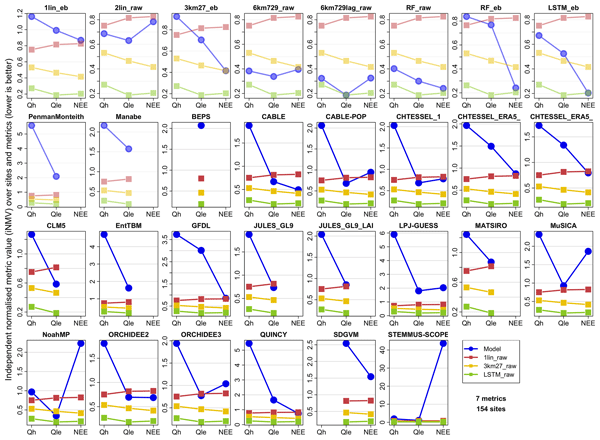
Gab Abramowitz, Anna Ukkola, Sanaa Hobeichi, Jon Cranko Page, Mathew Lipson, Martin G. De Kauwe, Samuel Green, Claire Brenner, Jonathan Frame, Grey Nearing, Martyn Clark, Martin Best, Peter Anthoni, Gabriele Arduini, Souhail Boussetta, Silvia Caldararu, Kyeungwoo Cho, Matthias Cuntz, David Fairbairn, Craig R. Ferguson, Hyungjun Kim, Yeonjoo Kim, Jürgen Knauer, David Lawrence, Xiangzhong Luo, Sergey Malyshev, Tomoko Nitta, Jerome Ogee, Keith Oleson, Catherine Ottlé, Phillipe Peylin, Patricia de Rosnay, Heather Rumbold, Bob Su, Nicolas Vuichard, Anthony P. Walker, Xiaoni Wang-Faivre, Yunfei Wang, and Yijian Zeng
Biogeosciences, 21, 5517–5538, https://doi.org/10.5194/bg-21-5517-2024, https://doi.org/10.5194/bg-21-5517-2024, 2024
Short summary
Short summary
This paper evaluates land models – computer-based models that simulate ecosystem dynamics; land carbon, water, and energy cycles; and the role of land in the climate system. It uses machine learning and AI approaches to show that, despite the complexity of land models, they do not perform nearly as well as they could given the amount of information they are provided with about the prediction problem.
Johanna Tjernström, Michael Gallagher, Jareth Holt, Gunilla Svensson, Matthew D. Shupe, Jonathan J. Day, Lara Ferrighi, Siri Jodha Khalsa, Leslie M. Hartten, Ewan O'Connor, Zen Mariani, and Øystein Godøy
EGUsphere, https://doi.org/10.5194/egusphere-2024-2088, https://doi.org/10.5194/egusphere-2024-2088, 2024
Preprint archived
Short summary
Short summary
The value of numerical weather predictions can be enhanced in several ways, one is to improve the representations of small-scale processes in models. To understand what needs to be improved, the model results need to be evaluated. Following standardized principles, a file format has been defined to be as similar as possible for both observational and model data. Python packages and toolkits are presented as a community resource in the production of the files and evaluation analysis.
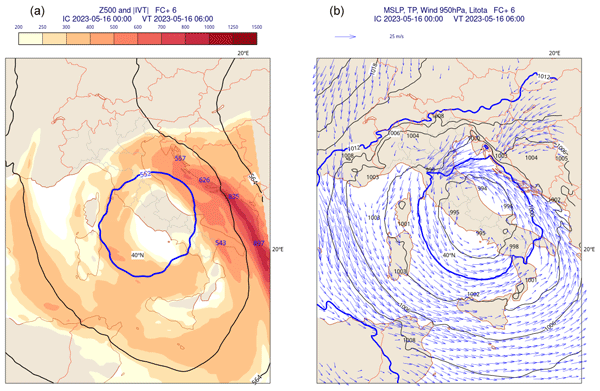
Joshua Dorrington, Marta Wenta, Federico Grazzini, Linus Magnusson, Frederic Vitart, and Christian M. Grams
Nat. Hazards Earth Syst. Sci., 24, 2995–3012, https://doi.org/10.5194/nhess-24-2995-2024, https://doi.org/10.5194/nhess-24-2995-2024, 2024
Short summary
Short summary
Extreme rainfall is the leading weather-related source of damages in Europe, but it is still difficult to predict on long timescales. A recent example of this was the devastating floods in the Italian region of Emiglia Romagna in May 2023. We present perspectives based on large-scale dynamical information that allows us to better understand and predict such events.
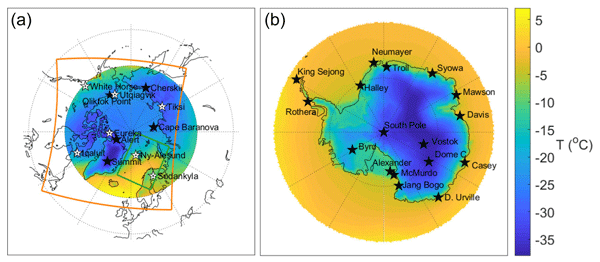
Jonathan J. Day, Gunilla Svensson, Barbara Casati, Taneil Uttal, Siri-Jodha Khalsa, Eric Bazile, Elena Akish, Niramson Azouz, Lara Ferrighi, Helmut Frank, Michael Gallagher, Øystein Godøy, Leslie M. Hartten, Laura X. Huang, Jareth Holt, Massimo Di Stefano, Irene Suomi, Zen Mariani, Sara Morris, Ewan O'Connor, Roberta Pirazzini, Teresa Remes, Rostislav Fadeev, Amy Solomon, Johanna Tjernström, and Mikhail Tolstykh
Geosci. Model Dev., 17, 5511–5543, https://doi.org/10.5194/gmd-17-5511-2024, https://doi.org/10.5194/gmd-17-5511-2024, 2024
Short summary
Short summary
The YOPP site Model Intercomparison Project (YOPPsiteMIP), which was designed to facilitate enhanced weather forecast evaluation in polar regions, is discussed here, focussing on describing the archive of forecast data and presenting a multi-model evaluation at Arctic supersites during February and March 2018. The study highlights an underestimation in boundary layer temperature variance that is common across models and a related inability to forecast cold extremes at several of the sites.
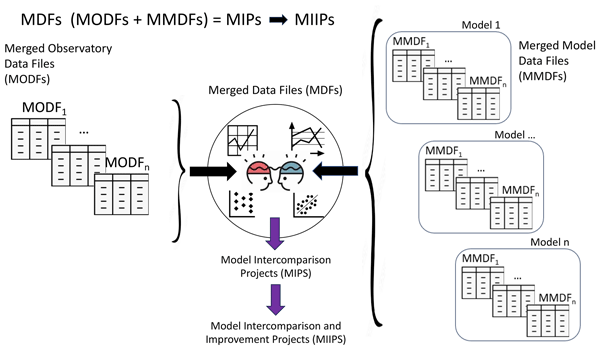
Taneil Uttal, Leslie M. Hartten, Siri Jodha Khalsa, Barbara Casati, Gunilla Svensson, Jonathan Day, Jareth Holt, Elena Akish, Sara Morris, Ewan O'Connor, Roberta Pirazzini, Laura X. Huang, Robert Crawford, Zen Mariani, Øystein Godøy, Johanna A. K. Tjernström, Giri Prakash, Nicki Hickmon, Marion Maturilli, and Christopher J. Cox
Geosci. Model Dev., 17, 5225–5247, https://doi.org/10.5194/gmd-17-5225-2024, https://doi.org/10.5194/gmd-17-5225-2024, 2024
Short summary
Short summary
A Merged Observatory Data File (MODF) format to systematically collate complex atmosphere, ocean, and terrestrial data sets collected by multiple instruments during field campaigns is presented. The MODF format is also designed to be applied to model output data, yielding format-matching Merged Model Data Files (MMDFs). MODFs plus MMDFs will augment and accelerate the synergistic use of model results with observational data to increase understanding and predictive skill.
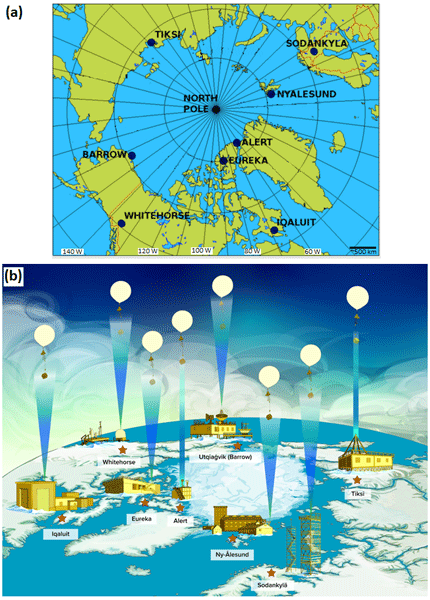
Zen Mariani, Sara M. Morris, Taneil Uttal, Elena Akish, Robert Crawford, Laura Huang, Jonathan Day, Johanna Tjernström, Øystein Godøy, Lara Ferrighi, Leslie M. Hartten, Jareth Holt, Christopher J. Cox, Ewan O'Connor, Roberta Pirazzini, Marion Maturilli, Giri Prakash, James Mather, Kimberly Strong, Pierre Fogal, Vasily Kustov, Gunilla Svensson, Michael Gallagher, and Brian Vasel
Earth Syst. Sci. Data, 16, 3083–3124, https://doi.org/10.5194/essd-16-3083-2024, https://doi.org/10.5194/essd-16-3083-2024, 2024
Short summary
Short summary
During the Year of Polar Prediction (YOPP), we increased measurements in the polar regions and have made dedicated efforts to centralize and standardize all of the different types of datasets that have been collected to facilitate user uptake and model–observation comparisons. This paper is an overview of those efforts and a description of the novel standardized Merged Observation Data Files (MODFs), including a description of the sites, data format, and instruments.
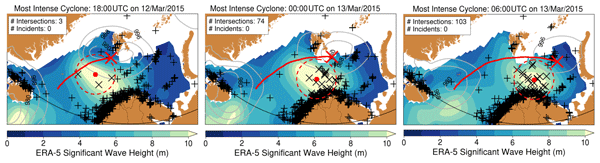
Alexander Frank Vessey, Kevin I. Hodges, Len C. Shaffrey, and Jonathan J. Day
Nat. Hazards Earth Syst. Sci., 24, 2115–2132, https://doi.org/10.5194/nhess-24-2115-2024, https://doi.org/10.5194/nhess-24-2115-2024, 2024
Short summary
Short summary
The risk posed to ships by Arctic cyclones has seldom been quantified due to the lack of publicly available historical Arctic ship track data. This study investigates historical Arctic ship tracks, cyclone tracks, and shipping incident reports to determine the number of shipping incidents caused by the passage of Arctic cyclones. Results suggest that Arctic cyclones have not been hazardous to ships and that ships are resilient to the rough sea conditions caused by Arctic cyclones.
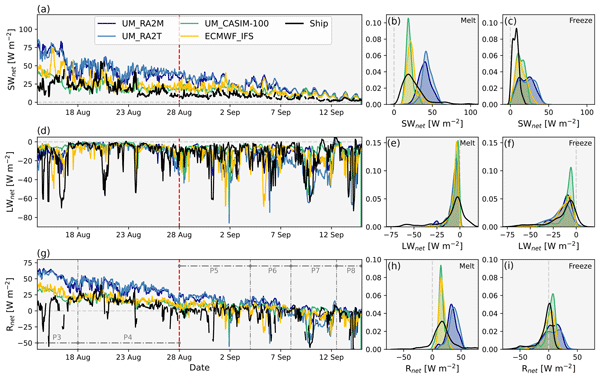
Gillian Young McCusker, Jutta Vüllers, Peggy Achtert, Paul Field, Jonathan J. Day, Richard Forbes, Ruth Price, Ewan O'Connor, Michael Tjernström, John Prytherch, Ryan Neely III, and Ian M. Brooks
Atmos. Chem. Phys., 23, 4819–4847, https://doi.org/10.5194/acp-23-4819-2023, https://doi.org/10.5194/acp-23-4819-2023, 2023
Short summary
Short summary
In this study, we show that recent versions of two atmospheric models – the Unified Model and Integrated Forecasting System – overestimate Arctic cloud fraction within the lower troposphere by comparison with recent remote-sensing measurements made during the Arctic Ocean 2018 expedition. The overabundance of cloud is interlinked with the modelled thermodynamic structure, with strong negative temperature biases coincident with these overestimated cloud layers.
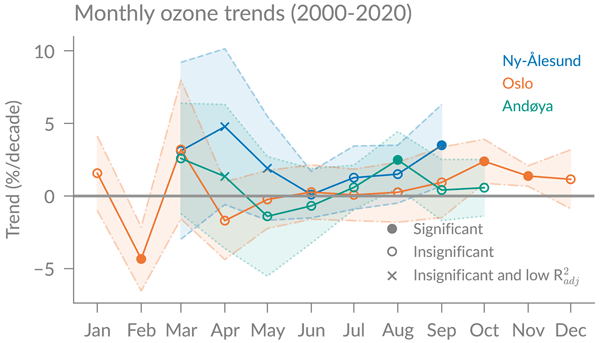
Leonie Bernet, Tove Svendby, Georg Hansen, Yvan Orsolini, Arne Dahlback, Florence Goutail, Andrea Pazmiño, Boyan Petkov, and Arve Kylling
Atmos. Chem. Phys., 23, 4165–4184, https://doi.org/10.5194/acp-23-4165-2023, https://doi.org/10.5194/acp-23-4165-2023, 2023
Short summary
Short summary
After the severe destruction of the ozone layer, the amount of ozone in the stratosphere is expected to increase again. At northern high latitudes, however, such a recovery has not been detected yet. To assess ozone changes in that region, we analyse the amount of ozone above specific locations (total ozone) measured at three stations in Norway. We found that total ozone increases significantly at two Arctic stations, which may be an indication of ozone recovery at northern high latitudes.
Wei Li, Jie Chen, Lu Li, Yvan J. Orsolini, Yiheng Xiang, Retish Senan, and Patricia de Rosnay
The Cryosphere, 16, 4985–5000, https://doi.org/10.5194/tc-16-4985-2022, https://doi.org/10.5194/tc-16-4985-2022, 2022
Short summary
Short summary
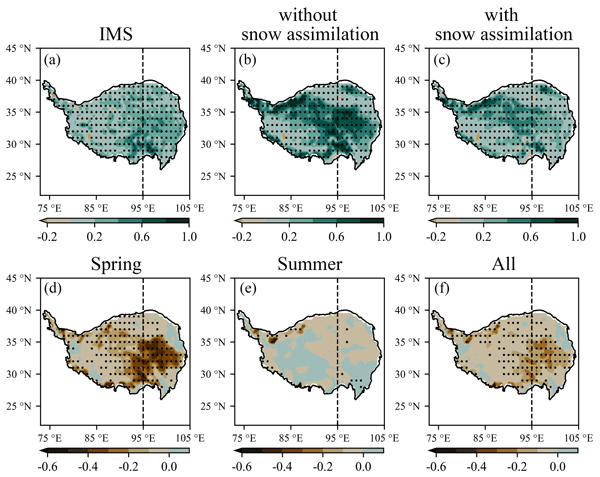
Snow assimilation over the Tibetan Plateau (TP) may influence seasonal forecasts over this region. To investigate the impacts of snow assimilation on the seasonal forecasts of snow, temperature and precipitation, twin ensemble reforecasts are initialized with and without snow assimilation above 1500 m altitude over the TP for spring and summer in 2018. The results show that snow assimilation can improve seasonal forecasts over the TP through the interaction between land and atmosphere.
Alexander F. Vessey, Kevin I. Hodges, Len C. Shaffrey, and Jonathan J. Day
Weather Clim. Dynam., 3, 1097–1112, https://doi.org/10.5194/wcd-3-1097-2022, https://doi.org/10.5194/wcd-3-1097-2022, 2022
Short summary
Short summary
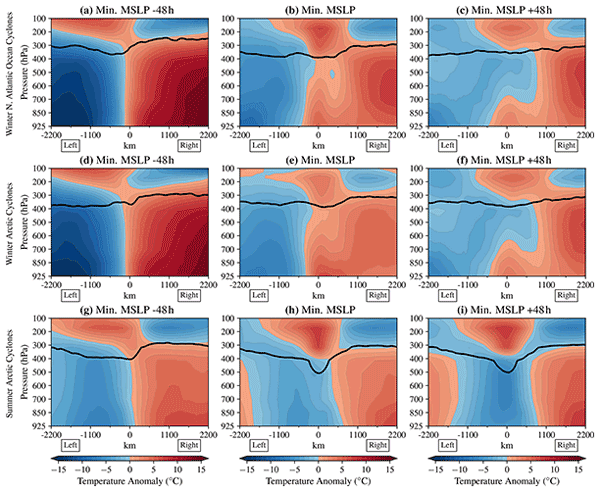
Understanding the location and intensity of hazardous weather across the Arctic is important for assessing risks to infrastructure, shipping, and coastal communities. This study describes the typical lifetime and structure of intense winter and summer Arctic cyclones. Results show the composite development and structure of intense summer Arctic cyclones are different from intense winter Arctic and North Atlantic Ocean extra-tropical cyclones and from conceptual models.
Jonathan J. Day, Sarah Keeley, Gabriele Arduini, Linus Magnusson, Kristian Mogensen, Mark Rodwell, Irina Sandu, and Steffen Tietsche
Weather Clim. Dynam., 3, 713–731, https://doi.org/10.5194/wcd-3-713-2022, https://doi.org/10.5194/wcd-3-713-2022, 2022
Short summary
Short summary
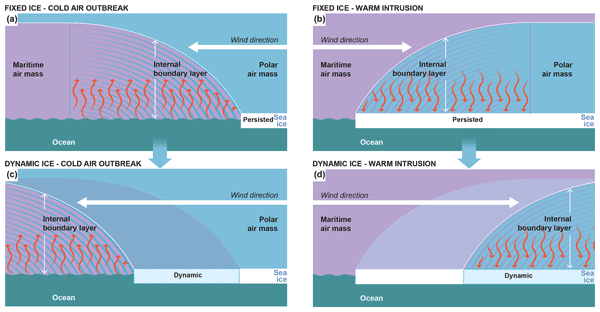
A recent drive to develop seamless forecasting systems has culminated in the development of weather forecasting systems that include a coupled representation of the atmosphere, ocean and sea ice. Before this, sea ice and sea surface temperature anomalies were typically fixed throughout a given forecast. We show that the dynamic coupling is most beneficial during periods of rapid ice advance, where persistence is a poor forecast of the sea ice and leads to large errors in the uncoupled system.
Steve Delhaye, Thierry Fichefet, François Massonnet, David Docquier, Rym Msadek, Svenya Chripko, Christopher Roberts, Sarah Keeley, and Retish Senan
Weather Clim. Dynam., 3, 555–573, https://doi.org/10.5194/wcd-3-555-2022, https://doi.org/10.5194/wcd-3-555-2022, 2022
Short summary
Short summary
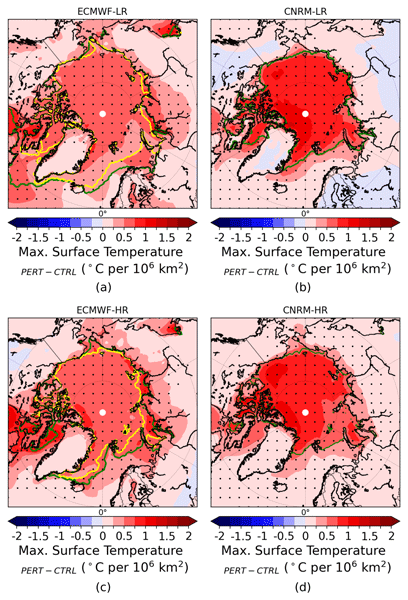
It is unclear how the atmosphere will respond to a retreat of summer Arctic sea ice. Much attention has been paid so far to weather extremes at mid-latitude and in winter. Here we focus on the changes in extremes in surface air temperature and precipitation over the Arctic regions in summer during and following abrupt sea ice retreats. We find that Arctic sea ice loss clearly shifts the extremes in surface air temperature and precipitation over terrestrial regions surrounding the Arctic Ocean.
Eduardo Moreno-Chamarro, Louis-Philippe Caron, Saskia Loosveldt Tomas, Javier Vegas-Regidor, Oliver Gutjahr, Marie-Pierre Moine, Dian Putrasahan, Christopher D. Roberts, Malcolm J. Roberts, Retish Senan, Laurent Terray, Etienne Tourigny, and Pier Luigi Vidale
Geosci. Model Dev., 15, 269–289, https://doi.org/10.5194/gmd-15-269-2022, https://doi.org/10.5194/gmd-15-269-2022, 2022
Short summary
Short summary
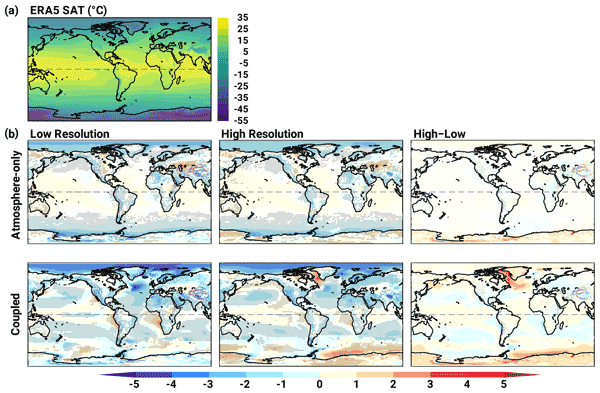
Climate models do not fully reproduce observations: they show differences (biases) in regional temperature, precipitation, or cloud cover. Reducing model biases is important to increase our confidence in their ability to reproduce present and future climate changes. Model realism is set by its resolution: the finer it is, the more physical processes and interactions it can resolve. We here show that increasing resolution of up to ~ 25 km can help reduce model biases but not remove them entirely.
Martin Wegmann, Yvan Orsolini, Antje Weisheimer, Bart van den Hurk, and Gerrit Lohmann
Weather Clim. Dynam., 2, 1245–1261, https://doi.org/10.5194/wcd-2-1245-2021, https://doi.org/10.5194/wcd-2-1245-2021, 2021
Short summary
Short summary
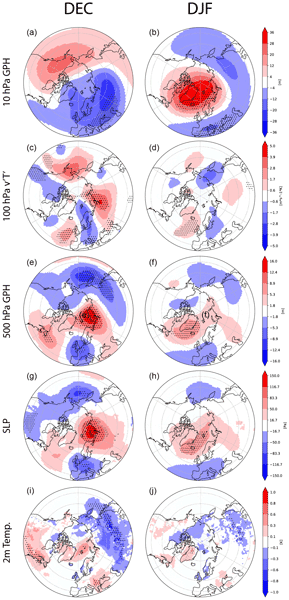
Northern Hemisphere winter weather is influenced by the strength of westerly winds 30 km above the surface, the so-called polar vortex. Eurasian autumn snow cover is thought to modulate the polar vortex. So far, however, the modeled influence of snow on the polar vortex did not fit the observed influence. By analyzing a model experiment for the time span of 110 years, we could show that the causality of this impact is indeed sound and snow cover can weaken the polar vortex.
Cited articles
Adler, R. F., Huffman, G. J., Chang, A., Ferraro, R., Xie, P.-P., Janowiak, J., Rudolf, B., Schneider, U., Curtis, S., Bolvin, D., Gruber, A., Susskind, J., Arkin, P., and Nelkin, E.: The version-2 global precipitation climatology project (GPCP) monthly precipitation analysis (1979–present), J. Hydrometeorol., 4, 1147–1167, 2003. a
Arduini, G., Balsamo, G., Dutra, E., Day, J. J., Sandu, I., Boussetta, S., and Haiden, T.: Impact of a Multi-Layer Snow Scheme on Near-Surface Weather Forecasts, J. Adv. Model. Earth Sy., 11, 4687–4710, https://doi.org/10.1029/2019MS001725, 2019. a, b
Barella, R., Mortimer, C., Marin, C., Schwaizer, G., Mölg, N., Nagler, T., Wunderle, S., Xiao, X., Luojus, K., Venäläinen, P., Takala, M., Pulliainen, J., Lemmetyinen, J., Moisander, M., and Solberg, R.: ESA CCI+ Snow ECV: Product User Guide, version 4.0, European Space Agency, https://climate.esa.int/media/documents/Snow_cci_D4.3_PUG_v4.0.pdf (last access: 19 August 2026), 2024. a
Bormann, K. J., Brown, R. D., Derksen, C., and Painter, T. H.: Estimating snow-cover trends from space, Nat. Clim. Change, 8, 924–928, https://doi.org/10.1038/s41558-018-0318-3, 2018. a
Brier, G. W.: Verification of forecasts expressed in terms of probability, Mon. Weather Rev., 78, 1–3, 1950. a
Dee, D. P., Uppala, S. M., Simmons, A. J., Berrisford, P., Poli, P., Kobayashi, S., Andrae, U., Balmaseda, M. A., Balsamo, G., Bauer, P., Bechtold, P., Beljaars, A. C. M., van de Berg, L., Bidlot, J., Bormann, N., Delsol, C., Dragani, R., Fuentes, M., Geer, A. J., Haimberger, L., Healy, S. B., Hersbach, H., Hólm, E. V., Isaksen, L., Kållberg, P., Köhler, M., Matricardi, M., McNally, A. P., Monge-Sanz, B. M., Morcrette, J.-J., Park, B.-K., Peubey, C., de Rosnay, P., Tavolato, C., Thépaut, J.-N., and Vitart, F.: The ERA-Interim reanalysis: Configuration and performance of the data assimilation system, Q. J. Roy. Meteor. Soc., 137, 553–597, https://doi.org/10.1002/qj.828, 2011. a
de Rosnay, P., Isaksen, L., and Dahoui, M.: Snow data assimilation at ECMWF, ECMWF, https://doi.org/10.21957/lkpxq6x5, 2015. a
de Rosnay, P., Browne, P., de Boisséson, E., Fairbairn, D., Hirahara, Y., Ochi, K., Schepers, D., Weston, P., Zuo, H., Alonso-Balmaseda, M., Balsamo, G., Bonavita, M., Borman, N., Brown, A., Chrust, M., Dahoui, M., Chiara, G., English, S., Geer, A., Healy, S., Hersbach, H., Laloyaux, P., Magnusson, L., Massart, S., McNally, A., Pappenberger, F., and Rabier, F.: Coupled data assimilation at ECMWF: current status, challenges and future developments, Q. J. Roy. Meteor. Soc., 148, 2672–2702, https://doi.org/10.1002/qj.4330, 2022. a
Fox-Kemper, B., Hewitt, H. T., Xiao, C., Aðalgeirsdóttir, G., Drijfhout, S. S., Edwards, T. L., Golledge, N. R., Hemer, M., Kopp, R. E., Krinner, G., Mix, A., Notz, D., Nowicki, S., Nurhati, I. S., Ruiz, L., Sallée, J.-B., Slangen, A. B. A., and Yu, Y.: Ocean, cryosphere and sea level change. Climate change 2021: the physical science basis. Contribution of Working Group I to the Sixth Assessment Report of the Intergovernmental Panel on Climate Change, Climate Change, 1211–1362, https://doi.org/10.1017/9781009157896.011, 2021. a
Giorgi, F. and Francisco, R.: Uncertainties in regional climate change prediction: a regional analysis of ensemble simulations with the HADCM2 coupled AOGCM, Clim. Dynam., 16, 169–182, https://doi.org/10.1007/PL00013733, 2000. a
Hersbach, H.: Decomposition of the continuous ranked probability score for ensemble prediction systems, Weather Forecast., 15, 559–570, https://doi.org/10.1175/1520-0434(2000)015<0559:DOTCRP>2.0.CO;2, 2000. a
Hersbach, H., Bell, B., Berrisford, P., Biavati, G., Horányi, A., Muñoz Sabater, J., Nicolas, J., Peubey, C., Radu, R., Rozum, I., Schepers, D., Simmons, A., Soci, C., Dee, D., and Thépaut, J.-N.: ERA5 hourly data on single levels from 1940 to present, Copernicus Climate Change Service (C3S) Climate Data Store (CDS) [data set], https://doi.org/10.24381/cds.adbb2d47, 2023. a
Hsu, W.-r. and Murphy, A. H.: The attributes diagram a geometrical framework for assessing the quality of probability forecasts, Int. J. Forecasting, 2, 285–293, https://doi.org/10.1016/0169-2070(86)90048-8, 1986. a, b, c
Jeong, J.-H., Linderholm, H. W., Woo, S.-H., Folland, C., Kim, B.-M., Kim, S.-J., and Chen, D.: Impacts of snow initialization on subseasonal forecasts of surface air temperature for the cold season, J. Climate, 26, 1956–1972, https://doi.org/10.1175/JCLI-D-12-00159.1, 2013. a
Johnson, S. J., Stockdale, T. N., Ferranti, L., Balmaseda, M. A., Molteni, F., Magnusson, L., Tietsche, S., Decremer, D., Weisheimer, A., Balsamo, G., Keeley, S. P. E., Mogensen, K., Zuo, H., and Monge-Sanz, B. M.: SEAS5: the new ECMWF seasonal forecast system, Geosci. Model Dev., 12, 1087–1117, https://doi.org/10.5194/gmd-12-1087-2019, 2019. a
Komatsu, K. K., Takaya, Y., Toyoda, T., and Hasumi, H.: A submonthly scale causal relation between snow cover and surface air temperature over the autumnal Eurasian continent, J. Climate, 36, 4863–4877, https://doi.org/10.1175/JCLI-D-22-0827.1, 2023. a
Kouki, K., Luojus, K., and Riihelä, A.: Evaluation of snow cover properties in ERA5 and ERA5-Land with several satellite-based datasets in the Northern Hemisphere in spring 1982–2018, The Cryosphere, 17, 5007–5026, https://doi.org/10.5194/tc-17-5007-2023, 2023. a
Lange, S.: EartH2Observe, WFDEI and ERA-Interim data Merged and Bias-corrected for ISIMIP (EWEMBI), V.1.1., GFZ Data Services [data set], https://doi.org/10.5880/pik.2019.004, 2019. a
Li, F., Orsolini, Y., Keenlyside, N., Shen, M.-L., Counillon, F., and Wang, Y.: Impact of snow initialization in subseasonal-to-seasonal winter forecasts with the Norwegian Climate Prediction Model, J. Geophys. Res.-Atmos., 124, 10033–10048, https://doi.org/10.1029/2019JD030903, 2019. a, b
Li, W. and Song, J.: Evaluation of subseasonal forecast skill for Northern Hemisphere winter snow cover, J. Hydrometeorol., 25, 1371–1388, https://doi.org/10.1175/JHM-D-23-0190.1, 2024. a
Liu, Y., Fang, Y., and Margulis, S. A.: Spatiotemporal distribution of seasonal snow water equivalent in High Mountain Asia from an 18-year Landsat–MODIS era snow reanalysis dataset, The Cryosphere, 15, 5261–5280, https://doi.org/10.5194/tc-15-5261-2021, 2021. a
Luojus, K., Pulliainen, J., Takala, M., Lemmetyinen, J., Mortimer, C., Derksen, C., Mudryk, L., Moisander, M., Hiltunen, M., Smolander, T., Ikonen, J., Cohen, J., Salminen, M., Norberg, J., Veijola, K., and Venäläinen, P.: GlobSnow v3. 0 Northern Hemisphere snow water equivalent dataset, Scientific Data, 8, 163, https://doi.org/10.1038/s41597-021-00939-2, 2021. a, b, c, d
Luojus, K., Venäläinen, P., Moisander, M., Pulliainen, J., Takala, M., Lemmetyinen, J., Mortimer, C., Mudryk, L., Schwaizer, G., and Nagler, T.: ESA Snow Climate Change Initiative (Snow_cci): Snow Water Equivalent (SWE) level 3C daily global climate research data package (CRDP) (1979–2023), version 4.0, CEDA archive [data set], https://doi.org/10.5285/edf8abd23f4a40aabd4d52e48dec06ea, 2025. a, b, c
Manzanas, R., Lucero, A., Weisheimer, A., and Gutiérrez, J. M.: Can bias correction and statistical downscaling methods improve the skill of seasonal precipitation forecasts?, Clim. Dynam., 50, 1161–1176, https://doi.org/10.1007/s00382-017-3668-z, 2018. a, b, c
Manzanas, R., Torralba, V., Lledó, L., and Bretonnière, P. A.: On the Reliability of Global Seasonal Forecasts: Sensitivity to Ensemble Size, Hindcast Length and Region Definition, Geophys. Res. Lett., 49, e2021GL094662, https://doi.org/10.1029/2021GL094662, 2022. a, b, c, d
Mason, S. J.: On using “climatology” as a reference strategy in the Brier and ranked probability skill scores, Mon. Weather Rev., 132, 1891–1895, https://doi.org/10.1175/1520-0493(2004)132<1891:OUCAAR>2.0.CO;2, 2004. a, b
Monteiro, D. and Morin, S.: Multi-decadal analysis of past winter temperature, precipitation and snow cover data in the European Alps from reanalyses, climate models and observational datasets, The Cryosphere, 17, 3617–3660, https://doi.org/10.5194/tc-17-3617-2023, 2023. a
Mortimer, C., Mudryk, L., Derksen, C., Brady, M., Luojus, K., Venäläinen, P., Moisander, M., Lemmetyinen, J., Takala, M., Tanis, C., and Pulliainen, J.: Benchmarking algorithm changes to the Snow CCI+ snow water equivalent product, Remote Sens. Environ., 274, 112988, https://doi.org/10.1016/j.rse.2022.112988, 2022. a
Muñoz-Sabater, J., Dutra, E., Agustí-Panareda, A., Albergel, C., Arduini, G., Balsamo, G., Boussetta, S., Choulga, M., Harrigan, S., Hersbach, H., Martens, B., Miralles, D. G., Piles, M., Rodríguez-Fernández, N. J., Zsoter, E., Buontempo, C., and Thépaut, J.-N.: ERA5-Land: a state-of-the-art global reanalysis dataset for land applications, Earth Syst. Sci. Data, 13, 4349–4383, https://doi.org/10.5194/essd-13-4349-2021, 2021. a, b, c, d
Mudryk, L., Santolaria-Otín, M., Krinner, G., Ménégoz, M., Derksen, C., Brutel-Vuilmet, C., Brady, M., and Essery, R.: Historical Northern Hemisphere snow cover trends and projected changes in the CMIP6 multi-model ensemble, The Cryosphere, 14, 2495–2514, https://doi.org/10.5194/tc-14-2495-2020, 2020. a
Muñoz Sabater, J.: ERA5-Land hourly data from 1950 to present, Copernicus Climate Change Service (C3S) Climate Data Store (CDS) [data set], https://doi.org/10.24381/cds.e2161bac, 2019. a
Notarnicola, C.: Hotspots of snow cover changes in global mountain regions over 2000–2018, Remote Sens. Environ., 243, 111781, https://doi.org/10.1016/j.rse.2020.111781, 2020. a
Ombadi, M., Risser, M. D., Rhoades, A. M., and Varadharajan, C.: A warming-induced reduction in snow fraction amplifies rainfall extremes, Nature, 619, 305–310, https://doi.org/10.1038/s41586-023-06092-7, 2023. a
Orsolini, Y., Senan, R., Balsamo, G., Doblas-Reyes, F., Vitart, F., Weisheimer, A., Carrasco, A., and Benestad, R.: Impact of snow initialization on sub-seasonal forecasts, Clim. Dynam., 41, 1969–1982, https://doi.org/10.1007/s00382-013-1782-0, 2013. a, b
Orsolini, Y., Wegmann, M., Dutra, E., Liu, B., Balsamo, G., Yang, K., de Rosnay, P., Zhu, C., Wang, W., Senan, R., and Arduini, G.: Evaluation of snow depth and snow cover over the Tibetan Plateau in global reanalyses using in situ and satellite remote sensing observations, The Cryosphere, 13, 2221–2239, https://doi.org/10.5194/tc-13-2221-2019, 2019. a, b
Pulliainen, J.: Mapping of snow water equivalent and snow depth in boreal and sub-arctic zones by assimilating space-borne microwave radiometer data and ground-based observations, Remote Sens. Environ., 101, 257–269, https://doi.org/10.1016/j.rse.2006.01.002, 2006. a
Takala, M., Luojus, K., Pulliainen, J., Derksen, C., Lemmetyinen, J., Kärnä, J.-P., Koskinen, J., and Bojkov, B.: Estimating northern hemisphere snow water equivalent for climate research through assimilation of space-borne radiometer data and ground-based measurements, Remote Sens. Environ., 115, 3517–3529, https://doi.org/10.1016/j.rse.2011.08.014, 2011. a
Venäläinen, P., Luojus, K., Lemmetyinen, J., Pulliainen, J., Moisander, M., and Takala, M.: Impact of dynamic snow density on GlobSnow snow water equivalent retrieval accuracy, The Cryosphere, 15, 2969–2981, https://doi.org/10.5194/tc-15-2969-2021, 2021. a
Venäläinen, P., Luojus, K., Mortimer, C., Lemmetyinen, J., Pulliainen, J., Takala, M., Moisander, M., and Zschenderlein, L.: Implementing spatially and temporally varying snow densities into the GlobSnow snow water equivalent retrieval, The Cryosphere, 17, 719–736, https://doi.org/10.5194/tc-17-719-2023, 2023. a
Venäläinen, P., Mortimer, C., Luojus, K., Mudryk, L., Takala, M., and Pulliainen, J.: Updated monthly and new daily bias correction for assimilation-based passive microwave SWE retrieval, The Cryosphere, 19, 6301–6318, https://doi.org/10.5194/tc-19-6301-2025, 2025. a, b
Wegmann, M., Orsolini, Y., Weisheimer, A., van den Hurk, B., and Lohmann, G.: Impact of Eurasian autumn snow on the winter North Atlantic Oscillation in seasonal forecasts of the 20th century, Weather Clim. Dynam., 2, 1245–1261, https://doi.org/10.5194/wcd-2-1245-2021, 2021. a
World Meteorological Organization: Standardized Verification System (SVS) for Long-Range Forecasts (LRF), Tech. rep., World Meteorological Organization, Geneva, Switzerland, in: Manual on the Global Data-Processing and Forecasting Systems, https://www.metoffice.gov.uk/binaries/content/assets/metofficegovuk/pdf/research/climate-science/climate-observations-projections-and-impacts/svslrf.pdf (last access: 19 August 2026), 1992. a
Zhang, W., Liu, L., Wu, H., Zhang, T., Chen, Y., and Wang, L.: Snow droughts amplify compound climate extremes over the Tibetan Plateau, Communications Earth & Environment, 6, 571, https://doi.org/10.1038/s43247-025-02551-3, 2025. a
Zuo, H., Balmaseda, M. A., Tietsche, S., Mogensen, K., and Mayer, M.: The ECMWF operational ensemble reanalysis–analysis system for ocean and sea ice: a description of the system and assessment, Ocean Sci., 15, 779–808, https://doi.org/10.5194/os-15-779-2019, 2019. a
Short summary
How reliable are probabilistic seasonal snow forecasts in winter? Although they are routinely issued by operational prediction centres, their reliability has never been evaluated. We close this gap by analyzing 30 years of seasonal snow re-forecasts and evaluating them against two snow datasets. Our results provide comprehensive assessment of seasonal snow forecast reliability and offer new insights into their performance in different parts of the Northern Hemisphere.
How reliable are probabilistic seasonal snow forecasts in winter? Although they are routinely...


