
Articles | Volume 20, issue 7
https://doi.org/10.5194/tc-20-4209-2026
© Author(s) 2026. This work is distributed under
the Creative Commons Attribution 4.0 License.
the Creative Commons Attribution 4.0 License.
https://doi.org/10.5194/tc-20-4209-2026
© Author(s) 2026. This work is distributed under
the Creative Commons Attribution 4.0 License.
the Creative Commons Attribution 4.0 License.
Research article
| 
30 Jul 2026
Research article |
| 30 Jul 2026
| 30 Jul 2026
Sensitivity of Andean Glaciers to ice-flow parameters in the Parallel Ice Sheet Model

School of Geography and Planning, University of Sheffield, Sheffield, S3 7ND, UK
Jeremy C. Ely
School of Geography and Planning, University of Sheffield, Sheffield, S3 7ND, UK
Sarah L. Bradley
School of Geography and Planning, University of Sheffield, Sheffield, S3 7ND, UK
Tamsin L. Edwards
Department of Geography, King's College London, London, WC2B 4BG, UK
Bethan J. Davies
School of Geography, Politics and Sociology, Newcastle University, Newcastle upon Tyne, NE1 7RU, UK
Related authors
No articles found.
Benjamin Graves, Tom Matthews, Tamsin Edwards, Richard Taylor, Megan James, Baker Perry, and Magali Ponds
EGUsphere, https://doi.org/10.5194/egusphere-2026-5187, https://doi.org/10.5194/egusphere-2026-5187, 2026
This preprint is open for discussion and under review for The Cryosphere (TC).
Short summary
Short summary
The future of the world’s glaciers under climate change is simulated using models. However, the modelled response of glaciers to rising temperatures is stronger in some models than in others. This study compares the simulated behaviour of a glacier at high elevation using four models to compare how each one reacts to rising temperatures. Simple models respond more strongly than is realistic, because they do not account for the full range of environmental factors which affect the glacier.
Benjamin J. Davison, Andrew J. Sole, Gregoire Guillet, Douglas I. Benn, Jonathan Kingslake, Jeremy C. Ely, Stephen J. Livingstone, Christopher D. Stringer, Jonathan L. Carrivick, and Anna E. Hogg
The Cryosphere, 20, 4293–4311, https://doi.org/10.5194/tc-20-4293-2026, https://doi.org/10.5194/tc-20-4293-2026, 2026
Short summary
Short summary
Some glaciers flow slowly for many years before dramatically accelerating. This is usually a sign of a surge. Theory and observations suggest that surges occur in certain climates. The Antarctic Peninsula has such a climate yet only one surge has been observed there. We present detailed observations of three glaciers that surged recently. We explore how climate change over the past hundred years, and projected climate change up to 2150, has and will affect surging behaviour on the Peninsula.
Alexander T. Bradley, David T. Bett, C. Rosie Williams, Robert J. Arthern, Paul R. Holland, James Byrne, Tamsin L. Edwards, and Mira Adhikari
The Cryosphere, 20, 3443–3465, https://doi.org/10.5194/tc-20-3443-2026, https://doi.org/10.5194/tc-20-3443-2026, 2026
Short summary
Short summary
At least since we began measuring in detail, the West Antarctic Ice Sheet has lost a lot of ice, but we don't know precisely how important climate change is in this. Here, we put a number on the role of climate change in retreat of a glacier in this ice sheet, for the first time. We show that climate change made the shrinking of this glacier much worse. Our work also suggests that what happened on very long timescales (the last 10,000 years) might also matter for retreat of the ice sheets today.
Megan C. James, Tamsin L. Edwards, Tom Matthews, Alexander T. Bradley, James F. O'Neill, and Harry Zekollari
EGUsphere, https://doi.org/10.5194/egusphere-2026-2069, https://doi.org/10.5194/egusphere-2026-2069, 2026
Short summary
Short summary
As the climate warms, glaciers are shrinking, contributing to sea-level rise, natural hazards and water insecurity. We show for one case study – the very long-term response of Iceland’s glaciers to global warming – that large uncertainties arise from the poorly known parameters within models. This is usually overlooked, but we show neglecting it underestimates uncertainty in our glacier model by as much as 90 %, highlighting the importance of accounting for it in future glacier projections.

Heiko Goelzer, Constantijn J. Berends, Fredrik Boberg, Gael Durand, Tamsin L. Edwards, Xavier Fettweis, Fabien Gillet-Chaulet, Quentin Glaude, Philippe Huybrechts, Sébastien Le clec'h, Ruth Mottram, Brice Noël, Martin Olesen, Charlotte Rahlves, Jeremy Rohmer, Michiel van den Broeke, and Roderik S. W. van de Wal
The Cryosphere, 19, 6887–6906, https://doi.org/10.5194/tc-19-6887-2025, https://doi.org/10.5194/tc-19-6887-2025, 2025
Short summary
Short summary
We present an ensemble of ice sheet model projections for the Greenland ice sheet. The focus is on providing projections that improve our understanding of the range future sea-level rise and the inherent uncertainties over the next 100 to 300 years. Compared to earlier work we more fully account for some of the uncertainties in sea-level projections. We include a wider range of climate model output, more climate change scenarios and we extend projections schematically up to year 2300.
Jeremy Rohmer, Heiko Goelzer, Tamsin L. Edwards, Goneri Le Cozannet, and Gael Durand
The Cryosphere, 19, 6421–6444, https://doi.org/10.5194/tc-19-6421-2025, https://doi.org/10.5194/tc-19-6421-2025, 2025
Short summary
Short summary
Developing robust protocols to design multi-model ensembles is of primary importance for the uncertainty quantification of sea level projections. Here, we set up a series of computer experiments to reflect design decisions for the prediction of future sea level contribution of the Greenland ice sheet in 2100. We show the importance of including the most extreme climate scenario and the implications of using a single type of numerical model for ice sheets or regional climate.
Tancrède P. M. Leger, Jeremy C. Ely, Christopher D. Clark, Sarah L. Bradley, Rosie E. Archer, and Jiang Zhu
The Cryosphere, 19, 5719–5761, https://doi.org/10.5194/tc-19-5719-2025, https://doi.org/10.5194/tc-19-5719-2025, 2025
Short summary
Short summary
This study uses state-of-the-art computer simulations to better constrain the Greenland-Ice-Sheet's evolution over the past 24,000 years. By comparing model results with geological data, it reveals when and why the ice sheet grew and shrank, helping to improve future predictions of sea level rise and climate change.
James F. O'Neill, Tamsin L. Edwards, Daniel F. Martin, Courtney Shafer, Stephen L. Cornford, Hélène L. Seroussi, Sophie Nowicki, Mira Adhikari, and Lauren J. Gregoire
The Cryosphere, 19, 541–563, https://doi.org/10.5194/tc-19-541-2025, https://doi.org/10.5194/tc-19-541-2025, 2025
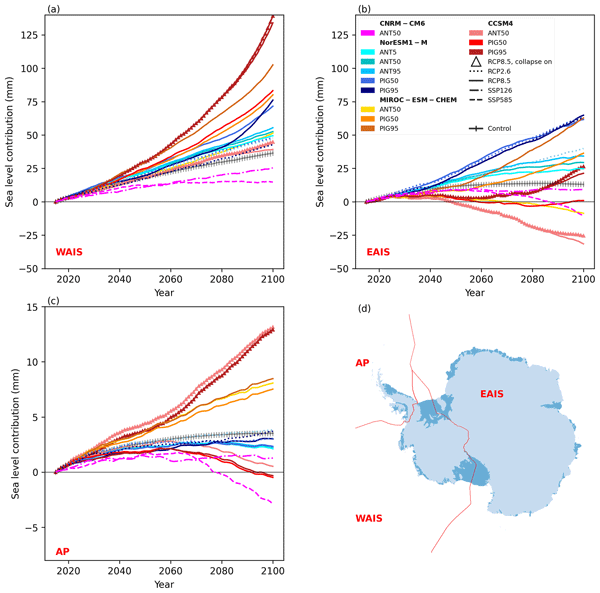
Short summary
Short summary
We use an ice sheet model to simulate the Antarctic contribution to sea level over the 21st century under a range of future climates and varying how sensitive the ice sheet is to different processes. We find that ocean temperatures increase and more snow falls on the ice sheet under stronger warming scenarios. When the ice sheet is sensitive to ocean warming, ocean melt-driven loss exceeds snowfall-driven gains, meaning that the sea level contribution is greater with more climate warming.
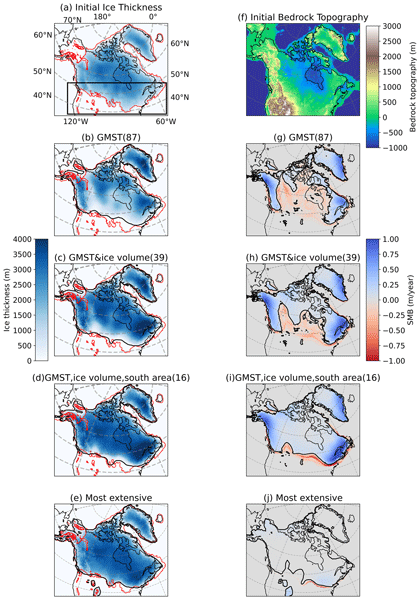
Sam Sherriff-Tadano, Ruza Ivanovic, Lauren Gregoire, Charlotte Lang, Niall Gandy, Jonathan Gregory, Tamsin L. Edwards, Oliver Pollard, and Robin S. Smith
Clim. Past, 20, 1489–1512, https://doi.org/10.5194/cp-20-1489-2024, https://doi.org/10.5194/cp-20-1489-2024, 2024
Short summary
Short summary
Ensemble simulations of the climate and ice sheets of the Last Glacial Maximum (LGM) are performed with a new coupled climate–ice sheet model. Results show a strong sensitivity of the North American ice sheet to the albedo scheme, while the Greenland ice sheet appeared more sensitive to basal sliding schemes. Our result implies a potential connection between the North American ice sheet at the LGM and the future Greenland ice sheet through the albedo scheme.
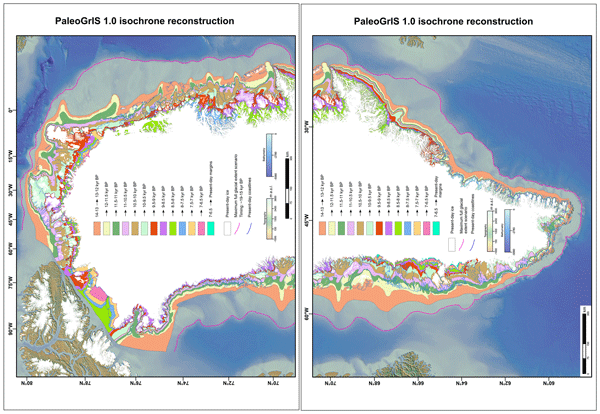
Tancrède P. M. Leger, Christopher D. Clark, Carla Huynh, Sharman Jones, Jeremy C. Ely, Sarah L. Bradley, Christiaan Diemont, and Anna L. C. Hughes
Clim. Past, 20, 701–755, https://doi.org/10.5194/cp-20-701-2024, https://doi.org/10.5194/cp-20-701-2024, 2024
Short summary
Short summary
Projecting the future evolution of the Greenland Ice Sheet is key. However, it is still under the influence of past climate changes that occurred over thousands of years. This makes calibrating projection models against current knowledge of its past evolution (not yet achieved) important. To help with this, we produced a new Greenland-wide reconstruction of ice sheet extent by gathering all published studies dating its former retreat and by mapping its past margins at the ice sheet scale.
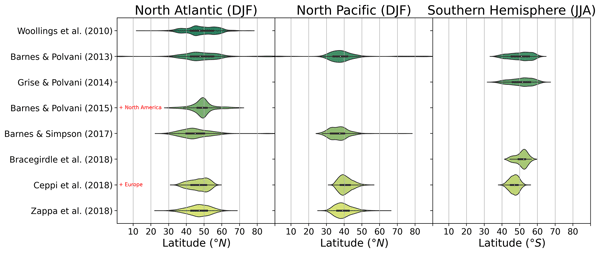
Tom Keel, Chris Brierley, and Tamsin Edwards
Geosci. Model Dev., 17, 1229–1247, https://doi.org/10.5194/gmd-17-1229-2024, https://doi.org/10.5194/gmd-17-1229-2024, 2024
Short summary
Short summary
Jet streams are an important control on surface weather as their speed and shape can modify the properties of weather systems. Establishing trends in the operation of jet streams may provide some indication of the future of weather in a warming world. Despite this, it has not been easy to establish trends, as many methods have been used to characterise them in data. We introduce a tool containing various implementations of jet stream statistics and algorithms that works in a standardised manner.
Violaine Coulon, Ann Kristin Klose, Christoph Kittel, Tamsin Edwards, Fiona Turner, Ricarda Winkelmann, and Frank Pattyn
The Cryosphere, 18, 653–681, https://doi.org/10.5194/tc-18-653-2024, https://doi.org/10.5194/tc-18-653-2024, 2024
Short summary
Short summary
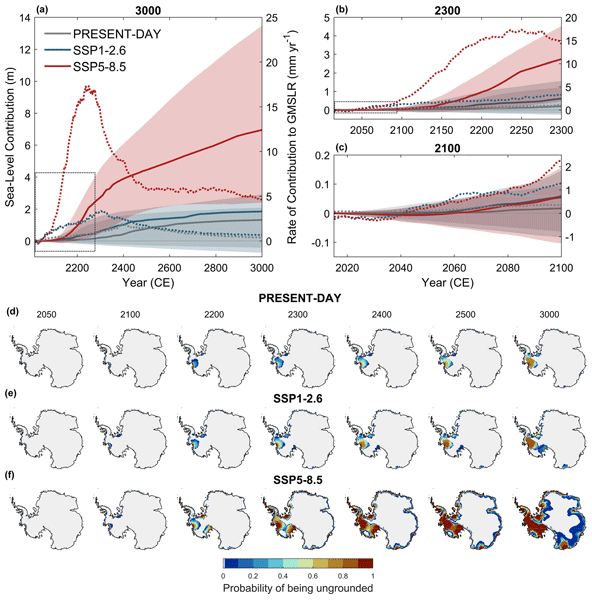
We present new projections of the evolution of the Antarctic ice sheet until the end of the millennium, calibrated with observations. We show that the ocean will be the main trigger of future ice loss. As temperatures continue to rise, the atmosphere's role may shift from mitigating to amplifying Antarctic mass loss already by the end of the century. For high-emission scenarios, this may lead to substantial sea-level rise. Adopting sustainable practices would however reduce the rate of ice loss.
Sarah L. Bradley, Raymond Sellevold, Michele Petrini, Miren Vizcaino, Sotiria Georgiou, Jiang Zhu, Bette L. Otto-Bliesner, and Marcus Lofverstrom
Clim. Past, 20, 211–235, https://doi.org/10.5194/cp-20-211-2024, https://doi.org/10.5194/cp-20-211-2024, 2024
Short summary
Short summary
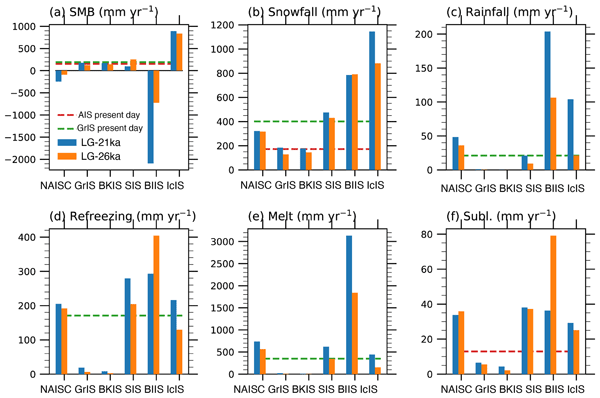
The Last Glacial Maximum (LGM) was the most recent period with large ice sheets in Europe and North America. We provide a detailed analysis of surface mass and energy components for two time periods that bracket the LGM: 26 and 21 ka BP. We use an earth system model which has been adopted for modern ice sheets. We find that all Northern Hemisphere ice sheets have a positive surface mass balance apart from the British and Irish ice sheets and the North American ice sheet complex.
Robert E. Kopp, Gregory G. Garner, Tim H. J. Hermans, Shantenu Jha, Praveen Kumar, Alexander Reedy, Aimée B. A. Slangen, Matteo Turilli, Tamsin L. Edwards, Jonathan M. Gregory, George Koubbe, Anders Levermann, Andre Merzky, Sophie Nowicki, Matthew D. Palmer, and Chris Smith
Geosci. Model Dev., 16, 7461–7489, https://doi.org/10.5194/gmd-16-7461-2023, https://doi.org/10.5194/gmd-16-7461-2023, 2023
Short summary
Short summary
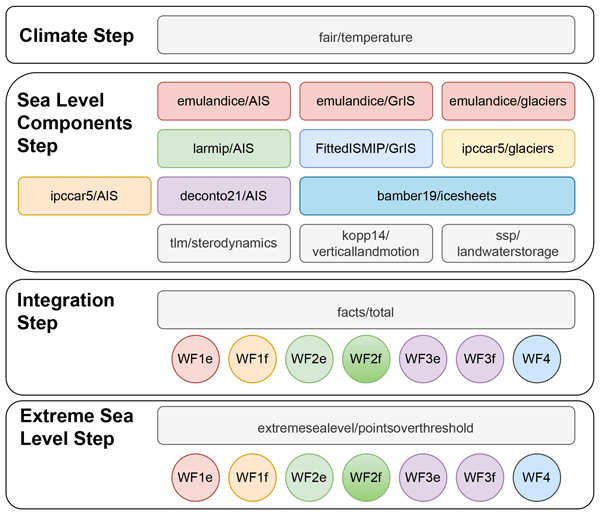
Future sea-level rise projections exhibit multiple forms of uncertainty, all of which must be considered by scientific assessments intended to inform decision-making. The Framework for Assessing Changes To Sea-level (FACTS) is a new software package intended to support assessments of global mean, regional, and extreme sea-level rise. An early version of FACTS supported the development of the IPCC Sixth Assessment Report sea-level projections.
Oliver G. Pollard, Natasha L. M. Barlow, Lauren J. Gregoire, Natalya Gomez, Víctor Cartelle, Jeremy C. Ely, and Lachlan C. Astfalck
The Cryosphere, 17, 4751–4777, https://doi.org/10.5194/tc-17-4751-2023, https://doi.org/10.5194/tc-17-4751-2023, 2023
Short summary
Short summary
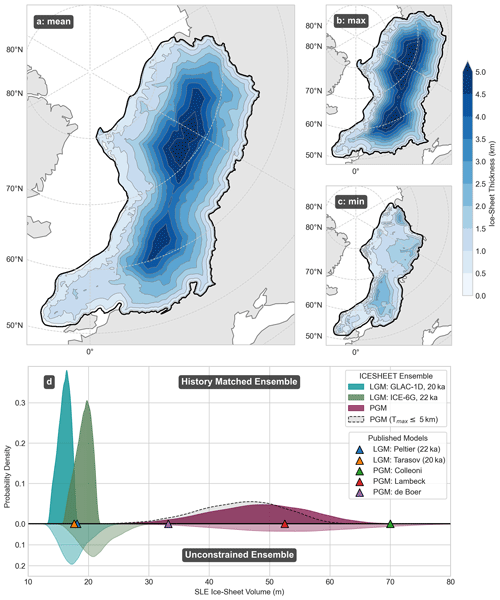
We use advanced statistical techniques and a simple ice-sheet model to produce an ensemble of plausible 3D shapes of the ice sheet that once stretched across northern Europe during the previous glacial maximum (140,000 years ago). This new reconstruction, equivalent in volume to 48 ± 8 m of global mean sea-level rise, will improve the interpretation of high sea levels recorded from the Last Interglacial period (120 000 years ago) that provide a useful perspective on the future.
Ryan N. Ing, Jeremy C. Ely, Julie M. Jones, and Bethan J. Davies
The Cryosphere Discuss., https://doi.org/10.5194/tc-2023-33, https://doi.org/10.5194/tc-2023-33, 2023
Preprint withdrawn
Short summary
Short summary
Many of the glaciers in Alaska are losing ice, contributing to sea-level rise. Here, we study the inputs and outputs for the Juneau Icefield. We first model the historical changes to snowfall and melt, constraining our model with observations. We then project future changes to the icefield, which show that icefield-wide loss of ice is likely. Losses are driven by rising temperatures, and less snowfall. The exposure of ice, and the break-up of glaciers due to thinning may accelerate ice loss.
Peter A. Tuckett, Jeremy C. Ely, Andrew J. Sole, James M. Lea, Stephen J. Livingstone, Julie M. Jones, and J. Melchior van Wessem
The Cryosphere, 15, 5785–5804, https://doi.org/10.5194/tc-15-5785-2021, https://doi.org/10.5194/tc-15-5785-2021, 2021
Short summary
Short summary
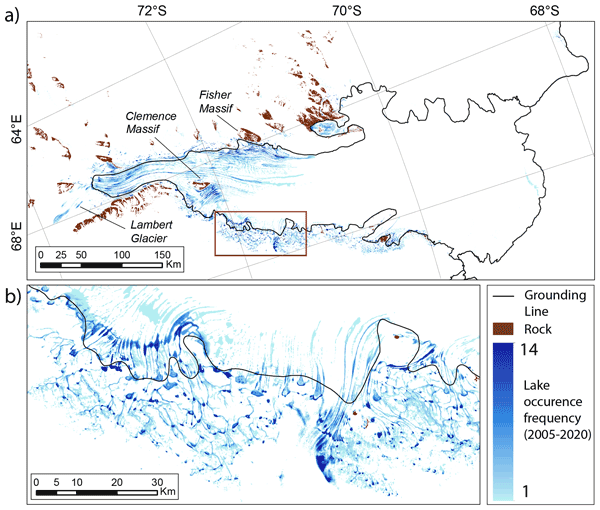
Lakes form on the surface of the Antarctic Ice Sheet during the summer. These lakes can generate further melt, break up floating ice shelves and alter ice dynamics. Here, we describe a new automated method for mapping surface lakes and apply our technique to the Amery Ice Shelf between 2005 and 2020. Lake area is highly variable between years, driven by large-scale climate patterns. This technique will help us understand the role of Antarctic surface lakes in our warming world.
Cited articles
Albrecht, T., Winkelmann, R., and Levermann, A.: Glacial-cycle simulations of the Antarctic Ice Sheet with the Parallel Ice Sheet Model (PISM) – Part 1: Boundary conditions and climatic forcing, The Cryosphere, 14, 599–632, https://doi.org/10.5194/tc-14-599-2020, 2020.
Archer, R.: Bayesian inference to calibrate flow geometry in ice sheet modelling of the last Scandinavian Ice Sheet, University of Sheffield, https://etheses.whiterose.ac.uk/id/oai_id/oai:etheses.whiterose.ac.uk:35820 (last access: 17 July 2026), 2024.
Aschwanden, A., Aðalgeirsdóttir, G., and Khroulev, C.: Hindcasting to measure ice sheet model sensitivity to initial states, The Cryosphere, 7, 1083–1093, https://doi.org/10.5194/tc-7-1083-2013, 2013.
Aschwanden, A., Fahnestock, M. A., Truffer, M., Brinkerhoff, D. J., Hock, R., Khroulev, C., Mottram, R., and Khan, S. A.: Contribution of the Greenland Ice Sheet to sea level over the next millennium, Sci. Adv., 5, https://doi.org/10.1126/sciadv.aav9396, 2019.
Bareither, C., Edil, T., Benson, C., and Mickelson, D.: Geological and Physical Factors Affecting the Friction Angle of Compacted Sands, J. Geotech. Geoenviron., 134, 1476–1489, https://doi.org/10.1061/(ASCE)1090-0241(2008)134:10(1476), 2008.
Berdahl, M., Leguy, G., Lipscomb, W. H., and Urban, N. M.: Statistical emulation of a perturbed basal melt ensemble of an ice sheet model to better quantify Antarctic sea level rise uncertainties, The Cryosphere, 15, 2683–2699, https://doi.org/10.5194/tc-15-2683-2021, 2021.
Bevan, S., Cornford, S., Gilbert, L., Otosaka, I., Martin, D., and Surawy-Stepney, T.: Amundsen Sea Embayment ice-sheet mass-loss predictions to 2050 calibrated using observations of velocity and elevation change, J. Glaciol., 69, 1729–1739, https://doi.org/10.1017/jog.2023.57, 2023.
Bolibar, J., Rabatel, A., Gouttevin, I., Zekollari, H., and Galiez, C.: Nonlinear sensitivity of glacier mass balance to future climate change unveiled by deep learning, Nat. Commun., 13, 409, https://doi.org/10.1038/s41467-022-28033-0, 2022.
Bueler, E. and Brown, J.: Shallow shelf approximation as a “sliding law” in a thermomechanically coupled ice sheet model, J. Geophys. Res.-Earth, 114, https://doi.org/10.1029/2008JF001179, 2009.
Buytaert, W., Moulds, S., Acosta, L., De Bièvre, B., Olmos, C., Villacis, M., Tovar, C., and Verbist, K. M. J.: Glacial melt content of water use in the tropical Andes, Environ. Res. Lett., 12, 114014, https://doi.org/10.1088/1748-9326/aa926c, 2017.
Byrne, M. P., Boos, W. R., and Hu, S.: Elevation-dependent warming: observations, models, and energetic mechanisms, Weather Clim. Dynam., 5, 763–777, https://doi.org/10.5194/wcd-5-763-2024, 2024.
Cai, W., McPhaden, M. J., Grimm, A. M., Rodrigues, R. R., Taschetto, A. S., Garreaud, R. D., Dewitte, B., Poveda, G., Ham, Y.-G., Santoso, A., Ng, B., Anderson, W., Wang, G., Geng, T., Jo, H.-S., Marengo, J. A., Alves, L. M., Osman, M., Li, S., Wu, L., Karamperidou, C., Takahashi, K., and Vera, C.: Climate impacts of the El Niño–Southern Oscillation on South America, Nat. Rev. Earth. Environ., 1, 215–231, https://doi.org/10.1038/s43017-020-0040-3, 2020.
Calov, R. and Greve, R.: A semi-analytical solution for the positive degree-day model with stochastic temperature variations, J. Glaciol., 51, 173–175, https://doi.org/10.3189/172756505781829601, 2005.
Candaş, A., Sarikaya, M. A., KÖSE, O., Şen, Ö. L., and Çiner, A.: Modelling Last Glacial Maximum ice cap with the Parallel Ice Sheet Model to infer palaeoclimate in south-west Turkey, J. Quaternary Sci., 35, 935–950, https://doi.org/10.1002/jqs.3239, 2020.
Carrivick, J. L. and Heckmann, T.: Short-term geomorphological evolution of proglacial systems, Geomorphology, 287, 3–28, https://doi.org/10.1016/j.geomorph.2017.01.037, 2017.
Carrivick, J. L., Davies, M., Wilson, R., Davies, B. J., Gribbin, T., King, O., Rabatel, A., García, J.-L., and Ely, J. C.: Accelerating Glacier Area Loss Across the Andes Since the Little Ice Age, Geophys. Res. Lett., 51, https://doi.org/10.1029/2024GL109154, 2024.
Clarke, B. G.: The engineering properties of glacial tills, Geotechnical Research, 5, 262–277, https://doi.org/10.1680/jgere.18.00020, 2018.
Cuffey, K. M. and Paterson, W. S. B.: Basal Slip, in: The physics of glaciers, edited by: Paterson, W. S. B., Butterworth-Heinemann, London, 223–284, ISBN 9780080379449, 2010.
Cuzzone, J., Romero, M., and Marcott, S. A.: Modeling the timing of Patagonian Ice Sheet retreat in the Chilean Lake District from 22–10 ka, The Cryosphere, 18, 1381–1398, https://doi.org/10.5194/tc-18-1381-2024, 2024.
Davies, J. H.: Global map of solid Earth surface heat flow, Geochem. Geophy. Geosy., 14, 4608–4622, https://doi.org/10.1002/ggge.20271, 2013.
Drenkhan, F., Carey, M., Huggel, C., Seidel, J., and Oré, M. T.: The changing water cycle: climatic and socioeconomic drivers of water-related changes in the Andes of Peru, WIREs Water, 2, 715–733, https://doi.org/10.1002/wat2.1105, 2015.
Dussaillant, I., Berthier, E., Brun, F., Masiokas, M., Hugonnet, R., Favier, V., Rabatel, A., Pitte, P., and Ruiz, L.: Two decades of glacier mass loss along the Andes, Nature Geosci., 12, 802–808, https://doi.org/10.1038/s41561-019-0432-5, 2019.
Echelmeyer, K. and Zhongxiang, W.: Direct Observation of Basal Sliding and Deformation of Basal Drift at Sub-Freezing Temperatures, J. Glaciol., 33, 83–98, https://doi.org/10.3189/S0022143000005396, 1987.
Edwards, T. L., Nowicki, S., Marzeion, B., Hock, R., Goelzer, H., Seroussi, H., Jourdain, N. C., Slater, D. A., Turner, F. E., Smith, C. J., McKenna, C. M., Simon, E., Abe-Ouchi, A., Gregory, J. M., Larour, E., Lipscomb, W. H., Payne, A. J., Shepherd, A., Agosta, C., Alexander, P., Albrecht, T., Anderson, B., Asay-Davis, X., Aschwanden, A., Barthel, A., Bliss, A., Calov, R., Chambers, C., Champollion, N., Choi, Y., Cullather, R., Cuzzone, J., Dumas, C., Felikson, D., Fettweis, X., Fujita, K., Galton-Fenzi, B. K., Gladstone, R., Golledge, N. R., Greve, R., Hattermann, T., Hoffman, M. J., Humbert, A., Huss, M., Huybrechts, P., Immerzeel, W., Kleiner, T., Kraaijenbrink, P., Le clec'h, S., Lee, V., Leguy, G. R., Little, C. M., Lowry, D. P., Malles, J.-H., Martin, D. F., Maussion, F., Morlighem, M., O'Neill, J. F., Nias, I., Pattyn, F., Pelle, T., Price, S. F., Quiquet, A., Radić, V., Reese, R., Rounce, D. R., Rückamp, M., Sakai, A., Shafer, C., Schlegel, N.-J., Shannon, S., Smith, R. S., Straneo, F., Sun, S., Tarasov, L., Trusel, L. D., Van Breedam, J., van de Wal, R., van den Broeke, M., Winkelmann, R., Zekollari, H., Zhao, C., Zhang, T., and Zwinger, T.: Projected land ice contributions to twenty-first-century sea level rise, Nature, 593, 74–82, https://doi.org/10.1038/s41586-021-03302-y, 2021.
Egholm, D. L., Knudsen, M. F., Clark, C. D., and Lesemann, J. E.: Modeling the flow of glaciers in steep terrains: The integrated second-order shallow ice approximation (iSOSIA), J. Geophys. Res.-Earth, 116, https://doi.org/10.1029/2010JF001900, 2011.
Ely, J. C., Clark, C. D., Bradley, S. L., Gregoire, L., Gandy, N., Gasson, E., Veness, R. L. J., and Archer, R.: Behavioural tendencies of the last British–Irish Ice Sheet revealed by data–model comparison, J. Quaternary Sci., https://doi.org/10.1002/jqs.3628, 2024.
Emmer, A., Le Roy, M., Sattar, A., Veettil, B. K., Alcalá-Reygosa, J., Campos, N., Malecki, J., and Cochachin, A.: Glacier retreat and associated processes since the Last Glacial Maximum in the Lejiamayu valley, Peruvian Andes, J. S. Am. Earth Sci., 109, 103254, https://doi.org/10.1016/j.jsames.2021.103254, 2021.
Fick, S. E. and Hijmans, R. J.: WorldClim 2: new 1 km spatial resolution climate surfaces for global land areas, Int. J. Climatol., 37, 4302–4315, https://doi.org/10.1002/joc.5086, 2017.
Flowers, G. E.: Modelling water flow under glaciers and ice sheets, P. R. Soc. A, 471, 20140907, https://doi.org/10.1098/rspa.2014.0907, 2015.
Fox-Kemper, B., Hewitt, H. T., Xiao, C., Aðalgeirsdóttir, G., Drijfhout, S. S., Edwards, T. L., Golledge, N. R., Hemer, M., Kopp, R. E., Krinner, G., Mix, A., Notz, D., Nowicki, S., Nurhati, I. S., Ruiz, L., Sallée, J.-B., Slangen, A. B. A., and Yu, Y.: Ocean, Cryosphere and Sea Level Change, in: Climate Change 2021 – The Physical Science Basis: Working Group I Contribution to the Sixth Assessment Report of the Intergovernmental Panel on Climate Change, edited by: Masson-Delmotte, V., Zhai, P., Pirani, A., Connors, S. L., Péan, C., Berger, S., Caud, N., Chen, Y., Goldfarb, L., Gomis, M. I., Huang, M., Leitzell, K., Lonnoy, E., Matthews, J. B. R., Maycock, T. K., Waterfield, T., Yelekçi, O., Yu, R., and Zhou, B., Cambridge University Press, Cambridge, 1211–1362, https://doi.org/10.1017/9781009157896.011, 2023.
Fyffe, C. L., Potter, E., Fugger, S., Orr, A., Fatichi, S., Loarte, E., Medina, K., Hellström, R. Å., Bernat, M., Aubry-Wake, C., Gurgiser, W., Perry, L. B., Suarez, W., Quincey, D. J., and Pellicciotti, F.: The Energy and Mass Balance of Peruvian Glaciers, J. Geophys. Res.-Atmos., 126, https://doi.org/10.1029/2021JD034911, 2021.
Goelzer, H., Nowicki, S., Payne, A., Larour, E., Seroussi, H., Lipscomb, W. H., Gregory, J., Abe-Ouchi, A., Shepherd, A., Simon, E., Agosta, C., Alexander, P., Aschwanden, A., Barthel, A., Calov, R., Chambers, C., Choi, Y., Cuzzone, J., Dumas, C., Edwards, T., Felikson, D., Fettweis, X., Golledge, N. R., Greve, R., Humbert, A., Huybrechts, P., Le clec'h, S., Lee, V., Leguy, G., Little, C., Lowry, D. P., Morlighem, M., Nias, I., Quiquet, A., Rückamp, M., Schlegel, N.-J., Slater, D. A., Smith, R. S., Straneo, F., Tarasov, L., van de Wal, R., and van den Broeke, M.: The future sea-level contribution of the Greenland ice sheet: a multi-model ensemble study of ISMIP6, The Cryosphere, 14, 3071–3096, https://doi.org/10.5194/tc-14-3071-2020, 2020.
Golledge, N. R., Mackintosh, A. N., Anderson, B. M., Buckley, K. M., Doughty, A. M., Barrell, D. J. A., Denton, G. H., Vandergoes, M. J., Andersen, B. G., and Schaefer, J. M.: Last Glacial Maximum climate in New Zealand inferred from a modelled Southern Alps icefield, Quaternary Sci. Rev., 46, 30–45, https://doi.org/10.1016/j.quascirev.2012.05.004, 2012.
Gowan, E. J., Hink, S., Niu, L.., Clason, C., and Lohmann, G.: The impact of spatially varying ice sheet basal conditions on sliding at glacial time scales, J. Glaciol., 69, 1056–1070, https://doi.org/10.1017/jog.2022.125, 2023.
Hardy, D. R., Vuille, M., Braun, C., Keimig, F., and Bradley, R. S.: Annual and Daily Meteorological Cycles at High Altitude on a Tropical Mountain, B. Am. Meteorol. Soc., 79, 1899–1914, https://doi.org/10.1175/1520-0477(1998)079<1899:AADMCA>2.0.CO;2, 1998.
Hock, R., Bliss, A., Marzeion, B. E. N., Giesen, R. H., Hirabayashi, Y., Huss, M., RadiĆ, V., and Slangen, A. B. A.: GlacierMIP – A model intercomparison of global-scale glacier mass-balance models and projections, J. Glaciol., 65, 453–467, https://doi.org/10.1017/jog.2019.22, 2019.
Hoffman, A. O., Christianson, K., Holschuh, N., Case, E., Kingslake, J., and Arthern, R.: The Impact of Basal Roughness on Inland Thwaites Glacier Sliding, Geophys. Res. Lett., 49, https://doi.org/10.1029/2021GL096564, 2022.
Hugonnet, R., McNabb, R., Berthier, E., Menounos, B., Nuth, C., Girod, L., Farinotti, D., Huss, M., Dussaillant, I., Brun, F., and Kääb, A.: Accelerated global glacier mass loss in the early twenty-first century, Nature, 592, 726–731, https://doi.org/10.1038/s41586-021-03436-z, 2021.
Hutter, K.: The Application of the Shallow-Ice Approximation, in: Theoretical Glaciology: Material Science of Ice and the Mechanics of Glaciers and Ice Sheets, Springer Netherlands, Dordrecht, 256–332, https://doi.org/10.1007/978-94-015-1167-4_5, 1983.
Immerzeel, W. W., Lutz, A. F., Andrade, M., Bahl, A., Biemans, H., Bolch, T., Hyde, S., Brumby, S., Davies, B. J., Elmore, A. C., Emmer, A., Feng, M., Fernández, A., Haritashya, U., Kargel, J. S., Koppes, M., Kraaijenbrink, P. D. A., Kulkarni, A. V., Mayewski, P. A., Nepal, S., Pacheco, P., Painter, T. H., Pellicciotti, F., Rajaram, H., Rupper, S., Sinisalo, A., Shrestha, A. B., Viviroli, D., Wada, Y., Xiao, C., Yao, T., and Baillie, J. E. M.: Importance and vulnerability of the world's water towers, Nature, 577, 364–369, https://doi.org/10.1038/s41586-019-1822-y, 2020.
Johnson, A., Aschwanden, A., Albrecht, T., and Hock, R.: Range of 21st century ice mass changes in the Filchner-Ronne region of Antarctica, J. Glaciol., 69, 1203–1213, https://doi.org/10.1017/jog.2023.10, 2023.
Joughin, I., Shapero, D., and Dutrieux, P.: Responses of the Pine Island and Thwaites glaciers to melt and sliding parameterizations, The Cryosphere, 18, 2583–2601, https://doi.org/10.5194/tc-18-2583-2024, 2024.
Kaser, G.: A review of the modern fluctuations of tropical glaciers, Global Planet. Change, 22, 93–103, https://doi.org/10.1016/S0921-8181(99)00028-4, 1999.
Kazmierczak, E., Sun, S., Coulon, V., and Pattyn, F.: Subglacial hydrology modulates basal sliding response of the Antarctic ice sheet to climate forcing, The Cryosphere, 16, 4537–4552, https://doi.org/10.5194/tc-16-4537-2022, 2022.
Khan, S. A., Choi, Y., Morlighem, M., Rignot, E., Helm, V., Humbert, A., Mouginot, J., Millan, R., Kjær, K. H., and Bjørk, A. A.: Extensive inland thinning and speed-up of Northeast Greenland Ice Stream, Nature, 611, 727–732, https://doi.org/10.1038/s41586-022-05301-z, 2022.
Koldtoft, I., Grinsted, A., Vinther, B. M., and Hvidberg, C. S.: Ice thickness and volume of the Renland Ice Cap, East Greenland, J. Glaciol., 67, 714–726, https://doi.org/10.1017/jog.2021.11, 2021.
Koloski, J. W., Schwarz, S. D., and Tubbs, D. W.: Geotechnical Properties of Geologic Materials, in: Engineering Geology in Washington, vol. 1, edited by: Galster, R. W., Washington Division of Geology and Earth Resources Bulletin, Washington, https://dnr.wa.gov/sites/default/files/2025-04/ger_b78_engineering_geol_v1_pt1of5.pdf (last access: 17 July 2026), 1989.
Lee, E.: The frozen tropics: palaeoglaciations within northern Peru, PhD thesis, Newcastle University, Newcastle upon Tyne, UK, http://theses.ncl.ac.uk/jspui/handle/10443/6555(last access: 17 July 2026), 2024.
Lee, E.: eleeice/PISM-Sensitivity-Scripts: PISM Sensitivity Scripts – Lee et al. (Version v1), Zenodo [code], https://doi.org/10.5281/zenodo.17878115, 2025.
Lee, E., Ross, N., Henderson, A. C. G., Russell, A. J., Jamieson, S. S. R., and Fabel, D.: Palaeoglaciation in the Low Latitude, Low Elevation Tropical Andes, Northern Peru, Front. Earth Sci., 10, 838826, https://doi.org/10.3389/feart.2022.838826, 2022.
Lehner, B., Verdin, K., and Jarvis, A.: New Global Hydrography Derived From Spaceborne Elevation Data, Eos, Transactions American Geophysical Union, 89, 93–94, https://doi.org/10.1029/2008EO100001, 2008.
Lipscomb, W. H., Price, S. F., Hoffman, M. J., Leguy, G. R., Bennett, A. R., Bradley, S. L., Evans, K. J., Fyke, J. G., Kennedy, J. H., Perego, M., Ranken, D. M., Sacks, W. J., Salinger, A. G., Vargo, L. J., and Worley, P. H.: Description and evaluation of the Community Ice Sheet Model (CISM) v2.1, Geosci. Model Dev., 12, 387–424, https://doi.org/10.5194/gmd-12-387-2019, 2019.
Lliboutry, L. A. and Duval, P.: Various isotropic and anisotropic ices found in glaciers and polar ice caps and their corresponding rheologies, Ann. Geophys.-Italy, 3, 207–224, 1985.
Lowry, D. P., Golledge, N. R., Bertler, N. A. N., Jones, R. S., McKay, R., and Stutz, J.: Geologic controls on ice sheet sensitivity to deglacial climate forcing in the Ross Embayment, Antarctica, Quaternary Sci. Adv., 1, 100002, https://doi.org/10.1016/j.qsa.2020.100002, 2020.
Maier, N., Gimbert, F., and Gillet-Chaulet, F.: Threshold response to melt drives large-scale bed weakening in Greenland, Nature, 607, 714–720, https://doi.org/10.1038/s41586-022-04927-3, 2022.
Mair, D., Nienow, P., Sharp, M., Wohlleben, T., and Willis, I.: Influence of subglacial drainage system evolution on glacier surface motion: Haut Glacier d'Arolla, Switzerland, J. Geophys. Res.-Sol. Ea., 107, EPM 8–1–EPM 8–13, https://doi.org/10.1029/2001JB000514, 2002.
Mangeney, A. and Califano, F.: The shallow ice approximation for anisotropic ice: Formulation and limits, J. Geophys. Res.-Sol. Ea., 103, 691–705, https://doi.org/10.1029/97JB02539, 1998.
Martin, J., Davies, B. J., Jones, R., and Thorndycraft, V.: Modelled sensitivity of Monte San Lorenzo ice cap, Patagonian Andes, to past and present climate, Front. Earth Sci., 10, https://doi.org/10.3389/feart.2022.831631, 2022.
Marzeion, B., Hock, R., Anderson, B., Bliss, A., Champollion, N., Fujita, K., Huss, M., Immerzeel, W. W., Kraaijenbrink, P., Malles, J.-H., Maussion, F., Radić, V., Rounce, D. R., Sakai, A., Shannon, S., van de Wal, R., and Zekollari, H.: Partitioning the Uncertainty of Ensemble Projections of Global Glacier Mass Change, Earth's Future, 8, https://doi.org/10.1029/2019EF001470, 2020.
Masiokas, M. H., Christie, D. A., Le Quesne, C., Pitte, P., Ruiz, L., Villalba, R., Luckman, B. H., Berthier, E., Nussbaumer, S. U., González-Reyes, Á., McPhee, J., and Barcaza, G.: Reconstructing the annual mass balance of the Echaurren Norte glacier (Central Andes, 33.5° S) using local and regional hydroclimatic data, The Cryosphere, 10, 927–940, https://doi.org/10.5194/tc-10-927-2016, 2016.
Masiokas, M. H., Rabatel, A., Rivera, A., Ruiz, L., Pitte, P., Ceballos, J. L., Barcaza, G., Soruco, A., Bown, F., Berthier, E., Dussaillant, I., and MacDonell, S.: A Review of the Current State and Recent Changes of the Andean Cryosphere, Front. Earth Sci., 8, https://doi.org/10.3389/feart.2020.00099, 2020.
Maussion, F., Butenko, A., Champollion, N., Dusch, M., Eis, J., Fourteau, K., Gregor, P., Jarosch, A. H., Landmann, J., Oesterle, F., Recinos, B., Rothenpieler, T., Vlug, A., Wild, C. T., and Marzeion, B.: The Open Global Glacier Model (OGGM) v1.1, Geosci. Model Dev., 12, 909–931, https://doi.org/10.5194/gmd-12-909-2019, 2019.
Millan, R., Mouginot, J., Rabatel, A., and Morlighem, M.: Ice velocity and thickness of the world's glaciers, Nature Geosci., 15, 124–129, https://doi.org/10.1038/s41561-021-00885-z, 2022.
Moreno-Parada, D., Alvarez-Solas, J., Blasco, J., Montoya, M., and Robinson, A.: Simulating the Laurentide Ice Sheet of the Last Glacial Maximum, The Cryosphere, 17, 2139–2156, https://doi.org/10.5194/tc-17-2139-2023, 2023.
Nienow, P. W., Hubbard, A. L., Hubbard, B. P., Chandler, D. M., Mair, D. W. F., Sharp, M. J., and Willis, I. C.: Hydrological controls on diurnal ice flow variability in valley glaciers, J. Geophys. Res.-Earth, 110, https://doi.org/10.1029/2003JF000112, 2005.
Núñez Mejía, S., Villegas-Lituma, C., Crespo, P., Córdova, M., Gualán, R., Ochoa, J., Guzmán, P., Ballari, D., Chávez, A., Mendoza Paz, S., Willems, P., and Ochoa-Sánchez, A.: Downscaling precipitation and temperature in the Andes: applied methods and performance – a systematic review protocol, Environmental Evidence, 12, 29, https://doi.org/10.1186/s13750-023-00323-0, 2023.
Payne, A. J., Nowicki, S., Abe-Ouchi, A., Agosta, C., Alexander, P., Albrecht, T., Asay-Davis, X., Aschwanden, A., Barthel, A., Bracegirdle, T. J., Calov, R., Chambers, C., Choi, Y., Cullather, R., Cuzzone, J., Dumas, C., Edwards, T. L., Felikson, D., Fettweis, X., Galton-Fenzi, B. K., Goelzer, H., Gladstone, R., Golledge, N. R., Gregory, J. M., Greve, R., Hattermann, T., Hoffman, M. J., Humbert, A., Huybrechts, P., Jourdain, N. C., Kleiner, T., Munneke, P. K., Larour, E., Le clec'h, S., Lee, V., Leguy, G., Lipscomb, W. H., Little, C. M., Lowry, D. P., Morlighem, M., Nias, I., Pattyn, F., Pelle, T., Price, S. F., Quiquet, A., Reese, R., Rückamp, M., Schlegel, N.-J., Seroussi, H., Shepherd, A., Simon, E., Slater, D., Smith, R. S., Straneo, F., Sun, S., Tarasov, L., Trusel, L. D., Van Breedam, J., van de Wal, R., van den Broeke, M., Winkelmann, R., Zhao, C., Zhang, T., and Zwinger, T.: Future Sea Level Change Under Coupled Model Intercomparison Project Phase 5 and Phase 6 Scenarios From the Greenland and Antarctic Ice Sheets, Geophys. Res. Lett., 48, https://doi.org/10.1029/2020GL091741, 2021.
Pepin, N., Bradley, R. S., Diaz, H. F., Baraer, M., Caceres, E. B., Forsythe, N., Fowler, H., Greenwood, G., Hashmi, M. Z., Liu, X. D., Miller, J. R., Ning, L., Ohmura, A., Palazzi, E., Rangwala, I., Schöner, W., Severskiy, I., Shahgedanova, M., Wang, M. B., Williamson, S. N., Yang, D. Q., and Mountain Research Initiative, E. D. W. W. G.: Elevation-dependent warming in mountain regions of the world, Nat. Clim. Change, 5, 424–430, https://doi.org/10.1038/nclimate2563, 2015.
Phipps, S. J., Roberts, J. L., and King, M. A.: An iterative process for efficient optimisation of parameters in geoscientific models: a demonstration using the Parallel Ice Sheet Model (PISM) version 0.7.3, Geosci. Model Dev., 14, 5107–5124, https://doi.org/10.5194/gmd-14-5107-2021, 2021.
Pittard, M. L., Whitehouse, P. L., Bentley, M. J., and Small, D.: An ensemble of Antarctic deglacial simulations constrained by geological observations, Quaternary Sci. Rev., 298, 107800, https://doi.org/10.1016/j.quascirev.2022.107800, 2022.
Potter, E. R., Fyffe, C. L., Orr, A., Quincey, D. J., Ross, A. N., Rangecroft, S., Medina, K., Burns, H., Llacza, A., Jacome, G., Hellström, R. Å., Castro, J., Cochachin, A., Montoya, N., Loarte, E., and Pellicciotti, F.: A future of extreme precipitation and droughts in the Peruvian Andes, npj Climate and Atmospheric Science, 6, 96, https://doi.org/10.1038/s41612-023-00409-z, 2023.
Rabatel, A., Francou, B., Soruco, A., Gomez, J., Cáceres, B., Ceballos, J. L., Basantes, R., Vuille, M., Sicart, J.-E., Huggel, C., Scheel, M., Lejeune, Y., Arnaud, Y., Collet, M., Condom, T., Consoli, G., Favier, V., Jomelli, V., Galarraga, R., Ginot, P., Maisincho, L., Mendoza, J., Ménégoz, M., Ramirez, E., Ribstein, P., Suarez, W., Villacis, M., and Wagnon, P.: Current state of glaciers in the tropical Andes: a multi-century perspective on glacier evolution and climate change, The Cryosphere, 7, 81–102, https://doi.org/10.5194/tc-7-81-2013, 2013.
Richardson, A., Carr, R., and Cook, S.: Investigating the Past, Present and Future Responses of Shallap and Zongo Glaciers, Tropical Andes, to the El Niño Southern Oscillation, J. Glaciol., 1–50, https://doi.org/10.1017/jog.2023.107, 2024.
Roe, G. H. and Baker, M. B.: Glacier response to climate perturbations: an accurate linear geometric model, J. Glaciol., 60, 670–684, https://doi.org/10.3189/2014JoG14J016, 2014.
Rougier, J.: Setting up your simulator, School of Mathematics, University of Bristol, https://people.maths.bris.ac.uk/~mazjcr/SUYSdocument.pdf (last access: 17 July 2026), 2015.
Rounce, D. R., Khurana, T., Short, M. B., Hock, R., Shean, D. E., and Brinkerhoff, D. J.: Quantifying parameter uncertainty in a large-scale glacier evolution model using Bayesian inference: application to High Mountain Asia, J. Glaciol., 66, 175–187, https://doi.org/10.1017/jog.2019.91, 2020.
Rounce, D. R., Hock, R., Maussion, F., Hugonnet, R., Kochtitzky, W., Huss, M., Berthier, E., Brinkerhoff, D., Compagno, L., Copland, L., Farinotti, D., Menounos, B., and McNabb, R. W.: Global glacier change in the 21st century: Every increase in temperature matters, Science, 379, 78–83, https://doi.org/10.1126/science.abo1324, 2023.
Schmidt, L. S., Ađalgeirsdóttir, G., Pálsson, F., Langen, P. L., Guđmundsson, S., and Björnsson, H.: Dynamic simulations of Vatnajökull ice cap from 1980 to 2300, J. Glaciol., 66, 97–112, https://doi.org/10.1017/jog.2019.90, 2020.
Schoof, C.: A variational approach to ice stream flow, J. Fluid Mech., 556, 227–251, https://doi.org/10.1017/S0022112006009591, 2006.
Seguinot, J.: Spatial and seasonal effects of temperature variability in a positive degree-day glacier surface mass-balance model, J. Glaciol., 59, 1202–1204, https://doi.org/10.3189/2013JoG13J081, 2013.
Seguinot, J., Khroulev, C., Rogozhina, I., Stroeven, A. P., and Zhang, Q.: The effect of climate forcing on numerical simulations of the Cordilleran ice sheet at the Last Glacial Maximum, The Cryosphere, 8, 1087–1103, https://doi.org/10.5194/tc-8-1087-2014, 2014.
Seguinot, J., Ivy-Ochs, S., Jouvet, G., Huss, M., Funk, M., and Preusser, F.: Modelling last glacial cycle ice dynamics in the Alps, The Cryosphere, 12, 3265–3285, https://doi.org/10.5194/tc-12-3265-2018, 2018.
Seroussi, H., Pelle, T., Lipscomb, W. H., Abe-Ouchi, A., Albrecht, T., Alvarez-Solas, J., Asay-Davis, X., Barre, J.-B., Berends, C. J., Bernales, J., Blasco, J., Caillet, J., Chandler, D. M., Coulon, V., Cullather, R., Dumas, C., Galton-Fenzi, B. K., Garbe, J., Gillet-Chaulet, F., Gladstone, R., Goelzer, H., Golledge, N., Greve, R., Gudmundsson, G. H., Han, H. K., Hillebrand, T. R., Hoffman, M. J., Huybrechts, P., Jourdain, N. C., Klose, A. K., Langebroek, P. M., Leguy, G. R., Lowry, D. P., Mathiot, P., Montoya, M., Morlighem, M., Nowicki, S., Pattyn, F., Payne, A. J., Quiquet, A., Reese, R., Robinson, A., Saraste, L., Simon, E. G., Sun, S., Twarog, J. P., Trusel, L. D., Urruty, B., Van Breedam, J., van de Wal, R. S. W., Wang, Y., Zhao, C., and Zwinger, T.: Evolution of the Antarctic Ice Sheet Over the Next Three Centuries From an ISMIP6 Model Ensemble, Earth's Future, 12, https://doi.org/10.1029/2024EF004561, 2024.
Tadono, T., Ishida, H., Oda, F., Naito, S., Minakawa, K., and Iwamoto, H.: Precise Global DEM Generation by ALOS PRISM, ISPRS Annals of the Photogrammetry, Remote Sensing and Spatial Information Sciences, 2, 71–76, https://doi.org/10.5194/isprsannals-II-4-71-2014, 2014.
Talchabhadel, R., Nakagawa, H., Kawaike, K., Yamanoi, K., and Thapa, B. R.: Assessment of vertical accuracy of open source 30 m resolution space-borne digital elevation models, Geomatics, Natural Hazards and Risk, 12, 939–960, https://doi.org/10.1080/19475705.2021.1910575, 2021.
Taylor, L. S., Quincey, D. J., Smith, M. W., Potter, E. R., Castro, J., and Fyffe, C. L.: Multi-Decadal Glacier Area and Mass Balance Change in the Southern Peruvian Andes, Front. Earth Sci., 10, https://doi.org/10.3389/feart.2022.863933, 2022.
Treverrow, A., Budd, W. F., Jacka, T. H., and Warner, R. C.: The tertiary creep of polycrystalline ice: experimental evidence for stress-dependent levels of strain-rate enhancement, J. Glaciol., 58, 301–314, https://doi.org/10.3189/2012JoG11J149, 2012.
Tulaczyk, S., Kamb, W. B., and Engelhardt, H. F.: Basal mechanics of Ice Stream B, west Antarctica: 1. Till mechanics, J. Geophys. Res.-Sol. Ea., 105, 463–481, https://doi.org/10.1029/1999JB900329, 2000.
van den Akker, T., Lipscomb, W. H., Leguy, G. R., Bernales, J., Berends, C. J., van de Berg, W. J., and van de Wal, R. S. W.: Present-day mass loss rates are a precursor for West Antarctic Ice Sheet collapse, The Cryosphere, 19, 283–301, https://doi.org/10.5194/tc-19-283-2025, 2025.
Verjans, V. and Robel, A.: Accelerating Subglacial Hydrology for Ice Sheet Models With Deep Learning Methods, Geophys. Res. Lett., 51, https://doi.org/10.1029/2023GL105281, 2024.
Vuille, M., Francou, B., Wagnon, P., Juen, I., Kaser, G., Mark, B. G., and Bradley, R. S.: Climate change and tropical Andean glaciers: Past, present and future, Earth-Sci. Rev., 89, 79–96, https://doi.org/10.1016/j.earscirev.2008.04.002, 2008.
Weertman, J.: On the Sliding of Glaciers, J. Glaciol., 3, 33–38, https://doi.org/10.3189/S0022143000024709, 1957.
Weis, M., Greve, R., and Hutter, K.: Theory of shallow ice shelves, Continuum Mech. Therm., 11, 15–50, https://doi.org/10.1007/s001610050102, 1999.
Wilson, R., Glasser, N. F., Reynolds, J. M., Harrison, S., Anacona, P. I., Schaefer, M., and Shannon, S.: Glacial lakes of the Central and Patagonian Andes, Global Planet. Change, 162, 275–291, https://doi.org/10.1016/j.gloplacha.2018.01.004, 2018.
Winkelmann, R., Martin, M. A., Haseloff, M., Albrecht, T., Bueler, E., Khroulev, C., and Levermann, A.: The Potsdam Parallel Ice Sheet Model (PISM-PIK) – Part 1: Model description, The Cryosphere, 5, 715–726, https://doi.org/10.5194/tc-5-715-2011, 2011.
Wolff, I. W., Glasser, N. F., Harrison, S., Wood, J. L., and Hubbard, A.: A steady-state model reconstruction of the patagonian ice sheet during the last glacial maximum, Quaternary Sci. Adv., 12, 100103, https://doi.org/10.1016/j.qsa.2023.100103, 2023.
Yan, Q., Wei, T., and Zhang, Z.: Modeling the climate sensitivity of Patagonian glaciers and their responses to climatic change during the global last glacial maximum, Quaternary Sci. Rev., 288, 107582, https://doi.org/10.1016/j.quascirev.2022.107582, 2022.
Yan, Q., Wei, T., and Zhang, Z.: Modeling the timing and extent of glaciations over southeastern Tibet during the last glacial stage, Palaeogeogr. Palaeocl., 610, 111336, https://doi.org/10.1016/j.palaeo.2022.111336, 2023.
Žebre, M., Sarıkaya, M. A., Stepišnik, U., Colucci, R. R., Yıldırım, C., Çiner, A., Candaş, A., Vlahović, I., Tomljenović, B., Matoš, B., and Wilcken, K. M.: An early glacial maximum during the last glacial cycle on the northern Velebit Mt. (Croatia), Geomorphology, 392, 107918, https://doi.org/10.1016/j.geomorph.2021.107918, 2021.
Zeitz, M., Reese, R., Beckmann, J., Krebs-Kanzow, U., and Winkelmann, R.: Impact of the melt–albedo feedback on the future evolution of the Greenland Ice Sheet with PISM-dEBM-simple, The Cryosphere, 15, 5739–5764, https://doi.org/10.5194/tc-15-5739-2021, 2021.
Zekollari, H., Schuster, L., Maussion, F., Hock, R., Marzeion, B., Rounce, D. R., Compagno, L., Fujita, K., Huss, M., James, M., Kraaijenbrink, P. D. A., Lipscomb, W. H., Minallah, S., Oberrauch, M., Van Tricht, L., Champollion, N., Edwards, T., Farinotti, D., Immerzeel, W., Leguy, G., and Sakai, A.: Glacier preservation doubled by limiting warming to 1.5 °C versus 2.7 °C, Science, 388, 979–983, https://doi.org/10.1126/science.adu4675, 2025.
Zinck, A.-S. P. and Grinsted, A.: Brief communication: Estimating the ice thickness of the Müller Ice Cap to support selection of a drill site, The Cryosphere, 16, 1399–1407, https://doi.org/10.5194/tc-16-1399-2022, 2022.
Zoet, L. K. and Iverson, N. R.: A slip law for glaciers on deformable beds, Science, 368, 76–78, https://doi.org/10.1126/science.aaz1183, 2020.
Short summary
South American Andean glaciers are the least well known in their futures. We can use numerical models to estimate the change of these glaciers to future climate change. However, options within the numerical model which effect the results are unknown. We vary these selected important options to understand their effect on the numerical model output across the South American Andes. We find that how the model approximates sediment friction, and sliding, to be important on model output.
South American Andean glaciers are the least well known in their futures. We can use numerical...


